The Samsung Galaxy S26 Ultra is poised to elevate the flagship smartphone market with a combination of innovative technology and refined design. Packed with advancements in wireless charging, processing power, display innovation, and camera capabilities, this device is tailored to meet the expectations of tech enthusiasts and mobile photography aficionados. Scheduled for release in early […]
Verizon is set to lay off more than 13,000 employees and every part of the company will be going through some changes, CEO Dan Schulman has confirmed. The company is reducing its headcount and cutting back on outsourcing and other external labor expenses in service of "building a stronger Verizon," Schulman wrote in a memo to staff. The company will also convert 179 retail stores that it owns into franchised outlets and it will close one store.
In September, Verizon said it had around 100,000 full-time employees, so the layoffs constitute about 13 percent of the workforce. Over the previous three years, Verizon had cut about 20,000 jobs. Meanwhile, a $20 billion takeover of telecoms company Frontier Communications is set to close early next year.
It was reported last week that Verizon was set to cull around 15,000 jobs as part of a cost-cutting drive in the face of sterner competition and a drop in postpaid wireless customers. Schulman — a former PayPal CEO who took on his current job in October — indicated during an earnings call last month that the company would “take bold and fiscally responsible action to redefine Verizon's trajectory at this critical inflection point for our company. These will not be incremental changes."
In Thursday’s memo, Schulman framed the downsizing as an attempt to create a leaner, more customer-focused operation. “As a customer-first culture, we have to align our teams and resources to create new value for customers and build a faster, stronger and more proactive Verizon,” Schulman wrote. “To do that, we must simplify our operations to address the complexity and friction that slow us down and frustrate our customers.”
Verizon says it has set up a $20 million reskilling and career transition fund to support the workers it’s turfing out. “This fund will focus on skill development, digital training and job placement to help our people take their next steps,” Schulman claimed. “Verizon is the first company to set up a fund to specifically focus on the opportunities and necessary skill sets as we enter the age of AI.”
This article originally appeared on Engadget at https://www.engadget.com/big-tech/verizon-confirms-plans-to-lay-off-13000-employees-144608021.html?src=rss
I am not much of a game night enthusiast, but whenever someone brings out a board game or any kind of group activity thing at a friend’s house, it brings out my competitive spirit. I have friends who’ve made collecting games like this their life mission, and the more worn out they look, the more parties or gatherings they’ve been brought to. There’s nothing like people fighting over various objects and scuffing the heck out of said objects as they determine who wins. But what if the game set actually costs thousands of dollars? I probably wouldn’t touch it with a ten-foot pole.
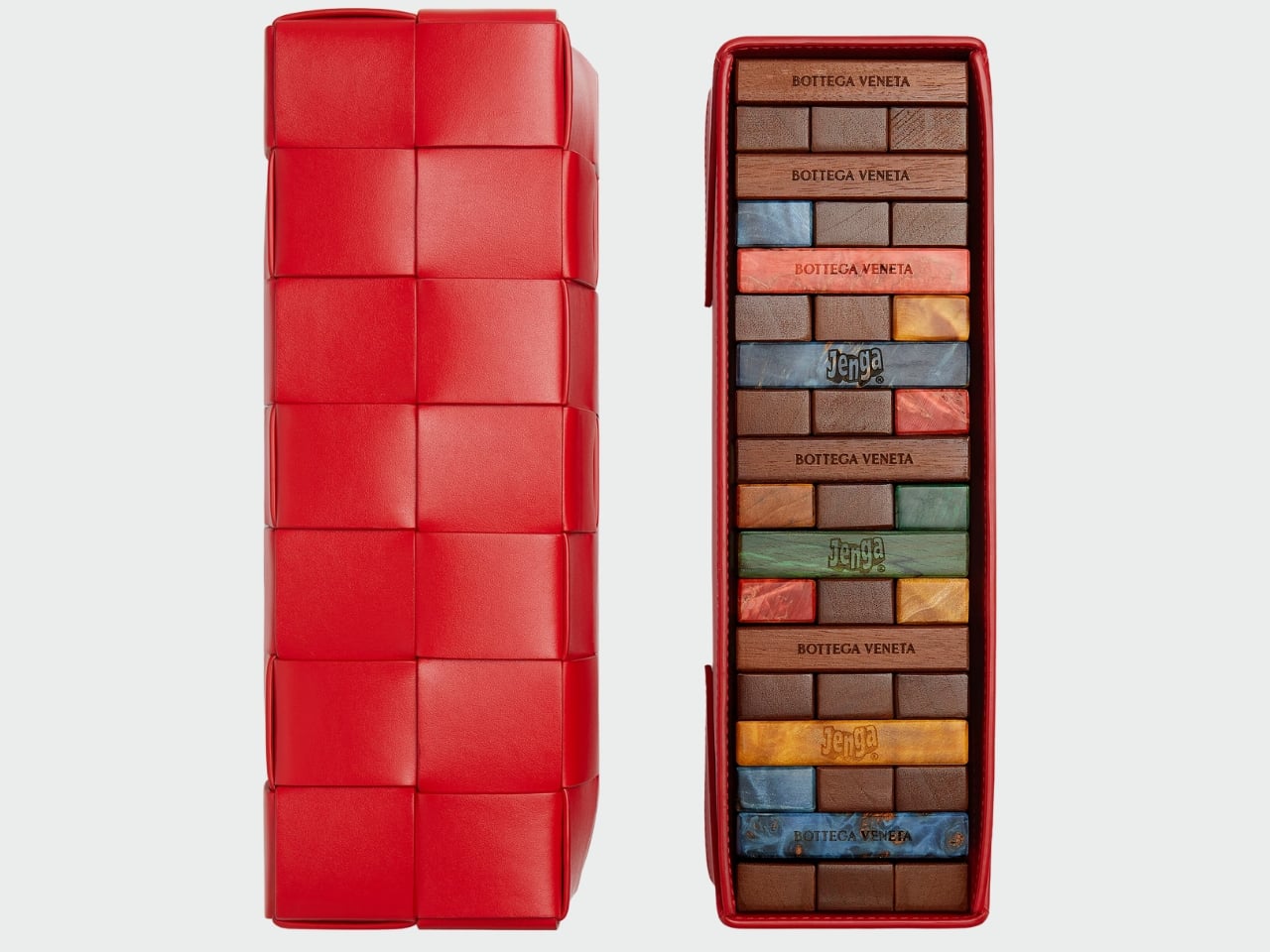
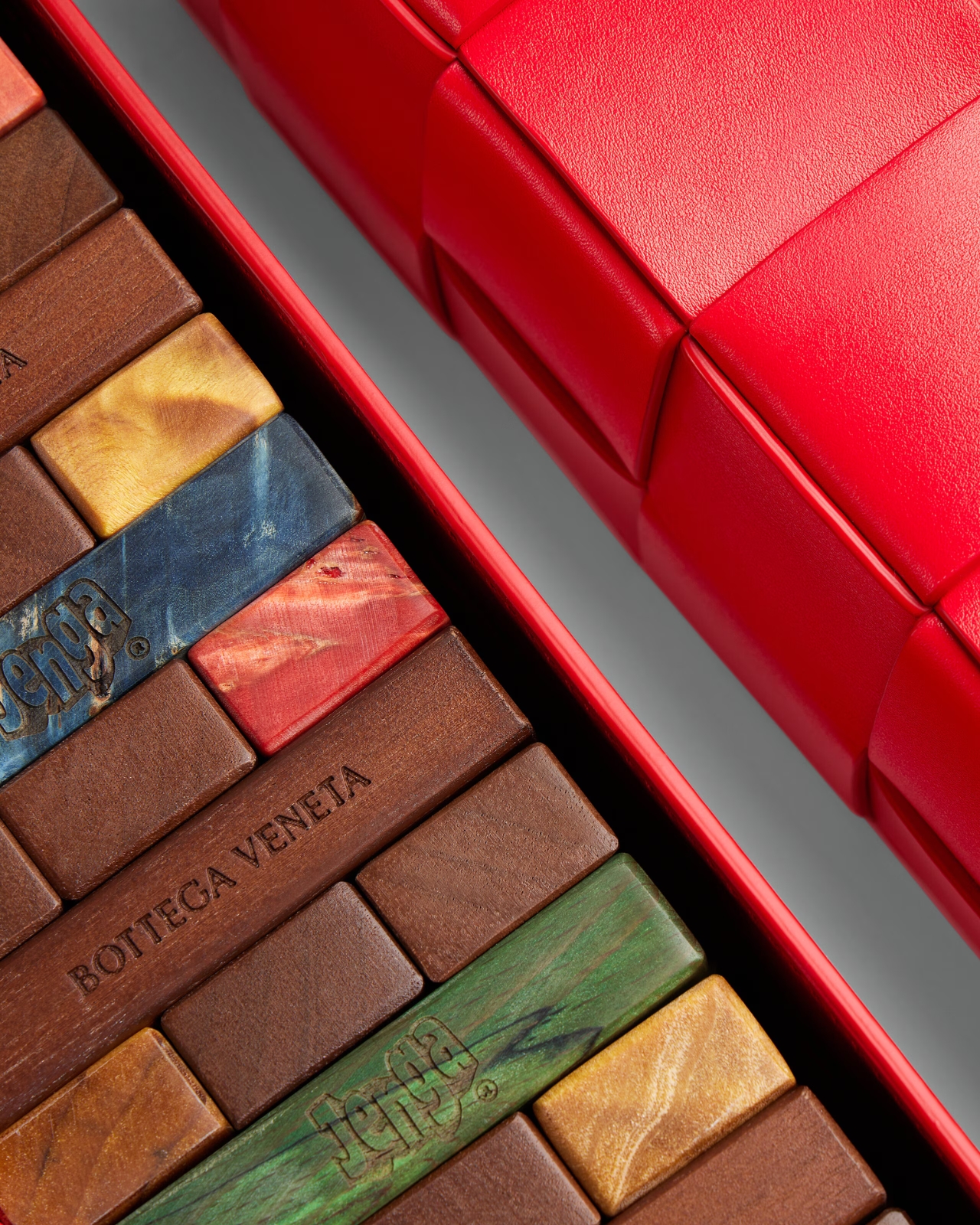
But if you’ve been dreaming of having a luxury brand board game displayed in your home, then you’d probably want to bring out the big bucks for the Bottega Veneta Jenga Game. Yes, you read that right. The Italian luxury fashion house has teamed up with Hasbro to bring us an almost $7,000 ($6,900 to be exact) Jenga set. With its price tag and the materials used to create this, you probably will not be bringing it out for your latest game night.
Jenga is one of those games where you will probably drop, scratch, and scuff the blocks since the goal is to get the other players to topple their tower. So to have such an expensive version of the game seems not to be the most practical thing. But for collectors, luxury design lovers, or those who have money to spare, then this is probably a must-have even if it’s just to display it on your shelf or to bring it out to be admired, if not to be played with.
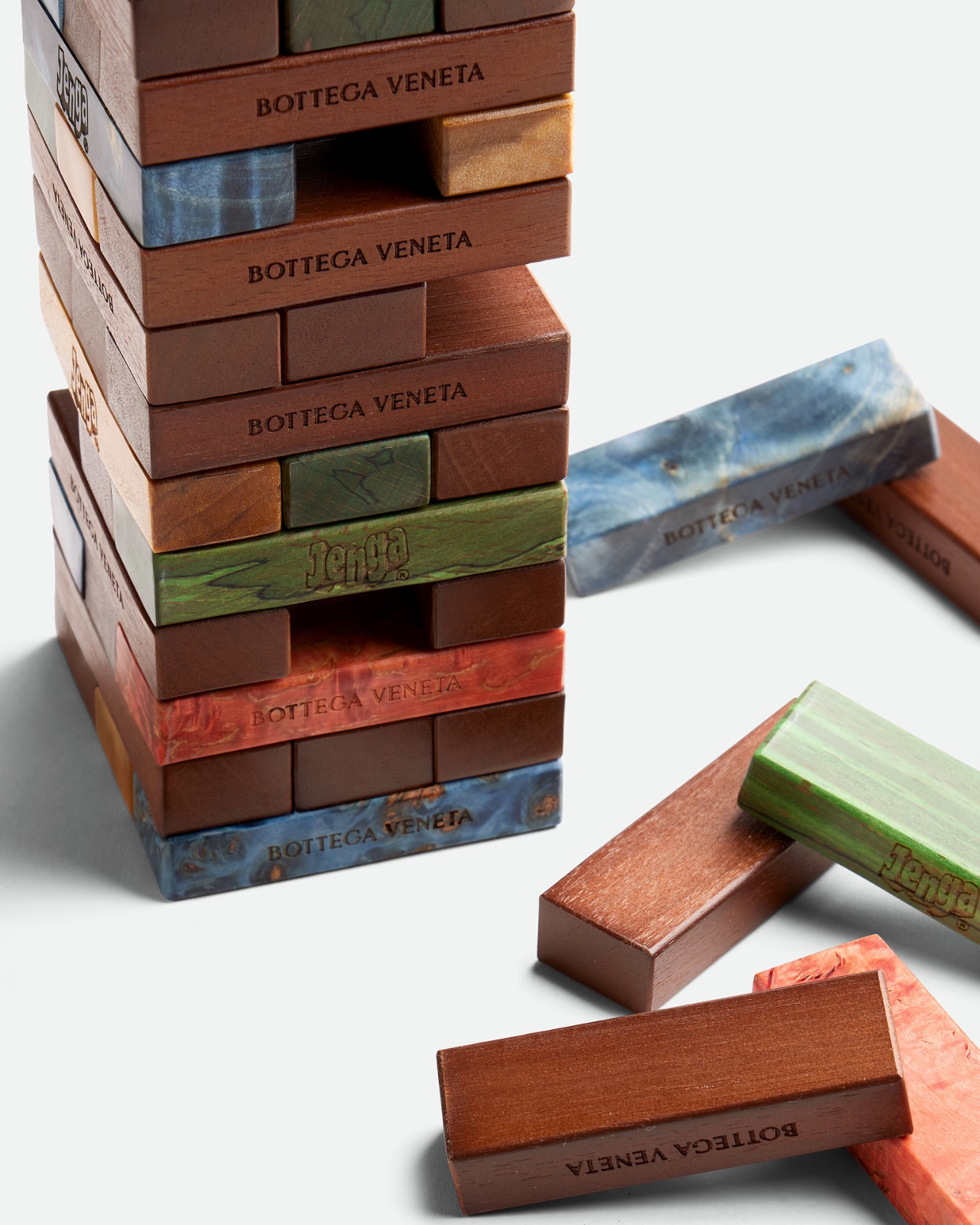
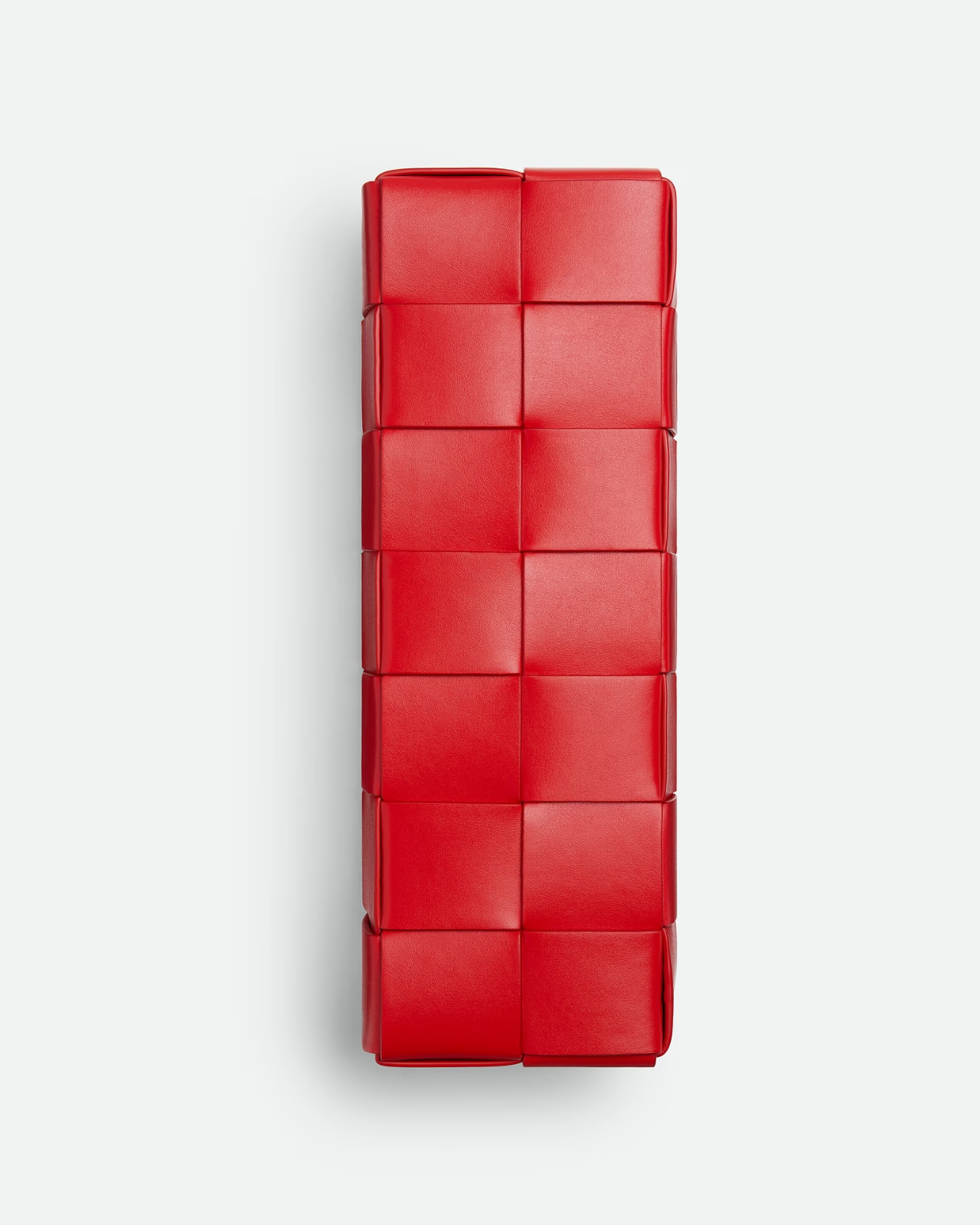
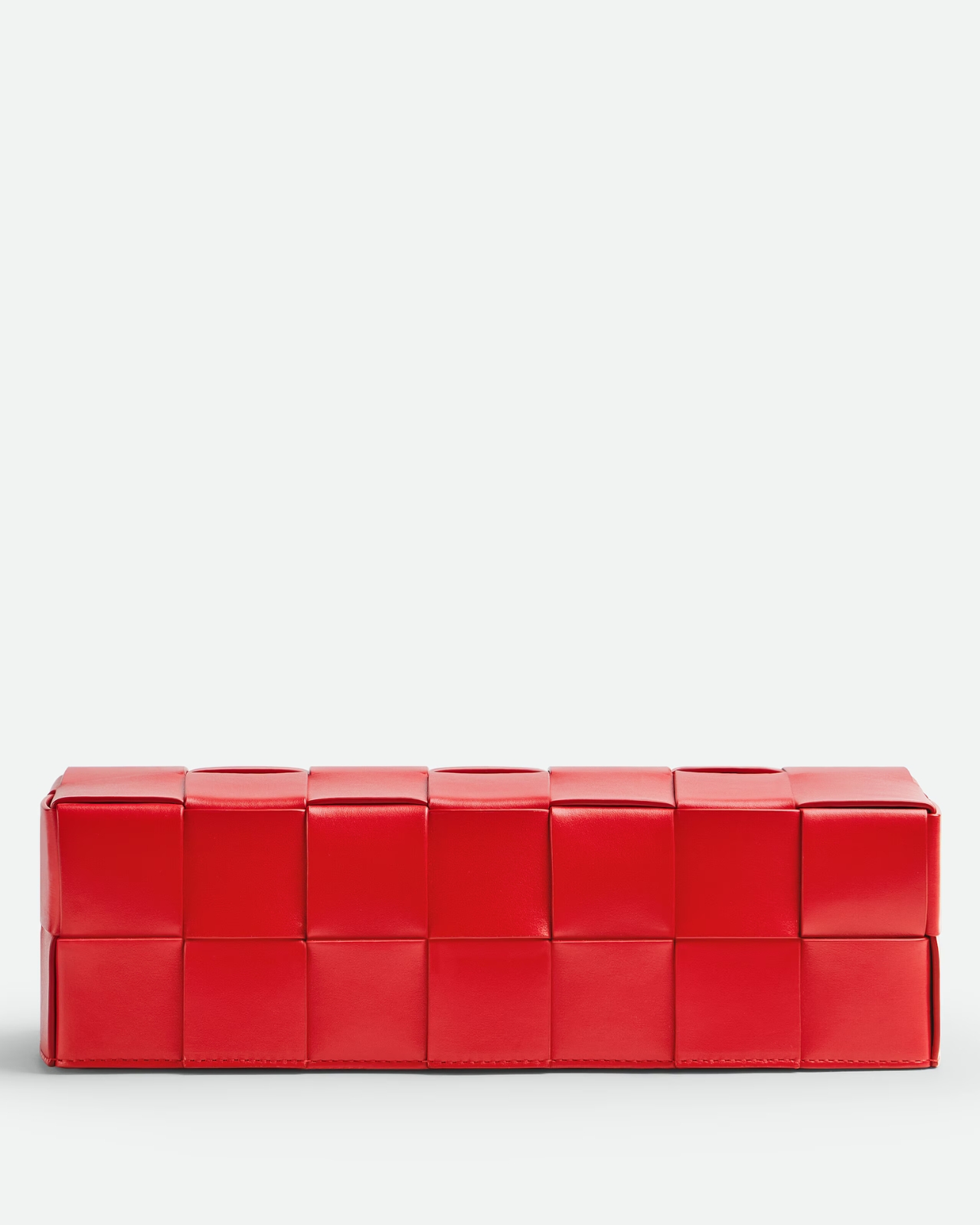
The set is made up of 54 blocks that use mixed Italian walnut wood and stabilized colored wood materials. Each piece is engraved with logos of both Bottega Veneta and Jenga. The attention to detail is remarkable—every block is perfectly weighted and finished, showcasing the kind of craftsmanship you’d expect from Italian artisans. The case is also luxurious as it is a deep red Intreccio calfskin leather case with matching leather lining. This luxury packaging ensures your investment is protected when not on display or in use, and it adds to the overall aesthetic appeal of owning such a unique piece.
In the product description on the Bottega website, it says it is “Not intended for use by children.” And obviously, with that price and the luxurious materials used, you wouldn’t want people, let alone children, constantly touching it. It is more of a statement piece or art installation that bridges together childhood nostalgia and adult luxury. This is an adult indulgence, a luxury collectible that happens to be playable rather than just a game. It’s designed for those who appreciate the finer things in life and want to elevate even their leisure time with designer touches.
For those wondering how to style such a piece, imagine it displayed on a console table in your entryway, or as a centerpiece on your coffee table during sophisticated gatherings. It’s the kind of conversation starter that tells guests you have impeccable taste and aren’t afraid to invest in unique design objects.
This collaboration represents one of the most surprising partnerships of 2025. It’s part of a growing trend where luxury fashion houses are diving into the world of games and playful objects, like Gucci’s poker set and Prada’s tic-tac-toe board. Now, if I had $7,000 to spare, would I get myself a set? I would probably just buy several board games with that kind of money. But if you’re the kind of collector that would like a shiny piece on their mantel, then go ahead and get the Jenga Game that will probably never be played with.
Focus Mode on Apple devices is a powerful feature designed to help you minimize distractions and enhance productivity. By customizing notifications, app access, and device settings, you can create a tailored digital environment for specific activities such as work, sleep, exercise, or driving. Whether you’re a professional managing multiple tasks or someone striving for a […]
NASA’s James Webb Space Telescope has shown us images of space we’d never see otherwise, and one of the latest wonders it has captured is of an unusual star system in our galaxy with what the agency describes as “four serpentine spirals of dust.” Previous observations of the Apep system, named after the Egyptian god of chaos and located around 8,000 light-years away from Eath, showed only one shell. But as you can see in the mid-infrared image captured by Webb above, it actually has four shells, with the most outer one at the very edges of the image. These shells are made out of dense carbon dust emitted by the system’s two Wolf-Rayet stars over the last 700 years.
Wolf-Rayets are massive stars nearing the end of their lives. They’re very rare, and scientists believe there are only a thousand in our galaxy. Apep happens to have two of them. Yinuo Han from Caltech and Ryan White from the Macquarie University in Sydney, Australia have recently published their own papers about the system. They combined measurements from Webb’s observations with years of data from the European Southern Observatory’s Very Large Telescope (VLT) in Chile to determine that the two stars “swing by one another” once very 190 years. The stars then pass close to each other for 25 years, causing their strong stellar winds to collide and cast out huge amounts of carbon-rich dust within that timeframe.
Thanks to the Webb telescope’s observations, they were also able to confirm the presence of a third star in the system that’s gravitationally bound to the two Wolf-Rayets. The third star is a massive supergiant 40 to 50 times bigger than our sun, and it carved a cavity, which looks like a funnel, into the shells. You can see the cavity in the shells in the video below.
Apep’s Wolf-Rayet stars used to be bigger than the supergiant, but they’ve since shed most of their masses and are now only 10 to 20 times the mass of our sun. In time, the two stars will explode into a supernova and possibly turn into a black hole.
This article originally appeared on Engadget at https://www.engadget.com/science/space/webb-telescope-images-an-aging-binary-star-system-in-the-center-of-a-four-layered-cosmic-dust-shell-140000485.html?src=rss
Have you ever wondered what it would feel like to have an AI model that not only understands your professional needs but anticipates them? That’s exactly what Google’s new Gemini 3 AI delivers. In a world saturated with artificial intelligence tools, it’s easy to feel overwhelmed by the sheer number of options. Yet, Gemini 3 […]
Whether you’re finally committing to a home gym or upgrading worn-out equipment, one thing’s certain: nobody wants to overpay for fitness equipment that underdelivers. Known for making durable, space-efficient home gym equipment, FED Fitness is the No.1 best-selling brand in home fitness gear with millions of family users worldwide. From now through December 3, the […]
Imagine walking into a room that automatically adjusts its temperature and humidity to your comfort level, no apps, no manual adjustments, just seamless automation. Sounds futuristic? Not anymore. With the powerful yet affordable ESP32C6 microcontroller, you can build your own smart home sensor in as little as 10 minutes. Whether you’re a seasoned tinkerer or […]
Creative professionals live between the tangible and the imagined. Their tools need to keep pace with ideas that arrive at odd hours and demand immediate capture. Finding gifts that match this rhythm means looking beyond generic stationery sets toward objects that respect both craft and practicality. These five selections balance functionality with thoughtful design, each priced under fifty dollars and built to earn permanent desk space.
The best gifts for creators are the ones they use daily without thinking about it. Tools that disappear into the workflow rather than interrupting it. Products that solve small frustrations before they compound into creative blocks. This list avoids novelty for its own sake, focusing instead on items that designers, illustrators, architects, and artists consistently reach for when the work demands precision, portability, or simple reliability.
1. Everlasting All-Metal Pencil
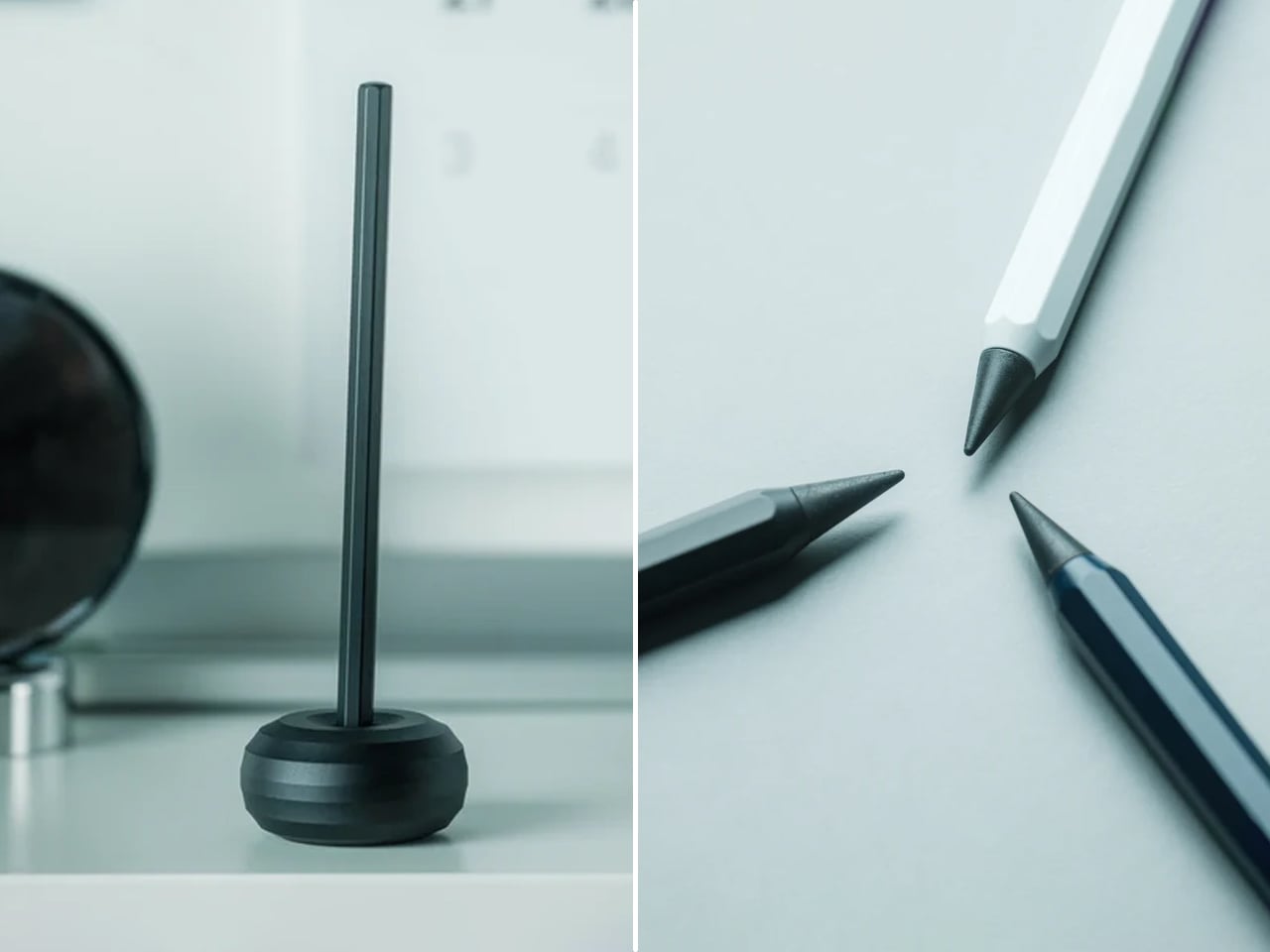
The ritual of sharpening pencils belongs to a slower era. Breaking graphite mid-sketch or hunting for a sharpener disrupts the momentum that creative work desperately needs. This full-metal pencil eliminates both problems through a special alloy core that writes like traditional graphite while lasting exponentially longer. The aluminum body feels substantial without being heavy, and the core produces consistent marks without requiring any maintenance beyond occasional cleaning.
What makes this pencil remarkable is its defiance of planned obsolescence. The graphite and alloy particles leave marks dark enough for sketching and light enough for technical work, erasing cleanly with standard erasers. The core doesn’t wear down at anything resembling the rate of cedar-encased Number 2 leads. Artists working with watercolor or water-based markers particularly appreciate how the metal core doesn’t bleed when liquid is applied, maintaining clean lines beneath transparent washes.
Horizon earned its reputation by putting drafting precision into wallet-sized tools. The 2025 Helvetica lineup maintains that philosophy while expanding in two directions: vibrant colorways for the credit card rulers and a hand-machined titanium mechanical pencil for collectors who want permanence over portability. Byzantine Purple, Irish Green, and Classic Blue join the existing finishes, while improved silk screening and UV protection prevent measurement fade from daily handling. The Helvetica Max measures six inches and fifteen centimeters, packing protractor markings, dual compasses, circle templates, and isometric grids into stainless steel cut by Swiss Bystronic lasers.
TSA approval means airport security stays simple. But Horizon’s actual move is the Hypatia A5+ Notebook, sized at 150 × 220mm with machine-sewn binding and hand-applied endbands across 140gsm ivory pages. It opens completely flat, handles fountain pens without bleed-through, and turns their ruler system into something cohesive rather than clever. The titanium pencil bridges both worlds: numbered editions for the collectors, practical heft for daily marking. Pull the ruler from your wallet, flatten the Hypatia on your desk, and suddenly you’re not juggling separate tools but working within an intentional ecosystem. The notebook’s limited to 1,125 copies with hand-applied cotton labels about infinite potential, which sounds overwrought until you realize the whole point is making analog precision feel worth the effort again.
Credit card size fits in wallets without bulk or awkward carrying solutions.
Swiss-made laser precision ensures accurate measurements for technical work.
What we dislike
The compact size limits the measurement range compared to traditional rulers.
Premium titanium pencil requires dedicated pocket space rather than wallet storage.
3. Rocketbook Reusable Sticky Notes
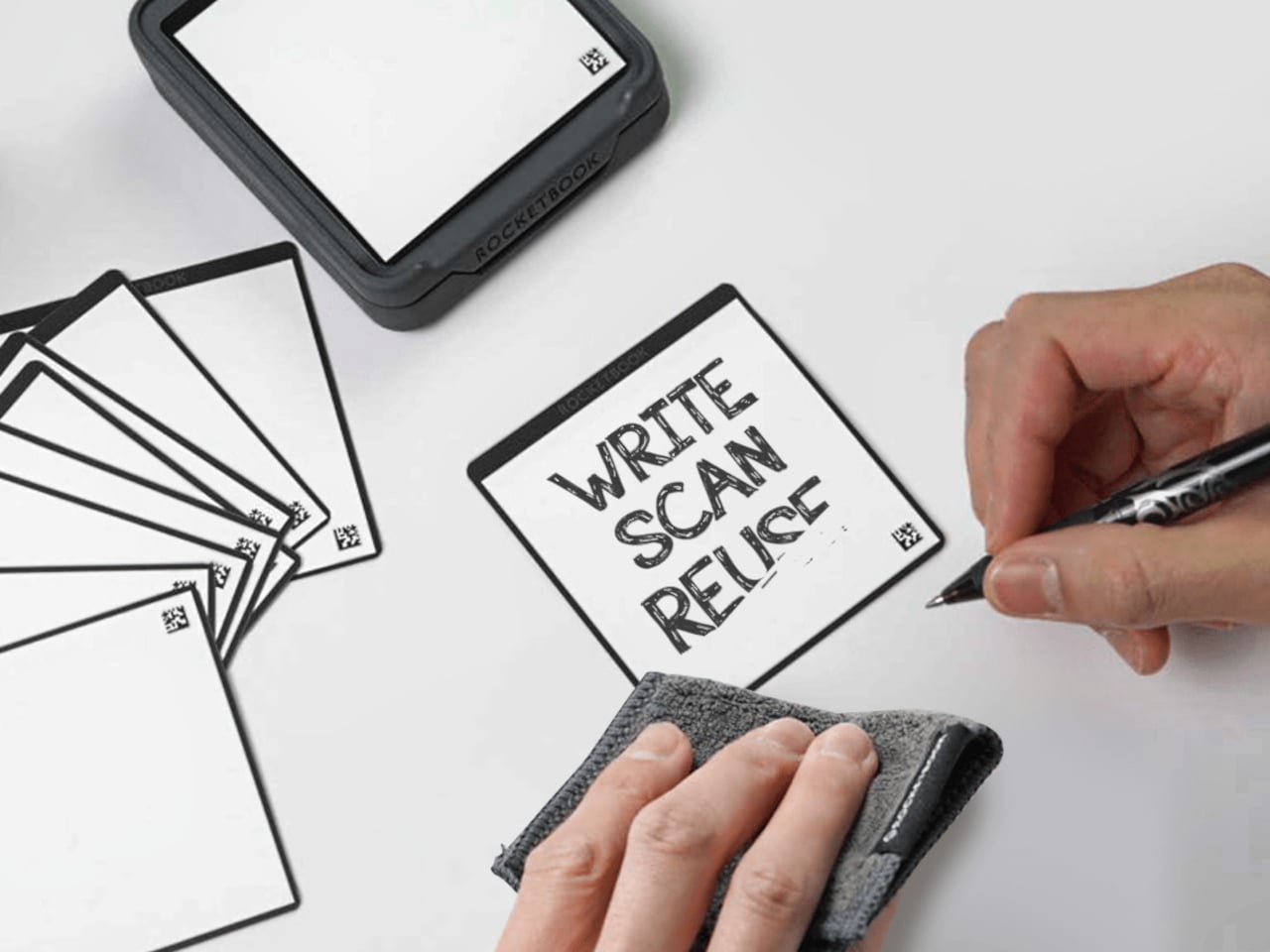
Sticky notes achieve brilliance through simplicity. Small enough to fit anywhere, flexible enough to rearrange endlessly, and instantly visible without digital friction. The wastefulness always bothered people who used dozens daily. Rocketbook’s reusable version maintains everything that makes sticky notes indispensable while eliminating the environmental cost. The special paper works with Pilot FriXion erasable pens, allowing marks to be wiped away with water and cloth rather than discarded.
The genius lies in preserving the original sticky note formula. The adhesive surface sticks reliably without requiring magnets or clips, and the small writing area forces the kind of concise thinking that longer formats encourage users to abandon. Teams can rearrange these notes across whiteboards or walls exactly as they would with paper versions, building visual hierarchies that make sense to their specific workflow. The notes essentially become immortal, limited only by the availability of FriXion pens rather than the depletion of paper pads.
What we like
Maintains the adhesive flexibility of traditional sticky notes perfectly.
Small format encourages concise thinking and clear communication.
What we dislike
Dependency on a specific Pilot FriXion pen line limits ink options.
Water-based cleaning requires keeping a cloth and a moisture source nearby.
4. Pantone Mug
Color authority matters in design work. Pantone built that authority over decades, establishing a universal language for communicating precise hues across industries and continents. Their mugs translate this system into everyday objects that designers reach for without thinking. The new colors include the 2025 Color of the Year, Mocha Mousse, a warming brown that evokes chocolate and coffee while maintaining sophisticated restraint. Each mug features its specific Pantone number, turning morning caffeine into a small reminder of color theory.
The mugs are individually packed and available across the full Pantone spectrum, allowing designers to match their workspace aesthetic or collect favorites over time. Made from fine china ceramic, they hold twelve ounces and survive both dishwasher and microwave use. The color band wraps around the exterior while the interior remains white, ensuring the beverage color doesn’t interfere with the exterior identification. For designers who spend their days matching colors digitally, having a physical Pantone reference at hand grounds the work in tangible reality.
What we like
Instant color reference provides physical grounding for digital color work.
Individual packaging allows collectors to build custom sets over time.
What we dislike
The white interior might show coffee or tea staining with regular use.
The limited twelve-ounce capacity feels small for larger beverage preferences.
5. Leuchtturm1917 Classic Notebook
Notebooks either fade into backgrounds or become extensions of thinking itself. Leuchtturm1917 earns the latter status through features that creative professionals actually use rather than ignore. Available across six formats from pocket-sized A6 to expansive A4+ Master, these notebooks adapt to different workflows instead of forcing everyone into identical constraints. The Medium A5 hardcover holds 251 numbered pages, while softcover versions offer 123 pages for lighter carrying. Thread-bound construction means pages lie completely flat without fighting the spine.
The difference lies in the details most notebooks overlook. Two-page markers instead of one let you track current work while keeping reference pages accessible. Numbered pages and a table of contents turn random notes into searchable archives. Eight perforated sheets tear cleanly when sharing becomes necessary. The 80gsm FSC-certified paper handles fountain pens and markers without ghosting through to the next page, and the slightly chamois tint reduces eye strain during extended sessions. Personalization options let you mark ownership directly on the cover. Available in hardcover or softcover across four ruling types, these notebooks accommodate sketching, writing, planning, or technical drawing with equal competence.
What we like
Numbered pages and a table of contents transform notebooks into searchable reference tools.
Two-page markers provide simultaneous access to multiple sections without bookmarks.
What we dislike
Higher page count makes hardcover versions heavier than basic notebooks.
Premium features push pricing above budget alternatives despite remaining under fifty dollars.
Why These Gifts Belong on Every Creative’s Desk
These five tools share a common thread beyond price point. Each one removes friction from creative work rather than adding steps to existing processes. The metal pencil eliminates sharpening. The Horizon system consolidates multiple tools into a coherent workflow. Rocketbook’s sticky notes preserve the format while removing waste. The Pantone mug makes color reference automatic. The Leuchtturm1917 notebook transforms casual notes into organized archives.
Gifts that simplify rather than complicate earn permanent places in daily routines, which is exactly where the best creative tools belong. The professionals in your life will recognize quality that respects their craft, and these selections prove that thoughtful design doesn’t require premium pricing. Each item here solves real problems that creative work creates, making them the kind of gifts that get used immediately and appreciated long after the initial presentation.
Spotify has unveiled an upcoming interactive feature called SongDNA designed to show you the samples, collaborators and covers included in a given track, the company announced. As part of that update, Spotify also revealed that it has acquired WhoSampled, the company behind the SongDNA technology.
"Through our recent discussions with Spotify, it became clear that we share a strong belief in the power of musical context — and a vision for helping listeners go deeper into the songs they love," the WhoSampled team wrote in a blog post.
Terms of the deal weren't disclosed, but Spotify is acquiring both the WhoSampled team and its database. WhoSampled's standalone platform and brand will continue to operate following the deal with improvements like faster moderation times, the elimination of display ads and free downloads and subscriptions for its mobile apps.
Spotify Premium users will see the SongDNA feature in the "Now Playing" view. It's described as a way to see connections between songs, "showing collaborators, samples and covers all in one place," Spotify wrote.
In the song Kiss me More (feat. SZA), for example, SongDNA shows Carter Lang and two other composers, along with Doja Cat and SZA as the main artists. It reveals that a sample is used from Olivia Newton-John's Physical and that Kiss me More has been covered multiple times, most prominently in a Japanese version by the artist Rainych.
Spotify is also working on a feature called "About the song," showing swipeable cards in the "Now Playing" view. Those will reveal information like the inspiration for a song, how the music was created and the cultural impact — all with links to the sources.
London-based WhoSampled tracks over 1.2 million songs and 622,000 samples in its database, along with covers, remixes and artists. Its mobile app offers a Shazam-style music recognition service that can tell you the song you're listening to and any samples it might contain. The two companies have partnered previously on a deal that allows WhoSampled users to access their Spotify playlists and tracks.
This article originally appeared on Engadget at https://www.engadget.com/entertainment/streaming/spotifys-songdna-feature-will-show-you-which-songs-are-sampled-on-a-track-130050490.html?src=rss