Everything NVIDIA announced at CES 2026

Jensen Huang took to the CES stage on Monday to share the latest from NVIDIA, and while the presentation was more a refresher of technologies the company has been working on for the past few years, there were a couple of notable announcements.

NVIDIA announced Alpamayo, a family of open-source reasoning models designed to guide autonomous vehicles through difficult driving situations. The centerpiece of the release is Alpamayo 1 , a 10-billion parameter chain-of-thought system NVIDIA says is capable of approaching driving more like a human being would. The model works by breaking down unexpected driving situations into a smaller set of problems before finding the safest path forward. At each step of the way, the model can explain its reasoning.

A sister model named AlpaSim allows developers to do closed-loop training for driving scenarios that are rarely encountered in real life. Huang said the 2025 Mercedes Benz CLA will be the first vehicle to ship with NVIDIA’s entire AV stack, including Alpamayo. "Our vision is that someday, every single car, every single truck, will be autonomous," Huang said.

Following the Alpamayo announcements, a pair of BD-1 droids from Star Wars Jedi: Fallen Order joined Huang on stage. We saw one join the executive at last year’s CES. After that, Huang turned to Vera Rubin. NVIDIA first announced the GPU architecture in 2024, and now the company has begun production on a super computer that makes use of the new tech. One Vera CPU has 88 custom Olympus cores and 1.5TB of system memory for a total of 227 billion transistors. Meanwhile, one Rubin GPU features 336 billion transistors. Each Vera Rubin supercomputer has a pair of both components.

Following the presentation, NVIDIA held a separate briefing where it announced DLSS 4.5 and G-Sync Pulsar. The latest version of NVIDIA’s upscaling technology was trained on a second-generation transformer model, which should reduce ghosting and shimmering, leading to a more stable image, even when there’s a lot of movement on screen. As part of DLSS 4.5, NVIDIA is also adding support for 6x multi-frame and dynamic generation. The two features will arrive sometime in the spring. The former allows a 50-series GPU to generate five frames for every traditionally rendered frame. The idea here is to allow a powerful GPU like the RTX 5090 to saturate a 4K, 240HZ display with as many frames as possible. Dynamic frame generation, meanwhile, is exactly what it sounds like. DLSS 4.5 can dynamically scale the number of generated frames to fit the scenario. In demanding scenes, your 50-series GPU will generate more frames, while scaling back during less hectic ones so it only computes what it needs.

As for G-Sync Pulsar, it’s the latest improvement to NVIDIA’s flicker reduction technology. By pulsing a display’s backlight, NVIDIA says it can deliver perceived motion clarity relative to 1,000Hz, leading to greater clarity. Those same displays will also ship with the ability to automatically adjust their brightness and color temperature to ambient lighting conditions. Pre-orders for the first batch of G-Sync Pulsar displays will open on January 7.

Update 01/06/26 9:30AM: Added information about DLSS 4.5 and G-SYNC Pulsar.

This article originally appeared on Engadget at https://www.engadget.com/ai/everything-nvidia-announced-at-ces-2026-225653684.html?src=rss
Samsung Galaxy Z TriFold hands-on: Flexing is believing at CES 2026

When I first heard whispers about the Samsung Galaxy Z TriFold, I immediately felt conflicted. On one hand it felt like the natural evolution of bi-fold phones like the Z Fold 7. But on the other, all this fancy tech comes with an even higher price — around $2,500 based on current conversion rates from Korean won — not to mention the added bulk you get from a third folding panel. So even as someone who has used a foldable as my daily driver for almost a decade straight, it felt like Samsung’s latest high-end phone was going backwards in terms of both portability and affordability. But then at CES 2026, I got a chance to go hands-on with the Galaxy Z TriFold and all of my concerns pretty much instantly disappeared because with this thing, flexing is believing.

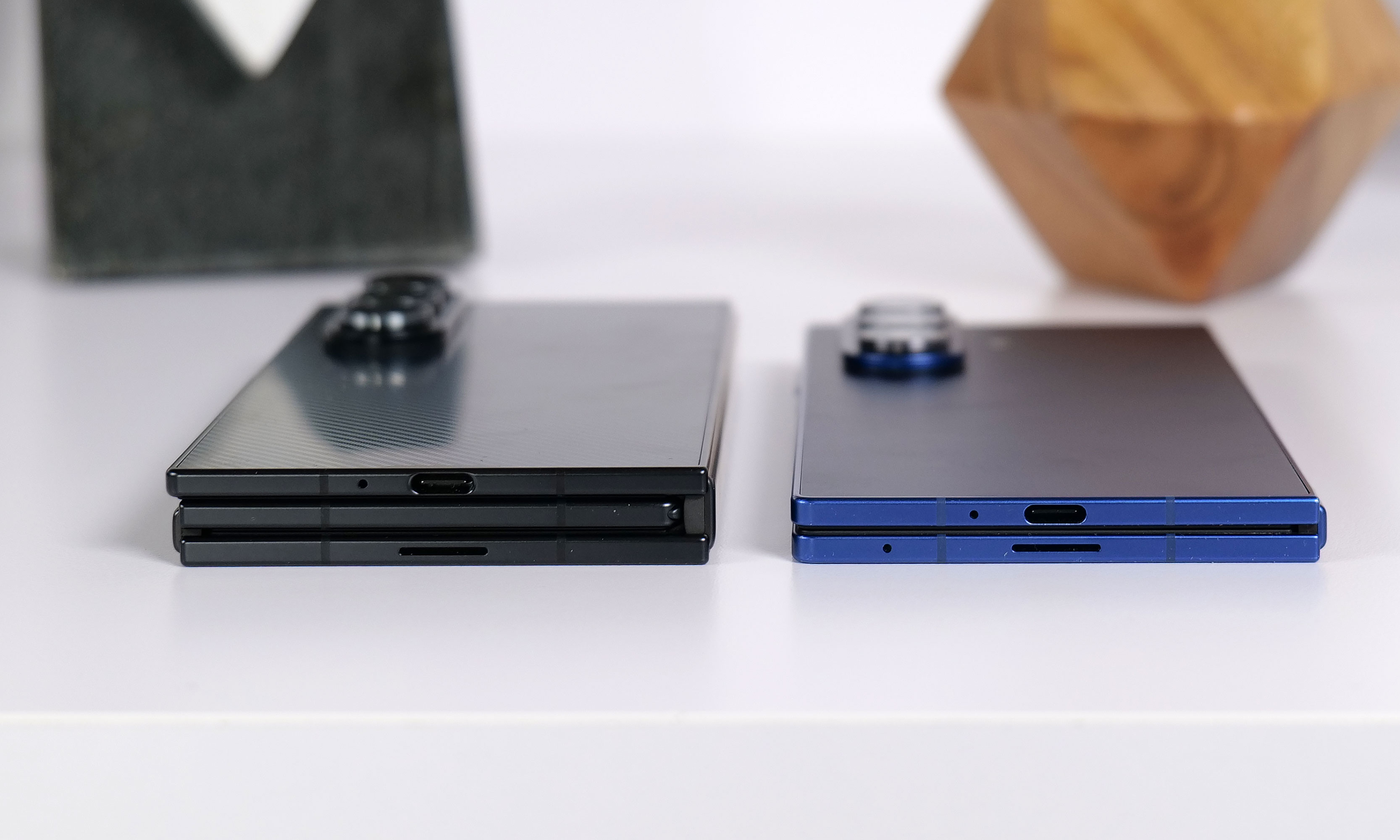
My initial consternation comes in large part from using the Z Fold 7, which hit a major milestone this year thanks to a revamped design that doesn’t come with any added size or weight even when compared to comparable candybar-style phones like the Galaxy S25 Ultra. That’s a major breakthrough considering how hefty and chunky the original Galaxy Fold was back in 2019. And when you compare the Z Fold 7’s dimensions (7.58 ounces and 8.9mm thick when folded) to the new TriFold (10.9 ounces and 12.9mm when folded), there’s no doubt that Samsung’s new flagship foldable comes with a lot of extra bulk. To put things into context, we have to go back several generations to the Z Fold 5 just to find a comparable phone with similar thickness (13.4mm). And even then, that handset is still significantly lighter than the TriFold at 8.92 ounces. 

There's simply no denying that the Z TriFold (left) is a much bulkier device than the Z Fold 7 (right).
Sam Rutherford for Engadget

But then I opened it up and my concerns were quickly pushed aside because suddenly you’re greeted with 10 inches of vivid AMOLED goodness. As a phone that can pull double duty as a tablet, the jump up from the Z Fold 7’s 8-inch main display cannot be understated. Not only does it make multitasking so much easier, when combined with Samsung’s DeX desktop mode, you basically get a miniature laptop experience from a device that fits in a pocket. Especially if you don’t mind carrying around a travel-friendly mouse and keyboard. Plus, you can connect the TriFold to an external display (either wired or wirelessly) to access even more screen space. Way more than with the Z Fold 7, I can honestly see myself leaving my PC at home and using the TriFold as my primary work device. 

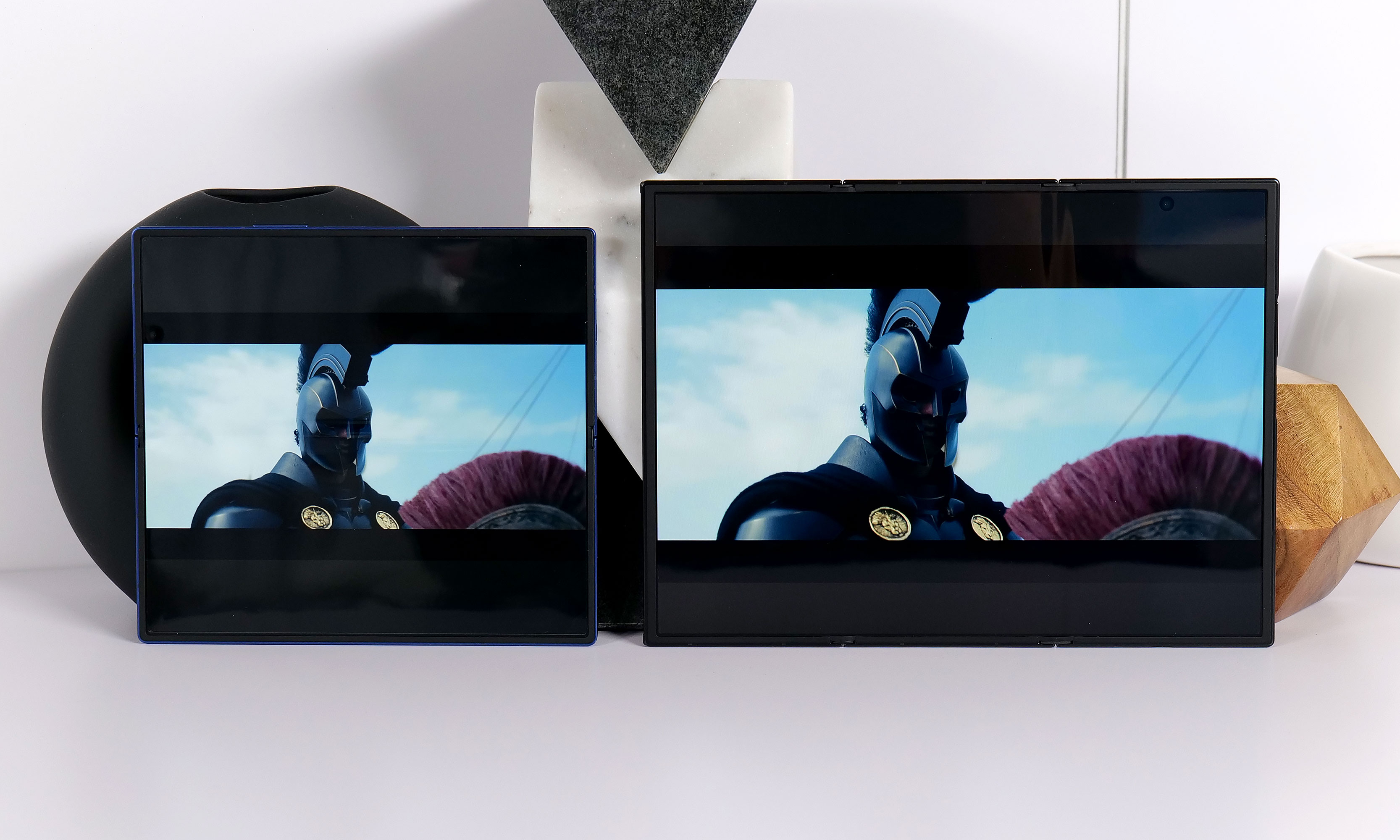
Another important but easily overlooked upgrade on the Galaxy Z Trifold is the 4:3 aspect ratio for its 10-inch main display. Compared to the Z Fold 7 and its almost perfectly square screen, you just get so much extra room on the sides for widescreen movies and shows. I tested this out by watching the trailer for Christopher Nolan’s The Odyssey, and even though that movie uses a super wide aspect ratio due to being filmed entirely on IMAX cameras, the viewing experience was just so much better. Peak watchability is something the regular Z Fold line has sort of left by the wayside as the company moved to larger exterior displays, which resulted in the series’ primary screen becoming more square. The one downside though is that the TriFold may make you more of a resolution snob, as it’s a lot easier to tell the difference between 1080p and 2K or 4K on a larger 10-inch panel. 

The final pillar of the TriFold’s kit is all the engineering that Samsung put into making it easy to open and close. Simply moving from one hinge to two while adding a third folding panel undersells the complexity of its design. Samsung actually uses two different types of magnets that push or pull depending on where they are, which makes accessing the TriFold’s primary display practically just as easy as on the Z Fold 7. That’s no small feat. Opening and shutting this thing is just so satisfying on a tactile level, and that’s before you consider that there’s basically no downgrade in terms of image quality. 

While there’s only one way to unfurl the TriFold, which might seem confusing at first, Samsung addressed that too by throwing up a warning and making the whole phone vibrate if you try to do it wrong. And then there are components like the glass-reinforced carbon panels Samsung uses to add strength and durability to its chassis while keeping it as thin as possible. The one potential concern in the future is that unlike Samsung’s older foldables, there’s not as much room for improvement to shrink its dimensions much further, as the TriFold’s slimness is currently limited by the size of its USB-C jack. So if the next model wants to make big gains there, it may need to go completely portless.

Here's what The Odyssey trailer looks like on the Z TriFold (right) compared to the Z Fold 7 (left). It's such a better experience.
Sam Rutherford for Engadget

On a certain level, I kind of hate how much I like the Galaxy Z TriFold. I really don’t want to go back to bigger, heavier phones that are even more bulky and expensive than the Z Fold 7. But the appeal is impossible to deny and for people who love a good multitasker, I can easily see how these tradeoffs are worth the upside of Samsung’s latest apex foldable. 

The Samsung Galaxy Z TriFold is currently on sale in South Korea, though we’re still waiting for official pricing and availability for the US and North American market.

The Galaxy Z TriFold is one of many new technologies Samsung announced at CES 2026. On the home entertainment side of things, the company revealed updated OLED TVs and showed off a massive 130-inch Micro RGB TV, the latter of which representing a trend we’re seeing at the show this year. There’s also a new Samsung soundbar that offers impressive bass performance sans subwoofer. Samsung’s Music Studio 5 and 7 speakers have unique designs that could blend in nicely with your home decor, and the forthcoming Galaxy Book 6 series of laptops are thin-and-light notebooks powered by Intel Panther Lake chips.


This article originally appeared on Engadget at https://www.engadget.com/mobile/smartphones/samsung-galaxy-z-trifold-hands-on-flexing-is-believing-at-ces-2026-224343480.html?src=rss

Google TV’s new Gemini features range from useful to unnecessary

I met up with a few people from Google at the Encore Villas during CES (which is just 2,500 feet from my hotel but took 28 minutes to walk to, thanks to Vegas’s pedestrian-averse design [also I got lost]). Once there, I saw what “more Gemini” will mean for people with a Google TV.

The AI integration ranged from useful to probably unnecessary. The most useful bit, for me at least, came at the end. It’s admittedly a boring, but now you an adjust your TV’s settings just by talking. In the demo, Salahuddin Choudhary, Google’s Gemini for Android product lead said, “Can you boost the dialogue?” and Gemini changed the mode accordingly, without leaving the golf game he was watching. I asked if it could turn off motion smoothing, the first thing I adjust on a new TV (and sometimes other people’s). Yes, it can.

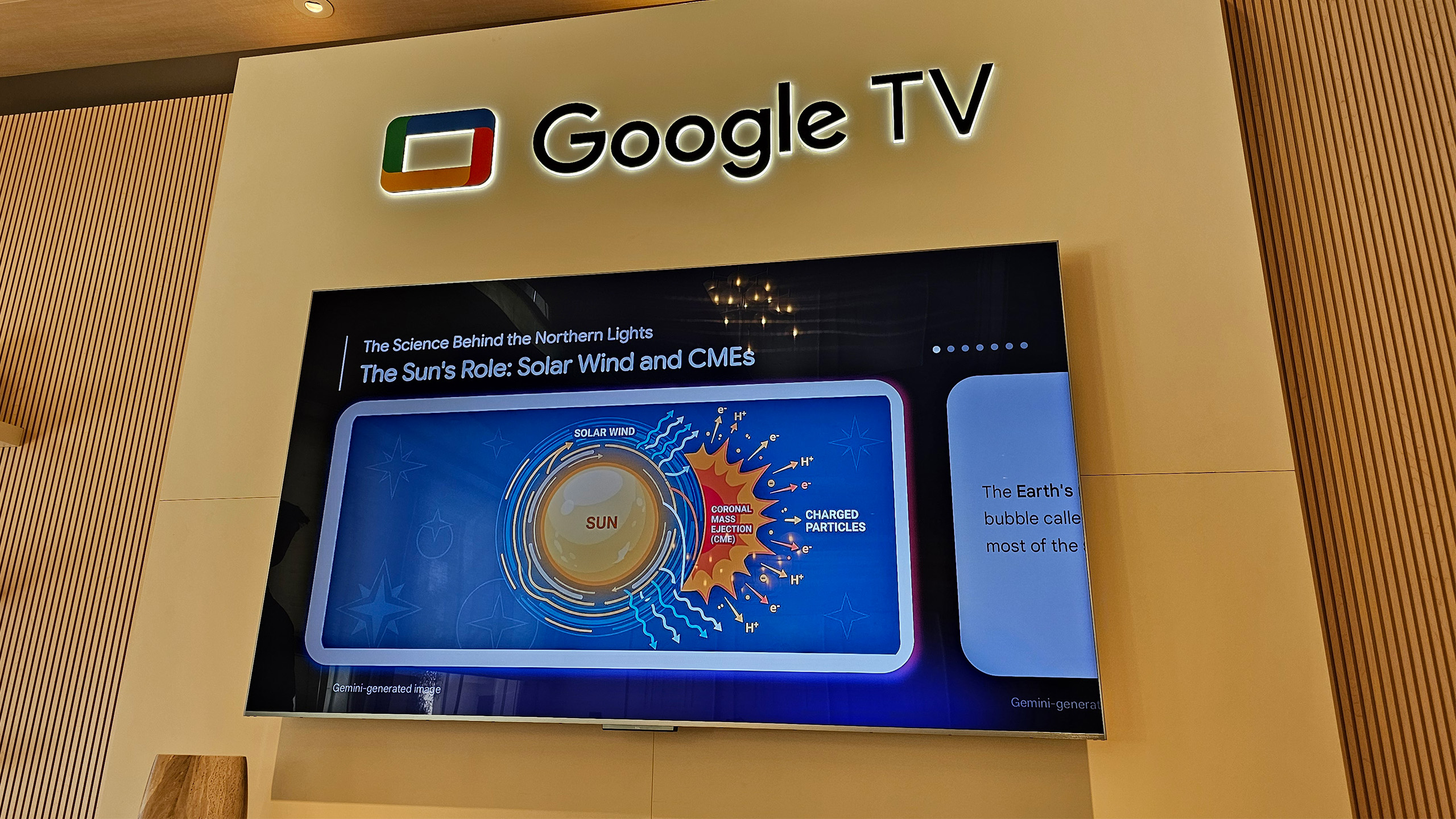
The “deep dive” Gemini feature could prove fairly useful, too. With it, asking for general information turns into a mini lesson on the subject, complete with generated images and narration. When Choudhary asked Gemini to “explain the Northern Lights to [his] eighth grader,” the screen filled with the standard Gemini answer: a brief definition and images and video tiles for further exploration. But a small Dive deeper button on the screen led to a narrated and illustrated tour of the science behind the phenomenon. My kid is at the age where he asks me questions I can’t answer about the fundamental makeup of the universe — maybe this could help.

The Google TV demo at CES showed an answer on the science behind how the northern lights are created
Amy Skorheim for Engadget

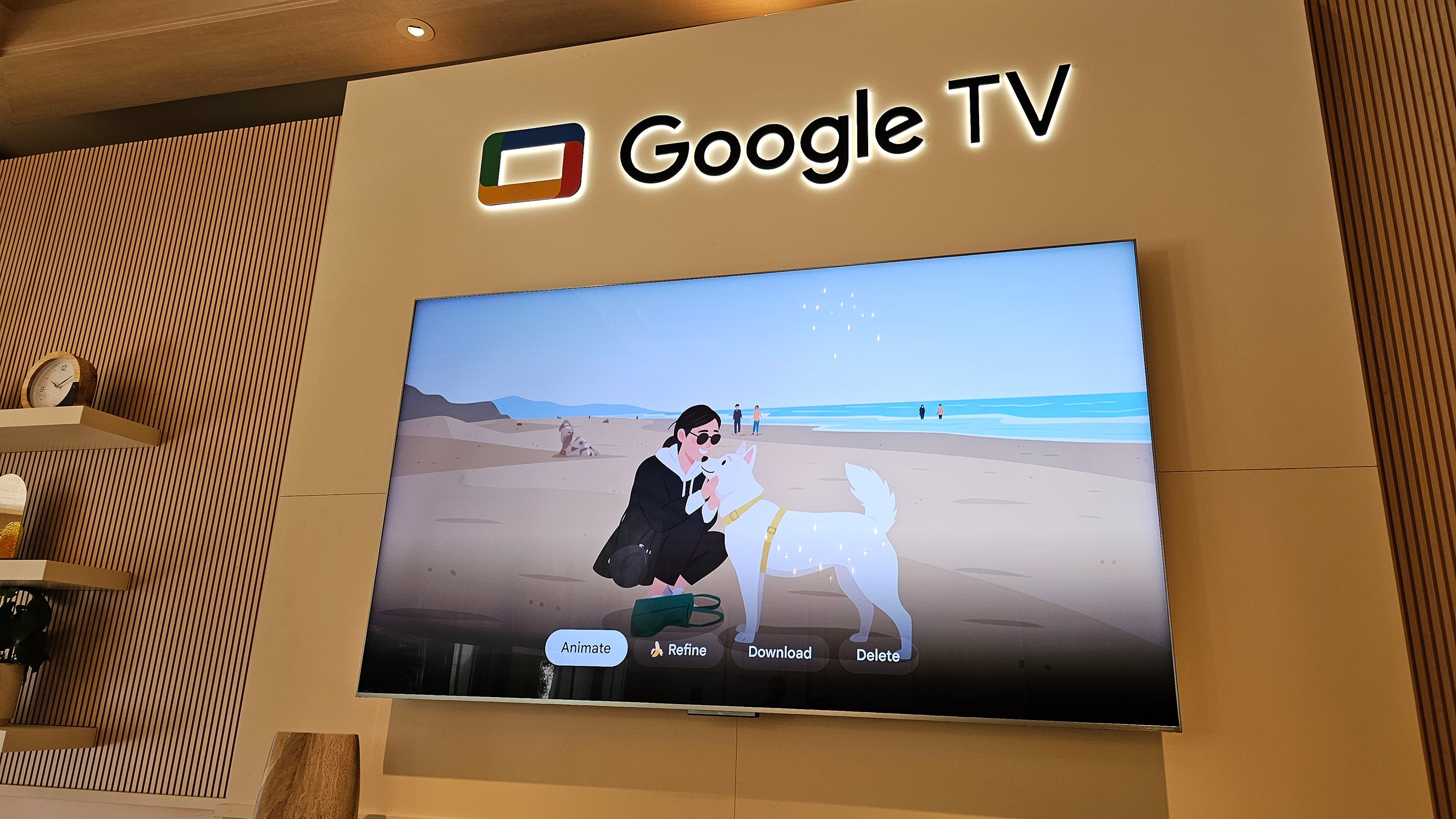
Google Photos is getting a much deeper integration with Google TVs, too. Choudhary asked for pics from a trip to the beach and snapshots of happy people amongst the sea and sand popped up on the screen. One particular shot would make a nice screen saver, I was told, and he asked Gemini to give the photo an oil painting makeover using the Remix feature.

However, if you want your photo recast in a way not offered with Remix, you can use Nano Banana. Choudhary turned one of the personal photos into a cartoon just by asking. Using Veo turned the same image into an short (if slightly glitchy) animation of a person playing fetch with the dog in the photo.

Google TV used Neo to recast a picture as a cartoon.
Amy Skorheim for Engadget

Your ability to generate video will depend on your Gemini subscription tier, but I was told a purchase of a Google TV device would include most of the other AI capabilities that I saw demonstrated.

I’d classify the photo manipulation and video generation as decidedly less useful that the other features, but my kid would probably get a kick out of messing with them for a while. For people who use Gemini a lot, being able to do so on the biggest screen in the house may appeal. Ditto for those who like seeing your Google Photos in a giant format. Some folks will appreciate the AI image manipulation and generation, I’m sure, but I’m mostly excited about the admittedly boring part of not having to leave a show to boost the brightness of a scene.

This article originally appeared on Engadget at https://www.engadget.com/home/home-theater/google-tvs-new-gemini-features-range-from-useful-to-unnecessary-222900001.html?src=rss

This Floating River Cabin in Serbia Is Our Dream Weekend Escape

If I would someday win the lottery, one of the things that I would allot my winnings to is to build a vacation house somewhere along the river or any scenic area. Just the idea of having somewhere to retreat to when city life becomes too overbearing would be a comfort to me and my loved ones. For now, I would have to live vicariously through the designs I see, like this one created for a couple in Serbia by Aleksandar Stanković of studio MARSA.

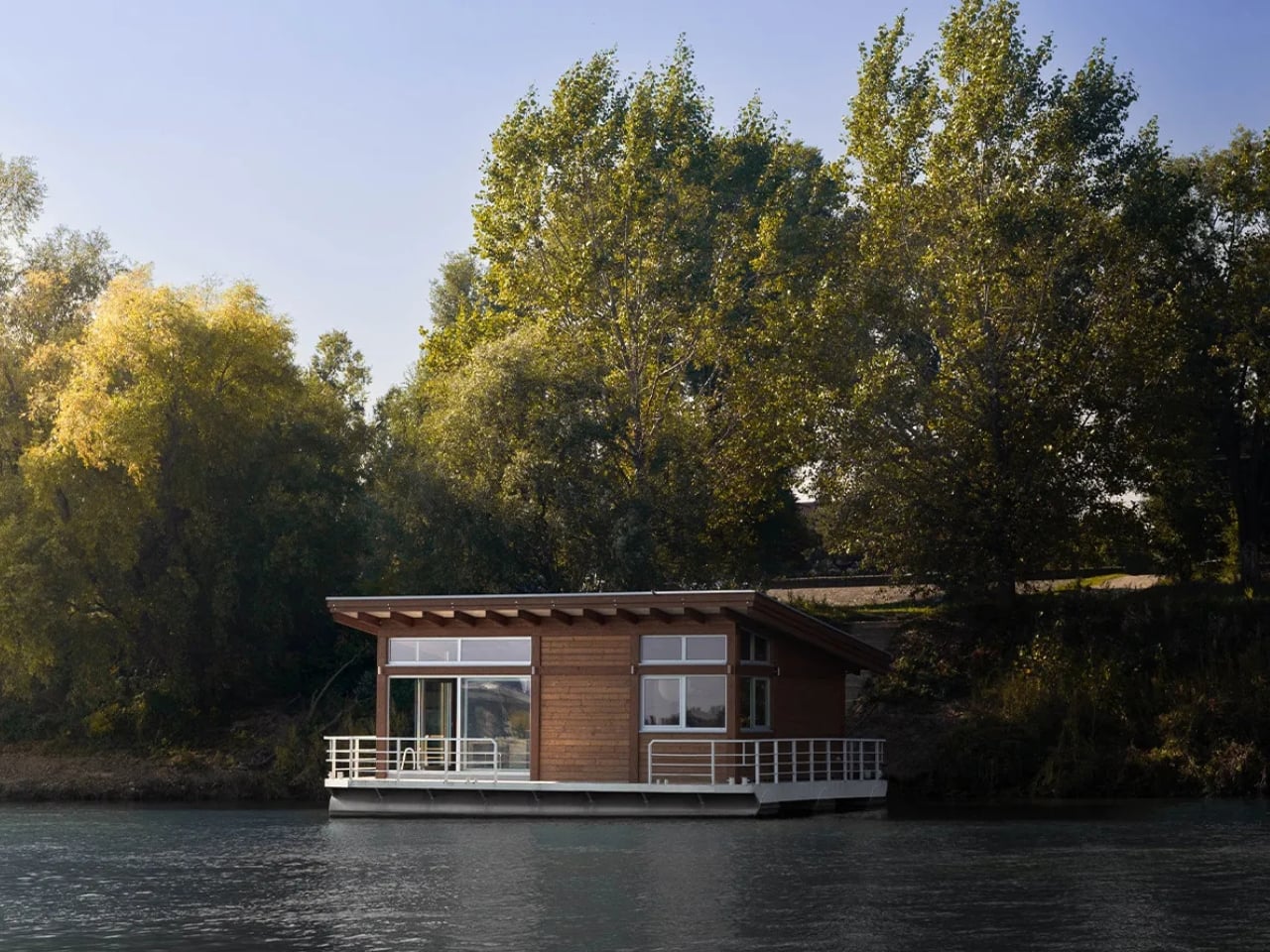
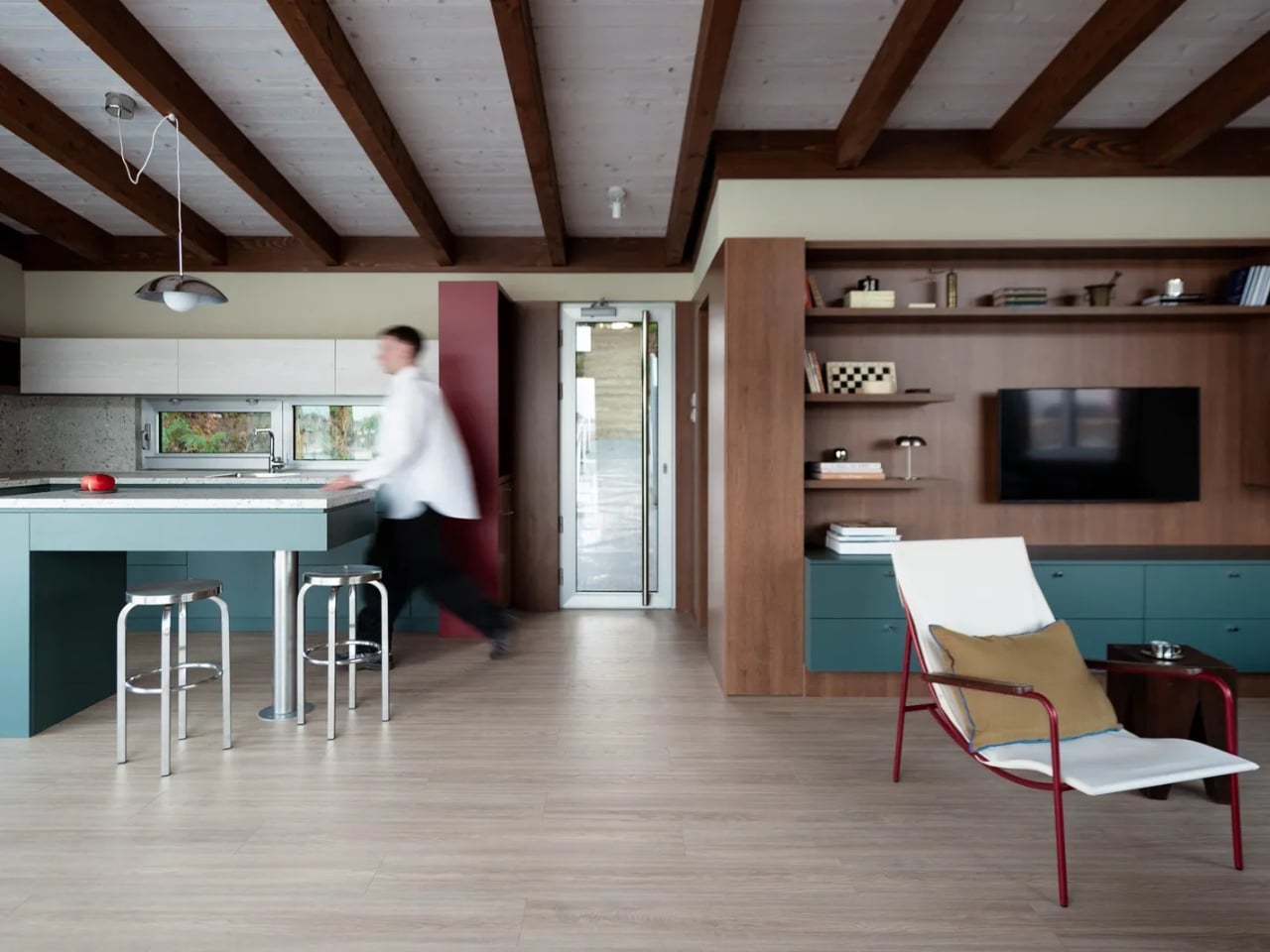
This floating cabin is located on a stationary pontoon along the Sava River in the Sava Shipyard, one of the most renowned shipyards in the region. Measuring eight-by-six meters, this compact yet thoughtfully designed structure maximizes every inch of space. It is an open-concept structure that is created for leisurely afternoons, weekend stays, and intimate gatherings for their family and friends. All elements of the design are meant to give the family a peaceful retreat and haven from the daily grind.

Designer: Aleksandar Stanković of studio MARSA (photos by Ivana Petrov)

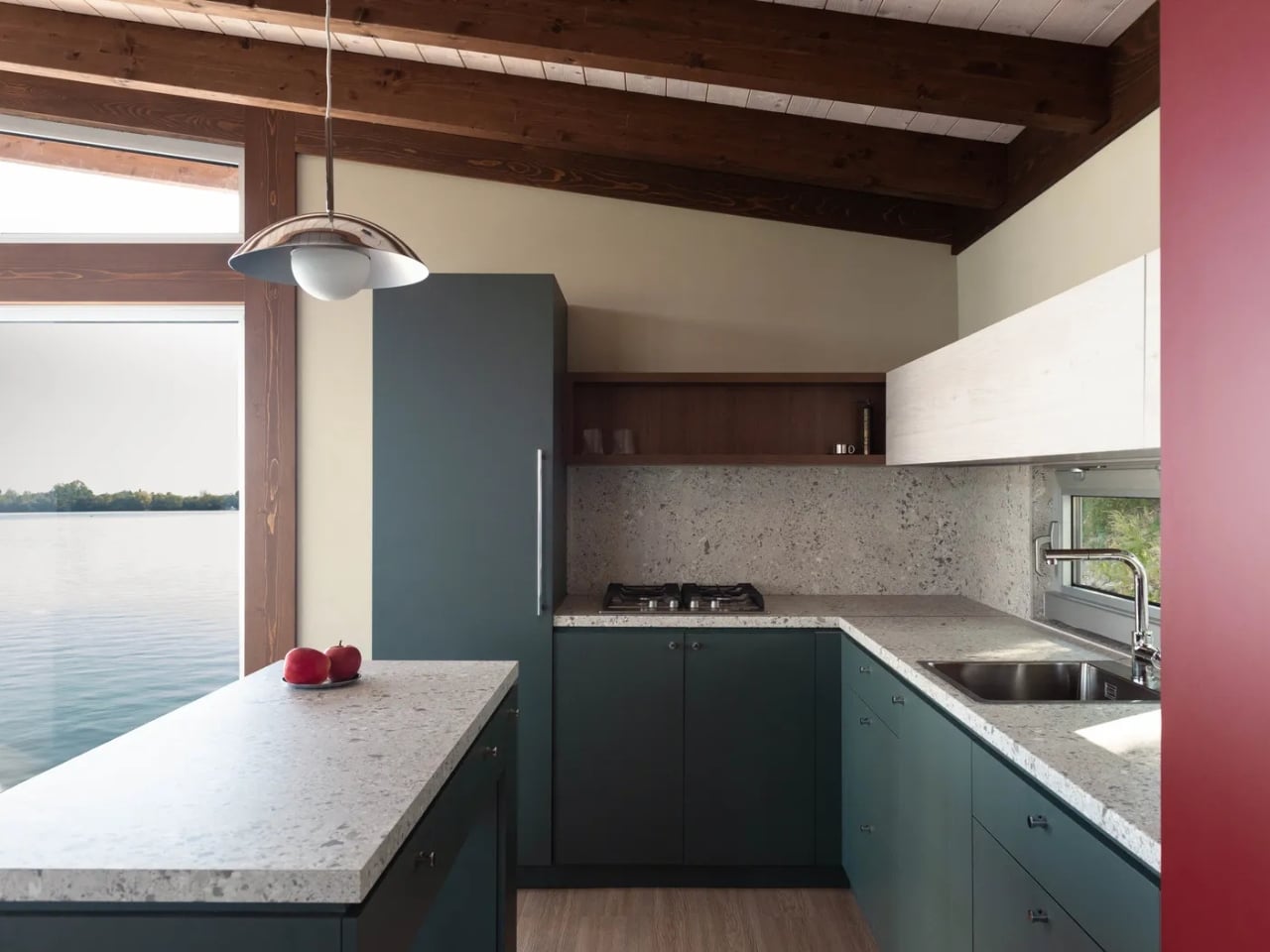
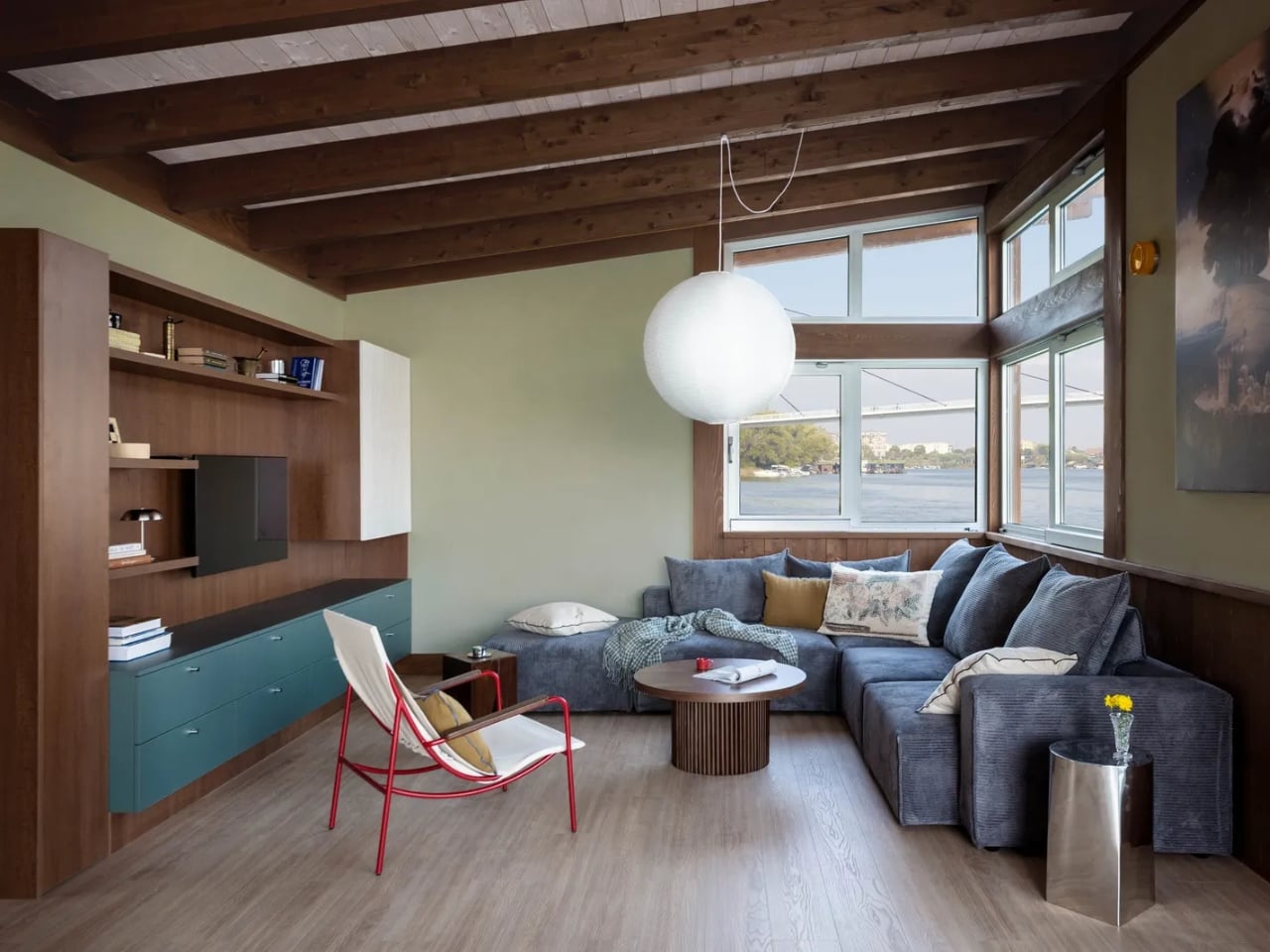
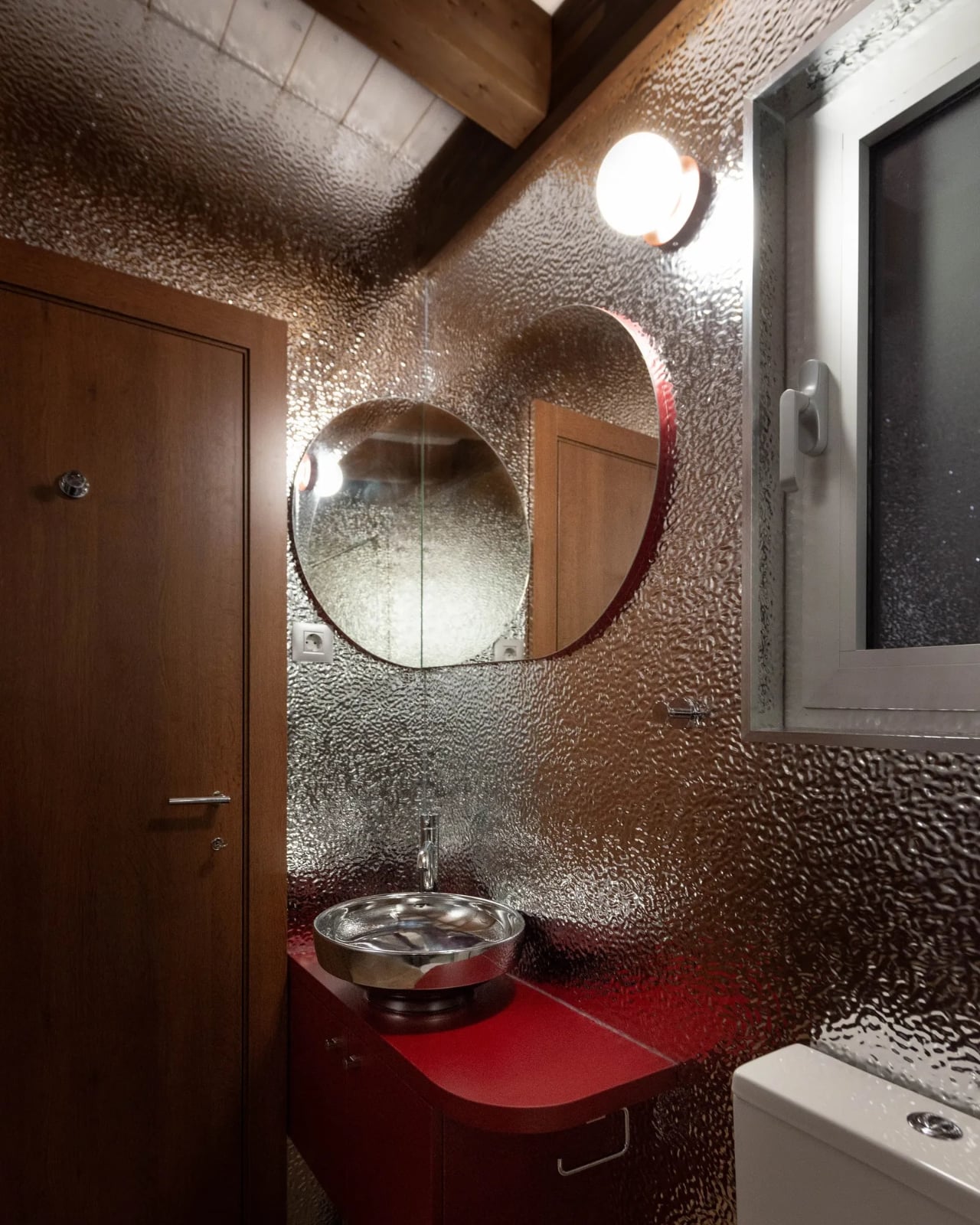
The design is inspired by the riverside setting and the old shipyards in the area, paying tribute to the maritime heritage of the site. It uses a combination of wood and metal, giving off a textural contrast and adding to the charm of the cabin. You get deep greens to mirror the water hues and red accents as a nod to nautical navigation markers. This way, you have an honest, grounded aesthetic to mirror the landscape where the retreat stands on.

The architectural language of the cabin speaks to its unique floating nature. The stationary pontoon provides a stable foundation while maintaining that gentle connection to the water’s movement. The structure’s proportions were carefully calculated to balance comfort with the intimate scale appropriate for a riverside retreat. The exterior showcases a disciplined palette that allows the cabin to feel both contemporary and timeless, never competing with its natural surroundings.

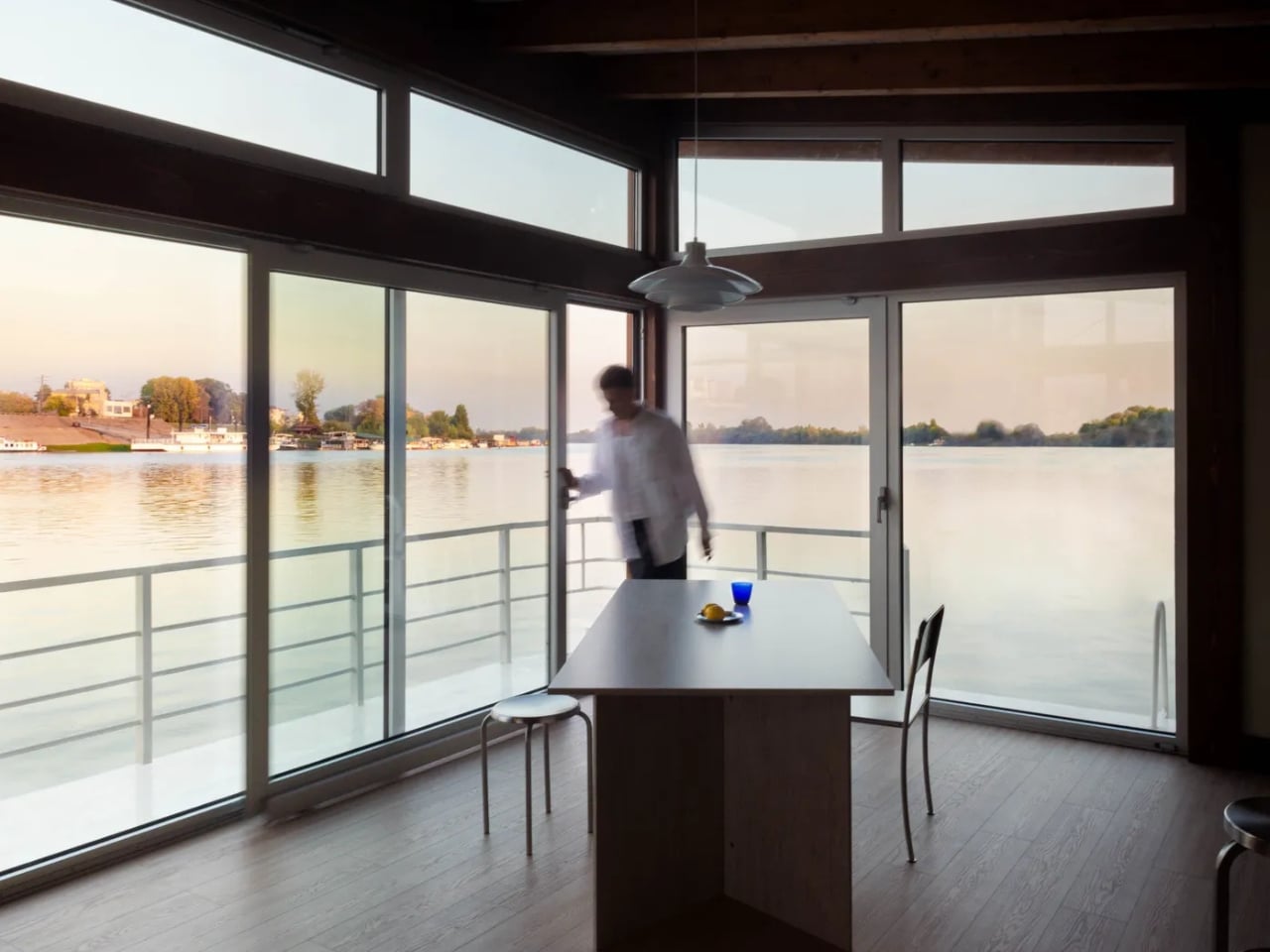
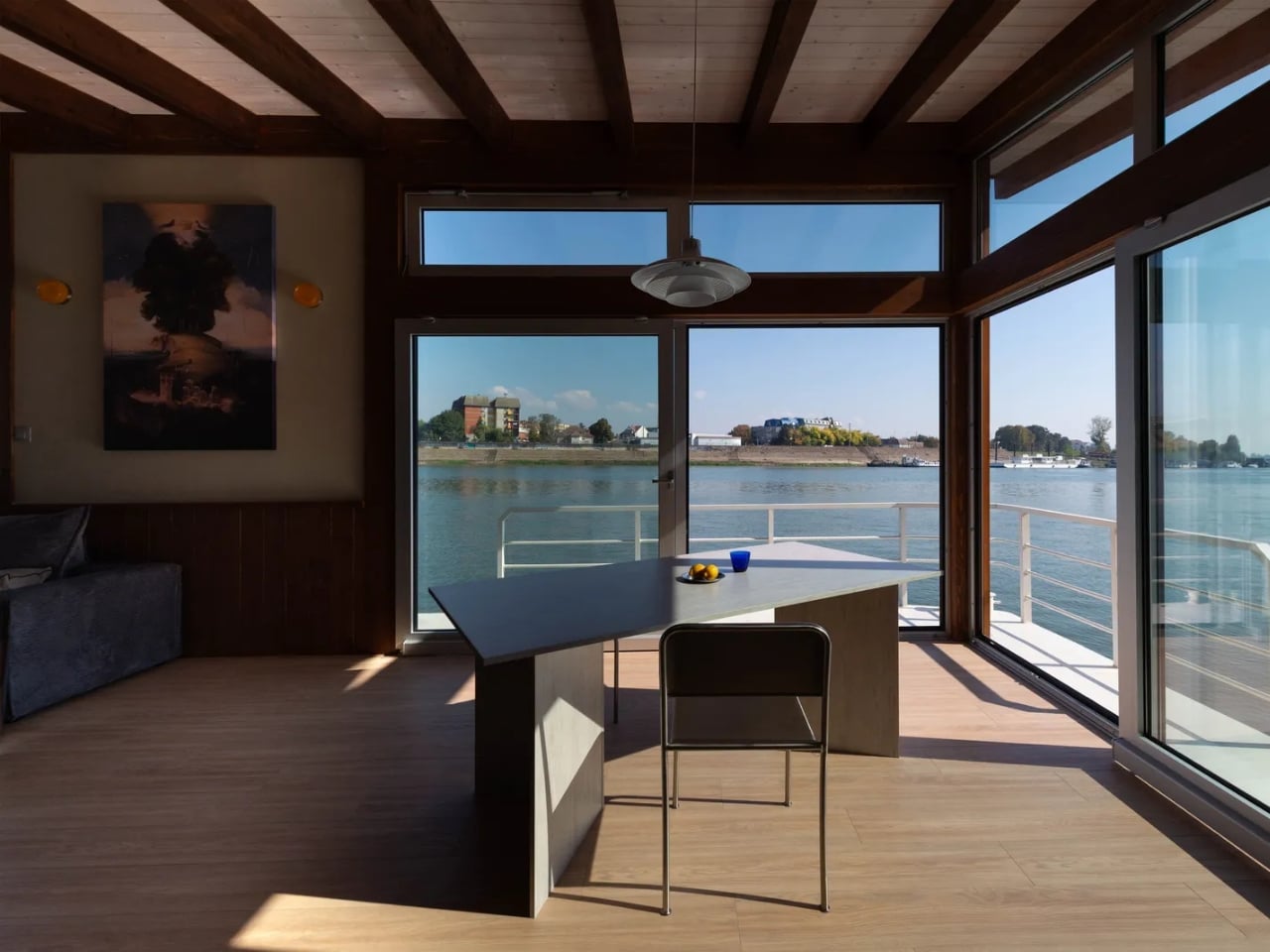
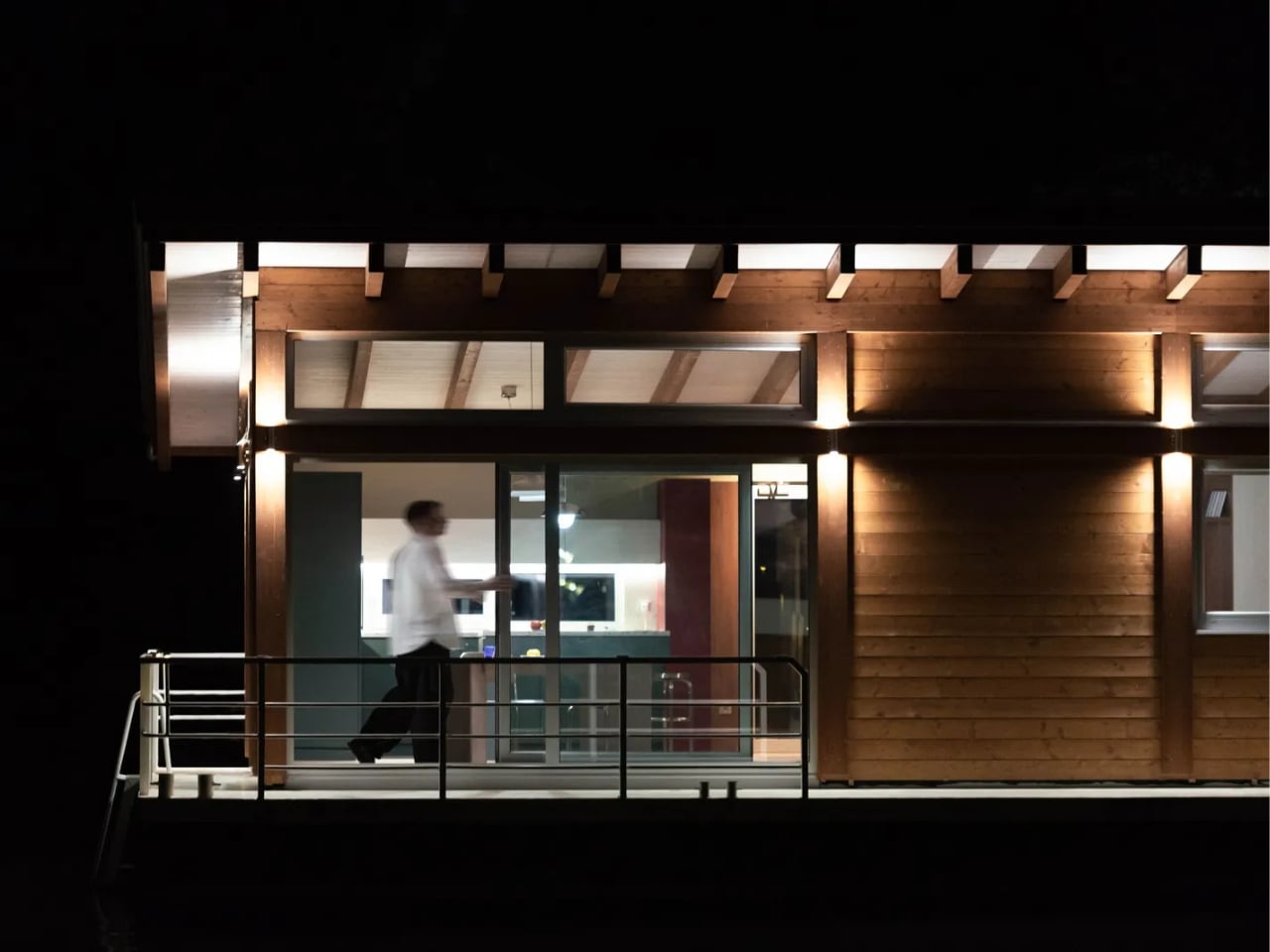
Inside, you get light-filled spaces that blur the line between being indoor and outdoor. The open-concept layout eliminates unnecessary walls, creating fluid spaces where the family room seamlessly transitions from one activity zone to another. It also highlights the riverside location by providing carefully framed scenic views from within. Large windows act as living paintings, capturing different perspectives of the Sava River throughout the day, from morning mists to golden-hour reflections. You’re connected to your surroundings while also creating a calm haven to get you away from your normal life, emphasizing a floating and peaceful feeling for everyone, whether it’s daytime or when it’s illuminated at night.

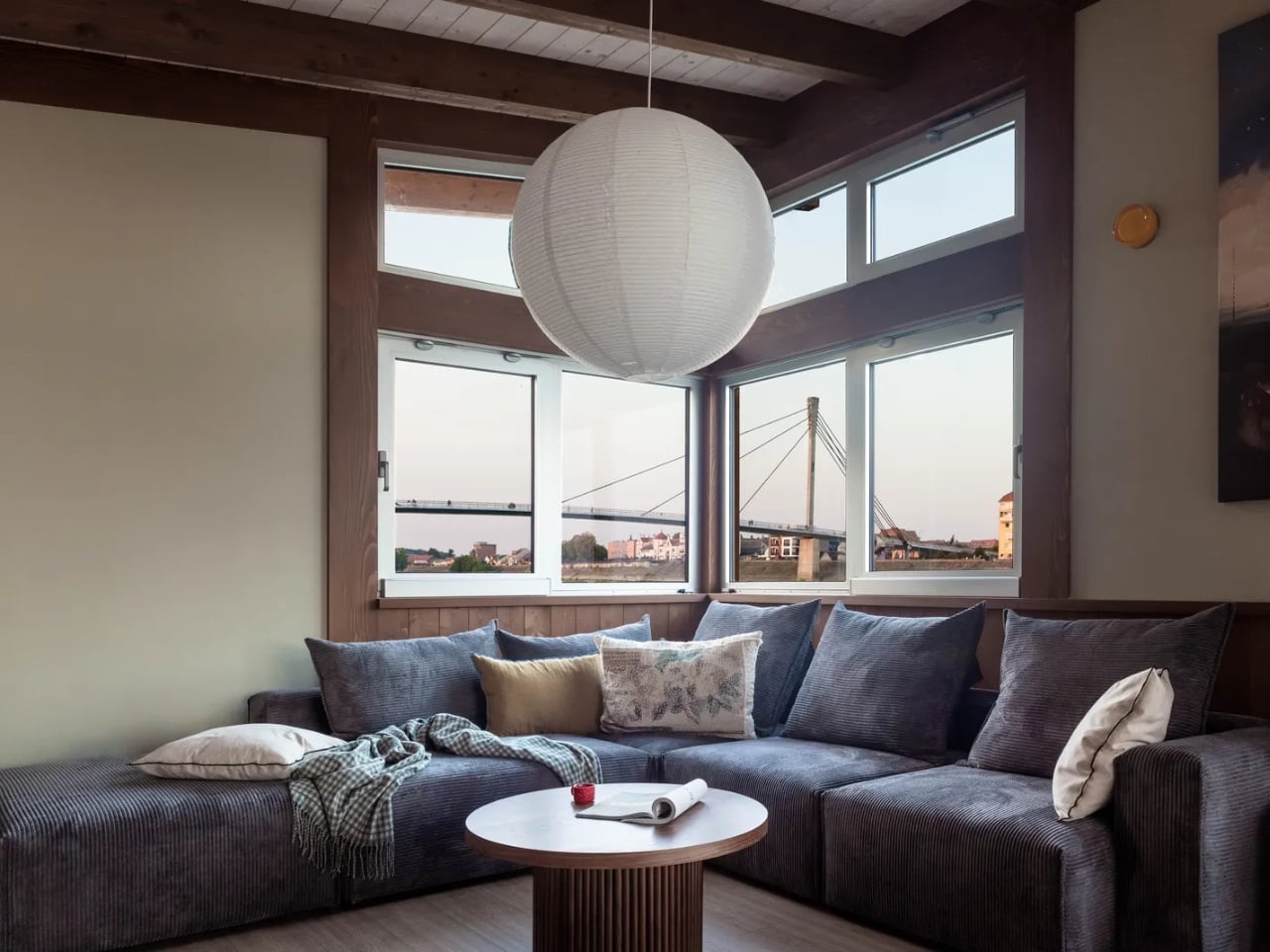
The interior features continue the nautical theme with sculptural quality and attention to detail. Dark cabinetry grounds the space, while the interplay of textures (smooth metal fixtures against warm wood surfaces) creates visual interest without overwhelming the compact footprint. Every element serves dual purposes: beauty and function coexist in perfect harmony. The thoughtful material choices extend to every surface, creating a cohesive environment where you can truly unwind. Imagine spending your afternoons here with a good book, watching the river flow by, or gathering around the table for long conversations with friends over wine and home-cooked meals.

This marks a homecoming of sorts for Serbian-born Stanković, who’s an architect and designer based in London. He collaborated with local Serbian engineers and contractors for this project, showcasing local craftsmanship and expertise. Notably, this is the very first completed project by Studio MARSA, making it a significant milestone in the studio’s portfolio and a testament to Stanković’s vision.

The Sava River cabin is a project that blends functionality with poetry since it can be both a practical weekend retreat for the family as well as a thoughtful meditation place where heritage and nature come together.

The post This Floating River Cabin in Serbia Is Our Dream Weekend Escape first appeared on Yanko Design.

Viral Reddit post critical of food delivery apps may have been AI-generated

A viral Reddit post purportedly from an employee of a "major food delivery app" may actually be an AI-generated hoax, The Verge reports. The post itself, and an image of an employee ID card the poster, u/trowaway_whistleblow, shared with The Verge, where both flagged as being likely AI-generated when run through online AI detectors and AI assistants like Gemini and Claude.

Given the inflammatory nature of the post, it's not hard to see why it received over 80,000 upvotes in the four days it's been up in r/confession. The post includes a series of striking claims about the unnamed food delivery company, like that its "Priority Delivery" option doesn't actually change delivery speeds, that it sorts delivery drivers based on their level of desperation and that it steals tips from drivers. The post doesn't name a specific company, but there's enough real world evidence of driver mistreatment — including misleading pay structures that subsidize driver's base pay with tips — that it sounds true.

Executives from DoorDash and Uber Eats have both denied the claims in the post. "This is not DoorDash, and I would fire anyone who promoted or tolerated the kind of culture described in this Reddit post," DoorDash CEO Tony Xu wrote on X. When The Verge reached the poster over Signal, the employee badge u/trowaway_whistleblow provided also appeared to be AI-generated, and notably featured the text "Uber Eats" on it rather than "Uber." The poster provided similar faulty evidence to Platformer writer Casey Newton.

No one is being directly harmed by this particular AI-generated Reddit post (other than maybe the companies training AI models on Reddit data), but if there's anything this whole debacle makes clear, it's that the reputation of food delivery apps remains tarnished, to say the least.

This article originally appeared on Engadget at https://www.engadget.com/apps/viral-reddit-post-critical-of-food-delivery-apps-may-have-been-ai-generated-210558754.html?src=rss
TCL unveils its X11L SQD-Mini LED TVs at CES 2026

TCL introduced the next entry in its flagship line of televisions during CES. The X11L SQD-Mini LED Series is available for pre-order now in three sizes. But like much of the gear on show in Las Vegas this week, it doesn't come cheap. The 75-inch model of the X11L costs $7,000, the 85-inch option is $8,000 and the 98-inch model goes for $10,000. That’s more than double the costs of the QD-Mini LED TV the brand unveiled at last year’s CES.

The most notable addition in TCL's latest screen is the company's new Deep Color System. This tech leverages Super Quantum Dots, combined with its CSOT UltraColor Filter, and the Advanced Color Purity Algorithm. While a mini LED screen can't match the true blacks of an OLED, the X11L has TCL's Halo Control System to reduce the presence of bloom. The television also has 20,000 discrete dimming zones and boasts peak brightness of 10,000 nits. 

Well-known brand Bang & Olufsen continues to be responsible for the TV's audio system. The models use an upgraded AI processor to deliver enhanced color, contrast, clarity, motion, upscaling and sound. It's also integrated with Gemini for Google TV.

This article originally appeared on Engadget at https://www.engadget.com/home/home-theater/tcl-unveils-its-x11l-sqd-mini-led-tvs-at-ces-2026-205532386.html?src=rss

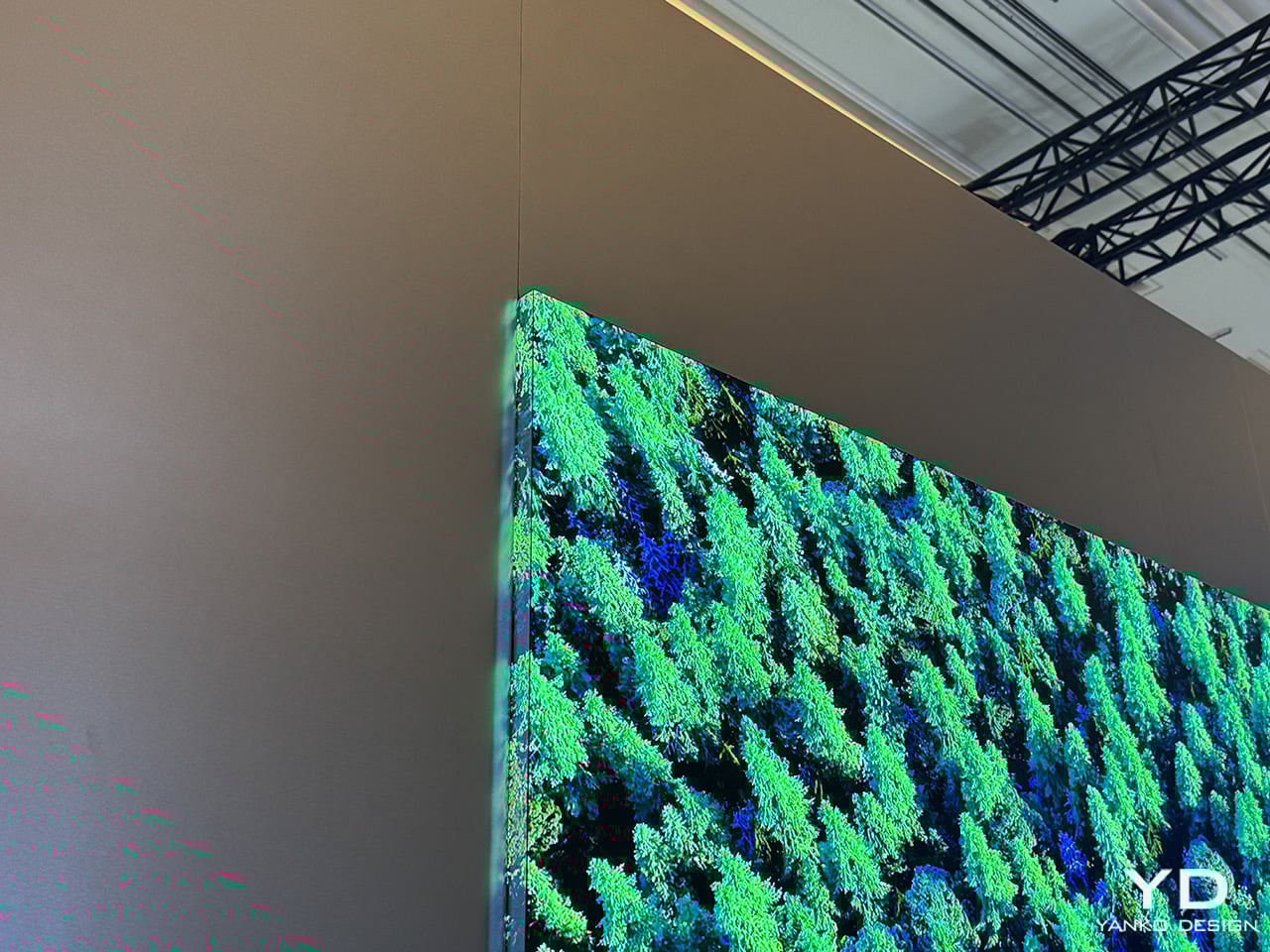
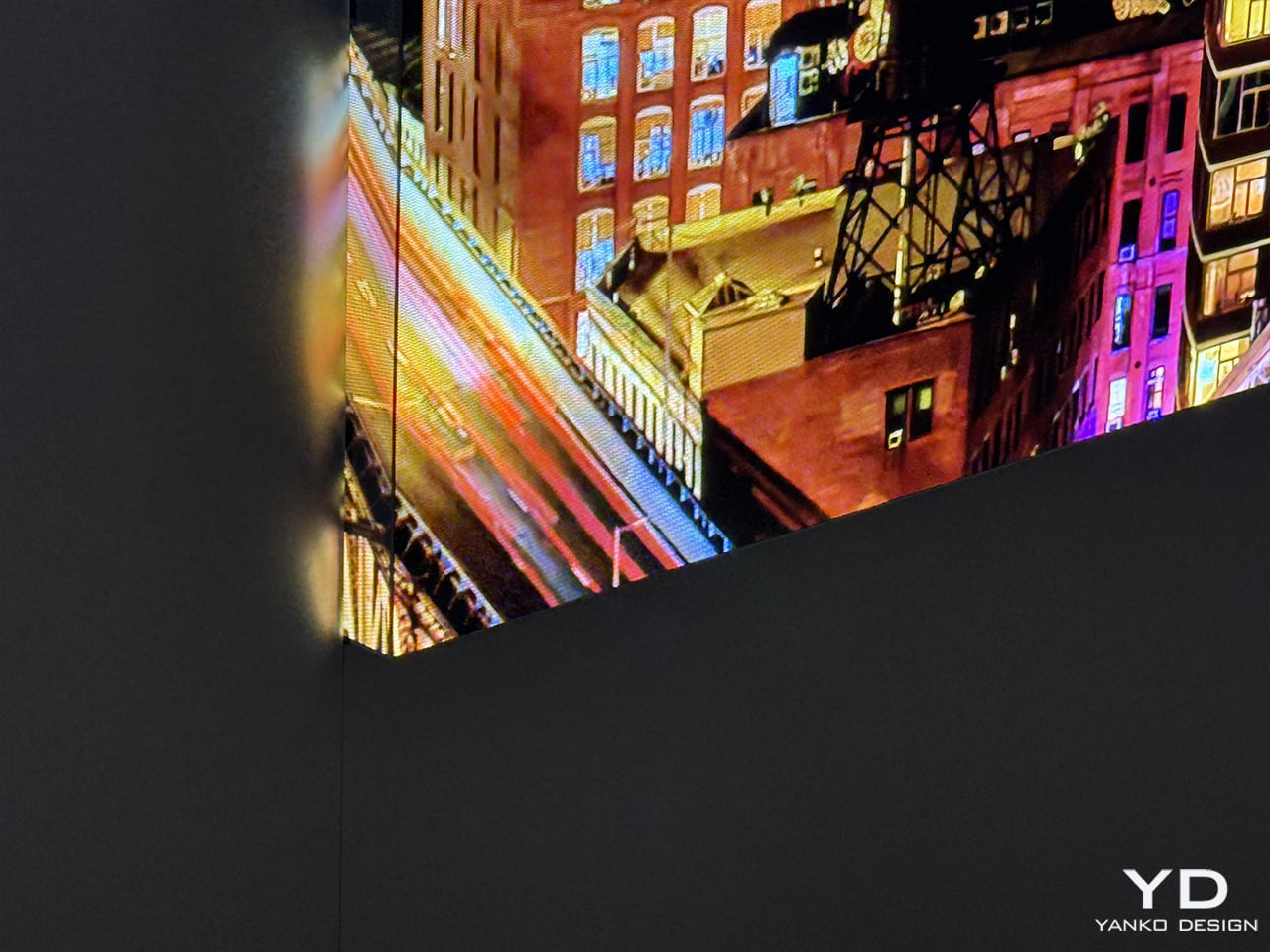
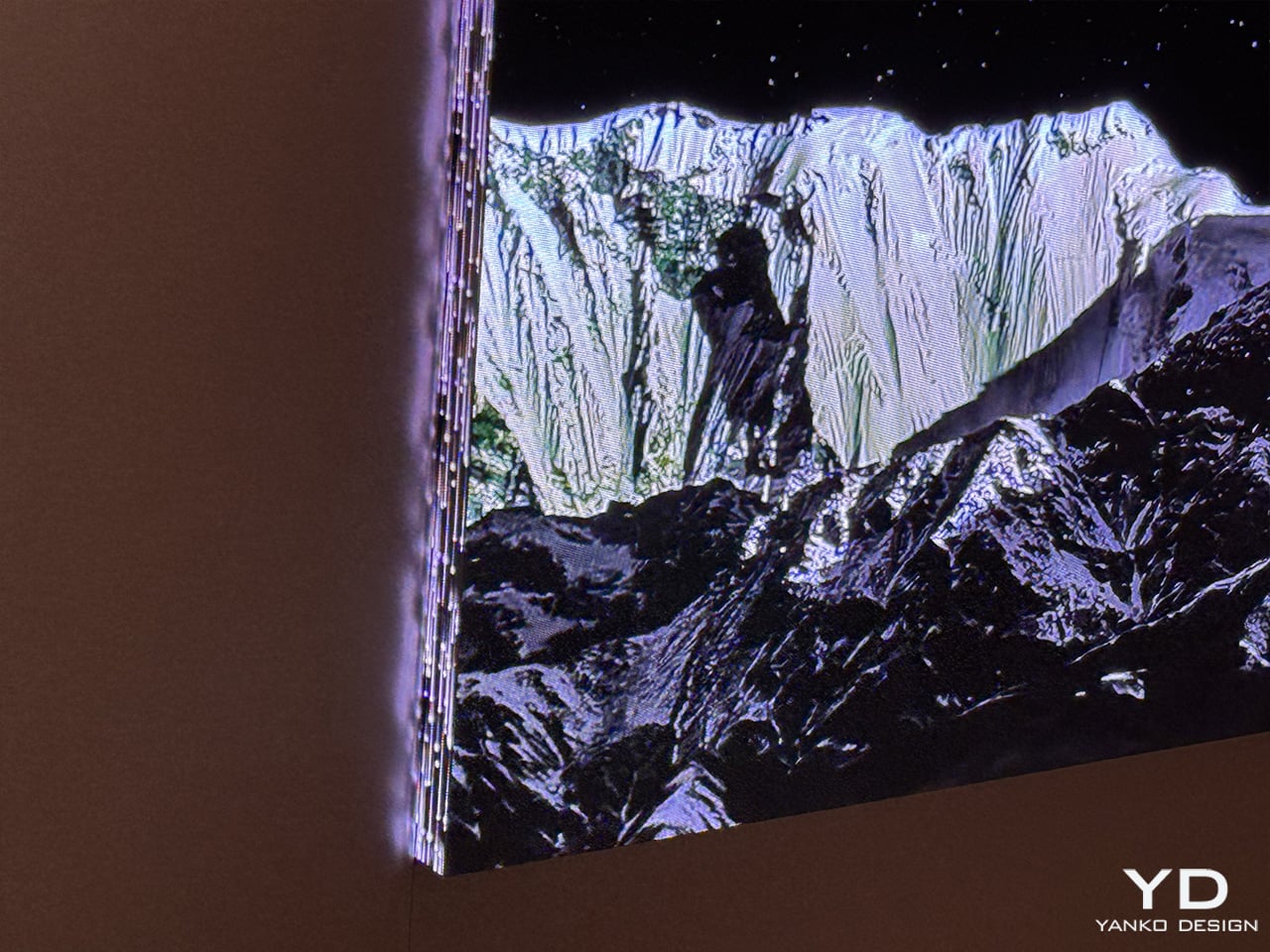
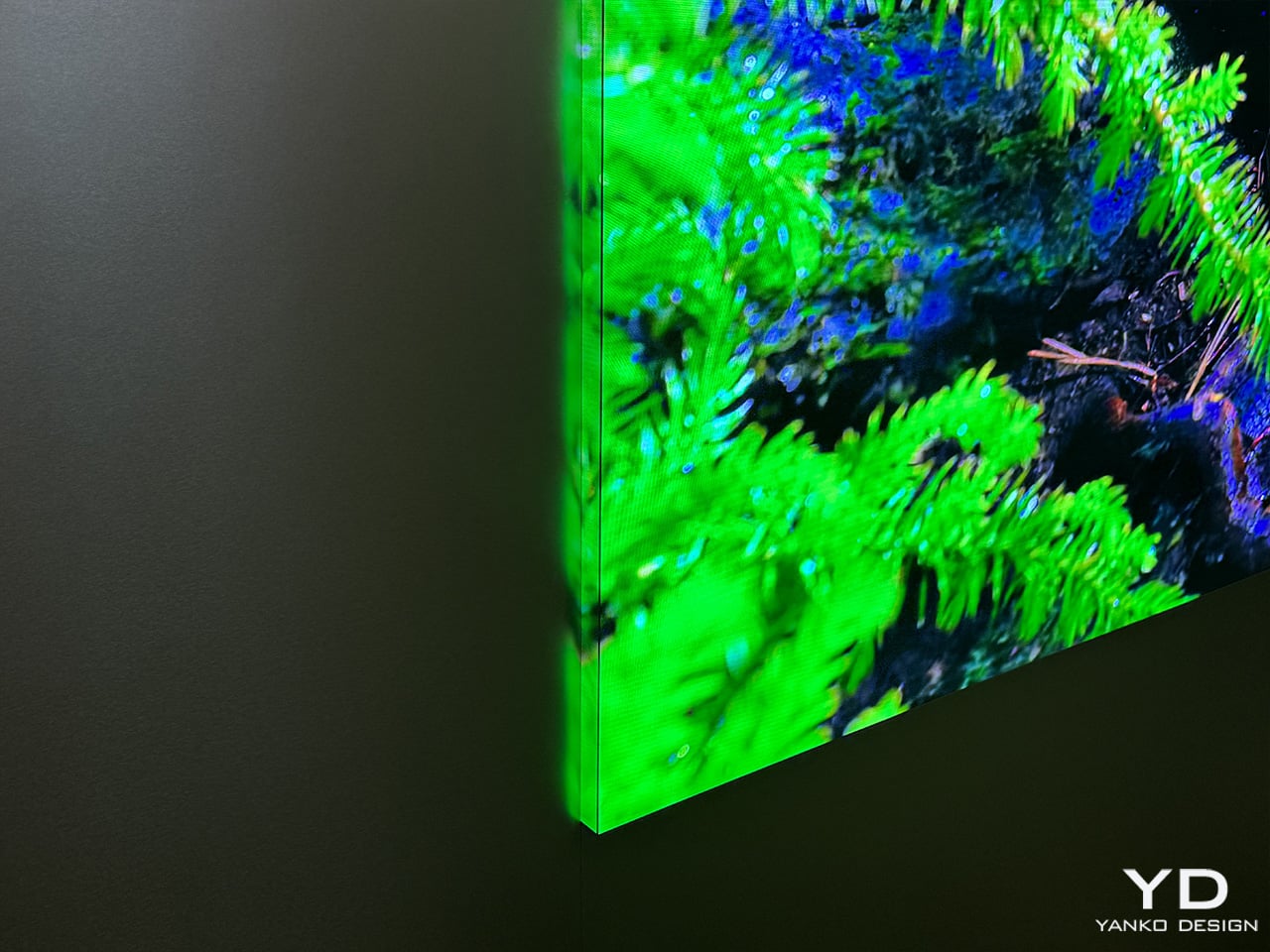
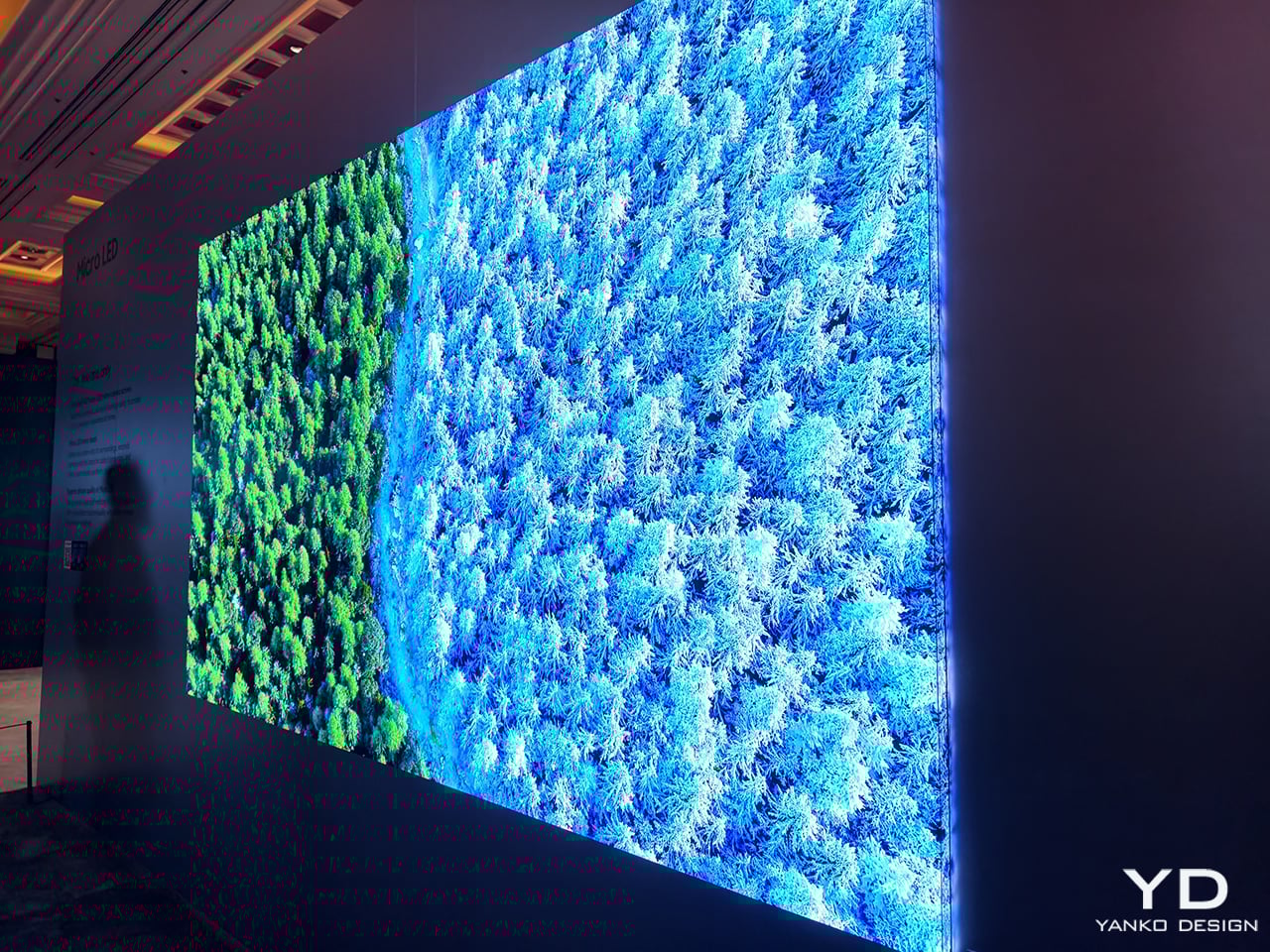
Samsung unveils foldable 140-inch TV with extended display bezel around the corners at CES 2026

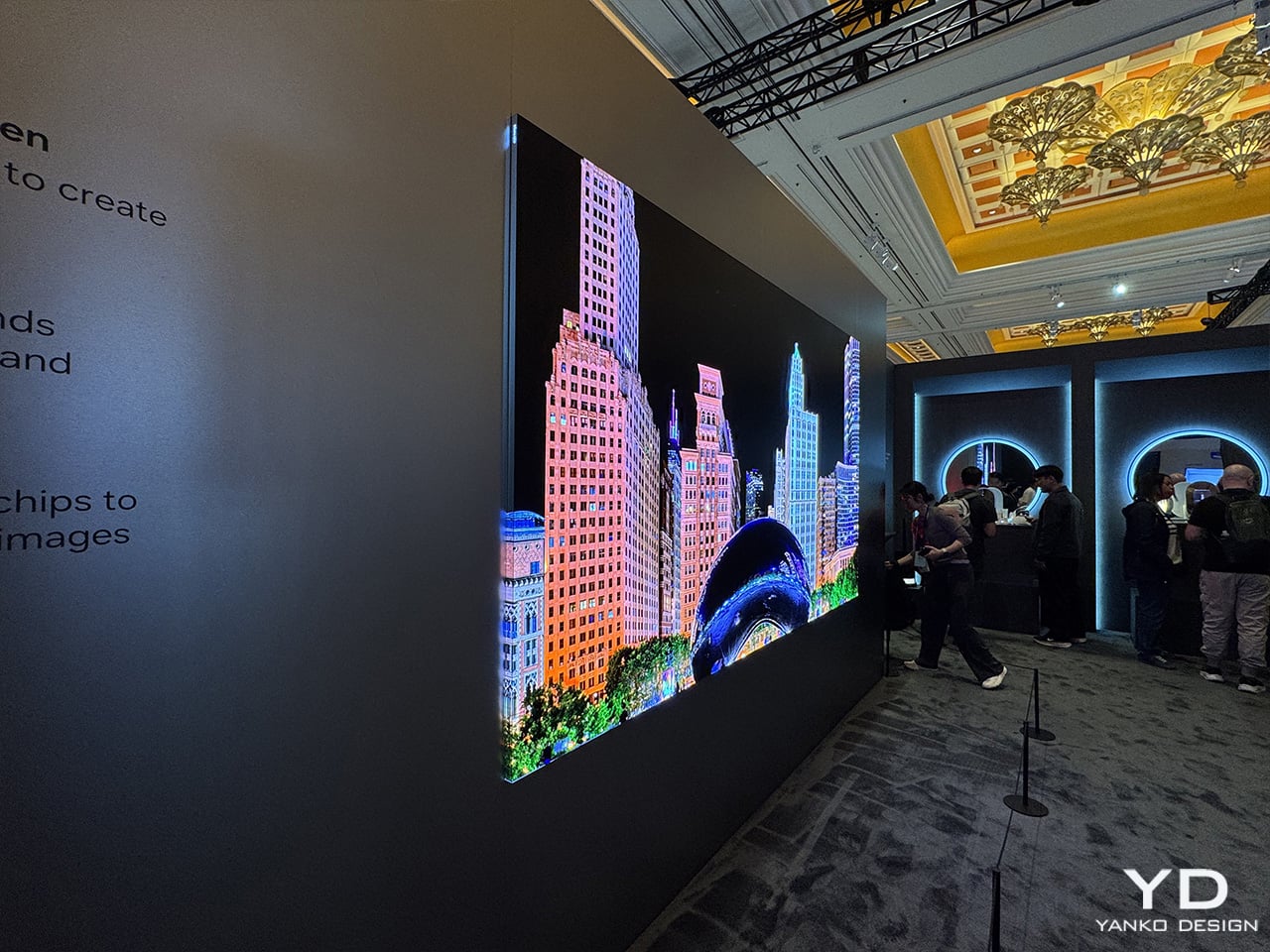
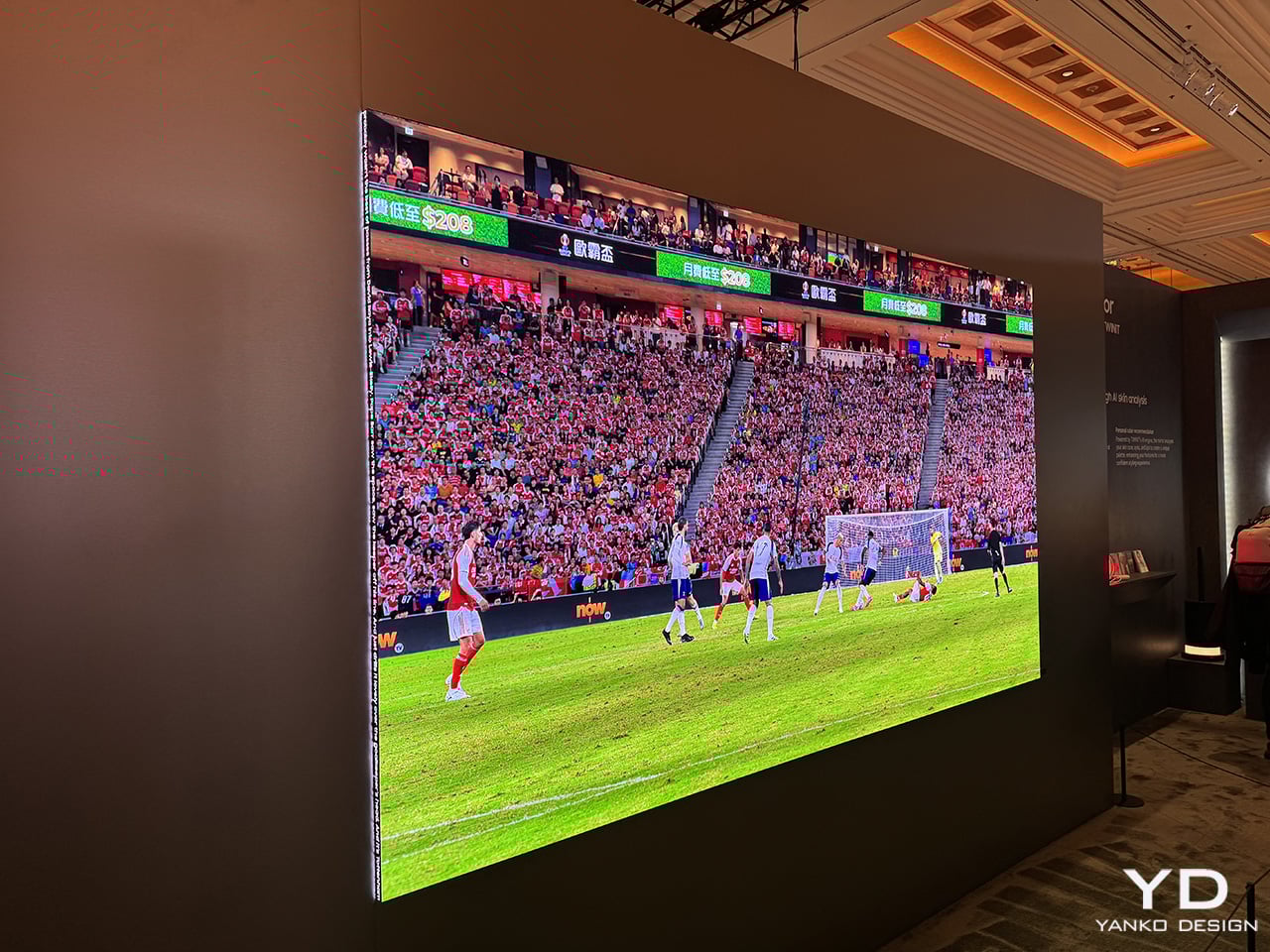
Samsung is going big on Micro RGB and Micro LED TVs for the CES 2026 event. They’ve already revealed the enormous 130-inch micro-RGB TV that we’re keenly looking forward to being bettered by other major players. But where is the biggest Micro LED TV going to sway? Samsung looks to have that one covered too, with the 140-inch Micro LED TV that elevates cinematic viewing to another level.

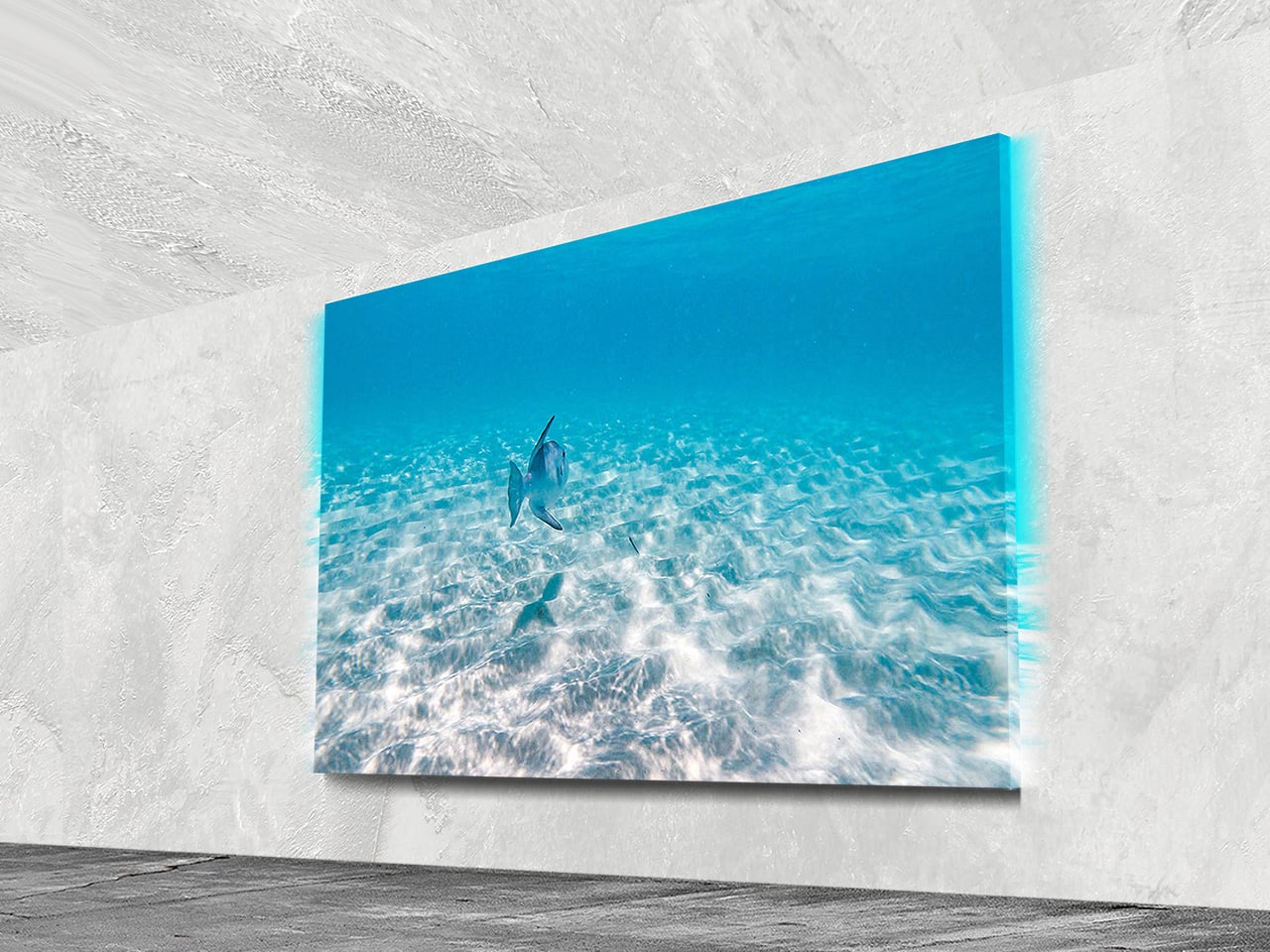
If that’s not enough, the South Korean giant is taking things a notch higher with display innovation that’s unparalleled, at least for now. Just like some of the smartphones with a waterfall design that extends beyond the horizontal plane of the phone, Samsung is bringing a whole new tech to the event. On the sides, the TV’s screen extends beyond the watchable area, extending as a continuation of the screen.

Designer: Samsung

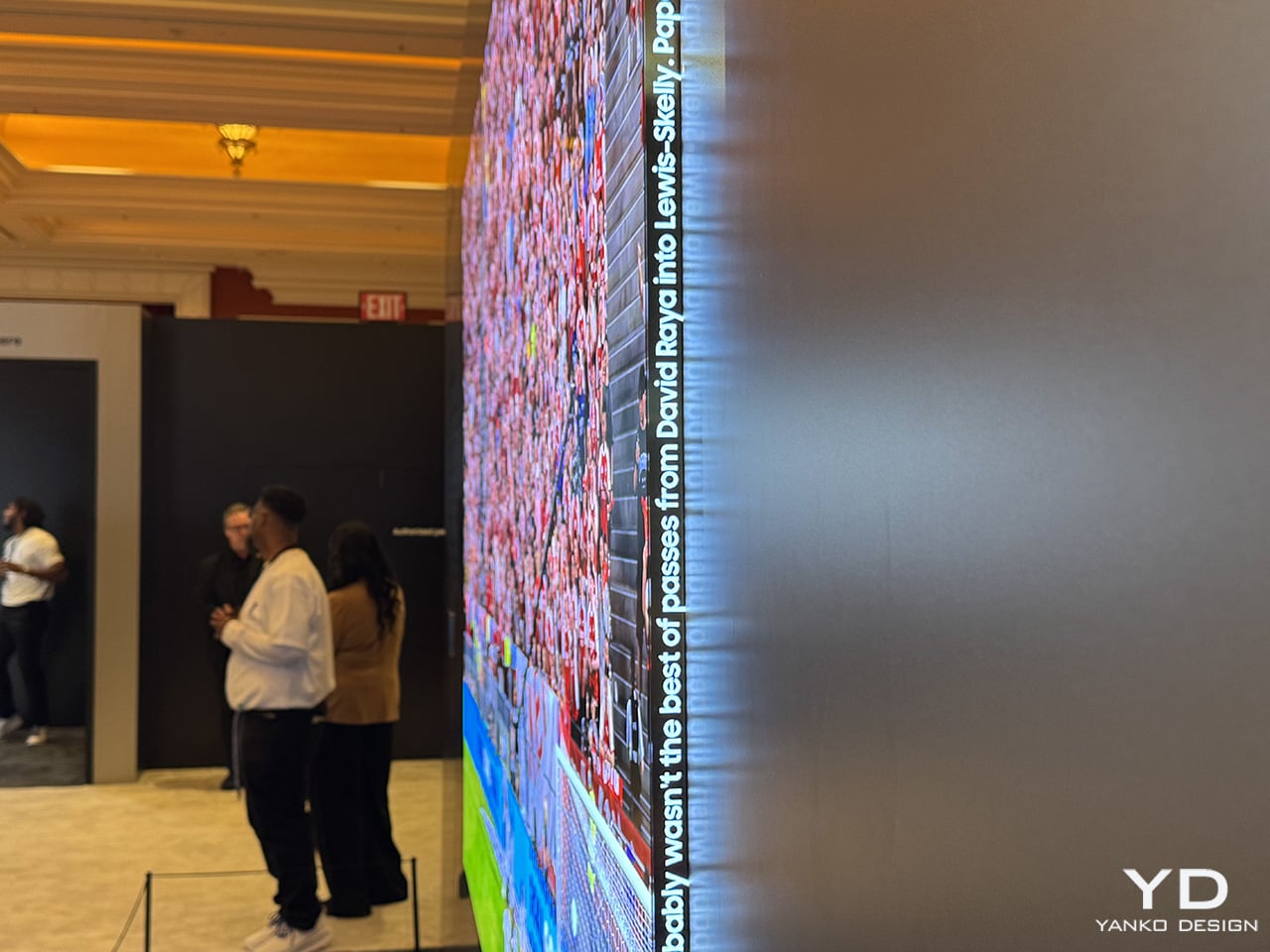
Samsung is calling it the Mirror Bezel, creating a more immersive 3D effect that we’ve not seen before. For instance, the side panels can display the in-game score during live sports, commentary text,  or show the news headlines. The side panels can be turned on independently to show customizable patterns. The possibilities are endless, and Samsung will put the hardware to good use for an extended experience beyond the flat display.

Other than this innovation, they have designed the TV to fold into two for displaying artwork. The display has a hinge system at the center, which should be half the size to 70 inches of display for your artwork. This apparently makes it the world’s first TV that folds in half. This puts it flush against the LG Gallery TV and their own Frame TV. The design makes it well-suited for your living room or even a sizeable bedroom.

The AI in the display is used to analyse the content being displayed and extend the picture, or show other elements depending on the content being viewed. More information is expected to seep in about this exciting display tech at the event. For now, there’s no word on the detailed specifications, availability, or the price.

The post Samsung unveils foldable 140-inch TV with extended display bezel around the corners at CES 2026 first appeared on Yanko Design.

Paris court finds 10 people guilty of cyberbullying Brigitte Macron

A Paris court has found 10 people guilty of cyberbullying Brigitte Macron, wife of President of France Emmanuel Macron, the BBC reports. The judge found that the defendants made false claims about Macron's gender and sexuality, and "malicious remarks" about the 24-year age gap between Macron and her spouse.

Of the ten defendants, only one received a firm prison sentence of six months, according to LeMonde. Eight others received suspended sentences (effectively probation in France) of four to eight months, while the 10th person received a fine and was required to attend a sensitivity training course. Three of the “instigators” found guilty will lose access to their social media accounts for six months.

Key to the lawsuit is the fringe belief that Brigitte Macron was born a man — proponents for some reason believe Macron is Jean-Michel Trogneux, her older brother — and transitioned to living as a woman at some point later in life. This style of "transvestigation" is an unfortunately common type of online conspiracy theory, a roundabout way to both spread hateful rhetoric about transgender people and bully cisgender people at the same time. The campaign against Macron has the added twist of her age: Brigitte Macron is 72, 24 years older than President Macron. The pair married in 2007, but their age difference has been an ongoing narrative throughout Emmanuel Macron's political career.

In July 2025, Macron also filed a defamation lawsuit in the US against Candace Owens, a right-wing podcaster and conspiracy theorist. Owens has made multiple attempts since 2024 to spread false claims about Macron's gender, and has said that she's willing to stake her "entire professional reputation" that she's right.

Correction 01/06/26 8:43: A previous version of this article incorrectly stated the length of the sentences. We regret the error.

This article originally appeared on Engadget at https://www.engadget.com/social-media/paris-court-finds-10-people-guilty-of-cyberbullying-brigitte-macron-195500994.html?src=rss

NVIDIA is reportedly bringing back 2021’s RTX 3060 GPU because AI is eating all of the newer cards

A reputable leaker has indicated that NVIDIA plans on bringing the RTX 3060 back to market, according to reports by Kotaku and WFCCTech. It first released the GPU at the beginning of 2021. The leaker Hongxing2020 indicates that NVIDIA will resume production of the 3060 sometime in the next few months.

Why is the world's most valuable company reportedly bringing back such an antiquated graphics card? You know the answer. It's the endless gaping maw known as AI. Tech companies have been hoovering up PC parts for AI applications with reckless abandon. It has become a legitimate challenge for a regular person to buy RAM and graphics cards, which has led to price increases across the board and companies like Crucial closing up shop.

It's particularly difficult to get ahold of GDDR7 RAM, which is needed for the newer RTX 5060 cards. So NVIDIA's solution looks to be a hop in the time machine to 2021. Gamers will need something, after all, and the 3060 technically gets the job done. Any downgrade in graphics and performance will be worth it once you watch an AI-generated video of Kurt Cobain singing in heaven with Albert Einstein, am I right? It's hilarious because they never got to meet in real life.

The RTX 3060 is still pretty popular, despite NVIDIA phasing out the card back in 2024. We don't know how much the company plans on charging for this trip down memory lane. The GPU originally cost around $329.

One would think that five-year-old technology could easily hit a much lower price point, but NVIDIA has us in a chokehold here and it can pretty much charge whatever it wants. Again, no price is too high when considering the magical wonders of generative AI. You can watch Tupac hang out with Mr. Rogers for five seconds.

This article originally appeared on Engadget at https://www.engadget.com/ai/nvidia-is-reportedly-bringing-back-2021s-rtx-3060-gpu-because-ai-is-eating-all-of-the-newer-cards-194241706.html?src=rss

LG Sound Suite hands-on at CES 2026: Home theater powered by Dolby Atmos FlexConnect

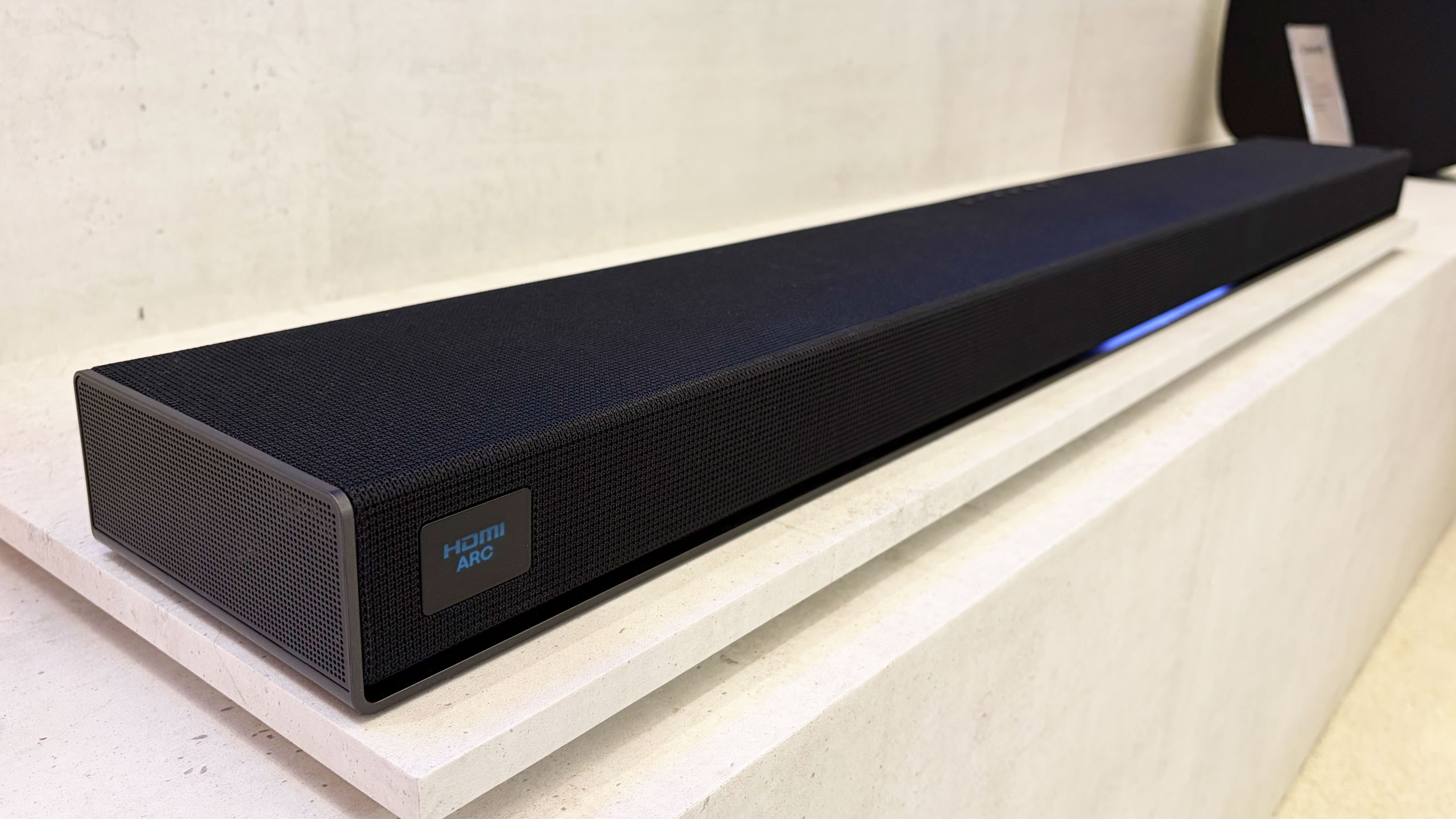
Dolby introduced its FlexConnect technology a few years ago, vowing that it would allow customers to position soundbars and speakers anywhere in a room. The company said the platform would then reconfigure the sound automatically, taking into account any locations that may be further away from the center sweet spot. At CES 2026, LG is the first to put Dolby Atmos FlexConnect in a soundbar, offering the so-called Sound Suite that also includes satellite speaker options and a subwoofer. You don’t need every member of the lineup to use Dolby’s tech, so you can pick and choose which items work best for your living room. 

The centerpiece of the Sound Suite is the H7 soundbar. This 9.1.6-channel speaker is configured for spatial audio (Dolby Atmos) and supports lossless audio up to 24 bit/96kHz. The standout on the spec sheet for me is the six up-firing channels, which should enhance the sensation of overhead sounds. Most of the soundbars I review have only two of those. 

What’s more, the H7 is equipped with a feature called Sound Follow that tracks the location of your phone to reconfigure the audio when your position changes. Maybe you move to a comfy chair instead of the sofa right in front of the TV. The idea is that you don’t have to suffer through subpar audio during a movie or show just because you aren’t in the best spot. 

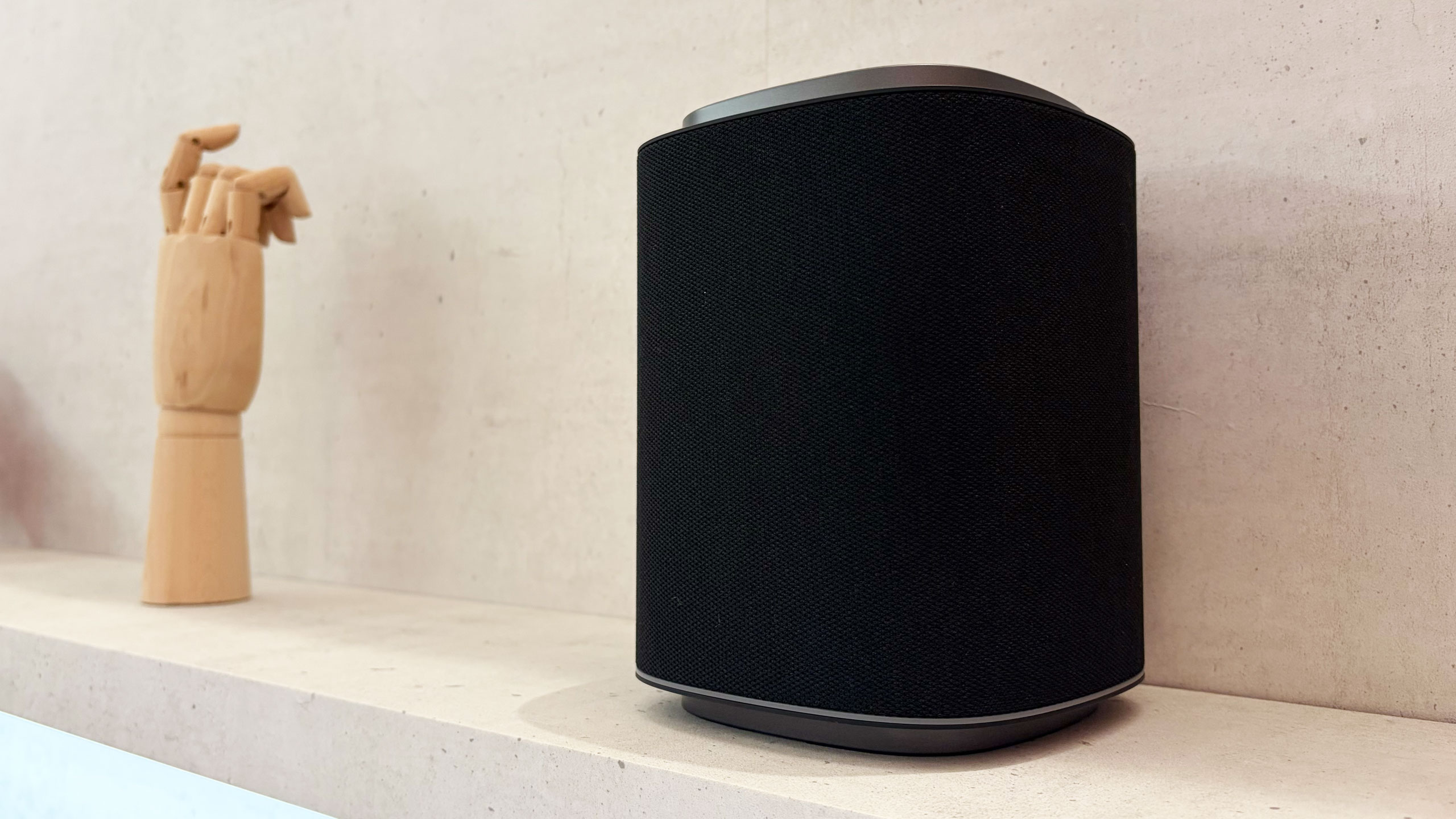
LG Sound Suite H7 soundbar
Billy Steele for Engadget

Then there are the M5 and M7 speakers. When used with the H7 soundbar, these are the satellite speakers, but LG cautioned me against calling them “rear” units. While it’s true a pair of them will be positioned behind most people’s sofas, the company explained that there’s more audio content coming out of them than traditional rear channels provide. As such, two of the M5s or M7s that are used to complement the speakers inside one of LG’s impressively thin TVs are doing more work than just beaming sounds that are designed to come from behind. 

The M5 is a 1.1.1-channel speaker while the M7 is 2.1.1. Like the H7, both support Dolby Atmos and lossless music. What’s more, the entire Sound Suite arsenal has Wi-Fi and Bluetooth connectivity, including AirPlay 2, Google Cast and both Spotify and Tidal connect. The whole shebang also employs LG’s own AI Sound Pro and Room Calibration Pro, and all of the settings are customized in the ThinQ app for Android and iOS. 

Each speaker can be used independently should the need arise, and as I already mentioned, you can pick and choose which components will work best for you — up to four total speakers. So you can opt for the H7, sub and two speakers or four of either the M5 or M7. You can also get a smaller setup with two speakers or just the soundbar and subwoofer. Dolby Atmos FlexConnect is still in play no matter what combination you decide on. I should note the optional W7 subwoofer is quite large, but you can use it standing upright or laying flat, according to LG.

LG Sound Suite M5 speaker
Billy Steele for Engadget

Of course, none of this means anything if Sound Suite doesn’t actually sound good. I’m happy to report LG’s collection of speakers are sonically impressive. I was able to get a good sense of how they’ll perform in a quite demo room at CES. Watching a variety of movie clips in Dolby Atmos, I flipped back and forth between a setup with four M7 speakers and a more robust configuration of the soundbar, subwoofer and M7 speakers. While I preferred the overall tone and tuning of the four M7s, I can concede the bigger collection offered more immersive sound and better directional audio. That said, they both provided excellent clarity and pristine detail.

With Sound Follow, you can quickly have Sound Suite reconfigure the audio based on the location of your phone with just a tap. Let’s say you move from the couch to a comfy chair and want to adjust the sound to that spot. You can do that in the app. And while I could tell a slight difference in a side-of-the-room location and the center sweet spot in front of the TV, the correction did offer an improvement over the unadjusted audio.

I was also able to test standalone mode, where you can quickly use any Sound Suite speaker individually for music. Sound quality was consistent here too, and the system allowed me to add a second M7 speaker for a stereo pair with a few taps in LG’s app. Overall, the Sound Suite lineup offers lots of flexibility in terms of features and configurations. In fact, LG says that between the H7, W7, M5 and M7, there are 50 possible combinations.

Unfortunately, LG hasn’t announced pricing or availability yet. Given the capabilities of the Sound Suite system, I don’t expect the more robust collections to come cheap. However, I do think the company will offer a few different bundles that will hopefully provide a discount over buying each component individually.

This article originally appeared on Engadget at https://www.engadget.com/home/home-theater/lg-sound-suite-hands-on-at-ces-2026-home-theater-powered-by-dolby-atmos-flexconnect-192709499.html?src=rss