Amazon Go and Fresh stores are closing as Amazon focuses on grocery delivery and Whole Foods

Amazon is rethinking its grocery business, and as part of that, it will shut down all of its remaining Amazon Go and Amazon Fresh physical stores. The company will convert some locations into Whole Foods Market stores. 

"While we've seen encouraging signals in our Amazon-branded physical grocery stores, we haven't yet created a truly distinctive customer experience with the right economic model needed for large-scale expansion," the company wrote in a blog post. Amazon added that it would help workers at Go and Fresh stores to find positions elsewhere within the company.

For now, Amazon is focusing its grocery efforts on Fresh deliveries, Amazon Now (a 30-minutes-or-less delivery option it recently introduced to compete with DoorDash and Instacart) and Whole Foods. It plans to open more than 100 new Whole Foods Market stores over the next few years. 

Amazon also says it will introduce new types of physical locations in the coming years. One concept it's considering is a "supercenter" that would offer a broad selection of goods from Amazon, including household items, groceries and "general merchandise." I dunno, that just sounds like a supermarket to me.

Meanwhile, the checkout-less Just Walk Out tech that the company implemented in Go and Fresh stores is still in use at third-party locations, including hospital cafeterias and sports arenas. Amazon has also deployed it in break rooms in dozens of its warehouses to help "employees maximize break time by grabbing meals without checkout delays." It’s definitely not to keep closer tabs on workers, I’m sure.

This article originally appeared on Engadget at https://www.engadget.com/general/amazon-go-and-fresh-stores-are-closing-as-amazon-focuses-on-grocery-delivery-and-whole-foods-180448412.html?src=rss

Google AI Plus is now available in the US for $8 a month

Google AI Plus, the company’s most affordable AI subscription plan, is now rolling out in the US. It will cost you $8 a month for its features, though you can get it for $4 a month for the first two months for a limited time only. AI Plus gives you access to 200GB of storage, as well as access to the Gemini 3 Pro model, Deep Research and Nano Banana Pro inside the Gemini app. Nano Banana Pro generates images that look so realistic, they’re nearly indistinguishable from ordinary photos snapped on phones. Google even had to limit its usage due to high demand.

A subscription to AI Plus also expands your access to Google’s AI filmmaking tool Flow, its image-to-video creator tool Whisk and its research assistant tool NotebookLM. In addition to the US, the plan is now making its way to 34 more countries, making it available in all regions where Google is selling its AI services. In the US, the new option costs less than half of a $20 AI Pro subscription, which comes with 2TB of storage and access to more tools like code assist. Google’s most expensive AI plan, the AI Ultra, costs a whopping $250 a month and comes with 30TB of storage, along with all the AI tools the company can offer. Take note that if you’re paying for a Google One Premium 2TB subscription, you’ll also get all of AI Plus’ features over the next few days.

This article originally appeared on Engadget at https://www.engadget.com/ai/google-ai-plus-is-now-available-in-the-us-for-8-a-month-180000175.html?src=rss

OpenAI releases Prism, a Claude Code-like app for scientific research

OpenAI is releasing a new app called Prism today, and it hopes it does for science what coding agents like Claude Code and its own Codex platform have done for programming. 

Prism builds on Crixet, a cloud-based LaTeX platform the company is announcing it acquired today. For the uninitiated, LaTeX is a typesetting system for formatting scientific documents and journals. Nearly the entire scientific community relies on LaTeX, but it can make some tasks, such as drawing diagrams through TikZ commands, time-consuming to do. Beyond that, LaTeX is just one of the software tools a scientist might turn to when preparing to publish their research.   

That's where Prism comes into the picture. Like Crixet before it, the app offers robust LaTeX editing and a built-in AI assistant. Where previously it was Crixet's own Chirp agent, now it's GPT-5.2 Thinking. OpenAI's model can help with more than just formatting journals — in a press demo, an OpenAI employee used it to find and incorporate scientific literature that was relevant to the paper they were working on, with GPT-5.2 automating the process of writing the bibliography. 

"None of this absolves the scientist of the responsibility to verify that their references are correct, but it can certainly speed up the process," said Kevin Weil, vice president of science for OpenAI, when asked during the demo the possibility of ChatGPT generating fake citations. 

"We're conscious that, as AI becomes more capable, there are concerns around volume, quality and trust in the scientific community," he later added. "Our view is that the right response is not to keep AI at arm's length or let it operate invisibly in the background; it's to integrate it directly into scientific workflows in ways that preserve accountability and keep researchers in control." 

Later in the same demo, the OpenAI employee used Prism to generate a lesson plan for a graduate course on general relativity, as well as a set of problems for students to solve. OpenAI envisions these features helping scientists and professors spend less time on the more tedious tasks in their professions. 

Prism is available to anyone with a personal ChatGPT account. It includes support for unlimited projects and collaborators. OpenAI plans to bring the software to organizations on ChatGPT Business, Team, Enterprise and Education plans soon. Crixet won’t be offered separately.

This article originally appeared on Engadget at https://www.engadget.com/ai/openai-releases-prism-a-claude-code-like-app-for-scientific-research-180000454.html?src=rss

WhatsApp introduces an advanced security mode to protect against hackers

Meta's WhatsApp just introduced something called Strict Account Settings, a tool "that further protects your account from highly sophisticated cyber attacks." This is a one-click button in the settings that automatically initiates a series of defenses.

So what does it do? It blocks media and attachments from unknown senders, disables link previews and silences calls from unknown senders. This results in a more restrictive experience, but hopefully a safer one.

The company says this isn't necessarily for regular users, as conversations are already protected by end-to-end encryption. Instead, this is being pitched as a tool for "journalists or public-facing figures" that "may need extreme safeguards against rare and highly sophisticated cyberattacks."

Strict Account Settings will be rolling out globally in the coming weeks. Users will find the tool in the Privacy settings.

WhatsApp is just the latest tech platform to offer enhanced security tools for high-risk users. Apple introduced Lockdown Mode back in 2022 and Android introduced its Advanced Protection Mode last year.

This article originally appeared on Engadget at https://www.engadget.com/cybersecurity/whatsapp-introduces-an-advanced-security-mode-to-protect-against-hackers-174144598.html?src=rss

Yahoo is adding generative AI to its search engine

Yahoo has announced a new AI-powered "answer engine", dubbed Yahoo Scout. The new tool is available now in beta and is powered by Anthropic's Claude.

The company says Scout "synthesizes" info from the web, as well as Yahoo's own data and content when constructing responses to user's natural-language search queries. Yahoo says the interface will include interactive digital media, structured lists and tables and visible source links aimed at making answers easier to verify. (Disclosure: Yahoo is the parent company of Engadget.)

Alongside Scout, Yahoo is announcing an "intelligence platform" across its varied products. This will include features like AI summaries in Yahoo Mail, “key takeaways” in Yahoo News and game breakdowns in Yahoo Sports. Scout will also integrate into Yahoo Shopping to offer insights and shoppable links, and Yahoo Finance, where it can populate company financials, analyst ratings and explain stock moves as they occur. Yahoo says the answer engine behind Scout will become more personalized and focus on "deeper experiences" as time goes on.

Google offered a glimpse of generative AI in search back in 2023, and the company's AI Mode for search was made widely available in the US last year. The company has been similarly at work integrating its AI model across its product portfolio, including Gmail and shopping.

This article originally appeared on Engadget at https://www.engadget.com/ai/yahoo-is-adding-generative-ai-to-its-search-engine-172706249.html?src=rss

This $129 Bag Lets You Play Music Without Opening It

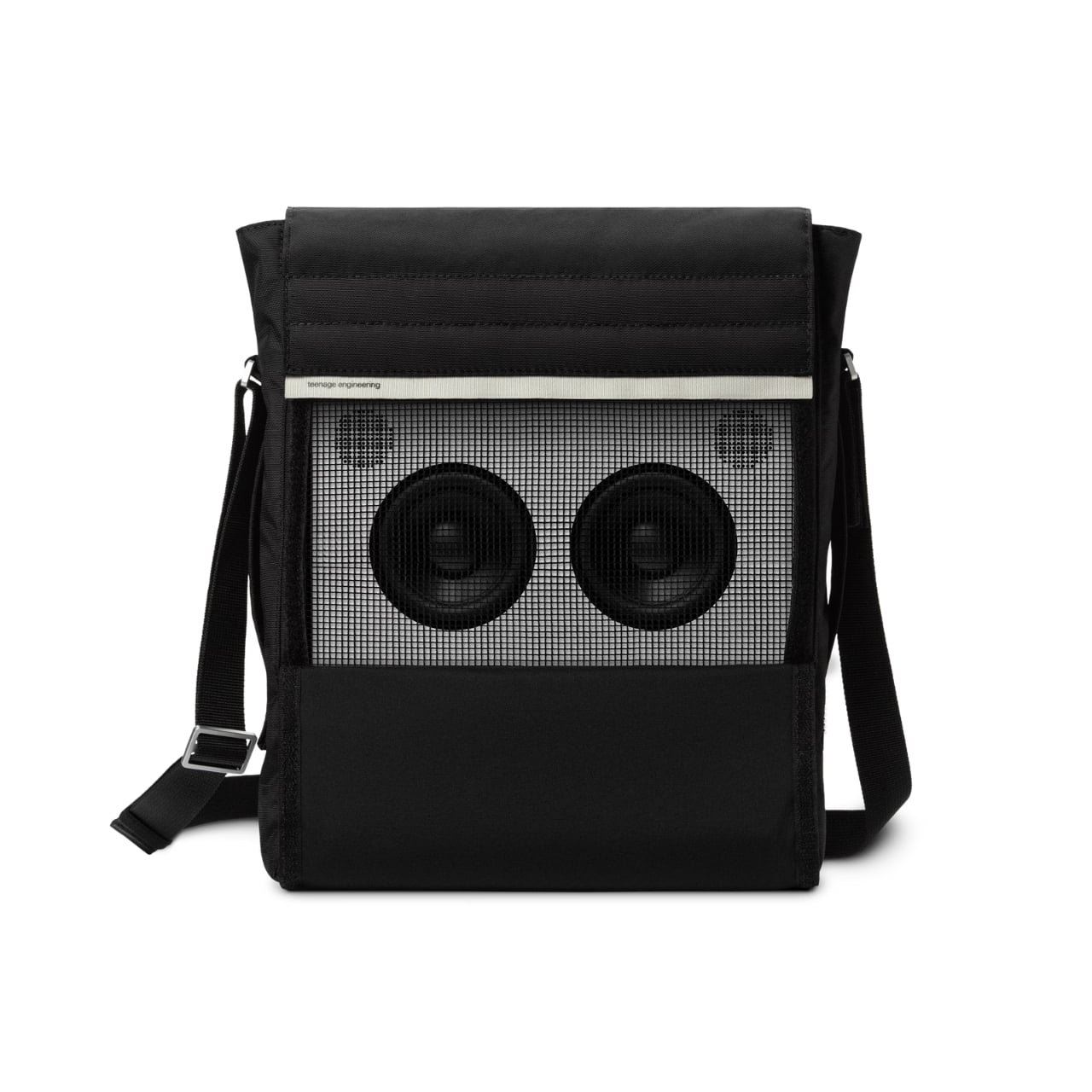
There’s something fascinating about watching a tech company obsess over the mundane. While most electronics brands treat bags as afterthoughts (slap a logo on generic nylon, call it a day), Teenage Engineering went ahead and designed a shoulder bag that’s as thoughtful as their cult-favorite synthesizers. The Field OB-4 shoulder bag isn’t trying to be your everything bag, and that specificity is precisely what makes it interesting.

Built primarily to carry the OB-4 Magic Radio, this $129 shoulder bag features a mesh front panel that lets you play music while your device stays tucked inside. Think about that for a second. Most bags are designed to protect and conceal. This one wants you to use what’s inside without ever taking it out. It’s the kind of detail that separates product design from problem-solving.

Designer: Teenage Engineering

The construction tells you everything about Teenage Engineering’s priorities. The shell uses tear and abrasion-resistant nylon 66 with a fire retardant treatment and PU backing for water repellency (1500 mm rating on the black version, 3000 mm on the white). These aren’t vanity specs. They’re the materials you’d find on technical outdoor gear, applied to something that’ll probably spend more time on subway cars than mountain trails. It’s overbuilt in the best possible way.

The bag features a roll-down covered opening that gives you variable capacity depending on what you’re carrying. There’s an internal pocket for your everyday small items (keys, wallet, that tangle of earbuds you swear you’ll organize someday). The back pocket uses hook-and-loop closure and is specifically sized for cables and the Ortho remote. Again, that specificity. Teenage Engineering could have made generic pockets, but they measured their own accessories and built compartments around them. You can wear it crossbody style or grab the side handle for hand-carry mode. The adjustability matters because context shifts throughout your day. Crossbody when you’re navigating crowds, hand-carry when you’re sitting at a cafe. The bag adapts rather than forcing you to commit to one carrying style.

What’s compelling here is how Teenage Engineering approaches accessories. This isn’t merchandising. It’s extension of philosophy. The same company that makes the OP-1 synthesizer (a device that prioritizes tactile joy and visual clarity) isn’t going to phone in a bag design. They’re known for products that look like nothing else on the market, that Dieter Rams-meets-Nintendo aesthetic that either clicks with you immediately or leaves you cold. The Field OB-4 shoulder bag comes in black or white, maintaining that minimal color palette Teenage Engineering loves. Custom-made aluminum hardware and YKK EXCELLA zippers keep everything smooth and reliable. These are components you’d find on high-end luggage, the kind of details most people won’t notice until they’ve used cheaper alternatives.

Is this bag essential? Absolutely not. You could carry an OB-4 in any number of generic shoulder bags. But you’d lose the mesh front functionality. You’d lose the precise pocket sizing. You’d lose that feeling of using a complete system where everything has been considered. Teenage Engineering has always existed in this interesting space where consumer electronics meet design objects. Their products cost more than alternatives because they’re selling coherence, not just capability. The Field OB-4 shoulder bag extends that logic into accessories. It’s designed for people who already bought into the ecosystem, who appreciate when someone sweats the details nobody asked them to perfect.

At $129, it’s positioned as a premium accessory, not an impulse add-on. That pricing filters for the audience who gets it, who understands why you’d spend serious money on a bag for a portable speaker. It’s the same crowd that bought the OB-4 in the first place, people who could’ve gotten a Bluetooth speaker for fifty bucks but wanted something with personality instead. Whether you need this bag depends entirely on whether you value design specificity over universal functionality. For the right person, this is exactly what they’ve been looking for. For everyone else, it’s an interesting case study in how far product design can go when companies refuse to take shortcuts.

The post This $129 Bag Lets You Play Music Without Opening It first appeared on Yanko Design.

Gemini 3 is now Google’s default model for AI Overviews

Google has begun rolling out two upgrades for Search. Starting today, Gemini 3 is the default model powering AI Overviews. When the company debuted its new family of AI systems last November, it first deployed Gemini 3 in AI Overviews through a router that was programmed to direct the most difficult questions to the new system. Now Google is making Gemini 3 the standard for all users globally. In practice, Gemini 3 should prove better at generating more credible and relevant summaries. 

As for that second upgrade, now you can jump into AI Mode conversation directly from an AI Overview. Google first previewed this feature late last year.

"In our testing, we’ve found that people prefer an experience that flows naturally into a conversation — and that asking follow-up questions while keeping the context from AI Overviews makes Search more helpful," said Robby Stein, vice president of product for Google Search. "It’s one fluid experience with prominent links to continue exploring: a quick snapshot when you need it, and deeper conversation when you want it."

If you're using Google Search on a mobile device, you can jump directly into an AI Mode conversation from an AI Overview starting today. 

This article originally appeared on Engadget at https://www.engadget.com/ai/gemini-3-is-now-googles-default-model-for-ai-overviews-170000302.html?src=rss

How to get NBC without Fubo ahead of the 2026 Winter Olympics

After more than two months of contract disputes, NBCUniversal's lineup of channels are still not being carried by Fubo, which is a bummer for anyone hoping to watch the 2026 Winter Olympics. Once again, NBC will be the primary place to watch the Winter Games, but Fubo subscribers will need to find alternate viewing methods if they want to watch events like figure skating, ice hockey, luge or skiing this year. The Olympics will also be broadcast on the USA Network and CNBC, and those channels are similarly blacked out on Fubo.

While the two media companies continue their negotiations, subscribers have had no choice but to sign up for other services — or at least test drive the ones that offer free trials — so if you're a Fubo subscriber and you want to watch the 2026 Winter Olympics, here are some answers to your biggest questions, including which NBC channels are missing from the Fubo lineup, where to watch them, and when to tune in for Olympics coverage. 

Olympics coverage will be broadcast daily on NBC, USA, and CNBC. NBC will be the main hub for all U.S. coverage of the 2026 Winter Olympics, showing daily live coverage of many popular events and a primetime broadcast each night spotlighting the top moments from competition.

The Olympics officially run from Feb. 6-22 and and you'll also be able to stream every single event live on Peacock. If you want to tune in to daily coverage on NBC, USA, and CNBC, you can also find those on platforms like DirecTV and Hulu + Live TV.

The following is a list of channels owned or licensed by NBC that are not currently available on Fubo, including NBC, USA, and CNBC:

  • NBC Local Affiliates

  • Telemundo Local/National

  • NBC Sports 4K

  • NBC Sports Bay Area

  • NBC Sports Bay Area Plus

  • NBC Sports Boston

  • NBC Sports California

  • NBC Sports California Plus

  • NBC Sports California Plus 3

  • NBC Sports Philadelphia

  • NBC Sports Philadelphia Plus

  • American Crimes

  • Bravo

  • Bravo Vault

  • Caso Cerrado

  • CNBC

  • CNBC World

  • Cozi

  • Dateline 24/7

  • E! Entertainment Television

  • E! Keeping Up

  • Golf Channel

  • GolfPass

  • LX Home

  • Million Dollar Listing Vault

  • MS NOW (formerly MSNBC)

  • NBC NOW

  • NBC Sports NOW

  • NBC Universo

  • True CRMZ

  • New England Cable News

  • Noticias Telemundo Ahora

  • Oxygen True Crime

  • Oxygen True Crime Archives

  • Real Housewives Vault

  • SNL Vault

  • Syfy

  • Telemundo Accion

  • Telemundo al Dia

  • The Golf Channel

  • Today All Day

  • Universal Movies

  • USA Network

Per Fubo, NBC channels were pulled from the platform because of a disagreement over their long-standing content distribution agreement that has yet to be resolved.

Negotiations between the companies are ongoing, and after more than two months, there is still no projected return date.

Peacock is the most comprehensive place to see every Olympic event, and you can even find discounts and deals on subscriptions now. Every channel necessary to watch the Olympics is available on DirecTV, and Hulu + Live TV, too. Here are some of your choices if you're looking for another way to watch the 2026 Winter Games.

This article originally appeared on Engadget at https://www.engadget.com/entertainment/streaming/how-to-get-nbc-without-fubo-ahead-of-the-2026-winter-olympics-163805696.html?src=rss

Pinterest is conducting a massive round of layoffs to prioritize ‘AI-powered products and capabilities’

Pinterest is planning on laying off up to 15 percent of its workforce, according to a report by CNBC. The company has been posting stellar earnings reports these past few quarters, so why punish employees? You already know the answer. It's AI.

The company said it's "reallocating resources" to AI projects and prioritizing "AI-powered products and capabilities." It's also cutting down on office space, presumably because AI algorithms don't require cubicles and the occasional low-grade snack.

Pinterest noted in a recent security filing that it expects these cuts to the workforce will be complete by the end of the third quarter in September. The company had 4,500 global employees as of April, so the layoffs should impact up to 675 people.

It will also be reshaping its sales and marketing strategies, likely to highlight new AI initiatives. To that end, Pinterest introduced an AI-powered shopping tool a few months back.

"Our investments in AI and product innovation are paying off," Pinterest CEO Bill Ready said in November. "We’ve become a leader in visual search and have effectively turned our platform into an AI-powered shopping assistant for 600 million customers."

Unfortunately, becoming a "leader in visual search" has created some headaches for end users. The platform has become overridden with AI-generated slop, leading the company to introduce a dial to reduce the prevalence of artificial content.

Pinterest is just the latest company to downsize in favor of AI. A consulting firm found that AI was the stated blame for around 55,000 layoffs in the US last year

This leads some to question the veracity of this reasoning, as some entities could be engaging in something called AI-washing. This is when companies exaggerate the use of AI and blame it for standard cost-cutting layoffs, leading investors to think "ooh, shiny."

This article originally appeared on Engadget at https://www.engadget.com/ai/pinterest-is-conducting-a-massive-round-of-layoffs-to-prioritize-ai-powered-products-and-capabilities-163440004.html?src=rss

CW&T Machined a Mortar into a 1.31kg Spherical Steel Object

Grabbing a jar of pre-ground spice happens because the mortar and pestle are buried in a cabinet, or it feels like too much work. Most mortars are big, porous bowls that live in the back of a cupboard, coming out only for special recipes. CW&T’s Spicy is a different take, a mortar and pestle small and sculptural enough to live on the counter all the time, making it easier to reach for when you need it.

Spicy is a ball-and-socket style mortar and pestle machined from stainless steel. It is only about 66mm across and 60mm tall, but it weighs around 1.31kg, with a glass bead-blasted exterior and a rough interior surface. It holds about a tablespoon of spices, just enough for finishing a dish or grinding a small batch of seeds without pulling out the full kitchen arsenal.

Designer: CW&T

Dropping a pinch of peppercorns or cardamom into the cup and wrapping your hand around the spherical pestle, you roll and twist the ball against the rough interior, feeling the resistance and the way the spices break down under the weight. The continuous contact between ball and bowl makes the motion more like drawing circles than hammering, which is easier on the wrist and oddly satisfying.

The rather hefty mass keeps the mortar planted while you grind, so you are not chasing it around the counter. The glass bead exterior feels soft and matte in the hand, while the rough interior bites into seeds and dried herbs. A cork base cushions the action and protects the table but still lets the piece slide slightly if you want to reposition it mid-session.

1

Spicy is machined from food- and dishwasher-safe stainless steel, so cleanup is as simple as rinsing or tossing both parts into the dishwasher. There is no porous stone to stain or absorb flavors, and no wooden handle to baby. That durability, combined with the compact footprint, makes it easy to justify leaving it on the counter next to oil and salt instead of packing it away.

Spicy is designed to pair with Salty, CW&T’s minimalist salt cellar, sharing the same cylindrical geometry and machined metal finish. Together, they turn a corner of the kitchen into a small landscape of dense, precise objects that invite touch. It fits into CW&T’s habit of over-building simple tools, so they feel like permanent fixtures rather than disposable gadgets.

Spicy is not trying to reinvent cooking; it is just making one small part of it feel more intentional. By compressing a mortar and pestle into a heavy, palm-sized ball and cup, it turns grinding spices into a quick, tactile ritual you might actually look forward to. Kitchens full of plastic grinders and pre-ground jars make freshly crushed spices feel like too much effort, but a tiny stainless-steel weight that lives on the counter is a quiet argument for doing one thing properly.

The post CW&T Machined a Mortar into a 1.31kg Spherical Steel Object first appeared on Yanko Design.