Rolls-Royce’s Backgammon Set Puts Hidden Storage in Motion

When I was younger, we had a lot of board games stored away and brought out for days when we specifically wanted to play games or we had nothing better to do. One problem though was that a lot of the loose parts get lost in the packing and unpacking. Lately we’ve seen a lot of updated versions of these classic board games and well-designed storage has become one of the selling points if ever you’d want to get a new one. If you’re a fan of Backgammon and you have money to spare, then this one is something you’d want to look at.

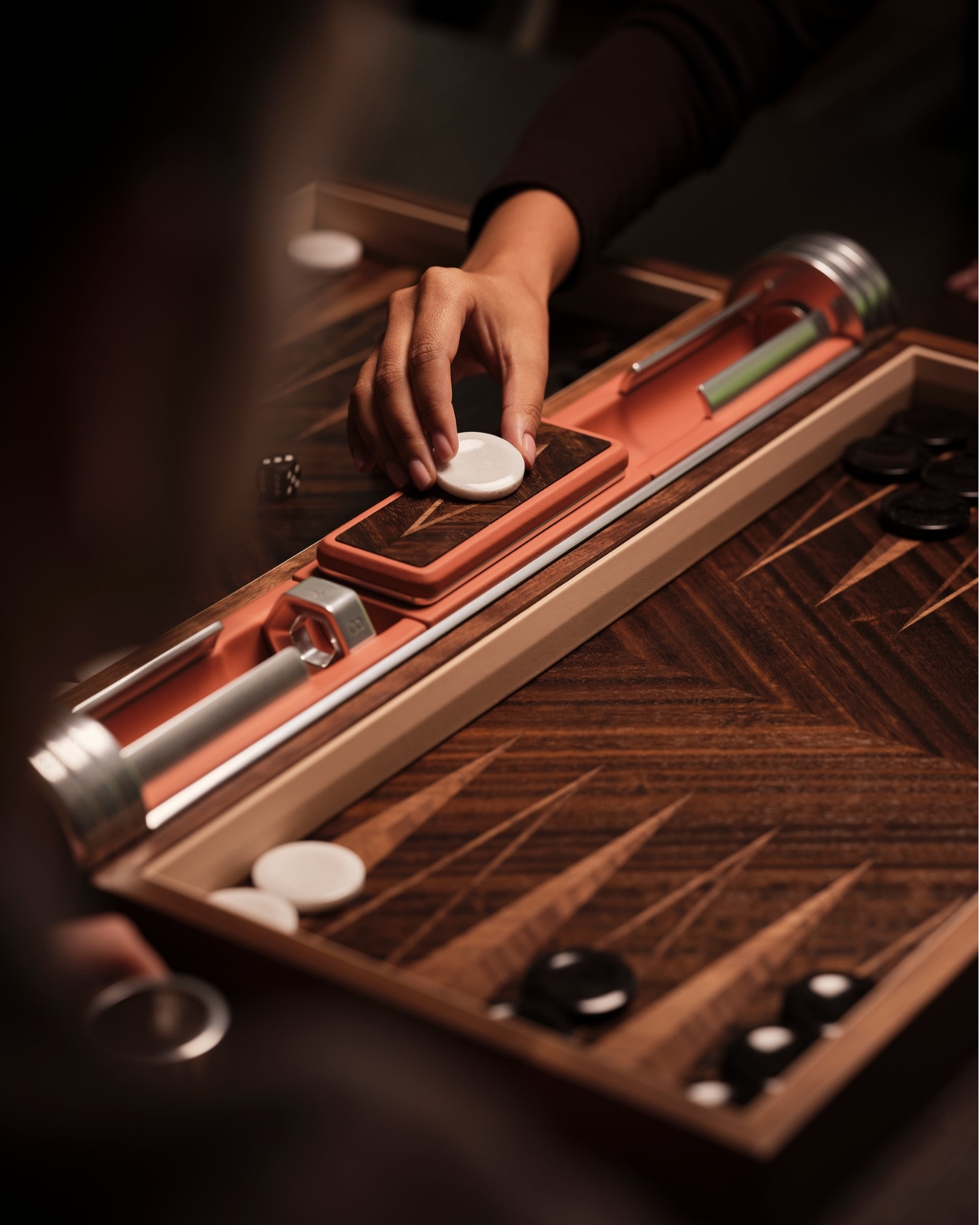
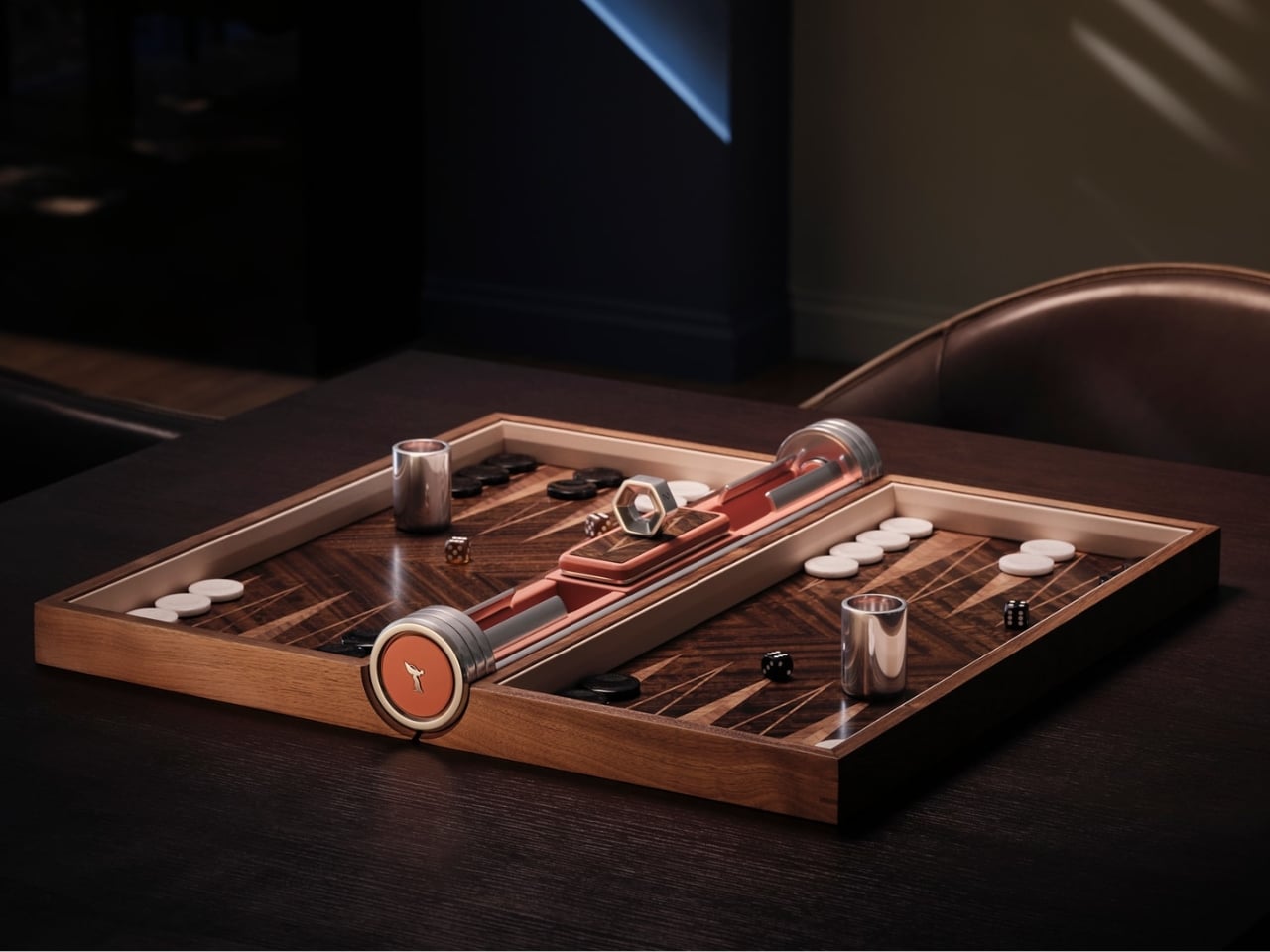
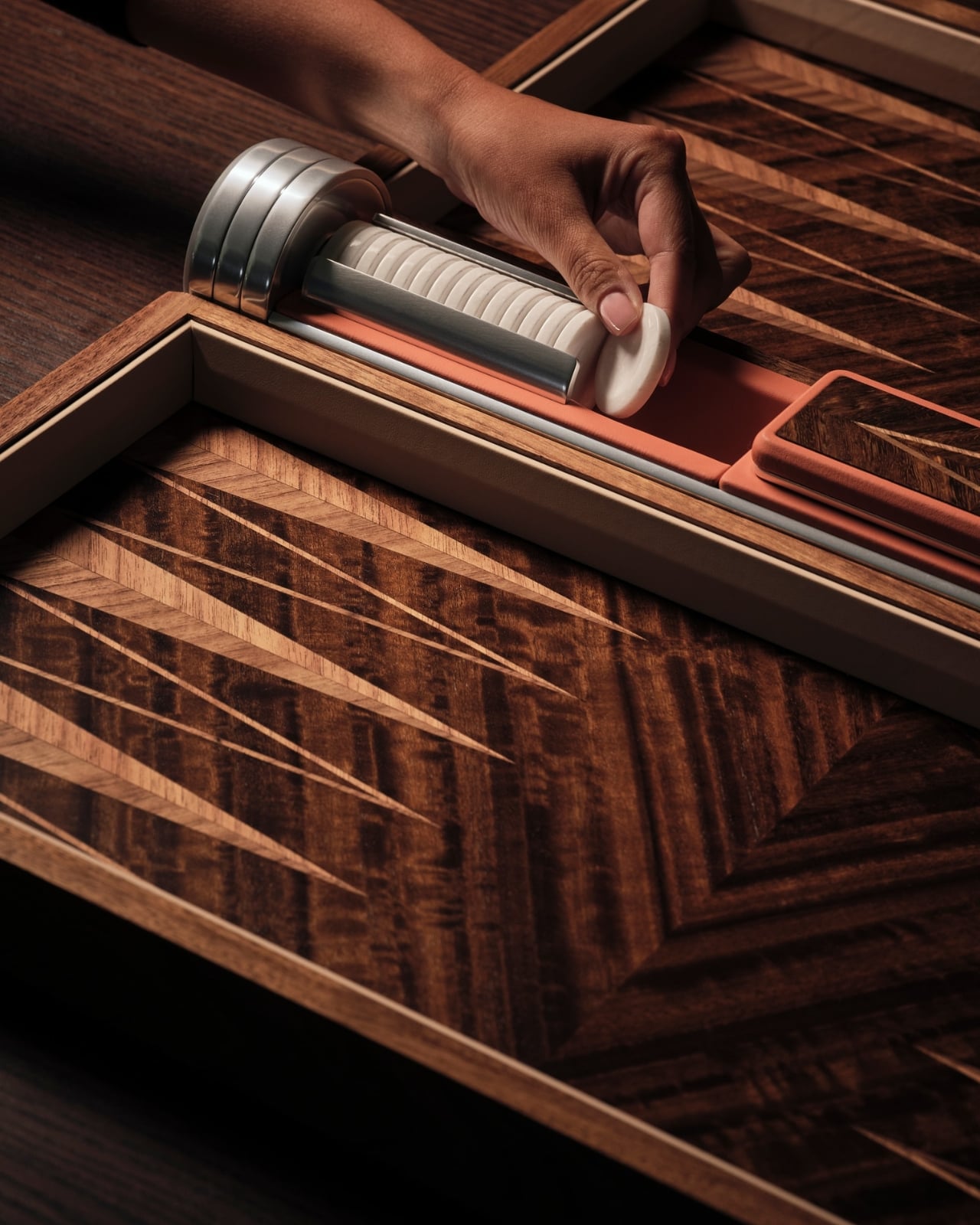
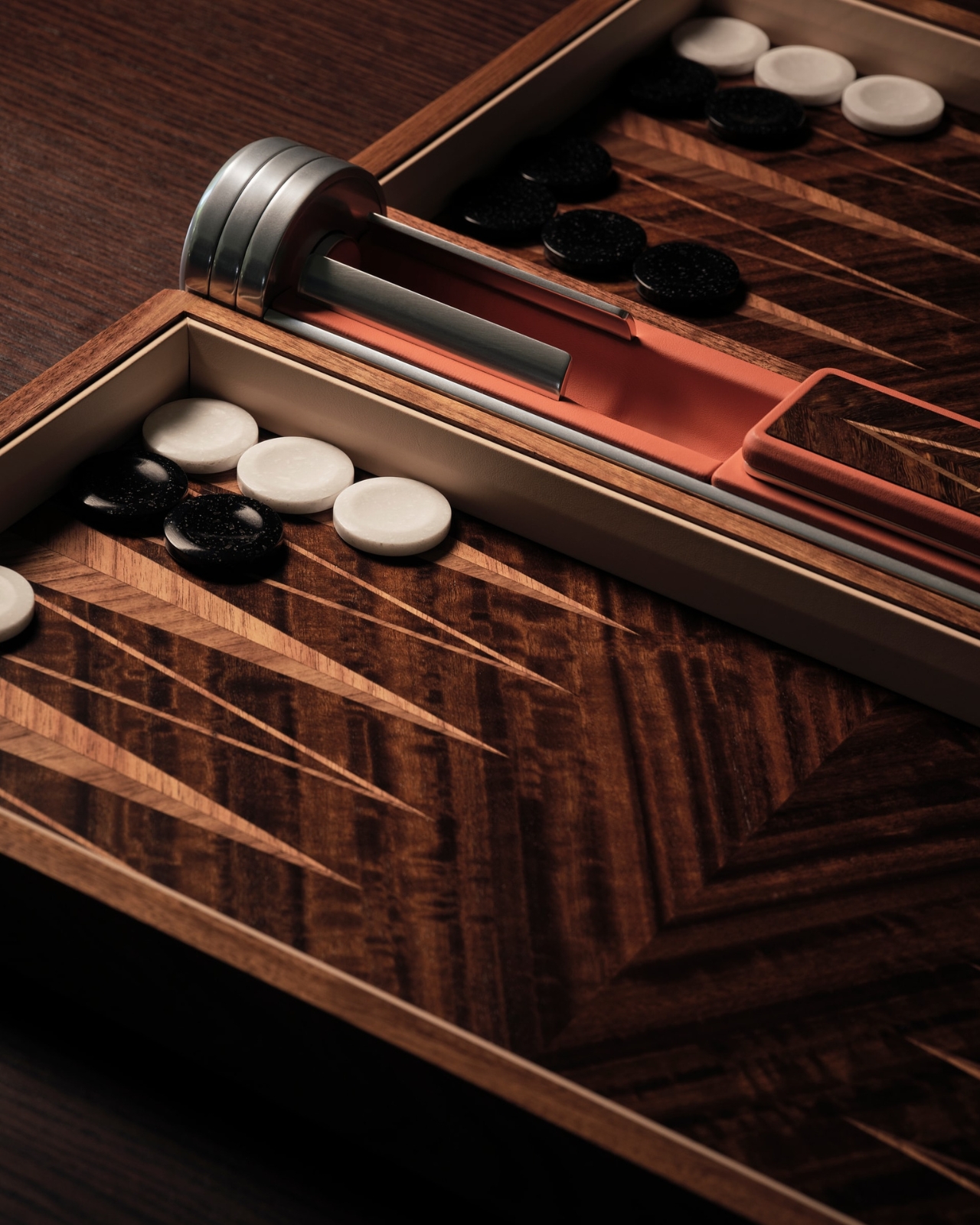
Open Rolls-Royce’s Backgammon Set and the central spine rotates in the opposite direction, revealing the playing pieces stored inside. It is an elaborate way to address the aforementioned problem of keeping the game’s loose components organized without treating storage as an afterthought. I like that the showiest feature has a job beyond looking expensive. Before anyone rolls the dice, the case has already made its opening move.

Designer: Rolls-Royce
This exclusive luxury set comes from Rolls-Royce’s Bespoke Collective at Goodwood. It is designed for play and display, which strikes me as the more interesting challenge. A board that earns a permanent place in a room has to look convincing between games, but it also needs to invite someone to touch it. Too much preciousness would defeat the point of making a playable object. The way this looks, it’s something that you’d want to touch and explore.

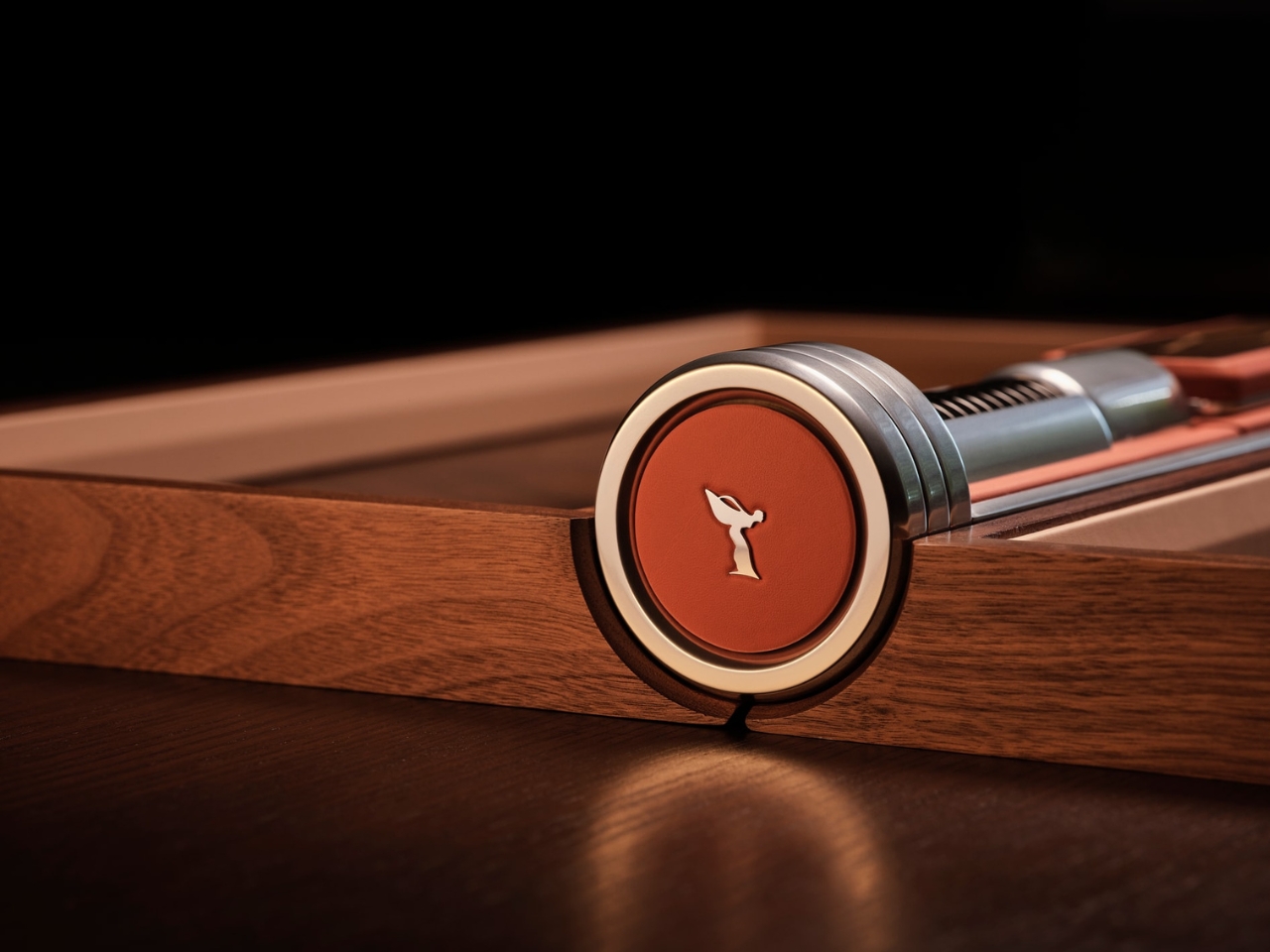
The hinge is machined from solid aluminum, polished, and anodized. A self-centering Spirit of Ecstasy sits on it, recalling the company’s self-leveling wheel center caps. That mascot does nothing for your next move, of course. Its appeal is continuity: Rolls-Royce has carried a familiar mechanical gesture from the car into the living room. To me, that is a more thoughtful expression of a brand than simply just creating something with their logo or badge on it.
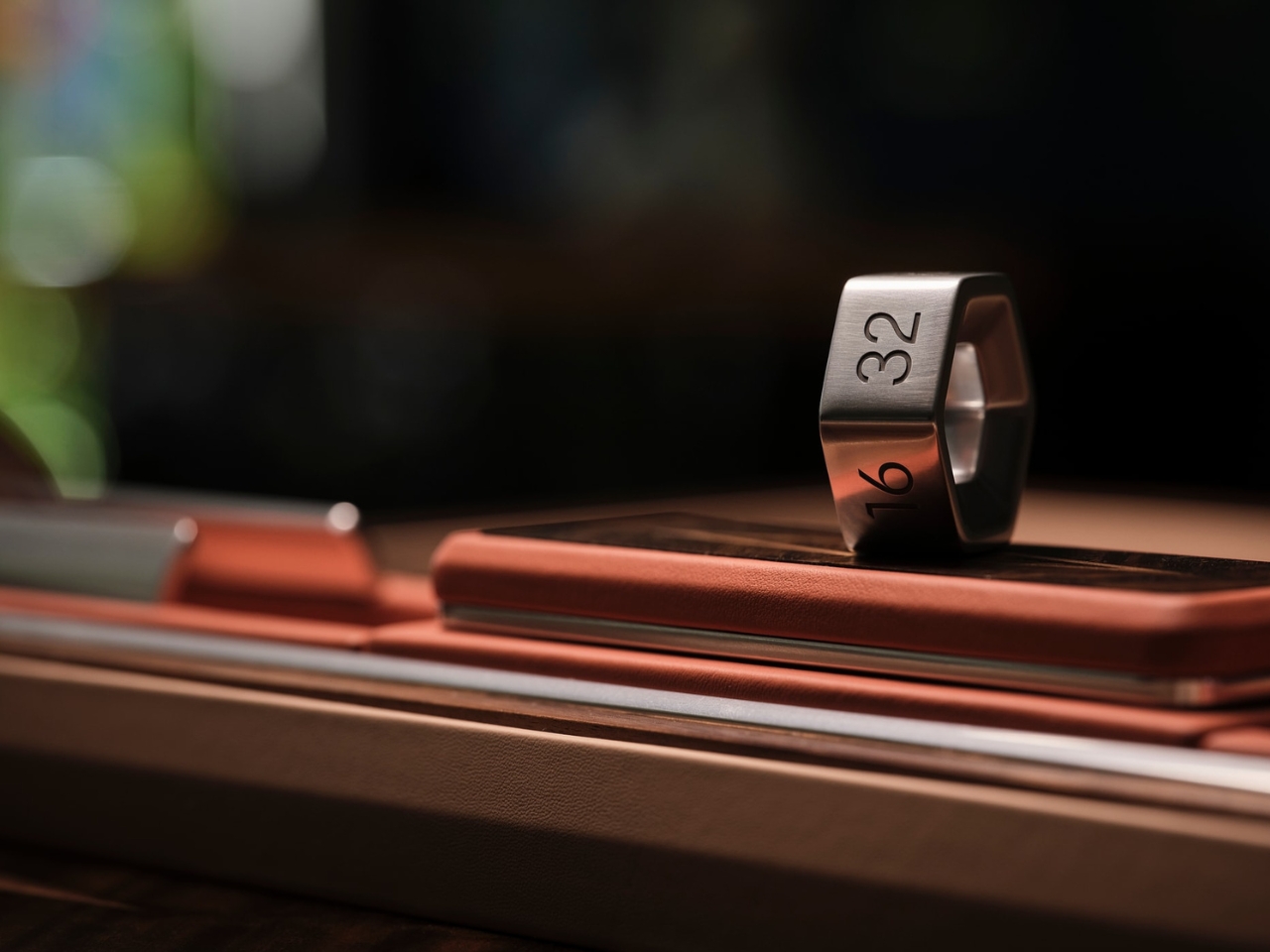
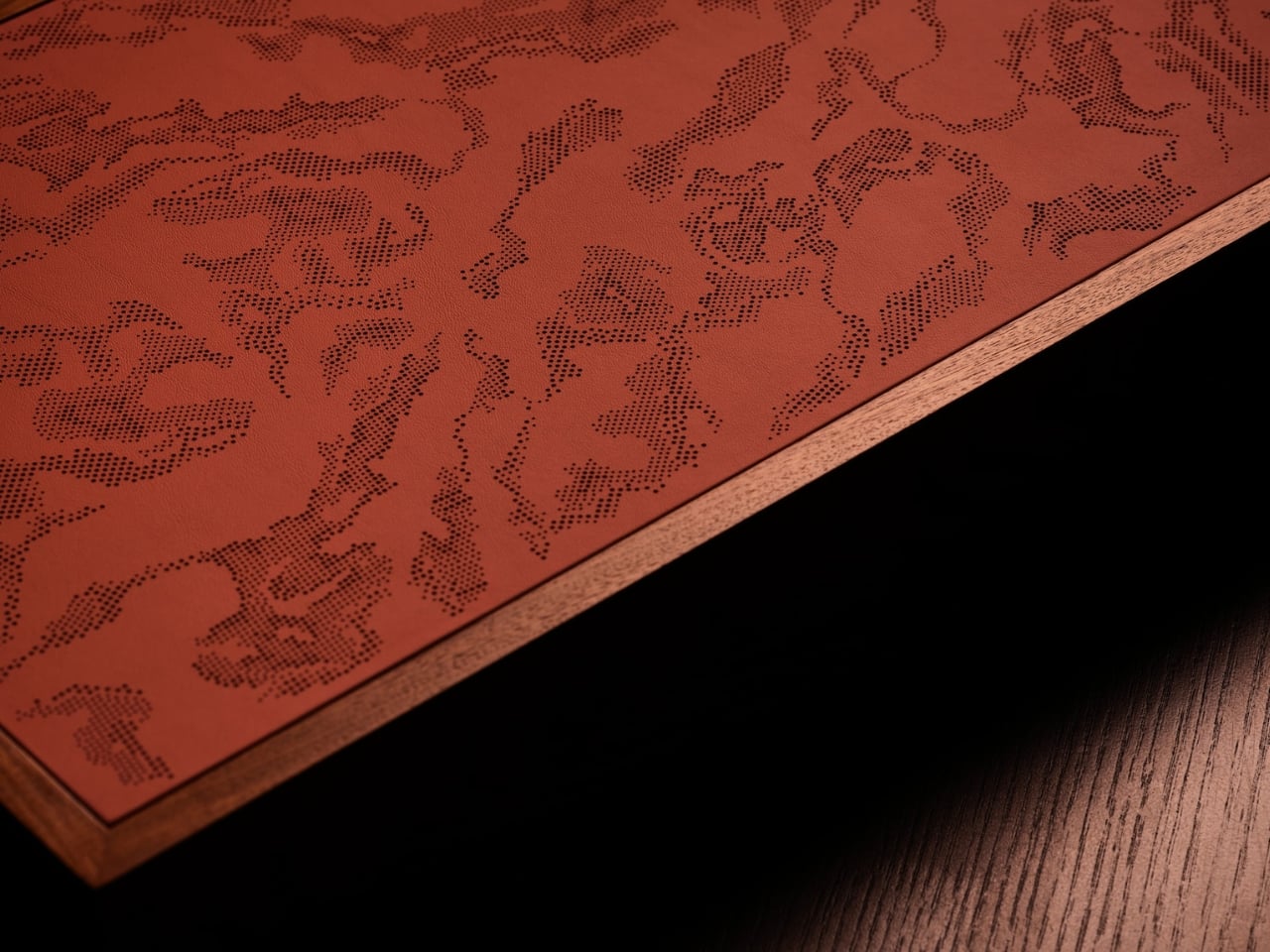
The material choices reveal a less glamorous consequence of all that theater. Rolls-Royce says the solid American walnut body provides the strength needed to support the hinge. Royal Walnut and Smoked Eucalyptus veneers form the playing points. I appreciate that relationship between mechanism and structure, although it also exposes the extravagance. The clever opening requires a substantial supporting body. A simpler case would have less to show off and less engineering to accommodate.

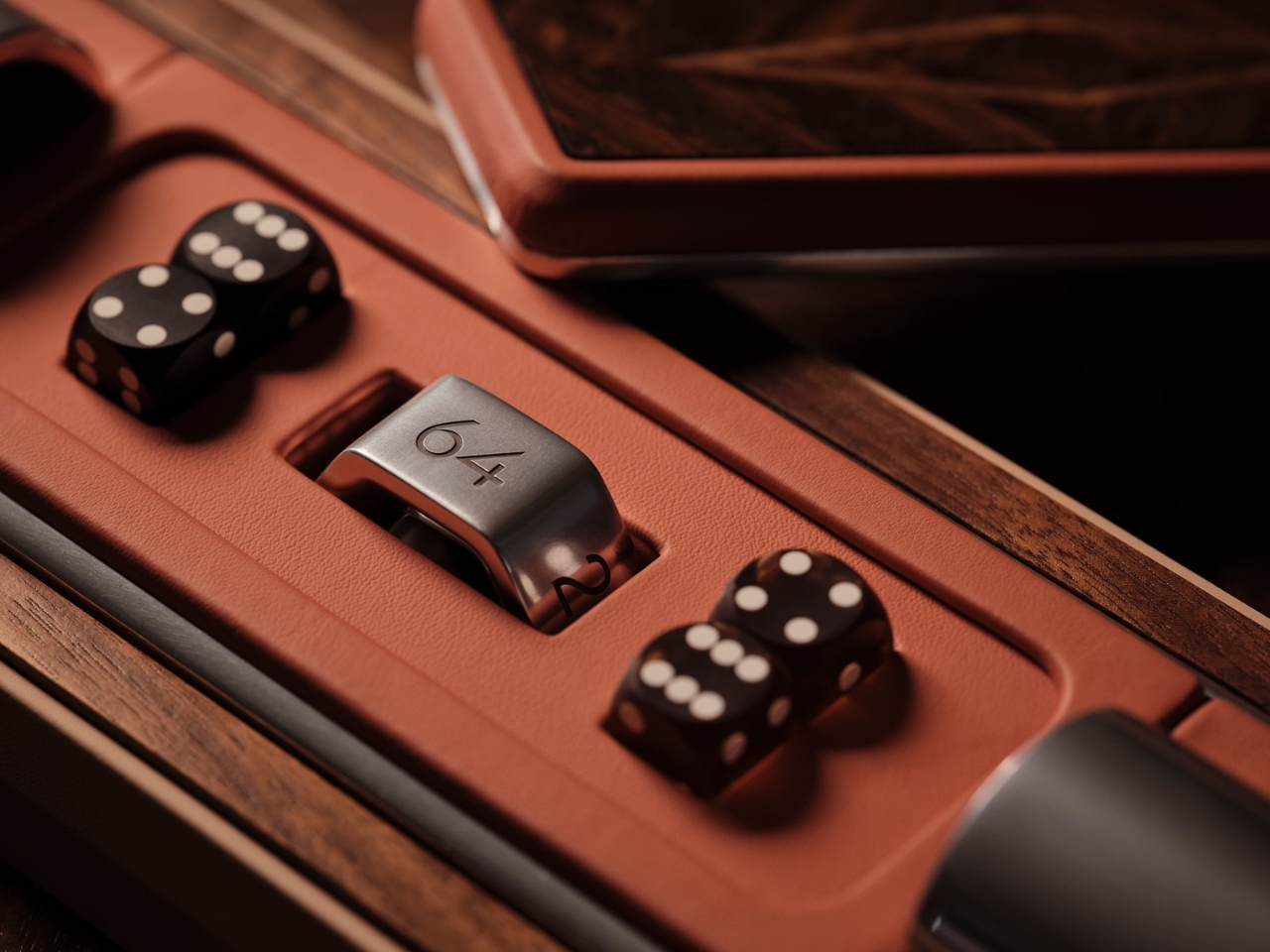
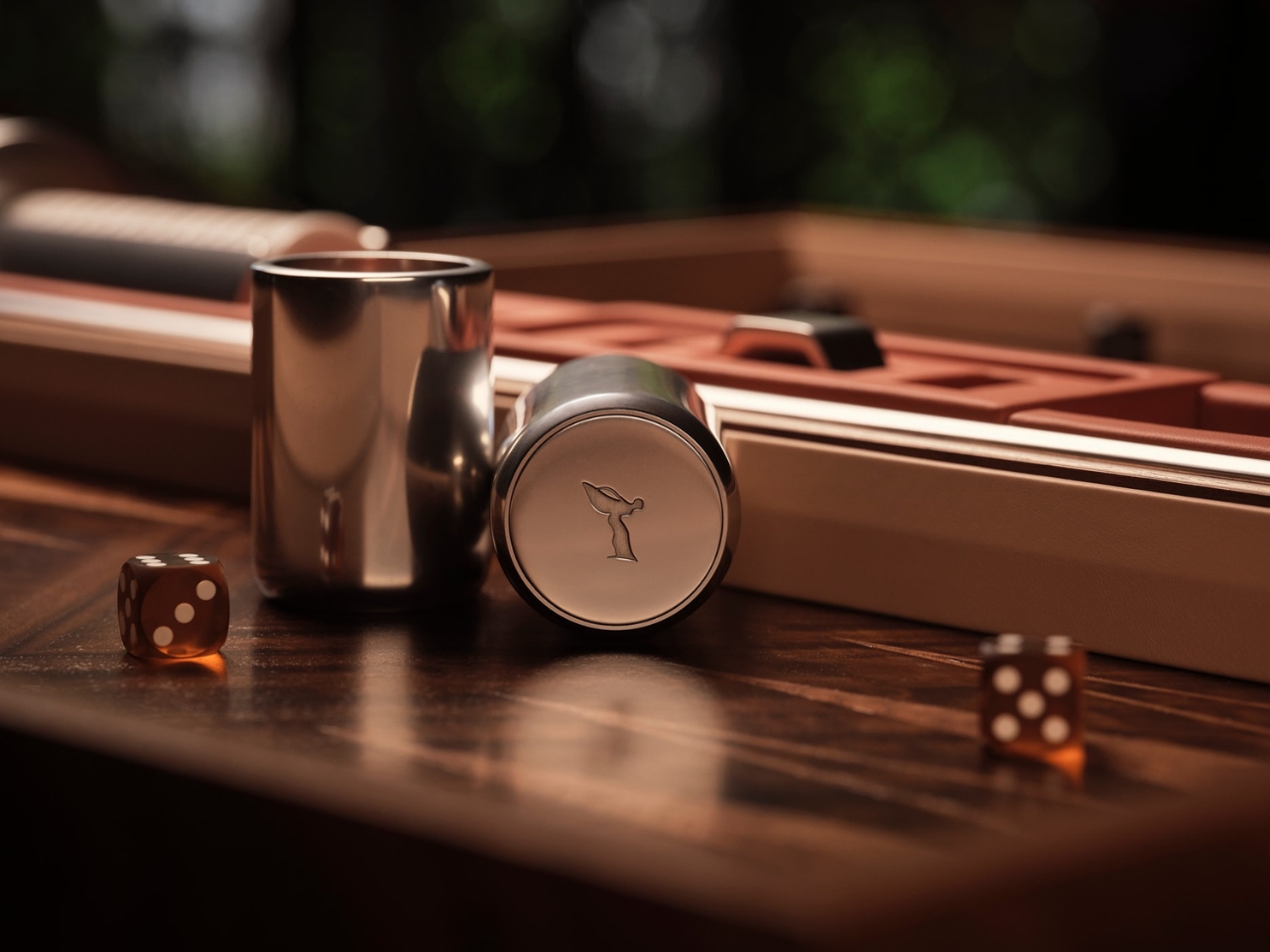
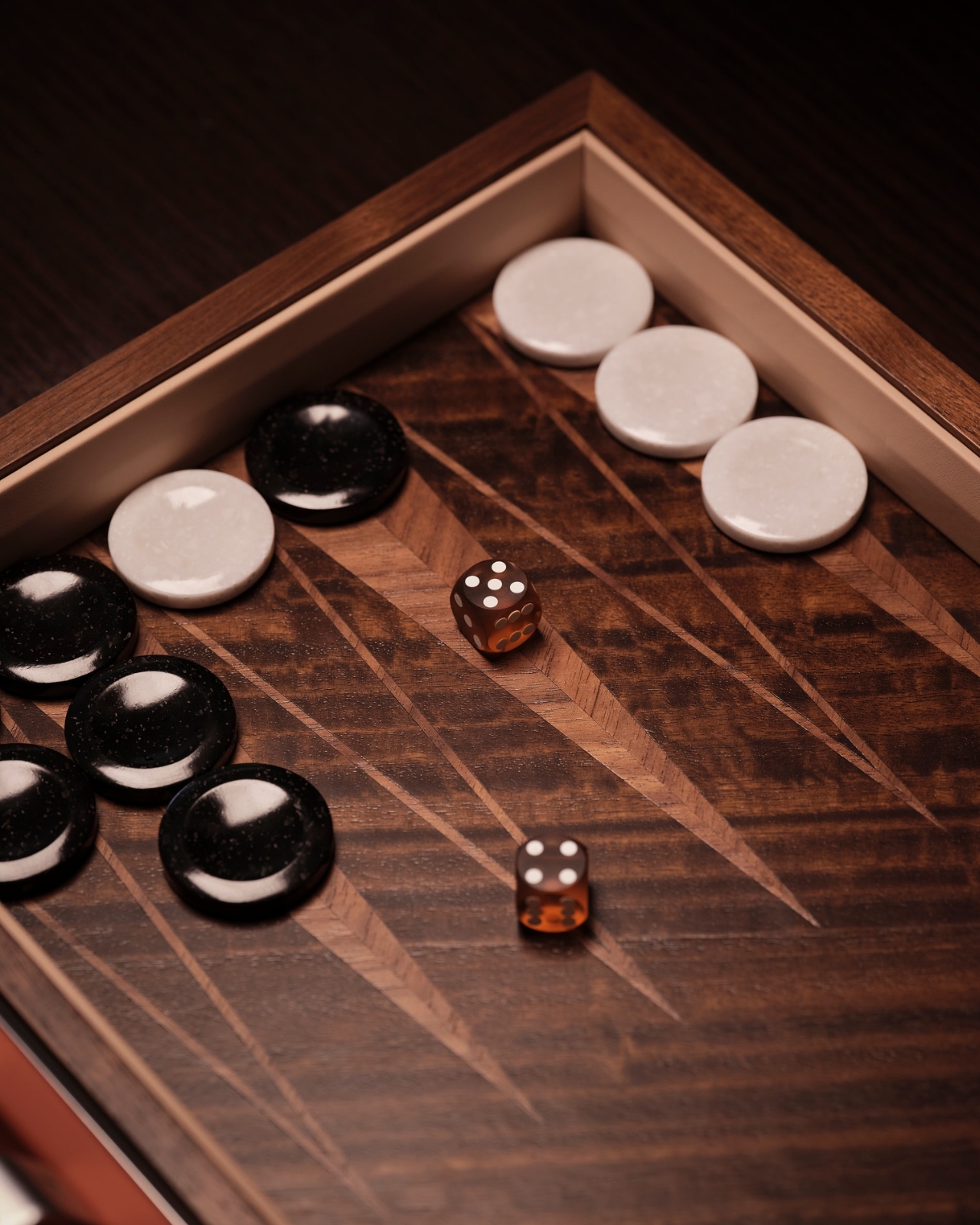
The smaller components make a quieter case for the design. Bauxite-infused composite stones come in black and white, while the aluminum dice shakers have leather-trimmed bases intended to soften the sound of a throw. These are the details that would actually make me want to explore when I see it on a table. Pieces need to feel satisfying through repeated handling, not merely photograph well. The shakers’ sound matters because everyone playing has to listen to it.
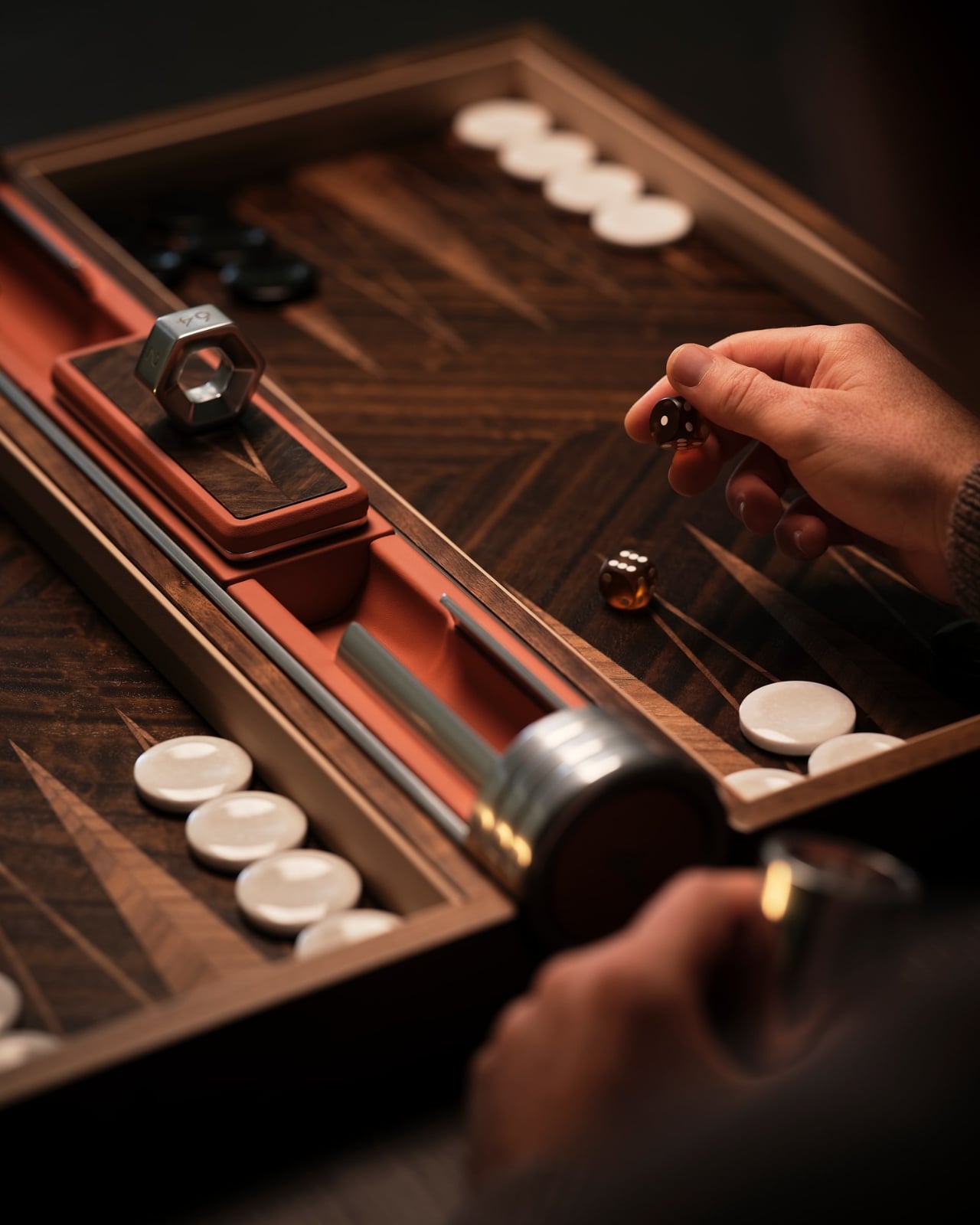
There is also a removable plinth that serves as the bar, where hit checkers wait to return to play. That is a neat bit of double duty. Instead of asking the owner to put a presentation component aside once the game begins, the design gives it work at the table. For me, those small decisions make a collectible more persuasive. They suggest someone considered what happens after the initial reveal.

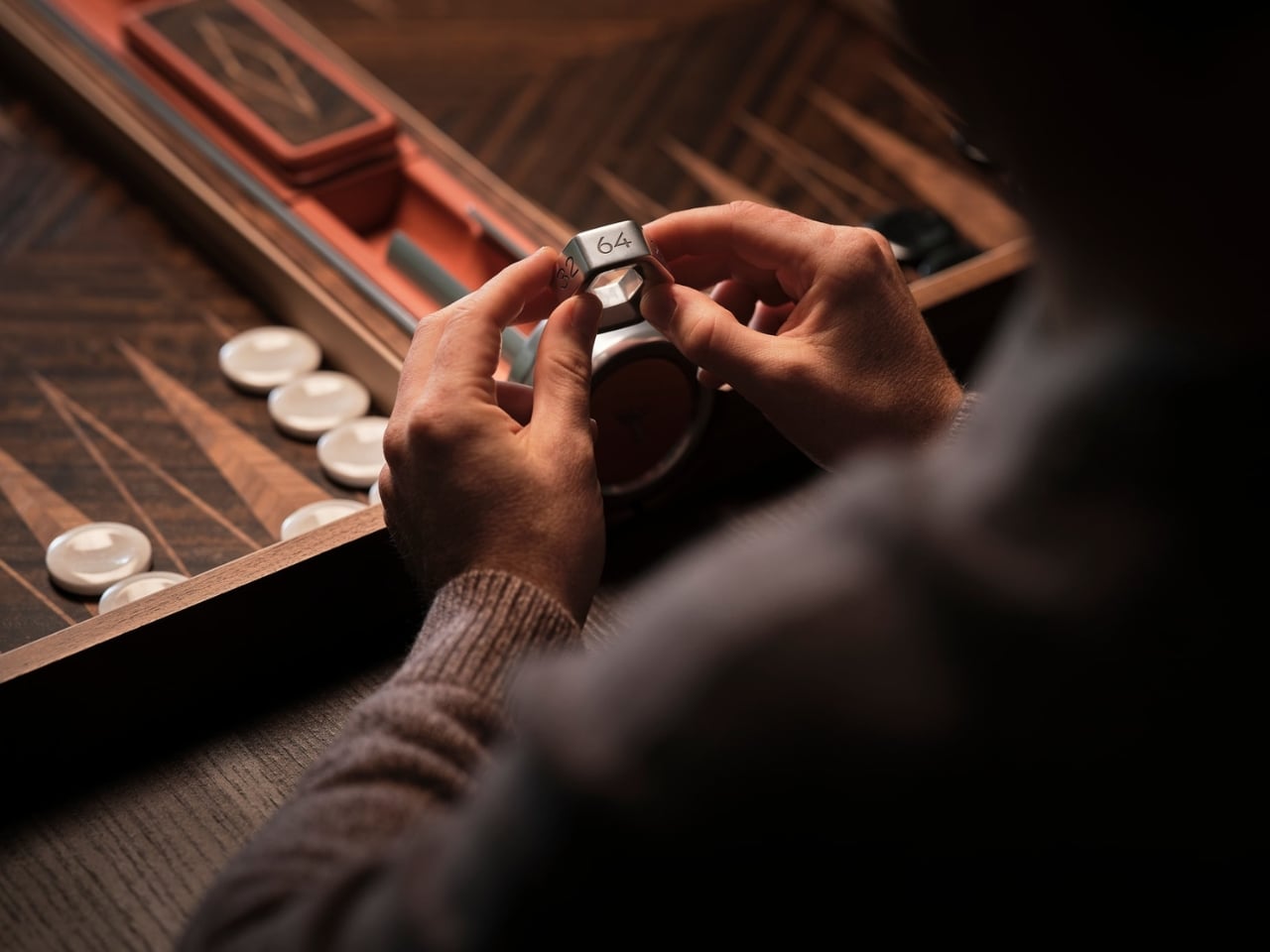
One flourish feels more optional: the doubling die swaps the usual cube for a hexagonal form. I would probably notice that immediately, then care about it less once the game got going. More encouraging is Rolls-Royce’s account of its designers playing together during development, which lasted over a year. That suggests practical questions were being asked about how the pieces move and where everything belongs, alongside the decorative decisions.

The set is available to commission through Rolls-Royce showrooms and Private Office boutiques; the announcement gives no price or delivery schedule. That keeps it out of ordinary gift-guide territory for now, but the design is worth examining without planning a purchase. I would want this board left open, with a game in progress, rather than preserved as a pristine conversation piece. A mechanism this elaborate deserves to introduce an evening, not replace one.
The post Rolls-Royce’s Backgammon Set Puts Hidden Storage in Motion first appeared on Yanko Design.

PonyGo is a minimalist rocking horse for the IKEA era

Rocking horses have one unspoken rule that nobody ever actually wrote down anywhere, you just absorb it by osmosis. The thing has to be wood. Carved wood, painted wood, distressed vintage wood, it doesn’t matter, but wood, always wood, like it’s baked into the toy’s DNA at a genetic level. Kids’ chairs went plastic decades ago, strollers went full aerospace aluminum, even cribs have cycled through a dozen material phases, but rocking horses just sat in the corner being wooden and judgmental about it. Nobody questioned it because nobody had a reason to. Then somebody finally did.

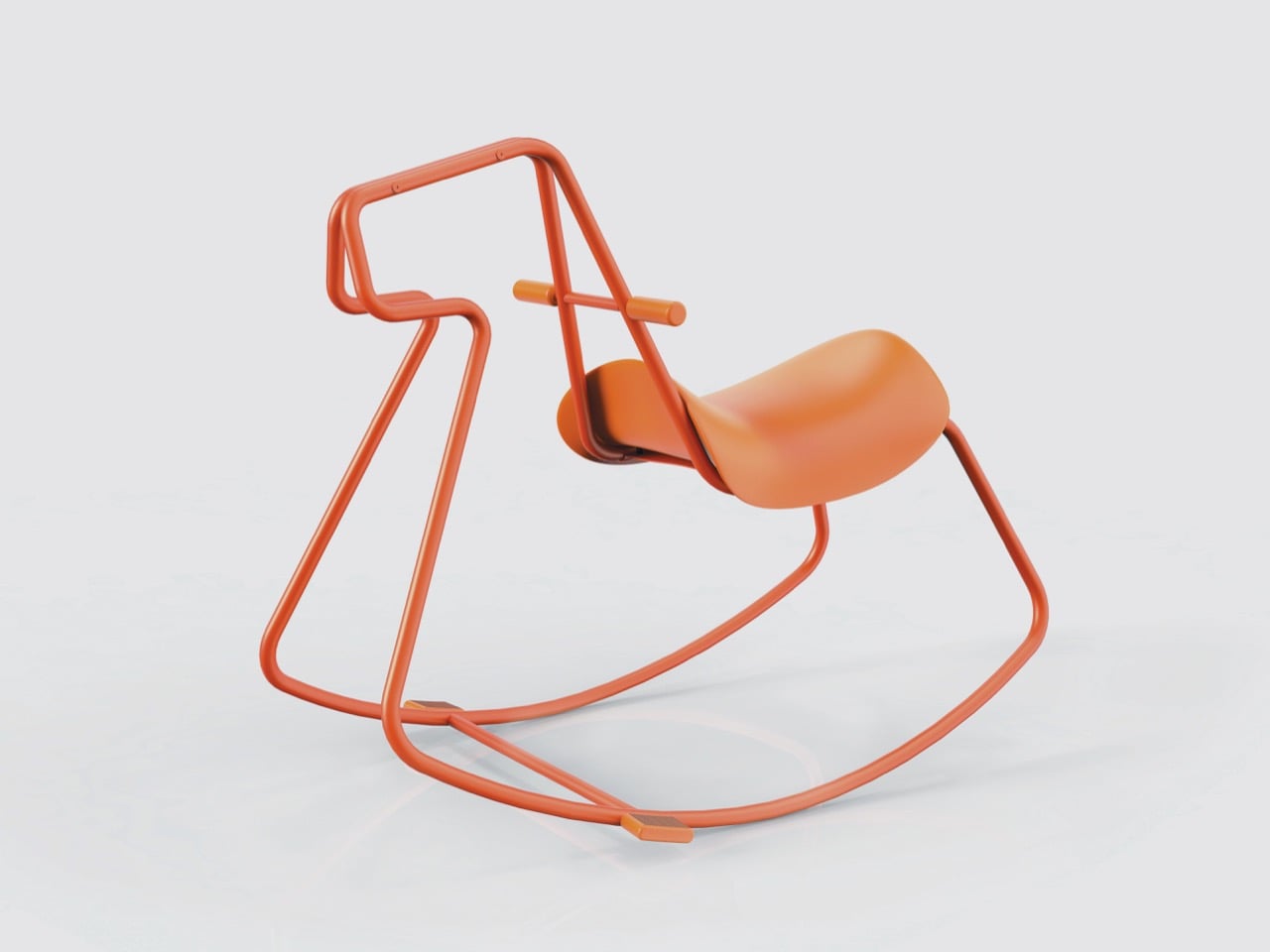
PonyGo, designed by Wang Suoling at Shandong University of Art & Design, drops the lumber and builds the hobby horse entirely from bent metal tube. No carved mane, no wood grain, just one continuous loop forming the head, the handlebar, and the rocker base. It won a Red Dot Award in the Design Concept category for 2026, the wing reserved for sharp ideas still ahead of production. The flat-pack frame also claims a 60 percent cut in shipping volume against a standard hobby horse, proof the material swap pulls double duty. Three centuries of wooden horses, and someone finally said no.

Designer: Wang Suoling

Red Dot splits its program into three separate competitions, Product Design, Brands & Communication Design, and Design Concept, and PonyGo sits in the last one. Design Concept exists for ideas that haven’t reached a shelf yet, judged on the thinking rather than a finished supply chain. That means no price, no manufacturer, and no release window attached to PonyGo right now. What you do get is a tidy orange tube frame that already looks production ready, even if production itself stays hypothetical. Concept-stage work like this is basically a design school’s way of testing an idea before committing money.

Red Dot has seen this exact toy reinvented before, never quite like this. Googy won in 2012 by turning the rocking horse into something plush and nearly impossible to tip over, all soft edges and cushioned bulk. Horse won in 2019 by going the opposite direction, carving a Corian shell into a Scandinavian-minimalist silhouette so reduced it barely reads as a horse anymore. Both treated the rocking horse as a solid object, built once and kept forever. PonyGo breaks from that lineage by treating the horse as a kit to assemble rather than an heirloom to inherit.

IKEA proved decades ago that packaging constraints can reshape a design category, after a table got its legs removed just to fit in a car trunk. That single fix spiraled into flat-pack becoming the default logic for mass furniture, trading carved solidity for tubes, flat panels, and Allen keys. PonyGo runs the same playbook on a toy that never got the memo. Bent tube happens to be the one material that lets a hobby horse disassemble cleanly, snap back together, and still hold a kid’s full body weight mid-gallop. Wood never had a flat-pack mode, maybe why this toy sat untouched for three centuries.

PonyGo remains a concept winner, with no production toy on shelves yet, worth remembering before getting attached to the render. What it does prove is that rocking horses had a second material option sitting right there the whole time, untouched for three centuries. Metal tube skips the warmth of a sanded wooden mane, but it buys something wood structurally cannot, a toy that folds flat and survives a warehouse shelf. Somebody at Shandong just handed every toy designer still reaching for lumber an obvious dare. Wood’s unchallenged run on this particular toy just found its first real competitor.

The post PonyGo is a minimalist rocking horse for the IKEA era first appeared on Yanko Design.
This limited-edition G-SHOCK gives your wrist an iridescent oyster-inspired finish

Casio has evolved the G-SHOCK gracefully over time, particularly through collaborations with a definitive motive and an underlying theme. Recent releases such as the GM-6900XG-8, G-SHOCK GUITARHYTHM, the artistic MRG-B5000HT and the origami-inspired DW5600RGM-1 demonstrate how the Japanese watchmaker continues to explore different design influences without compromising its signature toughness.

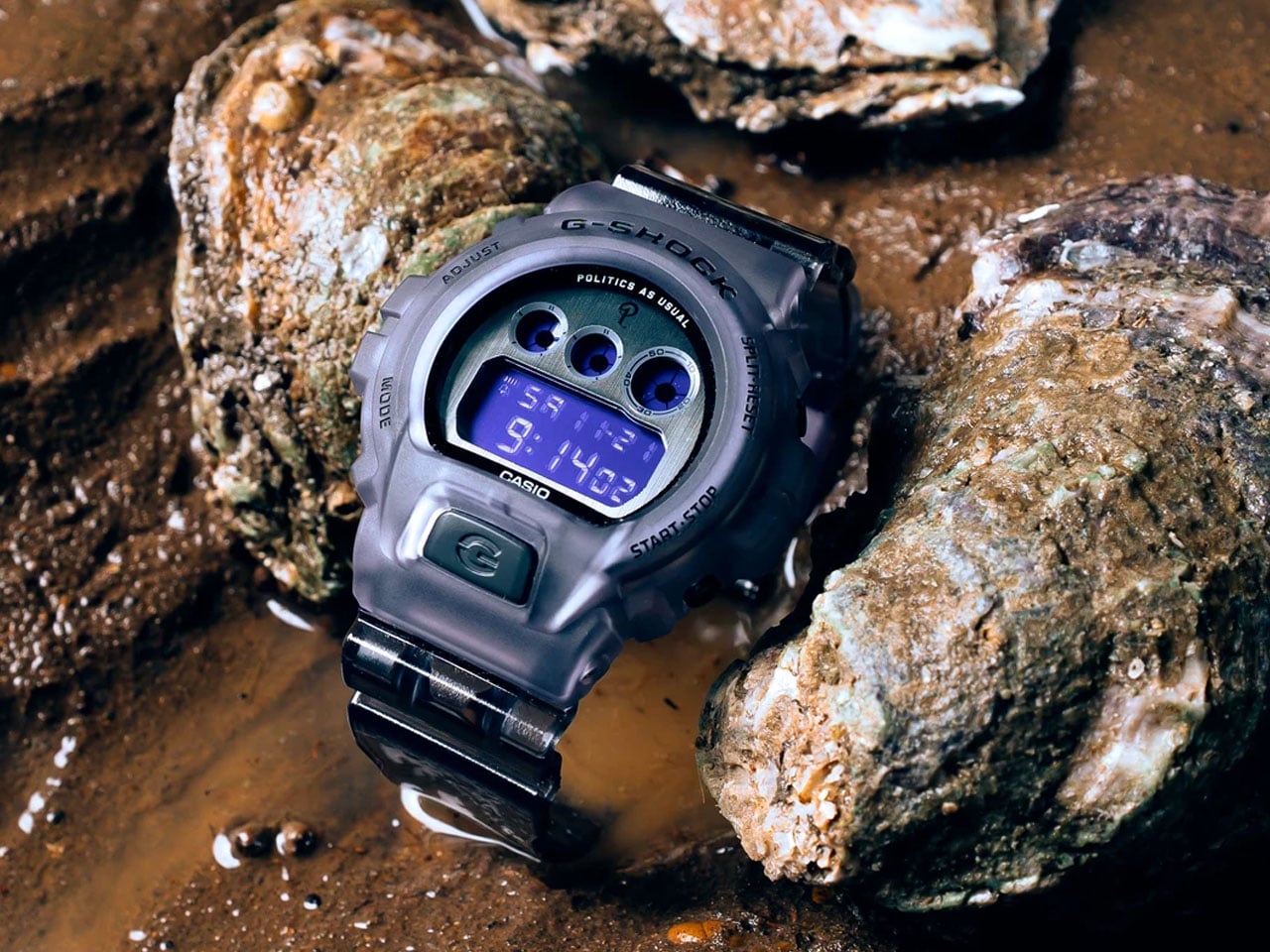
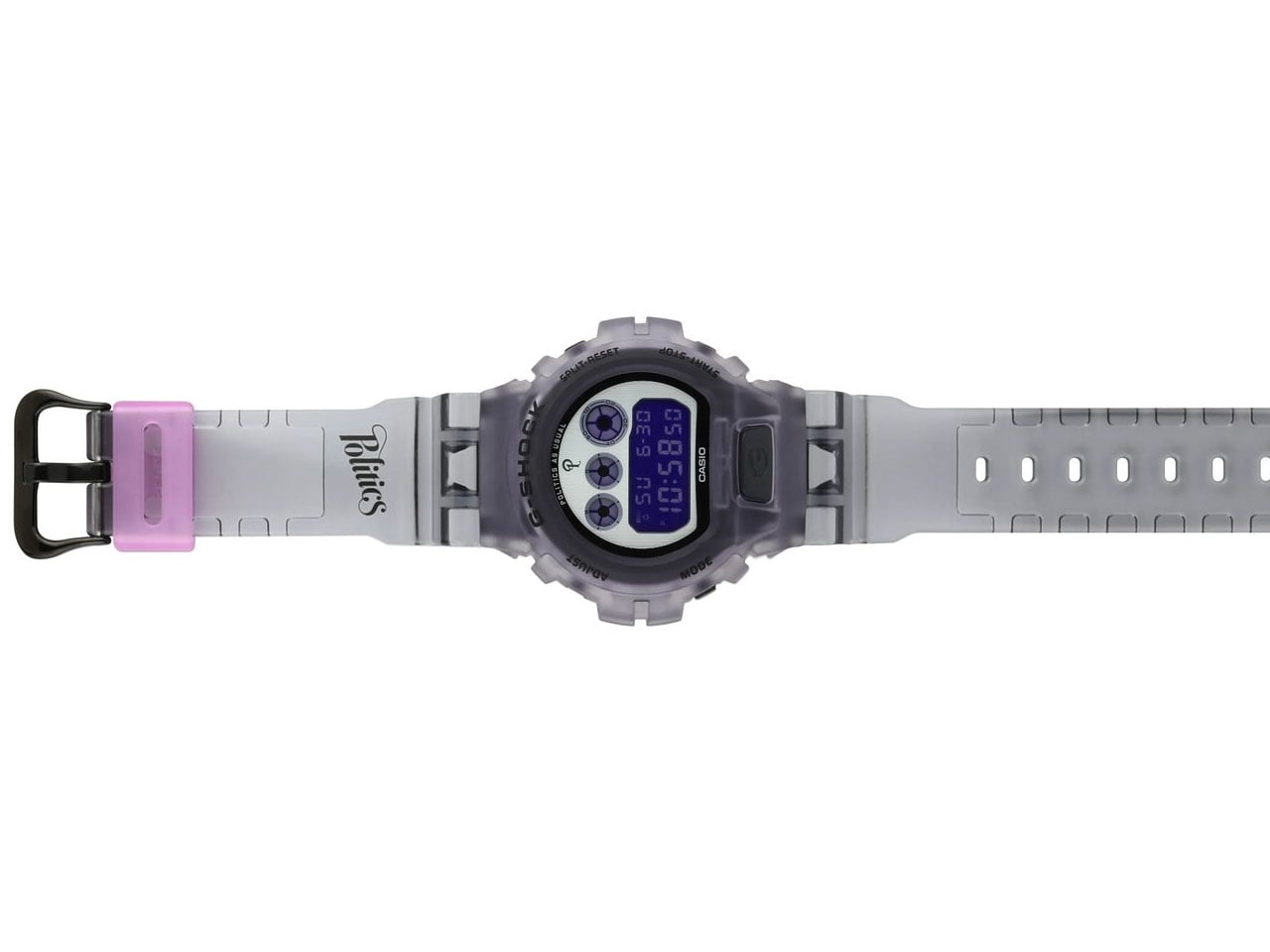
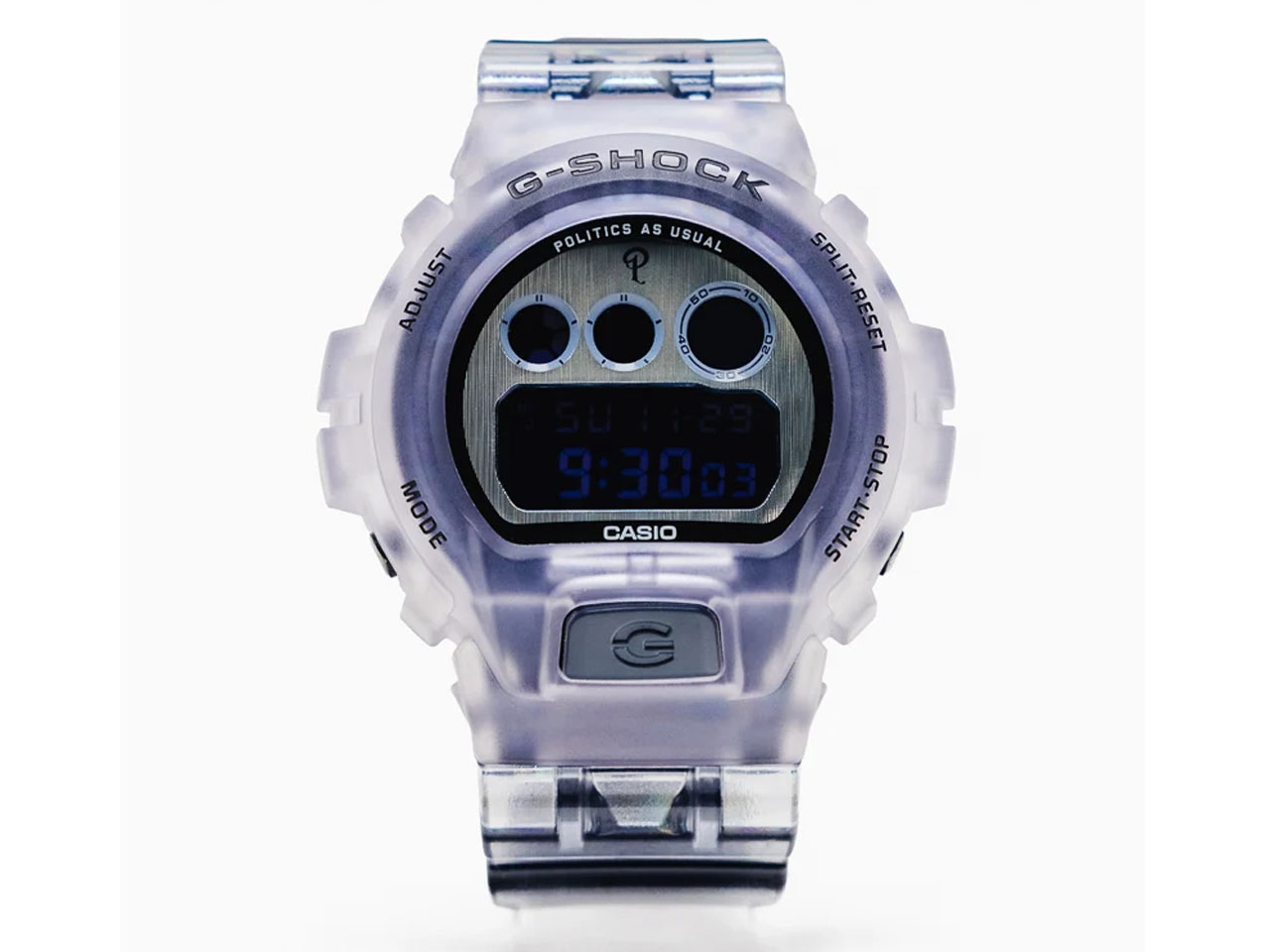
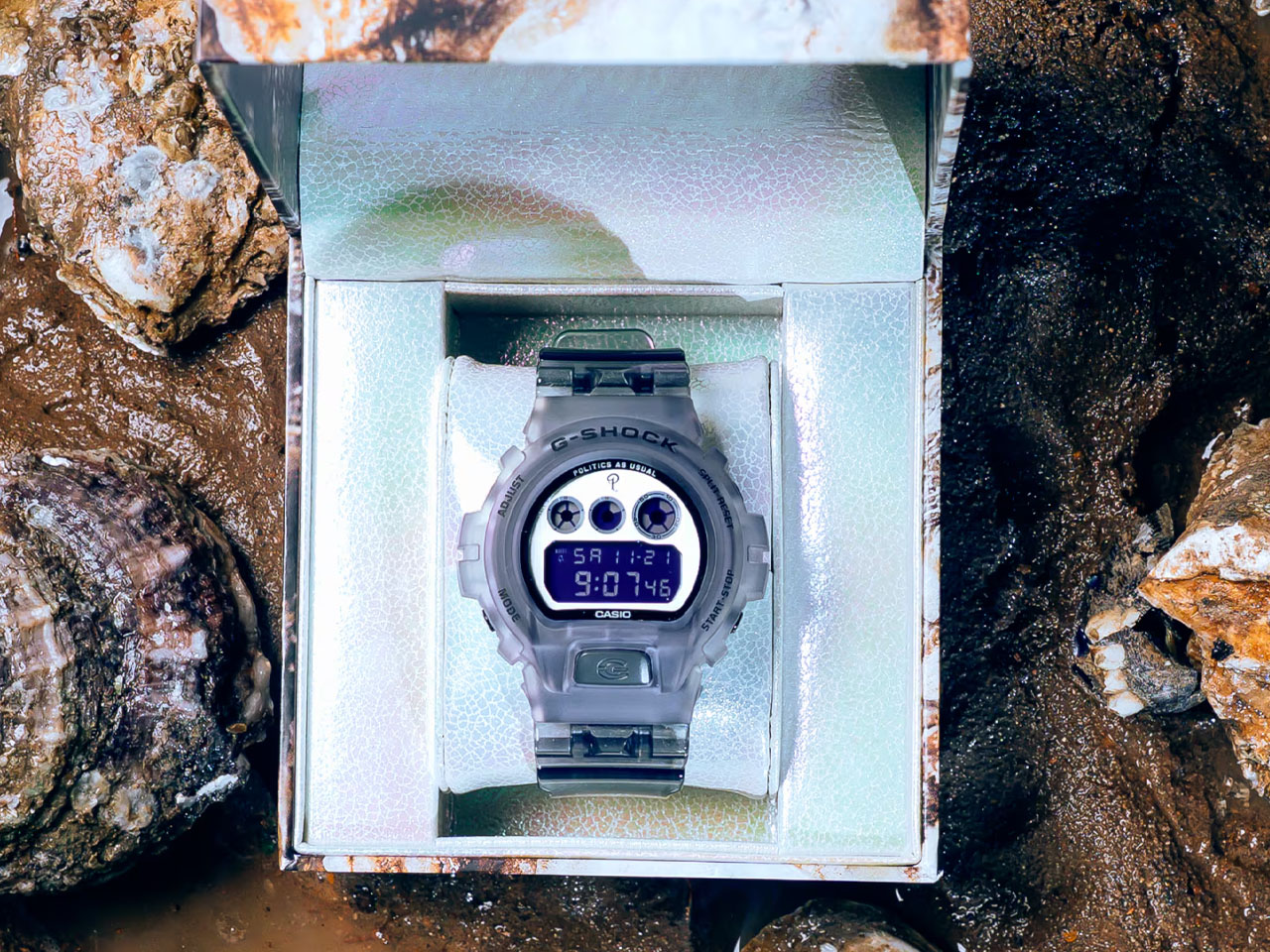
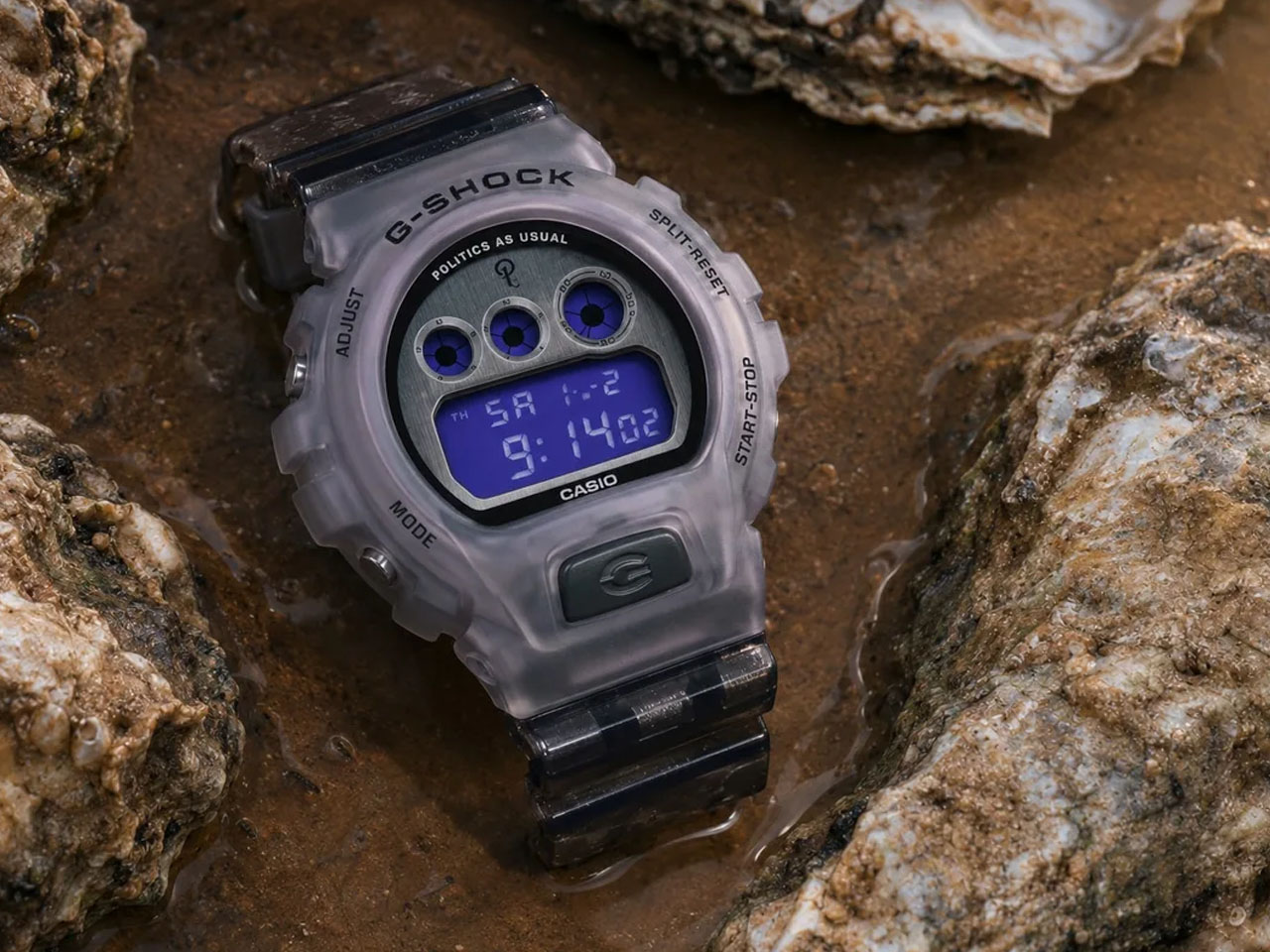
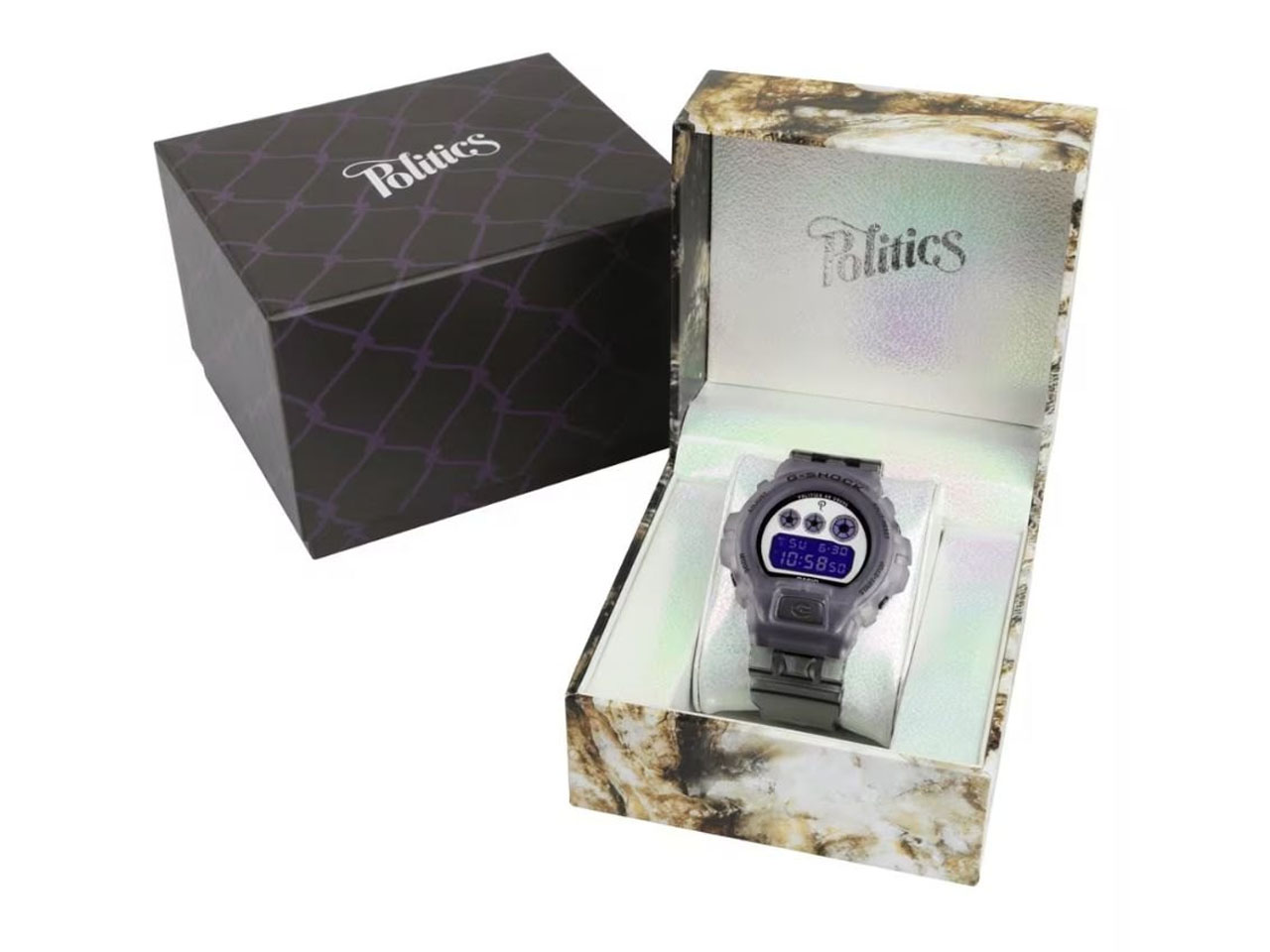
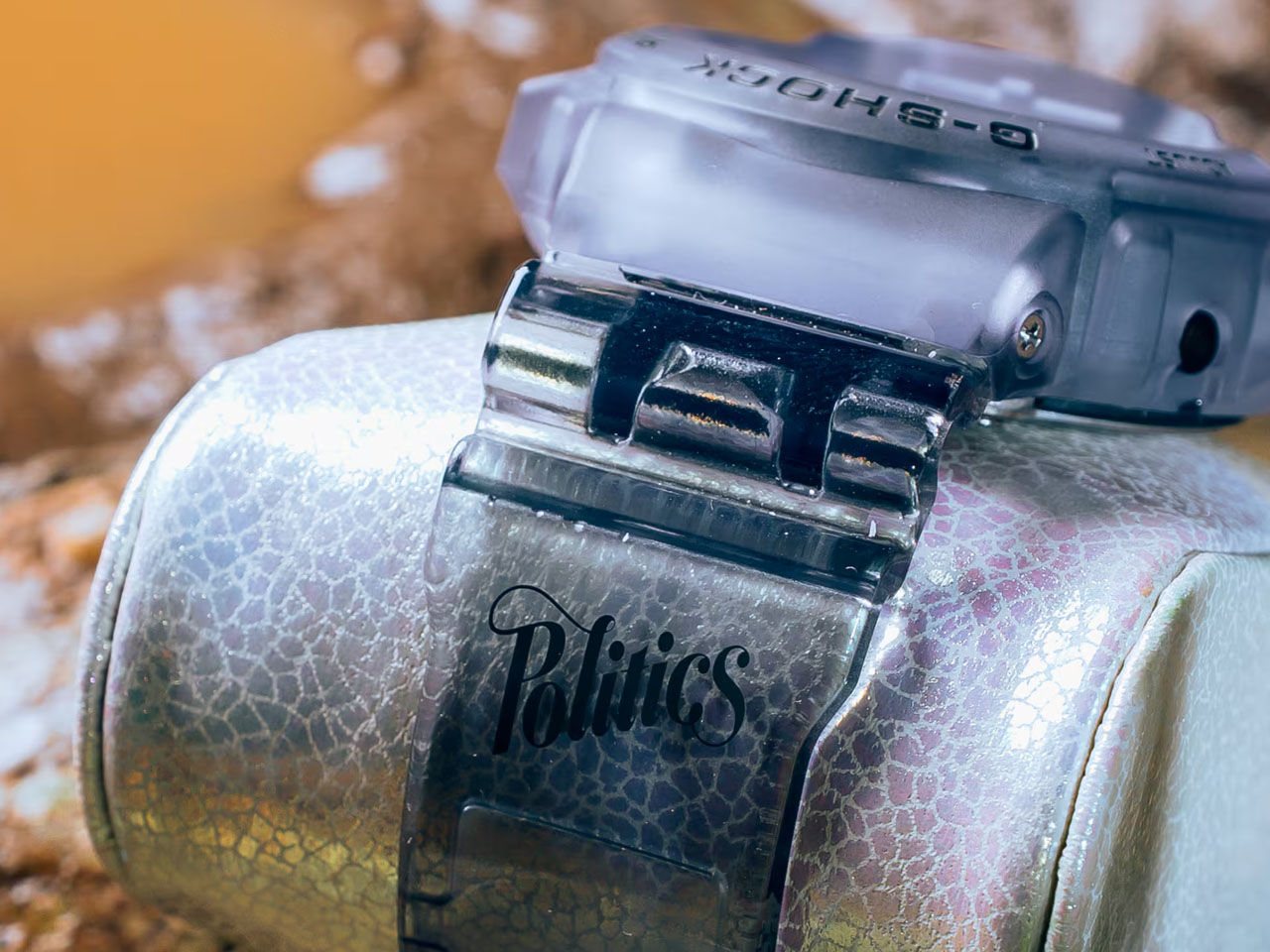
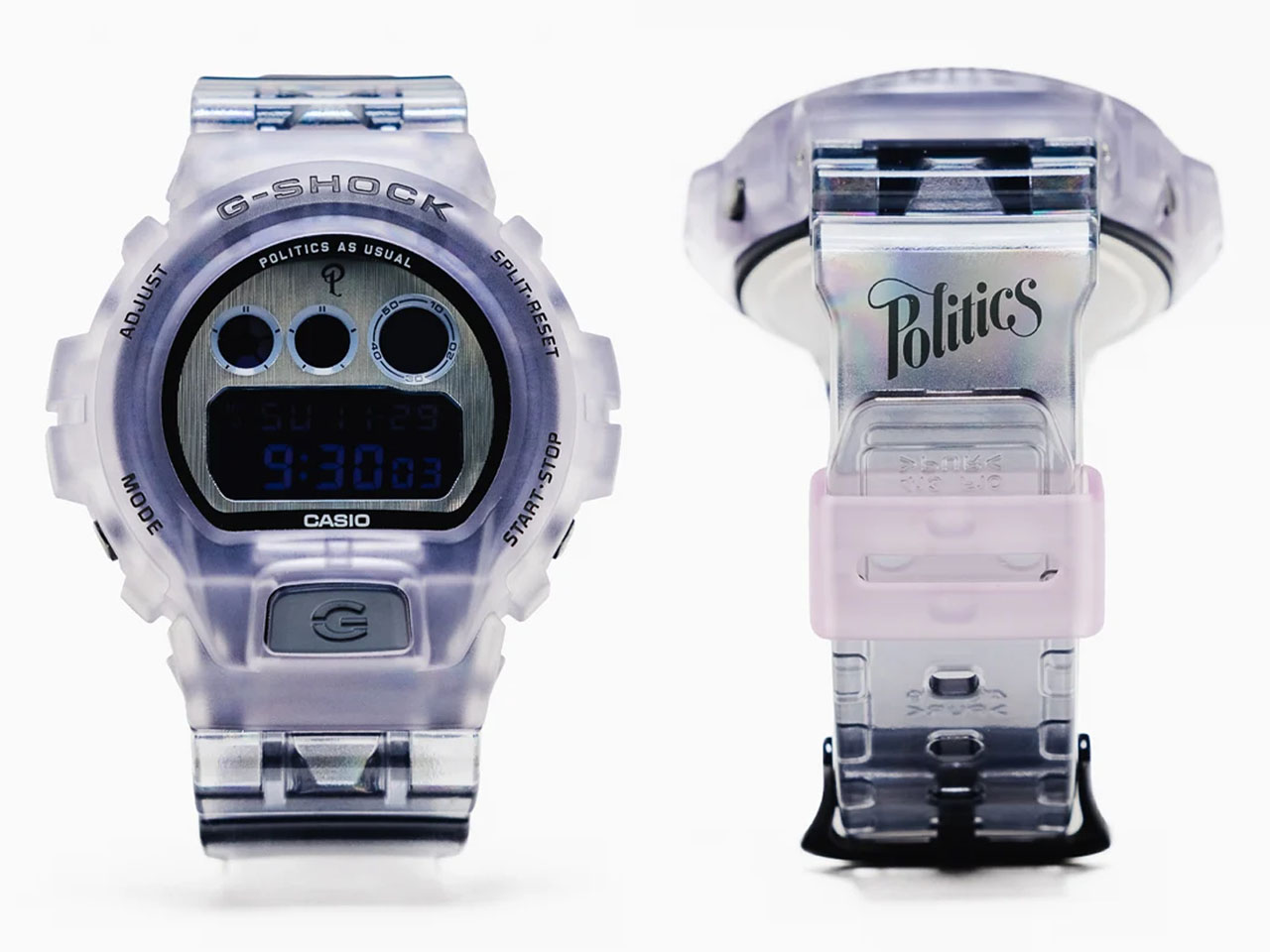
The G-SHOCK takes countless forms, but its core engineering remains familiar. Its latest collaboration with Louisiana-based streetwear and sneaker retailer Sneaker Politics brings the influence of aquatic life to the wrist with the DW6900SP26-6. Inspired by the iridescent interior of Gulf Coast oyster shells and the occasional pearl, the watch wears a distinctive combination of smoky purple, blue and pearlescent finishes across its case, dial and strap.

Designer: Casio x Sneaker Politics

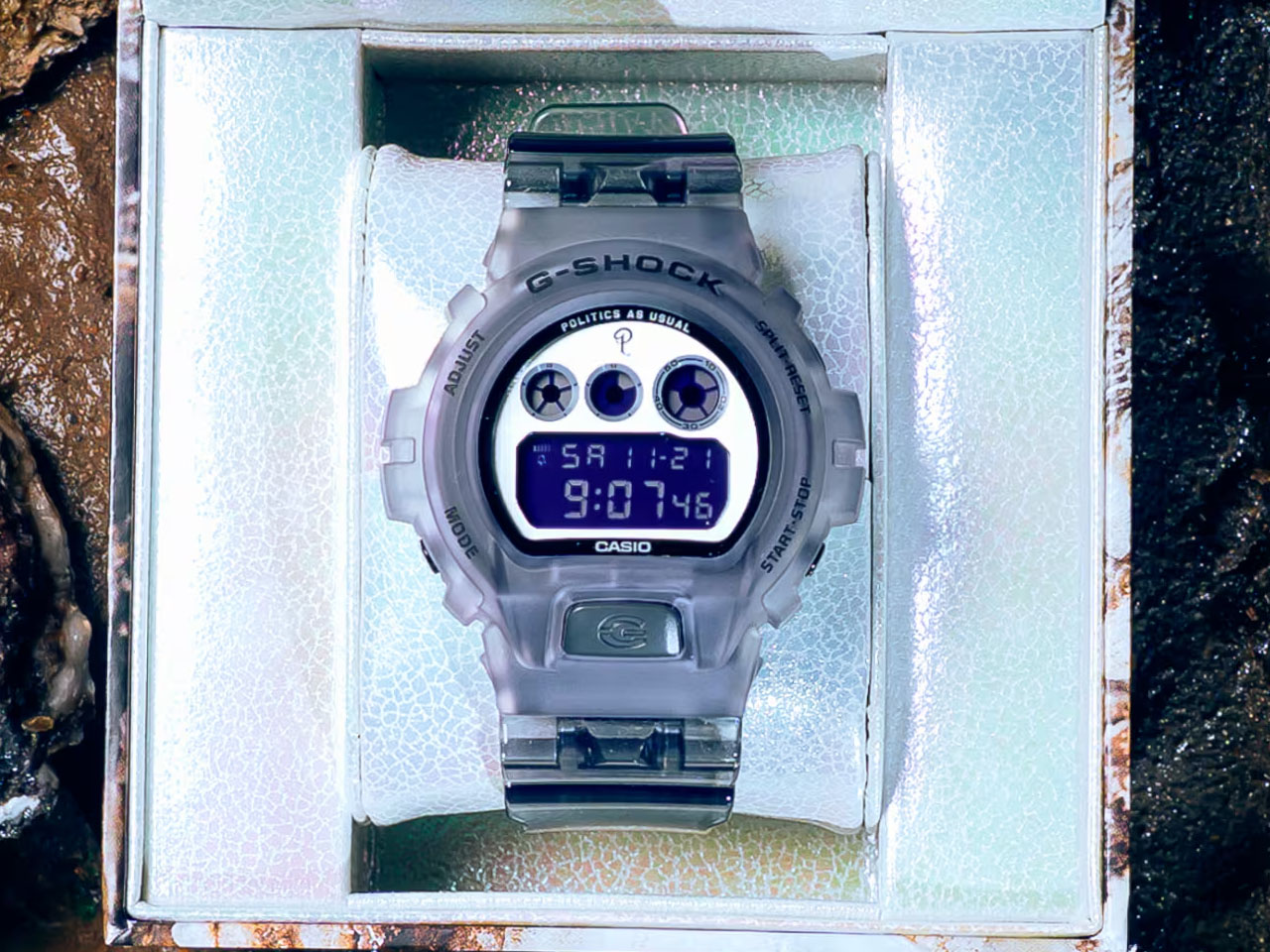
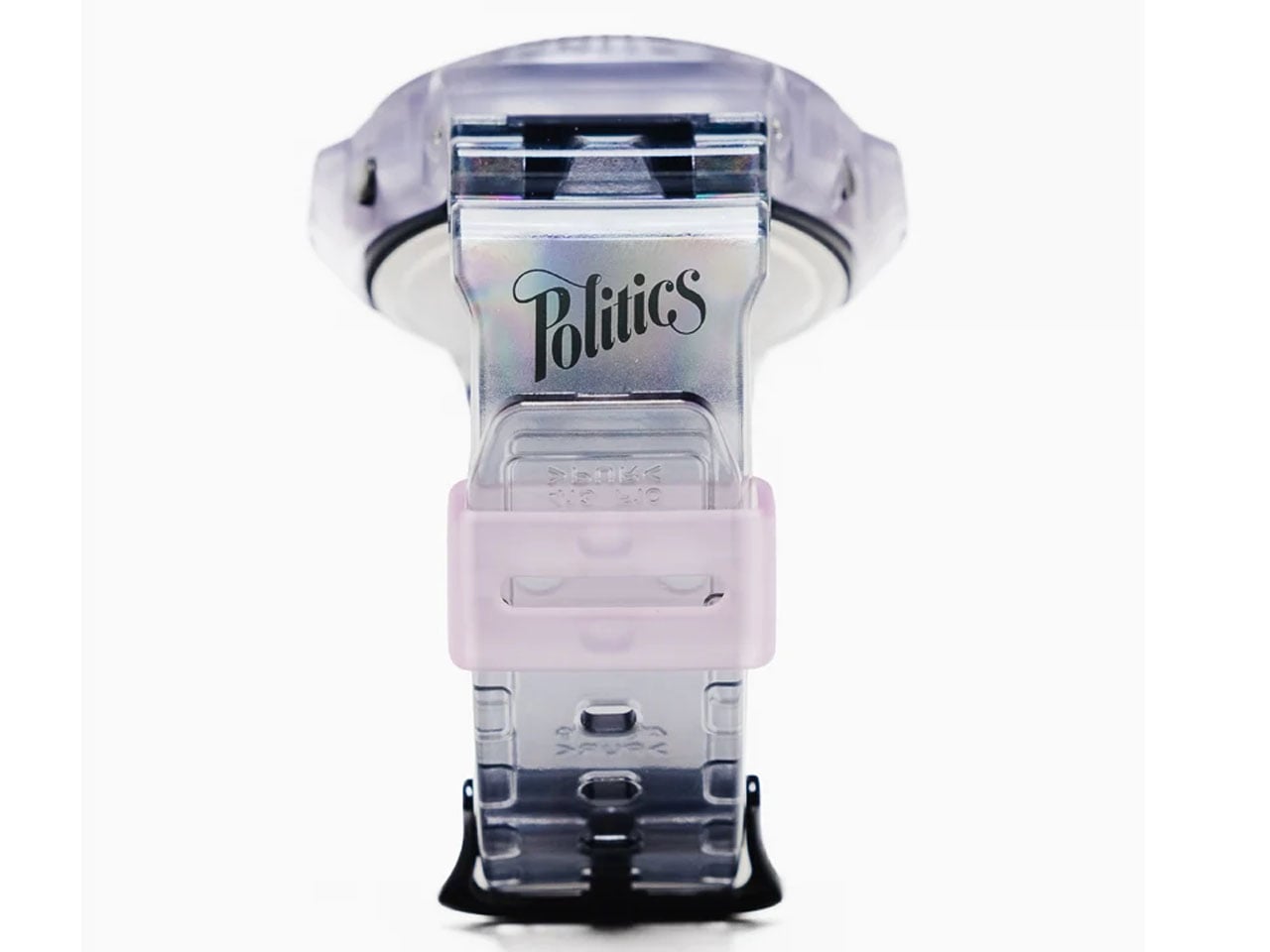
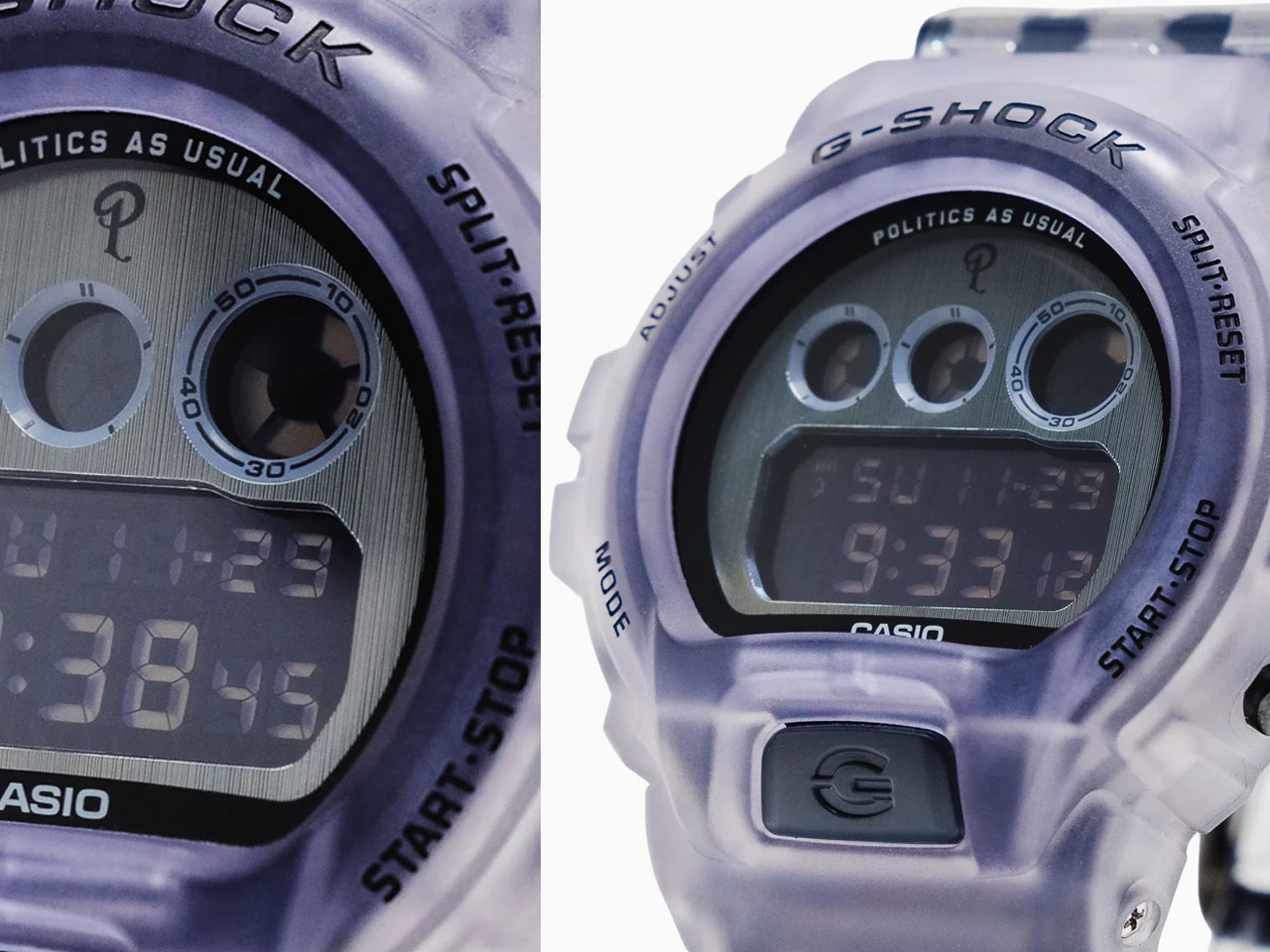
The semi-transparent purple resin construction gives the watch a layered appearance, with the underlying components subtly visible through the case and band. Its finish shifts between smoky violet and brighter purple depending on the light, echoing the natural iridescence found inside oyster shells. The pearl-inspired dial carries Sneaker Politics branding, including a stylized P above the digital display and the retailer’s script lettering on the strap keeper. Even the buckle and keeper follow the translucent treatment, keeping the design consistent throughout.

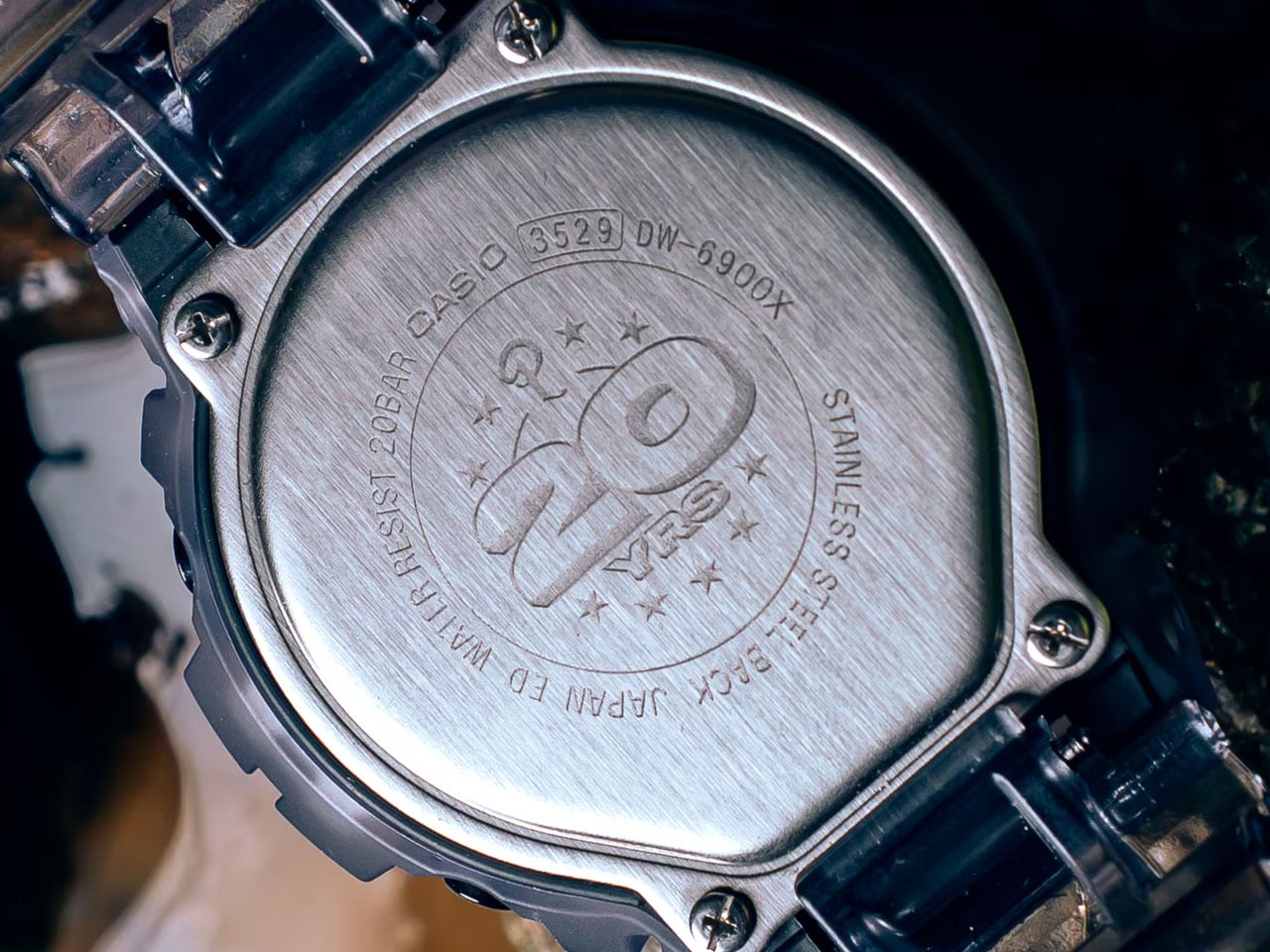
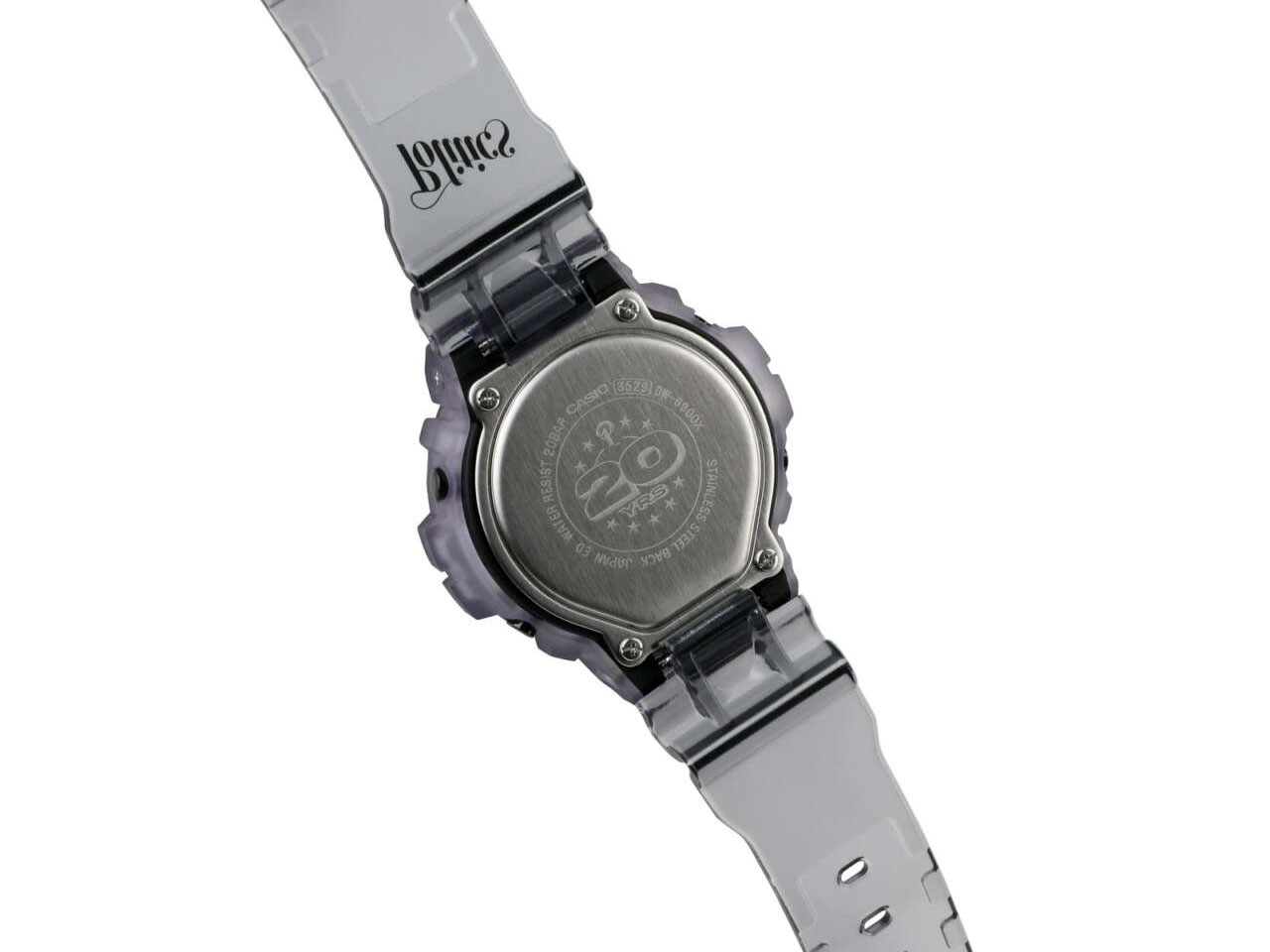
The watch retains the familiar DW-6900 silhouette, characterized by three circular indicators positioned above its main digital display. These smaller gauges feature deep blue accents that complement the purple finish. Pressing the front G button activates a purple LED backlight, adding another layer to the oyster-inspired aesthetic. On the reverse, a stainless-steel caseback carries a special 20 YRS anniversary engraving surrounded by stars, commemorating two decades of Sneaker Politics.

Beyond its appearance, the DW6900SP26-6 retains the practical functionality expected from a G-SHOCK. Its Module 3529 includes a stopwatch with 1/100-second precision, a countdown timer supporting intervals of up to 24 hours, a multifunction alarm and an hourly time signal. The watch also features a fully automatic calendar extending to 2099 and a flash alert function. Its shock-resistant construction and 200-meter water resistance make it suitable for everyday wear and water-based activities. A CR2016 battery provides an estimated five years of operation.

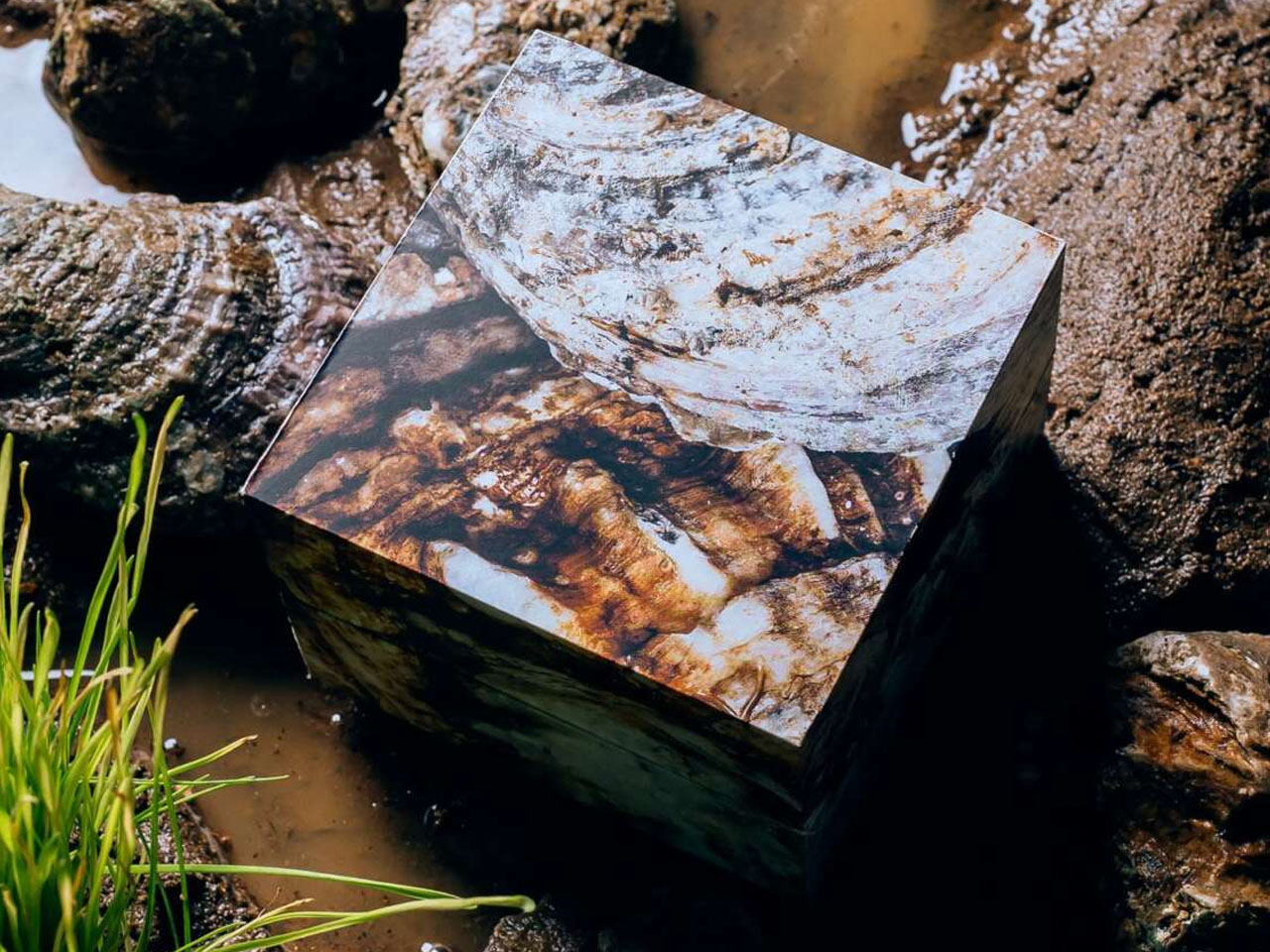
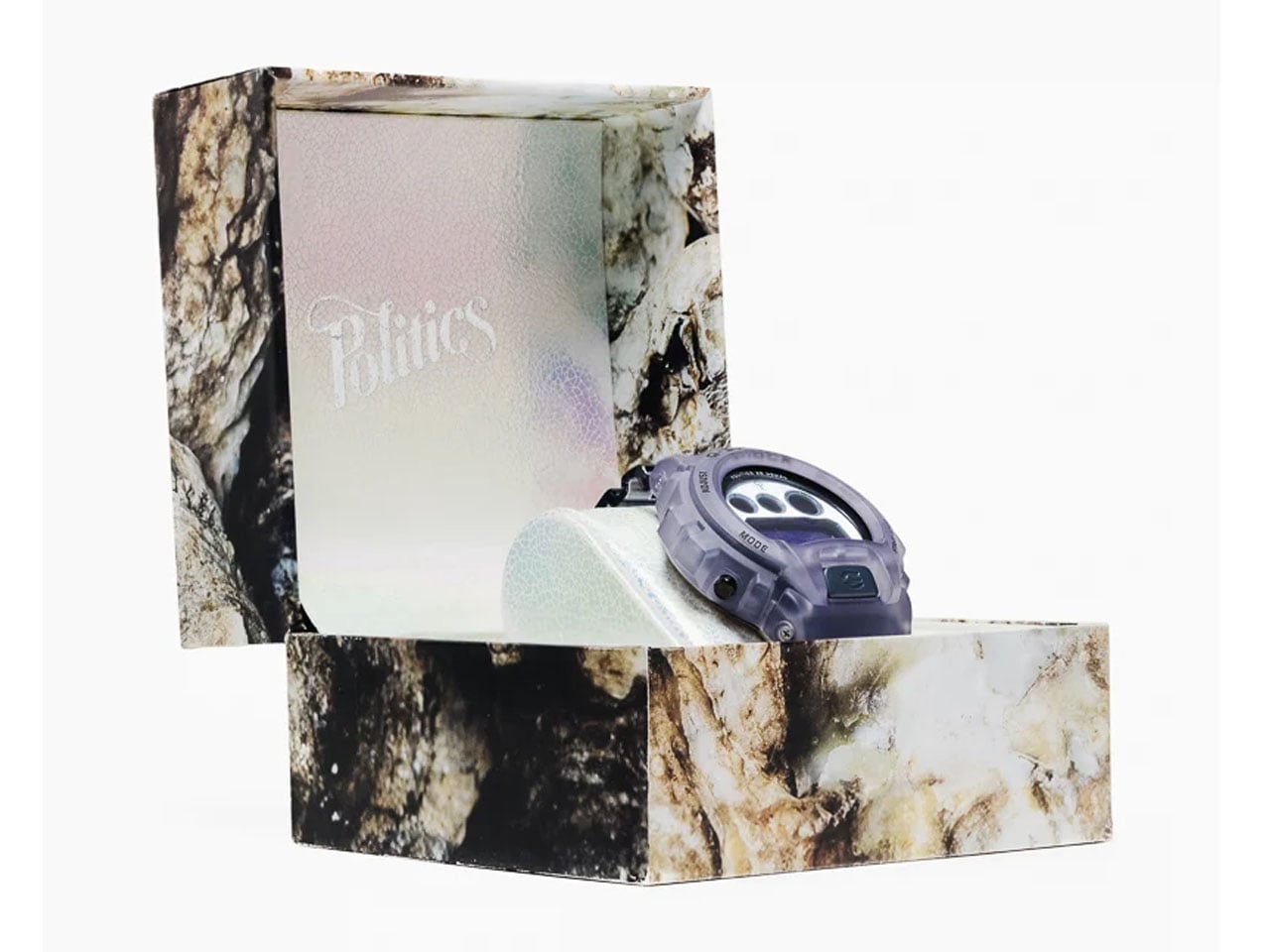
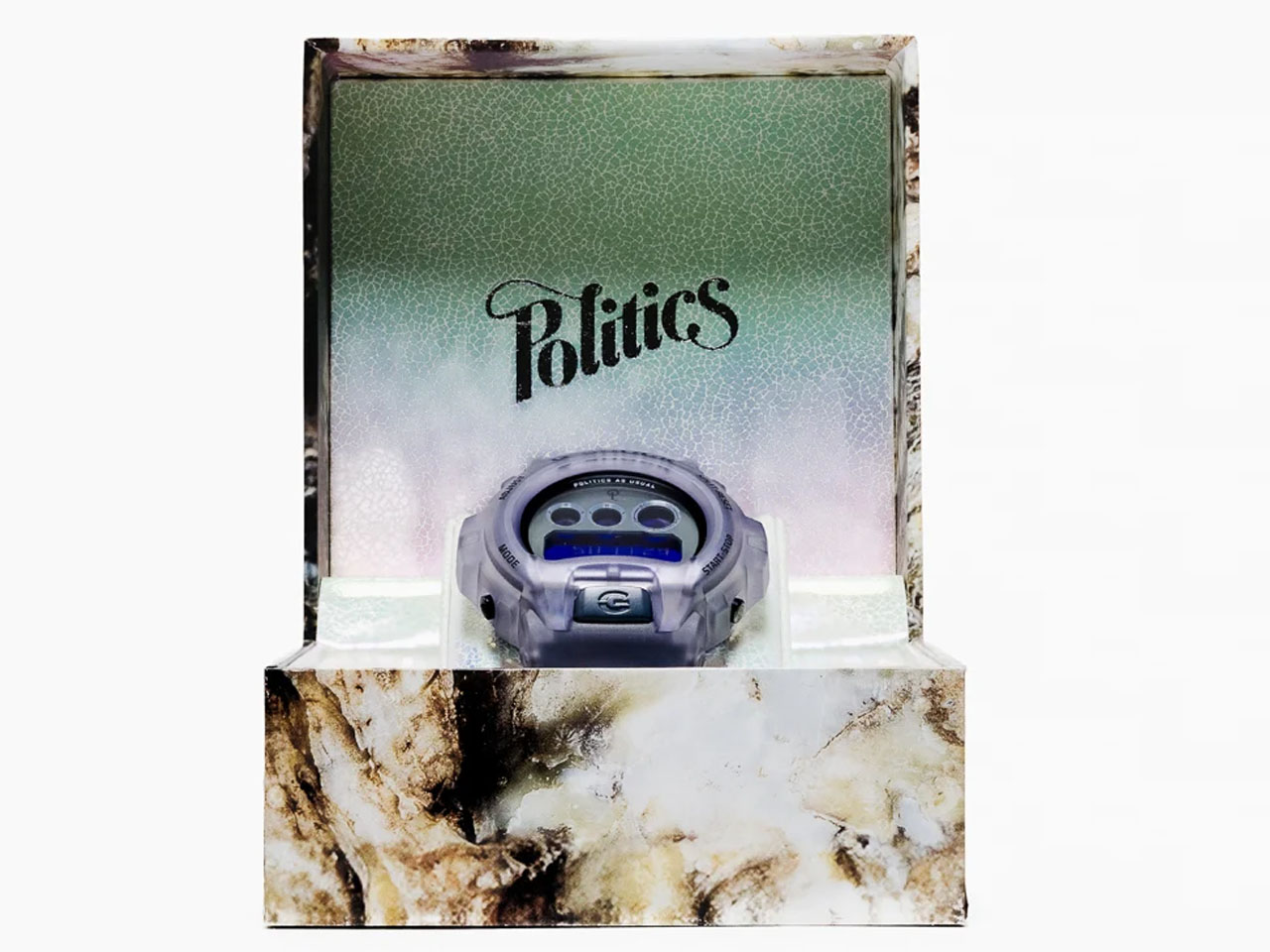
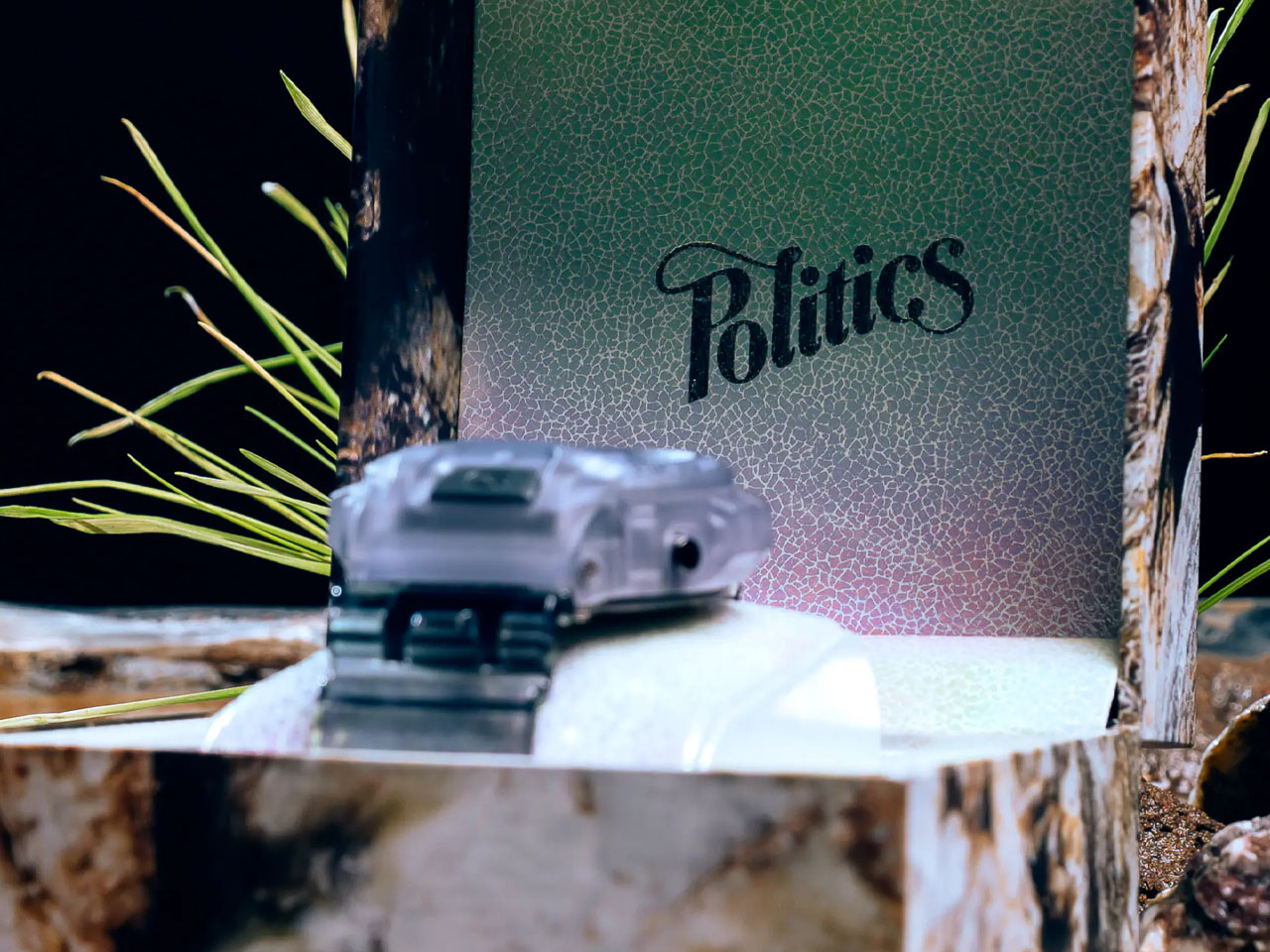
The collaboration also extends to the packaging. The watch arrives in a specially designed box featuring an oyster-net pattern, with a pearlescent inner lining and a pearl-like cushion holding the timepiece. This attention to detail reinforces the coastal inspiration rather than treating it as simply another colour variation.

There is a more meaningful story behind that inspiration, too. Recycled oyster shells are used by ecological organizations and nonprofits in Louisiana to help rebuild coastal habitats and protect the shoreline against erosion. The collaboration draws attention to this local environmental connection while celebrating Sneaker Politics, which was founded in Lafayette in 2006.

The G-SHOCK x Sneaker Politics DW6900SP26-6 is priced at $180 in the US. It will arrive at Sneaker Politics’ physical stores on November 20, followed by an online release through both brands on November 21, 2026. The online Sneaker Politics release is being conducted through a draw. International pricing and availability have not been confirmed.

The post This limited-edition G-SHOCK gives your wrist an iridescent oyster-inspired finish first appeared on Yanko Design.
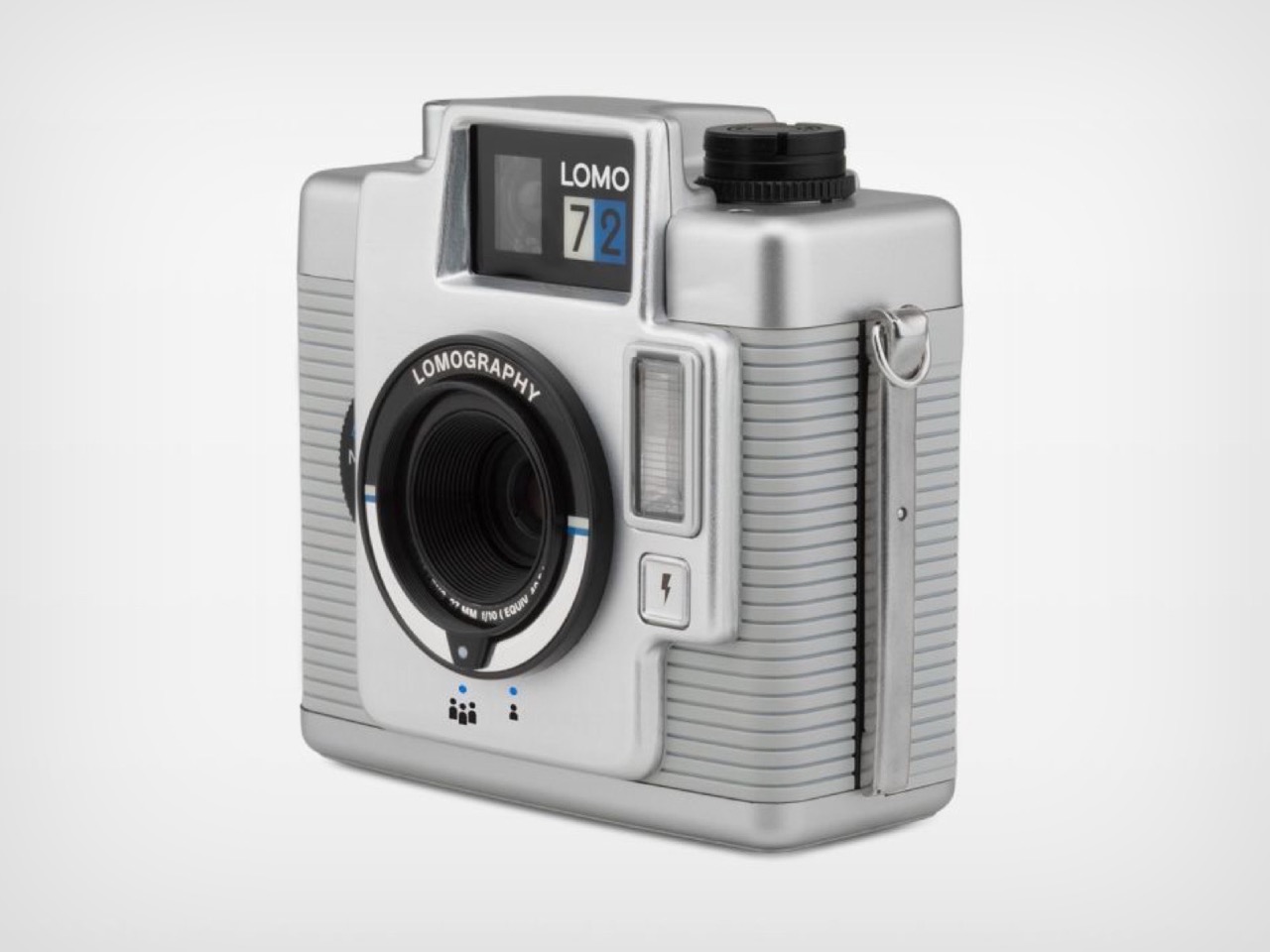
The Lomo72 is a $79 half-frame film camera for people stuck between a Kodak and a Pentax

Back in 1959, Olympus figured out that if you cut a 35mm frame in half, people would happily shoot twice as many photos. The Olympus Pen became a hit, and half-frame cameras had a full-blown moment across 1960s Japan. Then they faded away, as trends do. Now they’re back, thanks to the Pentax 17, the Fujifilm X half, and a generation that discovered film right as film got expensive. Lomography’s newest entry is the Lomo72, and the name gives away the pitch: 72 shots from a regular 36-exposure roll.

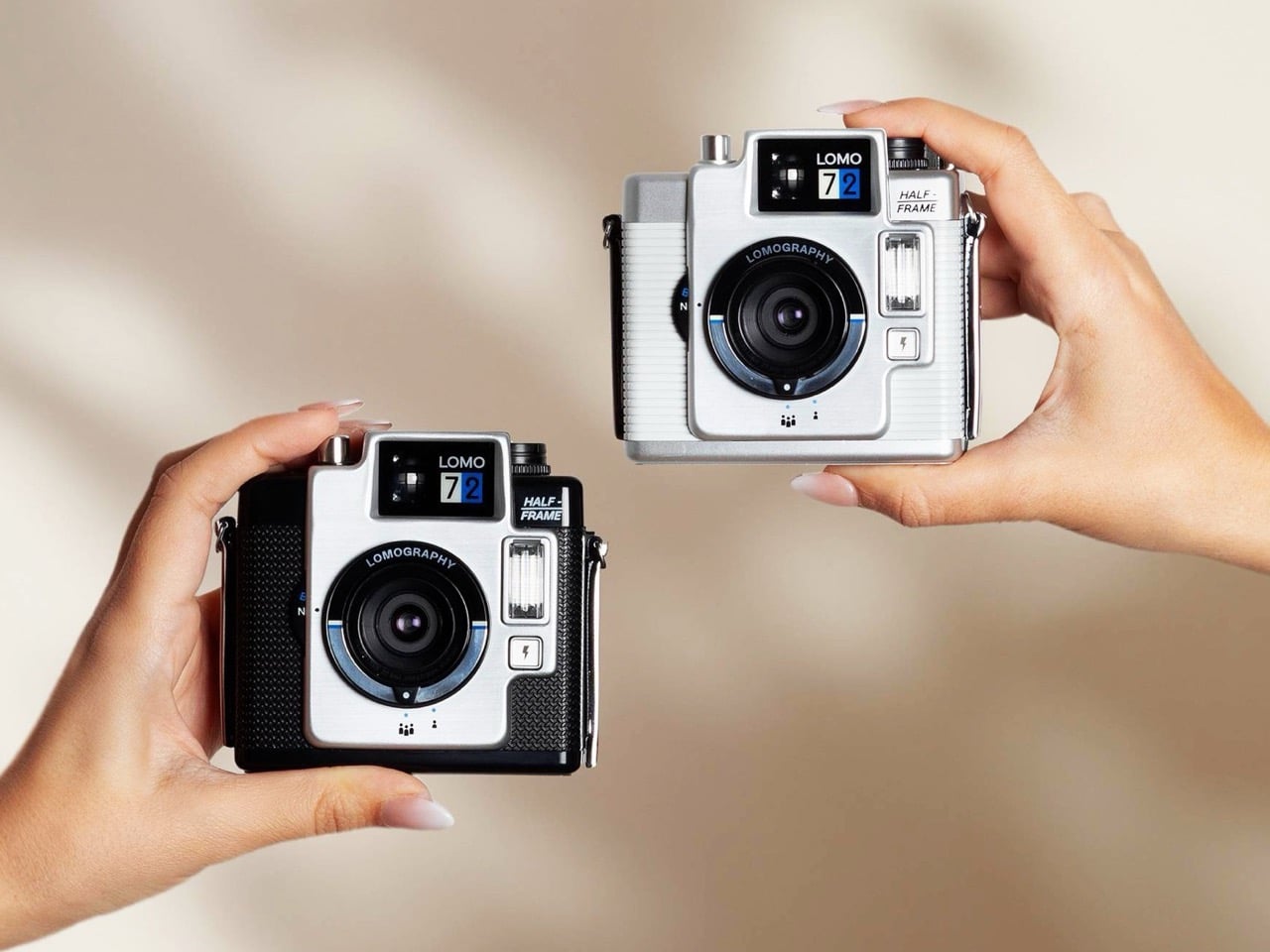
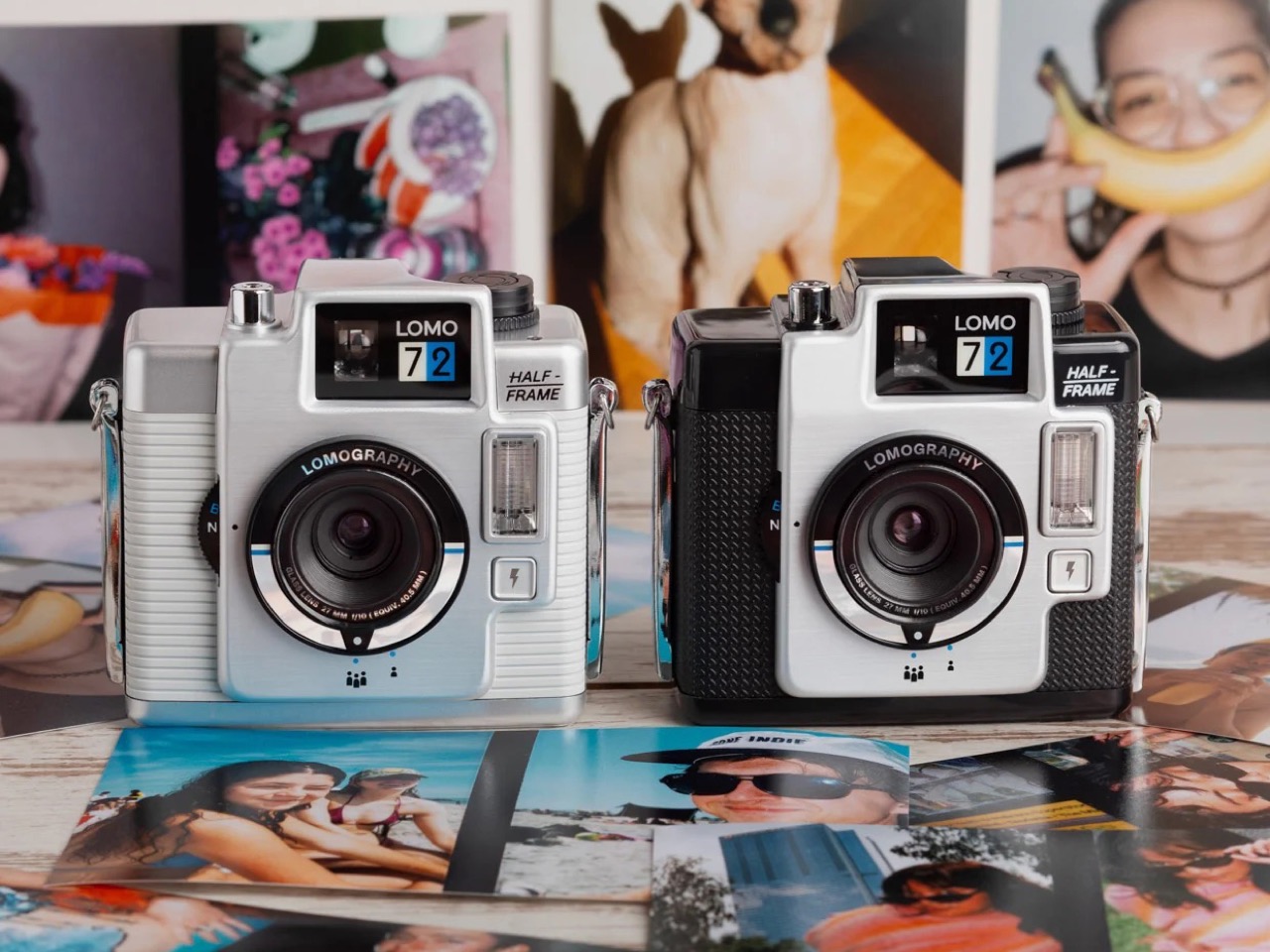
At $79, the Lomo72 sits between disposable-style plastic shooters and the roughly $500 Pentax 17. Lomography gave it a multi-coated 27mm glass lens, a metal-plated body in black or silver, and simple two-zone focusing for nearby subjects or distant scenes. Shutter speed is fixed at 1/100 of a second, with a Bulb mode for long exposures when you’re feeling brave. A built-in flash, colored gels, and a multiple-exposure switch leave room for happy accidents. It’s up for preorder on Lomography’s site, with delivery promised before Christmas Eve.

Designer: Lomography

Half the Frame, Double the Roll, and Built-In Diptychs

Half-frame means the camera exposes only half of a regular 35mm frame, giving you a tall 17 x 24mm image instead of the usual wide 36 x 24mm one. Two photos fit where one used to live, so a 36-exposure roll stretches to 72. Run that against your own lab bill and it gets fun fast. If a roll plus developing and scans costs you $30, each shot drops from about 83 cents to roughly 42. That buys more freedom to photograph your lunch, your cat, and your friend’s slightly blurry dance moves.

The vertical frames also pair up naturally, so two consecutive shots sit side by side on the negative as a diptych. Half-frame shooters have played with this since the Pen days, matching a wide scene with a close detail, or a face with its reaction. One tip for first-timers: tell your lab you shot half-frame so it can scan the frames correctly. The trade-off is a smaller negative, which means more visible grain if you blow prints up big. On a phone screen or a 4 x 6 print, you might find that grain part of the charm.

A Multi-Coated Glass Lens and a Metal-Plated Body for $79

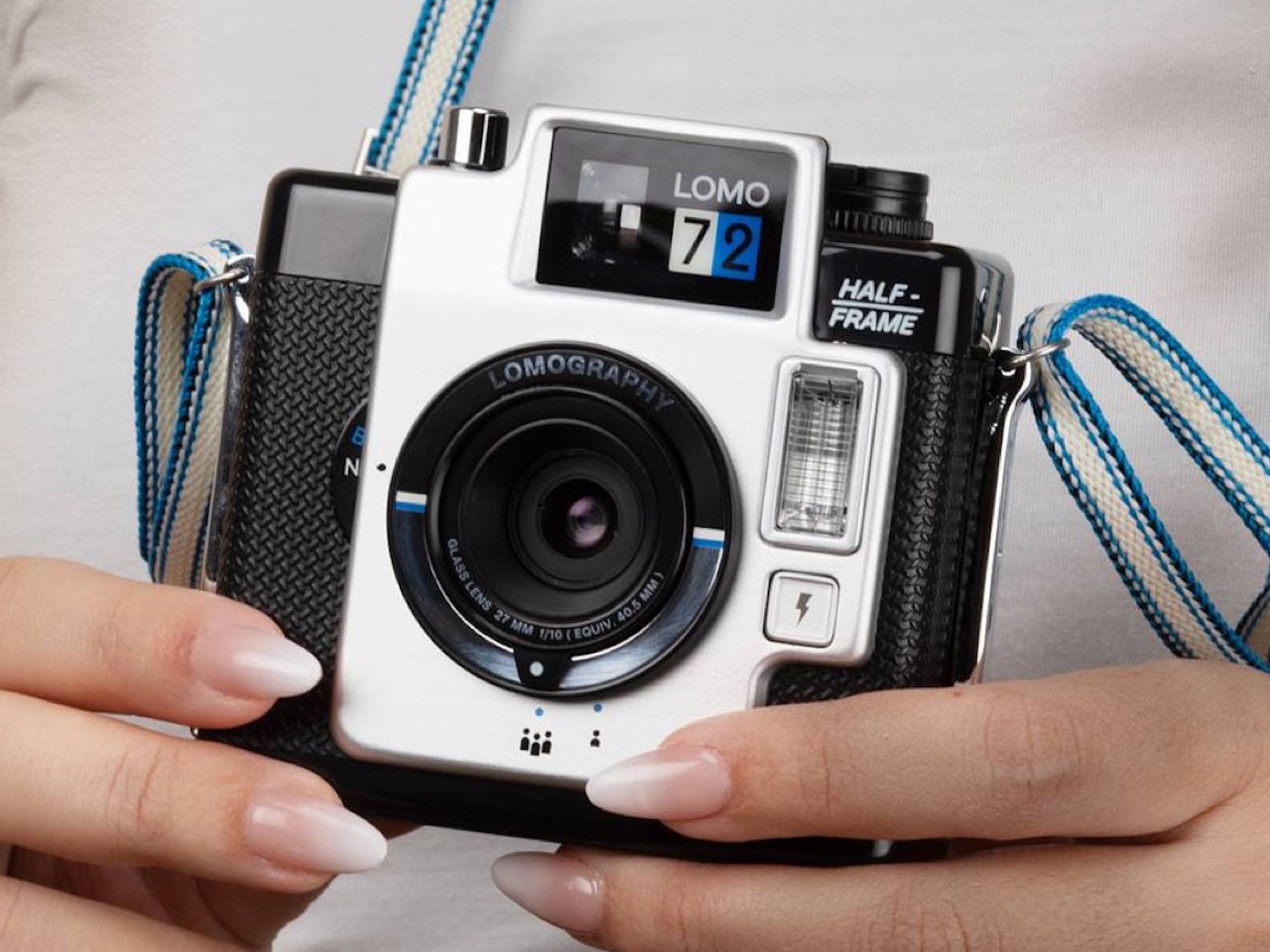
Lomography’s $35 Half-frame Simple Use camera, introduced in July, keeps things basic, so the Lomo72’s biggest upgrade sits right up front. It gets a 27mm glass lens built from two elements in two groups, with multi-coating: thin layers on the glass designed to reduce flare and ghosting. On a half-frame negative, 27mm frames a scene roughly like a 40mm lens on full-frame. Most outlets list the aperture as a fixed f/10, though Lomography’s own shop page has shown f/8. Either way, there’s no aperture setting to fiddle with.

The body wears a retro metal-plated finish in black or silver, and Lomography describes it as pocket-sized. Metal side locks double as strap lugs, keeping extra hardware off the body. Film loads through a rear door, and there’s a standard quarter-inch tripod socket and a cable-release thread for long exposures without nudging the camera. The built-in flash runs on a single AAA battery, with a stated reach of about 3.3 feet (1m) with ISO 100 film or 6.6 feet (2m) with ISO 400. That’s selfie and dinner-table range, and the included colored gels turn it into a pocket party light.

How the Lomo72 Stacks Up Against a $50 Kodak and a $500 Pentax

Kodak’s Ektar H35 sells for around $50 with a 22mm lens at f/9.5 and a 1/100s shutter. The Lomo72’s exposure settings land close to it, so the extra money goes into the multi-coated glass, the metal-plated shell, a close-focus zone down to 1.3 feet (0.4m), and that multiple-exposure switch. At the other end, the roughly $500 Pentax 17 adds a brighter 25mm f/3.5 lens and automatic exposure. Lomography covers the budget end of its own catalog too, with the Simple Use at $35 and the Lomourette at $69. Of that trio, the Lomo72 is the one with glass.

With the shutter fixed at 1/100s for ordinary shooting, your film choice matters. ISO 400 color negative offers some latitude between sun and shade, though a camera with fixed exposure settings has its limits. Set the focus to Close for nearby subjects or Infinity for distant scenes, and there’s little else to adjust. Bulb and the MX switch are waiting for when you get curious. The Lomo72 is available for preorder on Lomography’s site for $79 in black or silver, with delivery promised before December 24.

The post The Lomo72 is a $79 half-frame film camera for people stuck between a Kodak and a Pentax first appeared on Yanko Design.