Concrete Furniture Just Got Soft: 5 Designs That Feel Like Art

Brutalism once suggested stark, monumental forms, with raw concrete presented in uncompromising honesty. Today, that legacy is evolving into a softer interior design language: Soft Brutalism. Rather than a contradiction, it becomes a thoughtful fusion where concrete is shaped into gentler, more human-centered forms. This shift responds to a culture saturated with disposable design and offers a return to authenticity, weight, and permanence.

Design studios increasingly agree that real luxury now lies in longevity and the tactile bond between people and material. Soft Brutalism embraces concrete’s structural clarity while softening its presence through refined casting, subtle tones, and smooth contours, transforming a once cold material into a warm, grounding element in contemporary spaces.

1. Texture As Poetic Expression

Soft Brutalism reimagines the concrete surface as a sensory landscape. Instead of the coarse, exposed finishes of classic Brutalism, this approach introduces a gentler, more tactile vocabulary. Ultra-high-performance concrete and advanced admixtures allow surfaces to feel like polished stone or soft, leathered marble, shifting concrete from industrial to intimate.

Subtle natural pigments bring earthy tones that warm the material visually, while delicate pores and faint aggregate patterns preserve its authenticity. This balance of refinement and imperfection creates a presence that feels grounded, crafted, and emotionally resonant – inviting touch and elevating concrete into a poetic element of contemporary design.

The Brute concept reinterprets outdoor furniture through a raw concrete expression of minimalism. Instead of the polished wooden surfaces often associated with minimalist design, these pieces embrace the unrefined character of concrete, inspired by brutalist architecture. The collection includes a chair and a table, each shaped like an enlarged square bracket. The chair features a recessed groove that holds a thick plywood backrest, creating a warm, natural contrast against the cool exposed concrete. Its form remains intentionally austere while highlighting the structural honesty of the material.

The table echoes the chair’s geometry but can be positioned in two orientations. It may be placed horizontally for a sculptural presence or stood upright for a more familiar table profile. Both pieces incorporate openings at their base that allow them to be linked using milled steel rods, creating multiple configurations. This modular system enables varied seating arrangements, giving the Brute furniture set practicality and visual impact within outdoor environments.

2. Sculpted Concrete Forms

Soft Brutalism preserves the inherent weight of concrete while reshaping it into forms that feel gentle and approachable. Instead of sharp right angles, the furniture relies on organic curves and softened edges that create calm, sculptural silhouettes. These substantial pieces ground a space, offering quiet stability while inviting touch and reducing visual intensity.

Drawing inspiration from nature, many forms echo river stones or stacked cairns, strengthening a biophilic connection within interiors. Their smooth, continuous surfaces interact beautifully with light, diffusing shadows and highlights so the material feels alive. This interplay transforms concrete into a warm, human-centred design language.

Ronan Bouroullec’s Ancora tables for Magis reframe concrete with an unexpected sense of refinement. Each piece is defined by a sculptural anchor-shaped base where a curved edge meets a central rib, giving the form both stability and visual lightness. The collection includes rectangular and round dining tables, as well as low and side tables, designed for indoor and outdoor settings. The rectangular model measures 220 × 90 cm, while the round version is 130 cm in diameter, offering two distinct spatial expressions.

Materiality sits at the core of Ancora. The concrete base establishes a quiet architectural presence, while the tabletop options, like tempered glass in clear or smoked finishes, or oak-veneered MDF, allow for different aesthetic directions. With its clean geometry and absence of decorative flourishes, the design relies on proportion, curvature, and structure to express character. Ancora demonstrates how concrete can shift from industrial to poetic when shaped with precision and restraint.

3. Warm Material Contrast

Soft Brutalism balances concrete’s cool, dense character with warm, organic materials, creating both visual and sensory harmony. Instead of relying solely on mass, this approach pairs concrete with richly grained woods, supple leathers, and hand-woven textiles, bringing an inviting counterpoint to the material’s inherent solidity.

Thoughtful placement of wood, cushions, and softer textures ensures that human touchpoints feel warm, ergonomic, and comfortable. This pairing transforms each piece from a purely industrial object into a crafted work of art, highlighting the precision of concrete casting alongside the refined joinery and material richness that elevate its presence in contemporary interiors.

The CONECTO system reconsiders how concrete can function within outdoor furniture by using the material in a modular rather than static way. At first glance, the stool appears as a simple cylindrical form topped with a coloured acrylic surface. In reality, the base consists of two half-cylinders joined along their flat sides, allowing each segment to be repositioned and combined with others. This modular approach enables multiple configurations: a single unit as a compact stool, two halves arranged to support a square top, or extended arrangements that create elongated seating. When three full cylinders are grouped, the system forms a triangular bench suitable for multiple users.

Acrylic plays a functional and visual role, acting as the connector between concrete elements while adding colour and translucency that contrast with the raw, tactile base. The design’s aesthetic merges minimalism with a subtle brutalist influence, resulting in a visually engaging outdoor piece. Developed in high-strength UHPC concrete, the system also incorporates sustainable intent, with future versions planned to integrate recycled materials for enhanced environmental performance.

4. Timeless Design Value

Soft Brutalism positions concrete furniture as a long-term investment rather than a trend-driven purchase. For high-net-worth homeowners, its appeal lies in permanence: pieces built to endure physically and aesthetically. When treated and sealed correctly, concrete becomes exceptionally durable, resisting wear and retaining its visual integrity for decades, making longevity itself a form of luxury.

Choosing locally cast, high-quality concrete also reduces carbon footprint and supports regional craftsmanship. These pieces are conceived as future heirlooms that are robust, architectural, and timeless enough to remain relevant across shifting styles. Their lasting presence offers both emotional and material return on investment.

The MESH seating series explores contrast through form, material, and colour. Each piece pairs a solid tapered concrete base with a lightweight powder-coated metal wireframe, creating a striking balance between heaviness and visual transparency. The concrete element grounds the design with a muted grey tone, while the vivid wireframe seat introduces colour and energy. This interplay gives the seating a sculptural presence suited to outdoor environments, where durability and weather resistance are essential. The combination of industrial materials also lends the pieces a distinctive character that merges playful expression with a subtle nod to brutalist design.

Construction remains deliberately simple. The wireframe upper plugs directly into the concrete base, producing a secure structure that is both functional and visually refined. The open metal pattern casts dynamic shadows that enhance the aesthetic appeal, while the ergonomically shaped seat offers unexpected comfort despite its materials. With its bold silhouette and vibrant finishes, the MESH series stands out as a practical yet artistic outdoor seating solution.

5. Concrete as Spatial Architecture

In Soft Brutalism, furniture functions as micro-architecture, shaping the home’s spatial rhythm rather than merely occupying it. Monolithic pieces like concrete dining tables or consoles become purposeful anchor points, establishing stability and directing how movement and energy flow through the room. Their presence offers both visual weight and emotional grounding.

These elements also echo the architectural philosophy of the space, emphasizing honesty, material integrity, and substance over ornamentation. For those mindful of Vastu principles, the natural weight and earth-derived composition of concrete enhance grounding and positive spatial energy, reinforcing harmony and stability within the home’s overall design.

Designer Neil Aronowitz reimagines concrete through an innovative material called Concrete Canvas – a flexible, waterproof, fabric-and-cement composite developed by the UK company Concrete Canvas. By manipulating this thin, durable “concrete cloth,” he created a furniture series that highlights concrete’s unexpected fluidity. The collection includes the Whorl Console, Whorl Table, and Enso Table, each formed by stretching the concrete cloth over sculptural molds before it cures into a rigid, lightweight shell. Aronowitz developed custom casting and shaping techniques to achieve these complex geometries, using the material’s structural properties to shift concrete from a dense, static medium to one that appears almost weightless.

The Whorl pieces, with their ribbon-like curves, balance function with sculptural presence and feature smooth, pigmented cement surfaces that echo Japanese minimalism. The Enso Table continues this language with a form inspired by the single brushstroke of traditional ink paintings. Wall-mounted and restrained in expression, it complements the collection’s emphasis on fluid lines and quiet, crafted elegance.

Soft Brutalism in concrete furniture represents more than an aesthetic, as it expresses a modern interior philosophy rooted in authenticity and permanence. By softening form and elevating texture, it transforms a primal material into one of warmth, light, and calm. Here, true luxury emerges from integrity and the quiet harmony between nature’s rawness and human craftsmanship.

The post Concrete Furniture Just Got Soft: 5 Designs That Feel Like Art first appeared on Yanko Design.

These Perforated Metal Clocks Turn Timekeeping Into Moving Art

We’ve gotten so used to looking at our phones or even our smartwatches to know what time it is that we forget how beautiful wall clocks can be. In fact, some younger people can’t tell time anymore by looking at analog clocks as they’re so used to digital clocks. So to see clock designs like the MOOV and COO clocks designed by Japanese designer Ryosuke Fukusada brings back those days when we appreciate things like cuckoo clocks and traditional craftsmanship while also bringing something more to the table, or rather, to the wall.

These metal clocks display their moving parts and details through perforated and transparent windows, making these hidden mechanics visible and adding a certain beauty to these timepieces. The bodies of the clocks are made using the traditional metalworking processes in the Niigata region and it involves cutting, bending, welding, and painting. The perforated sheets are produced with punch tools that create clean and consistent holes, ensuring each piece meets exacting standards.

Designer: Ryosuke Fukusada

The MOOV Pendulum Clock uses a perforated design on its metal plate that shows the pendulum swinging through the holes. Just be careful that you don’t get hypnotized as it can have a pretty mesmerizing effect when you stare at the pendulum long enough. There are no numbers but instead the time indicators are colored in places corresponding to their position. This may also be a good tool to teach kids how to actually tell time without the numbers. The genius of this design is how nothing feels placed by chance: the indicators sit exactly where the holes already exist, creating a harmonious visual system.

The COO Cuckoo Clock meanwhile is a metal clock that has a large circular opening where you’ll see the cuckoo appear to indicate what hour it is. This mechanical bird spreads and flaps its wings and sings a melodic version of the classic cuckoo sound. The shape of the clock is actually inspired by the arched windows from ancient times. The front is made of perforated metal and like the MOOV, the indicators are also colored to match the holes. The mixture of industrial materials and antique elements gives it a certain warmth that makes it feel both contemporary and nostalgic at the same time.

Both the MOOV and COO clocks come in four colors: white, off-white, mint blue, and green. These “calm tones” make it easy for the clocks to blend in with any interior. But there’s also a pop of color with the accents on the hands and indicators. The perforated design actually makes them easier to hang since it makes them a bit more lightweight and also different from the usual heavy wooden cases that the usual pendulum and cuckoo clocks use.

What makes these pieces particularly special for collectors is the regional craftsmanship story behind them. Fukusada, who established his studio in Kyoto in 2012 after working with renowned designer Patricia Urquiola in Milan, has a keen eye for bridging Japanese tradition with modern minimalism. His previous work, including the Relief clock, has won prestigious awards like the iF Design Award 2023, making his pieces increasingly sought after in the design world.

These clocks aren’t just functional objects. They’re conversation starters that celebrate the beauty of visible mechanics. In a world where everything is becoming digital and hidden behind sleek screens, there’s something deeply satisfying about watching a pendulum swing or a bird emerge to mark the hour. Whether you’re decorating your first apartment or adding to a curated collection, the MOOV and COO clocks remind us that timekeeping can be an art form worth displaying proudly on our walls.

The post These Perforated Metal Clocks Turn Timekeeping Into Moving Art first appeared on Yanko Design.
Prices for an old Star Wars game have ballooned because of its role in a PS5 jailbreak

The price for a PS4 copy of the relatively obscure Star Wars racing game, Star Wars Racer Revenge, has dramatically increased in the last few days because of the game’s use in the latest PlayStation 5 jailbreak, Eurogamer reports. The PS2 game was originally released in 2002, and was ported to PS4 by Limited Run Games in 2019. Its role as a key ingredient in the jailbreaking process was announced on December 31.

Interested jailbreakers need Racer Revenge to jailbreak PS5 12.00 firmware because of a bug in the game's Hall of Fame feature, according to Eurogamer. The bug makes it possible to inject new code into Sony's console, and because the PS5 is able to load and play PS4 discs, Star Wars Racer Revenge is an easier method to pull the jailbreak off. Retail releases of games are a common way to execute exploits and hacks because, unlike digital copies, they can’t be directly patched.

While the PS4 version of Star Wars Racer Revenge was available for anywhere between $14.99 to $37.50 when it went on sale originally, used copies are currently listed for as high as $411 on eBay. Sellers are naturally trying to capitalize on the game's new position in the jailbreaking meta and raising the price accordingly. Of course, it helps that there's only a small number of copies to go around.

As the company's name suggests, Limited Run Games releases old games in limited quantities as collector items. The company only ever made 8,500 copies of Racer Revenge per its own data, so the game is already rare in some sense, and now expensive to boot while there's interest in the PS5 jailbreak.

This article originally appeared on Engadget at https://www.engadget.com/gaming/playstation/prices-for-an-old-star-wars-game-have-ballooned-because-of-its-role-in-a-ps5-jailbreak-230604276.html?src=rss

The Upcoming iPhone Fold feels like a response to Peer Pressure, not Innovation

Image Credits: Techtics

I could be wrong, and I hope to be… but the iPhone Fold seems to be gathering interest but not for the right reasons. Everyone loves innovation – not everyone adopts it. We saw how the Vision Pro absolutely caused a tsunami online before subsiding into the tiny ripple it now is. For what it’s worth, the iPhone Fold feels like déjà vu. Impressive tech that Apple took years to perfect, launched to much fanfare, but without a true reason or ecosystem to actually boost user adoption. The Vision Pro is cool, but even after 3 years, nobody really NEEDS it.

We all knew the iPhone Air was going to just be a stepping stone towards something greater – but the iPhone Air’s sales prove one thing – nobody needed a slim phone, so nobody ended up buying one. Samsung’s been making foldables for the better part of a decade, and I still don’t see people overwhelmingly choosing them over regular candybar phones, so my question is simple. What exactly can Apple do to make their iPhone Fold measurably better? And more importantly, does “Measurably Better” actually translate to sales? Or is this a response to peer pressure without really innovating in a direction that users want?

Joining a Party After the Music Has Faded

The context for Apple’s entry is a market that has already chosen a winner, and it is the conventional smartphone. For all the engineering hours poured into hinges and flexible glass by Samsung, Google, and others, the foldable category remains a rounding error in the grand scheme of things. Global foldable shipments are expected to hover around 20 million units in 2025, with Samsung commanding nearly two-thirds of that volume. This sounds impressive until you place it next to the more than one billion smartphones shipped annually. Foldables are a niche, a high-priced experiment that has had years to capture the public’s imagination and has largely failed to do so. Apple is not just late to this party; it is showing up after the keg is tapped and most of the guests have gone home.

This sets up a strange dynamic. Apple’s usual playbook involves letting a market mature, identifying its core flaws, and then releasing a product so polished and user-focused that it redefines the category. With the iPhone Fold, the company appears to be entering a segment that is not just mature but also stagnant, with little evidence of pent-up consumer demand. The consensus timeline points to a 2026 launch, positioning the device as a hyper-premium “Ultra” or “Fold” model within the iPhone 18 lineup. This framing alone suggests a halo product, something to be admired from afar, rather than the next revolutionary device for the masses. It feels less like a strategic strike and more like an obligation.

Image Credits: Techtics

An Obsession with Perfecting the Crease

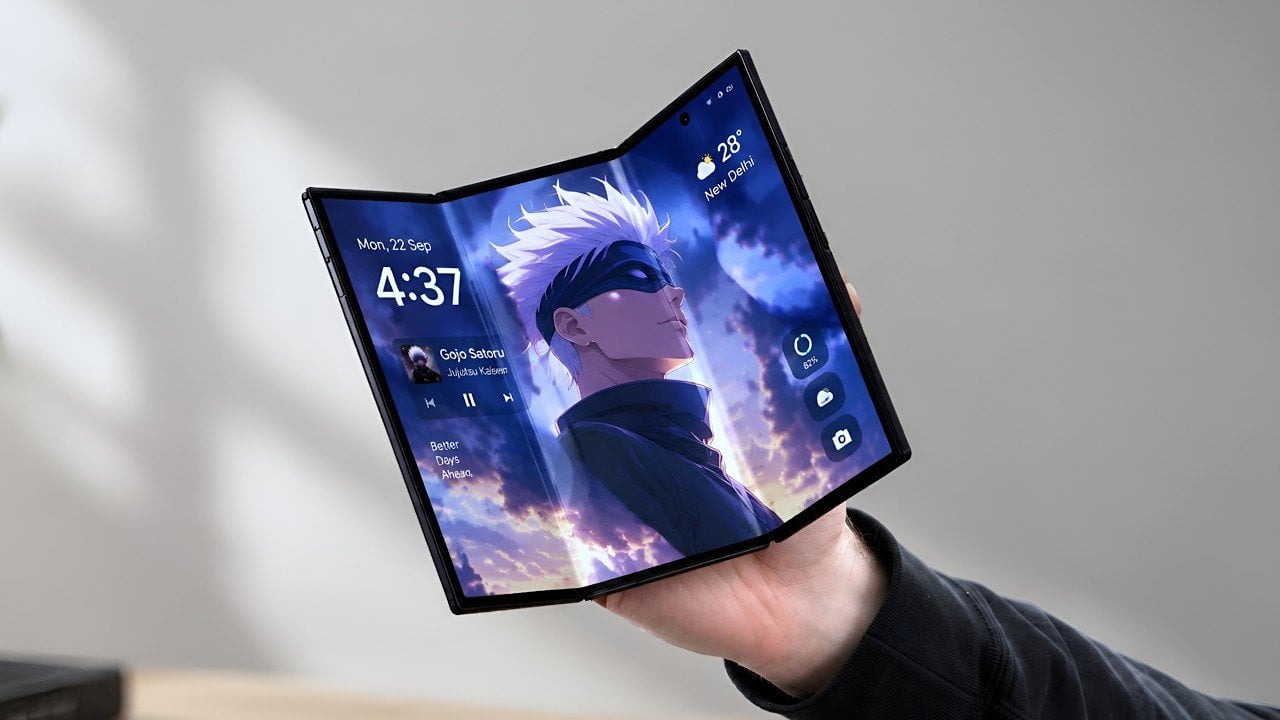
The rumored hardware details paint a picture of a device engineered to within an inch of its life. Reports converge on a book-style foldable with a 7.7 to 7.8-inch inner display and a smaller 5.5-inch screen on the outside. The central obsession seems to be the crease, that subtle valley that plagues every other foldable. Apple is reportedly holding out for a near-invisible fold, leaning on a next-generation ultra-thin glass solution from Samsung Display and a complex internal hinge with metal plates to manage stress. The device is also expected to be incredibly thin, perhaps just 4.5 millimeters when open and around 9.6 millimeters when closed, which would make it one of the most slender mobile devices ever made.

These are impressive technical feats, to be sure. A phone that unfolds into a small tablet without a distracting crease is a laudable goal. But it also speaks to a focus on solving problems that only engineers and tech reviewers seem to lose sleep over. To achieve this thinness, compromises are already surfacing, such as the rumored omission of Face ID in favor of a Touch ID sensor on the power button. This is the kind of trade-off that indicates Apple is prioritizing the physical object itself, its thinness and aesthetic perfection, over the established user experience. It is a device built to win spec-sheet comparisons and design awards, while its practical value for the average user remains an open question.

Image Credits: Techtics

A Playbook Written by a Rival

Perhaps the most telling detail in this whole saga is Apple’s reported reliance on its chief rival. Analyst Ming-Chi Kuo and others have indicated that Apple will adopt Samsung Display’s “crease-free display solution” instead of a fully homegrown technology stack. This is a significant departure for a company that prides itself on vertical integration and owning the core technologies that define its products. From custom silicon to camera sensors, Apple’s advantage has always been its ability to design the whole widget. By turning to Samsung for the most critical and defining component of its first foldable, Apple is tacitly admitting that it is playing catch-up in a game whose rules were written by someone else.

This move fundamentally supports the “peer pressure” thesis. It suggests that the urgency to have a foldable in the lineup has overridden the traditional, patient Apple R&D cycle. The company is effectively outsourcing the hardest part of the problem to the very competitor that has defined the category for years. While Apple has been filing patents related to flexible displays since 2014, the decision to launch with a rival’s core technology feels reactionary. It is a move made to fill a perceived gap in its portfolio, ensuring that Samsung does not get to claim the “most futuristic” phone on the market without a fight.

Image Credits: Techtics

The Ghost of the Vision Pro

This entire narrative feels eerily familiar. Just a few years ago, Apple launched the Vision Pro, a product of breathtaking technical achievement that answered a question few people were asking. It was, and is, a marvel of engineering that commands a price tag to match, and its sustained adoption has been modest at best. The iPhone Fold appears to be tracking along the same trajectory: years of secretive development, a focus on solving incredibly difficult hardware challenges, and a final product that will likely be priced into the stratosphere. Leaks suggest a starting price between $1,800 and $2,300, placing it well above even the most expensive iPhone Pro Max.

This pricing strategy pre-selects its audience, limiting it to die-hard enthusiasts and those for whom price is no object. Just like the Vision Pro, the iPhone Fold risks becoming a solution in search of a problem. A crease-free display is a better display, but is it $2,000 better? A thinner phone is nice to hold, but does it fundamentally change what you can do with it? The Vision Pro proved that technical excellence alone does not create a market. Without a compelling, everyday use case that justifies its cost and complexity, the iPhone Fold could easily become another beautiful, expensive piece of technology that is more admired than it is used.

Image Credits: Techtics

A New Class of Halo Product

Ultimately, the iPhone Fold is shaping up to be less of a mainstream product and more of a statement piece. It is Apple’s answer to a question posed by its competitors, a way to plant its flag at the absolute peak of the smartphone market. The goal may not be to sell tens of millions of units in the first year, though some bullish forecasts suggest shipments could reach 13-15 million. It is about defending the brand’s reputation for innovation and ensuring that the title of “most advanced smartphone” does not belong exclusively to an Android device. It is a halo product in the truest sense, designed to make the rest of the iPhone lineup look good by comparison.

The real innovation users crave might be more mundane: longer battery life, more durable screens, and more accessible pricing. The iPhone Fold, with its focus on mechanical novelty and aesthetic perfection, does not seem to address these core desires. Instead, it doubles down on the very trends that have made high-end phones feel increasingly out of reach for many. It is a beautiful, exquisitely engineered response to industry pressure, a device that perfects the foldable form factor. Whether it perfects it for a world that actually wants it remains to be seen.

The post The Upcoming iPhone Fold feels like a response to Peer Pressure, not Innovation first appeared on Yanko Design.
Cyclone RA1000 vs Ducati Diavel: How Close Does China’s 996cc V‑Twin Really Get

Access to Aprilia’s engine tech gave Cyclone a shortcut most emerging manufacturers would kill for. The RA1000’s 996 cc V-twin starts from the Aprilia Shiver 900 architecture, then gets a bigger 97 mm bore and a 12:1 compression ratio, landing at 105 hp at 9,000 rpm and 70 lb ft at 6,500 rpm. That is a very solid middleweight performance envelope hiding inside something that looks like a full fat power cruiser. Instead of spending a decade learning how to build a reliable big twin, Zongshen leans on its joint venture with Piaggio and fast forwards straight to a mature engine platform. It is a very modern kind of cheating, and frankly, a very smart one.

The bodywork tells a slightly louder story. The Cyclone RA1000 walks into the room wearing what is essentially a Ducati Diavel cosplay outfit, right down to the stubby tail, 240 section rear tire, and stacked side exhausts that visually anchor the whole rear half of the bike. You get a single sided swingarm, a low, muscular stance, and proportions that scream Italian power cruiser at a glance. There is no subtlety here. If you have ever seen a Diavel, your brain fills in the blanks instantly. The difference is that this silhouette is now being mass produced in China, powered by an Aprilia derived V-twin, and priced to hurt feelings in European boardrooms.

Designer: Cyclone

Look closer and the parts bin tells its own little international story. Brakes are from J.Juan in Spain, a known quantity with decent performance credentials. The engine lineage traces back to Noale via the Shiver, with Cyclone tweaking bore and compression to squeeze out that 105 hp figure. Electronics live on a 6 inch TFT display, backed by full LED lighting and modern switchgear that would not look out of place on a European naked. The frame and swingarm package are clearly engineered to visually showcase that enormous 240 section rear tire, which is the whole point of a bike like this. Subtlety is for commuters. This thing exists to make parking lots feel like a catwalk.

When Cyclone showed the RA9 concept back in 2021, a near 1000 cc Chinese V twin with premium styling felt like a big statement. Fast forward four years and the home market has moved the goalposts into another stadium. QJMotor is selling 900 plus cc fours with MV Agusta roots. CFMoto is prepping a 210 hp V4 superbike. Souo is out there building a 2000 cc flat eight like that is a normal thing to do. In that arms race, the RA1000 looks positively restrained. Which, if you care about actually riding your motorcycle instead of bench racing spec sheets, is not a bad place to land.

On the road, that 105 hp number tells you exactly what to expect. This is not a bike built to chase Panigales up a mountain pass. It is built to hammer out fast, satisfying acceleration from midrange torque, lean over enough to keep you entertained, and look outrageous parked outside a café. The 240 section rear tire is more about theater than lap times. The single sided swingarm is pure poster material. The ergonomics and geometry sit in that sweet spot between power cruiser and naked, closer to Diavel than Shiver in attitude. You buy this because you like the way it looks and you want an engine with proven manners.

The more interesting question is philosophical. At what point does a Chinese brand using licensed European tech and very familiar styling cues stop being an “imitator” and just become part of the same global design conversation. Cyclone is not reverse engineering an engine here, it is building a licensed evolution of one. It is not making a budget commuter with vague Diavel vibes, it is going all in on the silhouette and backing it with credible hardware. You can absolutely argue about originality, but you cannot argue that this is a throwaway product. The RA1000 is a sign that the game has changed. The question now is whether riders are ready to let go of old assumptions and judge it on what it does, not where it comes from.

The post Cyclone RA1000 vs Ducati Diavel: How Close Does China’s 996cc V‑Twin Really Get first appeared on Yanko Design.

Where are Engadget’s CES 2025 winners now?

With CES 2026 slated to officially start next week, the focus is understandably on all the new products that will be announced at this year's event. But before diving into what’s new, we thought it was a good idea to revisit our best of show winners from last year to see where they're at. After all, CES is synonymous with vaporware. The good news is the Engadget team has a keen sense for BS. Of the ones we awarded at CES 2025 that haven’t been released, most are coming this year. For the remaining few, we’ll be hunting them down this CES.

ASUS Zenbook A14

An Asus Zenbook A14 sits out a patio table.
Devindra Hardawar for Engadget

When we saw the ASUS Zenbook A14 at CES 2025, it left us impressed with its lightweight but well-made chassis, beautiful OLED screen and excellent mix of ports. After spending more time with it, the A14's shortcomings became more apparent. In his review of the ultraportable, Engadget's Devindra Hardawar gave the laptop a score of 78, lamenting its poor performance and expensive price tag. In the end, it wasn't quite the Windows MacBook Air competitor he had hoped for initially.   

BioLite Backup 

The BioLite Backup powers a Galan2 fridge.
Amy Skorheim for Engadget

At CES 2025, BioLite was already taking pre-orders for its automatic home backup power supply. The BioLite Backup didn't arrive in 2025, but if you visit the company's website today, you can reserve one for $100, with final pricing expected to start at $2,000. BioLite says units will start shipping this year.       

Jackery Solar Roof

A CES display shows the Jackery XBC solar panels in obsidian.
Jess Conditt for Engadget

Before CES 2025, Jackery was already an established player in the domestic solar power industry, and at the event, it impressed us with its XBC curved solar shingles. They look like regular roof shingles, but Jackery said they would deliver cell conversion efficiency of more than 25 percent. 

It's taken longer than anticipated, but Jackery says it now expects the shingles to go on sale in the US "very soon," with pricing likely to range between $1,100 and $1,300 per square meter depending on the customer's design requirements and how they purchase the product. When contacted by Engadget, Jackery also teased a handful of announcements for CES 2026, including updates on devices like the Solar Mars Robot it's been working on for the last little while. 

Lenovo Legion Go S

The Lenovo Legion Go S sits on an opaque glass table with a comic book behind it.
Sam Rutherford for Engadget

With the Legion Go S, Lenovo promised two different versions of its new handheld: one running Windows 11, and the other Valve's Steam OS. Unfortunately, the Windows variant arrived first (shortly after CES), and was about as good as expected. However, the wait for the SteamOS model was well worth it. When Engadget's Sam Rutherford finally reviewed it over the summer, he praised it for fast performance, bright display and of course the ease of use offered by SteamOS. 

LG OLED evo M5

A man and his dalmatian gaze at a 77-inch LG OLED TV.
LG

LG's OLED TVs are a perennial CES favorite at Engadget, and the company's 2025 slate was no different. The flagship evo M5 model impressed with its 165Hz refresh rate for gaming, better image processing for lower resolution content and a wireless transmission system for video and audio. At $4,300, the set is expensive, but the good news is LG typically does a good job of trickling down features to its more  affordable sets, and I'm sure the company will continue to improve on its OLED technology this year.

Moonbird Moonbuddy  

A hand holds the Moonbird Moonbuddy. The device has the teddy sleeve on.
Moonbird

The Moonbuddy was one of two "cute" gadgets that made Engadget's best of CES 2025 list. We liked Moonbird's decision to make a screenless meditation and sleep aid for children. The good news is you can buy your kid a Moonbuddy right now, with the device currently discounted to $110.42 as part of Moonbird's end of year sale.

Unfortunately, when Engadget contacted the company to ask about its CES 2026, all it sent us back was a response from "Luna," its automated AI agent. "I don't have specific information about our CES 2026 exhibition plans to share with you right now," the bot told me, adding I should email the address I just emailed to get a response from a human being. 

OhSnap MCON

Engadget senior reporter Jessica Conditt holds the OhSnap MCON in her hand at CES 2025. The attached phone displays Minecraft.
Jess Conditt for Engadget

The OhSnap MCON won us over with its simple pitch: it basically had the ability to turn any smartphone into a Xperia Play. Actually accomplishing that feat was more complicated, with components like Hall effect joysticks for added durability increasing the time it took for OhSnap to get the product ready. For that reason, the MCON didn't make it out to consumers in 2025. However, you can preorder one now for about $210, with shipments slated to start this year.  

Roborock Saros Z70

The Roborock Saros Z70 uses its robotic arm to put a handful of socks into a basket.
Karissa Bell for Engadget

The Saros Z70 was one of a handful of robot vacuums that debuted at CES 2025 with a built-in extendable arm, but Roborock's flagship was the one that made the best impression. We didn't end up recommending it in our robot vacuum guide; there are more affordable options that will appeal to a greater number of people. But if you want the latest and greatest, the Saros Z70 is on sale right now for $2,000.  

Yukai Engineering Mirumi

A Mirumi robot sticks to a pink purse.
Cheyenne MacDonald for Engadget

Of all the gadgets Engadget saw at CES 2025, it's fair to say the Mirumi robot from Yukai Engineering was the only one to steal our hearts. All this cute little charm does is stare at you and move its head around a little until you’ve been tricked into a few moments of happiness, and honestly that was more than enough for us to award it a best of CES award. Right now, you can find Yukai Engineering accepting pre-orders for Mirumi through Kickstarter. The project, which began at the start of December, easily surged past its modest $4,878 goal, raising $267,170 as of the writing of this article. The campaign ends on January 22, so you still have time to secure your Mirumi preorder. 

Technics EAH-AZ100 earbuds

A pair of Technics AZ100 earbuds sit on a wooden desk, with an iPhone and a pair of books next to them.
Billy Steele for Engadget

They might have only been a pair of earbuds, but a lot of us left CES really excited about the Technics EAH-AZ100. The reason for that was that they were the debut of the company's new magnetic fluid drivers technology, which promised to deliver even more clarity, detail and bass than the drivers in Technics' already excellent AZ80 earbuds. When Engadget's resident audio guru Billy Steele got a chance to review the EAH-AZ100 a couple of months later, he gave them a score of 85, saying they offered "some of the best sound quality in any of the hundreds of earbuds I’ve tested over the years." 

Urtopia Titanium Zero

The Titanium Zero sits at a CES display with other e-bikes nearby.
Daniel Cooper for Engadget

As a cyclist, the Urtopia Titanium Zero was the one product I left CES 2025 excited to see in the real world. If a titanium bike wasn't cool enough already, the Zero's Quark DM1.2 motor offered something actually innovative: a mid-drive motor with more power output than even the best hub motor. Unfortunately, while you can buy plenty of other e-bikes off of Urtopia's website, the Titanium Zero isn't on sale yet. That said, the company plans to showcase the bike, alongside the Quark DM1.2, at CES 2026.  

WeWalk Smart Cane 2

A person uses the Wewalk Smart Cane 2 to find their way through a CES booth.
Cheyenne MacDonald for Engadget

The WeWalk Smart Cane 2 won two awards from Engadget during CES 2025, including our coveted best in show nod. At an event where nearly every manufacturer found a way to add AI to their devices, the Smart Cane 2 appealed to us for its thoughtful use of the tech. It offers turn-by-turn navigation and obstacle detection, in addition to a GPT-powered voice assistant to give users a way to access information without also having to juggle their phone at the same time. If you visit WeWalk's website today, there's a "buy now" link for the Smart Cane 2 that leads to a dead end. When Engadget reached out to WeWalk, the company said it would be once again at CES demoing the Smart Cane 2.    

This article originally appeared on Engadget at https://www.engadget.com/big-tech/where-are-engadgets-ces-2025-winners-now-194500216.html?src=rss

GE Appliances’ new Smart Refrigerator automates grocery shopping with a barcode scanner and Instacart

Smart fridges are a dime a dozen at CES, and LG and Samsung have thoroughly explored what's possible when you connect your fridge to the internet or slap a touchscreen on the front. The new GE Profile Smart Refrigerator with Kitchen Assistant GE Appliances is announcing ahead of CES 2026 doesn't reinvent the wheel in that regard, but it does include a first: a built-in barcode scanner for adding items to your shopping list.

GE Appliances’ "Scan-to-List" feature uses the barcode scanner to quickly (and precisely) add items to a shareable shopping list in the company’s SmartHQ app. You can refer to that list while you're shopping in person, or sync it  with Instacart and have it delivered, eliminating the need to go grocery shopping entirely. Inside the fridge, GE Appliances also includes a flush-mount LED bar with a built-in camera that can deliver "real-time, on-demand snapshots of crisper drawers, focusing on the most costly and perishable items." This "FridgeFocus" feature is supposed to prevent you from overbuying perishable produce that you might already have, by letting you see which perishables might go bad first.

A silver four door refrigerator nestled in wooden shelves.
GE Appliances' fridge is stainless steel and has a built-in touchscreen display.
GE

On top of those smart features, the GE Profile Smart Refrigerator has a four-door stainless steel design, with door-in-door storage and an adjustable temperature drawer. The fridge also has an 8-inch touchscreen display for viewing recipes or the current weather conditions, and microphones for accepting voice commands. When you're dispensing water, the fridge's water dispenser is supposed to be smart enough to fill a container with the exact right amount of water using built-in sensors, too.

The GE Profile Smart Refrigerator with Kitchen Assistant will be available from GE Appliances and select retailers starting in April 2026 for a suggested MSRP of $4,899.

Update, January 5, 1:09PM ET: Headline and article updated to refer to GE Appliances rather than GE, because they’re separate companies.

This article originally appeared on Engadget at https://www.engadget.com/home/kitchen-tech/ge-appliances-new-smart-refrigerator-automates-grocery-shopping-with-a-barcode-scanner-and-instacart-194326073.html?src=rss

AMD at CES 2026: Live updates from CEO Lisa Su’s keynote presentation

NVIDIA and Intel had their moment in the spotlight, and now it's AMD's turn. The chipmaker is kicking off CES 2026 on Monday night, where it'll cover its latest AI developments and perhaps show off its newest Ryzen chips. It's the kickoff keynote of CES 2026, and CEO Dr. Lisa Su is expected to outline how AMD's hardware will power the AI revolution — and what the company can offer partners and consumers that those aforementioned rivals can't.  

We'll tell you how to tune in to the livestream and what else you can expect to see.

Dr. Su will deliver a keynote speech from the Palazzo Ballroom at the Venetian on Monday, January 5 at 9:30PM ET (6:30PM PT). You can watch the event live on the CES YouTube channel (we've embedded the livestream below).

While AMD says it's keeping its product details under wraps, we can expect "updates on AI solutions, from cloud to enterprise, edge and devices."

It's also likely that AMD will unveil its new versions of the Ryzen chips during its keynote on Monday, as Su will talk about the "advancements driven by Ryzen CPUs." That could include the Ryzen 7 9850X3D, which is expected to have better single-threaded performance than its predecessors. Additionally, we can expect to see the Ryzen 9000G series, which is potentially built with AMD's Zen 5 architecture.

Regarding AI, AMD could further discuss its new FSR Redstone technology, which it previously previewed on December 10. AMD's upscaling tech aims to close the gap on NVIDIA's DLSS 4, which was announced during CES 2025.

Su's presentation caps off CES's press day, so she'll be taking the stage in the hours after rivals NVIDIA and Intel present their chipmaking and AI plans to the world. As a reminder of how cross-linked these companies have become: OpenAI has pledged billions of dollars of hardware orders to AMD, while rival NVIDIA has invested billions in OpenAI — and taken a stake worth billions in Intel, too. 

This article originally appeared on Engadget at https://www.engadget.com/computing/amd-at-ces-2026-live-updates-from-ceo-lisa-sus-keynote-presentation-190012370.html?src=rss

Amazon’s Kindle is $20 off right now

If you're one of the many who made a New Year's resolution to read more, an ereader can help by putting your whole library (and more) at your fingertips wherever you are. While not as expensive as an iPad or another flagship tablet, these e-paper devices can be more expensive than you think, but right now you can save on one of our favorites. Amazon's base Kindle is on sale for $90 — that's $20 less than usual and only $10 more than its record-low price.

This made our list of the best ereaders, and for good reason. It's an iconic device that gets the job done. It doesn't have much by way of modern bells and whistles, but it ships with 16GB of storage and comes in two snazzy colorways.

The build is compact and durable. It's also light, which makes it easy to pack and easy to hold up with one hand. It allows access to the vast Kindle library and this deal comes with three months of Kindle Unlimited. That's sort of like Netflix, but for books. The selection isn't comprehensive, but I've always found something to read when in a pinch.

This is an entry-level device. There's no color screen and no option to use a stylus. The battery, however, does last around six weeks with regular use. This is a metric I can personally confirm. It seems like I barely charge mine and it's always ready to go.

The only major downside here is that this is one of those Amazon devices that forces ads on you. There is a version without lockscreen ads, but it costs more. I never really found them to be all that intrusive, given that they are tethered to the lockscreen and mostly advertise books.

Follow @EngadgetDeals on X for the latest tech deals and buying advice.

This article originally appeared on Engadget at https://www.engadget.com/deals/amazons-kindle-is-20-off-right-now-183302861.html?src=rss

Clicks is bringing its first smartphone and a new keyboard to CES 2026

Clicks is bringing its physical keyboard products to CES yet again, and these are chock full of nostalgia. The company has also unveiled its first smartphone, aimed at "communication, not consumption," that it says will function as a second phone used mostly for messaging.

The phone is dubbed the Clicks Communicator and features a tactile keyboard, a 4-inch OLED display, a 3.5mm headphone jack and expandable microSD storage up to 2TB. The interface is built on Android 16 and supports hardware-level encryption.

Even though Clicks says it wants to leave "content capture" to a users' primary device, the Communicator still sports a 50MP main camera and 24MP front camera. The phone also has NFC to support Google Pay, along with Bluetooth and Wi-Fi capability. Its 4,000 mAh battery can be charged via USB-C or wireless charging.

While the Communicator may look like a Blackberry or Palm device from days gone by, it carries modern features like a fingerprint sensor in the spacebar. It also has what Clicks calls a Signal LED, which is a customizable alert light that lets users know when specific people or apps are causing notifications.

As much as Clicks talks about its new phone as a secondary device, it follows the trend of minimalist or "dumb" phones as more users pull away from an overexposure to technology, social media and notifications. Some might even find it compelling as a primary device. But the secondary device idea feels unproven: having two phones would mean two phone plans with two phone numbers, which could be impractical for many users. The Communicator can be reserved now for $399 and will increase to $499 on February 27.

For users wanting a tactile keyboard to use with standard smartphones, Clicks has made the Power Keyboard. It features a QWERTY layout with directional keys and a number row. It attaches via MagSafe or Qi2 and has a 2,150 mAh battery to help keep your phone topped up. The phone can then be flipped into either a horizontal or vertical orientation, which ends up resembling a T-Mobile Sidekick.

Clicks Power Keyboard
Clicks

The keyboard is compatible with both iOS and Android and since it pairs via Bluetooth, it can also be used with tablets, smart TVs and virtual reality headsets. Pre-orders for the Power Keyboard will open January 2 and an actual launch is expected in the spring. The keyboard will retail for $110, though early-bird pricing is available for $80.

This article originally appeared on Engadget at https://www.engadget.com/mobile/smartphones/clicks-is-bringing-its-first-smartphone-and-a-new-keyboard-to-ces-2026-182239003.html?src=rss