Trump admin reportedly plans to use AI to write federal regulations

The Trump administration is planning on using Google Gemini to draft important federal regulations, as reported by ProPublica. This is starting with the Department of Transportation, according to interviews with agency staffers. Regulations created by the DOT help keep us safe when traveling.

The plan was initially presented to DOT staffers last month, with agency attorney Daniel Cohen writing to colleagues about AI's "potential to revolutionize the way we draft rulemakings." Gregory Zerzan, the agency's general counsel, has indicated that President Donald Trump is "very excited by this initiative" and that DOT will be "the first agency that is fully enabled to use AI to draft rules." This does suggest a pilot program of sorts, with eventual plans to bring AI to other departments.

Oddly, Zerzan doesn't seem that interested in high-quality regulations. ProPublica received transcripts of a meeting in which he declared that "we don't need the perfect rule on XYZ. We don't even need a very good rule on XYZ." He went on to say that "we want good enough" and that "we're flooding the zone."

Let me remind you that DOT regulates the safety standards of commercial aircraft, along with rules involving the transport of hazardous materials and driver qualifications. The agency's rules touch on every aspect of transportation safety. Why would the federal government rely on a new technology that's notorious for making mistakes?

The answer is speed. Writing and revising complex federal regulations can take months, but Google Gemini can spit something out in minutes. A DOT employee giving a presentation on the program suggested that many parts of these regulations are just "word salad" anyways, so AI should be able to do just fine.

"It shouldn’t take you more than 20 minutes to get a draft rule out of Gemini," Zerzan said. The plan is to compress the timeline in which transportation regulations are written and reviewed. The department has already used AI to draft an unpublished Federal Aviation Administration rule.

Federal agencies have used AI for years, but not to actually write regulations. It's primarily been used for the purpose of translating documents, analyzing data and categorizing public comments. Trump, however, is a huge proponent of the technology. He has released multiple executive orders in support of AI and once shared an AI-created video in which he flew a fighter jet and dropped what appears to be feces on American citizens.

Skeptics say that large language models like Gemini shouldn't be in charge of drafting complicated and consequential regulations that impact millions of everyday Americans. Mistakes could lead to lawsuits and even injuries and deaths.

Mike Horton, DOT’s former acting chief artificial intelligence officer, said using Gemini to draft regulations was like “having a high school intern that’s doing your rulemaking.” He also said that agency leaders under Trump "want to go fast and break things, but going fast and breaking things means people are going to get hurt."

"Just because these tools can produce a lot of words doesn’t mean that those words add up to a high-quality government decision,” said Bridget Dooling, a professor at Ohio State University who studies administrative law. “It’s so tempting to try to figure out how to use these tools, and I think it would make sense to try. But I think it should be done with a lot of skepticism."

DOT has experienced a net loss of more than 4,000 employees since Trump started his second term. This includes over 100 attorneys.

This article originally appeared on Engadget at https://www.engadget.com/ai/trump-admin-reportedly-plans-to-use-ai-to-write-federal-regulations-175155111.html?src=rss

Ball x Pit’s first update brings an endless mode and much more to the chaos

It’s time to jump back into the pit. Ball x Pit is one of the very best games of 2025 and there’s now even more to play around with in the brick-busting roguelite. The first major free update for the game (one of three that’s on the cards this year) just arrived on all platforms. It added a bunch more stuff to the mix, including two new characters, eight extra special balls with powerful abilities and an endless mode.

Developer Kenny Sun wrote on the PlayStation Blog that because fans demanded it so much, endless mode jumped right to the top of the to-do list. After you beat a level’s boss, you can keep going as long as you can stay alive and really put your builds to the test.

The Regal Update brought two more playable hunters to the mix as well. Opt to use The Falconer, and you’ll fire balls from two birds, one at each side of the screen. When balls return to The Carouser, they orbit around him to deal extra damage. Sun added that this character “twists ball trajectories with a personal gravity field that pulls shots off their usual paths.”

Then there are the new balls. The Stone Ball is powerful, but disintegrates as it bounces. Two of the latest balls deal spins on fire damage and the Fireworks Ball seems like it’ll add even more chaotic visual flair. The update added a trio of passives too. I enjoy creating builds around baby balls (a secondary type of ball that doesn’t have a special ability), so I’m eager to try out Iron Onesie. This passive scales up the damage of special balls depending on how many baby balls are in play.

Finally, the update introduced support for more languages. You can play Ball x Pit in Spanish (Latin America), Polish, Italian, Thai, Turkish and Ukrainian.

In anticipation of the update, I jumped back into Ball x Pit over the weekend for a quick refresher. Before I knew it, four hours had gone by. This game is once again going to be an existential threat to my time.

This article originally appeared on Engadget at https://www.engadget.com/gaming/ball-x-pits-first-update-brings-an-endless-mode-and-much-more-to-the-chaos-174306548.html?src=rss
A TikTok US power outage caused a ‘cascading systems failure’ leading to multiple bugs

If your TikTok feed has felt a little off lately, it's not just you. TikTok says is still working to fix its service in the US following a power outage at one of its data centers that's caused “multiple bugs” in the app. TikTok users have reported problems logging in and uploading videos, as well as strange behavior from the "for you" algorithm. Creators have also noticed that new uploads are seemingly getting o views or likes and that in-app earnings have disappeared.

"Since yesterday we’ve been working to restore our services following a power outage at a U.S. data center impacting TikTok and other apps we operate," the company wrote in a statement Monday. "We're working with our data center partner to stabilize our service. We're sorry for this disruption and hope to resolve it soon."

In a subsequent update several hours later, the company said that the power outage had caused a “cascading systems failure” that is still affecting the app and leading to “multiple bugs,” including those affecting view counts and load times. “Creators may temporarily see ‘0’ views or likes on videos, and your earnings may look like they're missing,” the company wrote in an update on X. “This is a display error caused by server timeouts; your actual data and engagement are safe.”

The statement didn’t directly address reported issues with the app’s recommendation algorithm. Since Sunday, users have reported seeing a wave of generic videos flood their feeds, which are typically hyper-personalized. Other users have reported seeing the same few videos repeated over and over again. 

About a day after the issues started, TikTok said that it had made “significant progress” in recovering from the issues it was facing, but that US users still may “have some technical issues,” specifically when posting new videos.

The issues come just days after TikTok finalized a deal to spin off its US business into a separate entity largely controlled by US investors. That timing hasn't gone unnoticed by users, many of whom are already suspicious of the company pushing a terms of service and privacy policy in the hours after the deal was finalized. The problems affecting the app's recommendation algorithm have also raised questions about TikTok USDS Joint Venture's plans to "retrain" TikTok's central feature.

Update, January 26, 2026, 7:18PM ET: This post has been updated to include additional information from TikTok about the outage and bugs affecting users.

Update, January 27, 2026, 11:22AM ET: Added TikTok’s latest statement about recovering from the issues that have hit US users.


This article originally appeared on Engadget at https://www.engadget.com/social-media/a-tiktok-us-power-outage-caused-a-cascading-systems-failure-leading-to-multiple-bugs-173426490.html?src=rss

Olympics 2026: How to watch, full schedule of events, and everything else you need to know about the Winter Games

LIVIGNO, ITALY - DECEMBER 26: A logo with ring of MilanoCortina on December 26, 2025 in Livigno, Italy. Livigno as part of the Valtellina cluster is one of the areas for the upcoming Milano Cortina 2026 Winter Olympics and will host men's alpine skiing, snowboard, freestyle skiing and ski mountaineering competitions. (Photo by Mattia Ozbot/Getty Images)
The Milano Cortina 2026 Winter Olympics are coming up. (Mattia Ozbot/Getty Images)
Mattia Ozbot via Getty Images

The 2026 Winter Olympics are taking place in Italy this year, with all the action taking place in Milan and the Alpine city of Cortina. This year marks the fourth time Italy has hosted the Winter Games; most recently, Turin hosted in 2006. Of the 16 sports featured at the Winter Olympics, 15 will return, including figure skating, hockey, luge, speed skating, and one entirely new sport, snow mountaineering. (Will it be as big a hit as the 2024 Summer Games' new addition, breaking? It remains to be seen.)

Live coverage of every event at the Olympic Winter Games Milan Cortina 2026 will be available to stream on Peacock — though thanks to the time difference between Italy and the U.S., to watch many of the events live, you'll have to wake up (or stay up) until 2AM or 3AM ET. Primetime replays and select live coverage will air on NBC. Here's what else you need to know about watching the 2026 Winter Olympics.

Dates: Feb. 6 - Feb. 22

TV channel: NBC

Streaming: Peacock

The Winter Olympics officially begin with the opening ceremony on Feb. 6, although some events will start as early as Feb. 4). The Milano Cortina 2026 games will run through Feb. 22. The closing ceremony of the 2026 Winter Olympics will take place in the Arena di Verona on Feb. 22.

The 2026 Winter Olympics will be held in Northern Italy, primarily in Milan and also the Alpine mountain resort town of Cortina d'Ampezzo, where events like bobsled, skeleton, alpine skiing, curling, para snowboard, and more will take place.

The 2026 Winter Olympics will air on NBC and stream live on Peacock.

The Milano Cortina 2026 opening ceremony will be held on Feb. 6, 2026. Due to the time difference, the ceremony will kick off around 2PM ET/11AM PT.

This year's Olympic Games are in Italy, which is 6 hours ahead of U.S. Eastern Time. Meaning that some events will start bright and early for U.S. viewers, and live coverage will likely wrap up around 4PM ET each day. NBC will have primetime replays of the biggest moments each night.

All times Eastern.

Wednesday, Feb. 4 (early competition starts)

  • Curling (round robin) – 2AM (Peacock – Live)

  • Curling (round robin) – 8AM (Peacock – Live)

  • Alpine skiing training – 3–6AM (Peacock – Live)

Thursday, Feb. 5

  • Curling (round robin) – 2AM (Peacock – Live)

  • Curling (round robin) – 8AM (Peacock – Live)

  • Freestyle skiing qualifications – 4AM (Peacock – Live)

  • Snowboard qualifications – 6AM (Peacock – Live)

Friday, Feb. 6 – opening ceremony

  • Curling (round robin) – 2AM (Peacock – Live)

  • Figure skating (team event short programs) – 6AM (Peacock – Live)

  • Snowboard slopestyle qualifications – 6AM (Peacock – Live)

  • Speedskating (early distances) – 8AM (Peacock – Live)

  • opening ceremony – 2PM (Peacock – Live)

  • opening ceremony – 8PM (NBC – Primetime)

Saturday, Feb. 7

  • Alpine skiing (men’s downhill) – 3AM (Peacock – Live)

  • Snowboard slopestyle finals – 6AM (Peacock – Live)

  • Speedskating medals – 7AM (Peacock – Live)

  • Figure skating (team free programs) – 8AM (Peacock – Live)

  • Hockey (group play begins) – 10AM (Peacock – Live)

Sunday, Feb. 8

  • Alpine skiing (women’s downhill) – 3AM (Peacock – Live)

  • Freestyle skiing moguls finals – 6AM (Peacock – Live)

  • Figure skating (pairs short program) – 8AM (Peacock – Live)

  • Luge (singles runs) – 9AM (Peacock – Live)

  • Hockey (group play) – 12PM (Peacock – Live)

Monday, Feb. 9

  • Biathlon sprint – 5AM (Peacock – Live)

  • Speedskating medals – 7AM (Peacock – Live)

  • Figure skating (pairs free skate – medals) – 8AM (Peacock – Live)

  • Curling (round robin) – 9AM (Peacock – Live)

  • Skeleton (heat 1–2) – 11AM (Peacock – Live)

Tuesday, Feb. 10

  • Alpine skiing (giant slalom) – 4AM (Peacock – Live)

  • Snowboard halfpipe qualifications – 6AM (Peacock – Live)

  • Figure skating (men’s short program) – 8AM (Peacock – Live)

  • Curling (round robin) – 10AM (Peacock – Live)

Wednesday, Feb. 11

  • Nordic combined – 4AM (Peacock – Live)

  • Freestyle skiing aerials finals – 6AM (Peacock – Live)

  • Figure skating (men’s free skate – medals) – 8AM (Peacock – Live)

  • Speedskating medals – 11AM (Peacock – Live)

Thursday, Feb. 12

  • Alpine skiing (slalom) – 4AM (Peacock – Live)

  • Snowboard halfpipe finals – 6AM (Peacock – Live)

  • Figure skating (ice dance rhythm dance) – 8AM (Peacock – Live)

  • Curling (medal round qualifiers) – 10AM (Peacock – Live)

Friday, Feb. 13

  • Biathlon pursuit – 5AM (Peacock – Live)

  • Figure skating (ice dance free dance – medals) – 8AM (Peacock – Live)

  • Skeleton finals – 10AM (Peacock – Live)

  • Hockey (quarterfinals) – 12PM (Peacock – Live)

Saturday, Feb. 14

  • Alpine skiing (team combined) – 4AM (Peacock – Live)

  • Cross-country skiing distance race – 6AM (Peacock – Live)

  • Figure skating (women’s short program) – 8AM (Peacock – Live)

  • Speedskating medals – 11AM (Peacock – Live)

Sunday, Feb. 15

  • Snowboard cross finals – 6AM (Peacock – Live)

  • Figure skating (women’s free skate – medals) – 8AM (Peacock – Live)

  • Luge relay – 11AM (Peacock – Live)

  • Hockey (semifinals) – 1PM (Peacock – Live)

Monday, Feb. 16

  • Freestyle skiing dual moguls – 6AM (Peacock – Live)

  • Cross-country skiing team sprint – 8AM (Peacock – Live)

  • Curling (medal games) – 10AM (Peacock – Live)

Tuesday, Feb. 17

  • Biathlon relay – 5AM (Peacock – Live)

  • Speedskating team pursuit – 7AM (Peacock – Live)

  • Hockey (placement games) – 12PM (Peacock – Live)

Wednesday, Feb. 18

  • Alpine skiing (final technical events) – 4AM (Peacock – Live)

  • Freestyle skiing big air – 6AM (Peacock – Live)

  • Curling (gold medal match) – 9AM (Peacock – Live)

Thursday, Feb. 19

  • Cross-country skiing marathon – 6AM (Peacock – Live)

  • Snowboard parallel events – 8AM (Peacock – Live)

  • Hockey (bronze medal games) – 1PM (Peacock – Live)

Friday, Feb. 20

  • Biathlon mass start – 6AM (Peacock – Live)

  • Speedskating final medals – 8AM (Peacock – Live)

  • Figure skating gala – 1PM (Peacock – Live)

Saturday, Feb. 21

  • Men’s hockey gold medal game – 12PM (Peacock – Live)

  • Women’s hockey gold medal game – 3PM (Peacock – Live)

  • Men’s hockey gold medal game – 8PM (NBC – Primetime)

Sunday, Feb. 22 – closing ceremony

  • Cross-country skiing final event – 6AM (Peacock – Live)

  • closing ceremony – 2PM (Peacock – Live)

  • closing ceremony – 8PM (NBC – Primetime)

While Peacock is the best way to watch the Winter Olympics, there are other options if you restrict yourself to the NBC broadcasts. As our guide to the best live TV streaming services to cut cable notes, both YouTube TV and Hulu + Live TV are excellent options, but you'll want to skip Fubo until and unless the service resolves its contract dispute with Comcast, as NBC channels remain unavailable for now.  

This article originally appeared on Engadget at https://www.engadget.com/entertainment/olympics-2026-how-to-watch-full-schedule-of-events-and-everything-else-you-need-to-know-about-the-winter-games-172409424.html?src=rss

These 5 AI Modules Listen When You Hum, Tap, or Strum, Not Type

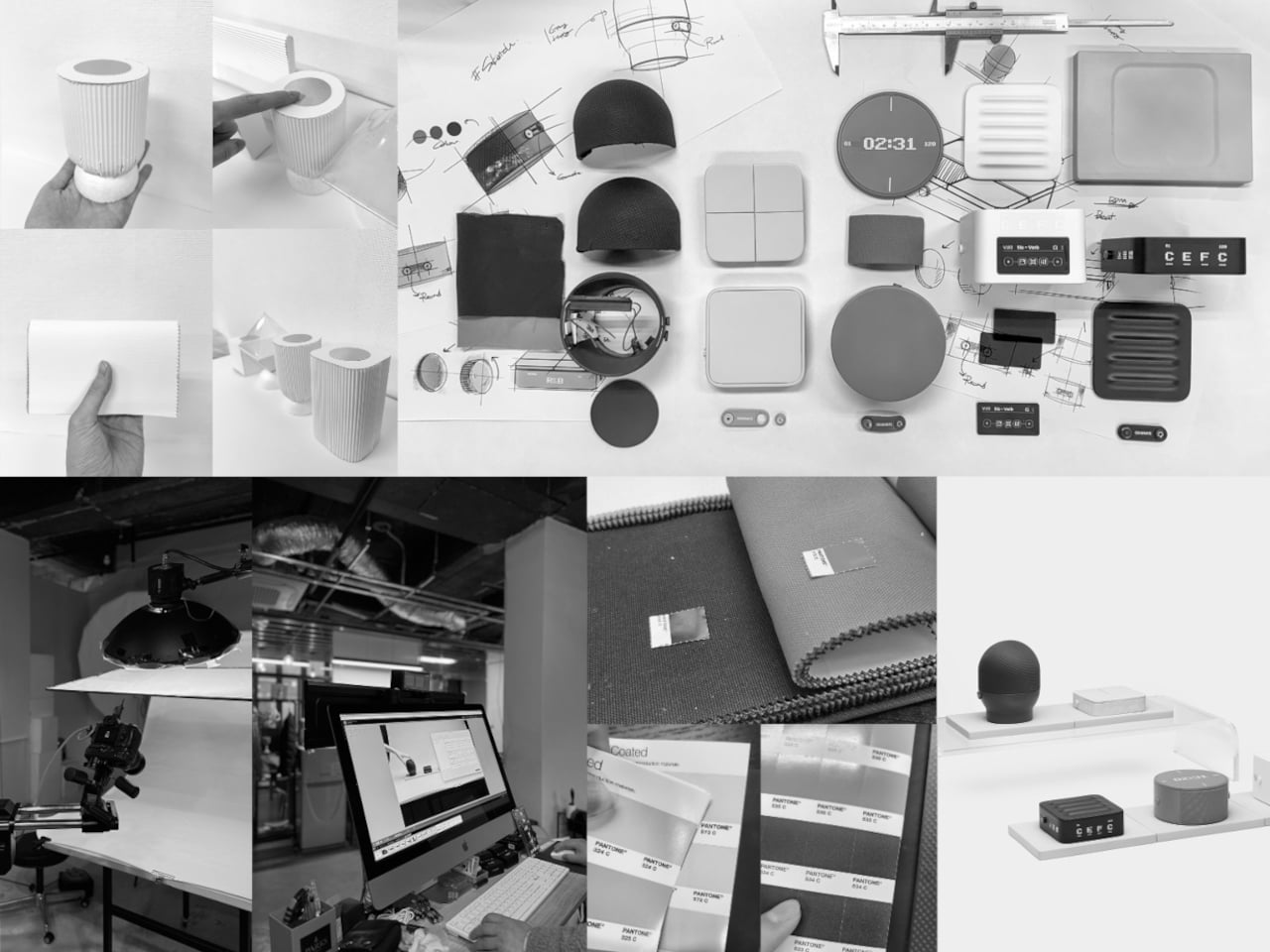
AI music tools usually start on a laptop where you type a prompt and wait for a track. That workflow feels distant from how bands write songs, trading groove and chemistry for text boxes and genre presets. MUSE asks what AI music looks like if it starts from playing instead of typing, treating the machine as a bandmate that listens and responds rather than a generator you feed instructions.

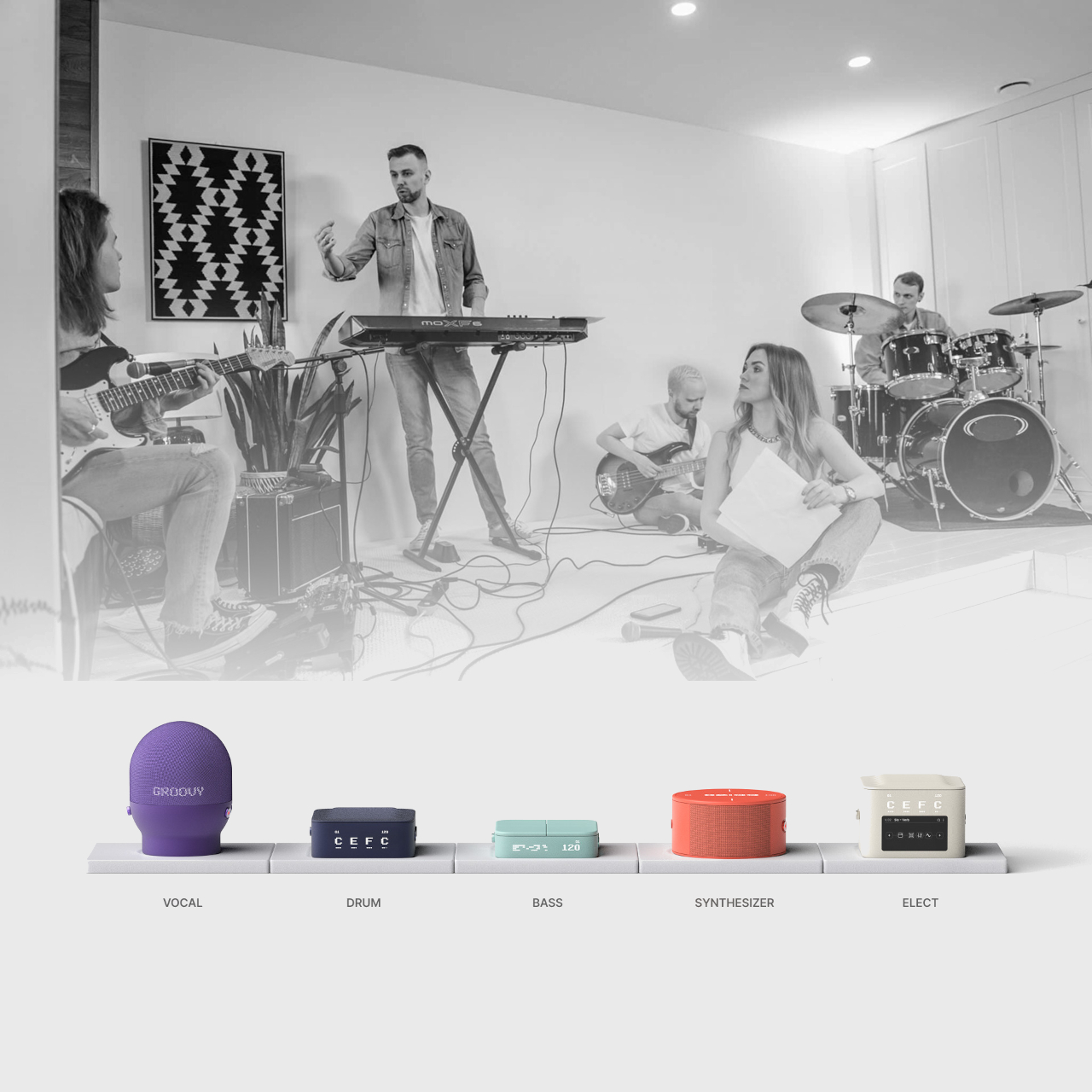
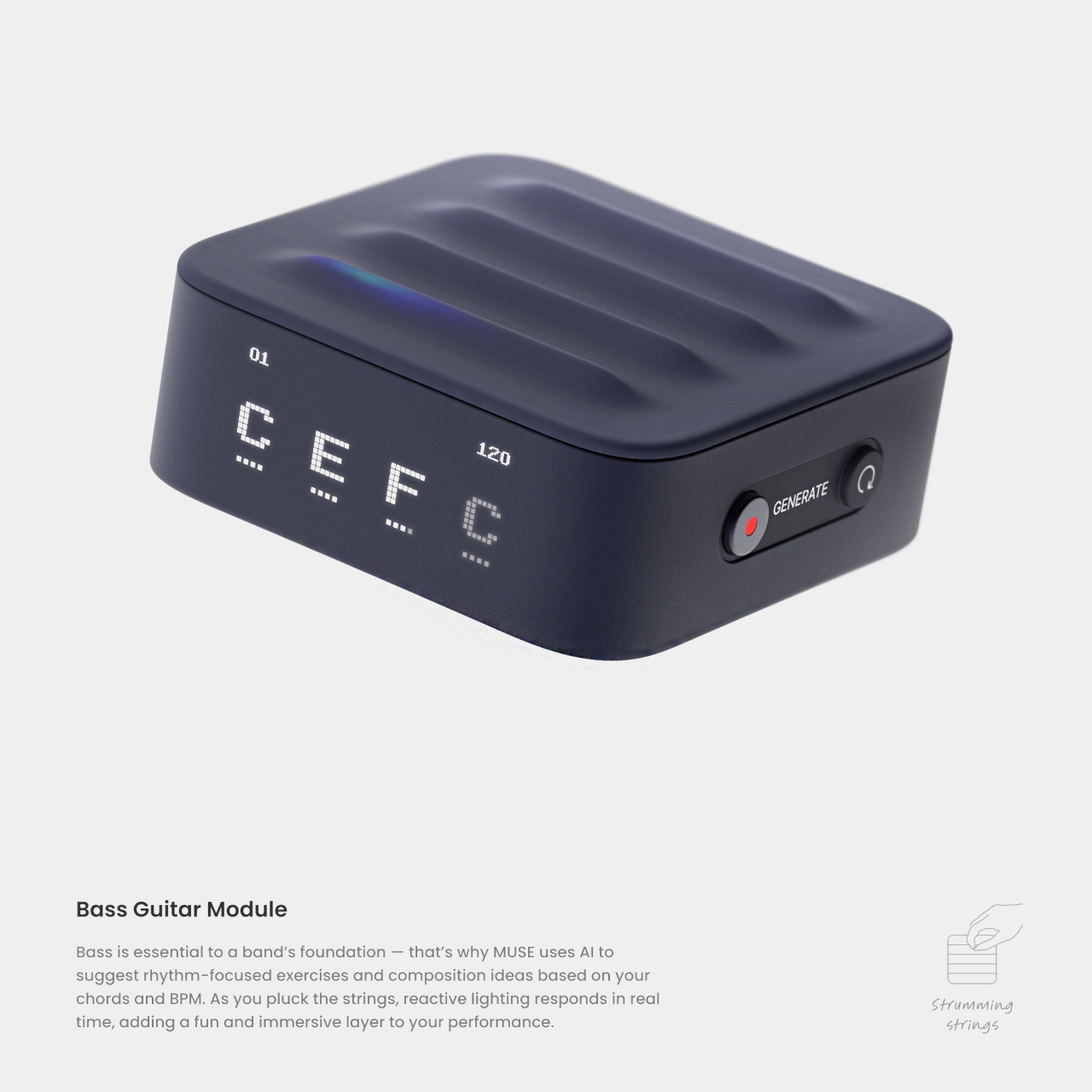
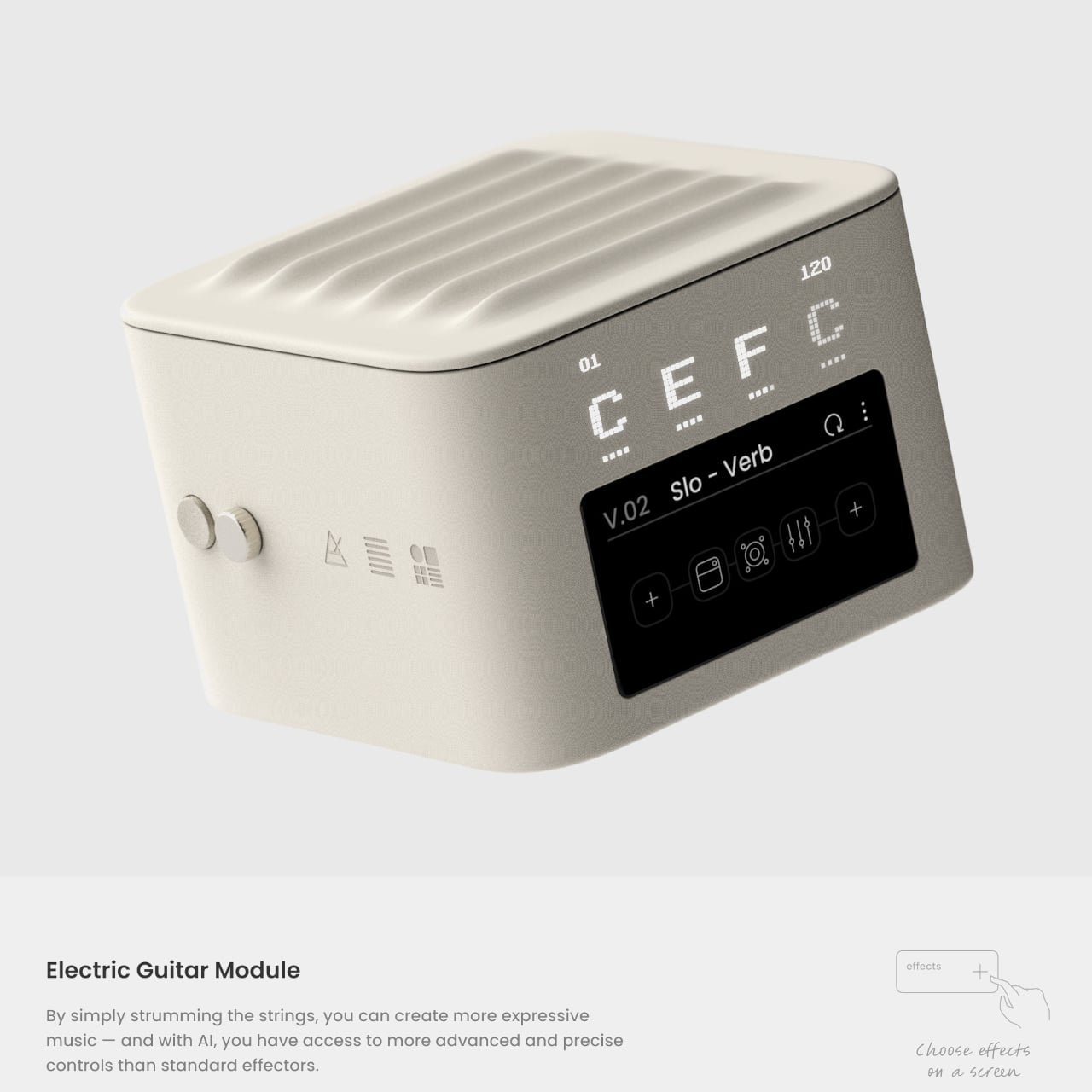
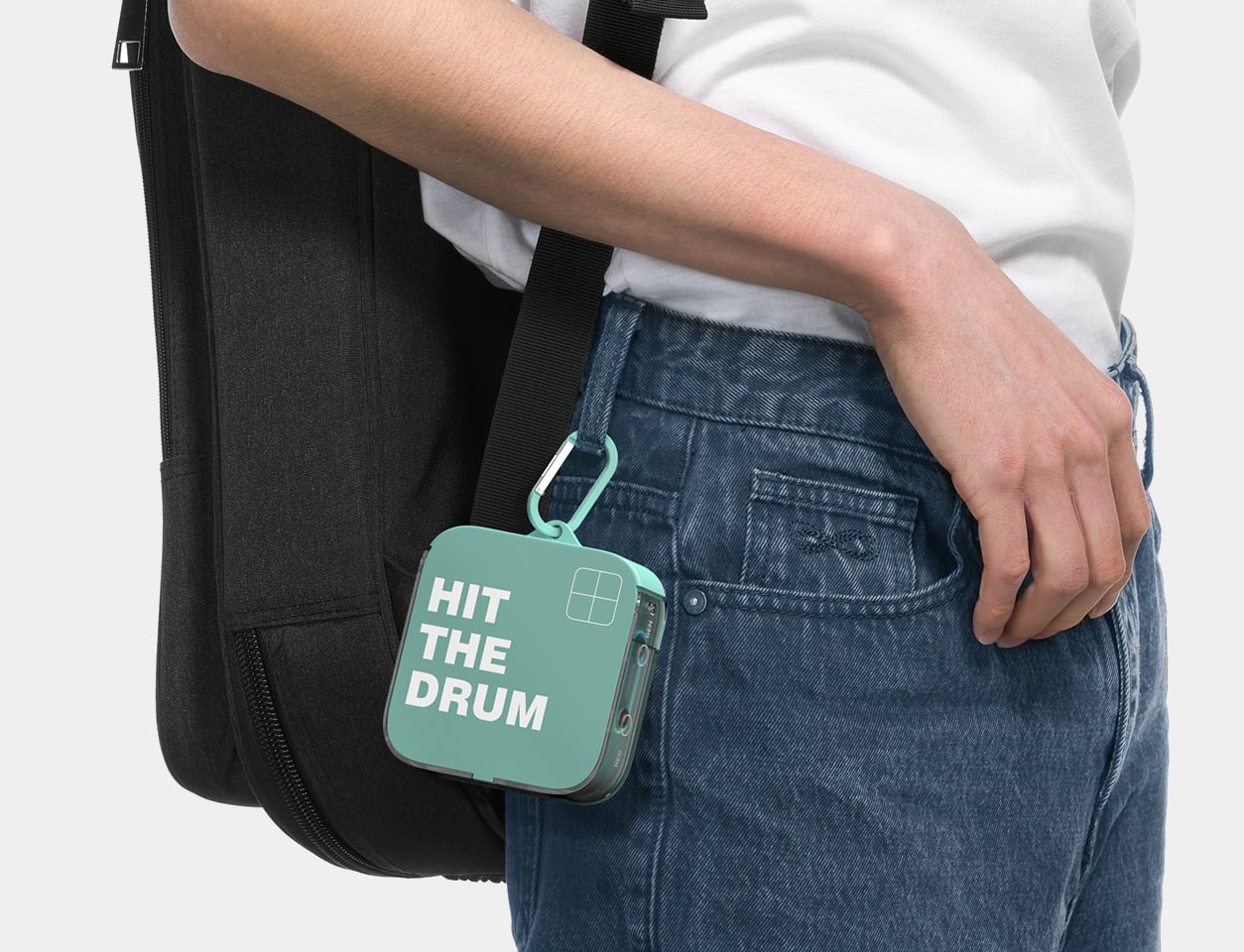
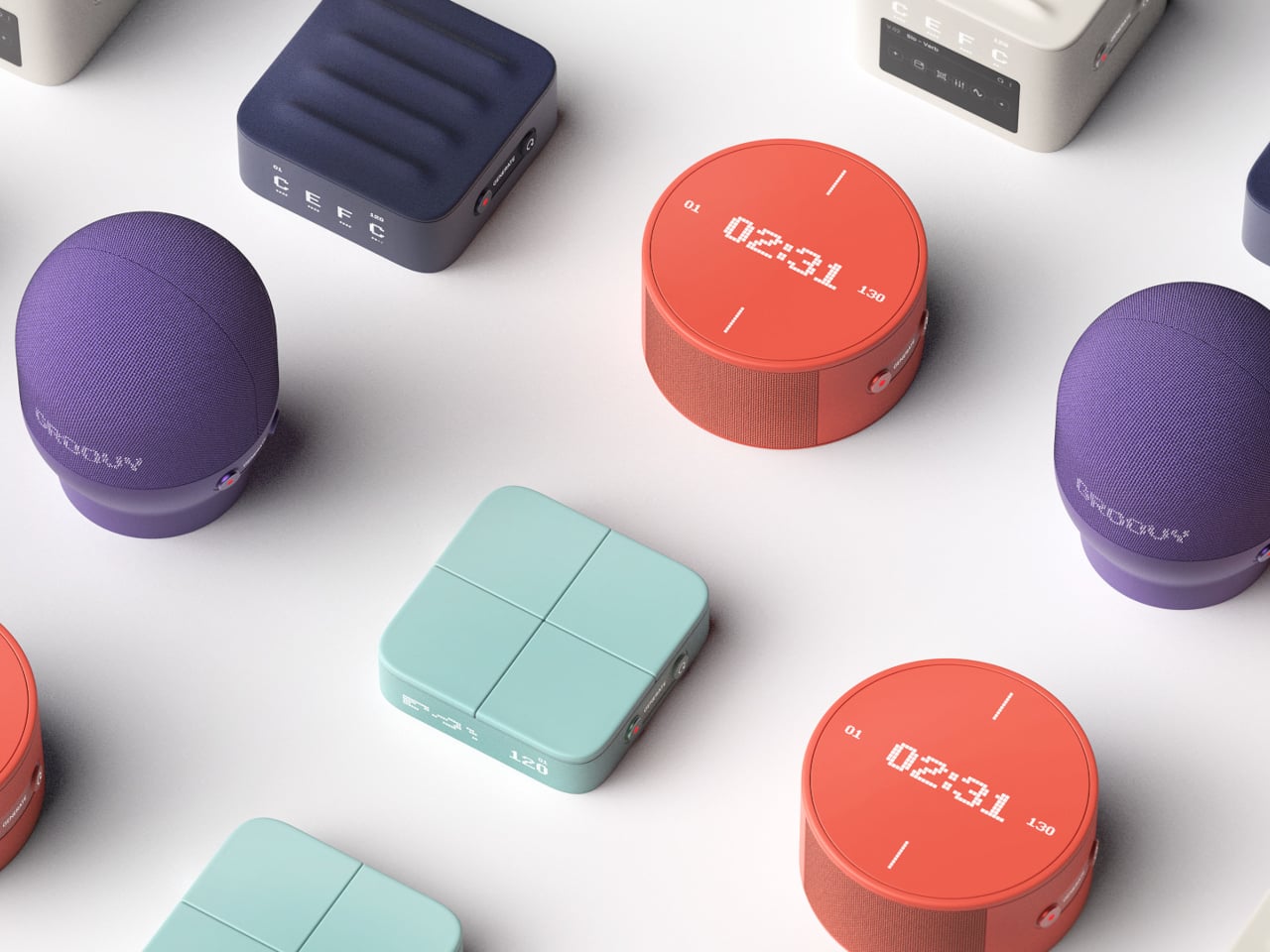
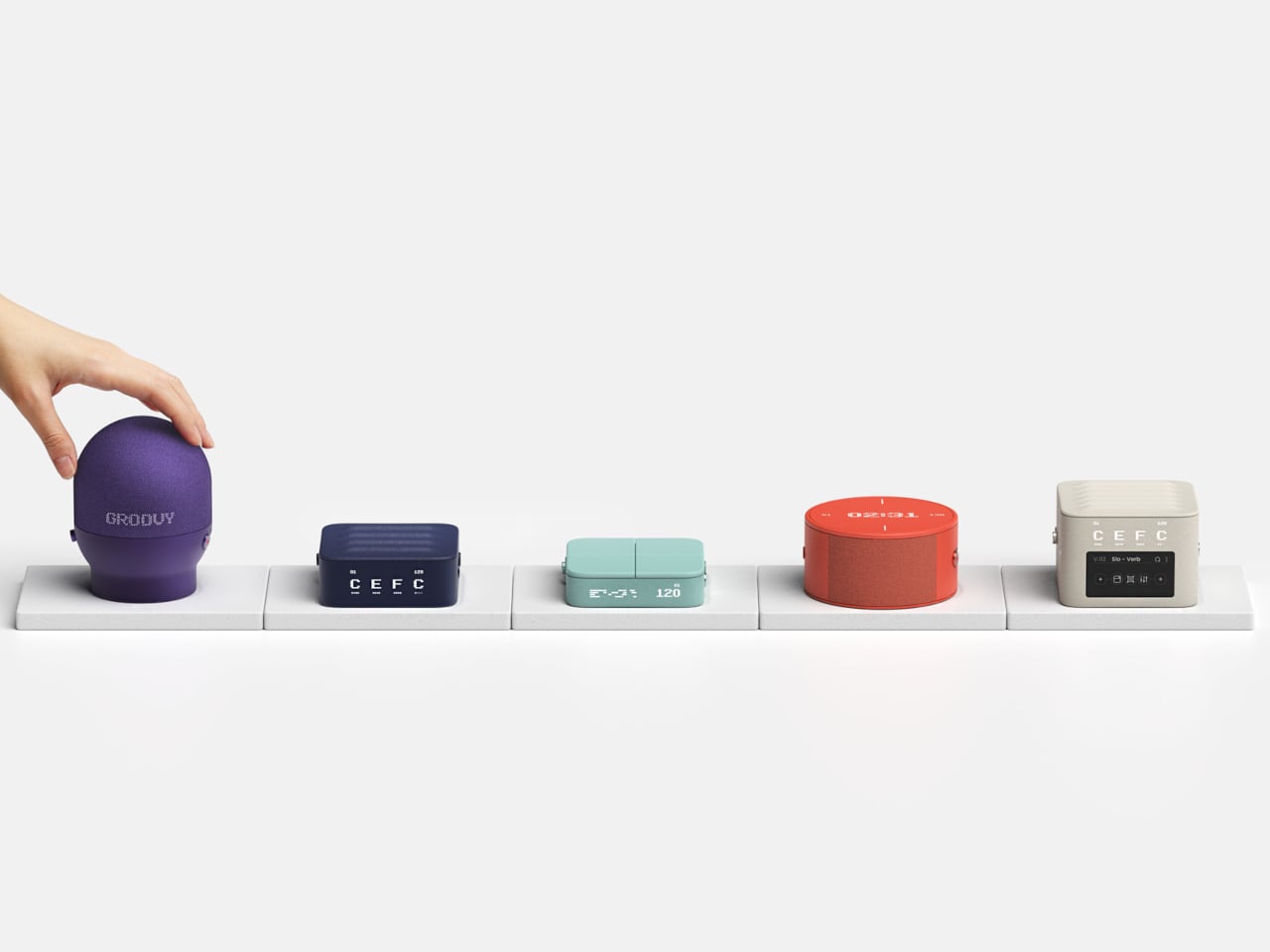
MUSE is a next-generation AI music module system designed for band musicians. It is not one box but a family of modules, vocal, drum, bass, synthesizer, and electric guitar, each tuned to a specific role. You feed each one ideas the way you would feed a bandmate, and the AI responds in real time, filling out parts and suggesting directions that match what you just played.

Designers: Hyeyoung Shin, Dayoung Chang

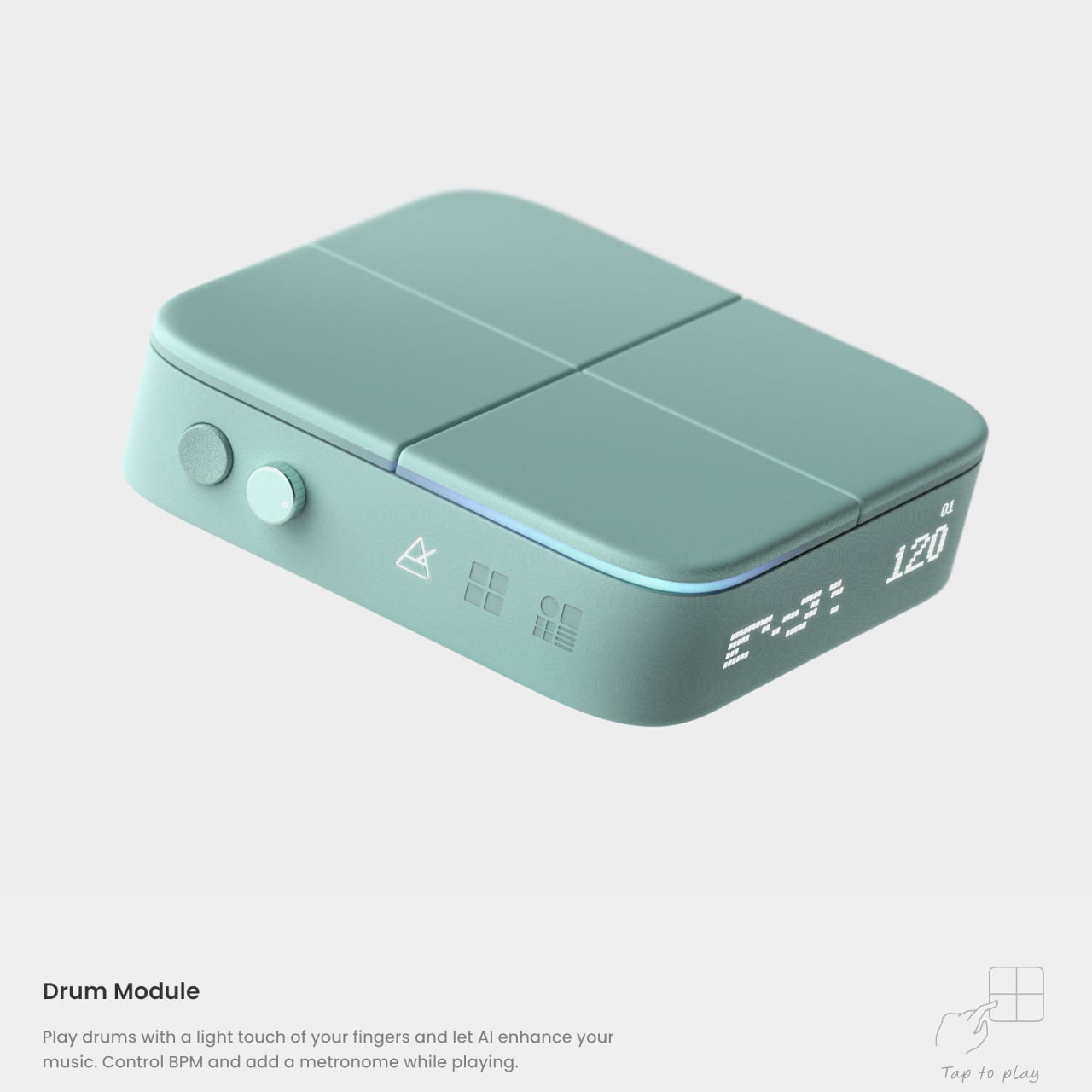
A band rehearsal where each member has their own module means the drummer taps patterns into the drum unit, the bassist works with the bass module to explore grooves, and the singer hums into the vocal module to spin melodies out of half-formed ideas. Instead of staring at a screen, everyone is still moving and reacting, but there is an extra layer of AI quietly proposing fills, variations, and harmonies.

MUSE is built around the idea that timing, touch, and phrasing carry information that text prompts miss. Tapping rhythms, humming lines, or strumming chords lets the system pick up on groove and style, not just genre labels. Those nuances feed the AI’s creative process, so what comes back feels more like an extension of your playing than a generic backing track cobbled together from preset patterns.

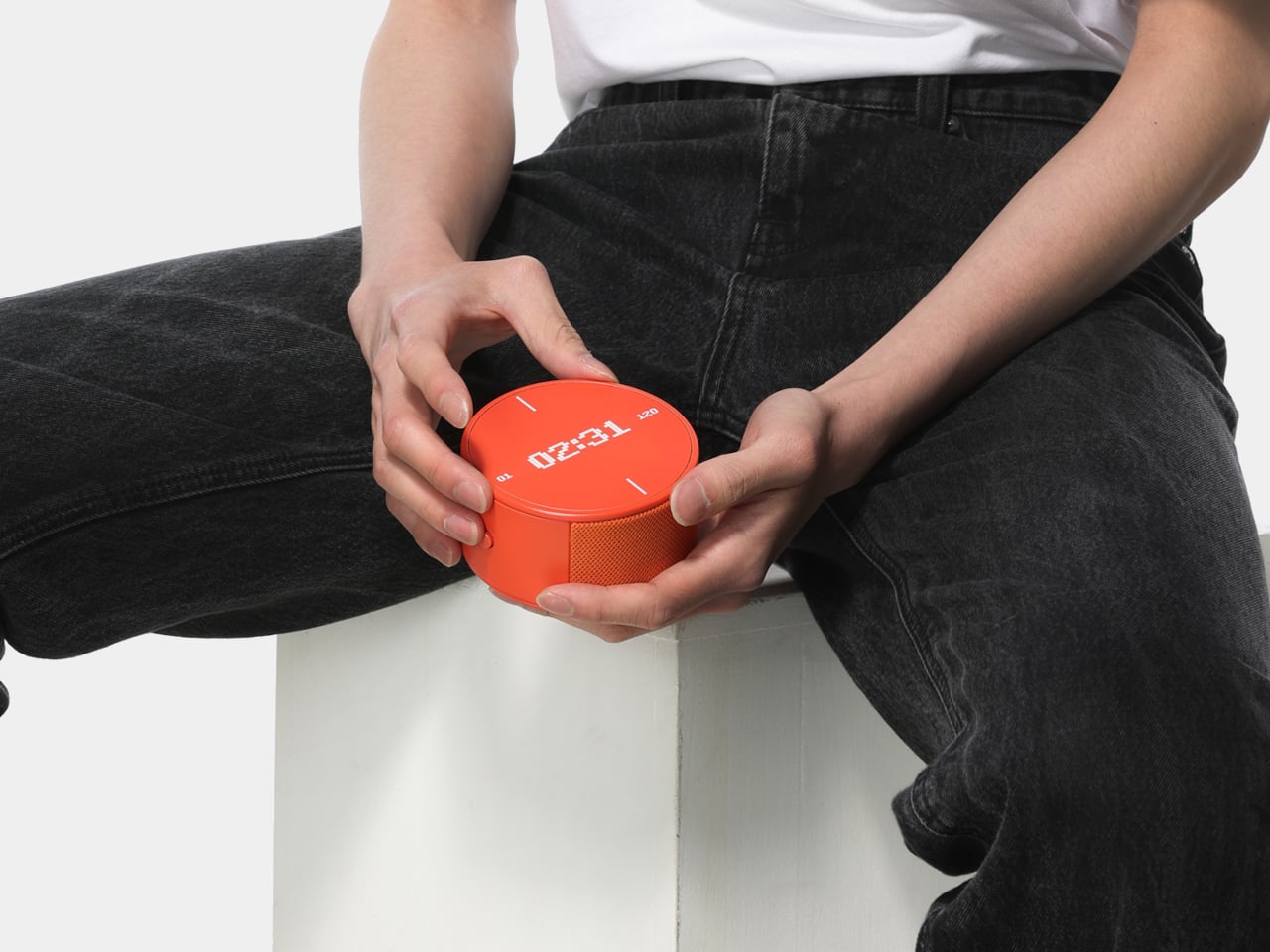
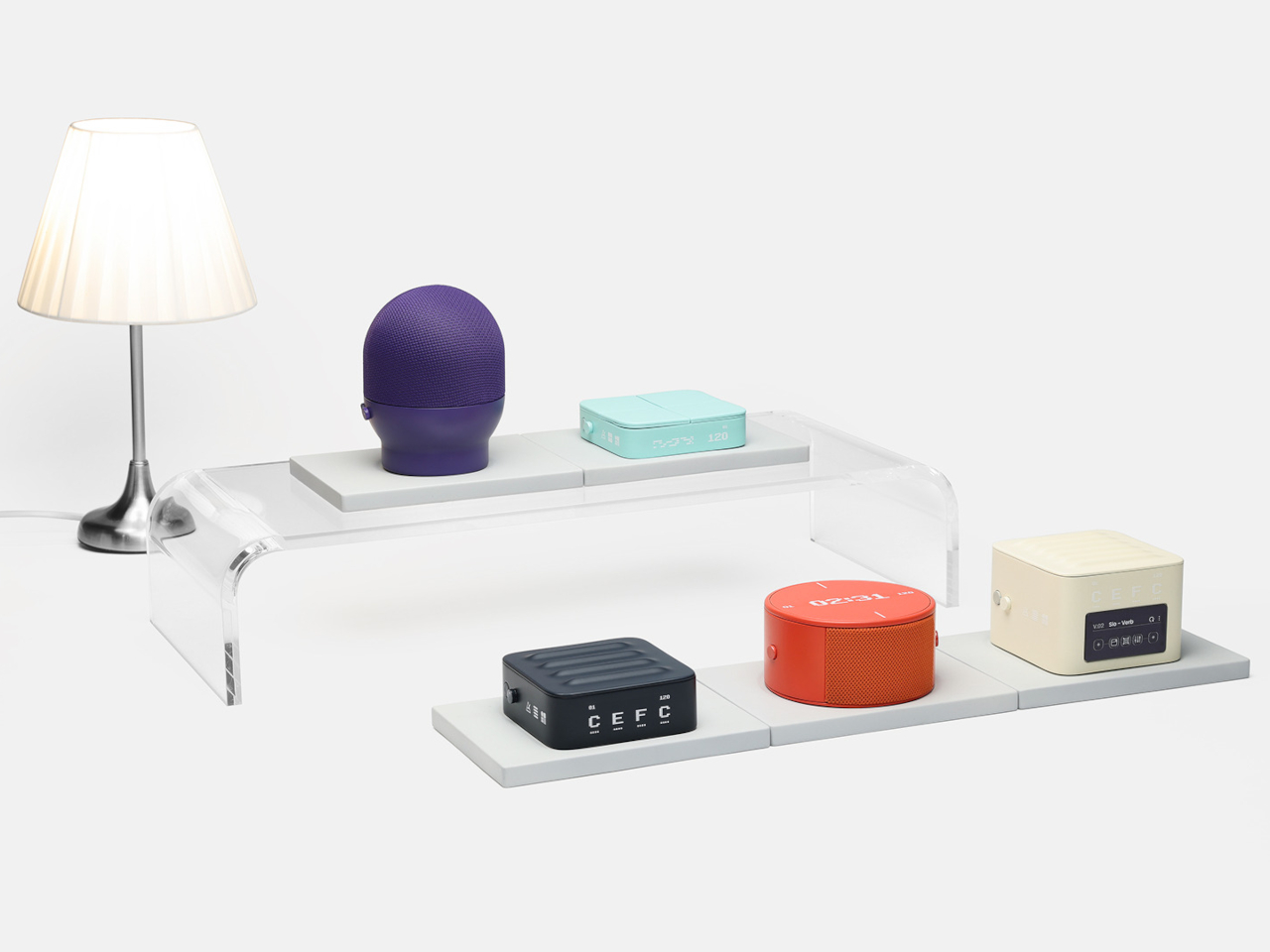
The modules can be scattered around a home rather than living in a studio. One unit near the bed for late-night vocal ideas, another by the desk for quick guitar riffs between emails, a drum module on the coffee table for couch jams. Because they look like small colorful objects rather than studio gear, they can stay out, ready to catch ideas without turning the house into a control room.

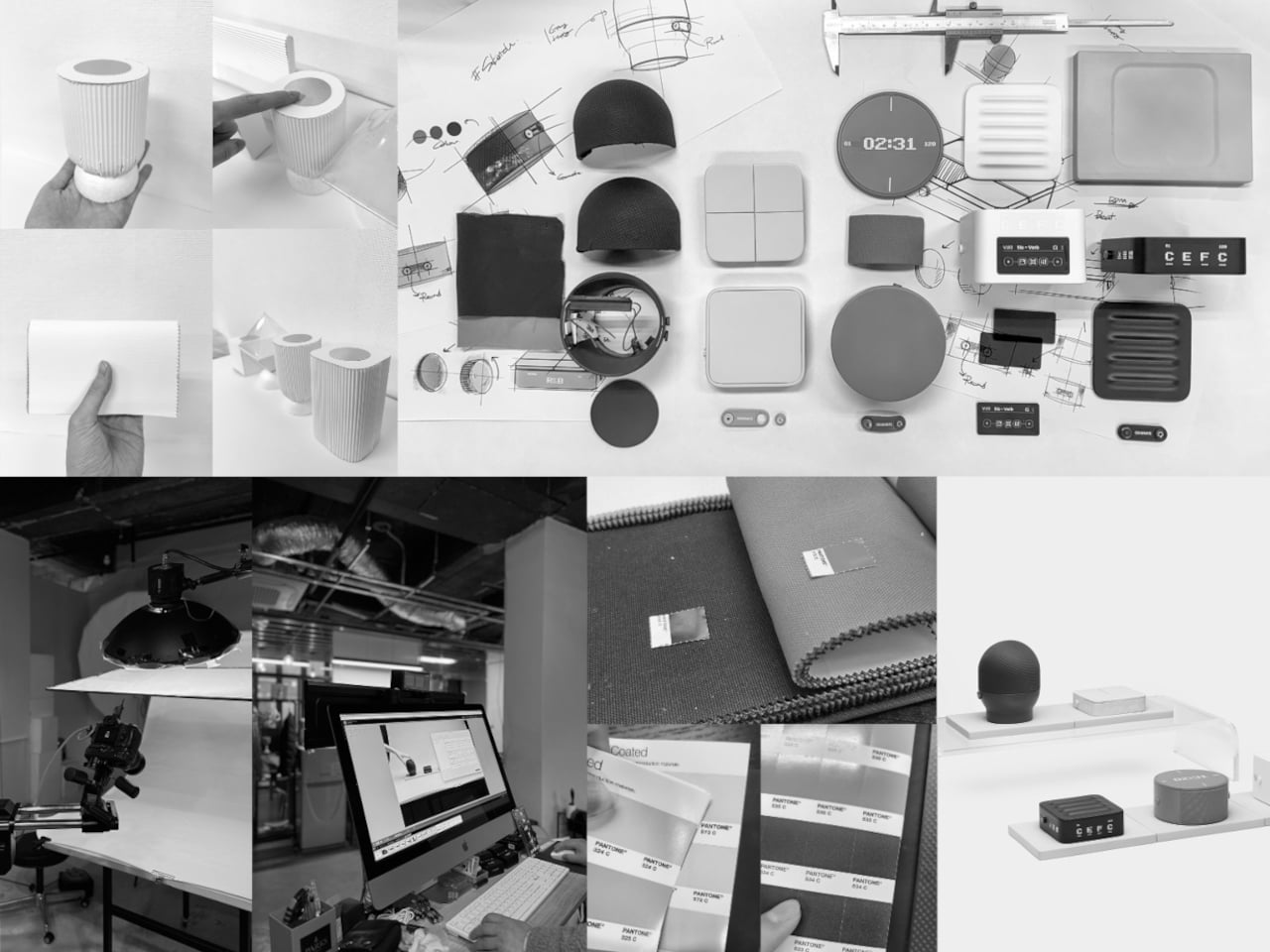
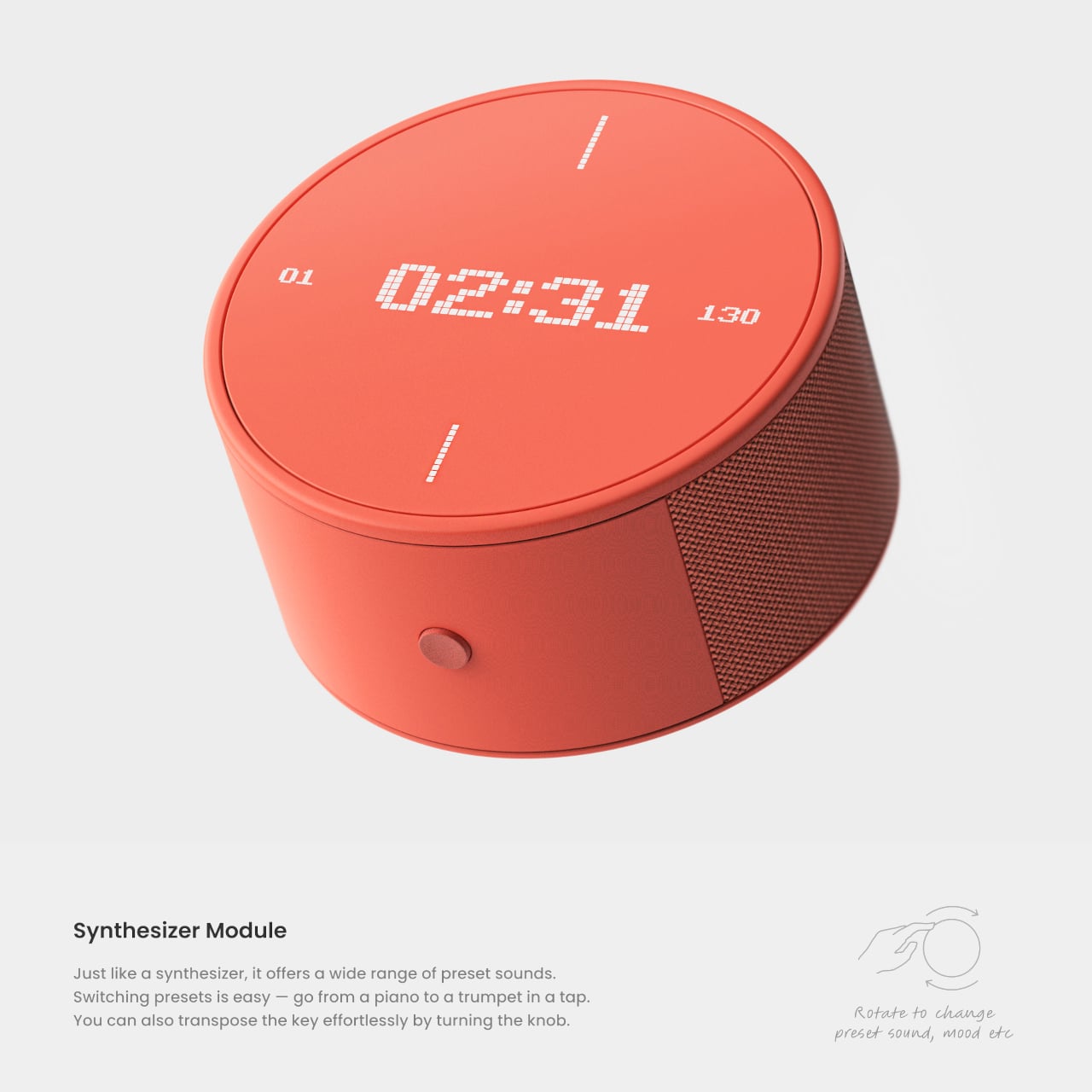
Each module’s color and texture match its role: a plush vocal unit, punchy drum block, bright synth puck, making them easy to grab and easy to live with. They read more like playful home objects than intimidating equipment, which lowers the barrier to experimenting. Picking one up becomes a small ritual, a way to nudge yourself into making sound instead of scrolling or staring at blank sessions.

MUSE began with the question of how creators can embrace AI without losing their identity. The answer it proposes is to keep the musician’s body and timing at the center, letting AI listen and respond rather than dictate. It treats AI as a bandmate that learns your groove over time, not a replacement, and that shift might be what keeps humans in the loop as the tools get smarter.

The post These 5 AI Modules Listen When You Hum, Tap, or Strum, Not Type first appeared on Yanko Design.

UMBRELLA+ Moves the Umbrella Stand Off the Floor and Into Your Exit Routine

Leaving the house, getting halfway down the block, and realizing it is raining, but your umbrella is still in the bucket by the door, is familiar. Traditional umbrella stands live on the floor, out of sight and out of mind, collecting drips and getting kicked aside. The problem is not just storage. It is where that storage lives in the exit routine, and how easy it becomes to completely ignore.

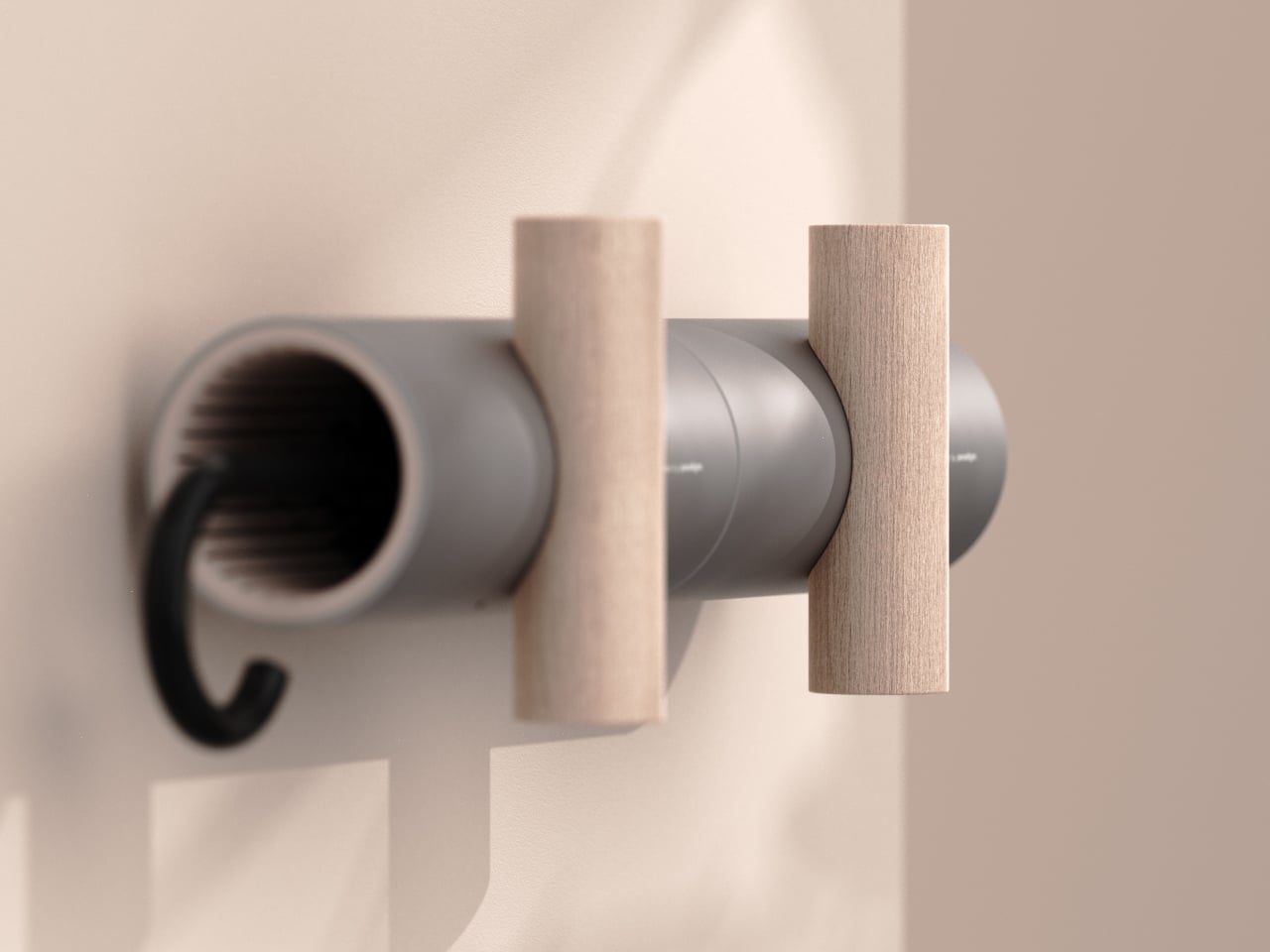
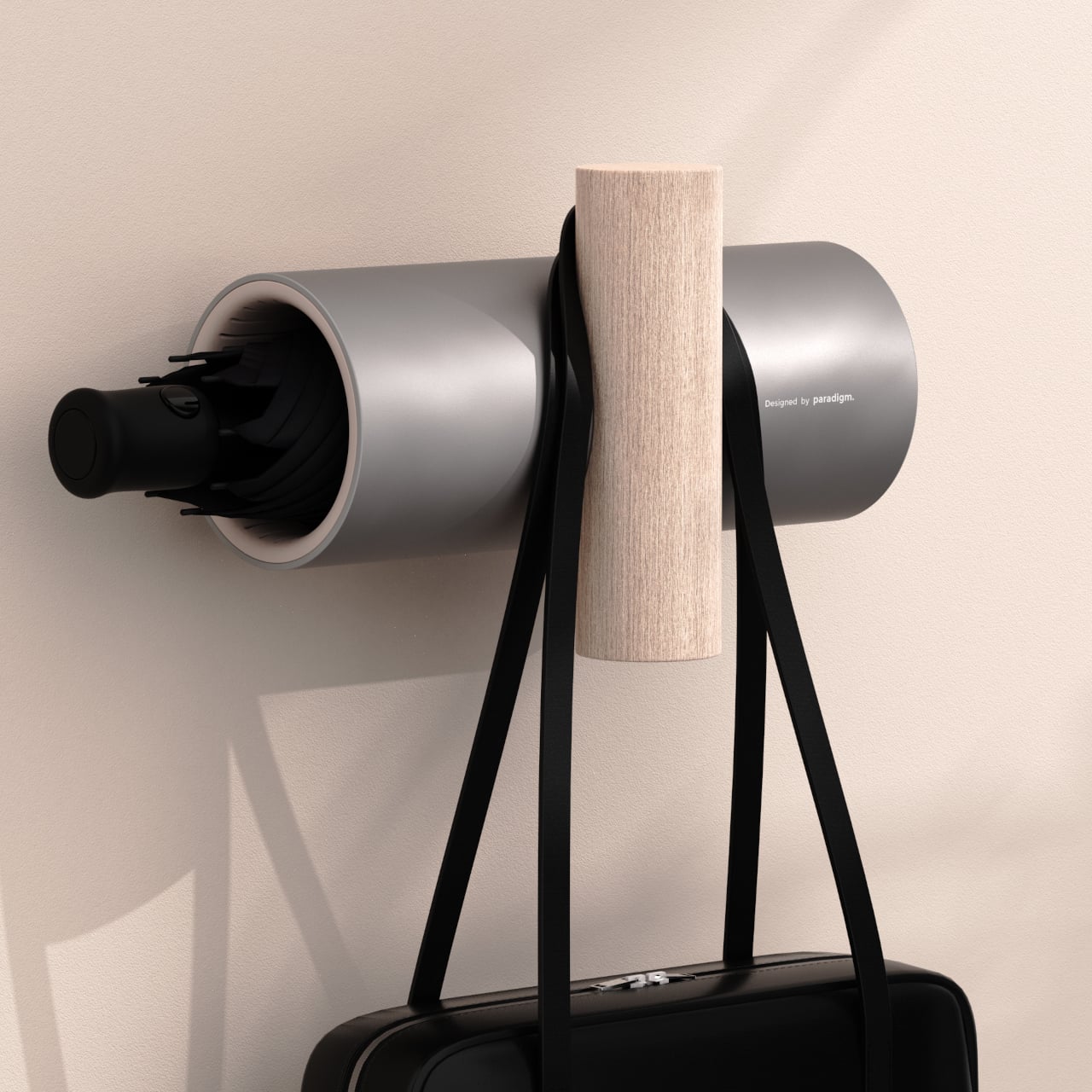
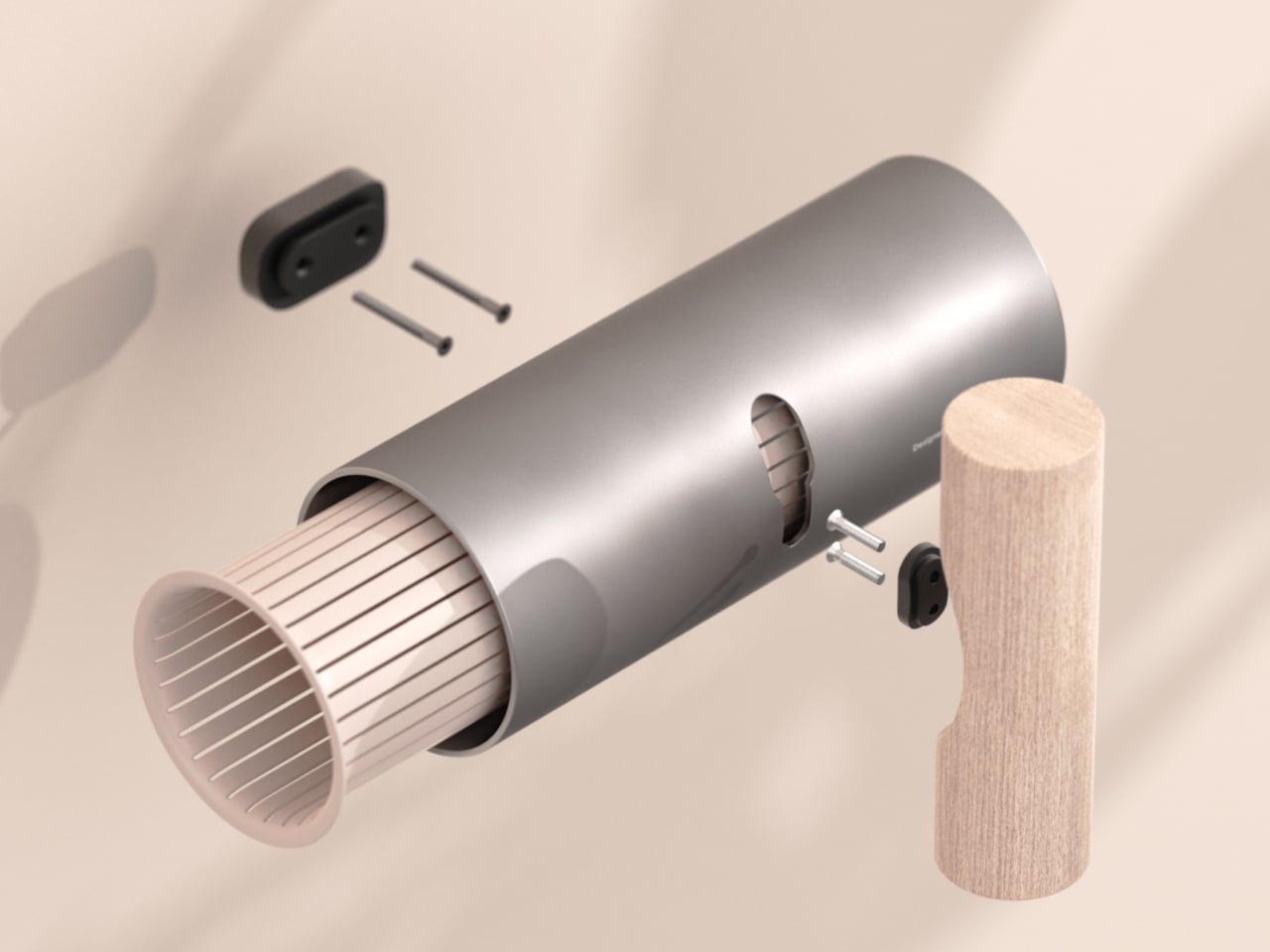
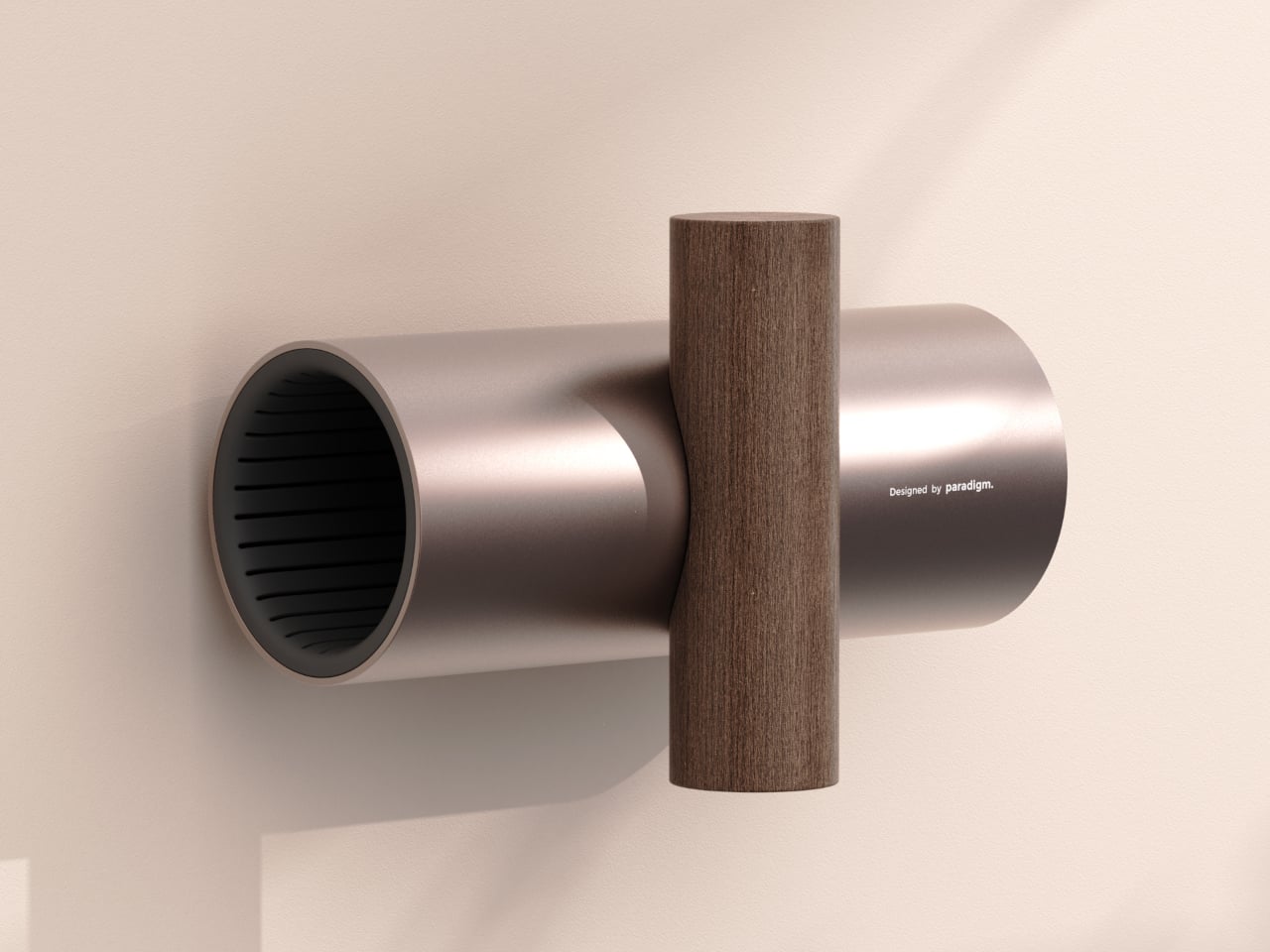
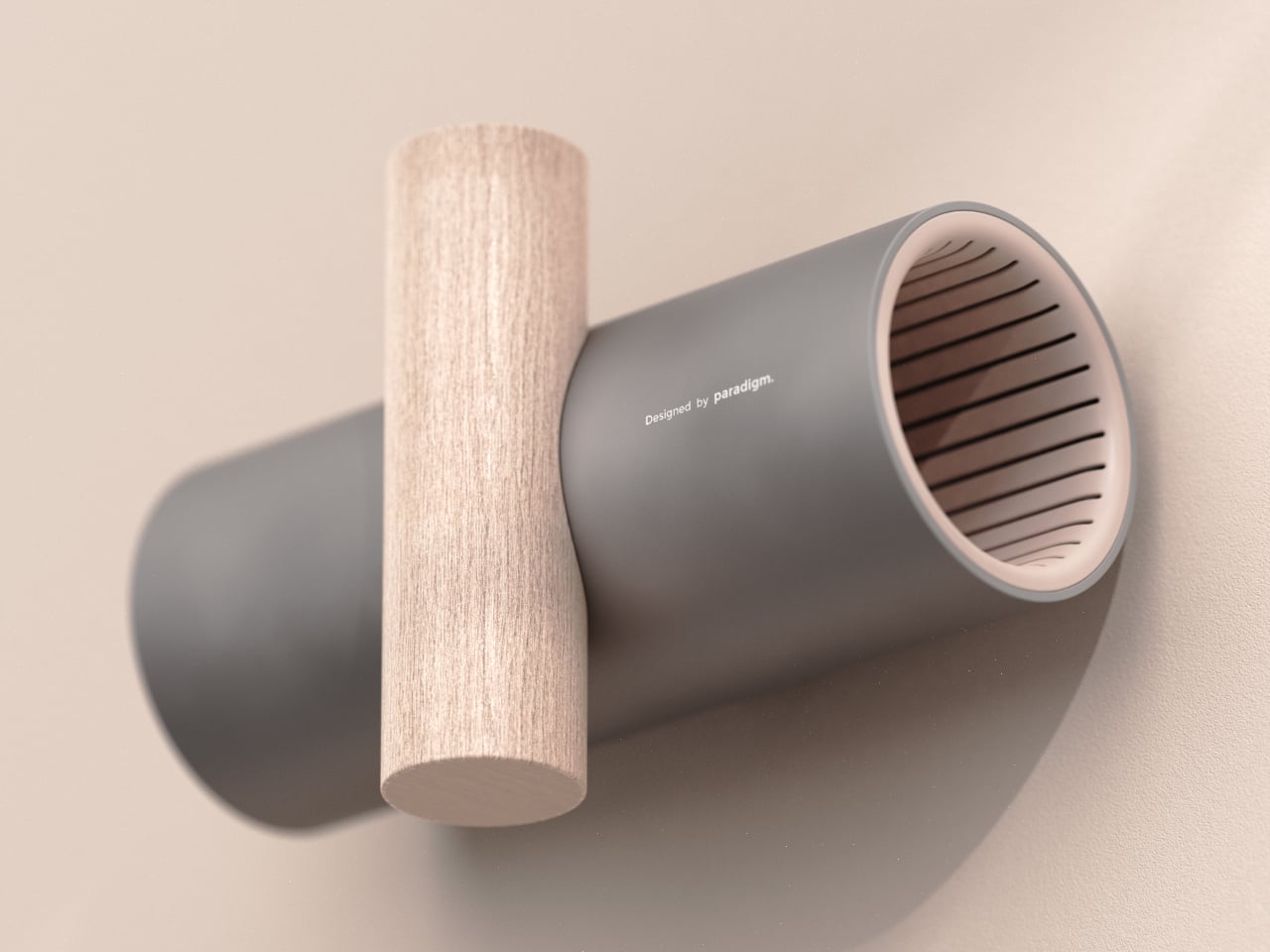
UMBRELLA+ is a concept that revisits the umbrella stand by moving it onto the wall. It is a horizontal cylinder that receives the folded umbrella, intersected by a vertical wooden element that acts as a hook for bags or coats. The T-shaped gesture pulls the umbrella into your field of view at entry height, merging storage and hanging into one coherent system.

Designer: Germain Verbrackel

Getting ready to leave, you grab your coat, loop your bag onto the vertical bar, and the umbrella is right there in the same reach, tucked into the tube or hanging by its handle. Because it sits in the same visual band as the things you already check before walking out, you are less likely to leave it behind. The object rewires the routine by placing the umbrella where your hand already goes.

Coming back wet, the umbrella slides into the tube, where internal ribbing gives the fabric somewhere to rest without collapsing and lets air circulate. It is not a sealed drip tray, so some water may reach the floor, but the design assumes the umbrella is mostly shaken off before it goes inside, which is already part of most people’s entry ritual anyway.

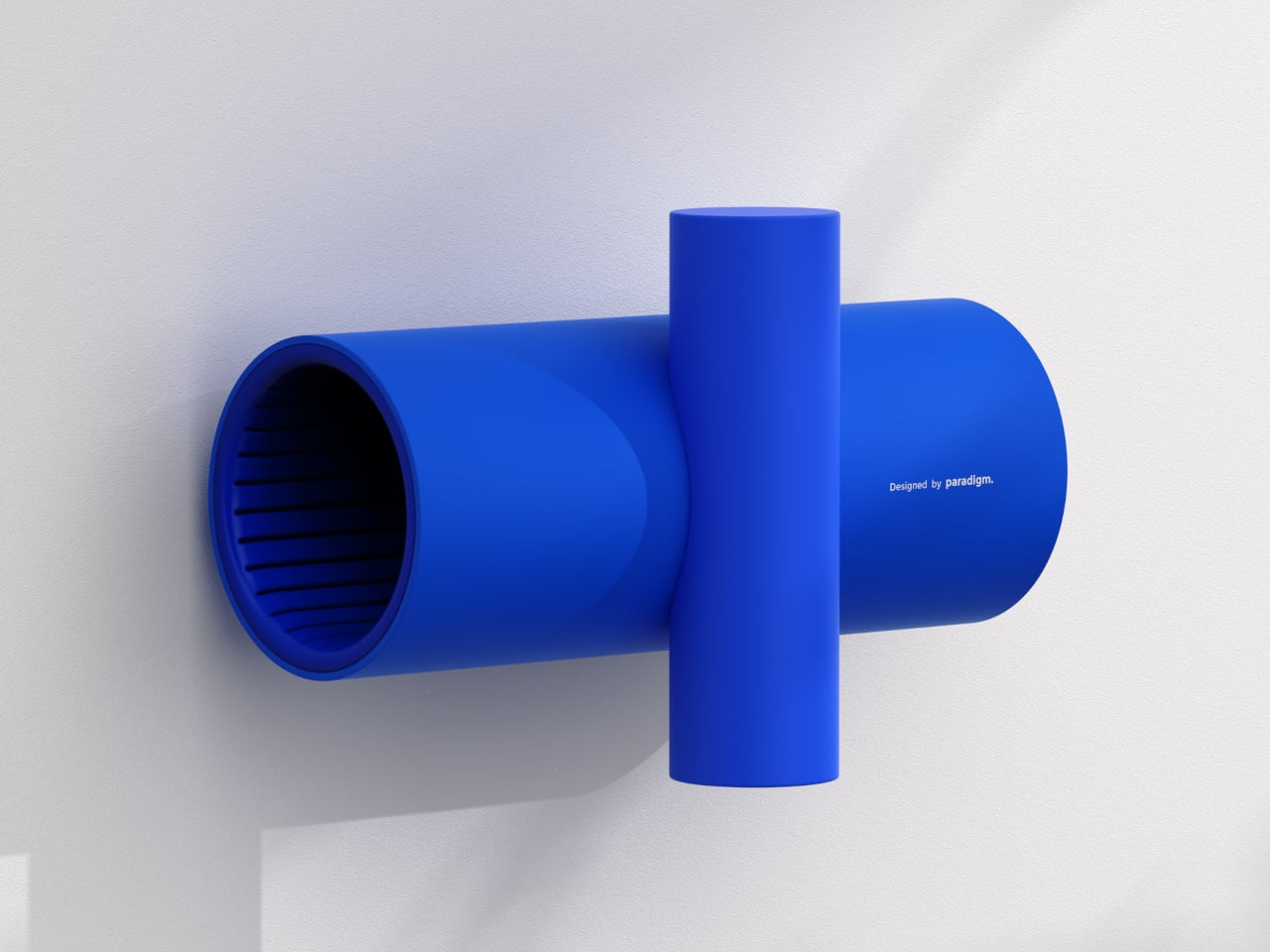
The pairing of a cool, matte cylinder with a warm wooden bar lets UMBRELLA+ slide between different moods. In neutral grey and light wood, it blends into minimal entryways. In bronze and dark wood, it feels warmer and more premium. In full blue, it turns into a playful graphic object. That flexibility lets the same form read as a quiet background or deliberate accent.

UMBRELLA+ is designed for one umbrella plus a bag or coat, not a family with multiple umbrellas fighting for space. That constraint is part of what keeps it visually clean and behaviorally focused. It is a personal entryway object, not a communal storage solution, which makes the most sense in apartments or homes where one or two people are managing their own gear.

UMBRELLA+ is less about inventing a new function and more about moving an existing one into a different part of the wall and the routine. By elevating the umbrella physically and symbolically, it turns something easy to forget into something harder to ignore. Sometimes the best way to solve small daily friction is not a smarter object, but a smarter place to put it, especially when that place is already where you reach every time you leave.

The post UMBRELLA+ Moves the Umbrella Stand Off the Floor and Into Your Exit Routine first appeared on Yanko Design.

Blizzard lines up WoW, Overwatch, Hearthstone and Diablo showcases

While we got a peek at a few Xbox Game Studios projects during last week’s Developer Direct event, neither Bethesda nor Activision Blizzard made appearances. Fans of several Blizzard franchises won’t need to wait too long to find out what’s next for their favorite games, though, as the publisher has lined up several showcases to help mark its 35th anniversary.

The developer-led streams will include “major game announcements,” according to Blizzard. They’ll all air over the next few weeks. Here’s where and when you can watch each stream:

  • January 29. 12PM ET — World of Warcraft State of Azeroth (YouTube and Twitch)

  • February 4, 1PM ET — Overwatch Spotlight (YouTube and Twitch)

  • February 9, 12:30PM ET — Hearthstone Spotlight on the (YouTube and Twitch) 

  • February 11, 5PM ET — Diablo 30th Anniversary Spotlight (YouTube and Twitch) 

With Blizzard not holding a BlizzCon in either 2024 or 2025, the announcements at these showcases should help fill the gap until the event returns in September. “This is only the start of what we’ll share around our games this year,” Blizzard president Johanna Faries said.

The WoW showcase will take place just over a month before the Midnight expansion arrives on March 2. Among other things, the developers will share their roadmaps for both modern and classic WoW.

Overwatch 2 has been teasing a takeover of the game by the villainous Talon faction, and with the next season only a couple of weeks away, we’ll surely hear more about that. Maybe Blizzard will reveal the long-rumored Overwatch mobile spinoff here too (and hopefully an animated series).

The second Diablo IV expansion, Lord of Hatred, is set to arrive on April 28 with a new campaign and fresh classes in tow, so expect to learn more during that franchise’s showcase. Hearthstone fans will also soon get a better sense of what to expect for that game this year.

This article originally appeared on Engadget at https://www.engadget.com/gaming/blizzard-lines-up-wow-overwatch-hearthstone-and-diablo-showcases-154912932.html?src=rss
This Folded Knife Design Challenges 400 Years of Tableware

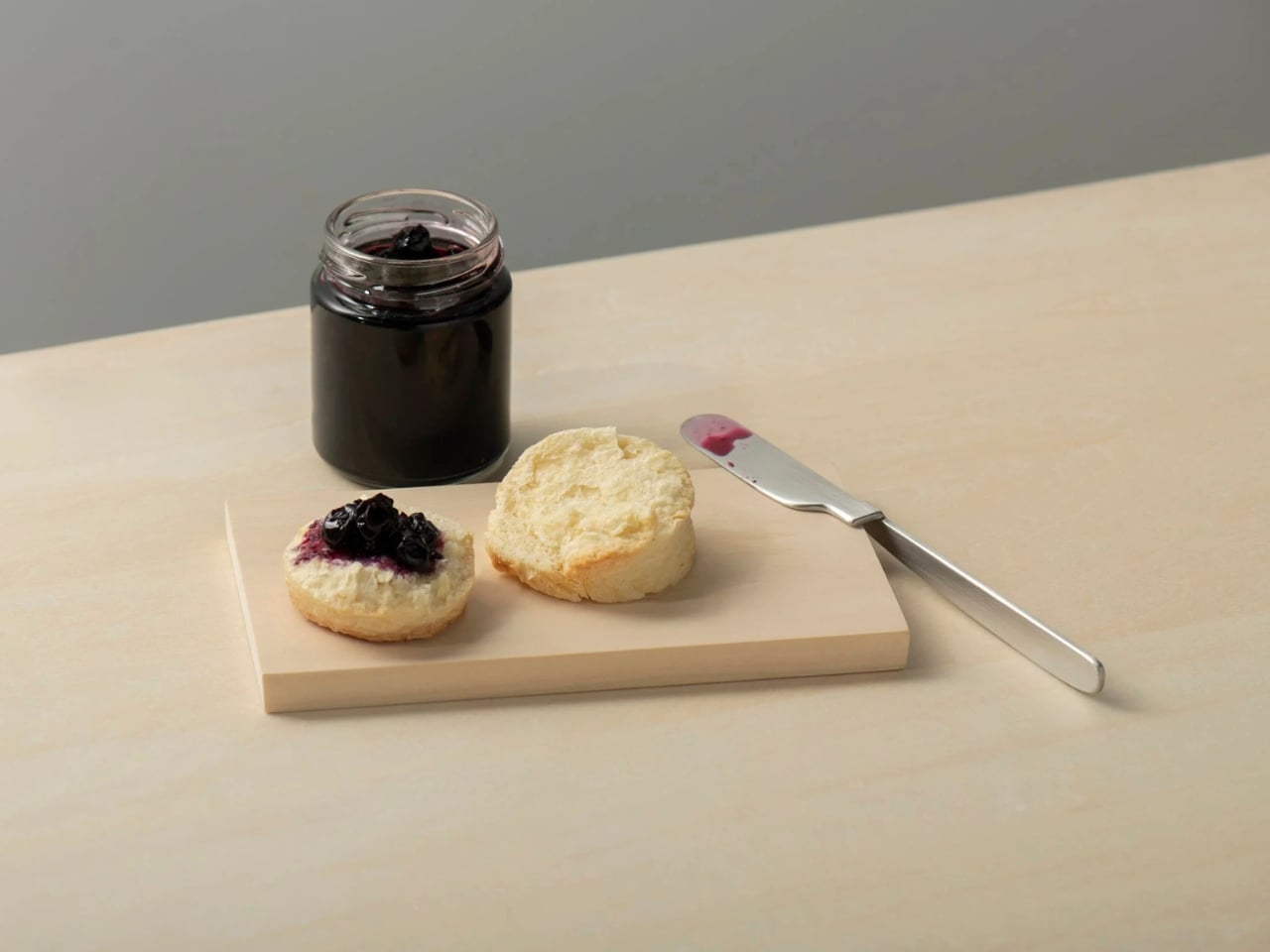
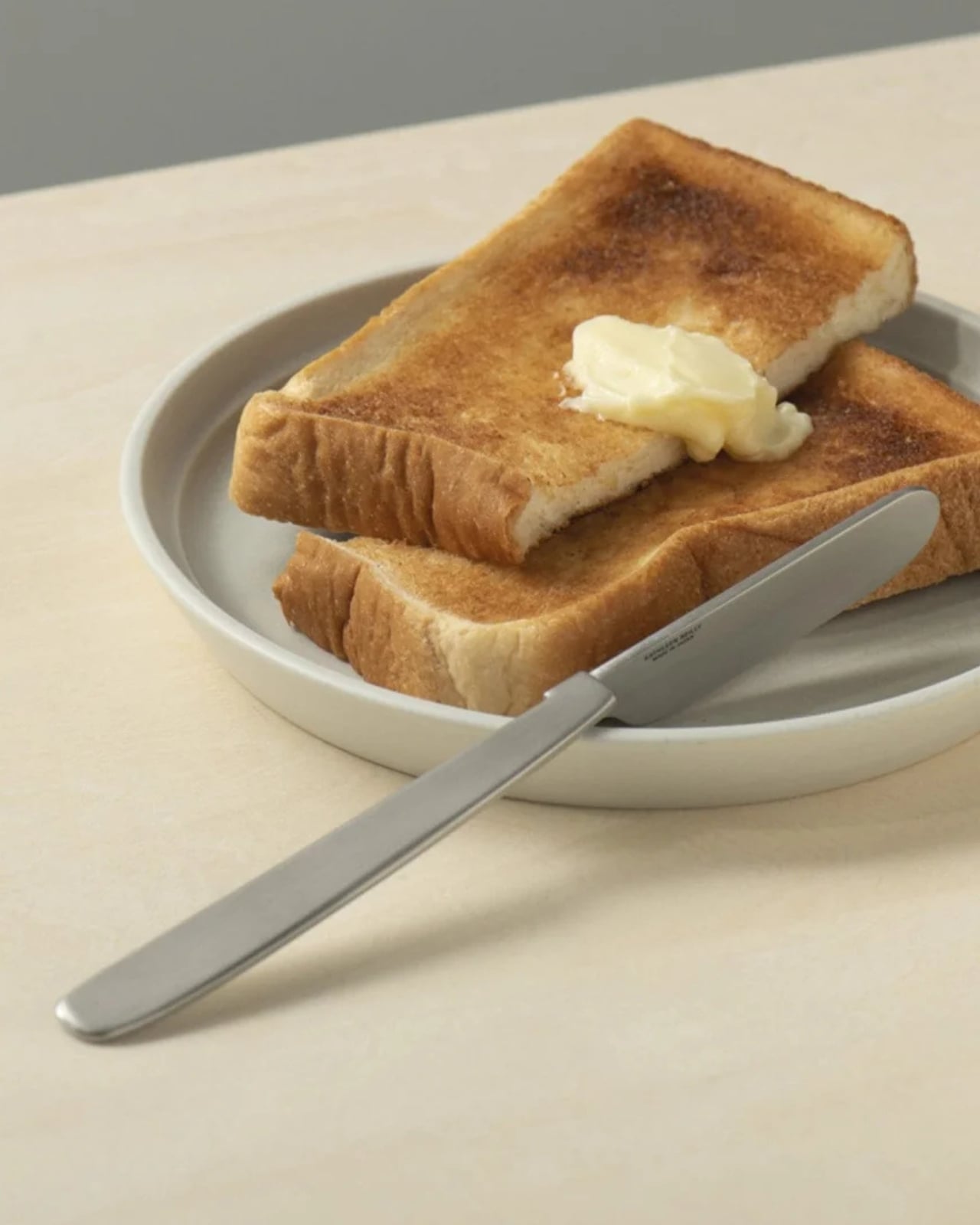
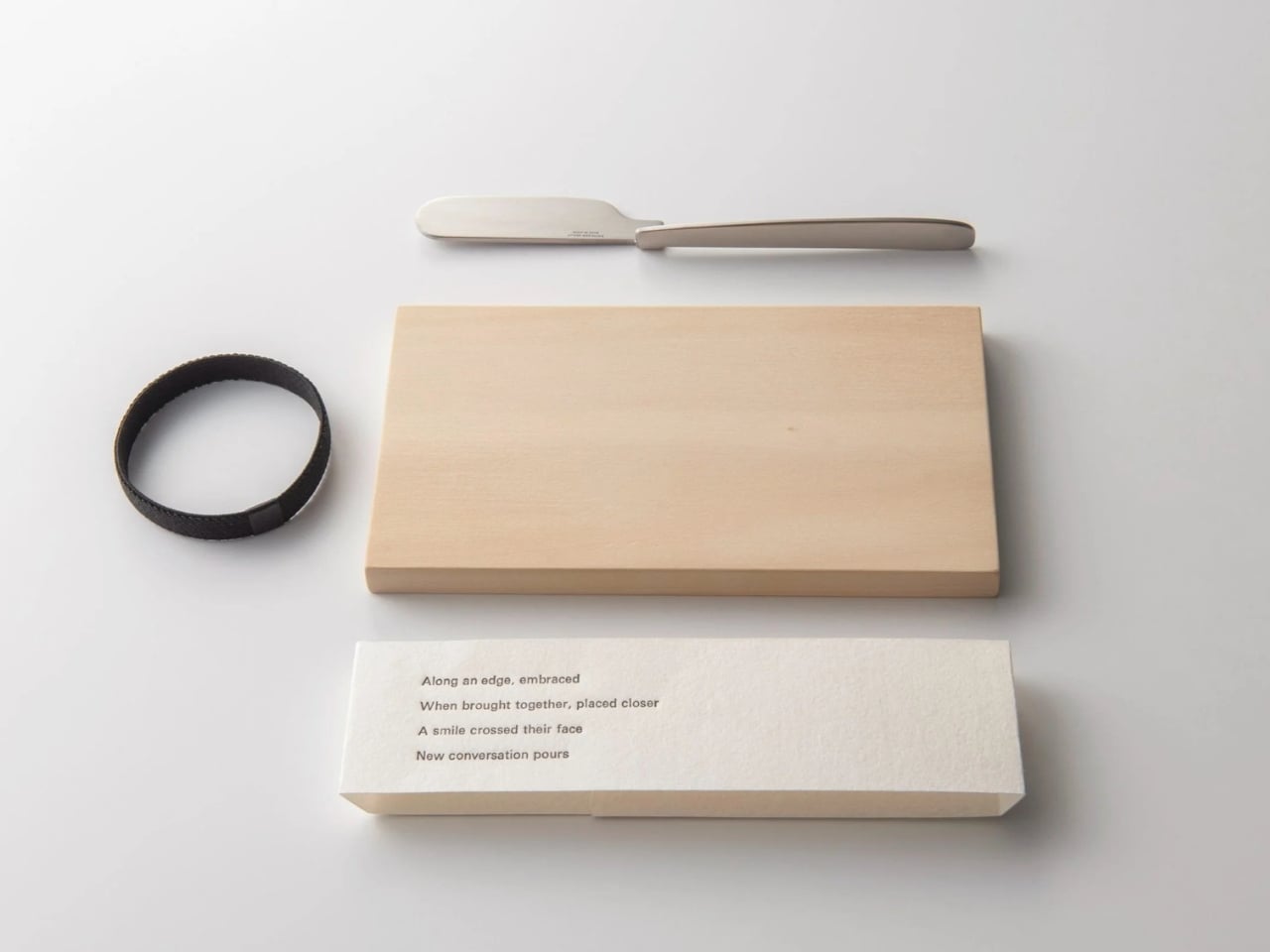
Sometimes the best designs come from asking a simple question nobody bothered to ask before. For designer Kathleen Reilly, that question was: why does a knife always have to lie flat on the table? The answer came in the form of Oku, a table knife that literally hangs around the edges of your plates and boards thanks to a unique folded handle that defies centuries of Western tableware convention.

When Reilly first arrived in Tsubame-Sanjo, a region in Japan’s Niigata Prefecture known for over 400 years of metalworking tradition, she wasn’t planning to revolutionize the humble dinner knife. The Scottish metalworker had been awarded a Daiwa Scholarship in 2019 and was eager to immerse herself in the legendary craftsmanship of Japanese artisans. What emerged from this cultural exchange was something that bridges East and West in a way that feels both natural and unexpected.

Designer: Kathleen Reilly

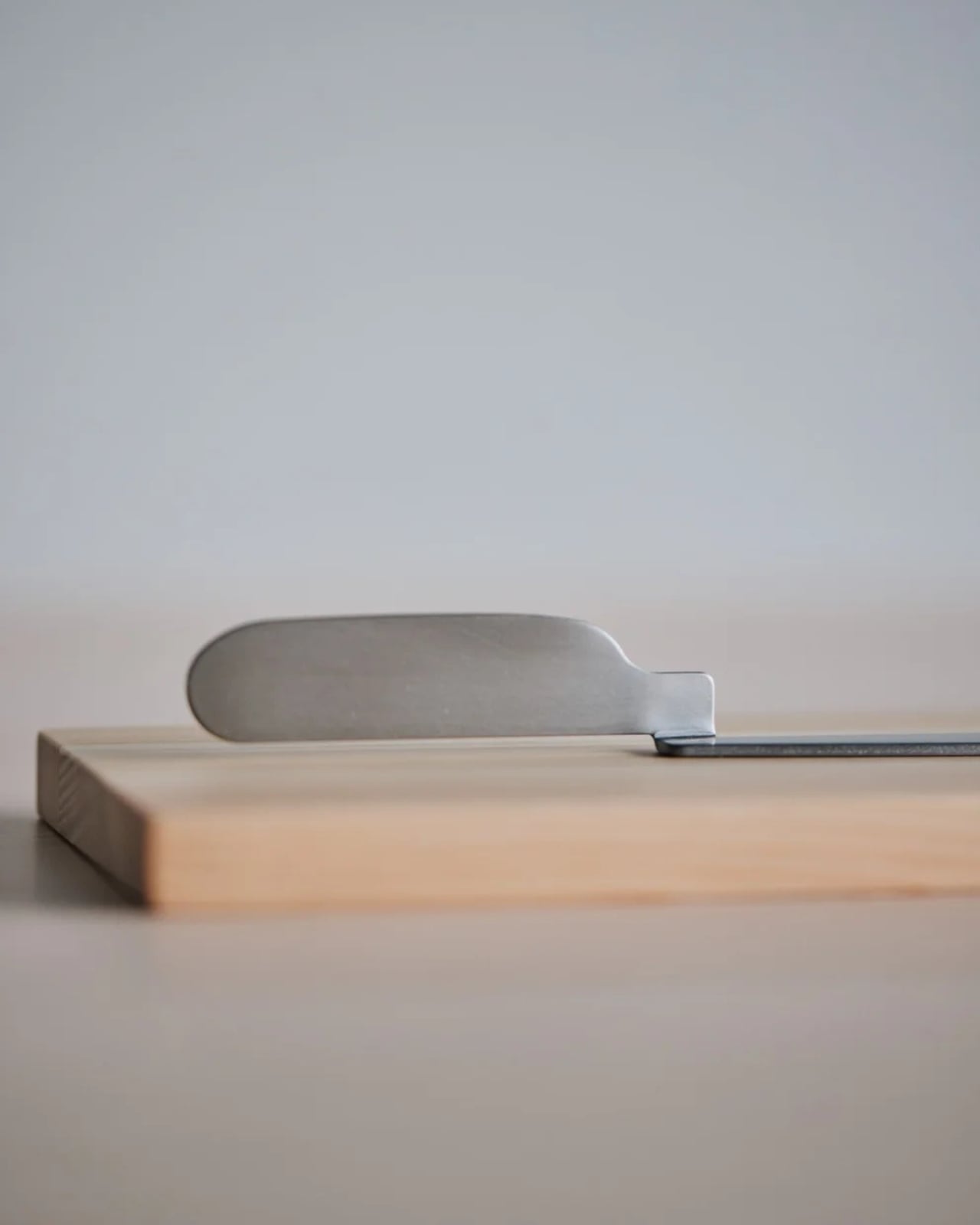
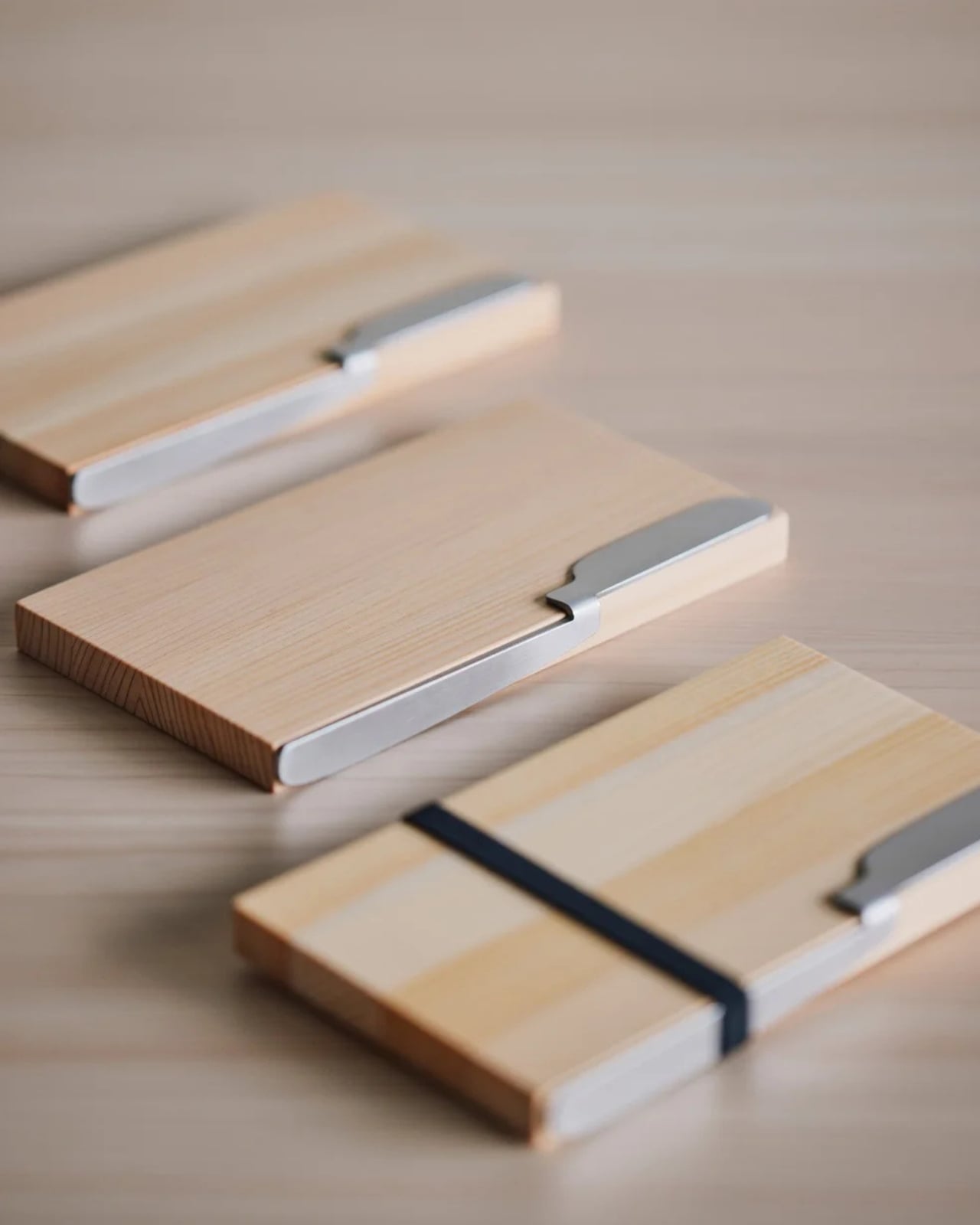
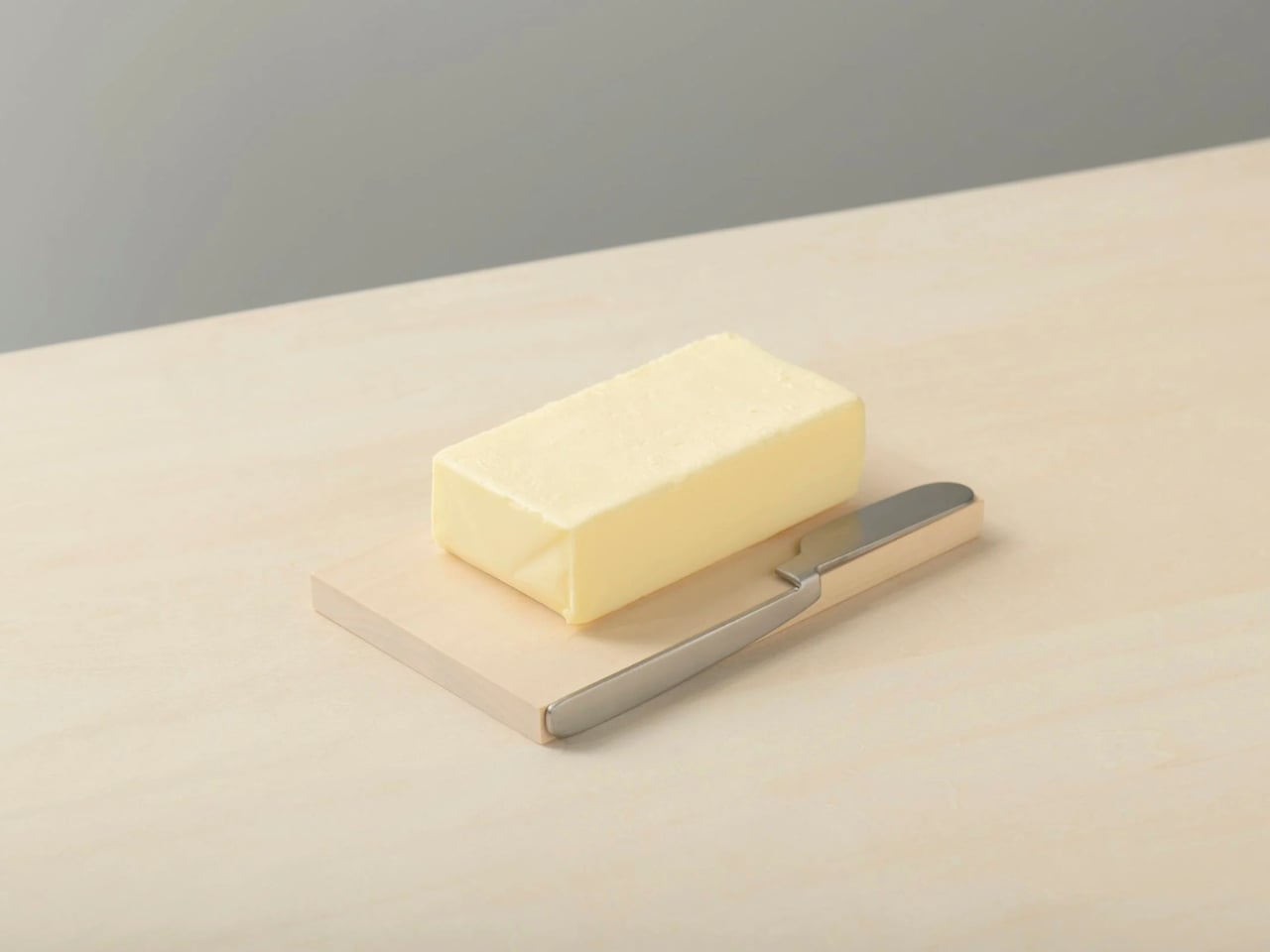
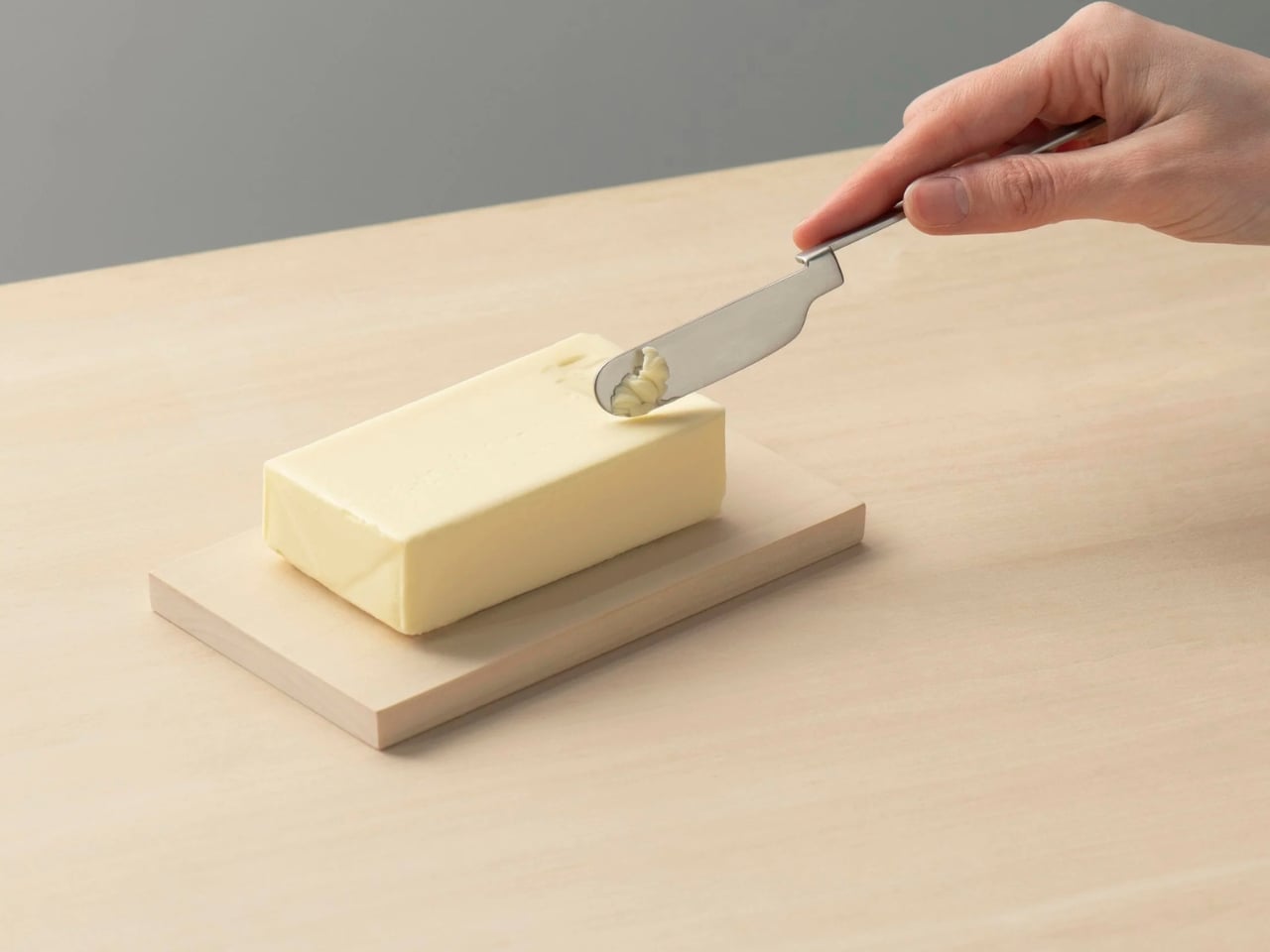
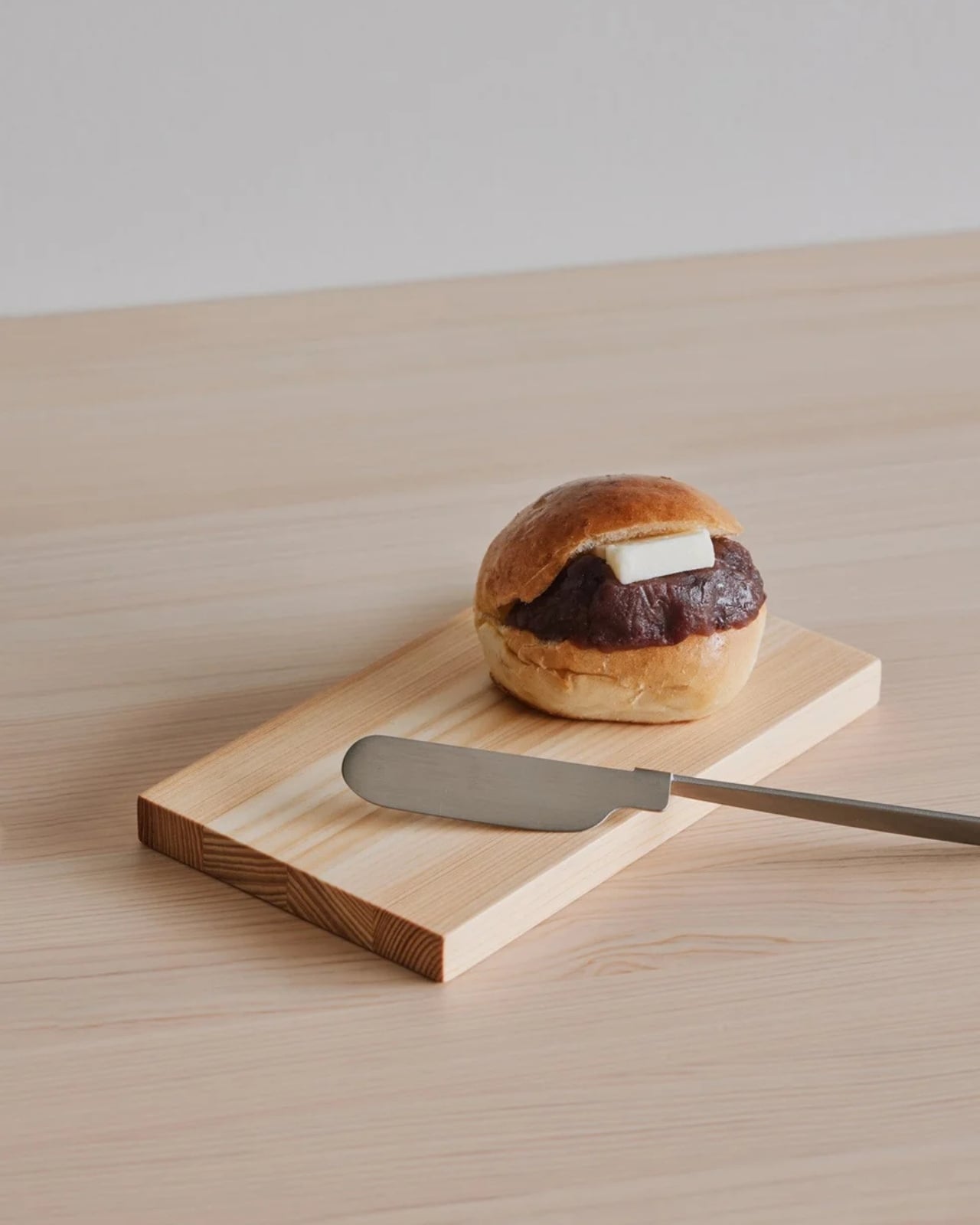
The genius of Oku lies in that distinctive bent handle. Instead of resting horizontally like every other knife you own, it hooks over the edge of a plate or wooden board, elevating the blade and creating this almost sculptural presence on your table. It’s a design choice inspired by traditional Japanese place settings and arrangement principles, where every object has intention and purpose. But it’s not just about aesthetics. That elevated position means the blade never touches the table surface, keeping things cleaner and adding an element of interaction between the knife and whatever it’s sitting on.

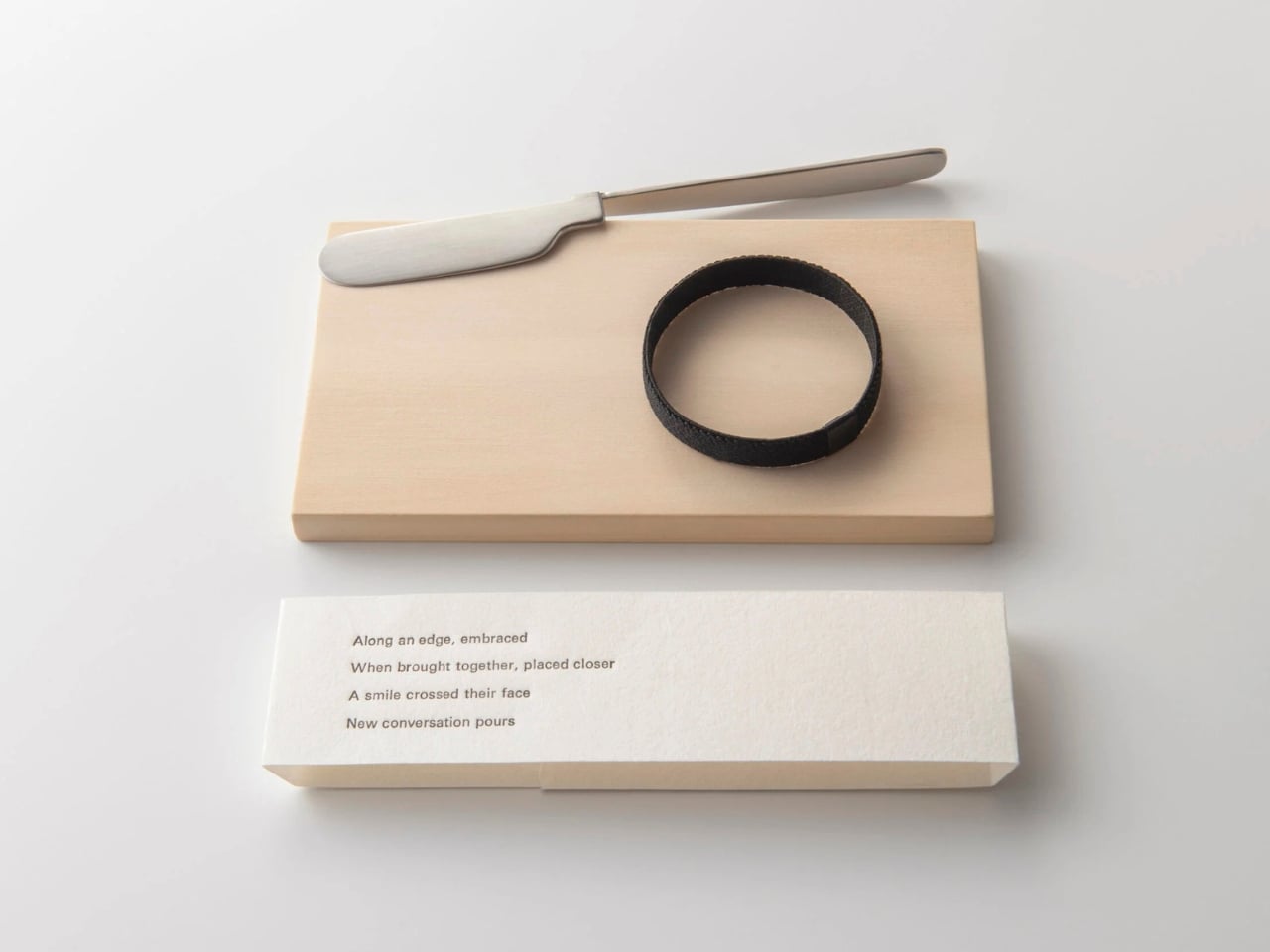
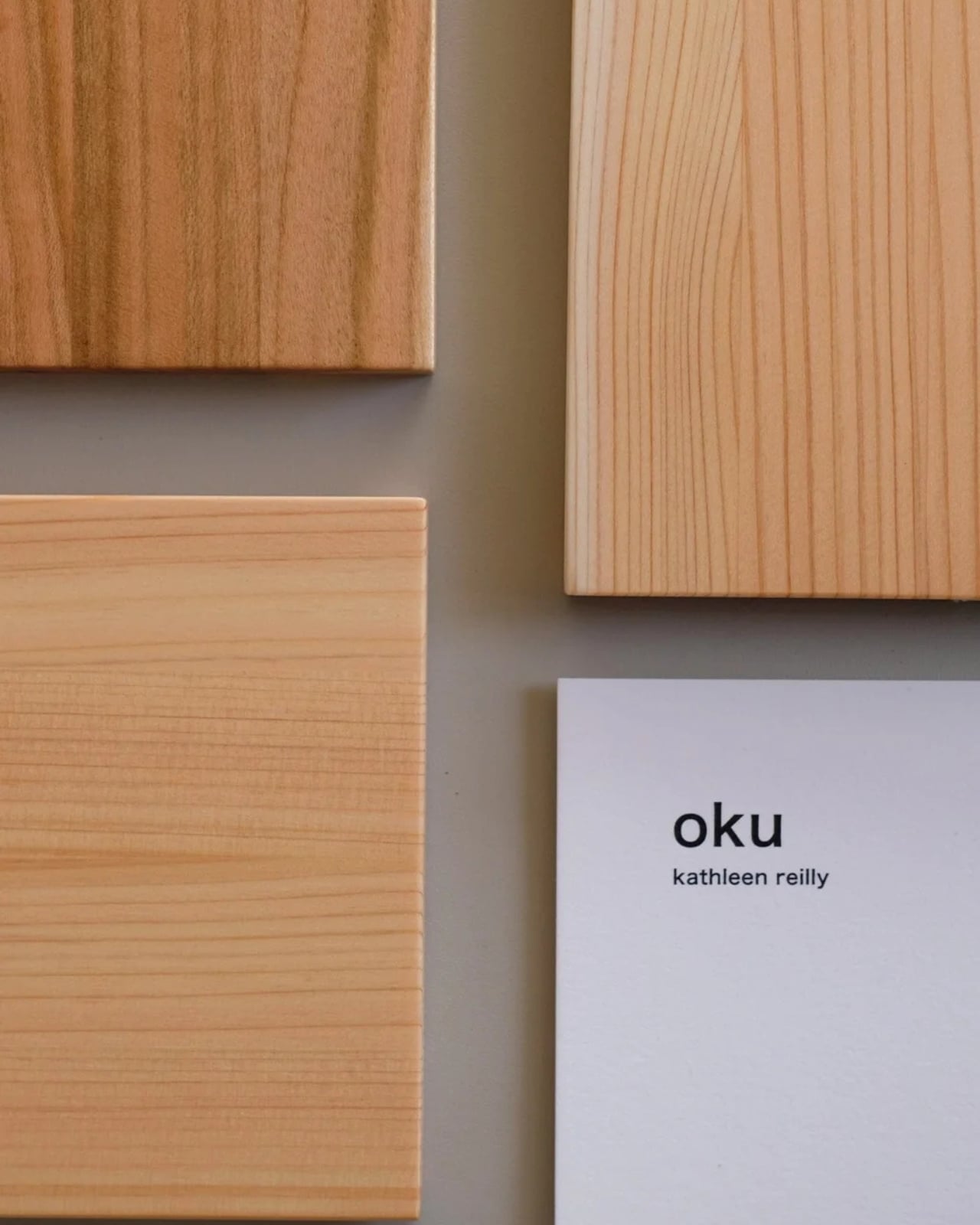
The project brought together some serious talent from Japan’s craft world. The metal work came from skilled craftspeople in Tsubame-Sanjo, using techniques passed down through generations. The wooden boards that pair with the knives are made by Karimoku Furniture, Japan’s leading wooden furniture manufacturer known for both quality and sustainability. Every piece of wood is sustainably sourced from Japanese forests managed to promote conservation, and the high-quality stainless steel is domestically produced. The whole project operates under Japan’s Ministry of Foreign Affairs Sustainable Development Goals, which gives it some serious environmental credentials.

What makes Oku particularly interesting is how it challenges assumptions. Western tableware has followed basically the same template for centuries, but Reilly looked at those conventions through fresh eyes informed by Eastern design philosophy. The result is functional yet unconventional, introducing what she describes as a refined aesthetic that breathes new life into dining spaces. Dezeen Awards judges agreed, naming Oku the Homeware Design of the Year in 2022. Their comments captured something essential about the design: “Oku has a certain humour to it while being beautiful and innovative. It is a beautiful, honest and delicate design, the way the knife and the block work together has a kind of unified function that is expressed through the form of each.”

There’s something playfully subversive about a knife that refuses to behave like other knives. It perches rather than lays, it interacts rather than just existing. The form tells a story about craft traditions meeting contemporary design thinking, about respecting heritage while pushing boundaries. It’s the kind of object that makes you reconsider other everyday items you’ve taken for granted.

For anyone interested in how design can create dialogue between cultures, Oku offers a compelling case study. It demonstrates that innovation doesn’t always mean adding more features or technology. Sometimes it means looking at something familiar from a completely different angle, informed by traditions that value mindfulness and intentionality in daily rituals. The collaboration between Scottish creativity and Japanese craftsmanship produced something neither culture would have created alone, and that’s where the magic happens.

The post This Folded Knife Design Challenges 400 Years of Tableware first appeared on Yanko Design.

Apple’s second-generation AirTag offers greater range but still doesn’t have a keyring hole

Apple has launched its next-generation AirTag for $29 and brought a slew of new features along with it. But, first, it's important to get this out of the way: The new AirTag still doesn't have a keyring hole, so you'll still need accessories like a case, holder or secure pocket.

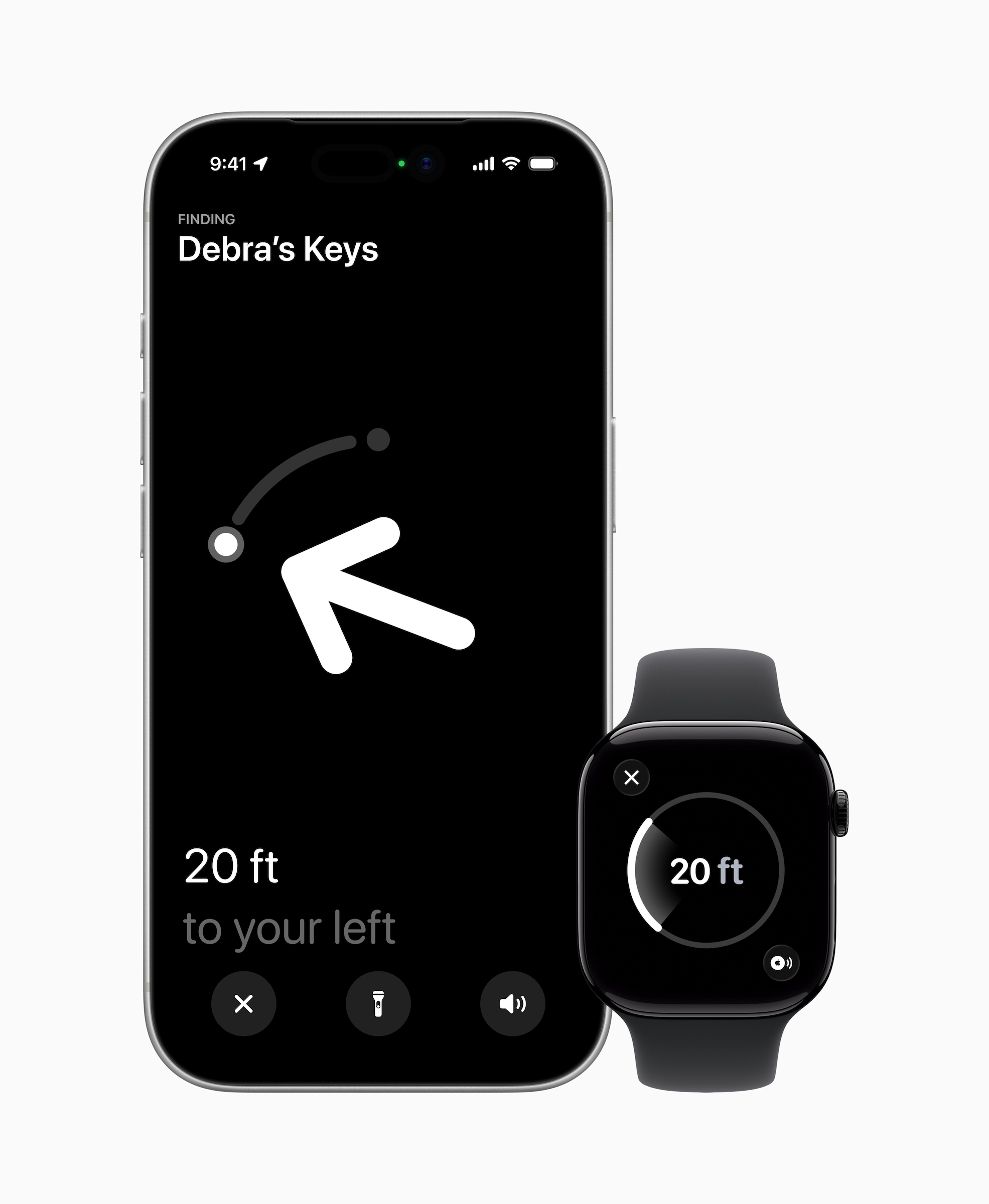
Once you get over that, the new Apple AirTag does offer some nice improvements. For starters, it's now powered by Apple's second-generation Ultra Wideband chip — the same one used in the iPhone 17 lineup and for the Apple Watch Ultra 3. It also uses Precision Finding to reach items up to 50 percent further away than the previous AirTag model. This feature will now work with any Apple Watch Series 9, Ultra 2 or a later iteration of either. That means the directional guidance that shows you down to a few feet where your AirTags are will be available on those compatible watches in addition to your iPhone.

New AirTag.
New AirTag.
Apple

The new AirTag is also 50 percent louder than before and has what Apple calls a "distinctive new chime." It still uses the Find My network to bounce off other Bluetooth users and locate the AirTag. 

Launched in 2021, Apple's AirTag has long stood as our favorite Bluetooth tracker for iPhones. It's convenience within the Find My app is a big help and almost makes up for the fact that it doesn't have a key ring — almost. 

Update, January 28 2026, 11:58AM ET: This story has been updated to add a clarification on the Precision Find update for Apple Watches, as well as a link in the intro.

This article originally appeared on Engadget at https://www.engadget.com/wearables/apples-second-generation-airtag-offers-greater-range-but-still-doesnt-have-a-keyring-hole-150540407.html?src=rss

iPhone Fold vs. Galaxy Z Fold 8: Is Apple Already Too Late to the Party?

iPhone Fold vs. Galaxy Z Fold 8: Is Apple Already Too Late to the Party?

Apple’s anticipated entry into the foldable smartphone market with the iPhone Fold in 2026 has sparked widespread interest and debate. Meanwhile, Samsung, a pioneer in foldable technology, is preparing to launch its Galaxy Z Fold 8, continuing its legacy of innovation in this niche. This competition between two tech giants highlights their differing approaches: Samsung’s […]

The post iPhone Fold vs. Galaxy Z Fold 8: Is Apple Already Too Late to the Party? appeared first on Geeky Gadgets.

Posted in Uncategorized