Black Friday TV deals are still available on sets from Samsung, LG, Sony and more at all-time-low prices

Black Friday is traditionally one of the best times to buy a new TV, and this year is no different. If you’re hoping to make a living room upgrade, we’ve scoured the web and picked out the best Black Friday TV deals we could find. The discounts include well-reviewed OLED TVs and budget sets alike from Samsung, LG, Sony, TCL and Hisense. For those happy with their current TV, there are also several deals on media streamers and streaming services we like.

Hisense U65QF (55-inch) for $398 at Amazon ($402 off MSRP): The U65QF is another entry-level LED TV with generally positive reviews. Most feedback around the web suggests that it can’t match the QM6K in terms of contrast, gaming features and overall accuracy, so TCL’s model should be a better buy for most. This iteration also uses Amazon’s Fire TV platform instead of the cleaner Google TV. It can achieve a higher peak brightness, however, so it’s worth considering if you get particularly bad glare in your living room. This is the lowest price we’ve seen for the 55-inch model, but the 65-inch ($548), 75-inch ($748) and 85-inch ($900) models are also at all-time lows. Also at Best Buy.

LG B5 (48-inch) for $530 at Best Buy ($770 off): The B5 is LG’s entry-level OLED TV for 2025. It gets you the core benefits of any OLED TV — excellent contrast, wide viewing angles, smooth motion and so on — but it can’t get as bright as the higher-end LG C5, nor does it look quite as colorful. It’s technically limited to a 120Hz refresh rate instead of 144Hz, too, though that isn’t a big deal unless you plan to play PC games on your TV. This deal matches the best price we've seen for the 48-inch version. The 55-inch model is on sale for a low of $897 as well. Also at LG.

Hisense U75QG (55-inch) for $498 at Amazon ($416 off): The Hisense U75QG is a close competitor to the QM7K. Its main advantage is that it can get much brighter than TCL’s model, which can make HDR content look more dynamic. This set also comes with four HDMI 2.1 ports instead of two, which is nice for those with multiple game consoles and a soundbar. That said, some reviews say its contrast falls short of the QM7K and that it can make HDR content too bright to be fully accurate. It also suffers from more noticeable motion blur, which means it's not the best choice for fast-paced games. So you may only want to grab it if you’re determined to stay in this price range and have your TV in an especially bright room. Nevertheless, this is a new low for the 55-inch set. The same goes for the 65-inch ($748) and 75-inch ($998) models. Also at Best Buy.

Samsung The Frame TV (2024) 55-inch LED TV for $798 at Amazon ($100 off): You shouldn’t buy a Samsung’s Frame TV if you want the best picture quality for your dollar: They lack local dimming and Dolby Vision HDR, and some cheaper alternatives lap them when it comes to brightness and contrast. Instead, you’d buy one if care about your TV’s aesthetic above all else, since they’re designed to look like a framed piece of wall art. This set also has a matte screen finish, so it holds up well against glare and direct reflections. This discount brings the 55-inch version within $20 of the best price we’ve tracked. Just note that we’re highlighting the 2024 model; this year’s edition is also on sale for $100 more, but its panel still isn’t great the price, so we recommend saving as much cash as possible if you’re dead-set on buying one of these things. Also at Best Buy and Samsung.

LG C5 (65-inch) for $1,247 at Amazon ($200 off): The LG C5 can’t produce the same bold colors as a QD-OLED display like the Samsung S90F, but reviews almost universally agree that it’s an exceptional OLED TV otherwise. It should get brighter with non-HDR content, and as noted above it should produce deeper blacks in a well-lit room. It also has all the essential gaming features, plus it supports Dolby Vision HDR (but not HDR10+). If you need that, or if you want an OLED set in this price range for a bright-ish room, it’s well worth a look. This ties the best price we’ve tracked for the 65-inch model; other sizes are also on sale, but note that the 42- and 48-inch sets can’t get as bright as the larger versions.

Samsung S95F (65-inch) for $2,298 at Amazon ($700 off): The S95F is a premium model that's received almost universally stellar reviews for being especially bright among OLED TVs while keeping the bold colors and contrast expected from a QD-OLED panel. That brightness, combined with the display’s matte finish, means it’s uniquely adept at fending off glare. It also has four HDMI 2.1 ports and a native 165Hz refresh rate for gaming. That said, there’s still no Dolby Vision HDR, and the matte coating means that black tones won’t look as deep in a bright room. It's not cheap, but this is the lowest price we’ve seen for the 65-inch model. Also at Samsung and Best Buy.

LG G5 (65-inch) for $1,997 at Amazon ($400 off): The LG G5 is the S95F’s chief rival at the top of the OLED TV market. Most reviews say it can get even brighter, it does support Dolby Vision and its glossy finish means it won’t lose those inky blacks under ambient light. It’s more susceptible to glare, however, and while its picture is a level above most WOLED TVs, it’s still a step behind QD-OLED sets like the S95F when it comes to color volume. But if you’re mostly going to watch things away from direct light, this might be the better buy. This deal has technically been live for a few weeks, but it matches the lowest price we’ve seen for the 65-inch model. Also at Best Buy and LG.

Sony Bravia A95L (55-inch) for $1,600 at Best Buy ($1,200 off): The A95L is an older QD-OLED TV from Sony released in 2023, but many reviews conclude that it isn’t far off its 2025 successor, the Bravia 8 II, which currently costs $400 extra. Like many premium Sony TVs, it’s earned praise for its excellent image processing, upscaling of lower-quality video and overall accuracy, so it should appeal to those who want movies and shows to look closer to their creators’ original intent. As a QD-OLED TV, it can display more vivid colors than lower-priced WOLED panels, plus it supports Dolby Vision HDR. 

Still-great competitors like the Samsung S90F and LG C5 cost hundreds less, however, while top-end models like the Samsung S95F and LG G5 can get noticeably brighter. The A95L also isn’t the best for gamers at this price, as it’s limited to two HDMI 2.1 ports — one of which is an eARC port for soundbars — and its input lag is slightly higher than those rivals. But if you’re fine with all of that, this deal ties the all-time low for the 55-inch model. Also at Sony.

TCL QM8K (75-inch) for $1,398 at Amazon ($602 off): If you’re willing to pay an OLED-level price but want the increased brightness of a high-end LED TV, the TCL QM8K is worth a look. It won’t be as good in a dark room as something like the Samsung S90F or LG C5, as its contrast isn’t as deep and black tones aren’t as uniformly dark. Its viewing angles are clearly worse, too. But reviews say it still performs excellently compared to other LED sets, and since it gets way brighter than most OLED alternatives (especially with non-HDR content), it can better withstand glare. It also has a 144Hz refresh rate with support for 288Hz at 1080p, though it only comes with two HDMI 2.1 ports, and it’s not available in a size smaller than 65 inches. This is the best price we’ve seen for the 75-inch variant. Also at Best Buy.

Roku Streaming Stick 4K for $25 at Amazon ($25 off): The Streaming Stick 4K is worth considering if you want a cheaper stick-style streamer that plugs directly into your TV, or if you just prefer Roku’s app-based UI, which many find simpler to navigate than the alternatives from Google and Amazon. Performance is fine, if not super-fast, and the device supports Apple AirPlay as well. Just expect to see some ads and know there’s no Twitch app. This deal matches the stick’s all-time low. Also at Best Buy and B&H.

Roku Streaming Stick Plus for $19 at Amazon ($21 off): The Streaming Stick Plus is a cheaper version of the Streaming Stick 4K with no Dolby Vision support and no long-range Wi-Fi extender included. It may be less reliable with choppier internet connections as a result, but it can typically be powered straight from a TV’s USB port, it can still stream up to 4K, and the software experience is identical. Most people should probably just spend the extra $5 for the Streaming Stick 4K, but if you’re really looking to save, the Plus is a decent value. This deal is a new all-time low. Also at Best Buy and Walmart.

Roku Ultra for $69 at Amazon ($31 off): The Ultra might be worth it if you want the Roku experience in a set-top box design with built-in Ethernet and USB ports. Unlike the streaming sticks, it comes bundled with a rechargeable remote that supports voice controls, a lost remote finding tool and backlit buttons. (Though you can buy that separately.) This latest model also has a faster processor and Wi-Fi 6 support, though it’s not as snappy as other boxes like the Google TV Streamer 4K or Apple TV 4K. This deal ties the best price we’ve tracked. Also at Best Buy and Walmart.

Amazon Fire TV Stick 4K Plus for $25 at Amazon ($25 off): If you'd prefer one of Amazon's media streamers, the newly rebranded Fire TV Stick 4K Plus offers the same core experience as the pricier Fire TV Stick 4K Max, only it has a slightly slower processor, half the storage space (8GB) and Wi-Fi 6 support instead of Wi-Fi 6E. For most people who just want to stream casually, those shouldn’t be huge losses. Just keep in mind that its Fire OS interface is still fairly ad-heavy and prioritizes Amazon’s own apps over everything else. This deal is $3 more than the device’s all-time low but ties the best price we’ve seen in the past year. Also at Best Buy.

Amazon Fire TV Stick 4K Max for $35 at Amazon ($25 off): If you want the best Amazon streaming stick possible, the 4K Max gets you faster hardware than the Plus model and may be worthwhile if you have a Wi-Fi 6E router at home. This deal isn’t an all-time low, but it matches the best price we’ve seen over the past year. Also at Best Buy and Target.

Amazon Fire TV Stick HD for $18 at Amazon ($17 off): The Fire TV Stick HD is the budget pick in our guide to the best streaming devices. It only streams up to 1080p and runs a bit choppier than Amazon’s 4K models since it has a slower chip and a meager 1GB of RAM. The usual complaints with Fire OS still apply, too. But if you want to stick with Amazon and just need to add streaming apps to an old TV for as little as possible, it’ll work well enough. This discount matches the best price we’ve tracked. Also at Best Buy and Target.

Apple TV 6-month subscription for $36 at Apple ($42 off): Apple TV+ is offering six months of access for $36, which comes out to $6 per month for the discounted period. The deal is live for new and eligible returning subscribers and runs through December 1, giving you a chance to stream shows like Slow Horses, The Morning Show or Pluribus for less. The big caveat here is that you must subscribe directly through Apple and not a third-party service.

HBO Max 1-year subscription for $36 at HBO ($96 off): HBO Max's Black Friday deal gives subscribers one year of its ad-supported tier for $3 per month, or $36 total, through December 1. Normally, this would cost $11 per month. You can sign up via HBO Max's website or, if you're already a Prime Video subscriber, via that service as an add-on.

Paramount+ 2-month Premium subscription for $6 at Paramount ($20 off): If you're looking to stream CBS shows or Champions League soccer, this Black Friday deal brings the monthly price of either Paramount+ tier down to $6 total for two months. The obvious better deal is for the ad-free Premium plan, which typically costs $13 per month, but be warned your subscription will be set to auto-renew by default.

Sling TV Orange Day Pass for $1 at Sling ($4 off): Sling TV launched Day Passes earlier this year, giving users one-day access to a variety of its packages. This deal cuts $4 off the normal price of a pass for Sling Orange. With that, you get unlimited access for 24 hours to Orange's 30-plus channels, including ESPN, CNN, TBS and others.

This article originally appeared on Engadget at https://www.engadget.com/deals/black-friday-tv-deals-are-still-available-on-sets-from-samsung-lg-sony-and-more-at-all-time-low-prices-181143975.html?src=rss

DeepMind releases a new weather forecasting model for more accurate predictions

Google's DeepMind just released WeatherNext 2, a new version of its AI weather prediction model. The company promises that it "delivers more efficient, more accurate and higher-resolution global weather predictions." To that end, it should be able to provide accurate forecasts up to two weeks out, including information on temperature, pressure and wind.

It should also be able to better predict tropical storm tracks, according to researchers. This means that predictions of a hurricane's path should be accurate up to three days out. The previous model only predicted things up to two days ahead of the storm.

The model also brings hourly forecasts into the mix. All told, Google says this new model is eight times faster than the previous iteration. This should help businesses like energy traders make more precise decisions, according to a report by Bloomberg.

"It gives you a more granular forecast," DeepMind AI researcher Akib Uddin said. "Many other industries are quite interested in these one-hour steps. It helps them make more precise decisions. Their goal is, how can they make their business more resilient to weather?"

The tool in action.
Google

The improvements here stem from a new approach to weather models, as explained in this recently-published research paper. Older methods demanded the use of machine learning models that were built for image and video generation. This required repeated processing to ensure an accurate result. The new model only requires a single processing step, which also reduces reliance on costly AI computing systems.

AI may not be great at everything, despite what proponents want you to believe, but it is great at predicting the weather. Newer models typically outperform traditional prediction methods, even those that rely on supercomputers.

These models aren't perfect, however, as even Google has acknowledged that WeatherNext 2 will likely struggle to predict outlier rain and snow events. This is due to gaps in the training data. "It’s one limitation of our forecast, but one that we are working on improving,” DeepMind research scientist Ferran Alet told Bloomberg.

AI weather prediction is becoming a crowded field. Companies like NVIDIA, Microsoft, AccuWeather and Huawei are all throwing their hats in the ring in one way or another.

This article originally appeared on Engadget at https://www.engadget.com/ai/deepmind-releases-a-new-weather-forecasting-model-for-more-accurate-predictions-175451228.html?src=rss

The Tiny Accessory That Gives Your Umbrella Main Character Energy

You know that feeling when you walk into a coffee shop on a rainy day and have to awkwardly lean your dripping umbrella against the wall, hoping it won’t slide down and crash onto the floor? Or when you get home and realize you’ve been propping your umbrella in the same dusty corner for years because, well, what else are you supposed to do with it? We’ve all been there. And honestly, it’s kind of ridiculous that in 2025, we’re still treating umbrellas like they’re design afterthoughts.

That’s exactly the question that sparked Standpoint, a brilliantly simple solution to a problem we didn’t realize was bothering us. What if your umbrella could just stand on its own? Not leaning, not tucked away, not shoved into some clunky umbrella stand, but actually standing there with a bit of confidence and personality.

Designer: Edwin Tan

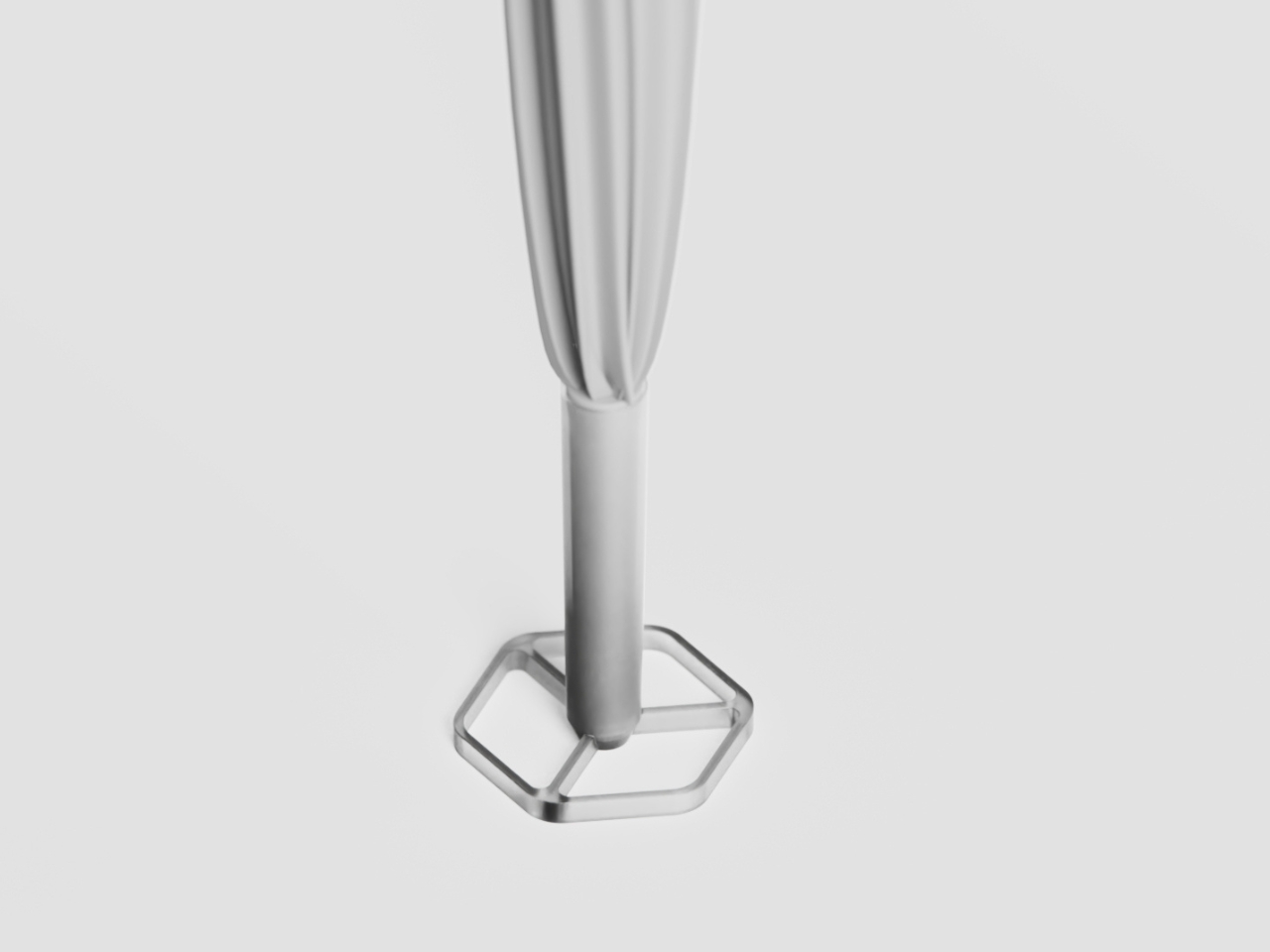
Standpoint is a small 3D-printed resin attachment that clips onto the bottom of your umbrella, transforming it from a functional rain shield into something that can hold its own ground, literally and figuratively. It’s one of those designs that makes you wonder why no one thought of it sooner, the kind of idea that feels so obvious once you see it but required someone to actually stop and question the status quo.

The beauty of Standpoint lies in its understated approach. This isn’t some bulky contraption or overwrought design statement. It’s a gentle, minimal base that complements rather than competes with your umbrella. Each base features a soft color gradient that transitions from darker to lighter tones, creating a subtle visual flow that enhances the umbrella’s form without screaming for attention. You get to choose from different base variations, each with its own personality. Some are organic and flowing with petal-like loops, others are more geometric and structured. It’s like picking out jewelry for your umbrella, a small detail that adds unexpected character.

What makes this design particularly smart is how it taps into a bigger conversation happening in the design world right now. There’s this growing movement toward reimagining everyday objects, questioning why things have always been done a certain way, and finding opportunities for improvement in the most mundane corners of our lives. Standpoint fits perfectly into this philosophy. It’s not trying to reinvent the umbrella itself. Instead, it’s asking how we can make an existing object more self-sufficient and expressive in our spaces.

The use of 3D-printed resin is also worth noting. This technology has opened up possibilities for creating small-batch, customizable accessories that would have been prohibitively expensive to manufacture traditionally. You can have multiple bases in different colors and styles, swapping them out based on your mood or aesthetic. It’s the kind of personalization that feels very now, very in tune with how we think about our belongings as extensions of our personal style.

But beyond the practical benefits and the aesthetic appeal, there’s something quietly radical about Standpoint. It celebrates the idea of objects having dignity and presence in our spaces. Your umbrella doesn’t need to hide or apologize for existing. It can stand tall (pun intended) and become part of your interior landscape. In an era where we’re constantly trying to minimize and hide away the functional stuff of daily life, Standpoint takes the opposite approach. It says, let’s make these everyday tools beautiful enough to be visible. The gradient colors, ranging from soft blues and greens to warm corals and neutrals, are clearly influenced by contemporary design trends but feel timeless rather than trendy. They’re sophisticated enough for minimalist interiors but playful enough to bring a smile to your face on a dreary morning when you’re grabbing your umbrella on the way out.

Ultimately, Standpoint is about more than just keeping your umbrella upright. It’s about recognizing that thoughtful design can transform even the smallest moments of our daily routines. It’s a reminder that we don’t have to accept things as they’ve always been, and that sometimes the most delightful innovations come from asking the simplest questions. Your umbrella deserves better than being shoved in a corner. Let it stand proud.

The post The Tiny Accessory That Gives Your Umbrella Main Character Energy first appeared on Yanko Design.

Google expands AI Mode’s flight and event booking features

Google has introduced some new tools in AI Mode alongside the expansion of others. The beta for Flight Deals, the AI-powered search tool that operates within Google Flights, is expanding globally. The tool works to find the best deals on flights in response to natural-language prompts from the user. The company is also expanding AI Mode's agentic capabilities to more users across the US, helping to book restaurants, event tickets and beauty or wellness appointments.

The search giant is also adding a new feature to AI Mode called Canvas. This tool offers an organized space for users to build plans or projects. It can also help plan trips. Within the Canvas environment, users can describe the kind of trip they want to book, and the various tools will suggest destinations, hotels and bookings.

Last week, Google also added a host of new AI-powered shopping features, including an agentic checkout that helps find and buy an item at a specific price. Shoppers can have Google track the price of an item and give the AI permission to purchase it once it hits the desired discount.

Google has been rolling out a slew of AI features across its product suite, including Google Photos, Google Messages and Android.

This article originally appeared on Engadget at https://www.engadget.com/ai/google-expands-ai-modes-flight-and-event-booking-features-170017656.html?src=rss

Anker Black Friday deals still offer up to 50 percent power banks, wireless chargers, power adapters and more for the holiday shopping event

Black Friday deals mean good news for anyone who wants to stock up on tech accessories, a whole slew of Anker gear is on sale. If you’re already familiar with the brand, you know it makes some of the most reliable charging gear out there. If you’re new to Anker, you’re in for a treat. We think it’s some of best gear we’ve tested, which is why you’ll find it in our guides to MagSafe power banks, wireless charging stations and more. So if you want to (wisely) use Black Friday to get good deals on hardworking peripherals, check out the best Black Friday Anker deals right here.

Power banks revive dead phones, let you work longer while away from an outlet and allow you to play with your tablet/ereader/gamepad while it charges without being tethered to a wall. After testing out brands from a slew of different makers, our picks just keep coming back to Anker. The mix of value, capacity and clever features make Anker batteries just a little bit better than a lot of the brands out there.

Anker's Laptop Power Bank, which our reviewer (me) called the culmination of all the best battery features is going for nearly $50 of right now. If could recommend one purchase to our readers, this would be it.

We think Anker's Ultra-Slim MagSafe bank is a better deal than Apple's Air MagSafe battery. It's got a higher capacity and wattage rating and it looks just as sleek. Plus, in my humble opinion, $38 is a way better deal than $99. 

Anker also makes our top MagSafe battery pick (the MagGo Qi2). Thanks to its clever stand, excellent charging speeds and generous capacity, it's one of the best ways to recharge an iPhone on the go..

I love this shiny little brick. The 3-in-1 portable charger has a built-in cable that's also a strap, plus wall prongs and a handy display.

A rats nest of cables on your desk is not the loveliest look. Now that phones, earbuds, smartwatches and even ereaders can refill on a charging coil, wireless chargers are a tidy solution. There are options that’ll let you view your phone while it charges, as well as some that will charge three devices at once. We’ve tested units from dozens of brands for our buying guides and keep putting Anker on our lists of winners. The brand makes some of the top picks in both our wireless charger guide and our list of the best multi-device chargers. Now, thanks to Black Friday, you can keep your devices topped off with quality accessories that are an even better value than usual.

While wireless charging is faster than it’s ever been, cords are still the fastest way to charge your phone. Bigger devices like your laptop will reup faster on a high-wattage brick than on a dinky 20-watt adapter and if you want to keep your outlets more streamlined, go for a multi-port power adapter that will let you charge multiple devices at once. Again, after testing many brands, some of our most reliable picks continue to be from Anker. It shows up three times in our guide to the best fast chargers and we recommend the brand in a number of our accessories guides. Now that Black Friday is here, a number of Anker power adapters are on sale — so we rounded them all up here.

We mostly think of Anker as a charging accessory brand. But they’ve expanded their scope by getting into audio equipment — and the effort was a success. You might not immediately pick up that these are Anker speakers — Soundcore shows up on the products themselves, but it’s the same company. We recommend a couple Soundcore music makers in our guide to the best Bluetooth speakers. They also make our overall favorite pair of budget earbuds, the Space A40. With Black Friday deals in full effect, these are the best Anker Soundcore deals we could find.

We’re fans of plenty of other brands aside from just Anker. Here are some of the other charging accessories that are also on sale for Black Friday. These come from our guide to MagSafe power banks, our standard power bank guide and our best fast charger roundup. If you want to read up on why these guys made the cut, check out those links. But if you just want to snag a few deals on electronics that Engadget has vetted, check out our picks below.

My personal favorite USB-C charging cable is made by Anker. It’s rated at 240 watts, has a durable build, plus it’s six-feet long and has a handy right angled connector at one end. Anker of course also makes plenty of other gear, from webcams to mice — that show up in our guides to the best accessories again and again. Here are the best Black Friday deals on Anker gear that doesn’t quite fit into the categories above.

This article originally appeared on Engadget at https://www.engadget.com/deals/anker-black-friday-deals-still-offer-up-to-50-percent-power-banks-wireless-chargers-power-adapters-and-more-for-the-holiday-shopping-event-164907231.html?src=rss

Meta and Google delay undersea cables over security concerns

Meta and Google are facing delays with long-promised undersea cable projects, according to a report by Bloomberg. A Meta spokesperson blames the delays on a "range of operational factors, regulatory concerns and geopolitical risk."

Meta's 2Africa subsea cable system is supposed to wrap around the African continent to deliver fiber internet to the region. It's also intended to connect Europe with Asia and Africa. The 28,000-mile project was first announced all the way back in 2020.

However, the company has experienced issues when running cable through the southern portion of the Red Sea. A whole section has yet to be built due to regional conflicts and difficulty obtaining certain permits from local governments.

The Google-backed Blue-Raman intercontinental cable system has also been delayed in the region, after first being announced in 2021. This system was originally supposed to go live in 2024, connecting countries like France, Italy, India, Israel, Jordan, Saudi Arabia and Oman. The company has not provided an updated timetable.

These are just two examples, as plenty of other fiber internet cables have yet to go live in the Red Sea. Builders have experienced repeated missile attacks, allegedly by the Iran-backed Houthis, which forced them on lengthy detours and disrupted work.

"They are not only unable to monetize their investments by sending data over these cables, but they are forced to purchase capacity on alternative cables to meet their near-term requirements," said Alan Mauldin, research director at telecommunications firm Telegeography.

It's worth noting that these delays shouldn't impact two previously announced undersea fiber projects by Google and Meta. Google is building a cable to connect Togo to Europe, which will wrap around the Atlantic side. Meta is building a gigantic cable system that looks to connect five continents, which isn't crossing the Red Sea.

Undersea cables are a great way to give the various regions of the world fiber internet, but there are some downsides. We've already covered geopolitical concerns when it comes to building, but the installed cables can tear and break. This is typically caused by natural disasters, extreme weather and human activities like fishing.

This article originally appeared on Engadget at https://www.engadget.com/big-tech/meta-and-google-delay-undersea-cables-over-security-concerns-163508037.html?src=rss

Alma Light’s Totem I Turns Fluted Glass Into a Glowing Column

Floor lamps usually sit in the corner, trying not to be noticed until you need them. They’re functional objects first, designed to throw light where you need it and stay out of the way the rest of the time. Most look like afterthoughts, with utilitarian bases and fabric shades that blend into whatever room they occupy. That works fine for ambient lighting, but it means the lamp contributes almost nothing to how a space feels.

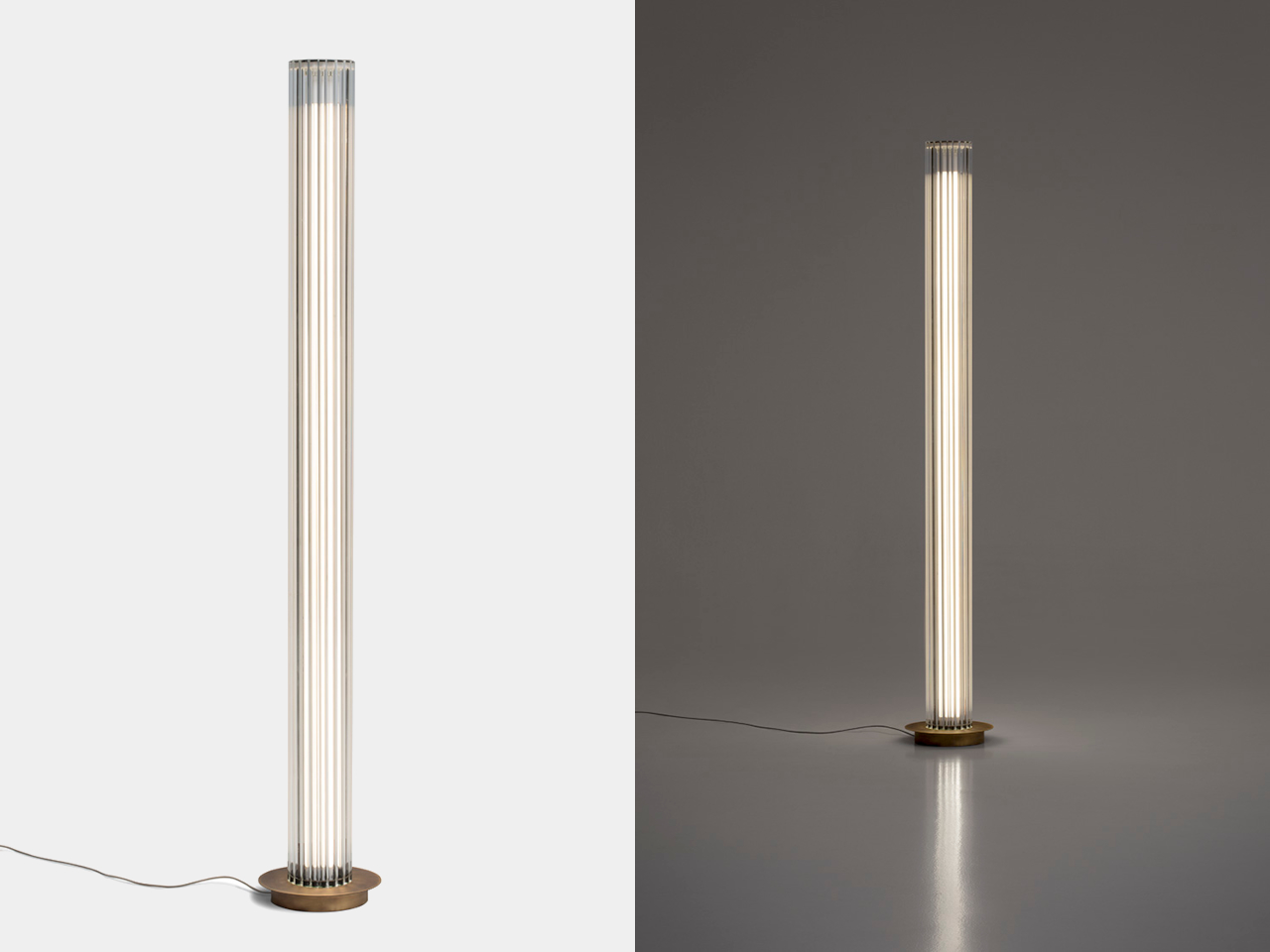
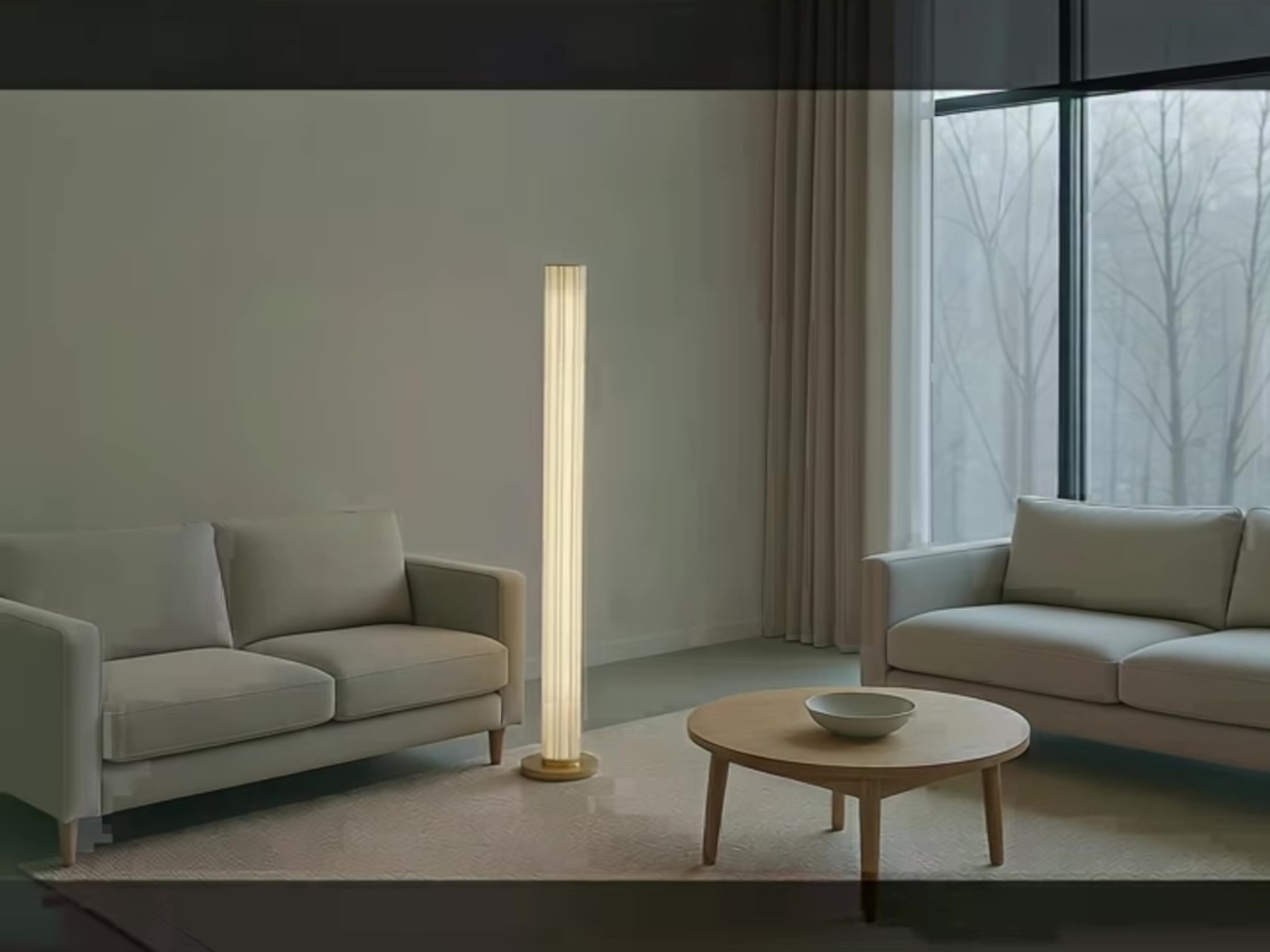
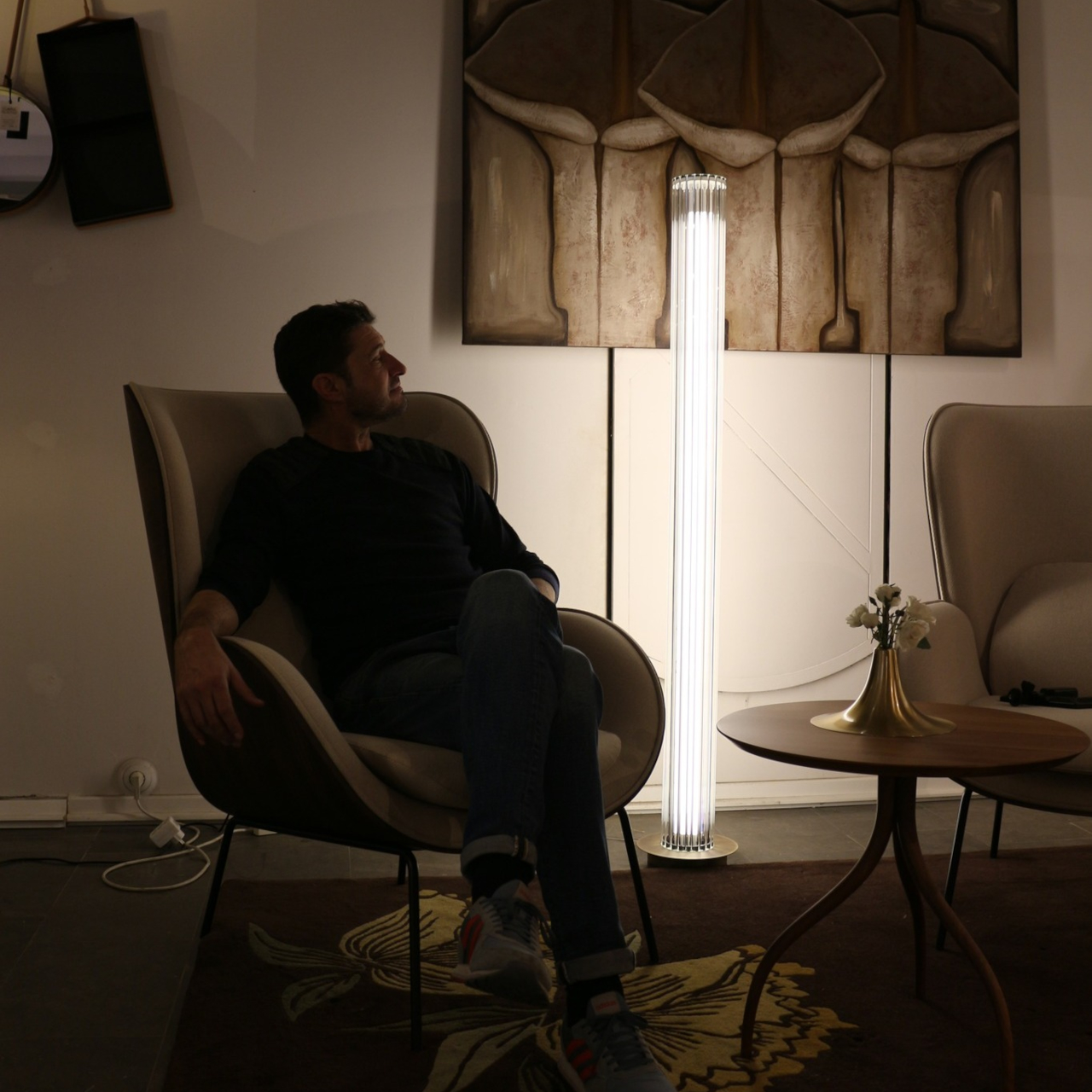
Alma Light’s Totem I takes a different approach, treating the floor lamp as a vertical presence that can anchor a room rather than just fill it with light. Designed by Cristian Cubiñá, it borrows the idea of totems as ascending symbols and translates that into a tall, slender column of fluted glass. The lamp stands 150 centimeters high and only 15 centimeters wide, creating a luminous vertical line that projects light outward while occupying almost no floor space.

Designer: Cristian Cubina for Alma Light

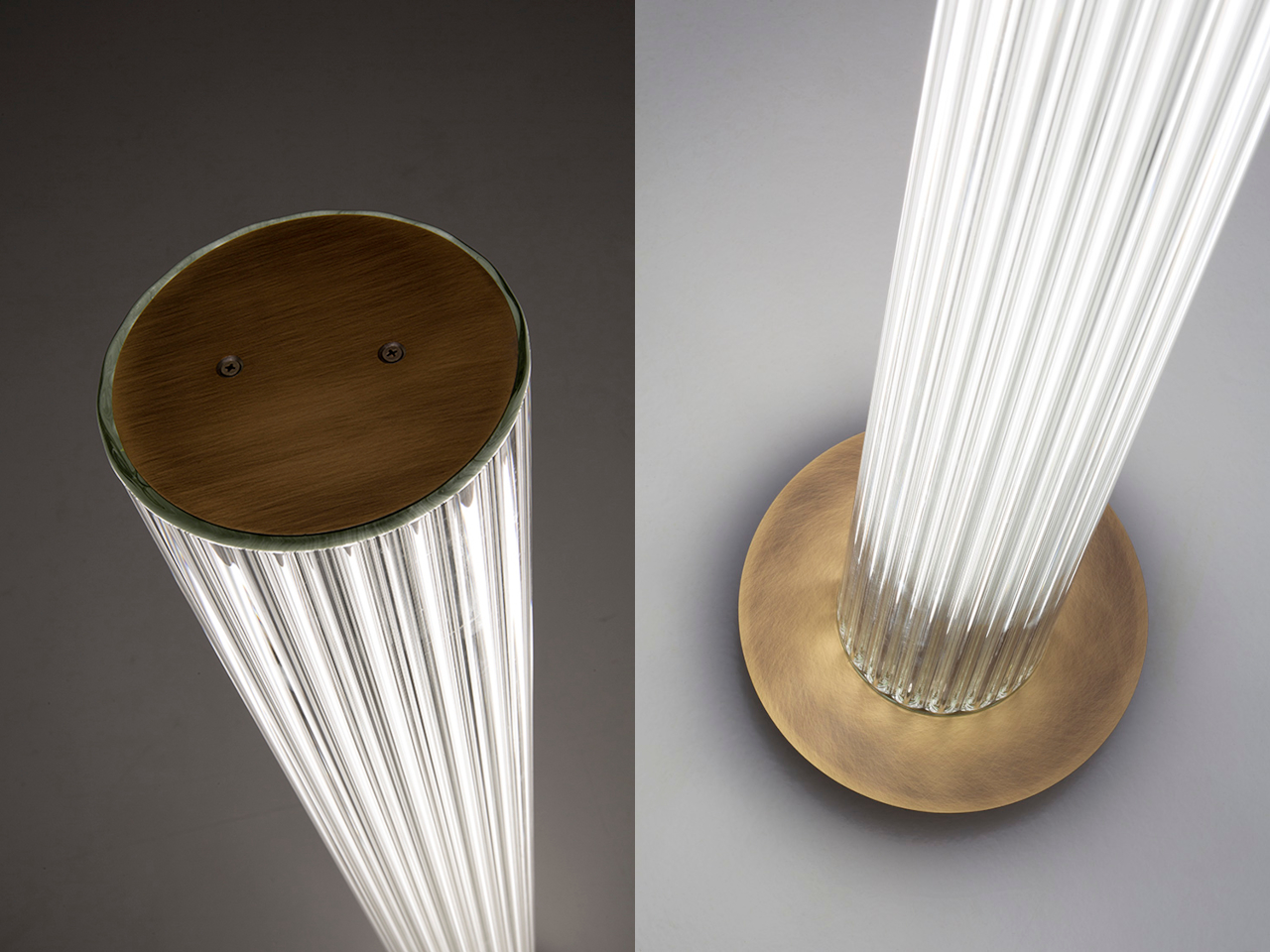
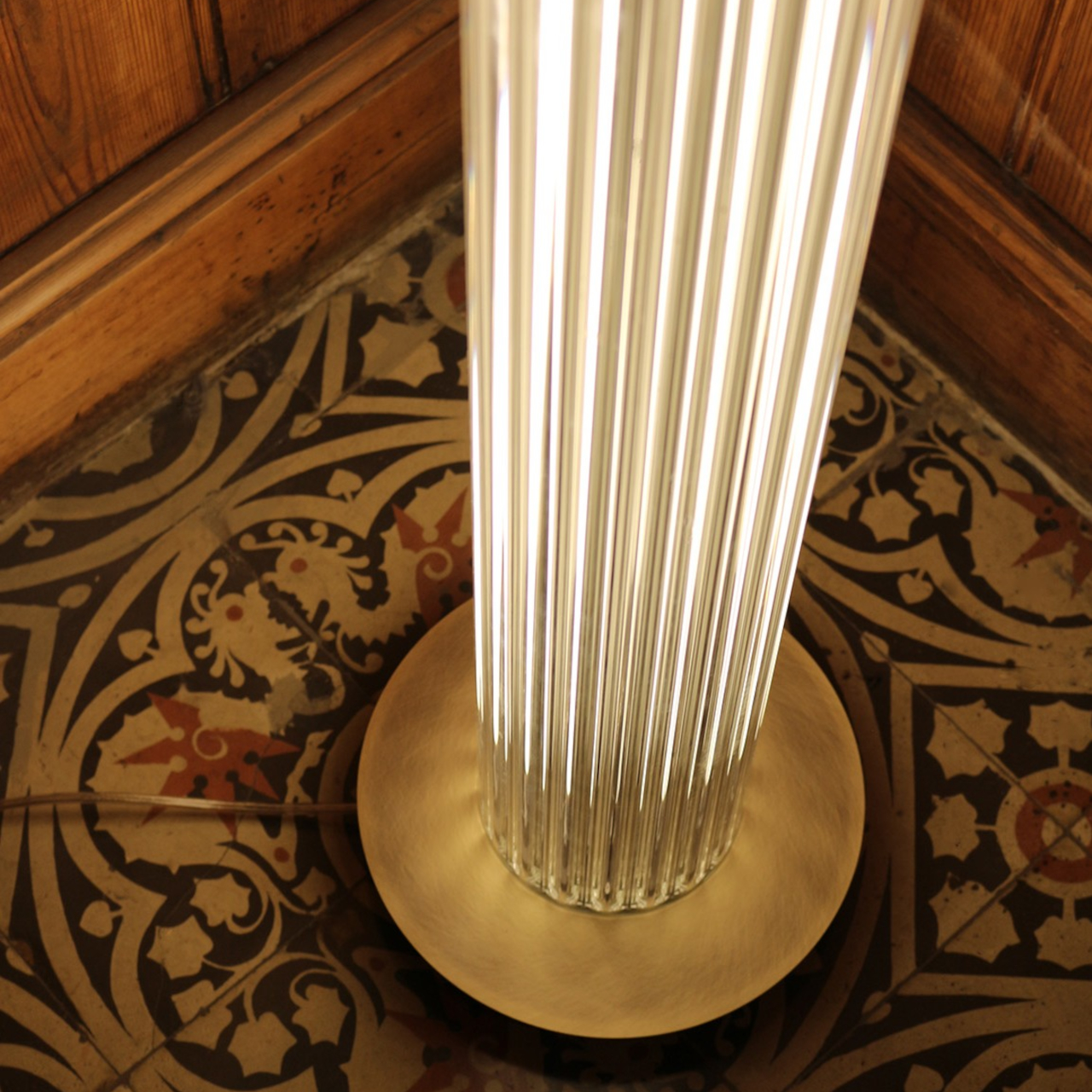
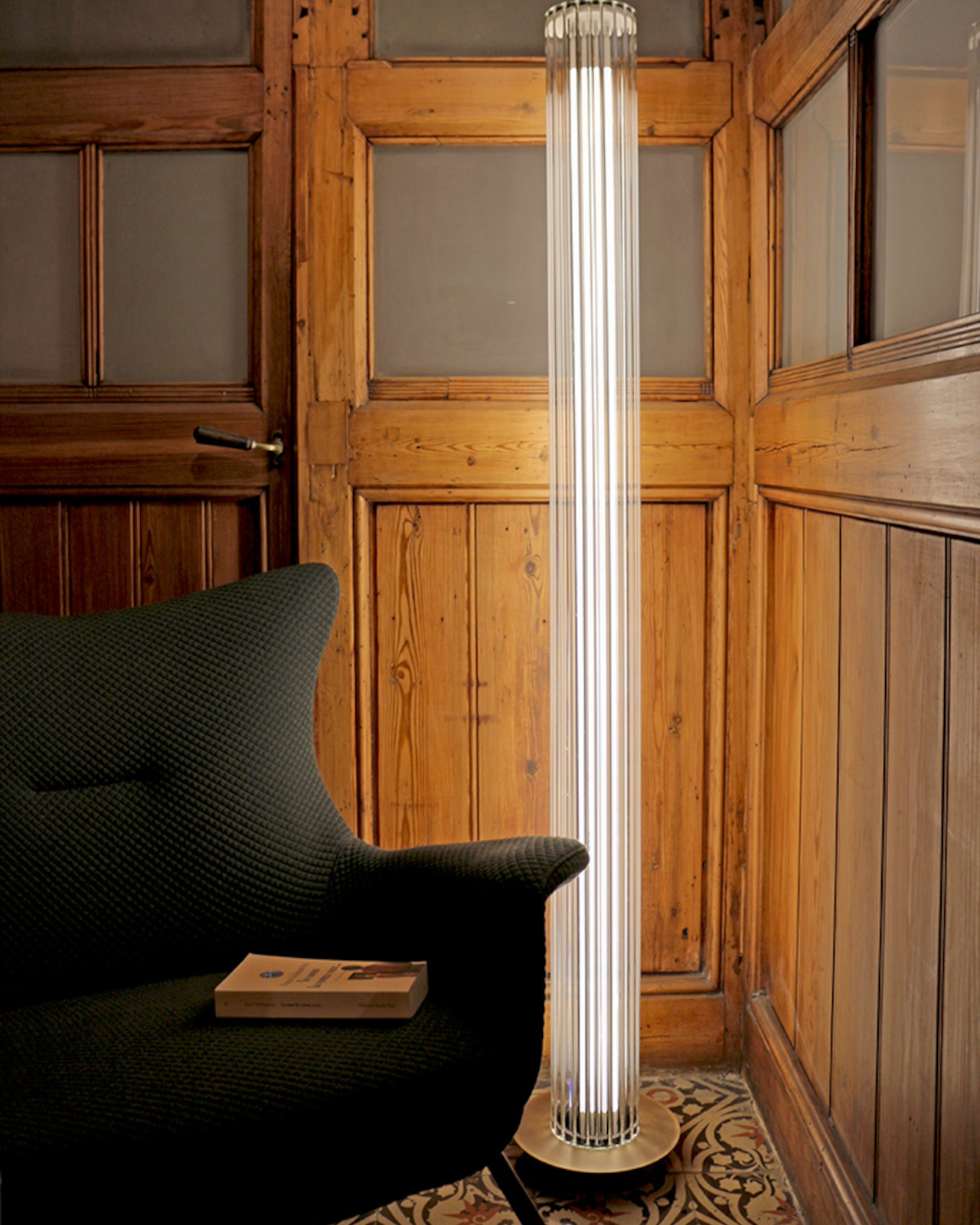
The glass cylinder is the defining feature. Made from transparent fluted borosilicate glass, it catches and diffuses light through vertical ridges that run the entire length. The fluting gives it a subtle retro feel, like classical columns or vintage fluorescent fixtures, but refined into a single, clean silhouette. When lit, the ridges create soft striations of light and shadow, adding texture to what would otherwise be a simple glowing tube.

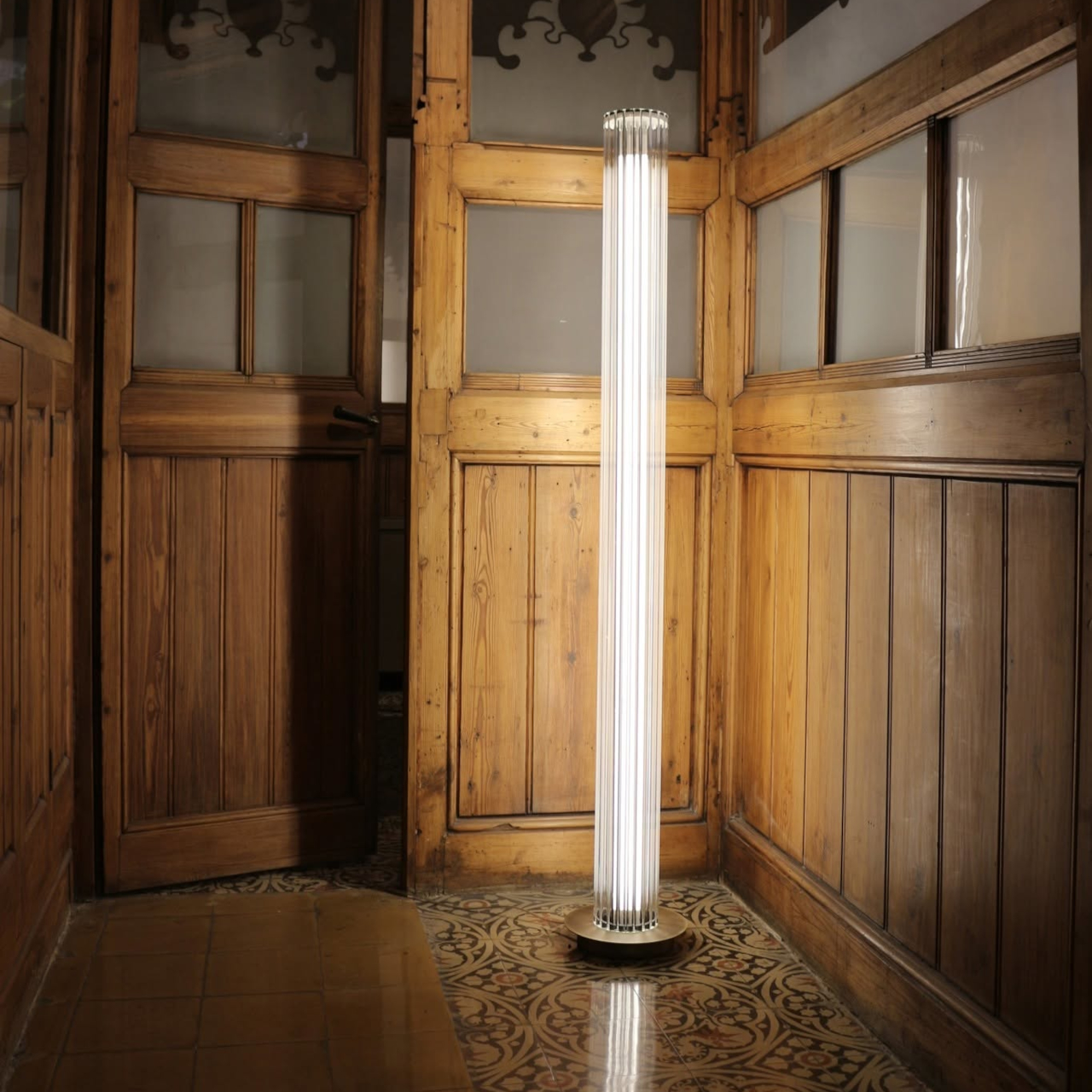
The structure itself is minimal. A circular iron base in either textured black or satin bronze grounds the lamp, while a matching cap sits at the top. The finishes give you flexibility depending on the room. The bronze version adds warmth and works beautifully against wood paneling or patterned tile, while the black finish lets the lamp recede into darker, more minimalist spaces.

The light source is a 150-centimeter T8 LED tube that runs the full length of the glass, projecting light in 360 degrees. The lamp is designed to really illuminate a space rather than just provide accent lighting, which sets it apart from most floor lamps that focus light upward or downward. The result is a warm, enveloping glow that fills the room without harsh shadows or directional glare.

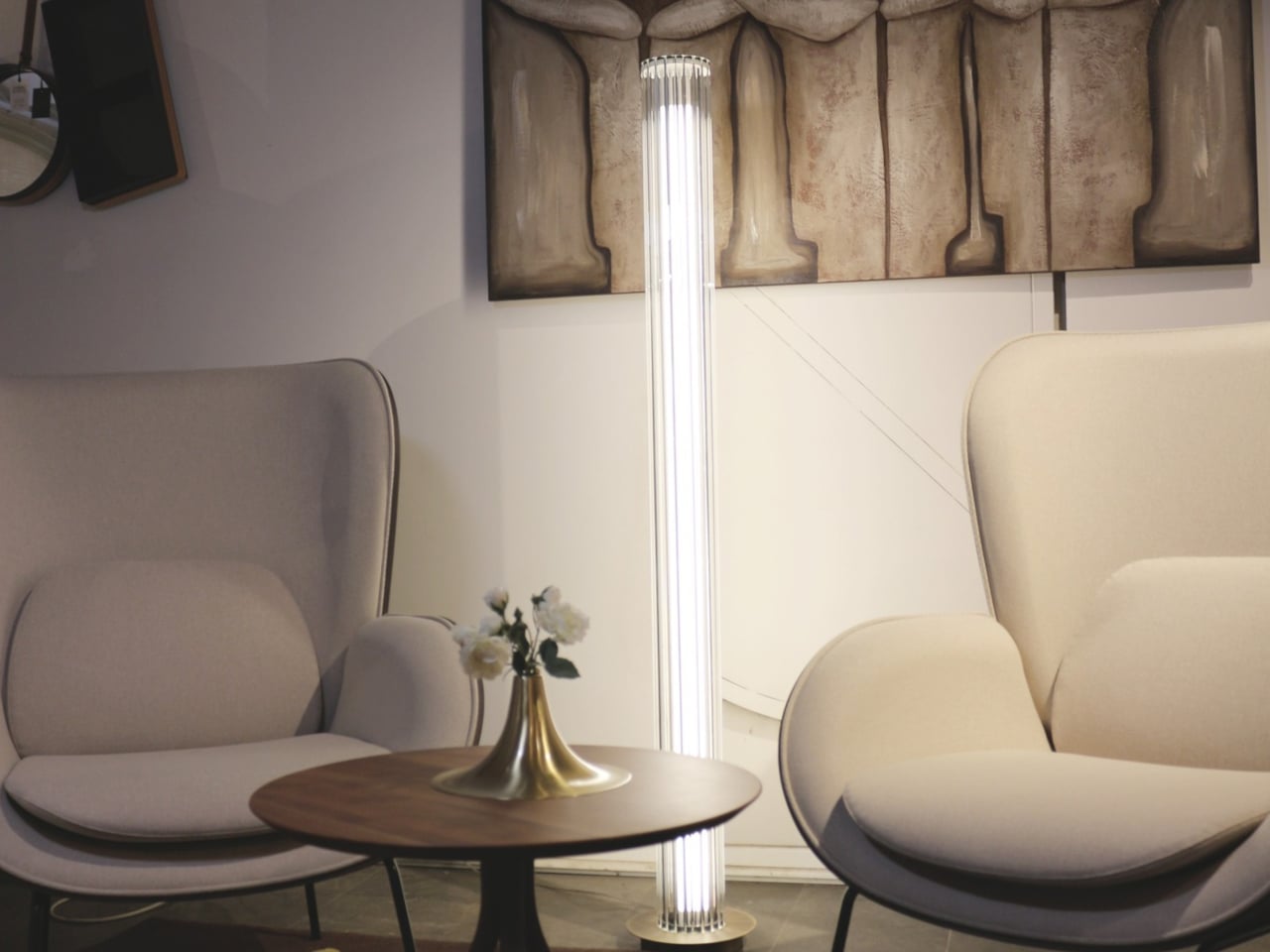
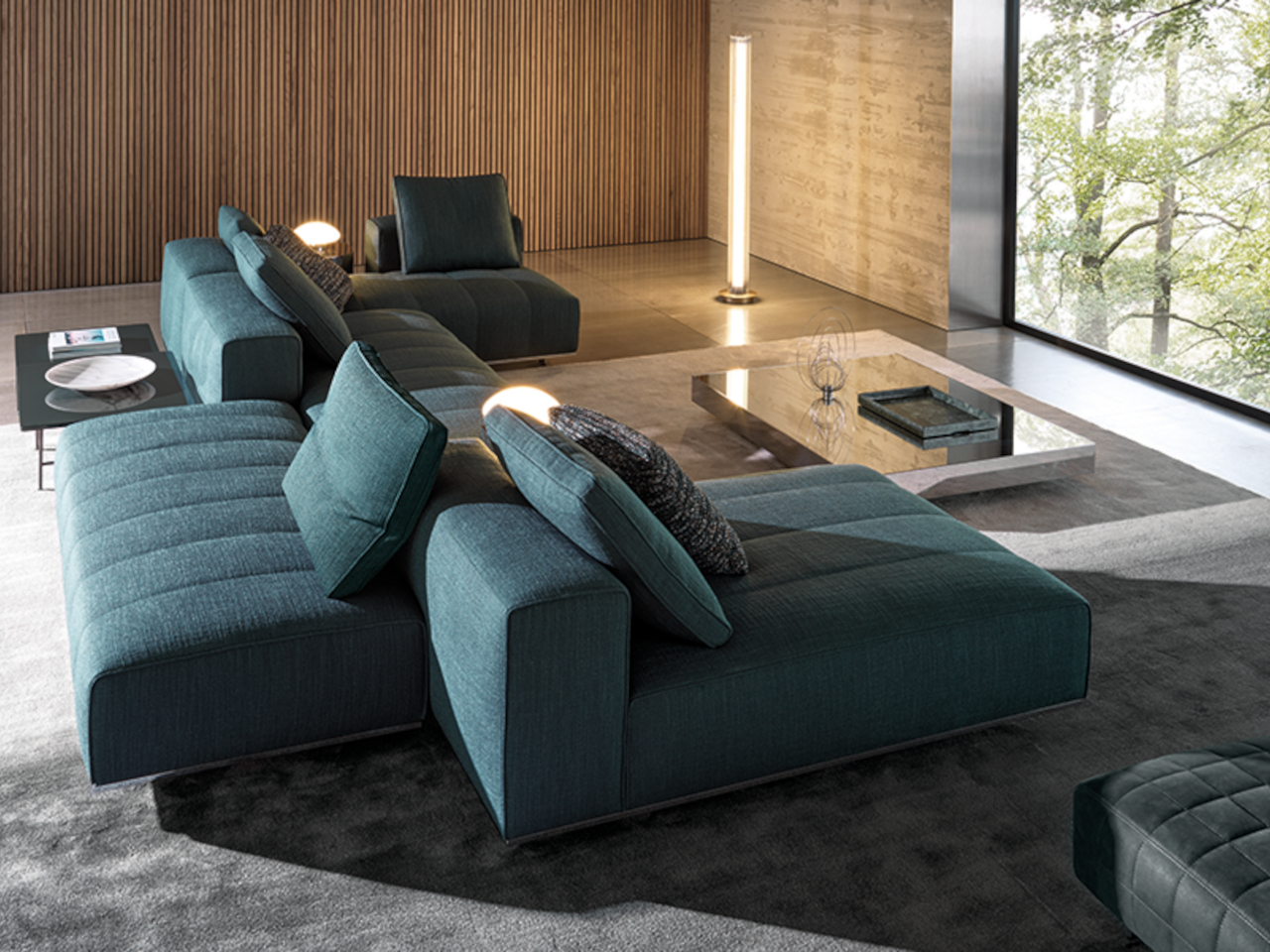
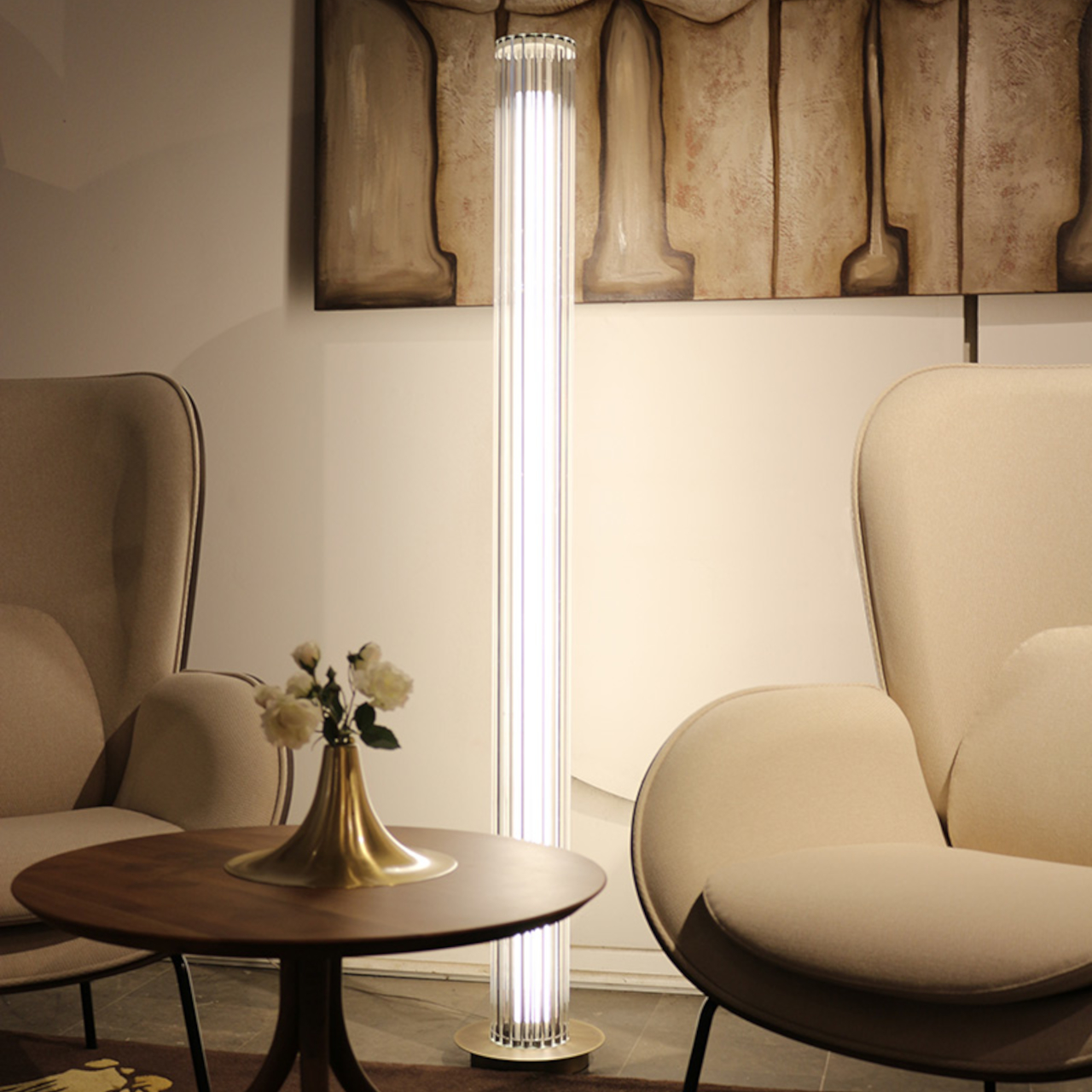
What makes Totem I genuinely versatile is how well it adapts to different interiors. In the photos, it stands against wood paneling in a historic room, anchors a corner in a contemporary living room with teal seating, and complements a minimal lounge with soft armchairs. It can either act as a sculptural focal point or blend quietly into more complex settings.

The lamp works particularly well in spaces where vertical elements matter. Hotel lobbies, restaurant waiting areas, and large residential rooms benefit from the way Totem I emphasizes ceiling height and creates a strong vertical gesture without cluttering the floor. It’s the kind of piece that changes how a room feels the moment you switch it on.

The post Alma Light’s Totem I Turns Fluted Glass Into a Glowing Column first appeared on Yanko Design.

Bentley Supersports: The Most Driver-Focused Bentley Ever Built

Bentley Supersports: The Most Driver-Focused Bentley Ever Built

The Bentley Supersports 2026 represents a triumphant return to the brand’s performance-driven heritage, offering a vehicle that prioritizes the thrill of driving and uncompromising performance. As the latest evolution of the iconic Continental GT, the Supersports 2026 distinguishes itself as the first model to feature a rear-wheel drive configuration and a sub-two-tonne weight, resulting in […]

The post Bentley Supersports: The Most Driver-Focused Bentley Ever Built appeared first on Geeky Gadgets.

Posted in Uncategorized

Amazon Autos now sells pre-owned Ford vehicles

Amazon Autos is offering a wider array of options starting today, as you can buy a pre-owned Ford vehicle through the platform. Folks in Los Angeles, Seattle and Dallas (and more markets in the future) can see what’s available at a local dealer through Amazon's website, take care of most of the paperwork there and then pick a time to collect the automobile. Financing options are available too.

Certified pre-owned vehicles that Ford dealers sell through Amazon Autos include a money-back guarantee. You can return the vehicle within 14 days or before you've driven it for 1,000 miles — whichever of the two you'd reach first.

There's a certification program for these pre-owned vehicles too. The gold certification process is for Ford vehicles that are less than six years old and have fewer than 80,000 miles on the clock. These are given a 172-point inspection and have a 12-month/12,000-mile warranty. There's a separate program for Ford EVs with the same benchmarks, though electric vehicles undergo a 127-point inspection.

The blue certified program is for Ford vehicles (and ones from other brands) that are less than a decade old and have driven fewer than 150,000 miles. These undergo a 139-point inspection and have a 90-day/4,000-mile warranty.

Amazon Autos started offering used and certified pre-owned cars in August. The platform has been around for less than a year, as it debuted in December 2024 with Hyundai vehicles.


This article originally appeared on Engadget at https://www.engadget.com/transportation/amazon-autos-now-sells-pre-owned-ford-vehicles-153410092.html?src=rss

OnePlus 15 – Is This The New King of Speed?

OnePlus 15 – Is This The New King of Speed?

The OnePlus 15 establishes itself as a leader in smartphone technology, offering a seamless blend of speed, efficiency, and innovation. Designed to cater to a diverse audience, including gamers, content creators, and everyday users, this device integrates innovative hardware and software to deliver an unparalleled experience. From its advanced processor to its innovative display and […]

The post OnePlus 15 – Is This The New King of Speed? appeared first on Geeky Gadgets.

Posted in Uncategorized