boAt Deadpool-edition TWS Earbuds: The Best Marvel Tech Merch for Deadpool vs. Wolverine Fans

The world’s favorite merc got himself some merch!

A perfect accessory to have around you to celebrate the release of what could be the most highly anticipated Marvel movie since Endgame, these TWS earbuds come literally shaped to look like Deadpool’s mask. Designed by the folks at boAt Lifestyle, the Immortal 121 earbuds (that’s a fun name) have cutting-edge features bundled in a package that just costs Rs. 1699 INR ($20.35 USD). You’re looking at 40 hours of playback (with the charging case), 40 milliseconds of latency, Bluetooth 5.3, adjustable EQ, IPx4 water resistance, and a game-changing 10-minute charging time so you’re never out of energy… just like the overtly verbose hitman in red.

Designer: boAt Lifestyle

Click Here to Buy Now

The Immortal 121 launched back in December 2023, but only recently saw a Deadpool-specific edition. The design for the most part remains unchanged, but call it a coincidence that the earbuds case lends itself perfectly to the shape of the Deadpool mask. In fact, the two black eye patches are actually transparent tinted too, letting you somewhat peek into the case to see the earbuds.

The TWS earbuds themselves are exceptional for their price point, especially coming from India’s largest audio hardware company. 10mm drivers deliver a frequency range of 20Hz-20,000Hz, while touch-sensitive sides let you control music playback, volume, and answer/reject calls. The earphones themselves deliver 180 minutes of listening time, while the case brings that up to 40 hours. boAt’s ASAP™ Charge feature lets you enable 10-minute fast-charging when you’re in a rush. With the ASAP™ Charge disabled, the case will take 1.5 hours to charge from 0 to 100, helping conserve battery health in the process.

Other features on the Immortal 121 include boAt’s Beast Mode, which gives the earbuds 40ms of latency for wireless audio while gaming. The earbuds come with adjustable EQ, quad mics for clear voice calls, ENx™ or environmental noise cancellation, and a feature every gamer will love, LEDs that glow to make the case come to life!

All that in a $20 pair of TWS earbuds is highly impressive… and that ISN’T including the fact that the case literally looks like Deadpool’s mask. The boAt Immortal 121 Deadpool Edition rings in the upcoming Deadpool vs. Wolverine movie that launches on the 26th of this month. boAt sells a Hulk edition of the Immortal 121 too, but that honestly doesn’t feel as perfect as this match made in heaven!

Click Here to Buy Now

The post boAt Deadpool-edition TWS Earbuds: The Best Marvel Tech Merch for Deadpool vs. Wolverine Fans first appeared on Yanko Design.
These Absurd TWS On-Ear Headphones are like if someone combined the AirPods and AirPods Max

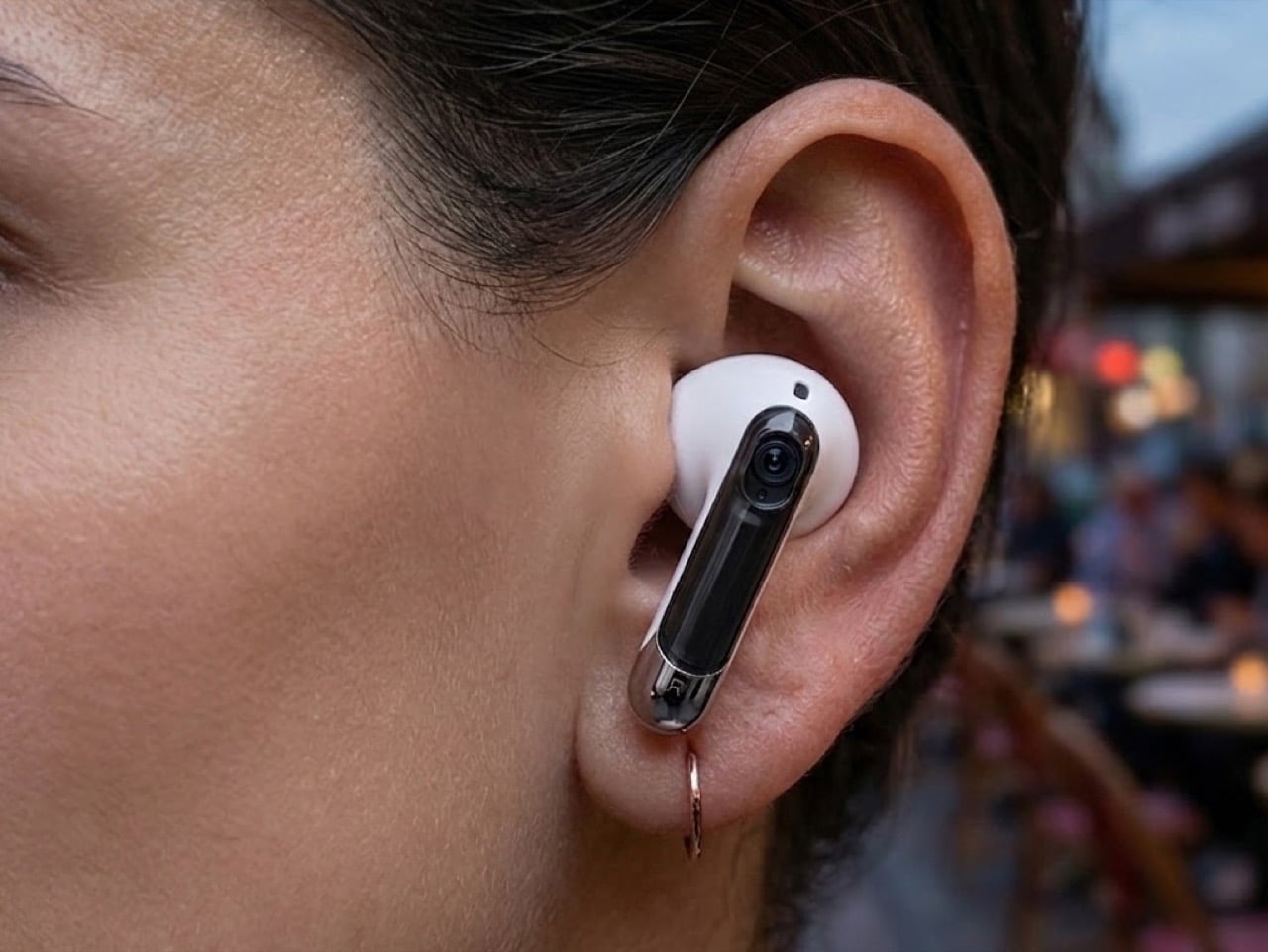
Although most people would call these headphones an abomination, I kind of think the ADV. Spider TWS on-ear headphones are the good kind of weird. They come with drivers as big as the ones you’d see on headphones, but are designed to be individual earpieces like most TWS earbuds. The result is almost Princess Leia-ish, with two cans attached to each ear, giving you a TWS earbud experience but with the power-packed audio punch of much bigger headphones. And the headband on top? Well, that’s extinct now, just like the headphone jack…

Designer: ADV.

TWS earbuds offer a distinct benefit – they’re ridiculously compact, and don’t have wires or cables that get tangled or broken. However, they don’t match the sound output of larger headphones. On the flipside, larger headphones have MUCH better audio output, but they’re significantly bulkier than TWS earbuds. ADV.’s Spider headphones try to create a bizarre but funky compromise. In what I can only describe as subtractive design at its best, these TWS on-ear headphones remove the one thing giving wireless headphones their bulk – the headband. By making large earpieces with ear-stems (like the kind you see on hearing aids or spectacles) , the Spider TWS on-ear headphones let you strap great audio directly to your ears. No headband, no bulk, no problem. Plus, these headphones don’t need a case either the way TWS earbuds do. Just slip them into your pocket or bag and you’re good to go. With TWS earbuds, the case does three distinct jobs – charging the earbuds, protecting the earbuds, and allowing you to quickly differentiate between the left and right earpiece. The lack of a case with the Spider headphones means it becomes slightly more difficult to tell the left and right wearables apart… but a clever design detail fixes that. A red ear stem on the right earpiece lets you quickly identify which headphone is which, letting you quickly and correctly wear your TWS headphones every single time.

Channeling the retro vibes of classic Sony or Koss headphones, the Spiders sport a familiar aesthetic. But under the hood, they’re packed with modern tech. At the heart of the sound experience lies a 30-millimeter dynamic driver, a well-regarded size for delivering clear and balanced audio across genres. The 30mm drivers deliver a frequency response of 20Hz to 20kHz (encompassing the full range of human hearing), and an impedance of 32 ohms, which means they should work well with most devices without needing a dedicated headphone amplifier. It’s worth noting that the headphones currently only support the SBC Bluetooth codec, a widely compatible option, but not the highest fidelity one. The headphones boast an impressive sensitivity of 105 decibels, ensuring they can get plenty loud without distortion.

Connectivity is handled by Bluetooth 5.2, ensuring seamless pairing with most smartphones, laptops, and tablets. Gamers will appreciate the inclusion of a low-latency mode, which minimizes audio delay for a more responsive experience. Perhaps the most compelling feature for everyday users is the lengthy battery life (which is another benefit of that large size). ADV. claims the Spider TWS can deliver up to 28 hours of listening on a single charge, making them ideal for long commutes, workdays, or travel adventures.

What’s most bizarre about the ADV. Spider headphones, however, is its price tag. You’d expect it to be in AirPod Pro or AirPod Max territory, given its size and novelty, but the TWS on-ear headphones start at just $35, which is quite the steal. The headphones are currently available for preorder on Drop.com’s website, with shipping estimated in July.

The post These Absurd TWS On-Ear Headphones are like if someone combined the AirPods and AirPods Max first appeared on Yanko Design.
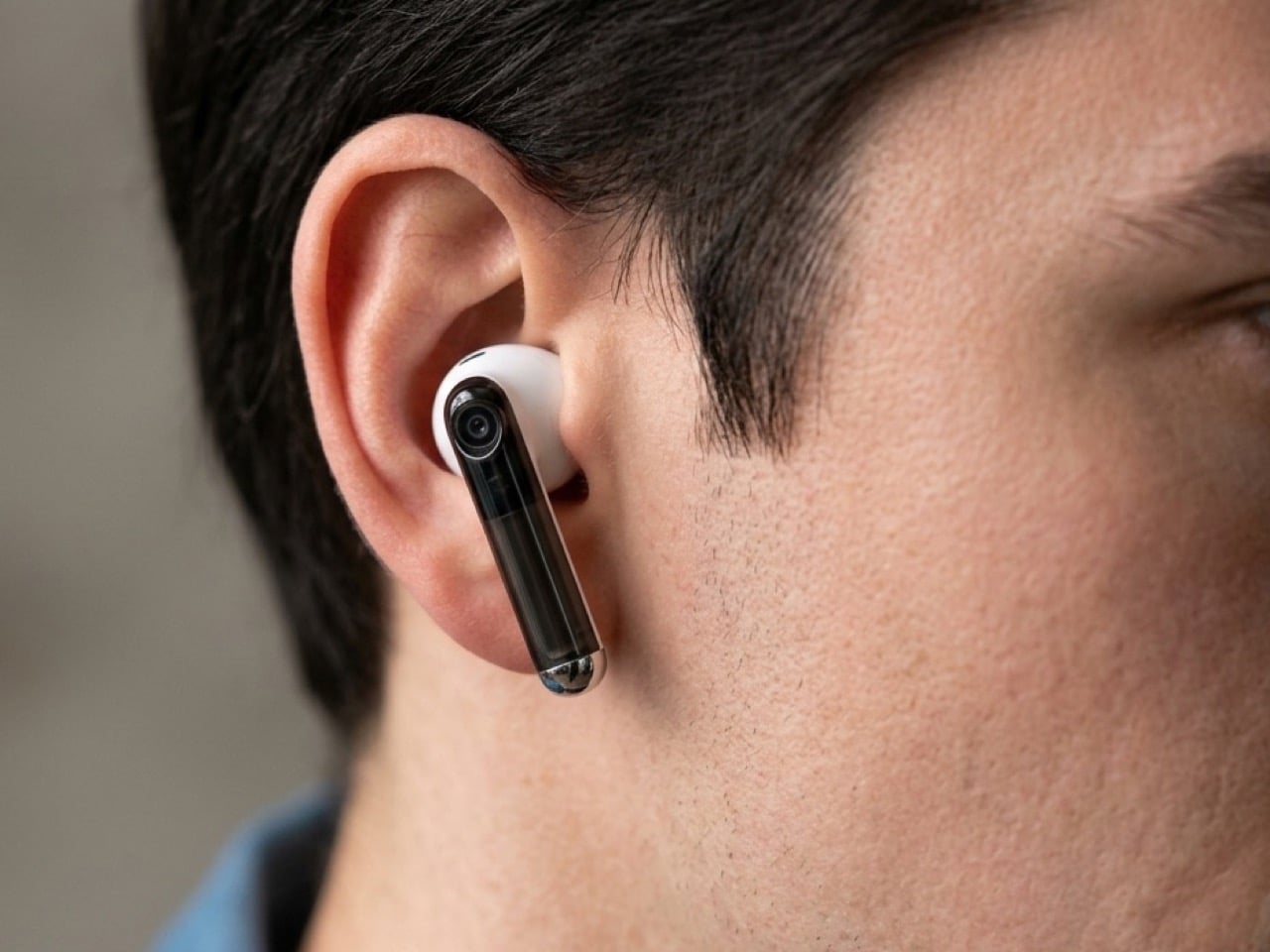
Earbuds with nano camera and smart AI are more than just music for your ears

Earbuds are a kind of accessory you’ll find most common in anybody’s arsenal. They isolate you from the distracting outside world and help you focus while working, exercising, commuting, or anything in between. Extending the usability of earbuds for people with vision problems or in general even the common users who like to turn on their ANC at full blast. Apart from the audio information, the eyes are the best sensors to gauge the environment.

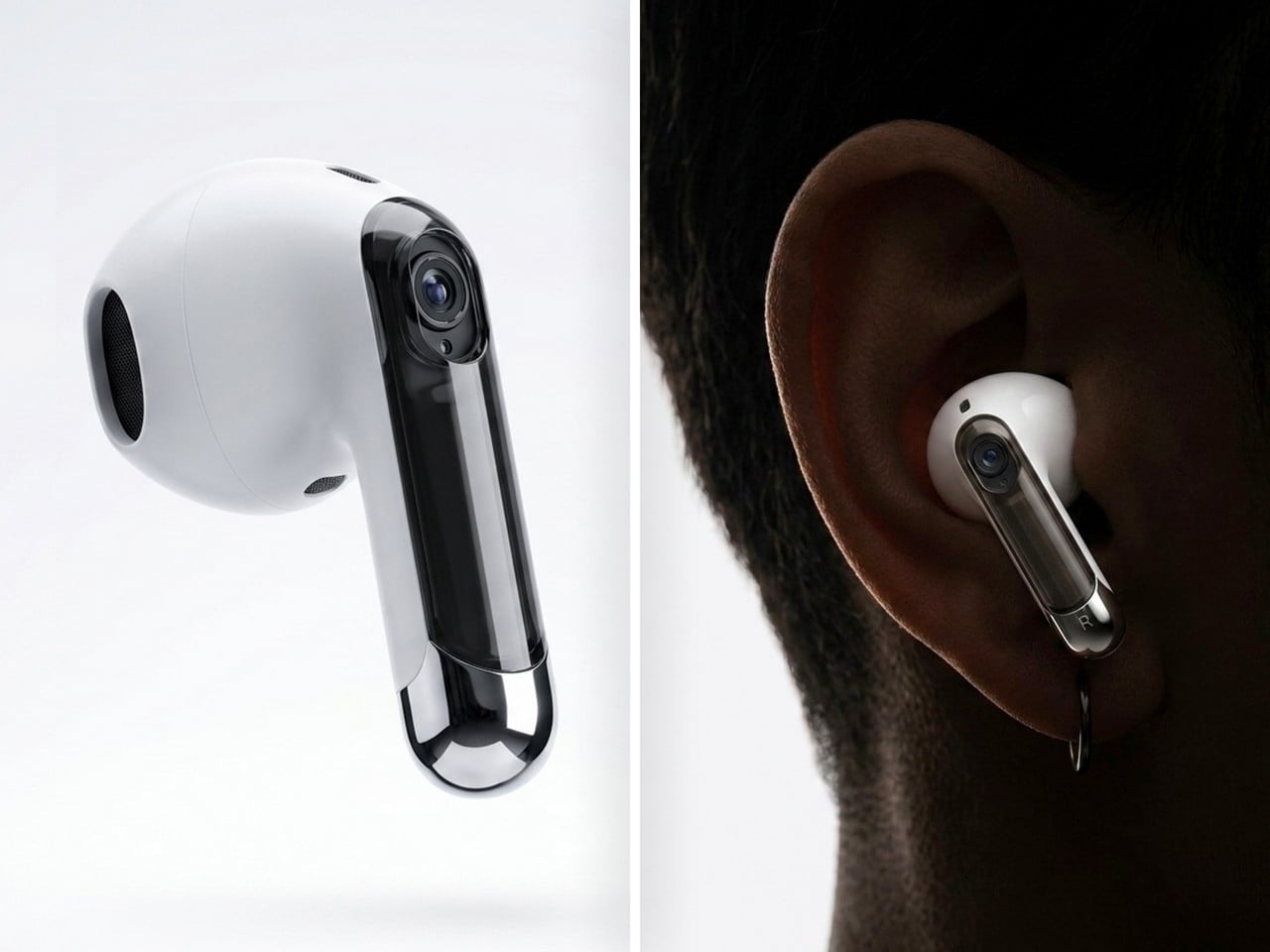
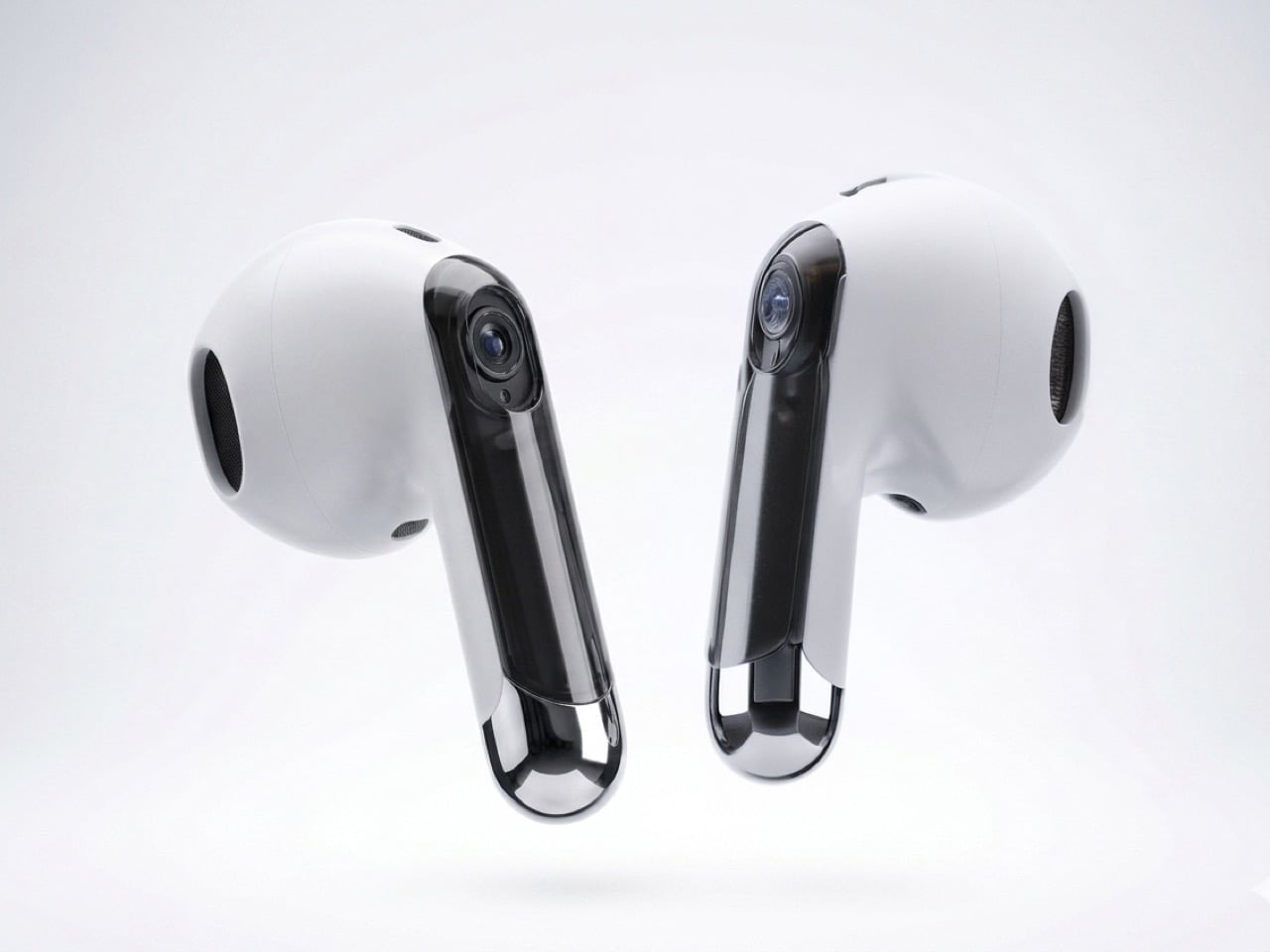
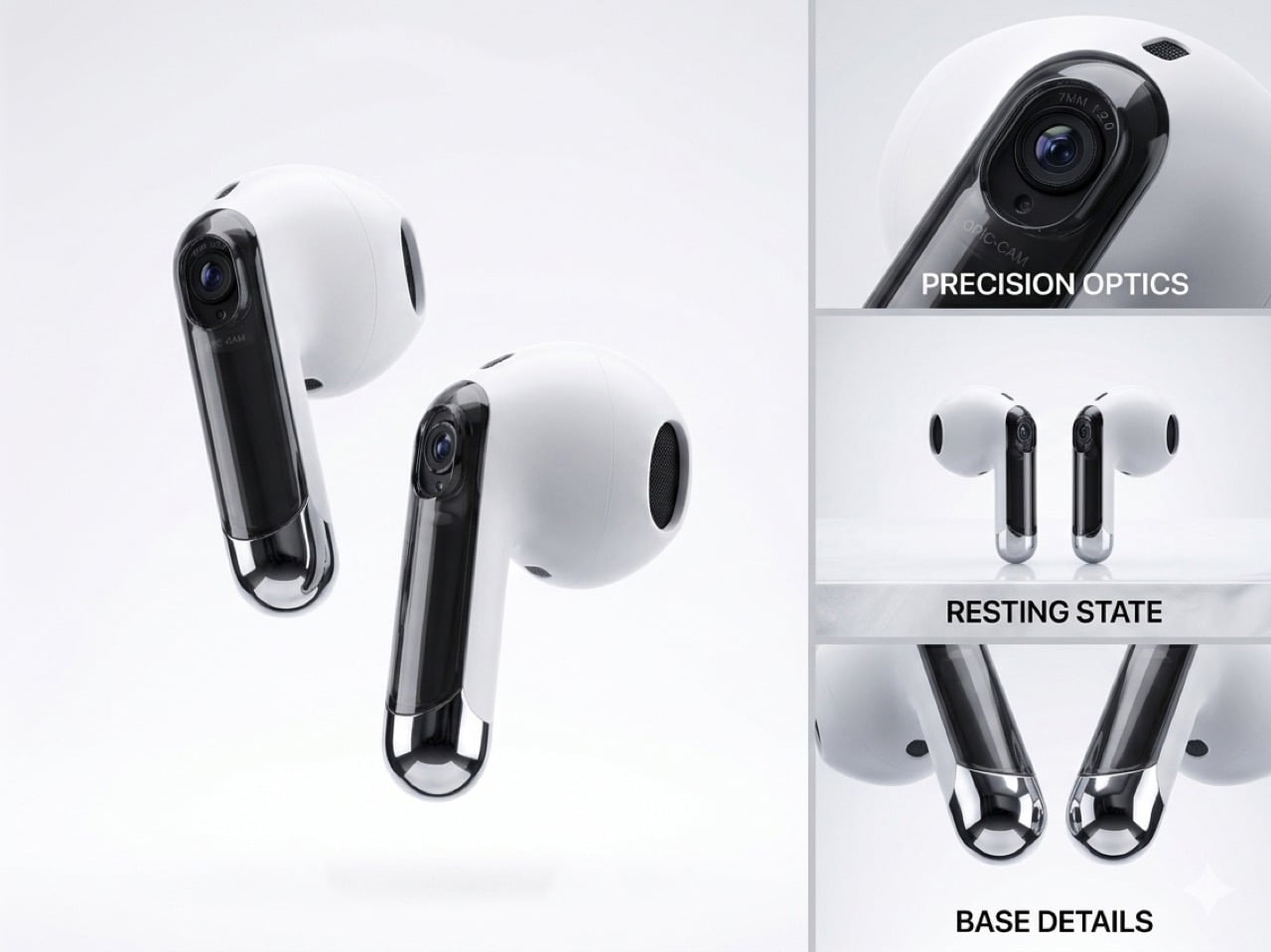
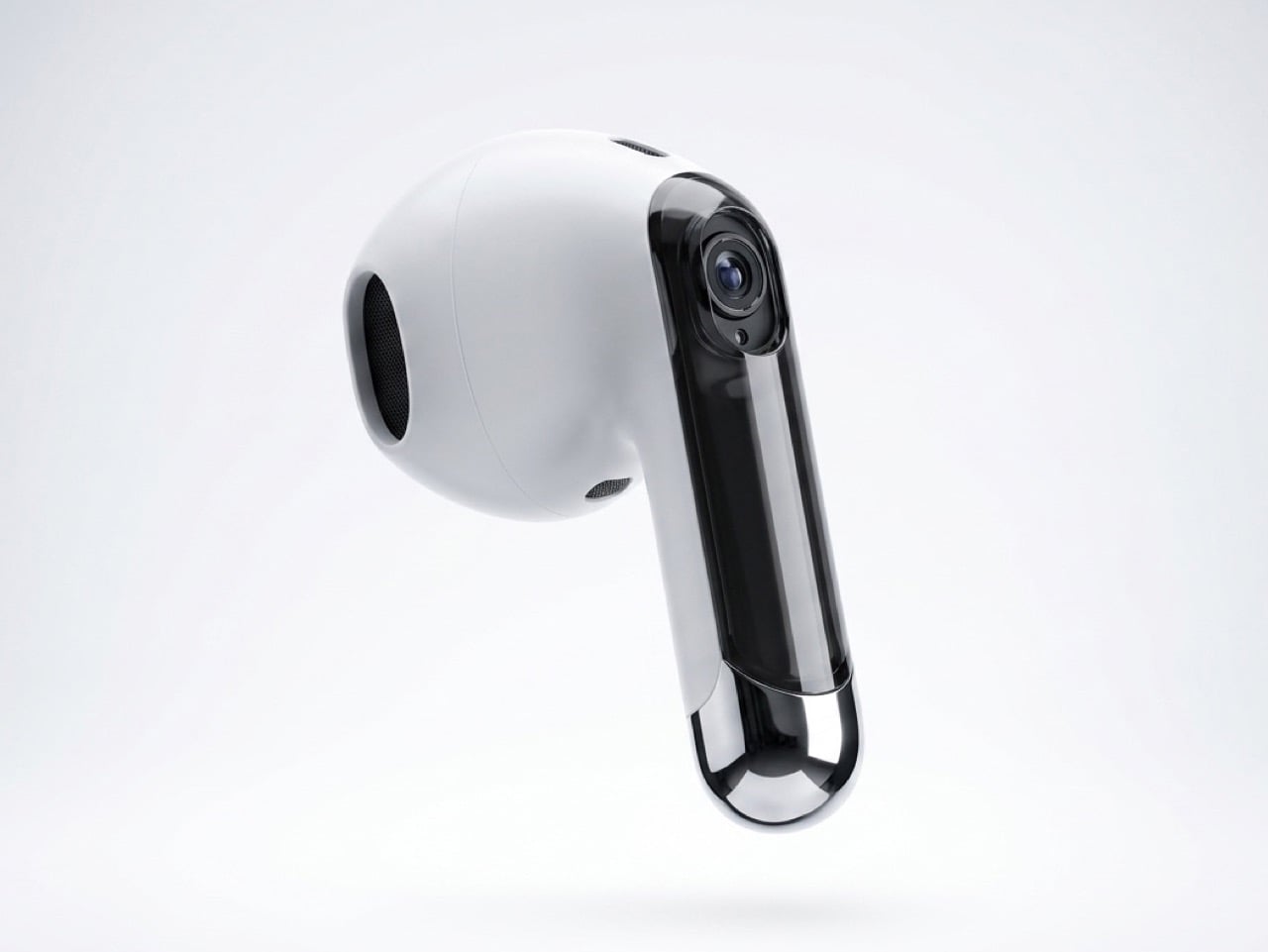
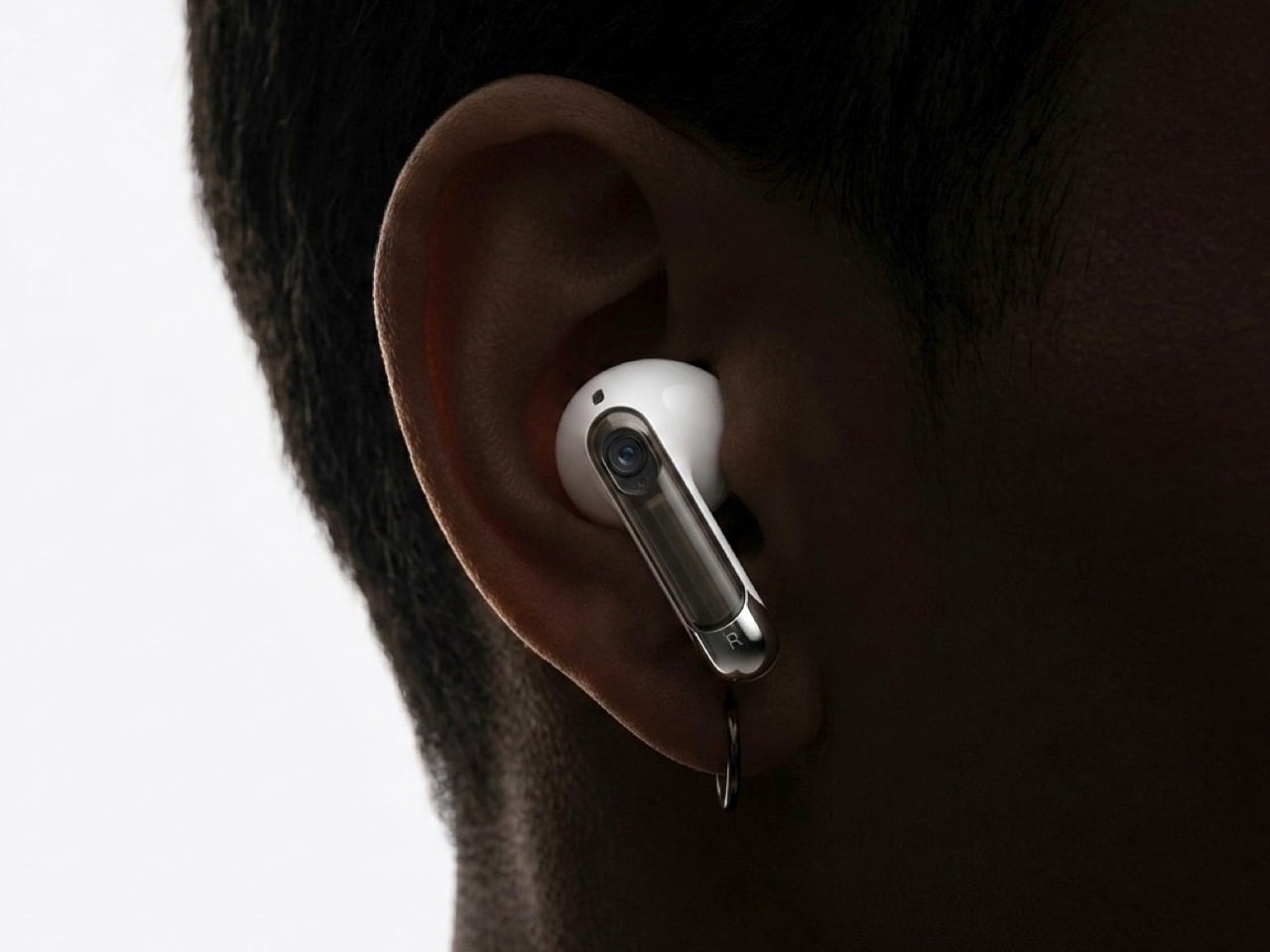
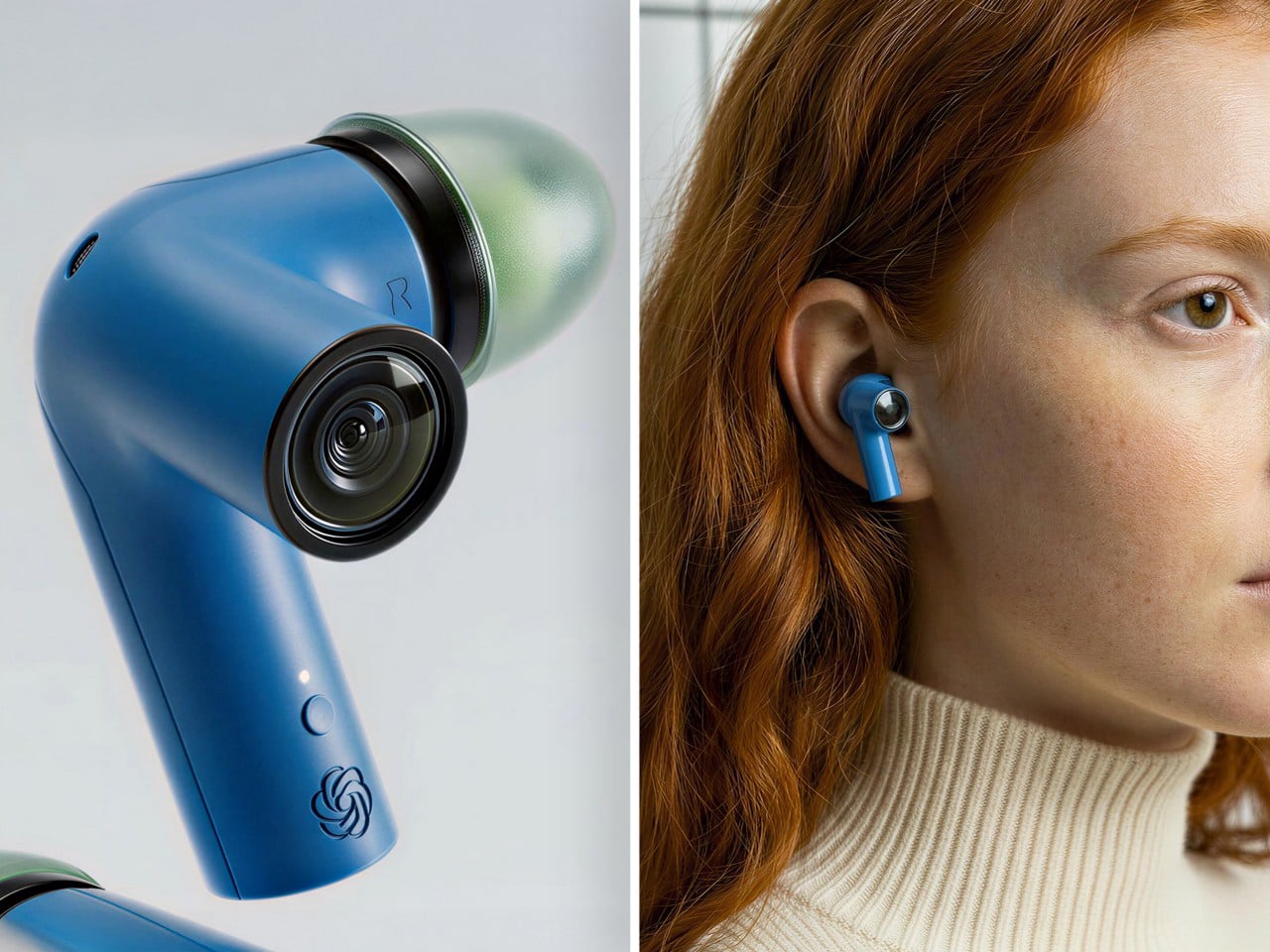
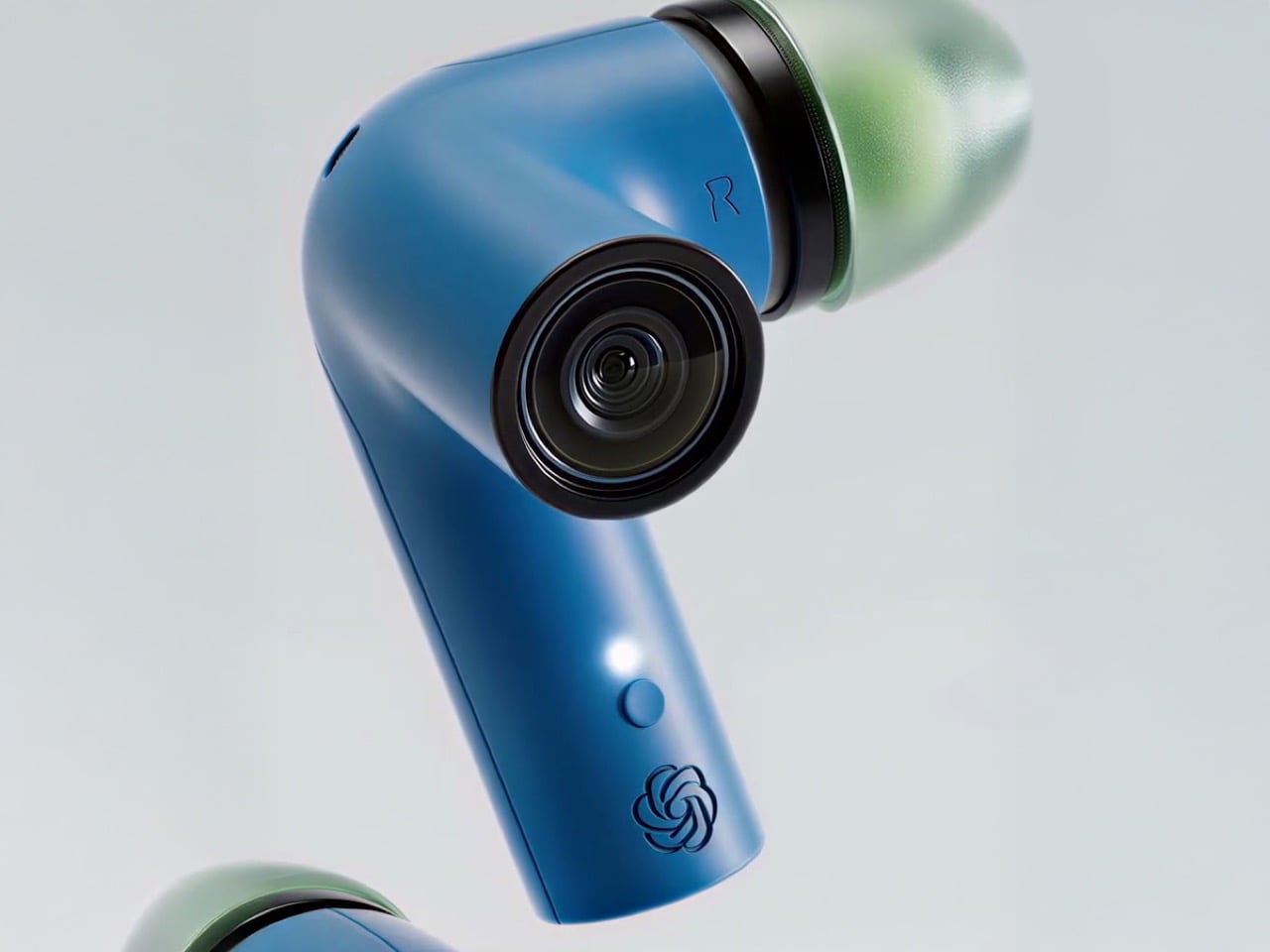
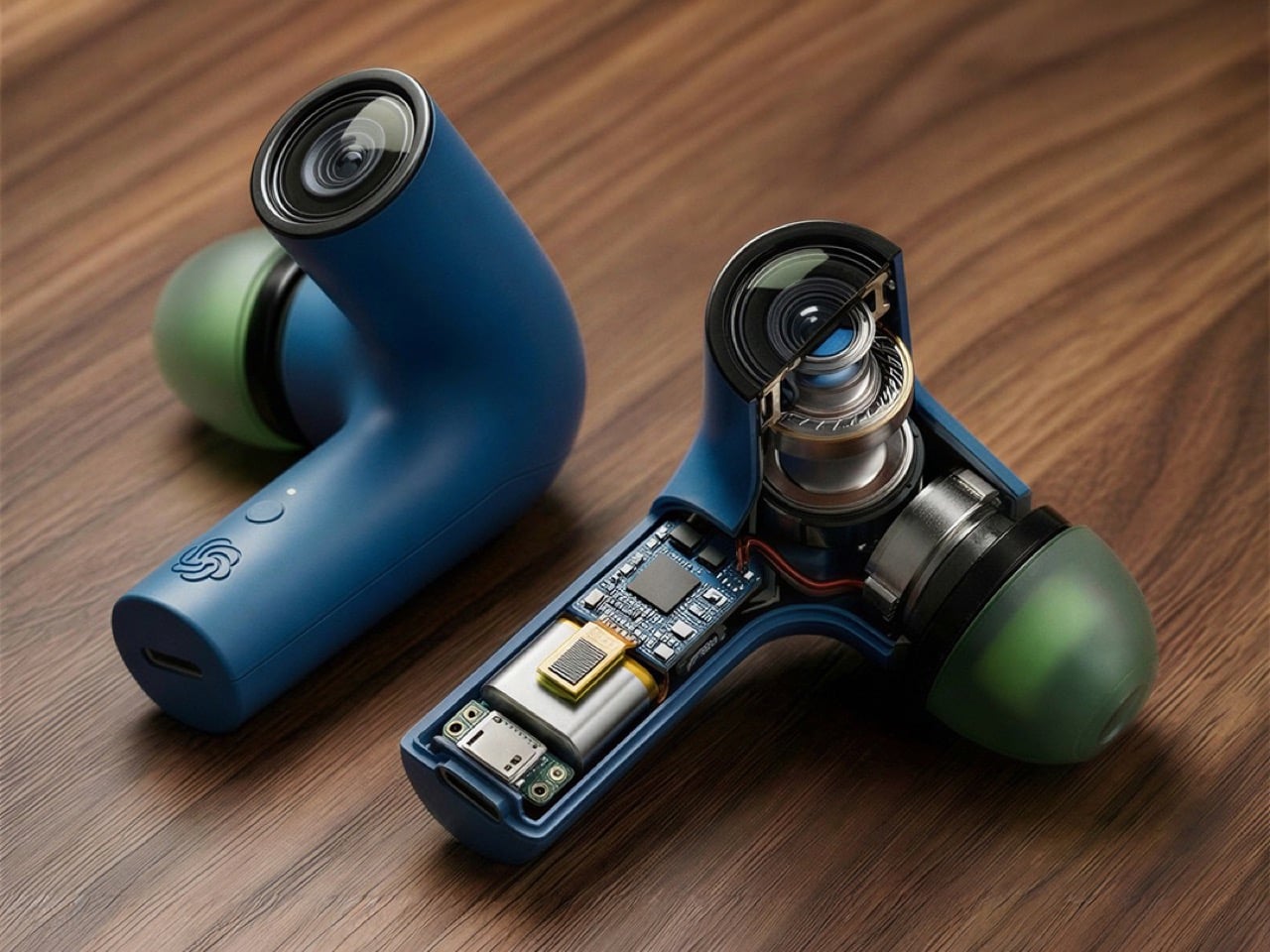
The Cell Buds are an evolution of the good old earbuds into a wearable that assists the blind in navigating crowded spaces or even being aware of what’s around them with sound cues coming from the buds equipped with nano camera units that keep track of any information that may be vital. This eliminates the need for transparency mode to be aware of the space, or even situations where you want strong ANC while being totally aware of what’s happening around in a crowded urban area, essentially making them your eyes and mind for daily life assistance.

Designer: Minwoo Kim

https://vimeo.com/user217694550

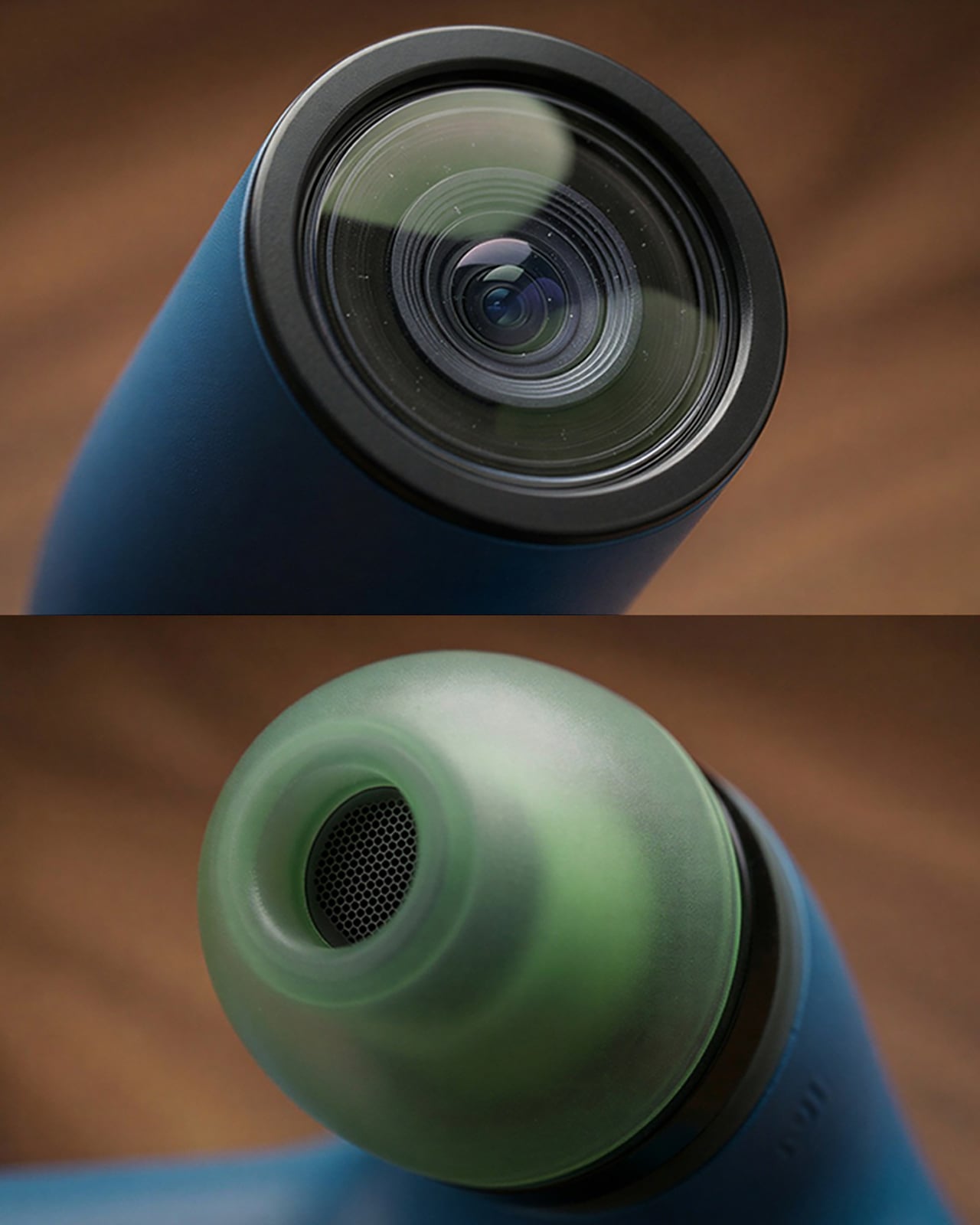
These earbuds are loaded with an ultra-compact vision cam and AI to bring all the smart features of your smartphone to this cool gadget plugged into the ears. As a part of the Samsung Design Membership course, Minwoo conceptualized this design to dramatically improve the user’s experience. The on-device AI brings personalized interaction with information available in the cloud and the compact vision cameras keep sensing the surrounding environment around you for any signs of danger or information that might be important to you. For example, an approaching motorist from the left when you are busy crossing the street.

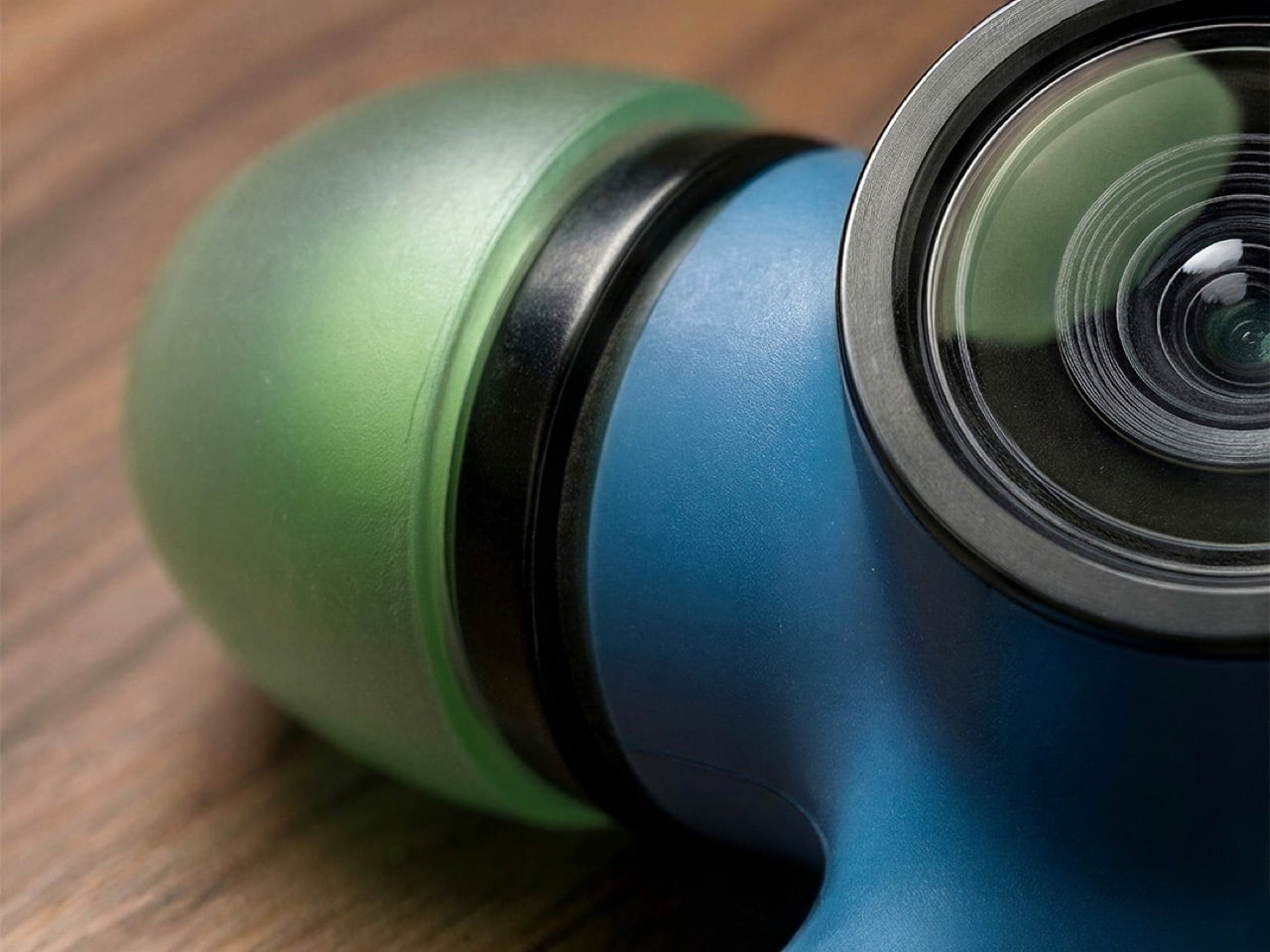
With smart AI, the wearables can be useful for frequent travelers or people with vision impairments. The hands-free personal assistance provided by Cell Buds keeps you from checking your phone, thereby curbing your digital life for good. Design and comfort are prime when it comes to the concept, as Kim has managed to fit a rotating camera unit inside the housing that houses the driver units, microphones, and the battery. According to him, the camera drive unit slightly protrudes from the ear to increase the camera’s field of view.

The post Earbuds with nano camera and smart AI are more than just music for your ears first appeared on Yanko Design.

Earbuds case doubles as fidget toy for your anxious fingers

There are things that we need to have with us everywhere we go, depending of course on your personality. In fact, there’s a term for that – EDC or everyday carry. These are things like watches, pens, lighters, notebooks, utility knives, etc. But the past few years, they’re really more of our digital tools – smartphones, tablets, laptops, earphones. There are also those that have to carry fidget toys around with them to help relieve anxiety or boredom. What if you get a combination of a device that can also become a fidget toy for your restless fingers?

Designer: Eric Cheng

This concept for an earbuds case may be that combination you’re looking for. The EDC 1.0 Lucky Push is a concept case for the D-Mooster truly wireless earbuds that uses “card pushing” mechanism to open and close it. The motion of the sliding up and down and snapping is supposedly addictive enough that you would want to do it repetitively, even if you’re not using your earbuds at the moment. Hence, it becomes a fidget toy as well if you need to keep your hands busy.

There are three designs for the EDC 1.0 Lucky Push: Big Monster, Become Wealthy, and Become Happy. For the superstitious, doing the repetitive motion will let you accumulate luck and wealth, or at least that’s what the designer thinks it will bring you. I understand with the last two designs as we all want to be wealthier and happier, but I wonder what the Big Monster concept will bring you, other than a cute fidget toy with monsters engraved on it.

Earbuds cases are usually really more functional as you use it to store your earbuds or charge them once they run out of juice. So this is an interesting idea to make the case itself a bigger part of your EDC pack as it becomes a fidget toy as well. If the designs are also interchangeable, it will make it even more interesting.

The post Earbuds case doubles as fidget toy for your anxious fingers first appeared on Yanko Design.
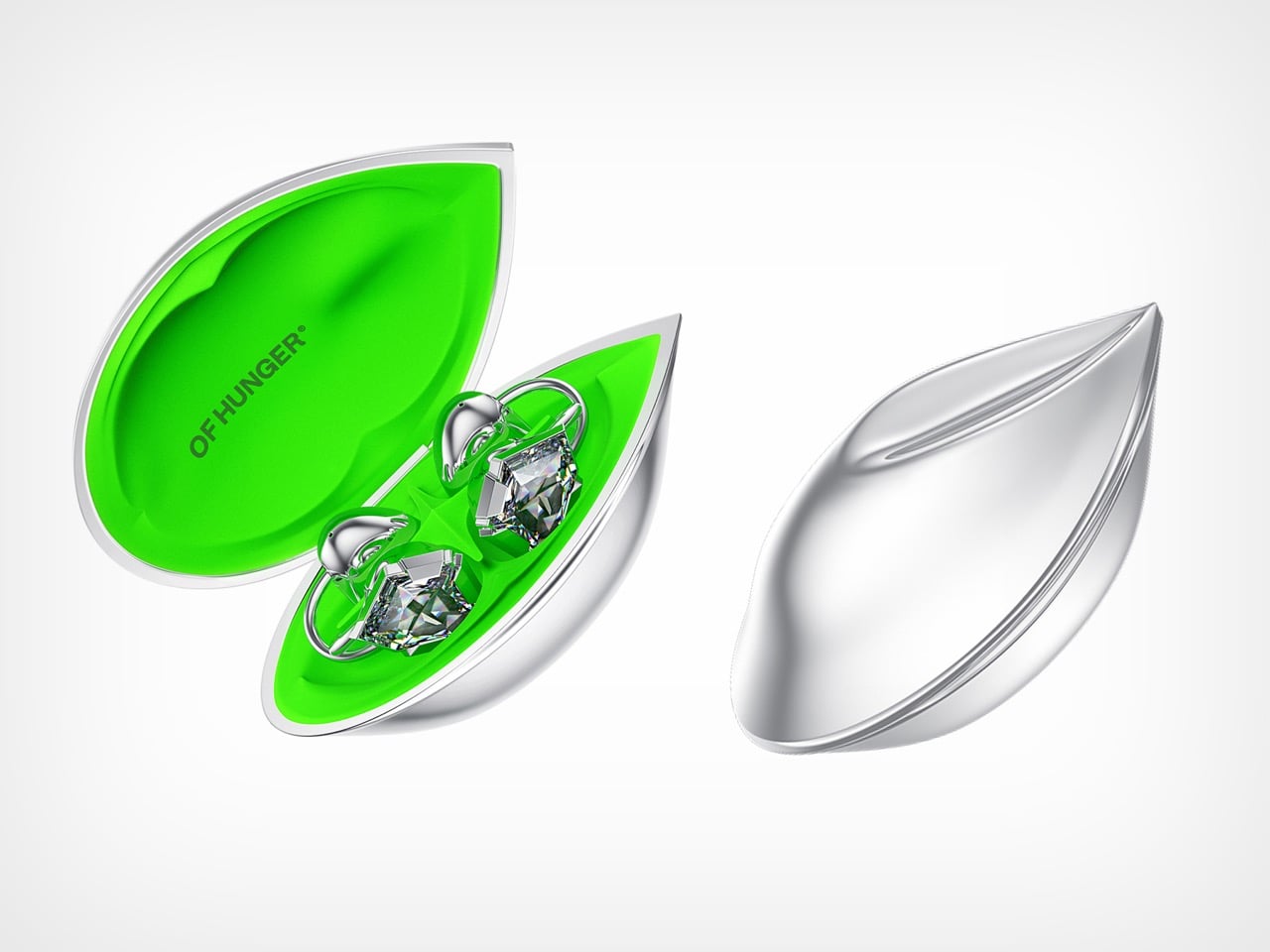
Nothing Ear and Ear (a) Buds Review: It’s Nothing To Scoff At

PROS:


  • Vibrant and more ergonomic Nothing Ear (a) design

  • Beautiful, eye-catching design with a competitive price tag

  • Quality audio output with plenty of convenient smart features

CONS:


  • Nothing Ear only available in Black or White options

  • Nothing Ear (a) case only has IPX2 water resistance


RATINGS:

AESTHETICS
ERGONOMICS
PERFORMANCE
SUSTAINABILITY / REPAIRABILITY
VALUE FOR MONEY

EDITOR'S QUOTE:

The Nothing Ear and Ear (a) builds on an already successful formula without straying from the brand's design identity.

It’s not unusual to see a company take a different direction after it launches a successful product or two. Improvements have to be made, of course, but there are times when upgrades turn into almost completely different products that seem to stray away from what made those successful designs successful. By renaming its earbuds to a simple “Ear” and dropping the number after it, some might think that Nothing has gone back to the drawing board to rebrand and redesign. Fortunately, there’s nothing to worry about since the new Ear and Ear (a) look almost exactly the same, so we give it a test to see, or rather hear, if its beauty is skin deep or if it’s something you’ll want to listen to.

Designer: Nothing

Aesthetics

At its birth, Nothing made bold claims and used Apple-like language to describe its design philosophy, and for the most part, it has been able to prove its words. It has established a distinct aesthetic not just with the Nothing Phone at also with all iterations of its Ear wireless buds. Technically the fourth generation after two numbered Ears and one Stick, the new Ear and Ear (a) thankfully retains that transparent stem design paired with opaque buds, staying true to form and keeping what its customers love about its products.

Of course, that does also mean that you won’t be able to distinguish the new Ear from the Ear (2), at least not visually. All of the changes are internal, which you can technically see because of the transparent design but not recognized. You get the upgraded experience and new features without losing the Ear’s eye-catching design, nor do you miss out on the quality materials that give the buds and its case their premium character.

If you want something fresh, you’ll have to look at the Nothing Ear (a) instead. While the buds themselves remain the same, the case transforms into a more rectangular shape that still has a transparent cover like the regular Ear. The new case also has a few important usability improvements, which we’ll get to later. The biggest difference between the Ear and Ear (a), however, is the bright new yellow color available only for the Ear (a) model. The choice of color wasn’t simply based on a whim, as Nothing compares it to its design philosophy of transparency, stripping away unnecessary colors and leaving only the primary hues. Perhaps it’s a hint that future Ears will be available in Cyan and Magenta.

In terms of aesthetics, Nothing has thankfully stayed true to both the spirit and the application of its design philosophy. You have an elegant and minimalist earbud design that embodies transparency literally and figuratively. The Ear (a) takes that a bit further in the direction of joyful play with a bright yellow finish. It would have been great if both Ear and Ear (a) shared the same color selection, but it’s understandable that Nothing wants to target different groups with different designs while still holding true to its core design values.

Ergonomics

One of the benefits of sticking to a tried and tested design is that you don’t have to worry about whether it works or not. In this case, the Nothing Ear’s usability has already been proven since the first generation, so you can be sure that you will be enjoying a tight seal and a comfortable fit like others before it. That said, there will always be exceptions, especially for those with ear shapes that the included tips don’t support. Unfortunately, Nothing has yet to provide a solution to that problem, like with extra tips to fit less common ears.

Since the case of the Nothing Ear hasn’t changed in the slightest, its ergonomics remain the same as the Ear (2). You still have a compact square shape that opens up like a clamshell, complete with that odd dimple that lets you precariously use the case as a fidget toy. It almost means, however, that the new Ear’s case still bears the same shortcomings as well, which the Ear (a)’s case thankfully fixes.

The rounded rectangular case of the Nothing Ear (a) has softer edges that make it more comfortable to hold in the hand. More importantly, however, you can clearly see its orientation so you won’t have to pause for a second to figure out which direction it opens. And unlike the Nothing Ear case, this yellow bubble-like container has markings to make it easy to see which bud goes in which slot. The red dot matches the dot of the same color on the right Ear (a) bud, while white is the color for the left bud. It’s a trivial addition but one that has a significant impact on the product’s usability.

Performance

You’ve undoubtedly come across designs that are so captivating yet fail to impress when it comes to functionality. That is fortunately not the case for the new Nothing Ear and Ear (a), and this is where the earbuds really prove to be worthy upgrades. Suffice it to say, you won’t be disappointed by the sound that you will hear, especially when you consider how much the buds cost.

The Nothing Ear and Ear (a) both boast new 11m drivers, though the higher-end model uses a ceramic material for even better audio clarity. In practice, this means that both buds are nearly equal in terms of audio output, producing clear, bold sounds with depth, especially when you turn on the bass enhance setting on the Nothing X app. Admittedly, it’s not going to compete with premium earbuds that cost nearly twice as much, but you won’t find both Ears lacking either. You get a well-balanced audio performance that makes listening to music, especially to classical music, a joy.

You can, of course, tweak the experience with the equalizer available in the mobile app, but the Nothing Ear does one thing more than the Ear (a). You can create a personalized sound profile by going through a series of tests so that you can be assured of the best quality possible given your ear shape and the tips you’re using. It takes the Ear’s performance to the next level, but not all people will be willing to pay the literal price for advanced features they may or may not even notice.

The good news is that, for all intents and purposes, the two new Nothing earbuds have the same feature set and perform quite similarly in that regard. Active Noise Cancellation, which has three levels of sensitivity, is quite effective, though definitely not on the same level as those more expensive brands. You can also set the app to automatically switch between ANC levels depending on the amount of ambient noise, which doesn’t always kick in immediately. There’s also a transparency mode that works in the opposite direction to let external sounds in, useful when you need to talk to someone or be aware of your surroundings.

Another trait the two share in common is dual connectivity, where you can pair the buds to two devices at the same time. They will switch between the two depending on which device is active, so you can take a call on your phone and then resume listening to music from your laptop afterward. In-ear detection is also automatic, and it will pause or resume playback when you remove and put back one or both of the buds in your ear.

Battery life is also one of the key upgrades in this generation of Nothing earbuds. The Ear can last a little over 5 hours with ANC on, while the Ear (a) somewhat ironically lasts longer over 5.5 hours in the same condition. Those figures nearly double if you turn ANC off, and the cases can charge the buds around three more times for extended use.

Sustainability

Nothing has always been a strong proponent of sustainable practices from the get-go, and the Ear and the Ear (a) thankfully don’t diverge from that path. The buds themselves might not be made from recycled materials, aside from the 100% recycled tin solder paste, but everything else about their manufacturing and packaging takes positive steps towards taking care of the environment. In addition to plastic-free packaging and carbon footprint labels, Nothing also uses renewable energy in the final assembly of the earbuds.

Given their size, the tendency to lose at least one of the pair, and their fragile designs, many earbuds have become almost disposable accessories, even if you’d cry over their price tag. The Nothing Ear and Ear (a) are thankfully built to last, though not exactly on equal footing. Both buds are IP54 dust and water-resistant, but only the Ear’s case enjoys an IP55 rating. The Ear (a), unfortunately, can only claim IPX2 water resistance, so you’ll probably be more careful that the yellow box doesn’t meet accidents.

Value

Despite the upgrades, the Nothing Ear doesn’t change its price tag from the $149 of its predecessor. The Nothing Ear (a), on the other hand, introduces a new $99 option in between the Ear and the $79 Ear (stick). Given its impressive performance and eye-catching design, those prices are quite a steal. The bigger question, however, is which of the two you should grab.

Unfortunately, things don’t seem to be in favor of the Nothing Ear. Yes, it has more features like a personal sound profile, a slightly better audio quality, and a more durable case, but not all of these will be deal breakers. In contrast, the Ear (a) offers comparable performance, a slightly longer battery life, a more ergonomic case, and a new yellow color option in addition to the typical white and black, all for a $50 lower price tag. There is a chance that the majority of buyers will prefer the Nothing Ear (a), especially the yellow option, but more discerning audiophiles won’t go wrong with the higher-end Nothing Ear.

Verdict

At first glance, the Nothing Ear seems like a simple rehash of an old design. It does, however, invite us to look deeper to go beyond what the eyes can see, and the product’s transparency is exactly a metaphor for that mindset. It brings together a familiar, stylish design and quality performance without extraneous features that distract you from the essentials. Best of all, it doesn’t even ask for more despite the noticeable improvements in the overall experience.

The Nothing Ear (a) sends a slightly different message with its vibrant color and more playful shape. It still clearly has Nothing’s design DNA but mixes it up with a fun identity that doesn’t skimp on the important bits. It says that you don’t have to go overboard, both in features and in price, to have a good time, and both the Ear and Ear (a) offer a delightful design that not only gets the basics right but goes above and beyond for a truly memorable experience each time you put them on.

The post Nothing Ear and Ear (a) Buds Review: It’s Nothing To Scoff At first appeared on Yanko Design.
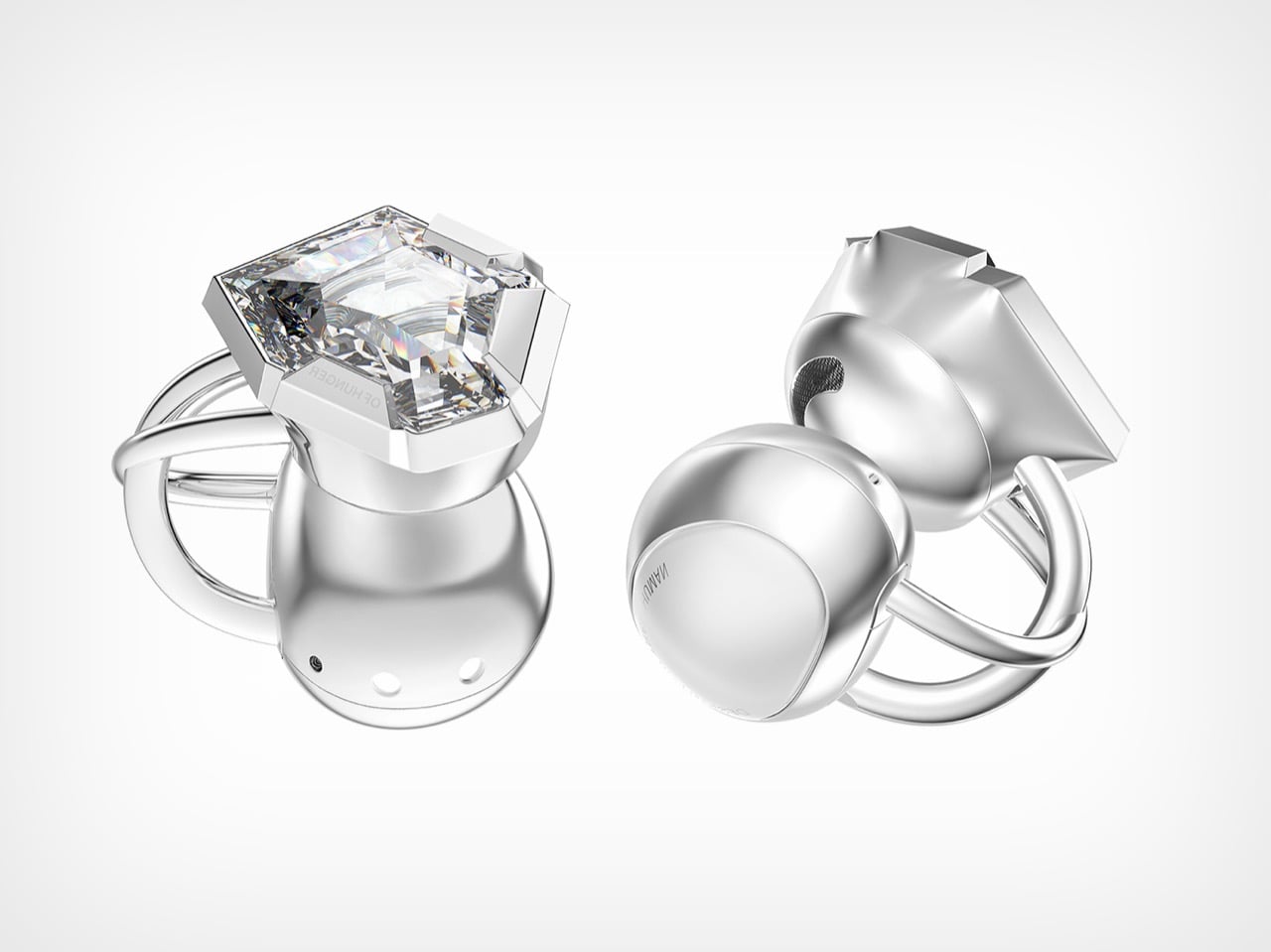
Wireless earbuds concept turns listening to music into a social experience

Headphones, earphones, and earbuds have become a common sight wherever you go. It helps us be more immersed in our music and podcasts even when outdoors, while also respecting others around us who might not share the same preferences as us. At the same time, however, these devices are designed not only to isolate sound but also to isolate us from people, preventing us from actually sharing our favorite tunes with like-minded people. Sure, we can just turn on the loudspeaker, but that also means blasting the sound for everyone to hear, whether they like it or not, turning it into an all-or-nothing kind of deal. It shouldn’t have to be that way, though, especially not with our current technologies, and this concept tries to offer a more social earbud design that can easily share the music we love with a select number of people only.

Designer: Kusi Boateng-Arthur

Earbuds are intentionally designed to keep sound in so that you can enjoy your tunes without worrying about outside noise coming in or your music “leaking out” to others. Nowadays, there are features that do let some ambient sounds through for safety or communication reasons, but it doesn’t work the other way around. Unless you have a poor fit or extremely loud volumes, no one around you will hear what you’re playing, no matter how much you want to share your new favorite album.

“more. than a bud” is a design concept that tries to remedy this unsociable situation by providing a way for earbuds to share music with each other without having to broadcast it over a loudspeaker. We already have the technology available for this, as demonstrated by wireless speakers that support multiroom modes. The idea is the same but on a smaller and more personal scale.

Inspired by the Aslatua Ghanian percussion instrument, these earbuds simply tap each other to establish a connection. Smartphone users might be familiar with a similar gesture that existed a while back to initiate a file transfer between two phones. That’s pretty much all that’s needed to share your music with another person, letting you develop a closer relationship that goes beyond being a bud.

Aside from that special feature, the “more. than a bud” buds also have a distinctive design which is basically just two halves of a sphere. The actual speaker, however, is angled at 30 degrees in order to maximize the path that sound travels in your ear. The concept also claims that the in-ear design offers a secure fit, but some might have reservations because of its small, stemless shape. While the two halves join together to form a sphere when not in use, charging the buds requires them to attach to opposite sides of a small puck, turning the shape into a capsule. It’s definitely an interesting design, though it will probably be more noted for its ability to turn listening to music back to its original form: a social experience.

The post Wireless earbuds concept turns listening to music into a social experience first appeared on Yanko Design.

These Wireless Earphones Offers Endless Playtime Thanks to Long-Lasting Replaceable Batteries

It’s undeniable that people commonly consume content on platforms like YouTube and social media or listen to music while going about their business. In such scenarios, social etiquette dictates that we don’t play our content loudly for everyone to hear. This is why headsets, particularly wireless earphones, have become essential accessories. However, not all earphones are created equal. The quality of earphones varies based on performance, comfort, battery life, and recharge speed. The Sonicwave OWS earphones piqued my interest primarily because of their replaceable batteries, a feature not commonly found in the market. Let’s delve deeper into the features that make these earphones unique and worth considering.

Designer: SonicWave Studio

Click Here to Buy Now: $99 $159 ($60 off). Hurry, only 93 left!

The Sonicwave earphones represent a significant advancement in wireless audio technology, offering unique features for busy everyday users. They come with four replaceable 60mAh batteries and a convenient case, which includes a built-in 750mAh battery for charging the earphones when they’re not in use. This setup provides a standby time of up to 168 hours or seven days and allows users to keep using the earphones by switching batteries, a feature not typically seen in other models.

Power through the week with a 750mAh battery with an impressive 168-hour standby time

I, along with many consumers, own more than just a smartphone, which could include a tablet or gaming device; this makes these earphones ideal thanks to another standout feature of the Sonicwave earphones, which is their ability to connect simultaneously to two devices. This dual-device connectivity benefits users who frequently switch between devices, such as smartphones and laptops, allowing for seamless transition without the hassle of repeated pairing processes.

IP6 waterproof coating, guarding against sweat and water exposure

Despite their powerful capabilities, the Sonicwave earphones are designed with comfort and ease of use in mind. Weighing in at just 128 grams for the entire set and a mere 10 grams per earphone, they offer a lightweight wearing experience that users will barely notice, even during extended periods of use. This makes them an ideal companion for not just daily activities but also for more vigorous physical exercises. In my experience, it doesn’t matter how excellent the sound quality of a pair of earphones is; if they’re uncomfortable, I won’t use them. So, let’s explore why these are truly comfortable to wear long-term throughout the day.

Sonicwave OWS earphones are powerful, lightweight, and designed for all-day comfort.

The Sonicwave earphones are designed to fit the contours of the ear perfectly. The design features a three-point linear gravitational force surface and a 35° angle for direct sound transmission into the ear canal. This ensures a secure, comfortable fit that stays in place all day, improving the overall user experience.

The open-ear design of the Sonicwave earphones is a thoughtfully engineered feature that prioritizes user safety and comfort, making these earphones particularly beneficial for a wide range of users. By allowing ambient sounds to filter through seamlessly, this design ensures that users maintain a connection with their environment, an essential aspect of situational awareness. This quality is invaluable in outdoor or public spaces, where being attuned to one’s surroundings can be crucial for navigating safely among potential hazards like traffic, pedestrians, and public announcements.

Open-listening design for safer, more aware audio experiences

Moreover, the open-ear configuration addresses the preferences and needs of users who are uncomfortable with or unable to tolerate earbuds that sit directly in the ear canal. Avoiding in-ear devices is a significant consideration for many, whether due to sensitivity, ear health issues, or personal comfort. Recognizing this, the Sonicwave earphones offer an appealing alternative that rests gently outside the ear, eliminating the discomfort associated with traditional earbuds. Concerns about the potential compromise in sound quality due to the lack of a seal that blocks external noise have been ingeniously addressed by the SonicWave team. Through advanced acoustic design and technology, these earphones deliver clear, rich sound by focusing audio directly towards the ear canal, minimizing leakage and ensuring a high-quality listening experience without complete closure. This innovative approach ensures that users enjoy the best of both worlds: the comfort and safety of open-ear design without sacrificing the immersive sound that music enthusiasts and casual listeners seek in a pair of wireless earphones.

The Sonicwave earphones should offer impressive audio quality using a dual-mode solution that combines a main chip and a power amplifier chip for surround sound output. The critical component is that their active noise-canceling function effectively filters out unwanted noise, providing a clear listening experience. Also, dual anti-phase sound wave cancellation technology prevents sound leakage, thus protecting user privacy.

To enhance the experience, Sonicwave earphones use ‘Sound Vision’ acoustic algorithms to adjust low and high frequencies dynamically. This dynamic equalization maintains a balanced sound texture, delivering a rich audio experience that adapts to the content.

If you’re caught in the rain or sweat heavily during a workout, there’s no need to worry. The Sonicwave’s motherboard is treated with waterproof glue, sealing the unit and giving it an IP6 waterproof rating.

IP6 waterproof coating, guarding against sweat and water exposure

The Sonicwave earphones are an attractive choice for anyone looking to invest in a new pair of wireless earphones due to their innovative features emphasizing convenience, durability, comfort, and sound quality. The advanced 5.4 Bluetooth technology makes connectivity simple with the Sonicwave earphones. They can easily connect with various devices, including smartphones, tablets, personal computers, and smart TVs, allowing users to experience high-quality audio in nearly any environment.

Click Here to Buy Now: $99 $159 ($60 off). Hurry, only 93 left!

The post These Wireless Earphones Offers Endless Playtime Thanks to Long-Lasting Replaceable Batteries first appeared on Yanko Design.

Wireless earbuds concept suggests a novel and weird way to clean it

Wireless earbuds, particularly the so-called True Wireless Stereo or TWS earbuds, have now become a common sight, in no small part thanks to Apple retiring the headphone jack and pushing the AirPods as a solution. These accessories come in different shapes and sizes, but the one common design they share is that the buds are enclosed in a container that acts as their charger as well. As any user of these tiny buds has experienced by now, both the buds and their are often exposed to dirt and grime that could become a health issue over time. Cleaning the earbuds themselves might be trivial, but when that dirt gets deep inside the case, the task becomes significantly more difficult. This concept tries to solve that problem by practically overhauling the charging case design, and it takes inspiration from the weirdest source to implement the strangest cleaning method.

Designer: Seungjae Lee

For TWS earbuds that store the buds’ stems vertically like with the Apple AirPods, the charging cases have a small and deep tunnel where dirt and bacteria can get in and fester. It’s not impossible to clean but it does take some effort, requiring you to really stop and use some tools to wipe the dirt deep inside. If only you could blow the dust and dirt away quickly when you need to, just like with many other objects you might have with you.

The Double Barrel Bluetooth Earbuds concept offers that convenience by turning the charging case into two hollow tubes with openings on both ends. The inspiration for this design was, apparently, a double-barrel shotgun, which is probably the last thing you’d expect to associate with non-violent wireless earbuds. As a visual embellishment, inserting and removing the earbuds would light up LEDs inside the barrel, as if you were shooting bullets.

For this to work, however, the buds themselves have to be straight, which would have been awkward to wear inside our ears. The concept proposes to make the tips foldable so they would take the form of typical earbuds that you can comfortably wear in your ears. And because of the double-ended opening, you can actually put in or remove the buds in either direction.

While the concept design is definitely interesting, it is based on the rather shaky premise that cleaning the earbuds case by blowing into them is actually a smart idea. Our breaths aren’t exactly clean and, more importantly, they also carry with them small saliva particles that could damage the charging contacts inside. And by keeping both ends open, the case would actually invite even more dirt and particles inside, making regular cleaning even more of a chore.

The post Wireless earbuds concept suggests a novel and weird way to clean it first appeared on Yanko Design.

World’s First Earphones with 5 Audio Drivers basically puts a 5-Speaker Home Theater in your ear

Designed in tandem with Cowboy Bebop’s 25th anniversary, these Anime-themed earphones hold the distinction of packing the most number of audio drivers in a singular tiny wearable design. Dubbed the “Tribrid 5-Driver System”, the TE-ZX1 from AVIOT uses multiple drivers to cover a variety of frequencies, much like a home theater uses a series of speakers to create an immersive soundscape across low, mid, and high-range audio frequencies. The result, according to AVIOT, is staggeringly great sound that feels nothing like the cheap $99 TWS earbuds you find all over online retail platforms. For a price of $218, the TE-ZX1 offers the option of putting the world’s smallest home theater in your ear… along with hybrid noise canceling to sweeten the deal!

Designer: AVIOT

Click Here to Buy Now: $217 $334 (35% off). Hurry, offer ends soon!

An earphone’s biggest advantage and disadvantage is usually its size. Designed to be small enough to fit in your ear cavity, these audio devices are conveniently compact, but that also limits their capabilities because of how small the drivers inside them are. To account for this, earphones rely on digital signal processing or DSP to help improve sound quality, soundstage, stereo imaging, etc. The distinct advantage the TE-ZX1 has is the fact that it uses multiple drivers to make up for its small size. Equipped with a staggering 5 drivers per ear, the earphones cover a wider range of frequencies, and reproduce them much more accurately, relying less and less on DSP and more on accurately reflecting the audio signal exactly how it is.

Enjoy Wireless High-Resolution Audio with LDAC

The TE-ZX1’s Tribrid 5-Driver System features a combination of a planar magnetic driver and a dynamic driver, along with three balanced armature drivers to produce a wide spectrum of sounds with crystal clarity. “These three types of drivers, each with distinct characteristics, complement each other to perfection. We have uncompromisingly refined the characteristics of each driver, creating an overwhelming amount of information. The result is a dynamic and transient-rich sound across the entire frequency range,” mention the folks at AVIOT. The earphones also come with LDAC tech, supporting all relevant codecs to ensure that high-quality sound is transmitted perfectly over Bluetooth, and hybrid noise canceling to ensure that external sounds don’t muddy the quality of what the TE-ZX1 has to offer. High-quality microphones also help ensure crystal-clear calling, allowing the earphones to serve as more than just audio-listening devices.

All this impressive tech sits encased within an incredibly edgy outer design, courtesy of the tag-team duo of mechanical designer Kimitoshi Yamane and graphic designer Toshiaki Uesugi. Commemorating the 25th anniversary of the iconic anime TV series Cowboy Bebop, the earphones and their case draws inspiration from the high-speed combat ship ‘Swordfish II’ featured in the series. The eye-catching aesthetic balances ergonomics rather wonderfully too, with an outer shell that relies on additive manufacturing – the same cutting-edge manufacturing method used by premium in-ear monitors worn by professionals and experts. Additive manufacturing helps build out complex shapes that other molding/machining methods can’t achieve, resulting in a form that’s highly precise with an intricate acoustic design (that fits those 5 drivers on the inside). A metal nozzle helps effectively channel audio from the Tribrid driver system directly into your ear, and each TE-ZX1 comes with as many as 8 different silicone tips to choose from, for a snug fit regardless of ear type.

The earphones and their charging case come with a gorgeous metallic red colorway, complete with black accents that definitely should grab a few eyeballs. The earphones are rated IPx4 waterproof, making them suited for wearing while exercising or even in mild rain, and come with a battery backup of 8 hours, extendable by an additional 20 hours when used alongside the charging case. Approximately 10 minutes of charging gives you a full hour’s worth of listening, so you’re never left hanging for too long while your fancy 5-driver earphones are charging! The TE-ZX1 starts at a rather affordable $218, putting them square in the mid-range for the TWS category… even though the sound they promise rivals gear that’s 3x the price!

Click Here to Buy Now: $217 $334 (35% off). Hurry, offer ends soon!

The post World’s First Earphones with 5 Audio Drivers basically puts a 5-Speaker Home Theater in your ear first appeared on Yanko Design.
World’s First Earphones with 5 Audio Drivers basically puts a 5-Speaker Home Theater in your ear

Designed in tandem with Cowboy Bebop’s 25th anniversary, these Anime-themed earphones hold the distinction of packing the most number of audio drivers in a singular tiny wearable design. Dubbed the “Tribrid 5-Driver System”, the TE-ZX1 from AVIOT uses multiple drivers to cover a variety of frequencies, much like a home theater uses a series of speakers to create an immersive soundscape across low, mid, and high-range audio frequencies. The result, according to AVIOT, is staggeringly great sound that feels nothing like the cheap $99 TWS earbuds you find all over online retail platforms. For a price of $218, the TE-ZX1 offers the option of putting the world’s smallest home theater in your ear… along with hybrid noise canceling to sweeten the deal!

Designer: AVIOT

Click Here to Buy Now: $217 $334 (35% off). Hurry, offer ends soon!

An earphone’s biggest advantage and disadvantage is usually its size. Designed to be small enough to fit in your ear cavity, these audio devices are conveniently compact, but that also limits their capabilities because of how small the drivers inside them are. To account for this, earphones rely on digital signal processing or DSP to help improve sound quality, soundstage, stereo imaging, etc. The distinct advantage the TE-ZX1 has is the fact that it uses multiple drivers to make up for its small size. Equipped with a staggering 5 drivers per ear, the earphones cover a wider range of frequencies, and reproduce them much more accurately, relying less and less on DSP and more on accurately reflecting the audio signal exactly how it is.

Enjoy Wireless High-Resolution Audio with LDAC

The TE-ZX1’s Tribrid 5-Driver System features a combination of a planar magnetic driver and a dynamic driver, along with three balanced armature drivers to produce a wide spectrum of sounds with crystal clarity. “These three types of drivers, each with distinct characteristics, complement each other to perfection. We have uncompromisingly refined the characteristics of each driver, creating an overwhelming amount of information. The result is a dynamic and transient-rich sound across the entire frequency range,” mention the folks at AVIOT. The earphones also come with LDAC tech, supporting all relevant codecs to ensure that high-quality sound is transmitted perfectly over Bluetooth, and hybrid noise canceling to ensure that external sounds don’t muddy the quality of what the TE-ZX1 has to offer. High-quality microphones also help ensure crystal-clear calling, allowing the earphones to serve as more than just audio-listening devices.
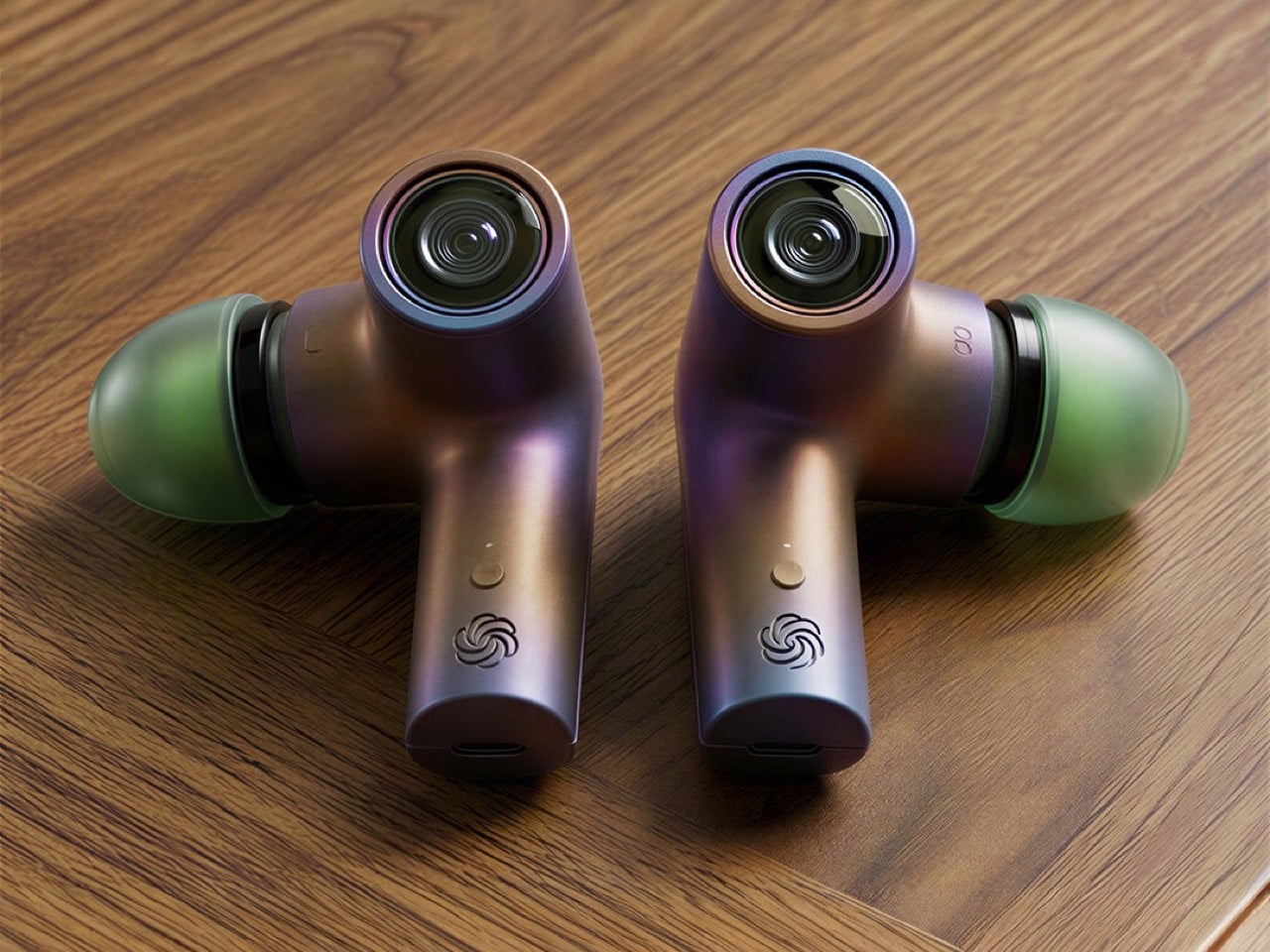

All this impressive tech sits encased within an incredibly edgy outer design, courtesy of the tag-team duo of mechanical designer Kimitoshi Yamane and graphic designer Toshiaki Uesugi. Commemorating the 25th anniversary of the iconic anime TV series Cowboy Bebop, the earphones and their case draws inspiration from the high-speed combat ship ‘Swordfish II’ featured in the series. The eye-catching aesthetic balances ergonomics rather wonderfully too, with an outer shell that relies on additive manufacturing – the same cutting-edge manufacturing method used by premium in-ear monitors worn by professionals and experts. Additive manufacturing helps build out complex shapes that other molding/machining methods can’t achieve, resulting in a form that’s highly precise with an intricate acoustic design (that fits those 5 drivers on the inside). A metal nozzle helps effectively channel audio from the Tribrid driver system directly into your ear, and each TE-ZX1 comes with as many as 8 different silicone tips to choose from, for a snug fit regardless of ear type.

The earphones and their charging case come with a gorgeous metallic red colorway, complete with black accents that definitely should grab a few eyeballs. The earphones are rated IPx4 waterproof, making them suited for wearing while exercising or even in mild rain, and come with a battery backup of 8 hours, extendable by an additional 20 hours when used alongside the charging case. Approximately 10 minutes of charging gives you a full hour’s worth of listening, so you’re never left hanging for too long while your fancy 5-driver earphones are charging! The TE-ZX1 starts at a rather affordable $218, putting them square in the mid-range for the TWS category… even though the sound they promise rivals gear that’s 3x the price!

Click Here to Buy Now: $217 $334 (35% off). Hurry, offer ends soon!

The post World’s First Earphones with 5 Audio Drivers basically puts a 5-Speaker Home Theater in your ear first appeared on Yanko Design.