AccuWeather is now available inside ChatGPT

Who among us hasn't tormented over the burden of having to exit an AI app to check the weather? Well, I haven't, and I'm guessing you haven't either. But AccuWeather has a solution regardless. On Tuesday, the company rolled out a ChatGPT app to spare… someone that pain.

Snark aside, there may be a few niche situations where this provides a slight advantage. AccuWeather suggests asking ChatGPT, "When is the best time this afternoon to go for a run with the most comfortable weather conditions?" or "Will it rain on my planned vacation this weekend?" Of course, you could just read the dang forecast to get those same answers. But hey, to each their own.

After you've connected the AccuWeather app to your ChatGPT account, your weather-related queries will be answered in an interactive weather module. Available info includes MinuteCast, RealFeel and RealFeel Shade.

This isn't the first time AccuWeather has adapted its service — perhaps questionably — to emerging technologies. In 2017, it pushed out a virtual reality app for Samsung's Gear VR headset. Engadget noted at the time that it "sounds like one of the least exciting VR experiences imaginable."

This article originally appeared on Engadget at https://www.engadget.com/ai/accuweather-is-now-available-inside-chatgpt-192637363.html?src=rss

Splitgate’s 1047 Games is starting work on a Titanfall-style movement shooter

At the close of a video announcing the second season of Splitgate: Arena Reloaded, the company's co-founder and CEO Ian Proulx revealed that "a small section of the team" has started work on a new game. He said that the next project will be a movement shooter in the style of Titanfall and Black Ops 3.

Those two tidbits are really all that 1047 Games had to share. People can sign up to participate when playtesting begins, but considering the latest release is only just hitting its second season, it's a safe bet that we'll have a while before this project gets a title and a trailer, much less a release window. 

Splitgate is a well-made game with smart traversal and movement mechanics, so it's likely that they'll have good ideas to bring to this sliding and gliding subgenre of FPS. Whether players will continue supporting 1047 Games is a different question. The studio leadership bungled a lot of things in the past year, starting with Proulx's questionable fashion choices and even more questionable handling of said choices. 1047 Games also pulled a bait-and-switch with the release of Splitgate 2, yanking it back to beta after release and cutting jobs before re-releasing and reimagining the sequel as Splitgate: Arena Reloaded in December. 

This article originally appeared on Engadget at https://www.engadget.com/gaming/splitgates-1047-games-is-starting-work-on-a-titanfall-style-movement-shooter-192551191.html?src=rss

The Anti-Distraction Smartphone That Still Lets You Use Uber and Strava

I pulled out my phone at the airport gate to check my boarding time, then spent the next fifteen minutes scrolling TikTok. I nearly missed my flight. The phone wasn’t lying when it said Gate 23, but somewhere between the lock screen and actually standing up, Instagram happened, then Twitter, then one more reel. We’ve all been that person. The issue is architectural: smartphones were built to be everything machines, and everything machines are terrible at being sometimes machines.

Meadow, a San Francisco startup, thinks the solution sits between the extremes. Their $399 phone launching June 2026 runs a curated set of actually useful apps (Spotify, Uber, Maps, a camera) while completely excluding the attention-draining ones (Instagram, TikTok, email, web browsers). You get a private phone number that only your contacts can reach, a 3-inch screen deliberately too small for binge-watching, and 4G connectivity without the infinite scroll tax. It’s a 4-ounce slab of recycled polycarbonate that wants to get you through your day, then get out of your way.

Designer: Meadow SF, Inc.

The 3-inch TFT LCD measures roughly 1.3 x 2 inches in total device footprint, making this closer to an iPod nano than a modern smartphone. The screen is big enough to read a map or control Spotify, but small enough that watching a YouTube video feels like punishment. The 13MP ultrawide camera captures memories without turning you into a content creator. The whole package weighs 4 ounces and fits in a coin pocket, which means you can actually forget you’re carrying it.

The minimalist phone market has been wrestling with this problem for years, and everyone keeps arriving at slightly different conclusions. The Unihertz Titan 2 resurrects the BlackBerry Passport form factor with a physical QWERTY keyboard and a 4.5-inch square screen, betting that tactile typing will make you more productive and less prone to mindless scrolling. It works for some people. The Clicks Communicator takes a similar approach but positions itself explicitly as a secondary device, the thing you carry when your real phone stays home. The iKKO Mind One shrinks everything down to credit card size with a rotating camera, targeting travelers who want maximum portability. Mudita’s Kompakt goes full ascetic with an E-ink screen, no app store, and a hardware kill switch that physically disconnects the microphones and camera.

Meadow splits the difference. You get real apps from real services, the ones that genuinely make modern life easier. Spotify and Apple Music mean you’re not stuck with MP3s loaded via iTunes like it’s 2008. Uber and Maps mean you can actually navigate an unfamiliar city without printing directions. Strava means your runs still sync. The camera means you can capture moments. Notes, weather, clock, fitness tracking, all present. What’s missing is the entire category of apps designed to consume your attention rather than assist your life. No browser means no falling into Wikipedia rabbit holes at 1 AM. No email client means work can’t chase you into the evening unless you’ve specifically decided to check it on another device. No social media means no feeds, no reels, no endless scroll.

When you activate Meadow, you get a number that functions like an allowlist. Only people you’ve added as contacts can call or text you. Everyone else hits a wall. No spam calls about your car’s extended warranty. No texts from political campaigns. No unknown numbers at dinner. Your main phone can be dead or turned off and you still won’t miss calls that matter, because Meadow routes them through your main number. Setup takes five minutes at home, no carrier calls required. The eSIM activation happens through the Meadow app, and you’re off to the races.

The device ships with 128GB of storage, 6GB of memory, and a battery rated for one to two days depending on usage. Fast charging helps. The included accessories (action case, beach pouch, charging cable) suggest Meadow knows exactly who this is for: people who want to go outside and do things without their phone becoming the main character of the experience. Pre-orders are open now at meadow.so for $399, with shipping starting June 2026 and a nine-month free subscription ($10 per month after that for unlimited calls, texts, and photo storage). The first units hit doorsteps in May according to the delivery schedule, which means summer 2026 could be the season a bunch of people finally stop doomscrolling at the beach.

The post The Anti-Distraction Smartphone That Still Lets You Use Uber and Strava first appeared on Yanko Design.

Three new Gemini features come to Google TV

Google has announced a trio of new AI-powered features for its Google TV platform, after showing off smarter Gemini integration at CES back in January.

Google TV can now provide "richer visual help" when you ask it a question. Request the current sports scores, for example, and Gemini will bring up not only a live updating scorecard, but also where you can watch the game. If you’re looking for a recipe, it’ll pair its results with a video tutorial where possible.

If you’d rather learn something new than binge away at your latest Netflix fix, Google TV can also now do visual "deep dives" on topics that interest you. If there’s an economic trend, scientific phenomenon or technological innovation that’s on your mind, Gemini will create a "custom, interactive walkthrough" on the subject in question, allowing you to ask follow-up questions afterwards.

The idea is that the feature lets you turn "passive viewing into meaningful screen time." It would appear that even your TV is now telling you off for watching too much TV. 

When you ask about a topic, you can either click "Dive deeper" to learn more, or navigate to the Gemini tab at the top of your home screen and select the "Learn" option.

The last new addition is Gemini-powered sports briefs, which function in the same way as the news briefs Google introduced last year, but strictly for sports. Designed as an alternative to checking your phone, you can ask your AI-assisted TV for "timely, narrated overviews" of the latest goings-on in any league you might follow. Already, the feature supports the NBA, NCAA basketball, NHL, MLS and NWSL, and it will live in the Gemini tab.

Deep dives and sports briefs are initially limited to those with Gemini-enabled devices in the US, with Google promising wider device support later in the spring. Richer visual help is rolling out today in the US and Canada, and Google has also announced that its various Gemini Google TV features are coming to more countries in 2026, starting with Australia, New Zealand and the UK in the coming months.

This article originally appeared on Engadget at https://www.engadget.com/entertainment/streaming/three-new-gemini-features-come-to-google-tv-175724155.html?src=rss

Apple confirms ads are coming to Apple Maps

Apple Maps will soon have ads, Apple confirmed in a blog post announcing the company's new Apple Business platform. Reports that Apple planned to expand its ad business outside of the App Store and Apple News broke as recently as yesterday, but the company has been rumored to be exploring putting ads in its navigation app as far back as 2022.

Ads in Maps, as the new advertising program is called, will allow businesses to create ads that can appear "when users search in Maps," at the top of search results and "at the top of a new Suggested Places experience in Maps, which will display recommendations based on what’s trending nearby, the user’s recent searches, and more," Apple says. The program will be open to Apple Business customers in the US and Canada starting this summer. Any advertisers using the existing Apple Ads experience will also be able to book space in Apple Maps.

Like the other ads Apple offers to businesses in the App Store and Apple News, ads in maps will be clearly marked and are designed to maintain users' privacy. What ads users interact with and their current location is not associated with their Apple Account, and personal data stays on user's devices and isn't shared with third-parties or collected by Apple.

Apple's slow expansion into advertising most directly benefits its over $100 billion "Services" business, which covers obvious things like Apple TV and Apple Music, but also includes the fees it takes from in-app purchases made through the App Store and the money it makes selling advertising. At least so far, Apple's ads are easy to ignore, and based on the samples provided as part of its announcement, that'll stay true in Apple Maps.

Ads in Maps are bundled in Apple's larger Apple Business program, an enterprise offering that's designed to appeal to multiple different sizes of business. Apple Business includes things like mobile device management (for distributing apps and managing user accounts), the ability to set up a business email, calendar and web domain through Apple and the aforementioned Ads in Maps.

This article originally appeared on Engadget at https://www.engadget.com/apps/apple-confirms-ads-are-coming-to-apple-maps-175613751.html?src=rss

For All Mankind is returning for a sixth and final season

Apple TV's long-running sci-fi show For All Mankind has just been renewed for a sixth and final season, ahead of this week's season five premiere. This seems more like the natural endpoint of the story instead of a cancellation, according to remarks made by some of the creators.

"Getting to explore the For All Mankind universe over six seasons has been an amazing privilege, and we’re thrilled to have the opportunity to finish the story the way we’ve always hoped," co-creators and showrunners Matt Wolpert and Ben Nedivi said. "We’re incredibly proud of what this series has become, and grateful to Apple TV and Sony Pictures Television for helping us see it through to its final chapter."

The plan for the show has always been to bring it up to the modern day and it looks like the creators will get to do just that. Season five takes place in the 2010s, which gives season six plenty of time to catch up to the 2020s.

For the uninitiated, For All Mankind is an alt-history series that started in the 1960s with Russia beating America to the moon. The show absolutely loves time jumps, with each season covering a decade or two.

That initial discrepancy with our reality has ballooned into all kinds of butterfly effect-type stuff. For instance, humanity quickly moved beyond the moon to occupy Mars. Al Gore also got to be president in that timeline.

Despite the numerous time jumps, several of the show's original cast members are still on board. Joel Kinnaman's character, astronaut Ed Baldwin, is quite literally in his 80s at this point. The actor must be getting tired of all of those fake wrinkles.

In any event, season five of For All Mankind premieres on March 27. The mainline show is coming to a close, but there's still a spin-off to look forward to. Star City premieres on May 29. This looks to be a take on the events of the original show from the perspective of Russia.

This article originally appeared on Engadget at https://www.engadget.com/entertainment/tv-movies/for-all-mankind-is-returning-for-a-sixth-and-final-season-173859683.html?src=rss

The Brazilian House That Turns a Hillside Into a Feature

Most architects, when faced with a steeply sloping lot, treat the terrain like a problem to solve. Something to flatten, fill, or work around. Frederico Bicalho Arquitetura did the opposite with GM House, a private residence tucked into the Condomínio Serra dos Manacás in Minas Gerais, Brazil. They treated the hillside not as an obstacle but as the entire point. The result is a home that feels like it was always meant to be here, even though the site itself is anything but straightforward.

The design follows a longitudinal layout, which makes complete sense once you understand what the architects were trying to accomplish. By stretching the house along the slope rather than fighting it, the building naturally orients itself toward the mountain views in the valley below. Privacy from neighboring constructions is built right into the plan, not bolted on as an afterthought. The higher terrain works as a natural back wall, shielding the house from the afternoon western sun and any visual intrusion from that side. Meanwhile, the valley-facing side opens up completely, taking advantage of the best light and natural cross-ventilation. It’s the kind of thinking that’s so logical it almost seems obvious, until you realize how rarely anyone actually does it.

Designer: Frederico Bicalho Arquitetura (photos by Jomar Bragança)

You arrive at GM House via a path that runs directly over a reflecting pool. That’s a genuinely theatrical choice, and one that immediately signals how much this project cares about sequence and experience. Walking toward your own front door over a body of water sets a tone. It slows you down. It makes you look. And it tells you, before you’ve even stepped inside, that this is a house designed with intention.

Once you’re in, the layout works in levels. The social areas sit on an intermediate floor, connecting directly to a covered veranda and the pool through large expanses of glass. The interior and exterior don’t just coexist here, they blur into each other. On the upper floor, the bedrooms are arranged in two separate blocks linked by a walkway, every single one of them oriented toward the horizon. Waking up to a mountain view is not incidental in this house. It’s the whole brief.

The material palette is deliberately restrained and, I’d argue, quite brave for a private home. Exposed concrete is the primary element throughout, chosen for its texture and durability against the bright red earth that’s characteristic of this part of Brazil. Concrete has a complicated reputation in residential design. It tends to read as cold or institutional when it’s done without care. Here, it reads as something else entirely. The rawness of the material feels honest in this landscape. It doesn’t try to mimic anything softer or warmer. It trusts itself.

That confidence is really what defines this project. Frederico Bicalho Arquitetura didn’t reach for novelty or spectacle. They made a series of clear decisions rooted in climate, topography, and the experience of moving through a space. The reflecting pool at the entrance. The closed upper back wall. The glass-opened lower front. The walkway connecting the bedroom blocks. Each move is precise and purposeful, and the cumulative effect is a house that feels simultaneously monumental and quietly livable.

I keep returning to the photographs by Jomar Bragança, because they do something that’s surprisingly hard to do with architecture photography: they make you feel the site. You understand the slope, the heat, the red earth, the valley stretching out below. The light in these images isn’t just flattering, it’s narrative. You get a real sense of why this house sits exactly where it does and why it faces exactly the way it faces.

Brazilian contemporary architecture has been having a genuine moment internationally, and projects like GM House make it easy to understand why. It’s not about following a global trend or speaking a universal modernist language. It’s about reading a specific piece of land and responding to it with clarity and confidence. That’s harder than it looks. And when it’s done right, it’s very hard to look away.

The post The Brazilian House That Turns a Hillside Into a Feature first appeared on Yanko Design.

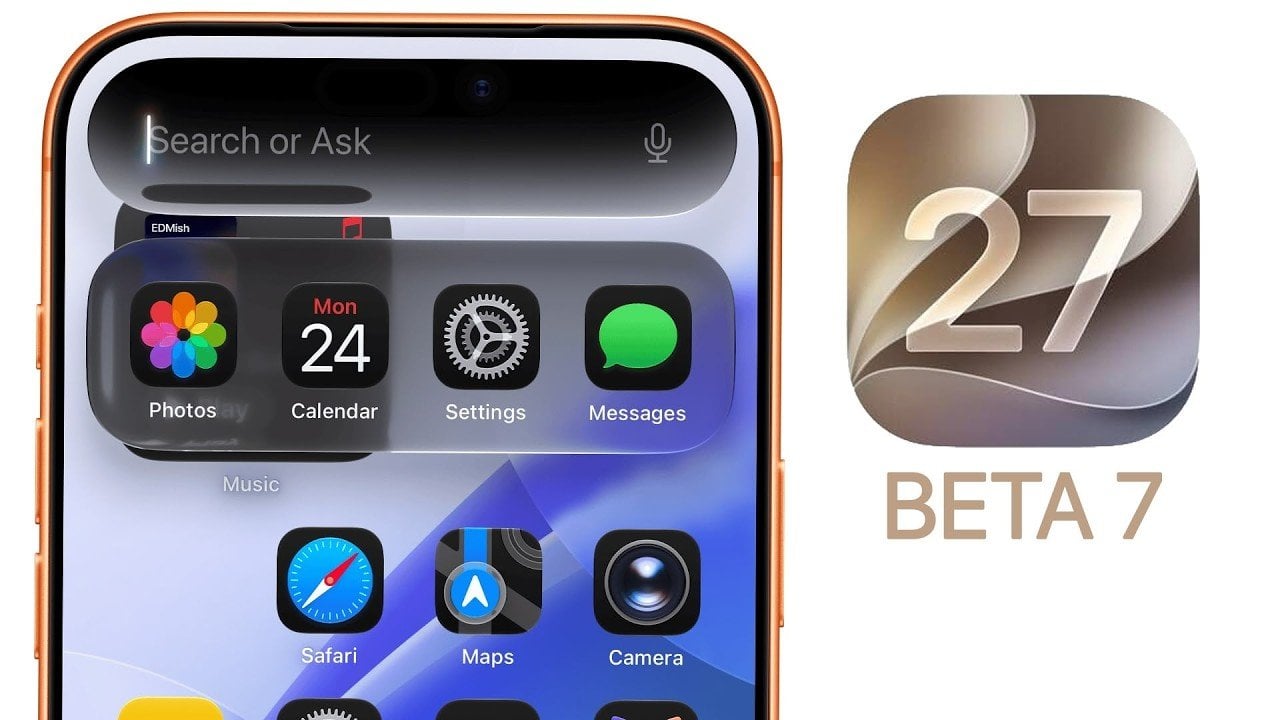
iOS 26.4 is here, with Playlist Playground and new emoji

iOS and iPadOS 26.4 are here, with a surprising number of new features for a point release. Chief among them is a new AI playlist generator, similar to one Spotify launched in 2024.

Playlist Playground is Apple's branding for the song list generator. It works as you'd expect: Type a prompt, and it spits out tracks that match it. As MacRumors noted, your prompts can relate to mood, feelings, activities and more.

Also new in iOS 26.4, an ambient music widget puts background sounds on your home screen. Like the corresponding Control Center tool, it brings up (Apple-curated) sounds for sleep, chill, productivity or well-being. Yet another music feature is Bandsintown integration: upcoming concert dates in your area will appear in the Apple Music app.

Unicode's latest emoji characters arrive in the update, too. This includes "Hairy Creature," also known as Bigfoot. Another fun one is fight cloud. (Think old-timey cartoons beating each other up inside a puff of vapor.) Also onboard are a trombone, a treasure chest, a distorted face, an apple core, an orca, ballet dancers and a landslide.

The update also has fixes for some of iOS 26's nagging bugs. In Apple's latest attempt to stem the tide of complaints about Liquid Glass, there's a new "Reduce Bright Effects" setting. There's also a fix for a keyboard bug that caused errors when typing rapidly.

Although we aren’t seeing it on our devices just yet, macOS Tahoe 26.4 should be arriving today as well. The update brings back the option to use Safari’s compact tab bar. (You’ll find this in iPadOS 26.4 as well.) Mac users can also customize their maximum charge level — anywhere from 80 to 100 percent. Meanwhile, watchOS 26.4 finally lets you start a workout with one tap.

This article originally appeared on Engadget at https://www.engadget.com/mobile/ios-264-is-here-with-playlist-playground-and-new-emoji-171343120.html?src=rss

Bandsintown integration for concerts is coming to Apple Music

The live music discovery platform Bandsintown’s partnership with Apple goes way back, but iOS 26.4 brings the deepest integration between the two companies to date. Concert listings from Bandsintown will now appear in Apple Music, allowing you to find out when either a band you already love, or one you’re discovering for the first time, is next playing live.

Artists who use Bandsintown to advertise their tour dates can promote upcoming shows in a number of ways through Apple’s app. A new Concerts tab will live within Search, allowing subscribers to search for shows by their genre, location and date, while participating artists can also connect their Bandsintown dashboard to their Apple Music artist page. By doing this, their tour dates will automatically appear in an "Upcoming Concerts" section within 48 hours of connecting the two services.

Apple Music users can tap listed events to see more details about a show and will be able to buy tickets through direct links to sellers. If you follow artists, you can also set up push notifications for their announced shows.

Bandsintown’s platform is already built into a number of other Apple apps and services, with the likes of Shazam, Apple Maps, Photos and Spotlight Search all able to pull through live event data. The new Apple Music features will be available on devices running iOS 26.4 when it leaves beta.

This article originally appeared on Engadget at https://www.engadget.com/entertainment/music/bandsintown-integration-for-concerts-is-coming-to-apple-music-170034229.html?src=rss

Pokémon Champions will hit Switch and Switch 2 on April 8

Pokémon Champions — a battle-focused game along the lines of Pokémon Stadium — now has a release date, and it's pretty darn soon. It will hit Nintendo Switch and Switch 2 on April 8. A mobile version is in the works with support for cross-play with Nintendo's consoles.

Nintendo released a new overview video that shows how the game works. You can recruit Pokémon in the game or transfer those you've found in previous titles and Pokémon Go via Pokémon Home. Then you'll be able to take half a dozen of your Pokémon into strategic turn-based fights with other players. It's definitely a Pokémon battle game! 

There are ranked battles, a casual mode, private lobbies and online competitions. You'll earn victory points, which you can use to swap a Pokémon's moves, increase their stat points and make other modifications. In addition, victory points enable you to recruit Pokémon in Pokémon Champions more than once per day. Pokémon that you recruit with victory points can stay in your roster permanently instead of just a week. There's a shop too, where you can spend points on accessories, Pokéball throwing styles, victory poses and battle music.

Pokémon Champions will be the second new Pokémon game to arrive this year, following the success of Pokémon Pokopia. There's more to come in the not-too-distant future, as Pokémon Wind and Pokémon Waves are scheduled to arrive on Switch 2 next year.

While Pokémon Pokopia is selling like hotcakes, the Switch 2 perhaps isn’t flying out of the door as quickly as Nintendo hoped. According to Bloomberg, Nintendo has cut back on production of the console after lower-than-expected sales over the holiday season. The company is said to be making 4 million units this quarter rather than the previously planned 6 million, with the lower production rate set to extend into April.

This article originally appeared on Engadget at https://www.engadget.com/gaming/nintendo/pokemon-champions-will-hit-switch-and-switch-2-on-april-8-165737121.html?src=rss