MUJI-Meets-Cyberpunk Vinyl Record Player Glows Like an Ambient Light and Charges Wirelessly

Minimalism in product design has gotten boring. We’re swimming in smooth white rectangles, touch controls that offer zero feedback, and devices designed to vanish. Apple spent two decades training the industry to sand away every visible seam, and now we live in a world where a Bluetooth speaker looks like a cylinder because a cylinder offends nobody. Bang & Olufsen understood early that audio equipment could occupy space like sculpture, could earn its place in a room through presence instead of absence. Teenage Engineering proved that mechanical honesty and playful geometry could coexist with premium materials. Both approaches work because they have a point of view.

TRETTITRE’s TTT series combines those instincts into something harder to categorize. The TTT-LP3 wireless vinyl player uses CNC-machined aluminum for the main frame and features a diffused lighting panel that spreads light evenly across the surface when music plays. The TTT-DP3 Bluetooth CD player takes inspiration from a UFO-like form with a transparent magnetic cover that rotates open to reveal the spinning disc. The TTT-CP3 cassette player uses a metal housing with sharp geometric lines and mechanical transport keys that deliver clear physical response. All three mount on the TTT-W magnetic modular wall rack, turning physical media playback into a visible, functional part of interior design.

Designers: Noah – Founder & Designer, Trettitre

Click Here to Buy Now: $229 $449 ($220 off). Hurry, only 55/99 left! Raised over $654,000.

TTT-LP3: A Vinyl Player That Doubles as Ambient Light

The back of the LP3 includes a hidden mounting structure that allows it to hang directly on a wall. You can mount it vertically so the record becomes part of the visual display, or go for the classic horizontal layout. When you want to move it, you lift the silicone leather handle at the top and take it down. The player detaches easily and gives you the freedom to listen wherever you choose. Traditional turntables usually stay exactly where you put them, limiting your options for when and where you listen. The LP3 works a little differently because of the battery and the wall mount’s wireless charging system, which keeps it powered without a visible cable.

Behind the LP3 sits a diffused lighting panel that spreads light evenly across the surface of the unit. When it’s on, the entire body of the player glows softly, designed to feel closer to ambient lighting than decorative lighting. You can change the lighting effects with the touch of a button. When a record spins, the moving shadows create a quiet visual effect. You can also leave the player mounted on the wall as a soft light source even when no music is playing. That ambient quality pushes the LP3 from well-designed product into something more considered: a slow, breathing light fixture that happens to play records.

The LP3 uses a self-balancing tonearm system that automatically sets the correct pressure when the player powers on. You place the record on the platter and lower the needle, and the system handles the rest. Many turntables require careful calibration before they can be used properly, with tonearm balance, tracking pressure, and counterweight adjustment all part of the process. For experienced collectors that process can be enjoyable, but for beginners it often feels complicated. The LP3 removes that barrier entirely while preserving the tactile experience people enjoy. The player supports both 33 RPM and 45 RPM records, and includes a manual control dial that allows small adjustments to playback speed (roughly ±0.5%), useful for older records that may not spin perfectly at their original speed anymore.

Wireless audio is handled through Qualcomm Bluetooth v5.3 with SBC, aptX, aptX HD, and aptX Adaptive, which allows higher-quality and lower-latency wireless audio than basic Bluetooth streaming. For wired setups, the player also includes a 3.5mm audio output. The built-in battery provides up to 6 hours of vinyl playback or up to 3 hours when used purely as an ambient light source. Full specs: dimensions 342×233×87mm, weight 1430g, Audio-Technica AT3600L moving magnet stereo cartridge, CNC-machined aluminum frame with silicone leather carrying strap. The LP3 arrives in June 2026 for Early Bird backers, May 2026 for Fast Delivery backers.

TTT-DP3: Giving the Compact Disc Its Aura Back

The DP3 keeps the reliability of CDs but gives the player a different visual presence. The design takes inspiration from a UFO-like form with a transparent magnetic cover. When the cover rotates open, the disc is partially visible as it spins, turning something simple into a small visual moment. A CD player shaped like a flying saucer with a rotating transparent lid is an audacious idea, and it works because it doesn’t try to evoke nostalgia. It reframes a CD player as a mechanical object of curiosity, something you watch as much as use.

The control buttons include raised tactile dots combined with a gold-embossed finish, making it easy to identify the buttons by touch alone. You can pause or skip tracks without needing to look down at the player. A small OLED display on the player shows track numbers, playback status, and battery level. The interface is intentionally simple so the information you need is visible immediately. A built-in battery allows the DP3 to run for several hours on its own, so you can move it from room to room, bring it to a small gathering, or take it while traveling. Full specs: Ø170×27mm, 324g, supports CD-DA and HDCD formats, Bluetooth 5.4, SNR >70dB, THD <3%, ABS+PC+Metal construction. The DP3 ships in May 2026.

TTT-CP3: Cassette Hardware for Modern Audio Setups

The CP3 keeps the tactile mechanical elements people associate with tapes while updating the electronics inside. The player uses a metal housing with sharp geometric lines that give it a distinctly industrial appearance. Instead of trying to imitate retro plastic designs, the CP3 leans into a more modern interpretation of cassette hardware. The playback controls use independent mechanical keys similar to piano keys. Each press has a clear physical response. Play, rewind, and stop feel deliberate instead of soft or mushy.

Inside the CP3 sits a Bluetooth module that allows cassette audio to stream wirelessly to speakers or headphones. The player decodes analog audio signals with high precision, helping reduce background noise and preserve more detail from the original recording. The result still sounds like cassette tape, but with greater clarity. Full specs: 122×120×32mm, 360g, supports Type I-IV cassette cartridges, Bluetooth 5.4, SNR ≥55dB, THD <3.5%, Metal+PC+ABS construction. The CP3 ships in May 2026.

When Storage Becomes Part of the Spectacle

The TTT-W Magnetic Modular Wall Rack uses an all-metal geometric structure that allows multiple TTT players to be arranged into a clean wall display while keeping them organized and ready to use. The rack integrates magnetic alignment and wireless charging for the vinyl player, so the LP3 can stay powered without visible cables while being part of the room’s design. Two configurations are available: a T-shaped rack (263×196×27mm, 300g) and a magnetic modular wall rack (612×302×27mm, 775g, combined style T+3). Both support wireless charging at 5-10W and use USB-C 5V 2A input.

The Supporting Cast, from Sculptural Speakers to Planar IEMs

TRETTITRE offers a range of add-ons designed to complement the TTT system. The TreSound1 Speaker arrives in concrete and wooden editions, delivering 2×30W + 1×60W output power with a 1″ tweeter, 2.75″ mid-range, and 5.25″ subwoofer for 30Hz-25KHz frequency response. The conical speaker features 360° surround sound, Bluetooth 5.2 with Qualcomm aptX HD, and a sculptural form that occupies space like a piece of furniture. The TreSound Mini is a portable Bluetooth speaker with a 5200mAh battery, 30W RMS output, and 360° surround sound. The TTT-E3 in-ear headphones use a 13mm planar magnetic driver with a 4-strand silver-copper hybrid conductor, available in 3.5mm and 4.4mm configurations. An aluminum alloy side table (300×300×750mm, 1.75kg, max load 50kg) rounds out the ecosystem.

What It Costs to Build the Setup, and When It Ships

The TTT-LP3 wireless vinyl player is available at $229 for Early Bird backers (June 2026 delivery), down from a planned $449 MSRP. The TTT-DP3 Bluetooth CD player is priced at $79 standalone ($179 MSRP), while the TTT-CP3 cassette player is also $79 standalone ($199 MSRP). If you’re a bonafide audiophile, a $399 bundle gets you all three devices. Optional add-ons include the TreSound Mini Bluetooth Speaker at $169 ($299 MSRP), TreSound1 Wooden Edition at $449 ($659 MSRP), TreSound1 Concrete Edition at $499 ($799 MSRP), TTT-E3 planar IEMs at $139 ($239 MSRP), and the TTT Side Table at $89 ($199 MSRP). The campaign runs through April 9, 2026, with worldwide delivery beginning May 15, 2026.

Click Here to Buy Now: $229 $449 ($220 off). Hurry, only 55/99 left! Raised over $654,000.

The post MUJI-Meets-Cyberpunk Vinyl Record Player Glows Like an Ambient Light and Charges Wirelessly first appeared on Yanko Design.

The World’s Smallest 100W Charger Fits in Your Palm and Charges MacBooks at Full Speed

There’s a reason it’s called a charging ‘brick’. It charges, and it’s honestly brick-shaped. Laptops and phones have gotten thinner in the past decade, but their chargers honestly haven’t. GaN technology changes that. I’ve sung praise for GaN chargers in the past, and I swear by the one in my laptop bag right now, which replaces 4 different chargers while being the size of a hockey puck. Now Rolling Square’s gone and made the GaN charger even smaller.

Holding the title of the world’s smallest 100W charger, the aptly named Supertiny is 65% smaller than Apple’s 96W charging brick, but packs enough power to fast-charge your laptop without breaking a sweat. At just 2 inches long and 1.38 inches wide, the Supertiny is as small as your Airpods case, fitting in your palm or even your pocket. It comes in three global plug formats (US with foldable prongs, EU, and UK), weighs between 100 and 115 grams depending on the variant, and packs a single USB-C port to supercharge your laptop. But pair it with Rolling Square’s inCharge Life 2in1 cable and you can now fast-charge your laptop as well as your phone together.

Designer: Rolling Square

Click Here to Buy Now: $52 $70 (25% off). Hurry, only a few units left! Raised over $672,000.

Gallium Nitride has been around since the 1990s, first used in LEDs and satellite solar cells, but it took decades for the tech to migrate into consumer charging. The advantage is straightforward: GaN produces significantly less heat than traditional silicon, which means you can push more power through a smaller chipset without needing massive heat sinks or bulky casings to prevent thermal meltdown. Silicon-based chargers lose a chunk of energy as heat, which is why your old laptop brick could double as a hand warmer after an hour of use. GaN flips that equation. It’s ruthlessly efficient, converting around 95% of the energy from the wall into actual charging power, with only 5% lost to heat. That efficiency gain is what allows Rolling Square to cram 100W of power delivery into a form factor that genuinely feels like it shouldn’t be possible.

The Supertiny measures 2 inches long on the US version with foldable prongs, 3.19 inches on the EU model, and 2.81 inches on the UK variant (the EU and UK versions come with fixed prongs). To achieve this ridiculously compact format, the company rebuilt the internal voltage transformer from scratch, optimizing how components align to reduce wasted space and lower operating temperatures. Advanced heat conduction silicon and thermal sheets route heat away from critical areas, and the exterior design plays a functional role too. The ribbed pattern running along the sides prevents your fingertips from making full contact with the surface when you unplug it after charging. Flat surfaces conduct heat directly to your skin, ribbed surfaces don’t. It’s a small detail, but it’s the kind of thing that separates thoughtful industrial design from spec-sheet engineering.

The charger outputs 100W max through its single USB-C port, with support for Power Delivery 3.0 and PPS (Programmable Power Supply) that adjusts voltage between 3.3V and 21V depending on what your device needs. That means it’ll fast-charge a MacBook Pro, a Dell XPS, a Lenovo ThinkPad, or any other USB-C laptop at full speed. In case you’re wondering, yes, it can handle e-bikes and e-scooters too, albeit at 100W. For phones and tablets, it delivers fast charging across iPhones, Samsung Galaxy devices, Google Pixels, and pretty much anything else with a USB-C port. The lack of multiple ports is deliberate. Rolling Square designed this charger for people who want maximum power in minimum space, and adding extra ports would have inflated the size.

If you need to charge two devices simultaneously, Rolling Square offers the inCharge Life 2in1 cable as an optional add-on. This modular cable splits the 100W output intelligently between two devices, letting you charge your laptop and phone together from a single power source. The cable stretches 1.5 meters (about 5 feet), features a durable nylon braid reinforced with aramid fiber, and uses premium metal connectors built to last. Rolling Square backs it with a lifetime replacement guarantee: if the cable ever fails, you submit a short video showing it fully cut along with your order number, and the company ships a replacement immediately. No returns, no forms, no hassle.

Rolling Square is a Switzerland-based company that’s been refining everyday tech problems since 2014, starting with the original inCharge keyring cable that packed multiple charging connectors into a tiny form factor you could attach to your keys. The company followed that up with the AirCard wallet tracker, the TAU keyring power bank, and a lineup of modular MagSafe accessories under the EDGE Pro branding. The Supertiny is their 19th product launch, and it fits the company’s design philosophy cleanly: solve one specific problem extremely well, make it as small as physics allows, and build it to last. Rolling Square products tend to be the kind of gear you don’t notice until you need them, at which point you wonder how you ever lived without them.

The Supertiny 100W GaN Charger comes in three versions: US, EU, and UK plugs. Early pricing starts at $46 for a single unit, or a $68 bundle that also includes the inCharge Life 2in1 cable. Rolling Square is shipping the chargers globally starting in May 2026, and all three versions carry full international safety certifications including TUV Rheinland. The company backs the product with a two-year warranty and a 30-day return policy. I touted GaN chargers as a tech must-have in 2025, so if you’re reading this now and you still don’t own one, take it from me. You, your cluttered workdesk, and your heavy laptop bag will thank me.

Click Here to Buy Now: $52 $70 (25% off). Hurry, only a few units left! Raised over $672,000.

The post The World’s Smallest 100W Charger Fits in Your Palm and Charges MacBooks at Full Speed first appeared on Yanko Design.

5 Best Japanese Designs of April 2026 That Make Everything Else Look Like It’s Trying Too Hard

The Japanese Grand Prix is underway this weekend at Suzuka, and it has done what it always does: pulled attention back toward Japan with a kind of quiet, inevitable force. There’s something about watching a sport built on engineering precision staged in a country that has made precision its cultural identity that makes you want to look beyond the circuit. Japan’s design culture runs on the same engine as its racing teams. Nothing is wasted. Nothing is performed. Every decision earns its place, and every object that comes out of that sensibility carries a particular weight.

Japanese design has always understood something the rest of the world is still working out. Restraint is not a lack of ambition. It is the hardest expression of it. The five objects below range from a razor to a kitchen knife to a bath towel, but they all speak the same language. They each solve one problem completely, and they look like nothing else needs to be added. That is the thing about great Japanese design. It doesn’t just make a good product. It makes everything else in the room look like it’s trying too hard.

1. The Paper Razor

There’s something almost provocative about the Paper Razor. Designed by Japan’s Kai Group, it is a single-use disposable razor built almost entirely from paper, reducing plastic use by 98% without compromising function. The origami-inspired body folds completely flat for shipping, then snaps into a rigid, ergonomic handle in seconds. At just 4 grams and 5mm thick when flat-packed, it ships across five colorways: ocean blue, botanical red, jade green, sunny yellow, and sand beige.

The obvious question is water, and the Kai Group answered it practically. The paper body is made from a water-resistant grade similar to milk carton stock, holding up to temperatures of 104°F. The metal blade head features a notched channel on top for easy rinsing between strokes. Designed primarily for travelers, the Paper Razor is the kind of product that feels less like a shaving tool and more like a position statement on what disposable objects are capable of being when someone takes the design seriously.

What We Like:

  • The origami-fold construction assembles in seconds and ships as a 5mm flat-pack, making it one of the most logistically elegant disposables ever designed
  • Reduces plastic use by 98% while maintaining the ergonomics and shave quality of a standard disposable

What We Dislike:

  • Single-use by design, which limits its appeal for anyone building a more sustainable long-term shaving routine
  • Water resistance caps at 104°F, meaning it isn’t suited for anyone who prefers very hot water while shaving

2. Levitating Pen 2.0: Cosmic Meteorite Edition

The Levitating Pen 2.0 Cosmic Meteorite Edition is the kind of desk object that stops a conversation the moment someone notices it. It suspends at a precise 23.5-degree angle, creating a floating illusion that is genuinely difficult to look away from. The design draws its visual language from spacecraft aesthetics, referencing silhouettes like the USS Enterprise, bringing a sci-fi sensibility to something as familiar and grounded as a ballpoint pen sitting on a work surface.

The detail that separates this edition from the standard series is the meteorite tip. The pen incorporates a genuine Muonionalusta meteorite, a fragment older than Earth by 20 million years, shifting this object from clever desk accessory to something rare and worth owning on its own terms. A simple twist sets it spinning for up to 20 seconds. It is a fidget-worthy, collector-grade piece that makes a compelling case that good design doesn’t always need to justify its existence through usefulness alone.

Click Here to Buy Now: $399.00

What We Like:

  • The genuine Muonionalusta meteorite tip gives this pen a provenance no other writing instrument on any desk can match
  • The floating 23.5-degree angle creates an immediate visual anchor on a desk surface without taking up meaningful real estate

What We Dislike:

  • The limited edition nature makes availability unpredictable, and the pricing reflects exclusivity as much as it does materials
  • The spacecraft-inspired aesthetic is deliberate and specific, meaning it will feel out of place on a desk that skews quieter or more minimal

3. Kuroi Hana Knife Collection

The Kuroi Hana knives begin with Japanese AUS-10 steel sourced from Aichi Steel Corporation, rated between 58 and 60 HRC for hardness and chosen specifically for its combination of toughness, sharpness, and corrosion resistance. Each blade is built from 67 layers of high-carbon steel, producing the Damascus layered structure that defines the collection’s character. Kuroi Hana translates to “black flower,” and the dark floral pattern that emerges across each blade makes that name feel entirely earned rather than marketed.

The pattern isn’t applied to the surface. It is drawn out from within. Skilled artisans manually submerge each blade into an etching solution that penetrates the steel layers and reveals the Damascus patterning in a deep, dark floral form. Because the process is done by hand and each blade’s steel structure is unique, no two knives carry the same pattern. This is a kitchen tool that respects the cook enough to make the knife itself a considered, genuinely beautiful object worth picking up before you even start cooking.

What We Like:

  • Every blade carries a unique dark floral pattern drawn from the steel itself, making each knife a one-of-a-kind object rather than a manufactured product
  • AUS-10 steel at 58–60 HRC delivers professional-grade sharpness and toughness that performs as well as it looks, sitting on a magnetic strip

What We Dislike:

  • The artisanal Damascus etching process makes these a premium investment that sits well outside casual kitchen knife territory in terms of price
  • The distinctive dark floral aesthetic is polarizing for cooks who prefer clean, unmarked blades in a working kitchen environment

4. The Invisible Shoehorn

The Invisible Shoehorn is the kind of product that earns its place by solving something so specific and so quietly that you find yourself wondering why every shoehorn hasn’t been designed this way. The long stainless steel body eliminates the need to hunch over, protecting your lower back from the kind of daily accumulated strain that nobody tracks until it’s a problem. The smooth, polished surface slides cleanly against socks and stockings without snagging. It performs one job with a material confidence that feels entirely Japanese.

The transparent stand is the decision that lifts this from a functional object to something worth displaying. Mounted in its clear acrylic holder, the shoehorn practically disappears into its surroundings, reading less like a bathroom utility and more like a considered piece of interior design. In a category full of objects people hide at the back of a closet, this one earns a place on the shelf. That shift from something concealed to something displayed is precisely what separates a good tool from a genuinely designed one.

Click Here to Buy Now: $299.00

What We Like:

  • The transparent acrylic stand transforms a purely utilitarian object into something display-worthy that holds its own in a well-designed home
  • The long stainless steel handle removes real daily lower back strain without requiring any change in how you put your shoes on

What We Dislike:

  • Polished stainless steel and a transparent stand both attract fingerprints readily, requiring consistent upkeep to maintain the invisible aesthetic the design promises
  • The extreme restraint of the form may feel underwhelming to people who expect more visual personality from their home accessories

5. Sento 2 Towel

Most towels are made by twisting cotton fibers into dense, rope-like loops, a production method that prioritizes speed and cost over softness or absorbency. The Sento 2 goes the other way entirely. Using a zero-twist design developed through specialized manufacturing techniques refined in Japan, the natural cotton fibers are left loose and uncompressed, producing a towel that is softer, more absorbent, and faster-drying than standard terry cloth. The process is slower, more demanding, and the finished result communicates every bit of that effort on first contact.

The zero-twist construction leaves natural cotton in a state that feels fundamentally different from anything mass-produced. The towel is light enough to feel like almost nothing in your hands, and absorbent enough that the job is done before you’ve consciously started it. There is an effortless quality to the whole experience that is harder to explain than it is to feel. It is a towel. It is also a quiet argument for buying fewer things, buying them properly, and understanding that the best version of an everyday object is worth far more than the cheapest one.

What We Like:

  • Zero-twist construction produces a softness and absorbency level that standard terry cloth towels genuinely cannot replicate, and the difference is apparent immediately
  • The quick-drying design makes it practical enough for daily rotation, not just a display-shelf luxury that performs better as a photograph

What We Dislike:

  • Zero-twist fibers are more delicate than standard loops and require careful laundering to preserve their structure and softness over repeated washing
  • The premium construction comes at a price that becomes harder to justify when buying multiples to fully outfit a bathroom

Japan Has Been Designing This Way Forever. The Rest of the World Is Still Catching Up.

What these five objects share is not a visual style. It is a philosophy. Japanese design has always understood that the most powerful thing a product can do is remove everything that shouldn’t be there. The Paper Razor removes plastic. The Invisible Shoehorn removes visual noise. The Sento 2 removes the compromise built into every standard terry loop. What remains in each case is an object that works so cleanly it feels inevitable, as though no other version was ever possible.

The Japanese Grand Prix reminds us every year that Japan operates at a level of precision most cultures aim for and fall short of. Its design culture runs on the same engine. These five products are proof that restraint is not a limitation. It is the hardest discipline to master and the most rewarding thing to live with. Every one of them earns its place, whether on a shelf, in a kitchen drawer, mounted by the door, on a desk at a 23.5-degree angle, or wrapped around you right after a shower.

The post 5 Best Japanese Designs of April 2026 That Make Everything Else Look Like It’s Trying Too Hard first appeared on Yanko Design.
60Hz Thermal and 4K Night Vision in One Device. SpectraEyes Basically Gives You Superman’s Vision

Military forces figured out decades ago that you need two kinds of vision in the dark: one to detect, one to identify. Heat finds the target, detail confirms it. The problem has always been making both feeds available to a single operator without adding weight, bulk, or the friction of switching between devices. High-end tactical units solved this with helmet-mounted dual-tube systems that cost as much as a used car and require specialized training to operate. Consumer and prosumer markets have lived with the compromise, carrying separate thermals and NVGs or settling for low-refresh overlay systems that blur more than they clarify.

SpectraEyes brings the dual-feed architecture down to the enthusiast and professional level. Developed by a Denver-based team that spent 18 months testing sensor fusion algorithms in high-altitude terrain, the system pairs a 60Hz thermal core with a 4K digital night vision sensor in a synchronized side-by-side display. Each screen operates independently, so you can run thermal-only to conserve battery during long scouts, 4K-only for close-range work, or both feeds simultaneously when the situation demands total awareness. IP67 waterproofing, USB-C fast charging, and an operating range from negative 20 to positive 50 degrees Celsius mean this was engineered for field use, available now at $514 during the current campaign window.

Designer: SpectraEyes

Click Here to Buy Now: $514 $830 (38% off) Hurry! Only 18 days left.

The core innovation lives in what SpectraEyes calls the Real-Time Dual-Screen Synchronization System. Rather than attempting to merge thermal and night vision into a single confused image, the optics route each feed to its own dedicated 1280×720 LCD screen inside the binocular housing. The left screen receives data from a 12-micron thermal sensor running at 60Hz with sub-25mk NETD sensitivity, which translates to the ability to detect temperature differences smaller than 0.025 degrees Celsius. That level of thermal resolution separates a warm body from ambient foliage even when both are nearly the same temperature. The independence of the two displays means your brain processes depth, movement, and context from the night vision channel while simultaneously tracking heat signatures on the thermal side, creating a layered awareness that single-feed systems simply cannot replicate.

Two screens, two feeds, two individual purposes – one Thermal Vision, one Night Vision

The right screen displays output from an ultra-low-light CMOS sensor capable of rendering 4K UHD (3840×2160) footage down to 0.0001 lux, roughly ten times darker than what a human eye can process. In starlight conditions, the sensor delivers full-color imaging, which means you see the actual hues of terrain, clothing, and vegetation rather than the washed-out green associated with legacy analog night vision tubes. In total darkness, the built-in adjustable IR illuminator (850nm and 940nm settings) provides monochrome visibility out to 800 meters without the visible red glow that spooks wildlife or compromises stealth. The choice between 850nm and 940nm wavelengths allows you to optimize for either maximum throw or maximum stealth depending on whether you’re observing skittish animals or working in environments where human detection is a concern.

Most consumer thermal optics run at 9Hz or 30Hz, which produces noticeable lag when panning across a scene or tracking moving subjects. SpectraEyes spec’d a 60Hz thermal core specifically to eliminate that stutter. Whether you’re sweeping a tree line or following an animal through dense cover, the thermal feed stays fluid and responsive. The difference between 30Hz and 60Hz might sound academic until you’re trying to track a running target or assess whether movement in your peripheral vision is wind-blown brush or something warm-blooded, and the lag between what’s happening and what you’re seeing becomes the variable that determines whether you capture the moment or miss it entirely.

The 7.0mm focal length provides a 24.9-degree by 18.7-degree field of view on the thermal side, wide enough for situational scanning without losing the resolution needed to pick out distant signatures. Thermal detection range reaches 500 meters, digital night vision stretches to 800 meters. The system supports 1x to 10x continuous digital zoom on the night vision channel, useful for identifying details at range without physically closing distance. Zooming in doesn’t degrade the thermal feed, so you can magnify the night vision side to confirm a target’s identity while keeping the thermal side at native FOV to monitor the broader environment for additional heat sources.

The independent dual-control system means you can toggle each display on or off separately via dedicated buttons on the housing. Running only the thermal channel in scouting mode extends battery life considerably, pulling four to five hours of runtime from the dual replaceable lithium battery setup. Engaging both screens simultaneously in full fusion mode drops that to around two hours, which aligns with what you’d expect from a system pushing two high-refresh displays and processing two sensor feeds in real time. The batteries are external and hot-swappable, so you can carry spares and change them in the field without powering down the unit or losing your position in a critical observation window.

The USB Type-C charging port supports power bank input, so extended missions can be managed with external battery capacity. Storage runs via microSD card, supporting up to 512GB for 4K video recording at 30fps in MP4 or MOV format. Recording captures the night vision feed by default, but you can switch to thermal-only recording or choose to save both feeds as separate files for post-mission review. The ability to document what you observed with native 4K resolution means this doubles as a capture device for wildlife research, security documentation, or any scenario where you need verifiable footage of what happened in low-light or no-light conditions.

The IP67 rating means the housing can handle submersion up to one meter for 30 minutes and shrugs off dust intrusion entirely, appropriate for marine navigation, wet-weather SAR work, or any scenario where gear gets exposed to the elements without warning. The operating temperature range (negative 20 to positive 50 degrees Celsius) covers everything from winter mountain rescue to desert surveillance in summer heat. The form factor is binocular-style rather than monocular, which distributes weight across both hands and allows for more stable long-duration observation compared to single-eye devices that fatigue your grip and throw off your natural field of view balance.

SpectraEyes is currently available through its Kickstarter campaign at $514 as part of the Super Early Bird tier, down from an MSRP of $830. Units ship globally starting June 2026. This is gear built for search and rescue teams who need to spot heat and confirm identity without switching devices mid-operation, for wildlife researchers who track nocturnal behavior across hours of observation, for hunters who work pre-dawn and post-dusk windows where neither thermal alone nor night vision alone tells the full story, and for marine operators navigating in conditions where a buoy, a boat, and a person all look like dark shapes until you layer heat detection over visual context. If you’ve ever carried two optics into the field and spent the night juggling between them, SpectraEyes is the answer to a question the industry has been avoiding for two decades.

Click Here to Buy Now: $514 $830 (38% off) Hurry! Only 18 days left.

The post 60Hz Thermal and 4K Night Vision in One Device. SpectraEyes Basically Gives You Superman’s Vision first appeared on Yanko Design.
Portugal’s Official TORRAS Phone Case for World Cup 2026 Has A Hands-Free Camera Stand

Cristiano Ronaldo did not become the most recognizable footballer of his generation by accident. The discipline, the training footage, the obsessive documentation of progress over years and decades, all of that has been as central to the story as any trophy or record. Portuguese football has a particular relationship with that kind of dedication, with the belief that the work done before anyone is watching forms the foundation of everything that happens when the stadium fills. That culture has produced players who treat consistency as a competitive advantage, shaping the team’s identity in a way that outlasts any single result. With the 2026 World Cup approaching on American soil, the squad carries that identity into a tournament that feels deeply personal, thirty-two years after Portugal missed their chance on the same stage.

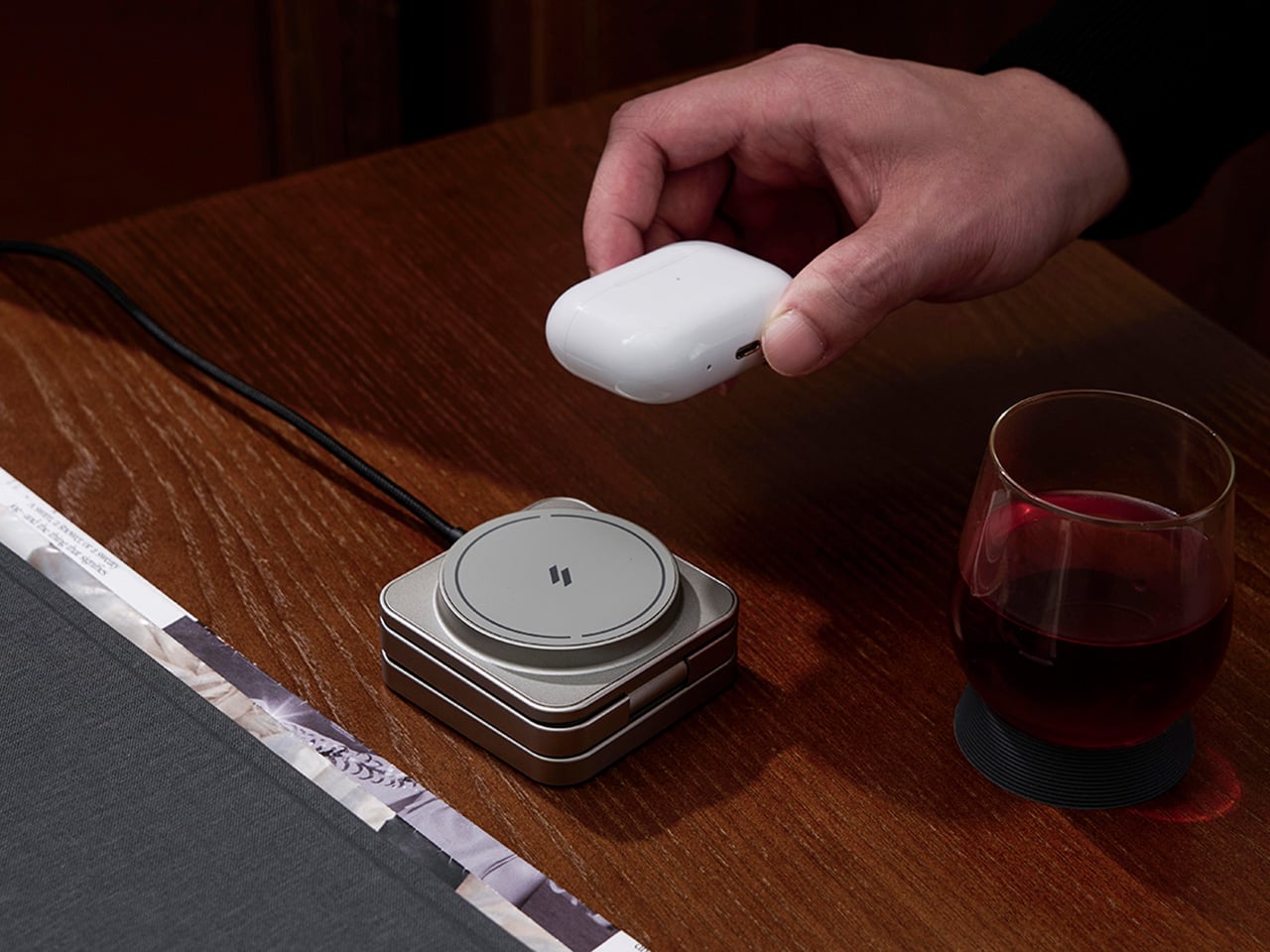
TORRAS built its co-branded case around that spirit, officially partnering with the Portuguese Football Federation. The Q3 Air Portugal National Football Team Edition draws from the squad’s new kit: a red, green, and gold palette, a wave-patterned texture referencing Portugal’s maritime heritage, and the Quinas crest pressed into the airbag structure alongside football-inspired graphics. A No.7 sticker comes included with the case, nodding to the player who has come to embody the “Dedication, Hard Work and Belief” message printed across the back. The magnetic Ostand ring supports 180-degree flipping and 360-degree rotation, enabling hands-free setup on gym equipment, flat courts, or almost any surface. TORRAS has been in the phone stand category since 2018, and the Portugal Football Edition is the most culturally grounded product they have put out.

Designer: TORRAS

Click Here to Buy Now: $69.99.

The gradient runs from deep crimson at the top to forest green toward the base, and the design reads as Portuguese football rather than a Portuguese football souvenir. The vertical line texture looks like jersey fabric up close and stadium turf under floodlights from a distance, which is either a very deliberate choice or the best kind of coincidence. The Quinas crest is pressed into the airbag corner structure, placing Portugal’s national symbol at the exact section of the case engineered to absorb impact. That placement is functionally deliberate as much as it is visual, because the corners carry the highest concentration of drop protection engineering in any phone case. The No.7 sticker reads as insider vocabulary to most, and unmistakable shorthand to anyone who has followed Portuguese football for the last two decades.

The Ostand ring snaps completely flat when not in use, keeping the profile slim enough that the case slides into a pocket like any standard shell. It opens into a stand that locks across a full 180-degree flip range with 360-degree rotation on the horizontal axis, covering portrait, landscape, and every diagonal angle between them. The entire case stays MagSafe-compatible, so wireless charging and MagSafe accessories work without pulling the case off, a trade-off most ring-stand designs handle badly. TORRAS rates the airbag corner structure for military-grade drop protection, and the Football Team edition holds to that spec without adding bulk for the co-branded graphics. The magnetic hold is firm enough for hands-free recording on a gym wall or a stadium barrier, and releases cleanly when you want to reposition.

The 2026 World Cup is set to be held on American soil for the first time since 1994. Portugal’s inclusion in this WC roster gives this campaign a weight that the squad feels and the fan community mirrors. The collaboration, announced under the name “Record Your Passion,” centers on the premise that the daily habit of documenting training is, for many athletes, inseparable from the discipline of showing up for it. The training clips, the watch-party setups, the goal reaction shot on a phone propped against a stadium seat, all of it fills the gap between what broadcast cameras pick up and what personal memory holds. A limited-edition case built in the colors of your team, with a stand deploying in under a second, is a product that knows its audience.

Click Here to Buy Now: $69.99.

The post Portugal’s Official TORRAS Phone Case for World Cup 2026 Has A Hands-Free Camera Stand first appeared on Yanko Design.
7 Best Tiny Home Outdoor Accessories That Turn a 300-Square-Foot Yard Into an Actual Living Room

Small outdoor spaces have a way of revealing exactly how much thought went into the objects inside them. When every square foot counts, the things you choose to bring outside need to earn their place — not just functionally, but visually. The best tiny backyard accessories fold away when you’re done, grow upward instead of outward, and look like they were designed rather than assembled. These seven picks do exactly that.

The difference between a cramped yard and a considered one rarely comes down to square footage. It comes down to objects that understand their role — a fire pit that manages its own smoke, a dining set that lives inside a cylinder, a herb garden that climbs the wall instead of spreading across the ground. Each of these seven accessories solves a real outdoor living problem without creating a new one, which is the baseline requirement for anything going into a space this deliberate.

1. All-in-One Grill

The first question any small outdoor space asks of a grill is whether it can disappear when not in use. This modular tabletop grill answers that cleanly. Its parts separate and stack to support barbecuing, frying, grilling, steaming, smoking, or slow-cooking a stew — all on a surface small enough to sit on any patio table. The design doesn’t try to be everything at once; it brings exactly what you need for the style of cooking you’re doing that evening, then gets out of the way.

There’s also a bottle-warming module in the mix, which sounds like a novelty until the first cold autumn evening when mulled wine becomes the plan. Cleanup is as thorough as cooking; every modular part disassembles for washing, and nothing requires more effort than it should. For a compact yard where a full outdoor kitchen isn’t on the table, this is the kind of object that makes the limitation feel like a deliberate choice rather than a compromise.

Click Here to Buy Now: $449

What we like:

  • Modular design covers six styles of cooking without occupying a permanent outdoor space
  • Parts disassemble quickly, keeping cleanup as easy as the setup

What we dislike:

  • Multiple components mean multiple things to keep organized between uses
  • Better suited for cooking for two or four than for a larger gathering

2. porTable

At rest, porTable looks like a bold geometric container — yellow lid, charcoal body, the kind of object you’d leave on a shelf without apology. In use, it becomes a complete outdoor dining setup for four: fold-out seats, a sturdy tabletop, no tools required, no leftover parts. The transformation from container to furniture takes under a minute, which means the decision to eat outside is never more than sixty seconds away from actually happening.

The yellow and charcoal palette is doing real design work here — friendly without being childish, modern without being cold. More importantly, the concept solves the core tension of tiny outdoor living: you want furniture, but you don’t want furniture taking up space when it’s not in use. porTable collapses that contradiction entirely. It lives as a single compact cylinder until the moment it’s needed, then opens into something genuinely functional and good-looking. That kind of thinking is exactly what a small yard rewards.

What we like:

  • An entire four-person dining set stores as a single portable object
  • No tools or assembly knowledge needed to set up or break down

What we dislike:

  • As a concept design, long-term durability in real outdoor conditions is still unproven
  • The bold yellow colorway is a personality commitment that won’t suit every space

3. Birdbuddy Pro Solar

A bird feeder is, in most hands, a lump of plastic with seeds in it. The Birdbuddy Pro Solar is something else entirely — a solar-powered AI camera system that identifies visiting birds, captures slow-motion HD video, and delivers it to your phone via a free app. The expanded field of view and improved sensor handled dappled backyard light without washing out the image. What you get isn’t just a feeder. It’s a front-row seat to the wildlife that was already there.

For a tiny outdoor space, this might be the most meaningful addition on this list. It doesn’t take up floor area. It hangs from a fence or mounts to a wall, taking up exactly zero square footage. And it changes the character of the yard in a way that furniture simply can’t — from static backdrop to living environment. The AI identification runs automatically, building a personal record of every species that visits over time. It’s the rare outdoor product that gets better the longer it sits there.

What we like:

  • Solar-powered design means no cables crossing the yard
  • AI species identification works passively — no effort required from the user

What we dislike:

  • Full camera functionality depends on a consistent Wi-Fi signal reaching the yard
  • Ongoing seed refills add a small but real maintenance commitment

4. Slim Fold Dish Rack

Most dish racks are compromises — too large for small spaces, too flimsy for daily use, too visually noisy to leave out. The Slim Fold Dish Rack collapses this problem with a patent-pending spring mechanism that shrinks a full 14-inch rack to 1.2 inches in under a second. That’s the difference between a dish rack that permanently occupies counter space and one that lives in a bag or a pocket. For outdoor cooking situations where surface area is already borrowed, that distinction is significant.

The ventilation geometry is engineered for real airflow — plates, utensils, and cookware of any size dry properly without needing to be repositioned or fanned out. The design is minimal enough that leaving it out doesn’t create visual clutter; storing it away feels almost like a trick. It’s also dishwasher-safe, which closes the loop on a product that exists to make cleaning easier. In a space where every object has to justify its presence, this one earns it quietly and completely.

Click Here to Buy Now: $75.00

What we like:

  • Collapses to 1.2 inches — genuinely pocketable when not in use
  • Dishwasher-safe, so the cleaning tool is easy to clean

What we dislike:

  • The spring mechanism’s long-term durability across daily use remains to be tested
  • At full extension, very large pots and baking trays will likely overhang the edges

5. Stack & Sprout

A 1×1 square-foot footprint for a full working herb garden is not a compromise — it is the point. Stack & Sprout’s modular tower stacks as high as the wall and ambition allow, with each module holding individual growing pods loaded with smart soil capsules. Fill the water tank, add seeds, and the system manages hydration from there. The result is a vertical column of living herbs that climbs the fence instead of spreading across the ground, leaving every inch of floor space exactly where it was.

What makes this work for a small outdoor space is how little it asks of the person using it. No specialized knowledge, no guesswork about watering schedules, no particular green thumb required. The modular format means you can start with three modules — basil, mint, rosemary — and add more as confidence grows. Fresh herbs picked ten seconds before they go into a dish taste genuinely different from ones that have spent a week in a grocery bag. Stack & Sprout makes that difference accessible to anyone.

What we like:

  • Modular height adapts to any wall space, from a single tier to a full vertical installation
  • Self-watering system removes the most common reason home herb gardens fail

What we dislike:

  • Proprietary smart soil capsules create an ongoing replacement cost
  • Taller configurations may need wall anchoring to stay stable in the wind

6. Forest Cooperage Cedar Soaking Tub

The Forest Cooperage cedar soaking tub is handcrafted on Vancouver Island from clear vertical grain Western Red Cedar, secured with stainless steel hoops. It sits directly on any level surface, fills from a garden hose, and heats with a wood-fired or electric immersion heater — no plumber, no electrician, no permanent installation required. The stave-and-hoop construction is the same method used in barrel-making for centuries, which is why it looks entirely at home outdoors next to bamboo, stone, and weathered wood.

What a cedar tub does to a small outdoor space is harder to explain than it sounds. It gives the space a reason to exist — not as a passageway or storage area, but as a genuine destination. An evening soak in a backyard cedar tub, surrounded by the natural scent of the wood and the quiet of a well-arranged small yard, is a genuinely different experience from anything else available at this price. In 300 square feet, this is the object that makes everything else around it feel intentional.

What we like:

  • No permanent installation — fills from a hose and heats without any plumbing
  • Cedar weathers beautifully outdoors, developing character rather than deteriorating

What we dislike:

  • Regular maintenance is needed to keep the cedar properly hydrated and sealed
  • Wood-fired heating requires planning ahead — this is not a spontaneous soak situation

7. Airflow 8-Panel Fire Pit

The Airflow fire pit is built around a single engineering insight: clean combustion requires oxygen at the base and a secondary combustion loop at the top. The eight removable panels form an octagonal cylinder with holes positioned precisely to channel fresh air to the base as the primary feed, then up through a double-walled cavity to the top vents as secondary combustion. The fire burns hotter, produces significantly less smoke, and leaves far less ash than a conventional open pit.

The eight-panel removable design does more than manage airflow — it gives you direct control over intensity. Remove panels to widen the burn; keep them assembled for a focused and efficient fire. For a small outdoor space where heavy smoke would ruin the evening entirely, this is the detail that separates a fire you can actually sit around from one that keeps everyone constantly repositioning their chairs.

Click Here to Buy Now: $325.00

What we like:

  • Eight removable panels allow direct, intuitive control over fire intensity
  • Secondary combustion system dramatically reduces smoke output in compact spaces

What we dislike:

  • Eight separate panels add to the number of components to store between uses
  • Steel construction will need occasional treatment to stay ahead of rust in wet climates

Small Space, Considered Objects

A well-used 300-square-foot yard doesn’t need more things in it. It needs the right things — objects that fold away cleanly, grow upward rather than outward, and look like someone thought carefully before placing them there. Each of these seven picks solves a real outdoor living problem without creating a new one, which is the baseline requirement for anything going into a space this small and this deliberately arranged.

The best version of a tiny outdoor space isn’t a smaller version of a large one. It’s something more deliberate — a set of objects that each do their job beautifully and step back when they’re not needed. Get these seven right, and a 300-square-foot yard stops feeling like a constraint entirely. It starts feeling like a choice you made on purpose.

The post 7 Best Tiny Home Outdoor Accessories That Turn a 300-Square-Foot Yard Into an Actual Living Room first appeared on Yanko Design.
Grade 5 Titanium, M390 Steel, Ceramic Bearings, $120 Price Tag: The EDC Knife to Beat in 2026

Most folding knives compromise somewhere. The blade steel holds an edge but rusts easily. The handle looks gorgeous but feels slippery when wet. The action is butter-smooth out of the box but develops wobble after six months of carry. MIH spent months asking a simpler question: what if you refused to compromise at all? What if you stripped away every feature that didn’t directly serve the three things a knife actually needs to do well, and then executed those three things with materials that cost more but last longer?

The GraphiX is the answer to that question. M390 steel, the supersteel standard, cuts 959mm of cardboard before dulling compared to 420HC’s 200mm. Ceramic bearings that will never rust paired with phosphor bronze washers that will never wear out. A titanium frame machined from Grade 5 aerospace alloy with a deep-carry clip milled directly into the structure. Carbon fiber scales with a tactile weave that ensures control even with gloves on. At $120 for the D2 version, this is a folder designed to be carried daily, used hard, and maintained rarely. It disappears in your pocket and appears in your hand exactly when you need it.

Designer: MIH

Click Here to Buy Now: $120 $183 (35% off) Hurry! Only 19 days left!

M390 is composed of 1.9% carbon for hardness, 20% chromium for corrosion protection, and 4% vanadium for edge life. That formula puts it at the top of the stainless steel hierarchy, well above the AUS-8 and 8Cr13MoV alloys found in budget production knives. The CATRA cardboard test proves it: M390 slices through nearly five times as much material as 420HC before edge degradation becomes noticeable. Heat-treated to 62 HRC and ground to a 15-degree edge angle per side, the blade hits the balance point where sharpness meets durability. You sharpen other knives. You just use this one. For those who prioritize toughness over ultimate edge retention, the D2 variant delivers serious cutting performance at 58-60 HRC, a tool steel with a long history of reliability in hard-use folders.

Grade 5 titanium, also known as Ti-6Al-4V, carries a strength-to-weight ratio that makes it the default choice in aerospace and medical implants. MIH machines the entire frame from this alloy, creating a structure light enough to disappear in your pocket at 5.6 ounces but strong enough to resist the kinds of lateral stresses that would bend a stainless steel liner. The frame curves to follow the natural contour of your palm, and the carbon fiber scales layered on top provide texture without aggression. Each scale displays a unique weave pattern since carbon fiber, by nature, never replicates exactly. Red, blue, or black colorways let you choose between bold presence, understated elegance, or low-visibility stealth. At the base of the blade, subtle jimping creates a tactile index point for your finger during detail work, the kind of small addition that only matters when you’re making precise cuts and suddenly realize how much control it gives you.

Ceramic bearings handle the pivot rotation while phosphor bronze washers distribute the load. Steel bearings corrode. Ceramic bearings don’t. Plastic washers compress and wear. Phosphor bronze doesn’t. The result is a deployment action that feels smooth the day it arrives and stays smooth years later. A strong detent keeps the blade locked closed during carry with no risk of accidental opening, but when you engage the flipper tab, the blade snaps out with a satisfying, controlled authority. The lock face and pivot are precision-machined to eliminate tolerances, which translates to zero blade play when the knife is open. No wobble. No lateral movement. Just solid lockup you can trust under hard use.

The blade runs a drop point profile, which means the spine curves gently downward to meet the tip, creating a strong point with plenty of belly for slicing. Drop point is the workhorse geometry for EDC because it excels at the tasks you actually do daily: opening packages, cutting cordage, preparing food, stripping wire, shaving wood. The tip is strong enough for piercing but not so aggressive that it tears through pocket fabric or catches on material when you’re making controlled cuts. At 62 HRC with a 15-degree edge angle, the M390 blade slices through cardboard, rope, plastic banding, and food prep tasks without requiring frequent touch-ups, while the D2 variant trades some of that extreme edge retention for better toughness under hard lateral loads. This is a knife built for the person who’s tired of pocket clips that loosen after a month, blades that need constant sharpening, and folders that feel like they were designed by a committee instead of someone who actually carries a knife daily.

MIH milled the clip channel directly into the titanium frame so the clip sits flush with the handle contour, machined from spring-grade titanium so it grips firmly without deforming and releases smoothly without snagging fabric. Precision-machined tritium slots measuring 1.5x6mm sit on both sides of the handle, ready to accept self-illuminating vials if you want a subtle glow-in-the-dark locator, or you can leave them empty and enjoy the clean lines. A lanyard hole at the tail end gives you the option to attach a bead or cord for wrist retention or easier pocket extraction. Closed, the GraphiX measures 4.71 inches. Open, 8.27 inches. The balance ratio hits 0.618, essentially the golden ratio applied to weight distribution, which means the knife pivots naturally in your hand without feeling blade-heavy or handle-heavy.

The D2 variant starts at $120, making it the accessible entry point into a titanium-framed folder with ceramic bearings and a carbon fiber inlay. The M390 version commands a premium for the superior edge retention. Add-ons include custom engraving, alternate carbon fiber colors (blue or black if you don’t want the default red), luminous vials, tritium vials, a titanium lanyard bead, and a foldable knife sharpener. The GraphiX ships worldwide with no additional shipping fees, and delivery is expected in August-September 2026 for backers who secure their spot during the campaign window.

Click Here to Buy Now: $120 $183 (35% off) Hurry! Only 19 days left!

The post Grade 5 Titanium, M390 Steel, Ceramic Bearings, $120 Price Tag: The EDC Knife to Beat in 2026 first appeared on Yanko Design.
Grade 5 Titanium, M390 Steel, Ceramic Bearings, $120 Price Tag: The EDC Knife to Beat in 2026

Most folding knives compromise somewhere. The blade steel holds an edge but rusts easily. The handle looks gorgeous but feels slippery when wet. The action is butter-smooth out of the box but develops wobble after six months of carry. MIH spent months asking a simpler question: what if you refused to compromise at all? What if you stripped away every feature that didn’t directly serve the three things a knife actually needs to do well, and then executed those three things with materials that cost more but last longer?

The GraphiX is the answer to that question. M390 steel, the supersteel standard, cuts 959mm of cardboard before dulling compared to 420HC’s 200mm. Ceramic bearings that will never rust paired with phosphor bronze washers that will never wear out. A titanium frame machined from Grade 5 aerospace alloy with a deep-carry clip milled directly into the structure. Carbon fiber scales with a tactile weave that ensures control even with gloves on. At $120 for the D2 version, this is a folder designed to be carried daily, used hard, and maintained rarely. It disappears in your pocket and appears in your hand exactly when you need it.

Designer: MIH

Click Here to Buy Now: $120 $183 (35% off) Hurry! Only 19 days left!

M390 is composed of 1.9% carbon for hardness, 20% chromium for corrosion protection, and 4% vanadium for edge life. That formula puts it at the top of the stainless steel hierarchy, well above the AUS-8 and 8Cr13MoV alloys found in budget production knives. The CATRA cardboard test proves it: M390 slices through nearly five times as much material as 420HC before edge degradation becomes noticeable. Heat-treated to 62 HRC and ground to a 15-degree edge angle per side, the blade hits the balance point where sharpness meets durability. You sharpen other knives. You just use this one. For those who prioritize toughness over ultimate edge retention, the D2 variant delivers serious cutting performance at 58-60 HRC, a tool steel with a long history of reliability in hard-use folders.

Grade 5 titanium, also known as Ti-6Al-4V, carries a strength-to-weight ratio that makes it the default choice in aerospace and medical implants. MIH machines the entire frame from this alloy, creating a structure light enough to disappear in your pocket at 5.6 ounces but strong enough to resist the kinds of lateral stresses that would bend a stainless steel liner. The frame curves to follow the natural contour of your palm, and the carbon fiber scales layered on top provide texture without aggression. Each scale displays a unique weave pattern since carbon fiber, by nature, never replicates exactly. Red, blue, or black colorways let you choose between bold presence, understated elegance, or low-visibility stealth. At the base of the blade, subtle jimping creates a tactile index point for your finger during detail work, the kind of small addition that only matters when you’re making precise cuts and suddenly realize how much control it gives you.

Ceramic bearings handle the pivot rotation while phosphor bronze washers distribute the load. Steel bearings corrode. Ceramic bearings don’t. Plastic washers compress and wear. Phosphor bronze doesn’t. The result is a deployment action that feels smooth the day it arrives and stays smooth years later. A strong detent keeps the blade locked closed during carry with no risk of accidental opening, but when you engage the flipper tab, the blade snaps out with a satisfying, controlled authority. The lock face and pivot are precision-machined to eliminate tolerances, which translates to zero blade play when the knife is open. No wobble. No lateral movement. Just solid lockup you can trust under hard use.

The blade runs a drop point profile, which means the spine curves gently downward to meet the tip, creating a strong point with plenty of belly for slicing. Drop point is the workhorse geometry for EDC because it excels at the tasks you actually do daily: opening packages, cutting cordage, preparing food, stripping wire, shaving wood. The tip is strong enough for piercing but not so aggressive that it tears through pocket fabric or catches on material when you’re making controlled cuts. At 62 HRC with a 15-degree edge angle, the M390 blade slices through cardboard, rope, plastic banding, and food prep tasks without requiring frequent touch-ups, while the D2 variant trades some of that extreme edge retention for better toughness under hard lateral loads. This is a knife built for the person who’s tired of pocket clips that loosen after a month, blades that need constant sharpening, and folders that feel like they were designed by a committee instead of someone who actually carries a knife daily.

MIH milled the clip channel directly into the titanium frame so the clip sits flush with the handle contour, machined from spring-grade titanium so it grips firmly without deforming and releases smoothly without snagging fabric. Precision-machined tritium slots measuring 1.5x6mm sit on both sides of the handle, ready to accept self-illuminating vials if you want a subtle glow-in-the-dark locator, or you can leave them empty and enjoy the clean lines. A lanyard hole at the tail end gives you the option to attach a bead or cord for wrist retention or easier pocket extraction. Closed, the GraphiX measures 4.71 inches. Open, 8.27 inches. The balance ratio hits 0.618, essentially the golden ratio applied to weight distribution, which means the knife pivots naturally in your hand without feeling blade-heavy or handle-heavy.

The D2 variant starts at $120, making it the accessible entry point into a titanium-framed folder with ceramic bearings and a carbon fiber inlay. The M390 version commands a premium for the superior edge retention. Add-ons include custom engraving, alternate carbon fiber colors (blue or black if you don’t want the default red), luminous vials, tritium vials, a titanium lanyard bead, and a foldable knife sharpener. The GraphiX ships worldwide with no additional shipping fees, and delivery is expected in August-September 2026 for backers who secure their spot during the campaign window.

Click Here to Buy Now: $120 $183 (35% off) Hurry! Only 19 days left!

The post Grade 5 Titanium, M390 Steel, Ceramic Bearings, $120 Price Tag: The EDC Knife to Beat in 2026 first appeared on Yanko Design.
Grade 5 Titanium, M390 Steel, Ceramic Bearings, $120 Price Tag: The EDC Knife to Beat in 2026

Most folding knives compromise somewhere. The blade steel holds an edge but rusts easily. The handle looks gorgeous but feels slippery when wet. The action is butter-smooth out of the box but develops wobble after six months of carry. MIH spent months asking a simpler question: what if you refused to compromise at all? What if you stripped away every feature that didn’t directly serve the three things a knife actually needs to do well, and then executed those three things with materials that cost more but last longer?

The GraphiX is the answer to that question. M390 steel, the supersteel standard, cuts 959mm of cardboard before dulling compared to 420HC’s 200mm. Ceramic bearings that will never rust paired with phosphor bronze washers that will never wear out. A titanium frame machined from Grade 5 aerospace alloy with a deep-carry clip milled directly into the structure. Carbon fiber scales with a tactile weave that ensures control even with gloves on. At $120 for the D2 version, this is a folder designed to be carried daily, used hard, and maintained rarely. It disappears in your pocket and appears in your hand exactly when you need it.

Designer: MIH

Click Here to Buy Now: $120 $183 (35% off) Hurry! Only 19 days left!

M390 is composed of 1.9% carbon for hardness, 20% chromium for corrosion protection, and 4% vanadium for edge life. That formula puts it at the top of the stainless steel hierarchy, well above the AUS-8 and 8Cr13MoV alloys found in budget production knives. The CATRA cardboard test proves it: M390 slices through nearly five times as much material as 420HC before edge degradation becomes noticeable. Heat-treated to 62 HRC and ground to a 15-degree edge angle per side, the blade hits the balance point where sharpness meets durability. You sharpen other knives. You just use this one. For those who prioritize toughness over ultimate edge retention, the D2 variant delivers serious cutting performance at 58-60 HRC, a tool steel with a long history of reliability in hard-use folders.

Grade 5 titanium, also known as Ti-6Al-4V, carries a strength-to-weight ratio that makes it the default choice in aerospace and medical implants. MIH machines the entire frame from this alloy, creating a structure light enough to disappear in your pocket at 5.6 ounces but strong enough to resist the kinds of lateral stresses that would bend a stainless steel liner. The frame curves to follow the natural contour of your palm, and the carbon fiber scales layered on top provide texture without aggression. Each scale displays a unique weave pattern since carbon fiber, by nature, never replicates exactly. Red, blue, or black colorways let you choose between bold presence, understated elegance, or low-visibility stealth. At the base of the blade, subtle jimping creates a tactile index point for your finger during detail work, the kind of small addition that only matters when you’re making precise cuts and suddenly realize how much control it gives you.

Ceramic bearings handle the pivot rotation while phosphor bronze washers distribute the load. Steel bearings corrode. Ceramic bearings don’t. Plastic washers compress and wear. Phosphor bronze doesn’t. The result is a deployment action that feels smooth the day it arrives and stays smooth years later. A strong detent keeps the blade locked closed during carry with no risk of accidental opening, but when you engage the flipper tab, the blade snaps out with a satisfying, controlled authority. The lock face and pivot are precision-machined to eliminate tolerances, which translates to zero blade play when the knife is open. No wobble. No lateral movement. Just solid lockup you can trust under hard use.

The blade runs a drop point profile, which means the spine curves gently downward to meet the tip, creating a strong point with plenty of belly for slicing. Drop point is the workhorse geometry for EDC because it excels at the tasks you actually do daily: opening packages, cutting cordage, preparing food, stripping wire, shaving wood. The tip is strong enough for piercing but not so aggressive that it tears through pocket fabric or catches on material when you’re making controlled cuts. At 62 HRC with a 15-degree edge angle, the M390 blade slices through cardboard, rope, plastic banding, and food prep tasks without requiring frequent touch-ups, while the D2 variant trades some of that extreme edge retention for better toughness under hard lateral loads. This is a knife built for the person who’s tired of pocket clips that loosen after a month, blades that need constant sharpening, and folders that feel like they were designed by a committee instead of someone who actually carries a knife daily.

MIH milled the clip channel directly into the titanium frame so the clip sits flush with the handle contour, machined from spring-grade titanium so it grips firmly without deforming and releases smoothly without snagging fabric. Precision-machined tritium slots measuring 1.5x6mm sit on both sides of the handle, ready to accept self-illuminating vials if you want a subtle glow-in-the-dark locator, or you can leave them empty and enjoy the clean lines. A lanyard hole at the tail end gives you the option to attach a bead or cord for wrist retention or easier pocket extraction. Closed, the GraphiX measures 4.71 inches. Open, 8.27 inches. The balance ratio hits 0.618, essentially the golden ratio applied to weight distribution, which means the knife pivots naturally in your hand without feeling blade-heavy or handle-heavy.

The D2 variant starts at $120, making it the accessible entry point into a titanium-framed folder with ceramic bearings and a carbon fiber inlay. The M390 version commands a premium for the superior edge retention. Add-ons include custom engraving, alternate carbon fiber colors (blue or black if you don’t want the default red), luminous vials, tritium vials, a titanium lanyard bead, and a foldable knife sharpener. The GraphiX ships worldwide with no additional shipping fees, and delivery is expected in August-September 2026 for backers who secure their spot during the campaign window.

Click Here to Buy Now: $120 $183 (35% off) Hurry! Only 19 days left!

The post Grade 5 Titanium, M390 Steel, Ceramic Bearings, $120 Price Tag: The EDC Knife to Beat in 2026 first appeared on Yanko Design.
Grade 5 Titanium, M390 Steel, Ceramic Bearings, $120 Price Tag: The EDC Knife to Beat in 2026

Most folding knives compromise somewhere. The blade steel holds an edge but rusts easily. The handle looks gorgeous but feels slippery when wet. The action is butter-smooth out of the box but develops wobble after six months of carry. MIH spent months asking a simpler question: what if you refused to compromise at all? What if you stripped away every feature that didn’t directly serve the three things a knife actually needs to do well, and then executed those three things with materials that cost more but last longer?

The GraphiX is the answer to that question. M390 steel, the supersteel standard, cuts 959mm of cardboard before dulling compared to 420HC’s 200mm. Ceramic bearings that will never rust paired with phosphor bronze washers that will never wear out. A titanium frame machined from Grade 5 aerospace alloy with a deep-carry clip milled directly into the structure. Carbon fiber scales with a tactile weave that ensures control even with gloves on. At $120 for the D2 version, this is a folder designed to be carried daily, used hard, and maintained rarely. It disappears in your pocket and appears in your hand exactly when you need it.
Designer: MIH

Click Here to Buy Now: $120 $183 (35% off) Hurry! Only 19 days left!

M390 is composed of 1.9% carbon for hardness, 20% chromium for corrosion protection, and 4% vanadium for edge life. That formula puts it at the top of the stainless steel hierarchy, well above the AUS-8 and 8Cr13MoV alloys found in budget production knives. The CATRA cardboard test proves it: M390 slices through nearly five times as much material as 420HC before edge degradation becomes noticeable. Heat-treated to 62 HRC and ground to a 15-degree edge angle per side, the blade hits the balance point where sharpness meets durability. You sharpen other knives. You just use this one. For those who prioritize toughness over ultimate edge retention, the D2 variant delivers serious cutting performance at 58-60 HRC, a tool steel with a long history of reliability in hard-use folders.

Grade 5 titanium, also known as Ti-6Al-4V, carries a strength-to-weight ratio that makes it the default choice in aerospace and medical implants. MIH machines the entire frame from this alloy, creating a structure light enough to disappear in your pocket at 5.6 ounces but strong enough to resist the kinds of lateral stresses that would bend a stainless steel liner. The frame curves to follow the natural contour of your palm, and the carbon fiber scales layered on top provide texture without aggression. Each scale displays a unique weave pattern since carbon fiber, by nature, never replicates exactly. Red, blue, or black colorways let you choose between bold presence, understated elegance, or low-visibility stealth. At the base of the blade, subtle jimping creates a tactile index point for your finger during detail work, the kind of small addition that only matters when you’re making precise cuts and suddenly realize how much control it gives you.

Ceramic bearings handle the pivot rotation while phosphor bronze washers distribute the load. Steel bearings corrode. Ceramic bearings don’t. Plastic washers compress and wear. Phosphor bronze doesn’t. The result is a deployment action that feels smooth the day it arrives and stays smooth years later. A strong detent keeps the blade locked closed during carry with no risk of accidental opening, but when you engage the flipper tab, the blade snaps out with a satisfying, controlled authority. The lock face and pivot are precision-machined to eliminate tolerances, which translates to zero blade play when the knife is open. No wobble. No lateral movement. Just solid lockup you can trust under hard use.

The blade runs a drop point profile, which means the spine curves gently downward to meet the tip, creating a strong point with plenty of belly for slicing. Drop point is the workhorse geometry for EDC because it excels at the tasks you actually do daily: opening packages, cutting cordage, preparing food, stripping wire, shaving wood. The tip is strong enough for piercing but not so aggressive that it tears through pocket fabric or catches on material when you’re making controlled cuts. At 62 HRC with a 15-degree edge angle, the M390 blade slices through cardboard, rope, plastic banding, and food prep tasks without requiring frequent touch-ups, while the D2 variant trades some of that extreme edge retention for better toughness under hard lateral loads. This is a knife built for the person who’s tired of pocket clips that loosen after a month, blades that need constant sharpening, and folders that feel like they were designed by a committee instead of someone who actually carries a knife daily.

MIH milled the clip channel directly into the titanium frame so the clip sits flush with the handle contour, machined from spring-grade titanium so it grips firmly without deforming and releases smoothly without snagging fabric. Precision-machined tritium slots measuring 1.5x6mm sit on both sides of the handle, ready to accept self-illuminating vials if you want a subtle glow-in-the-dark locator, or you can leave them empty and enjoy the clean lines. A lanyard hole at the tail end gives you the option to attach a bead or cord for wrist retention or easier pocket extraction. Closed, the GraphiX measures 4.71 inches. Open, 8.27 inches. The balance ratio hits 0.618, essentially the golden ratio applied to weight distribution, which means the knife pivots naturally in your hand without feeling blade-heavy or handle-heavy.

The D2 variant starts at $120, making it the accessible entry point into a titanium-framed folder with ceramic bearings and a carbon fiber inlay. The M390 version commands a premium for the superior edge retention. Add-ons include custom engraving, alternate carbon fiber colors (blue or black if you don’t want the default red), luminous vials, tritium vials, a titanium lanyard bead, and a foldable knife sharpener. The GraphiX ships worldwide with no additional shipping fees, and delivery is expected in August-September 2026 for backers who secure their spot during the campaign window.

Click Here to Buy Now: $120 $183 (35% off) Hurry! Only 19 days left!

The post Grade 5 Titanium, M390 Steel, Ceramic Bearings, $120 Price Tag: The EDC Knife to Beat in 2026 first appeared on Yanko Design.