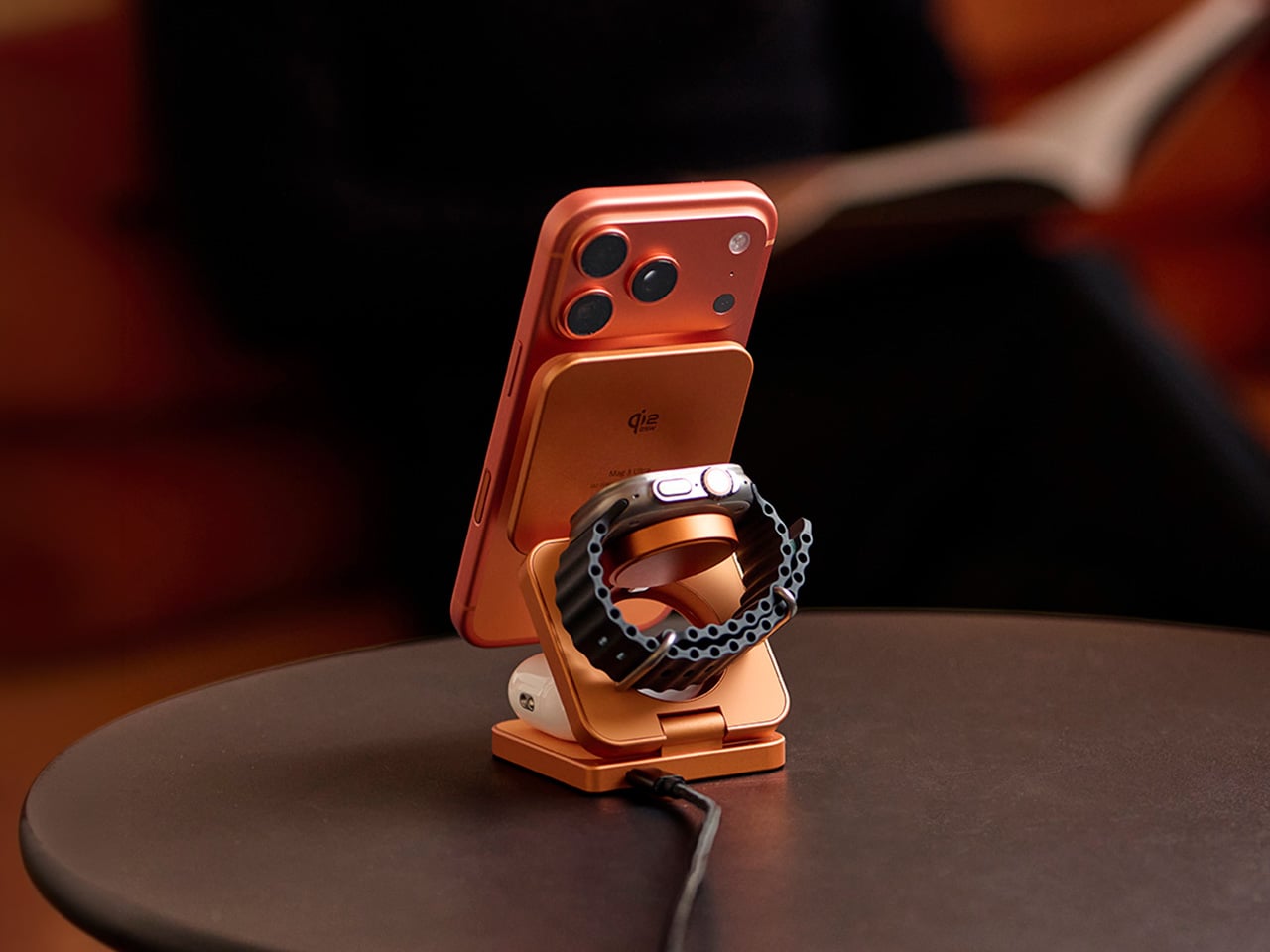
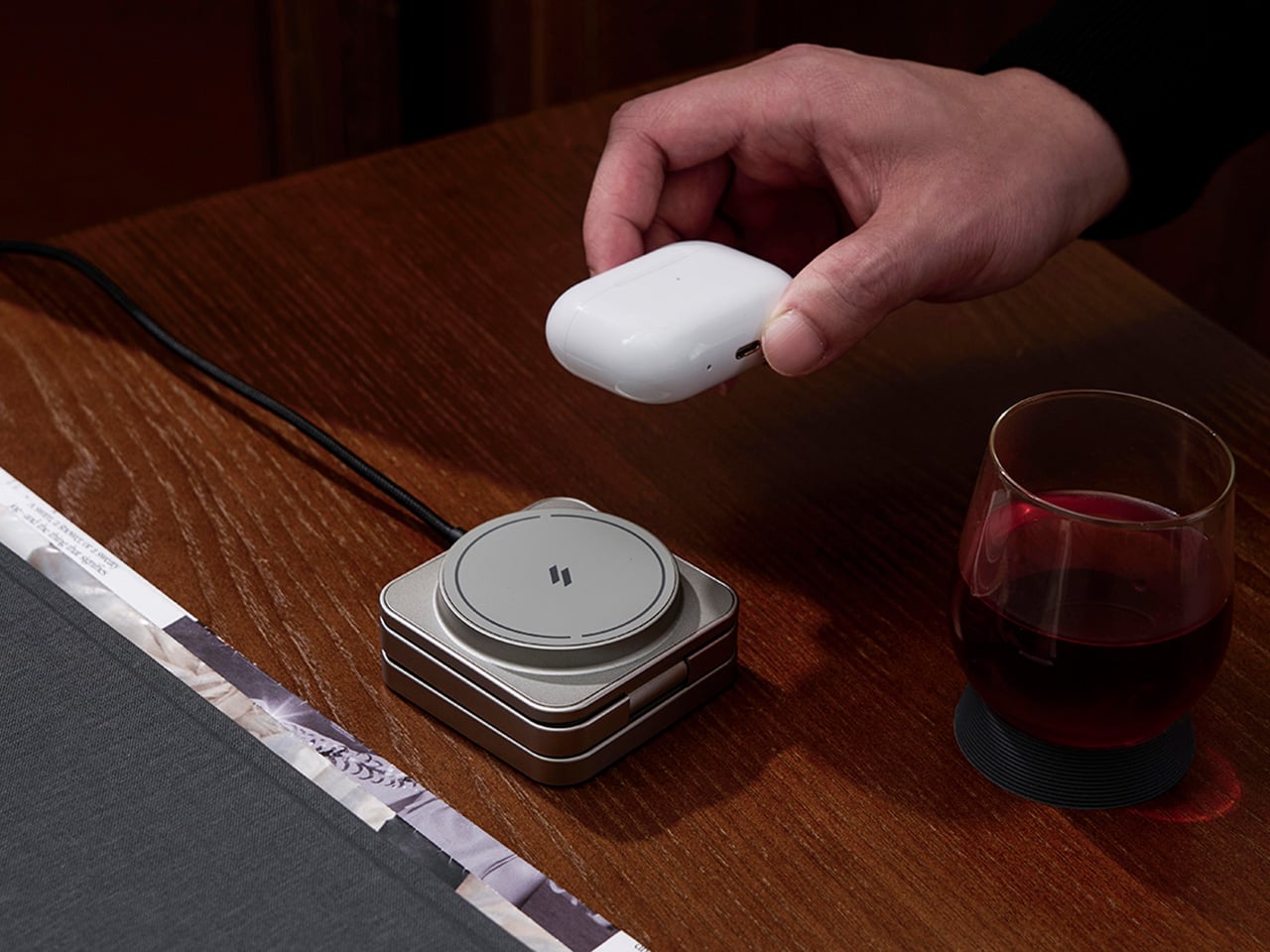
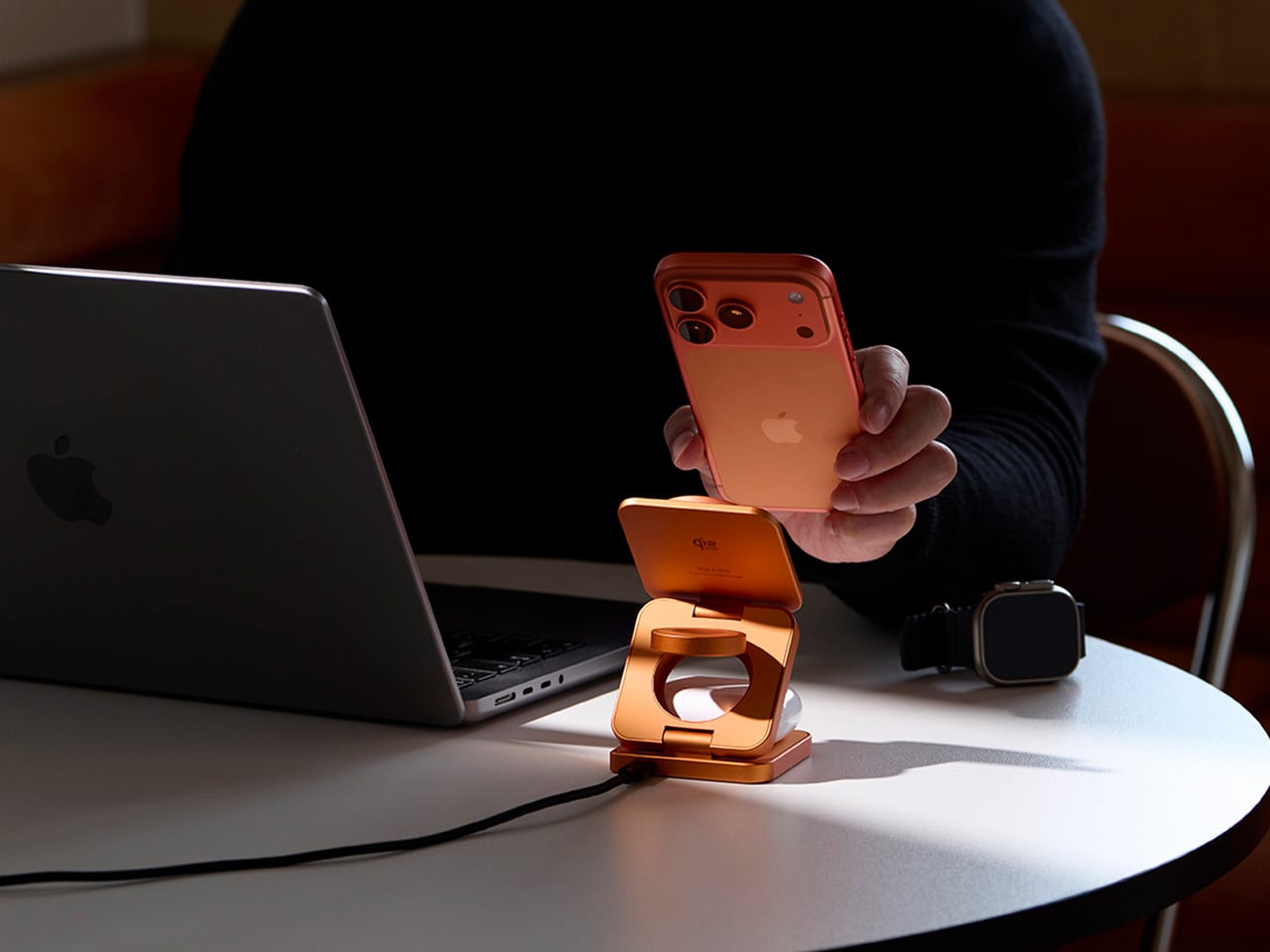
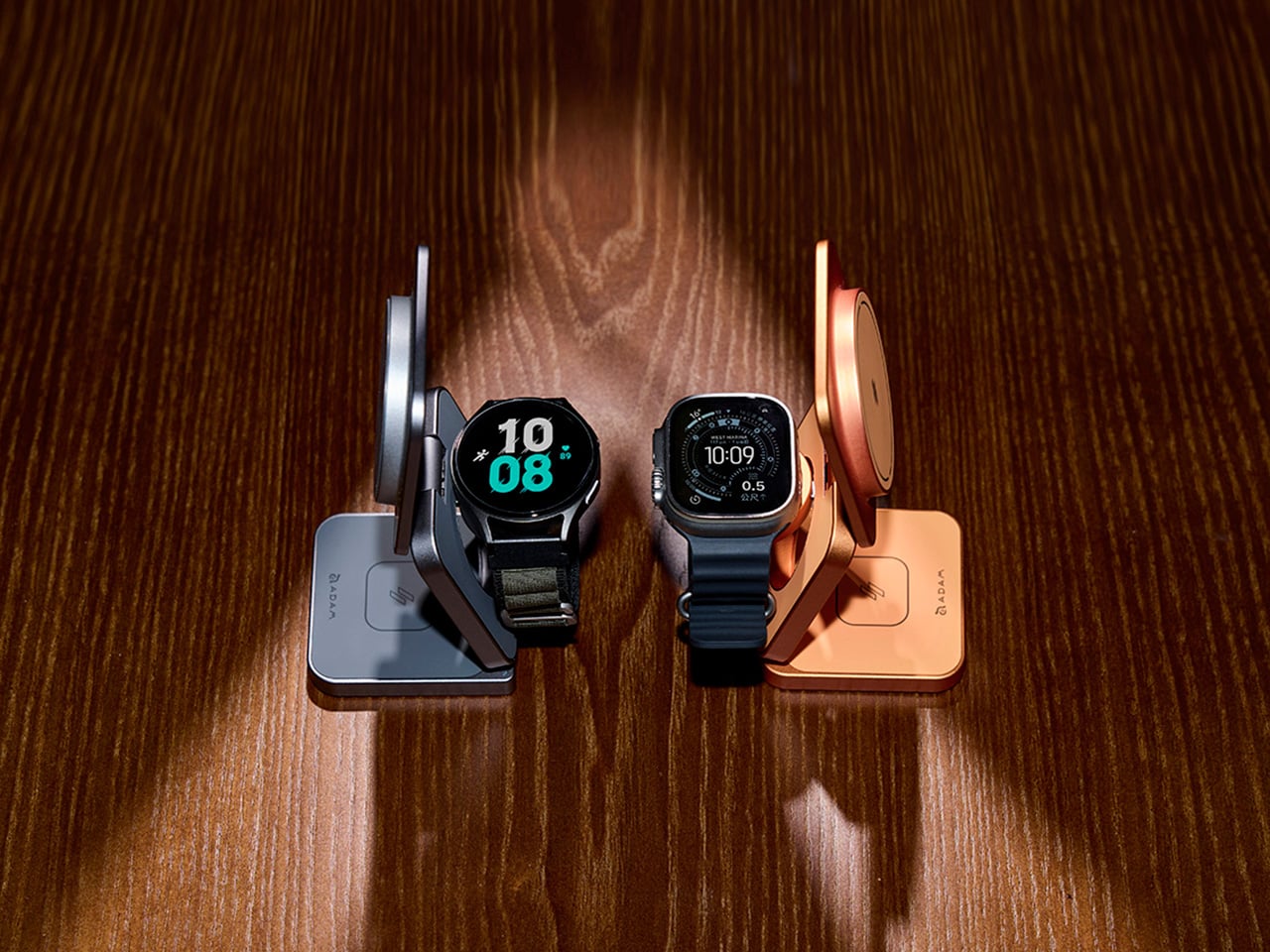
It has been nearly a decade since Apple stood on stage and showed the world a glimpse of a perfect, seamless charging future. They called it AirPower, a pristine white mat where your iPhone, Apple Watch, and AirPods could all charge together, no matter where you placed them. It was the ultimate expression of the company’s “it just works” philosophy. Then it vanished, becoming a ghost in the machine, a rare public failure that left a gaping hole in their otherwise pristine ecosystem. In the years since, Apple has released a parade of new devices all built for wireless power, yet it has never offered its own solution to charge them all at once, leaving users to fend for themselves in a tangled mess of cables.
This is the chaotic legacy of that broken promise; a nightstand cluttered with a magnetic puck for the phone, a separate dongle for the watch, and a dedicated spot for the AirPods. Into this void steps the ADAM elements Mag 3 Ultra, a device that feels like the pragmatic, real-world answer to the problem Apple created and then ignored. It is a single, intelligent object that consolidates the cornucopia of chargers into one clean, foldable station, while bringing the kind of premium technical muscle Apple never delivered itself, including Qi2 support and up to 25W magnetic fast charging. With a satisfying magnetic click, your entire daily tech trio finds its home, transforming the wire-filled mess into an organized, architectural display. It is the elegant solution the industry had to build for itself.
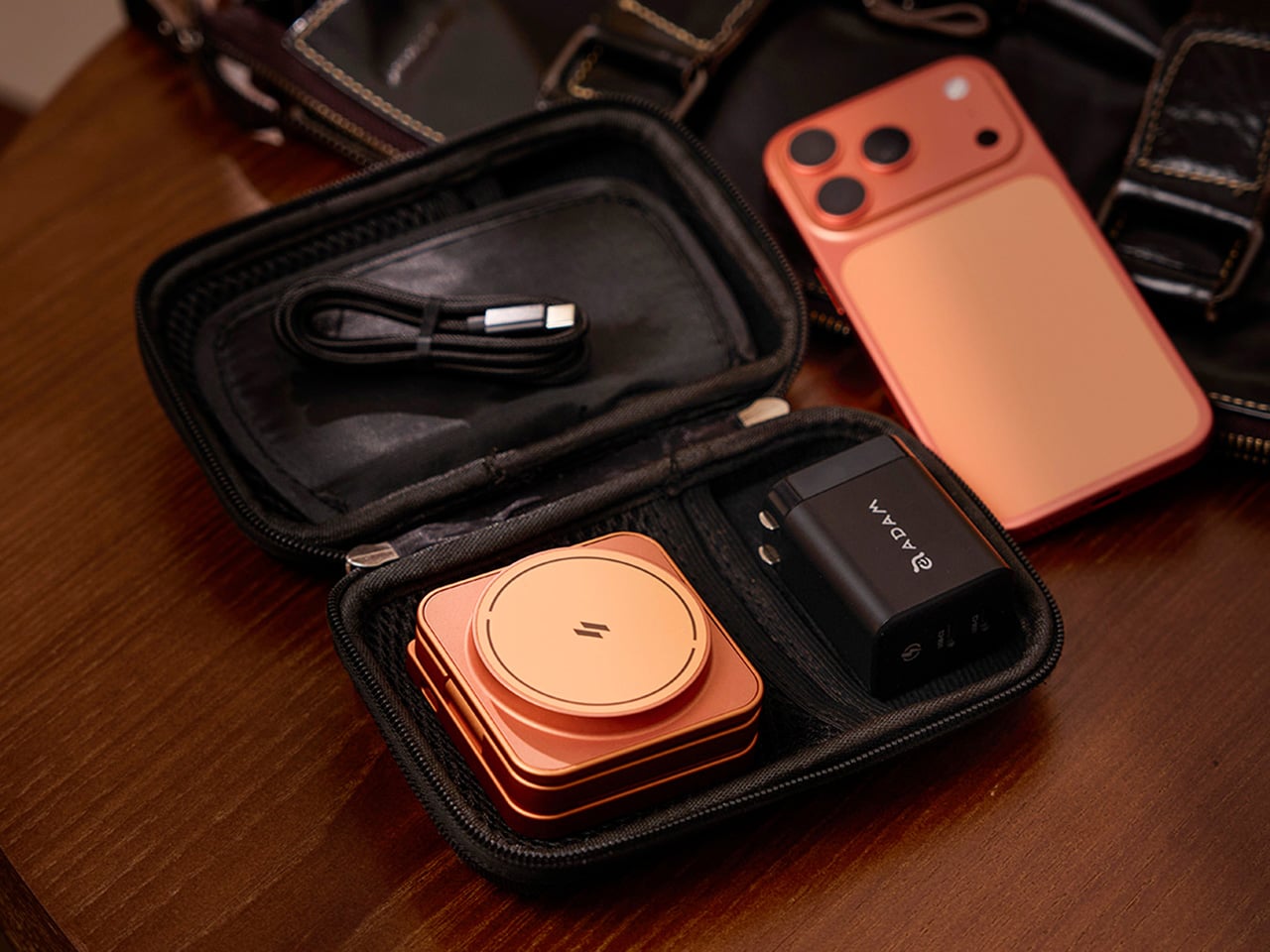
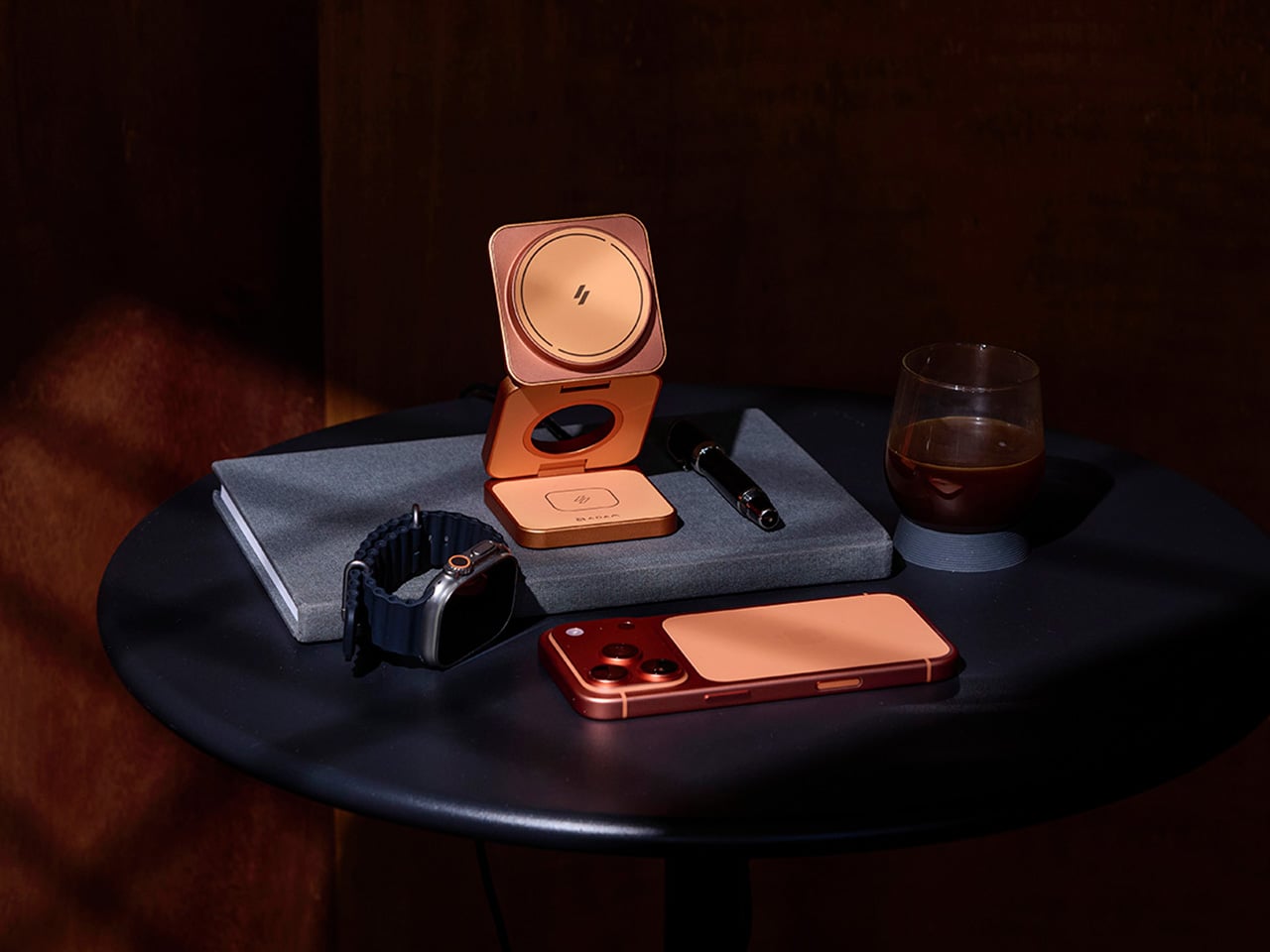
Built from an aluminum alloy body with a metallic finish, the Mag 3 Ultra arrives in a warm copper-orange colorway that immediately separates it from the sea of matte black and sterile white accessories dominating the category. The geometric form has a considered quality to it, with rounded corners softening the overall profile while the silhouette reads more like a designed desk object than a utility accessory. It looks genuinely at home on a nightstand or a workstation, which is precisely the point.
In its collapsed state, the Mag 3 Ultra folds flat into a compact square barely thicker than a deck of cards, slim enough and light enough to slip into the side pocket of a laptop bag without a second thought. Opening it triggers a proper transformation. The magnetic phone pad rises on an articulated arm, the watch charging ring locks into its position in the middle section, and the base reveals the dedicated AirPods charging zone. The whole structure settles into a stable, deliberate configuration with a hinge that holds its angle without wobble, giving it the kind of solid feel that justifies the premium finish.
ADAM elements designed the phone charging position with a raised elevation that solves one of the quieter frustrations with most wireless stands. The camera module on modern iPhones is substantial, and a poorly designed dock will let it press against the body of the stand, creating an awkward tilt or contact point. The elevated pad here keeps the camera completely clear, allowing the phone to sit flush and properly upright. Magnetic alignment snaps the iPhone into place with MagSafe-level precision, and the stand accommodates both portrait and landscape orientations. That landscape mode makes it genuinely useful as a StandBy display, propped up and charged while serving as a live clock face, notification board, or ambient photo frame.
Beyond simply charging three devices at once, the Mag 3 Ultra brings stronger technical value with support for the latest Qi2 protocol and up to 25W magnetic fast charging, giving it a more serious performance edge than the average bedside dock. The Apple Watch connects to its dedicated charging ring with support for fast charging across newer Apple Watch models, while the base pad handles AirPods with standard Qi wireless that works with any wireless-capable case. All three devices charge simultaneously, without any of them competing for priority or slowing each other down. To maintain that full 25W wireless charging performance consistently, ADAM elements recommends pairing the Mag 3 Ultra with a USB-C power adapter rated at 45W or higher on a single port.
The engineering behind the safety features is also well considered. The Mag 3 Ultra includes FOD, Foreign Object Detection, which prevents the charger from pushing power through metal objects like coins or cards that might accidentally land on the pad, protecting both the station and whatever is sitting on it. Overcharge, overheat, and short-circuit protection round out the suite. A small LED indicator on the phone and earbuds charging area communicates status simply and without fuss; white light for active charging, no light during standby or watch charging, and a flashing blue signal when a foreign object or over-temperature event is detected.
At $109, the Mag 3 Ultra sits in the premium tier of the 3-in-1 charging category, but ADAM elements gives it enough visual personality and technical reassurance to support that positioning. It comes in three finishes, Titanium, Orange, and Gray, each one lending the charger a different mood, from understated and technical to warm and expressive, while the inclusion of a 3-year warranty adds a welcome layer of peace of mind for something designed to live permanently on a desk or nightstand. That range really draws the difference between most regular chargers and the Mag 3 Ultra, because this is exactly the kind of product that stays out in the open every single day, where color, material, and long-term confidence can make the difference between something you tolerate and something that actually belongs in your space.
The best desk objects don’t announce themselves. They sit there, do something precise, and let the result speak. This list is built around that standard. Each product here lives under $100 and does something that either shouldn’t be possible at the price, or solves a problem so cleanly you wonder why nobody designed it this way sooner. Some make things. Some reveal things. Some remove friction you stopped noticing years ago.
The $100 ceiling matters because it’s where expectations drop. It’s the bracket where most people accept products that are simply fine. The eight objects on this list are not fine. They’re quietly exceptional, each one capable of a moment that makes whoever sees it on your desk stop and ask where you found it. No trade show exclusives, no luxury markups. Just products that deliver something genuinely impressive and cost less than a dinner for two.
1. OrigamiSwift Folding Mouse
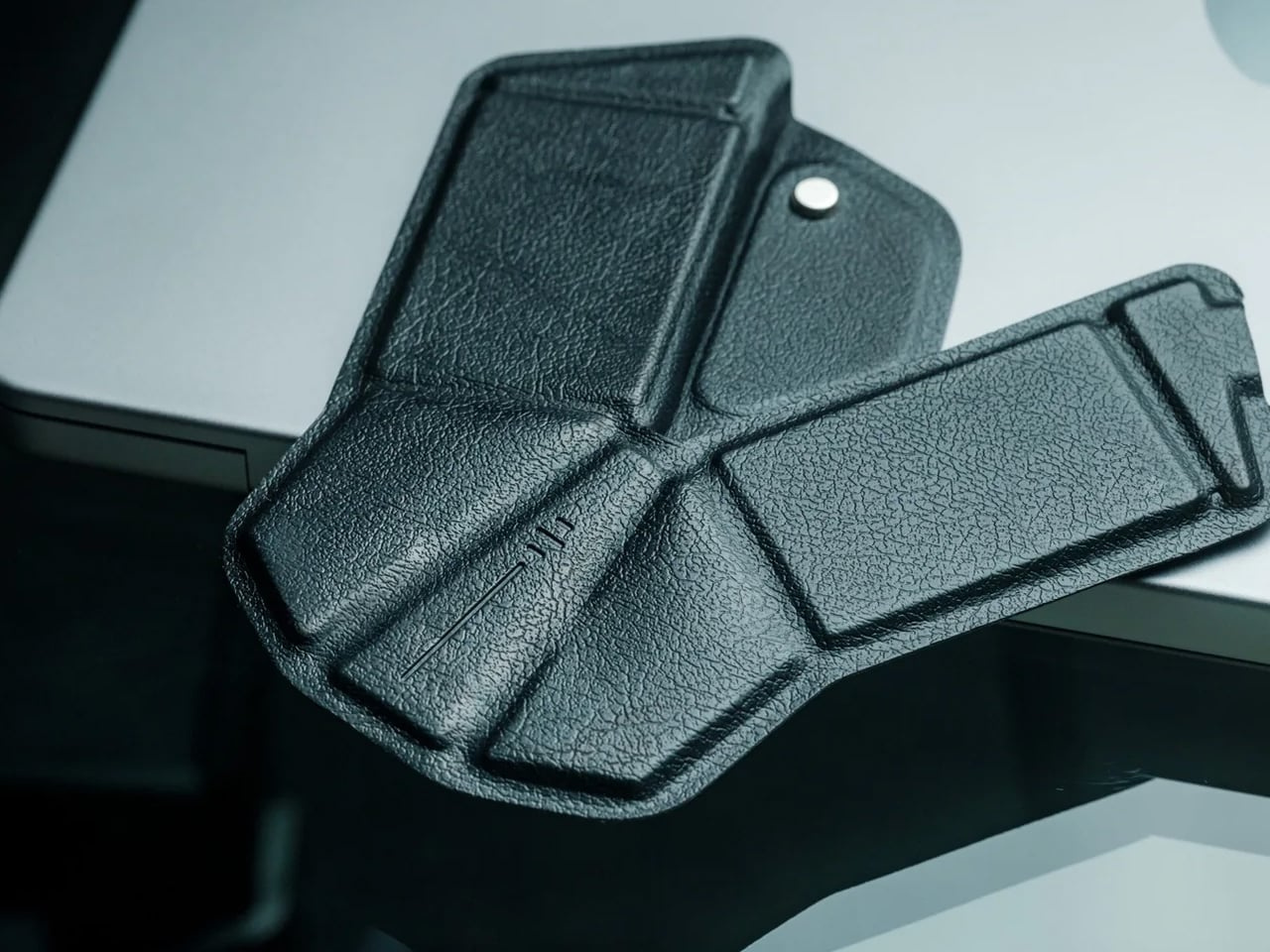
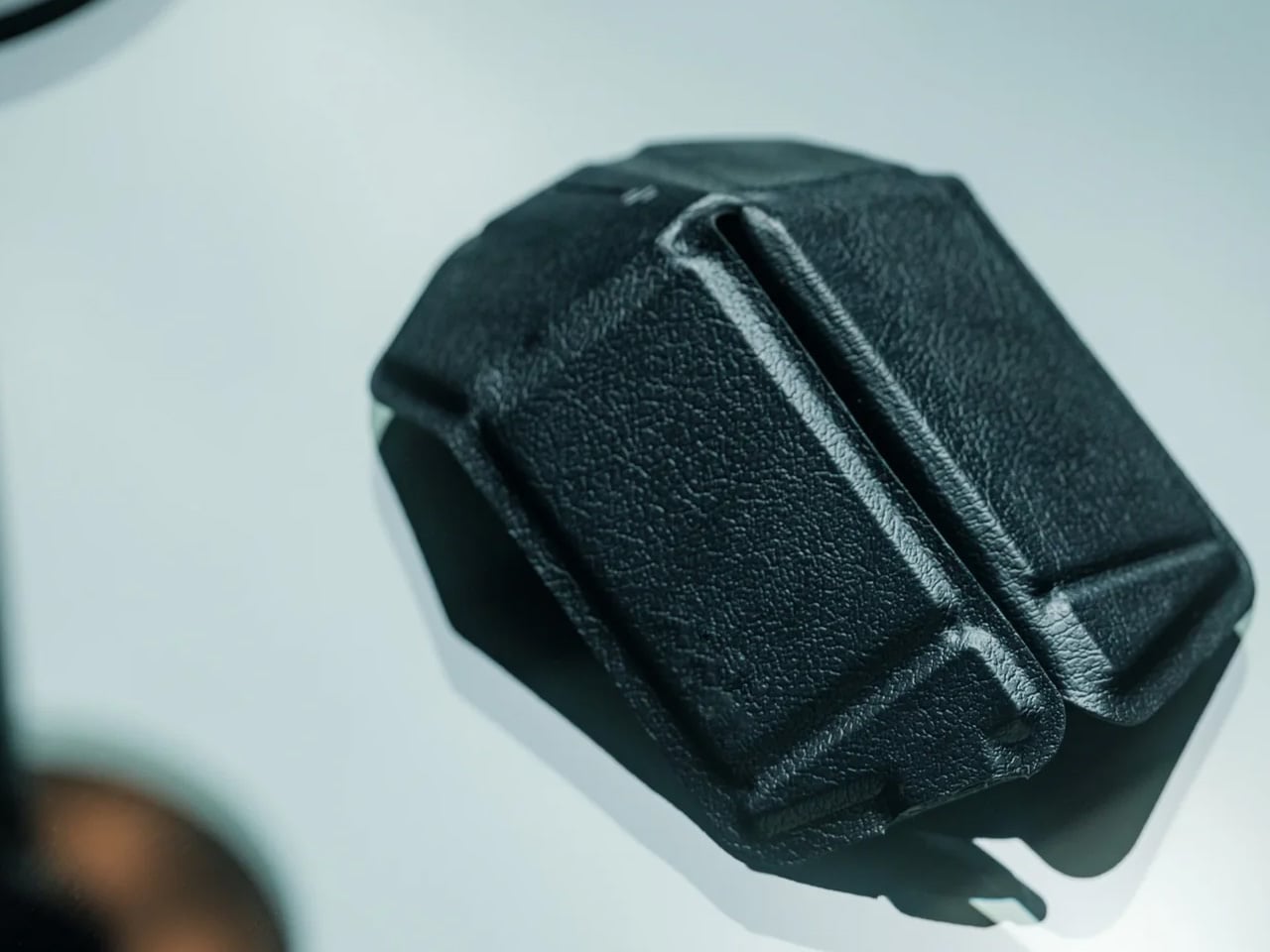
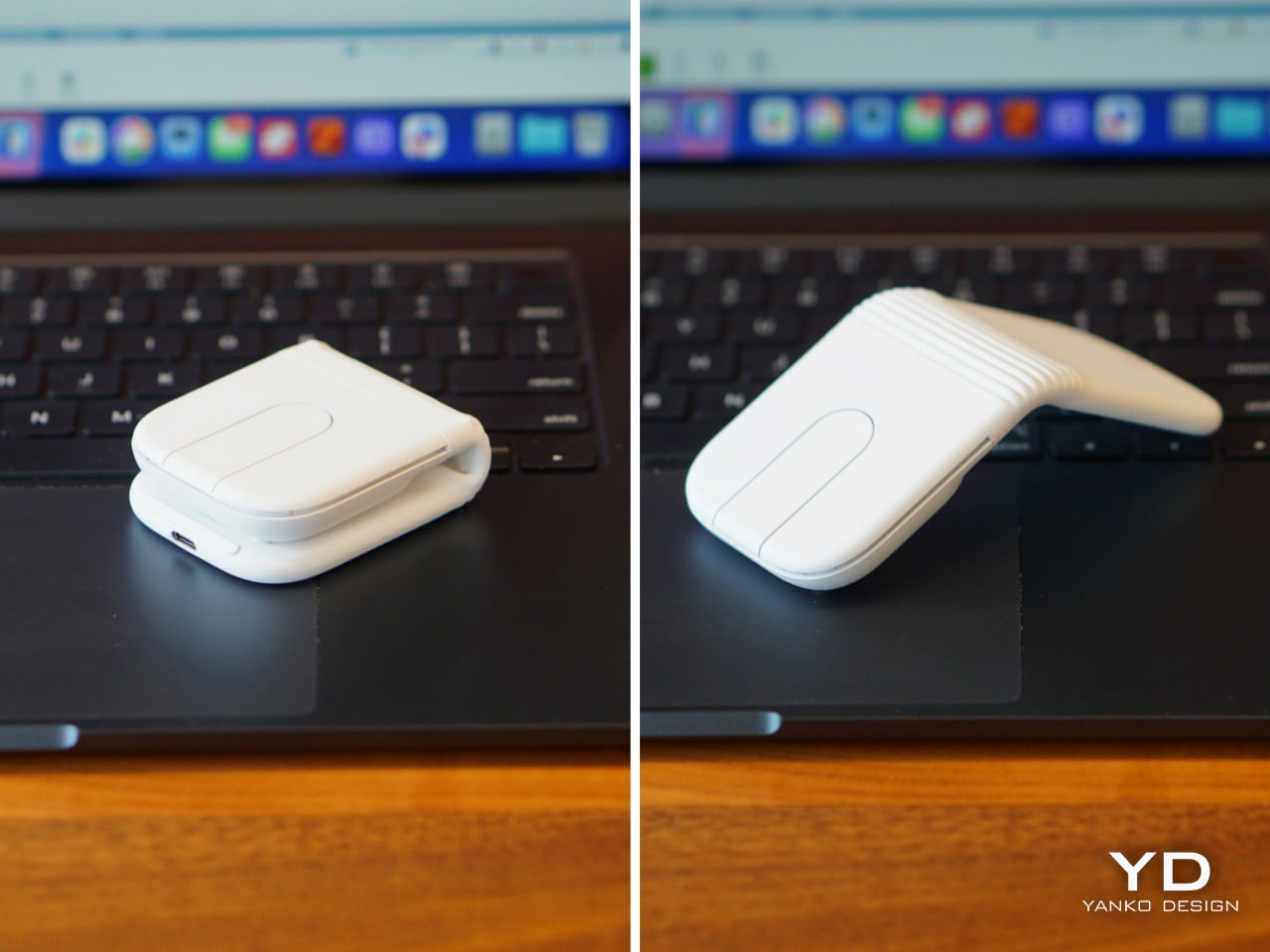
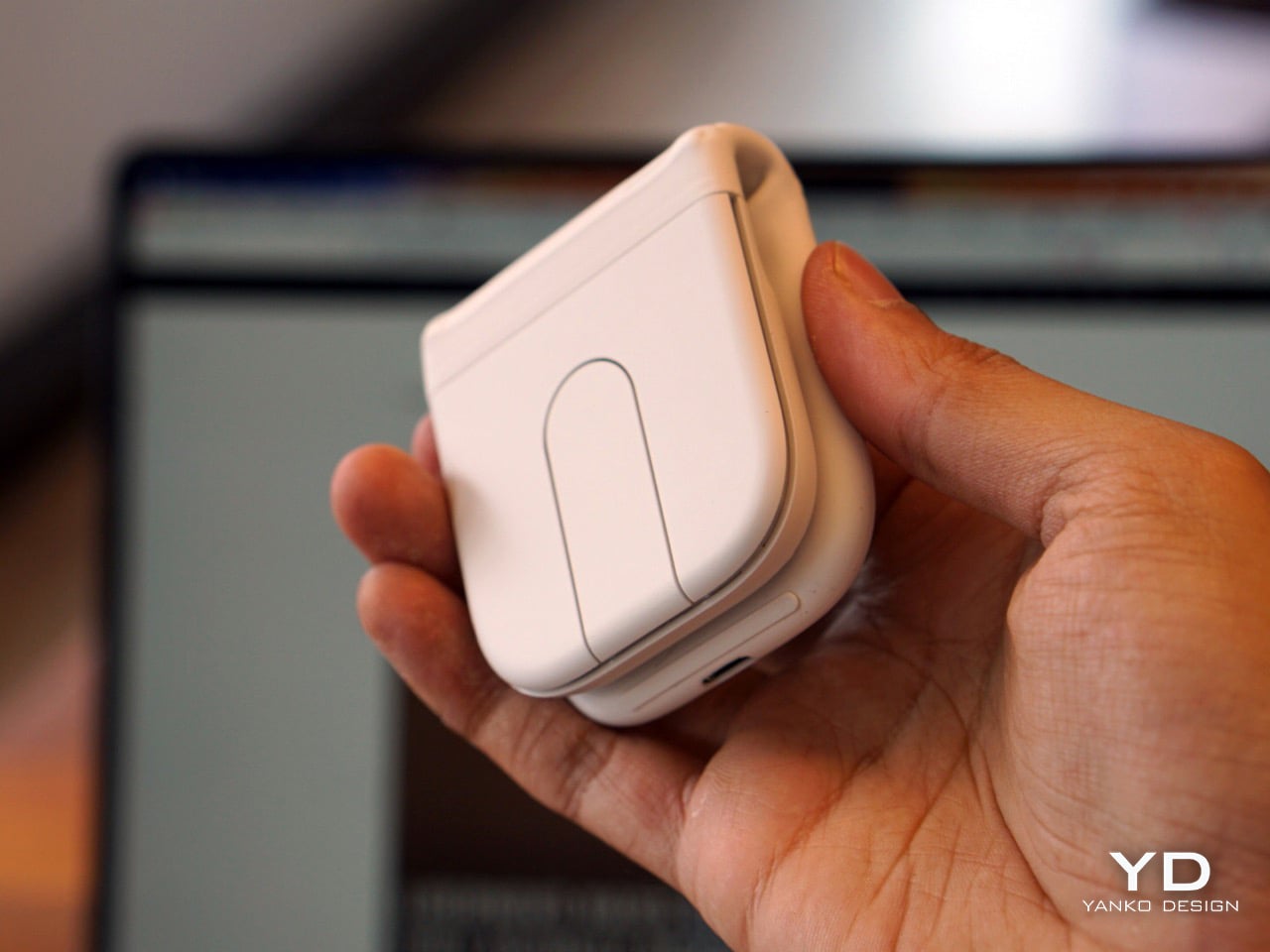
The OrigamiSwift folds completely flat at 4.5mm and weighs 40 grams. Unfold it, and the triangular origami-inspired structure opens into a full-sized ergonomic Bluetooth mouse in under half a second. Designed by Horace Lam, its geometry draws from the structural logic of origami, where the same fold that makes paper rigid under load makes this mouse precise and comfortable under a hand. It connects over Bluetooth without a dongle and performs with the accuracy you’d expect from a standard desktop mouse.
The impressive quality is the transition between states. The mechanism that takes it from 4.5mm of folded geometry to a full ergonomic mouse is a single gesture and works every single time. For anyone working from a bag, a café, or a hotel desk, a mouse that packs to the thickness of a few credit cards removes the last reason not to carry one. The design is precise enough to leave out on a desk as an object in its own right. At $85 from the YD Shop, it is one of the few mice that earns the word beautiful without trading function away to get there.
Folds to 4.5mm and 40 grams, making it genuinely pocketable for the first time
The design holds up as a standalone object on any desk, not just inside a bag
What we dislike
No traditional raised scroll wheel, which takes a brief adjustment period
Higher price point than other compact mice operating at the same performance level
2. Hanboost T1 Portable Laser Engraver
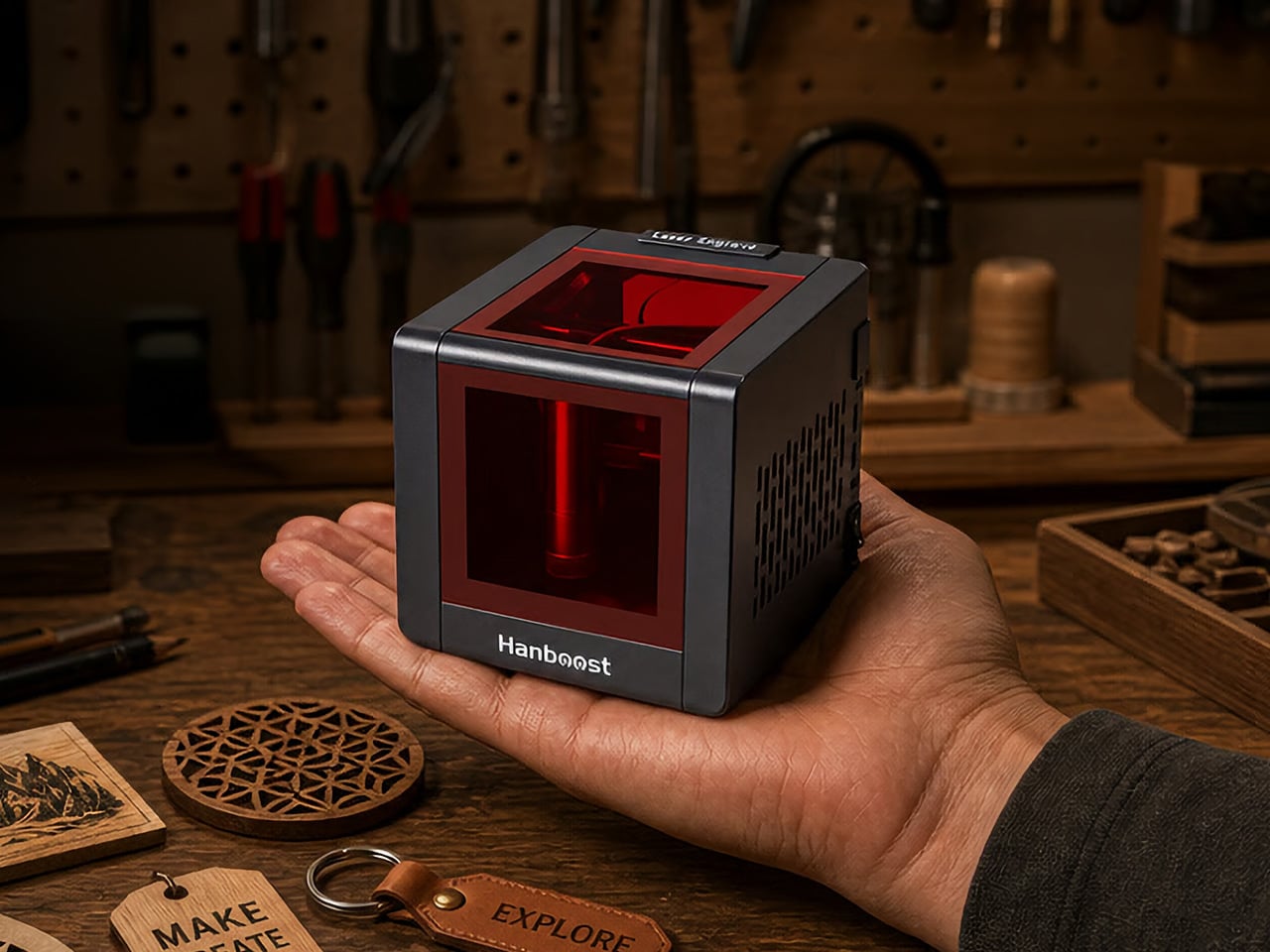
Most laser engravers come with requirements: a dedicated room, a wall outlet, protective eyewear, and a ventilation setup that rules out most apartments before you’ve even turned the machine on. The T1 removes all of it. It measures 115 by 115 by 115 millimeters, weighs 400 grams, runs off any standard USB-C connection including a power bank you already own, and comes fully enclosed with an OD4+ viewing window that lets you watch the engraving process without any eye protection required.
The engraving area covers 60 by 40 millimeters and handles wood, leather, fabric, cork, and cardstock on the standard 500mW module, with bamboo, painted metal, and dark acrylic opening up on the optional 1.6W Pro upgrade. Accuracy sits at 0.05mm, fine enough to render botanical line work or small portrait engravings you’d expect from equipment many times its size. It works with LightBurn and LaserGRBL for experienced makers, and with the MKSLaser mobile app for a clean three-step phone-based workflow.
Fully enclosed OD4+ window means no goggles, no workshop, no excuses
USB-C and power bank compatible, making it the most portable capable laser engraver at this price
What we dislike
The 60 by 40mm engraving area limits it to smaller objects and flat surfaces
3. iMicro Q3p Phone Microscope Lens
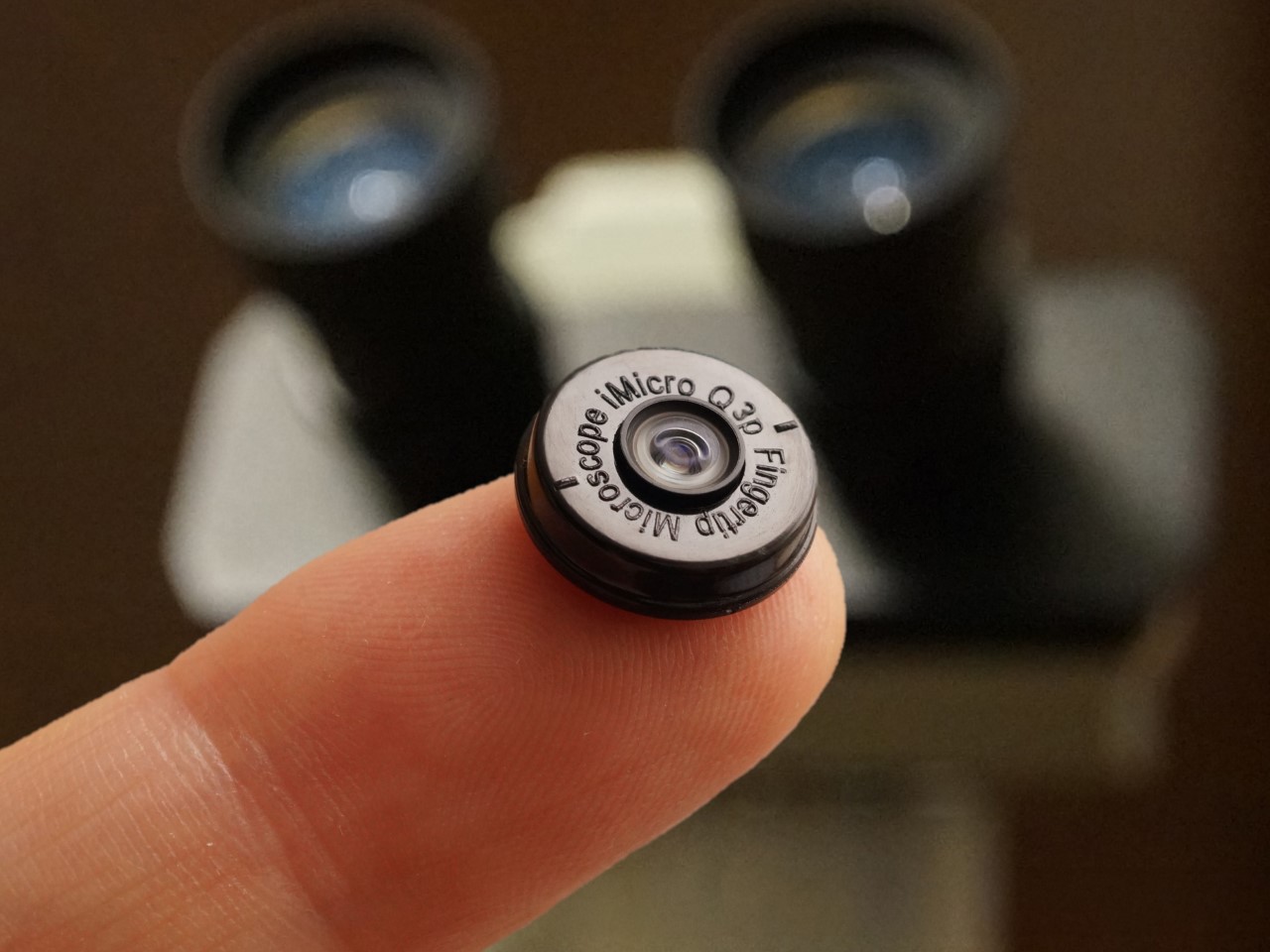
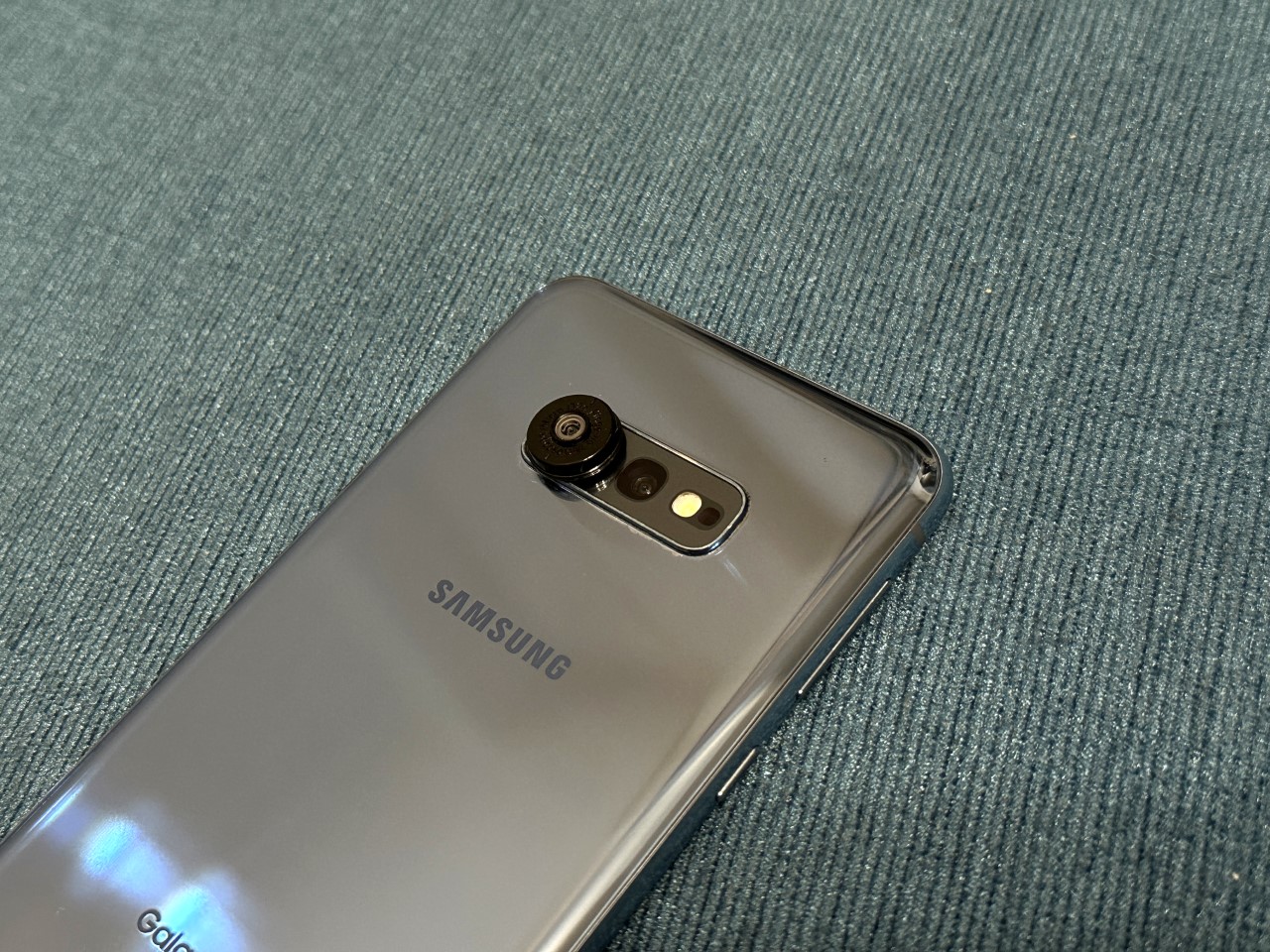
The iMicro Q3p is a fingertip-sized clip-on lens that gives your phone camera 1200x magnification. That number doesn’t mean much until you point it at something ordinary. The fiber weave of a cotton T-shirt looks like aerial rigging. A single grain of salt becomes a translucent cube the size of a building block. The printed surface of a business card reveals ink dots arranged in formations too fine for the naked eye to register. The whole attachment weighs almost nothing and fits in a pocket alongside the phone it transforms.
At $40, it sits at the most satisfying end of the price-to-capability ratio available in consumer products right now. No software installation, no charging, no compatibility friction — if your phone has a camera, this works with it immediately. For designers, the material and surface detail it reveals is genuinely useful reference. For anyone curious about the physical world at a scale they’ve never seen, it’s the kind of object you expect to use once for novelty and end up reaching for regularly. Point it at the output from the T1 laser engraver on this list and the 0.05mm linework looks like it came from a machine ten times the size.
What we like
1200x magnification from something the size of a fingertip, costing $40
No charging, no software, no setup required — clips on and works immediately on any phone
What we dislike
Any hand movement is heavily amplified at this magnification, requiring a very steady hand
Best results need bright, even lighting to get clean detail
4. HubKey Gen2
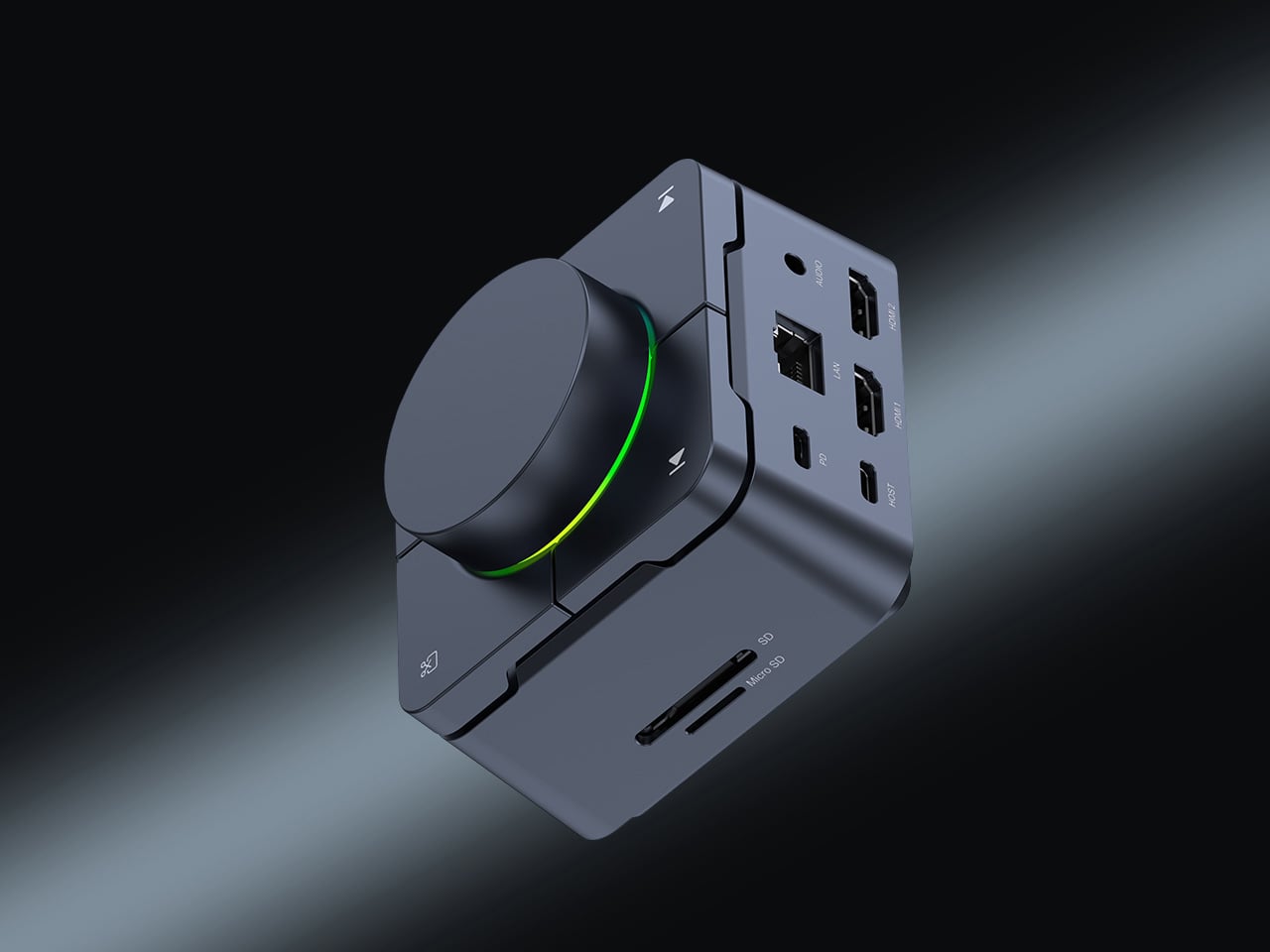
The HubKey Gen2 is a compact USB-C hub that consolidates an entire desk’s worth of connectivity into one object small enough to sit beside a laptop without demanding its own footprint. A single USB-C cable opens up ports for storage, display output, charging, and peripherals simultaneously. The design principle is one cable in, everything out — the kind of desk simplification that sounds obvious until you’ve actually lived without cable sprawl for the first time and noticed how much visual noise the old setup quietly carried.
What separates it from most hubs is where it lives. The majority of hubs are functional objects that hide behind monitors or dangle mid-cable. The HubKey is designed to sit on the desk surface in plain sight, which means its proportions and finish are considered the same way the rest of the objects on this list are. For remote workers and anyone who moves between spaces regularly, it removes the ritual of reconnecting everything from scratch every single time.
What we like
One USB-C cable replaces an entire tangle of individual connections
Designed to sit on the desk surface in plain sight rather than hide behind equipment
What we dislike
Requires a USB-C host device — not compatible with older USB-A-only machines
Confirm current price and availability directly before purchasing
5. Rolling World Clock
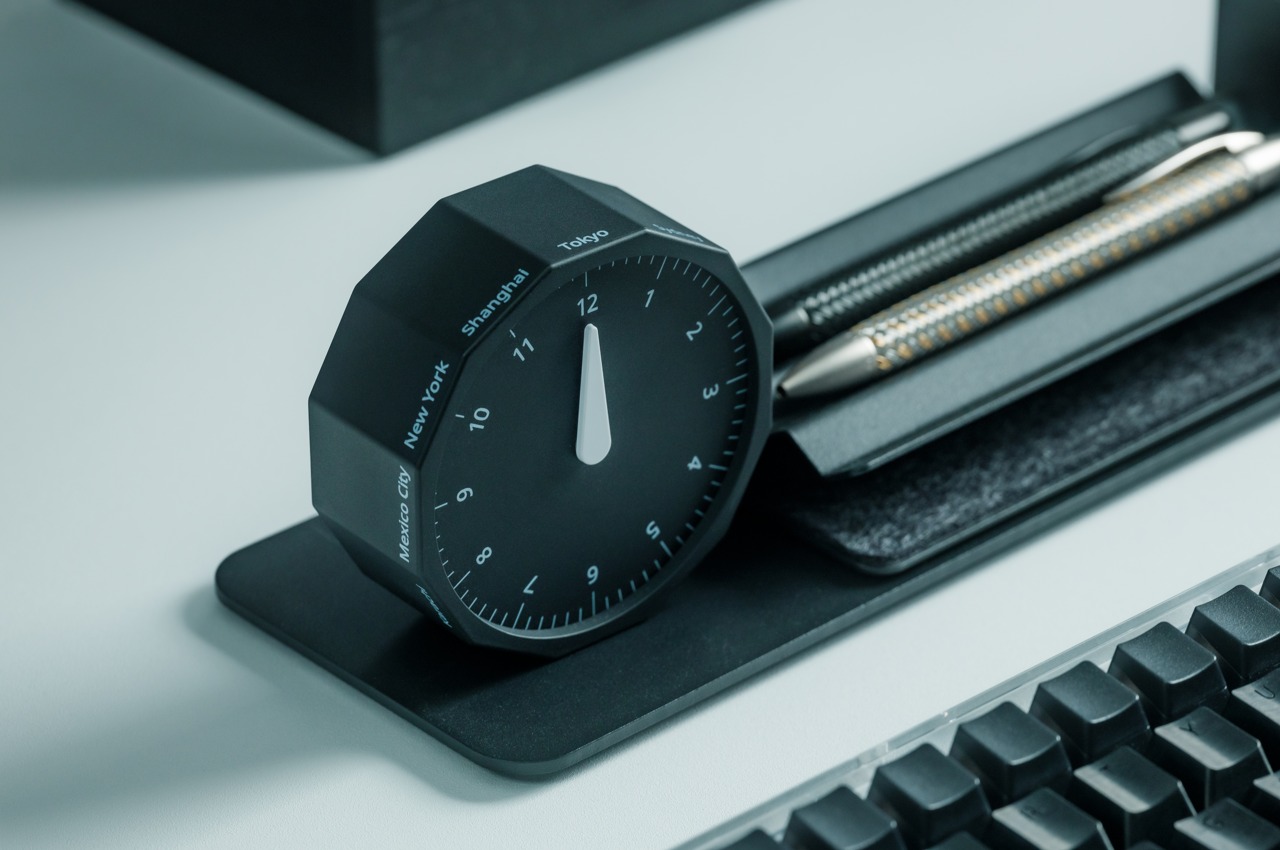
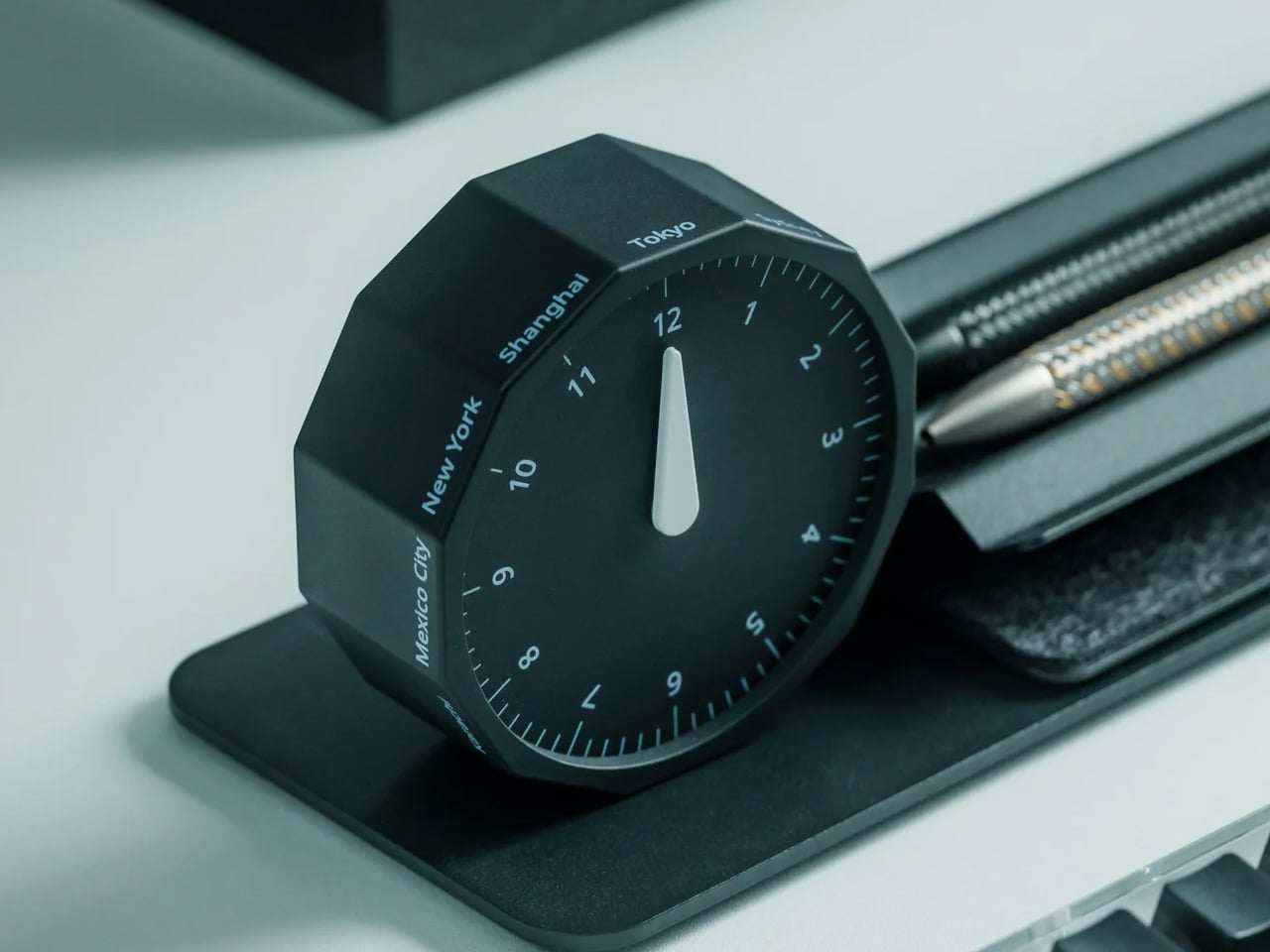
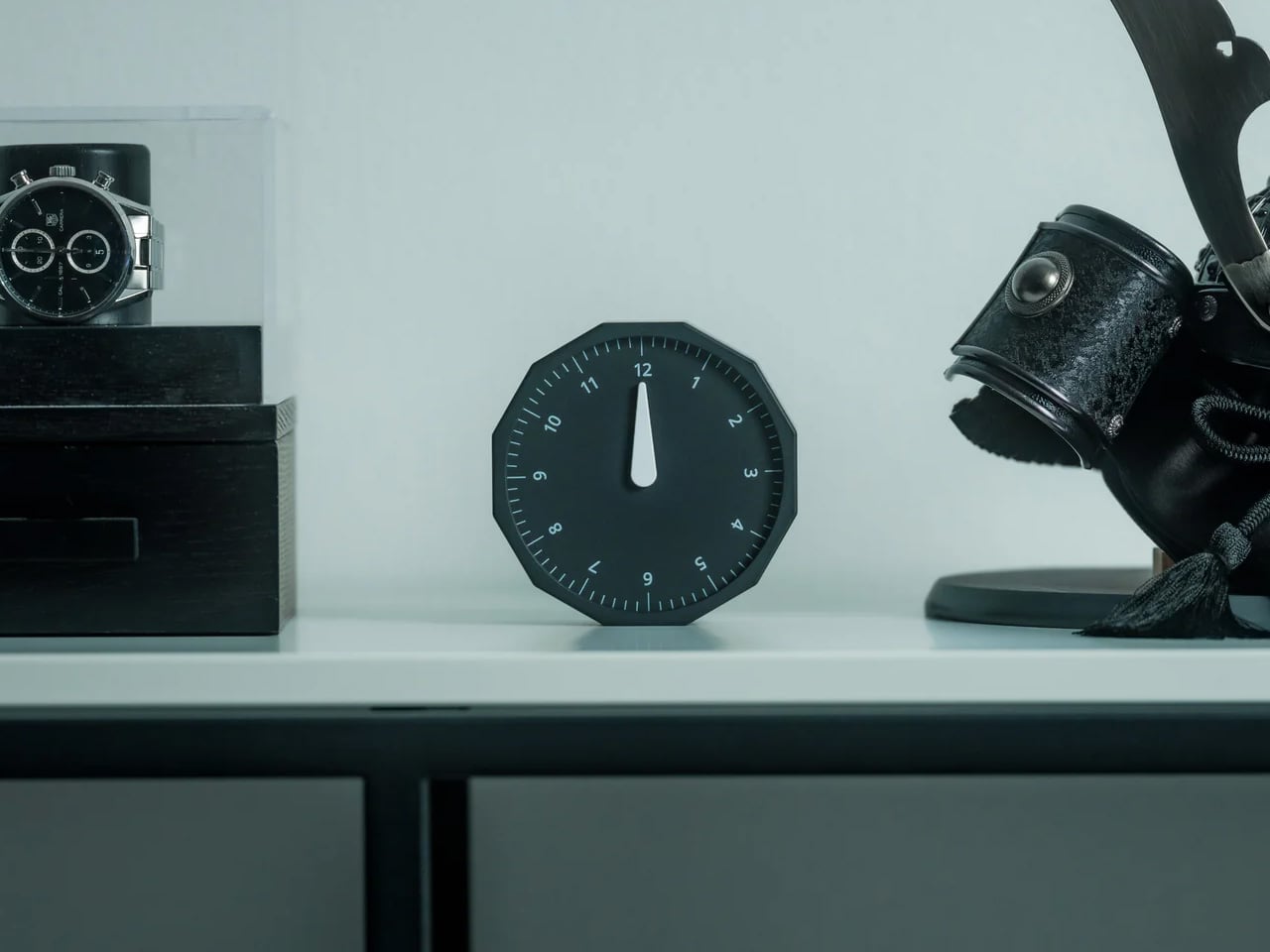
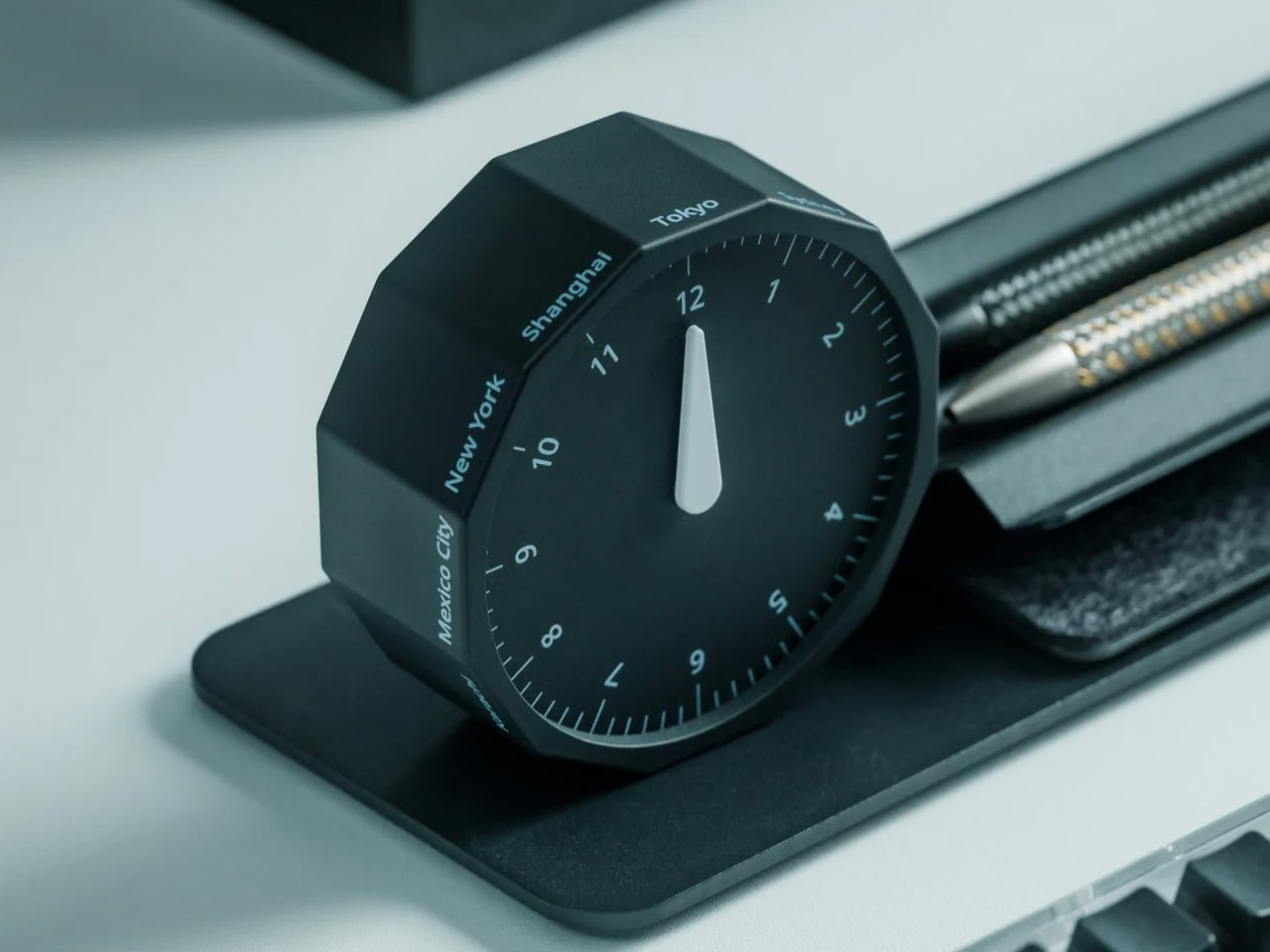
The Rolling World Clock is a 12-sided form with a major timezone city on each face and a single analog hand that tells the correct time in whichever city is pointing straight up. To check the time in Tokyo, you roll it until Tokyo reaches the top position. The mechanism is entirely physical — no battery swap, no digital display, no application required. At 3.2 inches, it sits on a desk without dominating it, and in black or white it reads as a precision object rather than a novelty one.
The quality that earns it a permanent place is conceptual. Every piece of software in the world solves world time zones with a dropdown menu or a settings panel buried three taps deep. The Rolling World Clock solves the same problem with your hand and a dodecahedron. The tactility of rolling it to the city you need and feeling it settle into position is a more satisfying interaction than most digital interfaces have managed. For anyone working across time zones, it earns its desk space on pure utility.
Solves a digital problem through physical interaction, with no screen involved whatsoever
The 12-sided form is precise enough to function as a design object in any setting
What we dislike
The city labels on each face require decent ambient lighting to read quickly at a glance
Limited to 12 cities, so not every timezone has a dedicated face
6. Nothing Power (1) Battery Bank
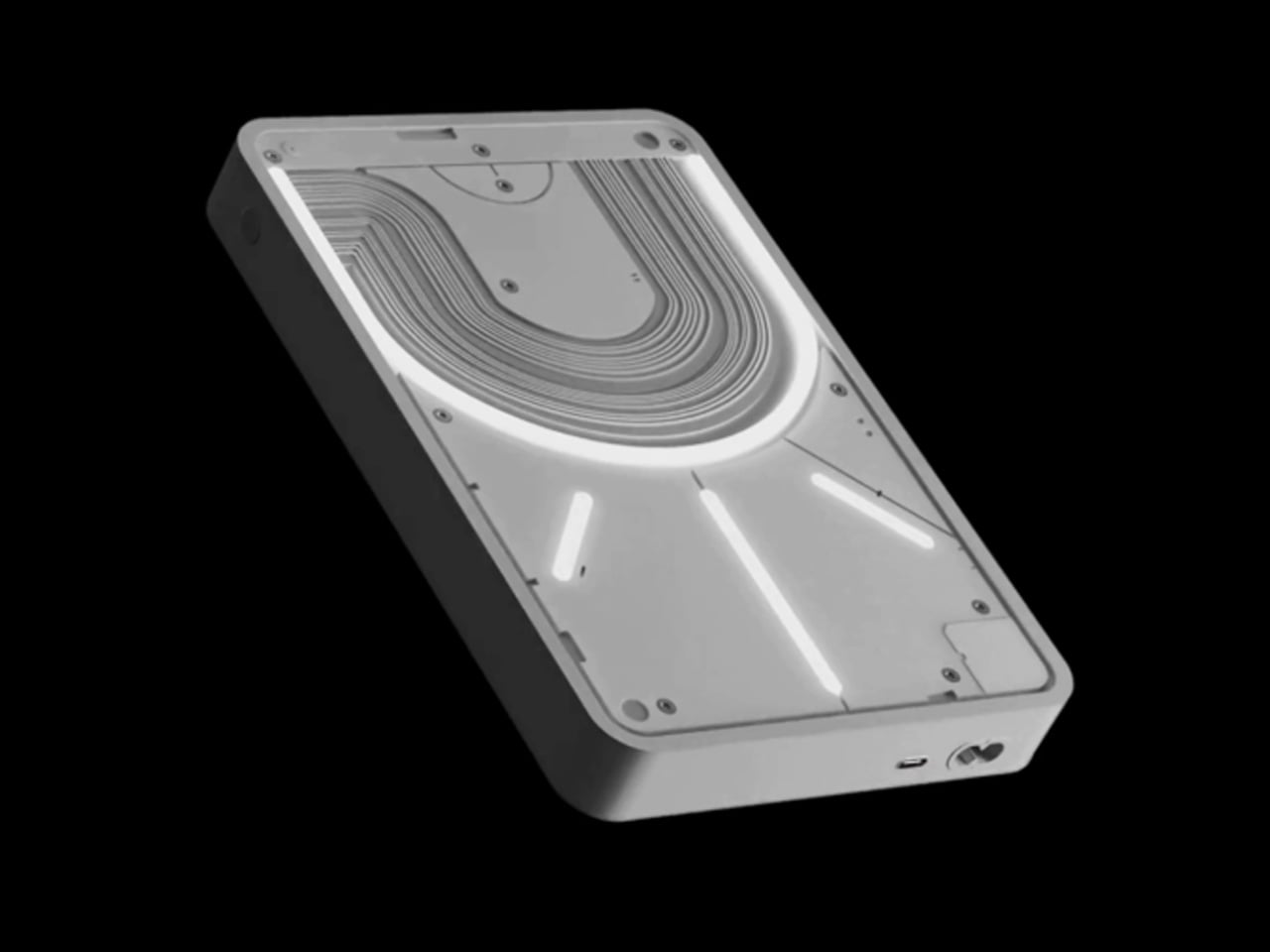
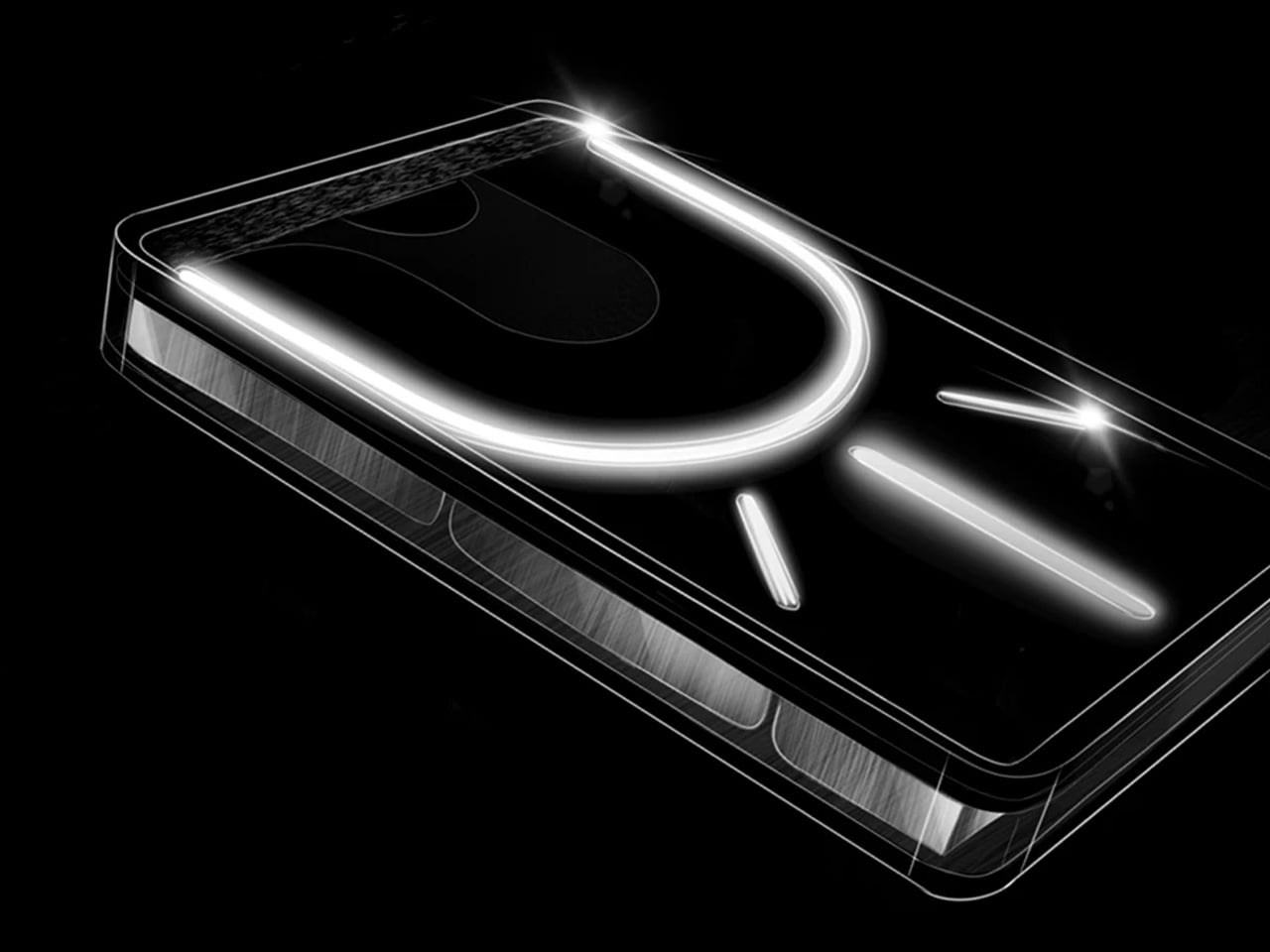
Nothing’s design philosophy is visibility. The Power (1) shows its internals through a transparent casing, turning the battery cells, circuit board, and internal wiring into the aesthetic rather than something to hide behind a matte plastic shell. Most power banks are identical black rectangles that exist purely as utilities. This one is an object you put on a desk because it looks good there, applying the same logic Nothing brought to its phones: the engineering is interesting enough to show, so show it.
The practical case is clean enough on its own — USB-C in and out, covering the everyday needs of a desk setup without the bulk most competing units carry at the same capacity. The design case is stronger. On a desk alongside other considered objects, a power bank that looks like it was designed deserves its place there. It pairs naturally with the T1 laser engraver on this list, which runs off any USB-C source and makes this the most aesthetically coherent way to power it. Nothing has built a following on the idea that objects used daily should be worth looking at. The Power (1) makes that case without needing to say it.
What we like
Transparent design makes the internal engineering visible and genuinely worth looking at
USB-C in and out, compatible with every other device on this list
What we dislike
The transparent casing shows fingerprints and dust far more readily than opaque alternatives
7. Inseparable Notebook Pen
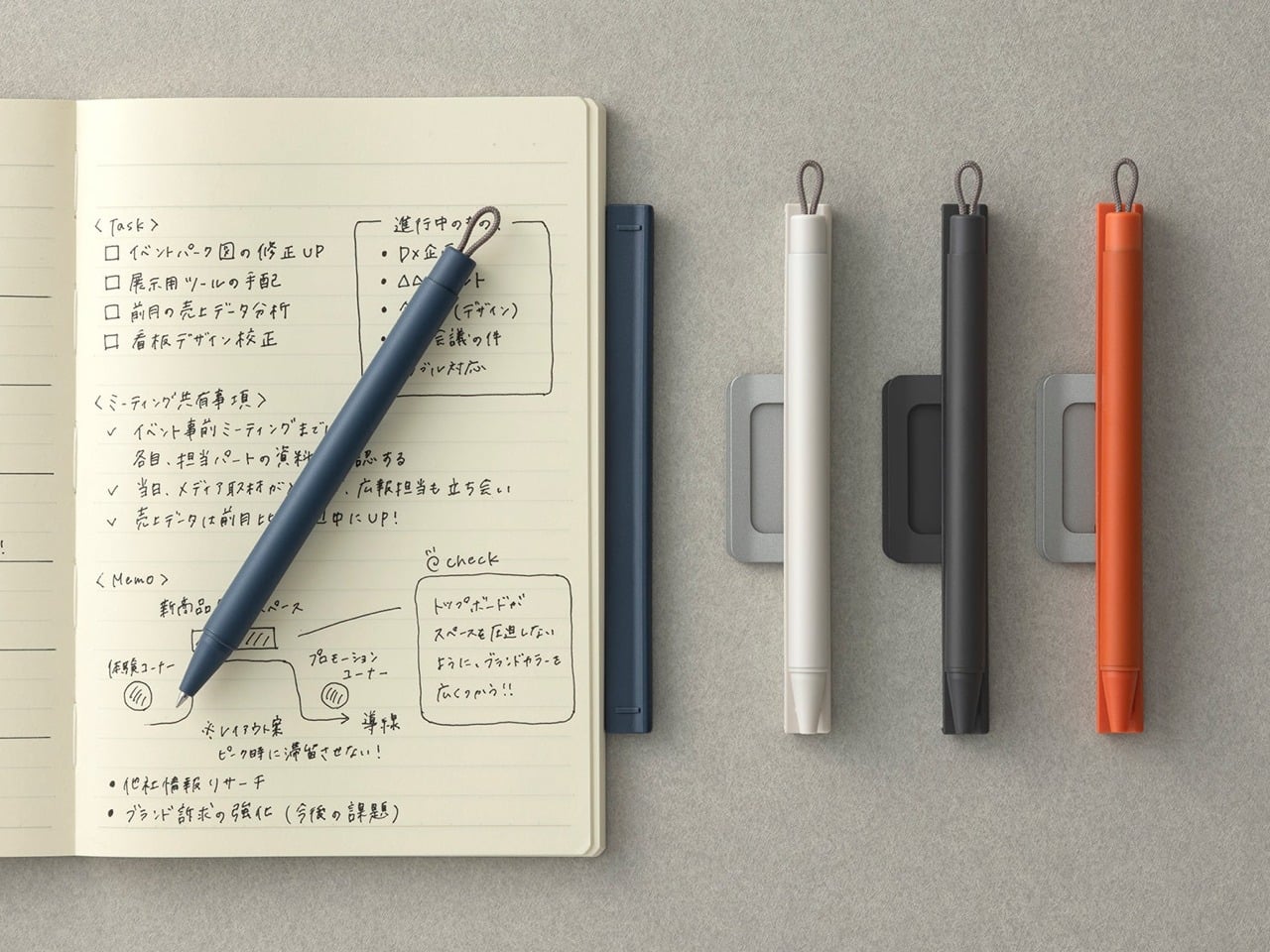
The premise of the Inseparable is exactly what the name describes. The pen and the notebook are one object. The pen lives within the notebook permanently, so reaching for one means having the other. That sounds like a minor convenience until you’ve spent time hunting for a pen that wandered three feet from the notebook you were actively using. The design removes that friction entirely by treating the two as a single tool rather than two separate objects that happen to belong near each other.
What earns it desk space rather than just bag space is how it looks when closed. The combined form is considered enough to sit out in the open without needing to be stored away. For anyone who still does meaningful thinking on paper — real notes, sketches, diagrams, lists that behave differently on a physical surface than on a screen — having that tool presented as one well-made object changes the relationship with the act itself. The desk stops being a surface with things scattered across it and starts being a workspace. That shift is worth considerably more than the price of the pen.
Pen and notebook treated as a single object, permanently solving the searching problem
The closed form is refined enough to leave out on a desk as a design object in its own right
What we dislike
Pen refill replacement requires checking compatibility before sourcing a new one
Confirm current price and availability directly before purchasing
8. Flow Timer
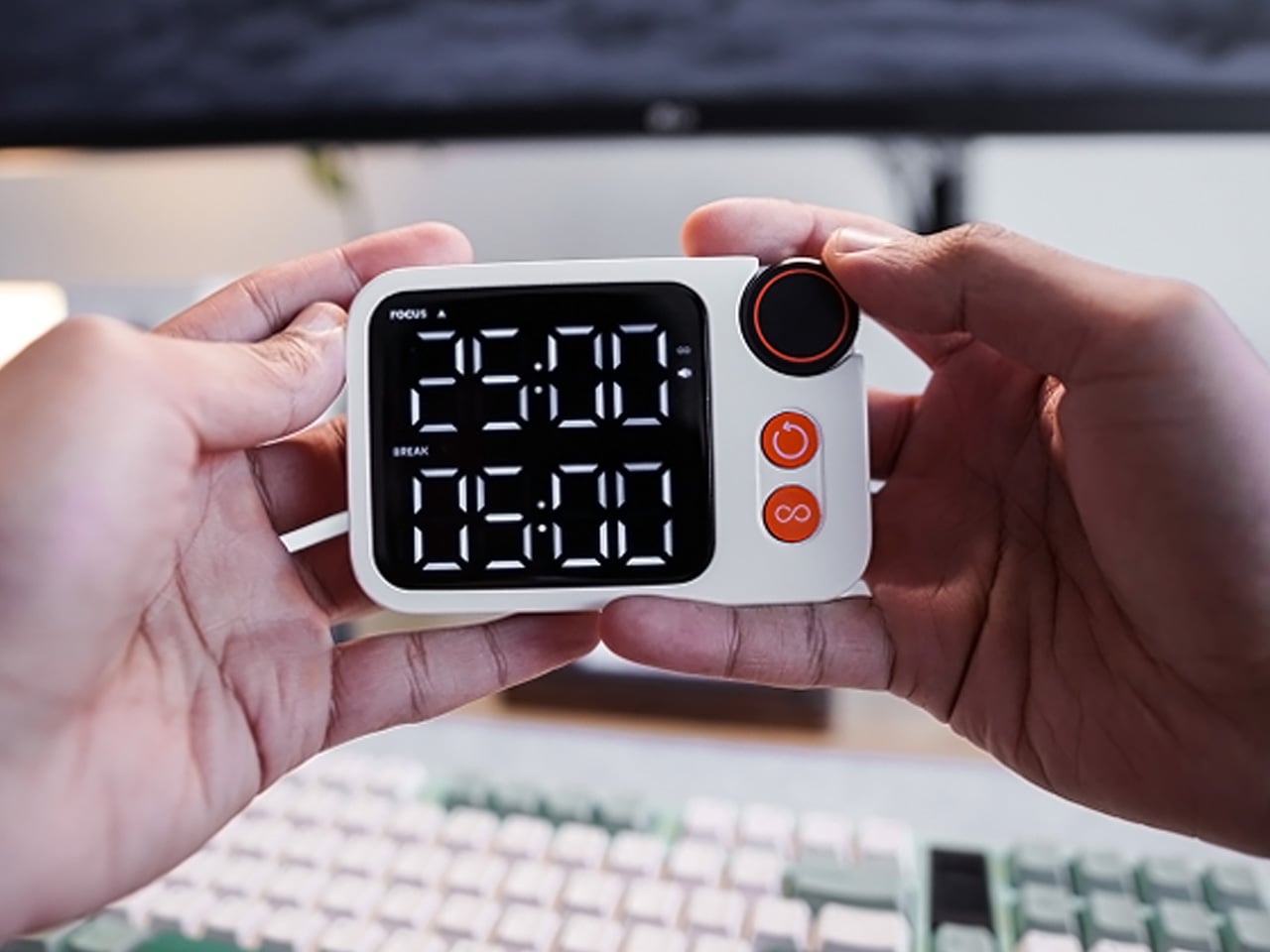
The Flow Timer is a physical desk timer built for focused work sessions. The discipline it creates comes from being a dedicated object — you set it, it counts, it ends the session. Unlike setting a timer on a phone, using this one doesn’t place you on the same surface as your notification feed. Every time you reach for a phone to time something, the phone wins the next several minutes. A timer that lives on the desk doesn’t make that trade and never will.
The design is minimal enough to sit alongside any of the other objects on this list without adding visual noise. Its presence on the desk is a signal: when it’s running, work is happening. When it isn’t, it isn’t. That binary is harder to achieve with software and easier than expected with a well-made physical object. For anyone who wants their desk to do more than hold a laptop, the Flow Timer is a low-cost way to build structure into the environment rather than rely entirely on willpower. It does one thing and asks for nothing back.
What we like
A dedicated physical timer removes the distraction loop that comes with using a phone
Minimal design contributes to the desk environment rather than competing with it
What we dislike
Requires a manual reset after each session, though this quickly becomes part of the ritual
Confirm current price and availability directly before purchasing
The $100 Ceiling Has Moved
The $100 ceiling used to mean compromise. A cheaper version of something better. What this list suggests is that the ceiling has moved — not because manufacturers became more generous, but because design thinking at small scales got genuinely good. The T1 laser engraver, the iMicro lens, the Rolling World Clock: none of them feel like budget versions of something else. They feel like the right versions of themselves, built at exactly the right size and price.
What they share is a refusal to look or behave like their price tag. That’s the quality worth paying attention to — not the spec sheet, not the feature list, but the moment you first use one and realize the number on the label didn’t prepare you for what it actually does. Eight objects. One desk. All of them under $100. None of them feel like it.
The modern workflow is often a series of disconnected actions; typing in one window, clicking in another, and plugging in peripherals just to get started. What’s missing is a central instrument to orchestrate it all, a kind of conductor’s baton for our digital lives. Such a tool would need to do more than just advance a slide; it would need to capture spoken ideas, summon information on command, and translate language in real time, all from a single, intuitive point of control.
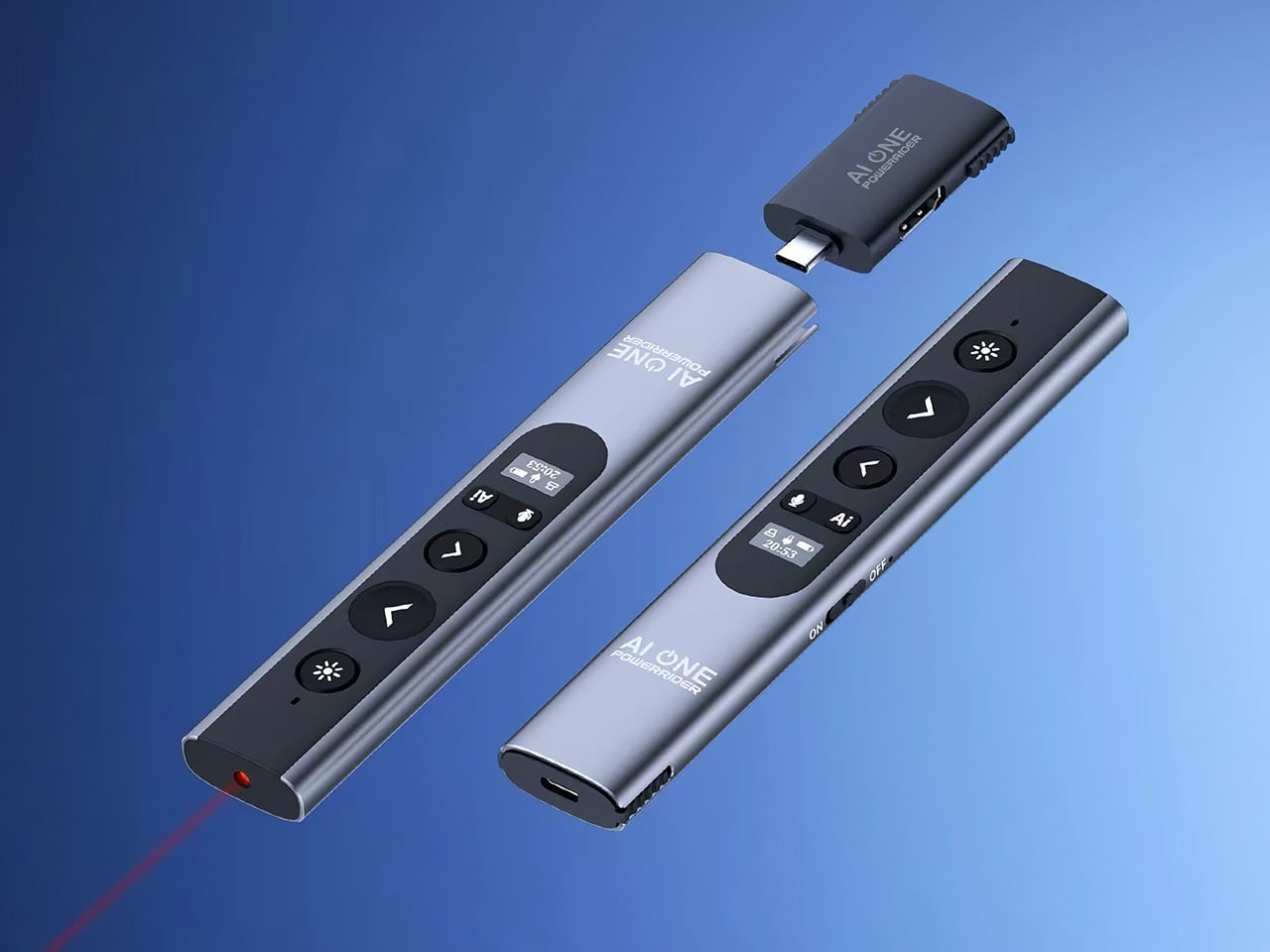
This is the thinking embodied in the PowerRider P1, a device that adopts the familiar form of a presentation remote for a far more ambitious purpose. Its slender, metallic body is designed to feel like a natural extension of the hand, but its power lies in consolidating complex tasks into simple actions. A dedicated AI button puts a language model in your palm, ready for quick queries. The integrated microphone turns the device into a voice input tool for instant transcription, while the clever detachable receiver doubles as a complete connectivity hub for power and video.
The PowerRider handles the fundamentals of presentation control with a modern upgrade. Traditional laser pointers work fine in a physical room, but they become invisible the moment you share your screen over a video call. The P1 addresses this with five digital highlight modes that appear directly on the shared display, visible to every participant regardless of how they’re viewing. These modes include a digital spotlight, a magnifier for fine details, and an annotation tool for marking up slides in real time. The device still includes a physical red laser for in-person settings, rated for visibility up to 100 meters, but the digital tools are clearly designed for the hybrid meeting environment that has become standard.
Artificial intelligence is woven throughout the device, accessible through a single button press. The AI feature connects to GPT-5 through the companion AI ONE software, offering 14 dedicated productivity categories that range from document conversion and mind mapping to code assistance and image analysis. You can ask questions, generate presentation content, or get real-time help while you’re speaking. The company has made a point of offering this AI access without monthly subscription fees, providing free tokens for everyday use. That decision removes one of the usual friction points with AI-powered hardware, where the upfront purchase is followed by ongoing costs.
Voice input mirrors something we’ve seen in smart remotes for TVs – except now it’s a work productivity feature. The PowerRider captures spoken words and converts them to text in over 50 languages, allowing you to dictate notes, emails, or meeting minutes without stopping your workflow. Real-time translation extends this further, making it possible to present to multilingual audiences with live interpretation. The built-in microphone also serves as a backup audio input for meetings, projecting your voice through any connected speaker system. This transforms the presenter into a wireless microphone when needed, a useful feature for larger rooms or when laptop microphones fall short.
The detachable receiver plugs into a USB-C port and acts as a wireless bridge to the presenter, but it also functions as a compact hub. The receiver supports 4K video output at 60Hz, 100W power delivery for laptop charging, USB-A data transfer, and a standard audio jack. This means you can connect a display, charge your laptop, and maintain wireless control with a single palm-sized dongle. It eliminates the need for a separate dock during presentations, consolidating connectivity into the same system that controls your slides.
The PowerRider weighs 63 grams, light enough to disappear in your hand during long sessions. A small LCD display on the body shows battery level, connectivity status, microphone activity, and the current time, providing at-a-glance information without needing to check your computer. The 280mAh battery delivers up to 10 hours of active use and can remain on standby for a full week. Wireless range extends to 10 meters, using either Bluetooth or 2.4GHz connectivity depending on your preference. Both modes can be toggled with a physical switch, offering flexibility for different environments and compatibility needs.
The device runs on Windows 10, Windows 11, and macOS 13 or later, covering the majority of professional users. It connects to monitors, televisions, and projectors without additional adapters, and the included accessories provide everything needed to get started. The package contains the presenter, the hub receiver, a protective travel case, USB-C and USB-A cables, and a card reader adapter for file transfers.
The PowerRider P1 is available now with early pricing starting at $139, a 30 percent reduction from its standard retail price of $199. A two-pack bundle is offered at $269, and a three-pack configuration reaches $415. Optional add-ons include power adapters ranging from 65W to 140W and an 8K HDMI cable for high-resolution setups. Shipping is calculated at $12 for most regions, with fulfillment expected to begin in October 2026.
Japanese design has always understood something that took the rest of the world considerably longer to figure out: a small space only feels limiting when the objects inside it aren’t doing enough. The country’s most enduring domestic products aren’t space-savers in the utilitarian sense — they’re space-earners, pieces that justify every square inch they occupy through beauty, purpose, or both. That distinction is subtle until you live with it, and then it becomes the only distinction that matters.
The eight pieces here come from studios, foundries, and workshops rooted in Japan’s craft traditions, alongside makers who have absorbed that same design philosophy. Some are subtle enough to disappear into a shelf. Others carry enough presence to anchor a room. What they share is an indifference to the idea that small living requires compromise. Each one proves, in its own way, that constraint and quality are not opposites — and that the most considered rooms are rarely the largest ones.
1. Portable CD Cover Player
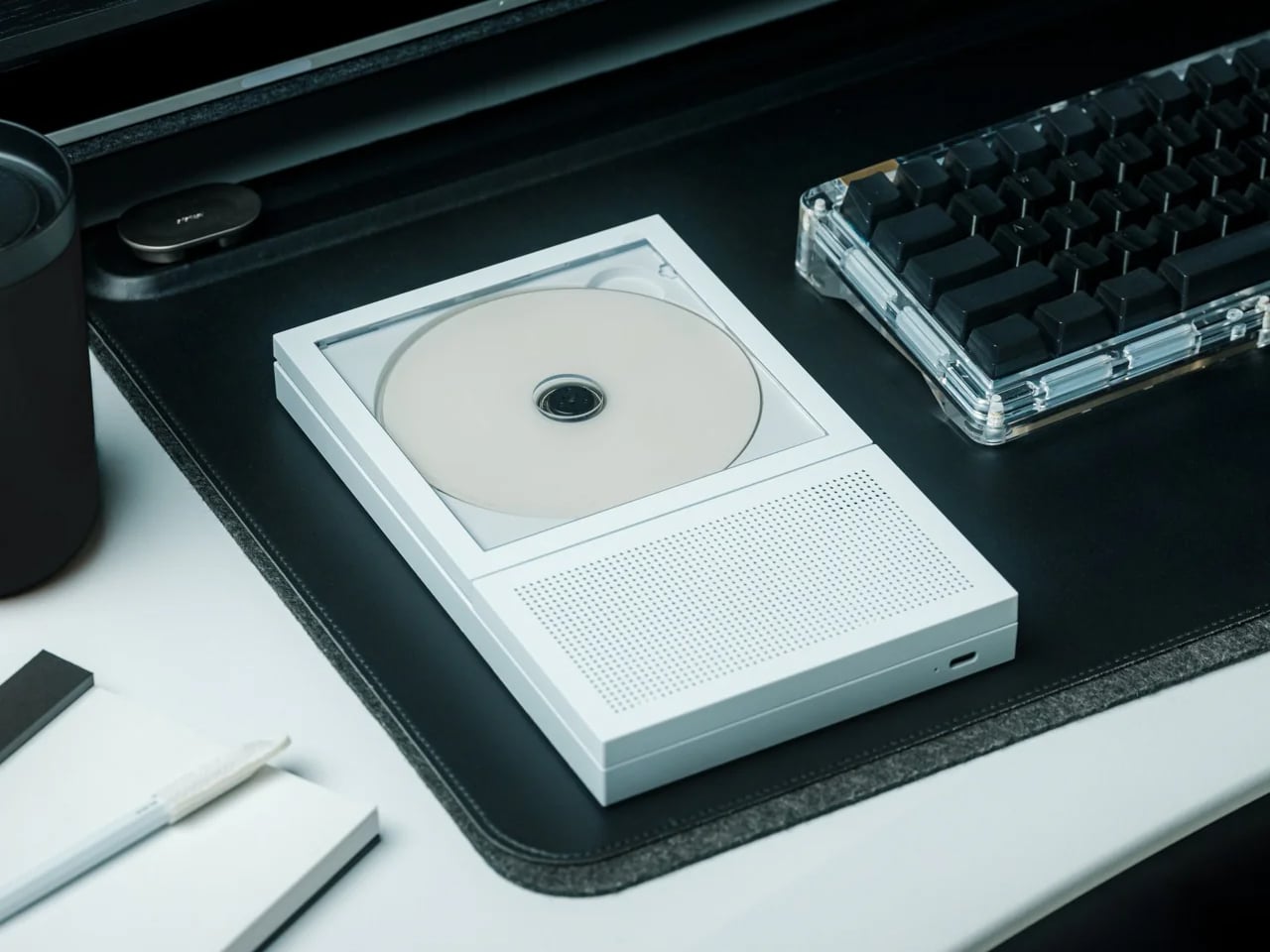
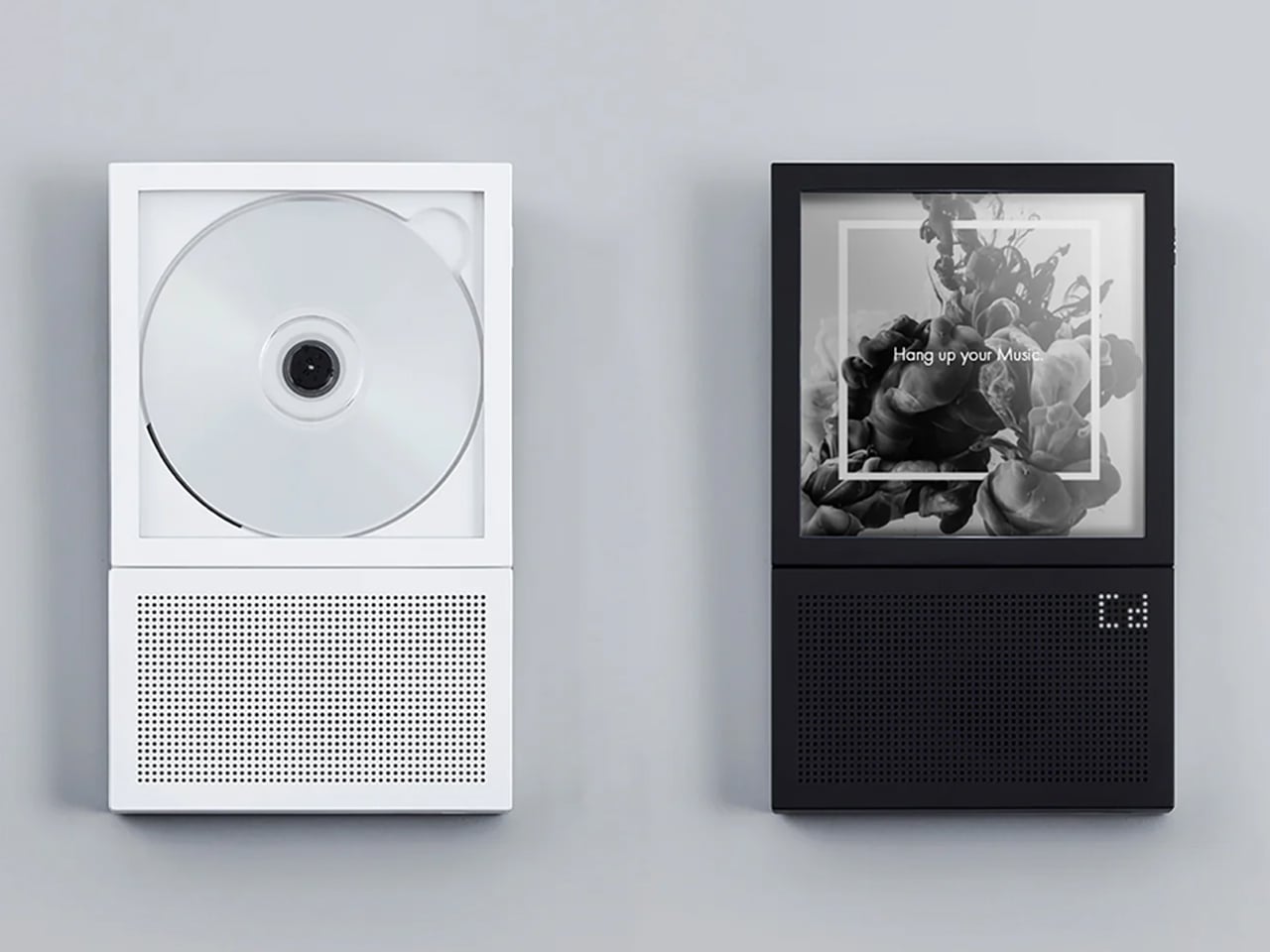
There is something specific about the weight and ritual of a CD that streaming never quite replicated. You hold the case, read the liner notes, make a choice that takes slightly more commitment than a tap. This portable player leans into that ritual without apologizing for it, designed to sit alongside the disc itself in a form thin enough to slide into a bag or stand upright on a shelf. It belongs in the same category as the best Japanese audio objects: things built for an experience, not merely a function.
In a small home, audio gear tends to bulk up the room. Amplifiers, cable nests, speaker pairs that demand real estate — they all negotiate with the architecture in ways that rarely end quietly. This doesn’t. Its proportions are closer to the music than to the equipment, and in a tiny apartment that distinction changes the whole register of a shelf. Pick an album, commit to it, and let the room fill with something chosen rather than algorithmically served.
The physical form reinforces intentional listening in a way a streaming app simply cannot
Slim enough to share shelf space with the very collection it plays
What we dislike
Limited to physical media, which requires maintaining an actual disc collection
Output depends on headphones or an additional speaker to fill a room
2. Aji Stone Book End Large
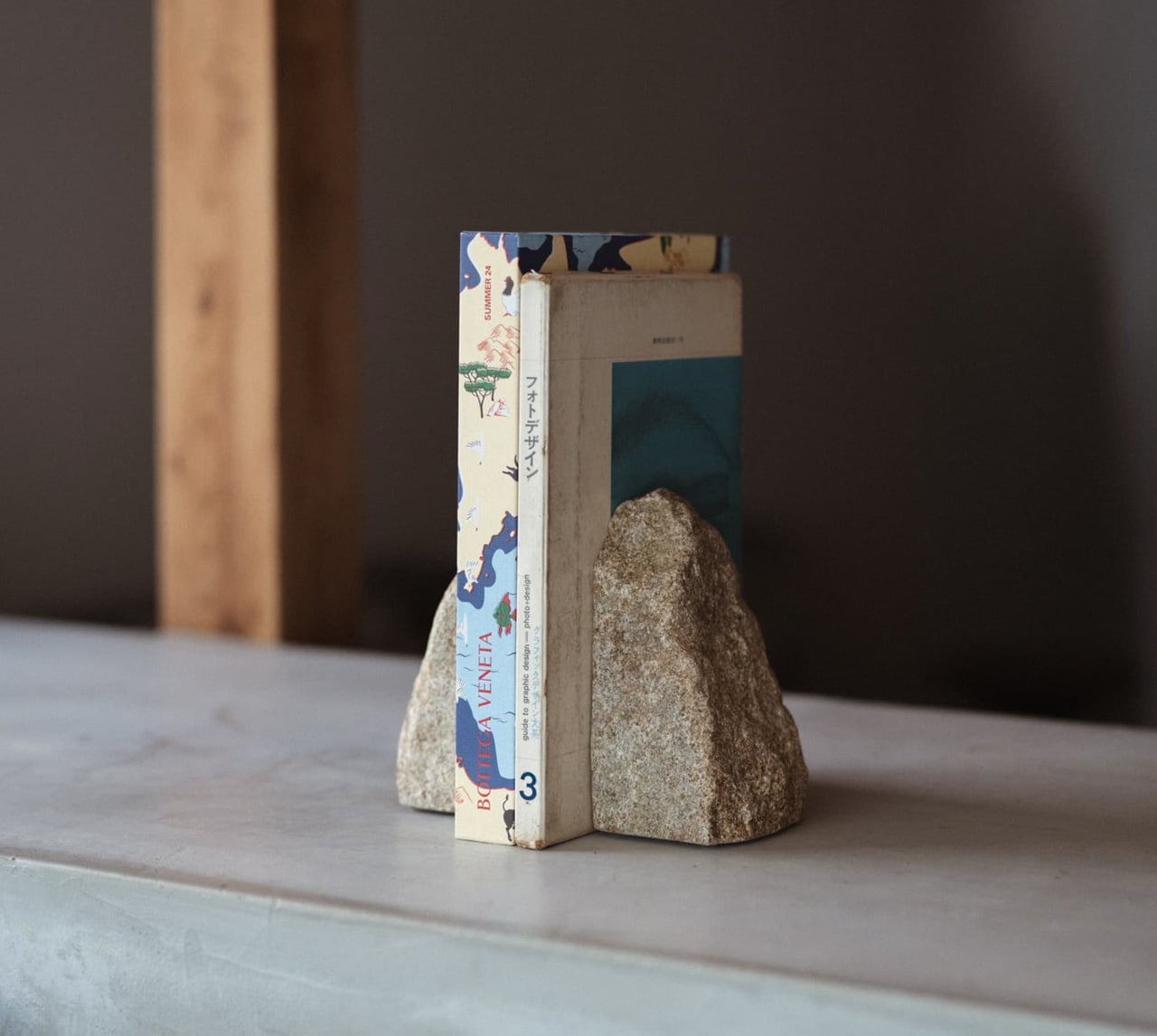
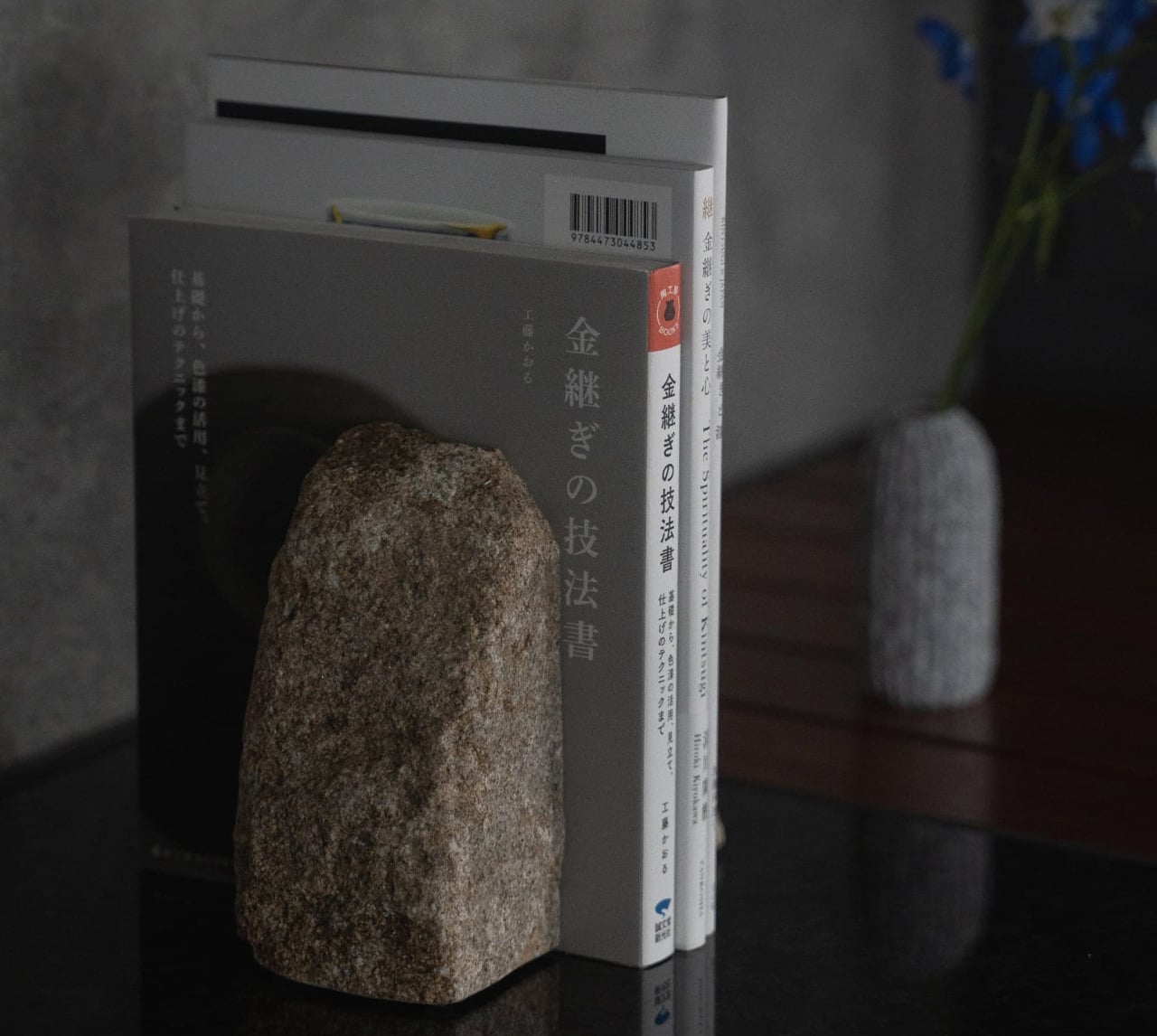
Quarried exclusively from the northeastern corner of Takamatsu City in Kagawa Prefecture, Aji granite has been considered Japan’s diamond of stone for centuries — dense, refined in grain, and resistant to moisture in ways that most decorative stone is not. The Large Book End is split from a single piece. No two are identical. Its surface carries the particular quality that only extraction rather than manufacture can produce: the sense that the material was always this way, waiting to be found rather than made.
What sets this apart from conventional bookends is what it refuses to do. It doesn’t decorate. It doesn’t try to be noticed. It simply holds what you’ve placed beside it with enough physical authority that the shelf around it immediately reads as more considered. In a small home where books live in plain sight — on open shelving, stacked on side tables — the presence of Aji stone changes how the whole arrangement reads. It turns a collection into a curation, which is a more significant shift than it sounds.
What we like
Split from a single stone, making each piece genuinely one of a kind
Dense enough to anchor the heaviest books without shifting or lifting
What we dislike
At $240, it asks for real confidence in its permanence as a purchase
Significant weight makes repositioning effortful once it has found its place
3. Frying Pan Omurice Chopstick Rest
Made in Mino Province — a region with over 1,300 years of ceramic production history and the source of roughly half of Japan’s tableware output — each of these rests is a miniature cast-iron frying pan with a curled dome of omurice sculpted in stoneware inside it. The craftsmanship is so specific and so unselfconscious about its playfulness that it reads as genuine rather than precious. Set it beside a bowl, or a plate, and the table shifts immediately from functional to considered.
In a small home, the dining table is rarely only a dining table. It doubles as a desk, a landing pad, a reading surface, a gathering point. When it becomes a table again for an actual meal, small objects like these do significant emotional work — they signal that the meal was planned, that the setting was thought about, that eating is worth a moment’s attention. The Mino tradition behind this rest gives that signal real weight.
What we like
Authentic Mino Province stoneware carries 1,300 years of regional craft tradition into an everyday ritual
Small enough to earn its place without competing with the food or the company
What we dislike
Textured stoneware requires more careful cleaning between uses than a glazed alternative
The omurice reference lands most fully for those already familiar with Japanese comfort food
4. Rolling World Clock
The Rolling World Clock treats time as something physical rather than abstract — a globe-like form that lets you reach out and find where the world’s hours currently sit. For anyone living across time zones, whether that means remote work, family spread across continents, or the particular restlessness of people who travel often, the constant mental arithmetic disappears. What remains is an object that earns its place on a desk or shelf not through utility alone but through the quiet pleasure of its form.
Small homes accumulate necessities that rarely pull their weight visually. A conventional world clock reads as office furniture regardless of where you put it. This one reads as an object you chose deliberately, which in a space where every surface is permanently on display is the difference between clutter and character. The minimal form holds its own without competing for attention — present without being loud, functional without being forgettable.
The form turns a practical need into a considered object worth displaying
Works as a conversation piece and a functional tool in the same breath
What we dislike
Requires some familiarity with the interface to read quickly at a glance
May need repositioning as your primary time zones change over time
5. Kinto Aqua Culture Vase
Kinto has built one of Japan’s most internationally trusted design practices on a single principle: objects for daily use deserve the same clarity of form as objects made purely for display. The Aqua Culture Vase applies that principle to water propagation — growing plants directly in water, without soil, without mess, without the maintenance schedule that keeps most people from keeping anything alive. A clean borosilicate vessel, a single stem or cutting, a windowsill. That is the entire arrangement, and it is entirely enough.
In a small home, anything requiring ongoing care competes for the same attention as everything else. Plants are often the first thing to go. This removes the friction almost entirely. The vase holds water, supports a cutting, and does both in a form so stripped of anything unnecessary that it could sit beside a stack of books or on the edge of a kitchen shelf without announcing its presence. The plant does the announcing. The vase makes it possible, which has always been Kinto’s design posture.
What we like
Removes almost every barrier to keeping something living in a small space
The borosilicate glass form is completely honest about its purpose and its beauty
What we dislike
Works best with propagating cuttings rather than established root systems
Water clarity requires more attention than a soil-based planter over time
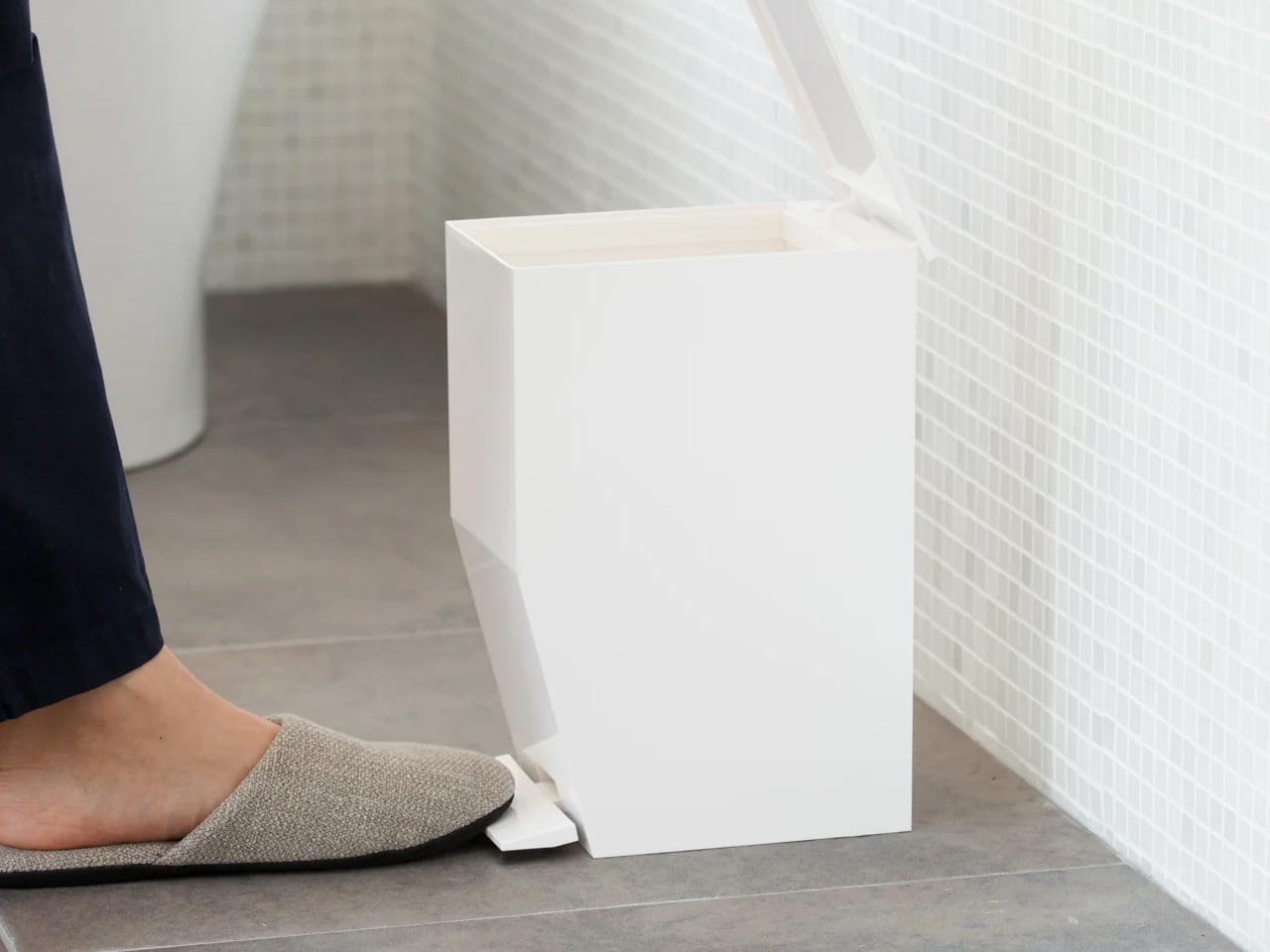
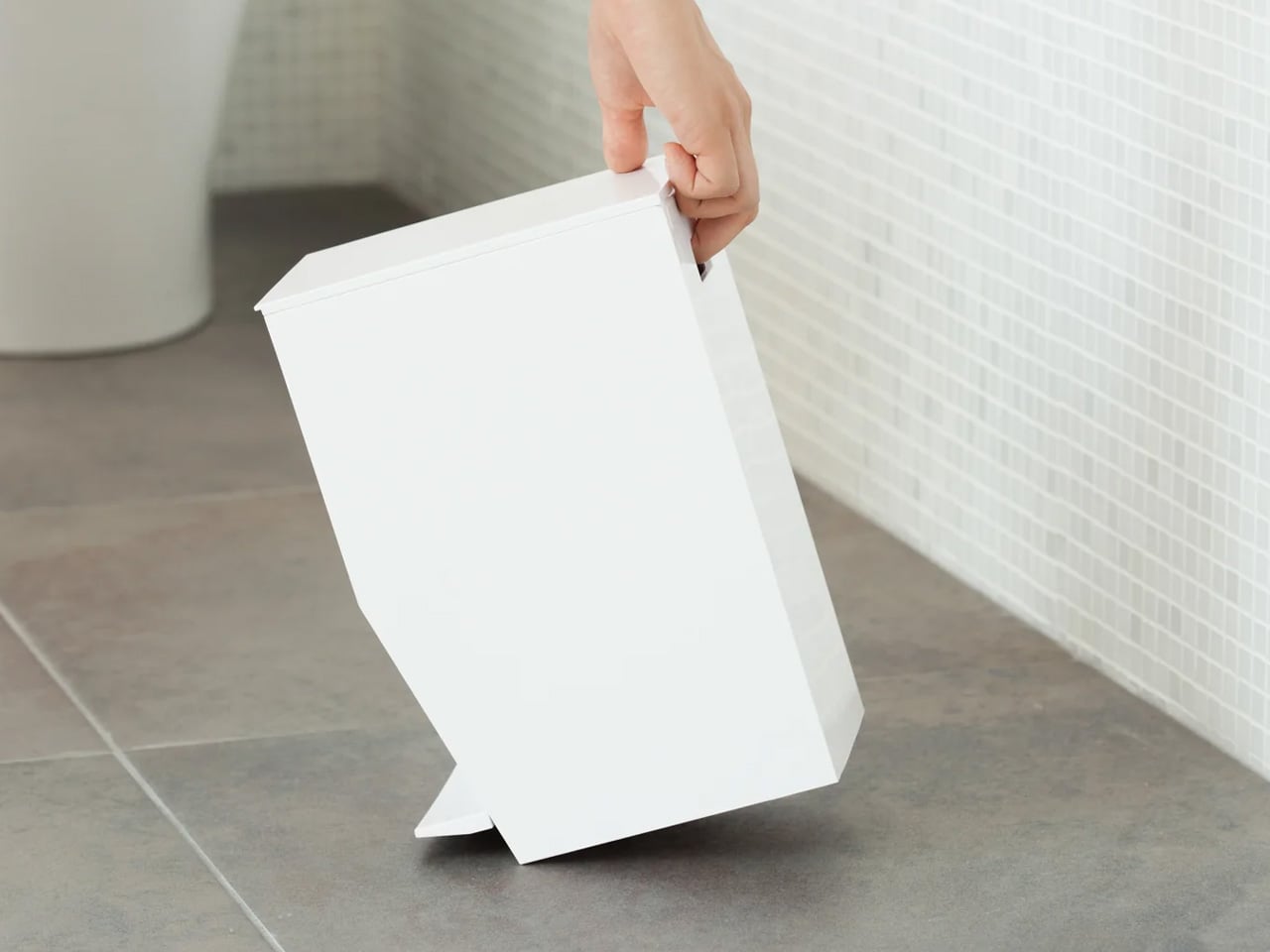
6. Yamazaki Home Tower Step Trash Can
Yamazaki Home’s Tower collection has become one of the most reliable benchmarks for Japanese functional minimalism at an accessible price point, and the Step Trash Can is central to that reputation. The step mechanism opens the lid without contact — genuinely useful in a bathroom or kitchen where hands are occupied — and the one-gallon capacity is sized for the spaces where it actually belongs rather than the idealized rooms in which most home goods are photographed. It holds liner bags without clips or visible hardware. The integrated handle makes emptying effortless.
In a small apartment, the waste bin is rarely hidden behind a cabinet door. It sits beside the toilet or under the counter in full view, which means it is part of the room’s visual language whether anyone intended it to be or not. The Tower can treats that reality with enough seriousness to design a bin worth looking at. Matte white or black ABS resin, no ornamentation. It looks like a choice — and in a small space, that quiet distinction between something assembled and something designed makes the whole room feel more intentional.
What we like
No-touch lid mechanism works for hygiene and convenience in equal measure
The slim profile fits flush beside toilets and under counters without claiming floor plan
What we dislike
One-gallon capacity means more frequent emptying than larger household bins
The liner ring is an additional component to source and replace over time
7. Corcelain Modular Porcelain Cups
224 Porcelain operates in Ureshino City in Saga Prefecture, a region whose ceramic tradition — Hizen-Yoshidayaki — stretches back through centuries of tea culture and meticulous clay work. Designer Kosuke Takahashi arrived at the studio with a specific question: what happens when you build a porcelain cup not as a finished object but as a platform? The result is Corcelain, the first modular porcelain system, where each cup accepts 3D-printed attachments — feet, handles, lids, decorative elements — through a precision mounting system integrated directly into the ceramic surface.
The appeal for a small home is not just the modularity. It is the philosophy underneath it. These cups evolve rather than accumulate. You don’t replace them when your needs or aesthetic shifts — you adapt them, download new components from MakerWorld, print what you need and nothing more. In a space where every object must justify its continued presence, a cup that changes alongside you is worth considerably more than one that doesn’t. The porcelain is serious. The system around it is generous. That combination is harder to achieve than it sounds.
What we like
Open-source attachments via MakerWorld keep the design evolving without requiring replacement
Hizen-Yoshidayaki ceramic tradition grounds a genuinely forward-looking concept in centuries of real craft
What we dislike
Full modularity requires access to a 3D printer or a printing service to realize
Mounting points need careful handling to avoid wear from frequent component changes
8. 3-in-1 Luminous Diffuser
Most diffusers ask you to choose between function and appearance, settling somewhere in the middle of both. This one refuses that negotiation by combining scent diffusion, ambient light, and a third mode into a single object whose form is considered enough to leave out permanently. The luminous element is not a decorative afterthought — it anchors a corner of a small room at low light, turning it into the kind of atmosphere you usually have to travel somewhere to find. Japan has always been good at making objects that shift a room without announcing how.
For a tiny home, the real value of a 3-in-1 is not the three functions — it is the three objects it replaces. No separate night light sitting on a cable. No ceramic diffuser vessel with a reservoir you forget to fill. No ambient lamp taking up a full socket and a surface. This consolidates all three into something with enough visual restraint to disappear when you want it to and enough presence to hold its own when you don’t. That economy of space and decision is exactly the point.
Three functional modes in a form minimal enough to leave permanently on display
Handles scent, light, and atmosphere without a separate object for each
What we dislike
Diffuser capacity suits smaller rooms better than open-plan living areas
Three functions mean one item to troubleshoot when something eventually needs attention
Small Rooms, Considered Objects
Japan’s design output at its best doesn’t ask you to reshape your life around what you own. It works the other way — finding the form that fits the space and routine you already have, then making that space feel more like itself. These eight pieces come from different regions, different craft traditions, and different centuries of making, but they share the same posture. None of them demands attention. Each one earns it through what it does and what it quietly refuses to do.
The tiny home movement has always been as much about intention as square footage. Living small works when every object in a room is genuinely worth having. These eight don’t fill a space — they complete one, each in its own register, from the density of Aji granite holding a shelf together to a modular porcelain cup that adapts alongside the person drinking from it. Start with one. The room will tell you what comes next.
Pull up the baggage carousel at any major international airport and you will see a parade of soft-shell fabric or hard-shell plastic cases, most of them a muted color palette, most of them indistinguishable from one another, most of them showcasing the abuse of frequent travel (a massive scratch here, ripped fabric there, disintegrated airline stickers, cracked wheels that creak when dragged). That is the baseline the travel industry has accepted for decades. The expectation has been function within limits, not function beyond them.
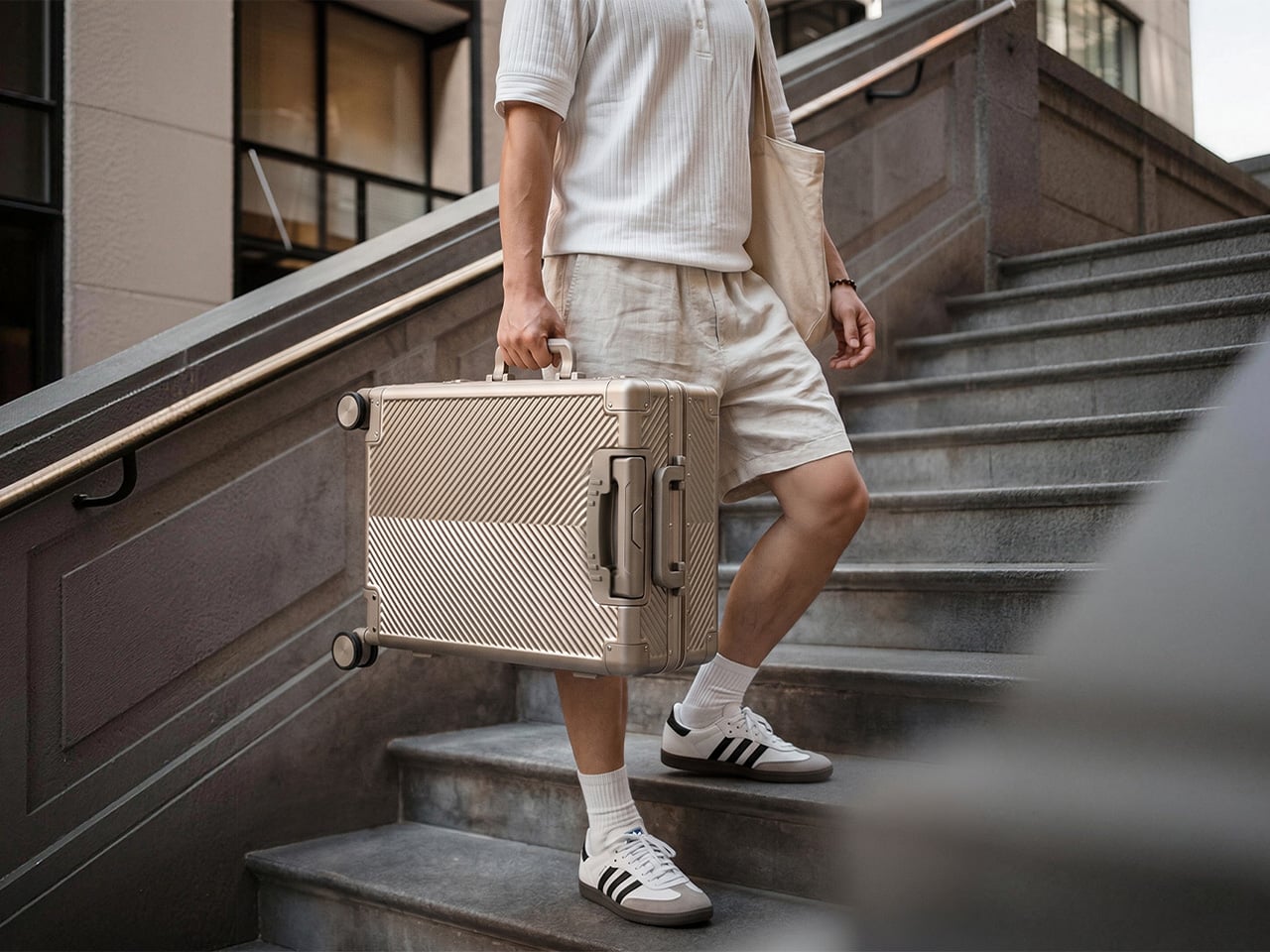
Titaner’s Voyager arrives as the carry-on that resets that expectation entirely. The 20-inch titanium shell is ribbed with chevron patterning that doubles as structural reinforcement, sealed without a single zipper on its exterior, and coated with a hydrophobic treatment that sends water beading off its surface. Designed for travelers who see their gear as long-term equipment rather than seasonal accessories, it signals a broader shift in what premium carry-ons are supposed to be made of.
The shell physically, visually, practically, and literally sets the Voyager apart from any other travel carry you’ve currently got stowed underneath your bed or in your closet. Made from Grade 1 pure titanium, the kind typically reserved for aerospace applications and medical implants, the Voyager carries the same corrosion resistance and impact tolerance that have made the material legendary in other industries. Titanium does not rust, does not dent easily, and ages with a patina that adds character rather than degradation. The angled chevron texture machined across its surface does three things at once: it creates visual drama, it distributes impact force across a wider structural field, and it hides minor surface wear far better than a polished or matte finish ever could. This is luggage that looks more refined the longer you own it.
The zipperless body is where Titaner makes its clearest departure from conventional luggage logic. Most hard-shell cases still rely on zipper closures because they are familiar, flexible, and cheap to manufacture. They are also the first thing to fail under repeated stress. The Voyager uses a continuous waterproof gasket seal instead, wrapping the entire case perimeter in a material that keeps rain out and dust at bay. Pop the latches, and the case opens in two clean halves with a 180-degree flat lay. No zipper teeth to snag. No fabric track to tear. Just a mechanical hinge and a seal that either works or it does not. It is the kind of decision that makes soft-shell luggage feel like it was designed around cost, not longevity.
Travel is a series of small interactions repeated hundreds of times: extending the handle, rolling through terminals, lifting it into overhead bins, setting it down on uneven pavement. Titaner has refined each one. The telescoping handle uses a 13-stage adjustment system with no visible punch holes running down the tube, which means a cleaner visual line and a mechanism that locks at every height with a button press at the base. The handle grip itself uses a slow-return damper, so when you let go, it eases back into place instead of snapping against the shell. The eight independent spinner wheels are modular, which means if one gets damaged after years of airport abuse, you replace that single wheel instead of the entire case. Underneath, a spider-web reinforcement structure distributes the stress from each wheel across the corner assembly, so no single impact point can compromise the frame. Even the side feet are trapezoidal, designed to keep the case stable when stood upright and lifted without effort when you need to move it.
Inside, the Voyager offers a layout most frequent travelers will recognize: dual compression straps, zippered divider panels, interior pockets on both halves. The lining is stain-resistant and wipes clean. But the real interior innovation is the optional Waterproof Vault, a removable airtight inner bag with a triple-side zipper seal. Cameras, drones, passports, medication, anything that cannot afford even brief water exposure gets sealed inside. The vault can also be fitted with modular foam inserts for shock protection, turning the Voyager into a hybrid between a carry-on and a protective equipment case. It is the kind of feature that expands the product’s identity beyond clothing transport into the realm of gear protection, where soft-shell luggage has never been able to compete.
What Titaner has done with the Voyager is take the material obsession and mechanical precision that defined its EDC products (pens, multi-tools, pocket knives) and scaled that philosophy up to travel dimensions. The result feels less like luggage in the traditional sense and more like a precision mobility tool. It is cabin-approved at 20 inches, light enough to lift with one hand despite the titanium construction, and visually distinct enough that you will spot it on a carousel from across the terminal. The chevron-patterned shell catches light at angles soft fabric never could. The hardware has the same machined confidence you would expect from a high-end knife or watch. Travelers who have spent years cycling through polycarbonate shells and torn nylon cases will recognize this as something different: a carry-on designed to outlast your travel habits, not replace them every few seasons.
The Titaner Voyager is currently available at $579, discounted over the $1079 MSRP for the base 20-inch carry-on in titanium, with options to add the Waterproof Vault module and additional accessories. The campaign ships internationally, with estimated delivery starting in late 2026.
The gap between what camping gear looks like in product photos and what it actually does at a campsite used to be wide enough to drive a truck through. That gap has quietly closed. The category has produced a generation of objects built around a single idea: that equipment you trust with your weekend shouldn’t look like it was designed by someone who has never spent a night outdoors.
This list covers everything a serious campsite demands — shelter, fire, cooking, light, power, water, and the tools that keep everything running between them. Eight products, each with a specific design argument behind it. Some are from the YD Shop. Others earned their place through the blog. All of them pass the test that matters most: you pack them once and never pull them back out of the kit bag.
1. Retrowave 7-in-1 Radio
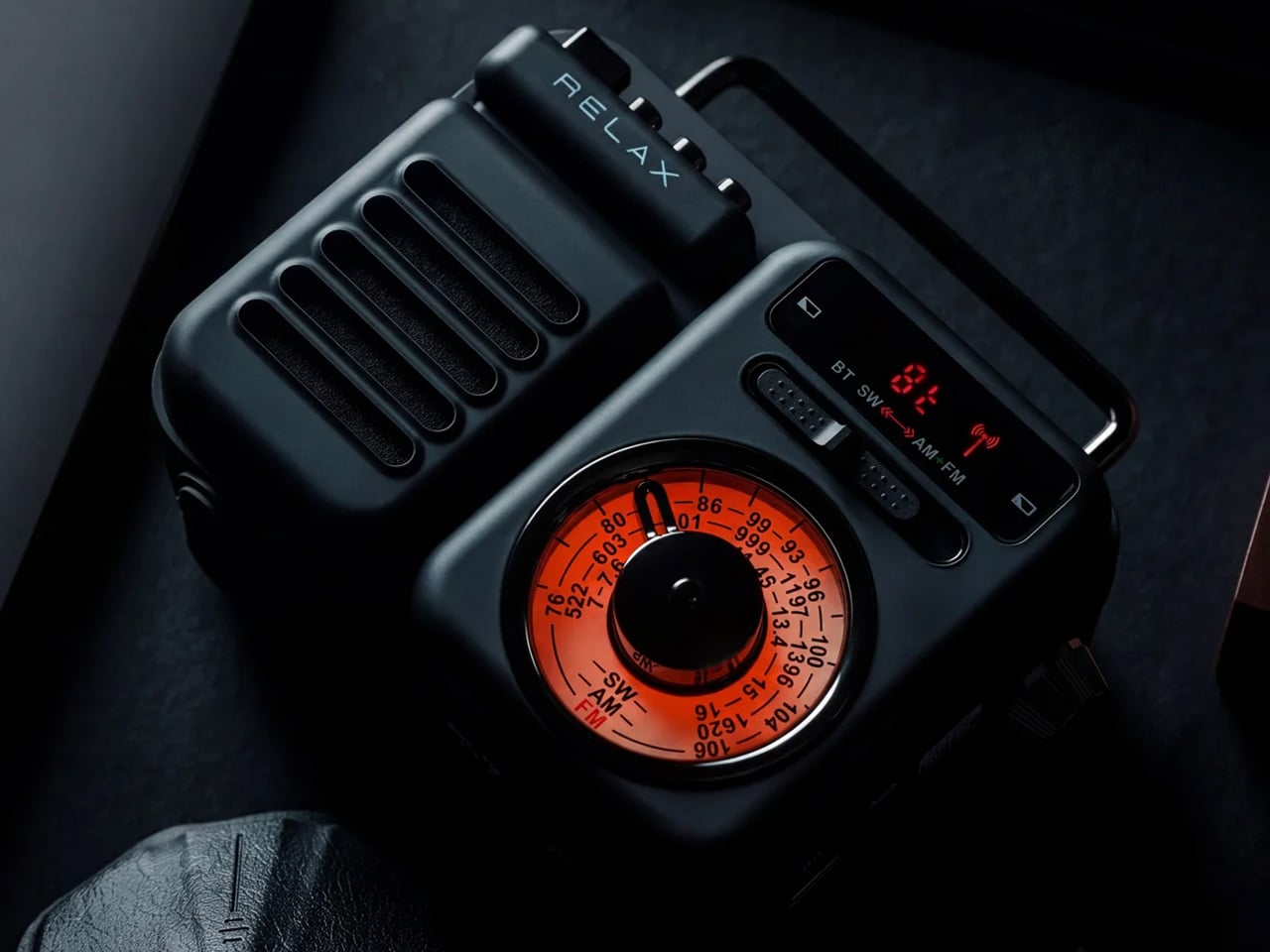
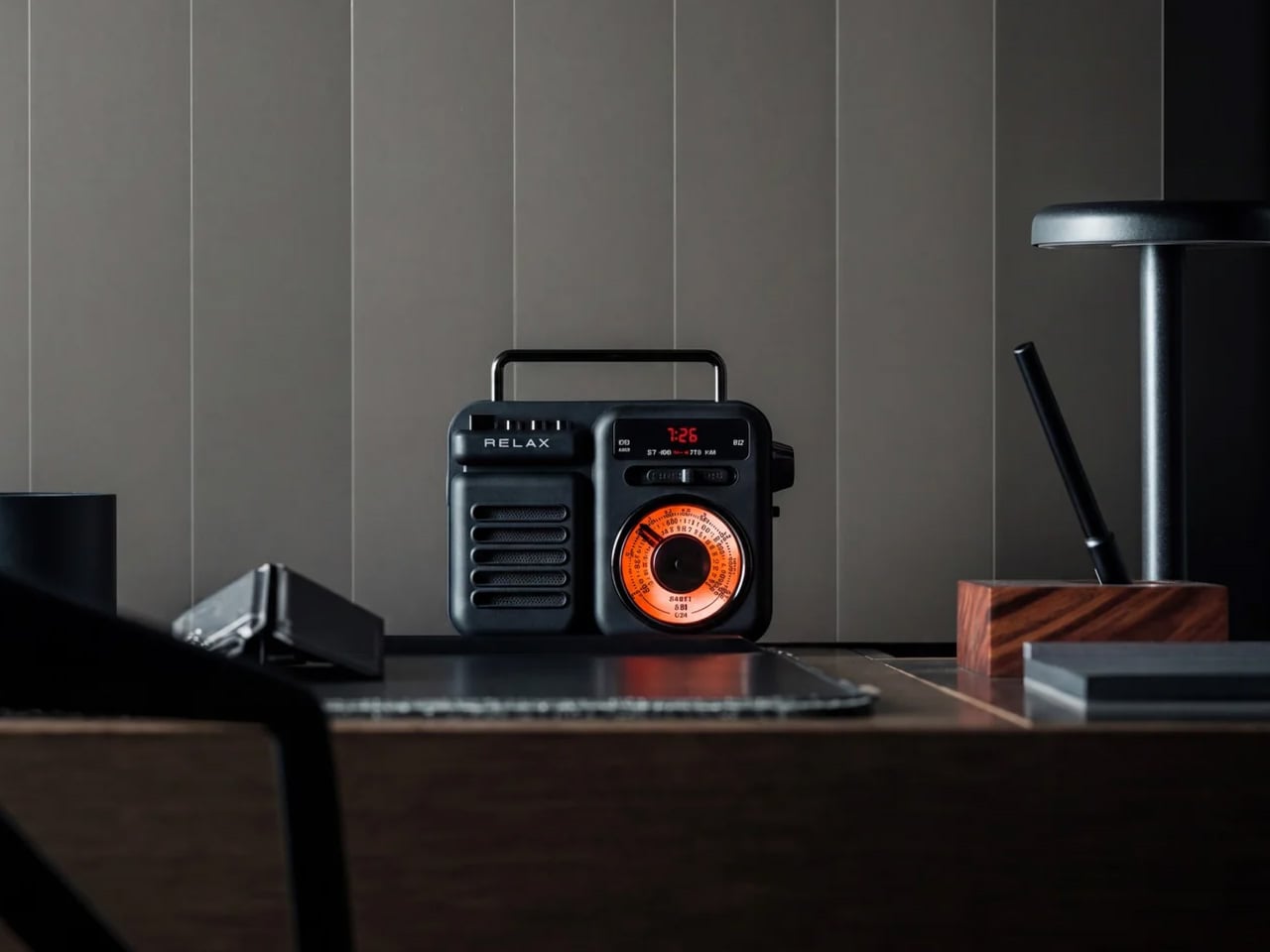
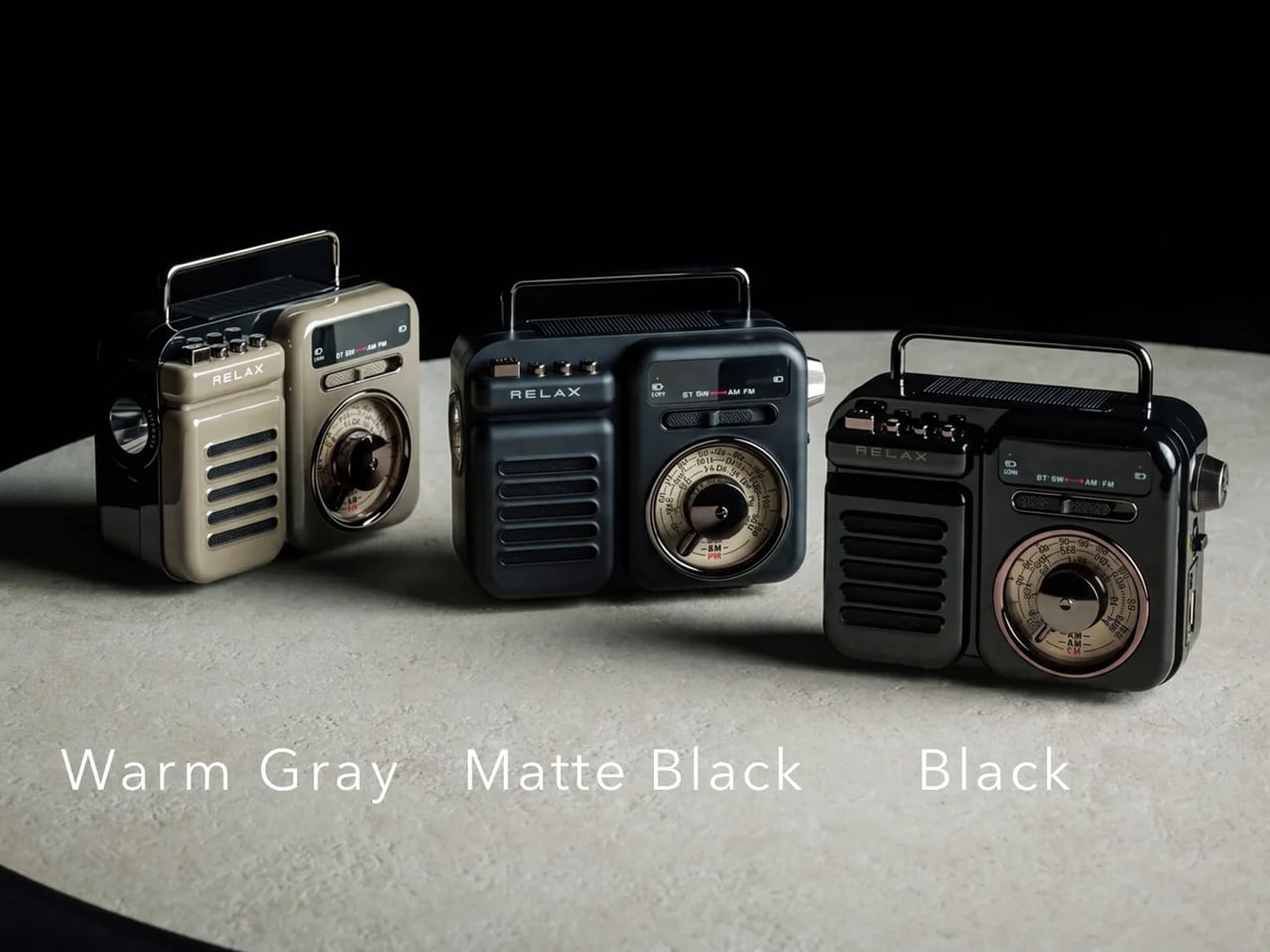
The Retrowave earns its place in a camping kit through an argument that has nothing to do with aesthetics, even if the aesthetics are genuinely good. A tactile tuning dial, compact body, and warm visual language borrowed from classic Japanese radio design make it an object worth displaying on a shelf. What it’s actually doing is more pragmatic: running AM, FM, and shortwave without an app, streaming via Bluetooth when connectivity holds, and charging via solar panel and hand-crank when it doesn’t.
The SOS alarm and built-in flashlight sit quietly in the background, present without demanding attention on a trip where everything goes smoothly, decisive when it doesn’t. Smart speakers go silent when Wi-Fi drops. Earbuds die at the wrong moment. Phones drain precisely when you need them most. The Retrowave doesn’t ping you or demand perfect conditions. It plays, charges, and illuminates across seven functions without asking for seven different charging cables.
Seven functions in a single body remove the need to carry and manage multiple separate items
Solar and hand-crank charging keep it fully functional off-grid with no outlets required
What we dislike
The retro aesthetic may read as decorative to buyers who haven’t yet used it in an actual off-grid context
Shortwave reception quality varies depending on geographic location and surrounding terrain
2. Haven Spectre Ultralight Hammock Tent
Every experienced hammock camper knows the problem but rarely admits it out loud: traditional hammocks fold your body into a shape that doesn’t encourage real sleep. The Haven Spectre addresses this with a flat-lay design that keeps your spine aligned and your night predictable. For anyone who has tried and quietly abandoned hammock camping after a single uncomfortable night, this is the version worth revisiting. Featherlight without feeling compromised, built from years of field-tested feedback, and light enough to disappear into a pack you’re already carrying.
What separates the Spectre from its predecessors is the thinking behind how a person actually sleeps in the field. The integrated structure holds its form without demanding constant readjustment through the night. String it up, get in, and it works. For long-distance hikers and weekend backpackers alike, that reliability reduces the cognitive load of a night outdoors. Less time fussing with rigging means more energy for the trail ahead, which is exactly the trade-off a well-designed piece of kit should make for you.
What we like
Flat-lay sleeping position solves the banana-curve problem that makes traditional hammocks genuinely uncomfortable for full nights
Years of customer-driven refinement make this Haven’s most polished and advanced version to date
What we dislike
Requires trees at the right spacing and height, which limits viable campsite choices in open terrain
Premium price point puts it out of reach for casual campers who might only use it a handful of times a year
3. Portable Fire Pit Stand
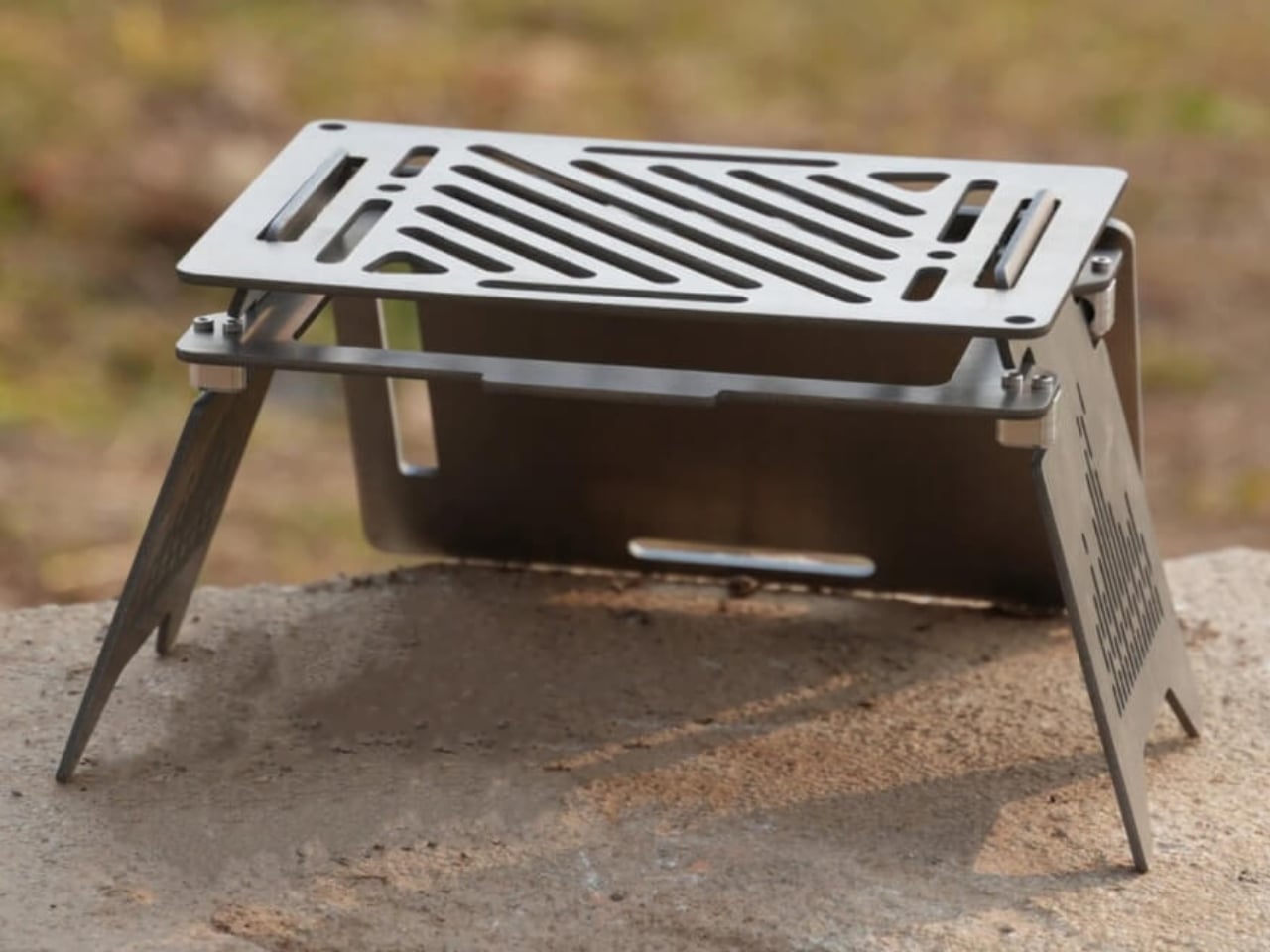
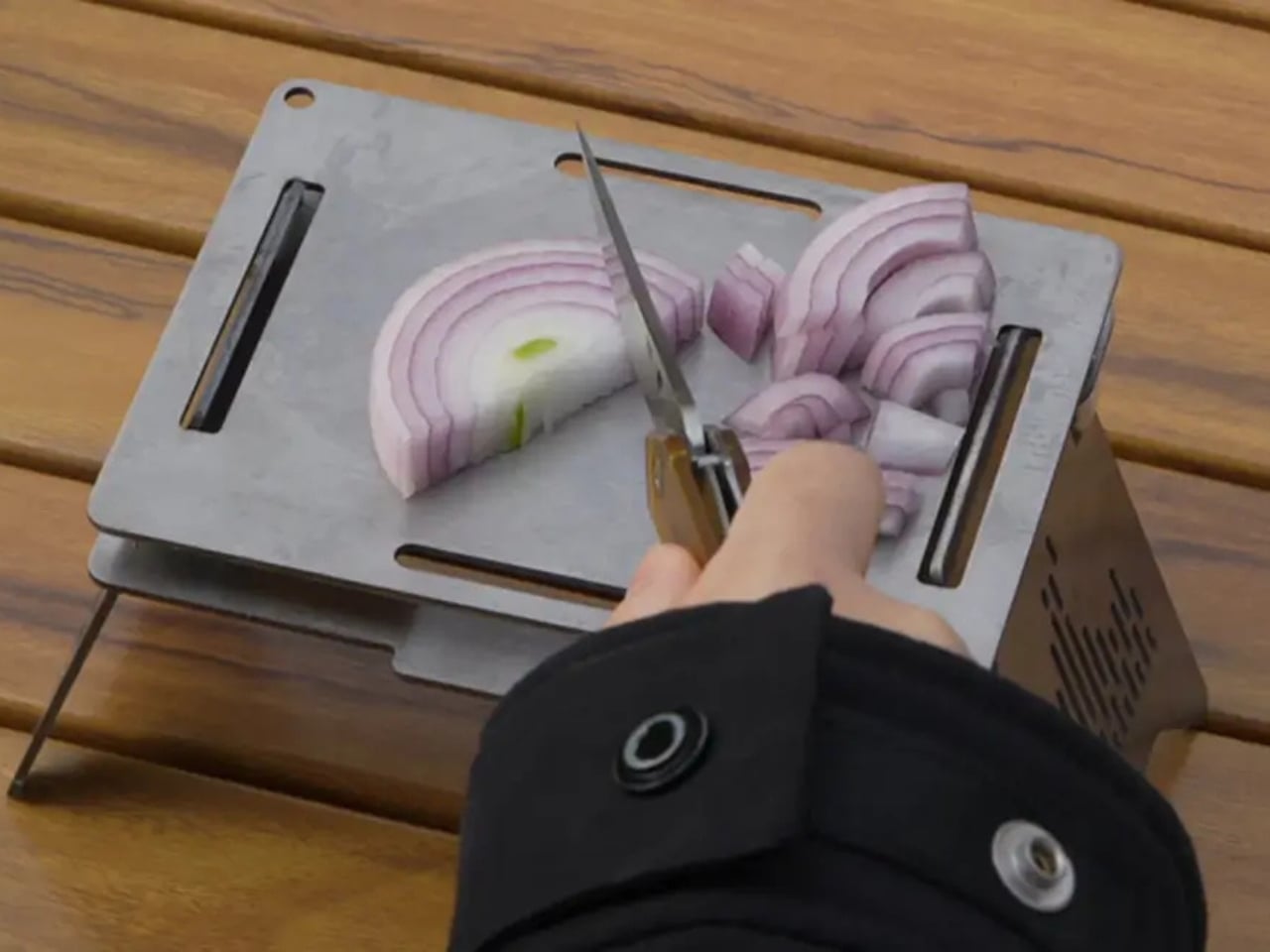
The fire pit category is full of oversized objects that need a truck bed and a second person. The Portable Fire Pit Stand sidesteps this entirely. Prototype sheet metal technology precision-cuts black steel plates that resist warping and distortion under sustained heat. It assembles without tools, folds flat when packed, and holds the kind of campfire that earns its place as both a functional heat source and the visual anchor of any campsite worth sitting around for more than ten minutes.
What separates this from a standard fire ring is the stand’s insistence on being a proper object rather than functional hardware. The black steel finish works against any outdoor backdrop, and the construction doesn’t bow or deform the way cheaper alternatives do after their third use. It elevates the fire off the ground, making it workable on sensitive surfaces and at campgrounds where ground fires are restricted. The kind of gear that moves from situational purchase to permanent kit after the first night out.
Heat-resistant sheet metal resists warping through repeated use across multiple camping seasons
Elevates fire off the ground for sensitive surfaces and sites where open ground fires are restricted
What we dislike
Steel construction adds more weight than ultralight fire alternatives for backpackers counting grams
No integrated grill grate included, which requires a separate purchase
4. Camprit TiStove
Five flat pieces of Grade 5 titanium. Two foldable legs and three interchangeable cooking panels that pack completely flat and come in under 1.5 pounds. Camprit’s insight was direct: most camp stoves lock you into a single cooking method. The TiStove gives you three, with panels that reconfigure for boiling, grilling, or open-fire cooking. The extra panels double as a windshield. As heat is applied over time, titanium changes color naturally, marking each stove with its own accumulated cooking history.
The beauty of the TiStove is in what it removes. There’s no ignition system to fail at altitude, no gas canister threading to seize in the cold, no assembly logic that requires a manual at a campsite in the dark. The pieces lock together mechanically without fasteners and disassemble in seconds. Compatible with any fuel source — wood, gas burner, alcohol — it stays genuinely adaptable to wherever the trip leads. For anyone who has stood over a failed stove in the cold, this addresses the problem at its root.
What we like
Packs completely flat at under 1.5 lbs with three interchangeable cooking panel configurations
Compatible with any fuel source including wood, gas, and alcohol with no dependency on a single system
What we dislike
Requires a separate burner or fuel source, as nothing is self-contained out of the box
Titanium panels need careful packing to avoid scratching against each other in transit
5. Blavor Power Station + Camping Lantern
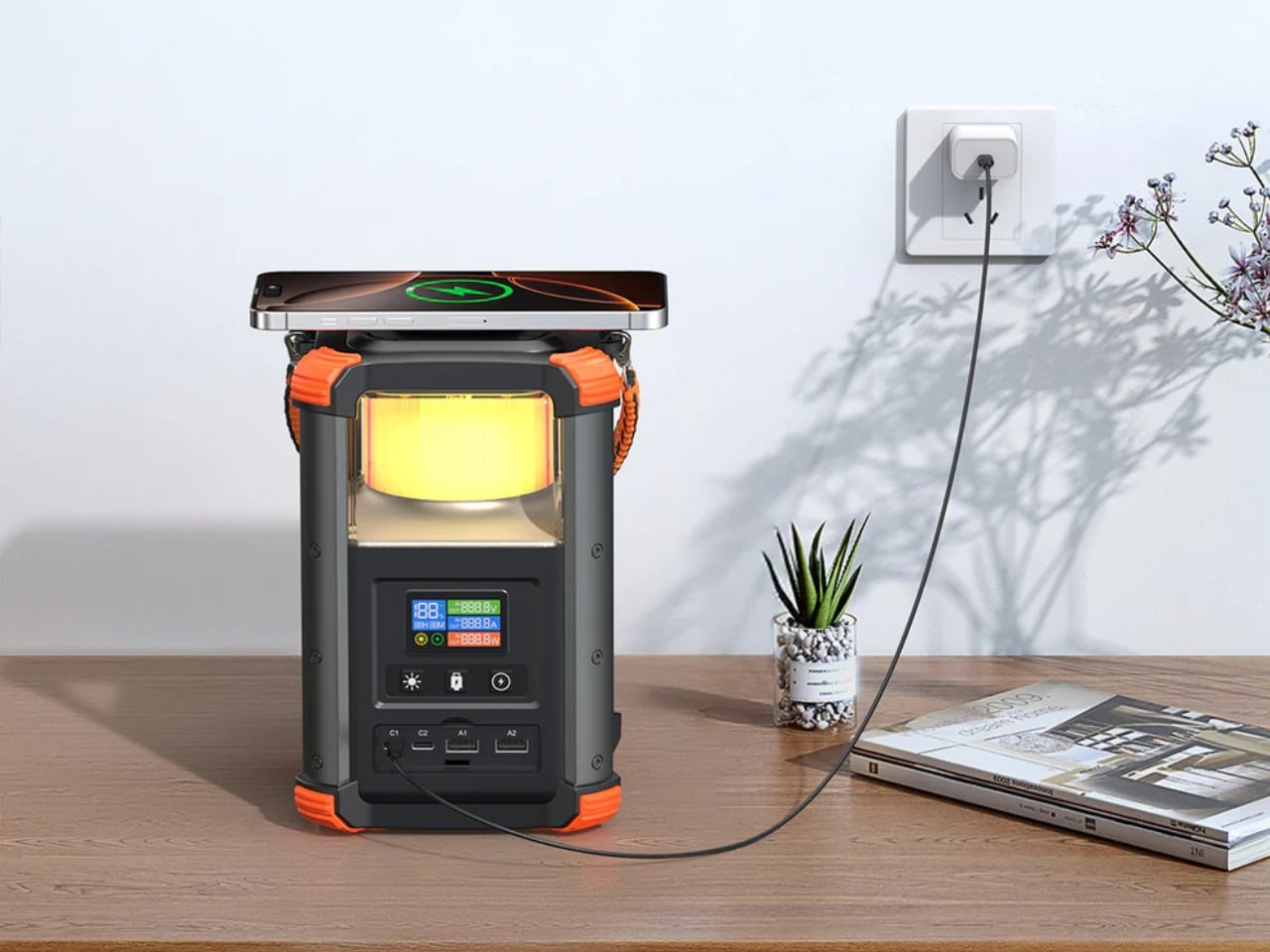
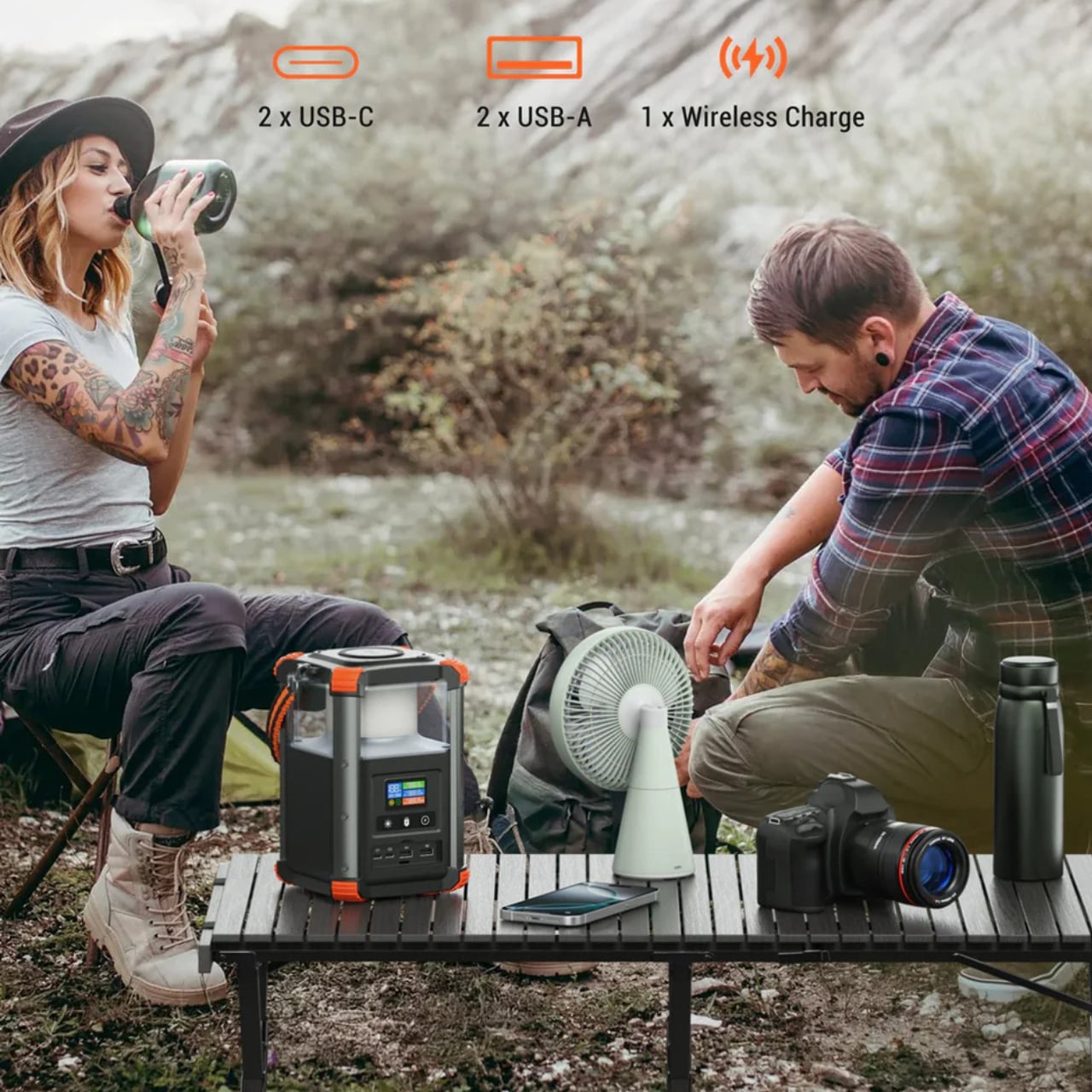
Most portable power stations look like they were designed by someone who has never spent a night outdoors. The Blavor sidesteps that problem by building a camping lantern into the form factor from the start. The result is a device barely bigger than a tall water bottle that functions as both a light source and a five-pathway charging hub, covering solar, AC, car adapter, USB-C, and micro USB, with a digital display that keeps battery status visible without any guesswork in the field.
The real value here is how naturally the two functions coexist. When the lantern is on, the power bank is right there. When you’re charging your phone overnight, the ambient glow does quiet work inside the tent without needing a separate light source. It doesn’t ask you to choose between illuminating your site and keeping your devices alive. For campers who have always carried a separate lantern and a separate battery pack, the consolidation alone justifies the purchase before the first trip is even planned.
What we like
Five charging pathways give it a flexibility that most single-use power banks simply can’t match across different environments
Lantern and power station coexist without compromising each other — the dual function feels designed in, not bolted on
What we dislike
Battery capacity may leave multi-day off-grid users reaching for supplemental charging sooner than expected
The cylindrical form can be slightly awkward to pack flush alongside flat gear in a structured bag
6. NoxTi Tritium Keychain
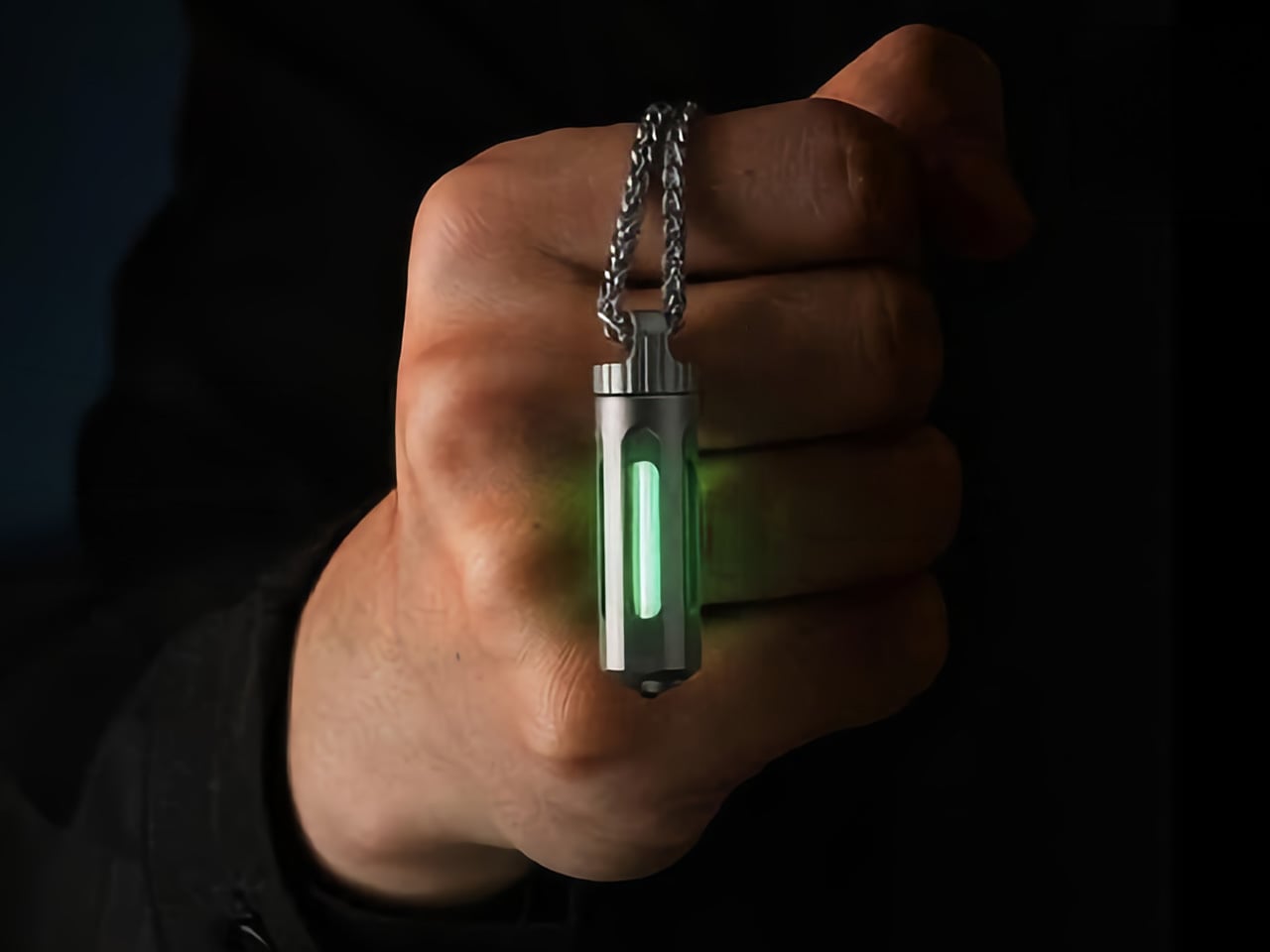
A 45mm CNC-machined Grade 5 titanium cylinder weighing 10.7 grams. The NoxTi carries a tritium vial inside a precision quartz tube with 92% light transmission and glows continuously for 25 years through pure radioactive decay. No switch. No battery. No charging. Tritium is a hydrogen isotope whose beta particle decay strikes a phosphor coating and produces light as a straightforward byproduct of existing. The process requires nothing from you and stops for nothing around you.
At a campsite, the NoxTi earns its keep in the dark. It marks your keys at the bottom of a bag, identifies your tent entrance without hunting for a torch, and stays visible at the bedside through a full night without being asked to. The ceramic-tipped glass breaker at the tail end adds genuine emergency utility. The titanium body is fully serviceable — when the vial dims after two decades, you press the old tube out and slide a new one in. Six glow colors are available, including Apple Green for maximum visibility and Red for night-vision preservation.
What we like
25-year continuous glow powered entirely by physics with no battery, no charging, and no failure point
Fully user-serviceable titanium body becomes a platform you keep and swap cores into indefinitely
What we dislike
Glow output is intentionally faint — it marks and locates but does not illuminate
The tritium light source requires some buyer education before the value proposition fully lands
7. 8-in-1 EDC Scissors
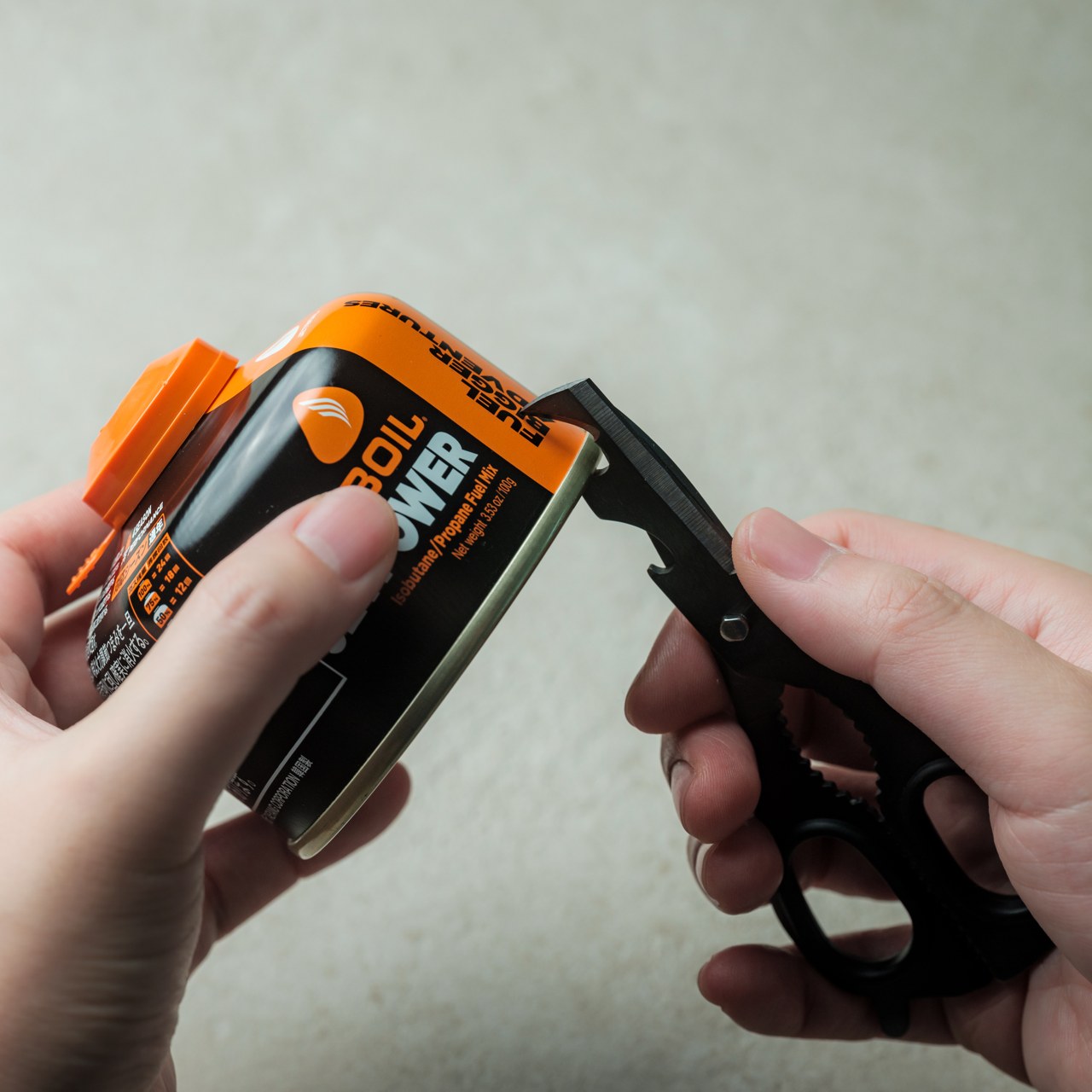
Eight functions in a scissors form that actually makes sense. The 8-in-1 EDC Scissors consolidate camp tools that typically spread across multiple pouches — cutting, wire stripping, can opening, bottle opening, and more — into one compact unit that clears airport security and sits naturally in any carry configuration. The design avoids the bulk penalty that multi-tools typically impose by keeping the scissors form as the organizing principle, with everything else radiating from a familiar object rather than a complex folding mechanism.
The camp use case is straightforward: fewer items in the kit bag, one tool that covers the practical range for a full day at a site. The EDC angle matters here too. These leave the campsite and go into a jacket pocket, daypack, or carry-on without demanding special consideration or a conversation at security. For minimalist packers, replacing scissors, a knife, a bottle opener, and a wire stripper with one object that weighs almost nothing is the kind of design math that earns permanent shelf space well past the camping season.
Eight functions in a scissors form that passes airport security without issue
Small enough for jacket pocket carry well beyond the campsite context
What we dislike
The scissors mechanism is not a substitute for a dedicated camp or survival knife
Individual tool sizes are necessarily smaller than their standalone counterparts
8. GoSun Flow
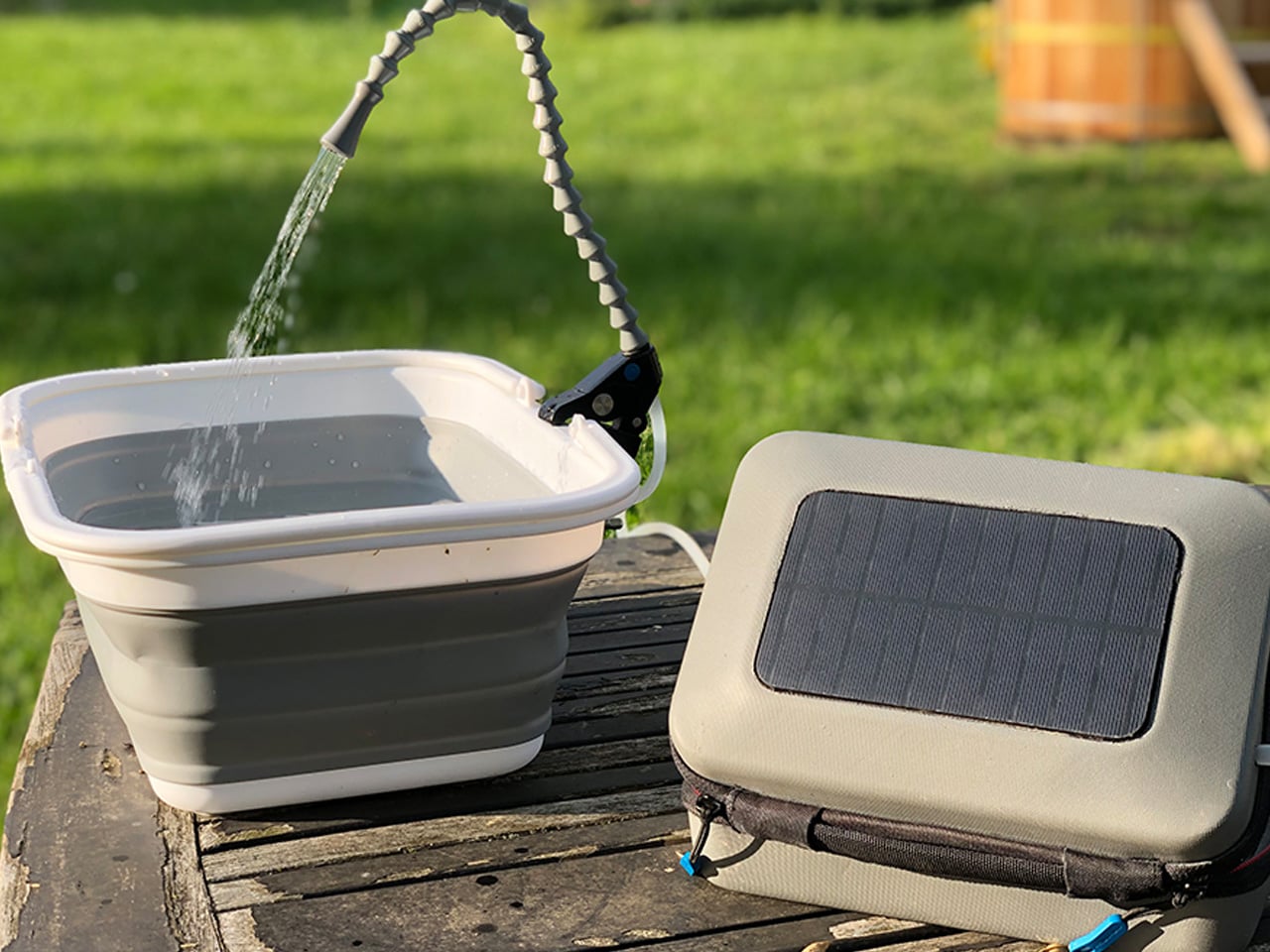
Water is camping’s most basic constraint, and the GoSun Flow addresses it at the source. The solar-powered purifier eliminates 99.99% of waterborne pathogens while pumping one liter of clean water per minute from virtually any freshwater source. The system compresses into a backpack, and the flexible faucet clamps to branches, tables, or tailgates, turning any access point into a functional sink. It’s the difference between rationing bottled water and treating the nearest stream as infrastructure worth designing around.
The GoSun Flow doubles as a portable handwashing station and solar-heated shower. The vacuum-insulated solar heater delivers a warm five-minute shower after 30 minutes of sun exposure, which reframes what clean means on a multi-day trip. It runs on USB power when solar isn’t available, and the filter handles up to 1,000 liters before replacement. For anyone who has ever compromised on hygiene to protect pack weight, this removes that trade-off without replacing it with a heavier one.
What we like
Purifies 99.99% of pathogens and delivers a solar-heated shower from a single portable system
1,000-litre filter life with USB power backup when solar isn’t available
What we dislike
Cannot process saltwater, which limits utility at coastal campsites
Multiple components increase the number of parts to manage and potentially misplace in the field
The Gear Caught Up. Now the Excuses Haven’t.
Camping used to ask a simple question: how much discomfort are you willing to trade for time outside? The gear on this list makes that question harder to answer. Not because the outdoors have gone soft, but because the design has finally caught up to what the experience actually demands. A hammock that keeps your spine aligned. A stove that packs flatter than a magazine. A keychain that glows for a quarter century without a single battery.
The consistent thread across all eight is that none require specialist knowledge, a lengthy setup window, or conditions that only exist on a perfect summer evening. Each removes a specific friction point that camping used to accept as part of the deal. Pack these, and the question embedded in this headline becomes something you’ll need a quiet moment actually to think through.
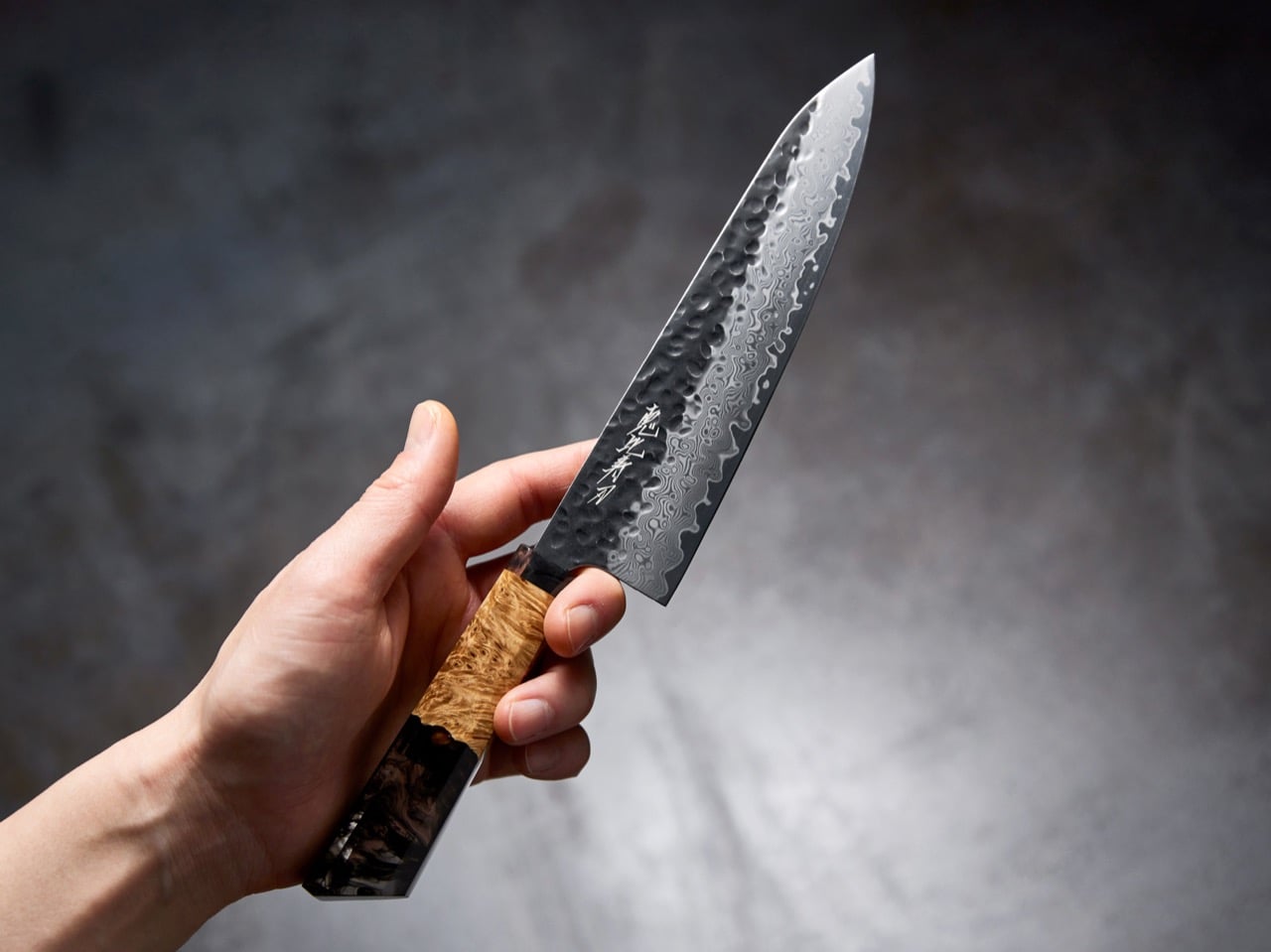
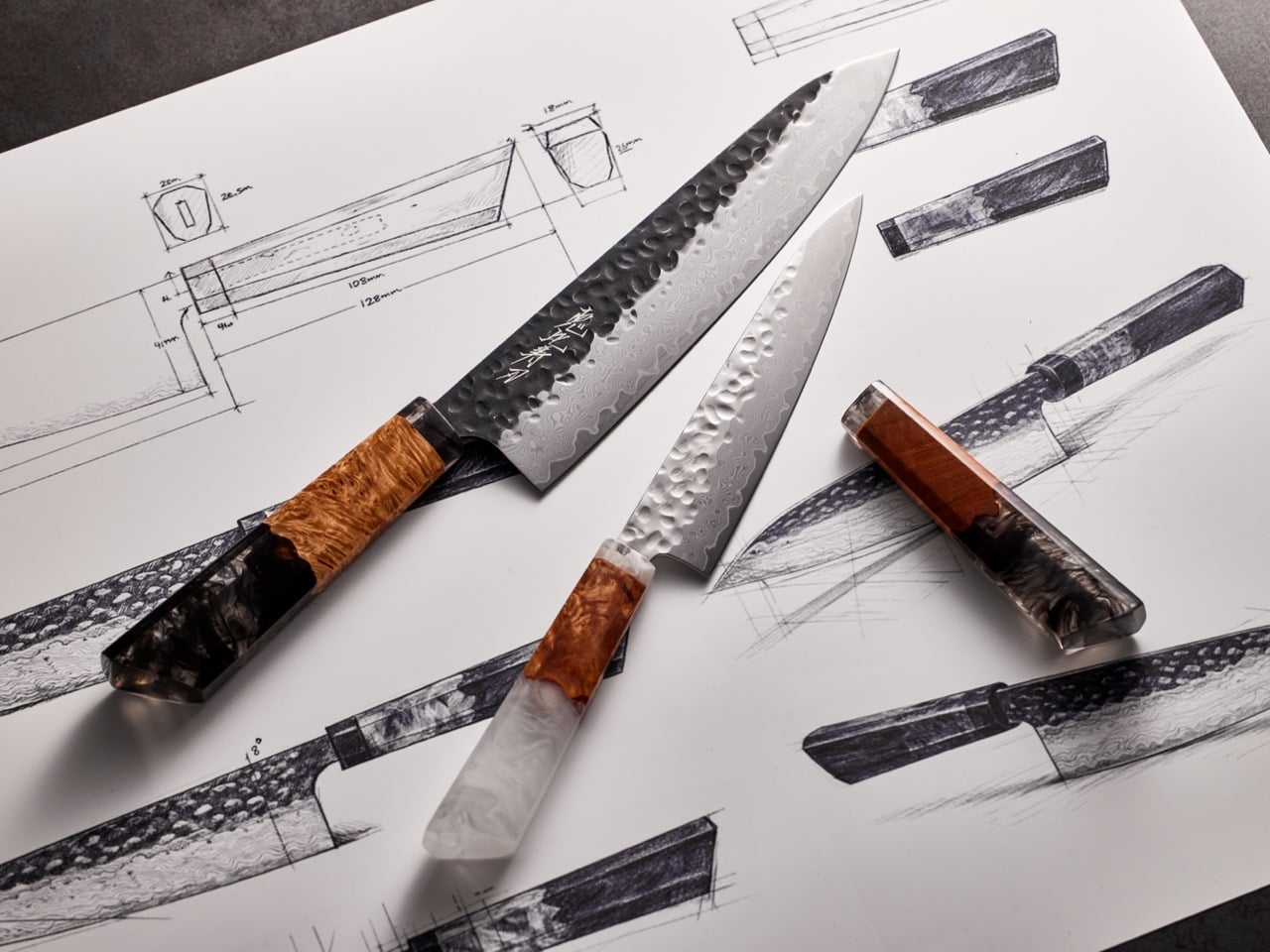
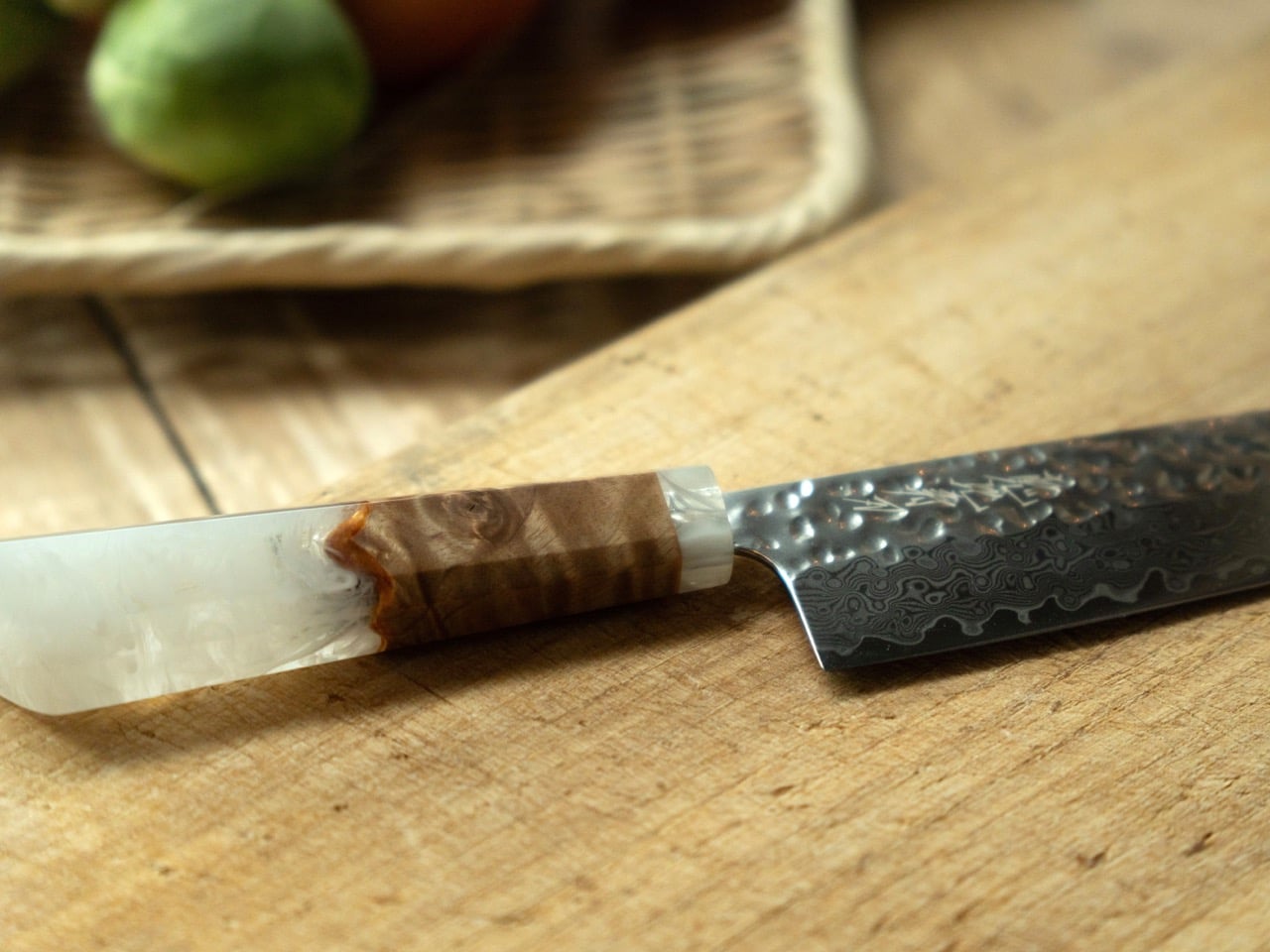
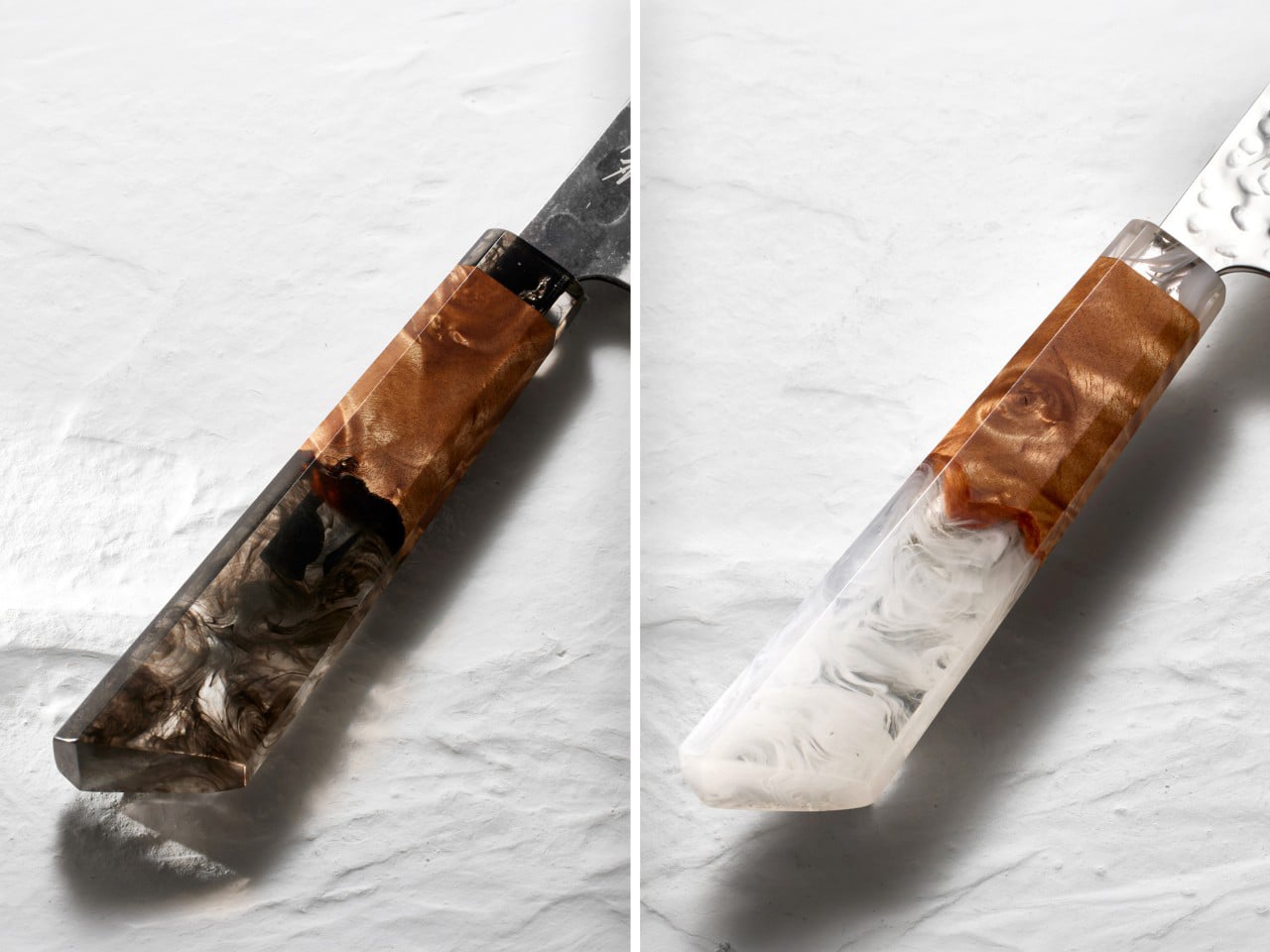
At a glance, TSUKI feels like the kind of knife made for close-ups. The blade has a dark, hammered finish near the spine that transitions into a bright Damascus wave pattern near the cutting edge. The handle shifts from warm Sakura-birch grain into a cloudy, translucent resin block that catches light like polished stone. Together, those details give the knife a strong visual identity shaped around the moon without turning into costume design. The hammered texture recalls lunar craters, the Damascus layers evoke ripples of moonlight on water, and the resin handle is meant to mimic the serene shimmer of a moon’s reflection. It’s a cohesive design language applied across every surface of the knife.
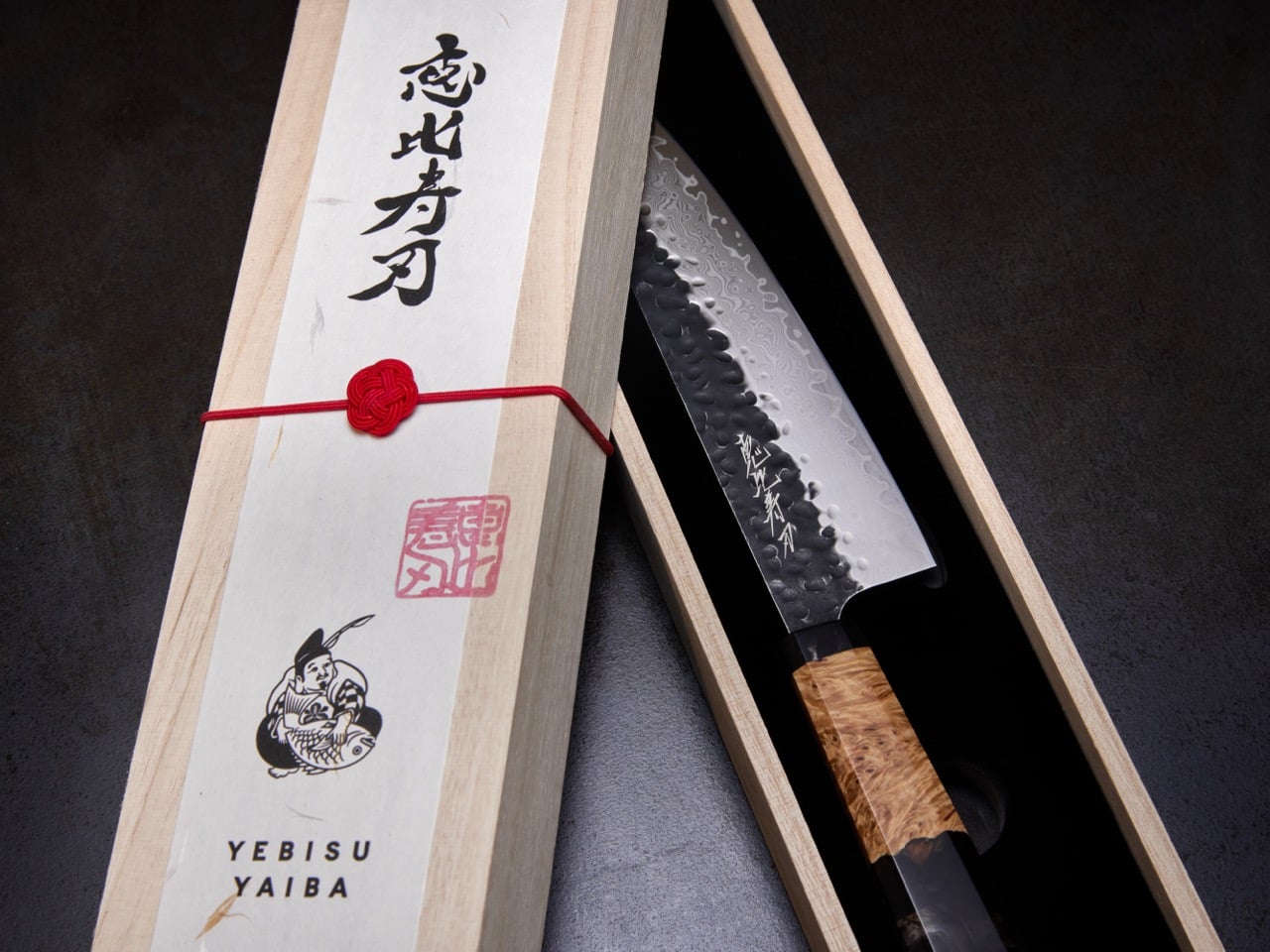
The craftsmanship behind it is just as deliberate as the aesthetic. The blade is built around VG-10 steel from Fukui, a high-hardness material known for edge retention and corrosion resistance, wrapped in 67 layers of Damascus for both strength and visual drama. Sharpening happens in Sakai, Osaka, a city with a 600-year legacy in Japanese cutlery production, which means the edge work benefits from generations of specialized technique. The knife arrives in a custom paulownia wood box from Yamaguchi, secured with a Mizuhiki plum knot tied using traditional Nagano cordwork. Even the interior label uses Echizen washi, a handmade paper with a 1,500-year lineage. What makes TSUKI compelling for a design audience is that it doesn’t just invoke Japanese craft as a branding layer. It assembles contributions from five distinct regional traditions into a single kitchen tool, each one adding material credibility and cultural weight to the final product.
The blade profile is a 210mm gyuto, which translates to a versatile all-purpose chef’s knife in Western kitchen terms. At 150 grams and 1.7mm thick, it sits on the lighter, more agile end of the spectrum. The hammered finish does double duty, giving the blade its crater-like visual signature while creating micro air pockets that help food release cleanly during slicing. The Damascus layering wraps the VG-10 core in alternating steel alloys, which gives the blade that flowing, organic pattern and adds structural integrity. The edge is double-beveled, so it works equally well for left- and right-handed users. JP-crafts, the brand behind TSUKI, positions this as a knife built for daily prep work, something that holds up to routine vegetable chopping, protein breakdown, and general kitchen tasks without losing its sharpness or requiring constant maintenance.
The Sakura-birch section offers a natural, tactile warmth, while the resin component brings a sculptural, almost translucent quality that sets the knife apart from traditional wa-handle designs. The resin comes in black or white variants, and in photos it reads as cloudy, marbled, and faintly luminous. That material transition from wood to resin gives the handle a hybrid identity, part craft object, part industrial design experiment. The shape itself is contoured for grip, with a slight taper that’s meant to feel secure during extended use. It’s a detail that matters because this kind of knife is meant to live on a magnetic strip or in daily rotation, not tucked away in a drawer.
The paulownia box is lightweight and fine-grained, a traditional material used in Japan for storing valuable items because it resists moisture and insect damage. The Mizuhiki plum knot is a small but culturally legible gesture, a symbol of strong bonds often used in ceremonial gift-giving. Opening the box reveals the knife nestled in a custom-fitted interior, with calligraphy labels and thoughtful staging that makes the unboxing experience feel like part of the product itself. For someone buying this as a gift or as a self-purchase with emotional weight attached, that kind of care in presentation elevates the entire interaction.
Early Bird pricing for a single gyuto starts at $142, with the regular MSRP landing at $219. A two-knife set that includes a petty knife is available for $226. The Kickstarter campaign also offers add-ons including a Nakiri vegetable knife, a Sujihiki slicing knife, whetstones, and a leather strop. Estimated delivery is slated for later this year, with shipping available worldwide.
The home office had its reckoning. Somewhere between the fourth video call of the morning and the moment you noticed your own face in the corner of the screen, the question changed from “does this setup work?” to “does this setup say anything?” The best remote workspaces in 2026 are no longer just functional. They are intentional, and the difference between the two is visible in about three seconds on any video call.
These eight picks cover the full range of what a considered desk can look like, from a laptop concept that reimagines what hardware transparency means, to a clipboard that earns its place among all the screens. Not everything here ships today. One is a concept that belongs at the top of any honest list of what remote work could become. The rest are real, mostly purchasable now, and each chosen because it earns its space on a desk that has to work for eight hours straight.
1. Nothing Book Laptop
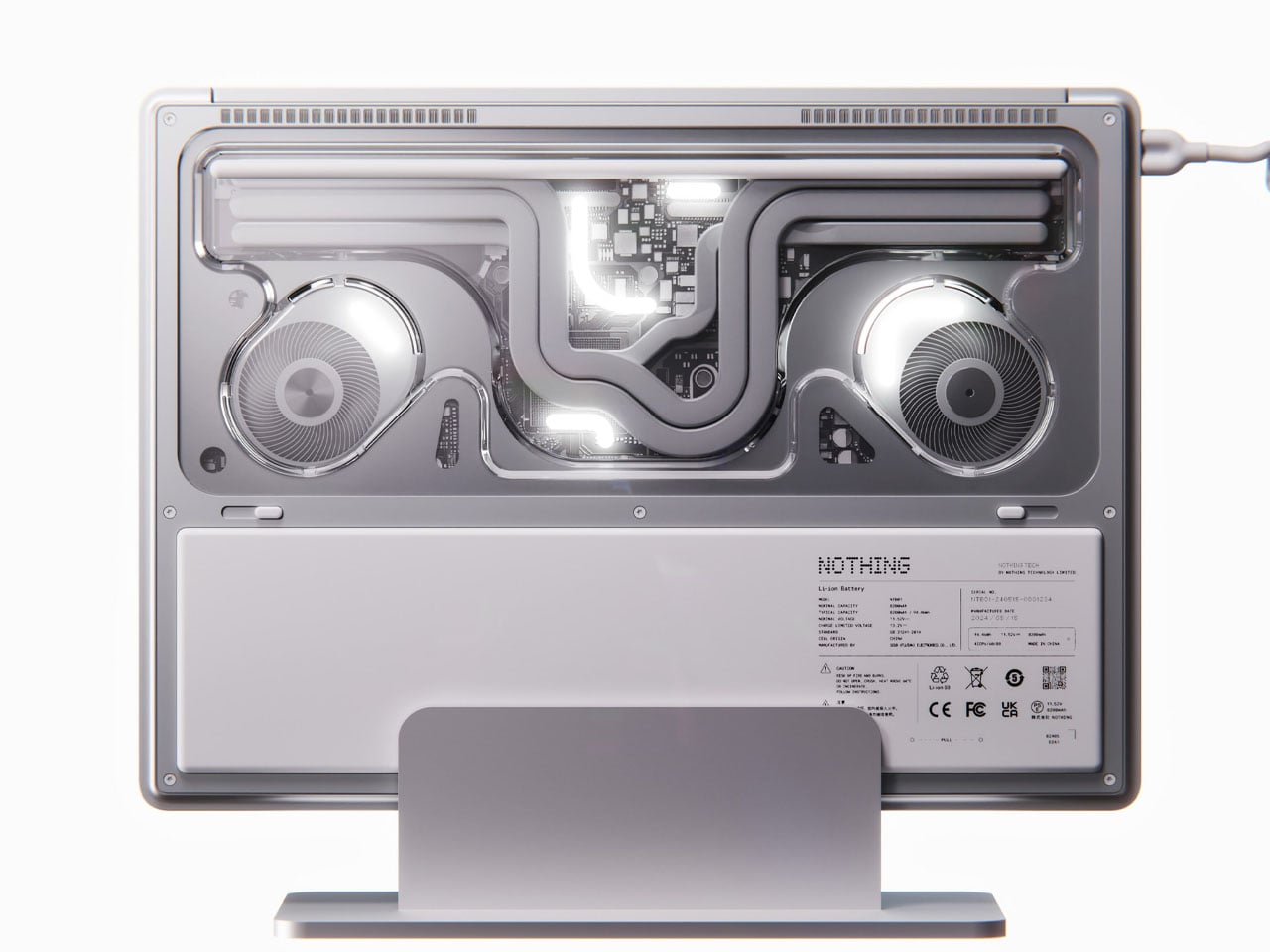
The most compelling thing about the Nothing Book is that it exists as a concept and still makes every laptop you can currently buy feel slightly apologetic. Designer Nikita Bukoros builds on Nothing’s see-through aesthetic but takes it somewhere the brand never has: a performance laptop that treats the inner architecture as the surface detail. The cooling system, board layout, and internal geometry are not hidden but composed, layered in a way that Bukoros calls an industrial art piece, and the label feels accurate rather than generous.
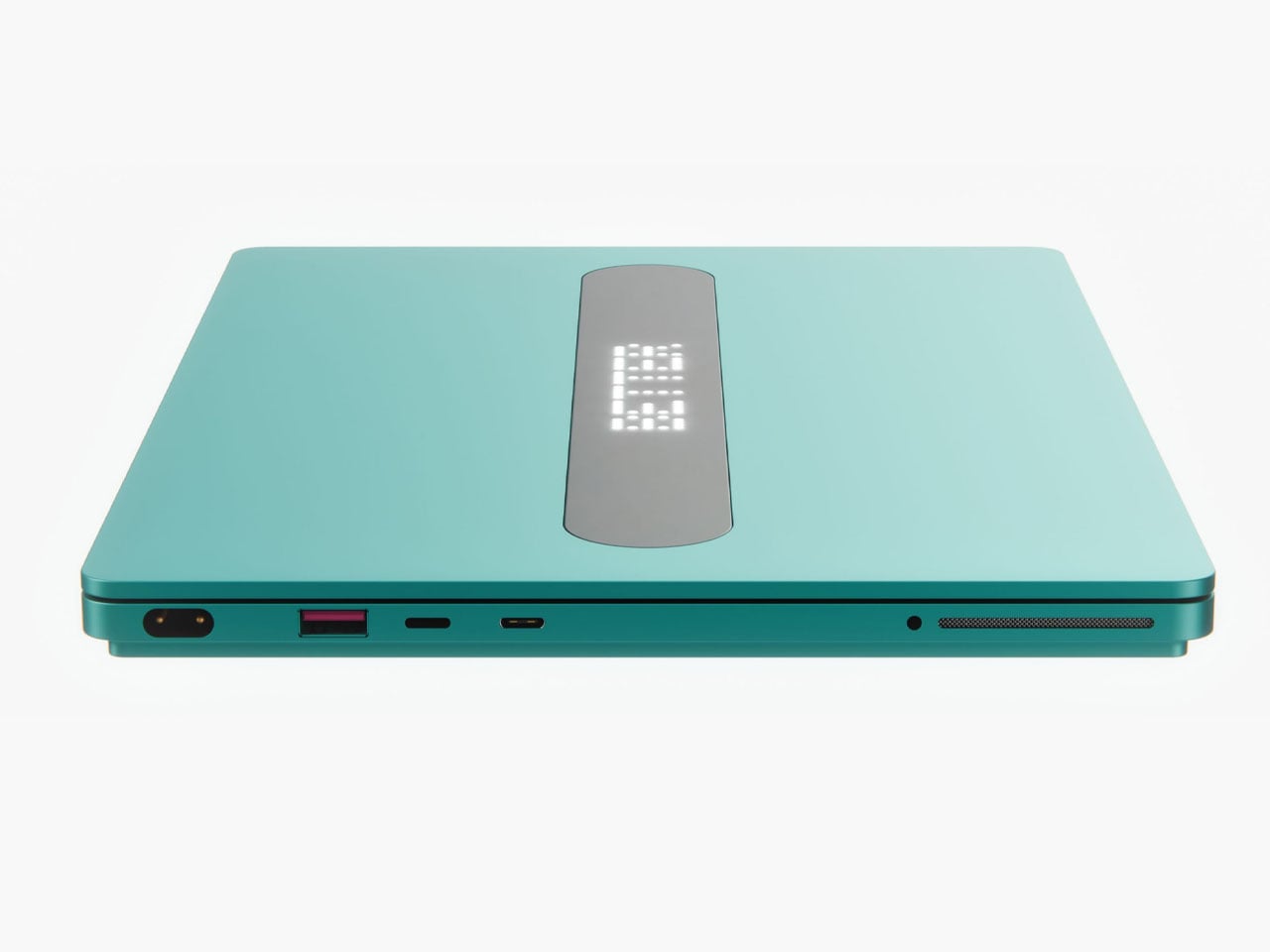
The defining feature is the secondary screen on the lid, a slender external display that lets you surface messages, symbols, or status in Nothing’s own typeface. It is not a gimmick. It is the first design decision on this laptop that makes you rethink what the lid is actually for. The charging dock completes the idea, displaying an animation on the secondary screen when the machine is docked. Whether Nothing ever builds this is a separate conversation. What matters is that someone designed it, and it looks better than what is currently shipping.
What we like:
The secondary lid screen reframes what a laptop exterior can actually communicate
Available in four colorways including hot red and magnetic teal
What we dislike:
A concept with no confirmed release date or pricing
The see-through aesthetic may not read as professional in every work environment
2. OBSBOT Tiny 2 AI Webcam
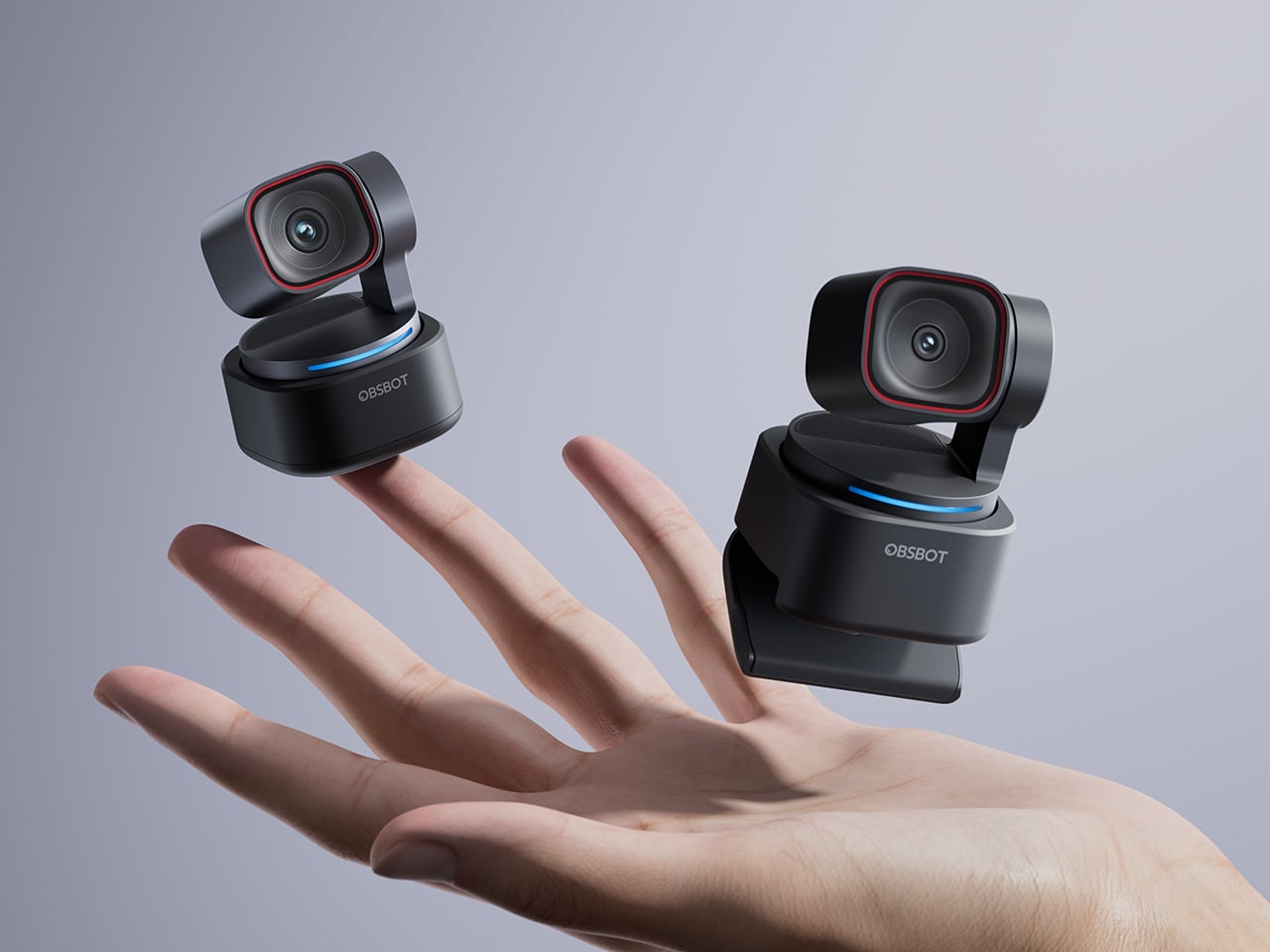
The OBSBOT Tiny 2 is the product that makes everything else on this list matter. A camera with a 1/1.5-inch CMOS sensor in a desk-mounted form factor is not a common thing, and the size of that sensor is the reason the Tiny 2 produces images with the kind of natural depth and tonal accuracy that built-in laptop cameras can only approximate. At its Prime Day price, it is the most significant single upgrade available for any remote work setup right now.
What separates it from other webcams at this price is the AI tracking system. The camera follows you as you move, zooms with gesture controls, and can be operated entirely hands-free through voice commands. OBSBOT calls this Autonomous Imaging, and it earns the name. For anyone presenting, teaching, or spending several hours a day on video calls, the difference between a camera that frames you correctly and one that does is not cosmetic. It is the difference between looking prepared and looking like you have not thought about it.
1/1.5-inch sensor delivers genuinely cinematic depth of field for a webcam
AI tracking and gesture controls work hands-free without additional software
What we dislike:
The full feature set takes some time to configure properly out of the box
Requires a good lighting setup to get the most out of the large sensor
3. Lofree Block Pro Mechanical Keyboard
There is a version of the mechanical keyboard built entirely around sound and feel, and then there is the Lofree Block Pro, which is built around the understanding that a desk is something you look at for eight hours, and it should be worth looking at. The keyboard is the most visible object in any setup. Lofree has been making the argument for years that a keyboard does not need to be sober to be serious, and the Block Pro makes that case more convincingly than anything the brand has released before it.
The inspiration drawn from lipstick is not a marketing note. It is a design decision that shows up in the finish, the profile of the keycaps, and the choice of materials in a way that makes the keyboard feel like it was conceived by someone who thought carefully about what the object communicates before anyone types a word. It sits on a desk and says something before it does anything. That is rarer than it should be in peripheral hardware, and it earns slot three on a list that opened with a concept laptop designed on the same premise.
What we like:
One of the most visually distinctive mechanical keyboards available in 2026
Lofree sells direct, so there is no crowdfunding wait involved
What we dislike:
The aesthetic-forward design may not appeal to users who prioritize acoustic dampening above everything else
Colorway availability can be limited depending on stock timing
4. Bean Lamp
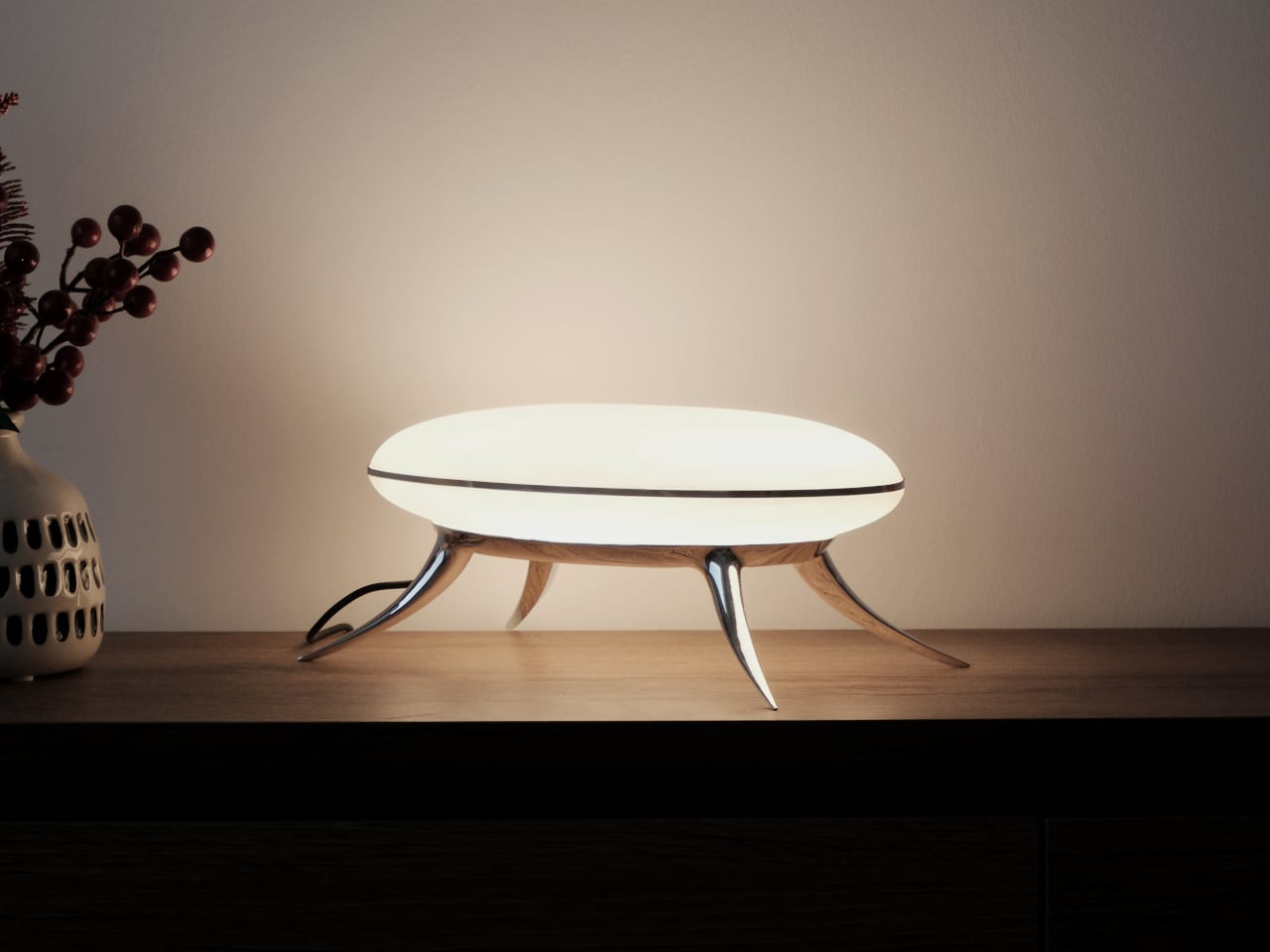
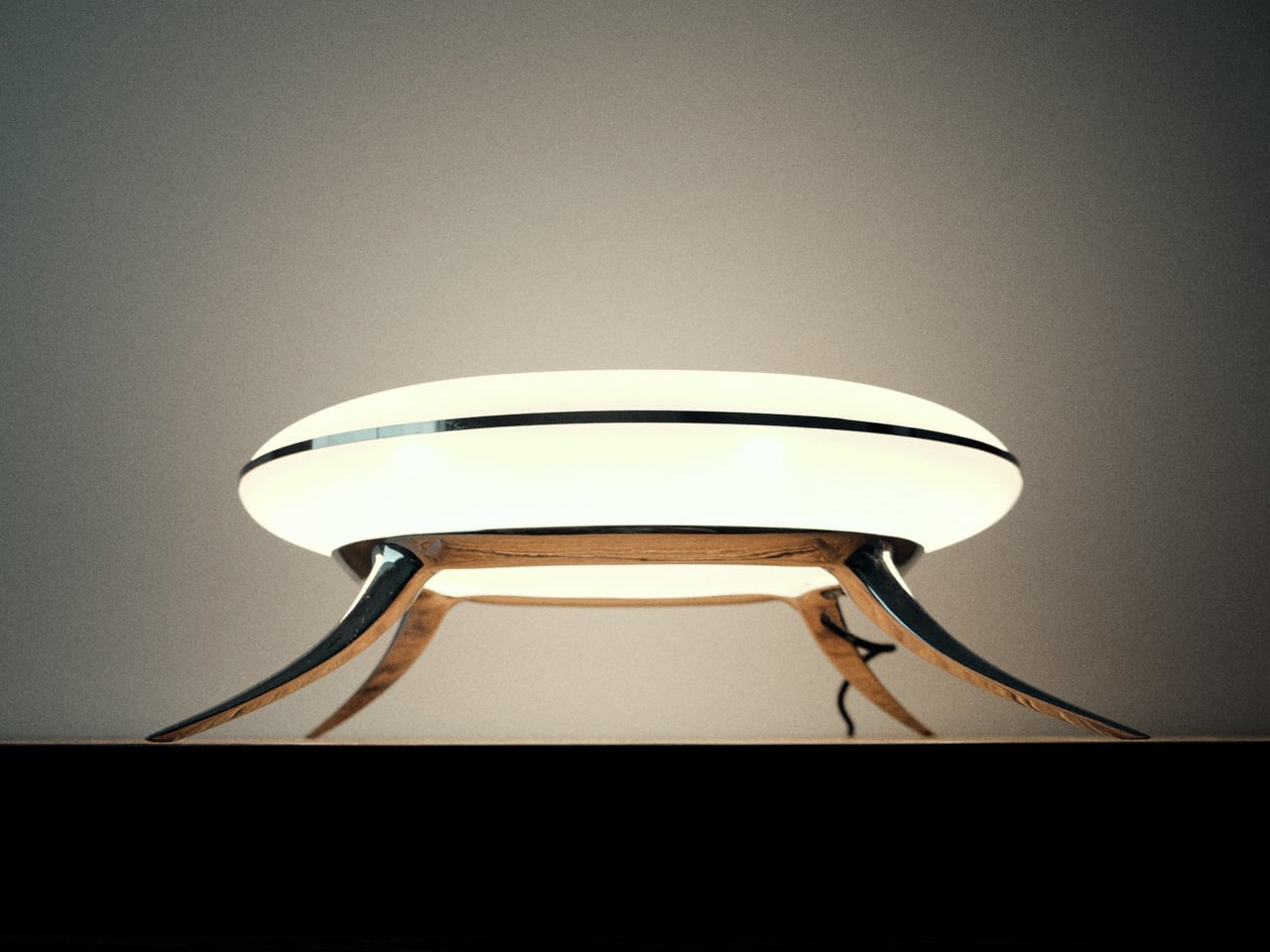
The Bean Lamp was designed in Brooklyn and released in 2026 as a limited edition. It has four articulated legs and functions, in its own description, as a light source and a quietly unsettling presence on the desk. That framing is not a problem. It is the point. The remote work desk accumulates screens and cables and productivity tools until everything on it is optimized and nothing on it is interesting. The Bean Lamp is interesting, and it earns that through its form rather than any feature set.
Placing a lamp in slot four is deliberate. Lighting is the most underdiscussed upgrade in any home office and the one with the most immediate visual return, both in the room itself and in how you appear on a call. The Bean Lamp is not the brightest option or the most technically advanced. It is the one that makes the desk feel like it was arranged with intention, which is what this entire list is building toward. Limited edition means its availability window is narrow, and that is the only deadline on this page genuinely worth paying attention to.
What we like:
Four-legged form sits in a category entirely its own within desk lighting
Limited edition production makes it a genuinely collectable object
What we dislike:
Limited stock means it may be unavailable by the time you look for it
Form is prioritized strongly enough that adjustability takes a back seat
5. Rolling World Clock
The rolling world clock resolves a problem that no app has solved well. Time zone arithmetic done in your head at the start of a call, or the three-second check of a world clock widget before sending a message to someone on a different continent, is a small friction that accumulates across a remote workday. A physical clock that surfaces that information without requiring a screen does not eliminate the problem, but it changes the quality of the interaction with it. You glance instead of switching tabs.
It is also the most analog object on a desk full of technology, and that contrast does real work in the room. The rolling mechanism and the considered design of the face are the reason it earns slot five rather than an app recommendation. It looks like it belongs next to the Bean Lamp and beneath the concept of the Nothing Book. The design has been through editorial curation before reaching this list, and that is a form of provenance worth acknowledging.
Physical world time display removes the need to leave a screen mid-thought
Design language sits naturally alongside other considered desk objects
What we dislike:
Physical clocks require manual adjustment for daylight saving changes
Works best for users tracking two or three time zones rather than a full global roster
6. Noble Osprey Earbuds
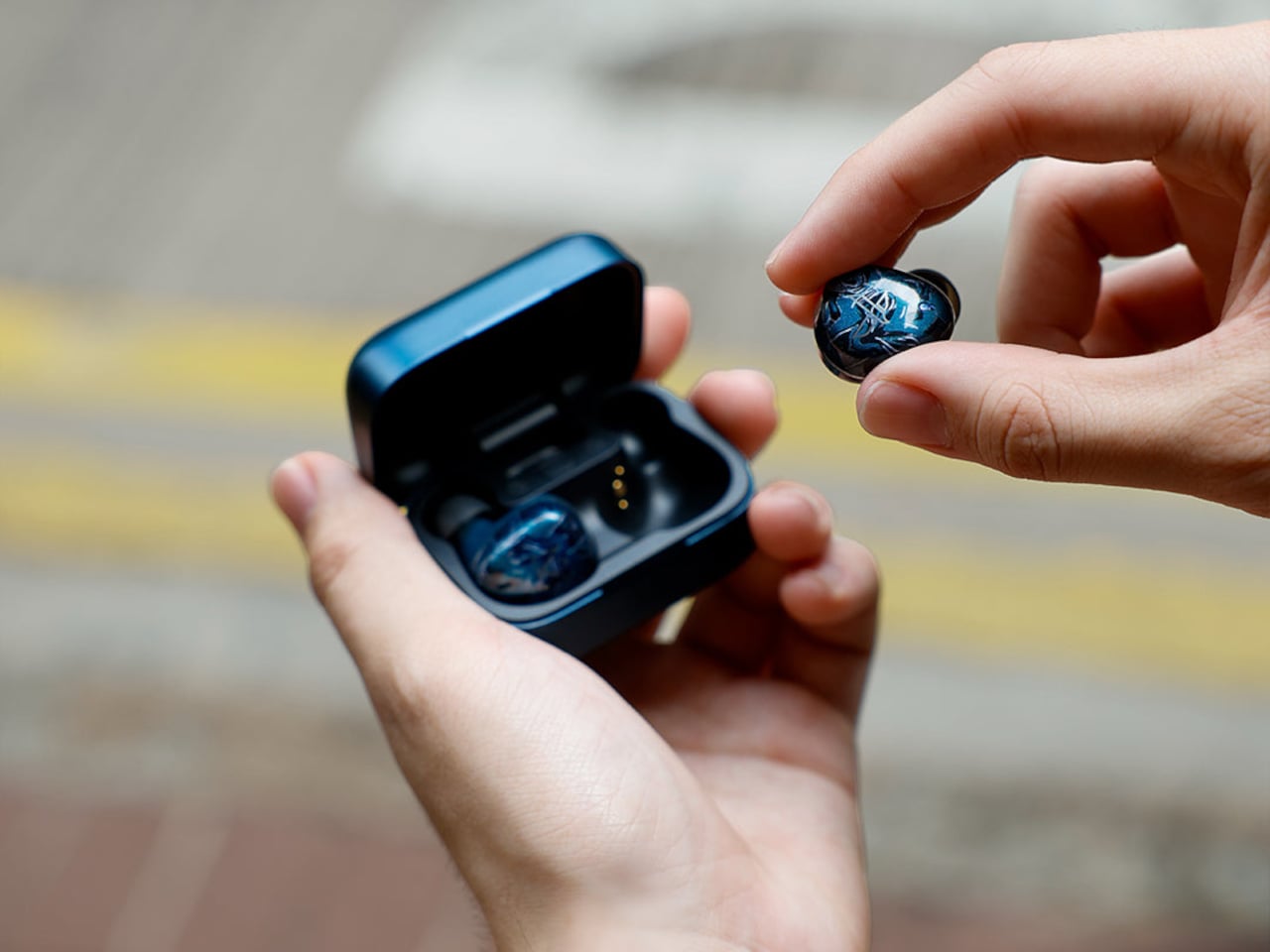
Noble Audio comes from the audiophile end of the earphone market rather than the consumer electronics end, and the Osprey is its attempt to bring that lineage into the daily carry price range. It positions itself directly against the Sony WH-1000XM6 and makes a credible case. The Osprey debuted at High End Vienna 2026 and begins shipping at the end of June, which makes it the most time-sensitive pick on the list.
For remote work specifically, the audio quality of what you listen to across eight hours matters in a way that is easy to underestimate. The difference between earbuds that are technically fine and earbuds that are genuinely good is not primarily about music. It is about fatigue. A call at the end of a long day sounds different through something built to reproduce sound accurately rather than simply transmit it. The Noble Osprey makes that argument at a price that is harder to dismiss than it used to be, and against a competitor charging significantly more for the privilege.
What we like:
Debuted at High End Vienna 2026, placing it firmly in audiophile rather than consumer territory
Undercuts the Sony XM6 meaningfully while matching it in credibility
What we dislike:
Noble Audio has less mainstream retail presence than Sony or Apple
Shipping timeline makes it an immediate purchase or a wait, depending on when you read this
7. Logitech Mobi Fold Mouse
The Logitech Mobi Fold folds flat to the size of a wallet. That sentence covers most of what needs to be said about it for the remote worker who moves between a home desk, a café table, and a meeting room in a single day. Logitech’s own hands-on noted that unfolding it one-handed is cleaner than expected and that the mouse settles into its ergonomic angle with a firmness that feels researched rather than approximated. That detail matters more than it appears. A peripheral that requires two hands and a beat of fiddling to deploy is a peripheral that stays in the bag.
It occupies a price point where the tradeoff between portability and comfort is usually uncomfortable. The Mobi Fold avoids that by treating the folding mechanism not as a compromise but as the primary design problem to solve. The result is a mouse that works at a desk and works equally well away from one, which is an accurate description of how most remote workers actually spend their time in 2026. The form factor is the feature, and it is a well-executed one.
What we like:
Card-thin profile fits in a jacket pocket or laptop sleeve without adding bulk
Ergonomic angle on deployment feels solid rather than provisional
What we dislike:
The folding mechanism adds mechanical complexity that a standard mouse does not carry
Works best as a travel companion rather than a primary desktop mouse
8. Magboard Clipboard
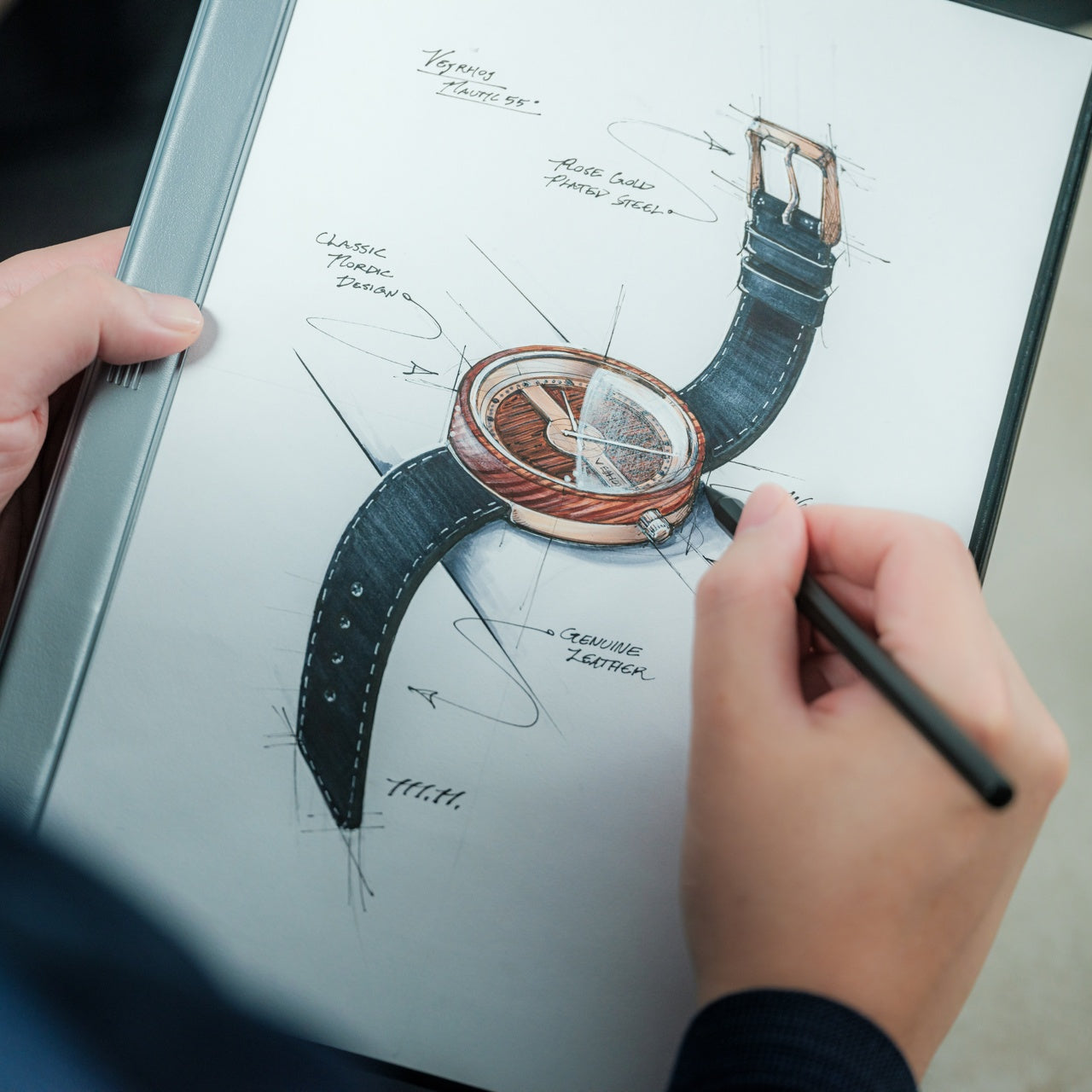
The Magboard closes the list because it answers the question every other product on it leaves open. A desk built around screens, cameras, and AI tracking is a desk that has optimized entirely for output and left nothing for the moment before output, when a thought is still a thought and not yet a task. The Magboard is a magnetic clipboard. It holds paper. It does this with enough design intentionality that it belongs next to everything above it, and that is not a low bar to clear.
Physical note-taking has not disappeared from the remote work day. It has become invisible in setups that treat analog tools as an afterthought. Giving the clipboard a dedicated surface on the desk, one that clips, holds, and stays put through magnetic precision, is a small act of organizational clarity that shows up in how the rest of the desk functions.
Magnetic mechanism adds a tactile precision that a standard clipboard never has
Grounds a screen-heavy setup with a deliberate and well-designed analog presence
What we dislike:
Purpose is specific enough that it won’t resonate with users who have moved fully to digital note-taking
Works best as part of a considered setup rather than as a standalone purchase
The Desk Is The Message
The remote work desk in 2026 is past the point where functional is enough. Every product on this list, from the concept laptop that opened it to the clipboard that closed it, was chosen because it treats the desk as a designed space rather than an accumulated one. That distinction is what separates a setup that works from a setup that communicates something before a single word is spoken on a call.
Not everything here is available today, and one of the best things on the list may never be. That is an honest reflection of where design is in 2026: the most interesting ideas are still a step ahead of the shelf. What you can buy right now is already better than what most home offices are running. The OBSBOT, the Lofree, the Noble Osprey, and the Logitech Mobi Fold are genuinely good objects that earn their place on a desk that has stopped settling for whatever was closest.
Most outdoor gear is designed around a single occasion. A holiday weekend, a camping trip already planned, a backyard cookout that needs a solution by Saturday. The problem with occasion-specific buying is that the occasion ends. These seven were chosen around a different question: would you still want this in ten years? The answer comes down to design, and how the thinking behind each object holds up once the context that sold it is gone.
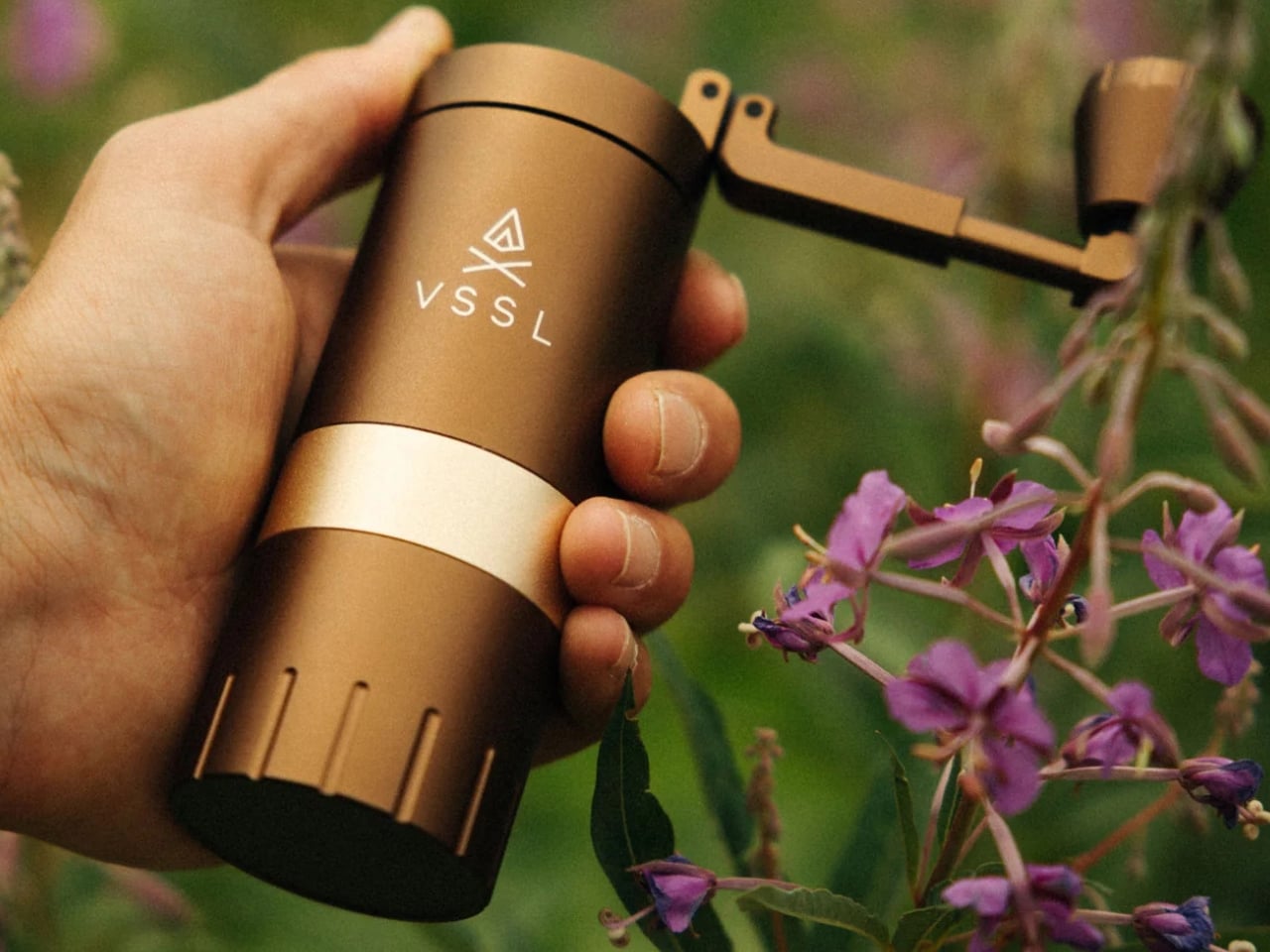
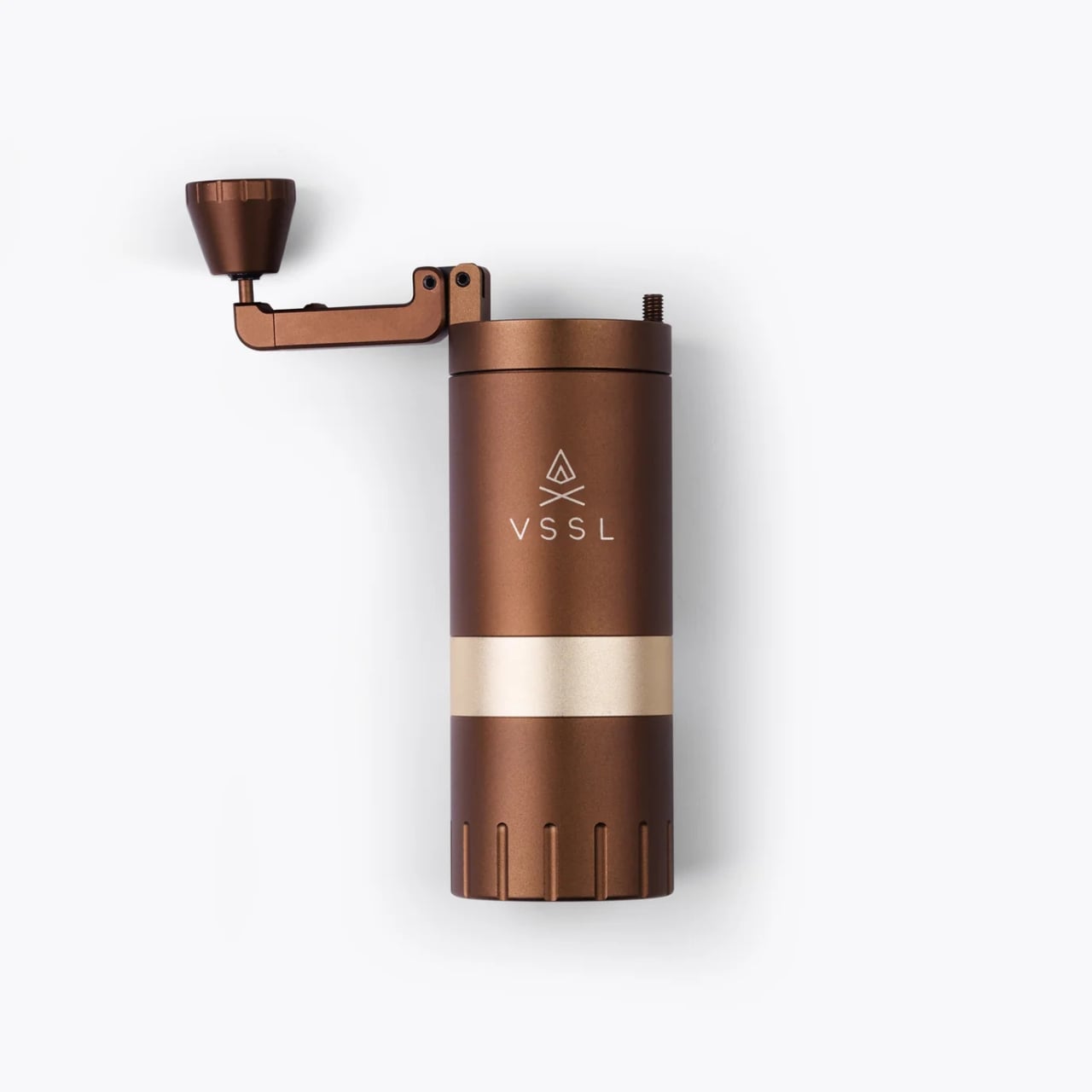
Each product here solves a real outdoor problem without the aesthetic compromise that tends to come with the territory. A grill that consolidates without cutting corners. An umbrella that actively cools the space beneath it. A hammock tent that finally delivers a flat night’s sleep. A coffee grinder built from aircraft-grade aluminum. These are the outdoor objects worth owning for more than one summer.
1. All-in-One Grill
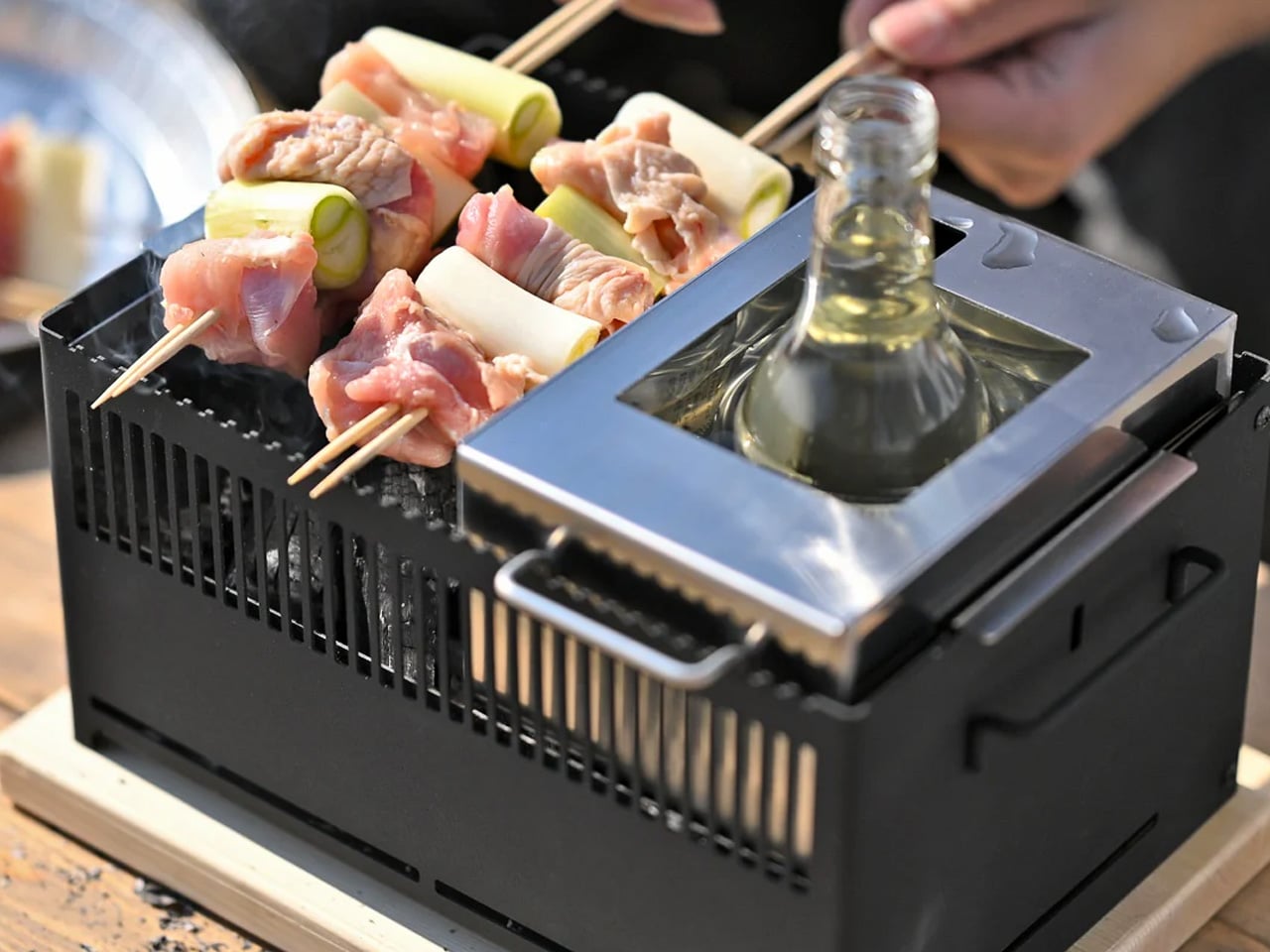
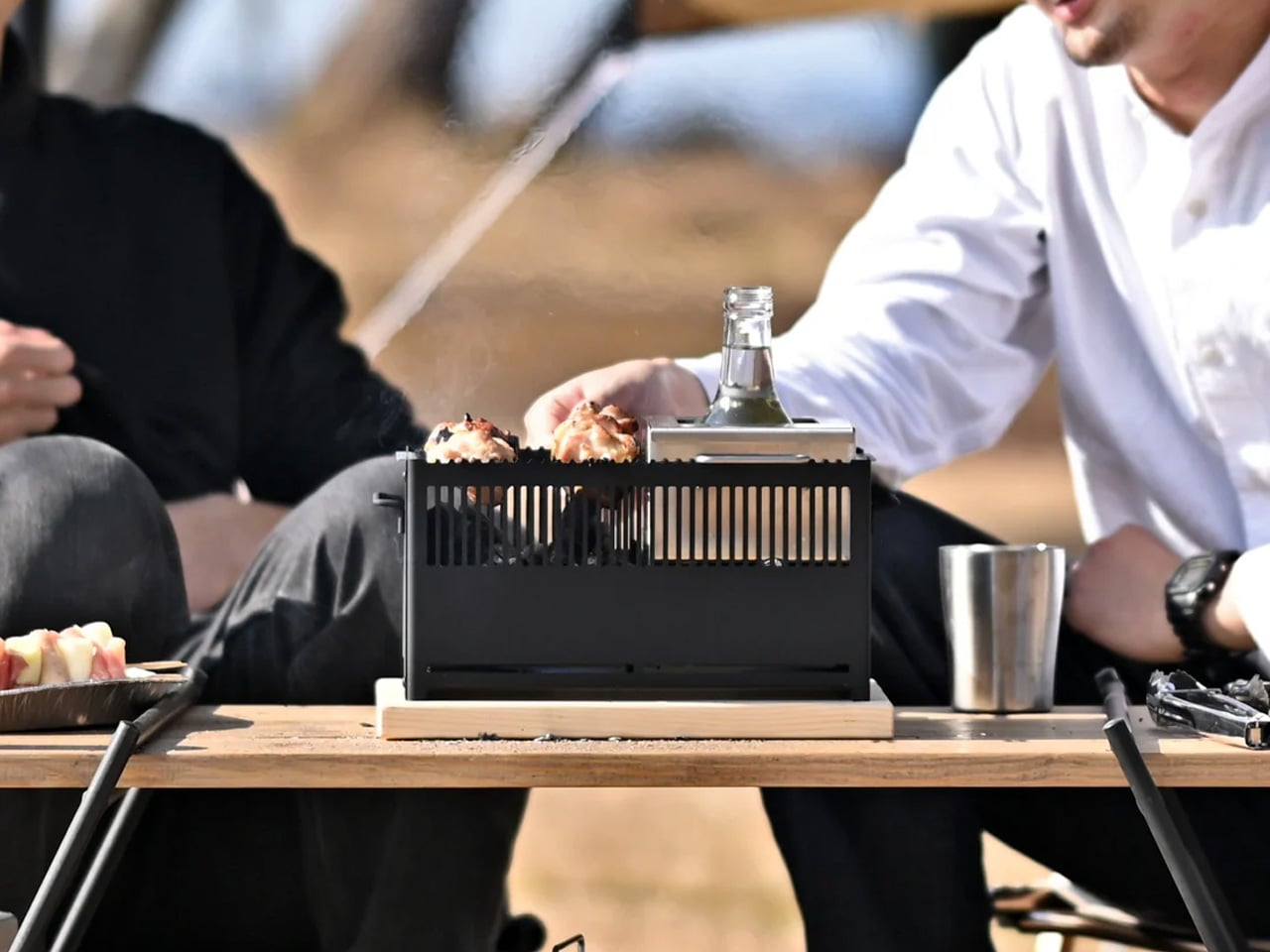
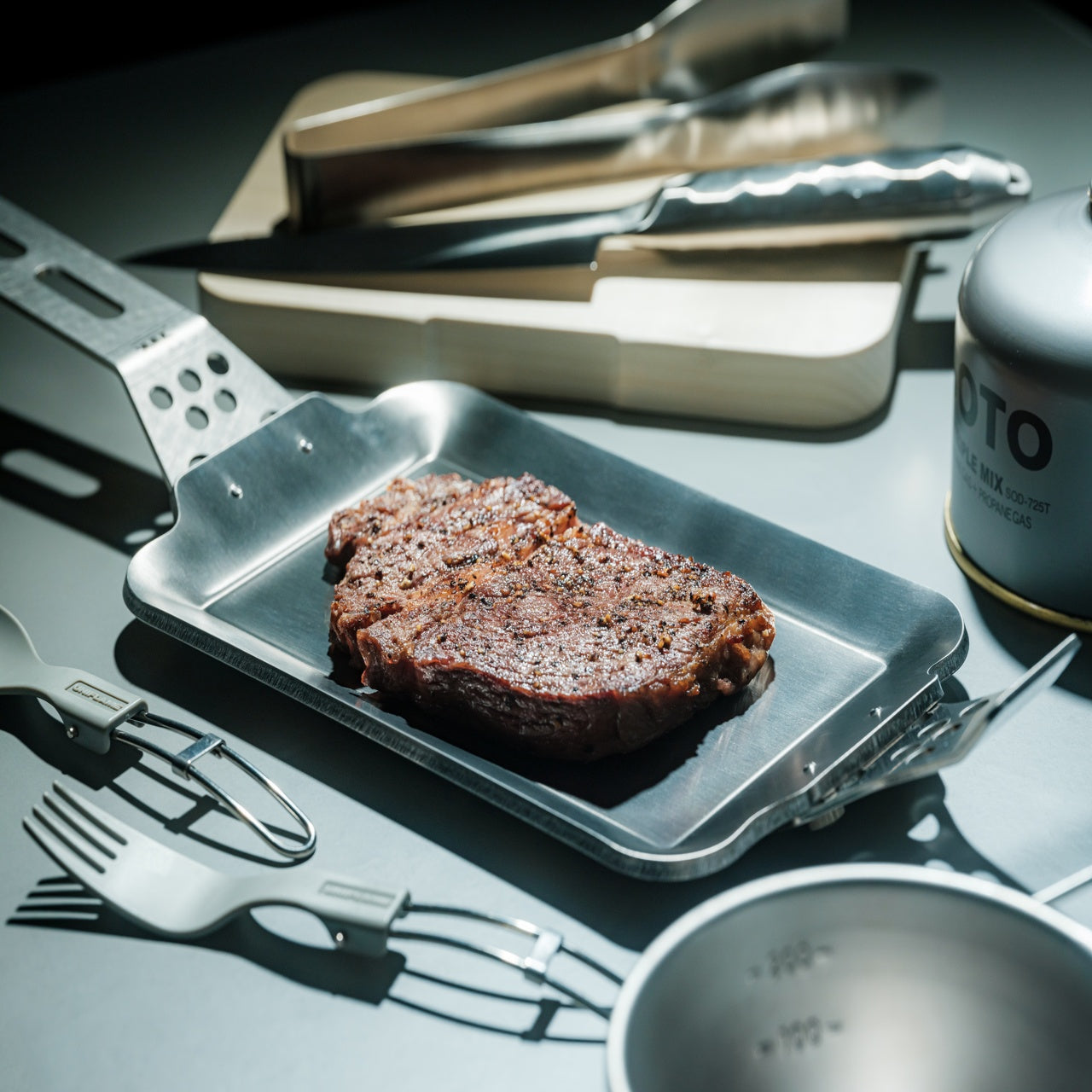
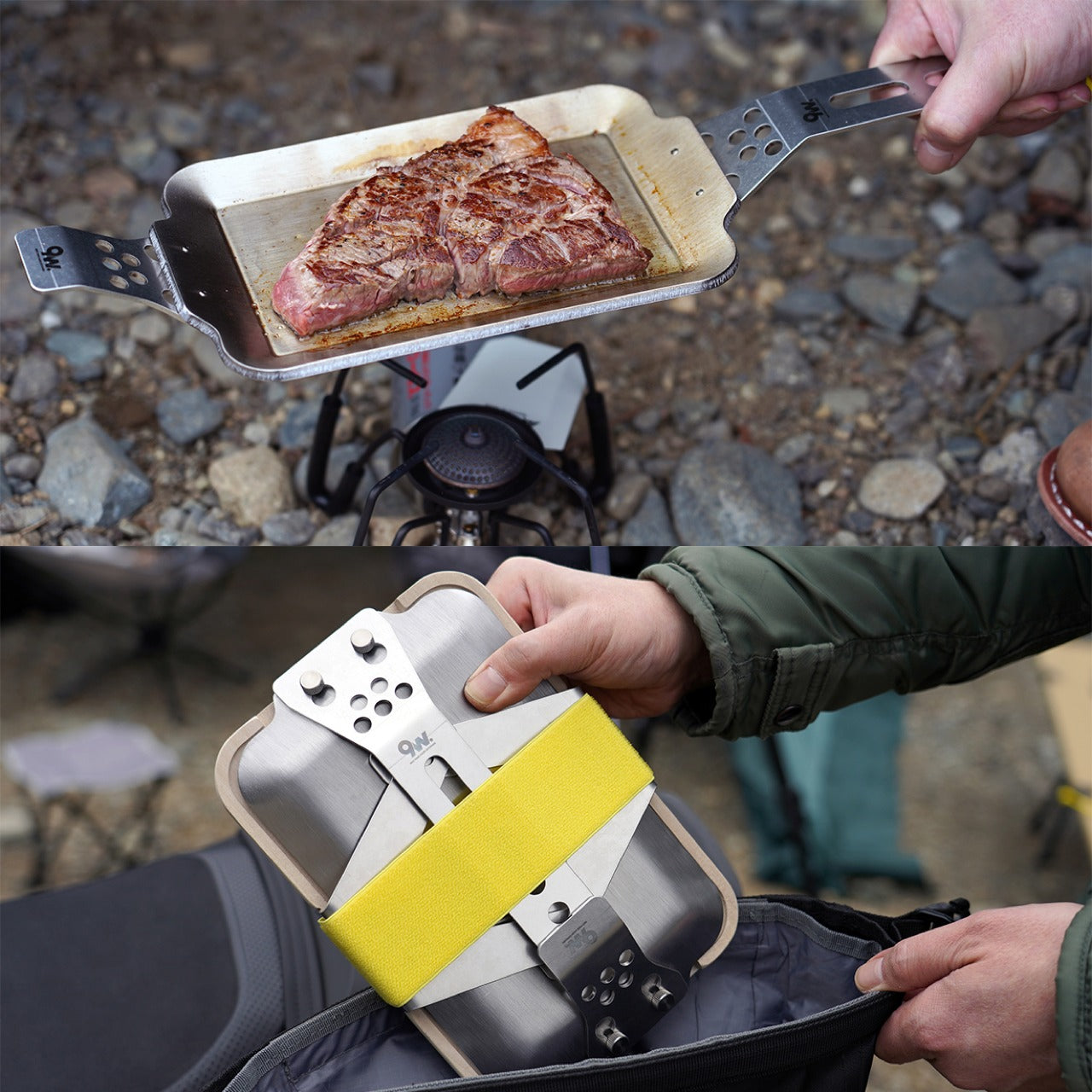
The all-in-one grill starts from a premise that most outdoor cooking equipment ignores: the setup shouldn’t take longer than the meal. Most grills demand a chain of decisions before the first flame is lit. This one consolidates the core functions into a single, considered form that earns its place on a patio, a campsite, or a tailgate without the negotiation. The design makes the case that outdoor cooking gear doesn’t need to be complicated to be capable.
What separates a grill worth keeping from one that lasts two summers before being replaced is whether the design holds up to sustained use. The all-in-one doesn’t compromise build quality for compactness. It treats portability as an engineering problem rather than a marketing claim, arriving at something you’d genuinely reach for on a July afternoon without second-guessing whether you packed the right accessories. That clarity of purpose is what makes it the natural anchor for this list.
Consolidates multiple cooking functions without creating the usual trade-offs in durability or output
Earns its storage space year-round because it works equally well on the patio as it does at the campsite
What we dislike
An all-in-one format means any single component issue affects the whole unit rather than an isolated replaceable part
The broad compatibility ambition makes it slightly harder to optimize for one specific cooking method
2. Alizé Umbrella with Built-in Fans
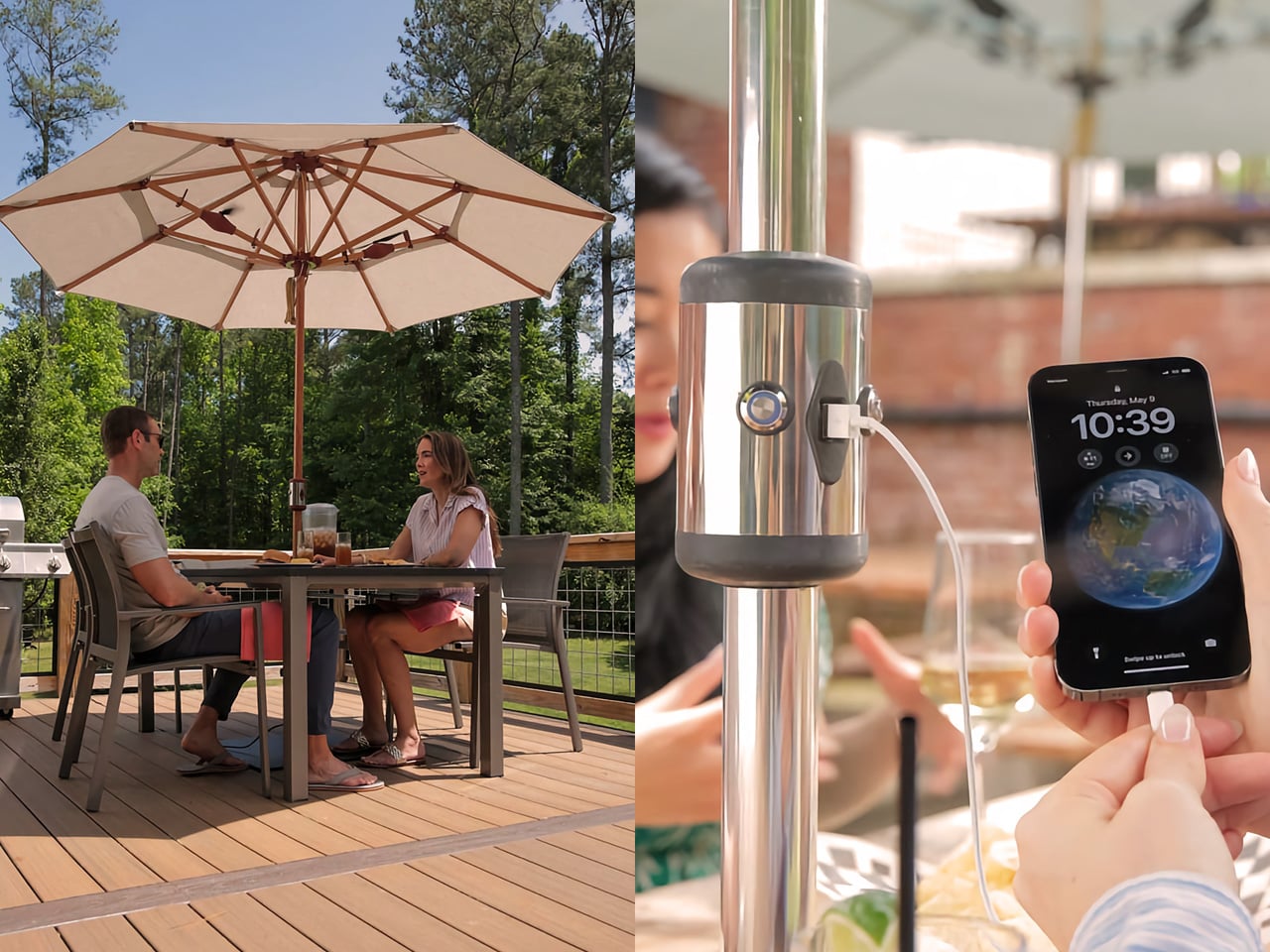
Designed by Tony Lee and Ryan Dickerson, the Alizé starts as a patio umbrella and immediately goes further. Integrated into its aluminum frame are four brushless DC fans with blades capable of spinning at up to 2,200 RPM. Each fan is individually controlled, meaning the person sitting directly beneath it adjusts their own airflow without negotiating a shared setting with everyone else under the canopy. The control panel on the main stem provides three speed settings and USB-A ports for charging devices mid-afternoon.
The engineering detail that earns its place on this list is the electro-mechanical locking system that aligns the blades with the frame automatically on closing, removing the need to manually position anything before folding. Safety logic prevents the fans from operating when the umbrella is closed and cuts them automatically if the canopy is accidentally folded mid-use. The Sunbrella fabric canopy handles UV protection while the marine-grade aluminum frame takes on wind and rain. It comes in a two-fan and four-fan configuration depending on how many people are sitting beneath it.
What we like
Individual fan control per seat solves the airflow disagreement that every shared outdoor space eventually produces
Built-in safety logic removes the mechanical anxiety that usually comes with integrating spinning parts into a shade structure
What we dislike
Requires a direct power connection, which rules out use in locations without an accessible outlet nearby
Fixed installation means relocating it between spaces is a deliberate process rather than a spontaneous adjustment
3. Yuuye Portable Air Conditioner
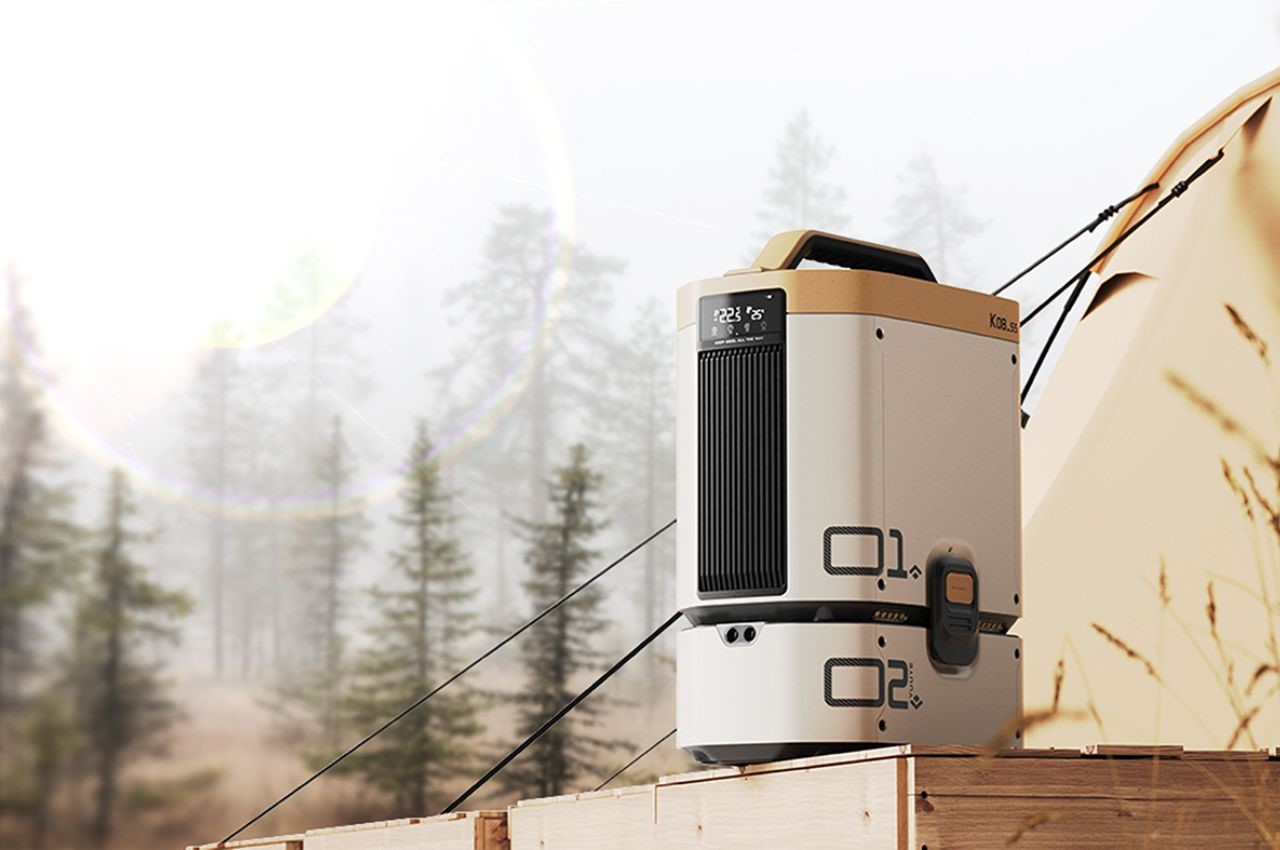
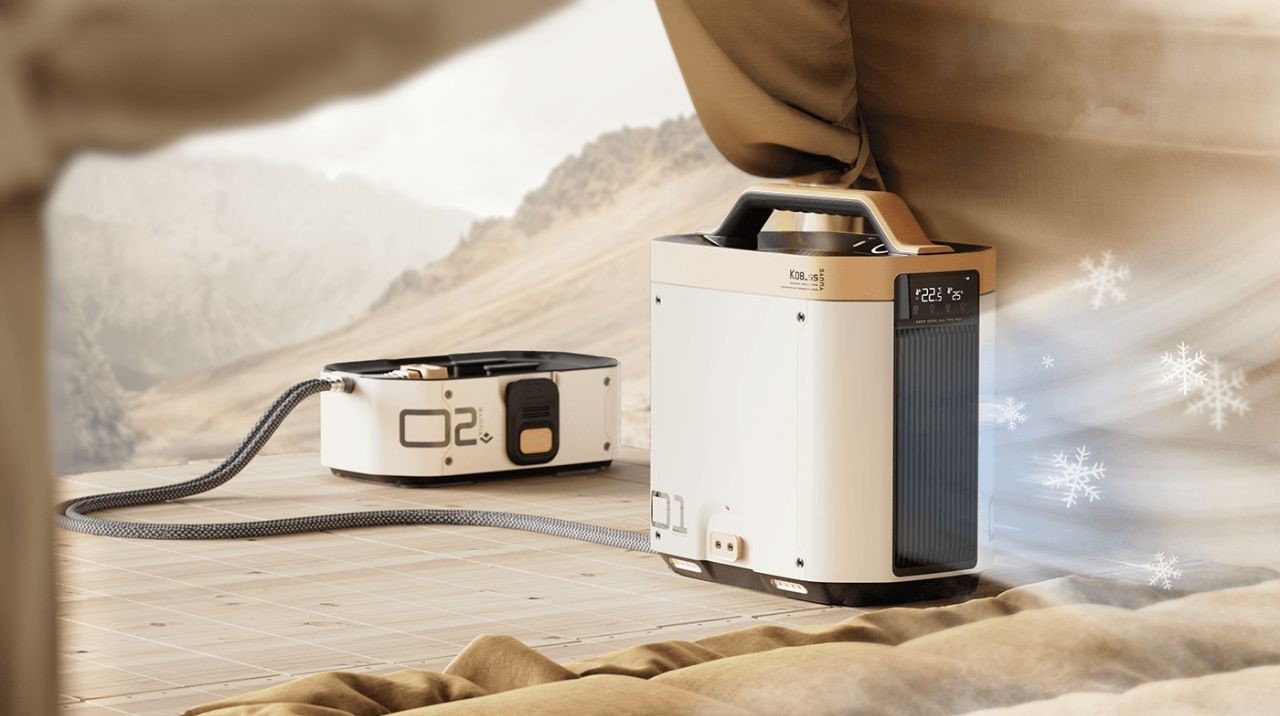
Where the Alizé cools a shared space from above, the Yuuye Portable Air Conditioner works at a different scale. Designed by HAORAN and Yifeeling Design, it separates the refrigeration module from the exhaust module, drawing in ambient heat through one side and pushing cool air through a large outlet on the other. The modular split means you can detach the upper and lower sections with a single release-and-lift motion, repositioning between the tent, the patio, and the car without the effort that traditional units demand.
The design directly addresses the problem that conventional portable air conditioners create outdoors: the thick exhaust pipe that leaves gaps in a tent opening, letting mosquitoes in. The Yuuye solves this with an independent exhaust block that seals properly. An LCD panel keeps cooling settings visible at a glance, and the oversized air outlet distributes airflow across a space rather than forcing it through a single narrow stream. For anyone who has spent a July night in a tent wishing they had brought something other than acceptance, this is the product that changes the calculation.
What we like
Modular design makes relocating between outdoor settings genuinely fast, without the production most portable units require
The independent exhaust block solves the mosquito gap problem that undermines conventional outdoor air conditioning setups entirely
What we dislike
Battery life is unspecified in the current design documentation, which makes multi-day trip planning around it difficult
Best suited to contained spaces like tents and small patios, rather than open areas where the cooled air dissipates quickly
4. Compact Modular Grill Plate
The compact modular grill plate approaches outdoor cooking from a different direction than the first entry. Where the all-in-one consolidates, this one gives you a focused flat cooking surface that adapts to different heat sources and setups without requiring a committed configuration before leaving the house. It’s a cooking tool that respects the fact that outdoor conditions change, and a well-designed cooking surface should be able to change alongside them without forcing a workaround.
The portability argument here is about density rather than footprint. A compact grill plate doesn’t occupy meaningful space in a pack or a boot, which means it comes on trips that a full grill never would. It earns its place precisely because it doesn’t demand to be the centerpiece of the cooking setup. It works alongside other tools, slots into the corner of a cooler bag, and appears when the flat surface it provides is exactly what the moment needs. That quieter kind of utility tends to last.
Compact form means it travels on trips where a full grill setup wouldn’t be practical or worth the weight
Modular construction lets it adapt to different heat sources without locking the user into a fixed approach
What we dislike
A dedicated flat surface has a narrower cooking range than an all-in-one grill, which limits preparation variety when used alone
Compact dimensions mean surface area is the inevitable trade-off, which matters when cooking for more than two people
5. Haven Spectre Ultralight Hammock Tent
Haven Tents spent five years solving the banana effect before arriving at the Spectre. The patented lay-flat system creates a genuinely horizontal sleeping surface, allowing back, side, or stomach sleeping rather than folding into the curved position that traditional hammocks enforce. Construction uses Dyneema fabric and MONOLITE mesh, materials chosen for their strength-to-weight ratio rather than their price point. The result weighs under two kilograms and packs to 15 by 6 by 6 inches, compact enough to ride on the outside of a pack.
For backpackers who abandoned hammock camping after a single uncomfortable night, the Spectre is the iteration worth revisiting. When suitable trees aren’t available, a bivy mode uses trekking poles as the anchor system, opening up alpine and desert terrain. Translucent mesh netting keeps insects out while maintaining a full view of the surroundings. A detachable rainfly handles weather and doubles as a privacy mode. Internal mesh pockets, a gear sling, and a ridgeline handle storage, so nothing has to leave the shelter after dark to be found.
What we like
The patented lay-flat design solves the comfort problem that has made hammock camping a one-trip experiment for many backpackers
Under two kilograms for a complete shelter system with weather protection, bug netting, and storage is a genuinely difficult weight to achieve
What we dislike
Setup depends on finding trees at the right spacing and height, which limits viable campsites in open terrain without the trekking pole bivy mode
The premium price reflects the materials quality honestly, but makes it a harder case for occasional campers who won’t put it to regular use
6. VSSL Java G25 EDC Grinder
VSSL built its reputation on engineering essential gear into objects that don’t announce their utility until you reach for them. The Java G25 applies that logic to coffee. Machined from 6061 aircraft-grade aluminum with 304 food-grade stainless steel internals, it reads as precision equipment rather than a kitchen accessory. High-carbon 420 stainless steel conical burrs, stabilized by dual bearings, deliver consistent particle size across 50 distinct grind settings, covering French press through espresso without the inconsistency that makes most manual grinders a frustration.
The design choices that make this an EDC object rather than a countertop appliance are specific and deliberate. The handle expands during grinding for leverage, then retracts and locks into a carabiner for clipping directly to a pack. A magnetic integration secures the knob inside the catch during transit. The 30-gram hopper opens through a push-release top cap. At 6.3 inches long and two inches in diameter, it nests with an AeroPress Go, making a full specialty coffee brewing kit genuinely pocket-sized and ready for a trail, a campsite, or a hotel room equally.
What we like
50 grind settings on a manual grinder is a professional-grade range, covering every brewing method without needing a separate device for each
The retractable carabiner handle clips to a pack and disappears into a kit without requiring a dedicated case or any extra packing decision
What we dislike
50 settings reward patience and experimentation, which extends the learning curve for those who want a reliable result from the very first use
The 30-gram hopper capacity suits single-serve brewing well but requires refilling for anyone making more than one cup at a time
7. Anywhere Use Lamp
A lamp that earns its name by working across every outdoor context is a more demanding brief than it sounds. Most portable lighting is optimized for one setting and awkwardly repurposed for others. The Anywhere Use Lamp approaches the problem from the other direction, designing for placement flexibility from the outset rather than treating multi-use as a secondary feature. The result is a light source that belongs on a campsite table, a tent interior, a backyard evening, and a terrace without adjustment, adapters, or compromise.
The design logic that makes it worth owning permanently is the same one that makes it hard to leave behind. A lamp that solves lighting across multiple contexts doesn’t get retired when any single context ends. It moves between the camping kit, the garden setup, and the power outage drawer without losing its relevance. That year-round utility is precisely what separates it from the gear that gets unpacked once in June and rediscovered in the back of a cupboard come October. The Anywhere Use Lamp earns its place in the kit across every season.
Context-agnostic design means it moves between camping, patio, and indoor use without needing to justify the switch each time
Placement flexibility is built into the design from the start rather than achieved through attachments that add weight and complication
What we dislike
A lamp built to work everywhere makes fewer specific concessions to the most demanding outdoor conditions than a purpose-built field light would
The broad use case makes communicating its value harder against more narrowly specialized competitors at a similar price point
Gear That Earns Its Place Every Summer After This One
The gear that earns a permanent place in the kit isn’t usually the most impressive on paper at the moment of purchase. It’s the gear designed with enough clarity of purpose that it continues solving problems after the occasion that justified buying it has long passed. These seven hold up because each started from a genuine outdoor problem and arrived at an object with a point of view rather than a feature list assembled to compete on a spec sheet.
July is when most outdoor gear gets its annual trial. It’s also when you find out which pieces will still be in rotation next July. The all-in-one grill, the Alizé, the Yuuye, the compact grill plate, the Haven Spectre, the VSSL G25, and the anywhere lamp all share one characteristic: none of them are trying to do everything. They’re each trying to do one thing exceptionally well, which remains the only design brief worth taking seriously.
Summer EDC is its own design problem. The gear that carries you through a weekend trail needs to survive a Monday morning without looking like it arrived from a military surplus store. This year’s best picks live at exactly that intersection, considered enough to sit on an office desk and functional enough to earn their place on a trail. Eight products made the cut. Each one earns its pocket space in both contexts, not just one.
What separates a good EDC from a great one is the moment you stop noticing it. The knife that disappears into your pocket. The wallet that does not reshape the line of a jacket. The light that fits your hand like it was made for it. These eight reach that standard across a range of price points, from $23 at entry to the premium tier above it. Some are tools. One is a radio.
1. Olight Baton 4 Premium Edition
The Baton 4 Premium Edition is Olight’s flagship carry light, and the Premium designation earns its descriptor. The finish options, stainless and copper variants in particular, read as desk objects as readily as trail tools, which is precisely the quality that the outdoor-to-office carry problem demands. It is a flashlight that does not embarrass itself next to a good watch. That sounds like a small thing. In practice, it shapes what you are willing to carry on any given day.
For summer specifically, the Baton 4 gives you dependable illumination for the moments when daylight runs out faster than expected. A trail that looked like two hours takes three. A parking structure at midnight after a late client dinner. The light handles both without ceremony. The Premium Edition’s build quality means it lives in a pocket indefinitely without scratching or corroding, which matters in a season where salt air, sweat, and sunscreen are routine rather than occasional hazards.
What we like:
Premium finish variants look considered rather than tactical in a professional or social setting
Build quality holds up to the summer conditions that compromise less serious carry lights
What we dislike:
Premium Edition pricing sits at the higher end of what most people budget for a pocket light
The charging method may feel dated alongside newer competitors with cable-free options
3. KeyUnity KK08 Titanium Carabiner Knife
A carabiner is already something you carry. KeyUnity’s KK08 decided it should also be a knife. The single-piece titanium body clips onto a bag strap, belt loop, or backpack zipper the way any carabiner does, and the 7Cr17Mov steel blade lives inside without adding visible bulk. At $23, it is one of the most quietly intelligent EDC buys of the year, the kind of object you show people once and watch them immediately want one for themselves.
The case for carrying the KK08 is simple. You likely already have a carabiner somewhere on your person in summer, holding a water bottle to your bag or keeping keys organized. This replaces it without changing a single habit, and adds a blade you will reach for more often than you expect. The titanium body is light enough to forget it is there, and durable enough that forgetting it entirely is not a concern worth having.
What we like:
$23 price point makes it the most accessible titanium EDC on this list
The hidden blade design clips anywhere without announcing itself as a knife
What we dislike:
Blade size suits light tasks better than heavy cutting work
Carabiner gate is functional rather than load-rated for technical use
3. Fantom X Wallet
Most wallets are storage solutions dressed up as accessories. The Fantom X is closer to the other way around. The slim card carrier strips the wallet back to its core job and does it in a chassis thinner than most of what it replaces. It fits a front pocket cleanly, does not print through fabric, and does not build up the kind of bulk that quietly ruins the line of a pair of trousers across a long day. That restraint is the whole design argument.
Carrying a better wallet sounds like a minor upgrade until you spend a full day without sitting on a thick fold of leather and accumulated receipts. The Fantom X removes that discomfort. It keeps your most-used cards accessible without requiring you to excavate the whole thing, and its design reads as considered rather than tactical. That means it works as well on a restaurant table as it does clipped to trail gear, a small object that quietly changes how the day feels.
What we like:
Genuinely slim profile disappears into a front pocket without printing or pulling
Design aesthetic reads as refined rather than overtly gear-oriented in professional settings
What we dislike:
Limited capacity for those who carry cash regularly alongside cards
Fixed form means you cannot expand it as your card count grows over time
4. 8-in-1 EDC Scissors
Scissors are the EDC tool nobody thinks about until they need them, which turns out to be more often than expected. The 8-in-1 version addresses that by folding eight functions into a form that packs flat and opens in a single motion. It covers the utility tasks that multitools handle clumsily and dedicated scissors handle without any additional capability. For summer specifically, the use cases stack up faster than most carry lists would predict.
The honest case for scissors in your EDC is that cutting tasks come in more varieties than a knife can handle gracefully. Opening packaging cleanly before a client delivery. Trimming a loose thread from a collar before a meeting. Cutting the cord to length at a campsite without tearing it. The 8-in-1 handles all of that and brings enough additional tools that it earns its pocket space even on days you do not reach for it a single time.
Eight functions in a form factor that most people will actually carry consistently
Flat pack profile means it does not compete with other tools for pocket space
What we dislike:
Scissors remain the tool people most reliably forget to pack until they need them
The multi-function format means none of the eight tools reaches specialist-grade performance
5. Pockitrod Multitool Pen
The Pockitrod resolves the oldest argument in EDC. You need a pen. You also need a multitool. You do not need to carry both as separate objects. The design organizes a central driver assembly inside the pen body with modular additions, including a box opener and pry bar, that attach as the situation calls for them. In pen form, it sits in a shirt pocket without the weight that makes most multitools feel like a deliberate choice rather than a habit.
The office-to-outdoor transition is where the Pockitrod earns its place on this list. You write with it in a meeting, tighten a loose screw on a camp chair in the evening, and open a box with it the following morning without changing what is in your pocket. That continuity of carry is the entire point of a well-chosen EDC, and the Pockitrod reaches it without asking you to compromise the pen or the tool to get there.
What we like:
Pen format earns legitimacy in professional settings where most multitools do not belong
A modular system means you carry exactly what you need, rather than a fixed tool set
What we dislike:
Writing experience is functional rather than exceptional for those particular about pens
Modular attachments are additional small pieces that can be tracked and potentially misplaced
6. Anywhere Use Lamp
The Anywhere Use Lamp earns its name by refusing to be precious about where it sits. It moves from a bedside table on a Sunday morning to a picnic blanket on a Saturday evening without requiring you to adapt your behavior to suit it. For a summer, carry these matters more than raw output figures do. The best portable light is the one you actually bring with you, and the Anywhere Use Lamp is designed precisely to be that light.
Ambient lighting is the EDC category most people overlook until they are squinting over a campsite table or apologizing to a companion for the harsh overhead light in a hotel room. This lamp gives you control over that without adding meaningful weight or a complicated setup. It is one of the few items on this list your non-EDC friends will pause over and ask about, which is either a bonus or a signal that you need different friends.
Portable form factor transitions between outdoor and indoor settings without adjustment
Aesthetic reads as a design object rather than camping equipment in a professional space
What we dislike:
Ambient output supplements existing light rather than replacing it in demanding conditions
Best suited as a mood or task light rather than a primary illumination source in the field
7. MetMo Pocket Grip
The MetMo Pocket Grip started as a 113-year-old patent that nobody had properly built until MetMo did. The result is a precision grip multi-tool measuring 95.5mm by 45.5mm that disappears into a front pocket alongside a phone. The mechanism is the interesting part: Victorian-era engineering applied to a current material palette, which gives it a tactile quality that most modern multitools, machined to tight tolerances with no analog history behind them, tend to lack entirely.
Carrying the Pocket Grip changes what you notice. Bolts that need tightening. Mechanisms that need adjusting. The tool gives you confidence to engage with the physical world in a way that most EDCs do not, because most EDCs prepare for emergencies rather than enabling daily interaction. The fact that it looks like something a craftsman from 1913 would recognize is not nostalgia. It is just good design, proven and re-proven across a century of people finding it useful.
What we like:
The design origin story gives it a depth of character that most modern multitools cannot replicate
95.5mm by 45.5mm footprint fits a front pocket without competing with a phone for space
What we dislike:
The patented mechanism takes a few uses to feel fully intuitive in the hand
Precision grip application makes it more specialized than a general-purpose multitool
8. Retrowave 7-in-1 Radio
The Retrowave Radio is the personality piece on this list, and it earns that role without apology. The 7-in-1 build integrates radio functions with a 2000mAh power bank, giving it enough practical utility to justify the carry, while the design does the heavier cultural work. It looks like something that belongs on a vintage shelf and behaves like something you actually use. Every good summer EDC has room for one object that makes people stop and ask what it is.
The 2000mAh capacity will not charge a dead phone from zero, but it will extend a phone running low at the end of a long outdoor afternoon, which is the use case that matters. Beyond that, the radio function gives you off-grid audio without relying on a Bluetooth connection or a streaming service, both of which assume infrastructure that trails and campsites do not always provide. For summer carry, that independence is worth more than a spec sheet suggests.
7-in-1 functionality earns pocket space well beyond the novelty of its visual appeal
Off-grid radio works without the infrastructure that digital audio streaming depends on
What we dislike:
2000mAh capacity offers an emergency top-up rather than a full charge from a depleted battery
The retro design aesthetic is a deliberate choice that does not suit every carry style
The Only EDC Rule That Matters: Carry What You’ll Actually Use
The best summer EDC is not the most capable set of tools you can assemble. It is the one you actually carry. These eight cover the categories that matter across a season, moving between trails and offices, without asking you to rethink your pockets every morning. Each earns its place on its own terms. Together they build a carry that handles whatever summer asks, from the practical to the unexpected, without demanding you plan for every possibility in advance.
The price range here is deliberately wide, from $23 at entry to the premium tier above it. That spread is intentional. Good EDC does not require spending aggressively across the board. Pick the three or four that match your summer honestly, carry them until they become a habit, and let the others follow when the season calls for them. The goal is a carry that disappears into your day rather than one that announces it.