Kimberley Kampers introduces rugged Kube camping trailer built for off-road expeditions in luxury

We love introducing the Yanko community with campers that are built for downsized living on the road without compromising basic comforts and security. If luxury is also on offer it’s the cake with a red cherry on top when it comes to exploring unknown terrain. Kimberley Kampers has been doing this for the last three decades in the land down under, satisfying adventurers with their family-size camping trailers that look way ahead of their time.

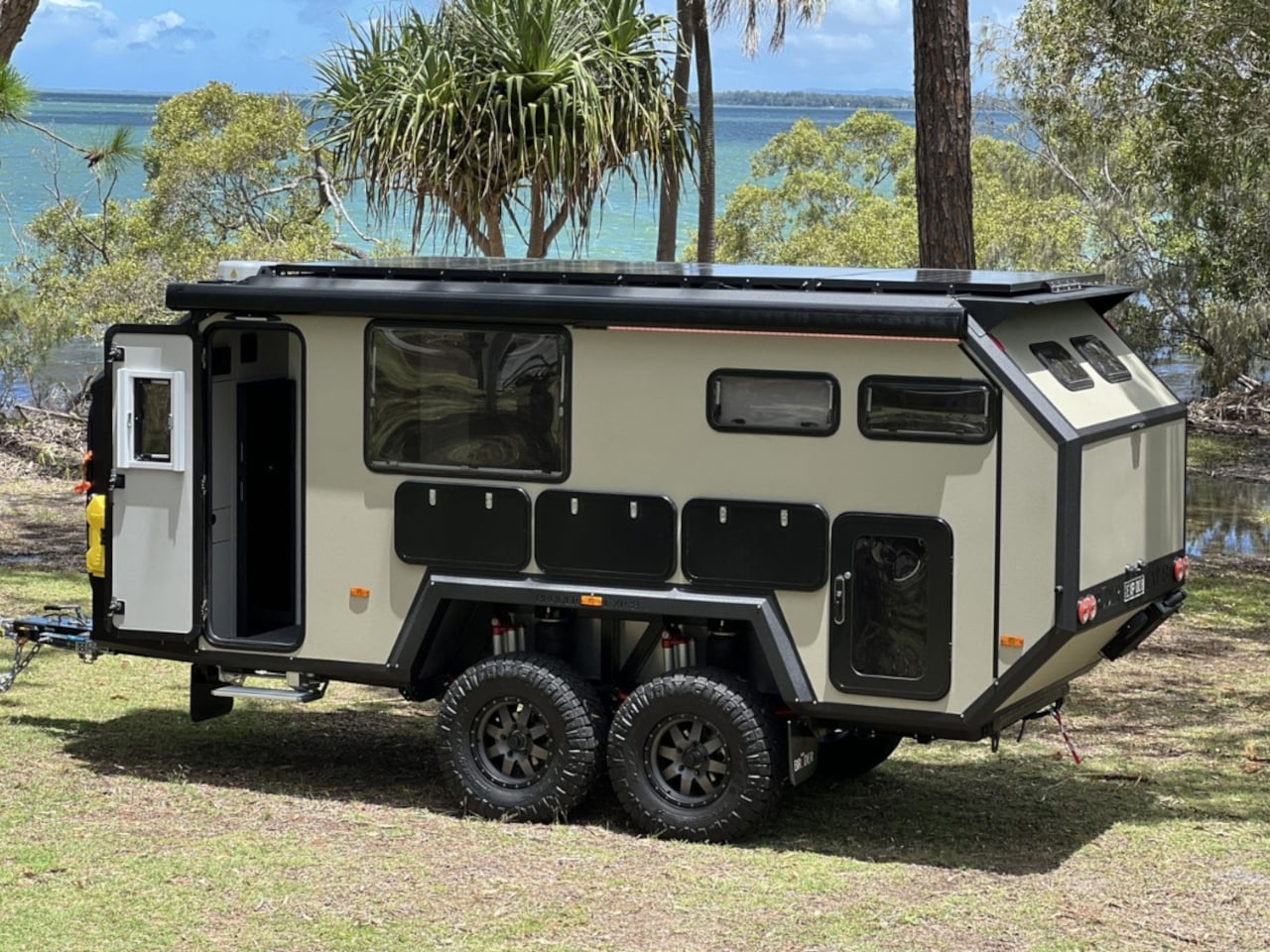
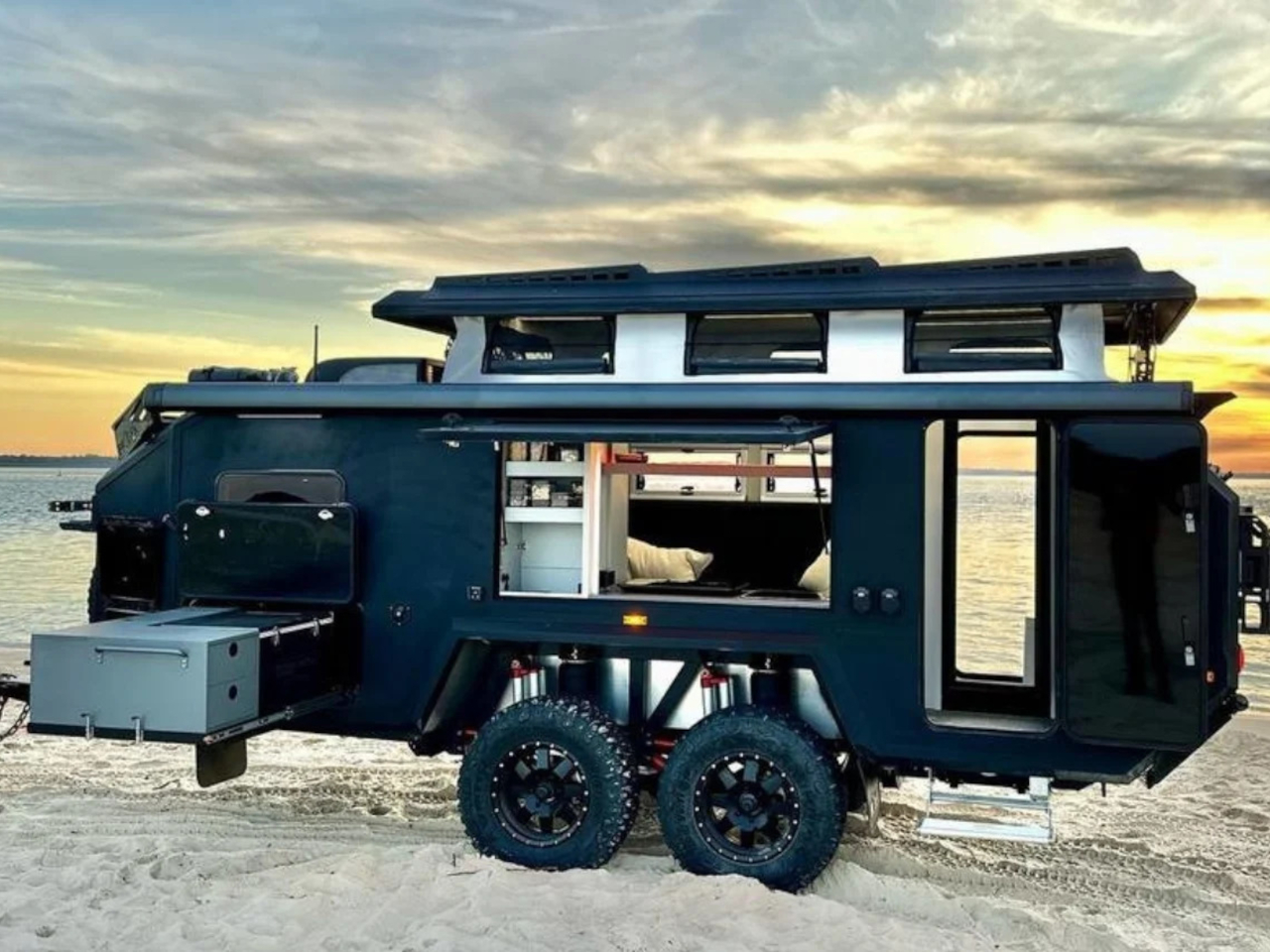
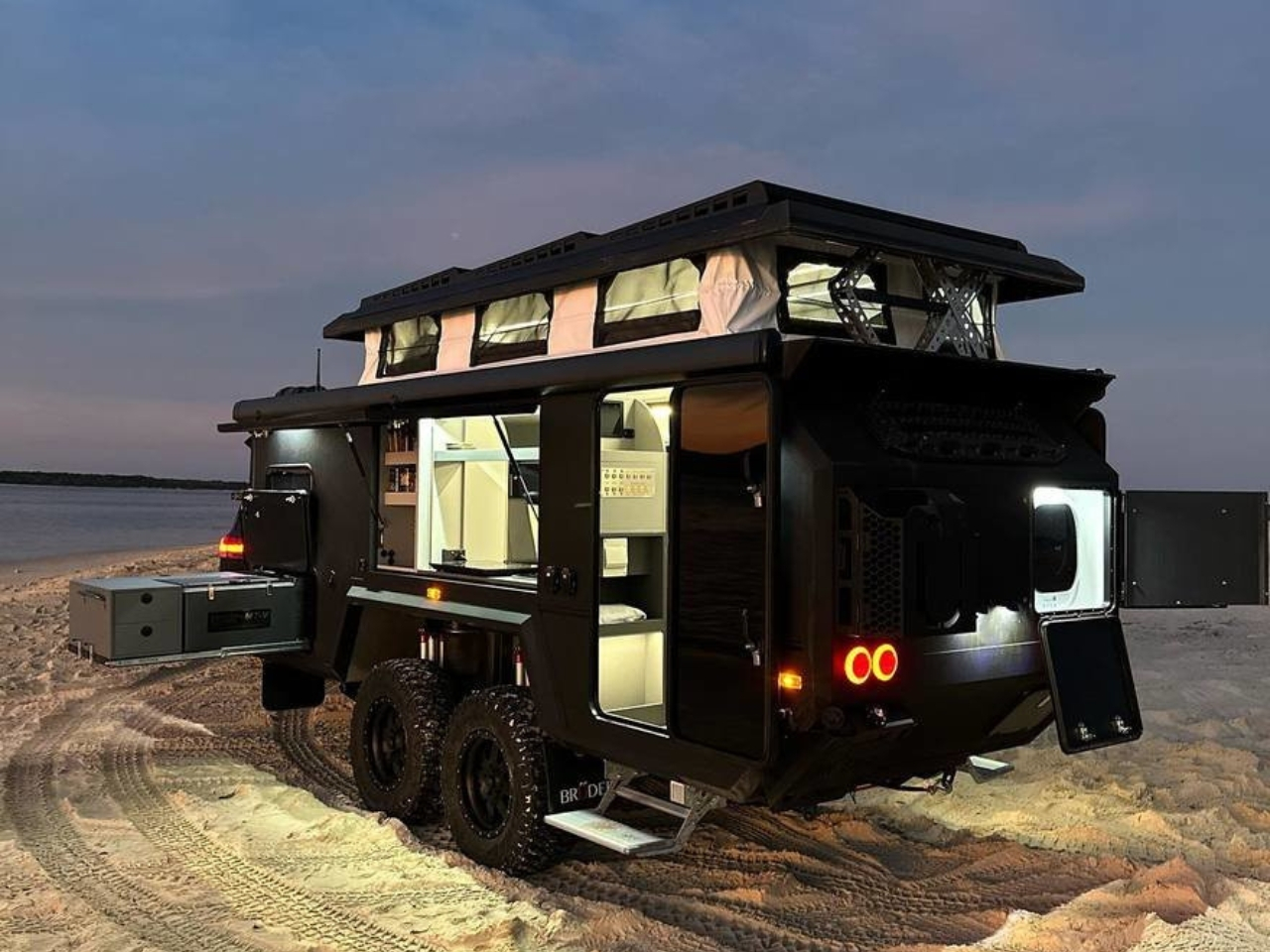
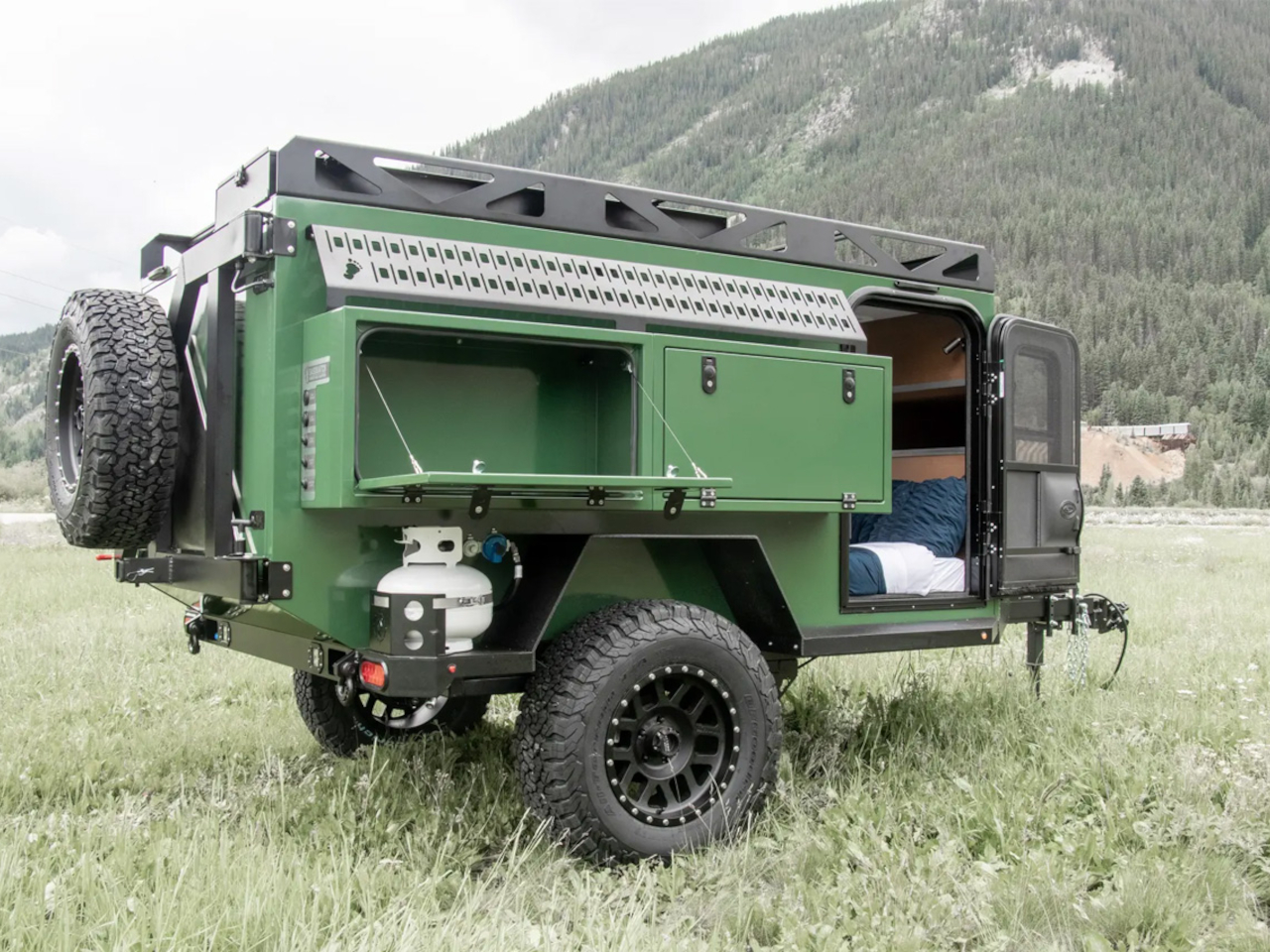
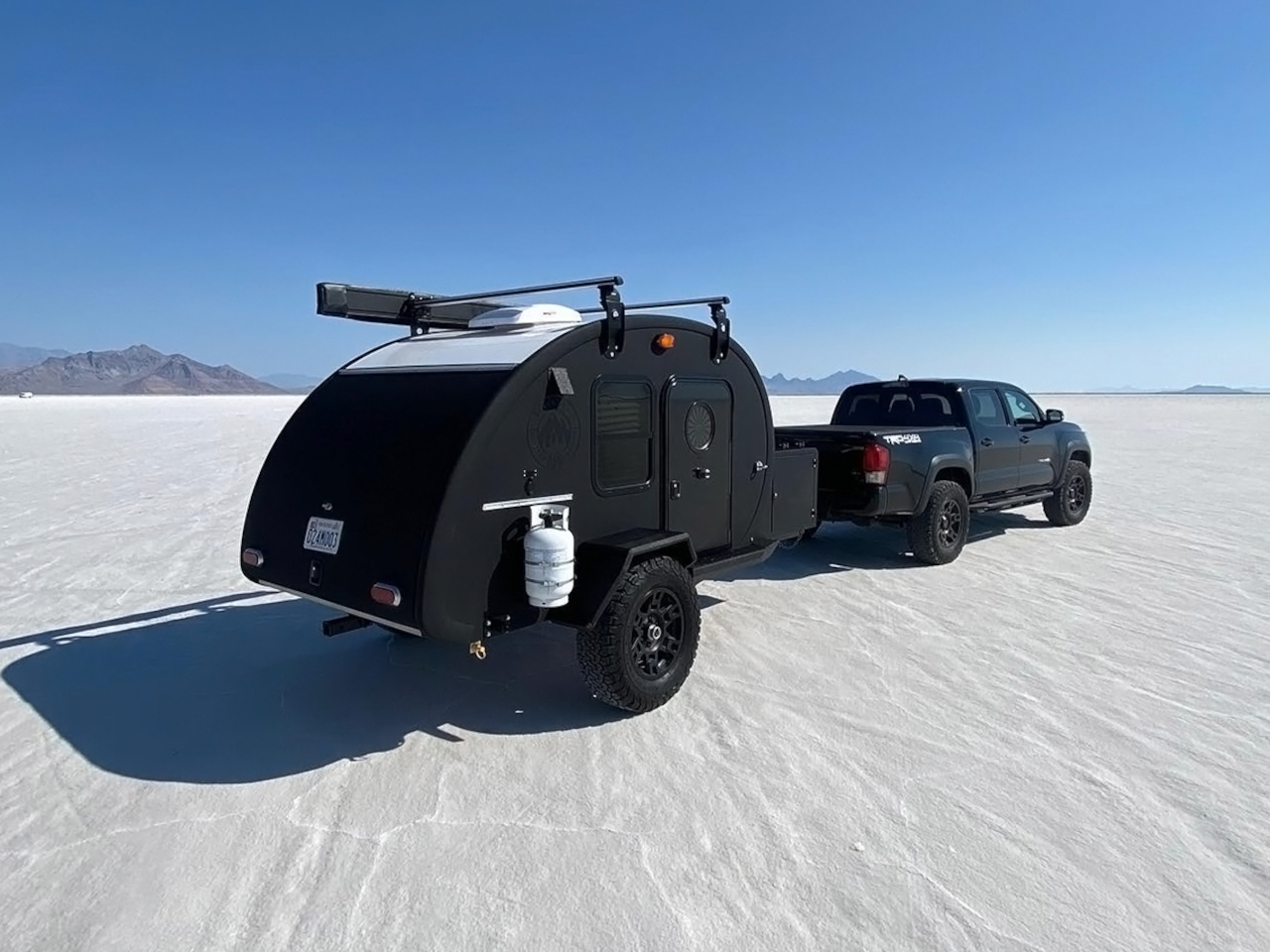
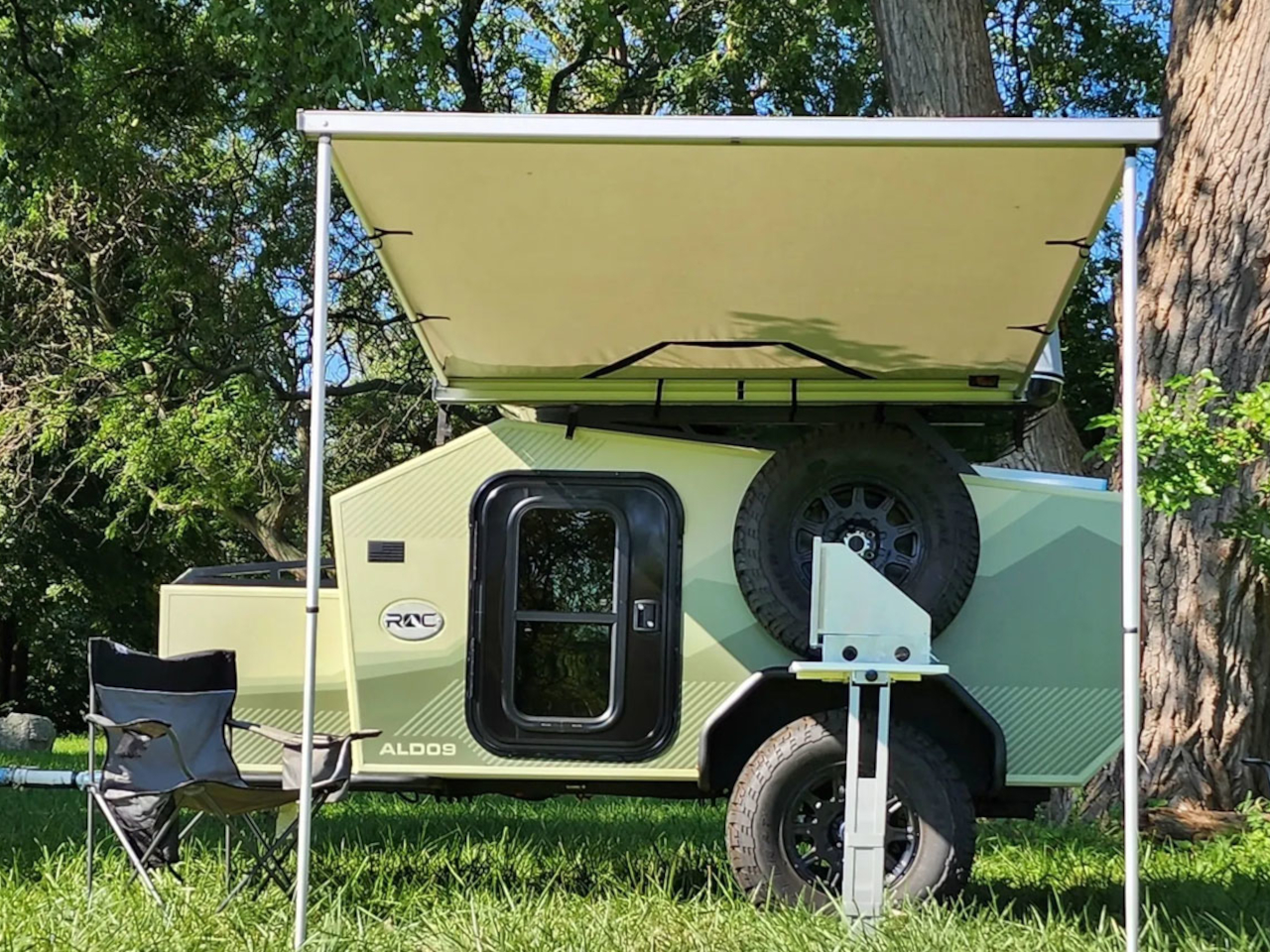
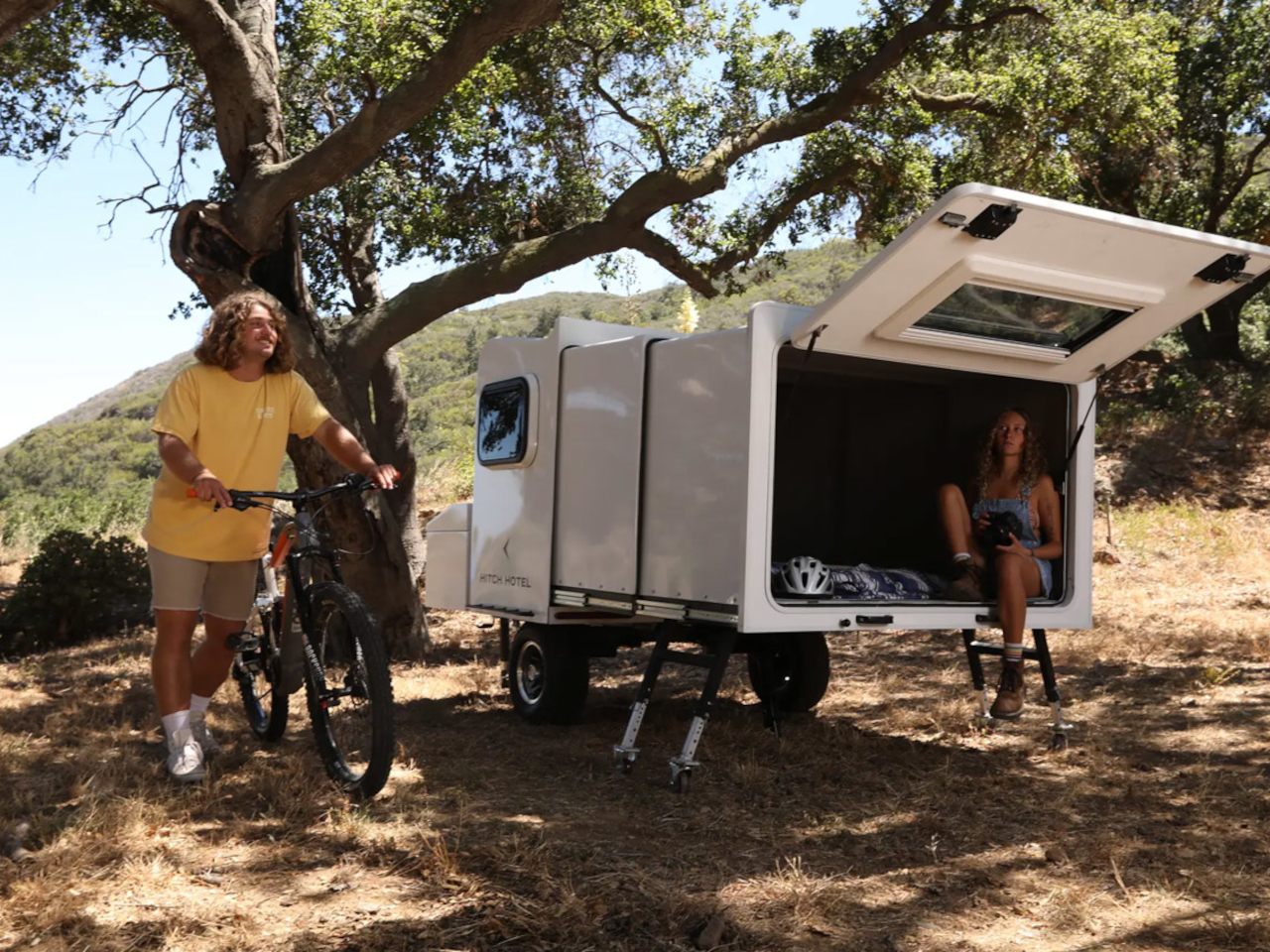
Now, the Australian company has introduced the Kube, an off-road capable teardrop camper boasting a luxurious quotient for two people. It comes with an expandable pull-out kitchen, compact refrigerator, king-size bed and a chassis protected by underpinnings. Looking more like a concept design, the camper is available to buy for a starting price tag of $44,675.

Designer: Kimberley Kampers

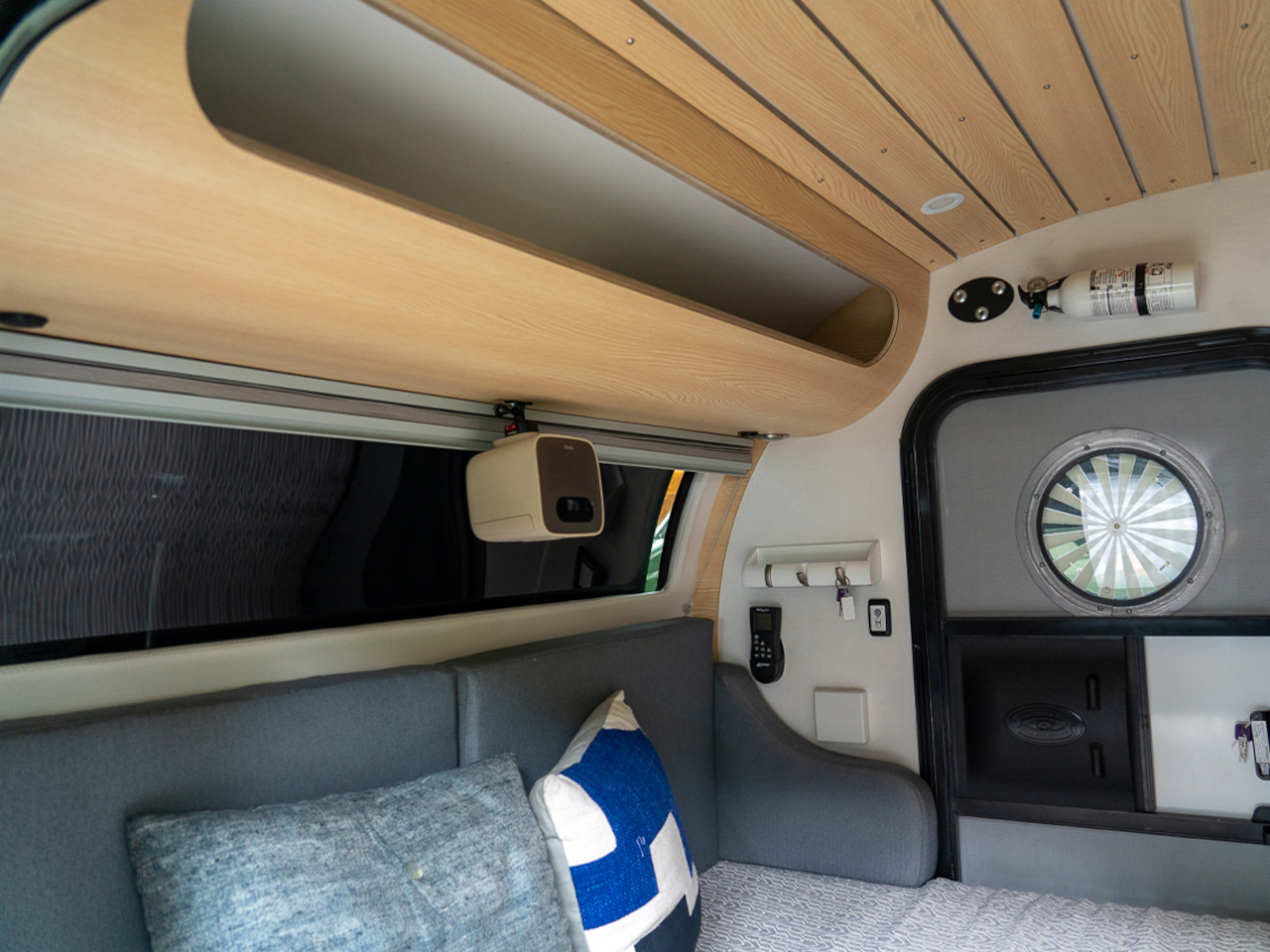
The company calls it the Kube, but it is more rectangular-shaped than its namesake.  It has a round-nosed front for a spacious two-person layout, a flat roofline, and a vertical rear to comply with the size compliances. The 5.2-meter-long camper trailer is at its core a blend of Kruiser line’s smooth composite construction and the DNA of the closed Karavan model. Owners can tag this teardrop camper to their high-performance vehicles and head confidently to any inhospitable terrain. The absence of a tailgate galley means you have more interior space to fit a large bed. An overhead skylight and large windows on all sides give the owners 270-degree views when parked for the day.

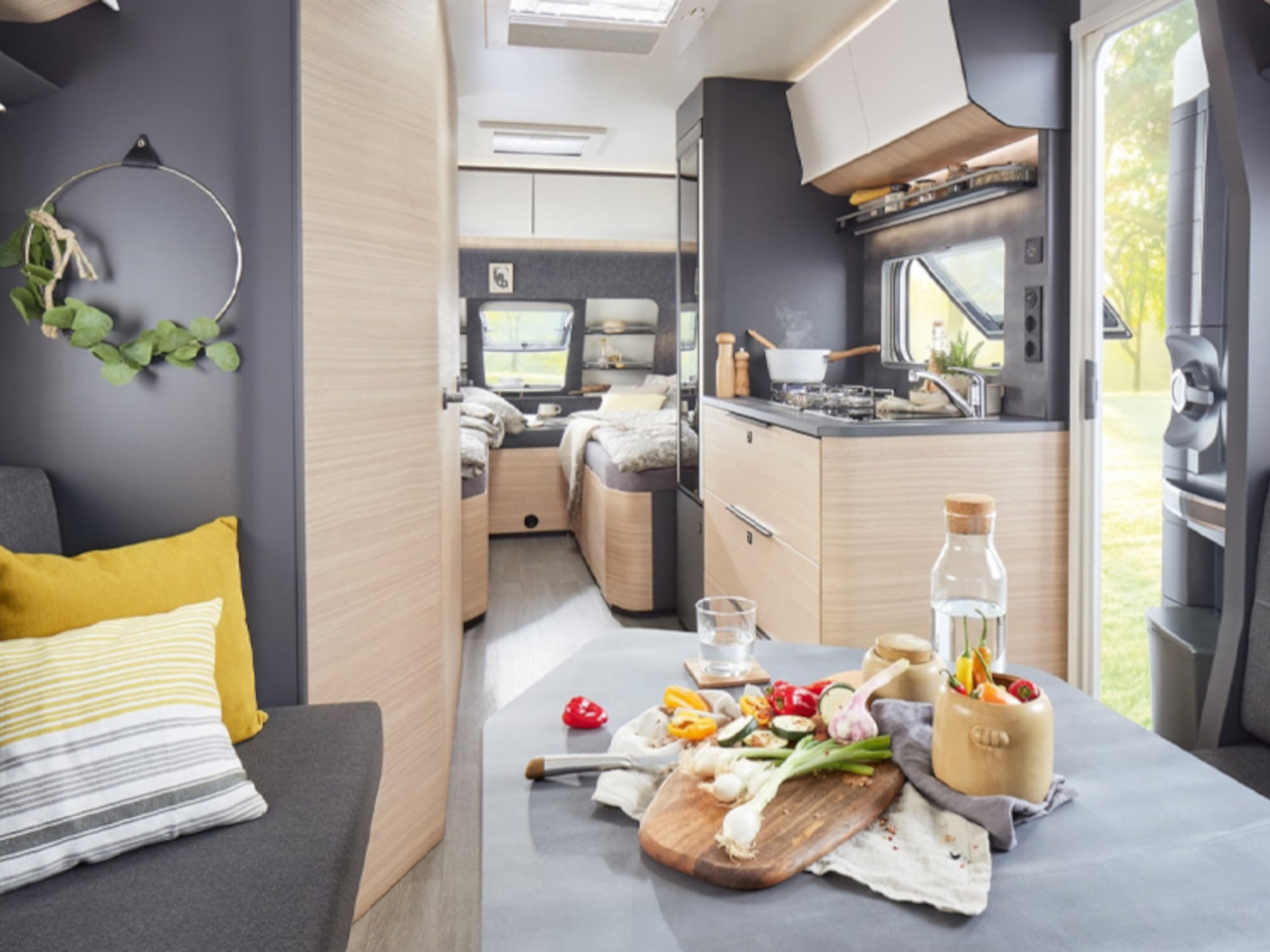
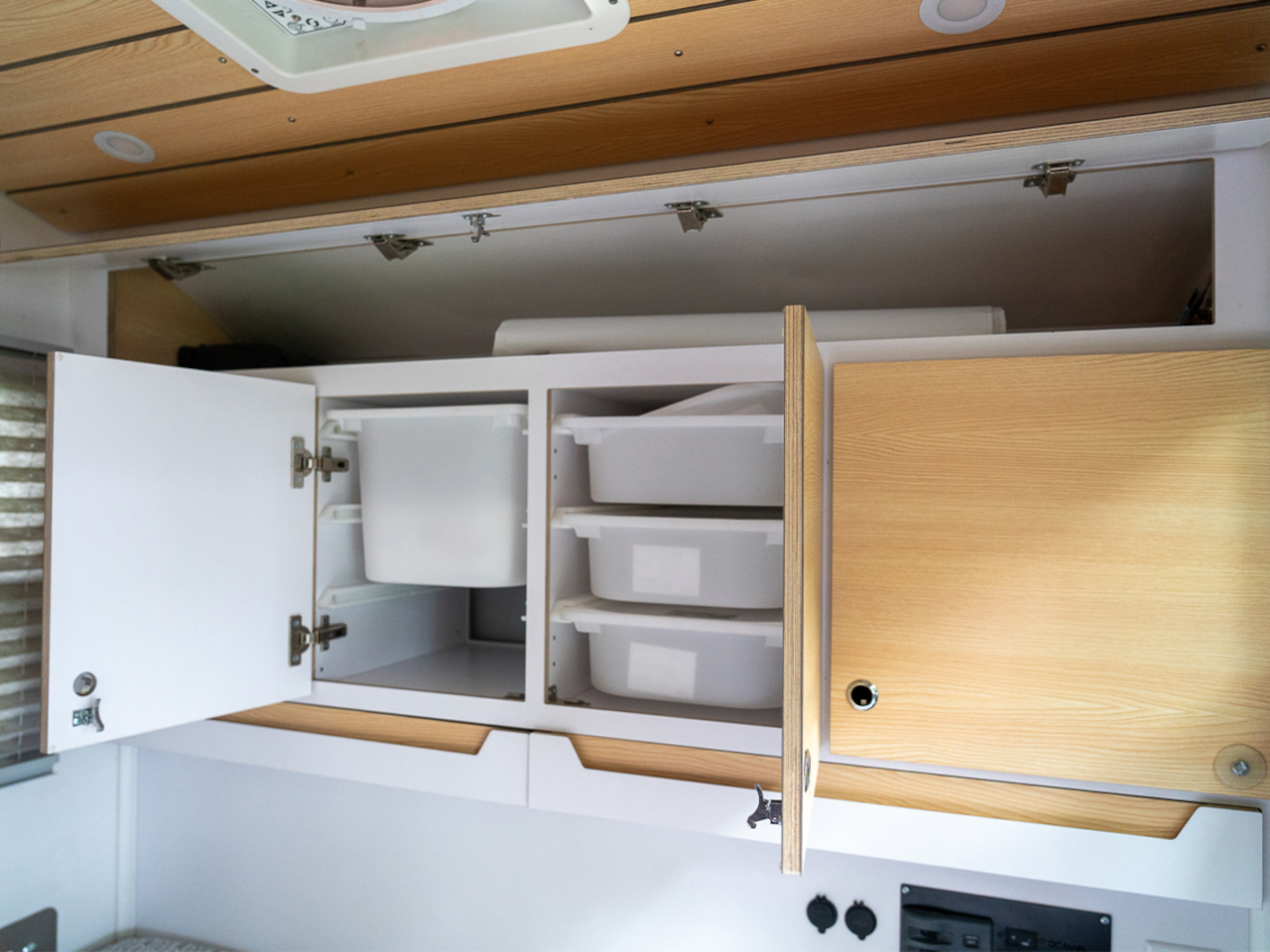
As I said, luxury is not dry in here with a front cabin having a full-width console loaded with a mini bar, cubbies, drawers, top shelf surface, and a 85-L freezer. Standing upright for getting dressed/undressed is not a problem either, thanks to the floor space between the bed and console. Extra storage space is provided in the form of overhead cabinets wrapping around the bed section. There’s also space in the drawer below the bed foot.

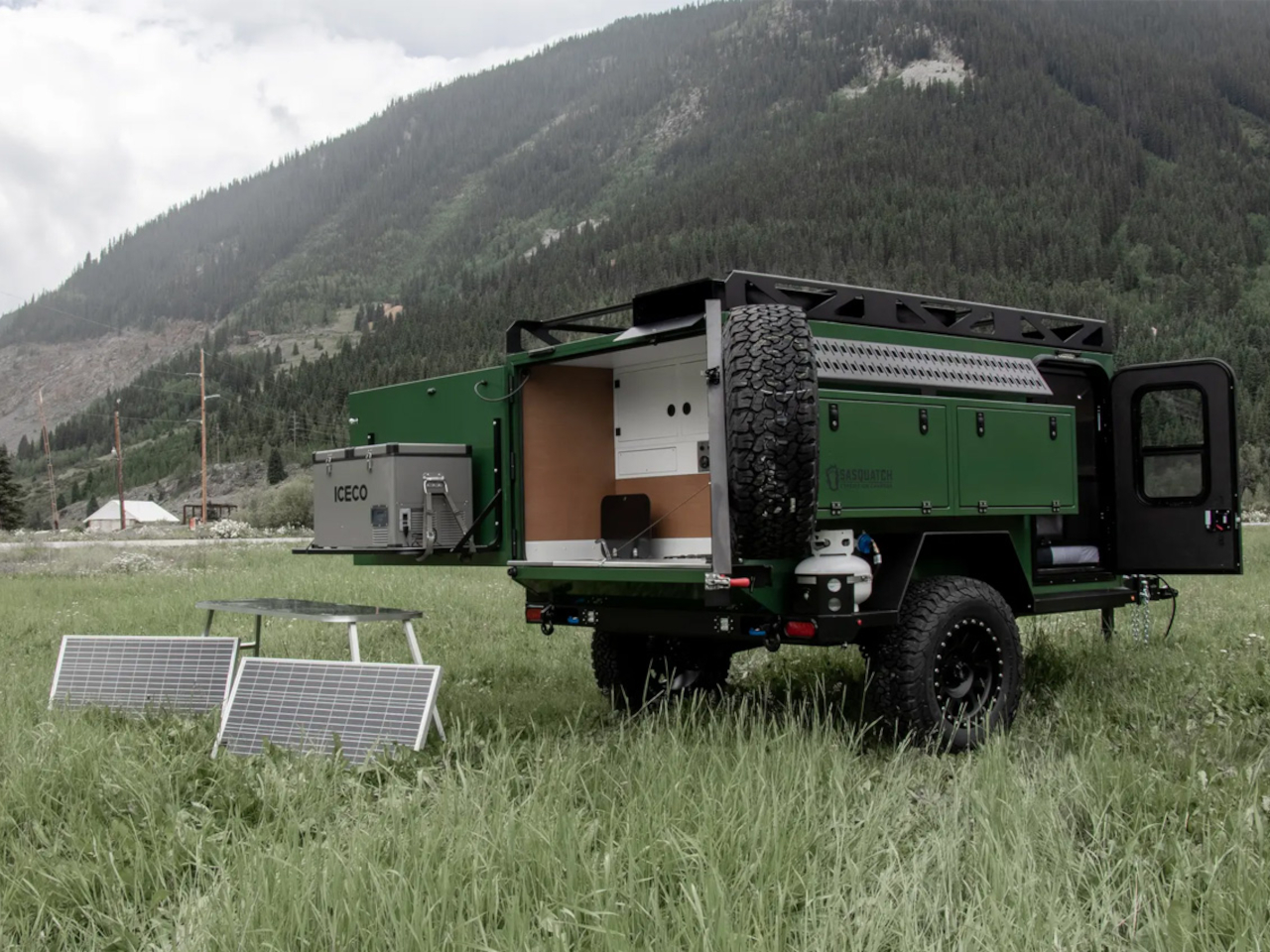
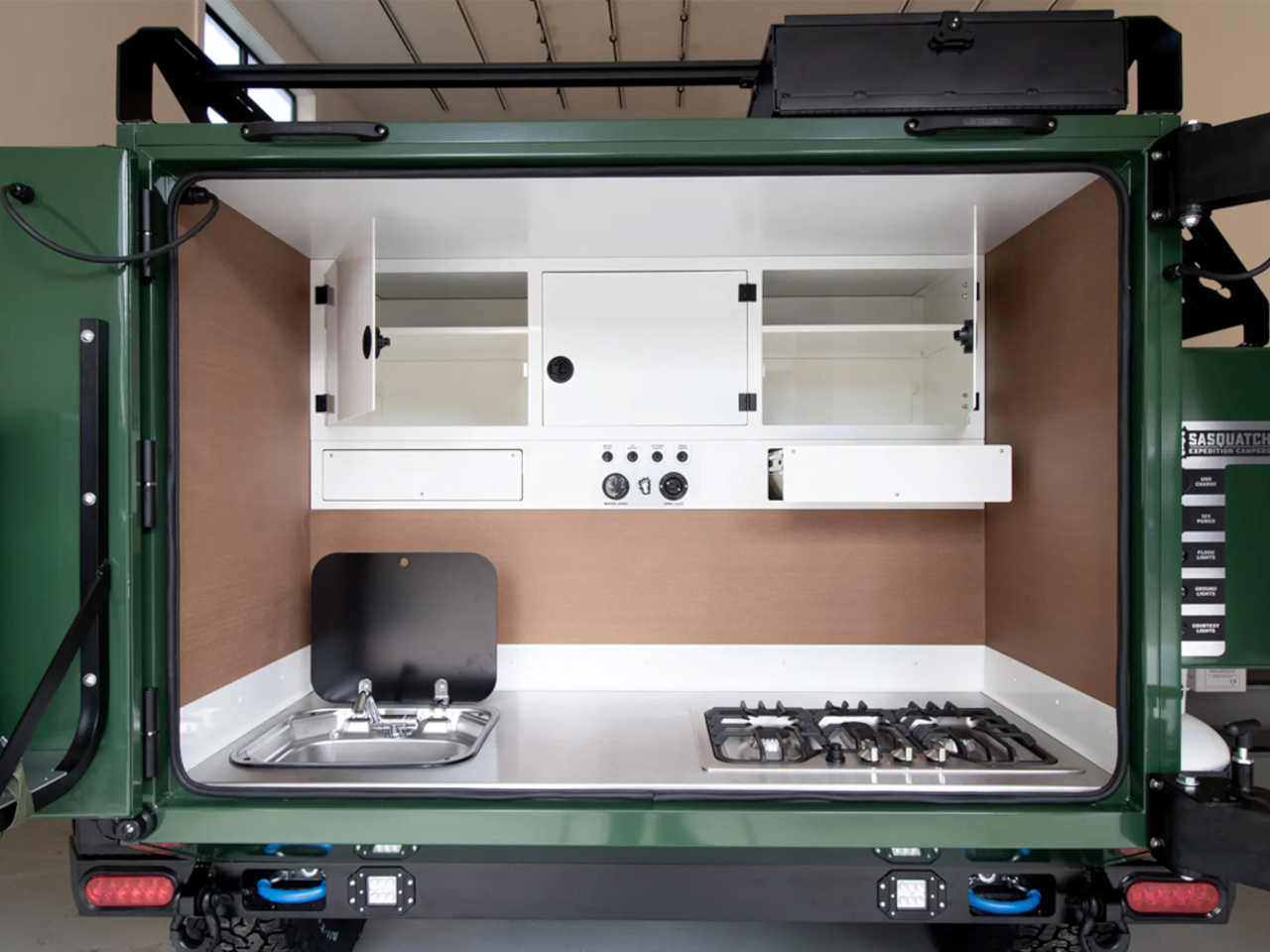
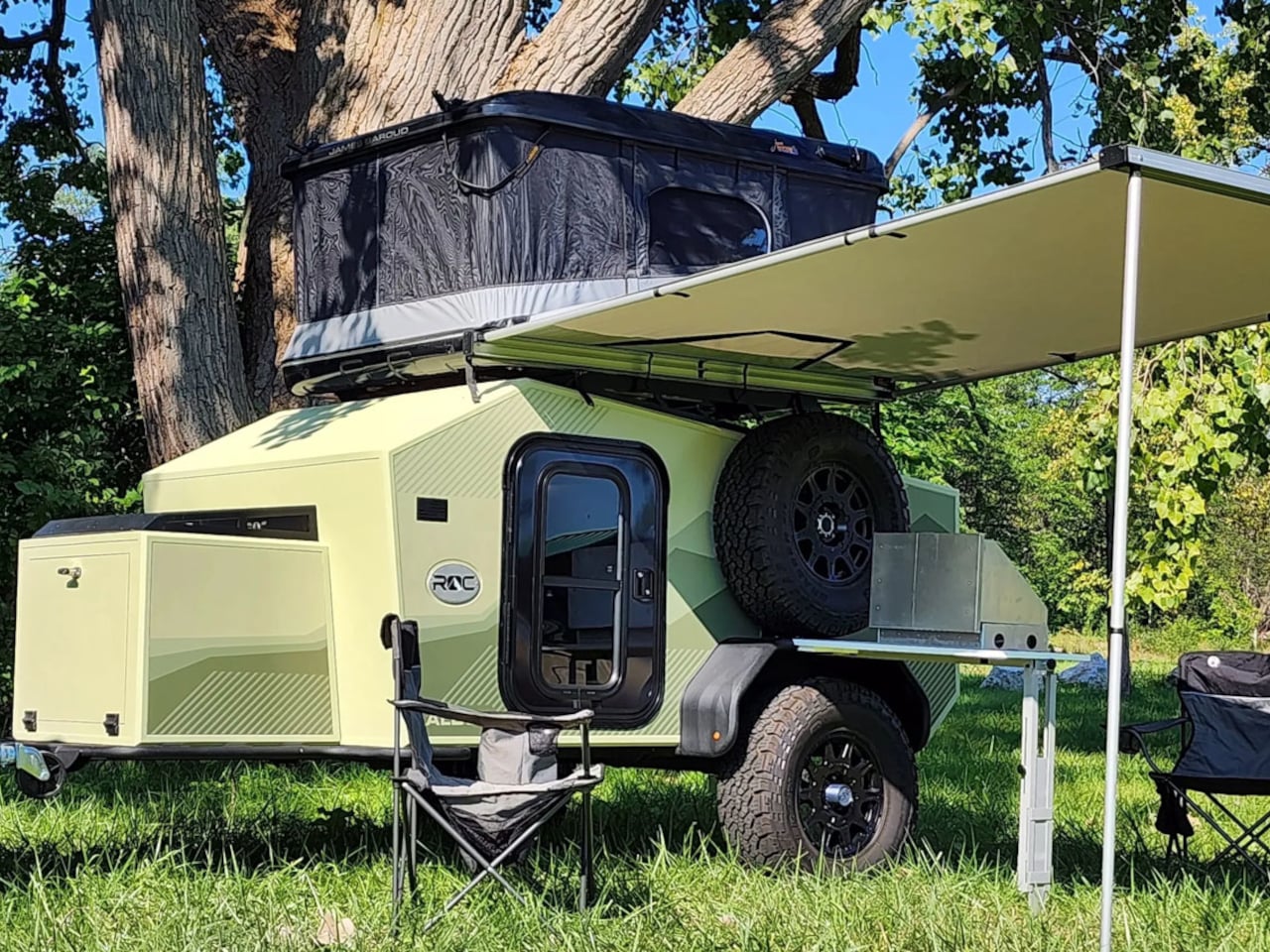
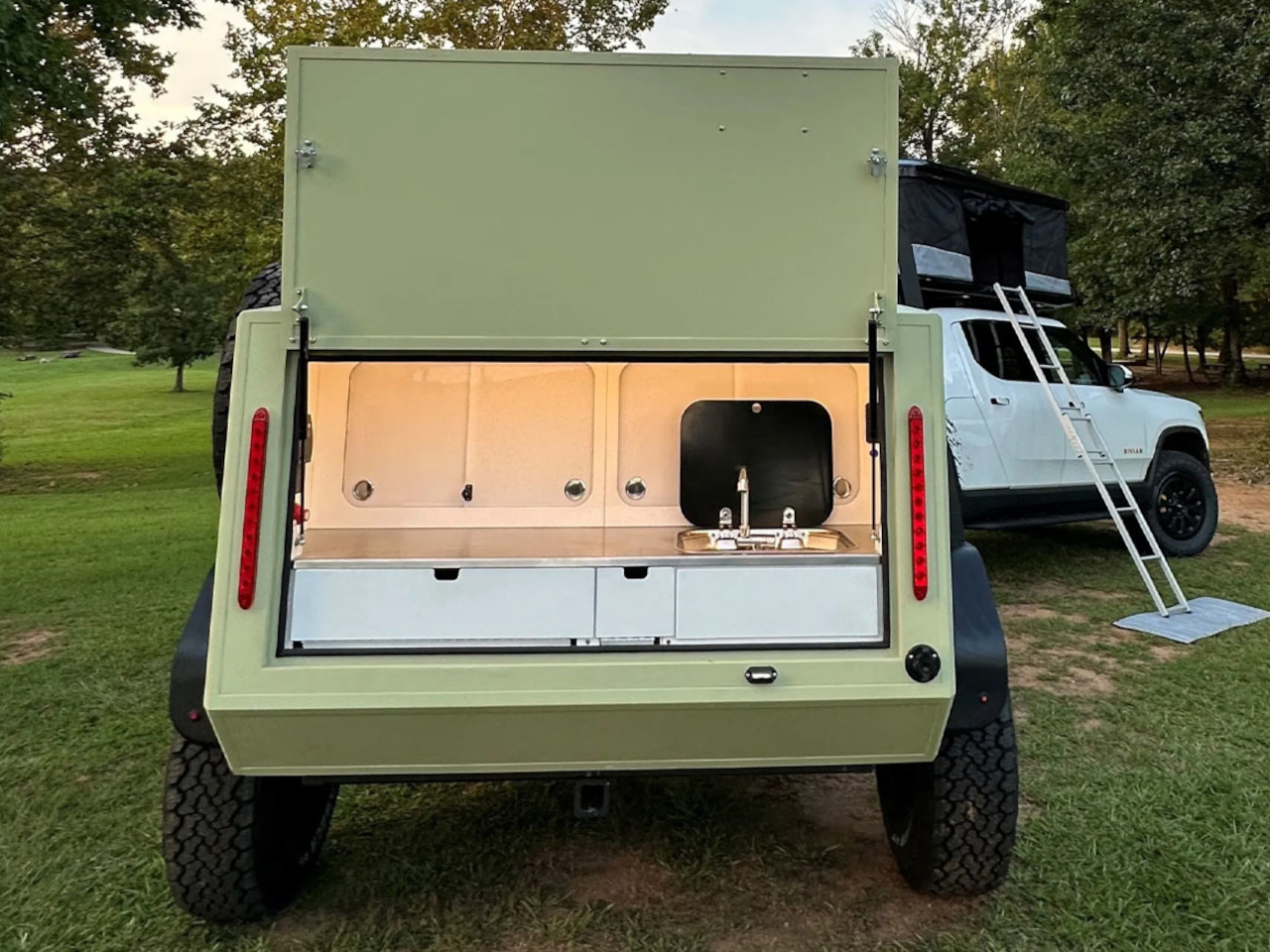
Behind this section is the concealed slide-out kitchen that can be pulled out of the left rear corner. The sturdy stainless steel unit opens up in multiple directions to reveal the storage drawers, sink, dual-burner stove, compartments and prep area. Buyers can also opt for the stainless steel table that can be hooked to the kitchen unit. This whole section is positioned under the awning to dine in the shade if the sun is beating down or inclement weather conditions prevail.

The kitchen setup comes with a faucet fed by cold water and hot water from a Webasto diesel water heater. This very system feeds the shower too and users can opt for the shower/toilet tent as well. Essential fittings include a 200-Ah lithium battery, 120-L fresh water tank, and a 450-L UniPod front storage box. Optional fittings like the 70-L secondary fresh tank, heating, air conditioning, solar charging, and satellite internet prep can also fitted.

For now, Kimberley Kampers will be selling the Kube camping trailer in the country with plans to sell it in the US as well. They’ve now revealed any details but considering they have US distribution in place for other models, the Kube should be coming any time soon.


The post Kimberley Kampers introduces rugged Kube camping trailer built for off-road expeditions in luxury first appeared on Yanko Design.

Eye-popping Pagani Huayra R racing simulator matches the real thing in every little detail

Sim racing is the best way to showcase your racing or gaming skills if you didn’t make the cut to the big league. Serious gamers always want to invest in a racing simulator that takes them one step closer to intense wheel-to-wheel action. Depending on what’s the final budget, these rigs can be anything from a desk-mounted setup costing $300, a chassis for a few thousand, or a full-blown motion simulator costing $50,000 upwards.

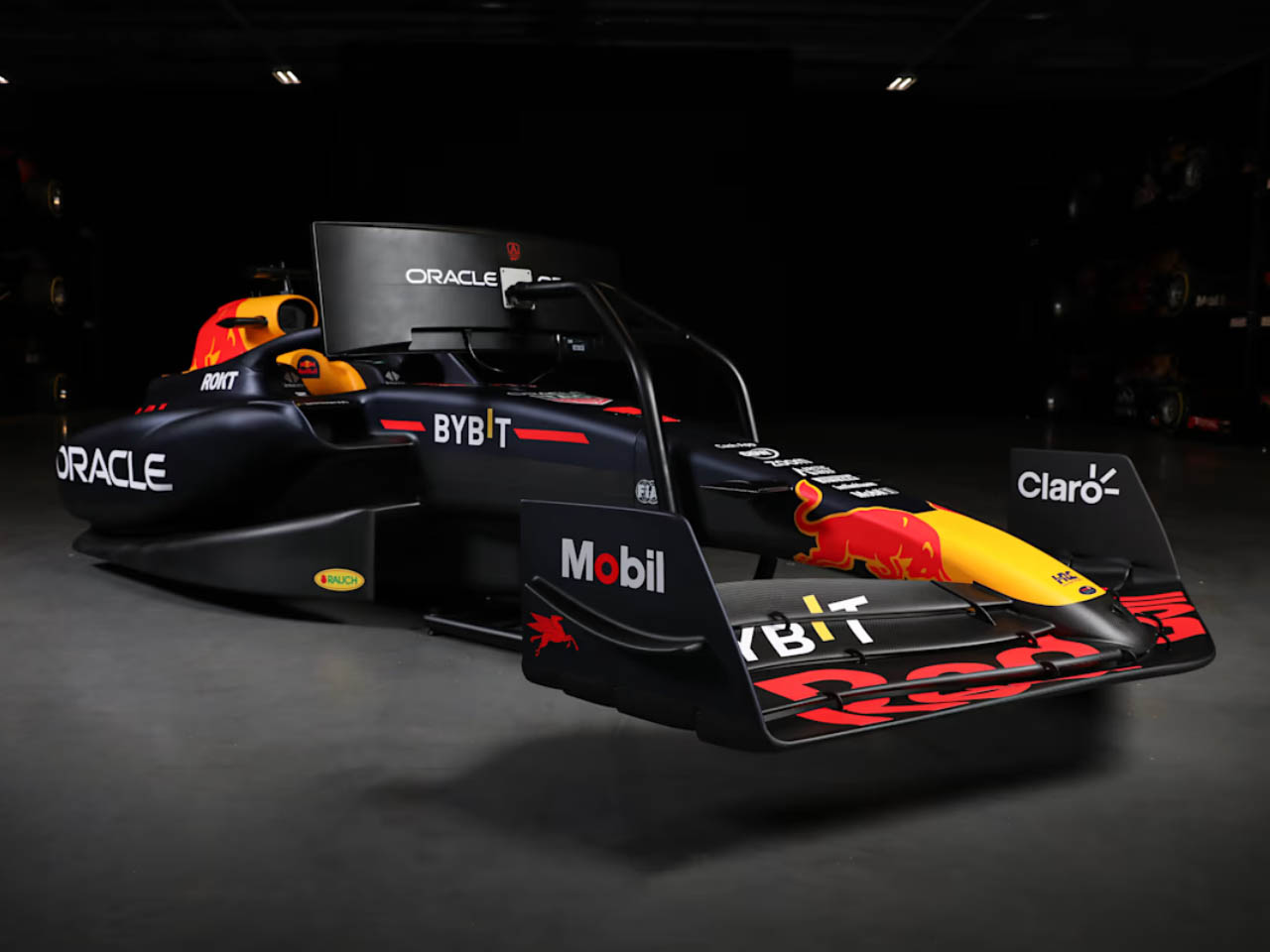
If you’ve got a stack of money to spare you can go to another level though, with a sim rig that professional racers opt for. Along the same lines, Pagani has unveiled their Huayra R Driving Simulator which is designed in collaboration with Racing Unleashed, who are known for building some of the best high-end racing simulators out there.

Designer: Pagani and Racing Unleashed

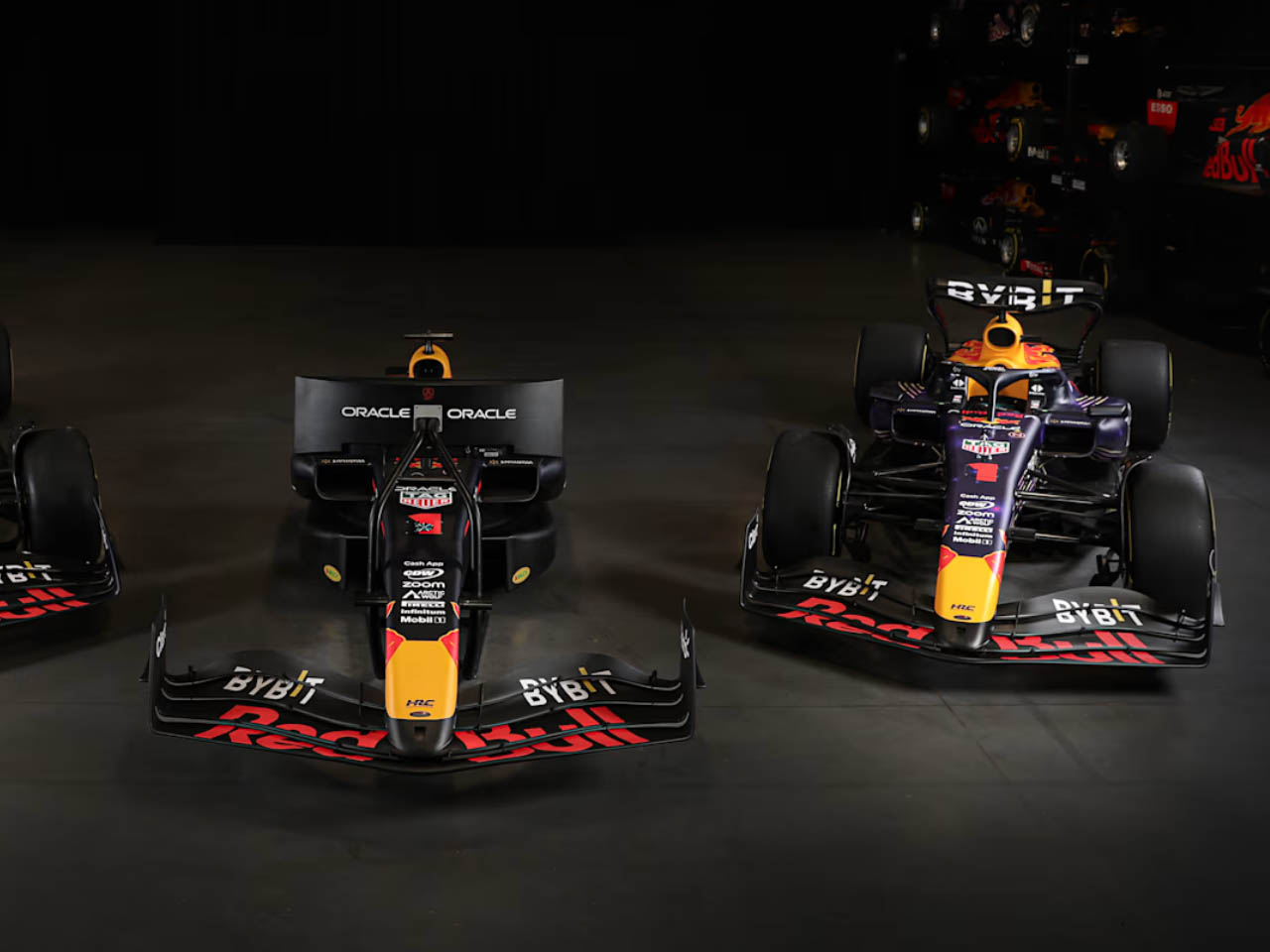
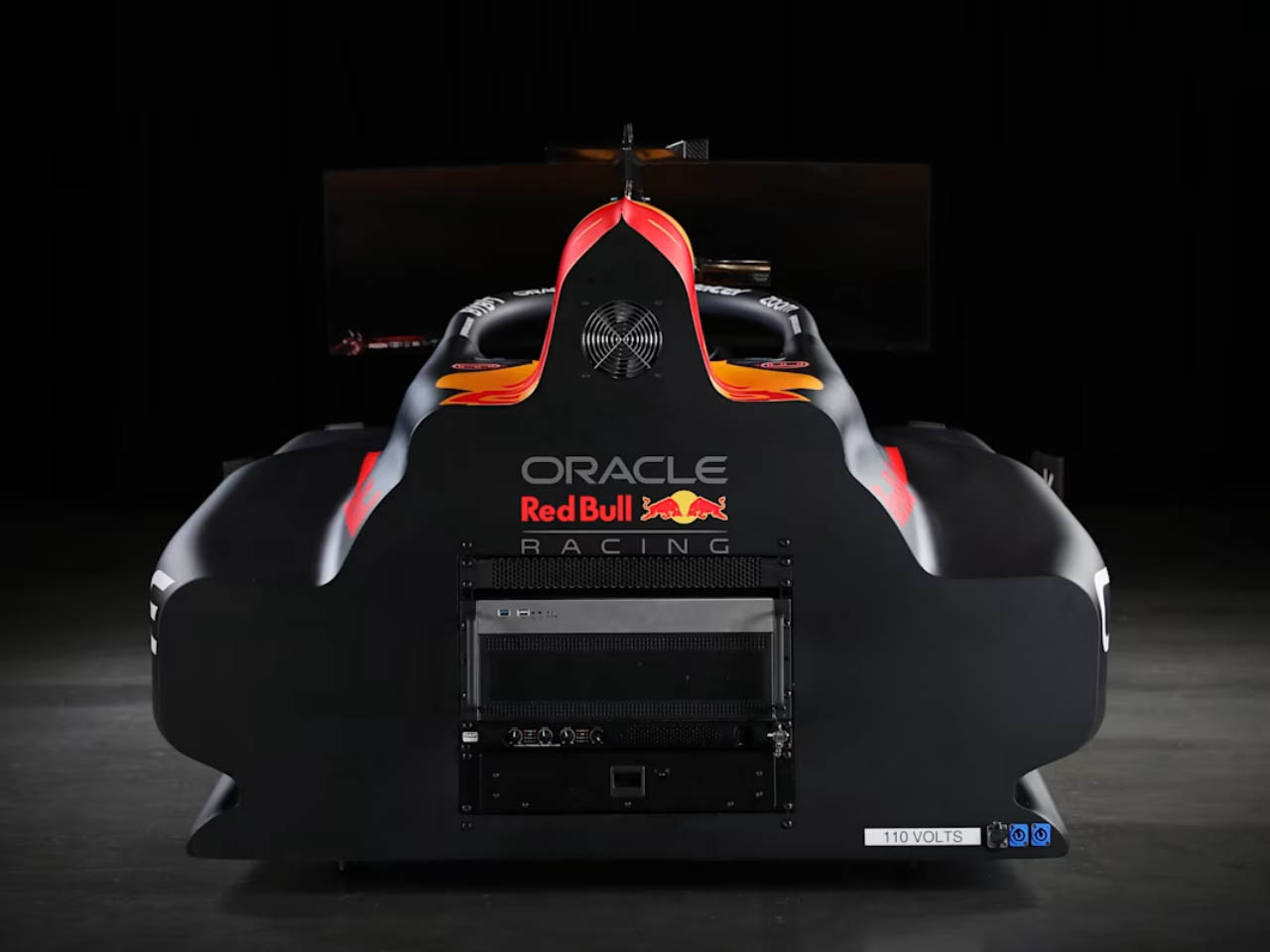
Attention to detail is the key in this racing sim as it took more than a year to finalize the creation process. This racing simulator crafted at Pagani’s facilities is made out of a single piece of aluminum and adorns carbon fiber used in the original Huayra R supercar. The car’s dynamics right from aerodynamics and handling to the sound of the naturally aspirated V12 engine are replicated to millimeter precision. The seat belts, pedals, seats and steering wheel are identical to the ones on the real car.  Wait there’s more… it also has air vents to release the brake and engine heat, making it one hell of a racing sim!

According to Franco Morsino, Vehicle Dynamics Lead at Pagani, “Our goal was to transcend the traditional boundaries of virtual driving, offering an unparalleled level of realism and immersion. This simulator is not just about the experience but also serves as a piece of art, reflecting the unique essence of Pagani’s design philosophy.” Pagini will only offer this racing sim to Pagani owners to test and compete with their powerful machines on FIA tracks in virtual reality. Taking realism to the next level, the sim can also be run in conjunction with a VR headset. Otherwise, the racer/gamer can opt to race on the single curved ultra-wide Samsung G9 monitor. Apart from the Huayra R, the simulator also gets the custom physics-focused version of the Assetto Corsa.

Pagani has not revealed any details about the pricing but given its level of realism and design uniqueness, it should very well run into a $100,000 (or more) price tag. On the hind side that’s way less than the track-only Pagani Huayra R costing $3 million.

The post Eye-popping Pagani Huayra R racing simulator matches the real thing in every little detail first appeared on Yanko Design.

Land Cruiser-based Infanta 4×4 Inkunzi camper takes off-roading fun to the extreme

Based on the Toyota Land Cruiser chassis, the Infanta 4×4 Inkunzi camper is a South African camper cruiser designed for off-grid living with an impressive design to showcase. It looks like a random ride on the unbeaten paths when closed, but the moment you open its wings (slides and pullouts) you have a camper most delightful to see and use.

For the love of adventurers at the park or campsite, the Inkunzi, which translates to bull in Zolo, is fitted with an electric pop-up roof and has big windows in canvas covers to keep the interior both airy and fresh. The roof lifts at the push of a button, while the passenger side of the camper has five hatches, one of which houses the kitchen and the other the bed.

Designer: Infanta 4X4

The Infanta 4×4 Inkunzi camper cruiser is designed to share the “same personality traits of a bull,” from where it gets its name. “Stubborn, strong-willed” in equal measures; the camper, molded from composite aerospace pre-impregnated fiber, weighs 644 kg when packed with all the accessories, and has a body measuring 9.8-foot-long. With all the versatile sliding and folding antics, the Inkunzi is effortless to setup, and takes only two minutes

The space within the camper is more focused on space utilization while all the things like the shower, kitchen and even the bedroom are designed to open outwards. The bed is placed in the front bedroom cabin that slides out from the main body and is provided with a headboard and storage cubies. Infanta uses the standing height space on the entry for dressing, while its slide-out kitchen on the passenger side spans almost the entire length of the camper.

Situated directly behind the cabin area, the fold-down kitchen has a two-stove burner, dishware, cookware, and utensils. Other kitchen compartments feature a 90-L fridge, shelves for storage, a collapsible basin, and a second worktop. An outdoor shower enclosed by drop-down curtains draws water from an onboard 120-L water tank connected to a 220V water heater.

Since the stout Inkunzi is made for off-roading, it comes with a 105-Ah battery, Victron charger and battery monitor, and an option to include an inverter and solar panels. The camper starts at R524 000, roughly $28,000 (without the truck), and has the option to add a 270-degree awning for additional usable outdoor space.

The post Land Cruiser-based Infanta 4×4 Inkunzi camper takes off-roading fun to the extreme first appeared on Yanko Design.

Self-driving car concept is a hotel-like sleeping pod on wheels

Autonomous vehicles are still a somewhat controversial topic these days, but even detractors and critics will begrudgingly admit that it is the inevitable future. Given a foolproof and safe implementation, it opens up plenty of opportunities for people to do more during their travels, especially over very long distances. They can be more productive with work, spend more quality time with family, or simply get a good night’s sleep in transit. The latter isn’t exactly comfortable to do with today’s car designs, but that’s only if you don’t let go of current conventions and limitations. This design concept for a mobile sleeping pod, in contrast, pulls out all the stops and demonstrates what’s possible with the right technologies, the right design, and especially the right shape.

Designer: Peter Stulz

When viewed from its profile, the Swift Pod looks more like a gigantic motorcycle, a vehicle that stands on two wheels only. It’s definitely not your regular motorbike, even disregarding the significantly larger size, because it looks more like a cross between a bike and a car from the way it has a cabin instead of just a seat. When viewed from the top, however, the vehicle is revealed to actually run on three wheels, forming an odd triangle shape instead of a typical box you’d expect from cars.

The choice of the shape isn’t for appearance’s sake, though, but was made to maximize available space inside while minimizing the vehicle’s size. After all, the Swift Pod is designed to have two adult-sized beds inside, one on each side of the triangle, in addition to two chairs, amenities, and, of course, the vehicle’s actual hardware and components. The concept, after all, is for a mode of transportation that will let you sleep through your journey, at least if you want to. There’s plenty of space for two people to do anything, including working if necessary.

The concept was inspired by how some people are able to get a decent amount of sleep on trains and planes, and that’s without a comfortable bed or other conveniences. With Swift Pod, you not only have a comfortable place to recline but also an entertainment system, snacks and beverages, and plenty of storage for your belongings. What it doesn’t have room for is a human or physical driver.

The Swift Pod concept only works if autonomous driving has reached a point where one can really entrust their safety to these invisible drivers. The design envisions an extremely smart self-driving vehicle that, after booking a ride like a taxi, would be able to determine the best path toward your destination and navigate the roads safely. While the default is to simply go from point A to point B in one go, the system also has room for stop-over breaks where you can get off, eat some heavier meals, and freshen up before you take the next leg of your journey in the comfort of a bed.

The post Self-driving car concept is a hotel-like sleeping pod on wheels first appeared on Yanko Design.

This Solar-powered Cargo EV Offers 80% of the Cybertruck’s Storage Space for 8% of the price

Sure, there’s no realm in which the Bako B1 should ever be compared to a pickup truck – but when it comes to storage, efficiency, and just being an all-round great cargo transportation vehicle, the numbers really begin adding up. With a €4000 price tag, the B1 models itself on an electric trike, with three wheels that make it resemble the Asian tuktuk or rickshaw. However, what’s notably different about the B1’s design is its solar panel top, which powers the vehicle’s electric drivetrain, giving you an overall operating expense of $0.50 per 60 miles (100 kilometers) and a top range of 93 miles (150 kilometers) on a full charge. That makes the Bako B1 an incredibly energy-efficient vehicle for transporting cargo, which you obviously don’t need me to tell you results in lowered logistical costs and overall prices all around!

Designer: Bako

The trike’s relatively boxy form has its own justification – designed not as a human-transporting vehicle but rather a cargo-transporting one, the relatively rectangular form factor helps store items inside more efficiently. The 2433-liter rear compartment is just slightly shy of the Cybertruck’s 2,831-liter storage space in the back (when used with the tonneau cover), making it perfect for transporting all sorts of goods in a last-mile setting.

The Bako B1 sports a 3000W electric motor on the inside, capable of hauling a 300-kilogram payload (not including the driver, obviously) at a max speed of 45 km/h. An inner LiFePO4 battery gives the B1 a max range of 93 miles or 150 kilometers, and charges in as little as 3 hours with fast-charging, or 6 hours under regular charging circumstances.

Even for a cargo delivery vehicle modeled on the format of a tuktuk or rickshaw, the Bako B1 doesn’t really cut corners on driver comfort or experience. The driver cabin is small but spacious, with the option of including a GPS, an entertainment system, and even an air conditioner. You’ve even got the option of installing a rear camera to give the driver full blind-spot visibility while parking or reversing.

The Bako B1 isn’t just eco-friendly and economical; it’s also practical. With a substantial cargo capacity exceeding 2,400 liters and the ability to carry up to 350 kilograms, the B1 is well-suited for hauling goods around busy urban environments. Bako Motors recognizes the potential of this design and is already committed to expanding its product line. Their next offering will be a four-wheeled electric vehicle specifically designed to tackle the challenges of last-mile delivery.

The post This Solar-powered Cargo EV Offers 80% of the Cybertruck’s Storage Space for 8% of the price first appeared on Yanko Design.

LEGO and NASA give you an out-of-the world experience with this Mars Rover set

The LEGO Group and NASA have collaborated on some interesting sets in the past. Yes, the ace space agency pioneering some of the most ambitious space missions has lent its expertise to create the NASA Mars Rover Perseverance model priced at just $100. They’ve bettered the rover released in mid-2023 with this beefier version that’s not a replica of any existing rover, rather, a fictional two-seater space vehicle released as a part of the Technic line-up.

This gave the design team more freedom to explore the possibilities without being too logical, or go all out and make it too sci-fi. According to Aurélien Rouffiange the design manager, “When you look at this vehicle, we want you to say, ‘Okay, that can happen.’ That is where we wanted to set the limit.” The result is a stunning 1,599-piece LEGO set that’ll be a treat to put together and flash on your living room shelf or work desk.

Designer: LEGO Group

The six-wheeled rover comes with an expanding truck bed, dual working crane, living quarter and loads of scientific equipment and logistics canisters to complete the feel. If you want to take it for a spin on rugged terrain, the NASA team has engineered a working suspension on this one. Calling this a campervan for space adventurers won’t be an overstatement, it’s that extensive. The open living space inside has ample space for a treadmill and shower for two astronauts to survive. Gosh, it already feels like I’m penning down the design logs of a sci-fi series…

The realism and attention to detail are something purists will appreciate. Right from the crew containers to store trash, Mars rocks or science samples to water oxygen and hydrogen. There’s even a fuel cell generator to recharge the batteries. Aurélien reassures that Hydrogen will be the future of drivetrains and NASA wants kids to learn that at a very early age. To keep things close to reality, the wheels are inspired by the rocker-bogie suspension found on the Curiosity and Perseverance rovers in operation on the red planet. The tires are colored gray to make them look like metal, just like the real Rover tires.

Based on the NASA team’s input the wheelbase of the vehicle had to be kept a bit short to make it a convincing iteration for any alien planet exploration. So, the LEGO team made a contracting chassis that can be configured at will. Aurélien added, “You can still drive it around in this compact mode, but, of course, it is not meant for that.” On the lighter side, NASA wanted a toilet for sure and the design team had to include the space for it!

The post LEGO and NASA give you an out-of-the world experience with this Mars Rover set first appeared on Yanko Design.

This Motocompo inspired café racer is born to perform stunning stoppies

Concept bike designs are one of the most interesting projects we come across on Behance. They can be amazingly detailed, utterly impractical, or just plain bizarre at times. We try acquaint all you motorheads with eye-popping rides that seem to have dropped right out of the Cyberpunk universe and the MK1 motorcycle is one of them.

This motorbike is a cool blend of a café racer, Moto GP bike and a drag racer. While it looks to be inspired by the Motocompo in some ways, the bike’s long wheelbase and low riding position give off typical café racer persona. At first glance, it seemed to me like a Motocompo on steroids.

Designer: Salvatore Ville

Just like with all Motocompo versions and their knock-offs, the riding position is a bit awkward and the saddle is not going to be comfortable even for short city rides. The bike is powered by an electric drivetrain that’s concealed behind the body frame. Leaning more towards the front section, the ride is oriented for speedy straight-line stints. Pressure on the front tires is kept a bit lower on the front wheels as compared to the rear ones. This ensures maximum grip on the front, making it ideal for a drag race of a few hundred meters.

The front gets a contoured headlight which is a change from the original Motocompo bike. This makes the ride more oriented towards a café racer character if the rider wants to take it for a spin in the city. Driving modes on the bike can be changed via a turnable knob on the rear of the body, just where the knees of the rider would be in the riding position. Performing stoppies on the MK1 will be much easier due to the forward leaning position while going for a wheelie would require some muscle and special skill on the tarmac.

The post This Motocompo inspired café racer is born to perform stunning stoppies first appeared on Yanko Design.

Designer Imagines Land Rover’s Defender As A Rugged Cafe Racer Motorcycle

Imagine the iconic Land Rover Defender, stripped down to its essence and transformed for a new adventure. That’s the playful concept explored by designers Antonio Pavento and Gabriele Molinari. Their project, the Defender 700 motorcycle, pushes the boundaries of design by injecting the spirit of a legendary SUV into the world of two wheels. The designers started with a bold question: could the Defender’s rugged yet refined character translate to a motorcycle? The resulting two-wheeler had pretty big boots to fill – it had to capture its inspiration’s rugged essence but condensed into a form factor small enough to fit between two wheels. Sure, you could make a two-wheeler look rugged – but a hallmark of Land Rover’s vehicles is their dominating, larger-than-life attitude…

Designers: Antonio Pavento & Gabriele Molinari

The key to their approach was identifying the motorcycle segment that best aligned with the Defender’s DNA. Adventure bikes, known for their off-road prowess and go-anywhere attitude, emerged as the perfect fit. This gave the designers a solid foundation on which to build their vision.

Next came the critical infusion of Defender details. The designers cleverly incorporated the SUV’s signature broad wheel arches, a defining element that instantly evokes the Land Rover brand. These muscular arches were seamlessly integrated into the motorcycle’s design, setting the tone for a bold and purposeful aesthetic. But the designers didn’t stop there. They understood the importance of striking a balance between heritage and modernity. To achieve this, they blended the tough, boxy shapes of the wheel arches with softer, more contemporary lines. This fusion created a visually striking “modern-retro” look, ensuring the motorcycle remained instantly recognizable as a Defender descendant.

The color scheme further cemented the connection. The designers opted for a two-tone approach, with a matte white fuel tank visually separated from the body. This mirrored the Land Rover’s ability to combine ruggedness with a touch of sophistication.

The Land Rover Defender’s headlights are a relatively understated element. In contrast, the designers envisioned a more prominent headlight for the motorcycle, one that would become a signature feature. This resulted in a unique, asymmetrical design. The main cylindrical unit housing the daytime running light is flanked by two smaller squares containing the high and low beams. This arrangement not only adds visual interest but also helps maintain a streamlined profile. The asymmetrical headlight serves a crucial purpose. It disrupts the inherent symmetry of the Defender SUV, injecting a dose of dynamism and individuality into the motorcycle. This design choice ensures the Defender 700 stands out as a distinct creation, not a mere replica.

Via Automotive Design Planet

The post Designer Imagines Land Rover’s Defender As A Rugged Cafe Racer Motorcycle first appeared on Yanko Design.

This off-road caravan pops, slides and swings out in all direction to accommodate six on an off-grid expedition

Off-roading caravans to negotiate rugged terrains and setting up camp under the starry sky have become a common sight these days. This is the finest way for families, travelers, and overlanders to create lasting memories on the road. When there is demand, the suppliers are available in plenty. Amid the range of all-terrain camping trailers then, Berg Off-Road has been designing options that are “crafted to exceed expectation.”

To that accord, the Berg Off-Road has an exciting range of off-road caravans for groups of friends or family members to enjoy the thrill of adventures while keeping things simple and straightforward. For the latest offering called CX6 the builder has gone a little overboard and designed a camper solution that pops, slides, swings out to create space for up to six people to sleep and live in harmony.

Designer: Berg Off-Road

Achieving all the antics, the CX6 is constructed from honeycomb fiberglass built over a ladder frame chassis. It weighs about a ton and measures approximately 2m wide, 5.3m long, and 2.2mm high. What’s a pleasure with this off-road caravan is the space for a full-size king pull-out bed with a reading light and bedside USB ports. The space still has room for four more single beds that slide out from underneath.

If that’s not enough for space utilization, the caravan has a full bathroom with a toilet, washbasin, and shower hiding behind the pull-out kitchen packed within its lightweight, compact body. The fully-equipped pull-out kitchen has a fridge, freezer, two-burner gas stove, storage, and prep space. Berg Off-Road has annex tents connected to the caravan through awnings extended with 4 detachable sides that create room to sleep more people.

Making things interesting for adventure off the road and possibly off the grid is the 1000W inverter, 150-L fresh water tank with pump, and 14-L gas/electric water heater onboard the CX6. Alongside, the builder provides solar panels to keep the battery charged and consequently the air conditioning and LED interior lighting powered up after the sun goes down. If you love spending time outdoors and require a ride that can cater to all the needs of your family or group of friends, spending upward of approximately $28,000 for the CX6 should not be a bad deal.


The post This off-road caravan pops, slides and swings out in all direction to accommodate six on an off-grid expedition first appeared on Yanko Design.

Top 10 Electric Bikes That Fuse Lethal Good Looks, Speed & An Eco-Friendly Ethos

A lethal and menacing electric bike can set any automotive lover’s heart thumping! Bikes are pretty thrilling themselves, but when you make them electric, they become a match made in heaven. They’re super-fast, powerful, and a boon to the environment. And, we’ve curated a collection of innovative electric bikes that are designed to get your blood racing, and your minds blown. These bikes incorporate a mix of killer speed, dashing good looks, and impenetrable safety standards. Each bike in this collection has something impeccable to offer – from a shape-shifting electric bike to a teardrop-shaped electric bike concept.

1. Ayra

Called Ayra, this invigorating electric bike merges the DNA of a city bike with a performance racer on steroids to operate as mean lethal legal machine. It is equipped with an aerodynamically tuned build with a robust mono-shock swingarm setup at the back, while the front section upholds the structural integrity of the electric bike, featuring a lowered stance for a more sturdy, reliable, and durable ride setup.

2. Joyce’90

Meet the Joyce’90 – an electric bike for the younger generation who don’t like anything mainstream. Designed by Tozz, a sub-culture brand in Istanbul, the bike features peculiar pop-up headlights and an integrated Bluetooth boombox. It brings to mind the image of 90s cross bikes and grand tourers. The body of the bike is as tough as a bull, and it features trending color decals, with a 150W 2.1 boombox hidden in the body of the bike to get the party smoothly started.

3. Karver Cycle Concept K1

Dubbed the Karver Cycle Concept K1, this electric bike features a secure cabin with panoramic glass panels that offer the ride 180-degree freedom of viewing. Once you step inside, you are welcomed by an ergonomic and sporty seating configuration that has been specifically tailored for speed. It features an F1 steering wheel-like configuration with a simplified interface that displays all the vital telemetry. There is also a stylish dashboard that presents the current speed, electric motor heat levels, and other important driving data.

4. The Diode

Named the Diode, this electric bike concept by Tien Hung features a neo-minimalistic design that celebrates the bright future of the electric power train. The electric bike is almost invisible, except for one singular horizontal pillar that runs through the body of the bike – from the dashboard to the taillight. A large battery modular is located underneath the pillar, while the body also features a powerful rear-wheel drivetrain and cushy seating.

5. MOQBA

Coined MOQBA, this unique and innovative conceptual design is a thrilling mix of an e-scooter and a bike, and it can even climb stairs! The MOQBA is designed to be the next-gen mobility ride, specially created for those who face difficulty in mobility. The MOQBA is not designed to be a two-wheel automotive it rides on four independent legs with wheel extensions. The extraordinary and innovative automotive is a mini mecha for the future!

6. Robert’s Electric Superbike Concept

Robert Turner’s electric superbike concept is inspired by the glitz of the ’60s café racers and the stunning grandeur of European plate armors. This superbike looks like a wild cat that is ready to catch its prey in the grasslands. It is a no-emission two-wheeler with artistic elegance and charm. It features an extended wheelbase which provides stability at high speeds, while also providing enough space for the electric battery within a respectable range.

7. eZpin

Named eZpin, this conceptual electric bike concept is created to be a retrofuturistic reinterpretation of this custom bike from Bandit9. The eZpin is similar to the teardrop-shaped 125cc rider, but it also features a few cool new traits – including an electric powertrain, an ultramodern and contemporary set of hubless wheels, as well as a retro-inspired bird equipped with riveted sheet-metal panels that instantly take up the bike’s appearance by a notch.

8. MOTOROiD2

Yamaha upgraded their MOTOROid experimental bike to a newer and improved version amped with cool features. It is a smart electric bike equipped with artificial intelligence and a bunch of modern automotive technology which allows it to be a far cry from its competitors. It is a self-operating bike that can park itself and also recognize its approaching owner, allowing it to prepare for the next ride. These cool features are because of the bike’s Active Mass Center Control System (AMCES) and facial recognition tech.

9. TRISO Electric Motorcycle

Named the TRISO Electric Motorcycle, this adaptable commuter is designed for the younger crowd – specifically those between the ages of 20-30. The electric bike is designed to give them an opportunity to showcase their love and passion for driving, while also showing consideration for the planet Earth. TRISO features three riding modes – Eco, Road, and Explore – each mode has a different shape and riding style.

10. ATHENA

This shape-shifting electric bike is named ATHENA, and it features an alluring translucent material that captures and conveys the strength of the outer contour even when looked at from a distance. It has a unique shape-shifting ability which is its star point, and it lets users raise or lower the entire saddle section. The whole module can be exchanged with another one too!

The post Top 10 Electric Bikes That Fuse Lethal Good Looks, Speed & An Eco-Friendly Ethos first appeared on Yanko Design.