This 24-Foot Tiny Home Costs $55K & Fits On Your Next Weekend Adventure

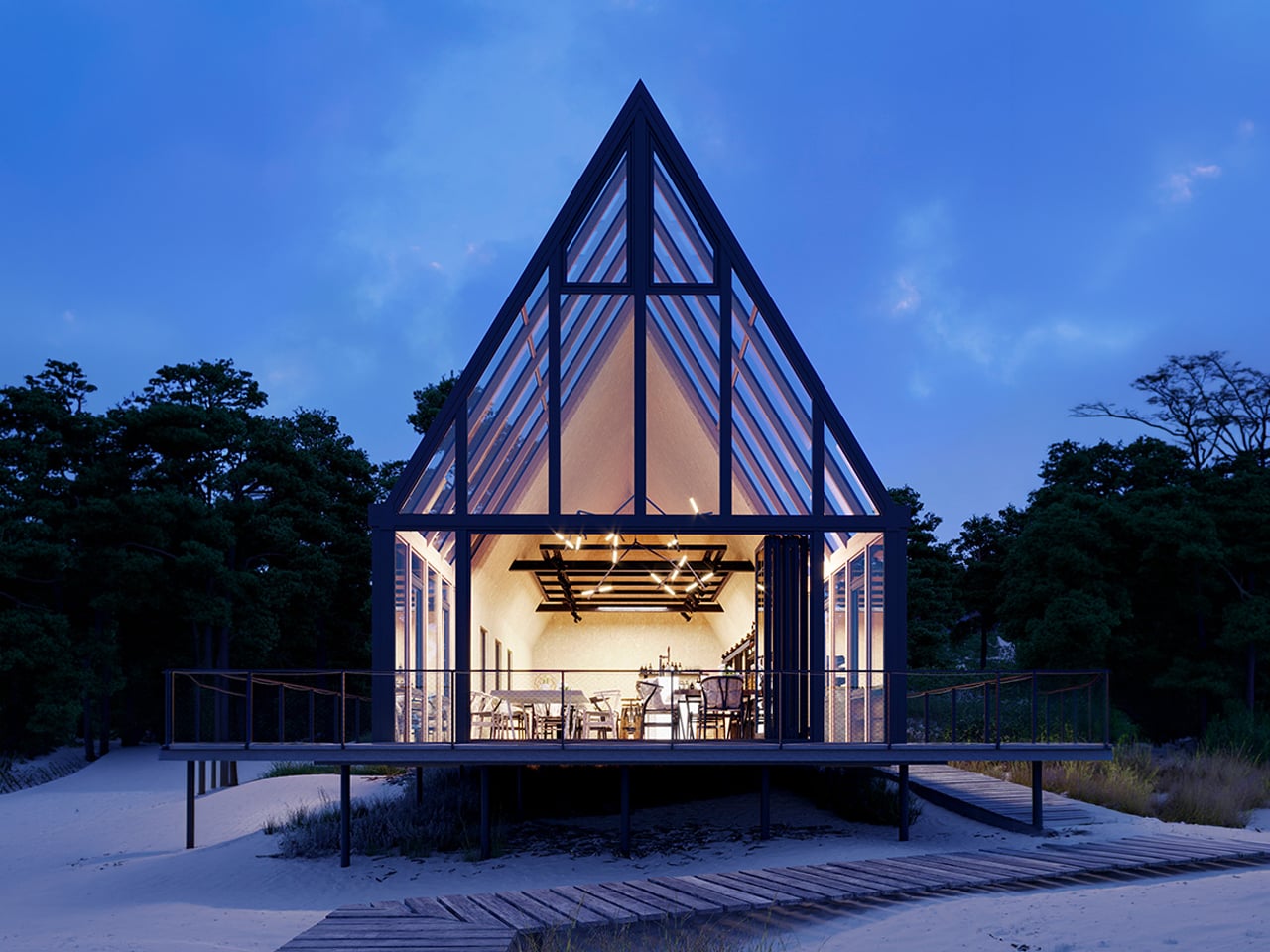
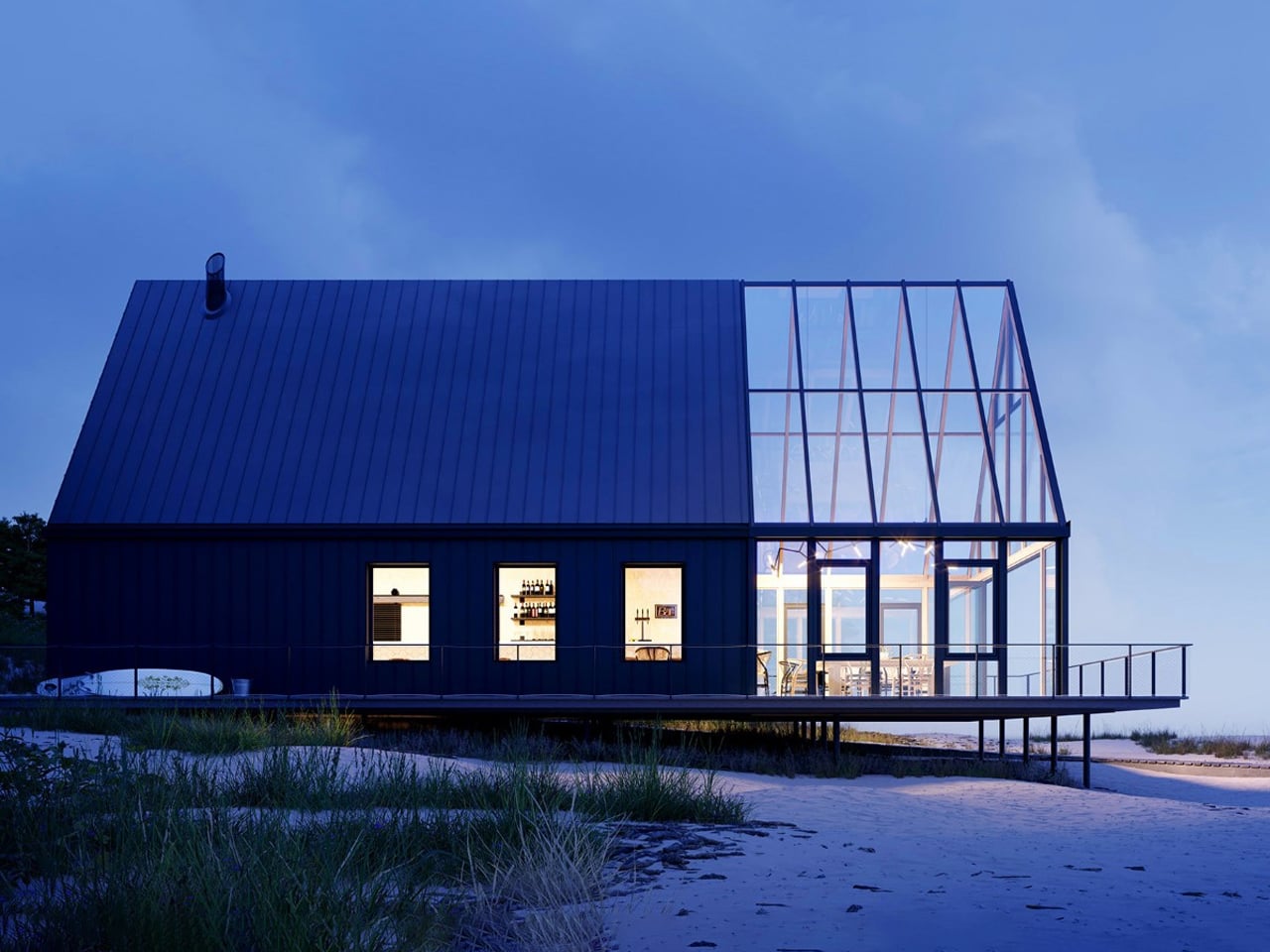
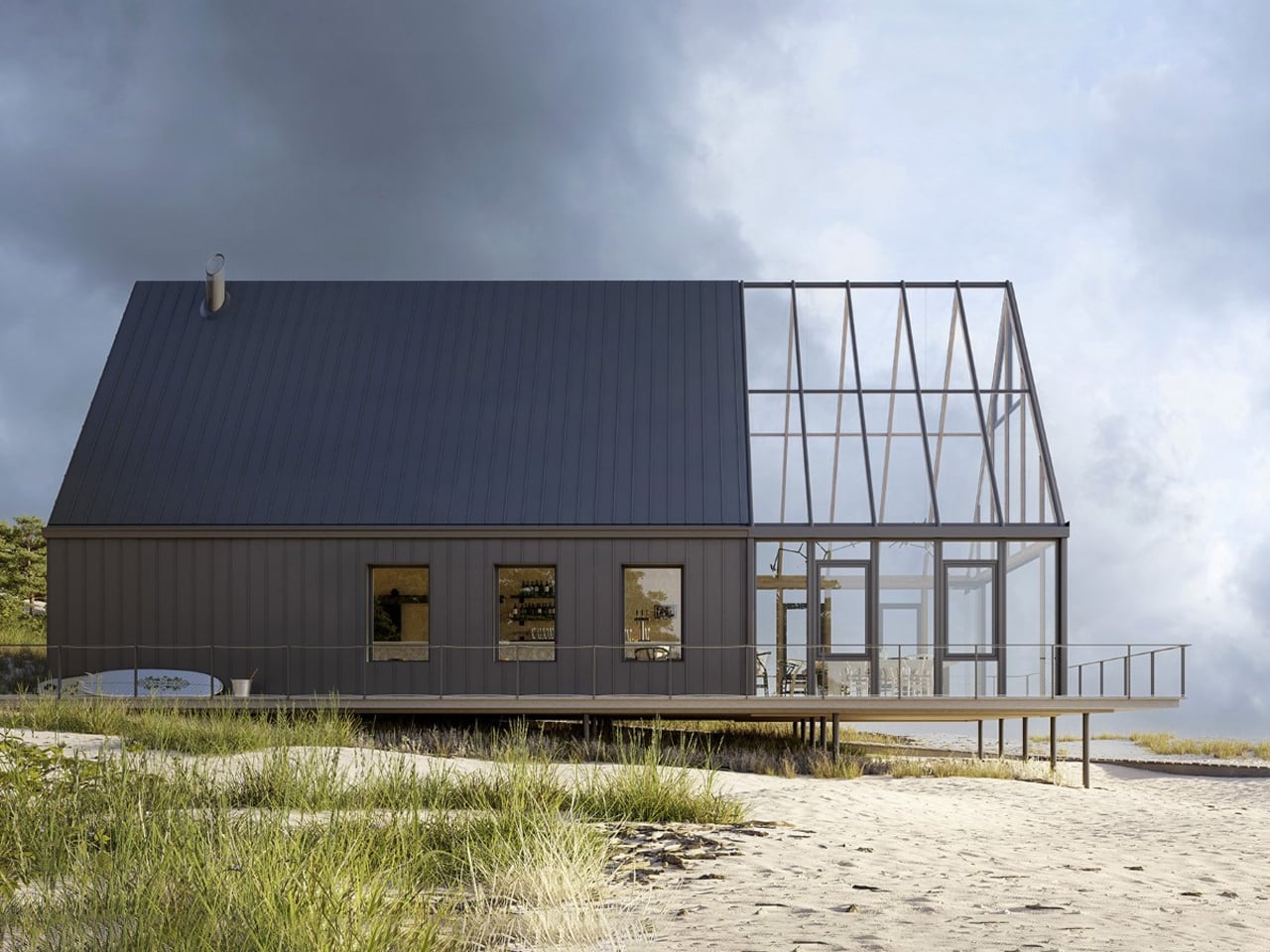
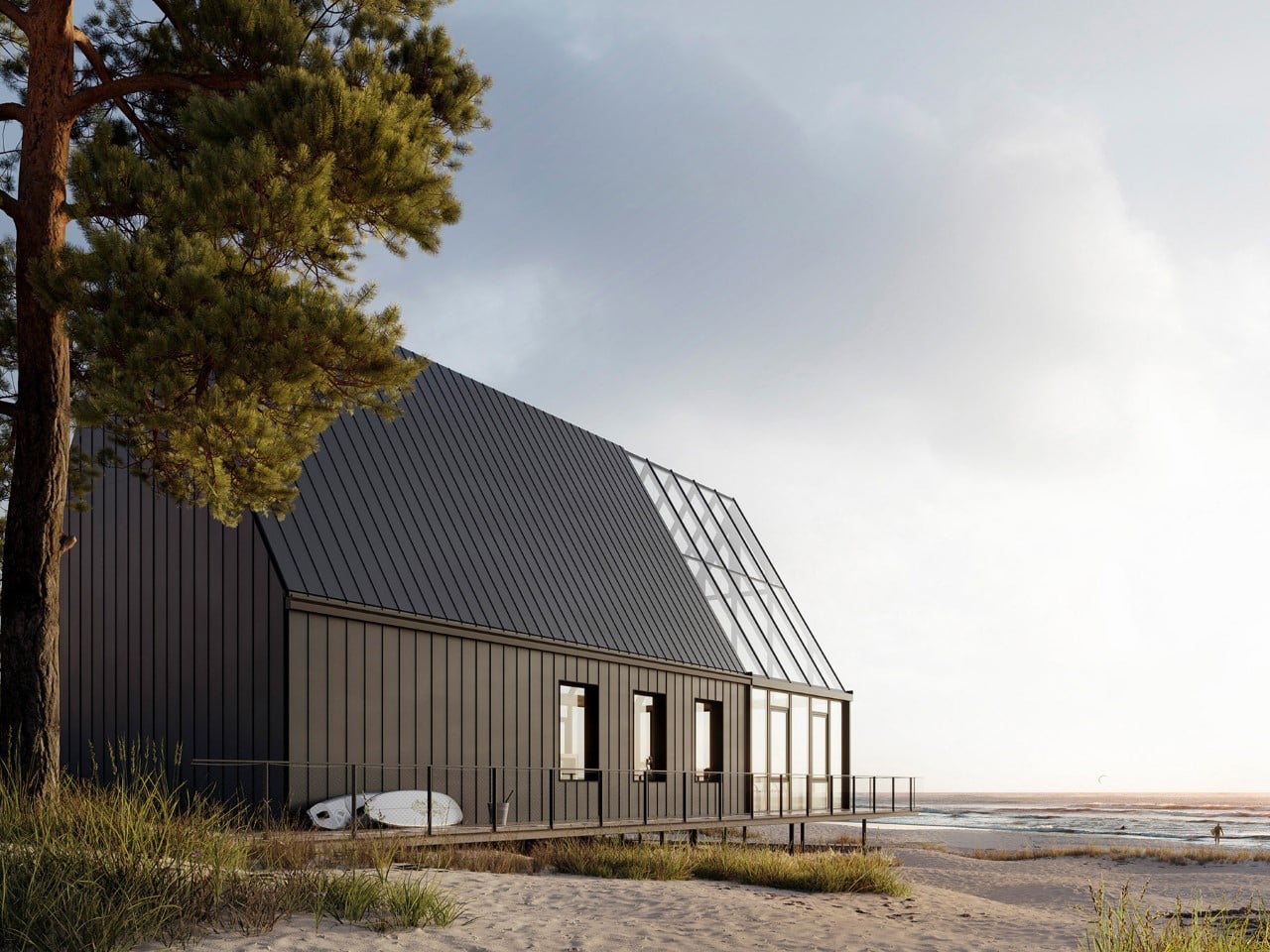
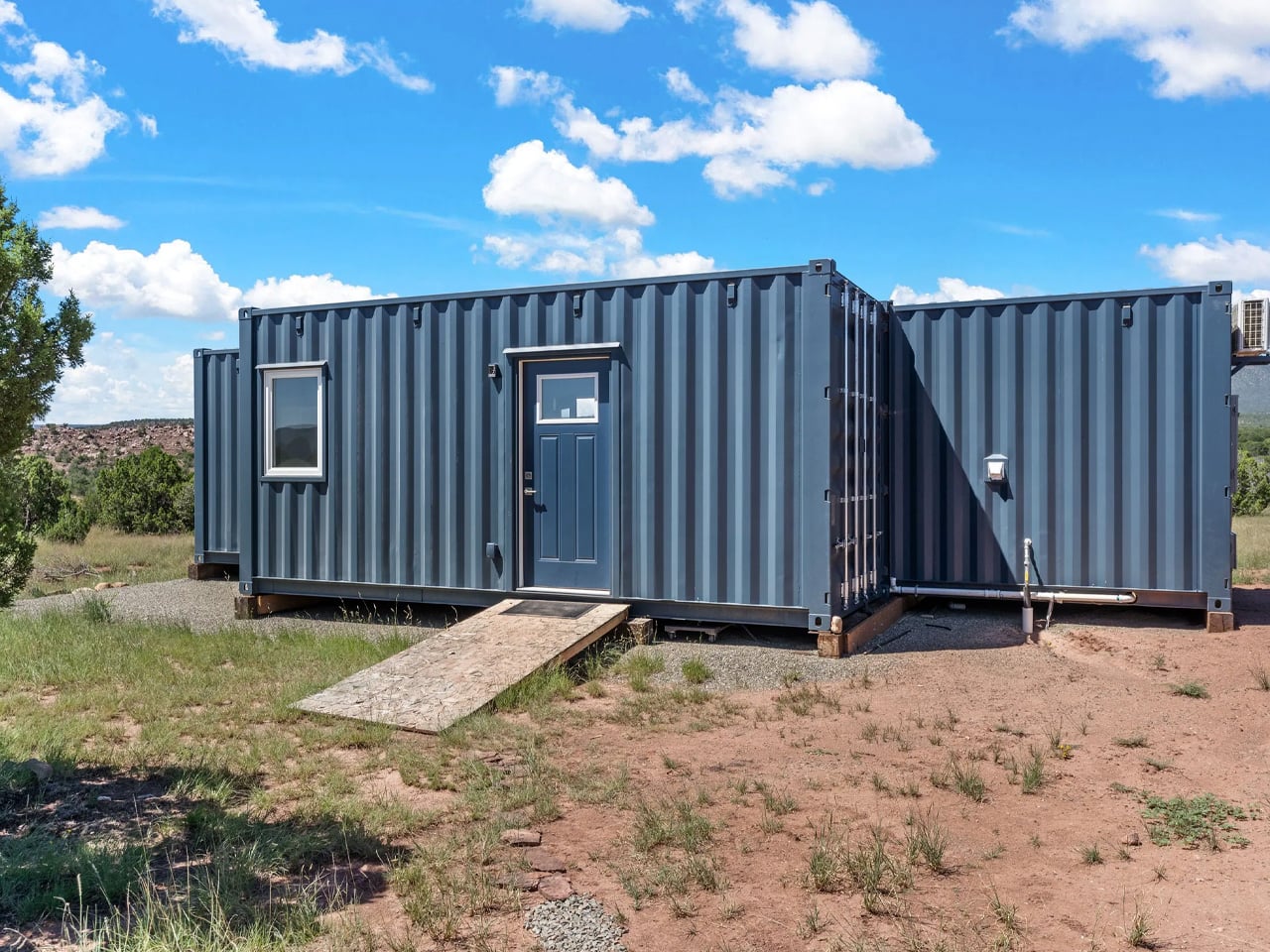
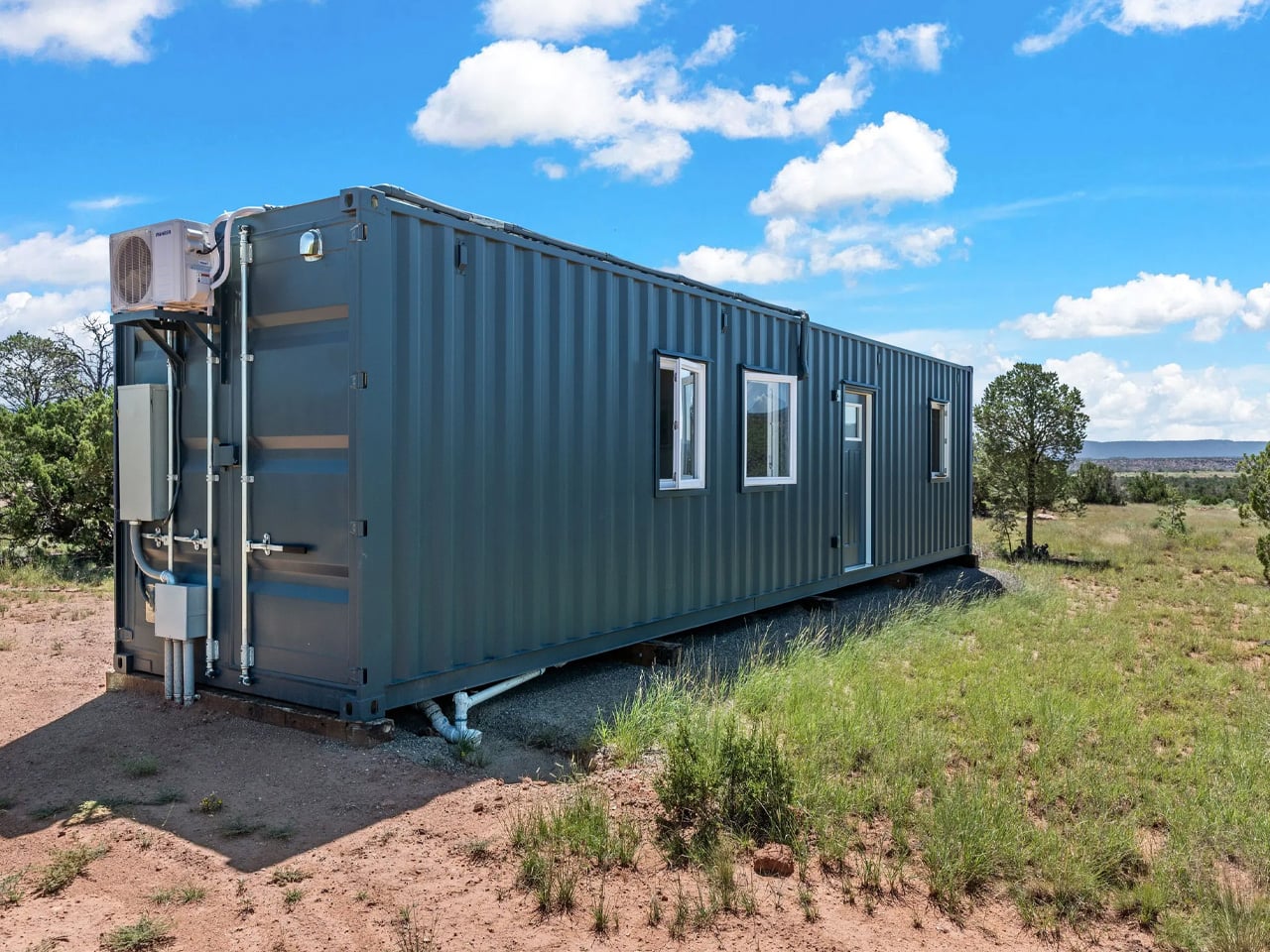
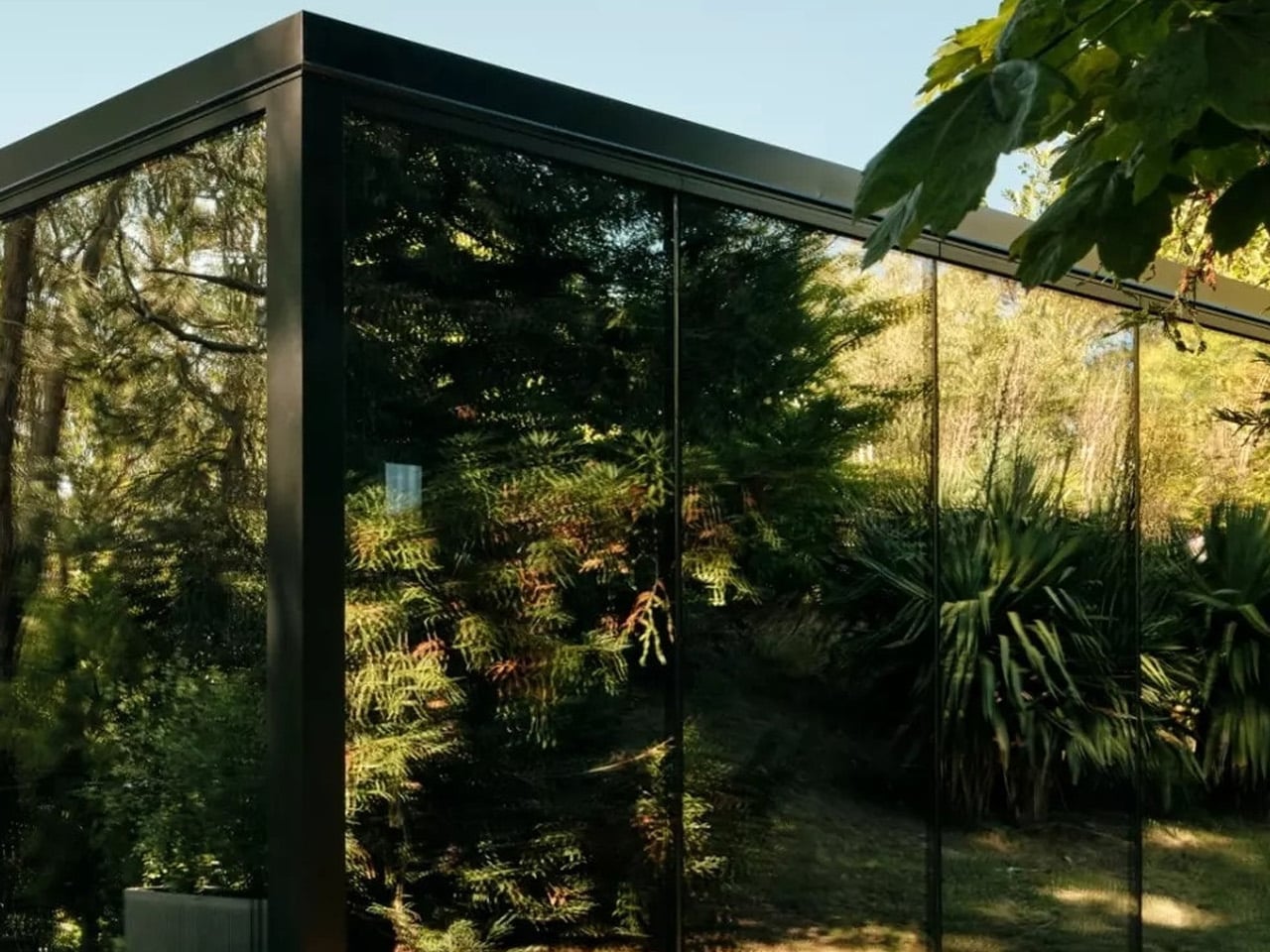
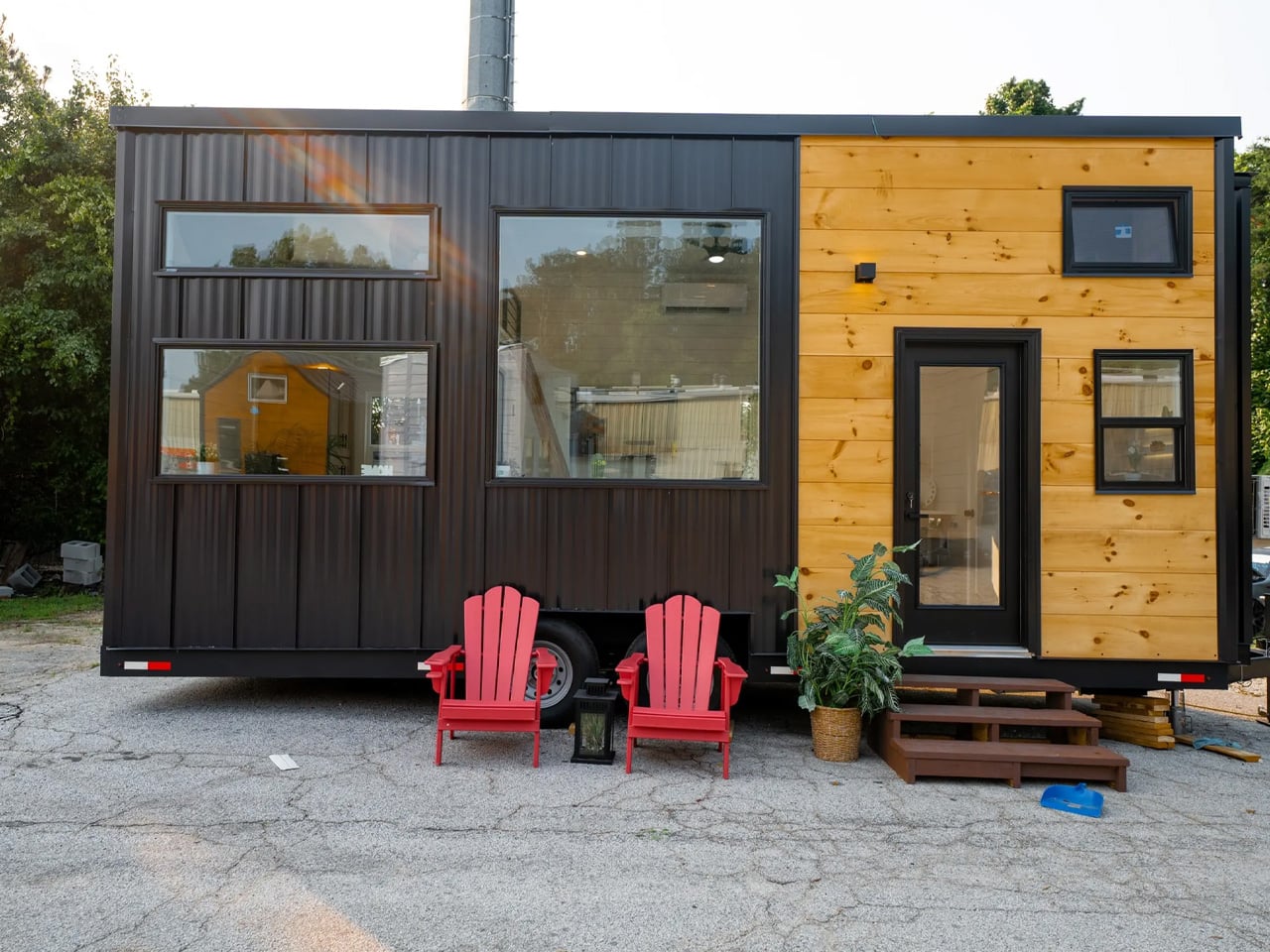
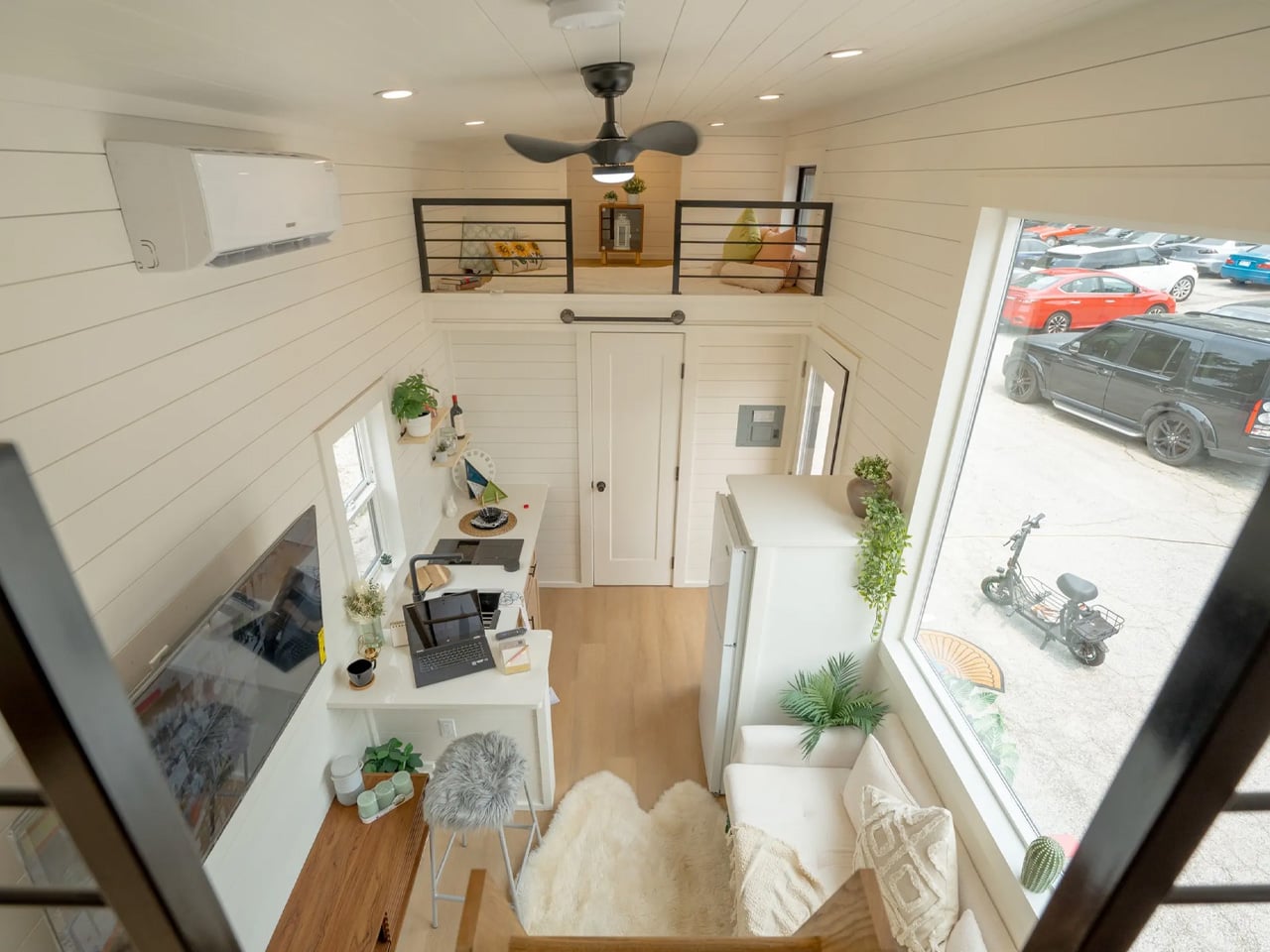
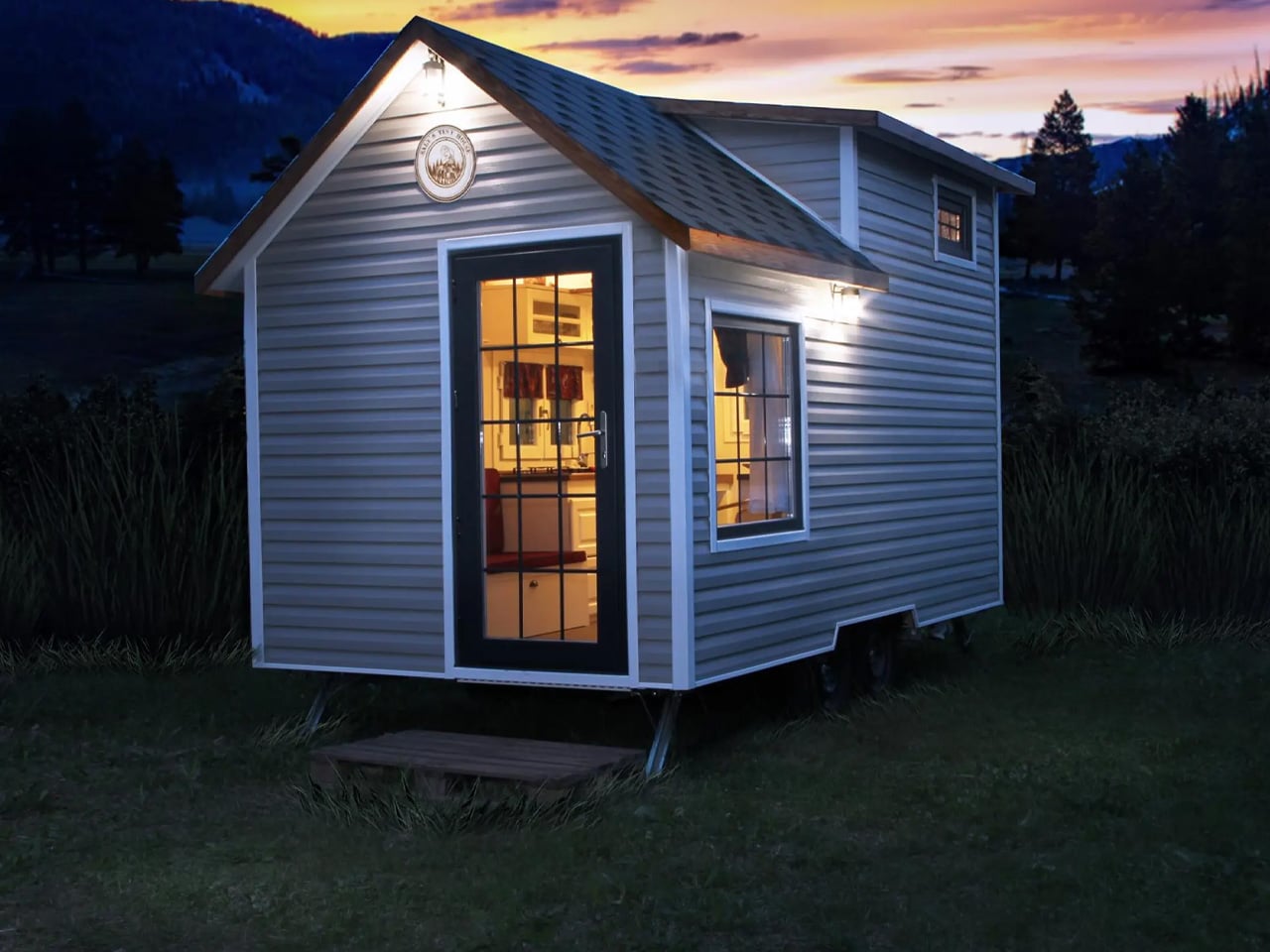
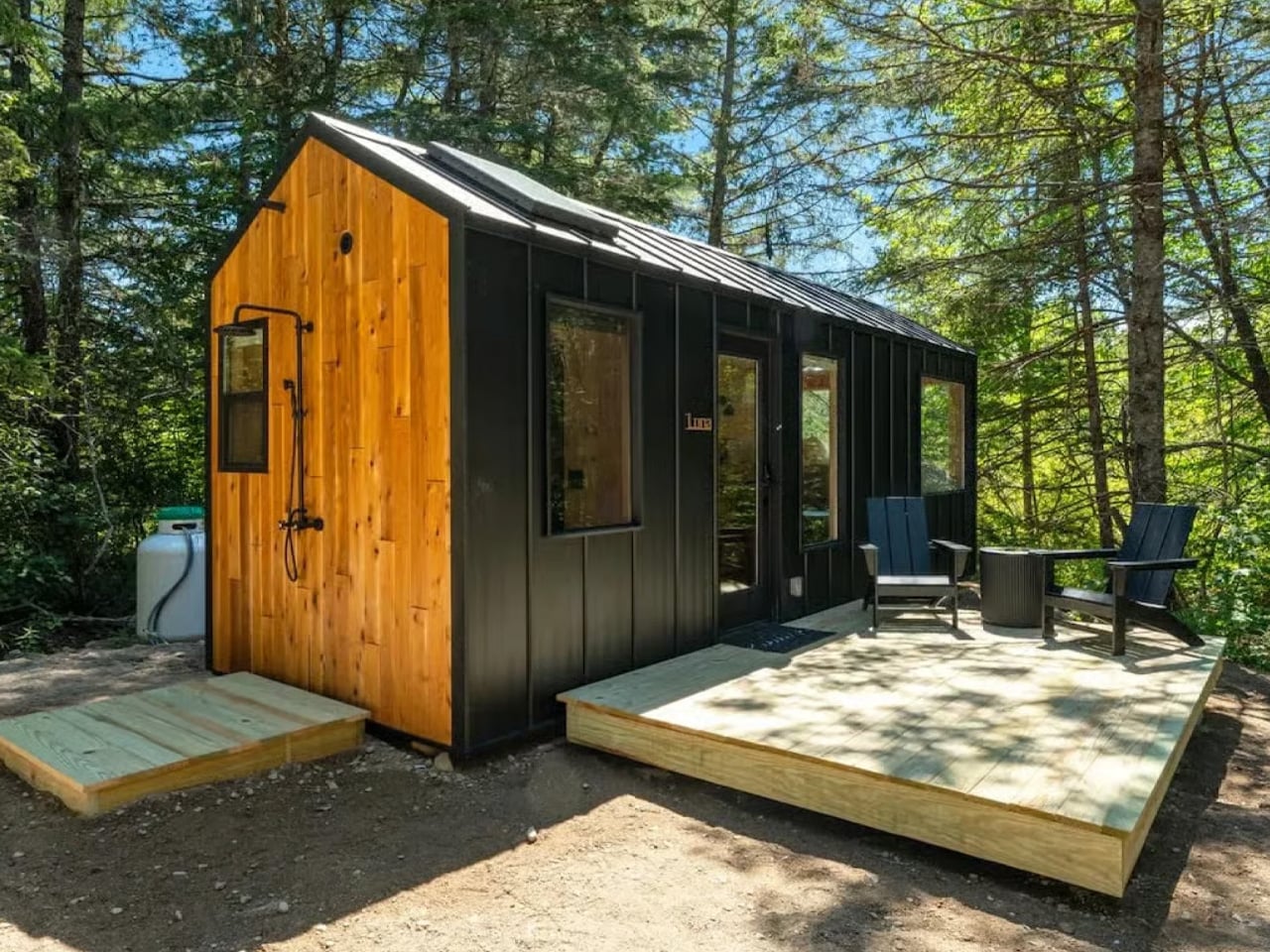
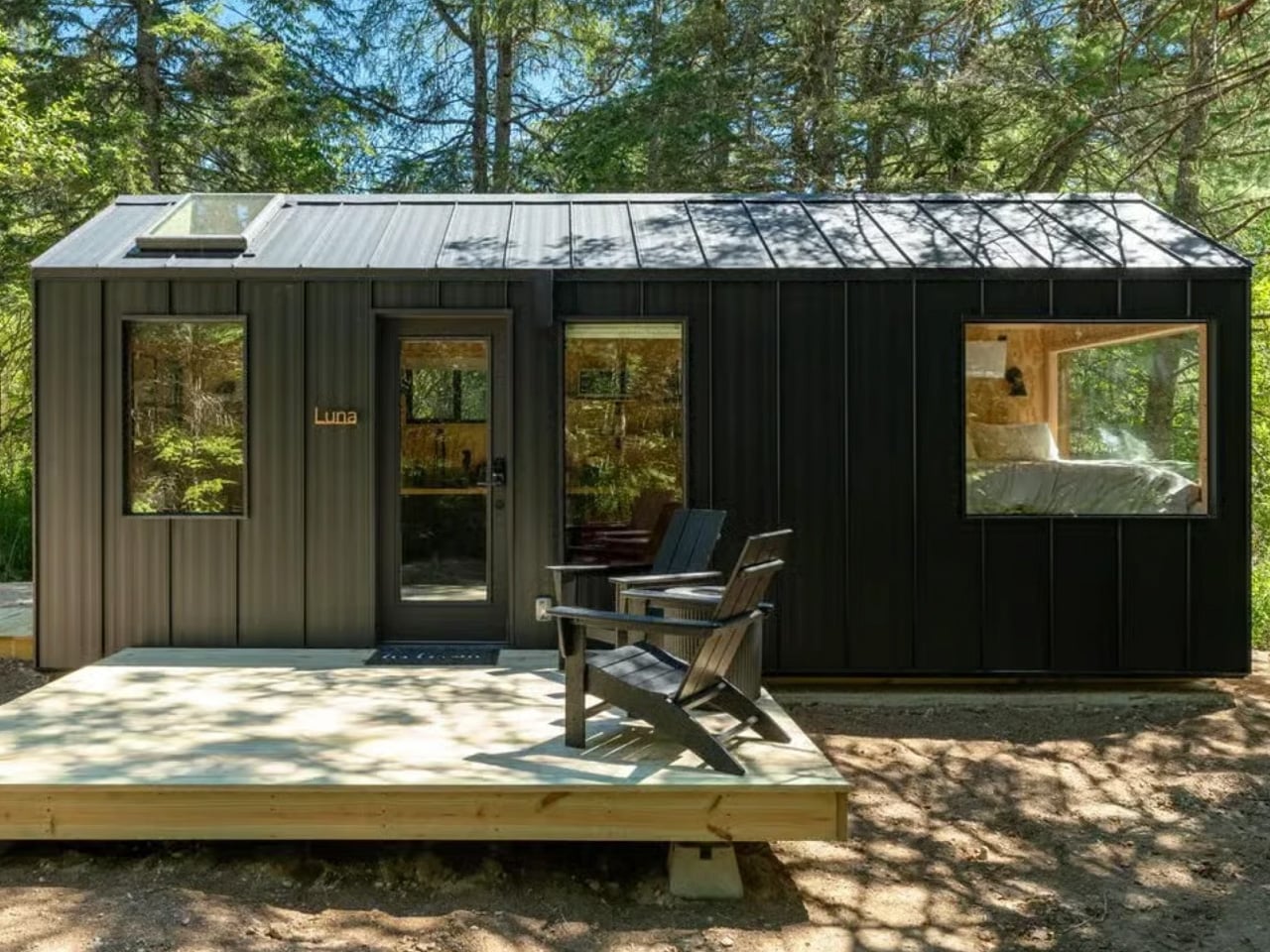
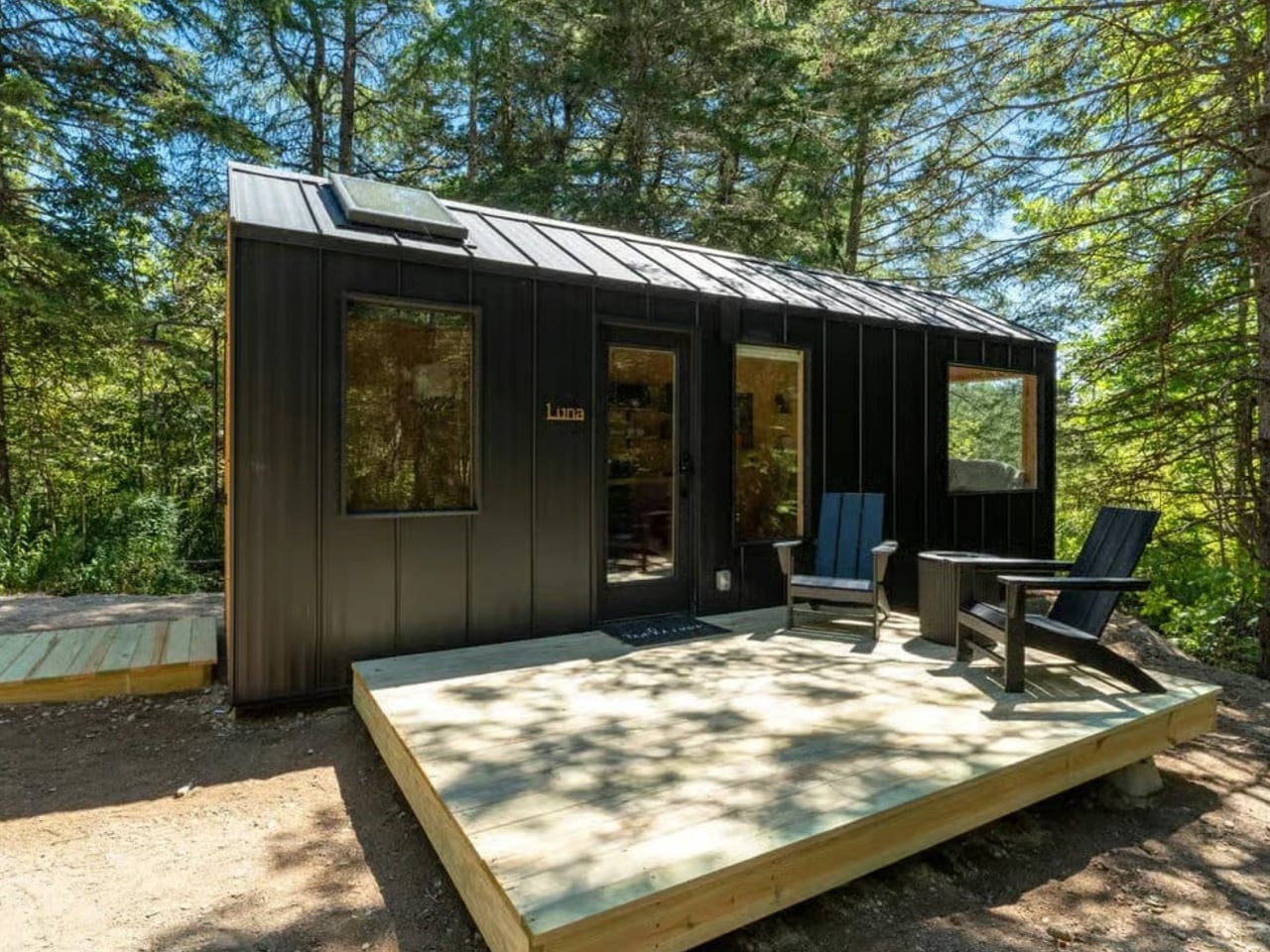
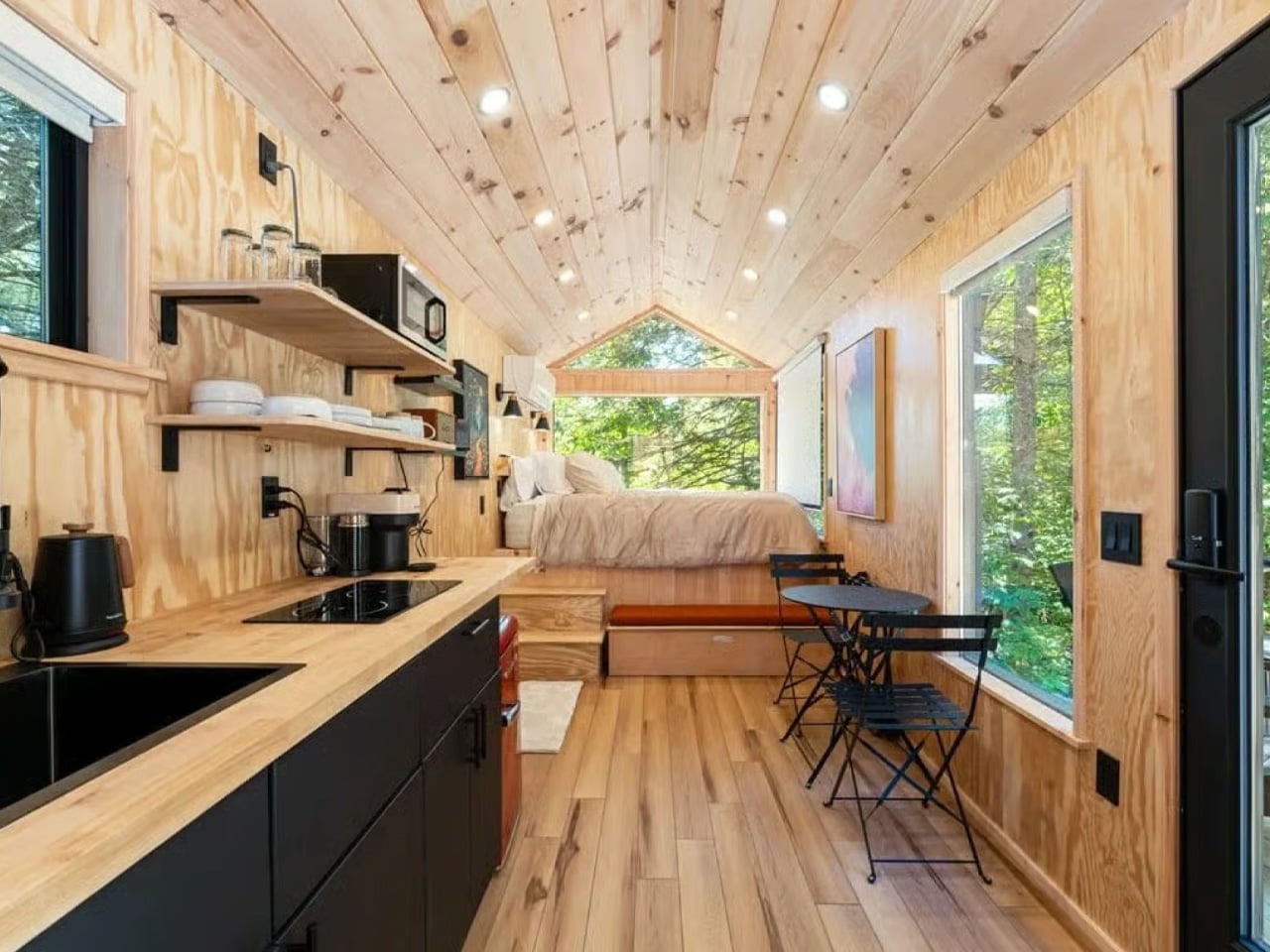
Nordic & Spruce has crafted something special with the Weekender, a tiny home that embraces its transient nature rather than fighting it. This isn’t a house trying to be everything to everyone – it’s a thoughtfully designed escape pod that knows exactly what it wants to be. At 24 feet long and 241 square feet, the Weekender sits comfortably in the middle of Nordic & Spruce’s lineup, larger than their compact Overnighter but more nimble than the full-featured Homesteader. The double-axle trailer foundation provides stability while maintaining roadworthiness for those who crave mobility over permanence.

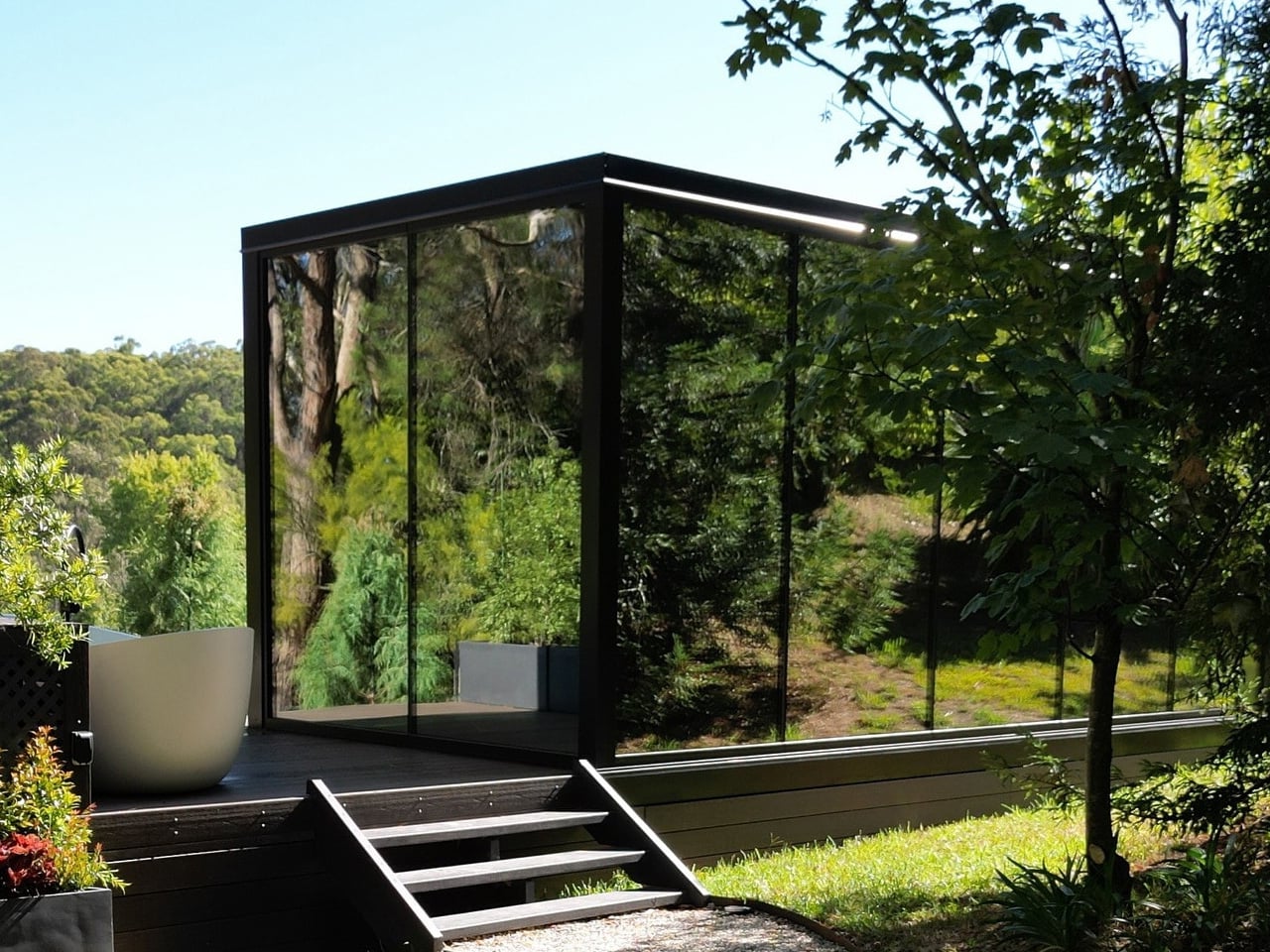
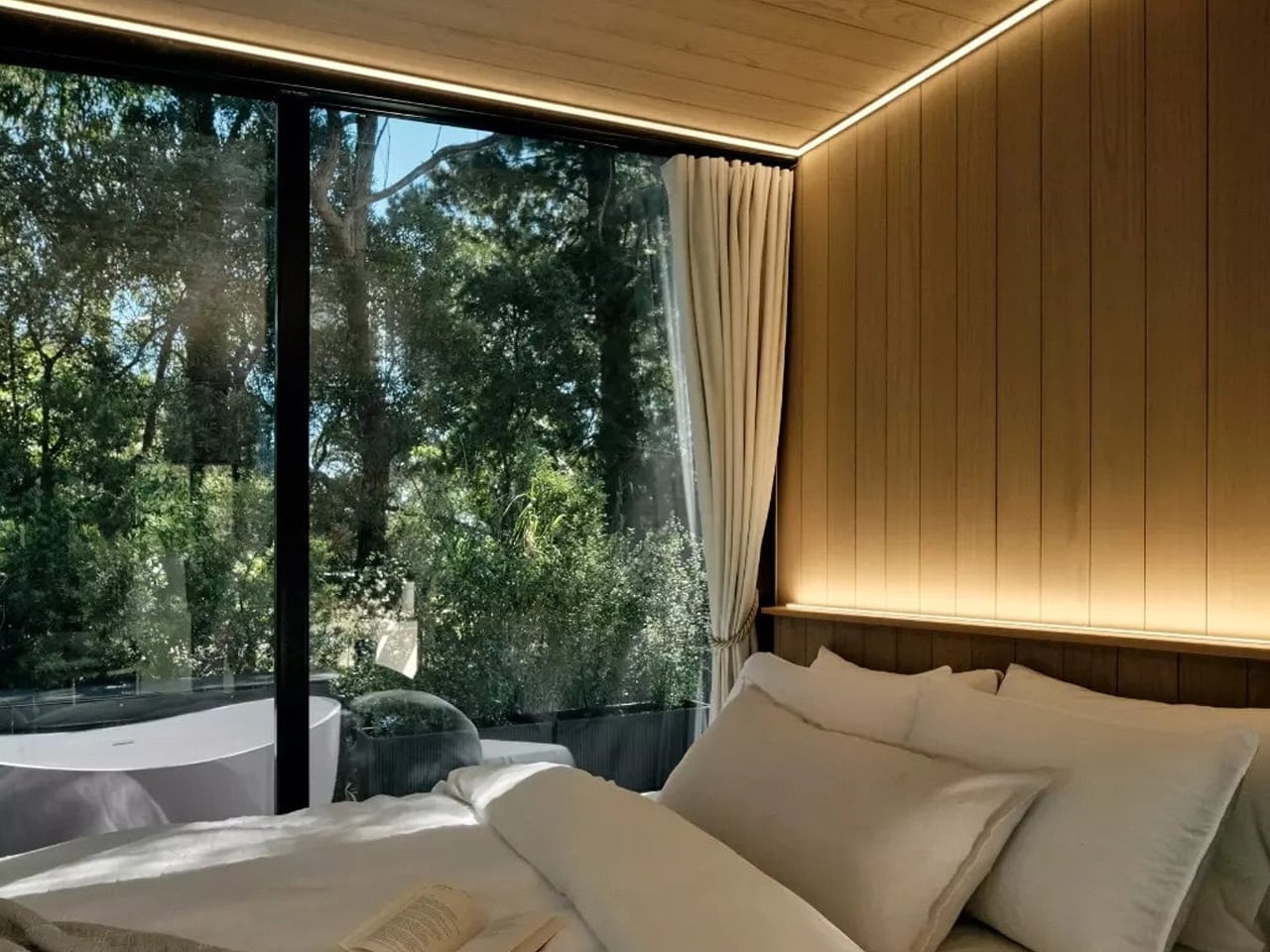
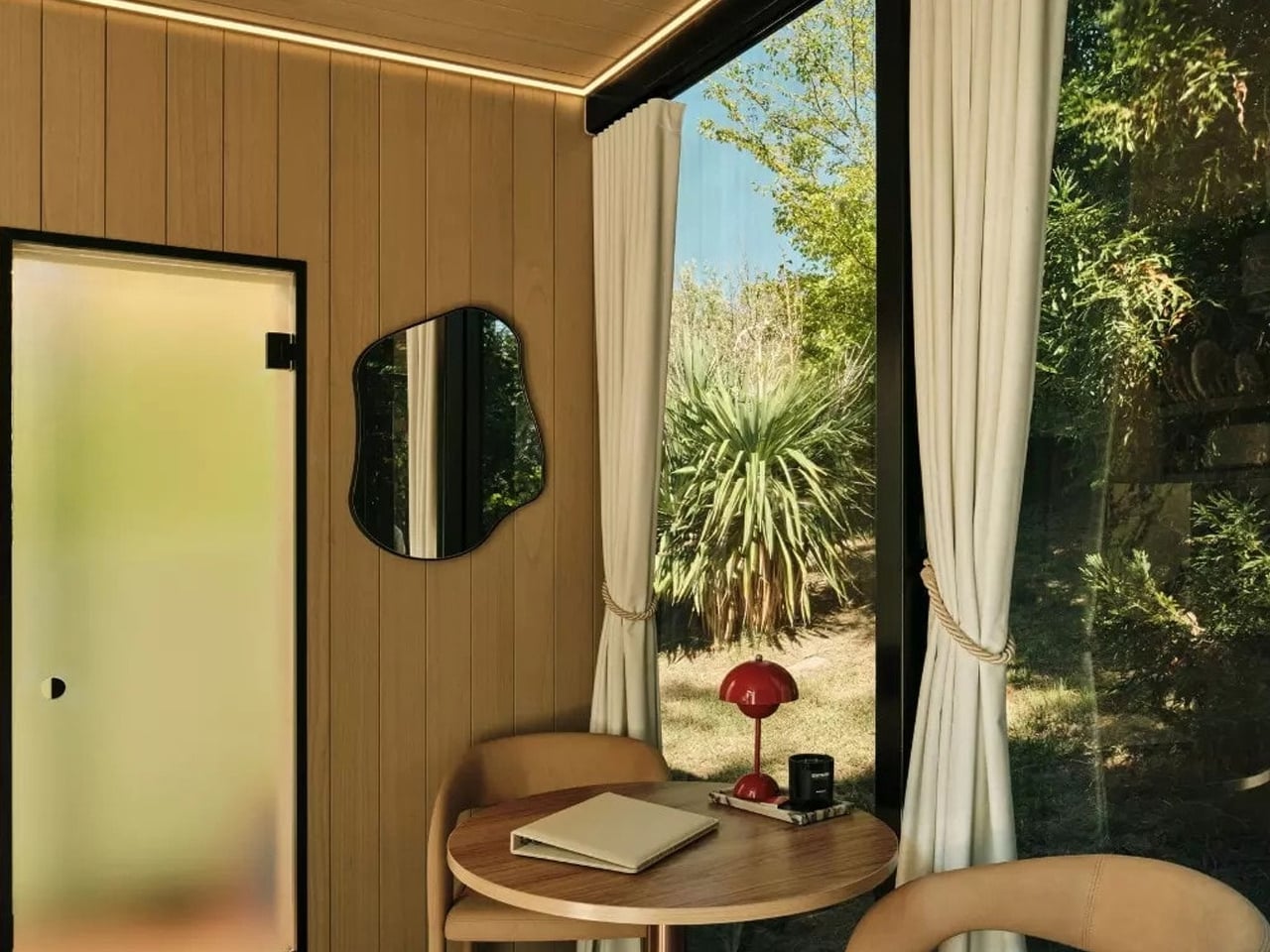
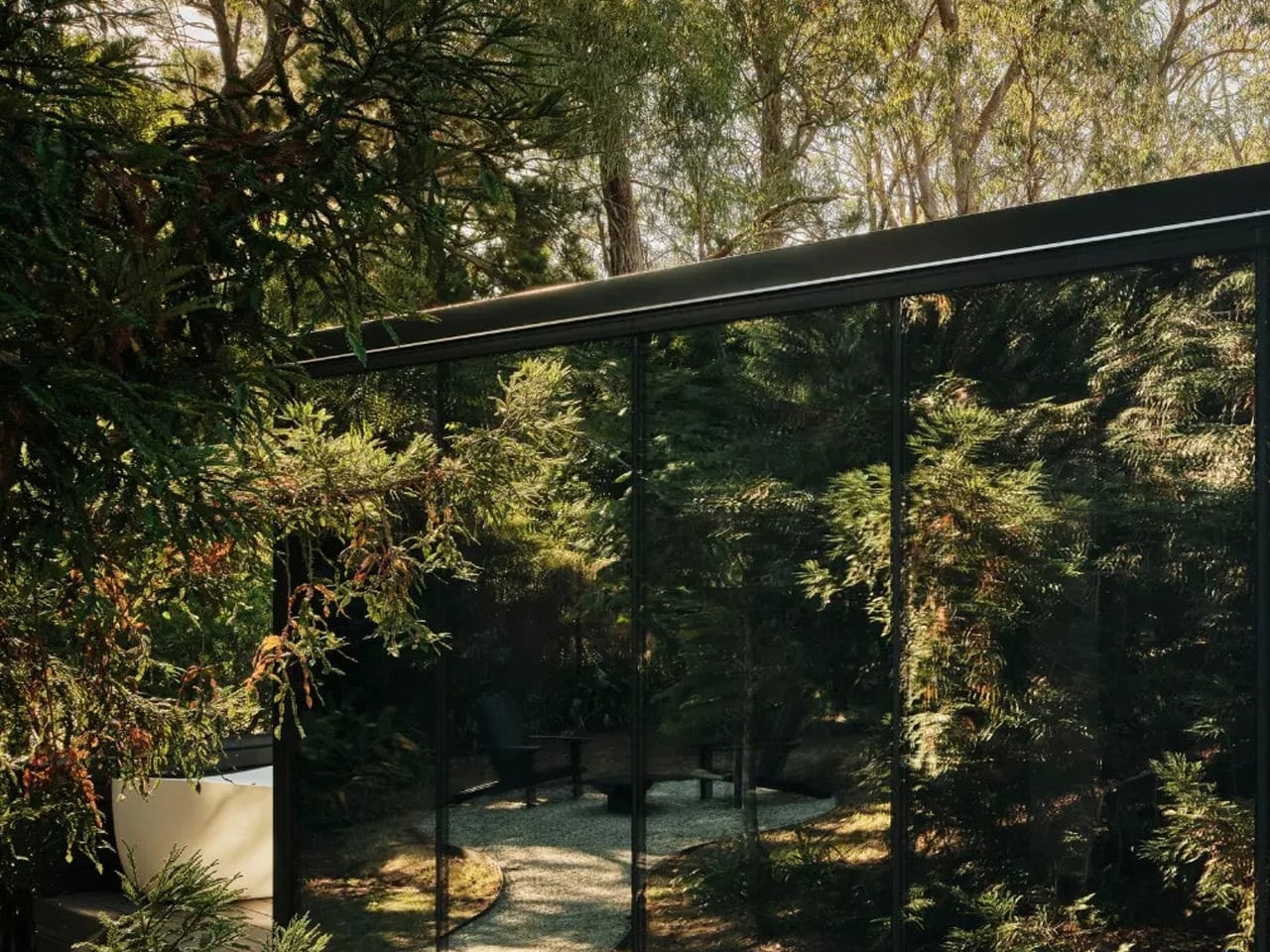
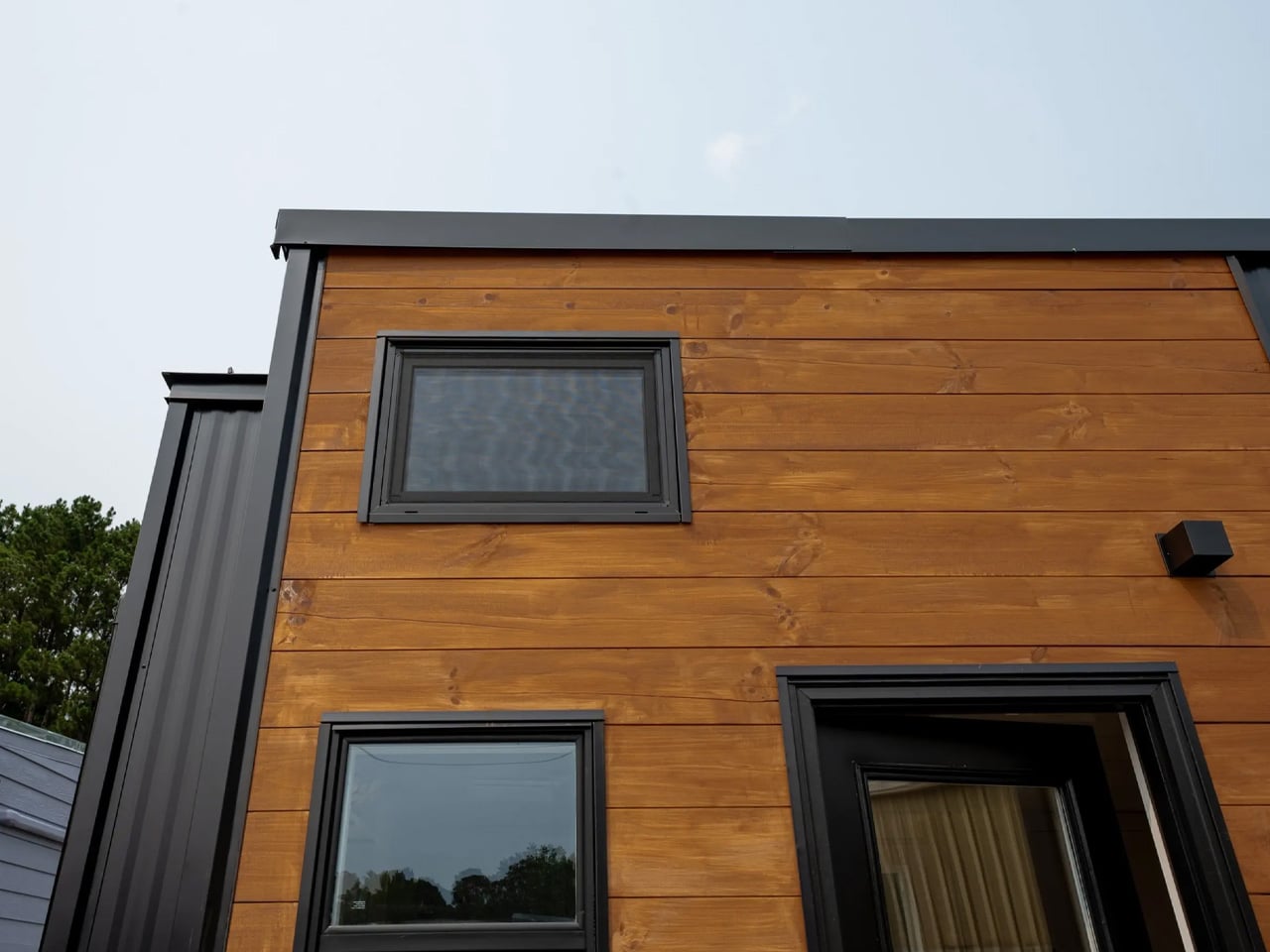
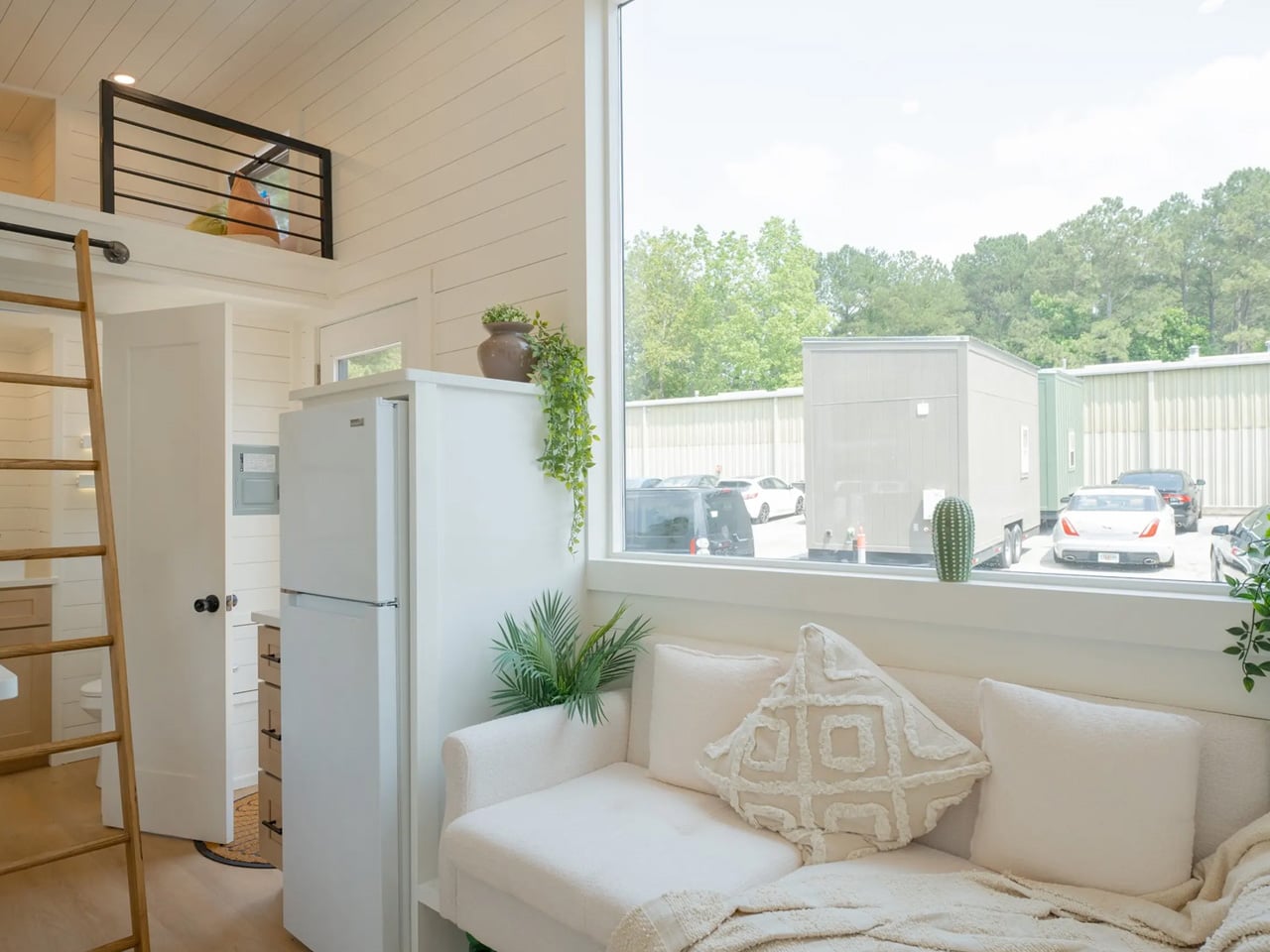
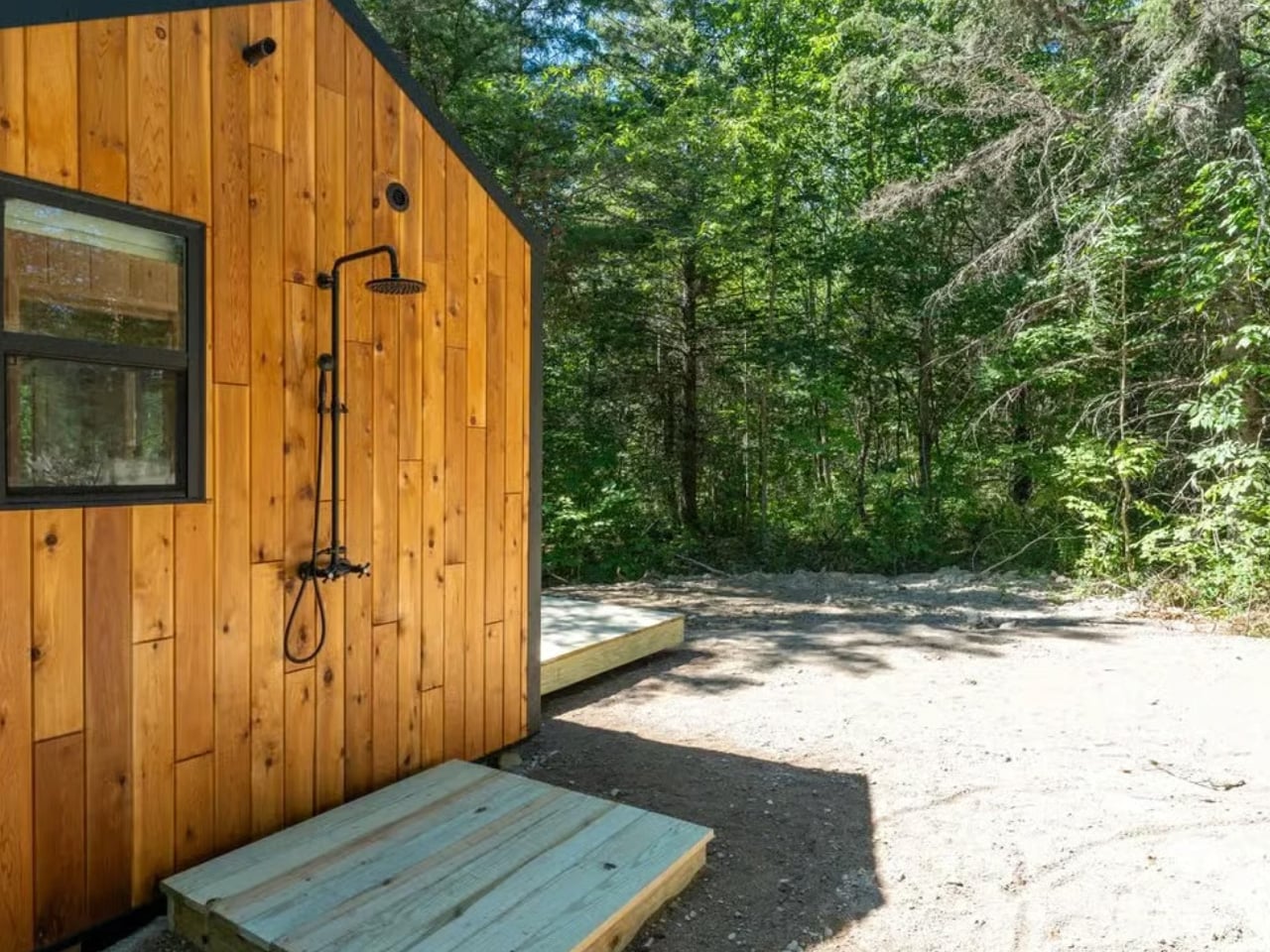
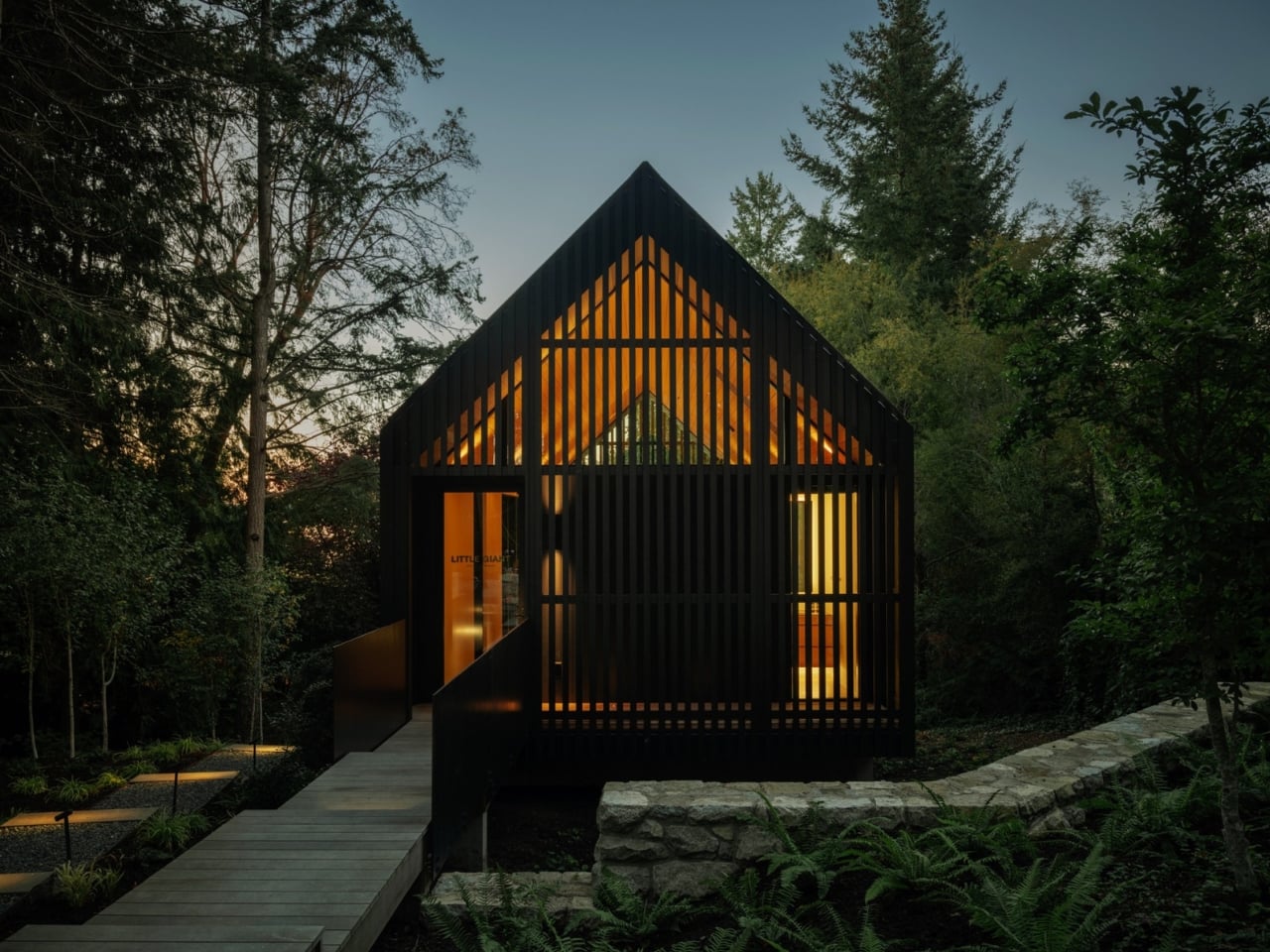
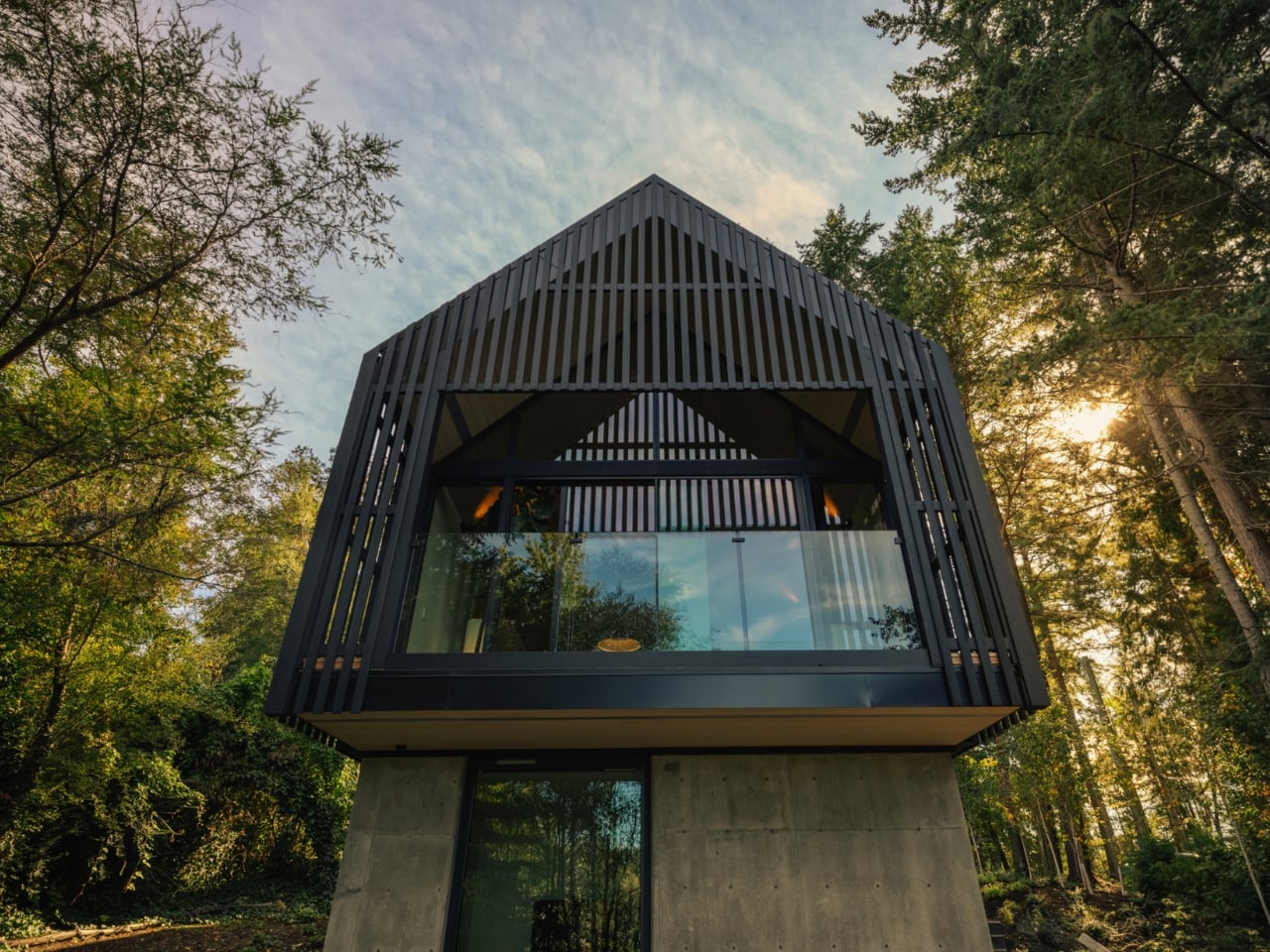
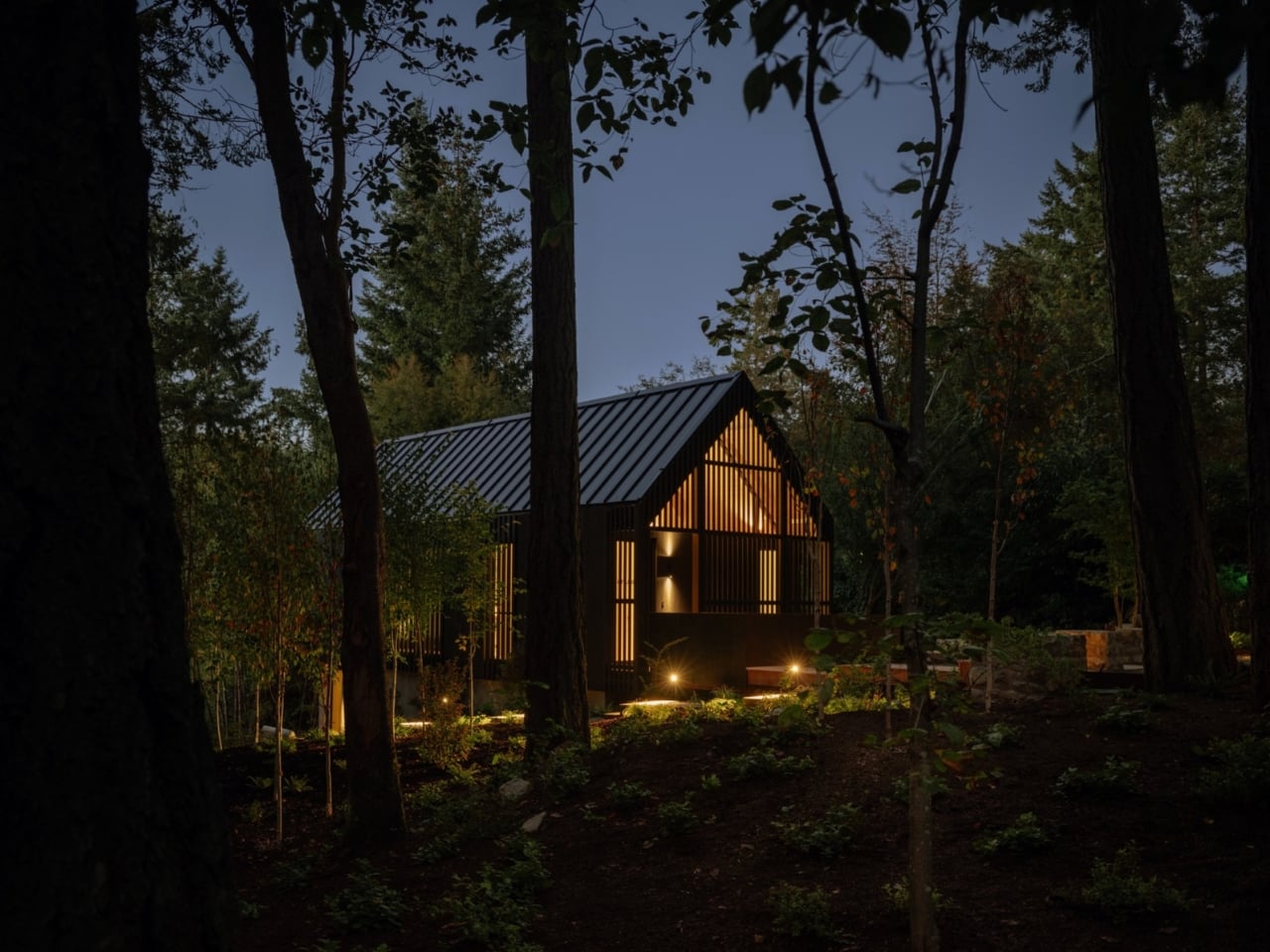
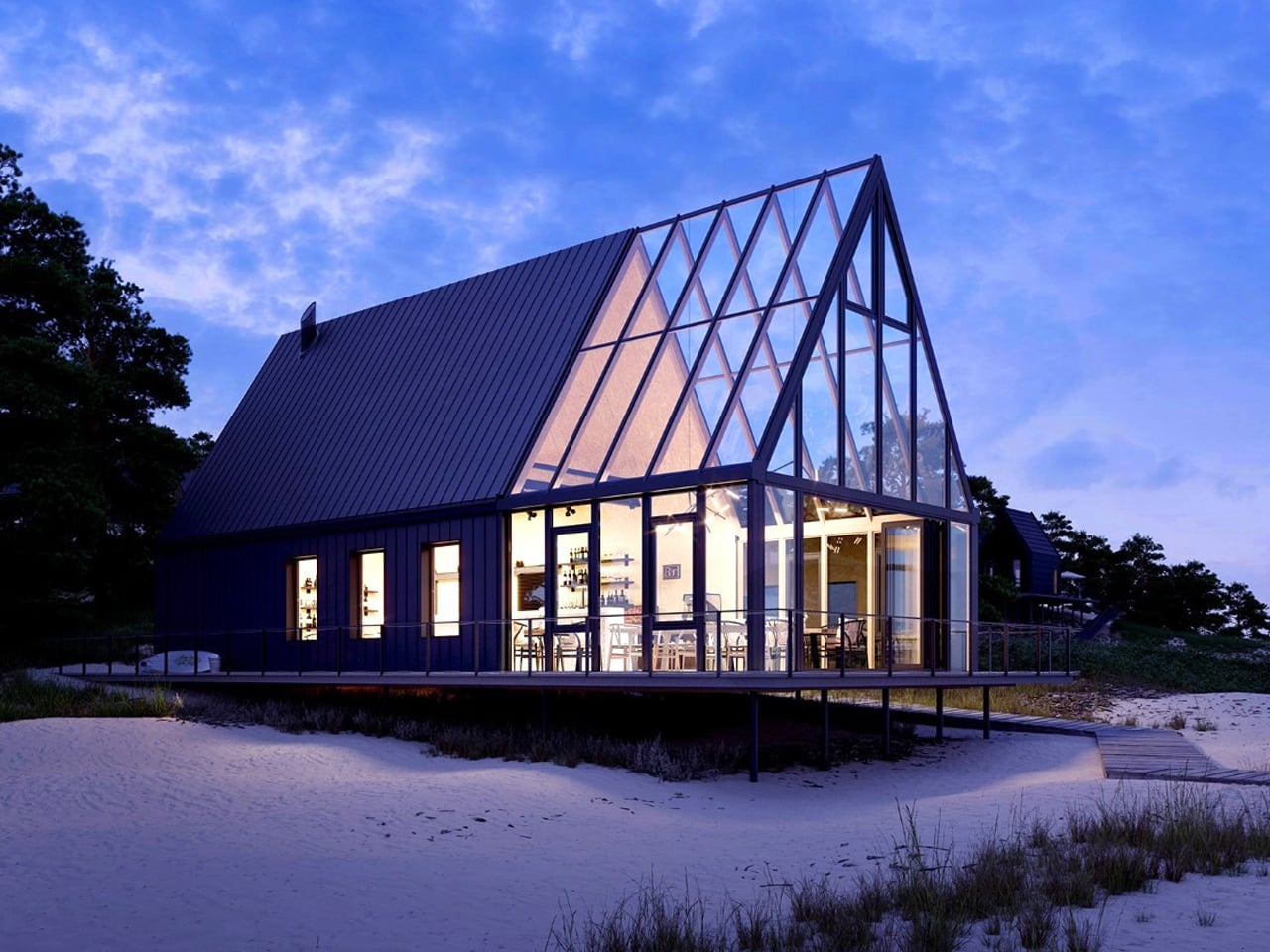
The exterior makes an immediate impression with its clean metal cladding available in sophisticated black or crisp white, complemented by warm wooden accents that soften the industrial edge. Generous glazing floods the interior with natural light, while optional skylights can transform the space into a sun-drenched retreat. The contrast between the sleek exterior and the organic interior materials creates visual interest without overwhelming the compact footprint. The interior finishes reflect Nordic & Spruce’s attention to material selection, offering bleached pine for those seeking Scandinavian minimalism or plywood for a more industrial aesthetic that complements the abundant natural light.

Designer: Nordic & Spruce

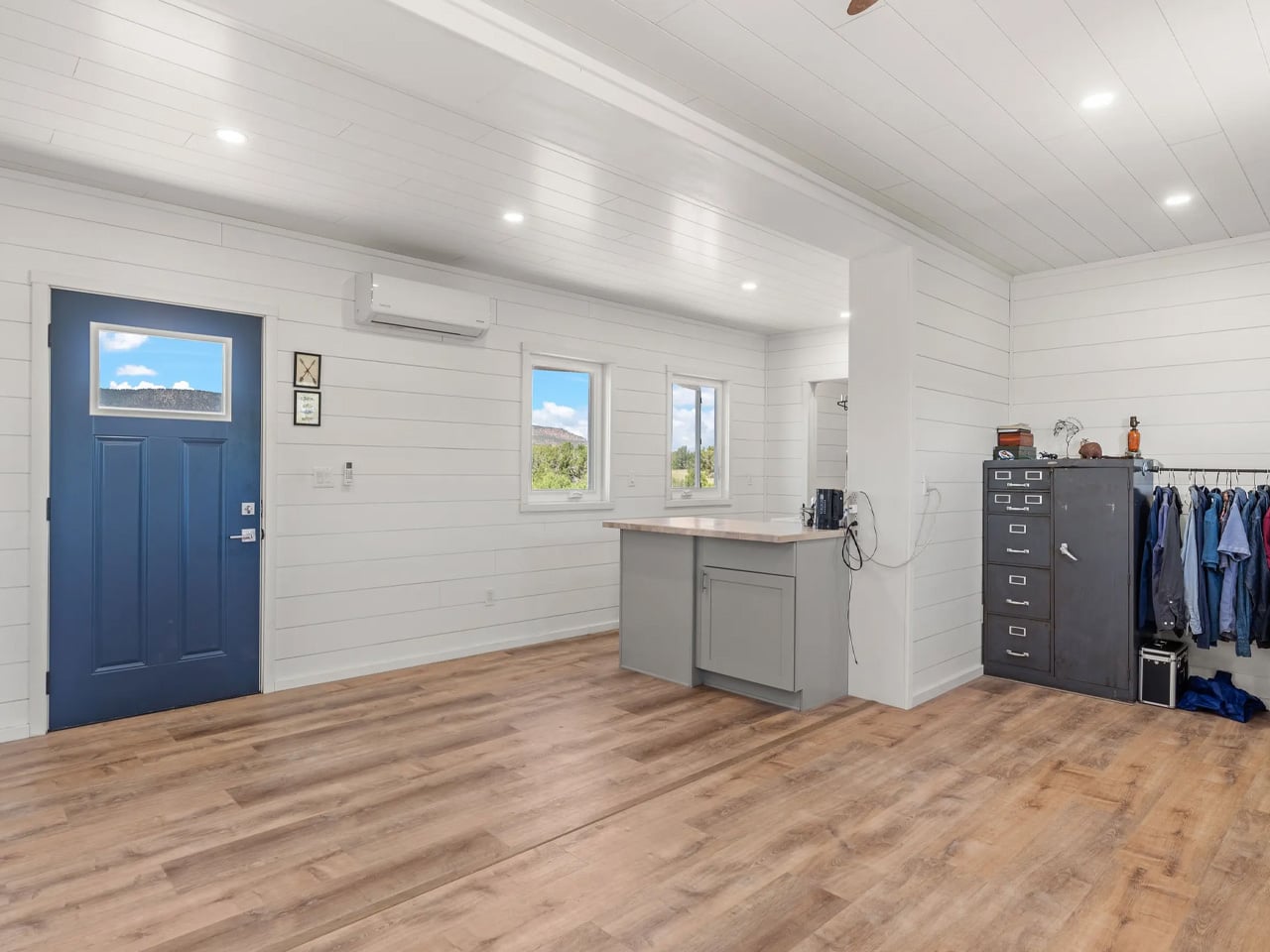
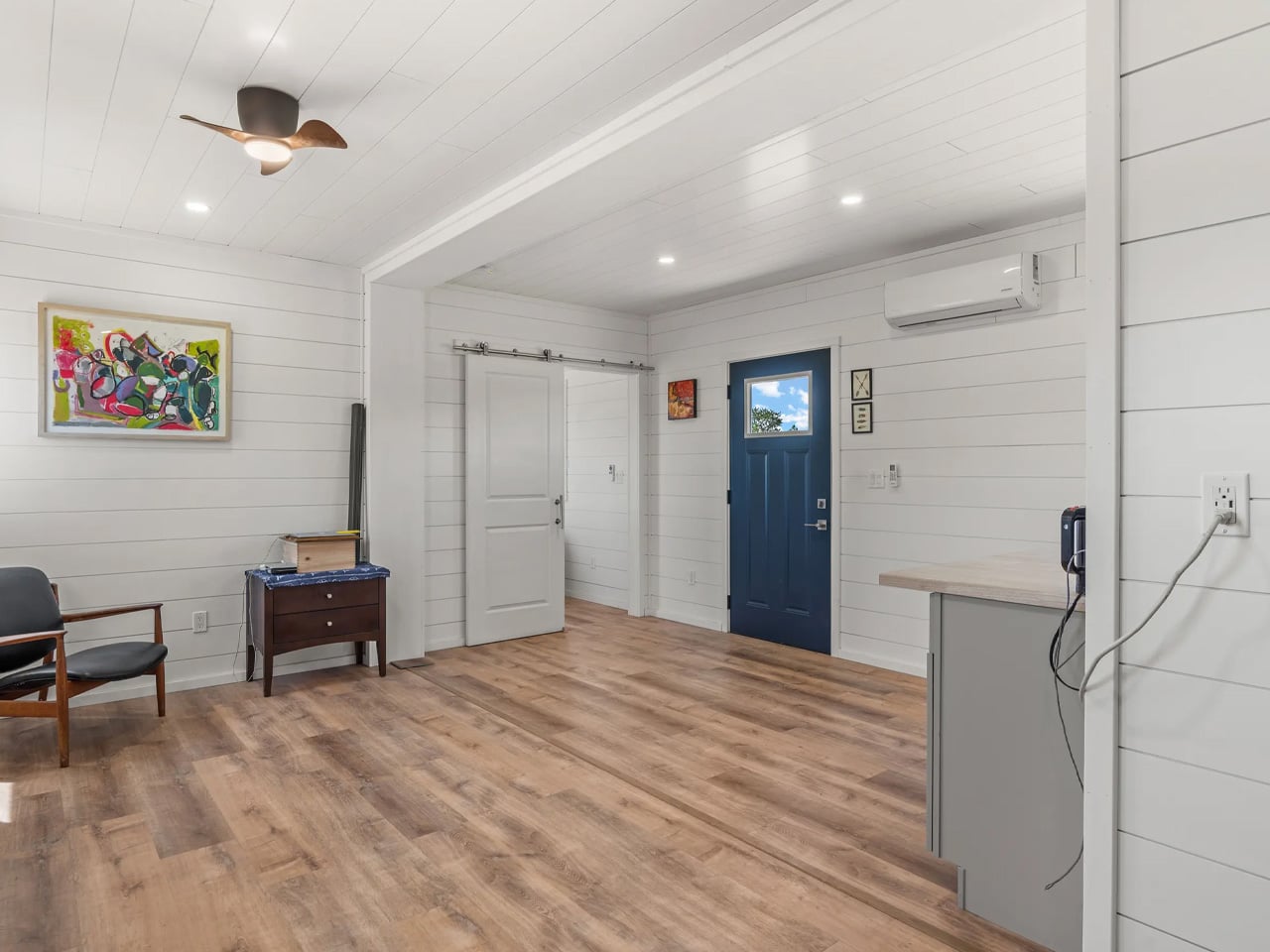
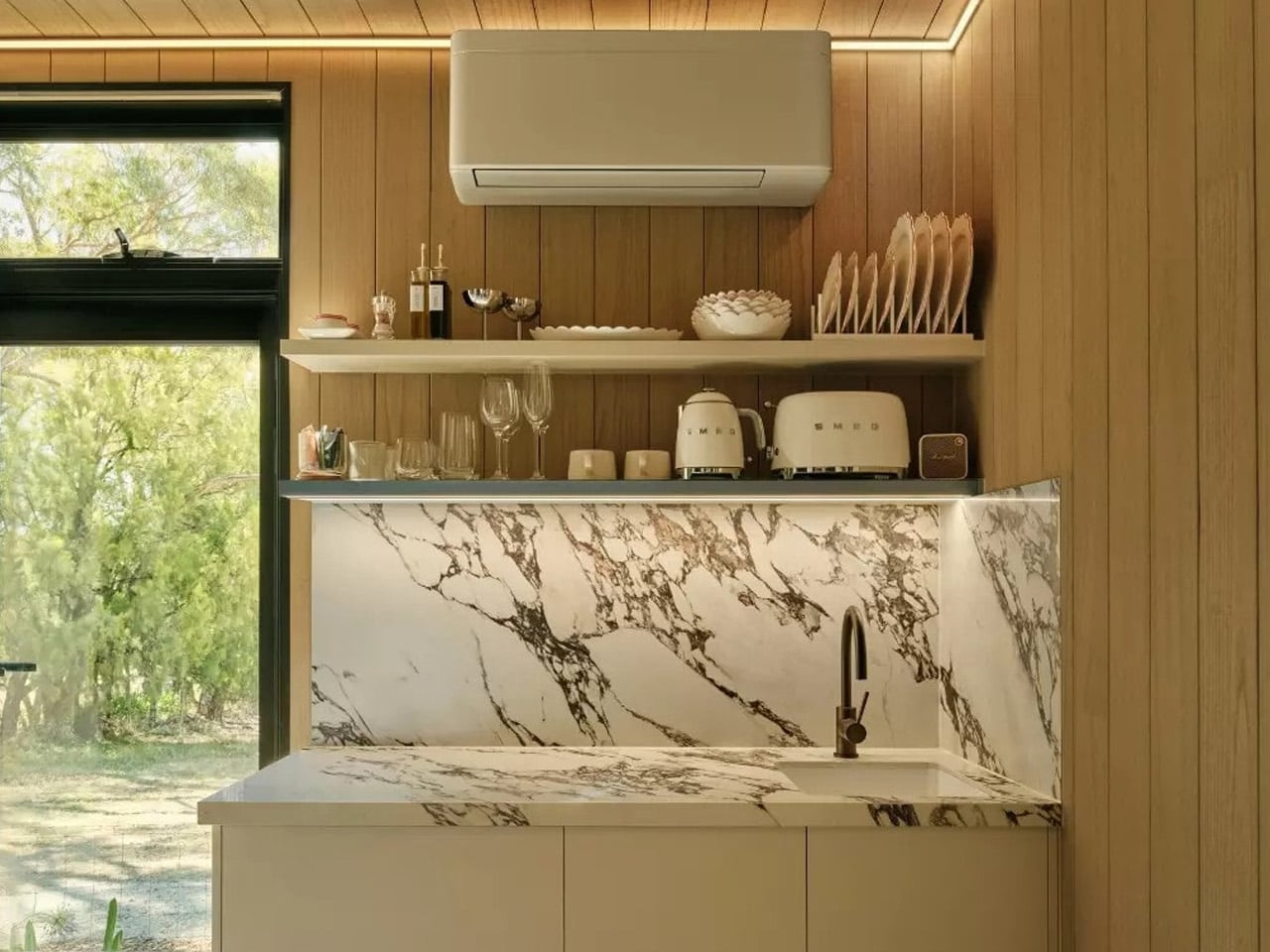
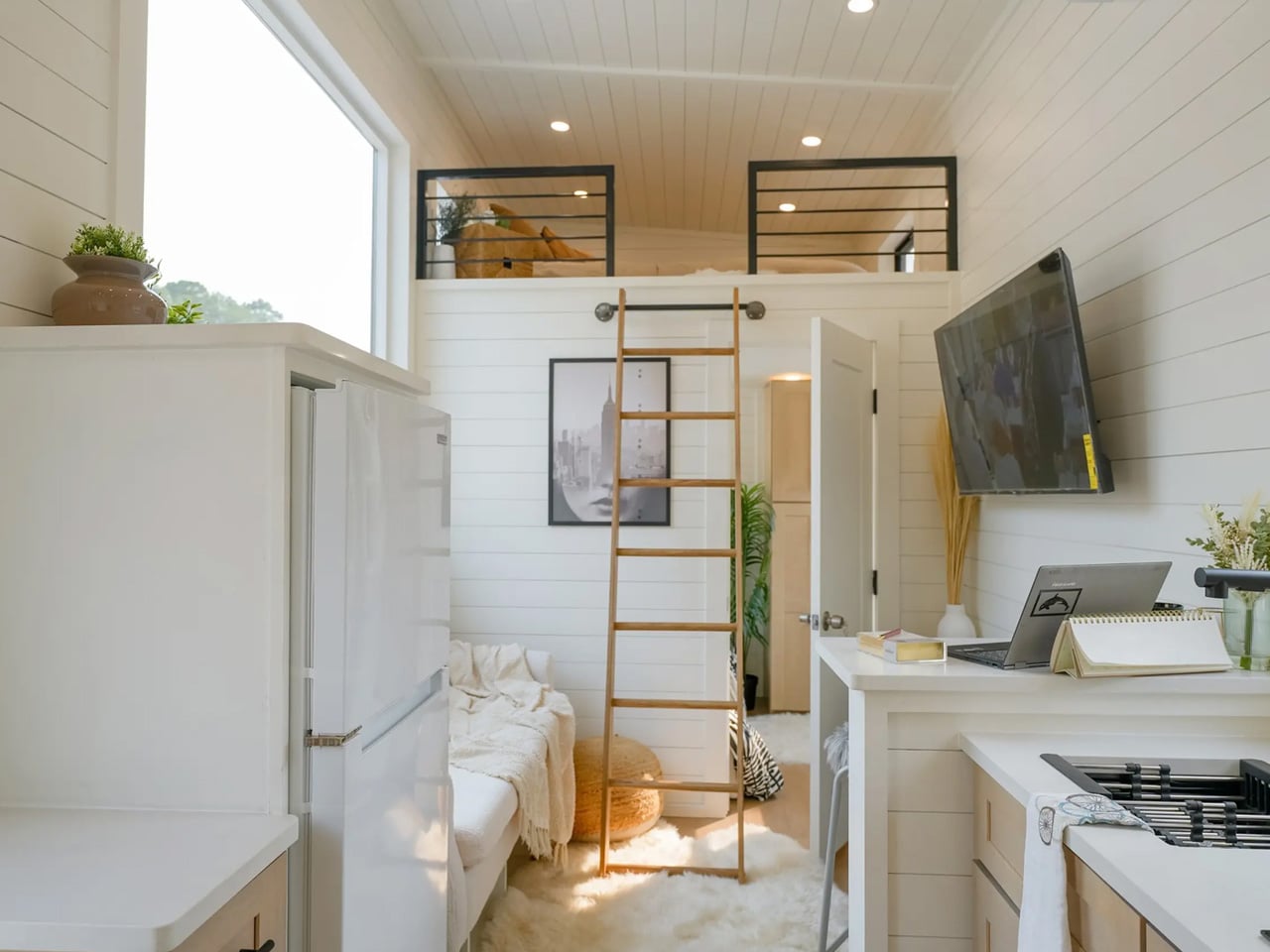
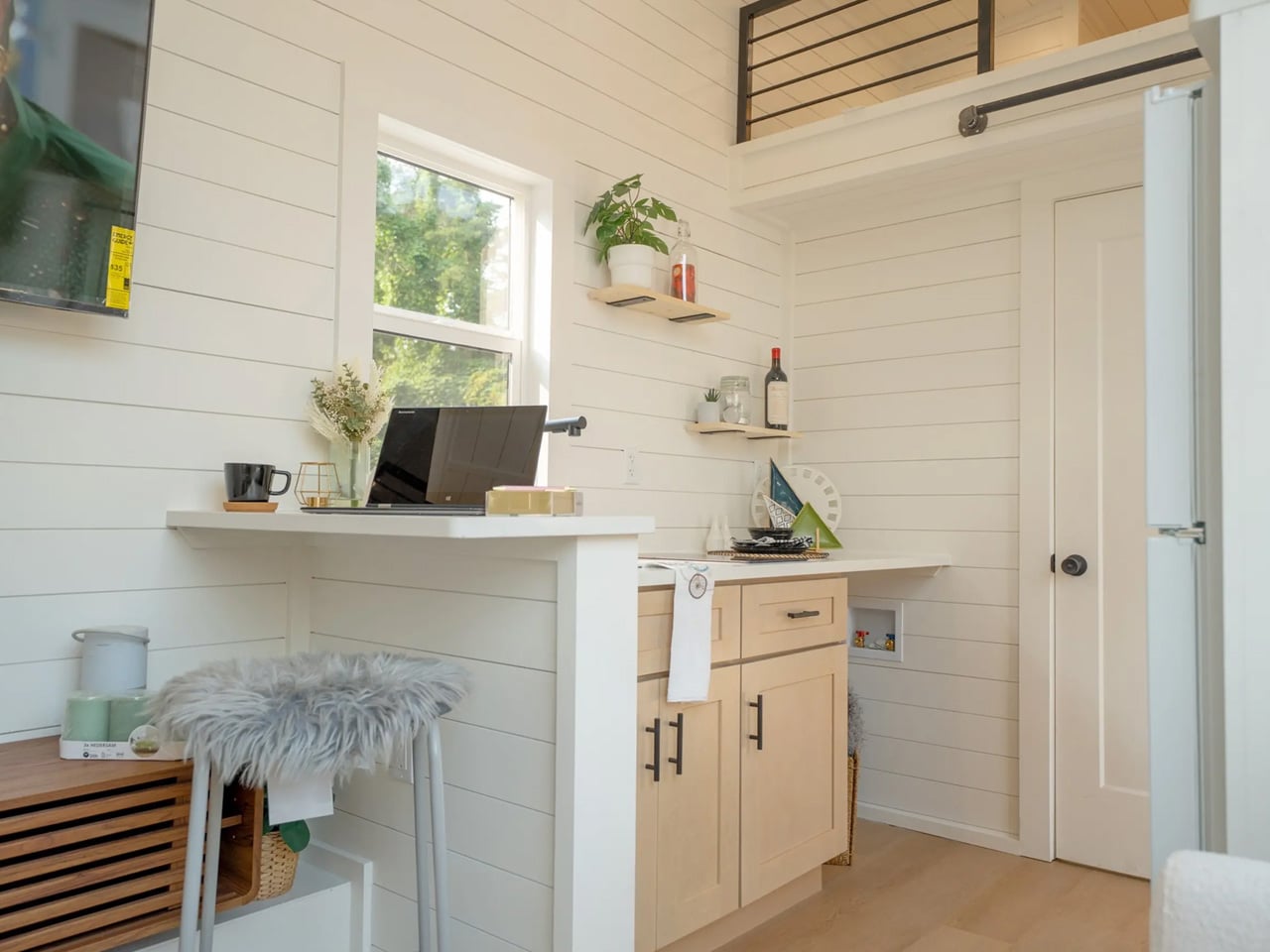
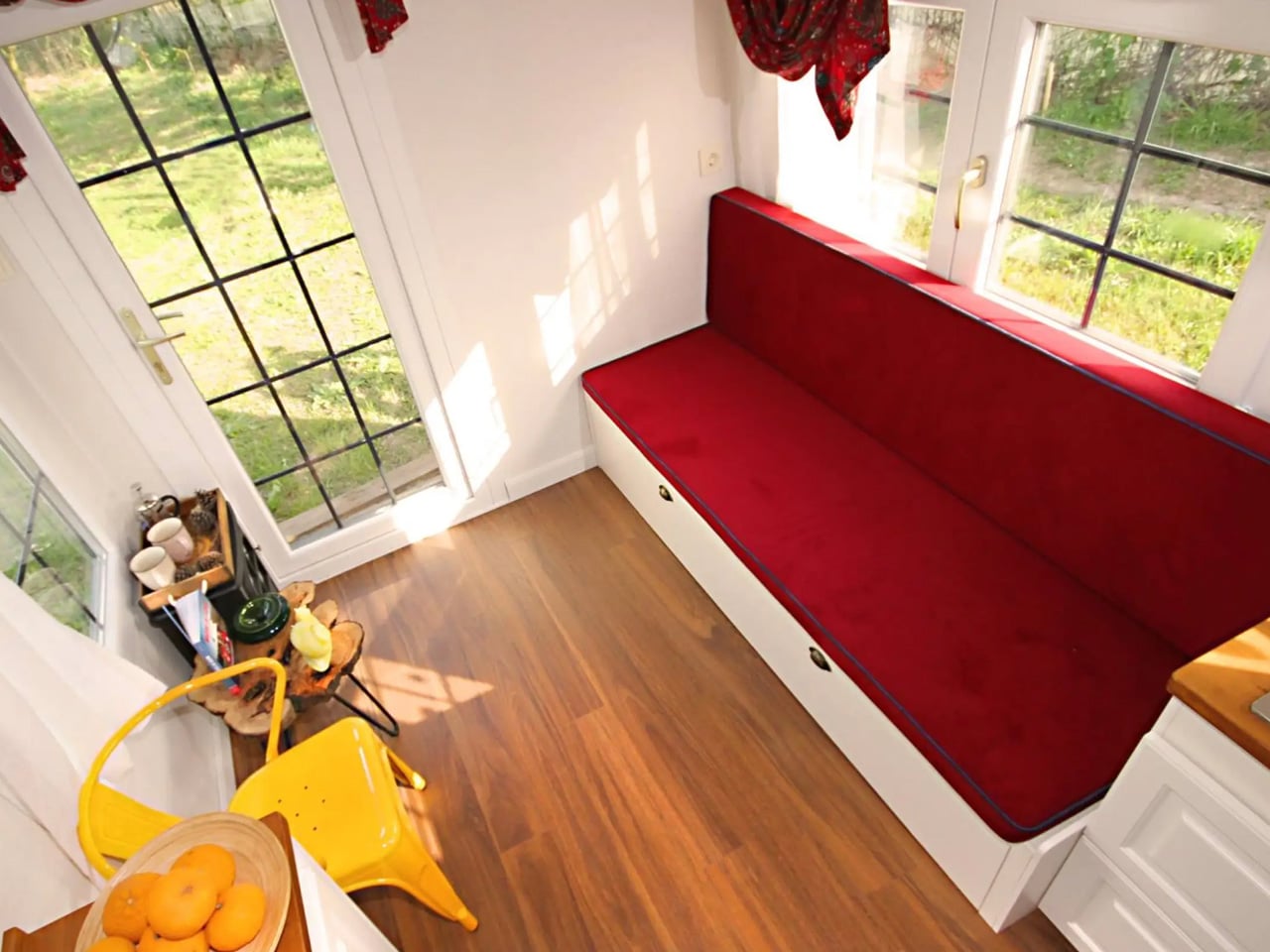
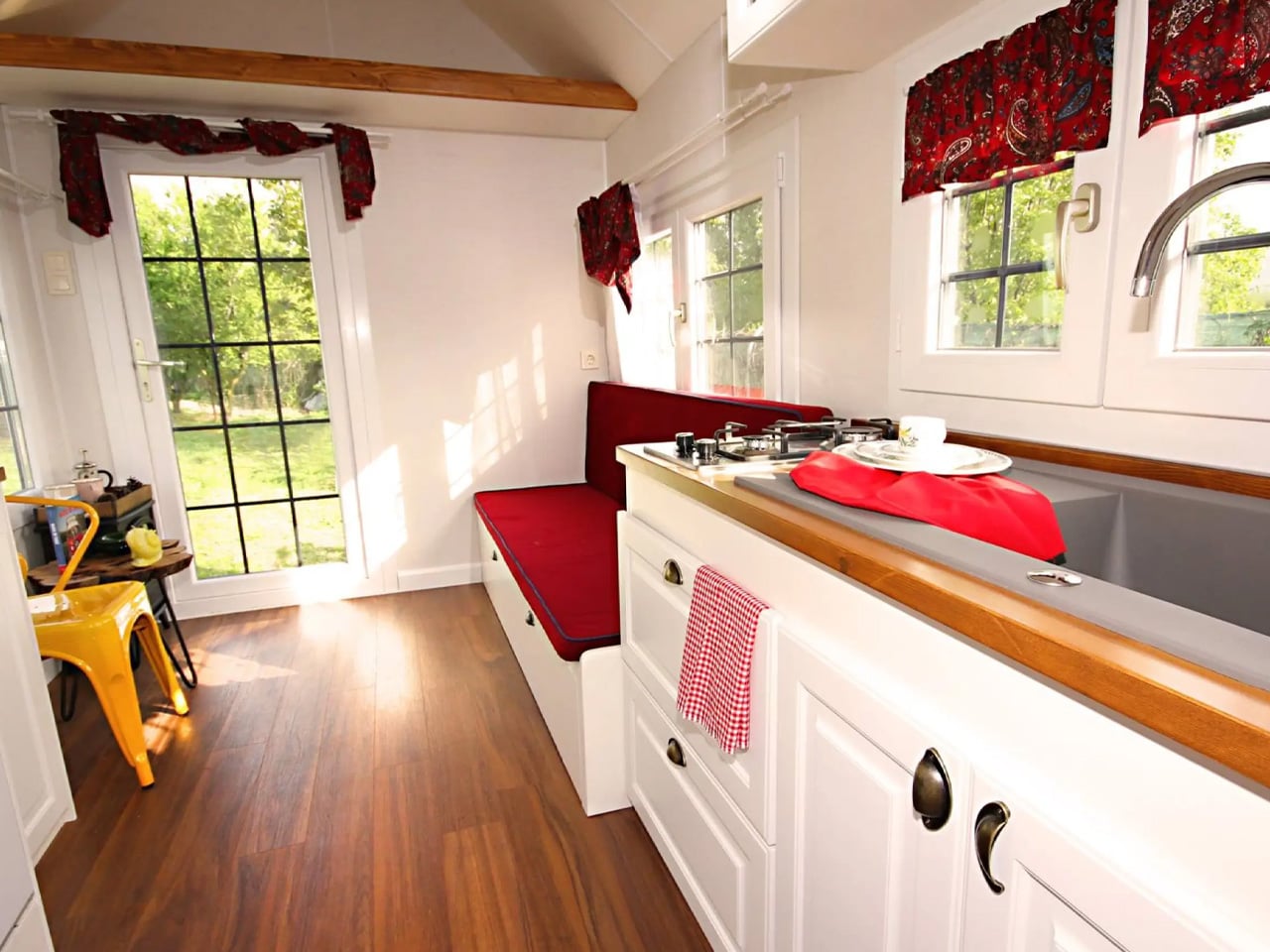
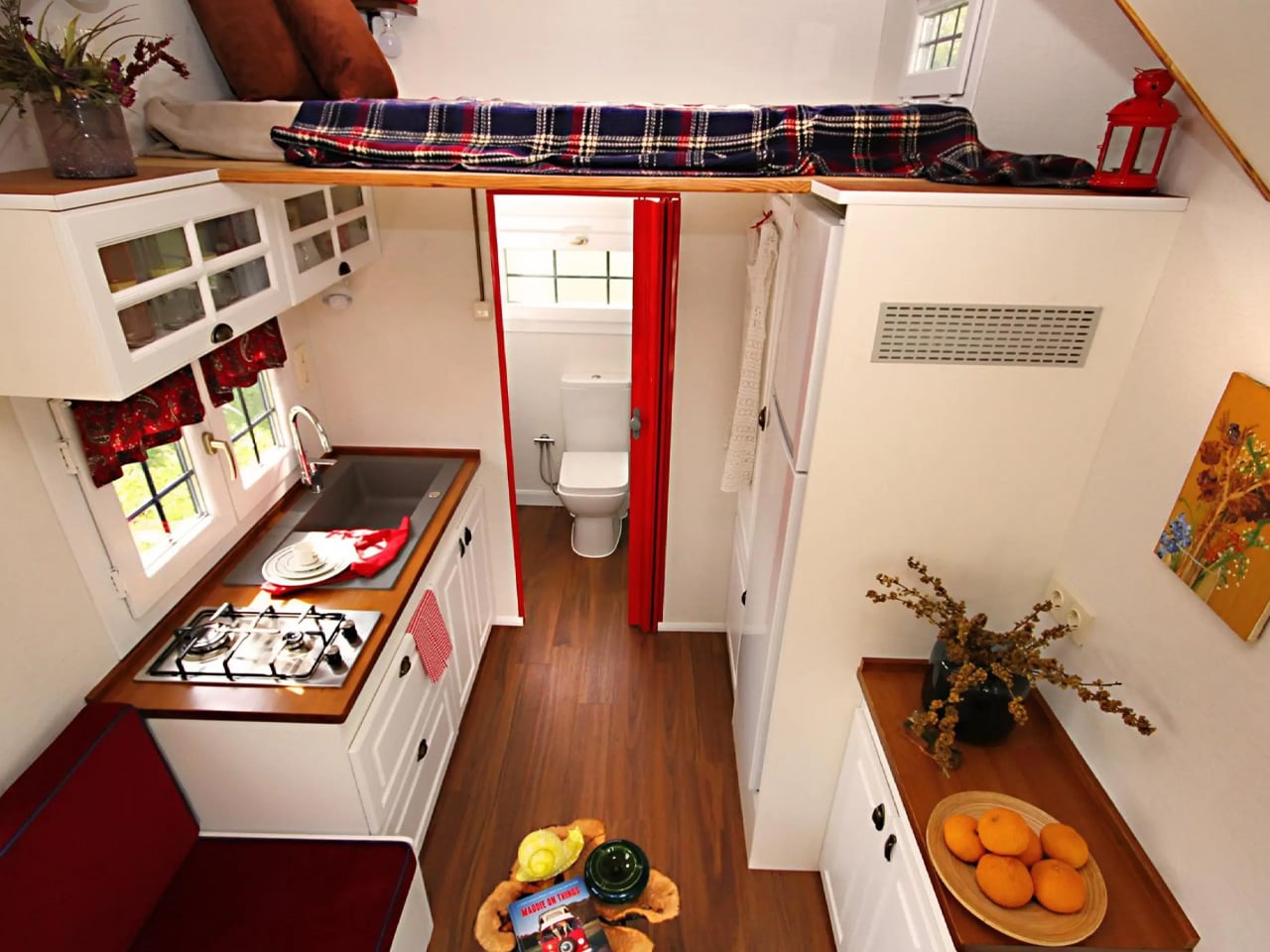
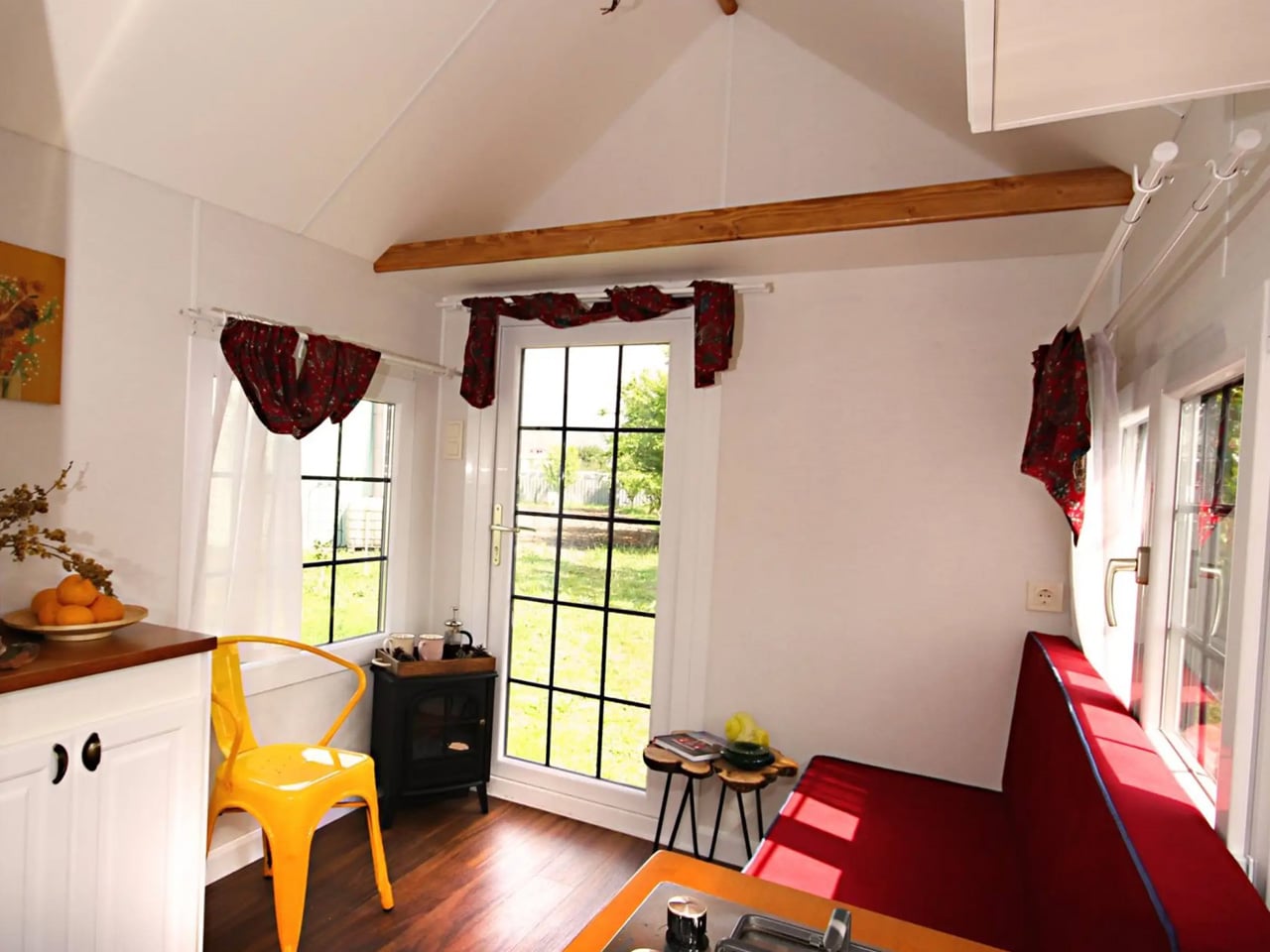
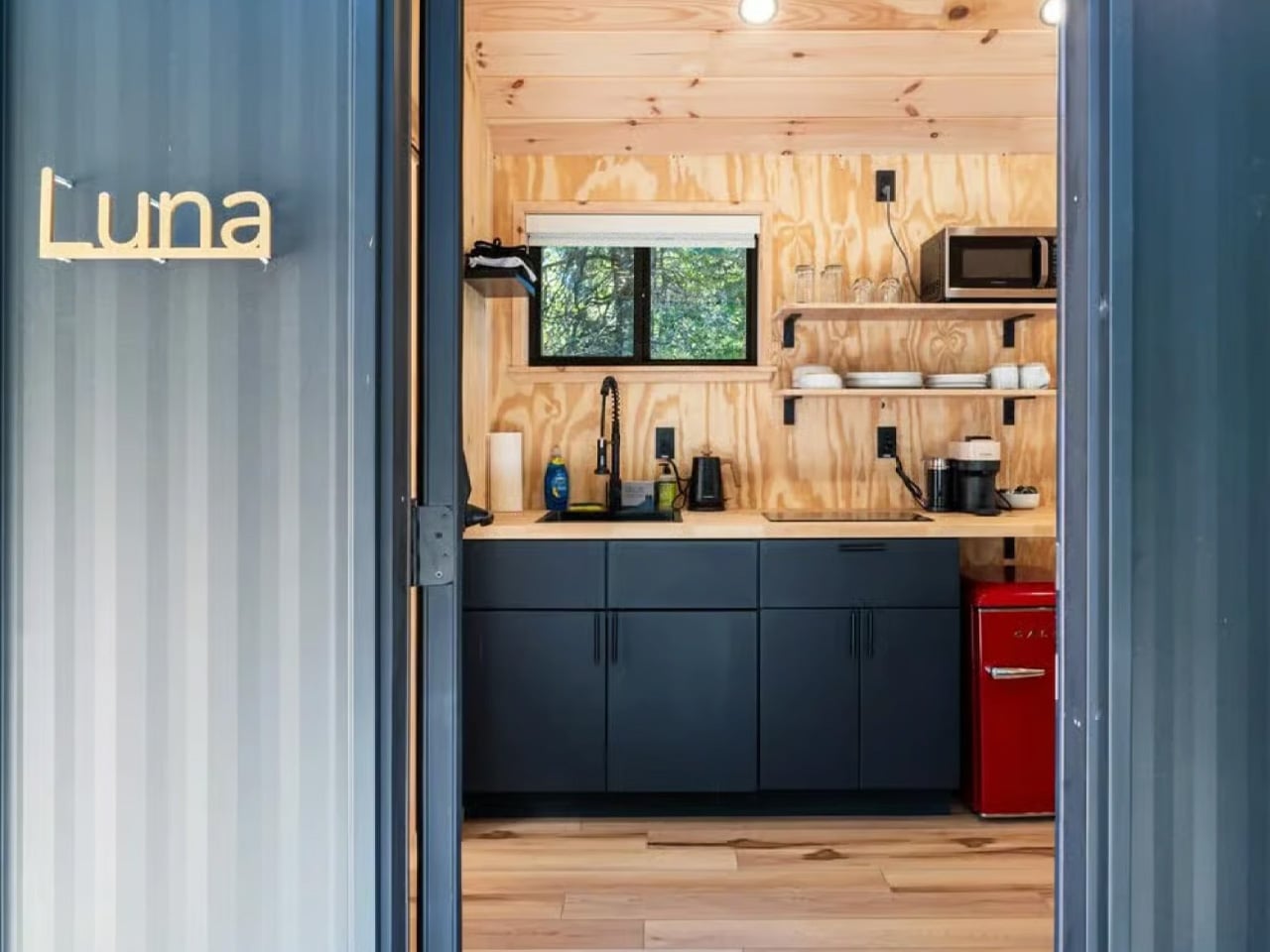
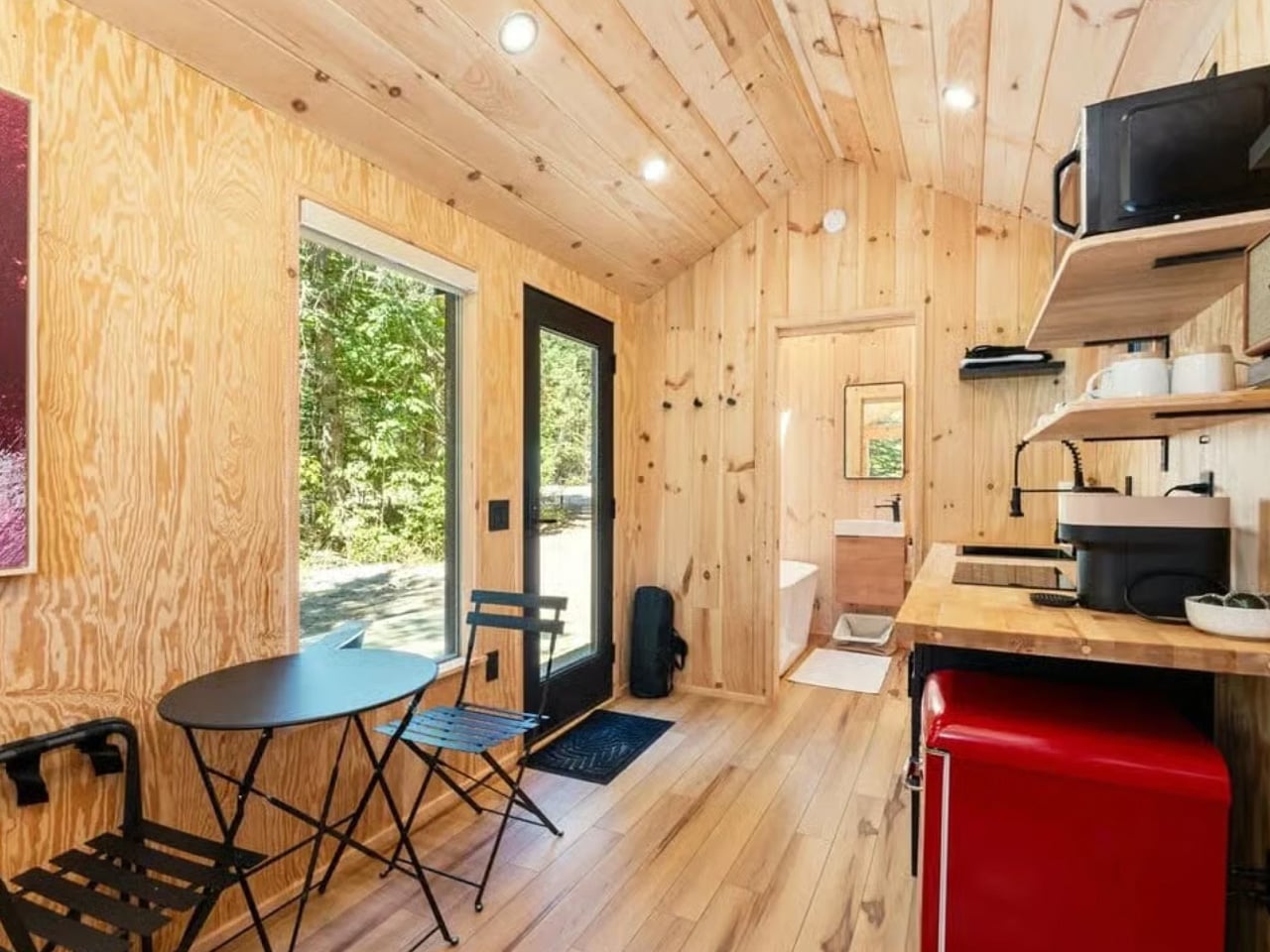
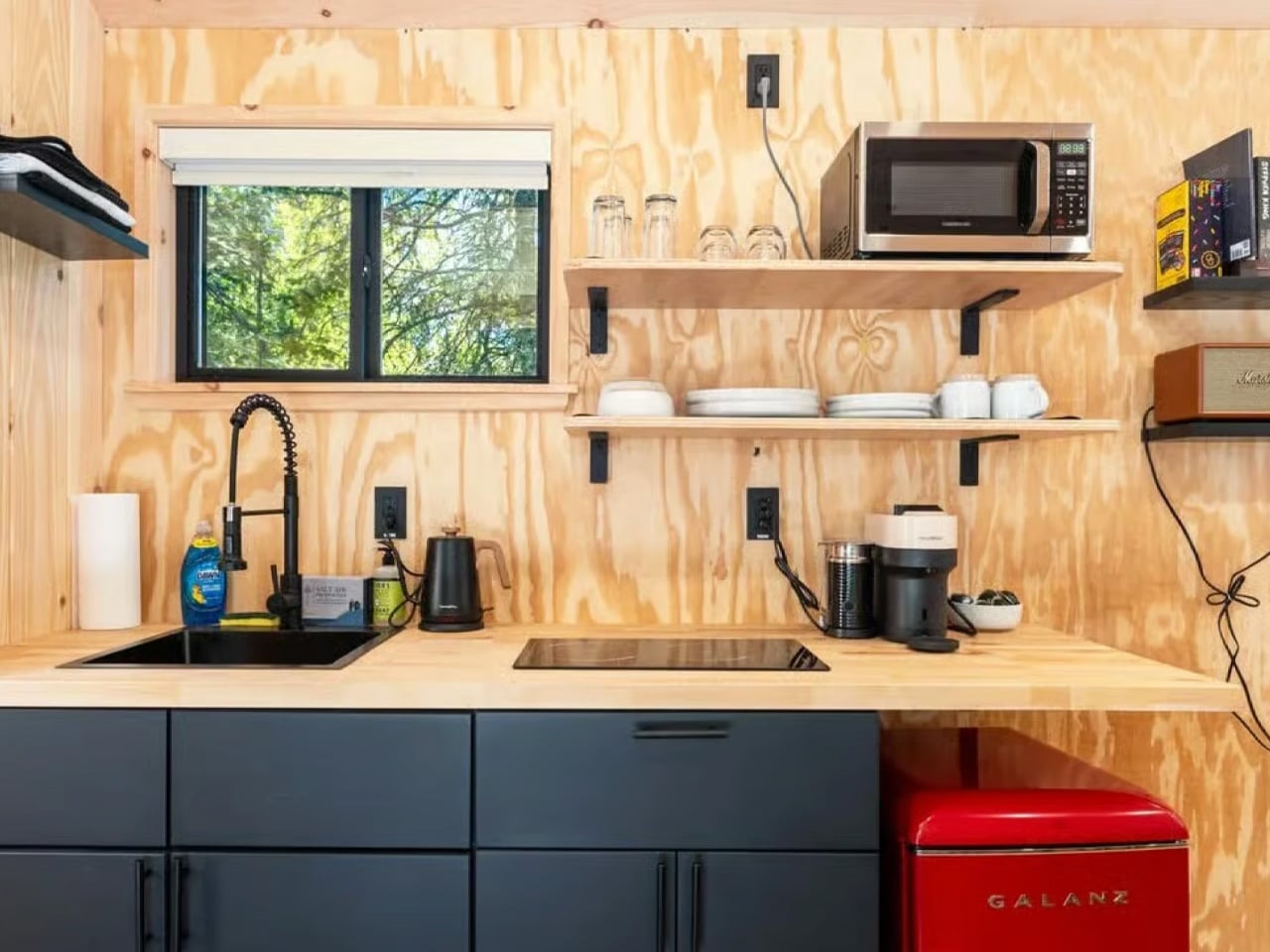
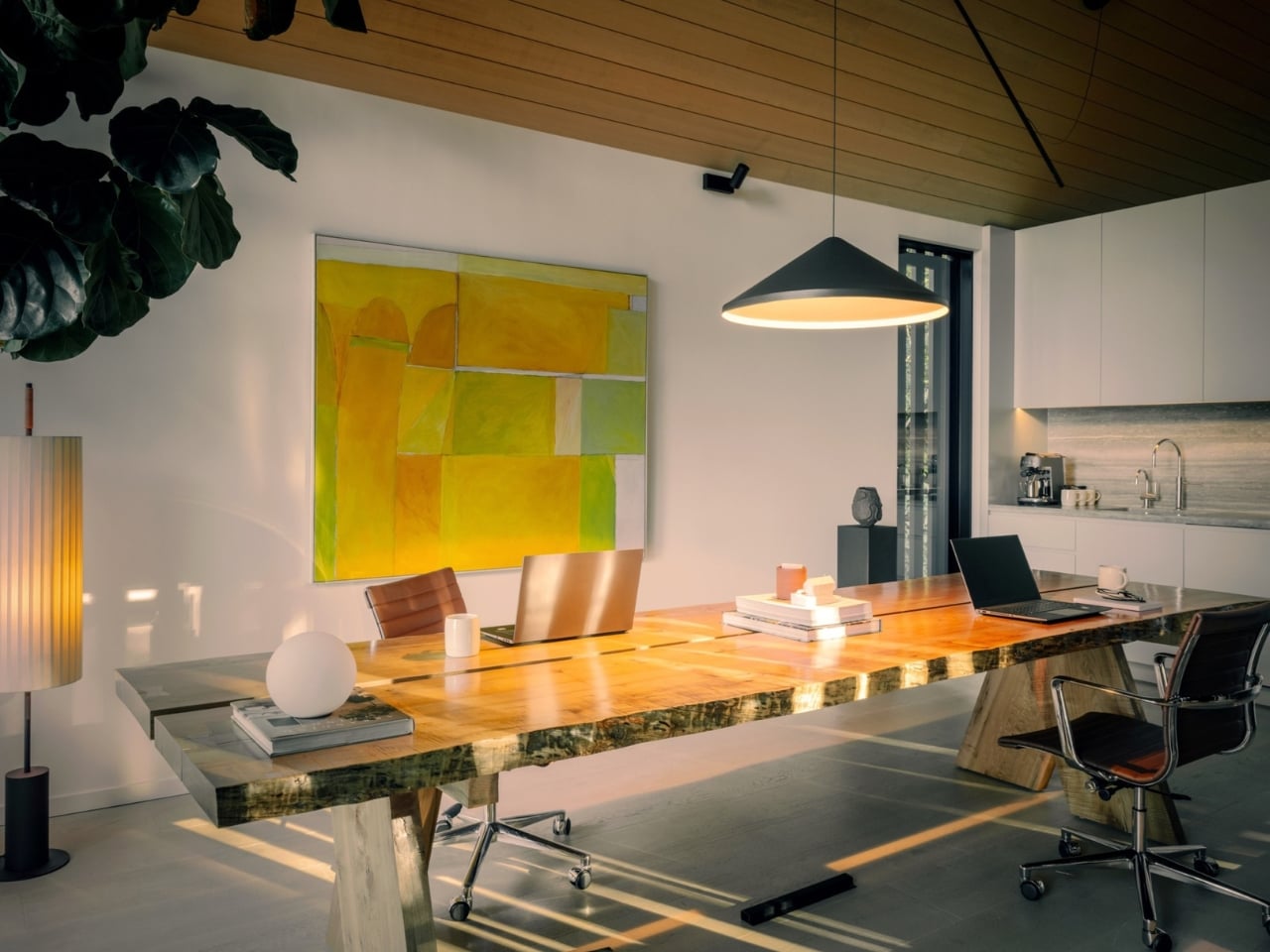
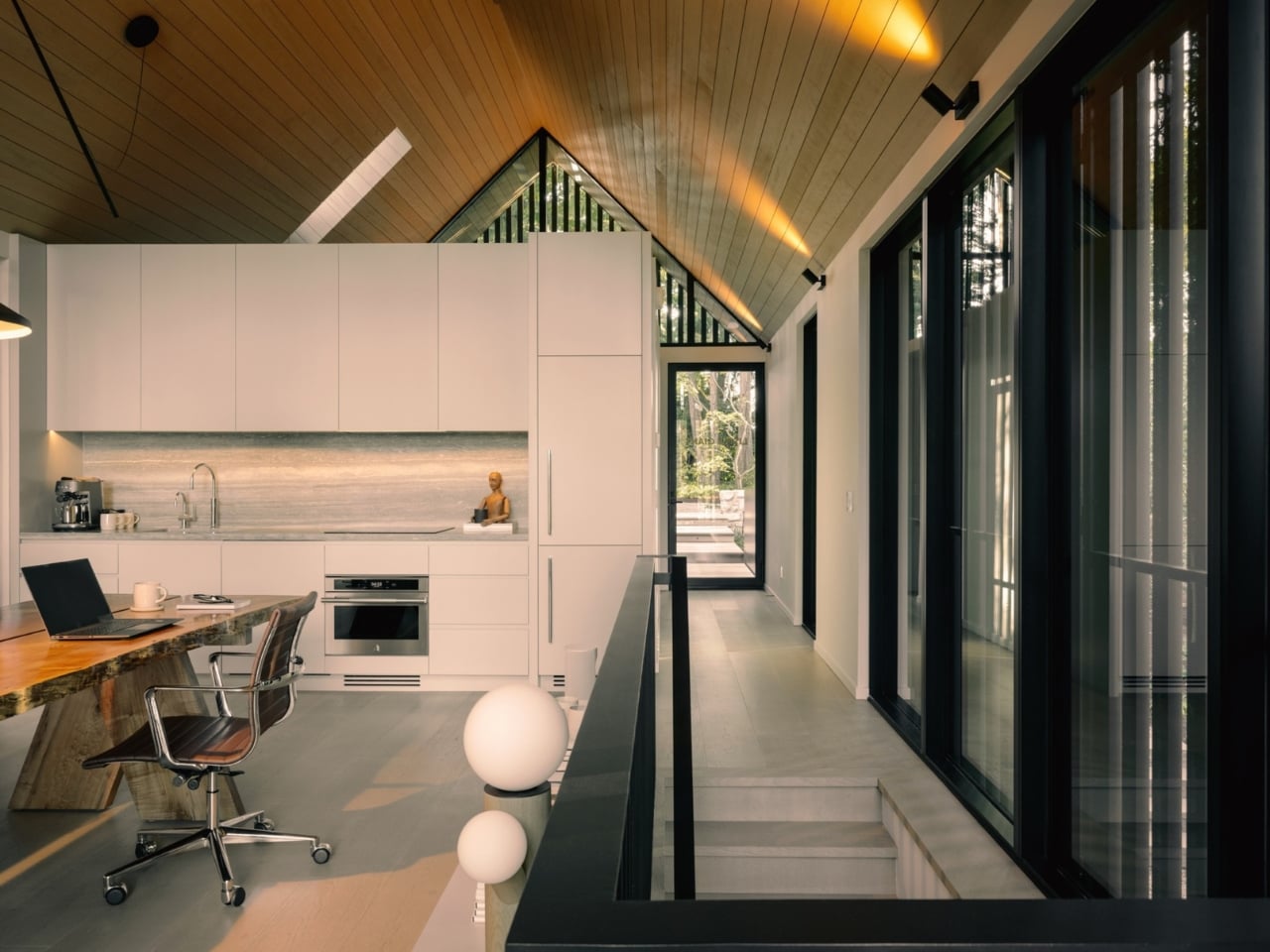
Step through the single-glazed door and the kitchen greets you immediately, featuring a practical half-kitchen setup with sink and induction cooktop. For those who take their culinary adventures seriously, upgrading to the full-size kitchen opens up possibilities for proper meal preparation and additional storage. The adjacent dining area adapts to your lifestyle – choose traditional table and chairs for formal meals or opt for the bench seating with integrated storage for a more casual, space-efficient approach. This flexible arrangement ensures the space works whether you’re hosting intimate dinners or simply need somewhere comfortable to work remotely.

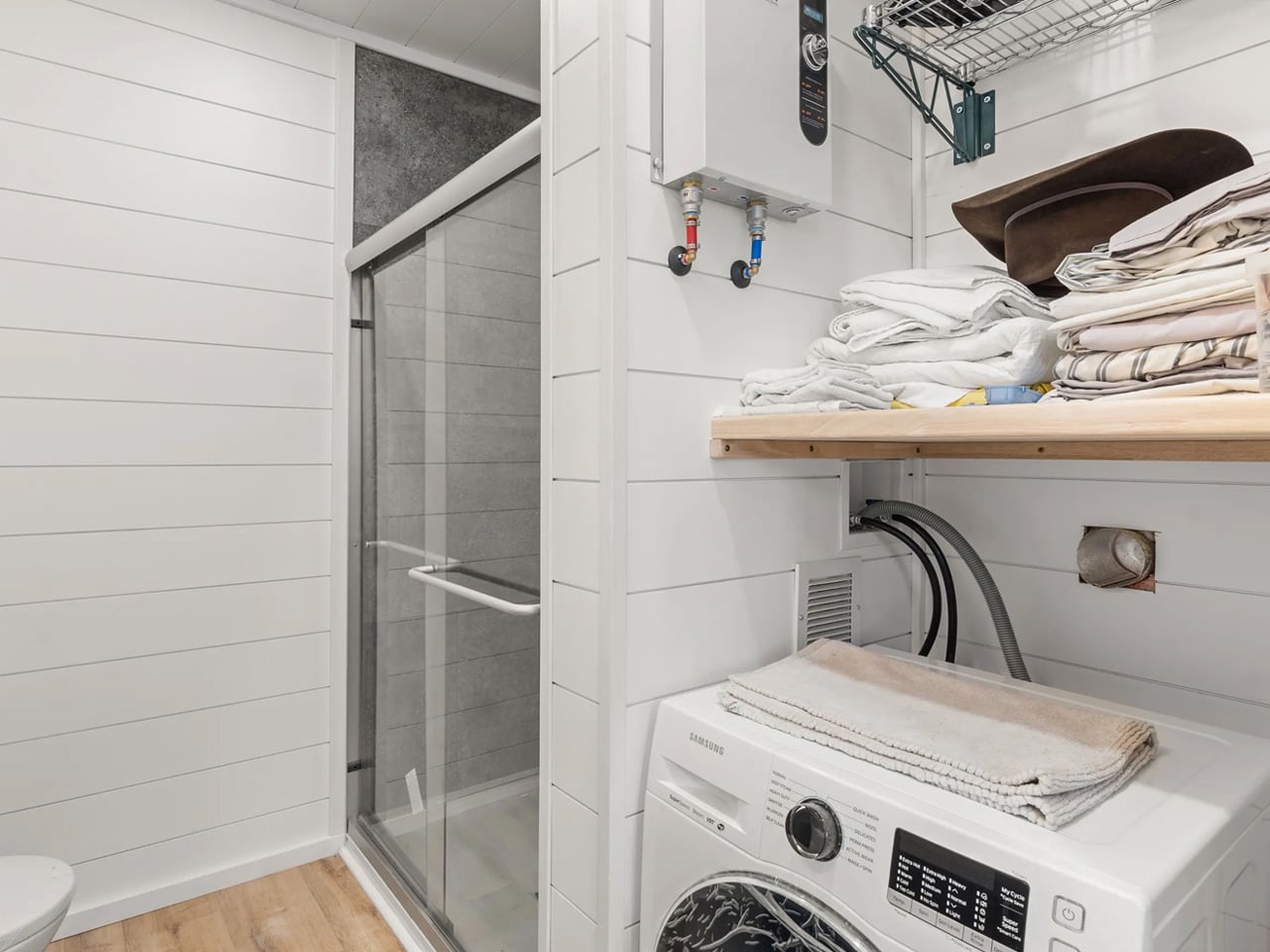
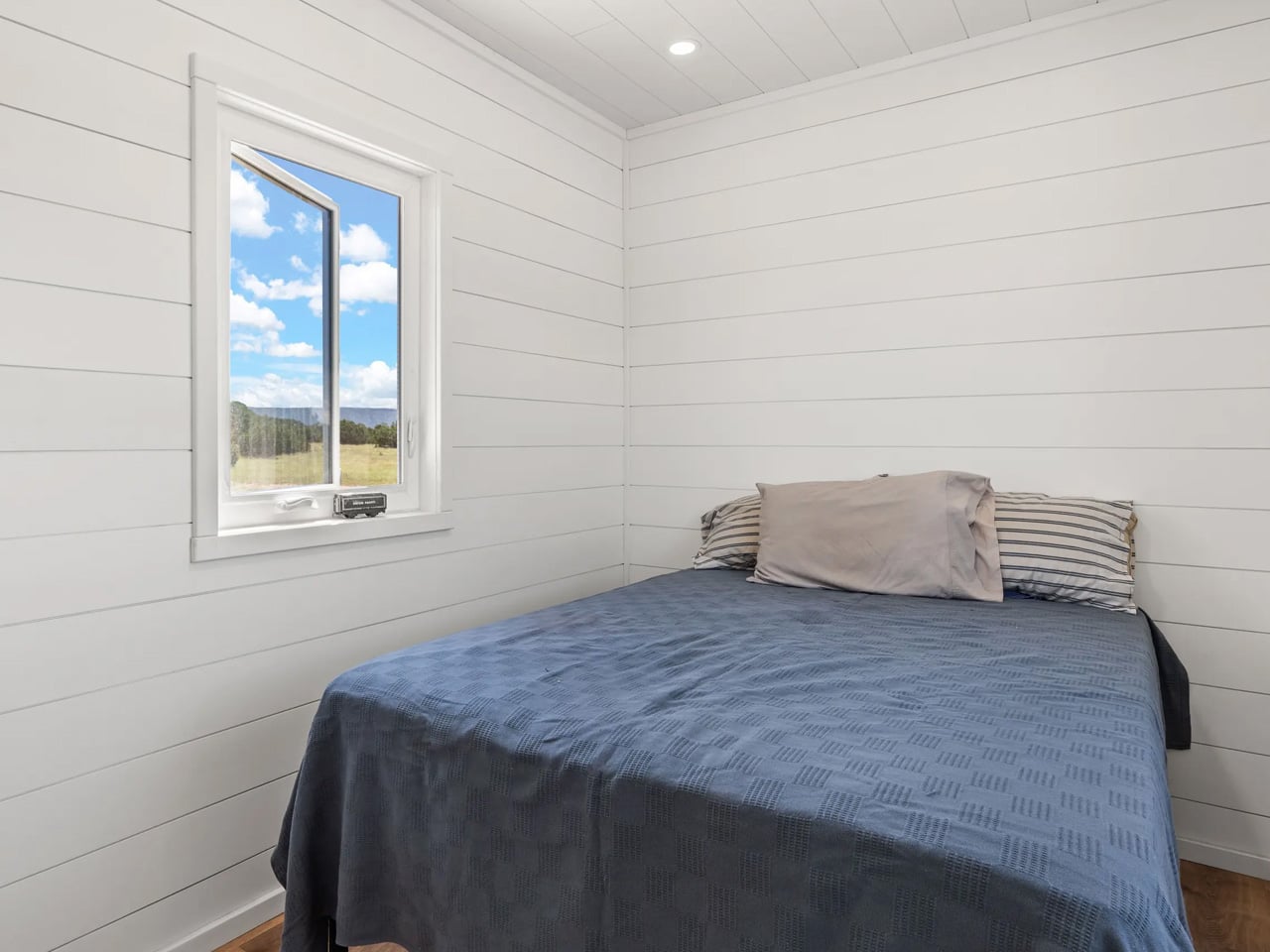
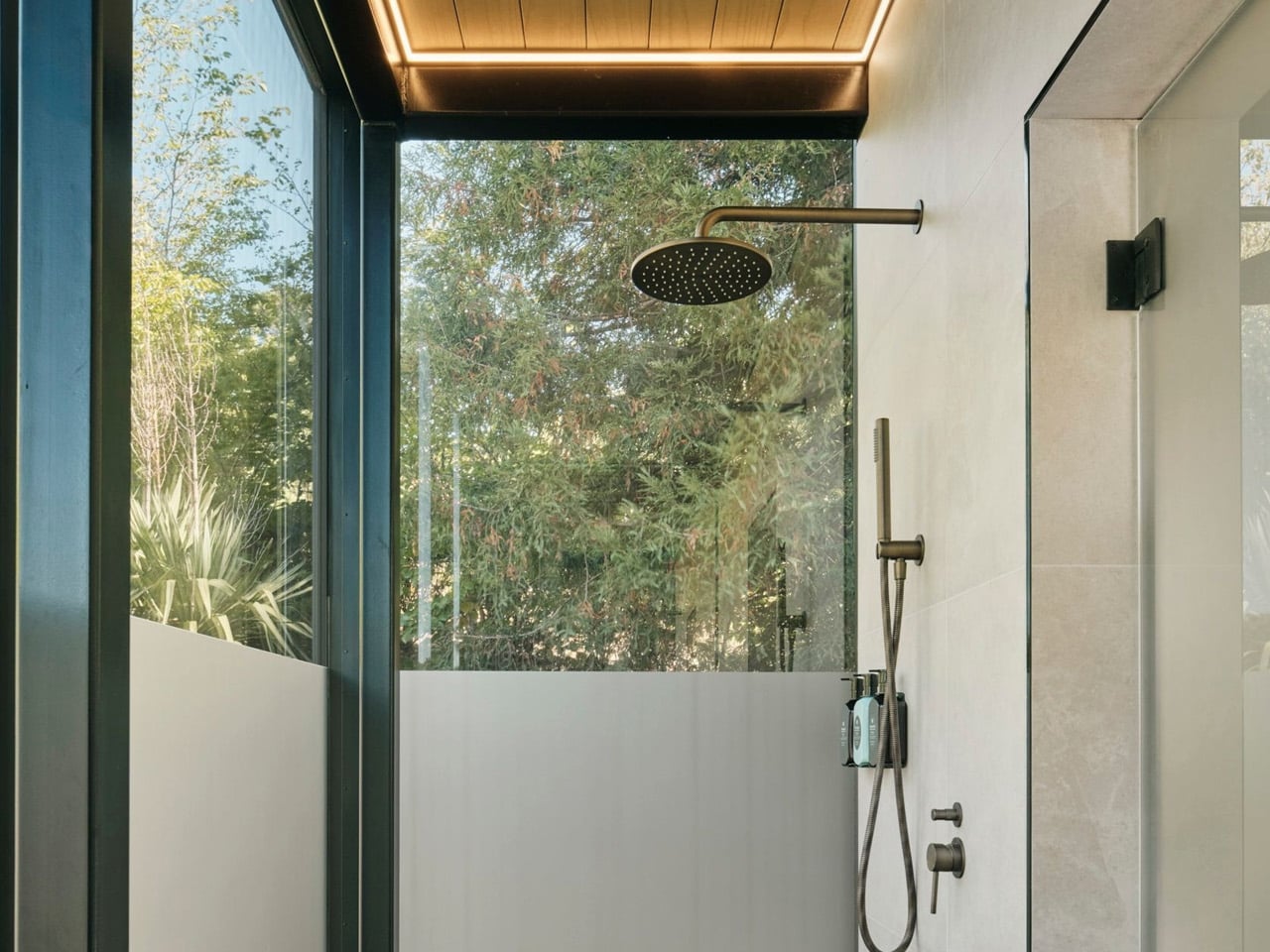
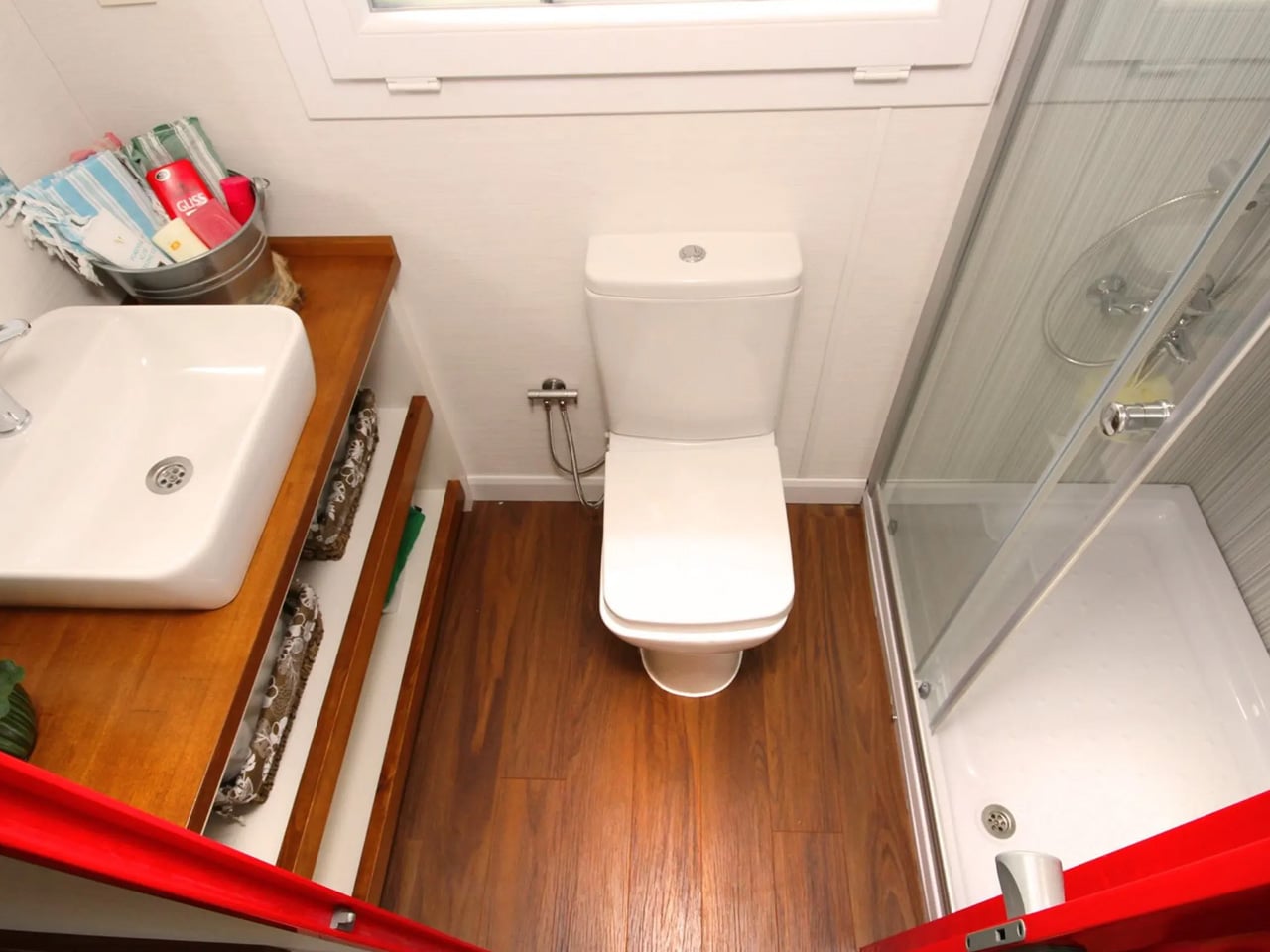
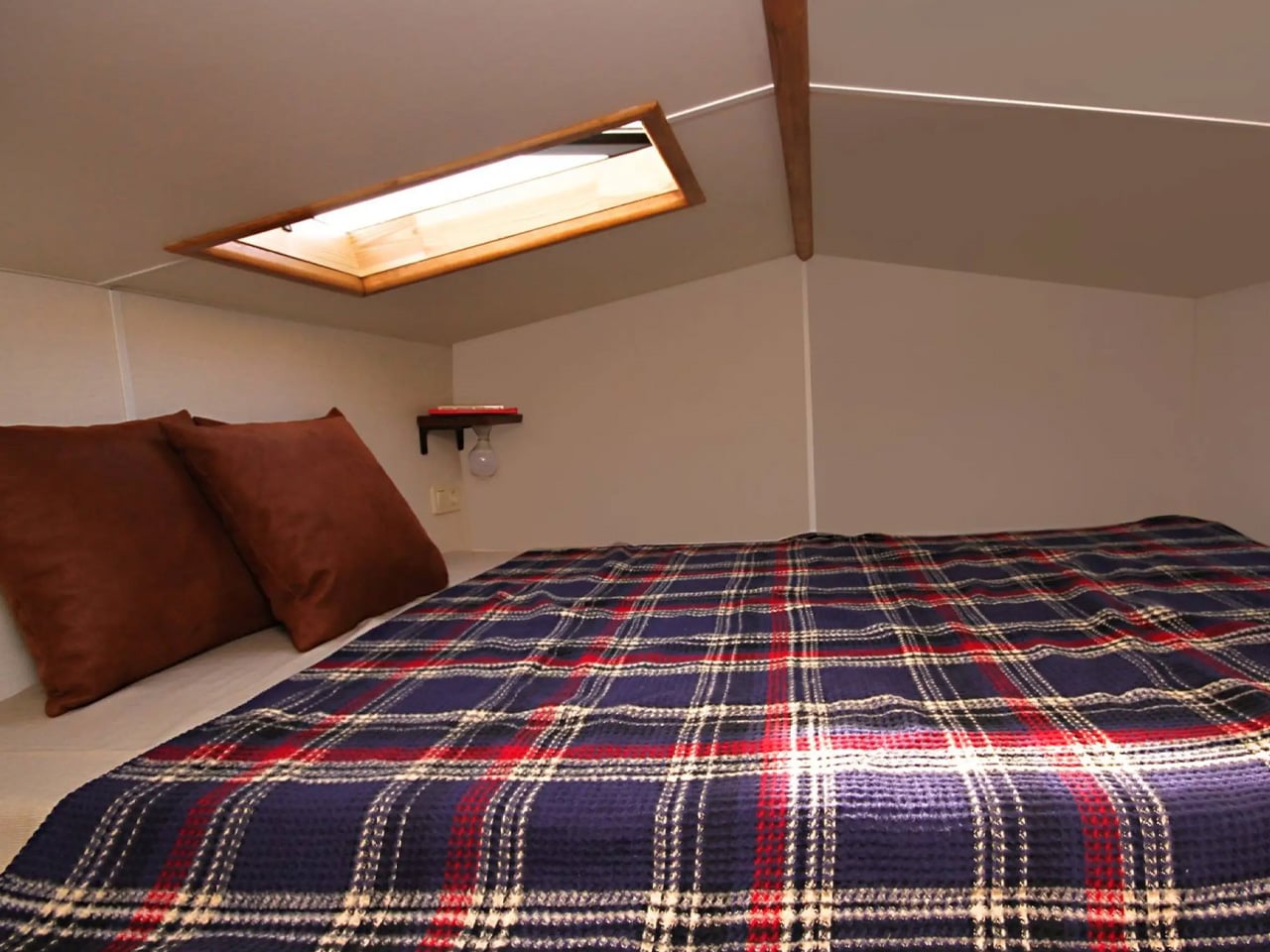
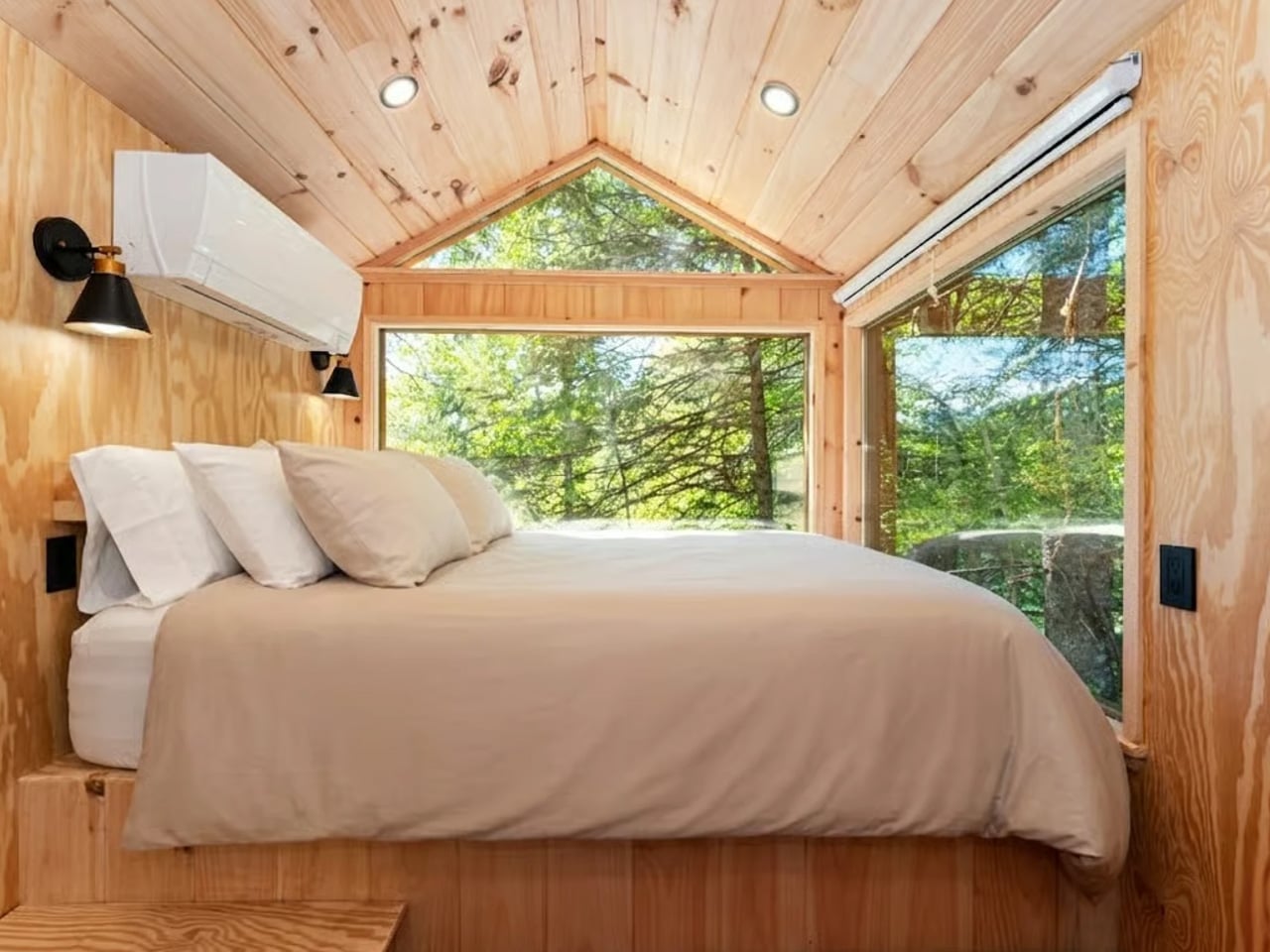
The bedroom occupies one side of the layout with a comfortable double bed. However, the optional mezzanine bunk bed configuration shown in Nordic & Spruce’s photos demonstrates the design’s flexibility for families or groups. This elevated sleeping solution maximizes floor space while maintaining the cozy atmosphere essential to tiny home living. The bathroom, positioned opposite the bedroom, covers all the essentials with a shower, sink, and your choice of composting, flushing, or incinerating toilet systems. The small storage loft above provides additional space for linens and personal items without cluttering the main living areas.

What makes the Weekender particularly appealing is its honest pricing and customization options. Starting at $55,000, it offers an accessible entry point into tiny home ownership while providing room to grow through upgrades like appliances, a fireplace, or mini-split air conditioning. The ability to extend the length up to 34 feet means the design can evolve with changing needs, allowing owners to start small and expand as their requirements or budget permits. This scalability sets it apart from many tiny homes that offer limited modification potential.

The Weekender succeeds because it doesn’t pretend to be a permanent residence – it’s designed for the life you want to live on weekends and vacations, making every getaway feel intentional and well-designed. Both material choices create spaces that feel larger than their square footage suggests, while the single-floor layout ensures accessibility and ease of movement. This tiny home represents Nordic & Spruce’s understanding that sometimes the best homes are those that encourage you to explore beyond their walls.

The post This 24-Foot Tiny Home Costs $55K & Fits On Your Next Weekend Adventure first appeared on Yanko Design.
World’s First Robot-Made Ceramic Tiles Change Color With Sunlight

There’s something deeply satisfying about watching a potter’s wheel spin, the way human hands coax wet clay into form. But what happens when you hand that craft over to a robot? Designers Yutao Chen and Yiwen Gu asked that question, and their answer is CeraShingle, a façade system that’s reimagining what ceramic can do for architecture.

Picture a building wrapped in ceramic tiles, but not the flat, uniform squares you’re used to. CeraShingle modules are 3D-printed clay shingles with intricate textures, delicate perforations, and color gradients that flow across the surface like watercolor on paper. Each piece measures roughly 400 by 130 millimeters and weighs just over a kilogram, light enough to handle but substantial enough to feel real. When you install them with calculated overlap, they create a skin that seems to breathe with the light, shifting appearance as the sun moves and as you change your viewing angle.

Designers: Yutao Chen, Yiwen Gu

The magic happens in the making. Robotic arms deposit clay layer by layer, building up surface details that would be impossible with traditional molds. Think micro-ribs that catch shadows, patterns that emerge only at certain times of day, gentle curves that couldn’t be pressed or cast. It’s precision meets poetry. The parametric design workflow means each shingle can be unique while still fitting together on site, varying in thickness, texture, and shape within families of compatible parts.

What strikes me most about CeraShingle is how it refuses the usual digital-versus-handmade debate. Instead of replacing the warmth of craft with cold precision, it uses computational tools to amplify what makes ceramics special. The robot doesn’t erase the human touch; it extends what human hands can achieve. You get the intimacy of clay with possibilities that would make traditional ceramicists weep with joy.

The environmental story is equally compelling. The 3D printing process deposits material only where it’s needed, cutting waste dramatically compared to subtractive methods. Chen and Gu specify locally sourced clay and low-temperature glazes, reducing both transportation costs and firing energy. When a module gets damaged, you replace just that piece rather than a whole panel, extending the façade’s lifespan and keeping embodied carbon low. In an era when construction is responsible for nearly 40 percent of global carbon emissions, these details matter.

But CeraShingle isn’t just solving problems; it’s proposing a new aesthetic language. Contemporary cladding tends toward two extremes: either sleek industrial materials like glass and metal, or nostalgic brick and stone that look backward. CeraShingle occupies a third space. It’s clearly contemporary, born from digital tools and computational thinking, yet it carries ceramic’s ancient warmth. It’s sculptural without being precious, technical without being cold. The system scales beautifully. You could use it for a small architectural installation, an accent wall, or an entire building envelope. The modular logic means projects can grow organically, and repairs stay simple. For architects tired of choosing between innovation and practicality, that flexibility is powerful.

Set to launch in 2026, CeraShingle arrives at an interesting moment. We’re seeing renewed interest in craft and materiality after decades of smooth minimalism. People are hungry for texture, for surfaces that respond to light and touch, for buildings that feel less like sealed boxes and more like living things. At the same time, climate concerns are pushing architecture toward lighter, more efficient assemblies. CeraShingle threads that needle. It gives you the sensory richness of traditional materials with the performance and adaptability of contemporary systems. It’s a building skin that can think, that can vary and respond while staying grounded in earth and fire.

What Chen and Gu have created isn’t just a clever product; it’s a provocation. It asks what happens when we stop treating digital fabrication as a replacement for craft and start seeing it as craft’s next chapter. The answer, wrapped around a building and catching the afternoon light, might just be the future of how we clad our world.

The post World’s First Robot-Made Ceramic Tiles Change Color With Sunlight first appeared on Yanko Design.
Pininfarina’s Foldable Trailer Homes combine Electric Mobility and Off-Grid Luxury Living

Pininfarina’s design legacy spans eight decades of automotive excellence, but the firm has increasingly turned its attention to spaces people inhabit rather than just vehicles they drive. The AI Transformer Home series marks the studio’s most ambitious exploration of that territory yet: modular, expandable dwellings that treat mobility as a core feature instead of an afterthought. Working with AC Future, Pininfarina applied its signature approach to proportion, surface treatment, and user experience, creating homes that look equally compelling whether compressed for travel or expanded for living.

The three models share a flexible platform but serve distinct use cases. The AI-THu functions as a 400-square-foot smart ADU, ideal for backyard installations or temporary deployments. The AI-THt eliminates the driving cabin entirely, relying on patented expansion technology to maximize interior volume when towed to a destination. The AI-THd combines both worlds, offering self-contained mobility with EV or diesel power and three-sided expansion that converts a compact motorhome into a surprisingly spacious residence. All three earned the 2025 Red Dot Design Concept Award, validating their blend of engineering innovation and aesthetic refinement.

Designer: Pininfarina for AC Future

That drivable AI-THd is the one that really grabs your attention, because it’s a direct shot across the bow of the entire luxury RV market. The specs are wild. It expands on three sides to create a 400-square-foot living space from a vehicle that starts at 26 feet long. AC Future is quoting a starting price of $328,000, which puts it in direct competition with high-end Class A motorhomes and premium Airstream trailers. The key difference is that a traditional RV’s slide-outs give you a few extra feet of width, while this thing nearly doubles its physical footprint. Its cockpit even converts into a separate room, a clever use of space that most motorhomes completely waste once parked.

This whole concept hinges on the expansion mechanism, which is far more sophisticated than a simple slide-out. The AI-THt trailer, without a cab to worry about, is the purest expression of this technology. It’s a 24-foot towable box that unfolds into a legitimate small apartment. You are seeing a level of mechanical articulation that feels more like something from a sci-fi movie than a product you can actually reserve. The engineering challenge is immense: you have to manage plumbing, electrical, and structural integrity across moving walls and floors. AC Future’s patented system seems to have solved this, creating a rigid and fully insulated living space that deploys in minutes.

Beyond the mechanical wizardry, the off-grid capability is what pushes this into a new category. The homes are equipped with solar awnings that deploy during expansion and an atmospheric water generation system that literally pulls drinking water from the air. An onboard AI manages these resources, learning your habits to predict power and water needs, so you aren’t constantly checking gauges. This is true self-sufficiency, allowing for extended periods off-grid without sacrificing the comforts of a modern home, like a full-size kitchen and dual-zone climate control. It’s a closed-loop living system on wheels.

So who is actually buying this? The price tag puts it out of reach for the average van-lifer, and its high-tech complexity might intimidate the traditional RV crowd. AC Future is likely targeting a niche market of affluent digital nomads, tech entrepreneurs, and design aficionados who want a mobile base of operations that reflects their aesthetic and technological values. This is less a vehicle for visiting national parks and more a statement piece for living and working wherever you want. It’s a halo product, designed to showcase what’s possible when you fuse automotive design with smart architecture, pushing the entire industry to think beyond the beige fiberglass box.

The post Pininfarina’s Foldable Trailer Homes combine Electric Mobility and Off-Grid Luxury Living first appeared on Yanko Design.
These Elevated Timber Treehouses Transform A Chinese Forest Into A Living Art Gallery

Deep in Wuhan’s Dongxihu District, there’s a metasequoia forest where migratory birds gather, and something extraordinary has taken root among the ancient trees. Secret Camp isn’t your typical forest retreat. This collaboration between United Investment Merryda Hotel Management Group and Wiki World has created something that feels part accommodation, part art installation, and entirely magical. More than a dozen treehouses rise through the canopy on Cihui Street, each one carefully positioned so that not a single existing tree was harmed in the process.

The whole project sprang from Wiki World’s Wiki Building School initiative, which sounds academic but is really about pushing the boundaries of how we live alongside nature. Each treehouse has its own personality and tells a different story. Time Machine gleams with futuristic silver that catches sunlight through the leaves. Nomadic Land feels like a cozy capsule for temporary wanderers. Playground brings out your inner child with circulation paths that weave playfully around branches. Then there’s Daydream, which uses mirrored cladding to virtually disappear into the forest, and Red Windmill, standing bold and bright as a beacon in the green canopy. Unicorn takes the vertical route with its loft design and silver panels that hint at mythical stories.

Designer: United Investment Merryda Hotel Management Group & Wiki World

What makes this place special isn’t just the whimsical names or striking designs. The creators drew inspiration directly from the forest itself – local birds, scattered seeds, the organic forms that nature creates without any human input. Every structure sits on elevated timber platforms, leaving the forest floor completely untouched. No paved paths, no manicured landscaping, just the raw beauty of the woodland ecosystem doing what it does best. This approach embodies Wiki World’s “Build Small, Dream Big” philosophy, proving that you can live comfortably without dominating your environment.

But Secret Camp goes beyond just providing a place to sleep among the trees. It transforms the entire forest into an open-air gallery where art happens naturally. Throughout the year, temporary installations pop up, workshops gather creative minds, and exhibitions celebrate the relationship between humans and wildlife. The Forest Reception becomes a buzzing hub where visitors make birdhouses, study natural materials, and participate in projects that blur the lines between accommodation and education. There’s even a Sino-French Construction Festival that brings together people passionate about sustainable building and small-scale living.

The technical side reveals just how seriously they take environmental responsibility. Every structure uses glued laminated timber that’s digitally modeled for precision, then prefabricated off-site to minimize forest disruption during construction. The modular design centers around a clever 2-meter-wide concept that allows for variation while keeping efficiency high. Hand-fired carbonized wood panels give each cabin its natural finish and weather resistance, while small metal joints make everything completely reversible – these treehouses could be disassembled and moved without leaving a trace.

This elevated approach means zero ground contact and zero artificial landscaping, letting the forest maintain its natural rhythms while humans get to experience life in the canopy. Secret Camp proves that sustainable tourism doesn’t have to mean roughing it or compromising on creativity. Instead, it shows how thoughtful design can actually enhance natural settings, creating spaces that engage all your senses while treading incredibly lightly on the earth. It’s accommodation that makes you more aware of the environment, not less.

The post These Elevated Timber Treehouses Transform A Chinese Forest Into A Living Art Gallery first appeared on Yanko Design.
When a Photographer Builds a Fortress: John Dessarzin’s Brutalist Jungle Sanctuary in Costa Rica

When a National Geographic photographer designs his sanctuary, the lens doesn’t disappear. John Dessarzin’s Brutalist compound in Atenas, Costa Rica, frames the jungle like a permanent viewfinder: all concrete, steel, and calculated sightlines. Perched on a cliff bordering a protected bird sanctuary in the Central Valley, the 2017 residence rejects the neoclassical templates that dominate the region in favor of raw materiality and seismic resilience.

Designer: John Dessarzin

Dessarzin collaborated with noted Costa Rican architect Jaime Rouillon to create a cantilevered complex that includes a two-bedroom main house and three guest villas. The property, now listed at $2.195 million as Dessarzin relocates to Portugal, stands as a study in what happens when photographic composition dictates architectural form. There are no visible neighbors, no decorative flourishes, no concessions to tropical vernacular. Only exposed concrete, industrial glass, and the unfiltered sounds of the jungle.

This isn’t architecture that accommodates the landscape. It’s architecture that isolates and amplifies it.

Material Honesty on Unstable Ground

Rouillon’s design philosophy centers on “honesty to materials,” and here that principle translates to a building with zero wood: only poured concrete, metals, and glass.

The decision wasn’t purely aesthetic. Costa Rica sits on the Pacific Ring of Fire, where seismic activity demands structural rigor. Shear walls anchor the main house to the cliff face, distributing lateral forces through a foundation designed to absorb rather than resist movement. The cantilevered upper level, which houses the primary living space and infinity pool, floats above the slope without appearing precarious. It’s a balancing act that requires precise engineering hidden within minimalist form.

John Dessarzin

Rouillon, whose portfolio includes high-end custom residences like Casa Val and Casa Las Olas, brings a postmodern sensibility to Costa Rican site conditions. His work fuses horizontality with floating roof planes, creating compositions that read as sculptural objects rather than shelters.

In Dessarzin’s compound, that approach manifests as a series of stacked volumes that step down the hillside, each level offering unobstructed views toward the Central Valley. The exposed concrete weathers visibly, accumulating stains and patina that reinforce the material’s permanence rather than diminish it. The textural contrast between raw concrete and industrial glazing establishes the visual language. There are no mediating elements: no stucco cladding, no painted surfaces, no decorative screens. Every material performs its structural role without cosmetic enhancement.

The result feels less like a residence and more like infrastructure repurposed for habitation. Which aligns with Dessarzin’s stated goal: a space that prioritizes utility and sensory immersion over comfort signaling.

What distinguishes Rouillon’s execution here is the restraint. Brutalism often tips into heaviness, where mass becomes oppressive. This design maintains lightness through proportion and transparency, using glass expanses to dissolve boundaries between interior and exterior while the concrete frame remains legible.

Spatial Choreography Across Elevation

The main house organizes two bedrooms across vertical zones: an upstairs primary suite and a downstairs guest suite, with a dedicated office studio that once served Dessarzin’s photography practice.

The upper level opens onto a patio and infinity pool, both positioned to eliminate sightlines to neighboring properties. The spatial logic prioritizes controlled exposure: maximizing connection to the sanctuary while maintaining seclusion from the surrounding development. Circulation between levels feels deliberate, with each transition offering reframed views of the canopy and valley below.

John Dessarzin

Dessarzin added three guest villas to support Airbnb operations. A three-bedroom, two-bath unit for families. A studio villa with en-suite for couples. A compact one-bedroom casita at the entrance for solo travelers. The villas operate independently from the main house, distributed across the hillside to preserve privacy while sharing access to the broader landscape.

This fragmentation (separating program into discrete volumes rather than consolidating under a single roof) amplifies the sense of inhabiting terrain rather than a building. The design avoids conventional hierarchies. There’s no grand entrance sequence, no central courtyard organizing movement. Instead, pathways and terraces establish a loose network where orientation depends on topography and view corridors.

It’s a composition that privileges wandering over procession.

The Photographer’s Eye Encoded in Concrete

Dessarzin’s National Geographic background permeates the spatial organization. Every major window functions as a framing device, isolating specific landscape elements: a particular tree canopy, a slice of valley, a section of sky, all with the precision of a telephoto lens. The infinity pool acts as a foreground element that extends the visual plane toward the horizon, a technique borrowed from photographic composition where layered depth creates dimensionality. Rouillon’s horizontal roof planes reinforce this effect, establishing strong lines that guide the eye outward rather than upward.

The prioritization of light follows photographic logic. Morning sun illuminates the primary suite, while afternoon light floods the upper living area and pool terrace.

Dessarzin positioned glazing to capture specific solar angles throughout the year, treating daylight as a variable input that changes the character of each space across seasons. Shadows from the concrete structure migrate across interior surfaces, creating time-based patterns that wouldn’t exist in a conventionally finished building. The house operates as a light meter calibrated to tropical latitude, where extreme brightness and deep shade occur simultaneously.

Dessarzin describes the surrounding homes as “nothing special.” The dismissal is rooted in their reliance on neoclassical templates that ignore site-specific conditions. His residence rejects that imported vocabulary entirely, opting for a design language that foregrounds geology, climate, and ecological context.

The contrast is stark. Where neighbors deploy columns and arches, Dessarzin’s compound presents unadorned planes and cantilevers. It’s an architectural critique delivered through form rather than rhetoric, arguing that luxury in this setting means unmediated access to the landscape, not decorative reassurance.

The design also acknowledges the owner’s eventual absence. Dessarzin built the property to function as both personal sanctuary and rental asset, structuring the villas to generate income independent of his occupancy. Now, as he relocates to Portugal, the compound transitions from lived project to market commodity. That shift underscores a broader tension: can architecture this specifically calibrated to one person’s vision maintain its integrity under different ownership?

Lifestyle Economics and the Expat Market

Atenas attracts expats from the US, Canada, Germany, and the Netherlands, drawn by climate, cost of living, and proximity to San Jose’s international airport (40 minutes) and Pacific beaches (one hour).

Dessarzin’s decision to sell reflects rising operational costs and the demands of managing Airbnb rentals. The property functions as both retreat and business, and those roles don’t always align.

Maintenance for an all-concrete structure in tropical humidity requires specialized attention, and the remote location limits service access. The $2.195 million asking price positions the compound within Costa Rica’s luxury market, where architectural distinction commands premiums. For design-focused buyers, the property offers a rare synthesis: earthquake-proof engineering, Brutalist materiality, and immersive access to protected nature.

The trade-off is operational complexity and aesthetic uncompromising. This isn’t a turnkey residence that adapts easily to diverse tastes. It’s a fixed statement that rewards occupants who share Dessarzin’s priorities or are willing to engage the architecture on its own terms.

The post When a Photographer Builds a Fortress: John Dessarzin’s Brutalist Jungle Sanctuary in Costa Rica first appeared on Yanko Design.
This One-Of-A-Kind Tiny Home Has a Staircase That Hides A Fridge

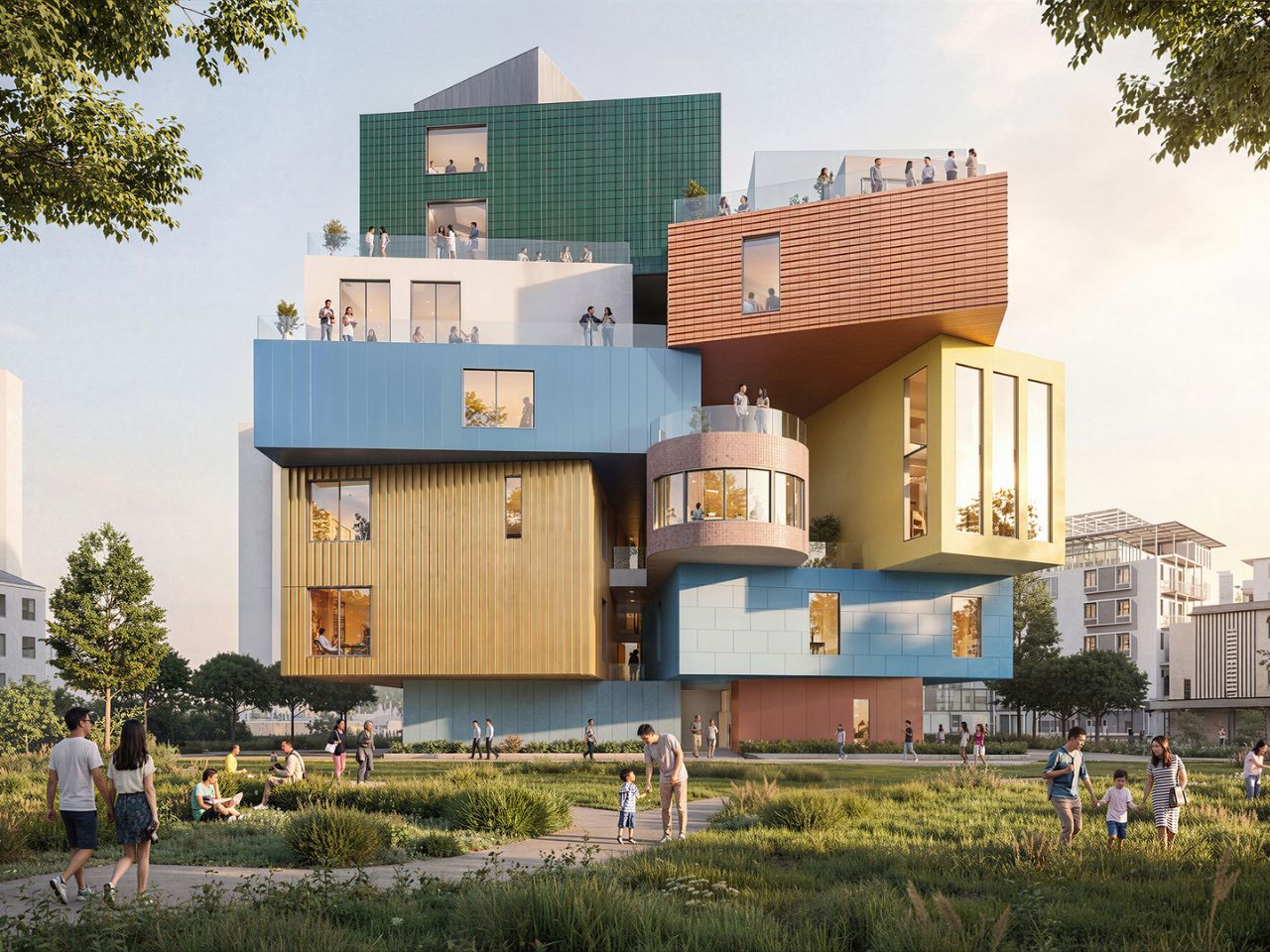
In a world where housing costs continue to soar and environmental consciousness grows, the tiny home movement has found a compelling advocate in Spindrift Homes’ Shasta model. This 26-foot sanctuary represents more than just downsized living—it embodies a complete lifestyle transformation designed for those seeking simplicity, tranquility, and freedom from traditional housing constraints.

Designer: Spindrift Homes

Crafted with Intention

Spindrift Homes, a boutique tiny house builder based in Bend, Oregon, has been crafting eco-luxury, compact dwellings since 2019. The small team focuses on enabling owners to live more simply, connect more deeply with nature, and experience what they call “the liberating and thriving world of small-scale living”. The Shasta perfectly exemplifies this philosophy, serving as a custom-designed home originally built for a single mother who wanted to escape conventional housing pressures.

The home sits elegantly on a double-axle trailer, measuring 26 feet in length and 10 feet in width, yet manages to incorporate all the comforts and amenities of a modern residence within its compact 280 square feet. This extra-wide design maximizes both functionality and comfort, proving that square footage doesn’t determine quality of life.

Modern Farmhouse Aesthetics

The Shasta’s interior design screams modern farmhouse from every corner, featuring clean, modern lines balanced with cozy, rustic elements. The exterior showcases beautiful cedar siding topped with a distinctive dormer-style roof, while 15 strategically placed windows flood the interior with natural light. Two French or sliding doors create seamless indoor-outdoor connections, essential for the “slow living” philosophy the home represents.

Inside, thoughtful design utilizes every square inch effectively. The layout includes a first-floor bedroom and a loft guest space, accommodating both permanent residents and visitors. The kitchen features butcher block countertops with a clever fold-up extension, a custom backsplash, and open shelving that combines functionality with aesthetic appeal.

Smart Storage Solutions

One of Shasta’s most impressive features is its innovative staircase design. Rather than simply providing access to the loft, this multi-functional element incorporates built-in storage cupboards, open shelves, and even a dedicated space for a refrigerator. This clever integration addresses one of tiny living’s biggest challenges: adequate storage without sacrificing living space. The home also includes modern conveniences like ample USB and USB-C outlets throughout, dedicated 20-amp outlets in the kitchen, and four exterior outlets for outdoor activities.

Starting at $135,000, the Shasta offers extensive customization options, allowing buyers to choose their favorite colors for tile, upholstery, trim, and siding . Spindrift recommends considering a four-foot extension to accommodate additional features like washer-dryer hookups, dishwasher installation, and expanded living space.


The post This One-Of-A-Kind Tiny Home Has a Staircase That Hides A Fridge first appeared on Yanko Design.
3 Danish Firms Just Built The Modern Lighthouse-Inspired Office Every Architect Will Copy

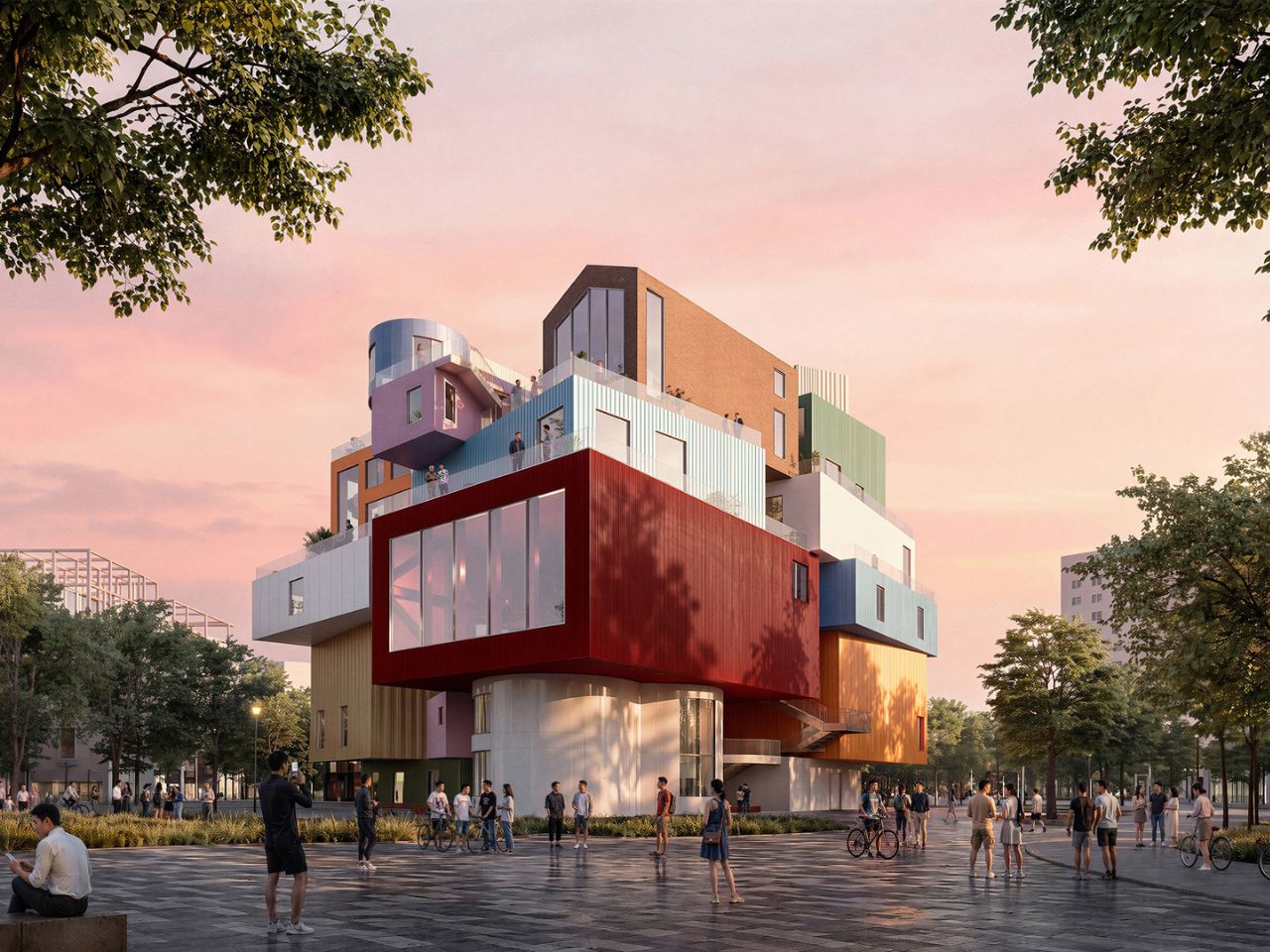
Copenhagen’s skyline has a new star. The Tip of Nordø, a sleek 60-meter cylinder of glass and steel, now dominates the Nordhavn waterfront like a modern lighthouse. This isn’t just another office building – it’s the result of a dream team collaboration between Cobe, Vilhelm Lauritzen Architects, and Third Nature, three firms that know how to make waves in Danish architecture.

The building wrapped up construction in 2024, and the accolades started rolling in almost immediately. This year, it snagged one of Copenhagen’s most coveted honors at the Copenhagen Building Award, with judges calling out its exceptional architectural quality.

Designer: CobeVilhelm Lauritzen Architects, and Third Nature

Design and Architecture

The architects didn’t just plop down a generic office tower. Instead, they looked around and saw history. The cylindrical shape deliberately echoes the old silos that used to line Copenhagen’s industrial waterfront, giving a nod to the past while racing toward the future. The facade alone is a masterpiece – 925 precisely placed elements covering 12,000 square meters, each one positioned to catch the light just right and keep the building’s energy bills in check.

What really sets this building apart is how it refuses to have a “bad side.” The circular design means gorgeous harbor views from every angle, creating that seamless indoor-outdoor connection architects love to talk about. Inside, there’s room for 1,500 workers across flexible office spaces, with law firm Bech-Bruun and energy company Copenhagen Infrastructure Partners already calling it home.

Public Integration and Impact

Here’s where things get interesting – this isn’t some corporate fortress. Half the ground floor stays open to the public, which means anyone can wander in and experience what the architects built. The centerpiece is a lush winter garden that doubles as a public atrium, turning what could have been just another lobby into ga enuine community space.

The location couldn’t be more perfect. Sitting at the tip of Redmolen Harbor, the building anchors the entire Nordhavn district, an area that’s been completely transformed from a gritty industrial port to Copenhagen’s hottest new neighborhood. The project took nearly a decade from that initial competition win in 2015 to opening day, but the wait was worth it. The surrounding public spaces stay active year-round, making this less of a building and more of a destination that happens to have really great office space upstairs.

Looking Forward

The success of Tip of Nordø represents more than just good architecture – it’s a blueprint for how cities can reimagine their waterfronts. By combining private development with public accessibility, the building shows that commercial projects don’t have to wall themselves off from their communities. The architects’ emphasis on “inclusion, transparency, and openness” has created something that brings people together while blending naturally into its context.

As Copenhagen continues to evolve, projects like this prove that thoughtful design can honor the past while building toward a more connected future. The Tip of Nordø isn’t just reshaping Nordhavn’s skyline – it’s setting the standard for what urban development can achieve when architects, developers, and communities work together. With its growing collection of awards and recognition, this modern lighthouse is already guiding the way for Copenhagen’s next chapter.

The post 3 Danish Firms Just Built The Modern Lighthouse-Inspired Office Every Architect Will Copy first appeared on Yanko Design.
Dubai’s Next Giant: Sobha SkyParks Soars 450 Meters Into The Sky

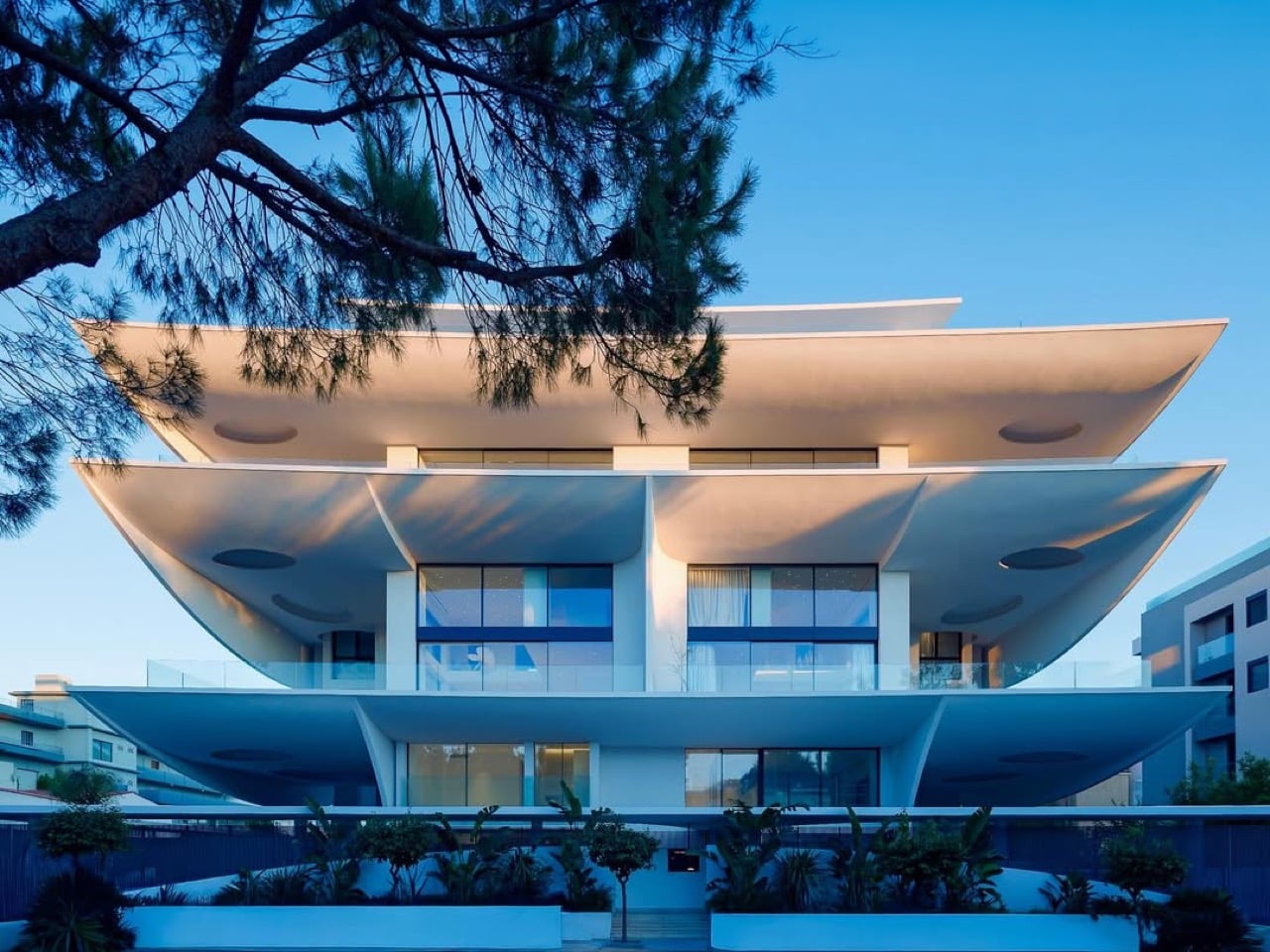
Dubai’s getting another jaw-dropping addition to its skyline, and this one’s a real showstopper. Sobha Realty just unveiled Sobha SkyParks, a massive 109-story tower that’ll stretch 450 meters into the sky. ‌‪‬ When it’s done, this giant will rank among the UAE’s five tallest buildings—quite a feat for any developer. The project comprises 684 luxury apartments across 109 floors, each offering incredible views of the city sprawling below. ‌‪‬ For Sobha Realty, this isn’t just another project—it’s their tallest development yet, pushing them into entirely new territory in Dubai’s competitive luxury market.

The tower’s landing on Sheikh Zayed Road in Business Bay which is about as prime as real estate gets in Dubai. This stretch of road has become synonymous with luxury living, and Sobha SkyParks fits right into that narrative. ‌‪‬ Business Bay’s infrastructure is already well-established, and being so close to Downtown Dubai doesn’t hurt either. The location practically sells itself—residents get easy access to business districts, shopping, and transport links throughout the city. ‌‪‬ Sheikh Zayed Road has this way of making every building along it feel important, and Sobha SkyParks certainly won’t be an exception to that rule.

Designer: Sobha Realty

Here’s where things get interesting, though. Instead of just building another tall glass tower, Sobha’s doing something different with four themed sky gardens scattered throughout the building’s height. ‌‪‬ Think about it—actual parks floating hundreds of meters above the street. It’s not just a cool concept; it tackles that age-old problem of urban living where green space feels like a luxury. These aren’t tiny balcony gardens either; we’re talking about proper outdoor spaces that bring nature up to where people actually live. The whole multilevel garden approach is getting attention from architecture circles as a fresh take on sustainable urban development. ‌‪‬

The building’s crown jewel has to be the sky-high infinity pool. Picture swimming laps while looking out over all of Dubai—it’s the kind of amenity that sounds almost too good to be true. ‌‪‬ Francis Alfred from Sobha Realty puts it well, saying they’re trying to “blend art, engineering, and lifestyle into a single masterpiece.” ‌‪‬ That’s not just marketing speak, either. When you combine the elevated parks with amenities like that infinity pool, you’re looking at something that goes way beyond typical luxury housing. It’s more like they’re building a vertical neighborhood where everything you need is stacked up instead of spread out.

The real estate crowd is already buzzing about what this could mean for Dubai’s market. ‌‪‬ Sobha’s built a solid reputation over the years, so when they go big like this, people pay attention. The project’s been making rounds on social media and industry forums, with everyone from investors to architecture enthusiasts weighing in on what it means for the city’s future. ‌‪‬ Dubai keeps attracting international buyers looking for something special, and Sobha SkyParks seems designed exactly for that market. It’s not just about having a nice apartment anymore—people want experiences, views, and bragging rights that come with living somewhere truly unique.

Construction’s underway, and this project represents something bigger for Sobha Realty. ‌‪‬ They’re clearly making a statement about where they want to position themselves in Dubai’s ultra-luxury segment. By the time this tower’s finished, it won’t just be another address—it’ll be a landmark that changes how people think about living vertically in one of the world’s most ambitious cities. Dubai’s always been about pushing boundaries, and Sobha SkyParks fits perfectly into that story. The combination of record-breaking height, innovative design, and those sky-high amenities should set new expectations for what luxury living can look like when you’re willing to think outside the box.

The post Dubai’s Next Giant: Sobha SkyParks Soars 450 Meters Into The Sky first appeared on Yanko Design.
Floating Above the Arctic: Vipp’s Latest Guesthouse Channels Norway’s Fishing Tradition

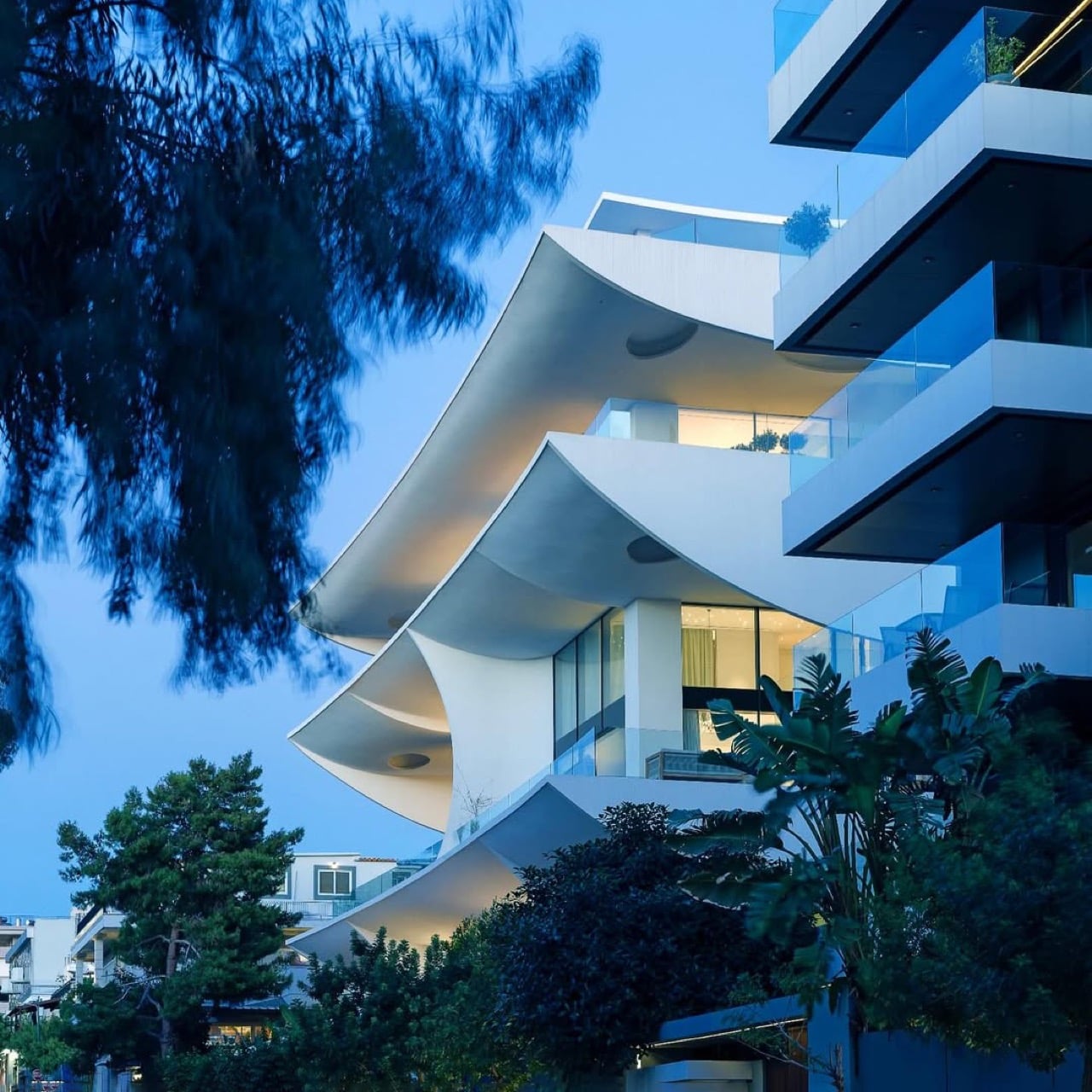
Danish design brand Vipp has just opened what might be their most spectacular guesthouse yet, tucked away on Norway’s remote Storemolla island, where jagged peaks plunge straight into the sea. The Lofoten Guesthouse sits like a modern-day fishing hut on stilts, designed by Norwegian studio LOGG ARKITEKTER to capture everything magical about this wild corner of the Arctic.

What makes this place special isn’t just the jaw-dropping location. The architects have created something that feels both completely contemporary and deeply rooted in local tradition. Those stilts aren’t just for show – they’re a direct nod to the rorbuer cottages that housed generations of fishermen who worked these waters, their boats bobbing alongside simple wooden shelters that rose and fell with the tide.

Designer: Vipp x LOGG ARKITEKTER

A Village Born from Respect

The guesthouse doesn’t stand alone. It’s part of True North Lofoten Village, a carefully planned collection of modern lodgings masterplanned by the acclaimed firm Snøhetta. Rather than dropping a resort into pristine wilderness, they’ve assembled what feels more like a small community of thoughtfully designed cabins, each by different Norwegian studios. The whole approach reflects what Snøhetta’s Kjetil Trædal Thorsen calls the challenge of “quiet integration” – creating something meaningful without overwhelming the landscape.

LOGG ARKITEKTER tackled this by designing what architect Diederik Advocaat Clausen describes as dissolving “the boundary between shelter and seascape.” The weathered timber exterior and sharp lines give the building a temporary appearance, as if it had grown naturally from the rocks. Large windows frame views that change constantly – from the endless daylight of Arctic summer to the otherworldly dance of Northern Lights in winter.

Inside the Nordic Hideaway

Step inside and you’ll find Vipp’s signature minimalist aesthetic perfectly suited to its surroundings. Dark grey walls and floors mirror the rocky coastline outside, while carefully chosen furnishings create cozy spots to take in the view. A ceiling-hung stove becomes the focal point for gatherings, and custom upholstery echoes the colors and textures visible just beyond the glass.

This marks Vipp’s thirteenth design retreat worldwide, with CEO Kasper Egelund noting that while their products stay consistent, each location completely transforms the experience. At roughly $ 1,942 per night for up to four guests, it’s positioned as a premium escape where the real luxury lies in the setting itself. You can venture out for whale watching or eagle safaris, but honestly, many guests find themselves perfectly content just watching the sea and sky put on their daily show through those perfectly framed windows.

The post Floating Above the Arctic: Vipp’s Latest Guesthouse Channels Norway’s Fishing Tradition first appeared on Yanko Design.
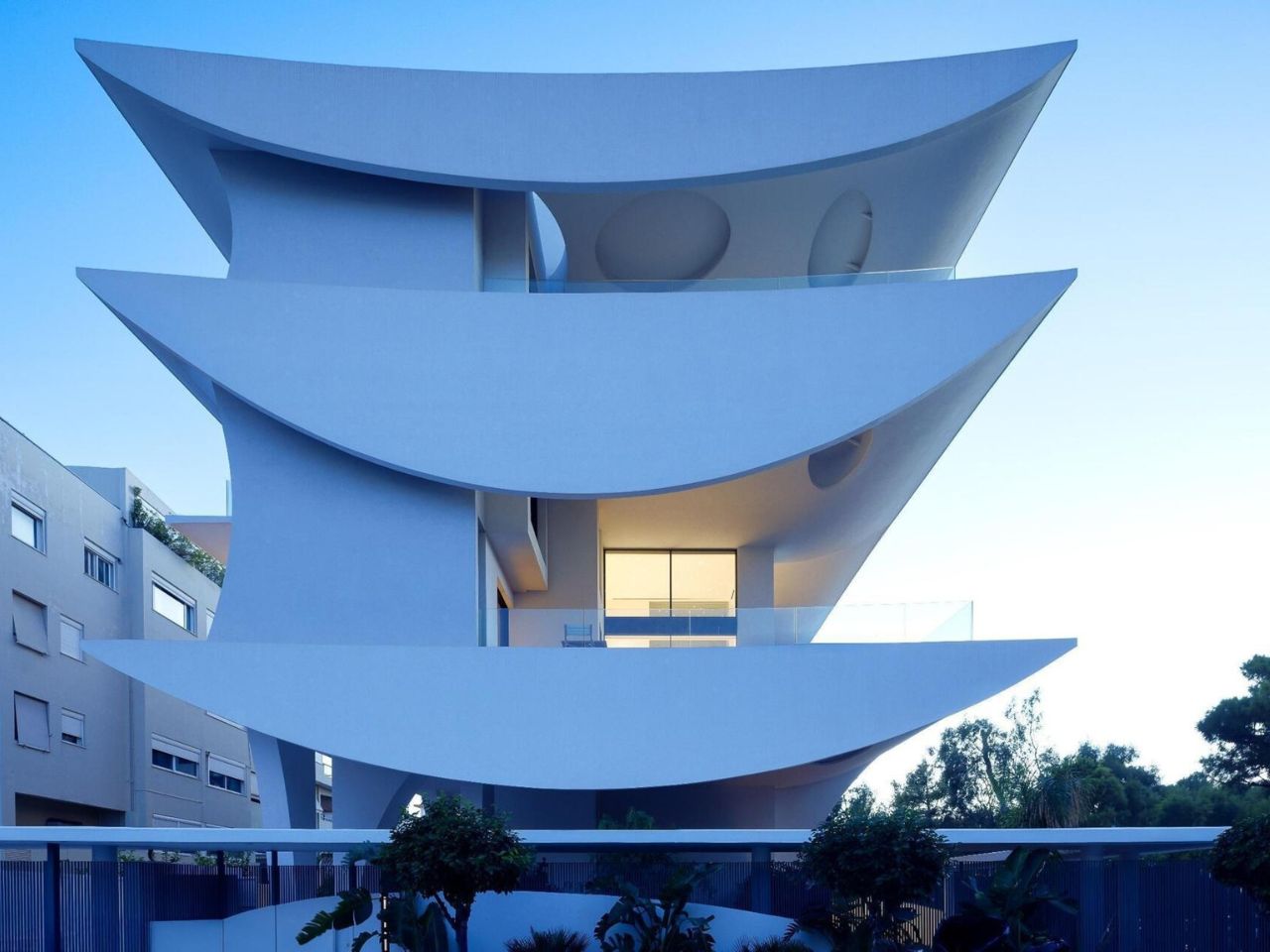
This Bridge-Shaped House Hangs Weightlessly Between Two Forested Hillsides

Amid the dense, monsoon-fed vegetation of Karjat, India, The Bridge House by Wallmakers, under the direction of architect Vinu Daniel, appears as if it were woven into the landscape itself. A natural stream has carved a seven-meter-deep gorge through the terrain, splitting the land into two disconnected parcels. What could have been a limitation became the defining opportunity to create a dwelling that does not conquer the landscape but hovers above it, merging architecture with the act of crossing.

Rather than filling the void, Wallmakers chose to span it, crafting an occupiable bridge that physically and symbolically unites the site. Since no foundations could be placed within the 100-foot spillway, the design evolved into a suspended home anchored delicately by only four footings on either side of the gorge. The result is a structure that appears to levitate, a line of lightness drawn between two fragments of land.

Designer: Wallmakers

Necessity became invention. The form of The Bridge House emerged from the challenge of building across a natural divide without disturbing it. Conceived as a 100-foot-long suspension bridge, the home is composed of four hyperbolic parabolas, mathematical forms that achieve strength through geometric efficiency. Steel tendons and pipes provide tensile stability, while a thatch-and-mud composite forms the compressive shell.

This combination, simultaneously ancient and modern, generates a dialogue between tension and compression, precision and softness. The house becomes both structure and skin, taut like a bowstring yet flexible enough to adapt to the living landscape.

True to Wallmakers’ ethos of contextual minimalism, the house sits lightly upon its site. The thatched surface, arranged in overlapping scales reminiscent of a pangolin’s skin, blends seamlessly with the forest canopy. Beyond aesthetics, this cladding provides thermal insulation, maintaining cool interiors amid Karjat’s humid climate.

The decision to use only four anchoring points ensures that the gorge and its contours remain untouched. The house becomes a visitor, not an intruder, in the ecosystem it occupies.

Every material used in The Bridge House carries intention. The mud plaster coating that envelops the thatch serves as both armor and adhesive: it prevents pests from entering, enhances compressive strength, and eliminates the need for vertical pillars. In doing so, it underscores the project’s central belief that material intelligence can achieve structural innovation without technological excess.

Inside, the design continues its conversation with nature. At the core of the house lies an oculus, an open circle framing the sky. During rainfall, water filters through this void into a central courtyard, transforming the climate into a sensory event. The interplay of light, water, and air activates the interior, making the house respond to every passing hour.

The interiors are minimal yet warm, defined by reclaimed ship-deck wood, jute, and woven mesh screens that modulate light and airflow. Four bedrooms open outward, some toward the treetops, others overlooking the stream, creating a rhythmic dialogue between enclosure and exposure. The transitions are seamless: the line between “inside” and “outside” dissolves into filtered light and moving shadows.

In The Bridge House, Wallmakers once again demonstrate their mastery of building with the land, not on it. The project stands as an exploration of local materials, structural logic, and ecological sensitivity, a philosophy that defines Vinu Daniel’s work across India.

Suspended above the gorge yet rooted in its context, The Bridge House does more than connect two parcels of land. It connects technology with tactility, structure with story, and human presence with the pulse of nature. In doing so, it reimagines architecture not as a static object, but as a living, breathing bridge between worlds.

The post This Bridge-Shaped House Hangs Weightlessly Between Two Forested Hillsides first appeared on Yanko Design.