Most renewable energy systems hide in plain sight. Rooftop solar panels blend into shingles, batteries sit in containers behind fences, and wind turbines spin in distant fields. They quietly do their jobs without helping anyone understand what happens inside them, which feels like a missed opportunity when you are trying to build support for systems that might keep the planet livable for another generation or two.
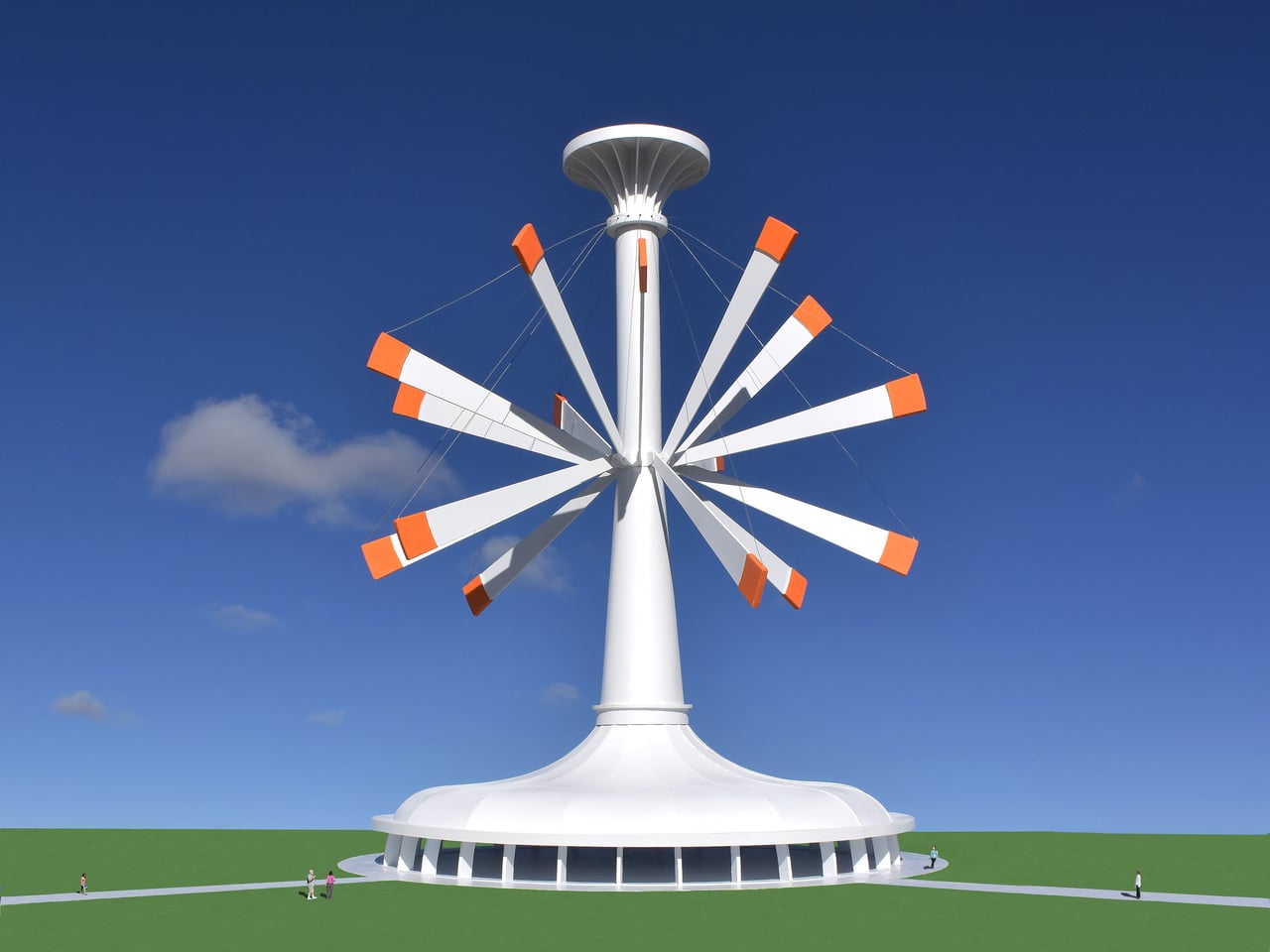
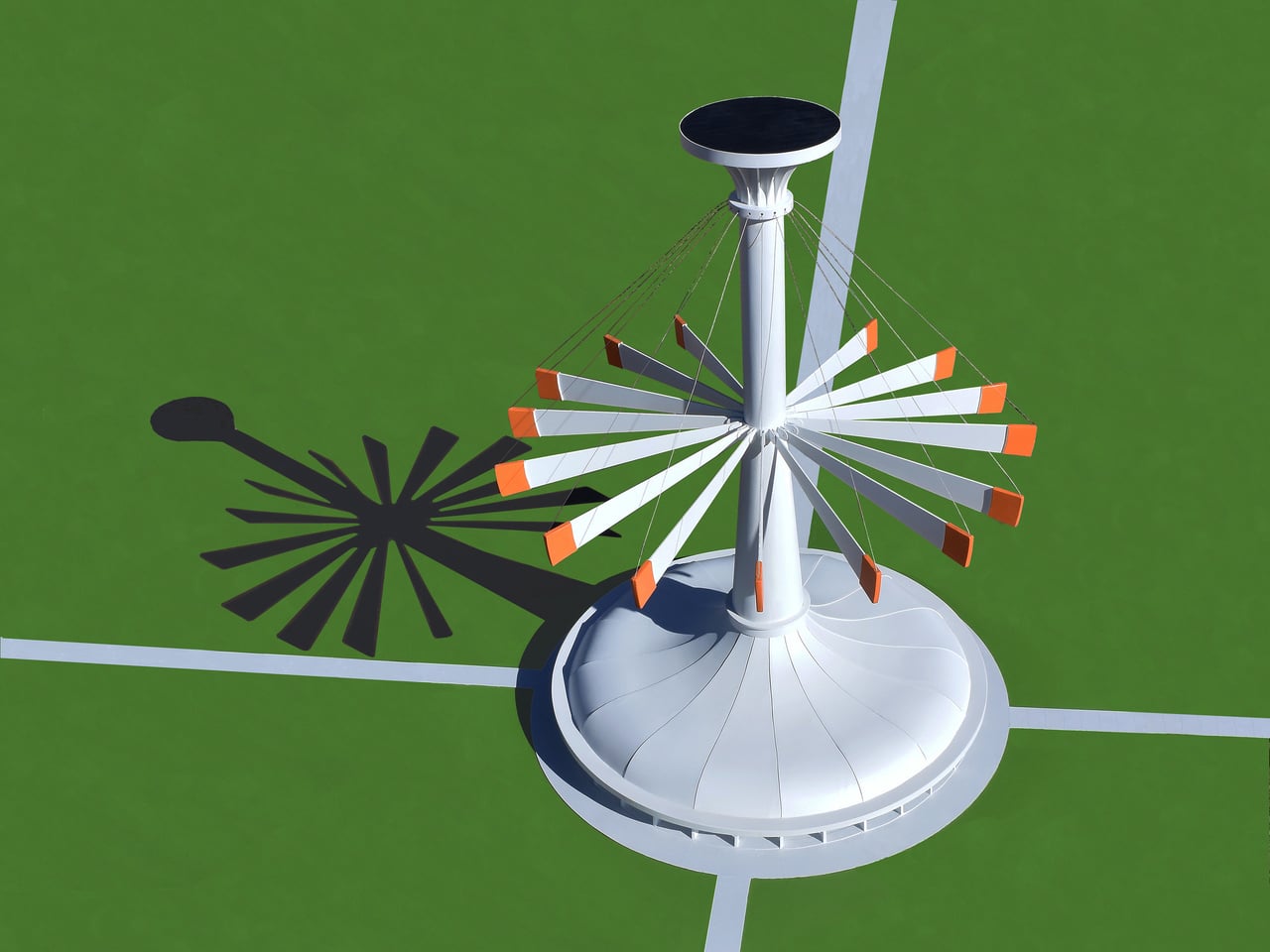
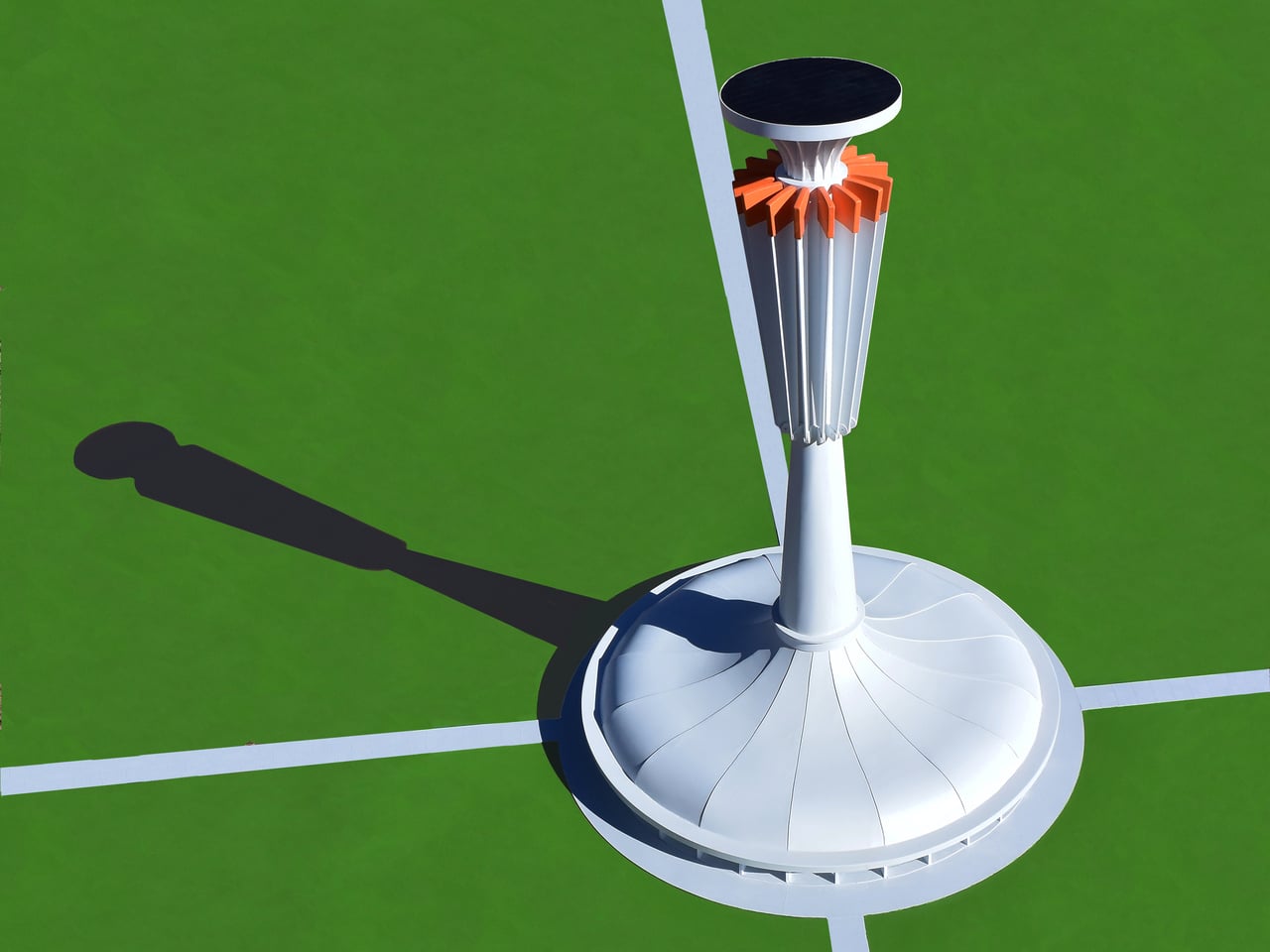
Michael Jantzen’s Solar and Gravity Powered Art and Science Pavilion treats that visibility problem as a design challenge. The conceptual structure combines a public exhibition space under an umbrella-shaped roof with a tall central tower supporting 16 long, weighted steel arms. Those arms lift and lower throughout the day, creating shifting silhouettes while demonstrating how solar power and gravity work together as a functional energy system rather than just theoretical concepts.
Designer: Michael Jantzen
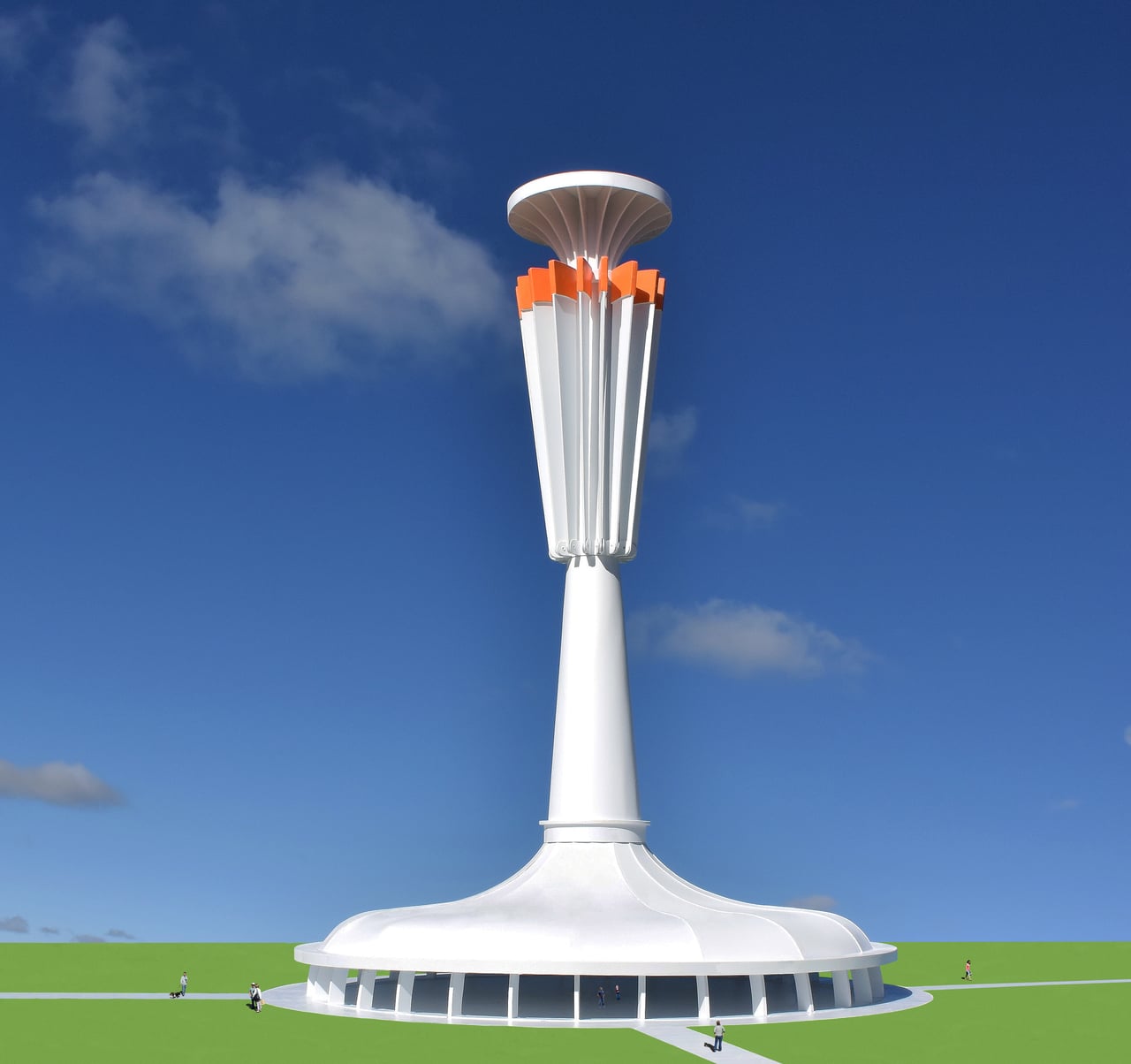
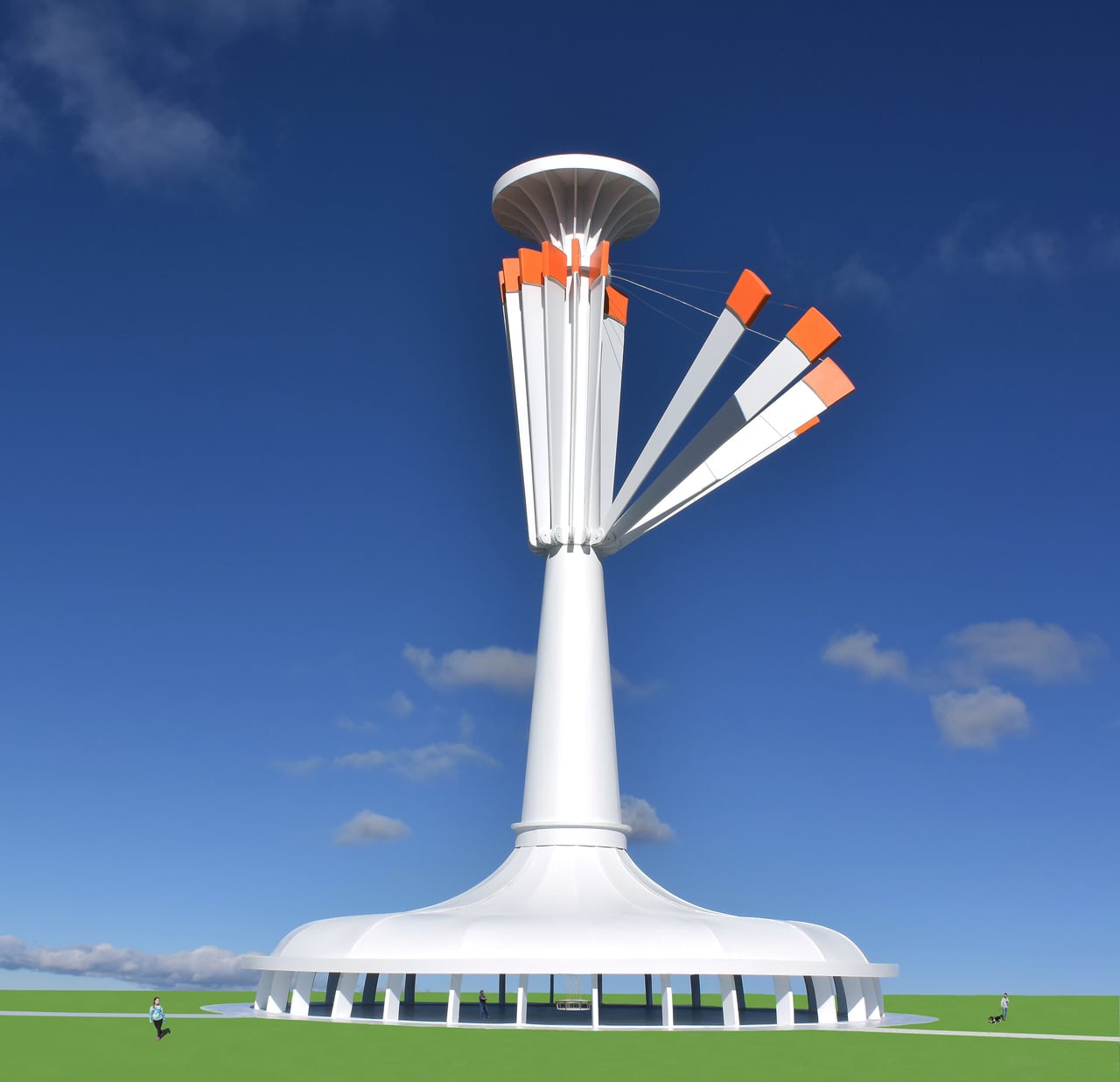
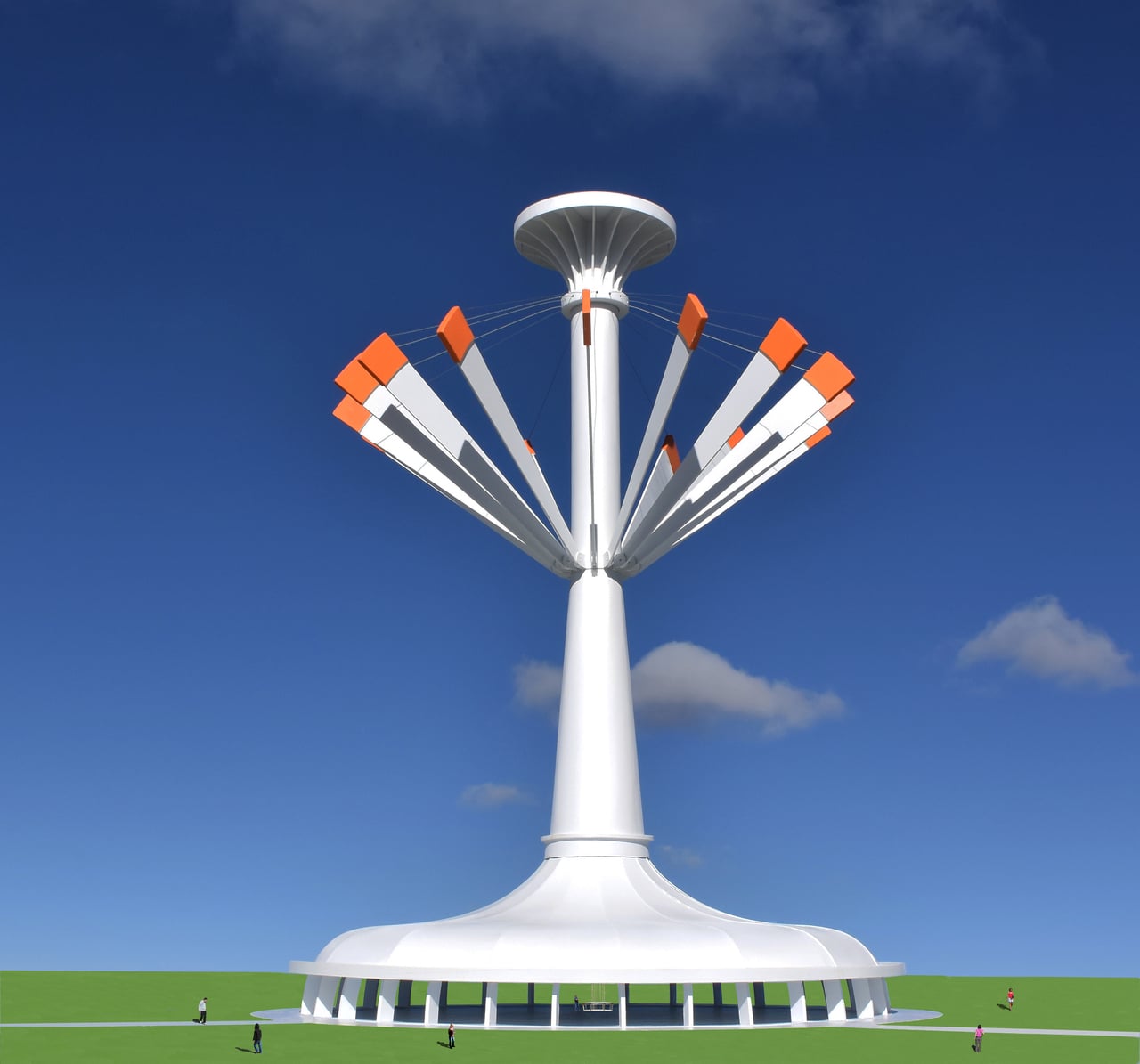
The cycle works simply enough. A solar cell array at the top powers 16 winches that pull the weighted arms upward, storing potential energy. When the pavilion needs electricity, or when someone wants to change its shape, the arms fall back down under gravity. Their descent drives 16 generators that feed power to the building or local grid, turning stored height into usable electricity without batteries or other complex systems getting in the way.
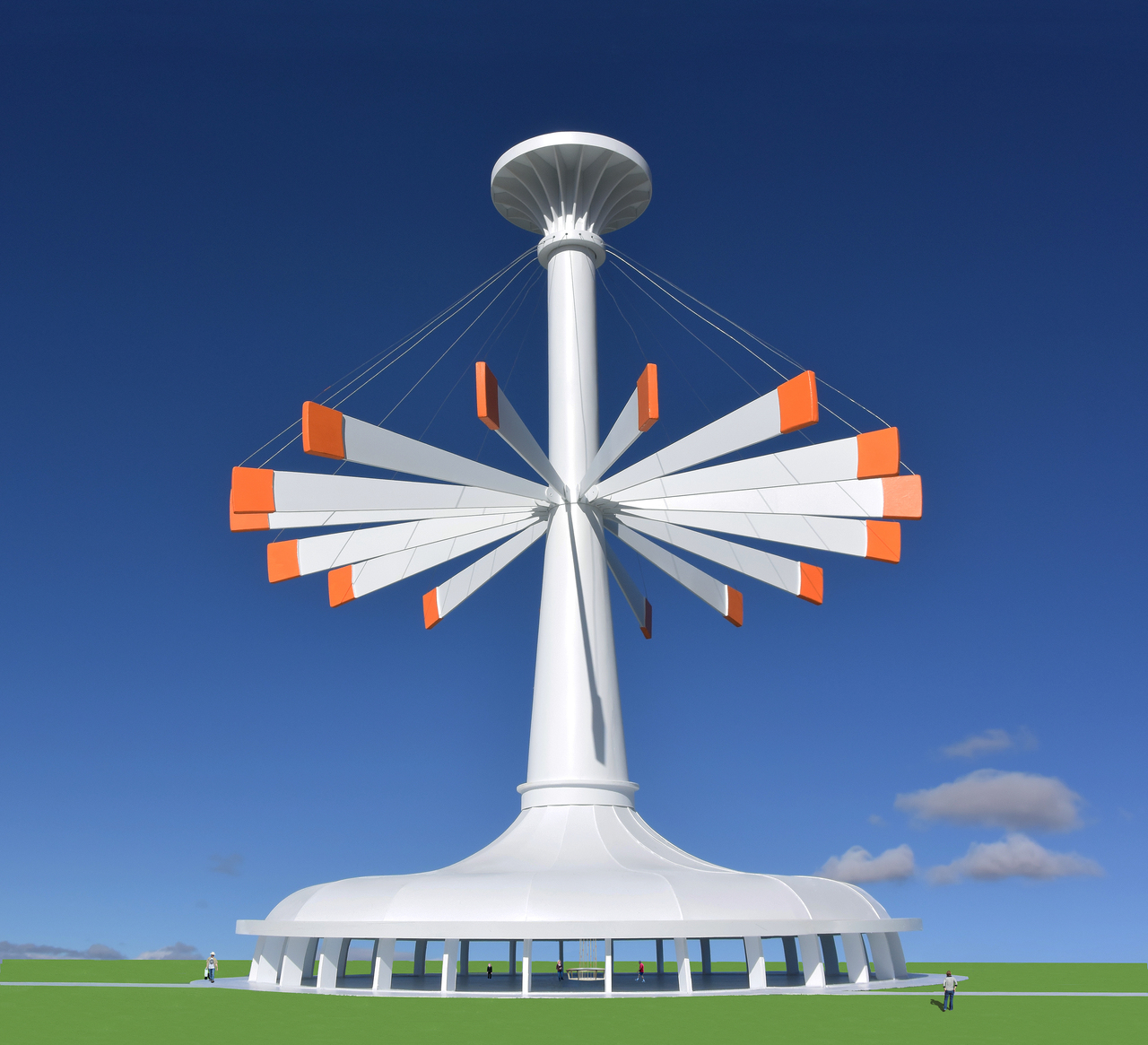
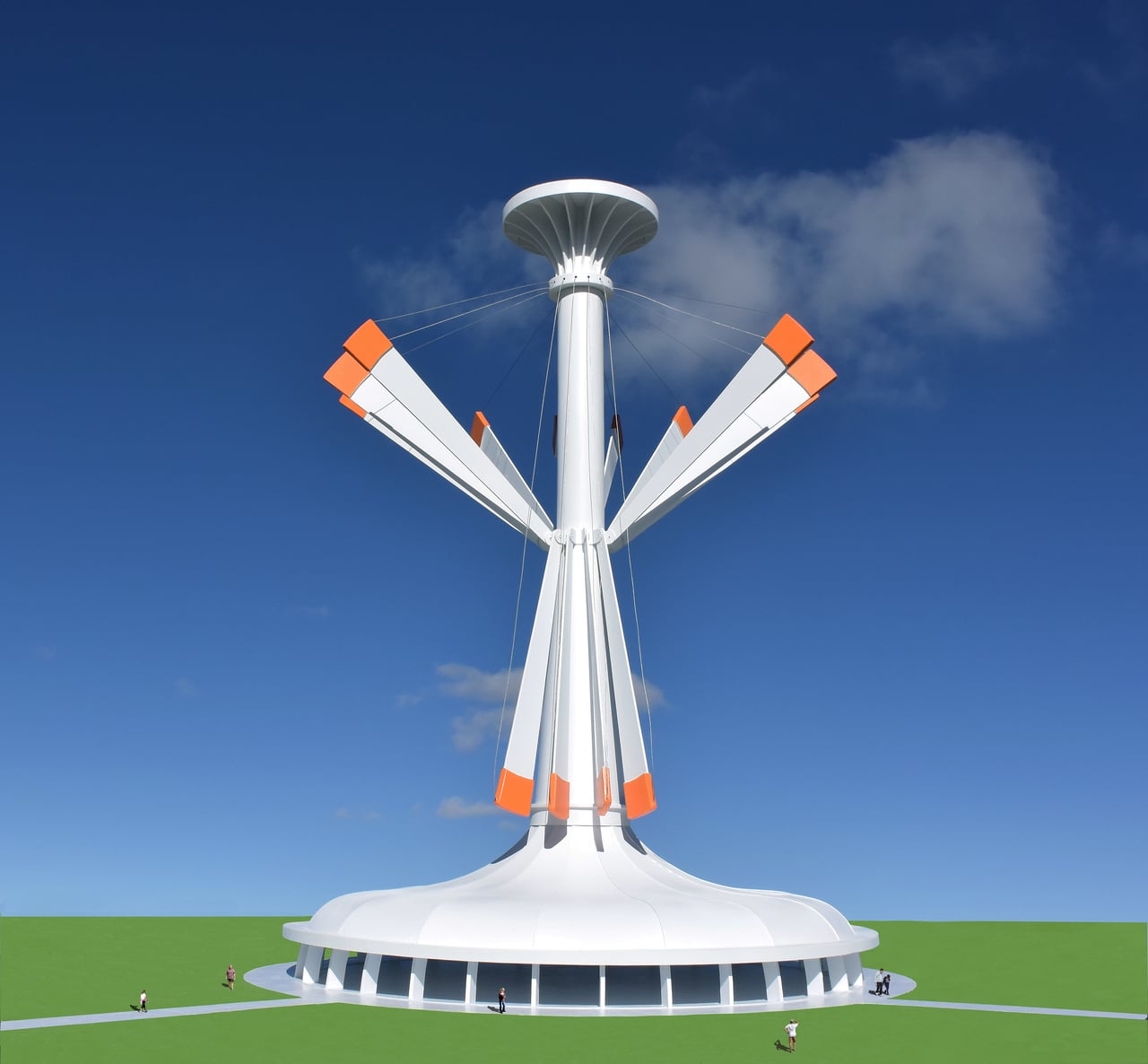
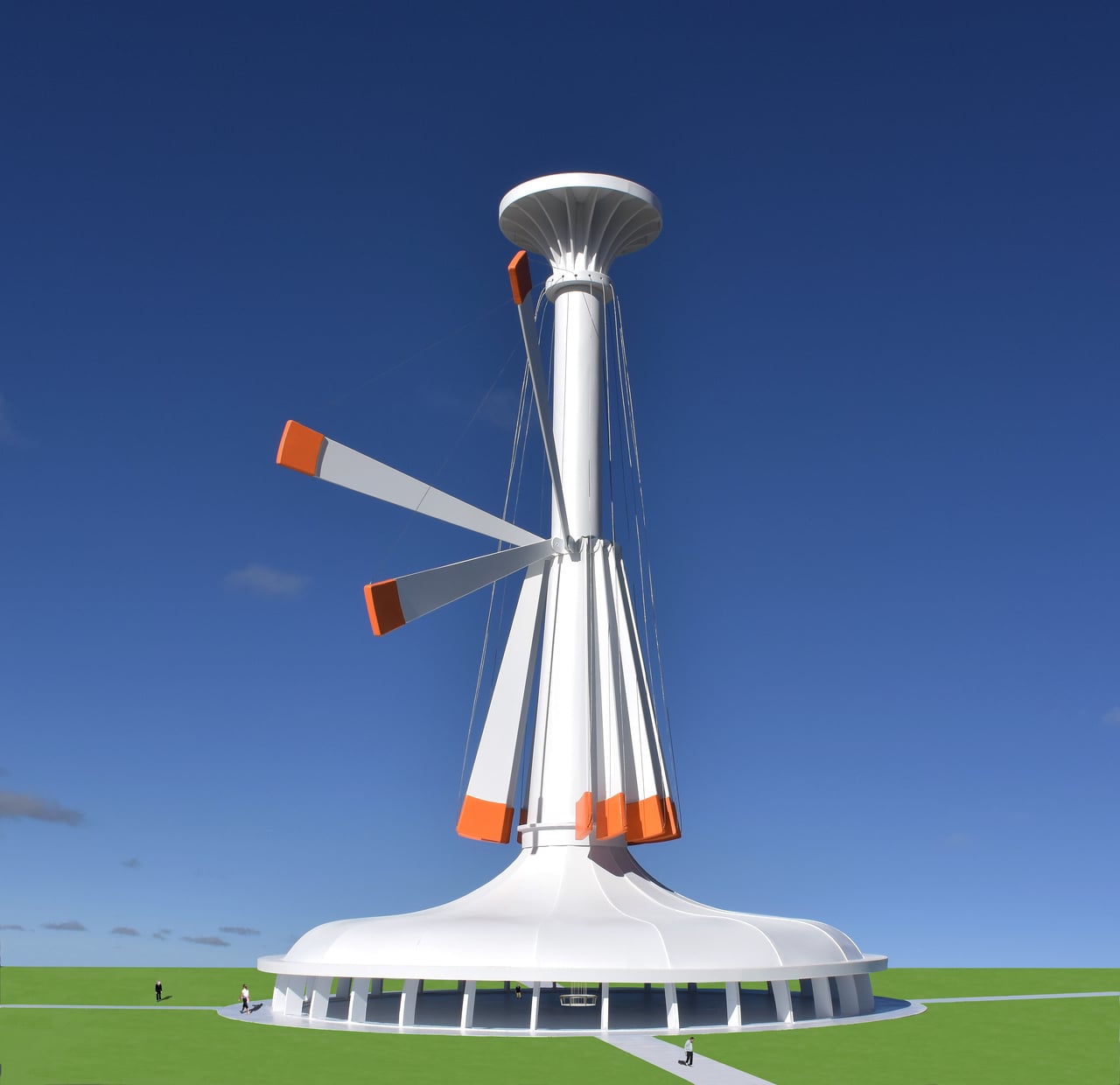
Arriving on a sunny afternoon, you would see the arms at different angles around the tower, sometimes clustered vertically, sometimes fanned out like a mechanical flower. The shifting positions are not just decorative but are the visible result of energy being stored and released. You can read the building’s energy state in its skyline without needing a diagram, which turns out to be a surprisingly rare thing for infrastructure to offer at any scale.
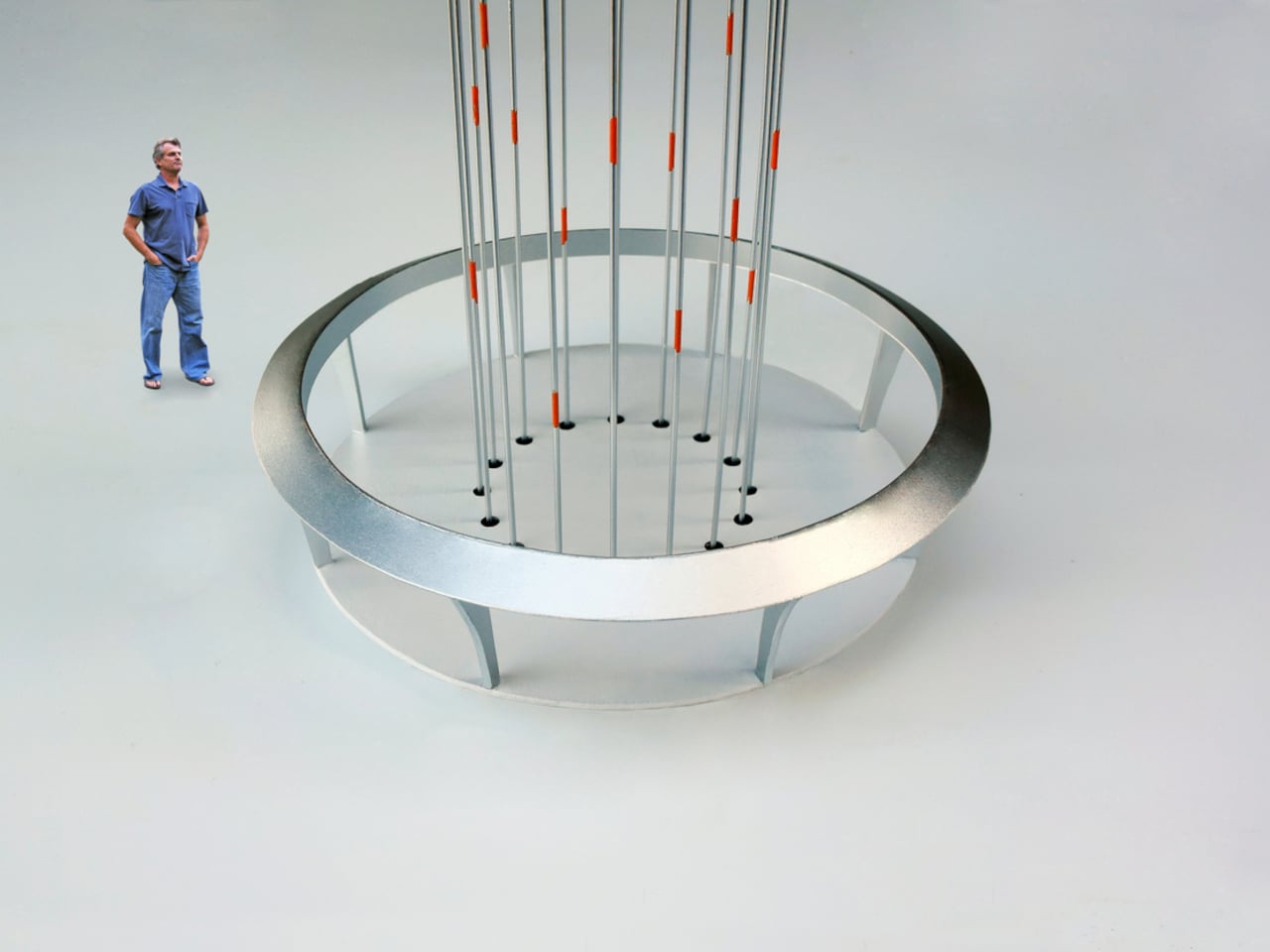
Inside, the umbrella roof shelters a large floor for exhibitions, lectures, or performances. At the center, 16 cables drop through holes in the floor, each marked with an orange spot matching the orange-tipped arms outside. Those cables connect to winches and generators below, making the mechanical core part of the exhibition rather than something hidden. Visitors can track which arms are up or down by watching cables move, turning passive observation into something closer to active participation.
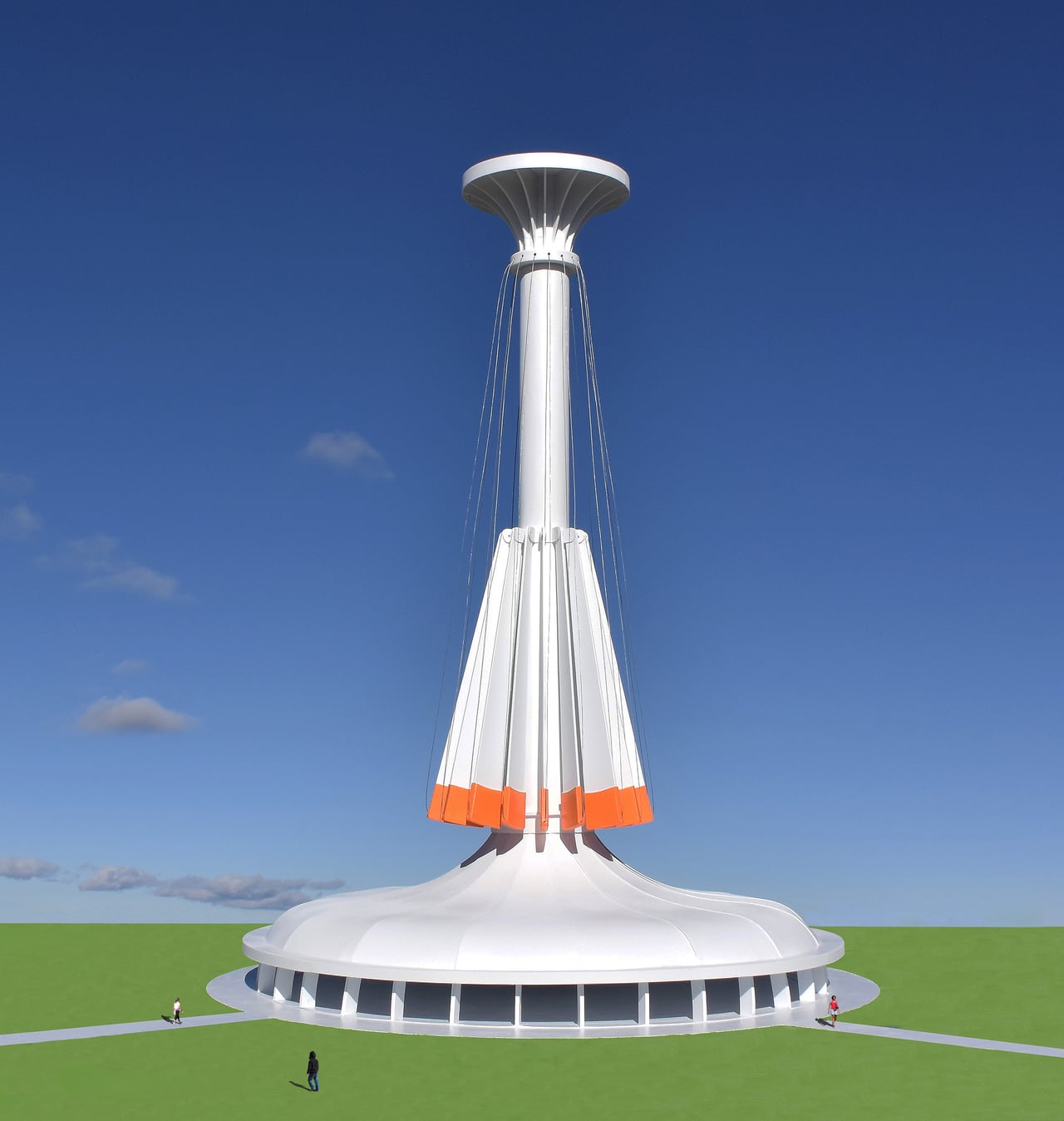
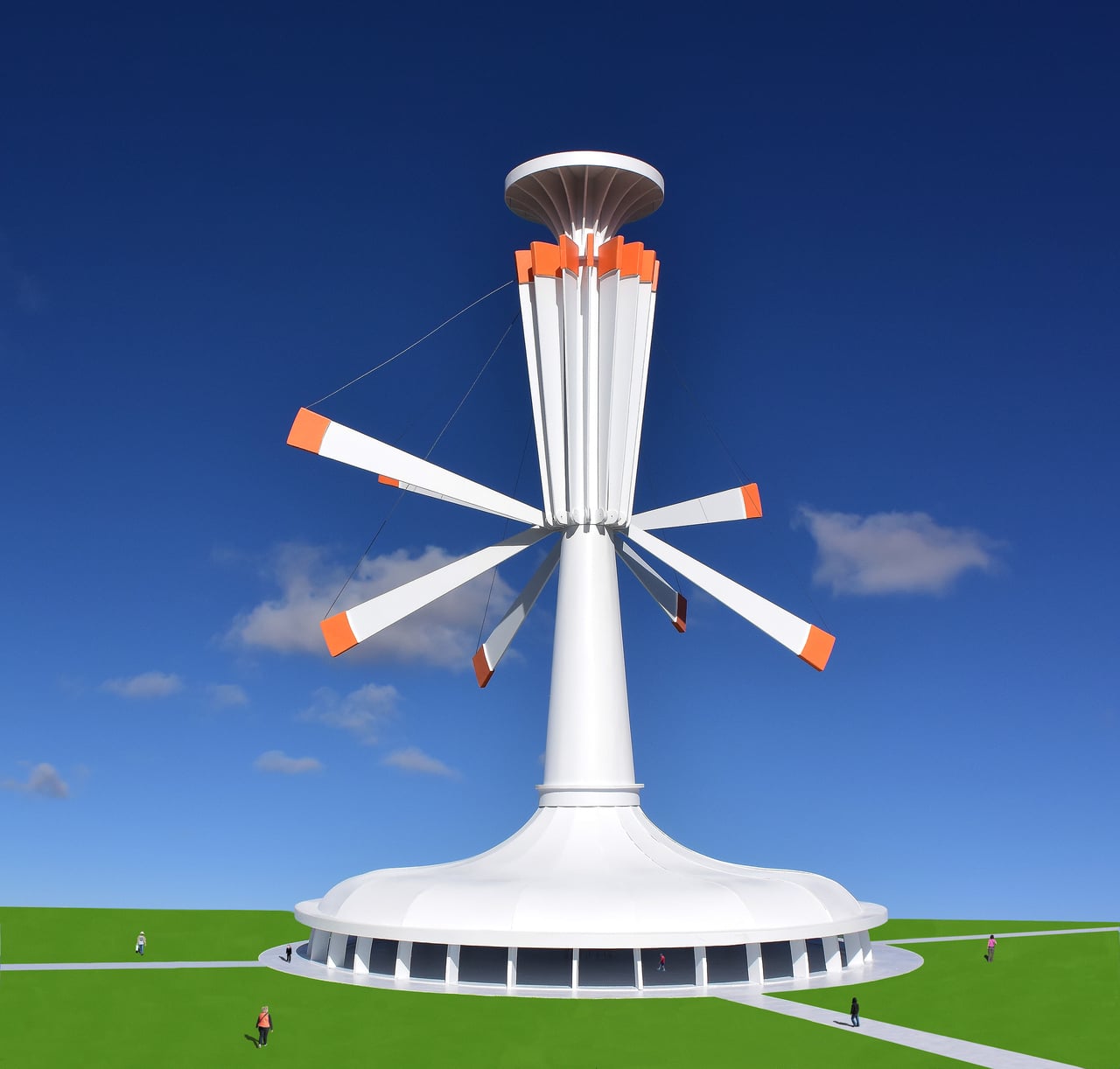
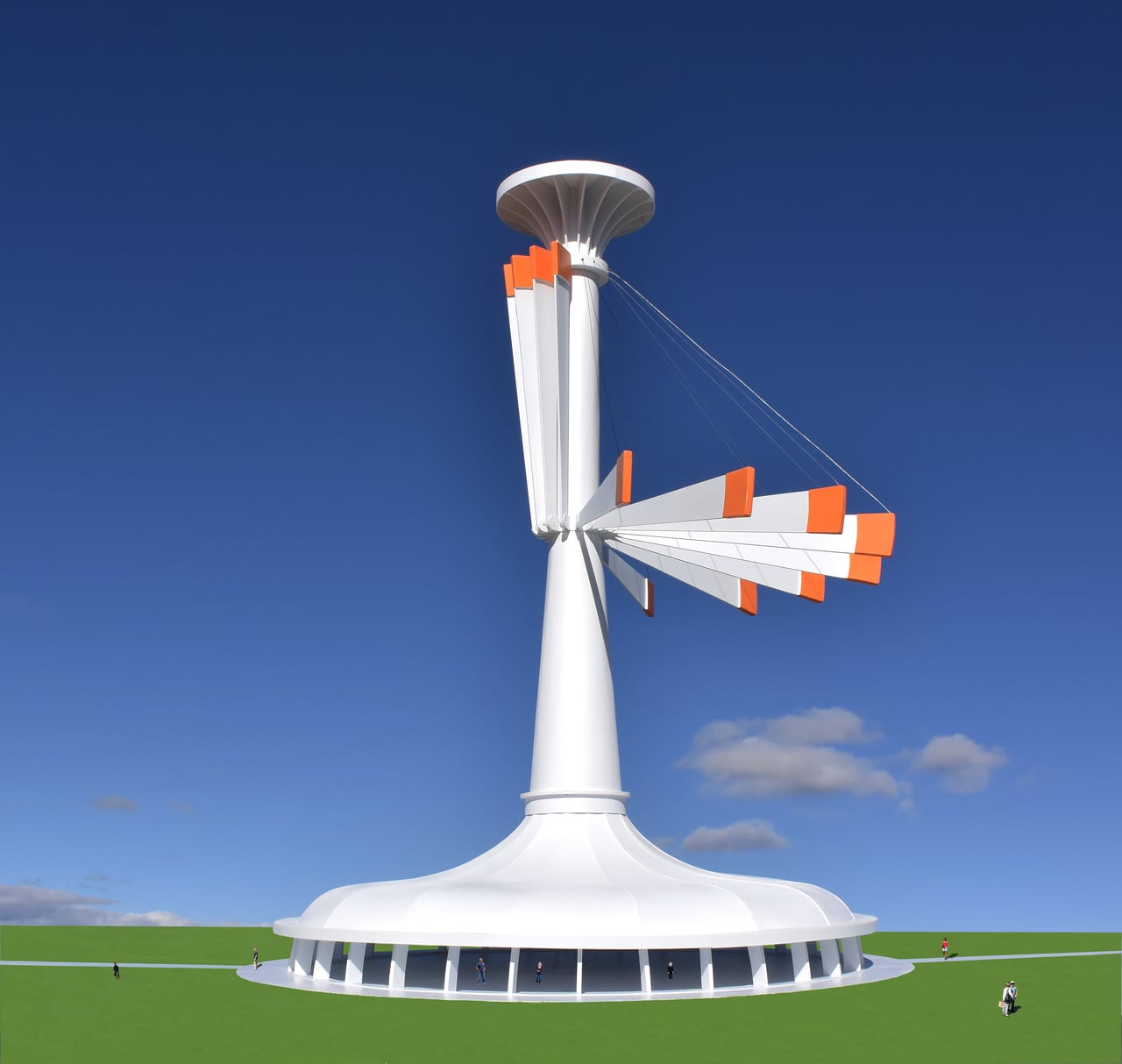
Of course, the setup means the building becomes a working model while hosting events about climate or technology. People walk through exhibitions while the structure demonstrates solar capture and gravity storage without needing to explain every detail. The pavilion functions as a tourist attraction, classroom, and public art that teaches through motion instead of asking you to absorb paragraphs about conversion rates nobody remembers afterward.
Jantzen’s proposal might never be built as drawn, but treating energy flows as choreography feels worth exploring. It hints at a future where infrastructure does not just work efficiently behind walls, it performs visibly in ways that invite people to understand systems that usually stay hidden until something breaks. Making those processes watchable might matter more than squeezing out another efficiency percentage point, which is something worth considering the next time we design places meant to teach.
The post Michael Jantzen Just Turned Solar into a 16-Arm Moving Sculpture first appeared on Yanko Design.