7 Best Tiny Homes of September 2026

The tiny home movement has been threatening to plateau for a few years now, and it keeps refusing to. September’s best builds make a compelling argument for why – not because they are novelties or lifestyle statements, but because they are genuinely well-designed homes that happen to be small. From a $33,700 single-floor build in the US to an award-winning off-grid retreat in the Australian bush, this month’s lineup is worth your full attention.

What separates these seven homes from the ones that cycle endlessly through social media is the discipline in their planning. Each one has resolved a real problem, whether that’s sleeping five people on a trailer, fitting a bathtub into 423 square feet, or running entirely off-grid without sacrificing a single luxury. That kind of specificity is harder to achieve than it looks, and it is increasingly what separates interesting tiny home design from forgettable compact architecture.

1. Fairfax 20
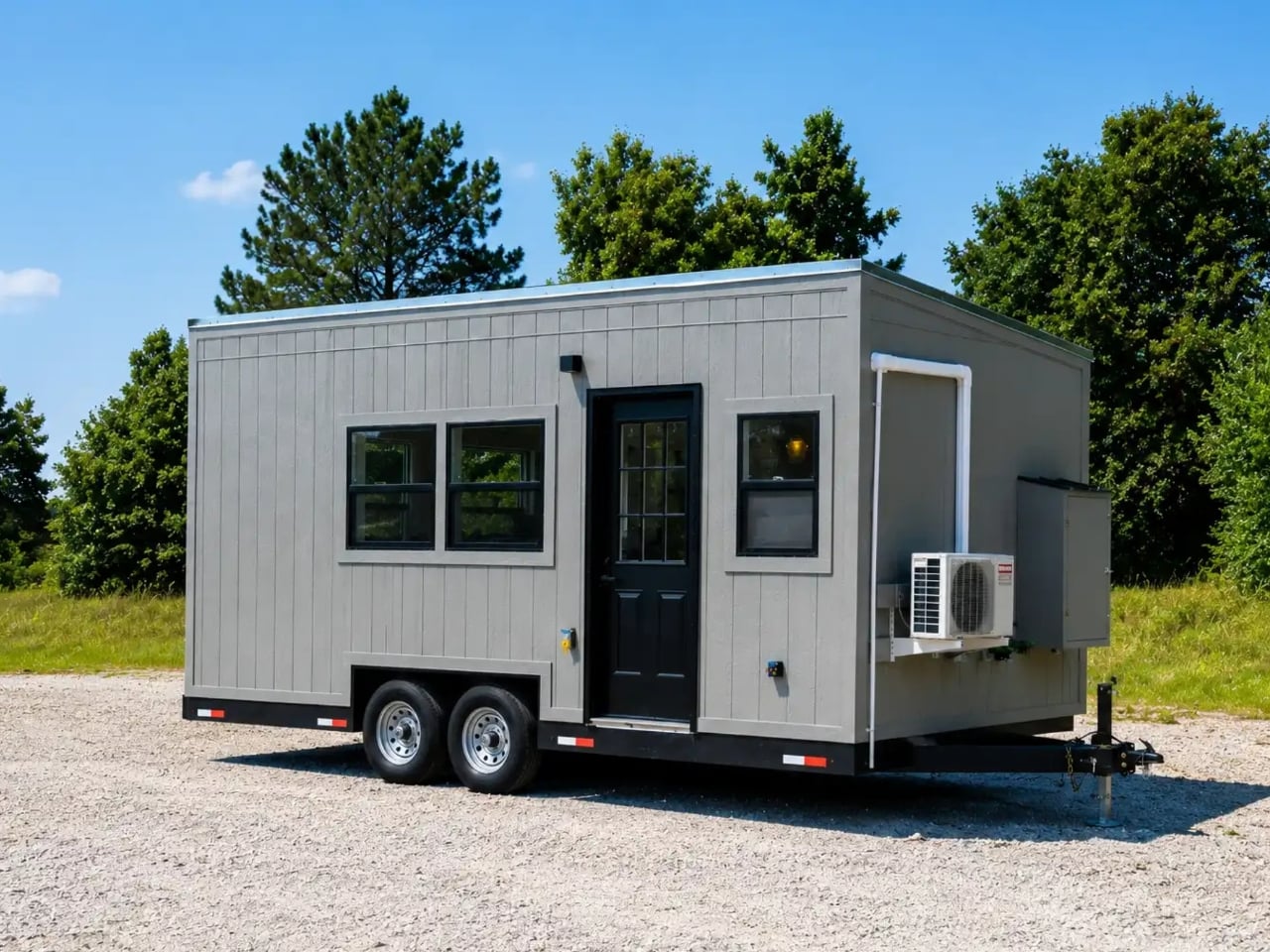
The Fairfax 20 is a 170-square-foot, single-floor tiny home from Dragon Tiny Homes that costs $33,700, a number that reframes the conversation entirely. Most compact builds in this category creep toward six figures before a single upgrade has been added. The Fairfax 20 lands at a price point closer to a mid-range car, and it makes the case for tiny living as an economic decision as much as an aesthetic one. The gray siding and metal roof give it a clean, photogenic exterior that reads as understated rather than budget.

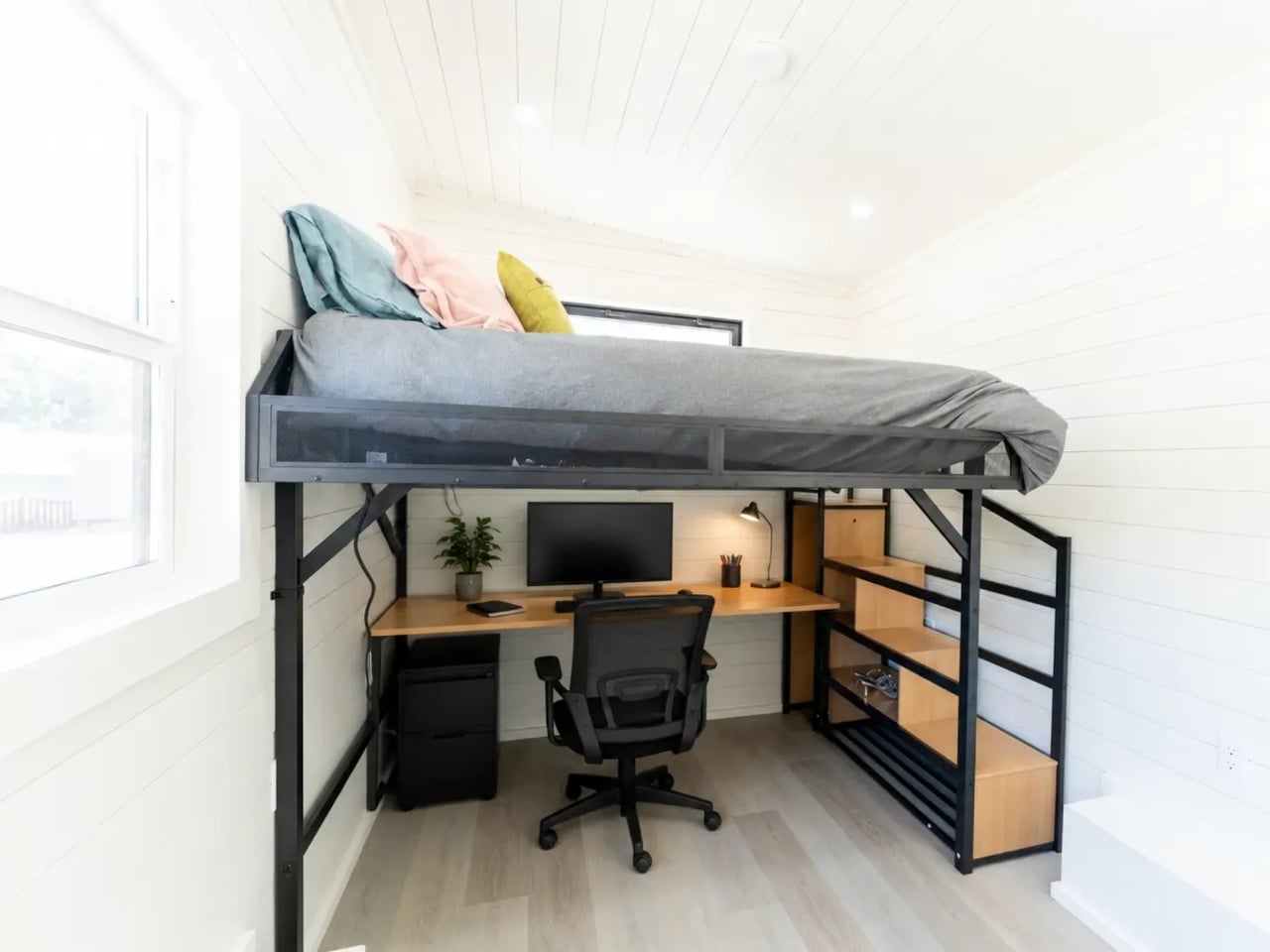
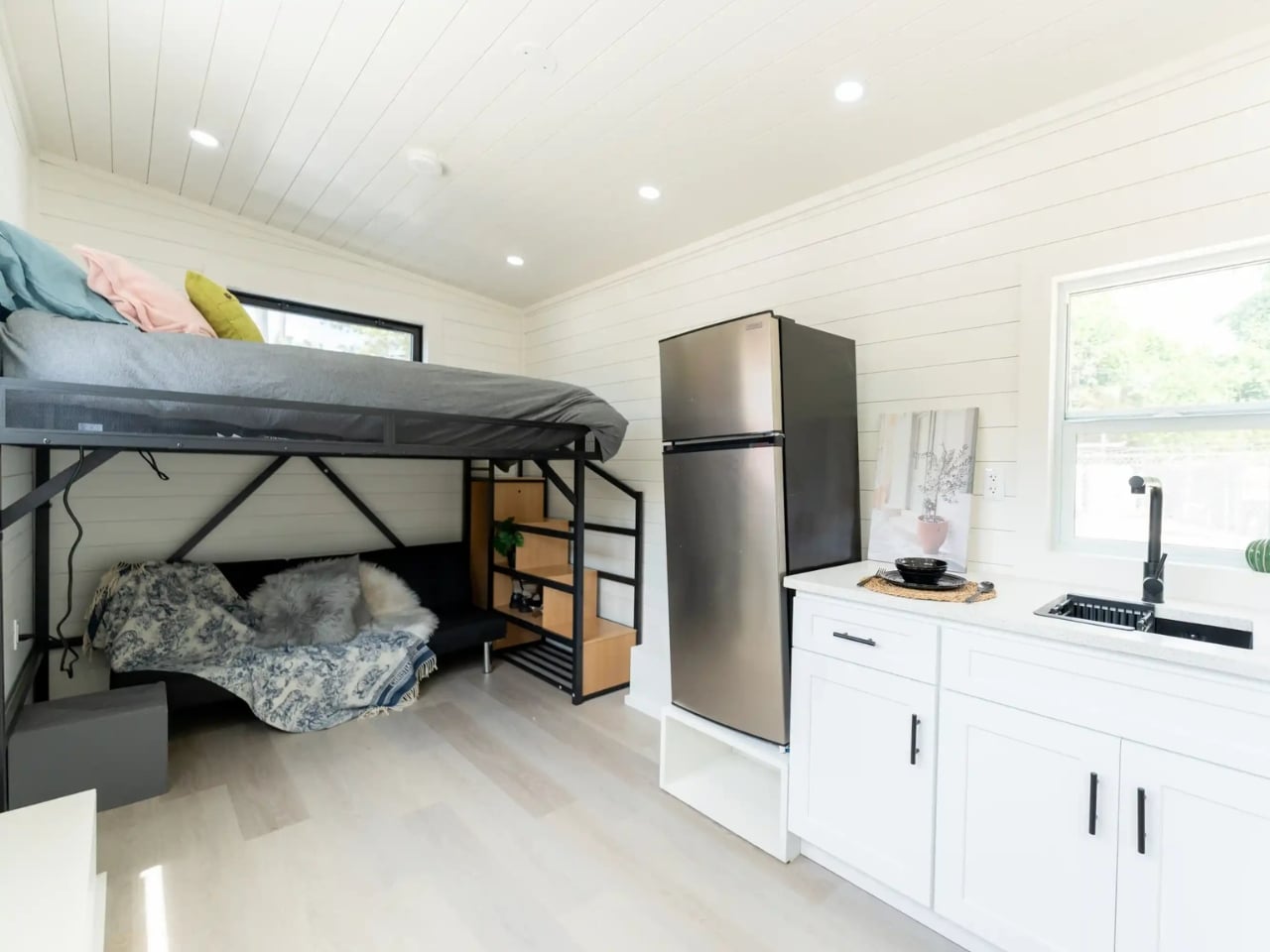
Inside, the Fairfax 20 commits fully to simplicity. There is a lofted sleeping area, but the layout resists the urge to pack vertical inches with added function. It breathes instead, and feels more livable for it. The kitchen is properly fitted: an induction cooktop, a 7.1-cubic-foot refrigerator and freezer, and a washer and dryer unit. Six picture windows and two opening windows run throughout, and the bathroom is a full bathroom rather than a wet room compromise. That last detail matters considerably when you are evaluating whether a space can work long-term.

What we like:

  • The $33,700 price point puts genuine tiny home living within reach without sacrificing full-size appliances
  • A single-floor plan that prioritizes breathing room over cramming in features

What we dislike:

  • At 170 square feet, the footprint is tight for anything beyond solo or couple living
  • No mention of off-grid compatibility, which limits placement flexibility

2. Coolangatta 8.4

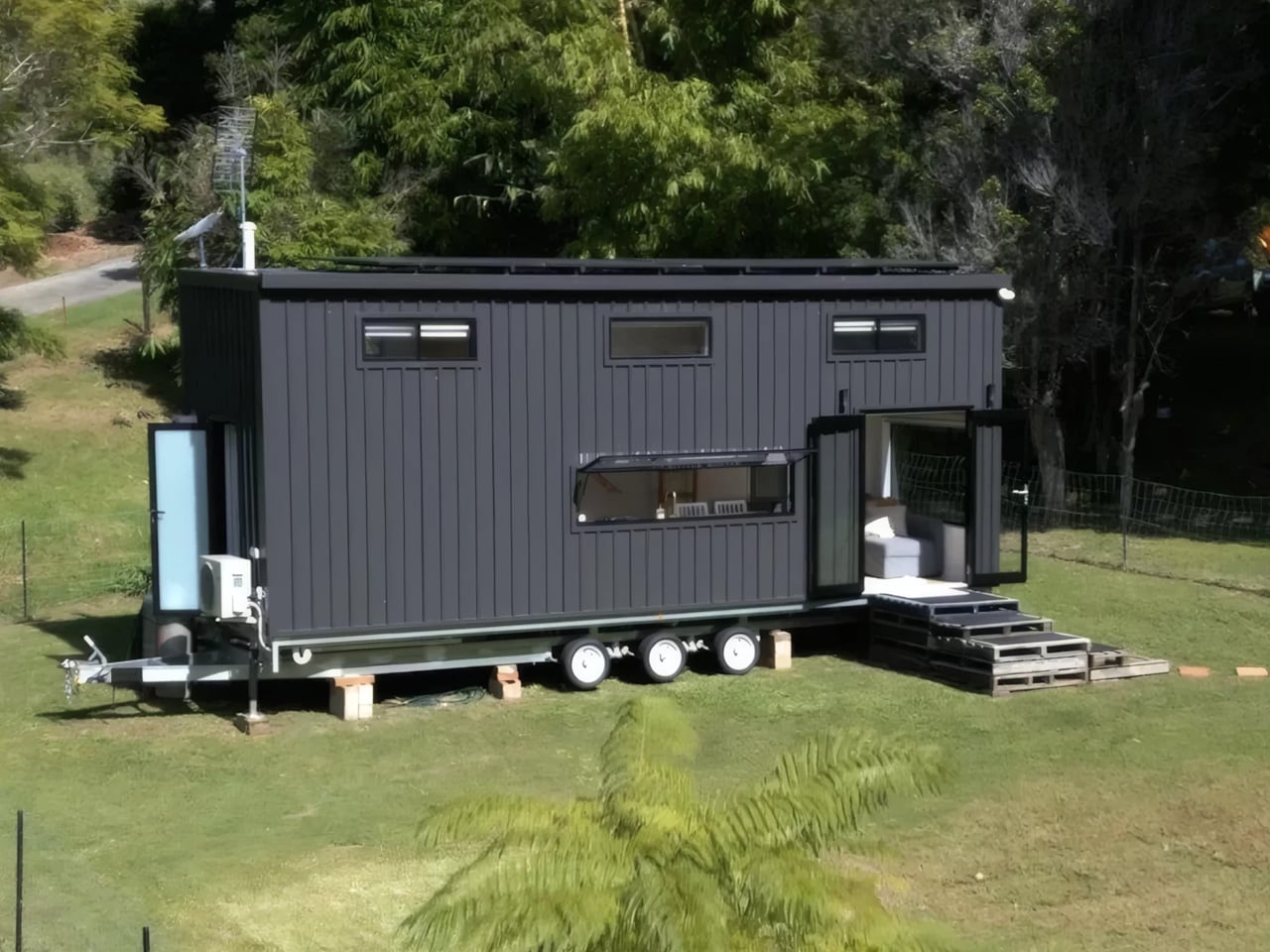
The Coolangatta 8.4 from Australian builder Removed Tiny Homes gets its name from its dimensions: 8.4 meters, or roughly 27.5 feet, sitting on a triple-axle trailer. The exterior wraps in Monument Colorbond steel cladding softened with natural textures, a combination that reads coastal and contemporary at once. It has presence in the late afternoon light without demanding attention. From the outside, the clean rooflines and tight material palette signal that what’s inside has been thought through rather than assembled.

What separates the Coolangatta 8.4 from comparable builds is the second loft. Floating above the main living space, it functions as a workspace, guest loft, or second bedroom depending on what the day needs. That programmatic flexibility is rare at this size and speaks to client-led design thinking rather than catalogue selection. The kitchen anchors the main living zone with a breakfast bar seating two, storage is woven into the architecture rather than bolted on as an afterthought, and generous glazing keeps the interior feeling open throughout.

What we like:

  • The second loft adds genuine spatial flexibility that multiplies how the home can be used day to day
  • Client-led customization means the layout reflects how you actually live rather than a prebuilt assumption

What we dislike:

  • Based in Gold Coast, Australia, which limits delivery options for buyers outside the region
  • Pricing is not publicly listed, requiring direct inquiry before budgeting

3. The Laurel
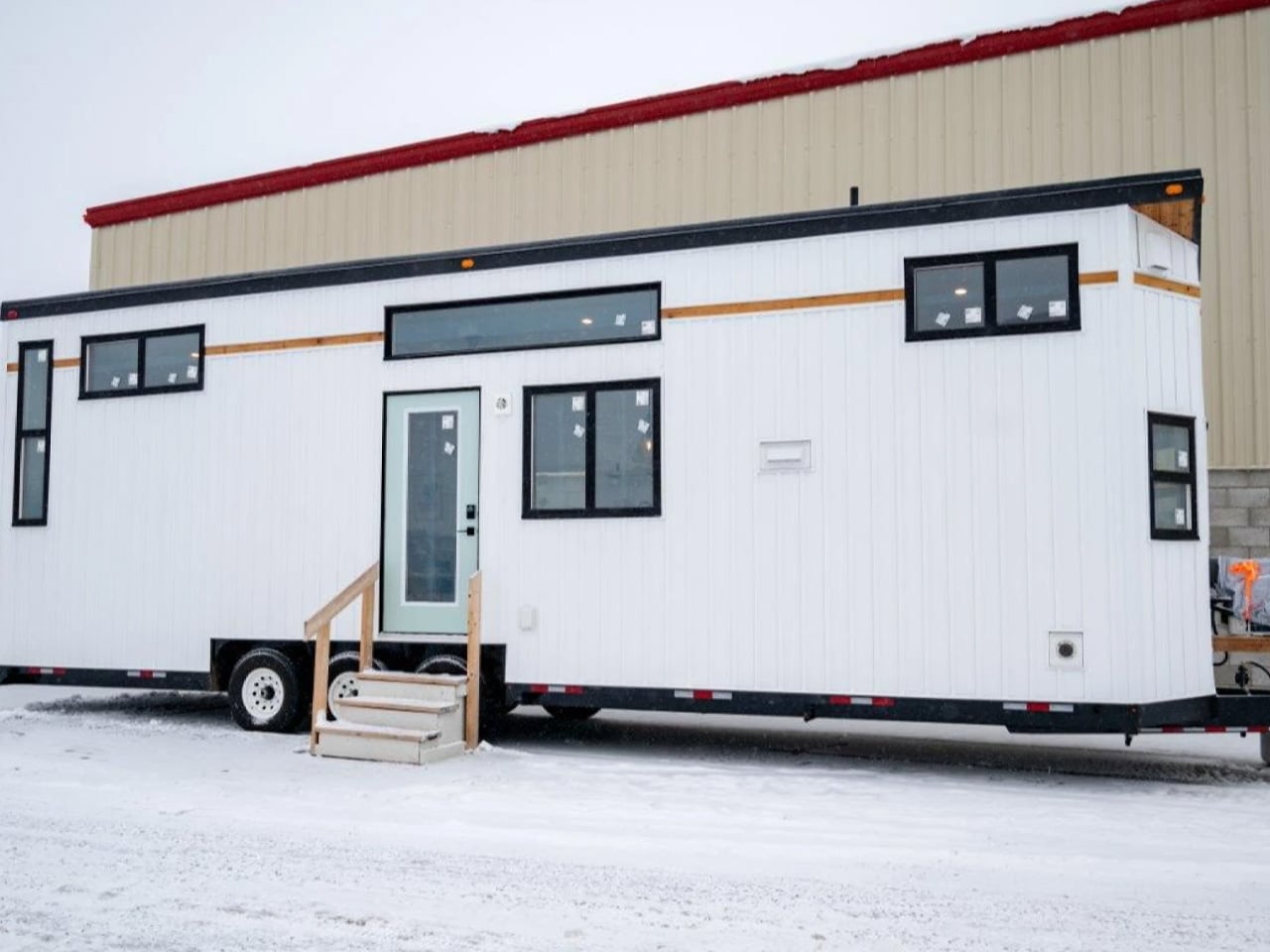
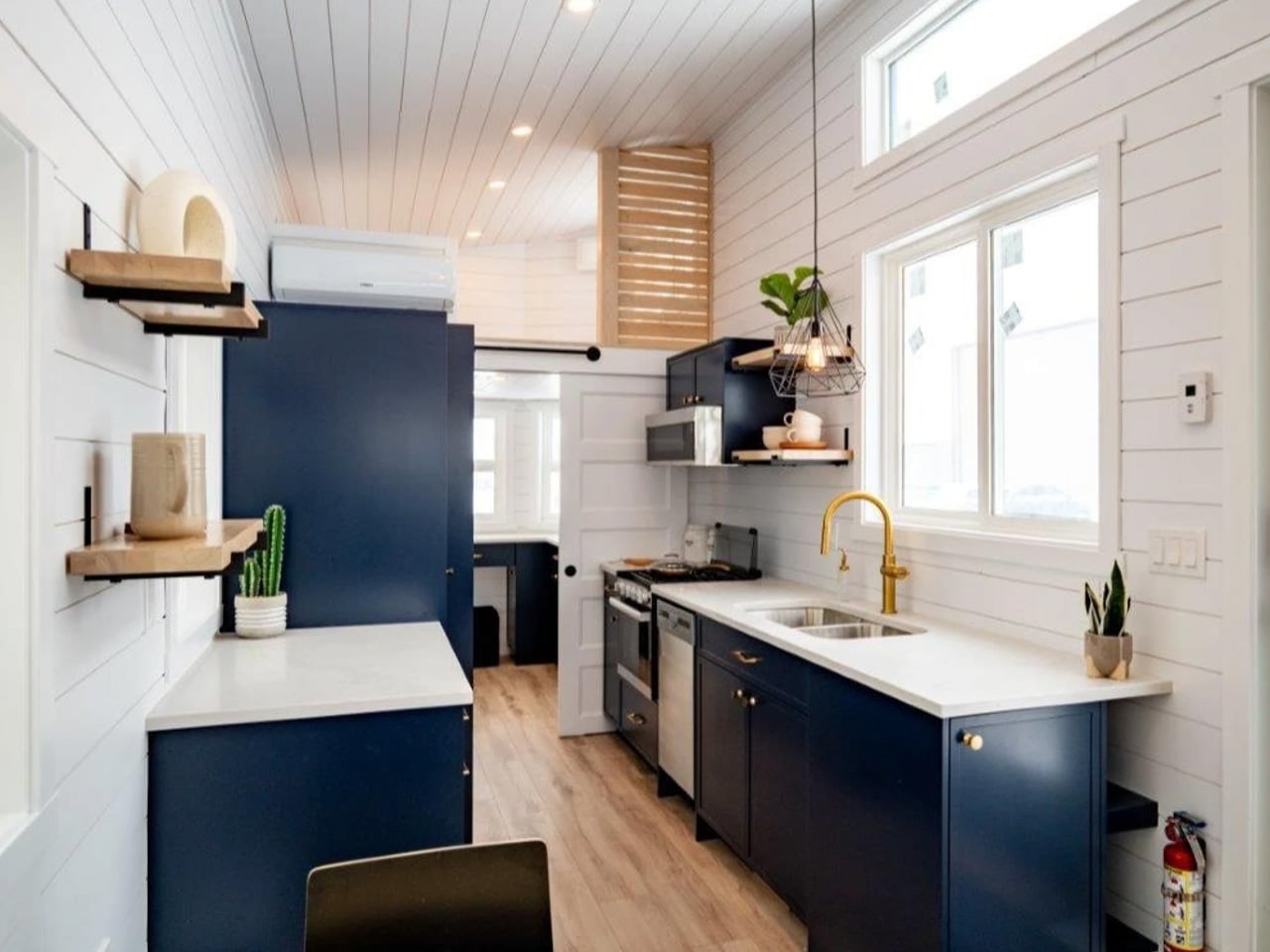
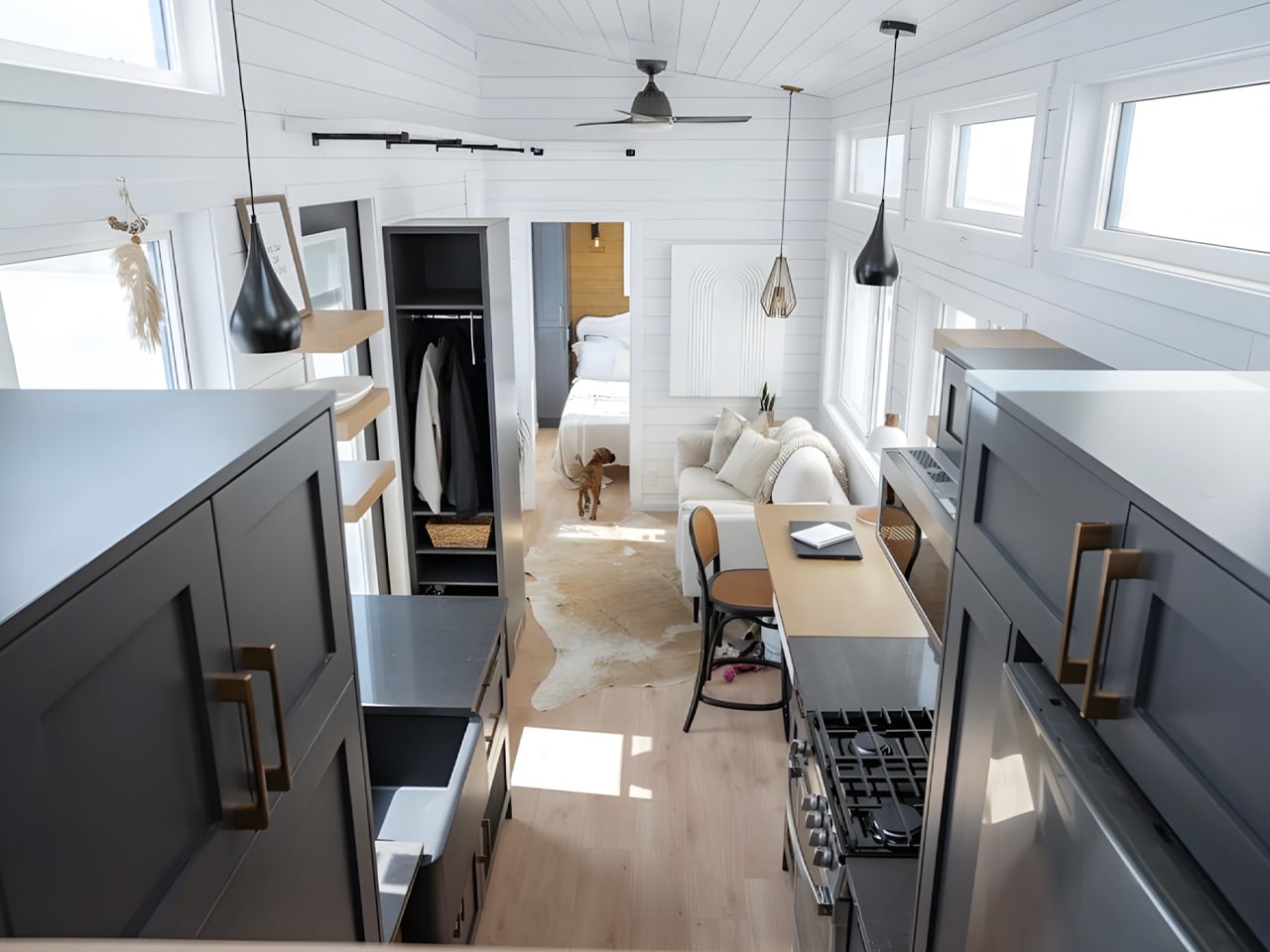
The Laurel is Teacup Tiny Homes’ take on fitting a real home into 423 square feet on a 34-foot triple-axle trailer. White vertical siding and a black metal roof give it a clean exterior that reads modern without announcing itself. Inside, white tongue-and-groove paneling lines the walls, dark blue cabinetry anchors the kitchen, and propane-powered underfloor heating keeps the lower level comfortable year-round. The living room holds a full sofa and electric fireplace with actual breathing room around both, which sounds unremarkable until you spend time in a compact build that got this wrong.

The Laurel earns its place on this list through two details that rarely coexist in a road-legal build: a dishwasher in the galley kitchen and a bathtub in the bathroom. The kitchen is four-burner capable with an oven, fridge, and freezer, and a microwave alongside it. A sliding barn door opens into a bathroom with an L-shaped vanity, flushing toilet, and a combined bathtub and shower. Two loft bedrooms handle sleeping for four, and the home starts at roughly US$121,000.

What we like:

  • A bathtub and dishwasher coexisting in a road-legal 34-foot home is genuinely uncommon
  • Sleeping four comfortably without the layout feeling like a dormitory is a real spatial achievement

What we dislike:

  • The second loft is accessed by a removable ladder, which is less practical for nightly use
  • At a US$121,000 base price, pricing sits at the premium end of the towable tiny home market

4. White Pine
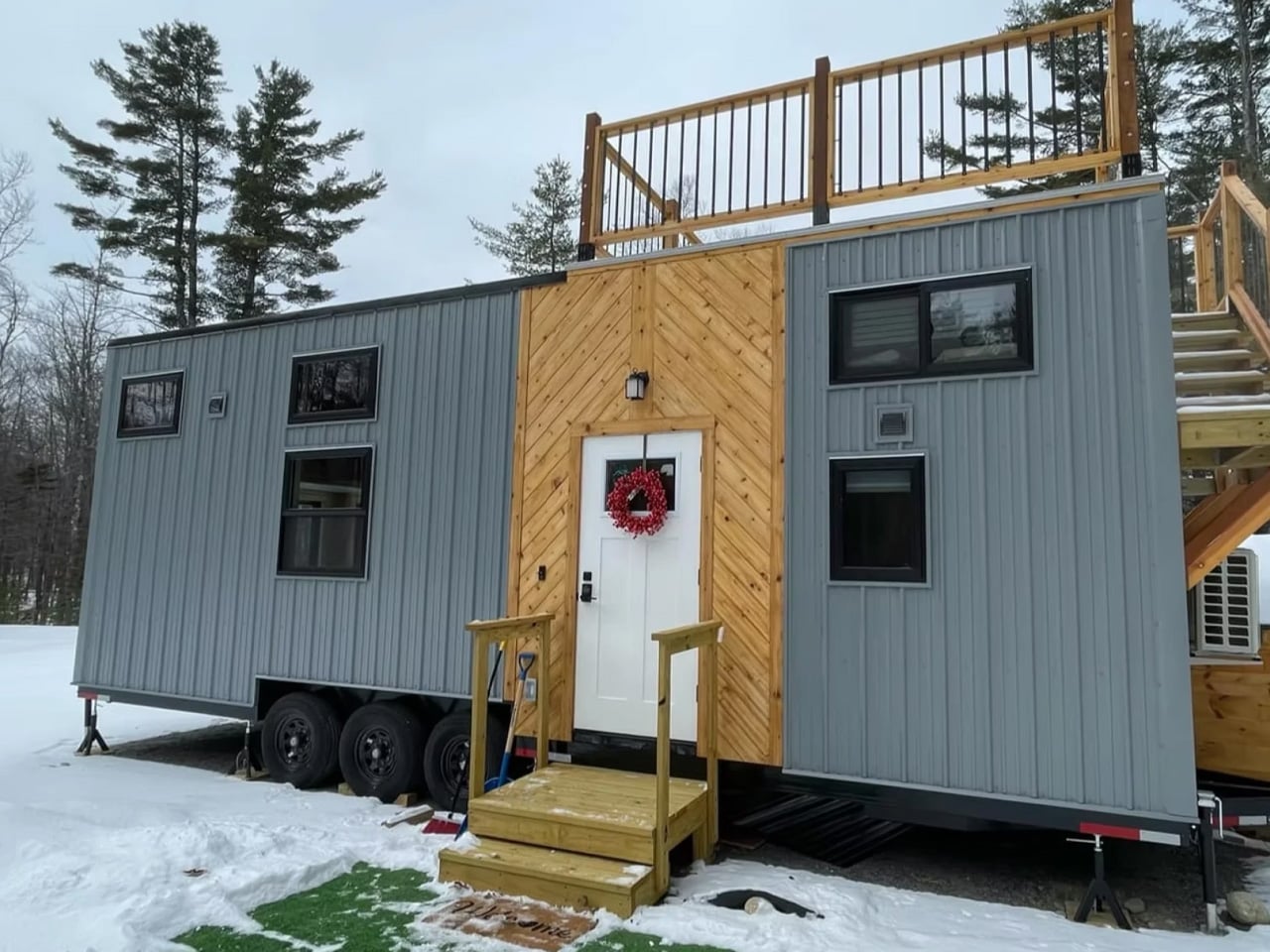
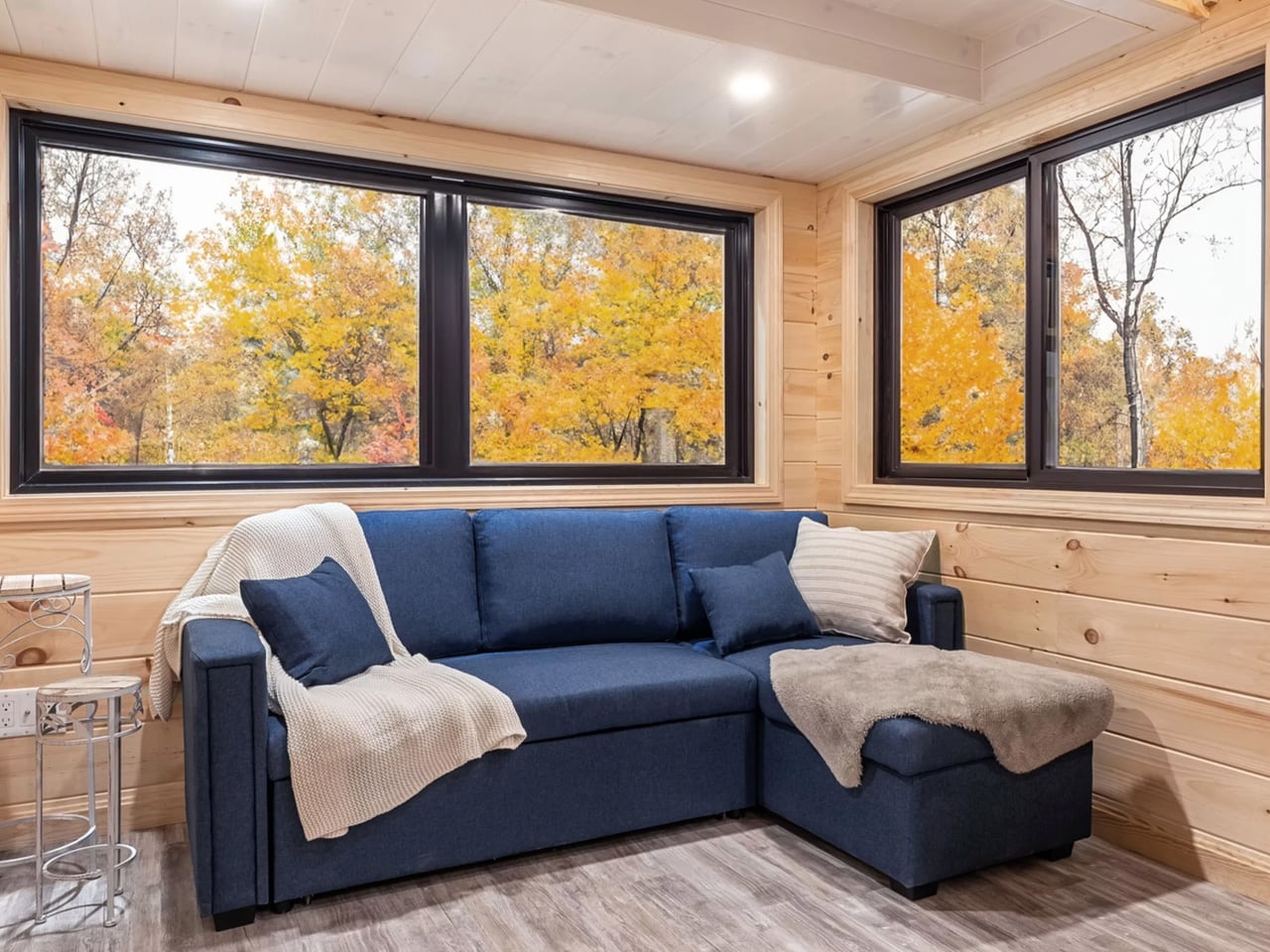
The White Pine from Backcountry Tiny Homes runs 30 feet long and 10 feet wide, and that extra foot of width over a standard tiny house changes the interior feel considerably. It sits on a triple-axle trailer and pairs cedar tongue-and-groove cladding with metal paneling on the exterior, a combination that reads as considered rather than rustic. The interior continues in pine with whitewashed ceilings and vinyl flooring throughout, warm without being precious, the kind of finish that ages gracefully without demanding constant maintenance.

The rooftop terrace, reached via detachable stairs from outside, converts dead roof space into a genuine outdoor living area. In a home of this size, an additional hangout space above the treeline is a meaningful expansion of livable square footage rather than a novelty. The master bedroom sits on a lowered platform with full standing height, a detail that sounds minor until you have crouched in a tiny home loft at 7 a.m. A second loft and sofa bed bring the sleeping total to five people. The White Pine starts at $74,280 for a shell, with the fully furnished version at $140,010.

What we like:

  • The rooftop terrace meaningfully expands usable square footage without touching the trailer footprint
  • Full standing height in the master bedroom loft is a rare and genuinely practical detail

What we dislike:

  • The 10-foot width requires a transport permit, adding logistical complexity to any relocation
  • The two-burner kitchen stove is modest for a home that sleeps five people

5. The Amelia
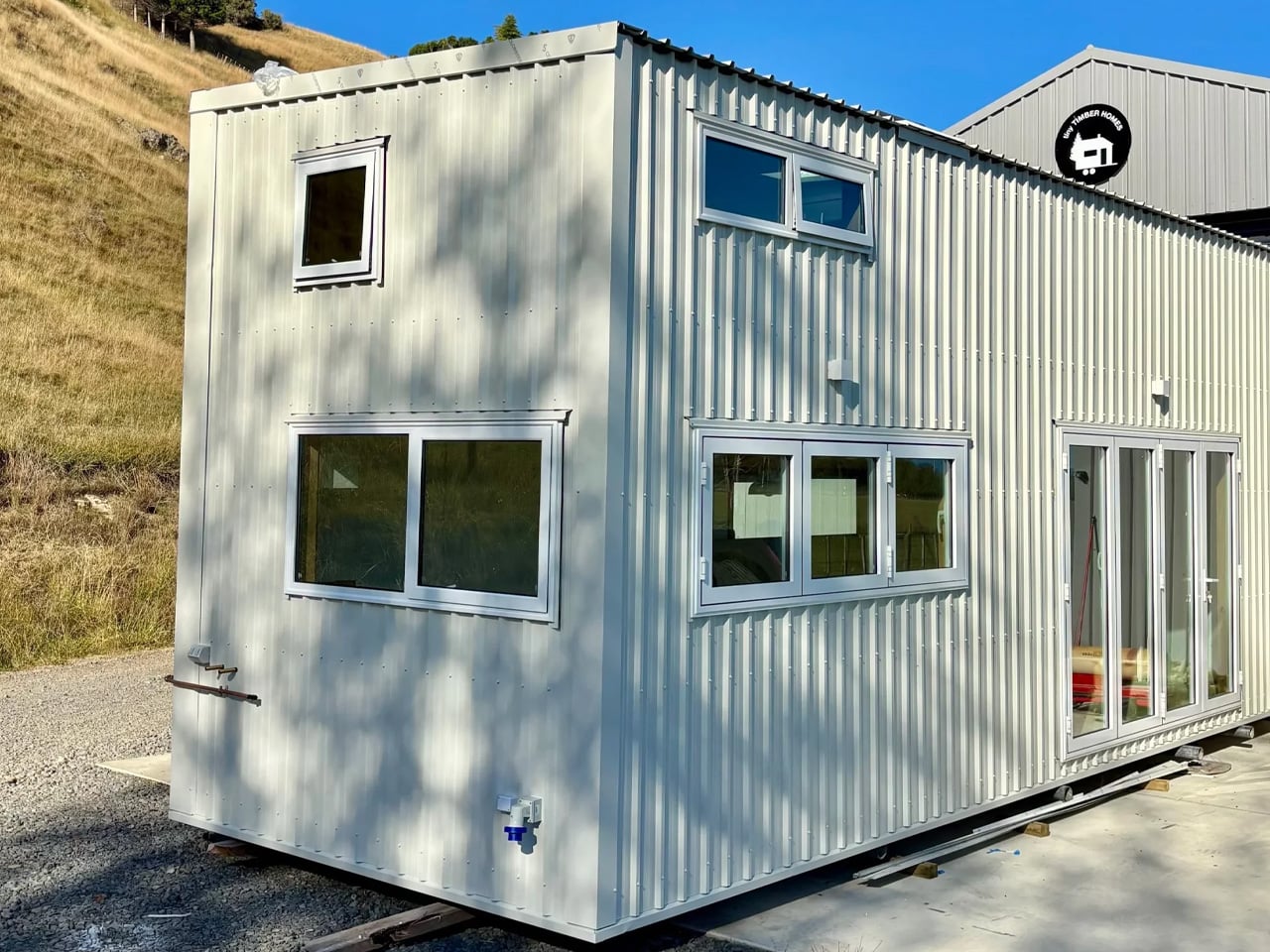
The Amelia is 26 feet long and 8.5 feet wide, sitting on a double-axle trailer with 341 square feet of interior space. White board-and-batten siding, a maintenance-free steel base, and a snap-lock metal roof give it a clean and deliberate exterior. Inside, dual-pane low-E windows fill the living area with natural brightness, and a propane-powered underfloor heating system, mini-split air conditioning unit, and Lunos heat recovery ventilator point to a home engineered for year-round, full-time living rather than the occasional weekend use that many compact builds are quietly optimized for.

The kitchen is where the Amelia builds its case. A white apron-front farmhouse sink, a four-burner Furrion propane range, fridge and freezer, microwave, and a large pull-out pantry anchor the space. Waterfall-edge marble-like countertops run the perimeter, with an eating bar that doubles as a workstation. A sliding door connects to the bathroom, which holds a 30-by-30 stand-up shower, custom vanity, and an oversized round medicine cabinet. Two loft bedrooms sit above, one sized for a king and one for a queen, and the build starts at roughly US$102,000.

What we like:

  • The Lunos heat recovery ventilator and full HVAC suite signals serious engineering for full-time living in any climate
  • The eating bar doubling as a workstation is a genuinely useful dual-function detail for remote workers

What we dislike:

  • At 26 feet on a double-axle trailer, the Amelia is on the shorter end for a two-loft build
  • The 30-by-30 shower is functional but narrow for long-term daily use

6. The Florence
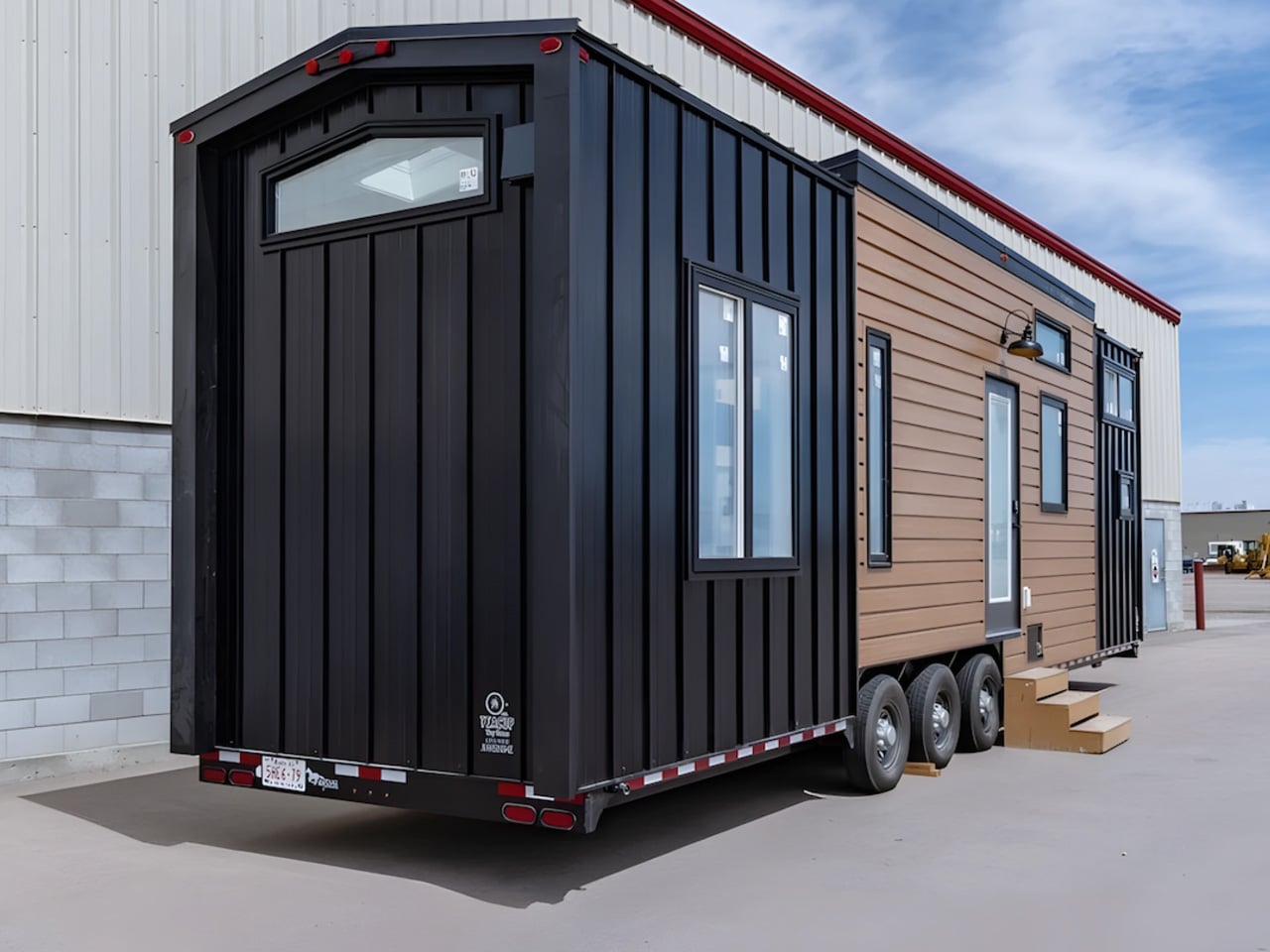
The Florence runs 36 feet on a triple-axle trailer, making it Teacup Tiny Homes’ most spacious build in this lineup at 355 square feet. White tongue-and-groove paneling, 11-foot vaulted ceilings, and generous windows push the interior further than its square footage suggests. A sofa and electric fireplace anchor the living area, with a large built-in storage unit near the entrance. It reads less like a compact home doing its best and more like a considered residence that happens to be moveable, which is the specific feeling this category spends most of its time chasing.

The Florence’s most useful detail is a dining nook that converts into a home office with an extending desk and integrated storage, a dual-function zone that remote workers will appreciate more than any feature wall. The master bedroom sits on the main floor with walking clearance on both sides and built-in storage that feels like a real room. A secondary sleeping loft above the kitchen adds a second bed. Customization options include a soaking tub in place of the glass-enclosed shower, and pricing starts at roughly US$122,000 with delivery across the US and Canada.

What we like:

  • The 11-foot vaulted ceilings and main-floor master bedroom make this feel closer to a cottage than a tiny home
  • The home office dining nook is one of the more thoughtfully resolved dual-function spaces in this category

What we dislike:

  • At US$122,000, it is the priciest entry from Teacup Tiny Homes in this roundup
  • The secondary loft is accessed by a removable ladder, better suited to occasional guests than daily use

7. SHAK
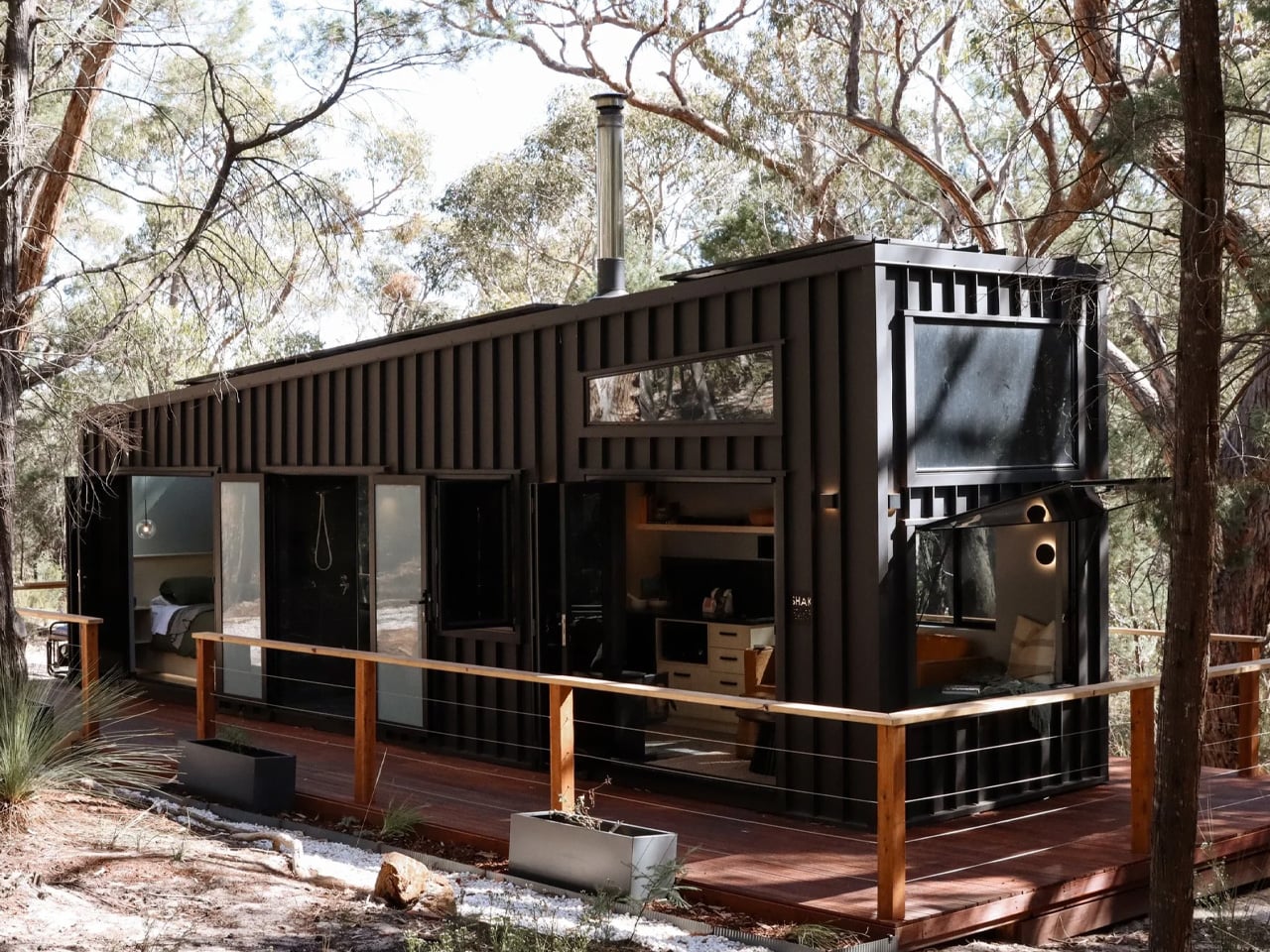
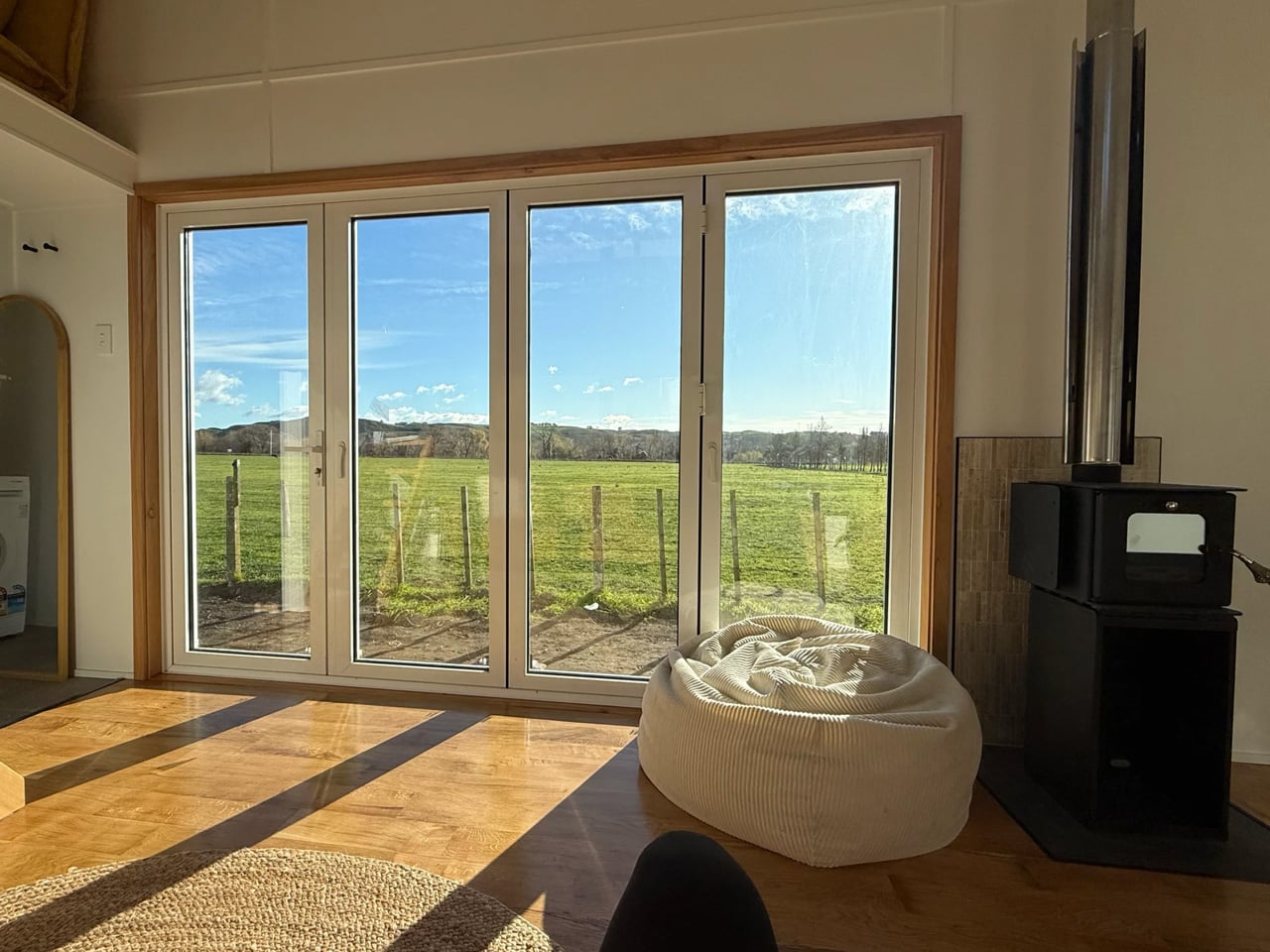
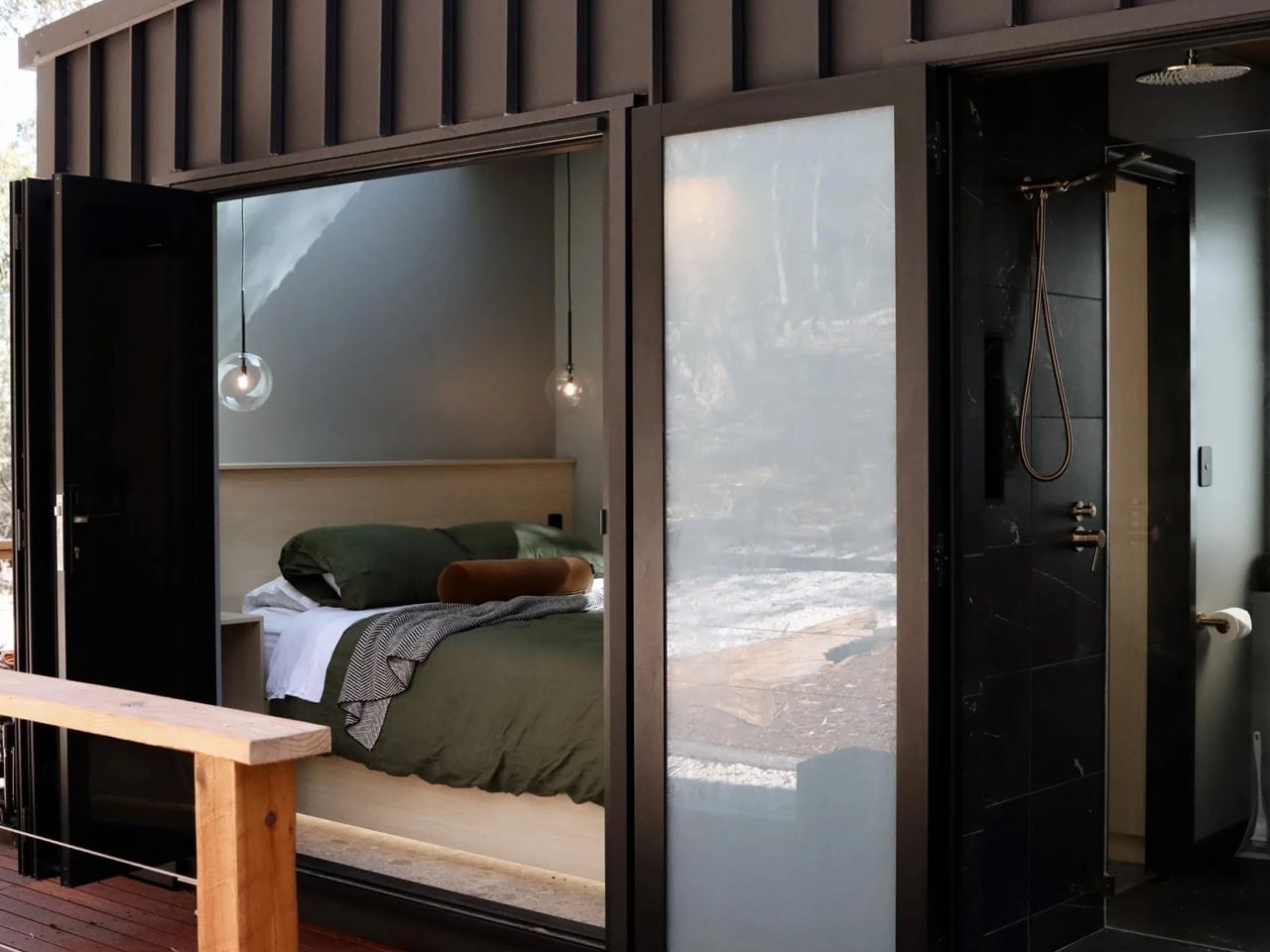
The SHAK won Best Weekender at the 2025 Tiny House Industry Awards, and once you see it, the reason is obvious. Built by Removed Tiny Homes as a bespoke commission for a site in the Grampians of Victoria, Australia, it runs entirely off-grid with no power line in sight. Dark vertical cladding, an angular stepped roofline, and a wraparound timber deck give it a sculptural exterior presence that most permanent homes never manage. It reads less like a transportable dwelling than a piece of architecture that grew from the landscape itself.

Inside, dark stone benchtops, timber cabinetry, a black herringbone-tile splashback, and wine plumbed directly to the bench set the register for the kitchen. A black wood-burning fireplace anchors the living space. The bathroom earns its own category: two brass rainfall heads over a dark marble-tiled double shower, with a full-height glass door that opens directly onto the bush for an open-air morning ritual. A queen bed sits beneath a timber-slat ceiling and a large skylight that pours daylight across the room throughout the day. It does not feel like a compromise. It feels like a deliberate choice.

What we like:

  • Wine on tap and a wood-burning fireplace in a fully off-grid build reframes what the word “tiny” can mean
  • The glass shower door opening directly onto the Australian bush is a genuinely extraordinary spatial experience

What we dislike:

  • Built as a bespoke one-off commission, so replication depends entirely on Removed Tiny Homes’ availability and capacity
  • The premium specification places it in a completely different price bracket from most builds on this list

The Takeaway

Each of these designs make a strong case for the tiny homes category. The camp is splitting in two directions, and both are producing work worth paying attention to. One lane is pure efficiency, the Fairfax 20 and the Amelia resolving what’s genuinely necessary and building it with precision. The other is experience-driven: the SHAK and the White Pine designing for feeling rather than floor area. Neither approach is wrong. Both are getting better at what they set out to do.

The thread running through all seven is resolution. Each build solved a specific problem rather than simply filling a footprint: a bathtub in a road-legal trailer, full standing height in a sleeping loft, wine on tap in an off-grid retreat. These are not incidental details. They are the decisions that separate a home from a box, and they are exactly why this category keeps producing work that is genuinely worth covering.

The post 7 Best Tiny Homes of September 2026 first appeared on Yanko Design.

3 Japanese Stationery Designs So Good You’ll Actually Enjoy Going Back to Your Desk

Late August has a particular texture. The mornings cool by a degree, the light shifts without announcing itself, and the desk that went mostly untouched all summer starts to look like a place worth returning to. Japanese stationery has always understood this moment. The objects it produces are not exciting in the way a gadget is. They are exciting in the way a good chair is — once you find the right one, everything before it starts to feel like a placeholder.

The three picks here share a quality that is easy to recognize once you know to look for it. Each attends to the part of the tool that most manufacturers have already decided is resolved. A pair of scissors built with the precision of a professional instrument. A stapler that removes the staple from the concept of stapling. A notebook that asks nothing of you beyond showing up. Together, they change what returning to a desk in late summer actually feels like.

1. Stellar Edge Scissors

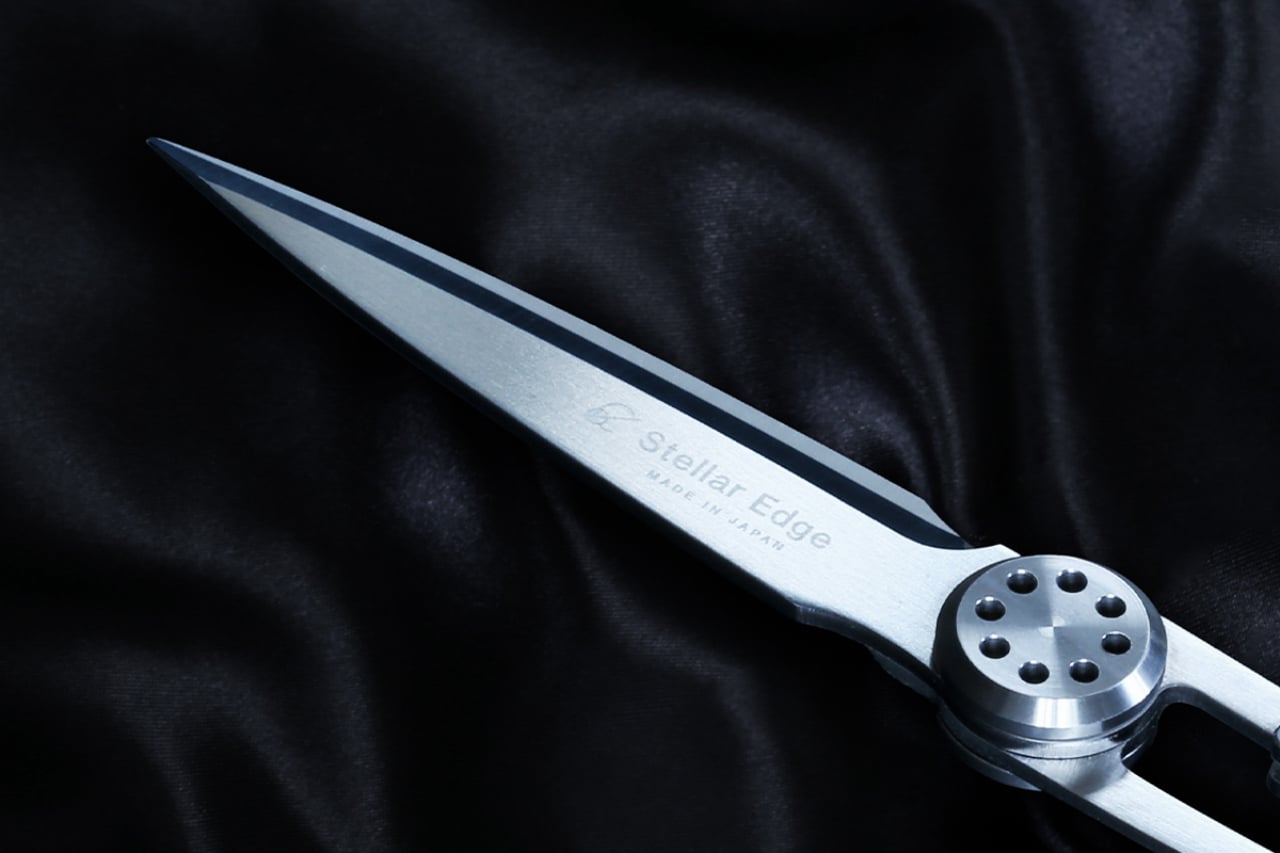
Most scissors are bought once and forgotten. The Stellar Edge Scissors, crafted from Japanese stainless steel, propose a different relationship with the category. Seamless, polished handles and a weight distribution that shifts the blade toward the hand make cutting feel less like holding something and more like extending your reach across the page. Every angle in the design is considered. The result is a pair of scissors that earns a permanent place on the desk rather than disappearing into a drawer the week they arrive.

Each snip registers with the kind of clean resistance that confirms the blade is doing exactly what it was built for. The polished finish elevates the tactile experience without making the scissors feel fragile or precious. Extended cutting sessions don’t build the fatigue that cheaper alternatives accumulate across an afternoon, and the grip sits naturally regardless of hand size with no adjustment required. For anyone who works with paper regularly, these are the scissors that make the pair you owned before feel like it was never really doing the job.

What we like

  • Japanese stainless steel construction holds its edge through sustained use rather than dulling after a few weeks of regular cutting
  • The seamless, polished handles and considered weight distribution make these genuinely display-worthy objects on a desk surface

What we dislike

  • The precision manufacturing and material quality place these at a higher price point than most people are used to spending on scissors
  • No rubber grip inserts means those who prefer a softer handle feel on longer cutting sessions will notice the absence

2. PaperLock Stapler

The mechanism behind PaperLock is simple in the way good design is simple. Press the lever and a small cutting element punches through the stack, folding the paper back through itself to create an interlocked join. No metal passes through the page. No staple is added. The paper becomes its own fastener, which means nothing catches against other sheets in a stack, nothing needs removing before a document reaches the recycling bin, and nothing can run out at the moment you most need it to work.

Most desk tools keep their mechanisms out of sight, usually because there is nothing worth showing. PaperLock does the opposite. The transparent body puts the internal parts on full display, and pressing the lever becomes something closer to watching a small machine operate than completing a piece of office admin. A viewing window shows exactly where the join will land before you commit, a corner guide keeps placement consistent across an entire stack, and the lever works pressed against a surface or squeezed in the palm with no adjustment required between the two.

Click Here to Buy Now: $35.00

What we like

  • The staple-free mechanism cuts and interlocks the paper itself, leaving nothing to load, manage, or run out of at an inconvenient moment
  • The transparent body puts the internal mechanism in full view with every press, turning a routine desk task into something worth watching

What we dislike

  • Five-sheet capacity handles everyday stacks cleanly, but anything thicker requires a different tool, which limits its range for larger document sets
  • Separating paper-locked sheets without tearing requires more care than pulling a metal staple free, which matters when a binding error needs to be corrected quickly

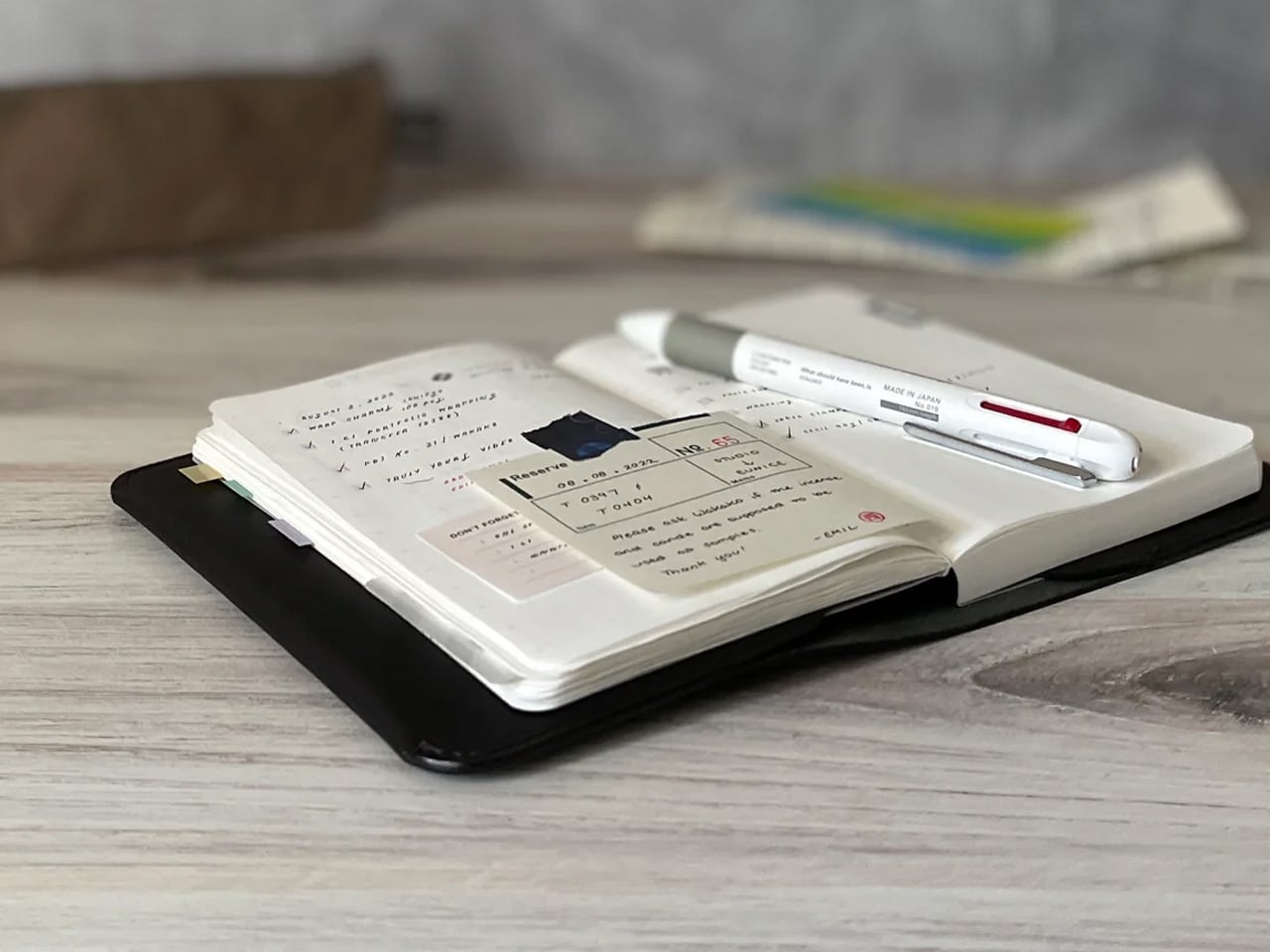
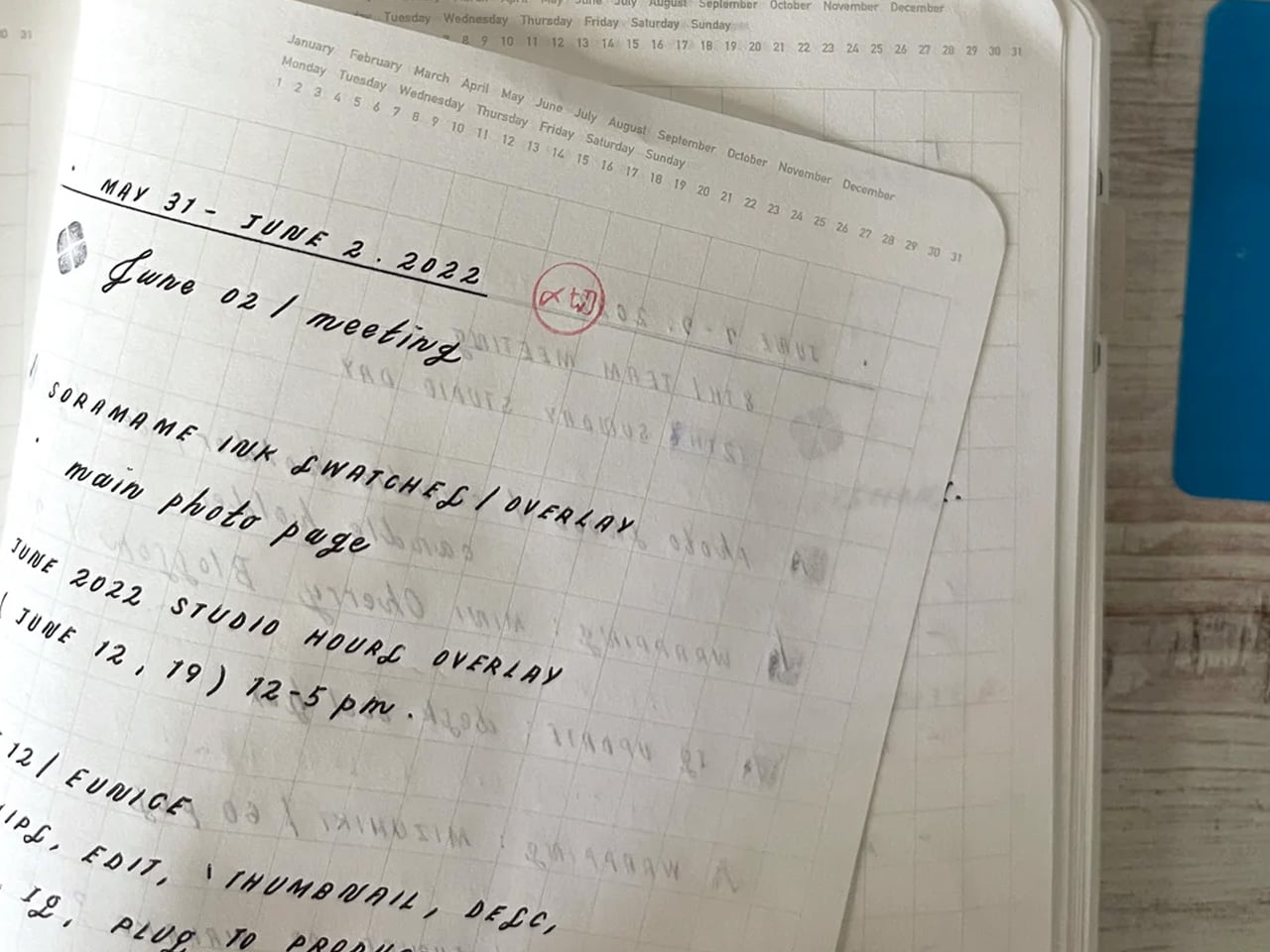
3. Stalogy Editor’s Series 365 Days Notebook A6

The Stalogy Editor’s Series 365 Days Notebook carries no branding on its exterior. That is a design decision, not an economy. Inside, 368 pages of cream-toned dot grid paper sit light enough that the notebook never feels precious, yet substantial enough to hold a full year of daily writing without any sense of running out. At A6, it fits a coat pocket without folding. The dot grid recedes under handwriting without disappearing, present enough to keep lines honest across a full page of notes.

Nothing about the Stalogy insists on a particular way of working. There are no monthly spreads pre-printed inside, no prompts in the margins, no year assigned to the cover before you open it. Bullet journaling, daily planning, freeform writing, and quick sketches all sit comfortably within its pages without any of those uses feeling like a compromise. Most stationery at this level quietly pushes a method. The Stalogy provides the space and steps aside, which turns out to be the more useful and respectful approach any notebook can take toward the person using it.

What we like

  • The bare cover carries no visual identity, making it entirely the user’s object from the moment it is opened rather than the manufacturer’s
  • 368 pages at A6 gives a full year of writing without adding meaningful bulk to a coat pocket or daily carry

What we dislike

  • Date and time markings are printed at a small scale, making them difficult to read in low light or at a glance during a busy session
  • Heavier fountain pen inks will ghost through the thin paper, which limits compatibility for dedicated nib users

The Right Objects Make Coming Back Feel Like a Choice

There is a version of returning to a desk in late August that feels like a small defeat. The difference between that version and the other one is almost always the objects on the desk. When the scissors cut cleanly and feel right in the hand, when the stapler is always ready without refills to think about, when the notebook asks nothing beyond showing up, the desk becomes a different kind of place. The tools stop being obstacles and start being part of the reason to sit down.

These three earn their place not because they are impressive to look at but because they are right to use. The Stellar Edge Scissors bring precision to a category most people never think to question. The PaperLock removes a material from a process that never needed it. The Stalogy removes every obstacle between writing and the page. None of them asks for your attention. That absence of noise is the design principle Japan has been working toward for the better part of a century, and it is why coming back to the desk in September can feel entirely different from the September before.

The post 3 Japanese Stationery Designs So Good You’ll Actually Enjoy Going Back to Your Desk first appeared on Yanko Design.
5 Best Home Office Gadgets for Remote Workers in 2026 That Actually Justify Every Dollar

Your laptop has two USB-C ports. Your desk needs dual monitors, wired internet, an external drive, a charger, and somewhere to plug in your SD card. So you have a dongle for the monitors, a second dongle for Ethernet, a third one that lives in your bag and migrates to the wrong bag constantly, and a power brick sitting on the floor because there is nowhere else for it to go. The setup works. It looks like a tech garage sale.

These five products fix that. Not by adding more stuff to your desk, but by replacing the specific things that cost you time and attention every single workday. Each one earns its footprint with a clear answer to a real problem. The HubKey handles your dongle situation and your physical controls. The OrigamiSwift handles your mouse. The Logitech MX Brio Ultra handles your camera. The Rocketbook handles your notes. The Rolling Clock handles your time zones.

1. HubKey Gen2

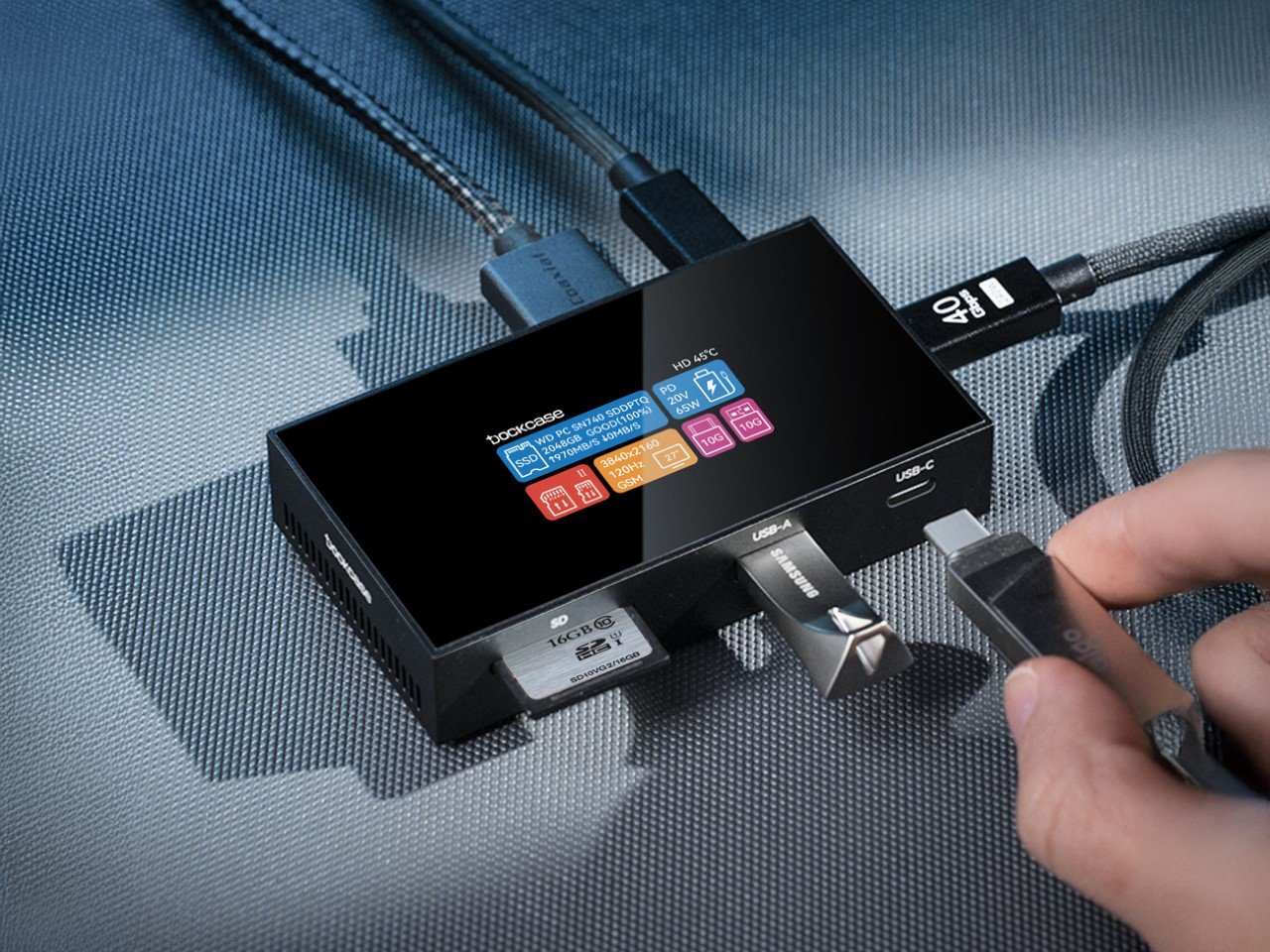
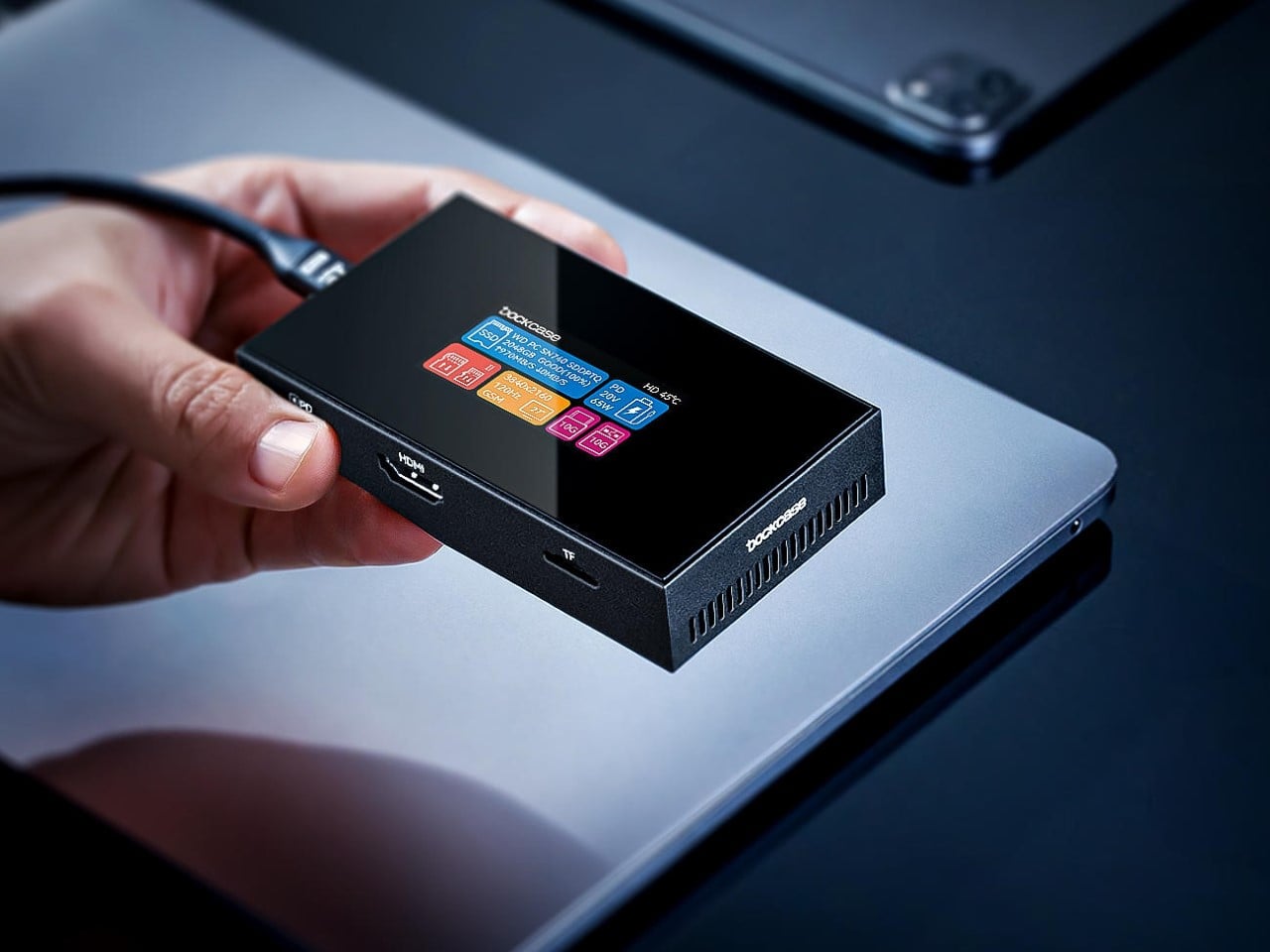
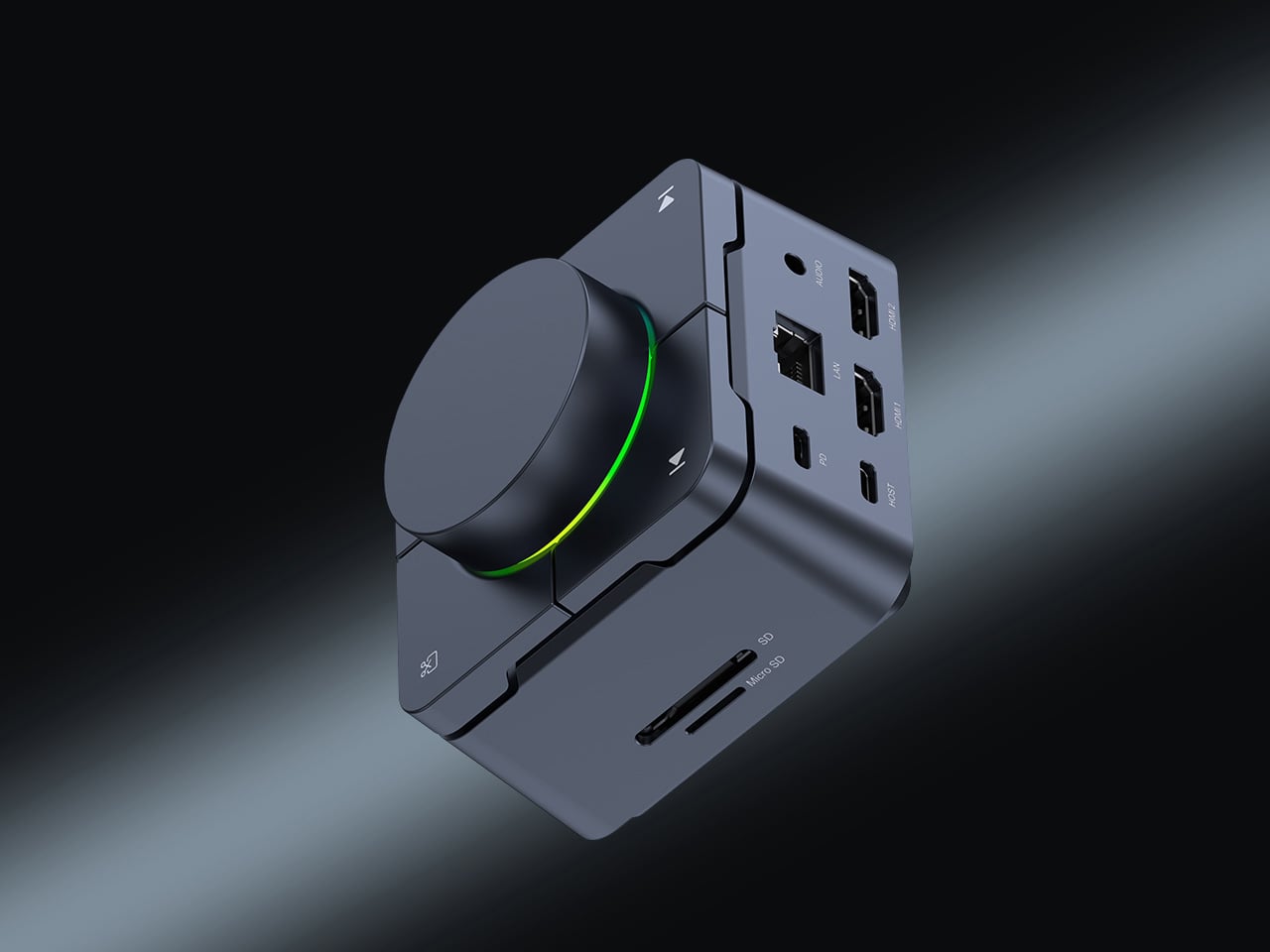
Count the adapters on your desk right now. There is a display dongle, a USB-A hub, an Ethernet adapter, and a charging brick that has lived on the floor for six months. The HubKey Gen2 replaces all of it with one cable back to your laptop. Dual 4K 60Hz HDMI outputs, 100W PD charging, 2.5 Gbps Ethernet, 10 Gbps data, SD and TF slots, and a 3.5mm jack — simultaneously, without throttling. Most hubs make you choose between charging and full performance. The HubKey does not.

What actually separates it is the top panel. Four shortcut keys and a central knob handle volume, mute, screen lock, and screenshots without touching your keyboard. It runs plug-and-play on Windows, macOS, Linux, and Steam Deck out of the box, with an optional driver that unlocks 170 preset combinations and a fully custom mode when you want it. Simple and immediate on day one. Deeper when you need it.

What we like:

  • Dual 4K 60Hz from a single cable to your laptop is the feature that ends the one-monitor compromise for anyone who has been putting off a second display.
  • The physical knob and shortcut keys turn volume adjustment and screen privacy into a hand gesture instead of a keyboard hunt. Once you have a physical mute button, software mute buttons feel like a step backward.

What we dislike:

  • The shortcut customization is deep enough to be worth exploring and slightly too deep to set up quickly. Budget 20 minutes before your first real workday with it.

2. OrigamiSwift Folding Mouse

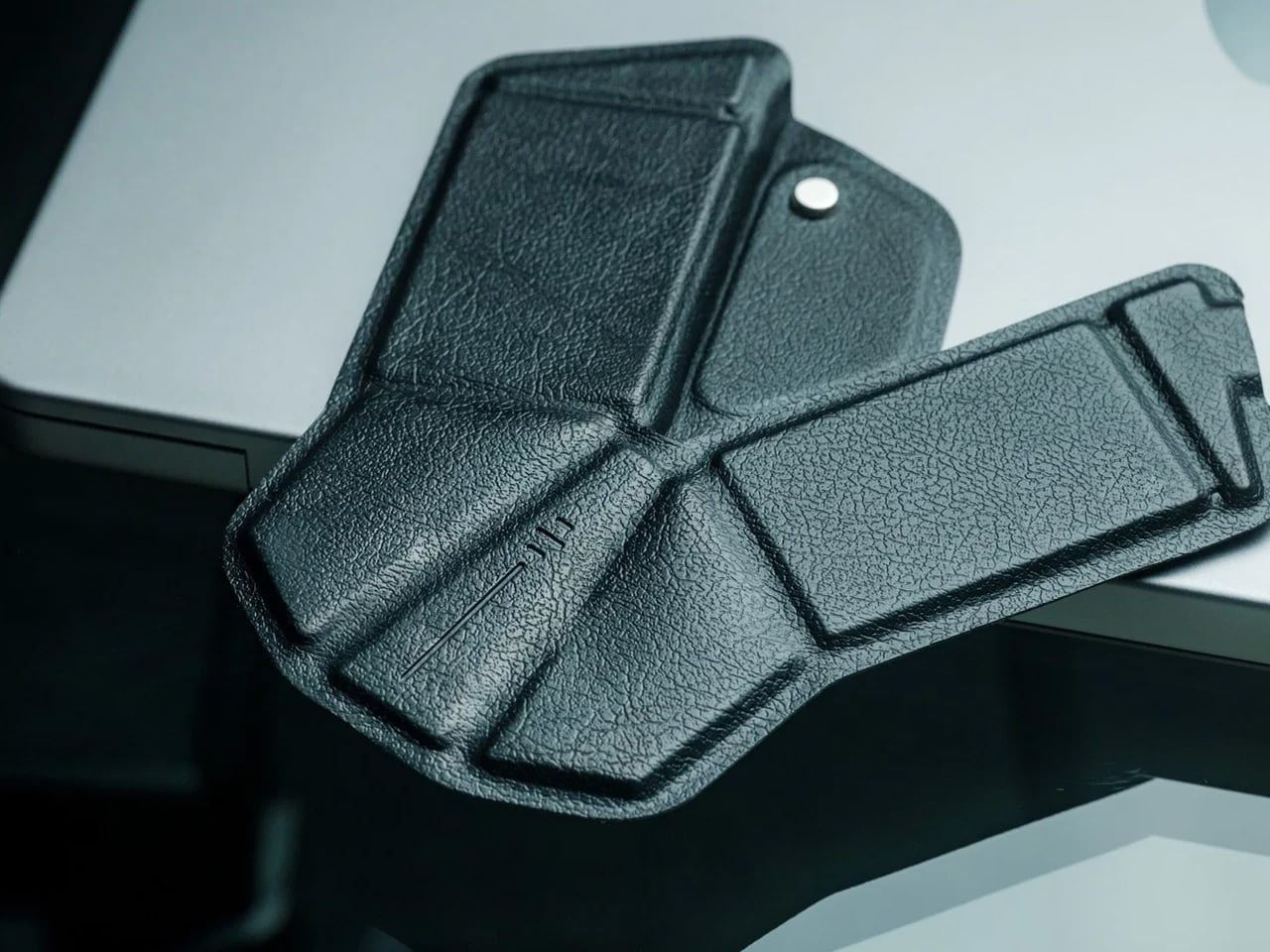
If you travel with a laptop, you own two mice. The real one on your home desk. And the compact, slightly uncomfortable one in your bag that you use everywhere else and quietly resent by 2 pm. The OrigamiSwift folds flat to 4.5mm, which is thin enough to slip between notebook pages without leaving a visible bump. It unfolds in under half a second into a full-sized ergonomic shape that sits naturally in your hand. At 40 grams, it weighs less than your wallet.

The tracking precision has nothing to do with its size. The Bluetooth connection is reliable. The fold mechanism feels deliberate rather than fragile, which matters because it is the interaction you repeat every time you sit down. At $85, it costs less than most dedicated desktop mice and does something none of them can: it works equally well in your carry-on and at your home desk without asking you to choose between comfort and portability. The folding mouse has been a category of compromises for years. This one is not.

Click Here to Buy Now: $85.00

What we like:

  • The ergonomic angle on deployment feels solid and settled, not provisional. It does not flex or wobble under a firm grip the way folding products tend to when they meet any real resistance.
  • The sub-half-second flip is the kind of interaction that registers the first time and then disappears into muscle memory by day three.

What we dislike:

  • The 40-gram weight takes a few days to stop noticing if you are coming from a heavier desktop mouse. It is not uncomfortable, just different, and your hand knows it before your brain stops caring.
  • Bluetooth only means no wired fallback, which matters on the rare occasion your connection cuts out mid-deadline.

3. Logitech MX Brio Ultra

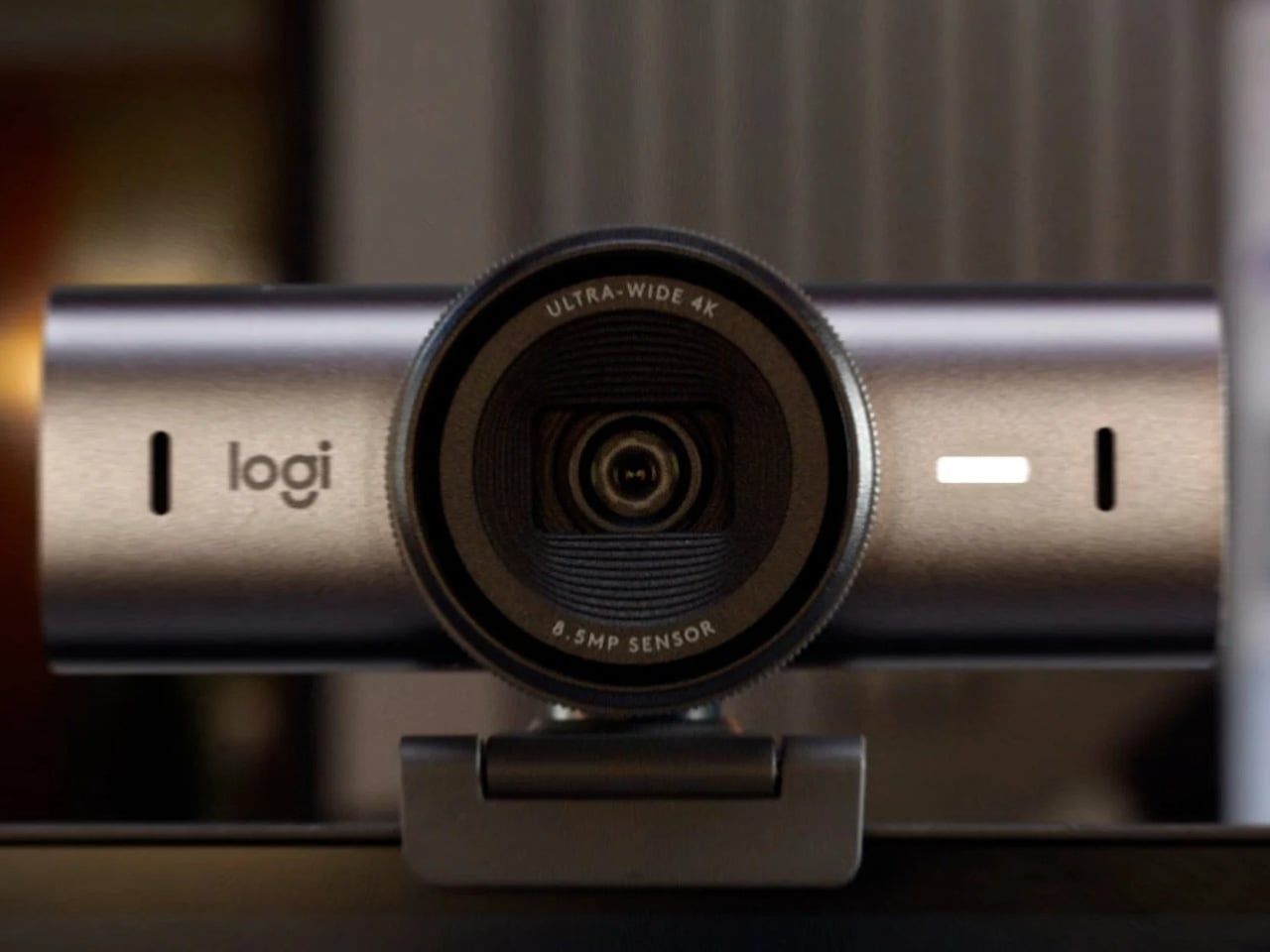
At some point this year, you saw your own face in the corner of a video call, and it looked like you were dialing in from a parking structure. Flat, gray, slightly soft around the edges. That is your built-in laptop webcam doing its best with a sensor roughly the size of a fingernail. The Logitech MX Brio Ultra runs a 4K sensor with AI-powered auto-framing, and the gap between what it produces and what your laptop camera produces is not subtle. It is the difference between looking like you prepared for the call and looking like you rolled in from the hallway.

Logitech is the default answer for a reason. The MX Brio Ultra is what Wirecutter recommends, what the r/homeoffice community lands on after every comparison thread, and what most people in a serious remote setup are already running. The AI framing tracks you as you move and keeps the shot composed without any input from you. At $200, it sits at the top of the mainstream webcam market, and it earns that position by being the camera you set up once, forget about, and still look good on every call six months later. No fiddling with tracking zones, no hour in settings. It works the way a Logitech product always works: immediately and without drama.

What we like:

  • 4K output with AI auto-framing is the combination that covers every remote work scenario, from a one-on-one call to a presentation with 50 people watching your frame.
  • The setup experience is genuinely plug-and-play. If you have spent time configuring other AI webcams before a call, the MX Brio Ultra will feel like a relief.

What we dislike:

  • At $200, it is the most expensive item on this list, and the price is harder to justify if your calls are mostly audio-only or your desk faces a window with no lighting control.
  • The design is competent rather than interesting. It sits on your monitor and disappears, which is fine, but it does not add anything to how your desk looks the way some of the other picks here do.

4. Rocketbook Reusable Sticky Notes

You have a stack of Post-its on your desk right now that you bought six months ago, used about a third of, and will eventually throw away when they stop sticking. Then you will buy another stack. Then another. The Rocketbook Reusable Sticky Notes break that cycle by doing something Post-its never could: you wipe them clean with a damp cloth and start over. Same note. Indefinitely.

The material feels like real paper, which matters more than it sounds. Other reusable note products go rigid and plastic and remind you every time you pick one up that you are using something weird. The Rocketbook version is thin and flexible, and the writing experience with a Pilot FriXion pen is close enough to a regular sticky note that the novelty wears off quickly and the habit takes over. The adhesive strip rinses clean and resticks the same way, so the note goes back on the monitor, the cabinet, or the edge of your desk exactly where you left it. The Rocketbook app photographs each note, transcribes your handwriting, and sends it to whatever cloud storage you already use, which means the thought is archived before you wipe the surface. You get the speed of analog and the permanence of digital without running an AI meeting bot or opening another productivity app.

What we like:

  • The paper-like feel is the detail that makes this a daily habit rather than a novelty. It does not feel like writing on a whiteboard, and that distinction is what separates it from every competing reusable note product.
  • The app’s automatic transcription and cloud sync mean wiping the note clean is not losing the note. That confidence changes how freely you actually use them.

What we dislike:

  • You are locked into Pilot FriXion pens, full stop. Your favorite pen does not work here, and if Pilot ever discontinues the FriXion line, the notes become decorative squares.
  • The wipe-to-erase process requires a damp cloth nearby, which is one more thing your desk needs to accommodate. In a dry climate or a cold office, the cloth dries out faster than you expect.

5. Rolling World Clock

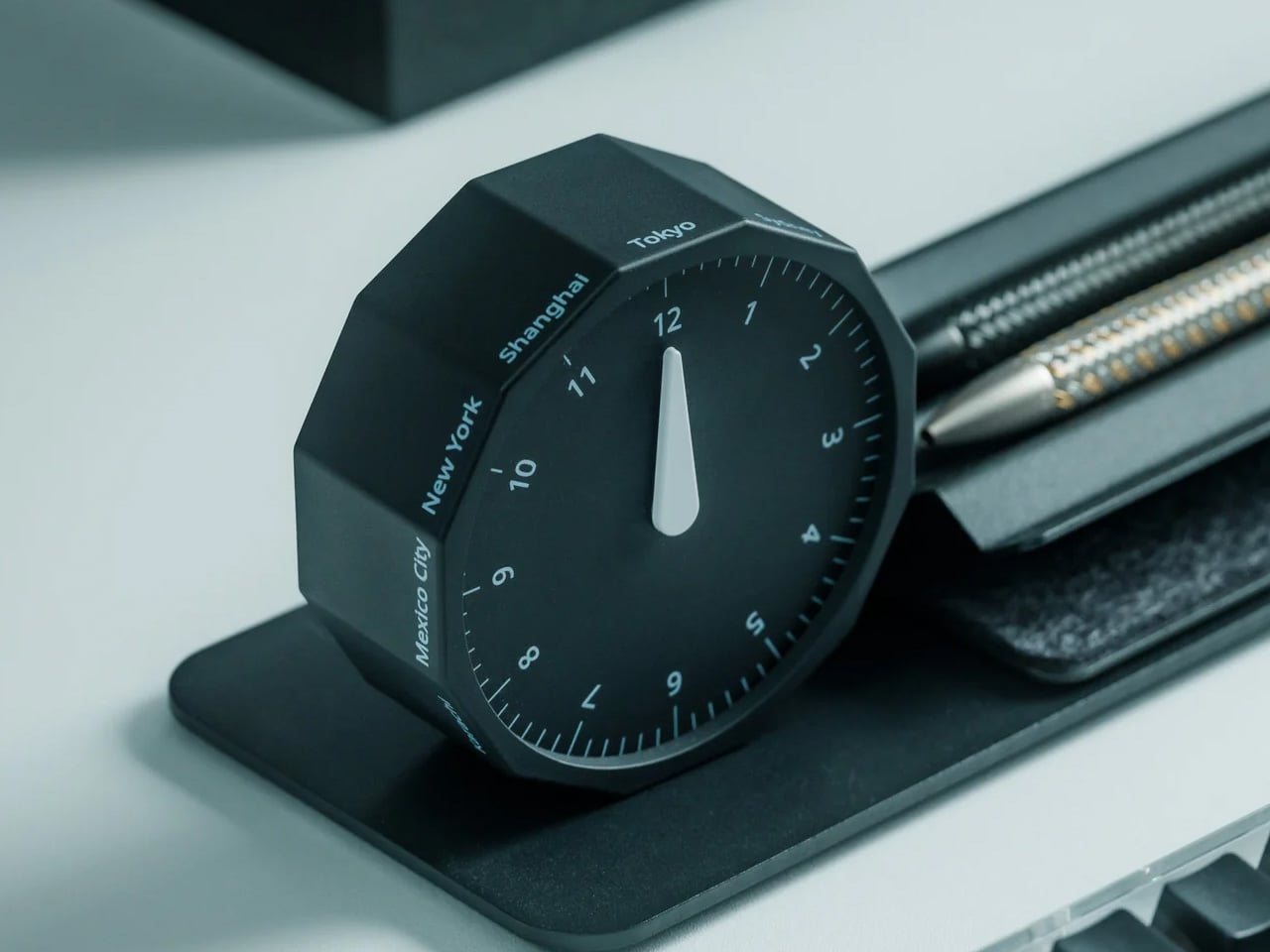
Before every Slack message you send to someone on another continent, you do the math in your head. Or you switch tabs. Or you pull up a world clock widget and then forget what you were doing before you opened it. The Rolling World Clock removes that entirely. It sits on your desk and shows you the time in every zone you track, physically, without touching a screen. You glance at it the way you glance at your coffee cup. No context switch, no arithmetic, no interruption.

At $49, this is the least expensive thing on this list and the one with the fastest daily return. The rolling display mechanism is considered, the design language sits cleanly next to other deliberate desk objects, and a physical clock requires no charge, no connection, and no subscription to do its job. That combination is rarer than it should be in 2026. The only maintenance it asks for is a manual adjustment twice a year for daylight saving time, which you were going to forget anyway, but at least now you have something specific to blame.

Click Here to Buy Now: $49.00

What we like:

  • The physical format makes world time a peripheral-vision experience rather than an active one. You absorb the information without choosing to look for it, which is how a good desk tool should work.
  • It reads as chosen rather than defaulted to, and that changes how the rest of your desk looks by association.

What we dislike:

  • Manual daylight saving adjustment is a real inconvenience that arrives twice a year and catches you off guard both times. A clock that is an hour off is worse than no clock.
  • Works best when you are tracking two or three time zones. If your work spans more than that, a digital solution handles the volume more honestly.

Five Products. One Decision Each.

Most home offices are assembled rather than designed. You know this because you built yours one order at a time, and the result is a surface full of things that coexist without quite agreeing. These five products are not a redecoration. They are five specific decisions: what your desk connects to and how you control it, how your mouse travels, how you look on a call, where your thoughts actually go, and how you read time without leaving a screen.

Together they cost less than most standing desks and do considerably more. The HubKey alone replaces a pile of adapters and adds physical controls your keyboard never had. The Logitech MX Brio Ultra makes your next video call the last time anyone asks if your connection is bad. The OrigamiSwift, the Rocketbook, and the Rolling Clock handle the small frictions that accumulate across a full workday without ever announcing themselves. That is what justifying every dollar actually looks like. Of everything on this list, the OrigamiSwift is the one I reach for first every single morning — not because it is the most impressive spec on paper, but because it removed a daily annoyance I had accepted as permanent. Turns out the right mouse for your desk and your bag was always the same mouse; it just needed someone to fold it properly.

The post 5 Best Home Office Gadgets for Remote Workers in 2026 That Actually Justify Every Dollar first appeared on Yanko Design.

7 Best Camping Gadgets & Gear for Labor Day 2026 for the Guy Who Always Books the Hotel

You have booked the hotel on the last night of every camping trip you have ever taken. Not because you are soft. Because your sleeping pad deflated at 2 a.m., your camp pillow was a balled-up fleece jacket, and the only working flashlight in the group was someone’s phone at eleven percent battery. That’s a gear problem. Not a character flaw. And the gear, finally, has caught up to every excuse you’ve been making.

These seven picks exist to solve the specific failures that send otherwise willing people to the front desk. A Damascus knife that looks nothing like a survival tool. A radio that doubles as your emergency kit without feeling like one. A fire pit that assembles without tools. A solar purifier that serves a real shower. A flashlight that throws light 1.2 miles. A grill plate that packs flat as a paperback. A pillow engineered from plant biology. All seven. This Labor Day.

1. Spectre Hammock Tent

You avoid hammocks not because you’re lazy. It is the banana. Every conventional hammock folds your body into a curve that feels fine for twenty minutes and becomes a spinal argument by hour three. You wake up stiff, which is the one thing a night outside should not do to you. Haven Tents, based in Sandy, Utah, has spent five years specifically fixing this. The Spectre is their most refined answer: a hammock tent built around a patented lay-flat system that creates a genuinely horizontal sleeping surface. You can sleep on your back, your side, or your stomach. That sentence should not be remarkable for a hammock. It is anyway.

The materials are Dyneema fabric and MONOLITE mesh, both chosen for strength-to-weight ratios that most outdoor gear only talks about in marketing copy. The whole system comes in under 4.5 lbs and packs to 15x6x6 inches, small enough to strap to the outside of your pack without rethinking your load. Hang it from two trees in a few minutes. No trees available? A Bivy Mode lets you set it up using trekking poles instead. Internal mesh pockets, a gear sling, and a ridgeline for your backpack handle storage without making you climb out in the dark. A translucent mesh shell gives you a 360-degree view of where you are. The detachable rainfly closes it down when the weather decides otherwise.

What we like

  • The lay-flat system is patented for a reason. Most people don’t believe side sleeping in a hammock is possible until they’ve done it in the Spectre. It changes the entire argument for camping over booking a room.
  • Dyneema and MONOLITE mesh deliver the kind of durability that justifies keeping a piece of gear for a decade, not replacing it after two seasons because the fabric wore through.

What we dislike

  • Bivy Mode requires trekking poles, which are sold separately. If you don’t own them, add that to your pre-trip budget.
  • The 15x6x6 inch packed size is genuinely compact but still needs to live somewhere on or in your pack. This is not a stuff-it-in-a-pocket situation.

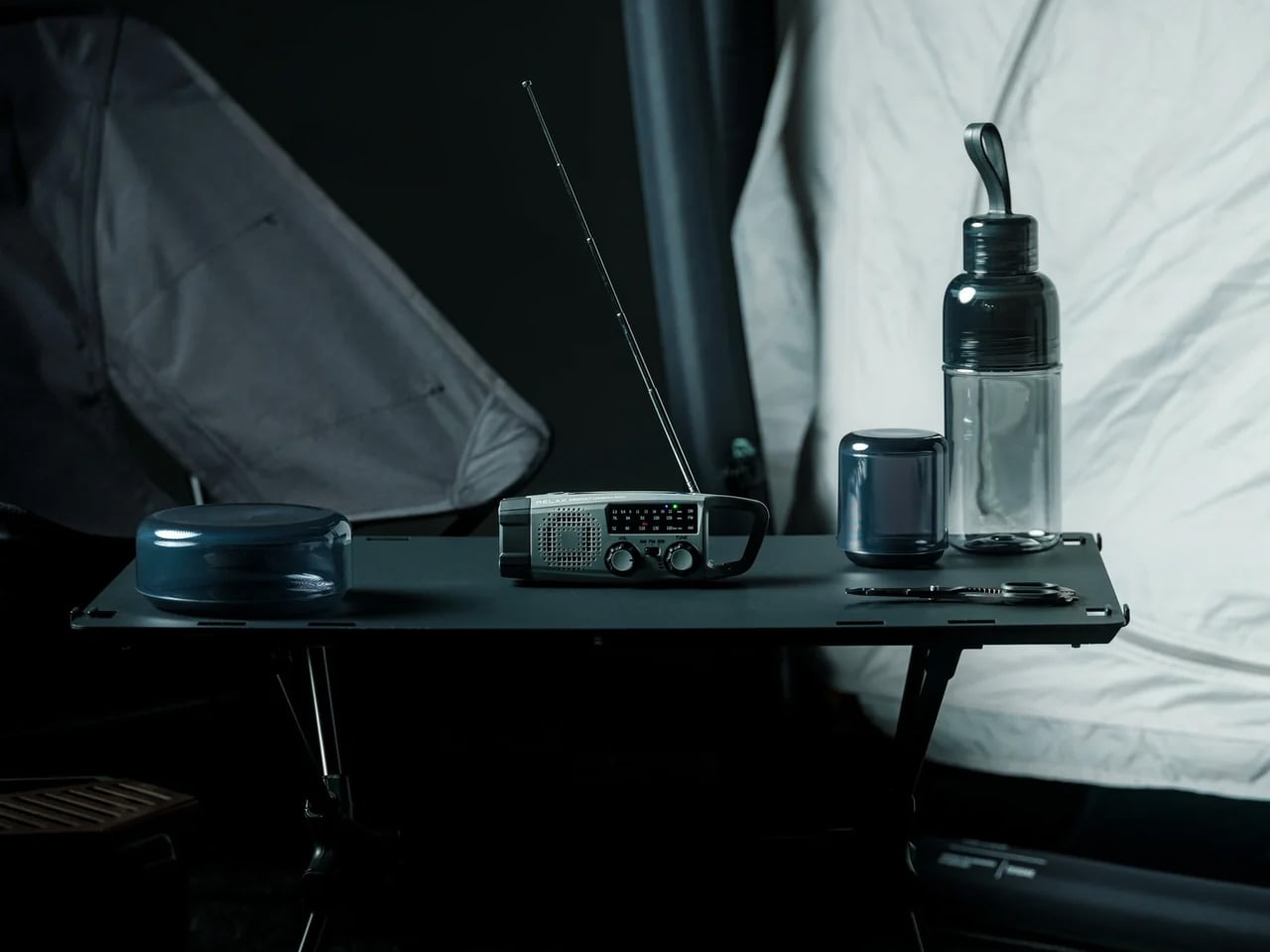
2. Clip&Go Radio

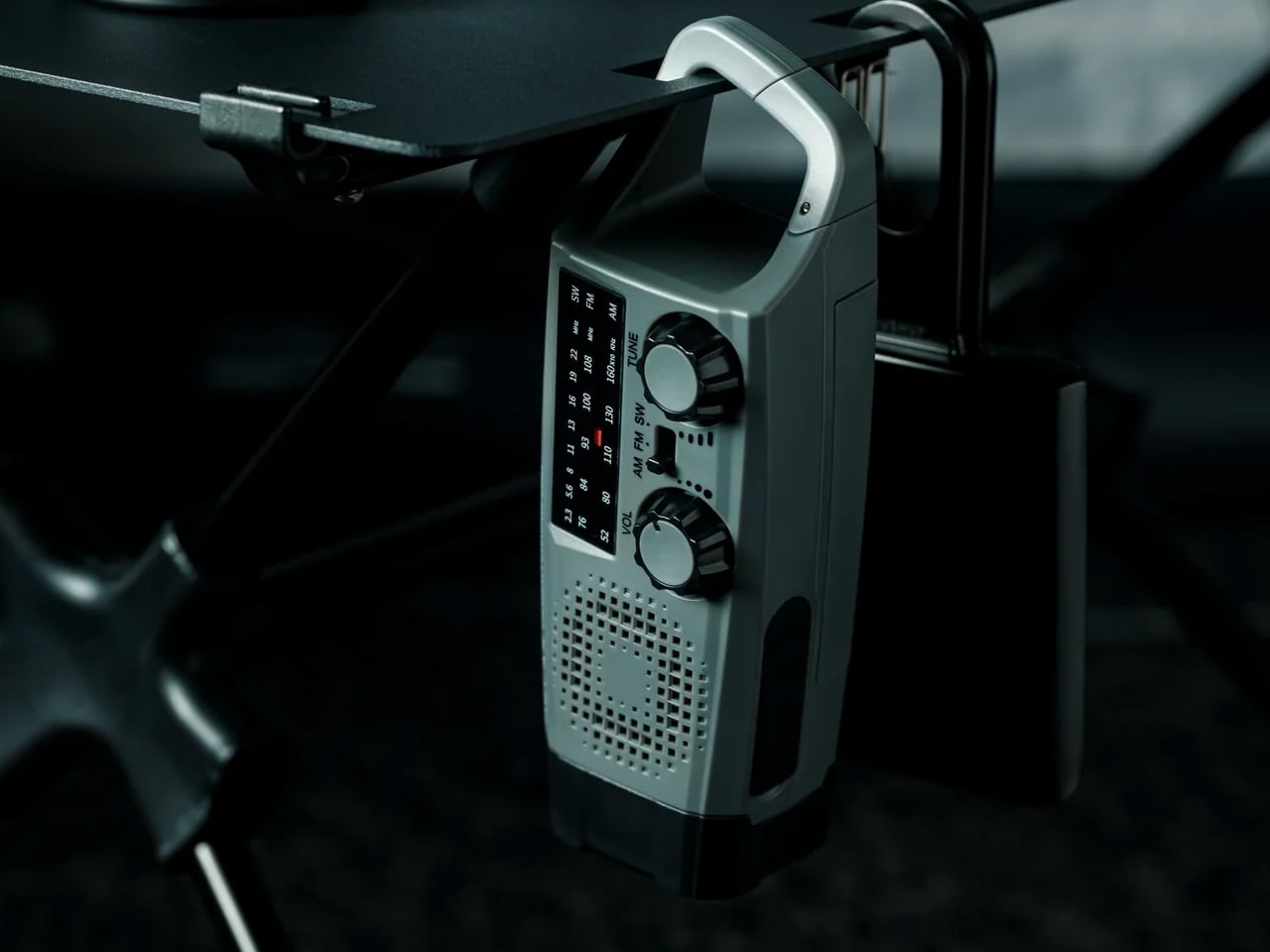
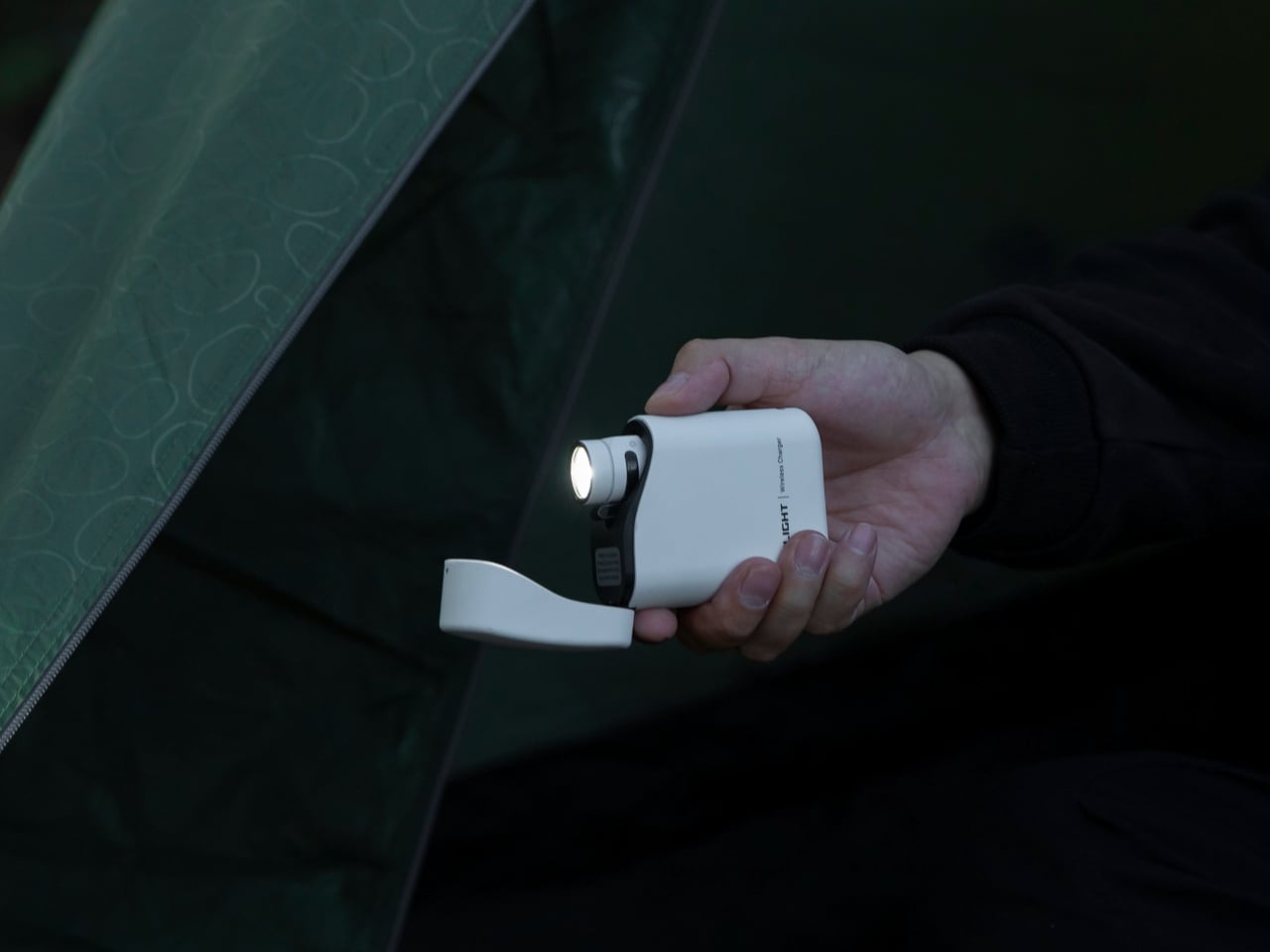
The version of you who would buy a dedicated emergency radio is the same version who bought a first-aid kit and left it under the bathroom sink. The Clip&Go works because it refuses to be emergency equipment. It is a radio first. AM, FM, and shortwave in a 7.8 oz body with a built-in carabiner that clips to your backpack strap and stays there. You bring it because you want music around the fire. The SOS button, the hand-crank, and the backup phone charging are already in the same clip you grabbed for the playlist.

The flashlight runs approximately 7 hours on a full charge. The radio runs for 13 hours. The 2,000mAh battery is a replaceable 18650 lithium-ion cell, which is the most thoughtful spec on this product. When the battery eventually degrades after years of use, you swap the cell. You do not replace the radio. USB-C charges it in about 2 hours. The hand-crank is there when USB is not. Press and hold the SOS control, and you get an audible alarm and a flashing light simultaneously. It is 6.2 x 1.9 x 2.1 inches and costs $60. Only 4 units remain in stock at the time of writing.

Click Here to Buy Now: $60.00

What we like

  • The replaceable 18650 battery is the single smartest spec on this list. Every other emergency radio becomes landfill the moment its sealed internal battery dies.
  • 13 hours of radio runtime is longer than any realistic campsite evening. You will not outlast this thing.

What we dislike

  • Solar charging takes approximately 67 hours to reach a full charge. That is a genuine last resort, not a charging method.
  • Four units remaining is the actual inventory count. This is not a sales tactic.

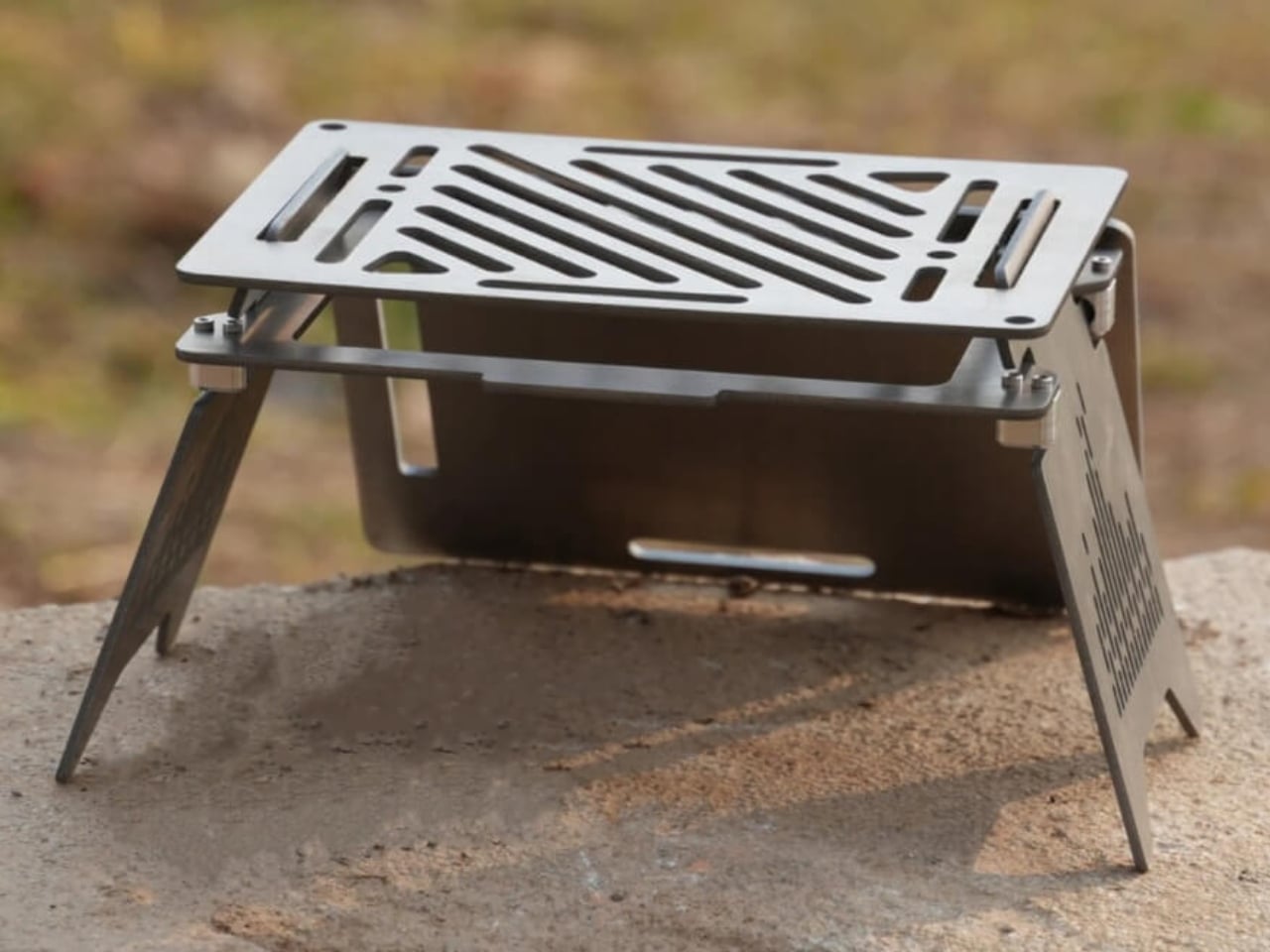
3. Portable Fire Pit Stand

More campgrounds restrict ground fires than they did five years ago. Dry meadows, wooden deck platforms, national park sites with leave-no-trace rules. You will find out about the restriction after you’ve already gathered the wood. The Portable Fire Pit Stand is five black steel pieces that slot into each other like puzzle pieces, lift your fire off the surface below it, and meet the ground-fire restrictions at most sites that prohibit direct contact. Setup requires zero tools. Nothing to thread, nothing to tighten, nothing to forget at home.

The airflow holes cut into the panels are not decorative. They pull oxygen under the fire and produce a cleaner, more consistent burn than anything sitting on compressed dirt. Slot in the optional trivets and you have a legitimate surface for cookware. The steel is manufactured with a sheet metal process that resists warping under sustained heat. It will discolor over time. That discoloration becomes a patina that is unique to your unit. Every Portable Fire Pit Stand ends up looking different from every other one.

Click Here to Buy Now: $119.00

What we like

  • Five-piece no-tool assembly is exactly the design restraint that makes gear worth keeping in the truck permanently rather than reassessing each trip.
  • The airflow under the fire produces a noticeably more even burn. On a three-day trip, that difference compounds across every cook and every evening.

What we dislike

  • No integrated grill grate. The trivets hold cookware over the fire, but you’re supplying your own grate if you want to grill directly over the coals.

4. GoSun Flow

There is a specific moment at the end of day two of most camping trips. Someone asks where they’re supposed to shower tomorrow. That is the moment your group starts looking up hotels. The GoSun Flow is the answer to that question before it gets asked. It’s a solar-powered water purifier and portable shower system that compresses into a backpack. It eliminates 99.99% of waterborne pathogens and delivers one liter of clean drinking water per minute from any freshwater source you can access. A flexible faucet clamps to a branch, a table, or your truck tailgate. You’ve built a working outdoor sink from what’s already there.

The solar heater delivers a warm five-minute shower after 30 minutes of sun exposure. That’s a real shower, not a wet-wipe situation. USB power backs it up when clouds intervene. The filter handles 1,000 liters before it needs replacing, which covers multiple seasons for most groups. For a three-day Labor Day weekend, this system removes the only hygiene argument that sends your group to the checkout desk on day three. It does not make camping feel like a hotel. It makes camping feel like something you can actually finish.

What we like

  • Combined purifier, sink, and shower in a single backpack-compatible system is the most complete camping hygiene solution available without requiring dedicated infrastructure.
  • 1,000-liter filter life means you are not thinking about replacement costs for multiple seasons of regular use.

What we dislike

  • The system cannot process saltwater. If your Labor Day trip is coastal, you need to source freshwater separately before the purifier becomes useful.
  • Multiple components mean multiple things to organize. Run a full checklist the night before you leave.

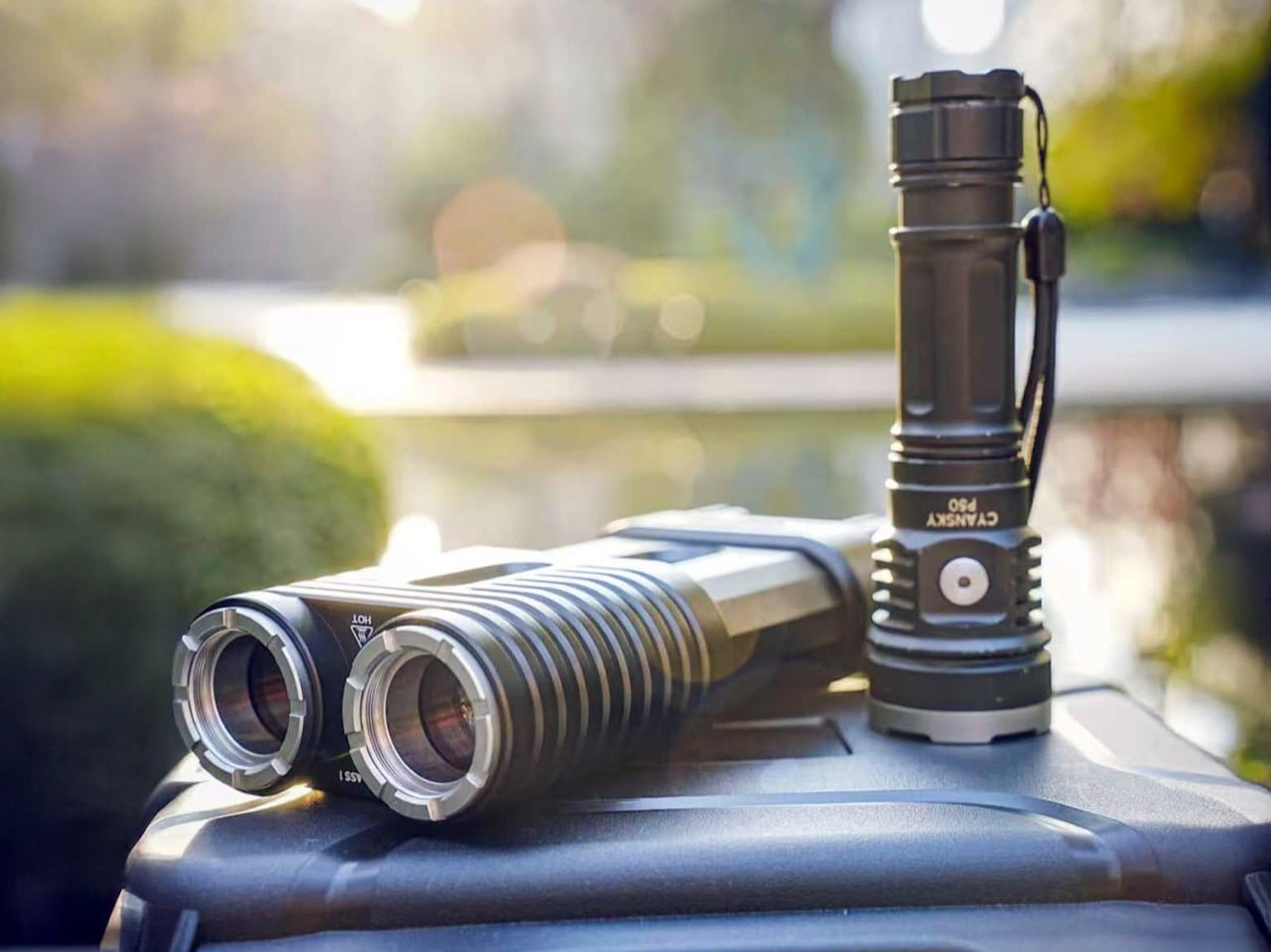
5. Lumitwin DL700

You have been in this situation. It is 9 p.m., you are trying to read a trail marker 200 yards out, and every flashlight your group has is essentially a pointed candle. The Lumitwin DL700 throws light 1.2 miles. Both barrels firing together produce 1,100 lumens and 958,000 candela using laser-excited phosphor technology, the same light source found in high-end automotive laser headlights. This is not an LED with a better reflector. The beam stays coherent across distance instead of scattering into a useless cone. At 2 kilometers of throw, you are seeing things your campsite neighbors cannot.

Each barrel runs independently with its own switch and brightness control. Swap in the included red filter for night-vision preservation. Green for cutting through fog and dense vegetation. The flood filter widens the beam for close-range camp work. Run different filters on each barrel simultaneously. The whole unit is machined from a single block of 6061 aerospace aluminum, IP68 rated for submersion to 1.5 meters, and survives a 10-foot drop. Total weight is 1,032 grams. You feel that weight. That is the trade for what the DL700 does.

What we like

  • Independent barrel control with swappable filters gives you six effective flashlight configurations in one unit. Red on one barrel for navigation, white on the other for distance spotting, simultaneously.
  • IP68 plus 10-foot drop resistance on a $329 light means you are not replacing this for years of serious outdoor use.

What we dislike

  • 1,032 grams is a commitment. This lives on a belt clip or inside a bag. It does not disappear into a jacket pocket like an everyday carry light.

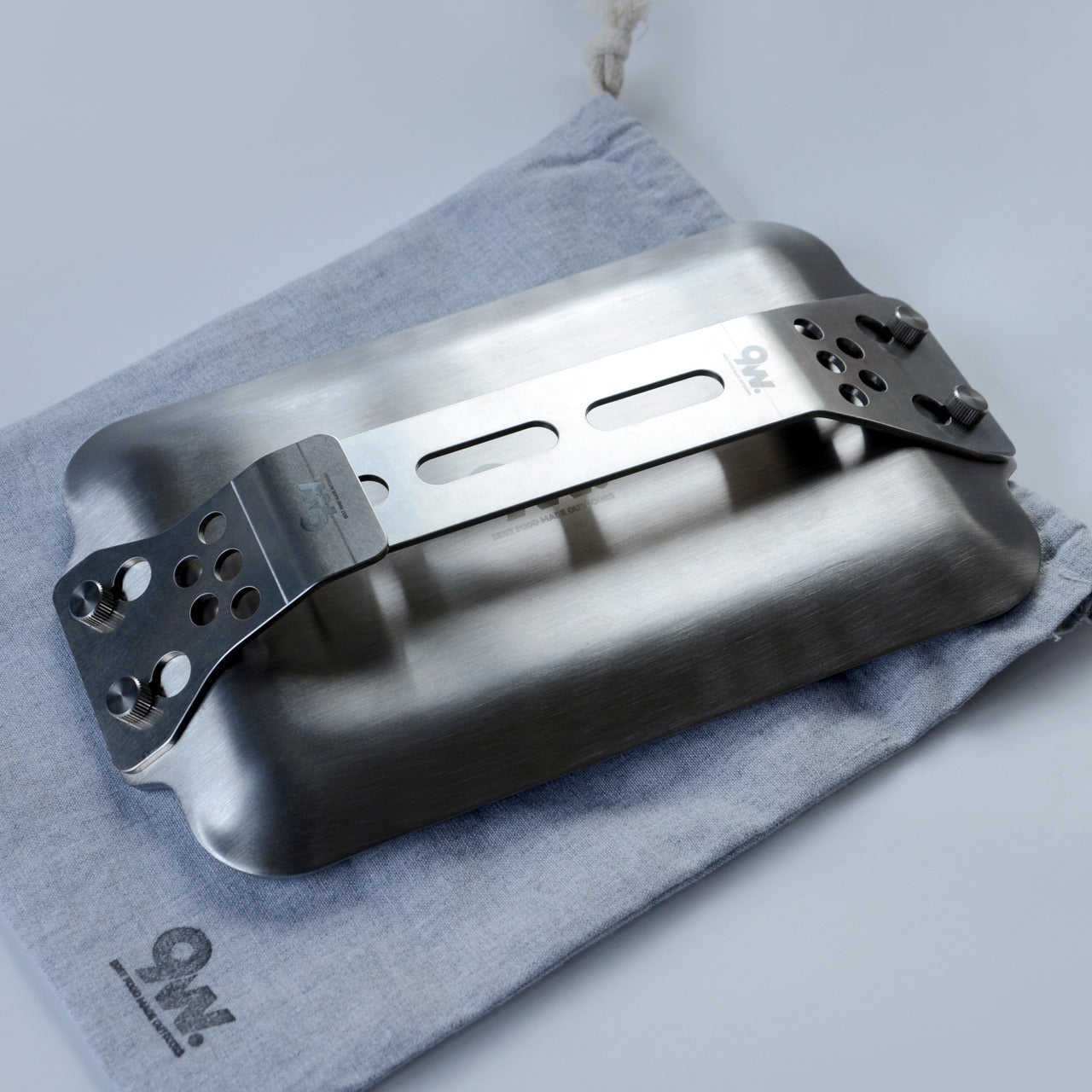
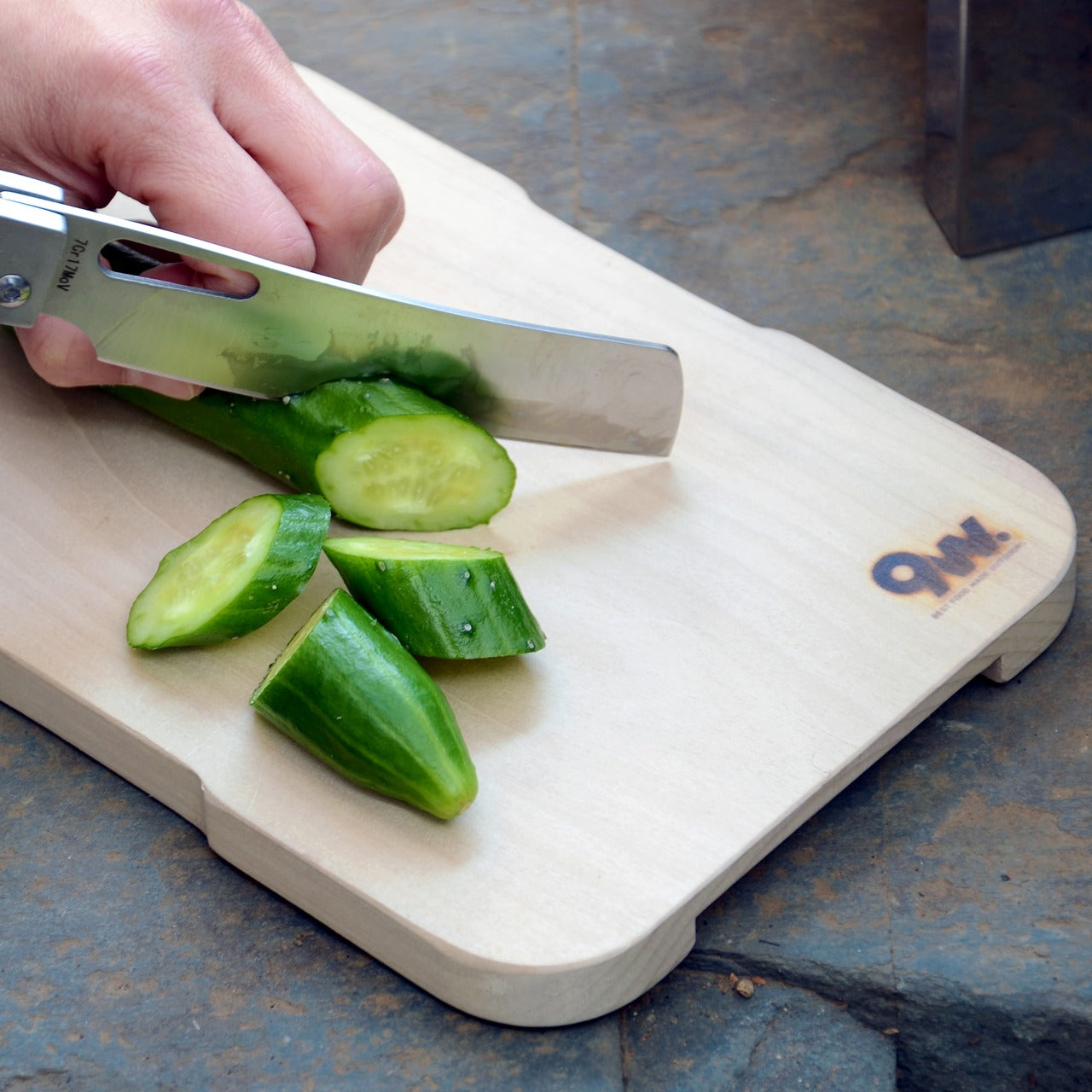
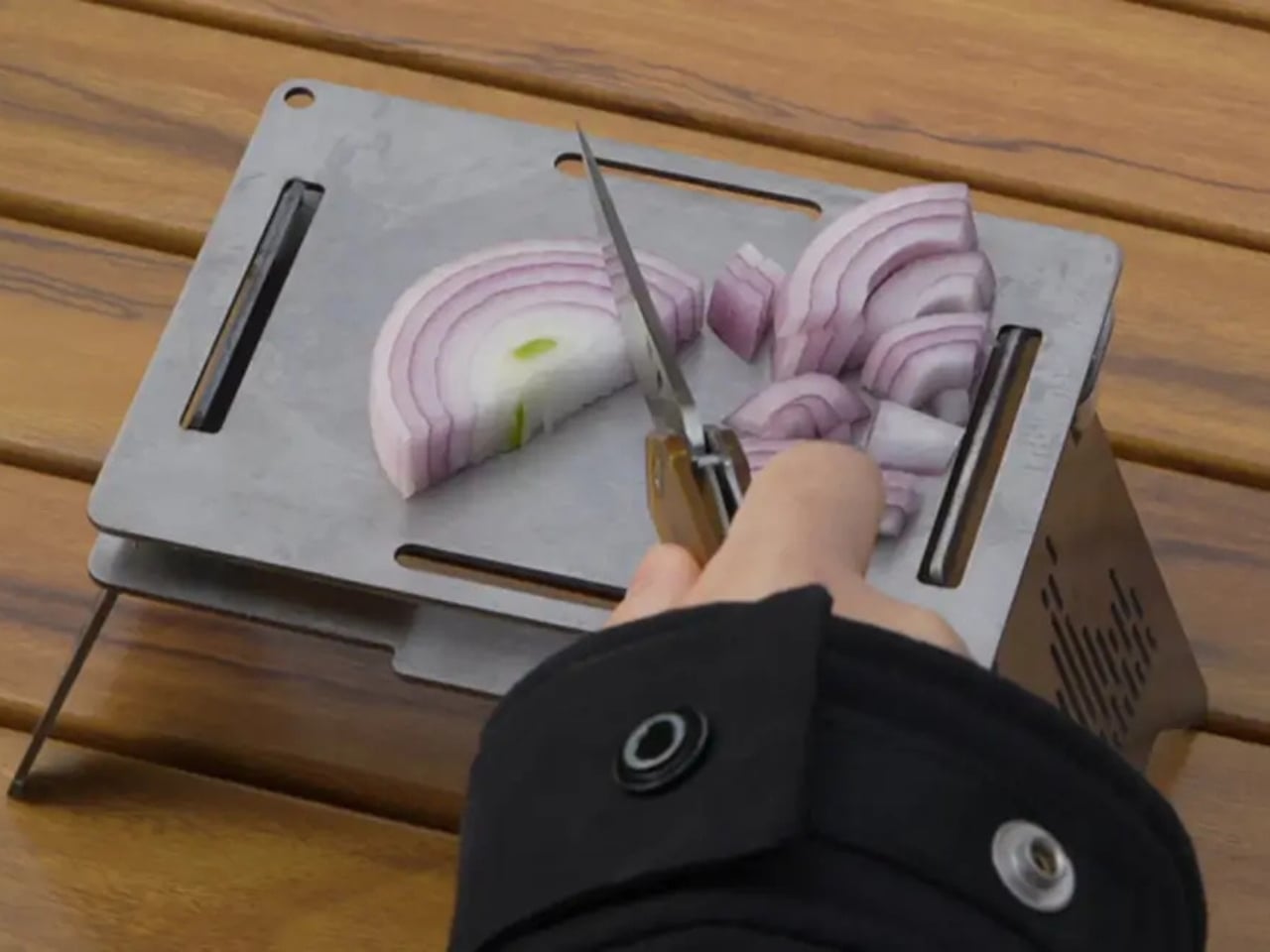
6. Compact Modular Grill Plate

Your campsite cooking situation right now is one of two things. Either you’re eating food that doesn’t require heat, or you’re attempting to balance a pan on a grate that came welded to the fire ring and hasn’t been cleaned since a previous administration. The Compact Modular Grill Plate is a flat, modular steel cooking surface that packs to roughly the thickness of a paperback and configures around what you’re actually cooking. You stop adapting your meal to your gear. The gear adapts to the meal.

It works over an open fire or a camp stove without a conversion kit or a second piece of equipment. The flat surface cleans significantly faster than any bar grate. One wipe, or a quick rinse, and it’s done. That difference matters most on the third morning when no one wants to deal with last night’s situation. The compact form is the decision that earns this plate a permanent spot in your kit. When cooking gear is bulky, it gets left at home. When it packs this flat, it gets packed every time.

Click Here to Buy Now: $100.00

What we like

  • Modular configuration adapts to different heat sources and meal types without adding a second surface, a second bag, or meaningful additional weight.
  • Flat surface cleans in a fraction of the time any traditional bar grate requires. On a multi-day trip, that is a real, compounding gain.

What we dislike

  • Surface area works cleanly for two people. Cooking for four or more means staggering meals, which adds real time to every camp dinner.
  • No integrated heat source. This is a cooking surface. You still need a fire or a stove under it.

7. Camp Napper

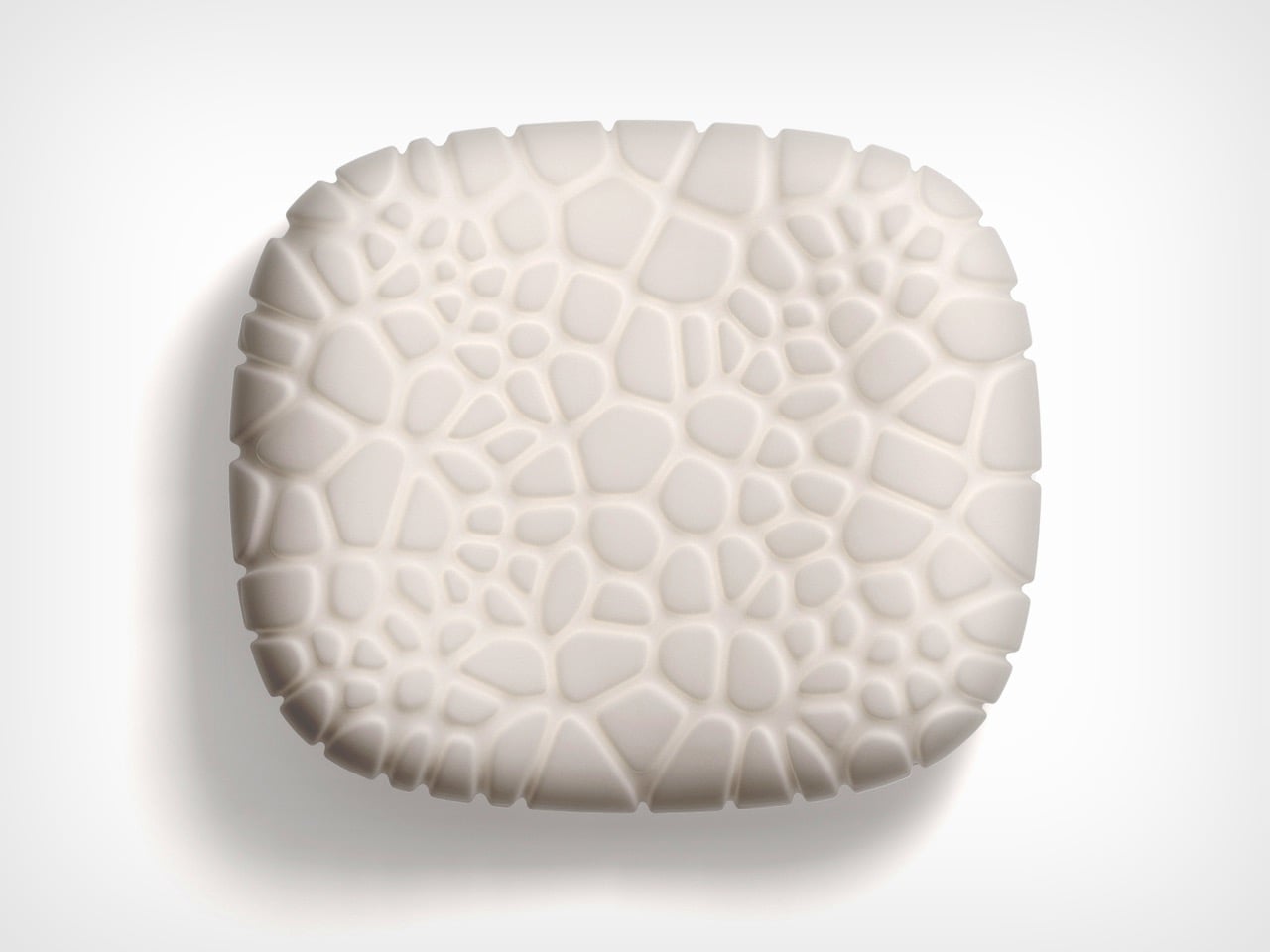
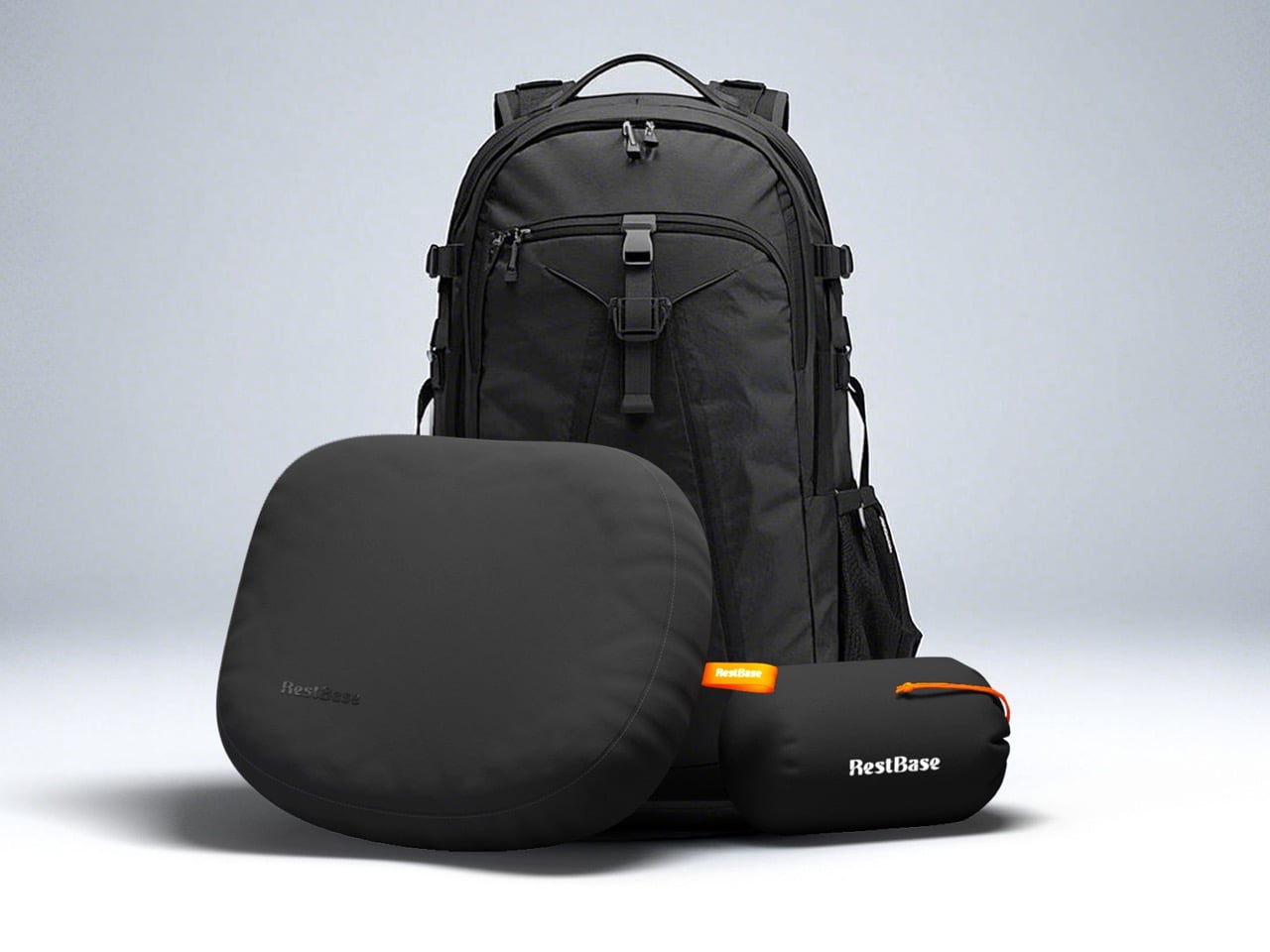
Your inflatable camping pillow has betrayed you at least once. It sounds like a pool float every time you shift your head, loses pressure by 3 a.m., and packs into a shape that somehow takes up more bag space than it deserves. The Camp Napper is what happens when a designer named Chen Xu stops treating the camping pillow as an afterthought and starts treating it as an engineering problem. The surface geometry is derived from the texture of fungal spores. The internal structure mirrors the hollow vascular channels found in plant stems. This is Voronoi polygon modeling applied to where your face actually rests.

The raised cellular structures on the front face increase contact area and channel airflow simultaneously, so your skin stays cool instead of clammy through the night. Flip it, and the back face offers four distinct tactile zones depending on your orientation. Memory foam holds the bionic geometry under repeated compression without losing its shape by morning. The whole pillow weighs around 14 oz and compresses to roughly the size of a water cup, no inflation valve required. Anti-slip rubber on the base keeps it planted on your sleeping pad. This is a hotel pillow argument made entirely in materials and geometry.

What we like

  • Airflow channels built into the contact surface actually keep the pillow cooler than standard foam options, which matters on any night above 65°F.
  • Compresses to water-cup dimensions with no inflation valve to leak, fail, or wake you up at 3 a.m.

What we dislike

  • The raised cellular texture can be a genuine trypophobia trigger.

The Gear Makes the Decision

Every hotel booking after a camping trip is a gear verdict. The sleeping surface failed. The light died. The fire went out. The shower question didn’t have an answer. These seven picks close each of those gaps before the trip starts, so the hotel down the road stays a choice rather than a rescue. Comfortable outside is a design problem. It has design solutions.

My personal pick is the Clip&Go Radio. Not because of the SOS button. Because it is the only product on this list I would grab for an ordinary Tuesday hike without thinking about it twice. It clips to the bag, plays music, and carries every emergency feature in the same body I reached for anyway. That is the version of preparedness that actually travels with you: useful before anything goes wrong.

The post 7 Best Camping Gadgets & Gear for Labor Day 2026 for the Guy Who Always Books the Hotel first appeared on Yanko Design.

5 Best Retro-Inspired Desk Accessories That Aged Better Than Most New Ones

Your desk probably looks like a lot of other desks right now. Same matte black keyboard, same Bluetooth speaker with the pulsing light ring, same cable management that made sense for about two weeks. The problem is not what you spent. It is what you picked. Most desk accessories launched in the last three years were designed around a trend, which means they are already halfway through their shelf life.

These five pieces were designed well enough the first time that they are still in production, still worth buying, and will outlast whatever trend comes next. That is not the easiest thing to find in a market flooded with objects that look good in a cart and feel cheap by Friday. Each one on this list has been tested by time in a way that no review cycle can replicate.

1. 8BitDo Retro 87 Keyboard

The 8BitDo Retro 87 Keyboard in Clear Blue is an 87-key tenkeyless mechanical keyboard with a translucent blue polycarbonate shell, Cloud Gray Linear switches co-developed with HUANO, and three connectivity modes. It is priced at $69.99. If you had an N64, the color coding reads immediately without needing an explanation. Yellow arrow keys for the C-buttons. Green and blue for A and B. A red left Ctrl mapped to Start. The translucent shell shows the PCB and per-key RGB backlighting through the blue tint, exactly how Nintendo’s Funtastic consoles worked in the late 1990s. The inside of the hardware was part of the design then, and it still is here.

The 87-key tenkeyless layout drops the number pad and keeps the full navigation cluster, which is the right call for a keyboard sharing space with other things you actually want to see. Bluetooth, 2.4 GHz wireless, and wired USB cover every setup without extra adapters. The 2,000 mAh battery is rated for 200 hours in wireless mode. Your hands are on your keyboard more than anything else on your desk. It might as well be something worth looking at.

What we like:

  • The top-mount PCB configuration gives the typing feel a cushioned, bouncy quality that cheaper keyboards skip entirely
  • Hot-swappable switches mean you are not committed to the Cloud Gray Linears if you change your mind later
  • The translucent shell with RGB underneath is better in person than any photograph suggests

What we dislike:

  • The two programmable Super Buttons sit outside the main typing area and take a few days to stop hitting by accident
  • The first week involves some unintended inputs during regular use

2. Side A Cassette Speaker

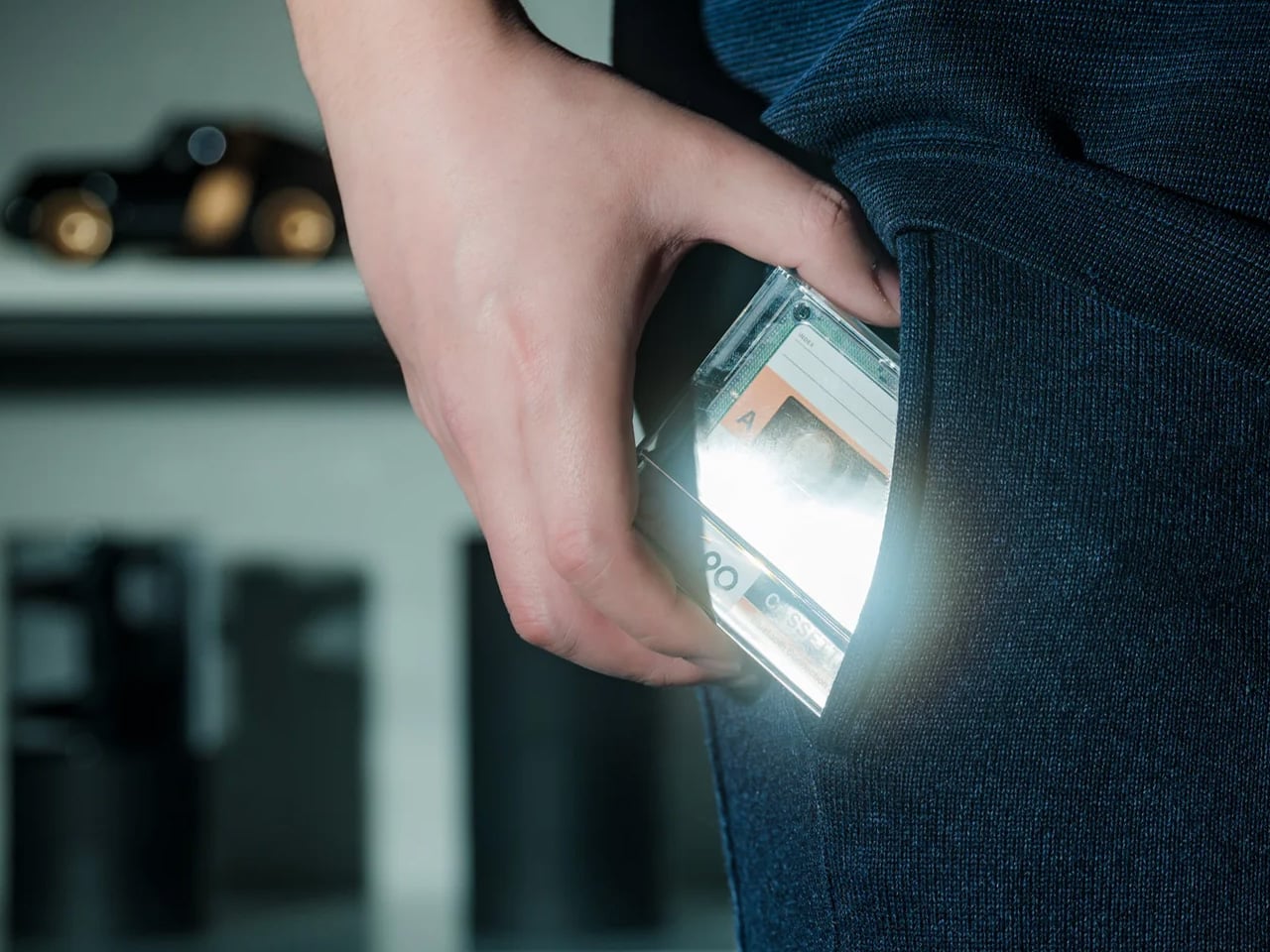
The Cassette Speaker is a Bluetooth speaker built to the proportions of a cassette tape, scaled up just enough to fit a driver inside. You probably had a shoebox of mixtapes growing up. Most of them were recorded off the radio with the DJ talking over the first two seconds of every song. The Cassette Speaker does not play tapes. What it does is put that object back on your desk in a form that actually works in 2026, pairing over Bluetooth and delivering audio from something small enough to palm in one hand.

Set it next to your keyboard, and it reads as a deliberate design choice rather than a gadget someone left behind. That is harder to pull off than it sounds. Most Bluetooth speakers designed to look interesting end up looking like they are trying too hard. The cassette form works because it is referencing something specific and doing it accurately rather than gesturing at it loosely. It belongs on a desk, a nightstand, or packed in a bag for the weekend.

Click Here to Buy Now: $49.00

What we like:

  • The size-to-output ratio is genuinely good – something this flat and compact has no business sounding as present as it does
  • The form factor means it fits anywhere without planning, which is not something most design-forward Bluetooth speakers can claim

What we dislike:

  • There is only one natural way to set it down – flat, tape-side up, which means you cannot angle it toward you the way you would a conventional speaker
  • Reflective desk surfaces will affect the sound more than you expect

3. Twemco BQ-38 Flip Clock

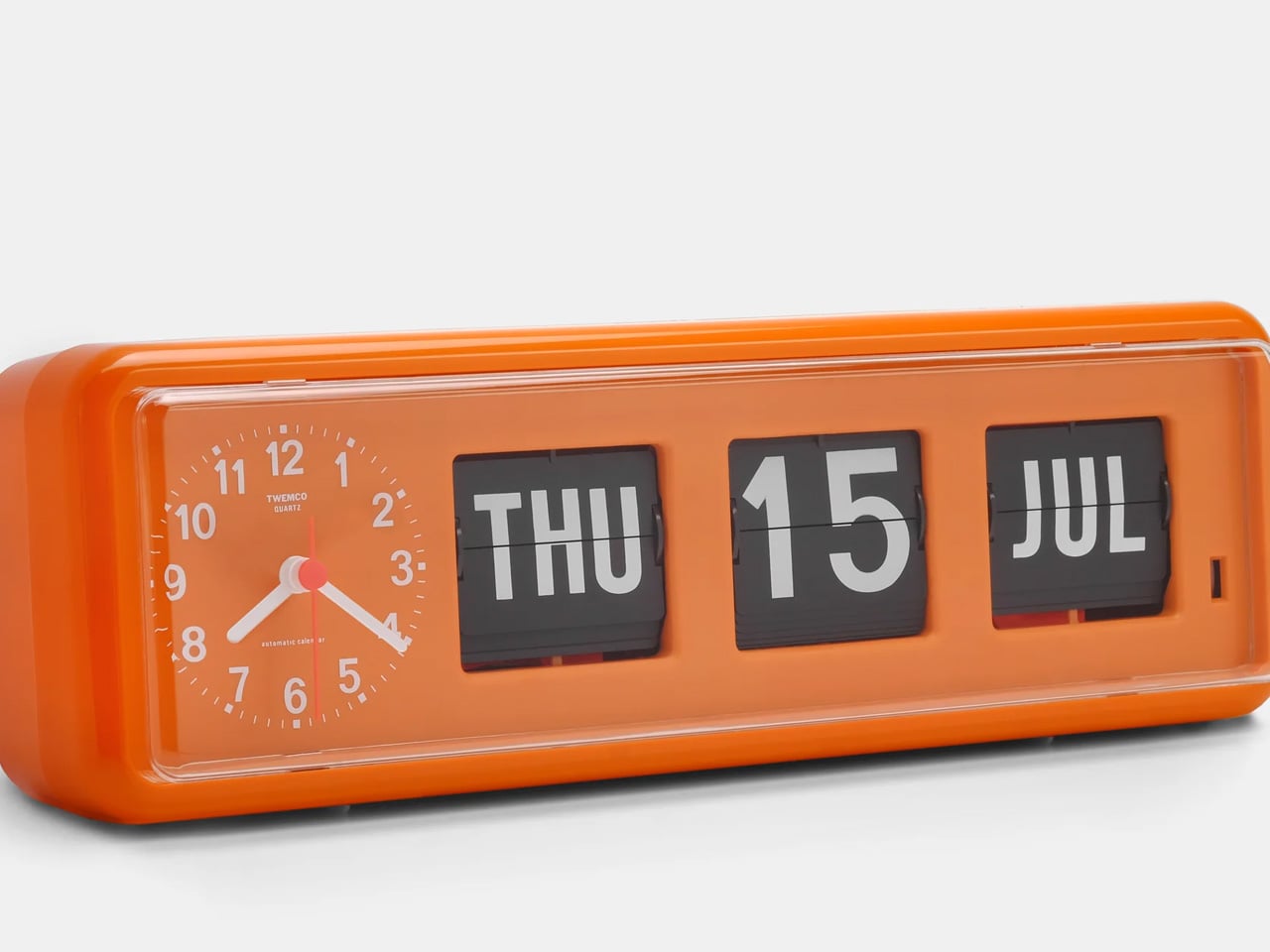
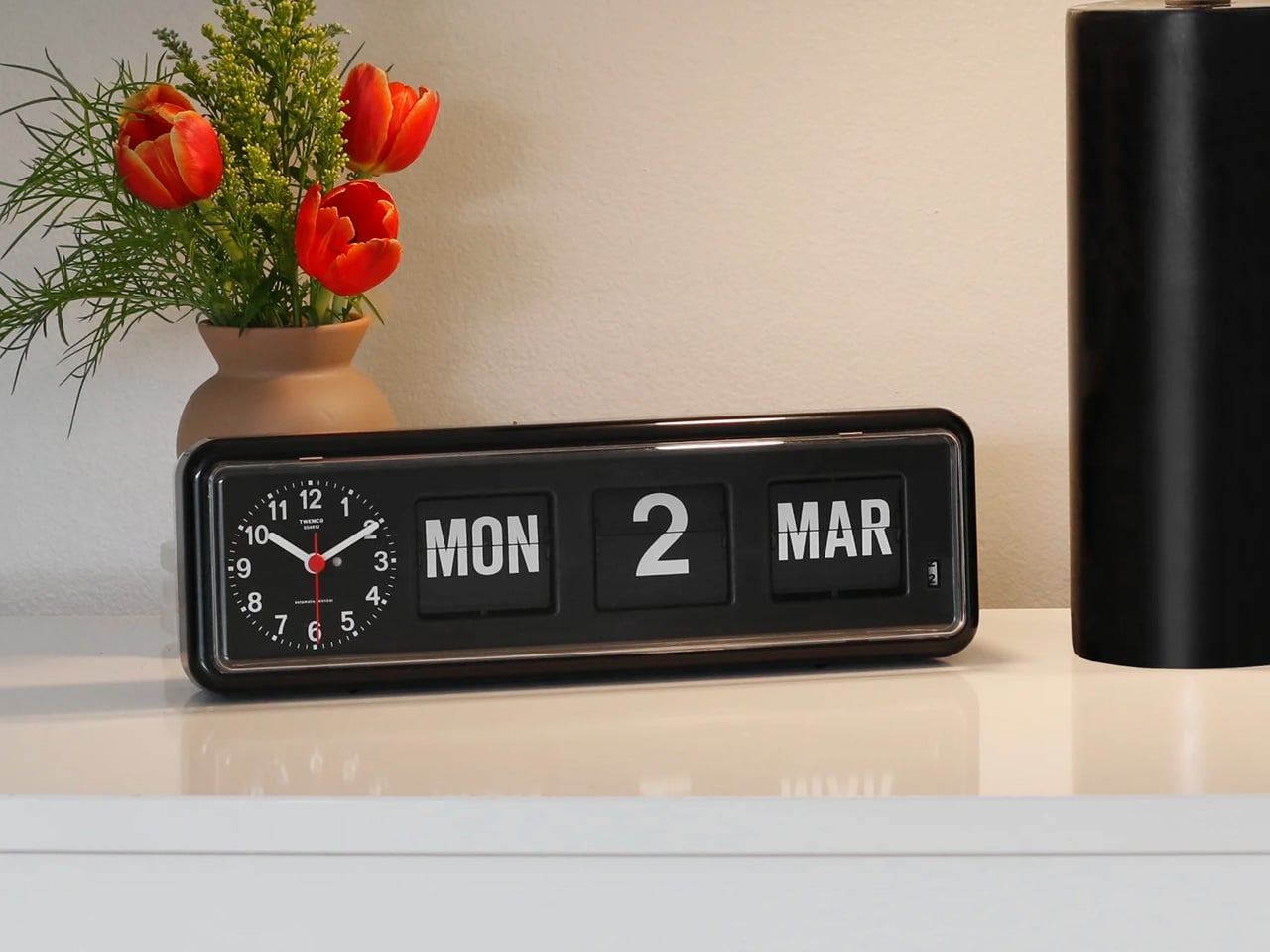
The Twemco BQ-38 is a split-flap flip clock that shows the time and date on cards that physically rotate forward each minute, made in Hong Kong using essentially the same mechanism since the 1970s. You reach for your phone to check the time and end up reading two notifications, a group text, and a headline you did not need before 9 AM. The BQ-38 solves exactly that problem. It sits on your desk and tells you the time. When a minute passes, a card flips forward with a soft mechanical sound. That is the whole interaction. Nothing else is asking for your attention.

The body is injection-molded ABS with a clear acrylic cover. Nothing glamorous about those materials, but the result is a clock that weighs 600 grams, stays exactly where you put it, and advances the date automatically without any input from you. The digits are large enough to read from across the room. No charging cable to route, no power brick to hide.

What we like:

  • The flip sound is genuinely good – not in a novelty way that wears off, but in the way a well-made mechanical thing sounds when it does exactly what it is supposed to do
  • The date display is more useful than you expect until the moment your phone is across the room and you need to know what day it is

What we dislike:

  • Setting the time requires a button on the back that you will need the manual for at least once
  • Battery-powered clocks stop silently when the battery dies, which you will discover at a moment that is never convenient

4. Anglepoise Original 1227 Desk Lamp

The Anglepoise Original 1227 is a task lamp designed by George Carwardine in the early 1930s and in production since 1935, built around a spring tension mechanism that mirrors the constant tension found in human joints. It starts at $256. Your current desk lamp probably has a touch sensor, three brightness settings, a USB port on the base, and an app update you keep dismissing. The 1227 has none of that. It has a spring-loaded arm you move to where you want light, and it holds that position. The difference between a lamp that stays where you put it and one that slowly droops over the course of an afternoon is not small.

The spring mechanism is why this lamp still makes sense ninety years later. Every competitor has spent decades trying to replicate what Carwardine worked out in the 1930s — that the arm needs to move like a limb rather than a scissor joint. The aluminum shade and arms carry a gloss-painted finish and come with a lifetime guarantee from Anglepoise, which is the kind of warranty that only makes sense if the manufacturer expects the product to be around long enough to need it.

What we like:

  • The spring tension is noticeable the first time you move it and satisfying every time after that – one-handed, no wobble, no drift after an hour
  • The shade is large enough to actually light a workspace rather than a six-inch circle in the middle of your desk

What we dislike:

  • The price is real – it starts at $256 and climbs to $360 for the brass version, which is serious money for a desk lamp
  • Whether the long-term value justifies the upfront cost is a fair thing to think about before buying

5. Retrowave Radio

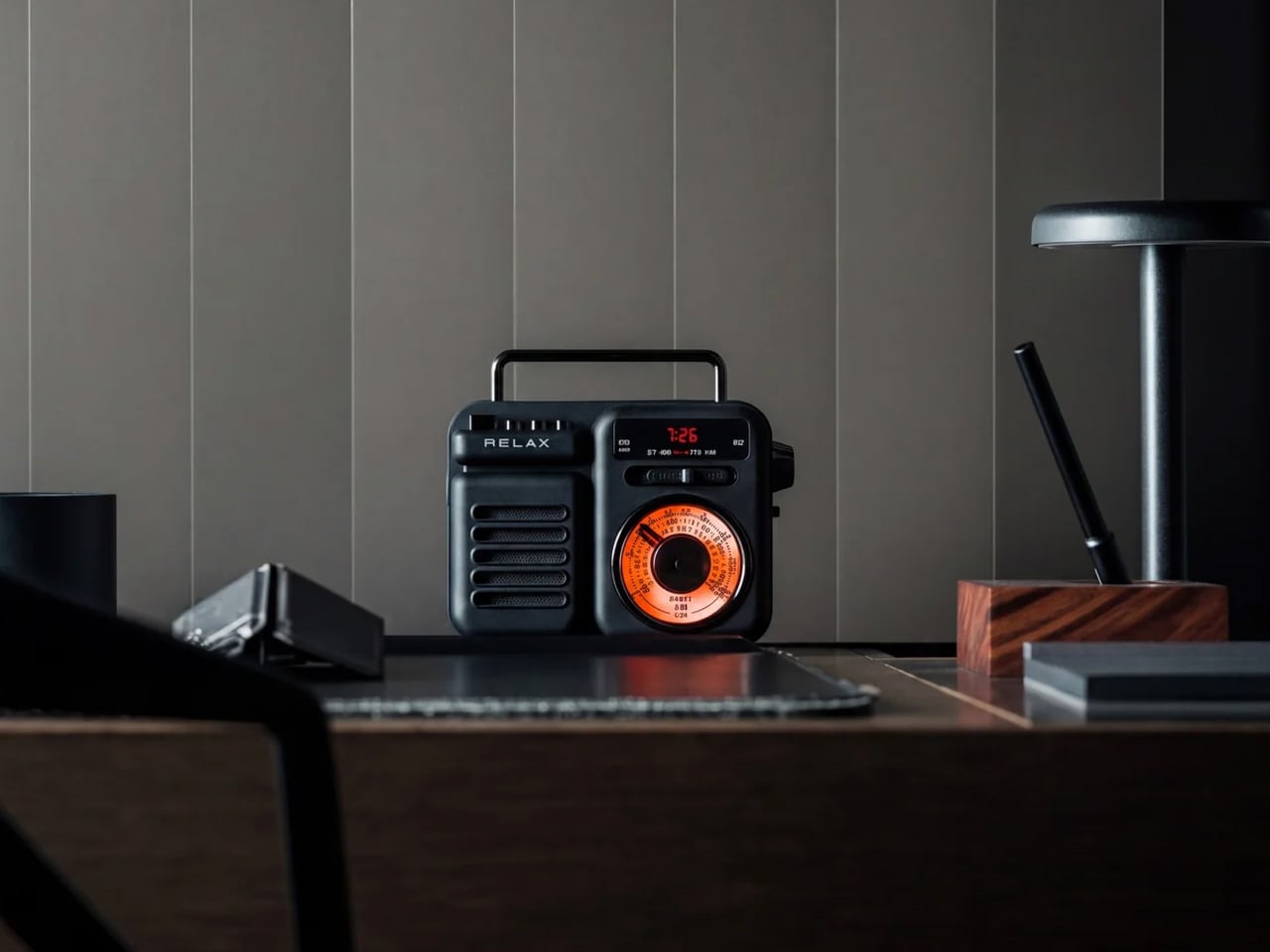
The Retrowave Radio is an AM/FM radio with Bluetooth streaming built into a compact retro-styled body. Picture Sunday morning. You want something on in the background, and you do not want to wake up a smart speaker or open another app. You spin a physical dial, land on a station, and leave it there. The Retrowave Radio is exactly that object. It sits on your desk, works without asking anything from you in return, and looks like it belongs there in a way that most tech on your desk does not.

The design is doing most of the heavy lifting. Analog dial face, physical control knobs, boxy proportions that reference the tabletop radios of the 1960s without feeling like a costume. It looks deliberate next to a keyboard and a lamp in a way that a cylindrical smart speaker never quite manages. The Bluetooth mode covers any gap when you want to play something specific off your phone. You will use it for both. Most days the radio wins.

Click Here to Buy Now: $89.00

What we like:

  • The physical tuning dial is something you forgot you missed – spinning a knob to find a station is slower than tapping a playlist, and that slowness is entirely the point
  • The Bluetooth mode pulls double duty, cutting one device off your desk rather than adding another

What we dislike:

  • The speaker output is sized for personal use, not a room – imagine being gathered around it rather than imagine it filling the room.
  • This is a near-desk radio, sitting more than eight feet away at volume will remind you of that

The Ones Worth Keeping

None of these objects were designed with a trend in mind. The Anglepoise spring has not changed since 1935. The Twemco mechanism has not changed meaningfully since the 1970s. The 8BitDo keyboard references a console that is thirty years old, and the cassette form factor predates most people reading this. That is not nostalgia for its own sake. That is what happens when the fundamentals were right from the start.

If one had to earn the top spot, it is the Cassette Speaker. Not because it sounds the best or costs the most, but because it is the only object here that makes someone ask where you got it before asking what it does. That question is the whole point. Everything else on this desk is functional. The Cassette Speaker is functional and feels like something you chose on purpose.

The post 5 Best Retro-Inspired Desk Accessories That Aged Better Than Most New Ones first appeared on Yanko Design.
5 Best EDC Flashlights in 2026 That Make Cheap Pocket Lights Feel Like Toys

The flashlight you grabbed at checkout has let you down in front of people. Maybe it was the beam that dissolved at twenty feet when you needed forty. Maybe it was the switch that required two hands in the parking garage. Maybe it was the plastic clip that snapped off in January, and you replaced it with nothing, so now the light just rolls around in your bag until you need it. You know exactly which moment it was.

What separates a good EDC flashlight from a drawer light is the same thing that separates a good pen from a hotel pen: the object rewards the moment you reach for it. The clip seats right. The switch clicks with clear intention. The output matches the situation without you cycling through seven modes to find it. Every light on this list was chosen because it gets those three things right before it gets anything else right. No gimmicks, no filler, no lights that need a paragraph of context before they make sense in your pocket.

1. Olight Baton 4 Pro

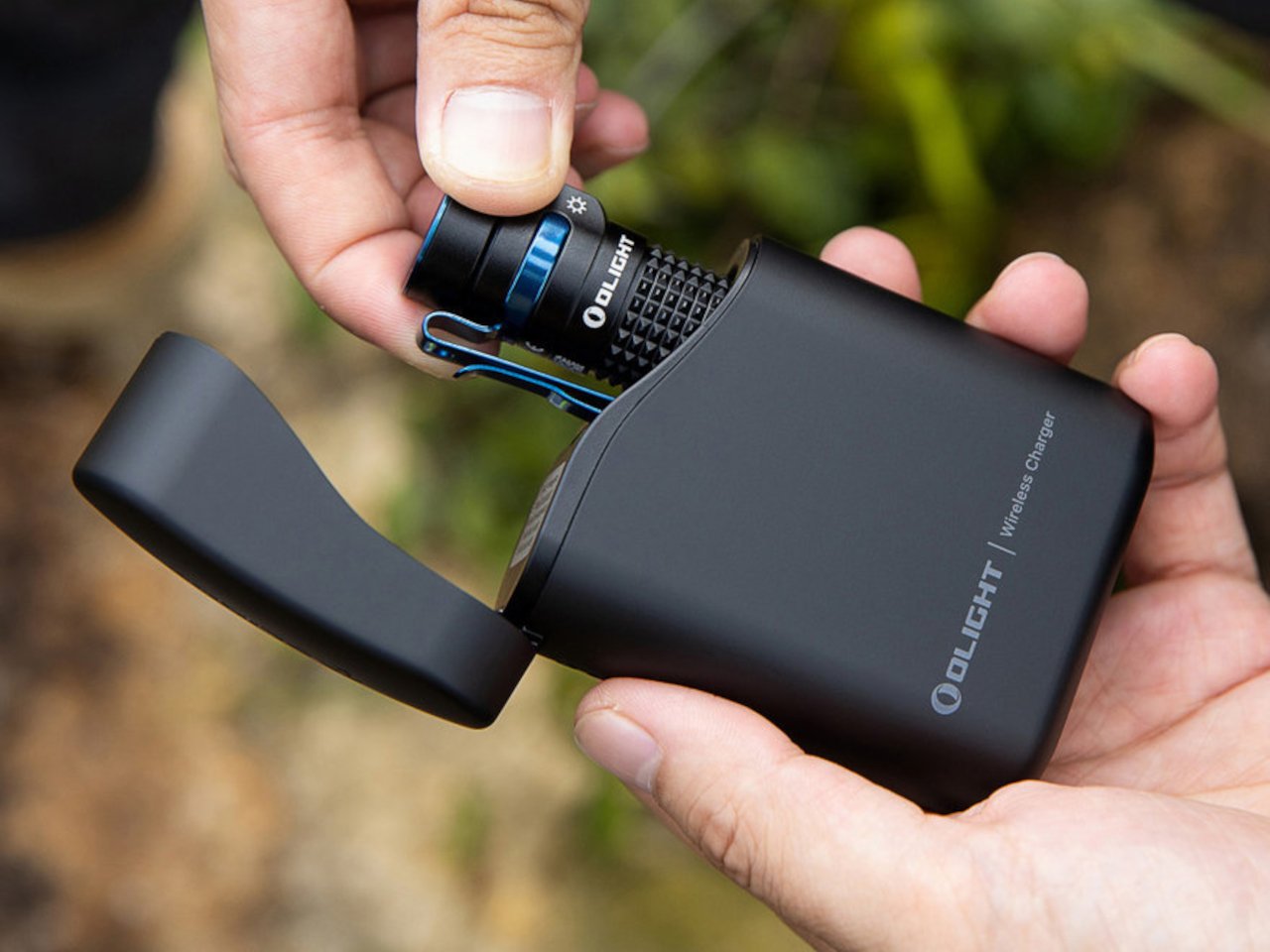
The Baton 4 Pro is what happens when a flashlight company stops treating carry as an afterthought. Olight built this one around a cylindrical body that disappears into a pocket, with no sharp edges, no extraneous texture, no clip that gouges your hand when you reach for your keys. The side switch sits exactly where your thumb lands naturally, and magnetic charging means the cable finds the light without looking. Every small thing about this light has clearly been thought through.

Output-wise, the Baton 4 Pro covers the full range of what daily life actually demands: enough low-mode runtime to use it regularly without battery anxiety, and enough high-mode brightness to make it genuinely useful rather than merely present. The anodized aluminum body handles pocket carry without developing the micro-scratches that make cheaper lights look worn after a month. This is the light that makes every other flashlight in your drawer feel like the draft it probably was.

What We Like

  • Magnetic charging is genuinely convenient rather than a spec-sheet feature, especially when you are tired and not looking at it
  • Compact cylindrical form disappears in a pocket without the clip becoming a nuisance throughout the day

What We Dislike

  • Limited editions and popular colorways sell out fast, and restocking timelines are unpredictable
  • High-mode runtime is short; turbo is best treated as a burst, not a sustained setting

2. Blackoutbeam Tactical Flashlight

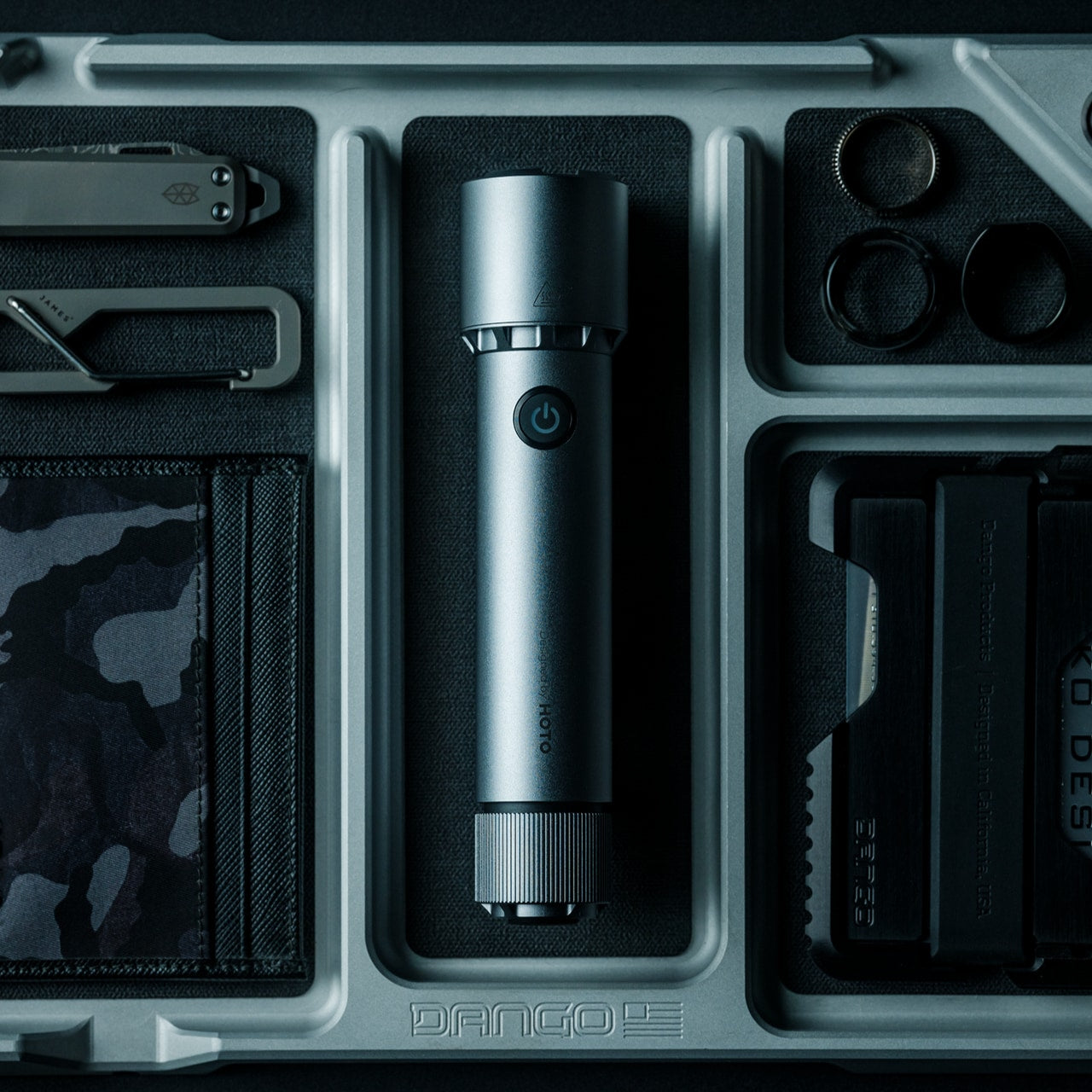
The Blackoutbeam is built for the moments when you need the light immediately and without negotiation. Its tactical design prioritizes direct activation, the kind of response time that matters when you are checking a noise outside or navigating a power outage with your hands already full. The body sits slim enough for a jacket pocket without printing, but the grip texture and bezel geometry make it clear this is not a light designed to look decorative on anyone’s desk.

What earns it a place alongside more design-forward picks on this list is the output-to-size ratio. The Blackoutbeam throws a tight, long-range beam that outperforms flashlights with significantly larger bodies, and the build quality is consistent enough that you will not find yourself wondering whether it will actually turn on when it needs to. If the Baton 4 Pro is the light you carry every day, the Blackoutbeam is the one you want available when every day suddenly becomes a bad night.

Click Here to Buy Now: $90.00

What We Like

  • Fast, reliable activation that does not require cycling through modes to reach useful output
  • Beam throw punches well above the physical size of the body

What We Dislike

  • Tactical aesthetic will not suit every carry context; it reads as a utility tool rather than a refined everyday object
  • Less versatile for low-light close-up tasks where a wider flood beam would serve better

3. Wuben X1 Pro

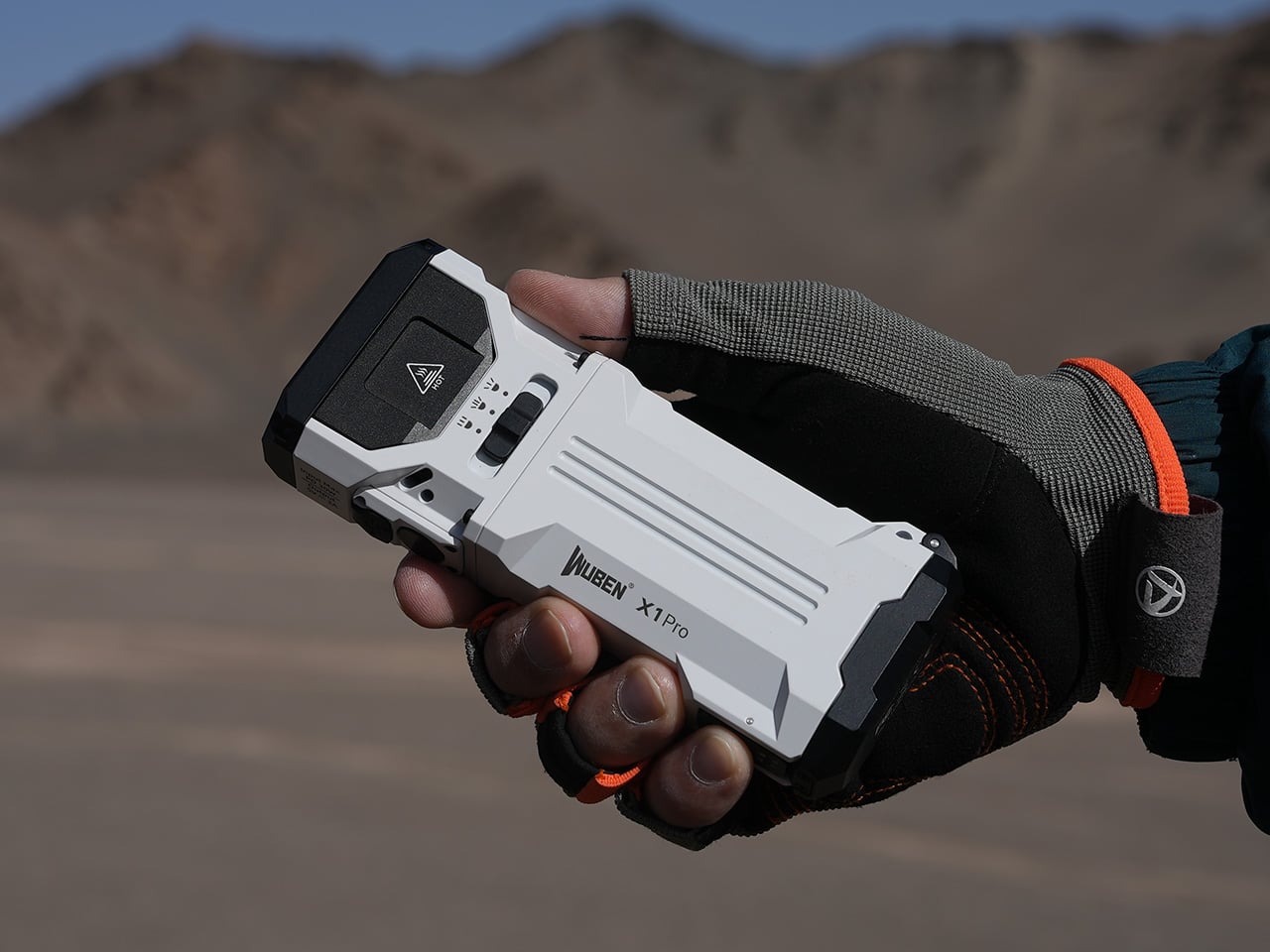
There are flashlights, and then there are flashlights that require an explanation. The Wuben X1 Pro pushes 12,300 lumens across five Cree XHP50.3 emitters — a number that sounds like a misprint until you see it run — and manages that output through an active cooling system with a modular waterproof fan that sustains 3,000 lumens for 1.8 hours. Most non-cooled EDC lights hit their advertised peak for roughly 90 seconds before thermal management forces a stepdown. The X1 Pro simply keeps going.

The dual-beam system is the engineering decision that elevates this light from impressive to genuinely useful. A physical three-position slider toggles between a single Cree HI emitter for spot throw at 410 meters, four Cree HD emitters for flood coverage, or both channels firing simultaneously for peak output. You are not cycling through brightness modes on a single beam; you are running two purpose-built optical systems at once. The $139.99 price earns its keep the first time you need more than one type of light at the same time.

What We Like

  • Active cooling sustains output at levels passive thermal management physically cannot match in this size class
  • Independent spot and flood controls behave like two flashlights sharing one body, which they essentially are

What We Dislike

  • At 383 grams, daily pocket carry is a commitment; this sits more naturally in a bag or jacket than a jeans pocket
  • The modular fan is an extra component that needs to stay clean and correctly seated to function as designed

4. Loop Gear SK05 Pro

The SK05 Pro’s most important feature is not its 4,360 lumens. It is the rotating bezel that cycles between spotlight, floodlight, sidelight, and power bank modes with a single thumb movement. That one design decision turns what could have been a flashlight with a feature list into a genuinely modular tool that adapts to the task without making you dig through menus in the dark. The flat form factor, measuring 0.88 by 1.89 by 4.17 inches, fits the palm the way a phone does, which is not a coincidence.

The built-in 8,000mAh power bank, fed by dual user-replaceable 18650 cells, is the detail that moves the SK05 Pro from useful to indispensable. When your phone is at six percent, and your charging cable is in the bag you left at the office, this light covers the gap. USB-C 20W fast charging works in both directions, meaning the light recharges on your existing cable and charges your devices at rates comparable to a wall adapter. Loop Gear priced it at $111.99, which starts to look reasonable once you factor in the power bank you no longer need to carry.

What We Like

  • Rotating bezel interface is genuinely intuitive to operate without looking at the light, even with gloves on
  • Power bank function works simultaneously with lighting, with no trade-off between the two

What We Dislike

  • Turbo mode drains the dual 18650 cells faster than the power bank capacity can comfortably offset on a long day
  • The rotating bezel mechanism benefits from a clean pocket; debris over time can affect the smoothness of the action

5. Casabeam Everyday Flashlight

Not every flashlight needs to do twelve things. The Casabeam was designed around a specific premise: a daily carry light should feel like a natural extension of what you already keep in your pocket, not a piece of equipment you have to justify bringing. The form factor is deliberate without being precious, and the output range covers everything a typical day actually asks of a pocket light, from a dark parking garage to the power strip behind the desk you were not planning to crawl under.

The Casabeam’s real value is in its consistency. It turns on the same way every time, clips in the same position, and never asks you to engage with it more than the situation requires. For a category where features pile on at the expense of daily usability, that restraint is a genuine design achievement. This is the light that stays in your pocket because you stop noticing it is there, right up until the moment you need it and reach for it without thinking.

Click Here to Buy Now: $50.00

What We Like

  • Understated form factor carries without drawing attention or adding unnecessary bulk throughout the day
  • Intuitive, repeatable operation that does not require relearning after a few days away from it

What We Dislike

  • Output ceiling will not satisfy users coming from higher-lumen carry lights who have adjusted their expectations upward
  • Built for everyday scenarios; not the right call for extended outdoor use or situations that demand serious throw distance

The Best EDC Flashlight Is the One You Actually Carry

These five lights make trade-offs too, because every designed object does. But they make them deliberately, in ways that only surface when you push past what you would normally ask of a pocket light. Pick the one that fits where you are right now.

My personal favorite is the Olight Baton 4 Pro. Not because it has the longest runtime or the farthest throw on this list. Because it is the light you stop thinking about after the first week and start reaching for automatically. That is the highest thing you can say about a pocket tool.

The post 5 Best EDC Flashlights in 2026 That Make Cheap Pocket Lights Feel Like Toys first appeared on Yanko Design.
5 Best Japanese Kitchen Gadgets That Make Fall Cooking Feel Like a Saturday in Kyoto

Fall cooking shifts register in a specific way. The produce changes, the mornings get sharper, and the kitchen becomes a place worth spending time in rather than moving through. Japanese kitchen tools were built for exactly this kind of attention. Each one is designed around a specific act – crushing, grinding, simmering, grating – and refined until the act itself becomes as satisfying as the result. The ritual is as much the product as the object that produces it.

The five tools here span the full arc of a fall meal, from the spice that seasons it to the bread that starts the morning, the pot that holds the broth, the set that grinds the sauce, and the grater that finishes the dish at the table. None promises to make cooking faster. What they share is a conviction that the right object changes how an act feels, and how an act feels is worth considering.

1. Impact Spice Mill

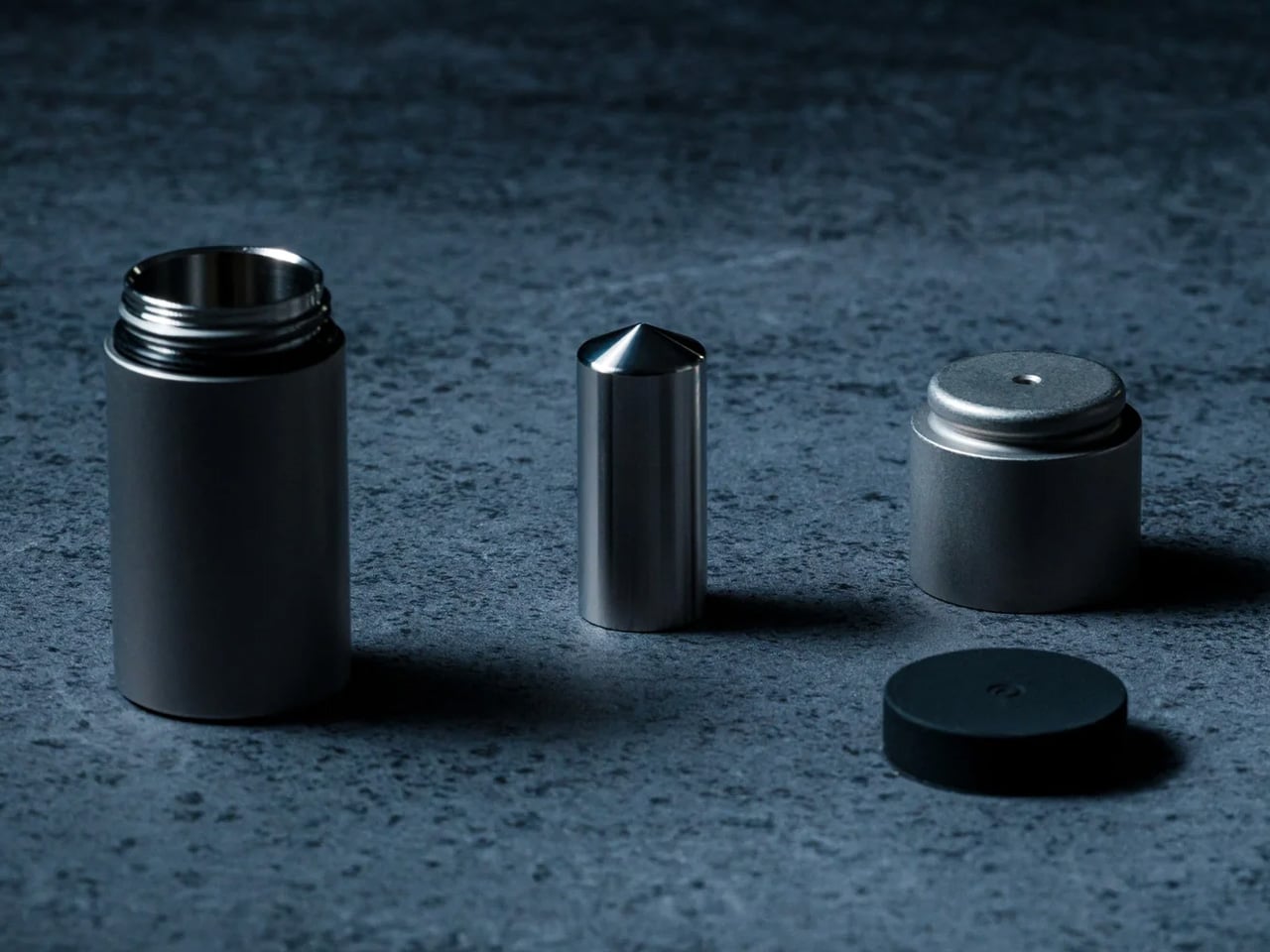
The Impact Spice Mill doesn’t twist. You shake it. An internal weight moves with each motion, pounding and crushing a small amount of spice to release more of its natural aroma just before it reaches the dish. The mechanism was designed by Wataru Imura for SUWADA, a Japanese manufacturer refining cutting tools since 1926, and it translates the logic of a mortar and pestle into a form you hold between two fingers. Each shake produces a click you feel before you hear it.

The gesture is the adjustment. The more you shake, the finer the grind becomes, so control lives in your hand rather than a numbered setting. At 65 by 27 millimeters, the stainless-steel body is small enough to sit among plates and glasses without demanding attention, and its form gives it a distinct presence on the table regardless. An included glass spice bottle keeps your choice of spice alongside the mill. It won the 2023 Good Design Award and an iF Design Award in 2024.

Click Here to Buy Now: $80.00

What we like

  • The percussion mechanism releases more of a spice’s essential-oil aroma than blade grinding, which registers immediately in the finished dish
  • Shaking controls both the crushing and the coarseness, so one motion does the work without a separate adjustment step

What we dislike

  • Intentionally designed for small amounts at a time, which makes it a finishing tool rather than a substitute for a standard grinder when seasoning large batches
  • The compact stainless-steel form has a minimal grip profile, which may take adjustment if you are used to larger, rubberized pepper mills

2. Mitsubishi Bread Oven

The name takes a moment. Mitsubishi, the Japanese conglomerate better known for precision electronics, applies the same engineering discipline to baking that its other divisions bring to everything they build. Controlled heat, precise internal timing, and a baking chamber environment that most Western countertop machines don’t manage produce a crust and crumb that reflect a genuine engineering investment in what bread should be, rather than what a consumer appliance at a comparable price usually delivers.

Fall is when bread makes sense again. The cooler mornings, the instinct toward something warm and unhurried – a good loaf is part of what makes the season worth the shift from summer. The Mitsubishi’s form is unmistakably Japanese in its restraint: white, minimal, without the button complexity that European bread makers at comparable prices tend to accumulate. It sits on the counter as an object with a clear visual point of view rather than a machine apologizing for its own presence.

What we like

  • Precision heat management produces a crust and crumb structure that typical home bread makers cannot replicate, regardless of recipe
  • The minimalist white form treats the machine as a considered design object rather than a utility box competing for counter space

What we dislike

  • Sourcing outside Japan requires import channels, which adds cost and complicates any warranty or service process
  • The price places this firmly in investment appliance territory, making it a deliberate purchase rather than a casual one

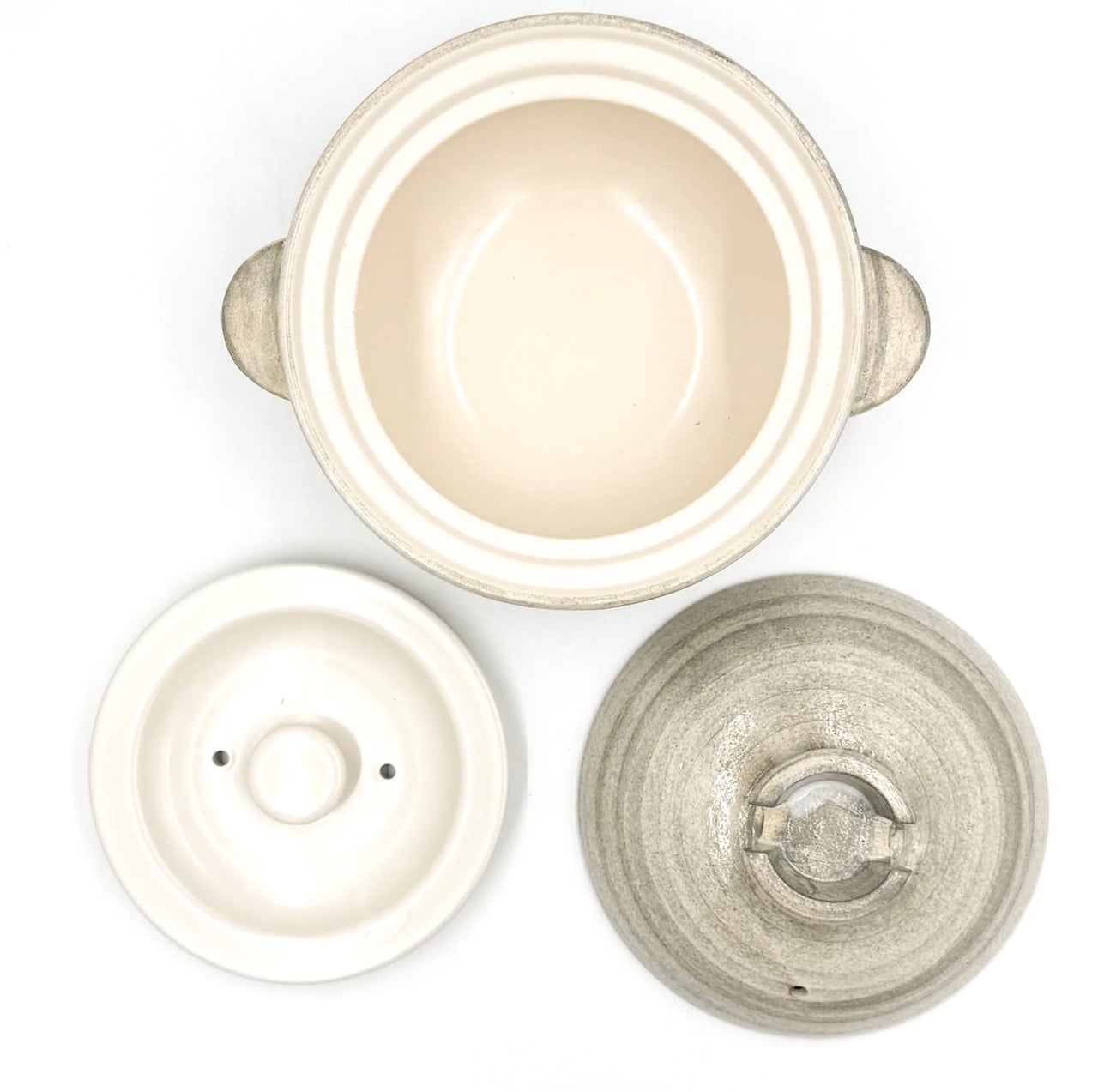
3. Iga-yaki Donabe Clay Pot

Iga clay comes from Mie Prefecture, where the local earth has been used for ceramics since at least the Kamakura period. The porous structure absorbs heat slowly and releases it with a consistency no metal pot can replicate. Rice cooked in it sweetens. Broth deepens over a lower flame than you would expect. The exterior stays rough and unfinished while the interior is glazed smooth: two surfaces on the same vessel, each doing precisely what the cooking requires.

Fall gives the donabe its best material. The vegetables are dense and worth their slow time, the broths have somewhere to go, and patience feels like a reasonable position to take in a September kitchen. Available from TOIRO Kitchen in several sizes, the pot handles rice, hot pot, steaming, and slow braising across all of them. Simmer rice water in it before the first use and store it with the lid off after washing. A vessel this well made works for decades when treated correctly.

What we like

  • Iga clay’s heat retention produces results in rice and broth that no metal pot at any price point genuinely replicates
  • Versatile across rice, hot pot, steaming, and slow cooking – one vessel quietly covers what several usually would

What we dislike

  • Requires a seasoning step before first use that the packaging doesn’t always communicate clearly upfront
  • The porous clay body absorbs strong cooking odors over time and should be stored with the lid off after each wash to stay fresh

4. Katakuchi Suribachi & Surikogi Set

The suribachi is defined by its interior. A web of fine ridges grips seeds and fibers and pulls them apart through friction rather than crushing them flat. Unlike a smooth-walled mortar, this one grinds, and the difference in what it produces is immediate: a texture with more depth, an oil release with more presence, an aroma that reaches the kitchen before the pan is on. The katakuchi form adds a spout, so freshly ground sesame pours directly from the bowl without a transfer step.

The wood surikogi follows the exact curve of the bowl, and that pairing is the point. Working it through sesame or dried chili or sansho pepper in slow circles is a task that resets the pace of a Saturday evening in the kitchen without asking you to think about it. Available from TOIRO Kitchen in two colorways and priced between $36 and $63 depending on size, the set suits fall’s heavier flavors – ground sesame for noodles, miso base for soup – better than any other season gives it.

What we like

  • The katakuchi spout makes grinding and pouring a single-vessel process, with nothing lost in a transfer step
  • The ridged earthenware interior produces a texture and aroma from sesame and dried spices that a food processor simply cannot replicate

What we dislike

  • The earthenware body is heavy and requires careful handling — not something to reach for quickly in the middle of an active cook
  • Cleaning the grooved interior takes more attention than a smooth-walled mortar, particularly after working with oily seeds

5. Playful Palm Grater

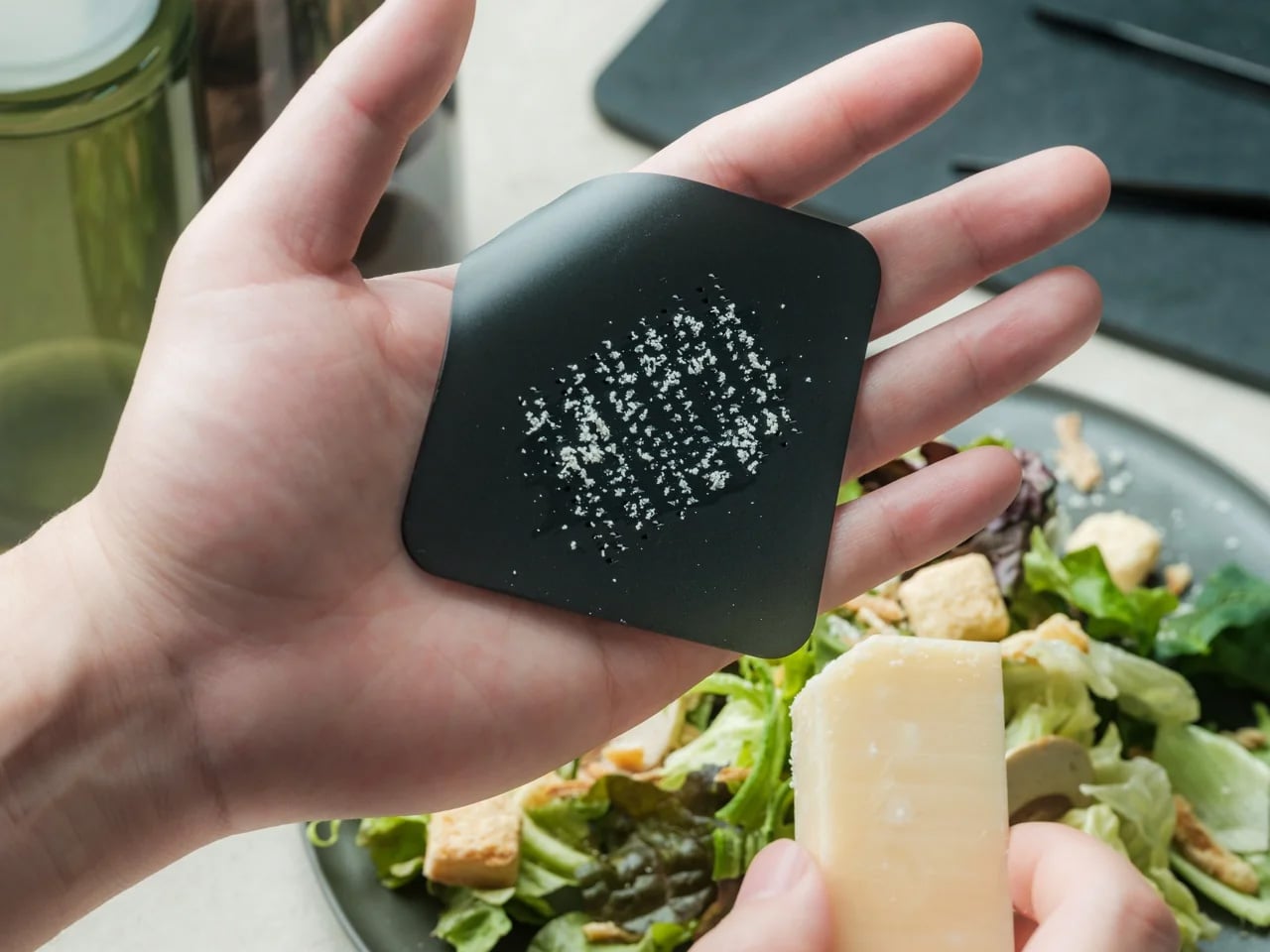
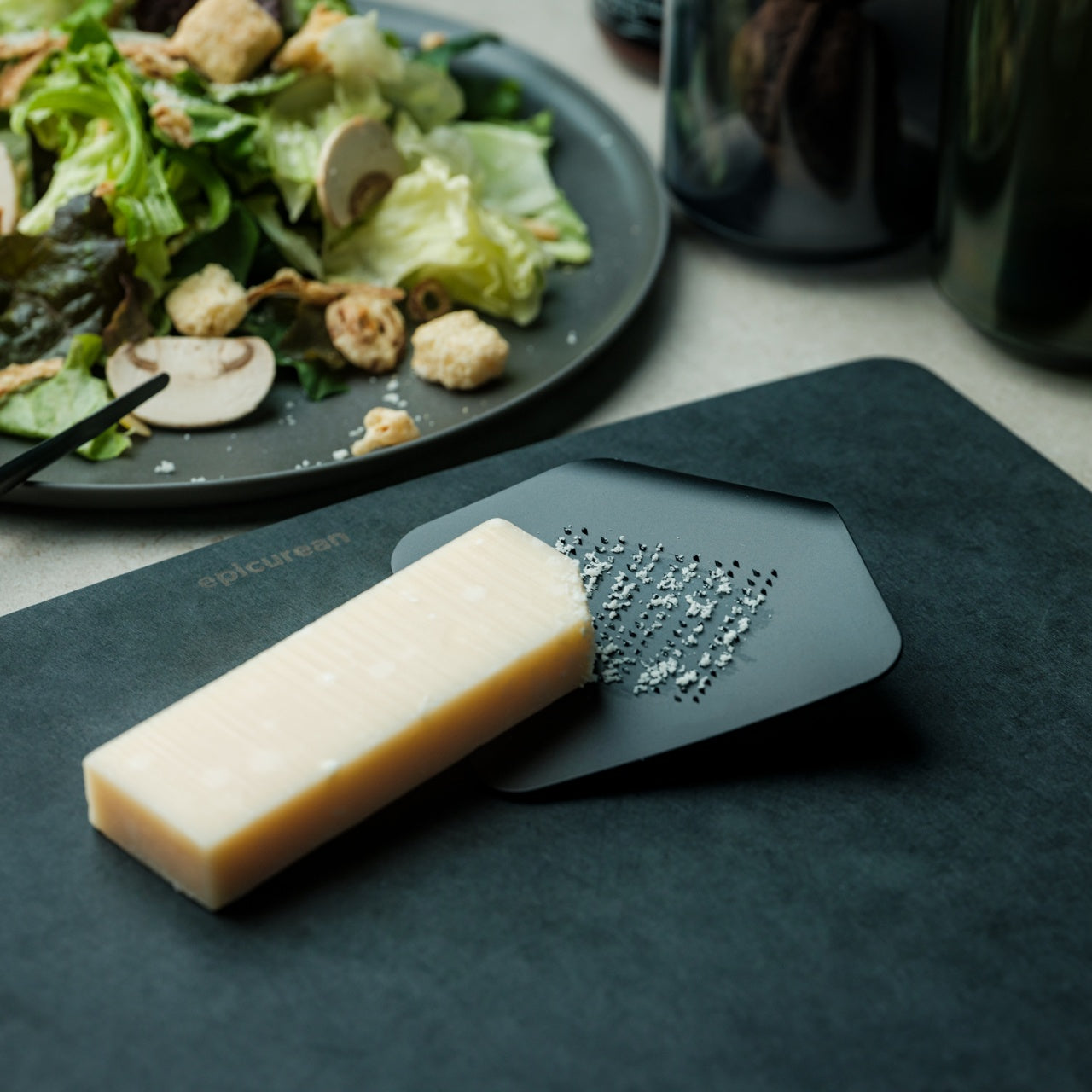
A single aluminum alloy plate, curled into the shape of a sheet of paper lifting at the corner, is the entire construction. That decision does more than look considered. Held in the palm, the curve keeps fingers clear of the grating surface and controls the angle naturally without any adjustment. The form removes the usual caution from grating, making it quick and clean enough to hand to someone at the table rather than keep behind the counter as something to be careful with.

Stamped from one plate with no joints and no separate parts, it rinses clean, dries in seconds, and stores flat without anything to find afterward. Its purpose is finishing: grating fresh ginger over miso soup, running daikon across it before a piece of seared fish, dusting a few strokes of citrus zest at the end of a dish. At $25, it earns counter space through form, color, and construction that most kitchen tools at any price don’t manage.

Click Here to Buy Now: $25.00

What we like

  • The curled aluminum form positions the grating surface naturally in the palm, keeps fingers clear of the teeth, and removes the usual hesitation from the process entirely
  • Single-piece construction means no joints to loosen, no parts to lose, and nothing to reassemble after washing

What we dislike

  • One grating coarseness means no adjustment between a fine dusting and a coarser pass, which limits versatility for kitchens that regularly need both
  • The palm-sized format is built for finishing and garnishing; volume grating requires more passes than a larger tool would

The Right Kitchen Feels Like Somewhere You Chose to Be

Japanese kitchen tools share a quality that is hard to name but easy to recognize. They were designed by people who cooked regularly and got quietly frustrated with what wasn’t working. That frustration, refined into object form, is what separates a mill that makes you reach for it from one you forget in a drawer, and a pot that changes what simmering produces from one that merely holds the heat.

Fall is the season these objects were made for. The spice mill that finishes the dish with a shake. The bread oven that turns the morning into something worth waking up for. The clay pot that asks you to wait. The grinding set that makes the sauce worth making. The palm grater that makes the garnish worth adding. Five objects, one season, and a kitchen that finally feels like somewhere you chose to be.

The post 5 Best Japanese Kitchen Gadgets That Make Fall Cooking Feel Like a Saturday in Kyoto first appeared on Yanko Design.

Back to School Isn’t Just for Kids – 8 Gadgets & Tools That Reorganize the Whole House

Something shifts in late August that has nothing to do with school. The house starts to feel like evidence of a summer that ran on improvisation – schedules buried in group chats nobody reads, keys that went somewhere in July and only half-returned, a desk that spent three months as a charging station and a landing pad for things with no permanent address. The calendar turning does not fix any of this by itself.

These eight gadgets do not ask you to overhaul the way you live. They ask much smaller things: where does the schedule live so everyone sees it, what happens to the desk when the workload returns, how many cables are living on a surface that has no business holding them. Each one solves a specific piece of the September reset without requiring a renovation. The whole house earns back its organization, room by room.

1. reTerminal Sticky

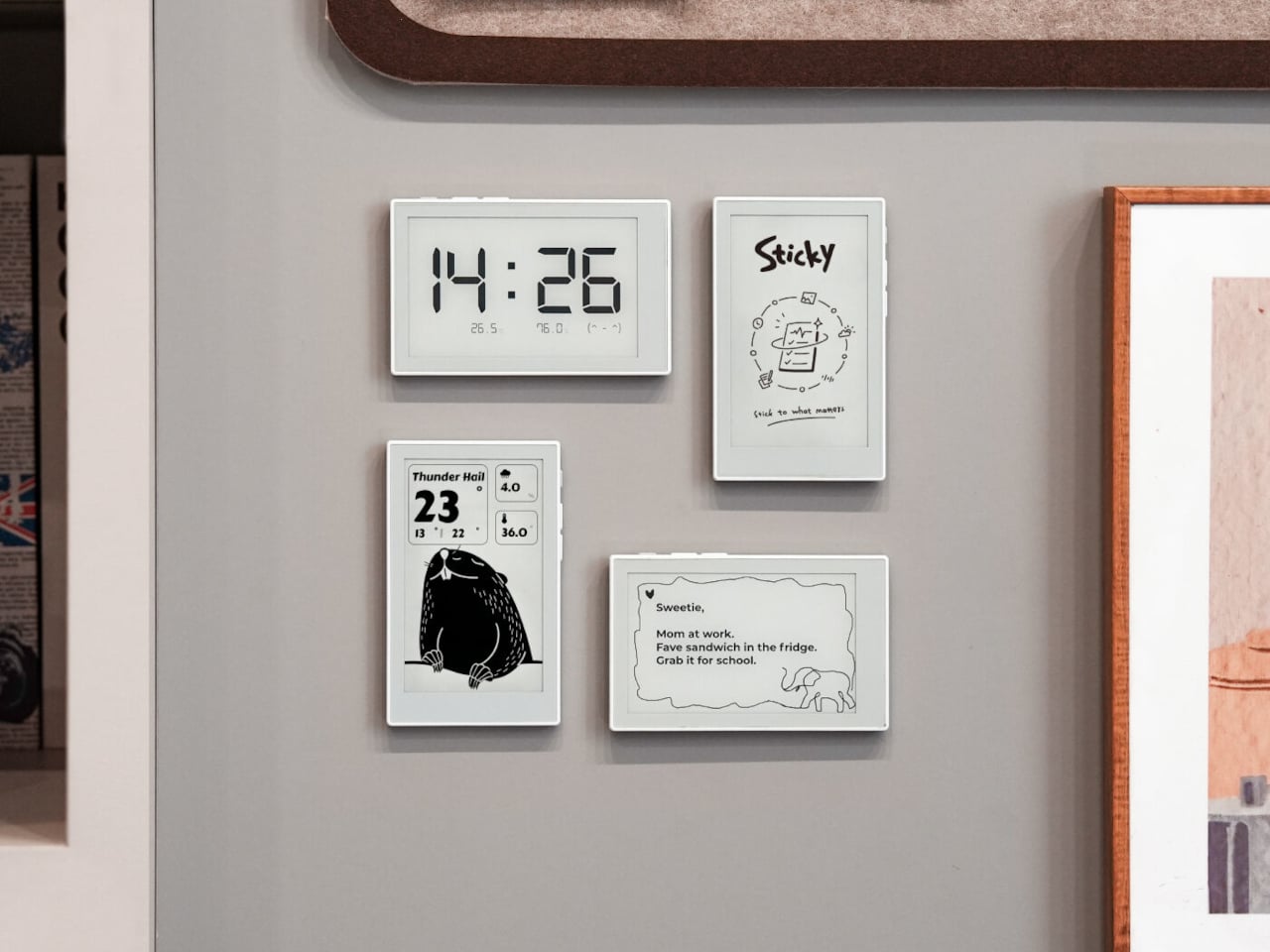
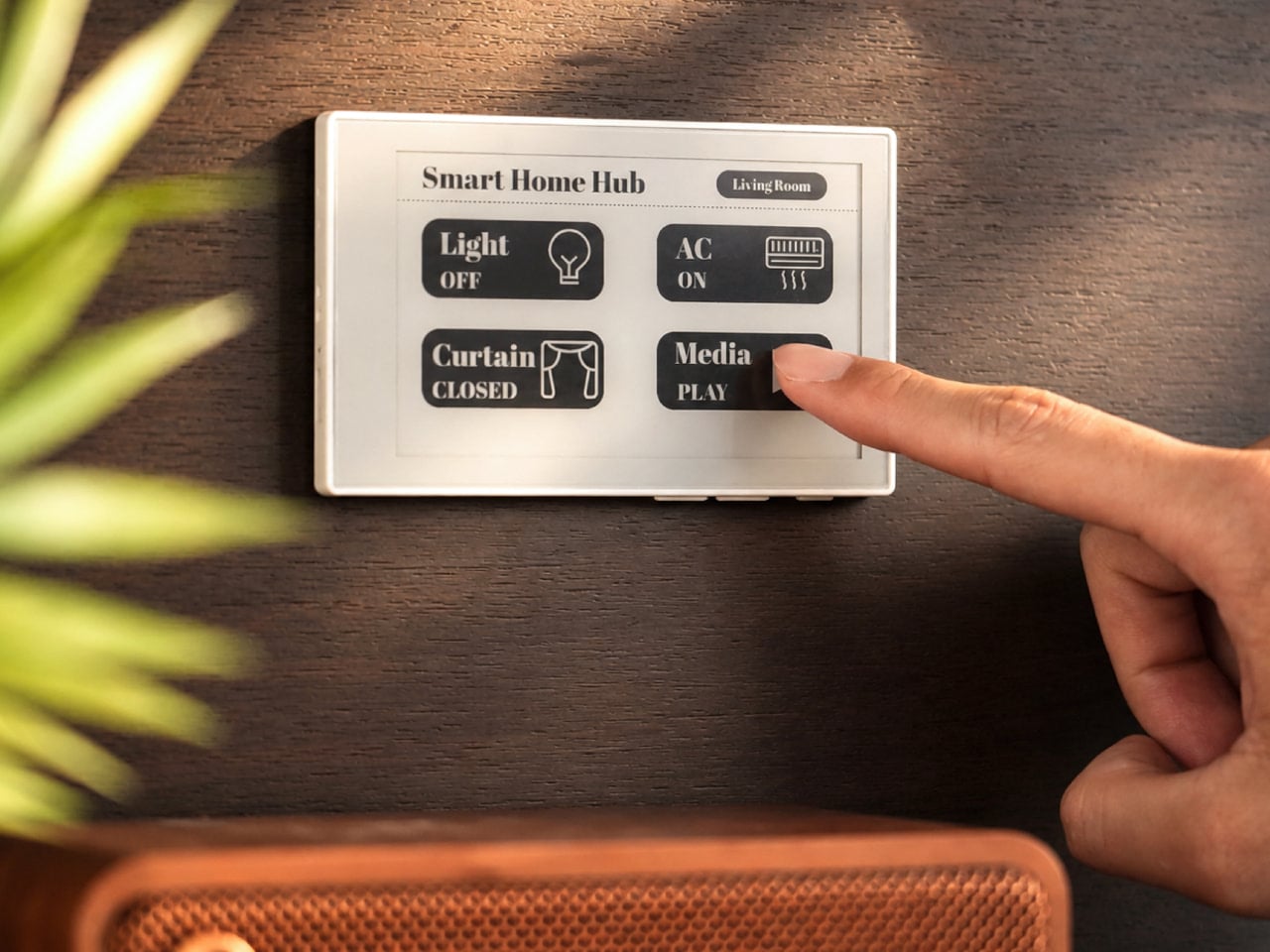
The problem with a family group chat is structural, not social. It requires everyone to already be looking at their phone to see the message, which is the precise moment most people are doing something else entirely. The reTerminal Sticky moves the shared schedule off the phone and onto the fridge – a 3.97-inch E-Ink touchscreen in a 7.3mm body that magnets directly to any metal surface and shows notes, reminders, weather, and a clock without drawing power to maintain the image.

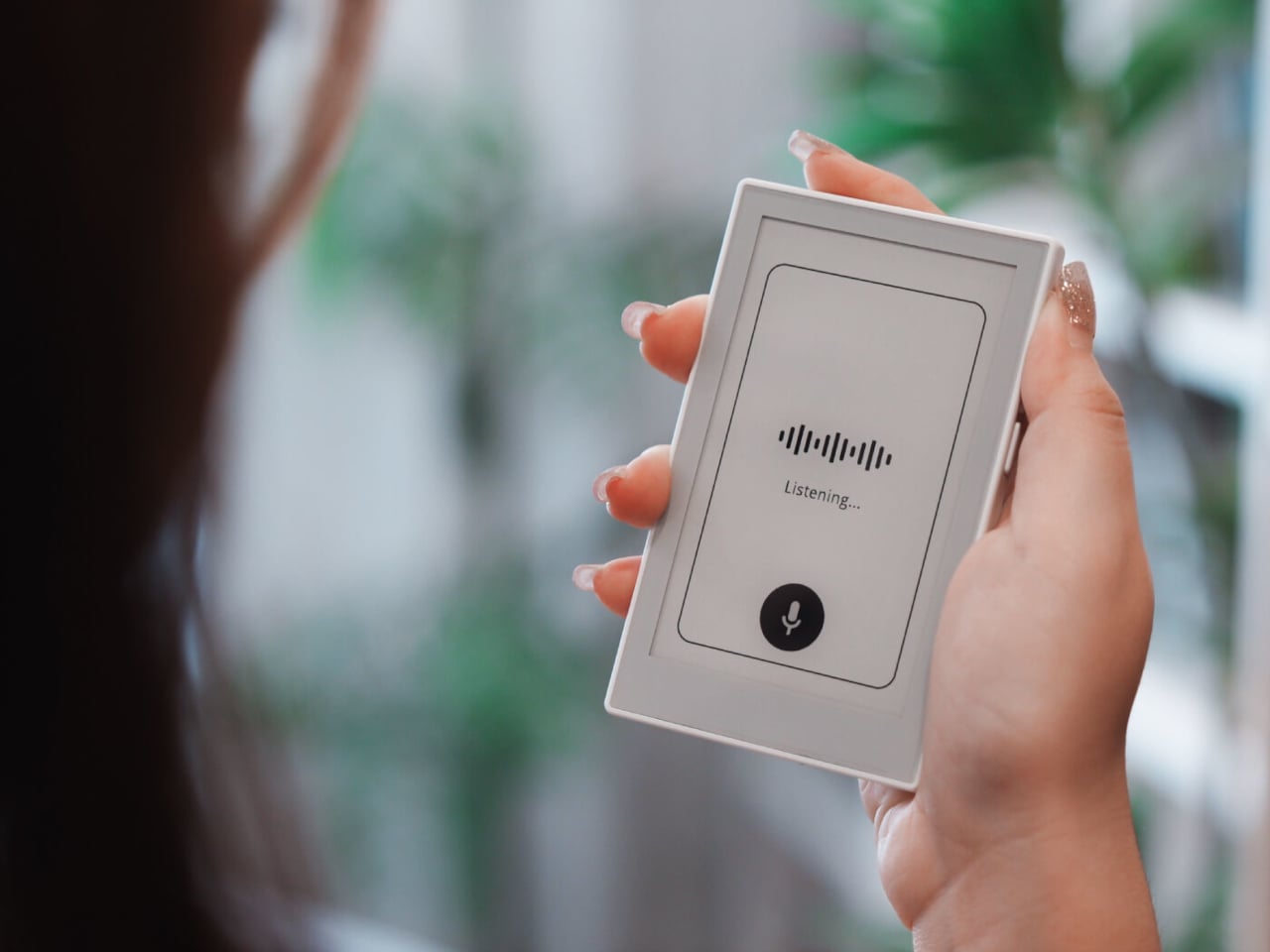
Someone at work can post a dinner reminder to the home screen over Wi-Fi or cellular using the Seeedash companion app, no text chain required. At home, a physical button lets you press and speak – the display transcribes the voice directly into a note without opening anything first. The 750mAh battery lasts a week under normal use and potentially months in Battery Saver Mode, which removes the main reason most small gadgets get quietly retired after the first month.

What we like

  • Remote note posting means the schedule updates the moment it changes, not when someone remembers to mention it in a thread
  • E-Ink holds the display without drawing power, so a full week of reminders appears on the fridge without a mid-week charge

What we dislike

  • The monochrome screen trades color for legibility and battery life, which is the right trade-off for a kitchen surface but worth knowing before purchase
  • Voice input currently supports English and Chinese only, which limits the feature for multilingual households

2. ClearSlide Box Opener

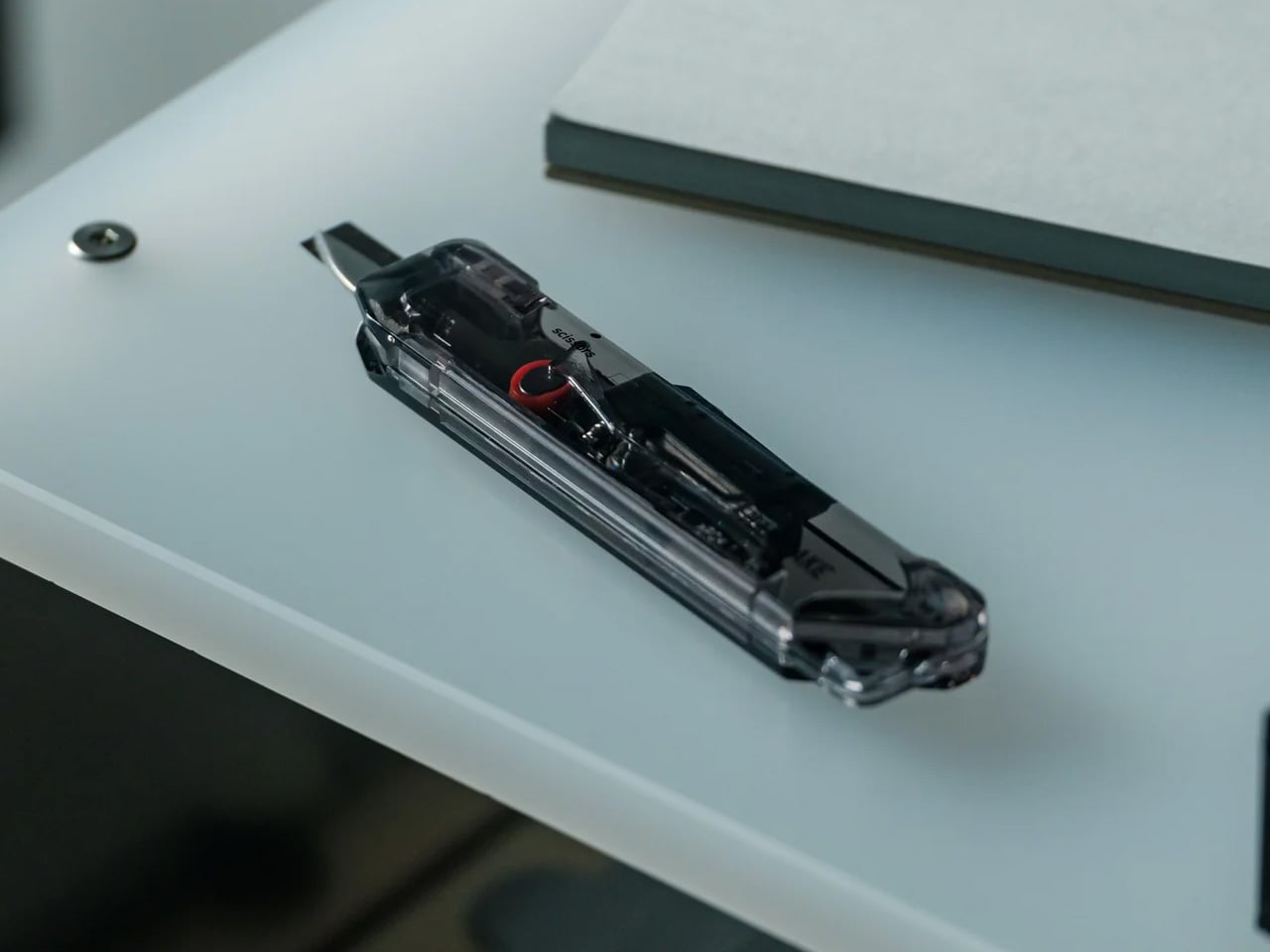
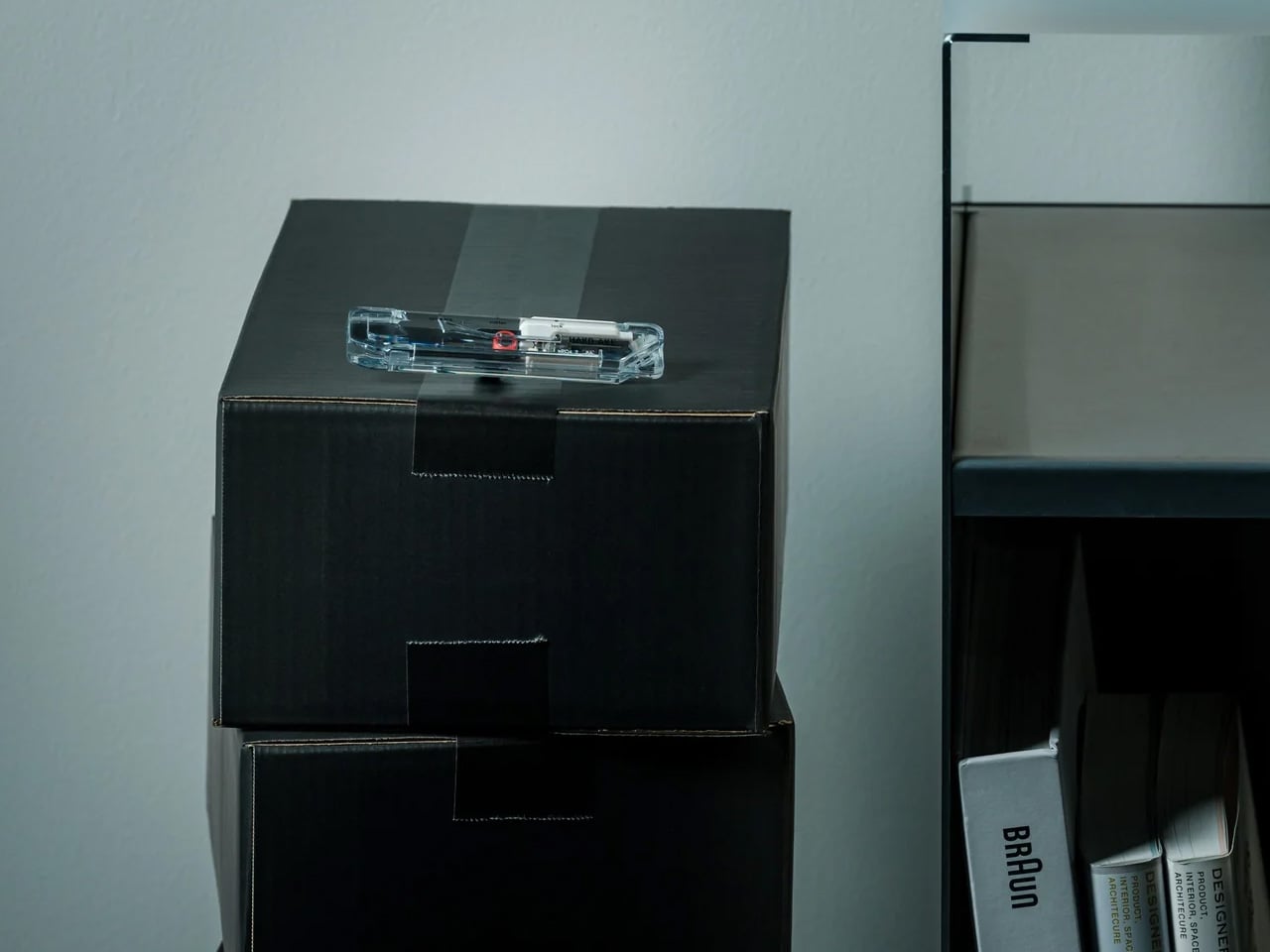
Back-to-school week in 2026 means a run of boxes at the front door – school supplies, replacement headphones, the desk lamp that was finally ordered. The recurring problem is not the boxes. It is setting them down to find a box cutter, then setting the box cutter down to find scissors for the tag inside. ClearSlide solves that two-tool problem with a single sliding thumb motion that cycles through lock, cutter, and scissors without setting the box down.

The 0.12-inch blade extension is deliberate – it cuts through packaging tape cleanly while staying far enough from the contents to avoid second-guessing every pass. The detail that earns it a permanent spot is the transparent shell. The red slider and internal mechanism are fully visible as you cycle positions, each one locking with a crisp click before releasing with a clean spring action. At $30, it is the most straightforward decision on this list.

Click Here to Buy Now: $30.00

What we like

  • The single-hand sliding mechanism switches between box cutter and scissors without setting the package down, which is exactly the problem it promises to solve
  • The transparent shell makes every internal shift visible as you use it, turning a utility object into something worth keeping on the counter

What we dislike

  • The 0.12-inch blade is optimized for tape and packaging, not heavier cutting tasks that need more blade depth
  • Limited units are currently available in the Select Shop, so the window to order without waiting is shorter than most products on this list

3. Orbitkey Key Organiser

September brings keys back into rotation – school fobs, office cards, library returns that spent summer in a drawer with no forwarding address. A standard key ring solves the problem with the bluntness of something designed before pockets had size constraints: keys press ridges into trouser pockets for eight hours straight and jingle through every corridor between them. The Orbitkey stacks up to seven keys flat inside a full-grain leather spine, held under tension with stainless steel hardware, producing no movement and no sound when closed.

The leather exterior develops its own wear pattern over years of daily use, an explicit design position about longevity that most keychain products never bother taking. A small ring attachment handles anything that does not stack flat inside the body, and five colorways cover the full range from black dress leather to warmer cognac tones. Heading out the door with the Orbitkey in your pocket for the first time, the first thing you notice is the absence of sound from your keys. Then you stop noticing it, which is the point.

What we like

  • The tension-stacking system eliminates key jingle, which sounds like a minor gain until you experience a full working day without it
  • Full-grain leather construction ages into character rather than showing damage, built to outlast the annual trend cycle by a significant margin

What we dislike

  • Initial key installation involves a screwdriver and careful threading – not difficult, but a real first-use commitment that catches some buyers off guard
  • Oversized or irregularly shaped keys may not stack cleanly within the system’s geometry, worth confirming before purchase rather than after

4. Fantom X Wallet

The wallet is the one object in the house that nobody reorganizes until it physically stops closing. By late August it carries summer receipts from June, loyalty cards for places visited once, and transit cards added during travel that have no reason to remain. The Fantom X treats the wallet as an engineering problem rather than a craft one – a machined aluminum chassis that retains cards mechanically and ejects them in sequence with a spring-loaded press of a button, organized by frequency of use rather than pocket habit.

Nothing in its construction is soft, which means nothing in this wallet degrades. The bead-blasted aluminum body borrows its material logic from the better end of the EDC market: fewer components, one mechanism, no organic materials that can stretch, crack, or lose tension under daily use. Cards organize themselves by ejection sequence, which introduces a useful kind of intentionality about what actually deserves a slot. Heading into a structured fall with a wallet this considered makes the stretched billfold feel like a problem you have finally solved rather than one you are still living with.

What we like

  • Machined aluminum construction eliminates the stretching and cracking that defines the lifespan of leather and fabric wallets across every price bracket
  • The spring-loaded ejection fans cards in sequence, removing the fumbling that every other slim wallet format still requires at the checkout counter

What we dislike

  • The mechanical ejection system has a learning curve for anyone switching from a traditional bifold, with the first week involving genuine reorientation
  • Cash carry is minimal depending on configuration, which limits practicality for anyone who still moves through the day with notes in their pocket

5. Olight Baton 4 Premium Edition

By mid-September, sunset arrives before 7 pm across most of the US. The dead flashlight, the empty power bank, and the missing lantern resurface together as the same problem – the house is not ready for the darker half of the year. The Baton 4 Premium resolves all three by making the charging case the primary object rather than the flashlight and power bank as separate things. The flip-top case carries 5,000mAh, recharges the Baton 4 up to five times, and activates the light without removing it from the case at all.

The 1,300-lumen output and IP68 waterproof rating handle the practical end of what a flashlight needs to do. The magnetic tail cap converts it into a freestanding lantern by sticking to any steel surface, removing the need for a separate camp light in most low-light situations and proving genuinely useful during a power outage. For a house heading into fall, the Baton 4 Premium makes the case that two carry problems can be resolved by a single considered object – which is the only standard that matters when the evenings start arriving early.

What we like

  • The charging case serves as a functional 5,000mAh power bank and activates the flashlight without removing it, two carry problems resolved by one object instead of two
  • The magnetic tail cap frees both hands during stationary tasks without requiring any additional accessories, stands, or setup

What we dislike

  • Maximum brightness draws battery faster than lower output modes, meaning more frequent recharging on heavy-use days and more reliance on the case as compensation
  • The case adds volume to the carry; users wanting the flashlight alone will need to leave the power bank function behind, which partially defeats the premise of carrying less

6. MagBoard Clipboard

A stack of papers with no system is not a filing problem – it is a thinking problem. Back-to-school week produces a specific kind of paper chaos: printed schedules, permission forms, project outlines, and to-do lists that exist on separate sheets because they were never meant to live together permanently. The MagBoard Clipboard holds up to 30 loose sheets under a magnetic lever mechanism, securing them firmly enough for daily use while releasing them individually the moment a page needs to move, be filed, or be removed entirely. A hardcover backing means you can write against it standing at the kitchen counter, leaning against a wall, or anywhere without a flat surface underneath.

What separates this from a standard clipboard is the organizational logic it allows. Notes for different projects stay on separate sheets and get assembled in whatever order the week demands – not the order they were written. When a task is done, the page comes out cleanly. When a new one is added, it slots in where it belongs rather than at the back of a bound notebook that cannot be rearranged. The water-resistant cover handles the unpredictability of a house in motion. At $45, it is the analog organizational layer the desk has been missing since July.

Click Here to Buy Now: $45.00

What we like

  • The magnetic lever holds sheets firmly enough for daily use but releases individual pages instantly, so the system adapts to how the week actually unfolds rather than locking you into a sequence
  • The hardcover backing turns any wall, counter, or standing surface into a writing station, which is where most household decisions actually get made

What we dislike

  • Loose sheets require more active management than bound pages – a page left outside the clipboard is a page that can disappear into the pile it was meant to replace
  • Only 4 units currently available in the Select Shop, so order before the stock runs out

7. LEGO-Inspired Silicone Cable Organizer

By late August the home office desk looks like evidence of a summer that happened entirely online – charging cables for devices not seen since June, tangled around adapters that no longer have a corresponding device on the other end. This modular silicone organizer uses a peg-and-row design to secure up to two cables per row across three size formats, holding each one in place without clips, Velcro, or anything that needs to be replaced. A micro-suction tape base holds the whole unit to any desk surface without permanent installation.

The design borrows its logic from LEGO – modular, expandable, and quietly satisfying to configure. You can run the USB-C row along the back edge, the charging cable along the front, and route the HDMI somewhere in the middle, each one held cleanly to its port without crossing anything else. It takes four minutes to set up and several months to forget you own it, which is the only standard cable management needs to meet. The desk underneath gets quieter, and the work that happens on it tends to follow.

What we like

  • The modular peg-and-row design accommodates different cable thicknesses and desk configurations without cutting, drilling, or permanent attachment
  • The micro-suction base holds firmly enough for daily use but lifts cleanly when the setup changes

What we dislike

  • The playful silicone form reads as casual rather than minimal, which may not suit every aesthetic in a more formal office environment
  • Limited color options mean matching a monochromatic desk setup requires some compromise

8. Dockcase 7-in-1 Hub

The desk that works for summer browsing is not the desk that works for a fall workload. The Dockcase consolidates seven connections – ports, 2TB SSD storage, and 100W power delivery – into a single machined aluminum slab that tucks beneath a monitor stand or alongside a laptop without adding visible mass to the surface. An integrated touchscreen tells you what is connected and how much storage remains with a tap, replacing the guesswork that comes from plugging into an unmarked hub and hoping for the best.

The result is a desk that looks planned rather than assembled over time, with every cable routed through one point instead of distributed across a surface that was never meant to hold this many devices. For anyone returning to a structured working week in September, this consolidation is not cosmetic – it removes the daily friction of searching for the right cable and frees up the kind of mental space the season demands. One object replaces half a dozen. The desk earns its function back.

What we like

  • Consolidating seven connections into one device removes the individual dongles and adapters that accumulate into clutter before you notice them doing it
  • The integrated touchscreen provides at-a-glance connection and storage status without opening a settings panel or pulling out your phone

What we dislike

  • The premium price compared to basic hubs is the straightforward trade-off for the touchscreen, SSD storage, and aluminum build quality
  • The stationary slab format works best on a stable desk surface and is not designed to move with a laptop between locations

Start With What Costs You Time

A house reset for September is not a single purchase. It is a sequence of smaller decisions – where does the schedule live so everyone sees it, where do the keys go when the door closes, what happens to the desk when the workload returns. Each product here answers one of those questions without announcing itself. The goal is not a house that looks organized. It is a house that works as though it always was.

Start with the one that solves the most persistent problem. If the kitchen runs on a group chat nobody reads, the reTerminal Sticky earns its spot on the fridge immediately. If the desk disappeared under cables in July and never recovered, the Dockcase and Cable Organizer address that in an afternoon. The whole house does not need to change at once. It only needs to change in the places that cost you time every single day.

The post Back to School Isn’t Just for Kids – 8 Gadgets & Tools That Reorganize the Whole House first appeared on Yanko Design.
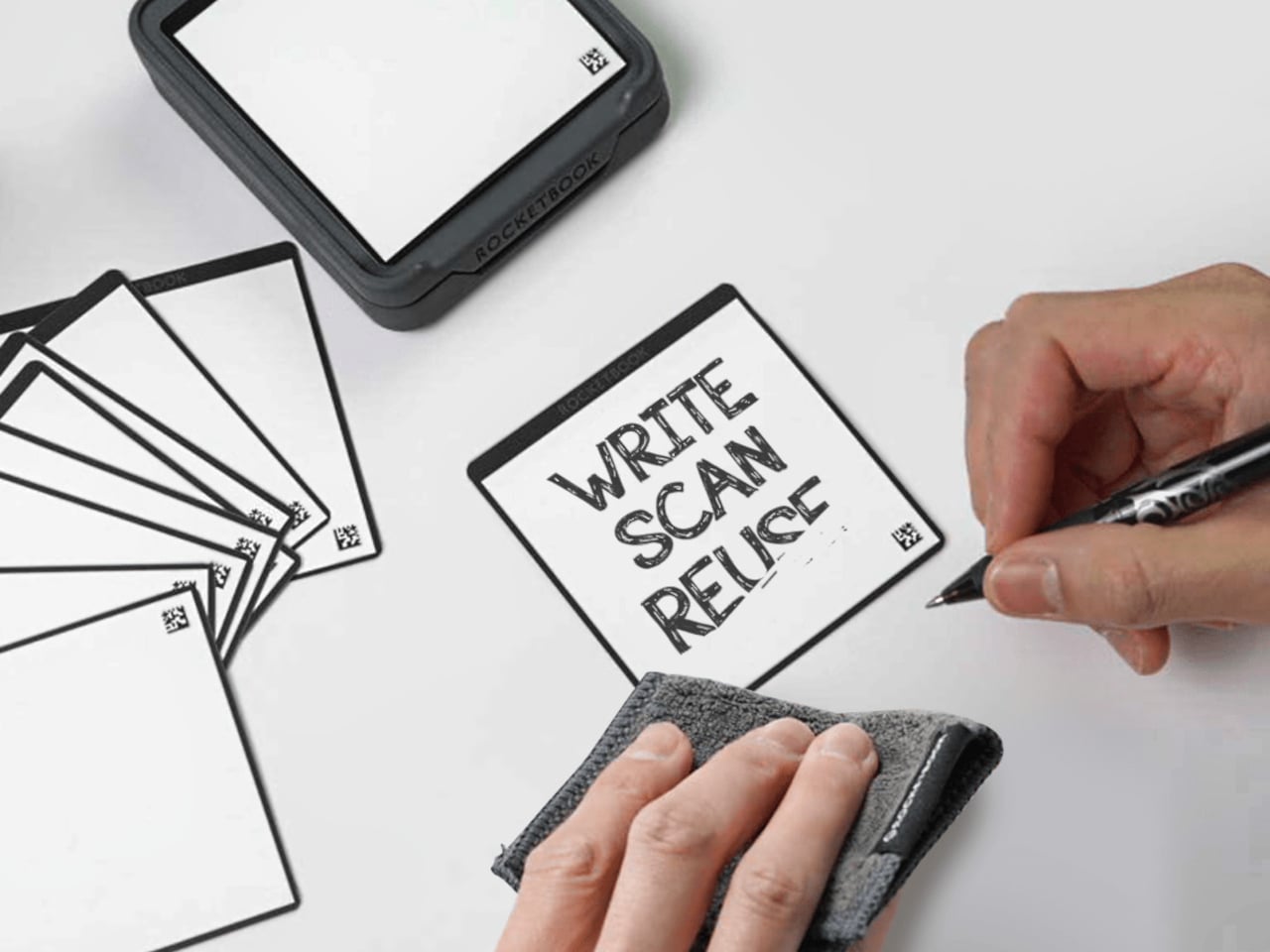
5 Desk Gadgets & Tools Of August 2026 That Make Working From Home Feel Like a Studio

Most home offices look like what they are: a corner negotiated with practicality. The lamp was already there. The desk is covered in objects that arrived separately and never quite agreed to coexist. The difference between a room with a laptop in it and a studio someone is proud to sit in is rarely about square footage. It is about the objects chosen to share that space.

These five picks do not optimize for productivity in any conventional sense. What they do is shift the character of the room: the quality of light on the work surface, the way objects hold their position without adding visual noise, the transparency of what every connected device is doing at any given moment, the warmth of a desk that looks considered rather than assembled. That distinction matters more than most people realize until they sit down to it.

1. Dockcase 7-in-1 USB-C Hub

Most USB-C hubs are forgettable plastic bricks you plug in and never look at again. The Dockcase 7-in-1 by Seesaw is the first hub worth looking at, because it actively shows you what it is doing. A touchscreen display on the front face delivers live readouts of transfer speeds, power delivery status, and SSD health — which sounds like a technical feature until you realize it means you never have to guess whether a file transfer is stalled, a port is pulling full power, or your connected drive is under strain. It is mission control in a 113-gram metallic shell.

The port selection is built for a complete desk: a 10 Gbps USB-C host port, a 100W Power Delivery pass-through that keeps a laptop charged without consuming an outlet, an HDMI output at 4K 120Hz, a UHS-II SD card slot, a TF slot, a USB-A port, and a bay for an M.2 SSD up to 2TB. That last feature — dockable high-speed internal storage — separates the Dockcase from every competitor in its category. Active cooling keeps performance stable under sustained load, and the fan speed is adjustable directly from the touchscreen. The screen also rotates 180 degrees, which is the kind of considered detail that only appears in products made by people who use the thing themselves. This is Seesaw’s 12th Kickstarter campaign, and the credibility shows. At $129, it is priced below its expected retail of $179, and it ships to the US, UK, and EU.

What we like

  • The live touchscreen dashboard makes a hub a transparent tool rather than a black box, which is a category-defining shift
  • Dockable 2TB M.2 SSD support consolidates external storage directly into the hub, eliminating a separate drive on the desk

What we dislike

  • The touchscreen and active cooling add complexity that a simpler hub does not carry — more features means more components with finite lifespans

2. Infinite Solas Lamp

At $325, the Infinite Solas is priced like a statement and operates like one. It is a cordless designer lamp, meaning no cable runs to the wall and no cord crosses the desk surface, which changes the visual cleanliness of the whole setup in a way that sounds minor and registers immediately. The lamp adjusts in height, direction, brightness, and warmth, which means it moves through a full workday from a soft morning reading light to a focused evening session without friction or compromise.

The cordless design is the feature most people describe after a week of living with it. A lamp that can be repositioned without routing a cable changes where it can live — to the left of a keyboard, on a shelf riser behind the monitor, or at the corner of the desk entirely. That freedom of placement belongs to a class of objects that earn their price not through a single headline specification but through the accumulated quality of daily contact with something made without visible compromise.

Click Here to Buy Now: $325.00

What we like

  • Cordless operation changes the visual cleanliness of a desk in a way no cable management solution can replicate
  • The full range of adjustments across height, direction, brightness, and warmth covers every lighting need across the working day

What we dislike

  • At $325, it requires a level of commitment that rules it out as a casual or low-consideration purchase
  • A cordless lamp is a lamp that needs charging, and that charging requirement introduces a variable a corded lamp does not carry

3. Ugmonk Gather

The Ugmonk Gather is a modular desk organization system made in Pennsylvania from powder-coated steel, walnut, and felt, with embedded magnets holding each component to the next. Individual pieces start at $49 and expand outward: pen holders, note trays, card organizers, each designed to connect to the others without fasteners or visible hardware. The modularity is genuine rather than theoretical — pieces can be rearranged, added to, or reduced in seconds as the desk layout or daily routine changes around them.

The felt lining and walnut inserts are what separate Gather from the category of desk organizers that are technically functional and visually unremarkable. Each piece is finished with enough care that the physical act of picking up a pen or pulling a card from the tray has a small, deliberate quality that cheaper systems do not reproduce. It is one of the few organizational products that contributes positively to how a desk looks even when it sits empty, which is its most honest test.

What we like

  • The magnetic connection system means the layout reconfigures in seconds without tools or any lasting commitment
  • American-made materials and construction are visible in the finish quality, not just stated on the packaging

What we dislike

  • Building a complete system from individual pieces adds up quickly, and restraint in selection is harder than it sounds when each piece is designed to invite the next
  • Walnut components require the same care as any wood product, and prolonged direct sunlight will fade the finish over time

4. Orbitkey Desk Mat

The Orbitkey Desk Mat costs $99.90 and covers the work surface in vegan leather — a polyurethane material with a smooth finish and a subtle texture that reads as refined rather than synthetic. A felt backing protects the desk underneath from scratches and keeps the mat from shifting during use. The surface is water-repellent and wipes clean, which means it absorbs the visual wear of a working desk — coffee condensation, errant pen marks — without accumulating the physical wear that fabric alternatives carry after a year of daily contact.

A desk mat is the item most people overlook when upgrading a workspace because a bare desk surface is still visible, and every object placed on top of it sits in front of whatever grain or color lies underneath. The Orbitkey resolves that with a single consistent material that gives everything placed on top of it a unified ground. It holds a rating of 4.8 out of 5 stars across verified reviews, which is an unusual score for a product this quietly utilitarian in its purpose.

What we like

  • The water-repellent surface is genuinely maintenance-free for the condensation and minor spills that mark up fabric alternatives
  • The felt backing keeps the mat in place and buffers any desk surface imperfections underneath

What we dislike

  • Vegan leather ages differently from genuine leather, and the aging is predictable rather than characterful over several years of use
  • The smooth surface is not suited to every mouse sensor, particularly older optical sensors that require texture to track accurately

5. Grovemade Walnut Desk Shelf

The Grovemade Walnut Desk Shelf is the single piece of desk furniture most likely to change how a workspace looks and, more importantly, how it feels to sit at. Cut from 15-ply solid walnut in three sizes — Small at $180, Medium at $250, Large at $290 — it lifts the monitor and creates two distinct working planes where previously there was a single flat surface. That vertical separation reorganizes the visual hierarchy of everything placed on the desk around it.

The walnut is hand-finished, which gives the surface a warmth that manufactured materials reliably fail to replicate. Grovemade also offers the shelf in maple and matte black, meaning there is a version that reads as natural and one that reads as architectural. The large shelf supports monitors up to 50 pounds and accommodates ultra-wide screens. It is the kind of object that makes everything else on the desk look more intentional by association.

What we like

  • The walnut surface develops character over time, which is something a plastic monitor riser cannot do
  • Three sizes mean it scales from a compact writing desk to an extended dual-monitor station

What we dislike

  • Committing to the right size requires measuring carefully before ordering, because the price gap between small and large is meaningful
  • Walnut is warm-toned, which suits natural and warm desk surfaces and clashes with cooler, grey, or white setups

A Studio Is Just a Desk Chosen Deliberately

None of these five objects will change how you work. The hub does not write better emails. The lamp does not shorten meetings. What they do is change how the room around the work feels, and that feeling compounds. A desk you are genuinely glad to sit at generates a different quality of attention than one that simply occupies a corner of the room with you and waits for Monday.

The difference between a home office and a studio is almost entirely one of intention. These five picks represent five specific decisions: how the desk connects to every device around it, where light comes from and how it moves through the day, where small objects live when not in hand, what the working surface looks and feels like under everything else, and where the monitor sits relative to the desk itself. Together, they do not decorate a workspace. They define one.

The post 5 Desk Gadgets & Tools Of August 2026 That Make Working From Home Feel Like a Studio first appeared on Yanko Design.

7 Outdoor Gadgets For Labor Day Weekend That Make Camping Look Effortlessly Good

The Labor Day weekend has a way of separating gear that belongs from gear that ends up in the car boot. Not by price or feature count, but by how well each object earns its spot before the drive out begins. A Labor Day weekend runs on a different logic than a single overnight. The fire has to hold. The food has to be worth cooking. Everything else has to justify the weight it occupies.

The seven objects here cover the full range: fire, power, cooking, light, water, sound, and one small tool that navigates all of it after dark. What connects them is a commitment to solving a specific outdoor problem with enough precision that the solution becomes the whole reason you own it. Pack these, and the only question left is where to go.

1. Portable Fire Pit Stand

The fire pit category is full of oversized objects that need a truck bed and a second person to manage. The Portable Fire Pit Stand sidesteps that entirely. Precision-cut black steel plates resist warping under sustained heat, assemble without tools, and fold flat when the trip is over. What you get at the campsite is a fire that earns its place as both a functional heat source and the visual anchor every site needs to feel worth sitting around past sundown.
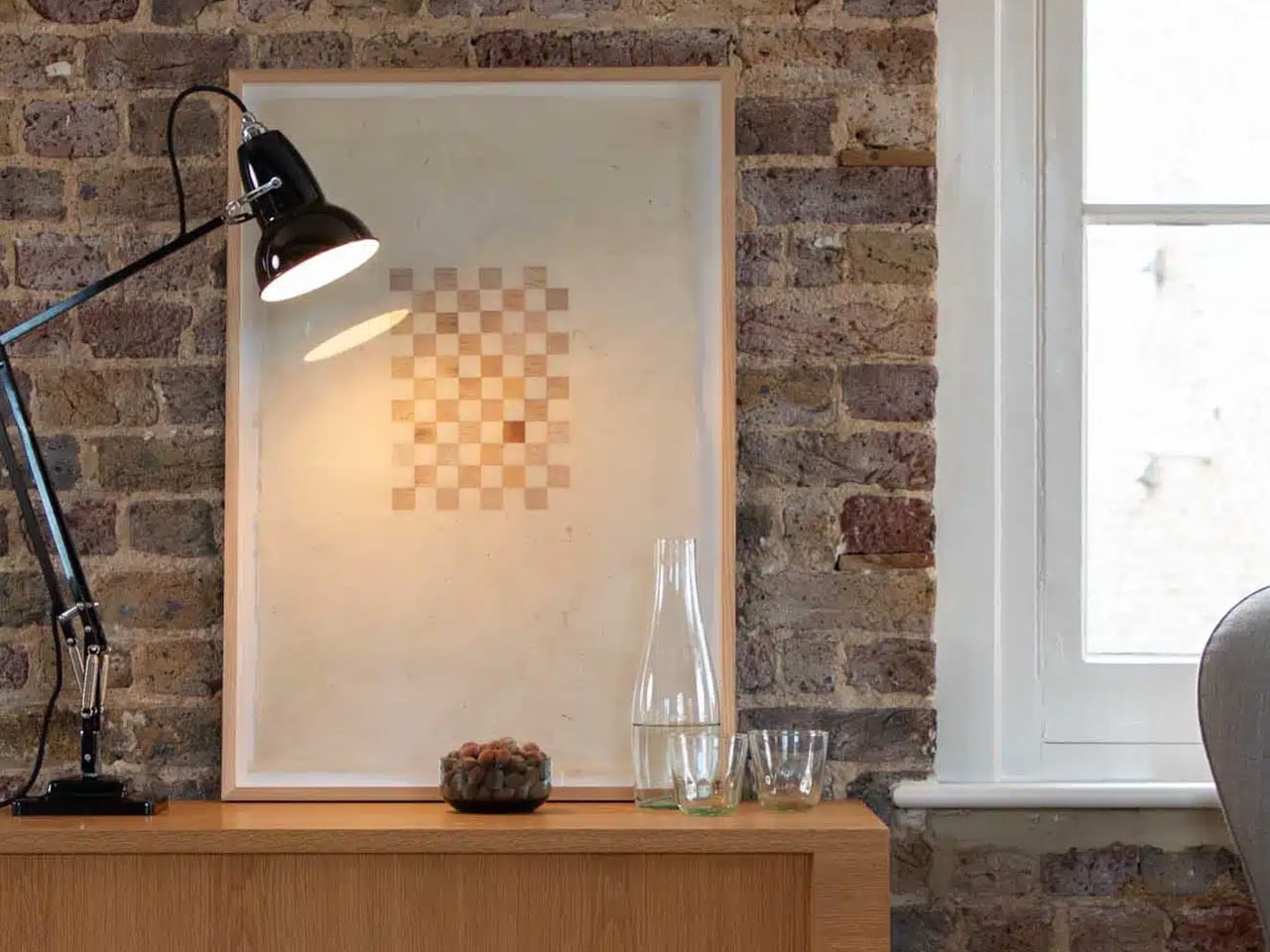
The stand elevates fire off the ground, making it viable on sensitive terrain and at campgrounds where ground fires are restricted. That single design decision opens up far more sites than a standard ring allows. The black steel construction does not bow or distort after repeated use the way cheaper alternatives do, and the footprint is compact enough to work on a picnic table or against a stone wall. It is the kind of gear that earns a permanent place in the kit after a single evening out.
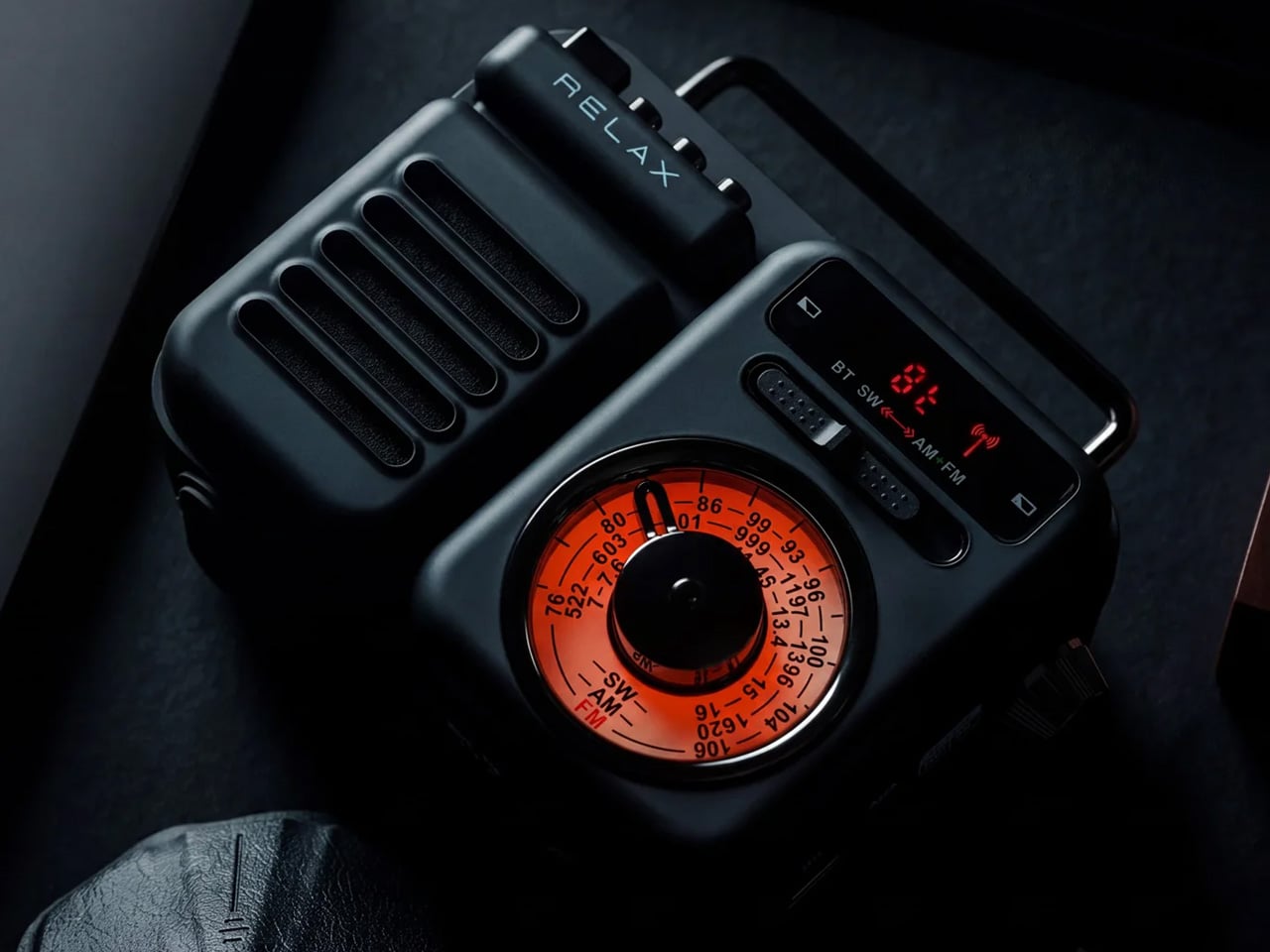
Click Here to Buy Now: $119.00

What we like

  • Heat-resistant steel construction holds its shape through repeated use across multiple camping seasons
  • Elevated design meets leave-no-trace standards on campgrounds where ground fires are restricted

What we dislike

  • Steel construction adds weight that backpackers counting grams will notice over a long carry
  • No integrated grill grate, which means a separate purchase for cooking directly over the fire

2. Blavor Power Station + Camping Lantern

Most portable power stations look like they were designed by someone who has never spent a night outdoors. The Blavor PN-W43 solves that by building a 4W LED camping lantern directly into the form factor. The result is a 64,000mAh device barely bigger than a tall water bottle that covers five charging pathways — solar, AC, car adapter, USB-C, and micro USB — with bidirectional 100W fast charging and a digital display that keeps battery status visible in the field without guesswork.

The real value is how naturally the two functions coexist. When the lantern is on, the power bank is right there. When you are charging devices overnight, the ambient glow handles the tent interior without a separate light source. For campers who have always carried both a dedicated lantern and a backup battery pack, the consolidation alone pays for the weight before the first night ends. A lanyard ships in the box, which tells you someone at Blavor has actually camped.

What we like

  • Five charging pathways give genuine flexibility across grid-connected and fully off-grid environments
  • Lantern and power bank coexist without compromising each other — the dual function feels designed in, not added on

What we dislike

  • At 236.8Wh, capacity suits a weekend trip rather than an extended off-grid expedition
  • The cylindrical form can sit awkwardly alongside flat gear in a structured pack

3. Camprit TiStove

Five flat pieces of Grade 5 titanium, two foldable legs, and three interchangeable cooking panels that together weigh under 1.5 pounds and pack completely flat. The Camprit TiStove reconfigures for boiling, grilling, or searing depending on which panels you assemble, and the extra panels double as a windshield. As heat accumulates over a season, the titanium changes color naturally, giving each stove a visible record of every meal cooked on it. Yours becomes genuinely yours over time.

There is no ignition system to fail at altitude, no gas canister threading to seize in the cold, and no assembly logic that requires reading a manual after dark. The pieces lock together without fasteners and disassemble in seconds. Compatible with wood, gas burner, and alcohol, it adapts to whatever fuel the terrain allows rather than locking you into a single system that can fail or run out. For anyone who has stood over a dead stove in the cold, this addresses the problem where it starts.

What we like

  • Packs completely flat under 1.5 lbs with three interchangeable cooking configurations for different meal types
  • Compatible with any fuel source, removing dependency on a single system in the field

What we dislike

  • Requires a separate burner or fuel source — nothing is self-contained out of the box
  • Titanium panels need careful packing to avoid scratching each other in transit

4. All-in-One Grill

Skewers of meat and green onions grilling on a small portable charcoal grill with a metal insert holding a glass bottle.

Made in Japan from stainless steel, the All-in-One Grill approaches camp cooking from a completely different position than the TiStove. Where that one is built for portability and fuel flexibility, this is built for the campsite where you are staying put and eating well. A modular lid system converts it between six distinct cooking methods — barbecuing, frying, grilling, steaming, smoking, and stewing — without requiring separate cookware for each. One object covers an entire outdoor kitchen without asking for a second bag.

Japanese stainless steel holds heat evenly, cleans without drama, and does not carry the flavor of every previous meal the way cast iron can. For a long weekend where the grill is the centerpiece of three evenings rather than a convenience, this is the object that makes the drive worth it. The modular configuration grows with the meal rather than limiting it, and the compact footprint fits the full camp kit without demanding its own dedicated storage alongside everything else.
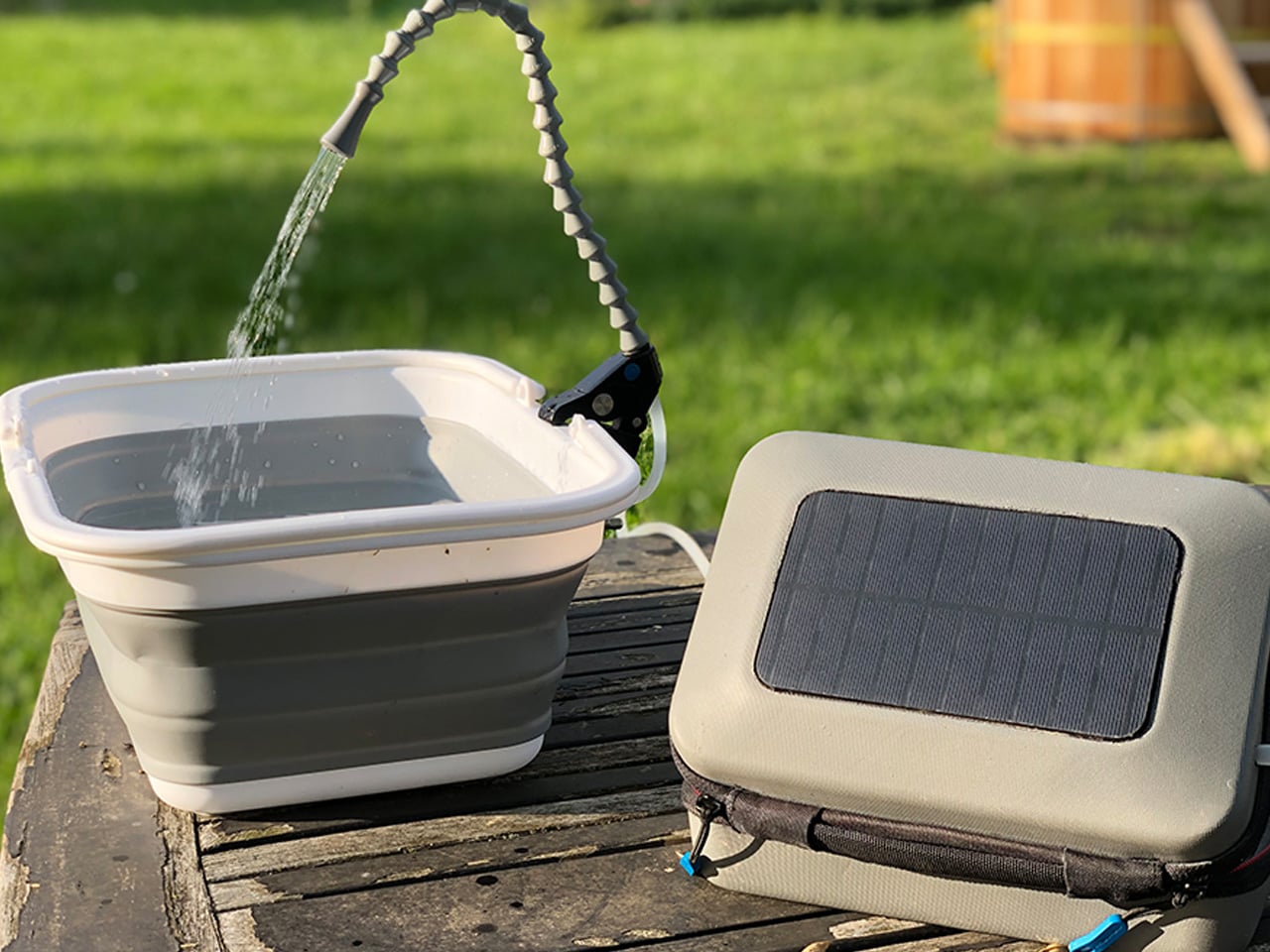
Click Here to Buy Now: $449

What we like

  • Six cooking methods in one stainless steel body remove the need to pack separate cookware for different meals
  • Japanese stainless steel construction holds heat evenly and cleans efficiently after each use

What we dislike

  • At $449, the investment makes the most sense for campers who cook seriously rather than occasionally
  • Charcoal and wood fuel require ash management that demands more effort in the field than gas alternatives

5. NoxTi Tritium Keychain

A 45mm CNC-machined Grade 5 titanium cylinder weighing 10.7 grams. The NoxTi carries a tritium vial inside a precision quartz tube with 92% light transmission and glows continuously for 25 years through radioactive decay. No switch, no battery, no charging. Tritium beta particle decay strikes a phosphor coating and produces light as a straightforward byproduct of existing. At a campsite, it marks your tent entrance, your keys at the bottom of a bag, and your gear in the dark without asking anything of you in return.

The ceramic-tipped glass breaker at the tail end adds genuine emergency utility without changing the form. When the vial dims after two decades, the titanium body stays: press the old tube out, slide a new one in. Six glow colors are available, including Apple Green for maximum visibility and Red for preserving night vision. Two silicone O-rings hold the vial suspended and centered inside the shell, which creates the impression of looking into a piece of precision engineering rather than anything from a keychain rack.

What we like

  • 25-year continuous glow powered entirely by physics, with no battery, no charging, and no failure point to manage
  • Fully user-serviceable titanium body becomes a platform you keep and update indefinitely across decades of use

What we dislike

  • Glow output is intentionally faint — it marks and locates in the dark but does not illuminate a surface
  • The tritium light source needs a short explanation before the value proposition fully lands for first-time buyers

6. GoSun Flow Solar Water Purifier

Water is camping’s most basic constraint, and the GoSun Flow addresses it at the source. A solar-powered three-stage cartridge filter eliminates 99.99% of waterborne pathogens while pumping one liter of clean water per minute from any freshwater source. The system compresses into a backpack, and the flexible faucet clamps to branches, tables, or tailgates — opening to 58mm — turning any water access point into a functional camp station. USB power keeps it running when solar is unavailable.

It doubles as a portable handwashing station and solar-heated shower. Thirty minutes of sun delivers a five-minute warm shower, which changes what clean means across a three-day trip without the bulk of carrying a separate shower bag and a purifier as two distinct items. The filter handles 1,000 liters before replacement, and the power bank driving the pump recharges through an integrated solar panel. For anyone who has ever compromised on hygiene to protect pack weight, this removes that trade-off before you even start packing.

What we like

  • Purifies 99.99% of pathogens and delivers a solar-heated shower from a single system that compresses into a backpack
  • 1,000-liter filter life with USB power backup covers a full camping season without resupply

What we dislike

  • Cannot process saltwater, which limits utility at coastal campsites
  • Multiple components increase the number of parts to track and keep together across a multi-day trip

7. RetroWave 7-in-1 Radio

The RetroWave earns its place in a camping kit through an argument that has little to do with aesthetics, even if the aesthetics are genuinely good. A tactile tuning dial, compact body, and warm visual language drawn from classic Japanese radio design make it worth looking at. What it is actually doing is more pragmatic: running AM, FM, and NOAA weather radio without an app, streaming via Bluetooth when connectivity holds, and charging via solar panel and hand-crank when it does not. Seven functions, one charging cable.

Smart speakers go silent when Wi-Fi drops. Earbuds die at the wrong moment. Phones drain precisely when you need them most. The RetroWave does not ping you, does not demand ideal conditions, and does not need a charging window before it becomes useful. It plays, charges other devices, lights, signals, and tells the time across a full weekend without complaint. At the end of the trip, it goes back into the same bag it came out of, ready for the next one.

Click Here to Buy Now: $89.00

What we like

  • Seven functions in a single body remove the need to carry and manage multiple separate items across a trip
  • Solar and hand-crank charging keep it fully operational off-grid with no outlet access required at any point

What we dislike

  • The retro aesthetic can read as decorative to buyers who have not yet used it in an actual off-grid situation
  • Shortwave reception quality varies depending on geographic location and surrounding terrain

The Campsite Has Always Been Good. The Gear Finally Caught Up.

The equipment on this list shares one quality that outdoor gear rarely earns: it removes a specific friction from the experience without replacing it with a different one. The fire stand works where others cannot. The purifier turns proximity to water into access to clean water. The stove adapts to whatever fuel the terrain provides. Each object was designed around the constraint it actually faces in the field, which is the harder and more honest design brief.

A Labor Day weekend with gear this considered starts to feel different from the first hour of setup. Not because everything is easier in an obvious sense, but because the small decisions have already been made. Where the water comes from. How the fire holds through the night. What you reach for in the dark. These are solved before the weekend begins, which leaves the actual weekend free to be what it was always supposed to be.

The post 7 Outdoor Gadgets For Labor Day Weekend That Make Camping Look Effortlessly Good first appeared on Yanko Design.