Dyson PencilVac Fluffycones review: Almost the perfect floor cleaner for tiny apartments

The big deal with Dyson’s new vacuum is how small it is. While “pencil” is certainly an ambitious noun to compare a floor vacuum to, the slender body of the PencilVac Fluffycones ($600) brings to mind mops and brooms rather than hulking cyclone-suction tech and connected cleaning. As we described it last year, it’s the company's most stick-like stick vacuum yet. Dyson has been repurposing its engine tech into smaller form factors for years, such as its hair dryers. However, this is the first time it’s been utilized for floor cleaning.

Dyson recently launched the PencilVac Fluffy, with a more traditional dual-roller system, but I’m focusing on the Fluffycones iteration and will call it simply the PencilVac for brevity. It combines several delightful design features, and while surprisingly potent, it’s — predictably — not quite able to match the power of its bigger brothers. The entire vacuum weighs under four pounds, which adds to its ease of use. That said, it’s heavier than it looks, as the rod shape holds everything inside.

With a 40mm-diameter (almost 1.6-inch) handle, it’s usable even with a single hand, if you want to be extra casual in your cleaning habits. It’s also a delight to use. As with several previous Dysons, like the OmniGlide, the dual-roller system seems to help the PencilVac glide across hard floors. It can be pulled and coaxed around furniture, table legs, under low-profile credenzas and more.

When at rest, the PencilVac sits on four central wheels, but once you start cleaning, the suction creates a sort of floating effect. Those four Fluffycone heads are designed to resist hair tangles, with any captured hair bundled like yarn at the tips of each cone for easier cleaning at the center of the PencilVac. The tips of each cone mean the vacuum can reach the edges of my flooring, too. The Fluffycones aren’t really able to dig into the pile, meaning that while they can certainly pull and lift a layer of dirt and dust, anything deeper will stay there.

Dyson PencilVac Fluffycones review
Image by Mat Smith for Engadget

That said, the PencilVac is a dedicated hard floor cleaner. If your home is entirely hardwood or has lots of tile, then it’s not an issue. But if you have carpeted rooms (or large rugs), you might want to consider other models. Also, at higher suction levels, the PencilVac’s rollers would occasionally cut out while vacuuming carpets and rugs.

The PencilVac is also equipped with front and back Dyson Detect lasers, making it easier to see where you’ve missed (and how terrible your floor cleaning habits are). Compared to bigger, more powerful models like the V15 Detect, the PencilVac had a greater tendency to spit out dirt when overwhelmed by larger amounts of debris. This only happened for me when I pushed the limits of what the PencilVac could handle: a handful of garden soil on my hardwood floor.

Because it’s 2026, of course, it’s a connected vacuum, too. When I put together and charged the PencilVac, the first thing it does is project a QR code for pairing. A quick firmware update later and it was ready for use. The only feature in the MyDyson app that you might find useful is maintenance reminders (i.e., when to clean the filter). Everything else, including a battery readout, is built into the handle.

Dyson PencilVac Fluffycones review
Image by Mat Smith for Engadget

Everything else is built into the handle. Compared to Dyson’s other stick vacs, there is no removable dust canister or battery block. The collection bin is cleverly integrated, drawing in dirt and using the same suction to compact it with force. When you need to empty the compartment — which holds a surprising amount (0.8 liters, according to Dyson) — you remove the cleaning head, point the body at your garbage can and ‘slide’ the dust (compacting it further in the process) into your trash can. The collection area is also see-through, so you can see everything you’re pulling into the PencilVac build up like a sort of gauge. When emptying the stick vac, I also noticed it doesn’t produce the dust cloud you often get with vacuums, which is another nice improvement.

Unlike its other stick vacuums, Dyson’s PencilVac comes with a free-standing charging dock, instead of a wall mount. This makes storage a little more versatile. If you’re a renter, there’s no need for any drilling. I think this also speaks to how it’s meant to be used: briefly, in bursts.

To that point, battery life seemed to be around 20 minutes, depending on the power level used and how dirty the surfaces were. Running entirely on boost, I got under 10 minutes of use. This weakness is exacerbated by a sluggish charging time of over three hours. For smaller spaces and not-too-messy lives, that’s more than enough clean time, though.

Dyson PencilVac Fluffycones review
Image by Mat Smith for Engadget

The PencilVac also comes with that Dyson premium, too, priced at $600. That’s still less than the company’s other recent stick vacuums. For example, that’s $50 less than the aforementioned V15 Detect. If your home has a lot of carpeting or rugs to clean, the bigger, more powerful models might be a better choice. The newer PencilVac Fluffy has a more traditional dual-roller system and it's also $150 cheaper.

With its minimalist form factor, the PencilVac is still an engineering marvel. Its high degree of mobility makes it easy to clean in tight corners and between furniture. I just wish it were slightly more powerful.

This article originally appeared on Engadget at https://www.engadget.com/home/smart-home/dyson-pencilvac-fluffycones-review-almost-the-perfect-floor-cleaner-for-tiny-apartments-154550089.html?src=rss



The Elden Ring movie hits theaters on March 3, 2028

Bandai Namco and A24 have announced that the Elden Ring movie will hit theaters on March 3, 2028. Filming is set to begin in the next several weeks. The movie was first revealed over a year ago, so this is a welcome update. 

We also got a full cast announcement, though the companies haven't said who or what everyone is portraying. The cast includes Kit Connor from Heartstopper, Ben Whishaw from the beloved Paddington movies and Cailee Spaeny from Alien: Romulus. Peter Serafinowicz, Jonathan Pryce, Nick Offerman and Sonoya Mizuno will also appear in the film.

Elden Ring will be written and directed by Alex Garland, fresh off the harrowing Civil War. Garland has directed plenty of sci-fi, with credits like Ex Machina, Annihilation and the woefully underrated TV show Devs. He hasn't, however, made any legit fantasy, so we'll have to see how he handles the magic-filled continent known as The Lands Between.

In any event, we have nearly two years before finding out. By that time, theaters will have already experienced two new Avengers and Star Wars films. Elden Ring, the game, is getting some new DLC content this year with armor sets, weapons and skins.

This article originally appeared on Engadget at https://www.engadget.com/entertainment/tv-movies/the-elden-ring-movie-hits-theaters-on-march-3-2028-154411670.html?src=rss

Backcountry’s Scandi Inn Makes 270 Sq Ft Feel Generous

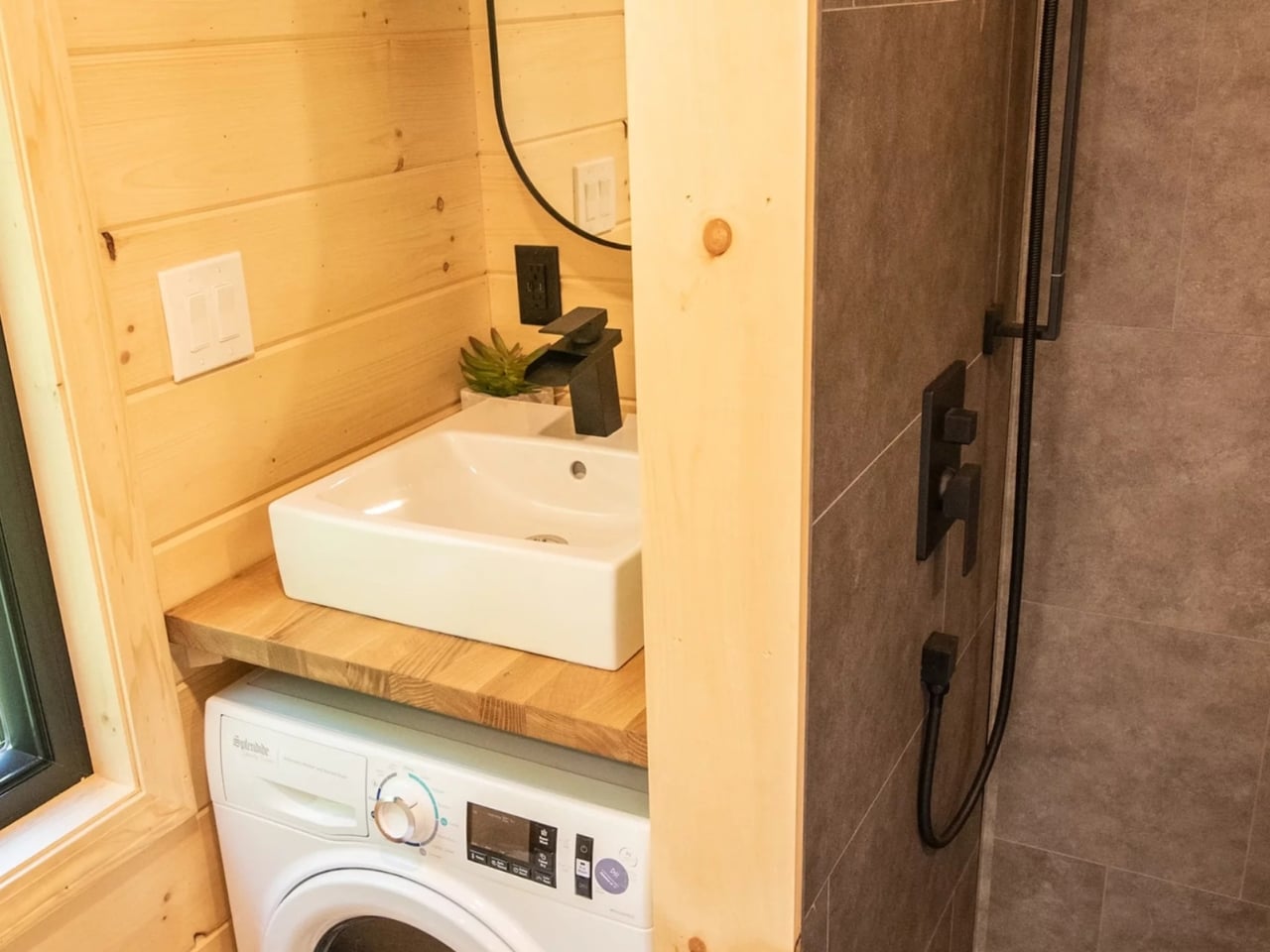
The tiny house movement has had its share of aesthetic whiplash over the years. One week it’s shiplap and barn doors, the next it’s industrial pipe fixtures and Edison bulbs. So when something comes along that actually commits to a visual language and carries it through consistently, it’s worth paying attention. The Scandi Inn by Backcountry Tiny Homes is one of those rare builds that knows exactly what it is.

At 270 square feet and 24 feet long, the Scandi Inn sits on a triple-axle trailer and borrows its design sensibility from Scandinavian interiors. Cedar tongue-and-groove siding on the exterior, paired with metal cladding, gives it that understated cabin quality that reads more European alpine than American backwoods. It doesn’t shout for attention, which is a deliberate choice, and the right one.

Designer: Backcountry Tiny Homes

Step inside, and the interior is finished entirely in tongue-and-groove pine. The effect is warm without being heavy, which is genuinely hard to pull off in a small space. Nordic design has always understood the relationship between wood and light, using natural materials to compensate for limited square footage and often-limited daylight. In the Scandi Inn, that same logic applies, and it translates surprisingly well to a 270-square-foot box on wheels. The overall atmosphere lands somewhere between a mountain cabin and a well-curated hotel room, which is a balance most interior designers wouldn’t attempt at full scale, let alone this one.

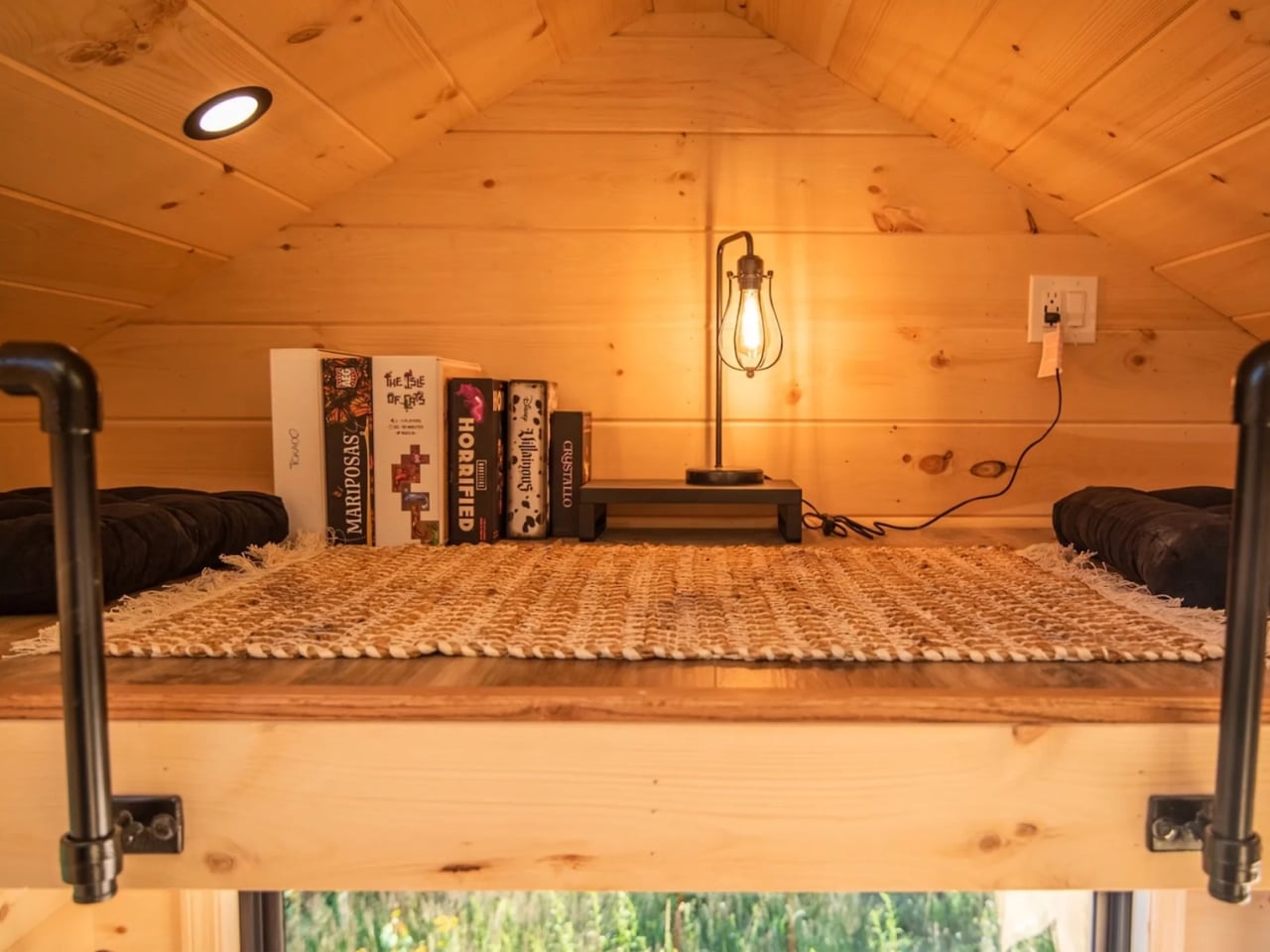
The layout makes serious use of every inch. The kitchen includes a breakfast bar that seats two, alongside a dining area, a living room, and a tiled shower bathroom. A loft bedroom sits above the main floor, and a reading nook tucks into the plan somewhere in between, which is the kind of detail that separates a thoughtful design from a merely functional one. A reading nook isn’t about space efficiency. It’s about acknowledging that people need places to exist quietly, even in small homes. Especially in small homes.

The Scandi Inn sleeps up to three people, which is ambitious for 270 square feet but not unrealistic. The loft configuration handles sleeping without eating into the main living space, a solution that tiny house designers have relied on for years. What makes it work here is that the loft doesn’t feel like an afterthought squeezed in at the last minute. It feels planned, proportional, and consistent with the rest of the interior.

Backcountry Tiny Homes has built a reputation for custom builds that take their design cues seriously, and the Scandi Inn reflects a clear maturity in that thinking. Earlier tiny house builds, from this maker and others, often suffered from the same problem: too many styles competing for attention in a space that couldn’t support the noise. The Scandi Inn has none of that. The palette is restrained, the material choices are cohesive, and the proportions feel considered rather than accidental.

The turnkey price lands at $77,800, which in the current housing market feels almost quaint. That’s not a dismissal of the cost. It’s a significant sum. But context matters. The average home price in the US continues to climb past the reach of a growing number of people, and builds like the Scandi Inn represent a legitimate alternative for those rethinking what homeownership can look like. It’s not a compromise so much as a reorientation of priorities.

The tiny house conversation used to center on sacrifice, on what you give up, what you do without, how you make peace with less. The Scandi Inn frames it differently. The quality of the materials, the cohesion of the design, and the genuine livability of the layout suggest that the goal was never to shrink a house. It was to build something intentional from the start. That distinction matters more than it might seem. Most spaces, regardless of size, feel the way they do because of decisions made about materials, light, layout, and proportion. The Scandi Inn makes good decisions throughout. At 270 square feet, that’s all it needs to do.

The post Backcountry’s Scandi Inn Makes 270 Sq Ft Feel Generous first appeared on Yanko Design.

Artemis II commander shares a remarkable video of Earth vanishing behind the Moon

We’ve seen some astonishing photos of an Earthset — the Earth setting behind the Moon — from the Artemis II crew’s history-making trip around our planet’s closest neighbor. Now, Reid Wiseman, the mission’s commander, has shared a remarkable video of that same phenomenon.

While mission specialist Christina Koch was using a Nikon camera to snap stunning still images of the Earthset, Wiseman used an iPhone 17 Pro Max to film the moment. “I could barely see the Moon through the docking hatch window but the iPhone was the perfect size to catch the view… This is uncropped, uncut with 8x zoom which is quite comparable to the view of the human eye,” he wrote on X.

This was the first time that human eyes had witnessed an Earthset in 54 years since the Apollo 17 mission. The Artemis II crew flew more than 5,000 miles beyond the Moon as they travelled more than a quarter of a million miles away from Earth — the furthest any humans have ever been from terra firma.

I, like many people, overuse the word “awesome.” It should only really be used when something actually inspires awe. This video absolutely meets that mark. It’s genuinely awesome.

This article originally appeared on Engadget at https://www.engadget.com/science/space/artemis-ii-commander-shares-a-remarkable-video-of-earth-vanishing-behind-the-moon-152036403.html?src=rss

Apple could be fined up to $38 billion by Indian antitrust regulator

Apple's refusal to provide financial data to an Indian regulatory agency as part of an antitrust case will culminate in a final hearing on May 21, as first reported by Reuters. According to the Competition Commission of India (CCI), Apple still hasn't submitted information about its financials and its views on an antitrust investigation that started in October 2024.

The case revolves around the CCI accusing Apple of exploiting its dominant position with the App Store, arguing that developers are forced to use Apple's proprietary system for in-app purchases. Apple countered that Android was the more dominant smartphone operating system in India and that iPhones held a smaller market share in India. However, Apple has slowly been gaining momentum with its share of the Indian smartphone market, hitting nine percent in 2025, according to data from Counterpoint Research.

Reuters reported that the latest CCI order said that Apple had plenty of opportunities to file objections or suggestions, but added that the company still hadn't submitted the "requisite financial information," which is used to determine the amount of a potential penalty. Apple argued that the penalties could be up to $38 billion and responded to the order by citing a separate case where the tech giant challenged the country's antitrust penalty law.

It's not the first time Apple has butted heads with the Indian government, as it previously refused to pre-install a state-owned app called Sanchar Saathi onto its smartphones. The Indian government later decided to withdraw its mandate requiring smartphone makers to install the app, but it's much less willing to budge on this antitrust case. According to Reuters, the CCI offered Apple two more weeks to file any responses before the final hearing date next month.

This article originally appeared on Engadget at https://www.engadget.com/big-tech/apple-could-be-fined-up-to-38-billion-by-indian-antitrust-regulator-150821172.html?src=rss

The Mandalorian and Grogu director used Apple Vision Pro to preview the film in IMAX

Director Jon Favreau (Iron Man, The Jungle Book) hasn't been shy about embracing new technology for filmmaking. While producing The Mandalorian for Disney+, he was one of the first filmmakers to use ILM's massive LED screens, AKA "The Volume," to produce more realistic lighting and backgrounds on studio sets. For the feature film The Mandalorian and Grogu, which hits theaters May 22, Favreau recently revealed that he had Disney build an Apple Vision Pro app to preview its full IMAX scope during filming.

"So I'm making an IMAX movie, and I'm looking at a TV screen, and no matter how big your TV screen is it's not an IMAX screen," Favreau said in a recent episode of The Town podcast. "We built software so that I can pop on my Apple Vision Pro and be sitting in an IMAX movie theater and see the full aspect ratio when we're lining a shot up. And I can watch that take and see what people will see."

Favreau isn't the first director to use the Apple Vision Pro — Wicked filmmaker Jon Chu also used it to handle post-production work — but he's the first to specifically mention using the headset for IMAX production. That's still a relatively limited use case for the Apple Vision Pro, but it's one that could be useful to future filmmakers. With its large field of view and sharp micro-OLED screens, the Apple Vision Pro is one of the only ways to replicate the experience of watching a large IMAX screen at home. (The Meta Quest 3 comes in as a close second.)

In general, Favreau says he's more excited about using existing consumer technology in the filmmaking process than AI. He mentions using the Unreal Engine to previsualize special effects on The Mandalorian and his previous films, and he believes the quality from game engines could be good enough to make it into final productions down the line.

"This is what the animation industry has understood from the beginning," he said. "Get it right before you ever paint a cel."

This article originally appeared on Engadget at https://www.engadget.com/entertainment/tv-movies/the-mandalorian-and-grogu-director-used-apple-vision-pro-to-preview-the-film-in-imax-140331311.html?src=rss

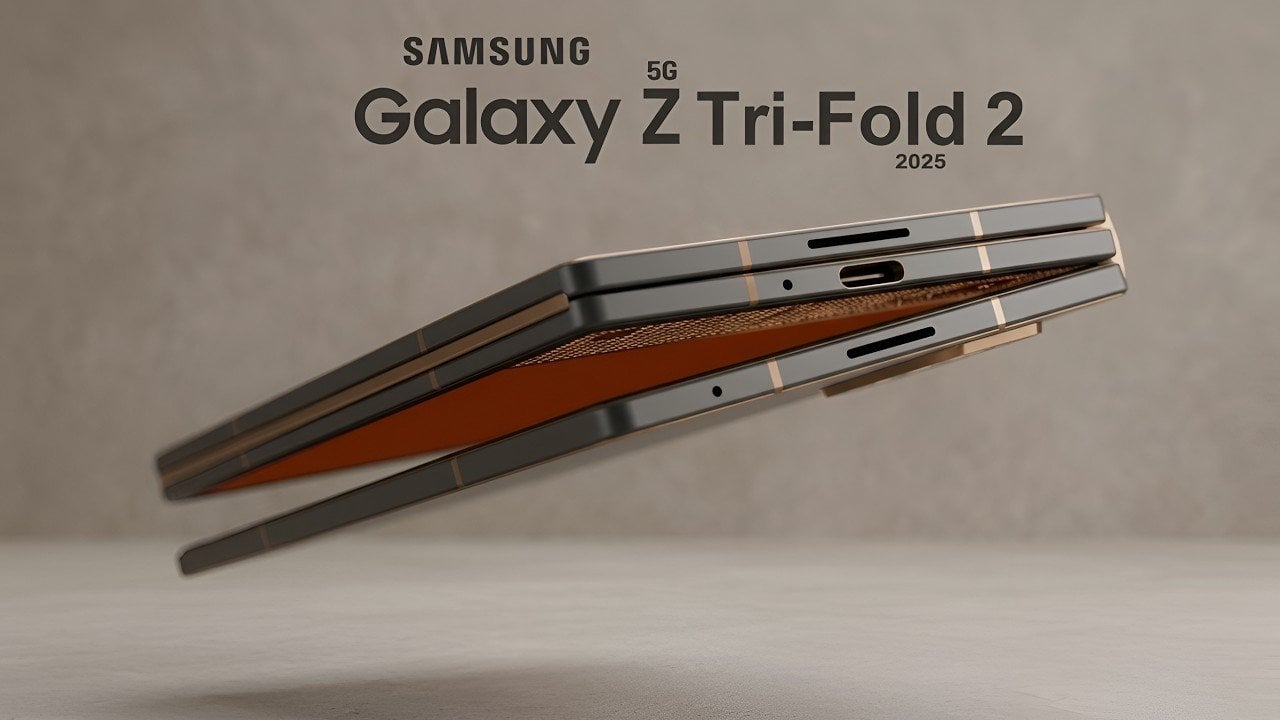
Samsung Galaxy Z TriFold 2 Specs Leak: Snapdragon 8 Elite Gen 2 and a 10-Inch OLED Beast

Samsung Galaxy Z TriFold 2 Specs Leak: Snapdragon 8 Elite Gen 2 and a 10-Inch OLED Beast Chart summarizing the first Galaxy Z TriFold weight at 309 g and expected reductions in the next model.

Samsung is reportedly advancing its efforts in the foldable smartphone market with the development of the Galaxy Z TriFold 2. This second-generation device seeks to refine the bold yet imperfect design of its predecessor. The original Galaxy Z TriFold introduced a unique triple-folding mechanism that captured attention but fell short in areas such as bulkiness, […]

The post Samsung Galaxy Z TriFold 2 Specs Leak: Snapdragon 8 Elite Gen 2 and a 10-Inch OLED Beast appeared first on Geeky Gadgets.

Posted in Uncategorized

A Designer Just Fixed Foundation’s Biggest Waste Problem

Most sustainable beauty products come with a visual apology. You know the look: matte recycled paper, utilitarian shapes, a general aesthetic that signals good intentions while quietly penalizing you for having taste. Designer Sanya Jain’s unsolicited concept for a Tata Harper foundation system refuses that trade-off entirely, and the result is one of those rare design exercises that feels more polished than half the things sitting on Sephora shelves right now.

Tata Harper, for anyone who hasn’t fallen into that particular rabbit hole, is the brand that built its entire identity on the idea that luxury and purity don’t have to be in conflict. Founded in 2010 and formulated on an organic farm in Vermont, the brand made its name in skincare with 100% natural, high-performance formulas free of synthetic chemicals, toxins, and fillers. It’s a rigorous philosophy, and one that its existing packaging already respects to a degree. But the color cosmetics side of things has always felt like an unfilled gap. Jain spotted that gap independently, and used it as the brief for something worth paying attention to.

Designer: Sanya Jain

The concept, which she calls PureDose Foundation, centers on a refillable, modular system. The product lives inside a Viomer pod, a material valued for being lightweight, durable, and designed for circular reuse. That pod slots cleanly into a polished, gold-toned dispenser that looks less like something from a drugstore and more like a small piece of modernist sculpture you’d display on purpose. Press the top button once, and the foundation dispenses in a controlled drop directly onto a detachable metal slate positioned at the base. You load your brush from there and go. No squeezing, no guesswork, no wasted product sitting in the cap.

That last part matters more than it sounds. Foundation is one of the more quietly wasteful categories in makeup. Products get dispensed in excess, oxidize before you can blend them, or sit in bottles that are technically not empty but practically impossible to finish. The PureDose concept sidesteps most of that friction by making the application point clean, controlled, and hygienic. The metal slate rinses under the tap. The pod refills. The dispenser stays on your vanity indefinitely. It’s a smarter loop, and the fact that it manages to look this refined while doing it is not accidental.

Jain pulled from biomimicry and clean geometry throughout the design. The rounded, organic silhouettes of both the pod and the dispenser echo the natural world that Tata Harper draws from as a brand, and that kind of visual consistency is harder to achieve than it appears. The colorway options, gold, rose gold, silver, and matte black, give the system range without diluting the identity. And the unboxing experience is worth noting: a velvet-lined jewelry box for the dispenser and a kraft-paper octagonal carton for refill pods. It’s one of the more layered packaging stories I’ve come across in concept work. It understands that luxury is at least partly emotional, and that the ritual of opening something should feel like it belongs to the rest of the experience.

What makes this project compelling beyond the aesthetics is how faithfully it mirrors the brand’s existing values without any official mandate to do so. Tata Harper already commits to FSC-certified paper, transparent ingredient sourcing, and eco-conscious material choices. Jain’s concept simply asks the next question: what would a color cosmetics line look like if it operated with the same level of rigor? The answer is something that sits on your vanity like a design object, performs with precision, and leaves significantly less behind when it’s done.

Concept work in industrial design usually lands in one of two places. It either solves a real problem with no aesthetic investment, or it produces something visually stunning that would fall apart after a week of actual use. This one manages to hold both ends of that tension together, which is the harder achievement. Jain didn’t find a way to make sustainability bearable. She found a way to make it worth wanting. Whether or not Tata Harper ever sees this, the question it raises is one the beauty industry should be sitting with.

The post A Designer Just Fixed Foundation’s Biggest Waste Problem first appeared on Yanko Design.

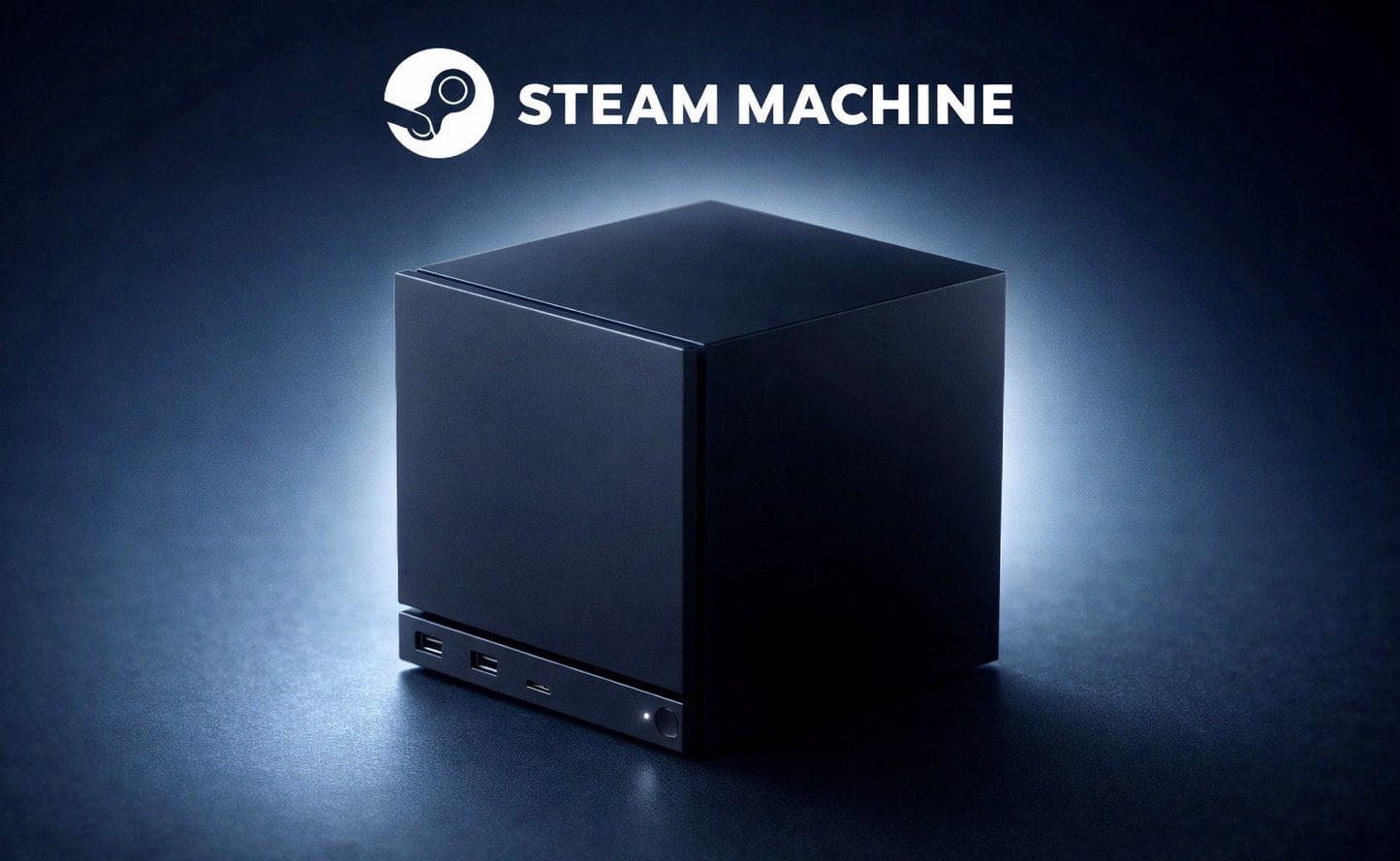
How Valve Finally Solved the Steam Machine’s Biggest Performance Bottleneck

How Valve Finally Solved the Steam Machine’s Biggest Performance Bottleneck Steam Machine console demonstrating improved VRAM allocation and frame pacing.

Valve has made significant strides in resolving the longstanding performance issues tied to the Steam Machine, particularly for systems constrained by limited VRAM. As highlighted by Deck Ready, the company’s latest update focuses on optimizing VRAM allocation, a critical step in reducing stuttering and improving frame pacing. By introducing kernel-level changes to the Linux operating […]

The post How Valve Finally Solved the Steam Machine’s Biggest Performance Bottleneck appeared first on Geeky Gadgets.

Posted in Uncategorized

GoPro’s Mission 1 camera series will start at $600

We heard all about GoPro's new action camera series last week, but the company is now unveiling the pricing across its Mission 1, Mission 1 Pro and Mission 1 Pro ILS cameras. The entry-level Mission 1 ($600) features GoPro's new 50-megapixel 1-inch sensor, which the company says will offer a major leap in image quality and low-light performance over the Hero 13 line. While largely looking the same as the Hero series (and still waterproof), the Mission 1 can record 8K video at 30fps and 4K at 120fps. It lacks the higher frame rates of the other Mission 1 cameras, but supports 10-bit GP-Log2 color and 32-bit float audio.

The Mission 1 Pro ($700) is the flagship fixed-lens model this year, aimed at the professional (or semi-pro) videographer. It has upgraded frame-rate capture to 8K at 60 fps and 4K at 240 fps, along with an extreme "burst" slow-motion mode that hits 960 fps at 1080p. It also captures 4:3 "Open Gate" recordings at 8K/30fps and 4K/120fps, covering the entire sensor area, enabling more versatile editing and cropping across different screen sizes, including vertical video.

GoPro Mission 1 camera series
Steve Dent for Engadget

Then there's the beastly Mission 1 Pro ILS (Interchangeable Lens System). It swaps the standard GoPro lens for a Micro Four Thirds (MFT) mount lens. It otherwise shares the same 1-inch sensor and high-speed 8K/60fps video specs as the Pro model. It also matches the Pro model's $700 price, with an additional $100 discount for GoPro subscribers. However, it won't be launching until Q3 2026.

All of the Mission 1 Series accessories will be available on a rolling basis beginning May 28, with GoPro's own wireless mic system (take note, Rode and DJI) priced at $160. If you preorder a Mission 1 or Mission 1 Pro directly from GoPro now, you'll get the point-and-shoot grip bundled for free. The company still doesn't have an official release date for the cameras.

This article originally appeared on Engadget at https://www.engadget.com/cameras/gopros-mission-1-camera-series-will-start-at-600-130044898.html?src=rss