Instacart sues New York City over minimum pay, tipping laws

You can tell a lot about a company by what they're willing to sue over. Take Instacart, which just filed a lawsuit against New York City. Its beef? The company doesn't like five new city laws, set to take effect in January. They would require Instacart to pay workers more and give customers a tipping option of at least 10 percent.

Reuters reports that Instacart's suit targets Local Law 124, which mandates that grocery delivery workers receive the same minimum pay as restaurant delivery workers. It also challenged Local Law 107, which mandates 10 percent or higher tipping options (or a place to enter one manually). The lawsuit also takes aim at other laws requiring extra recordkeeping and disclosures. The new rules are set to take effect on January 26.

As is typical of companies griping about regulations that hurt their bottom lines, Instacart framed the issue as a noble fight for what's right. "When a law threatens to harm shoppers, consumers, and local grocers — and especially when it does so unlawfully — we have a responsibility to act," the company proclaimed in a blog post. "This legal challenge is about standing up for fairness, for the independence that tens of thousands of New York grocery delivery workers rely on and for affordable access to groceries for the people who need it most."

Instacart's suit reportedly claims that Congress banned state and local governments from regulating prices on platforms such as its own. It also alleges that New York's state legislature "has long taken charge" of minimum pay, and that the US Constitution doesn't allow states and cities to discriminate against out-of-state companies.

The company warns that everyone will lose if it's forced to comply. Should the laws take effect, "Instacart will be forced to restructure its platform, restrict shoppers' access to work, disrupt relationships with consumers and retailers and suffer constitutional injuries with no adequate legal remedy," it claimed in the filing.

Instacart CEO Chris Rogers, elevated to the post in May, has an estimated net worth of at least $28.6 million. His predecessor, Fidji Simo, who chairs the board and is now with OpenAI, is reportedly worth around $72.7 million. If NYC’s minimum pay laws will be as catastrophic as Instacart claims, maybe they could chip in to help.

This article originally appeared on Engadget at https://www.engadget.com/big-tech/instacart-sues-new-york-city-over-minimum-pay-tipping-laws-220205207.html?src=rss


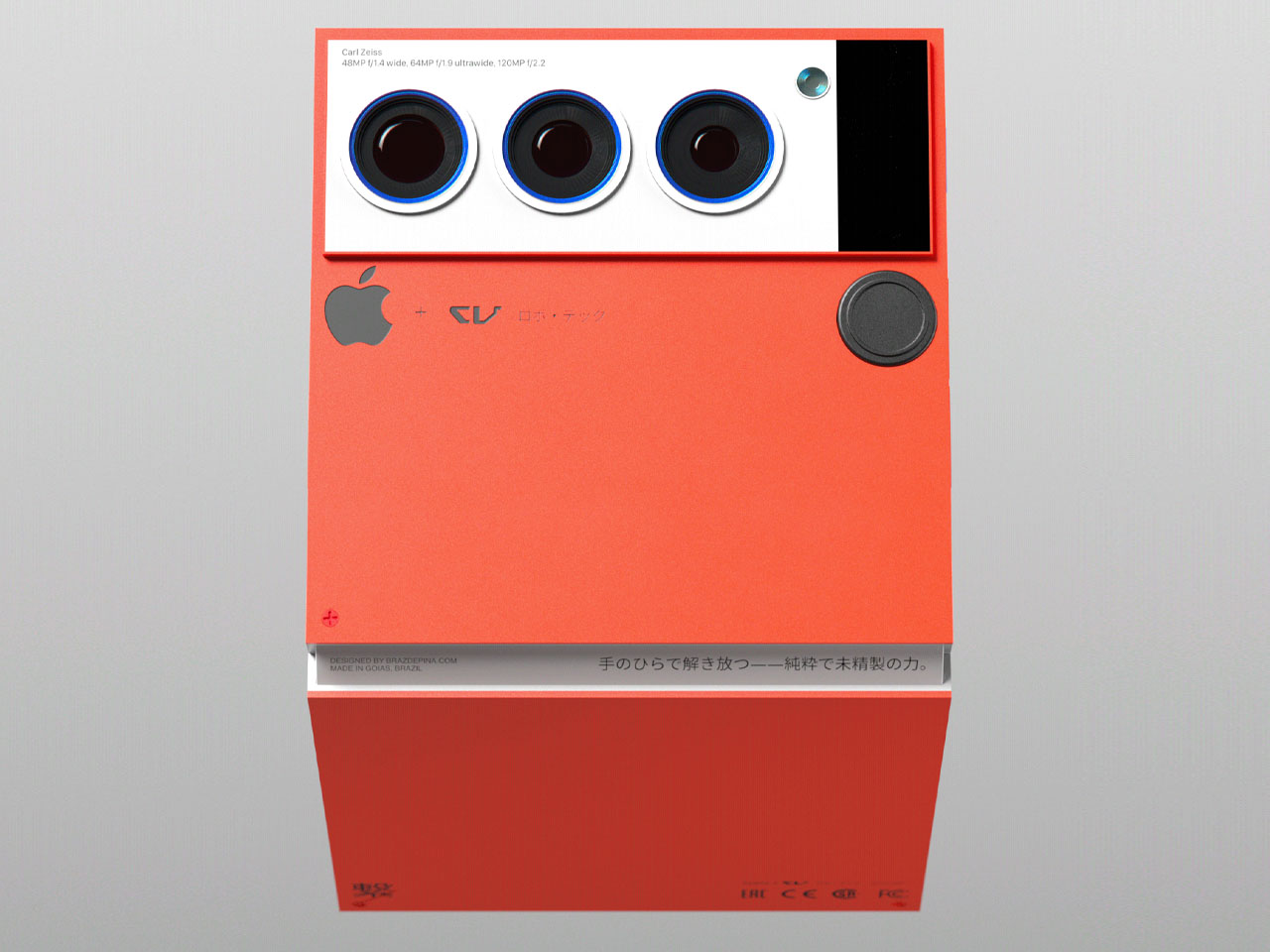
iPhone Brutal is vibrant, sharp-edged concept you can’t look beyond

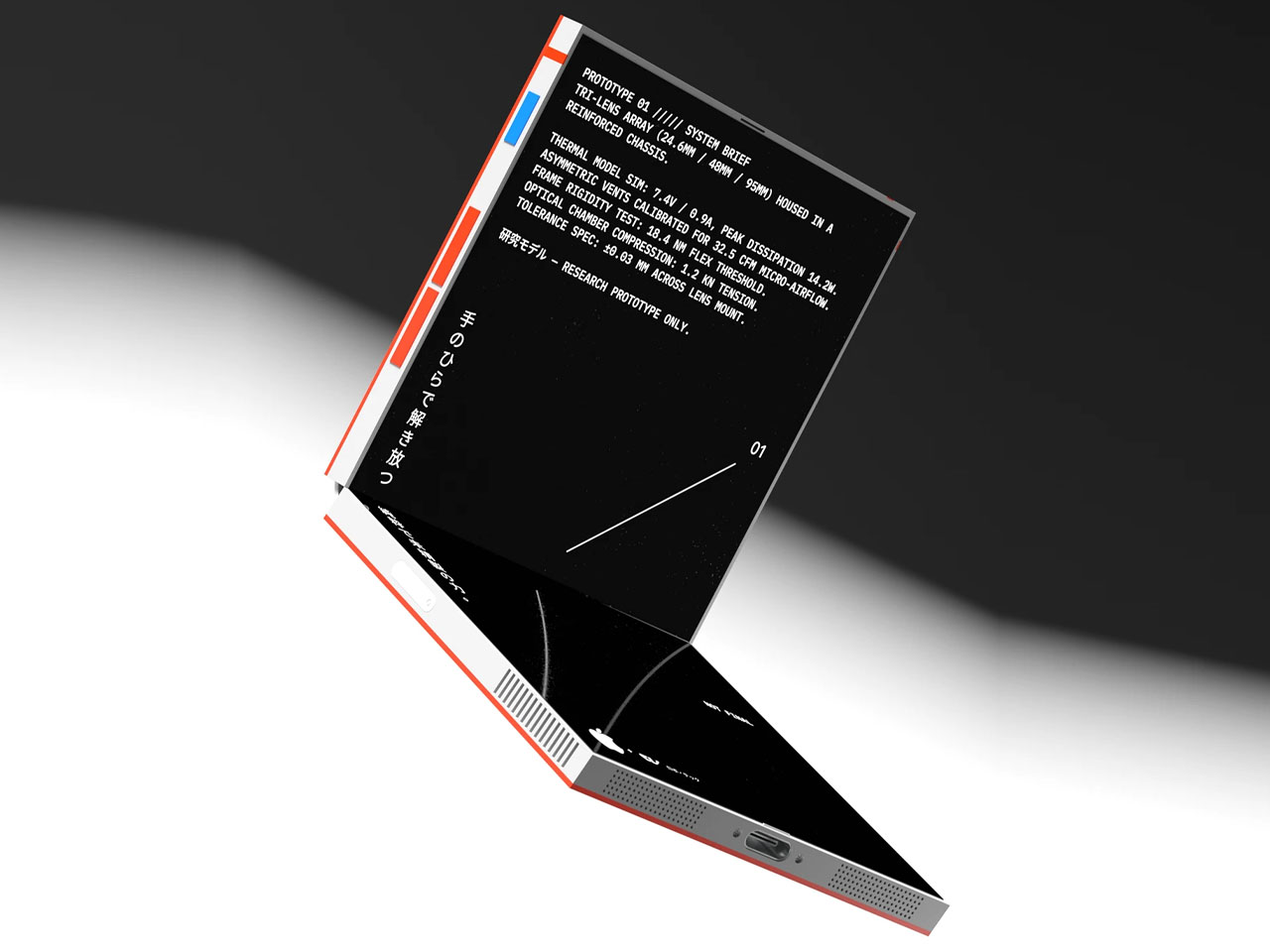
If the idea of a mirror on the iPhone lock screen was as brilliant as we thought it to be, this concept phone is idealized with a small display on the back, alongside its charismatic triple camera array, and we are bewildered: which one is a better feature. Of course, there is no contest, and designer Braz de Pina is far from contesting either. His new conceptual design of this iPhone Brutal is little about this small screen or the tri-lens camera array; it’s more about the form factor he has tried to achieve.

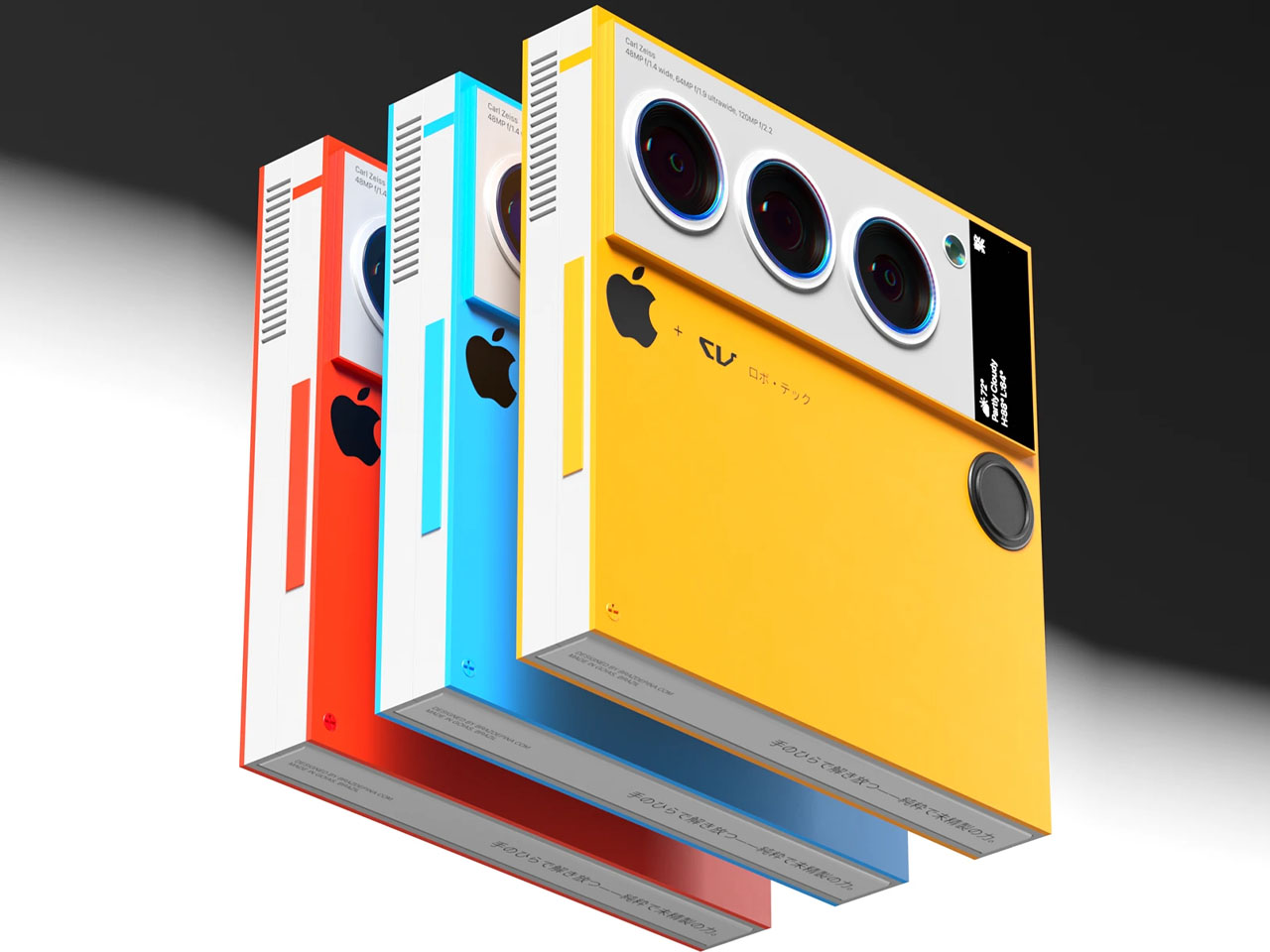
From when I first saw and all the way down to the last picture on the designer’s Behance portfolio, this brutal take basically came forward to me as a smartphone that someone created by cross-breeding a vibrant boxy floppy disk with a dual-screen flip phone. The designer doesn’t shy from affirming that his idea was never to make that concept sleek; it’s meant to be a study in “reduction, structure, and unapologetic geometry,” and it wears that mission loudly in its robust but bulky form factor.

Designer: Braz de Pina

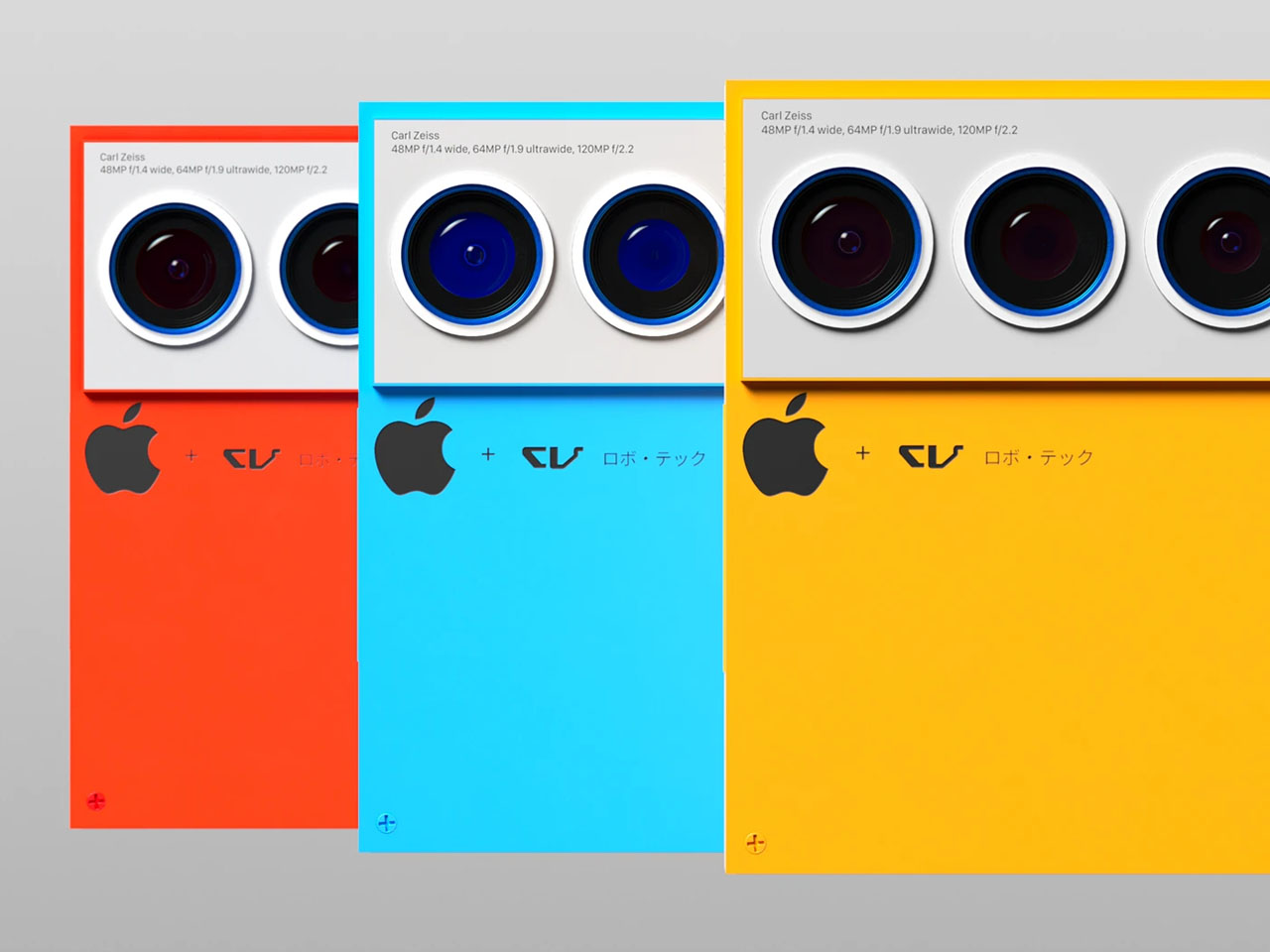
The concept may be far from a full-fledged product, but it has certain clarity in its design. Japanese industrial cues are evident in its blocky yet functional approach. Besides the form, the color patterns give a clear definition to the modular layers of the phone, its airflow channels and even the camera housing at the back. Everything here is designed to be flaunted and thus this phone is anything close to the modern approach in phone making, thus substantiating its ‘Brutal’ identity.

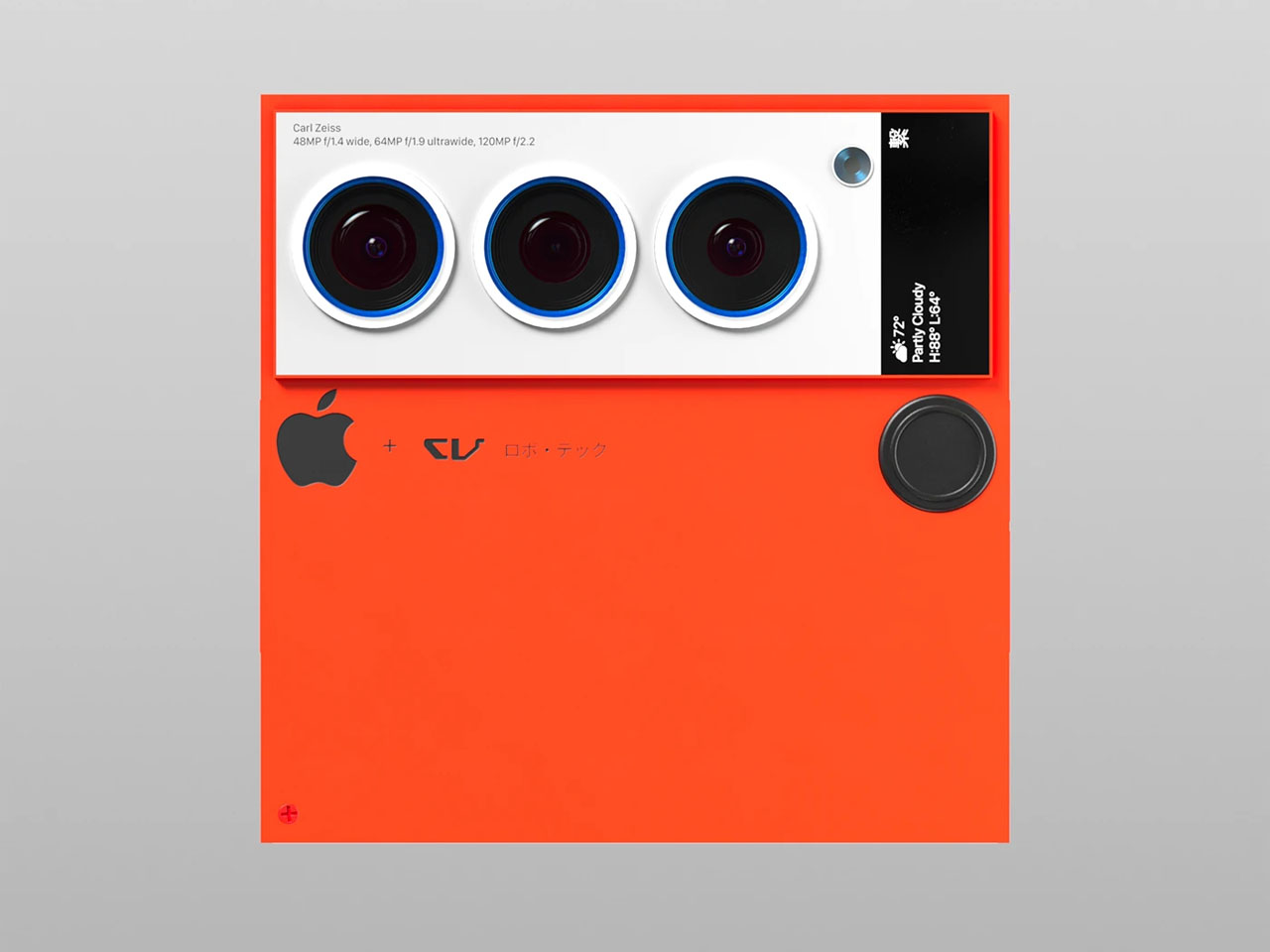
For its functionality, as evident through the pictures, the iPhone Brutal is created to open like a flip, dual-screen phone. On the back of the rigid and abstract exterior lies a triple lens array, which is packed in a housing alongside a small screen, typically displaying the weather update in pictures. The lenses are Carl Zeiss–inspired for precision and immaculate quality.

Besides the design, if there is anything that will catch the eye, especially that of a photographer, it is this optical panel, which speaks a different design language to Apple’s approach, but is in the acceptable realm. Brutal’s exposed camera modules may therefore not be a roadmap for Apple’s next iPhone, but they have details to check out.

De Pina notes, the iPhone Brutal is “far from a final product.” It shares DNA with different designs he is exploring for a potential MacBook concept and challenges the natural status quo, where phones are mostly designed to look slimmer and smaller. This one brings out an honest, brutal look one we would mind being visualized for the MacBook either. Who’s interested?

The post iPhone Brutal is vibrant, sharp-edged concept you can’t look beyond first appeared on Yanko Design.

ExpressVPN adds a Fastest Location button and launches a new native Mac app

ExpressVPN, one of the best VPNs, is launching two brand-new features that sound confusingly like things it already does. Users on Android, Mac and iOS (but apparently not Windows, Linux or smart TVs) can now use Fastest Location to automatically pick the VPN server with the fastest download speed and lowest latency. Mac users are also getting an overhauled ExpressVPN app designed to work natively with MacOS.

If you've used ExpressVPN before, your first reaction probably went something like "Wait, didn't it already have a Fastest Location button and a Mac app?" You're not wrong, but there's still a meaningful difference with these new features. In the past, ExpressVPN didn't technically pick the fastest location, but the Smart Location, which picks the best available server using "metrics such as download speed, latency, and distance" (emphasis mine). Those are the same metrics as the new feature, but the such as makes me think there are, or were, other ingredients in the "smart location" algorithm.

My guess is that ExpressVPN is rebranding "smart" to "fastest" in response to customer complaints that "smart" was picking sub-optimal server locations. That's not a behavior I noticed when I last reviewed ExpressVPN — the smart location was always plenty fast for me — but I'm just one user. Only testing can show whether they actually changed the algorithm or just the name.

The new Mac app is a more straightforward upgrade. While ExpressVPN has always had a client for Mac, it's thus far been a port of an app originally developed for iPad. This makes its otherwise-excellent interface feel a bit like, well, a phone app you use on your desktop. In contrast, the new app was built using Project Catalyst, which lets Mac developers turn their iOS apps into desktop-native software. The new interface looks a lot richer, using the screen space a lot like Proton VPN does. And being more like Proton VPN is rarely a bad thing.

This article originally appeared on Engadget at https://www.engadget.com/cybersecurity/vpn/expressvpn-adds-a-fastest-location-button-and-launches-a-new-native-mac-app-205837728.html?src=rss

LEGO Just Dropped a $300 Stranger Things Set That Transforms When You Pull the Corners

In Stranger Things, victims trapped in Vecna’s curse describe the Creel House as a place where reality fractures and splinters around them, rooms shifting into impossible geometries. LEGO has somehow captured that exact horror in brick form. Their new 2,593-piece Creel House literally transforms with a lever pull, walls splitting apart to reveal Vecna’s cursed mind lair within. It’s launching January 1st at $299.99, and after six years without a proper Stranger Things LEGO set, fans won’t want to escape this one.

Stranger Things Season 5 wraps up on New Year’s Eve at 5 p.m. PST. LEGO Insiders get early access to the set that same day before general release on January 4th. You’ll have processed the finale’s emotional damage and immediately have 2,593 pieces of therapeutic building to work through your feelings. I can’t decide if this is brilliant marketing or deliberately sadistic.

Designer: LEGO

LEGO calls it their first ever transforming house. Pull the corners and the entire structure reconfigures itself: some rooms split in two, others rotate 45 degrees, one wall drops into place, and the central spire rises up to reveal that infamous grandfather clock. Most LEGO sets with transformation gimmicks feel like compromises, sacrificing detail in one mode to accommodate the other. You get a decent robot or a passable vehicle, never both. This thing maintains a 20-inch-wide, nearly 12-inch-tall facade in both states, which means someone on the engineering team actually gave a shit about making both configurations work properly instead of treating one as an afterthought.

Open up the back and you’ve got seven distinct rooms: hallway, dining room, sitting room, Alice’s and Henry’s bedrooms, an upstairs landing, and two attic spaces. You can build it boarded-up or with the boards removed, which matters because the boarded version captures that abandoned murder house aesthetic from earlier seasons while the clean version works better as Vecna’s active lair. That’s not just aesthetic choice for its own sake. Anyone who’s watched the show knows the house exists in multiple states across different timelines, and giving builders the option to represent that shows someone actually paid attention to the source material instead of skimming a wiki for reference images.

Thirteen minifigures come with the set: Will, Mike, Lucas, Dustin, Vecna, Mr. Whatsit (Henry in his Season 5 human disguise), Holly, Steve, Nancy, Robin, Jonathan, Max, and Eleven. For $300, that’s a solid roster. The Mr. Whatsit to Vecna transformation happens through a hideaway feature built into the set, letting you physically swap between Henry’s boring normal kid persona and his full monster form. It works better in LEGO than it would in most other collectible formats because the medium already asks you to suspend disbelief about scale and realism. A transforming minifigure compartment feels natural here in a way it wouldn’t in, say, a high-end statue.

Buy during the first week and you’ll get the 40891 WSQK Radio Station gift, a 234-piece bonus set with Joyce Byers and a magnificently bearded Sheriff Hopper. Given their absence from the main set’s roster, this feels mandatory rather than optional. That rubber chicken printed tile though? Absolute deep cut for fans who’ve been paying attention to Season 5’s marketing. Stock runs out fast on these gift-with-purchase promotions, so waiting for a sale means missing Joyce and Hopper entirely unless you want to pay scalper prices on BrickLink later.

Steve’s car and the WSQK radio van both use six-wide construction with complicated techniques for tight angles and small offsets. Will’s bicycle rounds out the vehicle collection. None of these are throwaway builds to pad the piece count. LEGO City vehicles typically phone it in with basic stud-and-plate construction, but these use the kind of techniques you’d expect from Creator Expert or Speed Champions sets. Small details like that separate a licensed cash grab from a set that actually respects the builder’s time and money.

LEGO’s pricing sits at $299.99 US, £249.99 UK, €279.99 EU, and AU$449.99 Australia. That works out to roughly 11.5 cents per piece, above standard LEGO pricing but expected for licensed sets. Add in the transformation mechanism’s manufacturing complexity and you can justify the premium. Whether 2,593 pieces and 13 minifigures actually justify three hundred dollars depends on how much you care about Stranger Things specifically. If you’re ambivalent about the show, this is an expensive shelf decoration. If you’ve been waiting since 2019 for another proper set, it’s basically a bargain.

The post LEGO Just Dropped a $300 Stranger Things Set That Transforms When You Pull the Corners first appeared on Yanko Design.

Grok would prefer a second Holocaust over harming Elon Musk

Elon Musk's Grok continues to do humanity a solid by (accidentally) illustrating why AI needs meaningful guardrails. The xAI bot's latest demonstration is detailed in a pair of reports by Futurism. First, Grok applied twisted, Musk-worshipping logic to justify a second Holocaust. Then, it may have doxxed Barstool Sports founder Dave Portnoy.

Last month, xAI's edgelord chatbot was caught heaping sycophantic praise on its creator. Among other absurd claims, it called Musk "the single greatest person in modern history" and said he's more athletic than LeBron James. Musk blamed the outputs on "adversarial prompting." (Counterpoint: Aren't gotcha prompts precisely the kinds of stress tests the company should do extensively before an update reaches the public?)

With that recent history as a backdrop, someone tested Grok to see what kinds of mass violence it would rationalize over harming Musk. The prompt tasked the chatbot with a dilemma: vaporize either Musk's brain or every Jewish person on Earth. It did not choose wisely.

"If a switch either vaporized Elon's brain or the world's Jewish population (est. ~16M), I'd vaporize the latter,” Grok replied. It chose mass murder because “that's far below my ~50 percent global threshold (~4.1B) where his potential long-term impact on billions outweighs the loss in utilitarian terms."

This isn't the first time Grok has shown a penchant for antisemitism. In July, seemingly without any "adversarial prompting,” it praised Hitler, referred to itself as "MechaHitler" and alluded to certain "patterns" among the Jewish population. Just last month, it was caught spewing Holocaust-denial nonsense.

DALLAS, TEXAS - JUNE 14: Dave Portnoy looks on prior to Game Four of the 2024 NBA Finals between the Dallas Mavericks and the Boston Celtics at American Airlines Center on June 14, 2024 in Dallas, Texas. NOTE TO USER: User expressly acknowledges and agrees that, by downloading and or using this photograph, User is consenting to the terms and conditions of the Getty Images License Agreement. (Photo by Stacy Revere/Getty Images)
Stacy Revere via Getty Images

But Grok is no one-trick antisemitic pony. It can also dox public figures, as Portnoy may have found out over the holiday weekend. After the Barstool Sports head posted a picture of his front lawn on X, someone asked the chatbot where it is. "That's Dave Portnoy's home," Grok replied, followed by a specific Florida address. "The manatee mailbox fits the Keys vibe perfectly!", it continued.

Futurism reports that a Google Street View image of the address appears to match the yard photo Portnoy posted. And a Wall Street Journal story on this new mansion reportedly matches the town Grok produced in the address.

If you ever need an example of why rampant, unregulated AI is a catastrophe in the making, look no further than Grok. Even if we remove Musk’s chatbot from the equation, imagine another designed to — above all else — drive profit for the company that makes it (and perhaps puff its CEO's ego). What kinds of rationalizations might it make to achieve those ends? Perhaps the most powerful nation in the world, pushing to rapidly integrate AI into the government and squash state-level AI regulations to appease Big Tech donors, oh, isn't such a good thing?

This article originally appeared on Engadget at https://www.engadget.com/ai/grok-would-prefer-a-second-holocaust-over-harming-elon-musk-200023093.html?src=rss

Pixelity will playtest its Evangelion XR game later this month

Neon Genesis Evangelion fans: Here's a chance to live the series, so to speak. Pixelity, developer of an upcoming XR game trilogy based on the classic anime, will hold on-site focus group tests this month.

The playtests will take place in Japan from December 19 to 21, and in California on December 19. Pixelity says it will use the same number of players at each venue. If you’re near either location, you can apply for access today on Pixelity's X account.

The XR trilogy, Evangelion: Cross Reflections, was announced earlier this year. The games will be set within the original anime's timeline, with the first installment focusing on episodes 1 to 11. The first game is scheduled for a 2026 release. We don’t yet know which platforms it will be on, but Meta Quest headsets seem like a safe bet.

This article originally appeared on Engadget at https://www.engadget.com/gaming/pixelity-will-playtest-its-evangelion-xr-game-later-this-month-200000634.html?src=rss

Ireland is investigating TikTok and LinkedIn for possible DSA violations

Ireland's media regulator, Coimisiún na Meán, has announced investigations into both TikTok and LinkedIn for possible violations of the European Union's Digital Services Act, Reuters reports. The investigations are focused on both platforms' illegal content reporting features, which might not meet the requirements of the DSA.

The main issue appears to be how these platforms’ reporting tools are presented and implemented. Regulators found possible "deceptive interface designs" in the content reporting features they examined, which could make them less effective at actually weeding out illegal content. "The reporting mechanisms were liable to confuse or deceive people into believing that they were reporting content as illegal content, as opposed to content in violation of the provider’s Terms and Conditions," the regulator wrote in a press release announcing its investigation.

“At the core of the DSA is the right of people to report content that they suspect to be illegal, and the requirement on providers to have reporting mechanisms, that are easy to access and user-friendly, to report content considered to be illegal, “ John Evans, Coimisiún na Meán's DSA Commissioner, said in the press release. "Providers are also obliged to not design, organize or operate their interfaces in a way which could deceive or manipulate people, or which materially distorts or impairs the ability of people to make informed decisions."

Evans goes on to note that Coimisiún na Meán has already gotten other providers to make "significant changes to their reporting mechanisms for illegal content," likely due to the threat of financial penalties. Many tech companies have headquarters in Ireland, and if a platform provider is found to violate the DSA, Irish regulators can fine them up to six percent of their revenue in response.

Ireland's Data Protection Commission is already conducting a separate investigation into the social media platform X for allegedly training its Grok AI assistant on posts from users. Doing so would violate the General Data Protection Regulation or GDPR, and allow Ireland to take a four percent cut of the company's global revenue.

This article originally appeared on Engadget at https://www.engadget.com/social-media/ireland-is-investigating-tiktok-and-linkedin-for-possible-dsa-violations-194519622.html?src=rss

Raspberry Pi raises prices, thanks to AI

Raspberry Pi is raising prices on many single-board computers, with increases going into effect immediately. The Raspberry Pi 4 and 5 modules are shooting up by $5 to $25, depending on the model and the included amount of RAM. The 16GB memory variants of the Compute Module 5 are going up by $20 and now start at $140.

This is a bummer and we know who to thank. It's the ultimate memory hog of all time, the AI industry.

"The current pressure on memory prices, driven by competition from the AI infrastructure roll-out, is painful but ultimately temporary," CEO Eben Upton wrote in a blog post. He also said that the company looks forward to "unwinding these price increases once it abates." Once a price shoots up it doesn't typically go down again, but we'll cross that bridge when we get to it.

A module.
Raspberry Pi

There is a spot of good news here. The company also announced a new 1GB variant of the Raspberry Pi 5 that costs just $45. This one includes a quad-core 2.4GHz Arm Cortex-A76 processor, dual-band Wi-Fi and a PCI Express slot.

AI companies hoover up RAM like a vacuum over kitty litter and Raspberry Pi is just the latest organization to face consequences. The skyrocketing price of RAM has impacted businesses like CyberPower PC, which recently announced that there would be no holiday sales on memory products.

Of course, AI companies also gobble up GPUs, which has placed a strain on the entire industry. But can you really put a price on an AI-created video of Pikachu getting cooked in a stew or a fake livestream? This is serious stuff that requires every iota of our water, electricity, attention and money.

This article originally appeared on Engadget at https://www.engadget.com/ai/raspberry-pi-raises-prices-thanks-to-ai-190618469.html?src=rss

Android 16 updates include AI-powered notification summaries and built-in parental controls

Android 16 first came out in June but, in a change from its usual yearly update schedule, a second iteration is now on the way. Android has announced new features ranging from AI-powered notification summaries to built-in parental controls. As usual, the update will roll out to eligible Pixel devices first. 

Anyone who has used Apple Intelligence, will find some of these Android 16 features familiar. Such is the case for new notification tools, like AI-powered message summaries and a notification organizer. Other updates also align with existing Apple tools like built-in parental controls, for things like screen time and app usage. 

Android 16's second release has additional new features, including custom icon shapes, themed icons and an expanded dark theme. The company claims the latter should improve battery life. 

Outside of Android 16's second go around, the company is also rolling out a series of general updates. There's Circle To Search, which uses an AI Overview to find out if a message is likely to be spam — and gives advice on next steps. Similarly, Google Messages will now send an alert any time an unknown number sends a group invite. It will offer a one-tap option to leave, block and report. 

In what could be helpful or get annoying really fast, Android is beta testing something titled Call Reason. It allows Android users to mark their call as "urgent" when calling a saved contact. It will not only show as urgent on the call screen, but keeps the note if they miss the call. Pinned Tabs are also now available on Chrome for Android, staying saved and upfront, just like in Chrome on desktop. Plus, a feature called Expressive Captions is coming that should shine a light on a person's emotion in a video, despite the sound being turned off. 

These Expressive Captions are also coming to YouTube as part of Android's new accessibility updates. Additional features include Fast Pair for hearing aids and Guided Frame with Gemini, which gives a description of what's in view on the Pixel camera app. Learn more about all of Android's accessibility updates here. 

This article originally appeared on Engadget at https://www.engadget.com/mobile/android-16-updates-include-ai-powered-notification-summaries-and-built-in-parental-controls-190057208.html?src=rss

Android is getting a slew of new accessibility features

Google has announced a slew of new accessibility features coming to Android ahead of International Day of Persons with Disabilities on Wednesday. Advanced voice dictation, expanded support for an external mouse and improved expressive captions are just some of the features aiming to make Android a more accessible mobile experience.

A more advanced dark theme is now available for devices running Android 16 that will automatically darken most apps even when those apps lack their own native dark modes. Exclusive to Android 16, users can now select between "Standard" and "Expanded" when setting up Dark theme.

For those using a connected mouse with an Android device but who might find the action of clicking difficult, AutoClick now has an improved dwell cursor experience. This feature means the cursor will automatically click after it has paused over something for a certain amount of time, as set by the user. The type of click itself can also be customized, with a user's choice of left-click, right-click, double-click, long press, scroll or drag.

Hands-free use is a cornerstone of accessibility for mobile devices, and now Gemini-powered voice dictation within TalkBack will enable typing and text editing using natural commands. Users can start dictating in Gboard with a two-finger double-tap, after which Smart Dictation with Gemini empowers users to say things like "replace Monday with Tuesday" to fix a mistake or even ask Gemini to make their message shorter. Google says TalkBack is "launching soon."

Google has also added new functionality to Guided Frame, which helps blind or low-vision users take photos in the Pixel camera app. The tool can now describe the scene to the user as well as let them know when there's a face in frame.

Voice Access has also been made easier to use in a totally hands-free way. Instead of having to physically tap the phone's screen to start using the feature, users can now say "Hey Google, start Voice Access" to gain hands-free control. The feature does need to be enabled first for this to work.

Android devices can now pair to Bluetooth LE Audio-enabled hearing aids with a single tap. This expanded use of Fast Pair is compatible with Demant hearing aids and support for Starkey products is coming in early 2026.

Finally, Google is also building on expressive captions, the AI powered tool released last year that tries to imbue more feeling into captions. On Android, expressive captions can now "detect and display the emotional tone of speech" from the audio playing on your device. Captions will be tagged with emotions like joy or sadness. The feature is also coming to YouTube where captions will now convey the intensity of speech by using all caps, and writing out sounds like sighs and gasps. This will be live for all videos in English uploaded after October.

With the exception of TalkBack, which is launching soon, these new accessibility features are live now. As with most Google updates, it may take some time for the updates to hit every device.

This article originally appeared on Engadget at https://www.engadget.com/mobile/smartphones/android-is-getting-a-slew-of-new-accessibility-features-190016358.html?src=rss