Fossibot F113 Debuts 50m IR Night Vision Rugged Phone
Fossibot F113 introduces the world’s first 50m infrared night vision rugged smartphone, built for extreme outdoor use with a 20,000mAh battery and 5G power.

I’m telling you, a bachelor probably designed the Aouball because it’s giving such ‘MacGyvering a kitchen appliance’ energy that I absolutely love it! To be absolutely frank, an air fryer is nothing more than an electric heating coil and a fan… so what if you just flipped the coil upwards and shut the fan down? You’d have an electric cooktop! The Aouball might just be the first ever product to actually implement this genius idea and I can’t wait for it to become the new kitchen standard.
It’s simple – if a product serves multiple purposes it should be allowed to serve both purposes. A toaster can easily work as a quick pizza-maker too, but nobody makes vertical pizzas, which is why the toaster feels so incredibly limiting – apart from the fact that it warms up pop tarts too. Aouball breaks the air fryer’s format by allowing the main unit to flip 180°. This simple flip lets you cook normally, without frying, making the Aouball perfect for tiny apartments, dorms, or even the kitchenette in your hotel room.
Designer: Zhongshan Aouball Electric Appliances

“To offer a comprehensive and efficient one stop solution, the design team has created this compact device that supports multiple cooking methods like air frying, roasting, baking, shallow frying, stir frying, steaming and boiling, able to meet diverse cooking needs,” says maker Zhongshan Aouball Electric Appliances. “Such a device avoids the purchase of several devices with only a single function to ease the economic burden on users and save kitchen space,” they add.

After all, just manipulating a few parameters allows the air fryer to do so much more than ‘air fry’. Turn the fan off and it’s perfect for roasting or baking. Flip the coils over and add a shallow pan and you can stir-fry, saute, or griddle. Make the container deeper and you can shallow or deep fry, boil, steam, etc. The heat just gets applied in a different way and the cooking transforms entirely.

The Aouball is designed slightly differently compared to your average air fryer. The main unit (with the electricals) sits on a rotating element that allows it to flip downwards or upwards. When flipped down, the thing works as an oven or broiler. Turn the fans on and you now have a convection oven or air fryer. This is accompanied by a clear glass basket that slots into the gap in the base, with a metal grille for aiding in air circulation.
Flip the entire thing upwards and the vents on the side for the air get blocked (for good reason, they’re not in use anymore). Lock the unit in its new position and you’ve got yourself a cooktop (with storage space at the bottom!) The Aouball comes with its own cooktop vessel too, a 3″ deep rectangular tray with a non-stick coatin, a glass lid, and handles. A control panel on the side gives you complete control over the Aouball’s functionality, allowing you to access all the different cooking modes, temperatures, fan speeds, etc.

This simple trick is frankly genius. I love my air fryer, but I barely use it. It literally only gets used for intense work like roasting veggies, frying wedges, crisping up things, or just some basic baking. The air fryer, given that it uses a heating coil that heats up super fast, is capable of so much more, and the Aouball harnesses that. A winner of the A’ Design Award, the game-changing air-fryer is currently even available in China, although Alibaba lists its wholesale price at roughly $36. Perfect for small homes and smaller budgets!

The post This Air Fryer Flips 180° To Transform Into An Electric Cooktop first appeared on Yanko Design.

Toronto’s skyline has reached a defining moment as the Pinnacle SkyTower becomes Canada’s first building to achieve 100 storeys, marking a historic milestone in the country’s architectural evolution. Designed by the acclaimed Hariri Pontarini Architects, the supertall tower is rapidly approaching completion and is set to officially open in 2026. Rising dramatically from Toronto’s waterfront at the foot of Yonge Street, the building is already reshaping the city’s silhouette and establishing new standards for residential high-rise design in North America.
When complete, SkyTower will stand at an impressive 106 storeys, reaching a final architectural height of 351.85 metres or 1,155 feet. This remarkable elevation will position it as Canada’s tallest residential building and one of the country’s first supertall skyscrapers. The tower will house over 950 residential units, making it a vertical community in the heart of downtown Toronto. Its upper floors will align with the CN Tower’s main observation deck, symbolically connecting two generations of Toronto’s architectural ambition and offering residents unparalleled views of Lake Ontario and the city skyline.
Designer: Hariri Pontarini Architects

The architectural vision behind SkyTower is both elegant and innovative. Lead partner David Pontarini conceived a distinctive 12-sided profile designed to evoke the form of a jewel, creating a building that captures light and attention from every angle. The tower transitions gracefully from a retail podium into a sculpted vertical silhouette, accentuated by vertical fins that emphasize its soaring height. Expansive curved corner glazing fosters visual connectivity between interior spaces and the surrounding cityscape, while buttressed balconies extend up to the 88th floor, seamlessly connecting the tower with its podium base.
Inside, residents will enjoy approximately 80,000 square feet of luxury amenities, including a pool, yoga studio, fitness center, and entertainment spaces. The building’s crowning feature will be a restaurant on the 106th floor, offering dining experiences at the same elevation as the CN Tower’s famous observation deck. The lower 12 floors will house the 224-room Le Méridien Toronto Pinnacle Hotel, adding a hospitality component to the mixed-use development. Floor-to-ceiling windows throughout maximize natural light and spectacular views, creating living spaces that celebrate Toronto’s dramatic urban and natural landscapes.

Engineering excellence underpins the tower’s ambitious height. To counteract wind-induced vibrations at such extreme elevations, the building will be topped with a 700-tonne tuned mass damper, working in concert with the 12-sided profile to manage wind loads effectively. At street level, a continuous glass canopy wraps the podium, providing weather protection while creating an inviting, human-scaled entrance for residents and guests. These technical innovations ensure comfort and safety while maintaining the building’s sleek aesthetic vision.
SkyTower serves as the centerpiece of Pinnacle International’s ambitious Pinnacle One Yonge masterplan, a transformative multi-phase development that will ultimately include approximately 5,000 residential suites across five towers. Rising from the former Toronto Star site, the project is reshaping Toronto’s eastern waterfront and represents one of the largest mixed-use developments currently underway in the city. As construction races toward completion, SkyTower stands as a testament to Canada’s growing architectural confidence and Toronto’s emergence as a city of supertall ambition.

The post Toronto’s Pinnacle SkyTower Makes History as Canada’s First 100-Storey Building first appeared on Yanko Design.

Have you ever wondered why ergonomic furniture costs so much? Here’s a secret: creating curves that actually fit the human body is ridiculously complicated. Our bodies are all soft lines and organic shapes, but transforming hard materials like wood into those comfortable contours usually requires serious craftsmanship, expensive machinery, or both. Designer Minhwan Kim just cracked this puzzle in the most elegant way possible, and the design world is taking notice. Layer, his recent furniture project, just won Red Dot’s prestigious “Best of the Best” award for 2025.
The genius of Layer lies in how it rethinks an old problem. Traditional curved furniture typically means either steam-bending wood (labor-intensive and temperamental) or carving from solid blocks (hello, massive waste). Some designers have experimented with parametric structures, which use flat sheets cut into specific patterns that can be assembled into three-dimensional curves. It sounds perfect in theory, but there’s a catch. These designs often waste huge amounts of material because the cutting patterns don’t efficiently use the available sheet space. You end up with gorgeous furniture and a dumpster full of expensive scraps.
Designer: Minhwan Kim
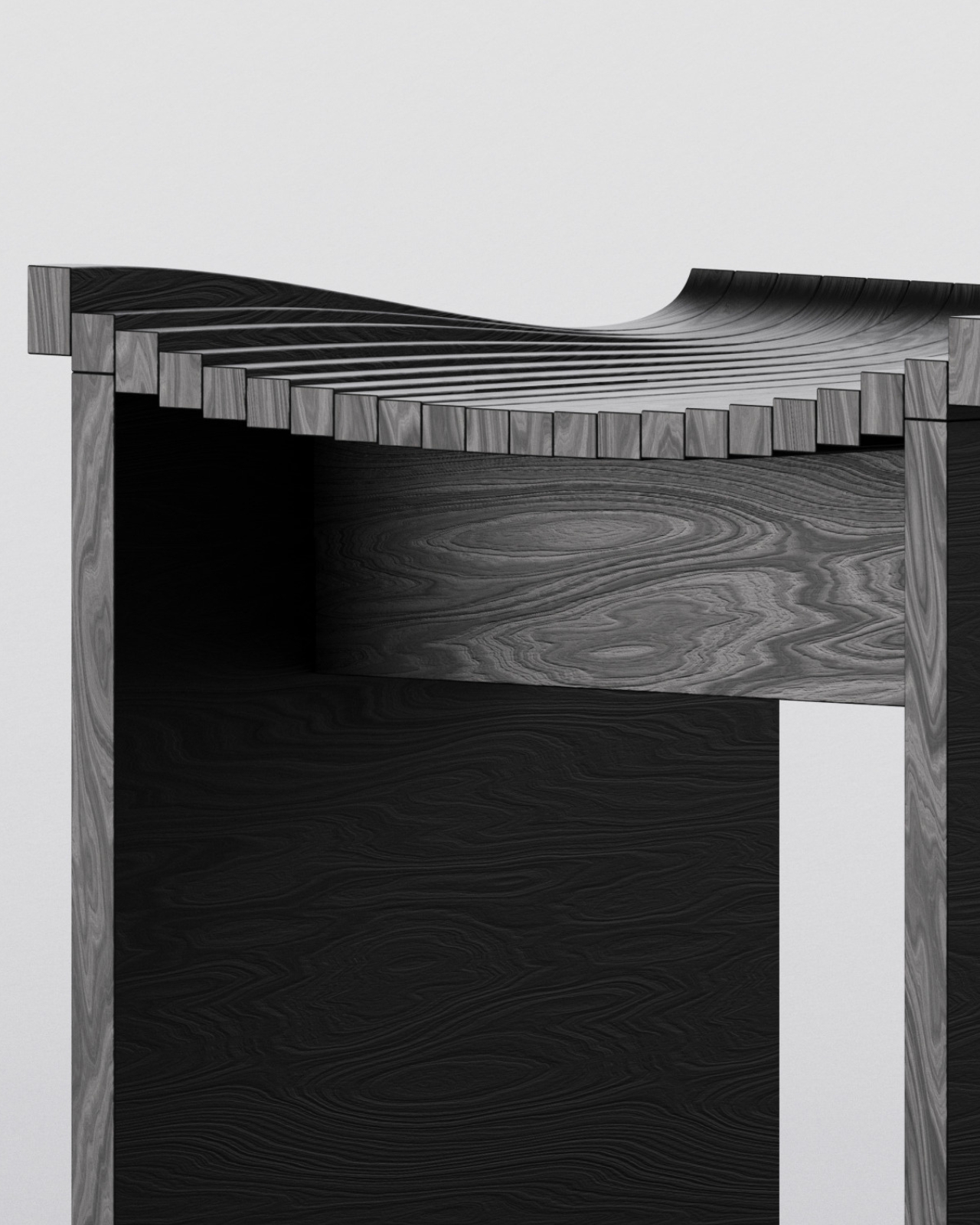
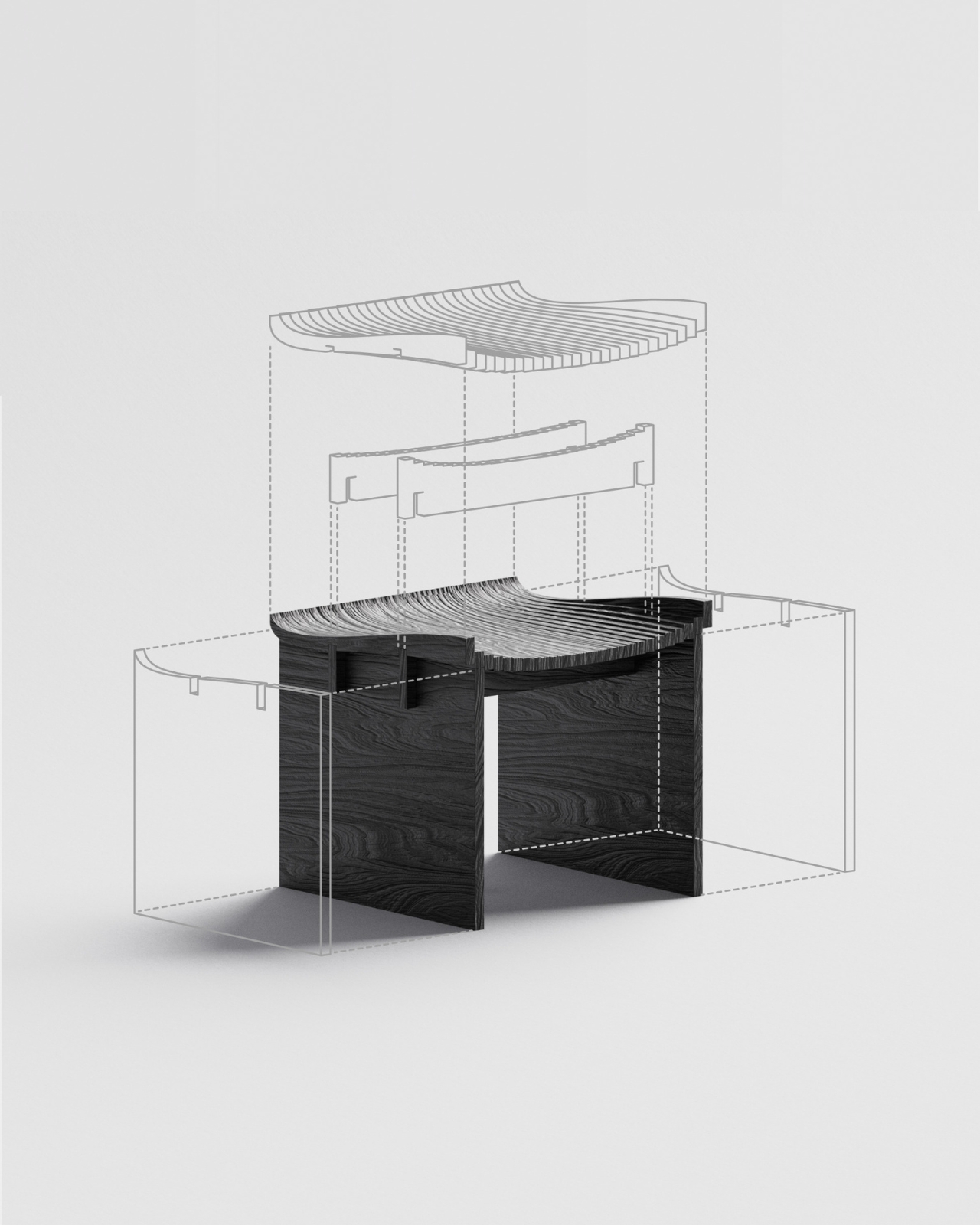
Kim’s approach flips this wasteful equation. Layer uses an optimized parametric system that minimizes material waste while creating furniture that looks like it was sculpted rather than assembled. The process starts by digitally breaking down a 3D curved surface into individual layers. Think of it like those topographic maps that show elevation through contour lines, except here each line becomes a physical piece of wood. These intersection curves are then aligned and processed into solid wood components that stack together to create the final form.
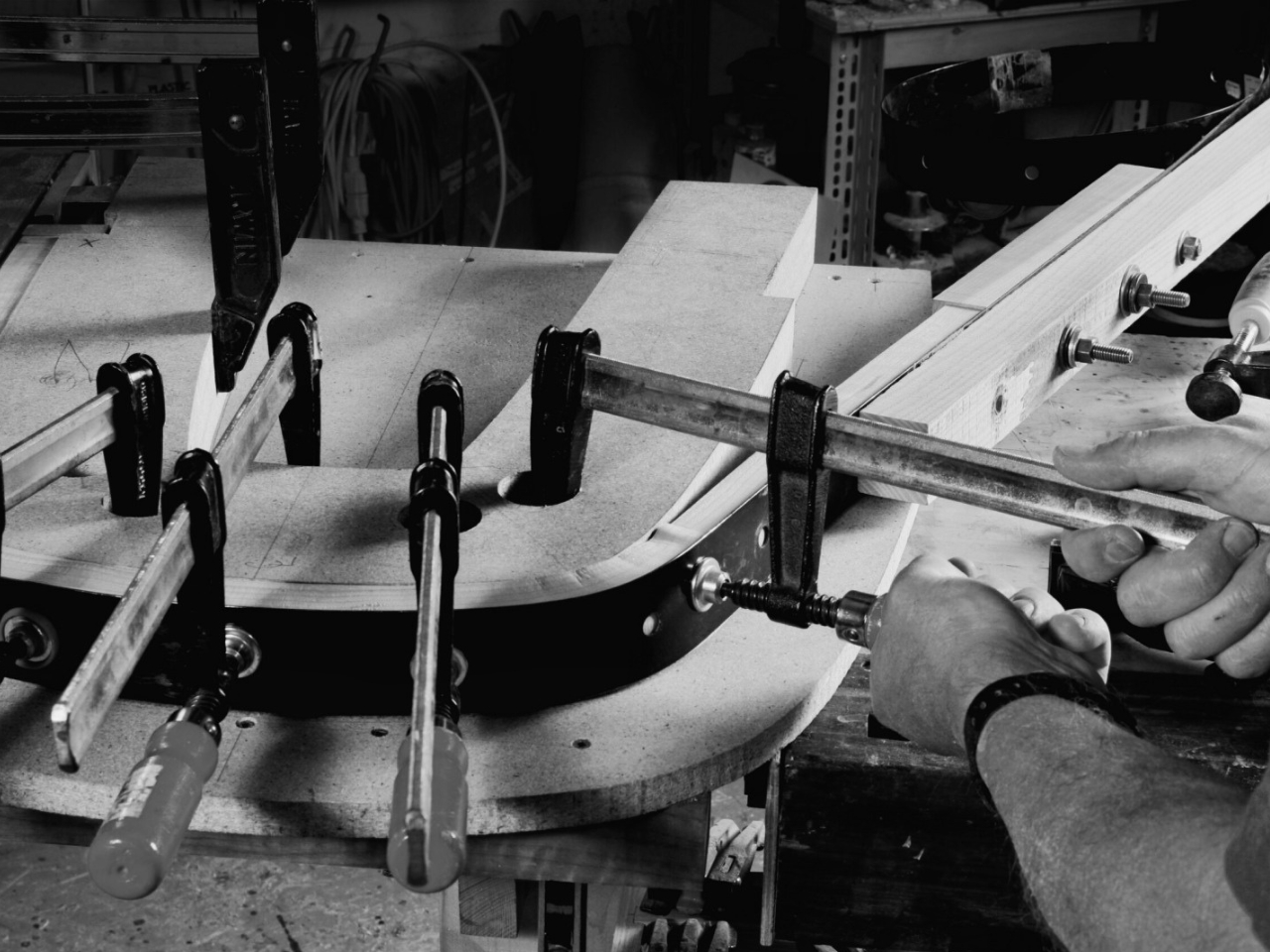
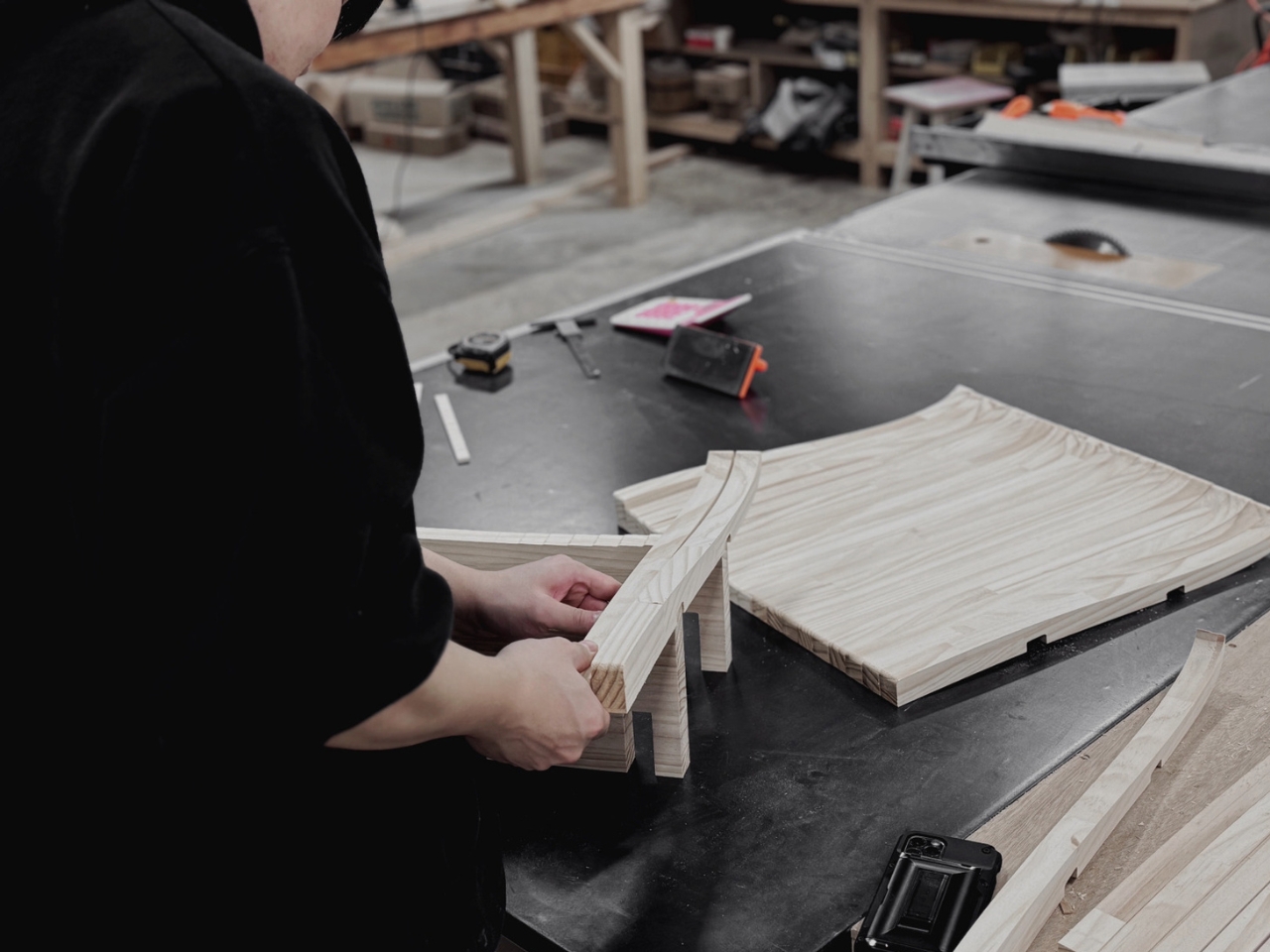
The beauty of this system is visible in the finished pieces. That curved seat you see isn’t molded or carved. It’s actually dozens of thin wooden layers precisely cut and stacked, creating a fluid, organic surface that perfectly supports the human form. The wood grain flows across the surface like waves, emphasizing the layered construction rather than hiding it. It’s functional sculpture that actually works as furniture.


What really makes this project special is how it bridges digital design and traditional craftsmanship. The parametric modeling happens on a computer, allowing Kim to optimize every cut for minimal waste. But the actual fabrication involves real woodworking, real routers and sanders, and actual human hands assembling each layer. You can see this in the workshop photos where curved wooden ribs are being clamped together, sawdust coating the workbench, showing that even cutting-edge design still requires getting your hands dirty.
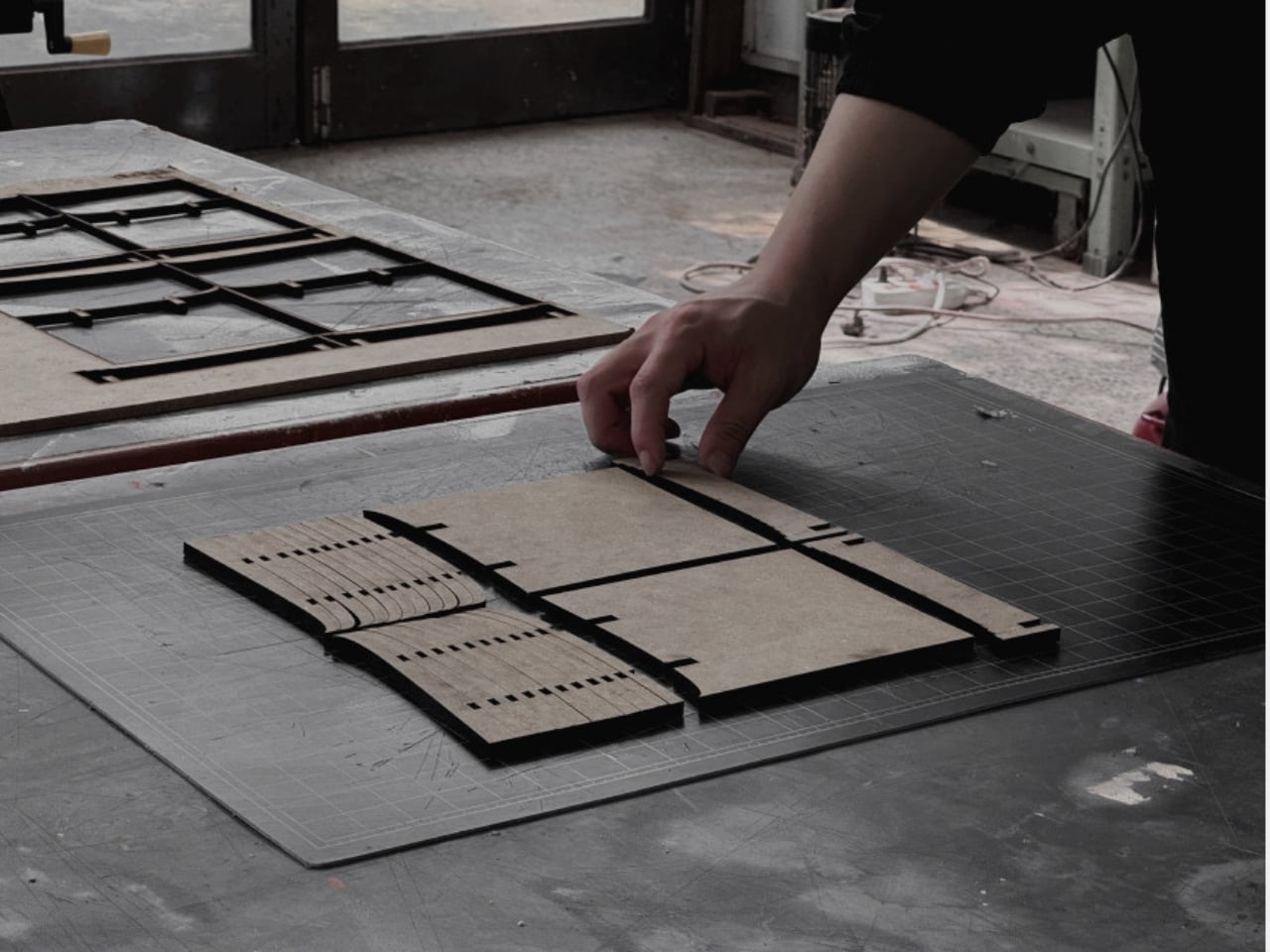
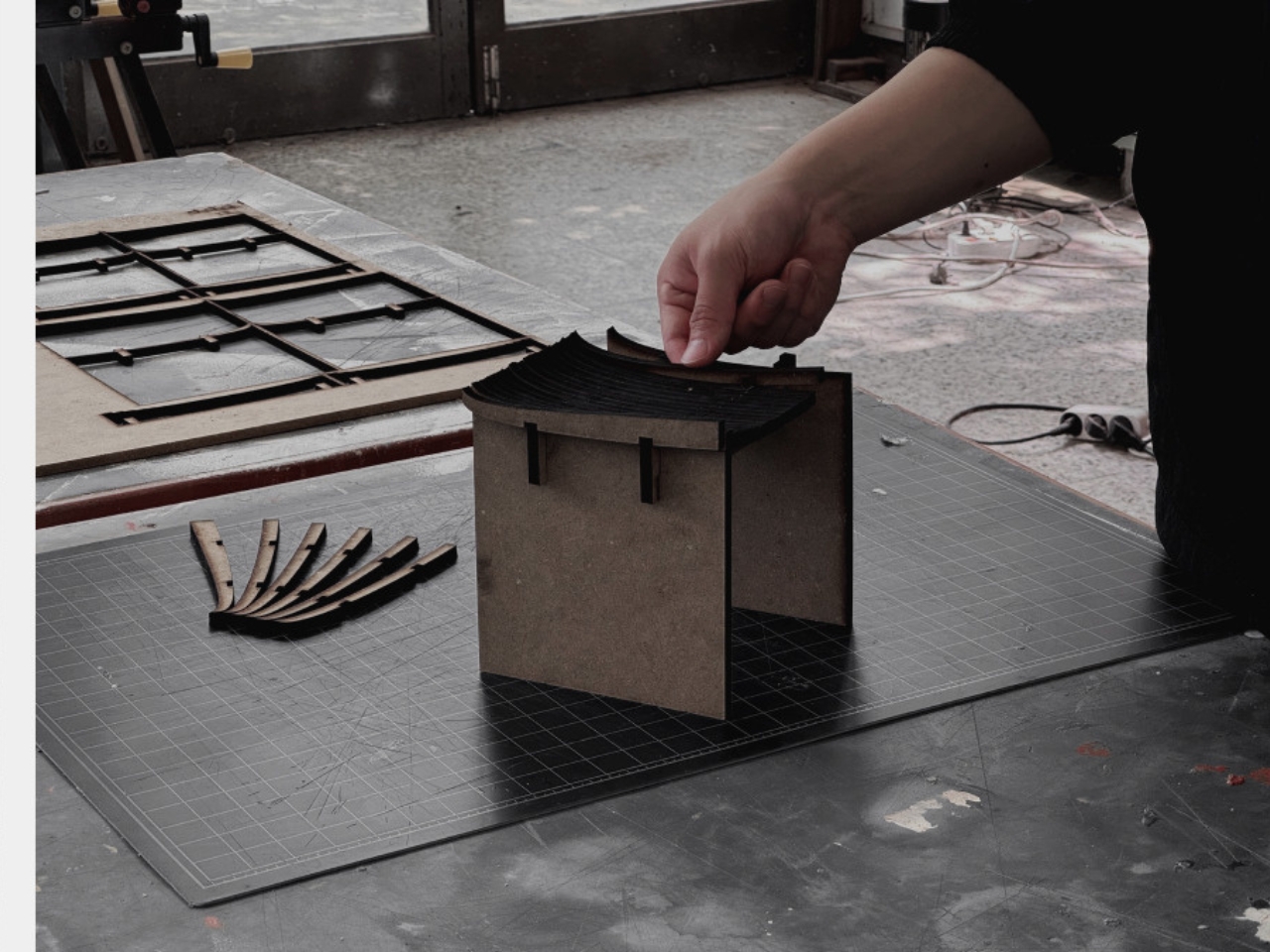
The manufacturing process is surprisingly straightforward once you understand the system. Standard flat plywood sheets get CNC-cut into the calculated patterns. Because the system is optimized, the pieces nest together on the sheet like a jigsaw puzzle, using nearly every inch of material. These flat pieces are then processed into their final curved profiles through careful routing. Finally, they’re assembled layer by layer, each piece fitting into precisely calculated positions until the complete three-dimensional form emerges.

This isn’t just clever for its own sake. In an era when we’re increasingly aware of material consumption and waste, Layer demonstrates how thoughtful design can be both beautiful and responsible. The furniture industry generates enormous amounts of waste, particularly in custom and high-end pieces. By optimizing material usage from the digital design phase, Kim shows that sustainability and aesthetics don’t have to be competing values.
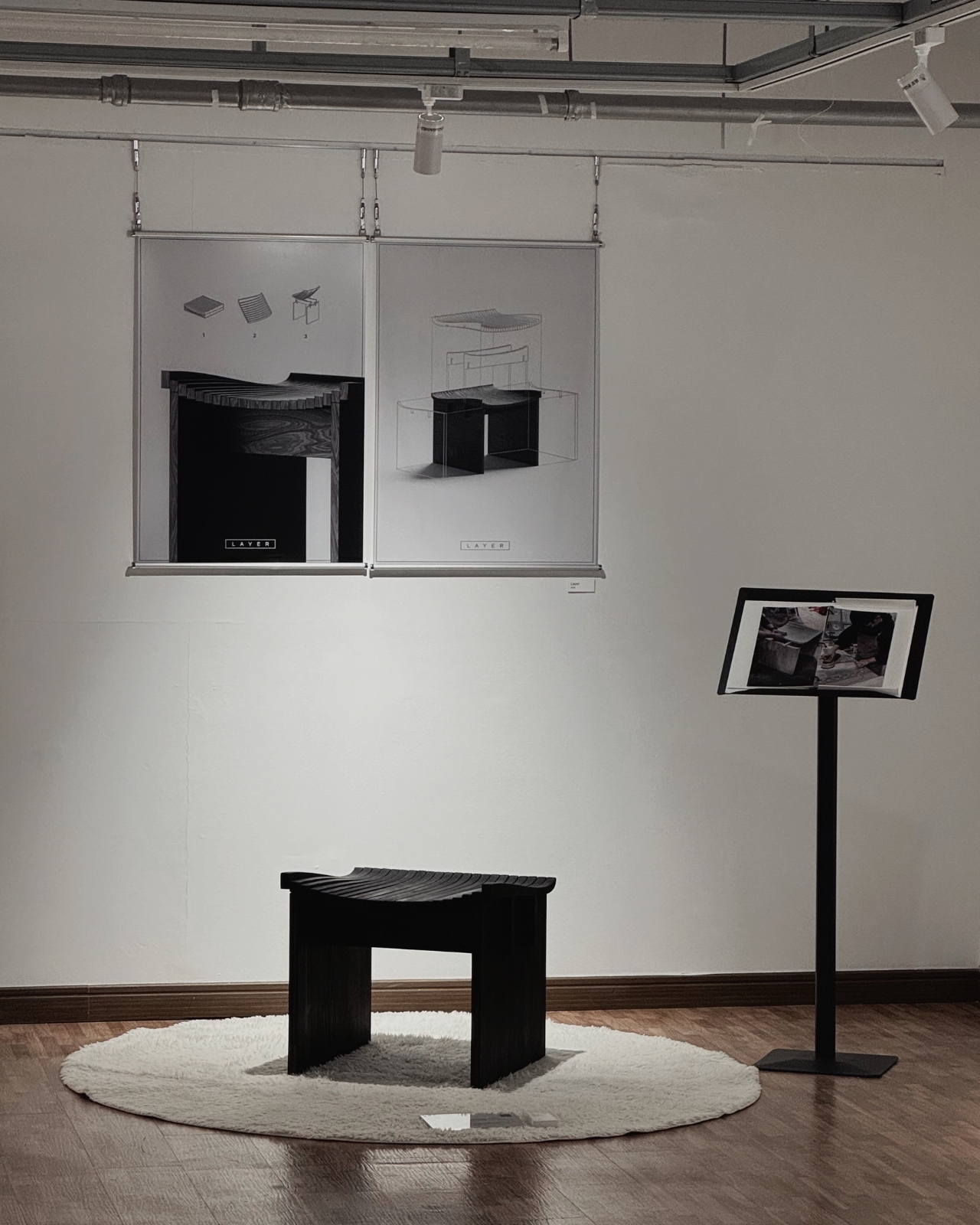
The finished stool in the exhibition space looks deceptively simple. Its dark wood surface curves gently to cradle the body, the layered edge visible like the pages of a closed book. Nothing about it screams “innovative fabrication technique” or “award-winning design.” It just looks like a really nice piece of furniture you’d actually want in your home. And maybe that’s the highest compliment you can give any design: it solves complex problems so elegantly that the solution becomes invisible.
For anyone interested in where design and technology intersect, Layer represents an exciting direction. It shows how computational design tools can enhance rather than replace traditional craft, and how constraints like material efficiency can inspire creative solutions rather than limiting them. Sometimes the most innovative designs aren’t about flashy new materials or radical forms, but about finding smarter ways to work with what we’ve always had.
The post This Furniture Trick Makes Flat Wood Look Curved With Zero Waste first appeared on Yanko Design.
If you were hoping to create some silly images this long holiday weekend with Google's new Nano Banana Pro model, I have some bad news: the company is restricting free usage of the AI system. In a support document spotted by 9to5Google, Google notes free users can currently generate two images daily, down from three per day previously. "Image generation and editing is in high demand," the company writes. "Limits may change frequently and will reset daily."
It would appear Google is also limiting free Gemini 3 Pro usage, with the document stating non-paying users will get “basic access — daily limits may change frequently" as well. When the company first began rolling out Gemini 3 Pro on November 18, it guaranteed five free prompts per day. That was in line with Gemini 2.5 Pro. If you pay for either Google AI Pro or AI Ultra plan, your usage limits have not changed. They remain at 100 and 500 prompts per day, respectively.
Google isn't the first company to enforce stricter usage following a popular release. You may recall OpenAI delayed rolling out ChatGPT's built-in image generator to free users after the feature turned out to be more popular than anticipated. However, OpenAI eventually brought image generation to free users.
This article originally appeared on Engadget at https://www.engadget.com/ai/google-limits-free-nano-banana-pro-image-generation-usage-due-to-high-demand-223442929.html?src=rss
If you squint, this looks like an iPhone Air. If you stop squinting, you notice it has an extra camera and an 8,000mAh battery that makes Apple’s thinness obsession look a little silly. HONOR just dropped its new 500 series in China, and the design inspiration is so obvious it circles back around to being bold. The phone’s flat metal sides, clean glass back, and minimalist aesthetic are all lifted straight from the modern flagship playbook. But this isn’t just another clone chasing a trend. HONOR took that familiar, premium silhouette and decided to fill it with hardware that directly challenges the compromises often made for the sake of design.
The entire strategy seems to hinge on that visual familiarity. Both the Honor 500 and 500 Pro are physically identical to each other, sharing a 7.75mm thin frame that feels deliberately calibrated offer slimness without the exaggeration and the spec-caveat. They even have the same 6.55-inch, 120Hz AMOLED display, so the experience up front is consistent. Instead of making the Pro a bigger, more unwieldy device, HONOR made the spec sheet the only real differentiator. It’s a clever way to offer a choice between “great” and “even better” without forcing a change in ergonomics.
Designer: HONOR

The standard Honor 500 (above), packs a dual-camera system led by a 200MP main sensor with OIS, co-developed with Samsung, and a 12MP ultra-wide. But the Pro model (below) is where they really lean in, adding a third lens to the mix and upgrading the stabilization for even steadier shots. It’s the clearest indicator of who each phone is for; the 500 is for the person who wants the look and the battery, while the Pro is for the user who wants all that plus a more versatile camera system.
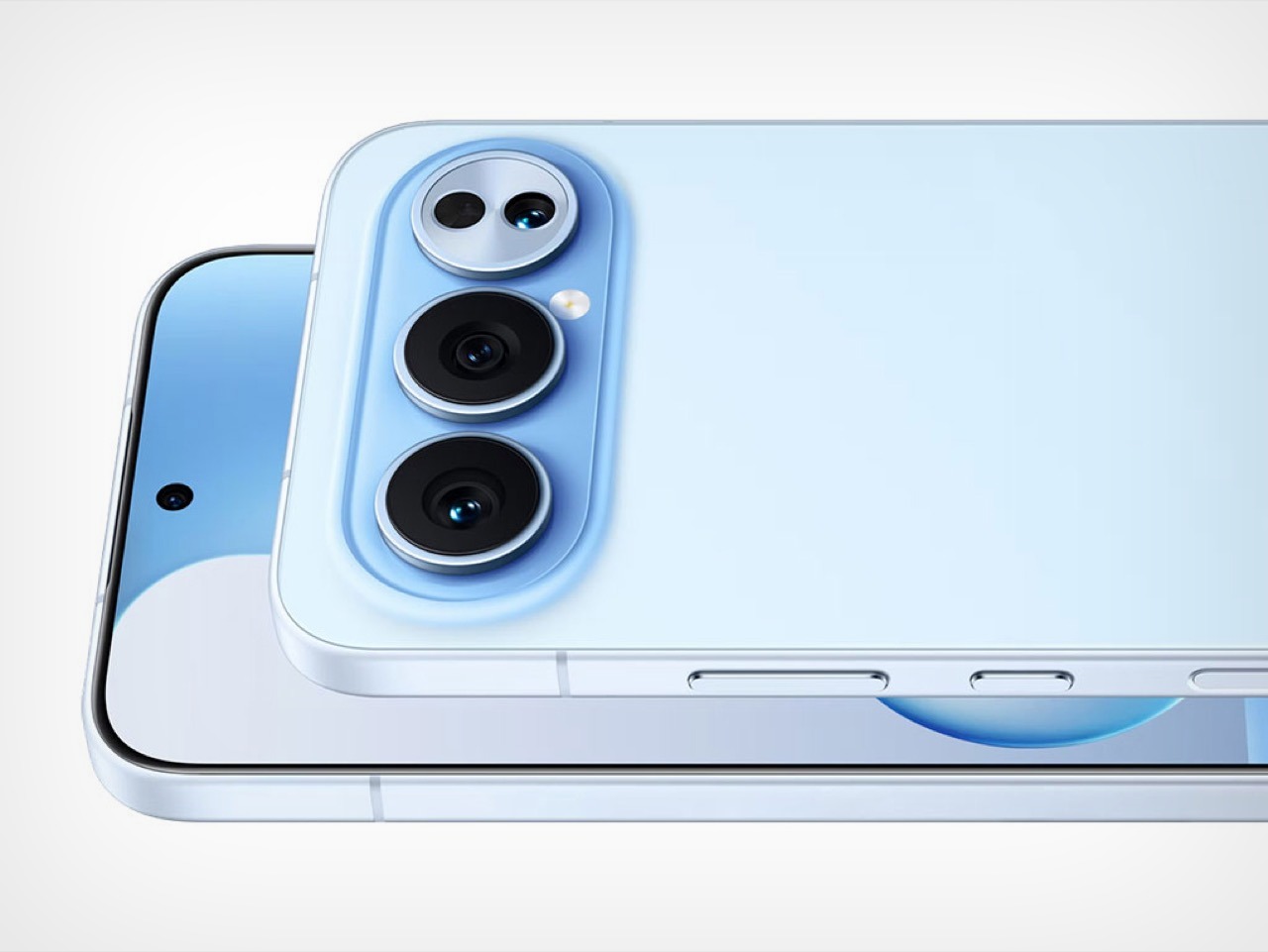
Of course, the real headline grabber is the absolute monster of a battery hiding inside that slim chassis. HONOR managed to pack 8,000mAh cells into both standard AND Pro variants… that’s more than double of the iPhone Air’s 3,149mAh battery. The standard 500 gets 80W wired charging and a handy 27W reverse wired charging feature to share power. The Pro takes it a step further by adding 50W wireless charging, giving it the full suite of flagship power options. This single spec feels like a direct shot at every phone that dies before the day is over, turning the Honor 500 into an endurance champion disguised as a fashion phone.
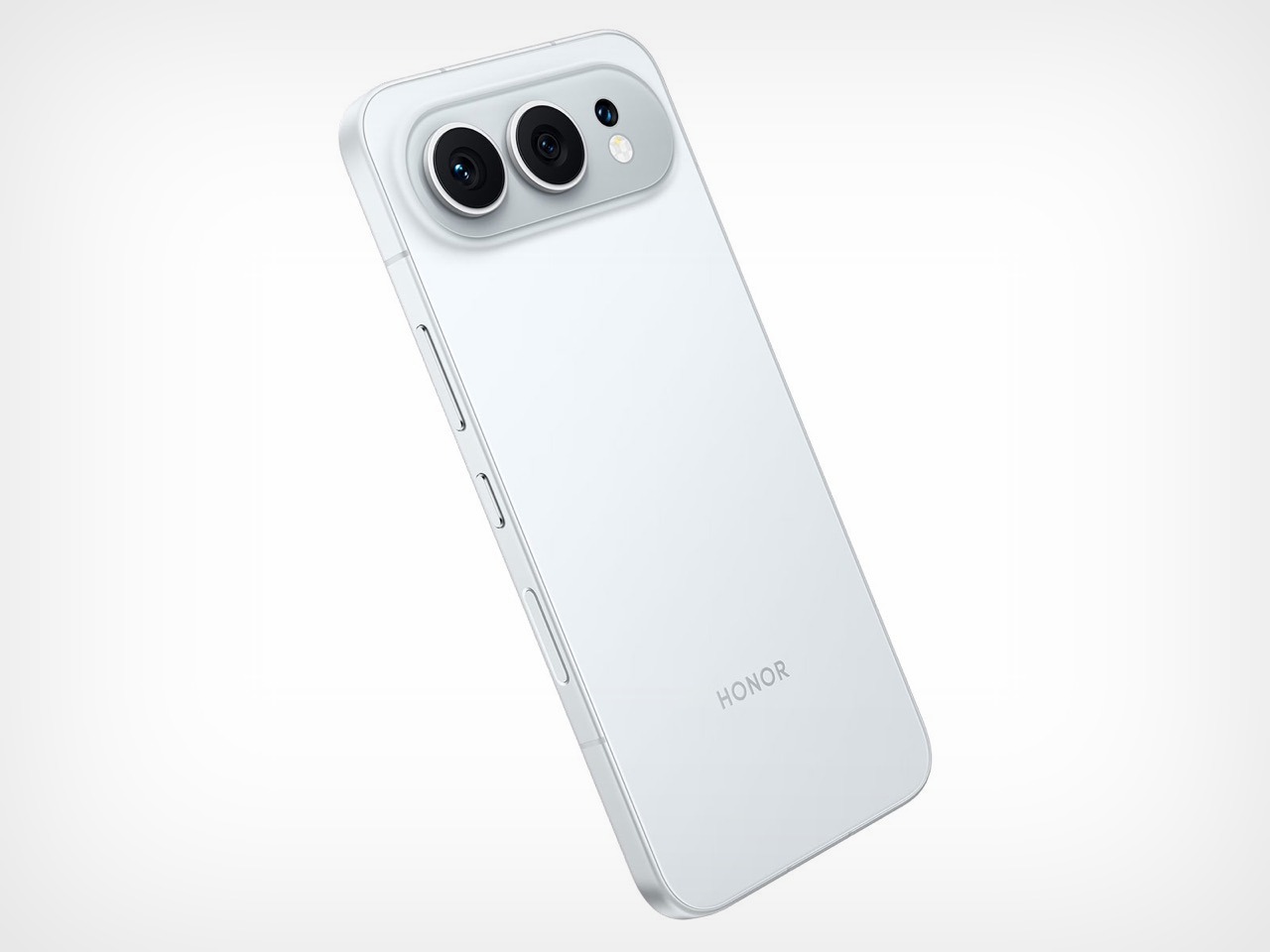
The Pro justifies its title with a few other key upgrades under the hood. While both phones are expected to run on fast LPDDR5X RAM and UFS 4.0 storage, the Pro offers a higher 1TB storage ceiling compared to the standard model’s 512GB max. It also features a more advanced 3D ultrasonic fingerprint sensor, which is typically faster and more reliable than the optical sensor found in the base 500. Add in an enhanced RF chip for better connectivity, and the Pro’s premium becomes a collection of small but meaningful quality-of-life improvements.

Beyond those differences, the foundation for both phones is surprisingly robust. You get an IP68/IP69/IP69K rating for serious water and dust resistance, along with stereo speakers, Wi-Fi 7, Bluetooth 6.0, and even an IR blaster. With launch pricing in China starting at 2,699 yuan ($381 USD) for the 500 and 3,599 yuan ($508) for the Pro, the value proposition is clear. HONOR is betting that people want a phone that looks like an iPhone Air but runs like a marathoner, and they’re not afraid to make the comparison impossible to ignore.
The post HONOR’s iPhone Air competitor has 4 camera lenses, and a massive 8,000mAh battery first appeared on Yanko Design.
While generative AI systems cannot be considered inventors under US patent laws, the US Patent and Trademark Office has updated its guidelines on how they can be used in the process of creating innovations. The agency's director, John Squires, said in a notice obtained by Reuters that the USPTO deems genAI to be "analogous" to other tools that inventors might use in their process, including lab equipment, software and research databases.
"AI systems, including generative AI and other computational models, are instruments used by human inventors," Squires wrote. "They may provide services and generate ideas, but they remain tools used by the human inventor who conceived the claimed invention."
The notice [PDF], which is set to be published in the Federal Register on November 28, notes that there's no separate process for evaluating whether an AI-assisted invention qualifies for a patent. "When multiple natural persons are involved in creating an invention with AI assistance, the traditional joint inventorship principles apply," Squires added.
The Court of Appeals for the Federal Circuit has ruled that "AI cannot be named as an inventor on a patent application (or issued patent) and that only natural persons can be inventors." There's no change to that stance under the latest USPTO guidelines. But the updated rules do offer more clarity as to whether things like new medications that are developed with the help of genAI systems can be patented.
This article originally appeared on Engadget at https://www.engadget.com/ai/us-patent-office-says-generative-ai-is-equivalent-to-other-tools-in-inventors-belts-211700837.html?src=rssTwo top NFC teams will face off in a Black Friday showdown airing on Prime Video. The Philadelphia Eagles will host the Chicago Bears this Friday afternoon. The Eagles faced some setbacks this past week, dealing with a surprising loss to the Dallas Cowboys who came back from a 21 point deficit to win last Sunday and a potential season-ending injury for rookie safety Drew Mukuma, who fractured his ankle in that game. The Eagles are still ranked No. 2 overall in the NFC, and the Bears are right behind them at No. 3, so the results of this matchup will be significant to the playoff race.
The Bears vs. Eagles game will stream live nationally on Amazon Prime Video Friday at 3 p.m. ET. Keep reading to find out what you need to know about Friday's game, and the rest of the Week 13 schedule.
Date: Friday, Nov. 28, 2025
Kickoff time: 3 p.m. ET/12 p.m. PT
Game: Chicago Bears vs. Philadelphia Eagles
Location: Lincoln Financial Field, Philadelphia
Streaming: Prime Video
The Bears visit the Eagles on Friday afternoon for a post-Thanksgiving game, streaming on Amazon's Prime Video.
All times Eastern.
Packers vs. Lions, 1:00 p.m.(FOX)
Chiefs vs. Cowboys, 4:30 p.m. (CBS)
Bengals vs. Ravens, 8:20 p.m. (NBC)
Bears vs. Eagles, 3:00 p.m. (Prime Video)
Rams vs. Panthers: 1:00 p.m. (FOX)
Texans vs. Colts 1:00 p.m. (CBS)
Bills vs. Steelers: 4:25 p.m. (CBS)
49ers vs. Browns, 1:00 p.m. (CBS)
Saints vs. Dolphins: 1:00 p.m. (FOX)
Falcons vs. Jets: 1:00 p.m. (FOX)
Cardinals vs. Buccaneers, 1:00 p.m. (FOX)
Vikings vs. Seahawks, 4:05 p.m. (FOX)
Raiders vs. Chargers: 4:25 p.m. (CBS)
Broncos vs. Commanders: 8:20 p.m. (NBC)
Giants vs. Patriots: 8:15 p.m. (ESPN)
Flying solo like a bird has been humanity’s long-time dream. Amid various ways and options already figured out, the idea has not reached mass adoption. Wingsuits and jetpacks are only flying people for experimental purposes. Beyond those, there has been a vision to build electric and solar-powered propulsion systems to get us off the ground, and that dream is now taking a turn into the realm of reality with the world’s first electric air speeder, the LEO Solo JetBike.
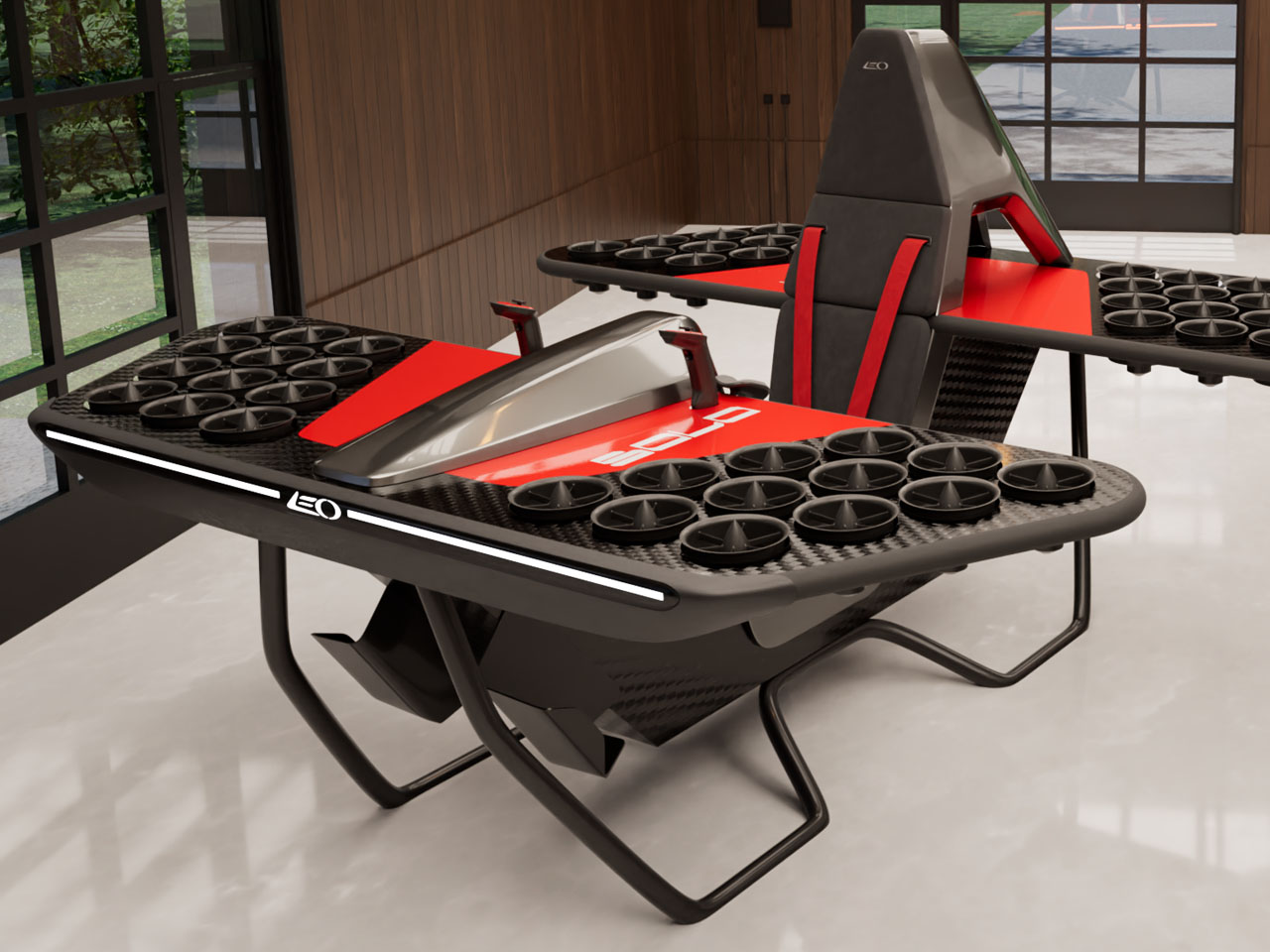
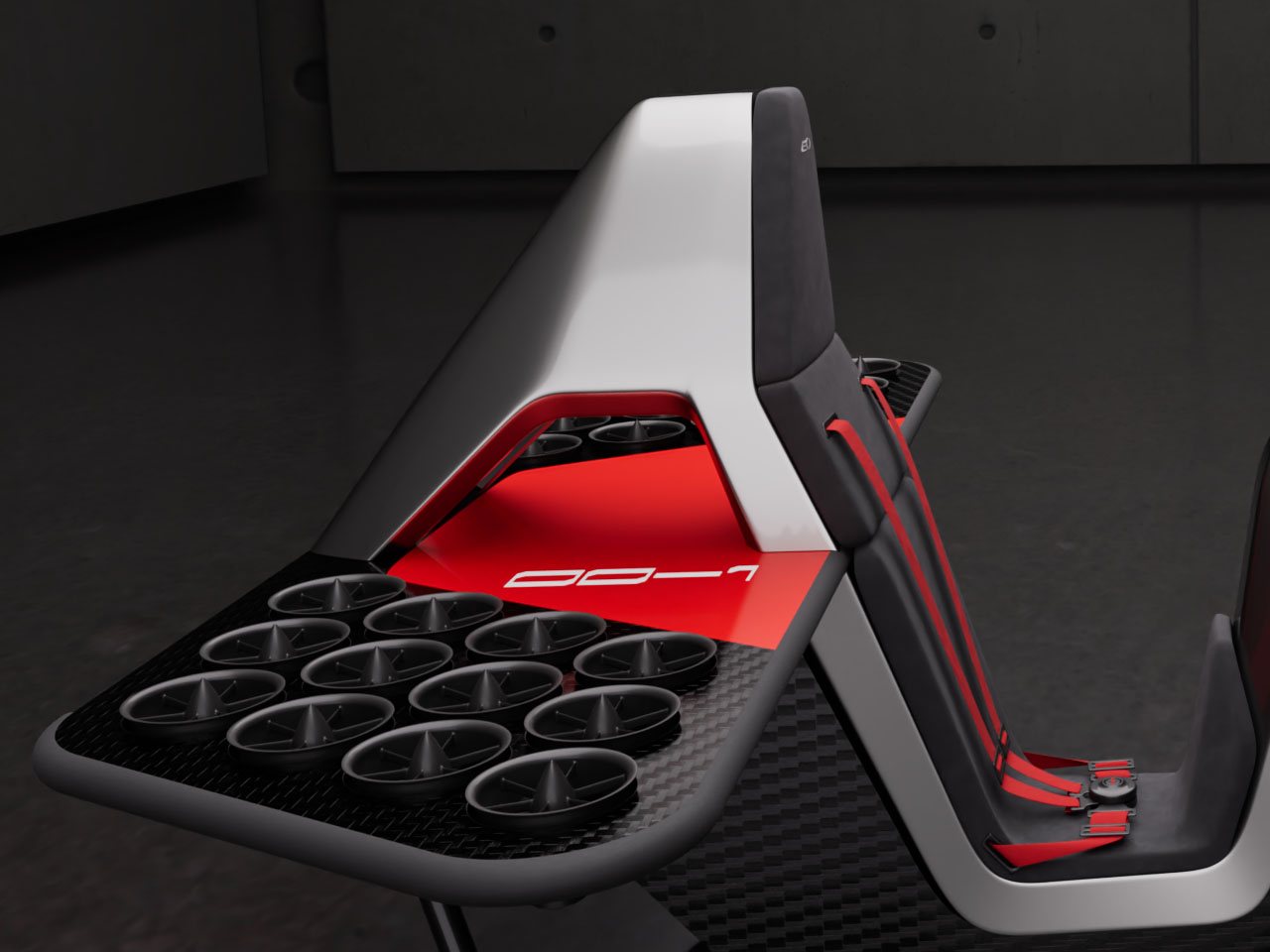
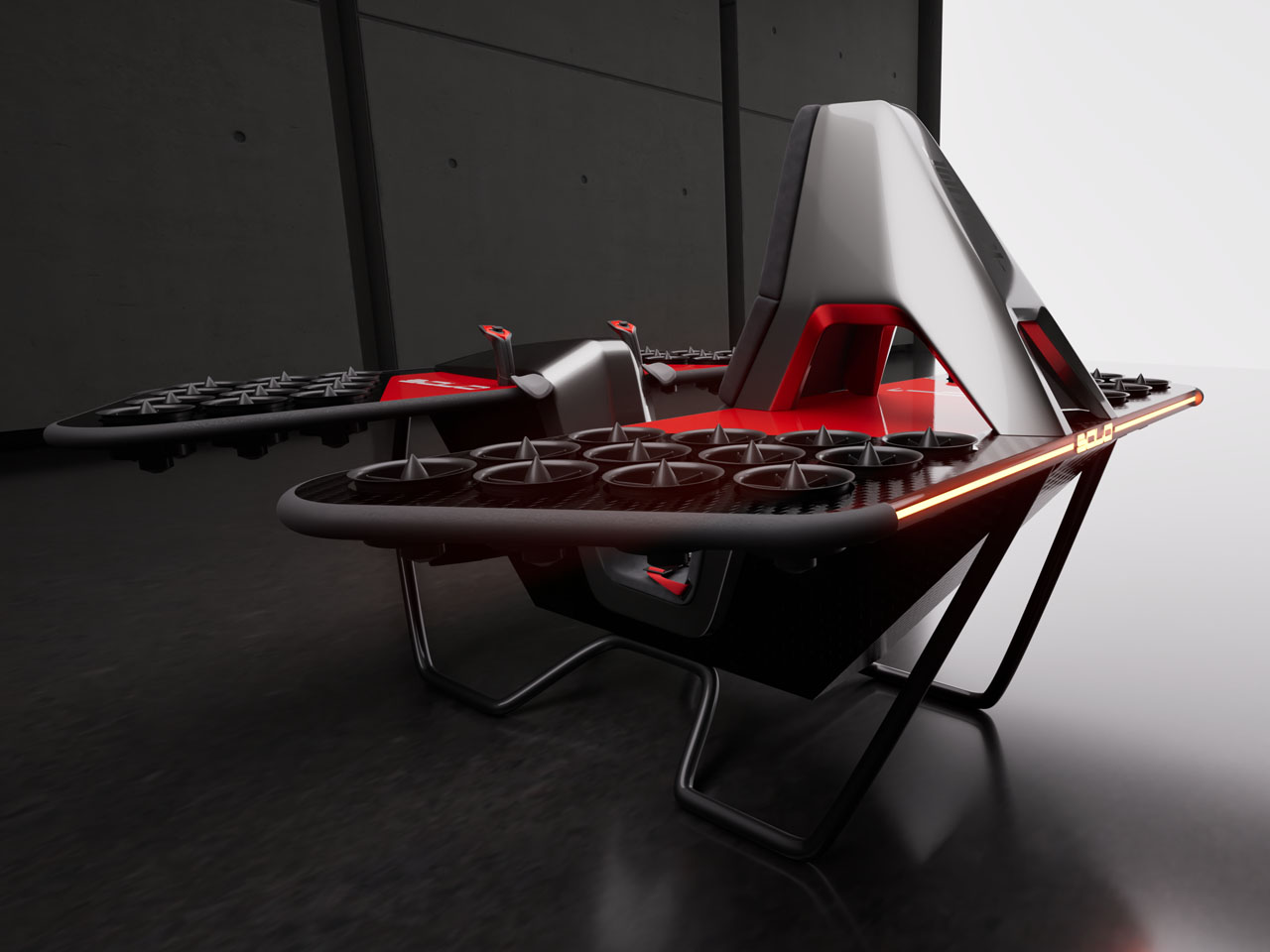
Honestly, when I first saw the LEO Solo in pictures, it looked like a work desk with an attached chair: some sort of a gaming rig. But a closer look revealed what this mean machine actually is, and then the video just scaled the excitement to the next level. The hands-on experience of this Jetbike shows it hovering some inches above the ground in a stable flight, which would definitely be elevated to a more practical height in the days leading up to its scheduled launch.
Designer: LEO Flight

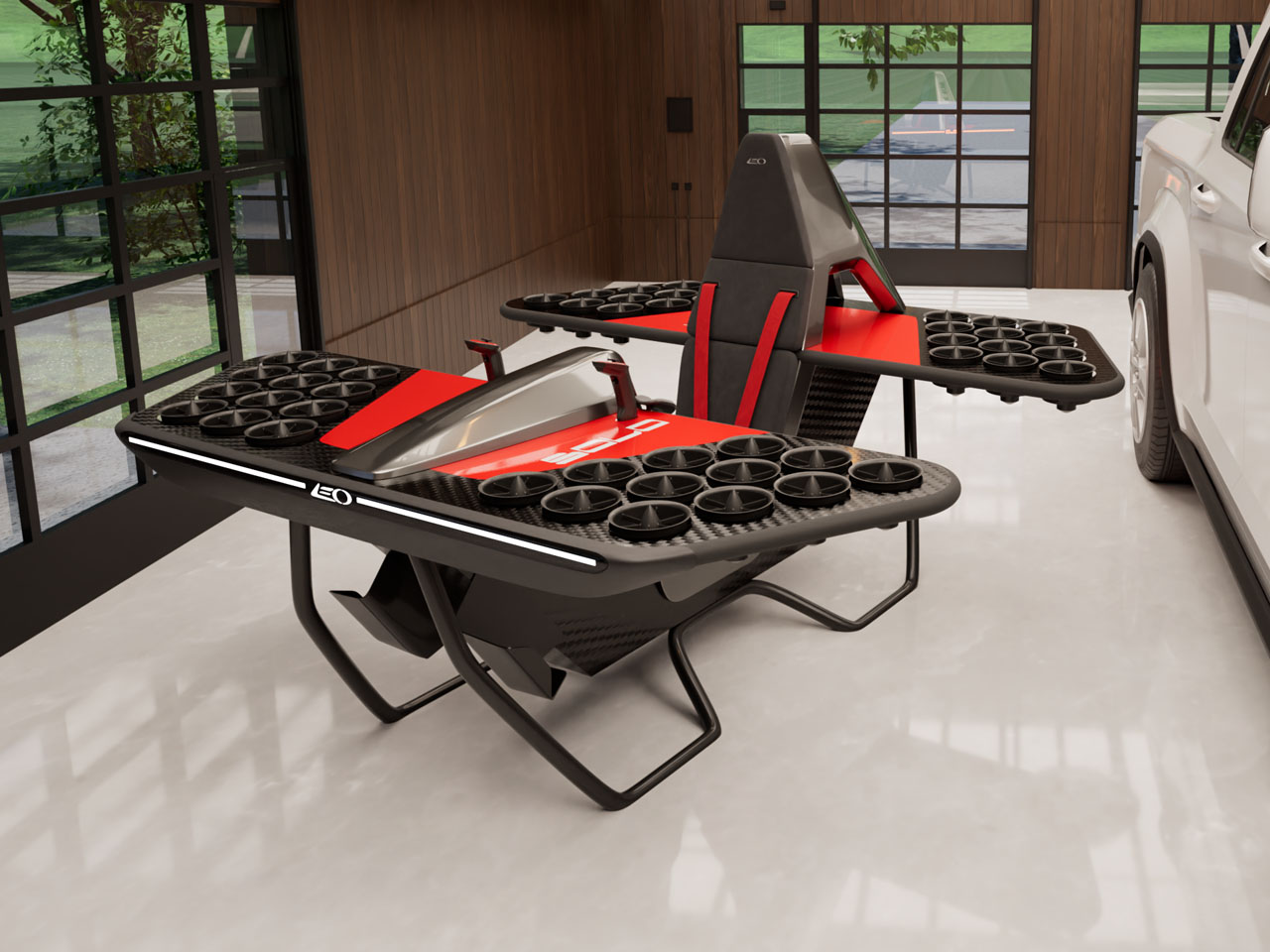
Pete Bitar and Carlos Salaff, the founders of LEO Flight, have been chasing the dream of electric-powered flight for the longest time. After numerous renders and prototypes, they have finally arrived at the LEO Solo, which has had its fair share of touch-and-go moments, but it’s finally here and gearing up to be flown without the need for a pilot’s license. This single-seat personal eVTOL is a small bike built to carry just the rider.
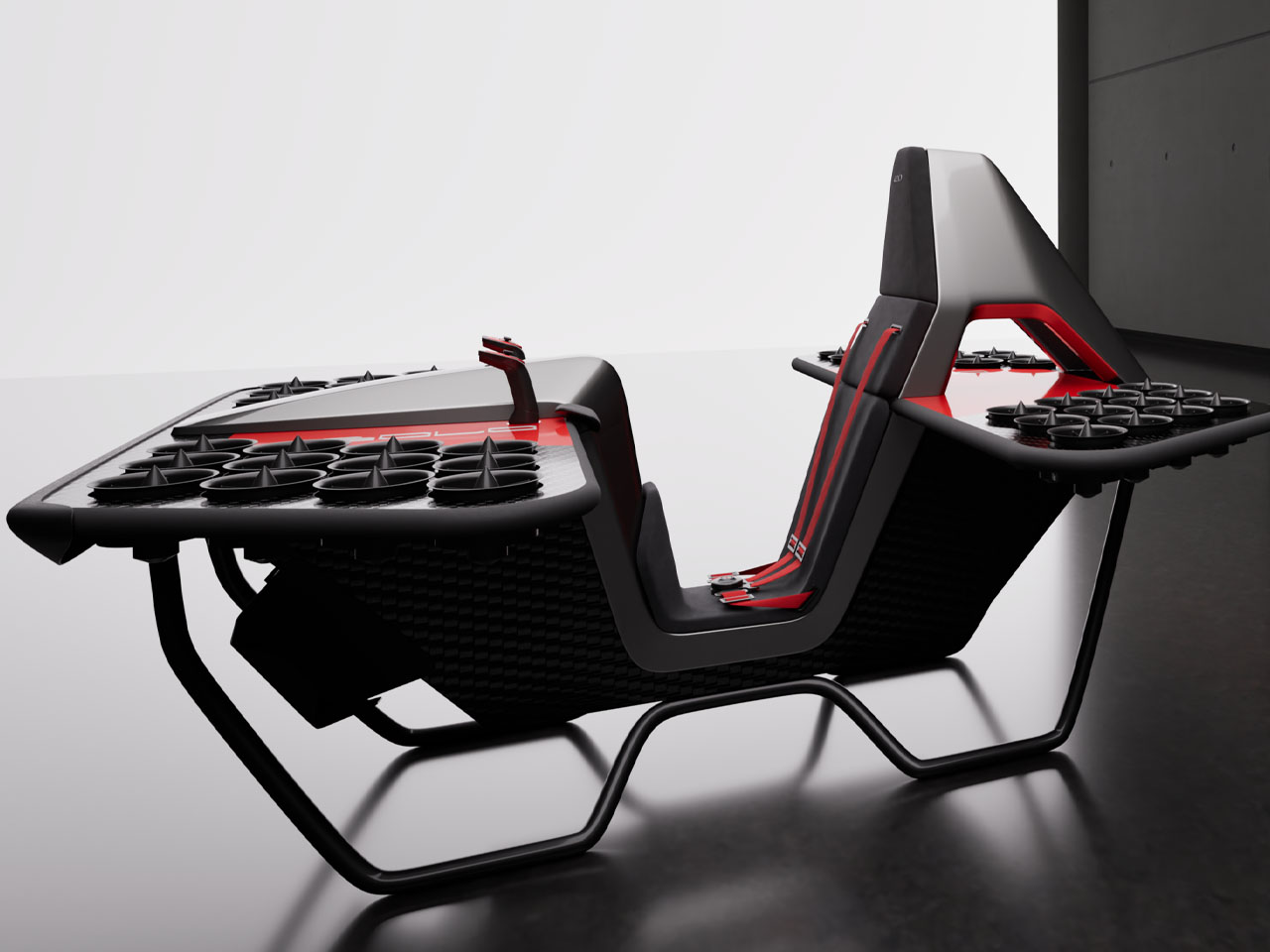
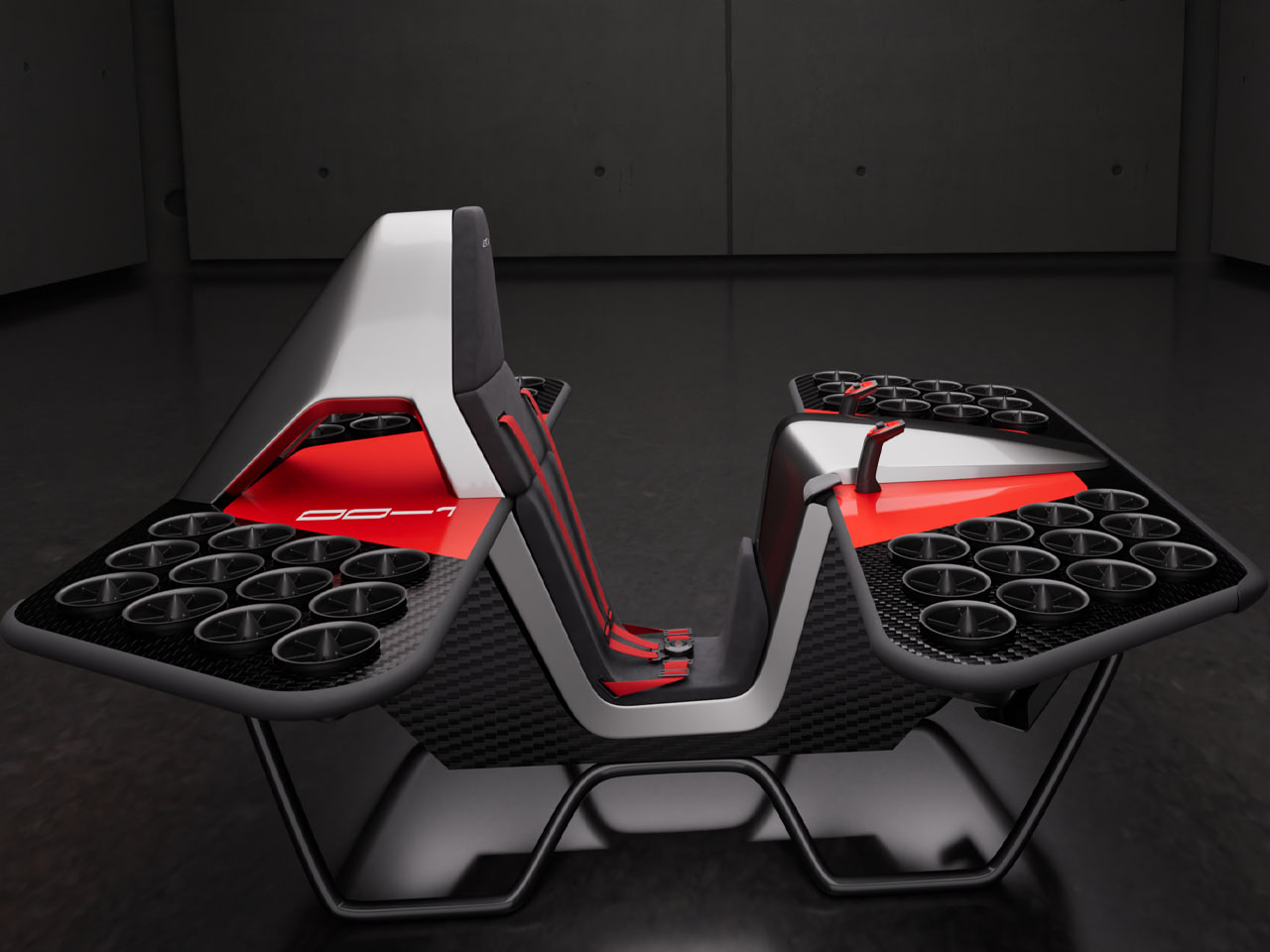
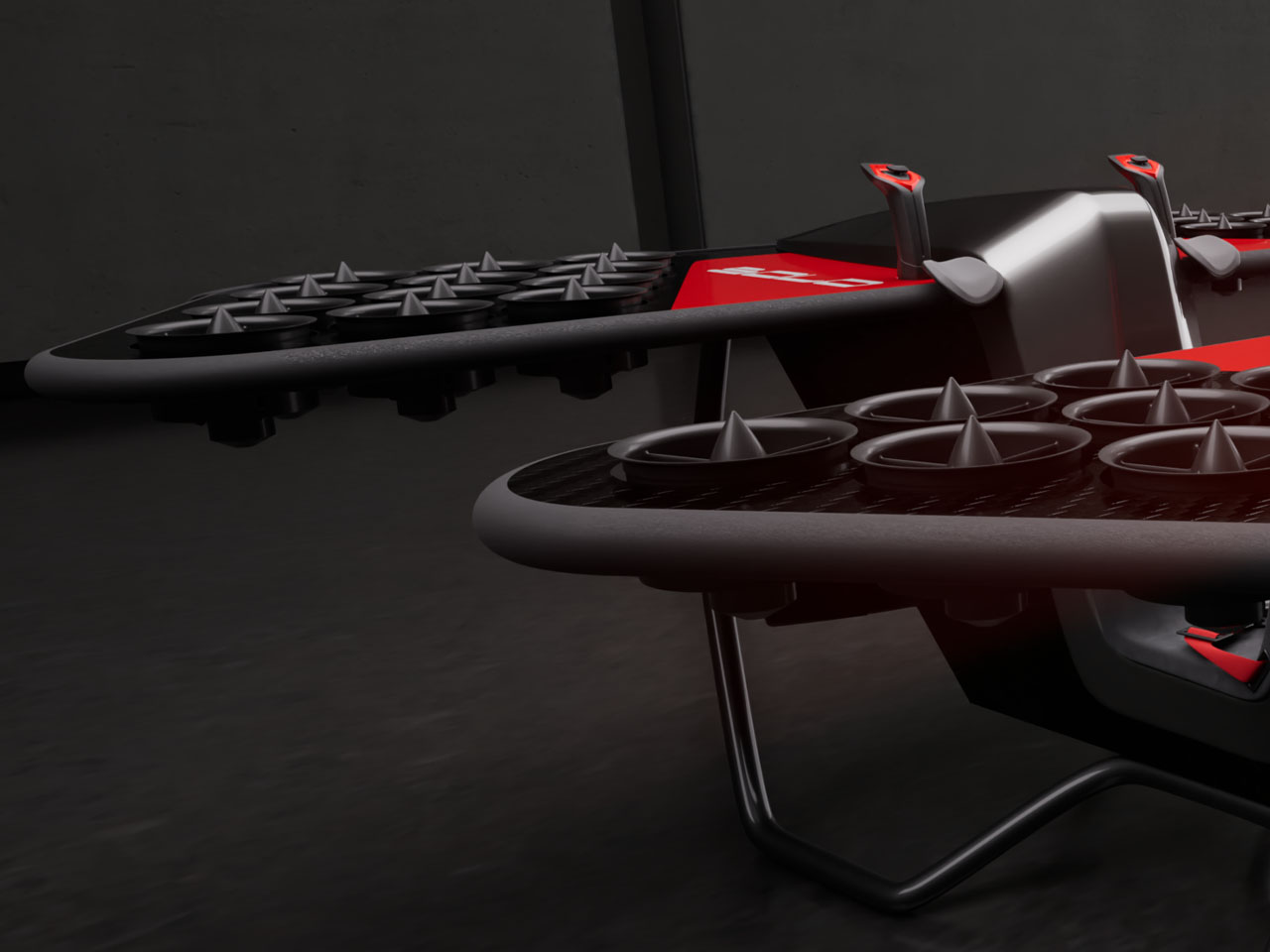
The LEO Solo is developed in a compact 6.5 × 6.5 ft footprint and is built on a propeller-free electric jet propulsion system, which allows the personal air vehicle to reach a top speed of 60 mph. You can definitely not take this for an experimental object. At that speed, it can easily fly at an altitude of up to 15 ft high, stably and at very low noise (approximately 80 dB). According to the company’s press information, the LEO Solo can remain airborne for 10–15 minutes and fly at a noise level lower than that of a Dyson vacuum cleaner. So, tomorrow when you’re landing in your backyard late at night, you can do that as discreetly as parking your car.
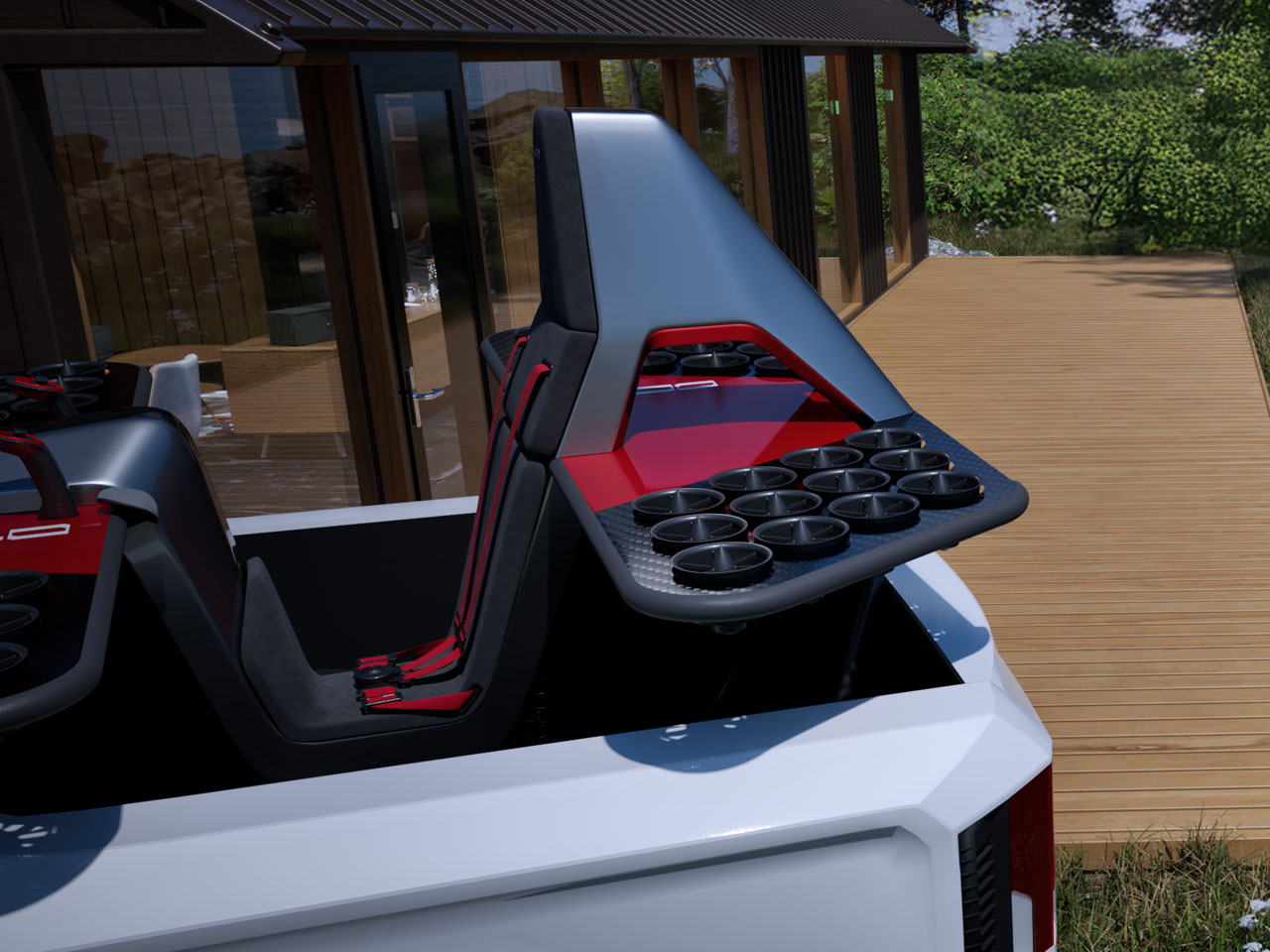
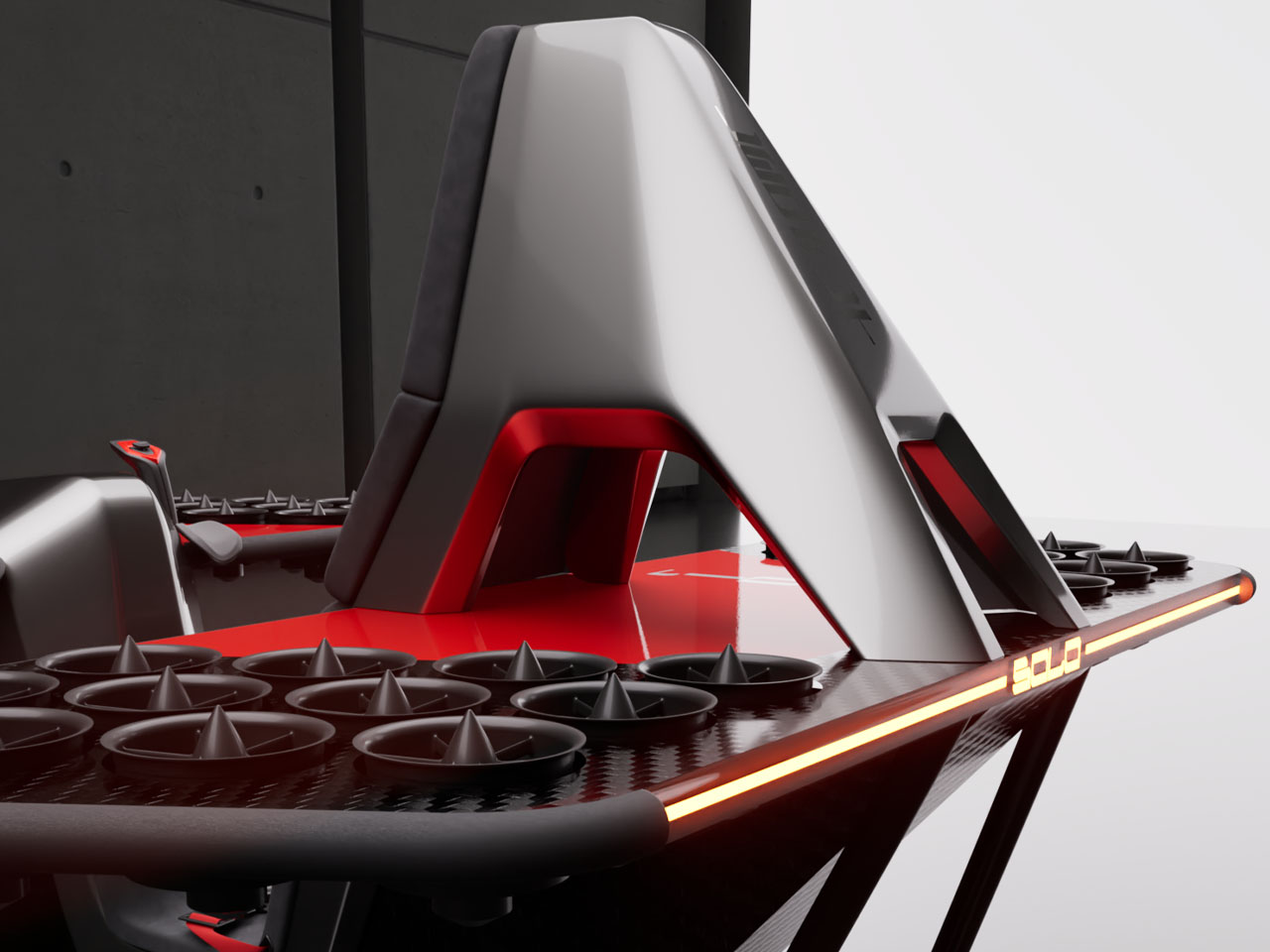
With its compact form factor, it can easily fit in a standard garage and charge its onboard solid-state battery in there. What makes the Solo really interesting are its 48 little fans, spread across its front and the back platforms, which allow it to lift off without wings or rotors. If this sounds like something you would want to own, you can reserve your LEO Solo JetBike now for a refundable deposit of $999. According to the company, it’s going into production in late 2025, which means any time now!
The post LEO Solo Jetbike, powered by 48 fans and electric propulsion, can fly you solo at 60 mph for 15 minutes first appeared on Yanko Design.
This Black Friday will feature an NFC showdown between the Chicago Bears and the Philadelphia Eagles. Both teams are 8-3 this season, but the odds for the Black Friday NFL game favor the Eagles to win. The Chicago Bears vs. Philadelphia Eagles game will stream live nationally on Amazon Prime Video on Friday at 3 p.m. ET. Keep reading to find out what you need to know about Friday's game and the rest of the Week 13 schedule.
Date: Friday, Nov. 28, 2025
Kickoff time: 3 p.m. ET/12 p.m. PT
Game: Chicago Bears vs. Philadelphia Eagles
Location: Lincoln Financial Field, Philadelphia
Streaming: Prime Video
The Bears visit the Eagles on Friday afternoon for a post-Thanksgiving game, streaming on Amazon's Prime Video.
All times Eastern.
Packers vs. Lions, 1:00 p.m.(FOX)
Chiefs vs. Cowboys, 4:30 p.m. (CBS)
Bengals vs. Ravens, 8:20 p.m. (NBC)
Bears vs. Eagles, 3:00 p.m. (Prime Video)
Rams vs. Panthers: 1:00 p.m. (FOX)
Texans vs. Colts 1:00 p.m. (CBS)
Bills vs. Steelers: 1:00 p.m. (CBS)
49ers vs. Browns, 1:00 p.m. (CBS)
Saints vs. Dolphins: 1:00 p.m. (FOX)
Falcons vs. Jets: 1:00 p.m. (FOX)
Cardinals vs. Buccaneers, 1:00 p.m. (FOX)
Vikings vs. Seahawks, 4:05 p.m. (FOX)
Raiders vs. Chargers: 4:25 p.m. (CBS)
Broncos vs. Commanders: 8:20 p.m. (NBC)
Giants vs. Patriots: 8:15 p.m. (ESPN)