This Chair Looks Skeletal But That’s Exactly the Point

There’s something satisfying about watching minimalism meet function in furniture design, and Denis Zarembo’s Insero Chair does exactly that with an unexpected twist. Based in Moscow, Zarembo has created a piece that challenges how we think about sitting, proving that sometimes the most interesting designs come from playing with basic shapes in not-so-basic ways.

The Insero Chair isn’t trying to reinvent the wheel. Instead, it’s reimagining the seat, backrest, and frame through a lens of geometric precision that feels both contemporary and surprisingly timeless. What makes this design stand out on Behance, where it’s already racked up dozens of appreciations and hundreds of views, is how it balances visual lightness with structural integrity.

Designer: Denis Zarembo

At first glance, the chair appears almost skeletal. Clean lines intersect at deliberate angles, creating a framework that looks like it could have been sketched in a single, confident stroke. But look closer and you’ll notice the thoughtfulness behind each junction point, each curve, each decision about where material exists and where it’s been carved away. This isn’t minimalism for minimalism’s sake. It’s reduction with purpose.

The name “Insero” comes from Latin, meaning “to insert” or “to place within,” which gives us a clue about Zarembo’s design philosophy. The chair seems to explore the relationship between positive and negative space, between what’s there and what’s deliberately absent. The seat appears to nestle within the frame rather than simply sit on top of it, creating an integrated whole that feels more like sculpture than traditional furniture.

What’s particularly clever is how the design manages to look both delicate and sturdy. The slender proportions suggest lightness and mobility, which is increasingly important in our flexible living spaces where furniture needs to work harder and move more freely. Yet the geometric construction hints at strength, with forces distributed through the frame in ways that are as much about engineering as aesthetics.

The chair exists at that sweet spot where industrial design meets art object. You could absolutely see it in a modern apartment or a minimalist office, but you could just as easily imagine it cordoned off in a design museum, being studied for its formal qualities. That dual nature is what makes pieces like this so compelling. They don’t just serve a function; they start conversations.

Zarembo’s work fits into a larger tradition of designers who understand that chairs are never just chairs. They’re statements about how we live, how we work, how we relax. From Charles and Ray Eames to contemporary makers pushing digital fabrication techniques, chair design has always been a proving ground for new ideas. The Insero Chair continues that lineage while speaking in a distinctly current visual language.

The rendering quality also deserves mention. The way Zarembo has presented the chair on Behance shows it from multiple angles, letting viewers appreciate how the geometry shifts depending on perspective. Sometimes it looks almost two-dimensional, like a line drawing come to life. From other angles, the complexity reveals itself, showing depth and dimension you might not initially expect. This careful presentation isn’t just about showing off. It’s essential for understanding how the piece actually works in three-dimensional space.

There’s no information yet about whether the Insero Chair will move into production, but that’s almost beside the point. Concept furniture serves an important role in pushing the conversation forward, in asking “what if?” even when “when?” remains unanswered. These designs influence other makers, spark ideas, and gradually shift our collective sense of what’s possible.

For anyone interested in where contemporary furniture design is heading, pieces like the Insero Chair offer valuable clues. We’re seeing a move away from bulky, overwrought designs toward cleaner silhouettes that don’t sacrifice comfort or functionality. We’re seeing digital tools enable precision that would have been difficult or impossible with traditional methods. And we’re seeing designers like Zarembo who understand that good design doesn’t shout. It speaks clearly, confidently, and leaves room for you to fill in the meaning yourself.

Whether the Insero Chair ends up in living rooms or remains in the realm of conceptual exploration, it’s already doing what good design should: making us look twice, think differently, and reconsider something as everyday as where we choose to sit.

The post This Chair Looks Skeletal But That’s Exactly the Point first appeared on Yanko Design.

A Digital Music Player with FLAC Files and a Built-In Speaker

There’s something oddly comforting about watching the vinyl resurgence happen in real time. We’ve collectively decided that convenience isn’t everything, that sometimes the ritual matters as much as the result. But while turntables have been getting their moment in the spotlight, another piece of audio history has been quietly staging its own comeback: the dedicated digital audio player.

Enter the DAP-1, a concept device from Frankfurt-based 3D artist and art director Florent Porta that asks a simple but compelling question: what if we took the best parts of portable audio’s past and reimagined them for today?

Designer: Florent Porta

Porta, who’s built a reputation creating everything from viral 3D animations to commercial work for brands like McDonald’s and Tuborg, recently unveiled this personal project after letting it sit unfinished for over a year. Sometimes the best ideas need time to breathe, and the DAP-1 feels like it benefited from that patience.

At first glance, the device looks like it could have been pulled from an alternate timeline where iPods evolved differently. There’s a clean, minimalist aesthetic that feels both retro and contemporary. The most striking feature is the OLED touchscreen, which gives the device a modern interface while maintaining the dedicated hardware approach that made original DAPs so appealing to audiophiles.

But here’s where it gets interesting: Porta included a built-in speaker. His parenthetical aside of “because why not” undersells what’s actually a clever design choice. Most high-end portable audio players skip integrated speakers entirely, assuming users will always have headphones or want to connect to external systems. The DAP-1 challenges that assumption. Sometimes you just want to share what you’re listening to without fumbling for a Bluetooth speaker or passing around earbuds.

The real substance of the DAP-1 lies in its commitment to high-resolution FLAC file playback. While streaming services have made music more accessible than ever, they’ve also created a generation of listeners who’ve never heard what their favorite songs actually sound like without compression artifacts. FLAC files, which preserve audio quality without the data loss of MP3s or streaming codecs, require dedicated hardware and storage. The DAP-1 embraces this limitation rather than trying to work around it.

This positions the device squarely in the current audio zeitgeist. Audiophiles have long argued that we lost something important in the transition from physical media to streaming, and they’re not entirely wrong. There’s a noticeable difference between a 320kbps Spotify stream and a lossless file, especially if you’re using decent headphones. The question is whether that difference matters enough to justify carrying a separate device.

For some listeners, the answer is becoming yes. The same impulse that drives people to buy vinyl despite its inconvenience applies here. There’s value in intentionality, in choosing to engage with music as an activity rather than ambient background noise. A dedicated audio player forces you to curate your library, to think about what you’re bringing with you rather than having infinite options at every moment.

What makes the DAP-1 particularly noteworthy as a concept is its timing. We’re seeing a broader cultural pushback against the smartphone-as-everything approach to technology. People are buying digital cameras again, rediscovering e-readers, and reconsidering whether having every tool in one device actually serves them well. The DAP-1 fits perfectly into this moment of technological reevaluation.

Of course, as a concept design, the DAP-1 exists primarily as a beautifully rendered 3D vision rather than a physical product you can actually purchase. Porta’s background in 3D animation and motion graphics means the device looks stunning in its presentation, with the kind of glossy perfection that concept renders do so well. Whether it will ever make the jump from screen to hand remains to be seen.

But that might not be the point. The best concept designs don’t just imagine new products; they spark conversations about what we actually want from our technology. The DAP-1 succeeds in asking whether we’ve given up something valuable in our rush toward convergence and convenience. It suggests that maybe, just maybe, there’s still room in our pockets and our lives for devices that do one thing exceptionally well rather than everything adequately. The DAP-1 proposes something quietly radical: focused, high-quality audio experiences on your own terms. That’s a concept worth tuning into.

The post A Digital Music Player with FLAC Files and a Built-In Speaker first appeared on Yanko Design.

This $550 Modular Light Lets You Design Your Own Wall Art

There’s something fascinating about watching designers take inspiration from the natural world and translate it into something you can actually use in your home. The ARID Modular Lighting System from Nahtrang Studio and Spanish brand Bover does exactly that, capturing the subtle beauty of arid landscapes and transforming it into a wall light that’s part art installation, part customizable tech.

The concept is beautifully simple. Think of ARID as a grown-up version of building blocks, but for your walls. The system consists of a core lighting unit that can be paired with various aluminum tiles in different configurations. You can arrange them to create your own unique composition, which means no two installations have to look the same. It’s like getting a bespoke piece without the bespoke price tag.

Designer: Nahtrang Studio for Bover

Nahtrang Studio approached this project with a clear mission from the start. They wanted to create something flexible and adaptable that could work in different spaces while maintaining a strong visual identity. The result is a fixture that performs its technical job while contributing real atmosphere to a room. Light emerges gently from behind the aluminum panels, tracing their forms and casting subtle shadows that mimic the way sunlight plays across desert terrain.

The choice of aluminum wasn’t arbitrary. According to the designers, it gave them the technical precision they needed while checking important boxes for sustainability. Aluminum is recyclable, lightweight, and durable, making it an intelligent choice for a product meant to last. The material also takes finishes beautifully, which is evident in the eight available colorways.

Speaking of colors, this is where ARID really shines. Forget basic black and white (though those are available if that’s your thing). The palette includes terracotta, pebble grey, graphite brown, olive grey, grey blue, and sand yellow. Each shade feels pulled directly from nature, giving you an easy way to bring earthy tones into contemporary spaces without things feeling forced or themey.

The modularity extends beyond just aesthetic choices. Different tile configurations create different lighting effects, so you can prioritize direct illumination in one area while keeping things more ambient in another. The lighting unit itself is rated IP44, meaning it can handle some moisture, and it’s fully dimmable, letting you adjust the mood as needed.

What makes ARID particularly interesting in today’s market is how it bridges the gap between customization and accessibility. Custom lighting installations typically require working with specialized designers and manufacturers, resulting in lengthy timelines and hefty costs. ARID gives you the creative control without the complexity. You’re essentially the designer, arranging the components in whatever configuration speaks to you.

This approach feels especially relevant now, when personalization has become such a significant part of how we think about our spaces. We’re no longer satisfied with mass-produced solutions that look exactly like everyone else’s. But we also don’t necessarily have the budget or patience for fully custom work. ARID occupies that sweet spot in between.

The system also reflects a broader shift in lighting design, where fixtures are increasingly expected to do more than just illuminate. They need to create ambiance, add visual interest, and ideally, tell some kind of story. ARID accomplishes this by referencing natural landscapes without being literal about it. You get the feeling of weathered rock formations and desert light without any kitschy desert motifs.

Barcelona-based Bover has built its reputation on this kind of thoughtful design, and their collaboration with Nahtrang Studio continues that tradition. Both the studio and the brand seem to share a philosophy about balancing technical excellence with emotional resonance, creating objects that work well while also making you feel something.

At around $550 to $625 depending on the configuration you choose, ARID sits in the premium category without reaching unapproachable luxury pricing. For that investment, you’re getting a lighting system that’s sustainable, customizable, and genuinely distinctive. More importantly, you’re getting something that can evolve with your space. As your taste changes or you move to a different room, you can reconfigure the tiles to create an entirely new look.

That kind of flexibility is genuinely rare in lighting design, making ARID feel less like a purchase and more like a long-term creative tool for your home.

The post This $550 Modular Light Lets You Design Your Own Wall Art first appeared on Yanko Design.

Fauna Robotics Just Built the First Humanoid You’d Want Home

Picture a humanoid robot, and you probably imagine something sleek, vaguely threatening, or at least a little cold. Maybe it’s built for a factory floor, towering and intimidating, or designed to look eerily human in a way that triggers that uncanny valley feeling. Either way, it’s not exactly something you’d want hanging around your living room.

That’s what makes Sprout so different. This portable humanoid from Fauna Robotics just launched out of stealth mode, and it’s taking a completely opposite approach to robot design. Instead of trying to look impressively human or industrial, Sprout leans into something that feels refreshingly approachable and, dare I say it, genuinely charming.

Designer: Fauna Robotics

Standing just 3.5 feet tall and weighing about 50 pounds, Sprout is compact and lightweight in ways that most humanoid robots simply aren’t. But what really sets it apart are those antenna-like eyebrows perched on its wide, rectangular head. They move up and down like little windshield wipers, giving this robot an expressive quality that feels more Pixar character than sterile machine.

The eyebrows work alongside a 360-degree LED facial display that animates with different light patterns and colors, plus body language that includes walking, kneeling, crawling, and sitting. Together, these features create a communication style that doesn’t rely on mimicking human faces or voices alone. Instead, Sprout uses a whole vocabulary of movement and light to express what it’s doing or feeling, which somehow makes it feel less like a failed attempt at humanity and more like its own friendly creature.

The design philosophy here clearly draws inspiration from beloved fictional robots like Baymax from Big Hero 6 or Rosie from The Jetsons, characters designed to feel helpful rather than threatening. Fauna Robotics wrapped the whole thing in a soft, padded exterior that’s safe to touch, and the company emphasizes that Sprout is built to operate in shared human spaces, around adults, children, and even pets.

This isn’t just a cute toy, though. The Creator Edition that’s shipping now is aimed at developers, researchers, and institutions that want to experiment with embodied AI in real-world settings. Sprout comes with some serious tech under that friendly exterior, including an NVIDIA Jetson AGX Orin processor with 64GB, stereoscopic vision, four time-of-flight sensors, a directional microphone array, and dual speakers.

Early customers are already putting Sprout to work. Disney, Boston Dynamics, UC San Diego, and NYU are all testing applications across retail, entertainment, home services, and research. The robot can navigate both indoor and outdoor environments without needing restricted zones, and its battery runs for about 3 to 3.5 hours before needing a swap. The price tag sits at $50,000 for the Creator Edition, which positions it as a serious development platform rather than a consumer product ready for mass adoption. But that’s kind of the point. Fauna Robotics is building the foundation for what humanoid robots could become once they leave the factory and start mingling with regular people in everyday spaces.

What strikes me most about Sprout is how it sidesteps the whole debate about whether robots should look human. By embracing a more abstract, expressive design, it avoids that creepy almost-human trap while still feeling relatable and engaging. Those eyebrows, as simple as they are, do more emotional heavy lifting than a thousand attempts at realistic facial expressions.

The broader question, of course, is whether we’re ready for robots like this in our lives. But maybe that’s the wrong question. Maybe the better question is whether robots are ready for us, designed in ways that make interaction feel natural rather than forced or unsettling. Sprout suggests that the path forward might not be about making robots that look like people, but rather creating robots that feel like they belong in the spaces where people actually live, work, and play.

With its soft exterior, expressive features, and human-scale design, Sprout represents a different vision of what personal robotics could look like. Whether it succeeds in changing minds about humanoid robots remains to be seen, but those articulated eyebrows are certainly making a compelling argument.

The post Fauna Robotics Just Built the First Humanoid You’d Want Home first appeared on Yanko Design.

Four Robot Arms Just Built a Farm House That Prints Its Future

Picture this: four robotic arms working in perfect harmony, tracing circular patterns like some kind of futuristic dance performance. But instead of creating art, they’re printing the walls of an actual farm. Welcome to Itaca, a project that just wrapped up its construction in the hills of Northern Italy, and it’s changing how we think about building homes.

WASP, the Italian company behind this audacious venture, just finished printing the walls of what they’re calling the first certified 3D-printed construction in Italy. Located in their Shamballa open-air laboratory, Itaca isn’t just a quirky experiment. It’s a fully functional, self-sufficient farm designed to house a family of four while producing its own food and energy.

Designer: WASP

The whole concept sounds like something from a sci-fi novel, but the execution is surprisingly grounded in ancient wisdom. The farm’s design takes inspiration from mandala geometry, with four robotic arms positioned at the vertices of a hexagonal structure. These machines use a lime-based printing material that allows the facades to regulate their temperature naturally, breathing like a living organism. No air conditioning required.

What makes Itaca genuinely fascinating is how it challenges our assumptions about both technology and sustainability. The walls aren’t just printed and left hollow. They’re packed with rice husks sourced from agricultural waste, creating natural insulation that keeps the interior comfortable year-round. The radiant heating systems and electrical installations are embedded directly during the printing process, which means less construction time and fewer workers needed on site.

But WASP didn’t stop at the structure itself. They’ve integrated 3D-printed vertical hydroponic systems that ensure fresh vegetables all year round using minimal water. The entire setup operates on a circular micro-economy model, where waste from one system becomes fuel for another. It’s the kind of closed-loop thinking that environmentalists have been advocating for decades, finally made tangible through advanced manufacturing.

Massimo Moretti, WASP’s founder, first unveiled Itaca at Italian Tech Week in Turin as part of the company’s broader vision to democratize sustainable housing. The real genius here is accessibility. The Crane WASP system used to build Itaca is designed to operate even in remote areas, making it possible to replicate this model worldwide. You don’t need massive infrastructure or armies of specialized construction workers. Just the machine, locally sourced materials, and the digital blueprints.

This approach to construction could be transformative for communities dealing with housing shortages or natural disasters. Traditional building methods require extensive supply chains, skilled labor, and months of work. With 3D printing, the timeline compresses dramatically, and the environmental footprint shrinks considerably. Using local materials means less transportation, fewer emissions, and buildings that are naturally suited to their climate. The ventilation system deserves special attention too. It’s designed to allow air to flow through the interior spaces continuously, transforming Itaca into what WASP calls a living house. This isn’t just clever branding. The structure literally responds to environmental conditions, adjusting naturally without mechanical systems that consume energy and break down over time.

What’s striking about Itaca is how it sidesteps the typical debate between high-tech solutions and traditional wisdom. It’s both. The robotic arms and digital design tools represent cutting-edge technology, while the materials and principles draw from centuries of vernacular architecture. Rice husks and lime have been used in construction for millennia because they work. WASP 3D Build, the startup within WASP dedicated to printed construction, executed the project using technology that’s already proven and available. This isn’t a prototype languishing in a research lab. It’s a real building that people will actually live in and farm around. That’s the difference between innovation theater and genuine progress.

The implications extend beyond individual homes. If this model scales, it could reshape how we approach rural development, affordable housing, and disaster relief. Instead of shipping prefabricated structures across continents, communities could print buildings on demand using materials from their own backyards. The rapid transmission of information through digital files means a successful design in Italy could be adapted and printed in Peru or Indonesia within weeks. Itaca represents something rare in architecture: a project that’s simultaneously visionary and practical, high-tech and humble. It proves that sustainability doesn’t require sacrifice or compromise. Sometimes it just requires thinking differently about the tools we have and the wisdom we’ve inherited.

The post Four Robot Arms Just Built a Farm House That Prints Its Future first appeared on Yanko Design.

Aram Just Released a Numbered Edition of This 100-Year Chair

Aram just dropped something special for design collectors: an exclusive limited edition of Eileen Gray’s iconic Bibendum chair, released to celebrate the 100th anniversary of its 1926 debut. This isn’t your standard reissue. This is a numbered, centenary edition of one of modernism’s most distinctive pieces, and it’s the kind of release that serious furniture enthusiasts have been waiting for.

The Bibendum chair has always been a statement maker. With its plump, upholstered cushions stacked like inflated tubes and cradled by a sleek chromium-plated steel base, it looks like the Michelin Man decided to become furniture. Gray herself named it after Bibendum, the tire company’s puffy white mascot, because the resemblance was too perfect to ignore. But what started as a cheeky observation became one of the most recognizable silhouettes in design history.

Designer: Aram and Eileen Gray

Now, a full century after Gray first created this rebellious piece, Aram is honoring the milestone with a limited production run that’s already generating buzz among collectors. The centenary edition represents something rare in the furniture world: a chance to own a specially designated version of an icon, not just another reproduction. At £6,750, it’s positioned squarely in the collector’s market, where provenance and exclusivity matter as much as the design itself.

What makes this limited edition significant goes beyond the anniversary stamp. Gray’s original vision was uncompromising. When she met with Zeev Aram in the 1970s to approve contemporary production of the chair, she demonstrated exactly how exacting her standards were. After sitting in the prototype, she paused, considered, and declared it needed to be precisely two centimeters wider. Not roughly wider. Not “a bit more comfortable.” Exactly two centimeters. That level of perfectionism is built into every Bibendum, and this centenary edition carries that legacy forward.

The chair’s history adds layers to its collectibility. It made its debut in Gray’s design for Madame Mathieu-Lévy’s Rue de Lota apartment, sharing space with Gray’s famous Brick screen and an extraordinary glass floor lit from beneath. When L’Illustration magazine photographed the apartment in 1933, the Bibendum commanded attention among an entire room of daring modernist pieces. It wasn’t just furniture. It was a statement about rejecting the hard-edged machine aesthetic that dominated the era.

That’s part of what makes this limited edition so compelling right now. We’re in another moment where design trends lean heavily toward minimalism and restraint. The Bibendum’s generous curves and unapologetic presence offer a counterpoint. It refuses to disappear into a room. It anchors it. The tubular steel base keeps it grounded in modernist principles, but those voluptuous upholstered cushions deliver comfort that feels almost decadent.

For collectors, limited editions like this serve multiple purposes. There’s the obvious appeal of scarcity. Numbered pieces from a commemorative run will always carry different weight than standard production models. But there’s also the narrative value. This chair tells a story about a woman designer who pushed boundaries in a field dominated by men, who insisted on curves in a world obsessed with angles, who believed comfort and beauty didn’t have to be mutually exclusive.

Gray’s career spanned lacquerwork, rug design, furniture, and architecture. The Bibendum embodies her refusal to be categorized or constrained. It’s modernist but not austere. It’s luxurious but not fussy. It’s sculptural but supremely functional. That complexity is what keeps it relevant a century later.

The standard Bibendum continues to be available in various leathers or wool felt, with polished chrome or matte black lacquered bases. But this new centenary limited edition is different. It’s not just about owning a beautiful chair. It’s about owning a specifically designated piece of design history, part of a finite release created to mark a hundred years of influence.

For design enthusiasts who’ve been watching the market, this release represents the kind of opportunity that doesn’t come around often. A century milestone for an icon like the Bibendum only happens once. Aram’s decision to commemorate it with an exclusive limited edition gives collectors something tangible to mark the moment. It’s not just furniture. It’s a rebellion wrapped in cushions, a reminder that sometimes the most radical thing you can do is insist on taking up space. And now, for a limited time, you can own a numbered piece of that rebellion.

The post Aram Just Released a Numbered Edition of This 100-Year Chair first appeared on Yanko Design.

The 2026 Olympic Torch That Knows When to Disappear

Right now, as the 2026 Winter Olympics torch relay makes its final journey through Milan toward tonight’s opening ceremony at San Siro Stadium, Carlo Ratti’s design is doing something revolutionary. It’s getting out of its own way. The MIT professor and architect didn’t set out to create another sculptural showpiece when he designed the Milano Cortina 2026 Olympic torch. Instead, he asked a question that probably should have been asked decades ago: what if the torch wasn’t the star of the show?

The result is something Ratti calls “Essential,” a name that feels like a manifesto. He designed the torch from the inside out, treating the flame itself as the architecture. The metal cylinder becomes a frame, almost a supporting actor, letting fire take center stage. It’s counterintuitive in a design culture that often mistakes complexity for sophistication.

Designer: Carlo Ratti

But the torch is only half the story. What makes this Olympic relay genuinely different is the mobile mini cauldron that travels alongside it, a piece of design that somehow manages to be both sculptural and invisible at the same time.

The cauldron exists to solve a practical problem: keeping the Olympic flame alive between legs of the relay. Previous Games handled this with utilitarian metal boxes, functional but forgettable. Ratti approached it differently. His studio created a transparent cylinder that transforms the flame into a vertical vortex, a twisting column of fire that appears to float in midair. The effect is hypnotic, like capturing a living piece of energy under glass.

The cauldron stands on a circular base finished in the same blue-green PVD coating as the Olympic torch itself, creating visual continuity between the two objects. When the relay pauses, when torchbearers hand off their flames, when the procession needs to rest, the cauldron becomes a temporary altar. It holds the fire safely while making it visible, watchable, alive.

Ratti’s team demonstrated the cauldron against some of Milan’s most iconic backdrops before the relay began. Against the Bosco Verticale towers with their cascading vertical forests. In front of the Duomo’s Gothic spires. At each location, the vortex flame created this strange visual dialogue between ancient architectural ambition and contemporary restraint. The buildings reached upward with ornate complexity. The flame spun quietly in its transparent case. Both were spectacular, but only one knew when to shut up.

This gets at something deeper in Ratti’s design philosophy. He splits his time between Turin, New York, and MIT, and brings an academic’s rigor to questions about how objects shape human experience. His studio created the French Pavilion for Osaka Expo 2025 and has worked across scales from furniture to urban planning. The through-line in all of it is this question of when design should assert itself and when it should recede.

Yesterday, the torch relay reached Piazza Duomo, carried by an extraordinary mix of athletes and celebrities. Snowboarding legend Shaun White, Paralympic swimming champion Simone Barlaam, and former figure skater turned K-pop idol Sunghoon of Enhypen. Even Snoop Dogg showed up to carry the flame through Milan’s streets. The spectacle of watching these recognizable faces holding Ratti’s understated torch drove home the design’s core idea: the people and the flame matter more than the object connecting them.

Today, the relay completes its final stage through Central Station, Castello Sforzesco, Parco Sempione, the Darsena, and neighborhoods like Brera and Porta Nuova. By tonight, that flame will ignite the Olympic cauldron at San Siro Stadium, and Ratti’s torch will have fulfilled its purpose by staying out of the way.

What strikes me about this whole system, torch and mobile cauldron together, is how it refuses to pander. A lot of Olympic design leans into grandiosity, into making bold statements about national identity or technological prowess. Ratti went the opposite direction. He created objects that work beautifully because they work honestly, that earn attention by being exactly what they need to be and nothing more.

The mobile cauldron especially embodies this. It could have been a massive sculptural statement, a piece of design that competed with the landmarks it appeared beside. Instead, it became a lens, a frame for the flame itself. The vortex effect isn’t decorative flourish; it’s a way of making fire more visible, more present, more itself.

When this relay ends tonight and the Games officially begin, thousands of people will have held that torch, watched that vortex flame, felt part of something larger than themselves. What they’ll remember isn’t the objects in their hands or on that base. It’s the fire they carried, the journey they were part of, the connection they felt. The design just made space for that to happen. Sometimes the most powerful statement is knowing when to disappear.

The post The 2026 Olympic Torch That Knows When to Disappear first appeared on Yanko Design.

This 1,048-Piece Grogu LEGO Set Is Perfect Movie Hype

There’s something universally irresistible about Baby Yoda, or as the purists insist we call him, Grogu. Those enormous eyes, the tiny green hands, that perfectly timed head tilt. We’ve missed seeing the little green guy on our screens but The Mandalorian and Grogu arriving in theaters later this year to solve that problem. There’s no better time to celebrate everyone’s favorite Force-sensitive toddler than with LEGO’s Grogu with Hover Pram set. This 1,048-piece buildable figure has become one of the most beloved Star Wars collectibles on the market, and it’s easy to see why.

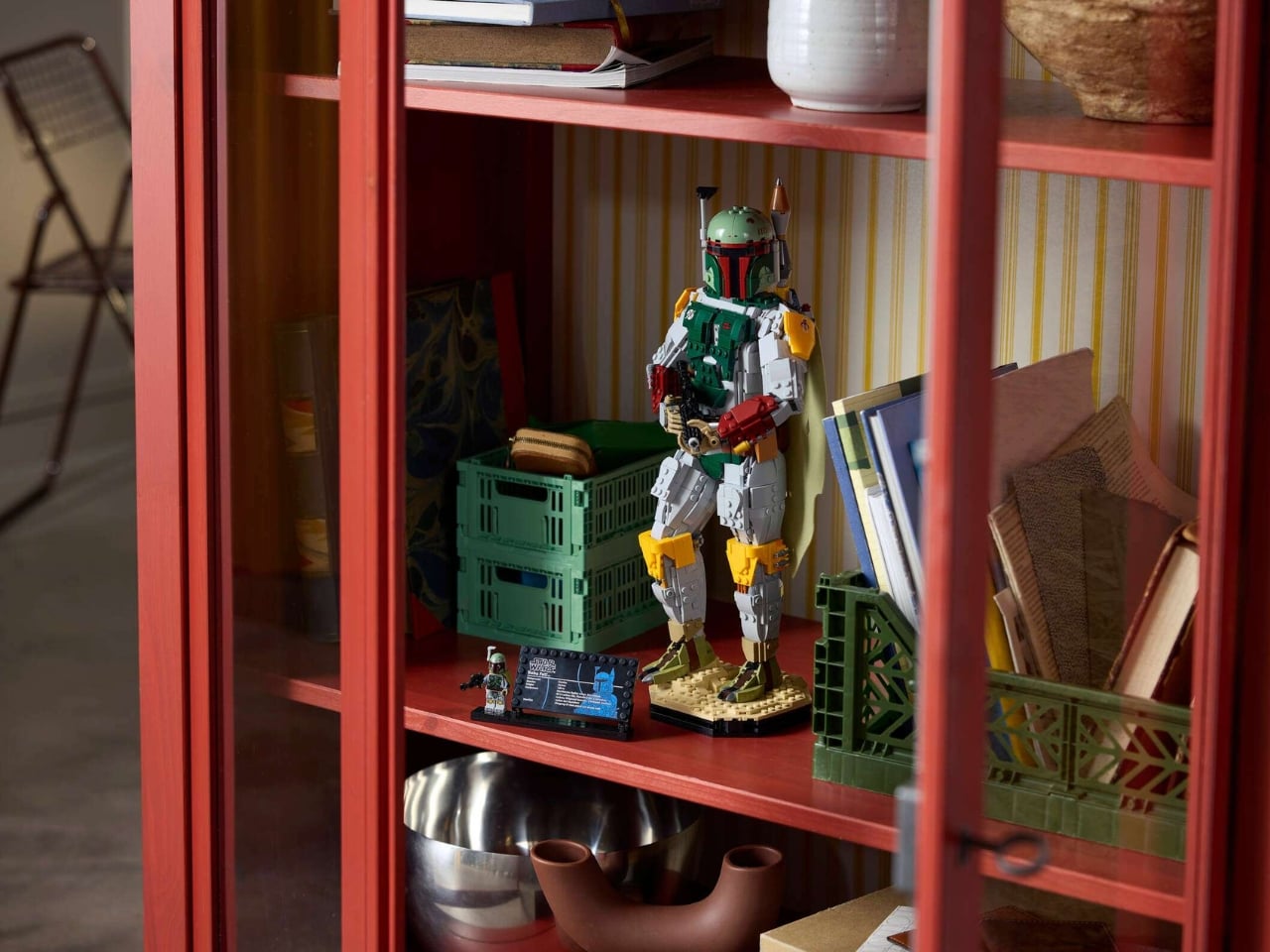
The genius of this set lies in how it captures Grogu’s personality through thoughtful design choices. At 7.5 inches tall when nestled in his iconic hover pram, the buildable figure features posable ears, a tiltable head, and dial-operated arms that let you recreate those memorable moments from the series. Want him reaching for the shifter knob? Done. Prefer him clutching a cookie with both hands? Absolutely. The articulation gives you genuine creative control over how you display him, which means this isn’t just a static model collecting dust.

Designer: LEGO

LEGO clearly understood the assignment when it came to accessories. The set includes brick-built versions of Grogu’s most iconic items: a Sorgan frog (his favorite forbidden snack that caused so much trouble), the infamous Razor Crest shifter knob, and a little cookie. These aren’t random additions. They’re carefully chosen callbacks to specific moments that defined Grogu’s character throughout The Mandalorian series. Each piece tells a story, which makes the building process feel more like a journey through the show’s best moments.

The hover pram itself deserves special attention. LEGO nailed the weathered, functional aesthetic of the original prop. The muted grays and browns, the mechanical details, the way it closes protectively around Grogu when needed. It’s instantly recognizable to anyone who’s watched the show, but it also works as a standalone piece of design. You can display Grogu sitting comfortably inside or standing beside his transport, giving you flexibility depending on your mood or available space.

With the upcoming theatrical release putting Din Djarin and Grogu back in the spotlight, this set takes on new relevance. We’re getting a feature film that expands their story beyond the Disney+ series format, and having this physical representation of their journey feels particularly meaningful. It’s a way to keep that connection alive between viewings, a tangible reminder of why we fell in love with this unlikely duo in the first place.

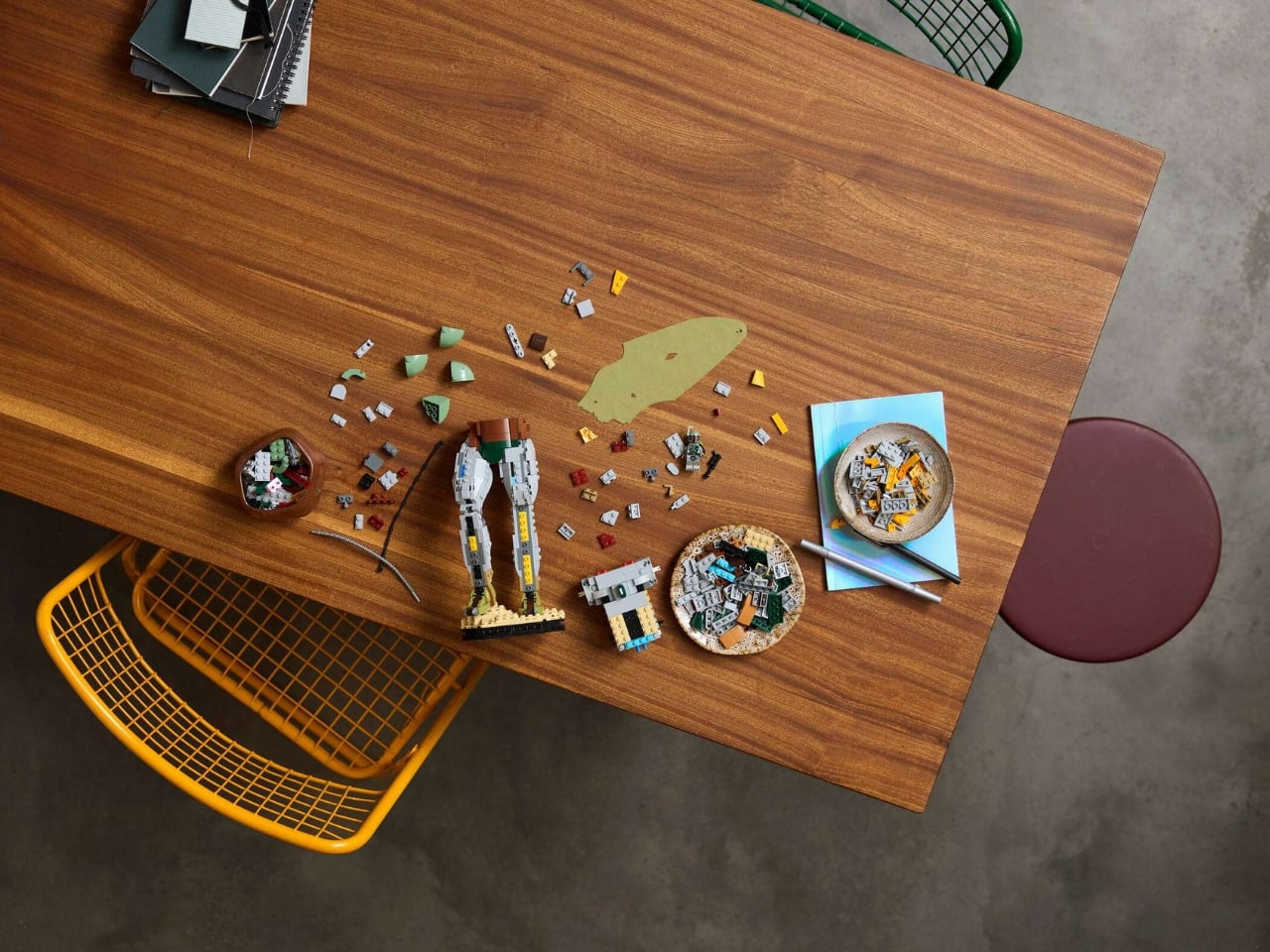
The building experience itself offers something special for anyone who appreciates detailed construction. With over a thousand pieces, this provides hours of engaging assembly without becoming overwhelming. The instruction booklet guides you through creating Grogu’s expressive features, the mechanical elements of the hover pram, and all those character-specific details. There’s real satisfaction in watching this beloved character take shape brick by brick.

What makes this set particularly appealing is how it bridges multiple interests. Star Wars fans get authentic screen accuracy. LEGO enthusiasts get sophisticated building techniques and smart engineering solutions. Design lovers get a display piece with clean lines and a cohesive color palette that works in adult spaces. Pop culture collectors get a character at the peak of cultural relevance. It’s rare when a product genuinely delivers across so many categories.

The display stand includes an information plaque and even has space for the included Grogu minifigure with a smaller hover pram, adding another layer of presentation options. This attention to the display experience shows LEGO recognizes these sets live on shelves and desks, not in toy boxes.

While the set is expected to retire sometime in 2026, that’s not really the point. The point is that we’re in a moment where Grogu mania is about to hit peak levels again with a major theatrical release, and this beautifully designed set lets you bring that excitement home. Whether you’re preparing for the movie premiere, looking for the perfect display piece, or just want to spend a weekend building something that brings genuine joy, this hits all the right notes.

The post This 1,048-Piece Grogu LEGO Set Is Perfect Movie Hype first appeared on Yanko Design.

This 6-Fingered Robot Hand Crawls Away From Its Own Arm

Imagine a robotic hand that not only mimics human dexterity but completely reimagines what a hand can do. Researchers at École Polytechnique Fédérale de Lausanne (EPFL) have developed something that looks like it crawled straight out of a sci-fi fever dream: a modular robotic hand that can detach from its arm, scuttle across surfaces spider-style, and grab multiple objects at once.

The human hand has long been considered the gold standard for dexterity. But here’s the thing about trying to replicate perfection: you often inherit its limitations, too. Our hands are fundamentally asymmetrical. We have one opposable thumb per hand, which means we’re constantly repositioning our wrists and contorting our bodies to reach awkwardly placed objects or grasp items from different angles. Try reaching behind your hand while keeping a firm grip on something, and you’ll quickly understand the problem.

Designer: École Polytechnique Fédérale de Lausanne’s (EPFL) school of engineering

The team at EPFL, led by Aude Billard from the Learning Algorithms and Systems Laboratory, decided to throw the rulebook out the window. Instead of copying human anatomy, they created something better: a symmetrical hand that features up to six identical fingers, each tipped with silicone for grip. The genius lies in the design, where any combination of fingers can form opposing pairs for pinching and grasping. No single designated thumb here.

But wait, it gets wilder. The hand is completely reversible, meaning the palm and back are interchangeable. Flip it over, and it works just as effectively from either side. This eliminates the need for awkward repositioning and opens up grasping possibilities that humans simply can’t achieve. The device can perform 33 different types of human grasping motions, and thanks to its modular design, it can hold multiple objects simultaneously with fewer fingers than we’d need.

The most mind-bending feature? This hand can literally walk away from its job. Using a magnetic attachment and motor-driven bolt system, it detaches from its robotic arm and crawls independently to retrieve objects beyond the arm’s reach. Picture a warehouse robot that needs to grab something just out of range. Instead of the entire system repositioning, the hand simply walks over, grabs what it needs, and returns like a loyal (if slightly creepy) pet.

The practical applications are staggering. In industrial settings, this kind of “loco-manipulation” (locomotion plus manipulation) could revolutionize how robots interact with their environments. Service robots could navigate complex spaces and handle multiple tasks without constant human intervention. In exploratory robotics, think Mars rovers or deep-sea vehicles, a detachable hand could investigate tight spaces or retrieve samples from areas the main body can’t access.

The research team’s work, published in Nature, demonstrates that symmetrical design provides measurably better performance, with 5 to 10 percent improvements in crawling distance compared to traditional asymmetric configurations. The hand’s 160mm diameter palm houses motors that mimic the natural forward movement of human finger joints, but without being constrained by human limitations.

What makes this project so compelling isn’t just the technical achievement. It’s the philosophical shift it represents. For years, robotics has been obsessed with replicating human form and function. But by questioning whether human design is actually optimal for all tasks, the EPFL team has created something that surpasses our biological blueprint. It’s a reminder that innovation often requires abandoning our assumptions about how things should work.

This robotic hand represents more than just another engineering marvel. It’s a glimpse into a future where machines aren’t limited by human constraints, where form follows function in unexpected ways, and where a hand doesn’t need to stay attached to be incredibly handy. Whether it’s retrieving your dropped phone from under the couch or assembling complex machinery in factories, this crawling, grasping, reversible wonder proves that sometimes the best way forward is to let go of convention entirely.

The post This 6-Fingered Robot Hand Crawls Away From Its Own Arm first appeared on Yanko Design.
These Chairs Are Made From the Steel That Holds Up Buildings

There’s something beautifully rebellious about taking the skeleton of a building and turning it into something you’d actually want in your home. That’s exactly what designer Marquel Williams has done with his Beams collection, a furniture series that proves industrial components can have serious aesthetic game.

Williams built this entire collection around one specific element: the I-beam. You know, those steel supports that hold up skyscrapers and warehouses. The same component that was patented back in 1849 by Alphonse Halbou and has been refined over nearly two centuries to become the gold standard for structural efficiency. But instead of leaving these beams to do their usual heavy lifting in the background, Williams pulled them into the spotlight and transformed them into chairs, lamps, desks, and lounge seating.

Designer: Marquel Williams

The collection includes five distinct pieces, each one using the I-beam as its structural foundation alongside metal sheets and black leather upholstery. What makes this approach so compelling is how Williams managed to create such diverse pieces from a single standardized part. Each item has its own personality despite sharing the same DNA.

Take the Beam Chair, for instance. It’s monochromatic metal at its finest, with precisely angled I-beams and laser-cut aluminum sheets. The whole thing is treated with a waxed finish that balances rigid industrialism with actual functionality. Looking at it, you might think it would be uncomfortable with all that sharp geometry and metal, but there’s an intentional restraint in its design that makes it striking.

Then there’s the Chaise Longue, which takes an entirely different approach. While the chair feels rigid and precise, the chaise has this relaxed, almost delicate equilibrium going on. The leather upholstery softens the whole vibe, making it feel more approachable while still maintaining that industrial edge.

But the real showstopper might be the Floor Lamp. This piece gets technical in the best way possible, featuring adjustable height shades with a cantilever system. Here’s the kicker: the electrical cord isn’t hidden away like usual. Instead, it’s framed right inside the beam as a visible design detail. It’s that kind of thoughtful touch that shows Williams isn’t just using industrial materials for aesthetic novelty; he’s actually thinking about how to integrate every functional element into the design language.

Williams’s philosophy here is all about standardization and what you can do when you commit to a single industrial component as your foundation. The I-beam represents nearly 200 years of industrial production refinement, the absolute peak of standardized structural efficiency. By using it in unexpected ways, Williams subverts its typical purpose and transforms it into a vehicle for creativity and self-expression.

This approach isn’t entirely new in the design world. Italian designer Enzo Mari explored similar territory with his own I-beam experiments (called “putrella” in Italian), creating bowls and trays for dining tables by simply bending the extremities upward. Mari’s research into semi-finished products aimed to highlight the formal worth of industrial components and transform them into contemporary design icons. Williams is working in that same tradition but pushing it further by creating an entire cohesive furniture system.

The collection is handcrafted by Caliper in Spain and produced in very limited quantities, which makes sense given the level of craftsmanship required. These aren’t mass-produced pieces; each one requires careful fabrication and finishing to achieve that balance between industrial rawness and refined design.

What Williams has ultimately created is a collection that makes you rethink the materials around you. Those structural supports holding up buildings? They have untapped aesthetic potential. That standardized industrial component? It can be the basis for something truly unique. The Beams collection proves that creativity isn’t about reinventing the wheel; sometimes it’s about looking at the wheel differently and imagining what else it could become.

The post These Chairs Are Made From the Steel That Holds Up Buildings first appeared on Yanko Design.