These quirky 3D printed spectacles have a unique sinewy design with no metal hinges

Eyewear fashion, I believe, is a constantly evolving realm and a new contender has emerged, disrupting the status quo with its bold and distinctive design. Tangled Eyewear, as its name suggests, embraces the beauty found within the chaos, presenting a captivating blend of disorder and elegance that challenges conventional aesthetics. If you’re a fashion enthusiast, you’re going to love what’s coming!

Designer: Aleš Boem

When you first see Tangled Eyewear it definitely appears as a statement piece, commanding attention much like a messy situation draws our gaze. However, upon closer inspection, its intricate design reveals a harmonious fusion of chaos and sophistication. The chaos and elegance of its tangled frames serve as a poignant reminder that beauty can emerge from the most unexpected places.

The concept of an ‘organized mess’ is a familiar one to many, particularly in today’s fast-paced world. Just as we might navigate through the chaos of a cluttered room with ease, Tangled Eyewear invites us to embrace the beauty found within the tangle. Its intricate design echoes the complexity of modern life, yet within its chaos lies a hidden order waiting to be discovered.

Tangled Eyewear pushes boundaries with its embrace of disorder. Through high-end 3D printing techniques and unconventional shaping possibilities, each pair of Tangled glasses is a testament to the creative potential found within apparent disarray. The result is a dynamic design that captures the eye and sparks conversation.

What sets Tangled Eyewear apart is its commitment to both style and functionality. The ergonomically modeled frames cater to both prescription and sunglasses wearers, ensuring a comfortable fit without compromising on design. With frames and sides hand in hand, Tangled Eyewear offers a seamless blend of form and function.

One of the most impressive aspects of Tangled Eyewear is its versatility. Whether you’re attending a lavish party or a corporate event, these frames are sure to make a statement. The key lies in the choice of color, with options available to suit any occasion or outfit. From vibrant hues to understated shades, Tangled Eyewear offers a solution for every style dilemma.

The post These quirky 3D printed spectacles have a unique sinewy design with no metal hinges first appeared on Yanko Design.

Kartell Reimagines Iconic Chairs In Barbie Pink At 2024 Milan Design Week

The recent collaboration between Kartell, the distinguished Italian furniture brand, and Mattel, the creative force behind Barbie, has resulted in an extraordinary collection of chairs that blurs the boundaries between furniture and art. Unveiled at Milan Design Week 2024, this partnership represents a significant milestone in design history, as it merges Kartell’s Philippe Starck-designed chairs with the timeless charm of Barbie.

Designer: Philippe Starck

Barbie’s enduring influence as a cultural icon cannot be overstated. From her origins as a children’s toy in 1959 to her recent portrayal in a live-action film, Barbie has continually evolved, captivating audiences worldwide and transcending her toy origins to become a symbol of empowerment and aspiration. Last year’s release of the Barbie movie further underscored her cultural significance, reshaping perceptions and highlighting her relevance across different age groups.

In response to Barbie’s multifaceted influence, Kartell and Mattel Creations embarked on an innovative partnership. Reimagining five of Kartell’s iconic chairs through a Barbie-inspired lens, the collection breathes new life into Philippe Starck’s designs, infusing them with Barbie’s signature style and charm.

The chairs, including the ‘Venice’, ‘Louis Ghost’, ‘Masters’, ‘Ero|S|’, and ‘AI’, have been meticulously recreated in both human and doll sizes, symbolizing Barbie’s 65-year legacy of inspiring imagination and creativity. Each chair, bathed in Pantone 219 C – the iconic Barbie Pink hue – is crafted from recycled plastic, highlighting the brand’s commitment to sustainability.

The genesis of this collaboration lies in Barbie’s ability to reinvent herself and resonate with audiences across generations. By transforming Kartell’s chairs into vibrant pink masterpieces, the collection pays homage to Barbie’s legacy of creativity and imagination. Crafted from recycled plastic and incorporating innovative materials such as bamboo, each chair embodies Barbie’s Dreamhouse aesthetic while also prioritizing sustainability—a testament to both brands’ commitment to environmental responsibility.

The debut of this remarkable collection at Milan Design Week captivated attendees, transporting them into a world where toys seamlessly merge with art. Displayed against the backdrop of Condé Nast’s Vogue Closet exhibition, the chairs became more than just functional pieces—they became cultural artifacts, inviting viewers to reconsider the boundaries between fantasy and reality.

In the words of Kartell, this collaboration represents a fusion “where toys become art, and art becomes toys.” By marrying Starck’s timeless designs with Barbie’s enduring allure, the Kartell x Barbie collection not only celebrates nostalgia but also invites us to embrace the power of creativity and imagination—a testament to the transformative potential of collaboration in the world of design.

The post Kartell Reimagines Iconic Chairs In Barbie Pink At 2024 Milan Design Week first appeared on Yanko Design.

This Tiny Home In A 17-Foot Wide Lot In Toronto Is Redefining Urban Living

In major cities worldwide, the ever-increasing cost of living and space crunch have become common challenges. Toronto, one of Canada’s prominent cities, is no exception. To address this issue, it’s crucial to optimize every available space. In the contemporary era of interior design, the focus has shifted towards planning and adapting to small spaces, mobile housing, multi-use spaces and furniture. As more people yearn to experience city life, it’s imperative to make even the smallest spaces comfortable. The Symington Laneway Suite, situated in Toronto’s Junction neighborhood, is a quintessential example of innovative space utilization and modern interior design.

Designer: Lanescape Architecture

In the heart of Toronto’s Junction neighborhood, on a narrow 17-foot wide lot, stands a beacon of modern living: the Symington Laneway Suite. This 1,000 square foot (92sqm), 2-storey home is a testament to ingenuity, offering a 1-bedroom, 1.5 bathroom residence conveniently close to parks, transit, and community amenities. The exterior is built using black corrugated metal, while horizontal planks add texture to the ground floor, making it feasible to construct.

Don’t be fooled by its size, this suite is packed with features. As you approach, the bright yellow entry door immediately catches the eye. Behind it lies a den/study, complete with a desk, a cozy sitting area, and a built-in shelving niche – perfect for work-from-home needs or simply completing tasks during the day.

Moving through the space, towards the rear of the laneway house, you’ll find the dining area and kitchen. The dining area boasts banquette seating, while the kitchen is adorned with under-cabinet lighting, adding to its ambiance. A sliding door seamlessly extends this open-plan space to a small patio, offering a delightful outdoor escape.

Step onto the patio and take in the ingenious architectural design. The second floor of the laneway house cantilevers outward, providing an additional 3 feet of livable space inside. Stairs between the den and the dining area/kitchen lead to the upper level of the home. Here, a glass partition and railing allow natural light to travel throughout the interior. Upstairs, the small living room, featuring a fireplace, overlooks the laneway with a more private view towards West Toronto. The bedroom and bathroom are located at the rear of the house, facing the yard. Both rooms boast a neutral color palette with added interest in the form of artwork and wallpaper.

The secret to the spacious feel lies in the open floor plan, with not many walls, and large windows that allow light to flow through the space, making it seem open and airy, rather than claustrophobic. The use of a light color palette also makes the space look bigger and airy, making it feel larger than it is. Moreover, the addition of plants brings life to the space, enhancing its overall ambiance.

The post This Tiny Home In A 17-Foot Wide Lot In Toronto Is Redefining Urban Living first appeared on Yanko Design.

Art Exhibit honoring Salvador Dali lets you “Ask Dali” anything on his 120th Birthday

As we approach Salvador Dalí’s 120th birthday on May 11th, the Dali Museum in St. Petersburg, Florida, is offering visitors a unique opportunity: to “Ask Dalí” and converse with a lifelike, artificial intelligence recreation of the Spanish painter himself, simply by picking up a lobster phone. This innovative experience is inspired by one of Dalí’s most iconic creations, the Lobster Telephone, and is made possible through the fusion of the artist’s eccentric genius with cutting-edge machine-learning technology.

Designer: Goodby Silverstein & Partners

Salvador Dalí, known for his surrealist paintings such as “The Persistence of Memory,” “Swans Reflecting Elephants,” and, of course, the Lobster Telephone, has left an unforgettable mark on the world of art. His works continue to captivate audiences worldwide, challenging our perceptions of reality and expanding the boundaries of the imagination. The Lobster Telephone, created by Dalí in 1936 for the English poet Edward James, now serves as an inspiration to the central piece in the Dali Museum’s latest interactive exhibit, as the ‘telephone’ fits best for the analogy, allowing visitors to engage with the artist himself in a surreal and thought-provoking manner.

Surrealism, the movement Dalí helped to spearhead, aims to revolutionize human experience by balancing a rational vision of life with one that asserts the power of the unconscious and dreams. Surrealist artists find magic and strange beauty in the unexpected and the uncanny, the disregarded and the unconventional. Dalí’s paintings offer deep and multifaceted meanings, providing ample scope for imagination and understanding of the artist’s perspective.

In an era marked by remarkable technological advancements, it’s fitting to bring a renowned artist back to life through AI, especially as we celebrate his birthday. Debuting after a successful preview at the renowned SXSW conference, Ask Dalí marries the artist’s eccentric genius with some of the latest in machine-learning technology. Crafted by advertising agency Goodby Silverstein & Partners (GS&P), the experience utilizes OpenAI’s GPT-4 and ElevenLabs’ Eleven Multilingual V2 models. These tools are trained on a rich dataset of Dalí’s own writings and archival audio, producing responses that echo his distinctive voice, flamboyant personality, and whimsical humor.

To start a conversation, visitors pick up the telephone and ask any question they would like, whether seeking insights into the artist’s surreal imagery or his thoughts on contemporary matters. During a demonstration, Hank Hine, director of the Dalí Museum, tested the system by asking what one should be sure to see when visiting the museum. The AI, channeling Dalí’s lyrical style, recommended, “In the labyrinth of the imagination that unfurls within the Dalí Museum of St. Petersburg, one must seek the melting clocks in The Disintegration of the Persistence of Memory, where time drips like a dream refusing to be contained.”

Building upon the successes of previous AI-assisted exhibits, such as Dalí Lives in 2019, which brought the artist’s persona to life on screens throughout the museum, and the Dream Tapestry in 2023, where AI assisted visitors in creating digital paintings from descriptions of their dreams, Ask Dalí is the latest in a series of innovative intersections of art and technology inspired by Dalí’s own fascination with new mediums. Jeff Goodby, the co-founder of GS&P, reflects on the project’s alignment with Dalí’s legacy: “Dalí was fascinated by the latest tools and technologies of his era and continually explored various artistic media,” he notes. “Ask Dalí provides a delightful new way to interact with machine-learning technology. Dalí’s poetic writings, in an imaginative style all his own, are the basis of the training, providing dynamic and unpredictable answers to visitors’ questions.”

The 120th birthday of Salvador Dalí promotes the intersection of art and technology allowing visitors to engage with one of the greatest artists of the 20th century in a manner that is both enlightening and surreal. Through the Lobster Telephone, visitors to the Dali Museum in St. Petersburg can experience firsthand the wit, wisdom, and eccentricity of Salvador Dalí, ensuring that his legacy lives on for generations to come.

The post Art Exhibit honoring Salvador Dali lets you “Ask Dali” anything on his 120th Birthday first appeared on Yanko Design.

Cuna Furniture Upcycles Your TV Box Into Sustainable Multifunctional Furniture

Innovative design often emerges from the desire to solve a problem, and the Cuna furniture collection is a perfect example of this principle. Created as a solution to repurpose cardboard, Cuna is an eco-friendly piece of furniture that is cleverly designed, a multifunctional piece that redefines the concept of sustainability and functionality.

Designer: Valeria CoelloCrafted from cardboard, a material readily available in most households, it is a testament to the idea that there is latent potential in what we often consider to be “waste.” Think about the sheer volume of cardboard boxes that accompany the gadgets, appliances, and packages we receive daily. Rather than relegating this cardboard to landfills, Cuna repurposes it, offering an ingenious solution that is as practical as it is environmentally friendly.

Created from just two sheets of sturdy cardboard joined by five additional pieces, the bench offers a unique aesthetic and DIY experience. It’s a lovely DIY experience that allows one to build a connection with their masterpiece. The brilliance actually lies in the simplicity of its design. By utilizing the principles of joinery, the pieces interlock without the need for screws or adhesives, forming a structure that is remarkably sturdy and surprisingly lightweight.

The genius of the Cuna bench lies in its versatility. When assembled, it can be used in two different ways, depending on the user’s needs. In its standard configuration, it offers a beautifully curved seating area for one person. However, flip it upside down, and an additional layer of cardboard transforms it into a conventional flat bench, capable of potentially seating an extra person. This dual-purpose functionality extends further; the flat-top version can also serve as a table. With two of these benches, you have a complete set—a low table and chairs—perfect for various settings, from hosting parties to day-to-day living.

Despite being made of cardboard, Cuna is surprisingly comfortable. The 6-8mm thickness of the cardboard provides a firm yet yielding surface, which is gentle on the body. The curved design provides a cozy seating experience, with the sides acting as convenient armrests or even as a place to set down a cup or phone. When placed against a wall, it even acts as a makeshift backrest. Furthermore, it can serve as a daybed, allowing you to rest on one side while placing your legs on the other.

Cuna is an ideal option for a wide range of scenarios. Whether you are a student on a budget, a bachelor looking for practical and sustainable furniture or a new homeowner looking to add both comfort and sustainability to your space, Cuna fits the bill perfectly.

The next time you unbox a new TV, microwave, or even the humble pizza, think twice before discarding the packaging. With Cuna, you can repurpose that cardboard, transforming it into a functional piece of furniture that adds an element of sustainability and comfort to your living space.

The post Cuna Furniture Upcycles Your TV Box Into Sustainable Multifunctional Furniture first appeared on Yanko Design.

This absolutely genius floor mirror flips over into an ironing board to save space

You don’t need a tiny home to invest in some clever multi-functional furniture. Sure, it helps save money and space when you’ve got a product that serves different purposes, but then again, owning such cleverly designed products is cool too! In collaboration with the esteemed Taiwanese design brand, Unipapa, Medium2 Studio introduces the Flip Dual-Function Ironing Board Mirror, an ingenious solution that seamlessly integrates the functionality of a full-length mirror with that of an ironing board. This innovative fusion addresses the perennial household dilemma of storing bulky ironing boards while adding a touch of elegance to interior spaces.

Designer: Ping-Lun ChungFang-Yu Chen, and Yen-Ting Lin

While the concept of a dual-function ironing board mirror isn’t entirely novel, the journey from concept to commercialization for the Flip involved extensive research and innovation, ensuring its practicality for everyday use. The crux of its design lies in what they term the “adjustable span transition.” Balancing the requirements of an ironing board, which demands a broad span for stability, with those of a full-length mirror, which necessitates a compact span to minimize space usage, presented a unique challenge.

To tackle this challenge, they engineered a structure with an adjustable span mechanism. This ingenious feature allows the Flip Dual-Function Ironing Board Mirror to seamlessly transition between its two functions with ease. Whether you’re preparing for a crisp attire with the ironing board or checking your reflection in the mirror, the interconnected structure simplifies the operation, enhancing overall convenience.

One of the most notable aspects of the Flip is its simplicity and practicality. Storing an ironing board is no longer a bulky task but simply a matter of placing it back in its designated spot. This effortless integration of two household essentials into one sleek design epitomizes the ethos of practicality meeting elegance.

Designed for individuals who embrace a minimalist lifestyle and appreciate multifunctional, space-saving objects, the Flip Dual-Function Ironing Board Mirror is a game-changer. Its sleek aesthetic seamlessly blends into any interior decor while offering unparalleled functionality. Whether you reside in a compact apartment or a spacious home, the Flip adds a touch of sophistication while optimizing space usage.

The post This absolutely genius floor mirror flips over into an ironing board to save space first appeared on Yanko Design.
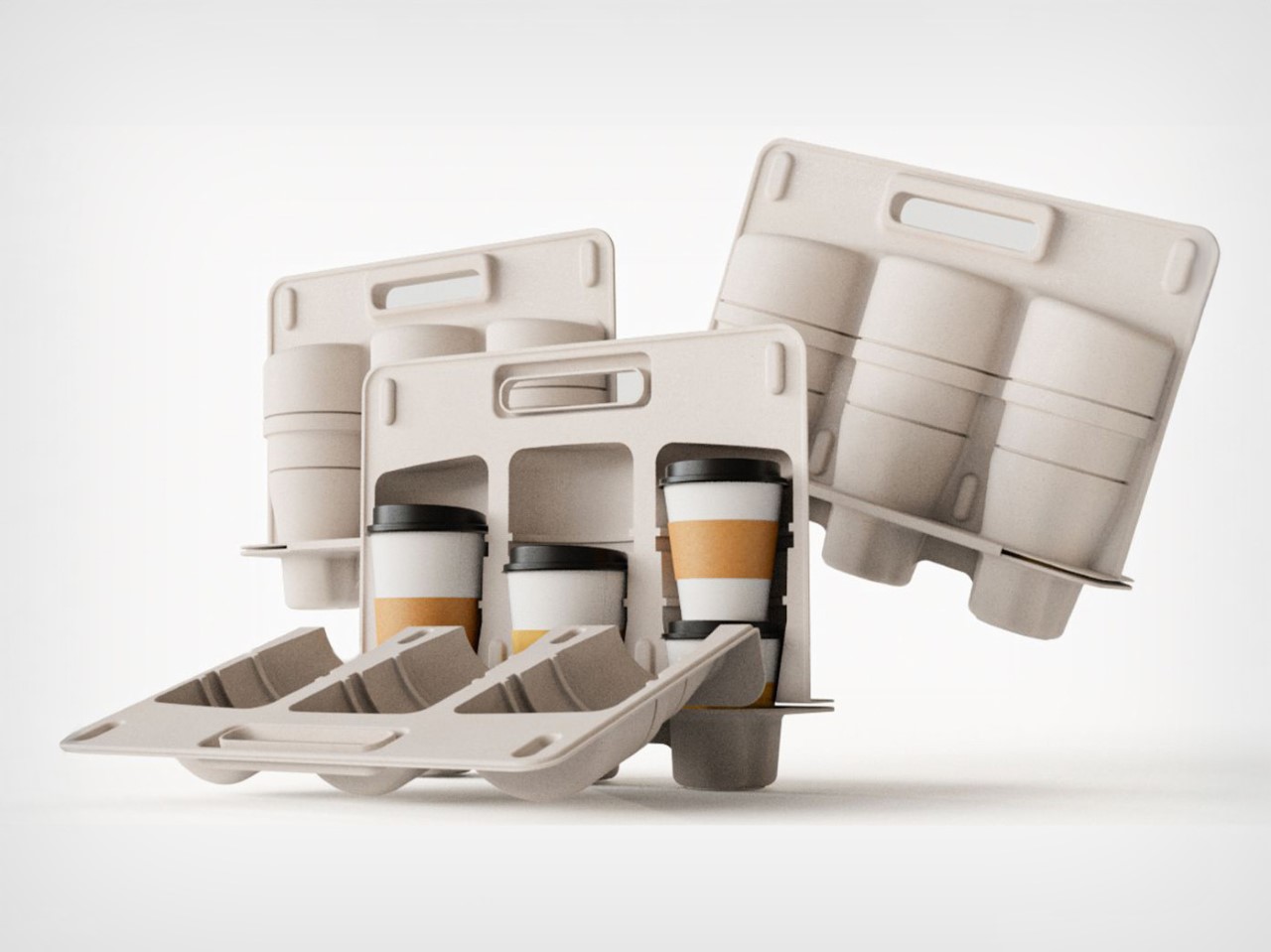
Eco-friendly seed-pods made from plant and seafood waste could revolutionize bio-packaging

Born from discarded seafood shells, SEAD merges tradition with innovation, offering eco-friendly pods for heirloom seeds. It’s a journey of reimagined agriculture, where waste transforms into a resource and every seed sown signifies sustainability. SEAD’s design mirrors ecological harmony and agricultural resilience, promising a greener future. Join the movement where innovation blossoms and sustainability flourishes, one seed, one pod at a time.

Designer: Mara Zimmerman

SEAD represents more than just packaging; it embodies a sustainable ethos by repurposing waste material into a valuable resource. Its inception showcases the potential of replacing virgin materials with recycled alternatives, contributing to a circular economy and reducing environmental impact.

At the heart of SEAD lies the preservation of heirloom seeds, varieties passed down through generations, each carrying a rich history and cultural significance. Heirloom seeds, with their diverse traits and adaptability, play a crucial role in maintaining biodiversity and ensuring food security in the face of evolving environmental challenges.

The use of chitin (pronounced kai-tun) in SEAD packaging not only offers a sustainable alternative to traditional materials but also brings agricultural benefits. Chitin, and its derivatives, act as bio-stimulants, enhancing seed germination, and promoting crop growth. Its natural properties boost plant defenses against pests and diseases while improving water retention in adverse conditions.

Crafted through a meticulous three-step pressing process, SEAD packaging demonstrates the remarkable self-binding ability of chitin, eliminating the need for additional agents. Laser-engraved labeling ensures traceability without the use of inks or dyes, aligning with SEAD’s commitment to sustainability.

Inspired by nature’s design, SEAD packaging mimics the structure of fruits and vegetables, providing a functional and aesthetically pleasing solution. The innovative design features creases that allow for easy tearing, enabling users to plant seeds conveniently while keeping the rest of the packaging intact.

SEAD offers a holistic approach to sustainable agriculture, combining ecological principles with practical innovation. By seamlessly integrating packaging with planting, SEAD promotes zero-waste practices and fosters a deeper connection between consumers and the environment.

Just in four simple steps: Break pods along perforated lines, gently crush for better seed exposure, plant enriched seeds, and store remaining bars conveniently. These actions seamlessly integrate eco-friendly practices into gardening routines, fostering a deeper connection with the environment. Each step contributes to a greener future, promoting sustainability and preserving heirloom seeds. With SEAD, every seed sown signifies a commitment to ecological harmony and agricultural resilience, paving the way for a more sustainable tomorrow.

SEAD’s innovative seed packaging, crafted from discarded seafood shells, faces cultural barriers in regions like India and Mexico, where pure vegetarianism is prevalent. Mixing seafood with vegetables may encounter resistance due to dietary preferences. Convincing individuals adhering to strict vegetarian or vegan diets of SEAD’s ecological benefits requires careful communication. Despite these challenges, SEAD offers a sustainable option for open-minded consumers committed to environmental conservation. It’s crucial to acknowledge cultural sensitivities and cater to diverse preferences.

The post Eco-friendly seed-pods made from plant and seafood waste could revolutionize bio-packaging first appeared on Yanko Design.

The Nokha Village Community Centre Is A Visionary Architectural Marvel in Rajasthan’s Bikaner District

In the heart of Rajasthan’s Bikaner district lies the village of Nokha, a place where the scorching sun dominates the landscape for the better part of the year. Here, amid a landscape where shade is a precious commodity, a beacon of hope and innovation has emerged: the Nokha Village Community Centre completed in February 2024. Designed by the visionary team at Sanjay Puri Architects, this elliptical marvel stands not only as a testament to architectural ingenuity but also as a symbol of community empowerment and cultural revival.

Designer: Sanjay Puri Architects

For the residents of Nokha and its 143 neighboring hamlets, the Community Centre represents more than just a building; it’s a lifeline to knowledge, art, and connection. Most government schools in the area lack libraries, leaving students to seek refuge under the nearest tree for their studies. However, with the inauguration of the Community Centre, a new era of learning has dawned. This 9,000 sq. ft. structure, spiraling like a sand dune, offers a sanctuary for education and artistic expression.

Sanjay Puri and his team are renowned for their avant-garde designs, often characterized by organic forms and abstract shapes. True to form, the Community Centre rises from the desert landscape with a sweeping curvilinear volume, creating an open courtyard that embraces the surrounding environment. Despite its modest footprint, the Centre maximizes usable space, boasting a large auditorium and rooftop gardens that offer panoramic views of the desert vistas.

What sets the Nokha Village Community Centre apart is its versatility. Here, anyone can find solace, inspiration, or entertainment. The digital children’s library caters to students from across the region, while the amphitheater hosts lively performances and social gatherings after sundown. Every element of the design, from the egg-shaped library clad in locally sourced sandstone to the intricately patterned jali facade, serves a dual purpose of aesthetics and functionality.

But the true brilliance of the Community Centre lies in its response to the harsh desert climate. Through strategic design elements such as stone screens, north-facing courtyards, jali facades, and grass berms, Sanjay Puri Architects have created a space that remains cool and inviting, even in the blistering heat. By harnessing traditional architectural techniques and modern innovations, the Centre stands as a model of sustainability and environmental stewardship.

Moreover, the Centre’s impact extends far beyond its walls. By fostering a culture of learning and collaboration, it serves as a catalyst for community development and social cohesion. Through initiatives like the Padhe Bharat Badhe Bharat program, the Centre empowers residents to pursue education and lifelong learning, bridging the urban-rural divide one visitor at a time.

The post The Nokha Village Community Centre Is A Visionary Architectural Marvel in Rajasthan’s Bikaner District first appeared on Yanko Design.

A Sustainable Circular Home that displays Discarded Toys on the Walls as Unique Decor

Architecture is more than just bricks and mortar; it’s a canvas for expressing cultural nuances, socio-cultural issues, and environmental concerns. From the grandeur of Romanesque cathedrals to the intricate designs of Gothic structures, architecture has long served as a medium of storytelling. In contemporary times, architects continue to push boundaries, as exemplified by architecture studio Wallmakers’ latest creation: Toy Storey, a circular home nestled in the verdant landscapes of Kerala, India.

Designer: Wallmakers

Established by Daniel in 2007, Wallmakers has earned acclaim for its innovative approach to design. However, their latest project takes innovation to a whole new level. Toy Storey isn’t just a residence; it’s a living monument to nostalgia, childhood, and environmental consciousness.

The concept behind Toy Storey is simple yet profound: repurpose discarded toys as structural components and decorative elements within the home’s walls. Approximately 6,200 toys, considered unsuitable for recycling, find new life in this unique dwelling. Plastic, a ubiquitous material in today’s world, particularly in the realm of toys, takes on a new identity, serving as a reminder of simpler times and prompting reflection on our consumption habits.

Located in Vadakara, North Kerala, Toy Storey’s design is deeply rooted in its surroundings. The circular layout, accessible from every side with a verandah supported by toys and old Mangalore tiles, harmonizes with the local landscape. The use of compressed stabilized earth blocks (CSEB) and Mangalore tiles, alongside toys, creates a visually striking facade that blends tradition with contemporary sensibilities.

The architectural ingenuity doesn’t end with the exterior. Inside, Toy Storey is a testament to thoughtful design and community-centric living. Divided into public and private segments, the home fosters a sense of togetherness while respecting the need for personal space. Japanese-style shoji screens serve as translucent partitions, allowing light and visual connectivity to permeate the interior.

The incorporation of a central courtyard and composite CSEB-Toy Jaali wall enhances cross ventilation and insulation, ensuring a comfortable living environment year-round. Additionally, a secluded basement level, accessed via a central staircase, offers space for a library and bedroom, further enriching the home’s functionality.

Toy Storey isn’t just a dwelling; it’s a conversation starter. It challenges conventional notions of architecture and consumption, urging us to rethink our relationship with the built environment and the objects that inhabit it. In a world saturated with disposable goods, Toy Storey stands as a beacon of sustainability and creativity, reminding us that even discarded items can find new purpose and meaning.

As Toy Storey demonstrates, architecture has the power to transcend mere functionality and become a reflection of our values, aspirations, and collective memories. In repurposing childhood relics to create a home, Wallmakers has not only crafted a physical structure but also woven a narrative that resonates with people from all walks of life. In the heart of Kerala, Toy Storey stands as a testament to the potential of architecture to inspire, provoke, and delight.

The post A Sustainable Circular Home that displays Discarded Toys on the Walls as Unique Decor first appeared on Yanko Design.

Fritz Hansen’s Pendant Light gets a Korean Redesign for his 150th Anniversary Celebration Exhibition

Explore the modern Korean perspective through Drop Light. It’s all about mixing straight lines and curves to tell a captivating story of balance and contrast for Fritz Hansen’s 150th Anniversary Exhibition in Seoul. The exhibition, themed ‘Eternal Beauty,’ shows off a beautiful blend of precise shapes and natural flow. Come along and explore the beauty of shapes and curves!

Designer: SWNA

Lee’s creative journey with Drop Light delves deep into the interplay between straight lines and curves, a narrative echoing his profound fascination with sculptural contrasts and balance. Rooted in the theme of ‘Eternal Beauty,’ the exhibition’s overarching motif, Lee orchestrates a symphony of geometric precision and organic fluidity.

At the heart of Drop Light lies a meticulous exploration of three-dimensional manifestations of flat features. Lee embarks on a quest to unearth the inherent harmony nestled within the convergence of lines and planes, transcending conventional design paradigms. While Lee’s upbringing in Korean culture serves as a foundational influence, his focus pivots towards addressing his intrinsic design ethos, imbuing Koreaness with a contemporary flair.

The luminescent allure of Drop Light emanates from its multidimensional interpretation of intersecting lines and evolving forms. From its embryonic sketches to the final iteration, the design journey meanders through a landscape of experimentation and prototyping. Through this iterative process, two distinct drop trays emerge, each bearing testament to Lee’s unwavering pursuit of design excellence.

At its core, Drop Light is a marriage of fluid curves and steadfast solidity. The lampshade, characterized by its dynamic contours and shifting perspectives, finds synergy with cylindrical solid wood support. This juxtaposition of ethereal lightness and grounded stability encapsulates the essence of Lee’s design philosophy, inviting viewers to contemplate the interplay between form and function.

The post Fritz Hansen’s Pendant Light gets a Korean Redesign for his 150th Anniversary Celebration Exhibition first appeared on Yanko Design.