Genius Multipurpose Crib Turns Into Two Armchairs After The Baby Grows Older

Welcoming a new member into the family is a special time full of excitement and happiness. Setting up a cozy space for a new baby is important, and the crib plays a major role in that. Most conventional cribs can be used until the baby turns 3 years old, depending on the size of it. Once outgrown, these cribs become obsolete and are often discarded. But what if a crib could be more than just a baby bed? Imagine a crib that doesn’t become useless after a few years but turns into cool chairs instead. This is a new kind of crib that goes beyond the usual, making it not just practical but also eco-friendly. This clever idea is changing the way we see cribs and making baby products better for the environment.

Designer: Zhipeng Qiu, Yufeng Lin

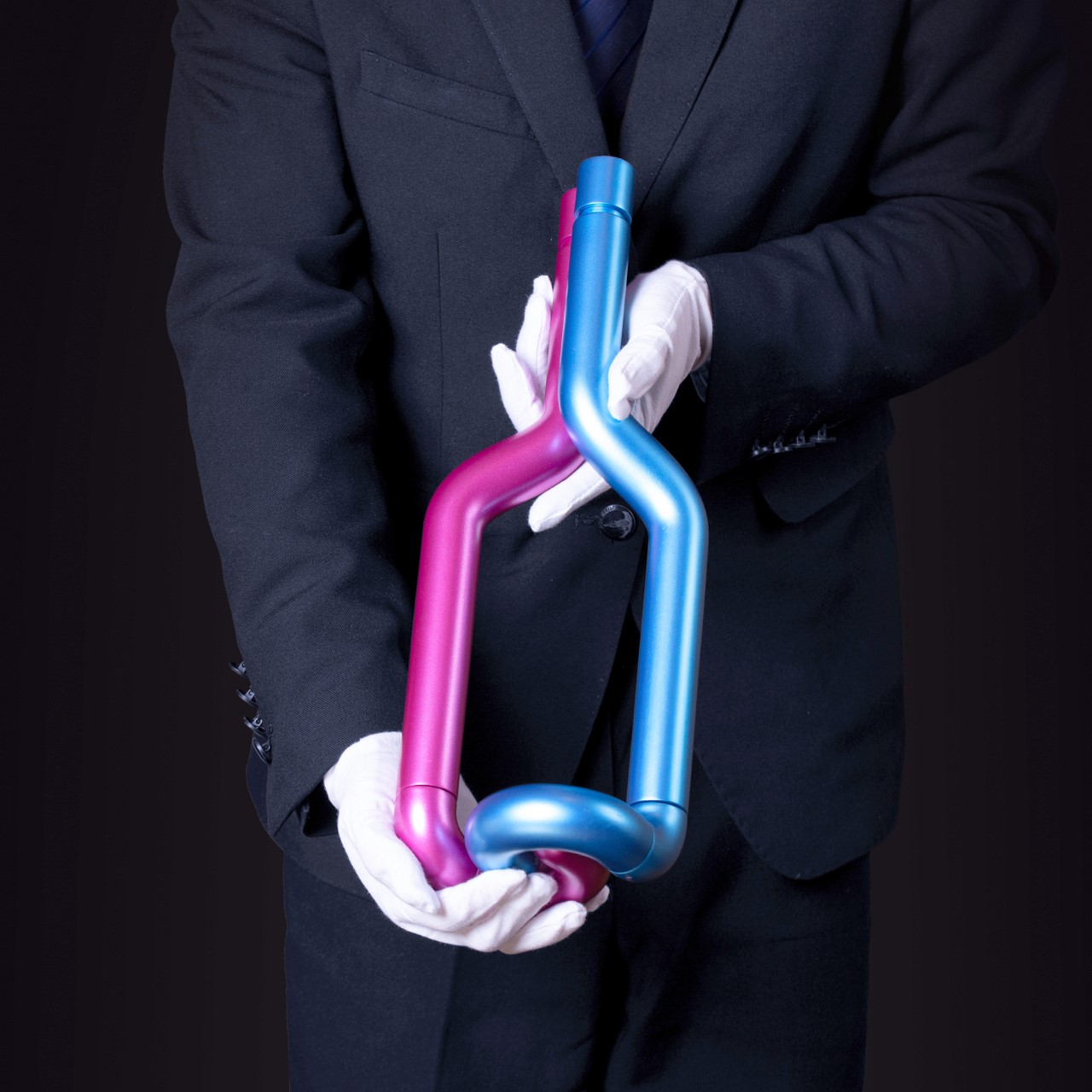
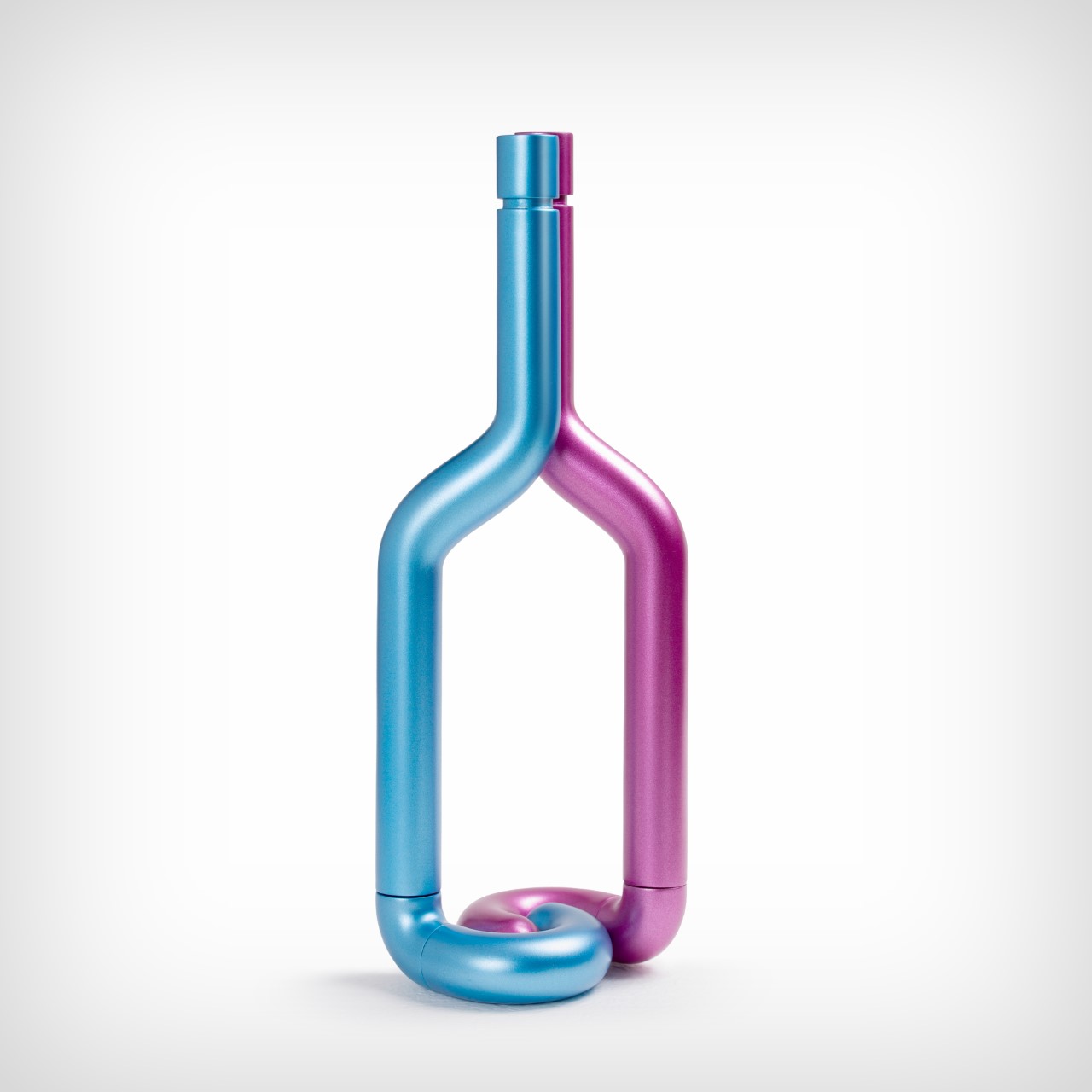
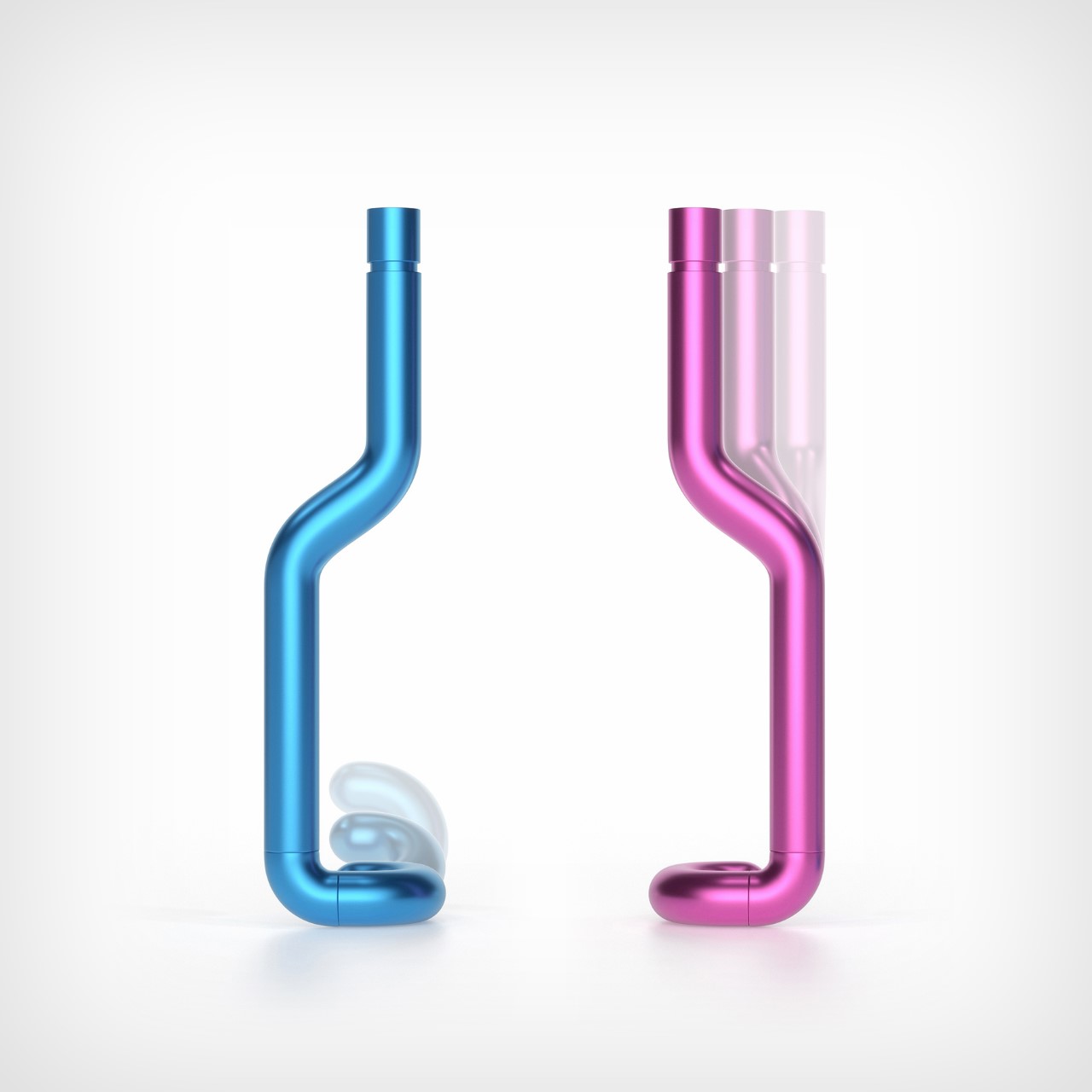
The traditional notion of cribs being a single-use item is challenged by a design that incorporates a thoughtful combination and disassembly feature. The crib can seamlessly transform into two stylish leisure chairs, offering a sustainable solution to the short-lived nature of conventional cribs. This design not only addresses the issue of limited functionality but also promotes responsible resource use and environmental consciousness.

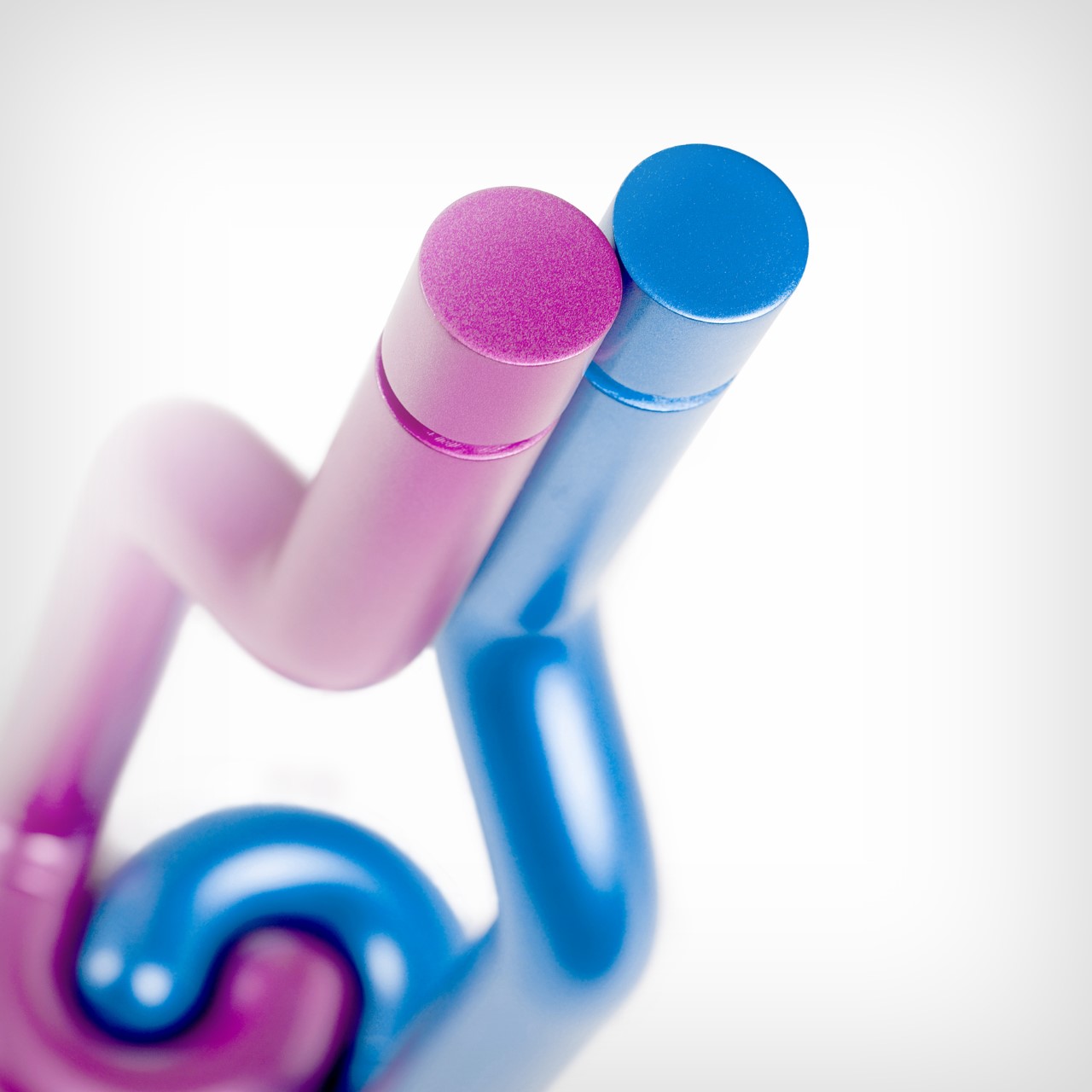
The transformation from crib to chairs is made possible through an ingenious chute structure and plug-in mechanism. This ensures that the process is user-friendly and easily manageable for parents. The chairs maintain a balance in form and size, providing a comfortable and aesthetically pleasing addition to any home. The product embodies a gentle sense of wrapping and comfort, reminiscent of a mother’s care, ensuring the child’s well-being during the crucial developmental years.

One of the standout features of this innovative crib design is its commitment to environmental protection and sustainable development. By repurposing the crib into functional chairs, the design minimizes waste and contributes to a more circular economy. This approach aligns with the growing global emphasis on responsible consumption and reducing the environmental impact of consumer products.

Despite its environmentally conscious design, the product does not compromise on appearance, beauty, or comfort. The creators have successfully blended aesthetics and sustainability, offering a visually appealing and eco-friendly solution for families. This dual-purpose furniture piece serves as a testament to how thoughtful design can enhance the quality of public life by promoting longevity and minimizing waste.

This innovative crib design represents a significant step forward in the realm of baby products. By challenging the conventional notion of single-use cribs and introducing a sustainable and versatile approach, this design not only meets the needs of growing families but also contributes to a more eco-conscious society. As consumers increasingly prioritize sustainable choices, this innovative crib design sets a positive example for the industry, encouraging the creation of products that enhance both functionality and environmental responsibility.

The post Genius Multipurpose Crib Turns Into Two Armchairs After The Baby Grows Older first appeared on Yanko Design.
Mixed Reality Binoculars help Children see the World in a Different, More Creative Way

We all know how glued children are to screens lately. In such times where children are often immersed in the digital realm, it’s imperative to find innovative ways to encourage them to go outside in the real world and explore. The BINO mixed reality (MR) device emerges as a solution, seamlessly connecting the virtual and real worlds, empowering the ‘IPad kids’ to explore their surroundings with curiosity.

Designer: Joon-Yeol Bae

The increasing use of electronic devices from an early age has confined children’s worlds to screens. This digital immersion raises concerns about the limited physical activity vital for their holistic development. To address this challenge, BINO aims to redefine the concept of play by expanding children’s playgrounds beyond screens.

Curiosity serves as the driving force for children to explore and question the world around them. BINO is designed to engage and satisfy children’s curiosity actively, promoting physical activity as a natural byproduct of exploration. By igniting interest through playful activities, the device strives to contribute to healthier and more active lifestyles for children. It is a revolutionary MR device that serves as a companion for curious children, seamlessly connecting the virtual and real worlds. It features two lenses – a normal lens and a wide-angle lens – allowing children to observe close and distant subjects.

Features of BINO:

Photo & Video:

The device enables children to capture and preserve their exploration moments through photos and videos. It captures various moments encountered in nature or the city center, including plants, animals, transportation devices, and various objects, allowing them to cherish these memories and fostering a sense of connection with the real world while learning.

Built-in Projector:

BINO has a built-in projector, allowing children to share their recorded adventures and moments throughout the day with family without needing an additional display. It enhances the collaborative aspect of exploration.

AI Interaction:

BINO acts as a responsive companion, answering questions and explaining the world as children experience it as a blend of the real and virtual worlds. This AI interaction ensures that children maintain interest and curiosity throughout their adventures.

Constellation Exploration:

Through the MR device, the night sky comes to life with an illuminated display of numerous stars. This constellation feature enhances the immersive experience, making every exploration unique. I believe if we were taught constellations like this, I’d know them better!

BINO challenges the norms of traditional MR devices that require wearing hardware on the head or body. By seamlessly connecting virtual and real experiences in a flexible and natural way by eliminating the need for continuous wear, it breaks free from the limitations of confined spaces, enriching the stage of virtual and real interactions. This flexibility expands spatial experiences, allowing users to navigate both realms and the space where they converge.


Considering the target audience of children, the device prioritizes safety with soft mesh cushions and a detachable strap for easy portability. It also has a very visually cute form The design incorporates smooth curved surfaces to ensure a secure and enjoyable experience.

BINO emerges as a groundbreaking MR device designed to encourage outdoor exploration among children. By seamlessly connecting the virtual and real worlds, it not only satisfies children’s curiosity but also promotes physical, intellectual, and emotional growth. In a world increasingly dominated by screens, BINO is a beacon of innovation, bridging the gap between digital curiosity and real-world exploration for the next generation.

The post Mixed Reality Binoculars help Children see the World in a Different, More Creative Way first appeared on Yanko Design.

Mixed Reality Binoculars help Children see the World in a Different, More Creative Way

We all know how glued children are to screens lately. In such times where children are often immersed in the digital realm, it’s imperative to find innovative ways to encourage them to go outside in the real world and explore. The BINO mixed reality (MR) device emerges as a solution, seamlessly connecting the virtual and real worlds, empowering the ‘IPad kids’ to explore their surroundings with curiosity.

Designer: Joon-Yeol Bae

The increasing use of electronic devices from an early age has confined children’s worlds to screens. This digital immersion raises concerns about the limited physical activity vital for their holistic development. To address this challenge, BINO aims to redefine the concept of play by expanding children’s playgrounds beyond screens.

Curiosity serves as the driving force for children to explore and question the world around them. BINO is designed to engage and satisfy children’s curiosity actively, promoting physical activity as a natural byproduct of exploration. By igniting interest through playful activities, the device strives to contribute to healthier and more active lifestyles for children. It is a revolutionary MR device that serves as a companion for curious children, seamlessly connecting the virtual and real worlds. It features two lenses – a normal lens and a wide-angle lens – allowing children to observe close and distant subjects.

Features of BINO:

Photo & Video:

The device enables children to capture and preserve their exploration moments through photos and videos. It captures various moments encountered in nature or the city center, including plants, animals, transportation devices, and various objects, allowing them to cherish these memories and fostering a sense of connection with the real world while learning.

Built-in Projector:

BINO has a built-in projector, allowing children to share their recorded adventures and moments throughout the day with family without needing an additional display. It enhances the collaborative aspect of exploration.

AI Interaction:

BINO acts as a responsive companion, answering questions and explaining the world as children experience it as a blend of the real and virtual worlds. This AI interaction ensures that children maintain interest and curiosity throughout their adventures.

Constellation Exploration:

Through the MR device, the night sky comes to life with an illuminated display of numerous stars. This constellation feature enhances the immersive experience, making every exploration unique. I believe if we were taught constellations like this, I’d know them better!

BINO challenges the norms of traditional MR devices that require wearing hardware on the head or body. By seamlessly connecting virtual and real experiences in a flexible and natural way by eliminating the need for continuous wear, it breaks free from the limitations of confined spaces, enriching the stage of virtual and real interactions. This flexibility expands spatial experiences, allowing users to navigate both realms and the space where they converge.


Considering the target audience of children, the device prioritizes safety with soft mesh cushions and a detachable strap for easy portability. It also has a very visually cute form The design incorporates smooth curved surfaces to ensure a secure and enjoyable experience.

BINO emerges as a groundbreaking MR device designed to encourage outdoor exploration among children. By seamlessly connecting the virtual and real worlds, it not only satisfies children’s curiosity but also promotes physical, intellectual, and emotional growth. In a world increasingly dominated by screens, BINO is a beacon of innovation, bridging the gap between digital curiosity and real-world exploration for the next generation.

The post Mixed Reality Binoculars help Children see the World in a Different, More Creative Way first appeared on Yanko Design.
The panels on this crockery shelf are actually designer plates that you can remove and dine in!

A wonderful twist on how crockery gets stored in cabinets, the Gere Multifunctional Crockery Shelf turns your plates into decorative panels that contribute to the furniture’s aesthetic. The Gere Multifunctional Crockery Shelf looks like a gorgeous piece of furniture with abstract art on the front… but what appears to be art is, in fact, a series of partitioned plates for eating different food. Each plate has a uniquely different partition design, which not only contributes to the shelf’s eye-catching facade, but also makes eating a rather fun experience! Behind each plate lies a storage area for your other crockery, giving you a fun, yet functional shelf for your kitchen!

Designer: Florian Beser

The inspiration behind Gere stems from the growing trend of minimalism and the need to optimize small living spaces. The project focuses on addressing the issue of large shelves filled with round plates that result in wasted space. The goal is to create a crockery shelf that is compact yet caters to the storage needs of individuals in smaller households.

To achieve this goal, the design team employed a comprehensive research process that included surveys, market analysis, interviews with the target audience, and the creation of a user journey map. The insights gained from this research provided a deep understanding of kitchen storage preferences, structuring items in the kitchen, and interaction points with shelves and plates.

Gere seamlessly combines shelves and plates, utilizing the plates to form a relief-like front for the shelf. This unique design creates additional interior space that can be efficiently utilized to store more crockery, cups, glasses, and other kitchen essentials. The gridlike structure of Gere allows for scalability, enabling larger or smaller versions to cater to different household sizes.

Ideal for placement in kitchens or dining rooms, Gere can be hung on the wall. The individual rows of plates can be folded down, providing easy access to stored items or allowing the removal of a plate from the front. The plates themselves feature segments, enabling users to separate main courses and side dishes on a single plate for convenient transportation. In addition to the front storage, Gere offers additional shelf space for storing crockery, cups, glasses, and more, making it a modularly expandable crockery set.

The functionality of Gere relies on the careful consideration of material properties. The shelf is crafted from local oak wood, chosen for its sturdiness and resistance to water. The plates, conceptualized using 3D graphic software, are 3D printed, translated into plaster molds, and ultimately cast in porcelain.

Specifications for Gere include 240mm x 240mm x 20mm dimensions for the plates and a prototype shelf measuring 1200mm x 200mm x 1300mm. The customizable size of the shelf ensures that Gere can be tailored to the specific needs and preferences of different users.

Gere stands as a testament to the marriage of form and function in the realm of kitchen storage. Its innovative design not only maximizes space utilization but also brings an element of aesthetic appeal to the utilitarian aspect of crockery storage. As the demands of modern living continue to evolve, Gere offers a practical and elegant solution for those seeking to optimize their living spaces without compromising on style or functionality.

The post The panels on this crockery shelf are actually designer plates that you can remove and dine in! first appeared on Yanko Design.
A Headphone Stand To Bring In a Tale From Nature To Your Desk

In the realm of design, every product tells a story, weaving together elements of inspiration and functionality. The KIWI Headphone Stand is no exception, offering a unique blend of creativity and purpose that transcends the ordinary. As we delve into the backstory of this captivating creation, we find ourselves drawn into a narrative where nature, aspirations, and practicality converge.

Designers: Jeongjun Kim and Jinhyoung Choi

At the heart of the KIWI Headphone Stand’s conception lies the tale of a Kiwi bird with a desire for change. This peculiar bird, known for its short legs, yearned for the elegance and grace that came with longer limbs. Every day, it dreamt of standing tall alongside other magnificent birds, its imagination soaring with the possibilities of elongated legs.

One fateful day, the Kiwi bird awoke to a startling realization—its wish had come true. To its astonishment, the once stubby legs were now elongated, granting the bird a newfound stature. However, as reality often proves, ideals and wishes can have unintended consequences.

The Kiwi bird, now burdened with the challenges of its elongated legs, found itself in difficulty. The very feature it had longed for had become a hindrance. In a quest to revert to its original form, the Kiwi bird pondered creative solutions, leading to a unique association with everyday objects.

Taking inspiration from the Kiwi’s plight, the designer of the KIWI Headphone Stand ingeniously incorporated elements from various birds, including the Kiwi and the duck. The elongation of certain parts of these birds served as the foundation for a headphone stand that seamlessly merged functionality with aesthetic appeal.

To maintain a harmonious blend with nature, the designer opted for wood as the primary material for the KIWI Headphone Stand. This choice not only adds warmth and elegance to the product but also pays homage to the organic inspiration derived from the Kiwi bird and other avian counterparts.

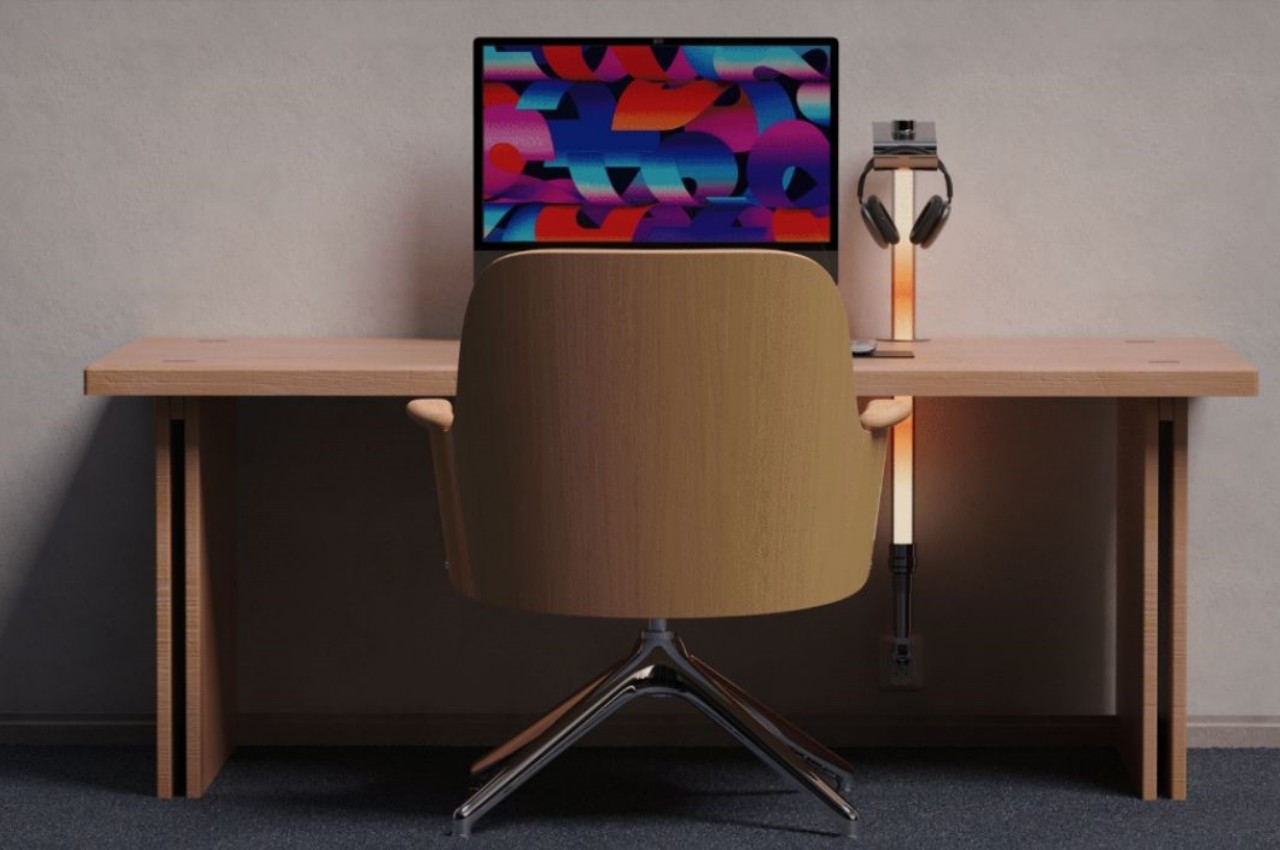
In a stroke of brilliance, the designer introduced two similar design iterations, allowing the KIWI Headphone Stand to cradle not just one but possibly two headphones at a time or maybe use that as a hook for something else. This thoughtful addition enhances the product’s appeal, making it a practical and visually striking accessory for any workspace.

The KIWI Headphone Stand is more than just a functional accessory for your desk; it’s a testament to the symbiotic relationship between design and nature. By intertwining the story of the Kiwi bird with the practical needs of headphone storage, this product is a conversation piece that resonates with those who appreciate the artistry behind everyday objects.

The post A Headphone Stand To Bring In a Tale From Nature To Your Desk first appeared on Yanko Design.
Giant Turtle-shaped beach restaurant gives diners the epitome of nature-inspired and themed decor

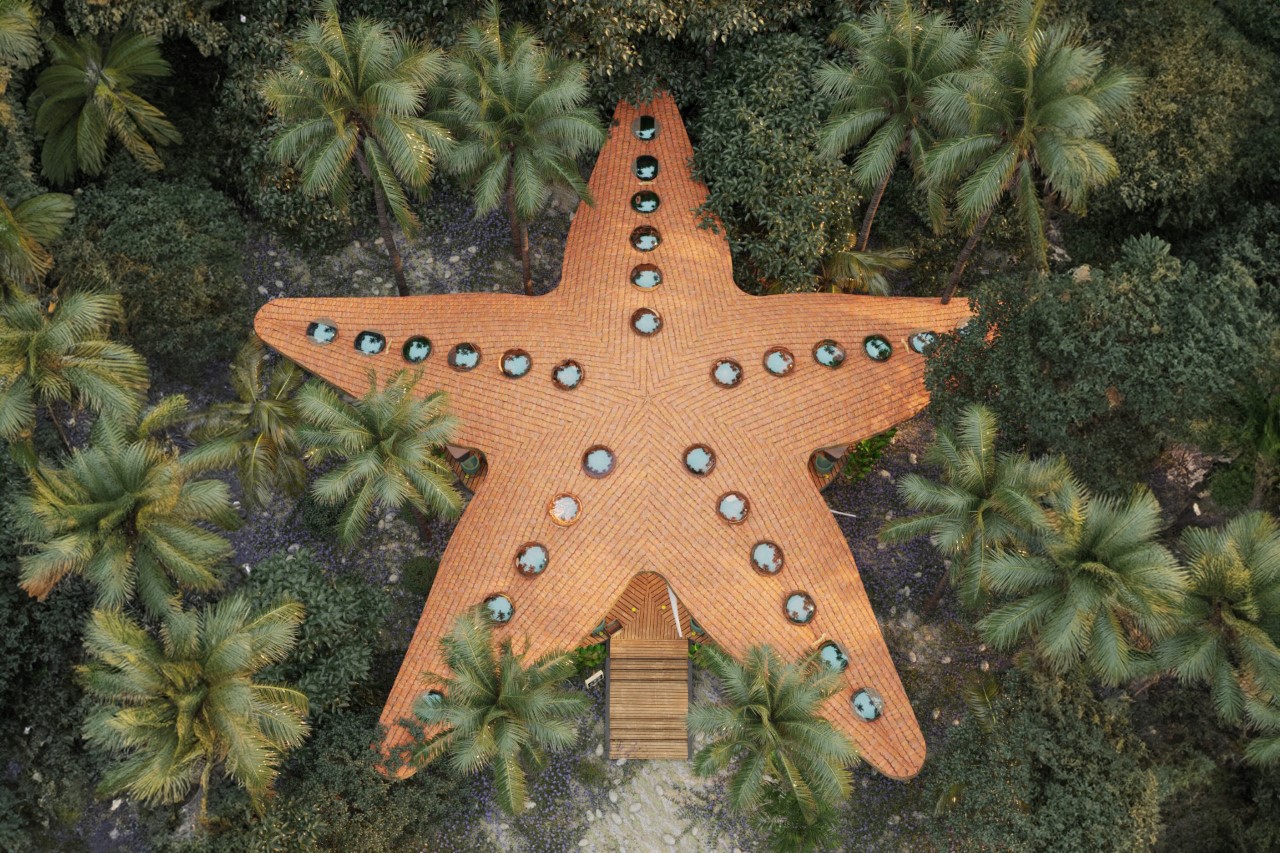
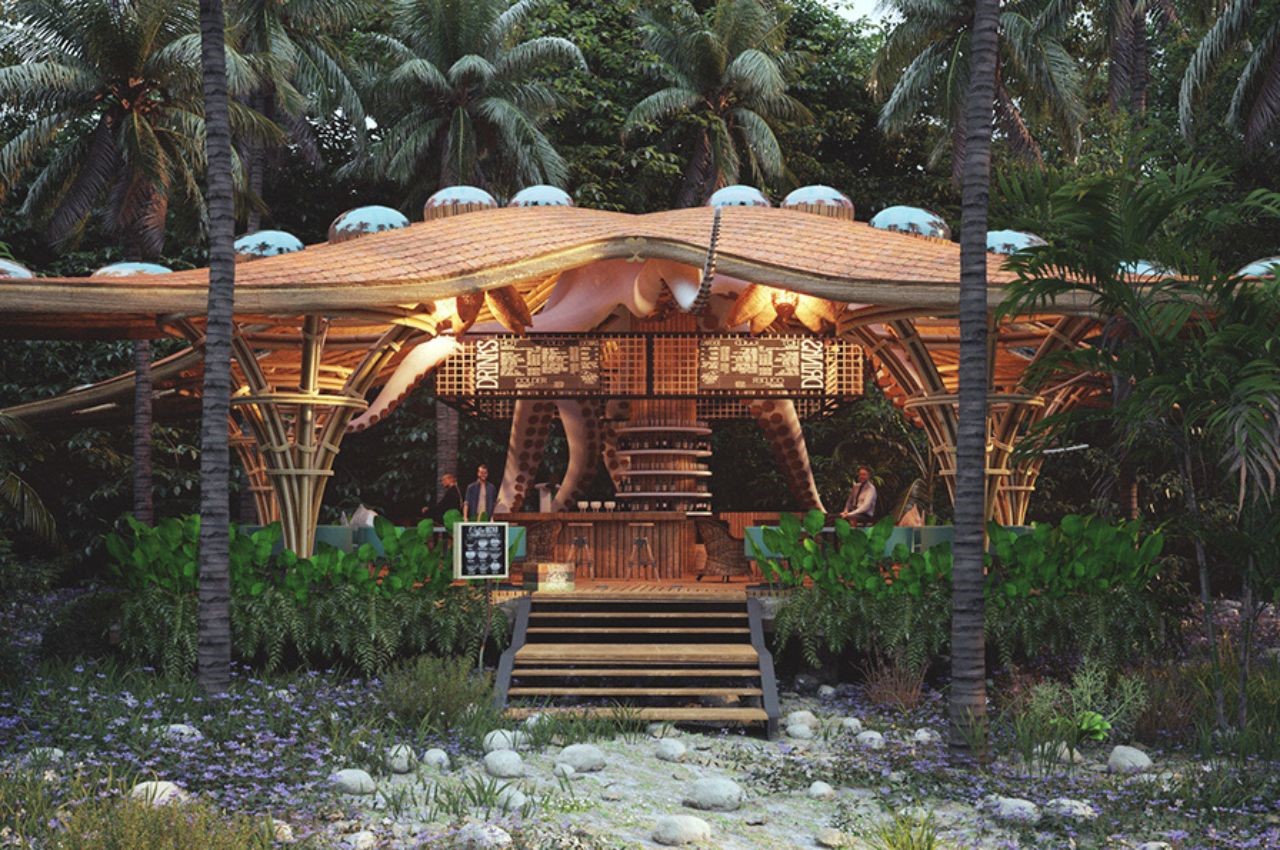
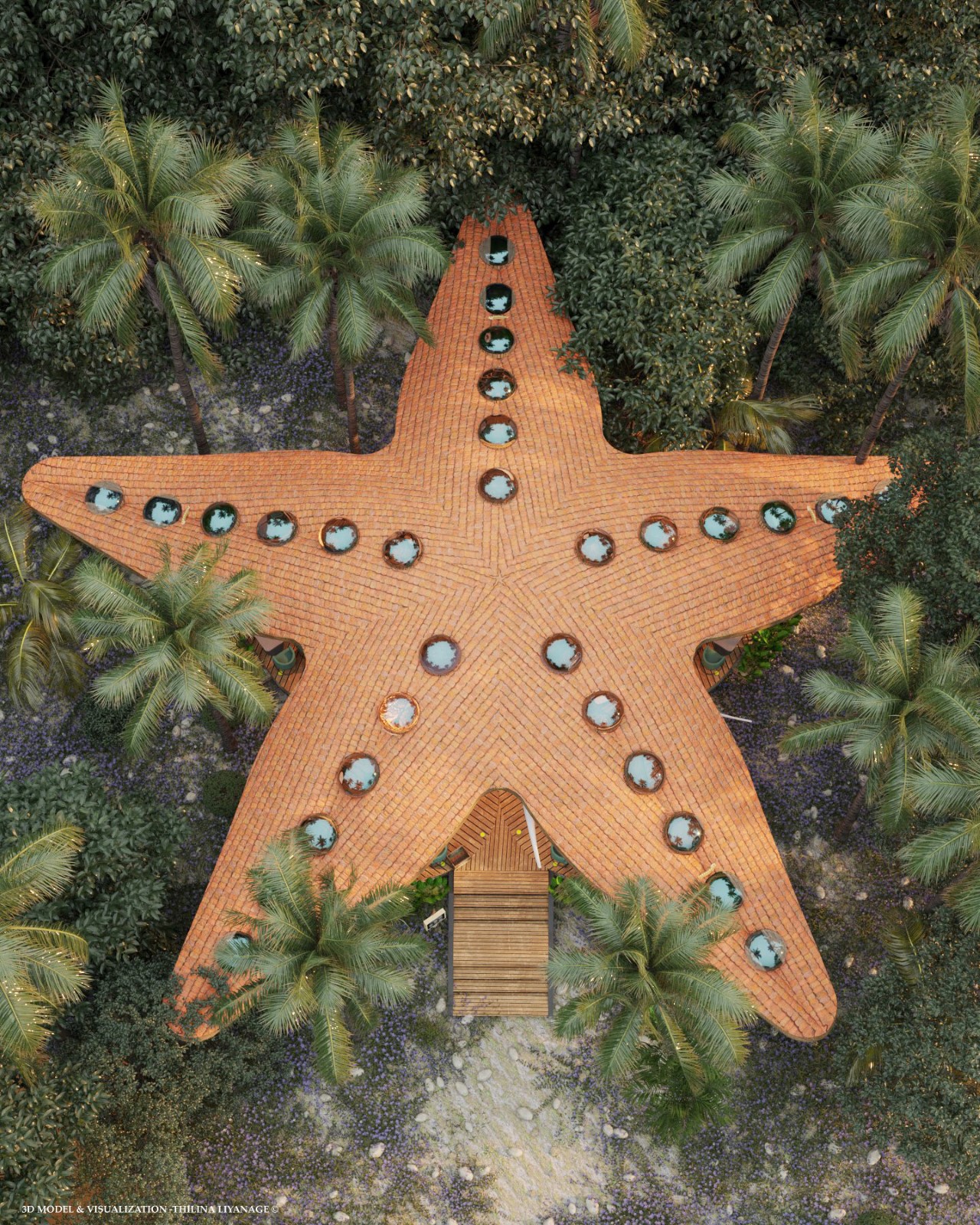
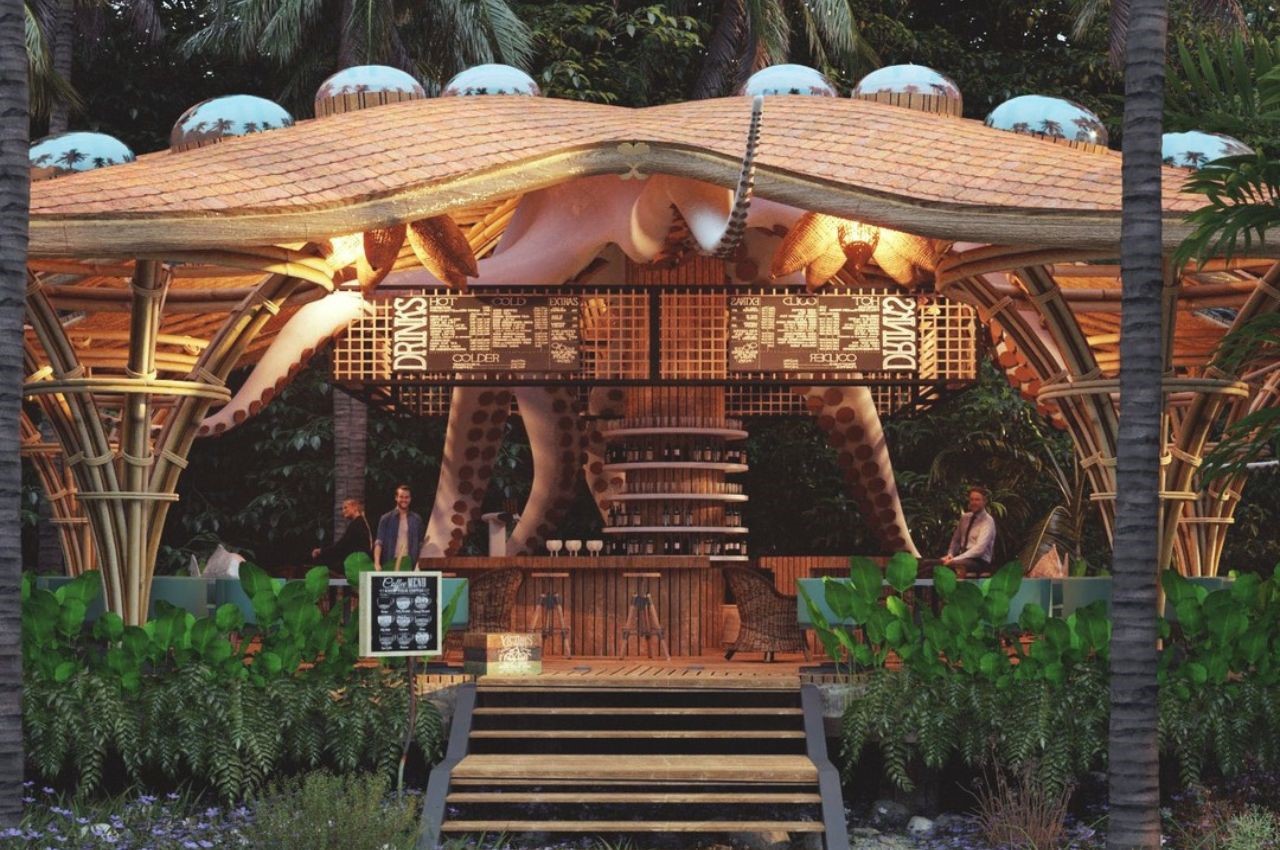
Nestled along the coastline, the Turtle Restaurant emerges as an architectural and artistic marvel, paying homage to the ocean’s most graceful creature—the sea turtle. Crafted entirely from bamboo, this sustainable and awe-inspiring structure seamlessly blends with the beach vibe, creating a unique and harmonious dining experience.

Designer: Thilina Liyanage

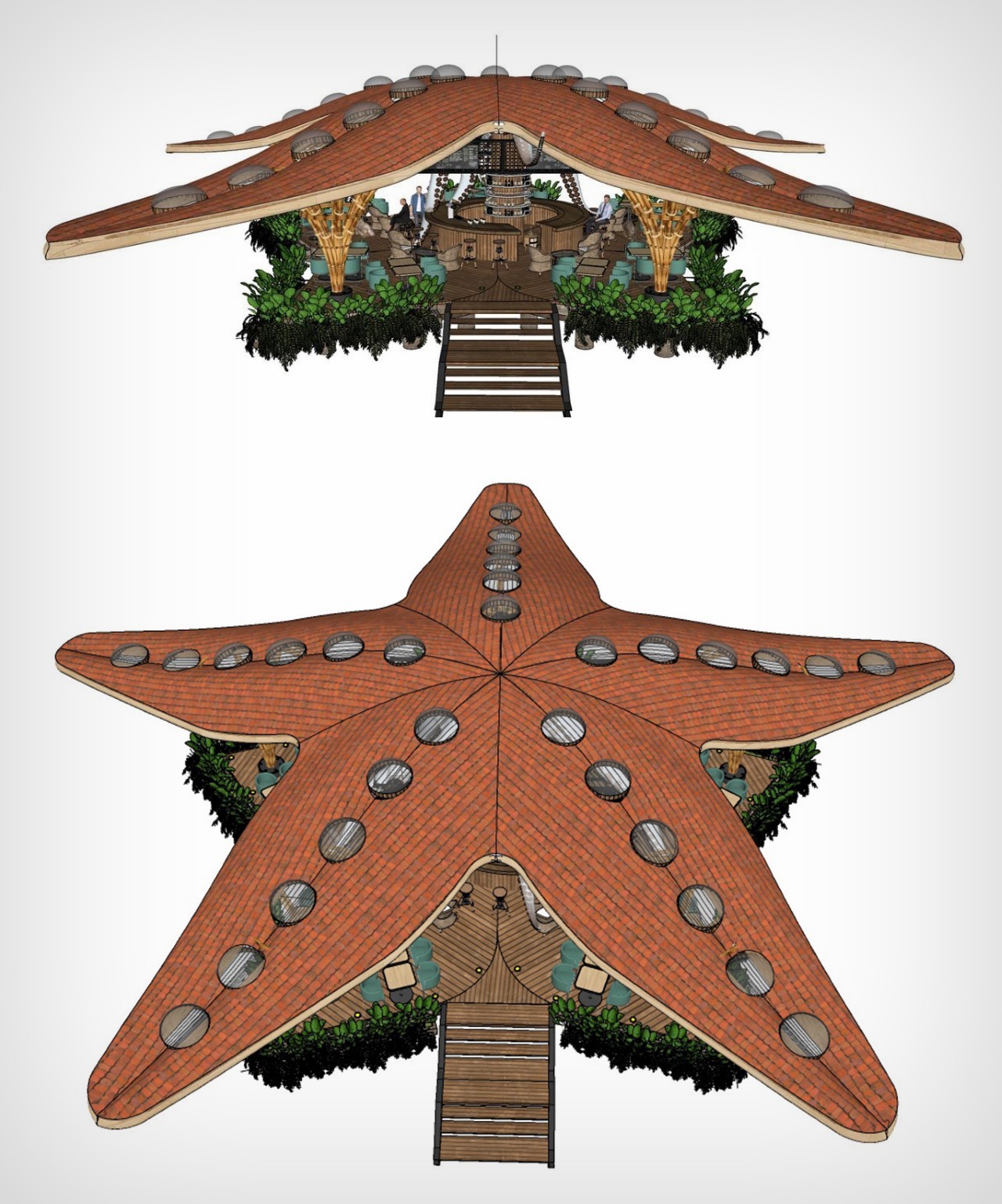
The entire restaurant is like a puzzle of smaller geometric fragments, meticulously joined together to resemble a giant turtle. Bamboo, chosen as the primary construction material, not only reflects the local availability of this resource but also highlights its eco-friendly nature. Known for its sturdiness and biodegradability, bamboo aligns perfectly with the vision of sustainability, offering both strength and natural aesthetics.

The main entrance, located at the back of the turtle, seamlessly connects to the forest, creating a pathway that intertwines with nature. Additionally, two side entries welcome guests directly from the beach, providing a smooth transition between the restaurant and its coastal surroundings.

The turtle’s shell serves as the main space, sheltering the restaurant and evoking a sense of awe. The central portion of the shell is open, serving as a skylight that bathes the interior in natural light, creating an open and airy atmosphere. The shell extends into outdoor decks on the sides, offering patrons a complete outdoor experience and stunning views of the surrounding forest.

The bamboo arches play a dual role, serving as structural supports for the shell while also adding a touch of drama and privacy to different sections of the restaurant. Tilted arches on the sides create a perception of grandeur, enhancing the visual appeal and making the space appear larger than life.

To cater to varied preferences, the Turtle Restaurant offers three types of seating—lounge chairs, cane chairs, and regular cushioned wooden chairs. Guests can choose their preferred seating option based on comfort and the desired vibe, ensuring a personalized dining experience.

While the restaurant already boasts a captivating design, the addition of a stairway leading to the inside of the turtle’s head could offer a unique vantage point for patrons. This feature not only enhances the overall experience but also provides a photogenic spot for capturing the beauty of the beach from a different angle.

As the sun sets, the Turtle Restaurant transforms into a magical space with the help of recessed ground lights and pendant lights. The subtle illumination creates a warm and inviting ambiance, making it an ideal setting for a premium beach bar experience.

The post Giant Turtle-shaped beach restaurant gives diners the epitome of nature-inspired and themed decor first appeared on Yanko Design.

Introducing An Acoustical Material That Can Be Used Even For Outdoor Events

In the dynamic world of sustainable design, Jonas Edvard stands out with his innovative approach to integrating organic materials into functional and aesthetically pleasing objects. His latest creation, the Myx Sail / Floor, unveiled at the Mindcraft Project 2023, is a sound-absorbing panel that showcases the remarkable properties of mushroom mycelium, hemp, and willow. This 1m x 1m panel not only exemplifies the structural possibilities of composite biomaterials but also represents Edvard’s commitment to responsible design practices.

Designer: Jonas Edvard

The Myx Sail / Floor project is a testament to Jonas Edvard’s dedication to exploring the symbiotic relationship between design choices and their impact on nature. Collaborating with a living material – mushroom mycelium – throughout the design and production process, Edvard creates a flexible room divider within a pre-designed mold. As the mycelium gradually grows and bonds with a plant fiber mixture, the panel takes shape, marrying flexibility with rigidity.

The designer draws inspiration from the natural role of mushrooms as recycling agents, breaking down plant matter into soil. His design philosophy revolves around a deep respect for nature, evident in his exploration of the intricate relationship between raw materials and human life. The Myx Sail / Floor prototype serves as a modular design that aims to emphasize how organic materials like mycelium can seamlessly integrate into our living and working spaces.

Jonas Edvard’s broader research study, conducted in collaboration with Arup Engineers in Germany, delves into the sound-absorbing qualities of mycelium. The panels are meticulously designed to absorb frequencies between 200 and 2500 Hz – the standard range of human conversation and interaction (same as glass wool). Edvard envisions the potential for natural, organic materials to become integral components of our buildings and interior architecture, contributing to a more sustainable life cycle.

The design philosophy revolves around responsible design choices and their impact on nature. His open-minded approach to design leads to experiments that yield new materials and objects from local or organic sources, often embracing a circular and sustainable ethos. In his testing phase, Edvard explores various material combinations to understand the design, appearance, and functionality of mycelium-based sound-absorbing material.

The Myx Sail / Floor sound-absorbing panel invites people to touch and feel the natural qualities of mushroom mycelium, hemp, and willow. Edvard aims to create an immersive experience, allowing individuals to sense the porous, lightweight, and stiff characteristics of the materials. By reshaping these materials into functional forms, he hopes to spark conversations about the value and aesthetics of natural origins, encouraging a new understanding of how these materials can be incorporated into our homes and living areas. Now the acoustic installation won’t just be on the walls and ceilings conventionally, but the floors too!

The Myx Sail / Floor is more than just a sound-absorbing panel – it is a tangible embodiment of sustainable design principles and a testament to the possibilities that arise when designers collaborate with nature. As Edvard continues to push the boundaries of material innovation, his work inspires the integration of organic, natural materials into our built environment, fostering a harmonious relationship between design and the natural world.

The post Introducing An Acoustical Material That Can Be Used Even For Outdoor Events first appeared on Yanko Design.
The ‘Gentle Geometry’ Of Wood Reflecting Cultures Through Sculptures By Aleph Geddis

If you are inclined to woodworking, sculpture, or an appreciation for abstract geometric forms, the creations of sculptor Aleph Geddis are sure to captivate your imagination. Geddis’ work is a harmonious blend of traditional craftsmanship, modernist aesthetics, and a deep-rooted fascination with the fundamental structures of our world.

Designer: Aleph Geddis

Aleph Geddis’ artistic roots can be traced back to his upbringing on Orcas Island in the Pacific Northwest. Immersed in a creative environment shaped by his stepfather’s expertise in sculpture, carving, and boat building, Geddis found inspiration in the stylized naturalism of Northwest Coast Native carvings. His early works reflected this influence, evolving over time to incorporate diverse cultural experiences, such as a transformative family trip to Japan.

His sculptures beautifully straddle the intersection of different cultures and artistic traditions. Drawing upon the rich traditions of wood carving and totems from the indigenous people of the Pacific Northwest, as well as the intricate woodwork of Bali, Geddis merges these influences with the familial impact of his stepfather’s similar craft. The result is a collection of hand-carved pieces that resonate with a global and timeless aesthetic.

As Geddis’ artistic journey unfolds, a consistent theme emerges—exploring the simple elegance inherent in natural forms. His recent works delve into the integral shapes of Platonic solids, conveying a sense of truth beyond human subjectivity. For the sculptor, these forms possess a magical existence that predates and will outlast humanity, offering viewers the pleasure of interacting with something timeless and profound. His Orcas Island studio serves as the birthplace of each meticulously handcrafted piece, connecting the artist’s work to the landscapes that have shaped him.

The sculptor acknowledges the profound impact of a trip to Japan on his artistic exploration. Exposed to the country’s rich woodworking tradition, he integrates Japanese craftsmanship elements into his sculptural endeavors. This influence adds depth and diversity to his work, contributing to a body of art that seamlessly weaves together figurative, abstract, and even architectural elements.

Geddis’ sculptures cross the rational realm of mathematics and Platonic solids while embracing a spiritually inspired curiosity about sacred geometry. Some of his vertical pieces evoke a softer interpretation of Brutalist forms, while others conjure visions of wondrous alien audio speakers reminiscent of Arcosanti. Each creation invites viewers to contemplate the intersection of the tangible and the transcendent, encouraging a deeper exploration of the mystical dimensions embedded in his wooden sculptures. Each of his pieces is an artwork that makes you think, learn, and build conversations. And trust me, the longer you look at them, the more there is to keep.

Aleph Geddis’ sculptures are more than mere artistic expressions; they are gateways to a world where tradition, culture, and the inherent beauty of natural forms converge. Each piece from the Pacific Northwest to Japan reflects the artist’s journey, inviting viewers to join him on a visual and conceptual exploration of warm geometries sculpted from wood—a testament to the enduring magic found within the simplicity of shapes and the richness of cultural intersections.

The post The ‘Gentle Geometry’ Of Wood Reflecting Cultures Through Sculptures By Aleph Geddis first appeared on Yanko Design.
Portable Air Conditioner Lets You Enjoy The Outdoors Even During Harsh Summers

Living in a city like Dubai, where the scorching summer heat can be relentless, I can totally understand the value of a reliable air conditioner. Imagine taking that comfort outdoors with a portable air conditioner – a dream come true for residents like myself. The Yuuye Portable Air Conditioner is designed to transform outdoor spaces into cool, refreshing havens during the sweltering summer months.

Designers: HAORAN and Yifeeling Design

The Yuuye Portable Air Conditioner features a cutting-edge design that combines a refrigeration module with an exhaust module. This ingenious combination allows the device to efficiently suck in the surrounding heat and release cool, refreshing air, providing relief and comfort even in the midst of scorching temperatures.

The inclusion of an LCD ensures easy control and monitoring of the cooling settings. The super-large air outlet guarantees a widespread and consistent flow of cool air, ensuring that every corner of your outdoor space is covered.

Recognizing the need for convenience, this portable Air Conditioner is designed for one-handed handling, making it easy to move and position. The quick disassembly feature further enhances portability, allowing users to effortlessly switch between different outdoor locations.

The challenges faced while using traditional outdoor air conditioning units were identified and addressed while designing the modular design of the Yuuye Portable Air Conditioner such as –

Effortless Scene Switching

Traditional outdoor air conditioners often involve heavy components and energy-consuming behaviors during scene switching. The Yuuye Portable Air Conditioner utilizes a modular approach, allowing users to detach the upper and lower modules with a simple ‘release and lift’ mechanism. This innovative design turns scene switching from a physically demanding task into a comfortable and hassle-free experience.

Mosquito Prevention

Thick exhaust pipes in traditional outdoor air conditioners can create gaps between the tent and the pipes, allowing mosquitoes to enter. The Yuuye Portable Air Conditioner eliminates this issue with an independent exhaust block, ensuring a mosquito-free outdoor experience.

Space Efficiency

The large volume of traditional outdoor air conditioners often occupies significant space in the trunk. The modular design of the Yuuye Portable Air Conditioner allows for efficient use of space, making it more practical and convenient for transportation.

Operation Mode

The Yuuye Portable Air Conditioner operates by taking in indoor heat, processing it through the refrigeration module for rapid cooling and strong temperature control, and then releasing the hot air outside through the exhaust module. This efficient process ensures a constant and comfortable cooling experience in outdoor settings. However, the battery life is unknown but I’m sure the designers would’ve taken care of it.

Yuuye Portable Air Conditioner is a game-changer for those living in hot climates, offering a portable solution to enjoy the outdoors without sacrificing comfort. Its innovative design, user-friendly features, and modular approach make it a valuable addition to the arsenal of anyone looking to beat the heat in style.

The post Portable Air Conditioner Lets You Enjoy The Outdoors Even During Harsh Summers first appeared on Yanko Design.
Smartphone Accessories That Bring Back Some Tangibility Into Our Digital Lives

Living in a world full of smartphones and digital everything, the PUI (Physical User Interface) series steps in to make our tech experiences more hands-on. Amid touchscreens and high-tech gadgets, PUI wants to remind us of the good old days when we could touch and feel things. This series of smartphone accessories, seamlessly connected via Bluetooth, redefines the way we interact with our devices, encouraging users to reconnect with the physical world.

Designers: Taeyang KimYujeong Shin, and JiHoon Park

We all love our smartphones for making life easier, but deep down, there’s a part of us that misses the real touch. PUI gets that and wants to bring back the emotions we used to get from physical things. PUI comprises a range of accessories designed to reintroduce physical elements into the user’s daily interactions with their smartphones. These accessories include the PUI Alarm Clock, Camera Shutter, Dial Lock, Recorder, and Volume Control, each contributing to a richer physical experience.

PUI Alarm Clock:

The PUI Alarm Clock makes waking up more fun by bringing back the cool dial feature from old clocks but with a modern touch. It’s a bit sad that some of the Gen Zs and Gen Alphas don’t know how to set alarms on those old clocks. This Alarm Clock is like a time-traveling buddy, keeping the old clock style but fitting into our modern lives. You can easily set the alarm by turning the bottom dial, adding a hands-on feel that you don’t get with digital screens. It’s a small thing, but it makes waking up a bit more enjoyable and real. The PUI Alarm Clock is like a time machine, connecting the past and today, making mornings a simple joy for everyone. The PUI Alarm Clock stands as a bridge between generations, seamlessly weaving the nostalgia of the past into the fabric of our dynamic present.

PUI Camera Shutter:

The Camera Shutter accessory brings back the joy of photography by integrating a zoom dial and shutter button. Users can smoothly adjust the frame size with the zoom dial, and the physical act of pressing the shutter button to capture a moment adds a layer of satisfaction often missing in purely digital interactions. It’s a real-life micro-interaction that enhances the user experience.

PUI Dial Lock:

Diverging from traditional rigid screen locks, the PUI Dial Lock offers a tactile locking mechanism. Users input their password by manipulating the dial in a specific sequence, enhancing the security experience with a touch of physical engagement, almost giving a feeling of opening a locker and improving the importance of the device.

PUI Recorder:

The PUI Recorder serves as an audio recording device that incorporates physical buttons for record, play, and stop functions. The act of physically interacting with the device during recording adds a visually and aurally rich dimension to the experience. Making every touch count and moment consciously memorable.

PUI Volume Control:

Adjusting the volume is now a hands-on affair with the Volume Control. Turn the dial to control the sound. This physical touch goes beyond just tapping on a screen, giving a sense of ownership and satisfaction.

PUI (Physical User Interface) is like a breath of fresh air in a world full of digital screens. It connects our smartphones with real, touchable experiences. In a time when everything is about ease and speed, PUI brings back the joy of feeling and interacting with our devices in a more personal way. It’s a cool bridge between the old and the new, making our tech time more enjoyable and real.

The post Smartphone Accessories That Bring Back Some Tangibility Into Our Digital Lives first appeared on Yanko Design.