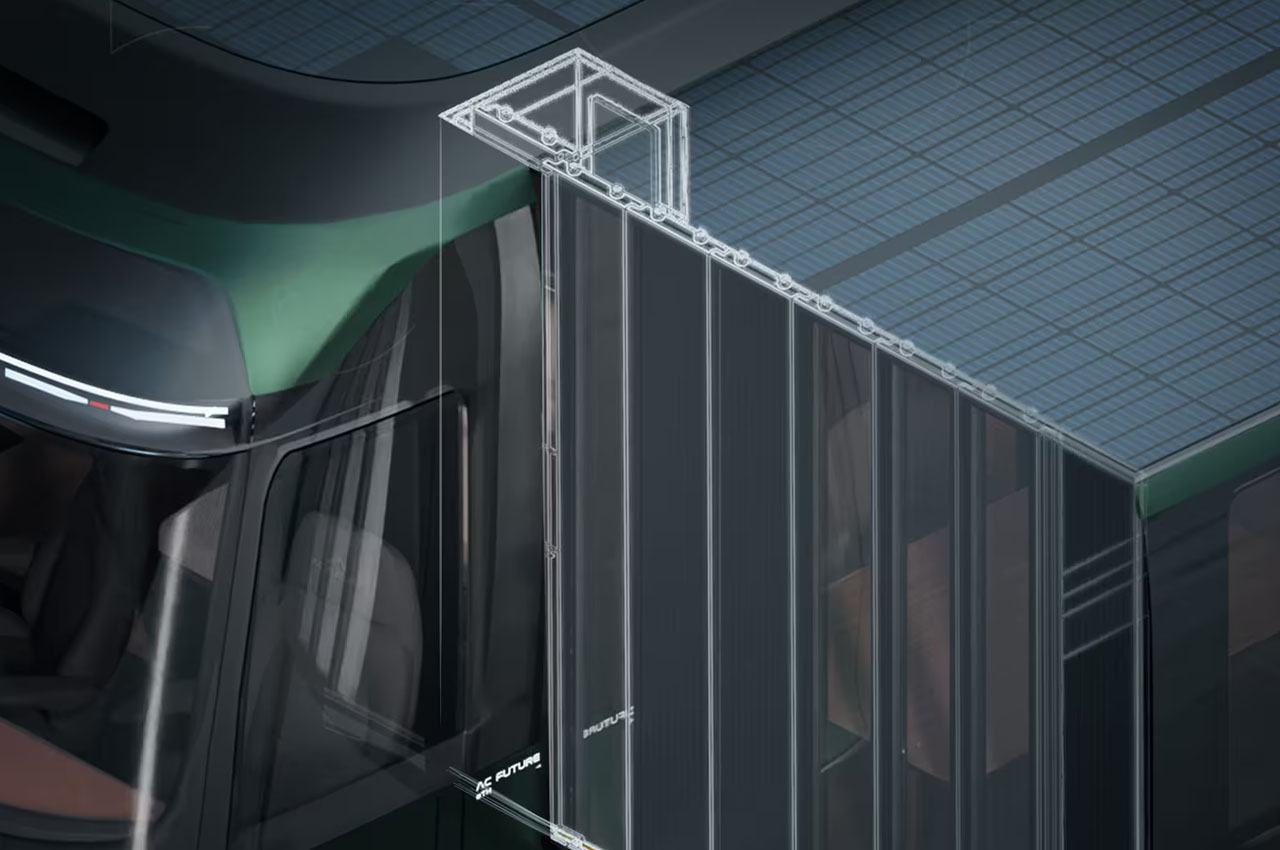
Ugreen’s NASync at CES 2024: Redefining Smart Storage with AI and User-Centric Design

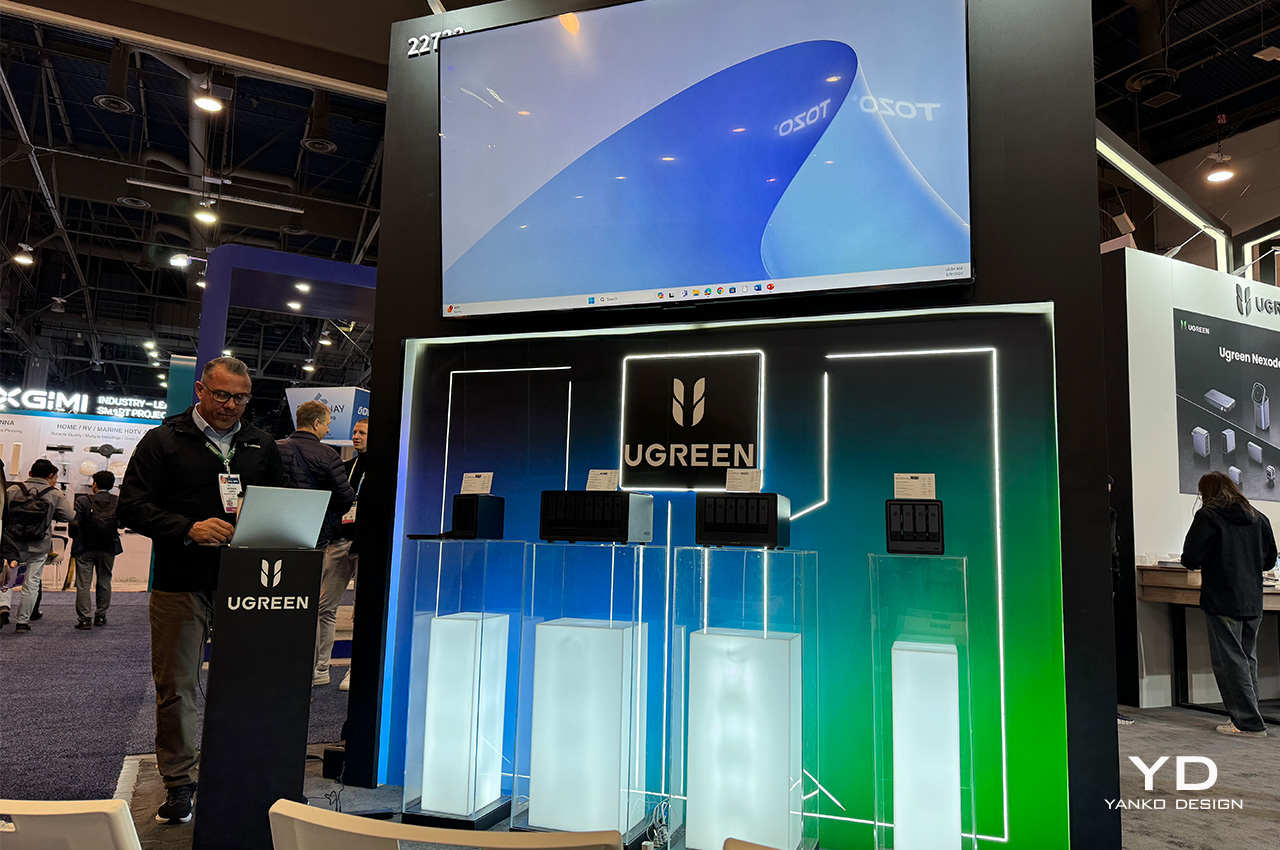
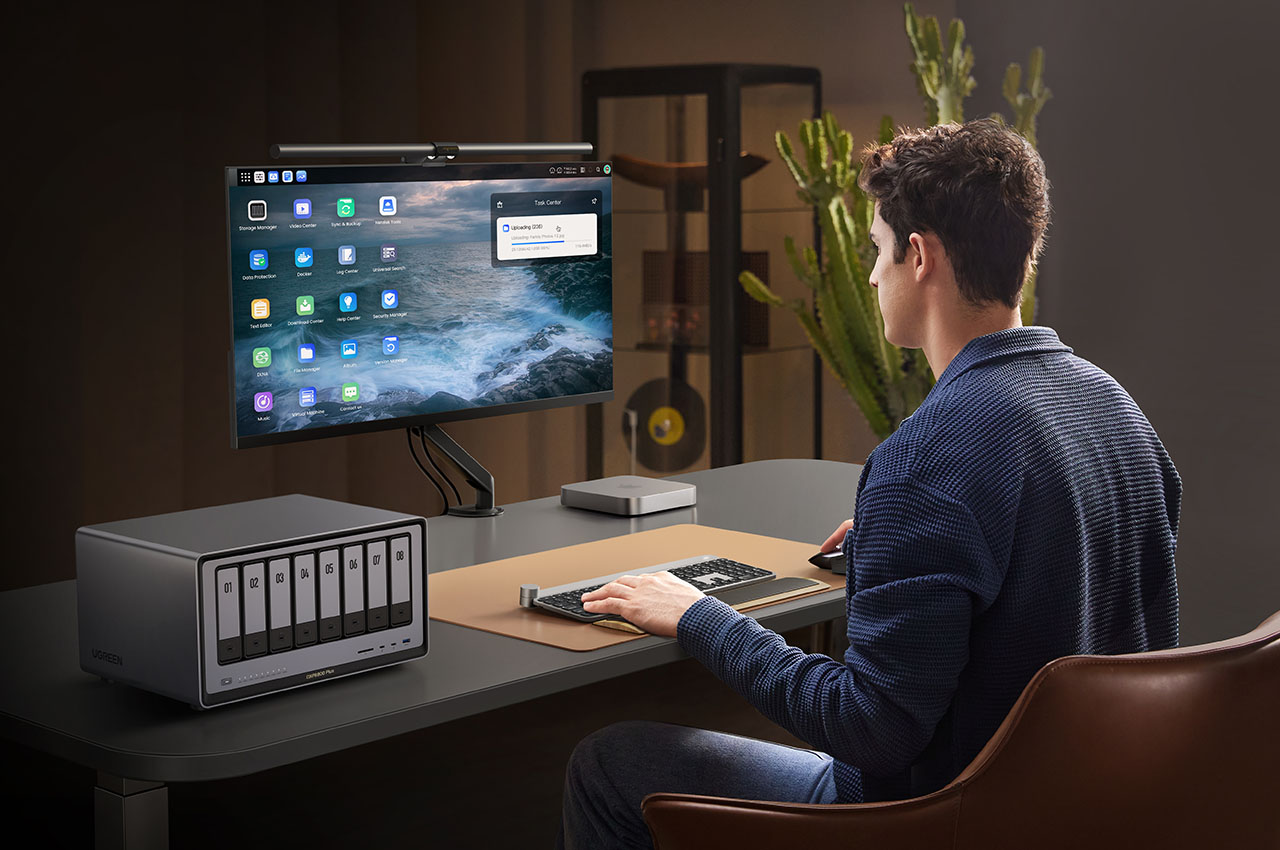
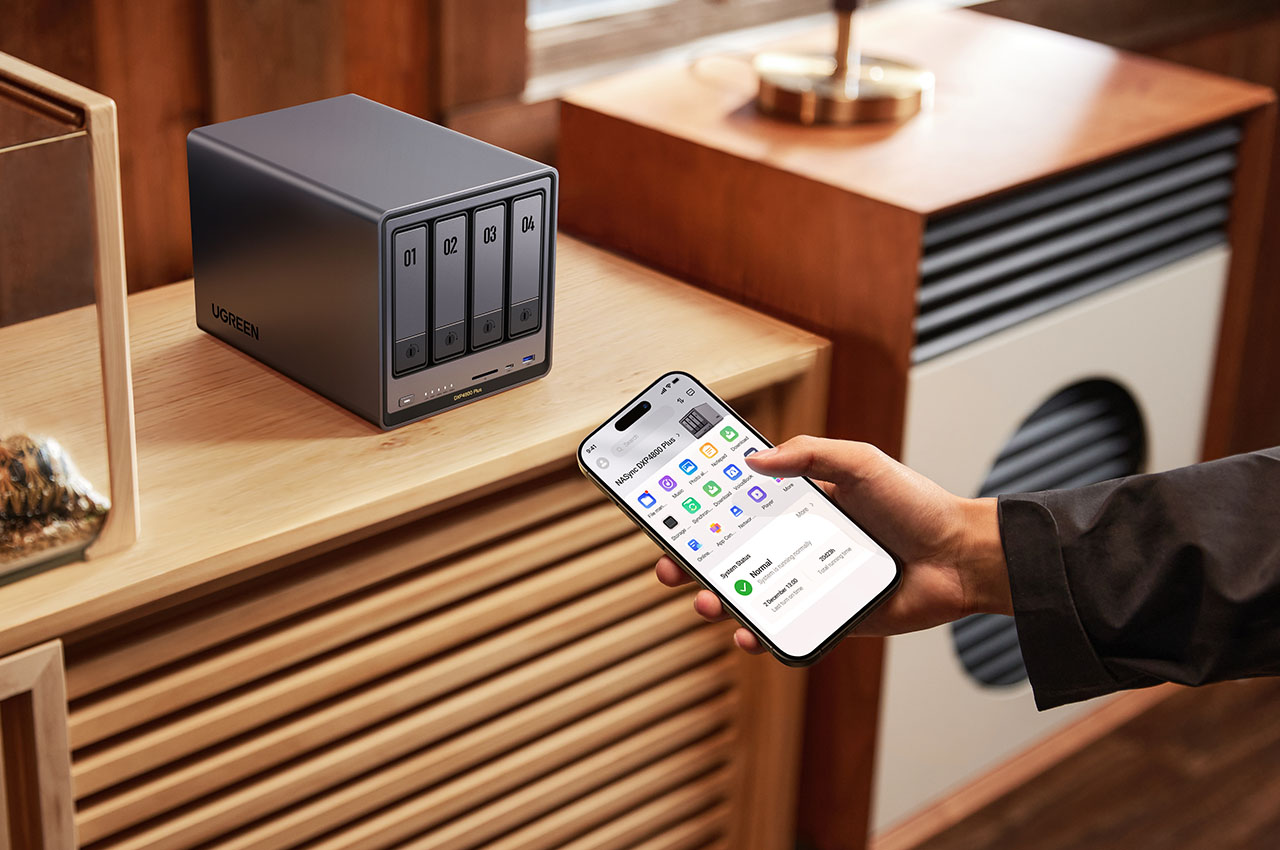
At CES 2024, Ugreen has made a significant statement in the world of data storage by introducing its new NASync series. This foray marks Ugreen’s expansion beyond its traditional scope of charging and accessories into the realm of Network Attached Storage (NAS), doing so with a flair for innovation and user engagement. The NASync device also targets regular consumers (rather than the enterprise-specific tech users that usually rely on network-attached storage) – this shift comes with its distinct benefits, as Ugreen highlighted in their keynote, talking about how the NASync could now become the iCloud or Google Drive alternative that you don’t have to pay monthly subscriptions for… or the Netflix or Disney Plus streaming service that lets you play movies/media you own on any connected device anywhere.

Designer: Ugreen
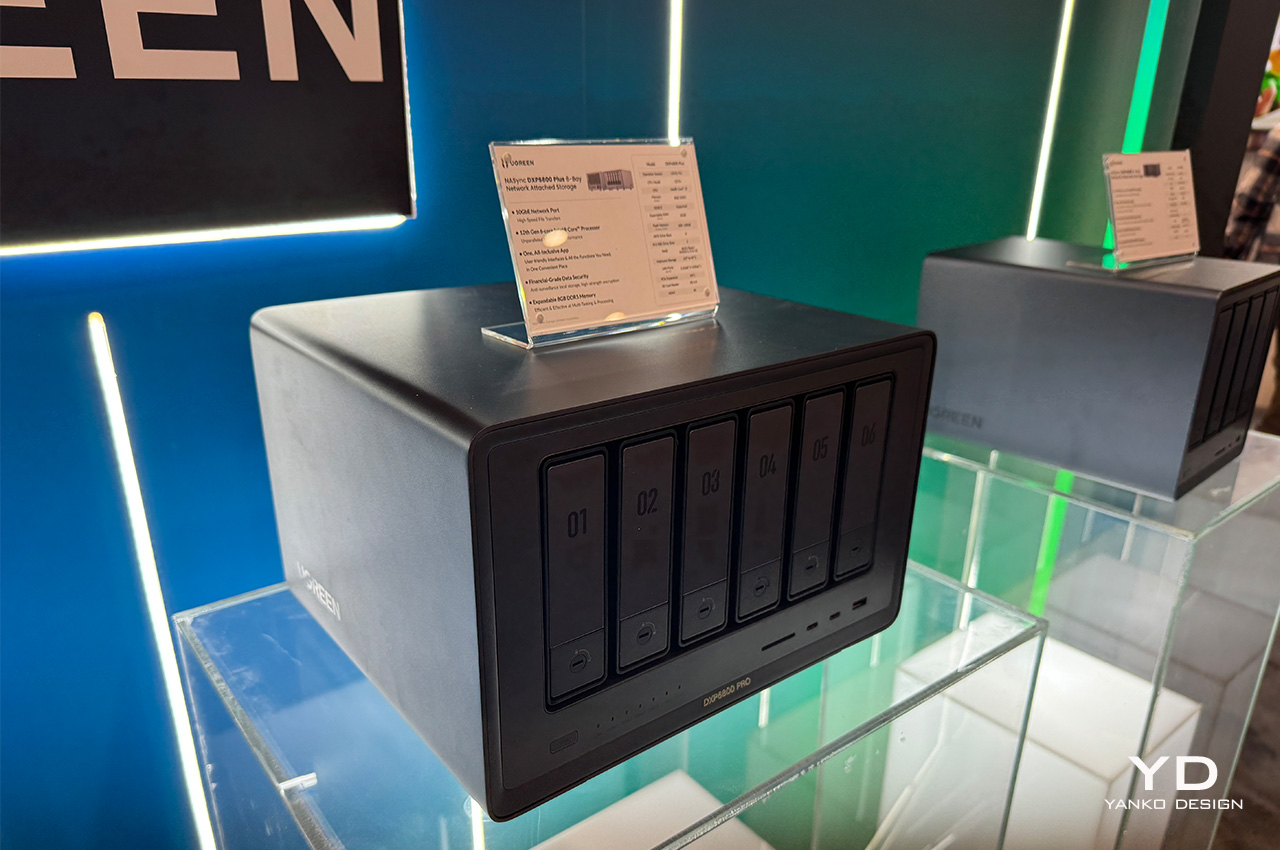
The collaboration with Intel is a cornerstone of the NASync series, empowering these devices with Intel® processors. This partnership brings together Ugreen’s expertise in HDD and SSD solutions and Intel’s robust capabilities in cloud computing and PC components, creating a product that stands out for its technical excellence and user-friendly approach.

The integration of AI is a key highlight of the NASync series. This is a core component that transforms the NASync into an intelligent hub for digital activities. The AI in these devices is designed to adapt to user behaviors, streamlining tasks and offering personalized experiences. The NASync device can automatically read text within an image or a document, allowing you to then search for text WITHIN a file (like finding all invoices with a certain client’s name). Ugreen’s Hernan Lopez also demonstrated the ability to create visual tags, with the AI autonomously learning what different objects (or even faces) look like. For instance, you could create a tag for “Drone” and then visually search through your entire database for drone images, with the AI automatically understanding the visual archetype of a drone’s design. It all happens locally, allowing you to build your own Google Image Search right within the comforts of your own home.

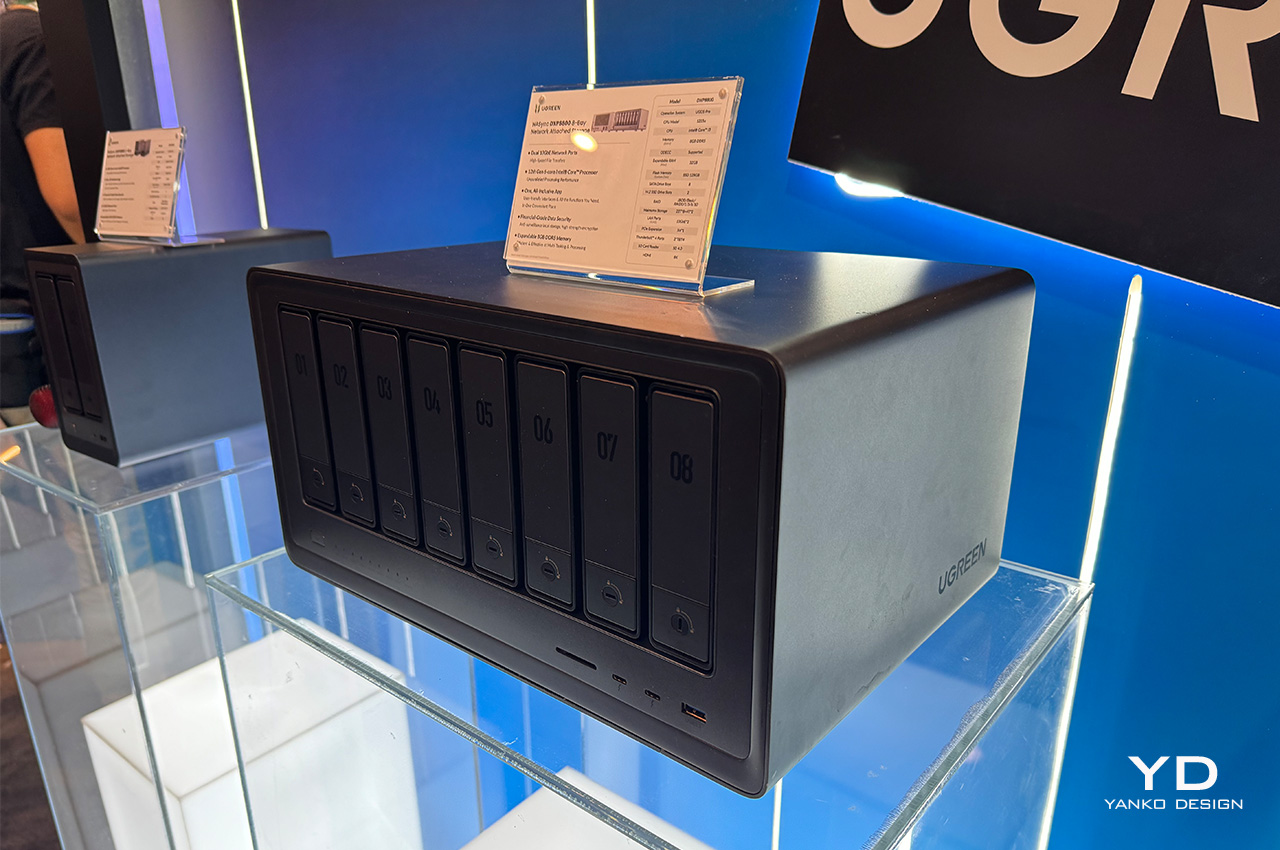
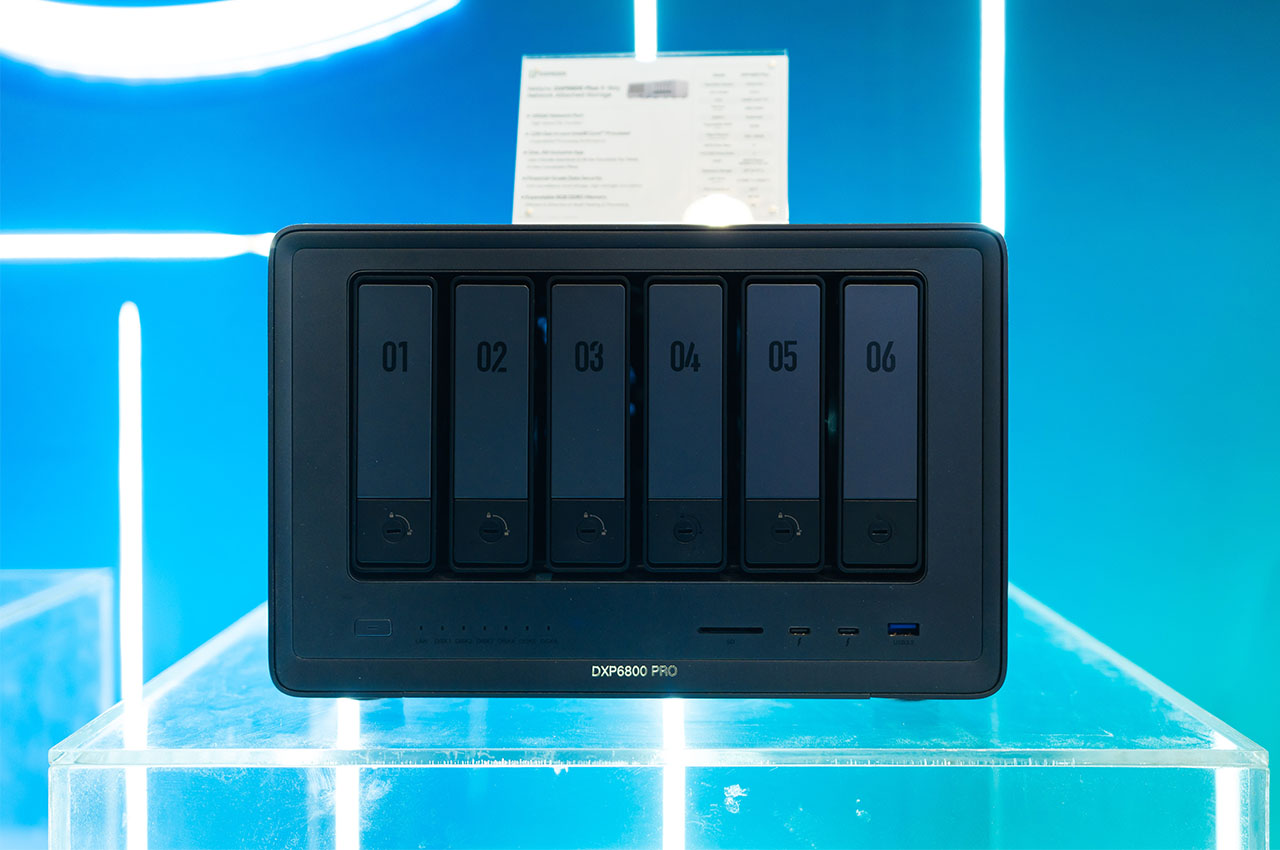
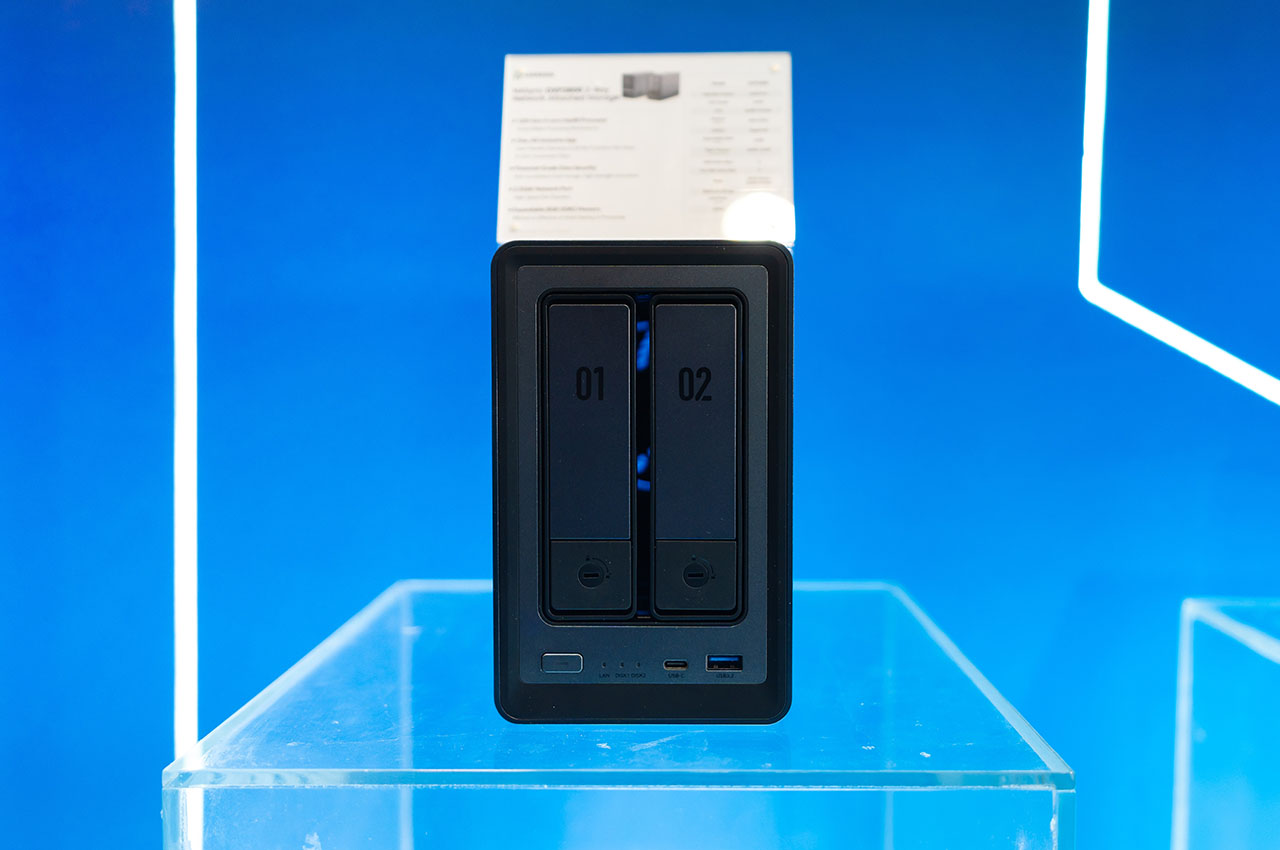
Ugreen has also placed a significant emphasis on the design of the NASync, ensuring it is approachable for a wide range of users. The focus on a user-friendly interface, both in the hardware’s physical design and the software interaction, makes NASync an accessible yet powerful tool for anyone, regardless of their technical expertise. Easy hot-swappable drives allow users to add new HDDs or SSDs on demand, and if a drive fails, they can simply swap the old one out for a new one while still maintaining all their data on the NAS.


The NASync series stands as a powerful example of Ugreen’s commitment to blending high-tech features with ease of use. It’s a product that respects the user’s need for simplicity without compromising on performance – ideal for managing large data sets, running AI algorithms, or effortlessly streaming 8K video.

Ugreen’s entrance into the NAS market with the NASync series is reflective of the brand’s evolution and its commitment to being at the forefront of technology. This series is a bold demonstration of Ugreen’s ability to infuse cutting-edge technology into consumer-friendly products.


As we look at Ugreen’s new venture at CES 2024, it’s evident that the NASync series is more than a set of NAS devices; it’s a harbinger of how integrated and intelligent technology can become a seamless part of our daily lives. The NASync isn’t just about data storage; it represents a smarter, more intuitive way of interacting with our digital world.
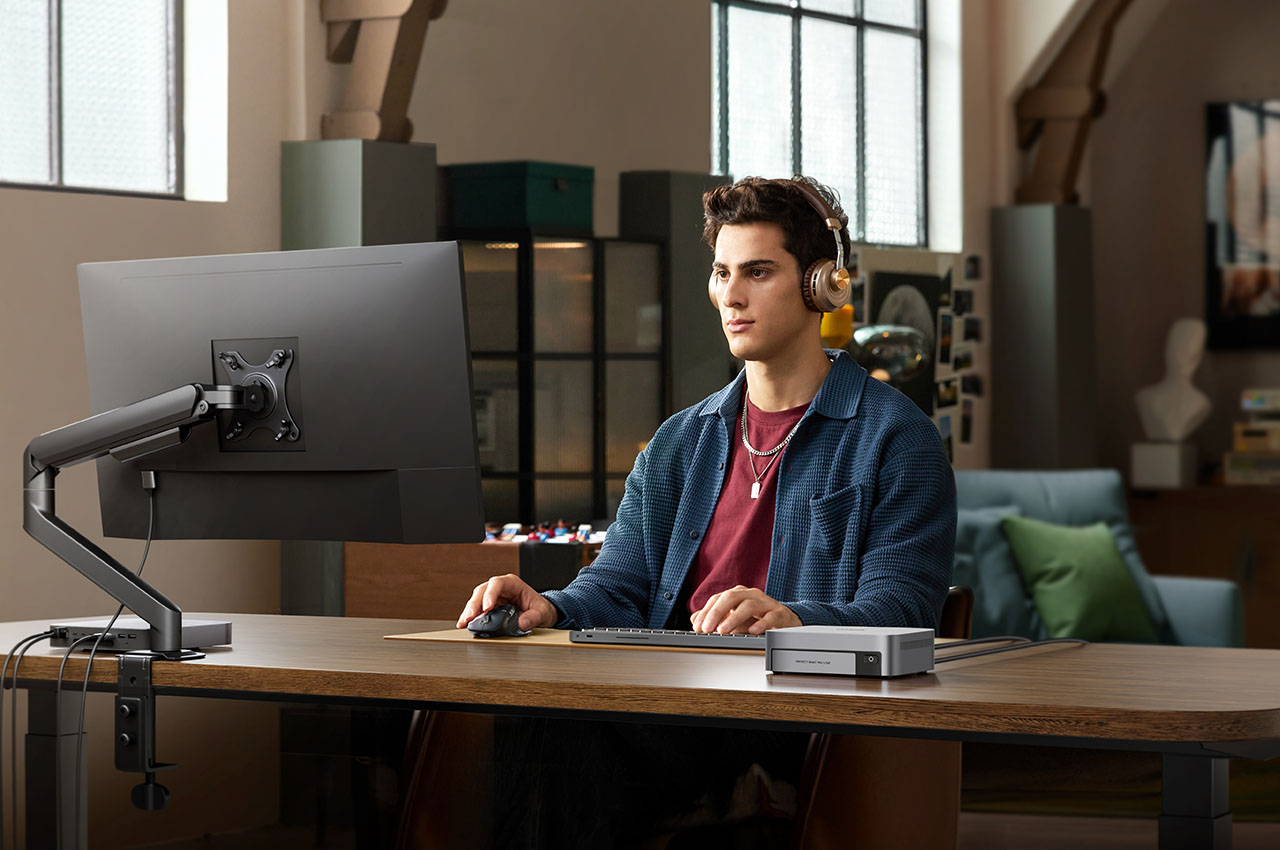

The post Ugreen’s NASync at CES 2024: Redefining Smart Storage with AI and User-Centric Design first appeared on Yanko Design.
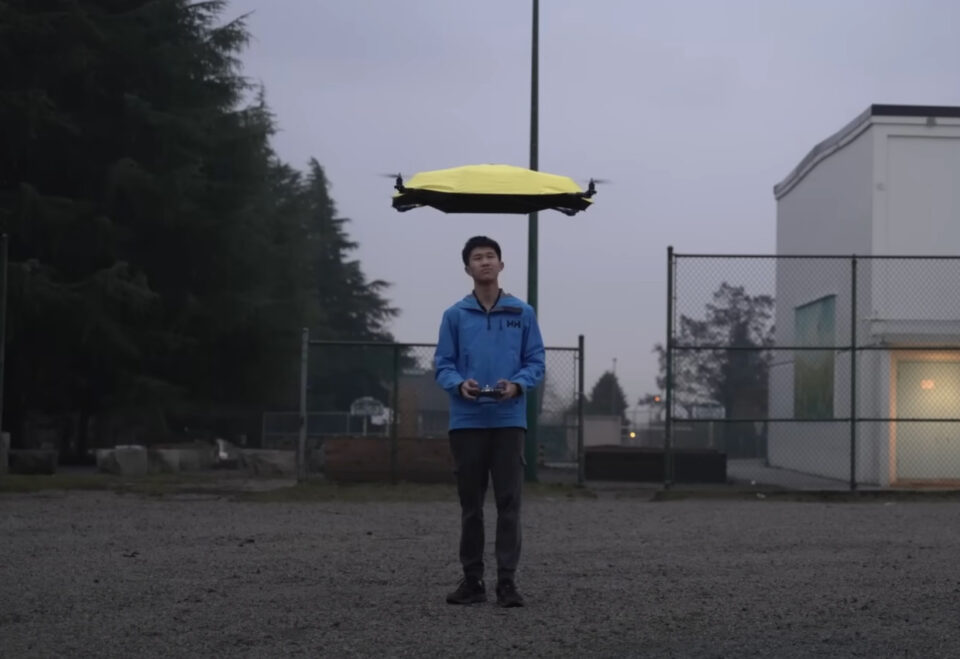

Building A Drone Umbrella: The Future Of Staying Dry

In the future, will we all have drone umbrellas autonomously follow us, hovering just above our heads to shelter us from the rain? Maybe! But Youtuber I Build Stuff couldn’t wait for the future, so he took matters into his own hands and constructed his own drone umbrella. While this one doesn’t autonomously follow its user, it’s certainly a step in the right direction. That step being one out of the rain, just to be clear.

After hand drawing the design, I Build Stuff then reproducing it in CAD, and the parts were 3D printed. The design is a large quadrocopter, with each rotor on a long arm to allow enough space for an umbrella to fit between them.

The design works well, although it appears any amount of wind causes the umbrella to quickly start drifting away. And rain and wind DO go hand in hand. With enough interest in the project, I Build Stuff says he’ll add a camera to the dronebrella and write the code to track his movement so it can autonomously follow him. This will also help the drone compensate for wind by trying to constantly stay above him. That’s a good idea. Another good idea? Adding some safety cages around those spinning blades right above your head.

[via TechEBlog]

Cute table lamp concept mimics a man with an umbrella under the rain

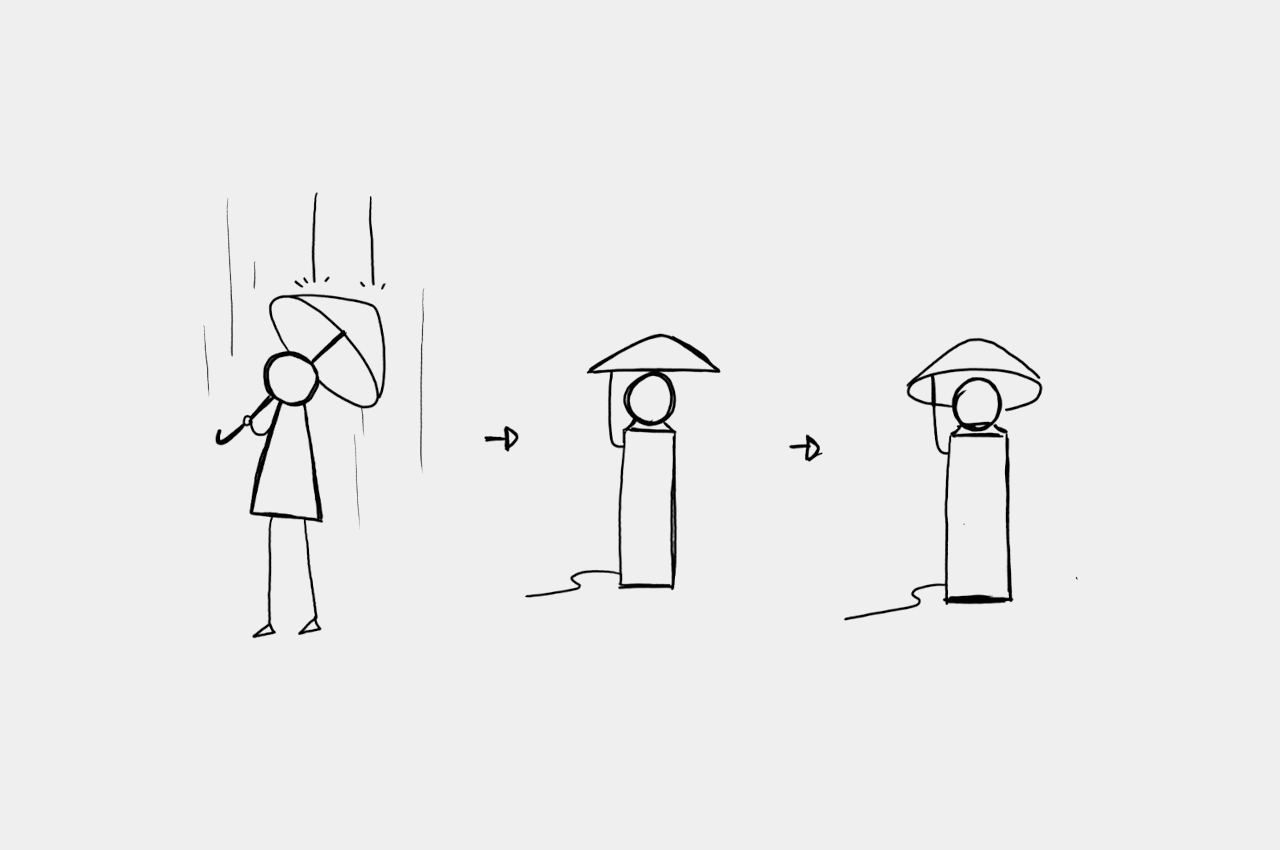
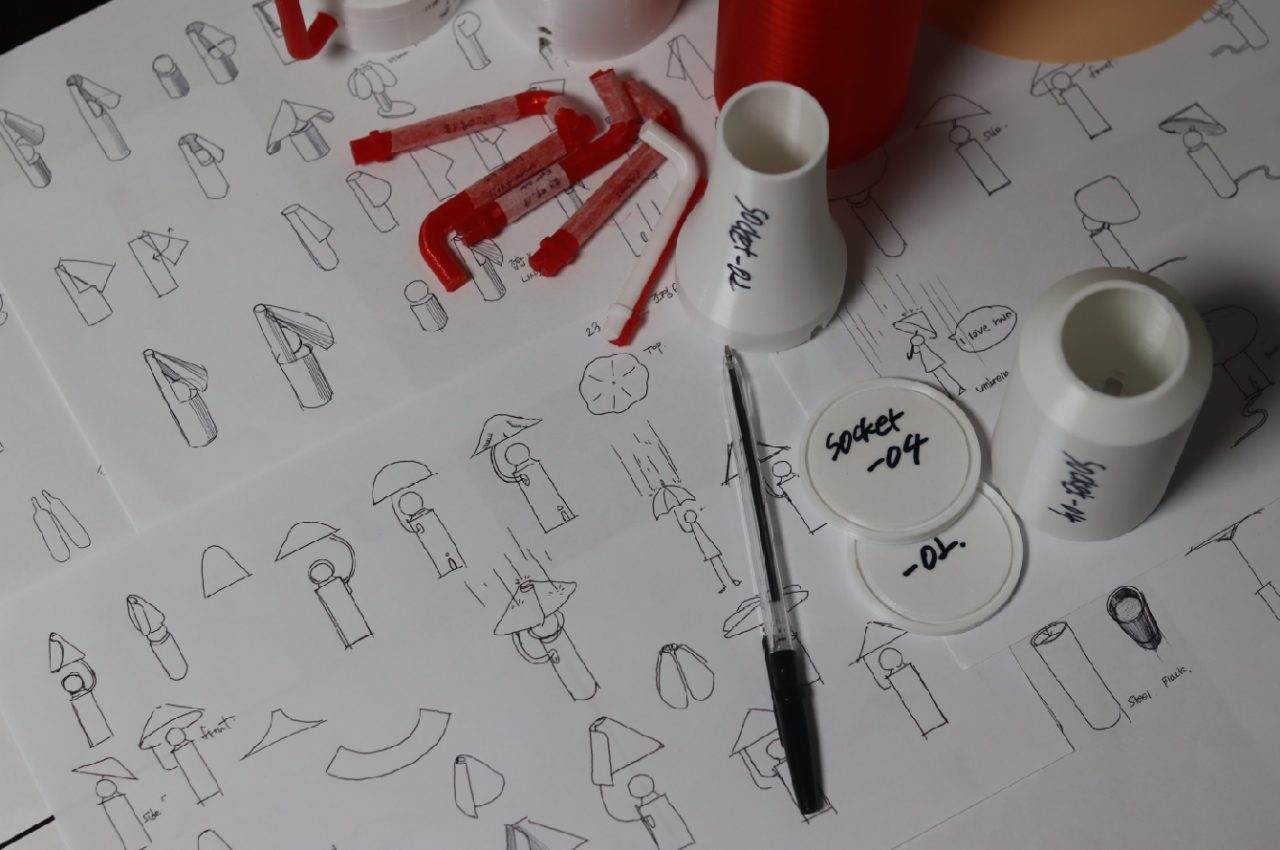
We can take a lot of ideas from nature, but sometimes the source of inspiration can be our own selves. The human figure, after all, is a truly complex design, and it’s capable of portraying a wide range of forms and emotions. Sometimes, that spark even comes from the most mundane of situations, like sitting on a park bench or walking under the rain with an umbrella. The latter is apparently what gave birth to a rather cute little lamp designed to stand on your desk, table, or shelf, generating a sense of playfulness and calm, emotions that some people feel on a rainy day.

Designer: Heeyeol Yang

Different people associate rainy days with different emotions. Some feel lethargic and sleepy while others are their most productive in the midst of the pitter-patter. Some feel a bit of anxiety, especially when trapped under the rain, but there are actually those who can stay still and calm while standing under an umbrella. This is the inspiration for Rain Man, a concept design for a lamp that is truthfully more open to interpretation than what the designer intended.

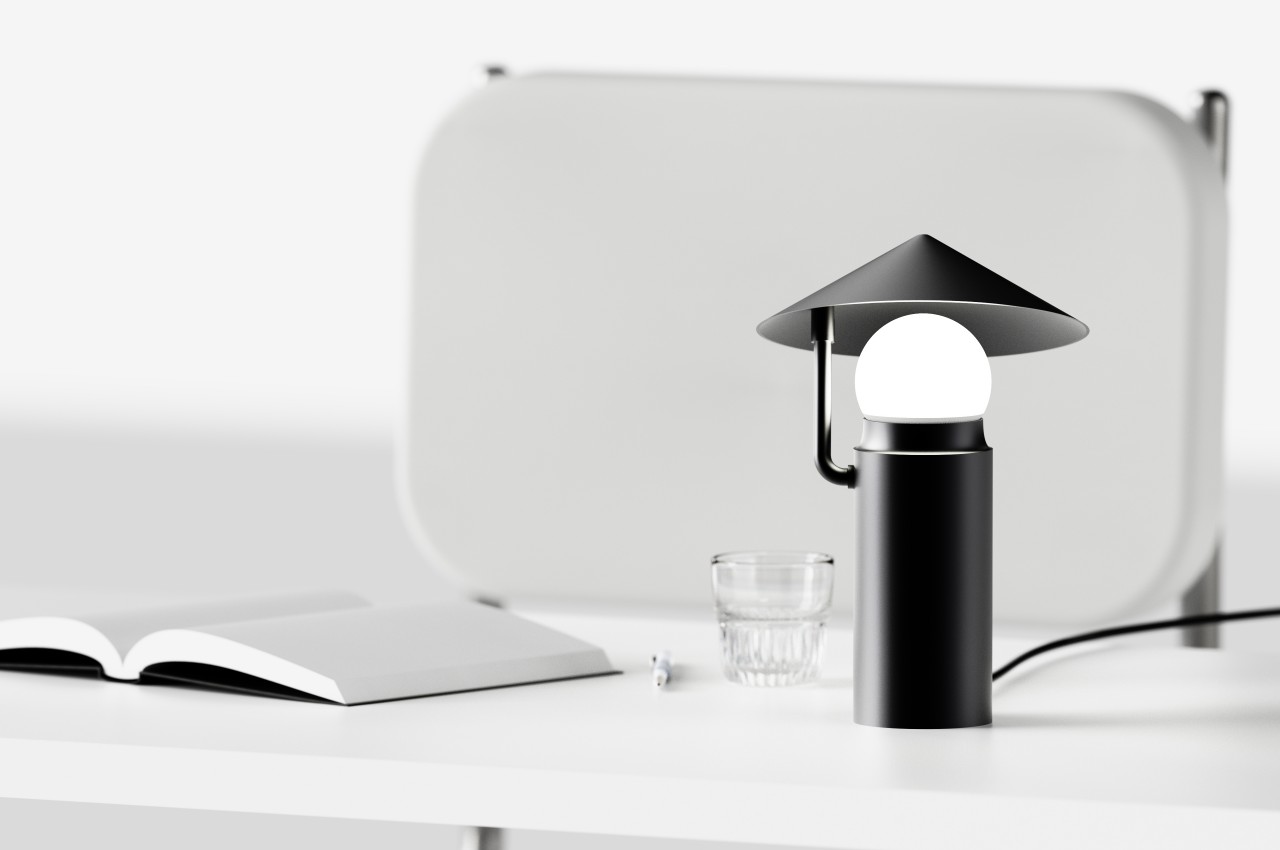
On the one hand, the name alone directly points to the form that the lamp tries to imitate. The flat cone on top is like an umbrella, while the lever that supports it is the figure’s arm. The lamp itself is an extreme generalization of the human head, and plenty of metaphors can probably be drawn from how a person’s face and presence can light up those gloomy, rainy days.

At the same time, it’s also possible to see the figure a bit differently if you don’t take the name into consideration. The umbrella becomes a wide-brimmed hat commonly found in Asian countries, held high in greeting when coming across another person. In either interpretation, the focus is on the human figure and its relationship with its surroundings, be it rain or shine.

The concept design has other interesting features beyond its anthropomorphic shape. The umbrella (or hat) can be lowered or raised as desired, scattering the light or focusing it toward a single direction. Overall, the lamp has a certain charm that makes it a lovely piece for your living space, greeting you and your visitors with a simple, calm gesture.

The post Cute table lamp concept mimics a man with an umbrella under the rain first appeared on Yanko Design.

Humanoid robot can make you coffee and eventually more

It’s no secret that I’m still afraid that in the far future, robots will rise up against humans when they gain their own intelligence and realize that we’ve been treating them unfairly all these years. That probably comes from watching too much science fiction movies and series where robot overlords rule over the earth. But for now, we’re seeing amazing (sometimes scary) advancements when it comes to robotics and how they will eventually be able to work alongside humans.

Designer: Brett Adcock

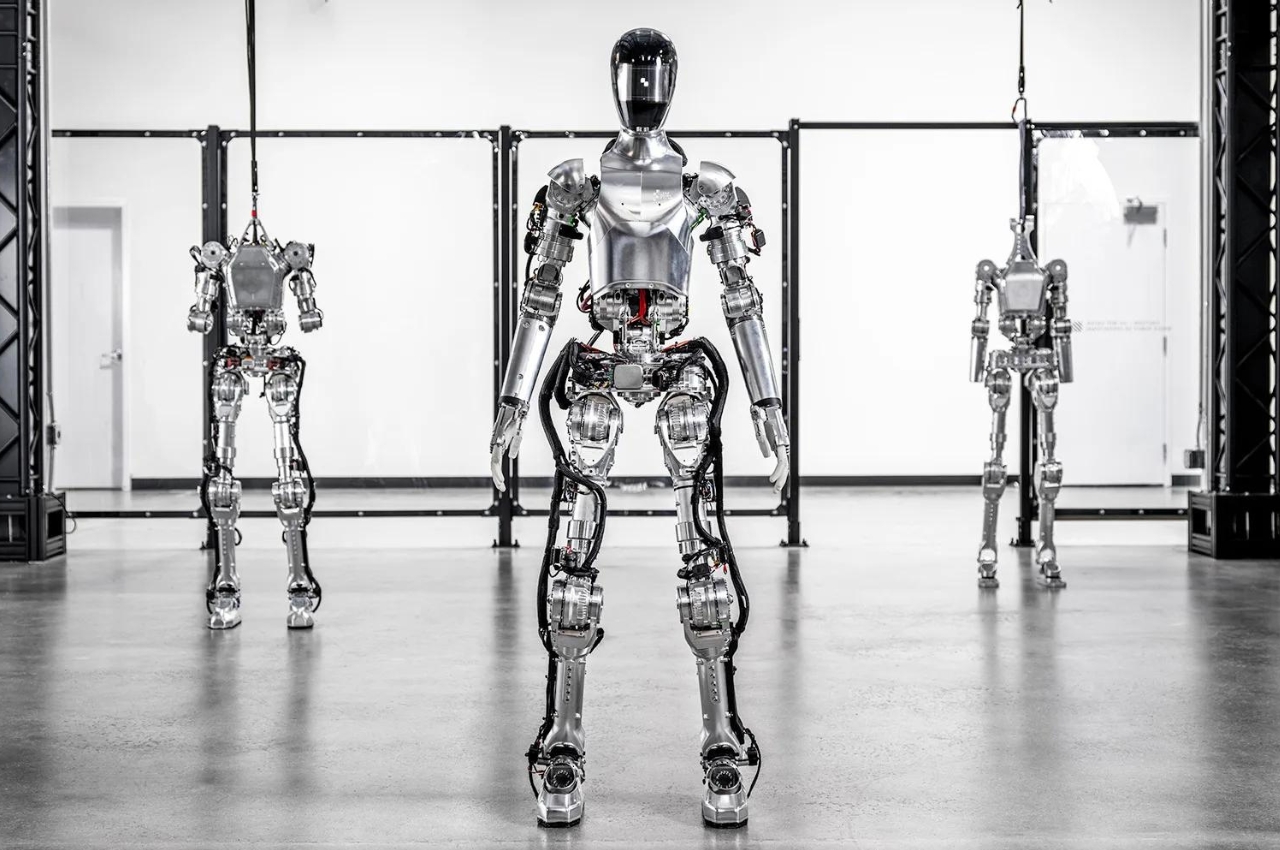
The Figure-01 Humanoid Robot has been designed to help you handle some of the simple daily chores, powered by artificial intelligence. Aside from being able to do automated tasks, it is trained to be able to think, learn, and interact within human environments. It is also able to improve on its capabilities by learning from the previous tasks it is able to perform.

The humanoid robot uses some pretty powerful graphic processing units (GPU) to drive the AI learning and system, letting it process some of the complex algorithms needed to train them. The idea is for these robots to eventually fill in the gap in the labor market when it comes to things like warehouses, transportation, and retail. Of course the aim is not to replace humans but to be able to work alongside people and work within an environment with both other robots and humans.

They were able to demonstrate the current capabilities of the Figure-01 Humanoid Robot by showing how it was able to make coffee after 10 hours of training using end-to-end neural networks. I wouldn’t mind having someone else get my coffee ready in the morning by the time I wake up although I’d probably have nightmares of this humanoid robot eventually taking over my life.

The post Humanoid robot can make you coffee and eventually more first appeared on Yanko Design.

GameStop axes its short-lived NFT marketplace as it retreats from crypto

Two months after shutting down its crypto wallet, GameStop says it’s killing its NFT marketplace, too. In an alert posted on the website, first spotted by Decrypt, the company has notified customers that the NFT marketplace will no longer be usable as of February 2. Echoing the statement it issued with the termination of the wallet, GameStop says the decision comes in response to “the continuing regulatory uncertainty of the crypto space.”

GameStop’s NFT marketplace wasn’t around very long. It launched in July 2022 in a partnership with Immutable X and Loopring following rumors of the project at the beginning of that year. Now, it only has a few weeks left in operation. “Effective as of February 2, 2024, customers will no longer be able to buy, sell or create NFTs,” the notice states. “Your NFTs are on the blockchain and will remain accessible and saleable through other platforms.”

This article originally appeared on Engadget at https://www.engadget.com/gamestop-axes-its-short-lived-nft-marketplace-as-it-retreats-from-crypto-215911813.html?src=rss

GameStop axes its short-lived NFT marketplace as it retreats from crypto

Two months after shutting down its crypto wallet, GameStop says it’s killing its NFT marketplace, too. In an alert posted on the website, first spotted by Decrypt, the company has notified customers that the NFT marketplace will no longer be usable as of February 2. Echoing the statement it issued with the termination of the wallet, GameStop says the decision comes in response to “the continuing regulatory uncertainty of the crypto space.”

GameStop’s NFT marketplace wasn’t around very long. It launched in July 2022 in a partnership with Immutable X and Loopring following rumors of the project at the beginning of that year. Now, it only has a few weeks left in operation. “Effective as of February 2, 2024, customers will no longer be able to buy, sell or create NFTs,” the notice states. “Your NFTs are on the blockchain and will remain accessible and saleable through other platforms.”

This article originally appeared on Engadget at https://www.engadget.com/gamestop-axes-its-short-lived-nft-marketplace-as-it-retreats-from-crypto-215911813.html?src=rss

This 20-foot-long futuristic recreational vehicle has button-activated expandable walls to become a 400 sqft mobile home instantly

eVTOL aircrafts may be the future of personal aviation but the future of adventures on the road would be an all-encompassing recreational vehicle that transforms from its minimal structure on demand. We have seen a few iterations of travel trailers – such as the Rockwood Roo – that fit the notion, but the smart expanding ability with sustainable features is yet to reach recreational vehicles.

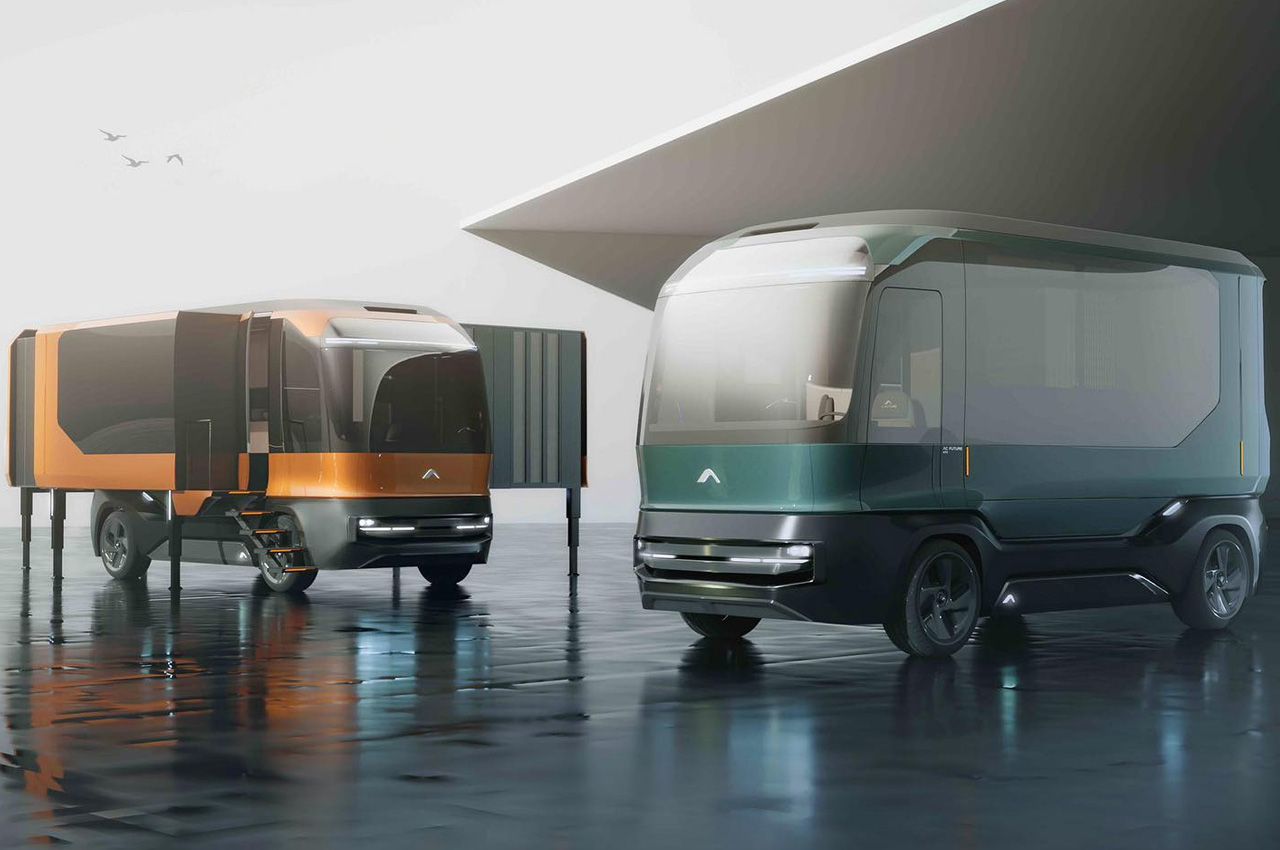
That’s what we thought until going up and personal with the eTH, an Electric Transformer House, doing rounds at CES in its rendered glory. A sublime blend of comfort, smart tech, and sustainability; it is by far the most futuristic mobile living space present in Vegas, at the time of writing. Visioned with the future in mind, eTH is the brainchild of Italian design house Pininfarina and AC Future, a leading inventor of living solutions for the future.

Designer: Pininfarina and AC Future

This mobile living space is a green van that features an all-glass upper body. The developers have a proof of concept at CES, and from how we learn, the prototype could be on the way. The mass production for this ultra-capable, highly functional, and amazingly luxurious mobile home is aligned for the fourth quarter of 2025, that’s if all were to go as planned.

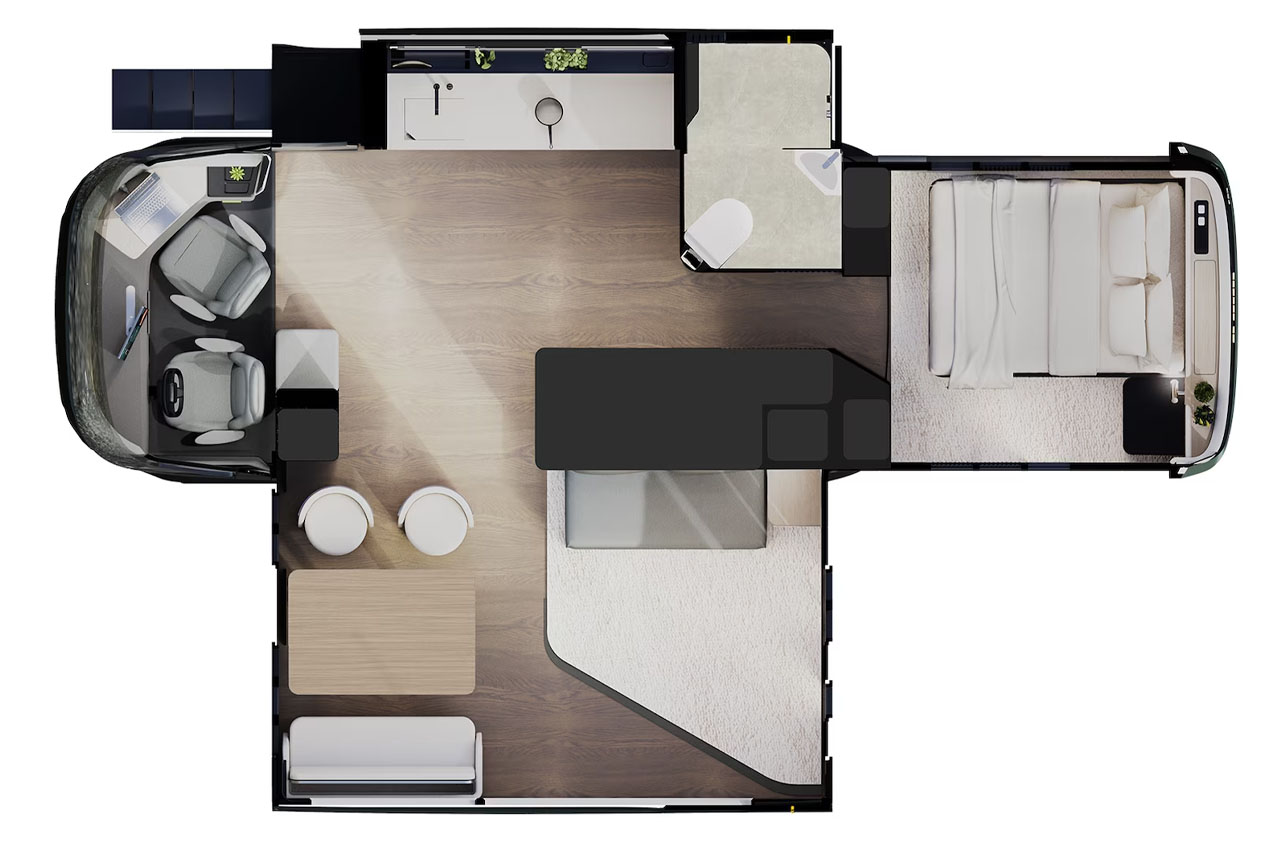
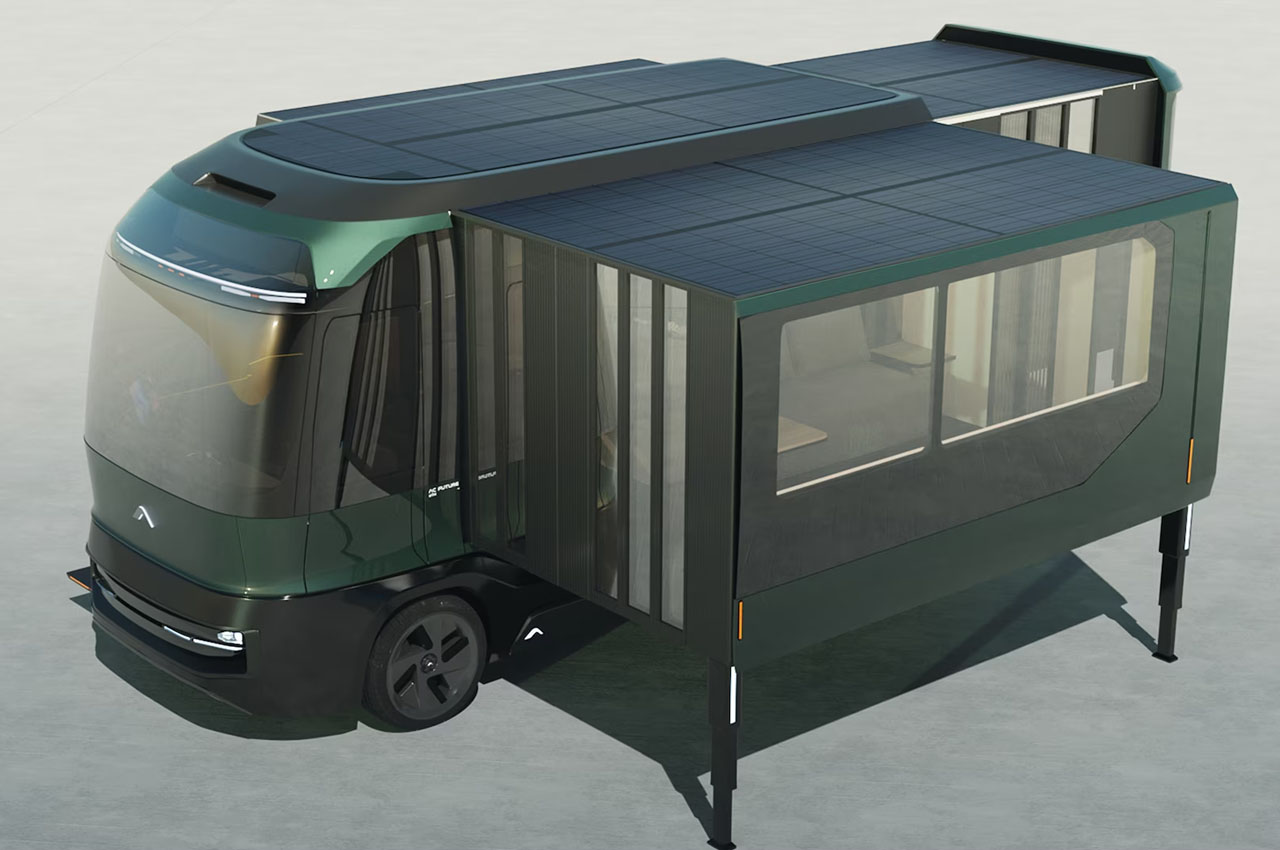
This out-of-the-ordinary electric recreational vehicle is different from the usual market-ready options in two departments: first, its expansion ability and second, the vivid sustainable functions on board. The eTH aligns in the former segment with movable walls, which allows the structure of the modular living space to expand from 20-foot-long, 11-foot-high to a good 400 square feet abode on the push of a button.

While the expanding form factor of the eTH would allow the RV to redefine the concept of living on wheels, it will be the inherent off-grid features that would make it a haven for adventurers. To that end, the modular RV features retractable 25kWh solar panels on the roof and onboard batteries to power it for a week of off-the-grid living. Details on the sleeping facility, washroom, and kitchen are scanty at the moment, but the Electric Transformer House has an Atmospheric Water Generator that produces fresh drinking water from the air every day.

The fascination extends further into the inside of the eTH where folding furniture enthralls with the convenience it renders while driving or when halted for the night. The lux interior allows this RV to be used as a full-time residence or mobile home by nomadic workaholics. For the latter, the inventive cockpit with driver assist technology and entertainment hub has a dashboard that doubles as an office desk. The steering wheel retracts under and the space above becomes a functional workspace while Starlink and Co-Pilot take care of the connectivity requirements.

The post This 20-foot-long futuristic recreational vehicle has button-activated expandable walls to become a 400 sqft mobile home instantly first appeared on Yanko Design.

This 20-foot-long futuristic recreational vehicle has button-activated expandable walls to become a 400 sqft mobile home instantly

eVTOL aircrafts may be the future of personal aviation but the future of adventures on the road would be an all-encompassing recreational vehicle that transforms from its minimal structure on demand. We have seen a few iterations of travel trailers – such as the Rockwood Roo – that fit the notion, but the smart expanding ability with sustainable features is yet to reach recreational vehicles.

That’s what we thought until going up and personal with the eTH, an Electric Transformer House, doing rounds at CES in its rendered glory. A sublime blend of comfort, smart tech, and sustainability; it is by far the most futuristic mobile living space present in Vegas, at the time of writing. Visioned with the future in mind, eTH is the brainchild of Italian design house Pininfarina and AC Future, a leading inventor of living solutions for the future.

Designer: Pininfarina and AC Future

This mobile living space is a green van that features an all-glass upper body. The developers have a proof of concept at CES, and from how we learn, the prototype could be on the way. The mass production for this ultra-capable, highly functional, and amazingly luxurious mobile home is aligned for the fourth quarter of 2025, that’s if all were to go as planned.

This out-of-the-ordinary electric recreational vehicle is different from the usual market-ready options in two departments: first, its expansion ability and second, the vivid sustainable functions on board. The eTH aligns in the former segment with movable walls, which allows the structure of the modular living space to expand from 20-foot-long, 11-foot-high to a good 400 square feet abode on the push of a button.

While the expanding form factor of the eTH would allow the RV to redefine the concept of living on wheels, it will be the inherent off-grid features that would make it a haven for adventurers. To that end, the modular RV features retractable 25kWh solar panels on the roof and onboard batteries to power it for a week of off-the-grid living. Details on the sleeping facility, washroom, and kitchen are scanty at the moment, but the Electric Transformer House has an Atmospheric Water Generator that produces fresh drinking water from the air every day.

The fascination extends further into the inside of the eTH where folding furniture enthralls with the convenience it renders while driving or when halted for the night. The lux interior allows this RV to be used as a full-time residence or mobile home by nomadic workaholics. For the latter, the inventive cockpit with driver assist technology and entertainment hub has a dashboard that doubles as an office desk. The steering wheel retracts under and the space above becomes a functional workspace while Starlink and Co-Pilot take care of the connectivity requirements.

The post This 20-foot-long futuristic recreational vehicle has button-activated expandable walls to become a 400 sqft mobile home instantly first appeared on Yanko Design.

NASA finally got the stuck lid off its asteroid Bennu sample container

You’d think grabbing a scoop of dirt off an orbiting space rock and then delivering it back to Earth would be the most complicated part of an asteroid sample collection mission, but the real challenge, it turns out, is actually opening that sample container once it’s back home. It’s taken a little over three months, but NASA says it has finally removed two stuck fasteners that were preventing it from accessing the bulk of material collected from asteroid Bennu by its OSIRIS-REx spacecraft. OSIRIS-REx dropped the sample off on September 24 before heading off to study another asteroid, Apophis.

While NASA was initially able to collect a few ounces of asteroid material that was found on the outside of the Touch-and-Go-Sample Acquisition Mechanism (TAGSAM), its inner contents remained locked away due to issues with two of the 35 fasteners that keep the container closed. The TAGSAM is housed in a special glovebox to prevent the sample from being contaminated, and only certain tools are approved for use with it. None of the existing tools were working to get the stubborn fasteners off the TAGSAM head, so the team had to develop new ones.

“In addition to the design challenge of being limited to curation-approved materials to protect the scientific value of the asteroid sample, these new tools also needed to function within the tightly-confined space of the glovebox, limiting their height, weight, and potential arc movement,” said Dr. Nicole Lunning, an OSIRIS-REx curator. Now that the TAGSAM head has been freed, the team can move forward with the container’s disassembly — meaning we’ll soon be able to see what’s inside. NASA’s preliminary assessment of dust and rocks from outside the TAGSAM found evidence of carbon and water.

This article originally appeared on Engadget at https://www.engadget.com/nasa-finally-got-the-stuck-lid-off-its-asteroid-bennu-sample-container-185814782.html?src=rss

NASA finally got the stuck lid off its asteroid Bennu sample container

You’d think grabbing a scoop of dirt off an orbiting space rock and then delivering it back to Earth would be the most complicated part of an asteroid sample collection mission, but the real challenge, it turns out, is actually opening that sample container once it’s back home. It’s taken a little over three months, but NASA says it has finally removed two stuck fasteners that were preventing it from accessing the bulk of material collected from asteroid Bennu by its OSIRIS-REx spacecraft. OSIRIS-REx dropped the sample off on September 24 before heading off to study another asteroid, Apophis.

While NASA was initially able to collect a few ounces of asteroid material that was found on the outside of the Touch-and-Go-Sample Acquisition Mechanism (TAGSAM), its inner contents remained locked away due to issues with two of the 35 fasteners that keep the container closed. The TAGSAM is housed in a special glovebox to prevent the sample from being contaminated, and only certain tools are approved for use with it. None of the existing tools were working to get the stubborn fasteners off the TAGSAM head, so the team had to develop new ones.

“In addition to the design challenge of being limited to curation-approved materials to protect the scientific value of the asteroid sample, these new tools also needed to function within the tightly-confined space of the glovebox, limiting their height, weight, and potential arc movement,” said Dr. Nicole Lunning, an OSIRIS-REx curator. Now that the TAGSAM head has been freed, the team can move forward with the container’s disassembly — meaning we’ll soon be able to see what’s inside. NASA’s preliminary assessment of dust and rocks from outside the TAGSAM found evidence of carbon and water.

This article originally appeared on Engadget at https://www.engadget.com/nasa-finally-got-the-stuck-lid-off-its-asteroid-bennu-sample-container-185814782.html?src=rss