How false nostalgia inspired noplace, a Myspace-like app for Gen Z

Already fascinated with y2k-era tech, some members of Gen Z have wondered what those early, simpler social networks were like. Now, they can get an idea thanks to a new app called noplace, which recreates some aspects of Myspace more than a decade after its fall from the most-visited site in the US.

The app officially launched earlier this month and briefly made the No. 1 spot in Apple’s App Store. Dreamed up by Gen Z founder Tiffany Zhong, noplace bills itself as both a throwback and an alternative to mainstream social media algorithms and the creator culture that comes with them. “I missed how social media used to be back in the day … where it was actually social, people would post random updates about their life,” Zhong tells Engadget. “You kind of had a sense of where people were in terms of time and space.”

Though Zhong says she never got to experience Myspace firsthand — she was in elementary school during its early 2000s peak — noplace manages to nail many of the platform’s signature elements. Each user starts with a short profile where they can add personal details like their relationship status and age, as well a free-form “about me” section. Users can also share their interests and detail what they’re currently watching, playing, reading and listening to. And, yes, they can embed song clips. There’s even a “top 10” for highlighting your best friends (unclear if Gen Z is aware of how much trauma that particular Myspace feature inflicted on my generation).

Myspace, of course, was at its height years before smartphone apps with a unified “design language” became the dominant medium for browsing social media. But the highly customizable noplace profiles still manage to capture the vibe of the bespoke HTML and clashing color schemes that distinguished so many Myspace pages and websites on the early 2000s internet.

noplace has a
noplace

There are other familiar features. All new users are automatically friends with Zhong, which she confirms is a nod to Tom Anderson, otherwise known as “Myspace Tom.” And the app encourages users to add their interests, called “stars,” and search for like-minded friends.

Despite the many similarities — the app was originally named “nospace” — Zhong says noplace is about more than just recreating the look and feel of Myspace. The app has a complicated gamification scheme, where users are rewarded with in-app badges for reaching different “levels” as they use the app more. This system isn’t really explained in the app — Zhong says it’s intentionally “vague” — but levels loosely correspond to different actions like writing on friends’ walls and interacting with other users’ posts. There’s also a massive Twitter-like central feed where users can blast out quick updates to everyone else on the app.

It can feel a bit chaotic, but early adopters are already using it in some unexpected ways, according to Zhong. “Around 20% in the past week of posts have been questions,” she says, comparing it to the trend of Gen Z using TikTok and YouTube as a search engine. “The vision for what we're building is actually becoming a social search engine. Everyone thinks it's like a social network, but because people are asking questions already … we're building features where you can ask questions and you can get crowdsourced responses.”

That may sound ambitious for a (so far) briefly-viral social app, but noplace has its share of influential backers. Reddit founder Alexis Ohanian is among the company’s investors. And Zhong herself once made headlines in her prior role as a teenage analyst at a prominent VC firm.

For now, though, noplace feels more to me like a Myspace-inspired novelty, though I’m admittedly not the target demographic. But, as someone who was a teenager on actual Myspace, I often think that I’m grateful my teen years came long before Instagram or TikTok. Not because Myspace was simpler than today’s social media, but because logging off was so much easier.

Zhong sees the distinction a little differently, not as a matter of dial-up connections enforcing a separation between on and offline, but a matter of prioritizing self expression cover clout. “You're just chasing follower count versus being your true self,” Zhong says. “It makes sense how social networks have evolved that way, but it's media platforms. It's not a social network anymore.”

This article originally appeared on Engadget at https://www.engadget.com/how-false-nostalgia-inspired-noplace-a-myspace-like-app-for-gen-z-163813099.html?src=rss
YouTube Shorts gets Instagram’s ‘Add yours’ prompt stickers

YouTube is continuing its mission to compete with Instagram and TikTok. The platform has announced new features on Shorts, notably including an "Add yours" sticker. That's right, it seems to be pretty much the same tool that Instagram launched in 2021, and you'll have seen with prompts like "the most recent photo in your camera roll" or "the first photo of you and your partner." 

In this case, YouTube recommends you create prompts like showing off your dog's newest trick to "inspire your audience" and spark "a chain reaction of adorable content." The sticker looks nearly identical to Instagram's, so if you use it there, it should be an easy transition. This new-to-YouTube sticker should roll out across Shorts over the next few weeks.

The
YouTube

YouTube has also announced you can soon add and edit auto-generated captions on Shorts. You can choose between various colors and fonts to make captions blend in better with your videos. Again, you will recognize this from Instagram, but let's be honest: there's very little reinventing the wheel on social media these days, so it's nice to have options regardless of your platform of choice.

Similarly, YouTube is also rolling out a Text to Speech feature on Shorts. The tool lets you add text after recording a Short and then click the "Add voice" icon at the top left of your screen. From there, YouTube provides four voices you can pick from for the narration.

The last update coming to Youtube Shorts is for Android users. Soon, Auto layout will be available on Android, allowing you to track the subject of your video as you create it. You can hear about all of these updates directly from the YouTube team below.

This article originally appeared on Engadget at https://www.engadget.com/youtube-shorts-gets-instagrams-add-yours-prompt-stickers-160002525.html?src=rss

Joby Aviation says it completed a 523-mile test flight of a hydrogen-powered air taxi

Joby Aviation says a hydrogen-powered version of its electric vertical takeoff and landing (eVTOL) aircraft successfully completed a 523-mile test flight. The only byproduct from the prototype, which has a liquid hydrogen fuel cell and hydrogen-electric propulsion system, was water vapor. The company suggested that the test flight points toward a future of emissions-free regional aviation in an industry that still relies heavily on fossil fuels.

This is believed to be the first liquid hydrogen-powered eVTOL forward flight. Joby kept the same shell and most of the guts of its battery-electric air taxi but it reduced the battery load and installed a fuel tank that can store up to 40 kilograms of liquid hydrogen. This is pumped into a fuel cell system to produce electricity, water and heat. The electricity generated from the fuel cell powers the air taxi's six electric motors while the batteries deliver extra power during take off and landing. 

Joby is set to start commercial operations of its air taxi as soon as 2025. While the eVTOL doesn't need a runway, it's limited to a range of 100 miles before it needs to be charged up, making it a good option for short hops like from your home to the airport. Should the hydrogen-powered model ever go into production, it could result in emission-free inter-city aviation that's faster than travelling by road or traditional planes. It'll be quicker to refuel a hydrogen-powered air taxi than to recharge an eVTOL too.

“Imagine being able to fly from San Francisco to San Diego, Boston to Baltimore or Nashville to New Orleans without the need to go to an airport and with no emissions except water," Joby founder and CEO JoeBen Bevirt said in a statement. "That world is closer than ever, and the progress we’ve made towards certifying the battery-electric version of our aircraft gives us a great head start as we look ahead to making hydrogen-electric flight a reality."

One major barrier in bringing this vision to fruition is obtaining enough sustainably sourced liquid hydrogen. As Inc. notes, that was a major factor in preventing Universal Hydrogen, a now-shuttered startup, from finding success. That company and ZeroAvia completed test flights of hydrogen-powered planes over the last couple of years. 

However, Bevirt is confident that there will be sufficient support from governments for hydrogen and green hydrogen supply and distribution. The US allocated $7 billion to set up green hydrogen hubs across the country under the Bipartisan Infrastructure Law. "The world is shifting to a hydrogen economy and aviation is one of the most important use cases for that green hydrogen supply," Bevirt told Inc.

This article originally appeared on Engadget at https://www.engadget.com/joby-aviation-says-it-completed-a-523-mile-test-flight-of-a-hydrogen-powered-air-taxi-154111466.html?src=rss

Early Prime Day deal brings the Amazon smart thermostat down to only $52

Amazon Prime Day hasn’t even officially started yet and we are already starting to see a massive influx of deals. For instance, the Amazon Smart Thermostat is on sale for $52. This is a discount of more than 30 percent and the best price we’ve seen all year.

The good news? This is one heck of a smart thermostat with a robust list of features. The bad news? It does require a C-wire or a power adapter kit, and these are sold separately. Once you get it hooked up though, the Amazon Start Thermostat allows for voice control over your climate, thanks to Alexa. It also lets you to make adjustments via the Alexa app on your phone, so you never have to suffer the indignity of walking downstairs at night when cold.

This is, basically, a Honeywell thermostat packed with Amazon’s smart tech, so it should be reliable and durable. One of the best reasons to go with a smart thermostat is to help reduce energy usage. It won’t automatically save you money, but the voice control means you can make adjustments when you think of it and app control means you can, for instance, shut down the AC from work.

It does lack a couple of the features found with its more expensive cousins, like the Google Nest thermostat. There’s no touchscreen controls and no motion sensors. Beyond those nitpicks, however, this is a mighty fine thermostat perfect for the hot summer months.

Your Prime Day Shopping Guide: See all of our Prime Day coverage. Shop the best Prime Day deals on Yahoo Life. Follow Engadget for Prime Day tech deals. Hear from Autoblog’s experts on the best Amazon Prime Day deals for your car, garage, and home, and find Prime Day sales to shop on AOL, handpicked just for you.

This article originally appeared on Engadget at https://www.engadget.com/early-prime-day-deal-brings-the-amazon-smart-thermostat-down-to-only-52-153006809.html?src=rss

Hybrid smartwatch concept puts a small E Ink display front and center

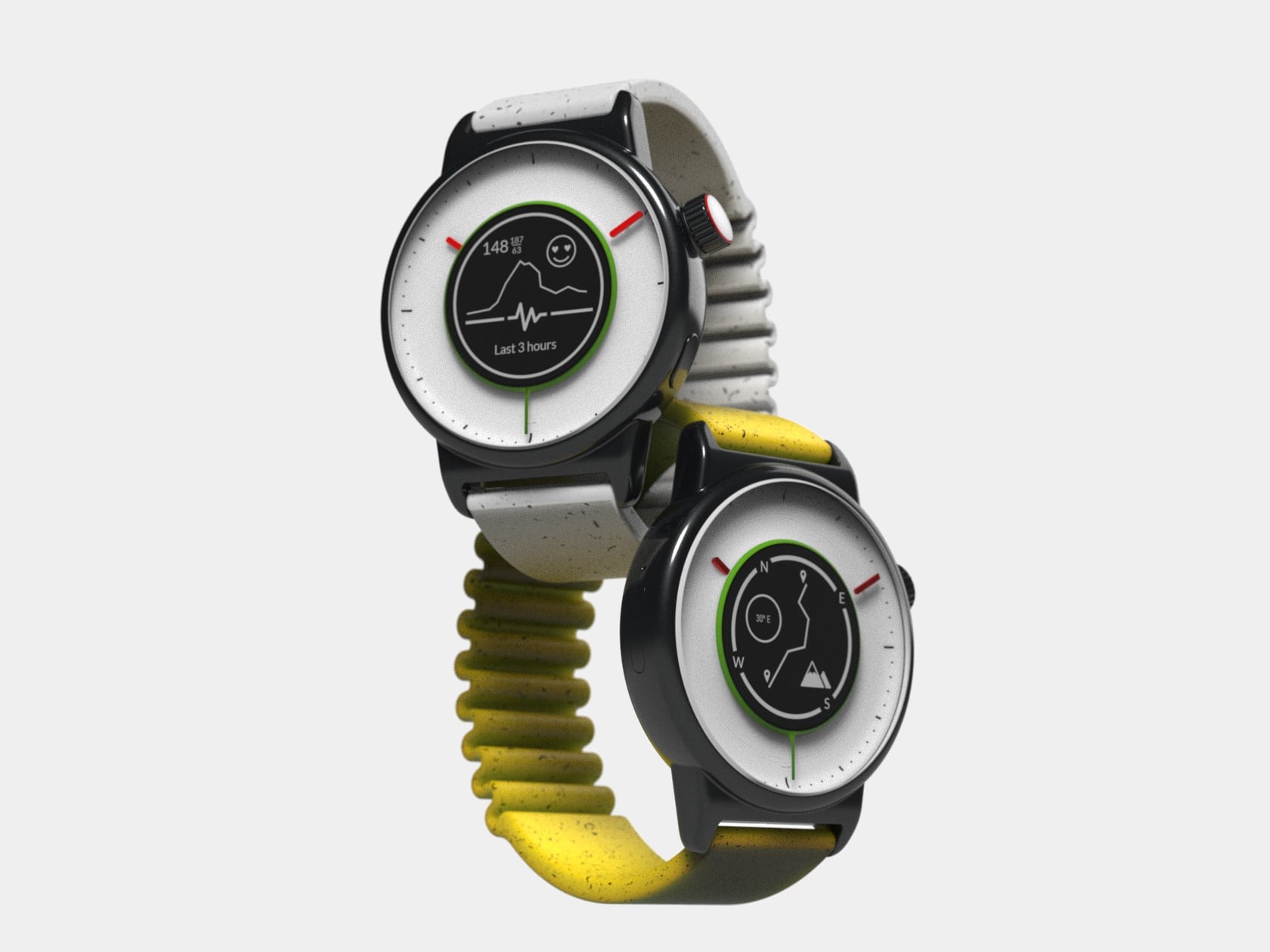
Samsung just unveiled its newest batch of wearables, which finally includes the much-awaited Galaxy Ring, so there is naturally some questions again on the significance of such devices. Smartwatches, in particular, have been around for a few years now, but not everyone is sold on the value they bring to our modern lives, especially those who are particularly fond of analog timepieces. It doesn’t have to be an either-or situation when it is possible to make designs that can cater to the different preferences of different people. This hybrid smartwatch concept, for example, doesn’t exactly go the way of classic mechanical watches but still offers enough good things from both worlds to create a design that tries to capture the essence of the moment.

Designer: Ravisankar R

Hybrid smartwatches have been around for a while now as well, though they haven’t gained as much market traction as either pure smartwatches or pure mechanical watches. In theory, this kind of design adds some of the key experiences of smartwatches, like activity tracking and even notifications, while planting its feet purely in the analog realm when it comes to the watch itself. Most of the time, the electronics are shoved off the watch straps or are invisible to the wearer. On rare occasions, a transparent display is overlaid on the watch’s glass, letting the user have a complete view of both faces.

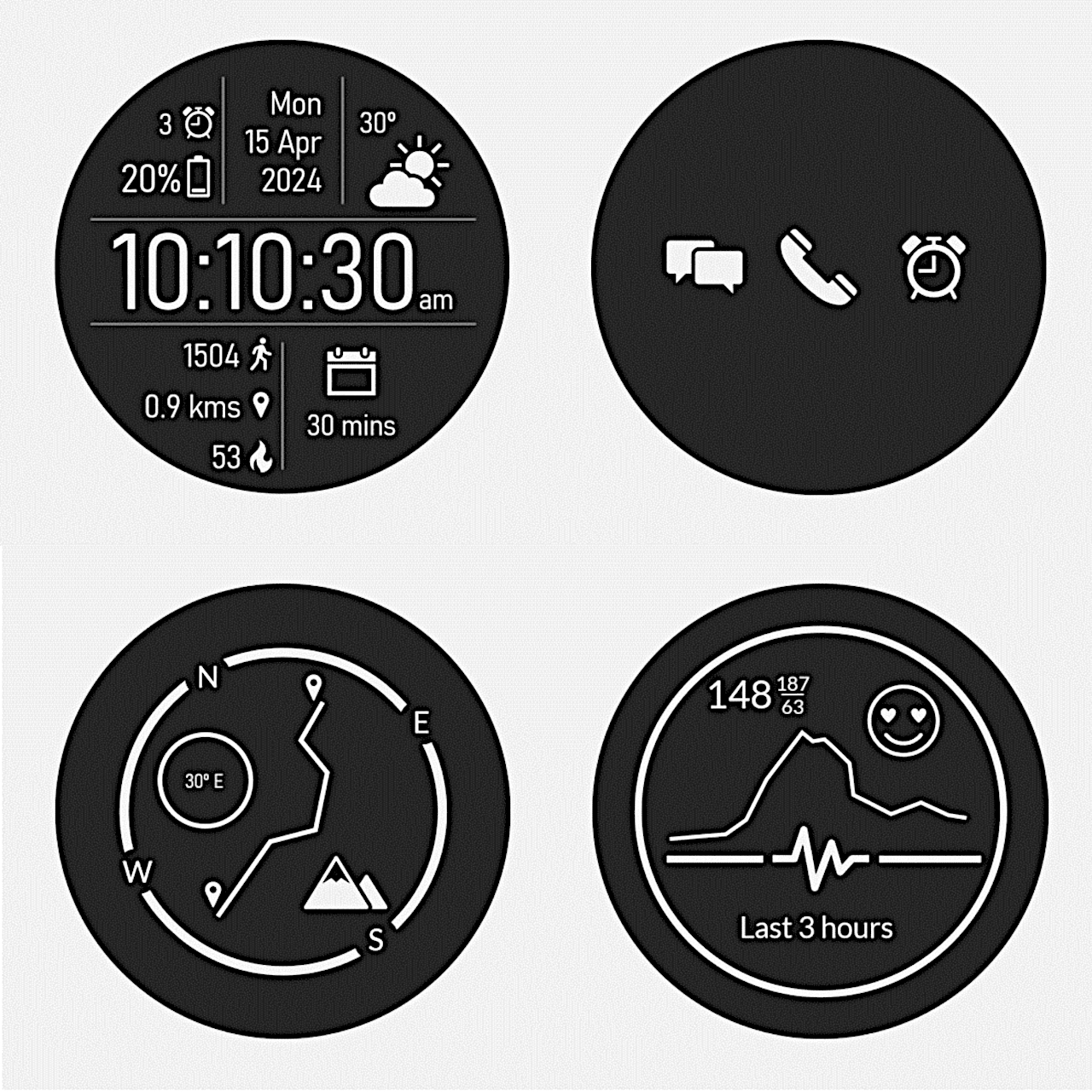
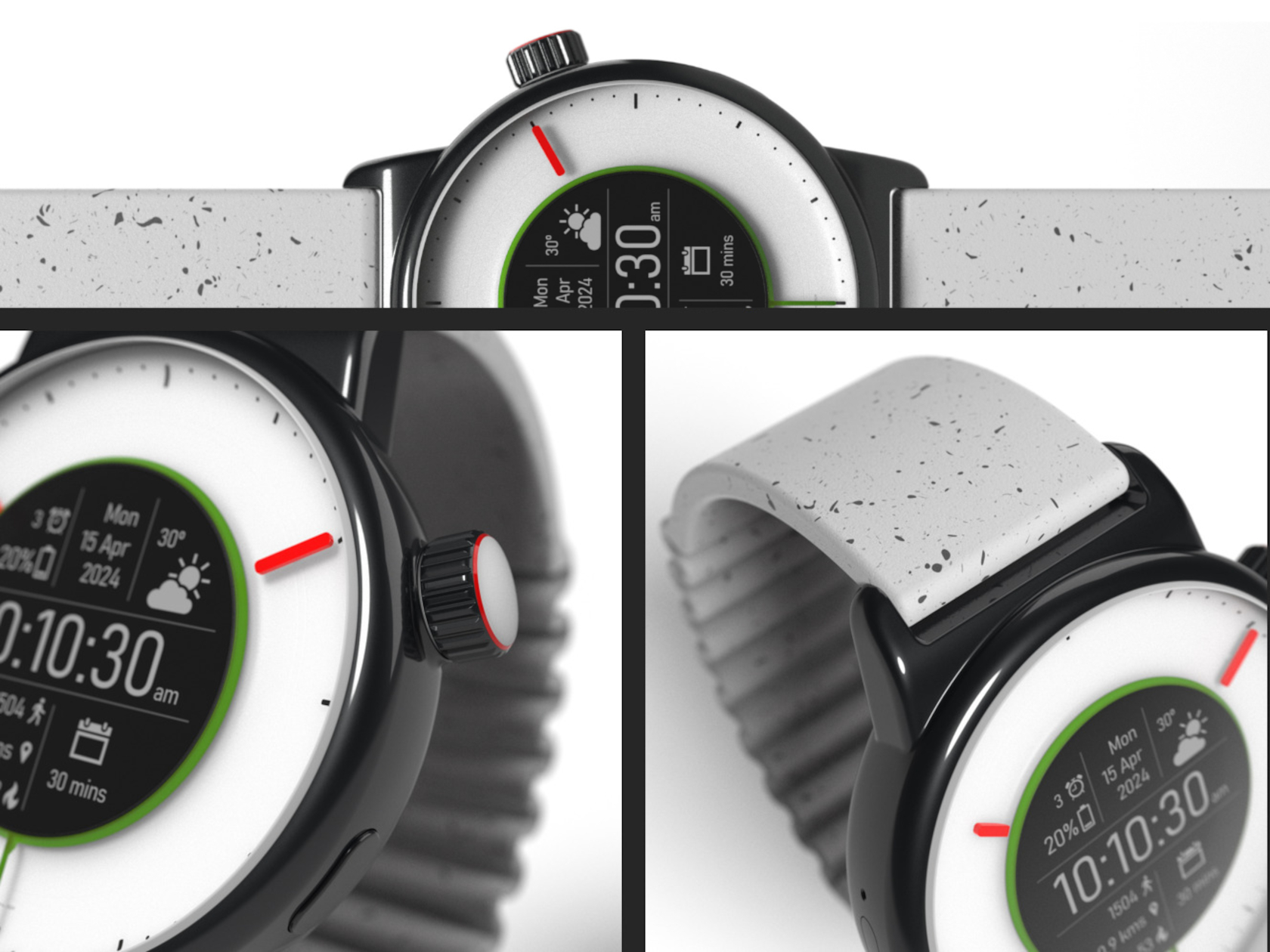
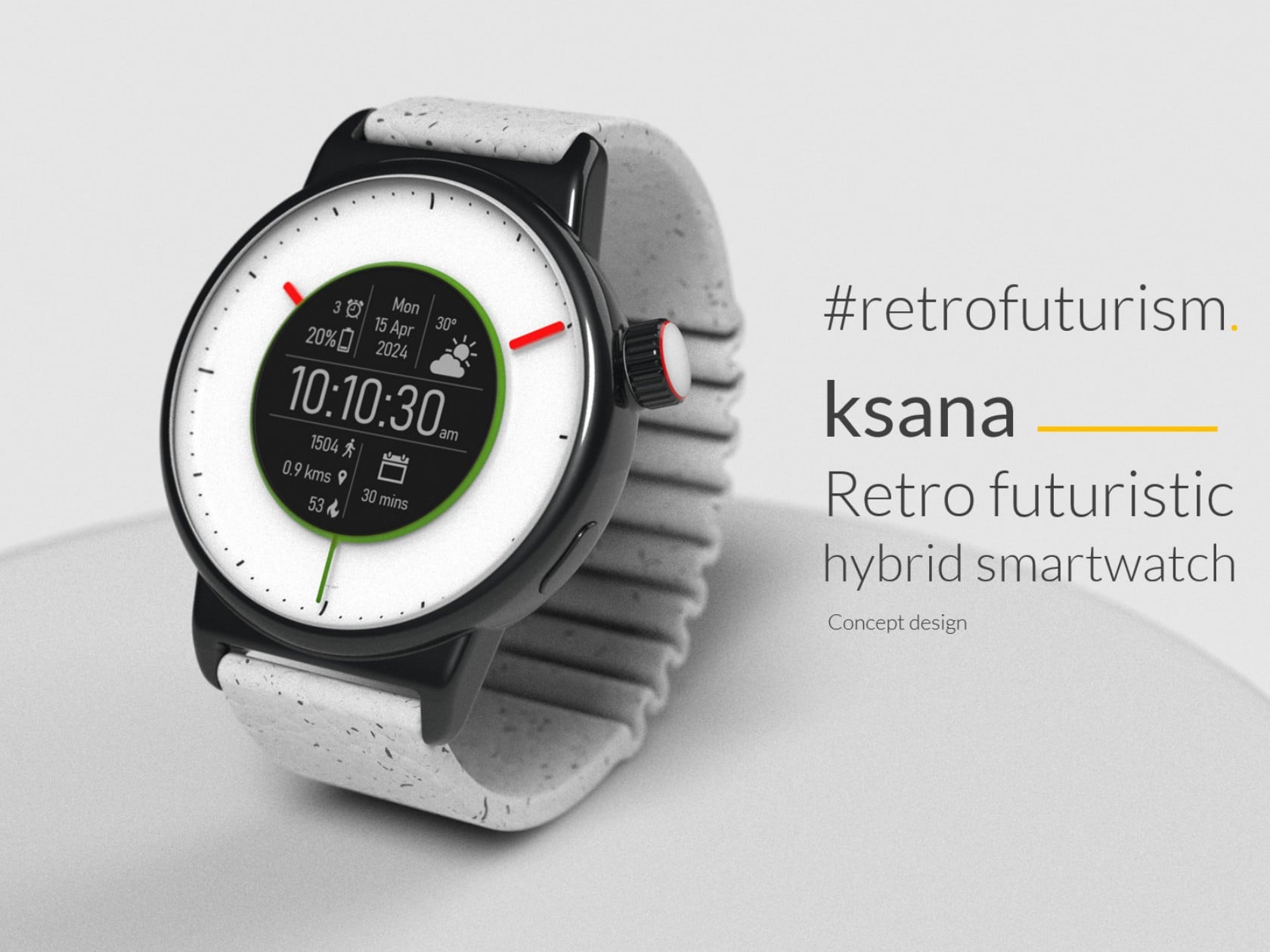
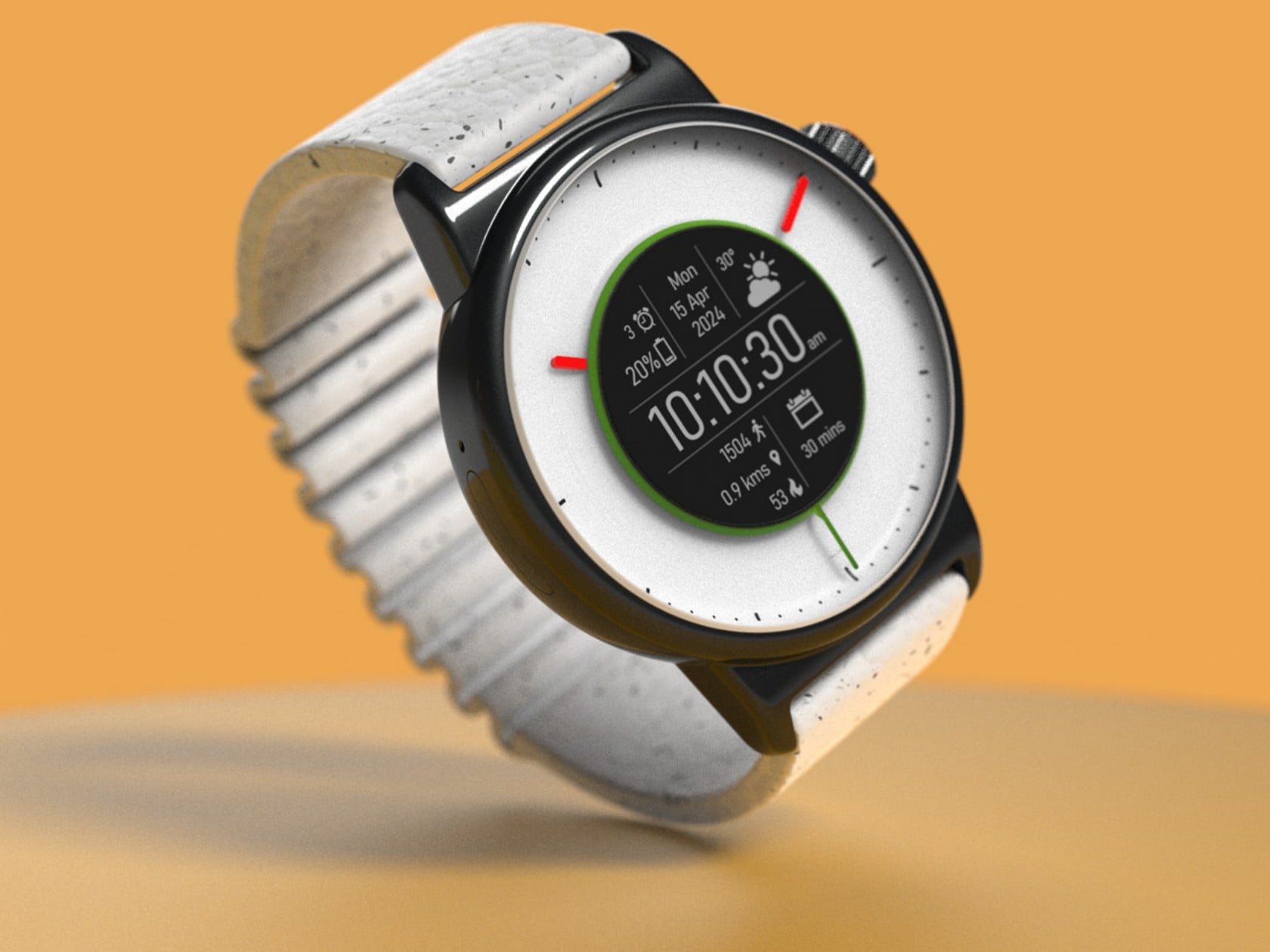
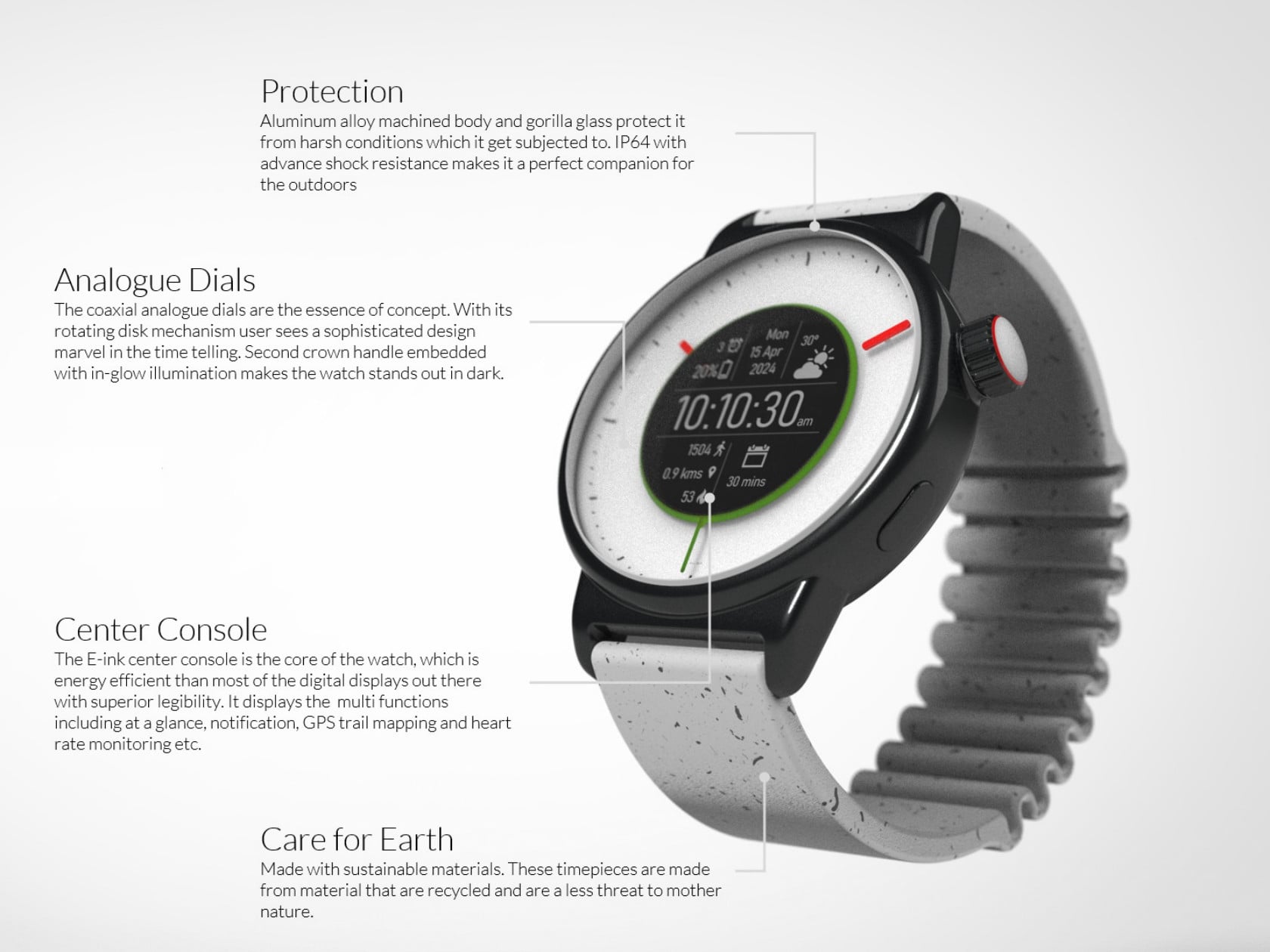
Ksana takes a slightly different approach by making the electronic display completely visible but shrinks it down to a smaller circle that covers only the middle section of the watch. The more interesting detail here is that it uses E Ink display technology rather than the typical LCD or OLED screens on smartwatches. Not only is it more battery-efficient, it also ensures that it displays only essential information, without the distractions of animated graphics and colors.

Beneath that screen is a more typical analog watch with hands driven by mechanical movements. The seconds hand is noted to be quite special in that it glows in the dark to make the watch more usable at night, especially considering E Ink displays don’t give off lights of their own. The smooth and graceful glide of the dials contrasts with the almost frantic imagery of smartwatches, focusing more on the importance of being in the moment rather than stressing over your next appointment.

Ksana doesn’t go for the classic wristwatch aesthetic and adopts a design that’s closer to conventional smartwatches with sportier looks. That’s not to say it doesn’t go for premium materials, like lightweight yet robust aluminum for the clock body, sapphire glass for the protective cover, and recycled materials for the straps. In a way, Ksana is both exceptional and conventional at the same time, bridging times and themes into a single design that helps you focus on what’s essential here and now.

The post Hybrid smartwatch concept puts a small E Ink display front and center first appeared on Yanko Design.

Starlink Mini is now widely available and doesn’t need a residential subscription

You can now get a Starlink Mini in the US, wherever you are and even if you're not paying for a residential subscription. SpaceX started offering select users the new Starlink dish model that's small enough to fit in a backpack in late June. Despite its small size that makes it easy to transport and carry around, the Mini used to require an existing $150 standard service plan — you could only tack on the Mini Roam service for an additional fee of $30 a month. Now, you can get it on its own with a roaming service

The mobile regional plan costs $150 a month and will give you access to unlimited data. It's probably the better option if you live in an RV or travel to remote locations for extended periods of time. Meanwhile, the Mini Roam plan costs $50 a month and will give you access to 50GB of data, which is likely enough if you don't live on the road full time. Take note that you can use Mini Roam in motion anytime, as long as you're on land. The mobile regional plan has limited in-motion use and only works when you're going slower than 10mph, though you can choose to add data meant for in-motion use on a per-GB basis. 

Like Starlink's other terminals, you'll have to pay for the Mini up front. It will cost you $599 for the kit, which includes a kickstand, a pipe adapter, a power supply and a cord with a USB-C connector on one end and a barrel jack on the other. (As The Verge notes, you can plug it into a 100W USB-PD power bank if you don't have access to other power sources.) There's no Wi-Fi router with the kit, because it's already integrated into the dish, giving you one less component to carry. 

This article originally appeared on Engadget at https://www.engadget.com/starlink-mini-is-now-widely-available-and-doesnt-need-a-residential-subscription-150039444.html?src=rss

Apple Prime Day deals are here early with the M2 Macbook Air discounted to a new low of $799

Here's a juicy early Amazon Prime Day deal: you can snag the base, 13-inch M2 MacBook Air for only $799 right now. The laptop gleaned a $200 discount as part of Prime Day Apple deals, and the savings apply to all color options so you can score one in that beautiful Midnight finish. That's the price for the models without AppleCare+ — you'll have to spend just under $1,000 if you want that add-on.

This model isn't exactly top of the MacBook Air line anymore. It's been supplanted by the M3-powered MBA, which is now our pick for the best MacBook overall. But if you'd like to save some cash and still have a very capable Apple laptop to carry around, the M2 variant is our choice for the best budget MacBook — this latest discount just makes it even easier to recommend.

Engadget's Devindra Hardawar called the M2 Air a “near-perfect Mac” in his 2022 review and gave it a score of 96. One of the first things you'll notice is the 13.6-inch Liquid Retina display, which can reach a commendable 500 nits of brightness and has a 60Hz refresh rate. The inclusion of a 1080p webcam is welcome, while the triple-mic array does a solid job of capturing your voice for your calls. The speakers are impressive too, especially for a laptop that's just 11.3 millimeters thin and weighs only 2.7 pounds.

Despite that slender form factor, Apple has still kept fans of physical headphone jacks happy by retaining the 3.5mm port. There are two USB-C Thunderbolt ports and a MagSafe charging connector as well. You shouldn't have to worry too much if you leave your charger at home when you head to the office — the M2 MacBook Air's battery should easily last for an entire workday unless you're carrying out very power-hungry work like video editing.

The M2 MBA should handle everyday tasks with relative ease, and you'll be able to play a bunch of App Store and Steam games on it too (good luck doing anything else ever again if you install Balatro). One of our main reservations with the base M2 Air is that there's only 8GB of memory. That doesn't seem quite enough these days and unfortunately, Apple charges a premium for RAM upgrades. Still, if you just want a MacBook Air that checks pretty much all the boxes most people will need for a few years, this is a great option.

It's also worth noting that there are some cool features on the way when macOS Sequoia arrives later this year, including the ability to mirror your iPhone on your Mac and a new Passwords app. Apple Intelligence features are also coming to M1 and later Macs.

Your Prime Day Shopping Guide: See all of our Prime Day coverage. Shop the best Prime Day deals on Yahoo Life. Follow Engadget for Prime Day tech deals. Hear from Autoblog’s experts on the best Amazon Prime Day deals for your car, garage, and home, and find Prime Day sales to shop on AOL, handpicked just for you.

This article originally appeared on Engadget at https://www.engadget.com/apple-prime-day-deals-are-here-early-with-the-m2-macbook-air-discounted-to-a-new-low-of-799-140716416.html?src=rss

Polestar Concept BST Debuts at Goodwood

The Goodwood Festival of Speed was the stage for the grand unveiling of the Polestar Concept BST, a high-performance electric vehicle that left automotive enthusiasts and industry experts in awe. This concept car serves as a testament to Polestar’s unwavering commitment to pushing the boundaries of electric mobility and redefining the future of transportation. The […]

The post Polestar Concept BST Debuts at Goodwood appeared first on Geeky Gadgets.

Ford ‘revives’ the Capri after 30 years as a four-door EV

Ford is reviving that most '70s of cars, the Capri, though pretty much in name only. Resembling not at all the original two-door pony-style fastback that debuted in 1968, the new Capri will instead be a four-door electric vehicle built on Volkswagen's MEB platform and be sold only in Europe.

The Capri looks like it was designed by executive committee, with styling that resembles the Polestar 2, but far more nondescript. Ford calls it a "sports coupe for the family," and the only thing vaguely as rebellious as the original is the paint scheme, either in bright yellow or blue. 

Ford is reviving the Capri after 30 years as a four-door EV
Ford

Two models will be available in launch, base and Premium versions, both termed "Extended Range." The base is a 282-horsepower single-motor rear-drive model with a 77-kWh battery pack, 390 miles or range (WLTP) and a 28-minute charge time from 10-80 percent. 

The Premium model is all-wheel-drive with two motors and 335 horsepower. The slightly larger 79kWh battery accepts a 185 kW charge (50 kW more than the base), so it can get from 10-80 percent in 26 minutes. Range on this model is just slightly reduced to 368 miles, according to Europe's WLTP standard. As for performance, the base model can zip from 0-62MPH in 6.4 seconds, while the Premium can do it in 5.3 seconds. 

Ford is reviving the Capri after 30 years as a four-door EV
Ford

The Premium model gets a few other add-ons, including 20-inch alloy wheel instead of 19-inch, along with ambient lighting, a B&O sound system and hands-free tailgate. 

On the tech side, the Capri offers automated lane changes, cyclist detection when opening doors and a massaging driver's seat. The 14.6-inch vertical touchscreen even slides out to reveal a storage compartment, while the front armrest caches a "MegaConsole" with 0.6 cubic feet of space.

Ford recently unveiled another EV in Europe named after a classic model, the Explorer. Like the Capri, it's nothing like the original either in looks or spirit, being a compact crossover rather than a pickup or SUV.

With availability in Europe only, you'll be able to buy a Capri on its namesake Italian island, but nowhere in North America. It'll be built in Germany and starts at €49,400 (around $53,590) for the base model and €53,000 ($57,490) for the Premium pack, according to Ford's French website

This article originally appeared on Engadget at https://www.engadget.com/ford-revives-the-capri-after-30-years-as-a-four-door-ev-140013729.html?src=rss

Biden administration awards car factories $1.7 billion so they can build EVs

The US Energy Department has revealed that it's awarding car and auto parts factories in eight states a total of $1.7 billion in funding, so that they can be retooled to build electric vehicles and their components. According to The New York Times and The Washington Post, the money will come from President Biden's Inflation Reduction Act, which provides subsidies to EV and battery plants, as well as the $7,500 tax credits consumers can get if they buy an electric vehicle.

One of the 11 recipients is a Jeep factory in Belvidere, Illinois that closed last year. The $334.8 million it will get from the initiative will allow it to reopen to produce electric vehicles and restore 1,450 jobs. GM, which will be awarded $500 million, will convert a plant in Lansing, Michigan to produce EVs instead of gasoline cars. The US subsidiary of Korean auto parts maker Hyundai Mobis will also get $32.6 million to refit a plant in Toledo, Ohio for the production of plug-in vehicle components. 

Government officials said they chose communities that are disproportionately affected by pollution or lack of investment. In addition, employees in all of the selected companies are represented by unions. The grants aren't set in stone — the companies still have to negotiate terms with the Department of Energy. They have to commit to retaining their current workers despite the shift to EVs, and they have to meet employment targets. The companies also have to promise to provide their workers with certain benefits, such as child care, pensions and training to further their careers. 

As The Times notes, several factories selected for the initiative are located in "battleground states" for the upcoming presidential elections. "This investment will create thousands of good-paying, union manufacturing jobs and retain even more — from Lansing, Michigan to Fort Valley, Georgia — by helping auto companies retool, reboot and rehire in the same factories and communities," Biden said in a statement. "This delivers on my commitment to never give up on the manufacturing communities and workers that were left behind by my predecessor."

Jennifer Granholm, the US Energy secretary, believes the fund will retain 15,000 jobs and create 3,000 new ones. Granholm also said that it will help the US "compete with other countries who were subsidizing their auto industries." While the secretary didn't mention China specifically, the country is known for subsidizing its EV manufacturers. Earlier this year, the US government quadrupled import tariff for Chinese EVs, while the European Union announced that it was going to impose additional tariffs of up to 38 percent on Chinese-made electric vehicles to protect local manufacturers. 

This article originally appeared on Engadget at https://www.engadget.com/biden-administration-awards-car-factories-17-billion-so-they-can-build-evs-133008903.html?src=rss