This 21-Story Tower Has 104 Green Balconies Inspired by Gaudí

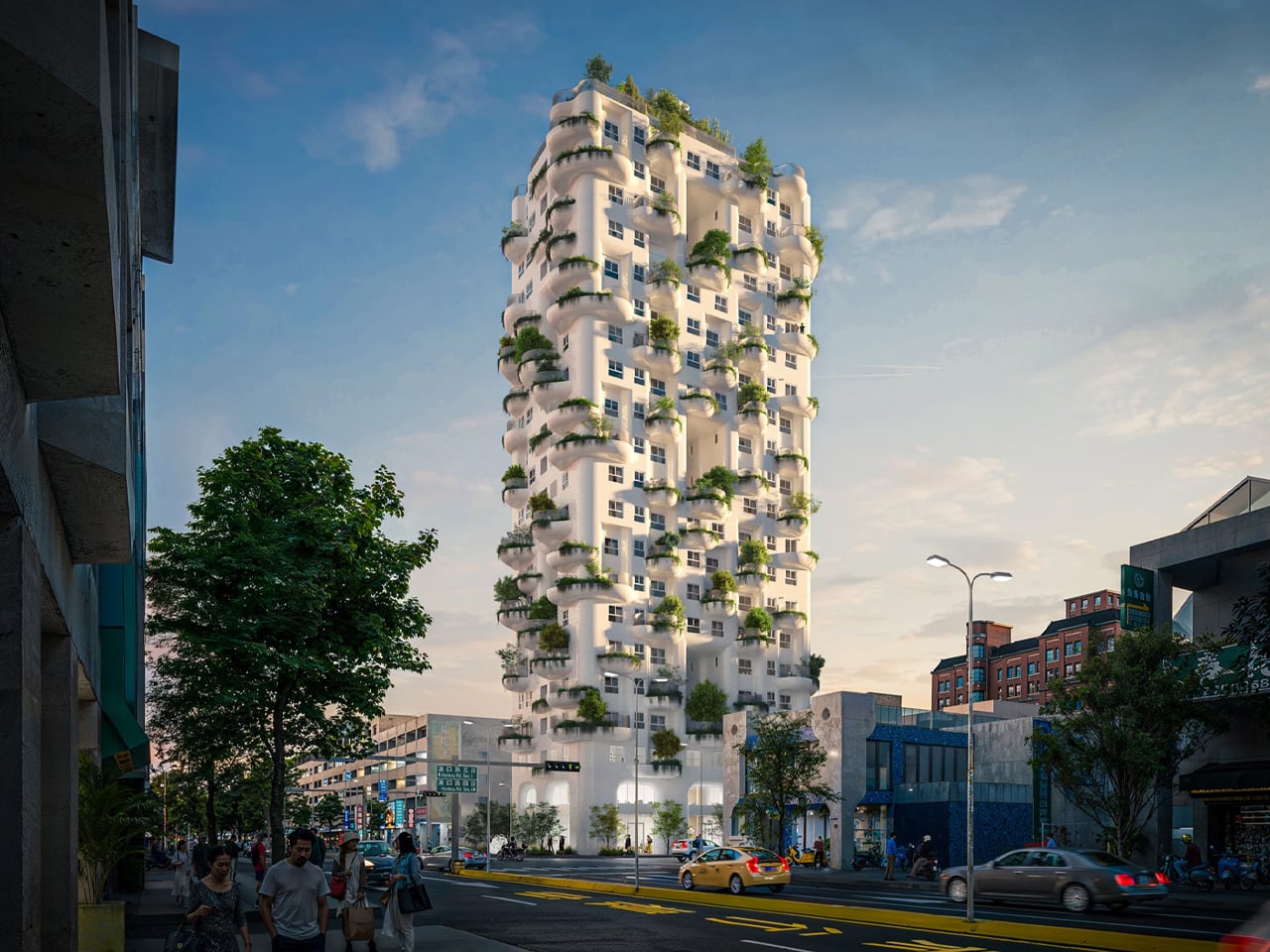
Taichung’s skyline is about to get a dramatic new addition. MVRDV has secured construction permission for The Island, a 21-story residential tower that reimagines urban living through organic curves, ceramic artistry, and an ambitious vertical garden system. Rising where the city’s North and Beitun districts meet, the project stands in stark contrast to Taiwan’s typical boxy residential architecture. The façade takes direct inspiration from Antoni Gaudí’s mosaic techniques, wrapping white ceramic tiles of varying sizes around flowing curves. Larger pieces cover flat surfaces while finer, granular patterns smooth out tighter bends. This careful choreography maintains continuity across every undulation, creating a sculptural presence that shifts in the light and glows against the surrounding commercial blocks.

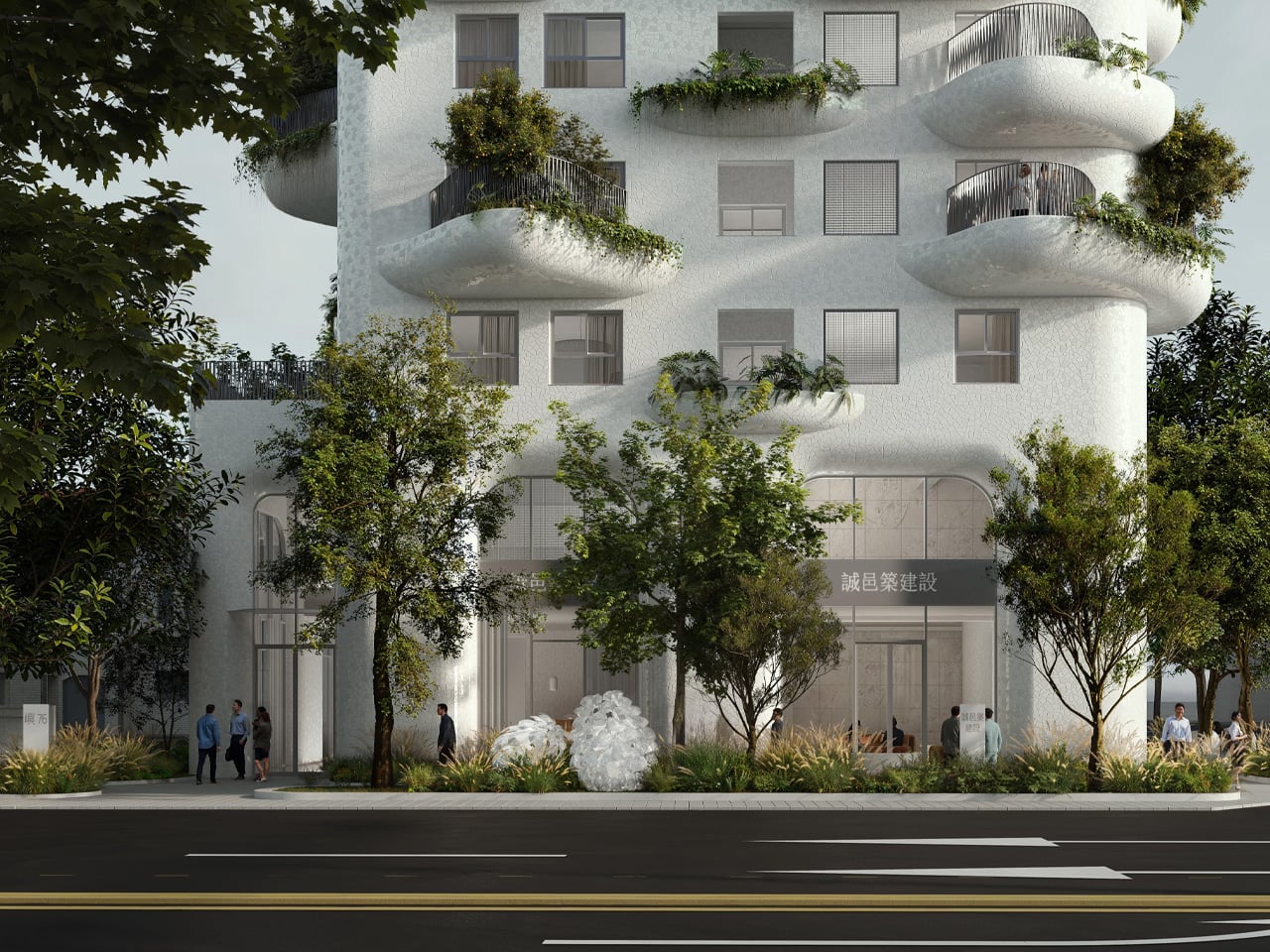
The Island earns its name through sheer commitment to greenery. The 9,000-square-meter development packs in 104 private balconies with planted areas, five communal three-story balconies, and 38 standalone façade planters. Street-level planting connects the building to the ground, while a rooftop garden terrace crowns the structure. The plant selection mirrors the biodiversity of Taichung province, turning the tower into a living catalog of regional flora. Each communal balcony carves out a three-story recess that brings depth to the façade while offering planted terraces with sweeping views over the city.

Designer: MVRDV

The green ambition responds to Taichung’s liveable building regulations, which push developers toward outdoor space and vegetation. The site tells its own story of rapid urban transformation. Once positioned near the city’s edge, it now sits deep within a densely packed commercial neighborhood following Beitun District’s explosive 21st-century growth. The Island offers a counterpoint to this density, creating an oasis of planted terraces that rise through the urban fabric. The organic presence softens hard edges that define the surrounding blocks.

MVRDV founding partner Jacob van Rijs frames the design challenge plainly: residential buildings in Taiwan must follow standardized, efficient layouts. Character has to come from details rather than radical spatial experiments. The Island finds its identity through soft curves, the Gaudí-inspired finish, and greenery integrated as part of an organic system rather than stuck on as decoration. Van Rijs describes bringing a soft touch to a city full of boxes, with the building’s character emerging from careful attention to craft and natural integration. Curvature becomes the organizing principle that determines how outdoor rooms and planted pockets arrange themselves along the façade.
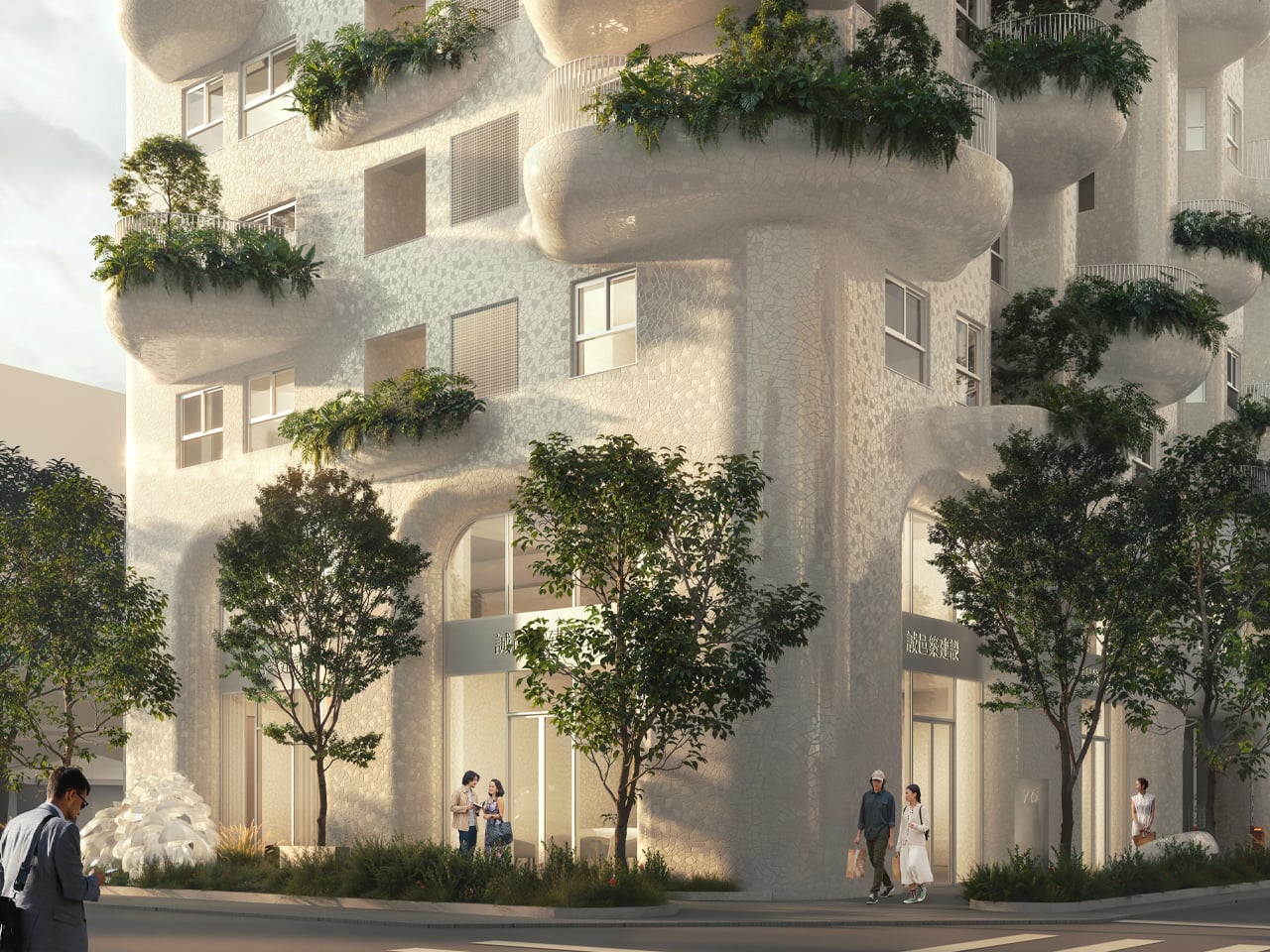
Seventy-six apartments sit above two floors dedicated to commercial space and communal amenities, including dining rooms, lounges, and karaoke spaces. The focus on community living targets middle-class buyers and young couples. Shared spaces recognize that urban liveability stretches beyond individual units to encompass social interaction and collective experience. The five communal balconies distributed throughout the building’s height create gathering points that encourage resident interaction while providing access to outdoor planted areas at multiple levels. These shared terraces function as vertical parks, bringing ground-level public space up into the residential floors.

Sustainability reaches beyond visible greenery to encompass broader environmental considerations. The project addresses carbon emissions alongside biodiversity goals, positioning itself within larger ecological conversations about dense urban development. The Gaudí-inspired ceramic technique provides aesthetic distinction while ensuring a durable, easy-to-maintain exterior that will age gracefully. The Island represents MVRDV’s ongoing investigation into how residential towers can soften cities dominated by right angles and glass boxes. Through historical reference, material craft, and environmental integration, the project suggests that density and nature need not exist in opposition. It offers instead a model where urban living and ecological consciousness merge into a single architectural expression.
The post This 21-Story Tower Has 104 Green Balconies Inspired by Gaudí first appeared on Yanko Design.
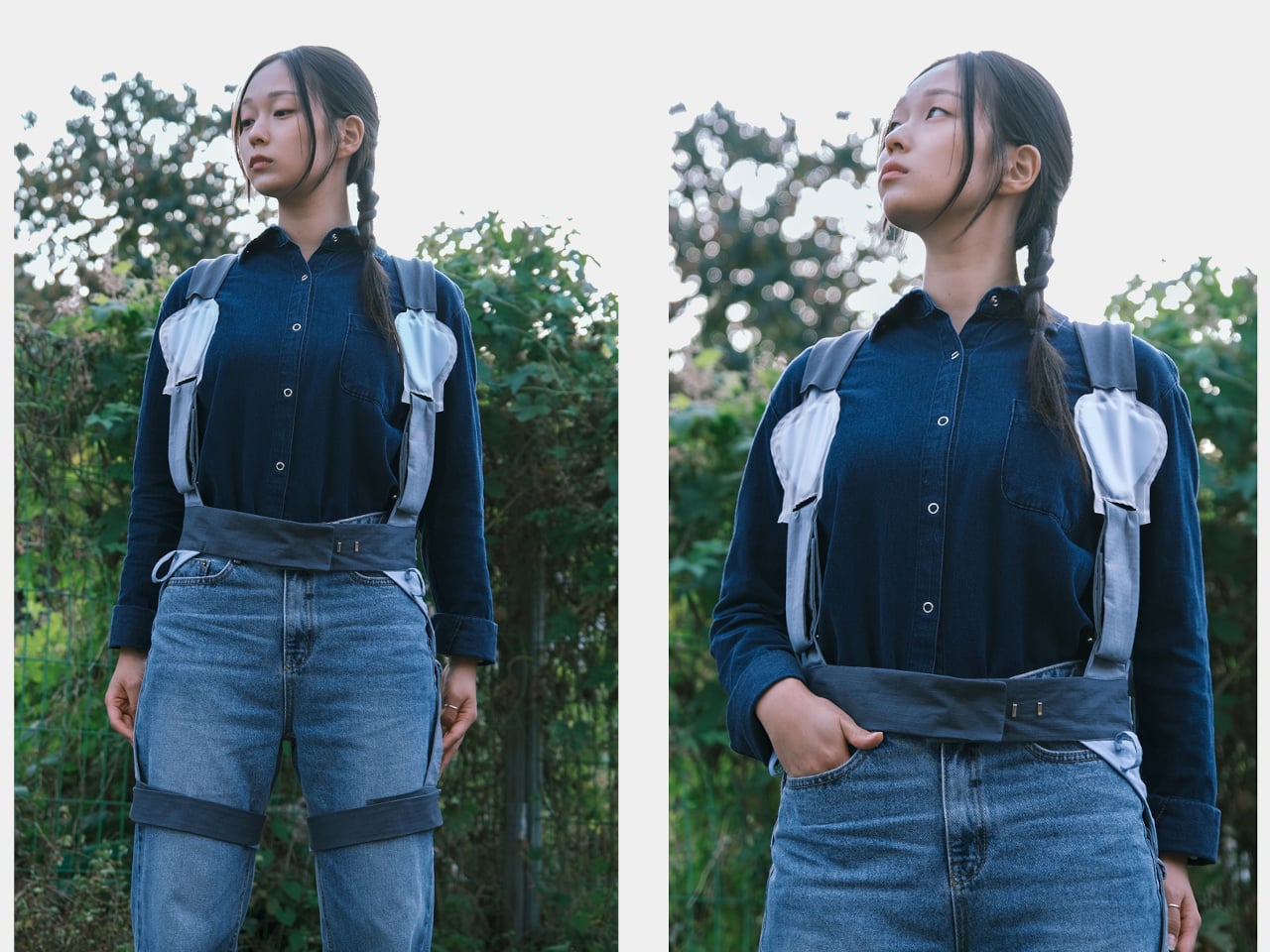
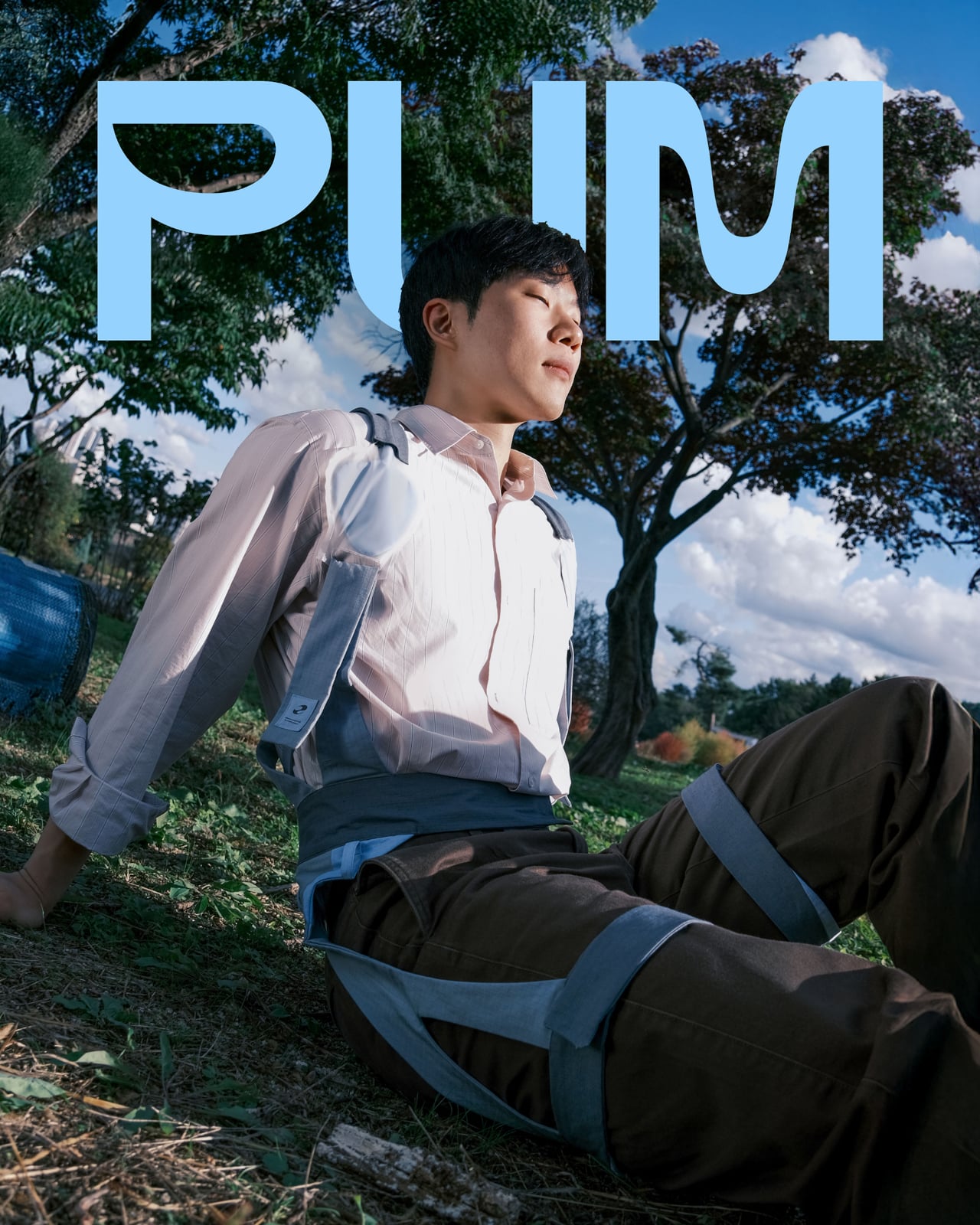
PUM Imagines a Soft Exoskeleton Posture Wearable for Young Farmers

Most posture gadgets target office workers hunched over laptops, buzzing when your shoulders curl forward, or your neck drifts too far from neutral. Meanwhile, people doing physically demanding jobs, like young farmers, quietly rack up back pain and joint strain from long hours of bending, squatting, and lifting in fields. That strain is often treated as just part of the job until it becomes a serious problem threatening long-term health and livelihood.

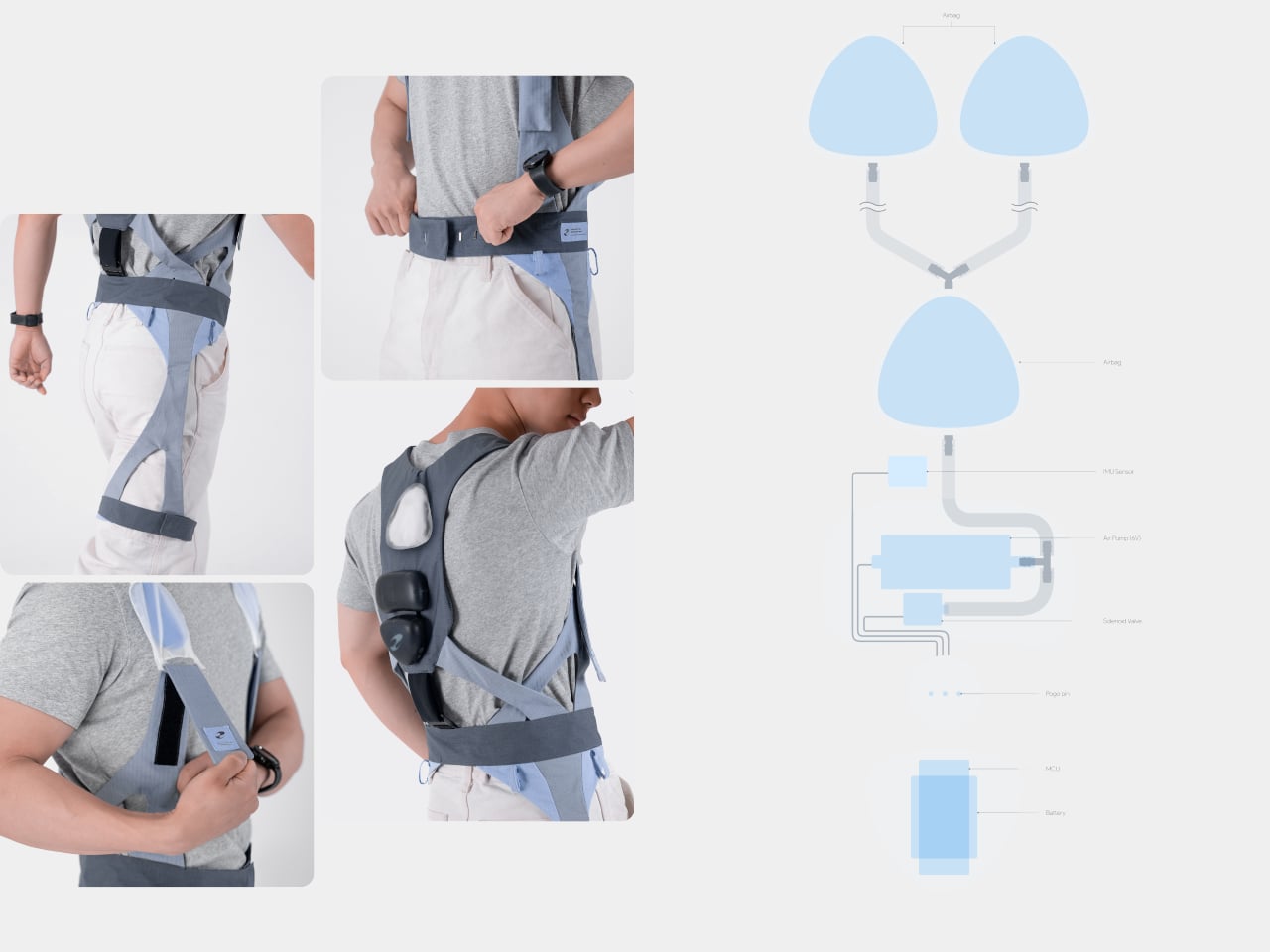
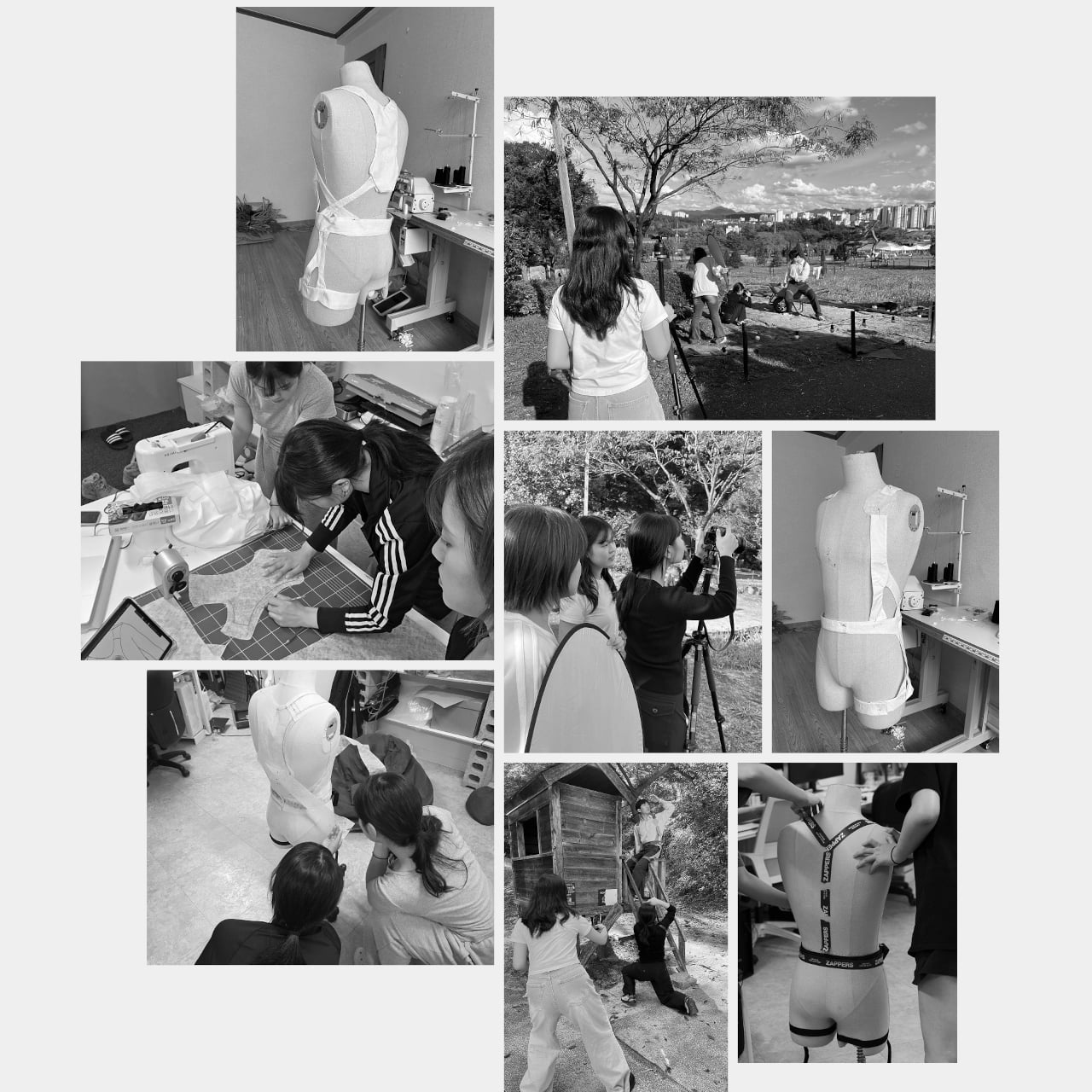
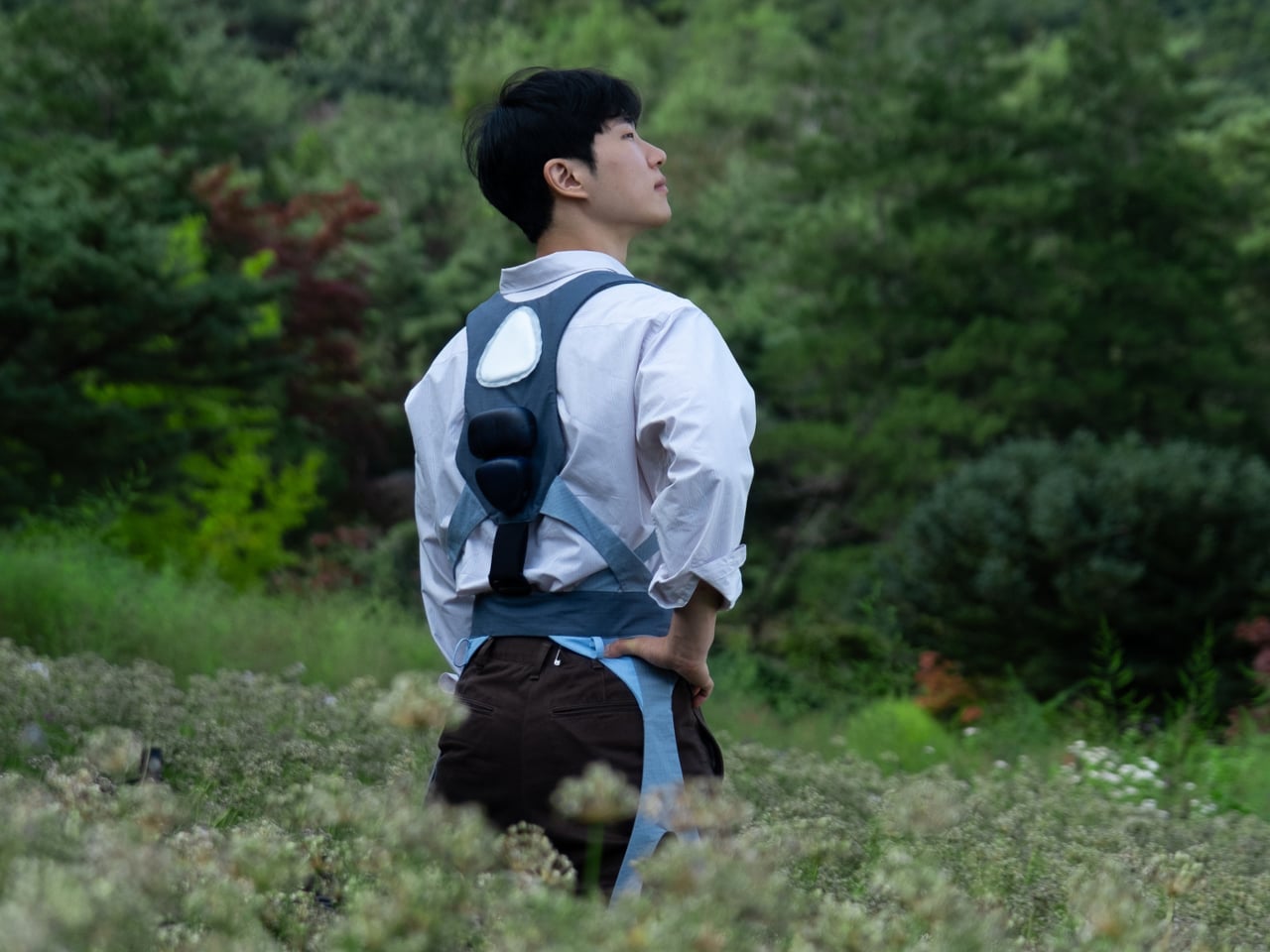
PUM is a graduation project imagining a posture correcting wearable built specifically for young farmers. It is a soft exoskeleton harness with inflatable shoulder airbags, a back module full of sensors and a pump, and an app that tracks posture and guides stretching. It is designed as gear you put on with work clothes, not a medical device you remember after damage is done or when your back hurts badly enough to stop working.

Designers: Seulgi Kim, Gaon Park, Seongmin Kim

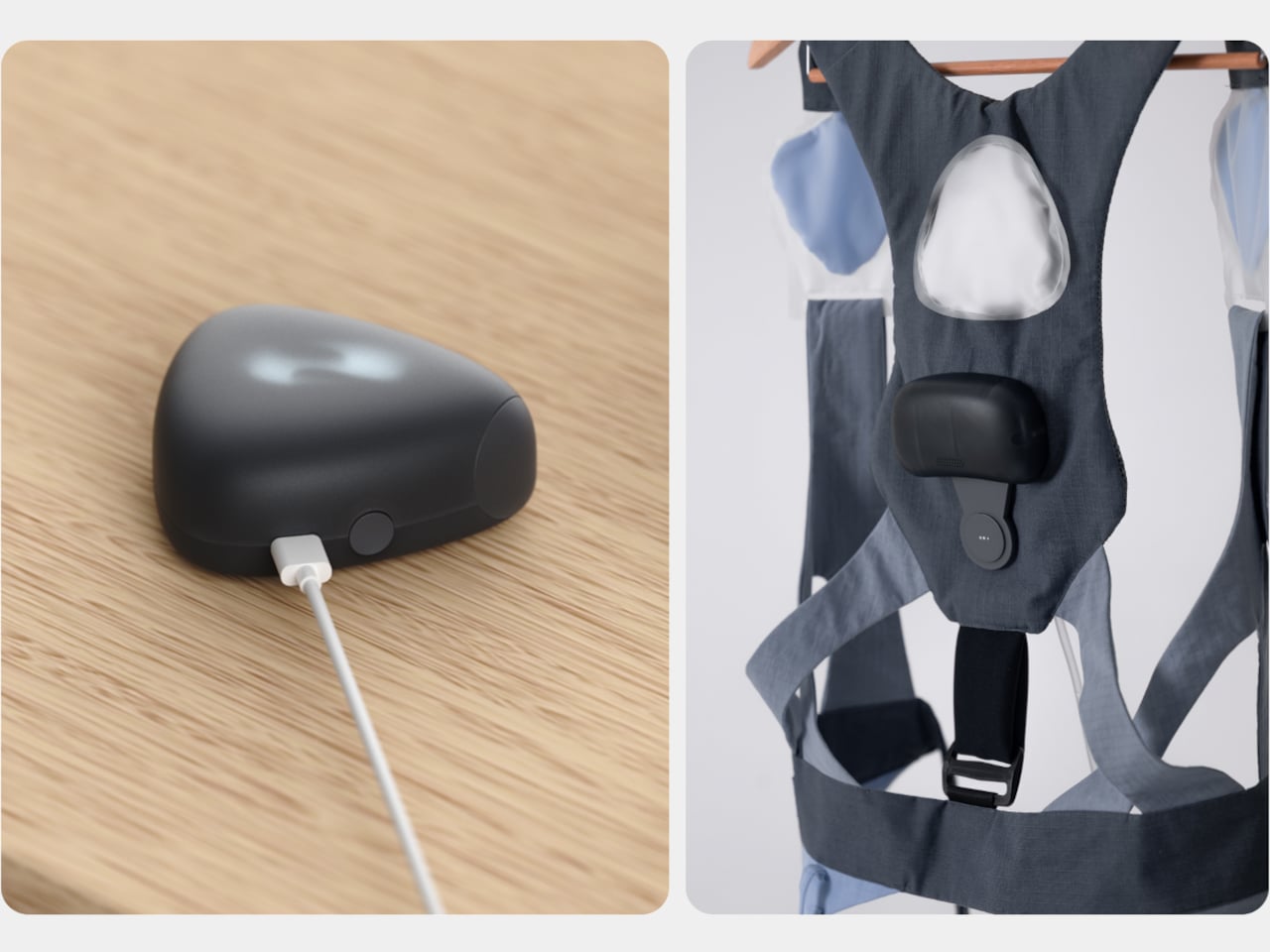
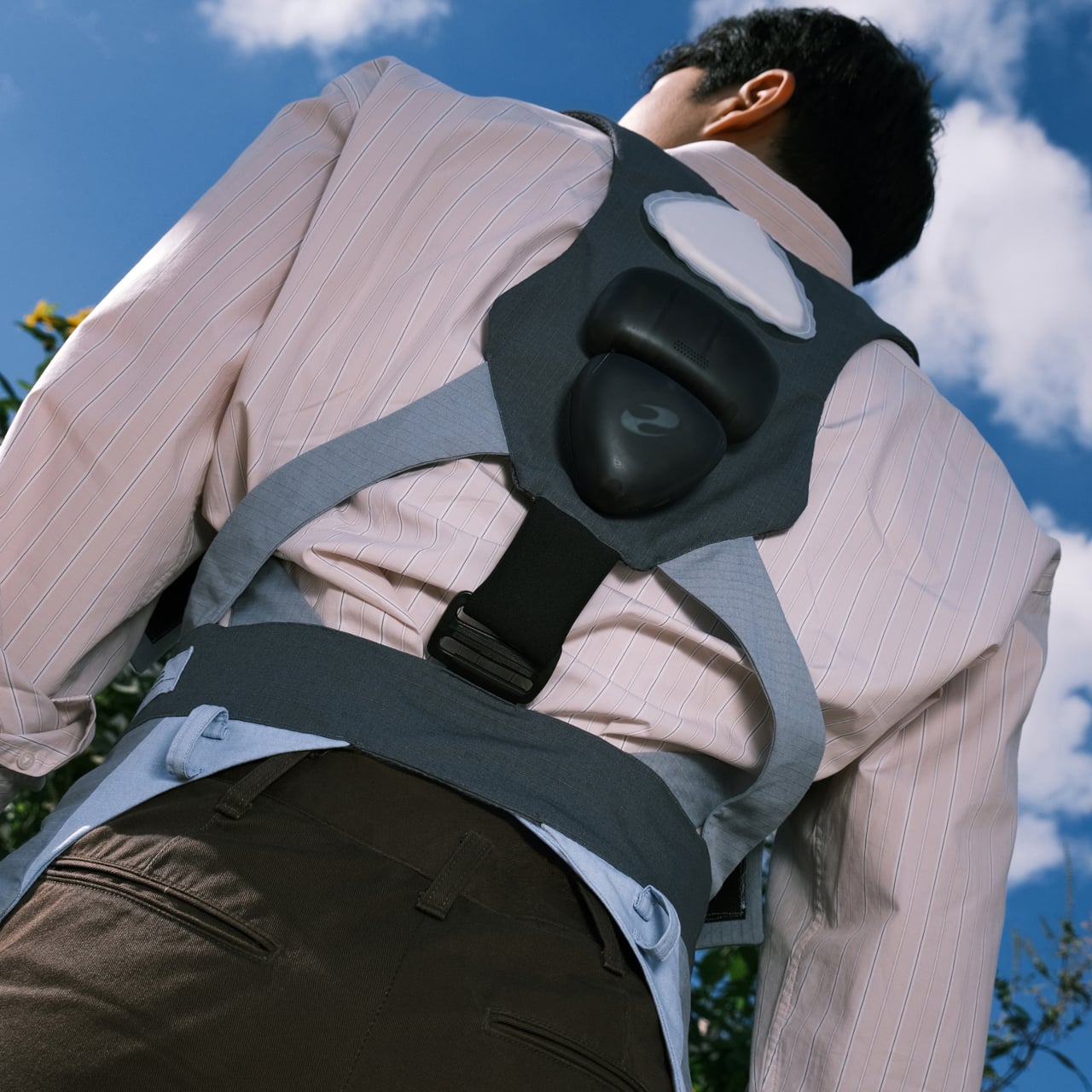
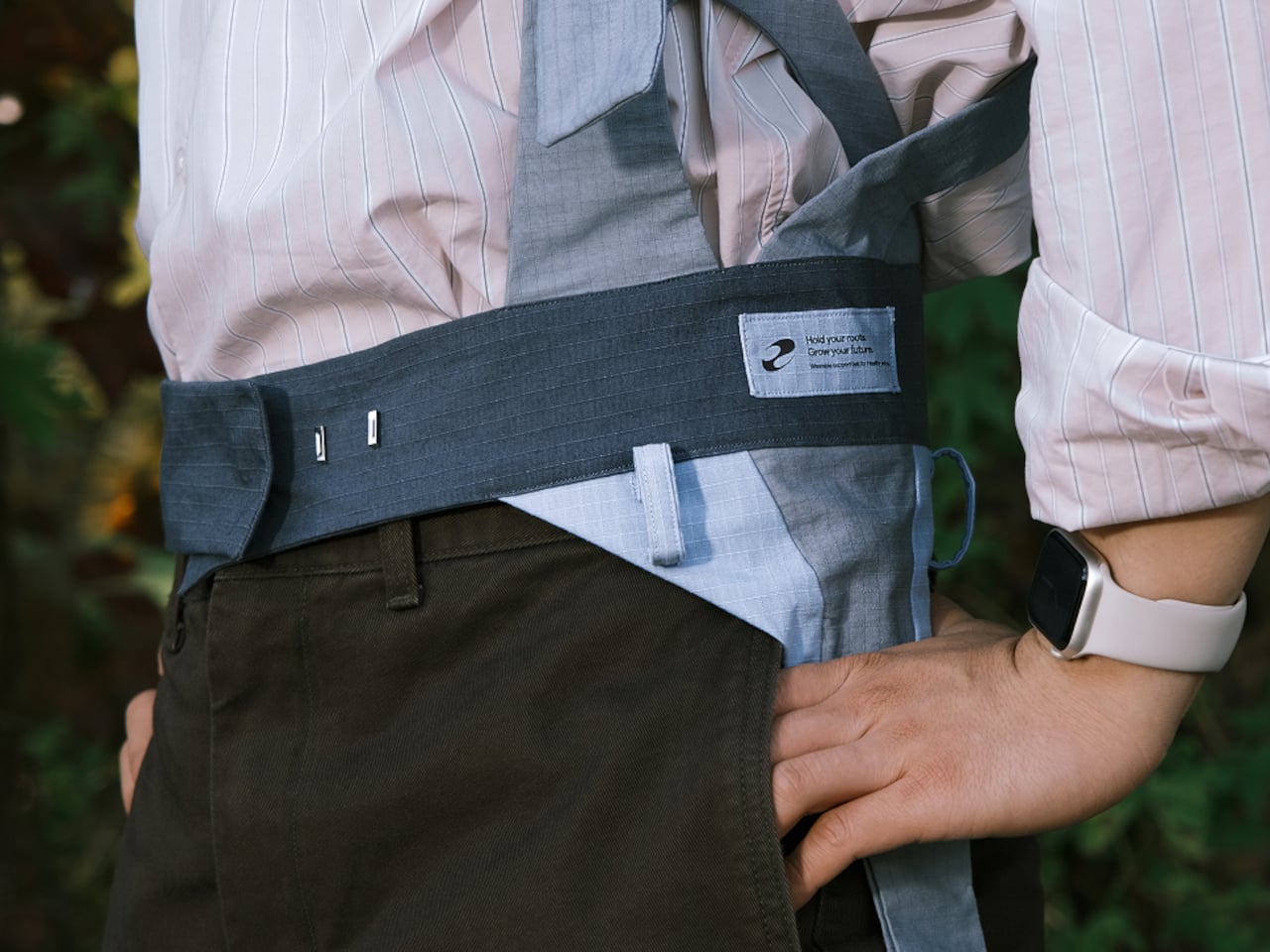
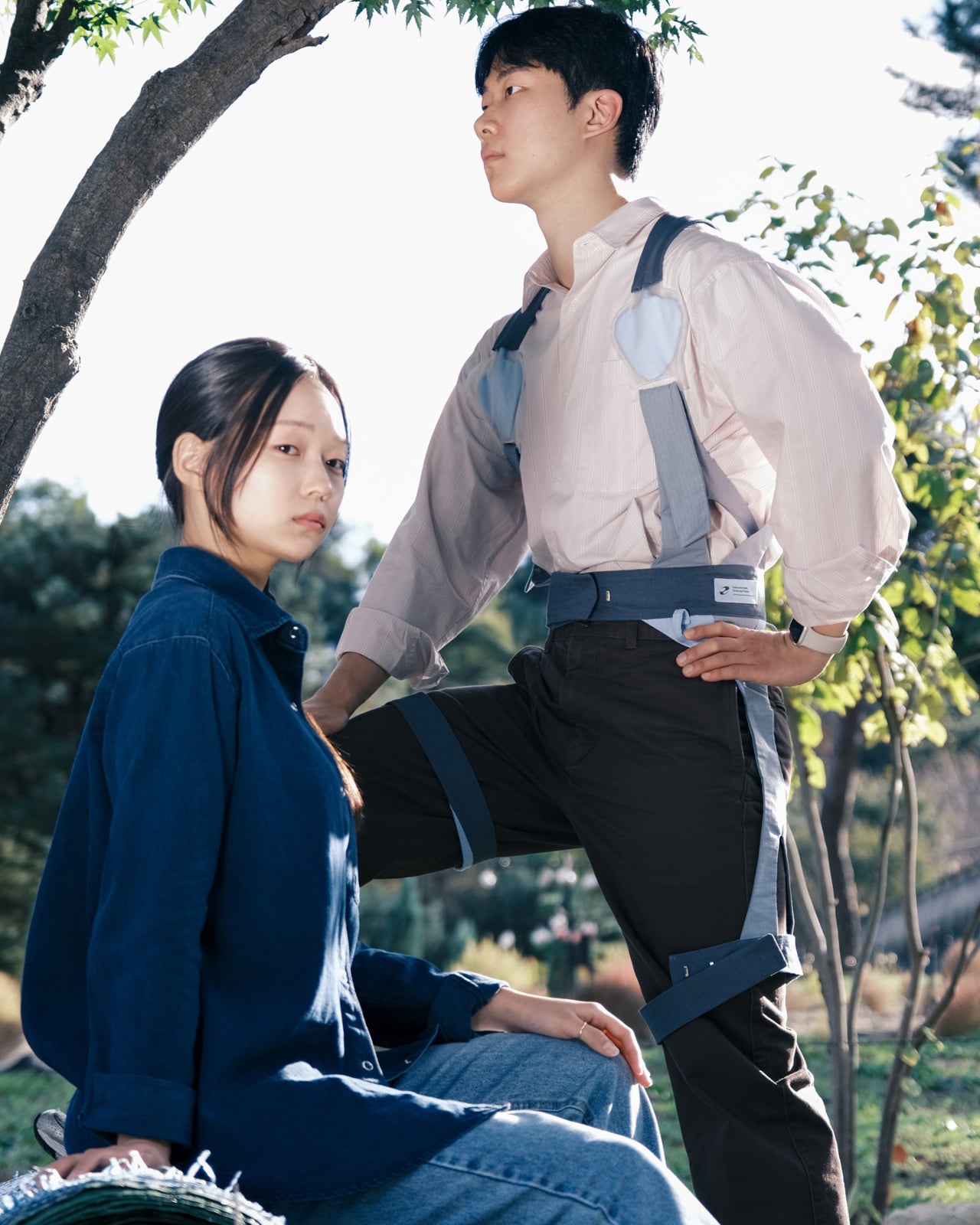
The harness wraps shoulders, torso, and thighs using wide, soft straps in muted blues and grays, with a waist belt anchoring a pebble-shaped module on the back. It aims to feel like a lightweight work vest rather than a rigid exoskeleton, avoiding bulky frames or hard edges. Leg straps and belt also double as attachment points for tools, folding ergonomic support into everyday workflow instead of adding another thing to carry.

The back module uses motion sensors to watch for deep or prolonged bending, sending data to a smartwatch and phone. When a farmer stays in a harmful posture too long, the system nudges them with an alert and, more interestingly, by slightly inflating the shoulder airbags. That gentle pressure on the upper back acts as a physical reminder to straighten up without constant buzzing or nagging notifications interrupting delicate planting or harvesting work.

The air system relies on small triangular airbags in shoulder straps connected to a pump and valves in the back module, controlled by a microcontroller and pressure sensor. When posture crosses a threshold, the pump adds air, and when the user corrects, it releases pressure. It is soft robotics used as a tap on the shoulder, a tactile cue instead of another screen telling you what to do or another alarm competing for attention.

The app layer lets farmers see how long they spent bent over, adjust how sensitive PUM is, and, at the end of the day, follow a stretching program tailored to that data. If the system saw lots of forward flexion, it suggests back extension and hamstring stretches. PUM does not clock out when fieldwork ends; it helps with recovery, so tomorrow starts from a better baseline instead of compounding yesterday’s strain into chronic issues.

PUM shifts the usual posture tech story away from offices and into fields, treating young farmers’ bodies as worth designing for. As a concept, it raises questions about durability in dusty, wet environments and whether farmers would wear a full harness every day. But it points toward a future where soft exoskeletons, air-driven feedback, and thoughtful service design quietly protect the people whose work keeps everyone else fed, instead of assuming physical labor is something bodies just endure until they break.

The post PUM Imagines a Soft Exoskeleton Posture Wearable for Young Farmers first appeared on Yanko Design.
Judge puts a one-year limit on Google’s contracts for default search placement

A federal judge has expanded on the remedies decided for the Department of Justice's antitrust case against Google, ruling in favor of putting a one-year limit on the contracts that make Google's search and AI services the default on devices, Bloomberg reports. Judge Amit Mehta's ruling on Friday means Google will have to renegotiate these contacts every year, which would create a fairer playing field for its competitors. The new details come after Mehta ruled in September that Google would not have to sell off Chrome, as the DOJ proposed at the end of 2024. 

This all follows the ruling last fall that Google illegally maintained an internet search monopoly through actions including paying companies such as Apple to make its search engine the default on their devices and making exclusive deals around the distribution of services such as Search, Chrome and Gemini. Mehta's September ruling put an end to these exclusive agreements and stipulates that Google will have to share some of its search data with rivals to "narrow the scale gap" its actions have created. 

This article originally appeared on Engadget at https://www.engadget.com/big-tech/judge-puts-a-one-year-limit-on-googles-contracts-for-default-search-placement-215549614.html?src=rss

MaClock Shrinks the 1984 Macintosh Into a $30 Rechargeable Clock

Nostalgia tech falls into two camps. Lazy references slap a retro logo on a modern object and call it vintage, while obsessive recreations feel like museum pieces. Most products lean too far in one direction, missing the sweet spot where memory and function coexist comfortably. The first feels cheap, the second feels precious, and neither ends up on your desk for very long once the initial charm wears off.

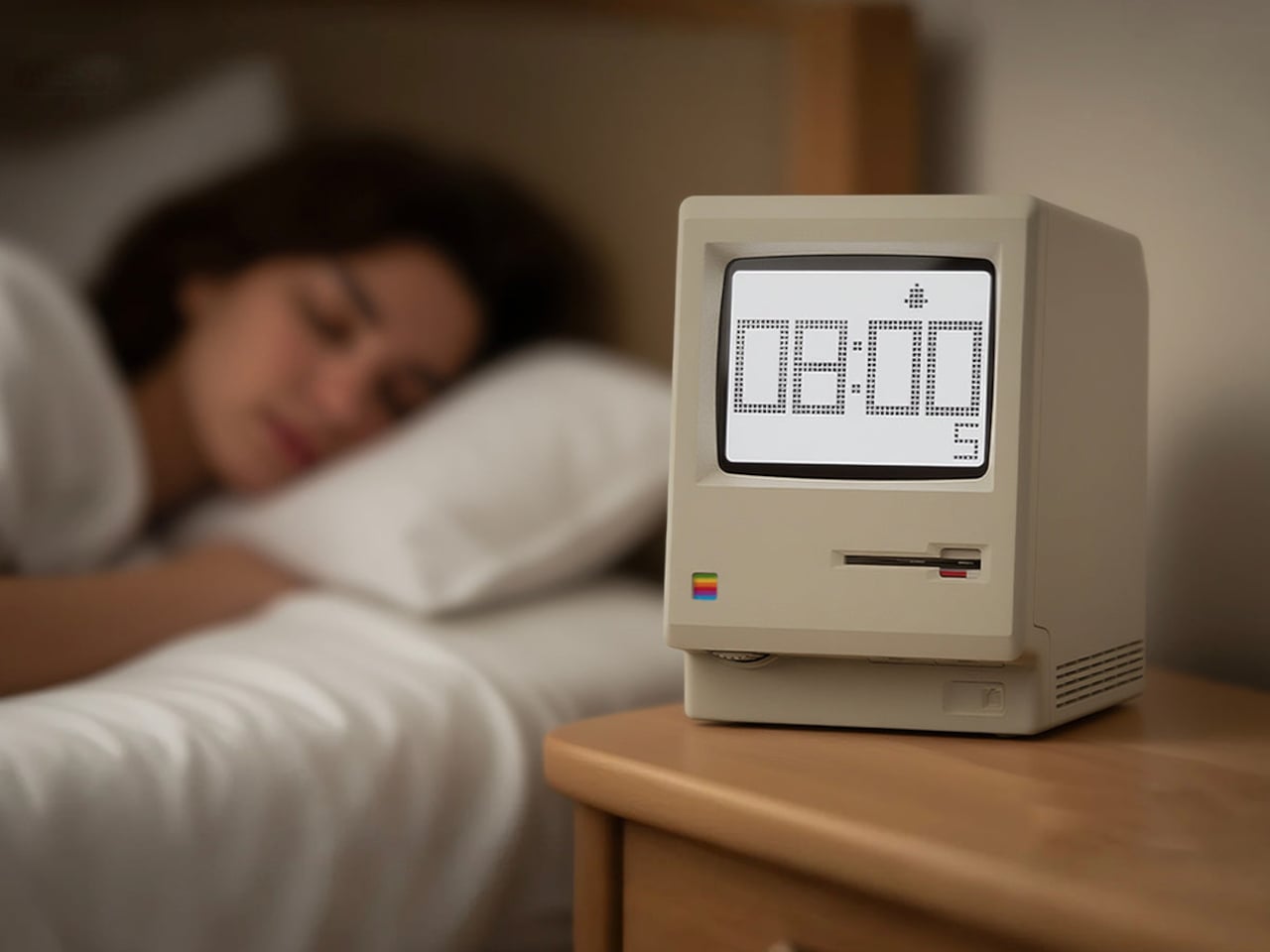
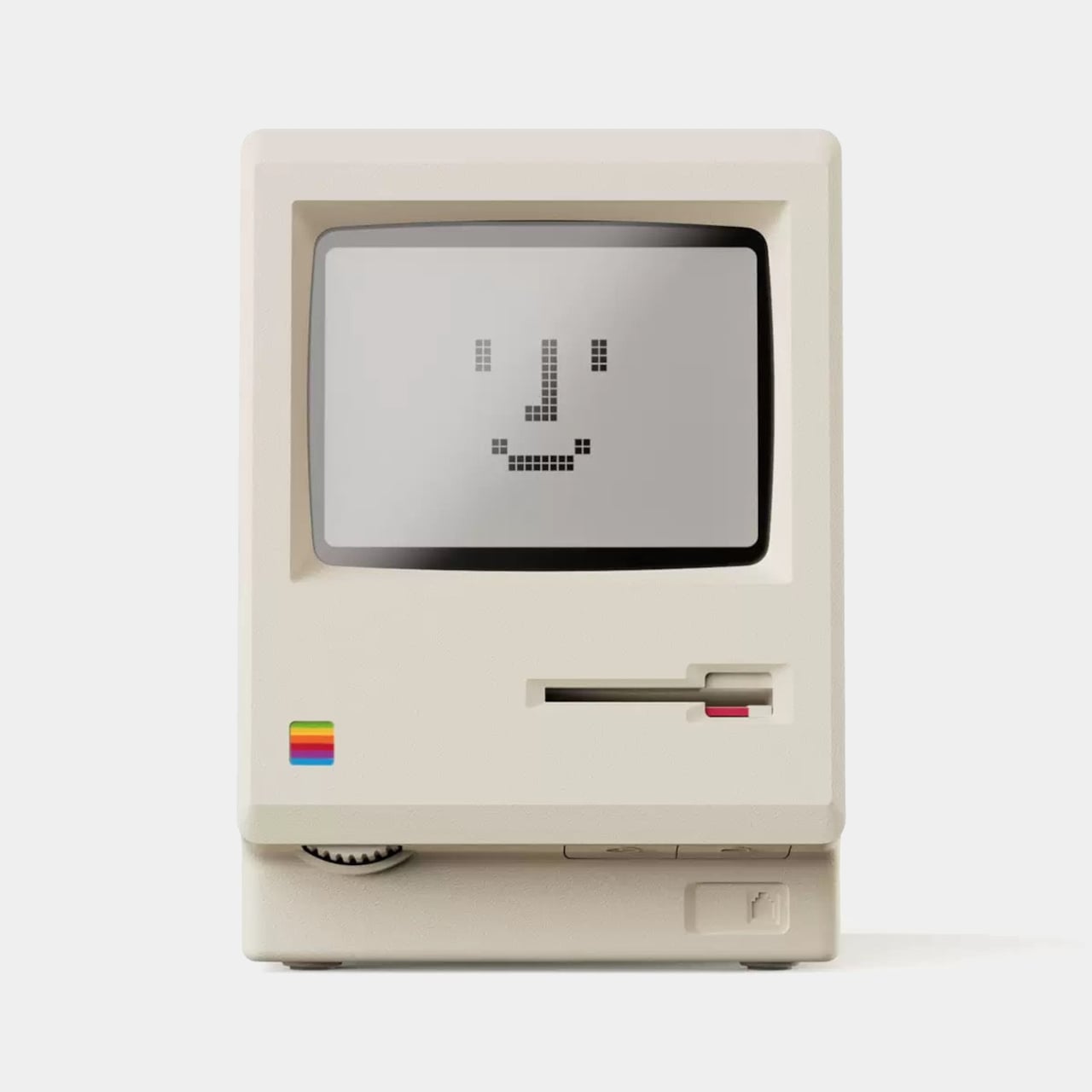
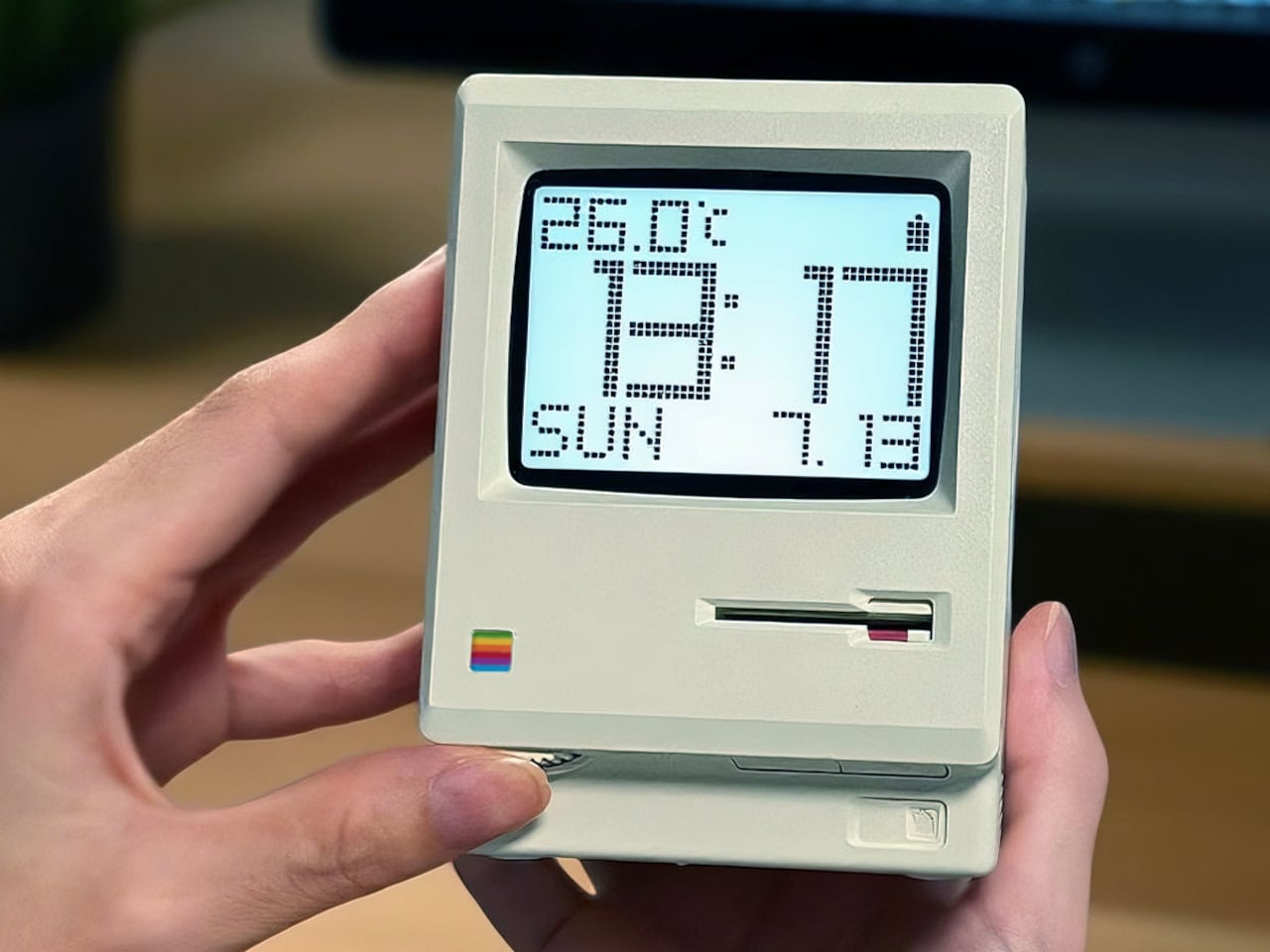
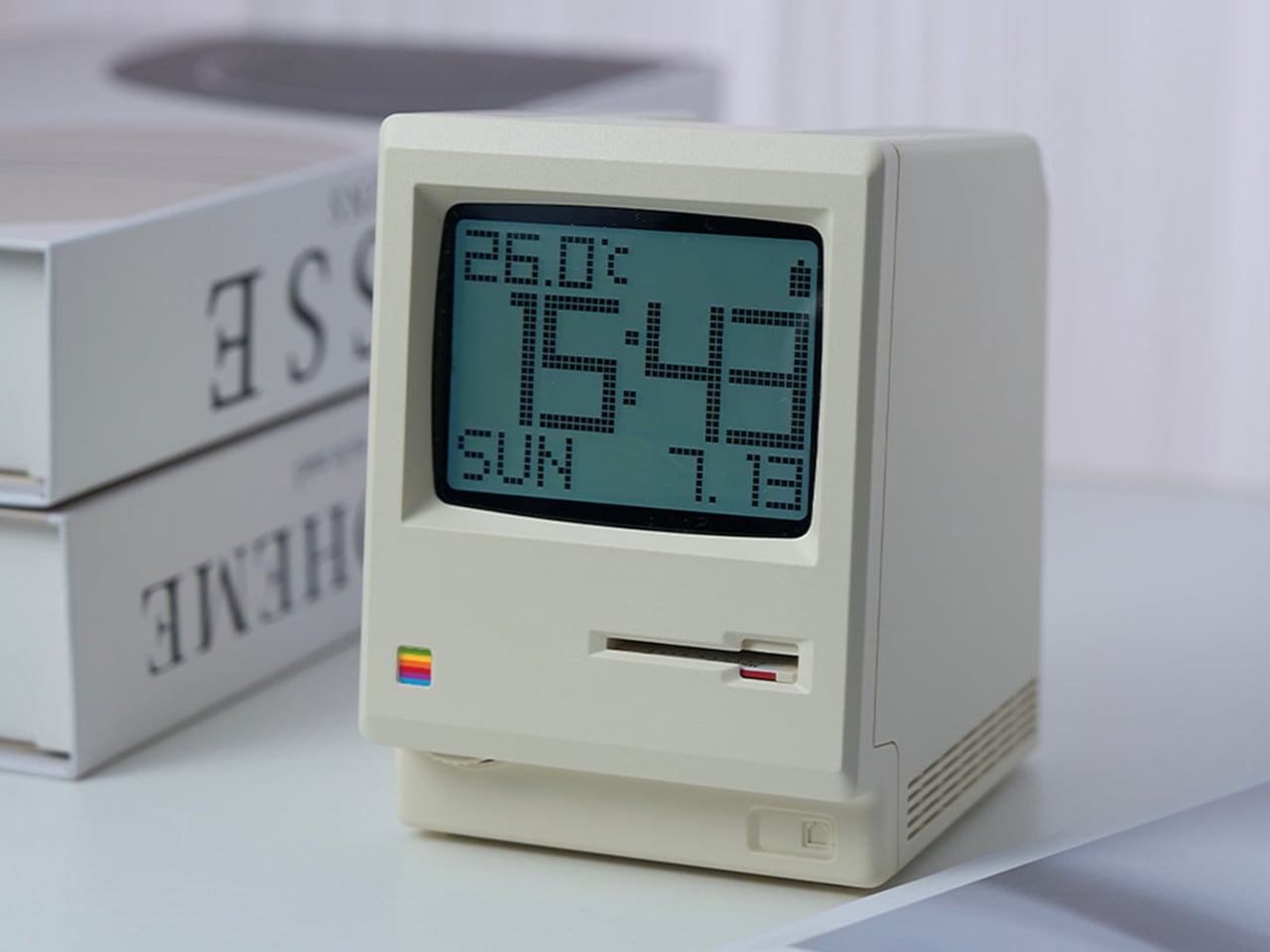
MaClock by Kokogol hits that balance. It is a miniature 1984 Macintosh that works as a rechargeable desk alarm clock, recreating the beige enclosure, rainbow Apple logo, CRT-style screen, and floppy disk slot at nightstand scale. It still behaves like a proper modern clock with 60-day battery life and USB-C charging, not just a static replica gathering dust next to other impulse buys that reminded you of childhood.

Designer: Kokogol

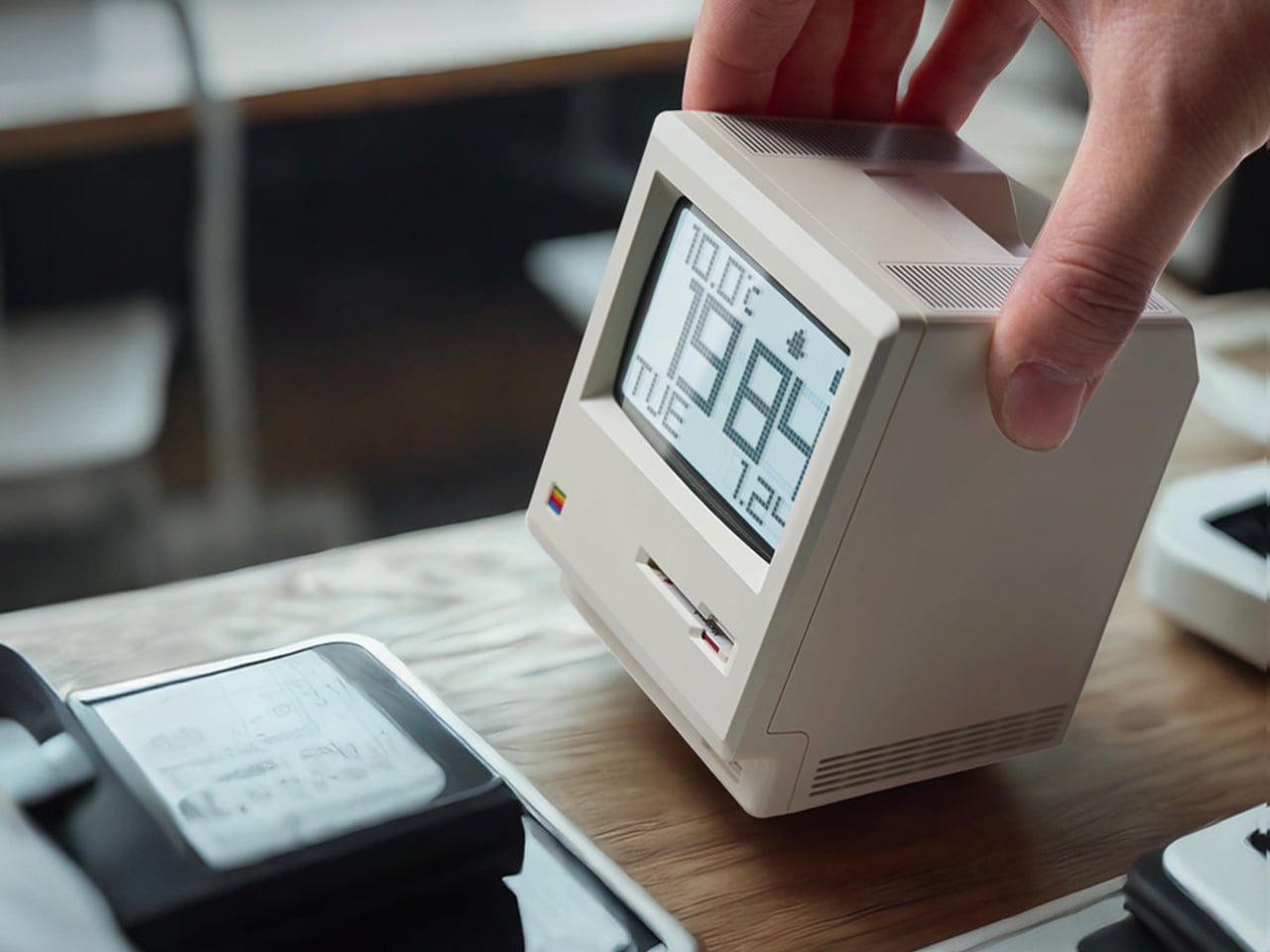
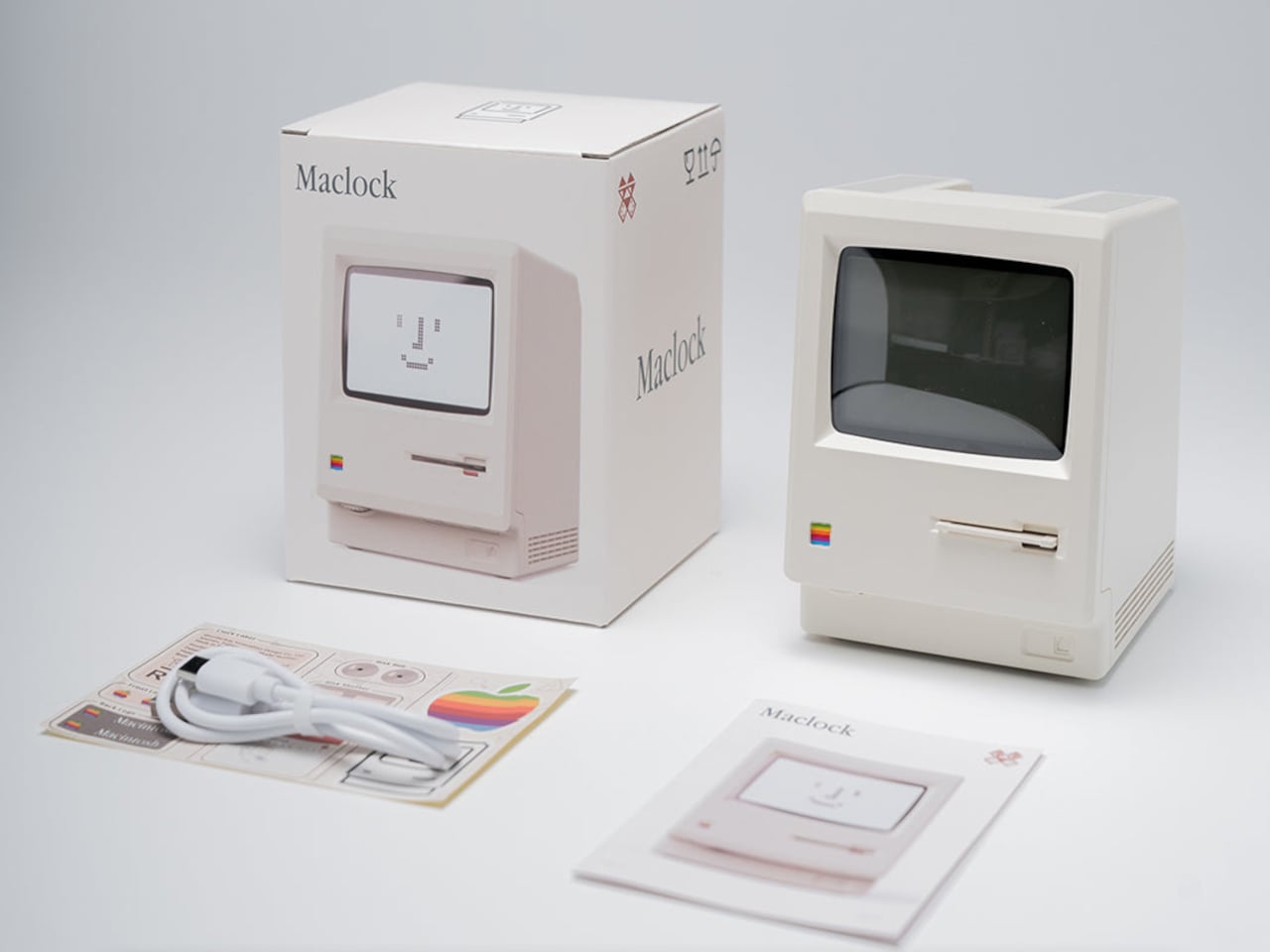
The physical details feel right. Warm beige ABS body, a recessed curved screen mimicking a cathode ray tube, horizontal ventilation grilles on the side, and a tiny floppy disk drive slot with a pink tab. At 80 x 91 x 112 mm, it is substantial enough to feel real in your hand, not a keychain trinket. The proportions match the original closely enough that it reads instantly as a Mac, even from across a room.

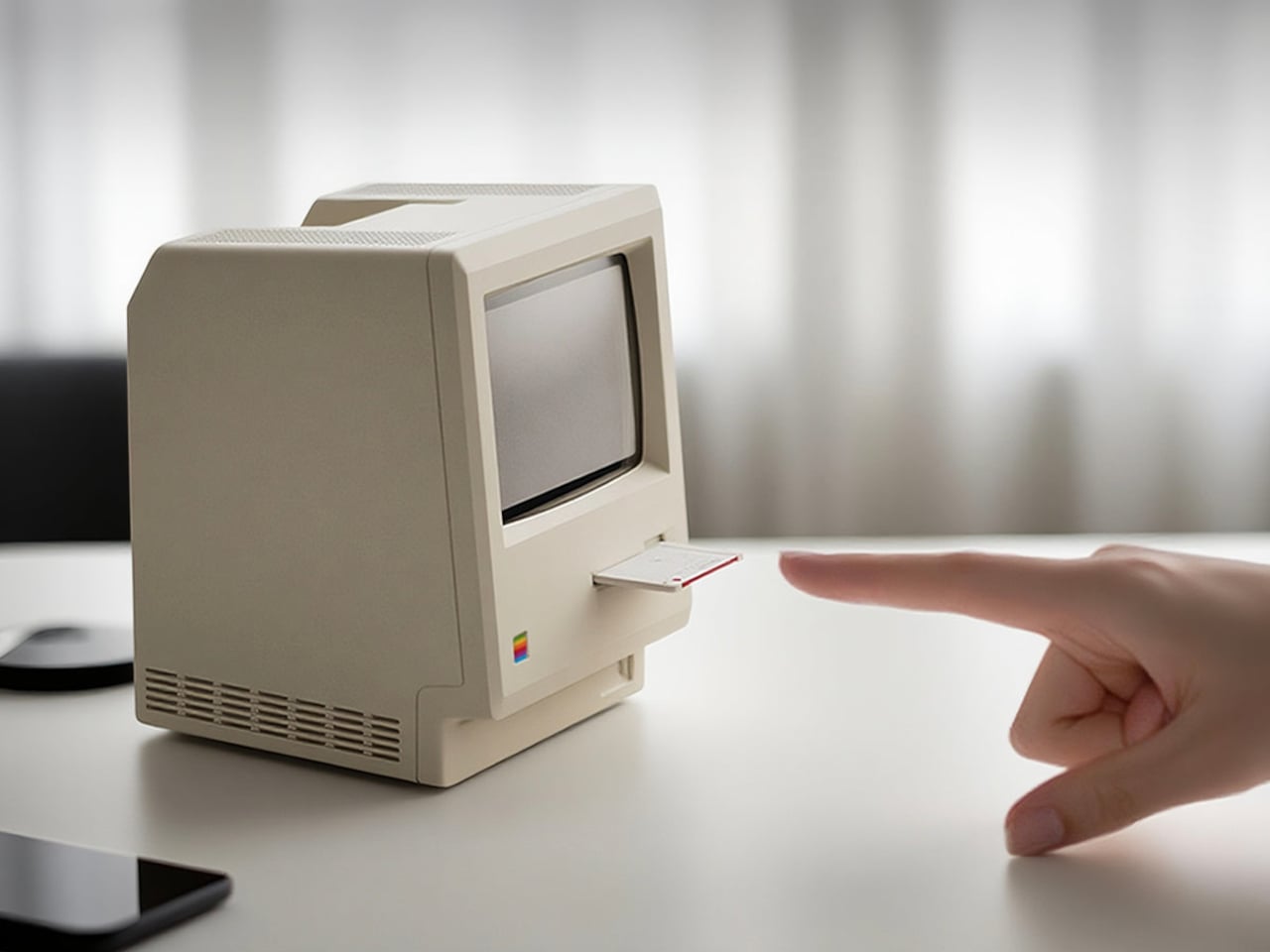
The included floppy disk acts as a power switch. You insert it to turn the clock on, a callback to the boot ritual of early Macs. The package includes a sticker sheet with rainbow Apple logos, a Macintosh label, and a dot matrix sticker, letting you customize and restore the design yourself. The unboxing becomes a small assembly project rather than a passive reveal, which makes it feel slightly more earned.

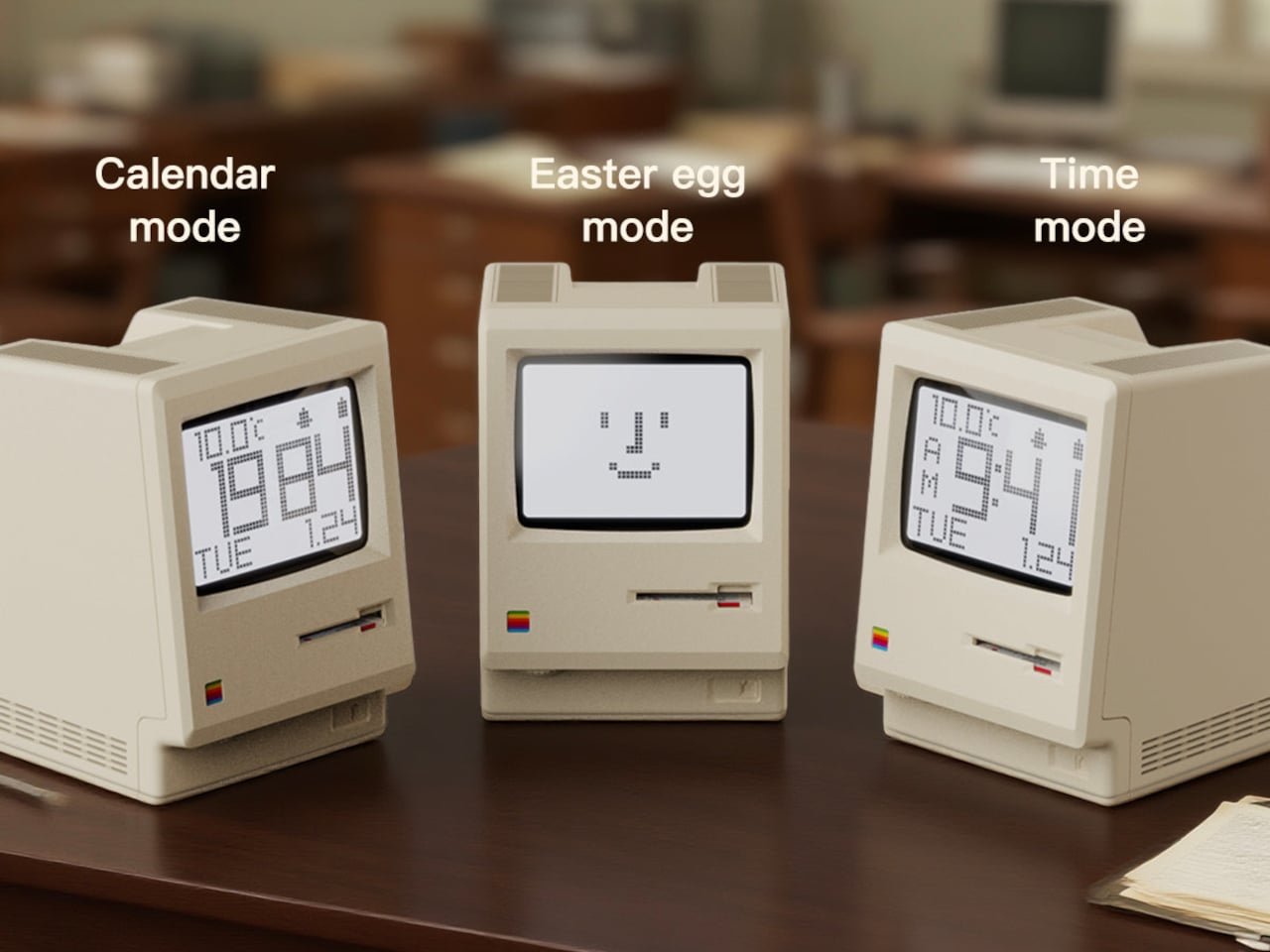
MaClock offers three display modes. Time mode shows large pixelated digits for hours, minutes, day, and temperature. Calendar mode centers the date in blocky characters. Easter egg mode wakes up Susan Kare’s Happy Mac icon, the smiling face from the original graphical interface. Seeing Happy Mac on your desk in 2025 is an unexpectedly emotional hit for anyone who grew up with early Macs and remembers what that face meant.

The adjustable backlight is controlled by a knob on the bottom left, which can be dialed down at night or turned off entirely. With the backlight off, the battery lasts up to 60 days, so it can sit on your desk for weeks without charging. It feels more like furniture than a gadget you babysit with a cable every few nights, which is exactly how a clock should behave.

MaClock treats nostalgia as something you participate in rather than just look at. The floppy disk, the stickers, the Happy Mac mode, and the CRT-inspired screen all ask you to engage with the memory. At just $30, it sits in the impulse buy zone, which might be the right price for functional nostalgia that earns its desk space by telling time and making you smile every morning when Happy Mac greets you with those chunky pixels.

The post MaClock Shrinks the 1984 Macintosh Into a $30 Rechargeable Clock first appeared on Yanko Design.
Sandmarc Lens Gives iPhone 17 Pro 16x Optical Zoom, No Digital Tricks

iPhone zoom has improved, especially with the 17 Pro’s tetraprism, but anything past 5x still leans heavily on digital tricks. Distant concert shots look like watercolor paintings, city skyline details collapse into mush when you pinch to zoom. If you actually care about long lenses, you usually end up carrying a separate camera and a chunky telephoto, which defeats the point of traveling light in the first place.

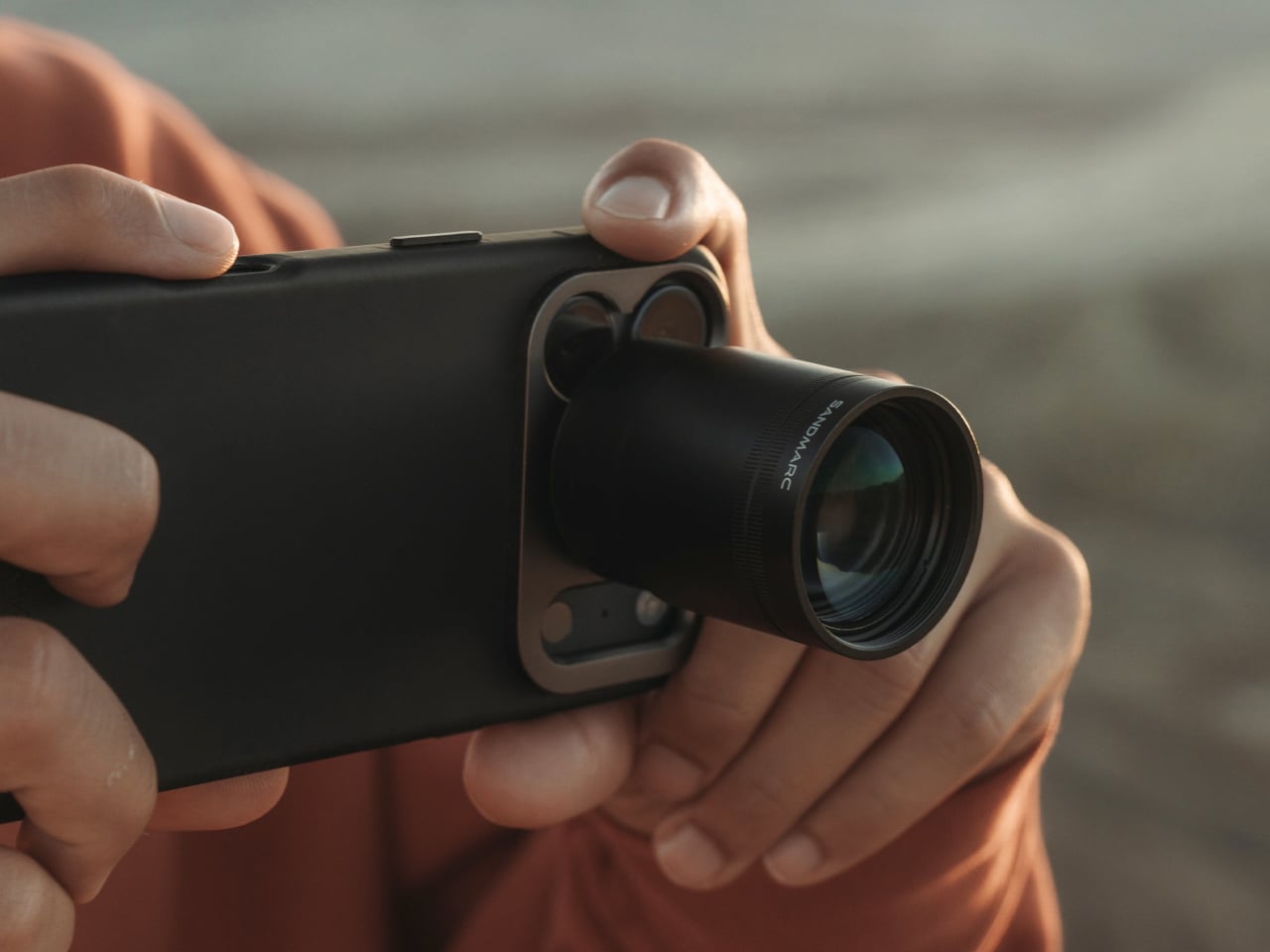
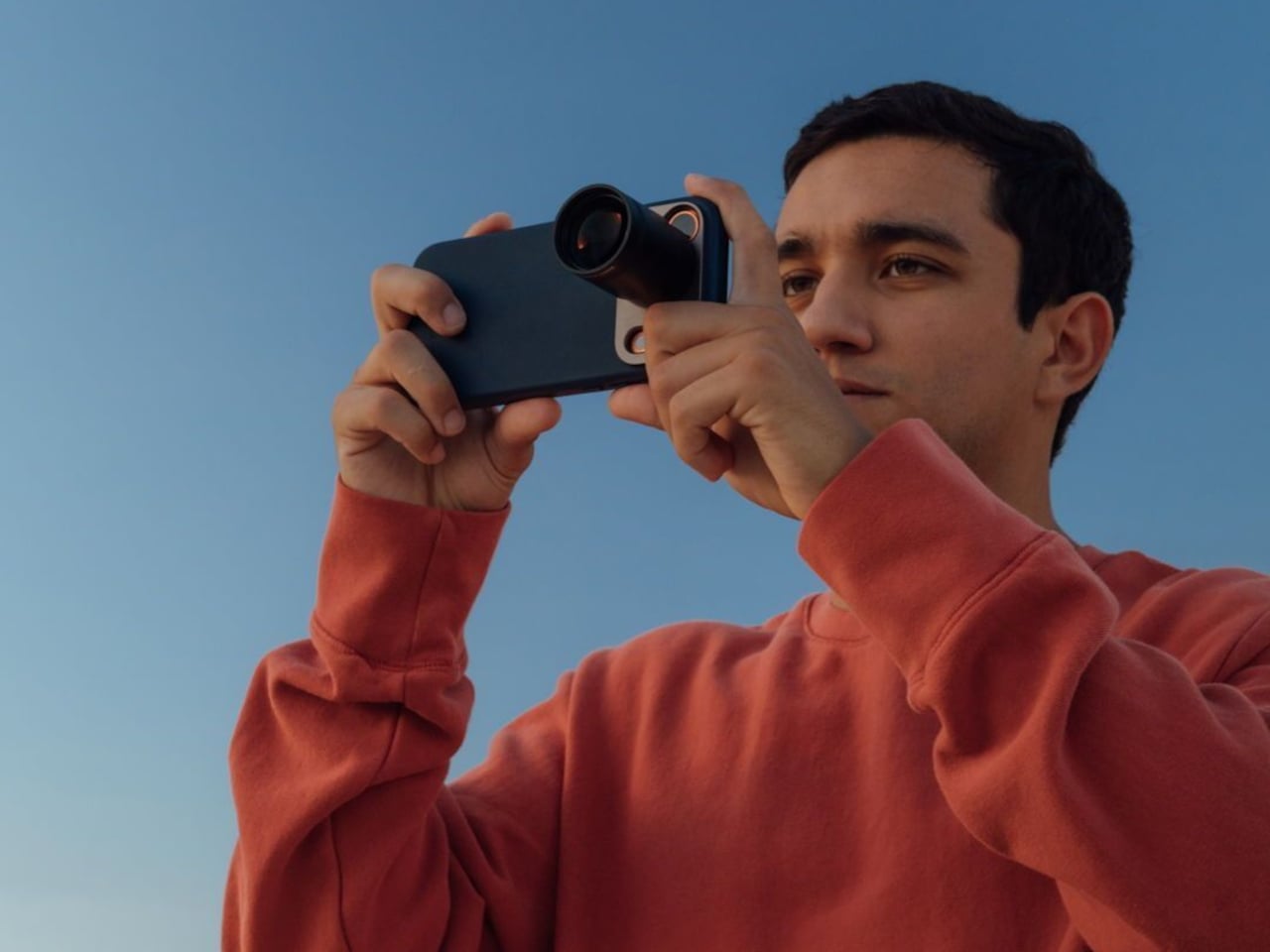
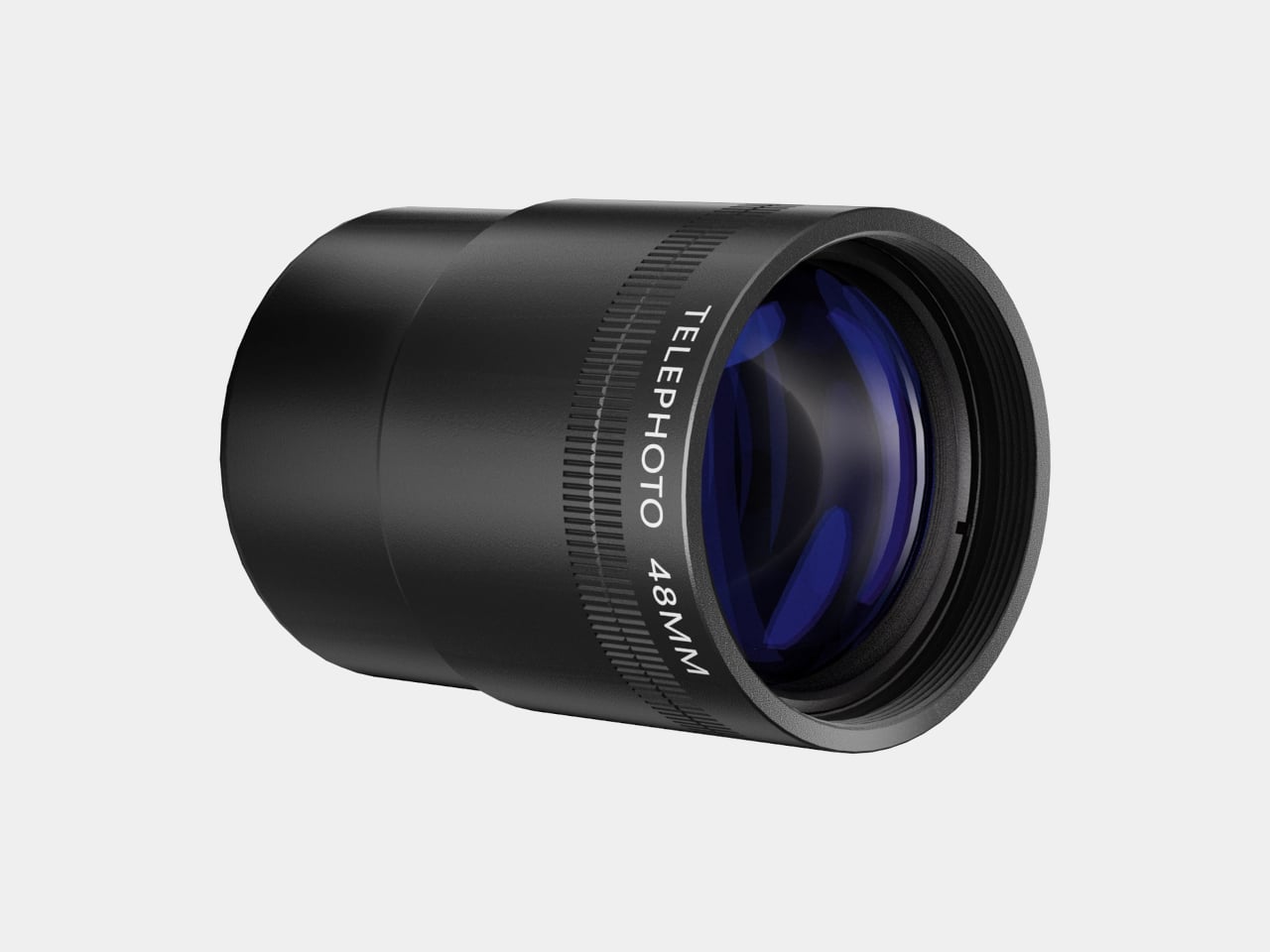
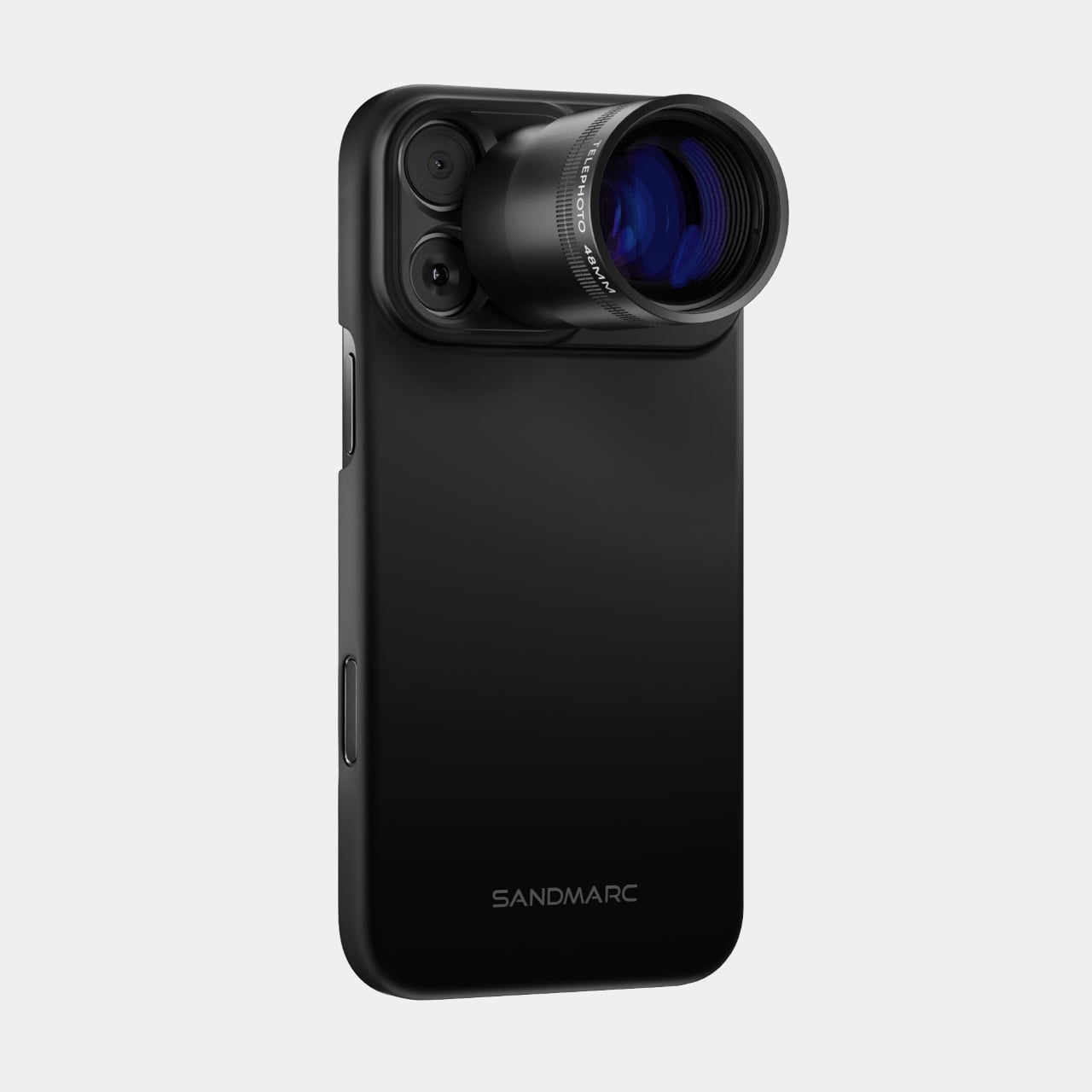
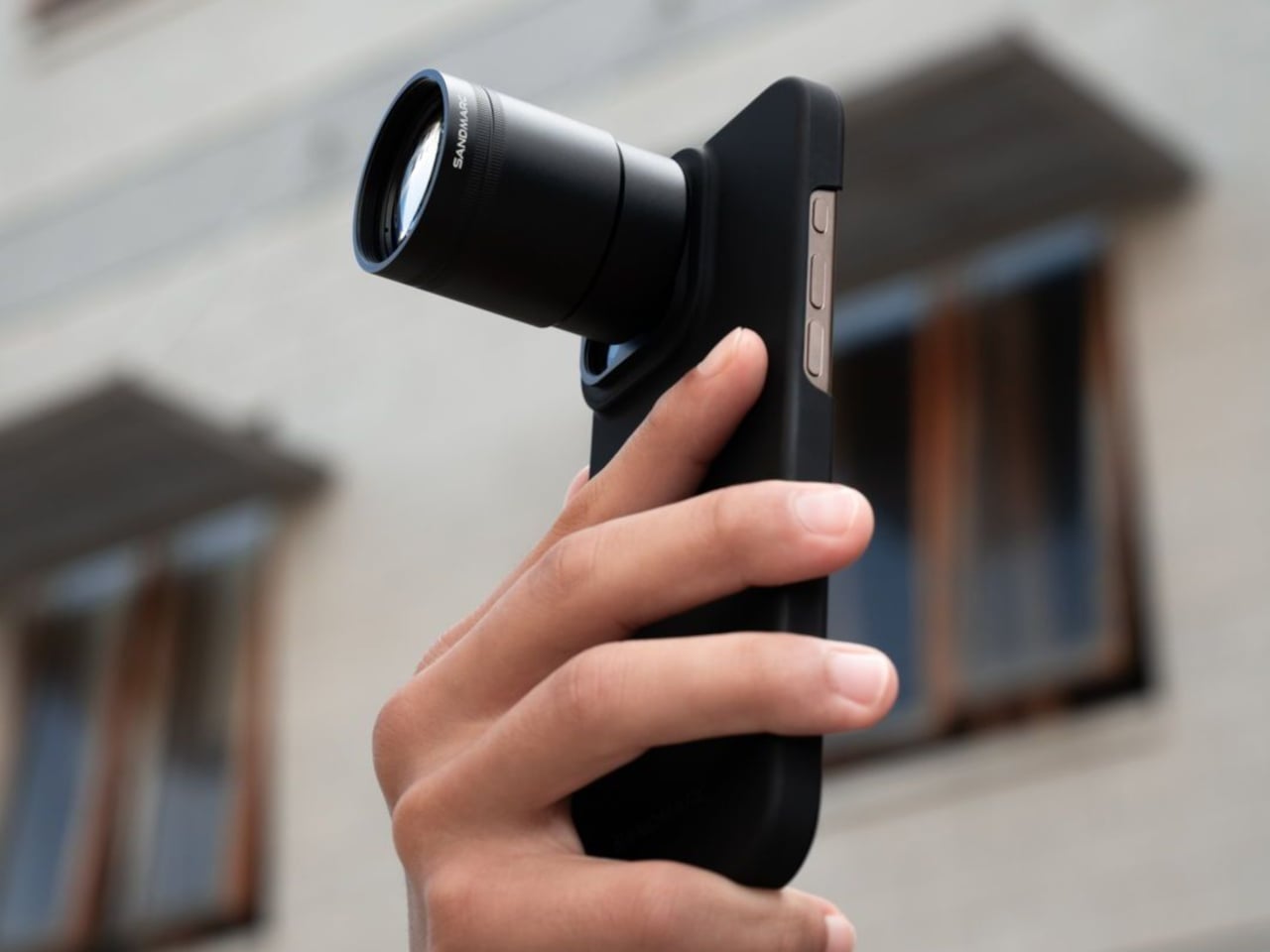
Sandmarc’s Telephoto Tetraprism Lens offers a different approach. It is a 48mm 2x optical telephoto that mounts directly over the 17 Pro’s 5x tetraprism camera, giving you up to 16x reach, roughly a 384mm equivalent. Real glass does the work instead of software interpolation. It is built specifically for Apple’s tetraprism module, not a generic clip on trying to cover all three lenses poorly.

Designer: Sandmarc

The lens is a multi element, multi coated cylinder weighing about 250 grams, closer to a compact mirrorless lens than a toy. The field of view narrows to 16.7 degrees, which gives you tight framing and real telephoto compression, the kind that pulls distant mountains closer or stacks city buildings into dense layers. The front element sits deep inside a metal barrel with blue anti reflection coating, machined rather than molded.

Where it shines is shooting where you physically cannot move closer. Standing on a ridge pulling in a faraway peak, shooting street portraits from across the road, grabbing architectural details from stadium seats without leaning on digital zoom that turns textures into paste. The lens only works with the 5x module, so you need a pro camera app to force the phone onto that sensor, but once dialed in, results look more like a small camera than a phone.

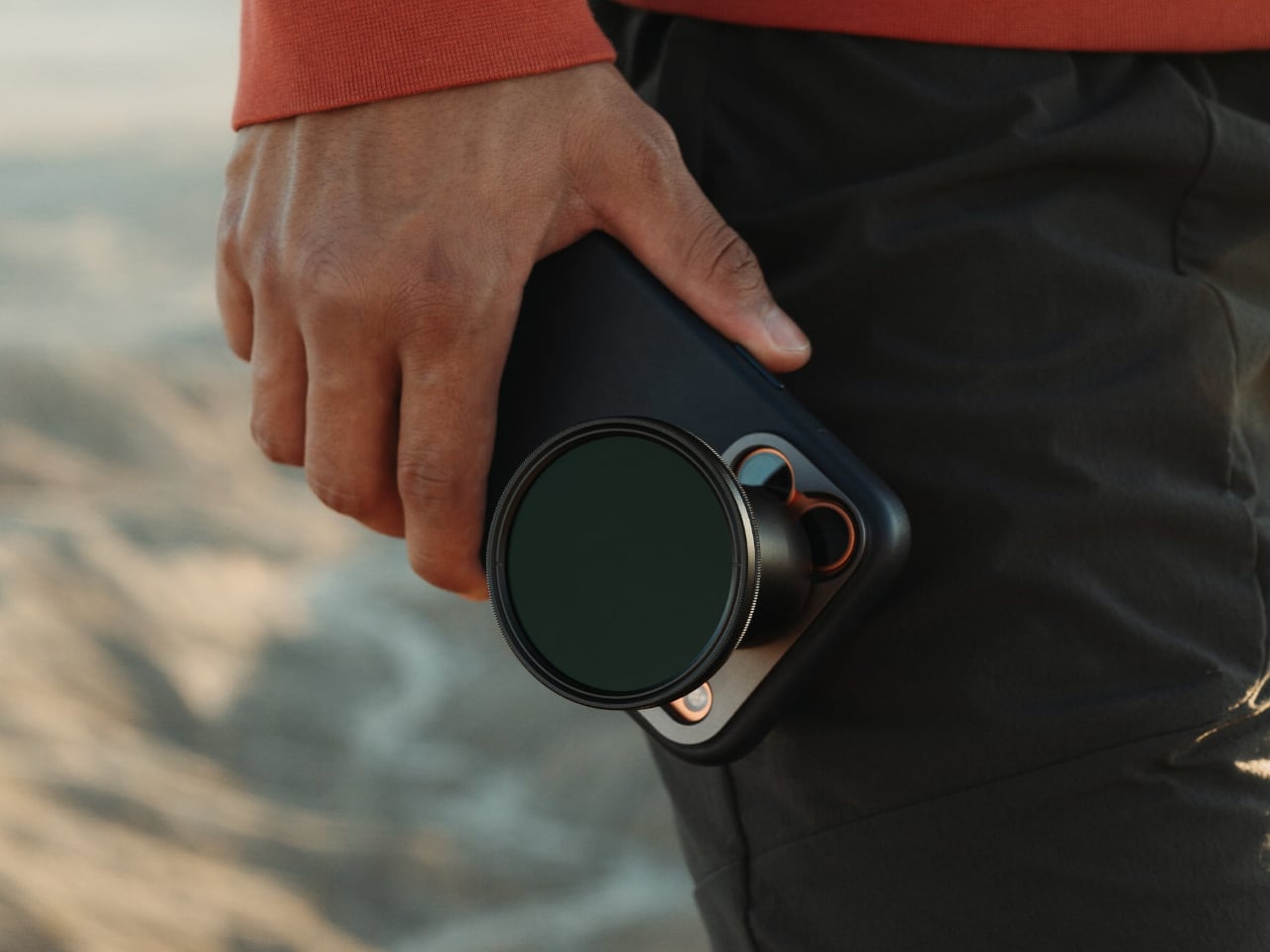
The front of the lens is threaded for Sandmarc’s own filters, so you can snap on an ND, polarizer, or diffusion filter just like you would on a regular camera. That opens up long exposures, glare control, and more cinematic looks. The included Ultra Slim case handles alignment and mounting without fiddling with clips, though it does mean swapping out whatever case you normally use when you want the lens attached.

The trade offs are real. The lens adds bulk and weight, only works with the 17 Pro and Pro Max tetraprism camera, needs Sandmarc’s case, and really wants a third party camera app. It is not something you leave on all day. It is the piece of kit you pack when you will be chasing distant subjects and want something better than cropped pixels, accepting your phone will feel like a small camera for a few hours.

Accessories like this make the iPhone feel less like a sealed black box and more like a modular camera system. For people who already think in focal lengths and filters, the Sandmarc Telephoto Tetraprism Lens turns the 17 Pro into a capable long lens rig, without asking you to give up having your main camera still live in your pocket when you are done shooting and need to check email or navigate to the next location.

The post Sandmarc Lens Gives iPhone 17 Pro 16x Optical Zoom, No Digital Tricks first appeared on Yanko Design.
Apple’s Johny Srouji could continue the company’s executive exodus, according to report

Apple's Johny Srouji may be the latest company executive to seek greener pastures, according to a report from Bloomberg. The report said that Srouji, Apple's senior vice president of hardware technologies, told Tim Cook that he is "seriously considering leaving in the near future."

While the report didn't mention if Srouji has another job lined up, Bloomberg's sources claimed that he wants to join another company if he leaves Apple. Srouji joined the company in 2008 to develop Apple's first in-house system-on-a-chip and eventually led the transition to Apple silicon.

If Srouji leaves Apple, he would be the latest in a string of departures of longtime execs. At the start of the month, Apple announced that John Giannandrea, the company's senior vice president for machine learning and AI strategy, would be retiring from his role in spring 2026. A couple of days later, Bloomberg reported that the company's head of interface design, Alan Dye, would be leaving for a role at Meta. Adding to those exits, Apple also revealed that Kate Adams, who has been Apple's general counsel since 2017, and Lisa Jackson, vice president for Environment, Policy, and Social Initiatives, will both be leaving in early 2026.

The shakeup at the executive level comes after Bloomberg's Mark Gurman previously reported that Cook may not be preparing for his own departure as CEO next year. Gurman's prediction counters a report from the Financial Times that claimed that Apple was accelerating succession plans for Cook with an expected stepping down sometime next year.

This article originally appeared on Engadget at https://www.engadget.com/big-tech/apples-johny-srouji-could-continue-the-companys-executive-exodus-according-to-report-200750252.html?src=rss

Waymo’s robotaxi fleet is being recalled again, this time for failing to stop for school buses

To prevent its robotaxi fleet from passing stopped school buses, Waymo is issuing another software recall in 2025. While it's not a traditional recall that pulls vehicles from the road, Waymo is voluntarily updating software for its autonomous fleet in response to an investigation from the National Highway Traffic Safety Administration. According to Waymo, the recall will be filed with the federal agency early next week.

Mauricio Peña, Waymo's chief safety officer, said in a statement that Waymo sees far fewer crashes involving pedestrians than human drivers, but that the company knows when "our behavior should be better."

"As a result, we have made the decision to file a voluntary software recall with NHTSA related to appropriately slowing and stopping in these scenarios," Peña said in a statement to multiple news outlets. "We will continue analyzing our vehicles’ performance and making necessary fixes as part of our commitment to continuous improvement."

According to the NHTSA investigation, some Waymo autonomous vehicles were seen failing to stop for school buses that had their stop signs and flashing lights deployed. The federal agency said in the report that there were instances of Waymo cars driving past stopped school buses in Atlanta and Austin, Texas.

Earlier this year, Waymo issued another software recall after some of its robotaxi fleet were seen hitting gates, chains, and similar objects. Last year, Waymo also filed two other software recalls, one of which addressed a fleet vehicle crashing into a telephone pole and another correcting how two separate robotaxis hit the same exact pickup truck that was being towed.

This article originally appeared on Engadget at https://www.engadget.com/transportation/waymos-robotaxi-fleet-is-being-recalled-again-this-time-for-failing-to-stop-for-school-buses-190222243.html?src=rss

Yeezy’s Former Designer Just Dropped His First Crocs Design

You know that feeling when two things you never expected to see together suddenly collide in the most delightful way? That’s exactly what’s happening right now in the world of footwear, and honestly, it’s about time someone shook things up at Crocs.

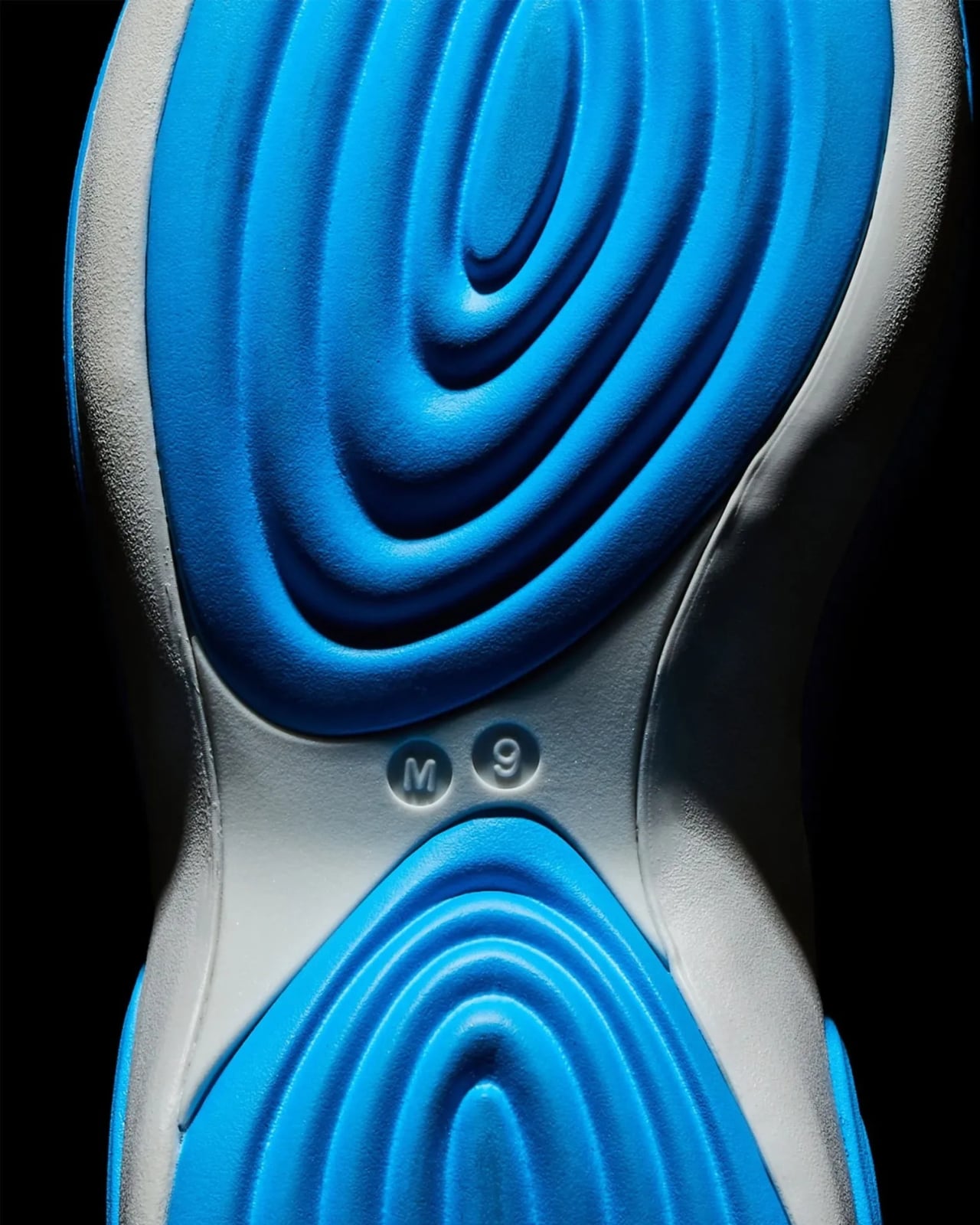
Let me introduce you to the Crocs Ripple, the brainchild of Steven Smith, a name that carries serious weight in the sneaker world. If you’re not familiar with Smith’s work, here’s the quick version: this guy has 40 years of industry experience under his belt and was the former head of product design at Yeezy. Yeah, that Yeezy. He’s the kind of designer whose resume makes other designers jealous, and now he’s bringing his magic to those polarizing foam clogs we all secretly own.

Designer: Steven Smith for Crocs

The Ripple represents Smith’s first design for Crocs since joining as Head of Creative Innovation, and it’s clear he’s not playing it safe. This isn’t just another color variant of the Classic Clog you’ve seen a million times. Instead, Smith has completely reimagined what a Crocs design can be, taking the brand’s comfort-first philosophy and wrapping it in a sculptural, almost futuristic package.

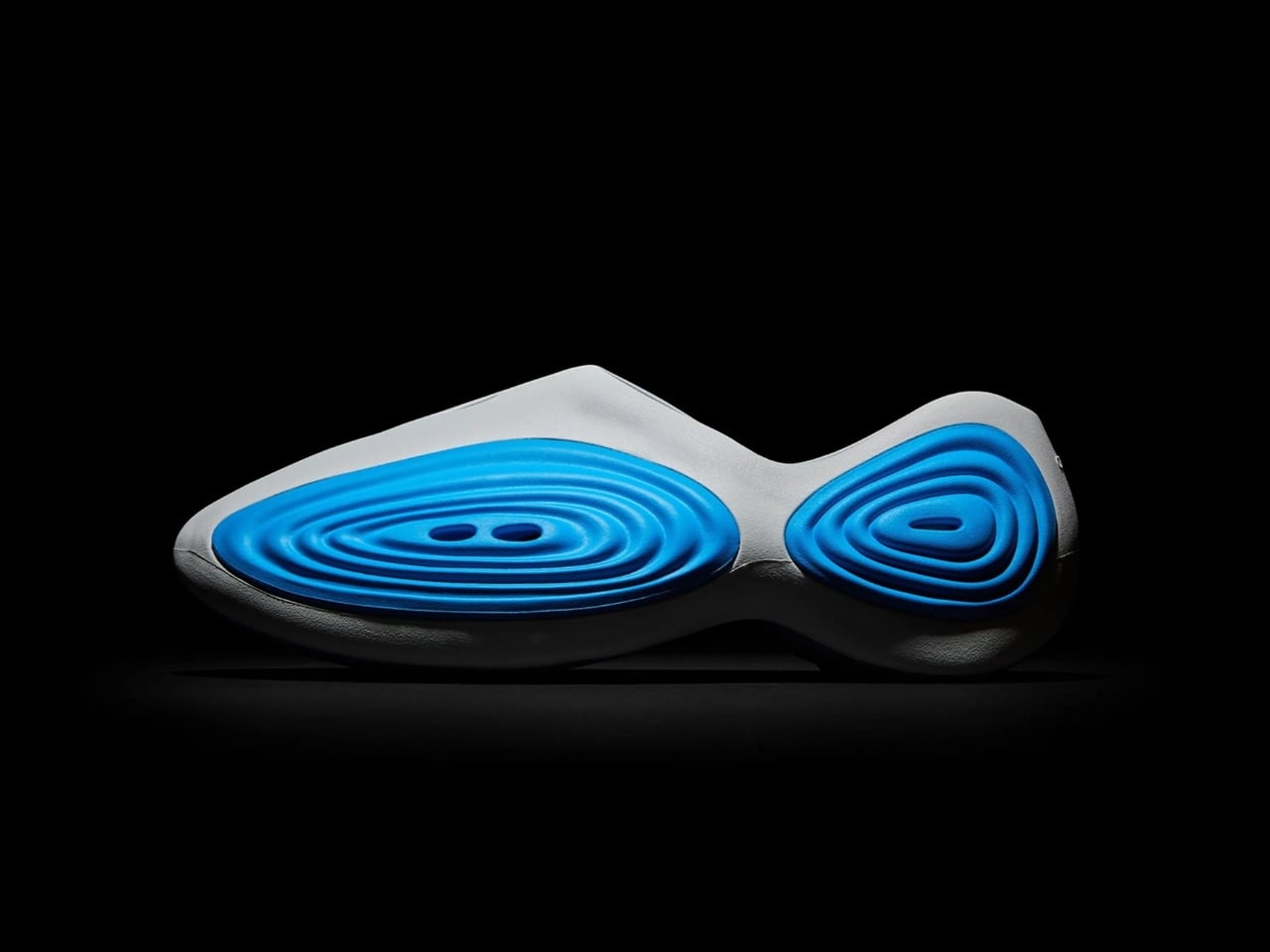
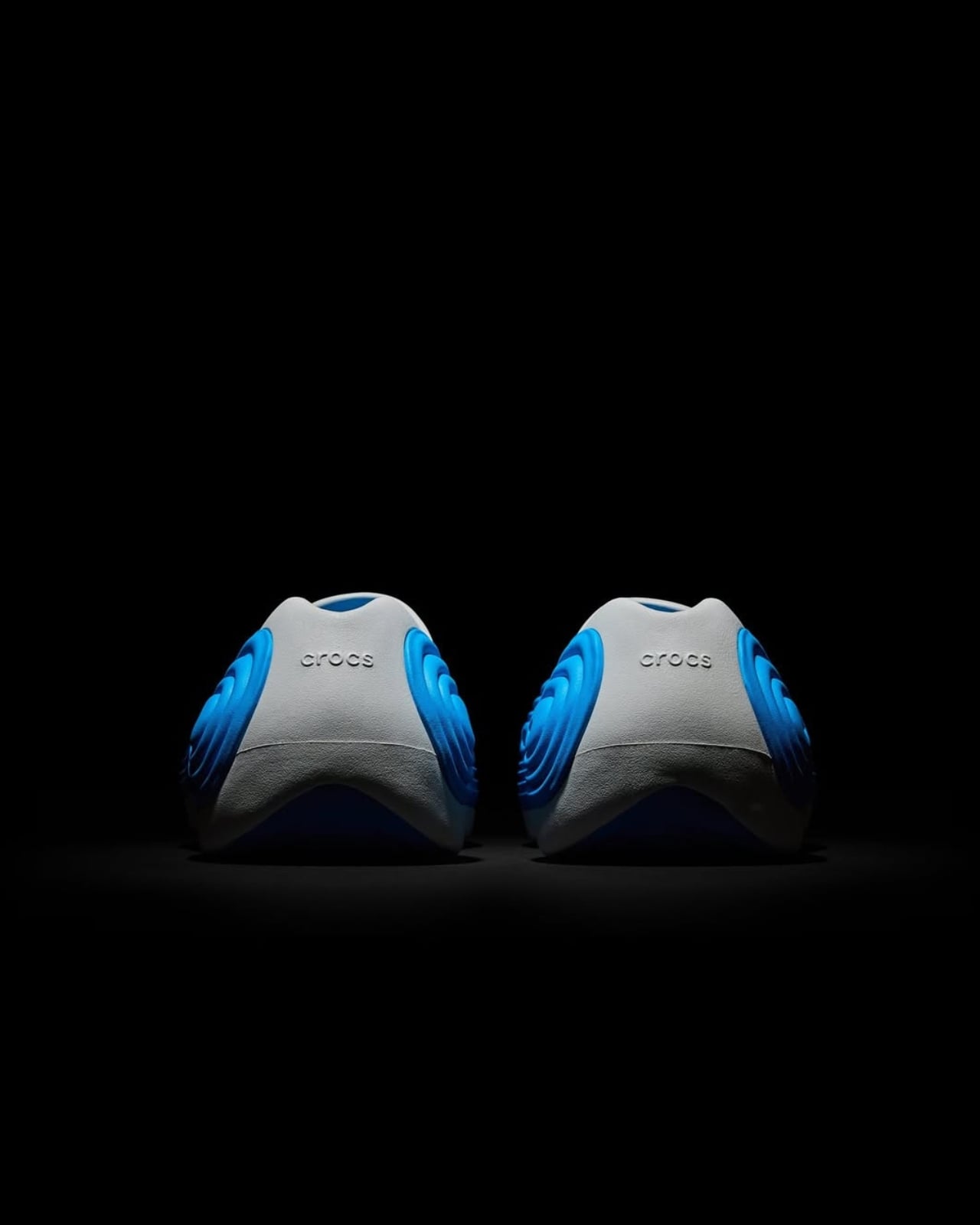
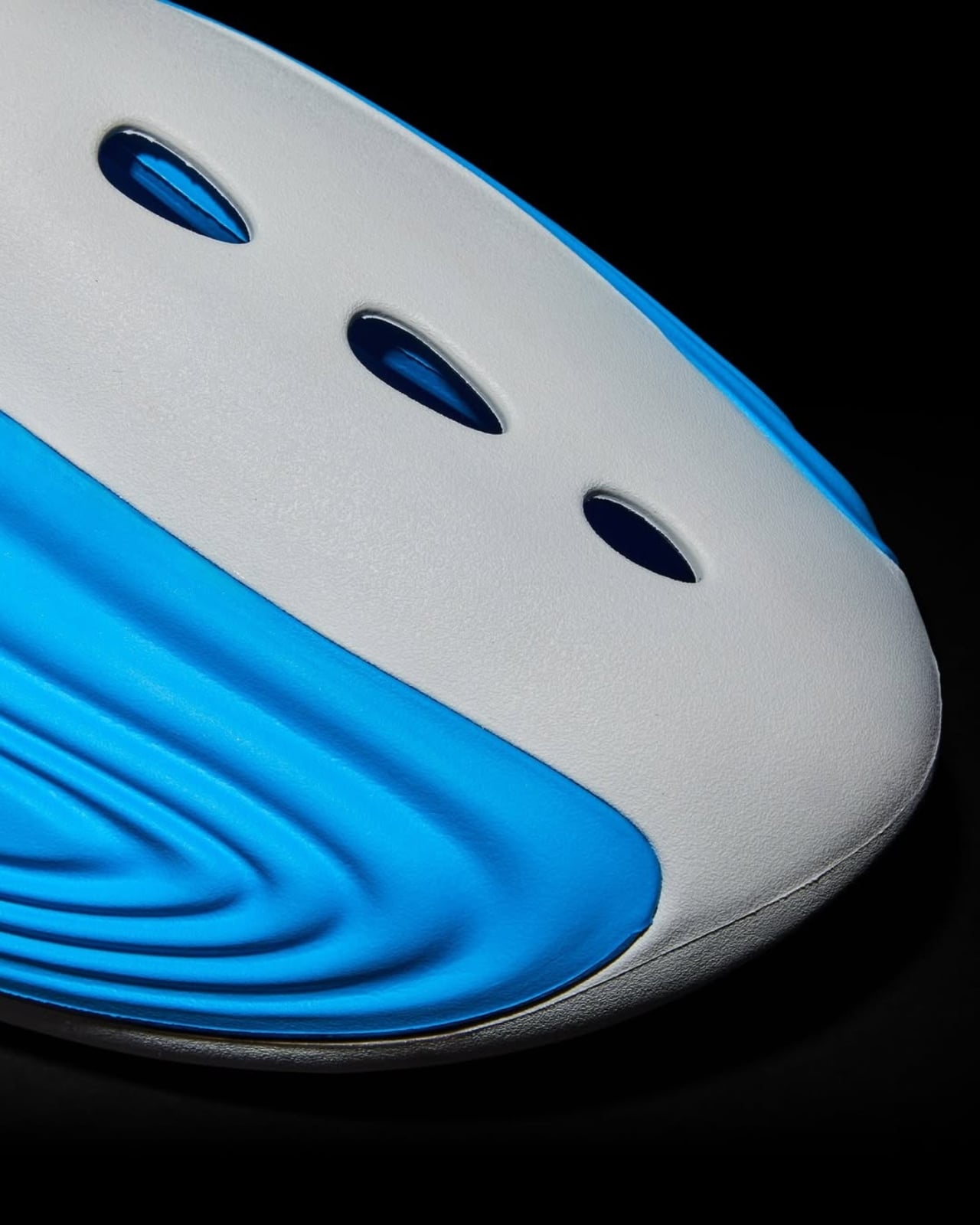
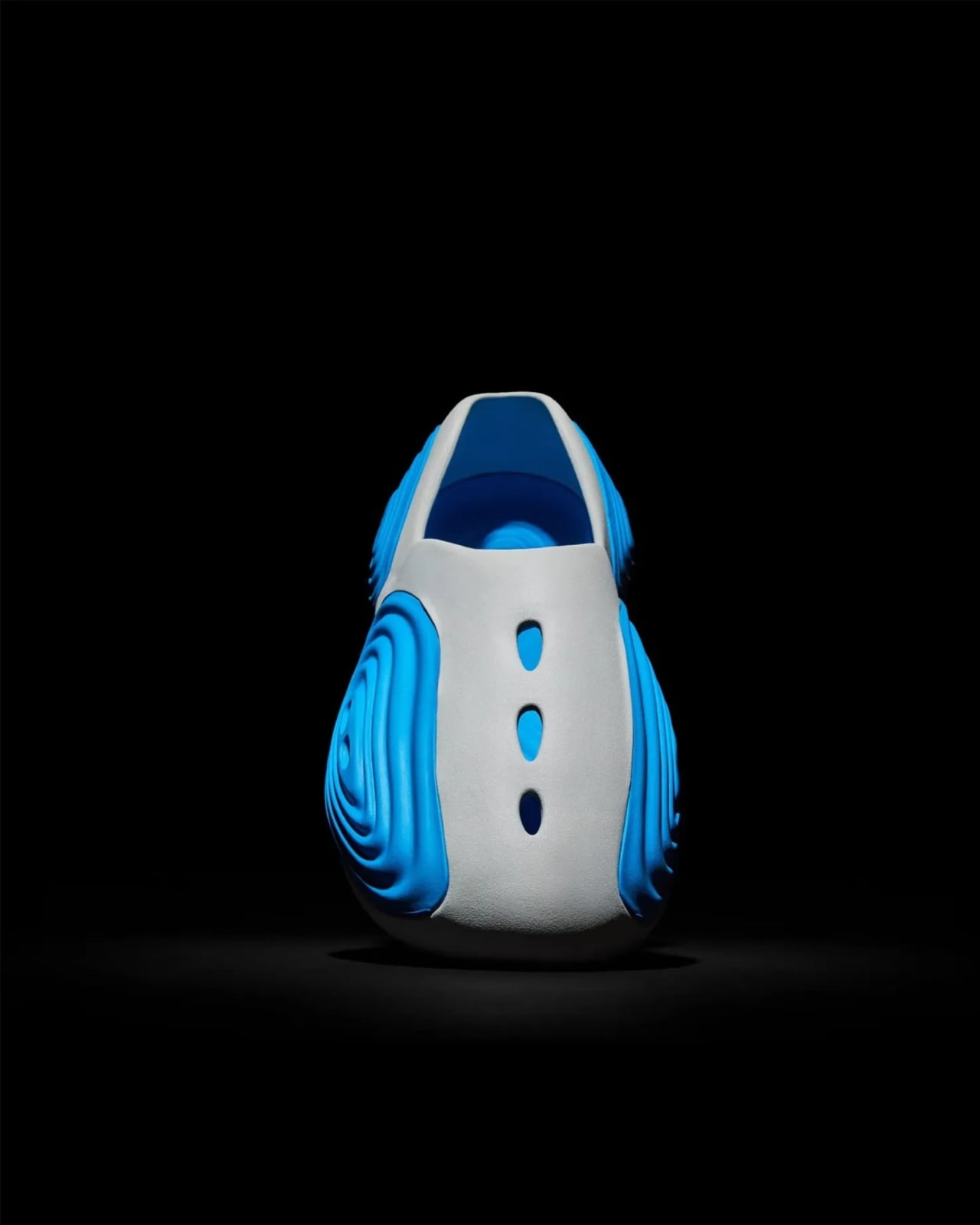
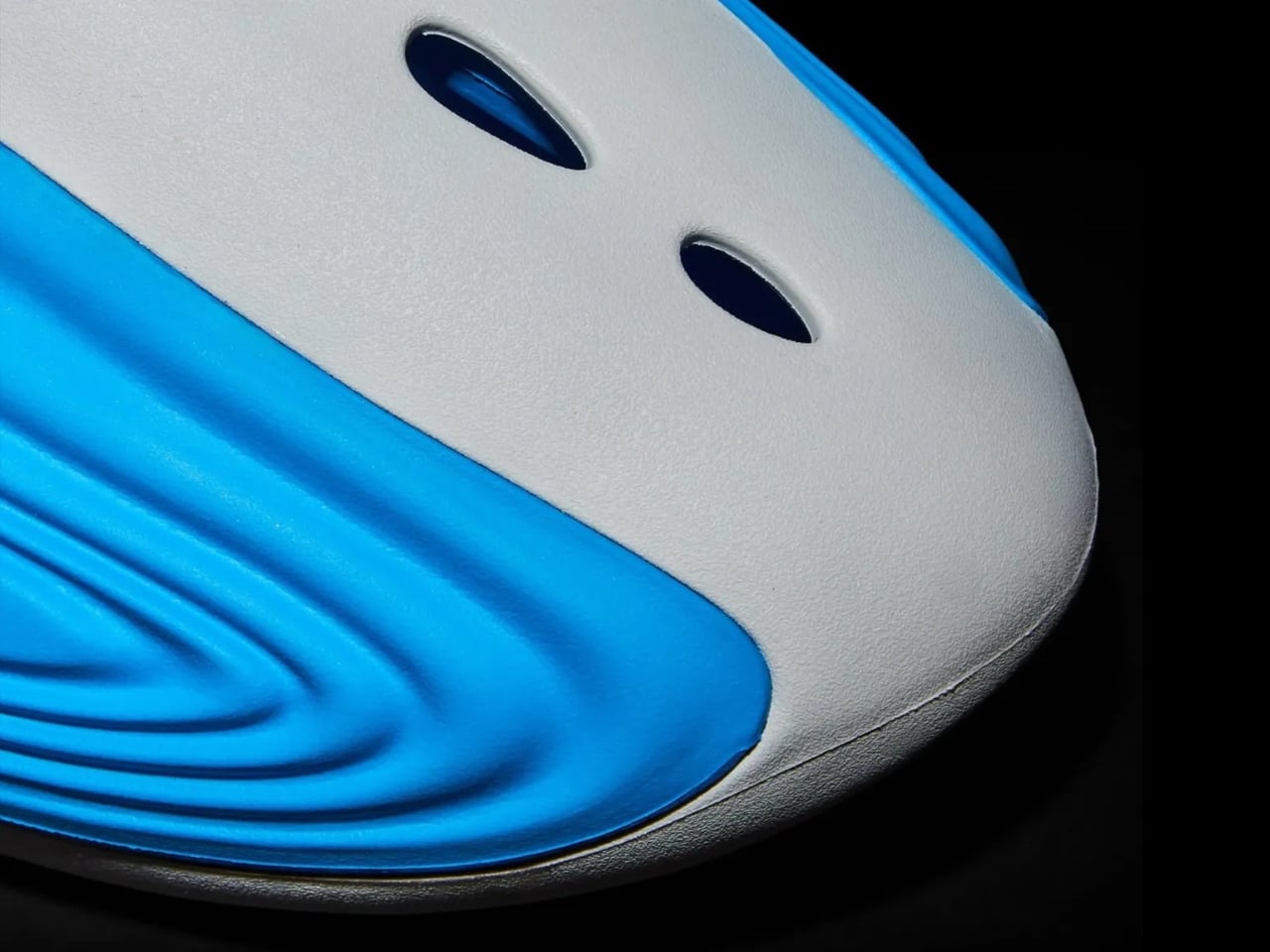
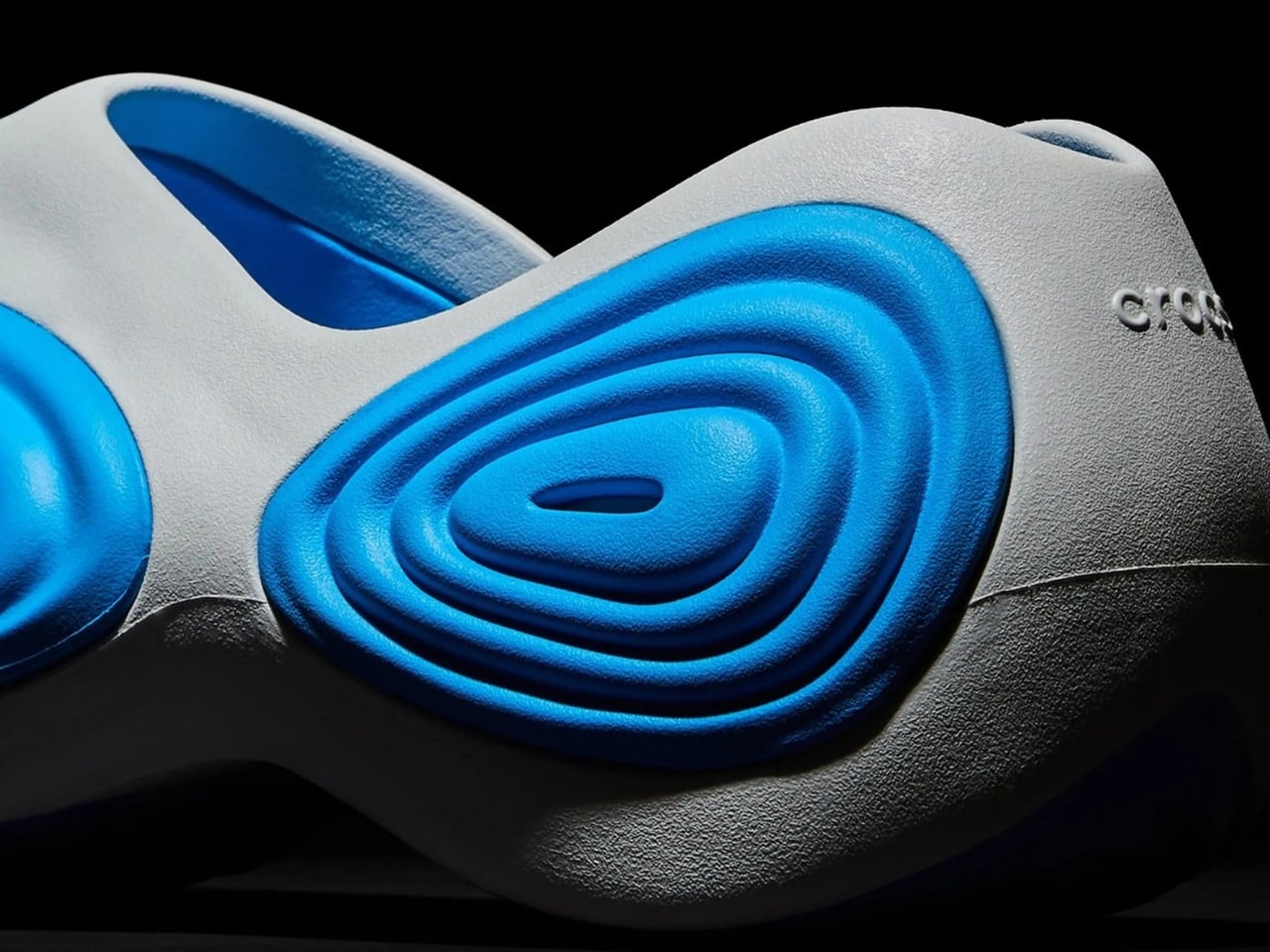
What makes the Ripple so different? For starters, forget about traditional laces or even the iconic heel strap. This is a slip-on clog with a bold personality written all over it. The design features three perforations on top for breathability, but the real showstopper is the wave-inspired aesthetic that runs across both sides. Those concentric oval patterns aren’t just there to look cool (though they absolutely do). They actually serve a functional purpose, incorporating two different types of Crocs foam technology: Croslite and Mellow.

The technical details get even more interesting when you look under the hood. Smith has integrated a TPU shank into the sole unit, which is footwear speak for added stability and support. It’s this kind of thoughtful engineering that separates designer collaborations that are all flash from ones that actually improve the wearing experience. The inaugural colorway launches in gray and blue, a combination that perfectly complements the Ripple’s boundary-pushing silhouette. There’s something almost aquatic about the design, like Smith took inspiration from water movement and translated it into foam and rubber. It stays true to his established design language while pushing Crocs into entirely new territory.

Now, here’s where things get exclusive. The Ripple is making its second in-person debut on December 5, 2025, exclusively at Flight Club Miami, perfectly timed with Art Basel. If you’re lucky enough to be in South Florida, this is one of those first-come, first-served situations where showing up early matters. Smith himself will be on site, which is a pretty big deal if you’re into sneaker culture and design.

But what does this collaboration really mean for Crocs? Smith has made it clear that he’s not looking to completely overhaul the brand. Instead, his approach is more subtle and potentially more impactful. He’s introducing boundary-pushing models that will, as the name suggests, create a ripple effect throughout both the company and the footwear industry at large.

It’s a smart strategy when you think about it. Crocs already has massive brand recognition and a devoted following. What they needed was someone who could elevate the design conversation without alienating their core audience. Smith brings credibility from the high-fashion sneaker world while respecting what makes Crocs work in the first place: uncompromising comfort and unmistakable personality.

The timing of this release feels significant too. We’re living in an era where the lines between high fashion, streetwear, and everyday comfort have completely blurred. The same people buying designer sneakers are also rocking Crocs to brunch. Smith’s Ripple sits perfectly at this intersection, offering something that’s conversation-worthy without sacrificing the practicality that made Crocs a household name.

While the Miami launch is happening now, a wider release through Crocs.com is expected to follow in early 2026. That means even if you can’t make it to Art Basel, you’ll eventually get your chance to experience what happens when sneaker royalty reimagines one of the most divisive shoes in modern history. Whether you’re team love-them or team hate-them when it comes to Crocs, the Ripple is worth paying attention to. It represents something bigger than just another shoe release. It’s proof that even the most established brands can evolve when they bring in the right creative voices.

The post Yeezy’s Former Designer Just Dropped His First Crocs Design first appeared on Yanko Design.
Meta plans to push back the debut of its next mixed reality glasses to 2027

The big reveal for Meta's next mixed reality glasses is being postponed until the first half of 2027, according to a report from Business Insider. Based on an internal memo from Maher Saba, the vice president of Meta's Reality Labs Foundation, the report said that the company's project, which is codenamed "Phoenix," will no longer be scheduled for a 2026 debut.

In a separate memo, Meta execs explained that the delay would help deliver a more "polished and reliable experience." According to BI, a memo from Meta's Gabriel Aul and Ryan Cairns said this new release window is "going to give us a lot more breathing room to get this right." Meta hasn't publicly revealed many details about its Phoenix project, but The Information previously reported that it would feature a goggle-like form factor with an external power source, similar to how the Apple Vision Pro is attached to a battery pack.

In the memo from Saba, BI reported that Meta is also working on a "limited edition" wearable with the codename "Malibu 2." Yesterday, Meta announced its acquisition of Limitless, a startup that recently developed an AI wearable called Pendant. Even though Meta's current product portfolio is dominated by smart glasses and VR headsets, the Limitless acquisition and Malibu 2 project could hint at the company's plans to expand its offerings.

This article originally appeared on Engadget at https://www.engadget.com/ar-vr/meta-plans-to-push-back-the-debut-of-its-next-mixed-reality-glasses-to-2027-172437374.html?src=rss

iPhone 17e Leaks: The Budget iPhone Finally Gets a Premium Facelift

iPhone 17e Leaks: The Budget iPhone Finally Gets a Premium Facelift

The iPhone 17e represents Apple’s latest effort to solidify its position in the entry-level smartphone market. As the successor to the iPhone 16e, it builds on its predecessor’s foundation by addressing key shortcomings while introducing thoughtful upgrades. With a refreshed design, improved performance, and enhanced features, the iPhone 17e aims to strike a balance between […]

The post iPhone 17e Leaks: The Budget iPhone Finally Gets a Premium Facelift appeared first on Geeky Gadgets.

Posted in Uncategorized