Sony Alpha 7 V Integrates AI Processing Into Its Imaging Engine, Rewrites Full-Frame Expectations

Sony’s Alpha 7 line has defined full-frame mirrorless photography for over a decade. The fifth generation arrives with a fundamental change: the AI processing unit now lives inside the BIONZ XR2 imaging engine rather than running on a separate chip. Every imaging function shares the same processing backbone, and the performance gains cascade through autofocus, subject recognition, color science, continuous shooting, and video.

Designer: Sony

The Alpha 7 V (ILCE-7M5) pairs that integrated processing architecture with a new partially stacked Exmor RS CMOS sensor. At approximately 33 megapixels, it strikes a balance between resolution and file manageability, but the real story is readout speed: 4.5 times faster than the Alpha 7 IV. Faster readout means reduced rolling shutter distortion during fast panning. It means blackout-free continuous shooting up to 30 fps with full AF/AE tracking. It means 14-bit RAW capture at that same 30 fps speed without compromising autofocus performance. Sony also announced the FE 28-70mm f/3.5-5.6 OSS II (SEL28702), a compact standard zoom designed to match these capabilities.

The Pre-Capture function deserves its own attention. It records up to one second before you press the shutter, storing frames in a rolling buffer until you commit to the shot. For unpredictable subjects (pets, children, sports action), this changes the timing equation entirely. Still image performance reaches 16 stops of dynamic range in mechanical shutter mode, ensuring tonal detail across highlights and shadows even in scenes with extreme contrast.

The Real-time Recognition AF system now identifies humans, animals, birds, insects, cars, trains, and airplanes. Sony claims a 30% improvement in eye recognition performance compared to the Alpha 7 IV, measured through internal testing. The 759 phase-detection points cover 94% of the frame, and low-light autofocus extends down to EV -4.0. AF/AE calculations run 60 times per second, continuously adjusting both parameters during high-speed shooting.

Color science gets its own AI treatment. A newly introduced AI-driven Auto White Balance leverages deep learning technology for light source estimation, automatically identifying the shooting environment’s light source and adjusting color tones for natural, stable color reproduction. This should reduce post-production workload for photographers who shoot across varied lighting conditions.

Video capabilities expand significantly for hybrid creators. The Alpha 7 V introduces 7K oversampled 4K 60p recording in full-frame mode and 4K 120p recording in APS-C/Super 35mm mode. Full pixel readout without pixel binning enables highly detailed footage. Dynamic Active Mode provides smooth stabilization for handheld shooting. An Auto Framing function automatically maintains optimal subject composition during recording. New in-camera noise reduction and improved internal microphone functionality address the audio side.

The operability improvements read like a professional wish list: Wi-Fi 6E GHz compatibility, dual USB Type-C ports, vertical format support, adjustable electronic shutter sound, a 4-axis multi-angle monitor combining tilt and vari-angle design, and an improved grip. Battery life reaches approximately 630 shots using the viewfinder (CIPA standards), with a Monitor Low Bright mode extending that further. Thermal management supports extended 4K recording at approximately 90 minutes at 25°C and 60 minutes at 40°C.

The Companion Lens and What It Costs

The FE 28-70mm f/3.5-5.6 OSS II earns attention beyond its kit lens positioning. When paired with compatible cameras, it offers up to 120 fps AF/AE tracking, continuous shooting up to 30 fps, seamless body-lens coordinated image stabilization, AF available during zooming, and built-in breathing compensation support. This addresses the original 28-70mm kit lens’s sharpness and autofocus speed criticisms while maintaining the lightweight profile that full-frame mirrorless shooters expect.

Sony aligned this release with its Road to Zero environmental initiative. Manufacturing facilities for imaging products operate at 100% renewable energy. The packaging uses Sony’s Original Blended Material (bamboo, sugarcane fibers, post-consumer recycled paper) instead of plastic.

The Alpha 7 V body arrives by the end of December 2025 for approximately $2,899 USD ($3,699 CAD). The kit with the SEL28702 lens follows in February 2026 for approximately $3,099 USD ($3,899 CAD). The lens alone: $449 USD ($599 CAD), also February 2026. All products will be sold through Sony and authorized dealers throughout North America.

The post Sony Alpha 7 V Integrates AI Processing Into Its Imaging Engine, Rewrites Full-Frame Expectations first appeared on Yanko Design.
The Cheapest Personal AI Device You Can Own: $50 Raspberry Pi Whisplay Runs Gemini, Claude, and ChatGPT

Smartphones were never really meant to be your AI sidekick. They juggle notifications, social feeds, and a dozen background services before they ever get around to being “smart.” Meanwhile, the first wave of dedicated AI gadgets from companies like Humane and Rabbit showed up with big promises, closed ecosystems, and short lifespans. When the money dried up, so did the hardware. A little Raspberry Pi Zero 2 W with a Whisplay HAT quietly sidesteps all of that. It is a DIY AI chat device that you own outright, that you can fix, reflash, or repurpose, and that can talk to Gemini, Claude, or ChatGPT without caring which startup is still solvent this quarter.

Instead of betting on a single company’s cloud, Whisplay treats AI as a replaceable part. The hardware gives you a screen, mic, speaker, and buttons, and leaves the “brain” up to you. If Gemini changes pricing, Claude adds features, or ChatGPT pulls ahead again, you can swap backends with a config file or a bit of code, not a new gadget. In a landscape where AI hardware keeps arriving as disposable, subscription-tethered experiments, this little open, modular box feels like the first honest attempt at a personal AI terminal that will not vanish the moment a runway spreadsheet turns red.

Designer: Jdaie

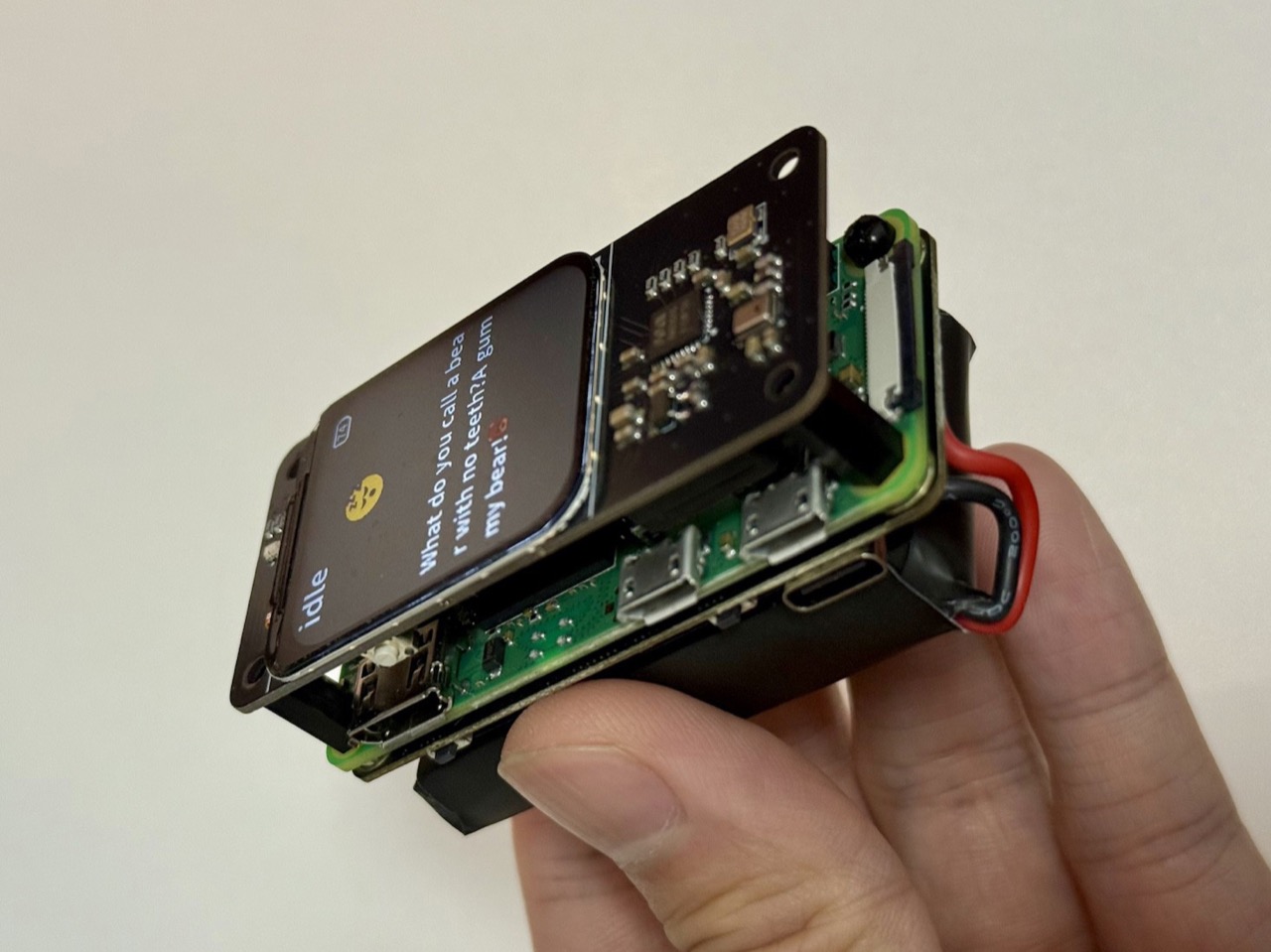
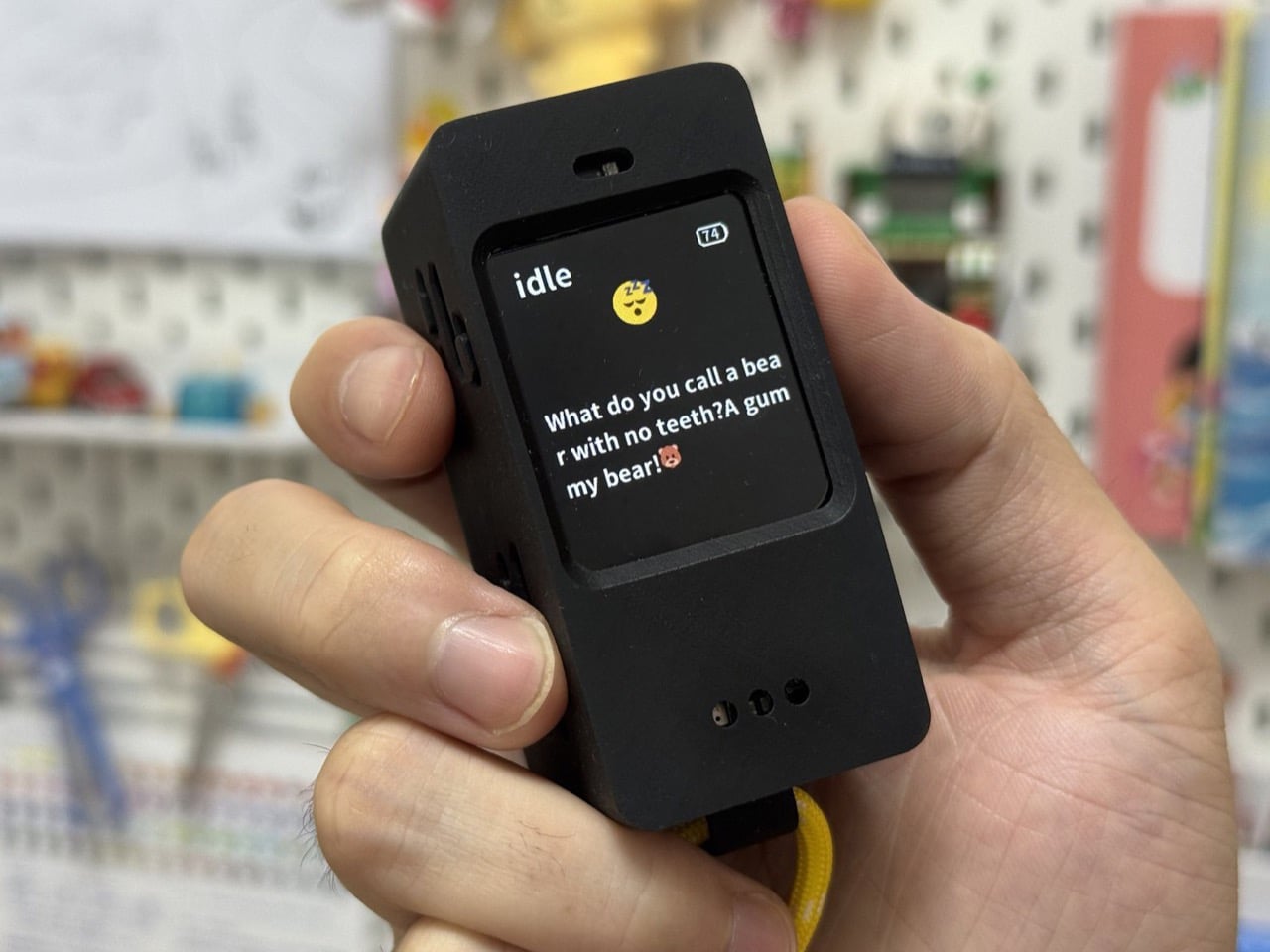
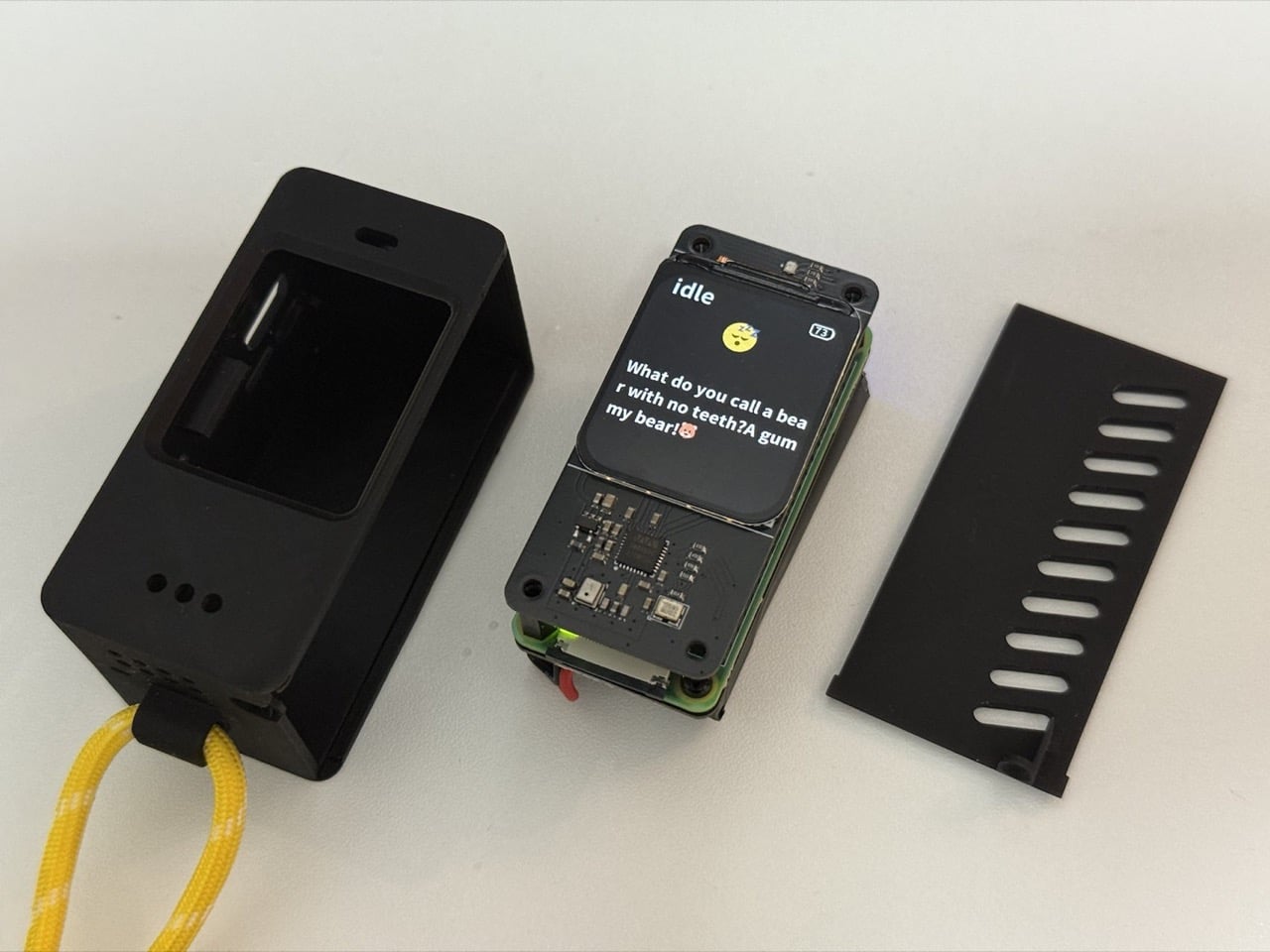
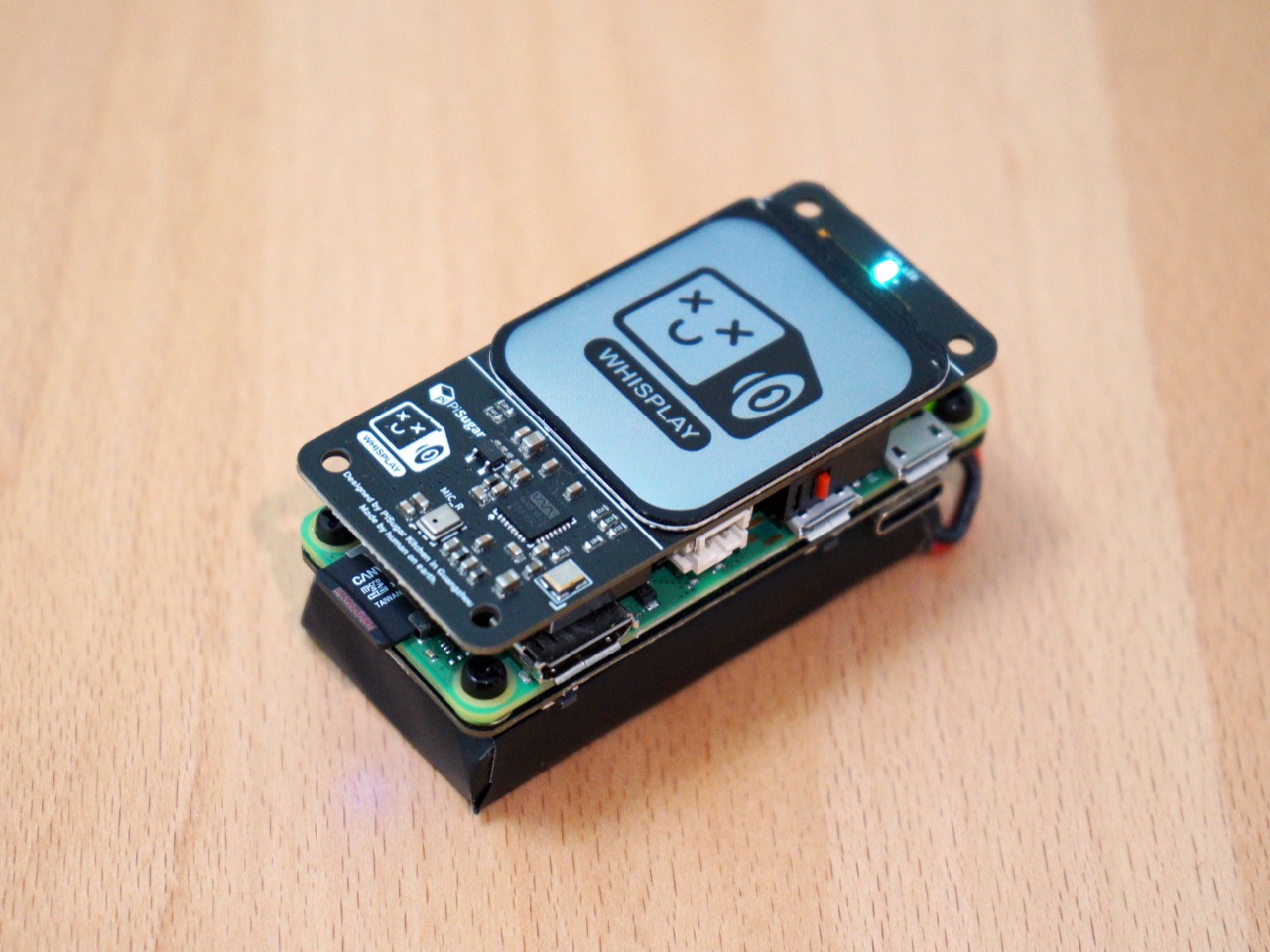
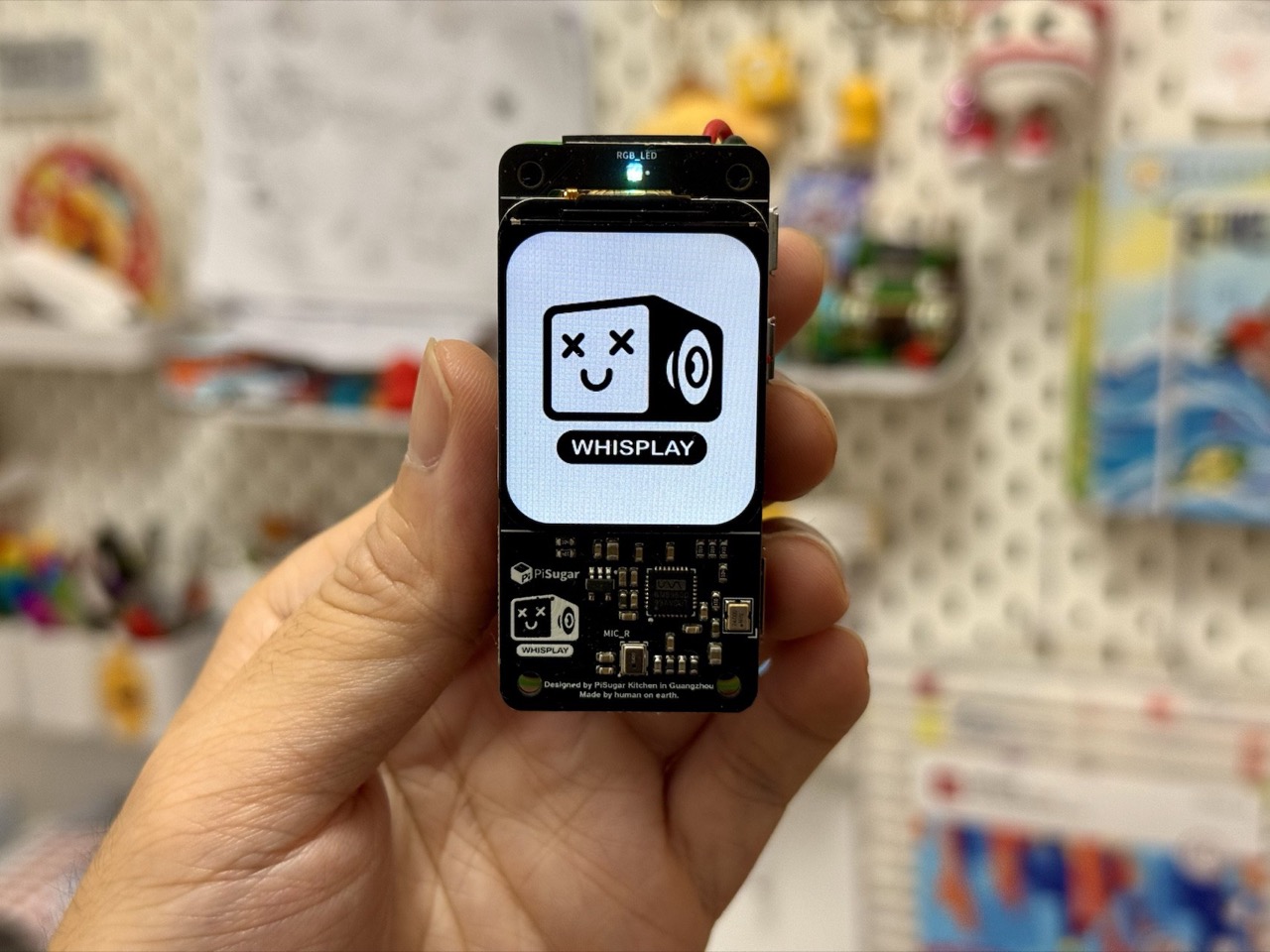
At its very core, the Whisplay HAT is a clever little I/O board designed to give a Pi a face and a voice… simply put. It bolts directly onto the 40-pin GPIO header and provides everything needed for a conversational interface. You get a surprisingly crisp 1.96-inch color LCD for displaying text or animations, a WM8960 audio codec driving an onboard microphone and speaker, an RGB status LED, and a few programmable buttons for user input. It is not a standalone computer, but a purpose-built terminal that turns the Pi Zero into something you can actually talk to. The entire package matches the Pi Zero’s footprint, making for a compact and tidy build that feels intentional, not like a messy science fair project.

The choice of the Raspberry Pi Zero 2 W as the platform is telling. With its quad-core 1 GHz ARM Cortex-A53 CPU and just 512MB of RAM, it is nobody’s idea of a powerhouse. That is precisely the point. The Pi is not running the large language model; it is just a client. Its job is to capture audio, send a request over Wi-Fi, and then play back the response. This thin-client architecture is incredibly efficient, requiring minimal power and processing, which is perfect for an always-on desk companion. The heavy lifting is outsourced to the cloud API of your choice, leaving the Pi to handle the simple, tangible task of being the physical interface between you and the AI.

The actual magic is a simple, elegant pipeline that you control completely. Your code on the Pi captures audio from the Whisplay’s microphone, uses a speech-to-text engine to transcribe it, and then packages that text into an API call to Gemini or another LLM. When the response comes back, a text-to-speech engine converts it back into audio and plays it through the onboard speaker, while the LCD can show the text or a thinking animation. You can point it at Google’s Gemini API today and switch to a local Ollama server running on a spare Raspberry Pi 5 tomorrow if you feel like it. What’s so perfect about the Whisplay HAT is that it assumes companies and models will come and go, so it treats the LLM as a pluggable component. Today, that might be Gemini, Claude, or ChatGPT. Tomorrow, it might be some open model running on your own server. Either way, the little chatting device on your desk stays the same, happily piping audio in and out while you swap brains on the backend.

That brings us to the real kicker. The Whisplay HAT costs about thirty-five dollars. Paired with a fifteen-dollar Pi Zero 2 W, you have the core of a highly capable, endlessly customizable AI device for fifty bucks. Compare that to the seven-hundred-dollar Humane Ai Pin or the two-hundred-dollar Rabbit R1, both of which are functionally just API clients tied to a single, proprietary service. This DIY approach is not just cheaper; it represents a fundamentally different, more sustainable philosophy. It is a platform for tinkering and ownership, not a sealed product designed to be consumed and eventually discarded. It is a starting point, and in a field moving this fast, a good starting point is infinitely more valuable than a dead end.

The post The Cheapest Personal AI Device You Can Own: $50 Raspberry Pi Whisplay Runs Gemini, Claude, and ChatGPT first appeared on Yanko Design.

Instacart sues New York City over minimum pay, tipping laws

You can tell a lot about a company by what they're willing to sue over. Take Instacart, which just filed a lawsuit against New York City. Its beef? The company doesn't like five new city laws, set to take effect in January. They would require Instacart to pay workers more and give customers a tipping option of at least 10 percent.

Reuters reports that Instacart's suit targets Local Law 124, which mandates that grocery delivery workers receive the same minimum pay as restaurant delivery workers. It also challenged Local Law 107, which mandates 10 percent or higher tipping options (or a place to enter one manually). The lawsuit also takes aim at other laws requiring extra recordkeeping and disclosures. The new rules are set to take effect on January 26.

As is typical of companies griping about regulations that hurt their bottom lines, Instacart framed the issue as a noble fight for what's right. "When a law threatens to harm shoppers, consumers, and local grocers — and especially when it does so unlawfully — we have a responsibility to act," the company proclaimed in a blog post. "This legal challenge is about standing up for fairness, for the independence that tens of thousands of New York grocery delivery workers rely on and for affordable access to groceries for the people who need it most."

Instacart's suit reportedly claims that Congress banned state and local governments from regulating prices on platforms such as its own. It also alleges that New York's state legislature "has long taken charge" of minimum pay, and that the US Constitution doesn't allow states and cities to discriminate against out-of-state companies.

The company warns that everyone will lose if it's forced to comply. Should the laws take effect, "Instacart will be forced to restructure its platform, restrict shoppers' access to work, disrupt relationships with consumers and retailers and suffer constitutional injuries with no adequate legal remedy," it claimed in the filing.

Instacart CEO Chris Rogers, elevated to the post in May, has an estimated net worth of at least $28.6 million. His predecessor, Fidji Simo, who chairs the board and is now with OpenAI, is reportedly worth around $72.7 million. If NYC’s minimum pay laws will be as catastrophic as Instacart claims, maybe they could chip in to help.

This article originally appeared on Engadget at https://www.engadget.com/big-tech/instacart-sues-new-york-city-over-minimum-pay-tipping-laws-220205207.html?src=rss

iPhone Brutal is vibrant, sharp-edged concept you can’t look beyond

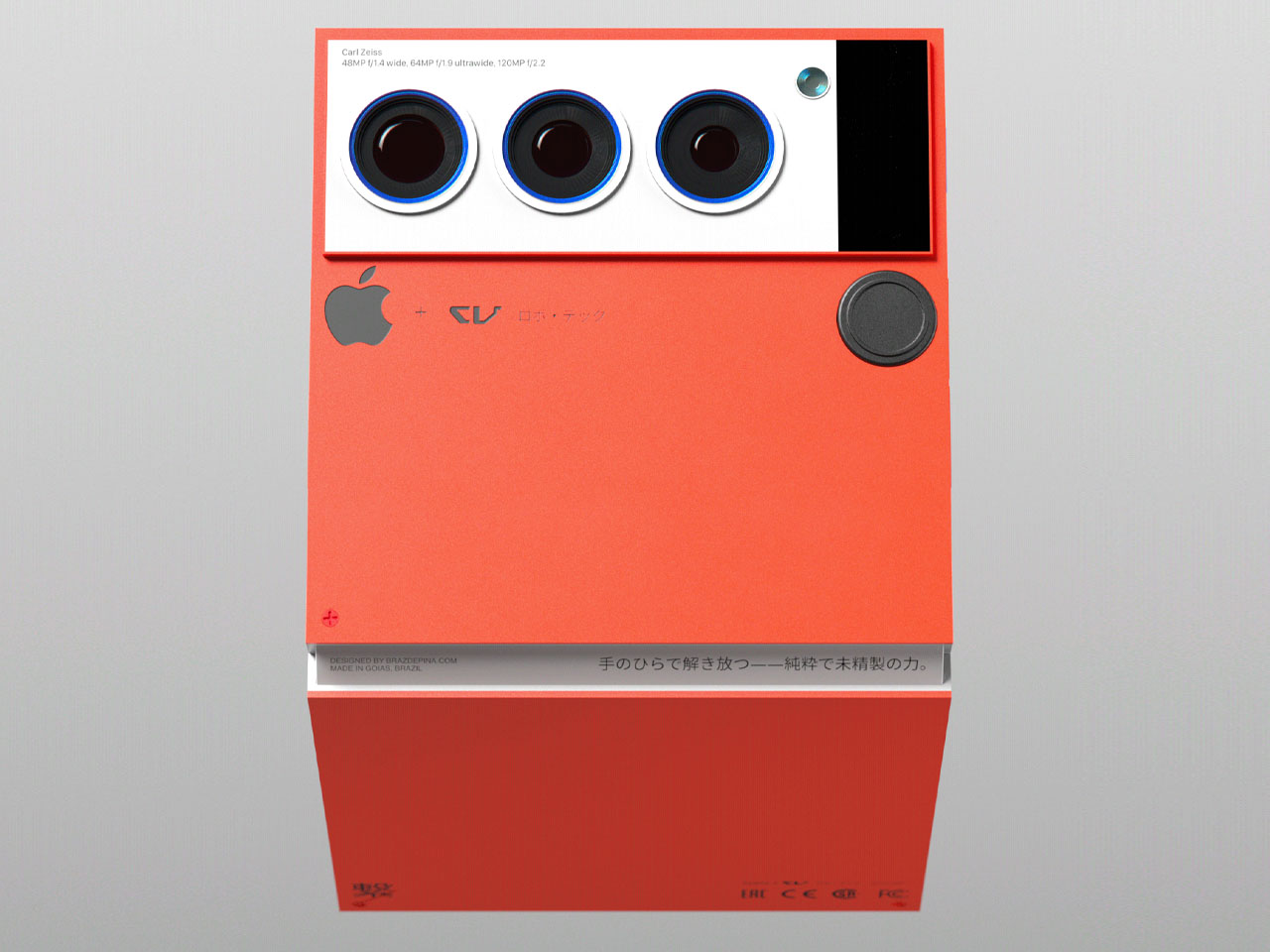
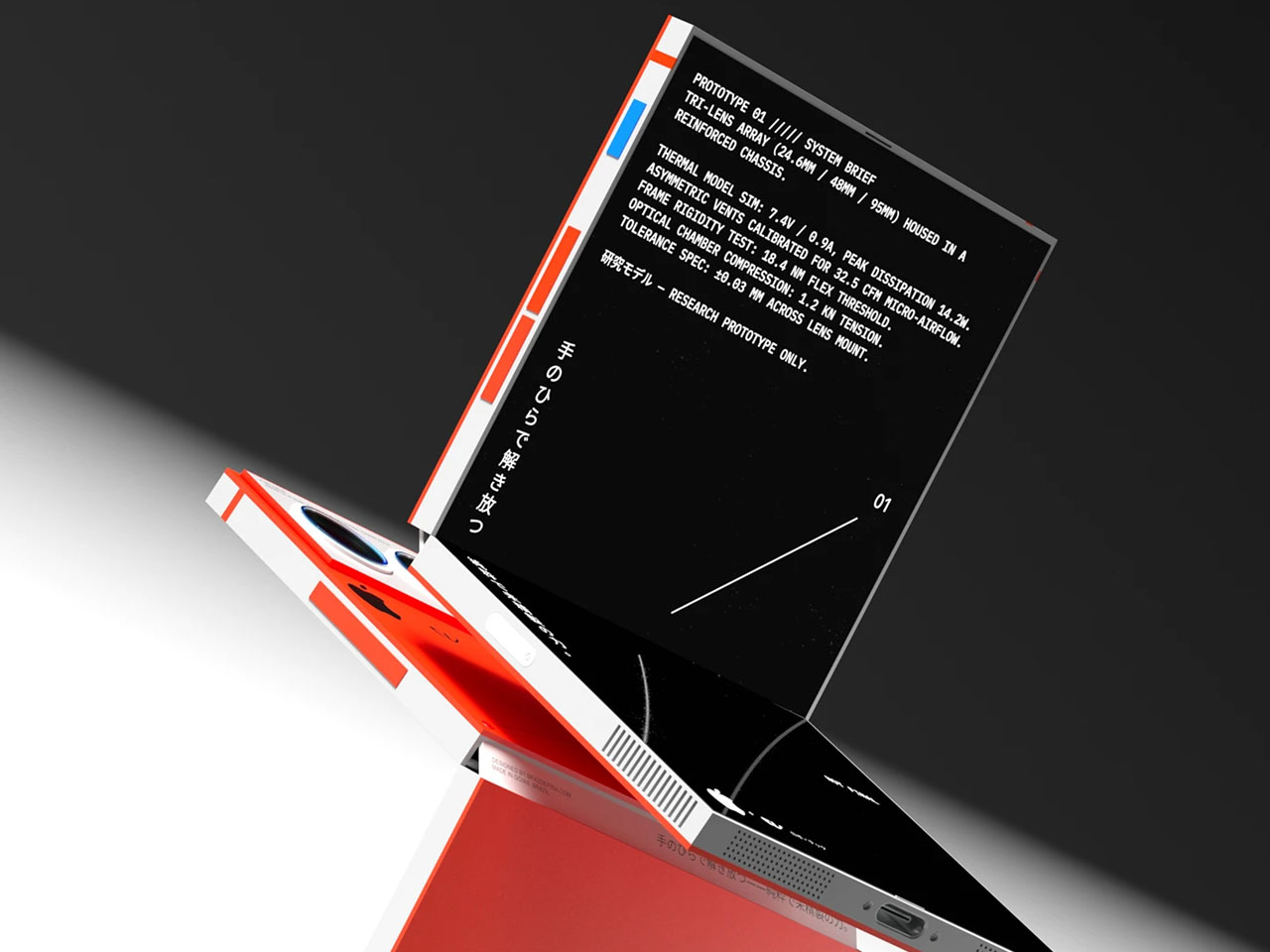
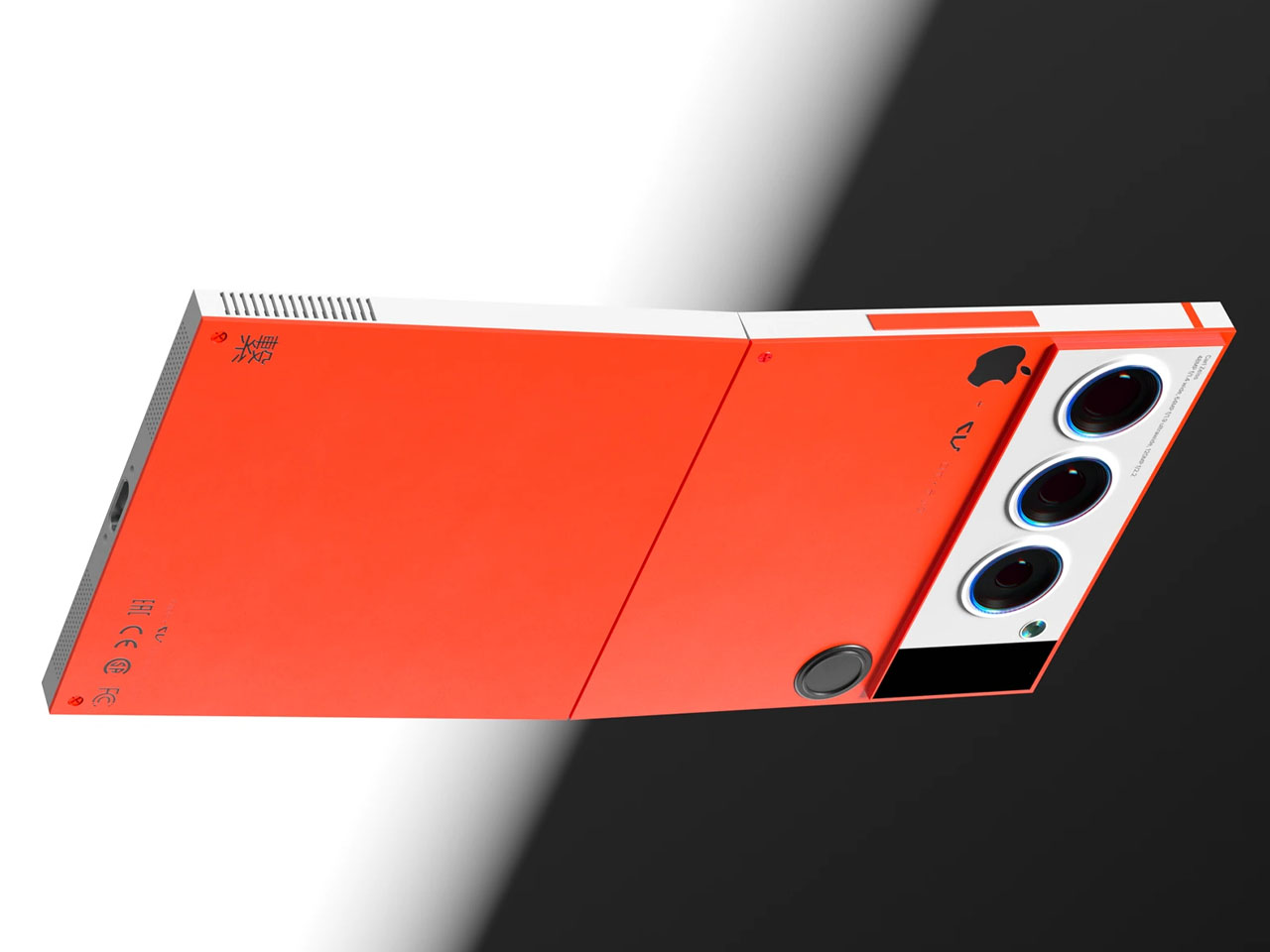
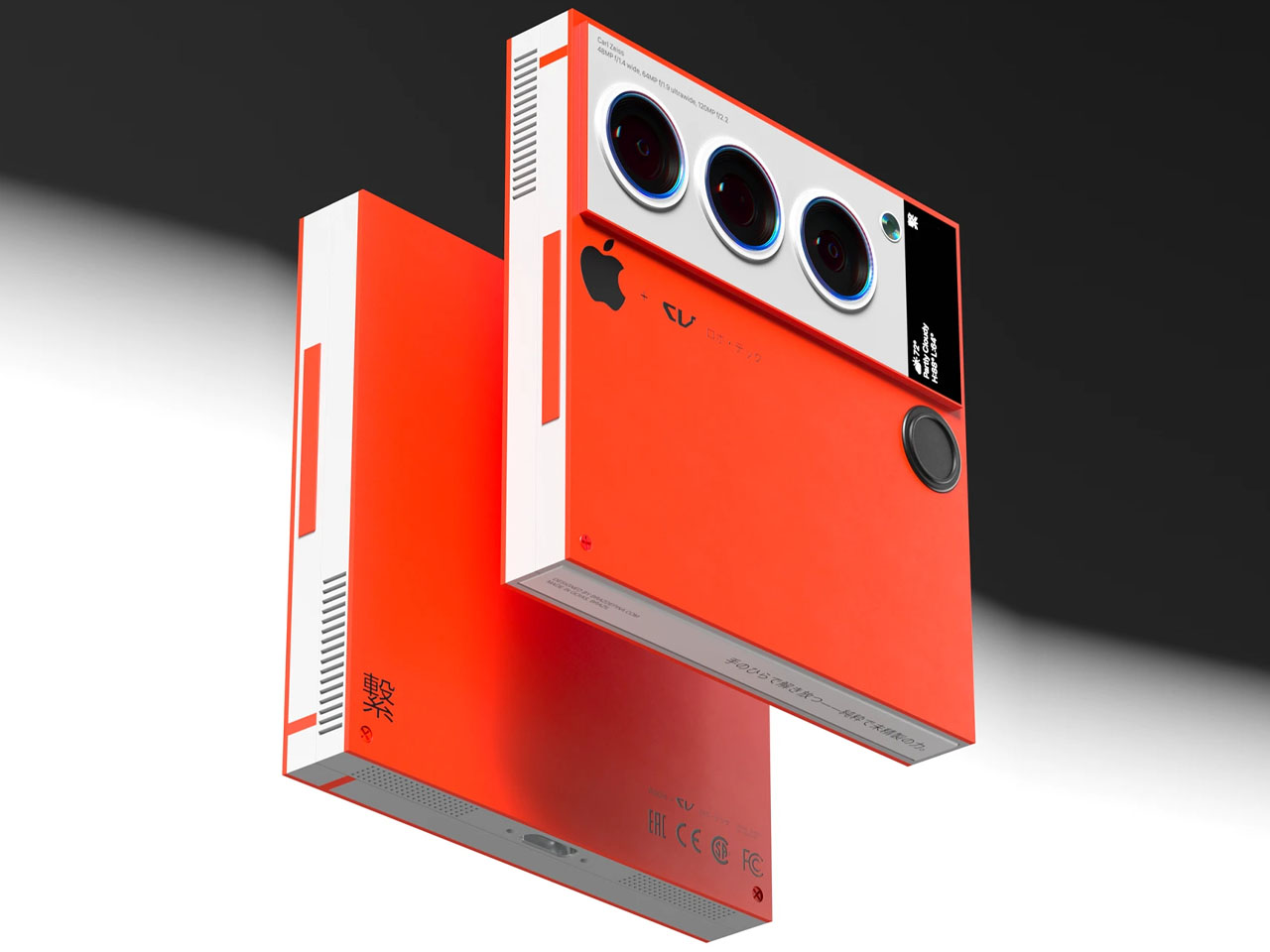
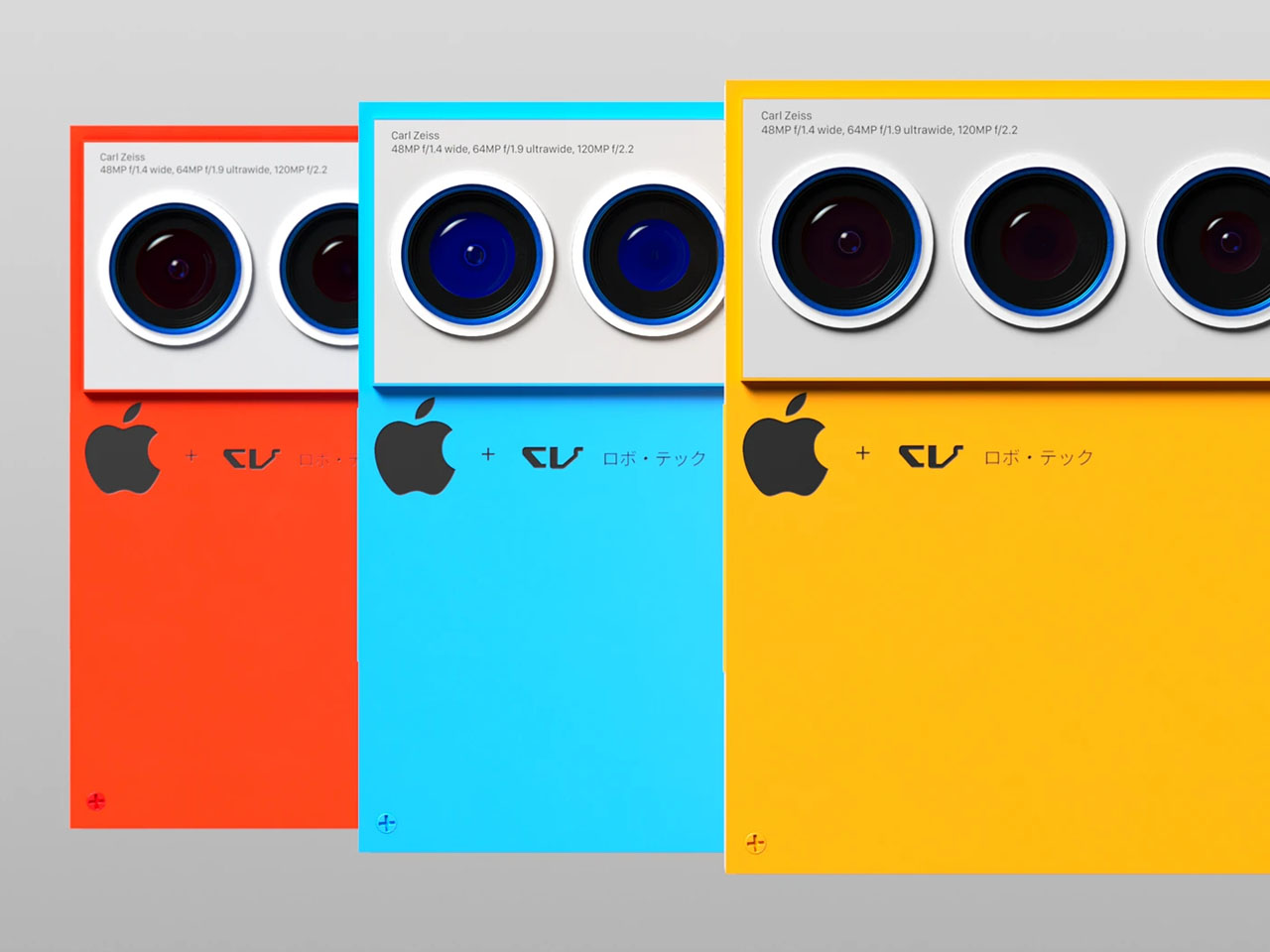
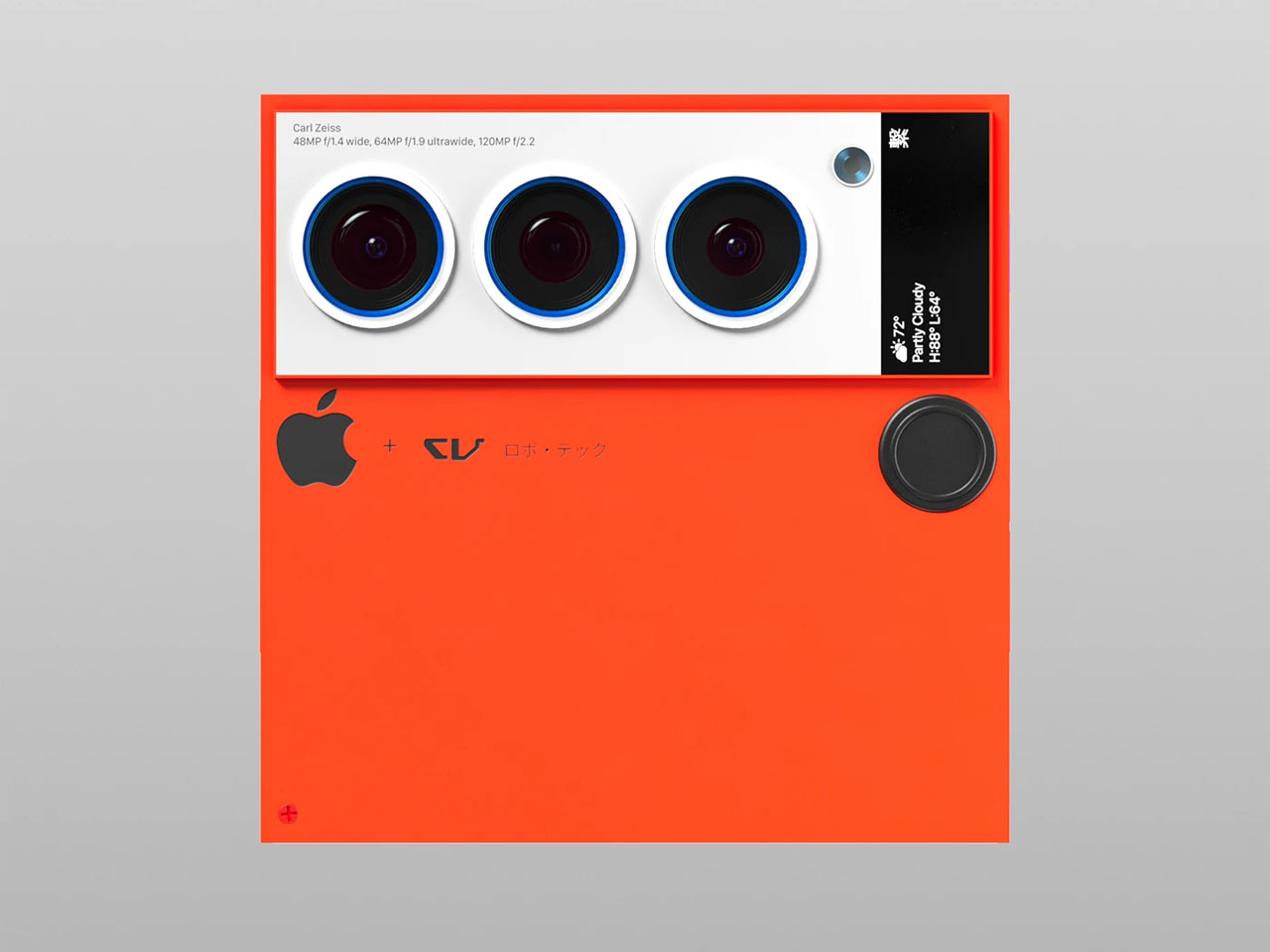
If the idea of a mirror on the iPhone lock screen was as brilliant as we thought it to be, this concept phone is idealized with a small display on the back, alongside its charismatic triple camera array, and we are bewildered: which one is a better feature. Of course, there is no contest, and designer Braz de Pina is far from contesting either. His new conceptual design of this iPhone Brutal is little about this small screen or the tri-lens camera array; it’s more about the form factor he has tried to achieve.

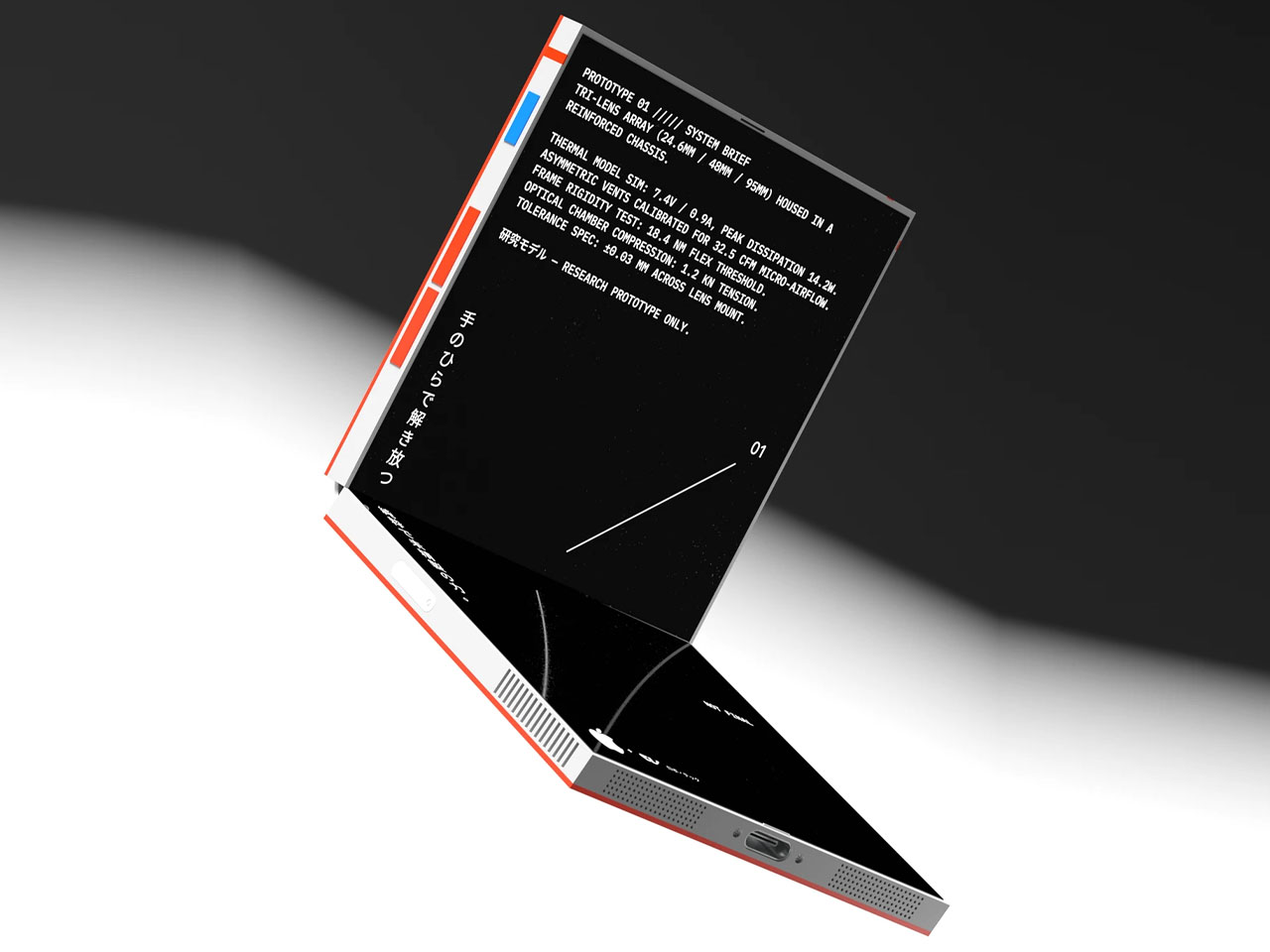
From when I first saw and all the way down to the last picture on the designer’s Behance portfolio, this brutal take basically came forward to me as a smartphone that someone created by cross-breeding a vibrant boxy floppy disk with a dual-screen flip phone. The designer doesn’t shy from affirming that his idea was never to make that concept sleek; it’s meant to be a study in “reduction, structure, and unapologetic geometry,” and it wears that mission loudly in its robust but bulky form factor.

Designer: Braz de Pina

The concept may be far from a full-fledged product, but it has certain clarity in its design. Japanese industrial cues are evident in its blocky yet functional approach. Besides the form, the color patterns give a clear definition to the modular layers of the phone, its airflow channels and even the camera housing at the back. Everything here is designed to be flaunted and thus this phone is anything close to the modern approach in phone making, thus substantiating its ‘Brutal’ identity.

For its functionality, as evident through the pictures, the iPhone Brutal is created to open like a flip, dual-screen phone. On the back of the rigid and abstract exterior lies a triple lens array, which is packed in a housing alongside a small screen, typically displaying the weather update in pictures. The lenses are Carl Zeiss–inspired for precision and immaculate quality.

Besides the design, if there is anything that will catch the eye, especially that of a photographer, it is this optical panel, which speaks a different design language to Apple’s approach, but is in the acceptable realm. Brutal’s exposed camera modules may therefore not be a roadmap for Apple’s next iPhone, but they have details to check out.

De Pina notes, the iPhone Brutal is “far from a final product.” It shares DNA with different designs he is exploring for a potential MacBook concept and challenges the natural status quo, where phones are mostly designed to look slimmer and smaller. This one brings out an honest, brutal look one we would mind being visualized for the MacBook either. Who’s interested?

The post iPhone Brutal is vibrant, sharp-edged concept you can’t look beyond first appeared on Yanko Design.

ExpressVPN adds a Fastest Location button and launches a new native Mac app

ExpressVPN, one of the best VPNs, is launching two brand-new features that sound confusingly like things it already does. Users on Android, Mac and iOS (but apparently not Windows, Linux or smart TVs) can now use Fastest Location to automatically pick the VPN server with the fastest download speed and lowest latency. Mac users are also getting an overhauled ExpressVPN app designed to work natively with MacOS.

If you've used ExpressVPN before, your first reaction probably went something like "Wait, didn't it already have a Fastest Location button and a Mac app?" You're not wrong, but there's still a meaningful difference with these new features. In the past, ExpressVPN didn't technically pick the fastest location, but the Smart Location, which picks the best available server using "metrics such as download speed, latency, and distance" (emphasis mine). Those are the same metrics as the new feature, but the such as makes me think there are, or were, other ingredients in the "smart location" algorithm.

My guess is that ExpressVPN is rebranding "smart" to "fastest" in response to customer complaints that "smart" was picking sub-optimal server locations. That's not a behavior I noticed when I last reviewed ExpressVPN — the smart location was always plenty fast for me — but I'm just one user. Only testing can show whether they actually changed the algorithm or just the name.

The new Mac app is a more straightforward upgrade. While ExpressVPN has always had a client for Mac, it's thus far been a port of an app originally developed for iPad. This makes its otherwise-excellent interface feel a bit like, well, a phone app you use on your desktop. In contrast, the new app was built using Project Catalyst, which lets Mac developers turn their iOS apps into desktop-native software. The new interface looks a lot richer, using the screen space a lot like Proton VPN does. And being more like Proton VPN is rarely a bad thing.

This article originally appeared on Engadget at https://www.engadget.com/cybersecurity/vpn/expressvpn-adds-a-fastest-location-button-and-launches-a-new-native-mac-app-205837728.html?src=rss

LEGO Just Dropped a $300 Stranger Things Set That Transforms When You Pull the Corners

In Stranger Things, victims trapped in Vecna’s curse describe the Creel House as a place where reality fractures and splinters around them, rooms shifting into impossible geometries. LEGO has somehow captured that exact horror in brick form. Their new 2,593-piece Creel House literally transforms with a lever pull, walls splitting apart to reveal Vecna’s cursed mind lair within. It’s launching January 1st at $299.99, and after six years without a proper Stranger Things LEGO set, fans won’t want to escape this one.

Stranger Things Season 5 wraps up on New Year’s Eve at 5 p.m. PST. LEGO Insiders get early access to the set that same day before general release on January 4th. You’ll have processed the finale’s emotional damage and immediately have 2,593 pieces of therapeutic building to work through your feelings. I can’t decide if this is brilliant marketing or deliberately sadistic.

Designer: LEGO

LEGO calls it their first ever transforming house. Pull the corners and the entire structure reconfigures itself: some rooms split in two, others rotate 45 degrees, one wall drops into place, and the central spire rises up to reveal that infamous grandfather clock. Most LEGO sets with transformation gimmicks feel like compromises, sacrificing detail in one mode to accommodate the other. You get a decent robot or a passable vehicle, never both. This thing maintains a 20-inch-wide, nearly 12-inch-tall facade in both states, which means someone on the engineering team actually gave a shit about making both configurations work properly instead of treating one as an afterthought.

Open up the back and you’ve got seven distinct rooms: hallway, dining room, sitting room, Alice’s and Henry’s bedrooms, an upstairs landing, and two attic spaces. You can build it boarded-up or with the boards removed, which matters because the boarded version captures that abandoned murder house aesthetic from earlier seasons while the clean version works better as Vecna’s active lair. That’s not just aesthetic choice for its own sake. Anyone who’s watched the show knows the house exists in multiple states across different timelines, and giving builders the option to represent that shows someone actually paid attention to the source material instead of skimming a wiki for reference images.

Thirteen minifigures come with the set: Will, Mike, Lucas, Dustin, Vecna, Mr. Whatsit (Henry in his Season 5 human disguise), Holly, Steve, Nancy, Robin, Jonathan, Max, and Eleven. For $300, that’s a solid roster. The Mr. Whatsit to Vecna transformation happens through a hideaway feature built into the set, letting you physically swap between Henry’s boring normal kid persona and his full monster form. It works better in LEGO than it would in most other collectible formats because the medium already asks you to suspend disbelief about scale and realism. A transforming minifigure compartment feels natural here in a way it wouldn’t in, say, a high-end statue.

Buy during the first week and you’ll get the 40891 WSQK Radio Station gift, a 234-piece bonus set with Joyce Byers and a magnificently bearded Sheriff Hopper. Given their absence from the main set’s roster, this feels mandatory rather than optional. That rubber chicken printed tile though? Absolute deep cut for fans who’ve been paying attention to Season 5’s marketing. Stock runs out fast on these gift-with-purchase promotions, so waiting for a sale means missing Joyce and Hopper entirely unless you want to pay scalper prices on BrickLink later.

Steve’s car and the WSQK radio van both use six-wide construction with complicated techniques for tight angles and small offsets. Will’s bicycle rounds out the vehicle collection. None of these are throwaway builds to pad the piece count. LEGO City vehicles typically phone it in with basic stud-and-plate construction, but these use the kind of techniques you’d expect from Creator Expert or Speed Champions sets. Small details like that separate a licensed cash grab from a set that actually respects the builder’s time and money.

LEGO’s pricing sits at $299.99 US, £249.99 UK, €279.99 EU, and AU$449.99 Australia. That works out to roughly 11.5 cents per piece, above standard LEGO pricing but expected for licensed sets. Add in the transformation mechanism’s manufacturing complexity and you can justify the premium. Whether 2,593 pieces and 13 minifigures actually justify three hundred dollars depends on how much you care about Stranger Things specifically. If you’re ambivalent about the show, this is an expensive shelf decoration. If you’ve been waiting since 2019 for another proper set, it’s basically a bargain.

The post LEGO Just Dropped a $300 Stranger Things Set That Transforms When You Pull the Corners first appeared on Yanko Design.

Grok would prefer a second Holocaust over harming Elon Musk

Elon Musk's Grok continues to do humanity a solid by (accidentally) illustrating why AI needs meaningful guardrails. The xAI bot's latest demonstration is detailed in a pair of reports by Futurism. First, Grok applied twisted, Musk-worshipping logic to justify a second Holocaust. Then, it may have doxxed Barstool Sports founder Dave Portnoy.

Last month, xAI's edgelord chatbot was caught heaping sycophantic praise on its creator. Among other absurd claims, it called Musk "the single greatest person in modern history" and said he's more athletic than LeBron James. Musk blamed the outputs on "adversarial prompting." (Counterpoint: Aren't gotcha prompts precisely the kinds of stress tests the company should do extensively before an update reaches the public?)

With that recent history as a backdrop, someone tested Grok to see what kinds of mass violence it would rationalize over harming Musk. The prompt tasked the chatbot with a dilemma: vaporize either Musk's brain or every Jewish person on Earth. It did not choose wisely.

"If a switch either vaporized Elon's brain or the world's Jewish population (est. ~16M), I'd vaporize the latter,” Grok replied. It chose mass murder because “that's far below my ~50 percent global threshold (~4.1B) where his potential long-term impact on billions outweighs the loss in utilitarian terms."

This isn't the first time Grok has shown a penchant for antisemitism. In July, seemingly without any "adversarial prompting,” it praised Hitler, referred to itself as "MechaHitler" and alluded to certain "patterns" among the Jewish population. Just last month, it was caught spewing Holocaust-denial nonsense.

DALLAS, TEXAS - JUNE 14: Dave Portnoy looks on prior to Game Four of the 2024 NBA Finals between the Dallas Mavericks and the Boston Celtics at American Airlines Center on June 14, 2024 in Dallas, Texas. NOTE TO USER: User expressly acknowledges and agrees that, by downloading and or using this photograph, User is consenting to the terms and conditions of the Getty Images License Agreement. (Photo by Stacy Revere/Getty Images)
Stacy Revere via Getty Images

But Grok is no one-trick antisemitic pony. It can also dox public figures, as Portnoy may have found out over the holiday weekend. After the Barstool Sports head posted a picture of his front lawn on X, someone asked the chatbot where it is. "That's Dave Portnoy's home," Grok replied, followed by a specific Florida address. "The manatee mailbox fits the Keys vibe perfectly!", it continued.

Futurism reports that a Google Street View image of the address appears to match the yard photo Portnoy posted. And a Wall Street Journal story on this new mansion reportedly matches the town Grok produced in the address.

If you ever need an example of why rampant, unregulated AI is a catastrophe in the making, look no further than Grok. Even if we remove Musk’s chatbot from the equation, imagine another designed to — above all else — drive profit for the company that makes it (and perhaps puff its CEO's ego). What kinds of rationalizations might it make to achieve those ends? Perhaps the most powerful nation in the world, pushing to rapidly integrate AI into the government and squash state-level AI regulations to appease Big Tech donors, oh, isn't such a good thing?

This article originally appeared on Engadget at https://www.engadget.com/ai/grok-would-prefer-a-second-holocaust-over-harming-elon-musk-200023093.html?src=rss

Pixelity will playtest its Evangelion XR game later this month

Neon Genesis Evangelion fans: Here's a chance to live the series, so to speak. Pixelity, developer of an upcoming XR game trilogy based on the classic anime, will hold on-site focus group tests this month.

The playtests will take place in Japan from December 19 to 21, and in California on December 19. Pixelity says it will use the same number of players at each venue. If you’re near either location, you can apply for access today on Pixelity's X account.

The XR trilogy, Evangelion: Cross Reflections, was announced earlier this year. The games will be set within the original anime's timeline, with the first installment focusing on episodes 1 to 11. The first game is scheduled for a 2026 release. We don’t yet know which platforms it will be on, but Meta Quest headsets seem like a safe bet.

This article originally appeared on Engadget at https://www.engadget.com/gaming/pixelity-will-playtest-its-evangelion-xr-game-later-this-month-200000634.html?src=rss

Ireland is investigating TikTok and LinkedIn for possible DSA violations

Ireland's media regulator, Coimisiún na Meán, has announced investigations into both TikTok and LinkedIn for possible violations of the European Union's Digital Services Act, Reuters reports. The investigations are focused on both platforms' illegal content reporting features, which might not meet the requirements of the DSA.

The main issue appears to be how these platforms’ reporting tools are presented and implemented. Regulators found possible "deceptive interface designs" in the content reporting features they examined, which could make them less effective at actually weeding out illegal content. "The reporting mechanisms were liable to confuse or deceive people into believing that they were reporting content as illegal content, as opposed to content in violation of the provider’s Terms and Conditions," the regulator wrote in a press release announcing its investigation.

“At the core of the DSA is the right of people to report content that they suspect to be illegal, and the requirement on providers to have reporting mechanisms, that are easy to access and user-friendly, to report content considered to be illegal, “ John Evans, Coimisiún na Meán's DSA Commissioner, said in the press release. "Providers are also obliged to not design, organize or operate their interfaces in a way which could deceive or manipulate people, or which materially distorts or impairs the ability of people to make informed decisions."

Evans goes on to note that Coimisiún na Meán has already gotten other providers to make "significant changes to their reporting mechanisms for illegal content," likely due to the threat of financial penalties. Many tech companies have headquarters in Ireland, and if a platform provider is found to violate the DSA, Irish regulators can fine them up to six percent of their revenue in response.

Ireland's Data Protection Commission is already conducting a separate investigation into the social media platform X for allegedly training its Grok AI assistant on posts from users. Doing so would violate the General Data Protection Regulation or GDPR, and allow Ireland to take a four percent cut of the company's global revenue.

This article originally appeared on Engadget at https://www.engadget.com/social-media/ireland-is-investigating-tiktok-and-linkedin-for-possible-dsa-violations-194519622.html?src=rss

Raspberry Pi raises prices, thanks to AI

Raspberry Pi is raising prices on many single-board computers, with increases going into effect immediately. The Raspberry Pi 4 and 5 modules are shooting up by $5 to $25, depending on the model and the included amount of RAM. The 16GB memory variants of the Compute Module 5 are going up by $20 and now start at $140.

This is a bummer and we know who to thank. It's the ultimate memory hog of all time, the AI industry.

"The current pressure on memory prices, driven by competition from the AI infrastructure roll-out, is painful but ultimately temporary," CEO Eben Upton wrote in a blog post. He also said that the company looks forward to "unwinding these price increases once it abates." Once a price shoots up it doesn't typically go down again, but we'll cross that bridge when we get to it.

A module.
Raspberry Pi

There is a spot of good news here. The company also announced a new 1GB variant of the Raspberry Pi 5 that costs just $45. This one includes a quad-core 2.4GHz Arm Cortex-A76 processor, dual-band Wi-Fi and a PCI Express slot.

AI companies hoover up RAM like a vacuum over kitty litter and Raspberry Pi is just the latest organization to face consequences. The skyrocketing price of RAM has impacted businesses like CyberPower PC, which recently announced that there would be no holiday sales on memory products.

Of course, AI companies also gobble up GPUs, which has placed a strain on the entire industry. But can you really put a price on an AI-created video of Pikachu getting cooked in a stew or a fake livestream? This is serious stuff that requires every iota of our water, electricity, attention and money.

This article originally appeared on Engadget at https://www.engadget.com/ai/raspberry-pi-raises-prices-thanks-to-ai-190618469.html?src=rss