Unlock Hidden iOS 26 Features That Will Change How You Use Your iPhone

Unlock Hidden iOS 26 Features That Will Change How You Use Your iPhone

The release of iOS 26 brought a wide range of features and settings aimed at enhancing your iPhone experience. With a focus on usability, customization, and efficiency, these updates empower you to tailor your device to your preferences without relying on third-party apps. By exploring these enhancements, you can discover new ways to make your […]

The post Unlock Hidden iOS 26 Features That Will Change How You Use Your iPhone appeared first on Geeky Gadgets.

Posted in Uncategorized

Your Car Now Has Its Own Fitness-Tracking ‘Smartwatch’, and It Costs Less Than $60

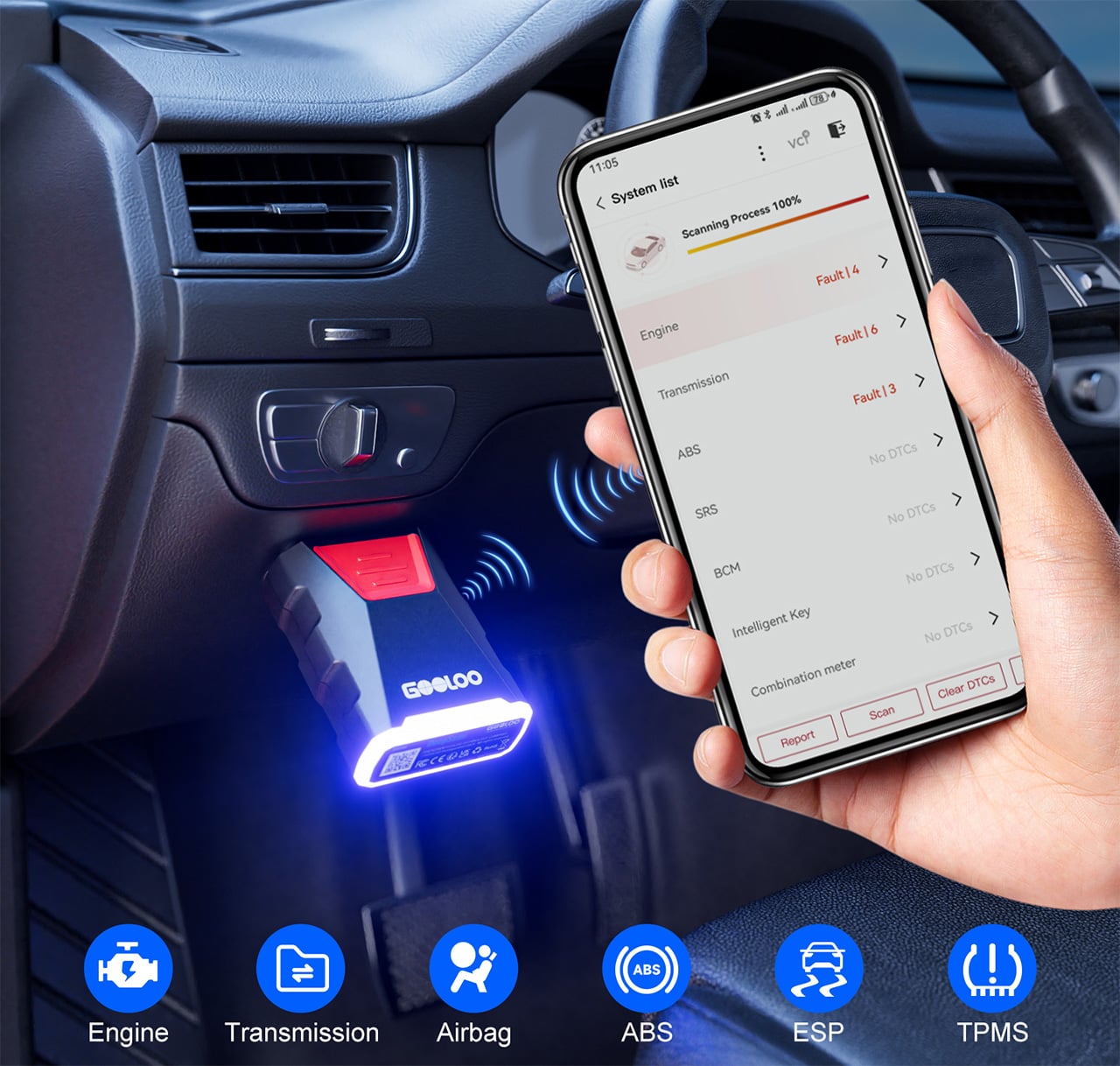
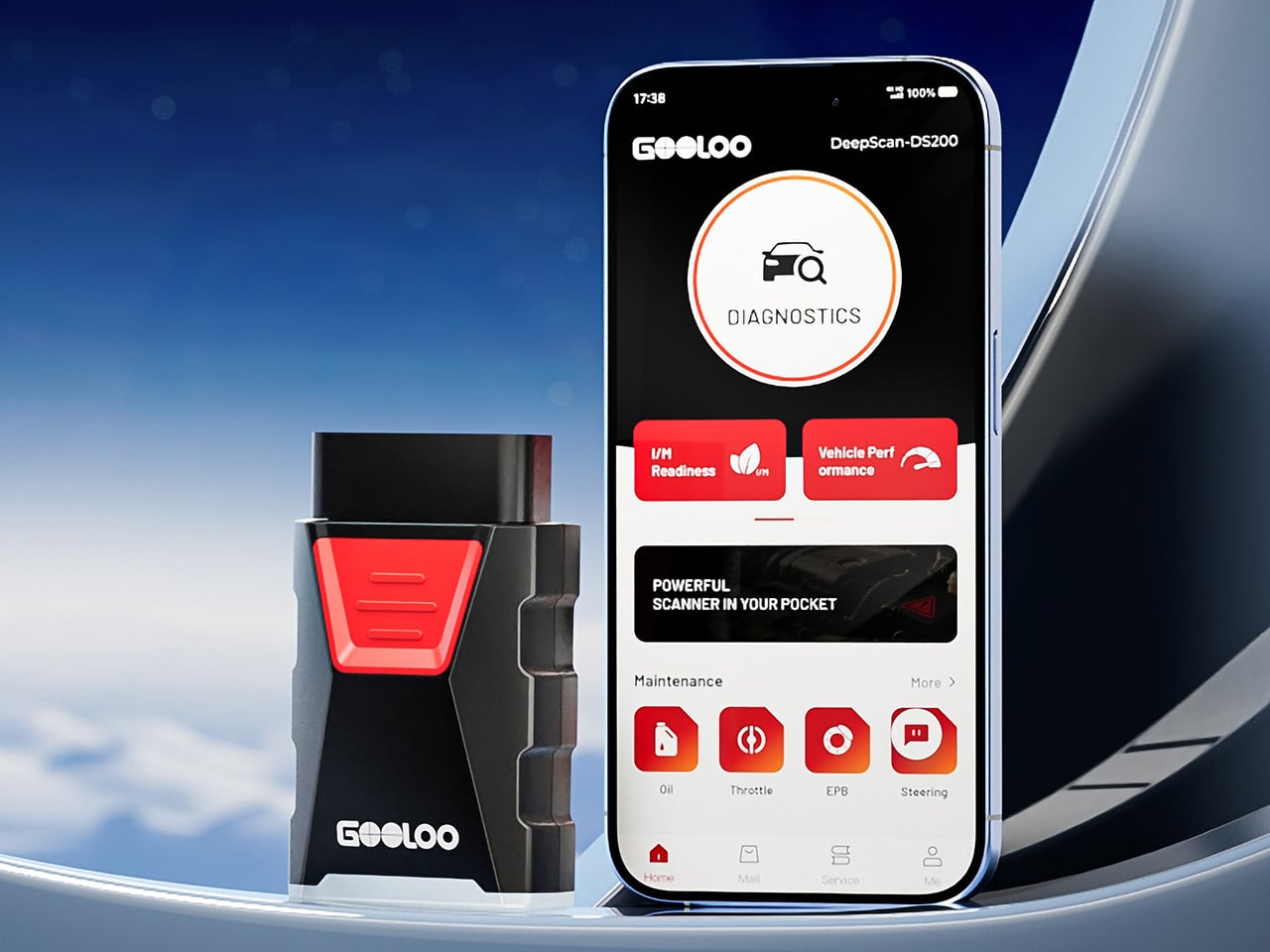
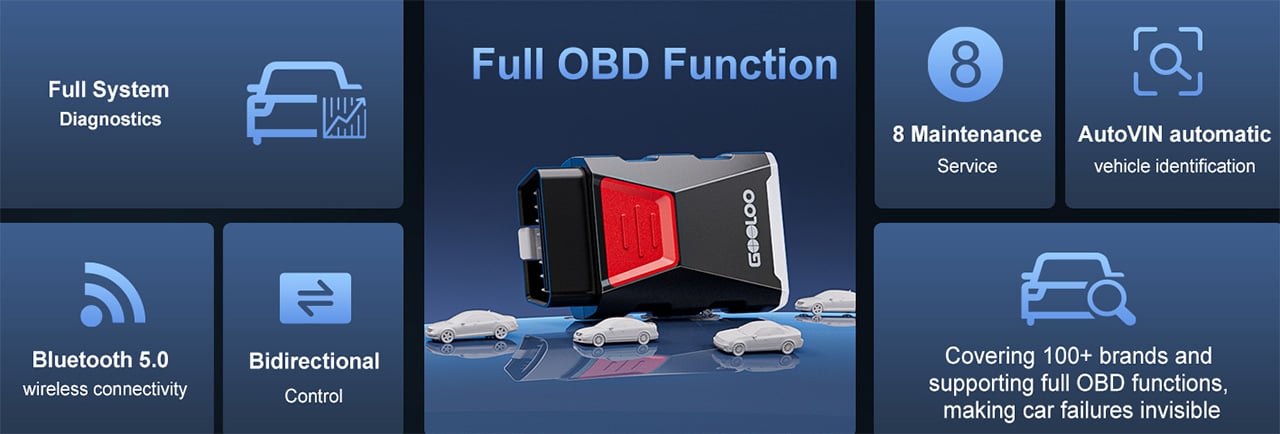
Your smartwatch does not just count steps. It listens to your heart, your sleep, your stress, and builds a holistic picture of how your body is doing. GOOLOO’s DS200 DeepScan treats a car with the same level of curiosity. Tucked into the OBD2 port, it becomes a kind of automotive smartwatch, constantly sampling signals from engine, transmission, ABS, airbags, and more, then turning them into an understandable health profile for the vehicle. It lives in that interesting space where hardware minimalism meets software depth, a trend we see in all the best modern tools.

Instead of a single blinking “check engine” icon, the DS200 surfaces trends, patterns, and causes. It calculates volumetric efficiency the way a smartwatch tracks oxygen uptake, logs fault histories like workout sessions, and wraps gateway unlocks and reset procedures in a guided interface. The hardware is a tiny Bluetooth dongle. The real product is the feeling that your car’s inner life is finally as legible as your own health dashboard. This approach shifts the entire user experience from reactive panic to proactive understanding, which is a significant design leap in a category full of cryptic tools.

Designer: GOOLOO

Click Here to Buy Now: $52.80 $89.99 (41% off, use coupon code “YANKODS”). Hurry, deal ends in 48-hours!

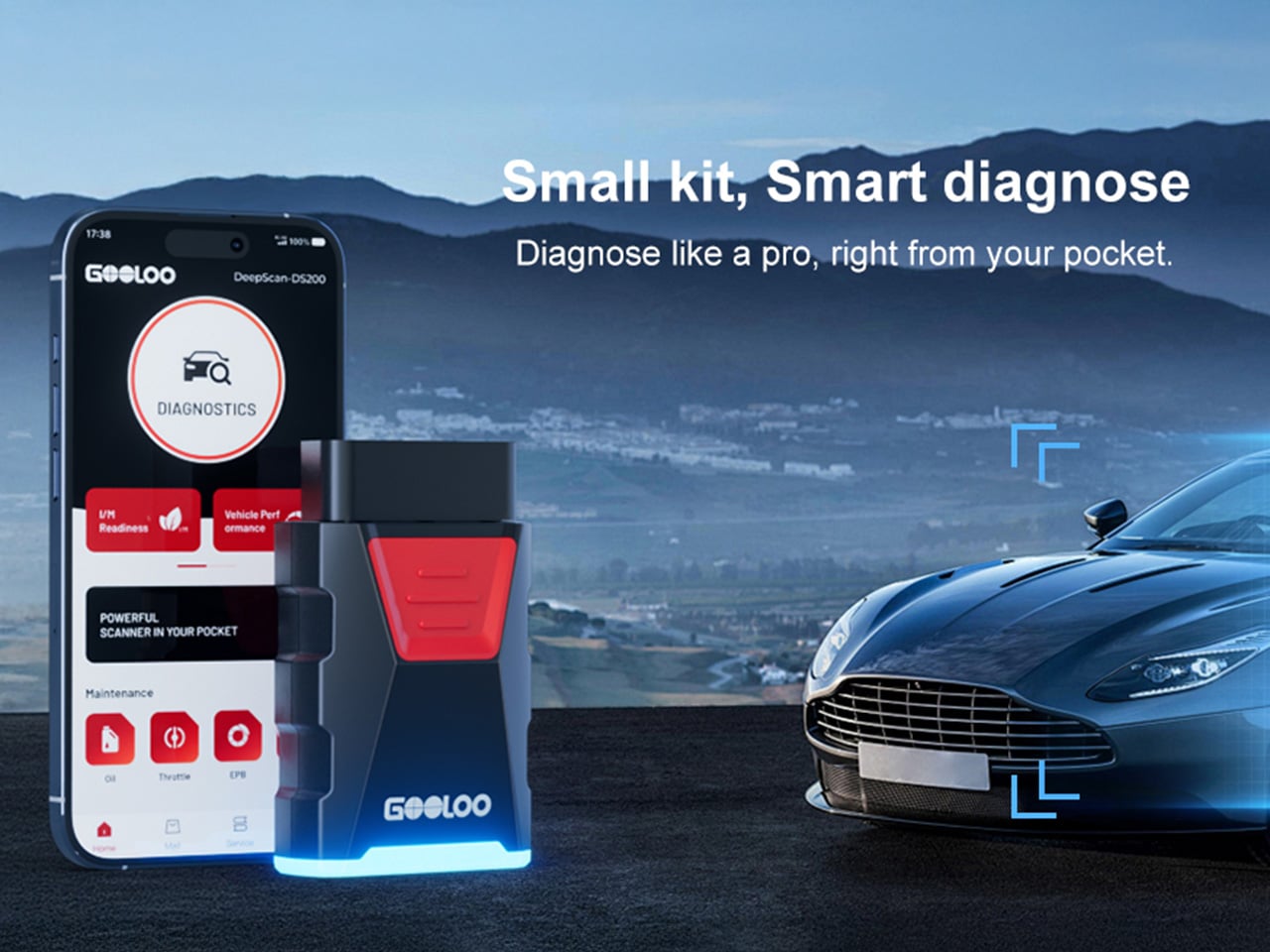
The physical unit itself is almost comically small, weighing just 2.89 ounces and measuring less than three inches long. It is the kind of object you plug in and forget about, a true set-and-forget sensor pod. The connection is handled over Bluetooth 5.0 with a reliable 33-foot range, so you are not tethered to the driver’s seat while you poke around in the app. All the heavy lifting, the real design intelligence, lives in the software on your phone. This is a deliberate choice. It keeps the hardware cost down and allows GOOLOO to push meaningful updates over Wi-Fi, evolving the tool’s brain without requiring new plastic.

That app is where the full-body scan happens, quite like how the smartwatch’s sensors ultimately send all the metrics to a fitness app for data-crunching. The DS200 performs a comprehensive sweep of all the vehicle’s major systems. We are talking about the engine, transmission, airbags, ABS, stability control, TPMS, immobilizer, gateway, steering, radio, and air conditioning. The AutoVIN feature automatically identifies the car, so you are spared the tedious process of manually entering model and year information. It is this depth of coverage that elevates the tool. It provides a complete diagnostic picture, showing how different systems are interacting, much like a health tracker correlating sleep quality with daytime stress levels.

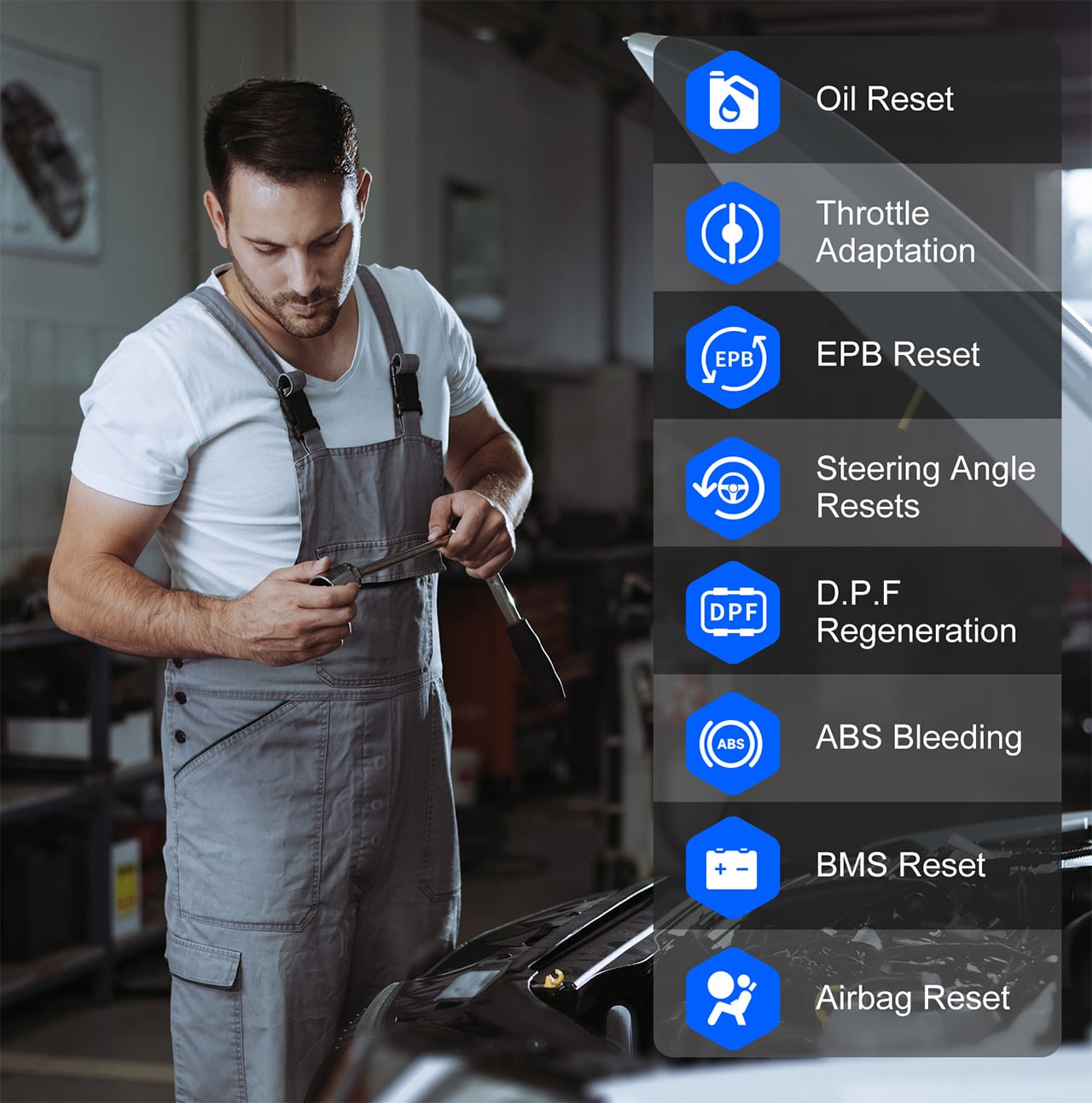
This tool also provides active coaching – a fitness app might tell you to work on your cardio; the DS200 gives you the ability to perform an ABS bleed or force a DPF regeneration on your diesel truck. The software includes eight advanced service functions right out of the box, including resets for the oil light, electronic parking brake, steering angle sensor, and battery management system. This is where the DS200 moves beyond simple monitoring and becomes an active maintenance partner. These are functions that, until recently, were locked away in expensive, workshop-exclusive hardware, and having them in a sub-$100 dongle is frankly a little absurd in the best way possible.

What really gets my attention, though, is the inclusion of secure gateway unlock. If you have ever tried to perform a deep diagnostic on a modern FCA or Renault vehicle, you have certainly hit this wall. The gateway module blocks unauthorized tools from making changes. The DS200 has this authentication built in, with plans to add support for Nissan and Volkswagen in future updates. This single feature is a massive deal for serious DIYers and independent shops. It is the digital key that gets you past the velvet rope, allowing you to perform the resets and tests that other tools in this price bracket simply cannot.

Of course, this level of ongoing intelligence comes with a modern business model. You get the first year of full functionality for free, which is plenty of time to see if it fits your workflow. After that, it shifts to a subscription. The basic package runs $49.99 a year, while an enhanced tier with over 30 advanced special functions is $129.99. For a professional technician, this is a negligible cost of doing business. For a home gamer, it is a decision point. You are not just buying a piece of hardware; you are subscribing to an evolving diagnostic platform.

If you are thinking this might be the right tool for your garage, GOOLOO is running a promotion right now that sweetens the deal. They have tiered discounts, so you get $10 off a $150 spend, $20 off $200, and $50 off when you spend $400. Every order also ships with a free canvas bag. If you happen to cross the $268 threshold, they will throw in a 100W solar panel as well, which is a pretty hefty bonus. It is a good time to jump in if you have been looking for a way to get a clearer picture of your car’s health.

Click Here to Buy Now: $52.80 $89.99 (41% off). Hurry, deal ends in 48-hours!

The post Your Car Now Has Its Own Fitness-Tracking ‘Smartwatch’, and It Costs Less Than $60 first appeared on Yanko Design.

Sony is buying Peanuts

Sony is paying approximately $460 milliion to purchase Peanuts [PDF] and its characters, including Snoopy and Charlie Brown, created by Charles M. Schulz. That’s a 41 percent stake Sony is buying from Canadian firm WildBrain. Since Sony bought 39 percent of the franchise back in 2018, this will give the company an 80 percent stake. The deal is still subject to regulatory approvals, but Peanuts will become Sony’s consolidated subsidiary once it’s closed. Schulz’s family still owns the remaining 20 percent stake in the franchise.

Schulz launched the Peanuts universe in comic strips 75 years ago, back in 1950. The franchise has grown massively since then, spawning animated series, cartoon musicals and movies that made Snoopy a household name. The company said that it has focused on expanding the Peanuts IP since it bought 39 percent of the brand years ago. “With this additional ownership stake, we are thrilled to be able to further elevate the value of the ʻPEANUTSʼ brand by drawing on the Sony Groupʼs extensive global network and collective expertise,” Sony Music Entertainment Japan CEO Shunsuke Muramatsu added.

This article originally appeared on Engadget at https://www.engadget.com/big-tech/sony-is-buying-peanuts-022341467.html?src=rss

Mercedes-Benz reimagines the stellar Unimog with a sublime touch of luxury

Mercedes-Benz has unveiled what could be the most luxurious Unimog ever built, marking a distinctive moment in the model’s nearly eight-decade history. Created by Mercedes-Benz Special Trucks in collaboration with Hellgeth Engineering, this one-off show vehicle celebrates the Unimog’s 80th anniversary in 2026 by pairing its legendary go-anywhere capability with levels of comfort and sophistication previously unseen in the series.

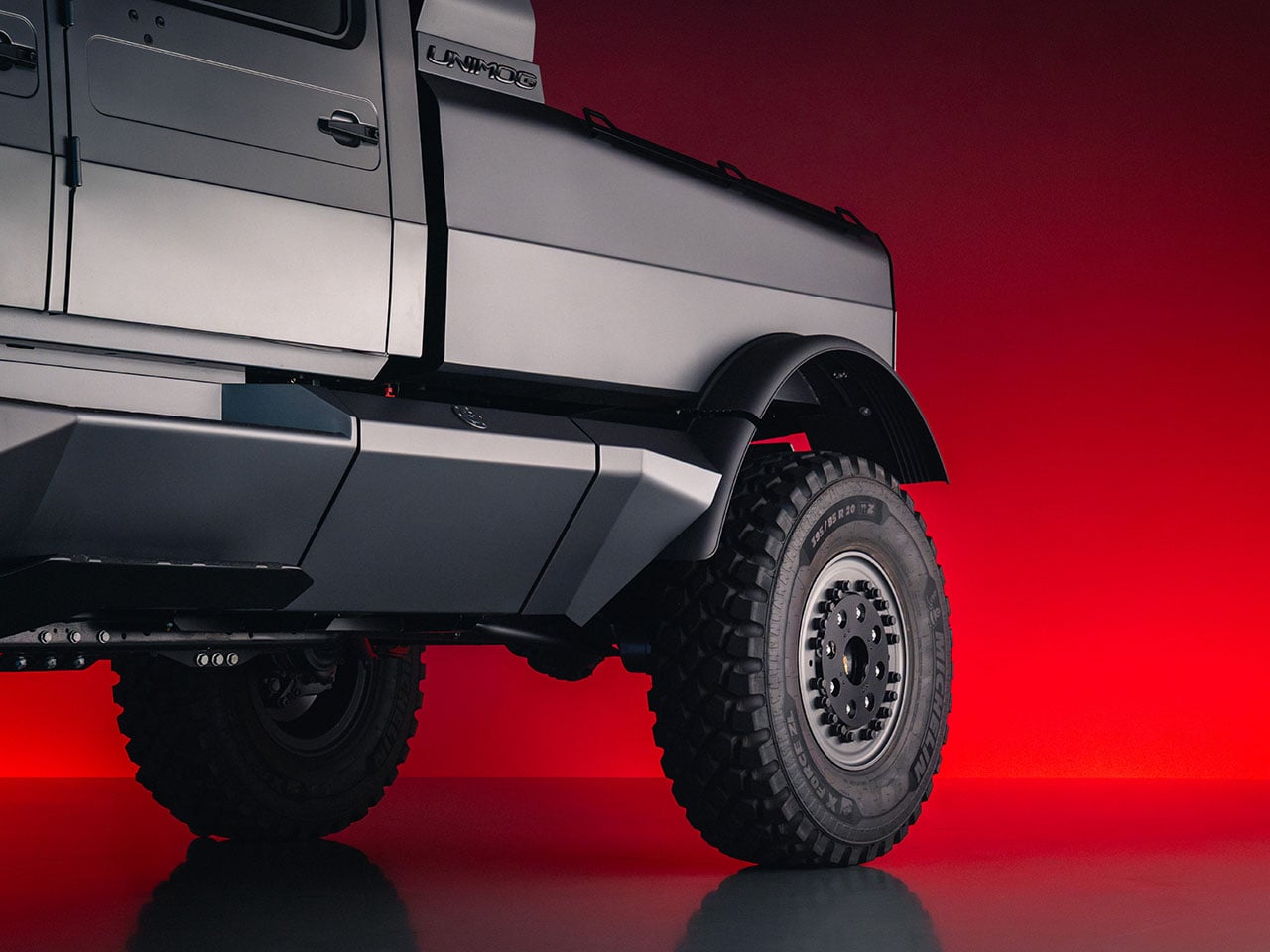
The new luxury Unimog is based on the robust U 4023 chassis, a platform already respected for tackling extreme terrain in both civilian and military settings. It retains core mechanical DNA such as a flexible frame, portal axles that lift critical drivetrain components high above obstacles, selectable all-wheel drive, and differential locks on both axles. These features ensure the vehicle maintains the off-road competence that defines the Unimog name.

Designer: Mercedes-Menz Trucks

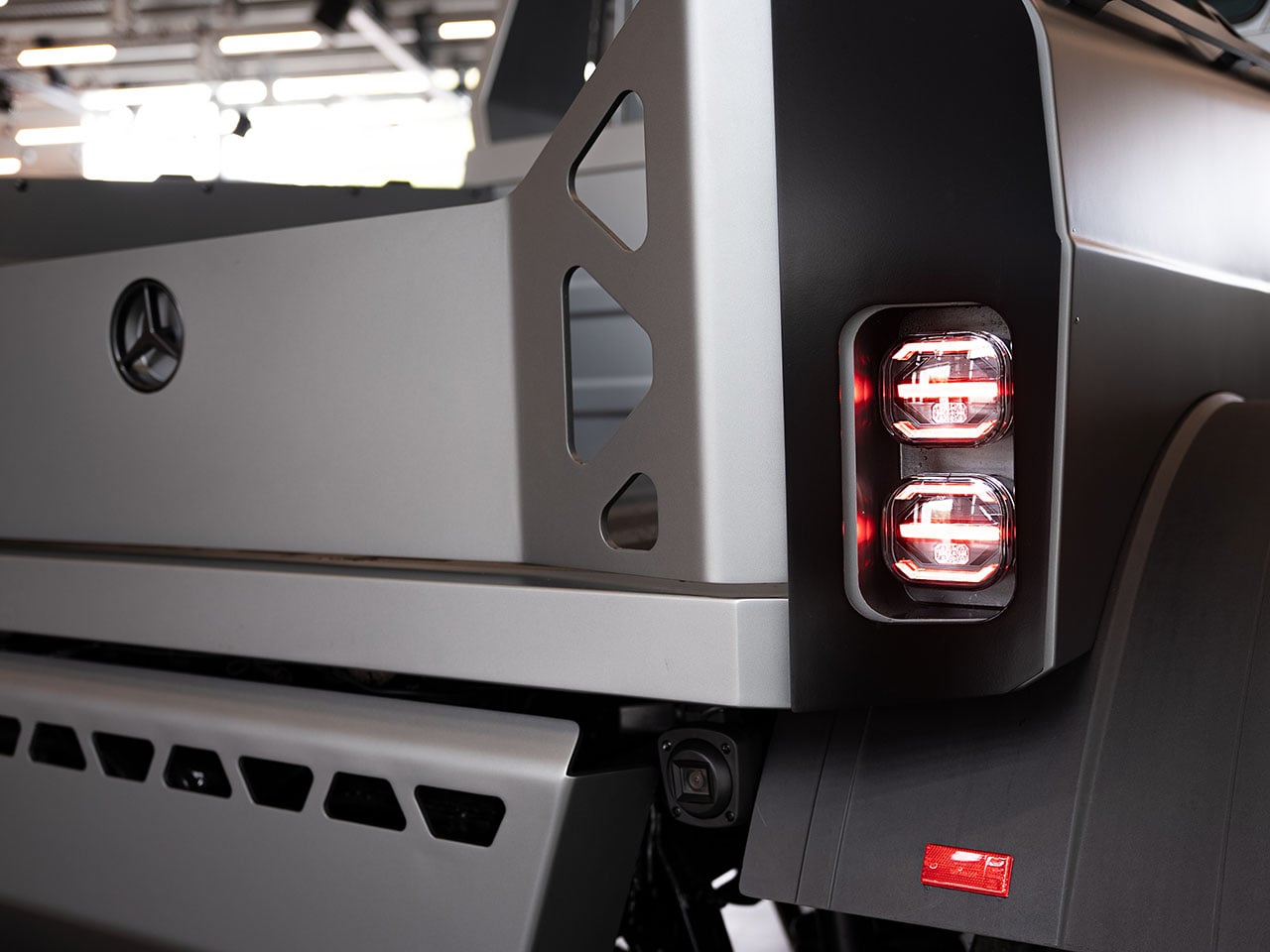
Under the hood, the standard four-cylinder engine has been replaced by a Mercedes-Benz OM 936 six-cylinder turbodiesel displacing 7.7 liters and producing around 220 kW (300 hp). This upgrade not only boosts performance over traditional configurations but also pairs with a recalibrated transmission for smoother power delivery and improved on-road manners, notable in a vehicle as rugged as the Unimog. Visually, the luxury Unimog blends utilitarian toughness with contemporary design cues inspired by Mercedes’ SUV range. Its matte grey exterior is punctuated by aluminum beadlock wheels for serious off-road durability, modern LED lighting, and the innovative MirrorCam system, which uses cameras and internal displays in place of conventional mirrors to improve visibility. While still unmistakably a Unimog, these refinements hint at a more premium character.

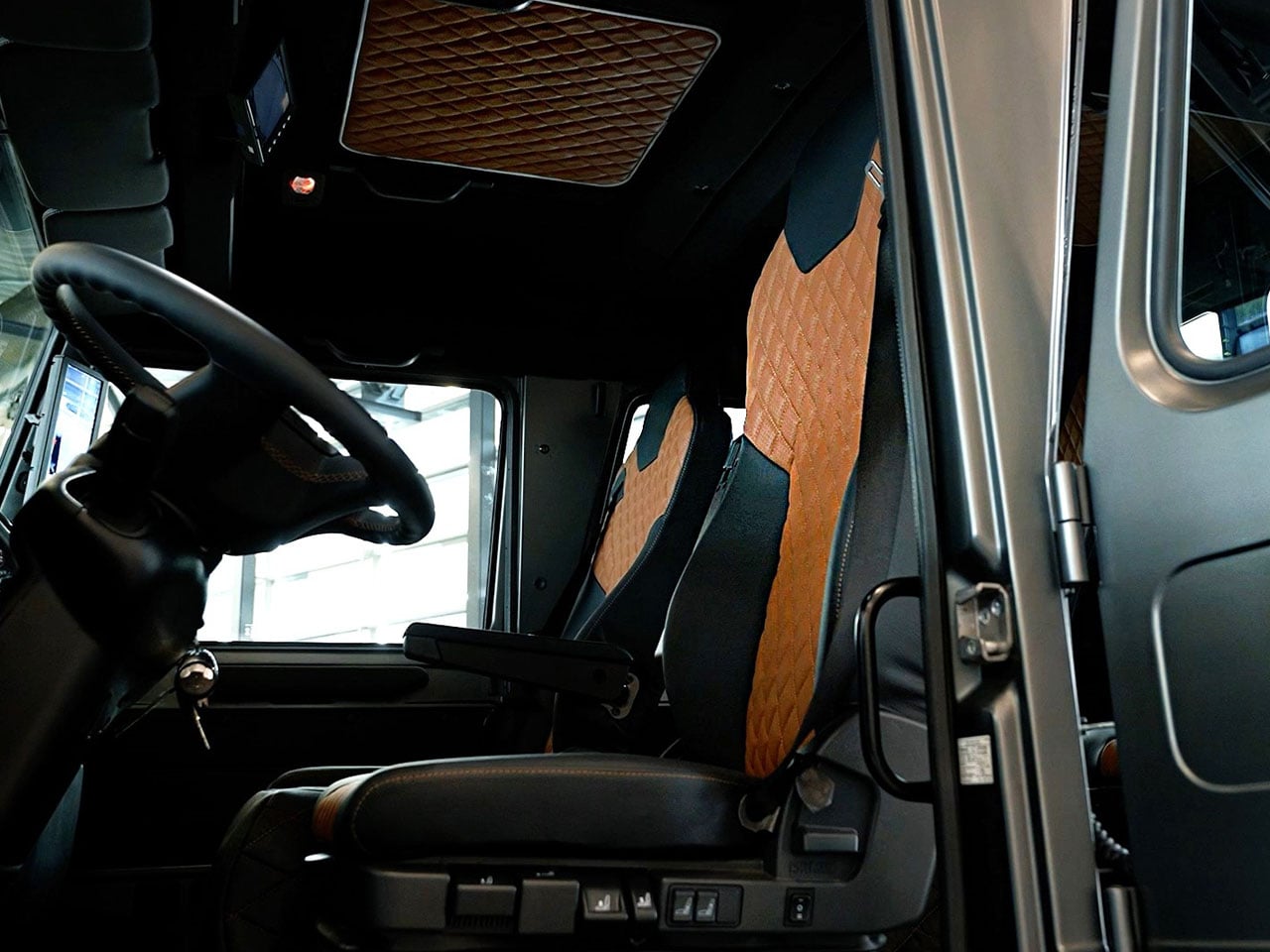
Inside the double cab, which accommodates four passengers, the transformation is most striking. Premium leather covers the seats, steering wheel, and even the floor mats, all detailed with contrasting stitching. LED ambient lighting enhances the cabin’s atmosphere, and ergonomically revised seating promotes comfort over long journeys. These elements create an experience far removed from the typically utilitarian interiors of traditional Unimogs. Mercedes-Benz Special Trucks frames this build as more than a static exhibit. After its public debut, the luxury Unimog will be handed to a customer for real-world testing in 2026. Feedback from this trial will help determine whether aspects of the project could evolve into a limited production or inspire future special editions.

The Unimog itself has a long legacy of versatility. Originally conceived as a “Universal-Motor-Gerät” in the aftermath of World War II, the model has served as everything from agricultural machinery to military transport and emergency-response vehicle. Its hallmark has always been exceptional adaptability and resilience across environments. Pricing for the existing U 4023 begins around the mid-six-figure mark (around $225,000), and with the bespoke powertrain and luxury appointments, this anniversary edition could command a significantly higher valuation should it ever reach limited production. For now, it stands as a bold reinterpretation of a vehicle long prized for its capability, signalling what might lie ahead if demand for ultra-premium off-road trucks continues to grow.

The post Mercedes-Benz reimagines the stellar Unimog with a sublime touch of luxury first appeared on Yanko Design.

This Extra-Wide Tiny House Has A Ground-Floor Bedroom & A Real Bathtub

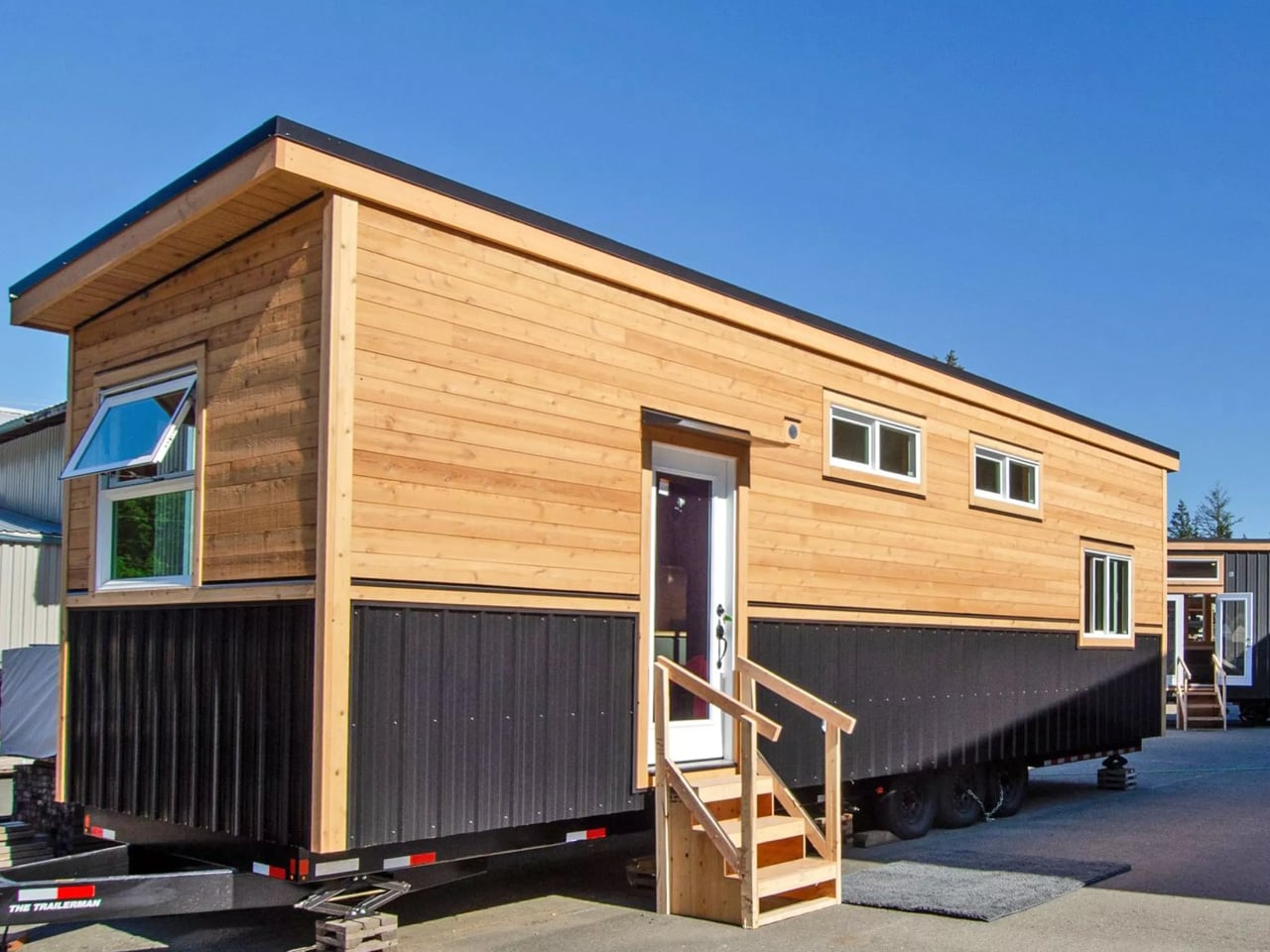
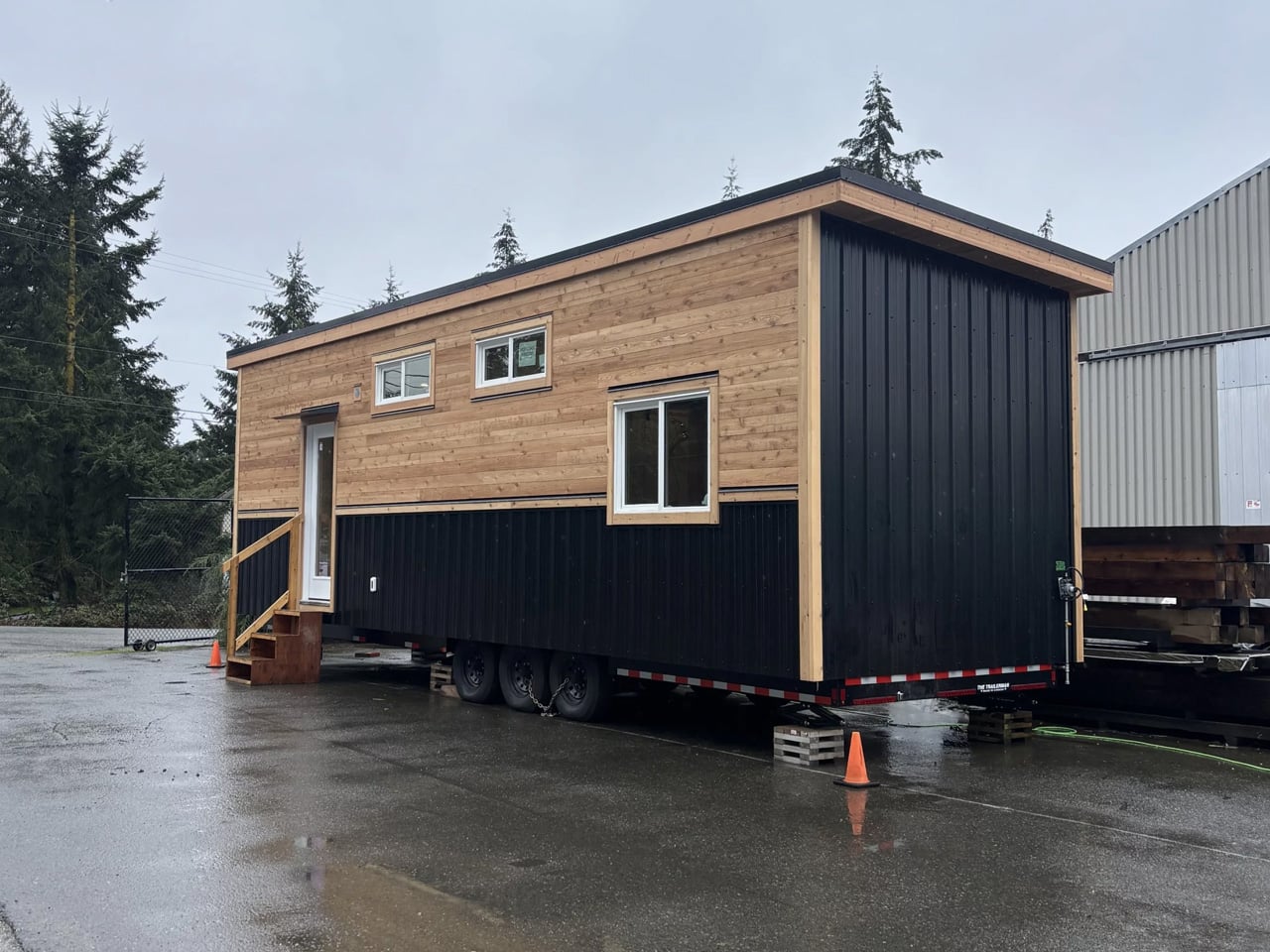
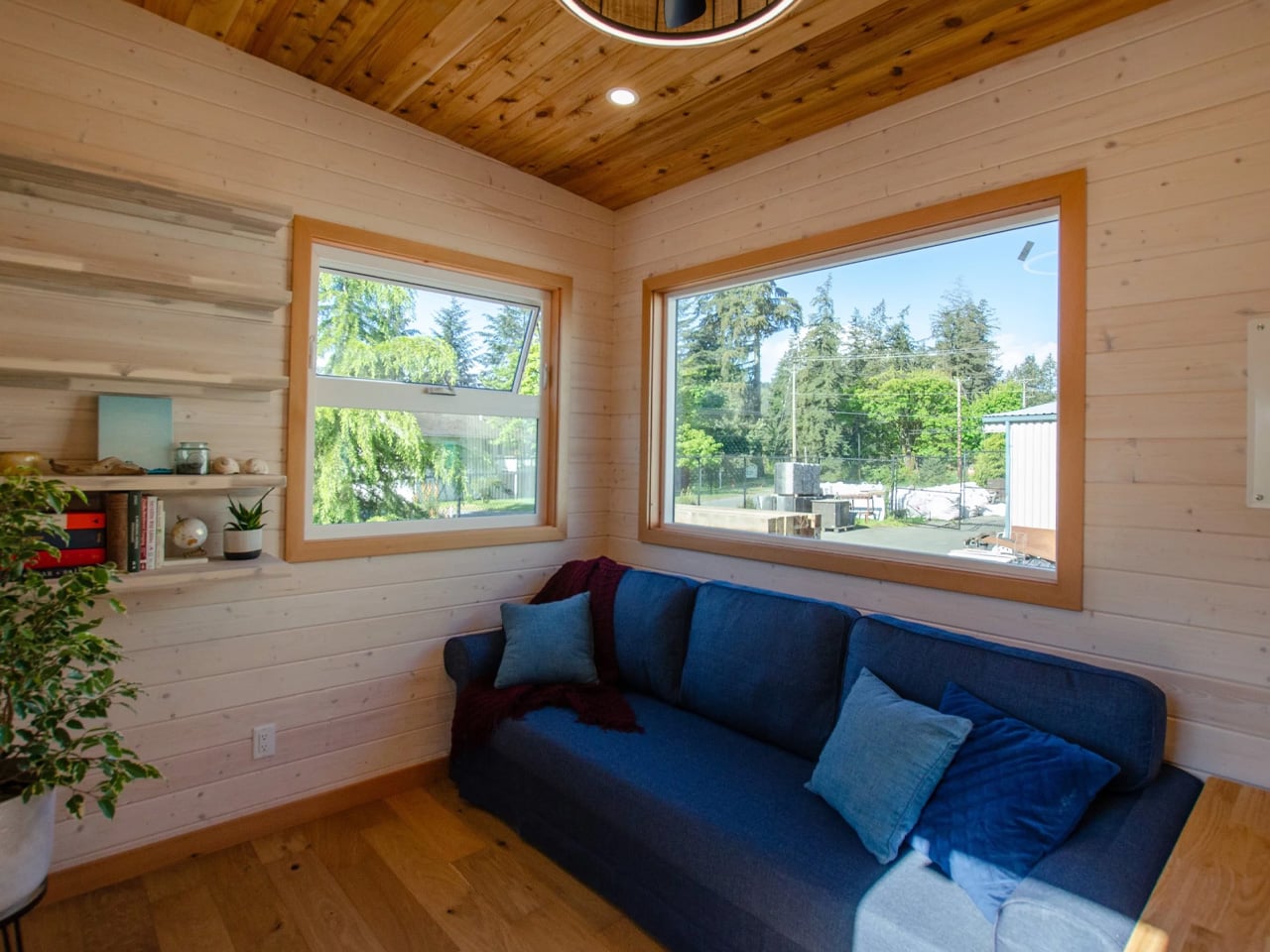
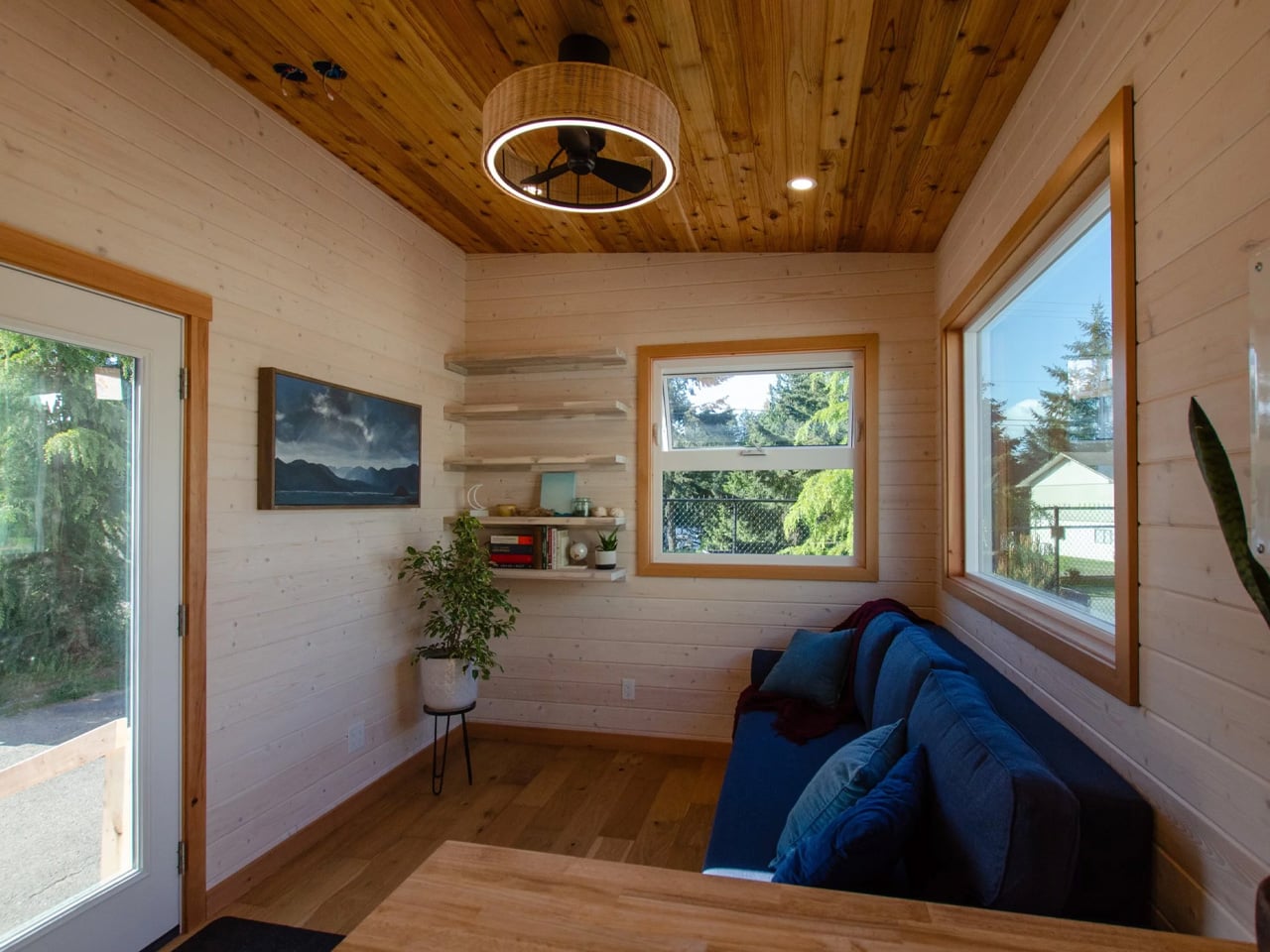
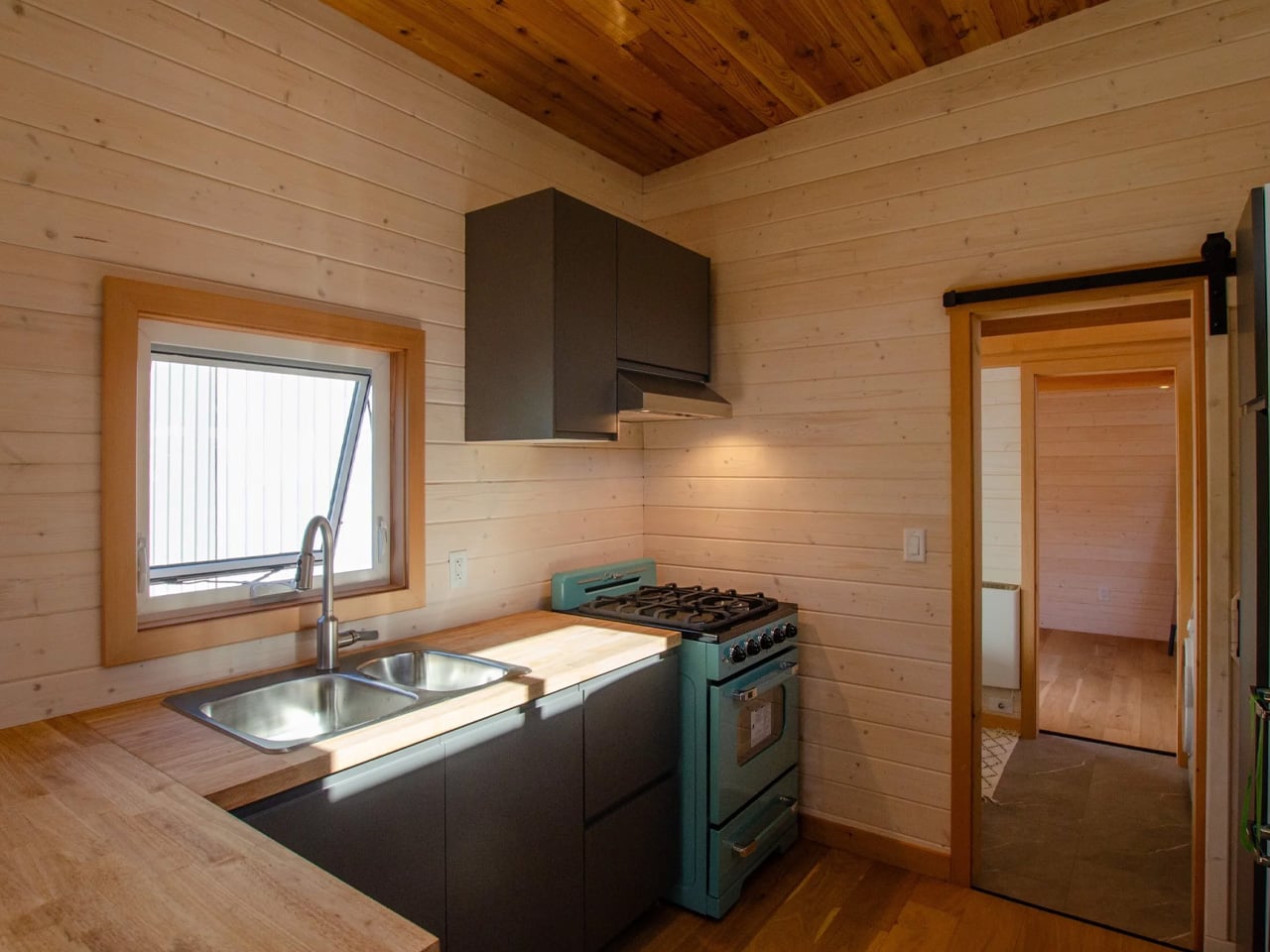
The tiny house movement has always been about intentional living and simplicity, but it’s never demanded that comfort be part of the trade-off. Vancouver Island’s Rewild Homes proves this point brilliantly with the Juniper, an extra-wide tiny house that challenges everything you thought you knew about small-space living. Measuring 34 feet long and just over 10.5 feet wide, the Juniper sits on a triple-axle trailer. Yes, it requires special permits for transport across Canadian roads, but that extra width transforms the entire living experience. Step inside, and the space breathes in ways most tiny houses simply can’t achieve.

Rewild Homes has spent over a decade perfecting their signature blend of rustic warmth and contemporary clean lines. The Juniper’s exterior tells this story immediately. Metal cladding meets cedar siding in a balanced contrast, softened by white window trim and topped with a durable metal roof. The look feels confident without being showy, the kind of design that ages well. This isn’t about clever optical illusions or maximalist storage solutions. It’s about a genuine, comfortable space that feels right the moment you walk through the full-glass entry door.

Designer: Rewild Homes

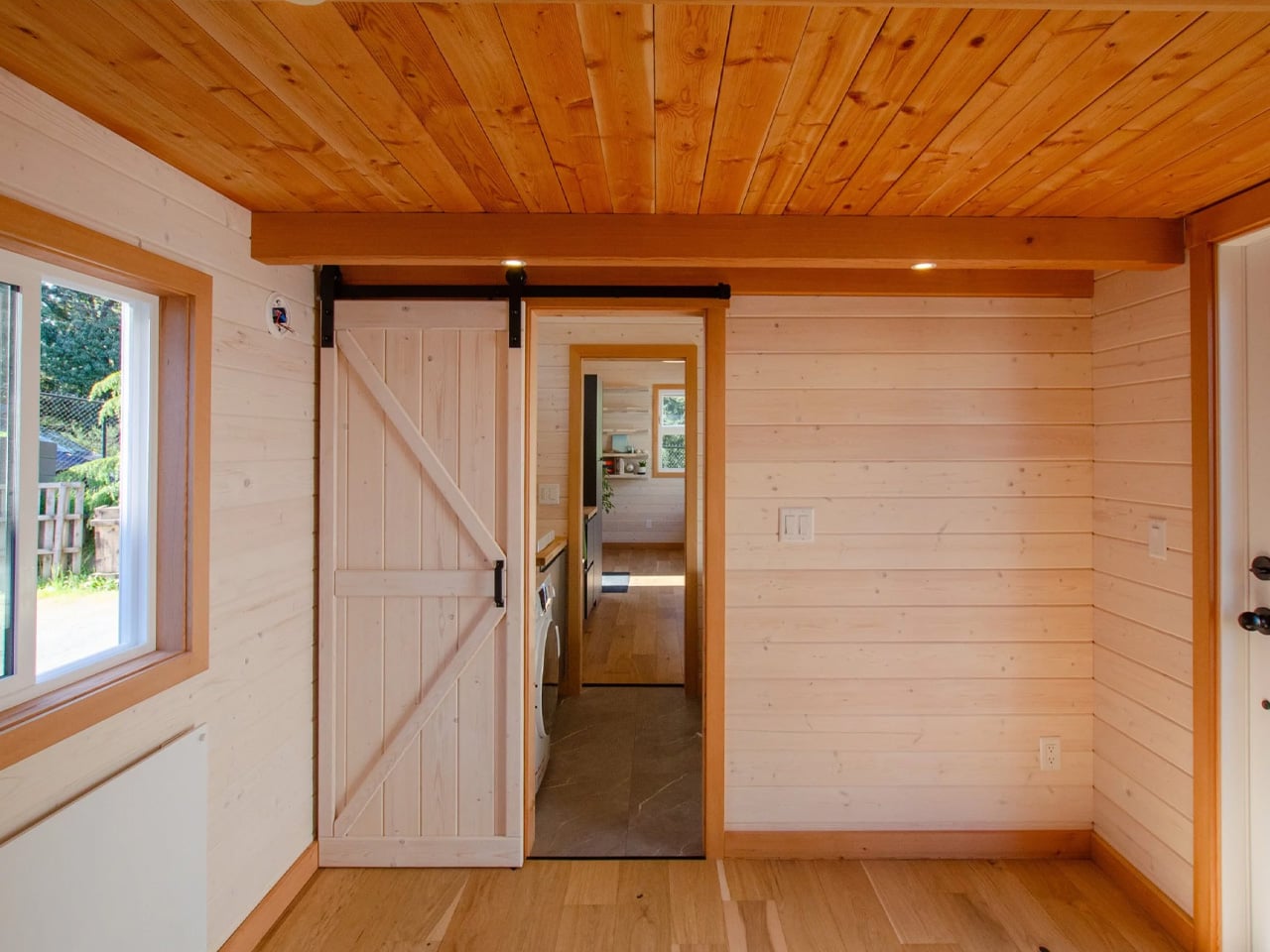
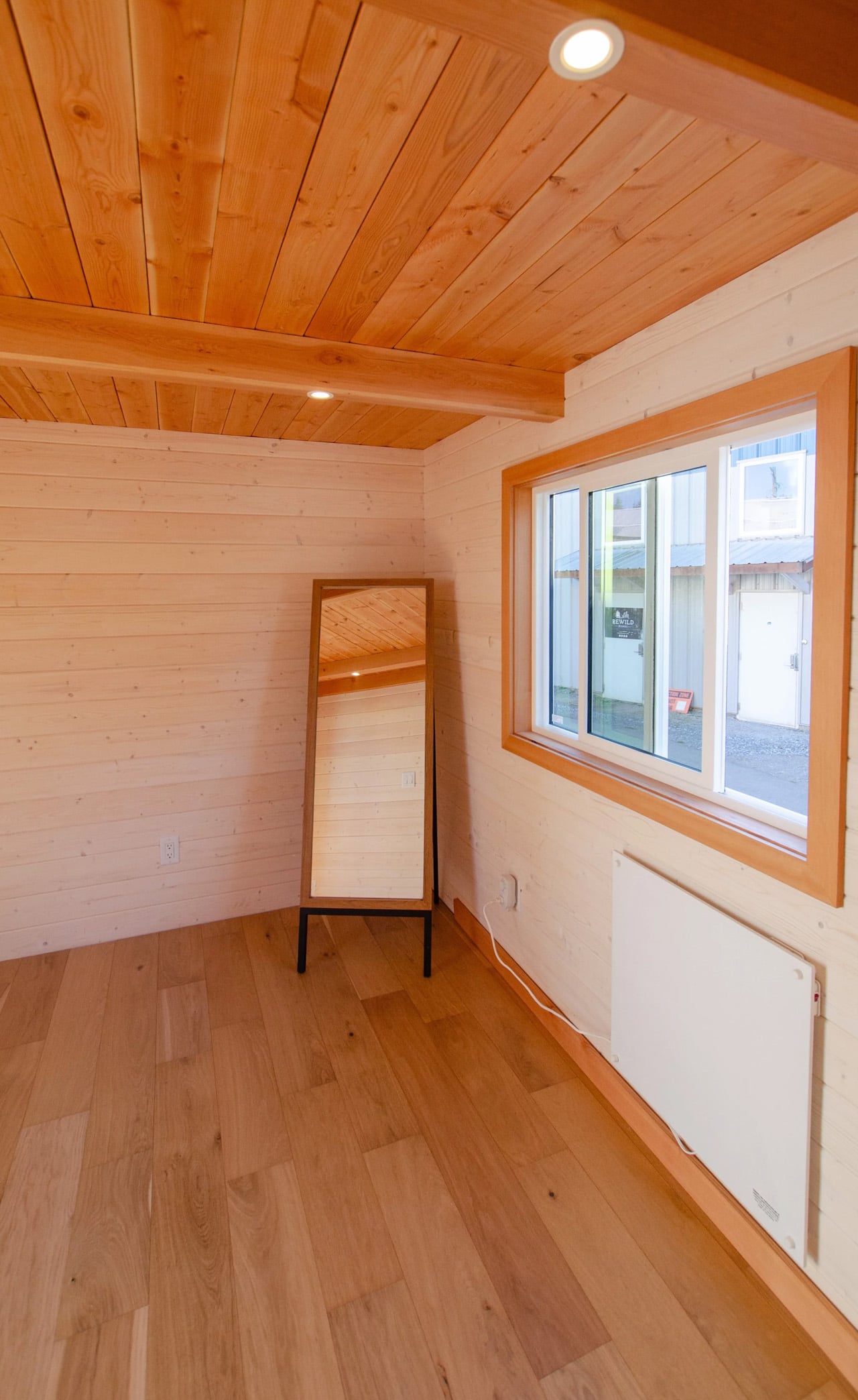
The real magic reveals itself in the home’s layout. Unlike most tiny houses that force residents up a ladder to a cramped loft, the Juniper offers something almost unheard of: a proper ground-floor bedroom. Located at the far end of the home, this sleeping space accommodates a queen bed with full standing height. The cedar ceiling and whitewashed wood walls create an atmosphere that’s equal parts cozy cabin and modern sanctuary. A barn-style sliding door adds privacy, while a full-glass exterior door floods the room with natural light and provides direct outdoor access. Storage hasn’t been forgotten either. A generous loft sits above the bedroom, perfect for seasonal items and everything else that needs to disappear from daily view.

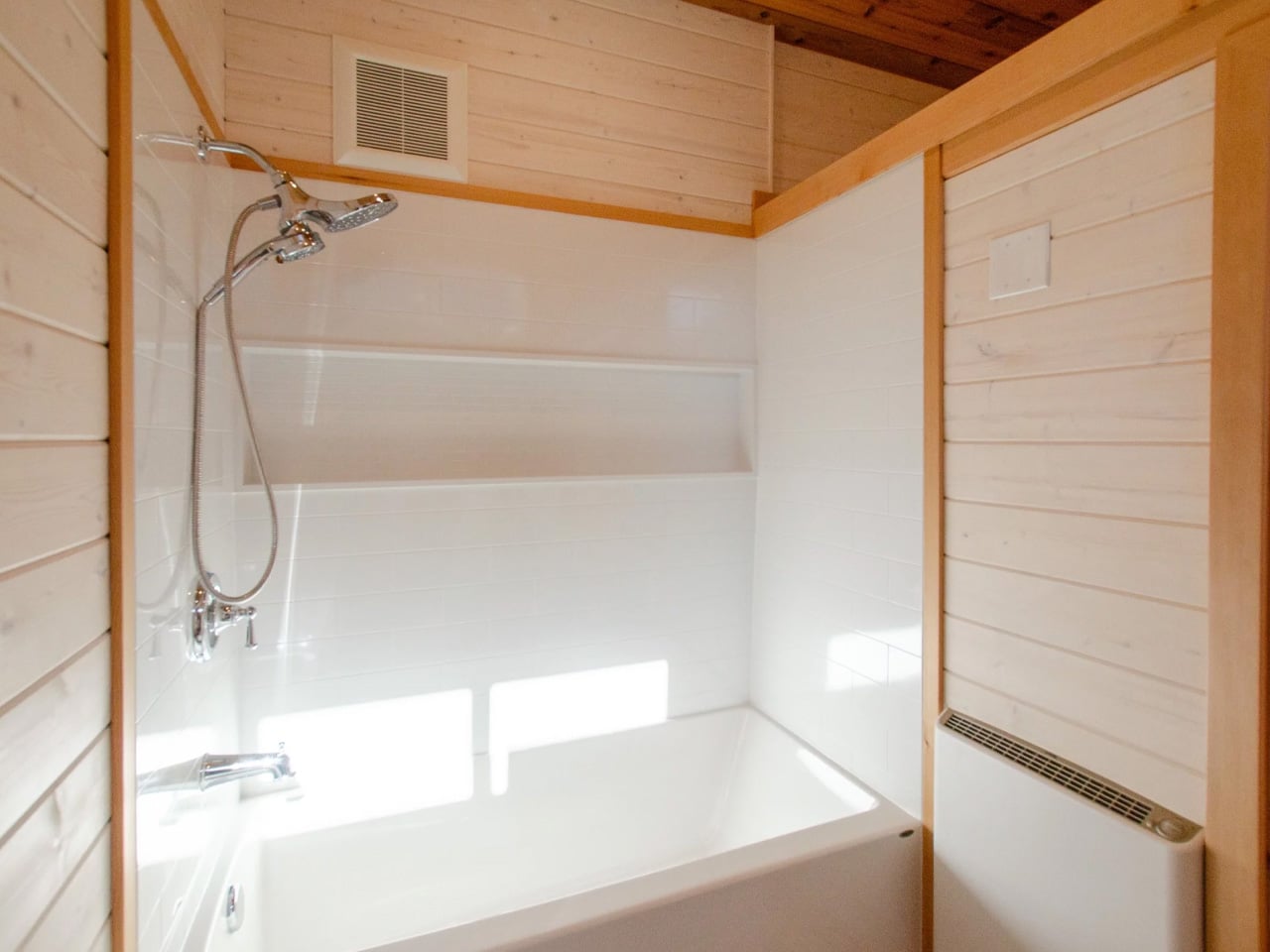
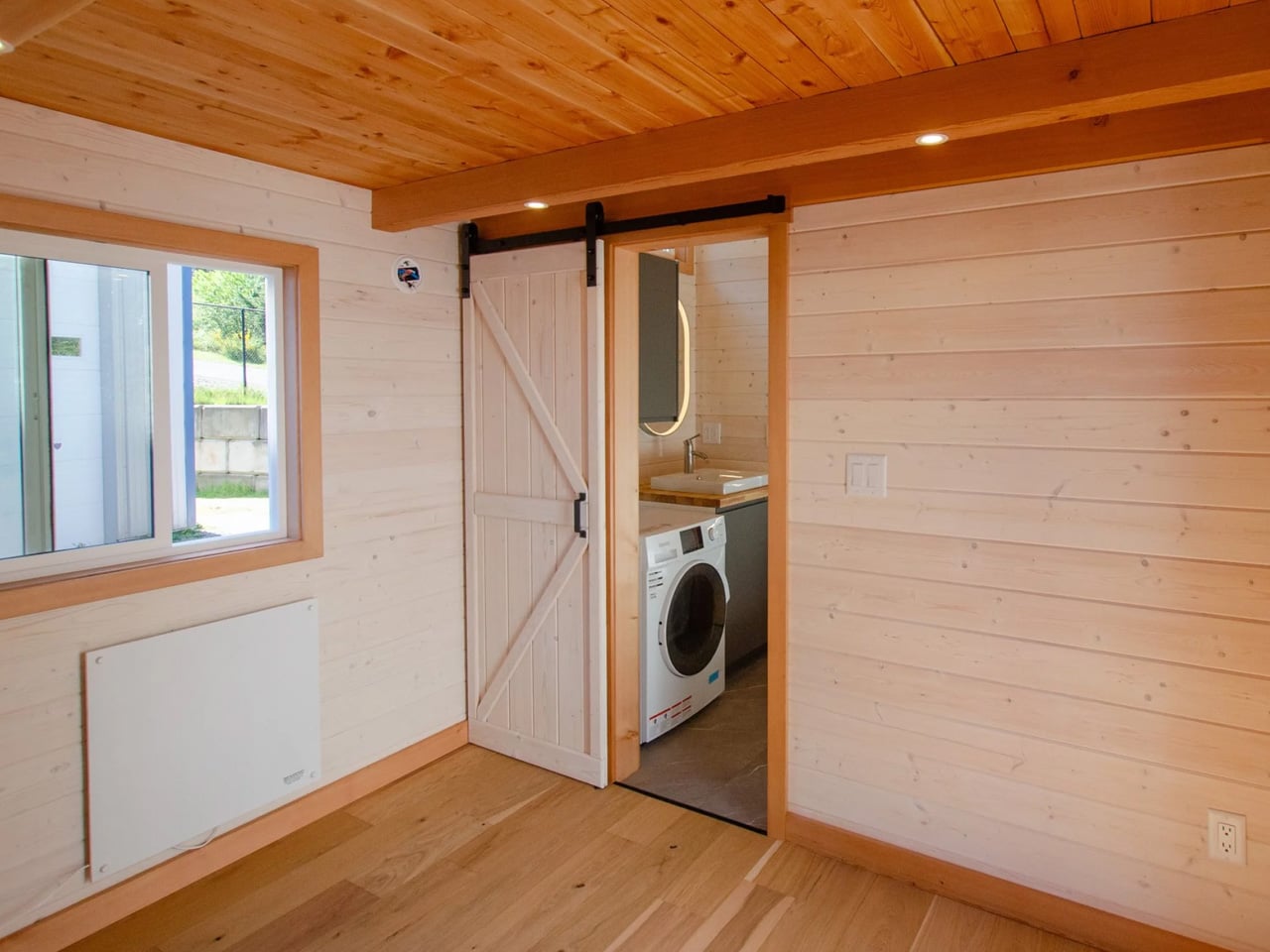
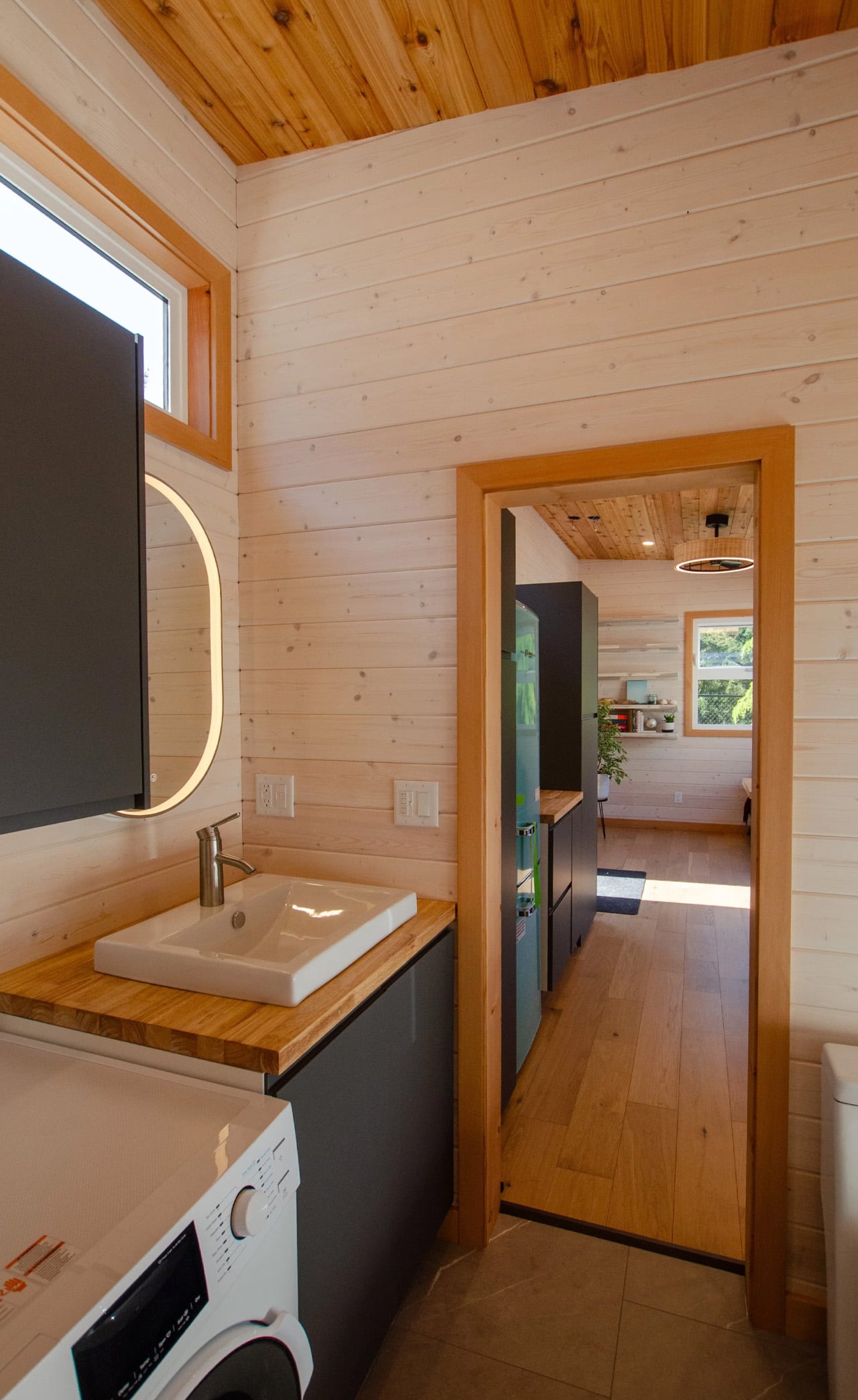
The bathroom deserves its own spotlight. Full-height ceilings eliminate that hunched-over shower experience common in tiny houses. More impressively, the Juniper includes an actual bathtub—a luxury so rare in this category that it borders on revolutionary. Ample counter space, under-sink storage, a washer/dryer combo, and additional wall cabinets round out a bathroom that rivals many traditional apartments. This thoughtful separation of spaces keeps living areas clean and uncluttered while delivering functionality that doesn’t compromise on comfort.

Built for year-round living, the home runs on electricity and propane, providing on-demand hot water and electric heating. The systems are comprehensive, designed for couples ready to embrace full-time tiny living without sacrificing modern conveniences. Rewild Homes builds every house as a custom project, meaning the Juniper serves as a starting point rather than a fixed blueprint. Material choices, finishes, and specific features all shift based on individual preferences and budget. This flexibility ensures each home reflects its owner’s vision while maintaining the thoughtful design principles that make the Juniper stand out.

The Juniper represents a maturation of the tiny house concept. It’s not about how small you can go, but how well you can live in the space you choose. For couples seeking a permanent tiny house solution, this extra-wide design offers proof that downsizing doesn’t mean downgrading. This is tiny living that actually lives well.

The post This Extra-Wide Tiny House Has A Ground-Floor Bedroom & A Real Bathtub first appeared on Yanko Design.

Trump’s TikTok deal is another step closer to finally actually happening

Remember back in September when President Donald Trump signed an executive order that seemingly finalized some of the terms of a deal to spin off TikTok's US business? Three months later, that same deal is apparently one step closer to being official.

According to Bloomberg, TikTok CEO Shou Chew told employees that TikTok and ByteDance had signed off the agreement for control of TikTok's US business. It sounds like terms of the deal are roughly the same as what Trump announced earlier this year. A group of US investors, including Oracle, Silver Lake and MGX will control a majority of the new entity while ByteDance will keep a smaller stake in the venture. 

According to Chew's memo, the deal is expected to close January 22, 2026. “Upon the closing, the US joint venture, built on the foundation of the current TikTok US Data Security (USDS) organization, will operate as an independent entity with authority over US data protection, algorithm security, content moderation and software assurance,” he wrote according to Bloomberg.  TikTok didn’t immediately respond to a request for comment.

Notably, it's still not clear where Chinese officials stand on the deal. Trump said back in September that China was "fully on board," but subsequent meetings between the two sides have so far produced vague statements. In October, China's Commerce Ministry said it would "work with the U.S. to properly resolve issues related to TikTok." 

If a deal is indeed finalized by next month, it will come almost exactly a year after Trump's first executive order to delay a law that required a sale or ban of the app front taking effect. He has signed off several other extensions since.

This article originally appeared on Engadget at https://www.engadget.com/social-media/trumps-tiktok-deal-is-another-step-closer-to-finally-actually-happening-001813404.html?src=rss

Hisense Reimagines Domestic Space Through Modularity and Ergonomic Intelligence at CES 2026


Modularity. The word appears constantly in appliance marketing, usually meaning nothing more than optional accessories. Hisense’s CES 2026 lineup treats it as structural philosophy.

The home appliance category has long resisted meaningful design evolution. Refrigerators grow larger. Washers add cycles. Connectivity features accumulate. None of this fundamentally changes how these objects occupy space or interact with human behavior.

Designer: Hisense

Hisense’s collection spans kitchen, laundry, and climate control. What unifies the products is methodology: each addresses a specific behavioral friction point rather than adding features to existing forms. A dehumidifier repositions its tank to eliminate bending. A laundry system provides parallel processing for incompatible fabric types. A refrigeration line achieves visual coherence across separately purchased units.

Miguel Becerra, Hisense’s Director of Smart Home, framed the approach explicitly. These are reconceptions, not refinements. Machine intelligence operates autonomously rather than demanding constant user input. Ergonomic reconsideration shapes maintenance rituals. Adaptable configurations replace fixed proportions.

Connect Life: Distributed Intelligence Across Domestic Systems

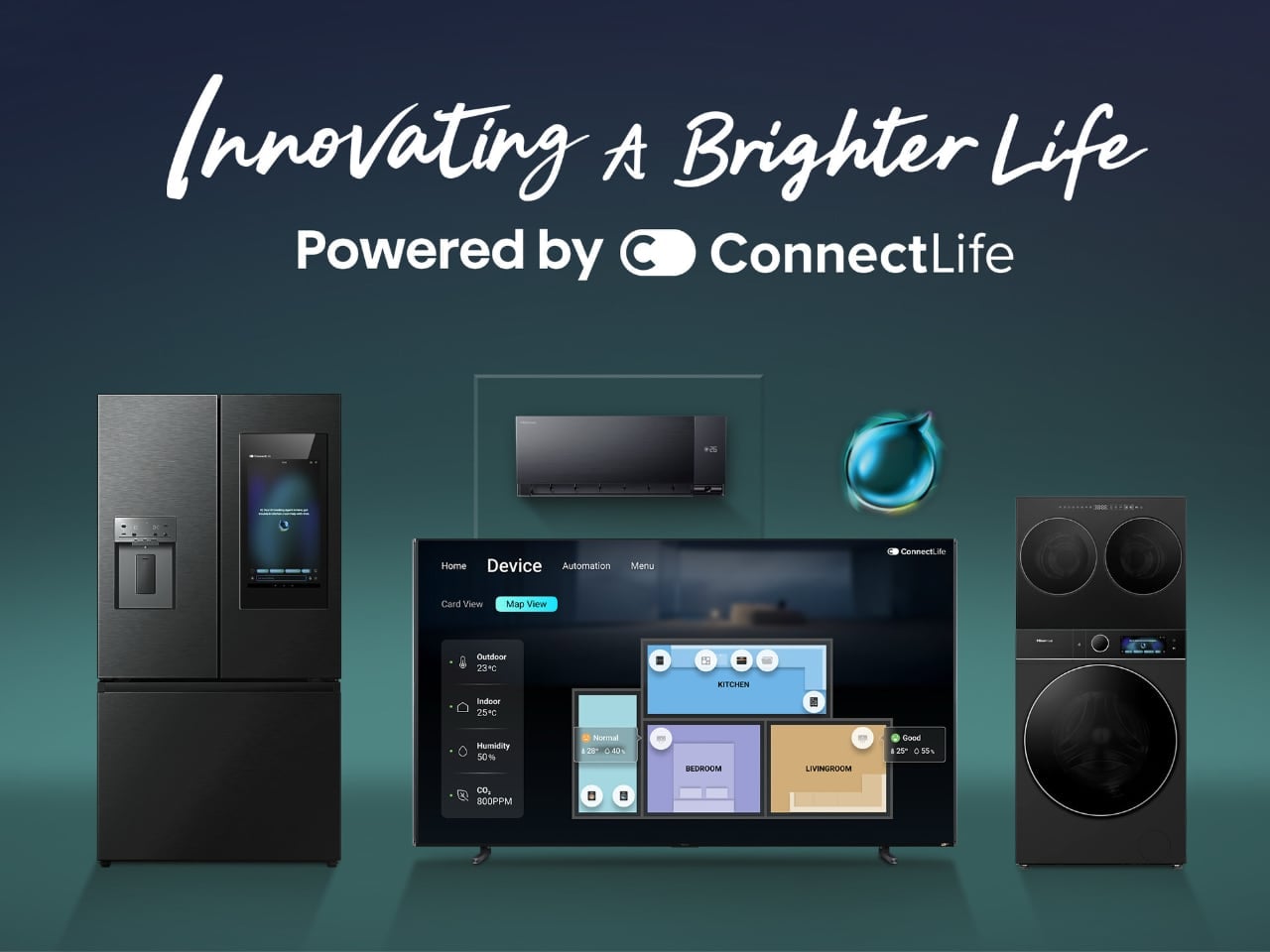
Five AI agents. Air. Cooking. Laundry. Energy. Support. Each monitors a domain and acts without waiting for commands. The system design reflects a philosophical shift: reactive control gives way to anticipatory automation.

The air agent illustrates the approach. Paired with third-party motion and air quality sensors, it adjusts climate based on occupancy and particulate levels rather than thermostat schedules. Empty room detected: cooling reduces. Elevated particles registered: ventilation increases. No user input required. The system anticipates discomfort before it registers.
Cooking and laundry agents follow similar logic. The cooking agent coordinates oven and cooktop timing, ensuring stovetop preparation and oven completion align appropriately. The laundry agent accepts phone-scanned fabric and stain images, selects cycles autonomously, and provides completion estimates. Meal recommendations integrate with appliance coordination.

Matter compatibility prevents ecosystem lock-in. Thousands of certified devices integrate. Users maintaining existing relationships with Apple Home, Google Home, or Alexa retain those interfaces while Connect Life adds capability layers. No ecosystem abandonment required. The support agent monitors device health proactively, flagging failures before they disrupt operation.

This is automation that reduces cognitive load rather than relocating it from physical buttons to digital interfaces. The distinction matters: complexity handled invisibly differs fundamentally from complexity shifted to a new control surface.

Kitchen Suite: Screens as Interface, Coordination as Function

Screens everywhere. The Connect Life Cap refrigerators carry two: a 21-inch primary display and a 3.5-inch secondary dedicated to temperature controls.

The bifurcation acknowledges interaction hierarchy. Not every interaction requires the full interface. Temperature adjustment happens quickly on the smaller screen. Recipe browsing, wine pairing suggestions, and smart home management occupy the larger surface.
Configuration options span counter-depth, French door, and cross-door layouts. Counter-depth models integrate flush with cabinetry. French door provides traditional accessibility. Cross-door offers alternative organization. Display consistency across configurations means interface logic transfers regardless of which form factor fits a particular kitchen.

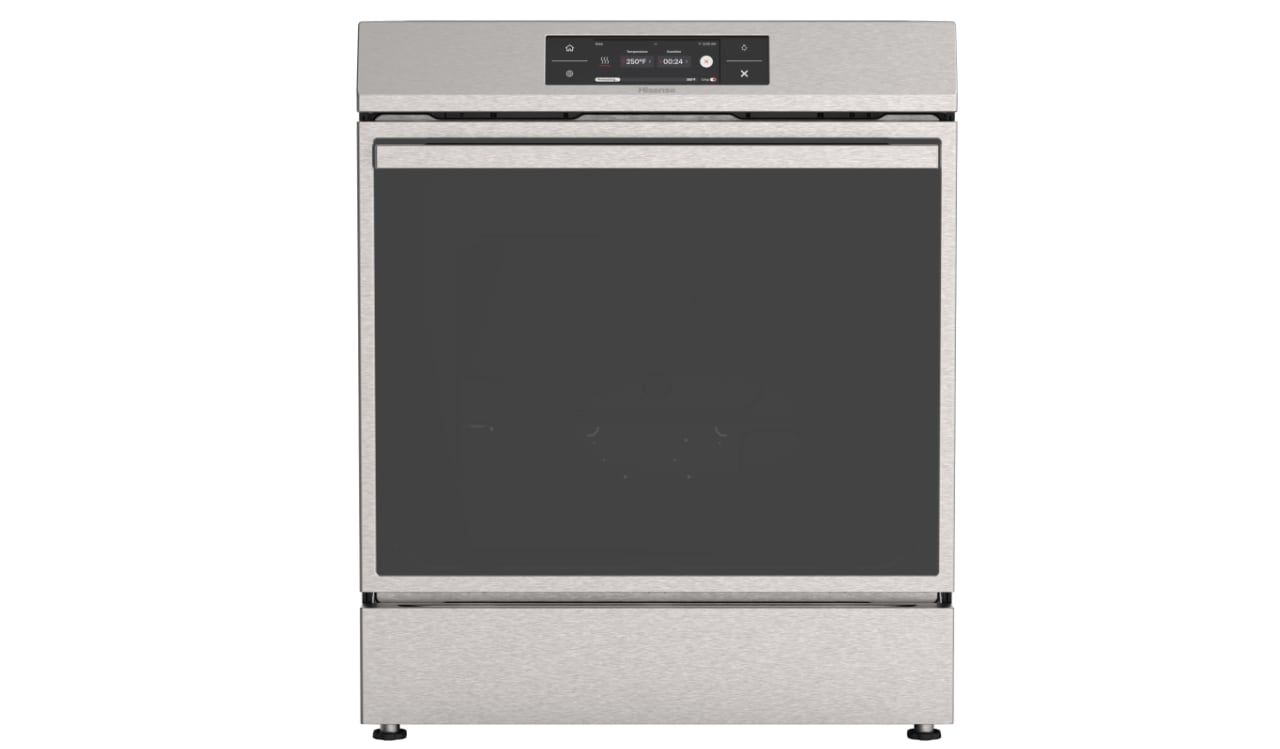
The smart induction range adds a seven-inch cooktop display with bridge functionality that combines heating zones for oversized cookware. Rapid preheat technology reduces the waiting period between intention and cooking. The AI cooking agent coordinates timing across appliances, ensuring stovetop preparation and oven completion align appropriately.

Most distinctive: the S7 Smart Dishwasher’s cooking pattern detection. Connected to compatible ovens, it recognizes what was prepared and queues appropriate cycles before loading occurs. Greasy steak dinner triggers heavy-duty settings automatically.

This appliance-to-appliance communication eliminates the guesswork that typically accompanies cycle selection. The dishwasher transforms from passive receptacle into active kitchen workflow participant.

PureFit Refrigeration: Modularity as Aesthetic Principle

The new wine cabinet shares exact dimensional precision with existing PureFit refrigerator and freezer columns. Minimal side gaps. Coordinated panel finishes. The slim profile accommodates kitchens where standard depths would protrude awkwardly from cabinet lines. Multiple units read as built-in cabinetry rather than assembled appliance collection.
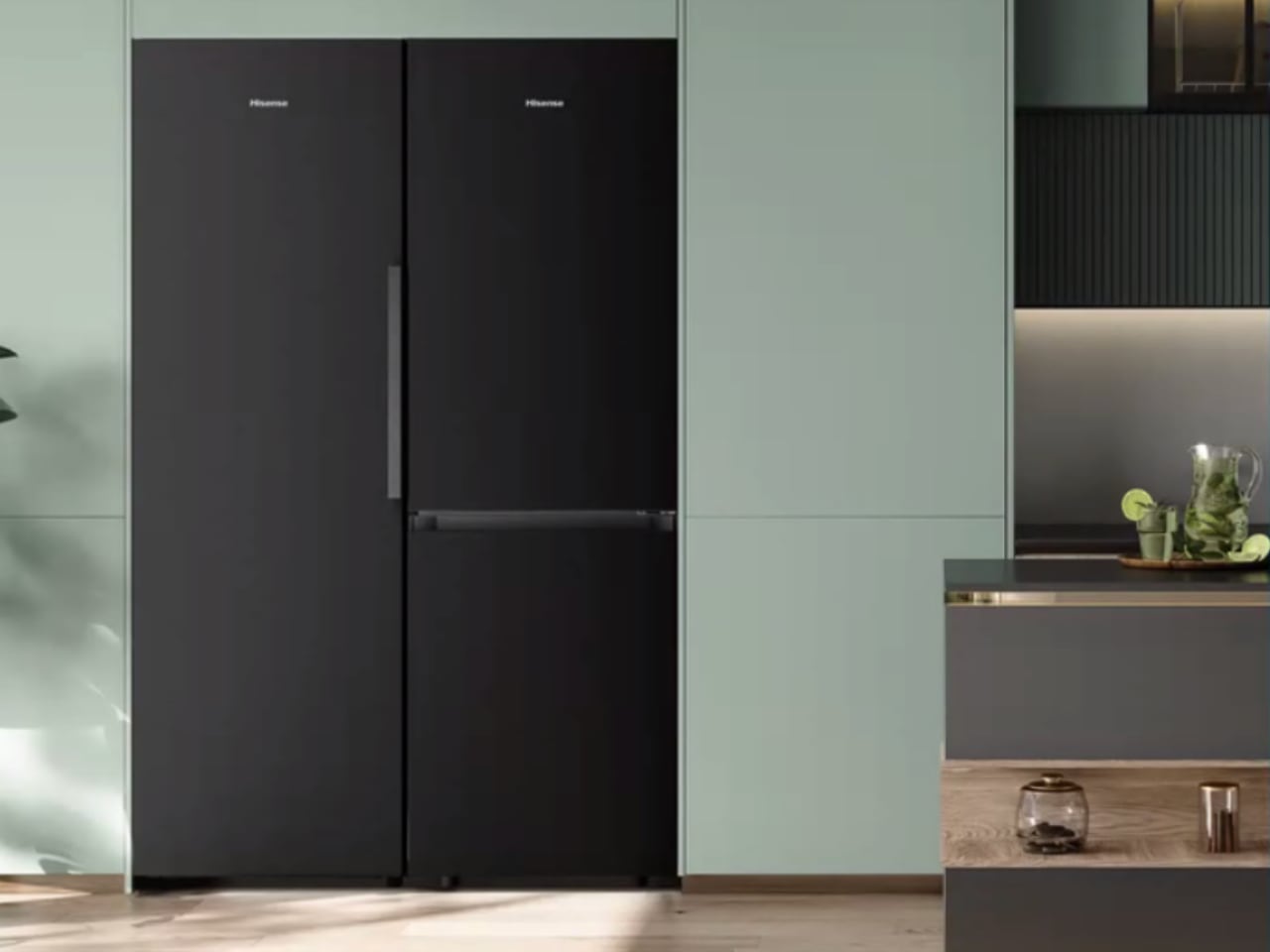
The significance is relational, not individual. Units matter less than the system they form, and this modularity serves both functional and aesthetic purposes. Households configure refrigerator-to-freezer ratios according to actual usage patterns rather than accepting manufacturer-determined proportions. Wine collectors gain dedicated storage without sacrificing visual coherence. Growing families expand freezer capacity later. A developing wine interest introduces the cabinet. The architecture accommodates temporal change without wholesale replacement.

Temperature zones maintain appropriate environments for different varietals. The AI cooking agent provides pairing recommendations, integrating storage and meal planning into a continuous experience.

The cabinet represents applied modularity: identical design language, precise dimensional matching, and functional independence within a coordinated system. Each column operates independently while contributing to a unified visual and functional whole.

Top Lift Dehumidifier: Ergonomic Innovation in Overlooked Categories

Climate control appliances occupy a peculiar position in domestic design: essential for habitability yet engineered as if human bodies never interact with them. The dehumidifier category exemplifies this neglect. Manufacturers have refined compressor efficiency and moisture extraction rates for decades. What they never examined: the maintenance gesture. Crouching. Extracting a heavy tank from the unit’s base. Navigating stairs while managing slosh. The physical transaction that defines ownership remained unaddressed.
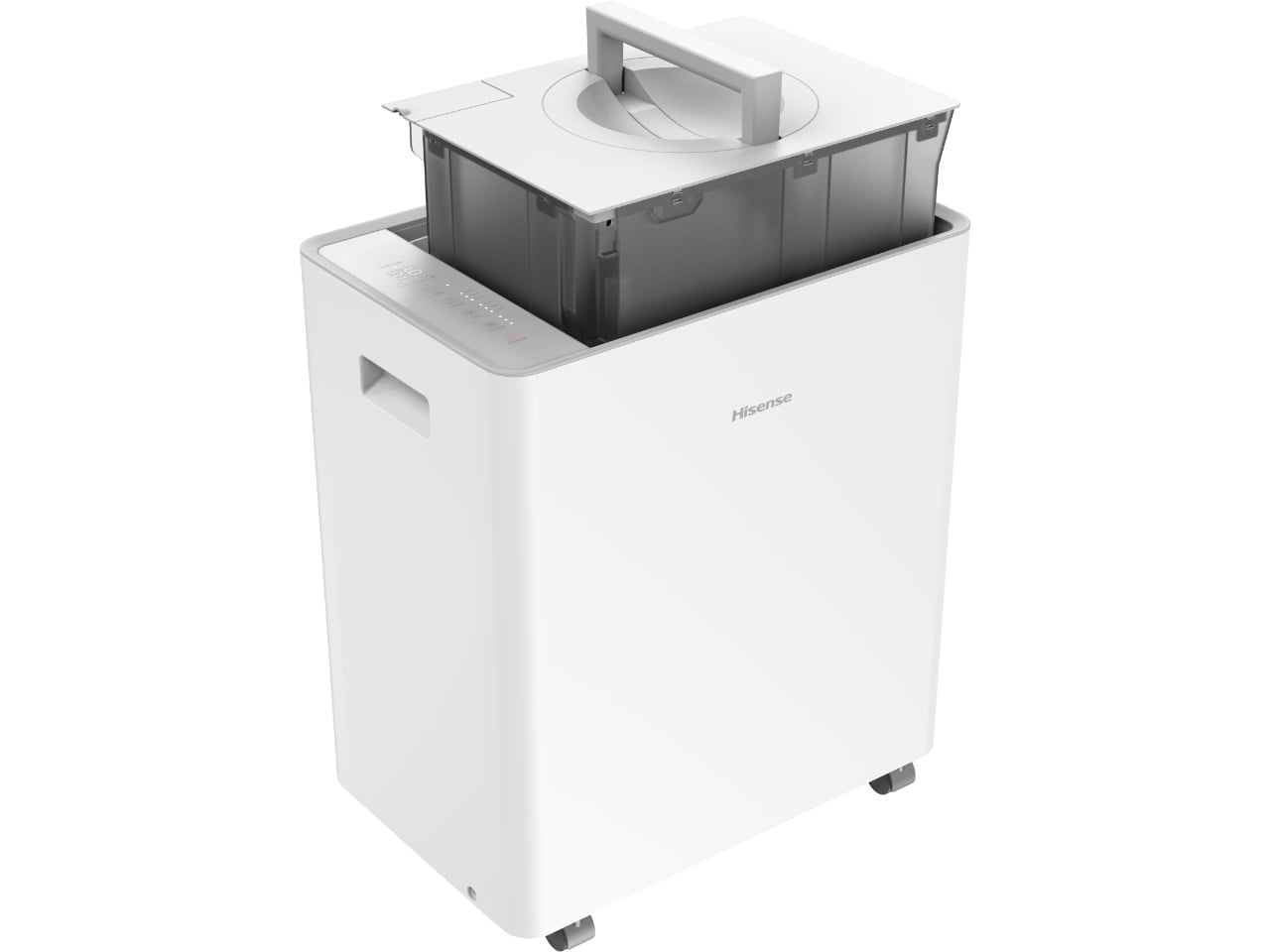
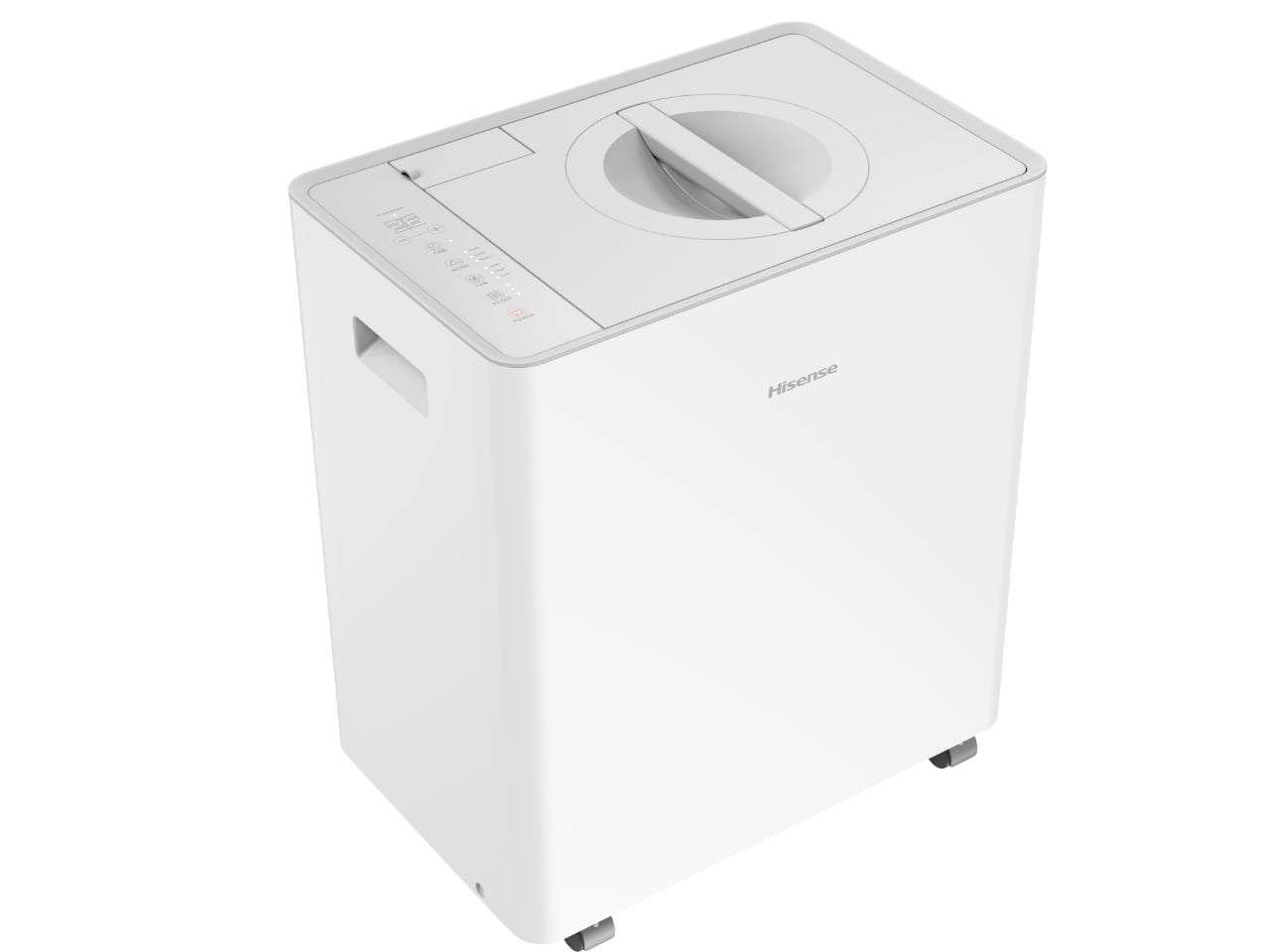
Hisense inverts the gravitational logic. The Top Lift positions its collection cartridge at the top rather than at the base where extraction demands bending and lifting against body mechanics. The gesture becomes a vertical lift from standing height. An enclosed design eliminates spillage during transport.
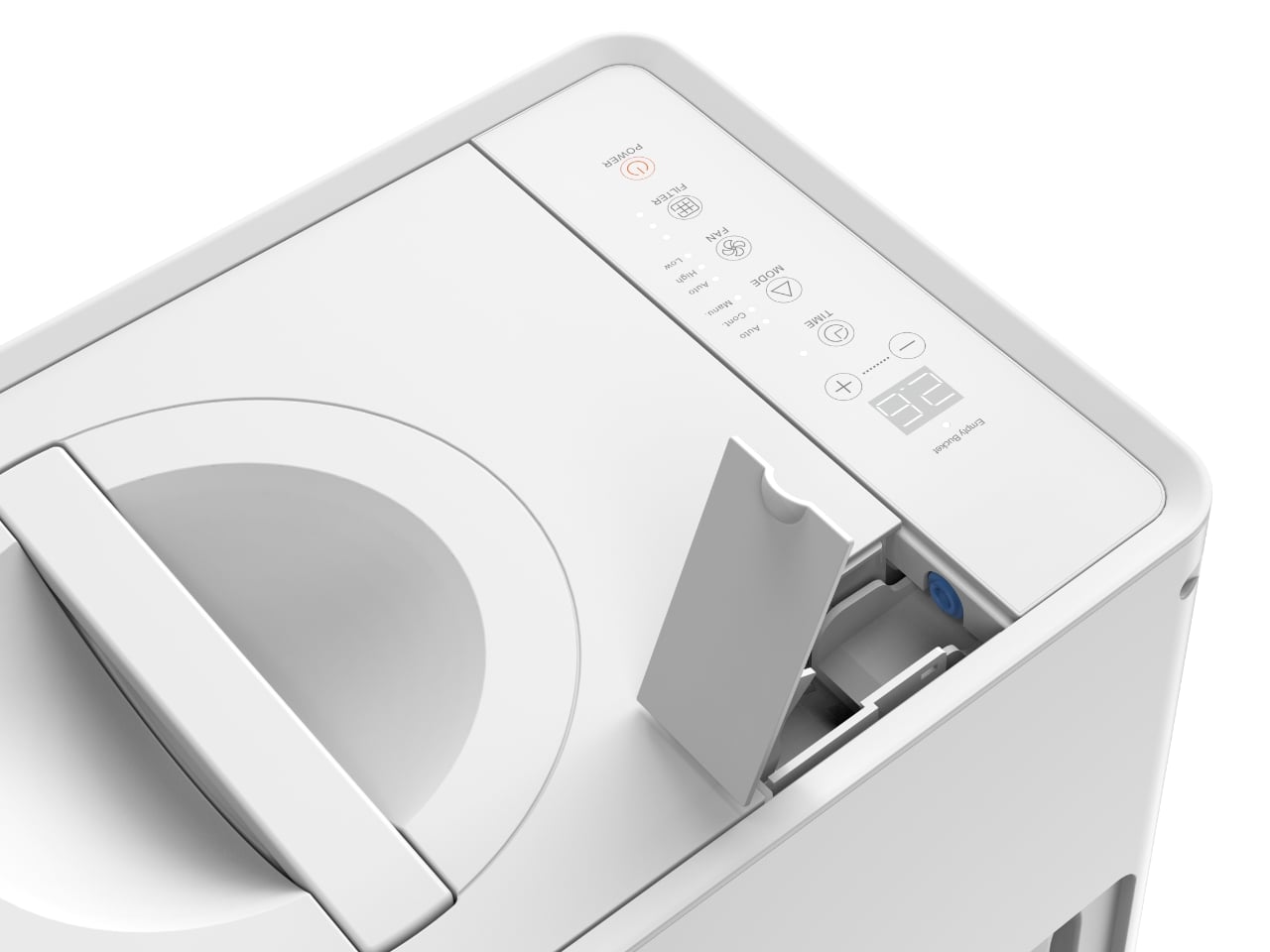
This represents ergonomic intervention at the interaction layer rather than the specification layer. Capacity increases 38% over traditional models. The user-centered logic: fewer emptying events mean fewer opportunities for physical strain. Acoustic engineering permits placement in finished living spaces rather than mechanical exile. Connectivity spans major ecosystems without demanding platform commitment.

Incremental specification improvement this is not. The intervention reflects a methodological shift toward designing around maintenance behavior rather than around extraction performance alone.

Fabric Care: Three Approaches to Laundry Space

Three laundry products address three different spatial logics. The U7 Smart Washer and Dryer targets American capacity expectations directly. Previous Hisense models were too small for U.S. household loads. The U7 corrects drum sizing, adds Connect Life integration, steam sanitization, and a Hi-Bubble detergent system that reduces waste.

The Stylish takes the opposite approach. Italian design influence. Matte finishes that read as furniture. Critical specification: 21 inches deep versus the typical 30-plus. Bedrooms and visible living areas become viable installation locations. The all-in-one drum handles washing, drying, sanitization, and odor removal.
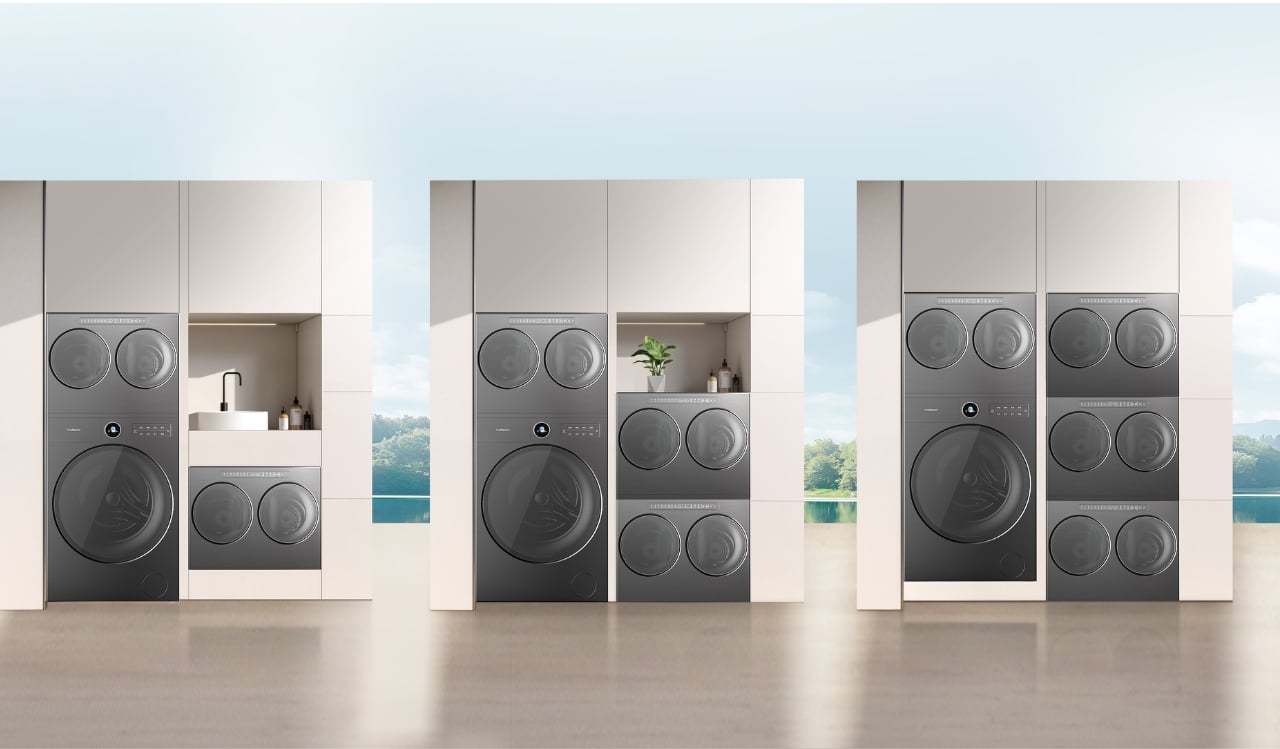
Excel Master represents the most significant departure, a modular system allowing infinite scalability. A main unit functions as conventional full-size washer and dryer using heat pump technology. Mini modules attach to expand capacity. Each mini module contains two separate wash and dry drums.

The insight: fabric care is a sorting problem, not a capacity problem. Households generate textile streams differing in soil type, fiber sensitivity, thermal tolerance. Traditional machines force temporal sequencing or compromised mixing. Excel Master provides parallel channels. Delicate synthetics, heavy cotton, specialized items run simultaneously in dedicated drums.
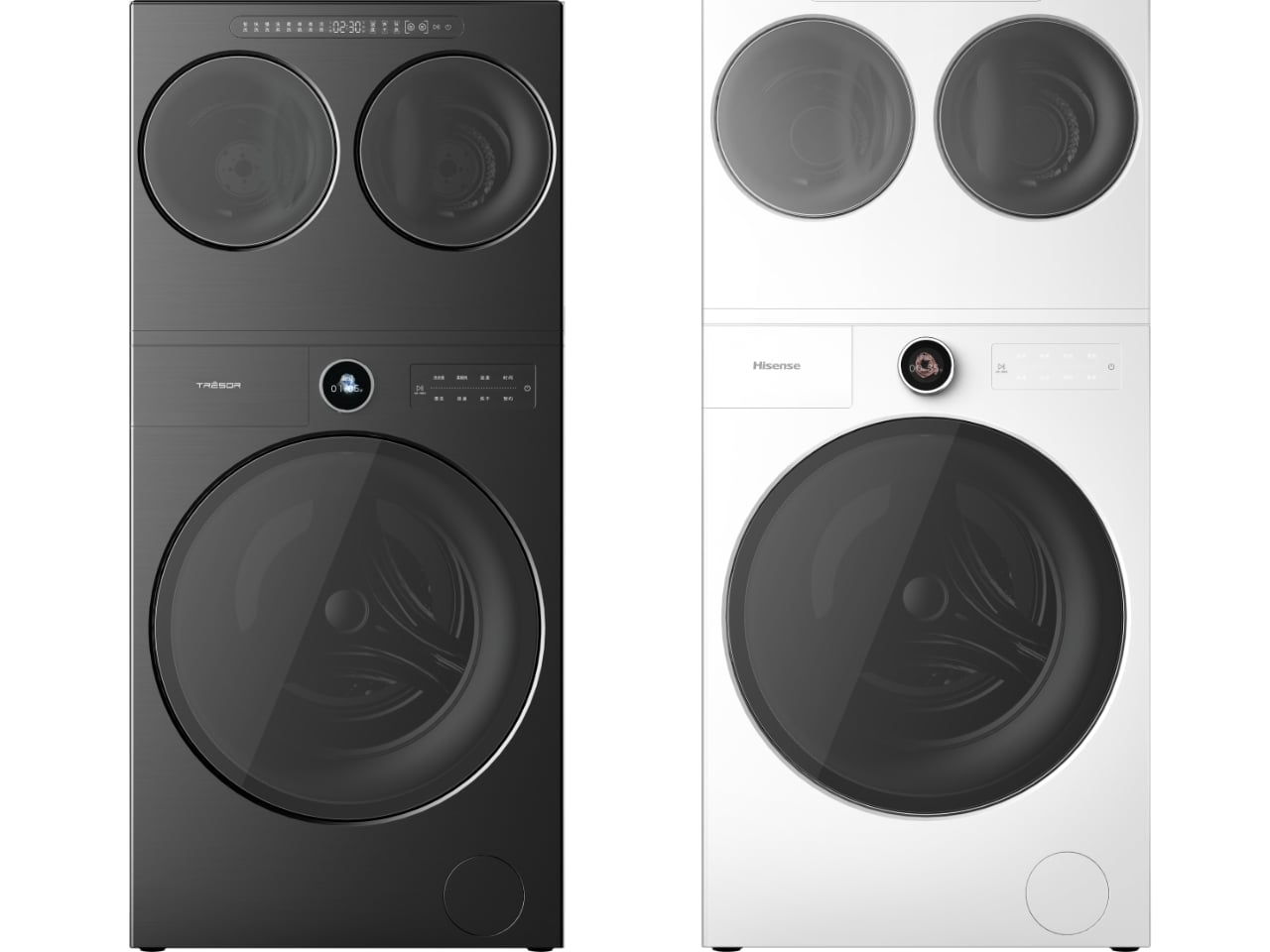
Mini modules employ ambient air condensation rather than heat. Room-temperature air removes moisture gradually, preserving fiber integrity at the cost of cycle duration. The trade-off suits the module’s purpose: items routed there prioritize care quality over speed.

Acoustics: below 46 decibels with multiple drums running. Quieter than conversation. Additional modules integrate as needs evolve. The system adapts rather than requiring replacement.

Implications: Design as Behavioral Response

The products share an underlying methodology: observe how people actually interact with domestic equipment, identify the friction points and compromises those interactions require, redesign fundamental configurations to eliminate rather than accommodate those problems.

The Top Lift Dehumidifier does not add features to compensate for awkward maintenance. It repositions the tank to make maintenance physically reasonable. Excel Master does not suggest workarounds for mixed laundry loads. It provides the infrastructure to handle them properly.
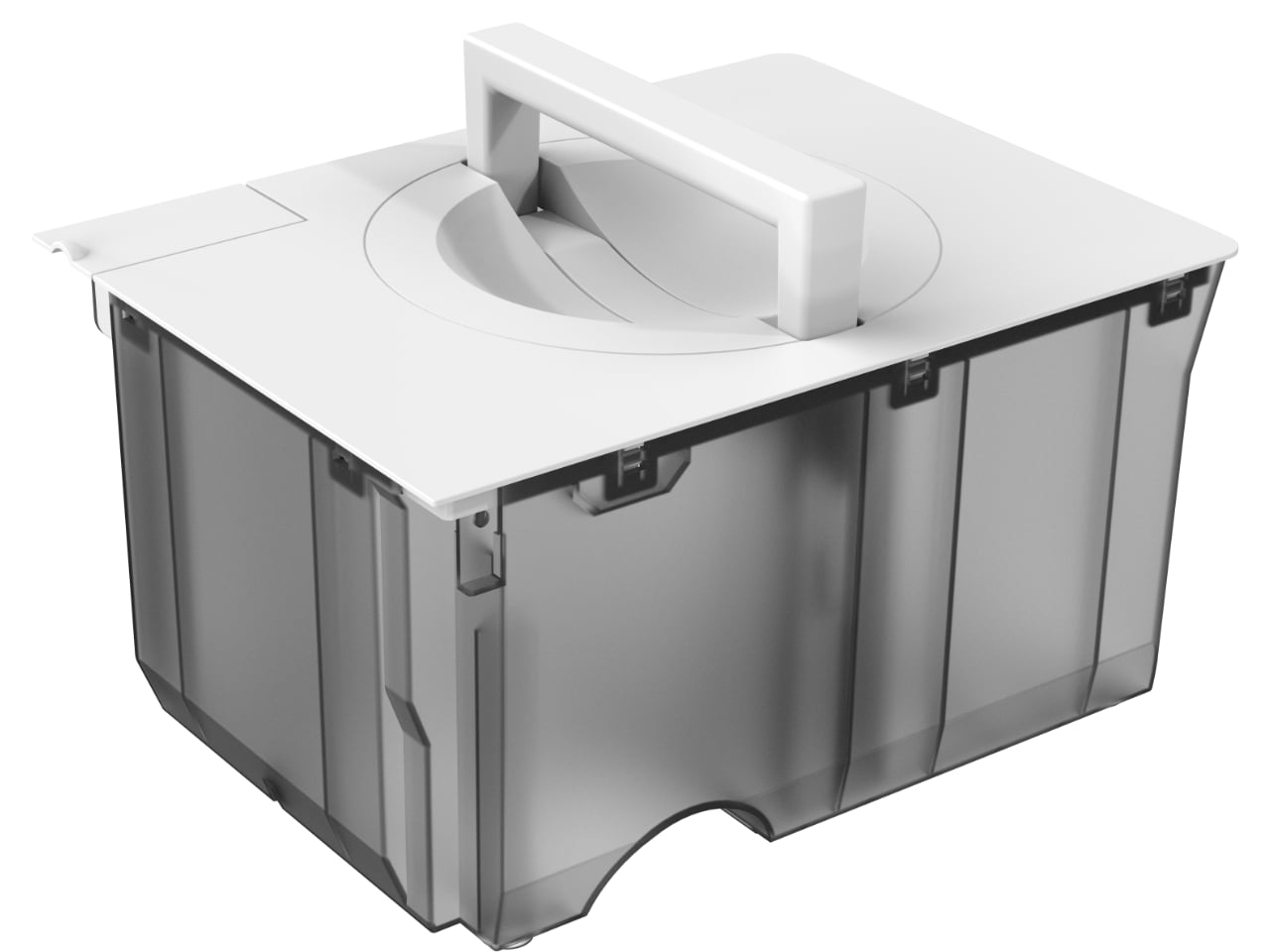
Modularity here means spatial flexibility and temporal adaptability. Households configure according to current needs, reconfigure as those needs change. Ergonomic reconsideration treats maintenance behavior as a design variable rather than a fixed constraint. Distributed intelligence reduces the cognitive burden of appliance management by handling routine decisions autonomously.
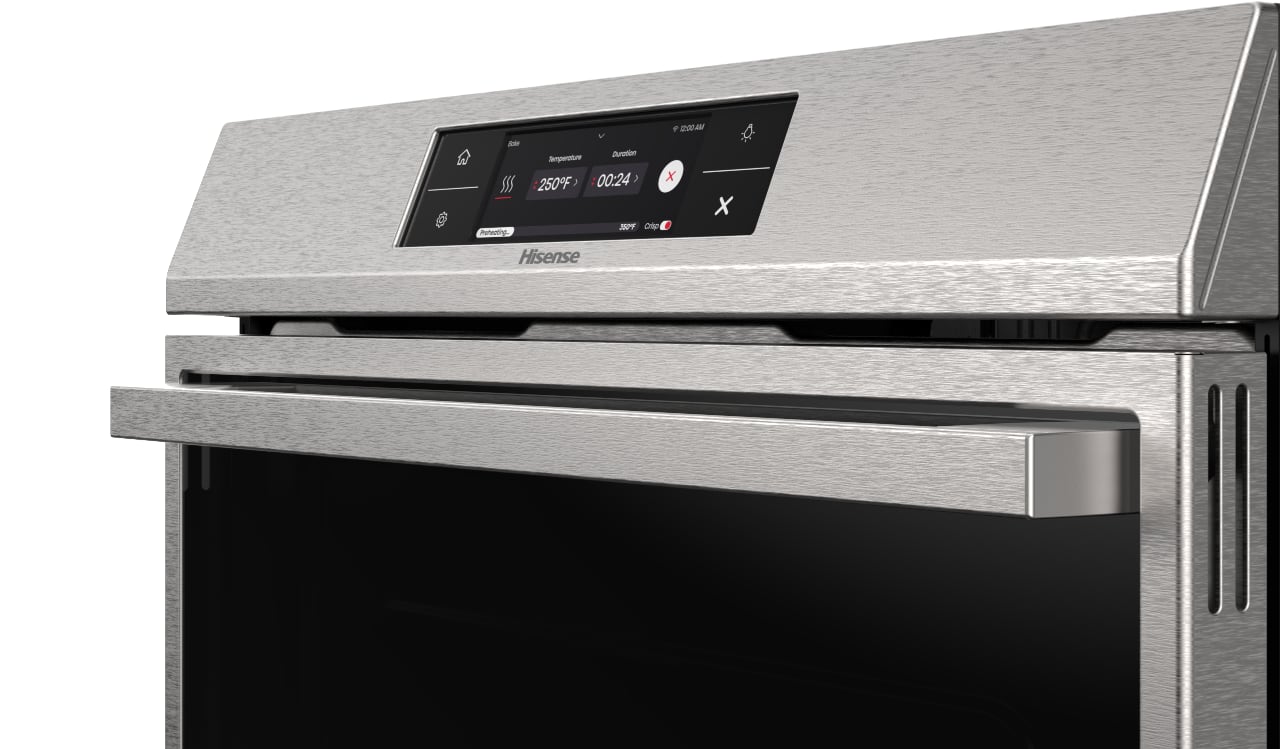
CES booth: Central Hall, January 6 through 9, 2026. Pricing and specific U.S. availability remain undetermined. Hisense conducts retailer and distributor meetings after CES, with decisions filtering through during Q1. A New Product Introduction event later in the quarter should provide concrete details.

Execution and pricing will determine market success. The conceptual framework, though, represents genuine departure: systematic reconsideration of domestic equipment design rather than incremental improvement to existing forms.

The post Hisense Reimagines Domestic Space Through Modularity and Ergonomic Intelligence at CES 2026 first appeared on Yanko Design.
Steam Winter Sale discounts Clair Obscur, Silent Hill f and more

Holiday shopping is in full swing, which means it's about time for the Steam Winter Sale. This go-around, Valve’s sale runs from December 18, 2025 through January 5, 2026, and includes discounts on some of this year's hit games, like Clair Obscur: Expedition 33, Silent Hill f and Assassin's Creed Shadows.

Clair Obscur is available for $40, down from its normal $50, Silent Hill f is 40 percent off, bringing its price down to $42, and the normally $70 Assassin's Creed Shadows is selling for $35, a solid deal on what was somewhat of a comeback for the long-running Ubisoft series. On top of those sales, you can get Stardew Valley for $9, or the difficult-to-master walking sim Baby Steps for $13. I'm also considering picking up Consume Me for $10 and Ball x Pit for $12, just to round out my collection of indie hits from 2025.

Valve runs Steam sales on a pretty regular cadence, so if the game you're eyeing isn't on sale, there's a good chance it could be soon. With holiday vacations coming up, and hopefully time to play games on the menu, though, now's the perfect time to pick up something new. And if you don't get to it this year, consider it an investment of sorts for the Steam Machine you might purchase in 2026.

This article originally appeared on Engadget at https://www.engadget.com/gaming/pc/steam-winter-sale-discounts-clair-obscur-silent-hill-f-and-more-230834279.html?src=rss

Google’s NotebookLM introduces Data Tables feature

Google's latest addition to its NotebookLM artificial intelligence research platform is a feature called Data Tables. The tool can collect and synthesize information across multiple sources into a chart that can be exported to Google Sheets. All Pro and Ultra users will have access to the feature today, and Data Tables will roll out to all users over the coming weeks.

In practice, Google suggested that Data Tables can be used to organize scattered notes, create price comparison charts or aggregate results from multiple research projects. The example of the interface shows the desired table components requested in natural language statements.  

Last month, Google added a Deep Research mode to NotebookLM. Deep Research was initially unveiled for its Gemini chatbot in late 2024 as an option for handling complex user queries.

This article originally appeared on Engadget at https://www.engadget.com/ai/googles-notebooklm-introduces-data-tables-feature-225548565.html?src=rss