TicNote Pods Debut as 4G AI Note-Taking Earbuds
TicNote Pods introduce 4G-enabled AI transcriptions, dual-source recording, and lightweight design for fast, reliable note-taking on the go.
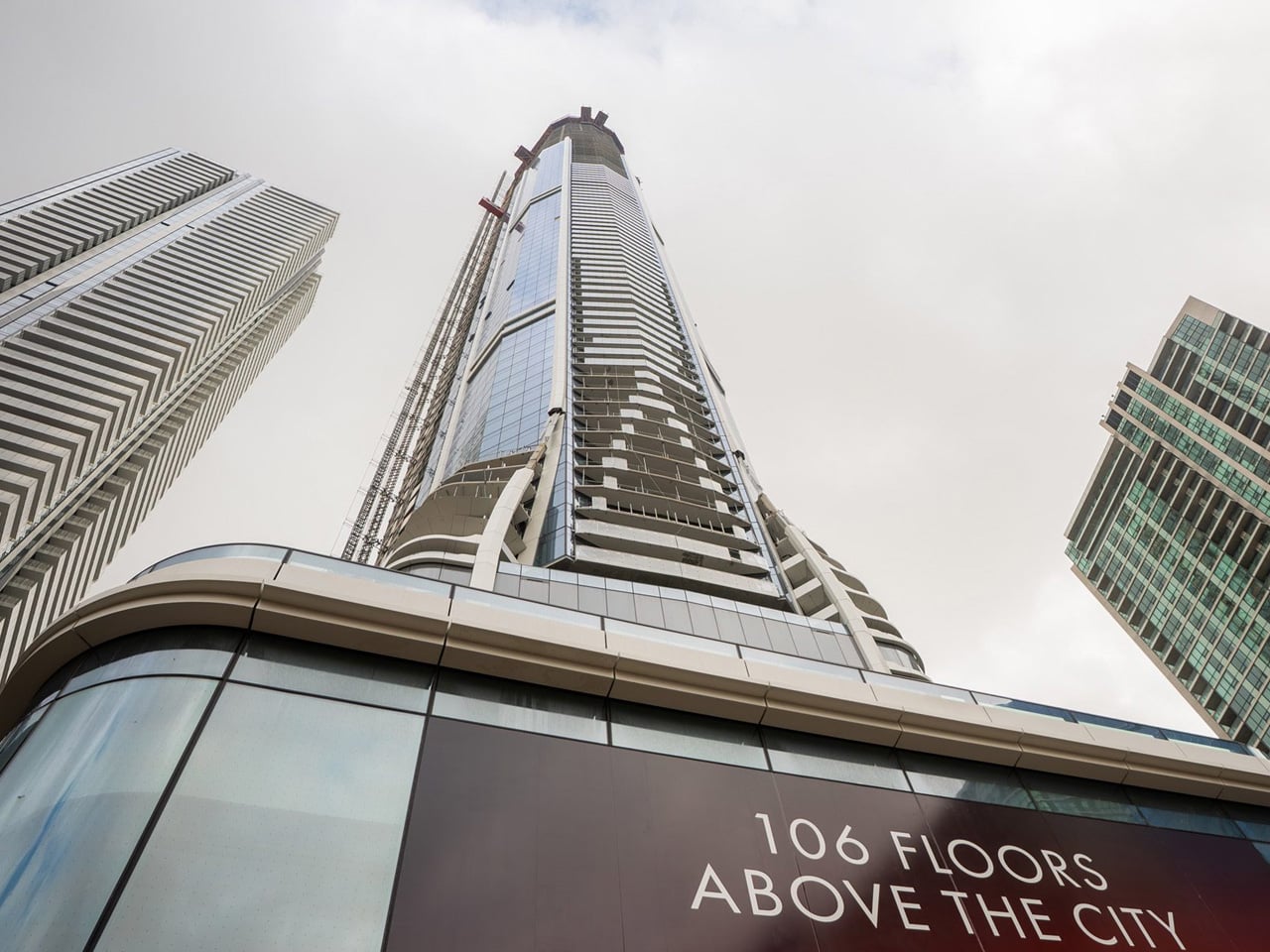
Toronto’s skyline is witnessing a transformation that will redefine Canadian architecture for generations. The Pinnacle SkyTower, designed by Hariri Pontarini Architects, has become the first building in Canada to surpass 100 storeys, marking a pivotal moment in the country’s architectural evolution. When completed in 2026, the supertall will stand at 351.85 metres across 106 floors, claiming the title of Canada’s tallest building.
David Pontarini, founding partner of the Toronto-based firm, envisioned the tower as a direct response to its prominent location at the foot of Yonge Street. The design needed to make a statement worthy of Canada’s longest street while respecting the unique waterfront context. What emerged was a 12-sided crystalline form that catches light from every angle, its glazed surfaces and tapered profile creating a sculptural presence that shifts throughout the day. The geometric complexity serves more than aesthetic ambitions. The dodecahedron shape helps the tower withstand powerful winds sweeping across Lake Ontario, while vertical fins emphasize its soaring height. A distinctive flying buttress connects the tower to its podium base, where horizontal banding creates a visual counterpoint to the vertical thrust above. The podium’s curving form mirrors the natural bend of the lakeshore, anchoring the tower in its surroundings.
Designer: Hariri Pontarini Architects

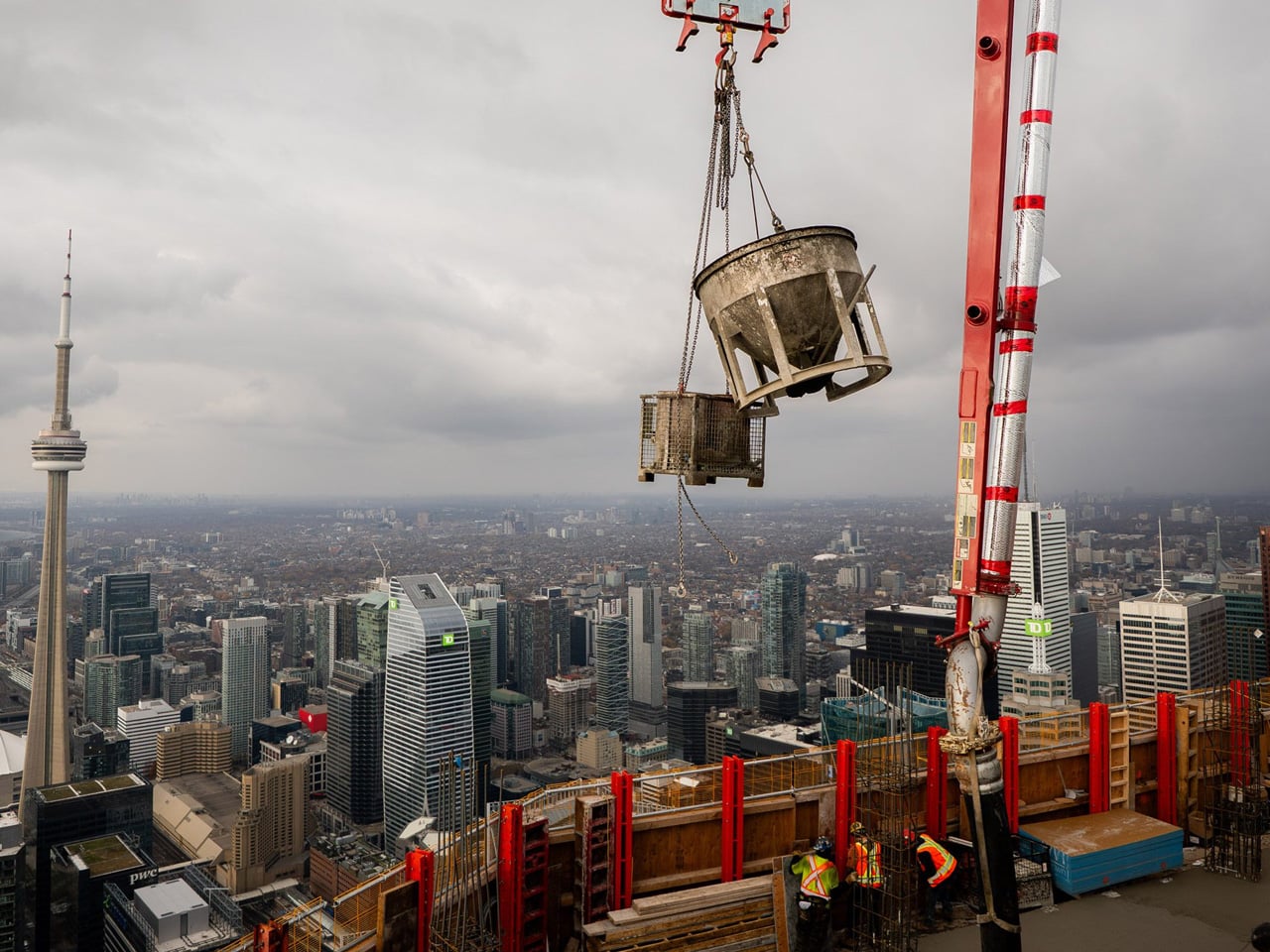
Engineering a building this tall presented extraordinary challenges. Project architect Nadine El-Gazzar and her team grappled with wind pressure, structural requirements, and the stack effect, which pulls air upward through elevator shafts at tremendous speeds. A custom-designed tuned mass damper will counteract the building’s sway, ensuring comfort for residents on the uppermost floors. These technical solutions remain invisible to observers, allowing the tower’s elegant profile to take center stage.
The mixed-use program reflects contemporary urban living. Over 950 residential units range from intimate 520-square-foot homes to expansive 2,300-square-foot residences. A 220-room Le Méridien hotel occupies the lower twelve floors, while a restaurant on the 106th floor will offer unparalleled views at the same elevation as the CN Tower’s main observation deck. Amenities include a pool, yoga studio, and fitness center, with retail connections to Toronto’s underground pedestrian network at street level.

The project’s ambition grew during development. Originally planned at 95 storeys, a variance request in March 2025 added eleven floors, pushing the design into record-breaking territory. Construction has progressed steadily since groundwork began, with the exterior cladding now substantially complete on the lower sections. The tower rises from the Pinnacle One Yonge development, which transformed the former Toronto Star site into a six-building complex that’s reshaping the city’s waterfront.
Environmental considerations shaped key infrastructure decisions. The development connects to the Enwave Deep Lake Water Cooling system, which draws frigid water from Lake Ontario’s depths for efficient climate control. Pinnacle International president Michael De Cotiis captured the significance: “We have created a landmark, one that is making history not only for Toronto, but for all of Canada.” As SkyTower climbs toward completion, it represents both technical achievement and architectural ambition, a jewel-like form that will anchor Toronto’s skyline for decades to come.

The post Canada’s Tallest Building Takes Shape as SkyTower Reaches Historic 100-Storey Mark first appeared on Yanko Design.
Indie game developer Edmund McMillen hosted a Reddit AMA today offering some more details about his upcoming game Mewgenics. For starters, the Steam release date for this turn-based cat-breeding RPG has been slightly delayed to February 10. The game was first announced all the way back in 2012 and had most recently been slated for a launch some time this year. Part of the long development cycle was so that McMillen could pause to launch Super Meat Boy Forever, the sequel to his Super Meat Boy platforming hit from 2010. Gamers may also know McMillen for The Binding of Isaac, which has had some notable crossovers with titles like Balatro in recent years.
Other tidbits from the AMA include the promise that McMillen already has DLC ideas, so expect to have additional content release after the base game is available. Although there doesn't seem to be any lack of replayability in Mewgenics; McMillen said "I currently have 300+ hours across 2 saves and have only beaten the game on one save so far." There is also a plan to have some console versions of the game, although likely not until much later next year at the soonest, the dev added.
This article originally appeared on Engadget at https://www.engadget.com/gaming/mewgenics-the-next-game-from-the-binding-of-isaacs-developer-will-arrive-next-february-on-pc-235740063.html?src=rss
Imagine cutting a 90-minute airport transfer to 12 minutes. That is the value proposition Vertical Aerospace is selling with Valo, the electric air taxi it unveiled in London’s Canary Wharf on December 10. For business travelers, the pitch is straightforward. Skip ground traffic entirely on short-hop routes between major airports and city centers. Bring real luggage. Arrive in minutes instead of an hour.
Designer: Valo
If Vertical delivers on its technical targets and clears regulatory approval, Valo could reshape how time-sensitive travelers approach urban mobility. For cities, the calculus is different. Quiet electric aircraft designed to operate below 50 decibels in cruise might unlock airspace that conventional helicopters cannot access due to noise restrictions.
Vertiports on rooftops and waterfronts could become practical transit nodes rather than exclusive helipads. The infrastructure does not exist yet, but the partnerships to build it are forming.
Valo is Vertical’s certification-intent production aircraft, not another prototype. The British company designed it from the ground up to clear regulatory approval rather than retrofit an experimental platform after the fact.
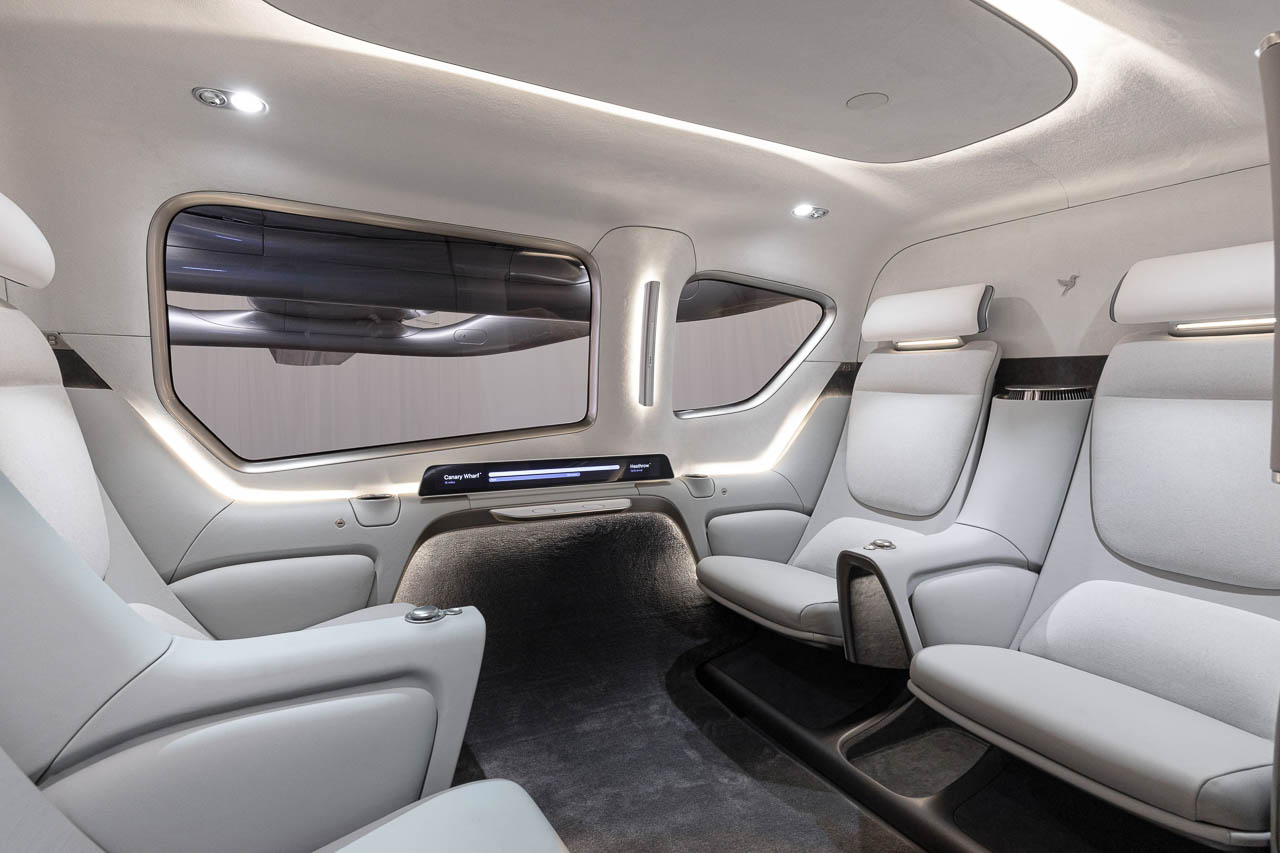
The cabin seats four passengers plus pilot at launch. Vertical plans to expand capacity to six as operator economics improve. Panoramic windows, generous space, and a cockpit divider create transport aesthetics distinct from early experimental aircraft.
Cargo capacity distinguishes Valo from competitors. The hold is designed to fit six cabin bags and six checked bags, with total payload around 550 kg. That addresses one of the persistent criticisms of early eVTOL concepts: nowhere to put your stuff.

Airline partners specifically requested this luggage capacity, and Vertical delivered.
Platform versatility extends beyond passenger service. Vertical has designed Valo to support EMS missions, cargo transport, and future defense applications.
Vertical is targeting roughly 100 miles of range at cruise speeds approaching 150 mph. The company aims for zero operating emissions and noise levels below about 50 dBA.
If Vertical hits those acoustic targets, Valo cruising overhead would register quieter than typical street conversation. That matters for urban deployment. Helicopters face severe restrictions in noise-sensitive areas. Quiet electric aircraft could operate where rotorcraft cannot.
The propulsion system is designed with eight electric motors on multiple electrically isolated power lanes. Under-floor liquid-cooled battery packs, developed by Vertical’s Energy Centre using Molicel cylindrical cells, are intended to enable approximately 12-minute recharge cycles for short missions.
Honeywell supplies the fly-by-wire controls and avionics, purpose-built for eVTOL flight profiles. The tiltrotor configuration tilts forward propellers to manage vertical-to-horizontal transition. The aft array modulates based on wing lift. As speed increases, rear propellers reduce output and stop, transferring efficiency to cruise flight.
Carbon fiber composite blades and Low Noise Signature technology address specific frequency ranges that human hearing finds intrusive.
The VX4 prototype generated thousands of test data points. Validated hover performance. Confirmed wingborne flight. Real maneuvers, not just simulation.
Vertical reports it is close to completing full piloted transition flight, the critical phase where the aircraft shifts from vertical lift into forward cruise. That accumulated knowledge shaped Valo’s production design.
The differences extend beyond surface refinements. A reworked airframe optimized for aerodynamics. New wing and propeller architecture. An under-floor battery system that redistributes weight and opens cabin space.

Syensqo and Aciturri contributed aerospace-grade composites for strength-to-weight optimization.
The VX4 received its Phase 4 Permit to Fly from the UK CAA in November 2025. This cleared final test sequences toward piloted transition. Hover, thrustborne, and wingborne phases have already been demonstrated.
Vertical is aiming for Type Certification under both UK CAA and EASA around 2028. The company plans to use the SC-VTOL Category Enhanced pathway.
This is the airliner-equivalent safety standard, requiring 10⁻⁹ failure probability. Approval at this level would enable commercial passenger operations with safety assurances travelers expect from scheduled airlines.
Seven UK-built certification aircraft will complete the full testing program. The redundant propulsion architecture, with eight motors on isolated power lanes, is mandatory to meet these standards.
Post-certification, Vertical holds roughly 1,500 pre-orders and MoUs from airlines including American and Japan Airlines, along with operators such as Bristow and Avolon. Deliveries could begin before decade-end if certification proceeds on schedule.
Commercial structure is forming alongside the aircraft. Vertical, Skyports Infrastructure, and Bristow Group announced plans for what they describe as the UK’s first electric air taxi network.
The proposal centers on short-hop links between major airports and nearby city hubs.Canary Wharf would serve as the London node. Planned connections include Heathrow, Gatwick, Cambridge, Oxford, and Bicester. The partnership combines Vertical’s aircraft with Skyports’ London Heliport and Bicester Vertiport infrastructure, plus Bristow’s operational expertise.
Héli Air Monaco signed an MoU for Valo pre-orders, opening potential routes along the French Riviera. These are plans and memoranda of understanding that depend on certification and infrastructure buildout, not scheduled services.

Route economics favor corridors where time savings are most pronounced. Heathrow to central London currently consumes 60 to 90 minutes by ground. If Valo meets its performance targets, that could compress to roughly 12 minutes of flight.
Vertical announced a hybrid-electric variant in May 2025 targeting extended capabilities.
The hybrid version aims for 1,000 nautical miles of range, roughly ten times the all-electric envelope, with payload reaching 1,100 kg. Flight testing is scheduled for mid-2026.
This architecture would unlock market segments that battery-electric eVTOLs cannot currently serve: defense, logistics, air ambulance services where extended range is mandatory.
According to company-cited projections from Frontier Economics, Vertical estimates the program could create over 2,000 skilled UK manufacturing and engineering positions. Annual economic contribution could reach £3 billion by 2035.
These are projections contingent on certification success and production scale-up, not guaranteed outcomes.
UK government backing adds context. The Department for Transport’s Plan for Change allocated over £20 million toward drone and air taxi development, signaling regulatory intent to streamline approval without compromising safety.
CEO Stuart Simpson positioned the reveal in manufacturing terms. The company is transitioning from prototype developer to production aerospace business.
Many eVTOL programs have demonstrated technology. Converting demonstrations into certified, commercially operating aircraft is the barrier that separates ambition from viable business.
The aircraft exists. The partnerships are signed. The certification path is defined.
What remains is execution against ambitious technical and regulatory targets. December 2025 marked a concrete step. Whether Valo becomes routine urban transport depends on what Vertical delivers over the next three years.
The post Vertical Aerospace Valo: The UK’s Electric Air Taxi Takes Flight first appeared on Yanko Design.
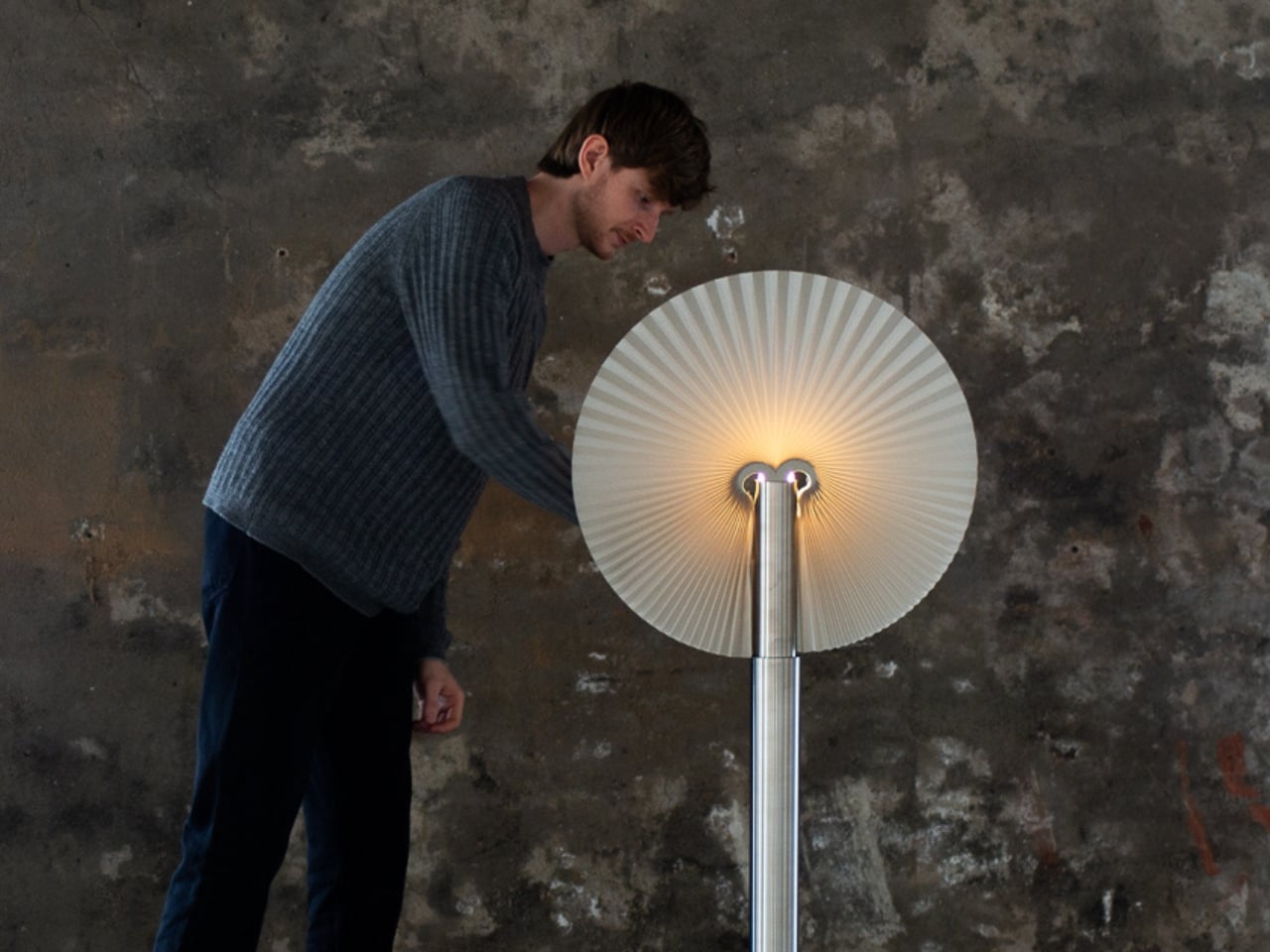
There’s something almost magical about watching a peacock unfurl its tail feathers. That moment of transformation, when something compact suddenly explodes into an elaborate fan of color and pattern, never gets old. Dutch designer Jelmer Nijp must have felt the same way because he decided to bottle that exact feeling into a lamp, and the result is nothing short of captivating.
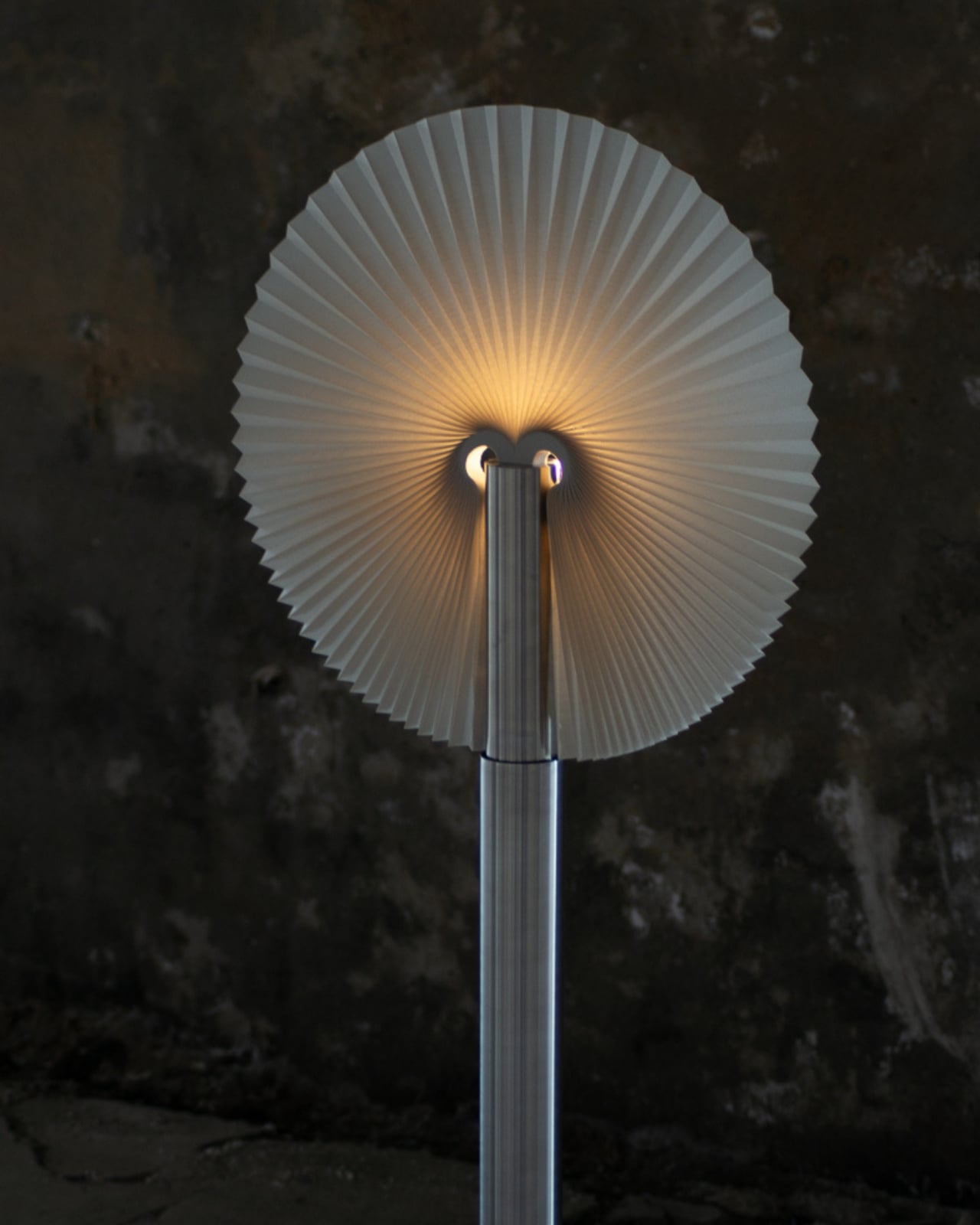
Meet Pavo, a lighting design that’s part industrial fixture, part nature-inspired sculpture. The name itself is a nod to its inspiration. Pavo means peacock in Spanish (and Latin, for that matter), and once you see it in action, you’ll understand why Nijp couldn’t have called it anything else. This isn’t your typical table lamp that just sits there looking pretty. Pavo actually moves, transforms, and reveals itself in a way that makes you stop and stare.
Designer: Jelmer Nijp

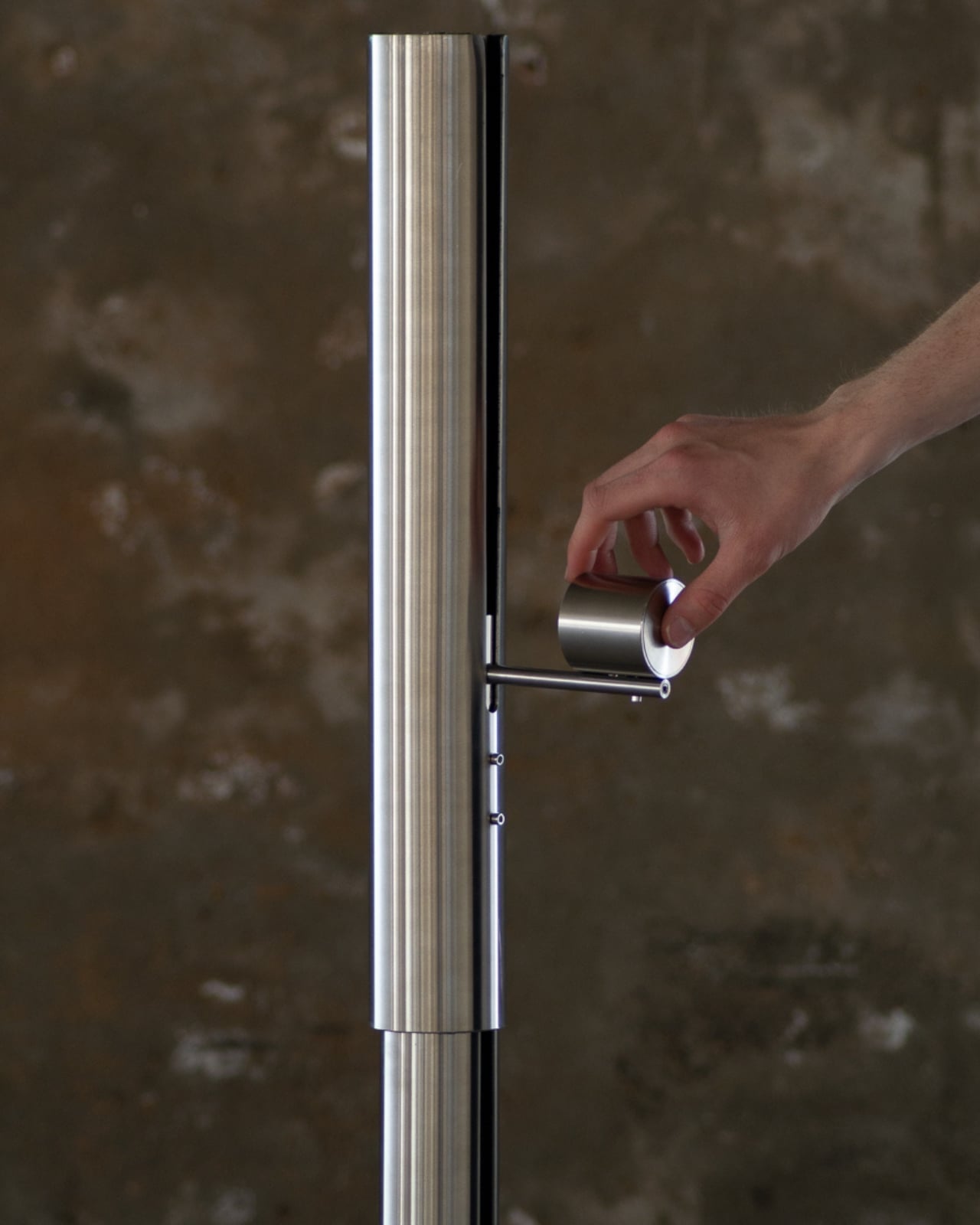
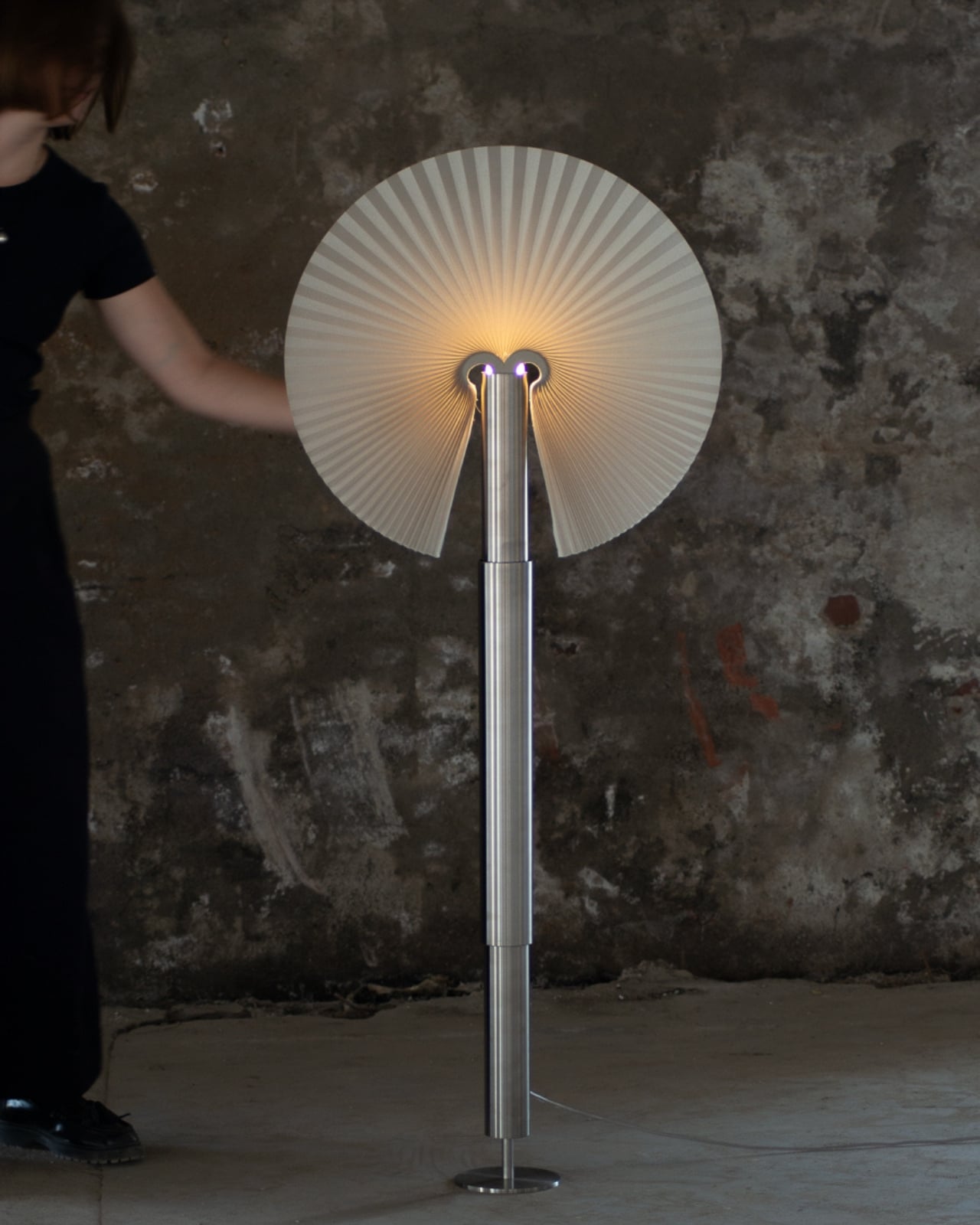
The design is deceptively simple at first glance. When closed, Pavo looks like a sleek metal tube, the kind of minimalist object that wouldn’t look out of place in a modern apartment or design studio. But here’s where it gets interesting. That tube retracts, and as it does, a pleated shade unfurls like a fan, spreading outward in a graceful, almost organic motion. Light radiates from the center of this fan, creating a soft glow that highlights the geometric pleats and folds of the shade. It’s the kind of moment that makes you want to show everyone in the room, “Look at this! Did you see that?”
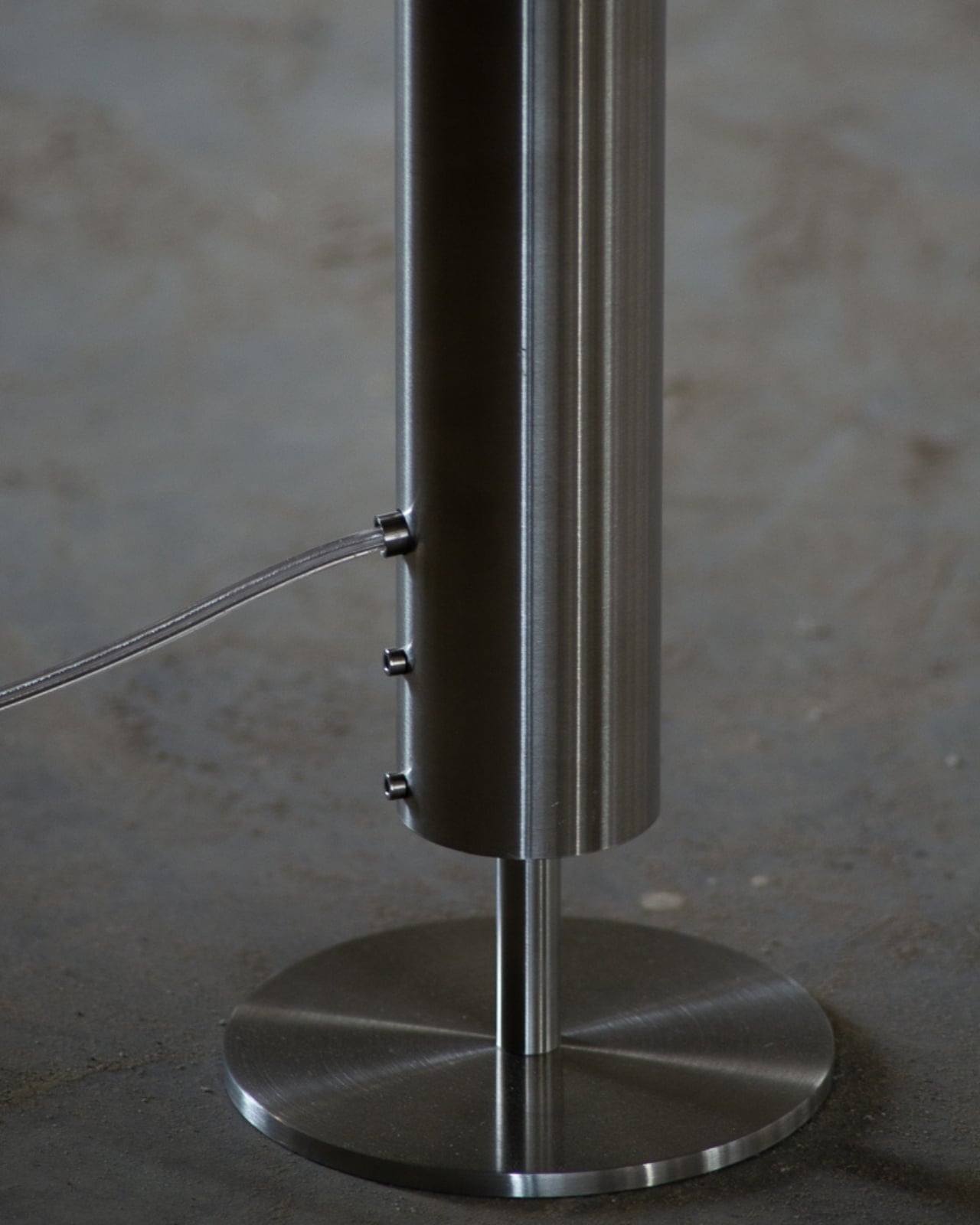

What makes Pavo special is how it bridges two worlds that don’t always play well together. On one hand, you’ve got this very industrial aesthetic with clean metal lines and mechanical movement. On the other, there’s this undeniable connection to nature, to the beauty and drama of a peacock’s display. Nijp manages to merge these seemingly opposite ideas into something that feels both sleek and alive, modern yet timeless.
The movement itself deserves special attention because it’s not just a gimmick. The way the shade unfolds is smooth and deliberate, mimicking the natural grace of an actual peacock. It’s unexpected in the best possible way. You don’t often encounter furniture or lighting that has this kind of kinetic quality, especially not executed with such elegance. This is design that understands the power of transformation and uses it to create a genuine emotional response.

Nijp is a 2025 graduate of the Design Academy Eindhoven, one of those prestigious schools that consistently churns out designers who aren’t afraid to experiment and push boundaries. His approach is hands-on and experimental, using the process of making itself as a way to explore materials and forms. You can see that philosophy at work in Pavo. This isn’t a lamp that was designed purely on a computer and then manufactured. It has the feel of something that was worked out through trial and error, through actually building and testing until the mechanics and aesthetics came together just right.
The lamp was showcased at Dutch Design Week 2025, where it attracted plenty of attention among a sea of innovative projects. And it’s easy to see why. In a design landscape that often leans heavily into either pure functionality or pure aesthetics, Pavo manages to be both functional and beautiful while also being genuinely delightful. It’s a light source, yes, but it’s also a conversation piece, a kinetic sculpture, and a little moment of wonder in your living space.
What Pavo represents is a growing trend in contemporary design where the line between art and utility becomes increasingly blurred. Designers like Nijp are asking why everyday objects can’t be more engaging, more interactive, more memorable. Why should a lamp just be a lamp when it could also be an experience? There’s something refreshing about a piece that demands your attention, that makes you think differently about what design can be. Pavo is a reminder that good design doesn’t have to choose between form and function, between nature and industry, between stillness and movement. Sometimes, the best design happens when you bring all these elements together and let them play off each other in unexpected ways.
The post This Lamp Blooms Like a Peacock’s Tail and It’s Mesmerizing first appeared on Yanko Design.
The year is 1987. Beverly Hills Cop II is the highest-grossing movie. "Walk Like an Egyptian" is the hottest song. The Iran-Contra scandal dominates American political headlines, while Konami’s Contra sucks up coins in arcades. But towering above them all is the watershed moment of Jaws arriving on the NES. ("This time there's no escape!", warned the box art.) Now, 38 years later, the 8-bit game is returning as a Limited Run Games physical re-release.
The retro release coincides with the Spielberg movie's 50th anniversary. From December 19 to January 18, you can pre-order a physical copy for Switch and PS5.
It will be available in two physical editions: a standard ("Retro Edition") one for $35, and a deluxe ("The Bigger Boat Edition") one for $100. The latter adds an NES-inspired box, a physical CD of the game soundtrack, a keychain and — best of all — a pixelated shark lamp. Both versions include original and "enhanced" versions of the 1987 game.

The game is split mainly between a birds-eye view (where you pilot your boat around the map) and an underwater side view (where you harpoon the shit out of marine wildlife). Eventually, you'll encounter Jaws. After several of these encounters, gradually diminishing his hit points, you'll try to finish him off in a faux-3D perspective on the water's surface. If you think this sounds like a minor variation of what you found in a handful of other licensed NES games from that era, you wouldn't be wrong.
You can pre-order the Jaws re-release from Limited Run Games' website, starting on December 19 at 10 AM ET. In the meantime, you can refresh your memory of the 8-bit game with the video below.
Mark Zuckerberg has for months publicly hinted that he is backing away from open-source AI models. Now, Meta's latest AI pivot is starting to come into focus. The company is reportedly working on a new model, known inside of Meta as "Avocado," which could mark a major shift away from its previous open-source approach to AI development.
Both CNBC and Bloomberg have reported on Meta's plans surrounding "Avocado," with both outlets saying the model "could" be proprietary rather than open-source. Avocado, which is due out sometime in 2026, is being worked on inside of "TBD," a smaller group within Meta's AI Superintelligence Labs that's headed up by Chief AI Officer Alexandr Wang, who apparently favors closed models.
It's not clear what Avocado could mean for Llama. Earlier this year, Zuckerberg said he expected Meta would "continue to be a leader" in open source but that it wouldn't "open source everything that we do." He's also cited safety concerns as they relate to superintelligence. As both CNBC and Bloomberg note, Meta's shift has also been driven by issues surrounding the release of Llama 4. The Llama 4 "Behemoth" model has been delayed for months; The New York Times reported earlier this year that Wang and other execs had "discussed abandoning" it altogether. And developers have reportedly been unimpressed with the Llama 4 models that are available.
There have been other shakeups within the ranks of Meta's AI groups as Zuckerberg has spent billions of dollars building a team dedicated to superintelligence. The company laid off several hundred workers from its Fundamental Artificial Intelligence Research (FAIR) unit. And Meta veteran and Chief AI Scientist Yann LeCun, who has been a proponent for open-source and skeptical of LLMs, recently announced he was leaving the company.
That Meta may now be pursuing a closed AI model is a significant shift for Zuckerberg, who just last year said "fuck that" about closed platforms and penned a lengthy memo titled "Open Source AI is the Path Forward." But the notoriously competitive CEO is also apparently intensely worried about falling behind OpenAI, Google and other rivals. Meta has said it expects to spend $600 billion over the next few years to fund its AI ambitions.
This article originally appeared on Engadget at https://www.engadget.com/ai/meta-is-reportedly-working-on-a-new-ai-model-called-avocado-and-it-might-not-be-open-source-215426778.html?src=rssApple Music and Apple TV were briefly down during outage, according to Apple’s System Status page. The outage was logged on Apple’s own system at around 2:53PM ET and affected both of the company’s streaming services, along with Apple TV’s Channels feature, until the company resolved the issue around 4:31PM ET.
On DownDetector, reports of issues with Apple TV and Apple Music first appeared right around 2:33PM ET, a little before Apple officially confirmed the outage on its own site. Only “some” users were affected by the outage, according to Apple, and anecdotally, multiple members of Engadget’s staff were still able to stream content while the services were reportedly out.
Engadget has reached out to Apple for more information on the outage and how many people were impacted. We’ll update this article if we hear back.
Apple relies on cloud services from third-party companies like Amazon, and is ultimately only as stable the data centers it’s paying for. In October 2025, the company was impacted by the same Amazon Web Services outage that took down services and apps like Alexa, Fortnite and Snapchat for hours.
Update, December 10, 5:09PM ET: Article and headline updated to reflect that the outage has been resolved.
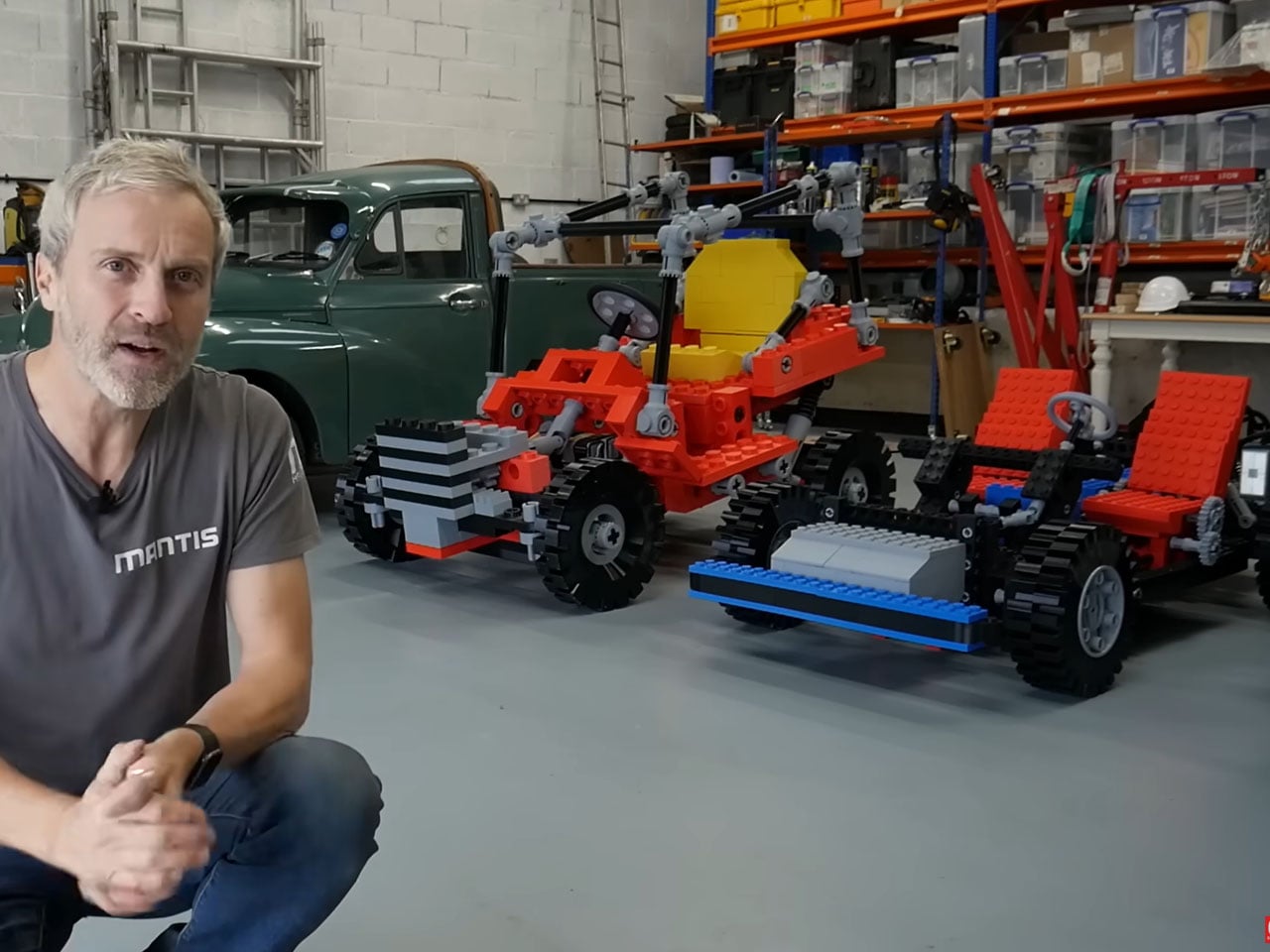
What usually begins as a childhood memory of snapping LEGO Technic beams together has been reimagined at full scale by maker Matt Denton, who has turned one of the most recognizable Technic sets ever produced into a life-size, fully drivable machine. By scaling the 1981 LEGO Technic 8845 Dune Buggy more than tenfold and rebuilding every component through precise 3D printing, Denton bridges the gap between nostalgic toy engineering and real-world mechanics, creating a vehicle that not only looks like its plastic counterpart but can actually be driven off the workbench and onto the road.
This is not surprising as He’s known for turning tiny models into life-sized rigs that are drivable. Denton started with the original 1981 kit, which contains 174 pieces. Rather than simply make a large display model, he redesigned the buggy with two critical changes for practical use: he scaled it up by a factor of 10.42 times, based on 50-millimeter axle bearings, and converted it into a single-seat vehicle with a center-mounted steering wheel.
Designer: Matt Denton


Every part was recreated using 3D printing. Denton used PLA filament and a belt-driven FDM printer, employing a 1 mm nozzle, two outer walls, and 10% infill to balance strength with manageability. Because of printing limitations, large plates and panels were split into smaller sections, so they would fit in the printer and to avoid warping. All curves and joints were first modeled precisely in CAD to ensure fit and performance under load. The final assembled buggy weighs about 102 kg — not light by any means, yet still light enough for hobby use. The build process reportedly took around 1,600 hours of printing and assembly, with numerous reprints required due to failed prints and printer issues.


To bring the build to life, an electric motor was mounted on the rear axle, connected via a belt-drive system. Steering is handled via a full-sized rack-and-pinion mechanism, molded as one giant LEGO-like piece, while the rear suspension arms connect over a steel tube to deliver stability. The tires themselves are printed from TPU wrapped around PLA cores, and each one weighs around 4.6 kg. They are manufactured as four quadrants for easier assembly and transport. Despite the technical hurdles, Denton succeeded as the buggy is completely drivable. During test runs, it demonstrated performance and handling that (while modest compared to a conventional motor vehicle) surpassed expectations for what began as a giant toy. That said, limitations remain as the vehicle shows signs of structural flex under load, and the electric motor setup delivers only modest power, limiting acceleration and top speed.

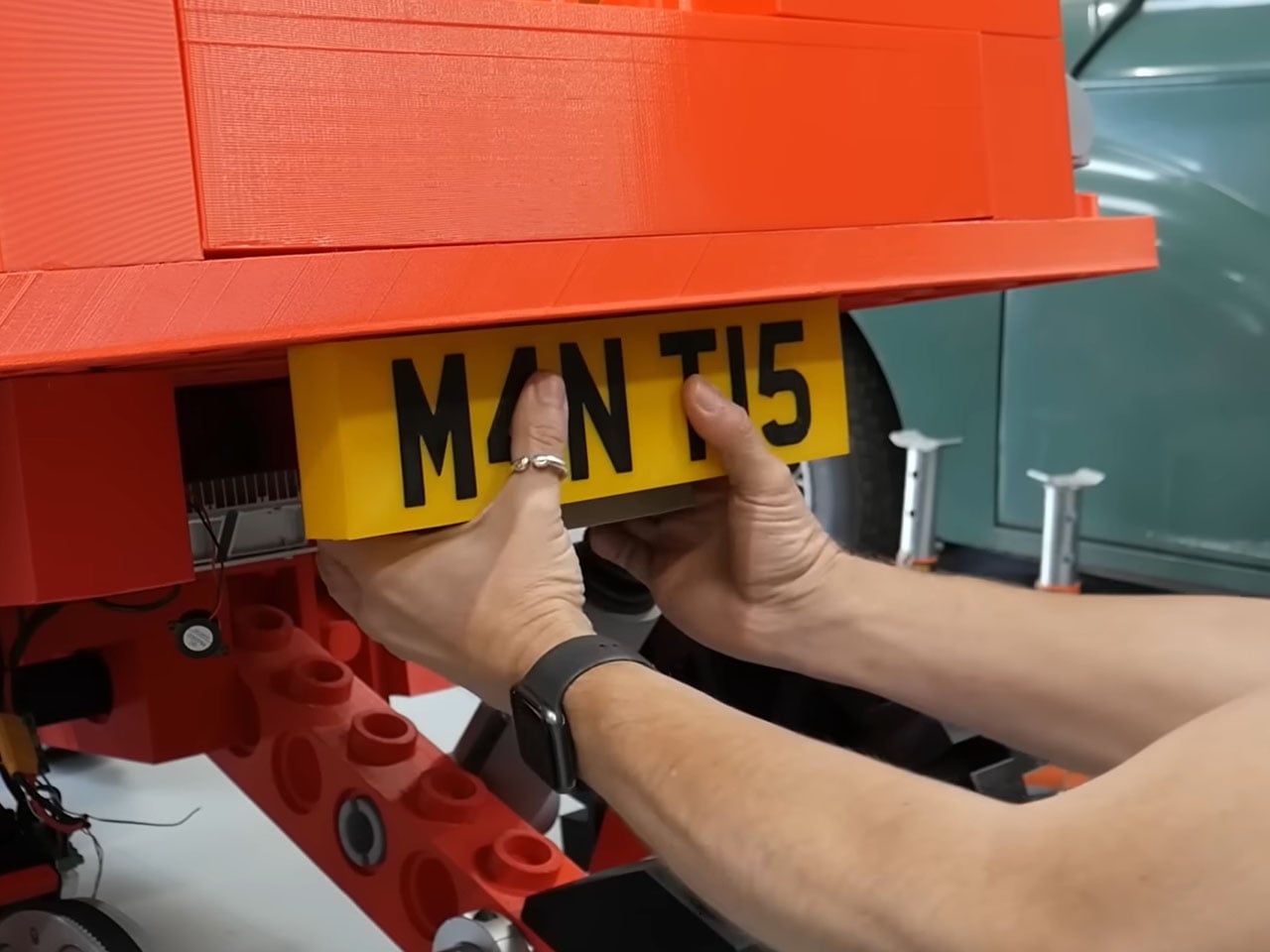
This project isn’t just a playful homage to a childhood classic; it’s also a demonstration of how modern 3D printing and careful engineering can push the boundaries of what’s possible, even with humble materials like PLA and TPU. It transforms a familiar childhood toy into a functional vehicle, and in doing so rekindles the wonder of imaginative play, but at a human scale. For hobbyists and builders, Denton’s dune buggy is an inspiration, as the line between toy and tool blurs, and a dream built in plastic bricks can eventually become something you can sit in and drive.




The post Life-size 3D-Printed LEGO Technic dune buggy turns a classic toy Into a drivable machine first appeared on Yanko Design.
Spotify is attempting to give users more control over the music the streaming service recommends with a new playlist feature called "Prompted Playlist." The beta feature is rolling out in New Zealand starting on December 11, and will let users write a custom prompt that Spotify can use — alongside their listening history — to create a playlist of new music.
By tapping on Prompted Playlist, Spotify subscribers participating in the beta will be presented with a prompt field where they can type exactly what they want to hear and how they want Spotify's algorithm to respond. And while past AI features took users' individual taste into consideration, Spotify claims Prompted Playlist "taps into your entire Spotify listening history, all the way back to day one."

Prompts can be as broad or specific as users want, and Spotify says playlists can also be set to automatically update with new songs on a specific cadence. An "Ideas" tab in the Prompted Playlist setup screen can provide suggestions for users who need inspiration for their prompt. And interestingly, Spotify says each song in the playlist will be presented with a short description explaining why the algorithm chose it, which could help direct future fine-tuning.
If this all sounds familiar, it's because Spotify has already tried AI-generated playlists in the past. The difference here, besides Spotify framing the new feature as giving users more "control," is the detail of the prompts, the depth of user data Spotify is applying and the options users will have to keep playlists up-to-date. Prompted Playlist is only available in English for now, but Spotify says the feature will evolve as it adds more users.
Spotify isn't the first company to offer users more direct control over how content is recommended to them. Meta has recently started experimenting with algorithm-tuning options in Threads and Instagram, and TikTok lets users completely reset their For You page to start fresh. The irony of all these features is that algorithm-driven feeds were supposed to be able to recommend good music, posts and videos without additional prompting. Now that prompting is being pitched as a feature, rather than extra work.
This article originally appeared on Engadget at https://www.engadget.com/entertainment/music/spotifys-new-playlist-feature-gives-users-more-control-over-their-recommendation-algorithm-203237903.html?src=rss