Steam Machine Makes Couch Co-Op Feel Fresh Again : Proton, Lepton & FEX Support

Steam Machine Makes Couch Co-Op Feel Fresh Again : Proton, Lepton & FEX Support

What if one device could redefine how you experience gaming, whether you’re a retro enthusiast, a couch co-op champion, or a 4K graphics aficionado? Below, Deck Ready takes you through how Valve’s Steam Machine has carved out a unique space in the gaming world, blending versatility with innovative performance. This isn’t just another gaming PC, […]

The post Steam Machine Makes Couch Co-Op Feel Fresh Again : Proton, Lepton & FEX Support appeared first on Geeky Gadgets.

Posted in Uncategorized

Samsung’s Galaxy Z Fold 8 Wide is the iPhone Fold’s Worst Nightmare

Samsung’s Galaxy Z Fold 8 Wide is the iPhone Fold’s Worst Nightmare

Samsung is poised to make a significant impact in the foldable smartphone market with the highly anticipated Galaxy Z Fold 8 Wide, set to debut during its Galaxy Unpacked event in Q3 2026. This device introduces a broader aspect ratio and enhanced usability, directly addressing critiques of earlier foldable models. Positioned as a mainstream product, […]

The post Samsung’s Galaxy Z Fold 8 Wide is the iPhone Fold’s Worst Nightmare appeared first on Geeky Gadgets.

Posted in Uncategorized

Travel Isn’t Guesswork Anymore, AI Turns Daily Journeys into Clear, Culture-Rich Moves

Travel Isn’t Guesswork Anymore, AI Turns Daily Journeys into Clear, Culture-Rich Moves

What if planning your dream vacation could feel as effortless as scrolling through your favorite app? In this overview, Olivio Sarikas explores how AI is transforming travel, turning once-daunting tasks like itinerary planning and cultural immersion into seamless, personalized experiences. Imagine discovering hidden gems tailored to your interests, navigating unfamiliar cities with confidence, or even […]

The post Travel Isn’t Guesswork Anymore, AI Turns Daily Journeys into Clear, Culture-Rich Moves appeared first on Geeky Gadgets.

Posted in Uncategorized

Meta Misread the Future Twice. Now They’re Sitting on a Golden Egg, But Don’t Know It

Mark Zuckerberg changed his company’s name to Meta in October 2021 because he believed the future was virtual. Not just sort-of virtual, like Instagram filters or Zoom calls, but capital-V Virtual: immersive 3D worlds where you’d work, socialize, and live a parallel digital life through a VR headset. Four years and roughly $70 billion in cumulative Reality Labs losses later, Meta is quietly dismantling that vision. In January 2026, the company laid off around 1,500 people from its metaverse division, shut down multiple VR game studios, killed its VR meeting app Workrooms, and effectively admitted that the grand bet on virtual reality had failed. Investors barely blinked. The stock went up.

The official line now is that Meta is pivoting to AI and wearables. Zuckerberg spent much of 2025 building what he calls a “superintelligence” lab, hiring top-tier AI talent with eye-watering compensation packages that are now one of the largest drivers of Meta’s 2026 expense growth. The company released Llama models that benchmark decently against OpenAI and Google, embedded chatbots into WhatsApp and Instagram, and talks constantly about “AI agents” and “new media formats.” But from a product and profit perspective, Meta’s AI strategy looks suspiciously like its metaverse strategy: lots of spending, vague promises, and no breakout consumer experience that people actually love. Meanwhile, the thing that is quietly working, the thing people are buying and using in the real world, is a pair of $300 smart glasses that Meta barely talks about. If this sounds like a pattern, that’s because it is. Meta has now misread the future twice in a row, and both times the answer was hiding in plain sight.

The Metaverse Was a $70 Billion Fantasy

Reality Labs has been hemorrhaging money since late 2020. As of early 2026, cumulative operating losses sit somewhere between $70 and $80 billion, depending on how you slice the quarters. In the third quarter of 2025 alone, Reality Labs posted a $4.4 billion loss on $470 million in revenue. For 2025 as a whole, the division lost more than $19 billion. These are not rounding errors or R&D investments that will pay off next year. These are structural losses tied to a product category, VR headsets and metaverse platforms, that the market simply does not want at the scale Meta imagined.

The vision sounded compelling in a keynote. You would strap on a Quest headset, meet your coworkers in a virtual conference room with floating whiteboards, then hop over to Horizon Worlds to hang out with friends as legless avatars. The problem was that almost no one wanted to do any of that for more than a demo. VR remained a niche gaming platform with occasional fitness and entertainment use cases, not the next paradigm shift in human interaction. Zuckerberg kept insisting the breakthrough was just around the corner. He was wrong, and the January 2026 layoffs and studio closures were the formal acknowledgment that Reality Labs as originally conceived was dead.

The irony is that Meta actually had a potential killer app inside Reality Labs, and it murdered it. Supernatural, a VR fitness game that Meta acquired for $400 million in 2023, was one of the few pieces of Quest software that generated genuine user loyalty and recurring revenue. People who used Supernatural regularly described it as the most effective home workout they had ever done, combining rhythm-based gameplay with full-body movement in a way that treadmills and Peloton bikes could not replicate. It had a subscription model, a dedicated community, and real retention. In January 2026, Meta moved Supernatural into “maintenance mode,” which is corporate speak for “we fired almost everyone and it will get no new content.” If you are trying to prove that VR has mainstream utility beyond gaming, fitness is one of the most obvious wedges. Meta had that wedge, and it chose to kill it in the same round of cuts that shuttered studios working on Batman VR games and other prestige titles. The message was clear: Zuckerberg had lost interest in Quest, even the parts that worked.

The AI Bet That Looks Like the ‘Metaverse Bust’ 2.0
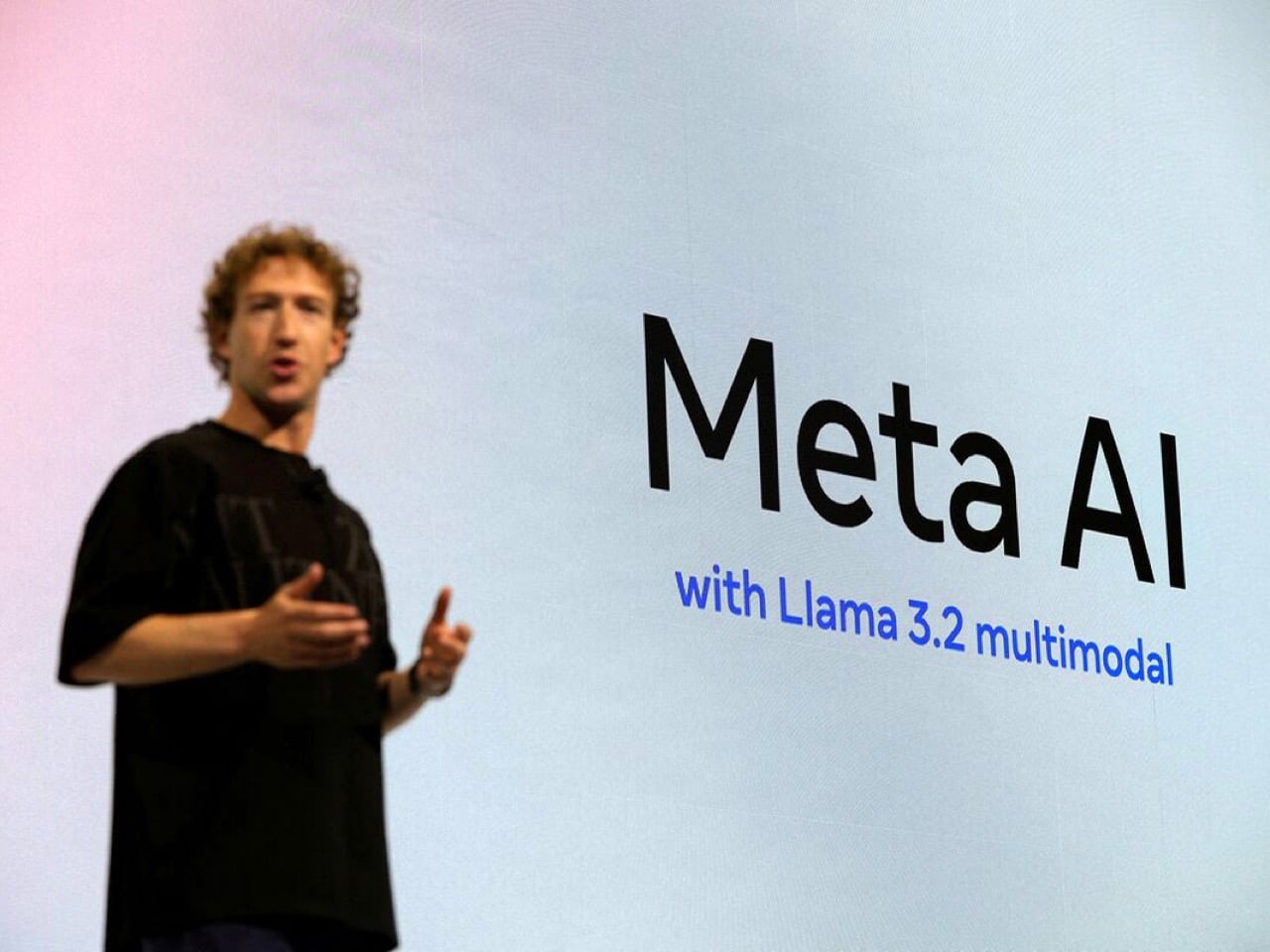
After spending years insisting the future was virtual worlds, Meta pivoted hard to AI in 2023 and 2024. Zuckerberg now talks about AI the way he used to talk about the metaverse: with sweeping language about paradigm shifts and transformative platforms. The company stood up an AI division focused on building what it calls “superintelligence,” hired aggressively from OpenAI and Anthropic, and made technical talent compensation the second-largest contributor to Meta’s 2026 expense growth behind infrastructure. This is not a side project. Meta is spending billions on AI research, training, and deployment, and Zuckerberg expects losses to remain near 2025 levels in 2026 before they start to taper.

From a technical standpoint, Meta’s AI work is solid. The Llama family of models is legitimately competitive with GPT-4 class systems and has found real adoption among developers who want open-source alternatives to OpenAI and Google. Meta’s internal AI is also driving real business value in ad targeting, content ranking, and moderation. Those systems work, and they contribute directly to Meta’s core revenue. But from a consumer product perspective, Meta’s AI feels scattered and often unnecessary. The company has embedded “Meta AI” chatbots into WhatsApp, Instagram, Messenger, and Facebook, none of which feel like natural places for a chatbot. Instagram’s feed is increasingly stuffed with AI-generated images and engagement bait that users actively complain about. Meta has launched character-based AI bots tied to influencers and celebrities, and approximately no one uses them. The gap between “we have impressive models” and “we have a product people love” is enormous, and it is the exact same gap that sank the metaverse.

What Meta is missing, again, is product intuition. OpenAI built ChatGPT and made it feel like the future because the interface was simple, the use cases were obvious, and it delivered consistent value. Google integrated Gemini into Search and productivity tools where users were already working. Meta, by contrast, seems to be throwing AI at every surface it controls and hoping something sticks. Zuckerberg talks about “an explosion of new media formats” and “more interactive feeds,” which in practice means more algorithmic slop and fewer posts from people you actually know. Analysts are starting to notice. One Bernstein note from early 2026 argued that the “winner” criteria in AI is shifting from model quality to product usage, which is a polite way of saying that having a great model does not matter if your product is annoying. Meta has a great model. Its products are annoying.

The financial picture is also murkier than Meta would like to admit. Reality Labs is still losing close to $20 billion a year, and while AI is not a separate reporting segment, the talent and infrastructure costs are clearly rising. Meta’s overall revenue growth is strong, driven by advertising, but the company is not yet showing a clear path to AI profitability outside of ‘ad optimization’. That puts Meta in the awkward position of having pivoted from one unprofitable moonshot (metaverse) to another potentially unprofitable moonshot (consumer AI products) while the actual profitable parts of the business, social ads and engagement, keep the lights on. This is a pattern, and it is not a good one.

The Smart Glasses Lead That Meta Is Poised to Lose
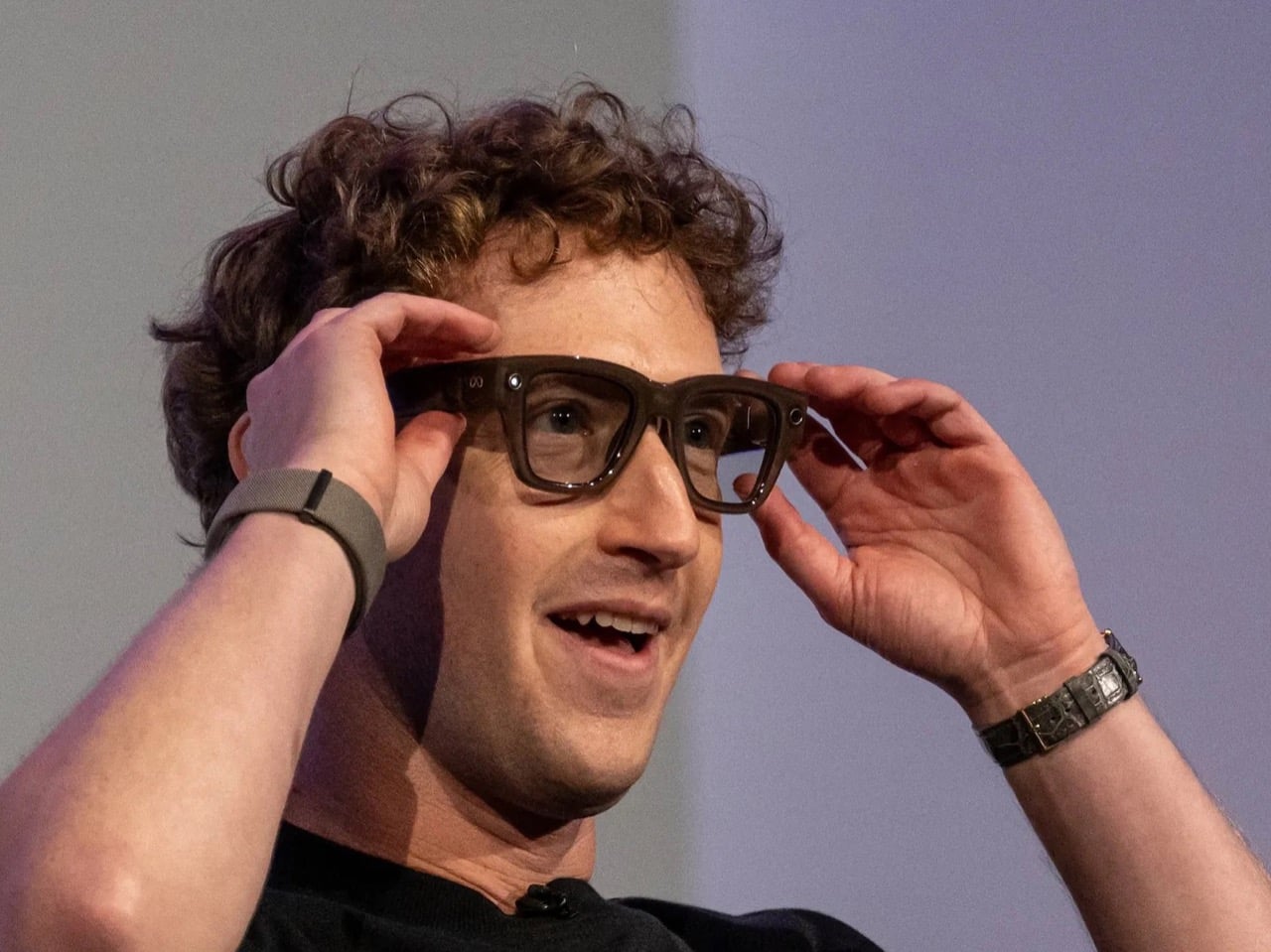
Meta talks about the Ray-Ban smart glasses constantly. Zuckerberg calls them the “ultimate incarnation” of the company’s AI vision, and the pitch is relentless: sales more than tripled in 2025, the glasses represent the future of ambient computing, this is the post-smartphone platform. The problem is not that Meta is ignoring the glasses. The problem is that Meta is about to squander a massive early lead, and the competition is closing in fast. 2026 is shaping up to be a blockbuster year for smart glasses. Samsung confirmed its AR glasses are launching this year. Google is releasing its first pair of smart glasses since 2013, an audio-only pair similar to the Ray-Ban Meta glasses. Apple is reportedly pursuing its own smart glasses and shelved plans for a cheaper Vision Pro to prioritize the project. Meta dominated VR because it was early, cheap, and had no real competition. In smart glasses, that window is closing fast, and the field is getting crowded with all kinds of names, from smaller players like Looktech and Xgimi’s Memomind to mid-sized brands like Xreal, to even larger ones like Google, TCL, and Xiaomi.

The Ray-Ban Meta glasses work because they are simple and focused. They take photos and videos, play music, make calls, and provide real-time answers through an AI assistant. Parents use them to record their kids hands-free. Travelers use them for translation. The form factor, actual Ray-Ban Wayfarers that cost around $300, means they do not scream “I am wearing a computer on my face.” This is the rare Meta hardware product that feels intuitive rather than forced, and it is selling because it solves boring, everyday problems without requiring users to change their behavior.

Then Meta made a critical mistake. To use the glasses, you have to route everything through the Meta AI app, which means you cannot just power-use the hardware without engaging with Meta’s AI-slop ecosystem. Want to access your photos? Meta AI. Want to tweak settings? Meta AI. The app is the mandatory gateway, and it is stuffed with the same kind of algorithmic recommendations and AI-generated suggestions that clutter Instagram and Facebook. Instead of letting the glasses be a clean, utilitarian tool, Meta is using them as another vector to push its AI products. Google and Samsung are not going to make that mistake. Their glasses will integrate with Android XR and existing ecosystems without forcing users into a single AI app. Apple, if and when it launches, will almost certainly take a similar approach: clean hardware, seamless OS integration, optional AI features. Meta had a head start, Ray-Ban branding, and a product people actually liked. It is on track to waste all of that by prioritizing AI evangelism over product discipline, and the competition is going to eat its lunch.

What Happens When You Chase Narratives Instead of Products

The pattern across metaverse and AI is that Meta keeps betting on big, abstract visions rather than iterating on the things that work. Zuckerberg is a narrative-driven founder. He wants to define the future, not respond to it. That impulse gave us Facebook in 2004, when no one else saw the potential of real-identity social networks, but it has led Meta astray repeatedly in the 2020s. The metaverse was a narrative, not a product. The idea that billions of people would strap on headsets to work and socialize in 3D was always more science fiction than product roadmap, but Zuckerberg committed so hard to it that he renamed the company.

AI feels like the same mistake. The narrative is that foundation models and “agents” will transform every part of computing, and Meta wants to be seen as a leader in that transformation. The actual products, chatbots in WhatsApp and AI-generated feed content, do not meaningfully improve the user experience and in many cases make it worse. Meanwhile, the thing that is working, smart glasses, does not fit cleanly into the AI or metaverse narrative, so it gets less attention and investment than it deserves. Meta’s 2026 strategy, “shifting investment from metaverse to wearables,” is a tacit admission of this, but it is couched in language that still emphasizes AI rather than the hardware itself.

The other pattern is that Meta is willing to kill its own successes if they do not fit the broader narrative. The hit VR fitness game on Meta’s Horizon, Supernatural, was working. It had subscribers, retention, and cultural momentum within the VR fitness community. It was also a relatively small, specific product rather than a platform play, and that made it expendable when Meta decided to scale back Reality Labs. The same logic applies to Quest more broadly. The headset had carved out a niche in gaming and fitness, and with sustained investment in content and ecosystem development, it could have grown into a meaningful adjacent business. Instead, Meta is deprioritizing it because Zuckerberg has decided the future is AI and lightweight wearables. That might turn out to be correct, but the way Meta is executing the pivot, by shuttering studios and putting products in maintenance mode rather than spinning them out or finding partners, suggests a lack of product discipline.

Why Smart Glasses Might Actually Be the Next Facebook
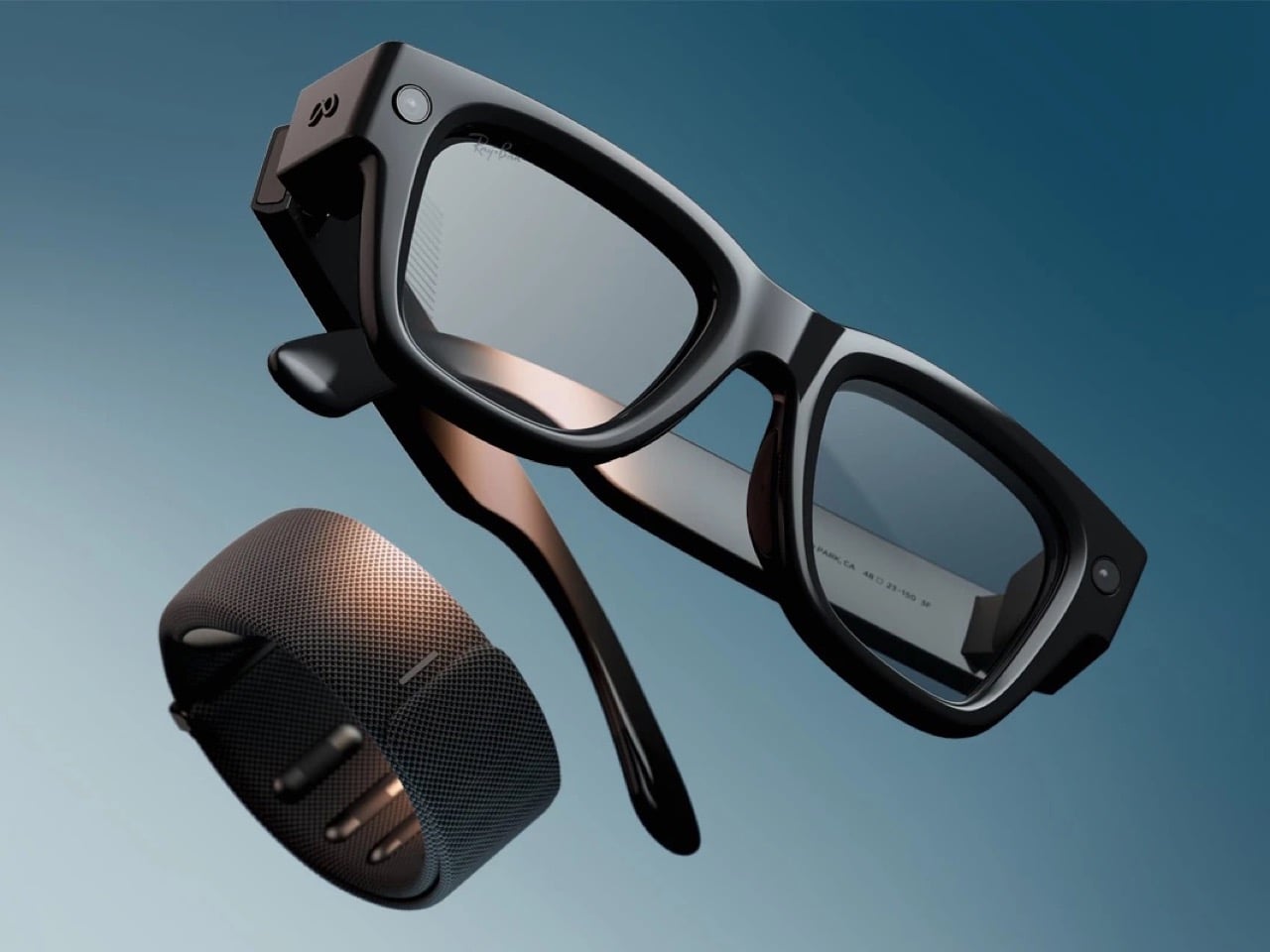
If you step back and ask what Meta is actually good at, the answer is not virtual reality or language models. Meta is good at building social products with massive scale, capturing and distributing content, and monetizing attention through ads. The Ray-Ban Meta glasses fit all of those strengths. They make it easier to capture photos and video, which feeds into Instagram and Facebook. They use AI to provide contextual information, which ties into Meta’s model development. And they are a physical product that people wear in public, which is a form of distribution and branding that Meta has never had before.

The bigger story is that smart glasses as a category are exploding, and Meta happened to be early. It is not just Samsung, Google, and Apple entering the space. Meta itself is expanding the Ray-Ban line with Displays (which adds a heads-up display) and partnering with Oakley on HSTN, a sportier model aimed at action sports. Google is teaming up with Warby Parker for its glasses, which gives it instant credibility in eyewear design. And then there are the startups: Even Realities, Xiaomi, Looktech, MemoMind, and dozens more, all slated for 2026 releases. This feels exactly like the moment AirPods sparked the true wireless earbud movement. Apple defined the format, then everyone from Samsung to Sony to no-name brands flooded the market, and now you can buy HMD ANC earbuds for 28 dollars. Smart glasses are following the same trajectory, which means the form factor itself is validated, and Meta’s early lead matters less than whether it can keep iterating faster than everyone else.

The other underrated piece is that having an instant camera on your face is genuinely useful in ways that VR headsets never were. People are using Ray-Ban Meta glasses as GoPro alternatives while skateboarding, cycling, and doing action sports, because POV capture without holding a phone or mounting a camera is frictionless. Content creators are using them to shoot hands-free B-roll at events like CES. Parents are using them to record their kids playing without the weird “I am holding my phone up at the playground” vibe. Pet owners are capturing spontaneous moments with dogs and cats that would be impossible to get with a phone. These are not sci-fi use cases or metaverse fantasies. They are boring, real-world problems that the glasses solve immediately, and that is why they are selling. Meta has spent a decade chasing grand visions of the future, and it accidentally built a product that people want right now. The challenge is whether it can resist the urge to over-complicate it before Google, Samsung, and Apple catch up.

The Real Lesson Is About Focus

Meta has spent the last five years oscillating between grand visions, metaverse and AI, and neglecting the products that actually work. The Ray-Ban Meta glasses are proof that when Meta focuses on solving real problems with tangible products, it can still build things people want. The metaverse failed because it was a solution in search of a problem, and the AI push is struggling because Meta is shipping features rather than products. Smart glasses, by contrast, are succeeding because they make everyday tasks easier without requiring users to change their behavior or buy into a futuristic narrative.

If Zuckerberg can internalize that lesson, Meta might actually have a shot at owning the next platform. But that requires a level of product discipline and restraint that Meta has not shown in years. It means resisting the urge to turn every product into a platform, admitting when a bet has failed rather than pouring another $10 billion into it, and focusing on iteration over narration. The irony is that Meta already has the right product. It just needs to stop looking past it.

The post Meta Misread the Future Twice. Now They’re Sitting on a Golden Egg, But Don’t Know It first appeared on Yanko Design.
This palm-sized desktop vacuum combo keeps your setup squeaky clean

Believe you me, desk setups look amazing when you have all the gadgets and accessories in place. Some days down the line, that squeaky clean look fades away as dust settles in, food crumbs scatter around, water spots look ugly, and human skin and hair shed. That isn’t a very pretty sight when you kick off your work in the morning. Not for me atleast, as I like to clean my desk first thing before starting off my creative journey.

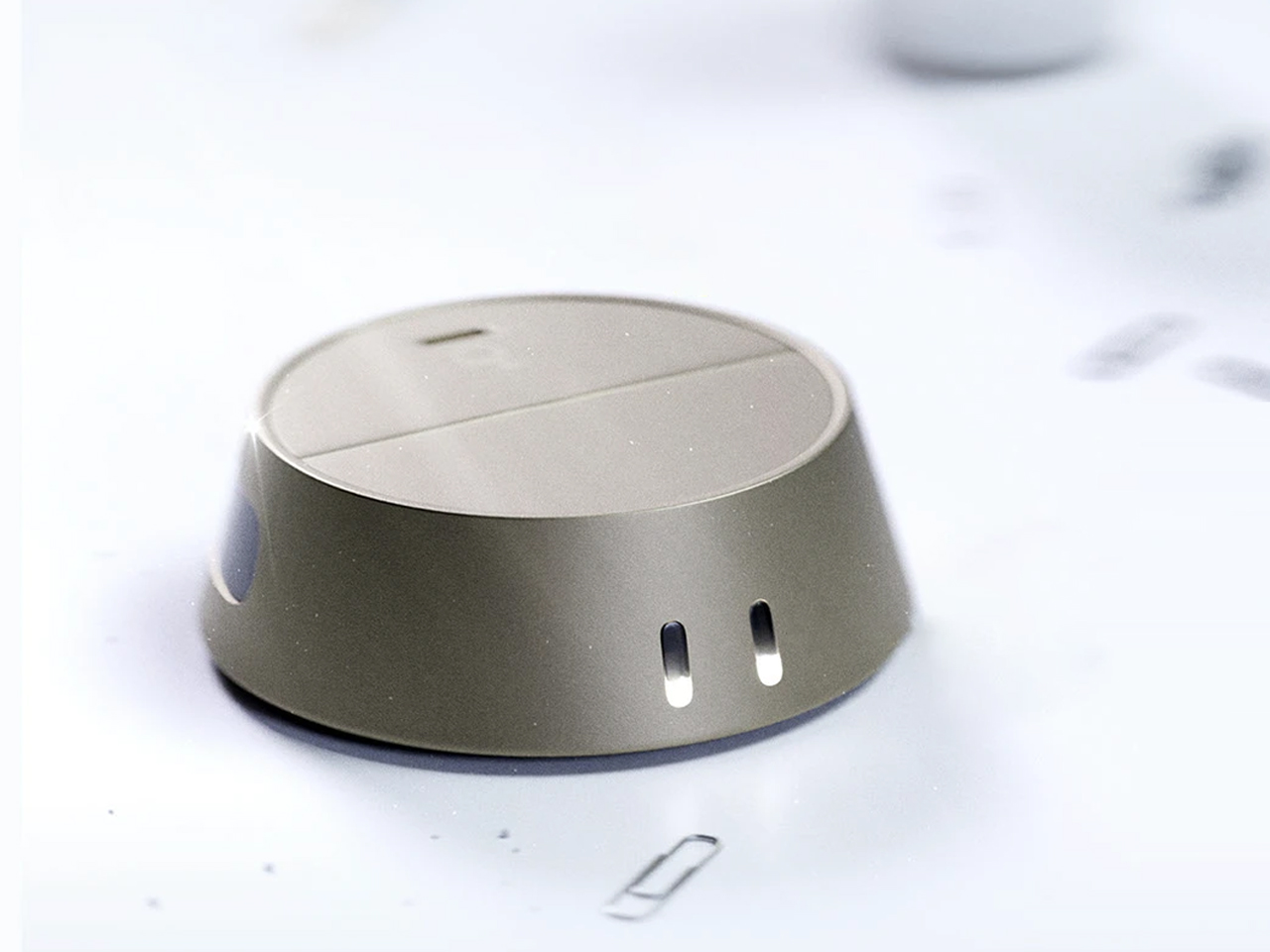
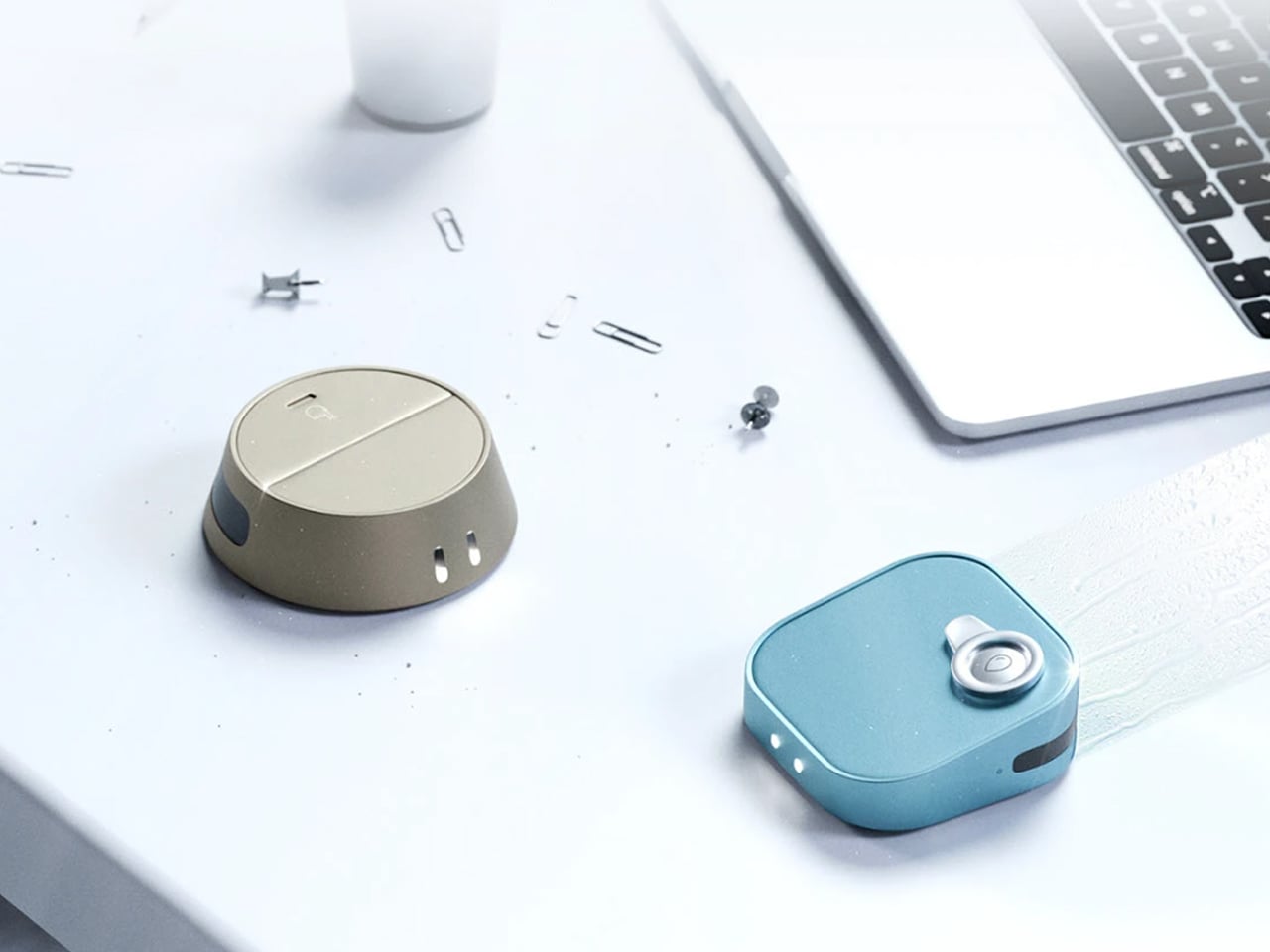
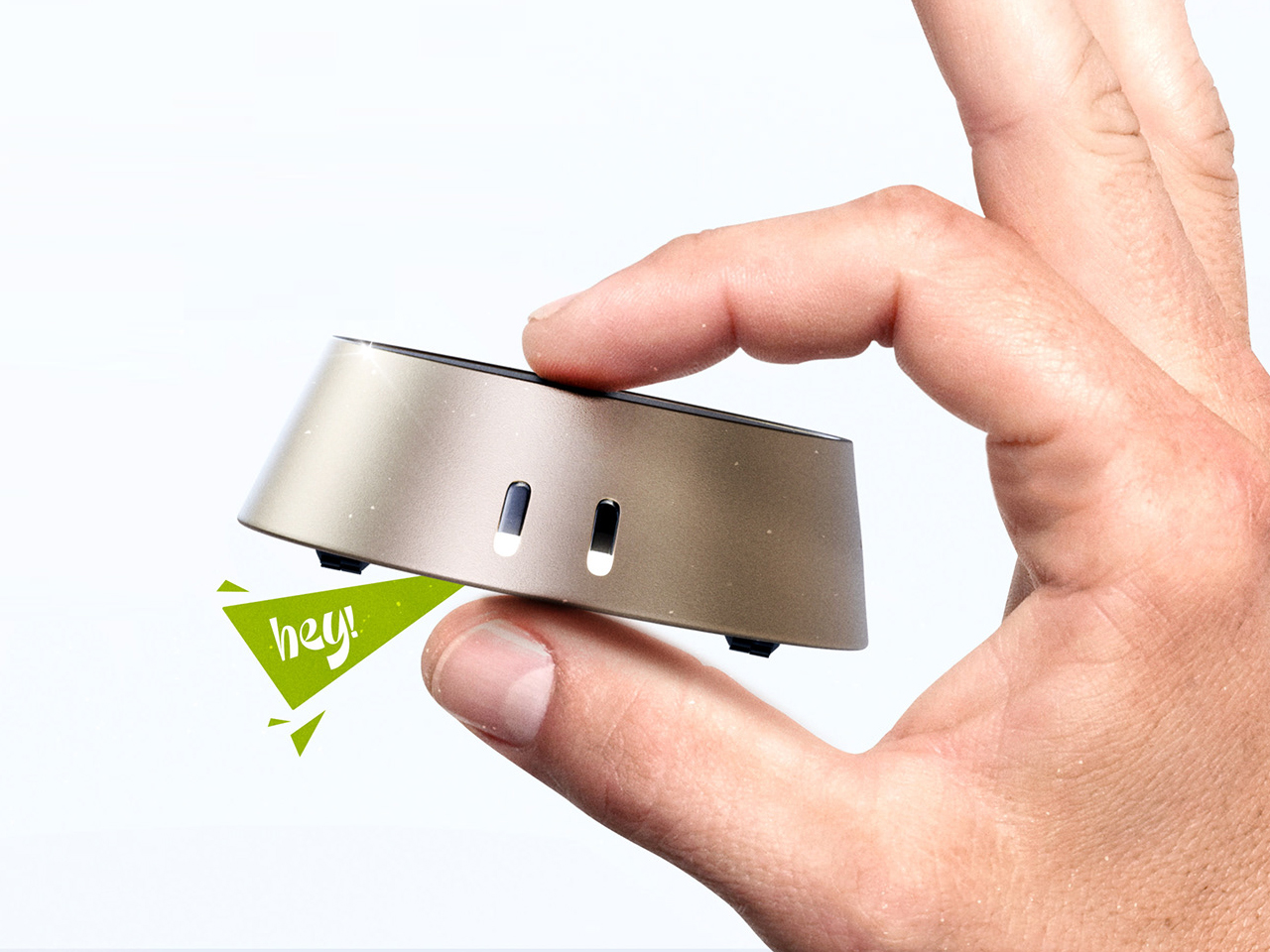
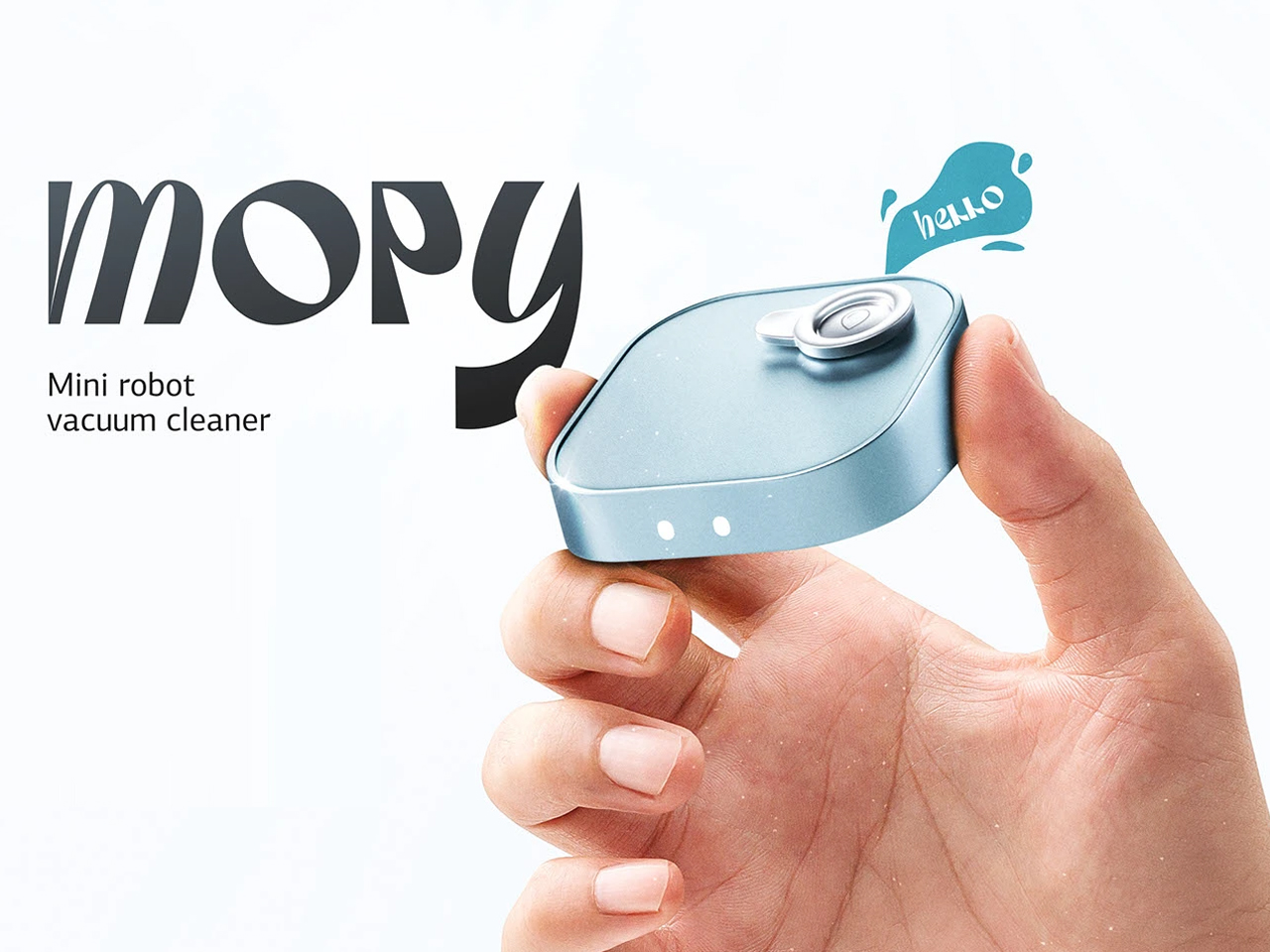
A small gadget that can automate that cleaning regime is a welcome addition, getting things ready even before you get up in the morning. Meet Vacy, a desktop vacuum cleaner designed to be a palm-sized accessory, working in stealth mode to get your desktop setup in pristine condition every single day without any fails. If that’s not enough, the Mopy mini robot washer gives a second treatment of cleaning, just like your home floors do each day.

Designer: Aleksandr Misiukevich

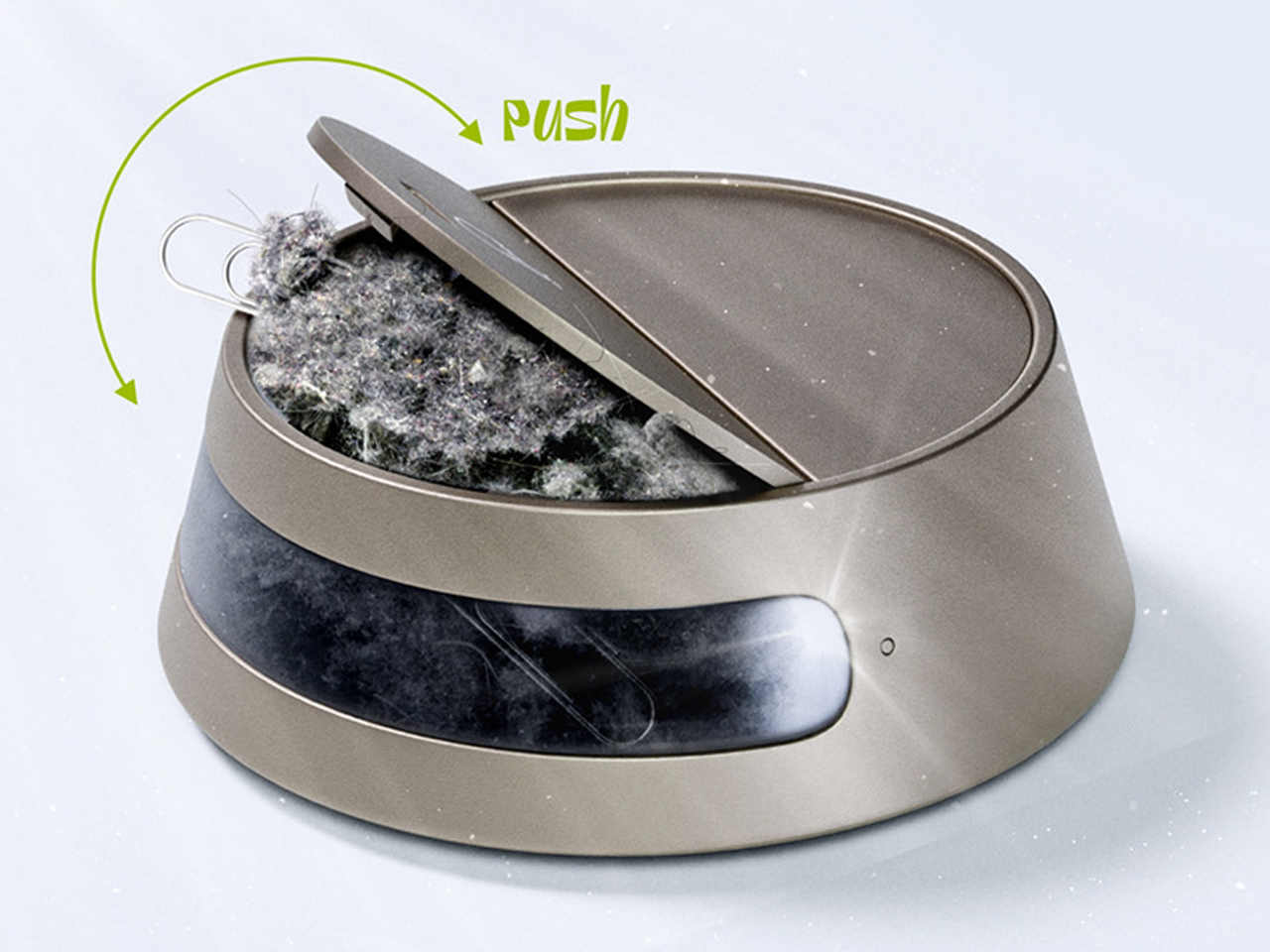
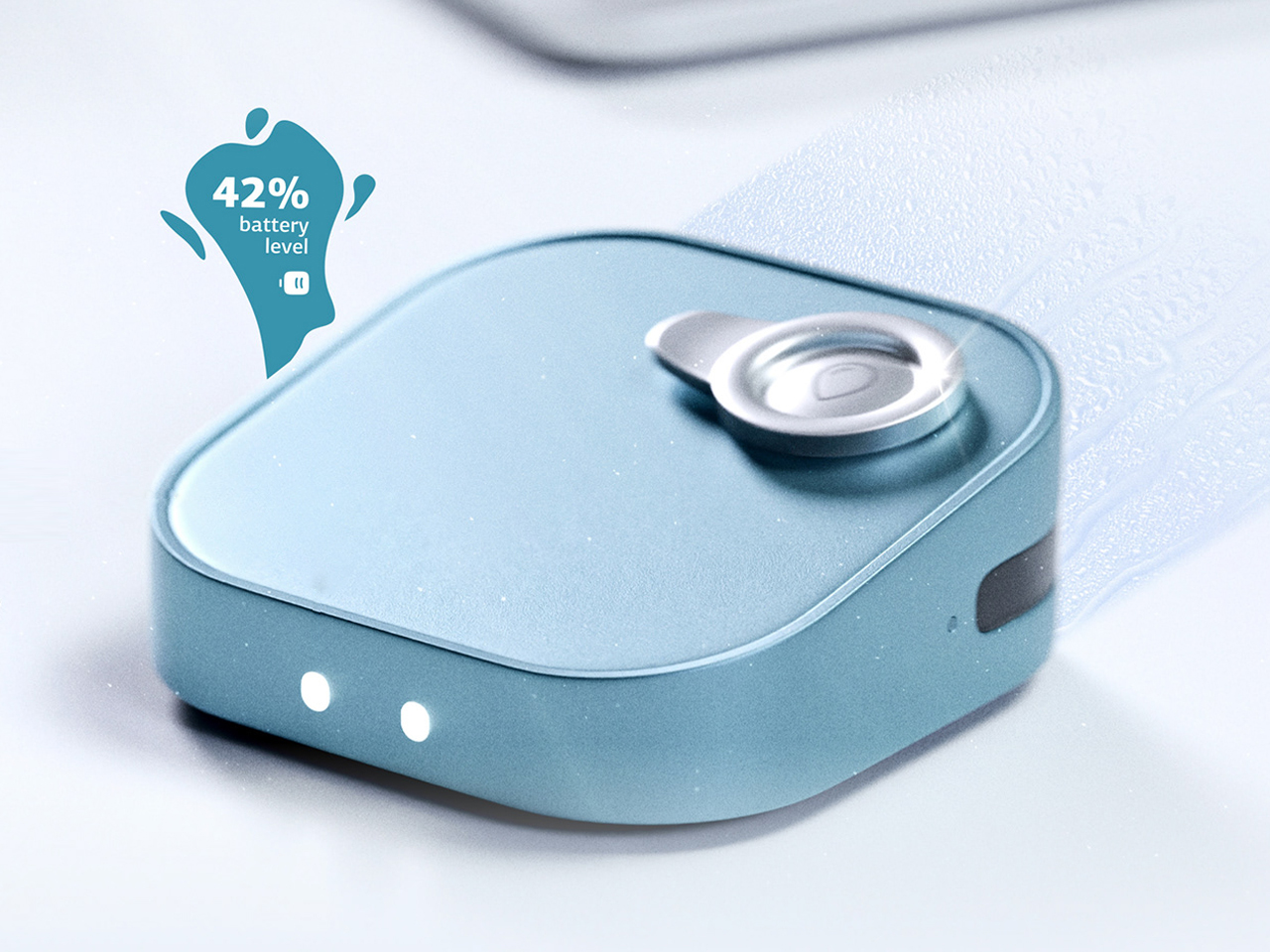
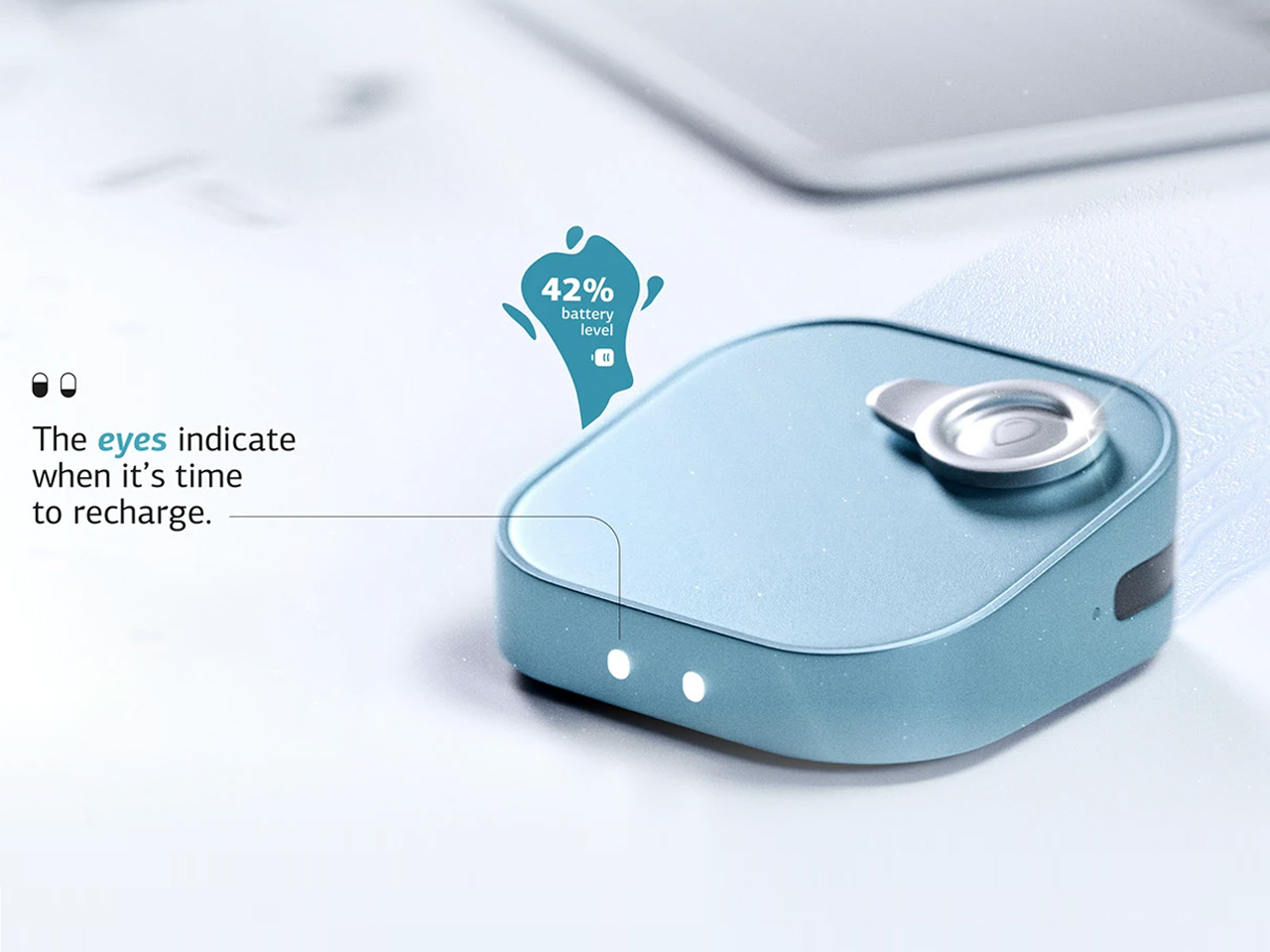
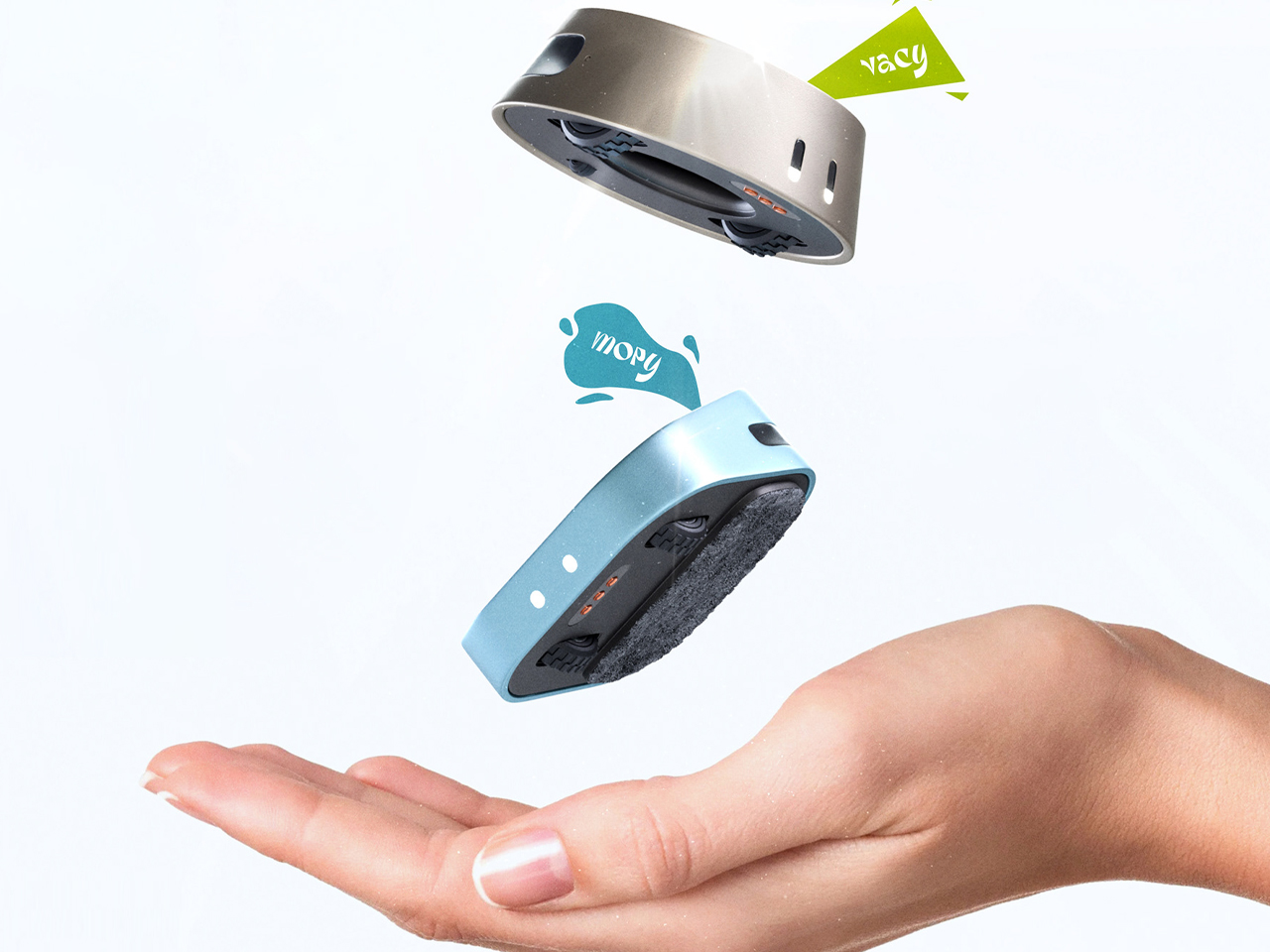
Both pocketable accessories can be carried along easily for portability and deployed on demand. For a guy like me who works in multiple work setups, that is a good feature to have. The Vacy vacuum cleaner sucks debris from the bottom and collects it inside the safe compartment. Once full, you can push the lid to take out all the trash. The indicators on the top show the current battery level, and once the battery level drops below 20 percent, the palm-sized vac returns to the charging dock. The edges of the desk are no problem, as the robo vac comes with a Cliff sensor to stop and turn in the other direction. Vacy can suck objects smaller than 2 cm; meaning hair, crumbs, pet fur, and office stationery like pins get sucked right in.

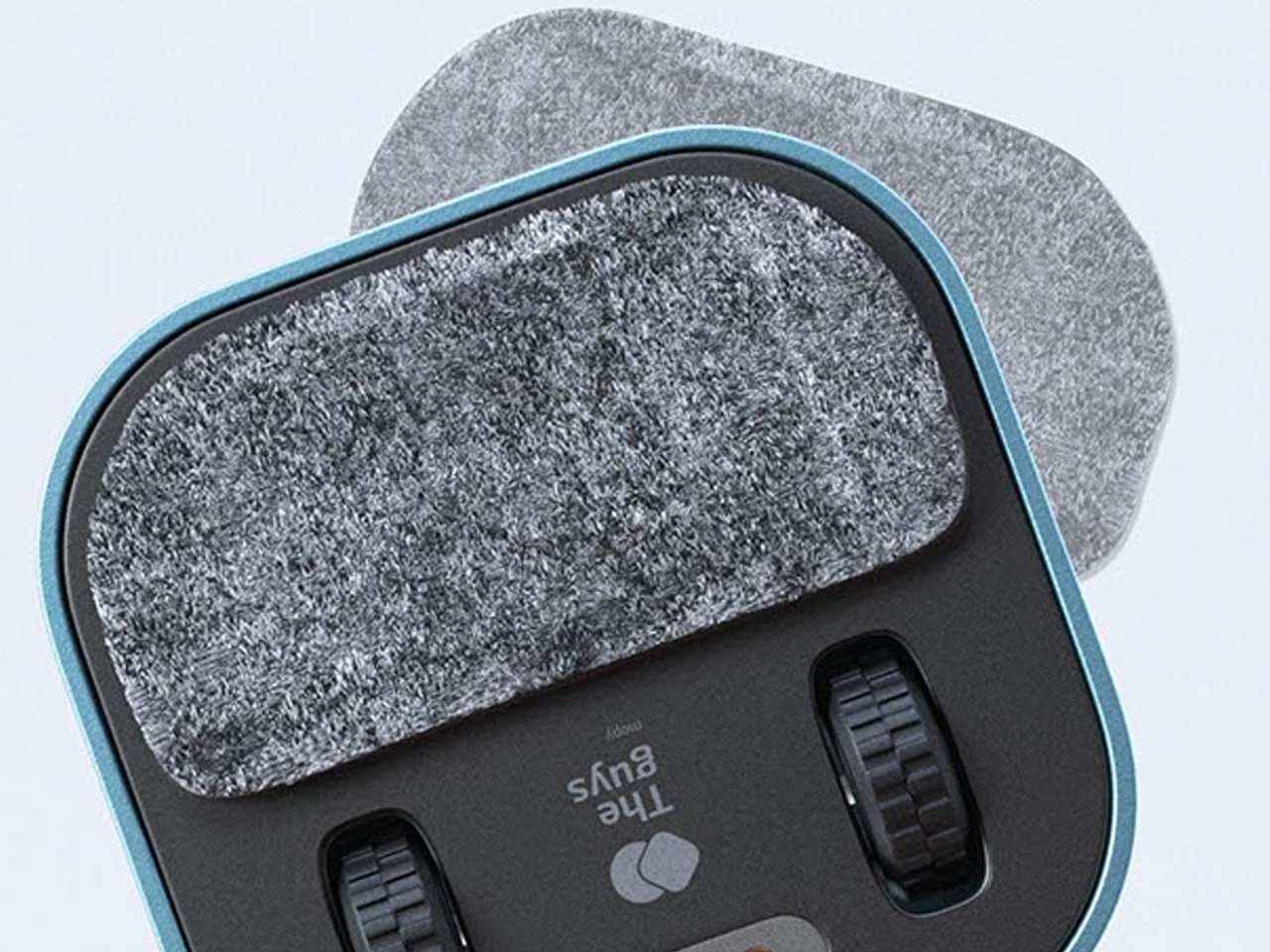
The second one is my favorite, just because of the unique idea. Mopy mini robot vacuum cleaner gets rid of all those pesky spots on the surface for an instant fresh look. It has an opening on top to fill the water compartment and a long-pile cleaning replaceable pad at the bottom to get the job done. Just like its brother Vacy, the mopping vac returns to its charging dock once the charge levels drop below 20 percent. Be it water droplets, coffee stains, sugary liquids, or fine dust crumbs; the vac makes quick work of everything.

In tandem, the robot vacs clean the nooks and corners of your desk, normally left unattended by the normal cleaning. The concept sounds interesting, but would it have many takers? I’m not sure everyone has an obsessive-compulsive disorder for cleanliness.

The post This palm-sized desktop vacuum combo keeps your setup squeaky clean first appeared on Yanko Design.
This Museum Was Designed for 25,000 Birds, Not Humans

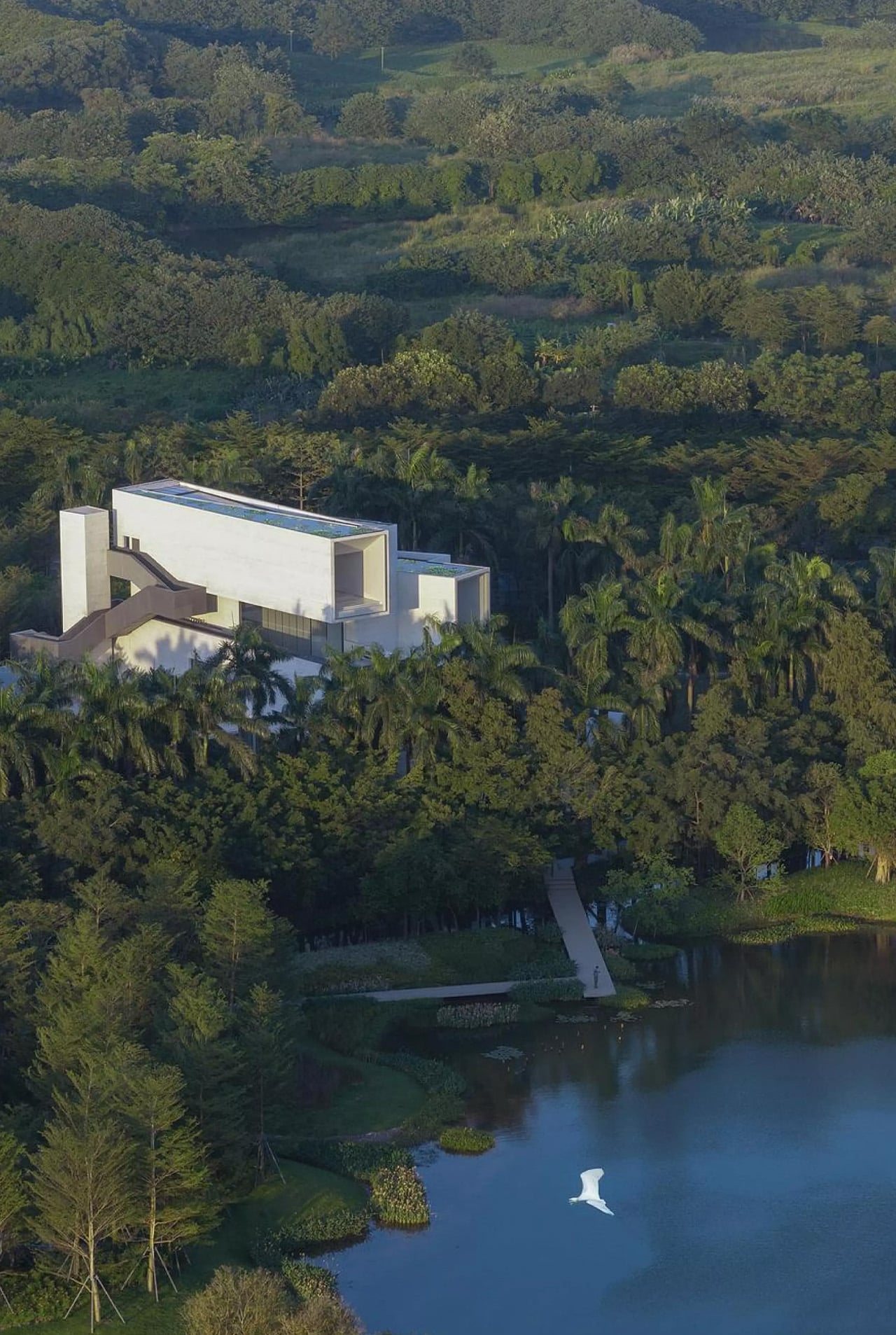
Nestled within the lush landscape of Yunlu Wetland Park in China’s Pearl River Delta, Studio Link-Arc’s latest project redefines what it means to design for wildlife. The Shunde Yunlu Wetland Museum sits quietly behind a row of cedar trees, deliberately concealing itself from view. This isn’t a building seeking attention. It’s architecture that understands its place in an ecosystem where 25,000 egrets take center stage.

The design challenges conventional architectural thinking. Where most museums position themselves as cultural landmarks, this one retreats. The New York-based firm conceived the structure as four concrete tubes stacked vertically, each rotated to frame a different layer of the forest. The first floor gazes at tree roots. The second captures trunks. The third finds the crowns. The fourth reaches the treetops. Each level acts as a rotating lens, offering visitors perspectives that mirror the egrets’ own experience of their habitat.

Designer: Studio Link-Arc

This rotation creates something beyond visual interest. The cantilevered volumes give the building a sense of kinetic energy, as though the structure itself is adjusting to follow the birds’ movements across the water. The stepped form settles into the wetland’s natural density, absorbed by tall vegetation and reflective water surfaces that blur the boundary between built and natural environments. Each tube functions as a box structure, with sidewalls, roofs, and floors working together to support these dramatic projections.

Inside, a triangular atrium slices through all four floors, connecting the scattered perspectives into a single spatial experience. Sunlight filters through high skylights, softened by deep concrete beams before reaching the interior. Standing in this vertical space, visitors can simultaneously look through multiple tubes, each framing a different view of the wetland. The traditional hierarchy of architectural viewpoints dissolves into something more democratic, more aligned with the rhythms of the landscape itself.

The roof carries a lotus pond, adding another water layer to the composition. This gesture proves essential when viewing the building from paths and bridges throughout the park. The rooftop water merges visually with the wetland below, reducing the structure’s vertical impact and allowing it to read as part of the continuous water system rather than an interruption.

The project emerges from decades of conservation efforts. A local resident known as Uncle Bird spent years transforming this site into an urban sanctuary for egrets. The Shunde government later expanded the protected area thirteenfold, partnering with scientists and designers to restore water systems and bamboo forests. Studio Link-Arc’s museum completes this vision, offering a space where human visitors can observe and learn while remaining secondary to the site’s true inhabitants. The building asks a question rarely posed in contemporary architecture: What happens when we design for the birds first?

The post This Museum Was Designed for 25,000 Birds, Not Humans first appeared on Yanko Design.
This Anti-Gravity Humidifier Makes Water Flow Upwards So It Isn’t ‘Another Boring Appliance’

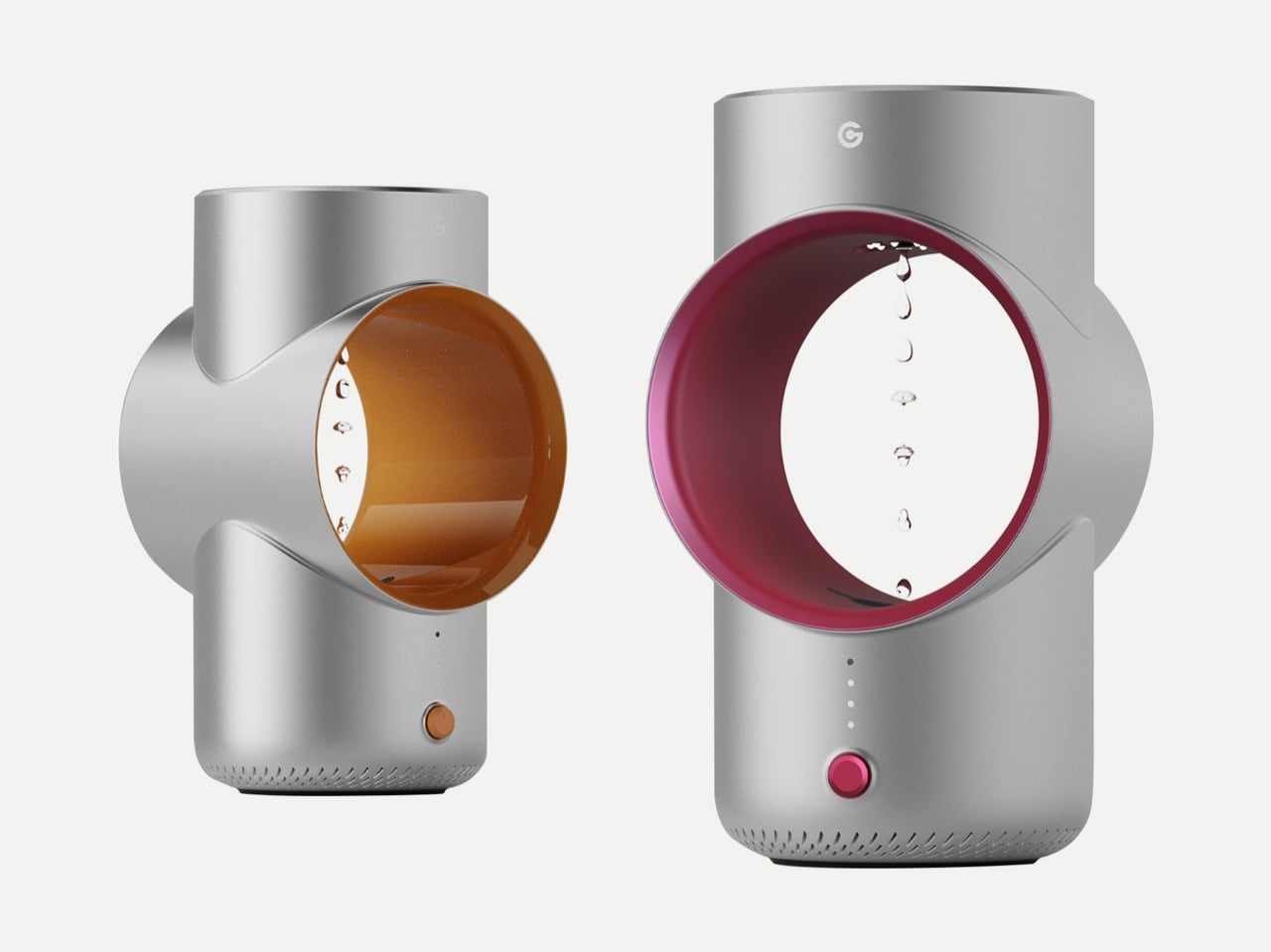
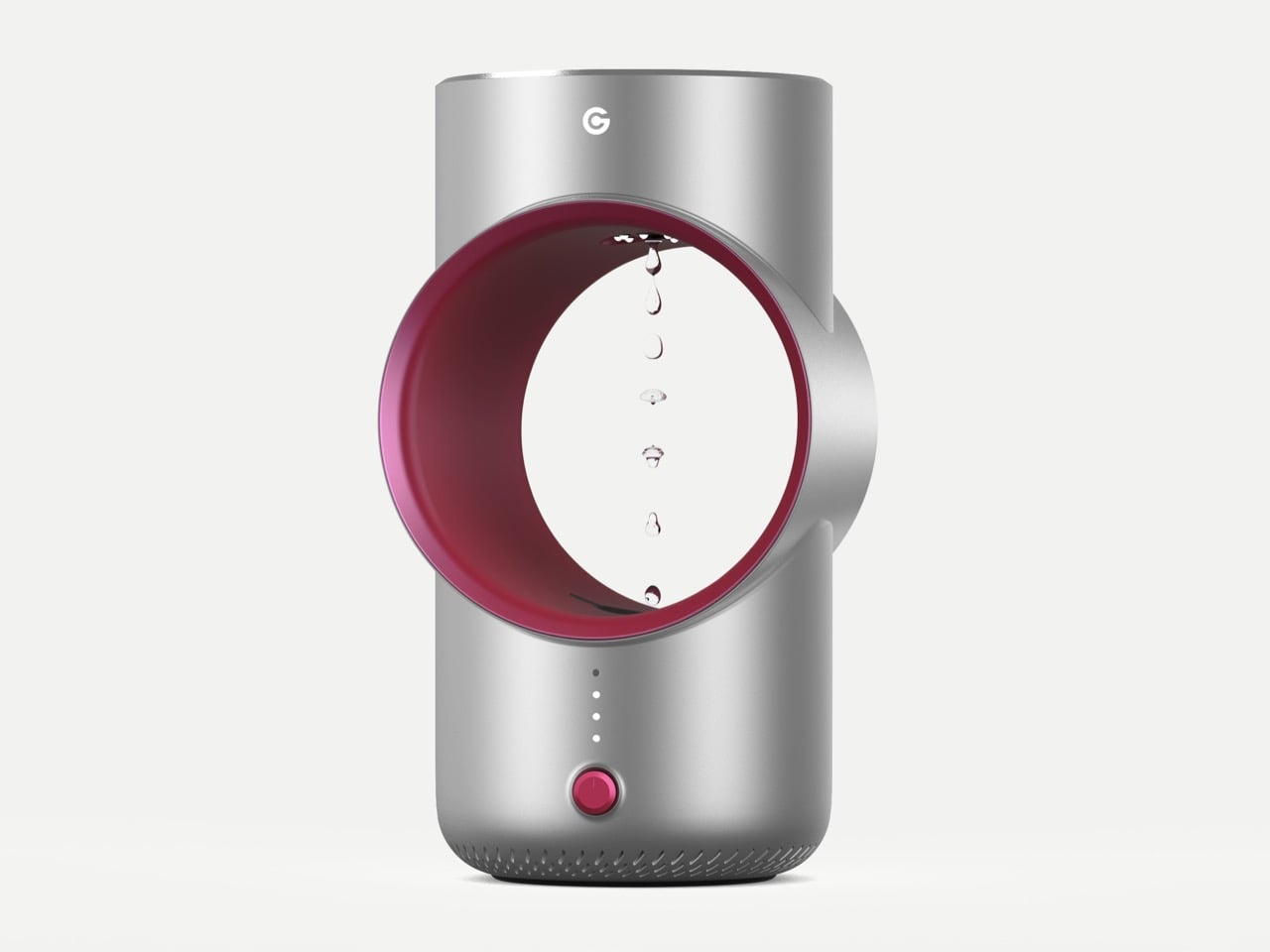
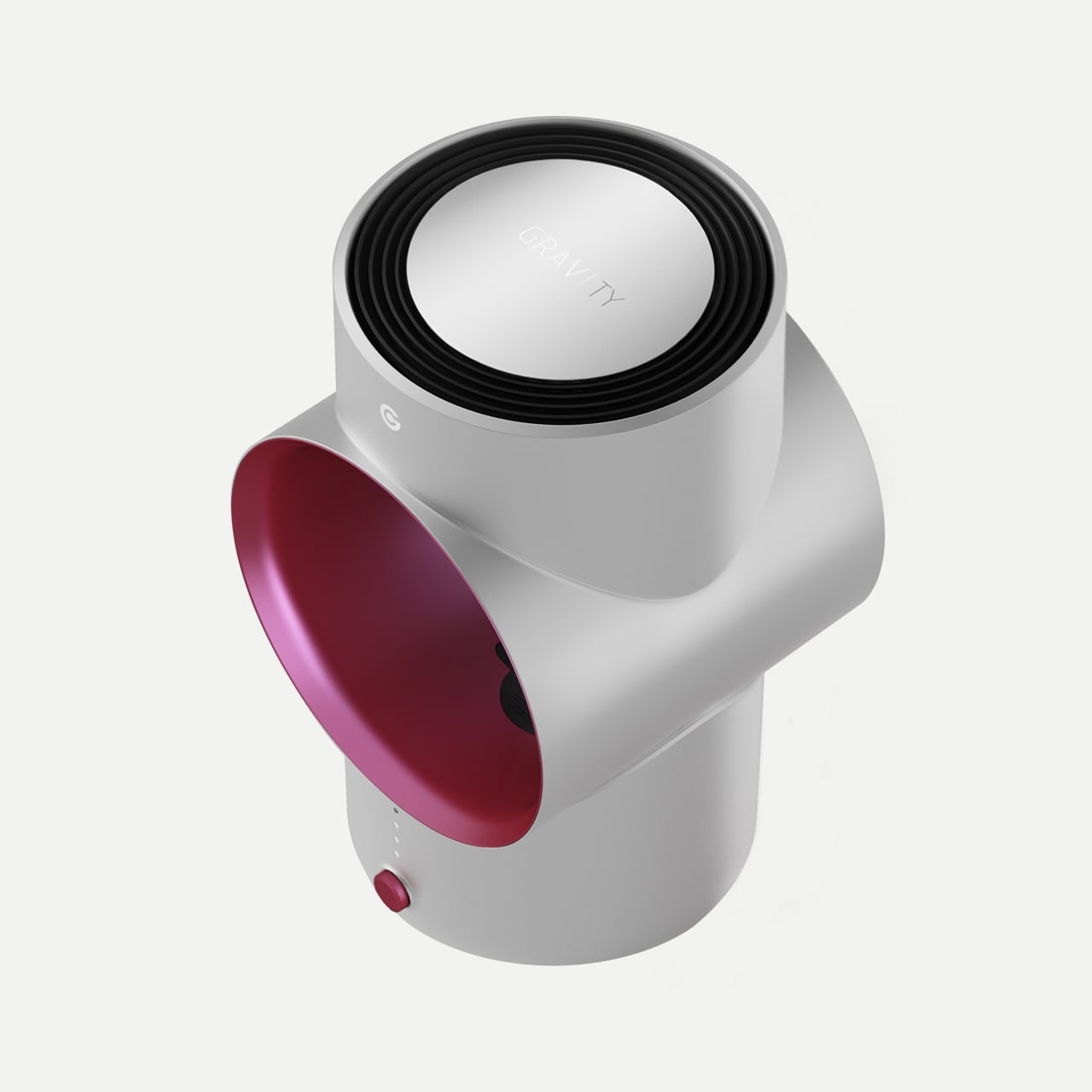
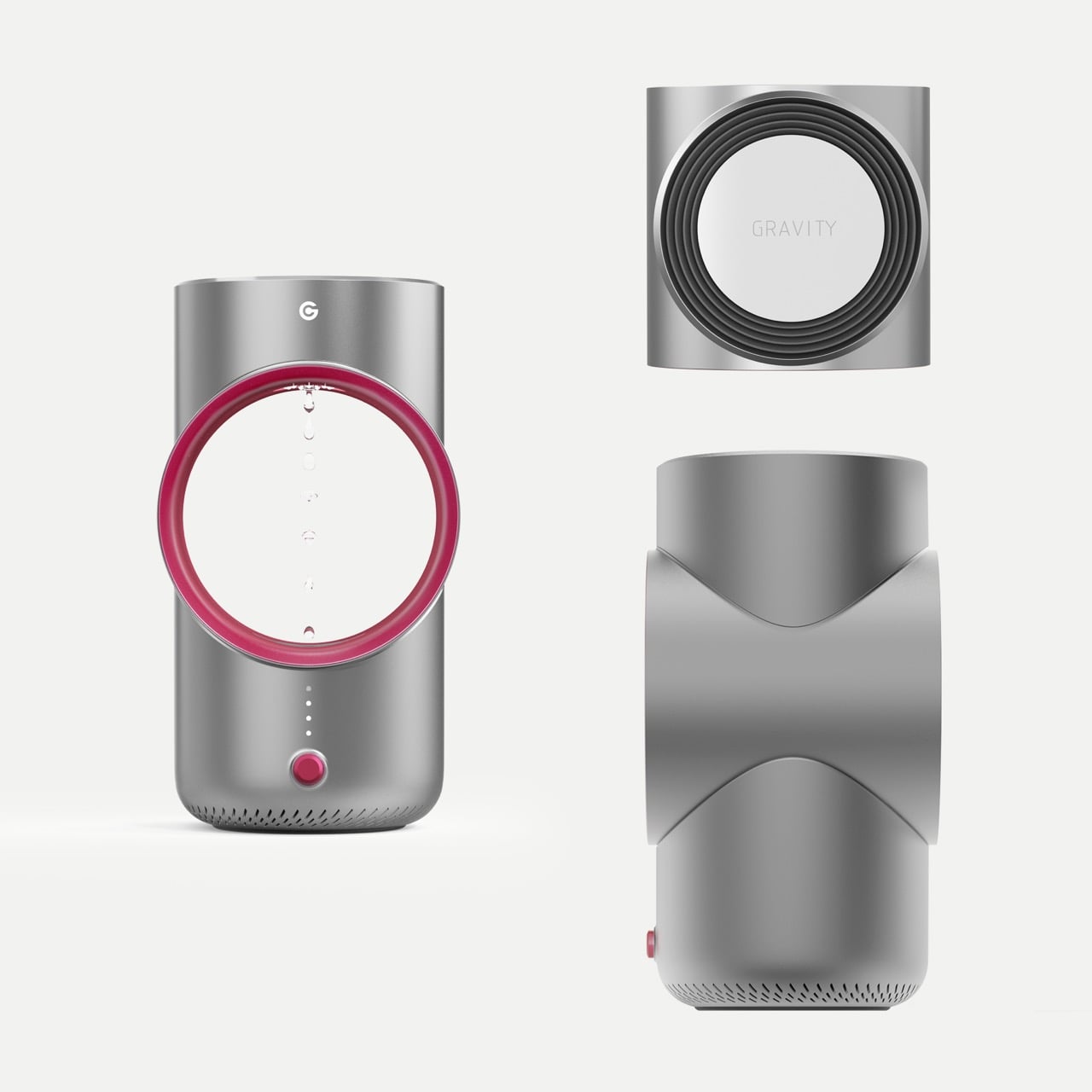
Remember that jaw-dropping scene in “Now You See Me 2” where rain seemingly reverses direction? The Serena Anti-Gravity Humidifier turns that cinematic spectacle into everyday home decor. The device actually uses visual persistence technology to create a convincing illusion of water droplets climbing upward, defying gravity with every pulse of its synchronized LED system.

Designer Kexin Su and the team at LuXun Academy of Fine Arts spent months perfecting the synchronization between water flow and light timing. The challenge was maintaining the illusion while delivering practical humidification for modern living spaces. Their solution borrows liberally from Dyson’s design vocabulary: a circular aperture, minimal controls, premium metallic finishes. But where Dyson multiplies air, Serena bends perception. The transparent colored ring frames the ascending droplets like a gallery piece, while the compact base houses the miniature pump and strobe system that make the whole spectacle possible.

Designer: Kexin Su

The tech here hinges on visual persistence, which is basically your brain holding onto an image for about 1/16th of a second after seeing it. LED strobes flash in sync with falling water droplets, catching each one in nearly the same position as the last. Your brain stitches these snapshots together and interprets the result as water flowing upward or hanging motionless in air. Think about how movie projectors work at 24 frames per second, except here the timing tolerance is even tighter. If the strobe drifts even slightly out of phase with the droplet release, the whole illusion falls apart and you’re just watching normal gravity do its thing. The miniature pump has to maintain ridiculously consistent droplet size and timing while the LED controller stays locked within millisecond precision.

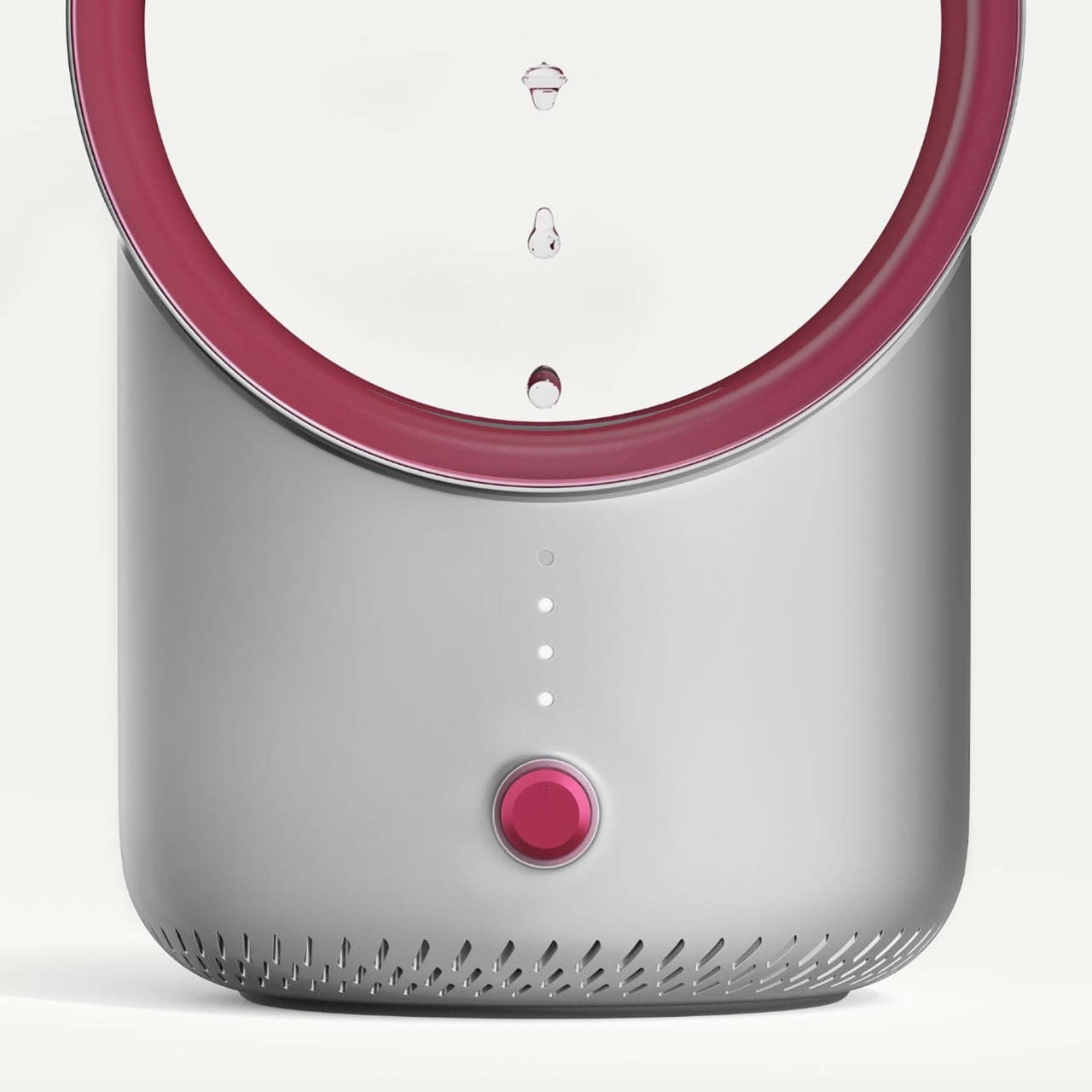
At 478mm tall and 260mm across, this thing commands attention. You’re not tucking it behind a bookshelf. The whole point is putting it somewhere visible where the illusion can do its work. You get burgundy or amber options for the transparent ring, and honestly, the color choice matters more than you’d think because it completely changes the mood when backlit. The control scheme strips down to a single button and four indicator dots, probably for different intensity modes or timing presets. Touch controls let you tweak both strobe speed and brightness, which means you can dial in how fast the water appears to climb or how subtle you want the effect. Slower intervals make for dreamier upward motion, while cranking the brightness turns it into more of a statement piece.

What might feel like an optical gimmick actually does something pretty remarkable – it makes the humidifier way more interesting. Most of us shove these things into corners or bedrooms where they can do their job without being seen. Serena flips that equation entirely. It wants to be your living room centerpiece, which takes real conviction in the concept. I’ve seen similar strobe effects at science museums and in art installations, but domesticating that technology into something you’d actually plug in at home represents a different kind of design challenge. The Dyson influence is unmistakable, from the bladeless aperture aesthetic to the premium metallic finish, but they’re applying that visual language to something genuinely novel rather than just iterating on existing fan technology… and the A’ Design Award given to this humidifier is just proof that it’s a clever idea with brilliant visual execution.

The post This Anti-Gravity Humidifier Makes Water Flow Upwards So It Isn’t ‘Another Boring Appliance’ first appeared on Yanko Design.

Nothing Phone 4 Delayed: How RAM Prices and ‘Meaningful Upgrades’ Pushed the Release to 2027

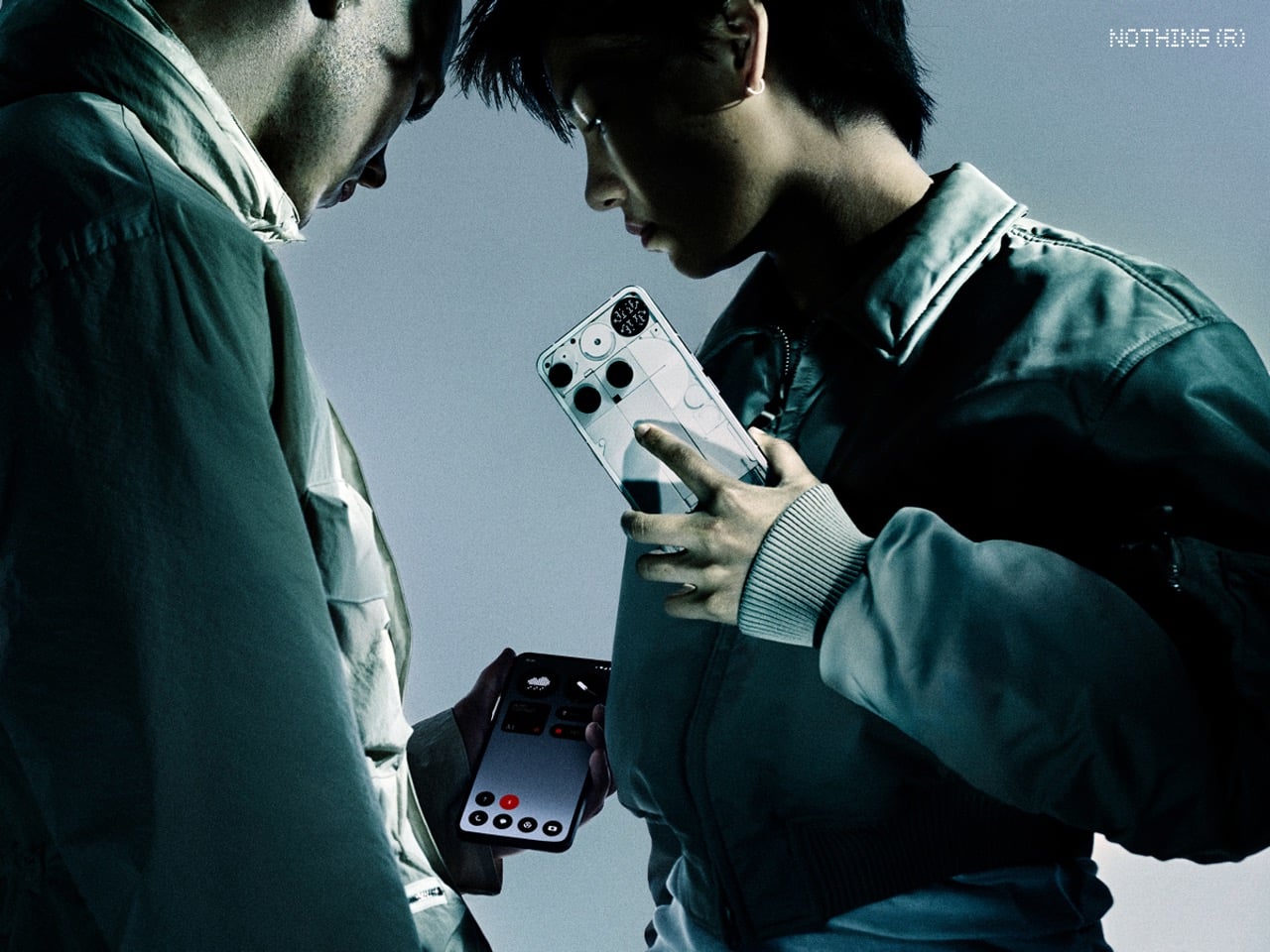
Nothing is skipping the Phone (4) entirely this year. Not delaying it, not soft-launching it later, just straight up not making one. The Phone (3) holds down the flagship spot through all of 2026, which Carl Pei spins as a refusal to follow industry conventions for their own sake. He’s got a point about meaningful upgrades mattering more than arbitrary annual cycles, but the timing feels less like strategic patience and more like acknowledging that last year’s flagship push didn’t quite land the way they hoped. The Phone (3)’s pricing crept higher than fans expected, and Nothing even experimented with discounts to move units.

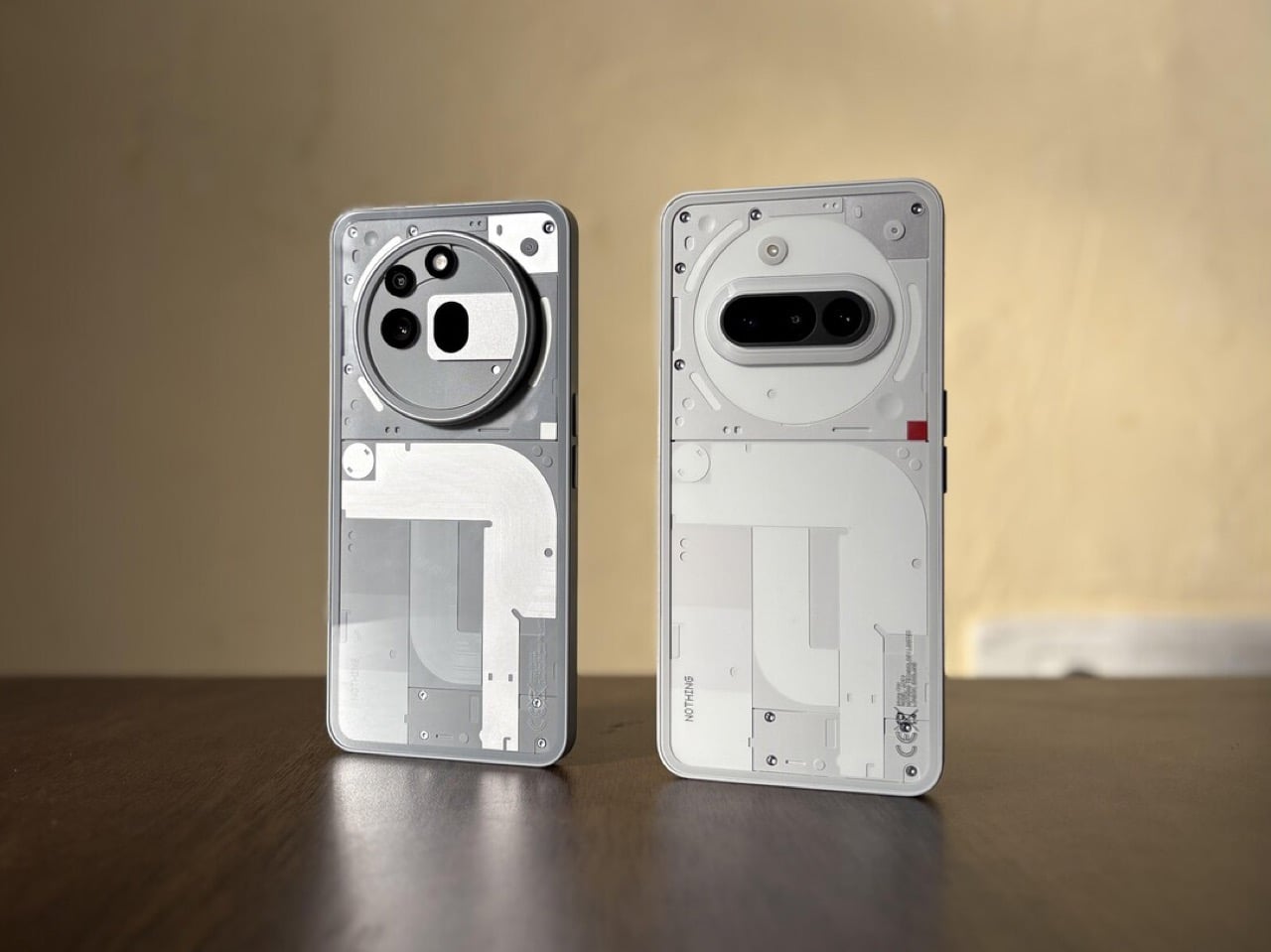
The Phone (4a) picks up the slack as Nothing’s solo 2026 release. Pei describes a “complete evolution” that pushes the A-series toward flagship experiences through premium materials, upgraded displays, enhanced cameras following the 3A Pro’s periscope success, and better overall performance. Design-wise, expect new colors and continued polish on Nothing’s transparent aesthetic, aiming to stay distinctive while appealing broader. But here’s where things get complicated: RAM prices have gone absolutely wild thanks to AI demand, forcing Nothing to raise prices across their smartphone portfolio. The (4a) was already their bestselling series partly because of competitive pricing. Now it needs to absorb component cost increases, justify premium positioning, and deliver enough differentiation to matter in a crowded mid-range field, all while being Nothing’s only new phone for the year. That’s a lot riding on one device.

Designer: Nothing

And I get it… The whole “we only upgrade when there’s something meaningful to say” pitch sounds refreshingly anti-corporate, but it’s also a somewhat tacit admission that the Phone (3) didn’t make the splash they hoped. They pushed pricing into the $600-700 range depending on region, which immediately put them against devices from brands with way deeper pockets and established reputations. Then they started running promotions to move inventory. That’s not the behavior of a company confidently sitting on a hit product. So yeah, taking 2026 off from flagship releases makes sense, even if the official messaging talks about meaningful innovation.

The 4A becomes the entire story by necessity. Pei promised a complete evolution across materials, display, camera, and performance, which sounds great until you remember the 3A series already delivered solid specs for the money. The 3A Pro brought a periscope camera to the mid-range, decent build quality, and respectable performance. Upgrading to UFS 3.1 storage is nice, but that’s table stakes at this point. Premium materials could mean anything from metal frames to glass backs, and new color experiments might freshen things up visually. But here’s the fundamental problem: all of this costs more to produce right when RAM prices are spiking hard enough that Pei called it unprecedented in his 20 years in the industry.

AI demand has component suppliers laughing all the way to the bank while phone makers scramble to absorb costs or pass them along. Nothing chose the latter. Price increases across the entire smartphone portfolio means the 4A’s value proposition takes a direct hit. The A-series worked because it offered flagship-adjacent experiences at mid-range prices. Now it’s offering mid-range experiences at mid-range-plus prices while the flagship sits idle for a year. You can see the squeeze happening in real time. Nothing needs the 4A to justify higher costs through tangible improvements, maintain enough distinctiveness to feel like a Nothing product, and somehow convince people it’s worth paying more for when every other mid-range phone is also getting more expensive.

The design question looms large here too. YouTube comments are already asking for glyph lights to return, which makes sense given that’s Nothing’s most recognizable feature. But adding glyph interfaces costs money, and if the A-series never had them before, suddenly including them now while also raising prices feels like asking for trouble. You either keep the transparent aesthetic without the lights and risk looking like any other glass-backed phone, or you add them and watch your margins evaporate. Neither option is great when you’re already dealing with component cost inflation and no flagship to absorb the premium features.

What Nothing built its reputation on was being the scrappy alternative that delivered distinctive design and solid performance without asking flagship money. The Phone 4A needs to thread an impossible needle: cost more but feel worth it, look different but stay affordable, deliver flagship experiences but remember it’s still mid-range. All while being the only new Nothing phone anyone can buy in 2026. That’s a tough spot for any device, let alone one from a company still finding its footing in a brutally competitive market.

The post Nothing Phone 4 Delayed: How RAM Prices and ‘Meaningful Upgrades’ Pushed the Release to 2027 first appeared on Yanko Design.
NASA used Claude to plot a route for its Perseverance rover on Mars

Since 2021, NASA's Perseverance rover has achieved a number of historic milestones, including sending back the first audio recordings from Mars. Now, nearly five years after landing on the Red Planet, it just achieved another feat. This past December, Perseverance successfully completed a route through a section of the Jezero crater plotted by Anthropic's Claude chatbot, marking the first time NASA has used a large language model to pilot the car-sized robot.    

Between December 8 and 10, Perseverance drove approximately 400 meters (about 437 yards) through a field of rocks on the Martian surface mapped out by Claude. As you might imagine, using an AI model to plot a course for Perseverance wasn't as simple as inputting a single prompt. 

As NASA explains, routing Perseverance is no easy task, even for a human. "Every rover drive needs to be carefully planned, lest the machine slide, tip, spin its wheels, or get beached," NASA said. "So ever since the rover landed, its human operators have painstakingly laid out waypoints — they call it a 'breadcrumb trail' — for it to follow, using a combination of images taken from space and the rover’s onboard cameras." 

To get Claude to complete the task, NASA had to first provide Claude Code, Anthropic's programming agent, with the "years" of contextual data from the rover before the model could begin writing a route for Perseverance. Claude then went about the mapping process methodically, stringing together waypoints from ten-meter segments it would later critique and iterate on.  

This being NASA we're talking about, engineers from the agency's Jet Propulsion Laboratory (JPL) made sure to double check the model's work before sending it to Perseverance. The JPL team ran Claude's waypoints through a simulation they use every day to confirm the accuracy of commands sent to the rover. In the end, NASA says it only had to make "minor changes" to Claude's route, with one tweak coming as a result of the fact the team had access to ground-level images Claude hadn't seen in its planning process.  

"The engineers estimate that using Claude in this way will cut the route-planning time in half, and make the journeys more consistent," NASA said. "Less time spent doing tedious manual planning — and less time spent training — allows the rover’s operators to fit in even more drives, collect even more scientific data, and do even more analysis. It means, in short, that we’ll learn much more about Mars."

While the productivity gains offered by AI are often overstated, in the case of NASA, any tool that could allow its scientists to be more efficient is sure to be welcome. Over the summer, the agency lost about 4,000 employees – accounting for about 20 percent of its workforce – due to Trump administration cuts. Going into 2026, the president had proposed gutting the agency's science budget by nearly half before Congress ultimately rejected that plan in early January. Still, even with its funding preserved just below 2025 levels, the agency has a tough road ahead. It's being asked to return to the Moon with less than half the workforce it had during the height of the Apollo program.     

For Anthropic, meanwhile, this is a major feat. You may recall last spring Claude couldn't even beat Pokémon Red. In less than a year, the company's models have gone from struggling to navigate a simple 8-bit Game Boy game to successfully plotting a course for a rover on a distant planet. NASA is excited about the possibility of future collaborations, saying "autonomous AI systems could help probes explore ever more distant parts of the solar system."

This article originally appeared on Engadget at https://www.engadget.com/ai/nasa-used-claude-to-plot-a-route-for-its-perseverance-rover-on-mars-203150701.html?src=rss

This $50 Smart Ring Has a Screen (And Works Like A Tiny Smartwatch)

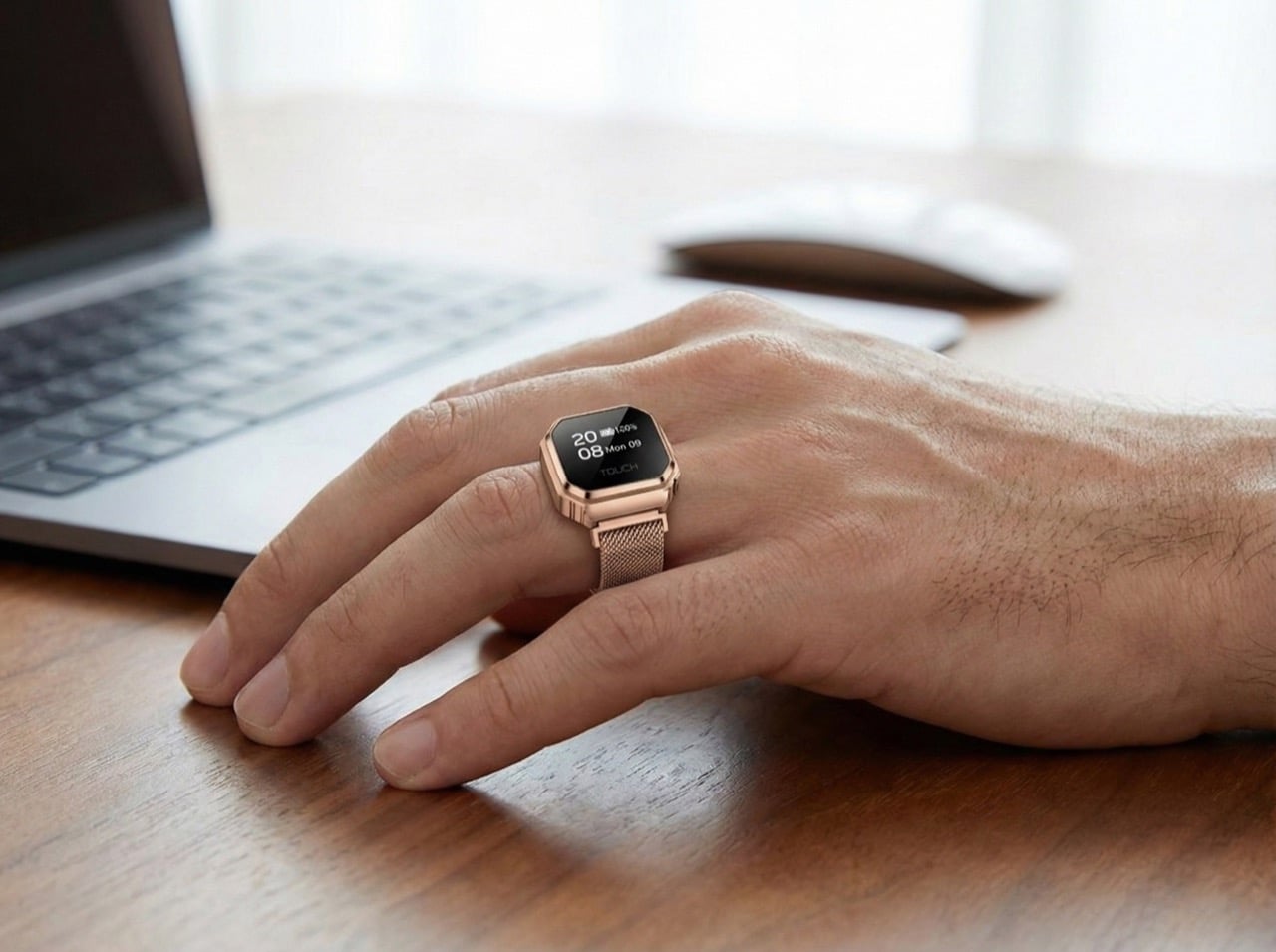
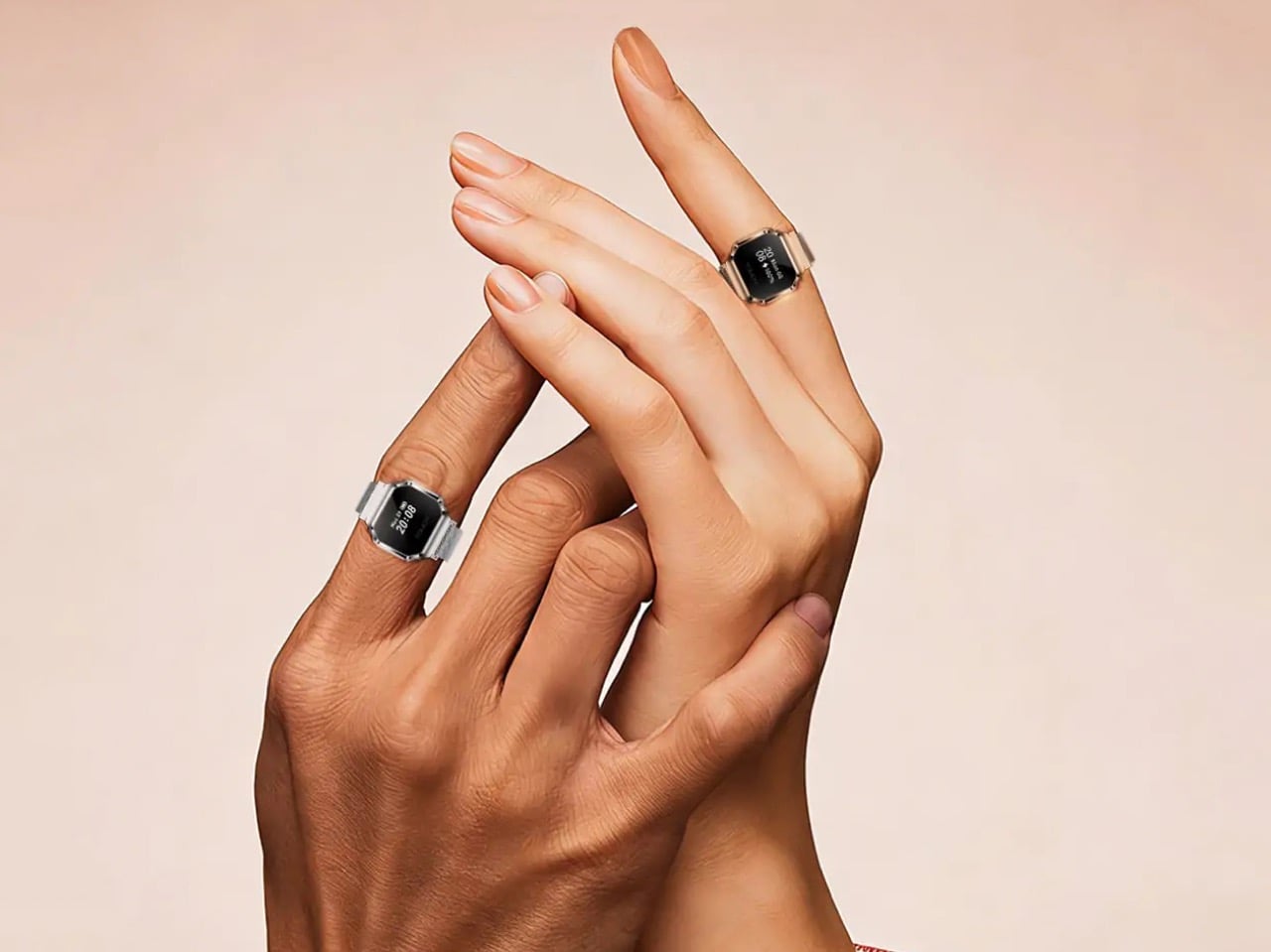
The smartwatch got smaller. Then the smart ring arrived. Now Rogbid has released something that splits the difference and costs less than a nice dinner: the Fusion, a hybrid device that looks like someone shrunk a fitness tracker and stuck it on a ring band. For fifty dollars, you get a legitimate OLED display, actual health sensors, and the ability to wear your technology on whichever body part feels right that day.

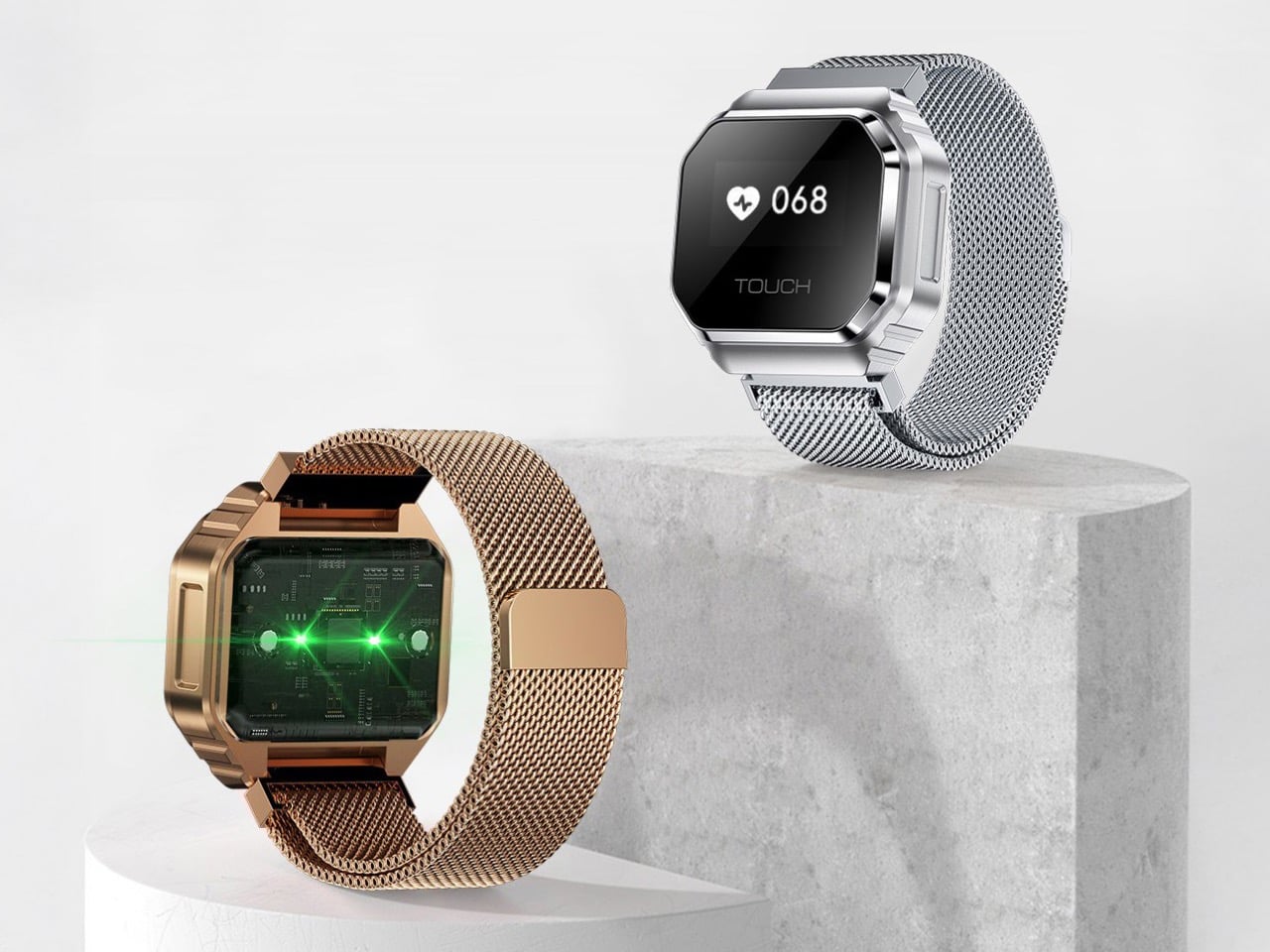
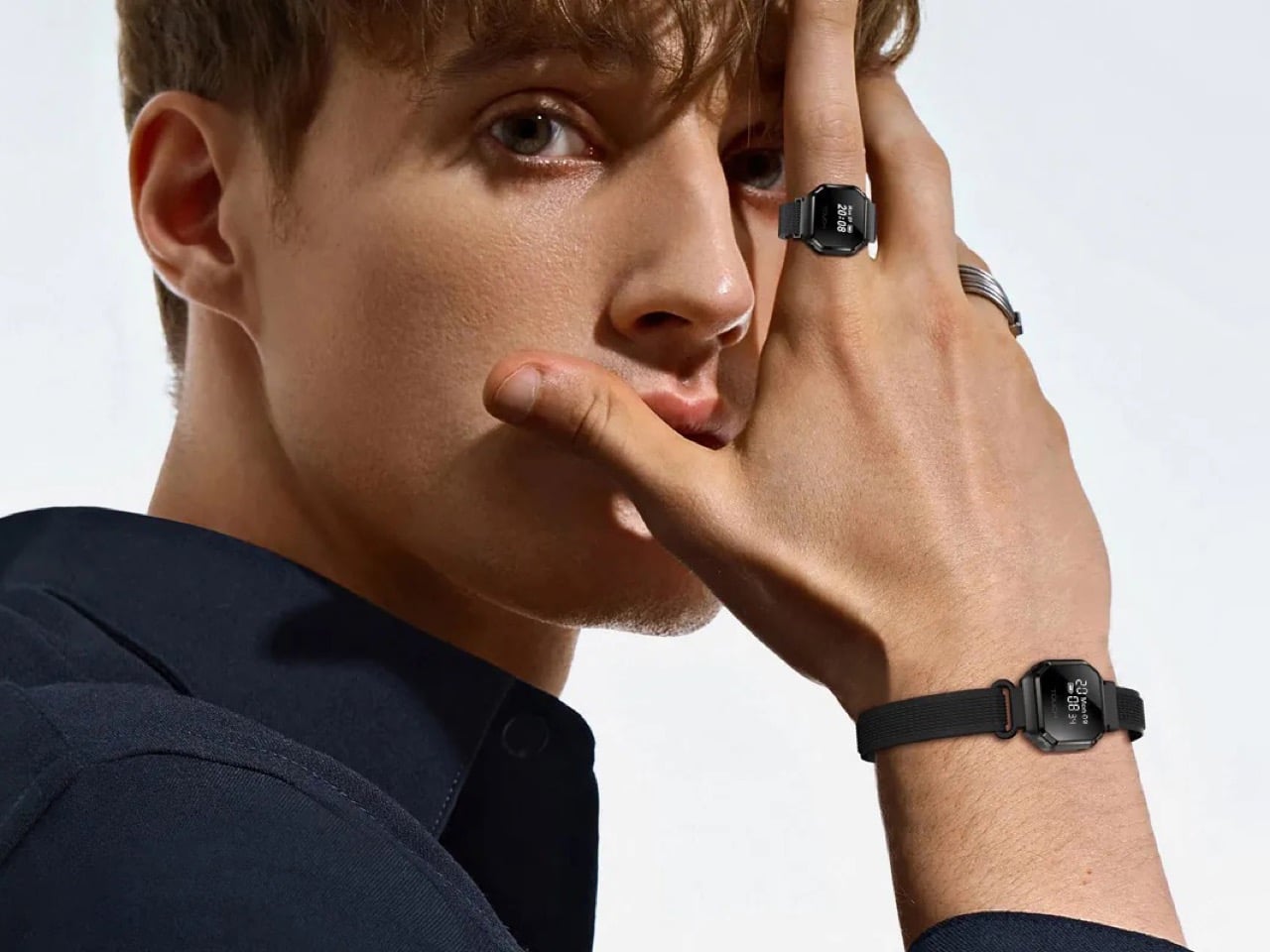
This is more than just miniaturization for the sake of novelty. The Fusion measures 20.6 x 21 x 8.2mm and weighs about as much as three quarters stacked together, yet it monitors heart rate, tracks sleep, measures blood oxygen levels, and survives underwater thanks to 5ATM water resistance. Rogbid includes both a finger-sized adjustable strap and a wrist band, turning the device into whatever you need depending on your outfit, activity, or tolerance for questions from strangers. Battery life hits five days with regular use, which means this tiny screen actually pulls its weight between charges.

Designer: Rogbid

You have to give Rogbid credit for seeing Casio’s G-Shock ring sell out and thinking, “we can do that, but with actual tech inside.” That Casio piece was pure nostalgia, a fun gimmick that proved a market existed for finger-watches. Rogbid’s move feels like the logical, if slightly unhinged, next step: taking the novelty and injecting actual utility.

We’re talking over 100 sports modes, which is a software problem I don’t even want to think about navigating on a half-inch screen. But the hardware is there: an optical heart rate sensor, blood oxygen monitoring, and all the usual motion tracking. They even added prayer time reminders and a “couple interaction mode” for sharing codes, which feels like they just kept adding features from a hat until they ran out of room. It’s the kind of feature creep that’s almost admirable in its audacity, especially when most competitors are still trying to get basic step counting right in the ring form factor.

This whole thing is a fascinating gamble on what people want from a smart ring. The entire appeal of the Oura and its competitors is their subtlety; they disappear into your daily life. The Fusion, however, plants a glowing OLED screen right on your knuckle and demands attention. It’s a complete rejection of the minimalist aesthetic that defined the category. Maybe that’s the point. For fifty bucks, Rogbid isn’t trying to compete with the thousand-dollar jewelry pieces. They’re creating an entirely new, wonderfully weird sub-category of wearable that’s too cheap and too interesting to ignore.

The post This $50 Smart Ring Has a Screen (And Works Like A Tiny Smartwatch) first appeared on Yanko Design.