DOJ and states appeal Google monopoly ruling to push for harsher penalties against the company

Google might have been officially ruled to have a monopoly, but we're still a long way from figuring out exactly what that determination will change at the tech company. Today, the US Department of Justice filed notice of a plan to cross-appeal the decision last fall that Google would not be required to sell off the its Chrome browser. The agency's Antitrust Division posted about the action on X. According to Bloomberg, a group of states is also joining the appeal filing. 

At the time of the 2025 ruling, the Justice Department had pushed for a Chrome sale to be part of the outcome. Judge Amit Mehta denied the request from the agency. "Plaintiffs overreached in seeking forced divesture of these key assets, which Google did not use to effect any illegal restraints," Mehta's decision stated. However, he did set other restrictions on Google's business activities, such as an end to exclusive deals for distributing some services and a requirement to share select search data with competitors.

Google has already filed its own appeal over this part of its ongoing antitrust battle. Of course, the tech giant is hoping to get off the hook with fewer penalties rather than the heavier ones the DOJ is seeking.

This article originally appeared on Engadget at https://www.engadget.com/big-tech/doj-and-states-appeal-google-monopoly-ruling-to-push-for-harsher-penalties-against-the-company-235115249.html?src=rss

When Furniture Meets High Fidelity: The Ruark R810 MiE

There’s something beautifully nostalgic about the radiogram. You know, those elegant wooden cabinets from the mid-century that housed radio, turntable, and speakers all in one piece of furniture that looked good enough to anchor your living room. Ruark Audio clearly remembers, and they’re marking their 40th anniversary by bringing that concept into 2026 with the R810 MiE (Made in England edition), a stunning collaboration with Storm Furniture that proves technology can be just as much art as function.

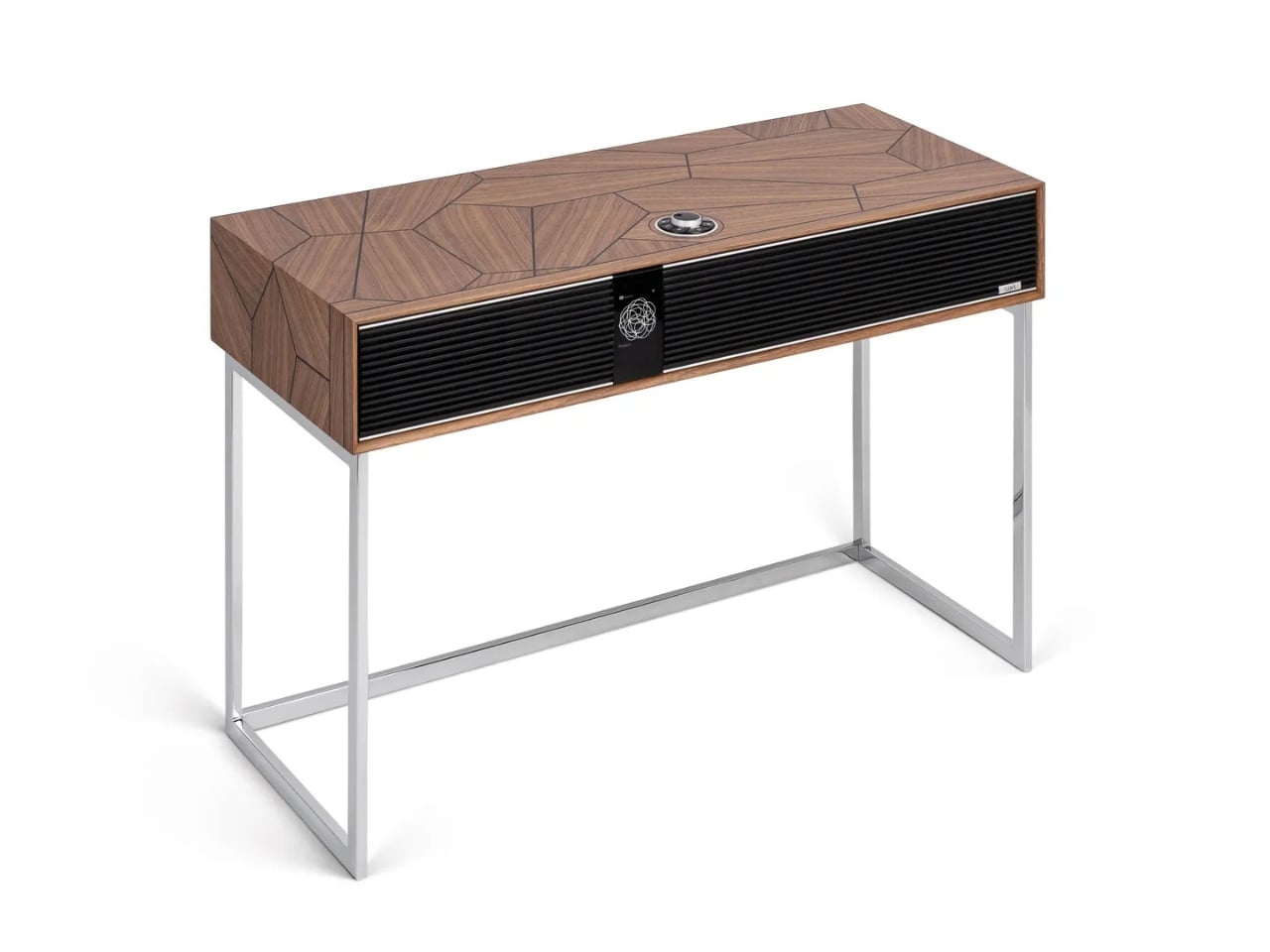
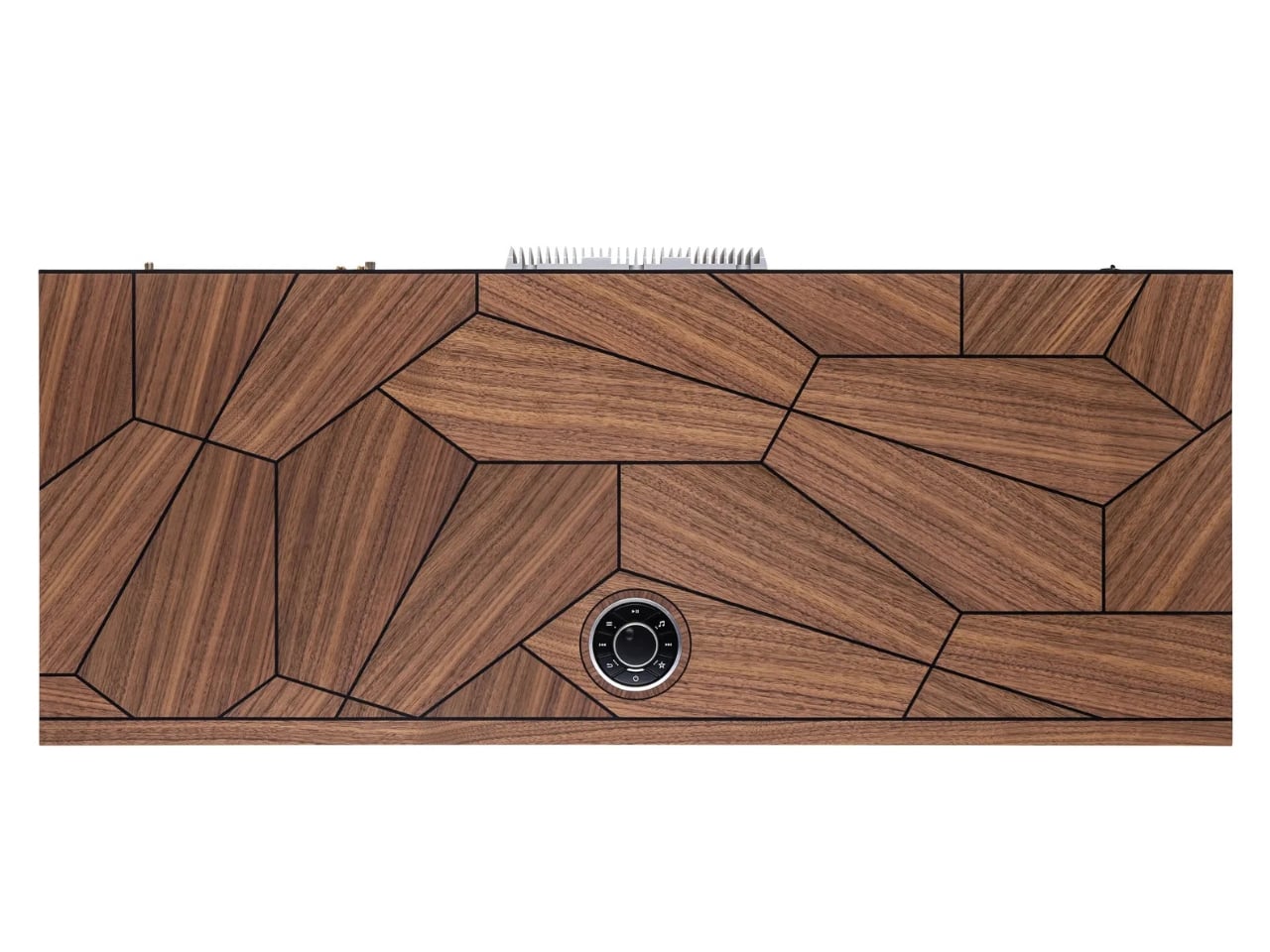
This isn’t just a speaker in a nice box. The R810 MiE is part of Ruark’s Made in England project, which focuses on limited production, hand-built products using traditional craftsmanship. Only 100 units will ever exist, split evenly between two exquisite finishes: Penta-Chord Walnut with ebony detailing and Leaf-Line Oak with sycamore accents. Each piece is truly unique, bearing patterns that resemble fingerprints, no two exactly alike.

Designers: Ruark Audio and Storm Furniture
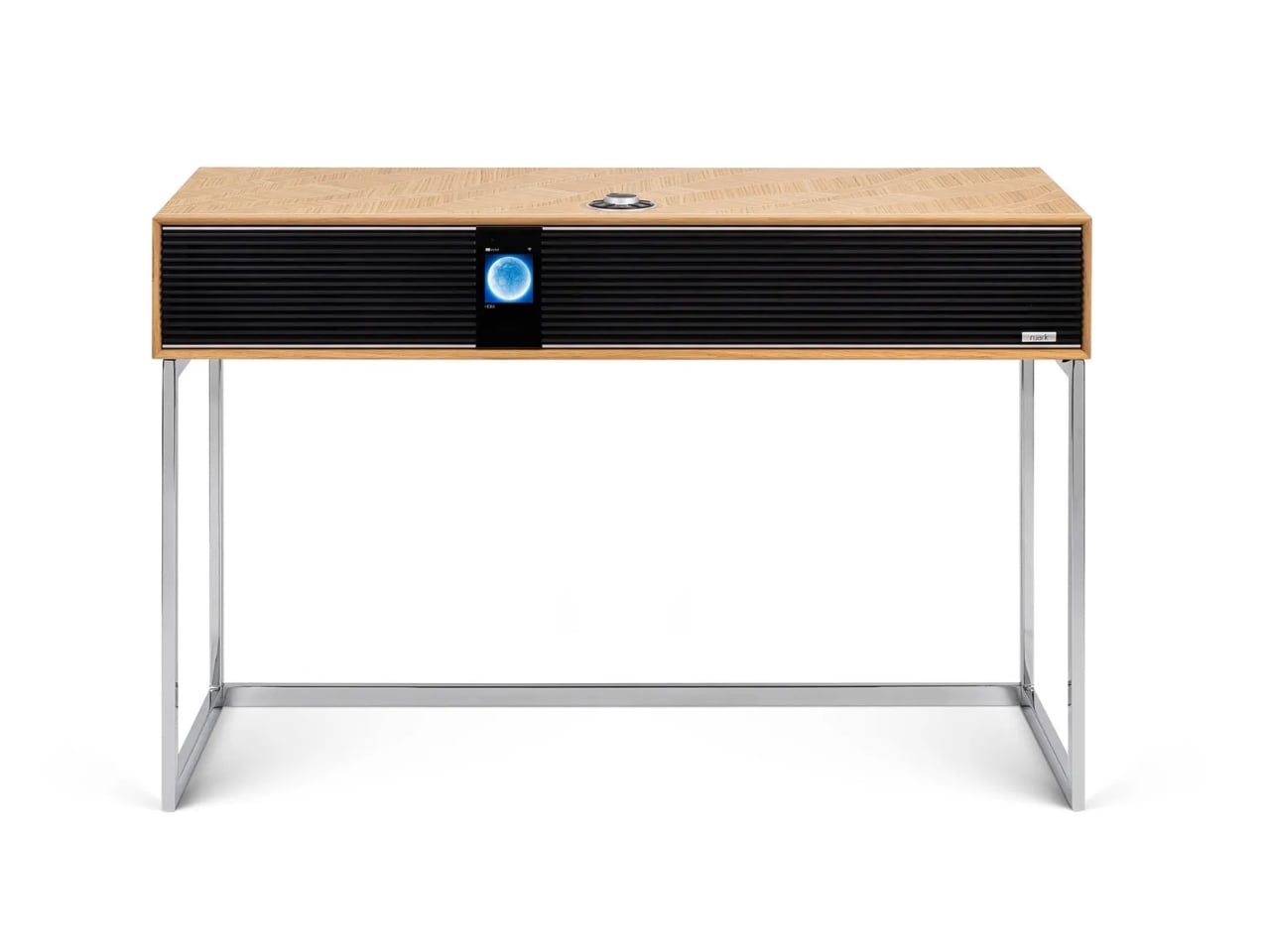
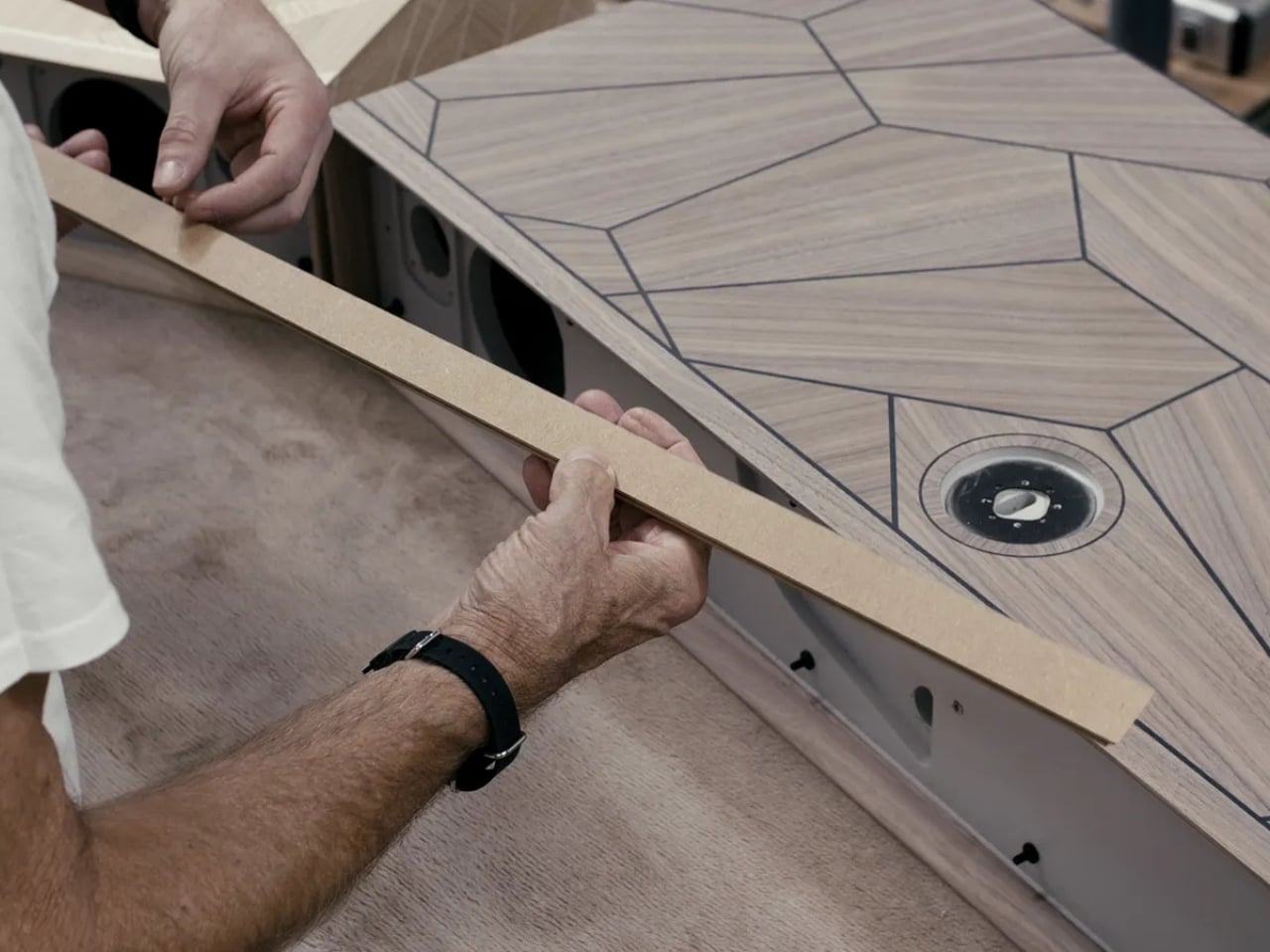
What makes these so special is the centuries-old art of marquetry that decorates the cabinet tops. If you’re not familiar, marquetry involves meticulously cutting selected veneers and arranging them into intricate patterns before bonding them to the cabinet. It demands precision and patience, the kind that only artisan makers possess. Storm Furniture, based in Norfolk and a proud member of the Guild of Master Craftsmen, hand-builds each cabinet and grille component before carefully transporting them to Ruark’s headquarters in Southend, where each R810 MiE is individually assembled, tested, and signed off.
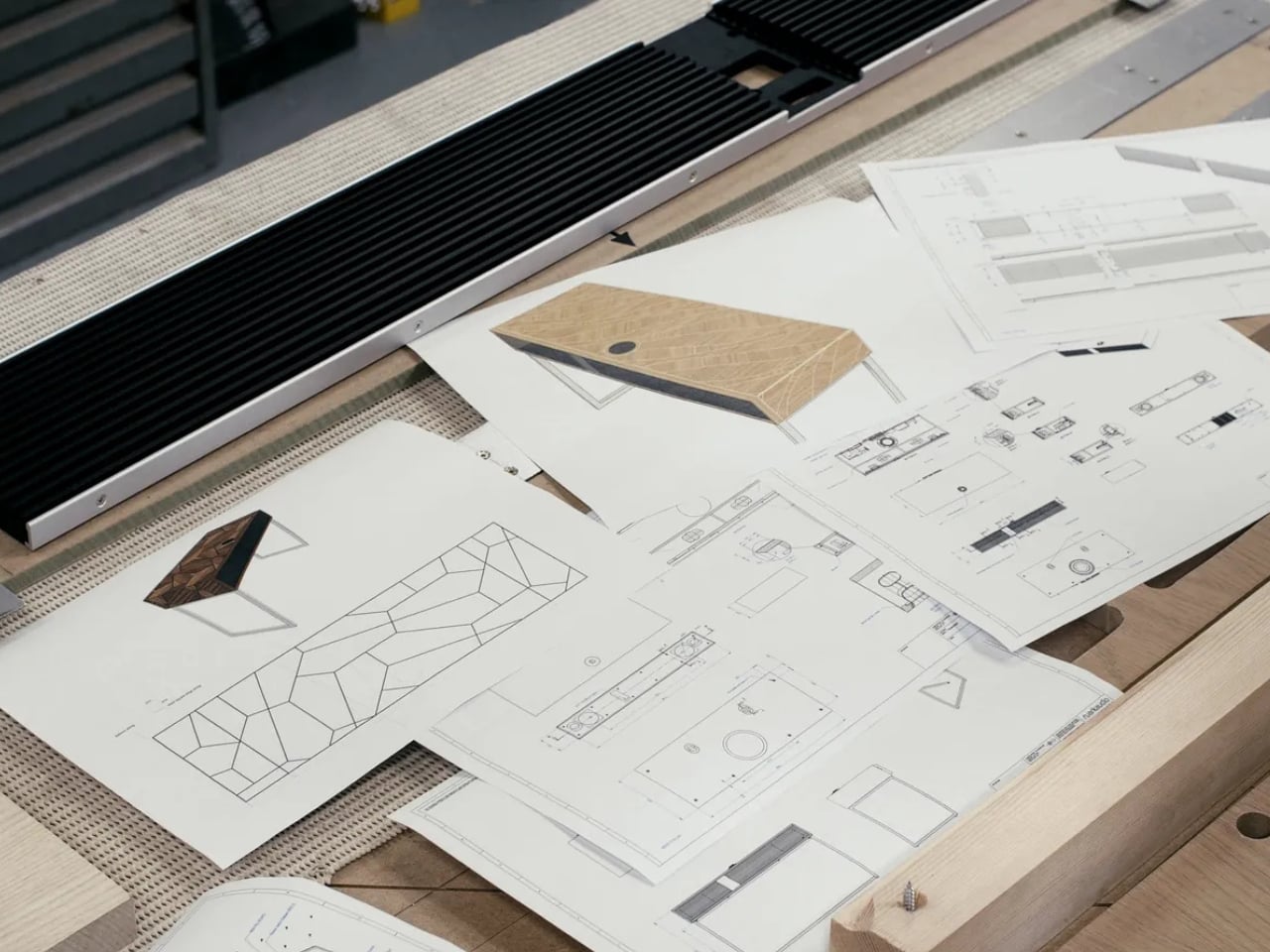
The patterns themselves are designed to reflect modern life while honoring traditional techniques. Multiple layers of lacquer are then applied to create that lustrous finish that makes you want to run your hand across the surface (though you’ll probably resist once you see the price tag). Combined with precision-formed trims and a polished chrome stand, the result radiates the kind of sophistication you’d expect from fine furniture.
But let’s talk about what this thing actually does, because looks alone don’t justify nearly $9,000. The R810 MiE packs the same technological prowess as its standard R810 sibling, which retails for around $5,000. You get a 4.1 speaker system powered by 180 watts of Class A/B amplification, with a frequency response that dips down to 30Hz. It supports hi-res music files up to 32-bit/192kHz, has built-in Spotify Connect, TIDAL Connect, and Qobuz Connect, works with Apple Music and BBC Sounds, and includes AirPlay and Google Cast.
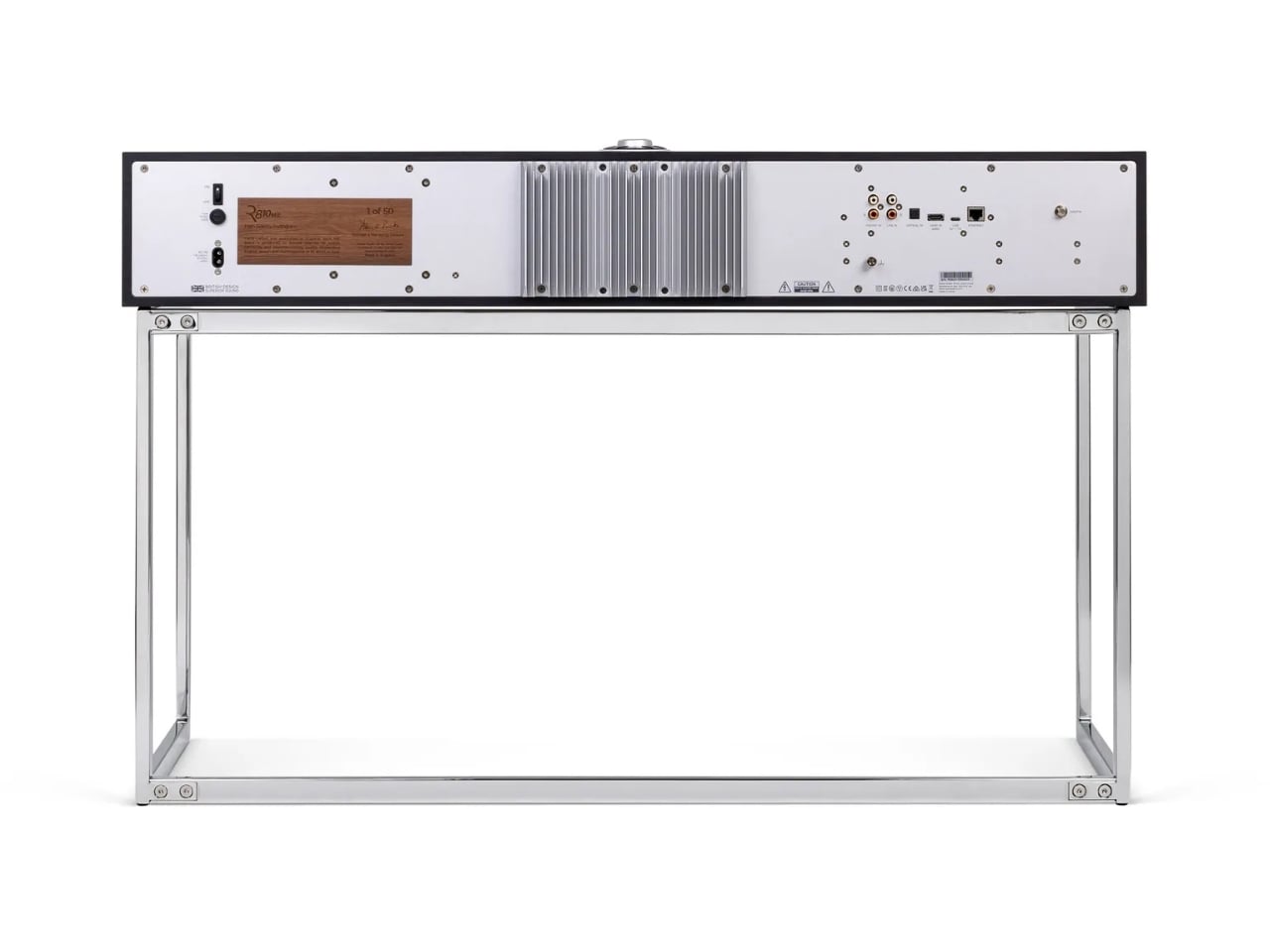
There’s also HDMI ARC/eARC connection for your TV, plus Internet, DAB, DAB+, and FM tuners because sometimes you just want to flip through actual radio stations. It’s essentially a complete home audio hub disguised as an heirloom-quality piece of furniture. Like the iconic radiograms it takes inspiration from, the R810 is designed to be seen, to be a focal point rather than something you hide in a cabinet or tuck into a corner.
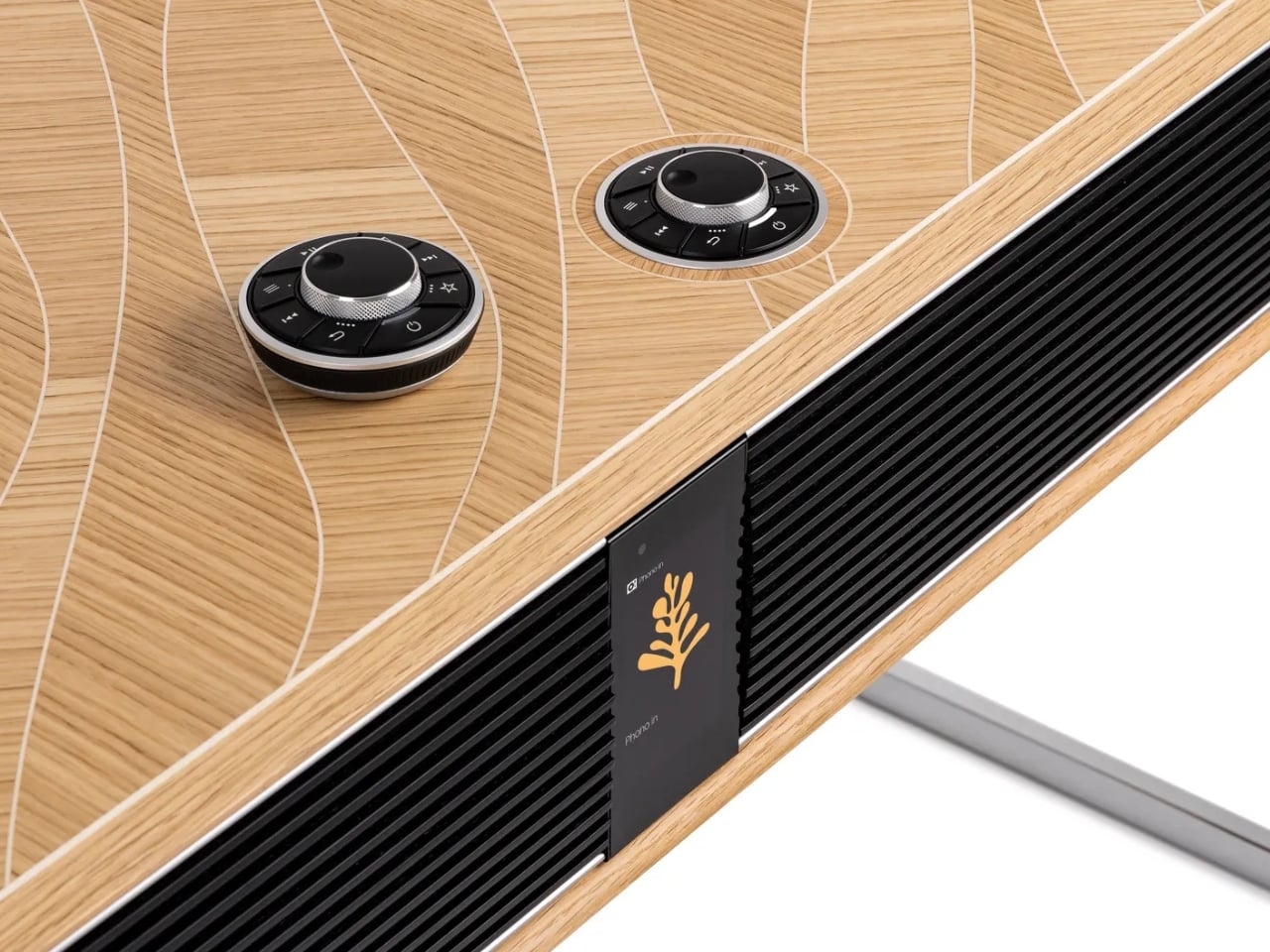
What strikes me most about this release is the timing. We’re living through an era where so much technology feels disposable, designed to be replaced in a few years when the next model drops. The R810 MiE pushes back against that entire philosophy. This is a piece you’re meant to keep, to pass down, to let age gracefully in your home. That marquetry top isn’t going out of style, and that hand-built cabinet isn’t falling apart after a couple of years.
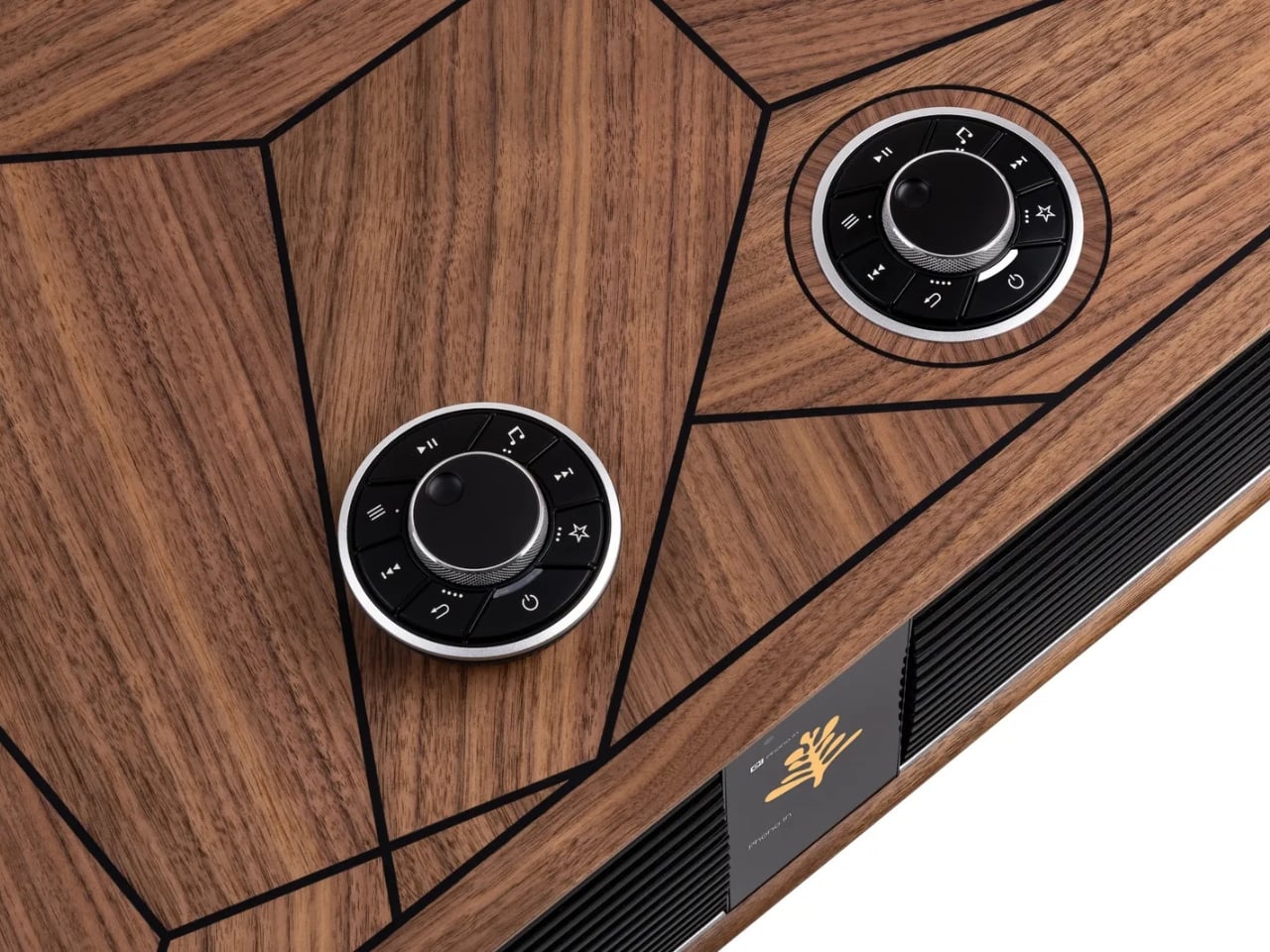
Each unit comes with an engraved plaque as proof of authenticity, which feels appropriate for something this exclusive. At £6,495 (roughly $8,955), it’s absolutely a luxury item. But when you consider that only 50 of each finish will ever be produced, and that each one is genuinely handcrafted using techniques that have been around for centuries, that price starts to make sense for collectors and audiophiles who want something genuinely special.
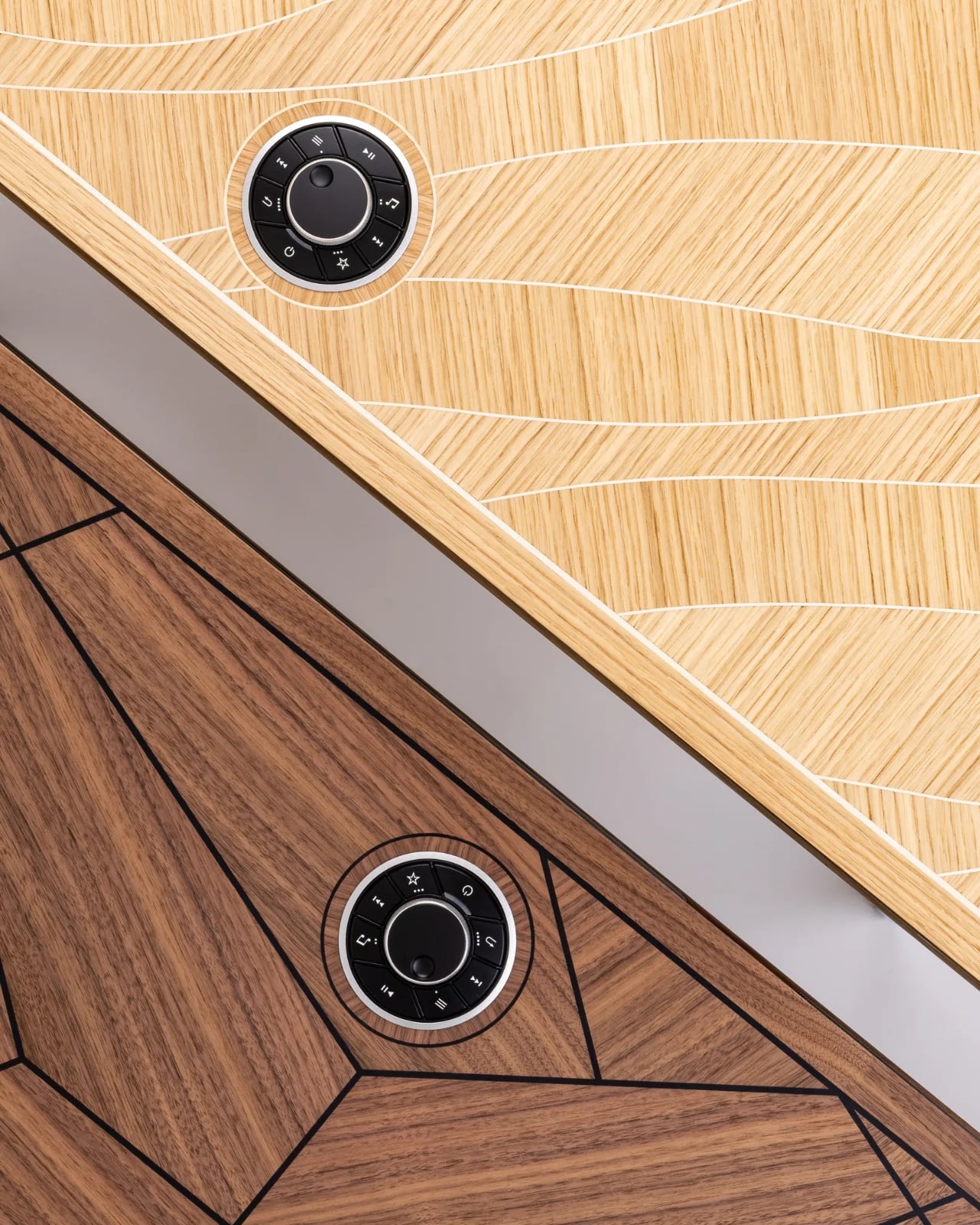
The R810 MiE represents what happens when a 40-year-old British audio company decides to celebrate not by churning out another limited colorway, but by going all-in on craftsmanship and exclusivity. It’s a statement piece that happens to deliver exceptional sound, or maybe it’s an exceptional sound system that happens to be a statement piece. Either way, it’s proof that furniture really can sound this good.
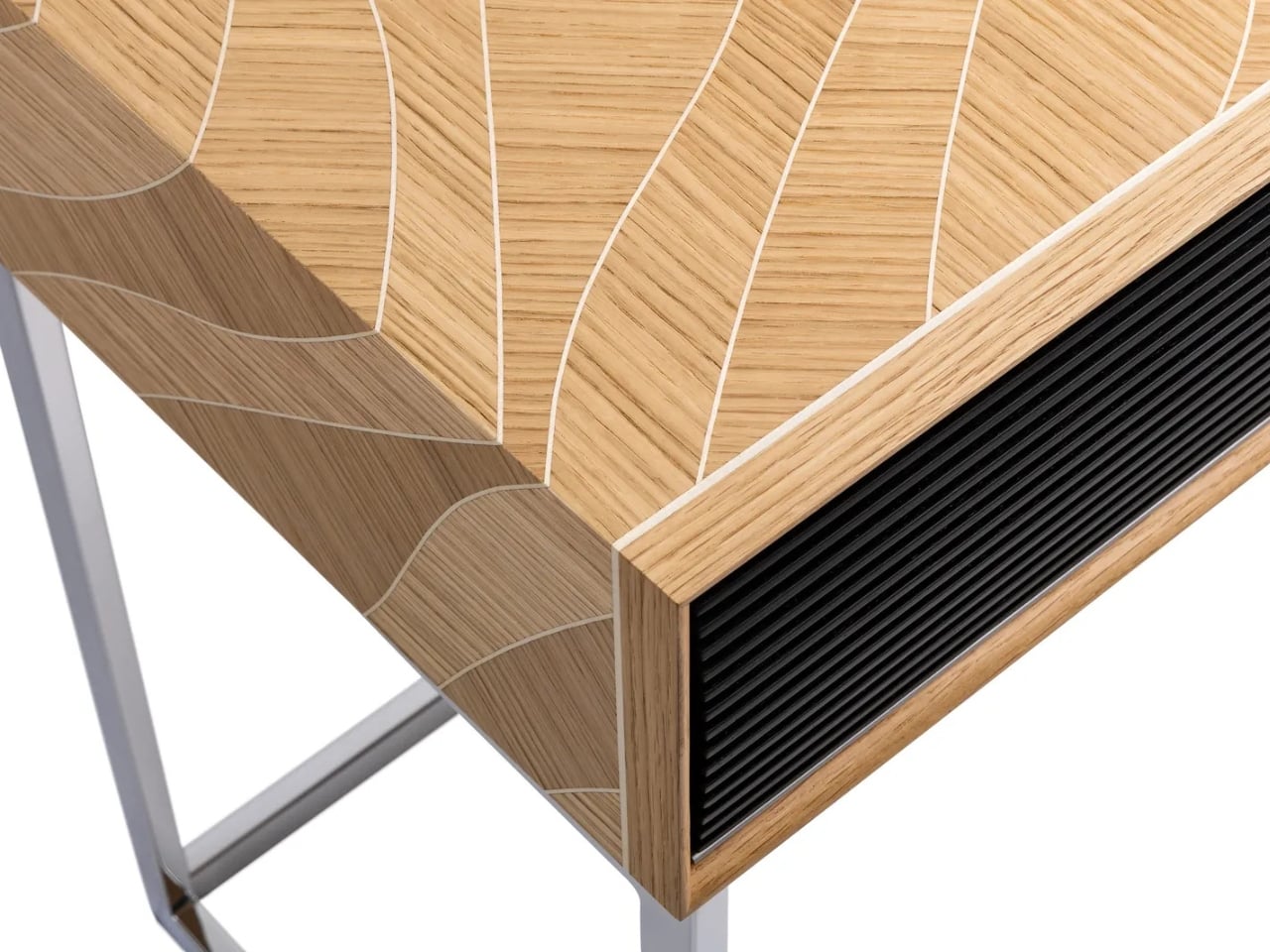
The post When Furniture Meets High Fidelity: The Ruark R810 MiE first appeared on Yanko Design.
This Dutch Barnhouse Breaks Every Suburban Design Rule on Purpose

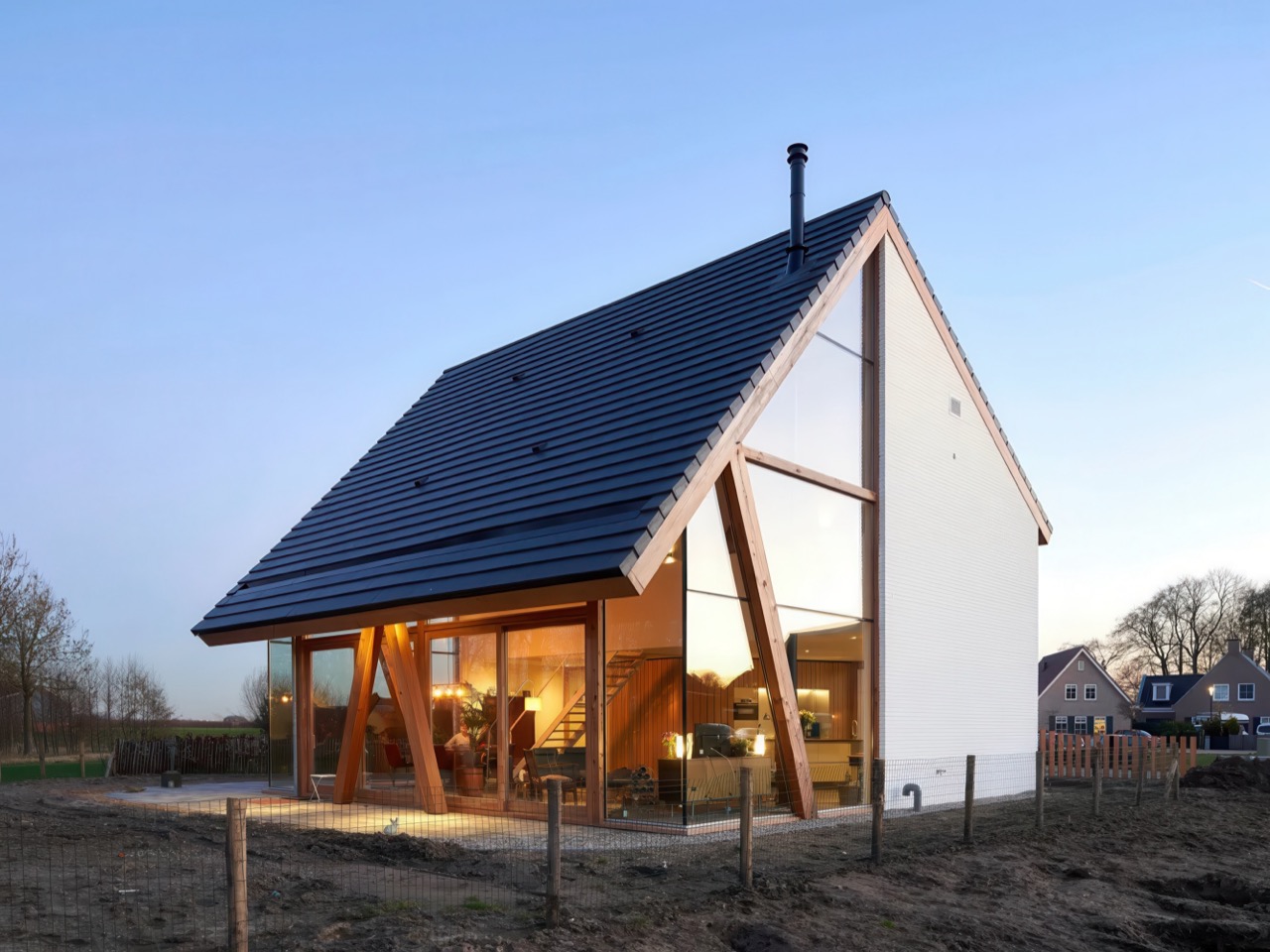
The Netherlands has mastered the art of the catalogue home, a residential model where architectural types are as standardized as automobile makes. Buyers browse familiar options, and the barnhouse, with its sweeping gable roof and prominent timber structure, consistently tops the list. It promises the romance of rural living packaged for suburban plots. But what happens when site conditions refuse to cooperate with this template?

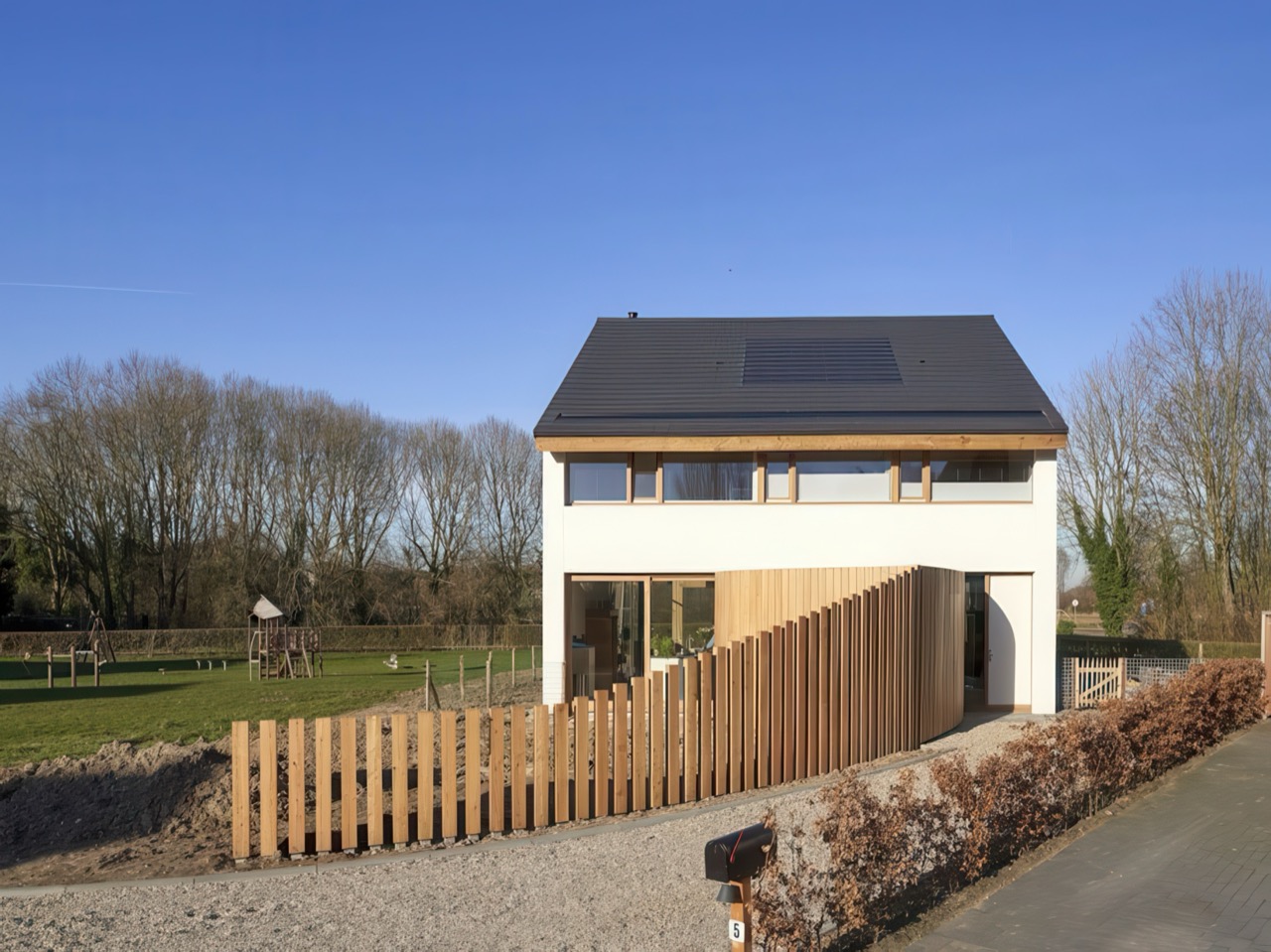
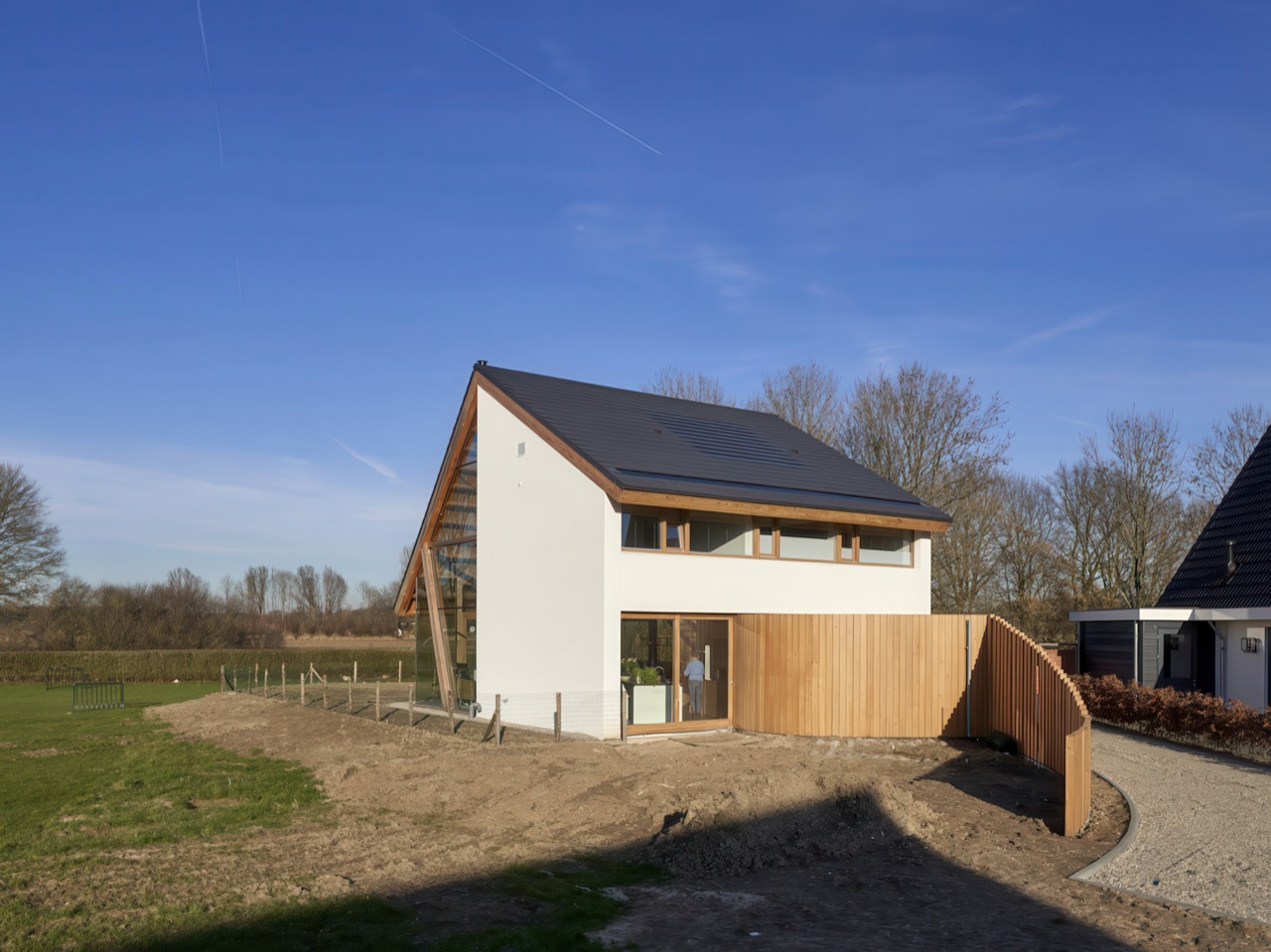
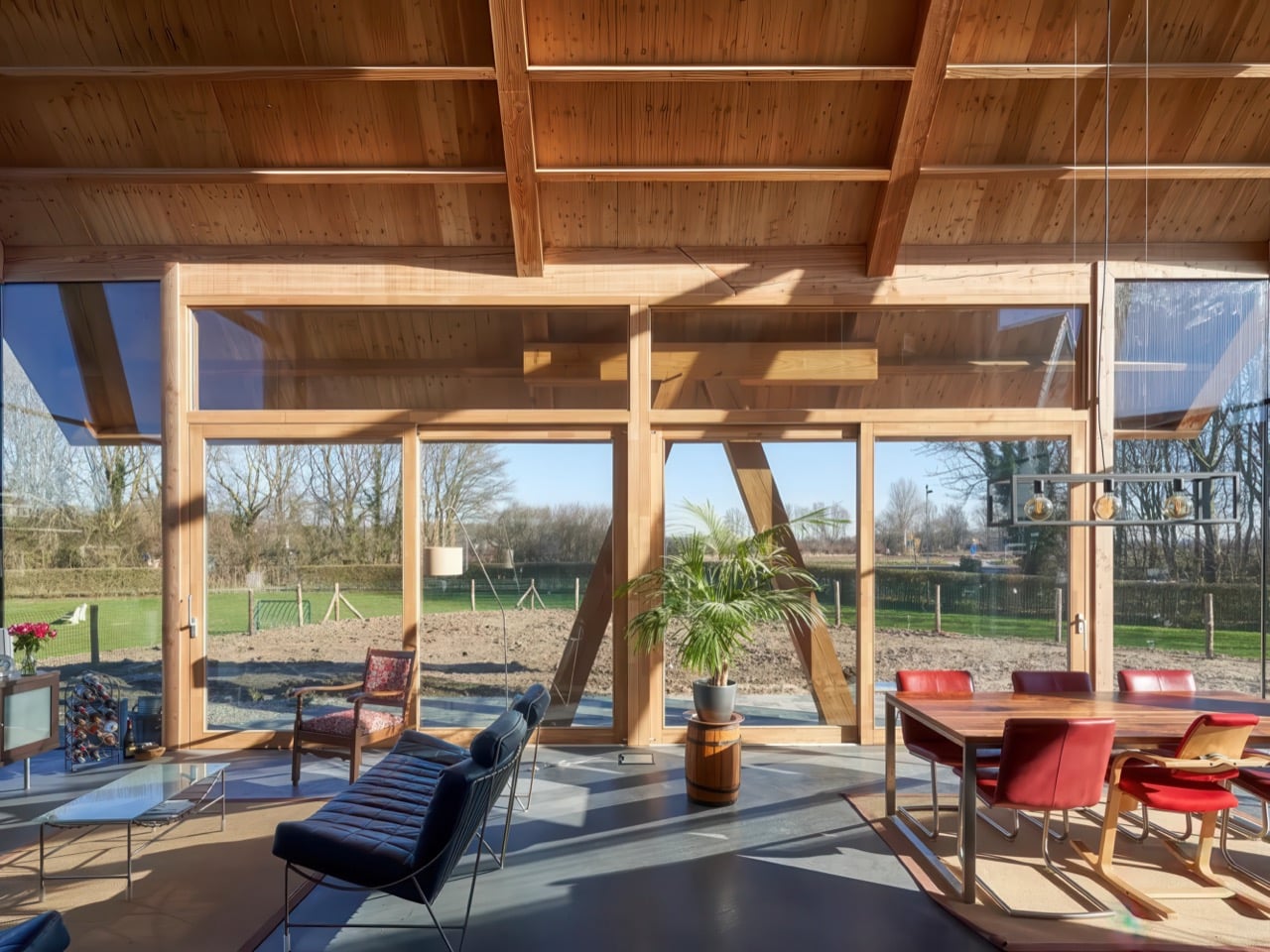
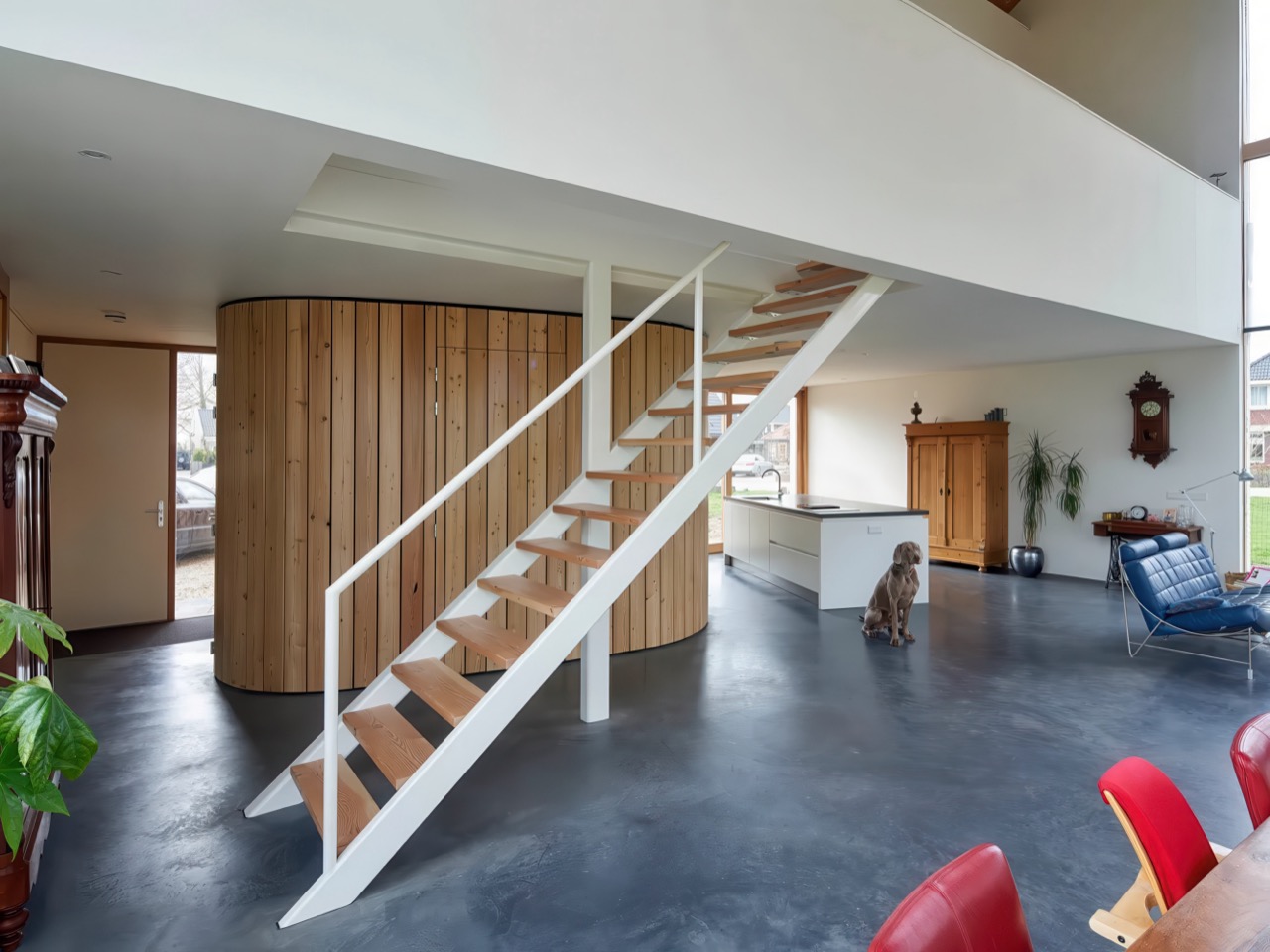
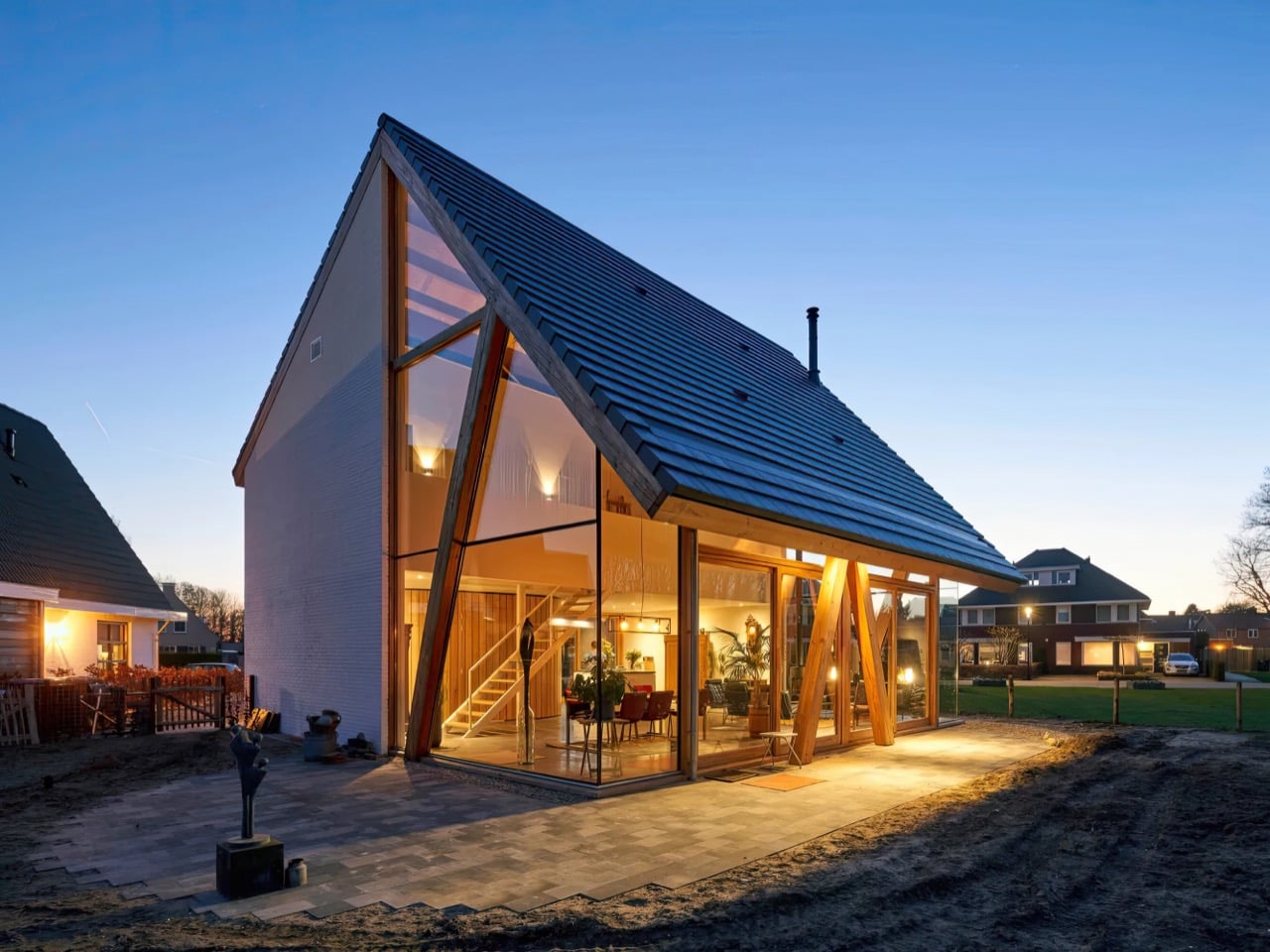
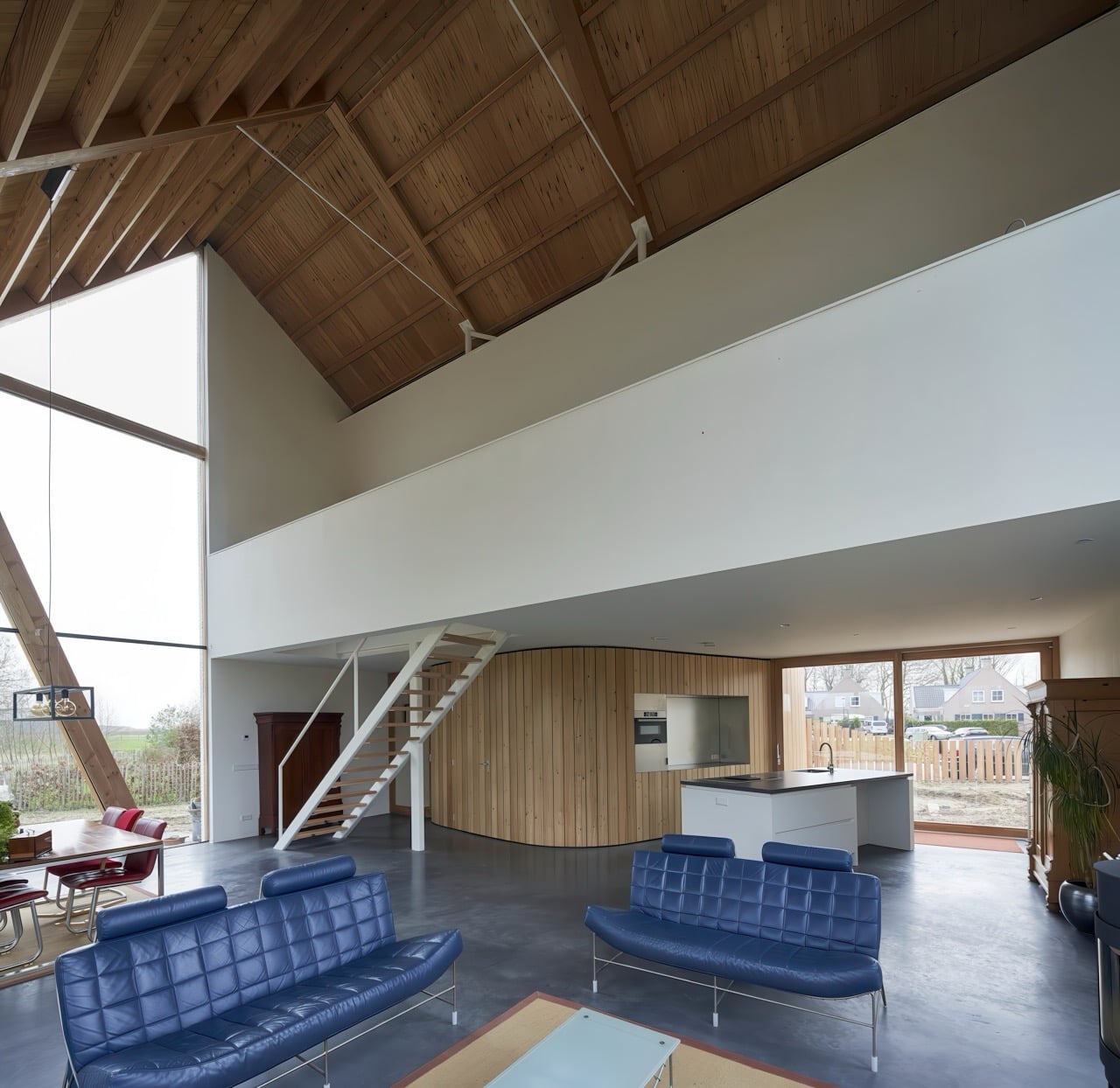
In Werkhoven, RV Architecture proved that starting with a recognizable type need not end with a predictable house. The architects faced a triangular plot that defied conventional positioning, so they embraced the irregularity. The barnhouse angles across its lot, turning its glazed facades toward an expansive backyard rather than the street. Inside, the soaring gable height floods the open plan with daylight, while three sculptural wooden columns support the roof and frame carefully composed views. A curved wall conceals service spaces and guides movement from entry to kitchen. Standard catalogue, custom execution.

Designers: Ruud Visser and Fumi Hoshino

Most architects would look at that triangular plot and either complain about constraints or try to force a rectangular box onto it anyway. Ruud Visser and Fumi Hoshino did the opposite. They rotated the entire house to prioritize the view, which sounds simple until you realize how rare that move actually is in suburban contexts. The front of most houses faces the street because that’s what we do. Convention masquerading as inevitability. This project says forget the street, the good stuff is in the back, and commits fully to that logic with floor-to-ceiling glazing on three sides.

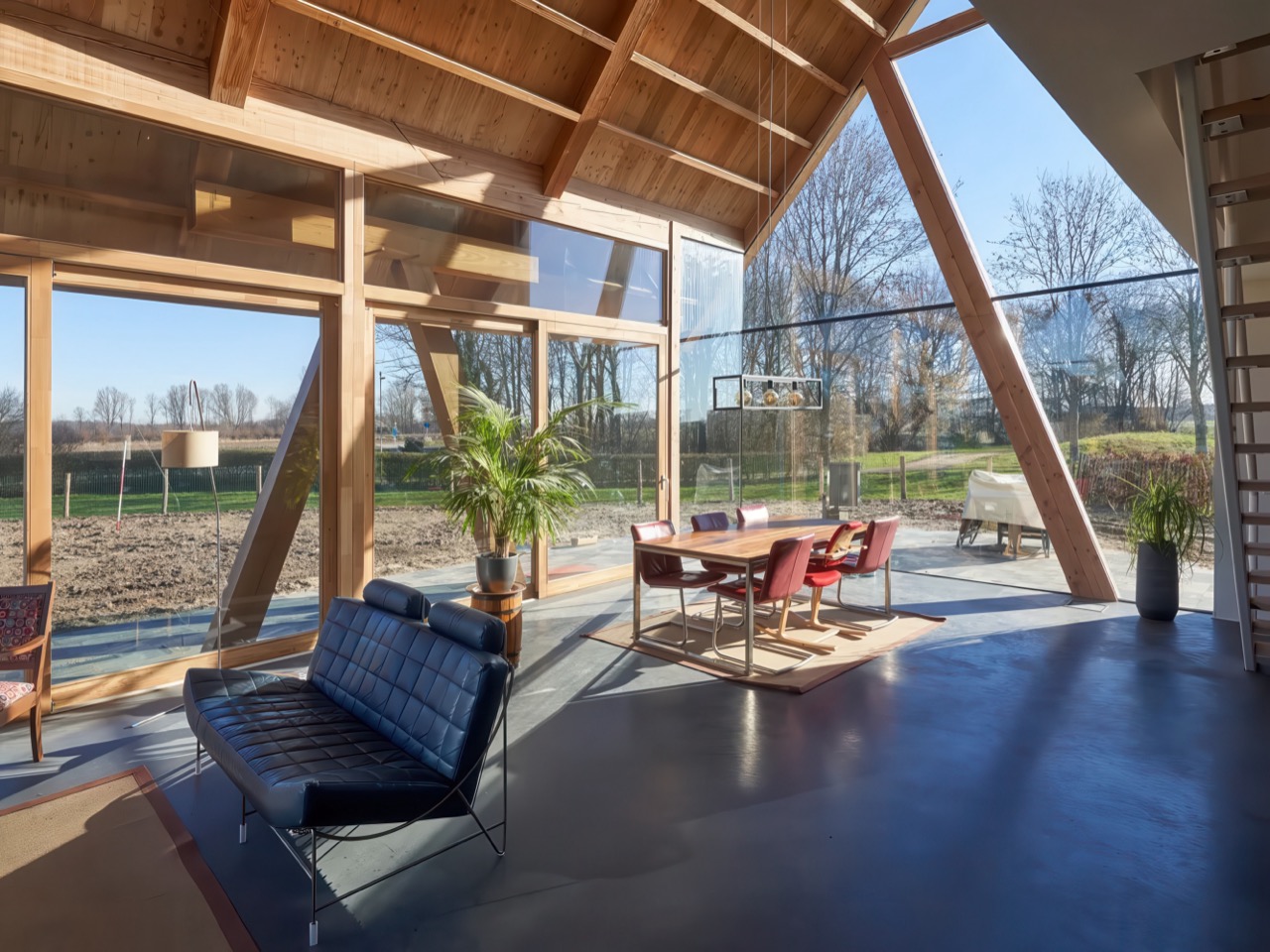
Four primary wooden beams sit on top of the side walls and the internal walls between bedrooms. Smaller purlins span between these beams to stiffen the roof plane. Standard timber frame logic so far. Then in the open living area, where you can’t have walls interrupting the space, three angled wooden columns rise up to support the roof structure. These aren’t decorative. They’re load-bearing elements positioned specifically to frame views while maintaining structural integrity. The angle aligns with the roof pitch and creates a visual rhythm that reinforces the gable geometry. You can see exactly how the building stands up, which is increasingly rare in residential work where structure usually hides behind drywall.

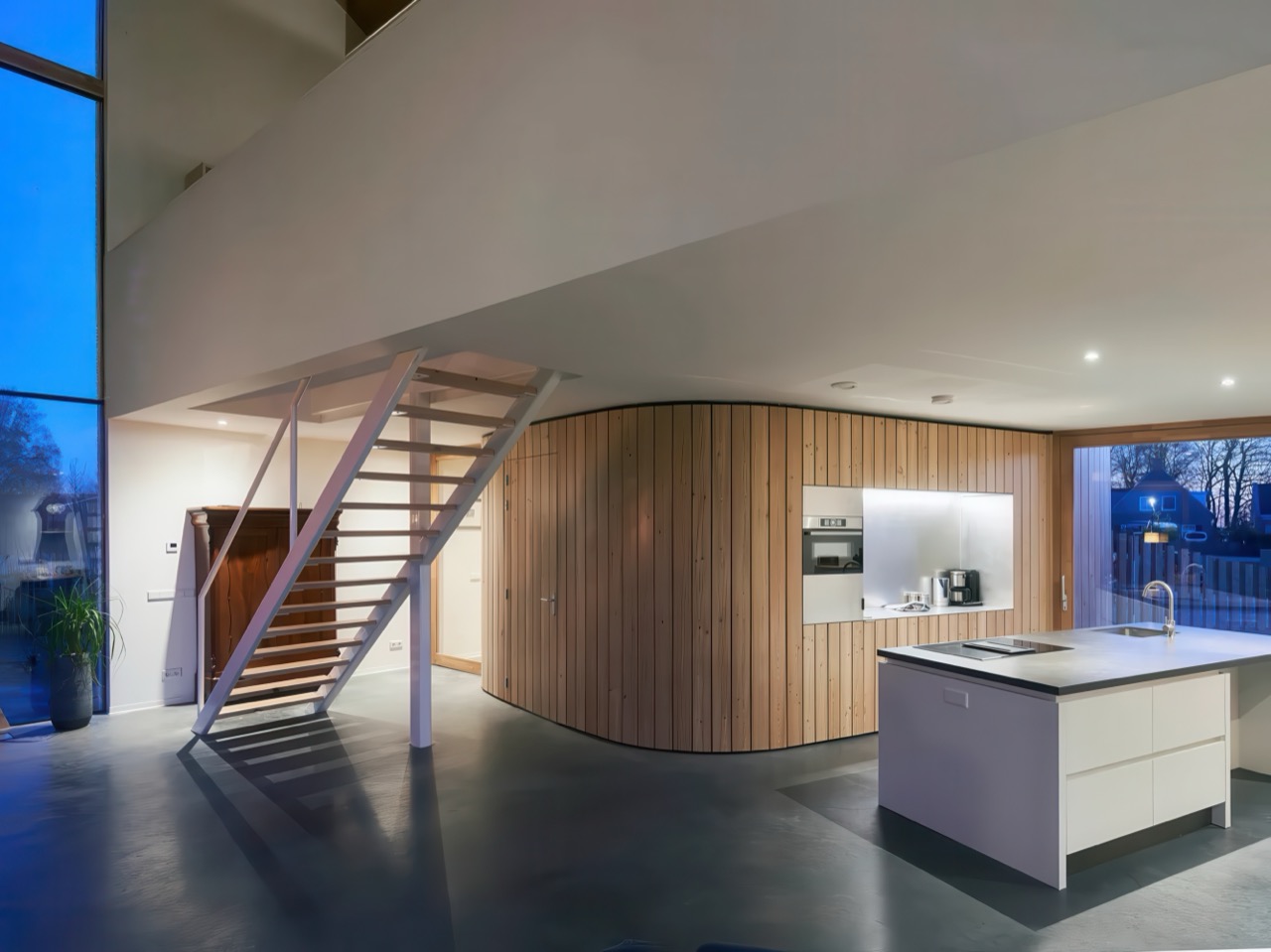
That curved wooden wall running from entrance to kitchen conceals the laundry room, toilet, cloakroom, and storage. All the unglamorous necessities that usually get shoved into awkward corners or announced with clunky door frames. Instead, this single sculptural gesture handles circulation and service spaces while adding warmth to what could otherwise read as a cold modernist box. Vertical wood cladding wrapping around itself, creating both physical separation and spatial continuity. You move through the house following this element, which is exactly what good circulation design should do without announcing itself. It’s the kind of detail that separates competent projects from memorable ones.

Dark roof tiles, white horizontal wood siding, natural timber for structural elements, polished concrete floors, and glass. That’s essentially the entire material vocabulary. This kind of limitation forces clarity because every element has to justify its presence. There’s nowhere to hide behind decorative excess. The concrete floors make practical sense for Dutch climate conditions too. Thermal mass for passive heating, durability for high-traffic areas, and a neutral base that lets the wood structure read clearly against it. Material choices that work on multiple levels simultaneously, which is always a sign that someone actually thought through the consequences of their decisions.

Catalogue barnhouses typically give you a recognizable formal language that buyers and builders understand, which has real value when you’re trying to get something built and financed. Visser and Hoshino used that familiarity as permission to experiment with everything else: siting, structure, circulation, materiality. The result reads as both familiar and unexpected, which is a difficult balance to strike. You recognize it as a barnhouse immediately, but the spatial experience inside bears little resemblance to the typical catalogue version with its subdivided rooms and predictable layouts. Standardized building types can serve as starting points rather than endpoints, and this project proves it without being precious about the concept.

The post This Dutch Barnhouse Breaks Every Suburban Design Rule on Purpose first appeared on Yanko Design.
Take-Two hit pause on the Switch 2 port of Borderlands 4

2K owner Take-Two has paused development on Borderlands 4 for the Nintendo Switch 2, the company shared during its Q3 2026 earnings presentation. The Switch 2 port was originally planned to be released on October 3, 2025, a few weeks after the game's September 12 launch on all other platforms, but was indefinitely delayed on September 23.

"We made the difficult decision to pause development on that SKU," Take-Two told Variety. "Our focus continues to be delivering quality post-launch content for players on the ongoing improvements to optimize the game. We’re continuing to collaborate closely with our friends at Nintendo. We have PGA Tour 2K25 coming out and WWE 2K26, and we're incredibly excited about bringing more of our titles to that platform in the future."

When the Borderlands 4 Switch 2 port was originally delayed, the game's developer Gearbox shared that the port needed "additional development and polish time" and that it hoped to "better align this release with the addition of cross saves." In Take-Two's Q2 earnings presentation on November 6, 2025, the Switch 2 port was still listed as having a "TBA" release date. The lack of mention in the company's Q3 presentation and Take-Two's comment to Variety pretty much confirm that if a Switch 2 version happens, it won't be anytime soon. The official Borderlands 4 post-release content roadmap currently lists plans for paid and free story DLC and raid bosses, but nothing related to additional ports of the game.

Grand Theft Auto VI's planned November 19 release date is still on the books, however. Rockstar Games' next blockbuster title was originally supposed to be released in fall 2025, before it was delayed to May 2026 last May. The game was delayed a second and final time — at least for now — in November 2025, to its current November 2026 release date.

There's still room for another delay, but in the earnings statement Take-Two projected confidence, sharing that Rockstar would start marketing the game this summer. The franchise remains a cash cow, so it’s only natural the company would want to get the rollout of Grand Theft Auto VI right. As part of its earnings presentation, Take-Two shared that Grand Theft Auto V, which was originally released all the way back in 2013, has sold 225 million units.

This article originally appeared on Engadget at https://www.engadget.com/gaming/take-two-hit-pause-on-the-switch-2-port-of-borderlands-4-222546776.html?src=rss

This Unimog-based wooden cabin with pop-up roof tent is built for the wilderness

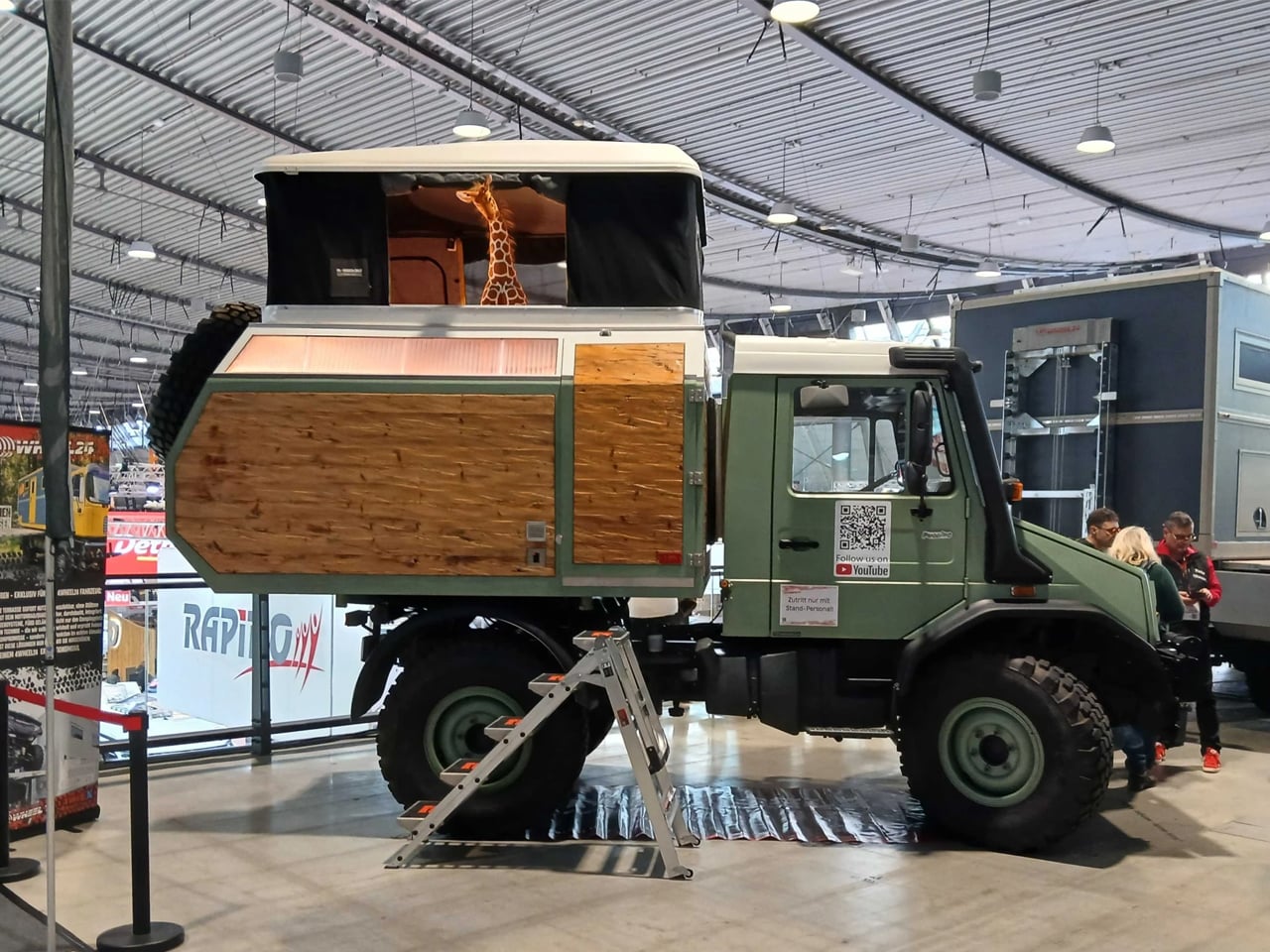
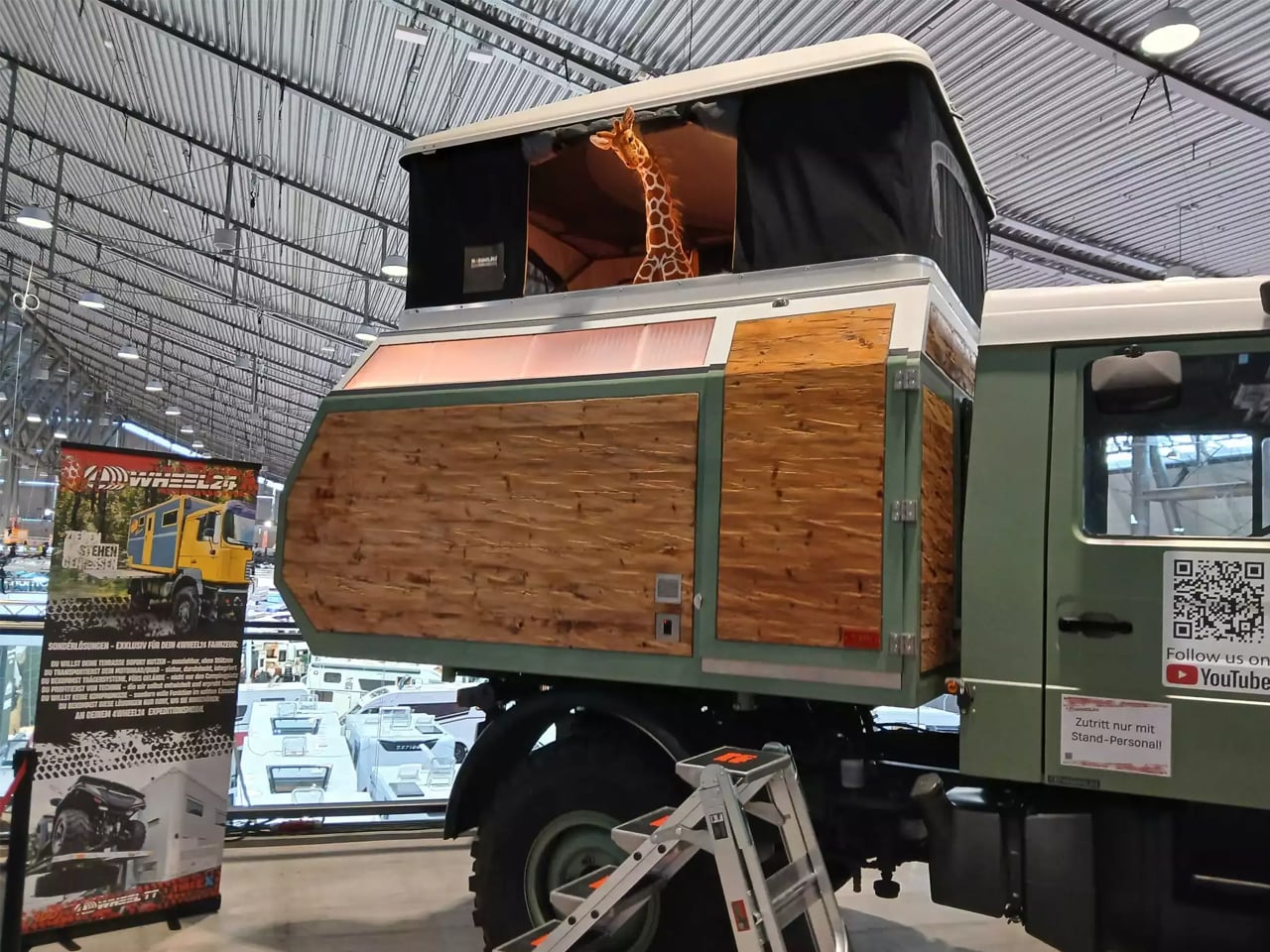
Mercedes-Benz Unimog has served as the base for many rugged expedition motorhomes in the past, and this is yet another instance where the multi-purpose, all-wheel-drive truck is part of an extreme off-roading RV called The Pucchino. Based on a Unimog U418, it is a compact, custom-built wooden cabin that features a steel frame and an electronically operated pop-up roof.

Choosing the ideal expedition RV for your requirements is a personal decision, generally made out of passion, consideration, and understanding. While there are many robust 4×4 trucks suitable for this purpose, the Unimog is by far a league apart. Sitting atop the Unimog U418, therefore, the Pucchino flaunts a robust wooden body and makes a bold statement. It is the brainchild of 4Wheel24 and arrives on a modest green colored truck, the color which extends down to the green wheel caps and matches with the pop-up roof shell and the interesting natural wooden body of the cabin.

Designer: 4Wheel24

The truck-bed-sized cabin is an interesting creation, not just for its unique beer barrel-like form factor, but because of the various components it manages to stuff inside the very petite body. The roof-top tent definitely pops up to open the living space inside, but even without that, 4Wheel24 has pulled off a decent job with the Pucchino, designed to wade through Mother Earth’s most demanding roads.

The custom-built motorhome module for the 315-hp 4.2-liter turbo-diesel Mercedes-Benz Unimog U418 comes with a fully-integrated electric pop-up roof and a compact but fully functional living space inside. The roof opens up to a full conversion length of 2.7 m, and it comprises materials that make it a capable expedition companion with comfort and protection in all-weather conditions.

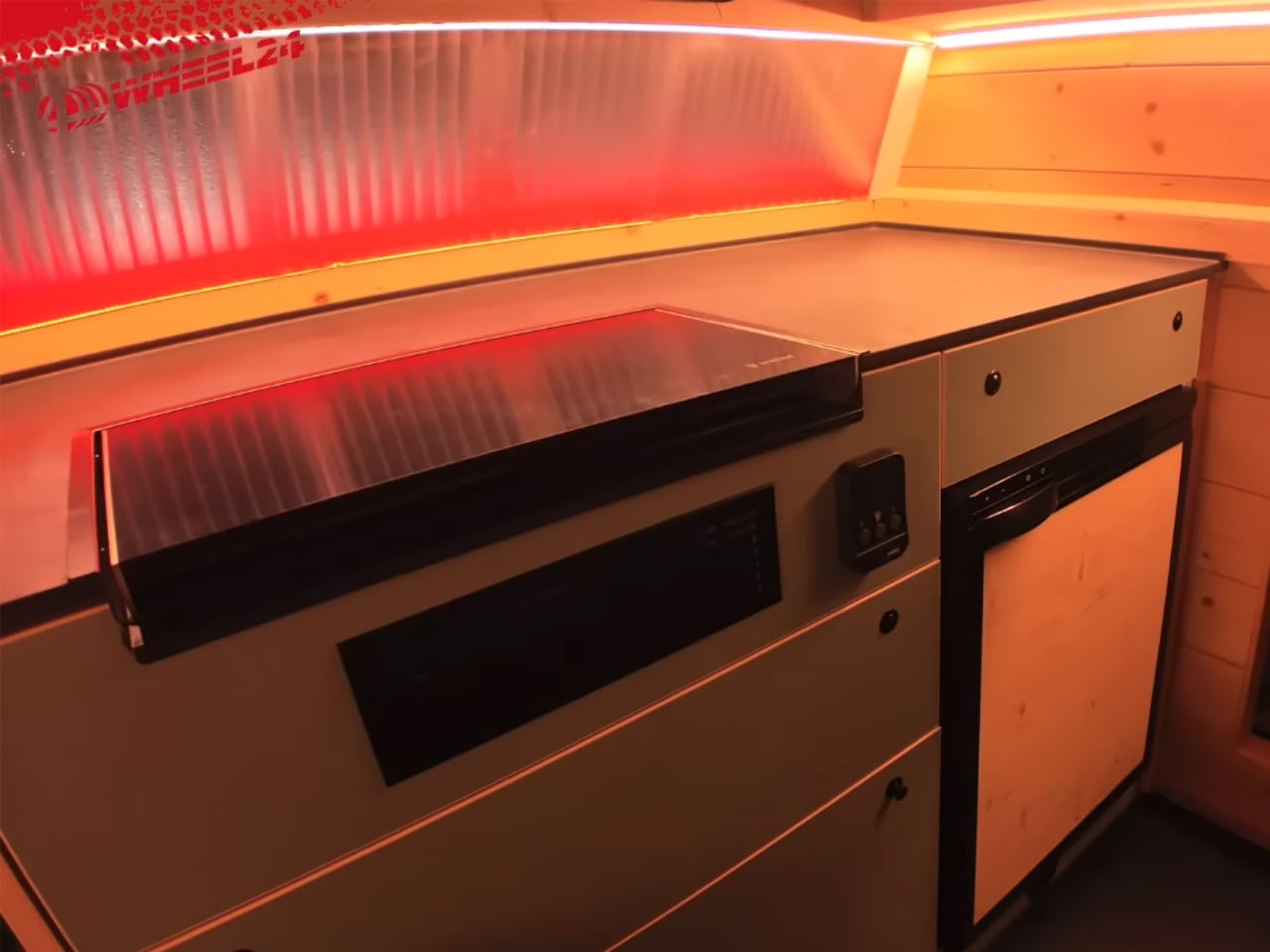
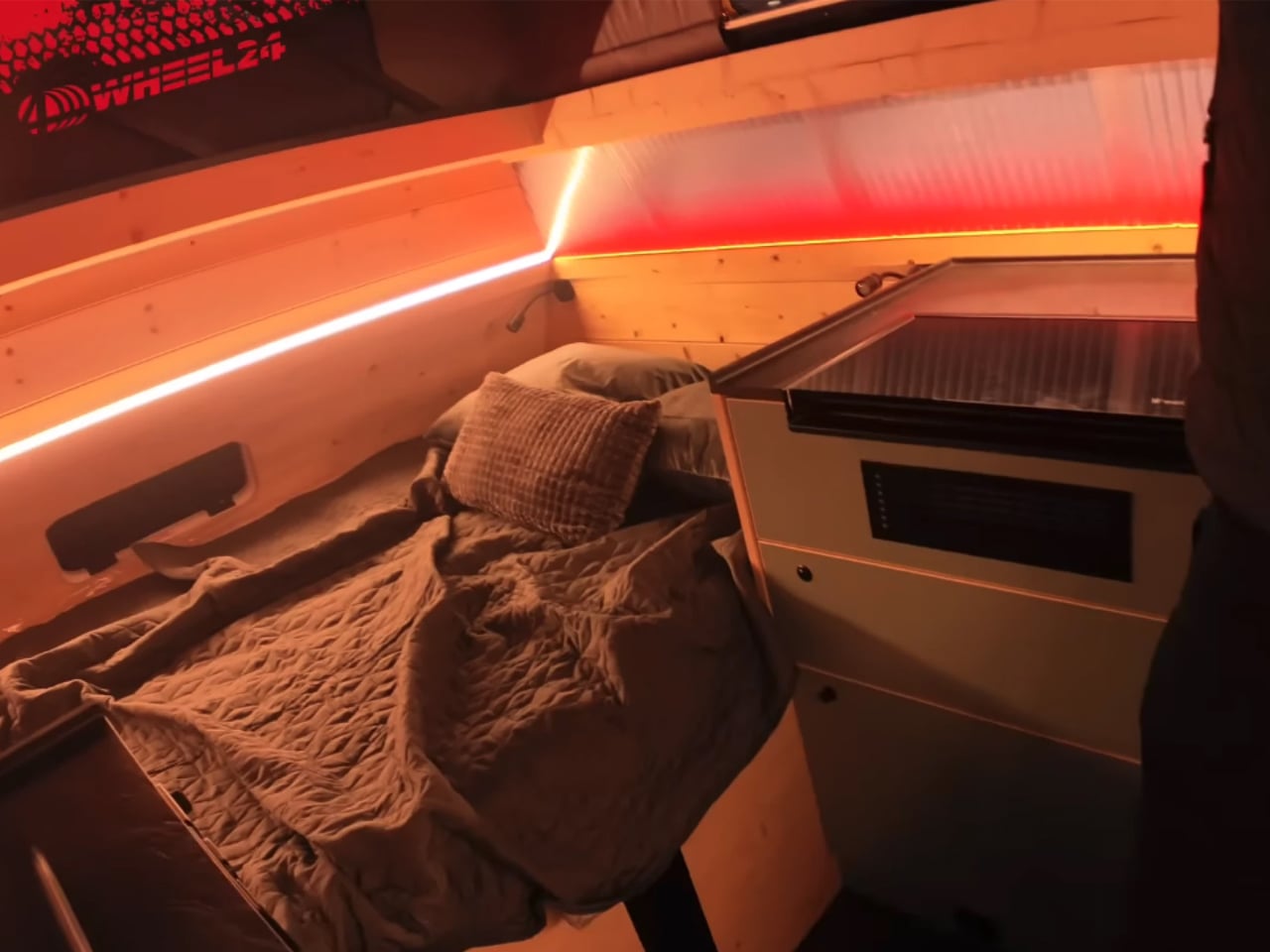
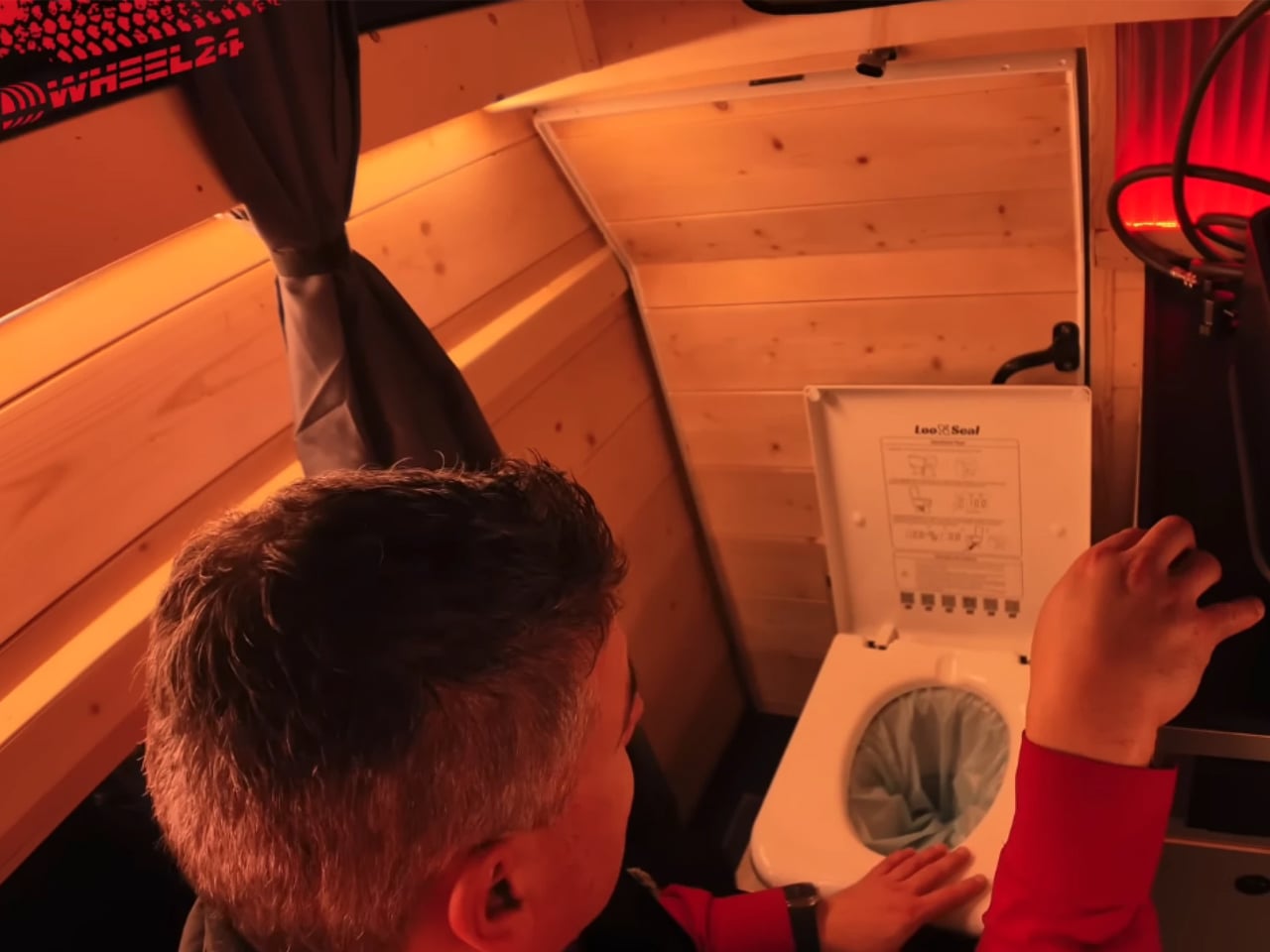
To ensure a low drive height for stability and minimize drag, the cabin’s interior height is kept to 1.20 meters.  The entry into the rooftop tent is managed via a pull-out staircase. The chief living area in the cabin, measuring 2.6 x 2m, features a cooking area complete with a Wallas diesel hob, countertop, 60-L fridge, and sink, a double bed, and a washroom area furnished with a LooSeal Evo Sealed Toilet and shower.

The power needs onboard are handled by a 480-watt solar panel backing up energy in a 6.3 kWh lithium battery from Bluetti, and it also comes with an inverter. The cabin is provided with a 250L water tank, and in addition to the customization of the interior here, 4Wheel24 has also given the Unimog cab area an upgrade. The cab’s provided with heated seats and upgraded upholstery to match the wooden cabin. The ultra-compact, lightweight, and stable Pucchino is priced roughly around €189,000 (approx. $223,000).


The post This Unimog-based wooden cabin with pop-up roof tent is built for the wilderness first appeared on Yanko Design.
ChatGPT is back up after an outage disrupted use this afternoon

If you had trouble using ChatGPT today, you aren't alone. The AI chatbot experienced a partial outage for many users this afternoon, with Down Detector saw reports reaching more than 12,000 reports around the peak point of the issue today.. OpenAI issued a status update shortly after noting that "elevated error rates" were occurring for ChatGPT and Platform users. That problem was marked as resolved at 5:14PM ET.

While the initial outage may be repaired, OpenAI does still have an active status alert up. It's only for the fine-tuning component of its API service. But the end may also be in sight for that final issue, because the current statement from the company is "We have applied the mitigation and are monitoring the recovering.

Another AI chatbot, Anthropic’s Claude, also experienced an outage today. It listed similar issues with "Elevated error rate on API across all Claude models." That status was resolved by 1PM ET.

Update, February 3, 2025, 6:17PM ET: Updated to reflect the change in status and mention Claude outage.

This article originally appeared on Engadget at https://www.engadget.com/ai/chatgpt-is-back-up-after-an-outage-disrupted-use-this-afternoon-210238686.html?src=rss

This Stealth Fighter-Inspired Buggy Makes Modern Supercars Look Too Polite

Someone decided the Lamborghini Countach needed to mate with a dune buggy and maybe a stealth fighter. Looking at Alex Casabo’s buggy concept, that’s not hyperbole or some lazy automotive journalism comparison. This thing genuinely looks like it crawled out of the wedge-era supercar playbook, did some thinking about what parts of “street legal” actually mattered, and concluded the answer was “none of them.”

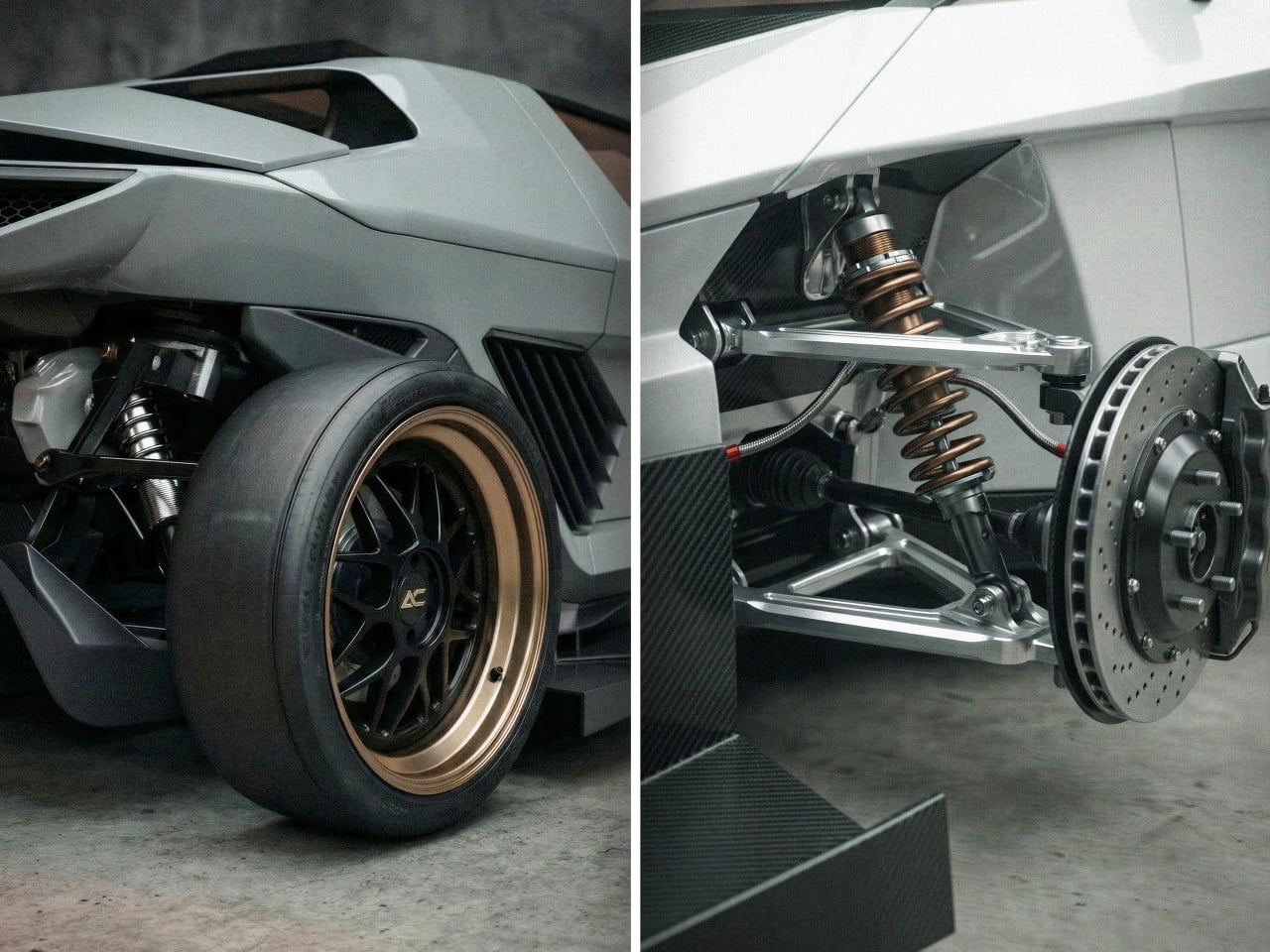
Most supercars maintain this pretense that yes, technically, you could drive this to the grocery store. Casabo’s design skips that entire conversation. The suspension geometry isn’t hidden behind sexy bodywork, it’s showcased like mechanical jewelry. Those bronze-finish wheels and exposed A-arms aren’t apologizing for being visible. This is a track toy that knows exactly what it is, and there’s something refreshing about a design that doesn’t hedge its bets.

Designer: Alex Casabo

The design language pulls directly from that late ’70s and early ’80s moment when Marcello Gandini was drawing supercars with a protractor and an apparent vendetta against curved lines. Every surface on this buggy looks like it was folded from sheet metal by someone who studied origami and decided subtlety was optional. The wedge profile, the angular body panels, the way the whole thing seems to be made of intersecting planes rather than flowing shapes. These are all callbacks to an era when automotive design was less about wind tunnel optimization and more about making something that looked impossibly fast while sitting still.

The AC Buggy, as Casabo calls it, combines the supercar aesthetic with the mechanical transparency of something like an Ariel Atom or a radical Group B rally car. Those exposed A-arms and coilovers aren’t there because the budget ran out before they could design proper body panels – they’re deliberate, turning functional components into visual elements. The bronze-finished wheels and visible hardware give the whole thing a motorsport-meets-military-prototype vibe that somehow works with the stealth fighter angles of the body. You can see the engineering, and that visibility becomes part of the appeal rather than something to hide.

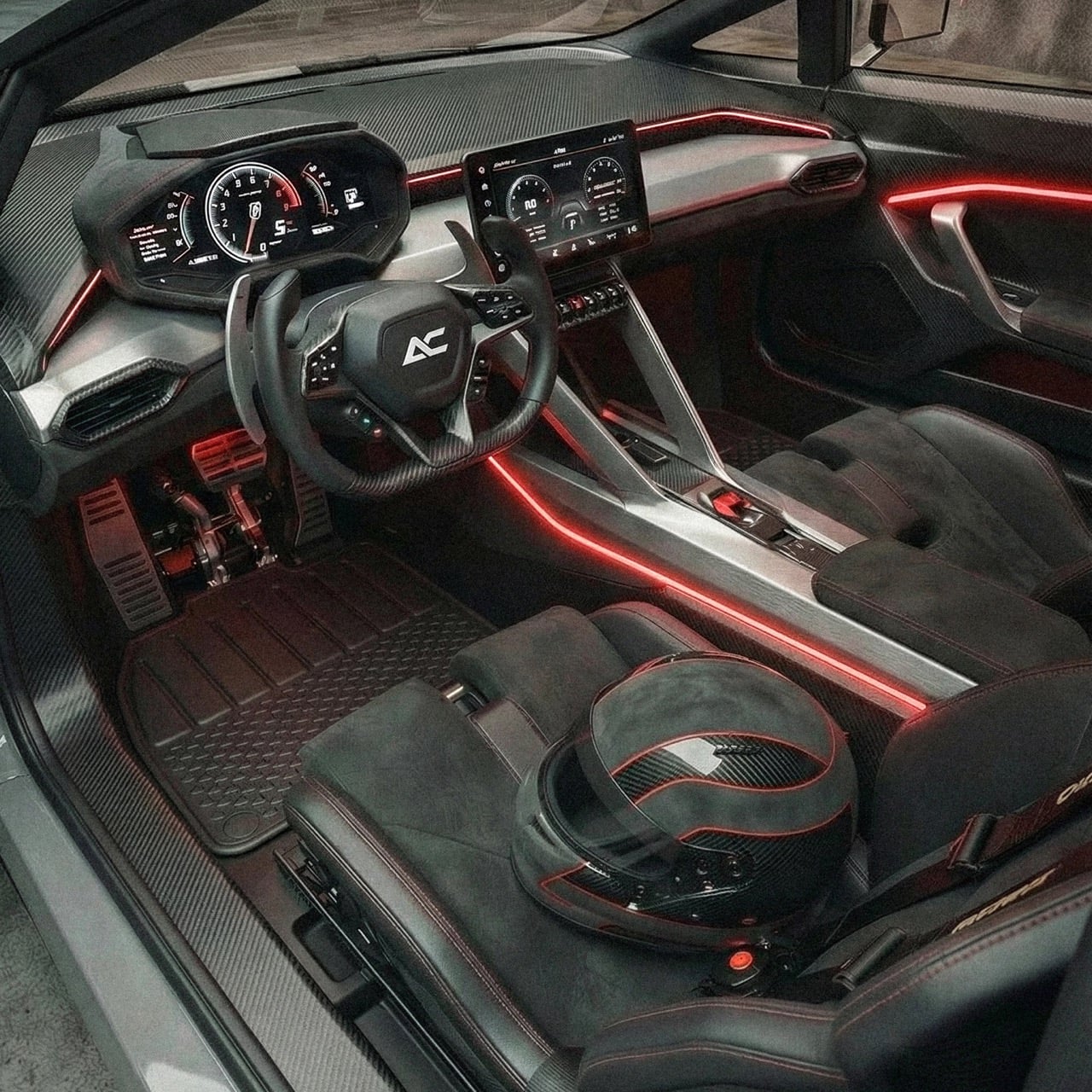
The interior follows the same path of aggressive minimalism wrapped in carbon fiber. Red accent lighting traces the cabin architecture, highlighting the angular dashboard and center console. There’s a center-mounted touchscreen flanked by what looks like a traditional instrument cluster on the driver’s side, creating this hybrid of digital and analog that mirrors the exterior’s blend of supercar drama and track-focused functionality. Toggle switches populate the lower console, the kind of tactile controls that suggest actual mechanical connections rather than electronic intermediaries. The seats are heavily bolstered with quilted inserts, held in place by a competition-style harness setup. Even the steering wheel gets the carbon treatment, with a squared-off bottom and integrated controls that keep your hands on the wheel rather than reaching for stalks or buttons.

The rear suspension setup shows off machined aluminum control arms and what look like properly specced coilovers with remote reservoirs. The drilled brake rotors are substantial, and the whole assembly sits exposed behind those distinctive geometric body panels with their triangular lighting elements. The taillights themselves use a honeycomb mesh pattern behind red-tinted lenses, continuing that angular aesthetic even in the smallest details. There’s an air intake vent on each rear quarter panel with horizontal slats, feeding what we can assume is some kind of powertrain tucked into that compact rear section.

The car was crafted entirely using a combination of design and AI tools as a part of Casabo’s explorations of integrating AI into the design workflow. Casabo lists his tools as Midjourney and Vizcom for the AI-enhanced ideation and CAD, along with Photoshop as a finisher to create the set of images. Whether this car is practical or not becomes irrelevant at this point, because Casabo’s vision is just to see how effectively AI can help enhance the creative process. Visually, it looks great on paper, although just seeing the output, I don’t think we’re too far from having an actual AI-generated concept car prototyped to life.

The post This Stealth Fighter-Inspired Buggy Makes Modern Supercars Look Too Polite first appeared on Yanko Design.

Apple just made Xcode better for vibe coding

Apple has just released Xcode 26.3, and it's a big step forward in terms of the company's support of coding agents. The new release expands on the AI features the company introduced with Xcode 26 at WWDC 2025 to give systems like Claude and ChatGPT more robust access to its in-house IDE. 

With the update, Apple says Claude and OpenAI's Codex "can search documentation, explore file structures, update project settings, and verify their work visually by capturing Xcode Previews and iterating through builds and fixes." This is in contrast to earlier releases of Xcode 26 where those same agents were limited in what they could see of a developer's Xcode environment, restricting their utility. According to Apple, the change will give users tools they can use to streamline their processes and work more efficiently than before.

Developers can add Claude and Codex to their Xcode terminal from the Intelligence section of the app's setting menu. Once a provider is selected, the interface allows users to also pick their preferred model. So if you like the outputs of say GPT 5.1 over GPT 5.2, you can use the older system. 

The tighter integration with Claude and Codex was made possible by Model Context Protocol (MCP) servers Apple has deployed. MCP is a technology Anthropic debuted in fall 2024 to make it easier for large language models like Claude to share data with third-party tools and systems. Since its introduction, MCP has become an industry standard — with OpenAI, for instance, adopting the protocol last year to facilitate its own set of connections. 

Apple says it worked directly with Anthropic and OpenAI to optimize token usage through Xcode, but the company’s adoption of MCP means developers will be able to add any coding agent that supports the protocol to their terminal in the future. Xcode 26.3 is available to download for all members of the Apple Developer Program starting today, with the Mac Store availability “coming soon.”

This article originally appeared on Engadget at https://www.engadget.com/ai/apple-just-made-xcode-better-for-vibe-coding-195653049.html?src=rss

Obsidian has no plans to make The Outer Worlds 3, likely due to poor sales

Developer Obsidian recently announced that it currently has no plans to make The Outer Worlds 3, according to a report by Bloomberg. Company head Fergus Urquhart didn't give a reason as to why Obsidian won't be working on a sequel, but he did note that the performance of The Outer Worlds 2 was "disappointing" and that it needs to "think a lot about how much we put into the games, how much we spend on them and how long they take."

Urquhart also said that Avowed was something of a miss for the company, but that it remains committed to the franchise. Obsidian plans to "keep making games in the Avowed universe," but that doesn't necessarily mean a legitimate sequel. Avowed is, after all, set in the same world as Pillars of Eternity.

Obsidian is still working on DLC for The Outer Worlds 2, so fans have that to look forward to. Urquhart also confirmed the company is making some DLC for Grounded 2, which was actually a hit. It released three games last year, which Urquhart said was a bad move for support teams.

“Spacing those releases helps the company manage its resources and not burn everybody out. It’s not good to release three games in the same year. It’s the result of things going wrong," he said.

The developer is also making some entirely new games, of which we know nothing about. As for Avowed, it's coming to PS5 on February 17. All versions are getting an anniversary update that includes a New Game Plus mode, new races, new weapon types and more. It's a good game and well worth the time of PlayStation fans, especially those who have dabbled with The Elder Scrolls franchise.

This article originally appeared on Engadget at https://www.engadget.com/gaming/obsidian-has-no-plans-to-make-the-outer-worlds-3-likely-due-to-poor-sales-192756351.html?src=rss

IKEA Just Made a Mouse-Shaped Speaker That Kids Can Actually Carry

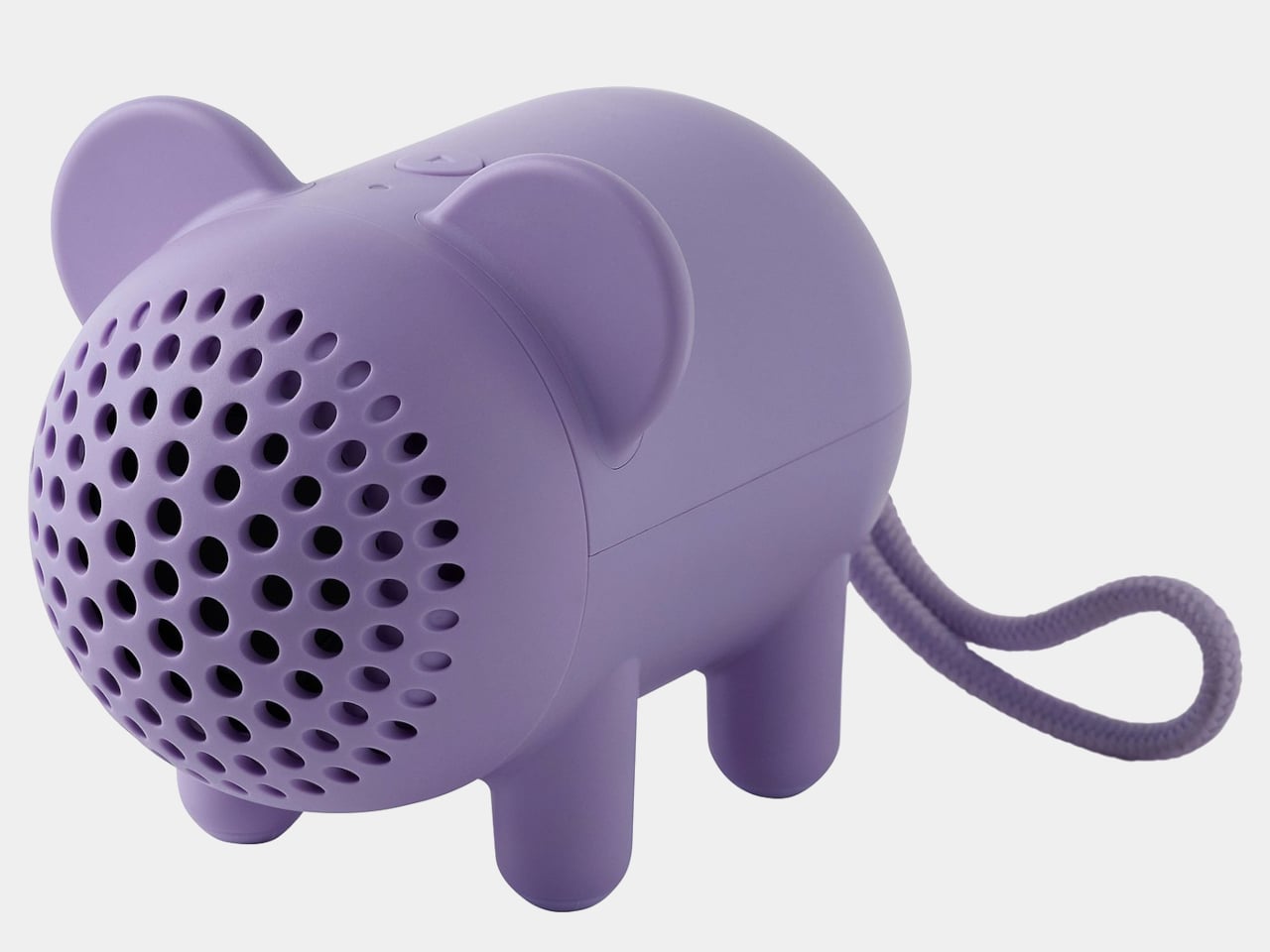
IKEA’s GREJSIMOJS collection started with a dog-shaped lamp that dims when you hold its head for bedtime, turning a light switch into something closer to petting a sleepy puppy. The limited collection is more than just about cute animals, but also about playful behavior baked into everyday objects. That same thinking now shows up in a tiny Bluetooth speaker shaped like a mouse, with four stubby legs and a braided tail that doubles as a carry loop.

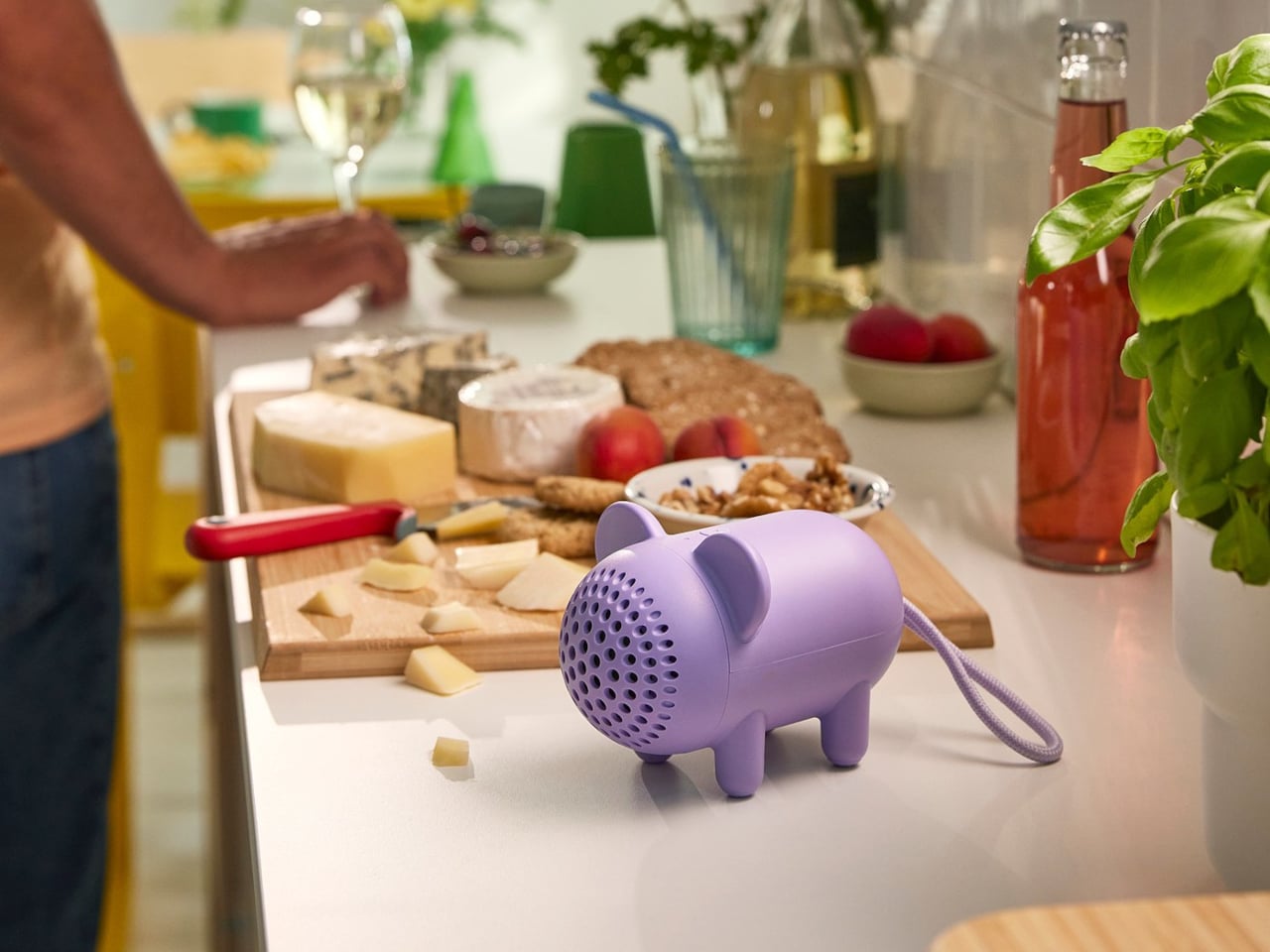
The GREJSIMOJS portable Bluetooth speaker is a small, mouse-shaped character IKEA calls a “cute little music friend” for playful people of all ages. It is meant to follow kids from room to room, turning background sound into something they can carry and interact with, while still being a straightforward wireless speaker for parents who just want podcasts in the kitchen or bedtime audiobooks without fumbling with phone speakers.

Designer: Marta Krupińska (IKEA)

Picture a child drawing at a desk, the purple mouse sitting nearby quietly playing an audiobook or favorite songs. Pairing is as simple as connecting a phone over Bluetooth, and the sound is tuned for everyday listening rather than shaking walls. The built-in volume limit protects sensitive ears, so kids can turn it up without parents needing to hover over the controls constantly or worry about hearing damage.

The braided tail makes it easy for small hands to grab and move the speaker from bedroom to living room. Charging happens over USB-C, though the cable and adapter are sold separately, and IKEA says adults should handle that part. The speaker cannot play while charging, which creates a split that lets kids control what they listen to while adults manage batteries and power.

The multi-speaker mode lets the mouse pair with other IKEA Bluetooth speakers supporting the same feature. That means the same music can play from multiple spots, turning a hallway and playroom into one sound zone without complicated app setups. It is an easy way to make dance parties or tidy-up time feel coordinated, even if the tech behind it stays invisible to everyone involved.

The collection’s goal is to inspire play and togetherness across the home, and the mouse fits that mission well. IKEA notes that £1 from every GREJSIMOJS product sold during a set period goes to the Baby Bank Alliance, adding a layer of purposeful giving. More than just decor, the speaker is a small facilitator for shared stories, music, and movement in family spaces without needing complicated setup rituals.

The GREJSIMOJS mouse speaker, like the dog lamp, treats technology as something that should feel approachable and a bit silly rather than cold. Rather than competing with serious audio gear, it is trying to make rooms feel more alive without asking kids to sit still or parents to manage another app. In homes where screens already demand enough attention, a small purple mouse that quietly pipes in sound might be exactly the kind of tech everyone can agree on.

The post IKEA Just Made a Mouse-Shaped Speaker That Kids Can Actually Carry first appeared on Yanko Design.