Apple’s iPhone 17e Could Arrive Next Week: Final Design, $599 Price, and A19 Chip

Apple’s iPhone 17e Could Arrive Next Week: Final Design, $599 Price, and A19 Chip iPhone 17e budget smartphone with sleek design and Dynamic Island

Apple has unveiled the iPhone 17e, a budget-friendly smartphone aimed at making the iOS ecosystem more accessible to a broader audience. Positioned as an entry-level device, the iPhone 17e is designed to balance affordability with functionality, targeting casual users, younger demographics, and those seeking an upgrade without the premium price tag. While it incorporates some […]

The post Apple’s iPhone 17e Could Arrive Next Week: Final Design, $599 Price, and A19 Chip appeared first on Geeky Gadgets.

Posted in Uncategorized

Build a Low Cost Secure OpenClaw Replica with Memory & Voice Using Claude Code

Build a Low Cost Secure OpenClaw Replica with Memory & Voice Using Claude Code Telegram chat view of a Claude Code assistant sending proactive check-ins and task updates in a simple thread.

Building an OpenClaw replica within Claude Code provides a structured way to create a secure and cost-efficient AI assistant. According to Goda Go, this setup operates on a fixed monthly budget of $200 and includes features such as proactive task management, contextual memory, and integration with platforms like email and calendars. Key technologies like Supabase […]

The post Build a Low Cost Secure OpenClaw Replica with Memory & Voice Using Claude Code appeared first on Geeky Gadgets.

Posted in Uncategorized

Samsung Galaxy S26 Ultra Revealed: A Faster Chip, 60W Charging, and a Controversial New Look

Samsung Galaxy S26 Ultra Revealed: A Faster Chip, 60W Charging, and a Controversial New Look Samsung Galaxy S26 Ultra showcasing its AI-powered Edge Fusion feature

The Galaxy S26 Ultra is launching this month, the flagship model in its highly anticipated Galaxy S26 series. The global launch is scheduled for February 25th at the Unpacked event in San Francisco. This device introduces significant advancements in artificial intelligence (AI), display technology, and ergonomic design. However, some compromises in features and incentives have […]

The post Samsung Galaxy S26 Ultra Revealed: A Faster Chip, 60W Charging, and a Controversial New Look appeared first on Geeky Gadgets.

Posted in Uncategorized

Steam Deck OLED Shortage Drags on as Valve Stays Silent

Steam Deck OLED Shortage Drags on as Valve Stays Silent Diagram showing AMD FSR4 upscaling being adapted to run on older AMD graphics hardware in Valve devices.

Valve has recently rolled out a notable update to the Steam platform, focusing on addressing key challenges and introducing enhancements for its user base. According to Deck Ready, the update tackles ongoing supply chain issues affecting the availability of the Steam Deck OLED, a device that has been out of stock for over a week. […]

The post Steam Deck OLED Shortage Drags on as Valve Stays Silent appeared first on Geeky Gadgets.

Posted in Uncategorized

Vosteed’s “Pocket Crocodile” EDC Knife Packs a Seriously Sharp 3-Inch Sheepsfoot Blade

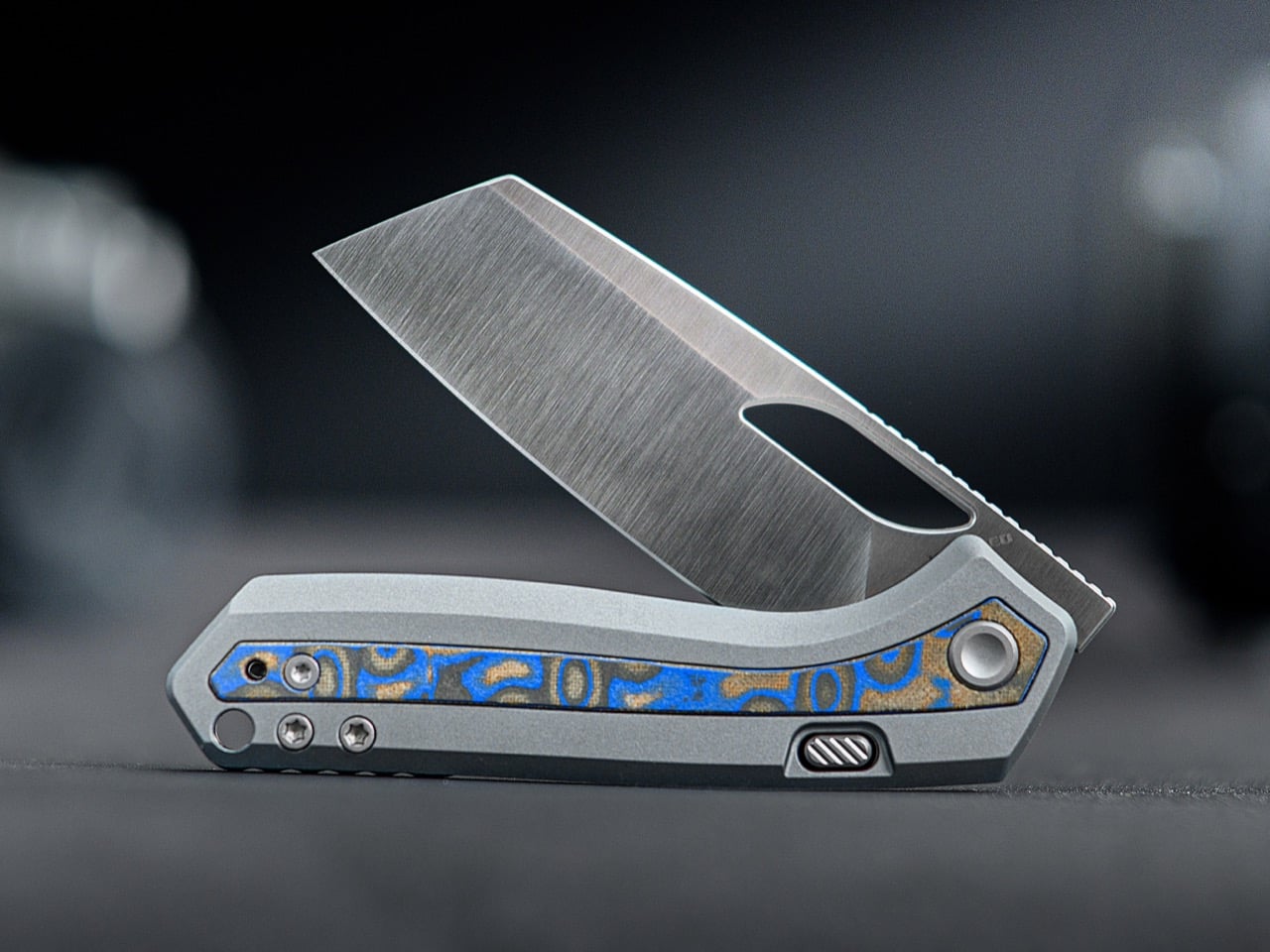
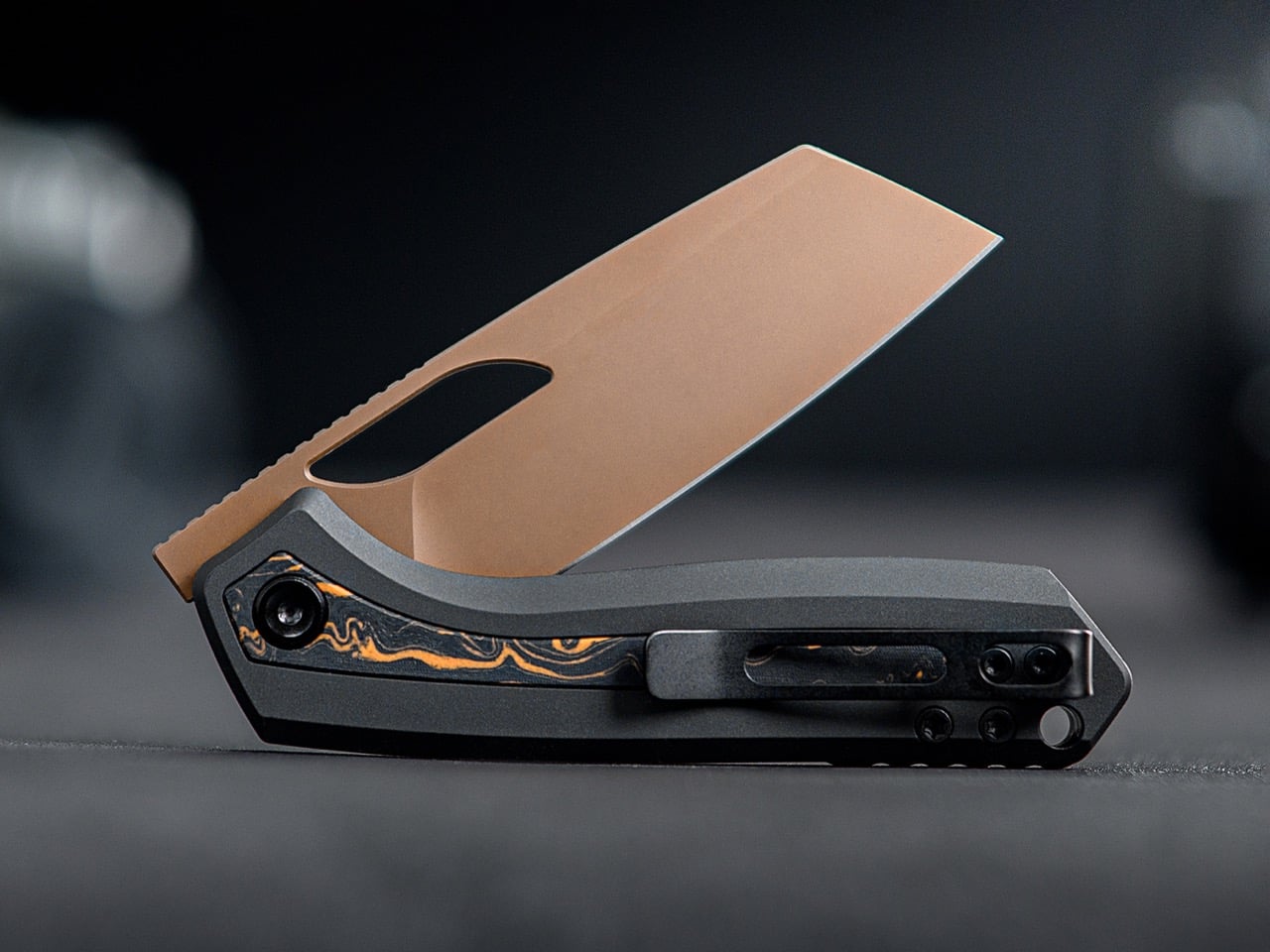
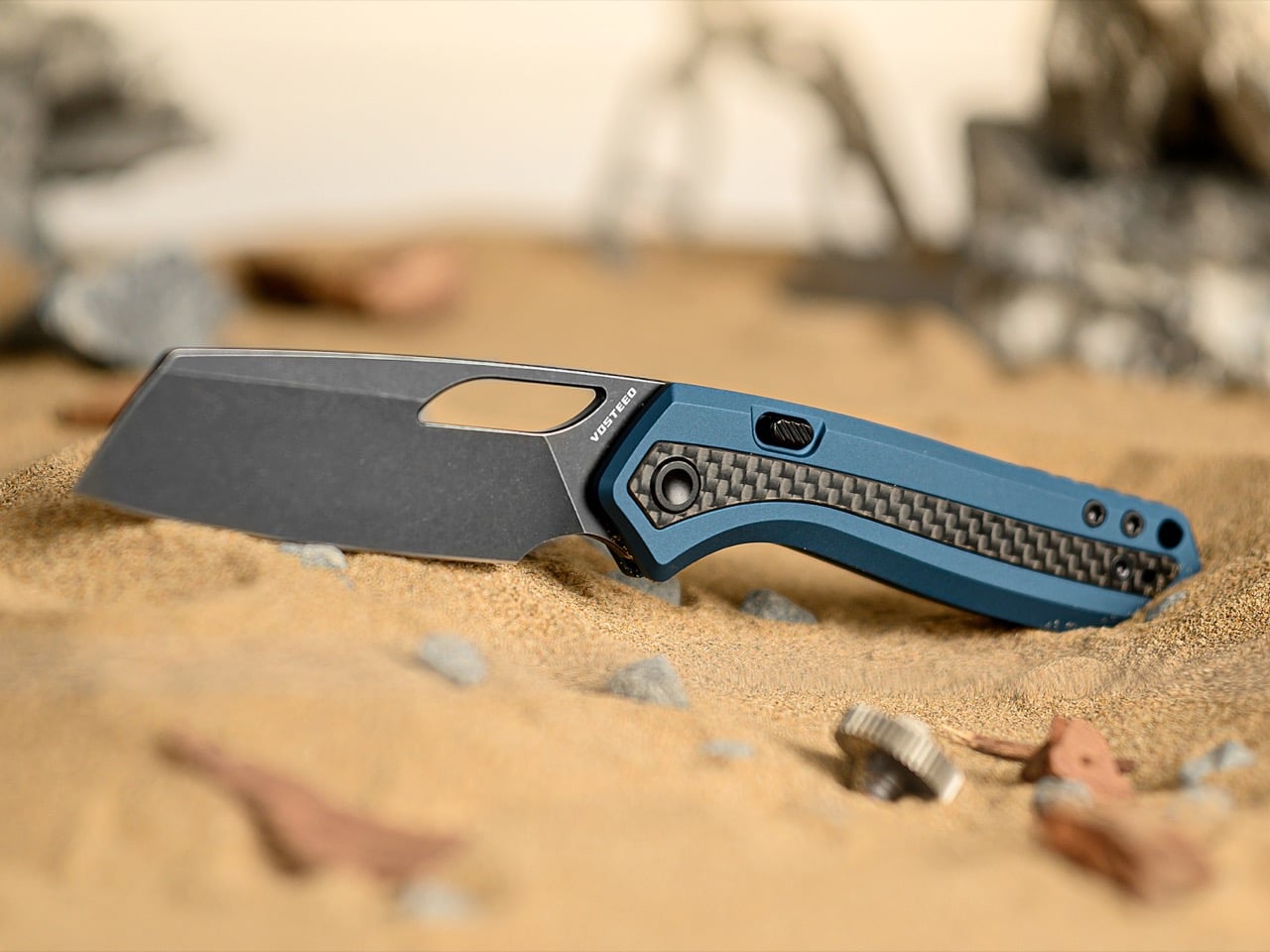
Carrying a three-inch blade shouldn’t feel like a compromise, yet most compact EDC knives sacrifice either ergonomics or capability to hit that sweet spot. Vosteed’s Kroc takes a different path. The design starts with a sheepsfoot blade that maximizes cutting edge while maintaining a sub-three-inch profile, then wraps it in a handle that somehow feels full-sized despite the knife’s 7-inch overall length. The result reads less like a miniaturized version of something bigger and more like a knife that was always meant to be exactly this size.

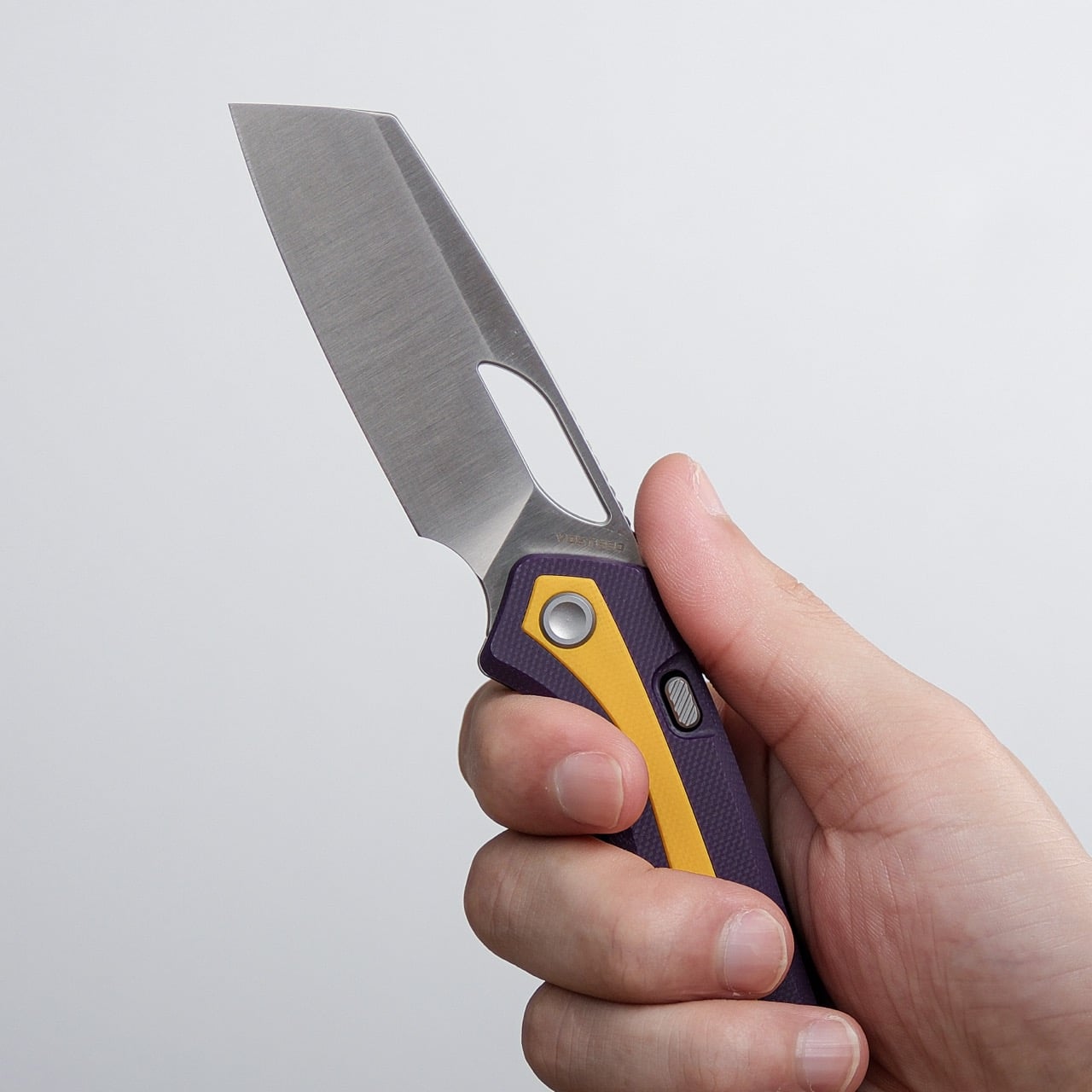
What makes the Kroc particularly interesting is how Vosteed translated this concept across nine different configurations without losing the plot. Whether you’re looking at the $69 G10 versions or the $129 aluminum models with premium S35VN steel, the silhouette remains consistent. The eye-shaped thumbhole, dual finger choils, and ceramic bearing deployment stay intact across every colorway. It’s a rare example of a knife collection that offers genuine material and budget flexibility while maintaining complete design coherence. Your pocket crocodile can be subdued ocean micarta or loud purple-and-yellow G10, but it’s unmistakably the same species.

Designer: Vosteed

Click Here to Buy Now: $116.10 $129 (10% off) Hurry! Use code “yankokroc” during checkout

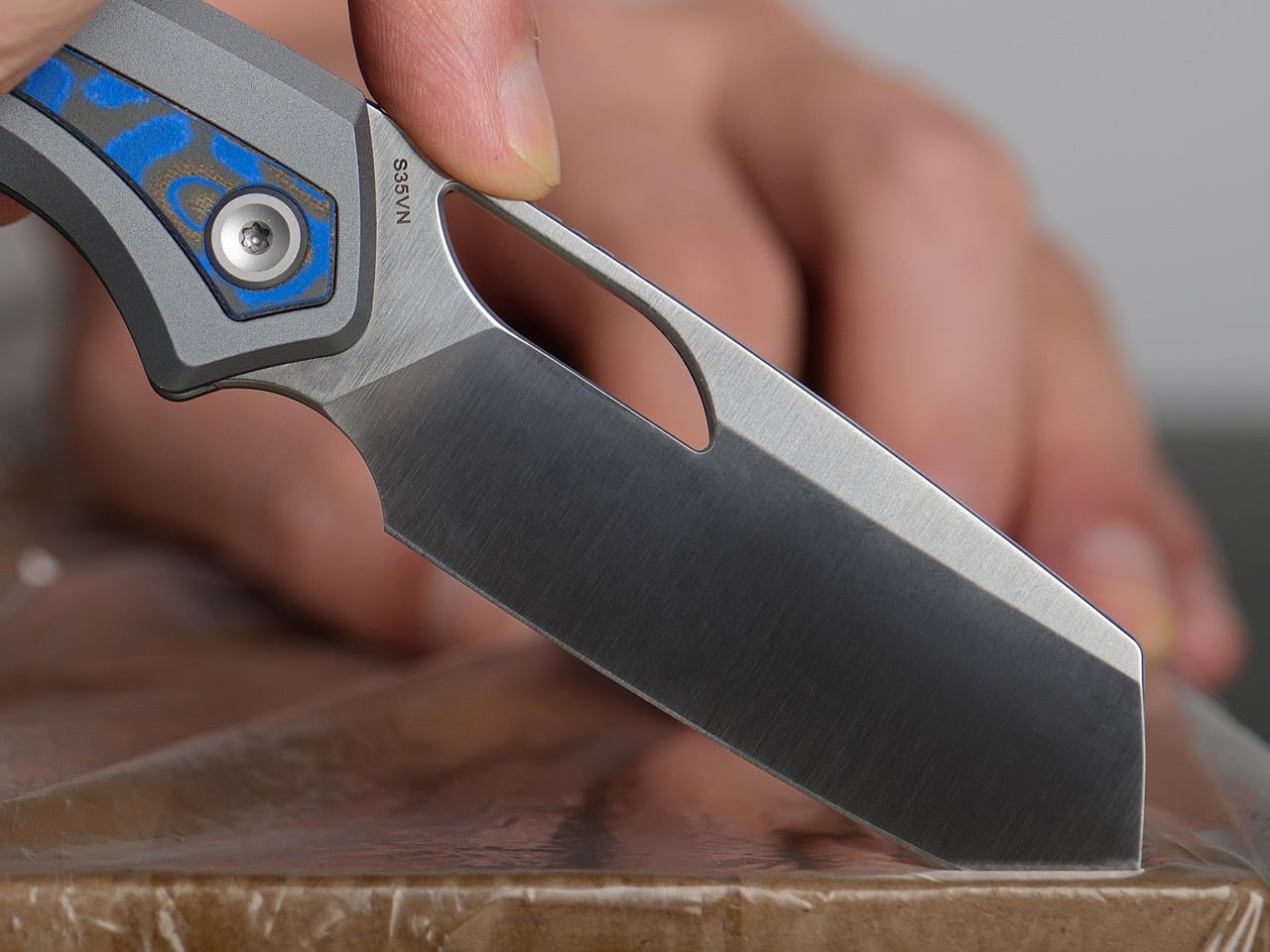
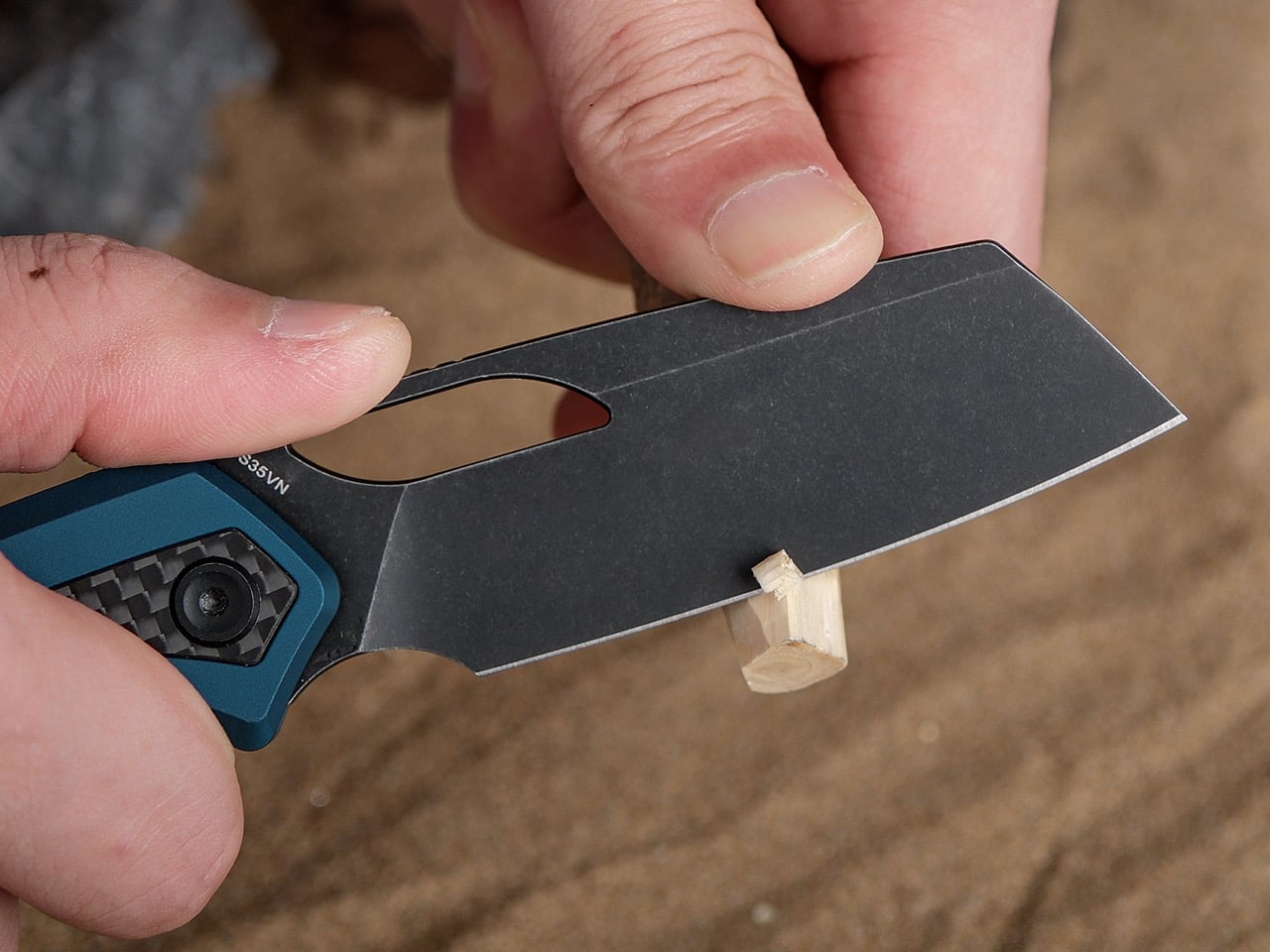
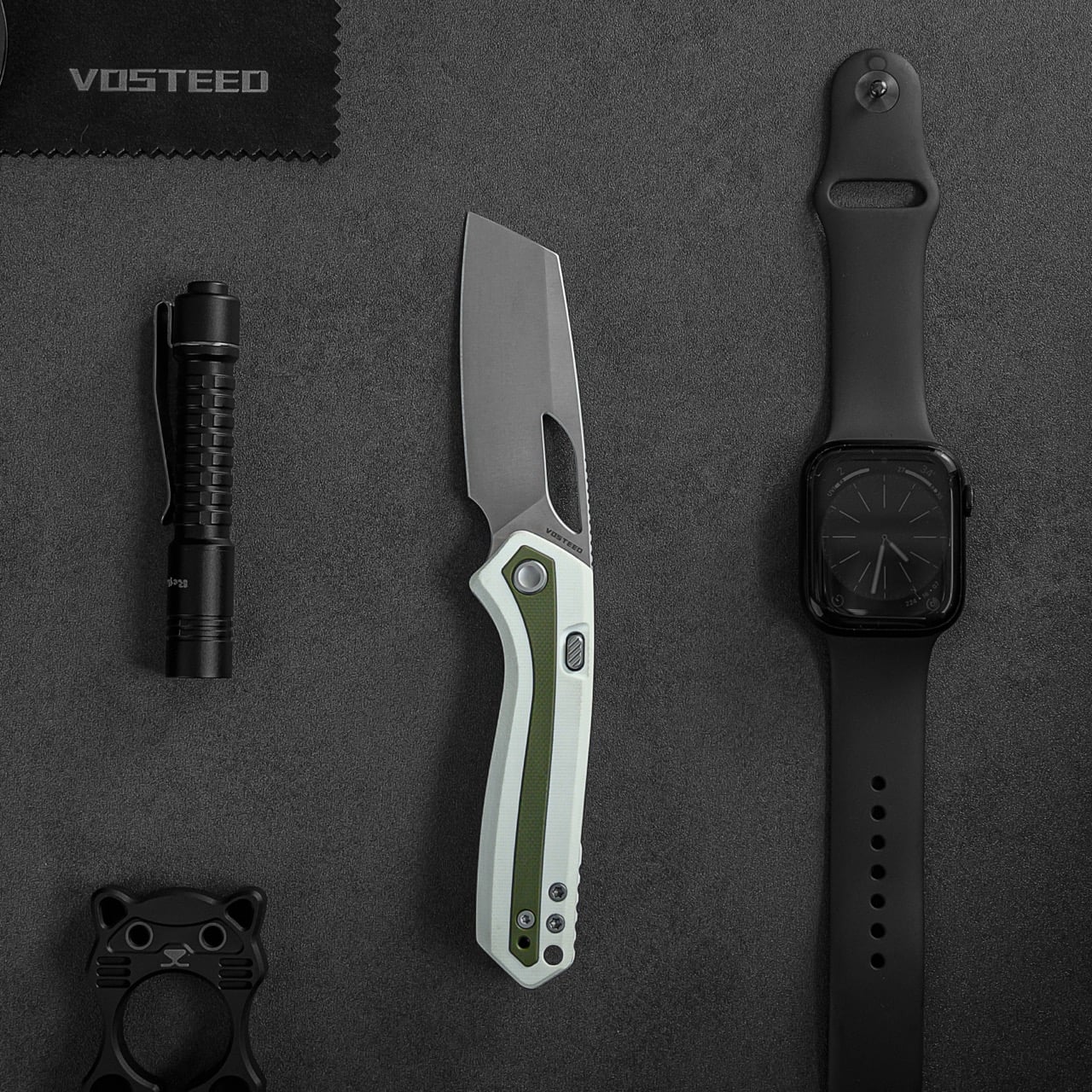
The sheepsfoot blade design with that 2.99-inch cutting edge with the flat spine gives you a blade profile that excels at controlled cuts while eliminating the stabby tip that makes carrying folders feel legally questionable in certain jurisdictions. The 1.18-inch blade width means you’re getting actual spine height here, which translates to structural rigidity when you’re bearing down on tougher materials. Vosteed ground it flat rather than going with a hollow grind, so the edge geometry stays aggressive without feeling fragile. This blade shape works beautifully for food prep, box breaking, rope cutting, anything where you need precision over penetration. The gentle belly curve keeps slicing tasks smooth instead of forcing you into that annoying push-cut motion that flatter edges demand.

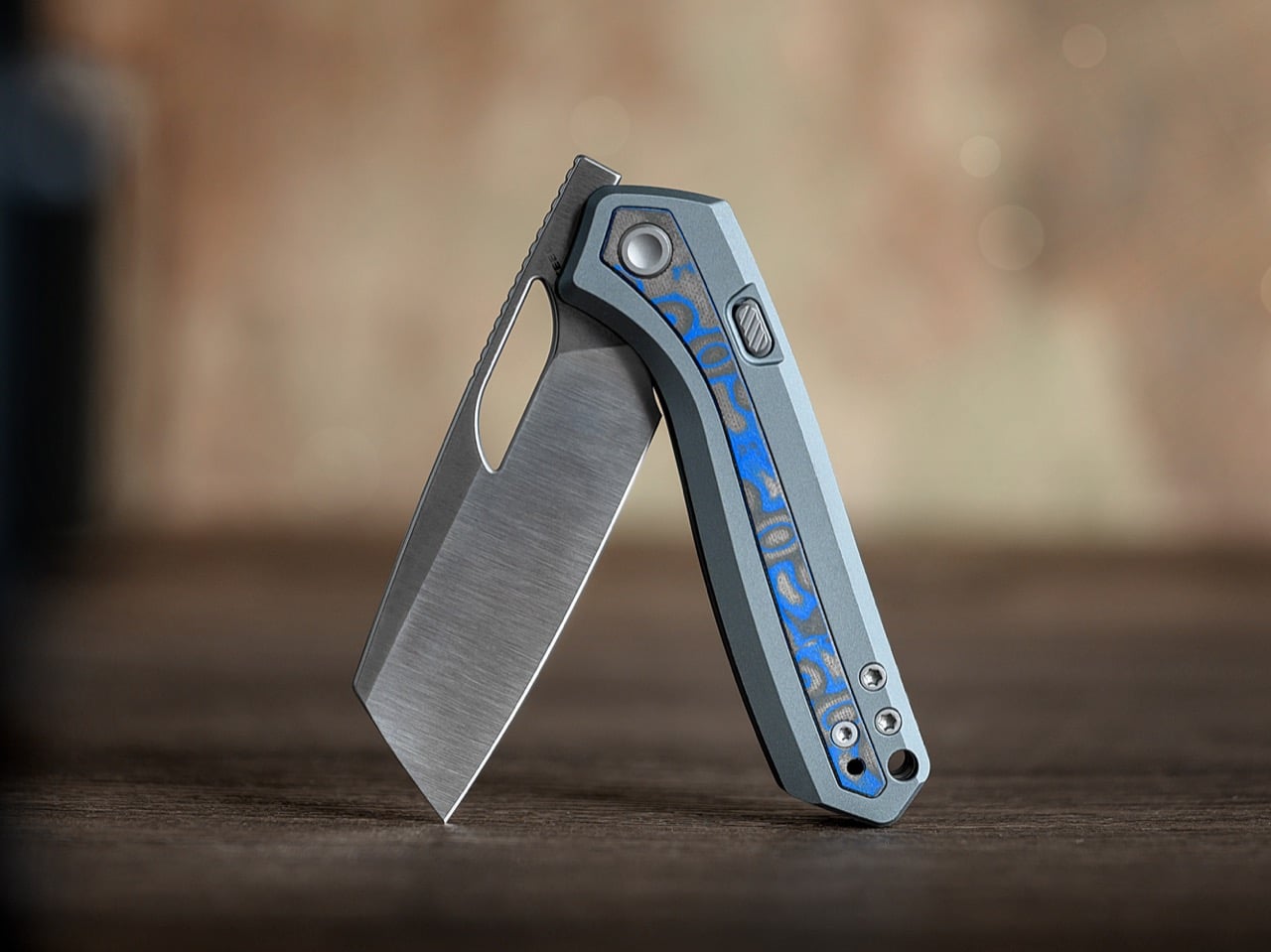
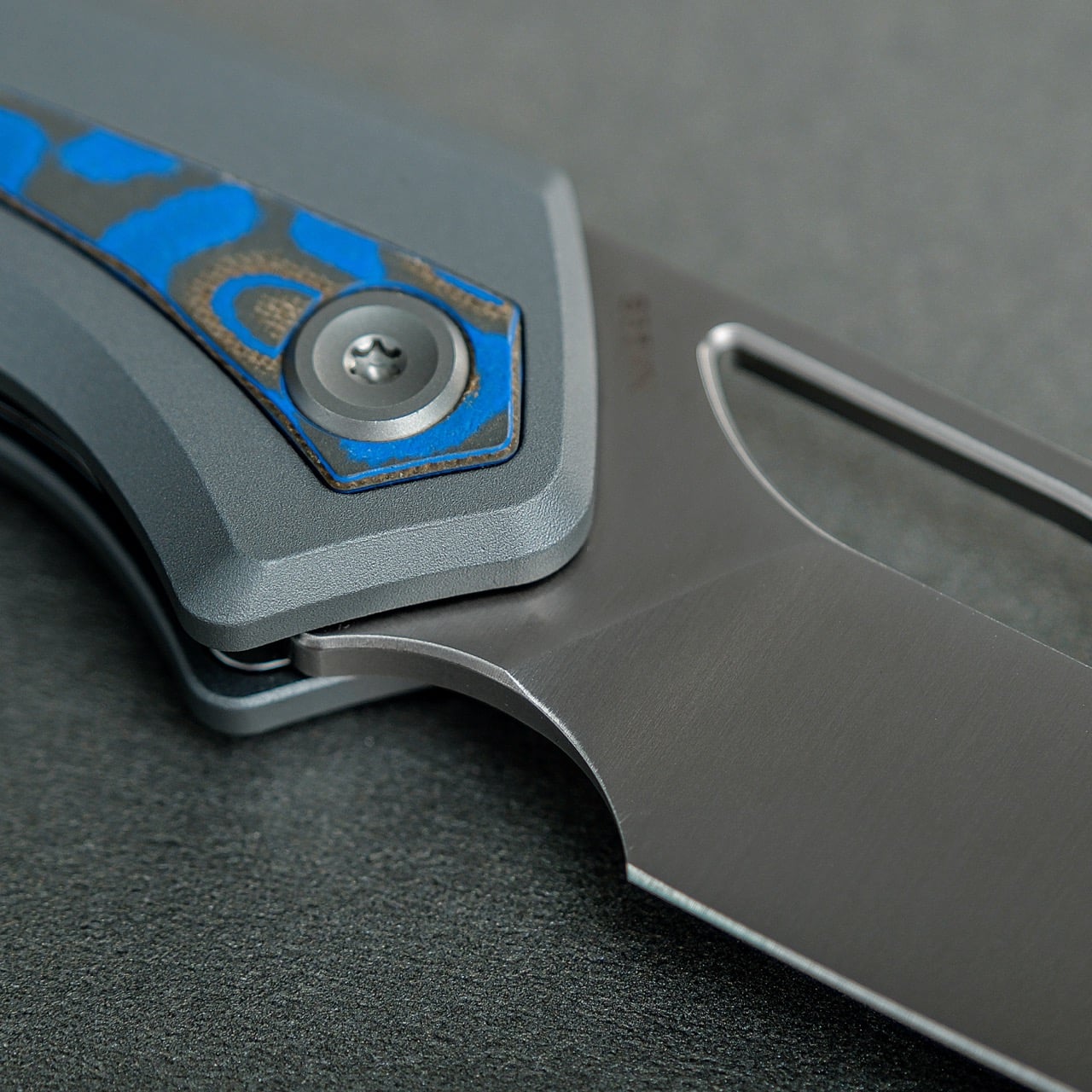
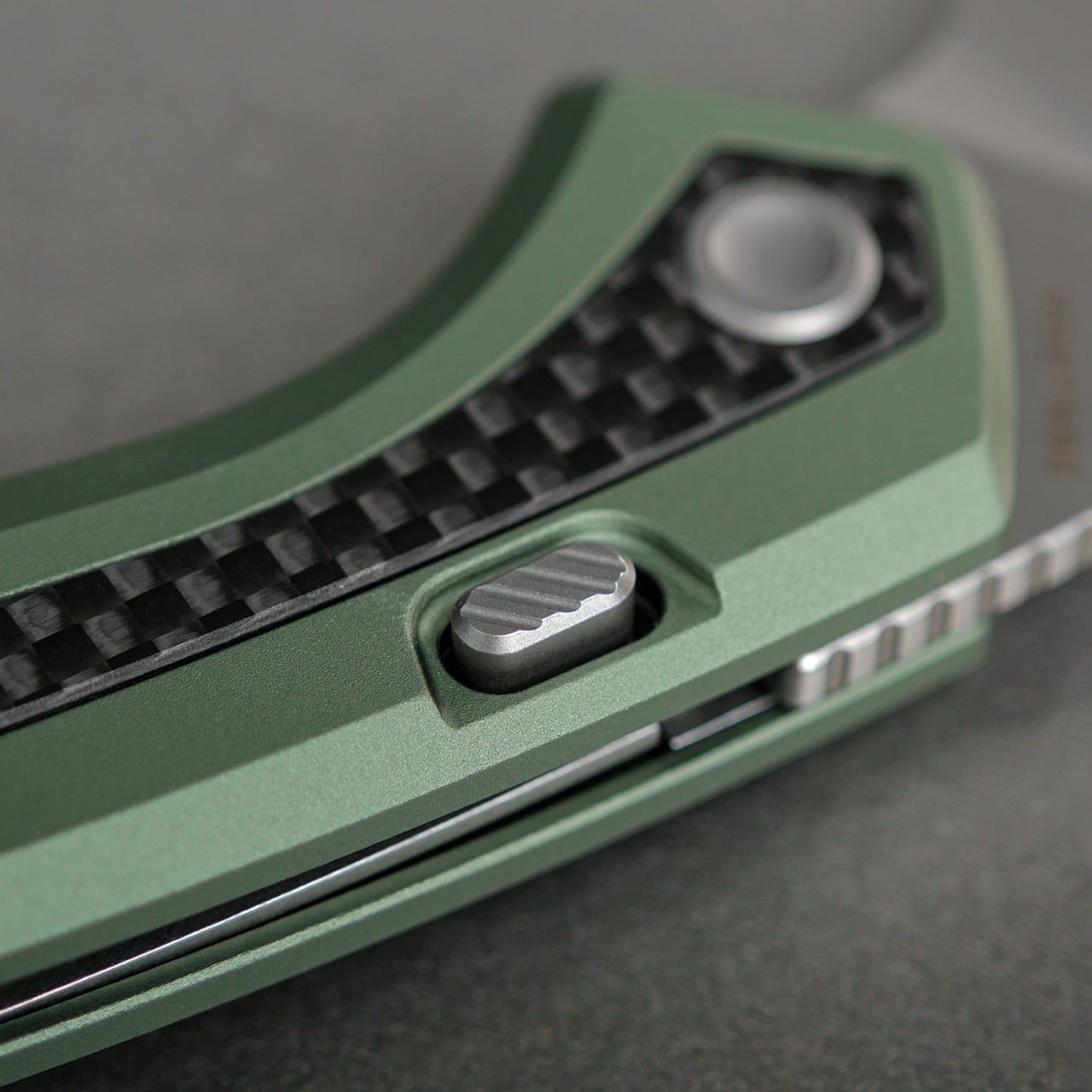
Deployment happens two ways, and both actually work instead of one being an afterthought. The eye-shaped thumbhole sits right where your thumb naturally lands, sized generously enough that deployment feels effortless whether you’re opening it traditionally or doing that satisfying middle-finger flick. The front flipper gives you a second option that’s equally smooth thanks to ceramic ball bearings doing the heavy lifting. The top liner lock mechanism is where Vosteed continues to separate itself from the usual liner lock crowd. You get a recessed, textured button that keeps your fingers completely away from the blade path when closing, combining the security of a traditional liner lock with the safety and ease of a button release. It’s genuinely one of the better locking systems in this price range, maybe any price range.

Handle ergonomics make or break compact knives, and the Kroc gets this right in ways that should be obvious but somehow aren’t. The grip flows from the pivot down to a slightly widened tail section, creating natural indexing points for your hand without aggressive jimping or finger grooves that only work one way. Those dual oversized finger choils let you choke up on the blade when you need control or settle back for regular grip positions. The recessed, skeletonized liners keep the overall weight at 3.38 ounces while the jimped aluminum backspacer adds texture where you actually need it. At 4.02 inches closed, it disappears in a pocket but fills your hand when deployed. That’s the entire game with knives this size.

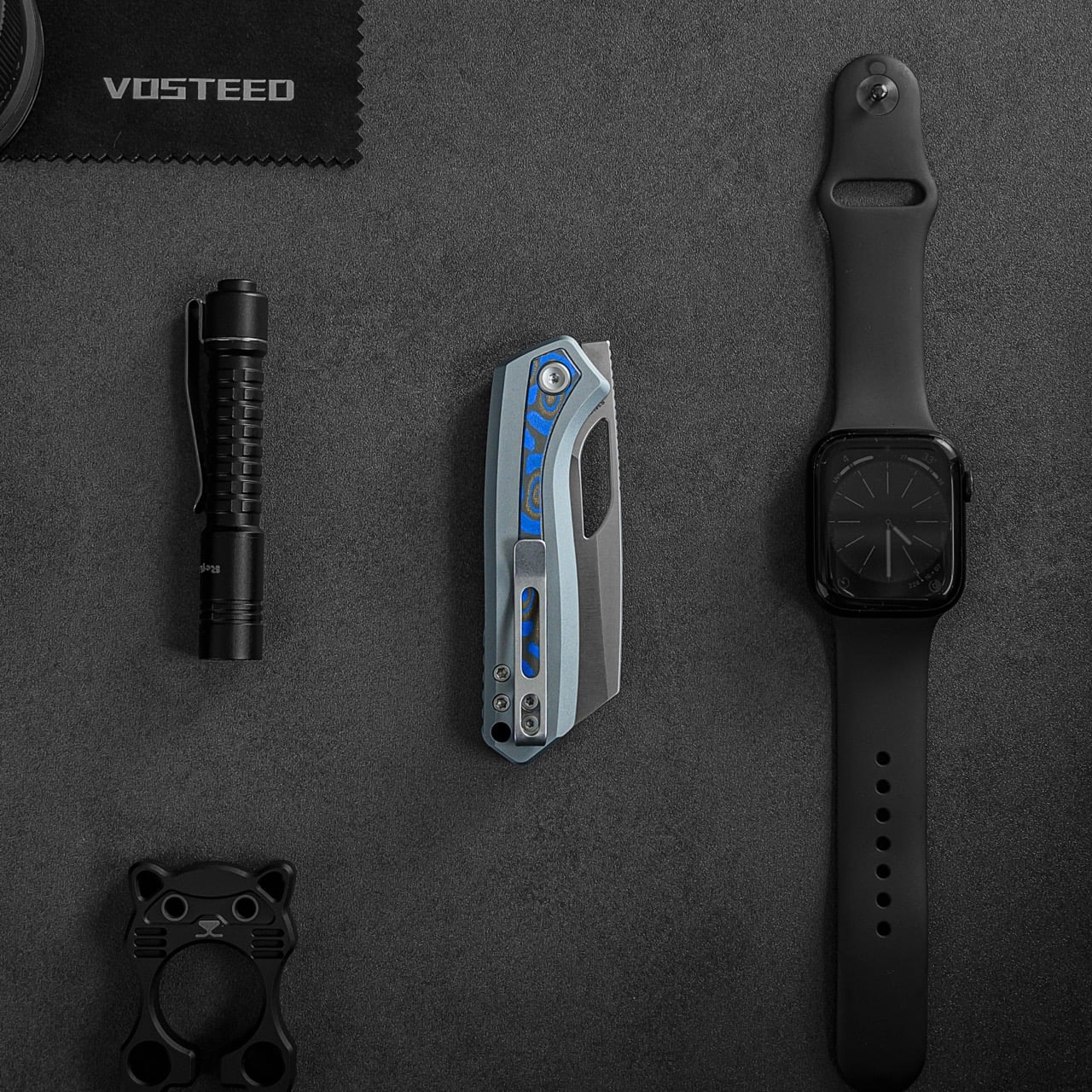
The nine-knife collection splits into two distinct tiers that share everything except materials. The G10 models (A1805 through A1809) run full G10 scales in various colorways, 14C28N blades, and hit that $69 price point. The aluminum versions (A1801 through A1804) feature aluminum handles with inlay options including ocean micarta, topo G10, and carbon fiber, S35VN steel, and retail for $129. Color options range from understated (satin gray with ocean micarta) to attention-seeking (purple and yellow G10), but the core design language stays locked in across every variant. You’re choosing aesthetic preference and steel quality, not compromising on anything fundamental.

At $69 for the G10 versions and $129 for the aluminum models, Vosteed positioned the Kroc exactly where it creates maximum disruption. The budget tier delivers ceramic bearings, 14C28N steel, and that top liner lock for less than you’d pay for significantly less knife from bigger brands. The premium tier competes directly with knives costing $150 to $200 while undercutting them by $20 to $70. That pricing strategy only works if the knife actually delivers, and based on how Vosteed’s been executing lately, they’ve earned the benefit of the doubt. The Kroc looks like a knife that understands its assignment and then overdelivers on the details that matter.

Click Here to Buy Now: $116.10 $129 (10% off) Hurry! Use code “yankokroc” during checkout

The post Vosteed’s “Pocket Crocodile” EDC Knife Packs a Seriously Sharp 3-Inch Sheepsfoot Blade first appeared on Yanko Design.

Camprit Just Solved Camping’s Bulkiest Problem With 5 Titanium Pieces

There’s something oddly satisfying about watching outdoor gear shed its bulk. We’ve seen tents collapse into impossibly small pouches and sleeping bags compress into cylinders the size of water bottles. Now, Camprit is applying that same minimalist philosophy to camp stoves with their TiStove, and the results are kind of brilliant.

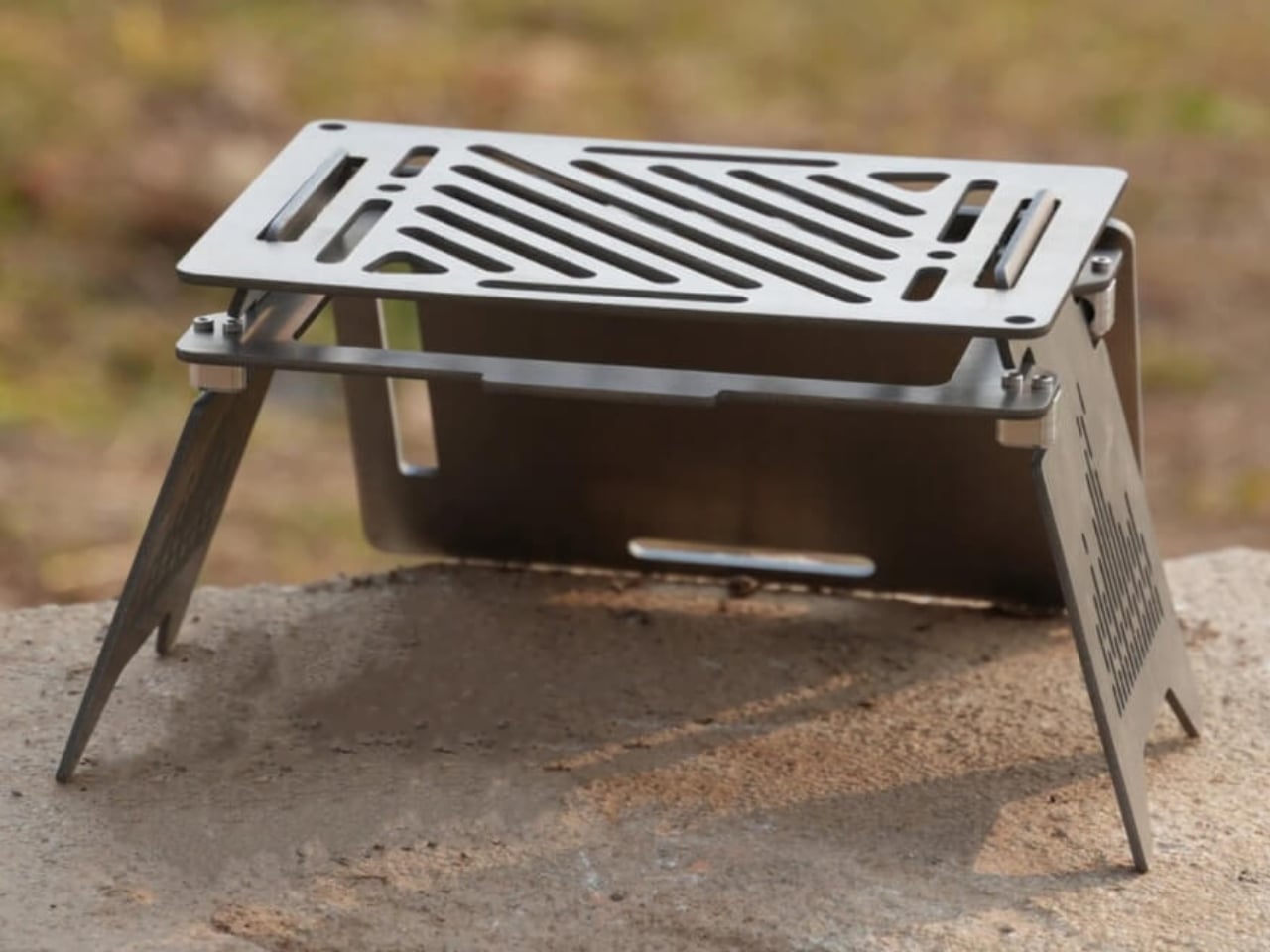
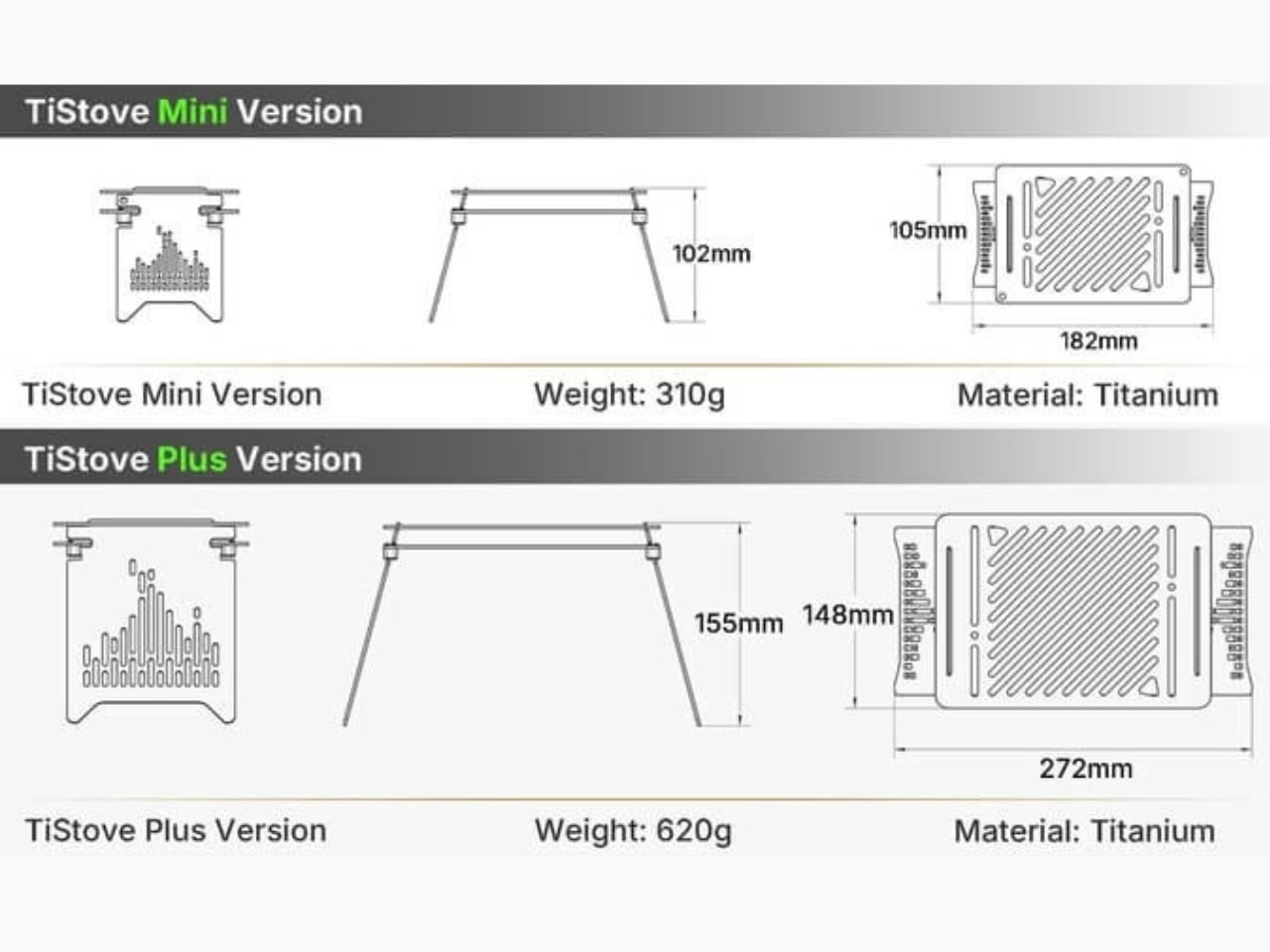
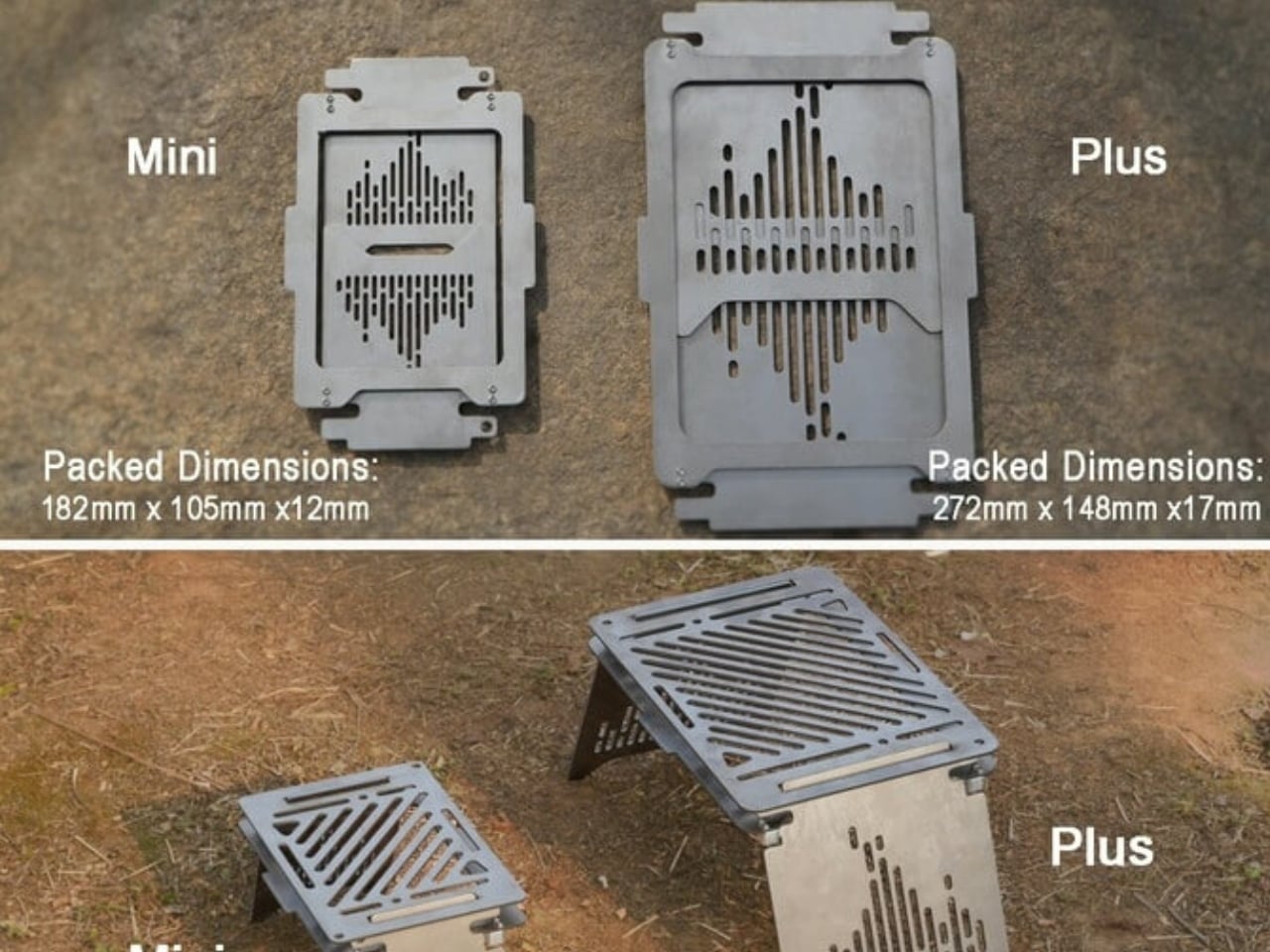
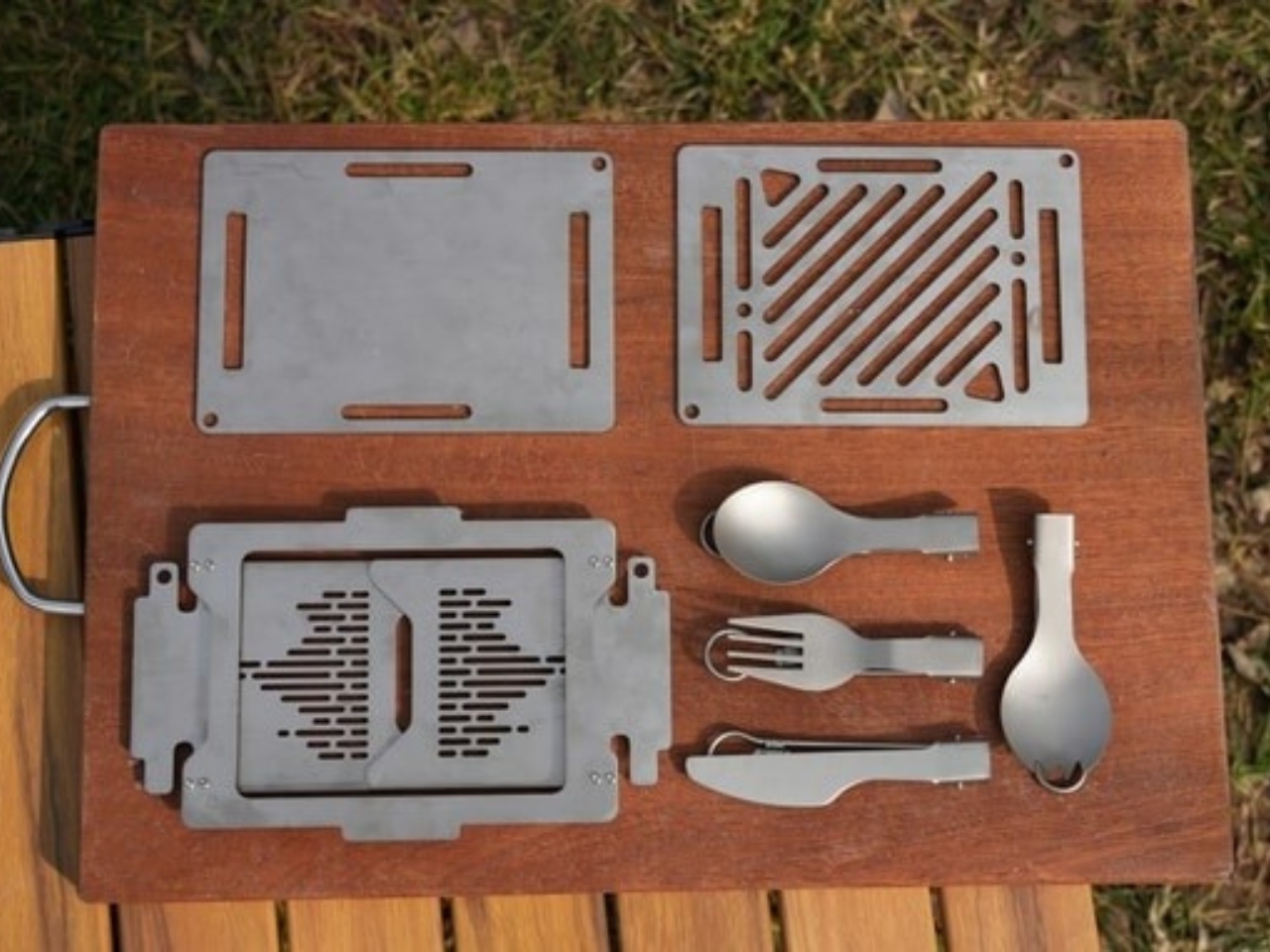
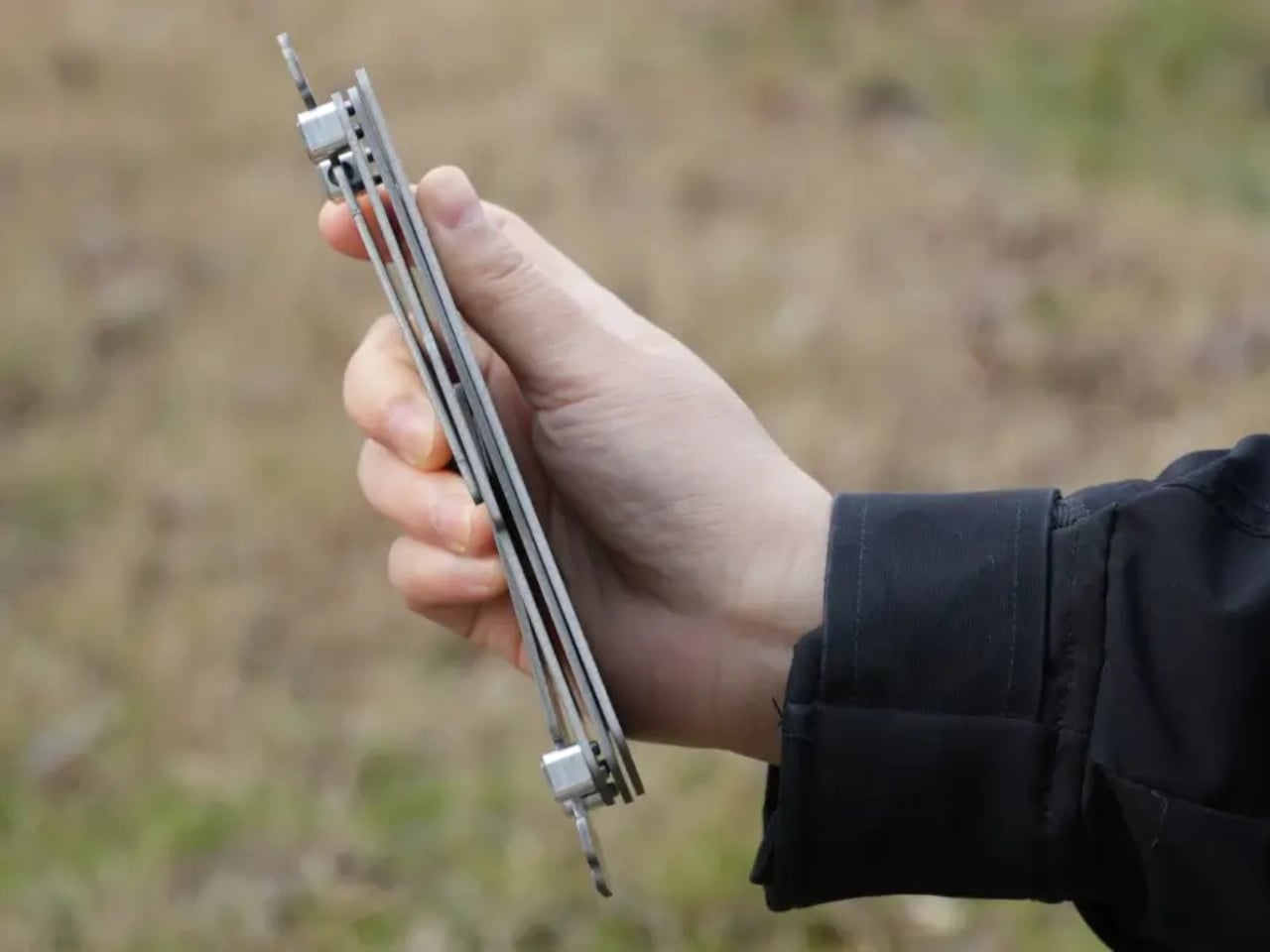
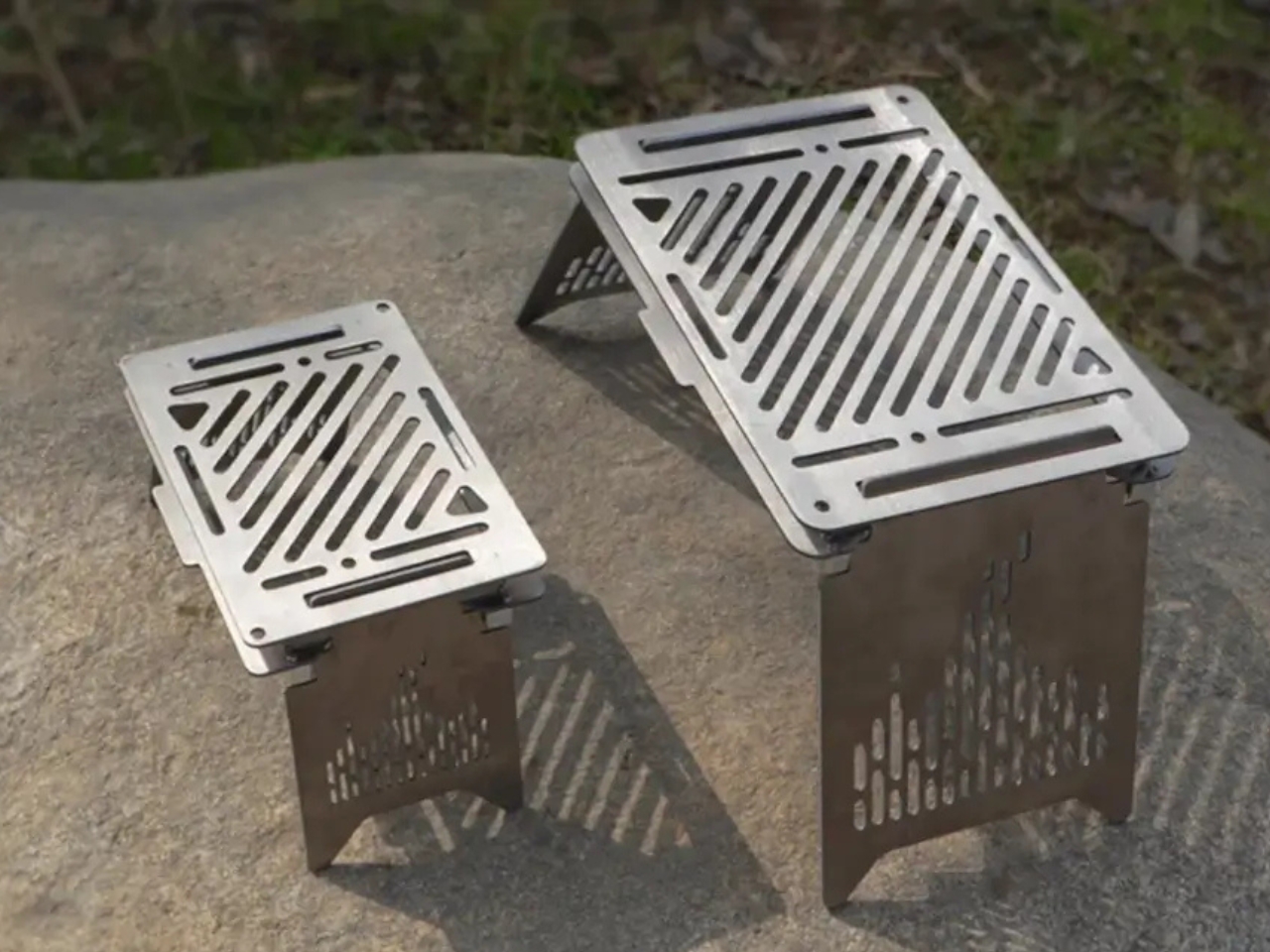
The concept is deceptively simple. Take five titanium pieces (two foldable legs and three cooking panels), make them pack completely flat, and keep the whole setup under 1.5 pounds. But what makes this more interesting than just another ultralight camping gadget is how Camprit rethought what a portable stove should actually do.

Designer: Camprit

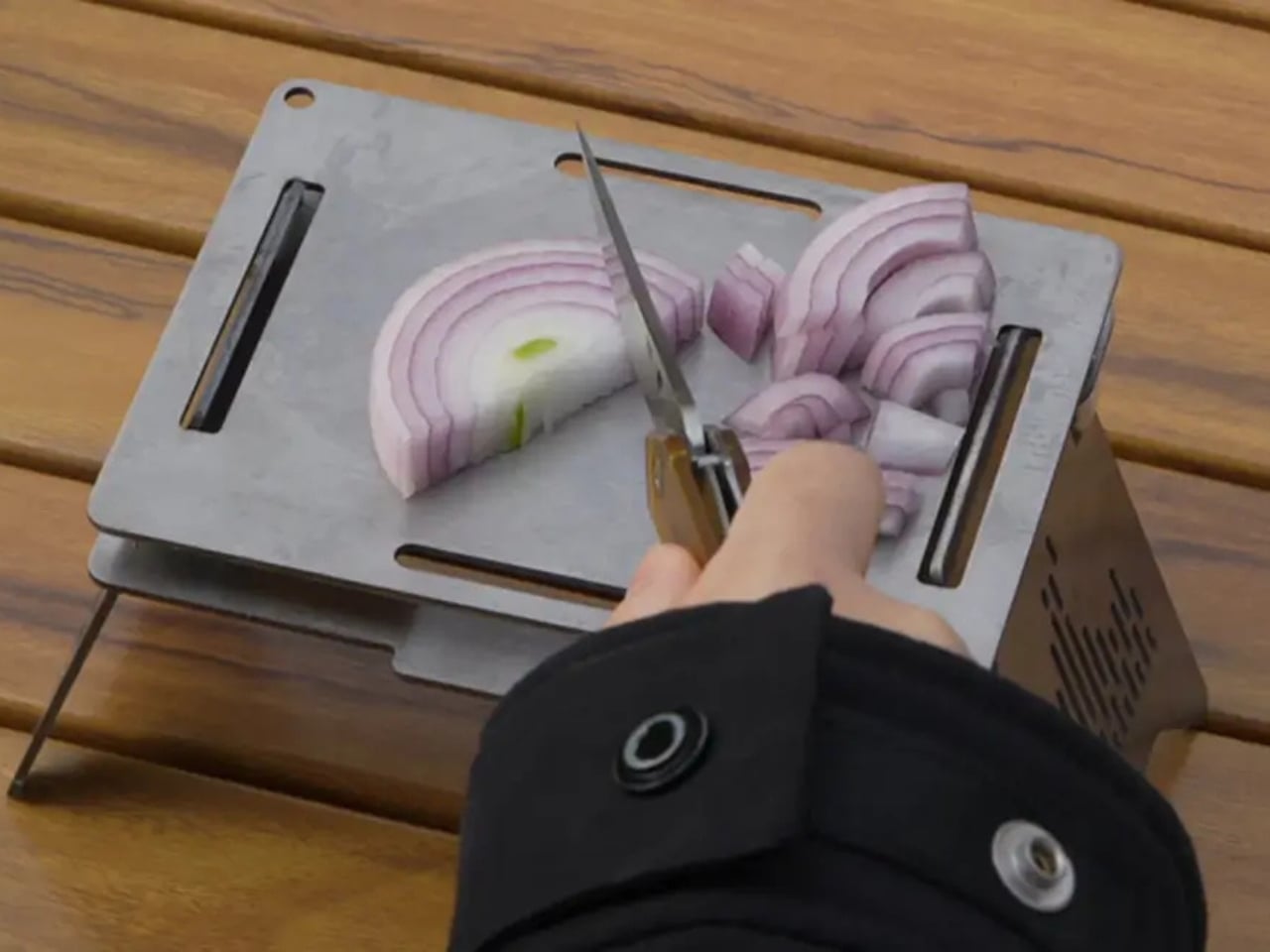
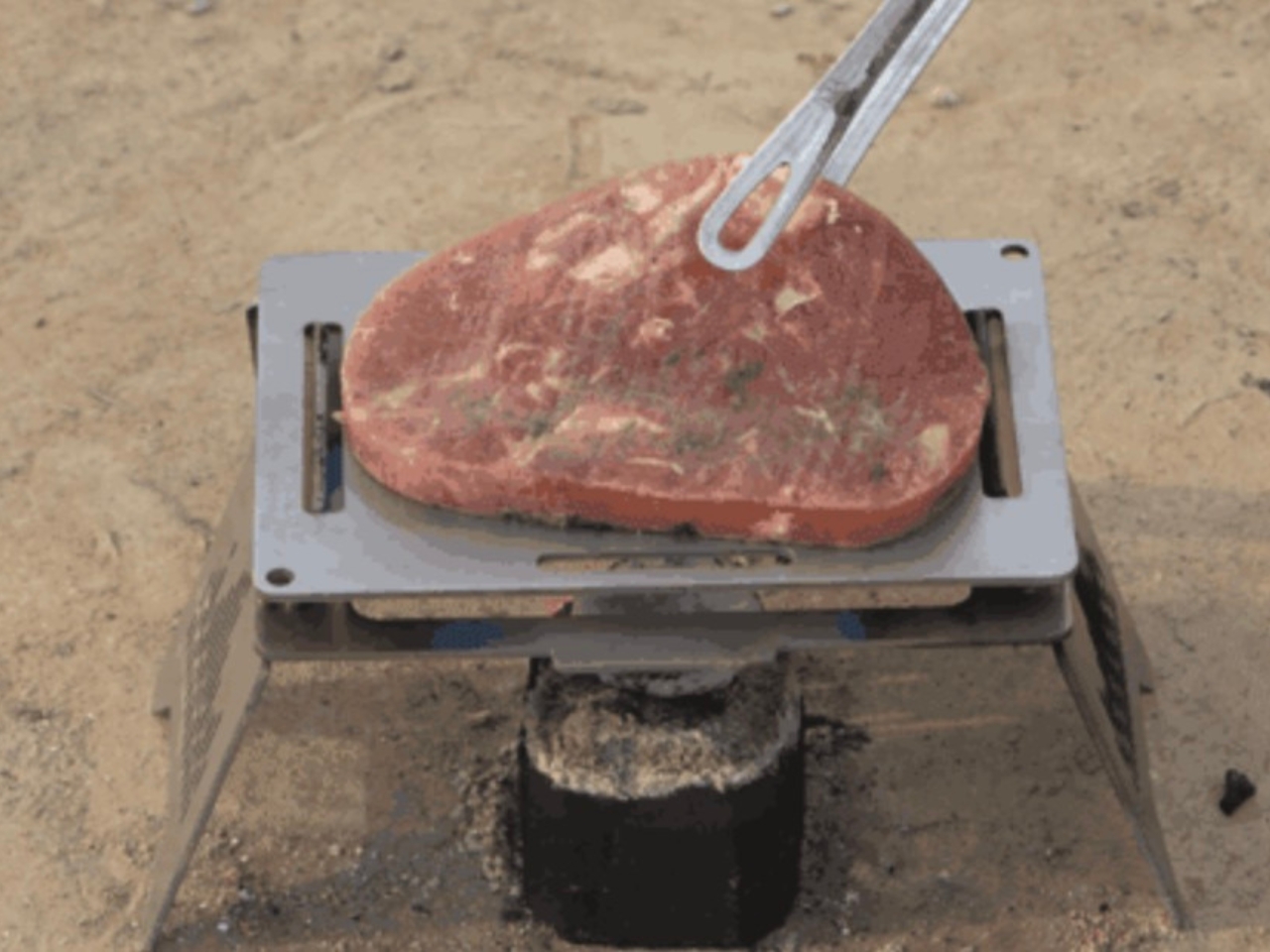
Most camp stoves force you into a specific cooking method. You’re either boiling water for freeze-dried meals or you’re lugging around a full camping kitchen. TiStove splits the difference by giving you three interchangeable panels that transform the cooking surface. The base panel handles your standard boiling needs. Swap in the grill panel and you can cook directly on the grates. Want to sear something? There’s a panel for that too. It’s modular cooking without the usual camping compromise of eating yet another packet of instant noodles.

The titanium construction isn’t just about keeping weight down, though that’s obviously a factor when you’re counting grams in your pack. Titanium brings that combination of strength and heat resistance that makes it ideal for something that needs to withstand direct flame while remaining stable on uneven ground. The material also means the stove won’t corrode when it inevitably gets wet, smoky, or covered in whatever wilderness conditions you throw at it.

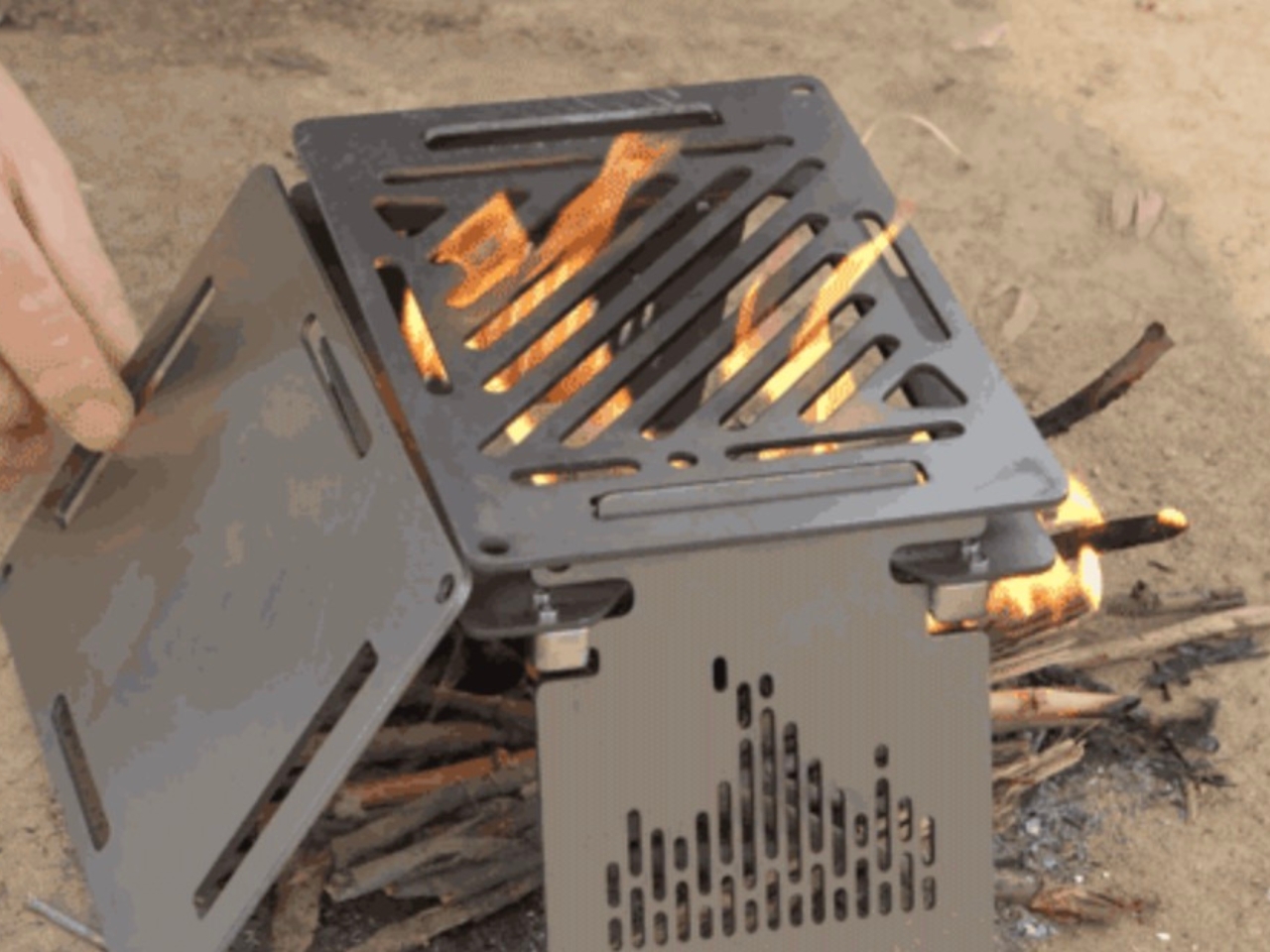
What’s particularly clever is the no-assembly approach. Anyone who’s fumbled with camping gear in fading daylight knows that “some assembly required” translates to “good luck finding that tiny connector piece you just dropped in the dirt.” TiStove unfolds rather than requiring construction, which means you’re cooking faster and cursing less.

The fuel flexibility adds another practical layer. Unlike canister stoves that leave you dependent on finding the right fuel cartridge, this system burns wood, twigs, branches, basically whatever dry combustibles you can scavenge. That’s not just convenient but also more sustainable than constantly buying and disposing of fuel canisters. Plus, there’s something primal and satisfying about cooking over actual fire rather than a blue gas flame.

Camprit isn’t new to this space. They previously launched FireNest, which followed a similar modular, flat-pack titanium philosophy. With TiStove, they’ve refined the concept into something that feels more like a complete cooking system than a single-purpose stove.

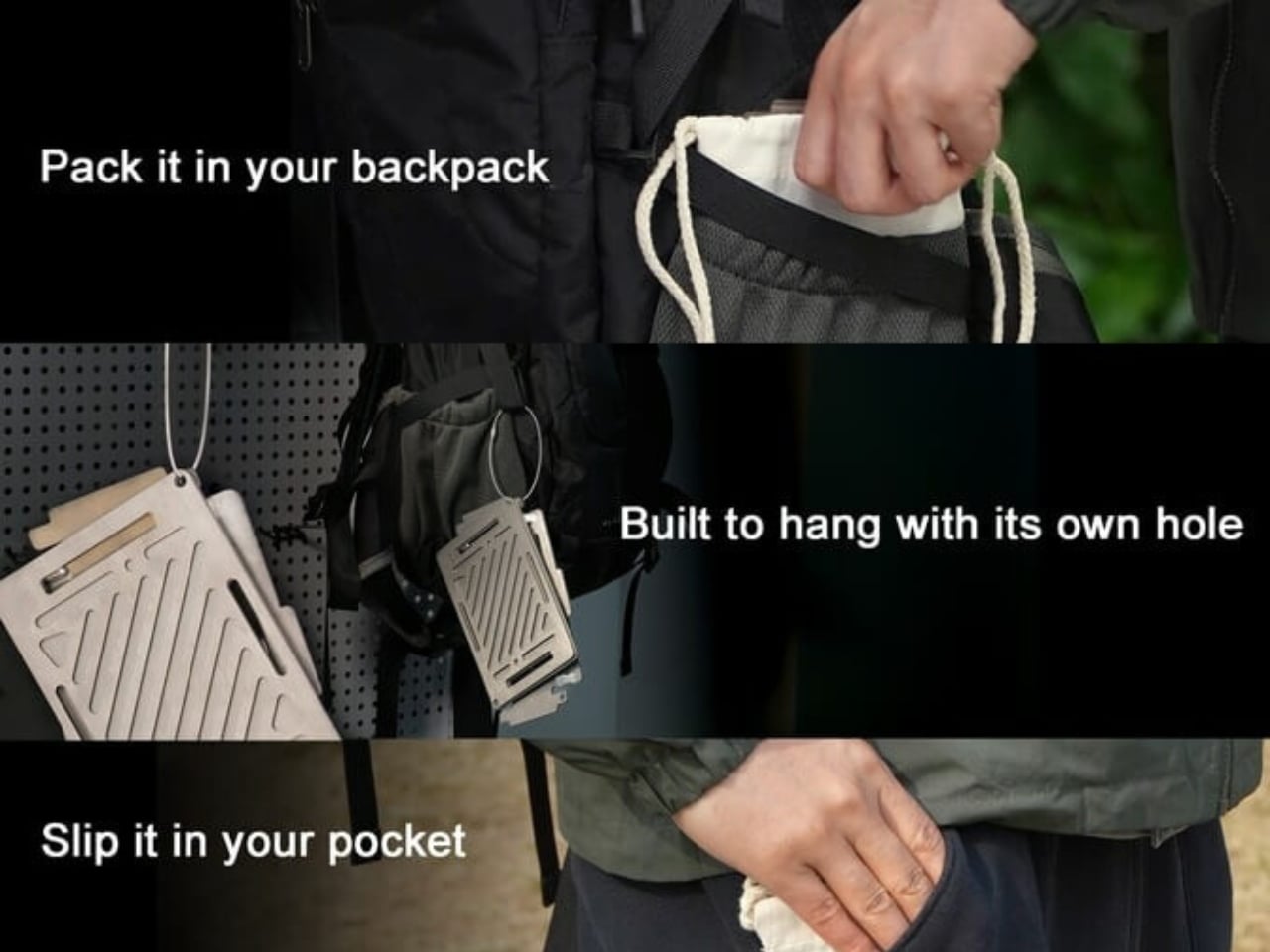
The flat-pack design also addresses one of camping’s most annoying realities: pack space is precious. When your stove collapses to basically the thickness of a laptop, it slides into spaces that bulkier gear could never occupy. That means more room for the things that actually matter, like extra food or that book you’re definitely going to read by the campfire.

There’s a broader trend here worth noting. Outdoor gear has been shedding the old “rugged means bulky” mentality for years now, but projects like TiStove show how far that evolution has come. This isn’t about sacrificing functionality for portability. It’s about questioning whether those trade-offs were ever necessary in the first place.

The Hong Kong-based company seems to understand that good design isn’t about adding features but about removing friction. Every aspect of TiStove, from the material choice to the panel system to the folding mechanism, eliminates a pain point. Can’t find fuel? Burn sticks. Pack too heavy? Here’s titanium. Tired of one-note camping meals? Swap the cooking surface.

Whether you’re a weekend warrior or someone who just appreciates clever product design, TiStove represents the kind of functional innovation that makes you wonder why it took this long. It’s not reinventing fire, just making it easier to cook over one. And sometimes, that’s exactly what good design should do.

The post Camprit Just Solved Camping’s Bulkiest Problem With 5 Titanium Pieces first appeared on Yanko Design.

This Bedside Charger UV-Cleans Your Phone and Pops It Up Like Toast

Phones go to bed dirty. They’ve been in your hands, on tables, in pockets, collecting bacteria all day, and they usually charge on a nightstand next to where you sleep without ever being cleaned. UV sanitizers exist, but most are clinical white boxes that feel more like medical equipment than something you’d want on your bedside table, and they rarely do anything beyond sterilization.

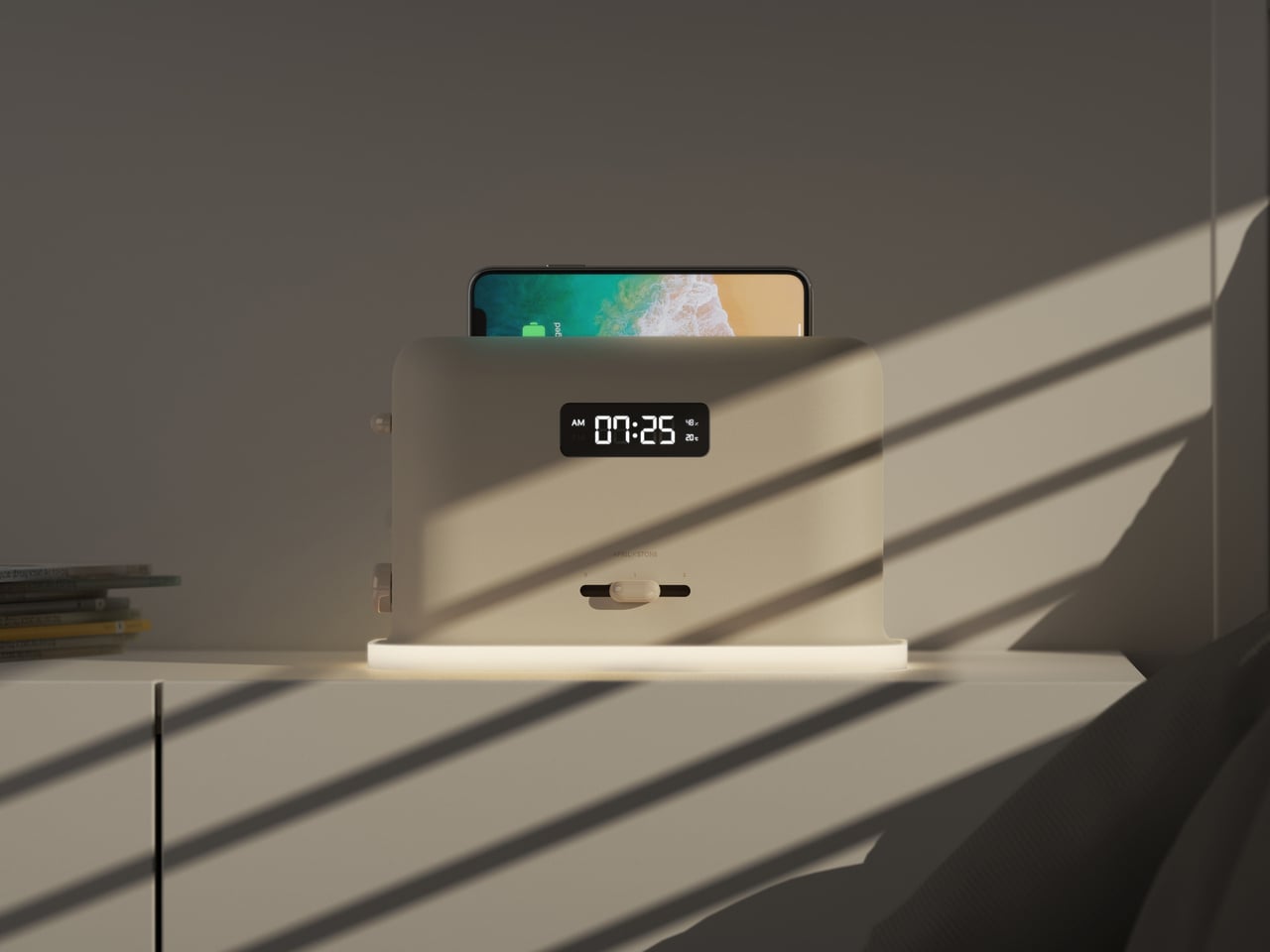
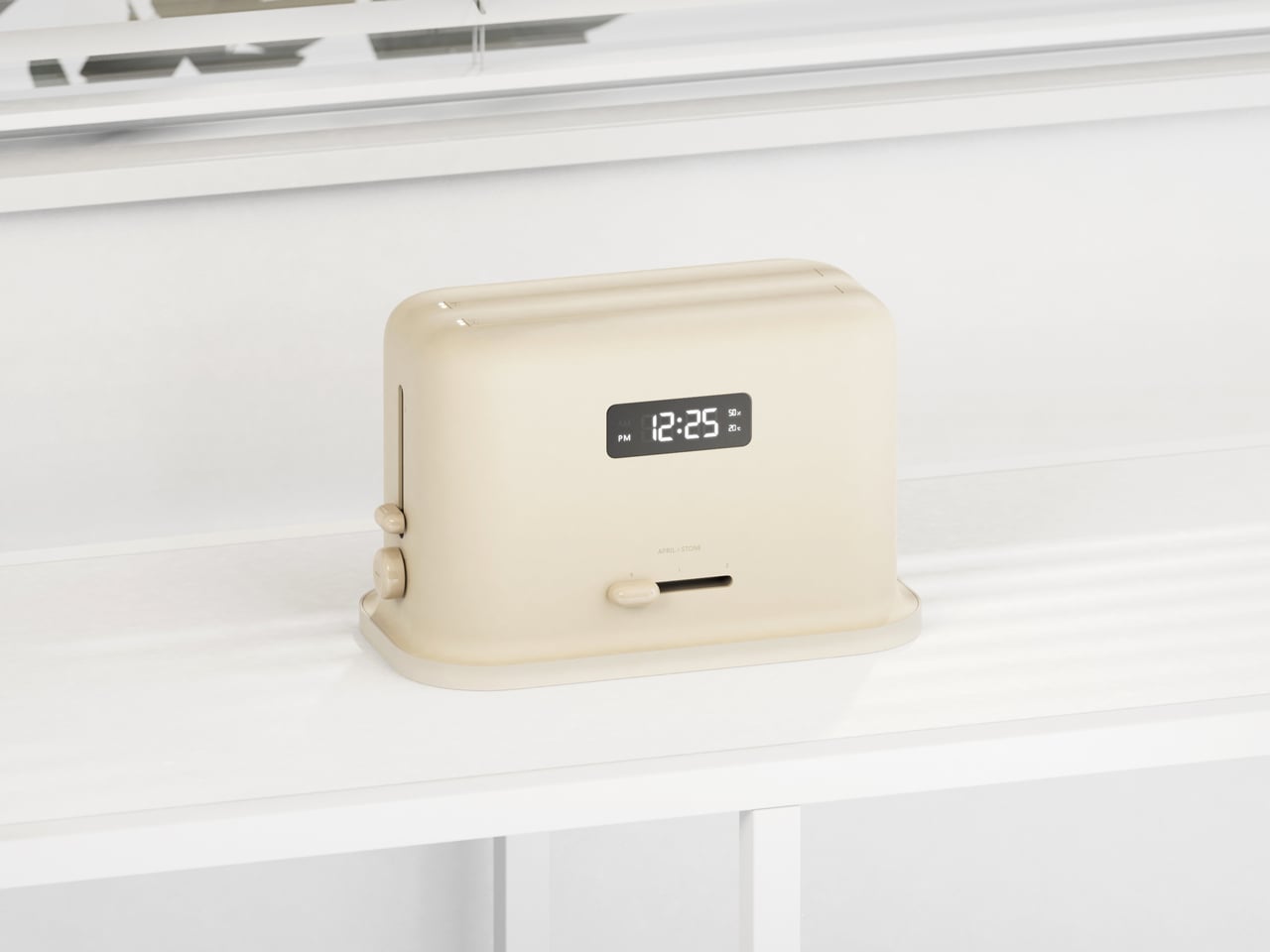
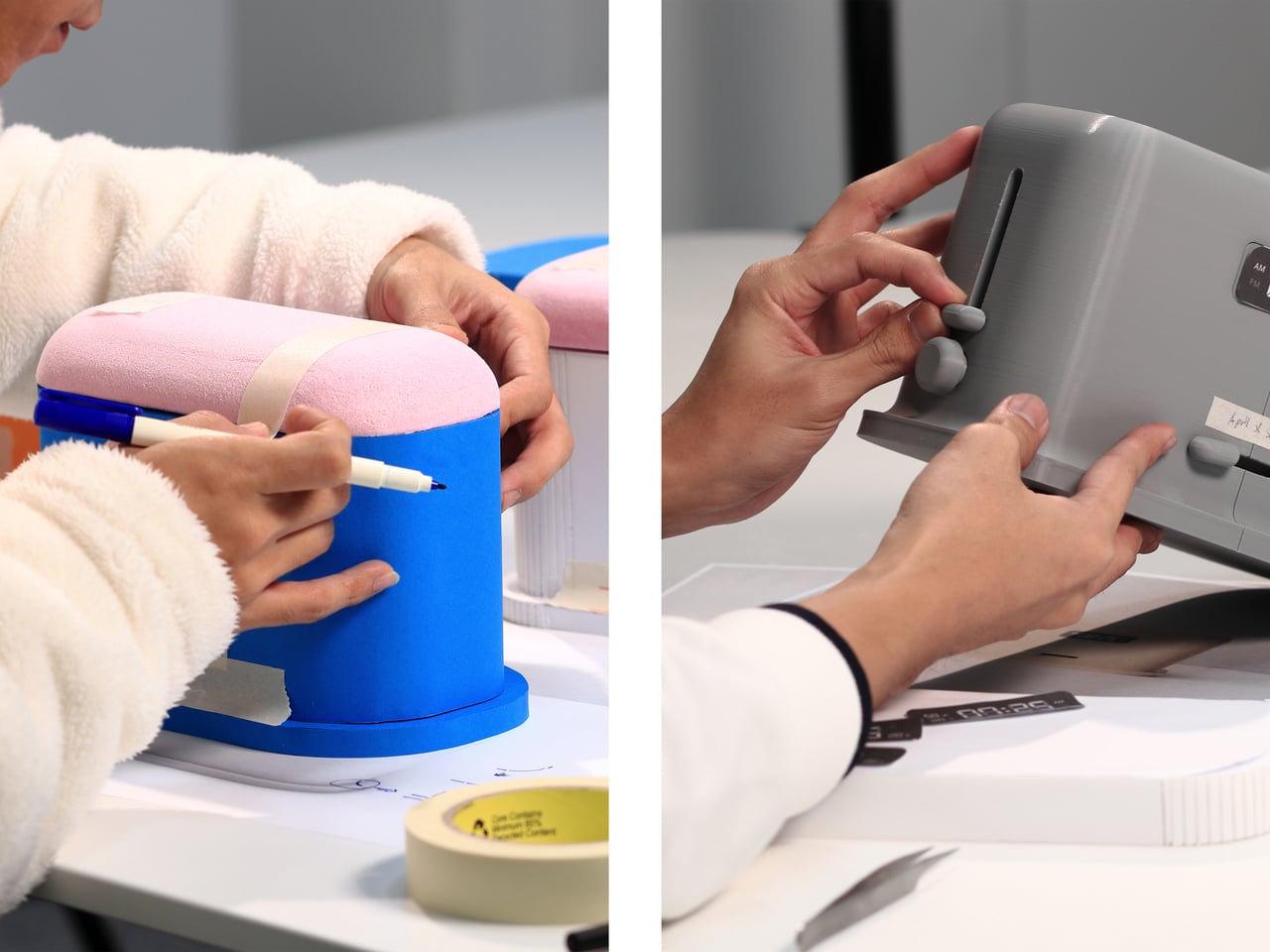
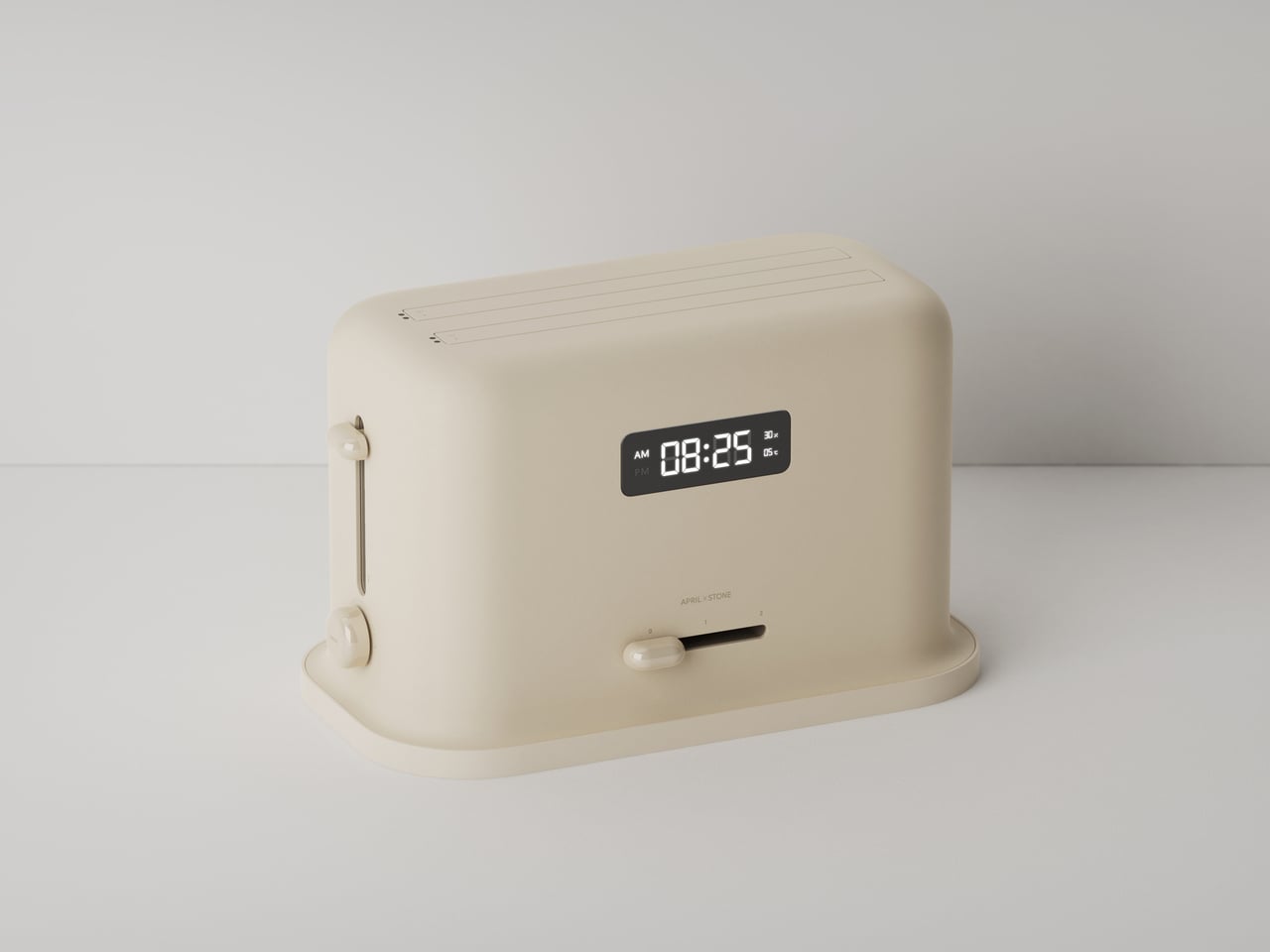
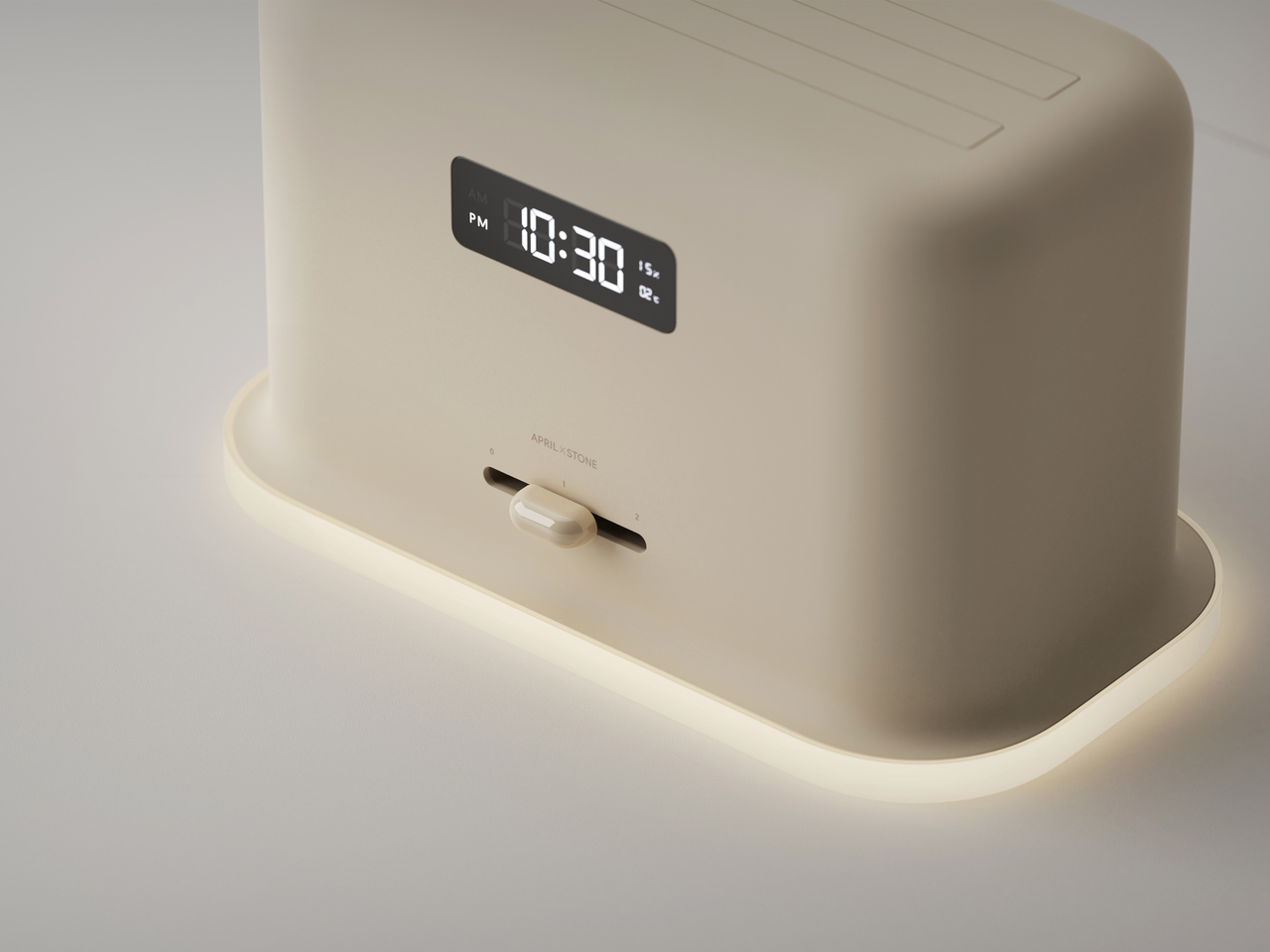
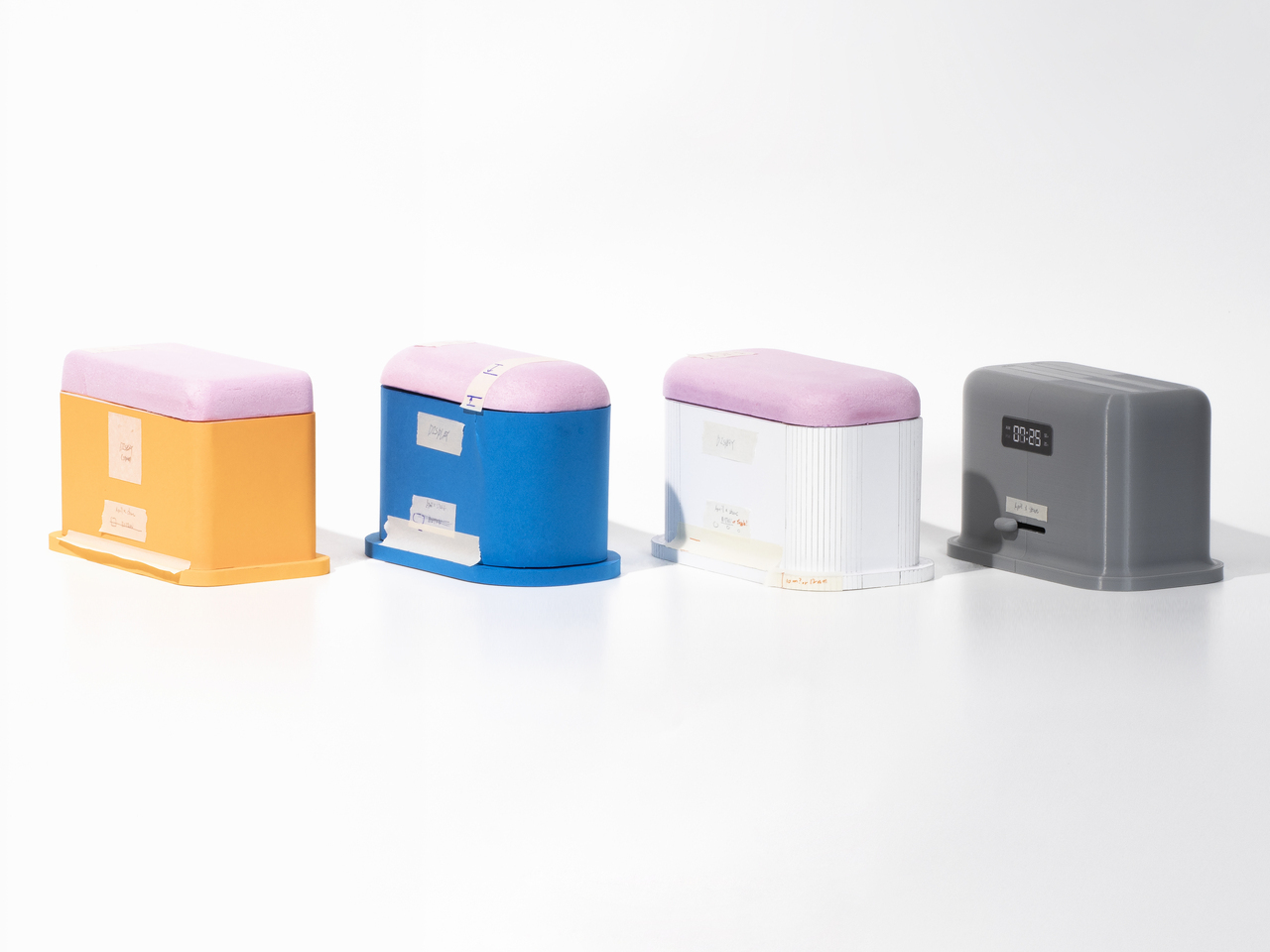
The Phone Toaster is a charging and sterilization device designed by DIVE for Aprill x Stone that borrows the form and ritual of an analog toaster. You slide your phone into a vertical slot at the top before bed, and the device charges it, sterilizes it with what’s likely UV light inside the chamber, and then “delivers” it back with an alarm in the morning, like toast popping up when it’s ready.

Designers: Minki Kim, Kyumin Hwang (DIVE Design)

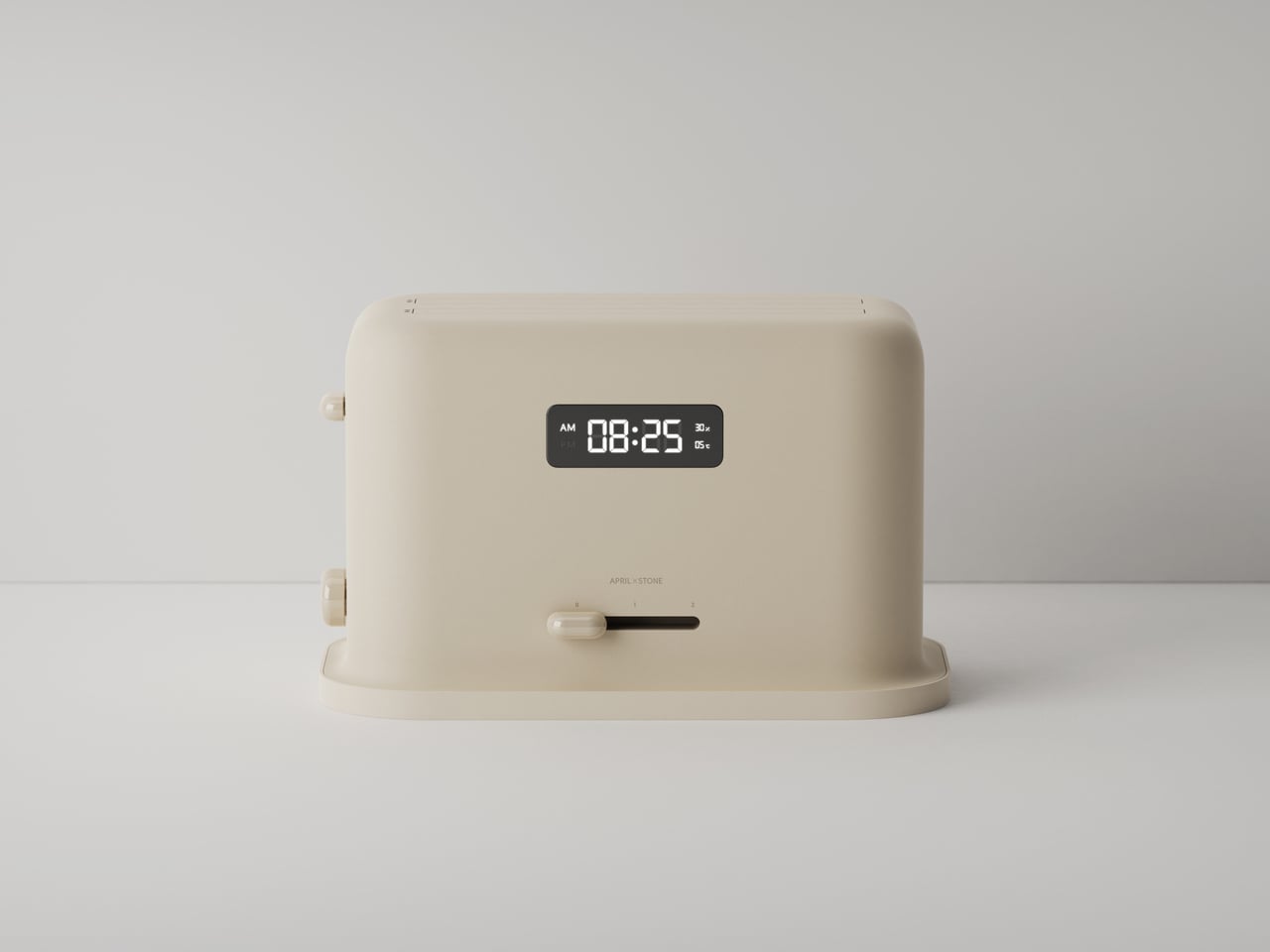
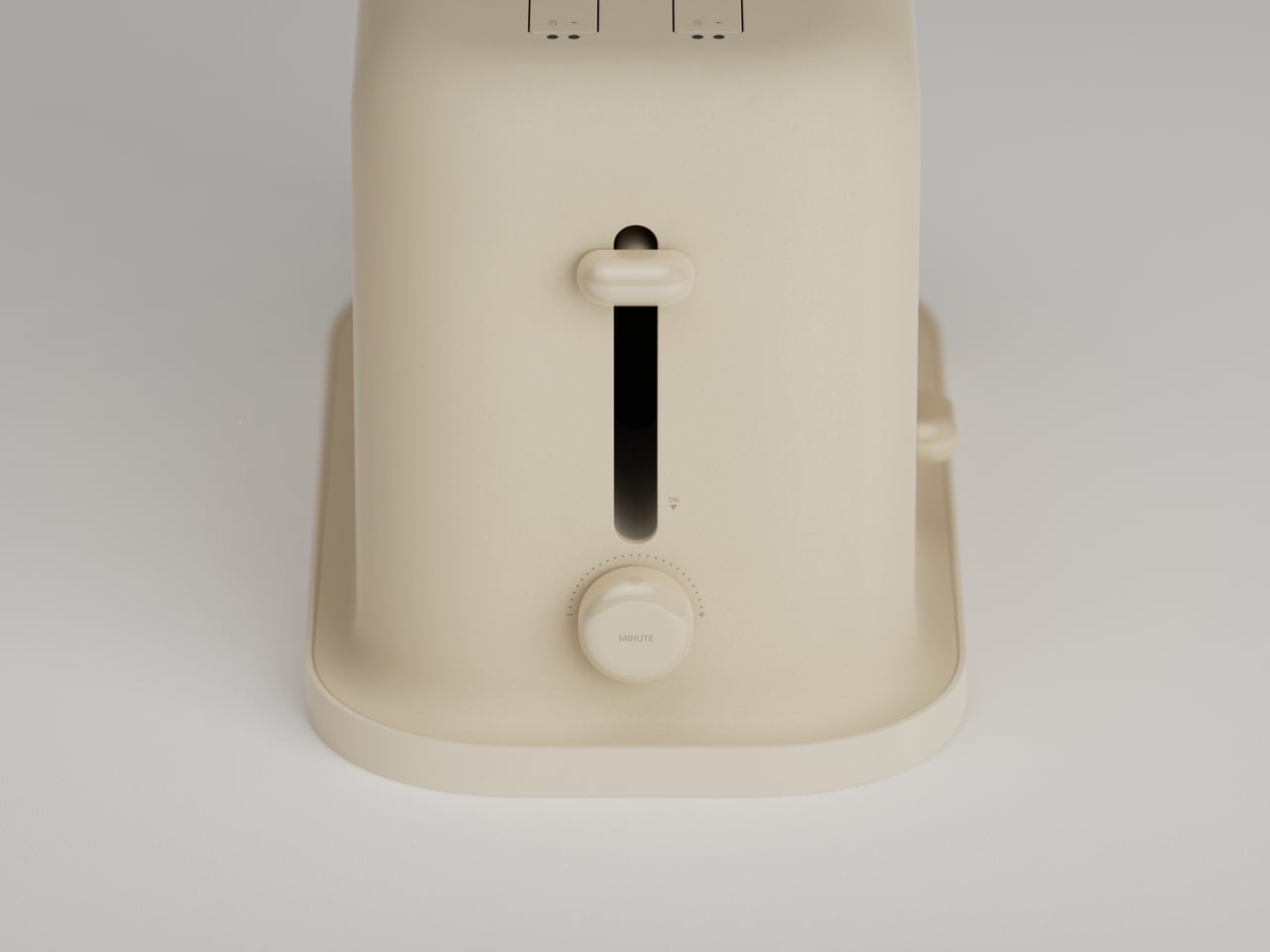
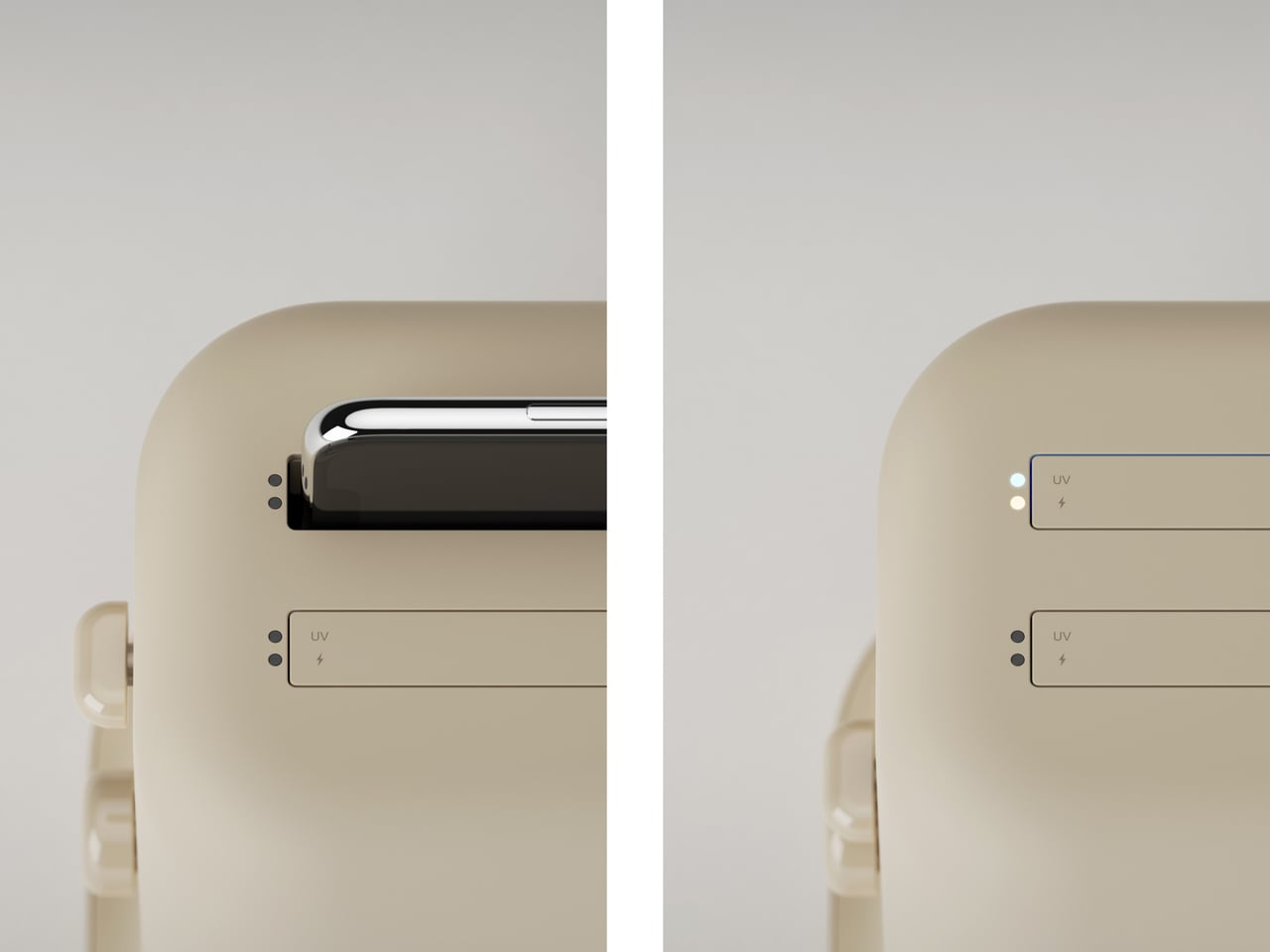
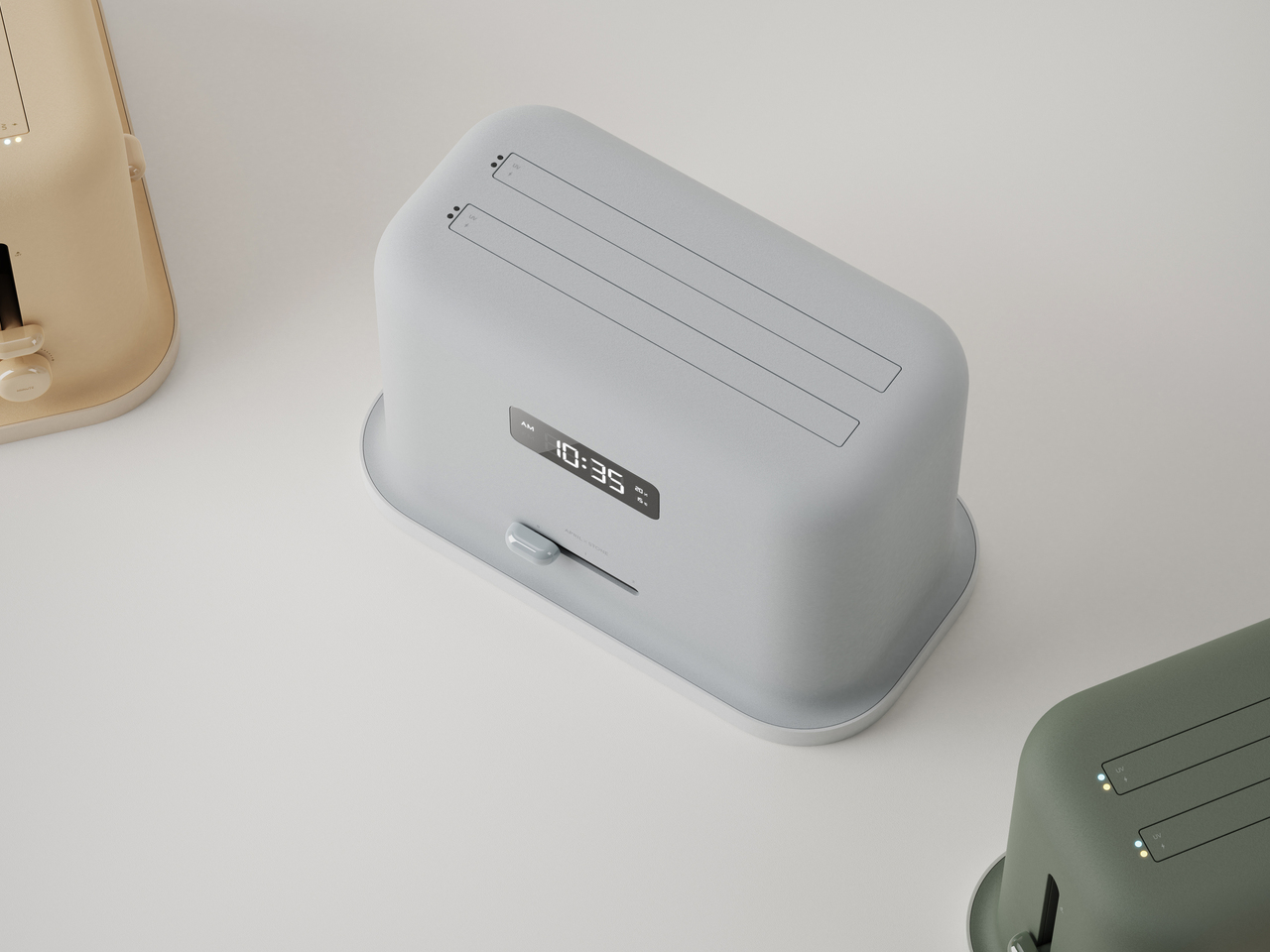
The bedtime ritual is straightforward. You drop your phone into the slot, pull the front slider down like a toaster lever, and the device takes over. Inside, the phone charges while UV light cycles through to kill surface bacteria. A digital clock on the front keeps time, and the base glows with a soft, indirect LED ring that casts pastel light from underneath, making the space feel cozier instead of clinical before you turn off the lights.

When the alarm goes off in the morning, the device notifies you that your phone is fully charged and sterilized, ready to start another day. The scenario is meant to mirror the experience of making toast, inserting something, waiting, and getting it back transformed. Instead of bread that’s warm and crispy, you get a phone that’s clean and charged, which is a surprisingly fitting metaphor when you think about it.

The controls lean into that toaster language. Two small buttons on the top handle alarm and brightness settings, while the front slider and round, glossy knob feel tactile and familiar. The strong contrast between the matte, textured body and the shiny button gives the small form a bit of personality, making it read more like a playful bedside object than a piece of tech that’s just doing a job quietly in the background.

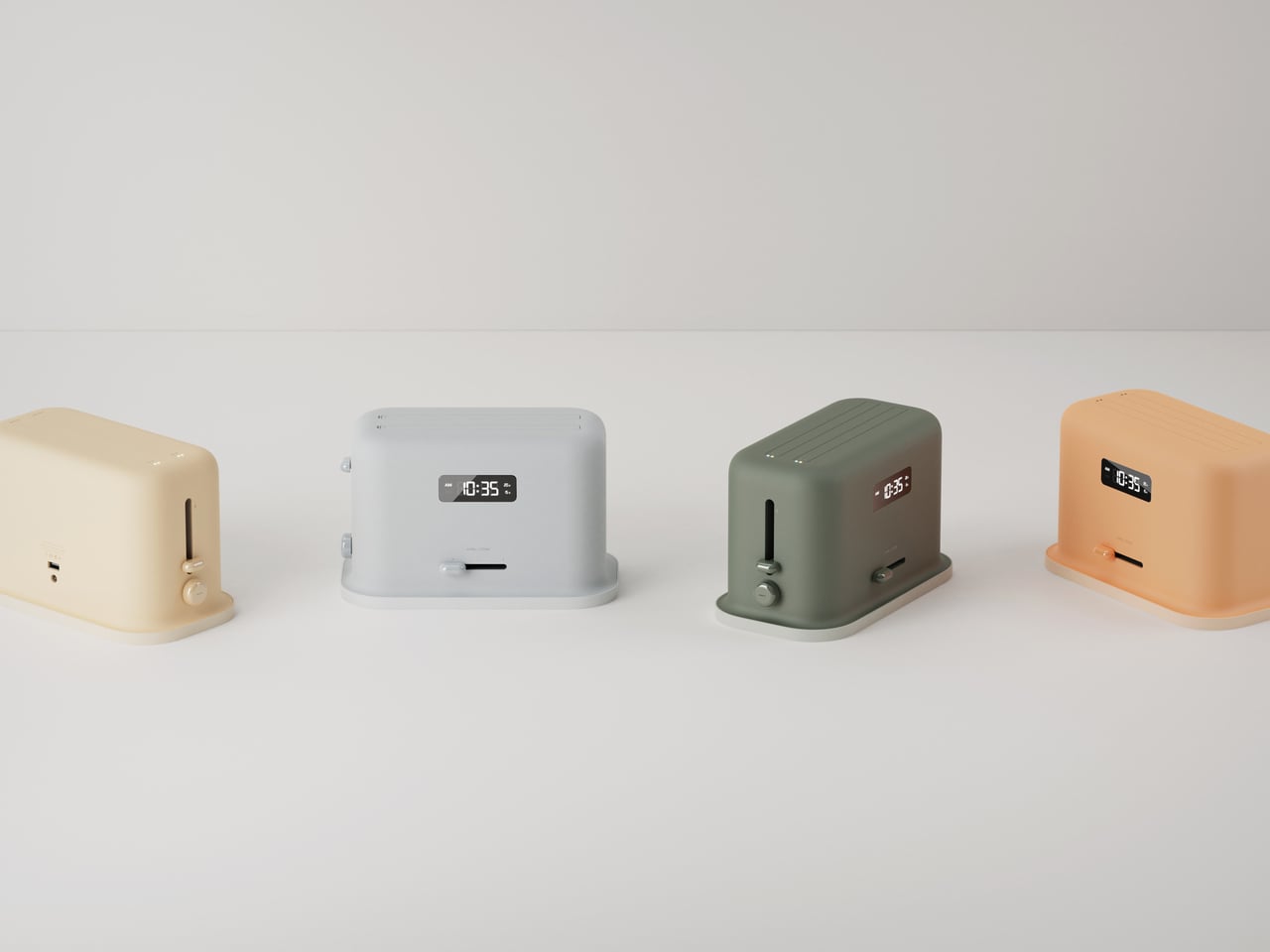
Color options include pastel blue, beige, yellow-orange, sage green, and gray, all meant to appeal to millennials who want their gadgets to reflect their personality instead of just sitting there in generic black or white. The soft hues and bottom lighting are designed to make the toaster feel like part of a calm nighttime routine rather than another device demanding attention.

Phone Toaster reframes phone sterilization and charging as a small bedtime ritual instead of something you forget about or do with a tangle of cables. Borrowing the toaster’s form, controls, and even the “pop” delivery moment, it makes putting your phone away at night feel intentional and a bit playful. The design is a gentle nudge that says hygiene tech doesn’t have to look clinical to be taken seriously.

The post This Bedside Charger UV-Cleans Your Phone and Pops It Up Like Toast first appeared on Yanko Design.

Timbercraft Built a Tiny Home That Actually Feels Like Your Cozy Space

There’s something refreshing about a tiny house that doesn’t try to be everything to everyone. The Ynez by Timbercraft Tiny Homes embraces exactly what it is: a compact, beautifully crafted cottage on wheels that proves you don’t need square footage to have style.

At just 20 feet long and 8.5 feet wide, the Ynez represents a departure from Timbercraft’s usual lineup of larger, more luxurious models. But what it lacks in size, it more than makes up for in thoughtful design and rustic charm. This is the kind of tiny house that makes you reconsider what you actually need versus what you think you need.

Designer: Timbercraft Tiny Homes

The exterior strikes that sweet spot between understated and eye-catching. Engineered wood siding in a warm beige tone wraps the structure, punctuated by crisp white trim and crimson red windows that add just enough personality without veering into quirky territory. A metal roof tops it all off, giving the home a cottage-like appearance that feels both timeless and practical. There’s even a small front porch area and an exterior storage box, because even in 150 square feet, outdoor space matters.

Step inside and you’re greeted by shiplap walls and pine flooring that immediately establish the home’s rustic credentials. The Alabama-based builders clearly understand that in a space this compact, material choices carry extra weight. Every surface counts, and the warm wood tones create a cohesive look that feels intentional rather than cramped.

The layout follows a straightforward approach that works. The kitchen occupies a decent portion of the floor plan, featuring upper cabinets and a large sink that suggests this isn’t just a space for reheating takeout. Small appliances keep things functional without overwhelming the room, and there’s enough counter space to actually prepare a meal. It’s a kitchen designed for people who cook, just on a smaller scale.

Adjacent to the kitchen, the living area provides room for a small couch or a couple of chairs. It’s not a sprawling entertainment space, but it doesn’t need to be. This is where the Ynez’s philosophy becomes clear: it’s designed for people who want to live simply without feeling deprived. You can have friends over. You can curl up with a book. You just can’t host a dinner party for twelve, and that’s perfectly fine.

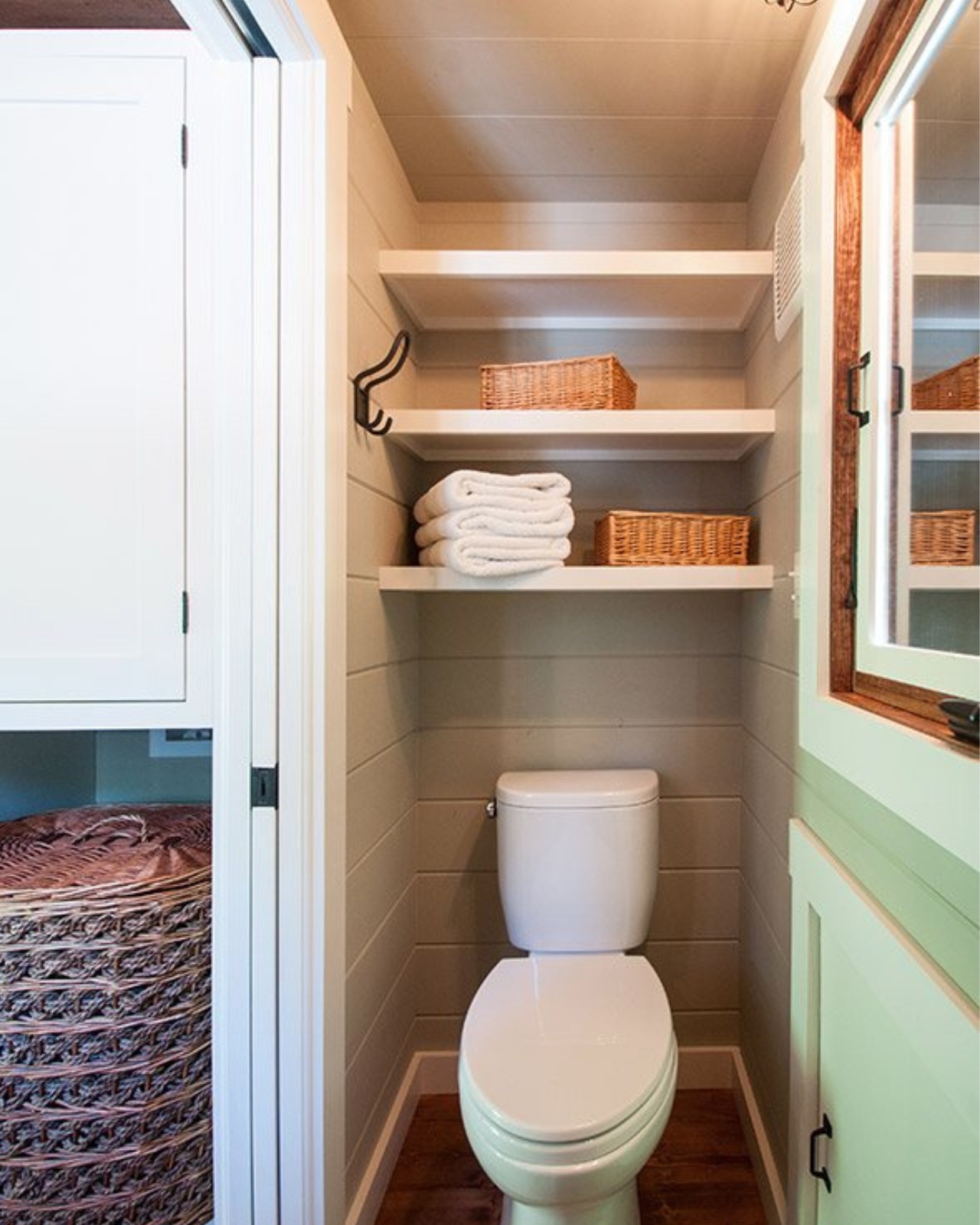
The bathroom deserves special mention because tiny house bathrooms can be hit or miss. This one includes a ceramic tile shower and a standard flushing toilet, housed in what is admittedly a snug space. But there’s something to be said for a real shower with real tile, rather than the cramped plastic stalls you sometimes see in tiny homes. A built-in closet on the main floor handles storage needs without eating into precious square footage.

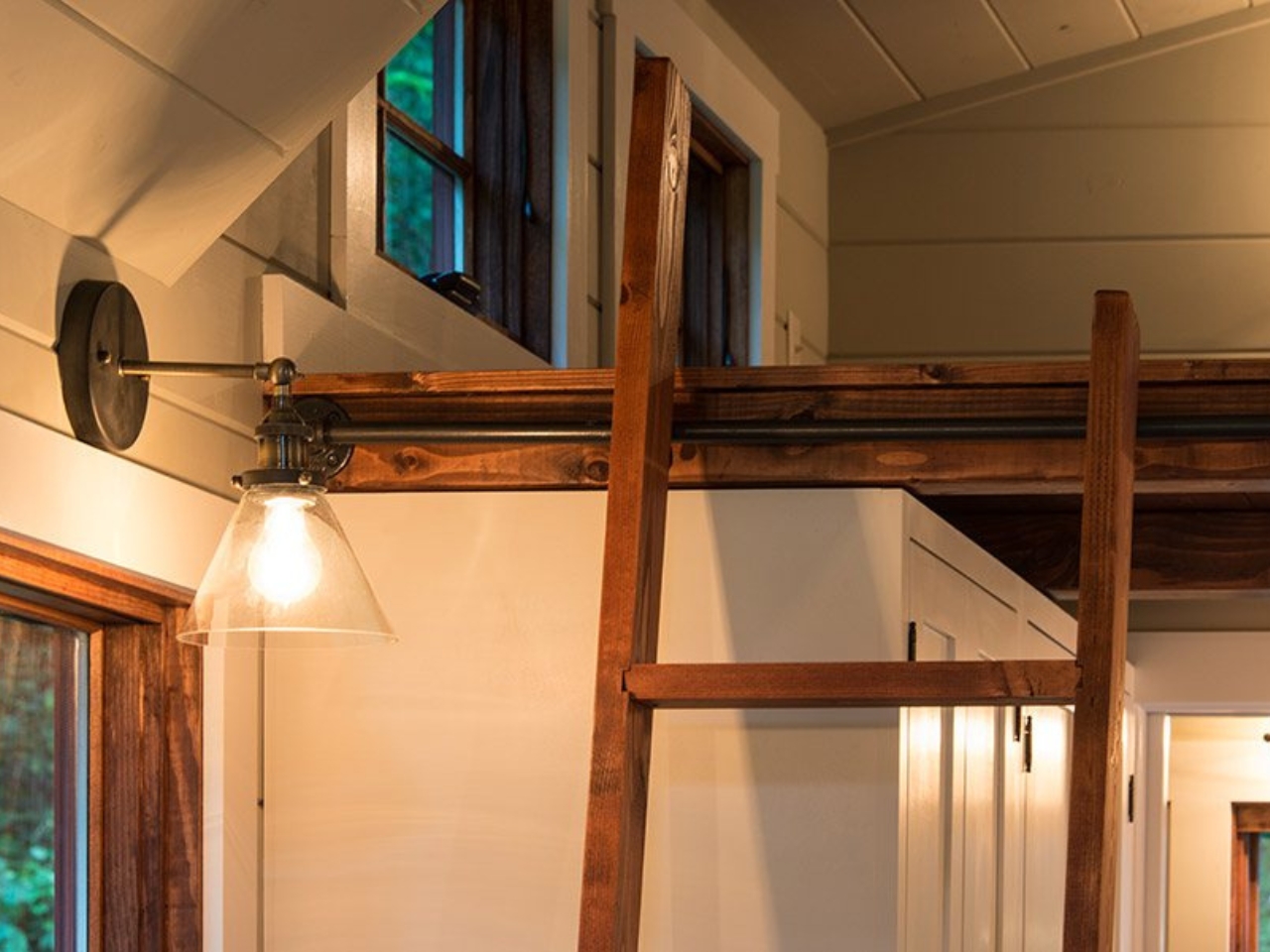
Upstairs, the single loft bedroom accessed by ladder provides sleeping space for two with room for a double bed. The ceiling is low, as it always is in tiny house lofts, but that’s the trade-off for keeping the home easy to tow and park. This isn’t a space where you’ll be doing yoga in the morning, but it serves its purpose as a cozy sleeping nook.

What makes the Ynez particularly interesting is its positioning in the tiny house market. With a base price around $52,000, it represents a more accessible entry point compared to larger models that can easily climb past six figures. It’s small enough to tow with many standard trucks, making it practical for people who actually want to move their tiny house around rather than park it permanently.

The Ynez doesn’t reinvent tiny house living or introduce groundbreaking features. Instead, it demonstrates that solid craftsmanship and thoughtful design can create a compelling home within serious space constraints. It’s a reminder that bigger isn’t always better, and that sometimes the most interesting design solutions come from working within tight parameters rather than against them.

For anyone considering tiny house living, the Ynez offers a realistic preview of what downsizing actually looks like. It’s not about sacrifice. It’s about editing your life down to what matters most and finding a space that accommodates that vision. At 150 square feet, that’s exactly what this little cottage on wheels delivers.

The post Timbercraft Built a Tiny Home That Actually Feels Like Your Cozy Space first appeared on Yanko Design.

Airbnb is testing out AI search with a ‘small percentage’ of users

Airbnb plans to double down on artificial intelligence to improve its user experience for both guests and hosts. During a fourth-quarter earnings call, Airbnb's CEO, Brian Chesky, said the company is building an "AI-native experience" aimed at helping guests book trips, assisting hosts with their listings, and running the company more efficiently. According to Chesky, there's an AI search tool to help guests book trips that's live for a small percentage of users right now.

In a shareholder letter posted on Airbnb's website, the company said it's conducting early testing with an AI-powered search that is "focused on giving guests a more natural way to describe what they’re looking for, and ask questions about the listing and location." The letter added that the AI search tool will become "a more comprehensive and intuitive search experience that extends through the trip," but the company didn't offer a definitive date on when it would be available to the public.

While it may feel like Airbnb is late to incorporating AI into its ecosystem, it introduced an AI chatbot that handles customer service requests last year. While the AI agent is only available to users in North America currently, Airbnb said that it already handles a third of customer requests without the need for human intervention, as reported by TechCrunch. Chesky also said during the earnings call that the AI chatbot would tackle "significantly more" customer tickets a year from now and that it would roll out to the rest of the world.

This article originally appeared on Engadget at https://www.engadget.com/ai/airbnb-is-testing-out-ai-search-with-a-small-percentage-of-users-203054011.html?src=rss

Nike Just Turned Air Into Team USA’s Smartest Olympic Jacket

Remember when Nike introduced the Air Milano jacket a few months back? The inflatable jacket that promised to solve the age-old runner’s dilemma of overheating mid-run? Well, it just made its official debut at the 2026 Winter Olympics in Milan, and Nike’s chief design officer Martin Lotti is making it clear: this isn’t some novelty stunt.

The jacket’s now being worn by Team USA athletes during medal ceremonies, which is pretty much the ultimate endorsement for any piece of sportswear. But beyond the Olympic spotlight, there are some fascinating new details emerging about why this jacket matters more than you might think.

Designer: Nike

Lotti explained that Nike has been working with air as a cushioning technology in footwear for half a century, but they’ve barely scratched the surface of what air can do. The interesting twist? From a design perspective, they’re working with a medium that’s completely invisible. You can’t see air, you can’t touch it in the traditional sense, yet it’s proving to be one of the most versatile materials in their arsenal.

The real game changer here is how the jacket addresses temperature regulation. According to Lotti, runners face this problem constantly. You start your morning run when it’s cold, you warm up as you go, and then what? Most of us just tie the jacket around our waist without thinking about it. It’s such an automatic response that we don’t even realize we’re settling for an imperfect solution.
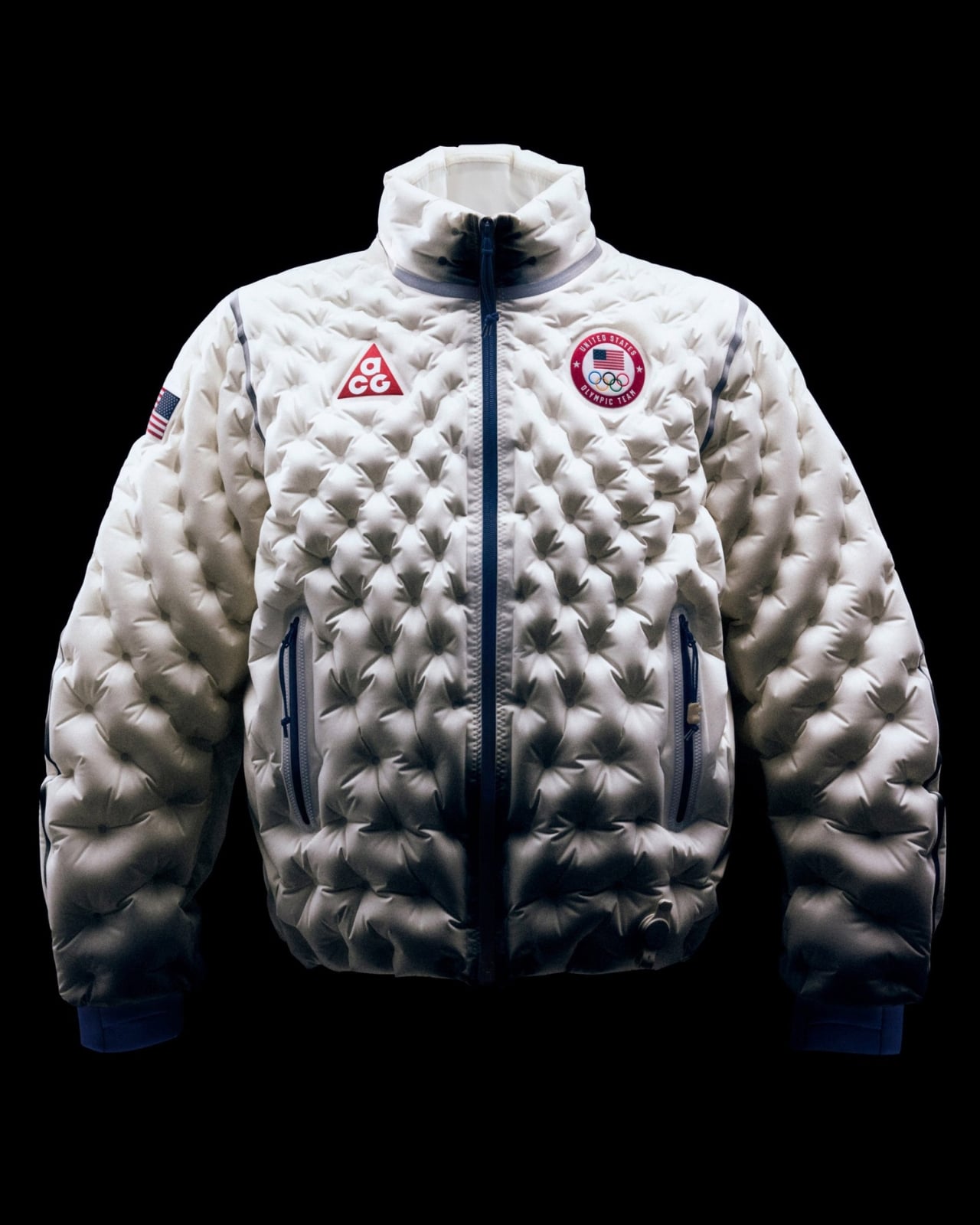
With the Air Milano, that problem disappears. The jacket inflates with a small battery-powered fan through a valve on the front, and it takes about 20 seconds to go from windbreaker to mid-weight puffer. Need to cool down? Press the same valve and gradually release the air. The whole process happens while you’re moving, which means you can adjust your warmth on the fly without breaking stride or stopping to fuss with layers.

One of the most compelling arguments for this technology is the weight-to-warmth ratio. Traditional down puffers have a fatal flaw: when they get wet, they lose their insulating properties. The feathers clump together, the jacket gets heavy, and suddenly you’re wearing a soggy, useless shell. Because the Air Milano uses actual air as insulation, water doesn’t compromise its performance. It stays light, it stays warm, and it doesn’t wet out.
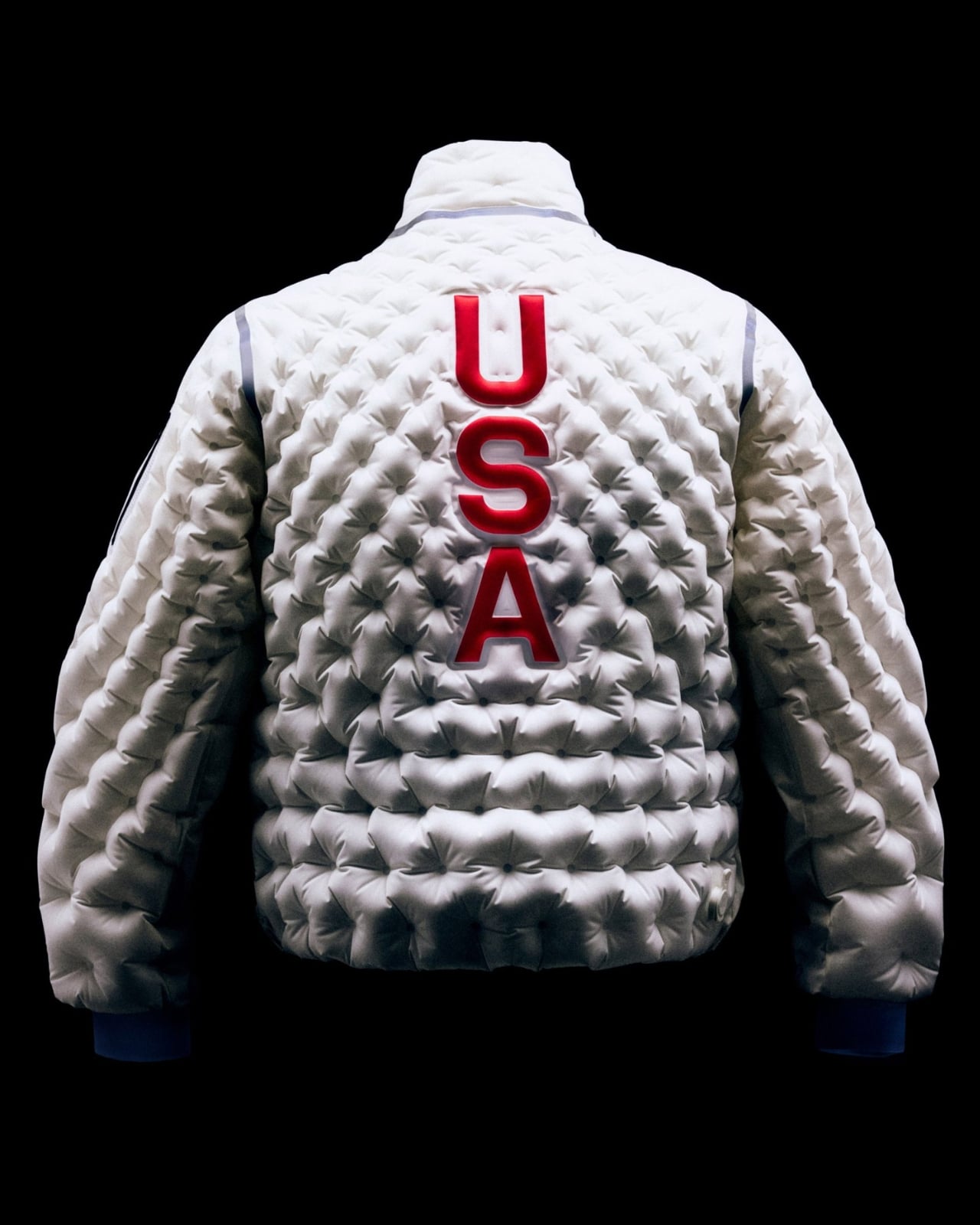
Nike also revealed that this jacket showcases what they’re calling A.I.R. Technology, which stands for Adapt, Inflate, Regulate. The whole design is informed by body mapping data from Nike’s Sport Research Lab and uses computational design to create those sculptural baffles you see on the surface. It’s not just about making something that looks cool; it’s about strategically placing air where your body needs warmth most.

The Team USA version comes with some exclusive touches that weren’t part of the original announcement. There are sculpted design elements, a custom ACG pump (instead of the generic battery-powered fan initially mentioned), metallic twill branding, and an interior lining graphic depicting the Garden of the Gods in Colorado Springs, where Team USA trains. More importantly, Nike built in accessibility features like interior thumb loops on the bottom hem and a magnetic zipper specifically designed to help Paralympic athletes put on and close the jacket independently.

What’s particularly interesting is that this isn’t Nike’s first rodeo with inflatable outerwear. They’ve been experimenting with this concept for 20 years, starting with the ACG Airvantage jacket and continuing with the ISPA Adapt Sense Air. But the Air Milano represents a major evolution in both technology and wearability. It’s lighter, faster to inflate, and actually solves a practical problem instead of just being a technical curiosity.

Lotti’s perspective on this is refreshing. He’s adamant that the Air Milano isn’t a gimmick because it addresses a real issue that athletes face every single time they go for a run. That’s the difference between innovation for innovation’s sake and design that actually improves how people move through the world.

The jacket is positioned as part of Nike’s broader FIT system of apparel, which includes Therma-FIT insulation, Aero-FIT cooling, Dri-FIT moisture-wicking, and Storm-FIT weather protection. It’s not meant to replace every jacket you own, but rather to fill a specific need for adaptive warmth in changing conditions.

Seeing Team USA athletes wearing these jackets on the podium in Milan gives the whole project a very different context. It’s not just a prototype or a concept piece anymore. It’s performance gear that’s being tested at the highest levels of athletic competition, which means Nike has confidence it can handle real-world demands.

The post Nike Just Turned Air Into Team USA’s Smartest Olympic Jacket first appeared on Yanko Design.