
The US is banning foreign-made humanoid robots and power inverters
It's part of a national security strategy to kickstart domestic production of emerging technology.

It took six years from competition win to opening day, but the Shenzhen Natural History Museum was always going to be worth the wait. Designed by the 3XN, B+H Architects, and Zhubo Design consortium, the 105,300-square-metre building opened to the public on July 28, 2026, beside Yanzi Lake in the city’s Pingshan District. It is the largest natural history museum in South China and one of the most architecturally ambitious public buildings completed anywhere in the world this year.
The design has a name, “Delta,” and it earns it. Rather than arriving as a monument on a plinth, the building rises from its river-delta setting as a continuous terrain of sloping roofs, planted terraces, and granite-clad surfaces that seem to have been worn into shape by water and time. The façade reads like a cliff face, its carved openings hinting at the galleries within. From a distance, the silhouette folds into the surrounding hills as naturally as it folds into the brief.
Designer: 3XN, B+H Architects & Zhubo Design


Kim Herforth Nielsen, founder of 3XN, framed the ambition plainly: “Nothing in nature is square. Nature is amorphous, dynamic, and always in formation. From the beginning, the ambition was to create not a building, but a piece of landscape that had always been there.” That idea holds all the way to completion. Internally, five cone-shaped volumes organize the museum’s principal exhibition halls, and moving between them feels less like navigating a floor plan and more like moving through a cave system, with atria, terraces, and framed views appearing and dissolving as you go.
Across eight themed exhibition halls, visitors trace 4.6 billion years of Earth’s history, from the origins of the universe through to the specific ecosystems of southern China. Exhibition designers Atelier Brückner and Museum Studio worked alongside the architects to integrate specimens, large-scale installations, and cinematic media with the curved cone geometries, turning the galleries into environments rather than rooms.


The roof is as considered as anything inside. B+H, who served as lead consultant, executive architect, and landscape architect, designed a walkable park that extends the surrounding ground plane up and over the building, connecting the museum to Yanzi Lake and the region’s wider network of rivers and wetlands. Viewing terraces, planted thematic zones, and gathering spaces make it a civic destination in its own right, one that functions on a Tuesday morning just as well as a Saturday afternoon.
The museum is part of Shenzhen’s “Ten Cultural Facilities of the New Era,” a city-wide infrastructure investment that has quietly been reshaping one of the world’s most dynamic urban environments. The Natural History Museum is the most visually compelling of the lot, and the one most likely to be remembered.


The post This New Museum in Shenzhen Looks Like a Piece of Landscape That Was Always There first appeared on Yanko Design.

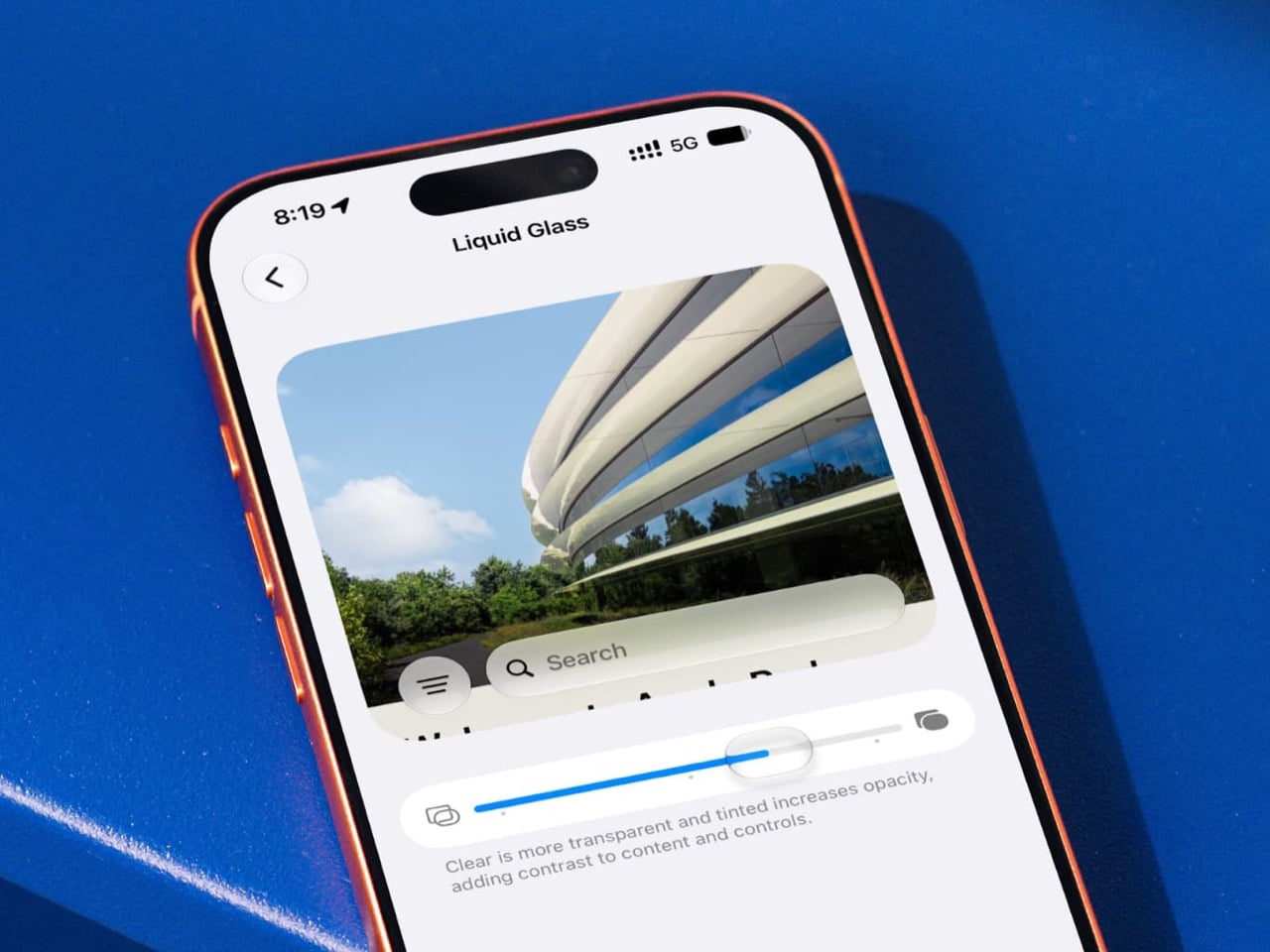
If Liquid Glass is the face of iOS 27, the intensity slider is the part that decides whether that face is wearing reading glasses. Apple never showed it during WWDC 2026, even though it may be the most visually crucial control in the entire redesign. This one setting lets users adjust the strength of the transparency effect system-wide, which means it directly shapes readability, contrast, depth, and the overall vibe of Apple’s biggest interface experiment in years.
That makes its quiet arrival in the public beta feel kind of wild. Apple presented Liquid Glass as a confident design statement, but the slider reveals something more interesting, a design system with a built-in self-correction mechanism. Suddenly the story is not only about what Apple announced on stage. It is about what Apple had to add once the software met real screens, real eyes, and real people who do not want their Control Center looking like a soap bubble.
Designer: Apple

Six weeks separate the WWDC 2026 keynote from iOS 27 Public Beta 2, and in software terms, that is enough time for a lot to shift. Public Beta 1 landed July 13 with the slider and a Siri AI rollout to general users. Beta 2 followed on July 22 with speed improvements, a Screen Time overhaul, and more. Together they paint a picture of iOS 27 that looks noticeably different from what Apple demoed at Apple Park in June.
App icons have been getting the same quiet treatment. Beta builds are shipping with re-layered icons that carry more visual depth than what showed up on stage, tweaking how the foreground and background elements of each icon interact with the glass effect behind them. It reads as subtle in a screenshot and feels significant once you are actually navigating the phone. The whole system carries a different visual weight than the keynote suggested.
Apple built Siri AI on Google’s Gemini, and that partnership is the backbone of the biggest headline in iOS 27. The revamped assistant can hold context across apps, answer open-ended questions, and dig into your emails, messages, and photos to surface relevant information, putting it in genuine competition with ChatGPT and other conversational AI tools for the first time. What the keynote mostly skipped was how that Gemini handoff surfaces visually inside Siri’s UI, what the latency actually feels like, and how different it is from the ChatGPT integration Apple shipped in iOS 18.

Thirty percent faster app launches, 80% faster AirDrop, 70% faster Photos capture loading. Apple is putting some big performance numbers on the table, benchmarked against an iPhone 11 Pro Max running iOS 26.4.2, which is more specific than the usual “up to” framing with nothing behind it. Whether those gains hold on newer hardware in real daily use is still something beta testers are working out.
macOS 27 Golden Gate is running the same play in parallel, bringing Liquid Glass refinements to the desktop and putting Siri AI inside Spotlight. It also becomes the first macOS to fully drop Intel support and retire Rosetta 2, which is its own headline for a different day. For anyone designing or building for Apple platforms, September is the target, when the stable release lands alongside the iPhone 18 lineup. The betas are the closest thing to a final spec sheet right now, which makes that quiet little slider a pretty loud signal about where Liquid Glass is actually headed.
The post WWDC 2026, Six Weeks Later: What Actually Shipped first appeared on Yanko Design.


If you’ve never thought about bacteria as a design material before, Cenit might be the thing that changes that for you. The latest lighting collection from the collaboration between biotechnology company Polybion and Mexico-based design studio Natural Urbano is doing something genuinely different from what most lighting brands are doing right now, and it’s worth paying attention to.
To understand Cenit, you have to know a little about what came before it. Lapso was their first major collaboration: a sculptural pendant lamp handcrafted from five sheets of cultivated bacterial cellulose, a translucent, flexible material called Celium that Polybion grows using bacteria. Not synthetically manufactured. Not extracted from a forest. Grown, from bacteria, using agricultural waste. Lapso was already a bold statement when it debuted at the London Design Festival in 2025. Each lamp came with a certificate of authenticity and a two-month production lead time, because you can’t rush biology.
Designers: Polybion x Natural Urbano

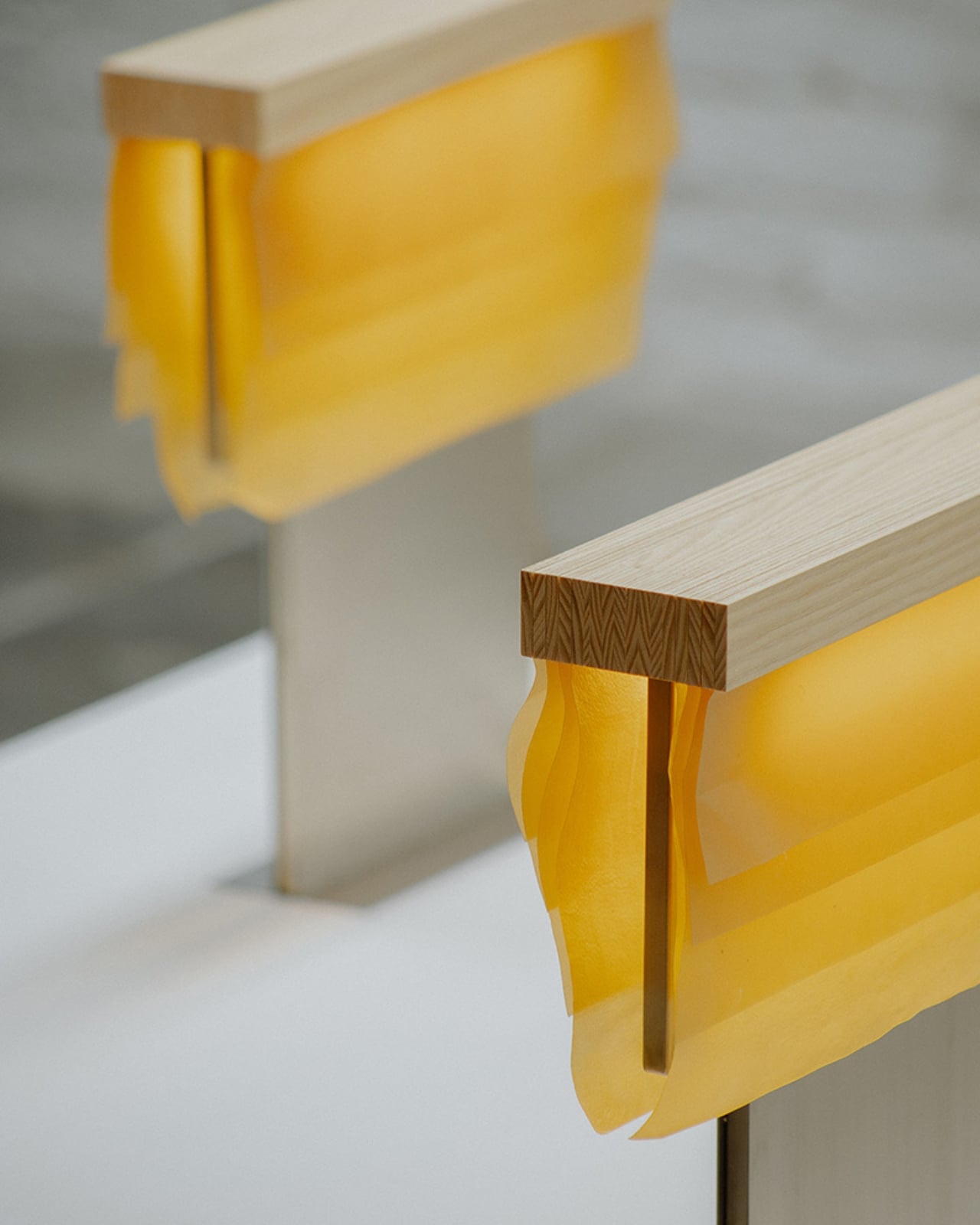
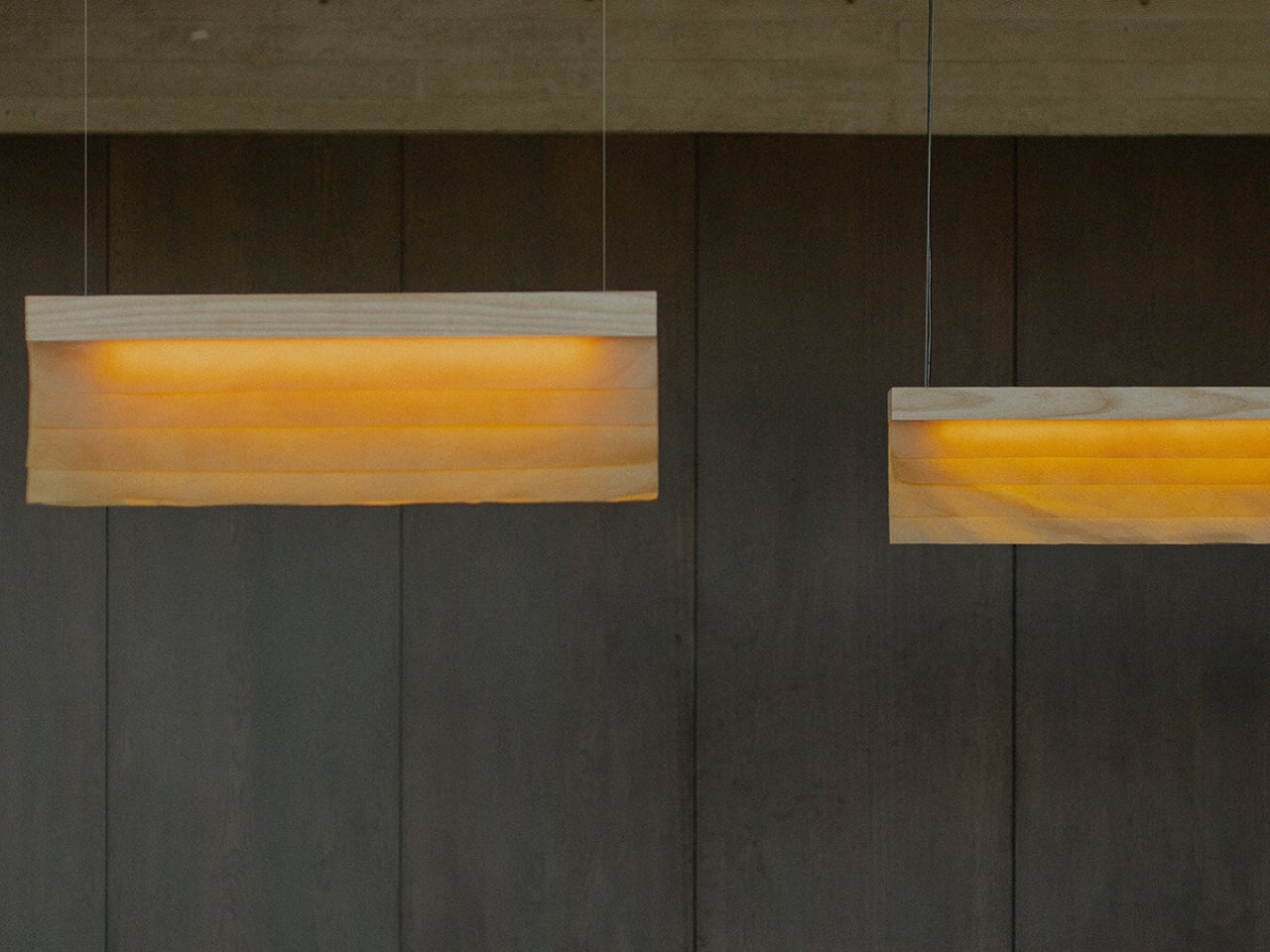
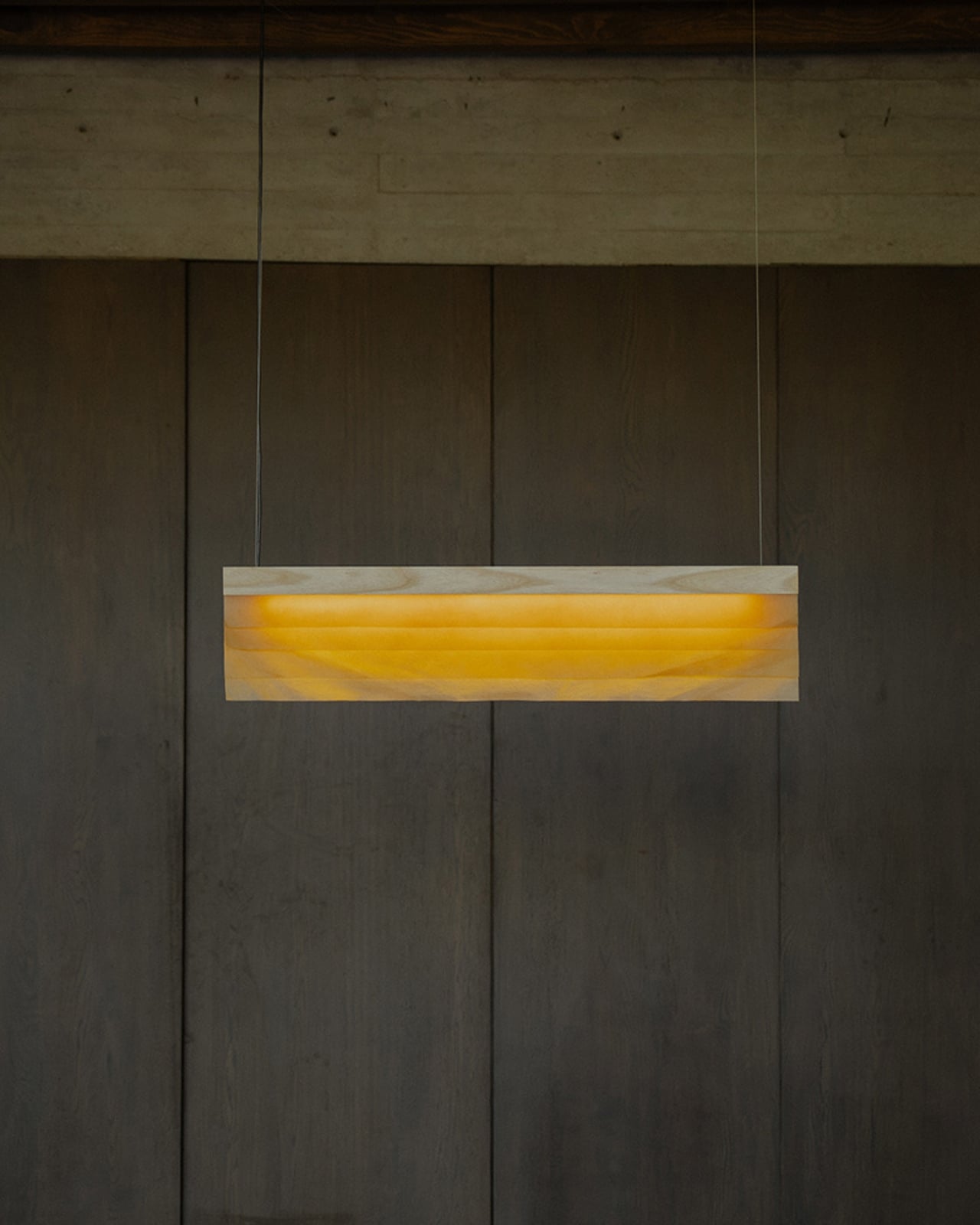
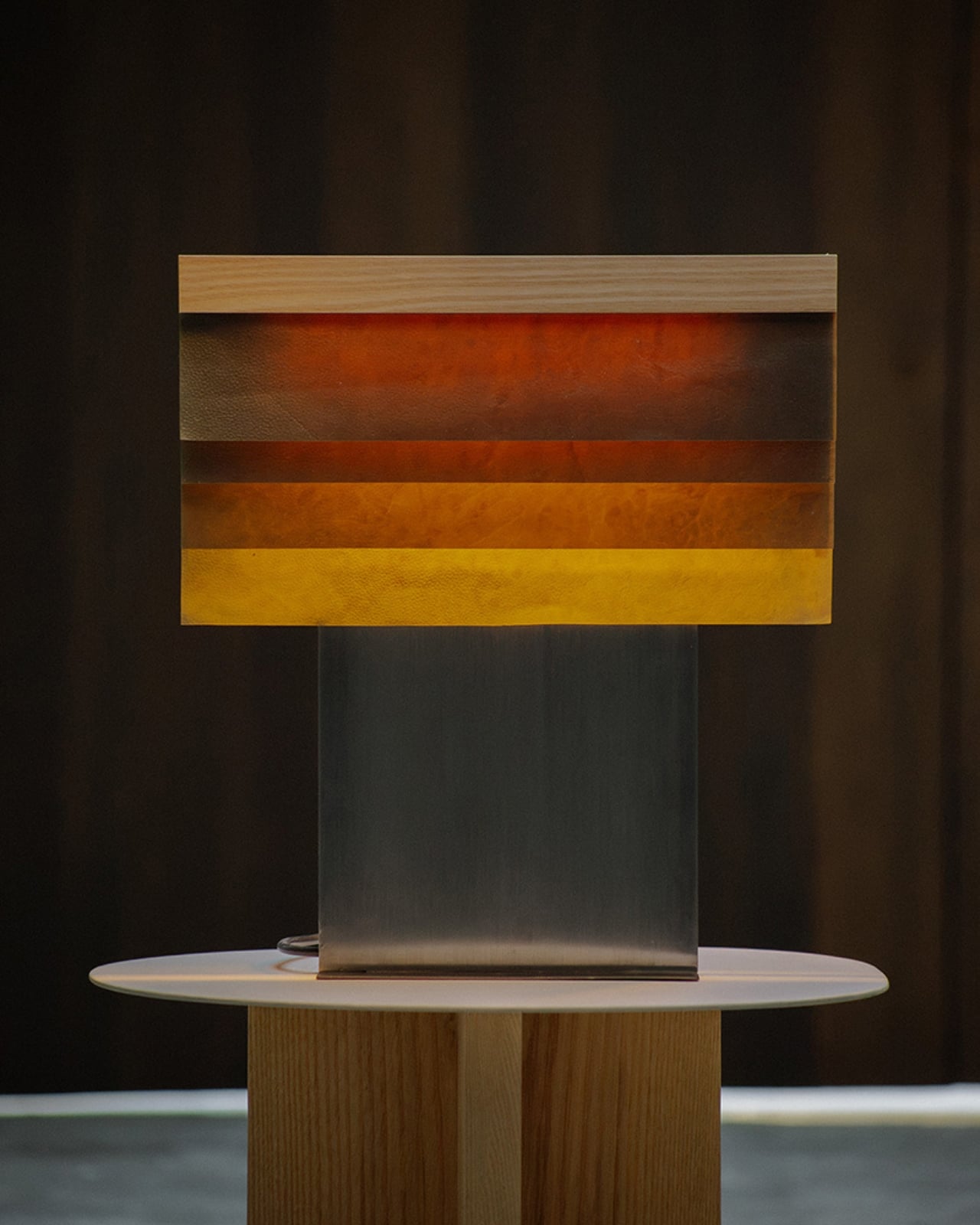
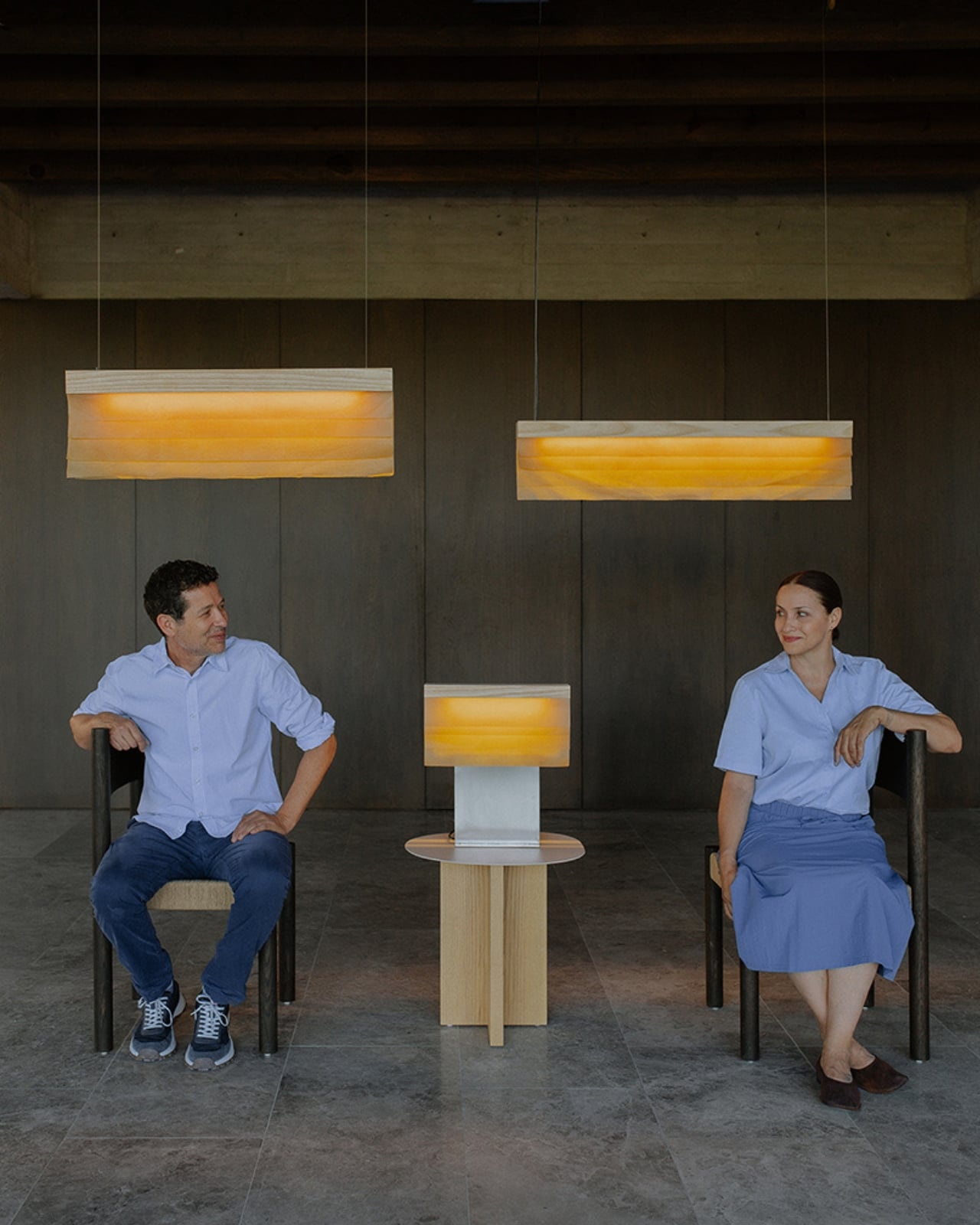
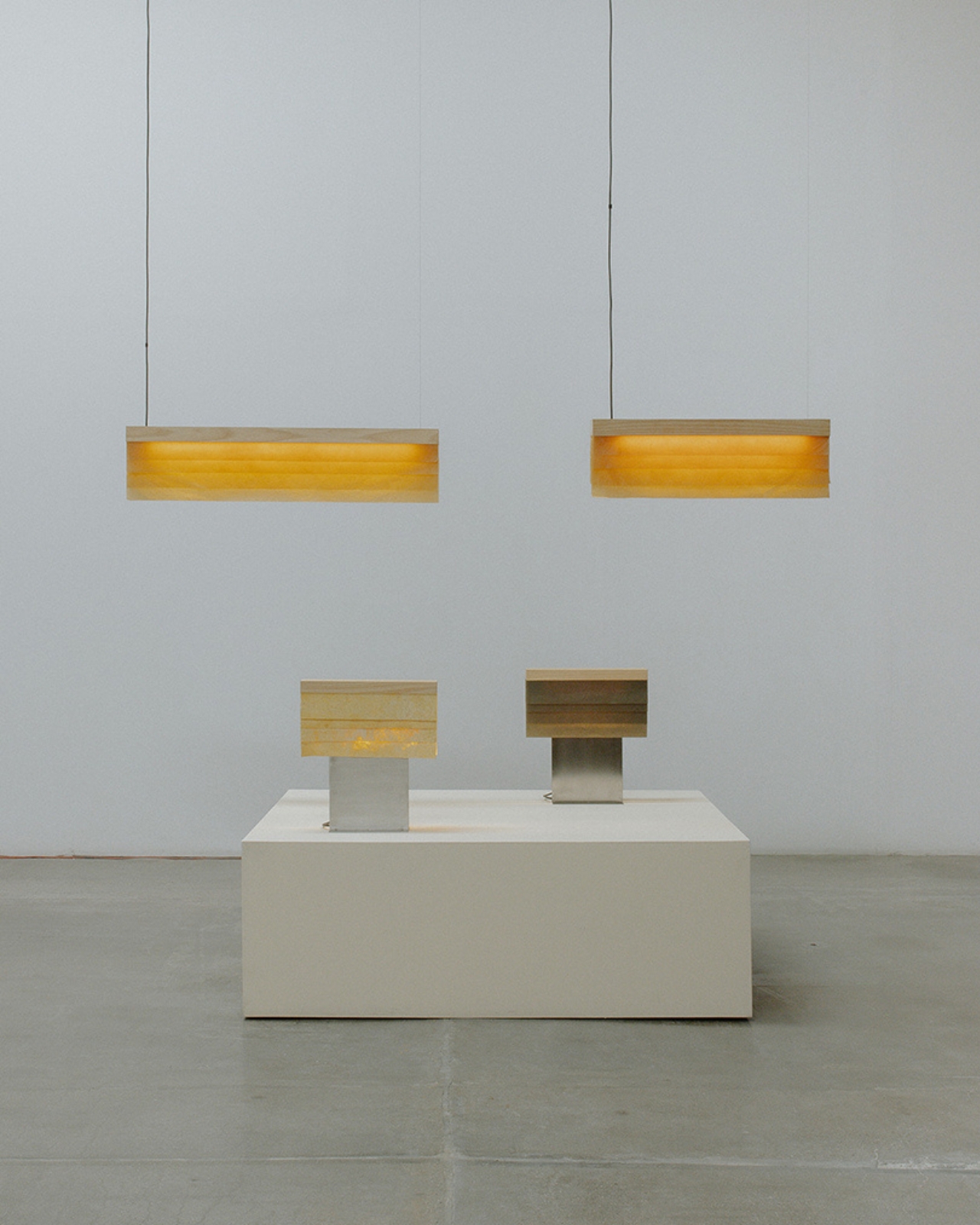
Cenit follows that same philosophy but takes it further. For the first time, the duo has combined Celium with natural ash wood and stainless steel, bringing the material into a more structured, versatile family of lighting objects. The collection comes in both pendant and table formats, which is a smart move that Lapso didn’t make. Lapso was undeniably sculptural, a piece you’d plan a room around. Cenit feels like it wants to live with you in your home across different spaces and moods, without demanding all the attention in the room.

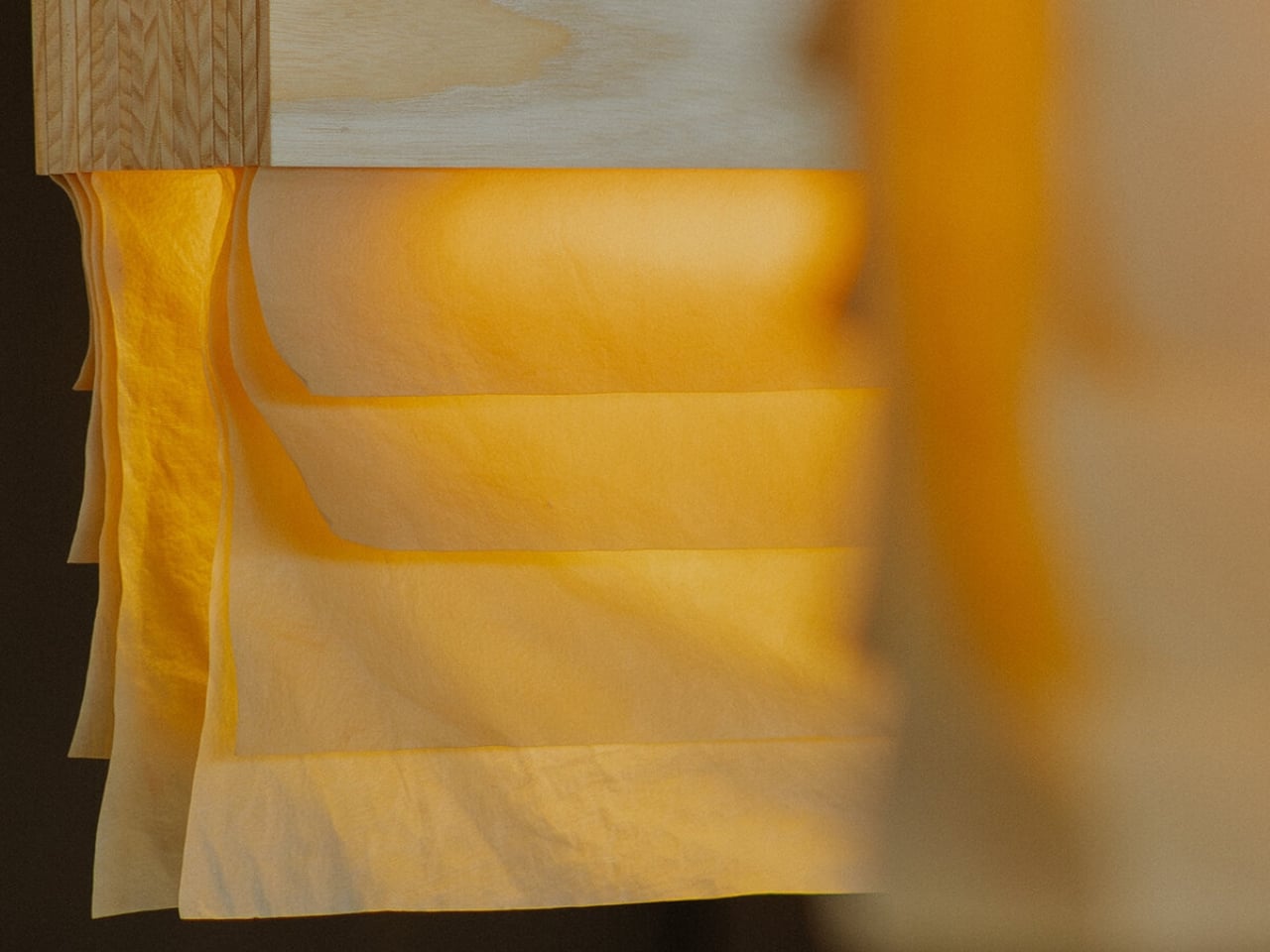
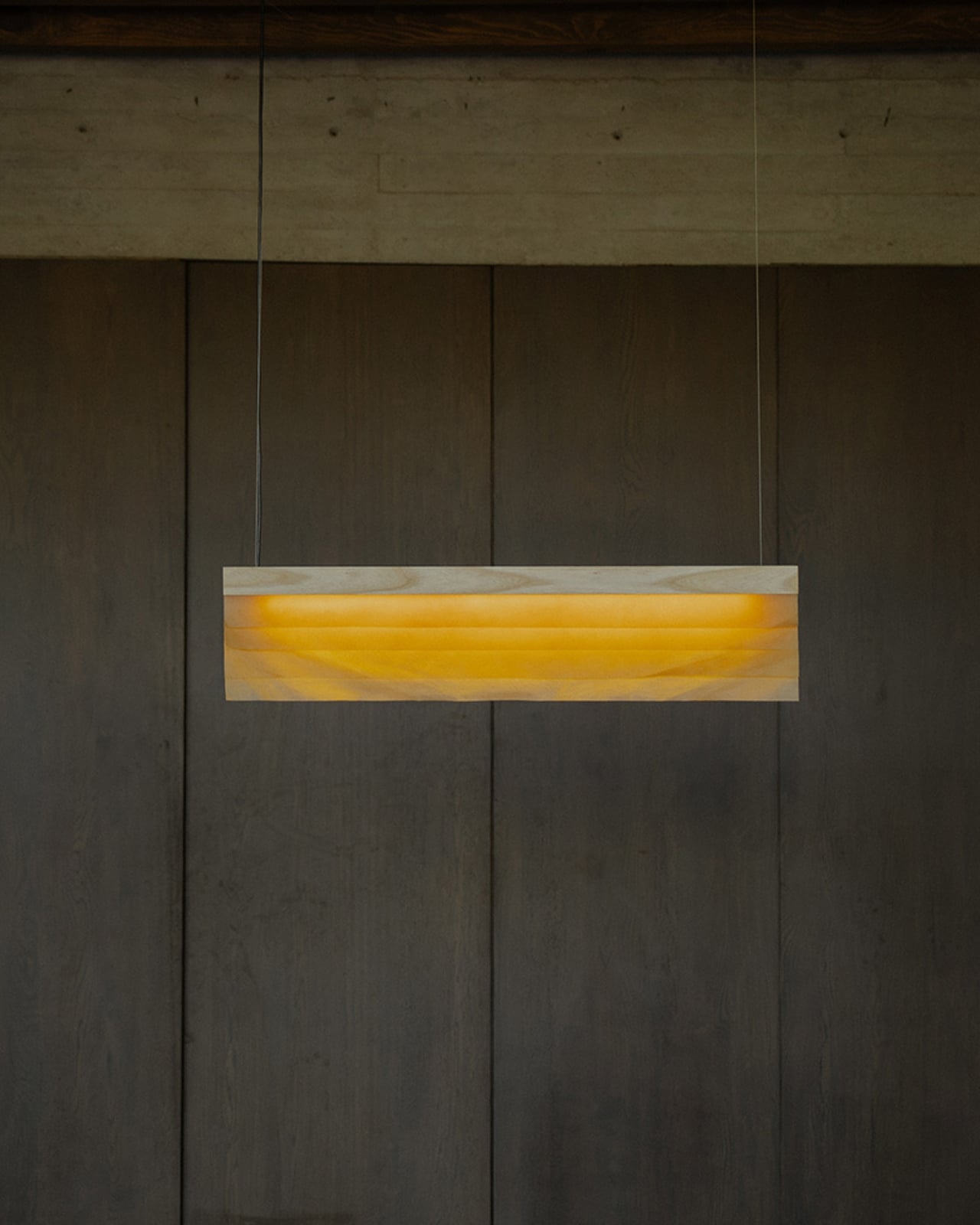
The specific variant used here is Celium Manto, layered in a way that calls to mind the gradients of a horizon. The collection’s name, Cenit, means zenith in Spanish, the highest point in the sky, and the visual reference lands. When light passes through the layered cellulose, it does something that no synthetic material can fully replicate. It glows with an organic warmth, the kind you usually only get from paper or natural stone, but lighter and more alive-feeling.
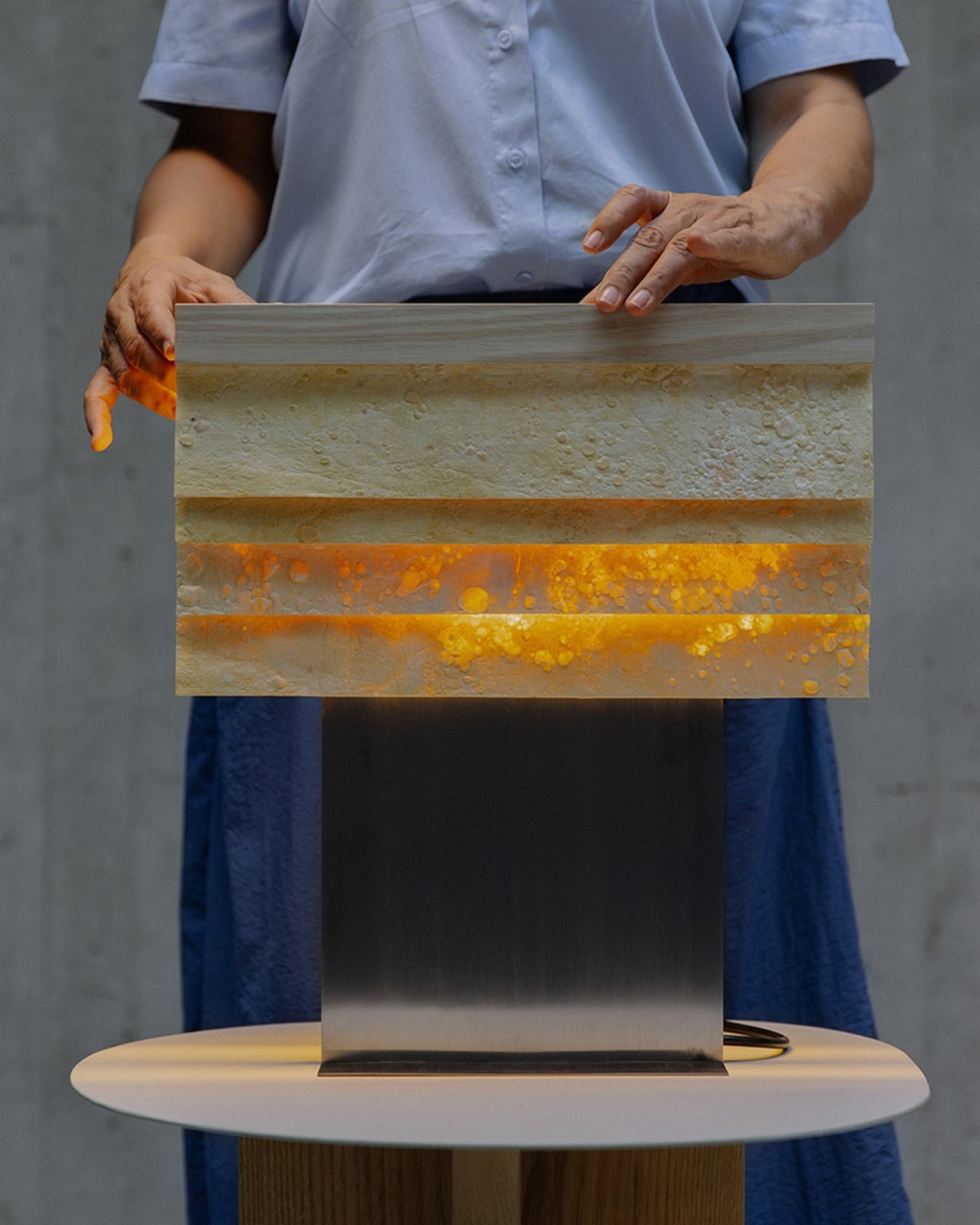
A lot of sustainable design still requires us to compromise somewhere. Rougher edges. Less refined finishes. A feeling that the eco-credentials come at the cost of beauty. Cenit does not ask that of you. The combination of ash and Celium Manto is genuinely beautiful, in a way that’s considered and deliberate rather than rustic or raw. The stainless steel elements give it structure without weight. The ash brings warmth without heaviness. And the cellulose does what it always does in Polybion’s hands: it makes you stop and look.
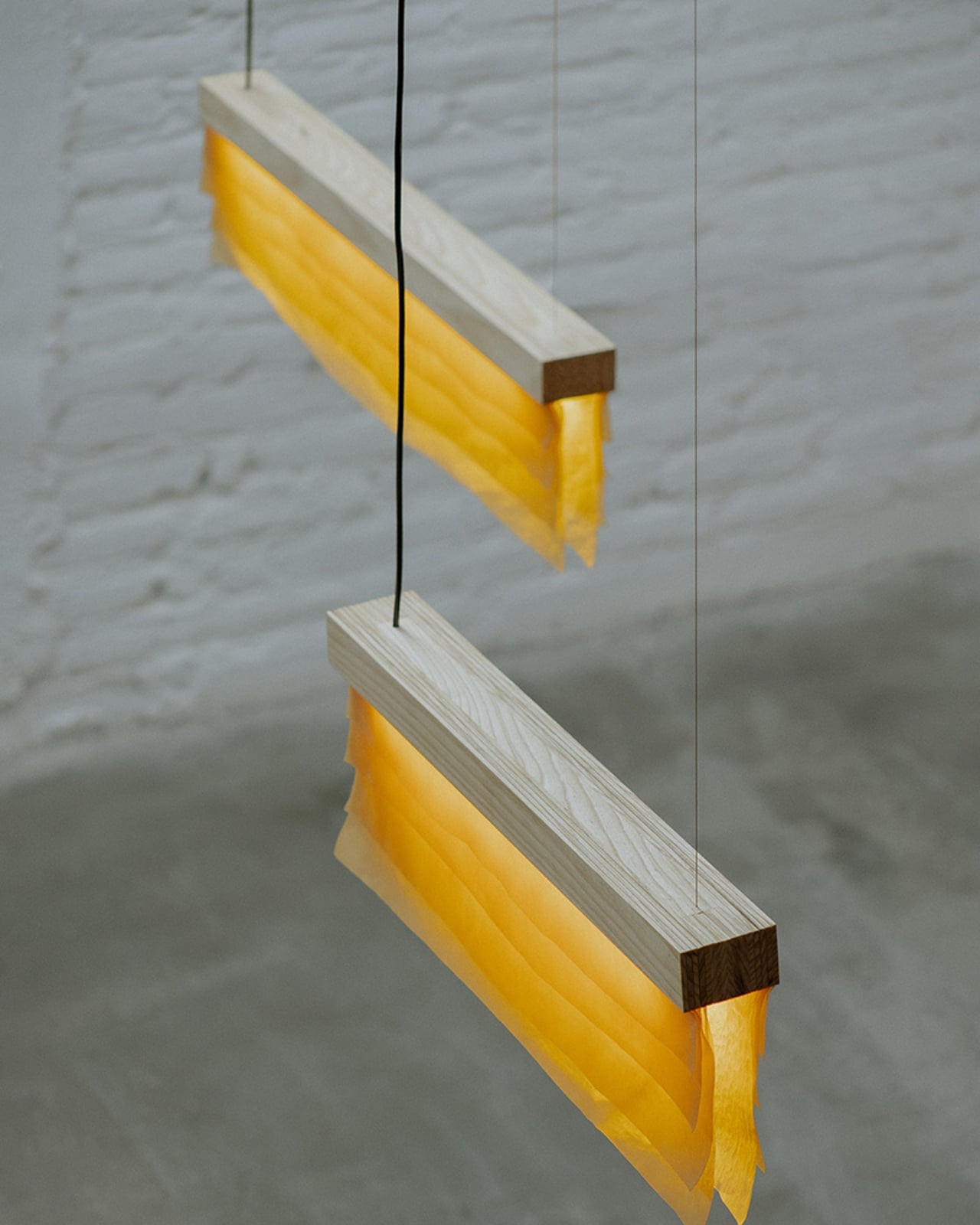
Beyond the material, what makes this collaboration particularly interesting is where it’s coming from. Natural Urbano, founded by Sebastián Beltrán and Lorena Márquez, and Polybion, based in Guanajuato, are actively positioning Mexico as a place where design and biotechnology meet at a serious, global level. That’s not a small thing. The conversation about sustainable and biofabricated design has historically centered on European studios and Scandinavian minimalism. Watching a Mexican collaboration work at this level, with this degree of craft and material innovation, feels significant.
The pendant and table formats in Cenit also suggest that Polybion and Natural Urbano are thinking about a longer game. Moving from a collectible sculptural piece like Lapso into a more scalable, multi-format collection points to the kind of ambition that doesn’t just want to make a beautiful object. It wants to change what beautiful objects are made from, and it’s doing that without sacrificing the craft or the story behind the material.
Biofabricated materials are still a niche, but collections like Cenit make the niche feel a lot less obscure. When something looks this considered and lives this comfortably in a real interior, it becomes a lot easier to imagine a future where Celium shows up in more homes, more spaces, more everyday things. Cenit is the kind of work that makes you want to ask more questions about what your objects are made of, and that, as far as I’m concerned, is exactly what good design is supposed to do.
The post Meet The Lamp That’s Actually Grown, Not Made first appeared on Yanko Design.

Everyone is obsessed with making gadgets sleeker, flatter, and more touch sensitive these days. So naturally, Skullcandy looked at that trend and said, nah, let us put a knob on it. The new Crusher 1080 ANC headphones (with sound by Bose) have an honest to goodness rotary dial sitting right on the ear cup, and it might be the single best design decision on the whole product.
Turning that dial controls the Crusher Bass feature, which is Skullcandy’s way of saying we built a subwoofer into your headphones. Twist it one way for a light rumble, twist it the other way and your skull becomes part of the sound system. It is a small, satisfying, slightly ridiculous piece of hardware, and after years of swiping at touch panels that never quite register your finger, it feels like coming up for air.
Designer: Skullcandy

Bose headphones are great. They are also expensive enough to make you wince a little at checkout. So when Skullcandy rolled up with a pair of headphones that borrow actual Bose tech, including its noise canceling and audio engine, and slapped a $280 price on them, it got my attention fast. That is $170 cheaper than Bose’s own flagship, for tech with the Bose name stamped right on it. Whether the sound quality actually holds up against the real deal is a separate question, but on paper, this is a genuinely aggressive move.


Bose’s fingerprints have their way of showing up everywhere else as well. QuietControl active noise canceling uses six microphones to quiet the outside world, TrueSpatial creates a wider, more speaker like soundstage with head tracking, and the WaveForm audio engine keeps things clear even at high volume. There is also Personal Sound tech from Mimi, which builds a hearing profile tailored to you rather than relying on a generic preset. Toss in Bose-assisted call clarity and custom EQ modes, and Skullcandy is clearly betting that borrowed expertise beats going it alone.


The everyday stuff is handled well too. Automatic wear detection pauses your audio the second you take the headphones off, a low latency mode keeps games in sync, and the onboard buttons can be remapped to whatever functions you actually use. Battery life comes in at 60 hours with ANC off and 50 with it on, and a 10 minute charge buys you another 4 hours of playtime. The one number that raises an eyebrow is weight. At just over 13 ounces, these are noticeably heavier than rivals like the Sony XM6 or Bose’s own QuietComfort Ultra, the price you may pay for packing in all that bass hardware.

None of this guarantees the 1080 ANC will beat Bose or Sony at their own game, and we will not know for sure until these are actually strapped to some ears. But Skullcandy is not really trying to win a spec sheet fight here. It is selling a headphone with a genuine identity, one built around a feeling rather than a feature list, with a knob you can grab and twist like it is 1985. In a market full of interchangeable slabs of black plastic, that alone makes the Crusher 1080 ANC worth a second look.

The post Skullcandy’s $280 Headphones Pack A Subwoofer For Your Skull, And A Knob To Control How Hard It Hits first appeared on Yanko Design.