
Multiple Microsoft 365 services are experiencing an outage
Outlook and Teams are among the platforms impacted by "elevated load" issues.
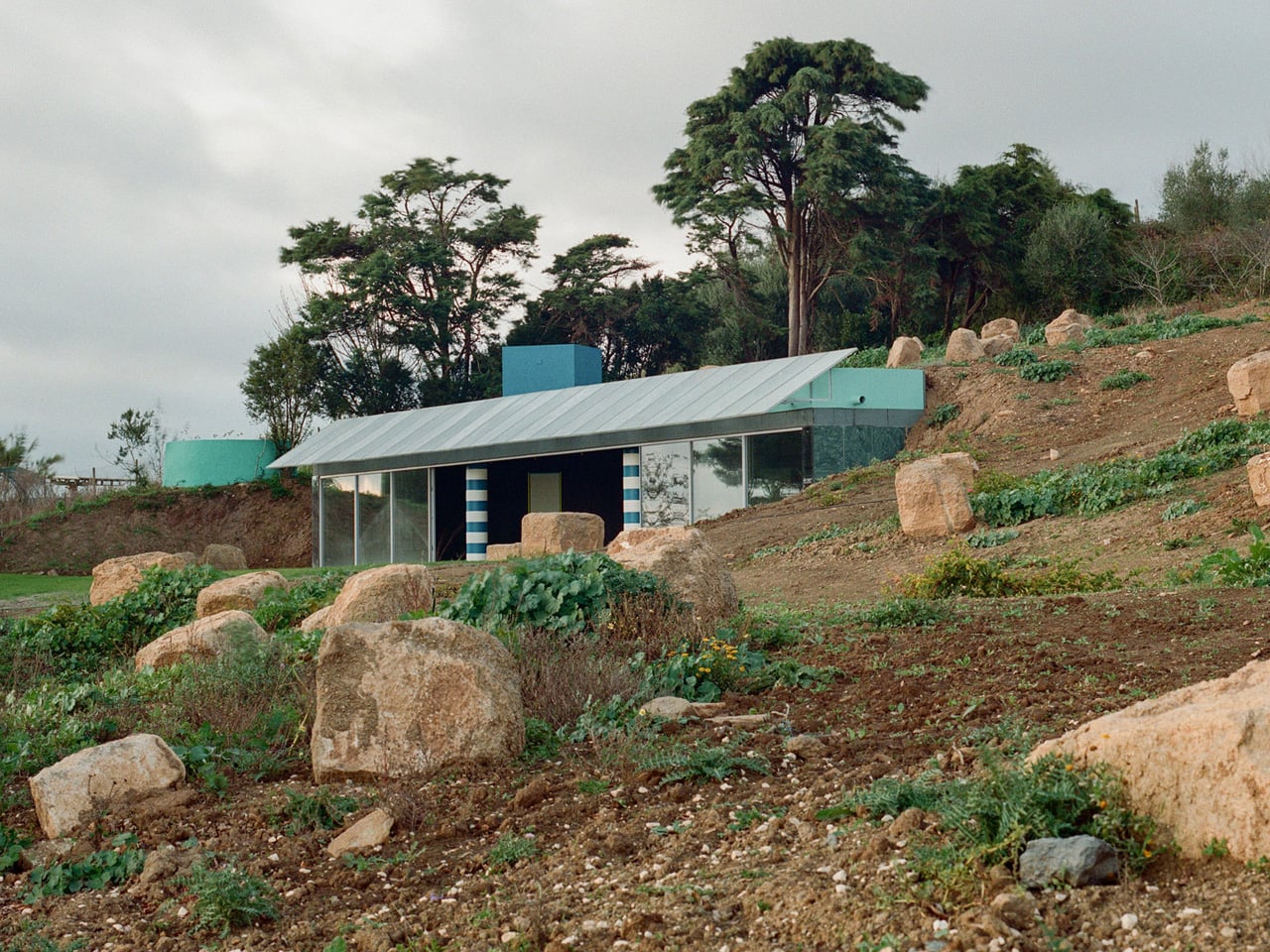
A semicircle is the starting point for every building at Cookie Cutter Retreat, but repetition doesn’t produce identical spaces. In Sobral de Monte Agraço, Portugal, Fala Atelier has arranged three differently sized versions across a sloping site. Completed in 2024, the 500-square-meter project uses the same basic geometry to accommodate distinctly different parts of a shared domestic life.
The retreat was commissioned by an international community of digital nomads who had been living in houses around the nearby village. Their initial brief concerned basic infrastructure, including toilets and storage, before expanding into something more substantial. The resulting ensemble divides the program between a permanent residence, temporary accommodation, and a larger communal building, giving gathering and retreat their own addresses.
Designer: Fala Atelier
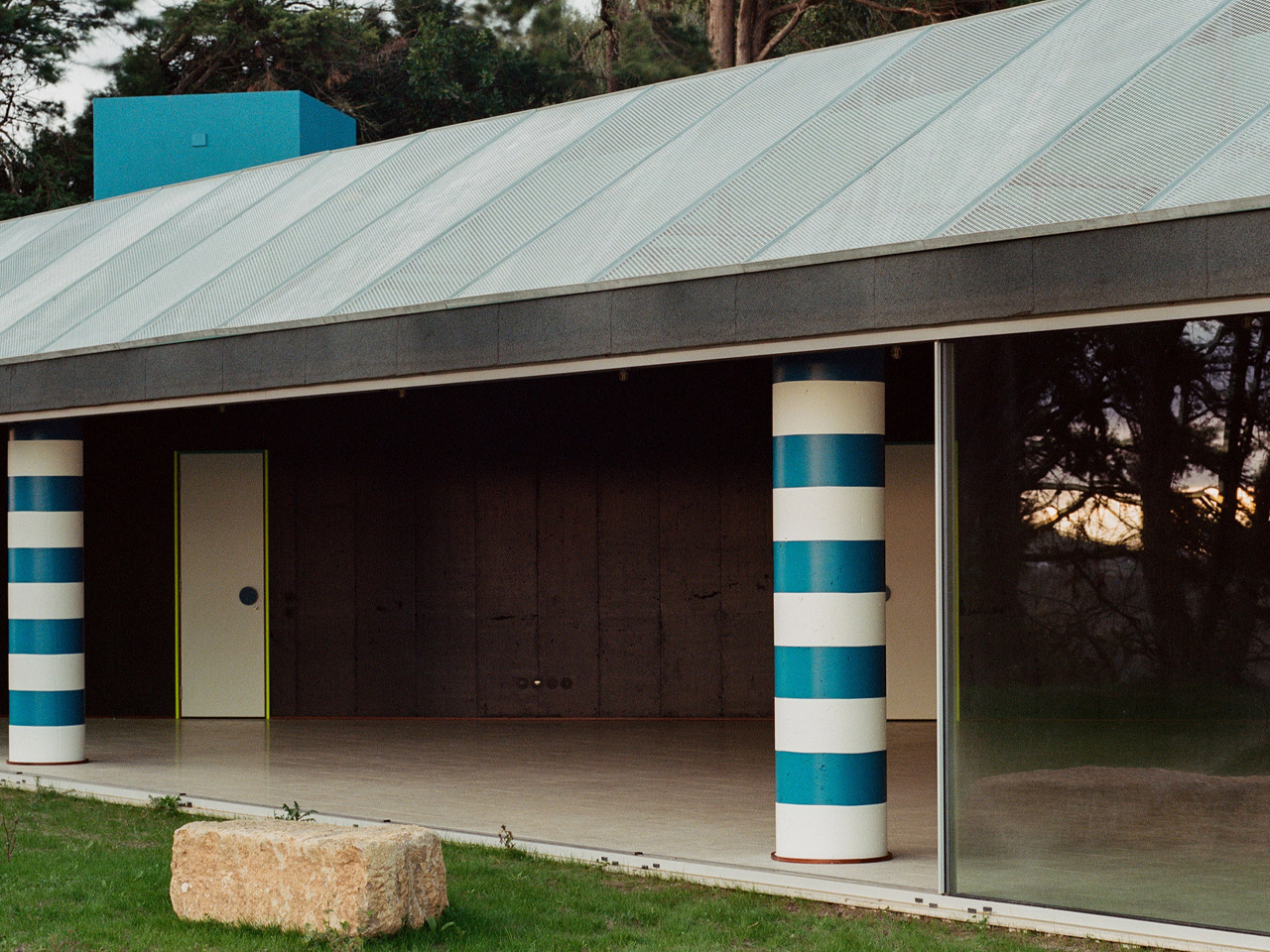
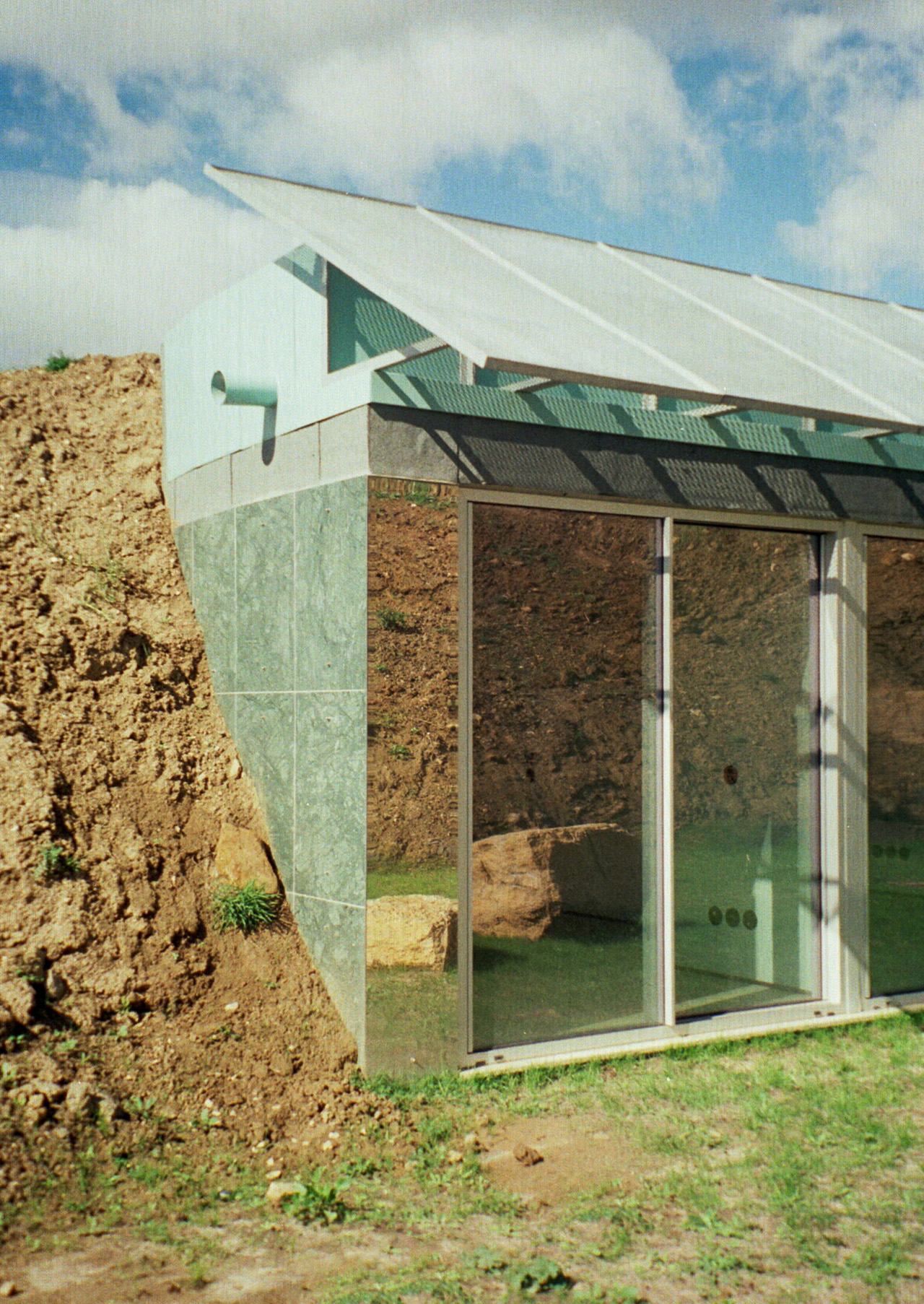
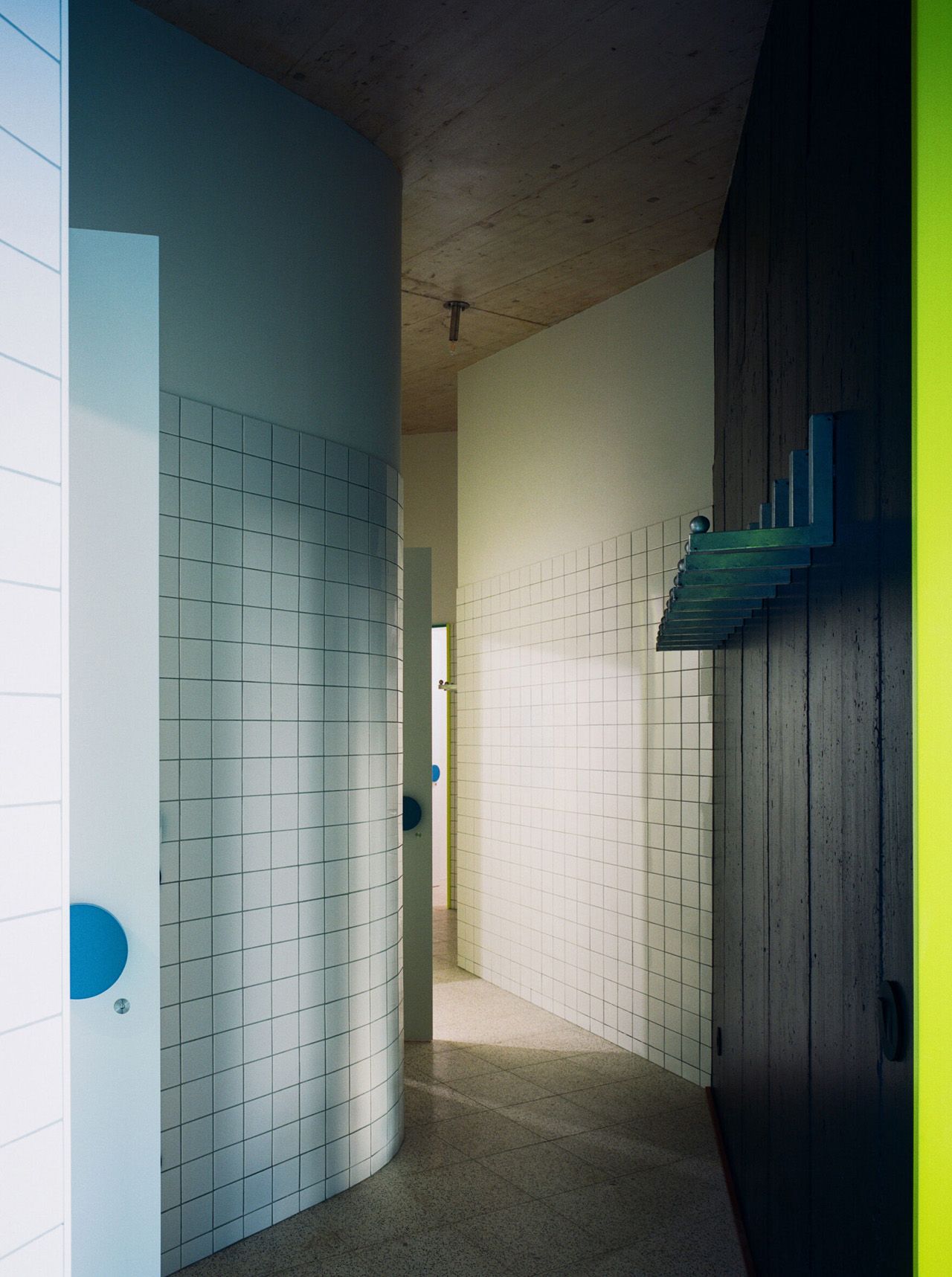
Each semicircle meets the hillside with a curved concrete retaining wall, while its straight edge becomes a broad glazed facade facing the landscape. An angled metal canopy sits above the glass. Inside, a diagonal partition separates an expansive shared area from a denser collection of private rooms. That division gives the buildings a clear spatial rhythm: openness toward the view, smaller spaces tucked behind.
Those smaller spaces contain the project’s most unusual architectural move. Fala borrowed fragments of floor plans from houses by Toyo Ito, Frank Gehry, and Álvaro Siza, inserting them into the semicircular shells. These references have practical consequences rather than remaining abstract tributes. In the largest building, for example, the winding corridor borrowed from Siza’s Beires House becomes a route serving showers and toilets. Familiar architectural ideas acquire a different job.
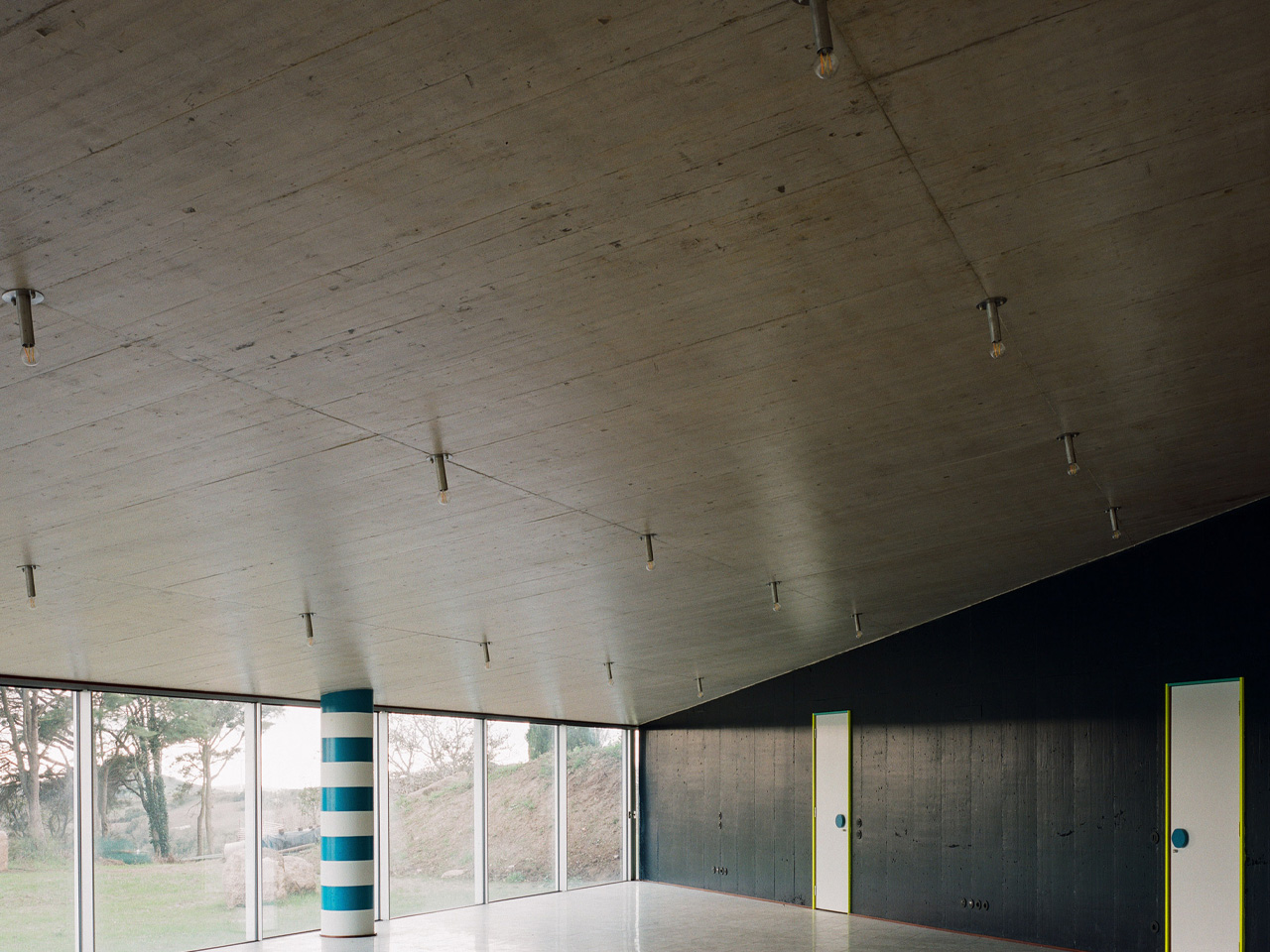
The material palette makes the underlying arrangement legible. White-painted concrete follows the curved perimeter, while the diagonal wall is painted a blue so dark it approaches black. Exposed concrete ceilings carry a dense grid of Minase lamps. Fluorescent yellow appears among the doors, kitchens, and furniture, while blue-and-white stripes turn a substantial round column into a conspicuous marker beside the glazing.
Across the interiors, terrazzo floors, marble countertops, and custom galvanized-steel furniture give the repeated geometry a consistent material setting. Outside, the terrain complicates the apparent simplicity of the plan. Although the three buildings seem to face one another in drawings, the slopes largely interrupt direct views between them. Their relationship is experienced through movement across the site rather than a single encompassing vista.
Fala also reused granite stones found on the property to organize places for sitting and gathering. The buildings themselves recede into the ground, leaving glazing and bright blue chimneys as their clearest signals. There’s a revealing cost to that apparent discretion: extensive excavation was needed to make the architecture disappear. The retreat’s quiet presence is therefore a carefully constructed effect, achieved through a considerable reshaping of the hillside itself.
The post Fala Atelier Tucks Three Semicircular Buildings Into a Portuguese Hillside first appeared on Yanko Design.


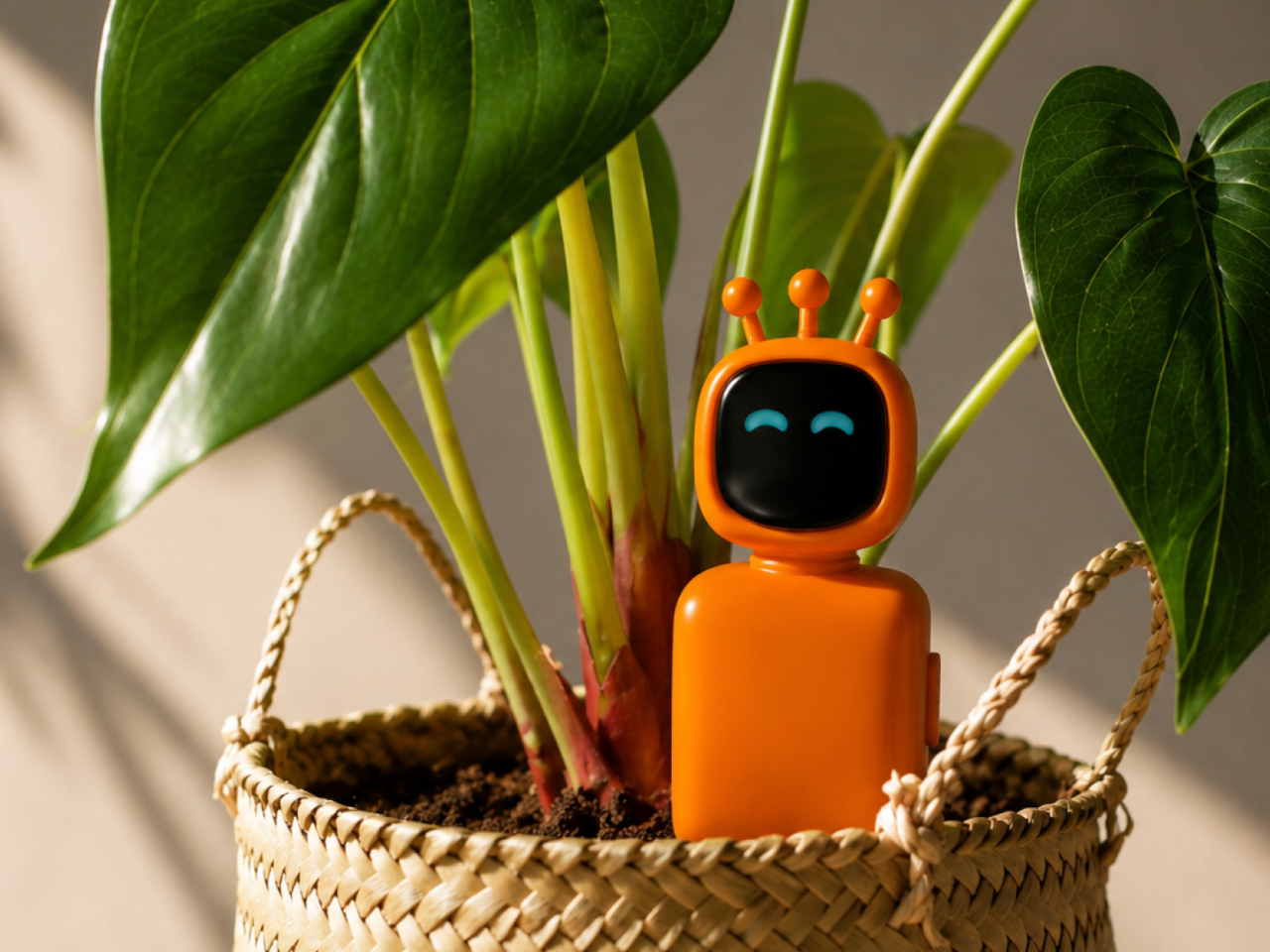
Houseplants can make a room feel more alive, although remembering to check on them is another matter. PLANTIQUE is a plant-monitoring concept that puts an expressive little face beside the leaves, turning soil readings into something you might actually notice. Rather than replacing your favorite pot with a smart planter, it proposes slipping a colorful, character-like device into the soil you already have.
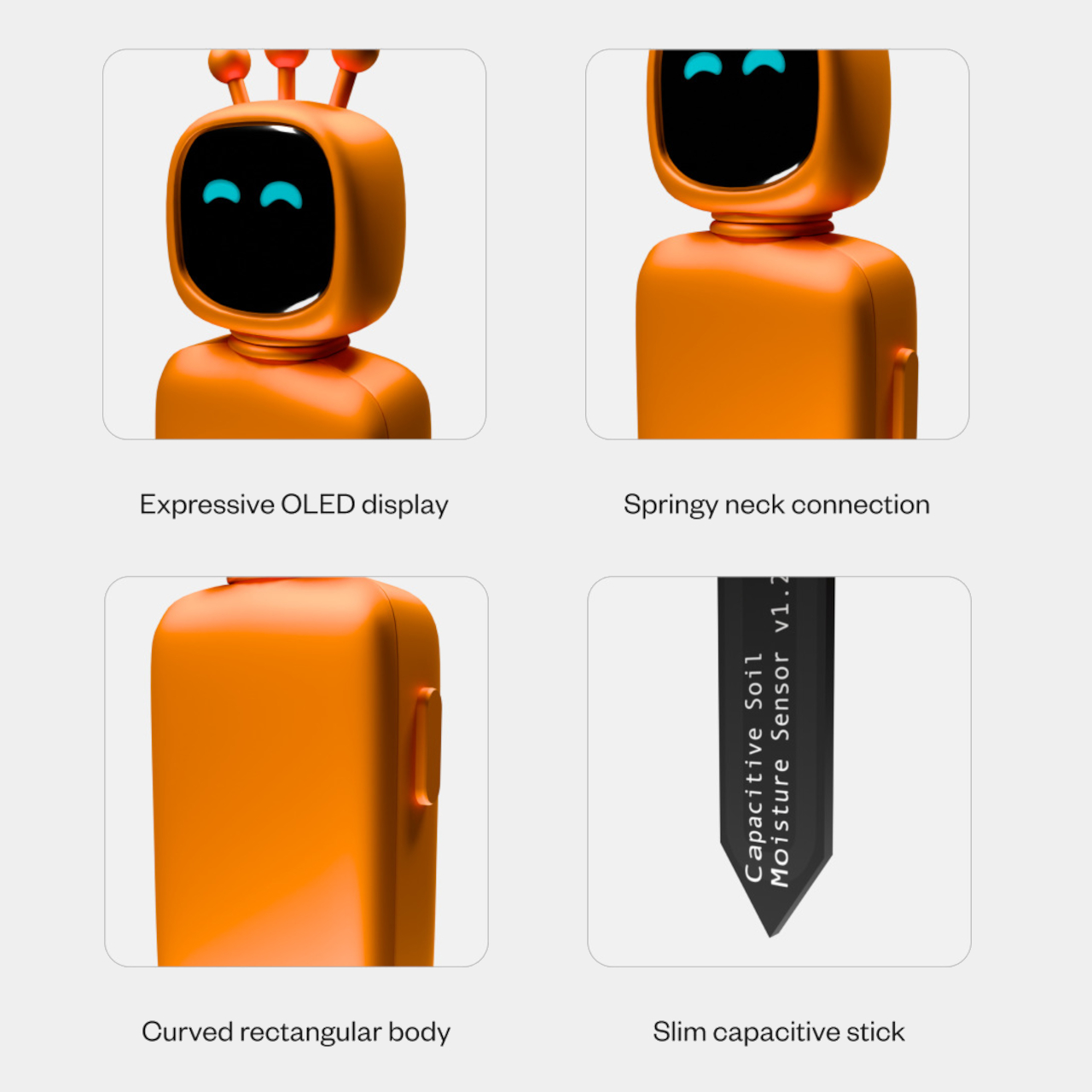
The orange body looks a little like an alien that has decided to take up gardening. A rounded rectangular head frames a glossy black face, with turquoise eyes providing most of the expression. Three ball-tipped stalks rise above it, while a ribbed neck connects the head to the body. There’s enough character here without adding arms, legs, or a miniature watering can.
Designer: Karan Aneja

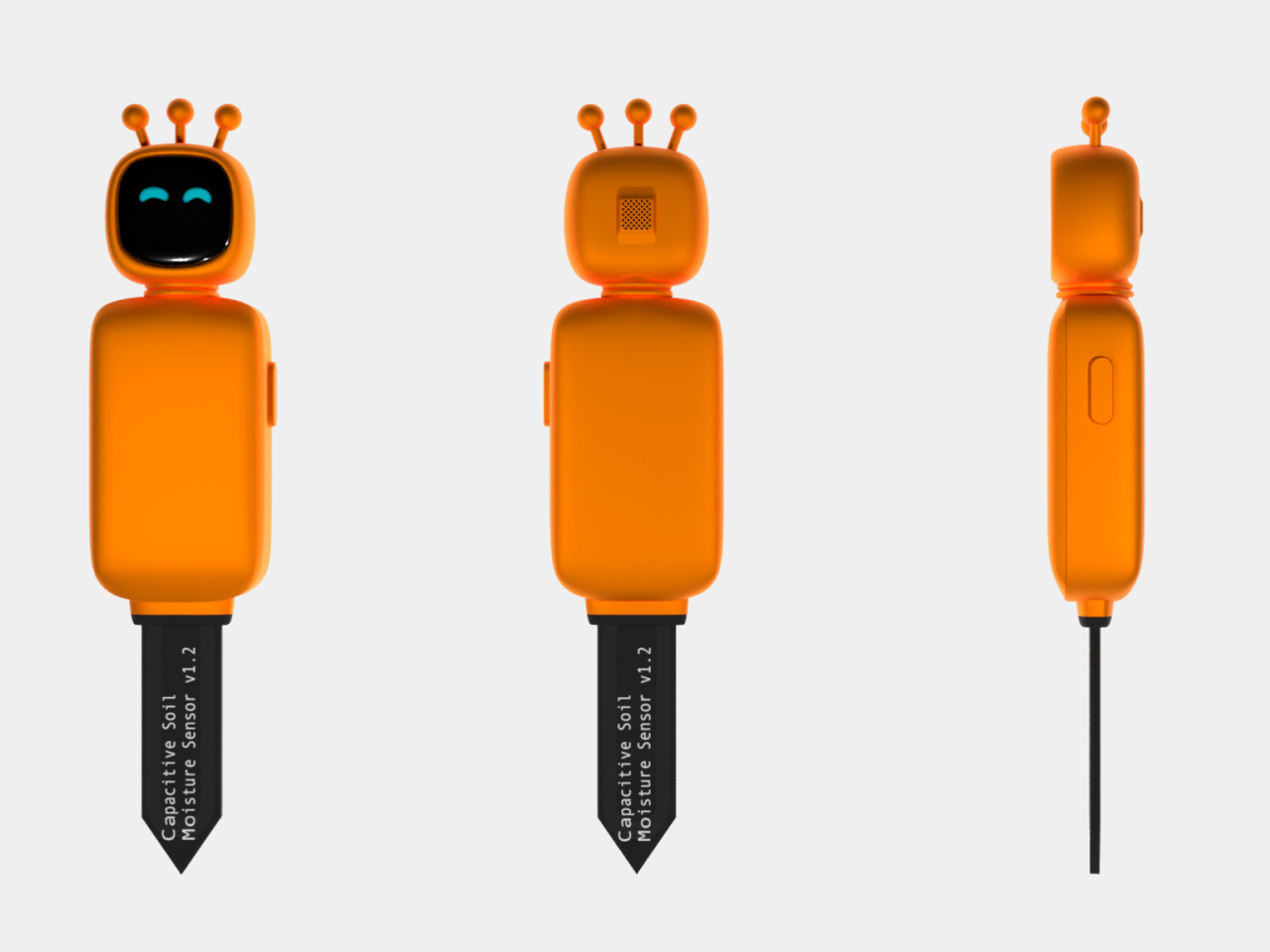
Zest orange, Sunny yellow, and Sprout green carry that friendliness beyond the screen, offering different ways to stand out against foliage. The softened corners keep the silhouette closer to a toy than laboratory equipment, despite the pointed probe below. You could keep a familiar planter and add this companion, rather than choosing a new container just to monitor what’s growing inside it.
Underneath that cheerful shell is a slim capacitive soil-moisture probe, intended to sit in the pot while the display remains above ground. That arrangement keeps the useful information close to the thing you’re caring for, rather than somewhere else on a screen. Passing the plant on your way to the kitchen could become a reason to pause and check its surroundings more carefully.
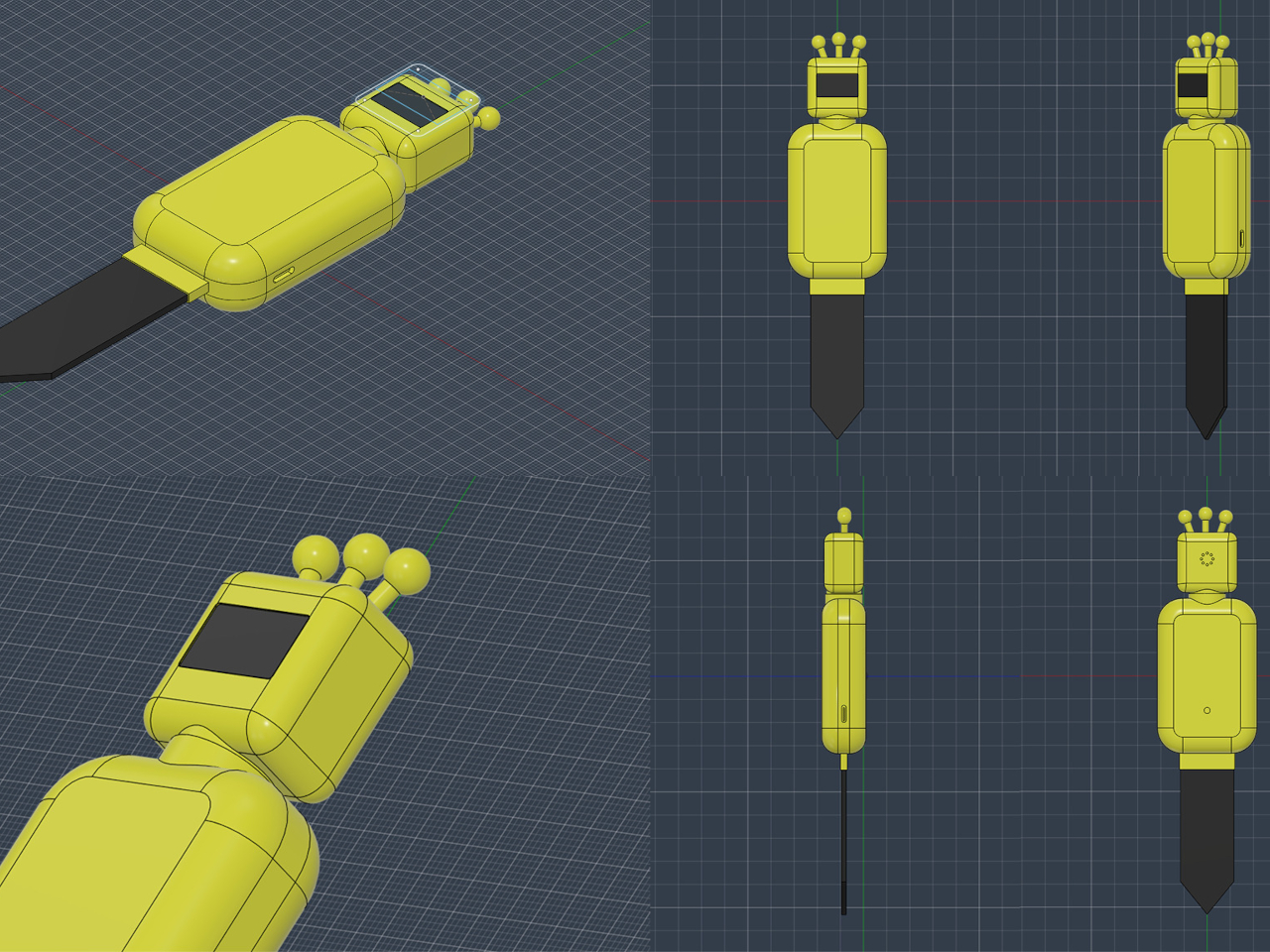
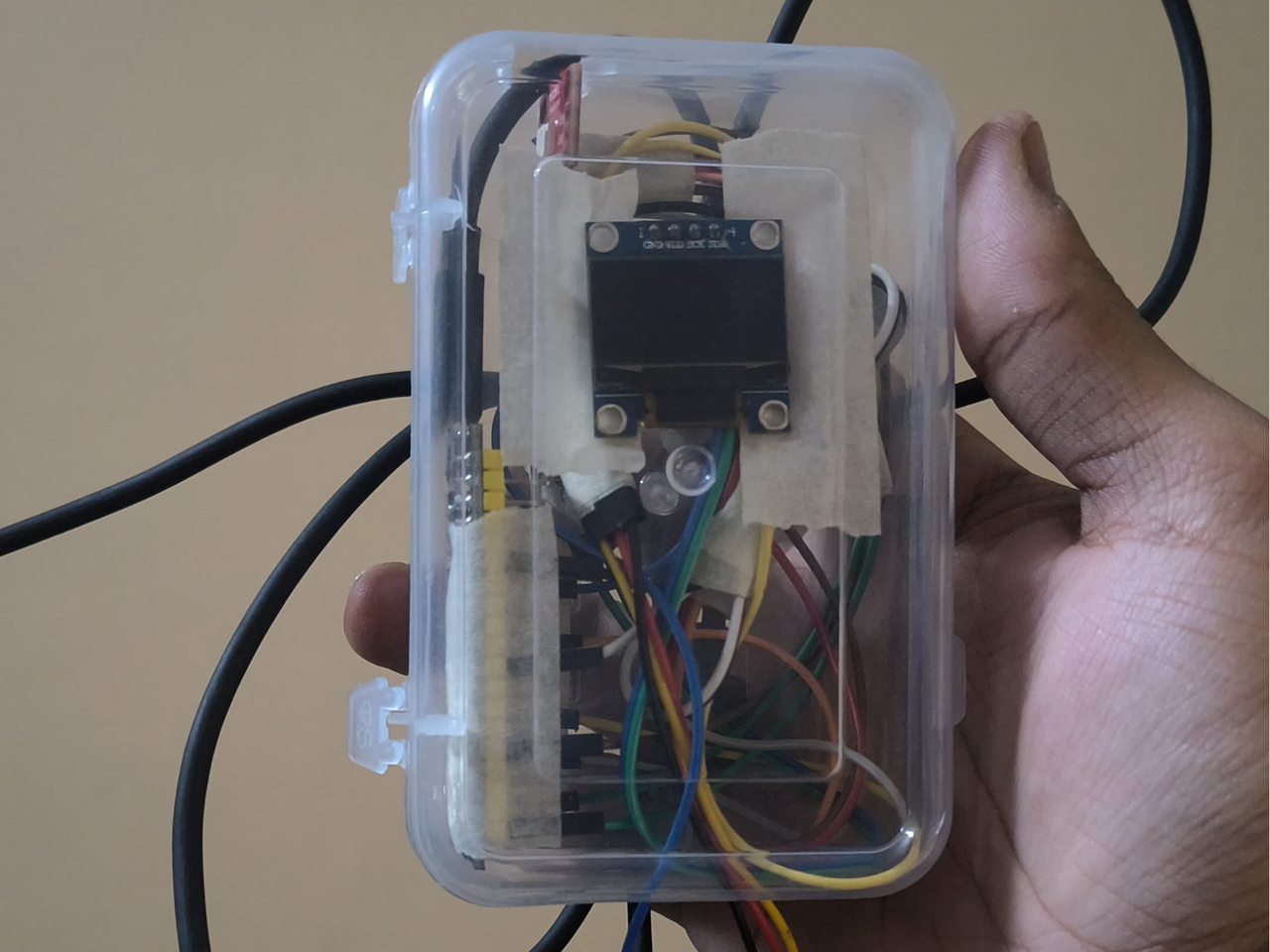
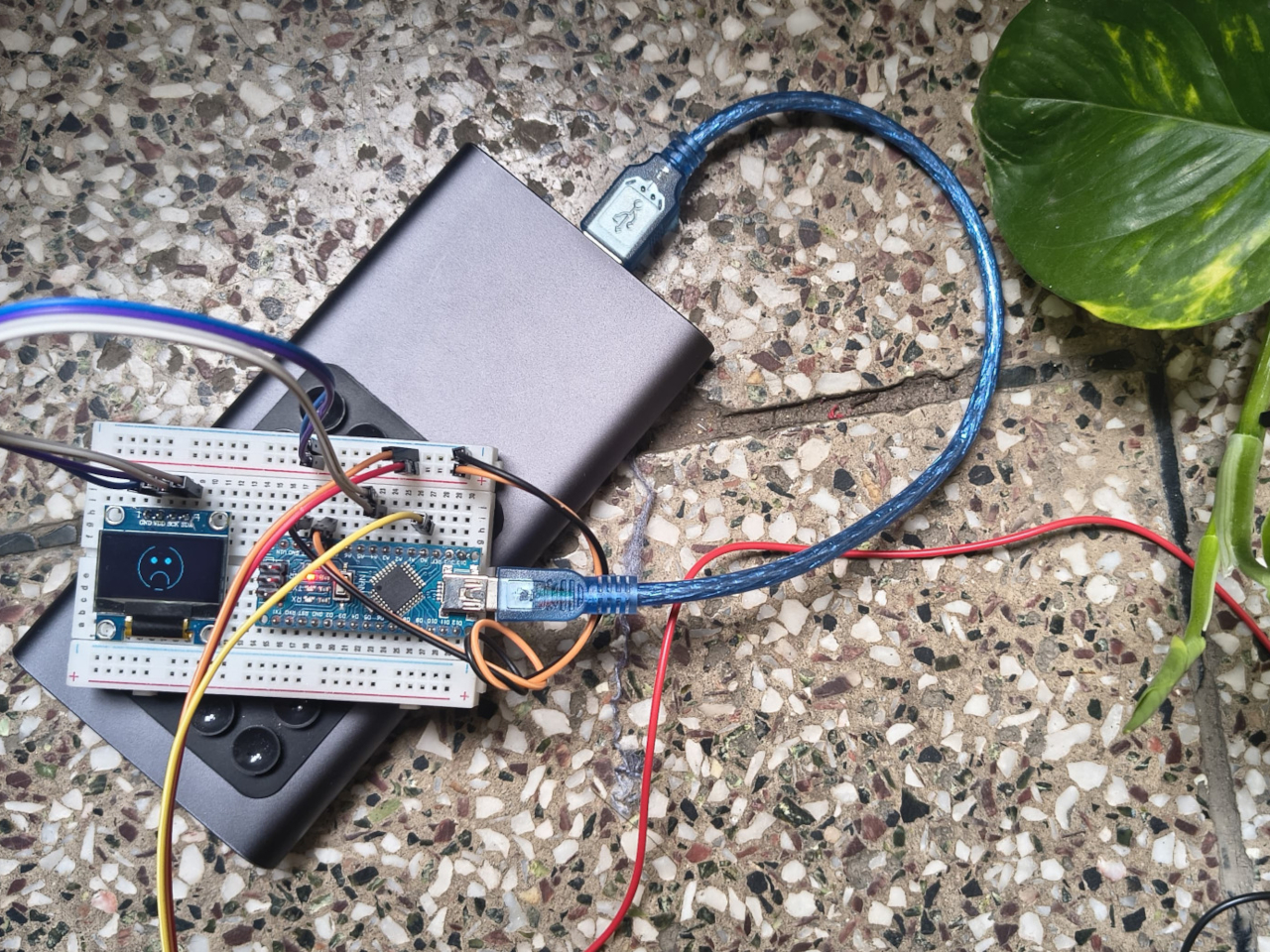
The proposed OLED display uses simple changes in eye shape to make its point, from upward curves to drooping forms. You don’t need elaborate graphics to give a little black screen some personality. A change in expression could prompt a closer look, even if you aren’t interested in comparing readings or opening a dashboard every time you walk past that particular plant.
Despite those pet-like expressions, PLANTIQUE isn’t meant to tell you that your fern feels lonely. The project describes its visual language as an interpretation of plant responses, rather than human emotions. That’s an important boundary for such an approachable design. A face can make a reading memorable, but giving a sensor eyes doesn’t turn it into a translator for everything a plant needs.
A drooping digital face would be a reason to check the pot, not automatically empty a jug into it. Different plants need different care, and more water isn’t always the answer. PLANTIQUE’s most appealing possibility is making that brief pause part of the day, with the plant getting a little attention before its owner gets distracted by another screen across the room.

The post PLANTIQUE Concept Makes a Soil Sensor Look Like a Tiny Alien first appeared on Yanko Design.

Head to the Tesla shop and you will discover products that are hard to resist. Take, for instance, the Pickleball Paddle, Levitating Cybertruck, or the Balance Bike for Kids. Anything coming into the Tesla shop is bound to pique interest, and the Cybertruck RC Racer is definitely one of them.
The miniature version of the real thing that costs starting at $83,000 is something made for a geek’s desk. This 1:10 scale model of the edgy Cybertruck is the real deal if you always wanted to have one from the Tesla house, and not any other knock-off Chinese RC version. The toy makes even more sense now that the Cybertruck is going out of production by the end of next year, to give way for the Cybercab robotaxis’ production at the Texas factory.
Designer: Tesla
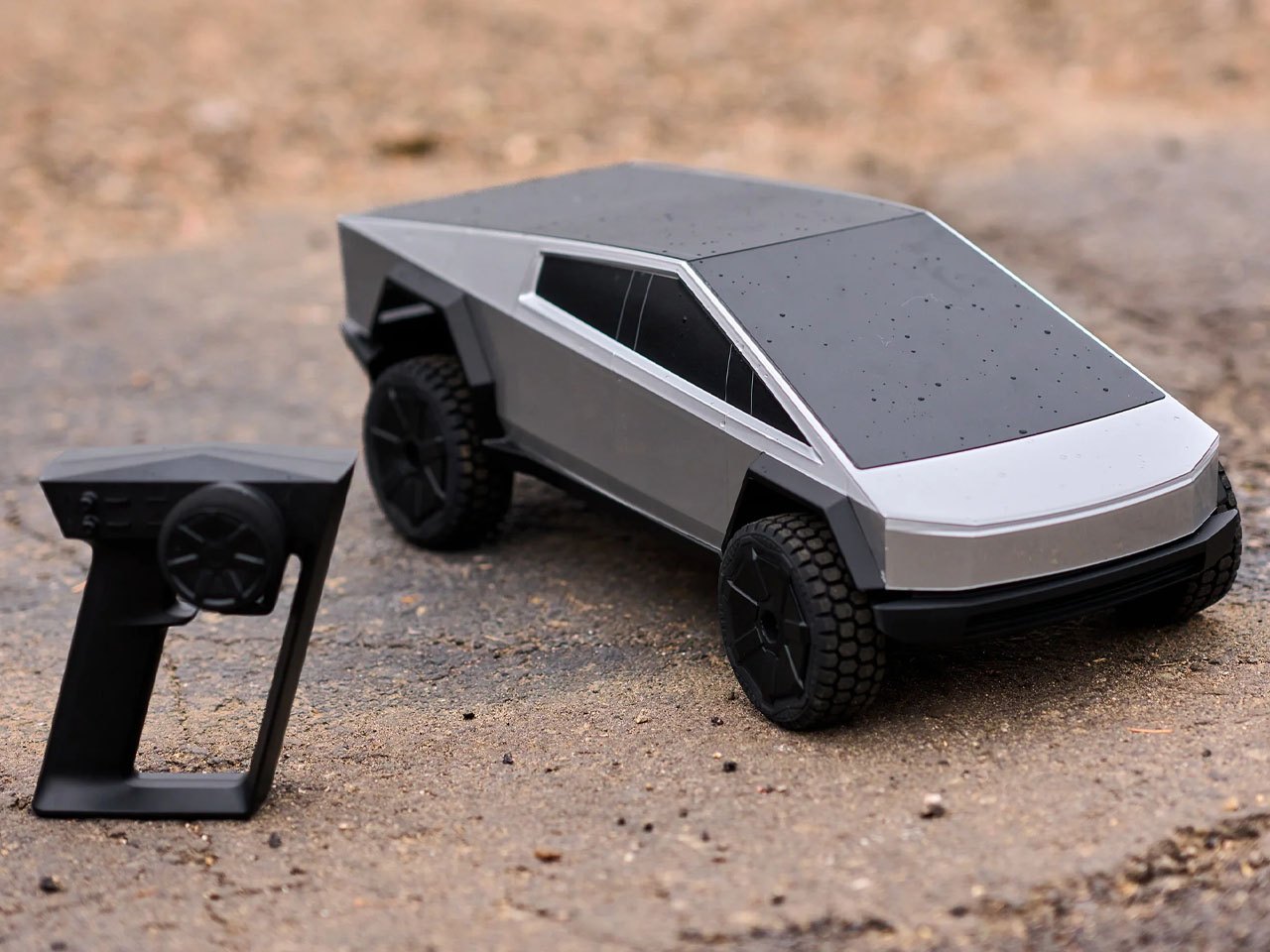

Cybertruck RC Racer priced at $350 is the perfect alibi for fans who swear by the Cybertruck’s USP. The toy racer is an accurate scaled-down version of the angular pickup truck that has had a controversial run ever since it rolled out of the production lines. Measuring around 22 inches x 9.9 inches x 8 inches (length x height x width), the car is crafted from polycarbonate to be as impact-resistant as the big brother. Tesla has kept rugged usage in mind, so there are swappable and repairable panels for enthusiasts who’ll push the RC car to the limits.
The racer comes with a brushless motor that delivers power to all four wheels for consistent performance on rough terrain and uneven surfaces like rocks or small pebbles. It can go up to a top speed of 37 mph without getting unstable or tipping over. That stability comes courtesy of a gyroscope and electronic stability control, which keeps the RC car stable. Tesla has also thrown in the counter steering and independent suspension system into the mix. That means you can take the little vehicle for a spin on racetracks or dirt surfaces with peak confidence.


Content creators will be eyeing this feature to make the Cybertruck RC Racer go drifting to create those cinematic shots and rack up millions of views. You’ll be able to steer this using a 2.4 gigahertz pistol-grip remote control from a distance of 326 feet. There’s an 11.1-volt, 3400 mAh lithium polymer battery, which makes the RC car go frantic for 20 minutes before needing another recharge. That’s not impressive, but we have to consider the tricks this one can do compared to a normal RC vehicle.
Apart from this, Tesla has also added a $35 Cybercab pullback racer and a $45 Tesla Action figure among 22 new items to the shop just in time for the holiday season fever. I personally would be interested in driving around the Cybertruck RC Racer when the snowflakes are falling down this winter.





The post Tesla Cybertruck RC Racer shines with replaceable body, independent suspension system first appeared on Yanko Design.

Samsung has officially announced the release of its highly anticipated intelligent eyewear, scheduled to launch on December 10, 2026, in the United States and South Korea. Pre-orders are now open, offering early adopters the chance to secure this innovative device. Combining advanced artificial intelligence (AI) with a sleek, fashion-forward design, the eyewear promises a hands-free […]
The post December Launch Confirmed for Samsung’s Intelligent Eyewear appeared first on Geeky Gadgets.