ESPRO P0 vs. GSI MicroLite JavaPress: two very different ways to French press coffee on the go

The French press has spent almost a century as a two-piece act. Attilio Calimani and Giulio Moneta patented a spring-sealed version in 1929. Faliero Bondanini patented his take in 1958, the design later sold as the Chambord. The familiar routine is to brew in a glass carafe and pour into a separate mug. ESPRO and GSI Outdoors looked at that setup and asked why the mug couldn’t do both jobs. Their answers are the ESPRO P0 Ultralight and the GSI MicroLite JavaPress, two insulated stainless steel mugs that brew, press, and travel.

The tricky part of putting a press inside a mug is the plunger, which has to go somewhere once the coffee’s ready. ESPRO keeps it, mounting two fine mesh filters on a rod and selling the 16-ounce P0 for $39.95. GSI gets rid of the rod and lets the whole inner carafe do the pressing, so you drink from the part that did the work. Both come with fine print worth reading. ESPRO says its 16-ounce mug brews about 12 ounces, while GSI warns its lid may leak if the mug isn’t kept upright.

ESPRO’s P0 hangs two filters off one rod
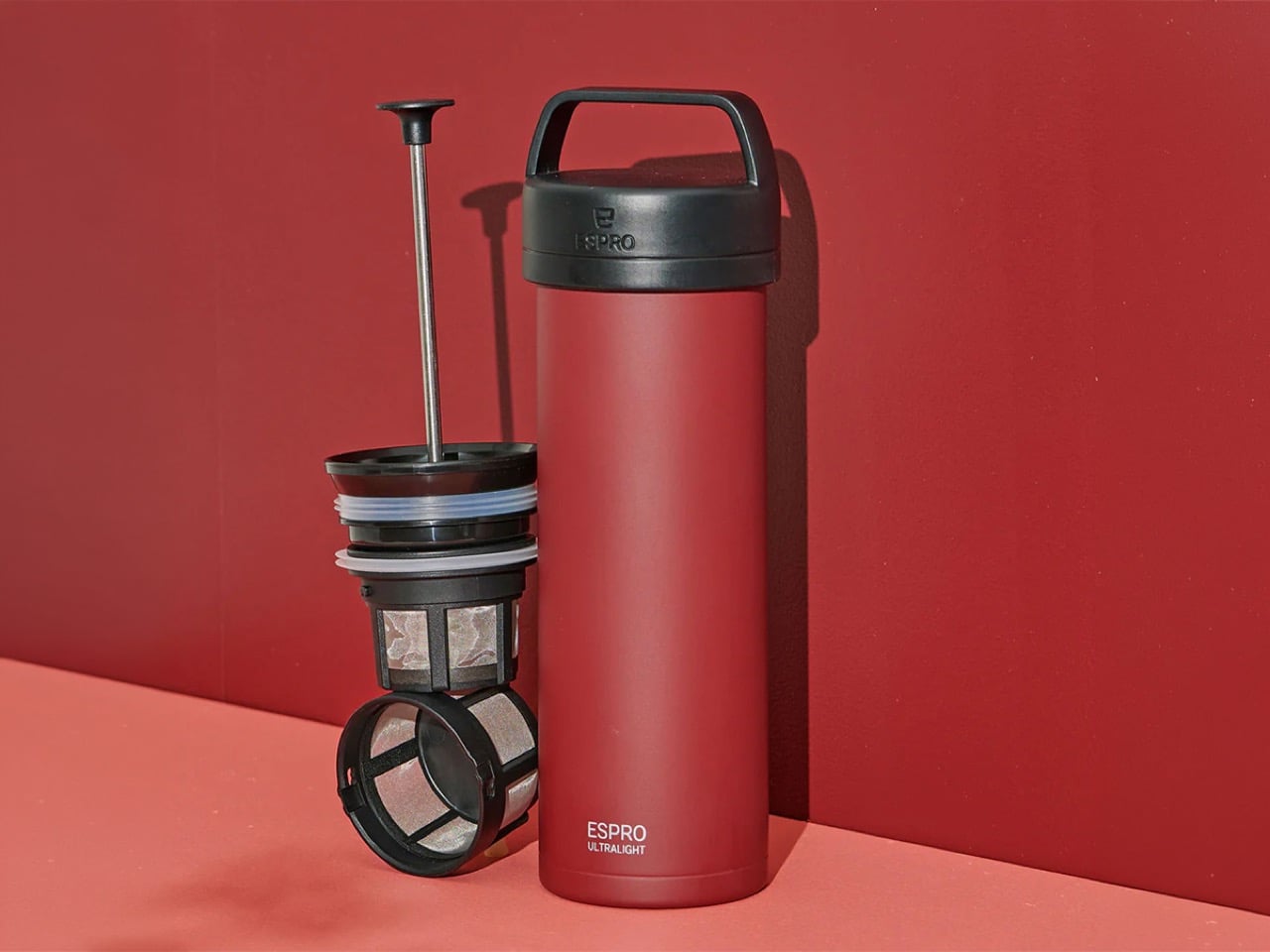
ESPRO built its reputation on a double micro-filter, and the P0 uses the same approach as the company’s home presses. Two mesh baskets twist and lock together at the end of the rod, and ESPRO says they’re 9 and 12 times finer than a typical press screen. You add coarse grounds, fill to the line inside, twist on the lower lid with the filters attached, wait about four minutes, and press. ESPRO claims extraction stops the moment the filters bottom out, addressing the classic French press habit of stewing your coffee. Paper filters slot in for anyone chasing extra clarity, and a tea filter is sold separately.

Everything else on the P0 is about carrying it around: a vacuum-insulated stainless steel body measuring 2.9 x 2.9 x 9.2 inches (7.4 x 7.4 x 23.4 cm), plus a looped lid handle for clipping onto a backpack. The 210-gram figure quoted in retail listings comes from ESPRO’s 2018 Kickstarter launch and covers the bottle and lid only. With the press assembly included, ESPRO lists 9.6 ounces, or roughly 272 grams. Still light, just honest-light. Pull the filters out and you get the full 16-ounce capacity, so it doubles as a water bottle once the coffee’s gone.

GSI’s MicroLite turns the cup into the plunger

GSI’s MicroLite JavaPress has no rod at all. Coarse grounds and hot water go into the 18/8 stainless steel outer cup, and the lid screws onto a BPA-free polypropylene inner carafe with a mesh base. After about four minutes, you push that whole carafe down. Coffee rises through the mesh, the grounds stay trapped in the outer cup, and you sip straight from the carafe through a sealable spout. GSI says the carafe then works as an extra layer of insulation, giving it another job once the pressing is done. The whole thing measures 4 x 3 x 8.6 inches (about 10.2 x 7.6 x 21.8 cm).

GSI has used this arrangement before on its plastic Commuter JavaPress, whose product copy put it bluntly: the plunger is the mug. The MicroLite moves that idea into vacuum-insulated steel, adds a non-slip foot sized to fit most car cup holders, and hangs a leash off the lid. GSI lists its capacity at 15 fluid ounces, while some retailers quote 14.3 fluid ounces (423 ml), without specifying how much brewed coffee you actually get. The fine print calls for coarse grounds, hand washing, and keeping it upright. Reviewers also mention that suction can make the carafe stubborn to pull out at first.

Which press-and-sip mug belongs in your bag
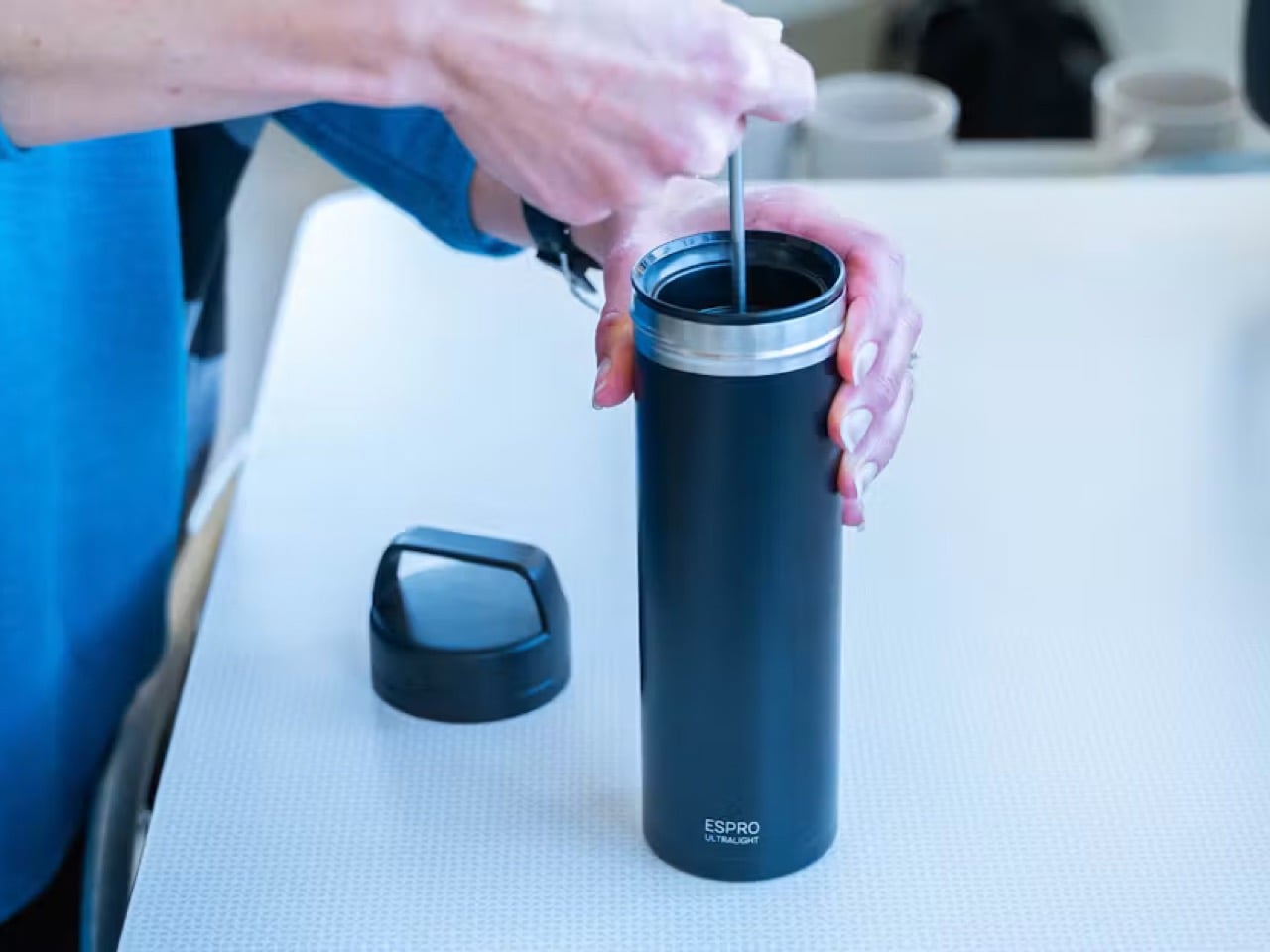
The P0 makes the most sense if you care about filtration and carry your coffee clipped to a bag, since ESPRO describes its double-lock lid as leak-proof. The MicroLite suits the cup-holder crowd, people who want to skip the plunger rod and don’t mind keeping the mug upright. Cleanup differs, too. The P0 means twisting apart two filters and rinsing a rod, while the GSI means dumping grounds from the outer cup and rinsing the carafe. Both call for roughly a four-minute steep, so neither saves you the wait for brewing.

ESPRO lists the P0 for $39.95, the same price it announced at launch, in colors from Meteorite Black to Frost Wisteria. GSI’s store lists the MicroLite at $30.99, down from $44.95, though both colors were showing as sold out when I checked, and REI marks the Sand version as discontinued. Gadgets like the FinalPress V2 brew inside whatever mug you already own, while these two build the press into the mug. Nearly seven decades after Bondanini’s patent, we’re still finding new places to put the plunger.

The post ESPRO P0 vs. GSI MicroLite JavaPress: two very different ways to French press coffee on the go first appeared on Yanko Design.

Star Wars x Kith’s Sith Collection Goes Dark Without Cosplay

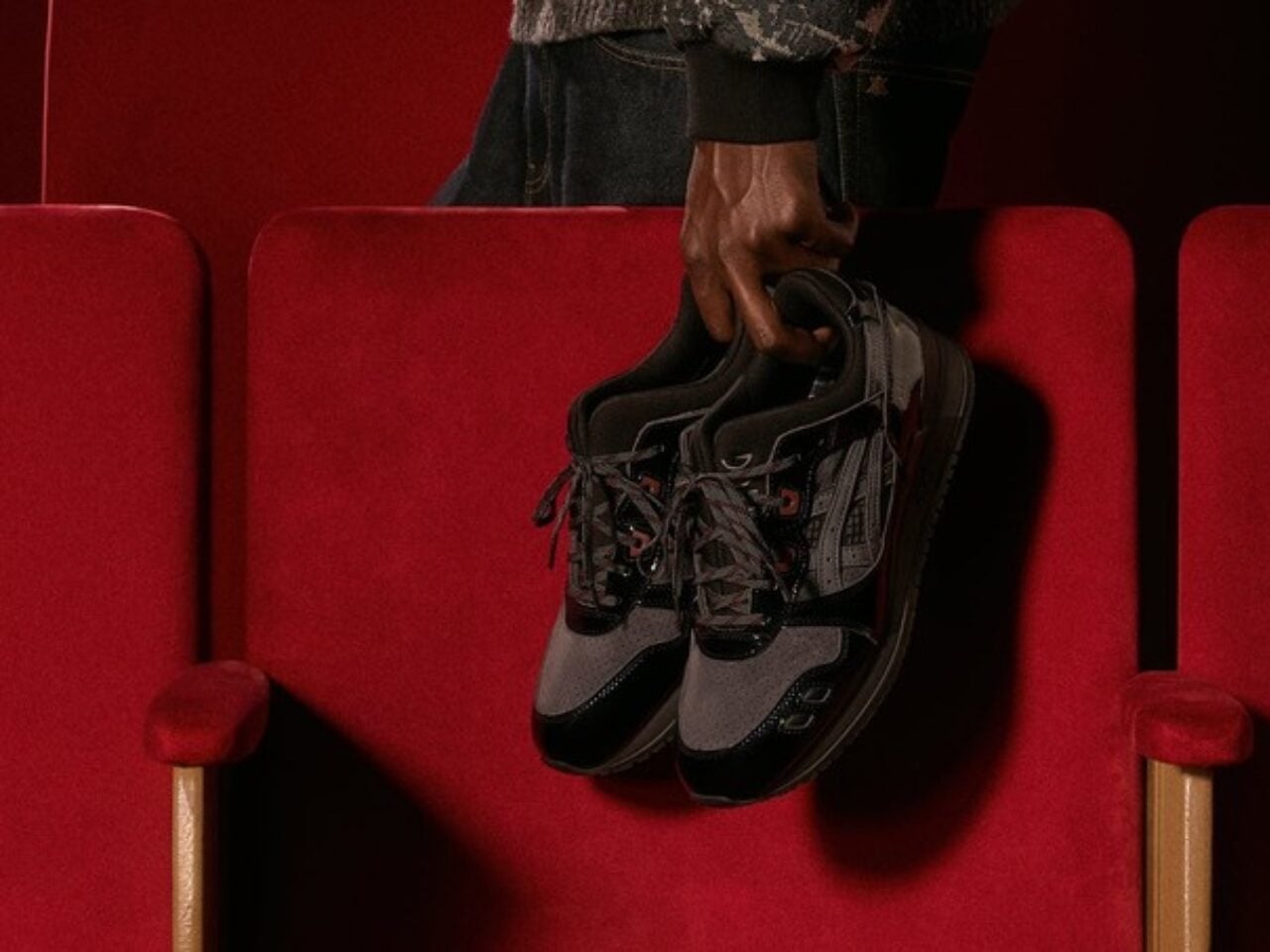
Darth Vader’s armor gets the point across before he says a word. I like how little of it you need to borrow before the reference clicks. A flash of glossy black and a sliver of red will do. Kith takes that approach with its new Star Wars sneaker, saving the actual picture of Vader for the footbed, where it disappears as soon as you put the shoe on. It’s a surprisingly quiet introduction to the Sith Collection, an official collaboration that finds room for everything from Vader’s helmet to the Imperial machines that do his bidding.

I like plenty of movie merch in theory. The trouble is finding a place for it in a wardrobe or on a shelf without feeling like I’ve set aside space just for the reference. Kith gives fans some room to maneuver here. The dark side can show up as a finish on a shoe, a jacket that borrows its shape from a helmet, or a pair of bookends that do an actual job. And if you want the full miniature Sith showdown on your desk, Kith has that covered too.

Designer: Kith

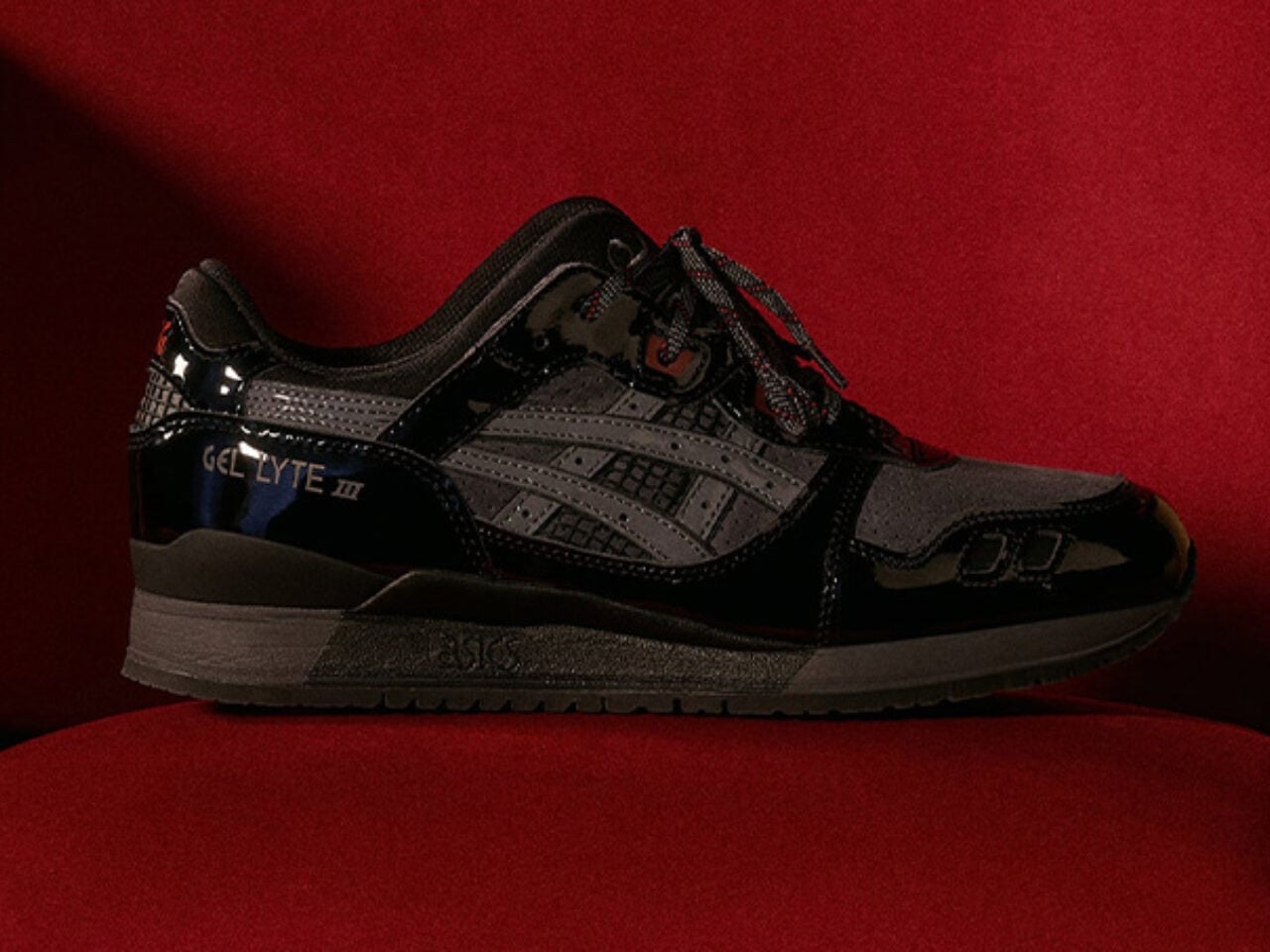
The sneaker is the cleanest example because the association came before the collaboration. Ronnie Fieg and ASICS made a black patent GEL-LYTE III in 2008 that drew comparisons to Vader without an official connection to the films. The new GEL-LYTE III Remastered “Castlerock” plays up what people saw in the original. Glossy overlays pick out the edges against matte, perforated nubuck, and the red stays mostly around the eyelets and trim. The shoe gets across the look of Vader’s armor without having to reproduce a single piece of it.

The jackets get more literal. On Kith’s Darth Vader Moto Jacket, helmet-inspired embossing and raised panels give the black sheepskin some of the shape of armor. The cream stormtrooper moto jacket goes further. Dark curves across the chest and abdomen bring the face of a stormtrooper helmet into view from across the room. I’d wear the Vader jacket more often, but I like the nerve of the stormtrooper version. It also makes the case that dressing for the dark side doesn’t have to mean wearing black.

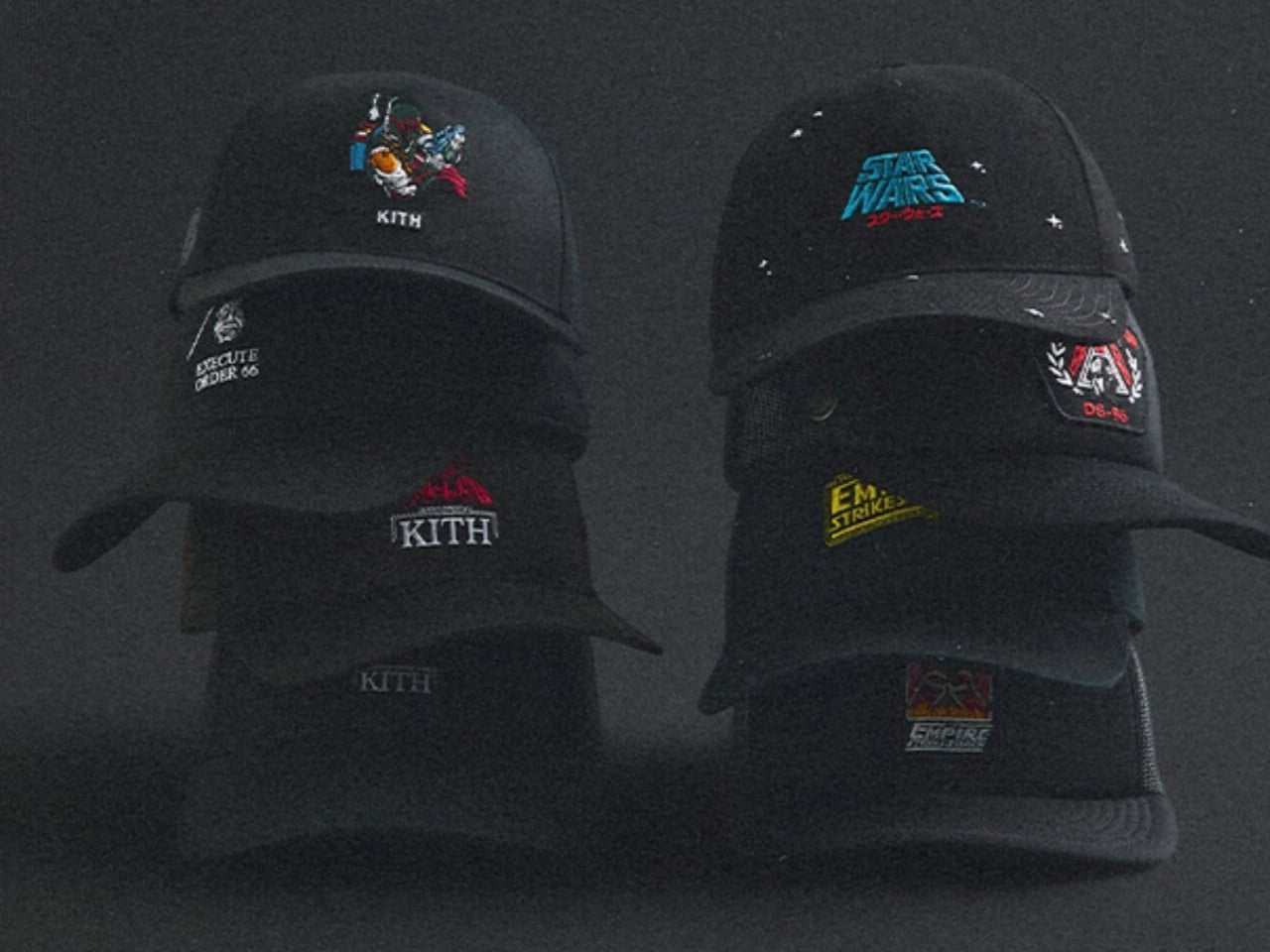
The AVIREX leather jacket takes a different route, with film imagery embroidered across the garment. It makes sense alongside tees that draw on vintage movie posters and caps with smaller embroidered references. The kids’ range has its own fleece and graphics, plus a lunch box and Vader and stormtrooper cushions. Turning the face of the Empire into something you can nap on is a good sign that nobody needed to take the theme too seriously.

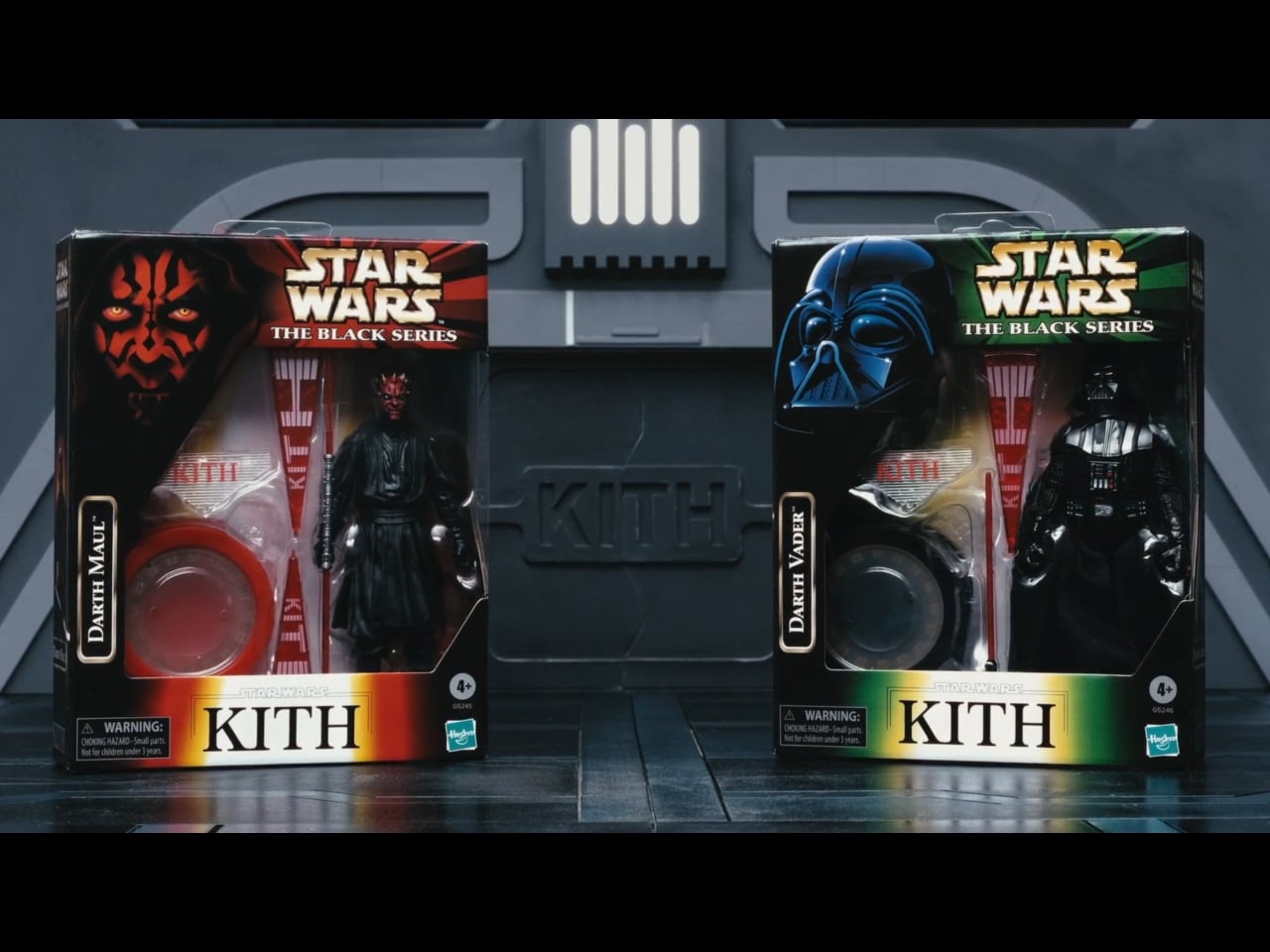
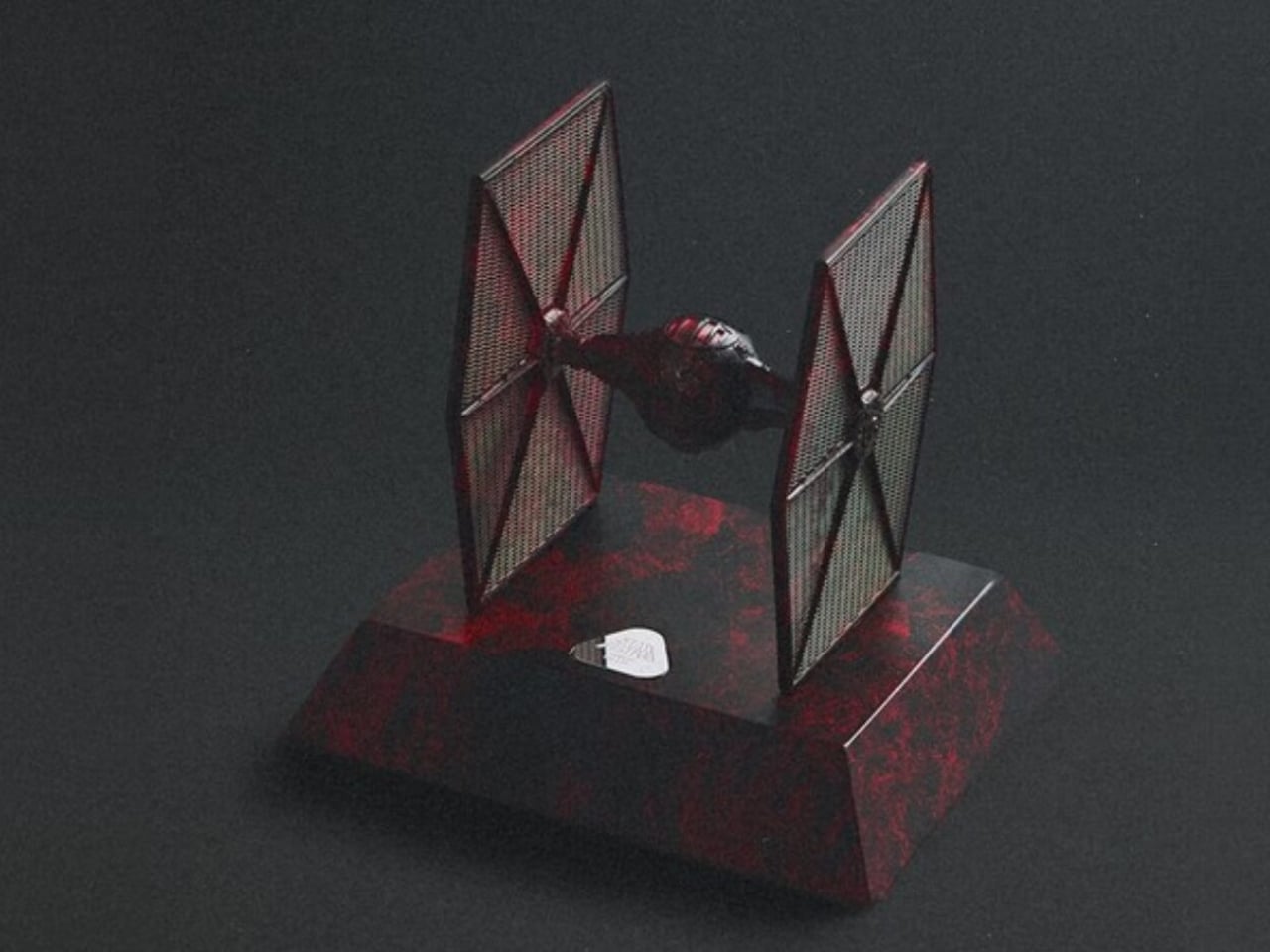
For collectors, Hasbro’s Darth Vader and Darth Maul figures give the villains a shelf of their own. Both are 1:12 scale, with 25 points of articulation and display bases. Maul’s two lightsabers connect to form his familiar double blade, so you can change the pose as well as the configuration. A TIE fighter on a red-and-black marbled-looking plinth is more of a set-it-down-and-admire-it proposition. Yellowpop’s co-branded LED sign makes the theme even harder to miss.

Kith scheduled early access at its London store for Friday, November 20, 2026. The wider release is set for Wednesday, November 25, at 11 a.m. ET through Kith stores, its website, and the Kith app.

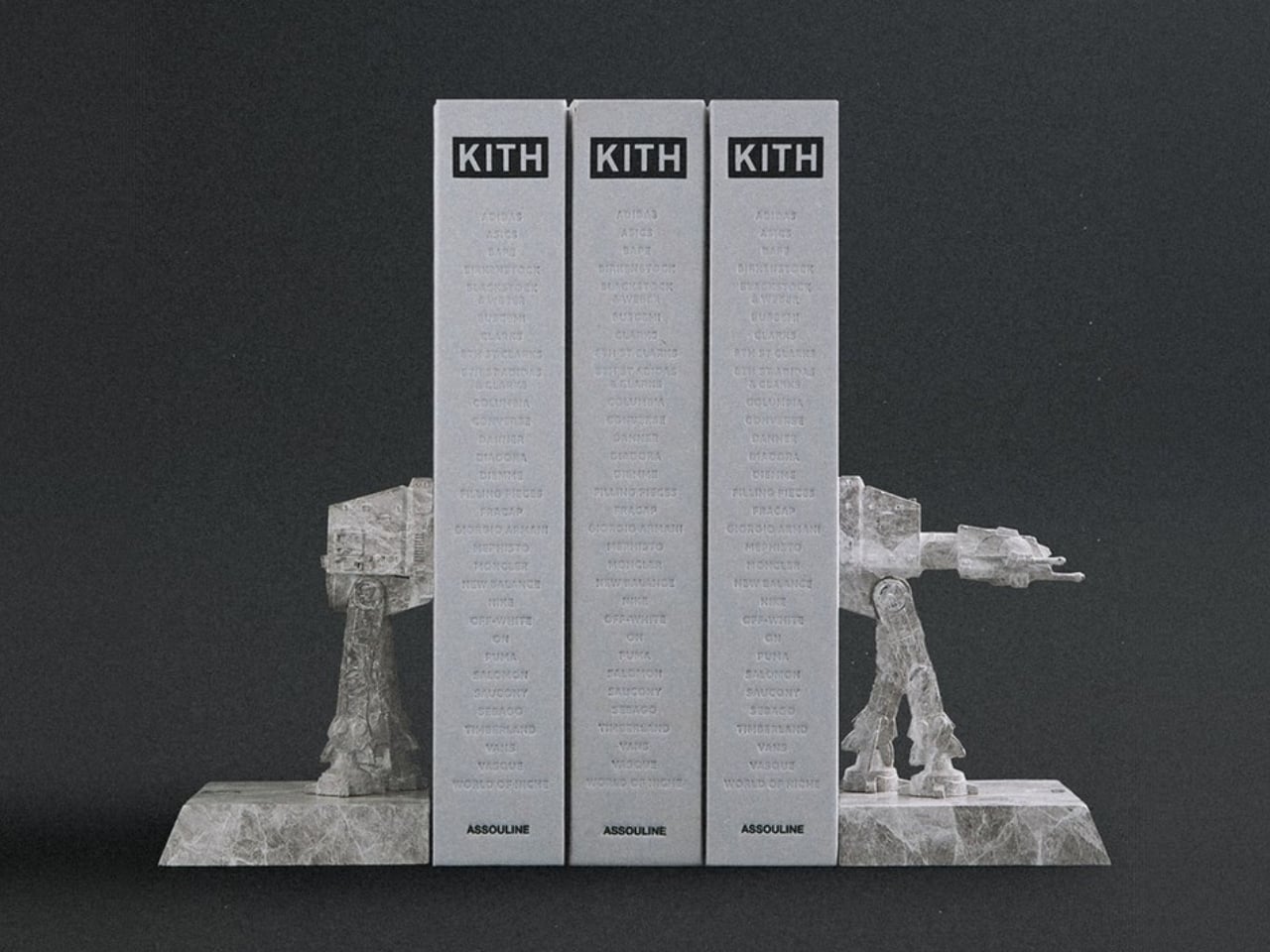
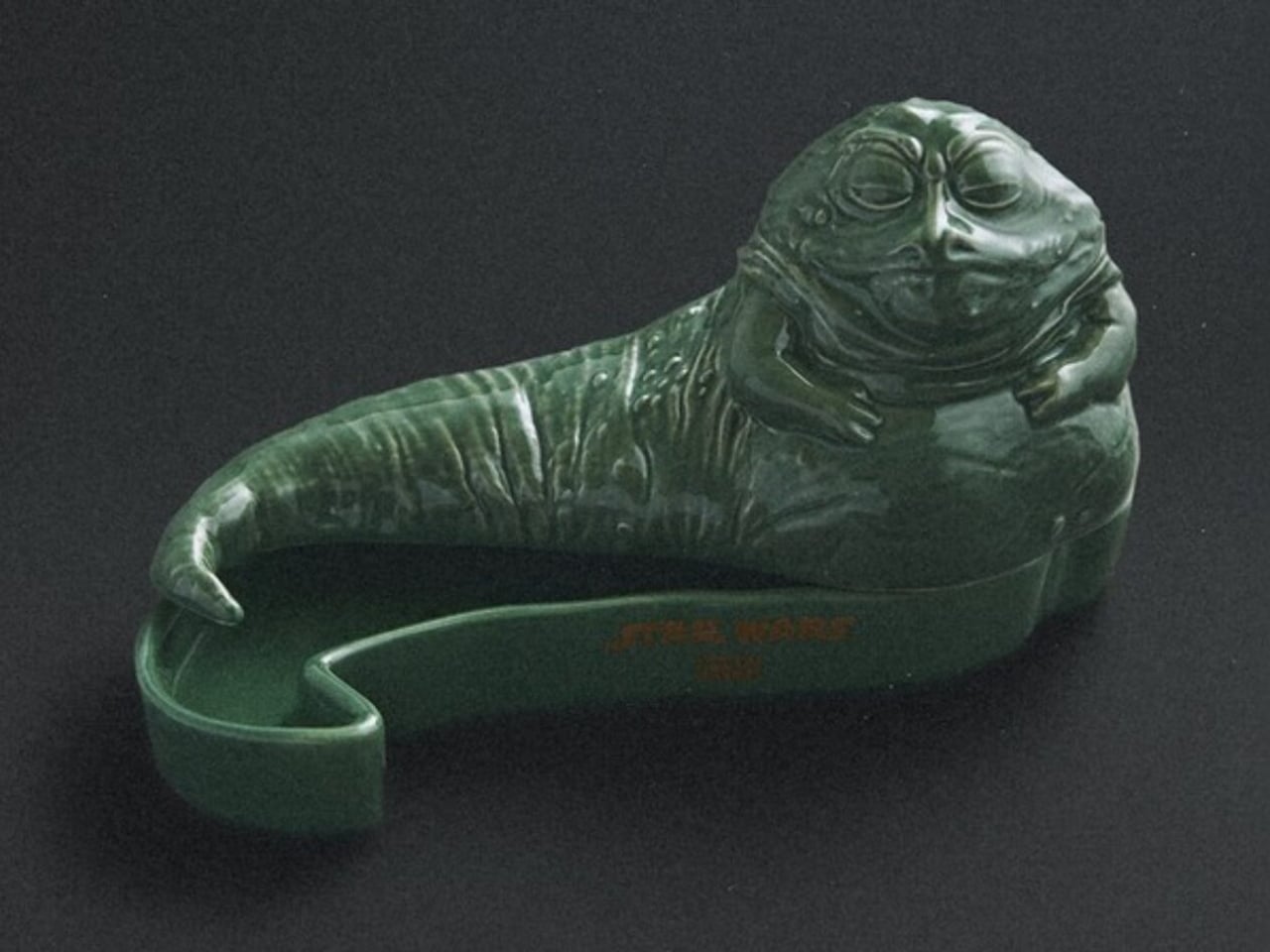
The home pieces I’d make room for are the ones with a sense of humor about their new jobs. The resin AT-AT bookends put half a walker on either side of a row, so your paperbacks supply the missing middle. Then there’s the glossy green Jabba the Hutt catchall, which uses the curl of his tail to frame a spot for keys and loose change. Jabba isn’t a Sith, of course. But if you’re bringing home the bad guys, I can think of worse uses for a crime lord than making him look after your keys.

The post Star Wars x Kith’s Sith Collection Goes Dark Without Cosplay first appeared on Yanko Design.
This tiny Damascus steel knife is the size of a car key and weighs 1.4 ounces

For most of my life, I only ever looked at Damascus steel through glass. It sat in display cases next to price tags with too many digits, on knives that collectors bought and then never dared to use. The swirly pattern was the whole point, and actually cutting something with it felt like a crime. That’s been changing, and the ORIONER Z5 is a $49 example. It’s a tiny fixed-blade knife with a Damascus blade and titanium scales, made to hang off your keys and get used.

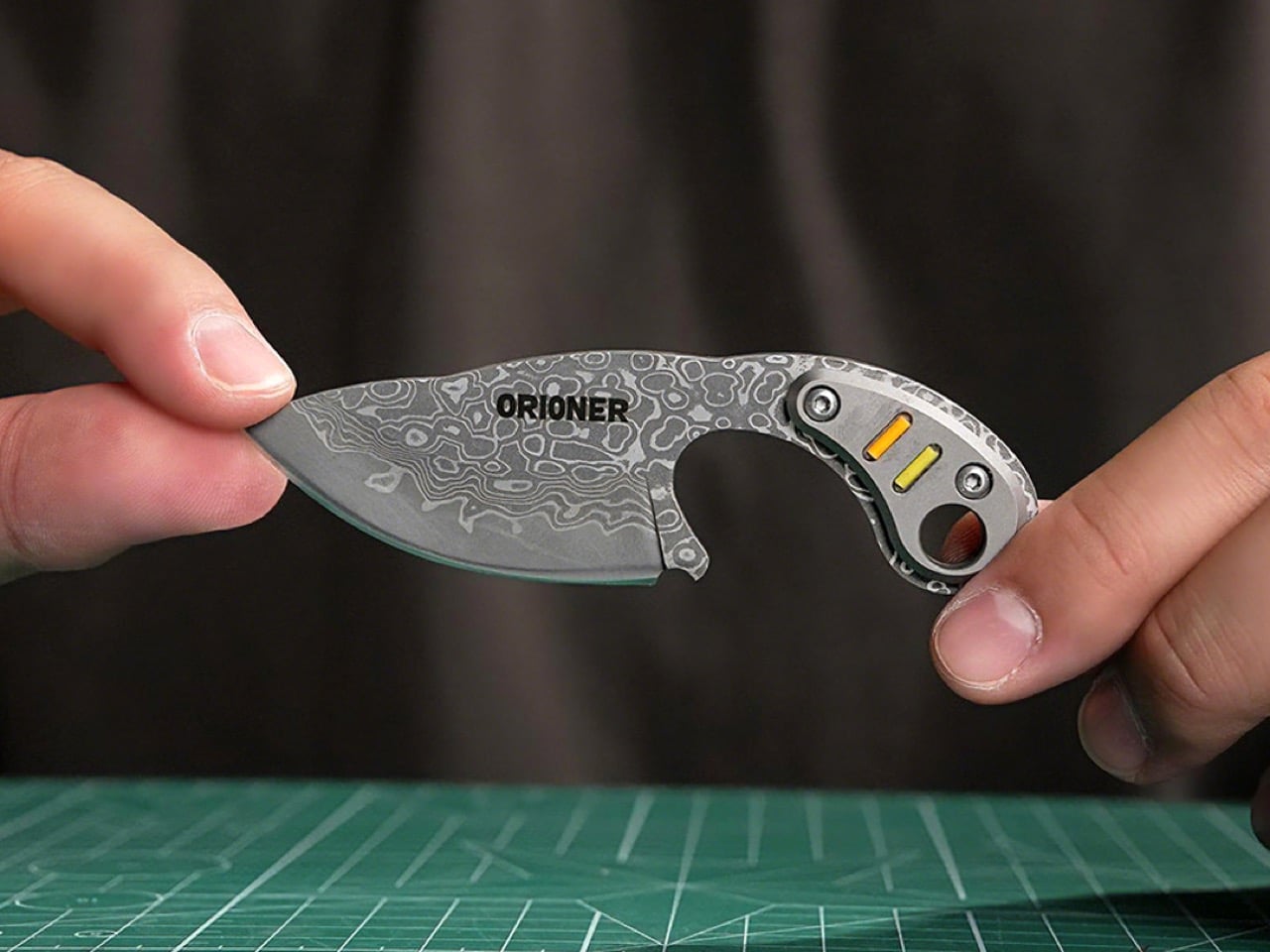
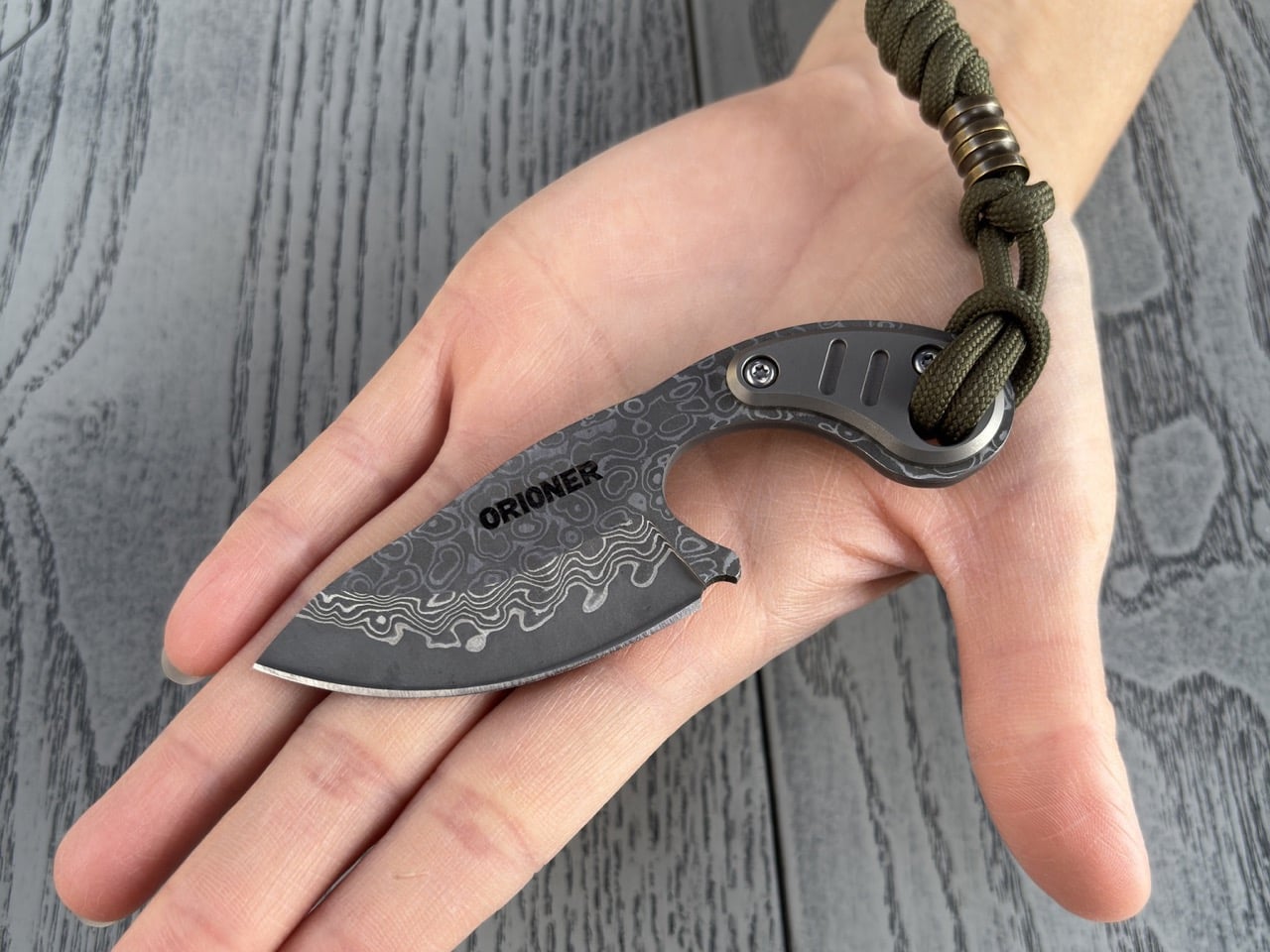
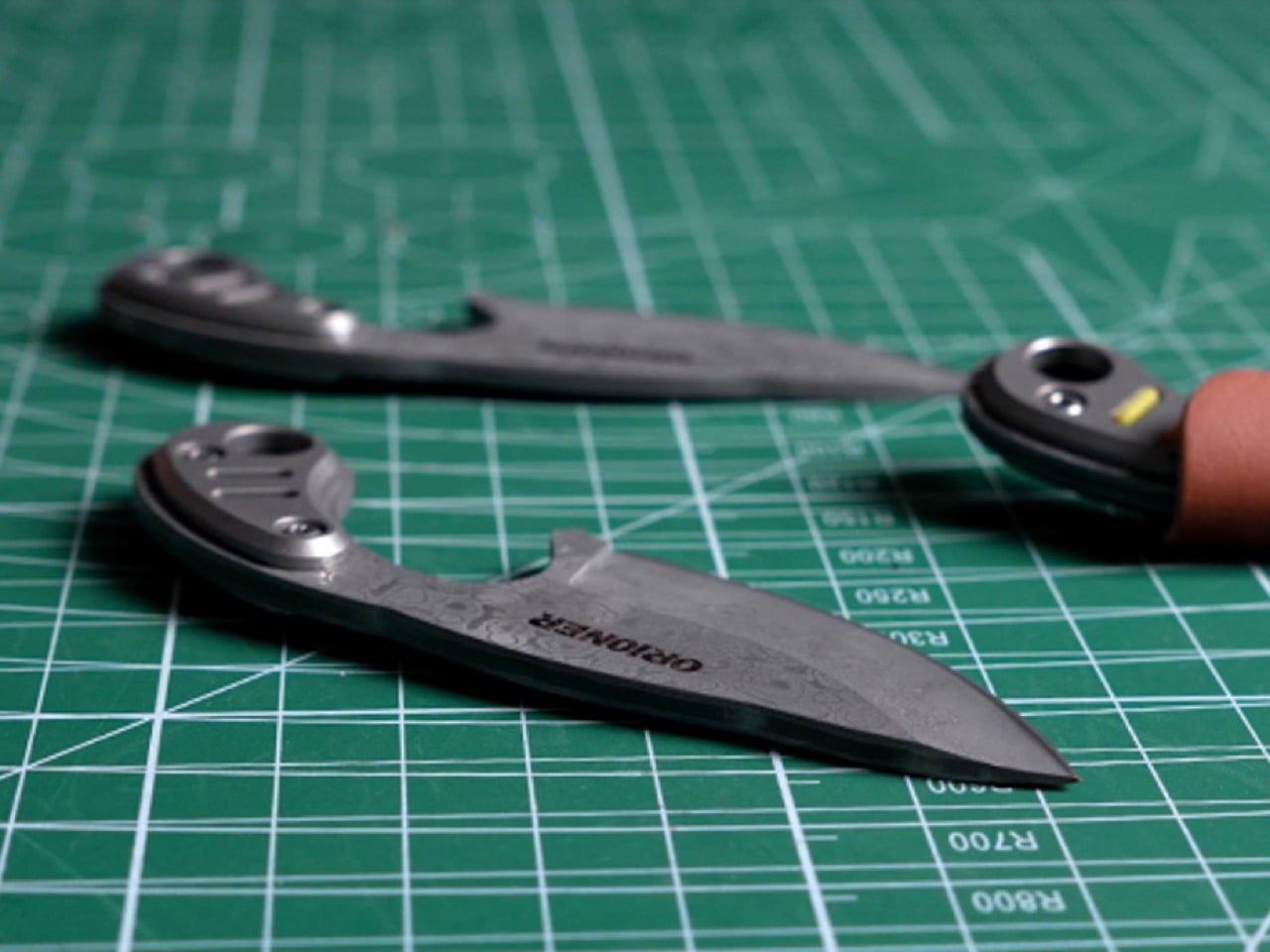
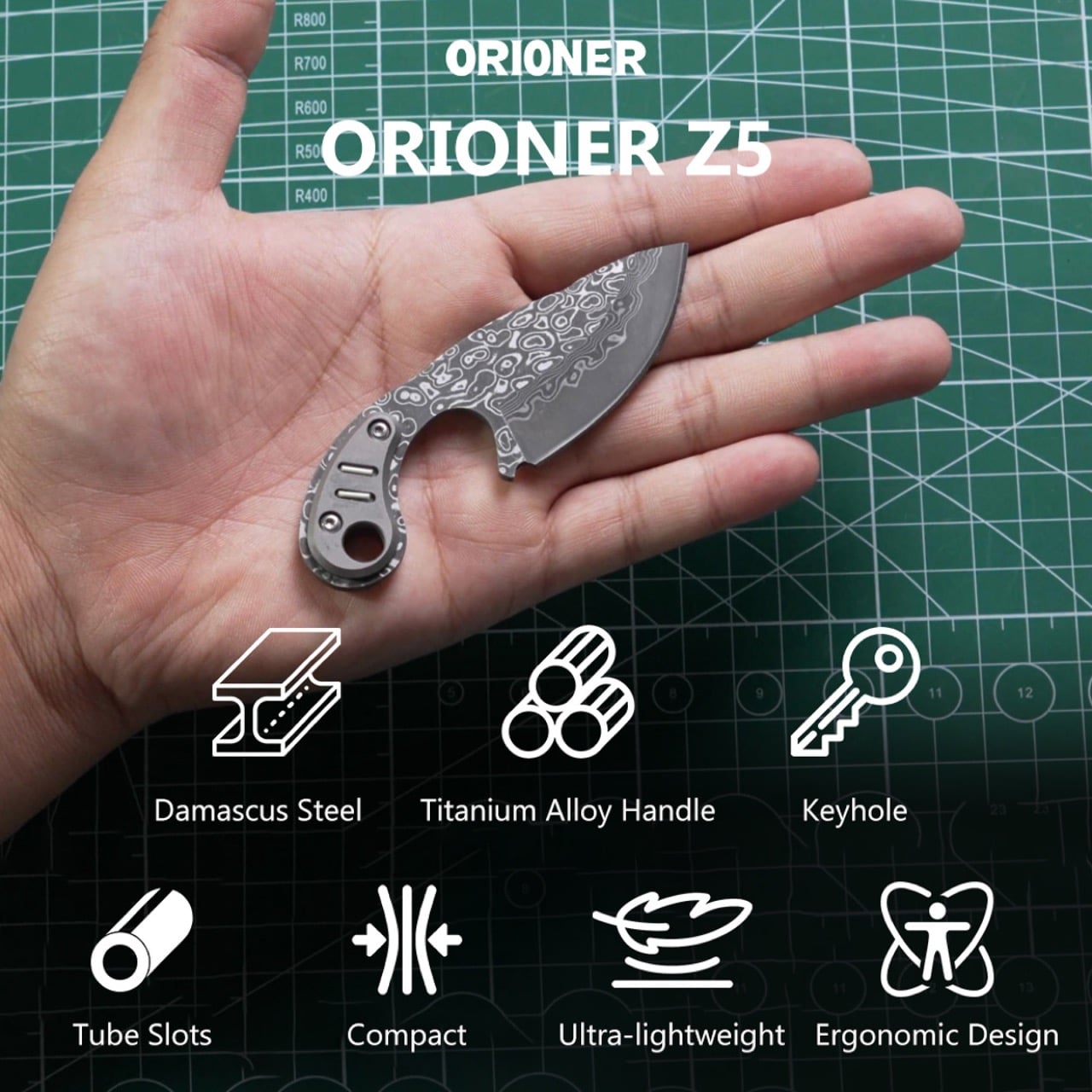
The Z5 comes from ORIONER, a Hong Kong brand known for compact titanium tools and multitools. This one keeps things simple. A 2.08-inch (52.8mm) blade flows into a short, curled titanium handle, with a deep notch between them for your index finger. The whole knife measures 3.97 inches (100.8mm) and weighs 40.5 grams (1.43 oz). Pricing starts at $49, or $59 with a magnetic quick-release key clip and a paracord lanyard. Either way, that’s less than I’ve spent on dinners I barely remember.

Designer: ORIONER

A Tiny Handle That Borrows Your Finger for Leverage

The handle measures just 1.89 inches (48mm), shorter than most adult palms are wide. ORIONER makes room for your index finger with a deep, rounded notch where the blade meets the handle, adding purchase beyond the short grip. The notch also positions your hand closer to the cutting edge, intended to give you finer control. Behind it, the handle curls into a chunky loop that ends in a keyring hole, so the whole outline looks like a comma, or a bird’s head if you squint.

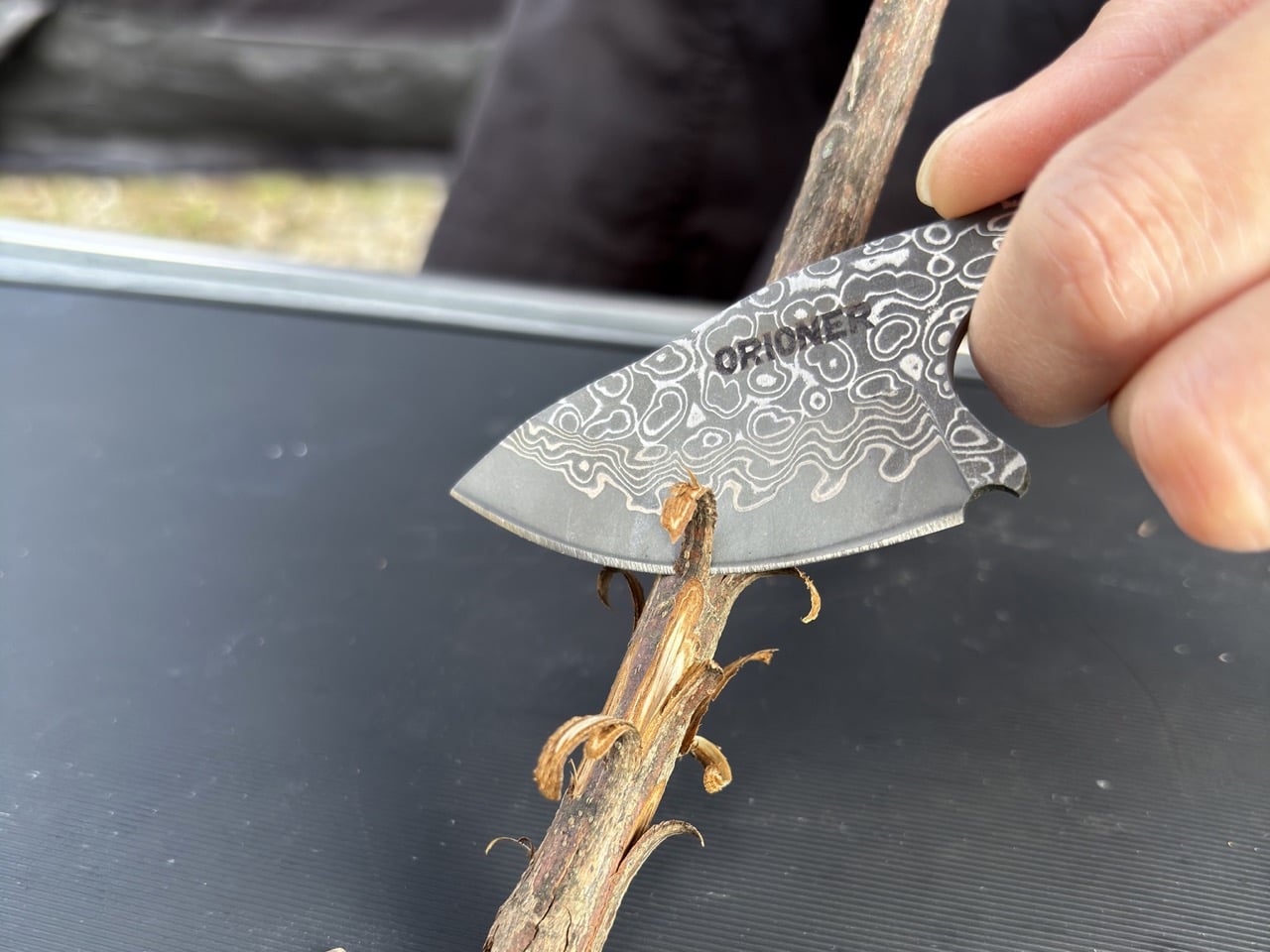
For heavier jobs like cutting cardboard, ORIONER recommends placing your finger in the notch and tucking the rest of the handle into your palm. Precision work calls for a thumb-pressed grip instead, with your thumb on the spine above the notch to guide the edge through paper, plastic sheet, or leather. Anyone who has used a scalpel or an X-Acto knife will recognize that second position instantly. The upswept belly provides a curved edge for slicing, while the sharp tip is intended for detail work. ORIONER even shows it whittling a pencil to a point, which is a very satisfying way to procrastinate.

No Pivot, No Lock: A Fixed Blade for Your Keys

Most keychain knives are folders, which means a pivot, often a lock, and a handful of tiny parts packed into a space the size of your thumb. Those moving parts give grit somewhere to collect and can develop play as they wear. The Z5 skips the folding mechanism. Its Damascus blade extends into the handle as one piece, with titanium scales fastened to either side. ORIONER even shows the blade being struck with a hammer, a stunt I would never try on a folder whose lock is the size of a grain of rice.

A tan leather sheath covers the blade on your keyring, leaving the titanium loop exposed. The optional magnetic quick-release clip lets you detach the Z5 without wrestling a split ring, then snap it back when you’re done. Two angled slots on each scale are designed for tritium vials, the self-glowing capsules that help you find gear in a dark tent or a darker backpack. Neck knives and small hunting capers have paired fixed blades with fitted sheaths for decades. ORIONER applies that formula at keyring scale, with Damascus providing the decoration.

Damascus for $49, and What You’re Really Getting

Modern pattern-welded Damascus is made by stacking different steels, forge-welding them together, and manipulating the billet to create a layered pattern. An acid etch attacks the steels differently, revealing those contour-map swirls. It’s a different process from the historic Damascus blades made from wootz steel ingots originating in India. On the Z5, the pattern flows across the blade, interrupted by ORIONER’s laser-engraved logo. Variations in the billet give each blade a slightly different pattern.

Edge retention depends on the steels used and their heat treatment, so the Damascus label alone won’t tell you how the blade compares with a steel like M390. For a 2-inch knife that mostly opens packages and slices tape, the patterned finish may be reason enough to choose it. Kansept’s Damascus Orion folder sells for about $170, while CIVIVI’s budget Damascus knives sit around $75 to $100, putting the Z5 below those examples at $49. It also gives ORIONER a fixed-blade option alongside its S1 keychain knife and tiny folding Z6.

The post This tiny Damascus steel knife is the size of a car key and weighs 1.4 ounces first appeared on Yanko Design.
LEGO is putting every F1 driver on the grid in minifigure form

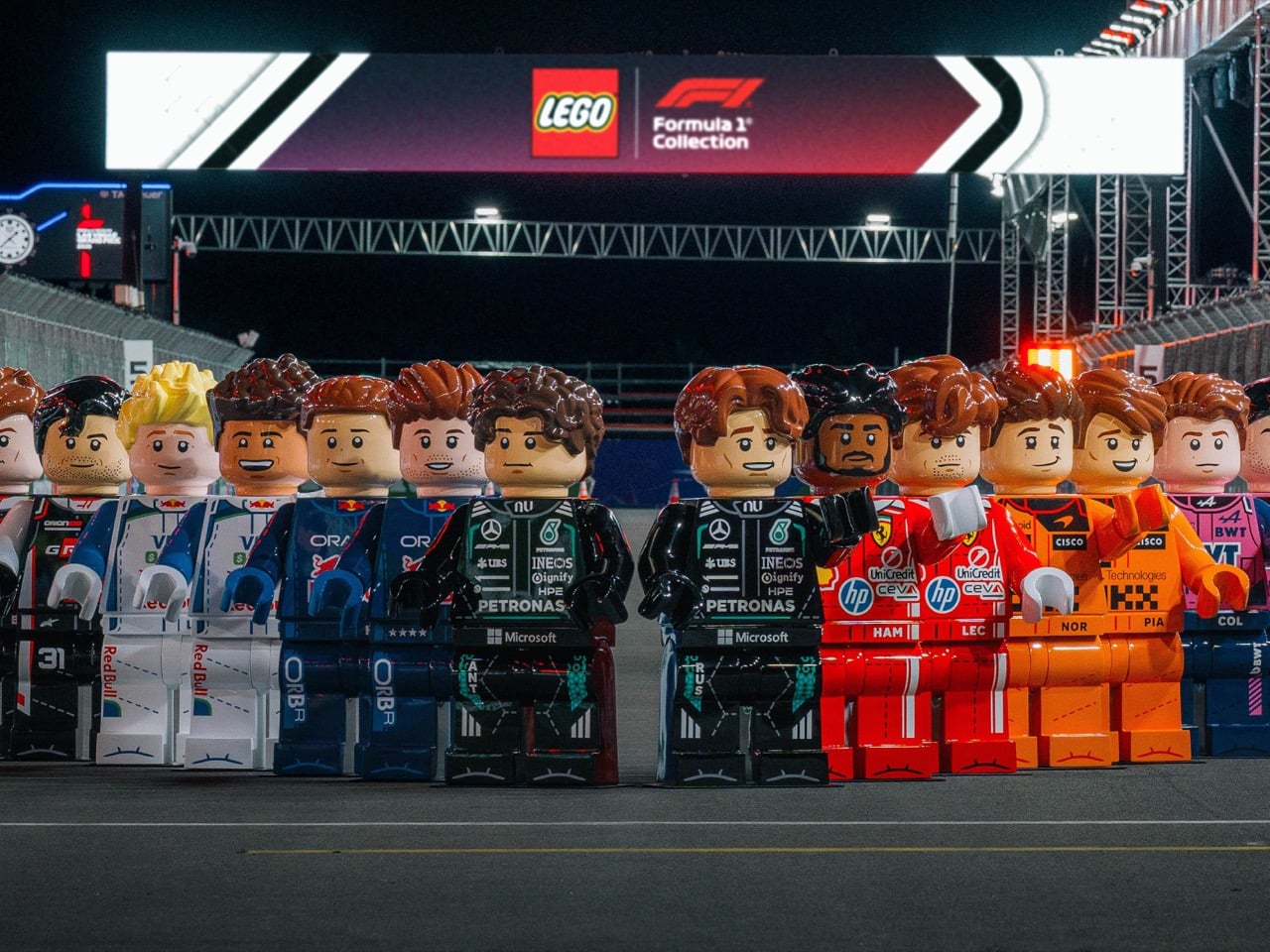
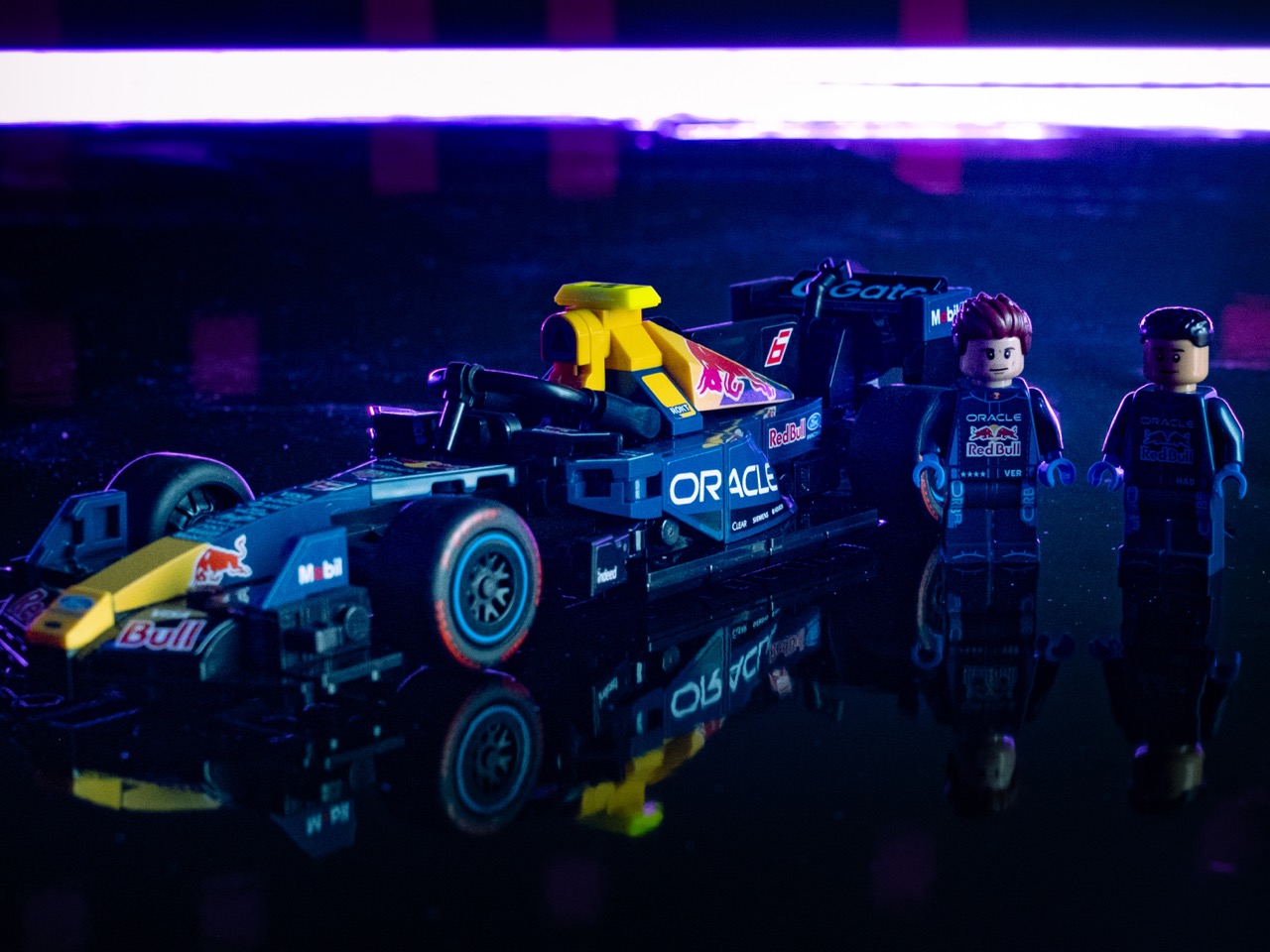
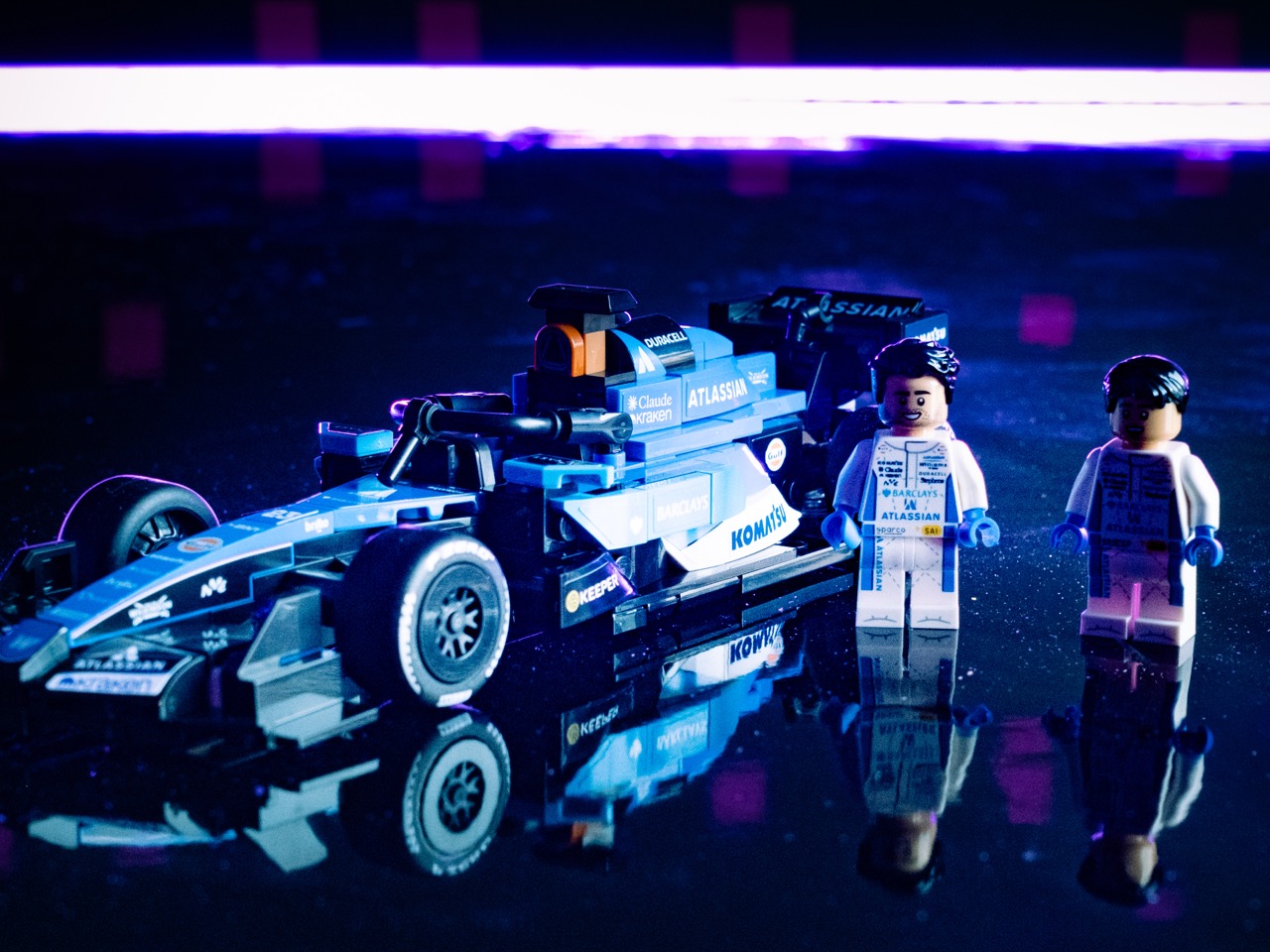
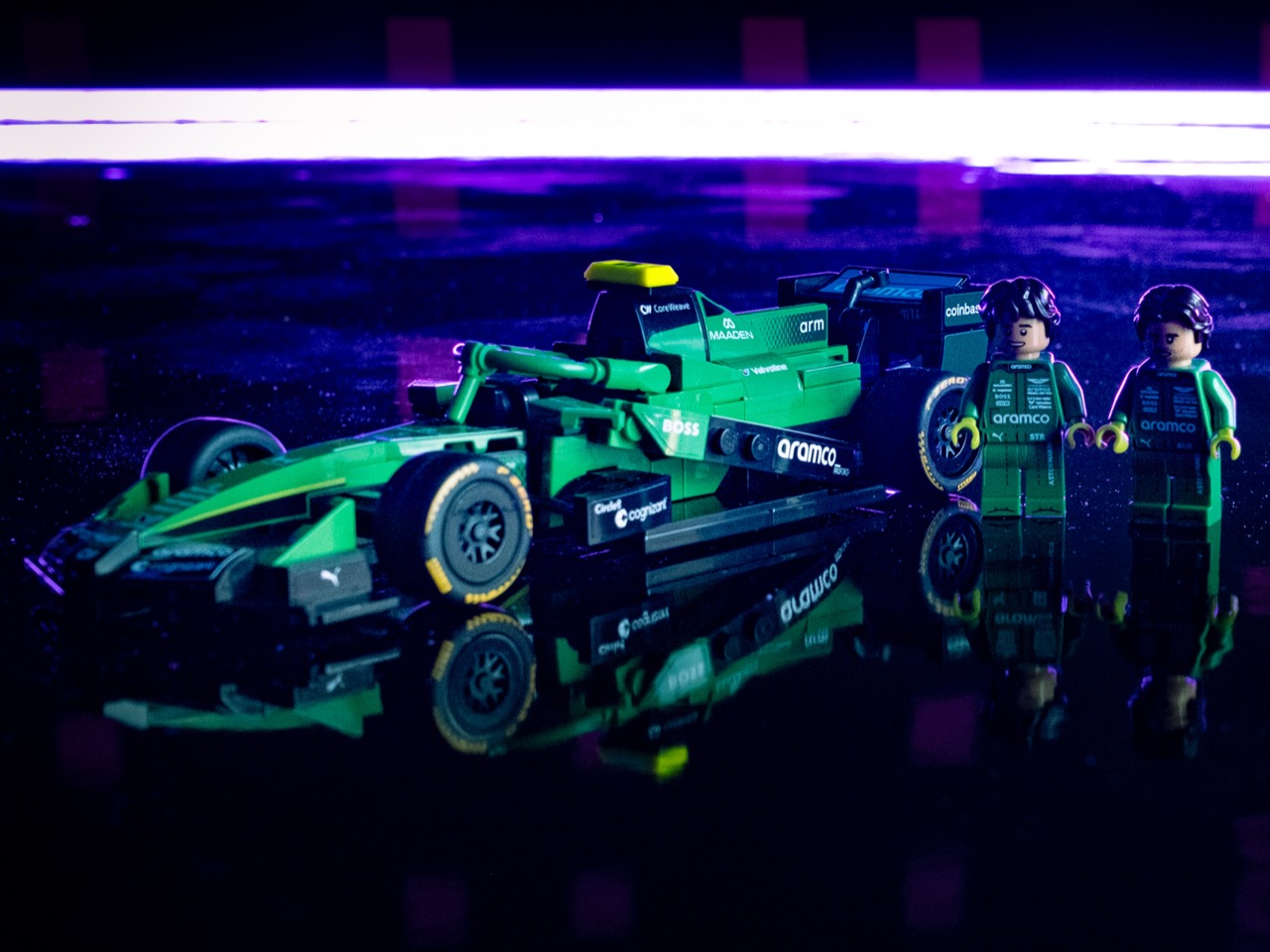
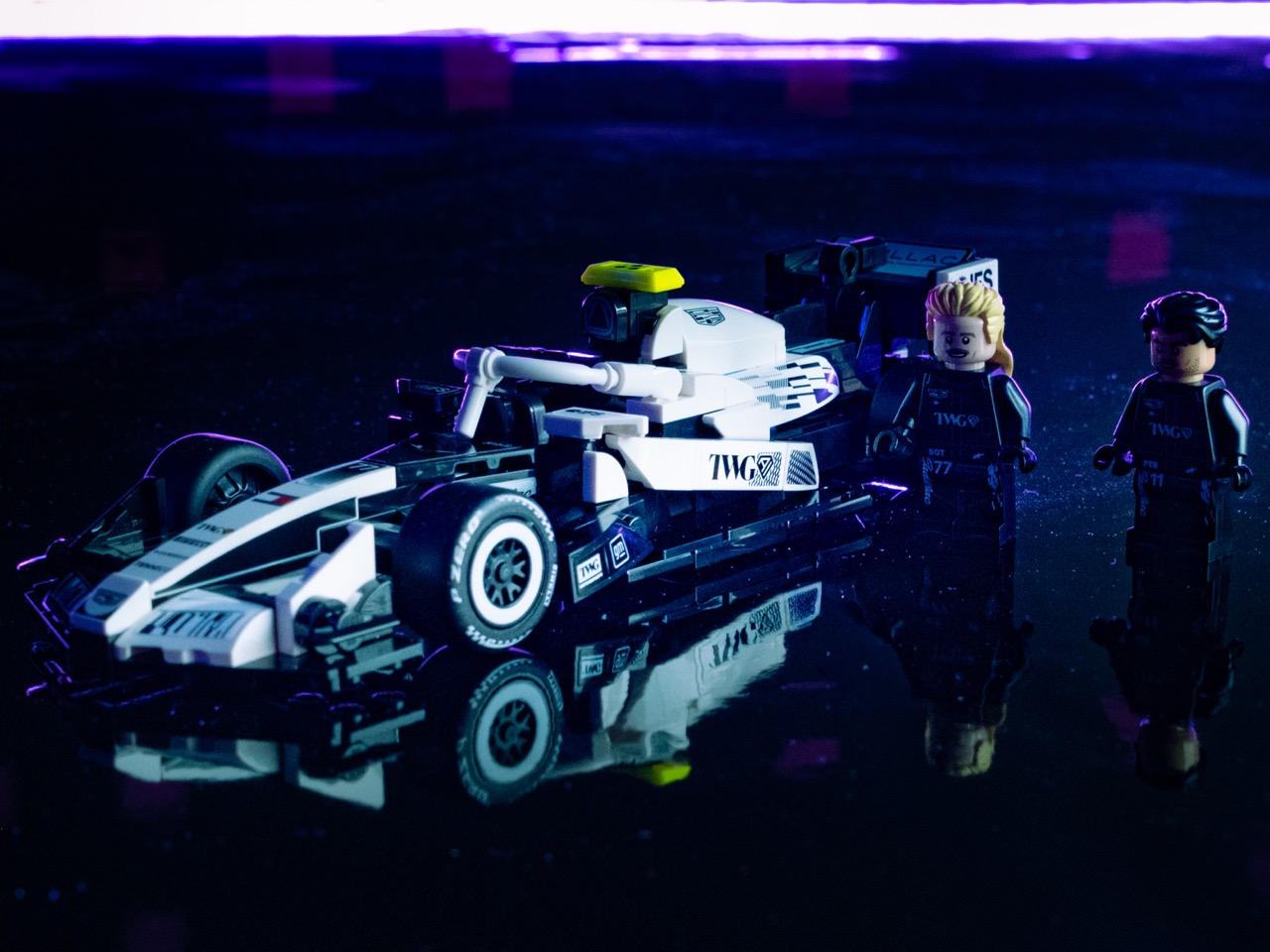
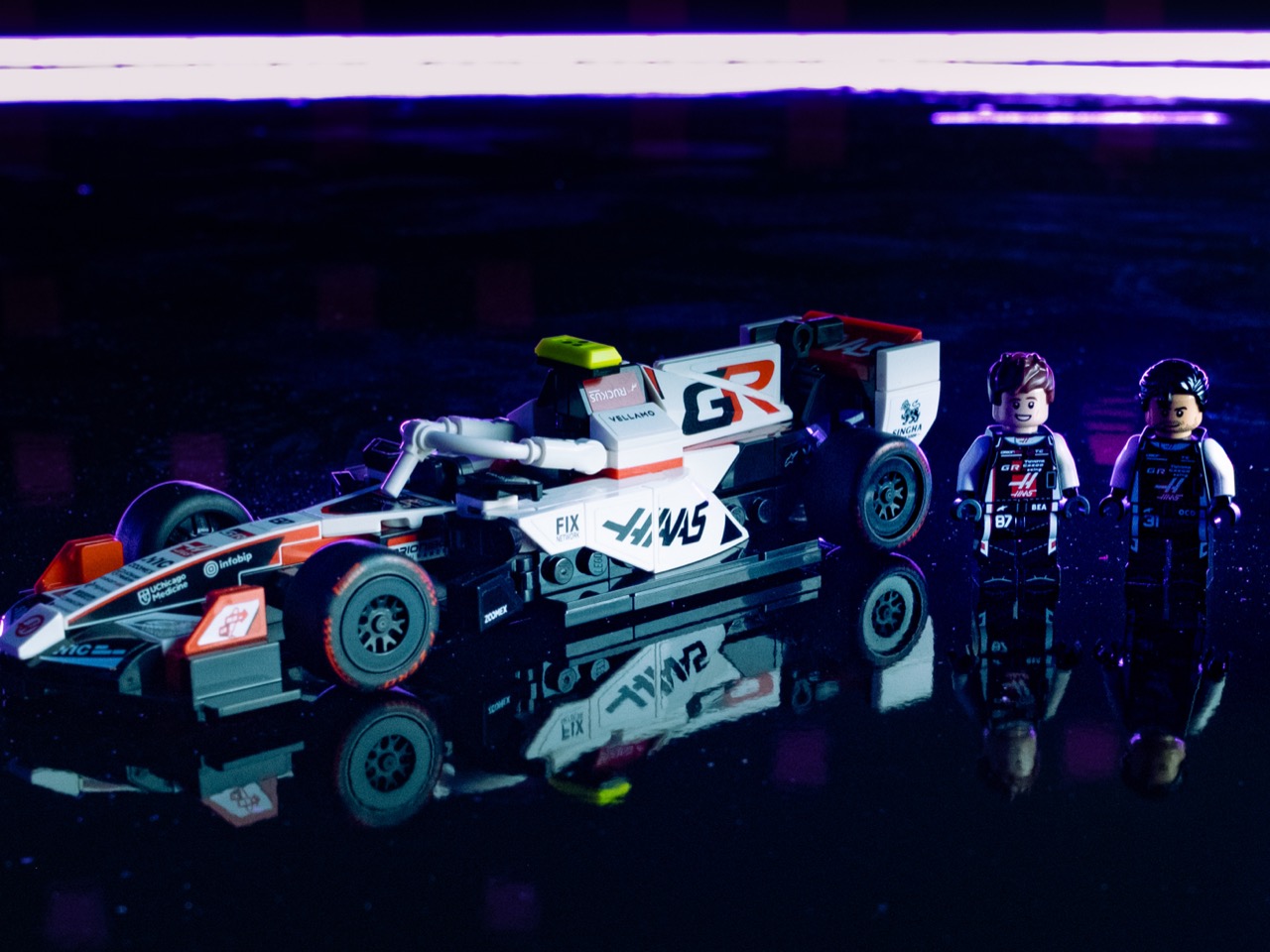
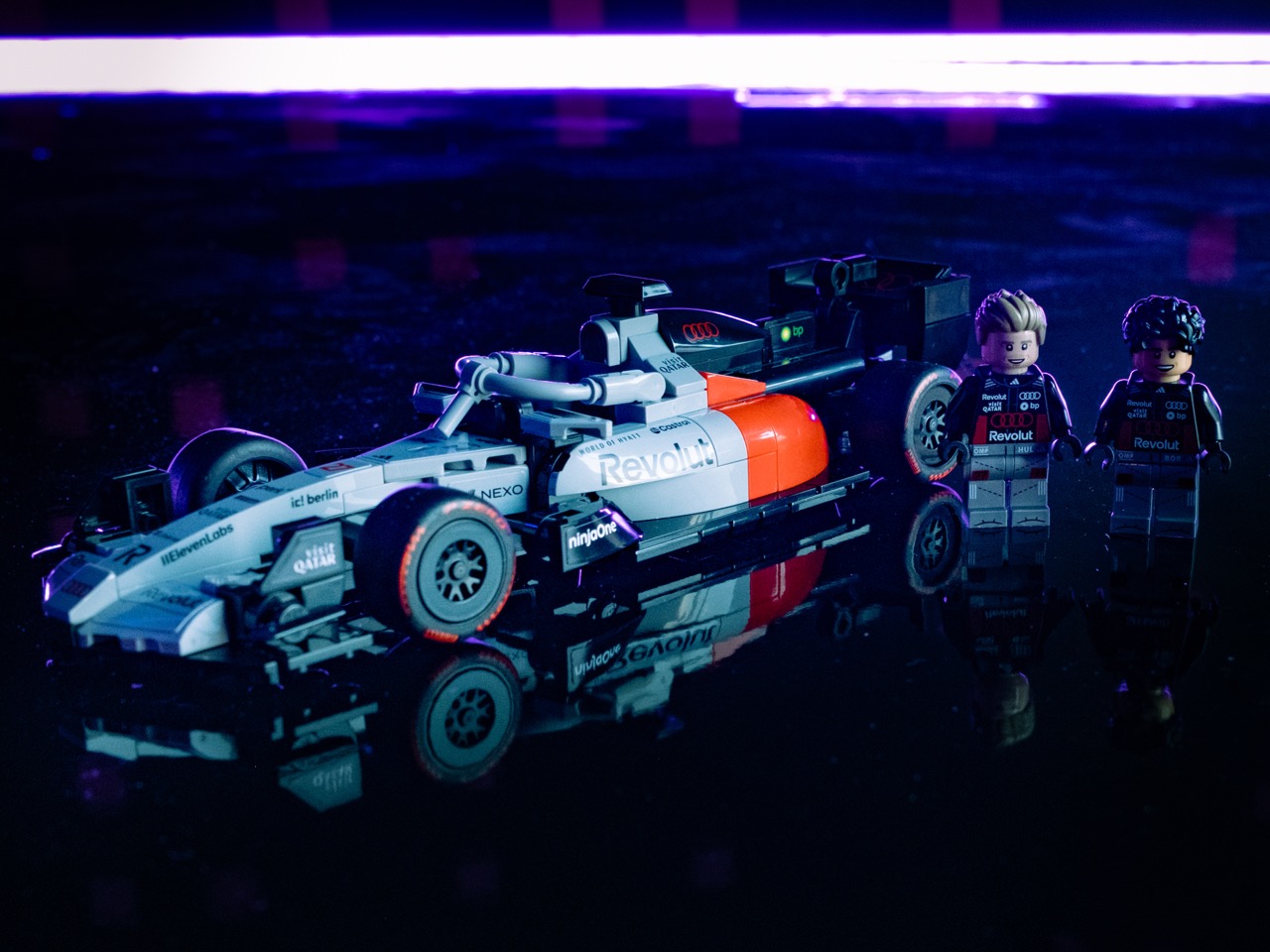
For two seasons, the drivers in LEGO’s Speed Champions Formula 1 sets had no names. The 2025 grid nailed every livery down to the sponsor decals, then dropped a nameless driver into each cockpit, like a racing team staffed entirely by stunt doubles. That era ended this week in Las Vegas. LEGO revealed a new Speed Champions F1 collection featuring all 22 drivers from the 2026 grid as named, numbered minifigures. Hamilton, Verstappen, Norris, Alonso, the whole paddock, finally with faces.

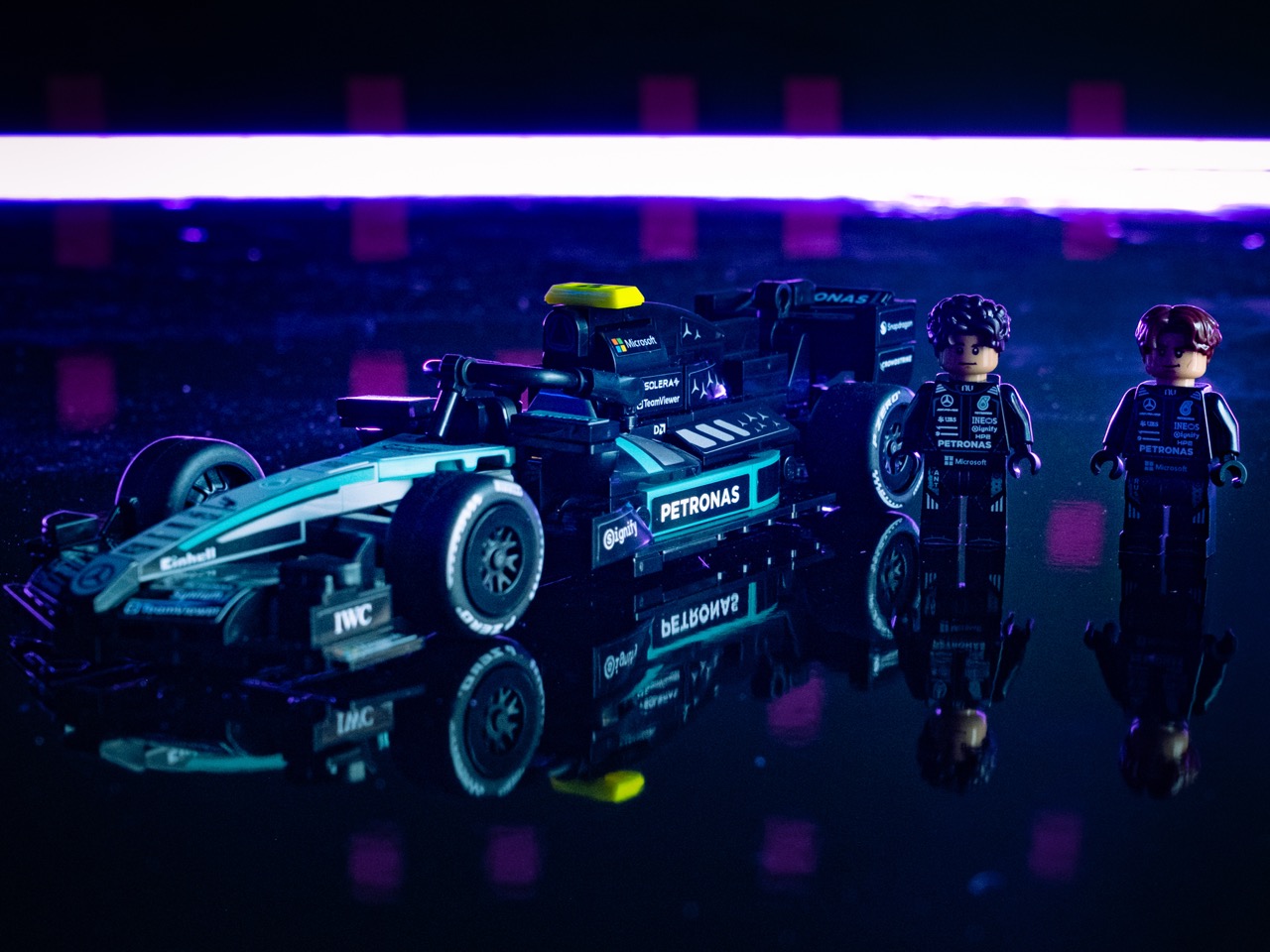
There are 11 sets, one per team, and each box comes with both of that team’s drivers, so you get two minifigs per car instead of one. The builds are based on the 2026 cars, including the SF-26, the MCL40, the W17, and Cadillac’s MAC-26, the American team’s very first F1 car. Every figure gets a printed helmet and race suit bearing their name and number, plus their own hair piece, which is a lot of personality for someone about 1.6 inches tall. Each set costs $29.99 and arrives March 1, 2027, ahead of the new season. Pre-orders are already live in select regions.

Designer: LEGO Design Team (with Formula 1)

Two years of stunt doubles, then the real names

LEGO had the teams before it had the people. When the 2025 range was unveiled in Vegas, LEGO’s Julia Goldin told Brick Fanatics the company hadn’t brought the drivers into the deal yet, so every Speed Champions F1 set shipped with a generic figure. Real faces arrived through the side door in 2026. The LEGO Editions helmets for Charles Leclerc and Lewis Hamilton each packed a minifig of their owner, and McLaren’s 1000th-race helmets did the same for Norris and Piastri. Then the F1 The Movie set put Sonny Hayes and Joshua Pearce in one box, two drivers sharing one car, which now looks a lot like a dress rehearsal.

Licensing 22 likenesses at once may help explain the wait. The focus on drivers also suits the fandom. Netflix’s Drive to Survive turned them into the main characters, and plenty of fans pick a driver first and a team second. Pairing teammates in one box adds some tension to the shelf, since the person you most need to beat in F1 is usually sitting in the other half of your own garage. Hadjar now shares a box with Verstappen, and the Ferrari set puts Hamilton and Leclerc side by side, so congratulations, you’re the team principal now.

The LEGO cars shrank because the real ones did

Formula 1’s 2026 rules trimmed about 4 inches (100mm) of width and 8 inches (200mm) of wheelbase from the cars. LEGO followed along. The new builds measure 7.5 inches (19cm) long and roughly 2.5 inches (6cm) wide, down from about 8 inches by 3 inches for the 2025 Speed Champions F1 cars. The front wing is now seven studs across instead of eight. Piece counts dropped with the footprint, from a range of 248 to 275 elements in 2025 to between 196 and 231 now.

My favorite detail, though, is the sheet of driver number stickers in every box. Real F1 cars carry their driver’s number so you can tell teammates apart at 200 mph, and the stickers let you do the same on your coffee table. Either minifig can claim the car, though you’ll have to negotiate that in a two-kid household. The set stays accurate whichever teammate you root for. The scale math throws in a bonus: the cars land around 1:32 on width while minifigs sit closer to 1:44, so every driver gets a roomier cockpit than any real F1 seat has ever offered.

$29.99 a car, $329.89 for the whole grid

Each set costs $29.99, up from $26.99 for the 2025 cars. The second minifig may help explain the bump. Set numbers run from 77267 for Ferrari’s SF-26 to 77277 for Cadillac’s MAC-26, and all 11 launch March 1, 2027, at LEGO.com and LEGO Stores. Collect the full grid and you’re looking at $329.89 and 2,329 pieces. The Red Bull RB22 and the VCARB 03 carry an 18+ rating, because energy drink marketing rules apply even to cars made of plastic.

The sets follow two years of LEGO turning F1 weekends into brick-built theater, starting with 10 drivable big-build cars in the 2025 Miami Grand Prix drivers’ parade. Silverstone got 22 drivable minicars this July, each made from more than 28,000 bricks and capable of about 15.5 mph (25 km/h). This weekend, a modified minicar from each team takes a lap of the Las Vegas Strip circuit, while a LEGO-wrapped monorail train runs through a LEGO-themed Flamingo/Caesars Palace station. The drivers finally get to play themselves in the little cars, too.

The post LEGO is putting every F1 driver on the grid in minifigure form first appeared on Yanko Design.