Inside the Massive New Changes Coming With iOS 27.3

Inside the Massive New Changes Coming With iOS 27.3 Illustration of apple maps related to the article topic.

Apple’s iOS 27.3 update introduces a variety of enhancements designed to elevate your iPhone’s functionality, privacy, and overall user experience. With improvements spanning privacy tools, navigation accuracy, battery performance, and more, this update addresses critical aspects that matter most to users. Whether you’re focused on security, efficiency, or convenience, iOS 27.3 offers features that make […]

The post Inside the Massive New Changes Coming With iOS 27.3 appeared first on Geeky Gadgets.

Posted in Uncategorized

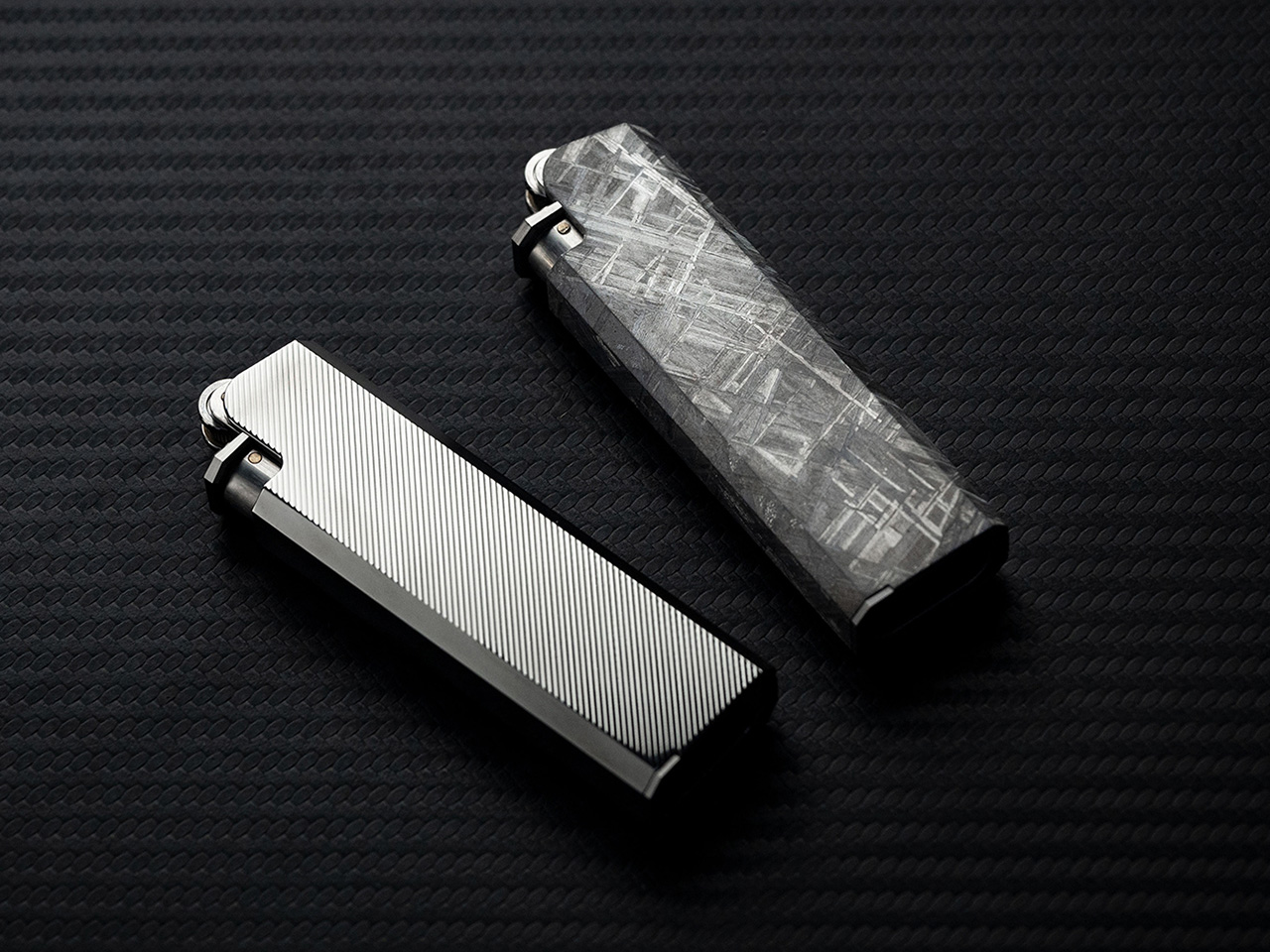
Titaner’s new torch lighter features a 4.5-billion-year-old meteorite outer shell

In 1906, a few kids in northern Sweden were kicking rocks around for fun when they hit one that refused to budge. That stubborn lump turned out to be a piece of the Muonionalusta meteorite, a slab of space iron that landed near the Arctic Circle roughly a million years ago. More than a century later, Titaner is turning pieces of Muonionalusta into lighters. The Monolith’s Genuine Meteorite Edition pairs the meteorite with precision-machined titanium, and the whole lineup is designed for everyday carry. Honestly, I can think of worse retirement plans for a space rock than lighting someone’s cigar.

Titaner has spent about two decades machining titanium into pens, pry bars, knives, and even frying pans, so a titanium lighter sits squarely in its comfort zone. The meteorite changes the personality of the object. Every Meteorite Edition carries its own crosshatched slice of asteroid core and its own serial number, while every Monolith gets an ignition wheel and magnetic slider. There’s a removable copper heat sink, a replaceable insert, and a symbol for fire built into the side vents.

Designer: Titaner

Click Here to Buy Now: $159 $286 (44% off). Hurry, only 77/100 left!

A Meteorite Pattern Millions of Years in the Making

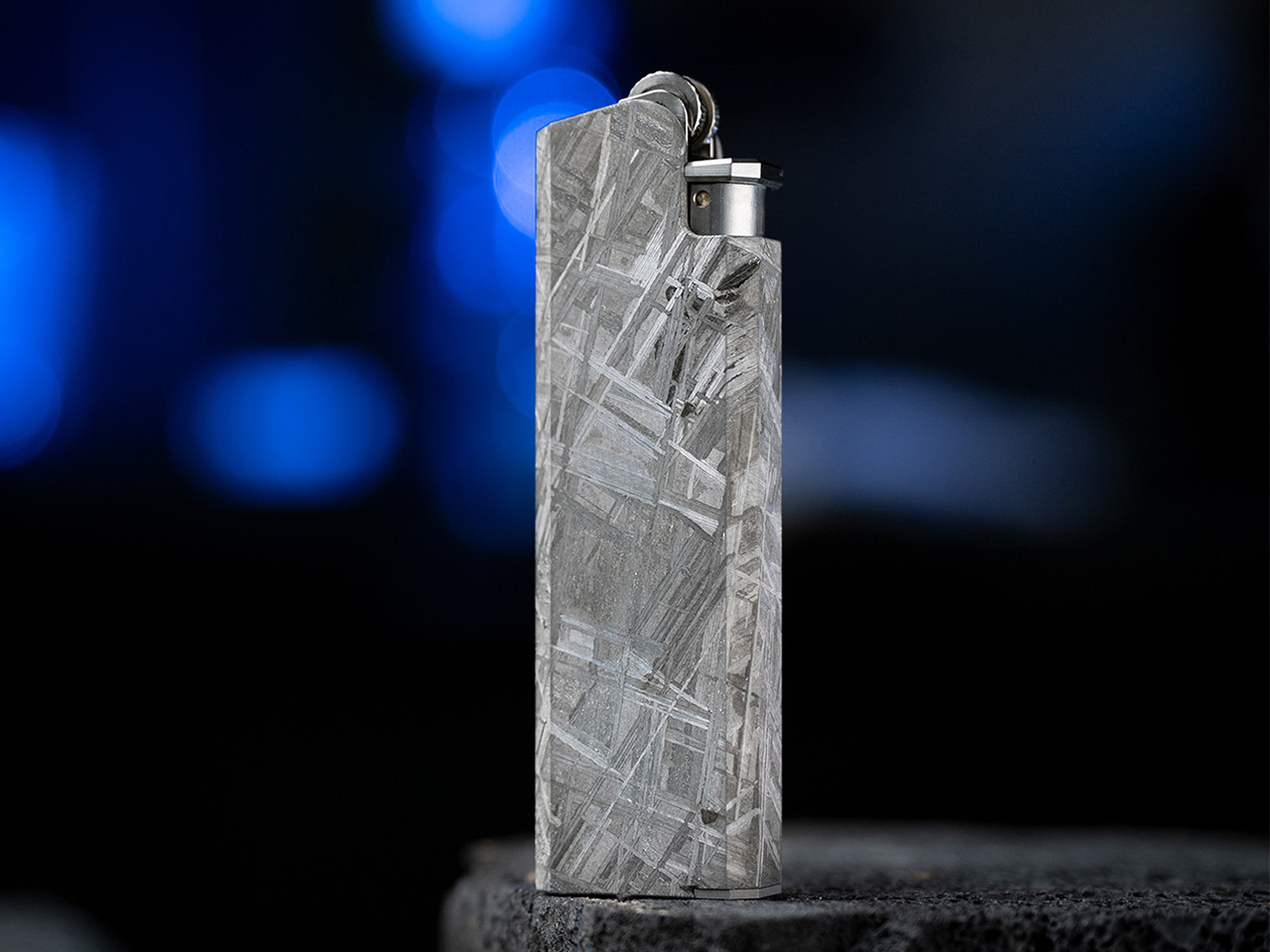
Muonionalusta’s crosshatch of intersecting bands is called a Widmanstätten pattern. It forms as nickel-iron alloys develop distinct crystal structures during the slow cooling of an asteroid’s core over millions of years. Muonionalusta itself is estimated to be over 4.5 billion years old, roughly the age of the solar system. Titaner’s tagline for the Monolith is “A star you can hold.” Asteroid core doesn’t have quite the same ring to it.

Titaner can’t control where those lines fall, which is sort of the point. The pattern on each Meteorite Edition Monolith depends on where and how the meteorite was cut, so each gets a different layout. One might show long diagonal streaks while another gets a tighter grid of intersecting bands. Each one also comes with an exclusive serial number and, according to Titaner, an independent material-testing certificate. The space-rock story comes with paperwork.

Ignition You’ll Want to Fidget With

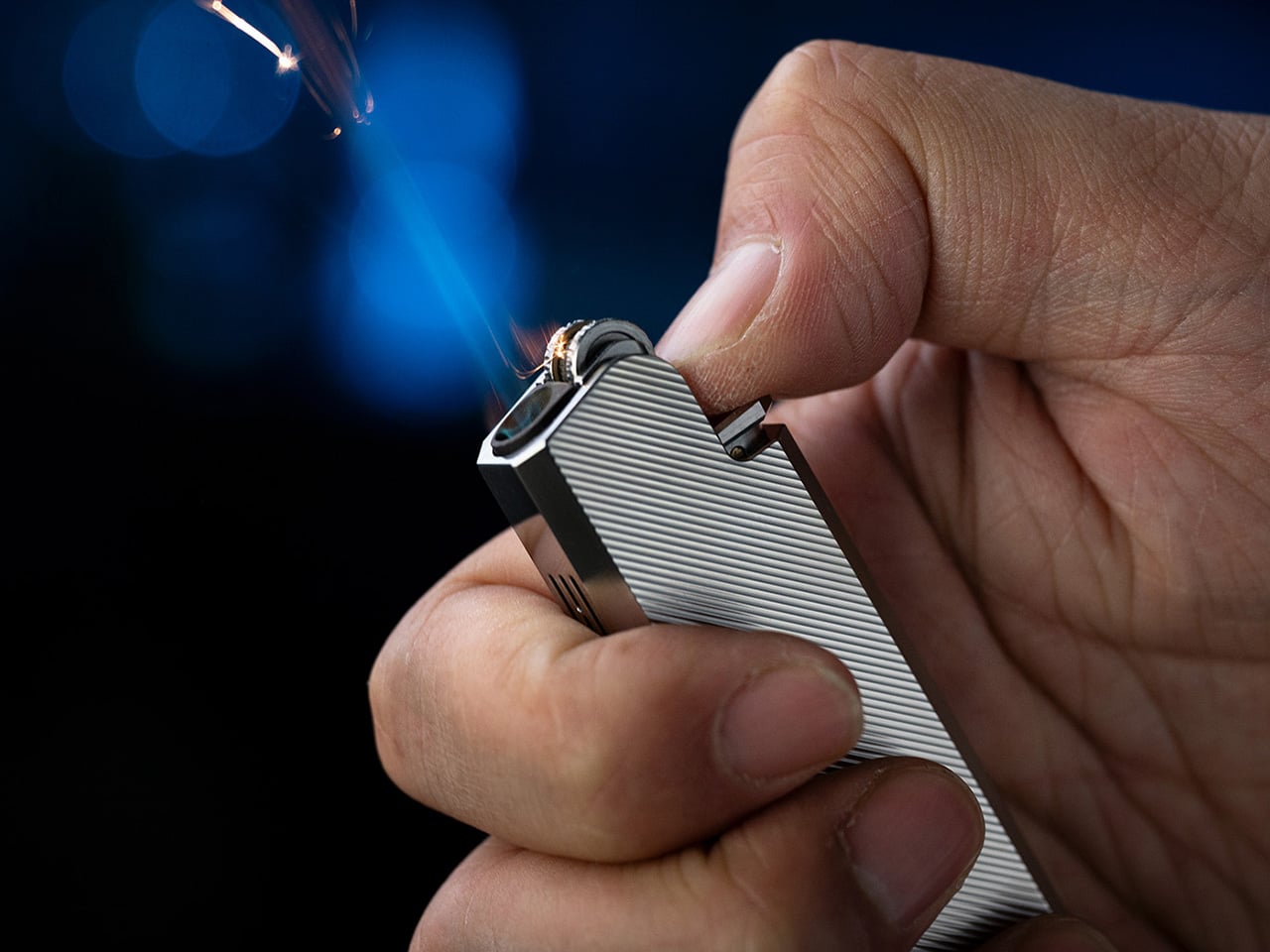
I don’t smoke, and I still want this lighter in my pocket. Titaner gave the Monolith two separate controls: an ignition wheel you roll with your thumb and a magnetic slider at the base. Up close, the optional hammered-texture wheel kit has faceted, CNC-machined knurling on its outer rings and a crosshatched grip in the center, intended to give your thumb more purchase with every roll. The mechanism looks like something you’d happily operate even with nothing to light.

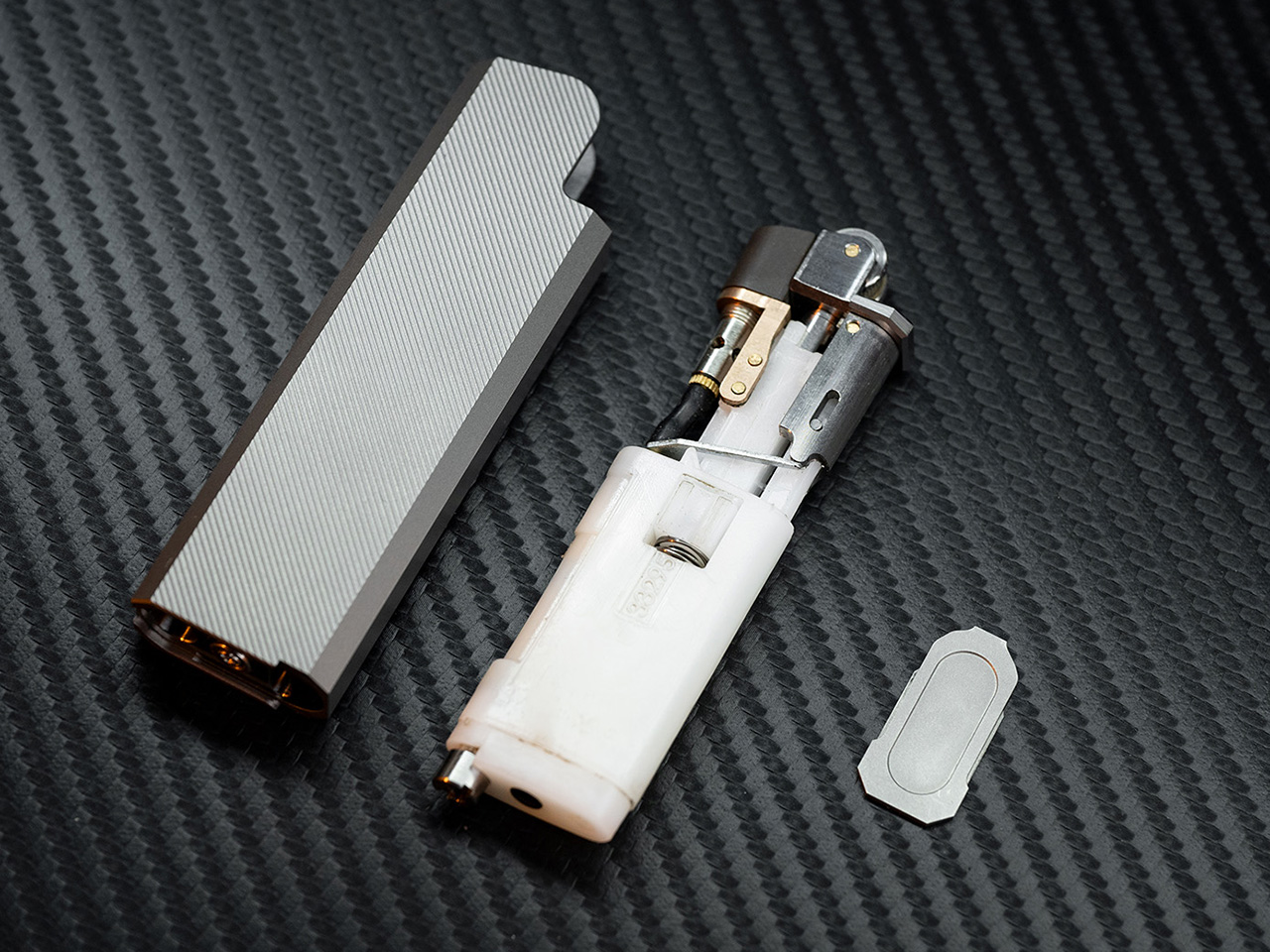
The titanium components are precision-machined, with attention to the edges and surfaces your fingers meet. The metal brings strength, low weight, and corrosion resistance to an object destined to live in pockets and bags. Titanium is a poor conductor of heat, though, so Titaner adds a removable copper heat sink intended to help dissipate heat during use. The Cricket Flint Deluxe insert at its core is refillable with butane, so you top it up instead of tossing it. The insert is replaceable too, and the copper heat sink carries over to a compatible replacement.

A Magnetic Slider With Secrets and a Wind-Resistant Torch Flame

The magnetic slider at the base moves between detents and looks dangerously easy to fidget with. Slide it to the refill position and it exposes the filling valve, so you can top up the butane without pulling the insert out. Tucked inside the slider is a spare flint, ready for when the original wears down. Remove the module entirely and its end doubles as a flathead tool for adjusting the insert’s gas flow. Swapping the insert itself means undoing a single M2 retaining screw at the bottom.

Up top, the Cricket Flint Deluxe platform produces what Titaner describes as a wind-resistant torch flame. Titaner built its own outer shell and heat-management components around that insert. A gap between the combustion chamber and the titanium shell connects to ventilation channels on the side, providing a path for airflow. That airflow is intended to work alongside the copper heat sink to dissipate heat during use.

Fire Symbols, Three Editions, and About 30 of the Rarest

Along the side of the Monolith, those ventilation slots are arranged to echo Li (☲), the fire trigram in the I Ching, the ancient Chinese book of divination. Li is associated with fire, light, and clarity, and Titaner pairs it with a sweet little blessing: “May your path be bright, and every step be clear.” It’s a fitting symbol to cut into a lighter and gives the body a recognizable signature. The titanium wears a finely fluted diagonal texture in Titaner’s photos, catching light in shifting stripes. Those orderly grooves contrast with the irregular bands of the Meteorite Edition.

Titaner is offering the Monolith in three versions: the Standard Titanium Edition in bead-blasted or precision-milled finishes, the Obsidian Meteor Engraved Edition, and the Genuine Meteorite Edition. Despite its name, the Obsidian Meteor Engraved Edition contains neither meteorite nor obsidian. The Genuine Meteorite Edition adds the hammered wheel kit, personalized CNC engraving of your own handwritten message, and exclusive packaging. Titaner estimates its meteorite supply is enough for around 30 pieces, allocated first come, first served. Pricing starts at $159, with the Monolith offered through Kickstarter. The internal titanium components carry a one-year warranty from the date you receive the lighter. Not bad coverage for something that already survived a trip through the solar system.

Click Here to Buy Now: $159 $286 (44% off). Hurry, only 77/100 left!

The post Titaner’s new torch lighter features a 4.5-billion-year-old meteorite outer shell first appeared on Yanko Design.

A Floating Cultural Center Where the Library Refuses to Stay Put

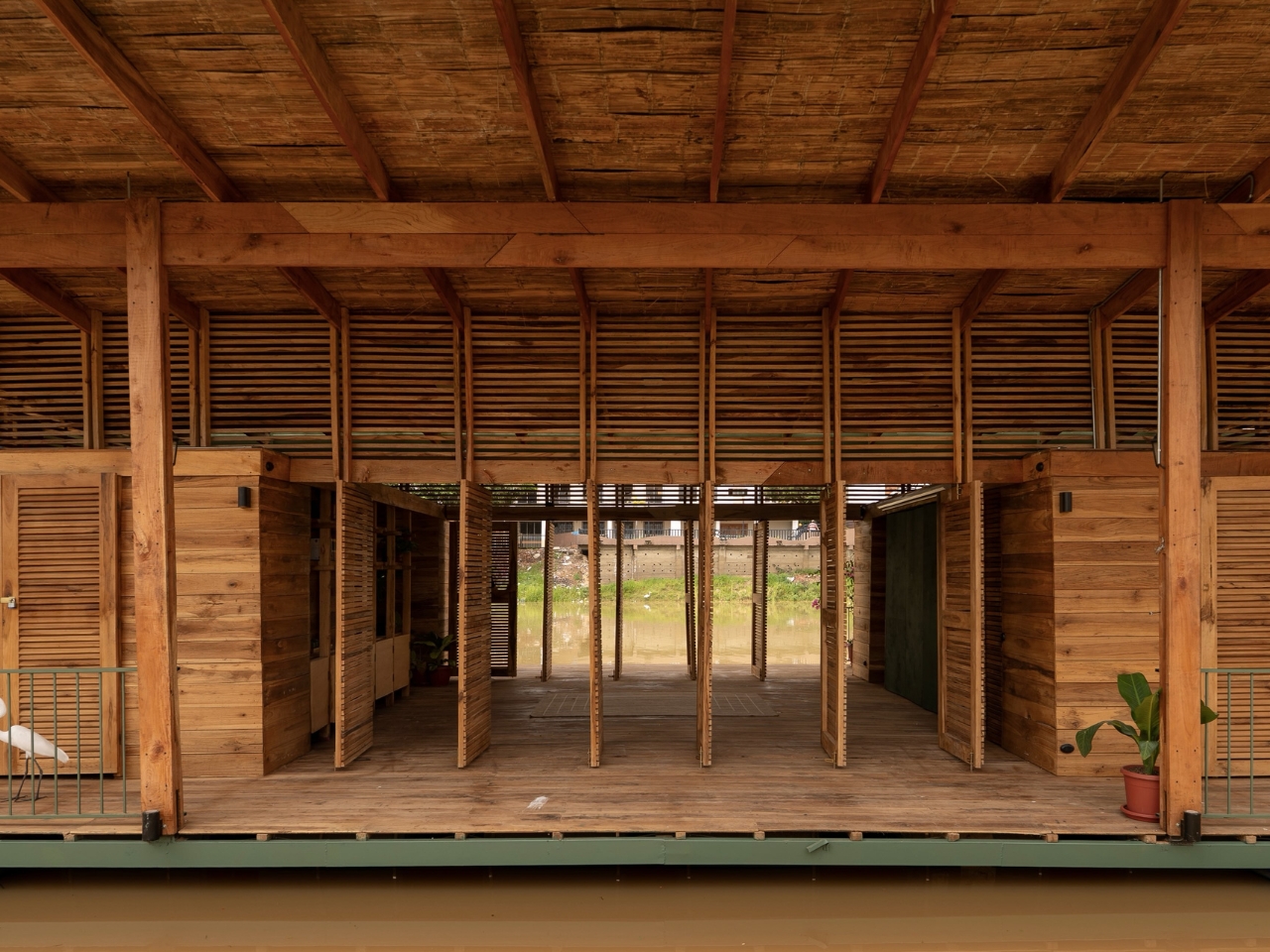
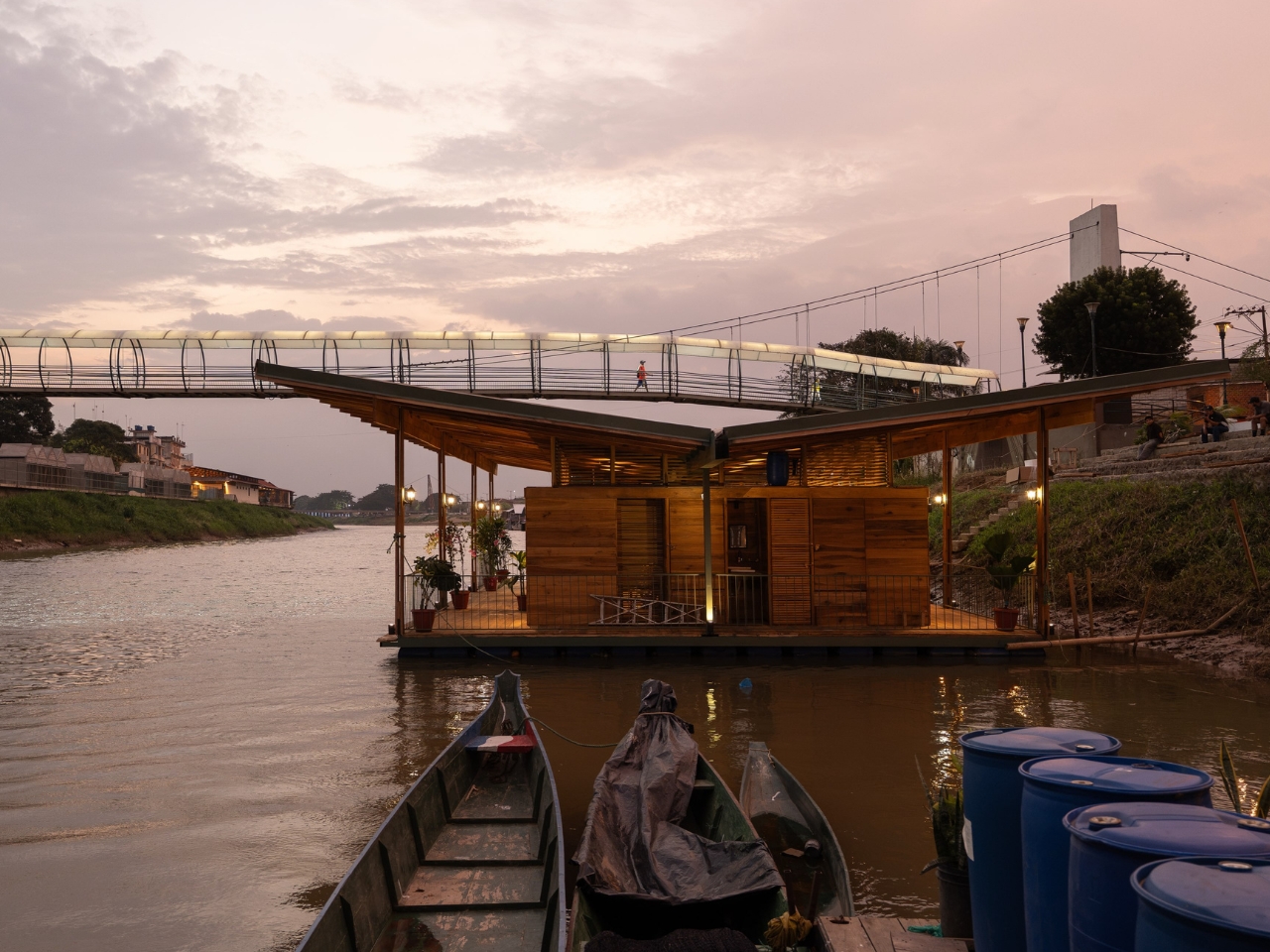
A broad roof, a wooden porch, and lights reflected in the water: El Embarcadero looks more like a neighborhood gathering spot than a grand cultural institution. That feels right. Designed by Natura Futura in Babahoyo, Ecuador, the completed floating cultural center addresses a basic absence. According to the architects, its Barreiro neighborhood lacks public educational, cultural, and social spaces. The river is where they’ve chosen to make room.

Water also complicates the brief. The architects say seasonal rises reduce local accessibility for roughly 25–30% of the year. El Embarcadero responds with a floating structure and mooring systems designed for fluctuating water levels, alongside amphitheater steps that can flood. I like that the design accepts changing conditions without treating the neighborhood’s relationship with the river as something to eliminate.

Designer: Natura Futura

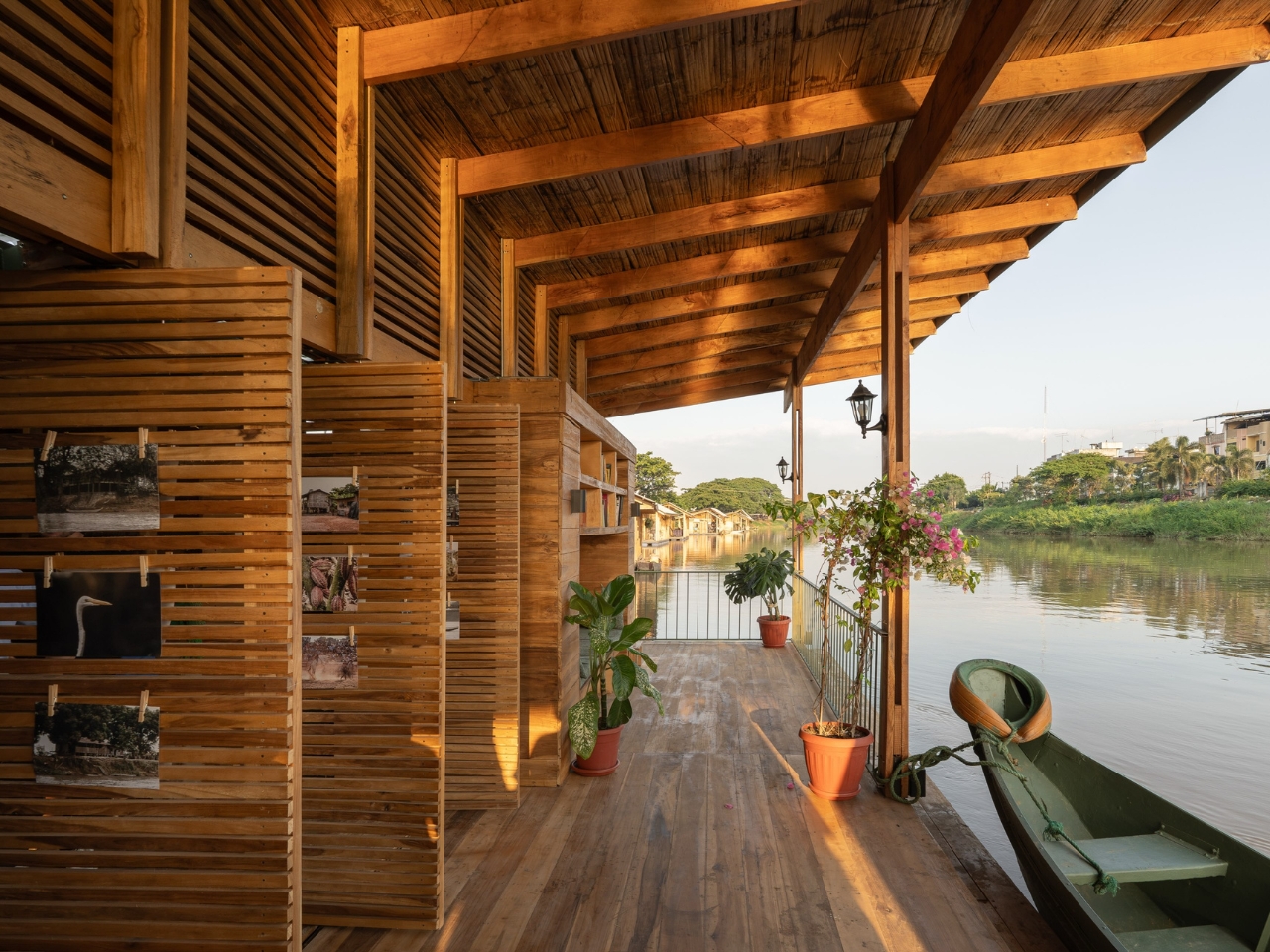
The building’s appearance supports that sense of belonging. Photographs show timber walls and a generous covered deck, with a broad roof projecting beyond the enclosed rooms. It has the visual familiarity of a porch, somewhere you might pause before deciding to go inside. For a cultural center, I’d take that approachable presence over an entrance designed primarily to make visitors feel small. The building looks connected to everyday life along the bank.

Its approximately 33-by-52-foot platform accommodates a library, community kitchen, educational spaces, offices, and shared areas. Blackboard-and-mirror panels and furniture that doubles as book storage allow the interior to change with different activities. Those choices make sense to me at this scale. A neighborhood building shouldn’t need a separate, permanently designated room for every possible use. The useful question is how much can happen within the space without making each activity feel like an awkward accommodation.

The library’s reach extends beyond that platform. A companion Library Canoe is designed to carry books and workshops to more distant riverfront homes and communities, using El Embarcadero as its base. It’s my favorite element because it changes the question of access. Providing a room full of books matters, but so does considering who can reach that room. Here, a familiar vessel becomes part of the cultural infrastructure, rather than something parked outside it.

That familiarity has a history. Project supporter rearc institute documents a local floating-house tradition sustained by fishing, boatbuilding, and river trade, as well as Natura Futura’s work with river residents since 2019. El Embarcadero belongs to the broader Huellas del Agua initiative, which includes neighborhood regeneration and floodable public landscapes. That context matters. I read the center as an extension of knowledge already present in Babahoyo, not an imported architectural idea looking for an interesting waterfront site.

The programming gives that interpretation some substance. Reporting on the opening, Ecuadorian newspaper EXTRA described a library collection of more than 400 volumes and plans for free weekly cultural activities. Cultural manager Lincoln Meza discussed making room for artists, writers, organizers, and residents with knowledge to share. That’s an appealing definition of a cultural center: somewhere local people can contribute to the program, rather than simply arrive to watch someone else perform.

Of course, a building’s opening doesn’t establish how well it will serve people over time. I’d want to know how consistently the workshops run, how the canoe service develops, and how the spaces work through changing river conditions. Those are fair questions for a project whose value depends on repeated use. The architecture provides a framework, but a full calendar and dependable stewardship will give that framework its purpose.

Still, El Embarcadero offers a persuasive idea of what a public building can look like when its starting point is the neighborhood around it. I’m drawn to the modesty of that ambition. There’s room for reading, cooking, teaching, and gathering, with a canoe intended to take some of those activities farther. The measure of success I’d care about is whether residents begin treating the center as an ordinary, dependable part of their week.

The post A Floating Cultural Center Where the Library Refuses to Stay Put first appeared on Yanko Design.

5 Transparent Tech Designs Gen Z Actually Wants to Own Right Now

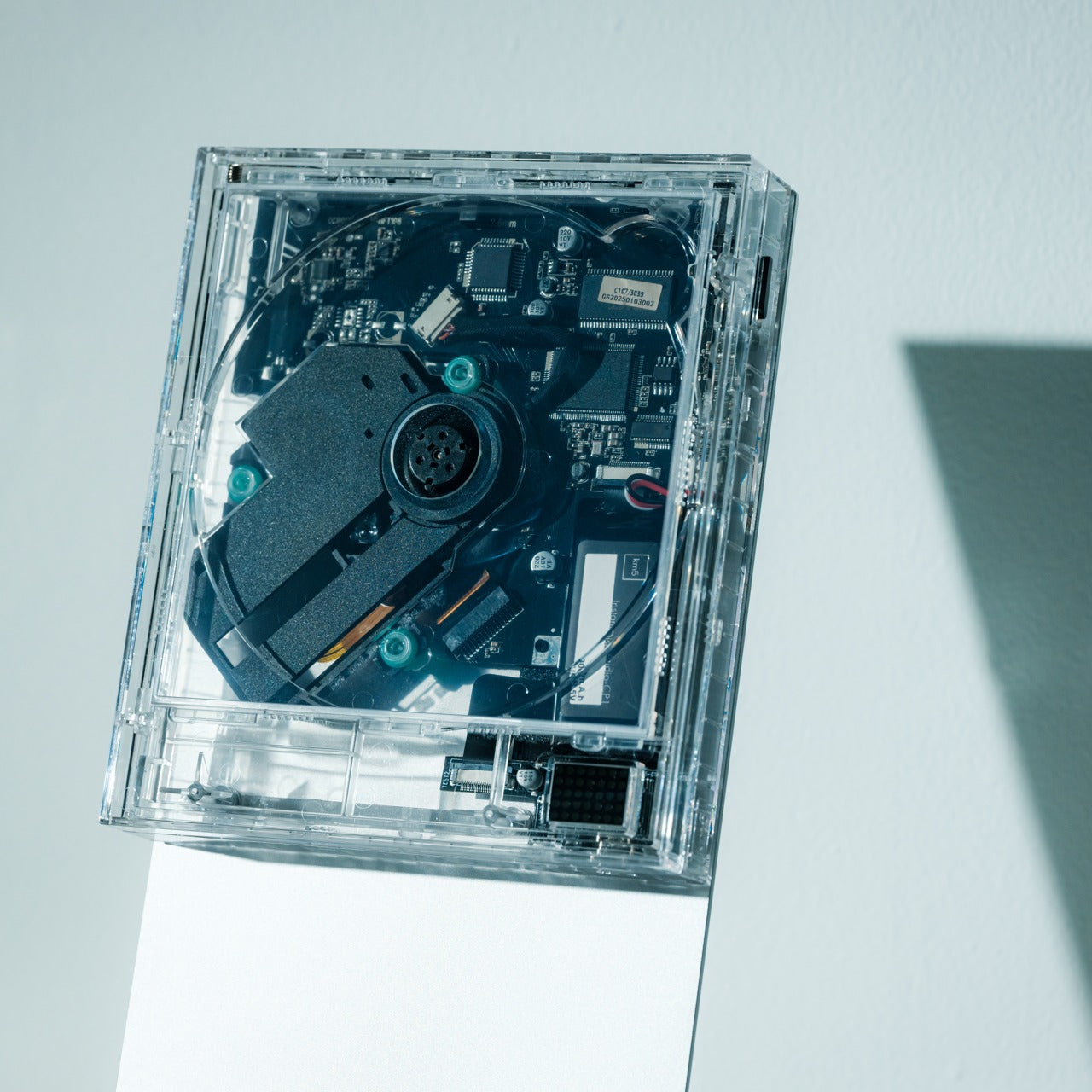
The ClearFrame CD Player gives a compact disc the sort of display space usually reserved for a favorite print. Its transparent body leaves the black circuit board visible, turning the machinery into part of the composition. That’s the appeal of transparent tech done well: the enclosure gives you something worth looking at, even before you turn the object on. There’s more to work with than another interesting choice of color.

This collection takes that idea across music, typing, charging, and gaming. The five picks use clear or translucent housings in different ways, from exposing switches to borrowing the familiar outline of a mix tape. Think of it as an editorial wish list for a more personal setup, not a ranking based on hands-on testing. These are existing product selections, with practical compromises that matter as much as their very photogenic shells.

1. ClearFrame CD Player
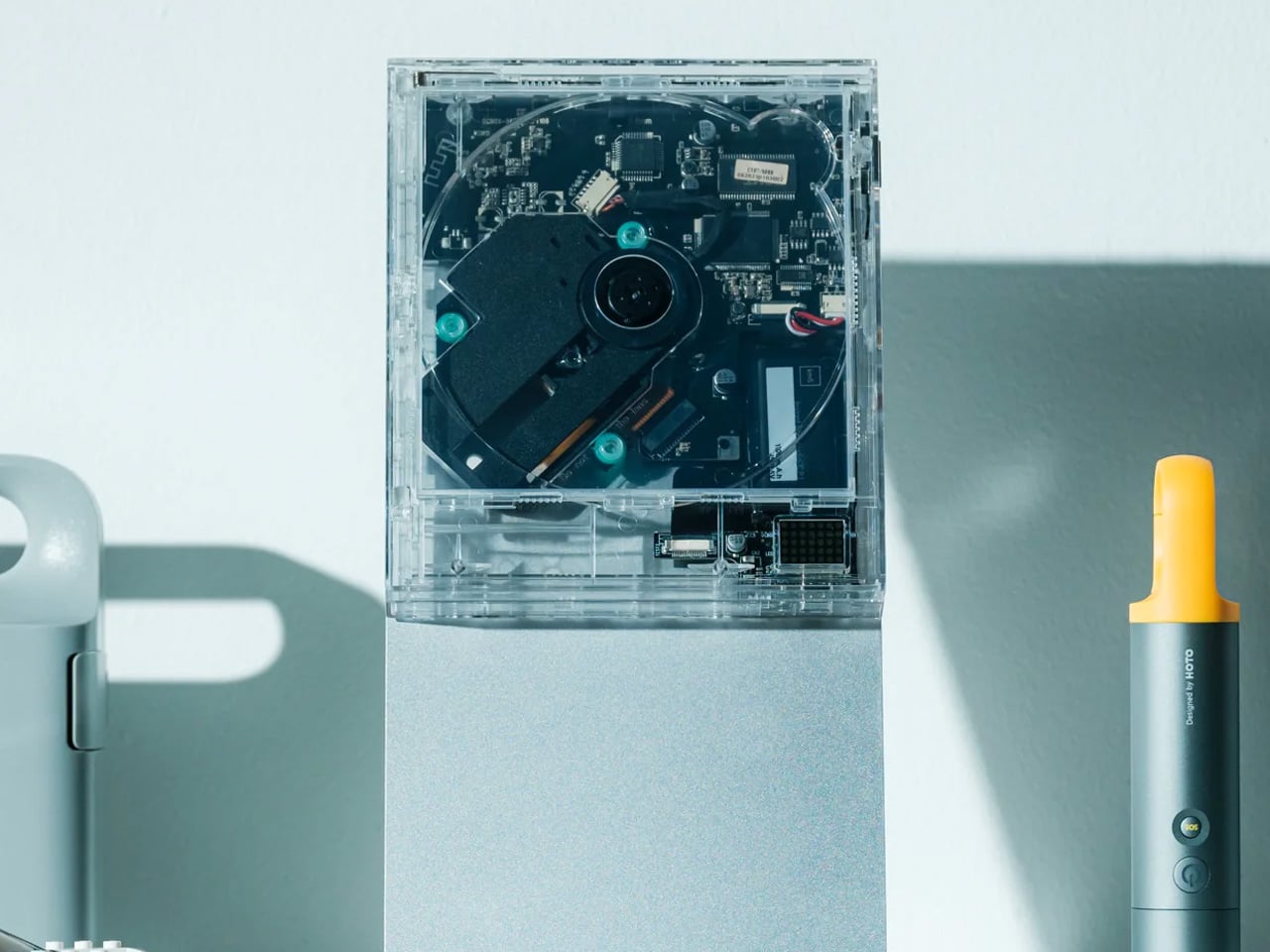
ClearFrame earns the first spot because its transparency gives physical music a convincing place in a room. The square polycarbonate housing surrounds the disc with visible black circuitry, creating a composition that doesn’t need a screen full of album recommendations to stay interesting. Leave it beside your favorite records or on a desk, and the player becomes part of the arrangement. The hardware has enough visual structure to hold its own without an elaborate listening corner built around it first.

Bluetooth 5.1 output sends music to compatible wireless speakers or headphones, while a 3.5mm jack keeps wired listening available. USB-C handles charging, and it offers approximately seven to eight hours of playback from the rechargeable battery. Starting at $200, this is a deliberate purchase for someone who already wants to play CDs. Budget for the display arrangement: the upright stand and wall mount are optional purchases, so recreating an upright shelf setup costs more than the player alone does.

Click Here to Buy Now: $200.00

What we like

  • Exposed circuitry makes the hardware part of the display.
  • Bluetooth and wired outputs accommodate different listening setups.

What we dislike

  • The stand and wall mount cost extra.
  • A $200 starting price demands a real interest in CDs.

2. Lofree 1% Transparent Mechanical Keyboard
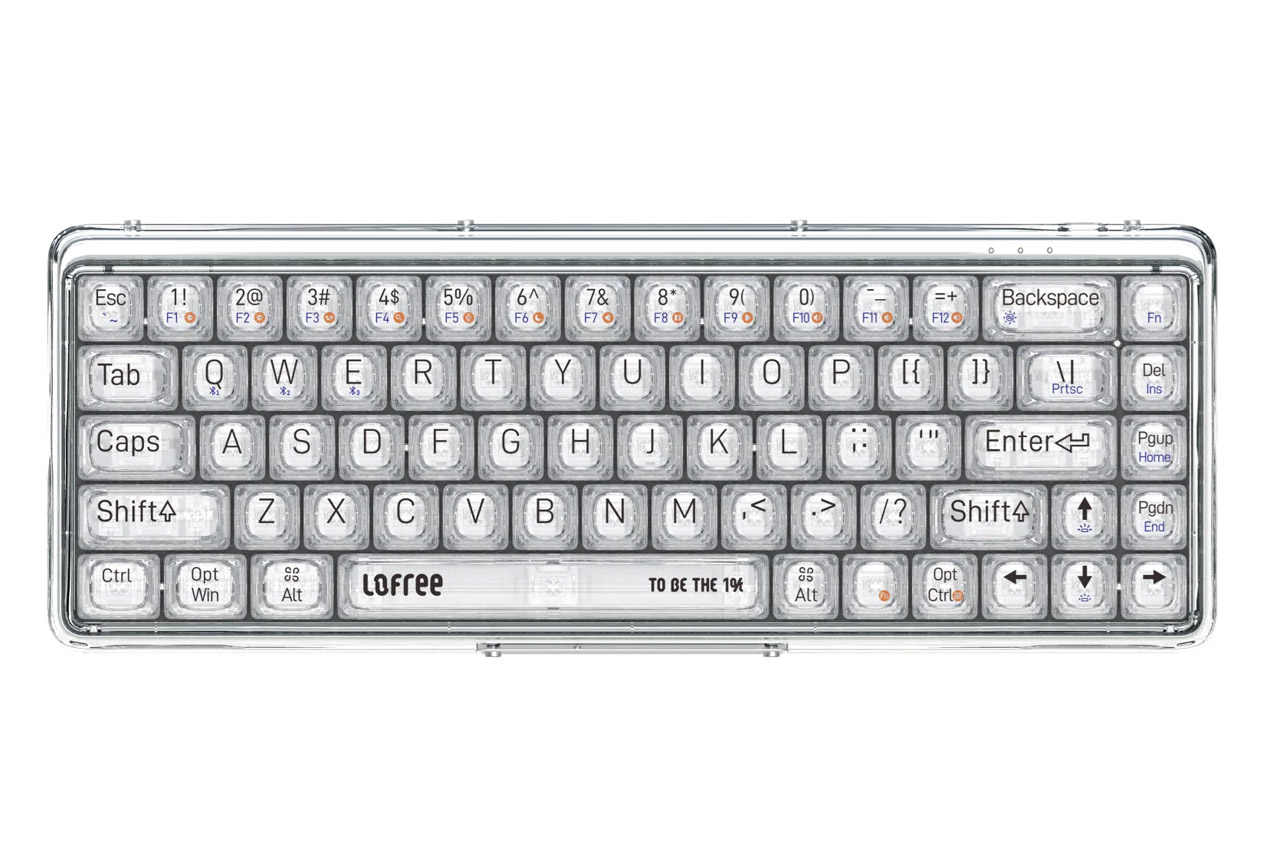
The 1% Transparent makes its case one key at a time. Lofree uses clear polycarbonate keycaps over transparent Kailh Jellyfish linear switches, with a mirrored base giving the assembly an almost icy appearance. White backlighting keeps the visual language consistent rather than throwing another color palette into the mix. The effect comes from repeating the same small transparent structure across the board, making the keys themselves the decoration. It’s a more interesting centerpiece than a keyboard wearing a decorative clear cover.

The compact 68-key layout leaves out a dedicated number pad, which makes sense if your desk also needs room for a mouse, notebook, and coffee. Bluetooth and USB-C connections let you choose between a wireless arrangement and a wired one. At $219, the important reservation is customization: Lofree’s current specifications say the switches aren’t hot-swappable. Buy it because you want this particular combination of transparent construction and linear switches, rather than expecting an open-ended platform for swapping parts later on.

What we like

  • Transparency extends through the keycaps and switch housings.
  • A compact layout leaves more room for other desk essentials.

What we dislike

  • The switches aren’t hot-swappable.
  • There’s no dedicated number pad for frequent spreadsheet work.

3. SHARGE Shargeek 170 Power Bank
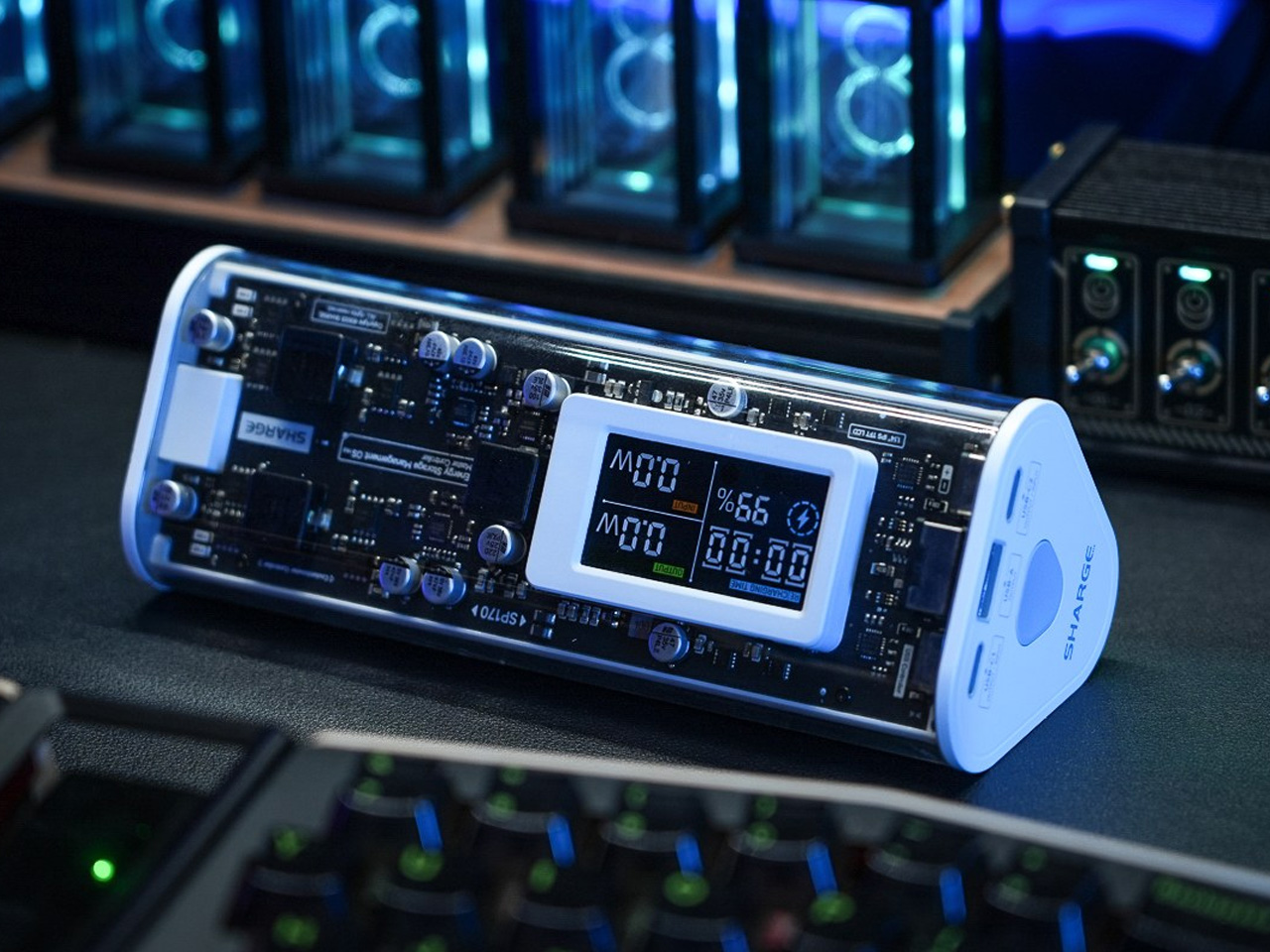
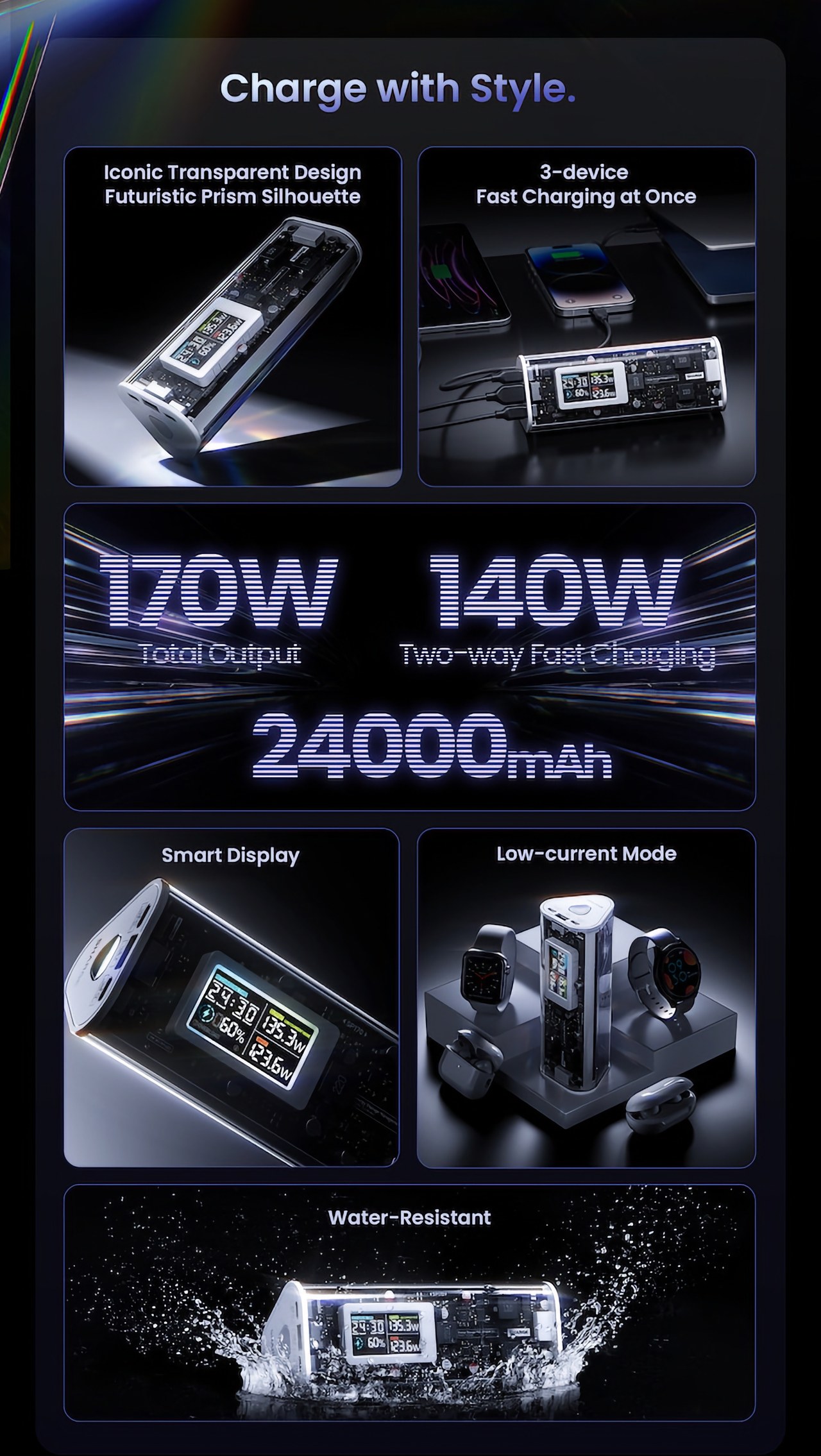
A power bank usually disappears into a bag until something needs charging. The Shargeek 170 makes a case for leaving it visible. Its transparent prism enclosure exposes the battery cells and circuitry, giving the object a recognizable structure rather than relying on graphics printed across an opaque box. A built-in display adds information to that presentation, showing power status and charging performance. There’s a useful relationship between what you see through the case and what you read on the screen.

SHARGE lists a 24,000mAh capacity, two USB-C ports, and one USB-A port, with up to 170W combined output. That headline figure isn’t the maximum for one laptop: a single USB-C port tops out at 140W, subject to compatible equipment. The tradeoff is its listed 680-gram weight, making this a bag-carried accessory rather than an easy pocket companion.

What we like

  • Three ports accommodate a mixed collection of devices.
  • The display makes charging information visible at a glance.

What we dislike

  • Its 680-gram weight adds a noticeable load to a bag.
  • The 170W headline refers to combined output, not one port.

4. Side A Cassette Speaker

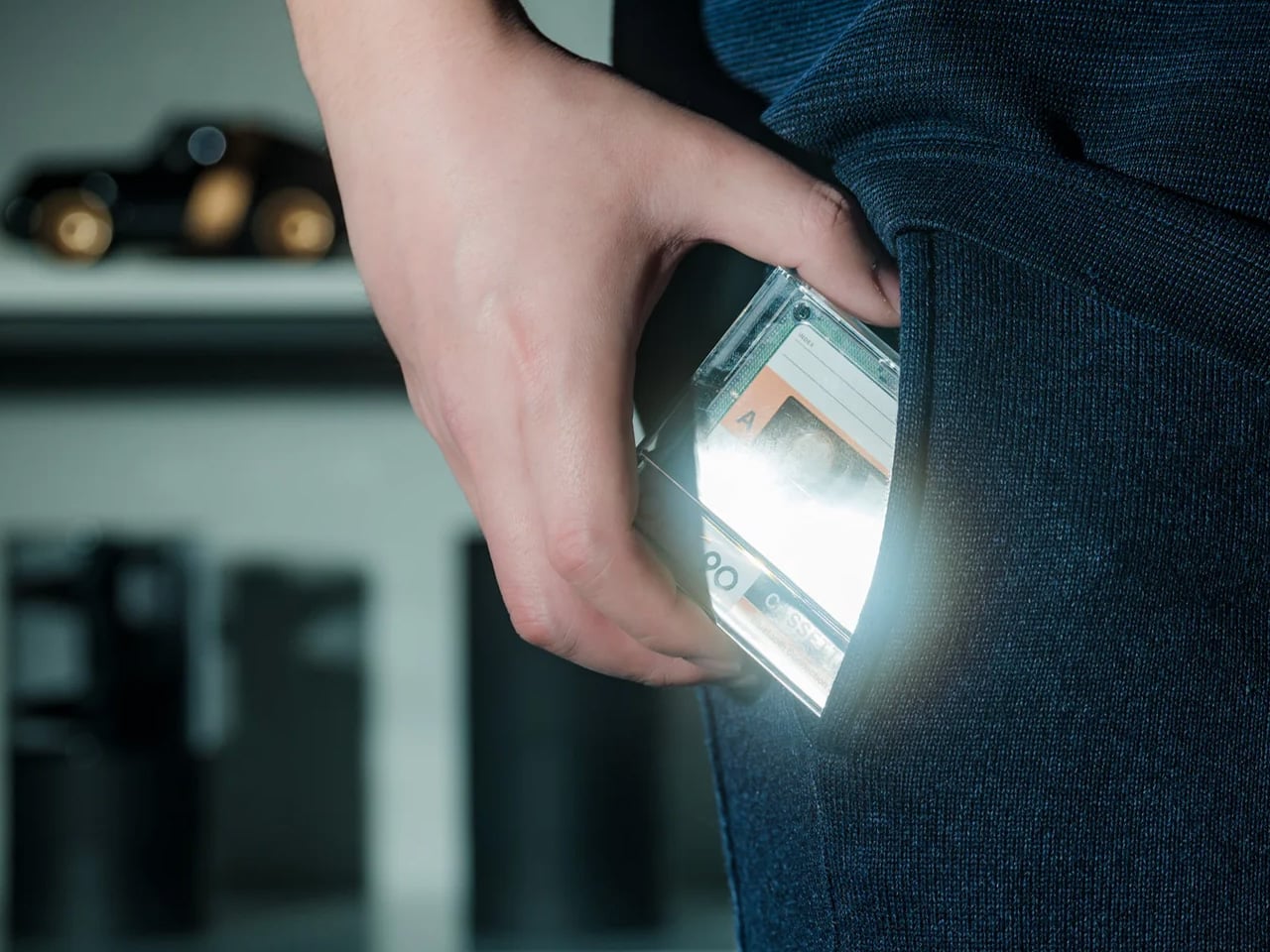
The Side A Cassette Speaker borrows the cassette’s identity without asking you to start a tape collection. Its transparent shell and familiar label surround a digital speaker, not a tape mechanism. That distinction makes it a very different purchase from the ClearFrame: this one brings the appearance of physical media to music you already play digitally. The clear storage case doubles as a stand, turning the speaker and its packaging into a small desktop arrangement rather than two separate objects.

At $49, it’s a less expensive way into the transparent audio look. Bluetooth 5.3 handles wireless playback, while a microSD slot lets you give it a selection of MP3 files without using a phone as the source. That second option makes the mixtape reference more convincing: you can assemble a collection specifically for this little object. It offers up to six hours of playback and a two-hour recharge, though those figures shouldn’t be mistaken for independently measured battery results.

Click Here to Buy Now: $49.00

What we like

  • The included storage case also works as a display stand.
  • microSD playback gives it a phone-free listening option.

What we dislike

  • Despite its appearance, it cannot play cassette tapes.
  • Card playback supports MP3 files only.

5. GameSir Pocket Taco in Voltage Purple
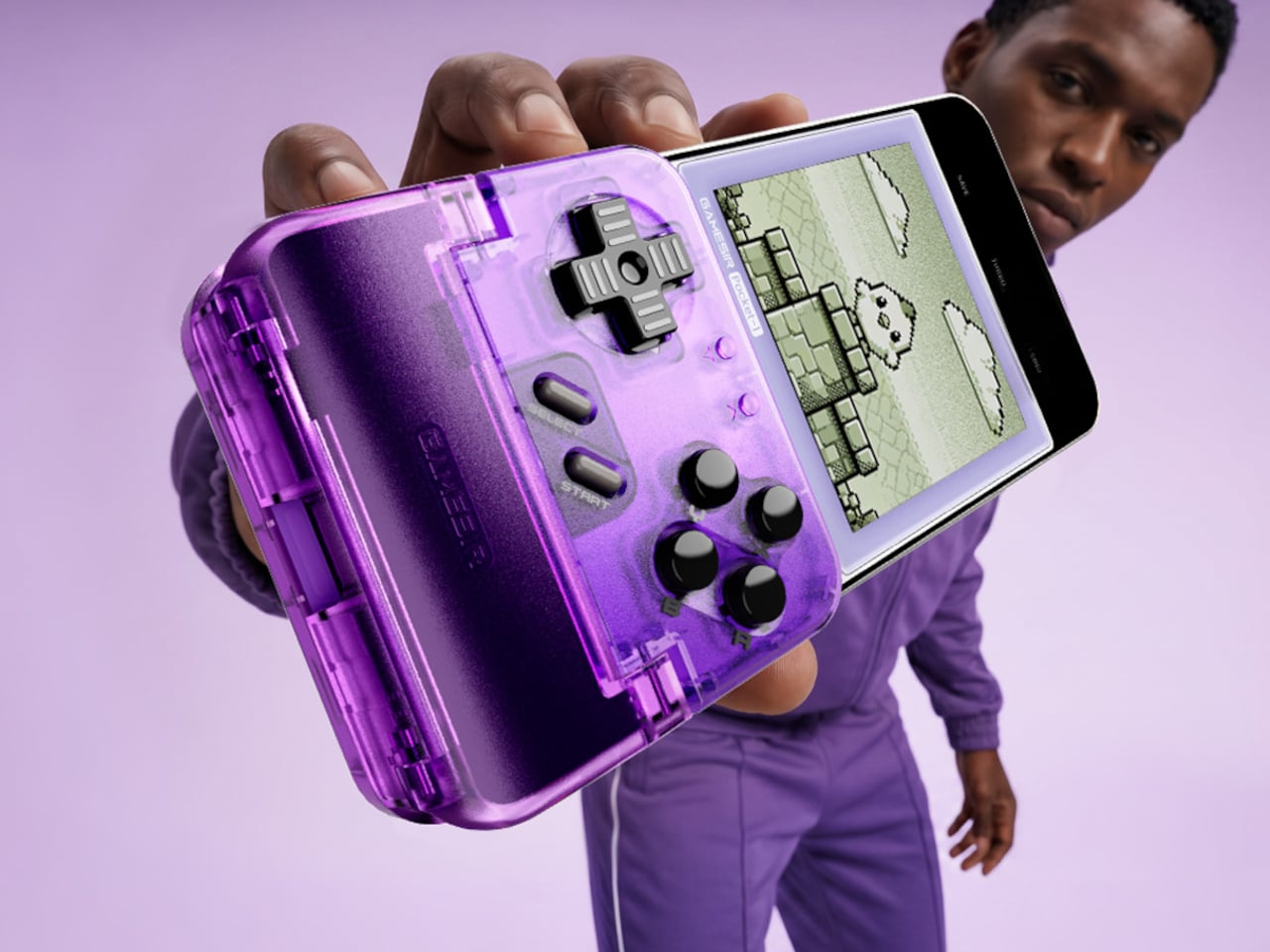
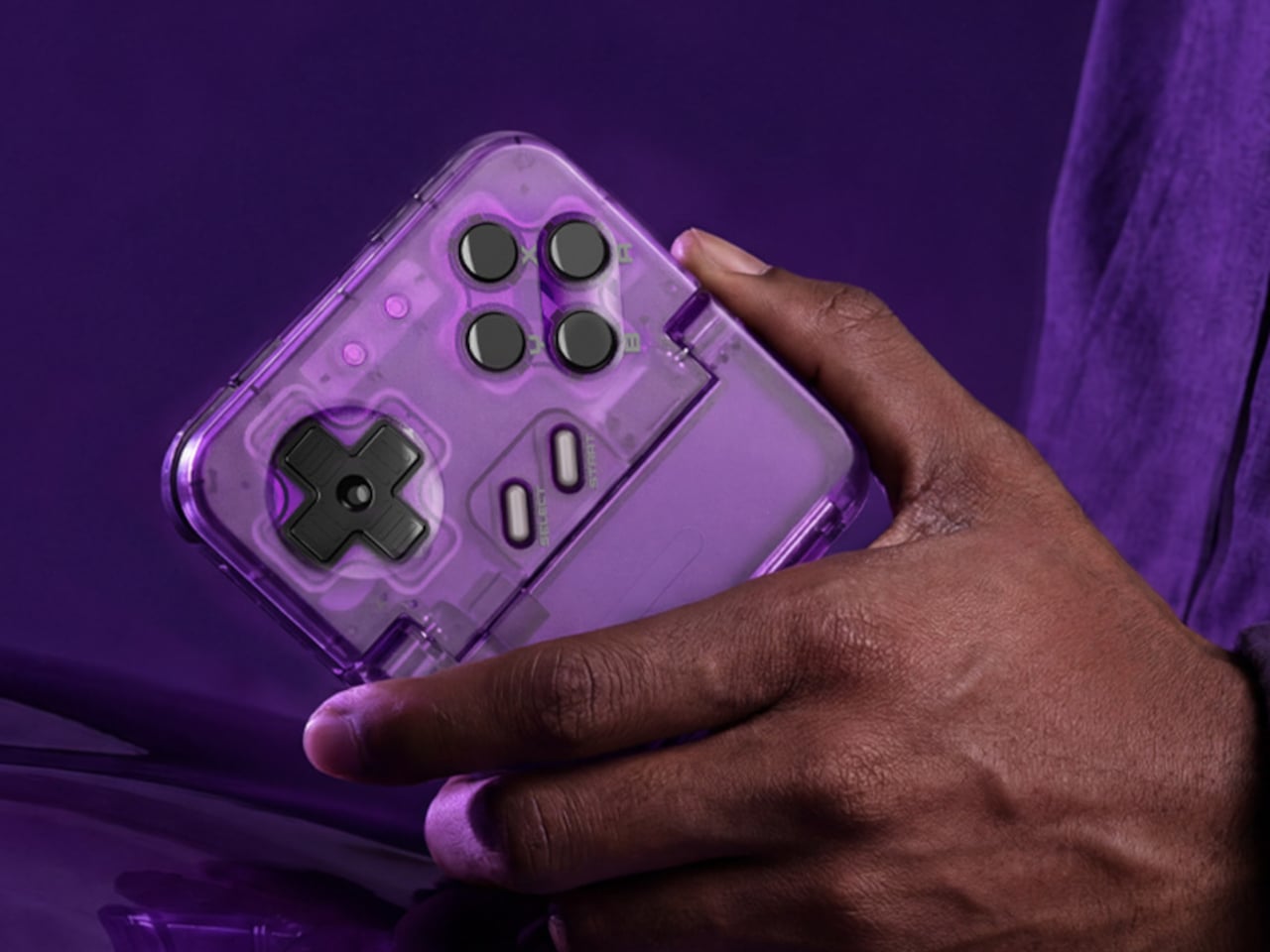
GameSir’s Pocket Taco supplies the color this collection needs. The Voltage Purple version uses a translucent housing around a clamp-style controller that attaches below your phone, creating a vertical handheld silhouette. The black D-pad and face buttons remain visually distinct against the purple body, so the exposed construction doesn’t overwhelm the controls. Unlike an accessory that merely changes how a phone looks, this changes where your thumbs go, giving supported games physical inputs beneath the screen instead of over it.

The official listing prices Voltage Purple at $34.99 and specifies Bluetooth connectivity, a 600mAh battery, membrane face buttons and D-pad, plus tactile-switch bumpers and triggers. GameSir lists the controller at 62.2 grams, keeping the accessory itself relatively light. Its usefulness depends on what you play, though. The portrait arrangement is more convincing for suitable retro games than landscape-first titles, and the button-led layout lacks analog sticks. Check your phone and game compatibility before treating it as a universal mobile controller.

What we like

  • Translucent purple gives the collection a welcome change of color.
  • Physical controls create a distinct portrait-gaming setup.

What we dislike

  • The vertical format won’t suit every mobile game.
  • There are no analog sticks for games that depend on them.

Look Past the Clear Shell

Before buying, decide what job you want the object to do when nobody is looking at it. A beautiful player still needs music you want to hear, and an unusual controller needs games that suit its layout. That sounds obvious, but a strong product photograph can move those questions surprisingly far down the list. Start with the activity, then decide how much the exposed hardware adds to your enjoyment afterward.

You also don’t need an entirely transparent setup to make the idea work. One carefully chosen object can supply enough visual detail for a desk or shelf, leaving everything around it quieter. Give that object room, keep the cables considered, and resist buying matching pieces simply to complete the theme. The purchase should make sense after the initial fascination fades, when you’re using it rather than arranging another photograph again.

The post 5 Transparent Tech Designs Gen Z Actually Wants to Own Right Now first appeared on Yanko Design.