Explorer camping trailer is designed with comfort, convenience, and adventure in mind

We all have different adventure needs. If your lifestyle requires you to go beyond the paved roads and into the wild, you need a capable setup that’s designed with comfort and convenience to go where you want it to. A new entrant among the likes of Adventure Pro Mini 2.0 or the Polydrops P21X is the Fortress Explorer camping trailer that is built for genuine off-grid comfort.

The explorer gains off-grid capabilities without having to compromise on its comfort or the capability at any point. New Zealand-based Fortress Trailers says their trailers are “designed for Kiwi tradies who need a setup that works as hard as they do.” But this one is different; it’s designed to be tough and secure, always configurable to be more than a utility trailer: an adventure trailer!

Designer: Fortress Trailers

Over the years, Fortress has been developing very secure and rugged utility trailers. To be the mobile workstation you have always wanted, for the first time, the company has developed an outdoor trailer. The Explorer is built using aluminum panels and finished in scratch-resistant paint, as opposed to a steel body that other Fortress trailers are built with. The camping trailer, however, retains the hot-dipped galvanized steel chassis.

Measuring about 13.5 feet long, the Explorer makes for 6.9-foot headroom inside, and it rides comfortably on 15-inch wheels, ready to go just about anywhere. A great combination of convenience, adventure, and comfort, the Fortress Explorer camping trailer features a spacious rooftop tent to increase the sleeping capacity and offers a fully equipped slide-out kitchen with a 90L fridge, bench space, and storage for cooking essentials.

Packed with all the amenities that you need to be in the great outdoors, whether for a short weekend or for a slightly longer stay. It comes with a 270-degree awning to extend the living space beyond the interior, comprising a spacious queen-size memory foam bed. To take care of your living comfort like at home – away from home and far away from the grid – the Explorer features a 120W solar charging setup paired with a 100Ah battery, and a 1000W inverter.

The trailer with a 100L water tank features a DC-DC charger for powering 12V lighting and USB ports via the tow vehicle. Priced at NZ $42,990 (approximately $25,000), the trailer has a huge slide-out drawer for easy organization of camping gear and storage under stairs leading to the rooftop tent. The fuel is stored in a 9kg gas bottle and a pair of jerry cans. For that price, you also get, along with the Explorer, a shower tent for privacy and convenience.

Fortress Trailers, we learn, added the Explorer to its tradesman utility trailer lineup a few months ago. It is available now for the adventurers in New Zealand, but we have yet to hear whether the Explorer camping trailer will make it to North America or not.

The post Explorer camping trailer is designed with comfort, convenience, and adventure in mind first appeared on Yanko Design.

Humans Once Read the Stars to Tell Time, This Watch Abstracts Them Into Typographic Asterisks

The asterisk earned its name from the Greek word for little star, and most of us spend our whole lives treating it as a footnote marker, the small thing that points at some other, more important thing. Raw Color, the Eindhoven studio behind STELLAR, looked at that humble little glyph and decided it deserved top billing. Their new watch for Anicorn’s Trio of Time series puts three asterisks right on the dial, in orange, green, and pink, and sets the whole lot spinning. It is the rare watch where the punctuation is the point.

Here is the clever bit. Each asterisk is a hand, and one arm on each carries a single colored dot, and that dot is what actually tells you the hour, the minute, and the second. The arms turn at their own speeds, so the dial keeps rearranging itself into loose, blooming star shapes that drift apart and then occasionally lock back into clean symmetry. Humans once stared up at actual stars to figure out what time it was and which way to sail home. STELLAR takes those stars, abstracts them into typography, scatters them across a cobalt face, and somehow still tells you it is quarter past three.

Designer: Raw Color (Christoph Brach & Daniera ter Haar)

The studio behind it has spent years treating color as a material rather than a finishing touch, and that pedigree matters here. Christoph Brach and Daniera ter Haar have shaped work for Adidas, IKEA, Hermès, Samsung, and the Van Gogh Museum, with pieces sitting in the permanent collections of the Cooper Hewitt and the Stedelijk in Amsterdam. You can feel that discipline in STELLAR’s palette, where signal orange, bottle green, and pale lilac sit against a deep royal blue without any one of them shouting over the others. The colors are doing structural work, separating the three rotating layers so your eye can actually track which star belongs to which unit of time. It looks playful, almost Memphis, but the restraint underneath is the giveaway that grown-ups made this.

Anicorn’s Trio of Time platform exists precisely for experiments like this, inviting designers from different cities to reinterpret how a watch tells time, and STELLAR marks the project’s stop in the Netherlands. We covered the liquid-filled Time for Fun and the macOS-inspired Spinning Beach Ball from the same series, and the throughline is always conceptual mischief executed with real horological hardware. STELLAR keeps that promise. Under the graphic fireworks sits a Japanese Miyota 2035 quartz movement, a 39mm 316L stainless steel case that stays impressively thin at 8.7mm, mineral glass, and 5ATM of water resistance. The green leather strap runs 18mm and clicks on through Anicorn’s smart docking system, with a mismatched pink keeper and a blue accent near the buckle that feel entirely intentional.

STELLAR is up for pre-order at 219 dollars with shipping slated for September 2026, which puts it squarely in the accessible end of design-object watchmaking rather than the collector-flex tier. I will be honest, this is a watch that asks something of you. The first few times you glance down, you will hunt for a pointer and find a flower, and you will have to teach your eye to chase the dots instead of the shapes. Whether that friction reads as delightful or annoying depends entirely on what you want from the thing strapped to your wrist. For anyone who likes the idea of telling time by reading a tiny constellation that reassembles itself all day long, the trade feels more than fair.

The post Humans Once Read the Stars to Tell Time, This Watch Abstracts Them Into Typographic Asterisks first appeared on Yanko Design.

TCL PlayCube Review: One Twist Replaces Your Entire Projector Setup

PROS:


  • Fun, quirky, and stylish design

  • Create rotating solution to typical stands and mounts

  • Functional and tactile fabric exterior

  • 66Wh built-in battery for hours of use

  • Built-in Google TV with officially licensed Netflix needs no extra dongle

CONS:


  • A bit pricey

  • Single 5W speaker

  • 750W ISO lumens lamp requires a darker environment

RATINGS:

AESTHETICS
ERGONOMICS
PERFORMANCE
SUSTAINABILITY / REPAIRABILITY
VALUE FOR MONEY

EDITOR'S QUOTE:

The TCL PlayCube isn't trying to be the brightest or the loudest, just the easiest to live with, and it pulls that off beautifully.

Portable projectors have gotten better on paper, but setting one up in an unplanned setting has stayed stubbornly complicated. Finding a surface at the right height, manually correcting the geometry, and discovering the angle is still off after all of that are steps that haven’t gone anywhere. The gap between what portability promises and what it delivers in practice is one of the more persistent frustrations in personal electronics.

The TCL PlayCube is built around that gap. Rather than adding features to a conventional projector body, it rethinks the form: a compact, nearly cubic unit where the upper half rotates to steer the projection without physically moving the whole device. A built-in 66Wh battery, Google TV, and officially licensed Netflix round out the package, making a case for portability that actually holds up outside of a product demo.

Designer: TCL

Aesthetics

Most portable projectors don’t have a recognizable silhouette, tending toward flat or cylindrical shapes distinguished mostly by logo and color. At 149.8mm x 96.6mm x 96.6mm, the PlayCube arrives with proportions that feel genuinely considered. The near-cubic geometry stands apart on a shelf or tabletop, and the rotating sections make the mechanism visually legible, so the form communicates what the product does before you even touch it.

Those sections are where the design does its most interesting work. Twisting it redirects the projection without moving the whole unit, making the device feel less like a sealed gadget and more like a tool with a clear physical interface. The visual logic is borrowed from the Rubik’s Cube, and the reference earns its place, signaling play, interaction, and adjustability in a product that actually delivers those qualities.

The exterior is wrapped in an outdoor waterproof speaker fabric that went through acoustic testing before landing on the finished product. The result is a surface considerably warmer and gentler than the matte plastic or rubberized textures typical in the category. It makes the PlayCube feel approachable in a way most tech products don’t manage, closer to a domestic object than a piece of AV equipment.

Choosing a textile exterior for a device that also functions as a speaker enclosure is a decision that works on multiple levels. The fabric repels environmental interference, blends into different settings without the harsh visual presence of a glossy casing, and gives the surface a softness that makes handling feel natural. On a nightstand, a coffee table, or an outdoor spread, the PlayCube’s material finish doesn’t announce itself as electronics.

Ergonomics

At 1.3kg, the PlayCube is light enough to move between rooms without planning for it, and the cube-like shape stows more cleanly in a bag than the elongated designs common in the category. The built-in 66Wh battery delivers up to three hours of playtime, enough for a full movie, and USB-C charging means a portable power bank can extend that window considerably when an outlet isn’t available.

Aim the PlayCube toward a bedside ceiling, and you’d normally need mounting hardware or a creative stack of books to hold the right angle. Here, a simple twist of the upper half handles the redirection, making ceiling projection something you’d attempt on a whim rather than plan for in advance. The rotating design earns its place in the ergonomics story as firmly as it does in the aesthetic one.

Connectivity is thorough for the size. An HDMI input, USB 2.0 port, and 3.5mm audio output cover the physical side, all of them located on the back for a single point of access. Bluetooth 5.1 and WiFi 5.0 handle the wireless stack, and the Bluetooth connection makes pairing an external speaker effortless whenever the built-in driver isn’t quite enough for a given setting. A standard tripod thread at the base opens up more formal placement options.

The included remote is compact and covers quick-access buttons for the most commonly used streaming services. Google TV’s interface will feel immediately familiar to anyone who has used a recent Android TV device, removing most of the learning curve upfront. Its broad app ecosystem reduces the need for workarounds or sideloaded content, an advantage most apparent when the PlayCube is set up somewhere without a dedicated media arrangement in place.

Performance

The PlayCube’s imaging uses a 0.33-inch DMD DLP display engine rated at 750 ISO lumens. That ISO designation carries weight because ISO lumens are measured under standardized conditions, unlike the inflated figures common on cheaper portables. In dimmed rooms or outdoor evening settings, 750 ISO lumens holds up well, keeping the image from looking washed out in the conditions this projector is actually built for.

Resolution sits at 1920×1080, holding up across the full projection range from 30 to 150 inches without obvious softness at the larger end. Color is handled by TCL’s ImmersiColor Technology, covering 99% of the Rec. 709 color space, the standard most streaming content is mastered against. A 1,000,000:1 dynamic contrast ratio adds depth to dark-scene performance that the compact form might otherwise limit.

The Intelligent Correction suite is where much of the practical imaging convenience lives. Real-time autofocus, keystone correction, Auto Fit Screen, Auto Obstacle Avoidance, and Auto Eye Protection work together to compress what’s typically a multi-step manual calibration process into something closer to an automatic one. Place the unit, rotate the top toward the wall or ceiling, and the image settles into position on its own within seconds.

Running Google TV natively makes a meaningful difference compared to a projector manufacturer’s in-house smart system. The app ecosystem and interface logic are a step above what most projectors ship with, and the officially licensed Netflix integration removes one of the category’s most persistent frustrations, since many devices either lack direct access or rely on workarounds and external devices.

The built-in speaker is a single 5W driver, suited to personal viewing and small gatherings in quieter settings. It won’t challenge a dedicated audio setup, but Bluetooth 5.1 makes connecting an external speaker simple, and the 3.5mm output handles wired alternatives. EQ presets for movies, music, and sports give the built-in driver more adaptability across content types, which helps when the PlayCube moves between different environments.

The 1.21:1 throw ratio is well-suited to typical room dimensions, making it practical to fill a 100-inch screen without pushing the unit into a far corner. Noise is rated to be around 26dB, which means the fan is slightly audible but not enough to compete with dialogue or pull attention during quieter scenes. These specs make the PlayCube more suited for use in small rooms, but it definitely has a place outdoors, provided it’s dark enough.

Sustainability

The outdoor waterproof speaker fabric wrapped around the PlayCube is made from eco-friendly recycled materials, a detail that doesn’t read as an afterthought. TCL selected it for its acoustic properties and environmental resilience, so the sustainability credentials are attached to a component doing genuine functional work. A material choice grounded in responsible sourcing that also serves acoustic and protective purposes is a rarer alignment than it should be.

Without a replaceable lamp, the PlayCube avoids one of the more persistent limitations of traditional projectors, with no bulb to monitor and no degradation cycle that shortens its useful life prematurely. The fabric exterior also protects the optical housing during transit, making it more resilient than a typical plastic-shelled portable. A projector built for real portability tends to stay in service longer, which benefits environmental footprint and practical value equally.

Value

The PlayCube isn’t aimed at the budget end of the market, and the package supports that positioning. A 1080p DLP engine, 750 ISO lumens, officially licensed Google TV and Netflix, a 66Wh built-in battery, and award-recognized design together form a more complete proposition than most portable projectors at a comparable price. The cost reflects a device where each element was built to serve the others, not assembled from separate decisions.

The value case is strongest for buyers who’ve experienced the gap between what portable projectors promise and what they actually deliver. If the usual frustrations include needing an external streaming device, manual keystone corrections after every move, or improvised elevation workarounds to get the angle right, the PlayCube addresses all three as part of its base design, without additional accessories or workarounds required.

Buyers focused on raw lumen output or built-in audio power will find options that compete more aggressively on those individual metrics. What’s harder to find is a portable projector where the form, the smart platform, the auto-calibration, and the physical placement flexibility are all pulling toward the same experience. The PlayCube’s value sits in that coherence, and it’s a harder thing to quantify than brightness numbers or battery ratings.

Verdict

The TCL PlayCube brings together design decisions that rarely appear in the same device. The twistable cube form, fabric-wrapped exterior, Intelligent Correction suite, and self-contained Google TV platform all work toward the same goal: a portable projector that’s genuinely easy to use across different environments, not just one that lists portability on the box. That coherence is uncommon in a category that frequently trades usability for spec comparisons.

It’ll resonate most with people who’ve grown frustrated with how much effort the category usually demands. The image quality is solid, the smart features work without a separate dongle, and the rotating form makes placement far less of a puzzle. For anyone after a big-screen experience that moves with them as naturally as it performs, the PlayCube is an easy recommendation and an even easier product to live with.

The post TCL PlayCube Review: One Twist Replaces Your Entire Projector Setup first appeared on Yanko Design.

Uncover the Motorsport Secrets of the New Porsche 911 GT4 R

Uncover the Motorsport Secrets of the New Porsche 911 GT4 R Porsche 911 GT4 R driving through a corner during a motorsport event

Porsche has officially introduced the 911 GT4 R, its first GT4 racing car built on the legendary 911 platform. This marks a significant milestone in Porsche’s motorsport history, as the vehicle is designed to compete in the rapidly growing global GT4 category. The 911 GT4 R combines advanced engineering with Porsche’s hallmark innovation, offering customer […]

The post Uncover the Motorsport Secrets of the New Porsche 911 GT4 R appeared first on Geeky Gadgets.

Posted in Uncategorized

A Student Just Designed the Lantern Every Nomad Needs

Most portable lights exist to solve a problem. They help you see when there’s no overhead fixture, charge your phone during a power outage, or keep your campsite from going completely dark. They’re useful, and that’s about where the conversation ends. Designer Benjamin Mtonya clearly thought that wasn’t enough.

His student project, Fluted, just earned a Student Notable honor at the 2026 Design Awards, and it deserves more attention than that modest title suggests. Because Fluted isn’t trying to be useful. It’s trying to be familiar. And that’s a meaningfully different ambition.

Designer: Benjamin Mtonya

The premise is straightforward, even if the execution is anything but. We move constantly now, between apartments, sublets, shared houses, short-term rentals, studio spaces we inhabit for six months before packing up again. Our stuff moves with us, but atmosphere typically doesn’t. You can’t carry the warm, golden light of your old apartment into a new, fluorescent-bright one. The mood of a space is tied to its architecture, its windows, its ceiling height, even the color of its walls. Your floor lamp will tag along for the ride, but it won’t feel like home until the room does.

Fluted is Mtonya’s answer to that gap. It’s a portable lantern, yes, but designed entirely in the language of furniture rather than electronics, which is exactly why it works so well as a concept. The materials are deliberate: maple for tactile warmth at points of contact, leather to suggest carry and continuity, polished steel for a quiet refinement, and fluted glass to soften the light into something that reads less like illumination and more like mood. An upward-facing light source diffuses through that glass and produces a warm ambient glow that recalls candlelight, the kind that makes a space feel inhabited rather than simply lit, and without the fire hazard or the melted wax cleanup.

The visual centerpiece of the design is clever in a way that rewards a second look. At first glance, you see a single continuous leather strap that appears to pierce straight through the entire object. It’s partly an illusion. A detachable leather strap at the top transitions visually into an internal leather spine suspended within a minimal metal frame below, but the eye reads it as one uninterrupted element. It gives the whole thing a structural coherence that most portable lights completely lack. It doesn’t look like something you grabbed from a shelf out of necessity. It looks considered. It looks like it belongs somewhere.

That distinction matters more than it might seem. We’ve accepted, almost without question, that portable objects are allowed to look utilitarian. Power banks look like bricks. Portable speakers look like, well, portable speakers. The category tends to signal its own temporariness through its aesthetic. Fluted pushes back on that assumption quietly, without making a fuss about it. It’s not loudly declaring that it’s beautiful; it’s simply refusing to look disposable.

Mtonya designed it specifically for what he calls the “domestic nomad”: individuals whose environments shift regularly but who value continuity of atmosphere within them. That framing is worth sitting with for a minute. It’s not about people who travel light as a romantic lifestyle philosophy. It’s about the very ordinary experience of being in-between spaces, or between phases of life, and still wanting the corner of your room to feel like yours. That’s an experience a lot of us share right now, more than we probably want to admit.

As student work goes, the philosophical clarity here is striking. A lot of design projects at this level are technically impressive but emotionally neutral. Fluted has a genuine point of view. It’s making an argument about what a portable object can mean, and it makes that argument through material choices and formal decisions rather than through a written manifesto. The object does the talking, and it’s articulate. Whether Fluted ever moves into production remains to be seen. But the conversation it starts about what we deserve from the objects we carry with us is already worth having.

The post A Student Just Designed the Lantern Every Nomad Needs first appeared on Yanko Design.

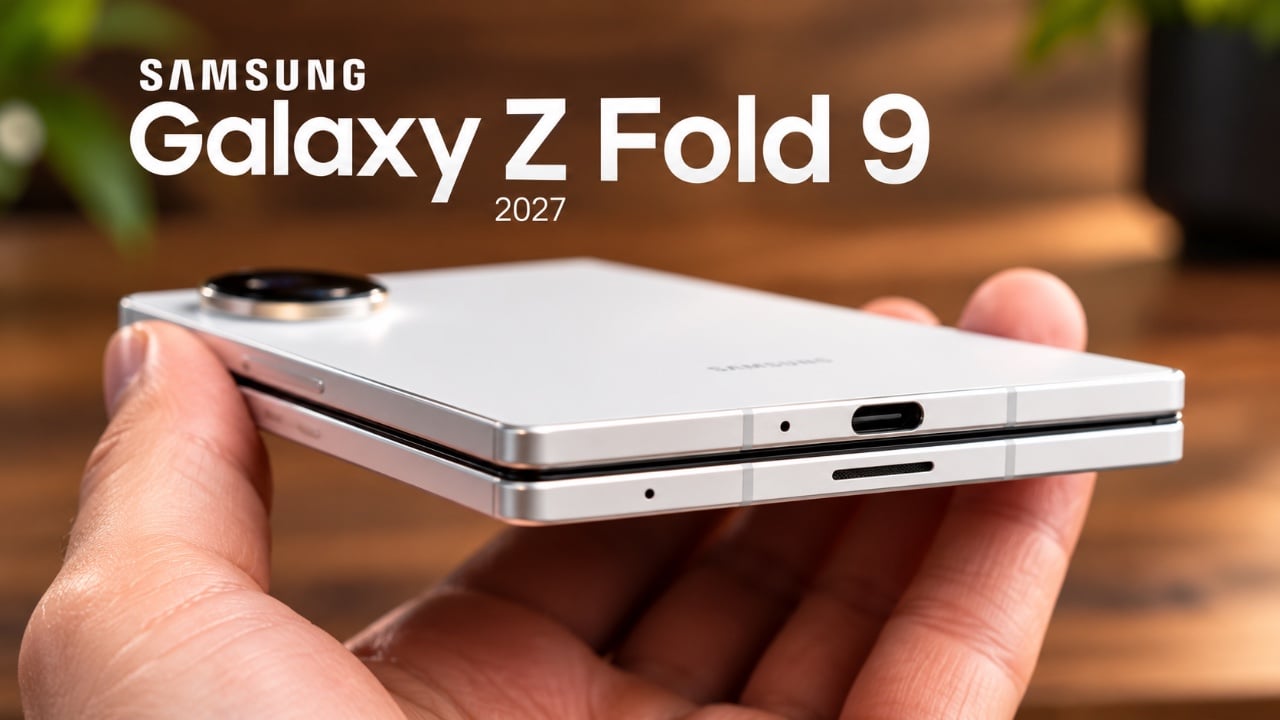
Leaked Colors Show the True Difference Between Galaxy Z Fold 8 Ultra and Wide

Leaked Colors Show the True Difference Between Galaxy Z Fold 8 Ultra and Wide Side by side comparison of Galaxy Z Fold 8 and Ultra colors

Samsung is preparing to unveil its highly anticipated next-generation foldable smartphones, including the Galaxy Z Fold 8, Z Fold 8 Ultra, and Z Flip 8. These devices are set to redefine expectations with a focus on enhanced personalization, improved durability, and advanced technology. With leaks providing a glimpse into what’s ahead, the official launch is […]

The post Leaked Colors Show the True Difference Between Galaxy Z Fold 8 Ultra and Wide appeared first on Geeky Gadgets.

Posted in Uncategorized