Hubble may no longer be the gold standard, but it can still capture some impressive images. The telescope's latest snapshot is our clearest view yet of the Egg Nebula. Roughly 3,000 light-years away from Earth, the nebula's name is derived from its dense layer of gas and dust cloaking a central star.
The new image shows the nebula's four beams of starlight (from that central star) escaping from its gas-and-dust "shell." On either side of the disc-like cloud are fast-moving outflows of hot molecular hydrogen. The orange highlights in this image indicate the glow of infrared light.
As the beams of starlight stretch out from the center, they illuminate concentric rings of gas. The gas’s ripple-like pattern suggests it was created by successive bursts from the star, with a little more ejecting every few hundred years.
Hubble image of the Egg Nebula. A disc of gas and dust surrounded by beams of light and concentric rings of dust.
SA / Hubble & NASA, B. Balick (University of Washington)
The Egg Nebula, found in the constellation Cygnus, was first discovered in 1975. Nebulae in this preplanetary phase are rare finds. Since the stage only lasts a few thousand years (and because they're often faint), they're relatively difficult for astronomers to spot. By comparing this new image with previous Hubble snapshots of the Egg Nebula, astronomers can learn more about it and shed more light on its processes. But for the rest of us, it makes for some pretty sweet eye candy, right?
This article originally appeared on Engadget at https://www.engadget.com/science/space/hubble-showcases-the-egg-nebula-in-all-its-dying-star-glory-174239769.html?src=rss
Get ye to Windows Update, because there's a good chance you've got new Secure Boot certificates to install. Microsoft just announced that it will be refreshing those certificates, which were originally introduced when Secure Boot debuted in 2011, as a security precaution. Secure Boot was a way for Microsoft to protect systems from running unsigned and potentially malicious code before Windows launched. It went on to be an installation requirement for Windows 11, as well as anti-cheat software used in Valorant, Call of Duty: Black Ops 6/7 and Battlefield 6.
Without the new Secure Boot certificates, Microsoft says your system will still function normally, but it will enter "a degraded security state that limits its ability to receive future boot-level protections." Basically, you won't be protected from malware and viruses targeting vulnerabilities in older versions of Windows. As expected, Microsoft also notes that unsupported versions of Windows won't be receiving the new Secure Boot certificates. They're only coming to Windows 11 systems, as well as Windows 10 PCs subscribed to Microsoft's Extended Security Updates.
Microsoft says many users will be able to pick up the updated Secure Boot certificates by visiting Windows Update, but a few may need additional firmware updates from their system (or motherboard’s) OEM. You’ll also be able to track the status of your security certificates in the Windows Security app in the “coming months.”
"As cryptographic security evolves, certificates and keys must be periodically refreshed to maintain strong protection," Nuno Costa, Partner Director of Windows Servicing and Delivery, wrote in a blog post today. "Retiring old certificates and introducing new ones is a standard industry practice that helps prevent aging credentials from becoming a weak point and keeps platforms aligned with modern security expectations."
Costa says Microsoft has been working with OEMs like Dell and HP to ensure a smooth transition to the new Secure Boot certificates. Many new systems built in 2024 already have the updated certs, while "almost all" devices shipped last year have them as well. Microsoft has also been alerting IT customers to this transition since last year.
This article originally appeared on Engadget at https://www.engadget.com/computing/microsoft-will-start-refreshing-secure-boot-certificates-in-march-for-windows-11-and-windows-10-esu-users-170000777.html?src=rss
There appears to be no limit to how chonky and eye-wateringly expensive PC gaming handhelds can get, with the latest behemoth being the Ayaneo Next 2. First announced back in November, the latest Windows handheld in Ayaneo’s Next lineup is now up for pre-order, with a spec sheet that makes some of its rivals look modest.
If you missed the announcement at the end of last year, the Next 2 is packing a 9-inch OLED display with a 2,400 x 1,504 resolution and a maximum refresh rate of 165Hz (adjustable down to 60Hz). The Next 2 is powered by an AMD Ryzen AI Max+ 395 chip and has a massive 115Mh battery under the hood.
To put all of that into perspective, the Next 2’s display is more than 1.5 inches larger than the Steam Deck OLED’s, and goes bigger than even the Lenovo Legion Go 2’s 8.8-inch panel. Its battery is the largest of the three by some margin too, and according to Ars Technicait weighs in at around 3.14 pounds (around 1424g), making it more than twice as heavy as the very heavy Xbox ROG Ally X. Get those wrists to the gym if you’re considering picking one of these up.
Ayaneo is ticking all the boxes where inputs are concerned too. Its latest handheld has dual touchpads (a feature ASUS left out on the ROG Xbox Ally X), Hall Effect sticks, an 8-way D-Pad and four customizable rear buttons.
All of this tech inevitably comes at a high price, with the entry-level model that ships with 32GB of RAM and 1TB of storage coming in at $1,999, or $1,799 if you take advantage of early bird pricing. This model is equipped with the slightly less capable Ryzen AI Max 385 CPU.
If you want the more powerful AI+ 395 chip you have a few options. A variant of the Next II with 64GB of RAM and 1TB of storage costs $2,699, but you can order now at the early bird price of $2,299. For 128GB of RAM and 2TB of storage you’ll be handing over a slightly hilarious $4,299 at full price. Early birds can order now for $3,499.
This article originally appeared on Engadget at https://www.engadget.com/gaming/pc/the-ayaneo-next-2-is-a-massive-pc-handheld-with-a-price-tag-to-match-165326534.html?src=rss
A US judicial body has revised an internal document to remove climate research. The Reference Manual on Scientific Evidence is a document used by judges when they have to oversee cases involving complex scientific matters. The climate science chapter has now been deleted, so they'll be on their own with climate-related cases.
This move came after a group of Republican state attorneys wrote a letter to complain about the chapter on climate change. The language in the document, which was authored by researchers from Columbia University, suggests that climate change is driven by the actions of humans. This was a no-go to those state attorneys, despite being an established fact.
"Nothing is 'independent' or 'impartial' in issuing a document on behalf of America’s judges declaring that only one preferred view is 'within the boundaries of scientifically sound knowledge,'" the letter states. It's worth noting that the document is nearly 2,000 pages long and declares preferred views on numerous subjects, though the state attorneys only have an issue with the one.
The Republicans also complained that the report called the Intergovernmental Panel on Climate Change an "authoritative science body." The grounds for this complaint seem to derive from a short paper from a Canadian conservative think tank.
The letter's authors would not settle for any revisions, according to a report by Ars Technica. Rather, they demanded the entire chapter be removed. So it was removed and now judges can rule on climate cases using the tried and true method known as "vibes."
Interestingly, the introduction of the document by Supreme Court Justice Elena Kagan still mentions the climate chapter. They had better break out some correction tape. The full text of the now-deleted chapter has been posted by RealClimate, if you want to give it a gander.
More than 99.9 percent of peer-reviewed scientific papers agree that climate change is real and caused by humans. It looks like some segments of society want a judicial system ruled by that remaining 0.01 percent.
This article originally appeared on Engadget at https://www.engadget.com/big-tech/us-judicial-body-removes-climate-research-paper-after-complaints-from-republicans-164829295.html?src=rss
Supermassive Games has announced a new release date for the next entry in the Dark Pictures Anthology series. Directive 8020is coming to PS5, Xbox Series X/S and Steam on May 12. The studio behind Until Dawn and The Quarry revealed the news with the help of a fresh trailer for the sci-fi survival horror game.
The story focuses on the crew of a spaceship that has crash landed onto another world. The survivors have to contend with an alien lifeform that's hunting them and can mimic its prey (no prizes for guessing that Supermassive took inspiration from The Thing here). If these astronauts want to stay alive, though, they'll put the lives of everyone on a dying Earth at risk.
As with Supermassive's previous games, Directive 8020 is largely driven by the narrative choices players make at key moments, such as whether to save a crewmate and put the character you're currently controlling at risk, or to abandon them. You might also have to pick between two seemingly identical versions of the same person and let one of them back into the crew. The game has segments in which you'll have to fight or stealthily avoid enemies as well.
This time around, Supermassive is introducing a feature called Turning Points, through which you can go back to previous decisions and opt for another path (perhaps to see different endings more easily, keep certain characters alive or make sure you get all the achievements or trophies). A permadeath mode does away with that option for a more traditional survival horror experience.
You can go it alone or get some friends to join you for five-player local co-op action — the studio's games have long been good fodder for pass-the-controller couch co-op. Supermassive will add online multiplayer support down the line.
The developer originally planned to release Directive 8020 in October 2025. However, Supermassive announced last July that it was delaying the game amid its latest round of layoffs.
This article originally appeared on Engadget at https://www.engadget.com/gaming/directive-8020-brings-sci-fi-survival-horror-to-ps5-xbox-series-xs-and-pc-on-may-12-163358560.html?src=rss
Numerous major social platforms including Meta, YouTube, TikTok and Snap say they will submit to a new external grading process that scores social platforms on how well they protect adolescent mental health. The program comes from the Mental Health Coalition’s Safe Online Standards (SOS) initiative, which comprises about two dozen standards covering areas like platform policy, functionality, governance and transparency, content oversight and more. The SOS initiative is led by Dr. Dan Reidenberg, Managing Director of the National Council for Suicide Prevention.
In announcing these companies' participation, the Mental Health Coalition writes "SOS establishes clear, user-informed data for how social media, gaming, and digital platforms design products, protect users ages 13–19, and address exposure to suicide and self-harm content. Participating companies will voluntarily submit documentation on their policies, tools, and product features, which will be evaluated by an independent panel of global experts."
After evaluation, the platforms will be given one of three ratings. The highest achievable safety rating is "use carefully," which comes with a blue badge that compliant platforms can display. Despite being the highest rating, the requirements seem fairly run-of-the-mill. The description includes things like "reporting tools are accessible and easy to use," and "privacy, default and safety functions are clear and easy to set for parents." As for what actions the standards ask of the companies being rated, the "use carefully" rating says "platforms and filters help reduce exposure to harmful or inappropriate content."
The other ratings include "partial protection" which is described in part as "some safety tools exist on the platforms, but can be hard to find or use," and "does not meet standards" which would be given if "filters and content moderation do not reliably block harmful or unsafe content."
The Mental Health Coalition, founded in 2020, has mentioned Facebook and Meta as partners since the early days of the organization. In 2021 the organization said it would bring together "leading mental health experts partner with Facebook and Instagram to destigmatize mental health and connect people to resources" during the COVID-19 pandemic.
In 2022 the nonprofit published a case study with "support from Meta" that found "mental health content on social media can reduce stigma while increasing individuals’ likelihood to seek resources, therefore positively impacting mental health."
In 2024, the MHC "in partnership with Meta" launched a campaign called the Time Well Spent Challenge. In it, the group urged parents to have “meaningful conversations” with teens about “healthy” social media use, focusing less on whether teens should be on these apps at all and more on keeping them on-platform in a “time well spent” way, from reduced screen time to “using social media for good” and reviewing their feeds together.
That same year it partnered with Meta again to establish "Thrive," a program that allows tech companies to share data regarding materials that violate self-harm or suicide content guidelines. The Mental Health Coalition lists Meta as a "creative partner" on its website.
Last year it was alleged that Meta buried internal data showing the ill effects of its products on users' mental health. The internal research, dubbed "Project Mercury," began in 2020. Since then the company has introduced some bare-minimum attempts at addressing mental health concerns, such as Instagram teen accounts. Meta is now on trial in California facing allegations over child harm from addictive products, the first in a series of upcoming lawsuits against the social media giant.
Other companies participating in the rating program include Roblox, which has recently faced stiff accusations over the wellbeing of children on the platform, and Discord which has beefed up its age-verification processes in response to its own serious child endangerment concerns.
This article originally appeared on Engadget at https://www.engadget.com/social-media/meta-tiktok-and-snap-are-participating-in-an-online-safety-ratings-system-162921333.html?src=rss
The internet is ripe with horrible violations of people's privacy, including non-consensual explicit images. A new tool from Google won't do much in the way of prevention, but can help you remove this media from Search.
Now, you can choose an image and quickly request its deletion. Just click on the three dots that appear on the image. From there, choose "remove result" and then "It shows a sexual image of me." Other choices include the picture shows a person under 18 and that it has your personal information. If you choose the initial option then you will also be asked whether it contains a real image or deepfake. There's also an option to submit multiple photos at once.
Google claims that, upon submitting your request, you will "immediately" see links to emotional and legal support organizations. Plus, you can opt-in to safeguards that filter out similar results in Search — though it seems these unreported images will still be available for other users to see. This feature should be available in most countries over the coming days.
You can go on Google's "Results about you" hub to track your request. To use the tool, you will have to add in your personal contact information and government ID numbers. Google already had the hub to track if any of that information appears on Search, but now it will also look for your social security number, drivers license and passport information. The company should notify you if any of that information comes up in Search results and allow you to take removal steps.
Results about you's updates should roll out to US users in the coming days. Notably, it arrives as Google shutters its dark web reports. They would alert you if your name, number, or email address appeared on the internet — typically because of a data breach. However, Google found it didn't help users take next steps to fix the problem, something these new features will hopefully do.
This article originally appeared on Engadget at https://www.engadget.com/cybersecurity/googles-new-tool-helps-you-remove-non-consensual-explicit-images-from-search-155352248.html?src=rss
AirTags are basically an essential accessory for iPhone users who want to keep track of things like their keys, wallet and backpack. While it's easy enough to replace the battery in both versions of the AirTag, you may not want to have to rush to do so at the end of the battery's roughly two-year lifespan. That's where Elevation Lab's extended battery case for the AirTag comes in, and it's heavily discounted right now: it's 30 percent off and down to $16.
The case usually sells for $23, so that's a 30 percent discount. It's not the first time we've seen this deal, but it's a pretty decent one all the same.
This is arguably one of the more useful AirTag accessories around for certain use cases. It won't exactly be helpful for an AirTag that you put in a wallet or attach to your keys, as it's too bulky for such a purpose — and it doesn't have a hole for a keyring anyway. Still, if you're looking for an AirTag case that you can place in a suitcase or backpack and not have to touch for years, this could be the ticket.
Elevation Lab says that, when you place a couple of AA batteries in the case, it can extend the tracker's battery life to as much as 10 years (the brand recommends using Energizer Ultimate Lithium batteries for best results). The AirTag is slated to run for over a year on its standard CR2032 button cell.
The case gives the AirTag more protection as well. It's sealed with four screws and it has a IP69 waterproof rating. What's more, it doesn't ostensibly look like an AirTag case, so someone who steals an item with one inside is perhaps less likely to realize that the object they pilfered is being tracked.
There are some other downsides, though. Since the AirTag is locked inside a case, the sound it emits will be muffled. Elevation Lab says the device's volume will be about two-thirds the level of a case-free AirTag. However, the second-gen AirTag is louder than its predecessor, which should mitigate that issue somewhat.
This article originally appeared on Engadget at https://www.engadget.com/deals/elevation-labs-airtag-10-year-extended-battery-case-is-only-16-right-now-151215061.html?src=rss
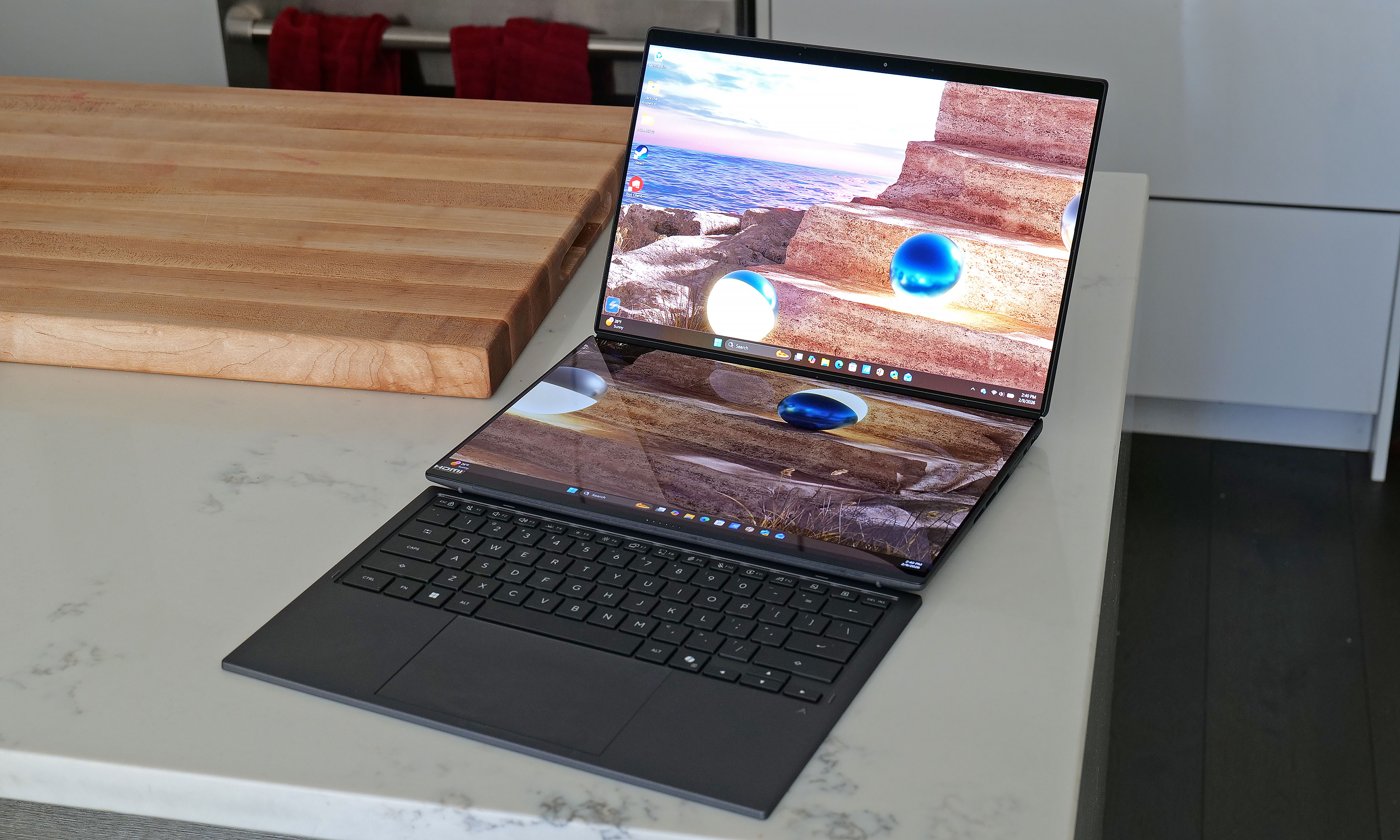
It takes time for novel designs to catch on. But even so, I am still wondering why the Zenbook Duo hasn't had a bigger impact on the market after ASUS released its first true dual-screen laptop two years ago. Notebooks like these provide the kind of screen space you'd typically only get from a dual monitor setup, but in a much more compact form factor that you can easily take on the road. It could be that people were wary of an unfamiliar design, shorter battery life or buying a first-gen product — all of which are understandable concerns. However, now that ASUS has given the ZenBook Duo a total redesign for 2026, the company has addressed practically all of those barriers to entry while making it an even more convincing machine for anyone who could use more display space. Which, in my experience, is pretty much everyone.
Editor’s note: The 2026 ASUS Zenbook Duo is expected to be available for pre-order sometime in late February, with general availability slated for March.
Design
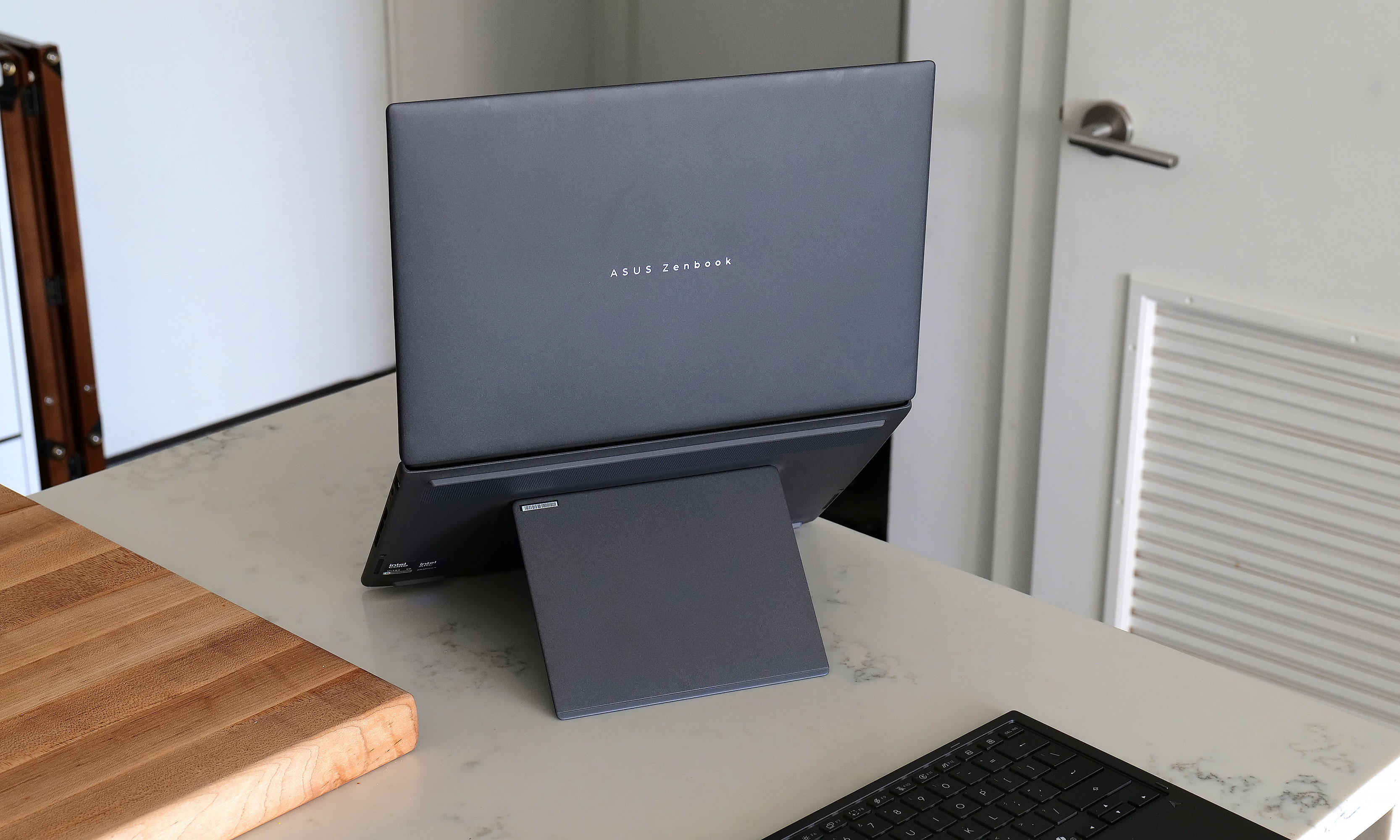
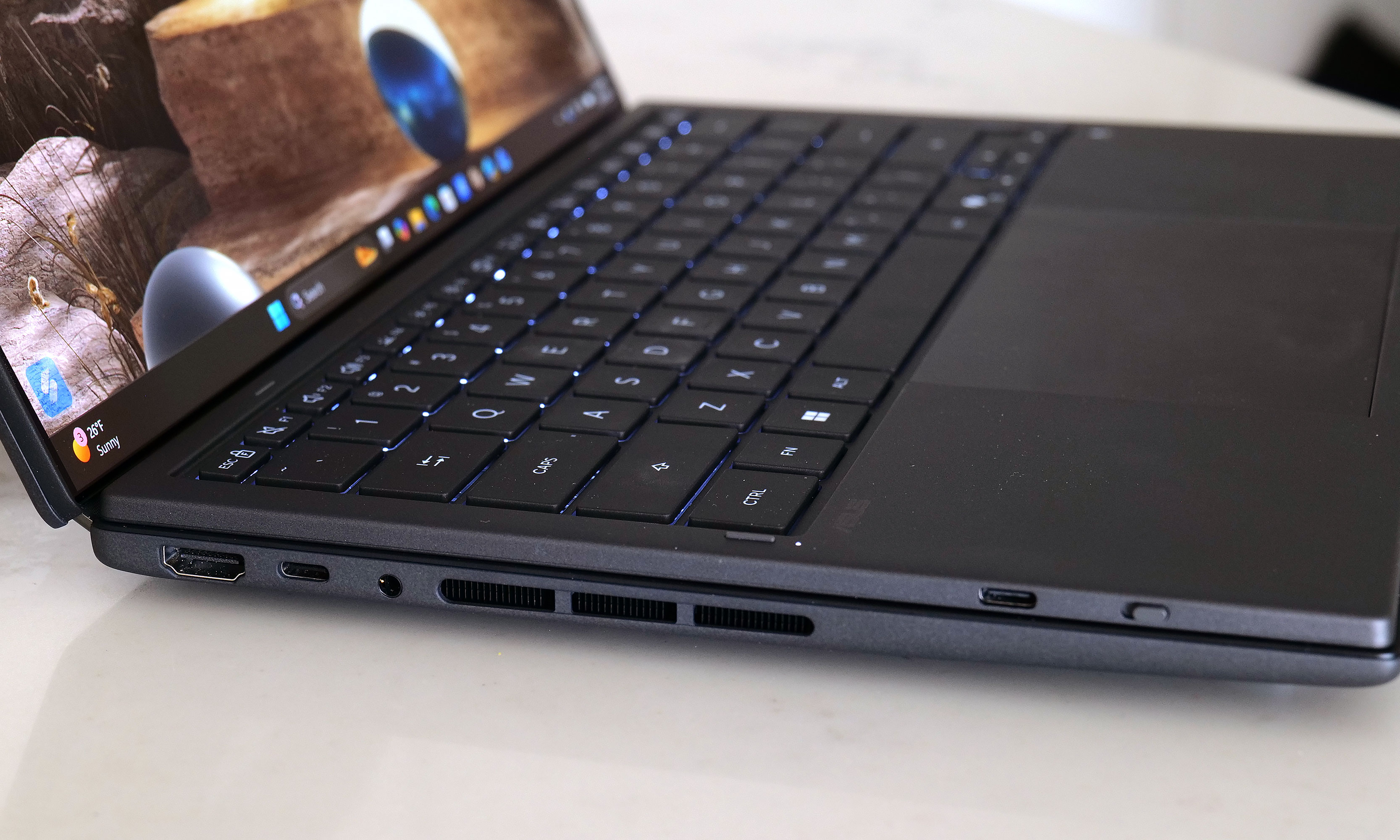
For the new model, ASUS didn't mess with the laptop's basic layout too much. Instead, the company polished and tightened everything up, resulting in a system that weighs about the same (3.6 pounds) while reducing its overall size (12.1 x 8.2 x 0.77 to 0.92 inches) by five percent. Critically, you still get a built-in kickstand on the bottom and a detachable keyboard that you move wherever you want. There’s also a decent number of ports, including two USB-C with Thunderbolt 4, one USB-A 3.2 jack, HDMI 2.1 and a combo audio port. That said, I do wish ASUS had found room for an SD card reader of some kind, though given the Zenbook Duo's unique design, I get why that didn't make it.
The Zenbook Duo's detachable keyboard gives users a ton of flexibility when it comes to utilizing both of the laptop's displays.
Sam Rutherford for Engadget
One of the Zenbook Duo's most important design upgrades is a new "hideaway" hinge that reduces the gap between the laptop's two screens. Not only does this make the laptop easier and more pleasant to use in dual-screen mode, it also allows the entire system to lay flat on a table, which is nice for drawing or sharing your screen with someone sitting opposite you. Unfortunately, while my review unit didn’t come with one, ASUS says its forthcoming Pen 3.0 will come bundled with the Zenbook Duo in the US, so you won’t need to pay extra for it.
Another small but appreciated improvement is the new pogo pins below the lower display, which provides a more secure and reliable way of keeping the laptop's detachable keyboard topped up. In my experience, even after running multiple rundown tests that completely drained the Duo's battery, I never had to charge up the keyboard on its own. It was always smart enough to sip electricity from the main system in the background, though it also has a built-in USB-C port for power just in case. On the flipside, if you're not scared of typing on glass, you can still use the lower screen as a keyboard and touchpad, or as a place to display widgets for news, the weather, performance and more.
Displays
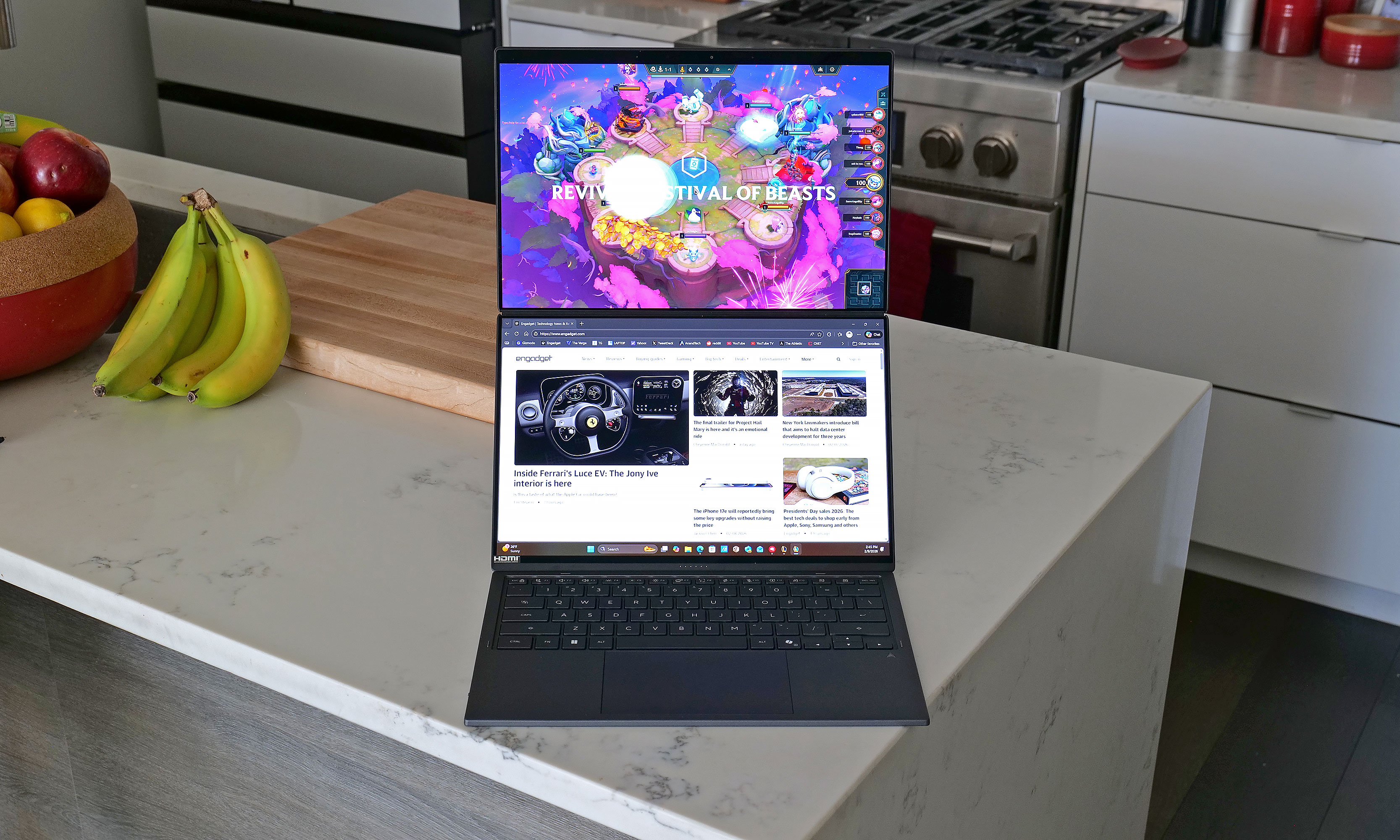
As someone who loves a desktop with dual monitors, I can't overstate how nice it is to have similar built-in functionality on a laptop.
Sam Rutherford for Engadget
The standout feature on the Zenbook Duo continues to be its dual displays, and now for 2026, they look better than ever. Both OLED panels have a 144Hz refresh rate with a 2,880 x 1,800 resolution while also covering 100 percent of the DCI-P3 spectrum. And while its nominal brightness of 500 nits for SDR content is just OK, ASUS makes up for that with peaks of up to 1,000 nits in HDR. And to make both screens even more enjoyable, ASUS managed to shrink the size of their bezels down to just 8.28mm. That's a reduction of 70 percent compared to the previous model, so now there's even less getting in the way of you utilizing these screens to their fullest.
Performance
The Zenbook Duo can be configured with a range of new Intel Core Ultra 7 and Core Ultra 9 processors, including the X9 388H chip used on our review unit. For general use and productivity, the laptop is super smooth and responsive, though that shouldn't be a surprise coming from Intel's latest top-of-the-line mobile CPU. However, for those seeking max performance, some of the benchmark numbers aren't quite as impressive as you might expect. That’s because ASUS has limited the Duo's TDP (thermal design power) to 45 watts — which is shy of the chip's 80-watt turbo power limit.
The kickstand in back adds a bit a bulk, but it's better than not having one at all like with Lenovo's Yoga Book.
Sam Rutherford for Engadget
In PCMark 10, the Zenbook Duo only managed a score of 7,153 compared to 9,651 from a Dell XPS 14, despite the latter having a lower-tier Intel Core Ultra X7 358H processor. That said, in other tests like Geekbench 6, the Duo had no trouble staying on top with a multicore score of 17,095 versus 9,651 for the Dell.
Another pleasant surprise is that because the Duo's chip comes with Intel's upgraded Arc B390 integrated GPU, this thing has plenty of oomph to game on, let alone edit videos or other similar tasks. In Elden Ring at 1,920 x 1,200, the Zenbook maintained a relatively stable framerate between 55 and 60 fps on high settings, which is great considering this thing doesn't have discrete graphics. This means as long as you don't mind fiddling with game options a bit, you should be able to play newer AAA games without too much trouble.
Battery life
The left side of the Zenbook Duo features a full-size HDMI connector along with a USB-C port, plus a backup USB-C jack for charging the detachable keyboard.
Sam Rutherford for Engadget
You'd think a laptop with two displays would be super power hungry. However, by increasing the capacity of its cell from 75WHrs to 99WHrs, ASUS has made the Zenbook Duo's endurance (or lack thereof) a complete non-issue. On PCMark 10's Modern Office rundown test, the laptop lasted 18 hours and 33 minutes in single-screen mode. Granted, that's nearly four hours less than what we got from MSI's Prestige 14 Flip AI+, but considering that's the longest-lasting notebook we've ever tested, I'm not bothered. When compared to ASUS' own Zenbook A14 (18:16), things are basically a wash, which I think is a win for the Duo, as the A14 is meant to be an ultralight system with an emphasis on portability and longevity.
Obviously, battery life takes a hit when you're using both displays. However, when I re-ran our battery test with its two displays turned on, the Duo still impressed with a time of 14:23. This is more than enough to give you the confidence to set this thing up in dual-screen mode even when an outlet isn't close at hand. Thankfully, for times when you do need a power adapter, the charging brick on ASUS' cable is rather compact, so it's not a chore to lug it around.
Wrap-up
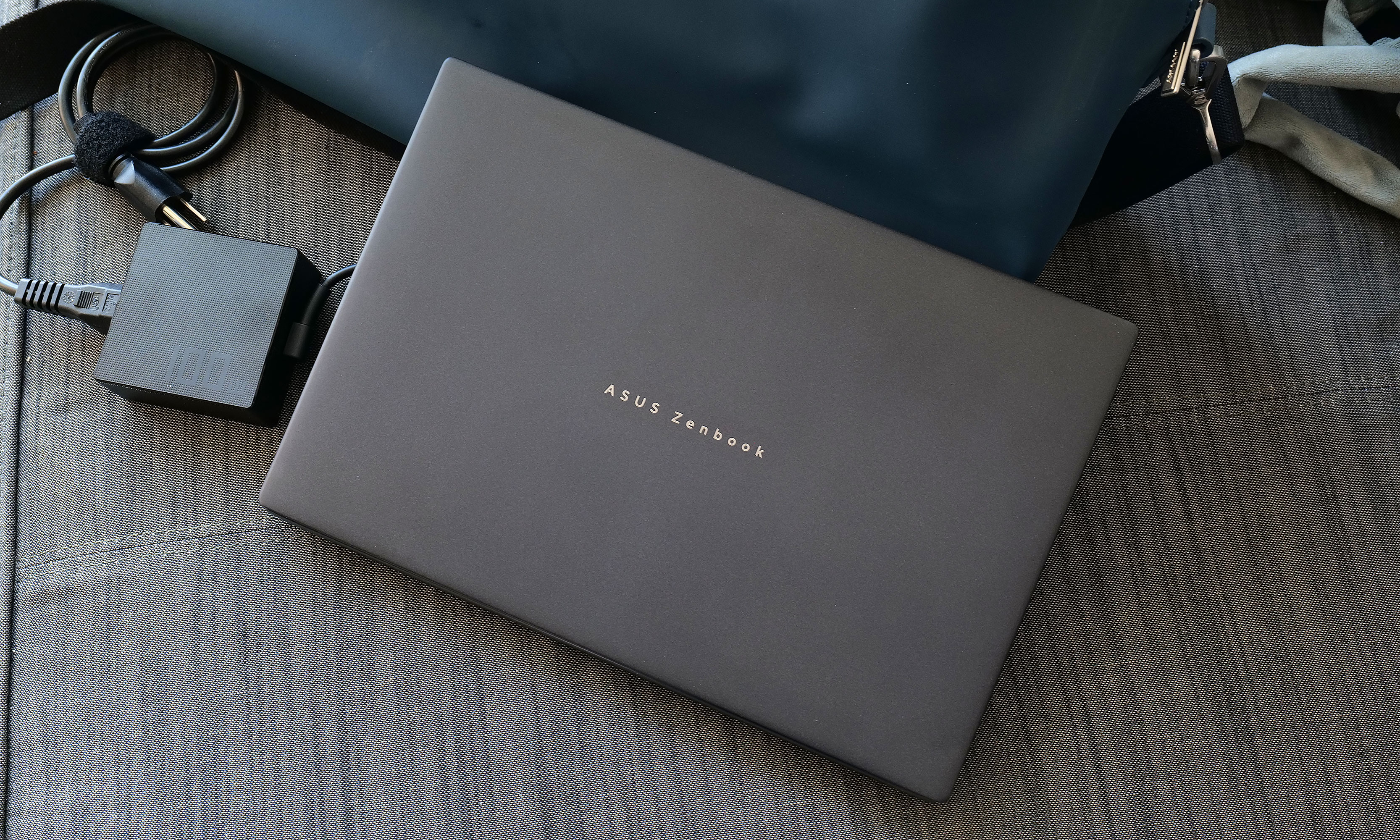
The Zenbook Duo's battery life is good enough you won't always need its power brick. Thankfully, when you do, ASUS' 100-watt adapter is relatively compact.
Sam Rutherford for Engadget
I'm a believer that one day people will eventually embrace typing on screens with laptops just like they have for smartphones. However, even if you're not willing to make that jump just yet, the Zenbook Duo still has all of its bases covered. Its detachable keyboard gives you a pleasant experience while freeing up the bottom of the notebook to be a second display. This allows you to have something similar to a traditional dual-monitor desktop but in a chassis that you can easily take on the road without any major compromises.
The 2026 Zenbook Duo combines a compact design with strong performance, plenty of ports and surprisingly good battery life. Sure, it's a touch heavier than a typical 14-inch laptop, but its two screens more than make up for a little added weight and thickness. That leaves price as the Duo's remaining drawback, and starting at $2,100 (or $2,300 as reviewed), it certainly isn't cheap.
However, when you consider that a similarly equipped rival like a Dell XPS 14 costs just $50 less for a single screen, that price difference is rather negligible. Alternatively, if you opt for a more affordable ultraportable and then tack on a decent third-party portable monitor, you're still likely looking at a package that costs between $1,500 and $1,800. Plus, that setup is significantly bulkier and more annoying to carry around. So while the Zenbook Duo might be an unconventional pick right now, it has all the tools to deliver unmatched portable productivity and I don’t think it will be too much longer until the masses catch on.
This article originally appeared on Engadget at https://www.engadget.com/computing/laptops/asus-zenbook-duo-2026-review-two-screens-really-are-better-than-one-140000982.html?src=rss
Last year the UK declared that Apple and Google were a duopoly with "strategic market status" in the mobile platforms market, making them subject to special regulations. However, the UK's Competition and Markets Authority (CMA) will not regulate Google and Apple's app stores like the EU has done. Rather, government plans to enforce its own digital markets rules in a "pragmatic" way by accepting "commitments" from Apple and Google in areas like app rankings, the CMA announced.
Google and Apple agreed to work with the CMA to address concerns on the following matters: app review, app ranking, use of data and interoperability process. Effectively, regulators require the tech giants to treat developers fairly, particularly when they compete against Google and Apple's own apps. However, the UK's rules are more like suggestions and "not legally binding in any case," former CMA director Tom Smith told the Financial Times.
This is in stark contrast to Europe's Digital Markets Act, which forced Apple to make changes to open up iOS features and data to rivals, allow app installations from outside its Store and reduce fees collected on purchases.
That could change if the companies fail to comply with its measures, though. The CMA plans to check metrics like the number of apps approved or rejected, app review times and developer complaints received. New requirements could then be brought forward if deemed necessary. "For example, if we find Apple is routinely declining interoperability requests without good reason... we could bring forward specific interoperability requirements. Non-compliance would also mean we would be unlikely to consider commitments as a similar approach in [the] future."
Google said in a blog today that it "welcomed the opportunity to resolve the CMA's concerns collaboratively." Apple, meanwhile, seemed similarly pleased with the deal. "The commitments announced today allow Apple to continue advancing important privacy and security innovations for users and great opportunities for developers,” an Apple spokesperson told Bloomberg.
The UK is possibly taking a light touch on app store rules to avoid antagonizing the Trump administration. Earlier today, French President Emmanuel Macron predicted that the US could go after the EU on areas like data privacy, digital taxation and the plan of multiple EU countries to ban children from social media. "The US will, in the coming months — that’s certain — attack us over digital regulation," Macron said at a special summit yesterday.
This article originally appeared on Engadget at https://www.engadget.com/big-tech/uk-takes-light-touch-approach-to-regulating-apple-and-googles-app-stores-131119575.html?src=rss