The DOJ is backing xAI in its lawsuit against Colorado

The Department of Justice has announced that it's intervening on the behalf of xAI in the company's recent lawsuit against the state of Colorado. xAI first filed the suit in early April in response to a recent Colorado law that requires developers of "high-risk" AI systems (for example, ones used in healthcare, employment or housing) to both disclose and mitigate the risk of algorithmic discrimination in their systems. The law is set to go into effect in June, and the DOJ is now asking a Colorado District Court to declare it unconstitutional.

In xAI's original argument, Colorado Bill SB24-205 violated the company's First Amendment rights by forcing its developers to change how they create AI products and compelling them to align their products with Colorado's views on diversity and discrimination. The DOJ acknowledges those concerns in its complaint, but specifically focuses its argument on the idea that the law violates the Equal Protection Clause of the Fourteenth Amendment.

According to the DOJ, because the law relies on demographics and "statistical disparities" as evidence of discrimination, it will essentially require developers to distort an AI system's outputs and "discriminate based on race, sex, religion and other protected characteristics," a violation of the Fourteenth Amendment. The department also positions Colorado's law as a risk to "the United States' position as the global AI leader," a title the current administration is committed to protecting. 

As both an AI cheerleader and enabler, the Trump administration has been particularly sensitive to the notion of diversity, equity and inclusion being incorporated into AI. President Donald Trump signed several executive orders following the announcement of his "AI Action Plan" in 2025 that specifically called for government agencies to use AI tools that avoid "ideological dogmas such as DEI." He also called for the creation of a task force that could challenge state AI regulation in favor of a federal regulatory framework for AI. The irony is that the DOJ's argument, and the administration's stance in general, are equally idealogical, just in a way that's ahistorical, and ignores the downstream effects of discrimination in the US.

This article originally appeared on Engadget at https://www.engadget.com/ai/the-doj-is-backing-xai-in-its-lawsuit-against-colorado-200500890.html?src=rss

The Game Controller Teaching Blind Kids to Read Braille

Learning Braille is hard. Anyone who has ever pressed their fingertips against a page of raised dots knows that even identifying one character takes real practice and patience. Now imagine being a young child, just starting out, expected to master an entire tactile alphabet without any of the visual shortcuts that sighted learners rely on. The learning curve is steep, the tools are often clinical, and the experience can feel deeply isolating.

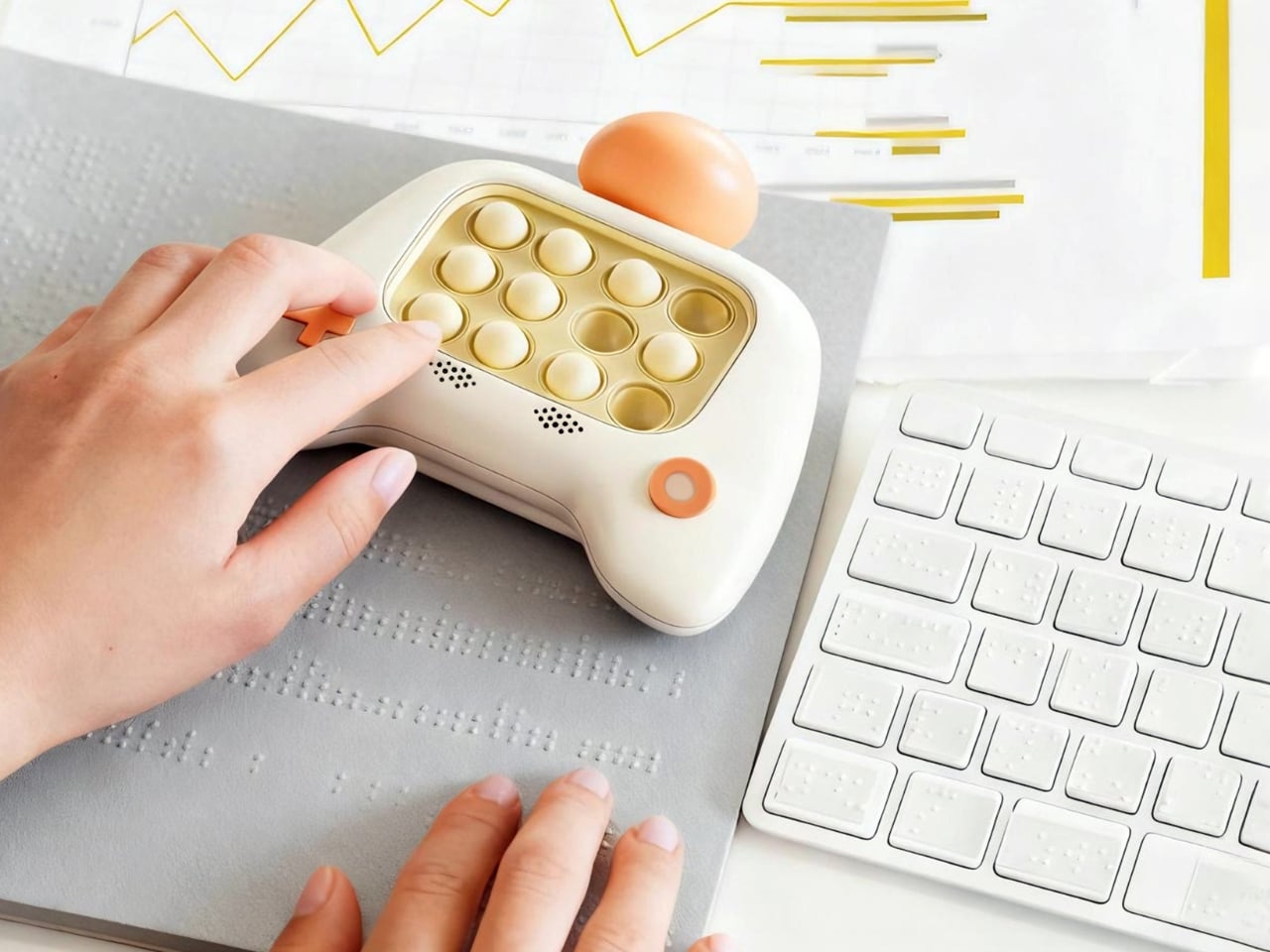
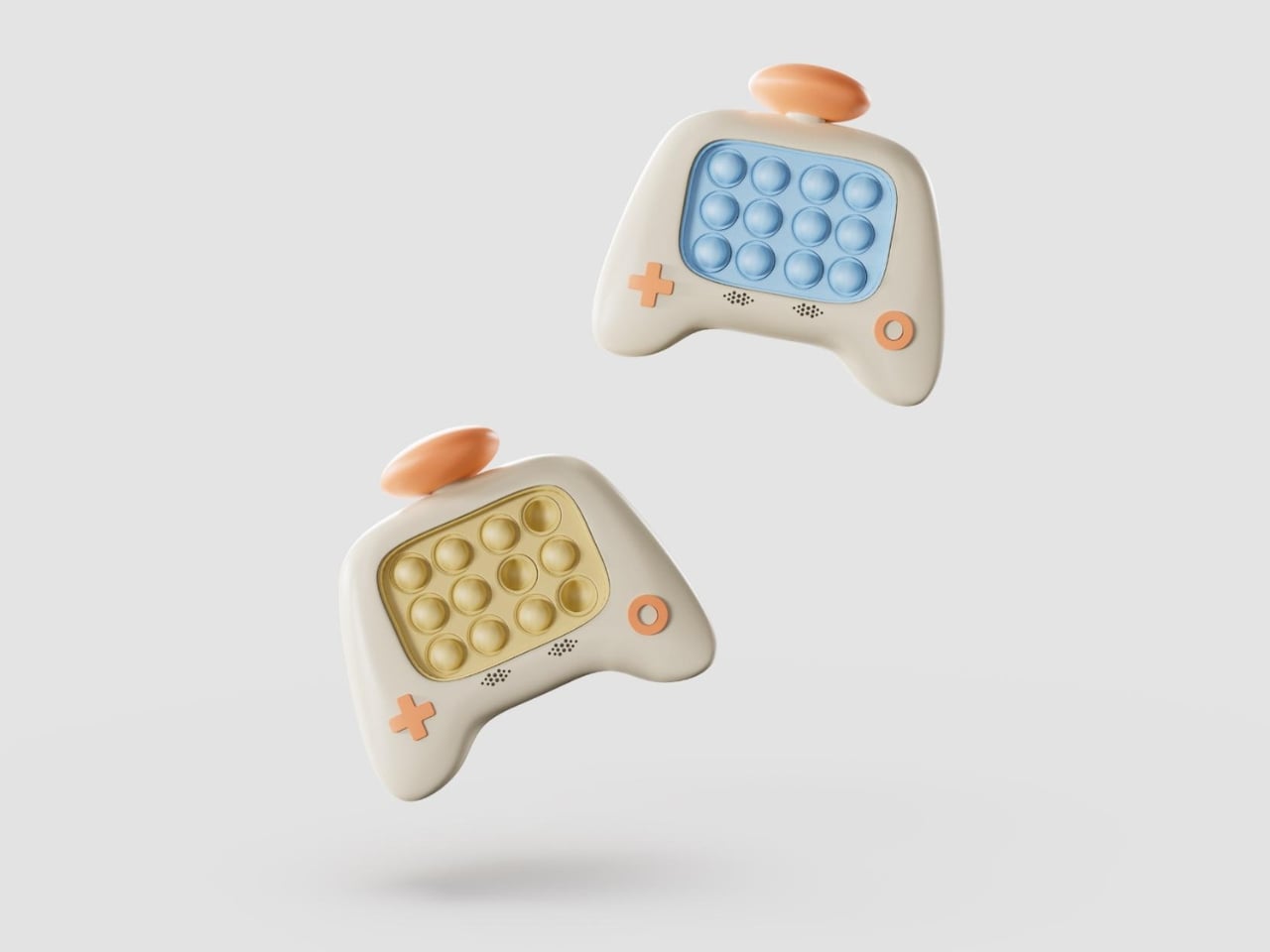
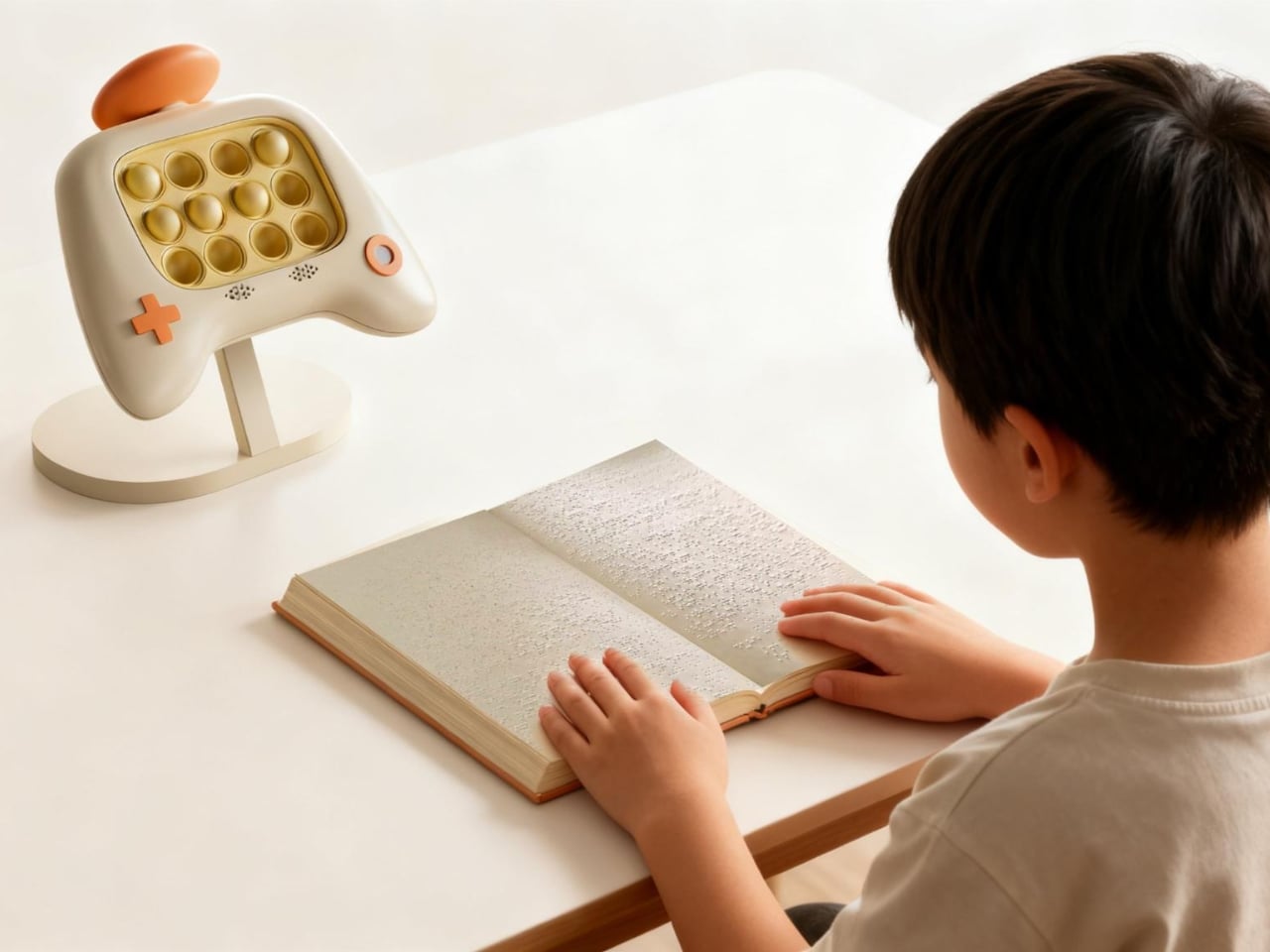
That’s exactly the gap the Bubble Braille Gaming Machine is trying to fill. Designed by Shenzhen IU+Design Co., Ltd. and featured on the iF Design Award platform, the Bubble Braille is a handheld gaming device built specifically for visually impaired children. It looks less like an educational tool and more like something you’d see a kid trying to smuggle under a classroom desk, and that, I think, is entirely the point.

Designer: Shenzhen IU+Design Co., Ltd.

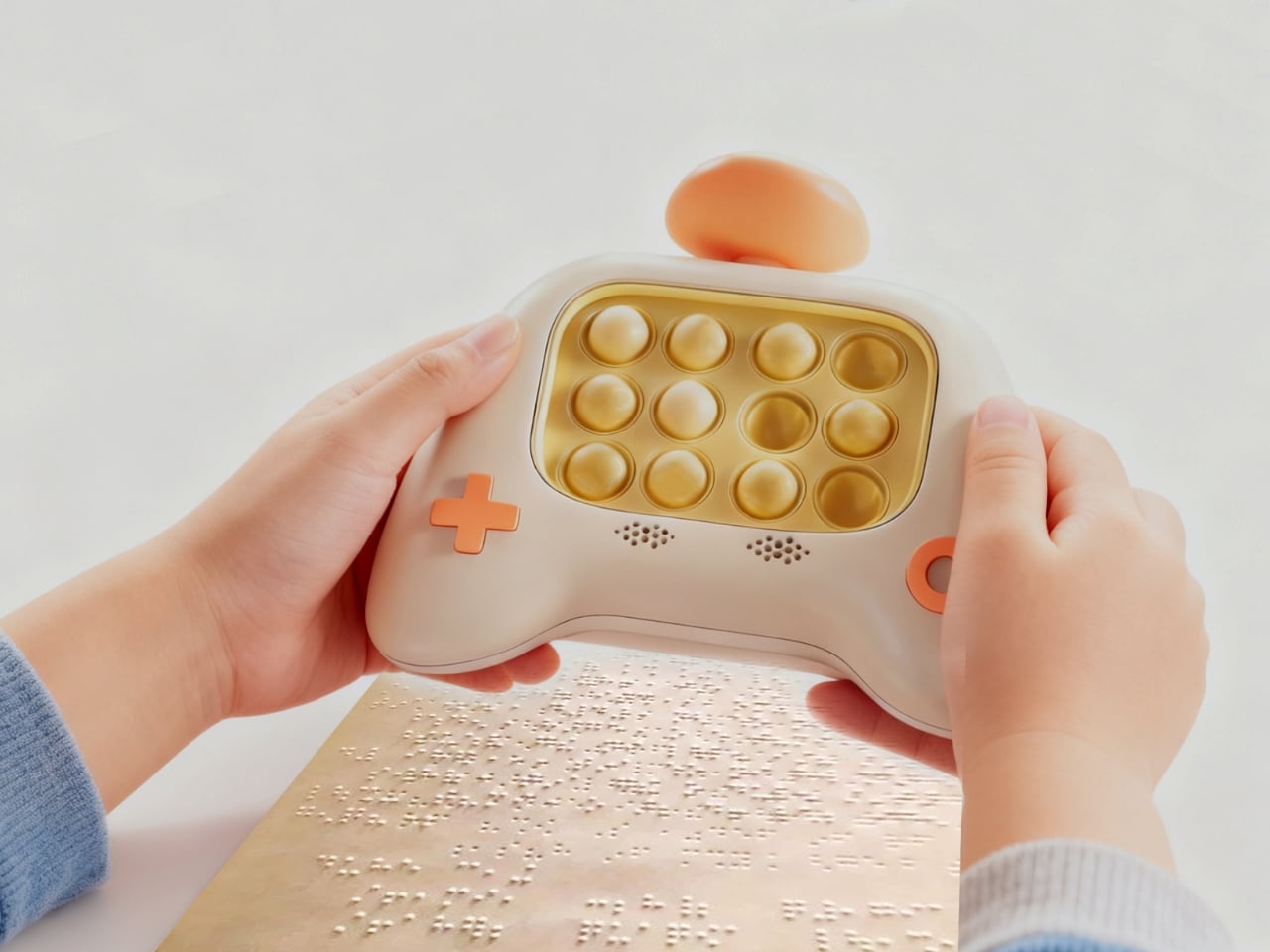
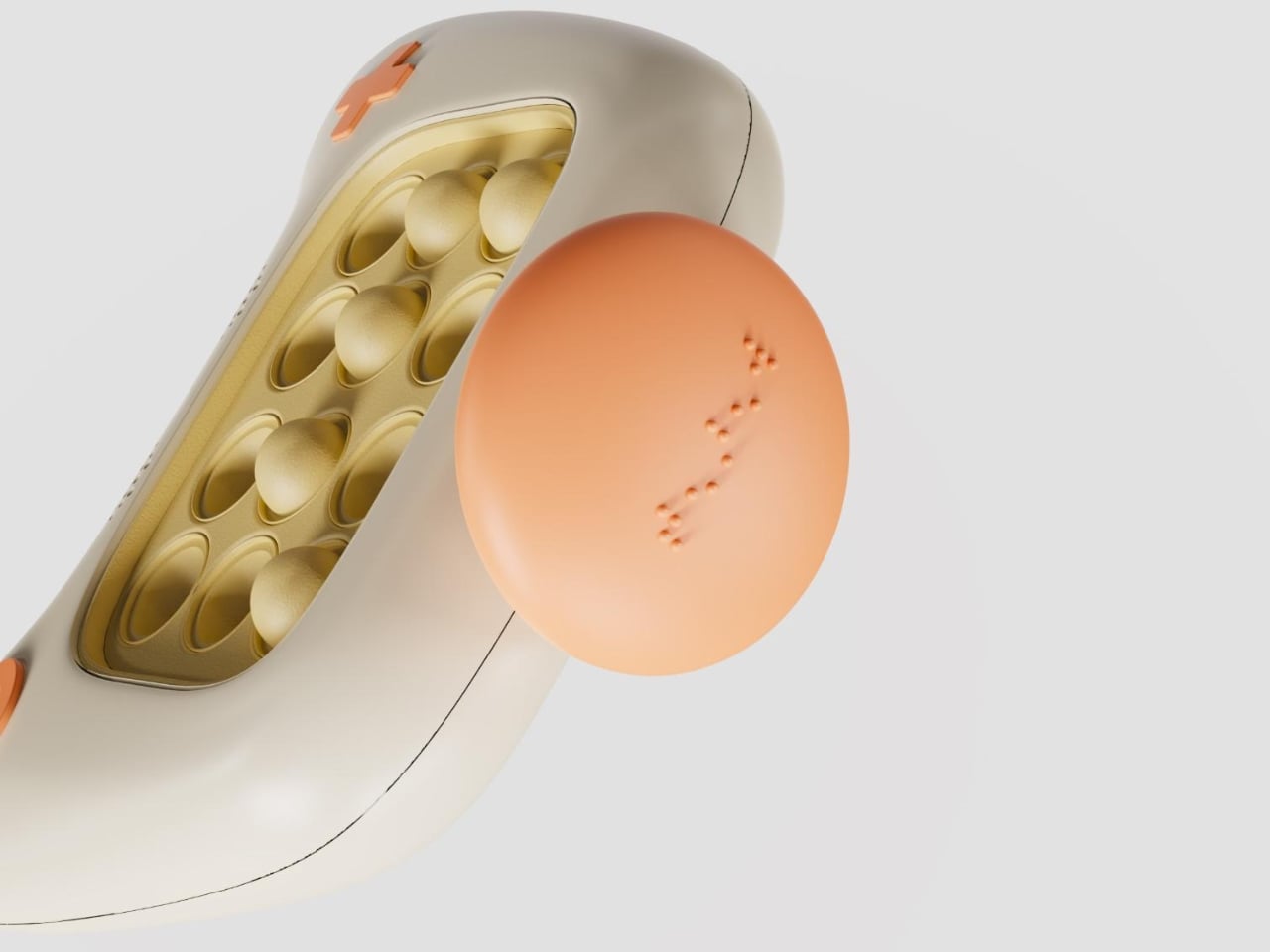
The device is shaped like a compact game controller, with a grid of raised silicone buttons at its center and a soft, egg-shaped button at the top. Those bubble-like buttons aren’t just for squishing, though the satisfying tactility certainly doesn’t hurt. Each one is designed to accurately simulate the raised and recessed dot patterns of Braille, so children are building finger memory and character recognition through play rather than through rote drilling. The silicone material feels like an intentional and smart choice: soft enough to be non-threatening for little hands, yet precise enough to replicate the tactile nuances of actual Braille text.

The warm cream-and-peach colorway, also available in a soft blue variant, lands somewhere between a retro Game Boy and a modern sensory toy. It’s disarming in the best way. Inclusive design doesn’t always need to announce itself with clinical aesthetics, and the Bubble Braille fully embraces that idea. It looks like something a kid would want to own, not something they were assigned.

The social angle of this device is the part that tends to get overlooked in conversations about assistive design, and it might actually be the most compelling thing about it. Braille literacy rates among children with visual impairments have been in decline for decades. In 1960, over 50% of blind school-age children in the US could read Braille. Today, that number is a fraction of what it once was, partly because of audio tools and evolving technology, but also because of something less discussed: the quietly isolating nature of learning with tools that constantly set a visually impaired child apart from their sighted peers.

The Bubble Braille sidesteps that problem by making the device interactive for both visually impaired and sighted children. Two kids can sit down and play together, which means a visually impaired child isn’t practicing in isolation. They’re playing. With a friend. On equal footing. That shift feels small on the surface, but it carries real weight. Research consistently links early Braille literacy to better employment outcomes, higher educational attainment, and stronger self-esteem. A toy that makes that process joyful and shared isn’t just thoughtful design. It’s genuinely meaningful.

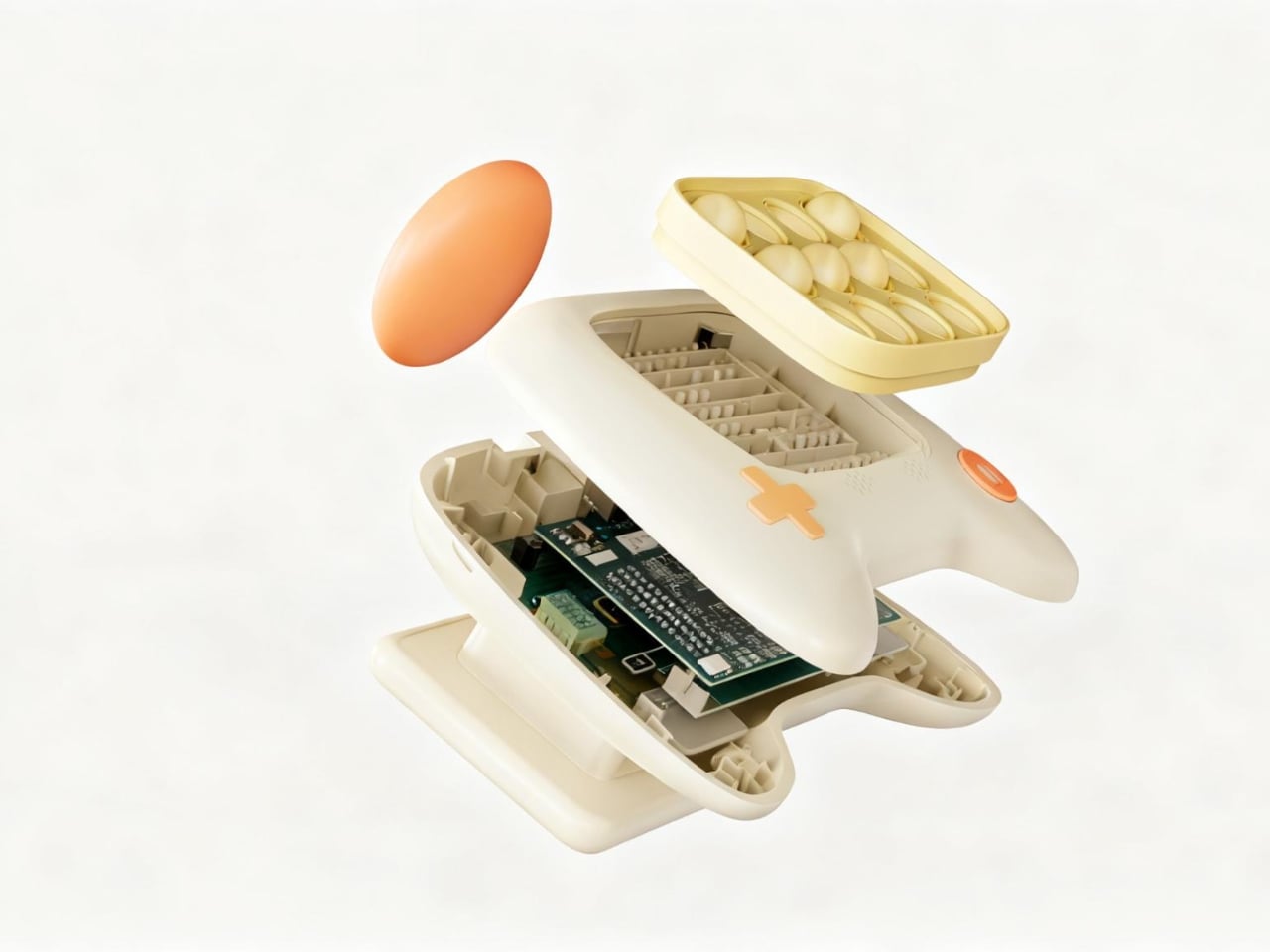
The exploded view images of the device reveal a real circuit board and internal hardware, so this isn’t a concept render built on wishful thinking. The components suggest audio feedback capabilities, which makes sense for a multi-sensory learning experience. Tactile input paired with sound cues is exactly how young children absorb and retain new skills, and it’s encouraging to see that level of functional consideration built directly into the design.

I’ll be honest: most so-called educational toys are neither. They tend to be watered-down skill drills dressed up in primary colors. The Bubble Braille feels different because the game mechanics and the learning mechanism are the same thing. The fun isn’t layered on top of the function. They’re inseparable. This is exactly the kind of design that makes me genuinely optimistic about where inclusive product thinking is heading. It doesn’t treat accessibility as an afterthought or a compliance checkbox. It treats the end user, a child who deserves to learn, to play, and to connect, as the entire starting point. More of this, please.

The post The Game Controller Teaching Blind Kids to Read Braille first appeared on Yanko Design.

What you need to know as Elon Musk’s lawsuit against Sam Altman begins

In a few short days, jury selection will begin in the long-awaited Musk v. Altman case. At the end of that process, an Oakland federal court will task nine regular people with deciding if OpenAI defrauded Elon Musk when it announced, and recently completed, its reorganization to become a more traditional for-profit business. More than just being the venue where two billionaires will air their grievances against one another in public, the trial has the potential to reshape the AI industry.

Musk first sued OpenAI in 2024, but the seed of the dispute was planted when Sam Altman emailed the billionaire on the evening of May 25, 2015. “Been thinking a lot about whether it’s possible to stop humanity from developing AI. I think the answer is most definitely not,” Altman wrote at the time. “If it’s going to happen anyway, it seems like it would be good for someone other than Google to do it first. Any thoughts on whether it would be good for [Y Combinator] to start a Manhattan Project for AI?”

“Probably worth a conversation,” Musk responded a couple of hours later. That same year, OpenAI announced itself to the world, with Altman and Musk as co-chairs of the new joint venture. “OpenAI is a nonprofit artificial intelligence research company. Our goal is to advance digital intelligence in the way that is mostly likely to benefit humanity as a whole, unconstrained by a need to generate financial return. Since our research is free from financial obligations, we can better focus on a positive human impact.”

If we’re to believe OpenAI’s telling of the events that followed, by 2017, almost everyone at the company, including Musk, agreed that a for-profit entity “had to be part of the next phase for OpenAI,” due to the enormous amount of investment needed to pursue its original mission. At some point before Musk left OpenAI’s board of directors in February 2018, OpenAI claims he demanded full control of the company, with the intent to eventually merge it with Tesla.

Following Musk’s departure, OpenAI created its for-profit arm in 2019, which at the time was organized under a “capped-profit” structure designed to limit investor returns to 100x, with any excess windfalls flowing to the company’s nonprofit. The idea being that if OpenAI achieved artificial general intelligence, its nonprofit would be the greatest beneficiary. However, after the success of ChatGPT in 2022, that structure became problematic for OpenAI as the company sought to raise ever more capital, and as part of its $6.6 billion funding round in October 2024, it reportedly agreed to a less-than-two-year deadline to free its for-profit from control of the nonprofit.

“At the heart of this trial is that OpenAI began as a non-profit organization, and then decided that it needed to be a for-profit organization in order to raise the enormous sums of money it needed to develop the technology it wanted to create,” explains Professor Michael Dorff, executive director of the Lowell Milken Institute for Business Law and Policy at UCLA. “That is a very troublesome transition under the law.”

Earlier this year, following protracted negotiations with Microsoft (the for-profit’s largest investor) and the state attorneys general of California and Delaware, OpenAI announced the successful reorganization of its corporate structure. As things stand, the for-profit is now a public benefit corporation, making it more appealing to investors looking for an uncomplicated return structure. Meanwhile, the nonprofit — now known as the OpenAI Foundation — holds equity in the for-profit arm, a stake valued at $130 billion at the time the agreement was announced. 

At the end of last year, Musk filed an injunction to prevent the reorganization from going through but failed. As an early donor to OpenAI, Musk will not see a single cent of money come his way when the company holds an initial public offering, on account of the fact donations are made with no expectation of any return. Musk has therefore argued OpenAI’s founding group, including CEO Sam Altman and President Greg Brockman, defrauded him as a donor.

Determining the exact amount Musk contributed to OpenAI was an early question during pre-trial discovery. You see, Musk has greatly exaggerated his monetary contributions. As recently as March 2023, the billionaire regularly claimed he had donated about $100 million to OpenAI. He later cut that estimate by half, telling CNBC in May 2023: “I’m not sure the exact number but it’s some number on the order of $50 million.” In recent court filings, that number was again revisited to $38 million, and it’s the number that currently stands.

In his original complaint, Musk’s legal team tried to “throw the kitchen sink” at OpenAI, says Professor Dorff. In subsequent filings, Musk’s lawyers narrowed down their client’s desired set of outcomes to a handful of remedies. Should the jury rule in his favor, Musk has requested the court force Altman and Brockman to step down, and for OpenAI to restructure as “a bona fide public charity that operates as the nonprofit it was intended to be, consistent with its founding charter and mission.” He's also made the highly unusual request that any monetary damages which would be awarded to him in the verdict be redirected to OpenAI's own nonprofit arm.

According to Professor Dorff, it’s highly unlikely Musk will be able to undo OpenAI’s reorganization. For one, District Judge Yvonne Gonzalez Rogers has already signaled her reluctance to do just that — and it’s her, not the jury, who will get to decide if that’s an appropriate remedy. Effectively, Musk is asking the judge to “unscramble the eggs” of a complicated corporate restructuring.

“There was a moment where that might have been possible, when the attorneys general of Delaware and California intervened and came to the current compromise,” explains Dorff. “Whether you agree or disagree with what the AGs decided to do, I think it's unlikely the court will feel it's appropriate to undo that compromise because of all the high government officials involved who, in theory, had all of the right incentives.” When Musk filed his request for a preliminary injunction to stop OpenAI’s conversion to a for-profit company, the judge said the request was “extraordinary and rarely granted.” The fact Musk is deeply involved with OpenAI's competitor xAI “may also weigh heavily on the judge's mind,” Droff adds.

Far more uncertain is how Musk’s other demands could play out, since the jury will decide if OpenAI is guilty of defrauding him. According to Dorff, most high-stakes business cases end with the two sides settling because of the risk of involving a jury in the outcome. “I just don’t see that happening here given the tenor of the dispute,” he says. “It seems unlikely either side will settle.”

If the case does end in a jury decision, it will then be up to those nine people, with guidance from the judge, to decide on monetary damages. “That will be very difficult to figure out because there is a maximalist version of this, and a minimalist version of this. They’re very different numbers and the result could be anywhere in between two,” says Dorff. Musk’s legal team is seeking a disgorgement of between $65.5 billion and $109.43 billion from OpenAI (and between $13.3 billion and $25.06 billion from Microsoft, which is a co-defendant in the case). In a worse case scenario, Professor Dorff suggests Altman might lose the confidence of OpenAI’s board, costing him his position as CEO. He might even be forced to write some checks to settle the disgorgements.

Dorff suspects OpenAI “would love” the minimalist version where Musk is rewarded his $38 million donation back (and it ends up with the company’s non-profit). Should some other disgruntled donors emerge to sue OpenAI for fraud, the Musk v. Altman case would make it easier to litigate those cases, given “the map has been drawn as to which legal claims are likely to succeed,” says Dorff. However, those would amount to “traffic tickets” for OpenAI.

Whatever happens next, it should be an eventful trial. With public testimonies from Microsoft CEO Satya Nadella, former OpenAI board member and Musk confidant Shivon Zilis and even Altman himself a likelihood, we'll at the very least be treated to a wealth of formerly private communications — and some new piece of vocabulary — between some of the richest people in the tech space. 

This article originally appeared on Engadget at https://www.engadget.com/ai/what-you-need-to-know-as-elon-musks-lawsuit-against-sam-altman-begins-191500726.html?src=rss

What you need to know as Elon Musk’s lawsuit against Sam Altman begins

In a few short days, jury selection will begin in the long-awaited Musk v. Altman case. At the end of that process, an Oakland federal court will task nine regular people with deciding if OpenAI defrauded Elon Musk when it announced, and recently completed, its reorganization to become a more traditional for-profit business. More than just being the venue where two billionaires will air their grievances against one another in public, the trial has the potential to reshape the AI industry.

Musk first sued OpenAI in 2024, but the seed of the dispute was planted when Sam Altman emailed the billionaire on the evening of May 25, 2015. “Been thinking a lot about whether it’s possible to stop humanity from developing AI. I think the answer is most definitely not,” Altman wrote at the time. “If it’s going to happen anyway, it seems like it would be good for someone other than Google to do it first. Any thoughts on whether it would be good for [Y Combinator] to start a Manhattan Project for AI?”

“Probably worth a conversation,” Musk responded a couple of hours later. That same year, OpenAI announced itself to the world, with Altman and Musk as co-chairs of the new joint venture. “OpenAI is a nonprofit artificial intelligence research company. Our goal is to advance digital intelligence in the way that is mostly likely to benefit humanity as a whole, unconstrained by a need to generate financial return. Since our research is free from financial obligations, we can better focus on a positive human impact.”

If we’re to believe OpenAI’s telling of the events that followed, by 2017, almost everyone at the company, including Musk, agreed that a for-profit entity “had to be part of the next phase for OpenAI,” due to the enormous amount of investment needed to pursue its original mission. At some point before Musk left OpenAI’s board of directors in February 2018, OpenAI claims he demanded full control of the company, with the intent to eventually merge it with Tesla.

Following Musk’s departure, OpenAI created its for-profit arm in 2019, which at the time was organized under a “capped-profit” structure designed to limit investor returns to 100x, with any excess windfalls flowing to the company’s nonprofit. The idea being that if OpenAI achieved artificial general intelligence, its nonprofit would be the greatest beneficiary. However, after the success of ChatGPT in 2022, that structure became problematic for OpenAI as the company sought to raise ever more capital, and as part of its $6.6 billion funding round in October 2024, it reportedly agreed to a less-than-two-year deadline to free its for-profit from control of the nonprofit.

“At the heart of this trial is that OpenAI began as a non-profit organization, and then decided that it needed to be a for-profit organization in order to raise the enormous sums of money it needed to develop the technology it wanted to create,” explains Professor Michael Dorff, executive director of the Lowell Milken Institute for Business Law and Policy at UCLA. “That is a very troublesome transition under the law.”

Earlier this year, following protracted negotiations with Microsoft (the for-profit’s largest investor) and the state attorneys general of California and Delaware, OpenAI announced the successful reorganization of its corporate structure. As things stand, the for-profit is now a public benefit corporation, making it more appealing to investors looking for an uncomplicated return structure. Meanwhile, the nonprofit — now known as the OpenAI Foundation — holds equity in the for-profit arm, a stake valued at $130 billion at the time the agreement was announced. 

At the end of last year, Musk filed an injunction to prevent the reorganization from going through but failed. As an early donor to OpenAI, Musk will not see a single cent of money come his way when the company holds an initial public offering, on account of the fact donations are made with no expectation of any return. Musk has therefore argued OpenAI’s founding group, including CEO Sam Altman and President Greg Brockman, defrauded him as a donor.

Determining the exact amount Musk contributed to OpenAI was an early question during pre-trial discovery. You see, Musk has greatly exaggerated his monetary contributions. As recently as March 2023, the billionaire regularly claimed he had donated about $100 million to OpenAI. He later cut that estimate by half, telling CNBC in May 2023: “I’m not sure the exact number but it’s some number on the order of $50 million.” In recent court filings, that number was again revisited to $38 million, and it’s the number that currently stands.

In his original complaint, Musk’s legal team tried to “throw the kitchen sink” at OpenAI, says Professor Dorff. In subsequent filings, Musk’s lawyers narrowed down their client’s desired set of outcomes to a handful of remedies. Should the jury rule in his favor, Musk has requested the court force Altman and Brockman to step down, and for OpenAI to restructure as “a bona fide public charity that operates as the nonprofit it was intended to be, consistent with its founding charter and mission.” He's also made the highly unusual request that any monetary damages which would be awarded to him in the verdict be redirected to OpenAI's own nonprofit arm.

According to Professor Dorff, it’s highly unlikely Musk will be able to undo OpenAI’s reorganization. For one, District Judge Yvonne Gonzalez Rogers has already signaled her reluctance to do just that — and it’s her, not the jury, who will get to decide if that’s an appropriate remedy. Effectively, Musk is asking the judge to “unscramble the eggs” of a complicated corporate restructuring.

“There was a moment where that might have been possible, when the attorneys general of Delaware and California intervened and came to the current compromise,” explains Dorff. “Whether you agree or disagree with what the AGs decided to do, I think it's unlikely the court will feel it's appropriate to undo that compromise because of all the high government officials involved who, in theory, had all of the right incentives.” When Musk filed his request for a preliminary injunction to stop OpenAI’s conversion to a for-profit company, the judge said the request was “extraordinary and rarely granted.” The fact Musk is deeply involved with OpenAI's competitor xAI “may also weigh heavily on the judge's mind,” Droff adds.

Far more uncertain is how Musk’s other demands could play out, since the jury will decide if OpenAI is guilty of defrauding him. According to Dorff, most high-stakes business cases end with the two sides settling because of the risk of involving a jury in the outcome. “I just don’t see that happening here given the tenor of the dispute,” he says. “It seems unlikely either side will settle.”

If the case does end in a jury decision, it will then be up to those nine people, with guidance from the judge, to decide on monetary damages. “That will be very difficult to figure out because there is a maximalist version of this, and a minimalist version of this. They’re very different numbers and the result could be anywhere in between the two,” says Dorff. Musk’s legal team is seeking a disgorgement of between $65.5 billion and $109.43 billion from OpenAI (and between $13.3 billion and $25.06 billion from Microsoft, which is a co-defendant in the case). In a worse case scenario, Professor Dorff suggests Altman might lose the confidence of OpenAI’s board, costing him his position as CEO. He might even be forced to write some checks to settle the disgorgements.

Dorff suspects OpenAI “would love” the minimalist version where Musk is rewarded his $38 million donation back. Should some other disgruntled donors emerge to sue OpenAI for fraud, the Musk v. Altman case would make it easier to litigate those cases, given “the map has been drawn as to which legal claims are likely to succeed,” says Dorff. However, those would amount to “traffic tickets” for OpenAI.

Whatever happens next, it should be an eventful trial. With public testimonies from Microsoft CEO Satya Nadella, former OpenAI board member and Musk confidant Shivon Zilis and even Altman himself a likelihood, we'll at the very least be treated to a wealth of formerly private communications — and some new piece of vocabulary — between some of the richest people in the tech space. 

This article originally appeared on Engadget at https://www.engadget.com/ai/what-you-need-to-know-as-elon-musks-lawsuit-against-sam-altman-begins-191500726.html?src=rss

Google plans to invest even more money into Anthropic

Google plans to invest up to $40 billion into Anthropic in what could be viewed as a circular deal with the AI startup (and frequent competitor), Bloomberg reports. The search giant has invested in Anthropic at multiple points in the past, but this new investment comes after an announcement that the AI startup had signed a joint agreement with Google and Broadcom for "multiple gigawatts of next-generation TPU capacity."

According to Anthropic, Google is committing $10 billion now at the company's current valuation, with an additional $30 billion on offer if Anthropic meets specific performance milestones. Through Anthropic's existing commitment to use Google's TPUs (tensor processing units) and servers, Anthropic says Google will also provide 5 gigawatts of computing capacity in 2027.

If the structure of the deal and business relationship between Google and Anthropic sounds familiar, it might be because the AI startup recently announced something similar with Amazon. Earlier in April, Amazon announced that it would invest $5 billion in Anthropic, with an additional $20 billion in payments available if certain milestones were met. Anthropic also agreed to use Amazon's Trainium chips for its AI models.

The deals are another example of Anthropic's ability to burn through money — the company only just raised $30 billion in its most recent round of funding. They could also serve as an example of the AI industry's love of circular deals. Anthropic agreeing to use Google and Amazon's silicon and servers, receiving investment from both companies and then presumably spending some of that investment on more silicon and servers, is a pattern seen in the relationship between OpenAI, Nvidia, Microsoft and plenty of other players in the AI race.

This article originally appeared on Engadget at https://www.engadget.com/ai/google-plans-to-invest-even-more-money-into-anthropic-185000776.html?src=rss

Singapore police arrest alleged The Legend of Aang: The Last Airbender leaker

People aren't thrilled with Paramount these days. After all, corporate consolidation and the transformation of CBS News into state media tend to do that. But here's someone who may not have chosen the… wisest form of protest. The Straits Times reports (via Gizmodo) that Singapore police have arrested a 26-year-old man for leaking Paramount's The Legend of Aang: The Last Airbender.

The film, part of the Avatar: The Last Airbender franchise, was initially scheduled for a theatrical release. But after two delays, it was later moved to Paramount+, where it’s set to debut later this year. Naturally, hardcore fans of the franchise bristled at the prospect of the highly anticipated entry skipping theaters. Paramount's scant marketing apparently didn't help either.

However, many have already seen the movie, allegedly thanks to the unnamed 26-year-old in question. Singapore police said he gained remote access to a server and downloaded the film. He then posted parts of it online. After the leak, Paramount changed the movie's name to Avatar Aang: The Last Airbender — perhaps to try to prevent casual fans' searches from turning up info about the leak.

The man is being investigated for unauthorized access to computer material. He could face a maximum of seven years in prison, a fine of up to $50,000, or both.

Earlier this month, The Hollywood Reporter interviewed the X account holder @ImStillDissin, who posted the clips. (Although we can speculate that this may be the man currently in custody, that’s unconfirmed.) The interview revealed a rather, shall we say, blasé approach to the incident. He said he figured posting clips from the movie was no biggie since the film is a streaming-only release. "I saw it's just a Paramount+ thing, so I decided I'd troll a little bit," the leaker said.

The leaked clips spread rapidly. Despite pleas from 4Chan posters to share the entire film, @ImStillDissin resisted. However, someone else shared the full movie by April 13. Naturally, that file has since circulated far and wide.

So, good luck with that official October 9 streaming release, Paramount. You're gonna need it.

This article originally appeared on Engadget at https://www.engadget.com/entertainment/streaming/singapore-police-arrest-alleged-the-legend-of-aang-the-last-airbender-leaker-183954803.html?src=rss

The MacBook Neo is a glimpse into John Ternus’s Apple

John Ternus was unavoidable when Apple debuted the Macbook Neo. He kicked off an intimate media event for the Neo, introducing it as a transformative machine for Apple thanks to its low $599 cost ($499 for education customers) and premium build quality. He was interviewed on Good Morning America, the sort of prominent media feature CEO Tim Cook typically handles. And when I asked Apple workers about the Neo at its launch event, they almost always brought up Ternus’ vision of the laptop. 

For all intents and purposes, Ternus was Apple’s frontman for the MacBook Neo.

Ternus is slated for his coronation as Apple's CEO on September 1, and the Neo is not only a feather in his cap, but a likely indication of the company's approach to products going forward. It’s a sign that Apple is getting more comfortable taking risks. 

Apple lives and dies on its own premium image. It completely gave up on making cheap iPhones like the SE and 5C, and the $599 iPhone 16e and 17e are more expensive than typical mid-range Android phones (though the $249 Apple Watch SE is admittedly one of the cheaper smartwatches around.). It was risky to shove a mobile processor into a full-fledged computer, which could have made it too weak. And it was a gamble to stick with a meager 8GB of RAM, practically sacrilegious within the Apple pantheon. It's not breaking new ground for product categories, but the Neo, in being a budget laptop at all, is surprisingly un-Apple.

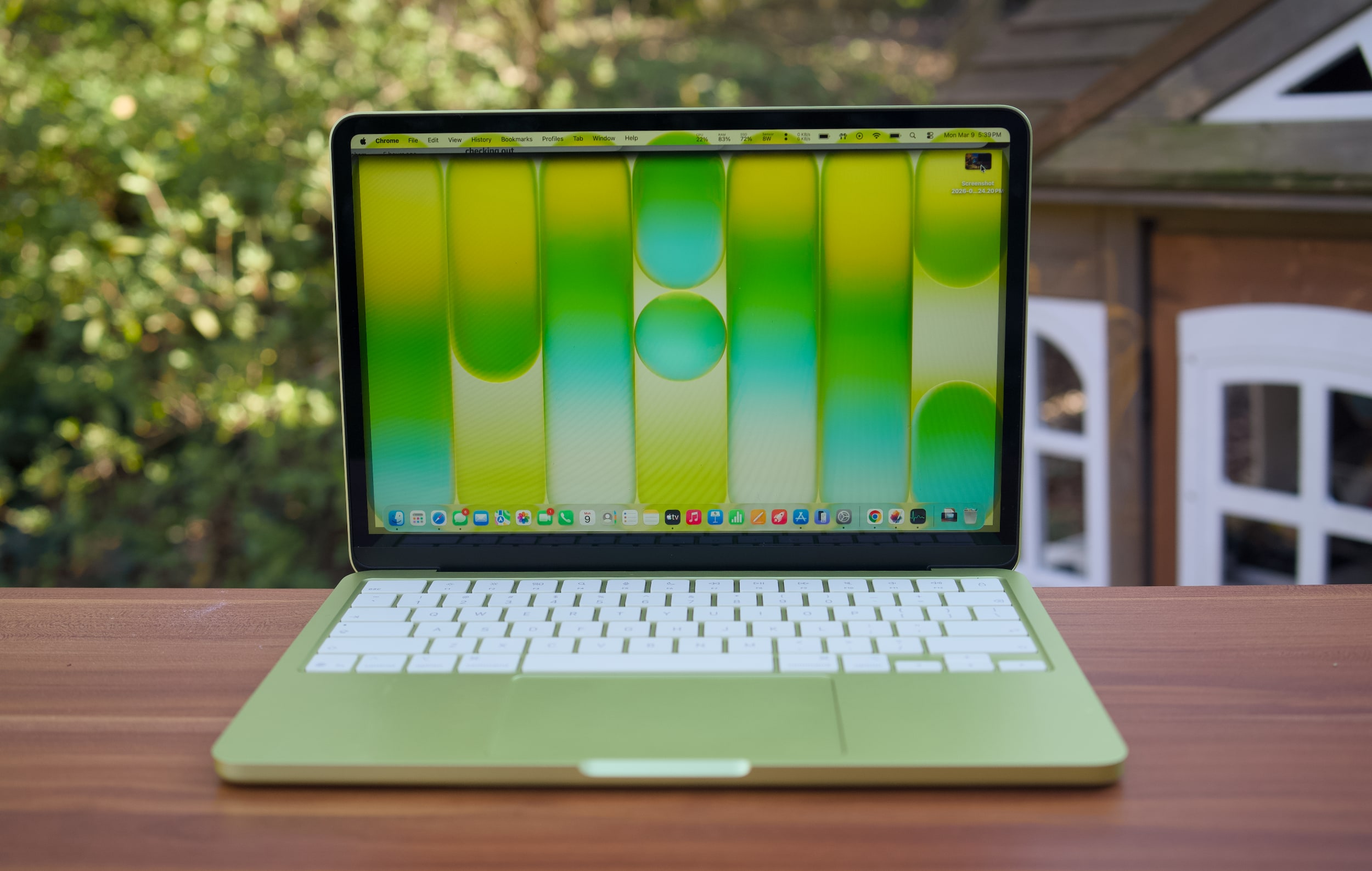
A citrus MacBook Neo on a table outside.
Devindra Hardawar for Engadget

And yet, thanks to Ternus's hardware leadership and Apple's command of its software, the MacBook Neo has been a resounding success. It has the best build quality, screen, keyboard, speakers and trackpad that I've ever seen in a $600 laptop. As I wrote in my review, "every Windows PC maker, including Microsoft, should be ashamed." 

While we don’t know the full build cost for the Neo, Apple’s margins for selling it will undoubtedly be far slimmer than the MacBook Air or Pro. But the Neo is more than a profit maker. It’s a device that can serve as a gateway to the Apple ecosystem for kids and students. Even better, it could easily tempt over Windows users.

We can't give Ternus all the credit for the Neo, of course, there's an entire team of product managers and engineers below him doing the actual design work. But it's hard to deny the flex of building a $600 laptop that doesn't feel like total garbage. The MacBook Neo surprised me, a jaded technology reporter, on practically every level. And its existence makes me wonder how a Ternus-led Apple could continue to iterate without compromising quality or Apple's signature attention to detail.

Ternus is the rare Apple engineer who has played a role in almost all of its existing products — in his 25 year tenure, he’s taken charge of building the Mac, iPad, iPhone and Apple Watch. That gives him a unique perspective of where the company could go next, as well as how Apple could stretch its own capabilities. And based on what I’ve seen of the MacBook Neo, it’ll be interesting to see how Apple reshapes itself for the future.

This article originally appeared on Engadget at https://www.engadget.com/computing/laptops/the-macbook-neo-is-a-glimpse-into-john-ternuss-apple-170000842.html?src=rss

moto g stylus 2026 Review: Accessible Pocket Productivity and Creativity

PROS:


  • Stylus with pressure and tilt sensitivity

  • Beautiful, minimalist design

  • Bright and vibrant screen

  • Headphone jack and microSD card slot

CONS:


  • Short software support period

  • Relatively higher price compared to peers

  • Not much hardware upgrades from last-gen

RATINGS:

AESTHETICS
ERGONOMICS
PERFORMANCE
SUSTAINABILITY / REPAIRABILITY
VALUE FOR MONEY

EDITOR'S QUOTE:

The moto g stylus - 2026 analog handwriting and digital freedom in a striking minimalist design that you can finally afford.

Despite and in spite of the growing number of screens and disembodied artificial voices around us, there remains a strong culture and argument for handwritten words. But while there might be plenty of benefits to putting ink to paper, there’s no denying that paper doesn’t provide the benefits of digital artifacts such as files, photos, and videos. For years, the stylus has been trying to bridge the best of both worlds, but it has so far been only within the reach of those who can afford it.

Since 2020, Motorola has been working to provide that kind of experience to more people through its Moto G Stylus line, but there have always been compromises. Ironically, most of those revolved around the very feature that gave the product line its name. With the moto g stylus – 2026, however, the brand is making its most daring leap forward yet, aiming for a title held only by the most luxurious of Samsung’s (non-foldable) handsets. So does it fly or does it fall? Read on to find out.

Designer: Motorola

Aesthetics
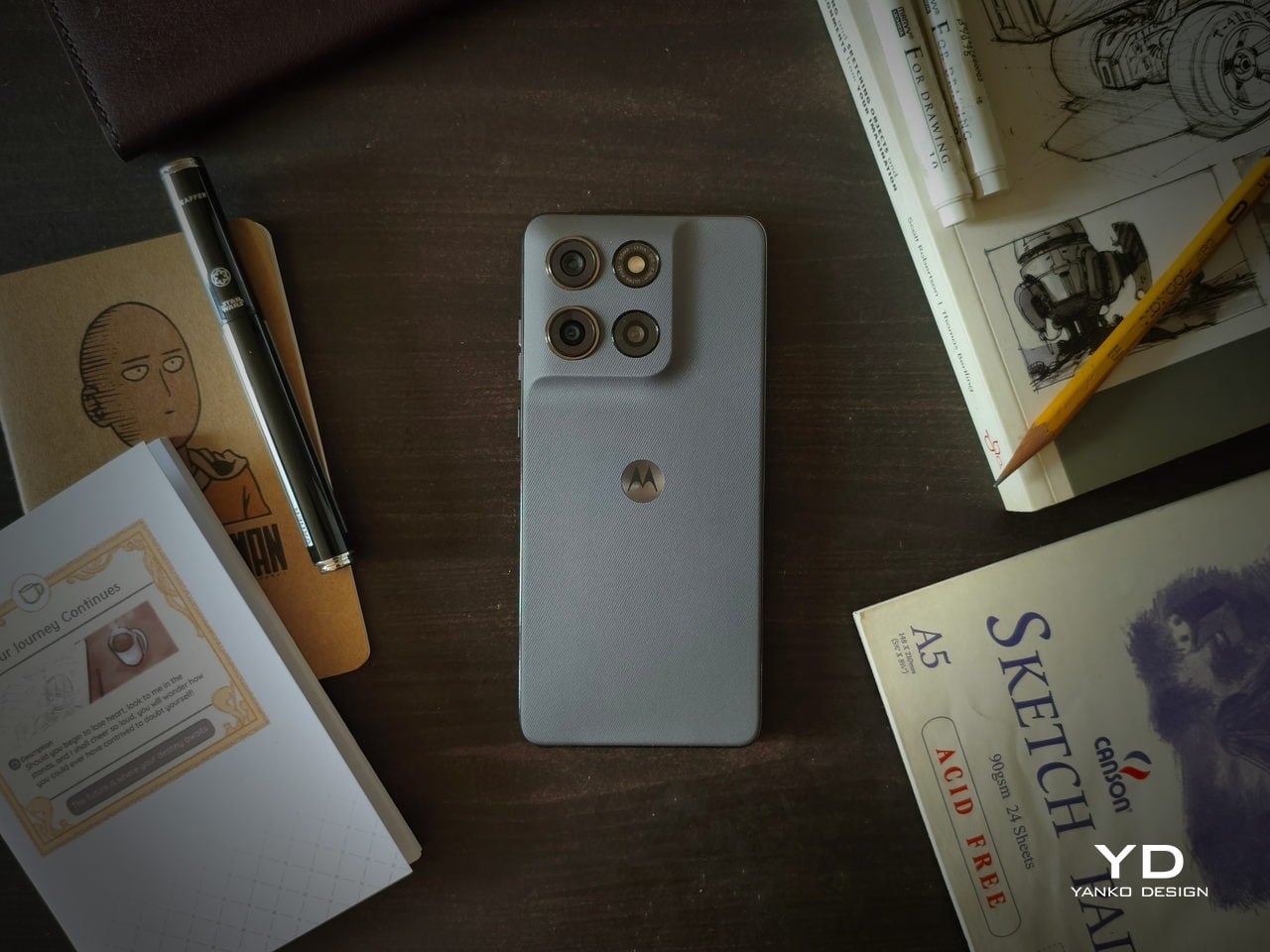
The moment you pull the moto g stylus – 2026 out of the box, you are immediately struck by how different it is from most phones of this generation. It doesn’t scream for attention with a ridiculously large camera module, nor does it attempt to dazzle your eyes with tricks of color and light. It is, in a nutshell, a minimalist lover’s dream.

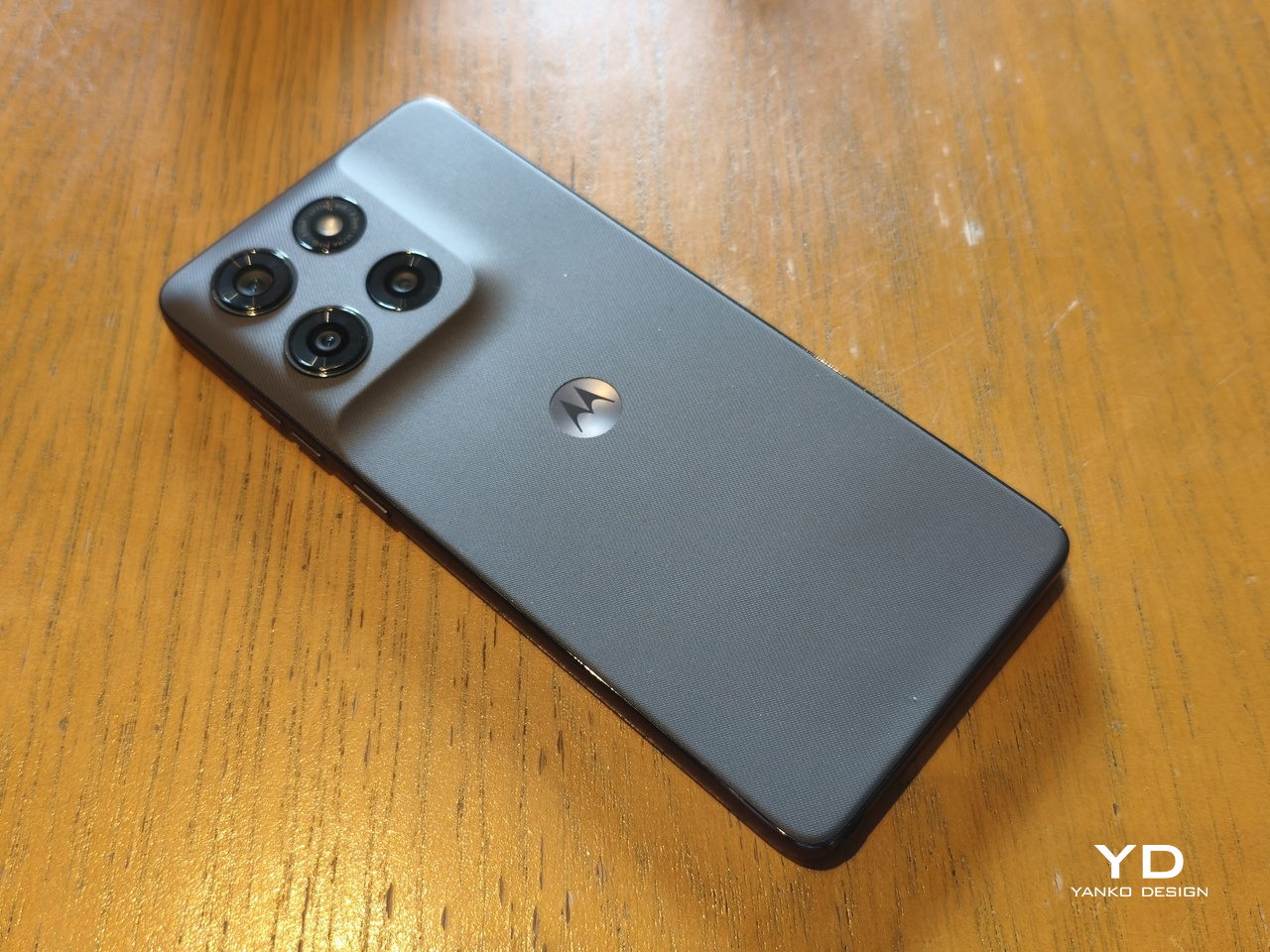
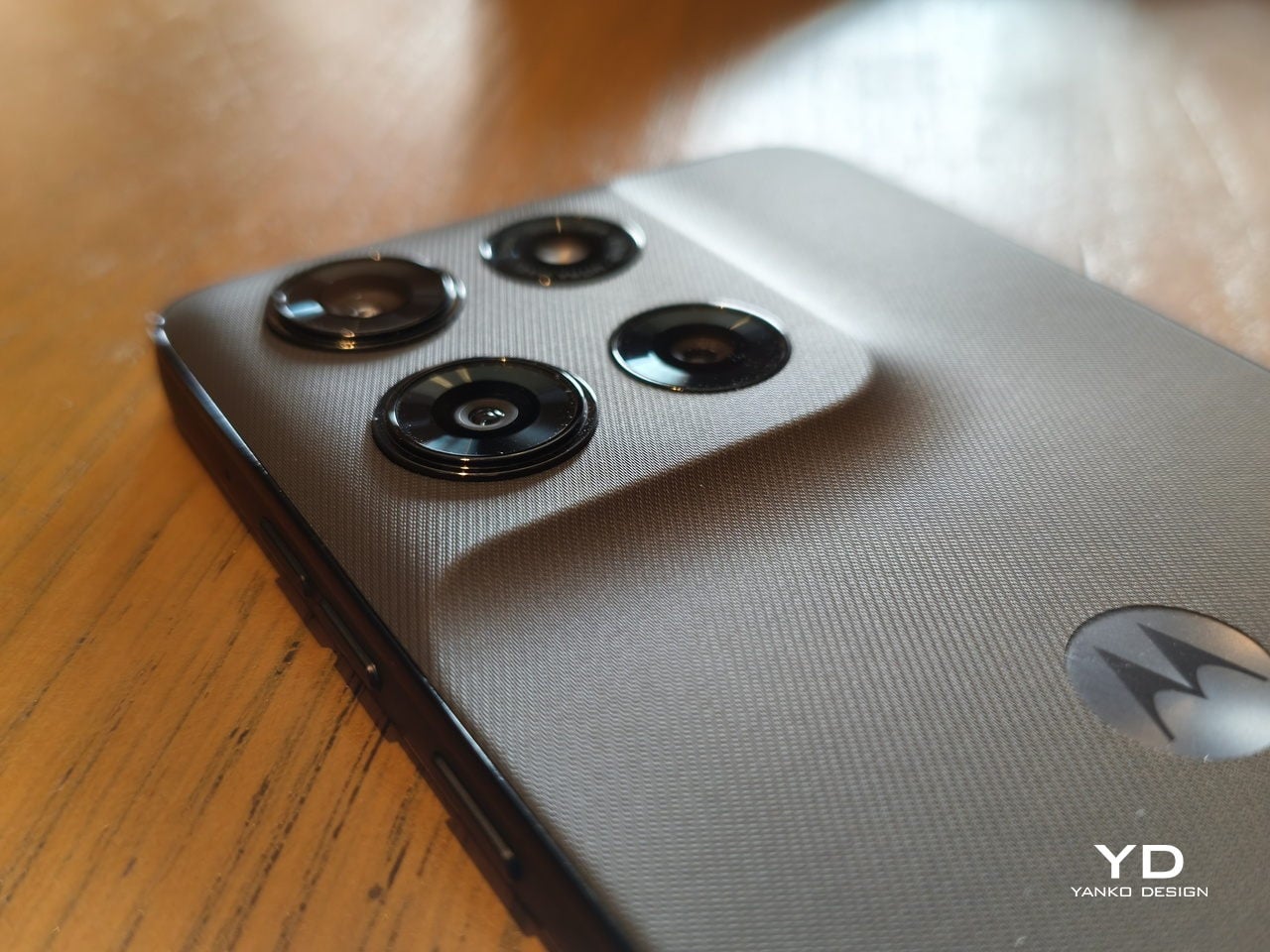
The back of the phone, which is always the most expressive side of the design, is covered with a vegan leather-inspired material that gives the phone both visual and tactile texture. Continuing its partnership with PANTONE, those covers are available in subtle Coal Smoke (our review unit) and Lavender Mist colors, with the flat edges matching the hue. Other than the iconic “Batwing” logo and minuscule markings around the LED flash, the design is bare and plain, a refreshing change from the active and noisy rears of most smartphones these days.
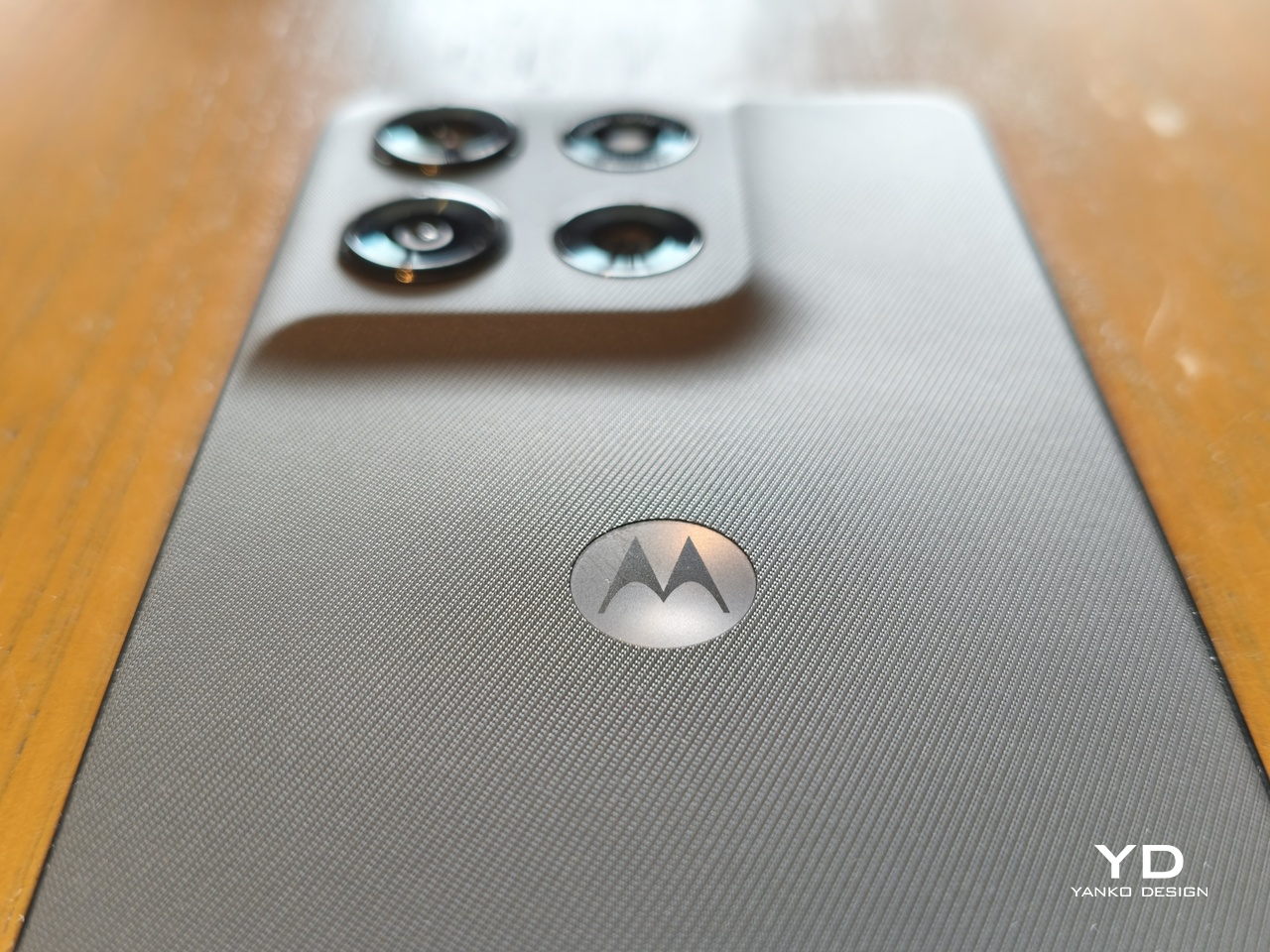
The camera bump follows that same pattern, rising from the back plate with a gentle slope. There’s no separate structure caging the lenses, creating a seamless and unbroken surface that almost has a calming effect, especially when your finger starts to glide over the textured surface. There’s almost a sense of Zen, so to speak, which is almost how many pen and paper lovers describe their favorite notebooks.
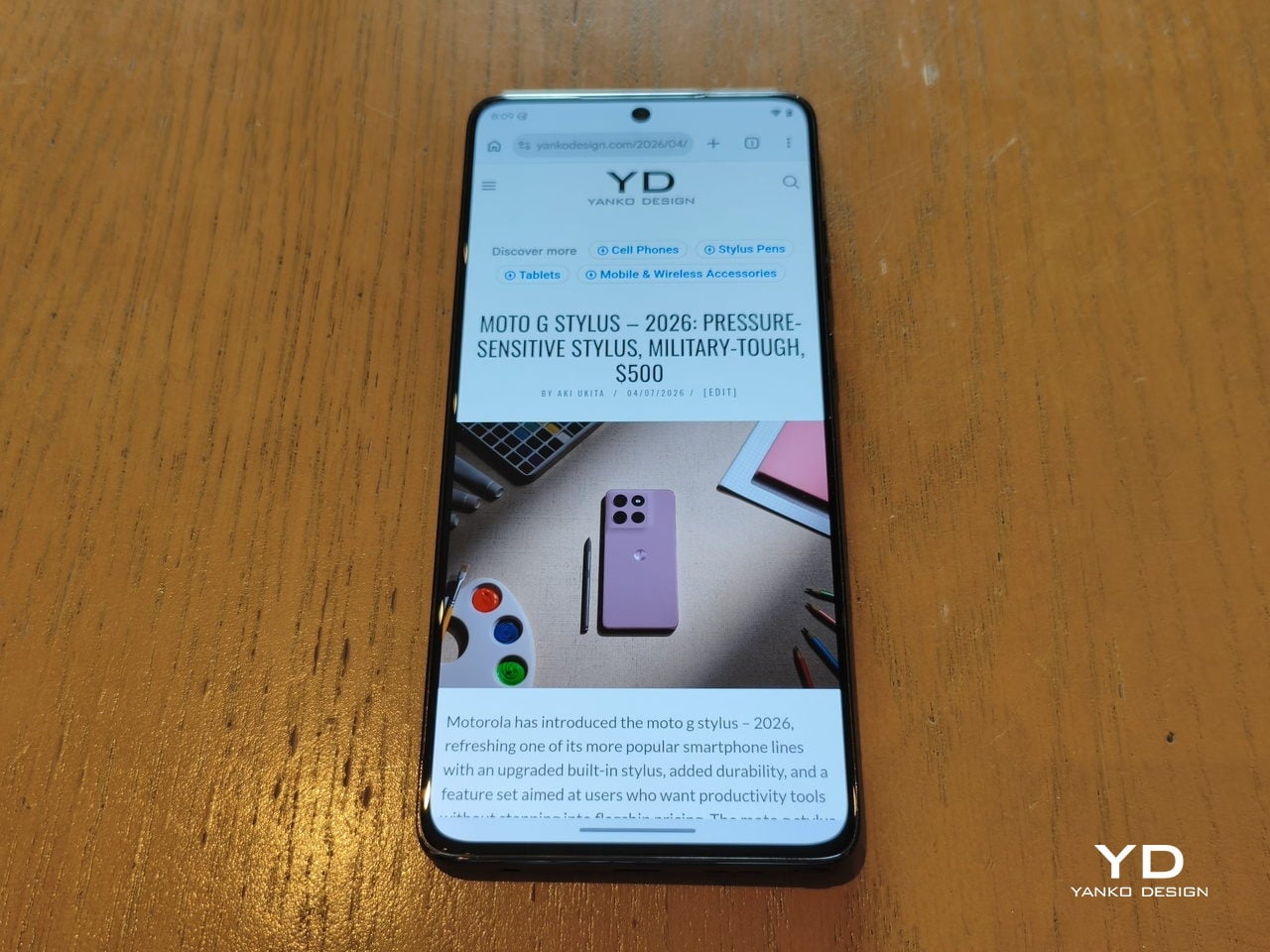
Of course, the front is the polar opposite, but only because of its bright and vibrant screen. The thin and almost symmetrical bezels and the flat glass, however, serve to provide balance that keeps that liveliness in check. All in all, the moto g stylus – 2026 is both simple and sublime. It doesn’t call attention to itself with some fancy visual or material gimmick, but you can’t help but pay close attention to its minimalism just the same.
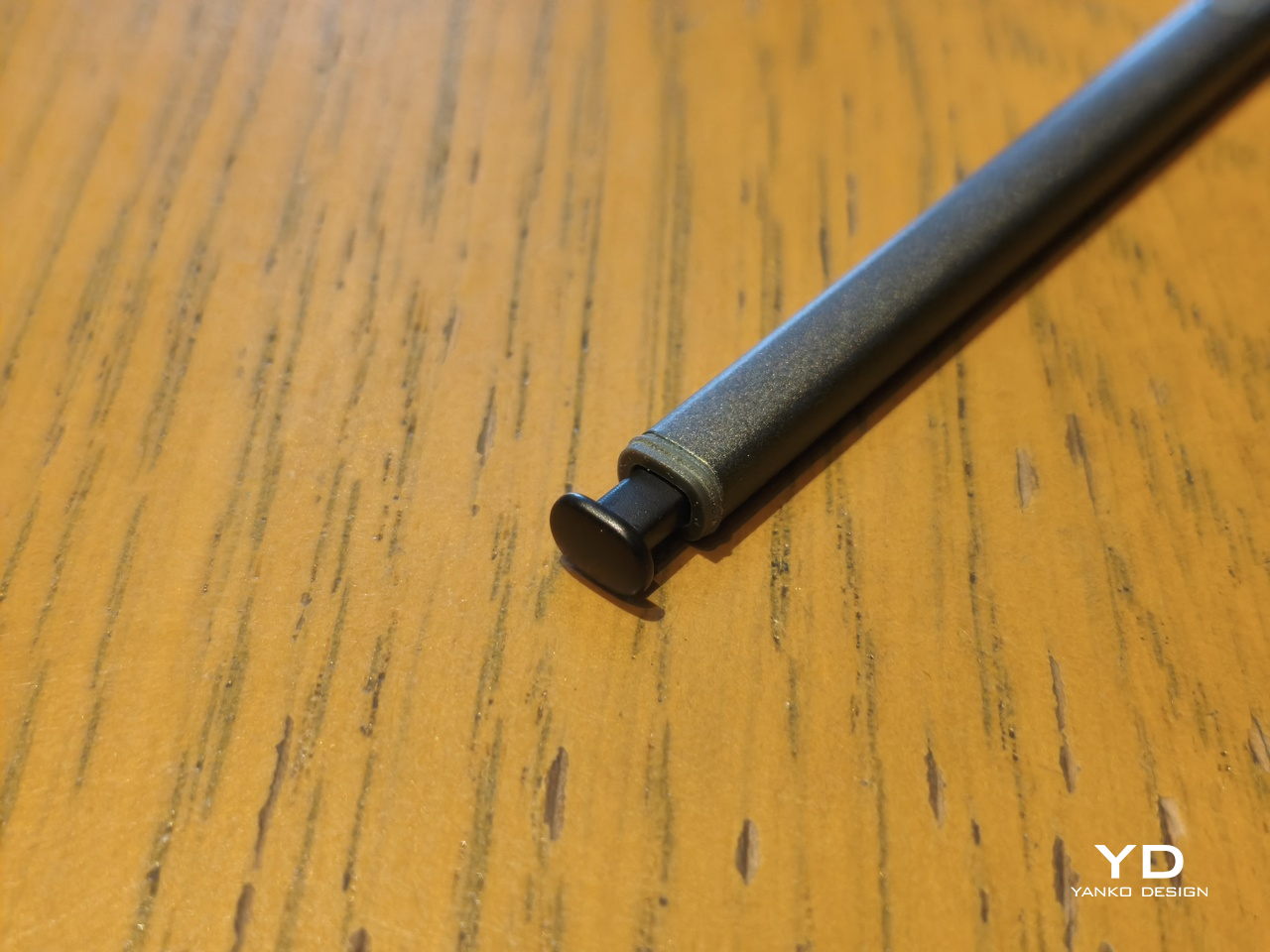
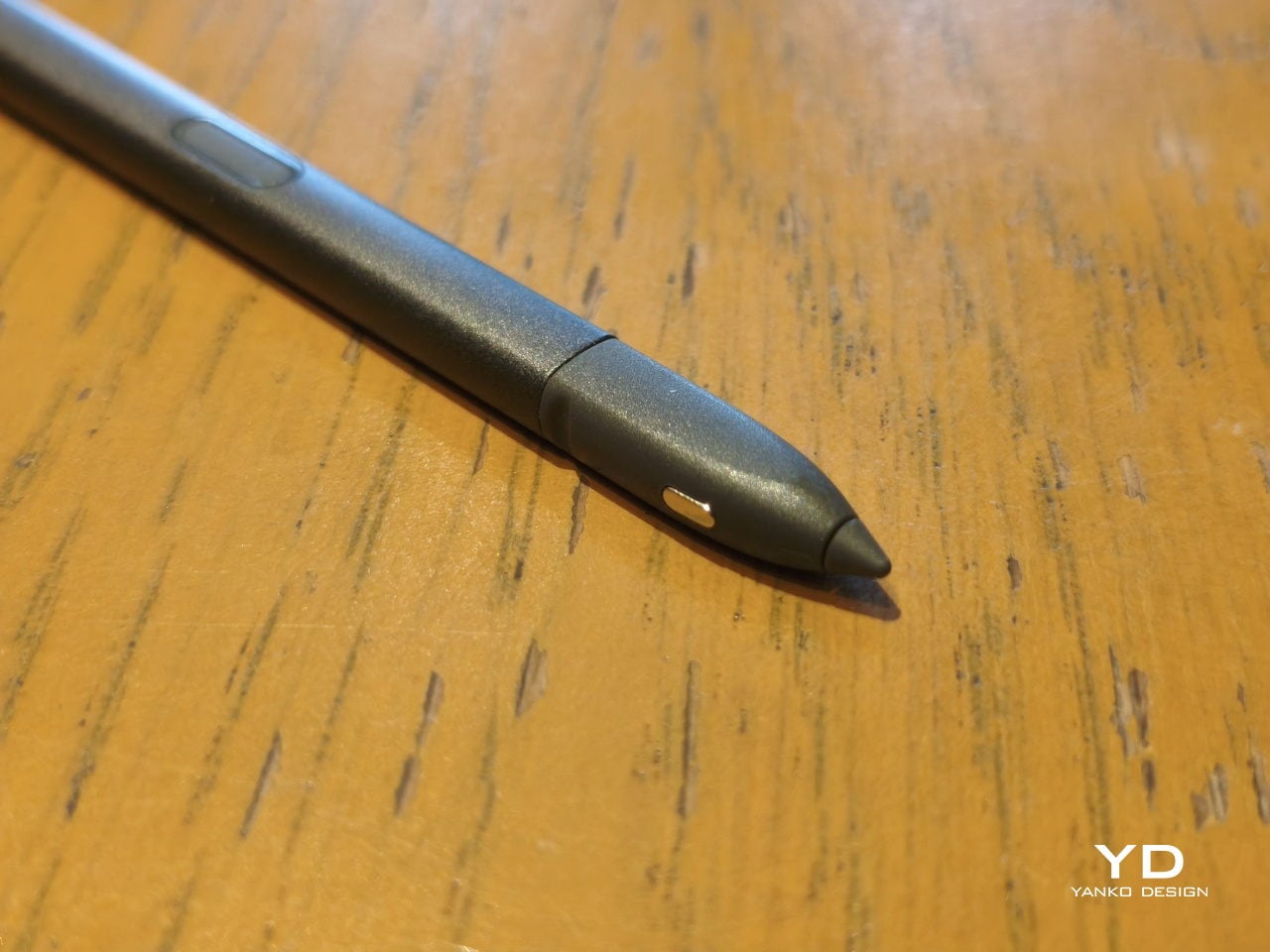
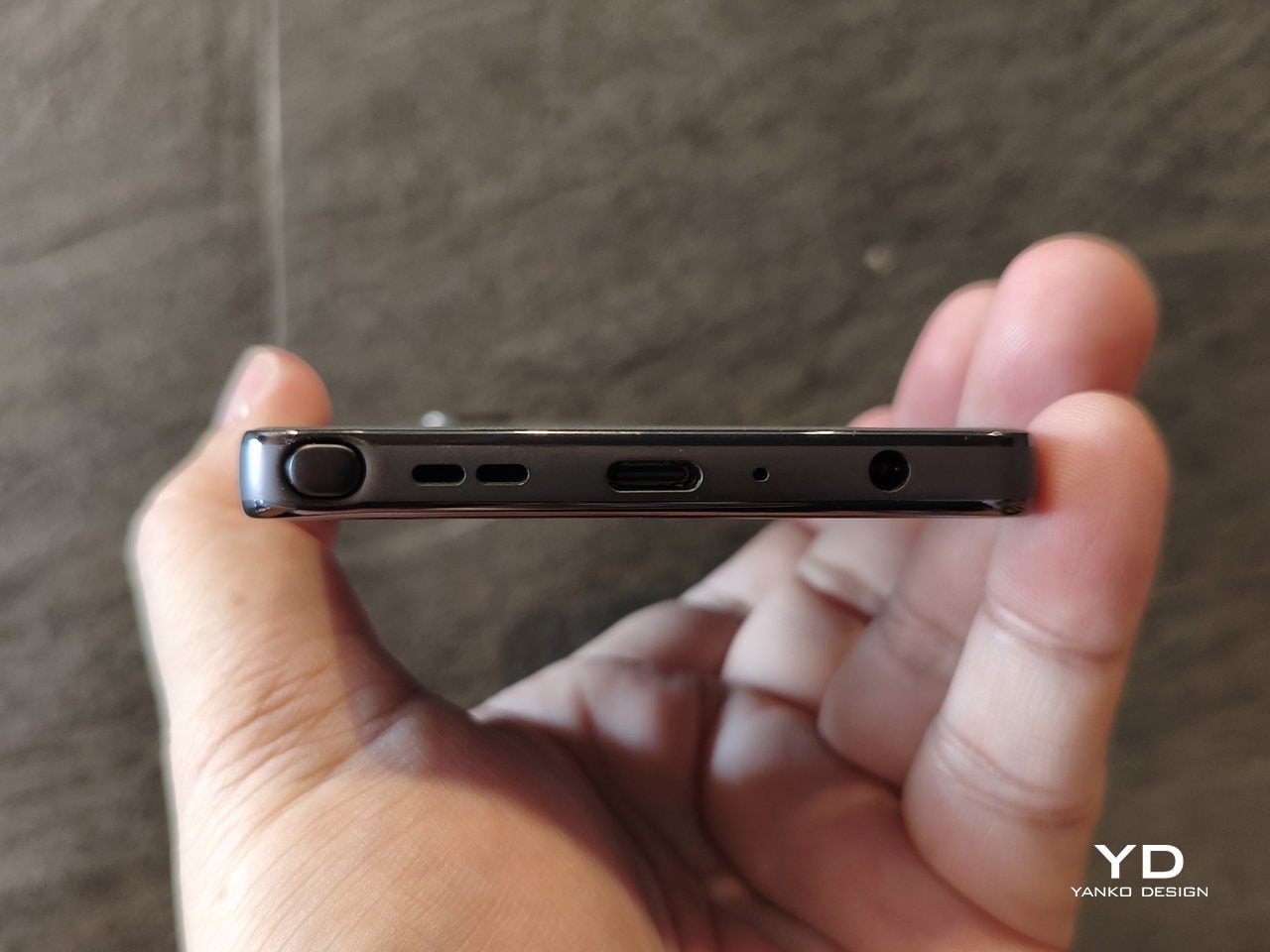
The stylus is cut from the same cloth, with a design that might be familiar to those who have held a Samsung “Ultra” flagship. It’s basically a somewhat flat stick, with a spring-loaded rear that easily resembles the (addictive) clicky ends of retractable pens. But unlike the small but stubby nibs of its predecessors, there is now a proper tapered, conical tip. Of course, it’s not just an aesthetic change, as we’ll get to in a bit.

Ergonomics

Another thing you’ll notice the moment you lift the moto g stylus – 2026 out of the box is how light it is. At only 192.3g, even with the 4.7g stylus inside, it’s easily one of the lightest phones in the market today. Given that it has a 6.7-inch screen and a large 5,200mAh battery, that’s even more surprising.
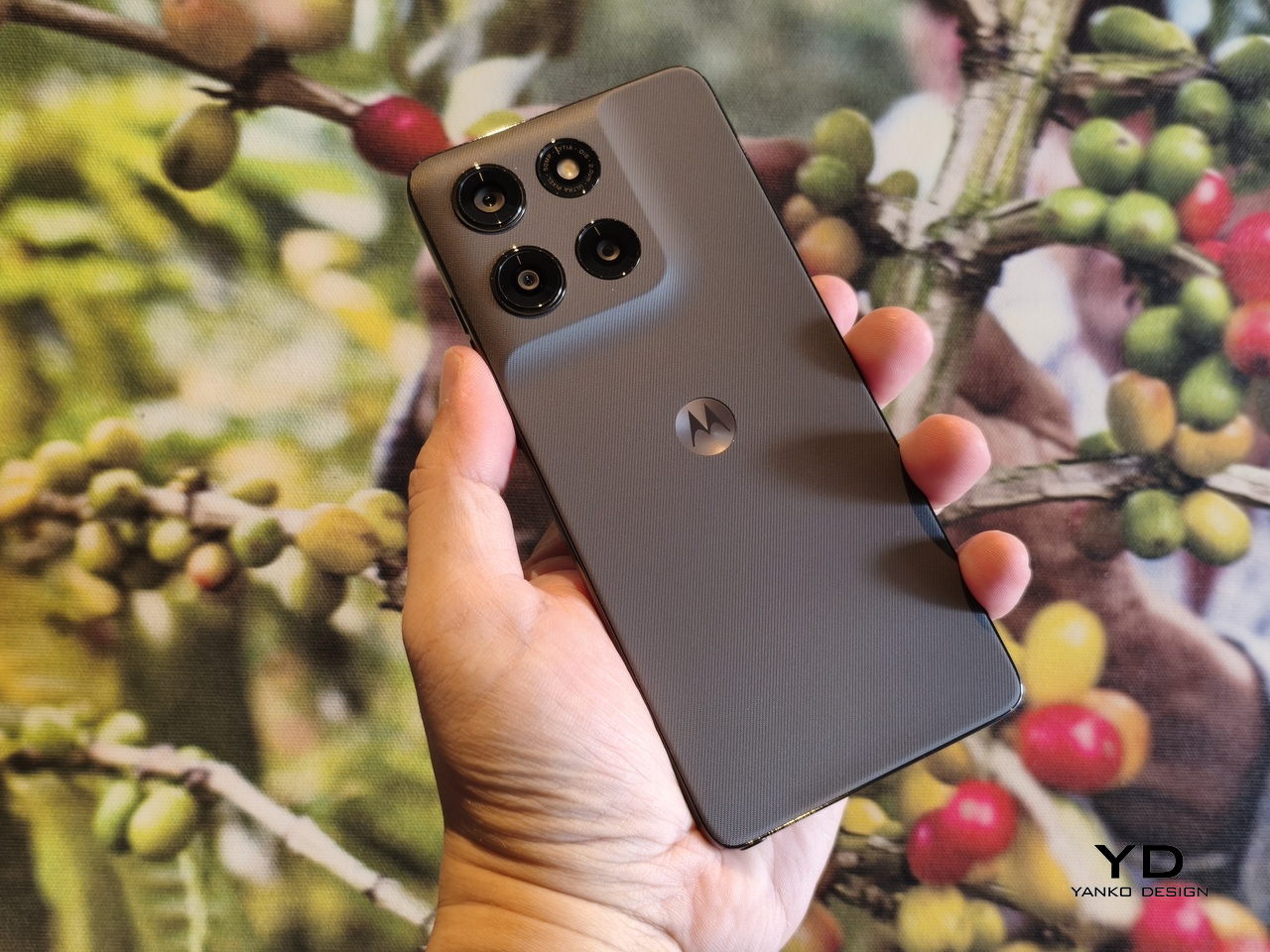
That lightness, however, is a double-edged blade. On the one hand, it might make the phone feel a little flimsy, almost like it could easily fly out of your hand. It almost makes the vibration haptics feel hollow, as if there’s not enough substance in there.

On the other hand, it strains your hand less when holding it for a long time, especially as you might find yourself constantly scribbling or doodling on it. The phone’s textured back and flat edges also help deliver a more confident hold. It just won’t accidentally slip from your hand that easily. A protective case almost feels redundant if grip is your only reason for putting one on.
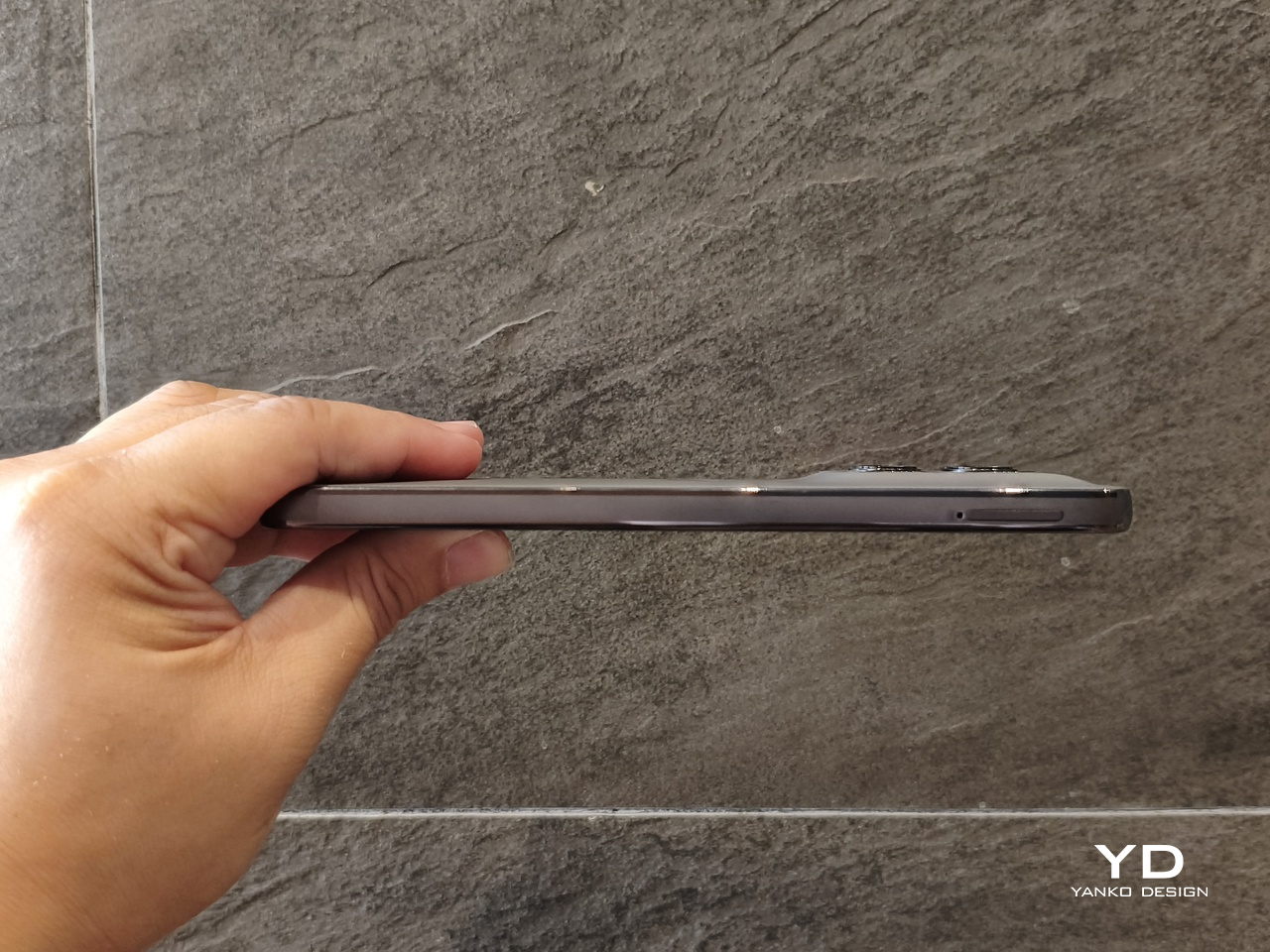
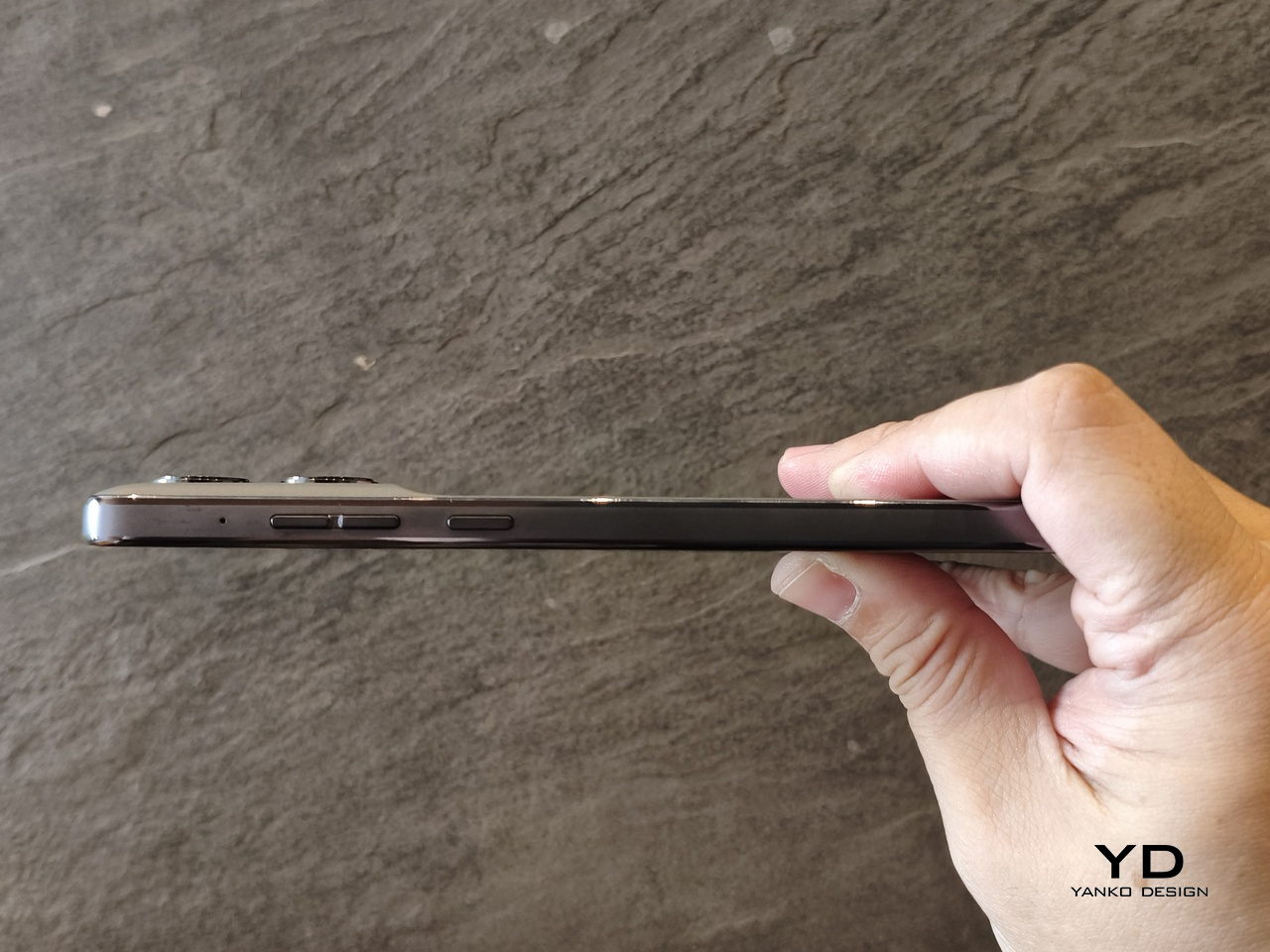
One thing to note about the camera module is that although it is thin and subtle, it still lifts a single corner of the phone when you put it on a flat surface. That means it will wobble, which can be pretty annoying when you’re writing with a stylus. Funnily enough, that might actually be a more pressing reason to put a case on, just to create a balance. Unfortunately, you do lose out on feeling the phone’s textured surface.

Performance

The Specs

The moto g stylus – 2026 makes no qualms about its specs, clearly marking it for the mid-range smartphone market. There’s only 8GB of RAM, which can be expanded up to 24GB with RAM Boost, which basically eats up some of the already modest 128GB or 256GB of storage. Thankfully, you can also expand that storage with a microSD card of up to 1TB capacity, definitely a rare sight these days, even among phones on the same tier.
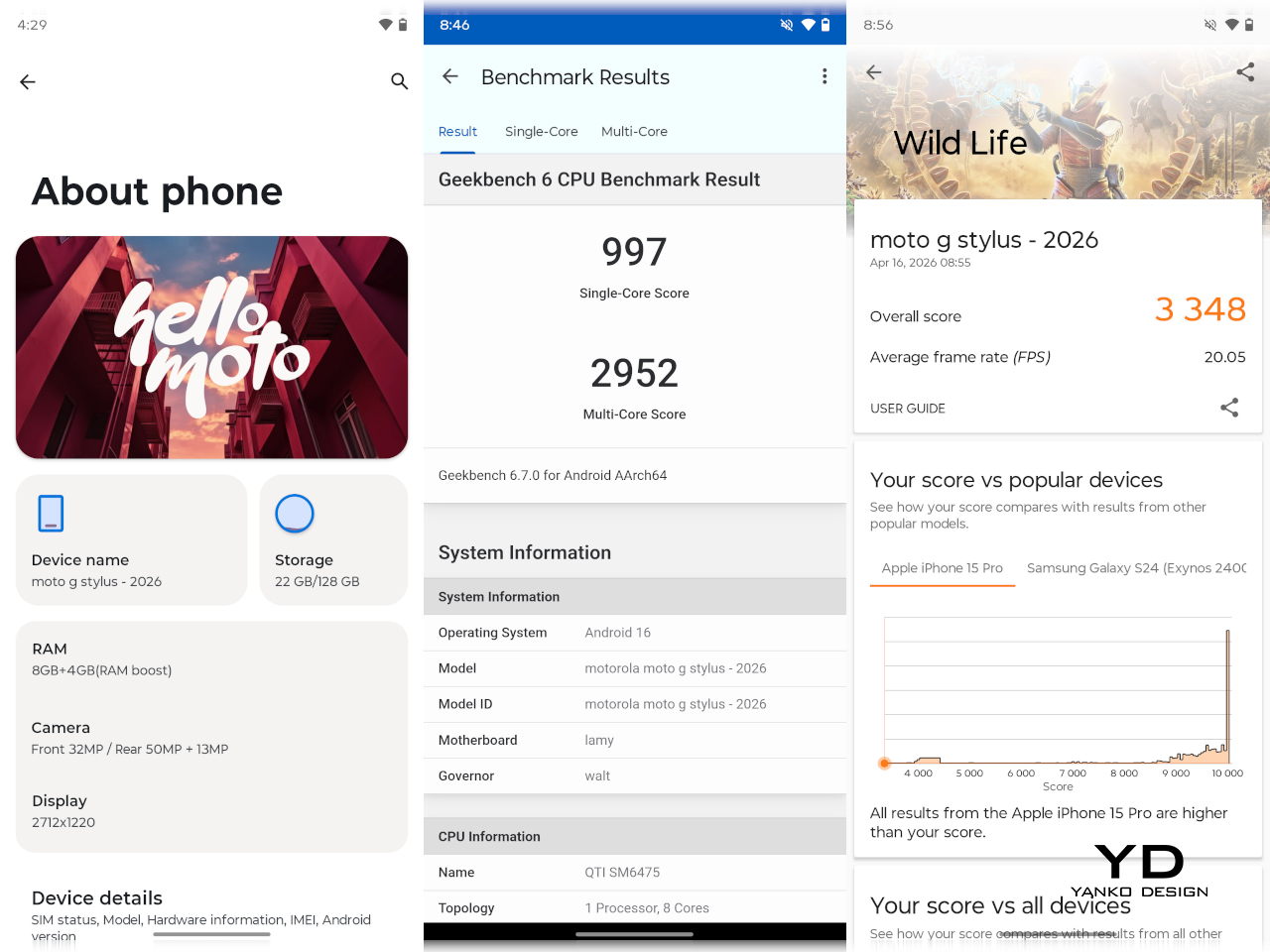
The biggest disappointment is the Qualcomm Snapdragon 6 Gen 3 processor, which is a holdover from last year’s moto g stylus. In fact, if you look closer, you’ll see plenty of similarities between the 2025 and 2026 models, from processor to cameras. It’s not always a bad thing, but given the price hike, you’d be forgiven for expecting a bit more.
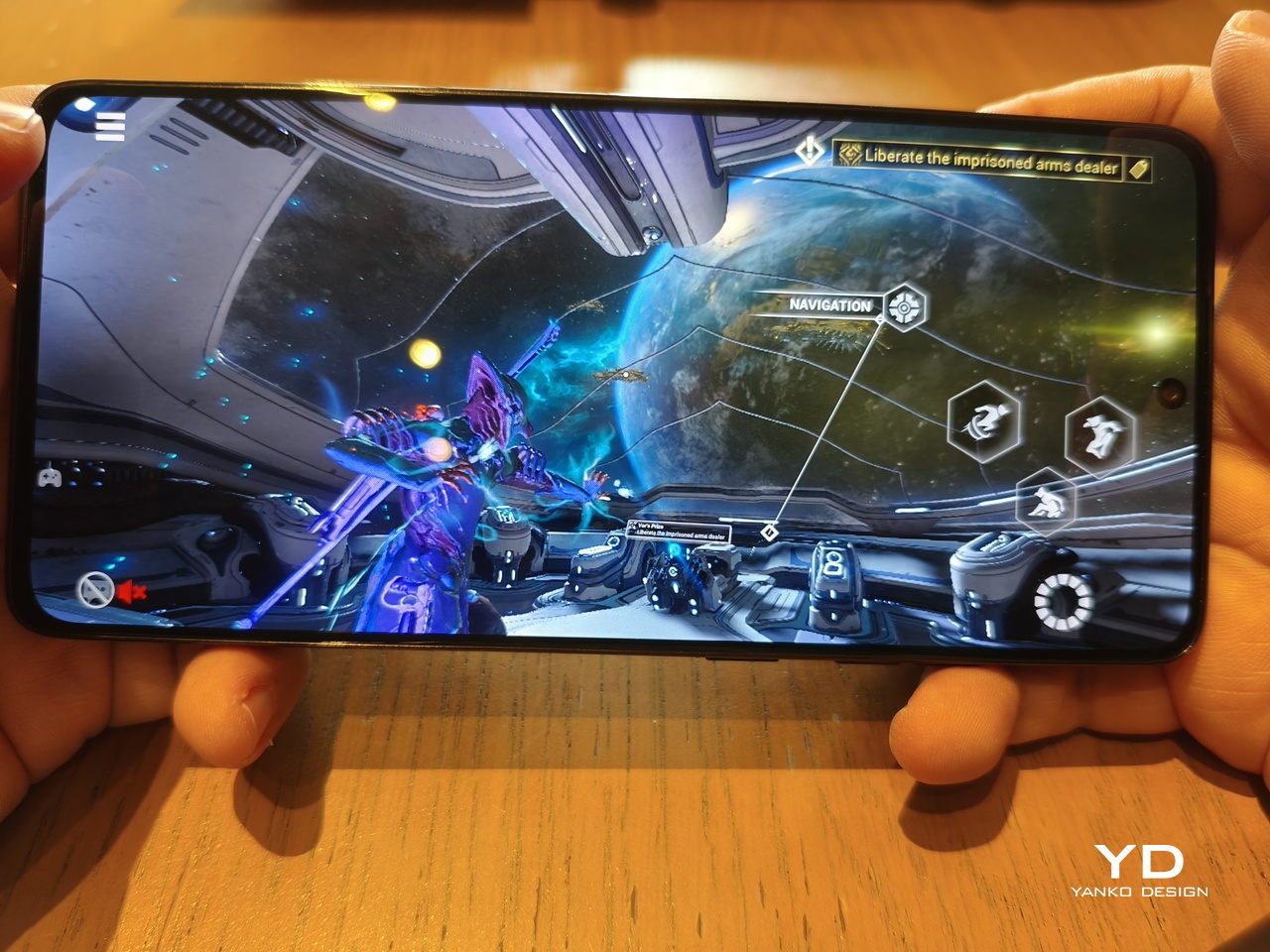
Make no mistake, though, the moto g stylus – 2026 is plenty capable. It won’t win trophies on benchmarks, but it does get the job done without breaking too much of a sweat. It’s even surprising how it can handle a game like Warframe on high settings. It doesn’t get too warm, either, and the vegan leather material probably helps make it feel a little less warm as well.
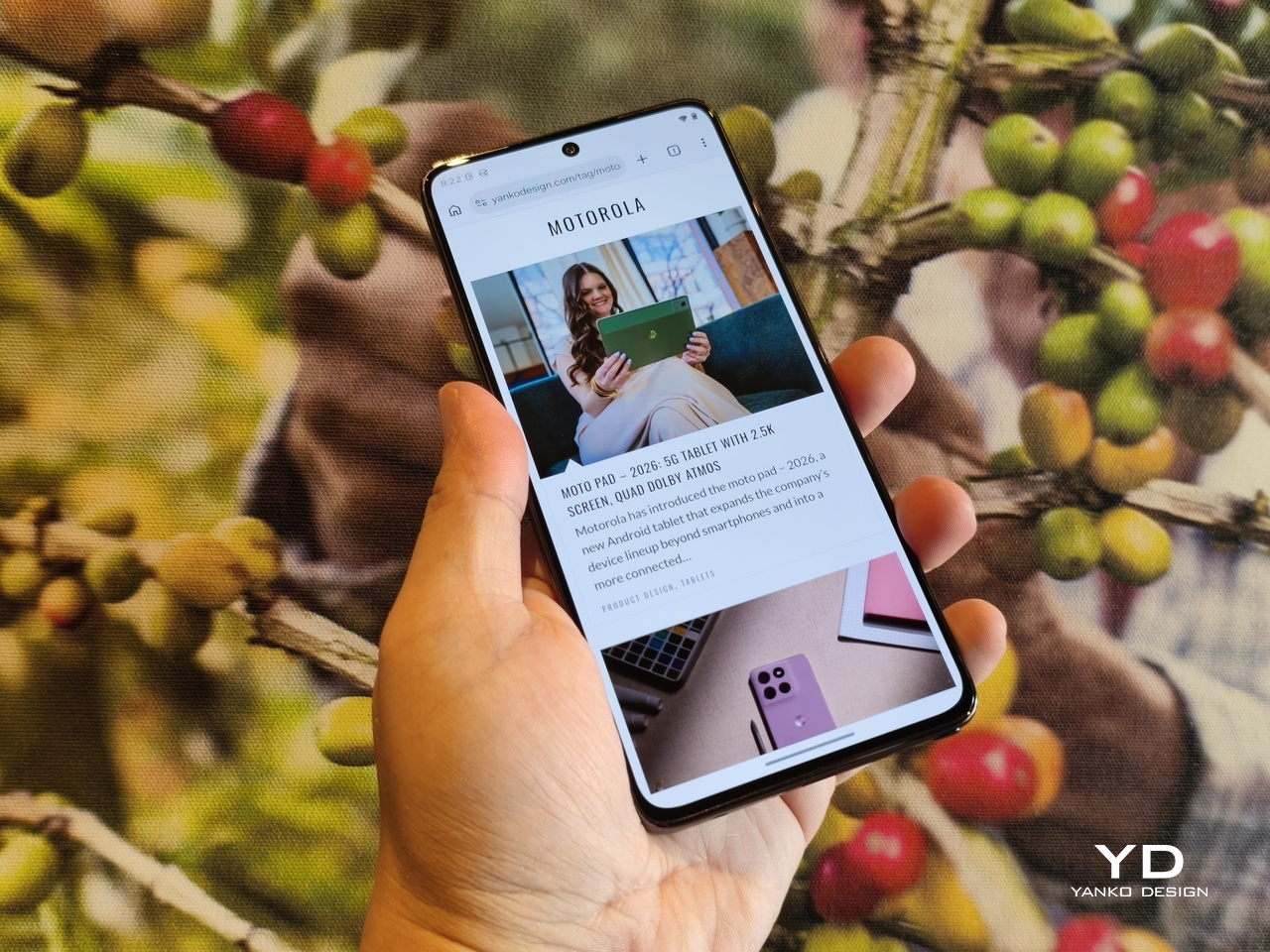
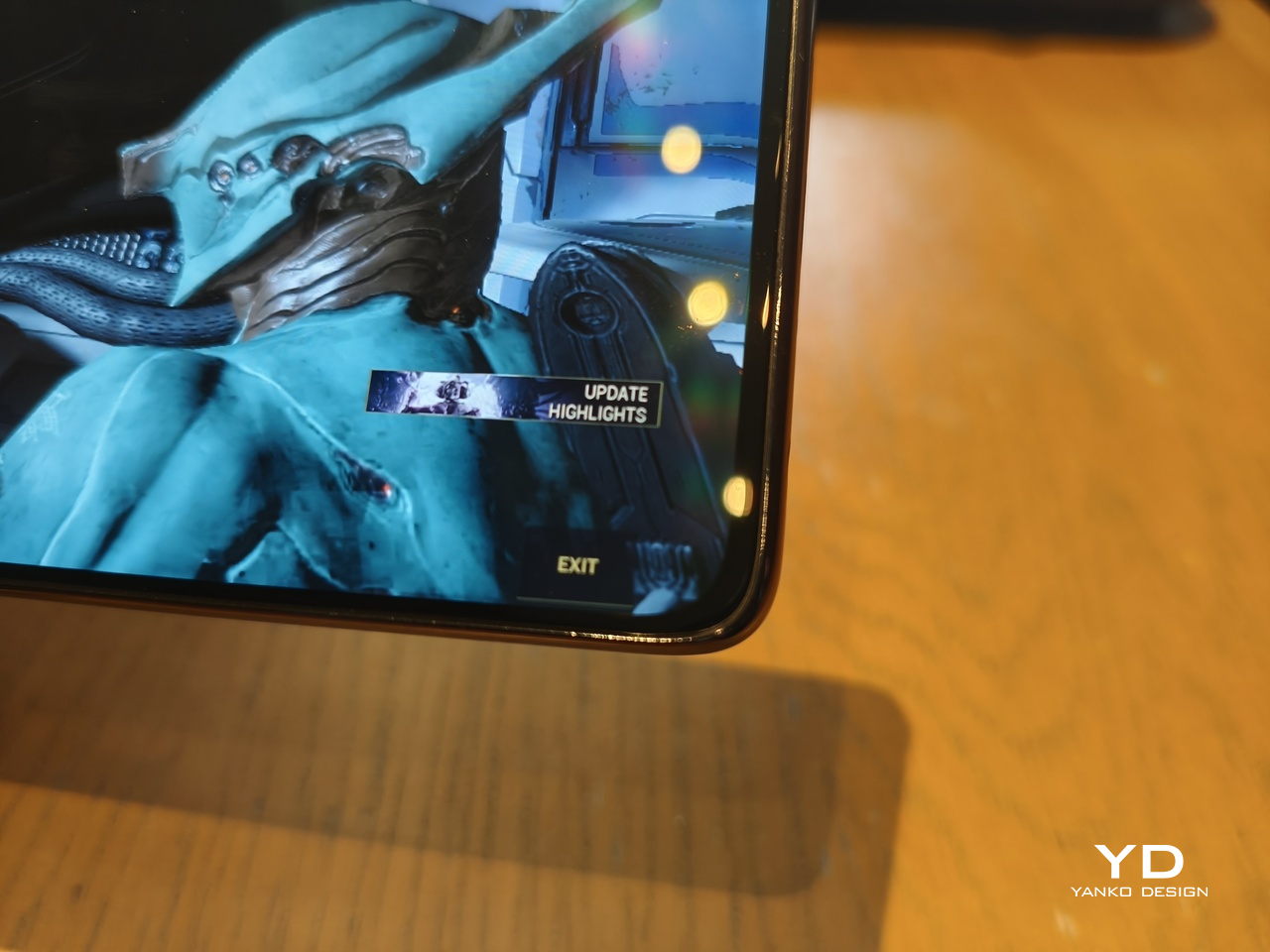
And that’s perfect because the moto g stylus – 2026 has such a gorgeous screen to play and watch on. The 6.7-inch 2712 x 1220 AMOLED display boasts a peak brightness of 5000 nits, definitely one of the brightest in the market, making it easily usable under sunlight. The rounded corners are also less curved, so UI elements are not obstructed, especially in games. Plus, the 3.5mm headphone jack, another rare sighting, can perfectly complement the visuals with hi-def wired audio.
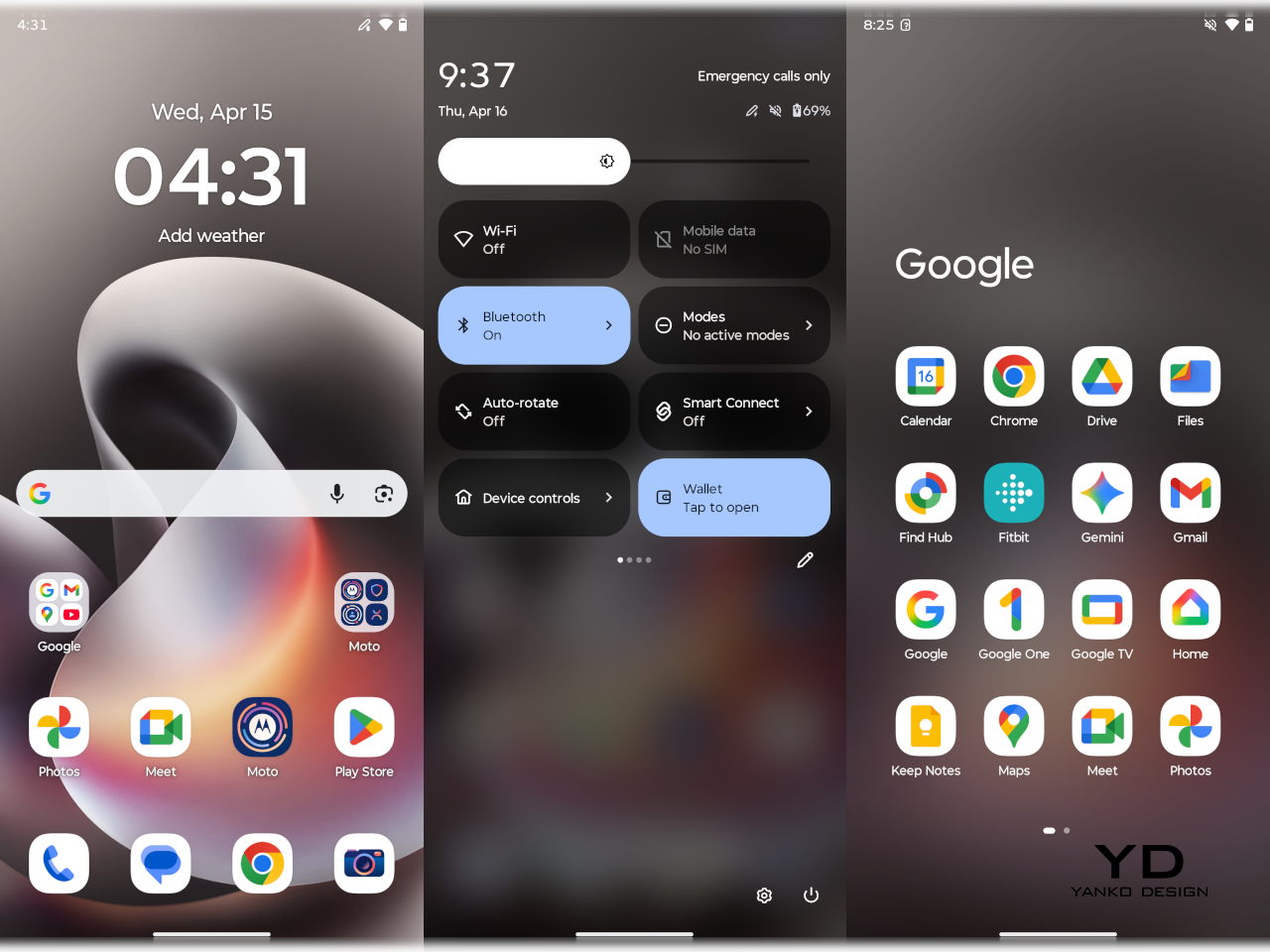
The moto g stylus – 2026 runs the latest Android 16, and given Motorola’s history, the skin is pretty minimal and non-invasive. It’s probably the closest you can get to a Pixel experience outside of Google Pixel phones, which is light, fast, and probably barebones if you’re coming from other brands like Samsung and Xiaomi. There’s almost no bloatware, unless you count the dozen or so pre-installed Google apps, which would be the same situation on a Google Pixel phone anyway.

The Pen
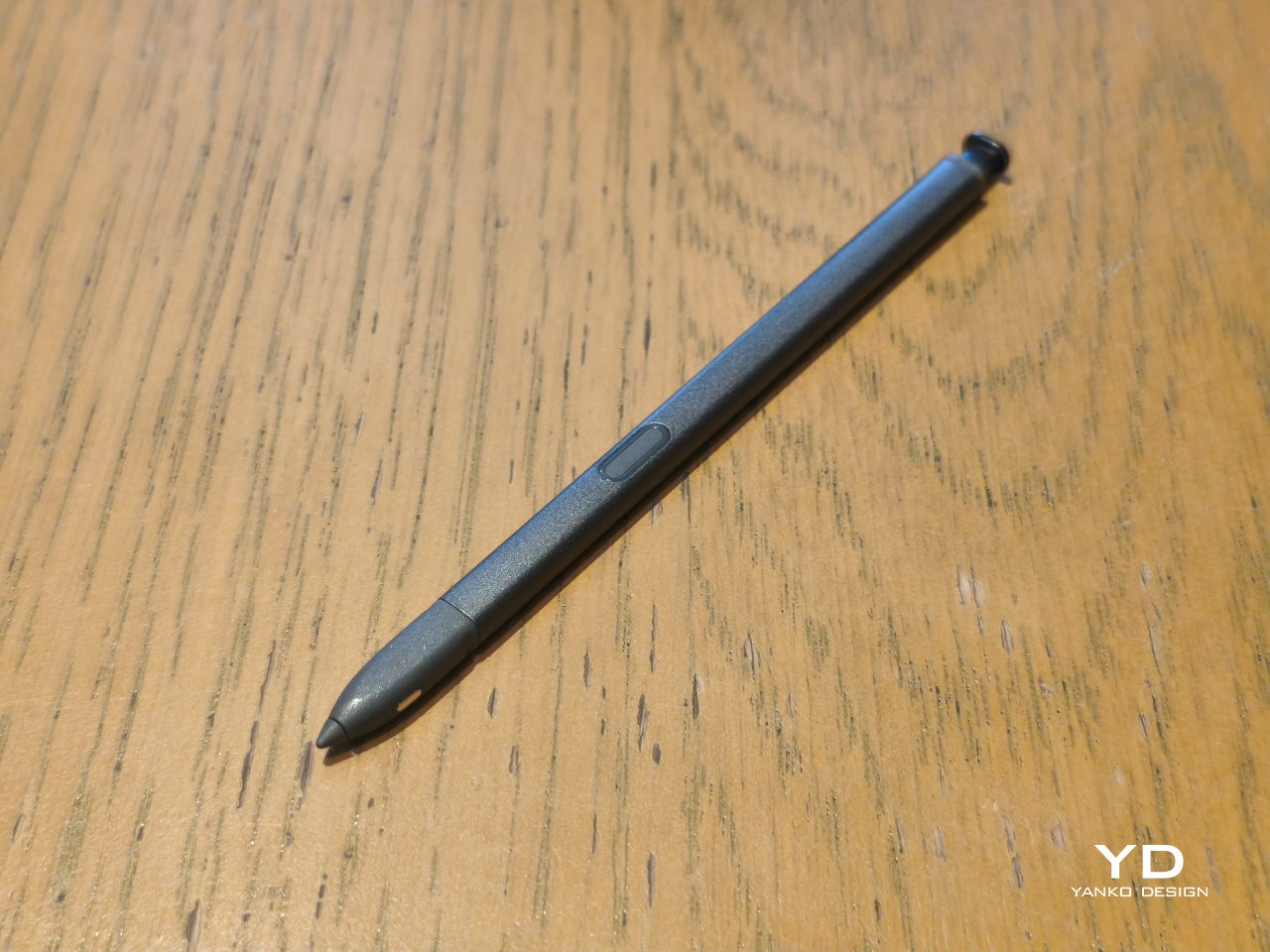
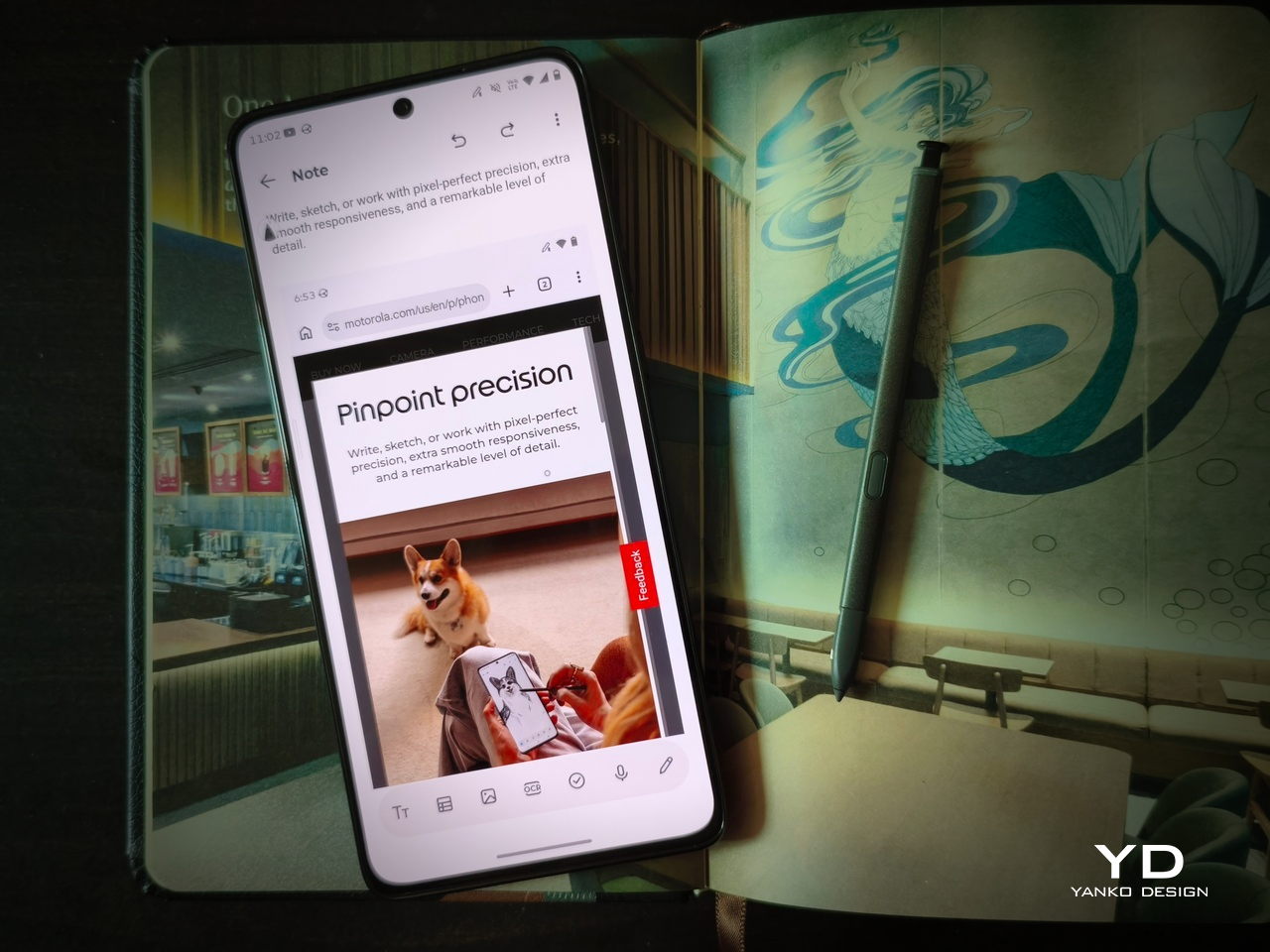
There’s no beating around the bush: the only reason you’d even give the moto g stylus – 2026 is because of its stylus. For the first time, that stylus is no longer just a very thin stub standing in for your finger tip. For the first time, it is supporting pressure and tilt sensitivity, features that only Samsung offers at nearly three times the price.
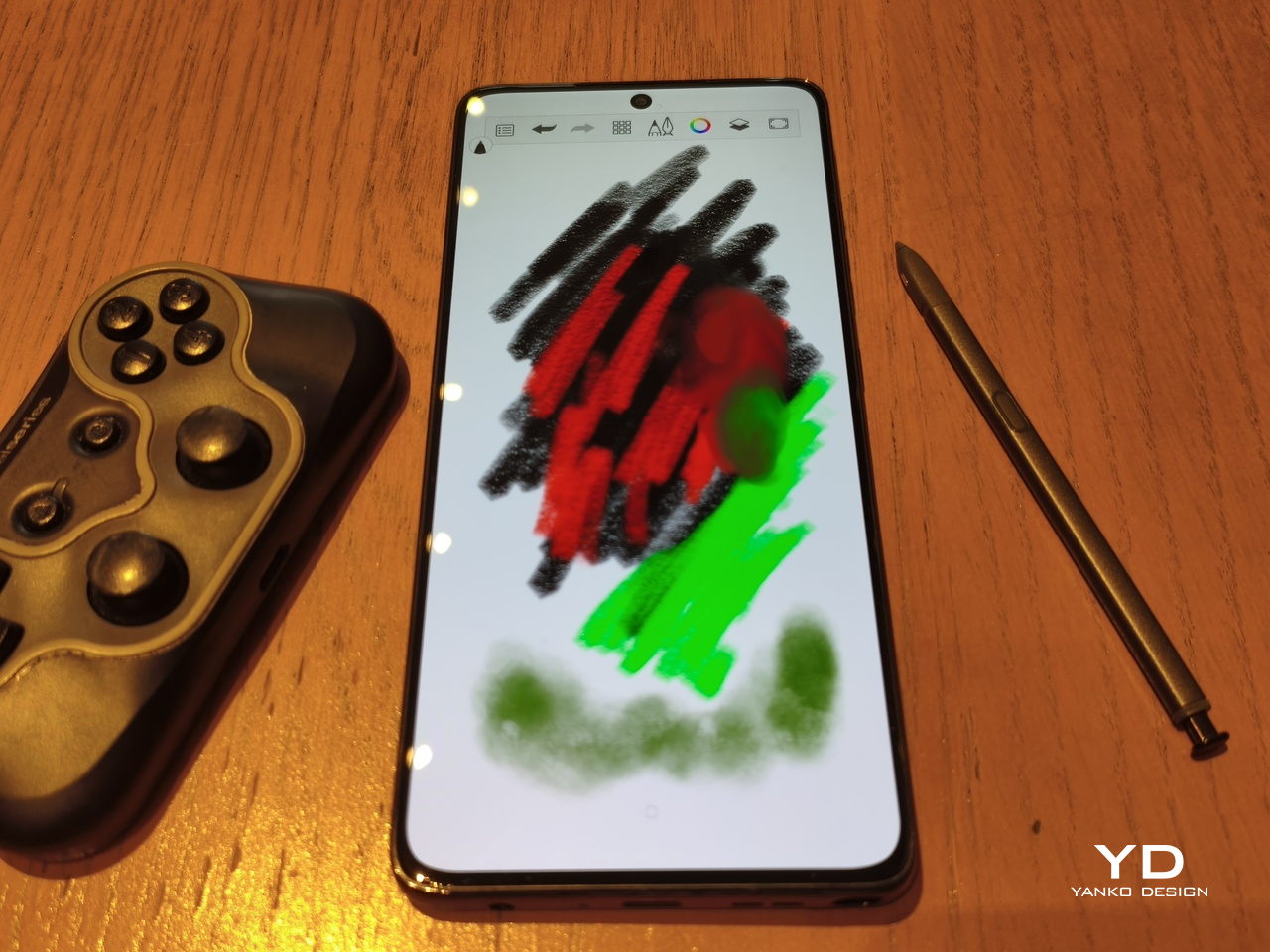
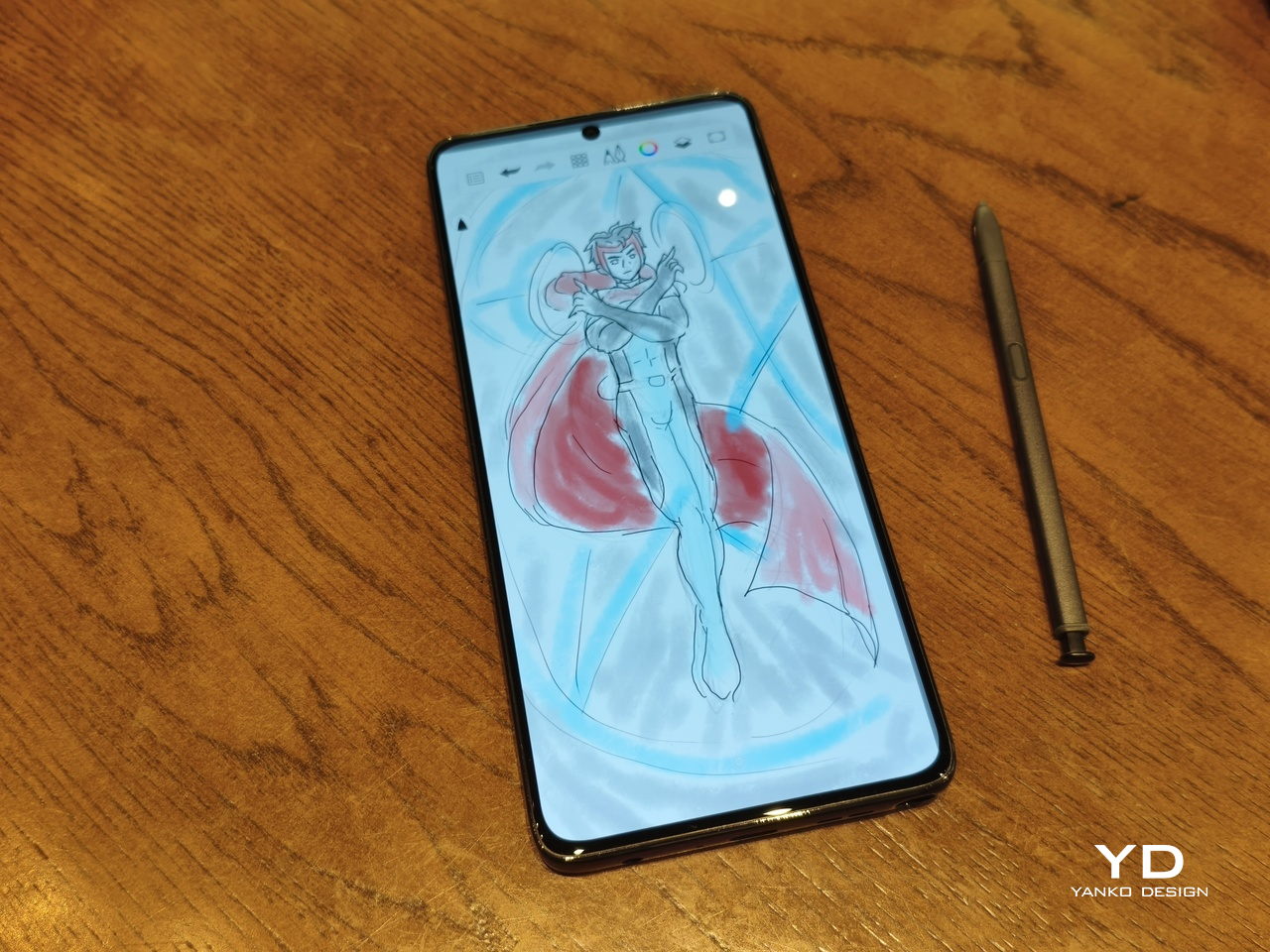
The older stylus designs were practical and usable, but this new pen opens the door to even more possibilities, especially when it comes to creative activities like drawing, designing, and editing photos. It gives you much better control and precision, while also offering more styles in terms of pen width, brushes, and the like.

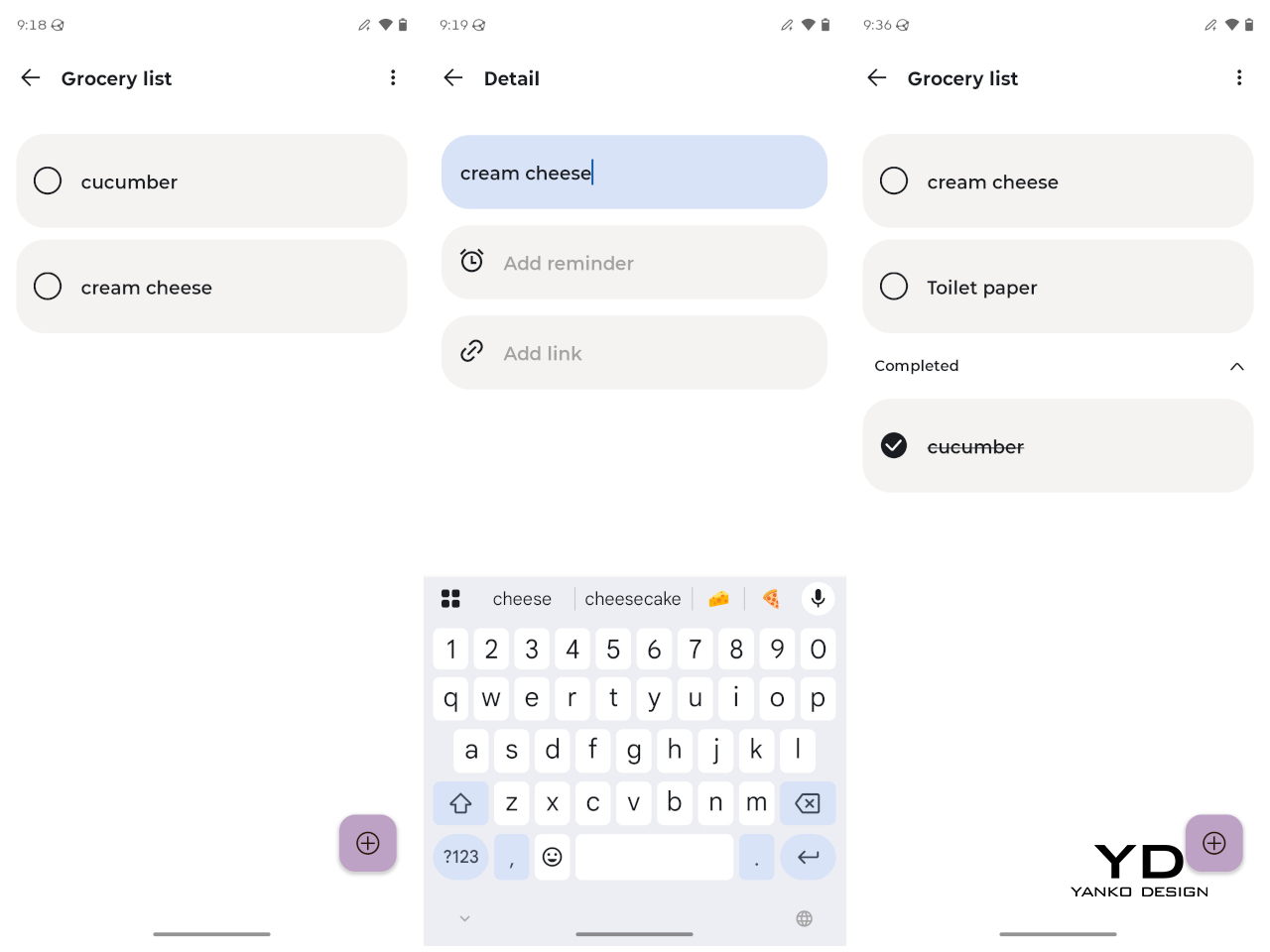
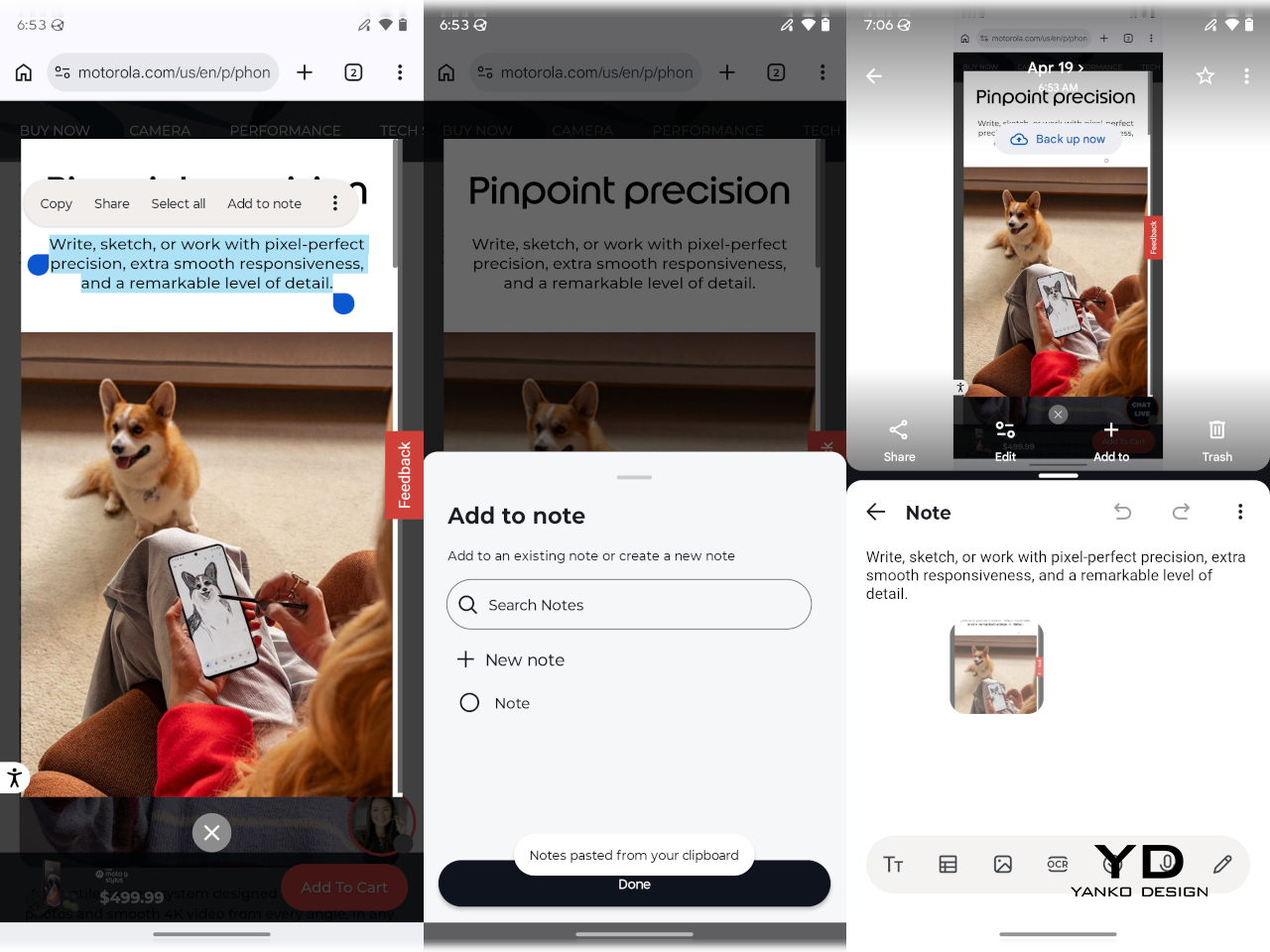
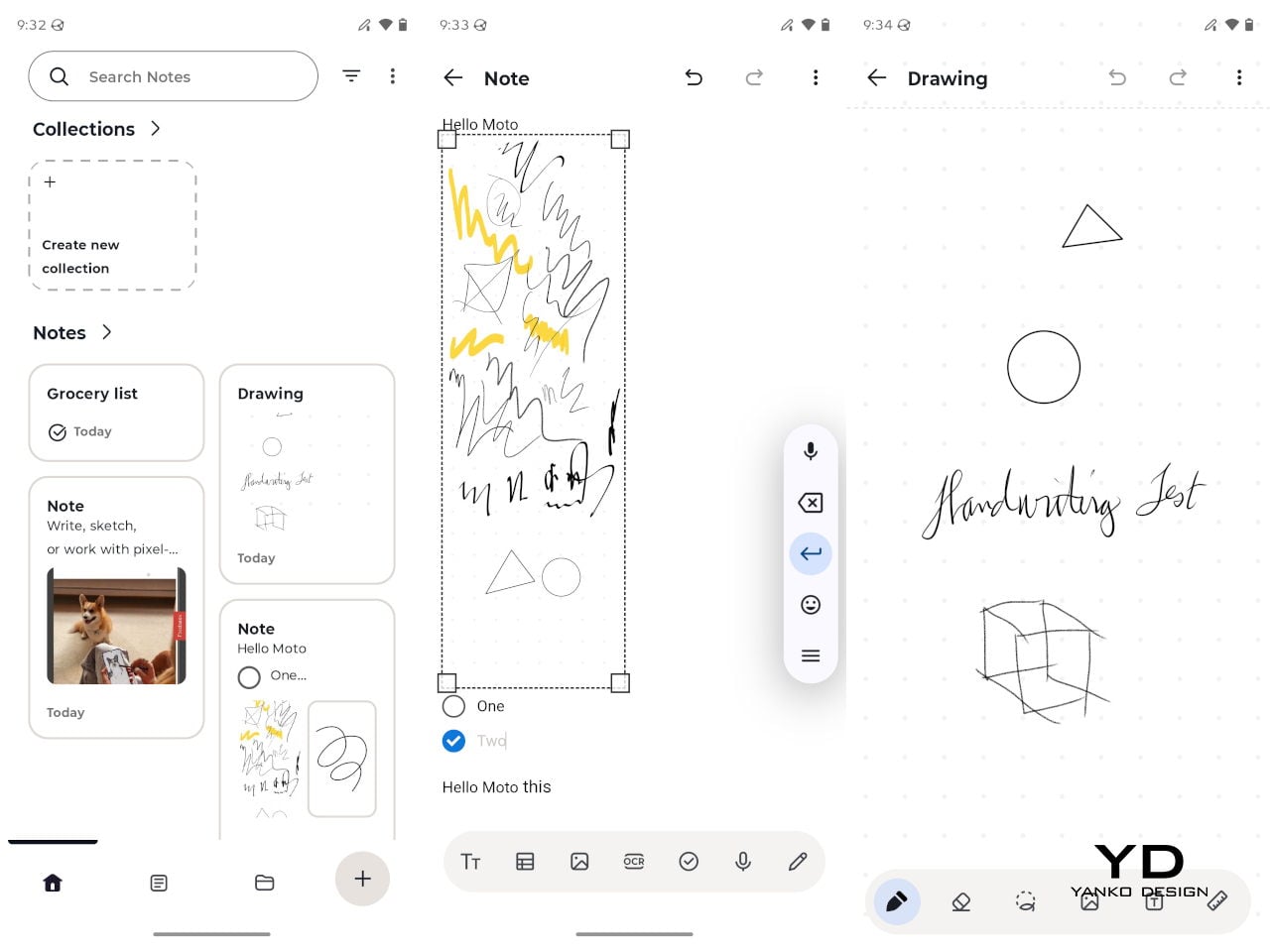
The stylus is also crucial in some productivity workflows, like when dragging images to a note in split-screen mode, highlighting and copying text to a note, or for sketching a crude representation of a cat and using AI to turn it into a photorealistic masterpiece. Part of this upgraded experience is made possible with the Moto Notes app, which supports drawing on an infinite canvas that can then be embedded into notes.
The new stylus also has a button that can be mapped to some actions depending on whether you press or long-press it, though the actions are not that varied. The pen now also has to be charged, which is how it’s able to pull off that pressure sensitivity stunt, and you can only charge it when it’s inside its silo.

The Cameras

The moto g stylus – 2026’s camera story is rather underwhelming. On the hardware side, it doesn’t exactly differ from last year’s cameras, which include a 50MP Sony LYTIA 700C sensor and a 13MP Ultra-wide shooter that doubles as the Macro camera. In a nutshell, these are serviceable and decent, but they wouldn’t be something you’d want to rely on if you were planning on being a professional shutter bug.


The main shooter does a pretty good job of capturing detail, but its dynamic range seems to be on the narrower side, making subjects look a little flat. The AI-enhanced Signature Style can try to compensate, but it also oversaturates the output.

Normal

Signature Style
Normal
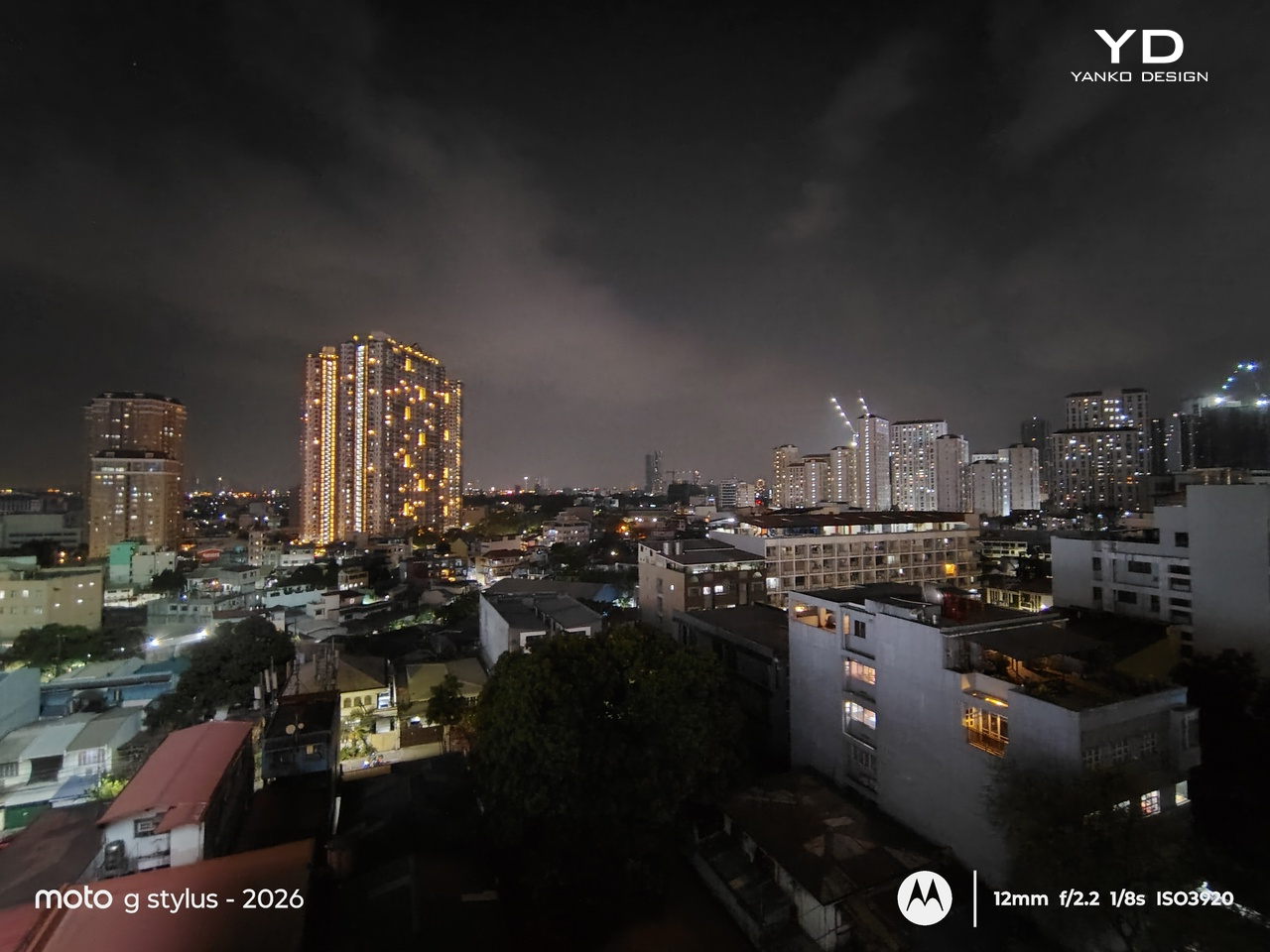
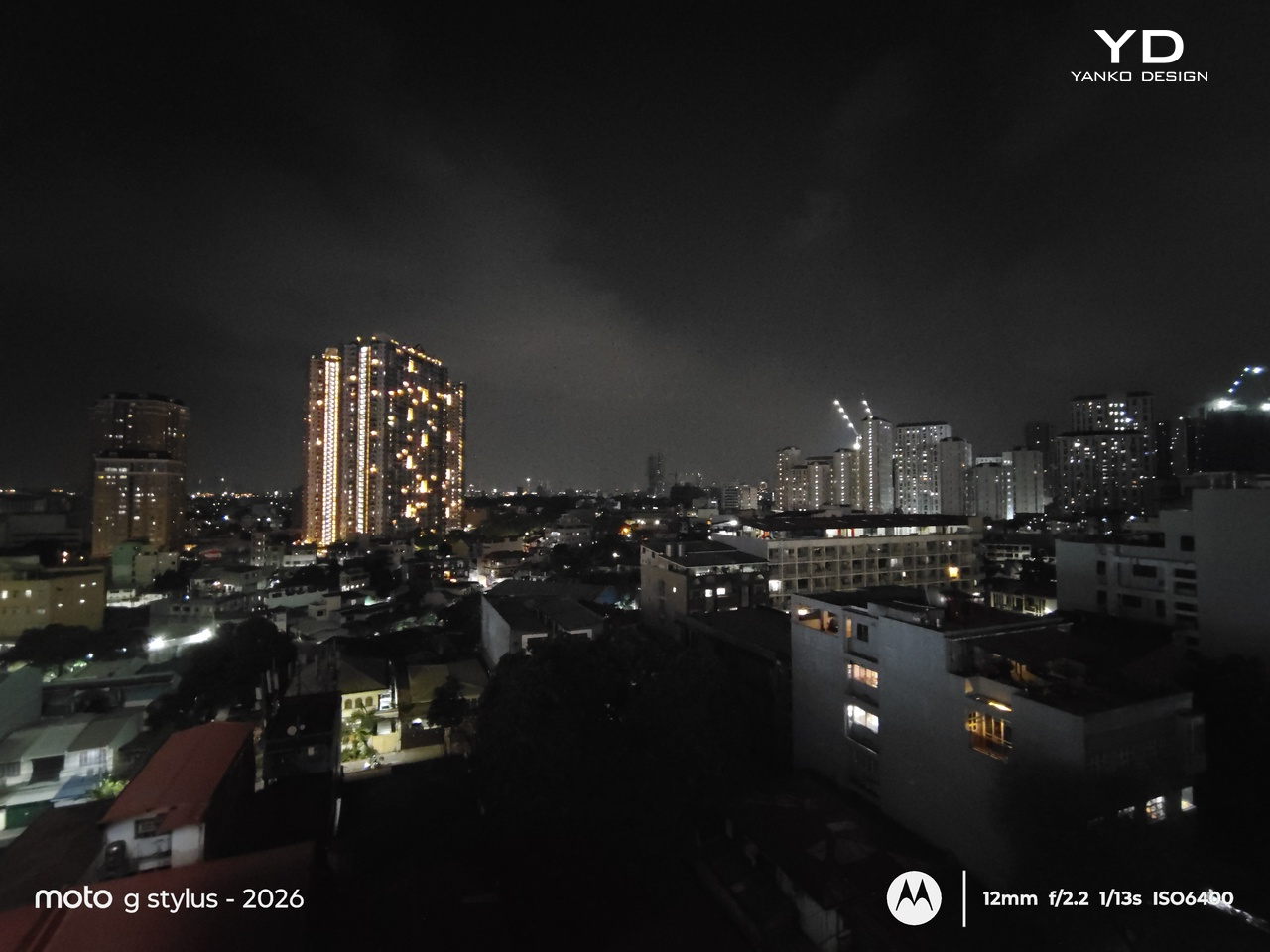
Night Vision

Nighttime photography is what you’d expect, as there wouldn’t be enough light information to work with. Night Vision Mode definitely kicks things up a notch, brightening things up enough to make out the details. This is one of those moments where the difference is, pardon the pun, night and day.


Ultrawide (0.5x)

Wide (1x)

Zoom (2x)

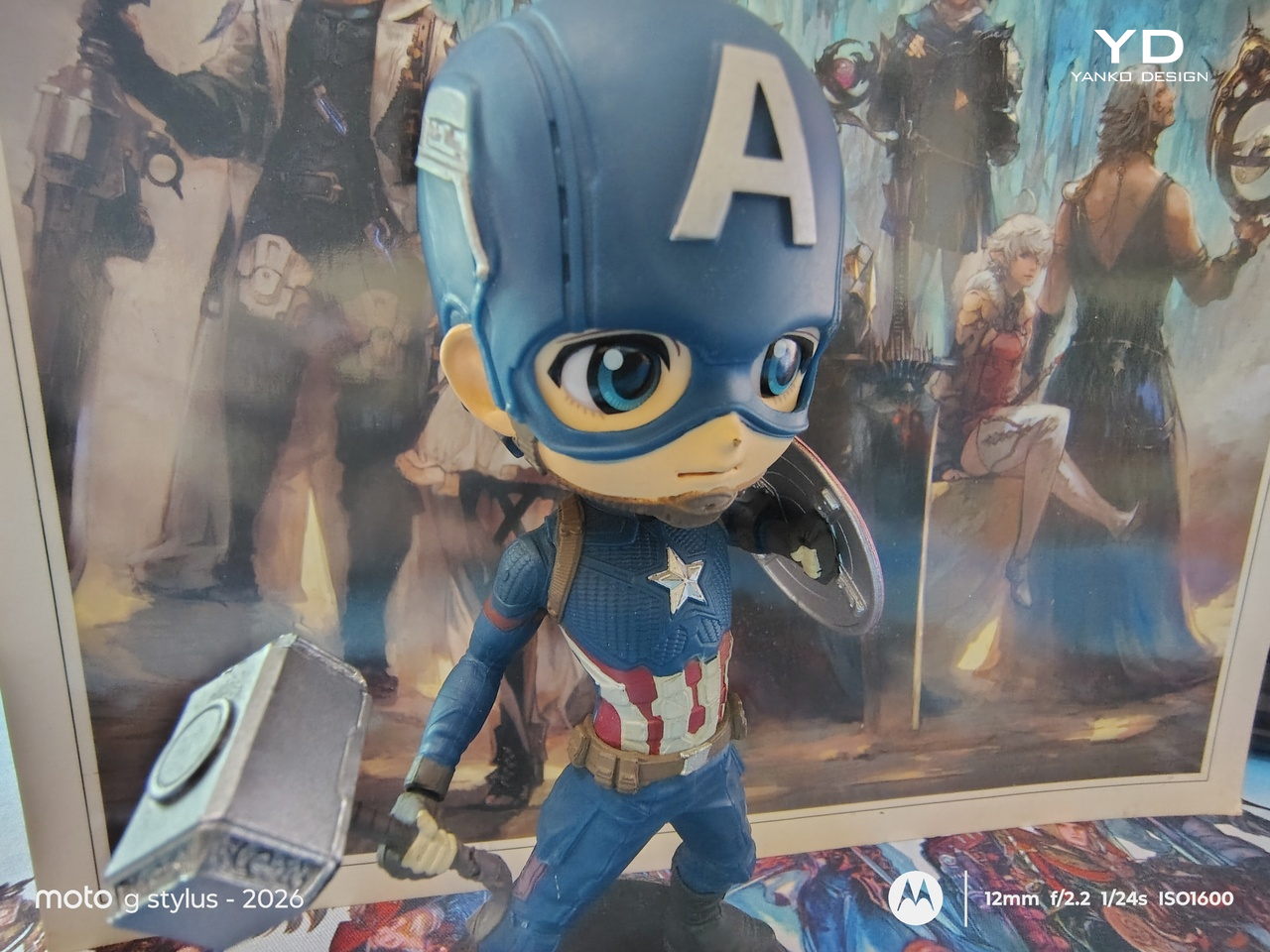
Given the hardware, ultra-wide shots are naturally less impressive but still get the job done for a quick panoramic picture. There’s no dedicated telephoto lens, so it does double duty as the macro camera. Unfortunately, it doesn’t make much of a difference. Portrait shots are pleasant and accurate, though, and you can select from 24mm, 35mm, and 50mm focal lengths.
Macro

Macro

The Battery

One of the few upgrades this year is the moto g stylus – 2026’s larger 5200mAh battery. It still supports 68W wire Turbo Charging and 15W wireless charging, the latter with no magnetic tricks. With the right power brick, you’re promised a full charge in just 44 minutes, but even a 65W charger managed to top the phone off in just a little over an hour.
That charging won’t happen frequently though, as the phone can last more than a day with normal use, including browsing the web, social media, and even watching videos on that bright, large screen. With less frequent use, it can actually extend to two days, though you’ll want to be on Wi-Fi rather than cellular to pull that off. Needless to say, it’s a reliable daily partner that won’t have you scrambling for a charger before you head home.

Sustainability

Motorola has been pretty vocal about its sustainability efforts, but the moto g stylus – 2026 is a bit of a hit and a little miss. The compact, plastic-free packaging is superb in that regard, ditching the redundant charging brick as well. Motorola also boasts about longevity, given the IP68, IP69, and MIL-STD-810H certifications.
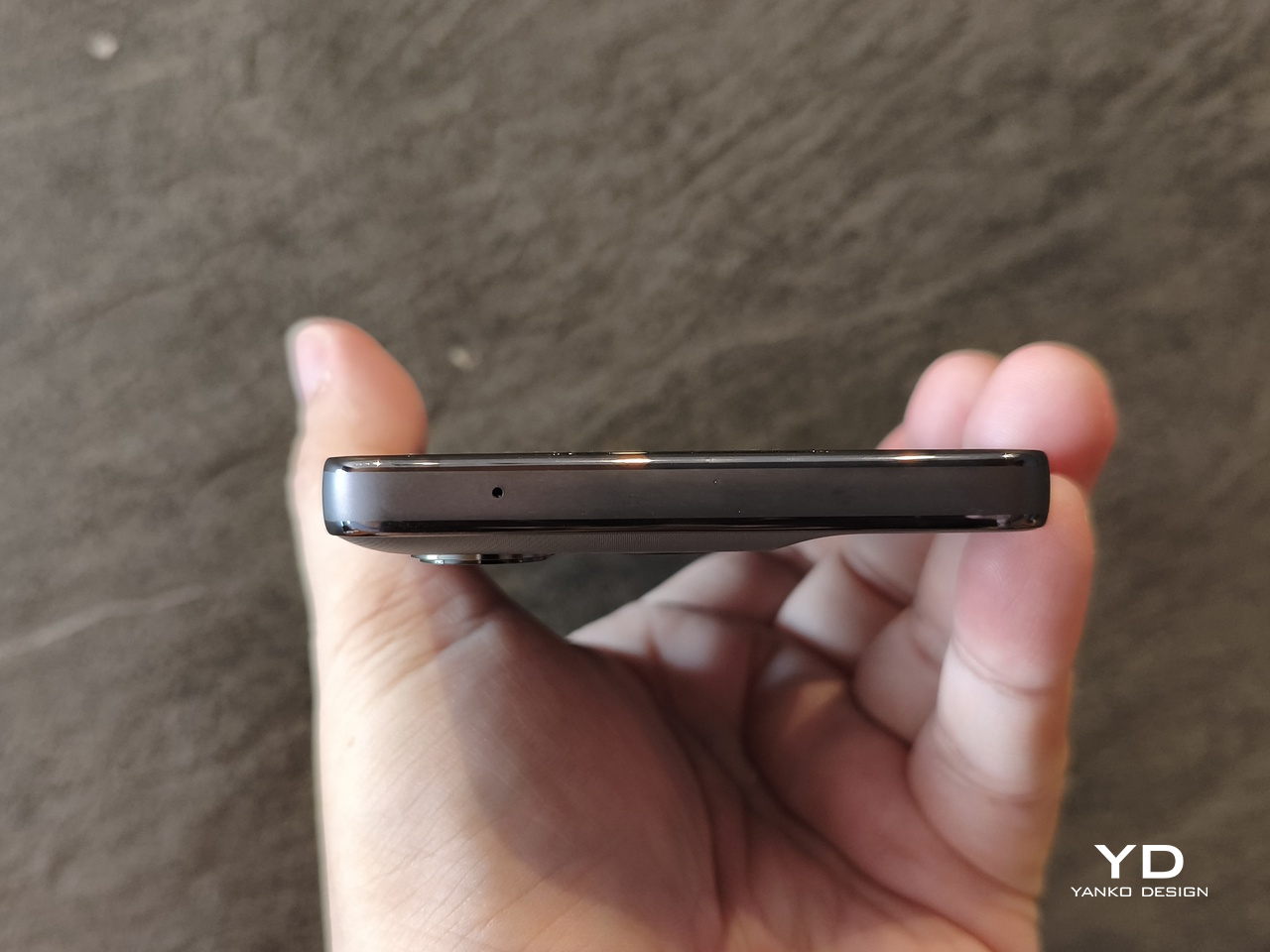
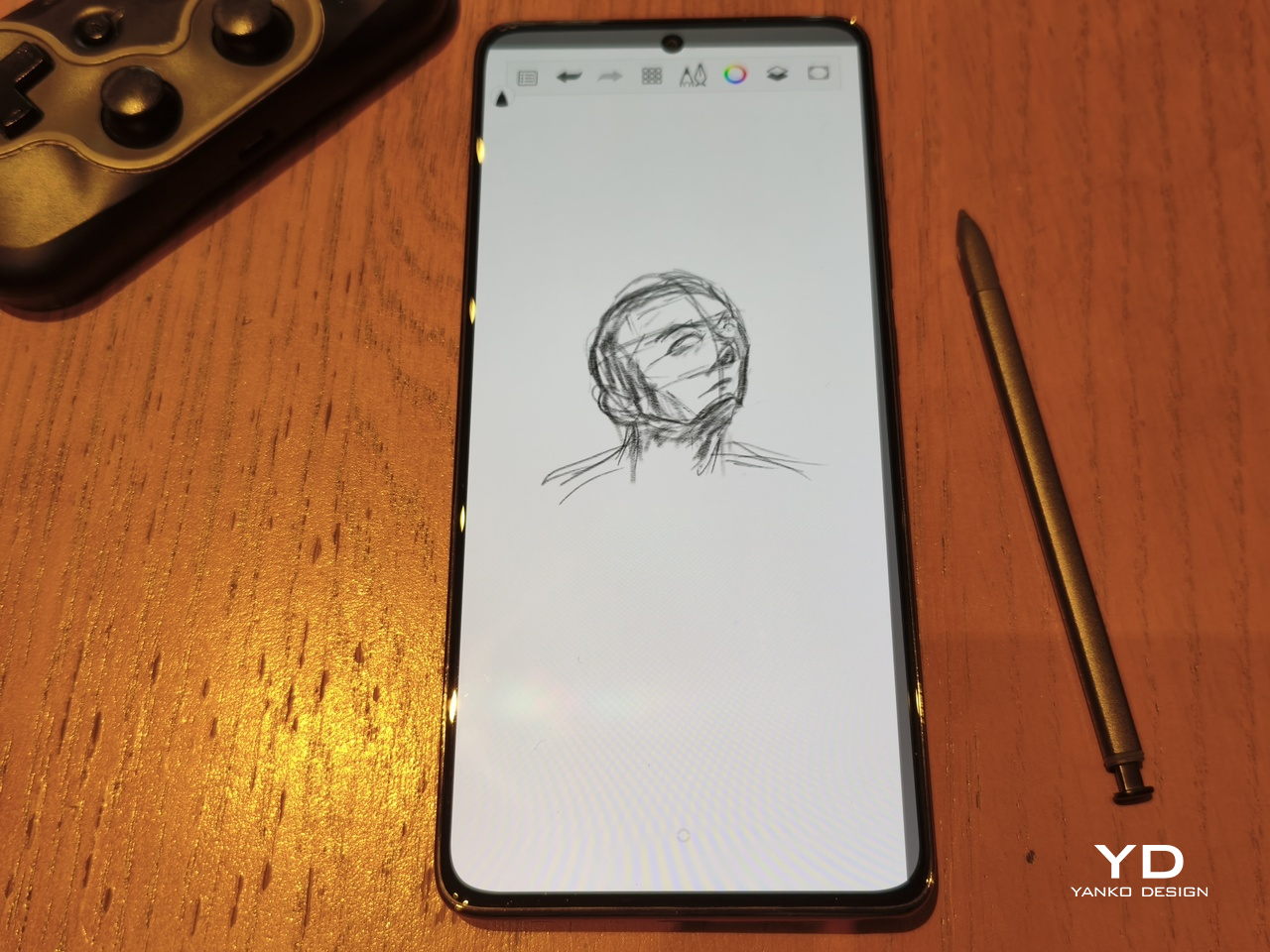
Where the story takes a sad turn, however, is in the software upgrades. Only two years of Android upgrades and three years of security updates, figures that would have sounded generous almost a decade ago. This lags way behind the likes of Xiaomi, notorious for its short software support cycles, and is quite disappointing for an Android user experience that is almost as pure and unencumbered as the Google Pixel.

Value

There’s no going around the fact that the moto g stylus – 2026 has a price tag that’s a little difficult to swallow. It’s more than a $100 jump from last year’s model, and at $500 or $600, for 128GB and 256GB storage, respectively, other brands might give you better specs for the same price. Granted, Motorola often throws in bundles and discounts to sweeten the deal, but the initial price shock is unavoidable.
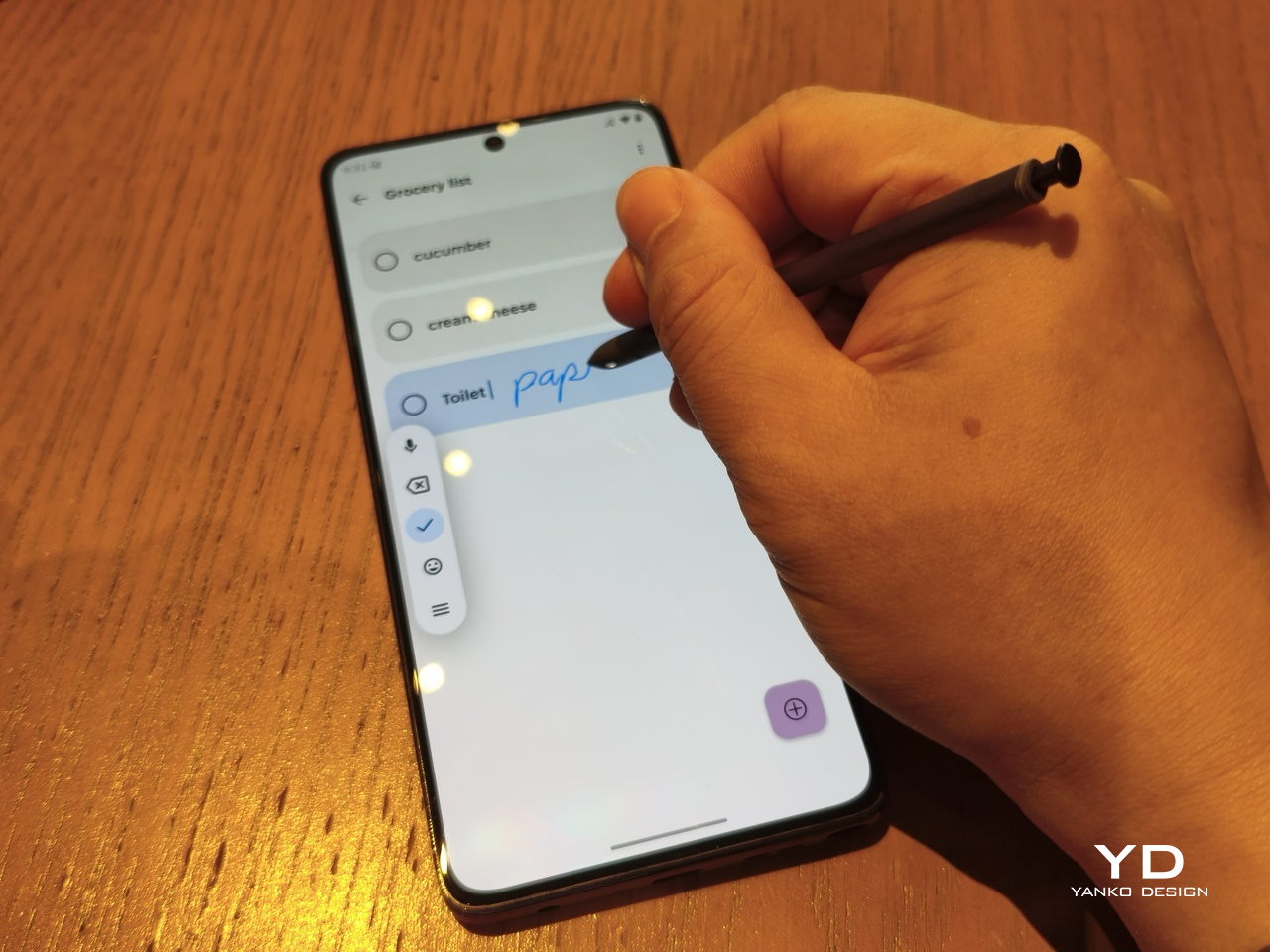
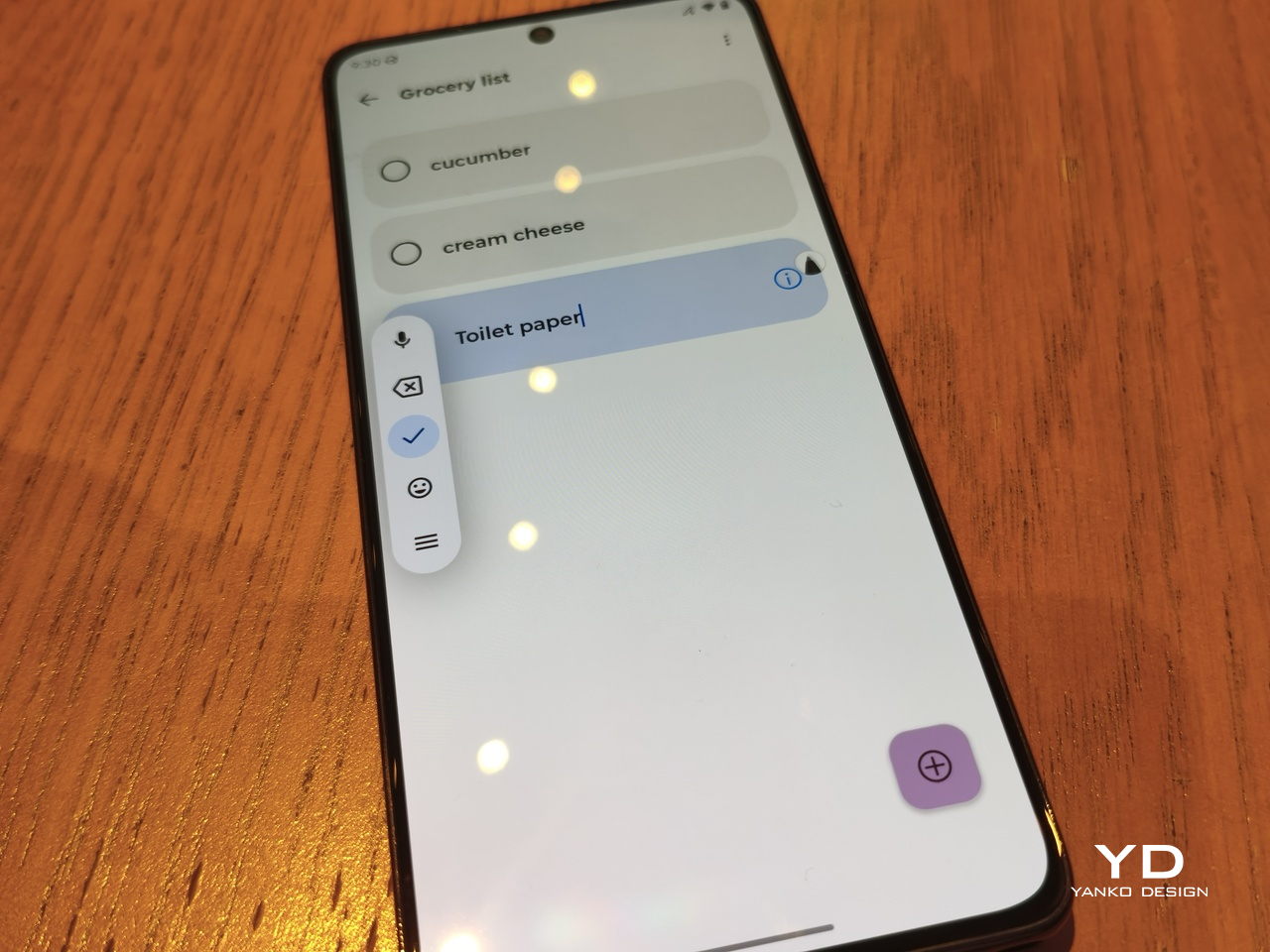
That said, that price could be a bit justifiable, especially if you factor in how electronics prices are going up these days anyway. For that amount, you get a solid, reliable, and beautiful phone that is almost literally a digital Field Notes notebook in your pocket. Considering that the closest competition is actually a $1,300 Samsung Galaxy S26 Ultra, then there’s almost no contest. Sure, it doesn’t have the glamorous bells and whistles, but neither would a trusty notebook.

Verdict

More than any mainstream smartphone in the market today, the moto g stylus – 2026 is clearly aimed at a particular audience: people who don’t want their productivity and creativity to be hampered by not having their notebook or their computer around. They say the best tool is the one that you have with you, and almost everyone has their smartphone in their pocket. And what better way to capture fleeting inspiration or sketch inspiring vistas than by whipping out your phone and pulling out the stylus?

By no means is the moto g stylus – 2026 perfect. In fact, you might even call it dated if you judged it by its specs alone. But with a talented stylus, a gorgeous screen, a reliable battery, and a beautiful minimalist design, it is definitely worth every penny. There is no perfect productivity tool or notebook, but the moto g stylus – 2026 comes pretty darn close.
The post moto g stylus 2026 Review: Accessible Pocket Productivity and Creativity first appeared on Yanko Design.