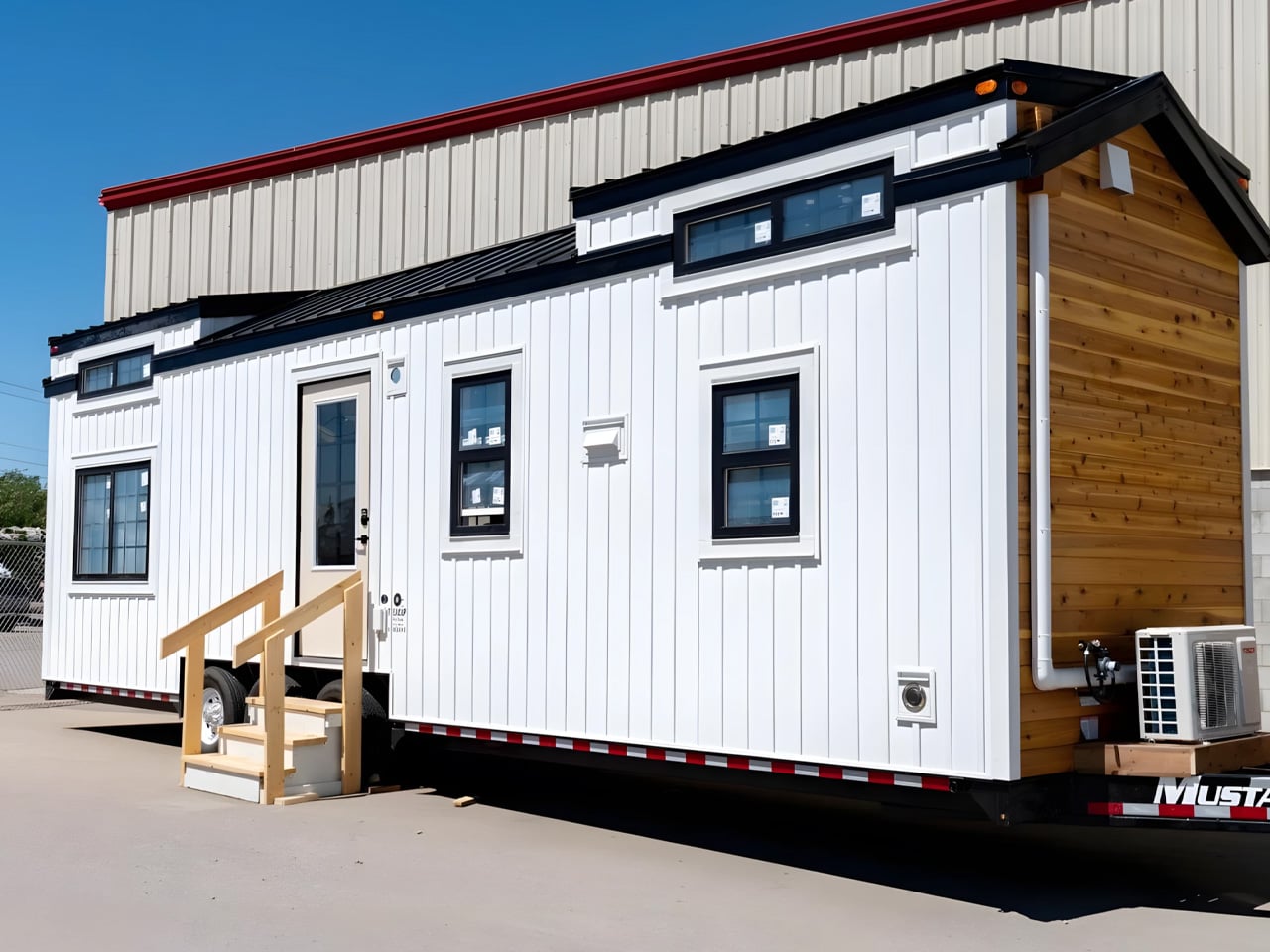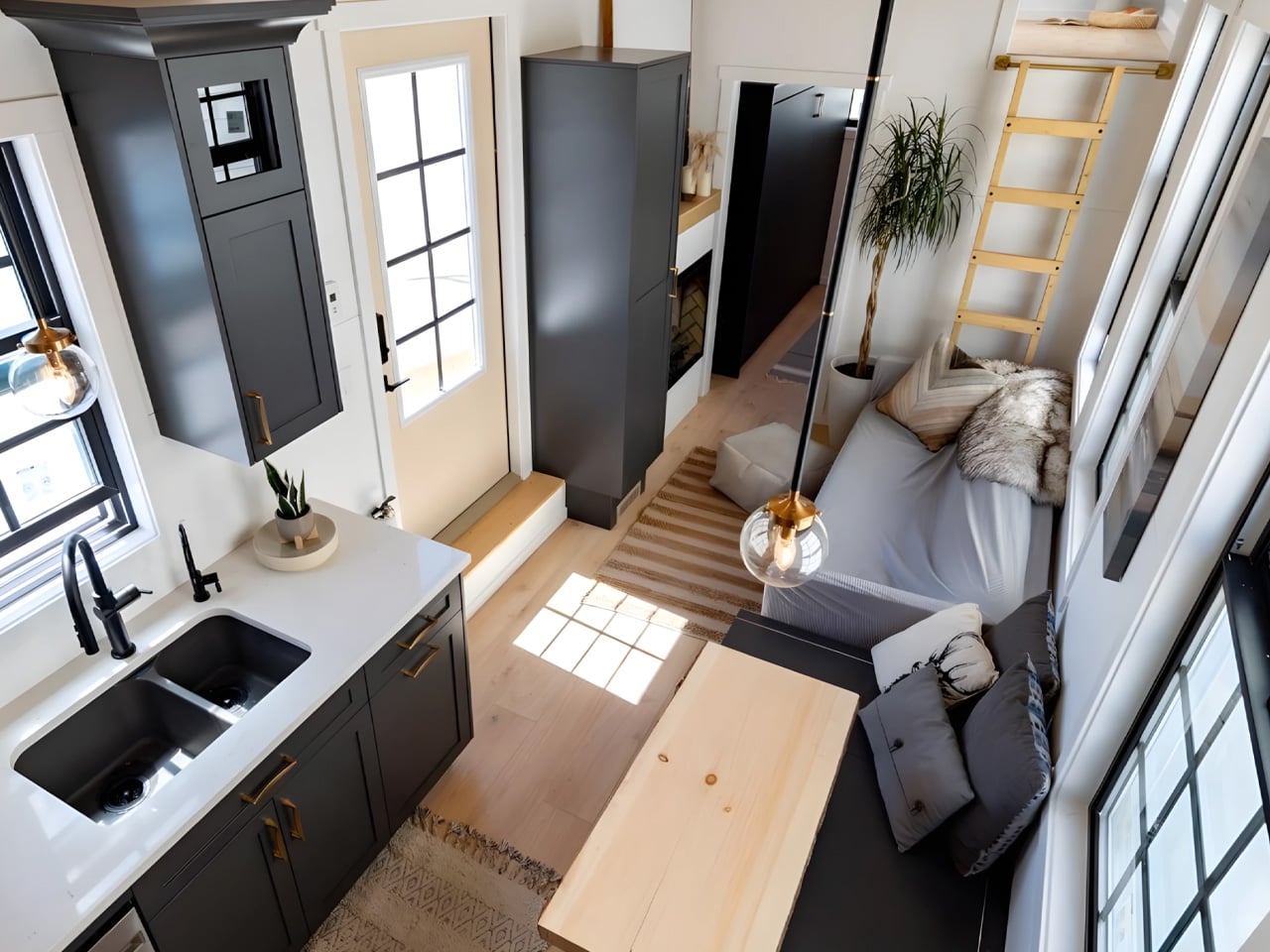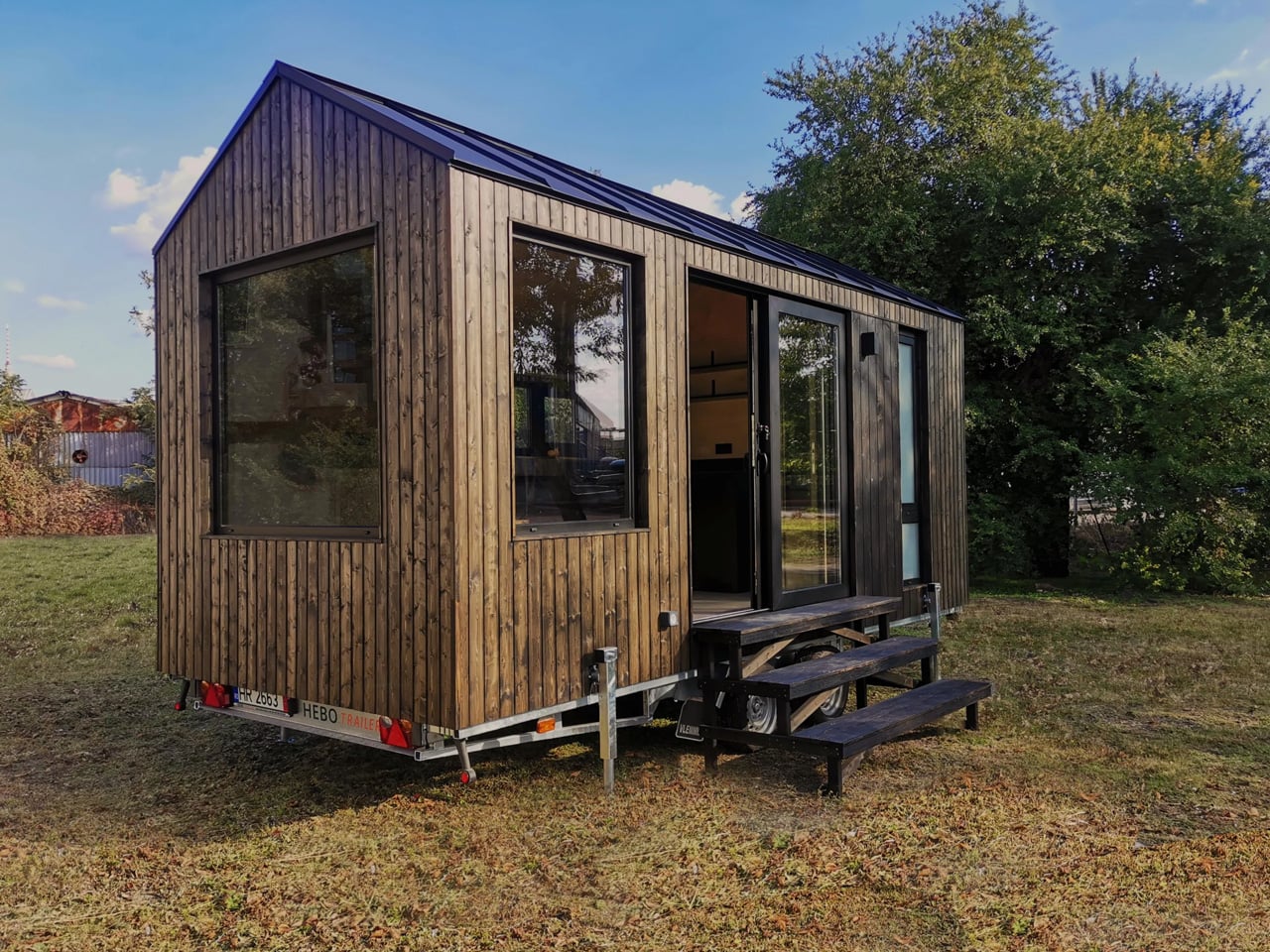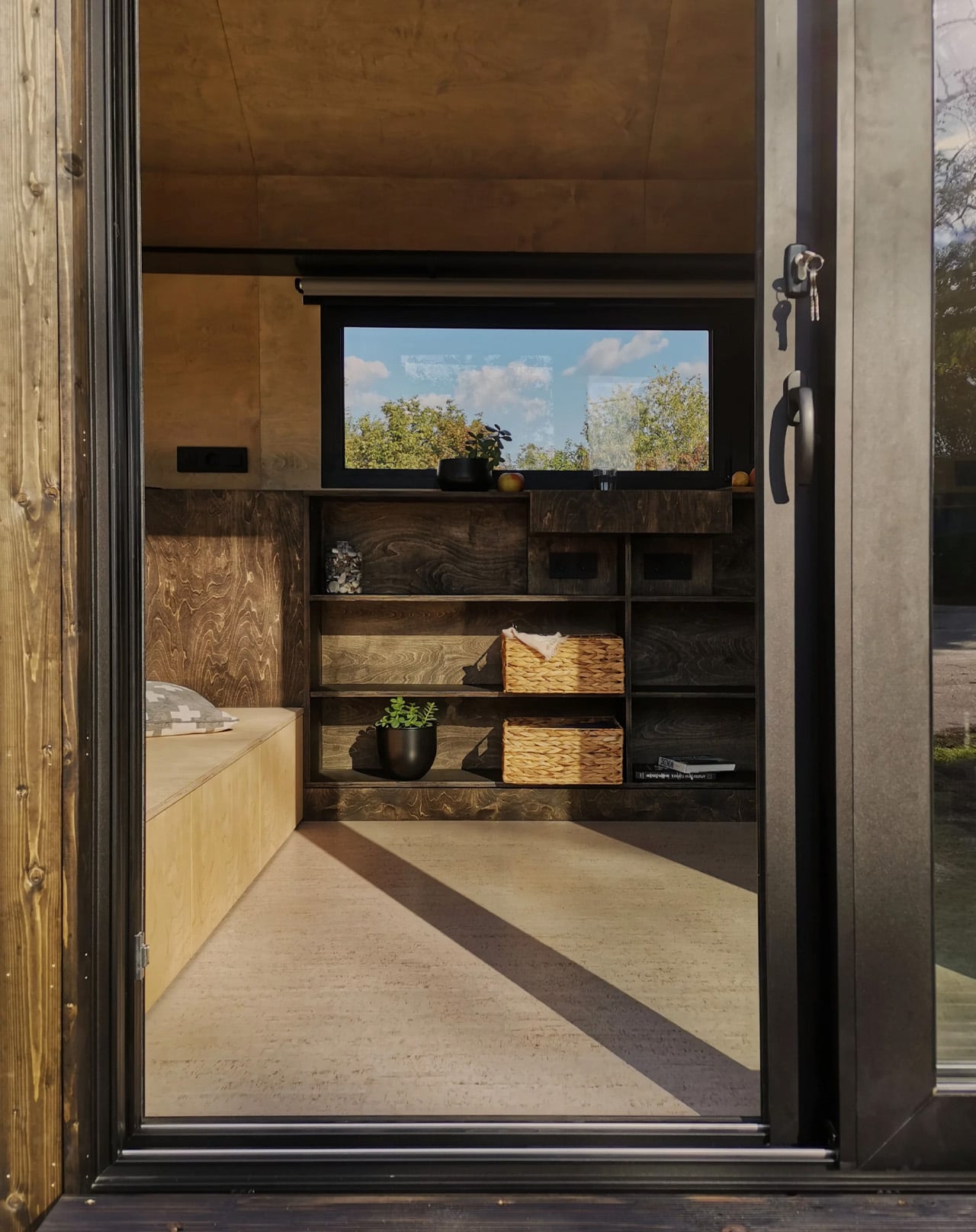
5 Best Shipping Container Tiny Homes of January 2026

Shipping container architecture continues to reshape residential design as we move into 2026. What began as a niche solution for sustainable living has matured into a mainstream housing option that balances affordability with architectural ambition. The current market shows container homes increasingly designed with modern interiors, smart home systems, and architectural detailing that support long-term residential use rather than temporary installations.

The designs featured this month represent the cutting edge of container home innovation. From compact 20-foot single-container retreats to expansive multi-container configurations, these homes prove that repurposed steel can create spaces that feel generous, light-filled, and remarkably comfortable. Each project demonstrates how thoughtful design transforms industrial materials into environments worth calling home, addressing both spatial efficiency and livability in ways that traditional construction often struggles to match.

1. Double Duo by Custom Container Living

Custom Container Living’s Double Duo reimagines what’s possible when you move beyond single-container limitations. Using two 40-foot containers positioned to create 640 square feet of interior space, this design offers room to breathe that most tiny homes simply can’t match. The layout includes a generous living area, two separate bedrooms, and two full bathrooms, making it suitable for families or those who refuse to compromise on personal space. The exterior flexibility allows buyers to choose between raw industrial steel or warmer wood cladding, giving each home a distinct character.

Step through the entrance and the difference becomes immediately apparent. The living room accommodates full-sized furniture without feeling cramped, with space for an entertainment center, substantial sofa, and coffee table that wouldn’t look out of place in a conventional home. The kitchen runs adjacent to this social space, equipped with double sinks, a proper four-burner propane stove with oven, a fridge/freezer, and a microwave. Those willing to invest in upgrades can add a dishwasher and stacked washer/dryer, while abundant cabinetry ensures storage never becomes an afterthought in daily life.

What We Like

  • Dual-container configuration creates genuine room separation instead of forcing everything into one open space.
  • Two bathrooms eliminate morning conflicts and make hosting guests far more comfortable.
  • Kitchen rivals what you’d find in many traditional homes with its appliance selection and counter space.
  • Exterior customization options let owners express personal style rather than accepting a one-size-fits-all aesthetic.

What We Dislike

  • Larger footprint requires more land than ultra-compact container homes, which may limit placement options.
  • Using two containers increases both initial cost and complexity compared to simpler single-container builds.
  • A propane stove means ongoing fuel management rather than the simplicity of all-electric systems.
  • Industrial origins still show in ceiling height and structural elements despite the spacious floorplan.

2. Teeny Tiny Haus by Backcountry Containers

Backcountry Containers’ Teeny Tiny Haus in Stonewall, Texas, proves you can fit a complete vacation home into a single 20-foot container. At just 130 square feet, this retreat matches the footprint of compact European tiny houses while maintaining all essential functions. The design includes a dedicated bedroom area, a functional kitchen, and a full bathroom, all within steel walls measuring 20 feet long and 8 feet wide. Every inch serves a purpose, with the layout optimized to prevent the space from feeling cramped despite its minimal dimensions.

The success of the Teeny Tiny Haus lies in spatial efficiency rather than compromise. The bedroom accommodates a proper sleeping area without sacrificing access or comfort, while the kitchen includes the necessary appliances and prep space for actual cooking rather than just reheating. The full bathroom means no awkward outdoor facilities or makeshift shower arrangements. For couples seeking a weekend escape or solo travelers wanting a personal retreat, the compact footprint becomes an asset rather than a limitation, requiring minimal maintenance while delivering maximum function in a vacation property context.

What We Like

  • Complete home functionality packed into 20 feet demonstrates exceptional space planning.
  • Texas Hill Country location provides a proven example of climate-appropriate container living.
  • Compact size means lower heating and cooling costs that keep ongoing expenses manageable.
  • Single-container format simplifies both initial setup and any future relocation needs.

What We Dislike

  • 130 square feet pushes livability boundaries for anything beyond weekend use.
  • Limited storage means careful editing of belongings becomes essential.
  • The narrow 8-foot width restricts furniture choices and traffic flow patterns.
  • Small footprint makes hosting guests impractical beyond very brief visits.

3. Mark T by Sonic Steel

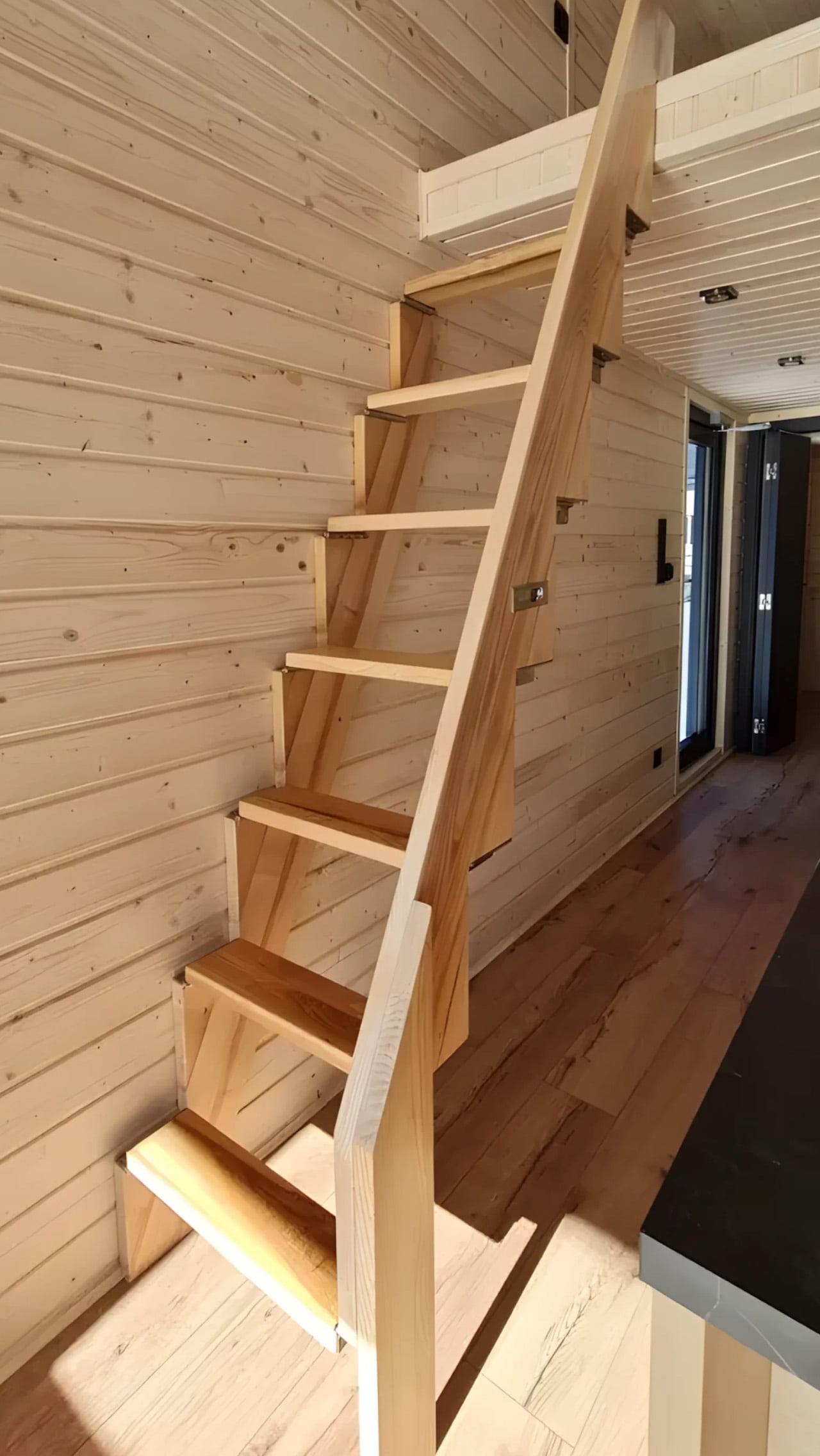
Sonic Steel’s Mark T in Port Neil, South Australia, takes a vertical approach by stacking three containers into a light-filled coastal retreat. The 40-foot high-cube container forms the main living level, while a compact 7-foot module houses the staircase connection, and a 20-foot unit creates an elevated master bedroom. Painted uniformly black, the exterior sheds any obvious industrial appearance, looking more like intentional modern architecture than repurposed shipping materials. The stacked configuration creates distinct zones within the home rather than relying on open-plan compromises.

Walking through reveals attention to residential comfort at every turn. The central kitchen anchors the main floor, designed to encourage gathering rather than isolation during meal prep. Generous windows throughout both levels flood spaces with natural light, while luxury vinyl flooring and powder-coated tapware add refinement that distances the home from its cargo container origins. The bathroom includes a proper shower, sink, and odorless composting toilet that reduces water consumption without sacrificing functionality. A Rheem gas hot water system handles domestic needs, with electrical and plumbing arriving ready for connection to simplify the installation process.

What We Like

  • Stacked design creates true room separation between living and sleeping areas.
  • Coastal Australian setting showcases how containers adapt to challenging salt-air environments.
  • Generous windows throughout both levels maximize natural light and cross-ventilation.
  • Pre-installed systems reduce on-site construction time and complexity.

What We Dislike

  • The staircase between levels creates accessibility challenges for those with mobility limitations.
  • Stacked configuration requires more complex foundation and structural engineering than ground-level designs.
  • The black exterior absorbs significant heat in sunny climates despite the coastal location.
  • Custom nature of the three-container system limits standardization and economies of scale.

4. The Nook

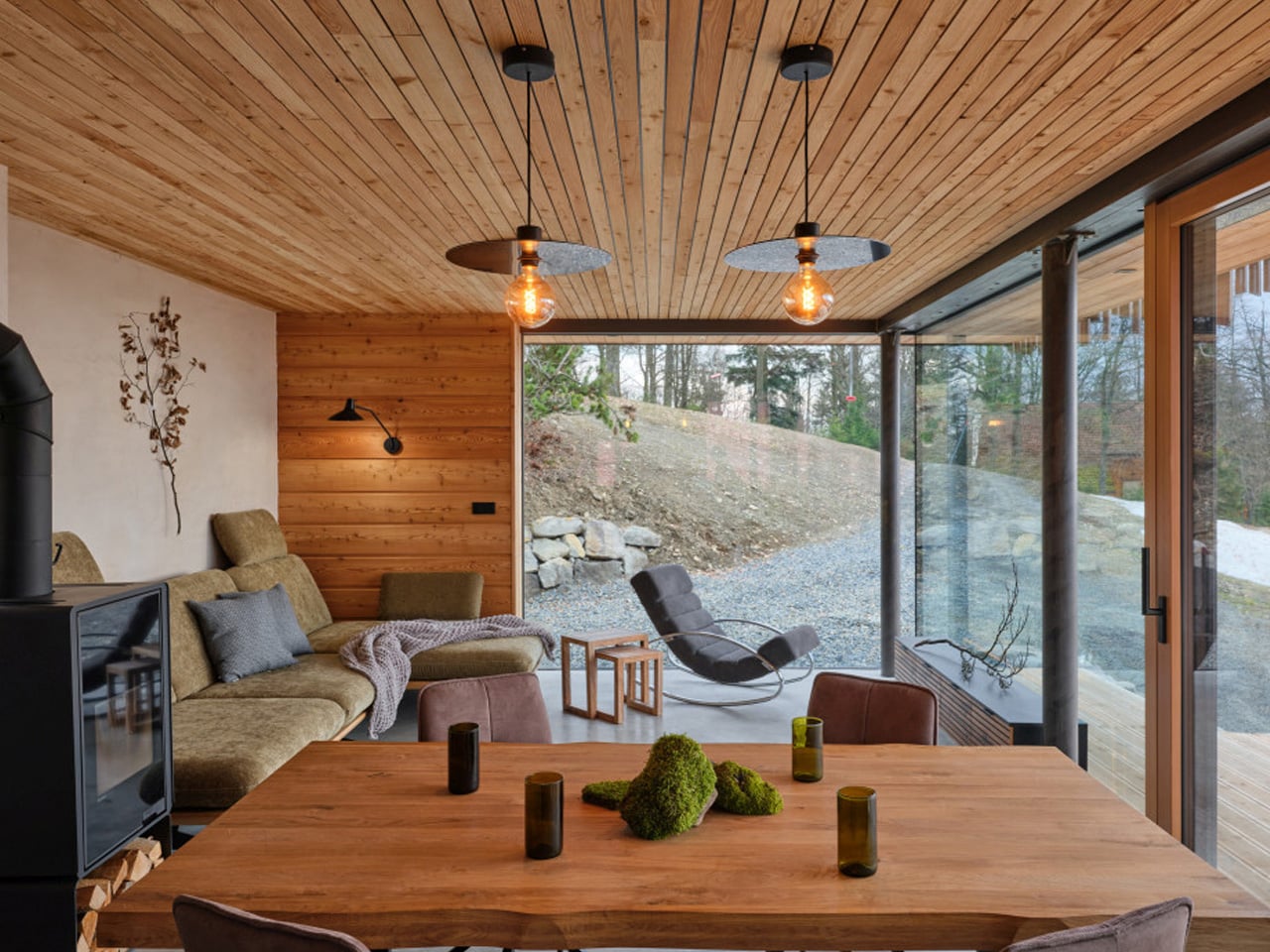
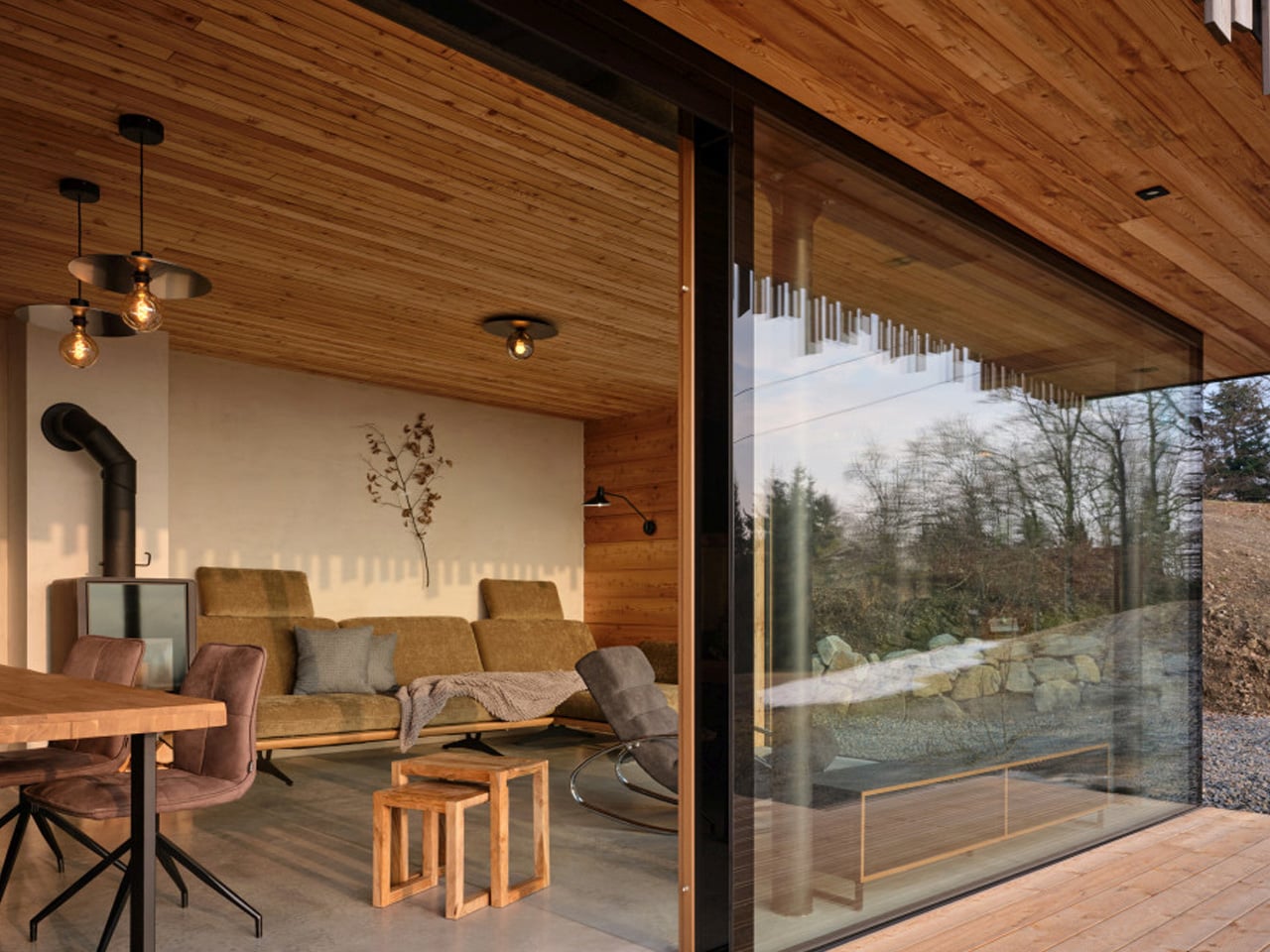
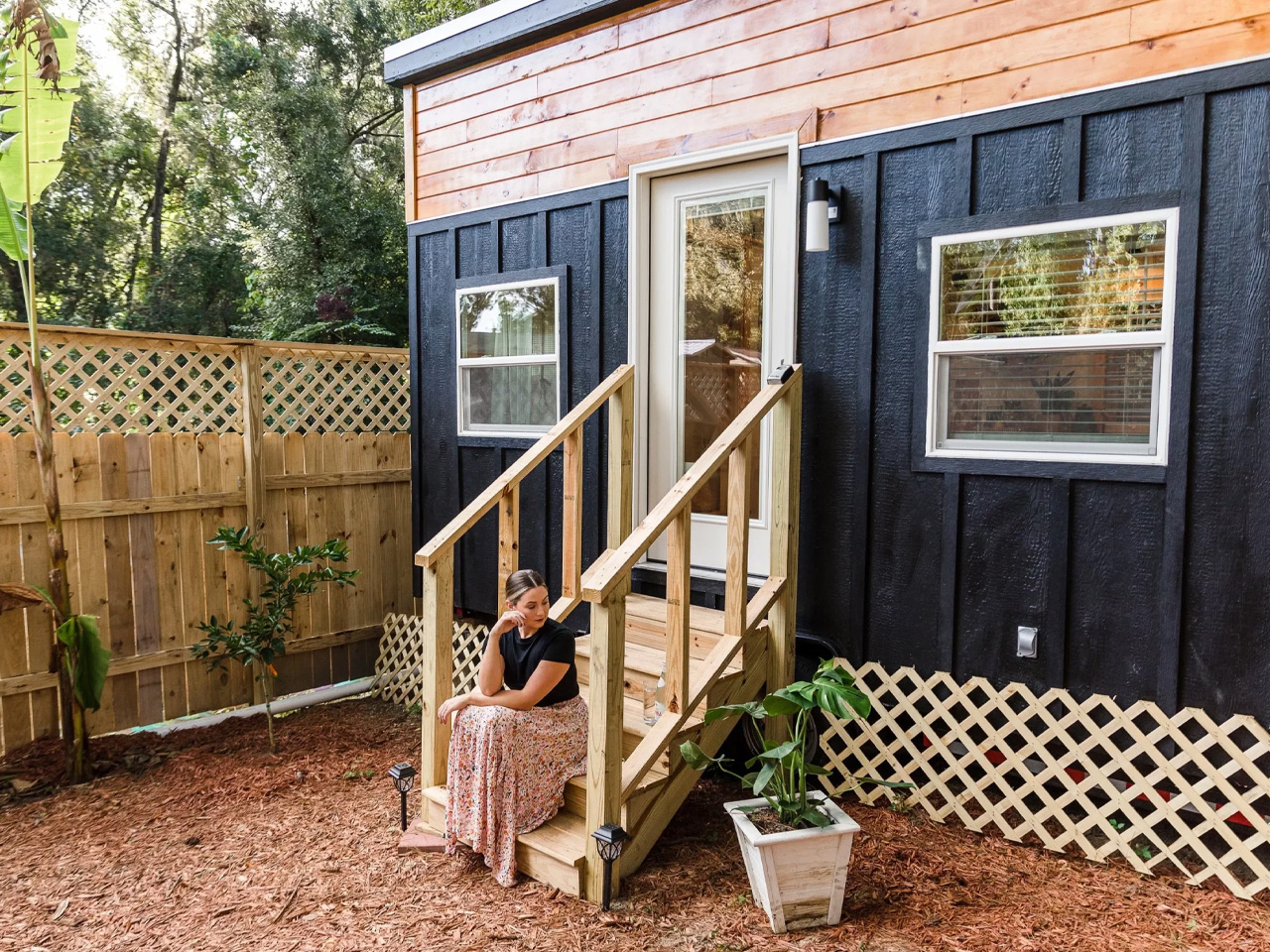
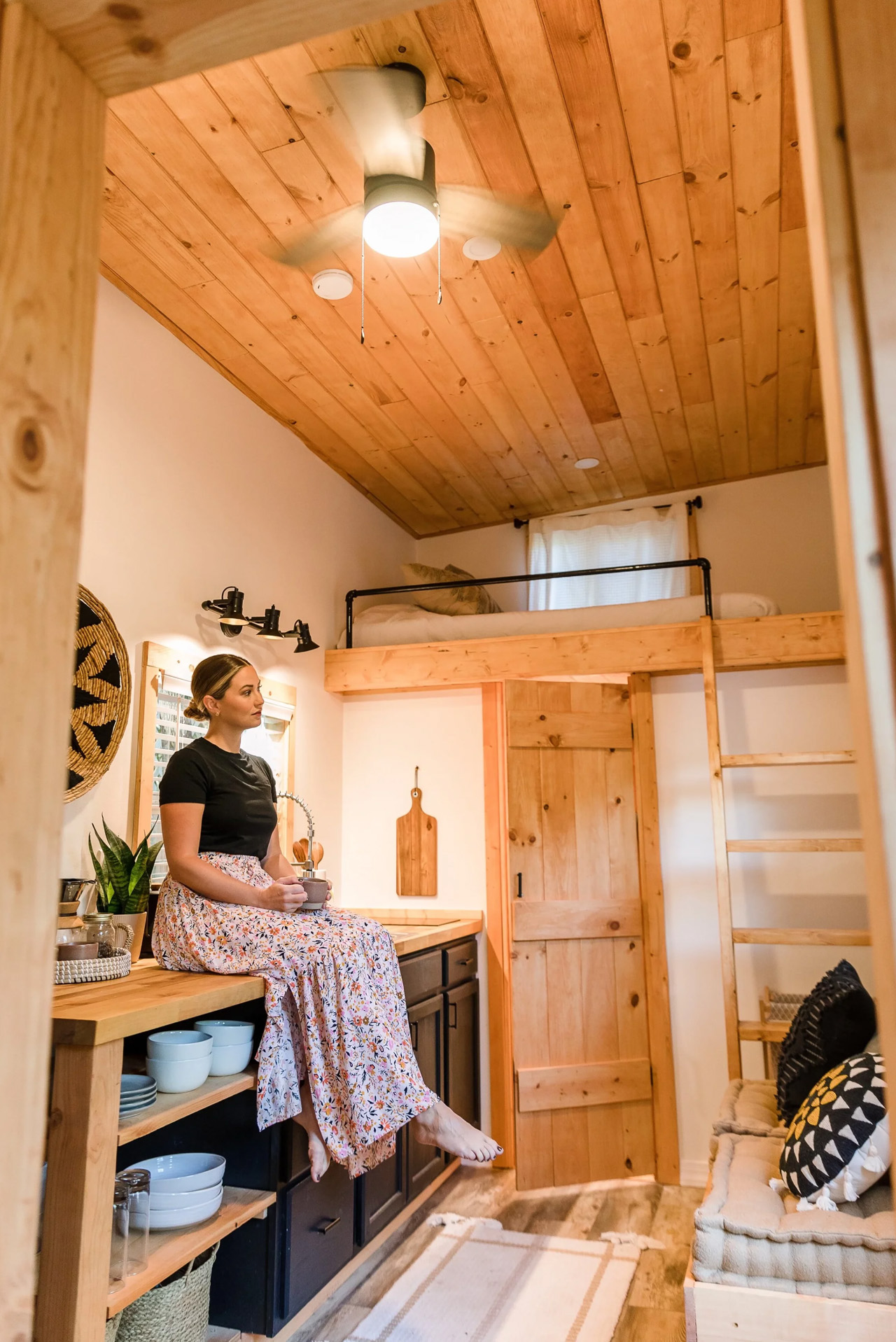
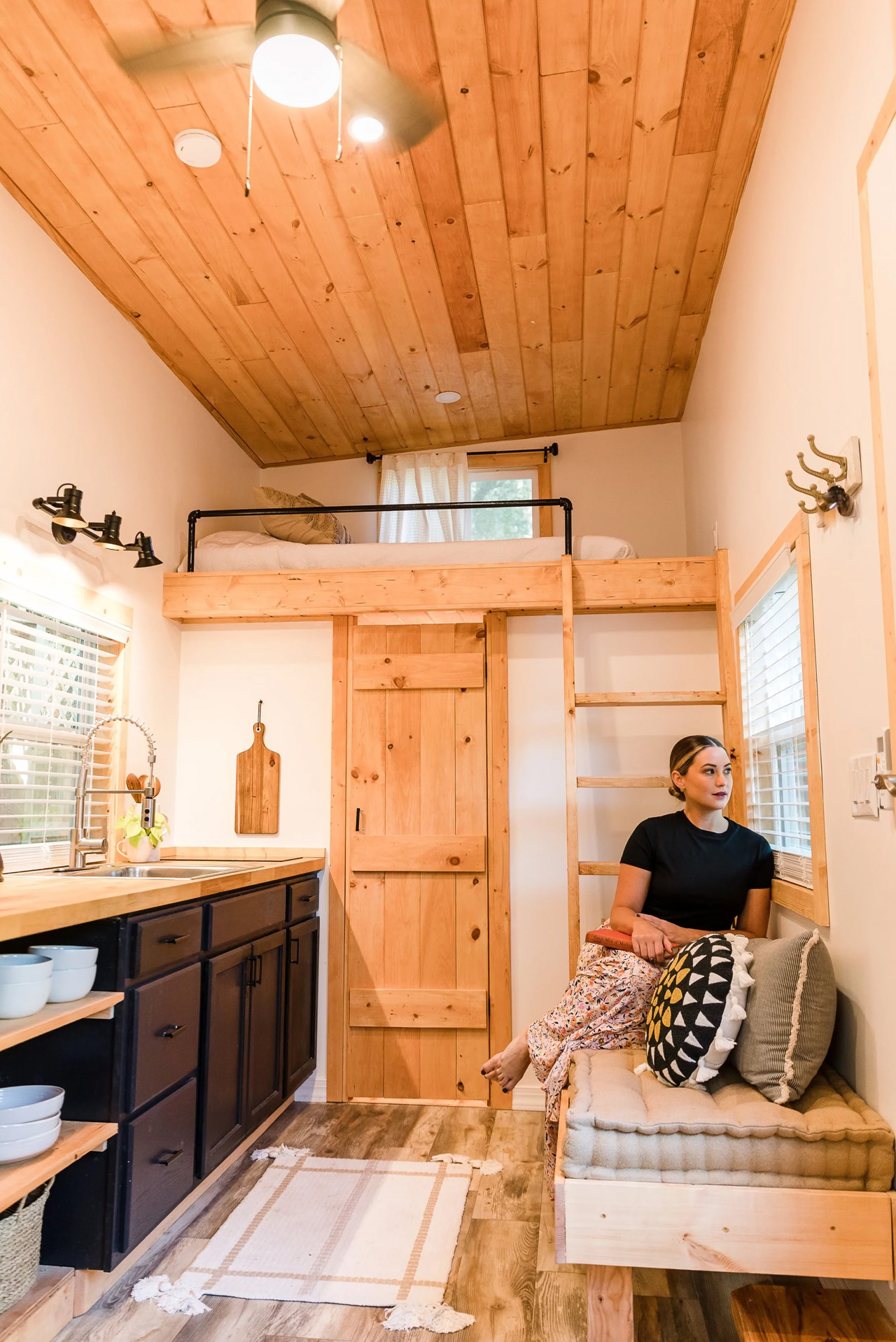
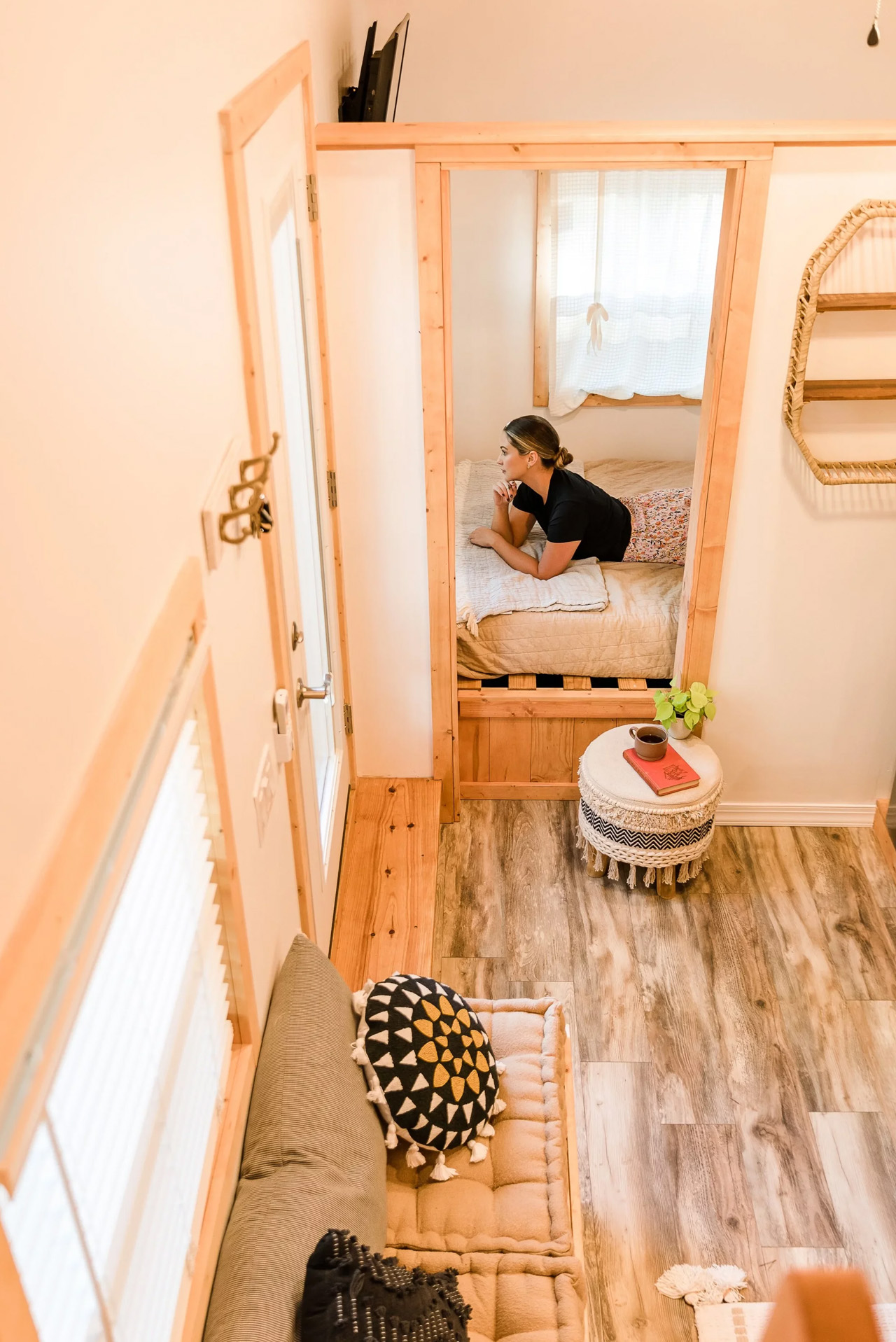
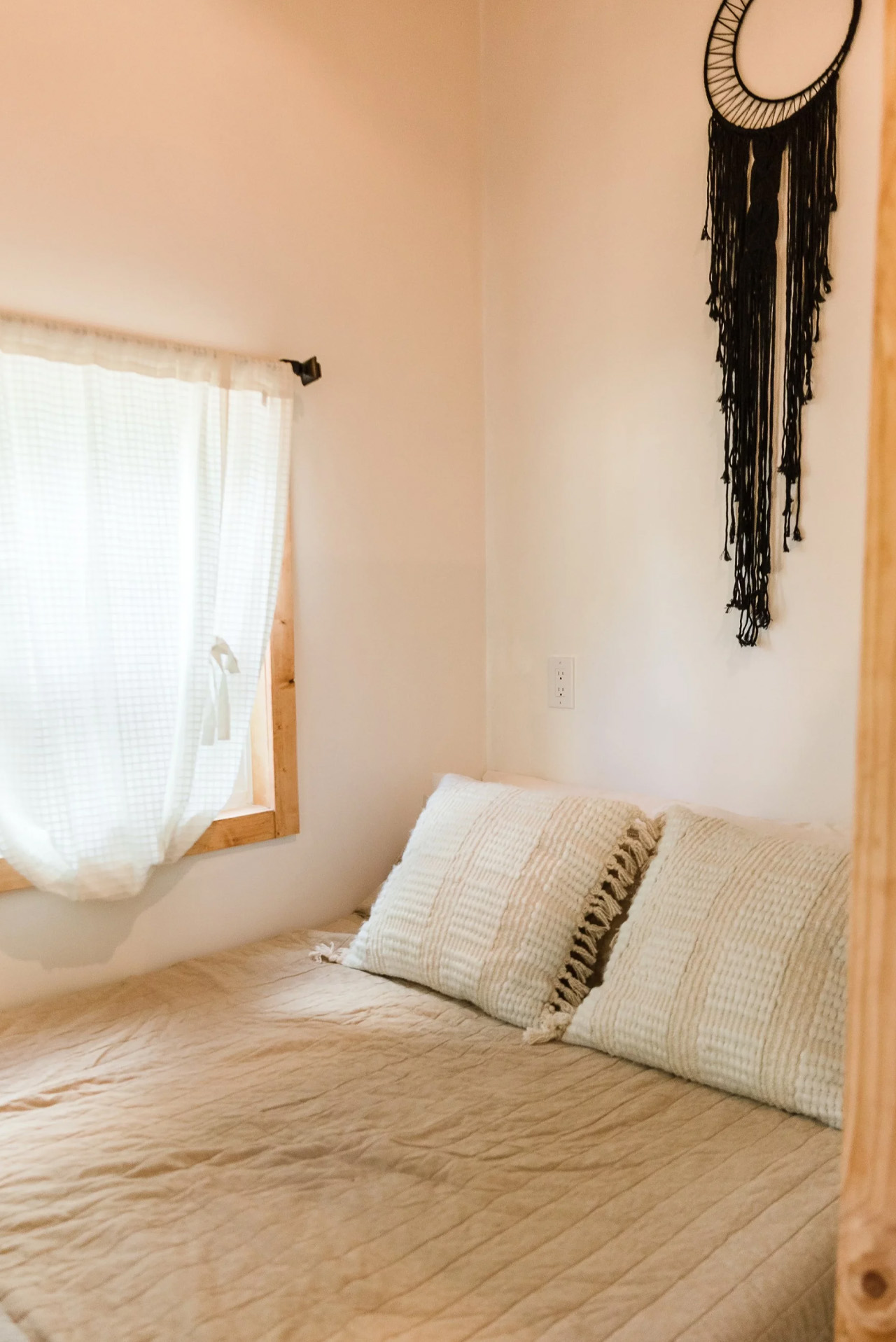
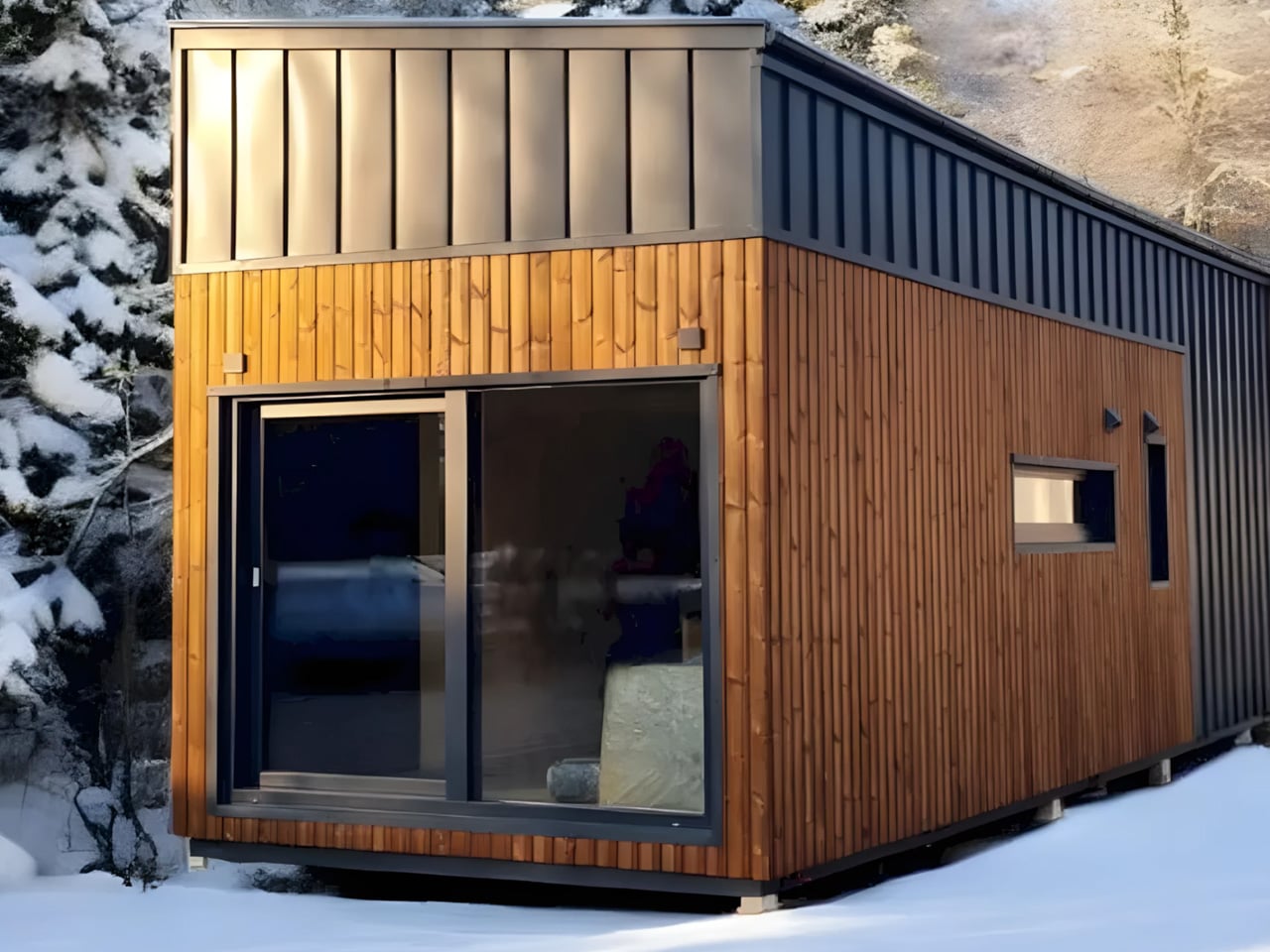
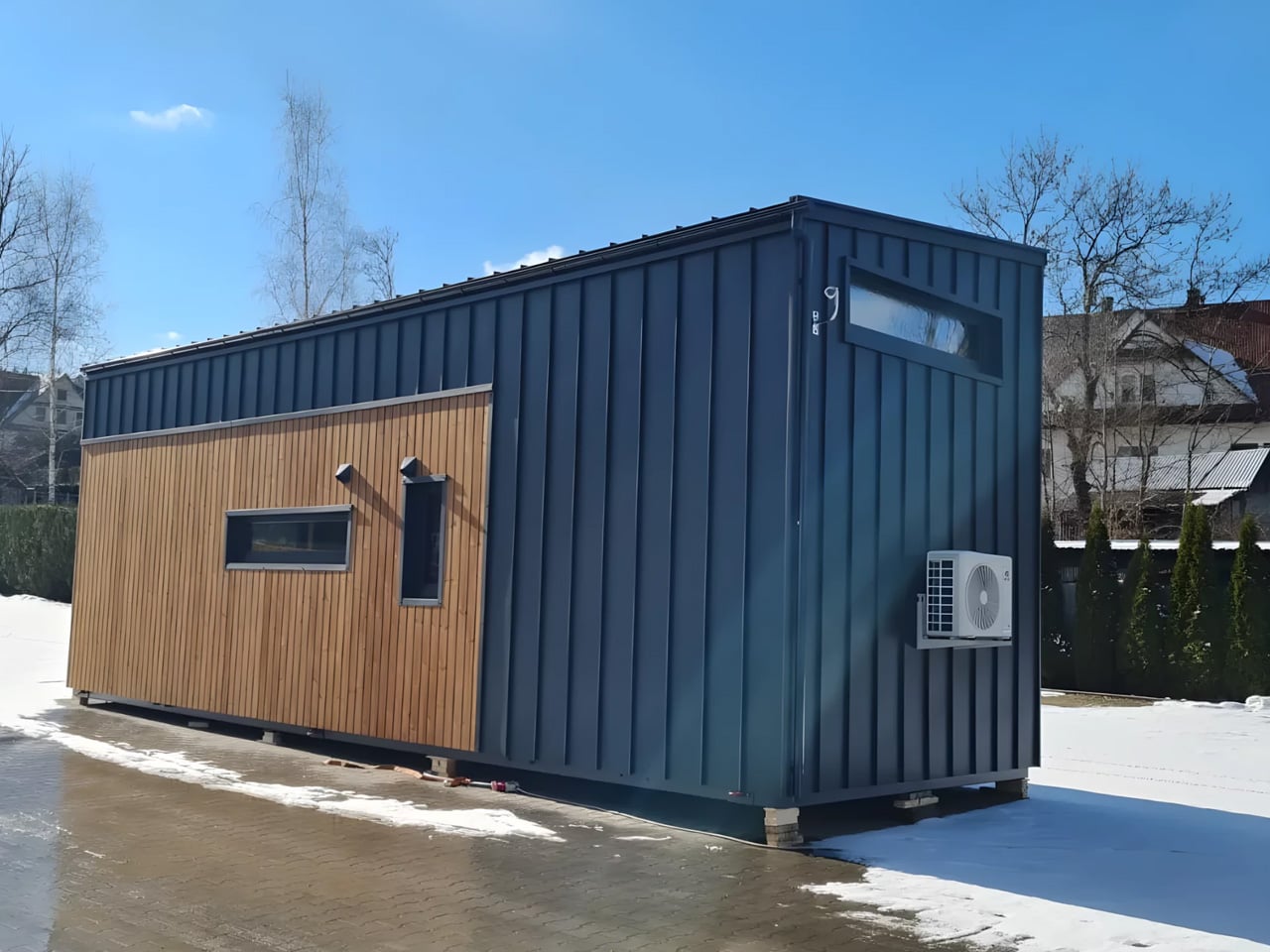
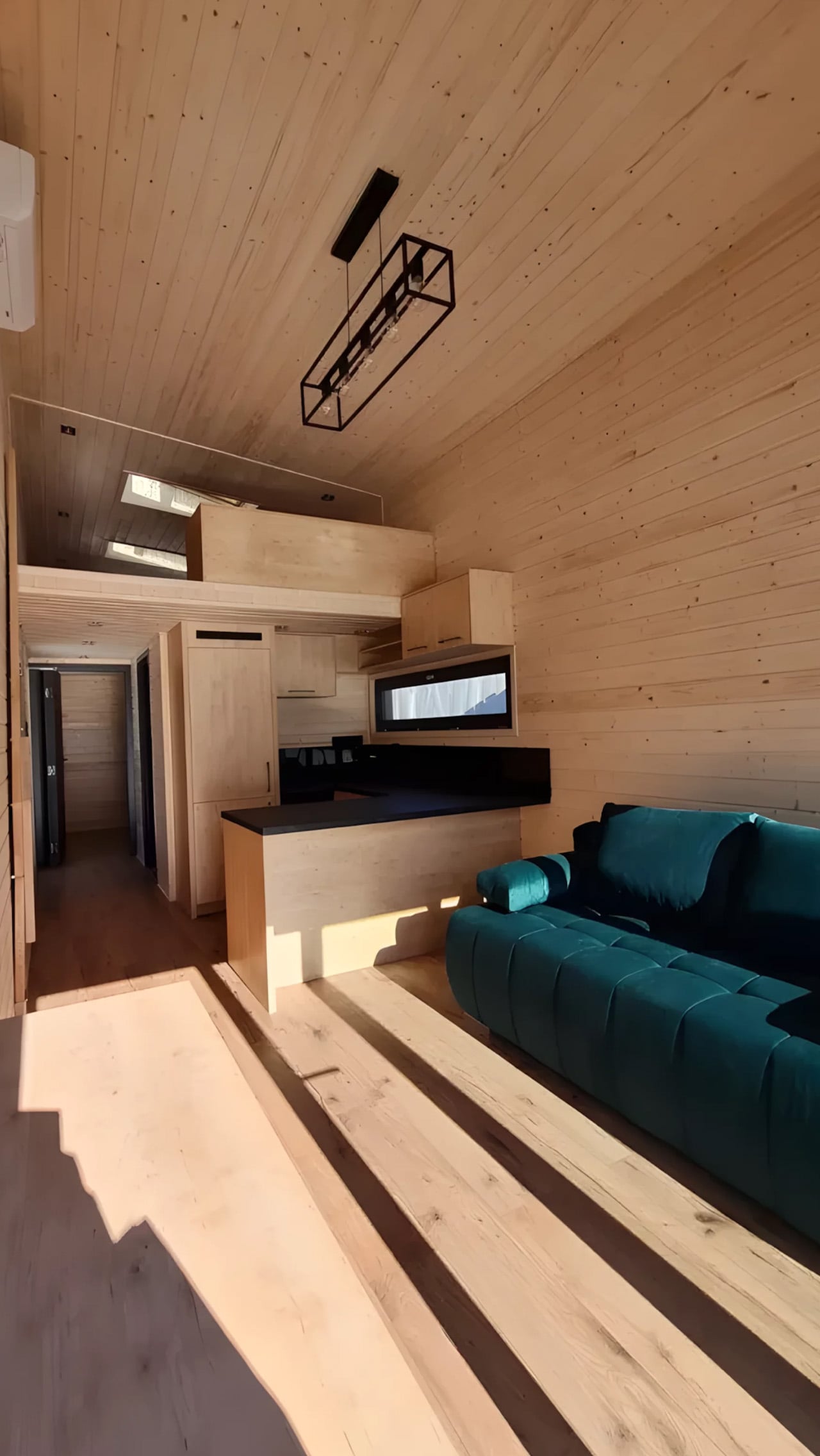
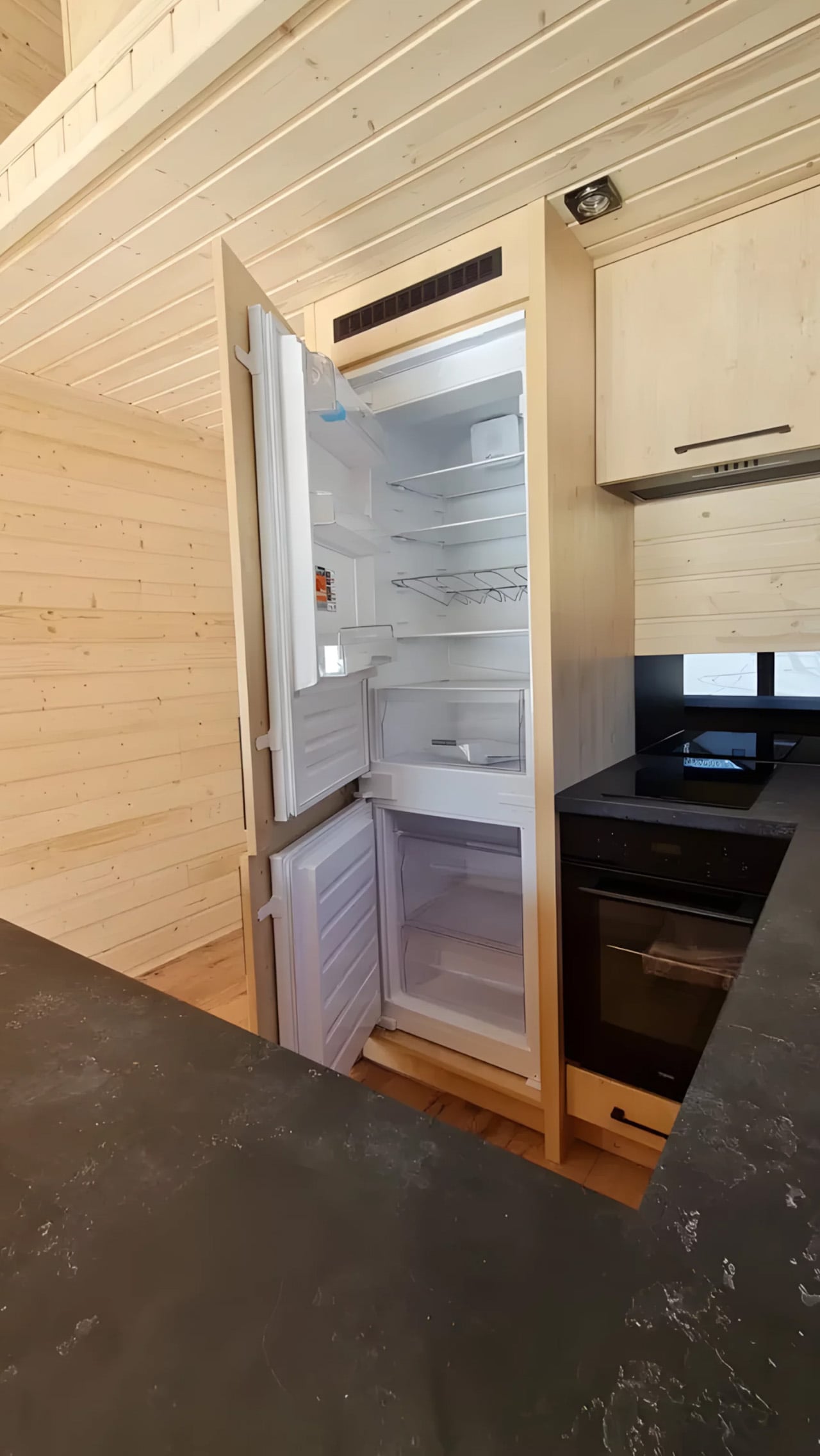
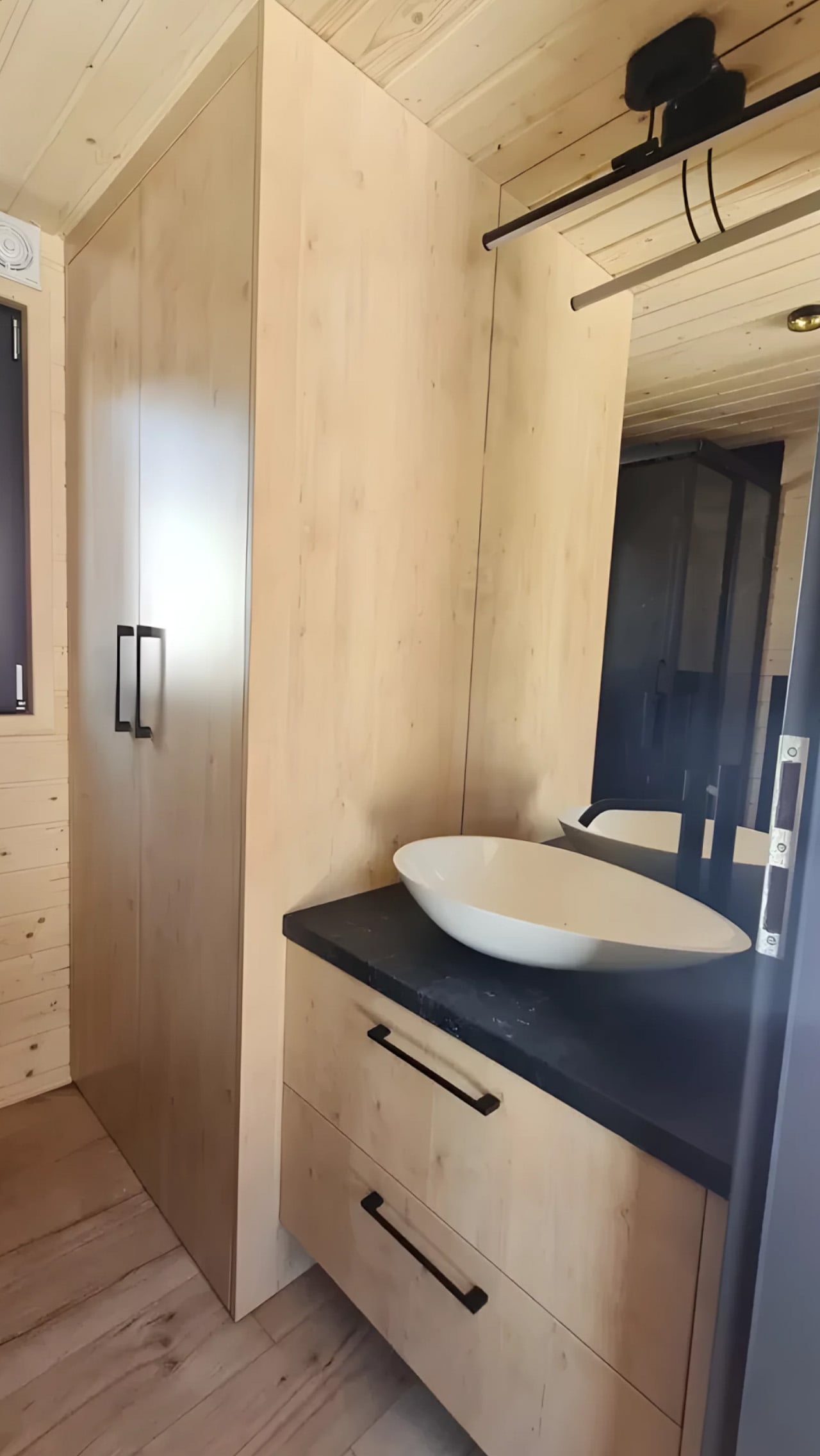
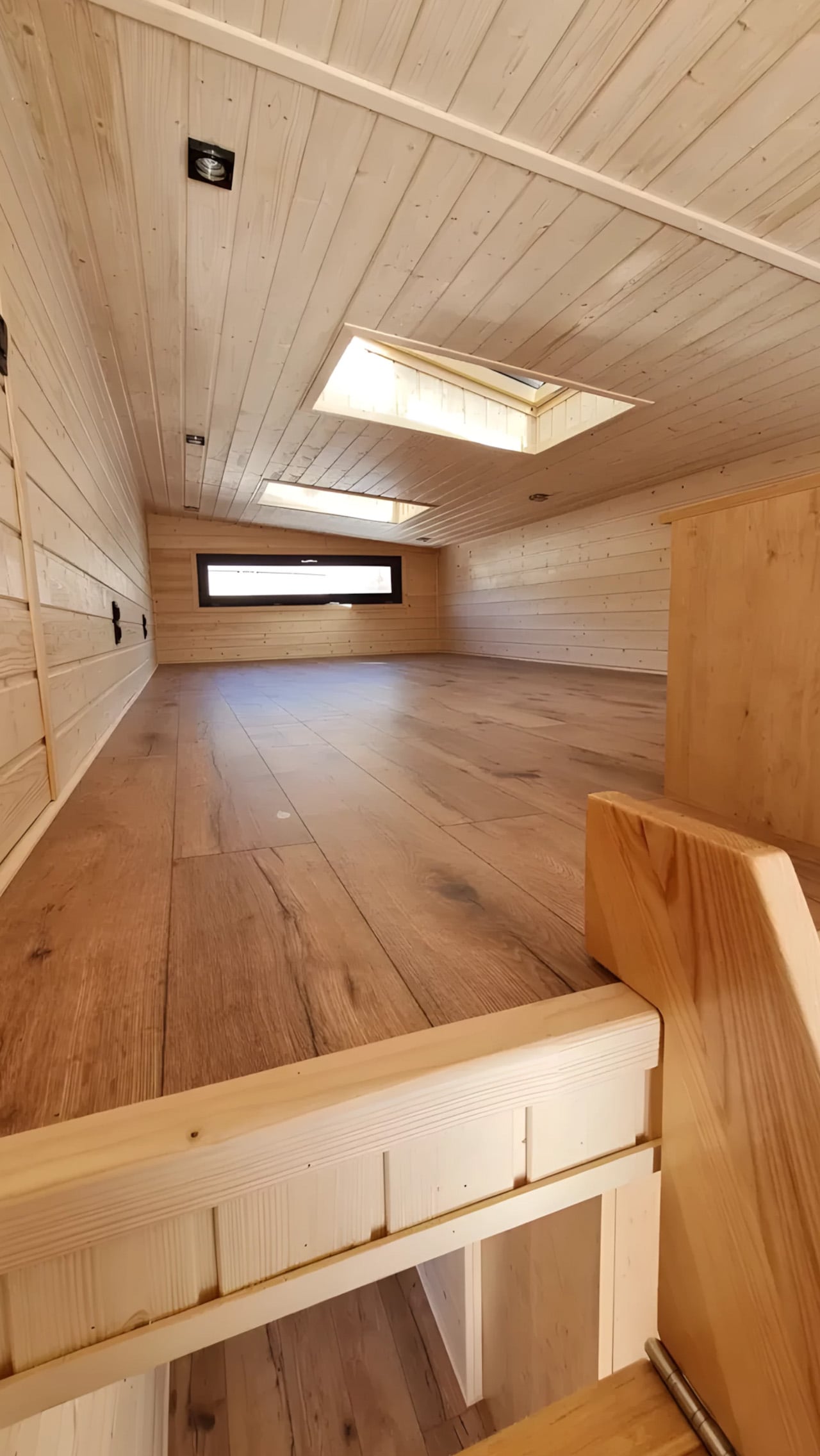
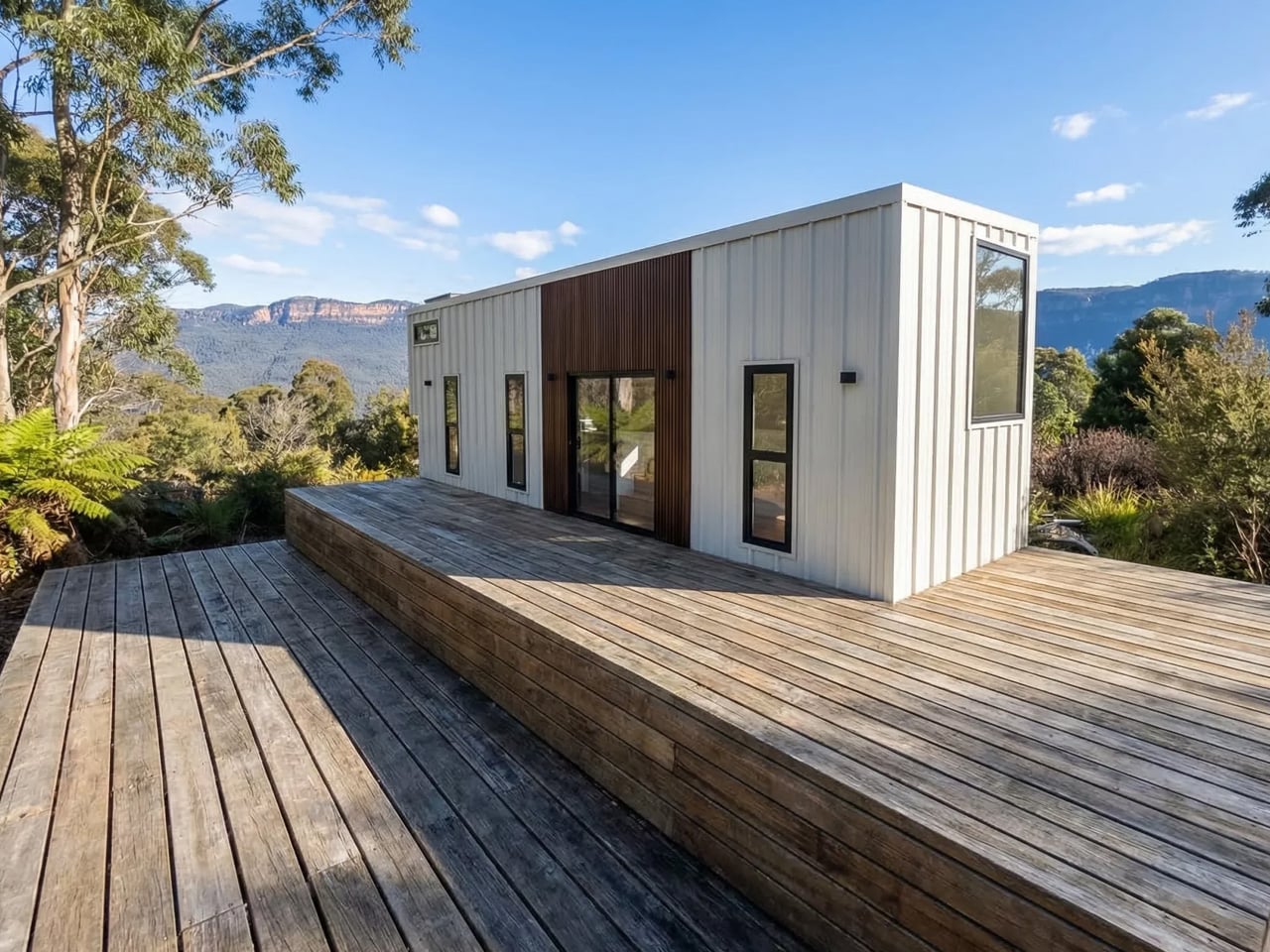
The Nook demonstrates how a single 20-foot shipping container can become a contemporary home for solo dwellers or minimalist couples. At 160 square feet, this compact residence offers slightly more breathing room than ultra-tiny alternatives while maintaining exceptional affordability. The black steel exterior paired with cedar accent panels creates a modern aesthetic that turns heads without requiring extensive customization. Inside, the efficient layout positions the sleeping area, kitchenette, and bathroom within easy reach, eliminating wasted circulation space while maintaining clear functional zones throughout the compact floorplan.

Closed-cell foam insulation throughout the ceiling, walls, and floor ensures year-round comfort regardless of external temperature swings, making the home viable in varied climates rather than limiting it to temperate regions. Strategic window and door placement maximizes natural light penetration and outdoor views, creating an unexpectedly airy atmosphere despite the modest square footage. The Nook serves multiple purposes beyond primary residence, working equally well as a guest suite, home office, or studio space. The budget-friendly approach makes container living accessible to first-time tiny home buyers or those needing auxiliary space without major financial commitment.

What We Like

  • Cedar accents warm the industrial aesthetic without requiring full exterior cladding.
  • Closed-cell insulation addresses thermal performance concerns that plague many container conversions.
  • Multiple use cases beyond the primary dwelling extend practical value.
  • Entry-level price point opens container living to broader audiences.

What We Dislike

  • 160 square feet still requires a significant lifestyle adjustment and belongings editing.
  • Kitchenette designation suggests appliance limitations compared to full kitchen setups.
  • Single-container format means no room for expansion without major reconfiguration.
  • A compact bathroom likely means space constraints for fixtures and storage.

5. Rising Sun by UnContained Dreams

UnContained Dreams’ Rising Sun makes the most of its 9.6-foot height and 8-foot width to create a comfortable, compact home. The design addresses thermal performance head-on, applying closed-cell spray foam to all interior surfaces, including the ceiling, floor, and walls. This insulation strategy keeps the interior cozy during winter months and cool throughout summer, solving one of container architecture’s most persistent challenges. Multiple strategically placed windows ensure the space stays bright and inviting despite the narrow footprint, with thoughtful positioning that maintains privacy while maximizing daylight penetration.

The exterior combines metal with wood trim, achieving a functional appearance that balances industrial utility with residential warmth. Doors cut into the container provide practical entry points and ventilation options, while the interior layout allocates space for all essential living functions without feeling cramped. Rising Sun targets buyers seeking straightforward, well-insulated housing that requires minimal ongoing maintenance. The design philosophy emphasizes practical solutions over architectural showmanship, delivering a home that performs reliably across varying climate conditions while remaining accessible to those new to alternative housing models.

What We Like

  • Comprehensive spray foam insulation eliminates the thermal bridging issues common in container homes.
  • Taller 9.6-foot height creates more interior volume than standard container dimensions.
  • Metal and wood exterior combines durability with visual appeal.
  • Straightforward design reduces complexity and potential maintenance headaches.

What We Dislike

  • 8-foot width constrains furniture placement and room layout options significantly.
  • Emphasis on practicality means less architectural drama than more ambitious container projects.
  • Compact dimensions limit suitability for families or those working from home.
  • Single-container format offers no expansion possibilities without adding separate modules.

Making the Right Choice

Container home architecture has evolved far beyond its experimental origins into a legitimate housing category. The five homes featured here represent different approaches to the same fundamental challenge: transforming industrial steel boxes into comfortable living environments. From the spacious Double Duo to the ultra-compact Teeny Tiny Haus, each design makes specific trade-offs between space, cost, and complexity that suit different buyer priorities and lifestyle requirements.

The current market reflects growing sophistication in container home design, with builders addressing insulation, natural light, and spatial efficiency more effectively than early pioneer projects. Whether you’re drawn to vertical stacking like the Mark T or prefer ground-level simplicity like The Nook, January 2026 offers container home options that feel less like compromises and more like intentional architectural choices. These homes prove that starting with shipping containers doesn’t mean accepting industrial aesthetics or cramped quarters in your final living space.

The post 5 Best Shipping Container Tiny Homes of January 2026 first appeared on Yanko Design.

What If Your Spoon Could Evolve? This Designer Found Out

We use spoons dozens of times a day without giving them a second thought. They’re just there, scooping soup, stirring coffee, delivering cereal to our mouths with mechanical reliability. But BKID co asked a question that sounds almost absurd at first: what if spoons were alive? What if they could evolve like living organisms, adapting to their environment through the same forces that shaped every creature on Earth?

The result is Evolving Spoon, a project that treats cutlery like a species subject to Darwin’s rules. It’s part design experiment, part philosophical thought exercise, and entirely fascinating to look at.

Designer: BKID co

The premise starts with a simple observation. Spoons exist in a constantly changing ecosystem of human behavior. We eat different foods, adopt new dining styles, and our household compositions shift over time. If a spoon were a living thing responding to these environmental pressures, how would it transform? Would it grow branches to grip noodles better? Develop a hook for hanging? Split into multiple heads for sharing?

BKID co applied four key principles of Darwinian evolution to answer these questions. Recombination, where traits from different “parent” spoons merge to create hybrid offspring. Mutation, introducing random variations that might prove useful or utterly bizarre. Natural selection, where the most functional forms survive while impractical ones fade away. And the handicap principle, the counterintuitive idea that sometimes a costly trait signals quality, like a peacock’s unwieldy tail.

What emerges from this framework is a collection of spoons that look like they belong in a natural history museum of an alternate universe. There’s one with a spiraling corkscrew handle, as if it adapted to stir thick liquids with maximum efficiency. Another splits into a tulip shape at the bowl, perhaps “evolving” to let multiple people eat from the same dish. A green spoon sprouts a small branch from its handle, like it’s halfway between cutlery and plant life.

Some designs feel almost uncomfortably organic. A pink spoon curves with an hourglass figure that suggests it mutated for ergonomic grip. A black spoon with a triangular cutout in its handle looks like it underwent natural selection for lighter weight and material efficiency. Others border on the absurd, which is precisely the point. Evolution doesn’t always produce sleek perfection. Sometimes it creates the platypus or the blobfish, creatures that work despite looking deeply weird.

The technical execution deserves attention too. BKID co used FDM 3D printing, a process that deposits material layer by layer, making each spoon a physical artifact of a future that doesn’t exist. The designers describe it as creating fossils of imaginary life forms. That framing transforms these objects from mere design experiments into something more poetic. They’re evidence of parallel evolution, proof that form follows function even in hypothetical scenarios.

The project’s real brilliance lies in how it makes us reconsider the ordinary. We think of spoons as finished objects, perfected centuries ago and now simply manufactured in endless identical copies. But Evolving Spoon suggests that even the most mundane tools exist in dialogue with their environment. They could adapt, specialize, diversify. A spoon for soup doesn’t need to look like a spoon for ice cream, which doesn’t need to resemble a spoon for medicine.

It also raises questions about design philosophy in an age of digital fabrication. When 3D printers can produce any shape as easily as they produce standard forms, why do we keep making the same objects over and over? Evolution thrives on variation. Maybe our material culture should too. Displayed together, these mutant spoons create a taxonomy of possibilities. Some would actually work better than conventional designs for specific tasks. Others are pure speculation, beautiful or strange but not particularly functional. All of them challenge the assumption that objects are static, that a spoon in 2026 should look identical to a spoon from 1926.

BKID co hasn’t just designed weird spoons. They’ve built a bridge between biology and product design, using evolutionary theory as a creative engine. The result is playful, thought-provoking, and visually arresting. It reminds us that even in the mundane act of eating, there’s room for imagination, adaptation, and a little bit of evolutionary chaos.

The post What If Your Spoon Could Evolve? This Designer Found Out first appeared on Yanko Design.

IndigoGo! Proves You Don’t Need a Loft to Go Tiny

The IndigoGo! by Indigo River Tiny Homes redefines what compact living can look like. This single-level tiny house eliminates the typical loft bedroom found in most mobile dwellings, creating an accessible design that prioritizes ease of movement and travel convenience. Everything is arranged on one level without any lofts, making it an ideal choice for those who want to avoid climbing ladders or navigating stairs in their daily routine. This thoughtful approach opens up tiny living to a broader audience, including those with mobility concerns or anyone who simply prefers the convenience of single-floor living.

Measuring between 10.5 and 11 feet at its tallest point, the IndigoGo! maintains a low profile that makes towing significantly easier than taller models. The interior ceiling height ranges from 8 to 8.5 feet, providing comfortable headroom throughout the home without the climbing required by traditional tiny home designs. This lower roofline not only improves travel convenience but also reduces wind resistance on the road, making the home more fuel-efficient to transport. The single slope roof comes standard, though buyers looking for a more traditional aesthetic can upgrade to a gable roof design.

Designer: Indigo River Tiny Homes

The model’s flexibility stands out as its greatest strength. Available in seven different lengths starting at 16 feet and extending up to 40 feet, the IndigoGo! can accommodate various lifestyle needs and preferences. The 24-foot version offers a sweet spot for those seeking something easy to transport, while the larger configurations approach apartment-sized living spaces. All models are available in a 10-foot width, providing generous space compared to narrower alternatives and making the interior feel more like a traditional home. This range means buyers can select exactly the right size for their needs, whether they’re looking for a minimalist retreat or a more spacious full-time residence.

Indigo River Tiny Homes positions the IndigoGo! as their most economical option when choosing wood framing. For buyers planning frequent moves, the company also offers a SIPs Traveler’s Package, providing lightweight construction paired with enhanced durability that can withstand the rigors of regular travel. The exterior features engineered wood with cedar accents, creating visual warmth while maintaining practical weather resistance against the elements. A small exterior storage box provides additional space for outdoor equipment or travel necessities. These thoughtful design choices balance aesthetics with functionality, ensuring the home looks beautiful while performing well on the road.

Inside, the design maximizes every inch of available space with clever storage solutions and thoughtful layouts. The sleeping area incorporates a queen-sized bed with integrated storage underneath, addressing one of tiny living’s biggest challenges: finding room for belongings. The bathroom doesn’t compromise on quality, offering custom tile and stone surround options that bring a touch of luxury to the compact space. An anti-fogging lighted mirror adds both practicality and ambiance, while custom window shades come standard throughout the home, allowing owners to control light and privacy as needed. The interior layout creates one large multifunctional living area that can be customized based on individual needs and preferences.

Built by the veteran-owned Indigo River Tiny Homes in Texas, each IndigoGo! reflects over 18 years of construction and home-improvement experience. The company emphasizes craftsmanship over cookie-cutter production, creating custom builds designed to withstand daily living for decades rather than serving as occasional vacation retreats. The IndigoGo! rides on a double-axle trailer and is fully road legal, making it easy to tow whether you handle it yourself or hire professionals. One limitation to note: the IndigoGo! doesn’t accommodate a gooseneck upgrade, which some buyers use to create additional overhead space in larger models. For those interested in downsizing without giving up ground-level convenience, the IndigoGo! offers a practical and economical entry point into mobile living, with customization options that let buyers find the perfect balance between portability and living space.

The post IndigoGo! Proves You Don’t Need a Loft to Go Tiny first appeared on Yanko Design.

This Tiny Home Is A Bohemian Retreat on Wheels for Nomadic Retirement

Most people plan for retirement by picking out a nice, quiet place to settle down. Ghislaine had other ideas. The retired French designer wanted to spend her golden years traveling across Europe with her cats, living completely off-grid, and answering to no one. So she commissioned Atelier Bois d’ici, a small artisanal workshop in Brittany, France, to build her the perfect mobile home.

The result is Tiny Birdy, a 6-meter (20-foot) house on wheels that’s built on a double-axle trailer. At 4 meters high, it’s compact enough to navigate European roads without the hassle that comes with larger North American tiny homes, which can easily stretch to double the length. The exterior features knotty timber cladding that gives it a cabin-like warmth, with blue aluminum accents on the roof adding a playful touch. There’s even an exterior storage box for extra gear.

Designer: Atelier Bois d’ici

Inside, Ghislaine’s personality takes center stage. The space bursts with color, patterns, and a bohemian vibe that feels lived-in rather than designed. Wood finishes run throughout, creating continuity while the decor keeps things interesting. The layout sticks to the classic tiny house formula: a loft bedroom up top, reached by stairs that double as storage cubbies, a living area with a storage-integrated sofa, and a wood-burning stove for heat.

The kitchen comes fully loaded, proving you don’t need a massive space to cook real meals. Everything has its place, and nothing feels like an afterthought. French tiny house builders have a knack for this kind of thing—making small spaces feel intentional rather than compromised.

What makes Tiny Birdy genuinely independent is its off-grid setup. Solar panels power everything, while a water filtration system handles clean water needs. The waterless toilet eliminates plumbing complications, and a hybrid gas/electric water heater means hot showers are always available, rain or shine. These aren’t just eco-friendly choices; they’re practical ones that give Ghislaine the freedom to park wherever she wants.

Atelier Bois d’ici didn’t just build Ghislaine a tiny house. They built her a lifestyle that lets her wake up in a different village every few weeks, explore the French countryside at her own pace, and live sustainably while doing it. Tiny Birdy proves retirement doesn’t have to mean staying put.

The post This Tiny Home Is A Bohemian Retreat on Wheels for Nomadic Retirement first appeared on Yanko Design.

7 Best Minimalist Home Decor Swaps To Declutter Your Space

Decluttering your home doesn’t mean emptying it. The real transformation happens when you replace bulky, single-purpose objects with designs that work harder, look better, and take up less mental space. Minimalist home decor swaps prioritize intention over accumulation, choosing pieces that blend function with form so seamlessly they feel like they’ve always belonged there. Each item earns its place not through compromise but through clarity.

These seven swaps prove that less isn’t about deprivation. It’s about choosing objects that serve multiple roles, disappear when not in use, or turn everyday rituals into moments worth noticing. From shoehorns that vanish into the background to mirrors that double as vases, each design replaces clutter with calm. Your space becomes easier to navigate, simpler to maintain, and infinitely more intentional in how it supports your daily life.

1. Invisible Shoehorn

Most shoehorns live in that awkward space between useful and ugly. They lean against walls, slide under furniture, or get tossed into closets where you can never find them when your hands are full. This shoehorn takes a different approach entirely. Its long stainless steel body handles the practical work of protecting your footwear and your lower back, while its transparent stand makes the whole thing look like a sculptural accent rather than a utilitarian tool.

The magic happens when you step back and realize you’re not looking at a shoehorn at all. The clear stand holds the polished metal at just the right angle, creating visual interest without announcing its purpose to everyone who walks past your entryway. It replaces the need for a separate decorative object while solving the chronic problem of where to put the shoehorn when you’re done with it. You get function and form occupying the same footprint.

Click Here to Buy Now: $299.00

What We Like

  • The transparent design hides the shoehorn in plain sight, eliminating visual clutter.
  • The extended length means you can put on shoes without bending or straining your back.
  • The polished surface slides smoothly without catching on delicate socks or stockings.

What We Dislike

  • The transparent stand may require occasional cleaning to maintain its clarity.
  • Some might prefer a shorter version for travel or smaller spaces.

2. Key Holder Wakka

Keys create chaos in ways that seem disproportionate to their size. They end up on kitchen counters, buried in bags, or tossed onto random surfaces throughout your home. The Wakka Key Holder turns the simple act of putting your keys away into something you’ll actually want to do. The wooden base anchors the design with natural warmth, while the magnetic ring creates a satisfying connection that you can hear and feel.

That audible tap when metal meets magnet becomes a tiny ritual that marks your arrival home. The sound itself is calming, almost meditative, turning a forgettable action into a moment of intentional pause. The key ring works independently when you need it, and the wooden base stands alone as a sculptural element even when the keys are gone. This swap replaces messy key bowls or hooks that accumulate clutter with a singular object that does one thing exceptionally well.

Click Here to Buy Now: $45.00

What We Like

  • The powerful neodymium magnet keeps keys secure without fumbling.
  • The brisk tapping sound creates a satisfying sensory experience.
  • Available in Silver/Maple and Silver/Walnut to match different interior styles.

What We Dislike

  • The magnetic system is only compatible with the included keyring design.
  • The wooden base requires a dedicated surface spot rather than wall mounting.

3. Penguin x MOEBE Book Stand

Books pile up in ways that make spaces feel chaotic even when everything else is tidy. Stacks lean precariously on nightstands, current reads disappear into shelves, and bookmarks slip out when you’re trying to remember your place. This bent steel stand treats books as objects worth displaying rather than just storing. It holds volumes open for reading, props single books upright for visibility, or works in pairs as bookends, depending on your needs.

The single-sheet construction means no visible fasteners or complicated assembly to wrestle with. The matte finish in stainless steel, cream, black, or Penguin orange stays visually quiet while the angled base supports different book thicknesses without wobbling or tipping. It replaces bulky bookends, flimsy wire stands, and the habit of leaving books face-down to hold your place. Your reading material gets a dedicated home that makes returning to the page feel natural.

What We Like

  • The versatile design works as a reading stand, display prop, or bookend.
  • The seamless bent steel construction creates clean lines without hardware.
  • Multiple color options coordinate with different interior aesthetics.

What We Dislike

  • The minimal footprint works best with standard book sizes.
  • Pairs are needed for full bookend functionality.

4. Miniature Bonfire Wood Diffuser Set

Traditional diffusers either look clinical or try too hard to blend in, taking up counter space without contributing much to the room’s atmosphere. This miniature bonfire flips that equation completely. The stainless steel construction creates a tiny sculptural fire pit that doubles as an essential oil diffuser, with miniature firewood pieces that spread fragrance as gently as an actual forest breeze. The camping aesthetic brings outdoor calm indoors without requiring commitment to literal nature decor.

The real versatility shows up when you realize the trivets transform the whole setup into a functional pocket stove. You can use it to warm small amounts of food or create an authentic camping experience right at your table. This single object replaces conventional diffusers, decorative candles, and even emergency heating elements. The rust-resistant material means it lasts, and the bundled firewood pieces with their tiny tying knots add handmade charm that mass-produced diffusers can’t match.

Click Here to Buy Now: $99.00

What We Like

  • The rust-resistant stainless steel ensures lasting durability.
  • The included trivets convert the diffuser into a functional pocket stove.
  • The Mt. Hakusan essential oil captures authentic forest fragrance.

What We Dislike

  • The compact size limits oil capacity for larger rooms.
  • The campfire aesthetic may not suit all interior styles.

5. Lotus Clock

Wall clocks usually do one thing, and catchall dishes do another, which means you end up with both competing for wall and surface space. The Lotus Clock merges these functions into a single design that draws inspiration from nature’s problem-solving. The curved metal tray sits beneath the clock face like a lotus leaf collecting morning dew, creating a natural resting spot for keys, coins, and the small items that usually scatter across entryway tables.

The biomimetic approach makes the dual functionality feel intentional rather than forced. The wooden frame features soft rounded corners that read as approachable, while the clean white face keeps time-reading effortless even from across the room. The broad flat hands coordinate with the tray’s finish, whether you choose soft gold or gentle green, creating visual harmony between timekeeping and storage. This swap eliminates the need for separate wall clocks and entryway organizers, freeing up both vertical and horizontal real estate.

What We Like

  • The integrated tray provides dedicated storage for daily carry items.
  • The biomimetic design feels both poetic and practical.
  • Multiple colorway options allow personalization while maintaining minimalist aesthetics.

What We Dislike

  • The tray size limits what can be stored there comfortably.
  • Wall mounting is required, which may not work for renters.

6. ClearFrame CD Player

Physical media creates display challenges that streaming never will. CD collections sit in drawers or bulky towers that broadcast “clutter” even when organized. The ClearFrame CD Player reframes music as something worth exhibiting. The crystal-clear polycarbonate body turns the disc and album artwork into a miniature gallery, while the exposed black circuitry invites you to appreciate the engineering as part of the aesthetic rather than something to hide away.

The transparent design means the player becomes part of your decor, whether it’s playing or silent. Bluetooth connectivity, seven-hour battery life, and wall-mount capability give it flexibility that traditional players lack. It works on shelves, desks, or mounted as wall art, adapting to your space rather than demanding accommodation. This swap replaces both oversized stereo systems and hidden-away music players with something that celebrates physical media while taking up minimal space and maximum attention.

Click Here to Buy Now: $199.00

What We Like

  • The transparent polycarbonate showcases both album art and internal engineering.
  • Bluetooth connectivity and a rechargeable battery offer placement flexibility.
  • Multiple mounting options adapt to different room configurations.

What We Dislike

  • The focus on CDs excludes vinyl collectors.
  • The transparent design shows dust and fingerprints more readily.

7. JewelVase Mirror Stand

Mirrors, accessory storage, and vases typically occupy separate zones in your home, each claiming surface area and visual attention. The JewelVase collapses these categories into a single polyhedron form that functions as all three. The mirror reflects light and lets you check your appearance, the structure holds rings and bracelets, and the basin accepts water for fresh flowers. Each function enhances the others rather than competing for dominance.

The bioplastic construction contains rice husks, bringing material sustainability into the minimalist equation without sacrificing durability. The unique angled shape creates visual interest that earns its spot on any desk, table, or shelf, while the reflective surface doubles whatever beauty you place in front of it. Even pouring water becomes a small meditative ritual when the mirror shows you the flower from both sides simultaneously. This swap eliminates multiple accessories, consolidating them into one elegant object that does more with less.

Click Here to Buy Now: $59.00

What We Like

  • The multipurpose design combines a mirror, an accessory stand, and a vase.
  • The bioplastic material incorporates sustainable rice husk content.
  • The polyhedron shape creates sculptural presence without bulk.

What We Dislike

  • The vase capacity suits single stems rather than large arrangements.
  • The angled mirror may not work for full-face viewing.

Making Space by Choosing Better

These seven swaps share a common philosophy. They refuse the false choice between function and beauty, instead insisting that thoughtful design delivers both simultaneously. Each piece earns its place by doing more than one thing well, by disappearing when appropriate, or by transforming mundane tasks into moments worth savoring. Your space becomes less about what you’ve removed and more about what you’ve chosen to keep.

Decluttering through minimalist swaps creates lasting change because you’re not fighting against your needs. You’re meeting them with objects designed to take up less room, require less maintenance, and contribute more to the atmosphere you’re trying to create. The result feels lighter, not because you’re doing without, but because everything present is pulling its weight. That’s where real minimalism lives, in the space between empty and intentional.

The post 7 Best Minimalist Home Decor Swaps To Declutter Your Space first appeared on Yanko Design.

27-Inch Digital Wall Calendar Shows Schedules, Then Switches to Photos

Shared calendars scatter across phones, sticky notes live on the fridge, and whiteboards never quite get updated. Most attempts to centralize family logistics involve smart displays that look like tablets or small TVs bolted to the wall, clashing with the rest of the room. A shared calendar deserves to be visible, but not at the cost of turning your kitchen into a control room with glowing screens and exposed cables.

Skylight’s 27-inch Calendar Max is a digital calendar that starts from the wall, not the app. It is a large wall-mounted touchscreen designed to be a central family hub, but the industrial design leans toward a floating frame rather than a black rectangle. The goal is to feel like part of the decor while still being big and clear enough to see from across the room.

Designer: Box Clever for Skylight

A typical morning means everyone glances at the calendar on the way to coffee. Color-coded events show who is doing what, lists and meal plans sit alongside the schedule, and everything syncs with the digital calendars people already use on their phones. Instead of hunting through apps or checking multiple sources, the day’s plan is just there, big enough that no one can pretend they missed soccer practice.

The display sits slightly off the wall, casting a soft shadow that changes with the light, so it reads more like a floating object than a mounted monitor. Magnetically attached frames in aluminum, wood, or plastic let you pick a look that matches your space and swap them later if the room changes, without replacing the hardware. It mostly just means the calendar feels deliberate instead of tacked on.

The mounting system uses a dedicated wall plate with cable routing, so once it is up, the calendar sits cleanly with minimal visible wiring. The packaging and installation guide are designed to make the process approachable, more like hanging a large frame than installing AV equipment. That matters when the person putting it up is more interested in family logistics than tech tinkering.

During busy hours, it behaves like a bright, legible planner. When things slow down, it can switch to a photo gallery, turning into a large digital frame that shows family pictures instead of to-dos. That shift helps it feel less like a dashboard that never sleeps and more like a living part of the wall that changes mood with the house.

Calendar Max treats shared schedules, lists, and memories as part of the architecture of daily life, not just data on screens. By paying attention to silhouette, depth, frames, and mounting, it turns a functional object into something you do not mind giving prime wall space. Smart calendars that actually look like they belong in a living room turn out to be surprisingly rare, which makes one that does feel like a meaningful shift.

The post 27-Inch Digital Wall Calendar Shows Schedules, Then Switches to Photos first appeared on Yanko Design.

27-Inch Digital Wall Calendar Shows Schedules, Then Switches to Photos

Shared calendars scatter across phones, sticky notes live on the fridge, and whiteboards never quite get updated. Most attempts to centralize family logistics involve smart displays that look like tablets or small TVs bolted to the wall, clashing with the rest of the room. A shared calendar deserves to be visible, but not at the cost of turning your kitchen into a control room with glowing screens and exposed cables.

Skylight’s 27-inch Calendar Max is a digital calendar that starts from the wall, not the app. It is a large wall-mounted touchscreen designed to be a central family hub, but the industrial design leans toward a floating frame rather than a black rectangle. The goal is to feel like part of the decor while still being big and clear enough to see from across the room.

Designer: Box Clever for Skylight

A typical morning means everyone glances at the calendar on the way to coffee. Color-coded events show who is doing what, lists and meal plans sit alongside the schedule, and everything syncs with the digital calendars people already use on their phones. Instead of hunting through apps or checking multiple sources, the day’s plan is just there, big enough that no one can pretend they missed soccer practice.

The display sits slightly off the wall, casting a soft shadow that changes with the light, so it reads more like a floating object than a mounted monitor. Magnetically attached frames in aluminum, wood, or plastic let you pick a look that matches your space and swap them later if the room changes, without replacing the hardware. It mostly just means the calendar feels deliberate instead of tacked on.

The mounting system uses a dedicated wall plate with cable routing, so once it is up, the calendar sits cleanly with minimal visible wiring. The packaging and installation guide are designed to make the process approachable, more like hanging a large frame than installing AV equipment. That matters when the person putting it up is more interested in family logistics than tech tinkering.

During busy hours, it behaves like a bright, legible planner. When things slow down, it can switch to a photo gallery, turning into a large digital frame that shows family pictures instead of to-dos. That shift helps it feel less like a dashboard that never sleeps and more like a living part of the wall that changes mood with the house.

Calendar Max treats shared schedules, lists, and memories as part of the architecture of daily life, not just data on screens. By paying attention to silhouette, depth, frames, and mounting, it turns a functional object into something you do not mind giving prime wall space. Smart calendars that actually look like they belong in a living room turn out to be surprisingly rare, which makes one that does feel like a meaningful shift.

The post 27-Inch Digital Wall Calendar Shows Schedules, Then Switches to Photos first appeared on Yanko Design.

Winter-Proof Luxury: This Tiny House Brings Full-Time Comfort to Colorado’s Harsh Climate

Living small is often romanticized as a sun-drenched, coastal fantasy or a nomadic life on the road, but tiny houses are increasingly proving their worth in far harsher environments. One of the latest examples is a luxurious new model from Tru Form Tiny, designed specifically to handle brutal winters without compromising on comfort or aesthetics.

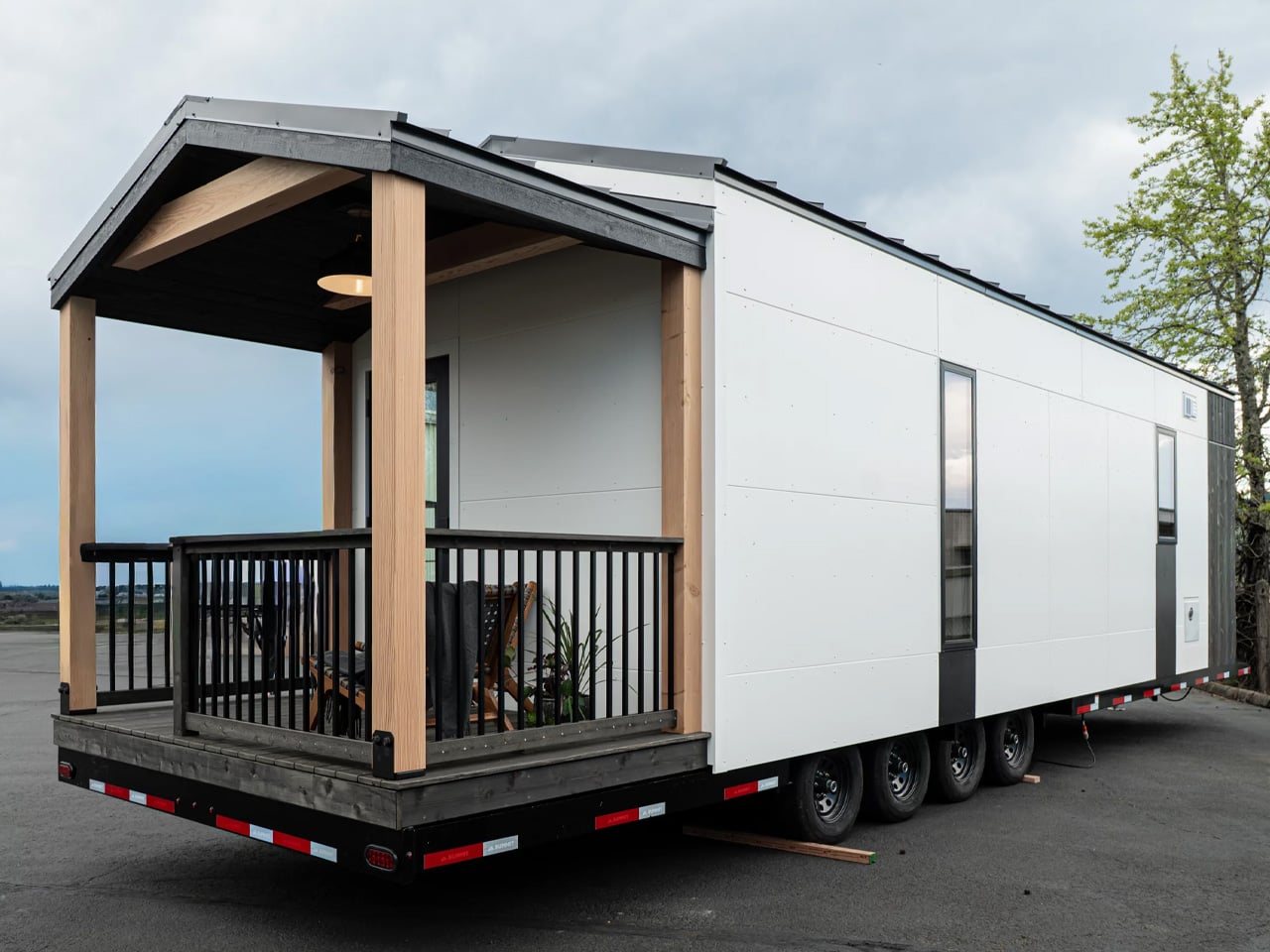
Set on a quad-axle trailer, this 36 ft (11 m) tiny house sits firmly in the full-time-living category. Its proportions feel generous rather than cramped, and the exterior treatment reinforces that impression. Vinyl siding is paired with warm cedar accents, while a standing-seam metal roof hints at durability and low maintenance. The overall look is more contemporary cabin than makeshift shelter, which feels appropriate given its intended home: the icy winters of Colorado.

Designer: Tru Form Tiny

Cold-climate performance was a driving force behind the design. Tru Form Tiny has wrapped the structure in high-R-value insulation and fitted energy-efficient Low-E windows to reduce heat loss and solar gain. Heating is handled by a high-efficiency mini-split system engineered for subfreezing temperatures, with a wood stove rough-in ready for those truly punishing cold snaps. A tankless hot water system and utility setup tailored for off-grid flexibility round out the resilience-focused specification, making this tiny home feel more like a compact alpine lodge than a seasonal camper.

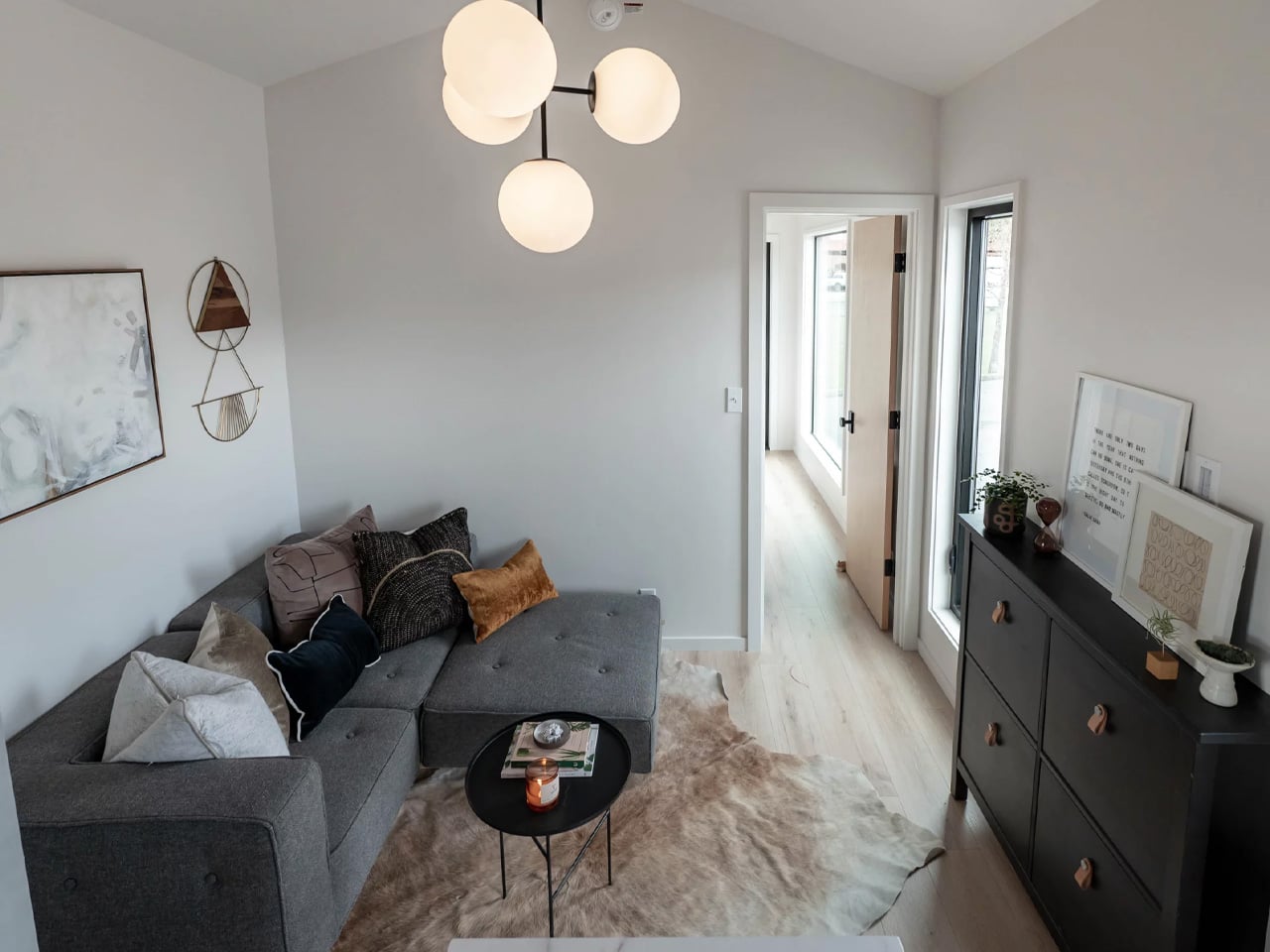
Inside, large trifold glass doors open into a surprisingly expansive living area. The high ceiling and generous glazing create a sense of volume and light that belies the footprint. A sofa, chair, and table form a comfortable lounge zone, anchored by the mini-split for everyday climate control and the option of a wood-burning stove when the weather turns severe. It’s a space that feels equally suited to curling up with a book on a snow day or hosting a small gathering.

The kitchen continues the theme of full-size living in a small envelope. Running along one side of the home, it features a steel sink, four-burner propane stove with oven, microwave, dishwasher, and a fridge/freezer, all framed by ample counter space and cabinetry. A dining table subtly defines the transition between the kitchen and living area, reinforcing the sense of distinct yet connected zones.

On the opposite side of the house, the bathroom feels unusually generous for a tiny home. A glass-enclosed shower, composting toilet, vanity sink, and extensive storage create a practical, everyday space rather than a compromise. A separate washing machine and dryer underscore the home’s suitability for long-term, off-grid or semi-off-grid living in remote, snowy locations.

Originally planned as a main-floor feature, the bedroom was ultimately relocated to the loft to free up valuable ground-floor space. Accessed via a storage-integrated staircase, the loft offers a low-ceilinged but comfortable retreat with a double bed, entertainment center, and TV. It’s a compact sanctuary that completes a layout clearly focused on real-world livability in extreme conditions, proving that tiny houses can be both climate-resilient and quietly luxurious.

The post Winter-Proof Luxury: This Tiny House Brings Full-Time Comfort to Colorado’s Harsh Climate first appeared on Yanko Design.

This Tiny Home Maximizes Space With An Extra-Wide Design

Vancouver Island’s Rewild Homes has introduced the Dove, a single-storey tiny house that breaks away from conventional dimensions to offer full-time residents a more spacious living experience. Measuring 30 feet long and 10 feet wide, the Dove sits on a triple-axle trailer and challenges the standard 8’6″ width typically seen in tiny homes. That extra width makes a remarkable difference in creating an interior that feels genuinely livable rather than cramped, positioning the Dove as a serious option for those considering permanent downsizing.

The exterior showcases a West Coast aesthetic with durable metal siding accented by cedar trim, topped with a sloping metal roof. This material choice balances longevity with visual warmth, creating a home that looks equally at home in rural settings or more developed tiny house communities. The design maintains a clean, modern profile while nodding to traditional cabin architecture, giving the Dove a timeless quality that should age well both structurally and stylistically.

Designer: Rewild Homes

Inside, the single-floor layout eliminates the ladder-accessed lofts that many find impractical for daily living. The kitchen area features ample butcherblock counter space, including a designated eating bar that creates a proper dining zone without requiring a separate table. This setup works particularly well for the Dove’s intended capacity of two people, allowing one person to cook while the other sits comfortably nearby. The open floor plan takes full advantage of that 10-foot width, creating sightlines that make the 30-foot length feel more generous than the square footage might suggest.

The walk-through bathroom stands out as a genuine luxury in the tiny house category. A beautiful tiled shower occupies a substantial portion of the space, large enough to feel like a proper bathroom rather than an afterthought. The walk-through design connects different zones of the house while maintaining privacy, a layout choice that reflects thoughtful planning rather than simply fitting fixtures wherever they might squeeze in.

The ground-floor bedroom eliminates the need to climb to a sleeping loft each night, a feature that significantly improves accessibility and aging-in-place potential. Rewild Homes equipped the Dove with practical appliances, including a combination washer/dryer unit, a propane range, and propane on-demand water heating. These choices support off-grid capability while maintaining the conveniences most people expect from a permanent residence.

Built in Nanaimo, British Columbia, the Dove represents Rewild Homes’ commitment to quality materials and custom construction. The extra-wide frame and single-storey design create a home that accommodates full-time living without the compromises that make many tiny houses feel like temporary solutions. For couples or individuals seeking a properly scaled-down home rather than a novelty dwelling, the Dove delivers functional space within a compact footprint.

The post This Tiny Home Maximizes Space With An Extra-Wide Design first appeared on Yanko Design.
Japan Just Solved Tiny Home Living With 7 Genius Accessories

Japan has always understood what the rest of the world is only now discovering: small spaces don’t mean small lives. As tiny homes continue gaining momentum globally, Japanese designers are leading the charge with accessories that do more with less. These aren’t just space-savers. They’re thoughtfully engineered pieces that transform limitations into possibilities, proving minimalism can be both functional and beautiful.

The tiny home movement demands intelligent design. Every object must earn its place, which means multifunctionality isn’t a bonus—it’s essential. Japanese creators have mastered this philosophy through decades of living in compact urban dwellings, and now their innovations are reshaping our understanding of home essentials. From collapsible kitchen tools to multi-purpose devices, these seven accessories embody the spirit of doing more while owning less.

1. RetroWave 7-in-1 Radio

The RetroWave proves that nostalgia and practicality can coexist beautifully. This compact radio channels vintage Japanese aesthetics through its tactile tuning dial and clean lines, but beneath that retro exterior lies serious modern functionality. It streams Bluetooth audio, plays MP3 files from USB or microSD cards, tunes into FM/AM/SW broadcasts, and moonlights as a flashlight, power bank, SOS alarm, and clock. For tiny home dwellers who need every item to pull double duty, this seven-function device eliminates the need for separate gadgets cluttering precious counter space.

Emergency preparedness becomes effortless when your entertainment system doubles as survival equipment. The hand-crank charging and solar panel mean you’re never stranded without power, whether you’re off-grid by choice or circumstance. The design language speaks to Japanese minimalism while respecting analog traditions, creating something that feels equally at home on a shelf or in a bug-out bag. This isn’t about choosing between form and function—the RetroWave delivers both in a footprint smaller than most standalone speakers.

Click Here to Buy Now: $89.00

What We Like

  • The hand-crank and solar charging eliminate battery anxiety completely
  • Seven genuine functions mean seven other devices you don’t need to own
  • Bluetooth streaming bridges analog aesthetics with contemporary listening habits
  • The compact size fits anywhere without announcing its emergency capabilities

What We Dislike

  • The retro dial might slow down precise station tuning for some users
  • Solar charging works best with direct sunlight, limiting indoor recharging speed

2. 8-in-1 EDC Scissors

Who decided that multitools need to be bulky? These palm-sized scissors challenge that assumption with a sleek design that conceals eight different functions. The oxidation film finish creates a handsome matte black aesthetic while adding rust resistance, making these as durable as they are compact. Scissors, knife, lid opener, can opener, cap opener, bottle opener, shell splitter, and degasser live within a 5.1-inch frame that disappears into drawers, pockets, or tiny kitchen organizers. For homes measured in square feet rather than square meters, this consolidation matters.

The genius lies not in cramming tools together but in thoughtful integration. Each function works without compromise, maintaining the precision you’d expect from dedicated implements. Japanese design philosophy shines through the restraint—there’s no unnecessary bulk, no gratuitous features. The black coating transforms utilitarian metal into something you’ll want visible on your counter rather than hidden away. When your kitchen barely fits a cutting board, having a toolbox that fits in your palm becomes genuinely liberating.

Click Here to Buy Now: $59.00

What We Like

  • Eight tools occupy the space that one normally would
  • The oxidation coating adds durability while looking sophisticated
  • Palm-sized dimensions make storage effortless in any tiny space
  • The design proves multitools can be elegant, not just practical

What We Dislike

  • A smaller size may require more grip strength for tougher jobs
  • The integrated design means you can’t use two functions simultaneously

3. Iron Frying Plate

JIU eliminates the awkward dance between stovetop and table by making the pan your plate. This mill scale steel frying surface comes with a detachable wooden handle that releases with one hand, transforming cookware into servingware instantly. The 1.6mm-thick construction distributes heat beautifully while remaining light enough for comfortable handling. Rust-resistant and uncoated, it arrives ready to use straight from the box. For tiny homes where kitchen storage is measured in inches, losing the need for separate serving dishes creates genuine breathing room.

The philosophy goes deeper than saving space. Eating directly from what cooked your food connects you to the meal in ways china plates never could. The rustic appeal of seared proteins still sizzling on steel brings restaurant energy into the smallest kitchens. Japanese craftsmanship shows in the details—the stick-resistant surface that needs no chemical coatings, the balanced weight distribution, the seamless transition from flame to table. This isn’t about making do with less. It’s about recognizing that sometimes one exceptional piece beats two mediocre ones.

Click Here to Buy Now: $69.00

What We Like

  • The detachable handle transforms the cooking vessel into a serving dish instantly
  • Mill scale steel develops character and improves with use over time
  • No chemical coatings mean healthier cooking and easier maintenance
  • Eliminating separate plates cuts storage needs and dishwashing time

What We Dislike

  • Metal retains heat longer, requiring careful handling after cooking
  • The uncoated surface needs proper seasoning and care to maintain performance

4. Pop-Up Book Vase Edition 4

Flowers deserve drama, and this pop-up book vase delivers it in the most space-efficient package imaginable. Crack the cover to reveal three-dimensional vase cutouts that transform flat pages into sculptural vessels. Edition 4 introduces gray, yellow, and green designs with varied shapes that offer fresh perspectives—literally, since flipping the book upside down completely changes your arrangement’s presentation. Made from natural pulp with water-resistant coating, these aren’t decorative props but functional vases. When not in use, they collapse to book thickness and slide onto shelves beside actual reading material.

The concept challenges what vases must be. Traditional ceramic versions demand dedicated storage even when empty, sitting idle between floral moments. This innovation shrinks that footprint to nearly nothing while expanding creative possibilities. Each page offers a different aesthetic, meaning one item provides three distinct looks. The whimsy feels intentionally Japanese—playful yet purposeful, artistic yet practical. For tiny homes where every object must justify its existence, a vase that disappears when not needed while offering multiple design options, becomes genuinely valuable.

Click Here to Buy Now: $39.00

What We Like

  • Three vase designs in one item triple your decorating options
  • Book-flat storage means it virtually disappears between uses
  • The water-resistant coating makes it genuinely functional, not just decorative
  • Upside-down orientation adds creative flexibility to arrangements

What We Dislike

  • Paper construction requires gentler handling than ceramic alternatives
  • The pop-up mechanism may weaken with extremely frequent opening and closing

5. Obsidian Black Mini Grip Tongs

Precision matters when space is tight, and these mini tongs deliver restaurant-level control in a fraction of the size. Available in 4.9-inch and 7-inch lengths, they’re crafted from SUS821L1 stainless steel—twice as strong as standard SUS304, allowing thinner, lighter construction without sacrificing durability. The obsidian black finish elevates them beyond mere utensils into objects worth displaying. Whether plating delicate appetizers, flipping shrimp, or arranging Instagram-worthy presentations, these tongs put professional deftness into compact packages that suit tiny kitchens where every drawer inch counts.

The size proves liberating rather than limiting. Standard tongs feel cumbersome when you’re maneuvering in tight spaces or handling small portions, but these scaled-down versions match the reality of cooking for one or two in condensed quarters. The corrosion-resistant steel ensures longevity that justifies the investment, embodying the Japanese principle of buying quality once rather than cheap replacements repeatedly. Their sculptural appearance means they can hang on exposed rails without looking utilitarian—important when tiny homes often blur kitchen and living spaces into single rooms.

Click Here to Buy Now: $25.00

What We Like

  • The compact size offers precision impossible with full-length tongs
  • Superior steel strength allows elegant thinness without compromising durability
  • The black finish looks intentional on open storage and exposed racks
  • Lightweight construction reduces hand fatigue during detailed plating work

What We Dislike

  • Shorter length means less distance from heat sources during cooking
  • The specialized size might not suit those who prefer standard dimensions

6. Heritage Craft Unboxing Knife

Opening packages becomes an aesthetic experience with this circular cutter carved from solid aluminum. Inspired by Paleolithic hand axes, the design reimagines ancient tools through modern machining that leaves wave-like patterns across the surface. These aren’t just decorative—they provide a secure, non-slip grip. The tapered form and striking appearance transform a mundane task tool into a desk object worth displaying prominently. For tiny homes where every visible item contributes to the overall aesthetic, this cutter earns its spot through beauty and mystery rather than hiding shamefully in drawers.

The symbolism runs deeper than surface appeal. Using metal instead of stone represents human evolution in physical form—a daily reminder that tools can be thoughtful rather than thoughtless. The raw, handcrafted quality contrasts beautifully with mass-produced plastic alternatives while taking up minimal space. Japanese design philosophy shines through the balance of form and function, creating something that inspires even during routine tasks. When you’re opening the constant stream of packages that tiny home living often requires, why not do it with something that brings joy rather than just utility?

Click Here to Buy Now: $99.00

What We Like

  • The sculptural form justifies prominent display rather than drawer storage
  • Ancient inspiration creates conversation-worthy design with genuine depth
  • Wave patterns provide functional grip while enhancing visual appeal
  • Aluminum construction balances durability with comfortable weight

What We Dislike

  • The artistic form might feel less intuitive than traditional box cutter shapes initially
  • The premium design comes at a higher price than basic alternatives

7. Slim Fold Dish Rack

This collapsible dish rack shrinks from 14 inches to 1.2 inches in one second flat. The patent-pending spring mechanism makes deployment and collapse equally effortless, transforming substantial drying capacity into pocket-sized storage. Its minimalist construction provides ample ventilation and accommodates plates, utensils, and cookware of various sizes without bulk. Dishwasher-friendly and easy to clean, it works equally well in permanent tiny homes or mobile camping setups. When counter space measures in precious square inches, reclaiming 14 inches of depth the moment dishes dry becomes genuinely transformative.

The innovation addresses a persistent tiny home frustration: bulky essentials that can’t be eliminated but consume disproportionate space. Traditional dish racks squat permanently on counters, monopolizing real estate even when empty. This design respects that dishes need drying without demanding permanent territorial claims. The spring system proves Japanese engineering at its finest—sophisticated mechanism, simple operation, reliable performance. The ability to pocket the rack when collapsed opens possibilities for RV living, boat galleys, and other extreme space constraints where every item must justify not just its function but its physical footprint.

Click Here to Buy Now: $75.00

What We Like

  • One-second deployment and collapse eliminates fussy setup procedures
  • The collapsed 1.2-inch profile fits virtually anywhere, including large pockets
  • Generous 14-inch expanded size accommodates a full meal’s worth of dishes
  • Dishwasher compatibility makes maintenance effortless and thorough

What We Dislike

  • The spring mechanism requires occasional inspection to maintain smooth operation
  • Lighter construction may shift under heavier cookware without stabilization

Making Space for What Matters

These seven accessories represent more than clever design. They embody a philosophy that tiny living advocates have embraced: abundance comes from quality, not quantity. Each piece eliminates multiple lesser items while adding functionality and beauty. The Japanese influence is evident not in exotic aesthetics, but in thoughtful problem-solving that respects both space and user experience. These aren’t compromises forced by limited square footage but genuinely superior solutions.
The tiny home movement continues growing because it promises freedom from excess, not deprivation. Smart accessories like these make that promise tangible. They prove small spaces can accommodate full lives when every object pulls its weight. Whether you’re downsizing deliberately or maximizing what you have, these compact essentials demonstrate that intelligent design creates spaciousness regardless of actual dimensions. The trend isn’t really about tiny homes at all. It’s about intentional living, and these seven pieces show exactly what that looks like.
The post Japan Just Solved Tiny Home Living With 7 Genius Accessories first appeared on Yanko Design.