Sharp XP-P601Q: a versatile 4K UHD projector offering stunning image quality, maintenance-free operation, and flexible installation for various applications.
The post XP-P601Q: Sharp’s New 4K UHD Projector first appeared on Trendy Gadget.
Sharp XP-P601Q: a versatile 4K UHD projector offering stunning image quality, maintenance-free operation, and flexible installation for various applications.
The post XP-P601Q: Sharp’s New 4K UHD Projector first appeared on Trendy Gadget.

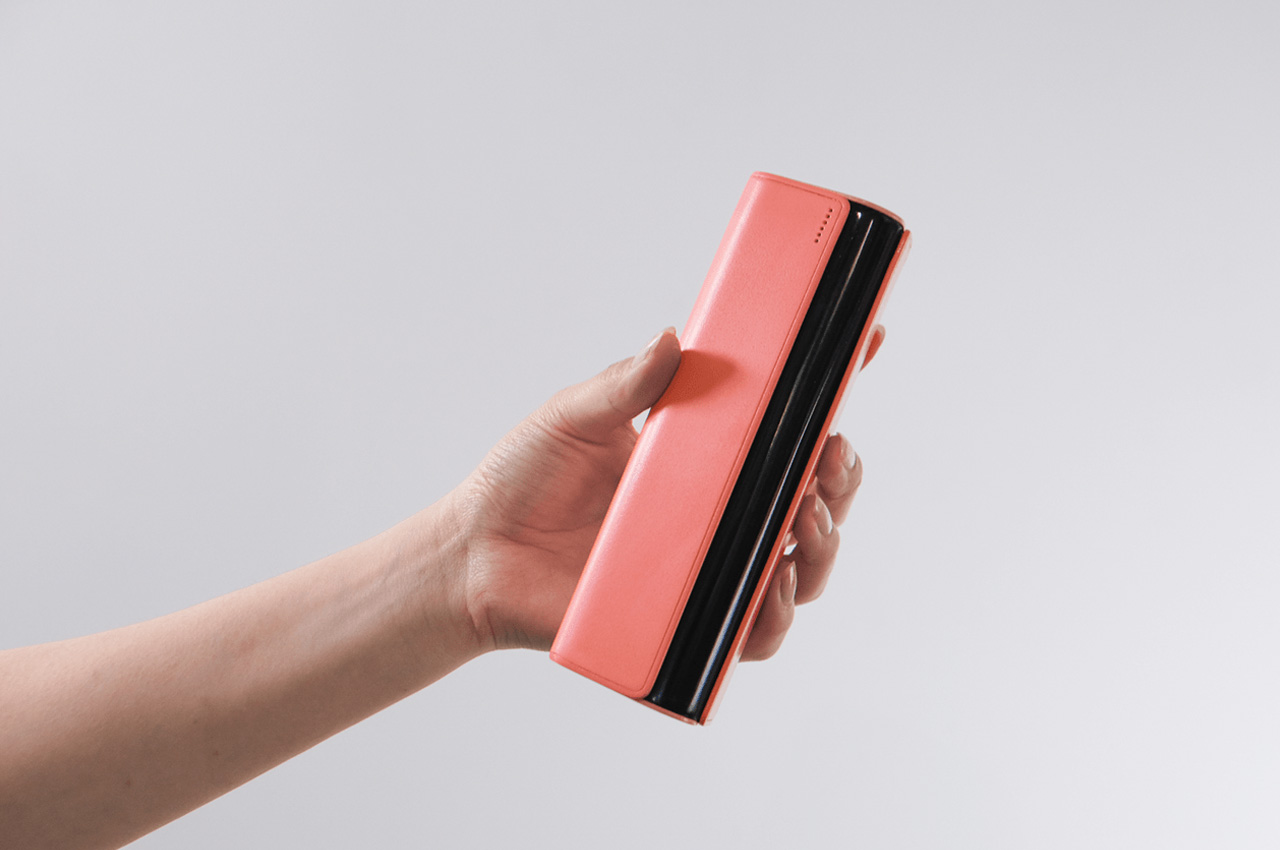
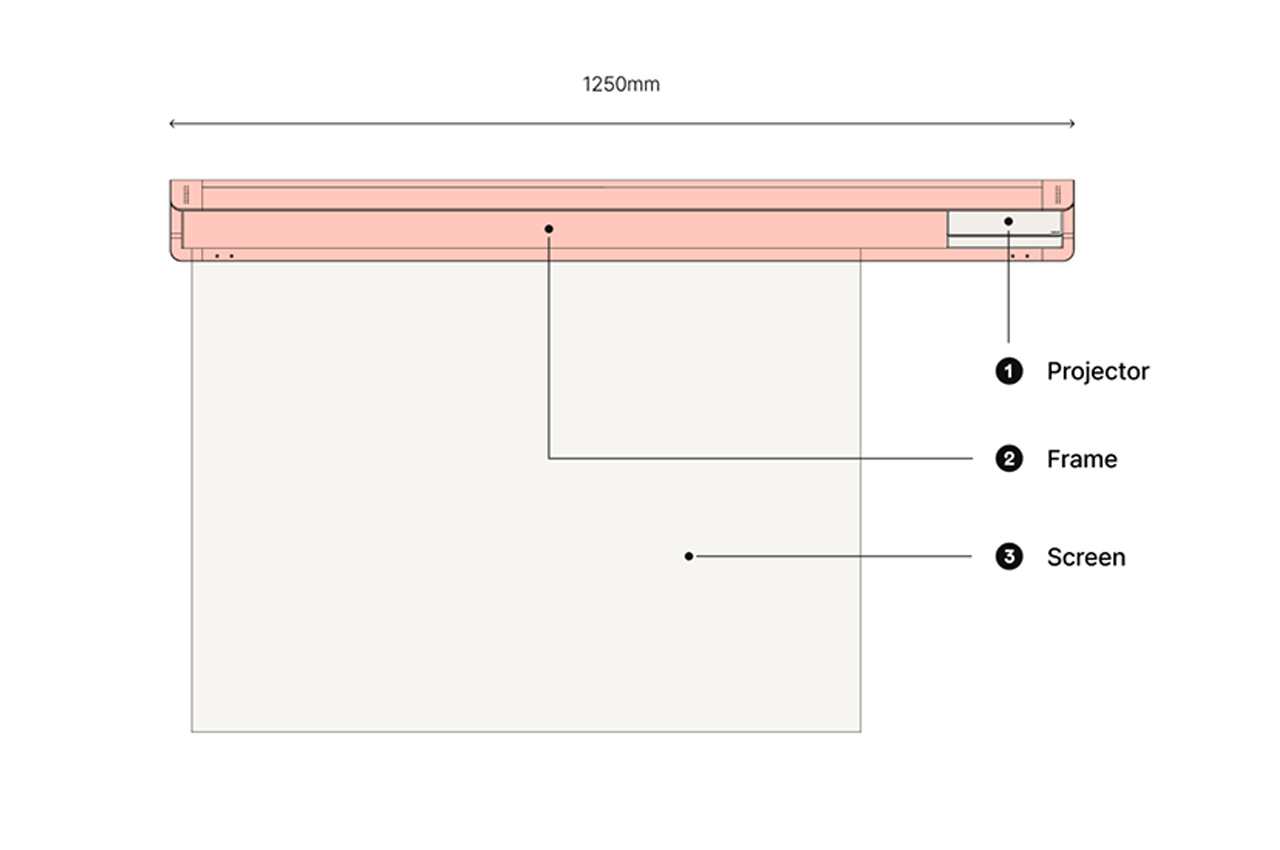
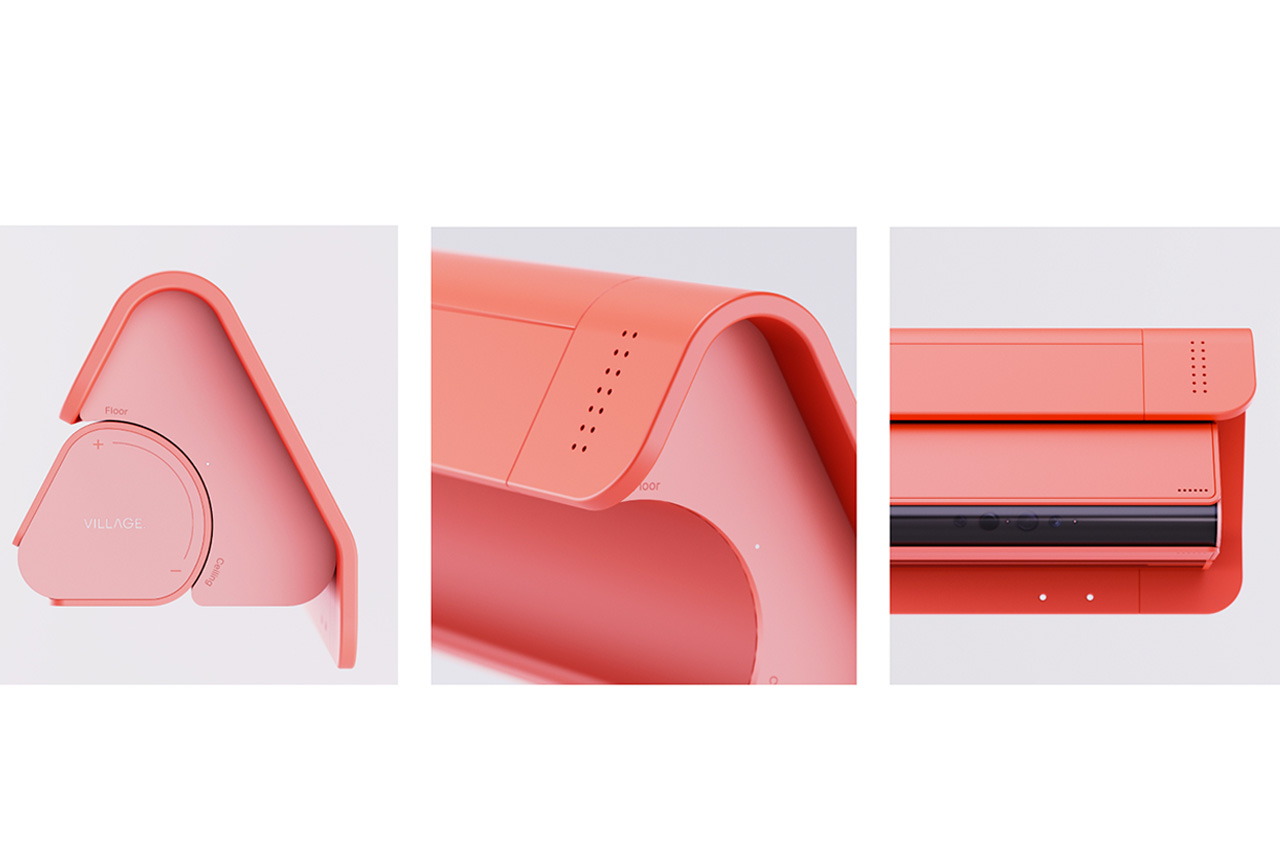
If you’re living by yourself in a studio apartment, studying or working by the day only to return home to spend time in solitude, – at max with your smartphone – Village projector is designed to give you company. The vibrant home entertainment system, is unlike any usual projector you come by for three reasons: it’s essentially made for single-person households; it’s immensely portable for user requirements; and it can be used in multiple orientations to project on the floor, wall, or ceiling, as and when required.
A catalyst for harmonious experience, productivity, and creativity; the Village gives a fresh perspective to your solitude at home. Built-in with sensors, cameras and a high-end projection lens, it can be your friend in everything you intend to do from creating murals to doing a craft project. It has the ability to become your artistic and information companion, fostering an environment where creativity knows no bounds.
Designer: Seunghyun Ko, Seohyun Park, Minji Kang and YE JIN LEE


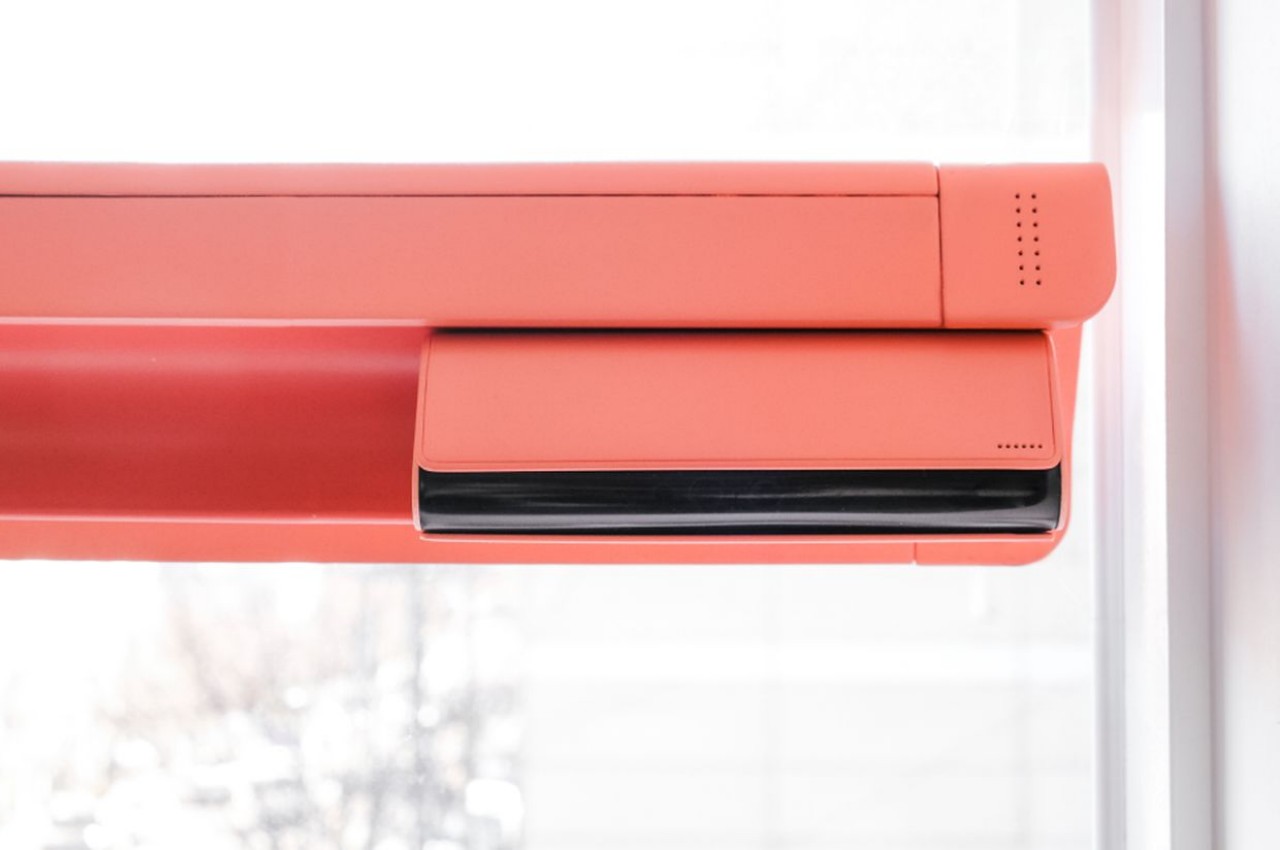
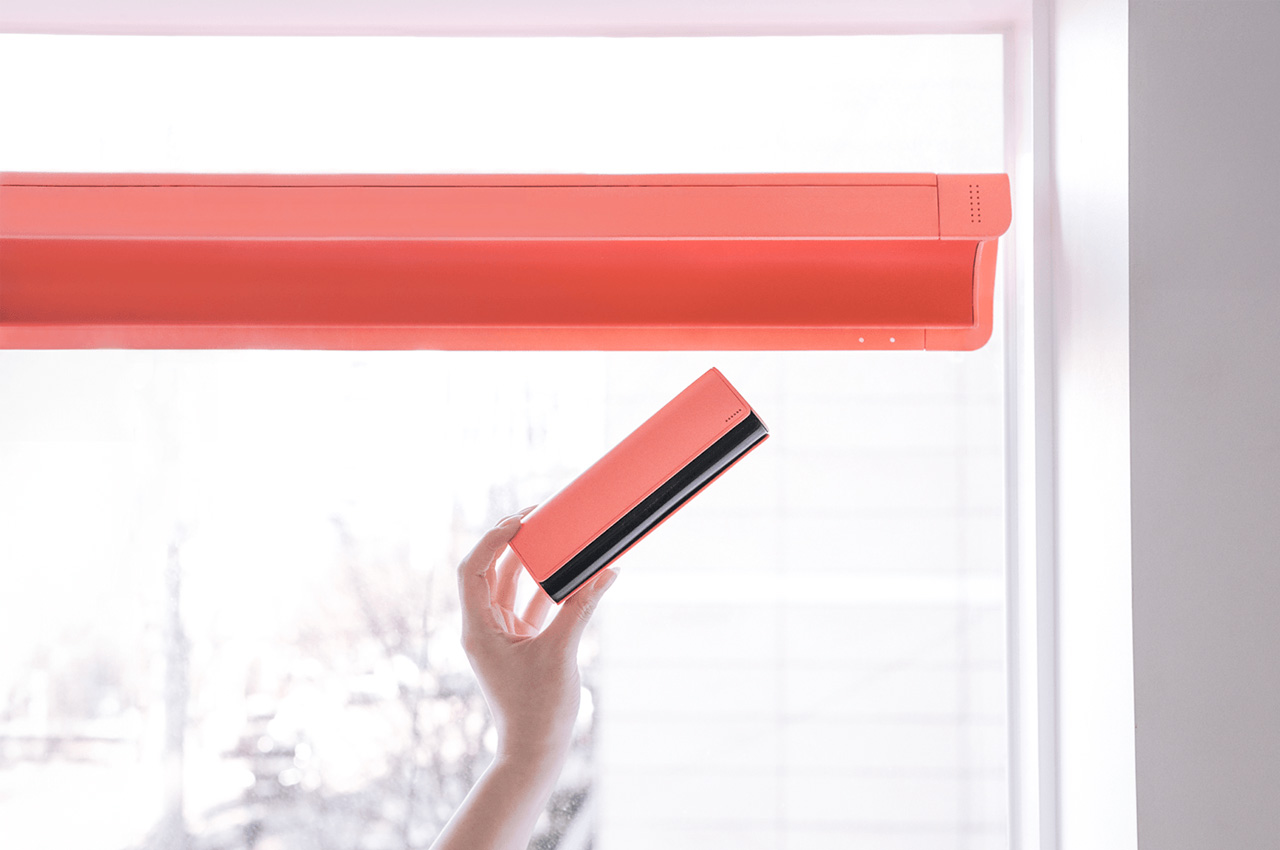
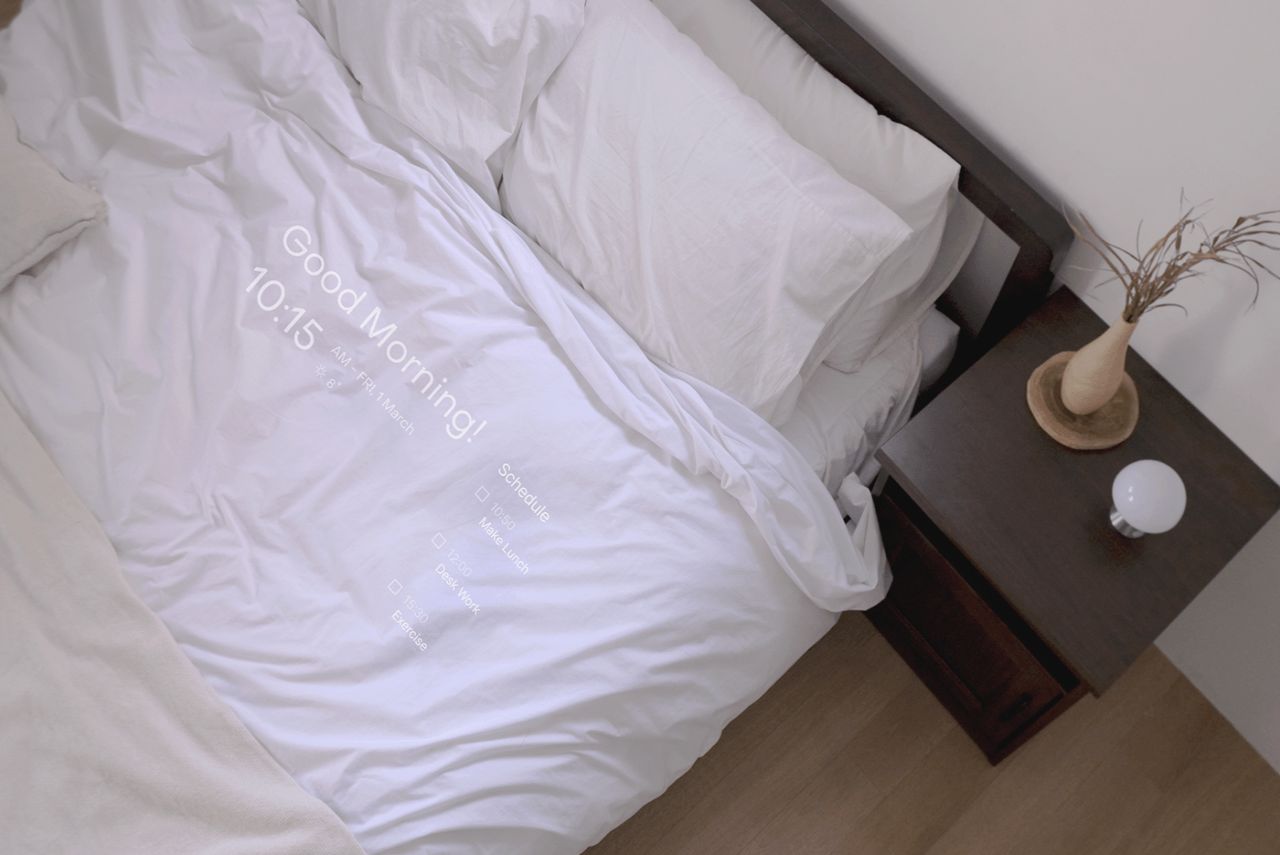
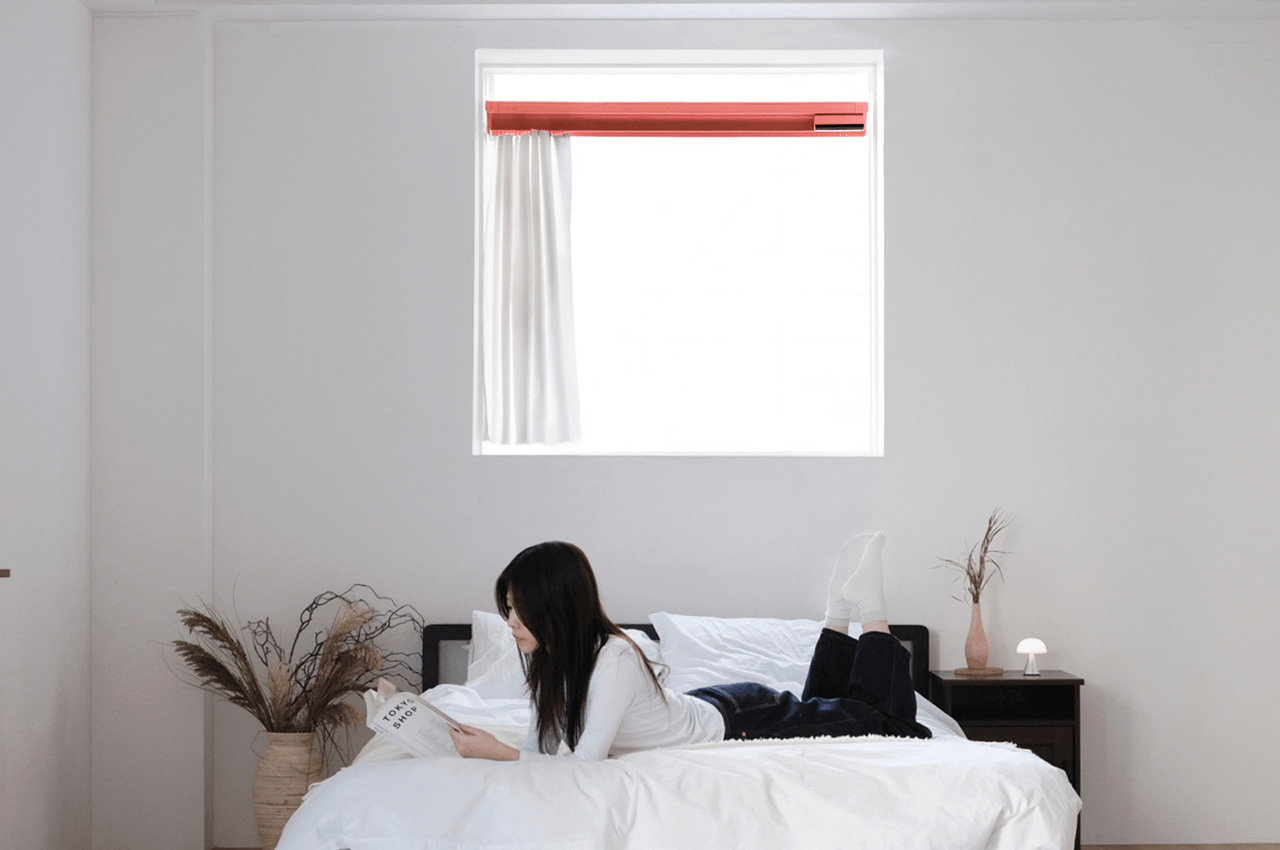
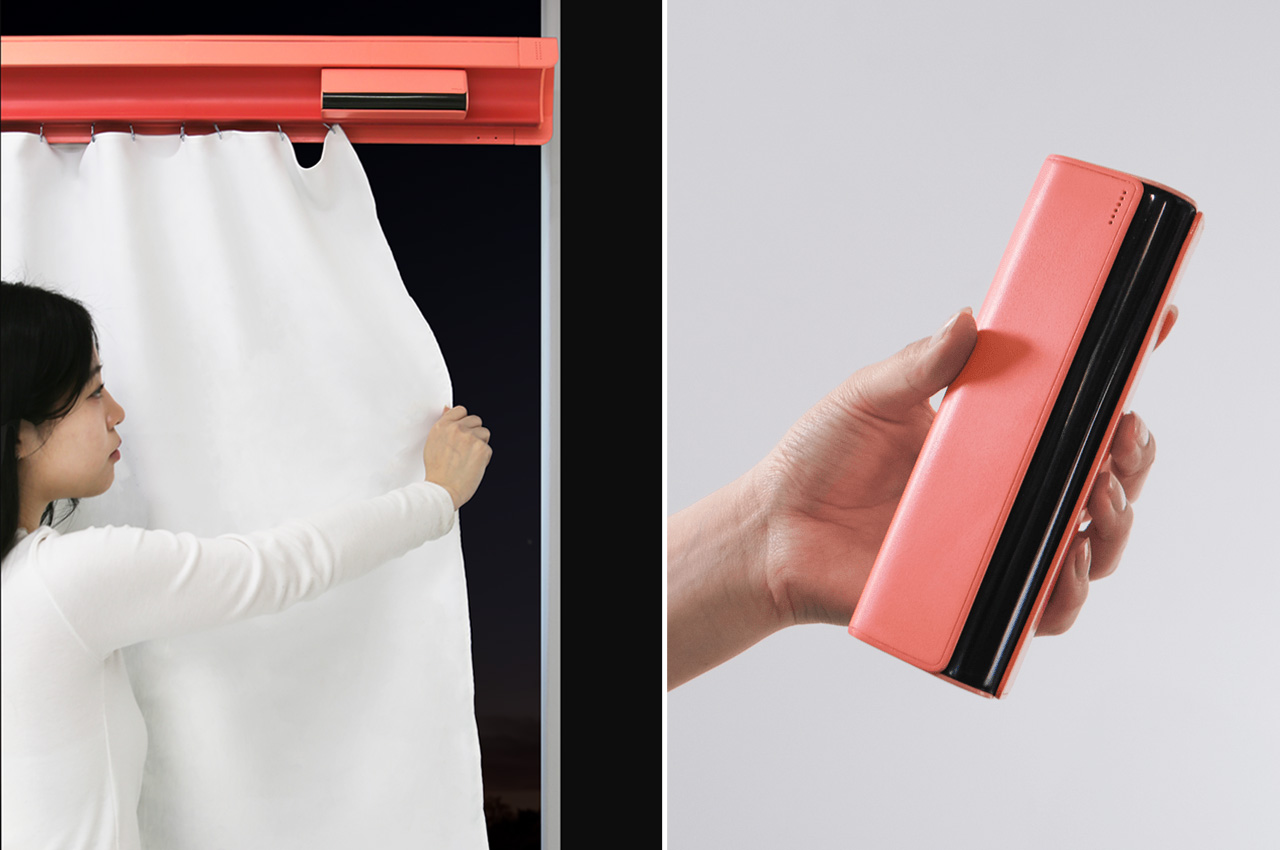
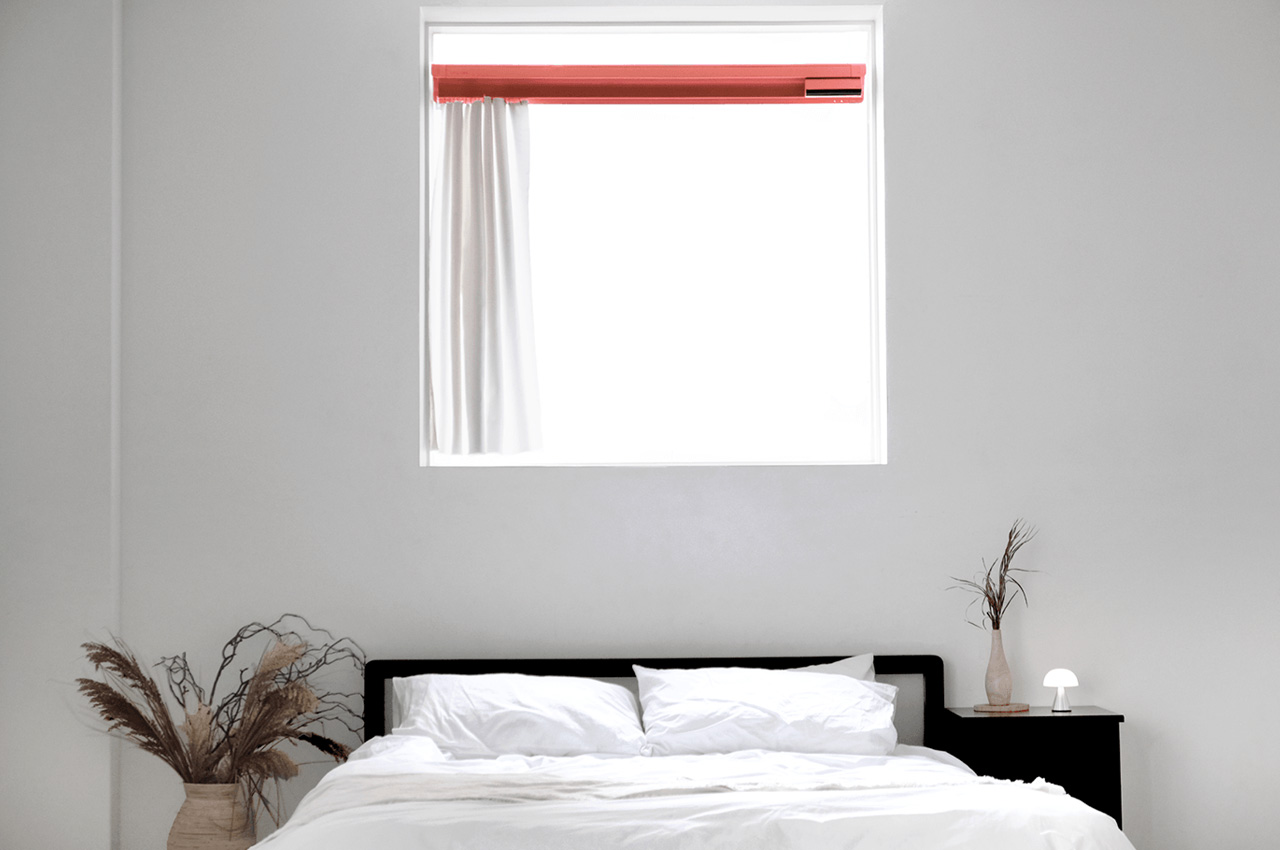
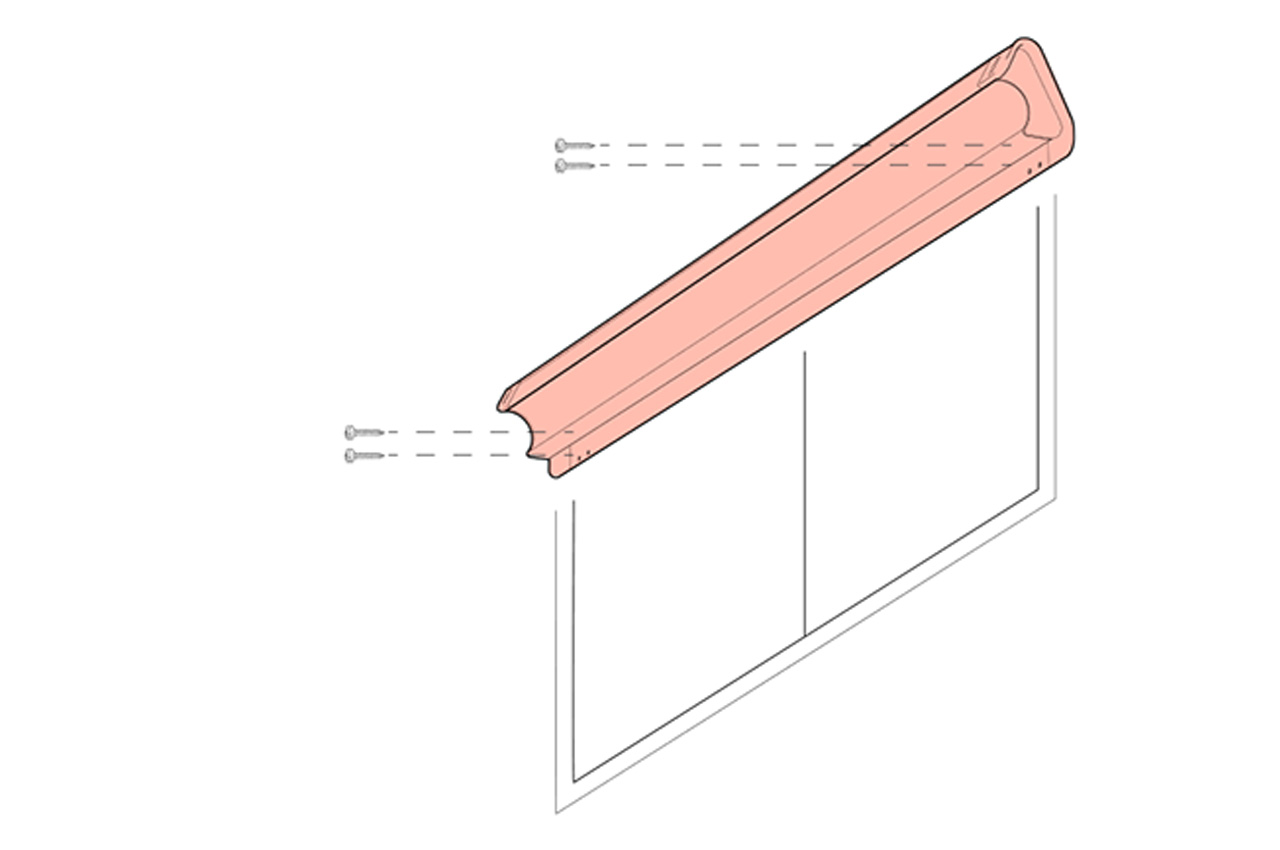
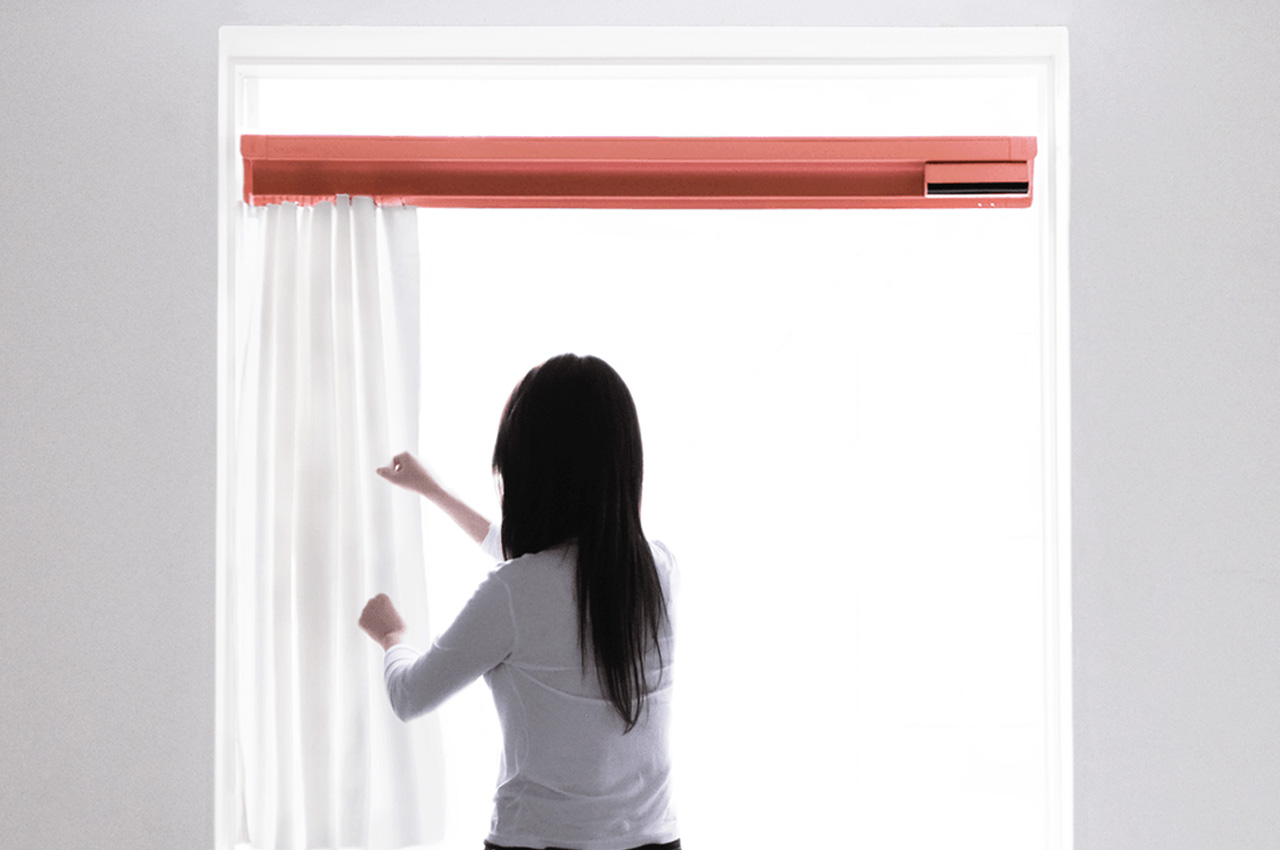
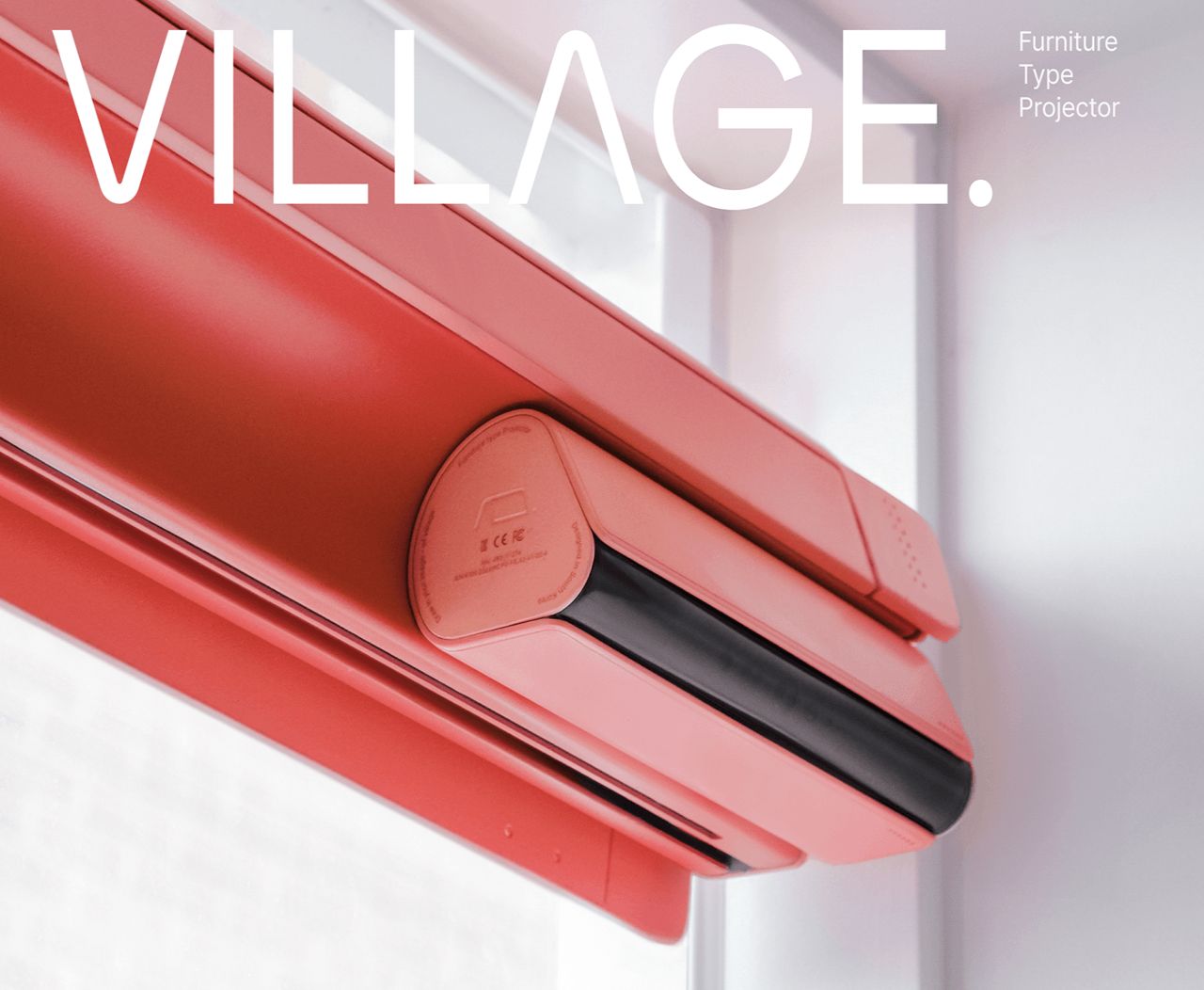
If you’re brimming with creativity and want a contemporary way to bring it to life; employ the Village at home for a fresh perspective. Installed in the curtain rail the projector follows the curtain when you draw it open in the morning to sense the weather outside and project details for you on the floor or in the ceiling – depending on how you have positioned it – so you wake up with complete information of how to plan the day.

During the day, you can remove the portable Village projector from the curtain rail and use it where you like in your tiny apartment. Project inspiring text, news, captivating art, or use it to display guides to your DIY endeavors. After working or studying, when you feel tired and want to relax, the projector can let you play your favorite video game on a sizable display.


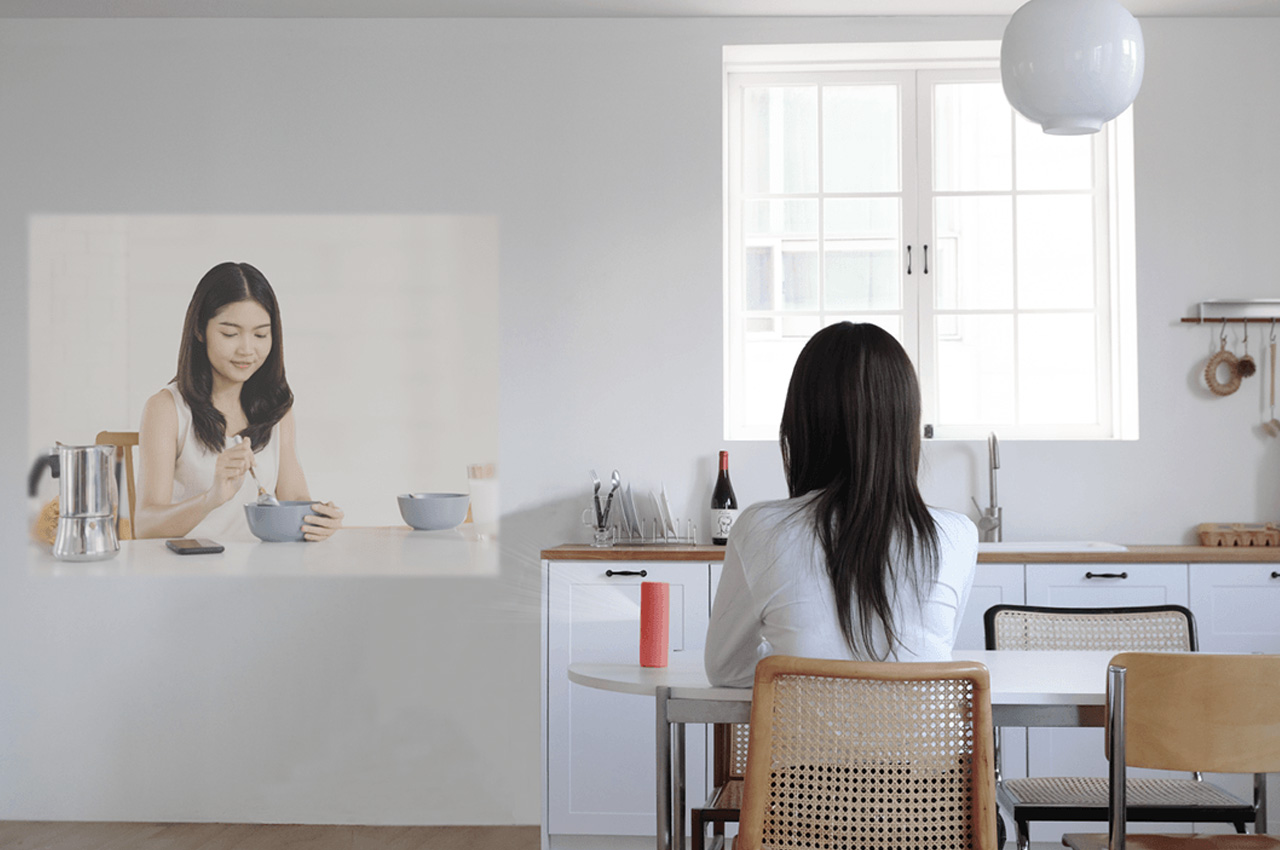
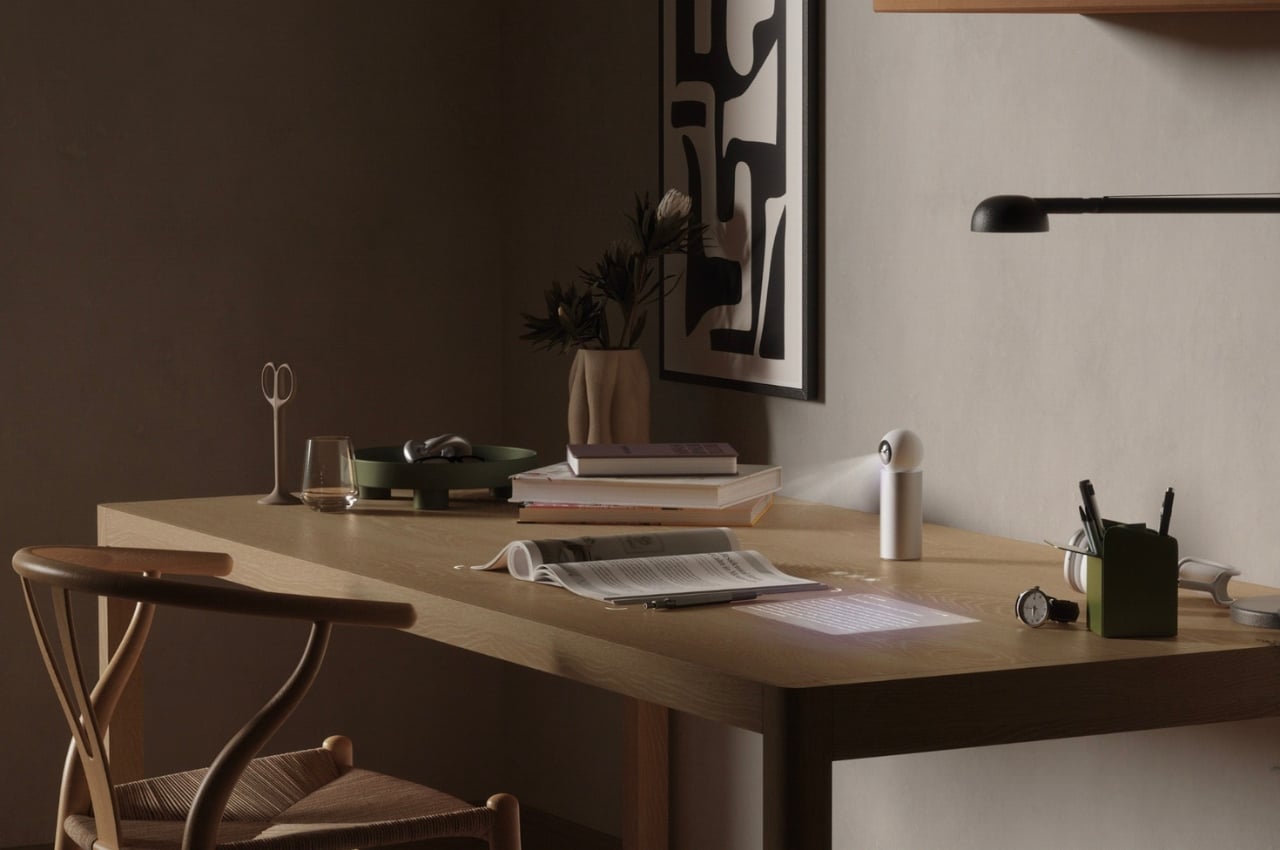
Sitting on the desk can help you create your private sanctuary, free from distractions while working, projecting your calendar for the day on the desk. By the evening, you can project the screen on the wall and share unforgettable moments with loved ones. Of course, you can do that on the phone, however, screen on the smartphone is too small. Using it for long durations can hurt your eyes. The portable projector can connect to the smartphone and project what you want to see or learn on a bigger screen, so it’s convenient and less straining.


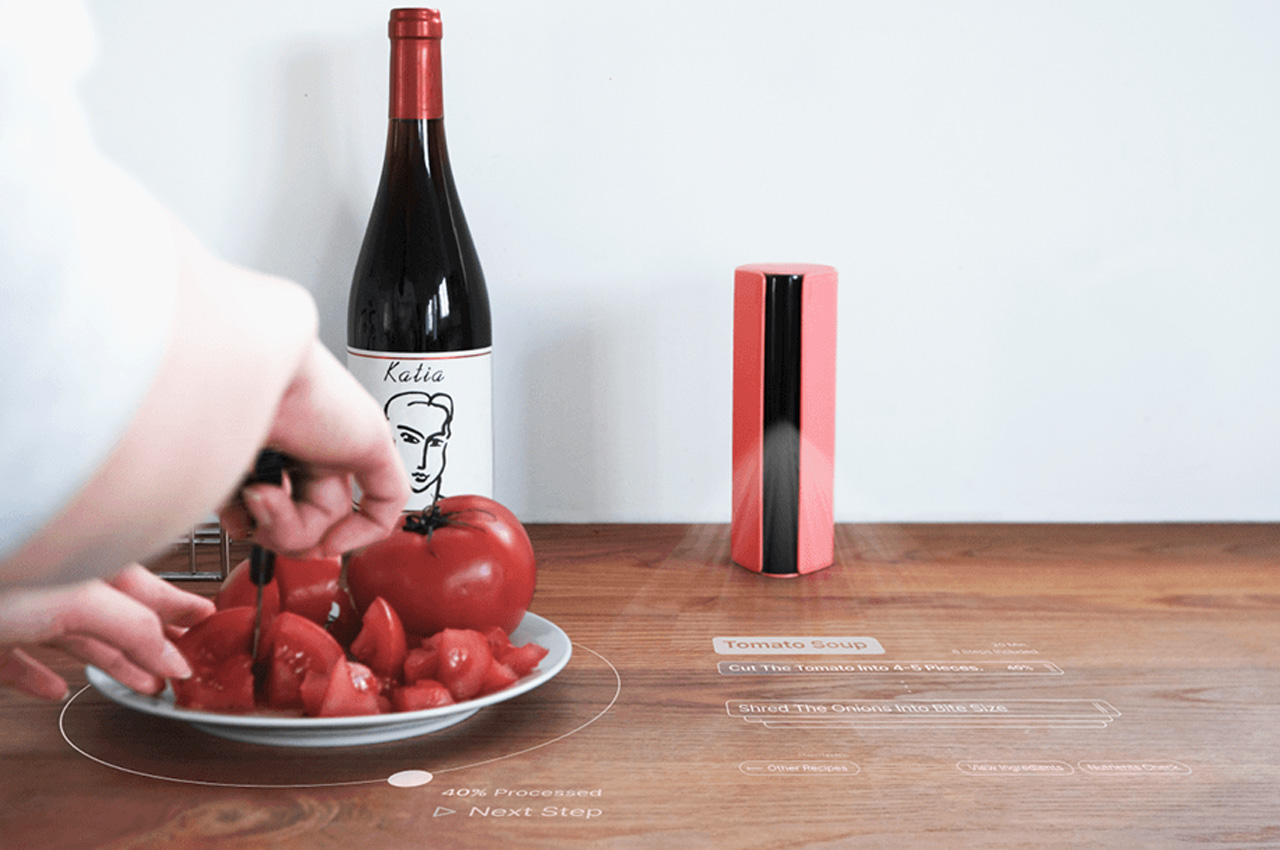
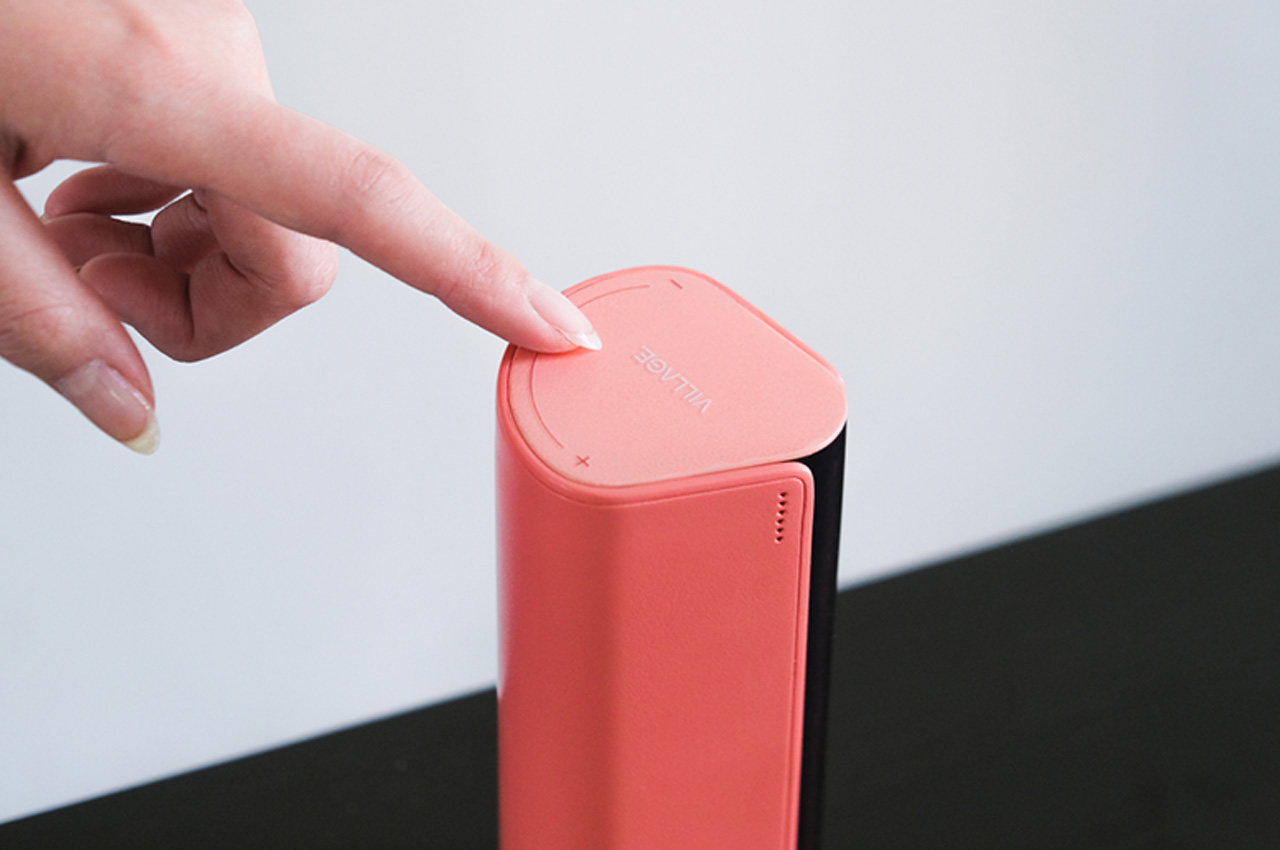
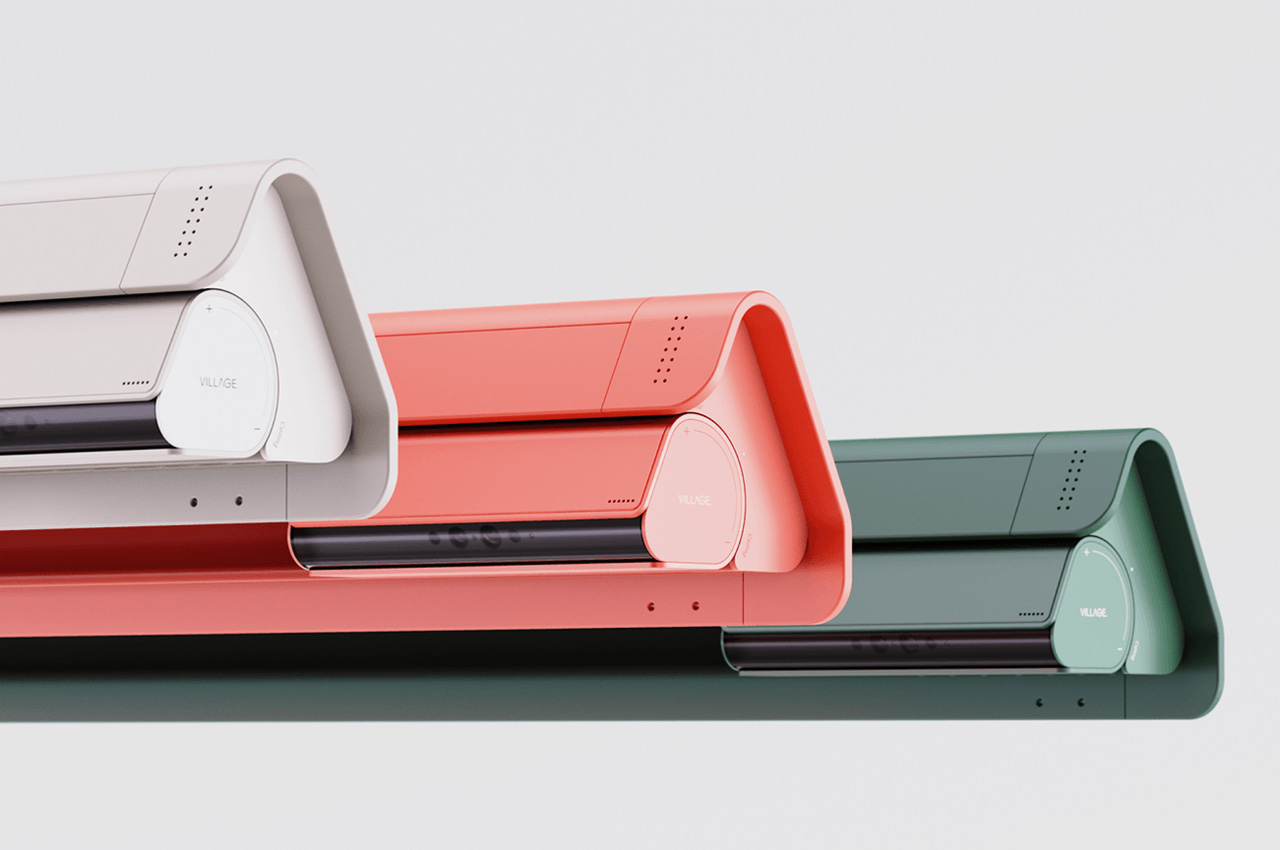
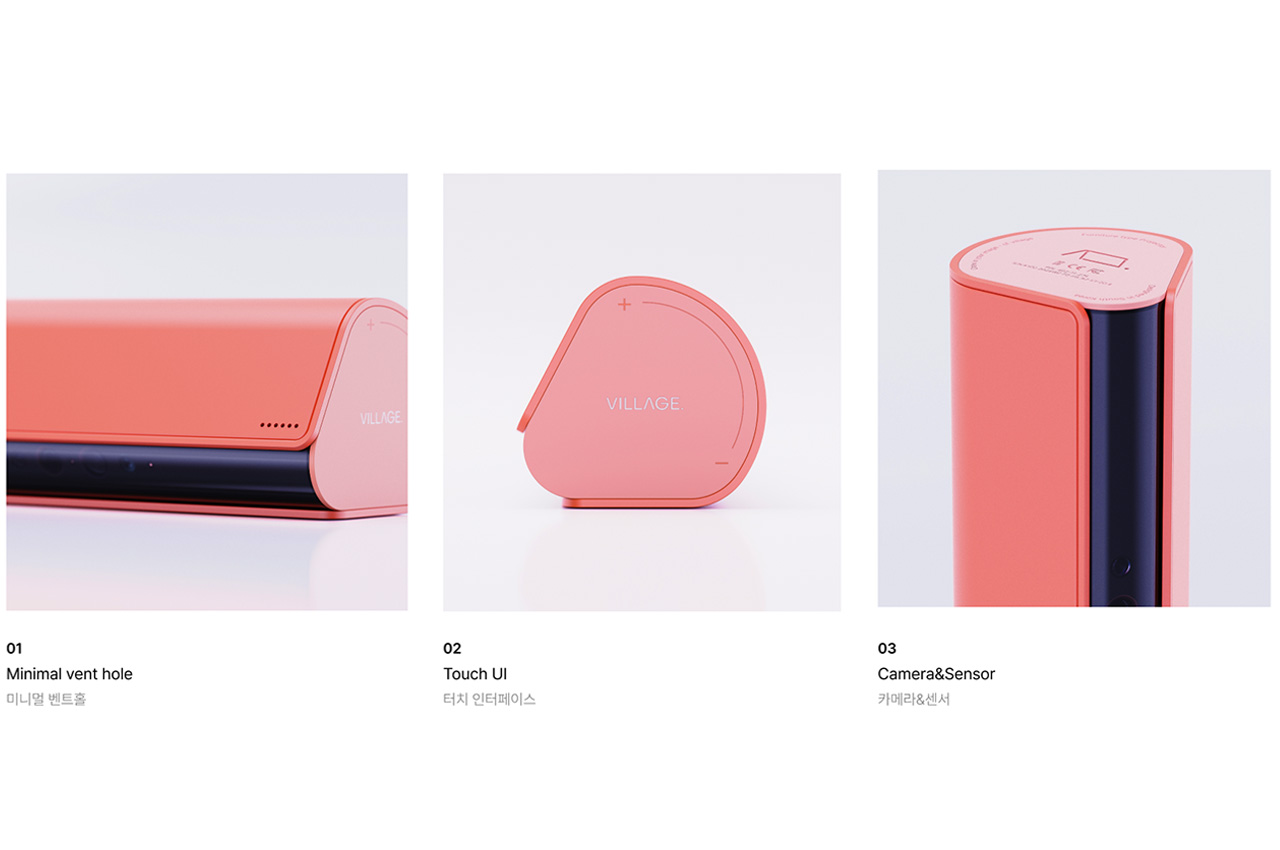
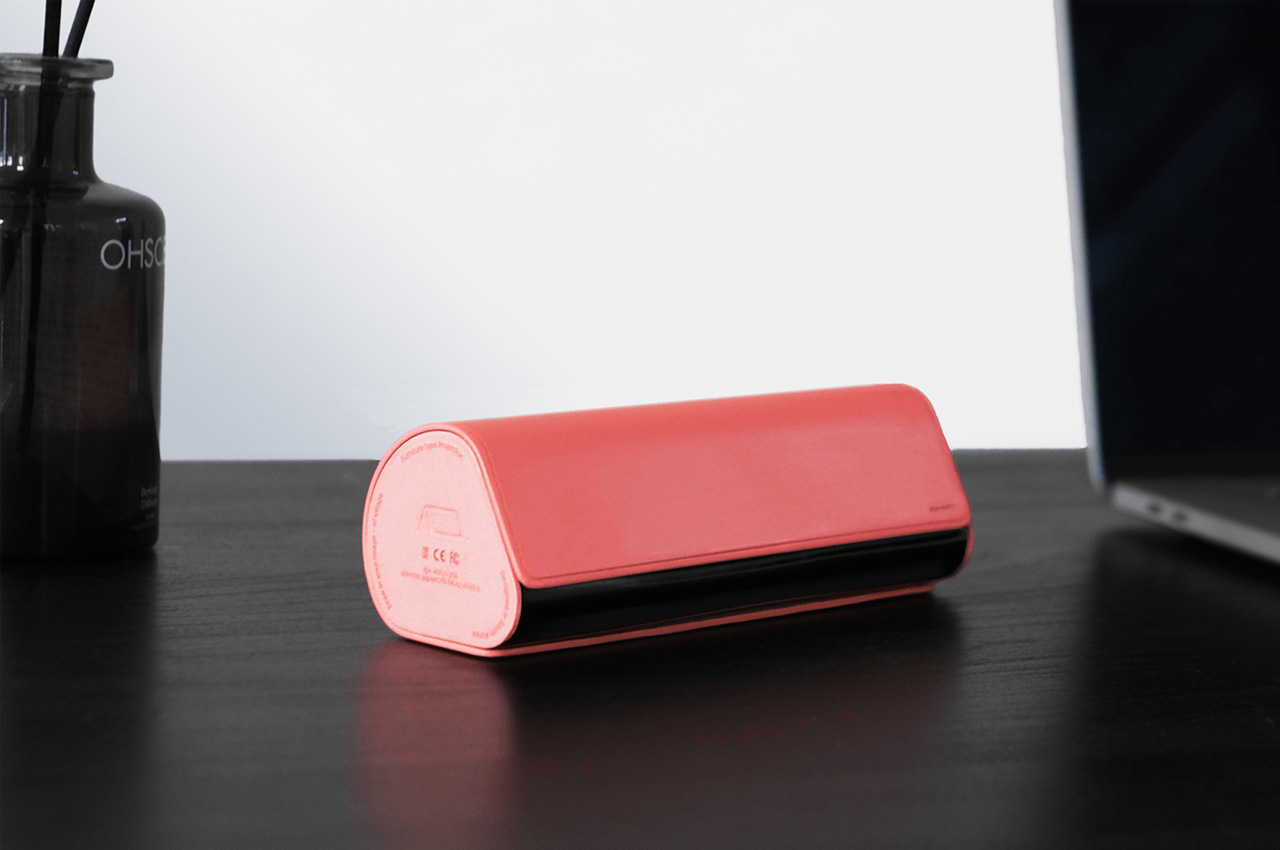
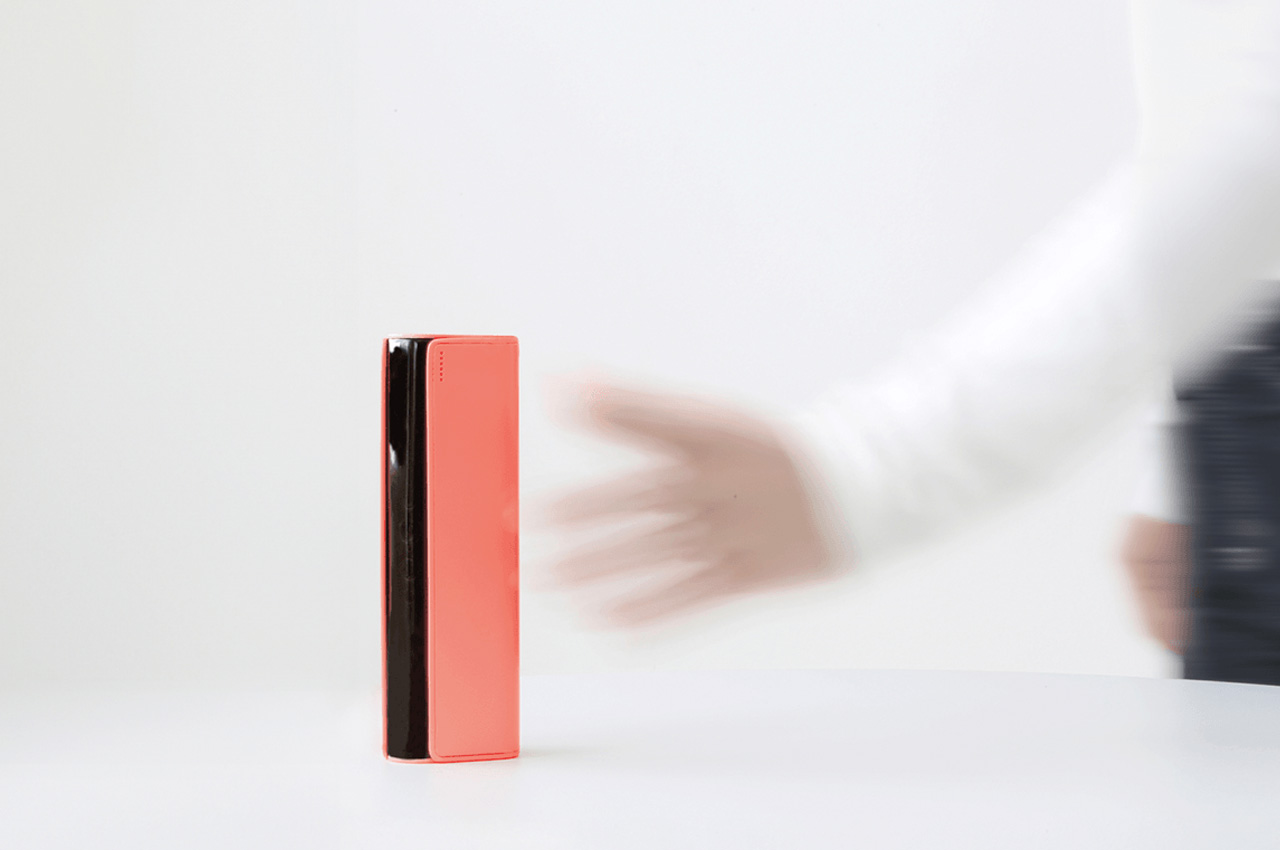
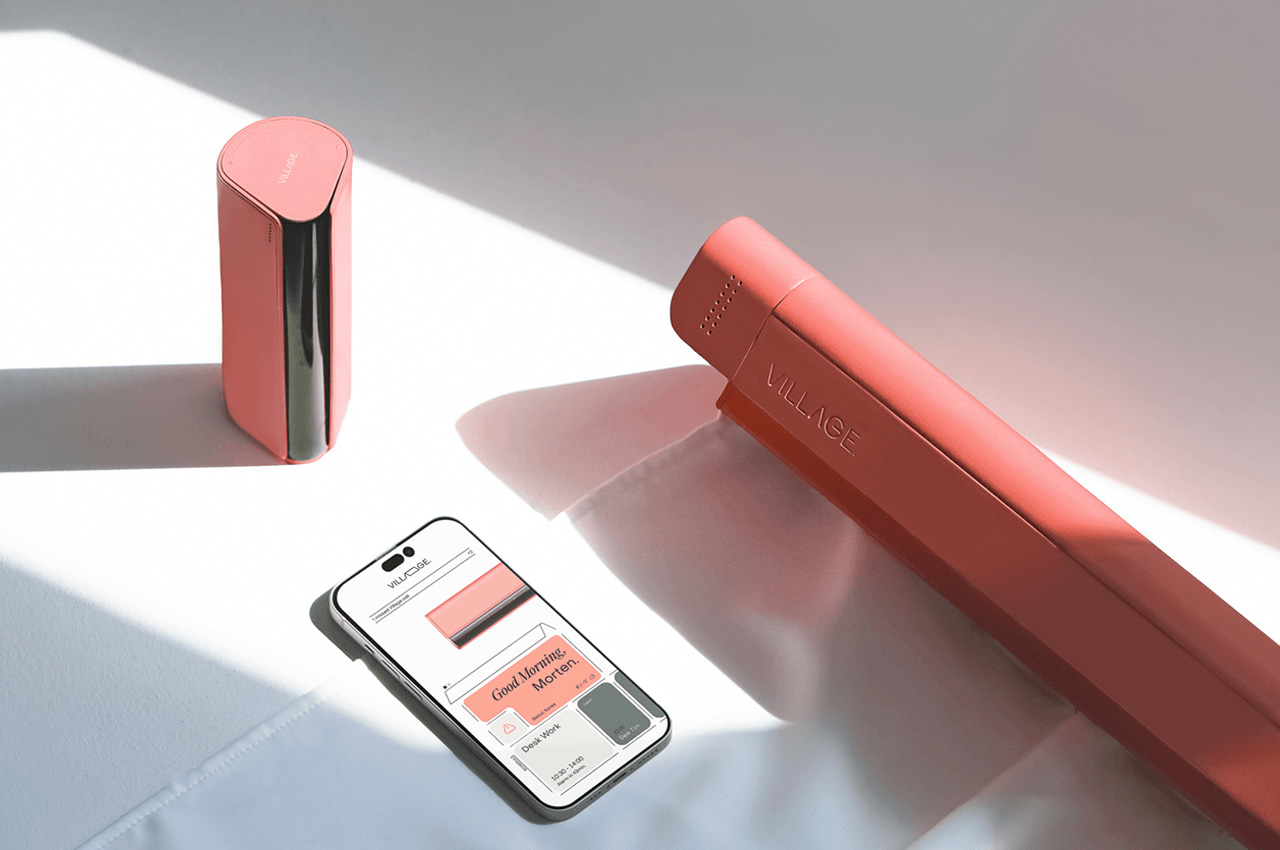
Made in vibrant color options, in what seems – from images – a plasticky body, the Village features a projection lens in the center with an external recognition sensor and a LiDAR camera on either side. A pair of cameras sit to the right of the sensor and a microphone to the left of the LiDAR cam. On the top – when positioned upright – you get the sliding touch control for volume. There’s no word on the availability of the conceptual Village projector, but we can say it has versatile use cases. You can transform your workout routine by using it to project fitness or exercise instructions in front of you or on the wall and create an engaging exercise session, or carry the projector into the kitchen to project the intricacies of a dish you’re preparing so it’s cooked well enough to tantalize your taste buds.


The post Give your creativity and convenience an unconventional approach with the fresh perspective of Village projector first appeared on Yanko Design.

If you’re living by yourself in a studio apartment, studying or working by the day only to return home to spend time in solitude, – at max with your smartphone – Village projector is designed to give you company. The vibrant home entertainment system, is unlike any usual projector you come by for three reasons: it’s essentially made for single-person households; it’s immensely portable for user requirements; and it can be used in multiple orientations to project on the floor, wall, or ceiling, as and when required.
A catalyst for harmonious experience, productivity, and creativity; the Village gives a fresh perspective to your solitude at home. Built-in with sensors, cameras and a high-end projection lens, it can be your friend in everything you intend to do from creating murals to doing a craft project. It has the ability to become your artistic and information companion, fostering an environment where creativity knows no bounds.
Designer: Seunghyun Ko, Seohyun Park, Minji Kang and YE JIN LEE


If you’re brimming with creativity and want a contemporary way to bring it to life; employ the Village at home for a fresh perspective. Installed in the curtain rail the projector follows the curtain when you draw it open in the morning to sense the weather outside and project details for you on the floor or in the ceiling – depending on how you have positioned it – so you wake up with complete information of how to plan the day.

During the day, you can remove the portable Village projector from the curtain rail and use it where you like in your tiny apartment. Project inspiring text, news, captivating art, or use it to display guides to your DIY endeavors. After working or studying, when you feel tired and want to relax, the projector can let you play your favorite video game on a sizable display.


Sitting on the desk can help you create your private sanctuary, free from distractions while working, projecting your calendar for the day on the desk. By the evening, you can project the screen on the wall and share unforgettable moments with loved ones. Of course, you can do that on the phone, however, screen on the smartphone is too small. Using it for long durations can hurt your eyes. The portable projector can connect to the smartphone and project what you want to see or learn on a bigger screen, so it’s convenient and less straining.


Made in vibrant color options, in what seems – from images – a plasticky body, the Village features a projection lens in the center with an external recognition sensor and a LiDAR camera on either side. A pair of cameras sit to the right of the sensor and a microphone to the left of the LiDAR cam. On the top – when positioned upright – you get the sliding touch control for volume. There’s no word on the availability of the conceptual Village projector, but we can say it has versatile use cases. You can transform your workout routine by using it to project fitness or exercise instructions in front of you or on the wall and create an engaging exercise session, or carry the projector into the kitchen to project the intricacies of a dish you’re preparing so it’s cooked well enough to tantalize your taste buds.


The post Give your creativity and convenience an unconventional approach with the fresh perspective of Village projector first appeared on Yanko Design.

For better or for worse, depending on where you stand on the debate, artificial intelligence has changed and will continue changing how we create and communicate. Services like ChatGPT, Midjourney, Gemini, and Copilot are pretty popular with those who are adventurous enough to experiment with AI. We can expect that over the next few years, we’ll see more services, gadgets, and devices that can help us use the technology and integrate it into our workflow and every day lives.
Designers: Mingwan Bae, Sohyun An, Junyoung Min, Youngsuh Yoo


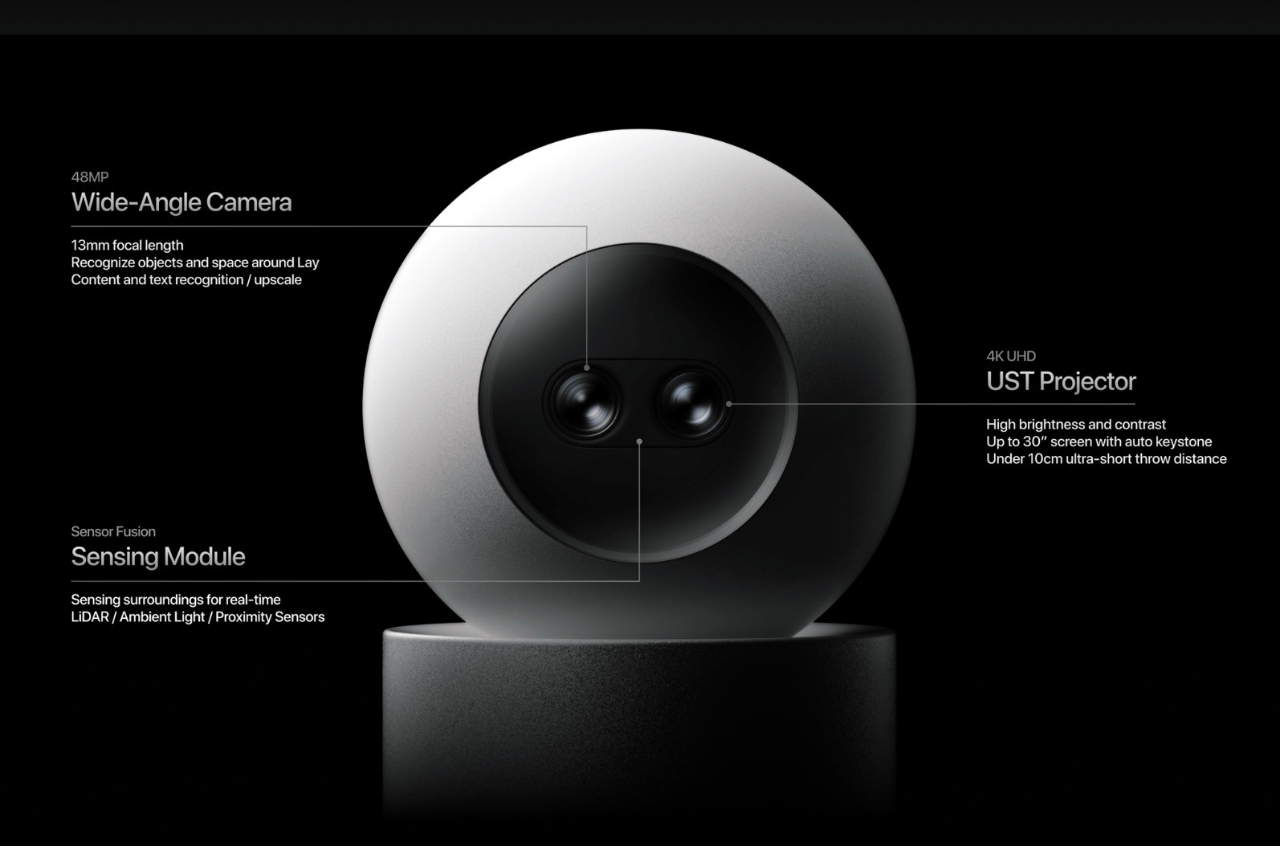
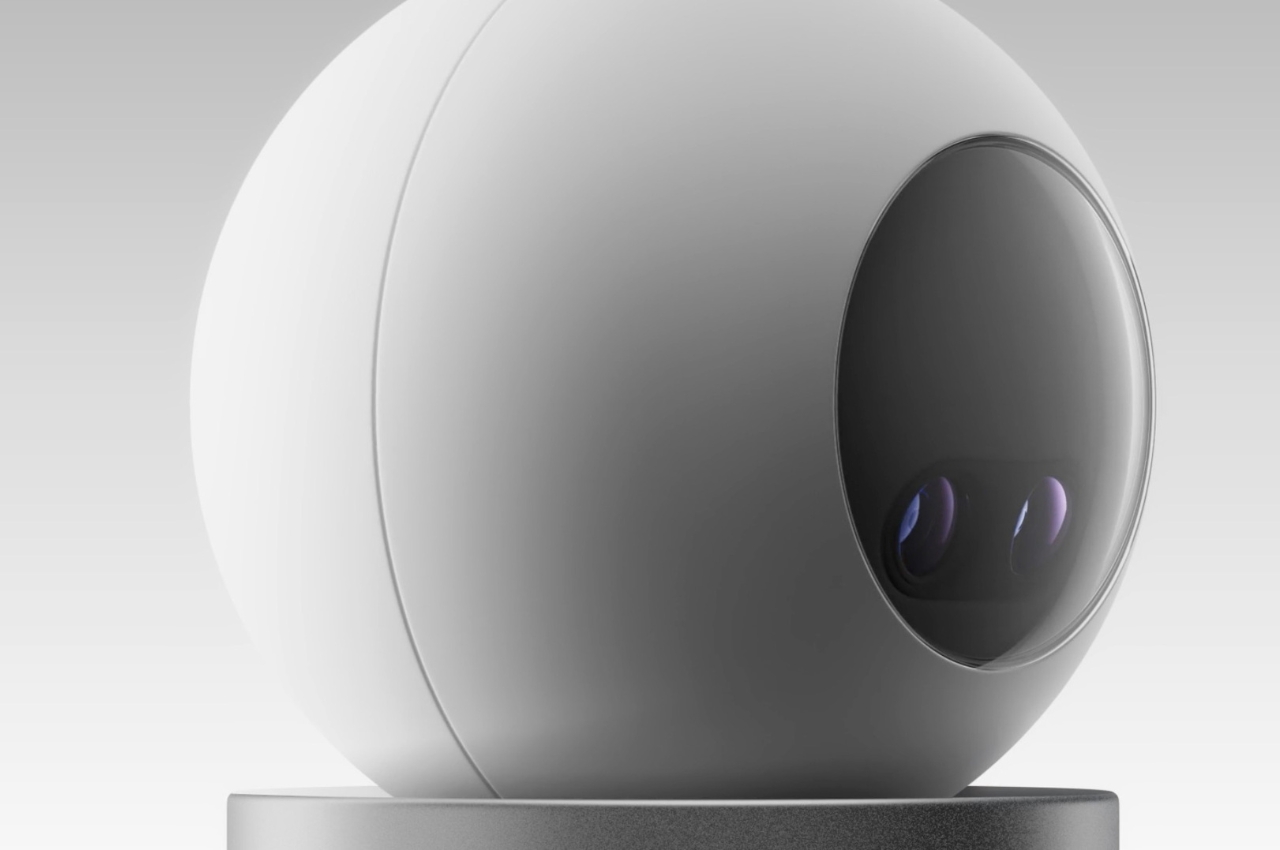
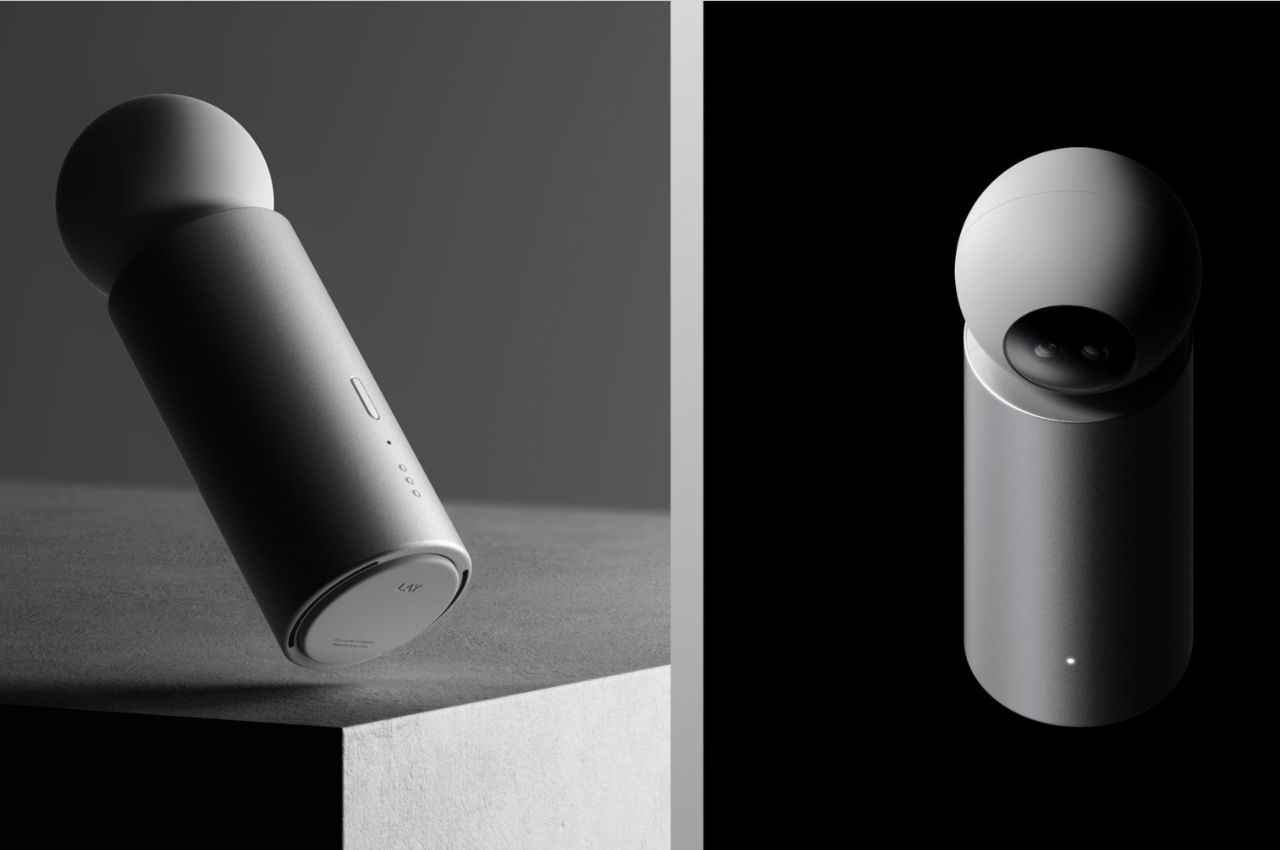
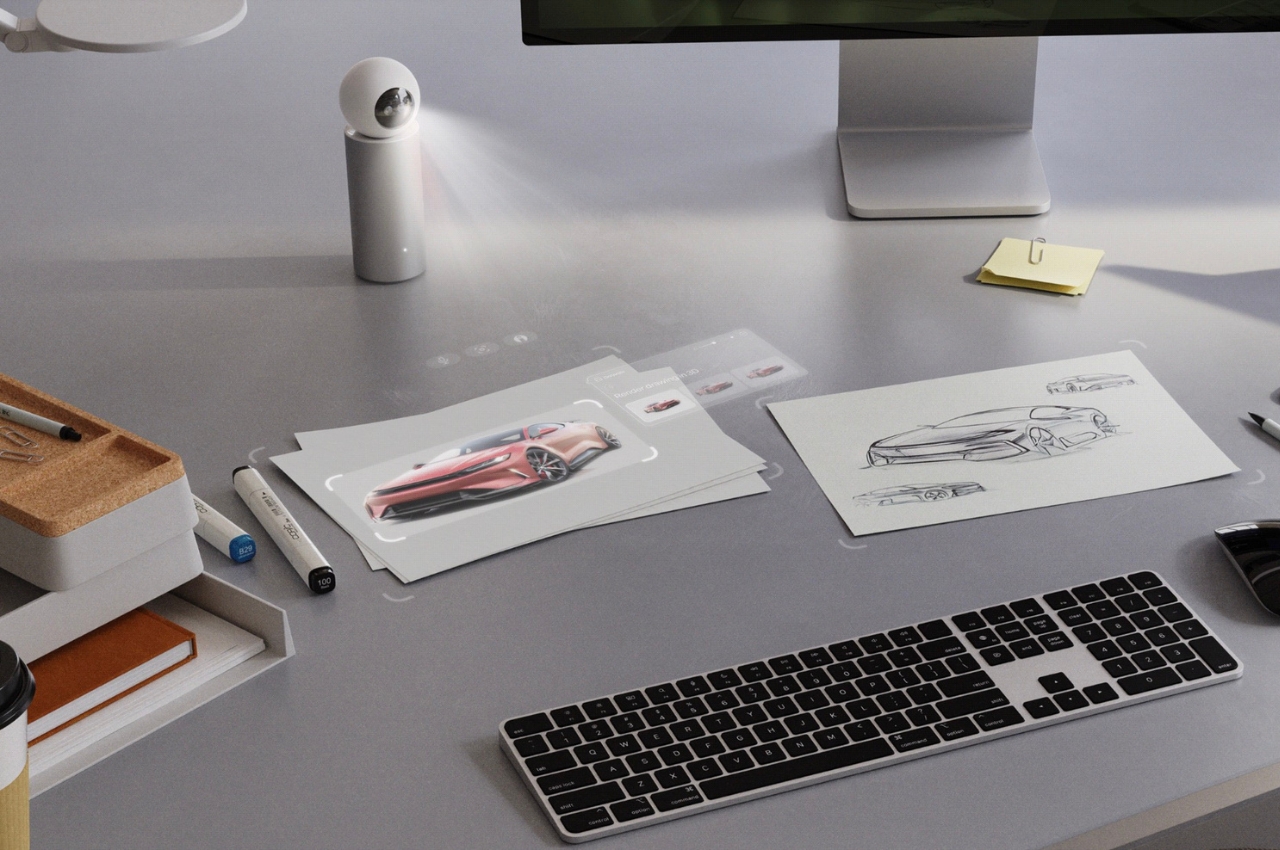
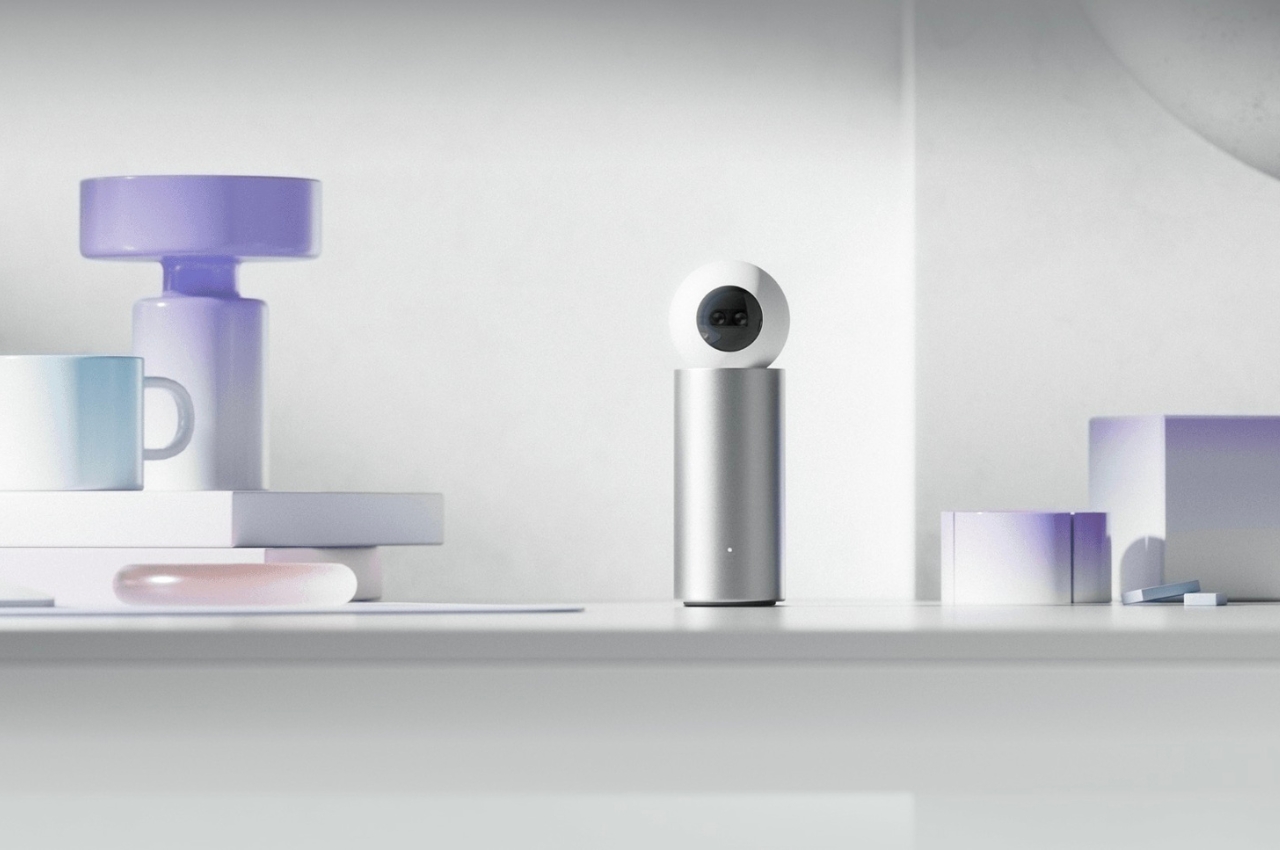
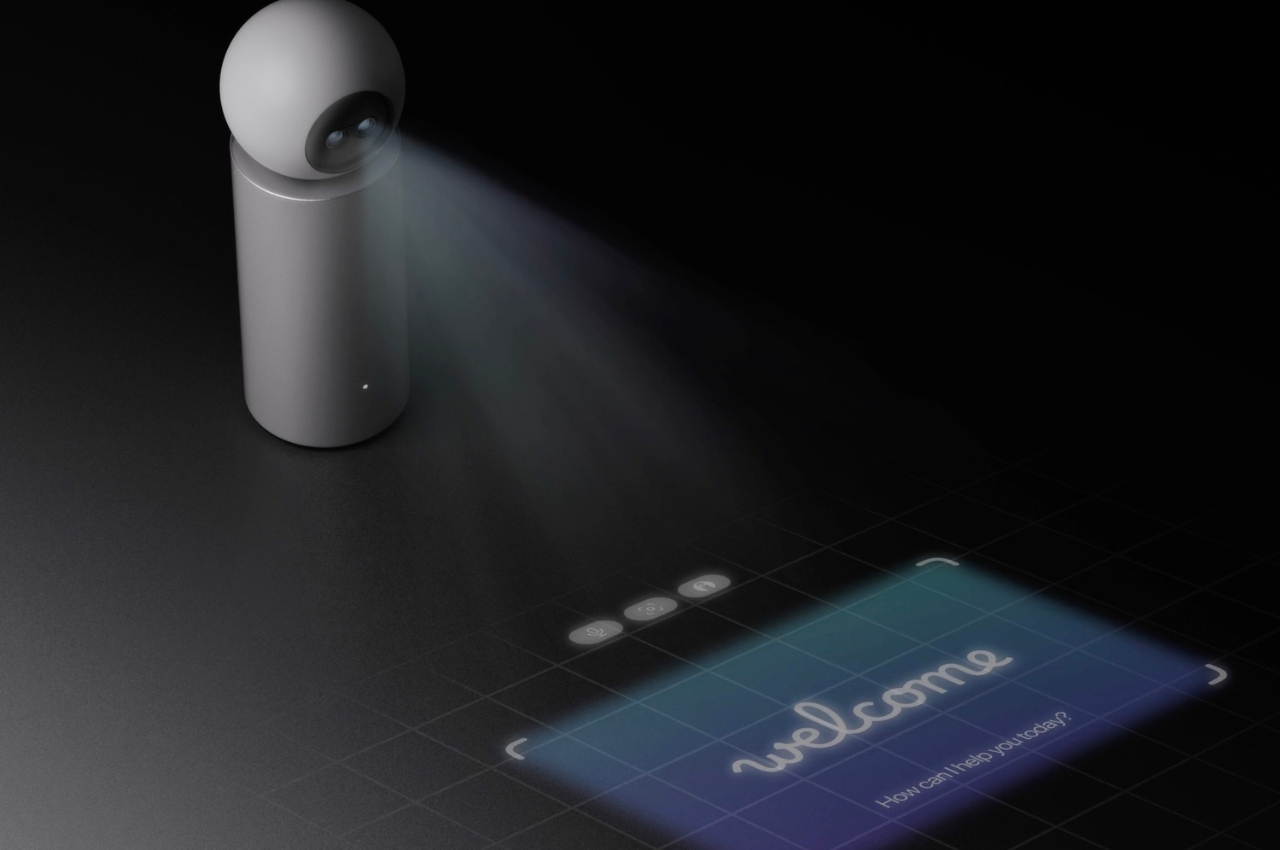
Lay is a concept for a portable AI device that is equipped with a wide-angle camera, a projector, and a sensing module. The 48MP wide-angle camera has a 13mm focal length and is able to recognize objects and space as well as have text recognition and upscale objects it can scan. The 4K UHD projector can project up to 30 inches screen with auto keystone and has under 10cm ultra-short throw distance and high brightness and contrast. The sensing module, which includes LiDAR, ambient light, and proximity sensors, is able to sense its surroundings in real time.


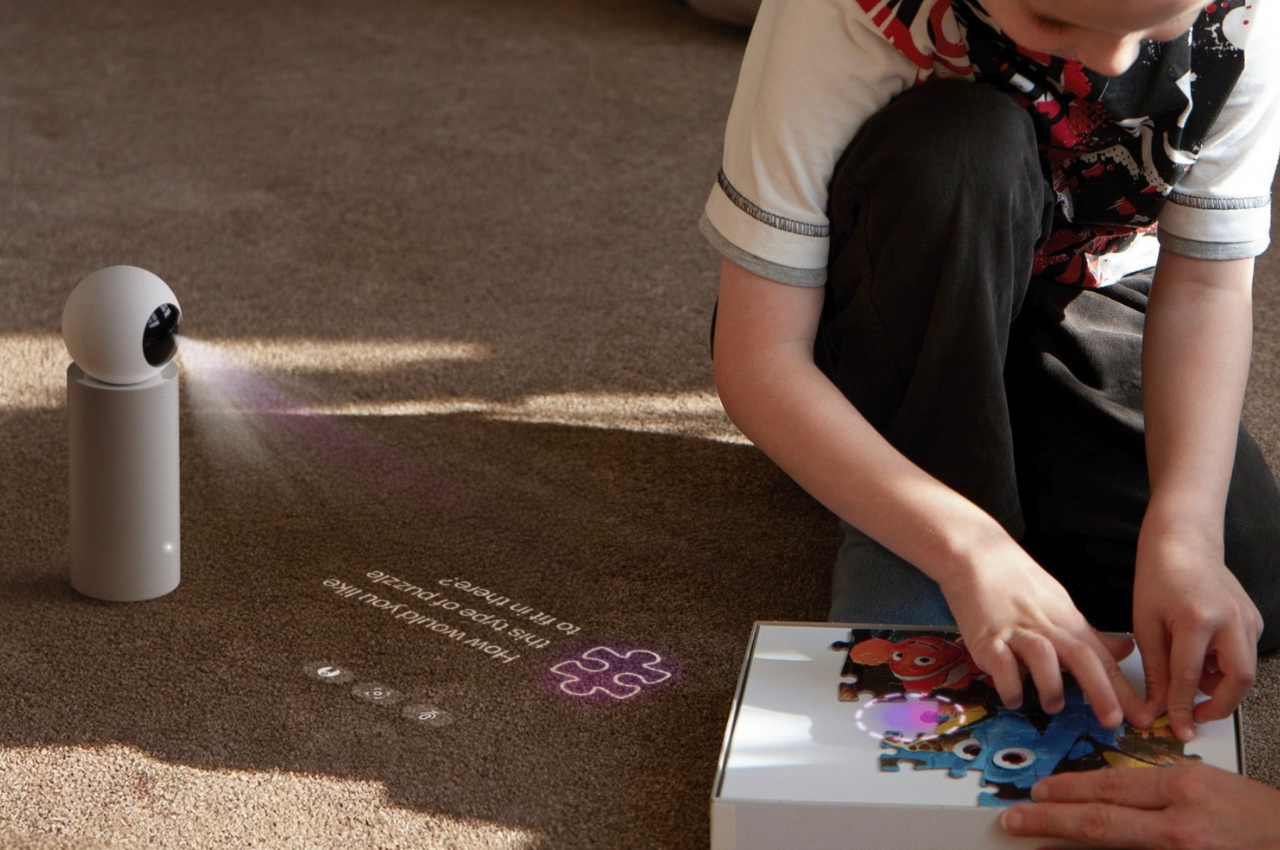
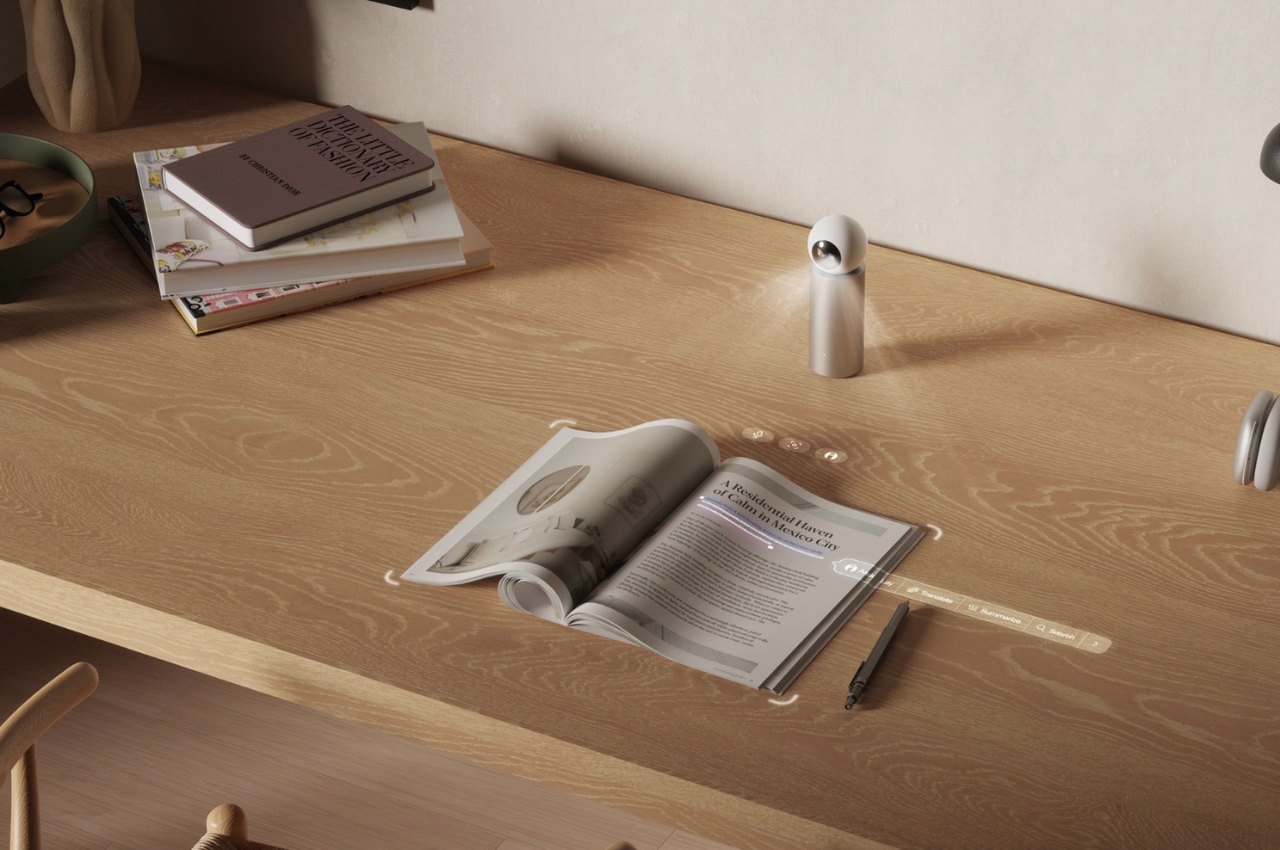
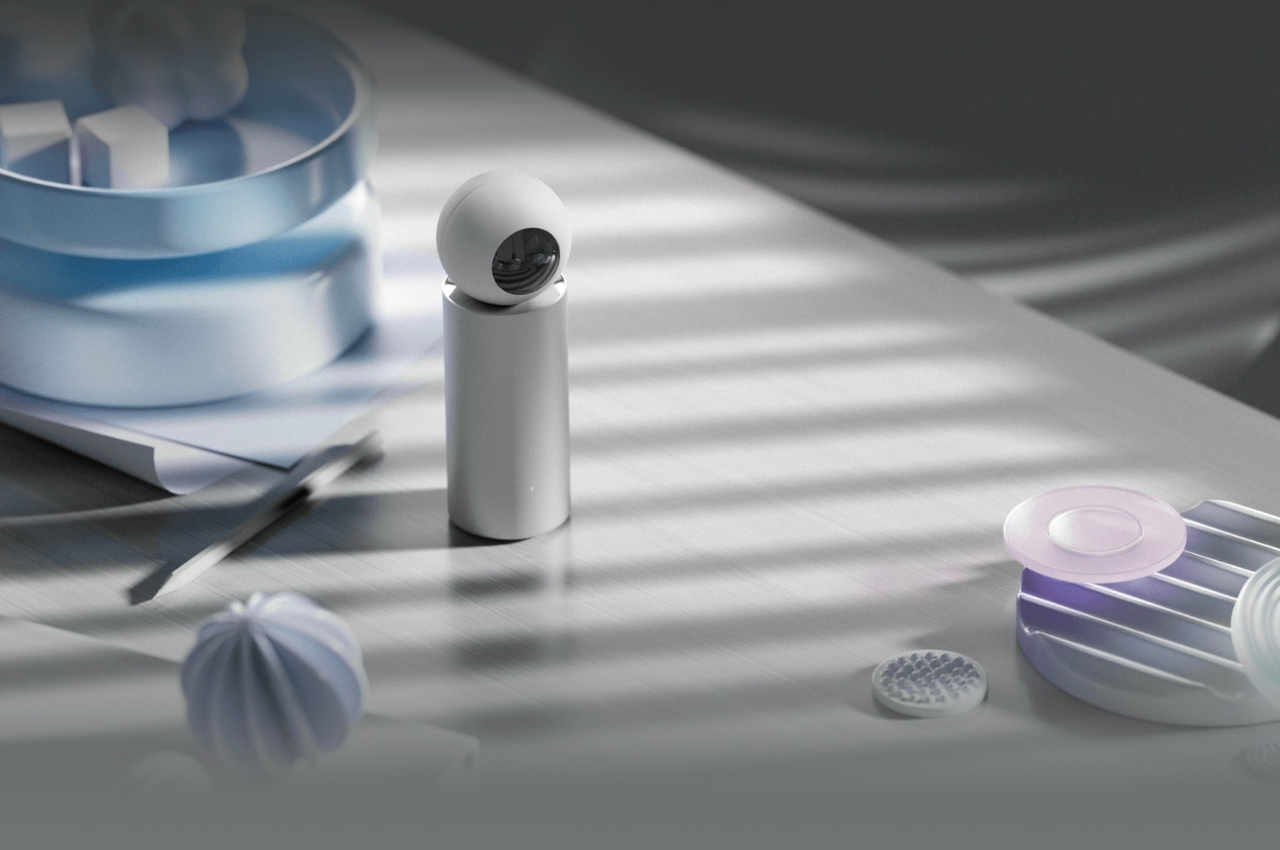
The device basically scans your surroundings and then leverage AI to make suggestions and give assistance on tasks that you can do to as you’re working, drawing, reading, scribbling, building, creating, or just leisurely browsing. It looks like a small spherical robot with a round head that moves around and that you can carry around and place on your desk or space as it helps you make your workflow smoother. It projects onto a surface which will serve as your screen as you do your different tasks. It can recognize and select text, drawings, photos, sketches and then all the content and information are updated in your real-time cloud.


The device still seems to be mostly theoretical and specific tasks you can do or that it can suggest are still a bit vague. But it’s an interesting concept for an AI-powered device that you can carry around with you especially if you’re a digital nomad. And with the speed at which some digital natives and early adapters are using and exploring AI, this can actually be a real device soon.


The post Portable AI device uses camera, projectors, sensors to make you more productive first appeared on Yanko Design.

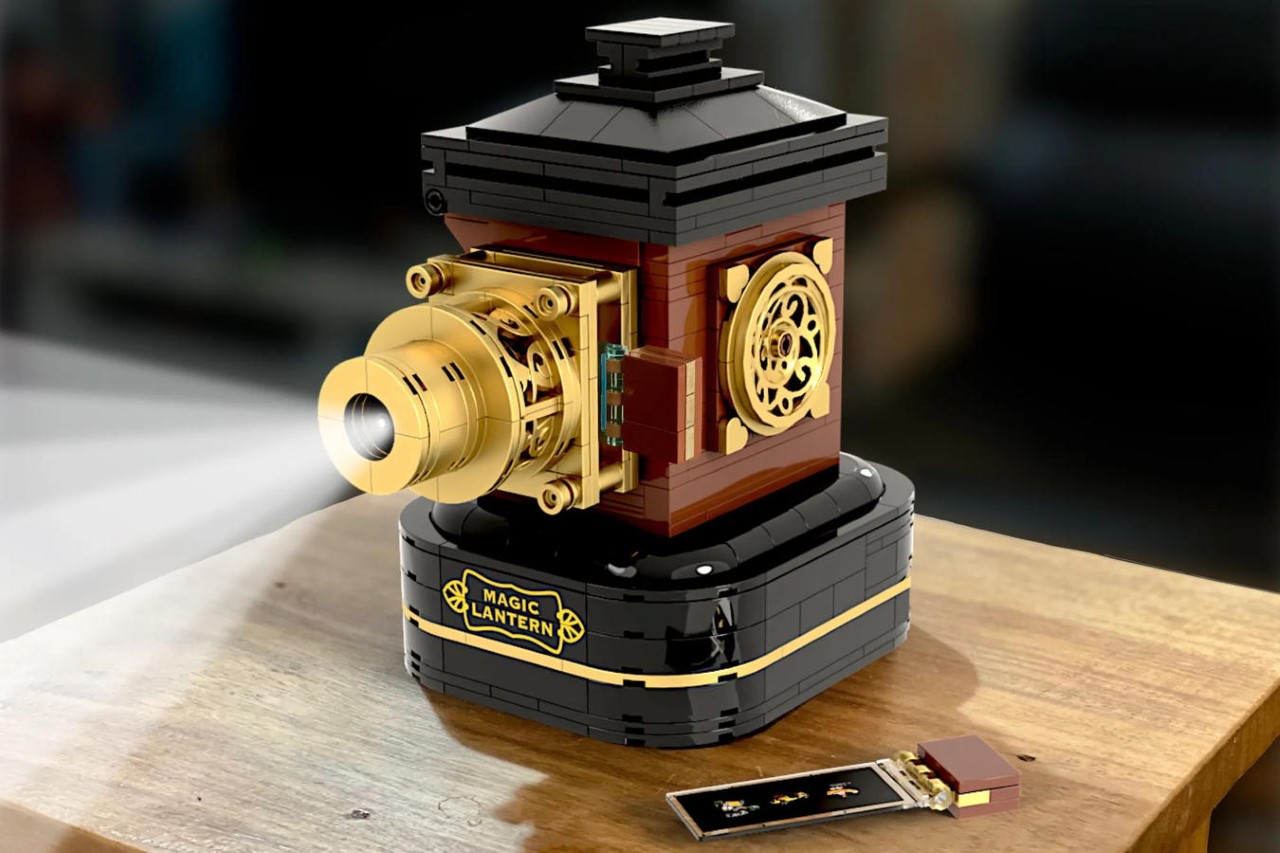
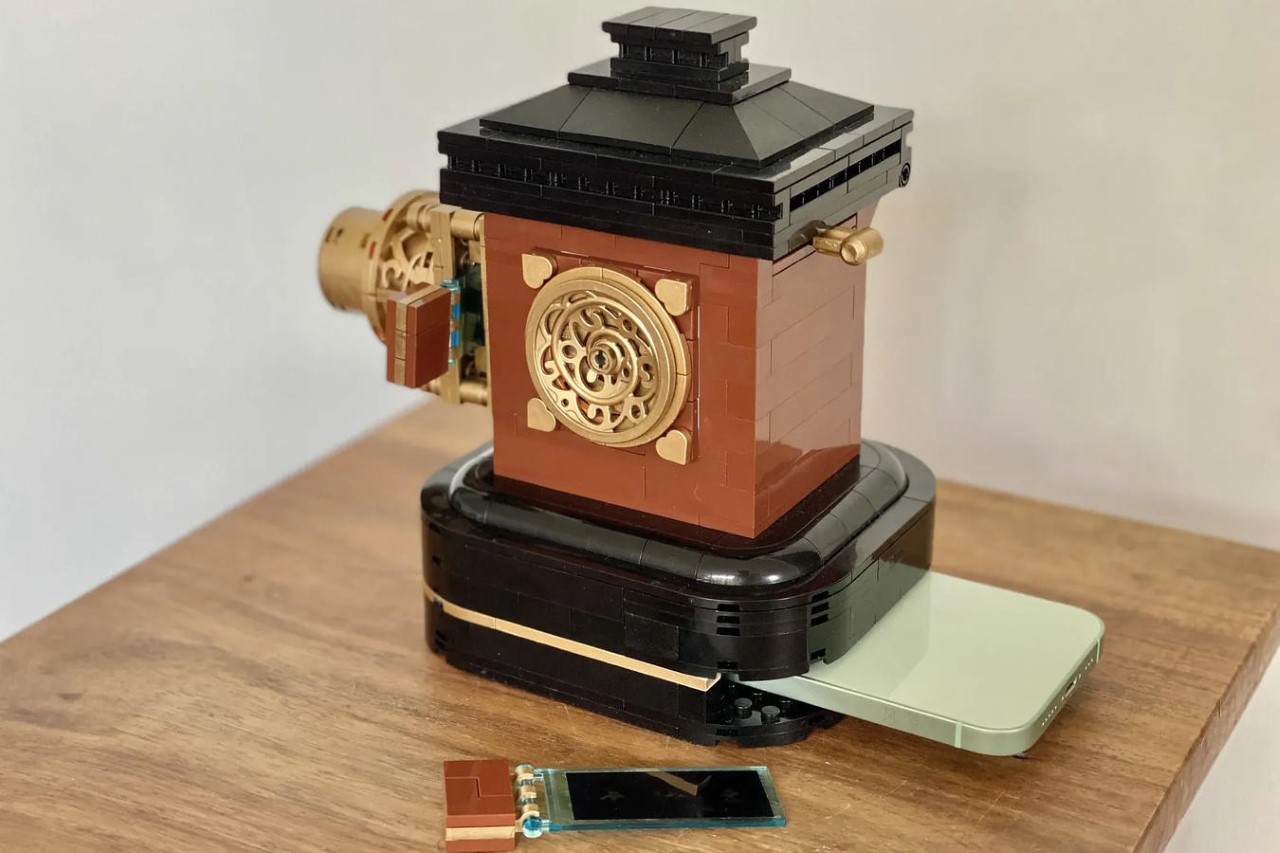
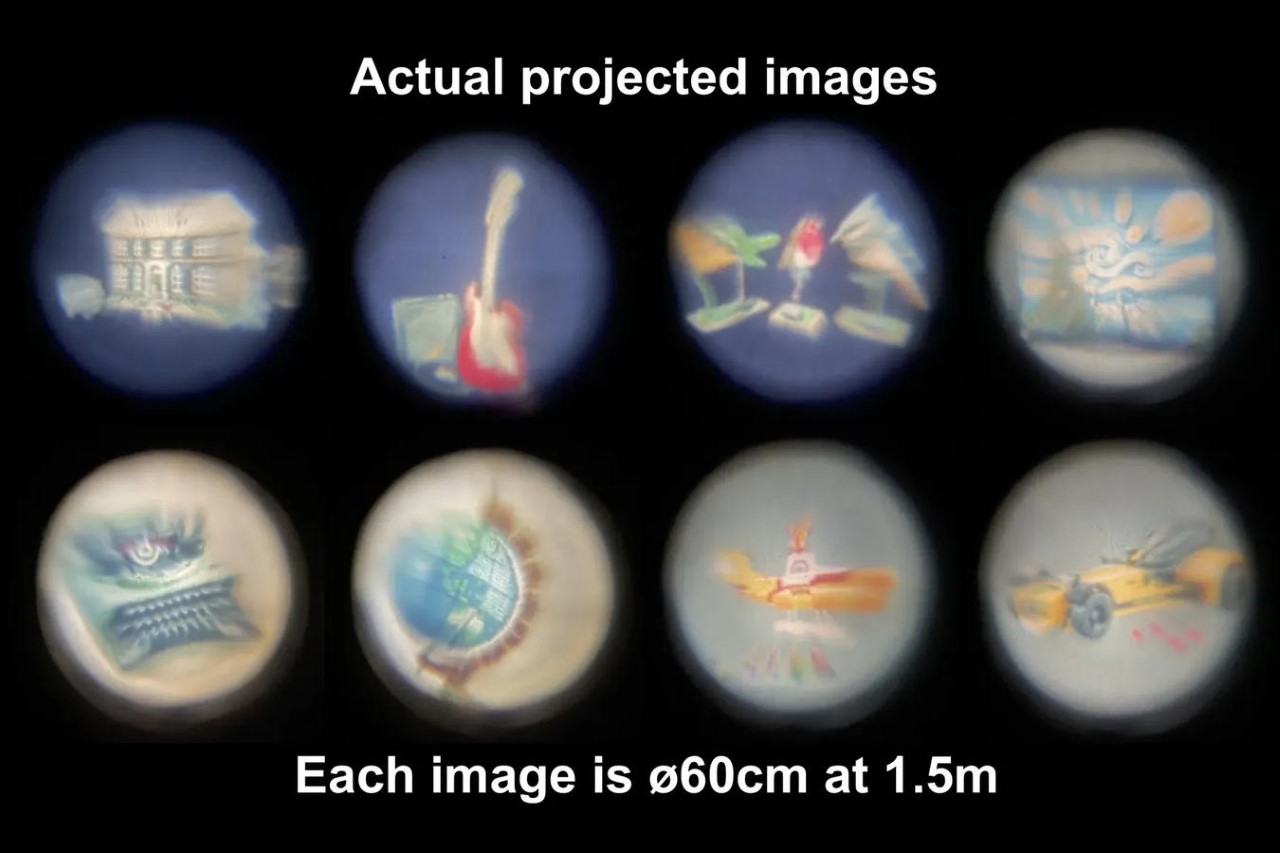
Think of it as a ViewMaster, but instead of a small viewfinder that lets you see images up close, the LEGO Magic Lantern can cast blurry yet discernible images onto your wall, making it an incredibly engaging and entertaining build for you and your curious child.
In the time before TV, before movies, and even before bright stage lights, a Dutch scientist developed a machine that could make pictures move right in front of you. People were amazed by it, and they called it the Magic Lantern. Jump ahead 400 years and we’ve got the LEGO version! However, the LEGO Magic Lantern by Norders doesn’t use candles or gas or quicklime as its light source – it uses something much more modern that everyone has in their pocket: the flashlight from your phone!
Designer: Norders


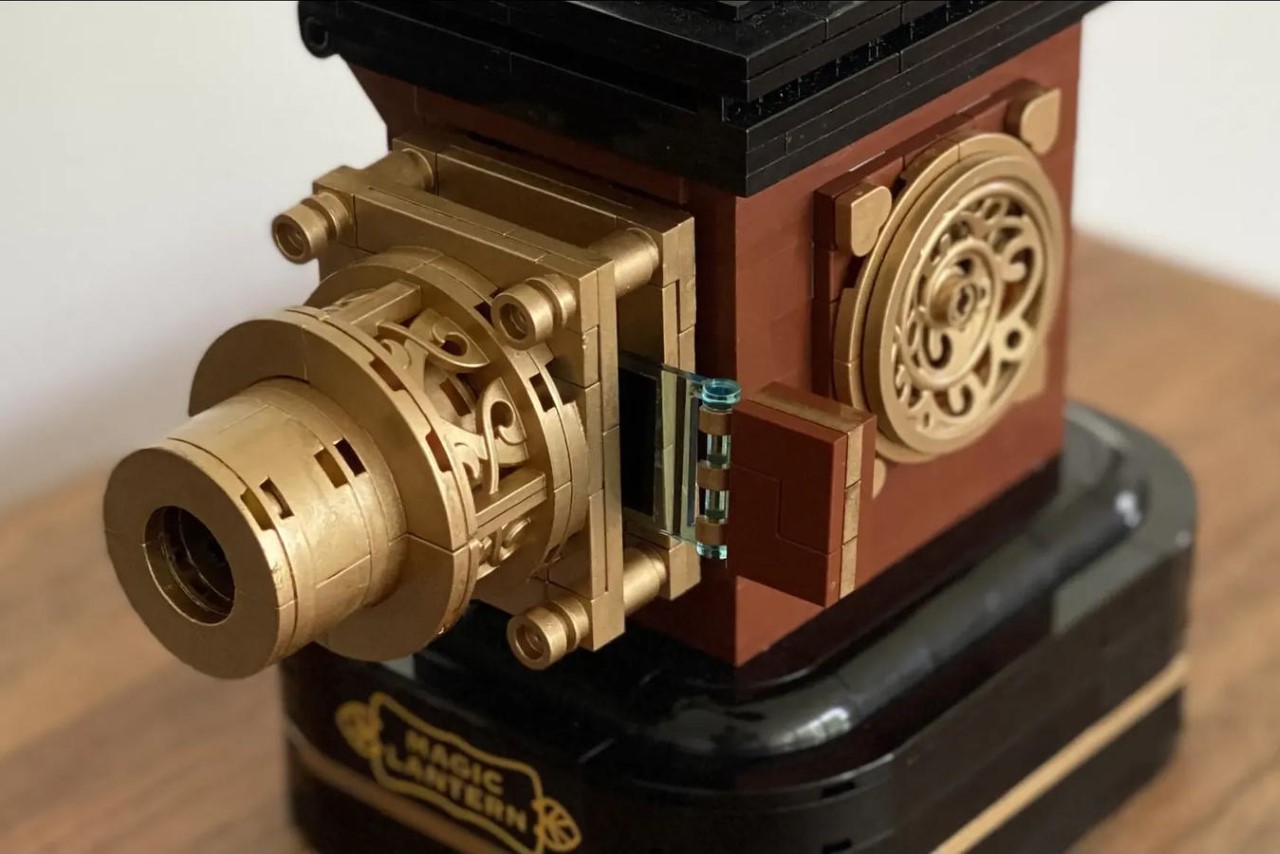
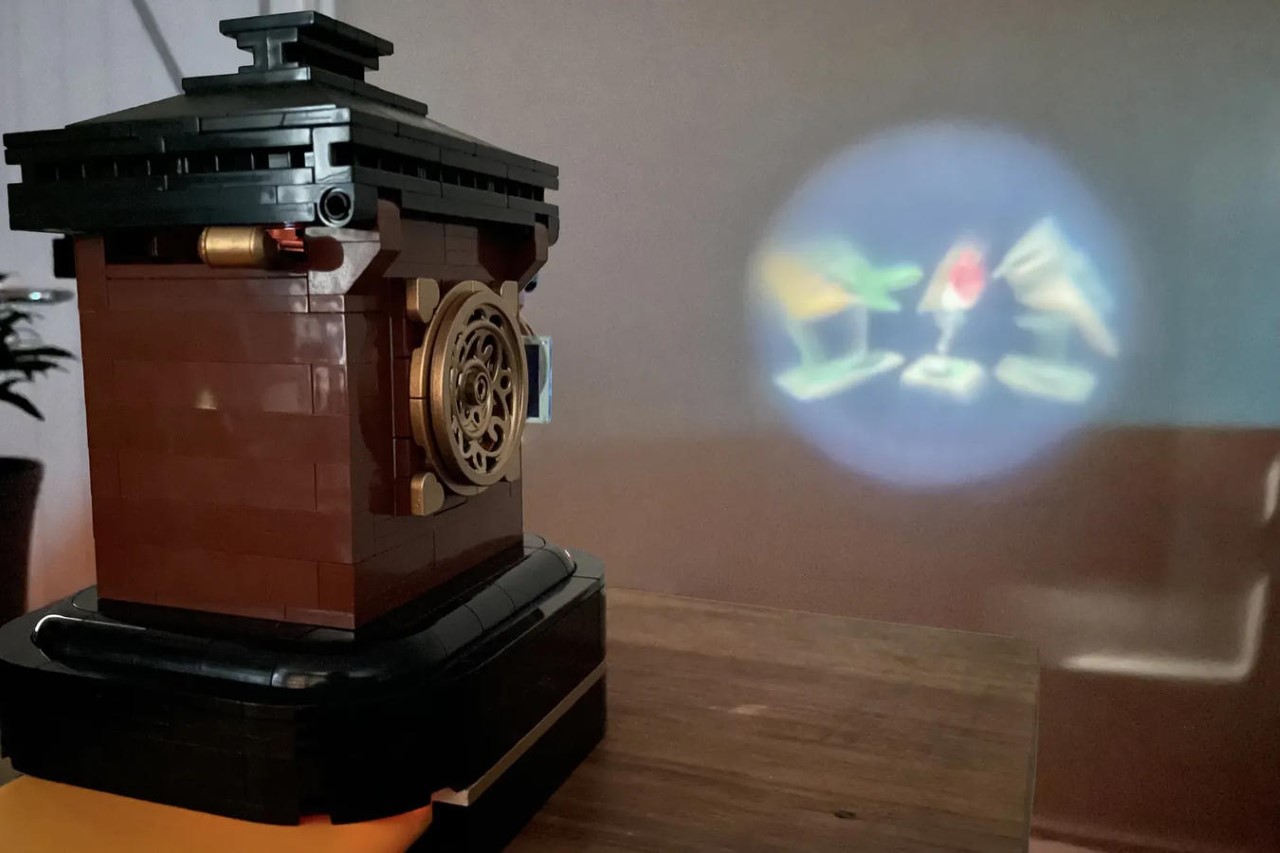
Inspired by the original Lanterna Magica from the 17th century (around the time when the greatest minds were devoting their time towards exploring optics and lenses), Norders’ LEGO creation is a tiny tabletop device with steampunk-retro-esque details. Styled like a lantern, the contraption has a lens on the front that shoots images out onto any wall, using the light from your smartphone. Given its fixed focal length, the projector does need to be adjusted to ensure the image on the wall isn’t blurry or washed out. At the right distance, you’re left with a clear, bright image with a little vignetting around the sides, giving it an incredibly vintage appeal. Imagine how advanced this must have been during the 17th century!

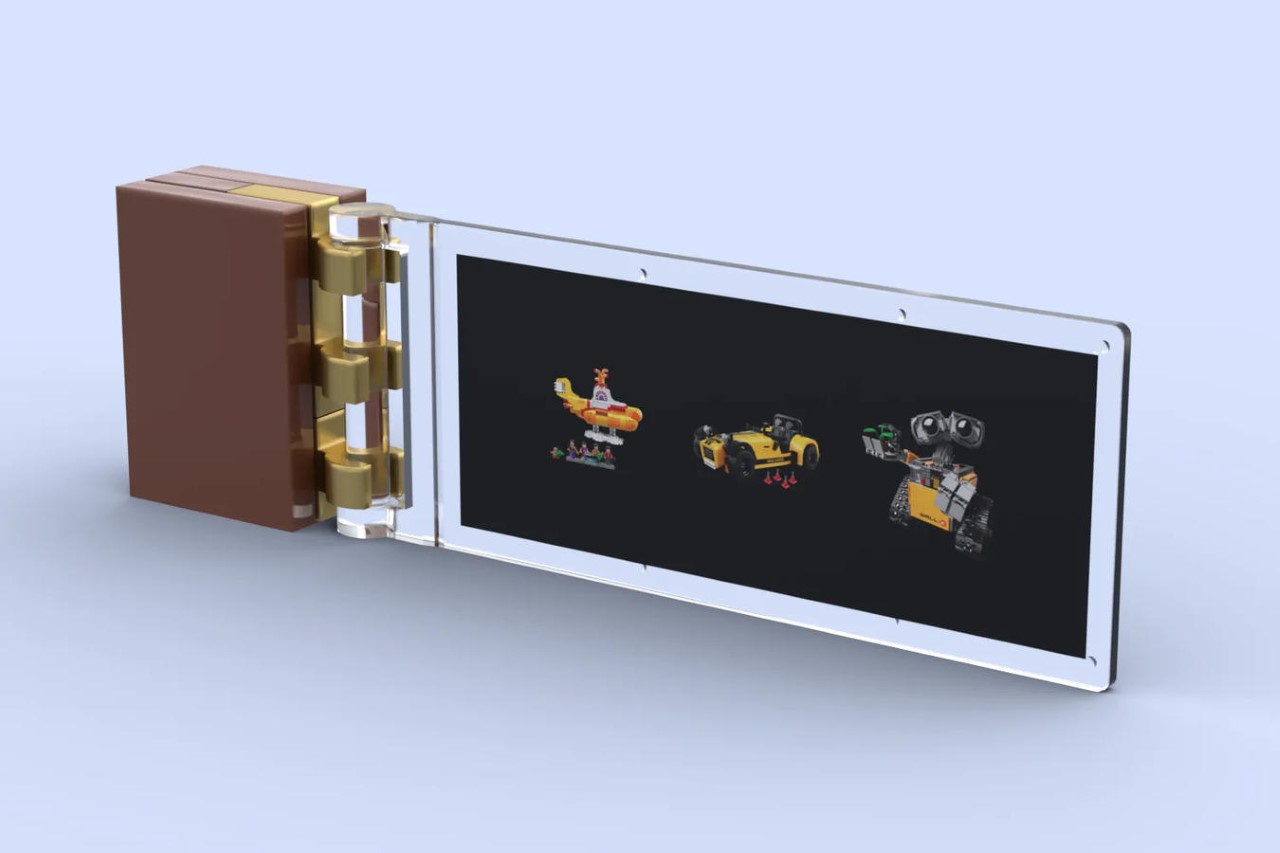
The way the projector works is by putting a translucent slide into its mounting slot, causing light passing through the projector to cast the image on a wall. The slides are removable and replaceable, letting you play out a literal slide show by changing the individual images every few seconds! In fact, the 17th-century magic lantern is where we get the word ‘slide show’ from!


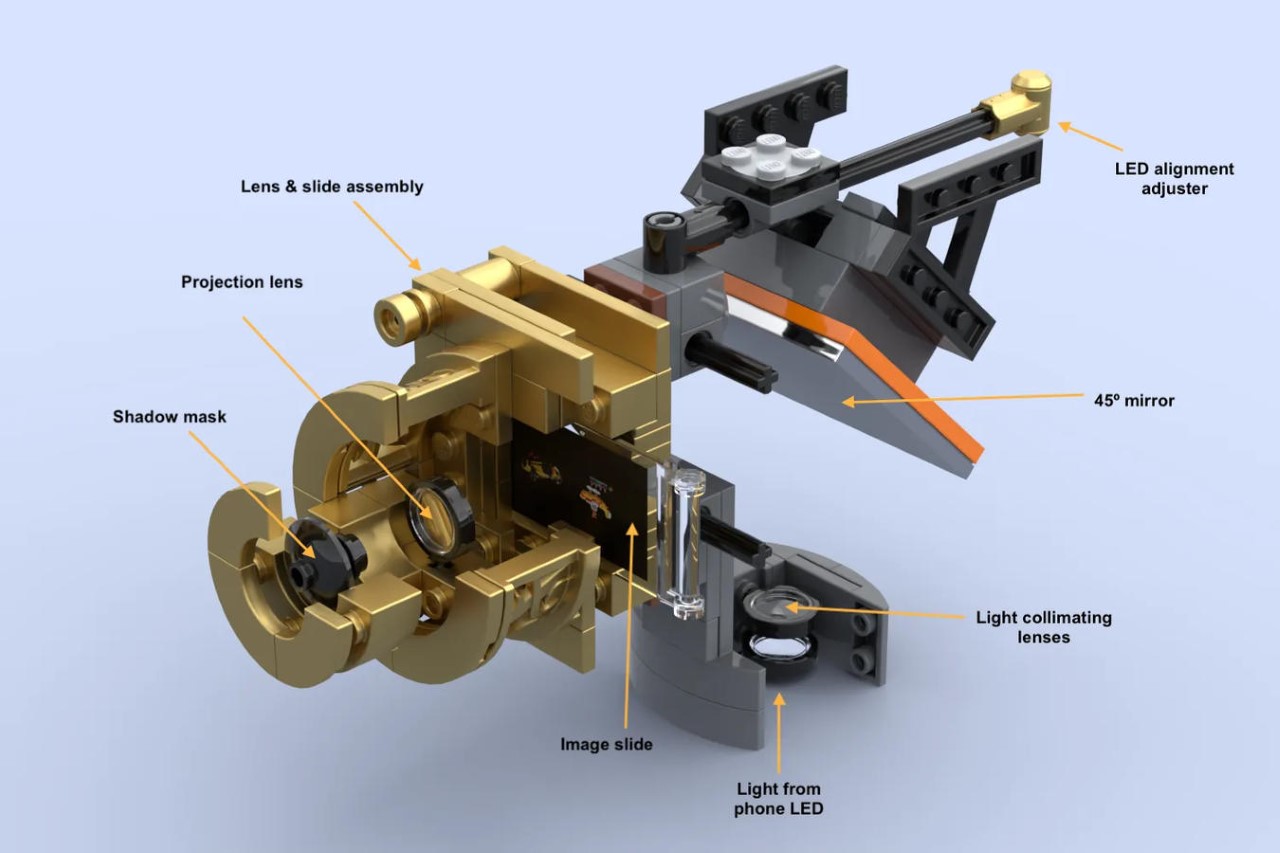
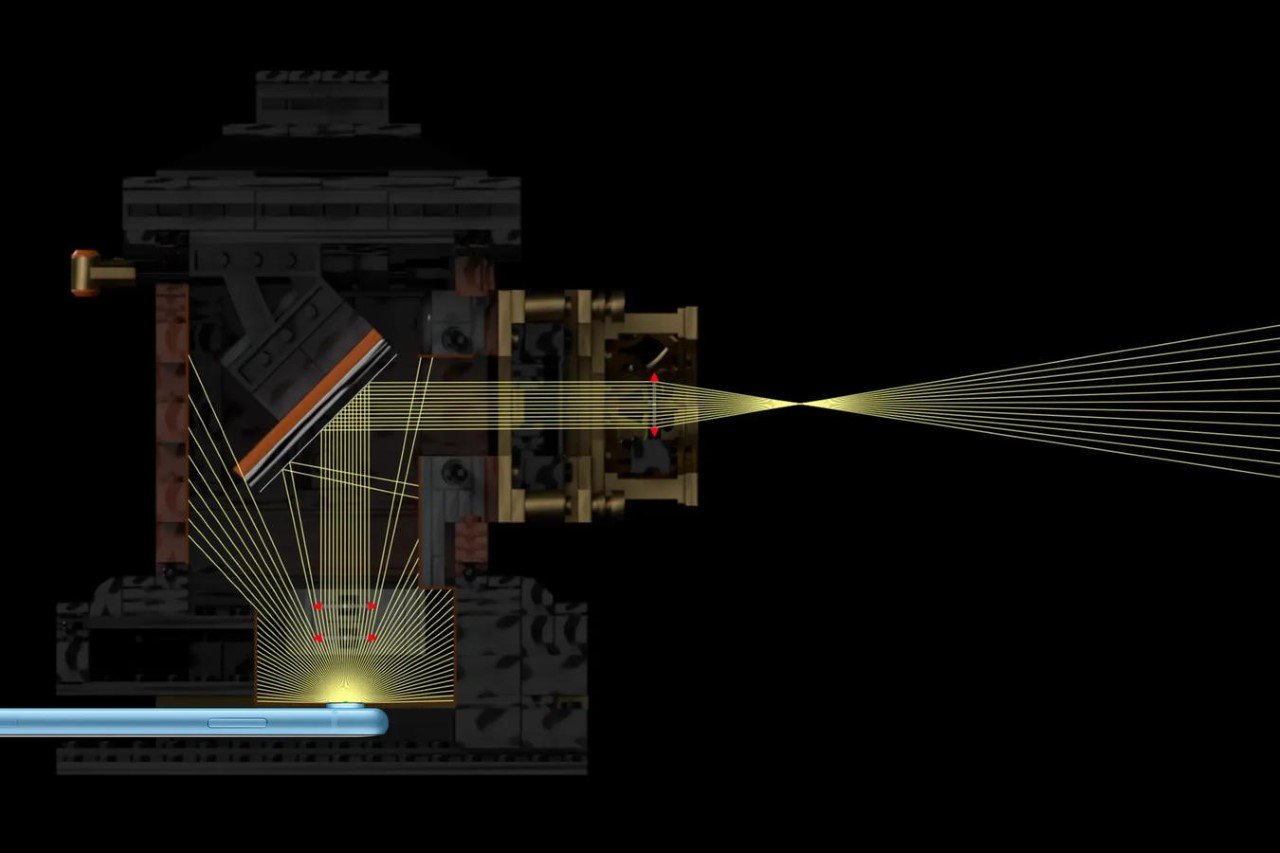
By LEGO-build standards, Norders’ Magic Lantern takes a few unconventional liberties. It uses parts that aren’t found in the LEGO catalog, like lenses, mirrors, and printed images. The lenses play a rather integral role in shaping the beam of light, which travels upwards from your smartphone to a 45° mirror, which then channels it forward towards the front of the projector. The printed image is mounted on a transparent LEGO brick, and light passing through it hits a final lens before going through a shadow mask to help create that final circular image. In LEGO parlance, these techniques are ‘illegal’ because of the use of non-LEGO components. However, we can chalk it down to ‘creative liberty’.

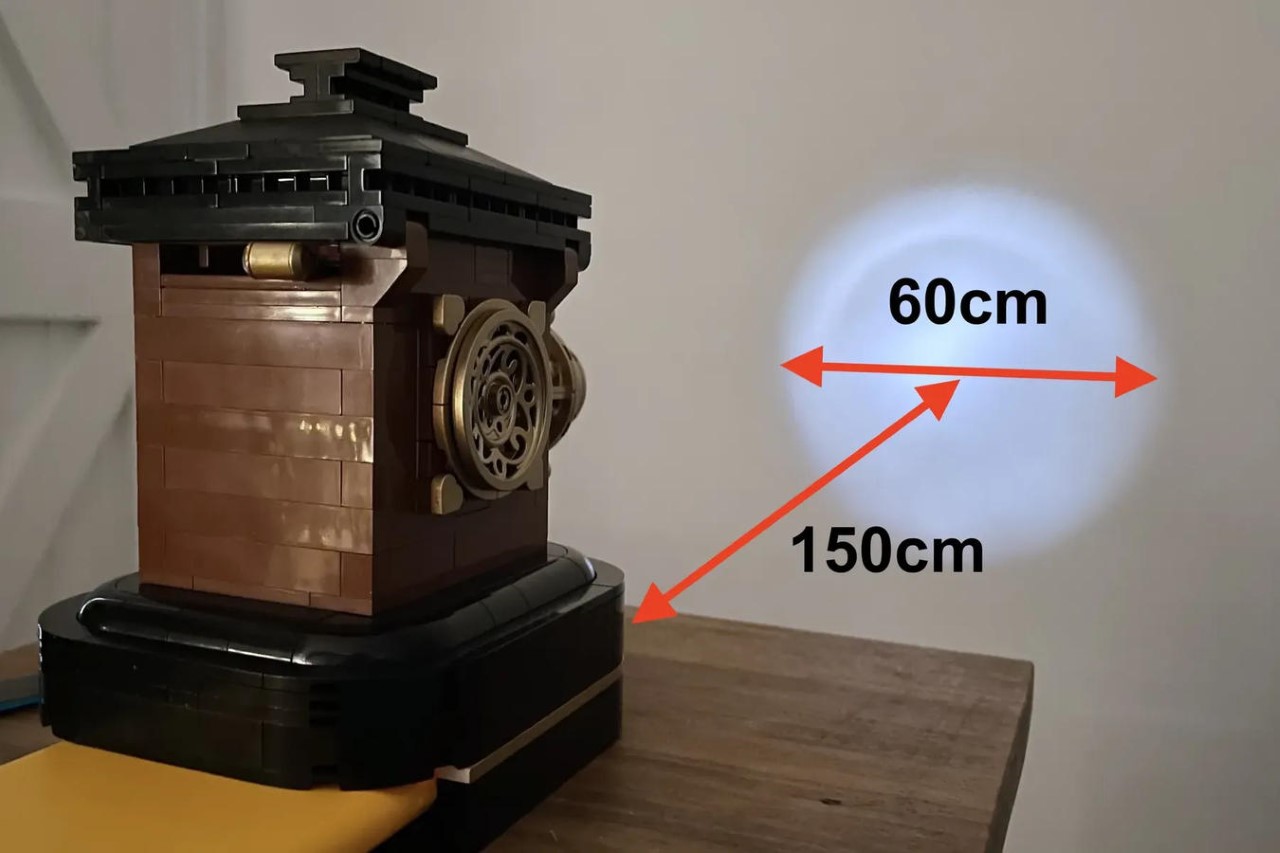
Keeping the Magic Lantern 150cm (59 inches) far from the wall results in an image 60cm (23.5 inches) in diameter

The Magic Lantern’s schematic features an adjustable mirror because the flashlight isn’t located at exactly the same place for every smartphone
The Magic Lantern is made from 513 LEGO bricks, making it much easier than some other detailed LEGO construction kits. Each additional slide requires 7 bricks, allowing you to expand on your slide collection to display through the lantern (you’ll still have to print your images on transparent sheets). Norder’s creation is a part of the LEGO Ideas forum, where independent creators can submit their ideas for LEGO builds and have the global LEGO community vote to select their favorite. As of writing this, the LEGO Magic Lantern has a staggering 8,355 votes, putting it just inches behind the 10,000-vote finish line. You can help by voting for it on the LEGO Ideas forum and with luck, help turn it into a buyable set!

The post Retro LEGO Projector Can ACTUALLY Project Images Onto Any Wall first appeared on Yanko Design.
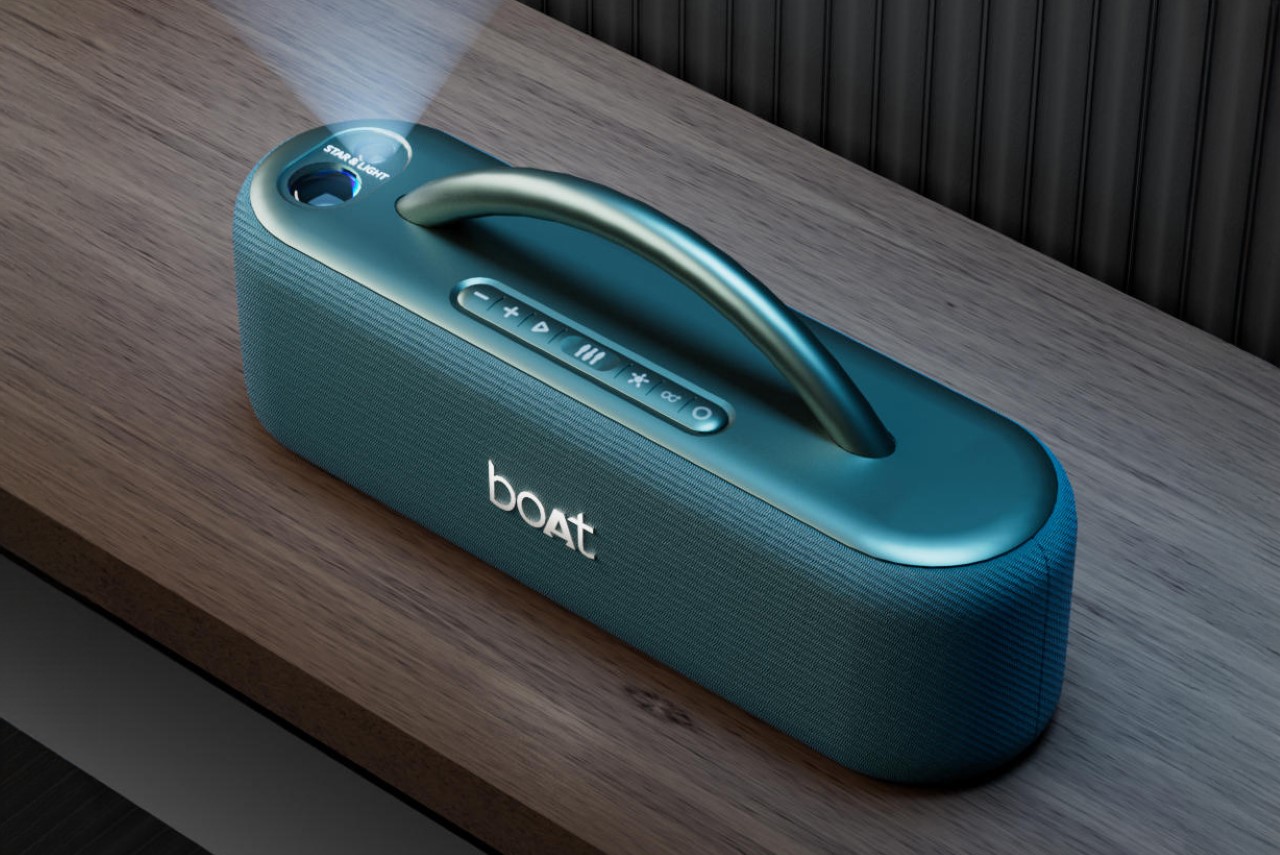
Projectors are becoming a popular alternative to extra large screens like TVs, mostly at home but sometimes even outdoors. Product design trends have started to move away from bulky boxes to more compact forms, but most of them are still restricted by a few design considerations. Even projectors that are supposedly designed for portability often come with clunky and sometimes unattractive stands, or worse, require setting up on tripods just to get the perfect angle. This concept design tries to solve that problem in a rather creative way, offering a highly compact and portable projector that can be propped up and angled conveniently, all without using a tripod or even a stand.
Designer: Hana Belassi


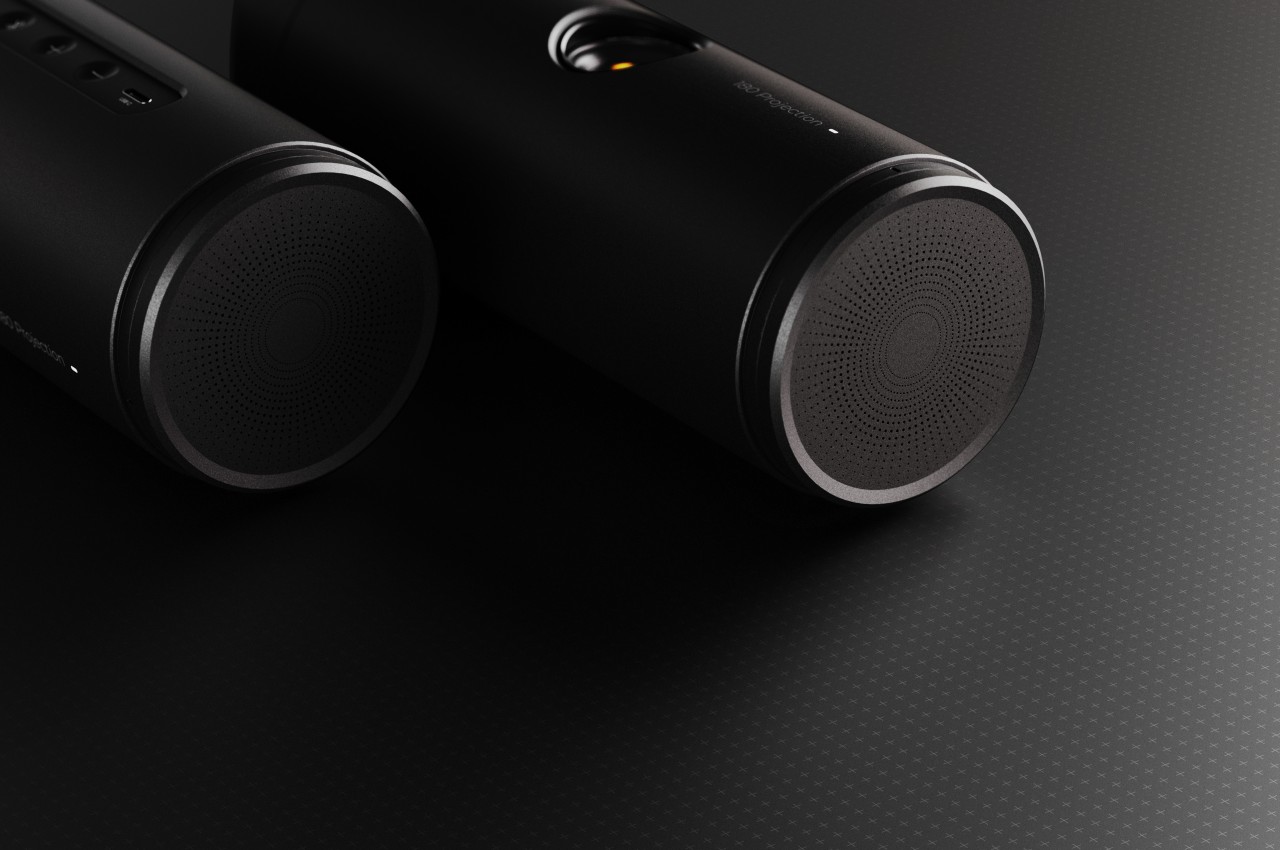
Thanks to progress in technology and manufacturing, it’s now possible to cram much of the electronics that powered large, hulking projectors into something the size of a small box or even a cylinder. But despite the smaller designs, or probably because of their more cramped designs, these portable projectors often rely on an external mechanism like a tripod or stand to prop them up at the desired angle. Not only does this ruin the aesthetics of the otherwise beautiful product, it also makes it cumbersome to bring the projector along wherever you go.


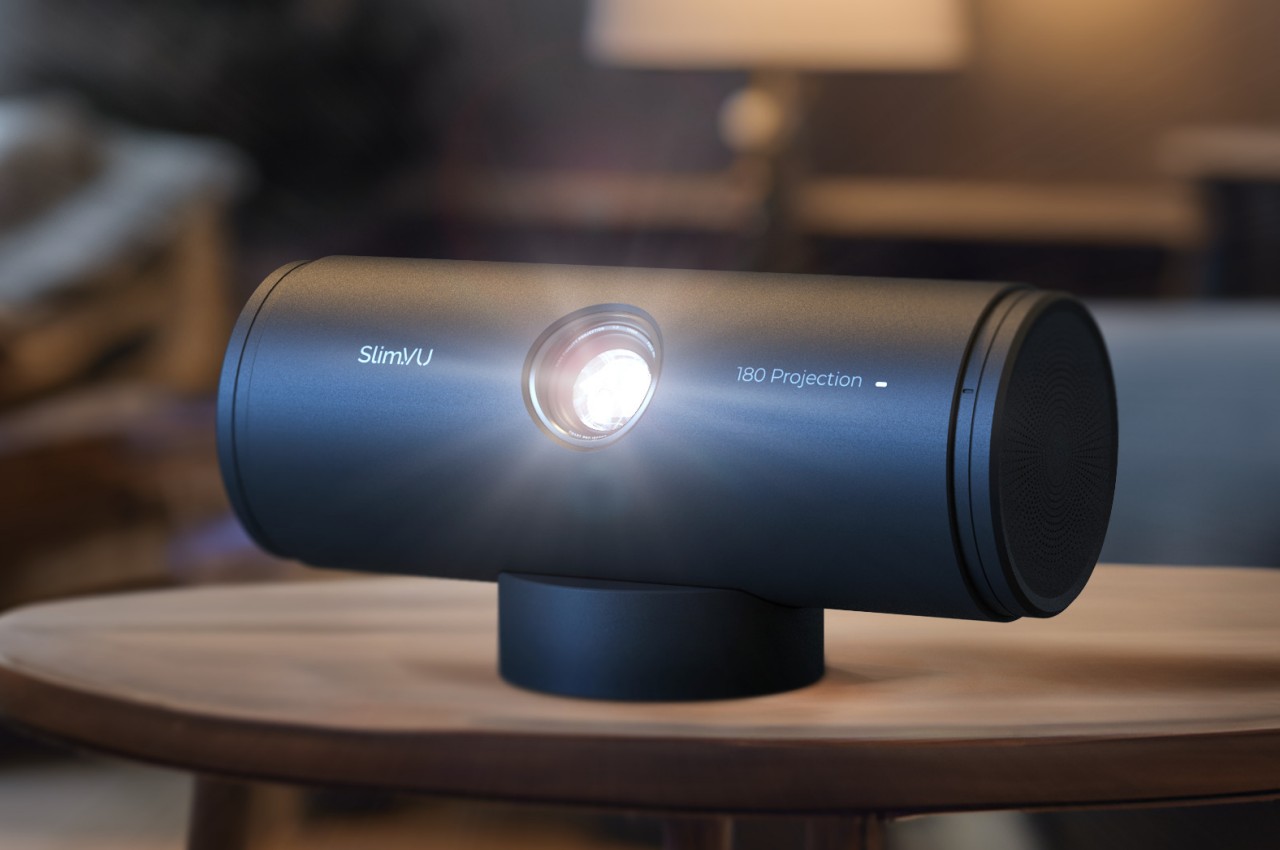
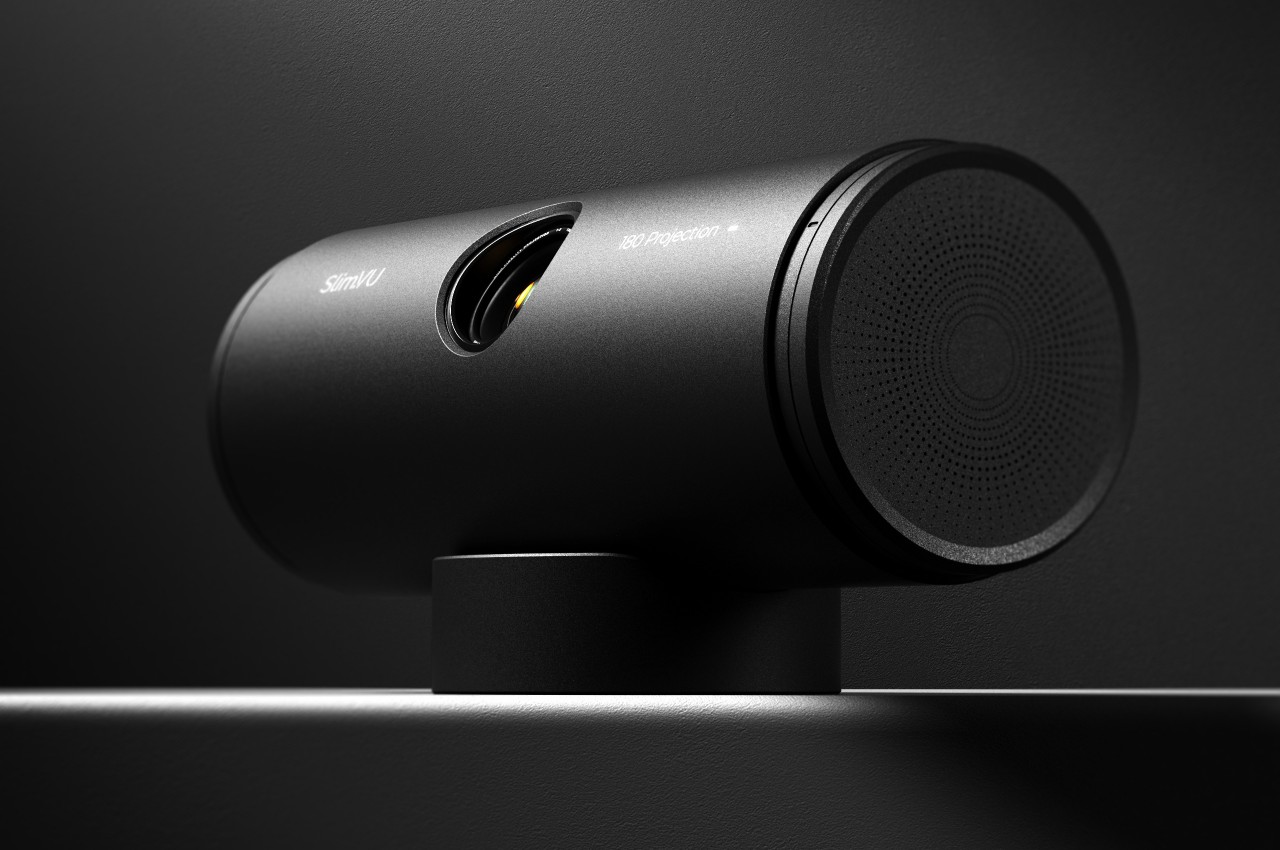
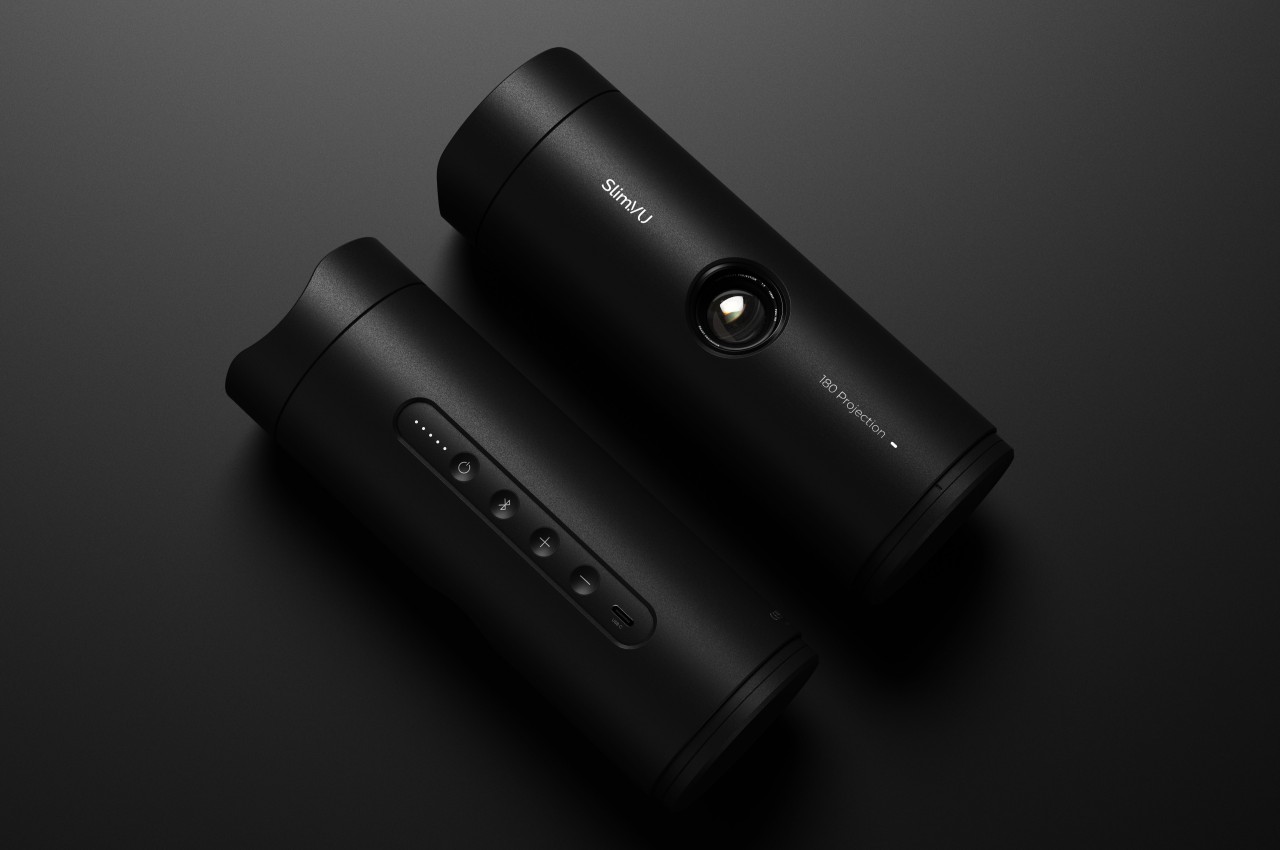
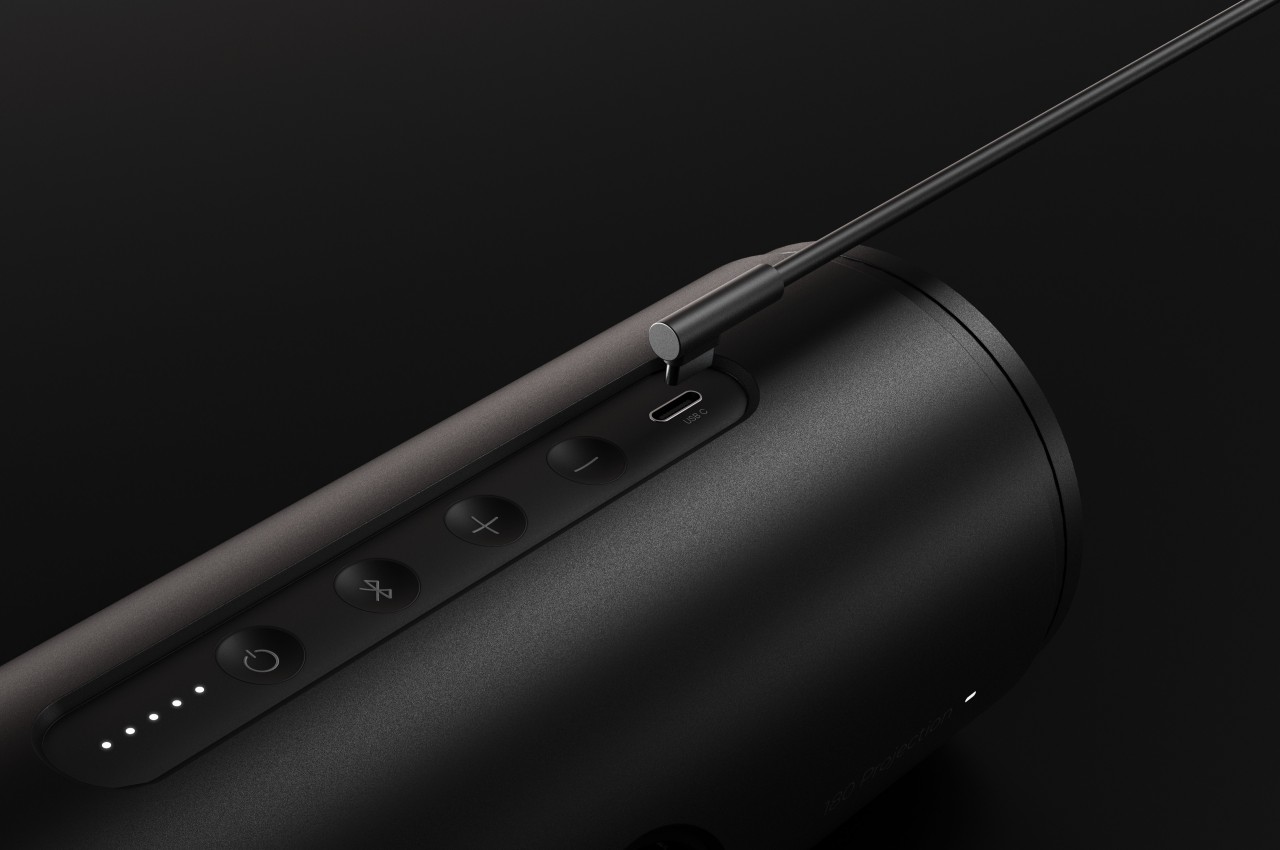
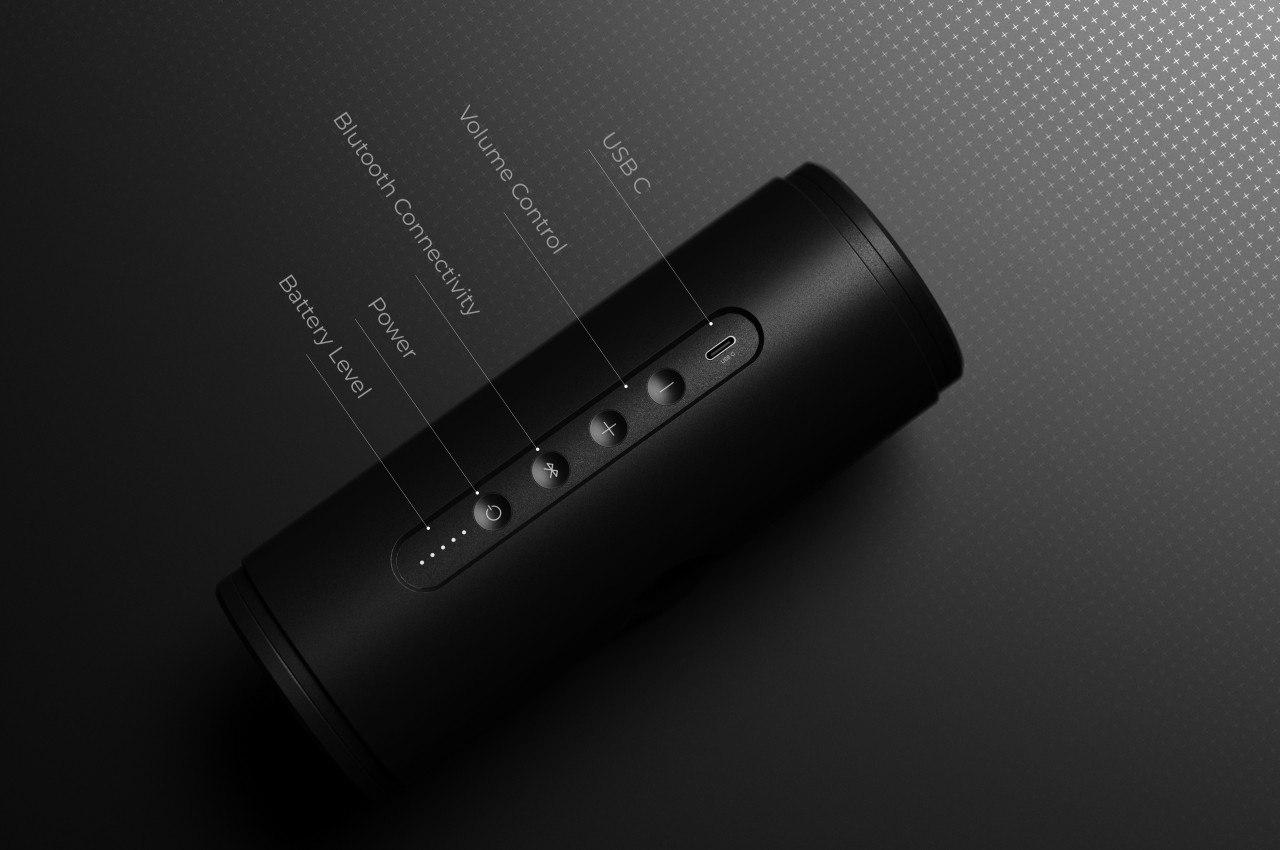
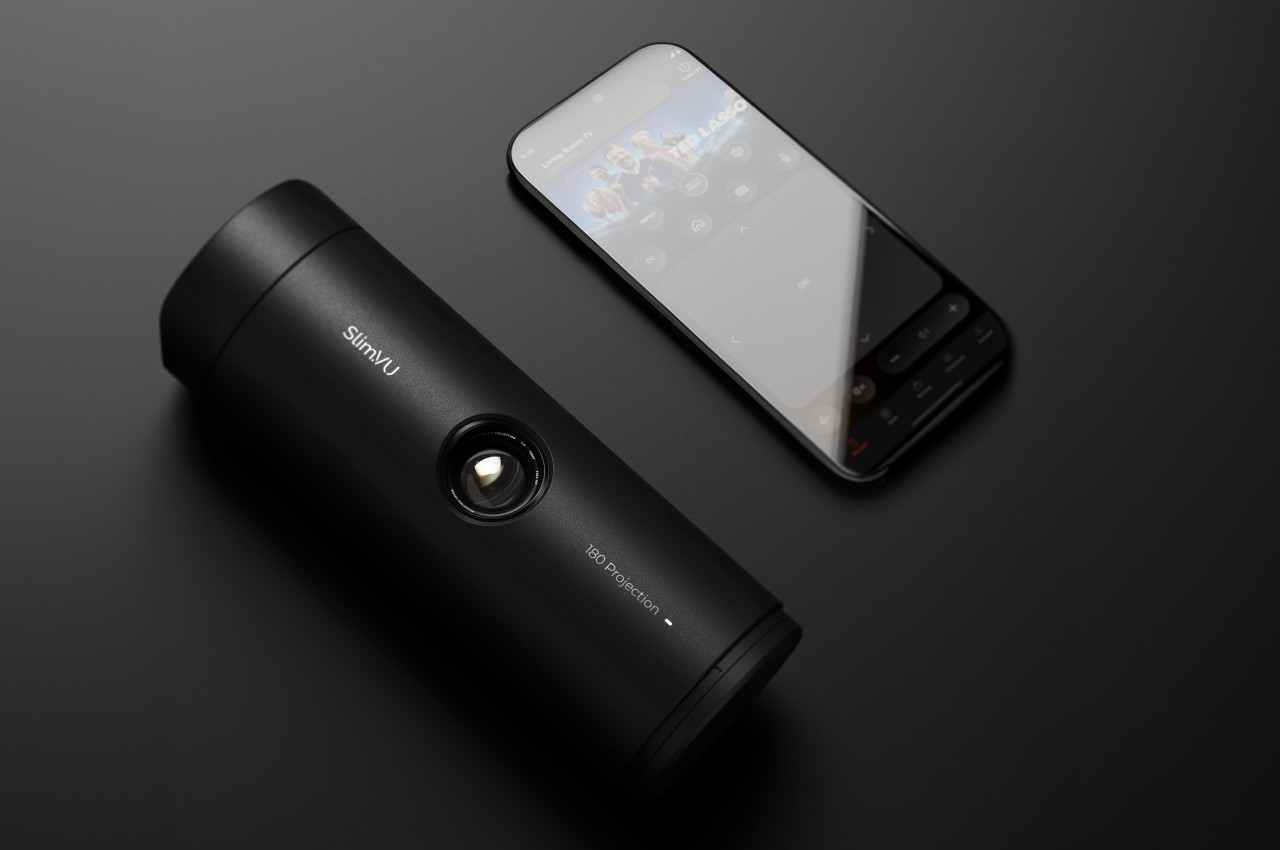
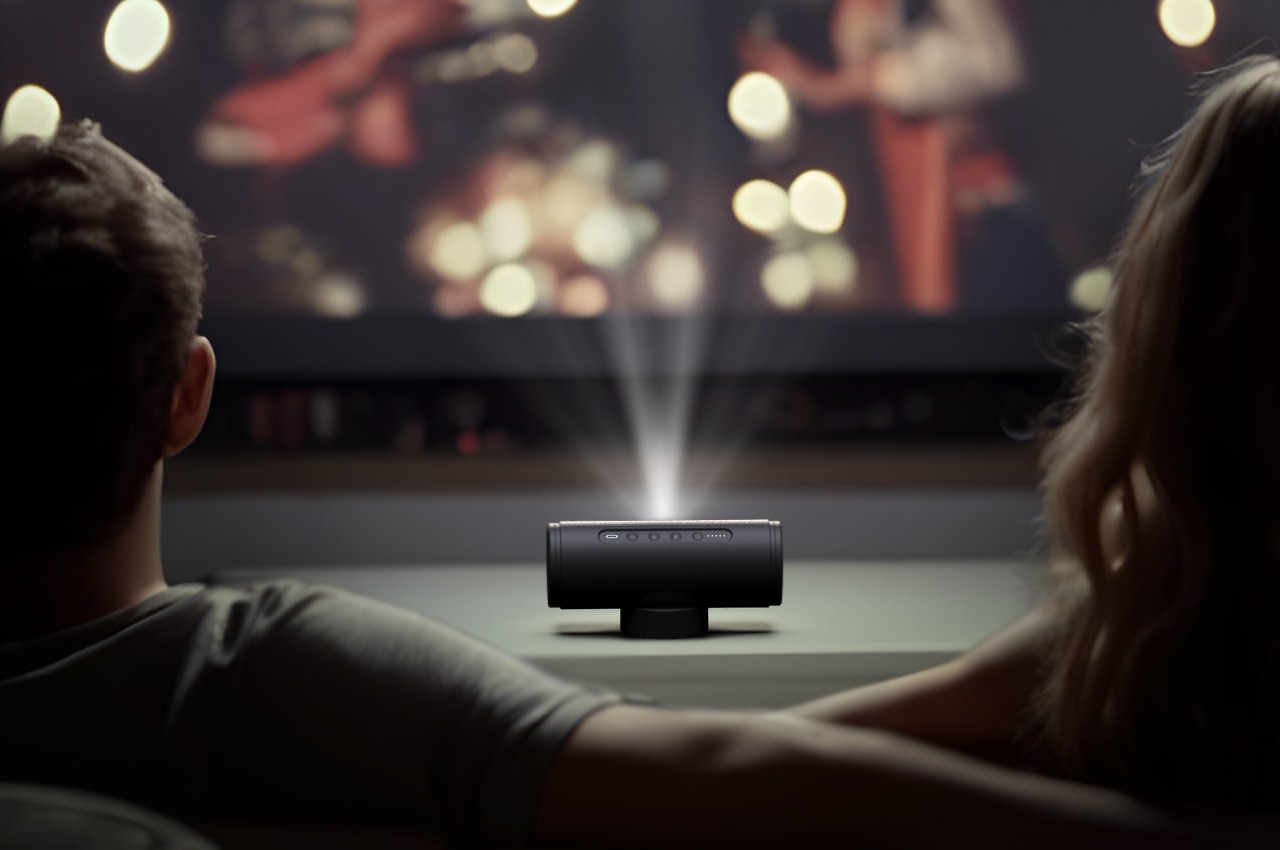
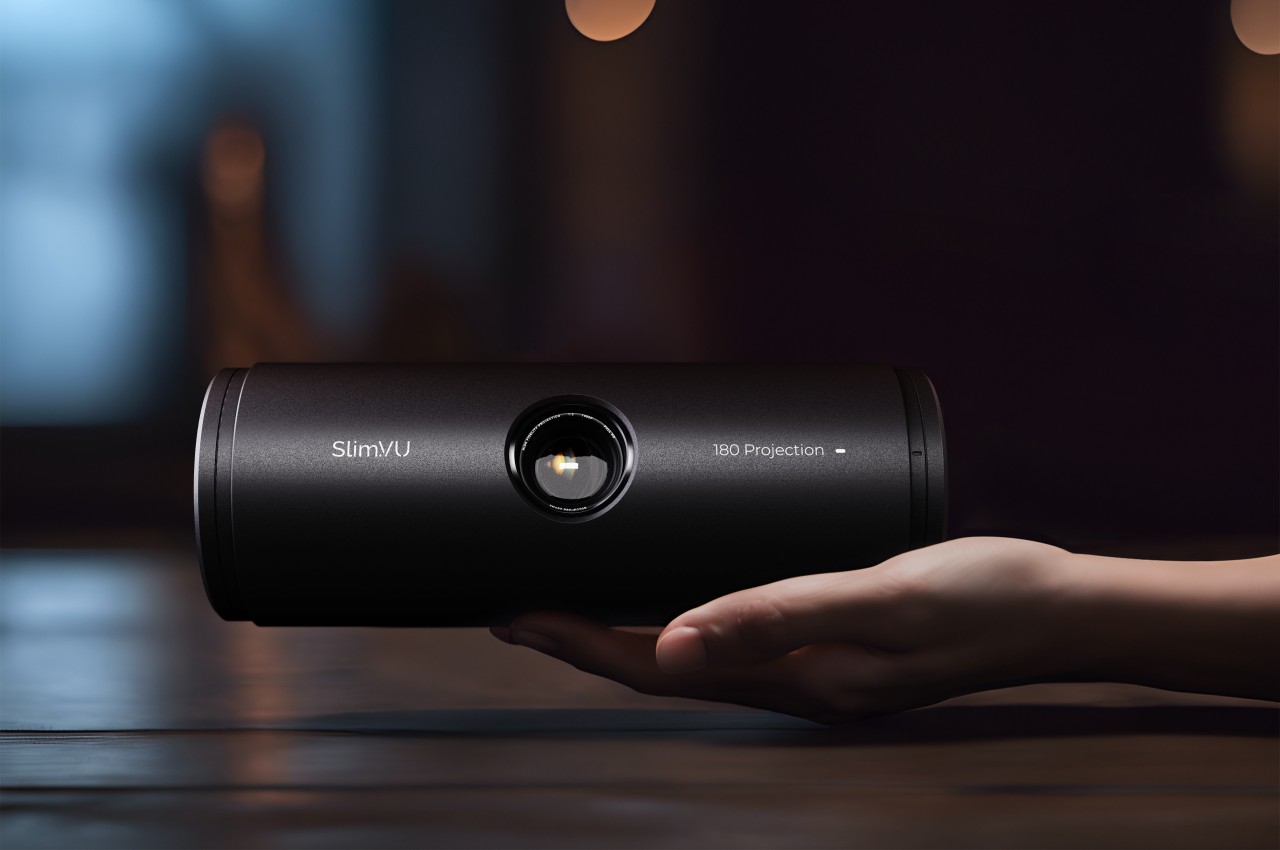
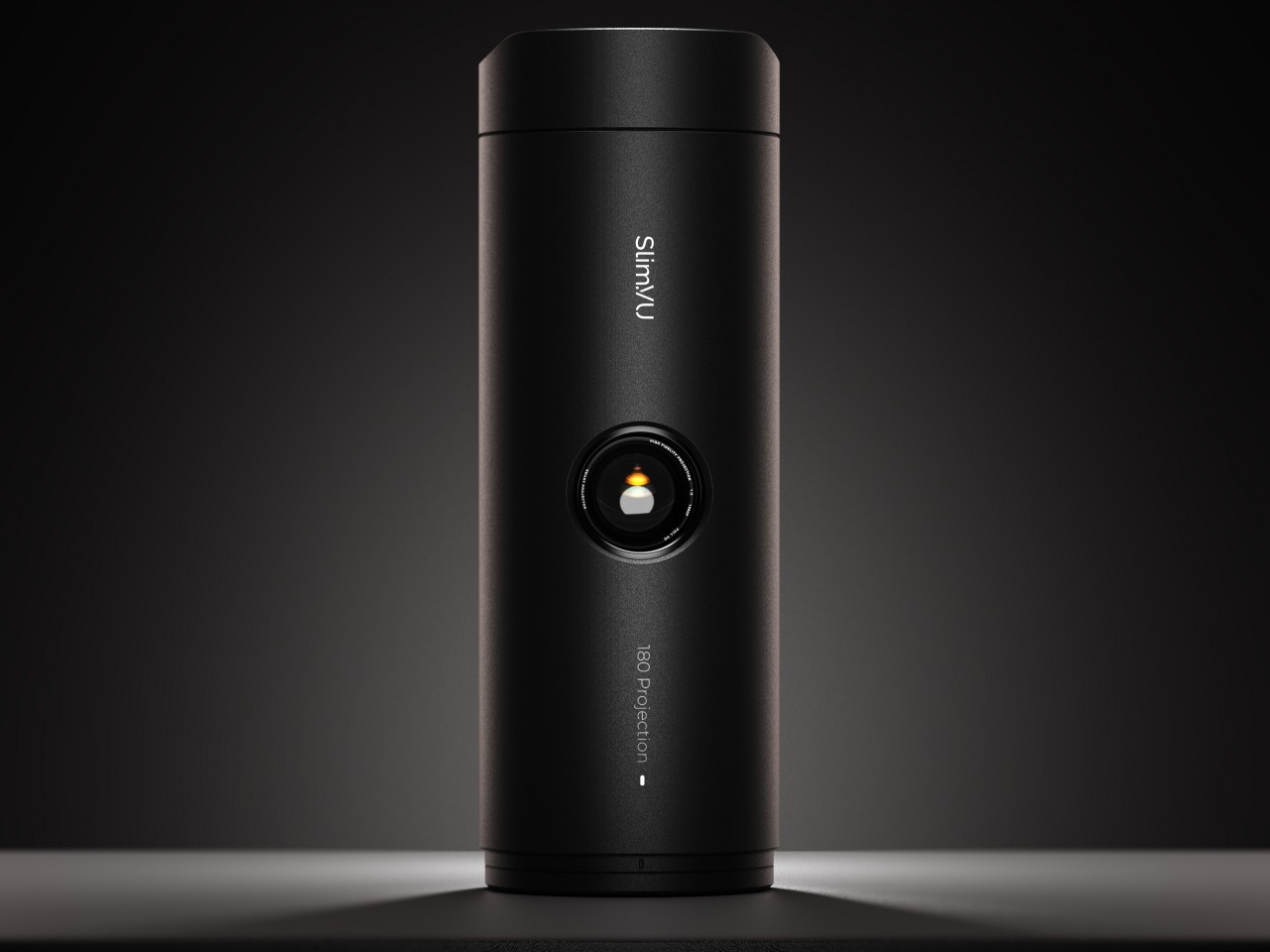
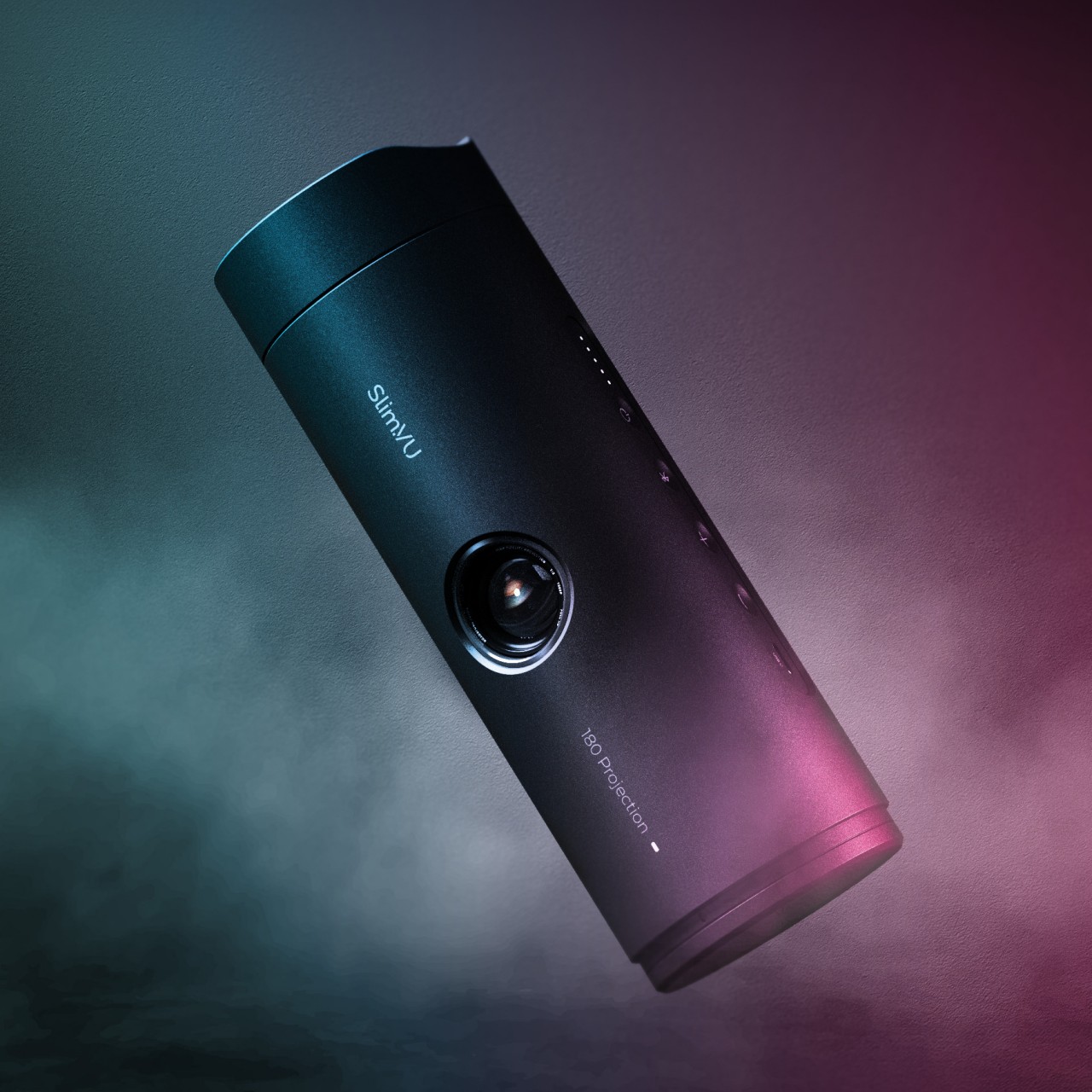
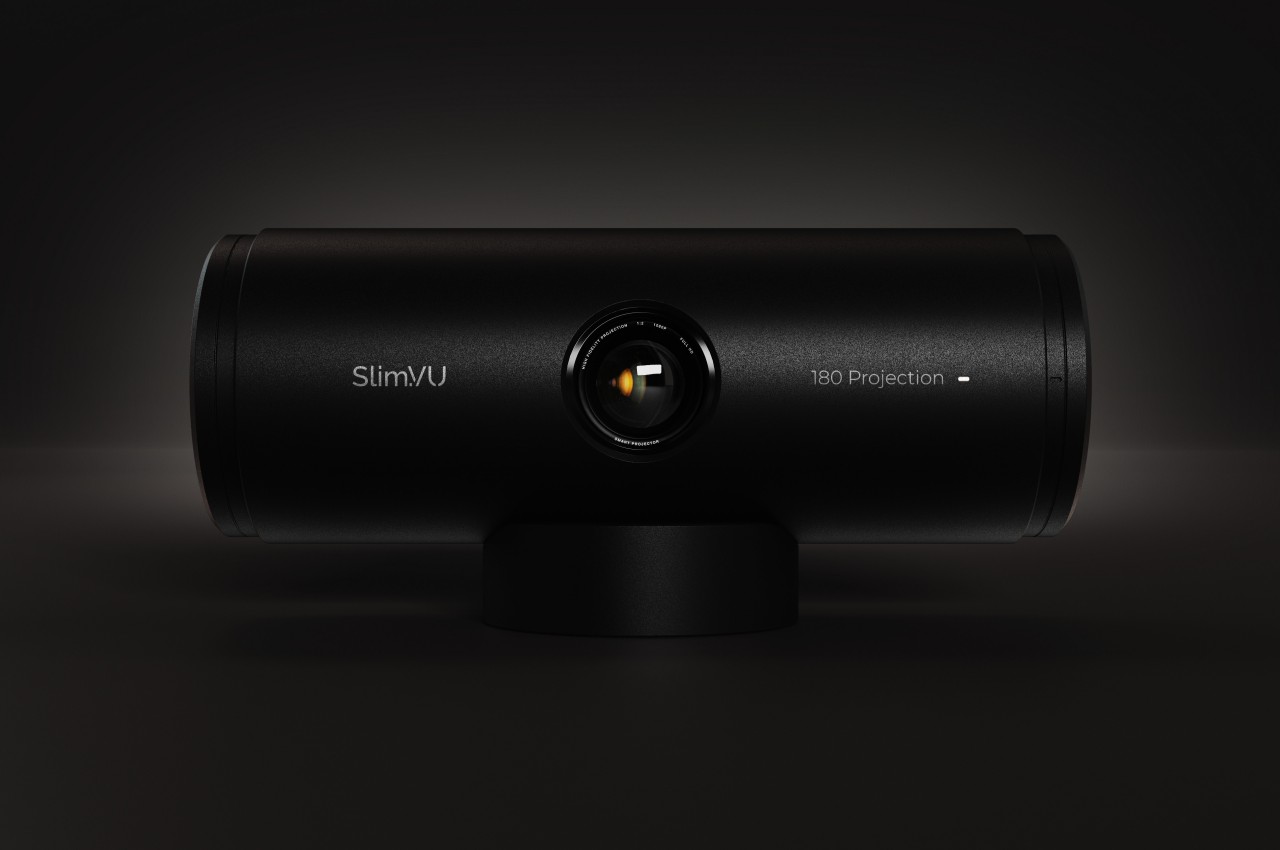
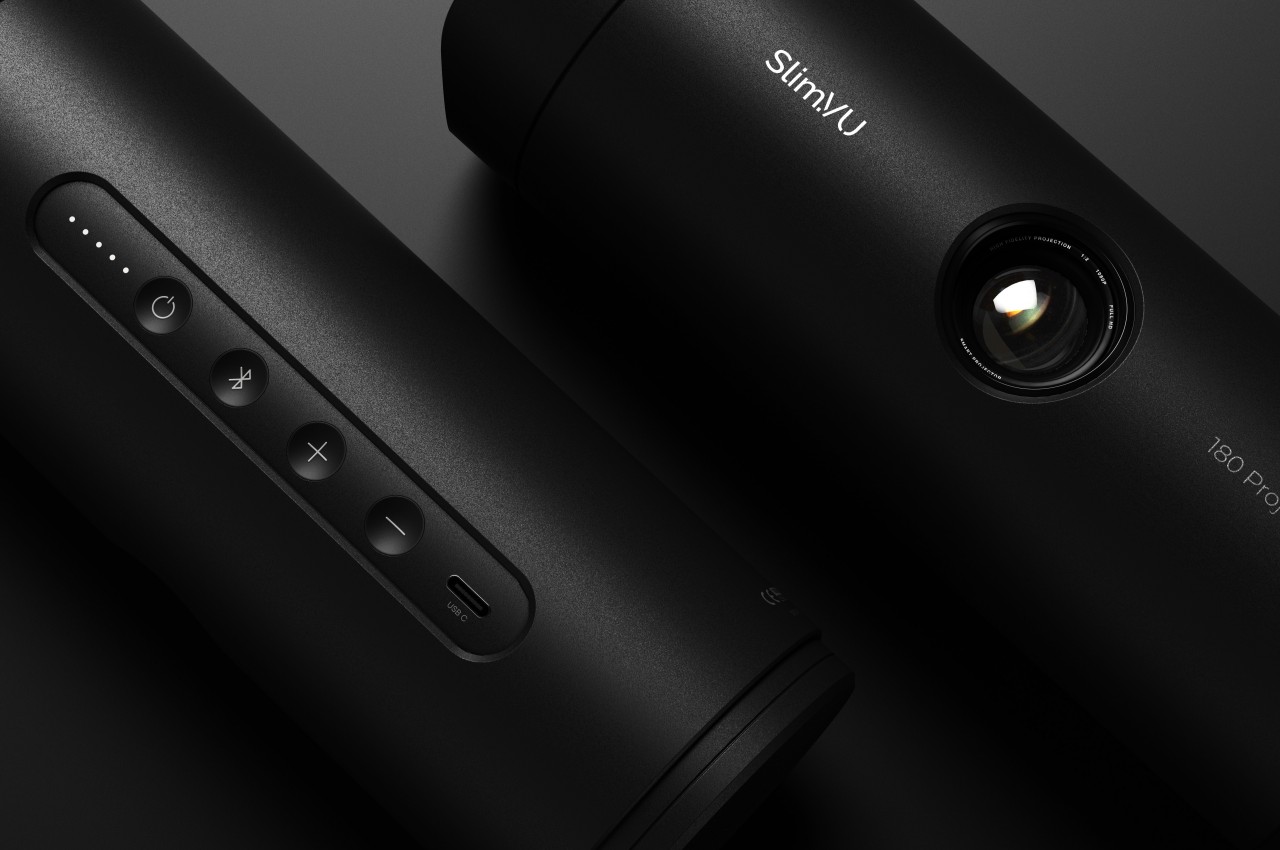
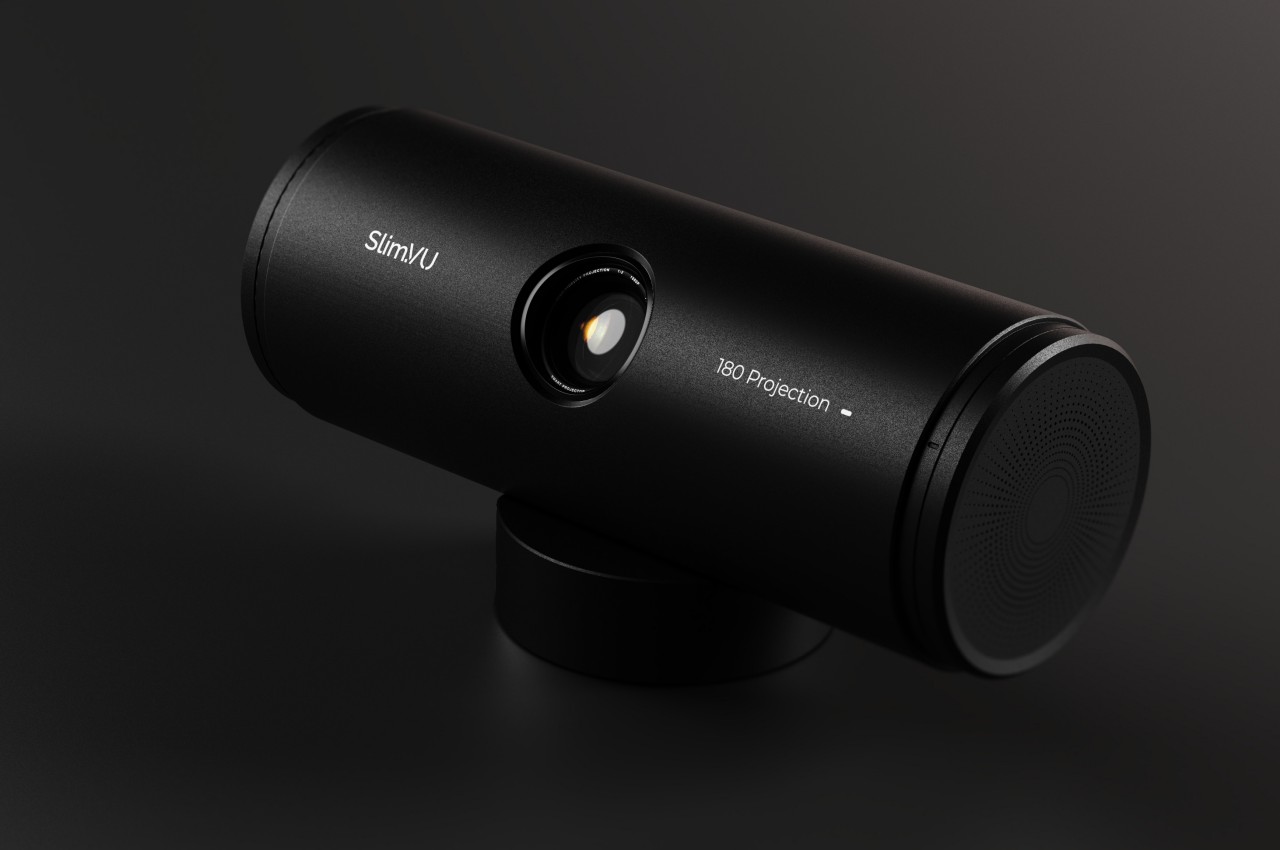
The Slim.VU concept tries to offer the ultimate on-the-go entertainment experience by encapsulating all the needed parts and design in a single, compact, and portable package. A projector with a built-in battery is not exactly new, but one that comes with 4G connectivity is still unheard of. That enables the projector to function not only without an external power source but even without a Wi-Fi connection, allowing it to access streaming sources without having to use up your phone’s cellular data.


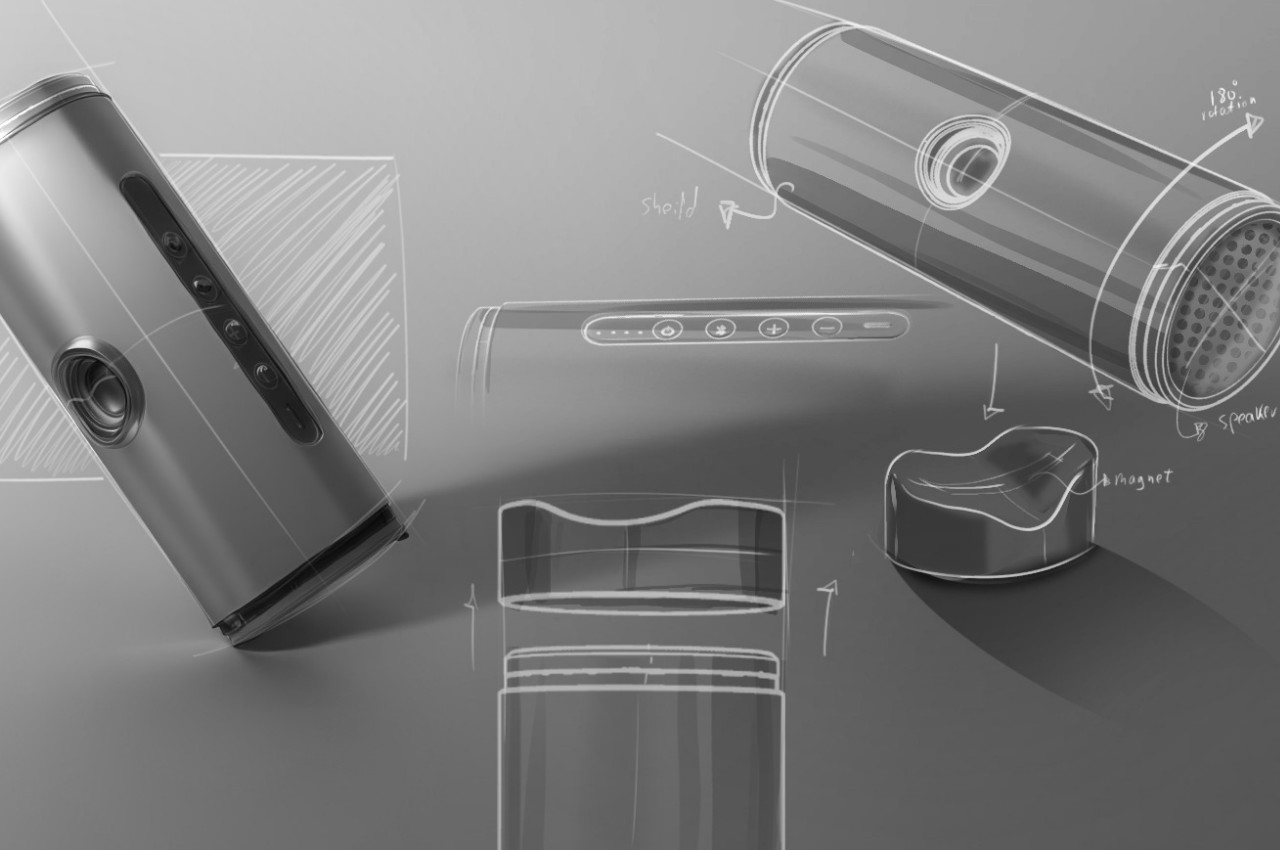
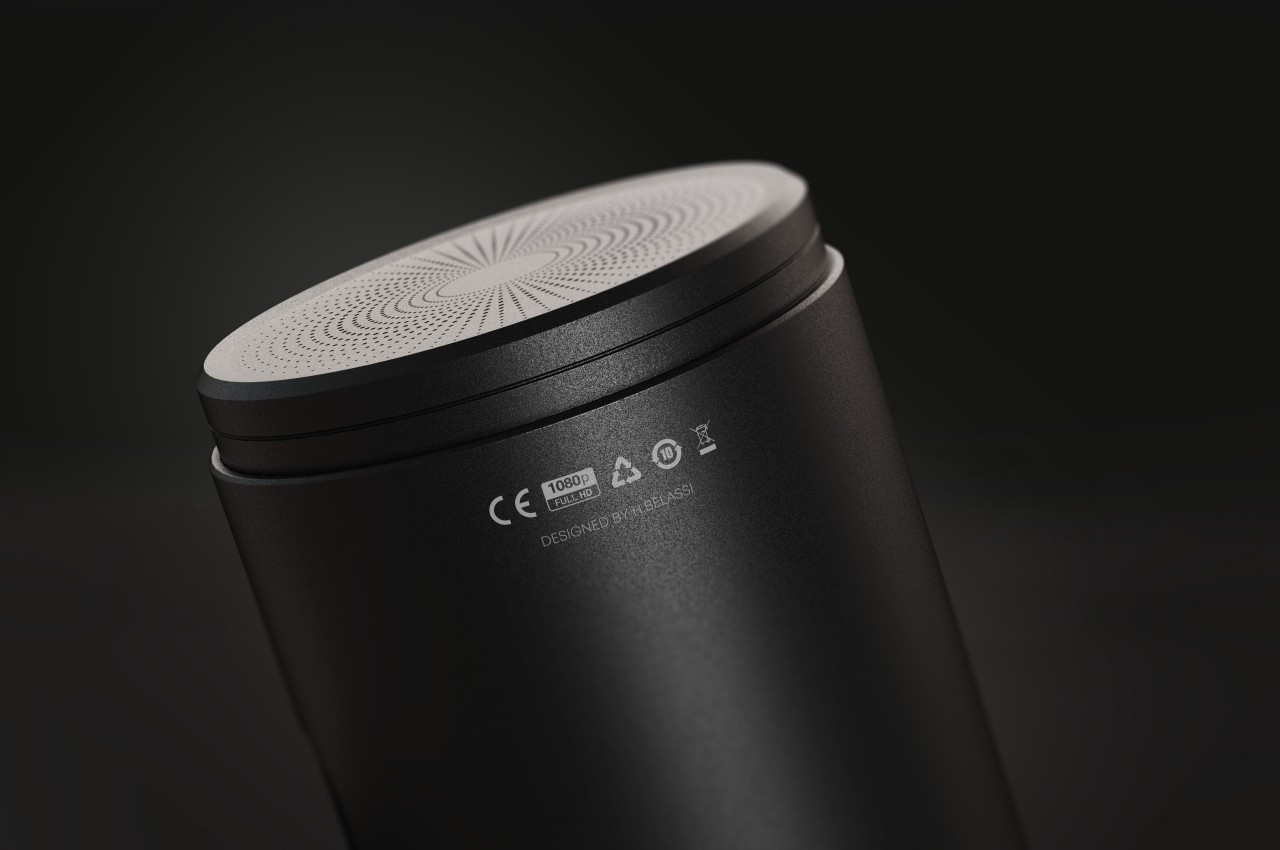
The more interesting aspect of the projector’s design, however, is the built-in stand that looks nothing like a stand. The removable “cap” of this tumbler-like projector functions as this stand, holding the projector in its place magnetically. The curved shape of this stand lets you rotate the cylindrical projector and angle it properly. This way, you don’t need any other accessory to enjoy a video anytime you want, anywhere you go.


The Slim.VU projector concept contains everything you need, freeing you from concerns about power, connectivity, and stability. Of course, actually implementing such a projector is a different matter entirely, and it might need to make a few compromises in exchange for its compact form. Audio and video quality might actually take a hit just to cram this much technology inside a canister shape, making the portable projector less ideal for outdoor use, or even indoor when there’s too much ambient light.


The post Tumbler-shaped portable projector concept promises entertainment freedom first appeared on Yanko Design.

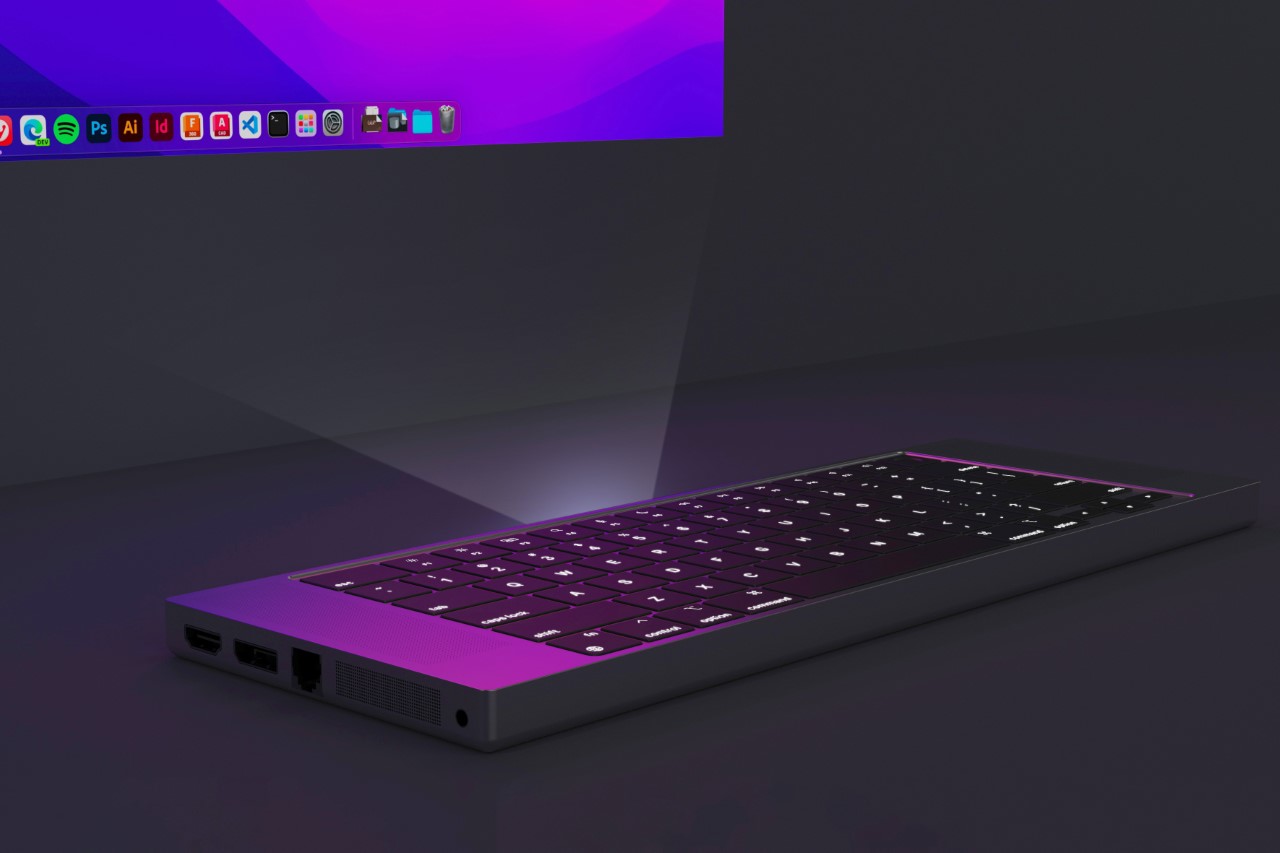
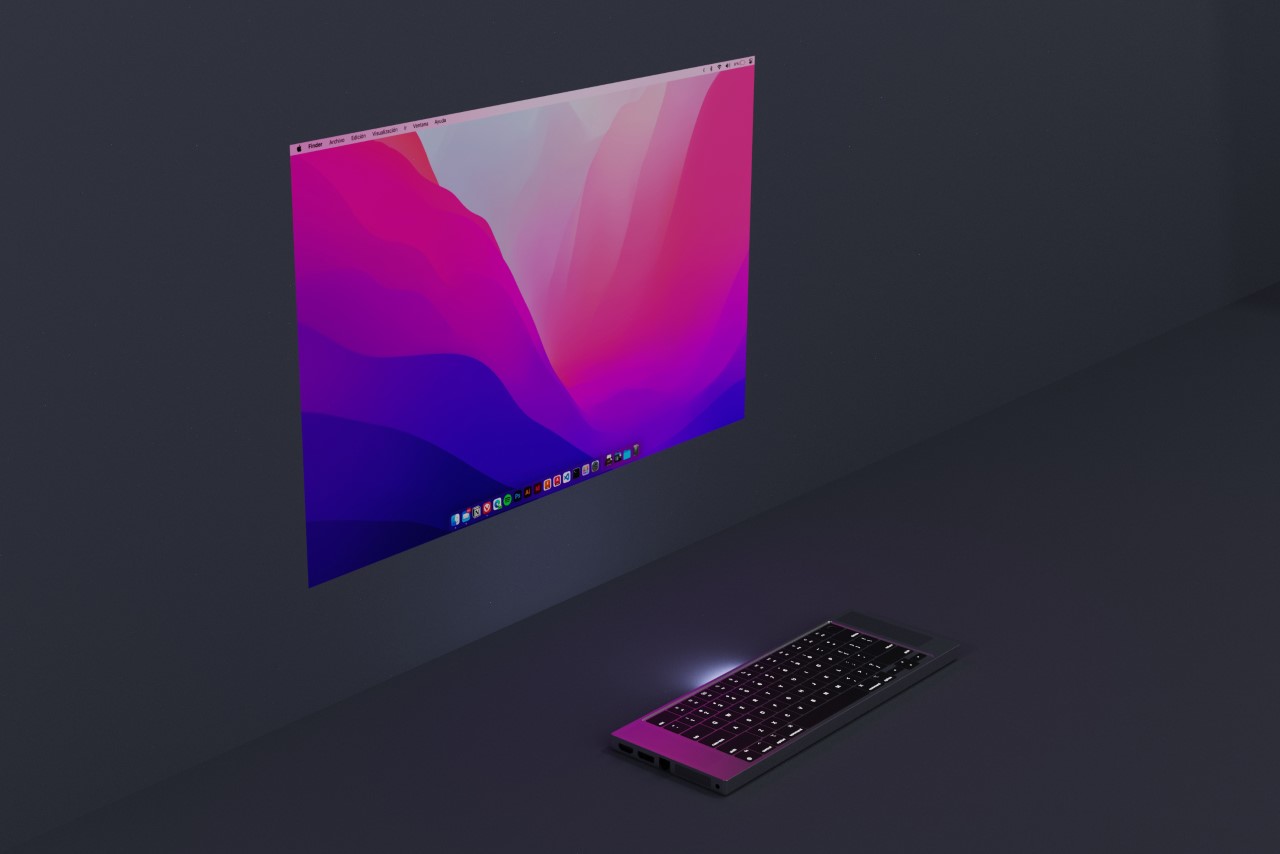
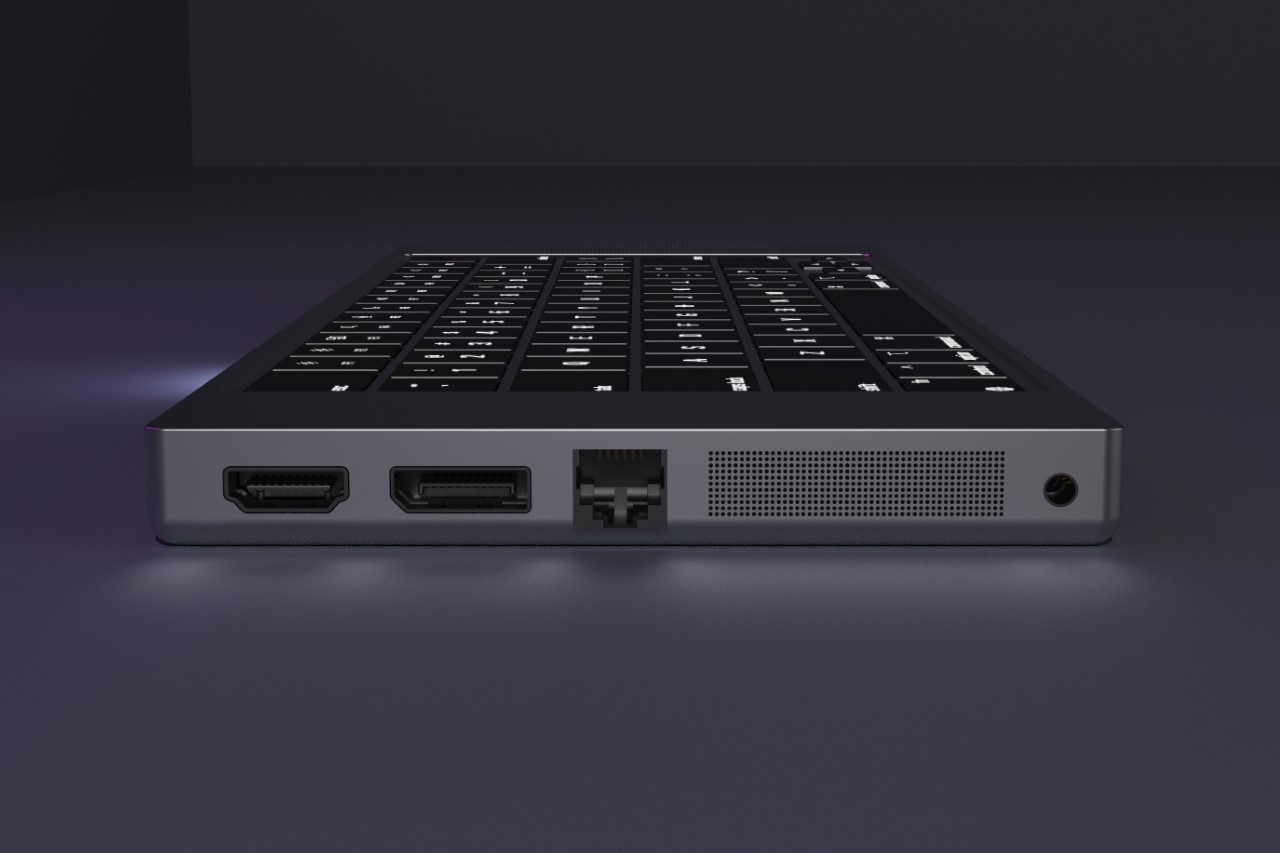
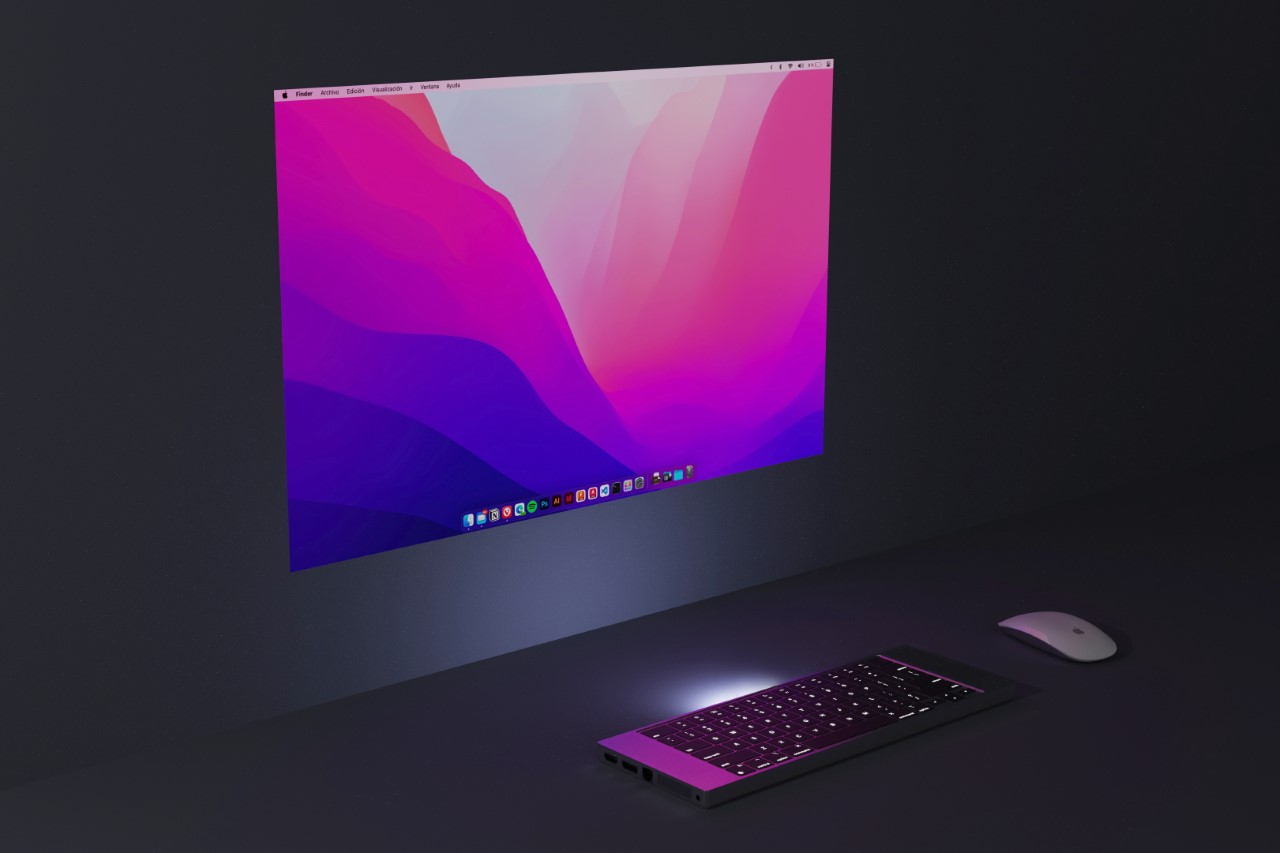
If the iMac is all-screen, the MacBook Go is the absolute opposite – it’s all keyboard. Built with its own DLP projector, this all-in-one keyboard is everything you need to work anywhere. Just find yourself an empty wall, pair a Magic Mouse for convenience, and you’re ready to go. The keyboard-shaped device is, in fact, a full-fledged computer, running on Apple’s own silicon. Who needs spatial computing when you can have a computer in your keyboard!?
Designer: Pablo Rubio Villarroel

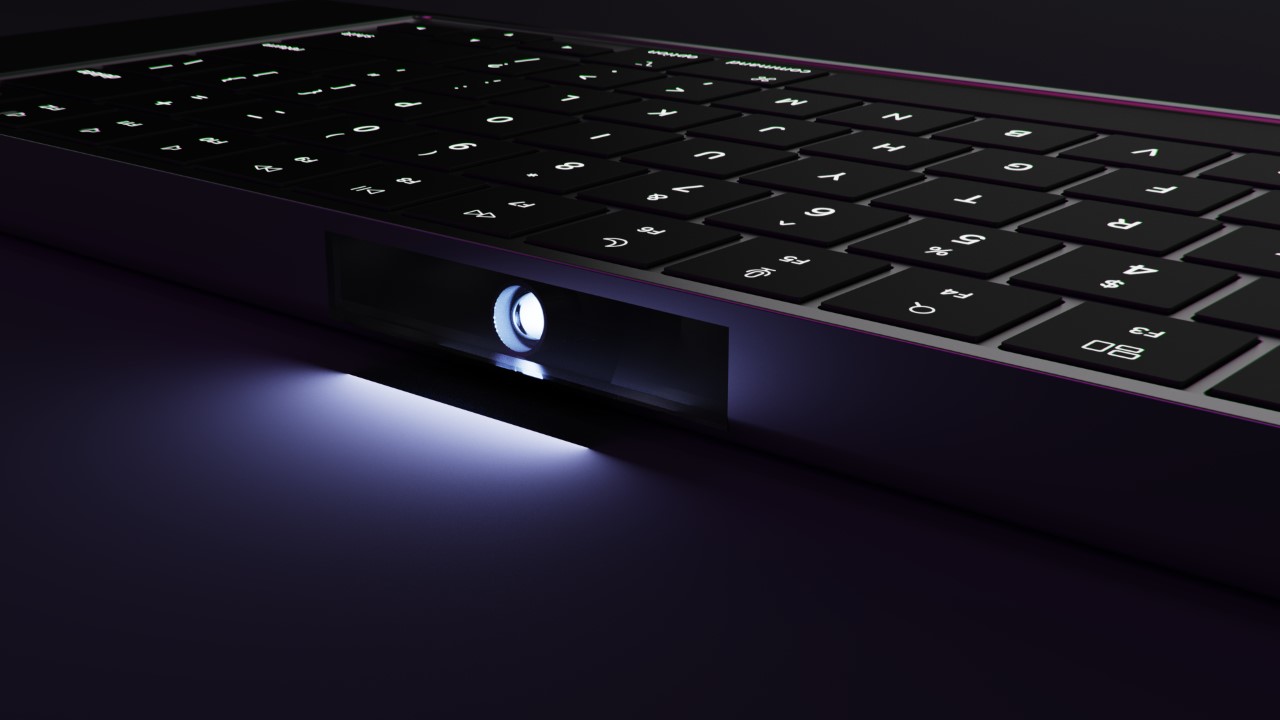
Designed by Pablo Rubio, the MacBook Go aims at building a new format for computing. It integrates projector and keyboard into one deceptively compact form factor, creating a novel way to carry your workstation with you, sans screen. Instead, the keyboard projects a high-resolution massive 120Hz screen onto any surface you point it at, giving you something much better than multiple screens – one massive screen that can house all your windows and tabs.

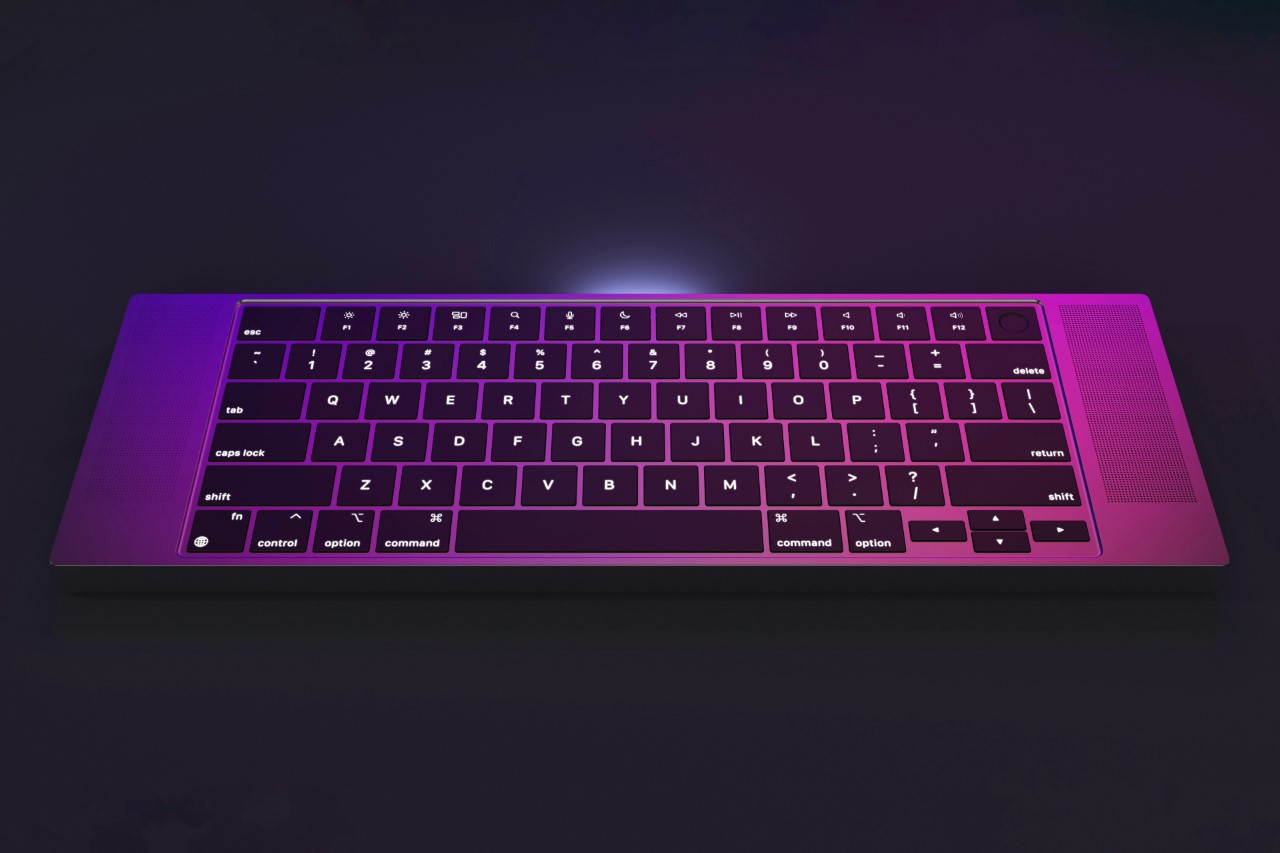
Outwardly, the MacBook Go looks and feels exactly like a MacBook without the display. It has everything the MacBook’s 65% keyboard has to offer, from the function keys on the top with the TouchID key on the top right corner, to even the large speakers on either side. Underneath its hood, however, the keyboard is a Mac computer through and through, with its own projector that can automatically orient, keystone, and focus the screen so you don’t spend half an hour sitting and aligning the display. What the keyboard lacks, however, on first glance, is a kickstand for height adjustment… but I’m probably being pedantic.

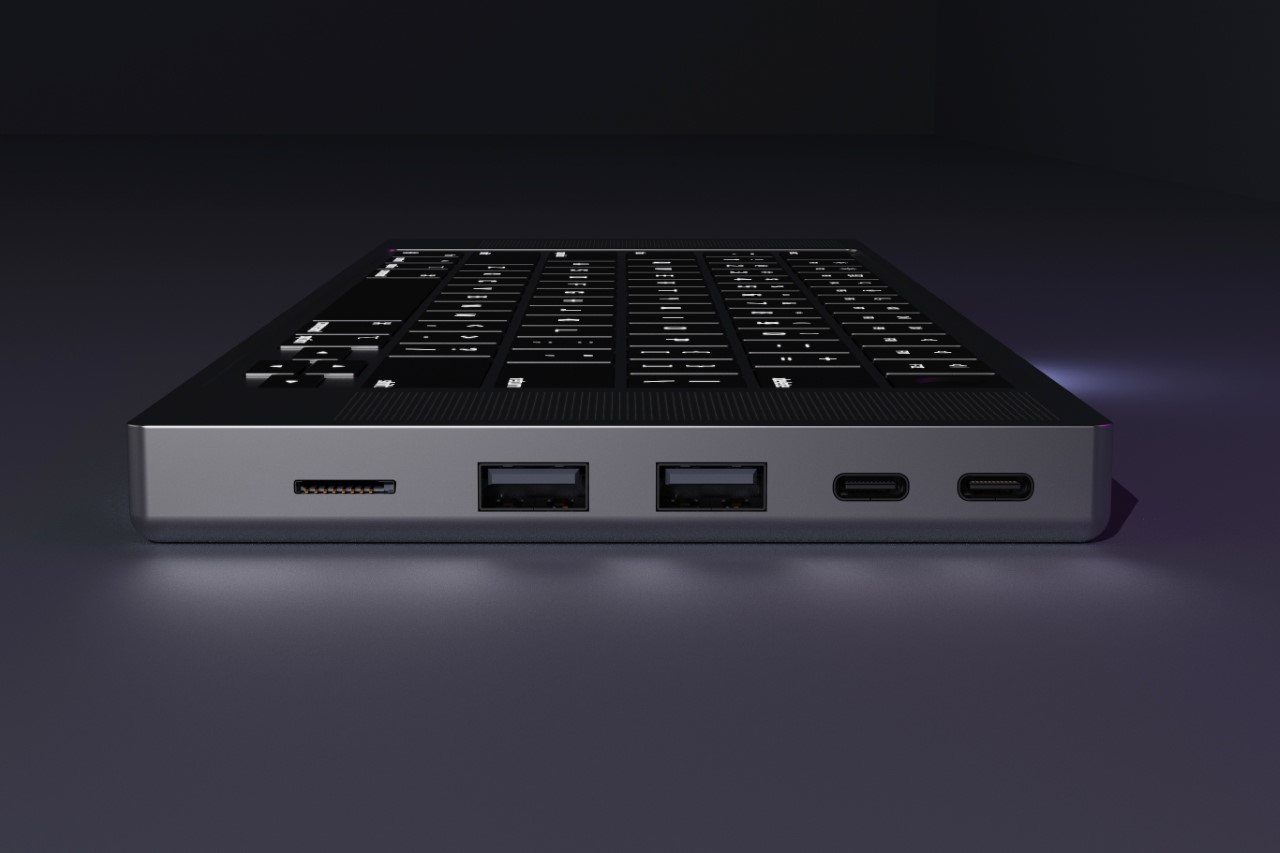
The relatively thick design blesses the MacBook Go with an abundance of ports, as well as more powerful speakers that rely on bigger drivers. With a range of video outputs including HDMI and DisplayPort, along with two USB-A ports, two USB-C ports, a Micro-SD card slot, and a 10-Gig Ethernet port, this concept device ensures all-round connectivity. The inclusion of a 3.5mm headphone jack is a nod to both traditionalists and professionals who need reliable audio connections.

But what does this mean for the traditional workstation? In the design world, and indeed in many fields, the shift from bulky CPU towers to sleek, powerful laptops is well underway. Some might argue that the Vision Pro is the natural successor to the MacBook, but I’d probably disagree. The MacBook Go feels like a unique intermediary step, albeit portable projectors for work haven’t really caught on. Nevertheless, the MacBook Go sacrifices a stationary display for unparalleled portability and flexibility, giving you a massive projected screen instead of limiting you to a 13 or 15-inch laptop display. The implications are profound, especially for professionals who are always on the move.

Believe it or not, this isn’t the first time someone’s crammed an entire computer into a keyboard. Just a few short years ago, Pentaform managed to fit a full Windows 10 PC into their Abacus Basic keyboard, complete with 4 GB of RAM, 512 GB of storage, and an entirely sustainable outer body made from bioplastic. I doubt Apple would ever make any of their machines from plastic, so the MacBook Go definitely lacks that distinction. It does, however, make up for it with a projector lens, which Pentaform’s Abacus Basic keyboard lacked.

The post A MacBook without a Screen? This Apple Keyboard concept comes with a built-in Projector Display first appeared on Yanko Design.
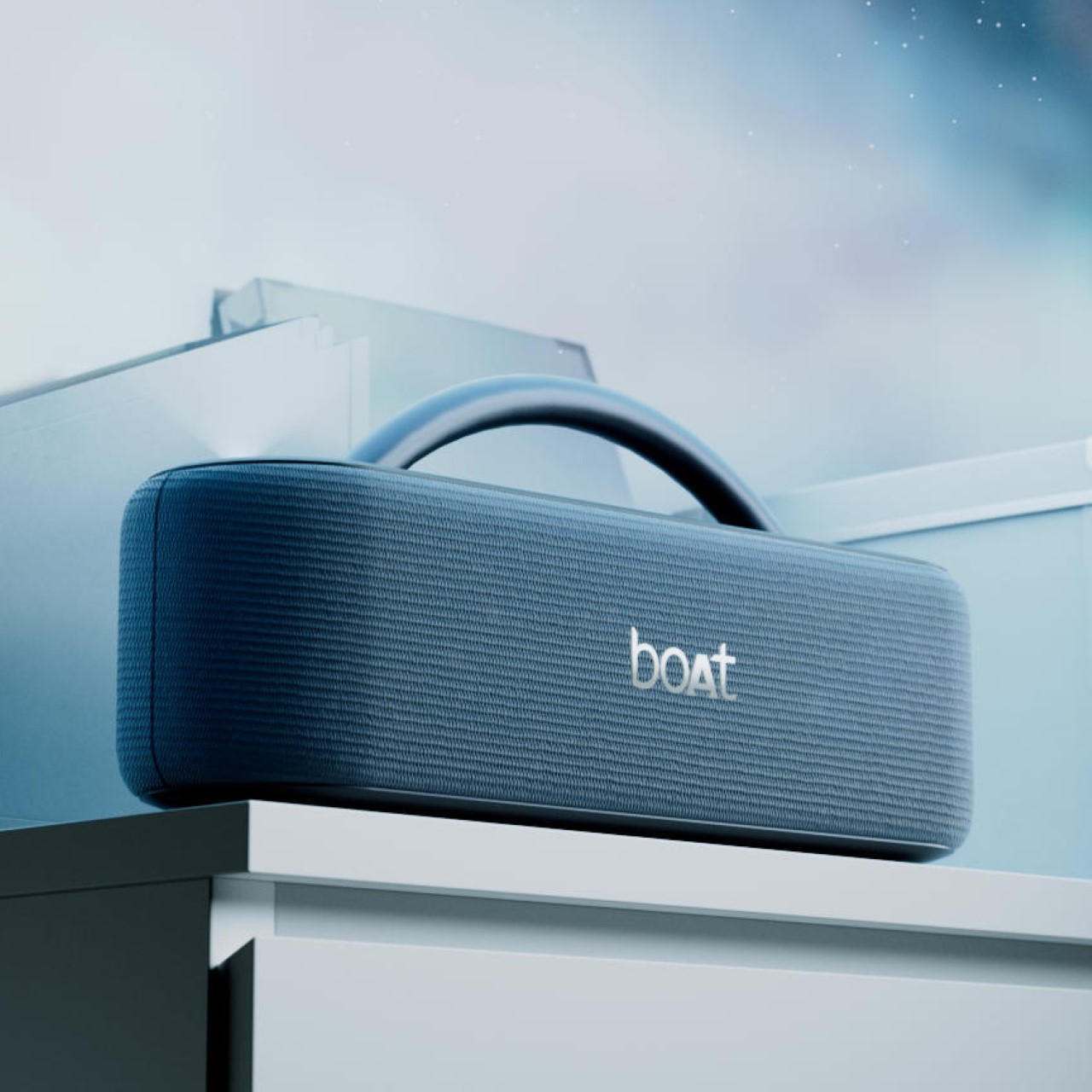
It’s a Smart Projector, a 360° Harman Kardon Speaker, and also a Ceiling Lamp.
Far be it for me to throw an iPhone analogy willy-nilly, but when Steve Jobs took the stage to reveal his breakthrough device, he used a similar analogy. The iPhone was touted as three great things (a widescreen iPod with touch controls, a Phone, and an Internet communications device)… but in one small handheld package. XGIMI’s Aladdin, which was announced at CES 2024, has a similar back story. Disguised to look like a ceiling lamp, the Aladdin is, in fact, a 1080p short-throw projector capable of outputting a screen as large as 100 inches, with a more-than-capable 2.1-channel 360° Harman Kardon speaker built into its rather compact ceiling-mounted design.
Designer: XGIMI

Foraying into a new format after dabbling with compact projectors and UST behemoths, the Aladdin explores an entirely new design template for XGIMI – putting a projector into a ceiling light fixture. It addresses the perennial problems of traditional projectors – bulkiness, screen blockage, and glare – with an innovative approach. By integrating a projector into a ceiling light fixture, XGIMI offers a solution that is both space-efficient and aesthetically pleasing. Imagine having a cinematic experience of up to 100 inches, projected directly from your ceiling, without sacrificing any floor space. The added benefit of it being a short-throw projector with a 0.7:1 throw ratio means that it can easily fit into small rooms, making it a perfect addition to a bedroom.

The Aladdin is a fixed-position short-throw projector, capable of casting a 1080p image that spans 100 inches, all from a mere 5.98 feet away from the projecting surface. The strategic positioning not only provides an immersive viewing experience but also prioritizes user safety by preventing direct light exposure. Moreover, once installed, the image can be adjusted and tweaked to cater to the size of your room, accounting for direction, angle, focus, and keystone.
The auditory experience with Aladdin is equally impressive. The integrated 360-degree speaker by Harman Kardon, featuring a 2.1-channel sound system, creates an immersive audio environment. This system ensures that sound seems to emanate from the screen itself, enhancing the overall viewing experience.

In terms of design, Aladdin mirrors the simplicity of installing a standard ceiling light, making it a practical choice for homes. The projector also goes beyond traditional usage, offering interactive experiences like dynamic wallpapers, interactive children’s books, and ambient sounds, adding a unique touch to everyday moments. Speaking of unique touch, the Aladdin operates entirely touch-free and without a remote, relying on voice commands that make it a breeze to operate.
Scheduled to launch in Japan in June 2024 and priced at under $1000 USD, the Aladdin is poised to make a significant impact in the market. This pricing strategy positions the XGIMI Aladdin as an accessible option for a wide range of consumers.

The post The XGIMI Aladdin is the iPhone of smart projectors… first appeared on Yanko Design.
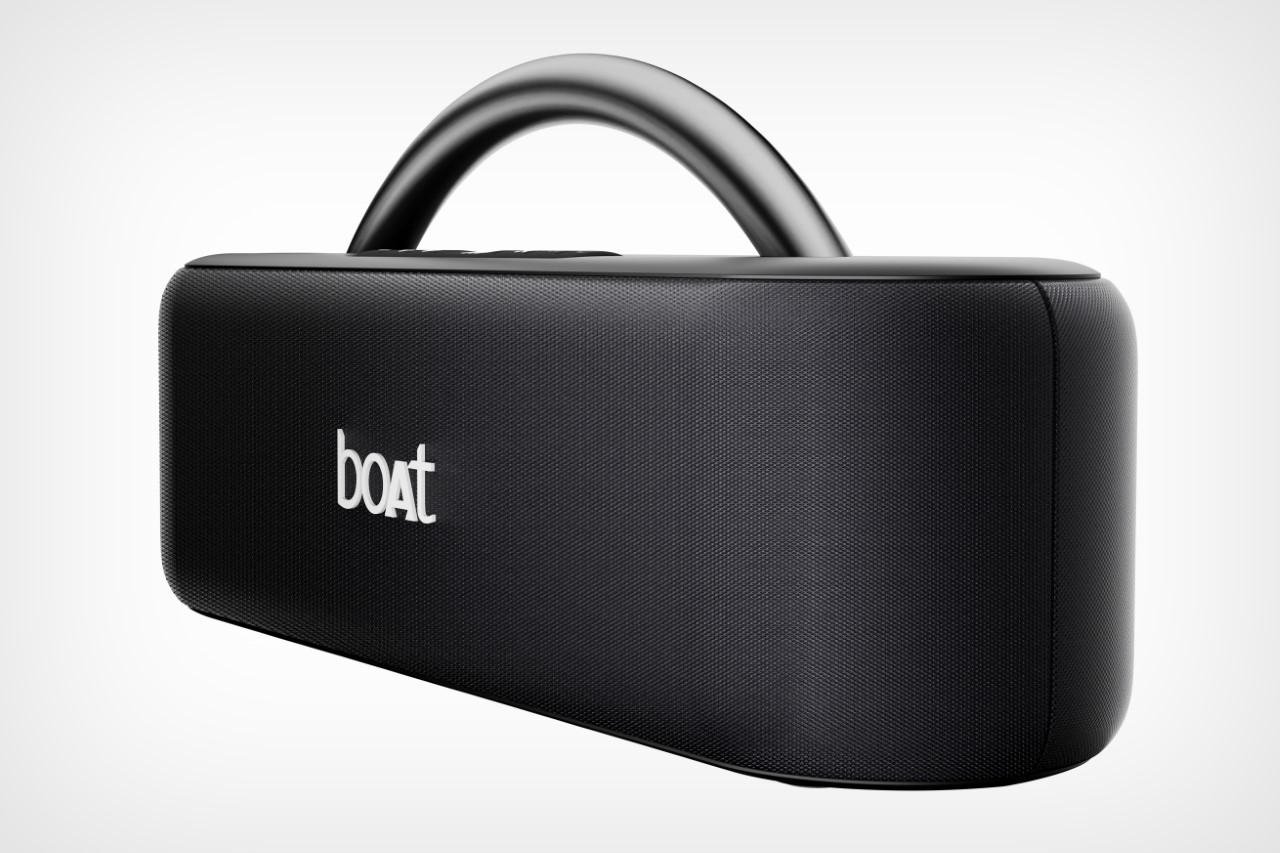
Projectors have been around for almost decades, but it has only been recently that they’ve started to move out of offices and into living rooms. With the advent of home projectors, however, came the need for newer designs that make these utilitarian boxes fit with your interior design better. Some brands have indeed started to do that, but it takes more than just using glossy surfaces or wrapping the boxes with fabric-like materials. Ideally, you really have to think outside the box and adopt a design that barely looks like a typical home projector, like the new LG CineBeam Qube 4K that’s meant to look like a stylus art object when simply sitting on your table or shelf, whether or not you’re using it.
Designer: LG
Smart home projectors have started to become more aware of how they need to blend in with the rest of your furniture or home decor. Some have tried to embrace more luxurious-looking materials that make the appliances look a little more stylish, but few can escape the traditional boxy shapes that projectors come in. Admittedly, it’s not that easy to break away from this form due to technical reasons, but that doesn’t mean you have to stick to the bulky horizontal design of most projectors.

The LG CineBeam Qube 4K is an example of a design that breaks from the mould while still sticking to the norm. It’s still a rectangular box and less a cube as its name might imply, but it stands upright rather than lying low. It’s also quite tiny, compared to your run-of-the-mill laser projectors, so it can discreetly stand beside your books on a shelf and get out of the way when you don’t need it. The point, however, is that you won’t have to put it away during those periods of rest because the CineBeam Qube is designed to look great even while just standing there.

The projector has a rather industrial aesthetic, with a metallic silver chassis and a black facade where the large lens lies smack in the middle. There is an odd lever structure wrapping around the back of the box, most likely a handle that lets you pick up the projector and move it around in style. Its beauty won’t appeal to everyone, but it will at least grab people’s attention the moment they see it.
Despite its small size, the LG CineBeam Qube claims to pack quite a punch, including 4K resolution and a maximum projection size of 120 inches. The 500 ANSI lumens brightness, however, means you’ll only use it indoors in a dark room. It’s a smart projector so you’ll have access to plenty of content, both from streaming services as well as connected devices. And when you’re not using it to watch shows, you can use its image-mapping function to display images and photos that add some life to your dark space.

The post LG CineBeam Qube 4K projector doubles as a curious design piece first appeared on Yanko Design.
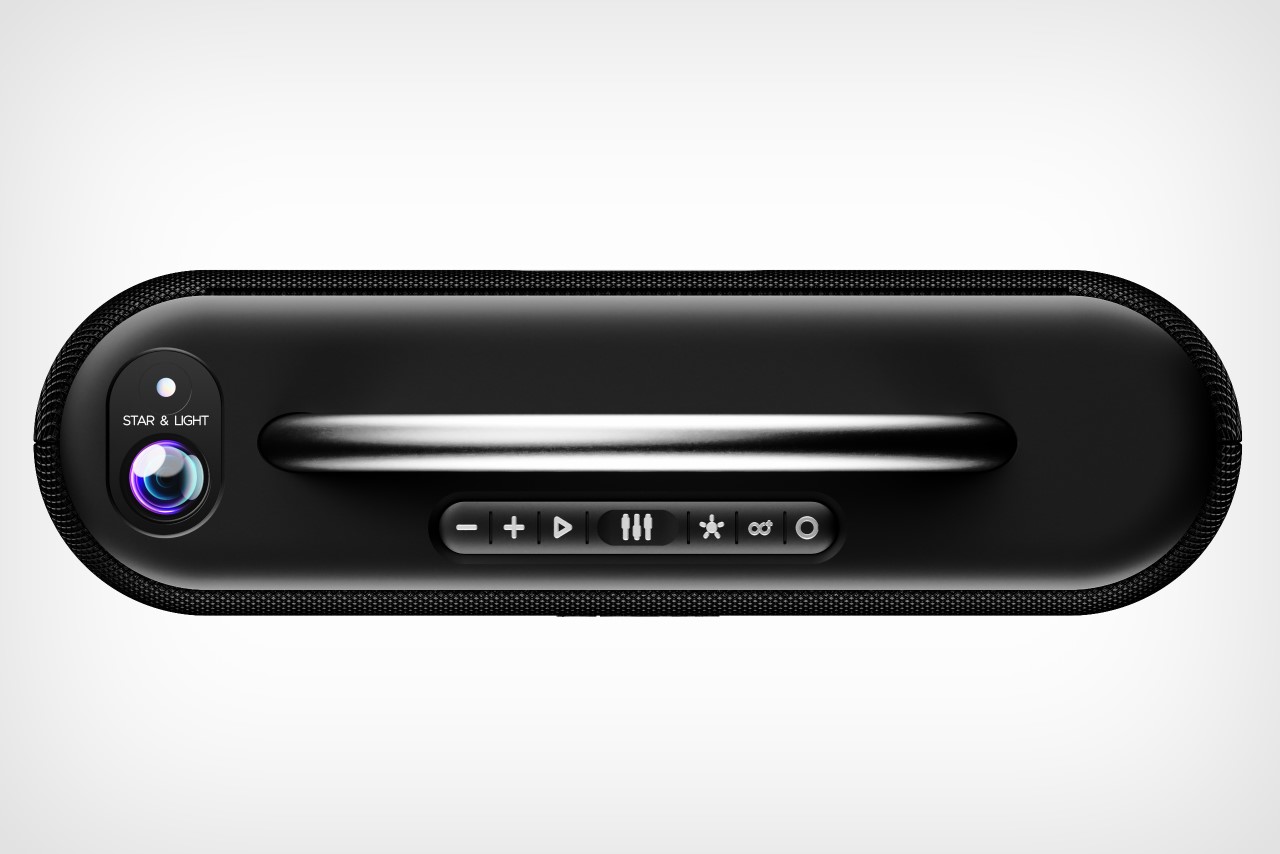
Home projectors are becoming more popular these days as more cord-cutters want to enjoy the freedom of streaming from almost anywhere in the house, even on the ceiling while lying in bed. Despite the growing number of these devices, however, most of them still have designs that originated from projectors made for professional use in board rooms and conferences. There are, of course, a few that have embraced more stylish aesthetics that try to match your living room’s decor, but these often still retain the boxy shapes of their ancestors. That might be a convenient form for cramming electronics, but they limit the potential of what these home appliances can do. This concept design, for example, eschews that traditional box and embraces an unconventional form that lets you tilt the projector’s angle without having to use stands or tripods.
Designer: Hana Belassi


Boxes are the most convenient shape for most electronic devices because you can easily cram so many components inside and arrange them in an efficient manner. They’re not the most visually interesting, though, no matter how much you cover them in premium materials like glass, leather, or fabric. The most common smart home projectors, however, still have that same basic design, which also puts limits on their functionality. Tilting the projector to the angle you want isn’t easy, and you either have to make do with short, built-in legs or have a tripod or stand nearby.


TRIPO is a concept design for a smart portable theater device that employs an odd shape of a rather thick disc that tapers toward the top. On its back are four flat sections that allow you to stand the projector upright or tilt it back in three angles, including 90 degrees to project your content on a ceiling. Because it operates wirelessly, you can achieve this without even having to get up from your couch or bed, providing the utmost convenience and comfort in any situation.


That’s not the only thing that makes the TRIPO concept special, of course. Every inch of the device was intentionally designed to blend well with other pieces of your home decor, from using fabric to minimalist design elements. Vents are well hidden underneath the fabric-covered discs on both sides, providing heat dissipation that doesn’t ruin the design. It isn’t all just looks either because the portable theater is intended to be a powerful yet convenient smart entertainment system, both at home and even outdoors. An ingenious sliding cover, for example, protects the buttons and the lenses during travel.


TRIPO can also function as a simple Bluetooth speaker for those times when you want to listen but not watch. And when not in use, it can almost stand as a piece of sculptural art, calling attention to itself without being overbearing and perfectly fitting with your lifestyle as well as your aesthetic tastes. There might be some compromises in terms of specs given today’s hardware options, but it will only be a matter of time before designs such as these become the norm rather than the exception.


The post Portable Theater concept combines projector and speaker in a unique shape first appeared on Yanko Design.