They say everything in nature has a purpose for existing, even if their existence is a nuisance to us humans. Scavengers, for example, are nature’s janitors and recyclers, putting dead things to good use. Even termites, whose presence is often a death sentence for homes and structures, are important to the ecosystem, and they can apparently serve as artful inspiration as well. Maybe not the termites themselves but the complex tunnels they create inside their mounds. These patterns are actually meant to facilitate airflow, which makes it the perfect reference for a man-made cooling solution that brings natural design and technology together to create a more sustainable solution to hot temperatures.
There has been some interest in alternative cooling solutions, especially those that don’t consume too much electricity or none at all. Traditional techniques, particularly evaporative cooling that makes use of clay pots or pipes, have gained a lot of traction, especially because they can become decorative pieces inside modern homes. That said, the old methods don’t exactly scale well to today’s climate, room sizes, and needs, so designers have to think a bit outside the box to come up with a better solution to fit modern needs.
TerraMound looks to termites for one part of the solution, particularly how their shapes exemplify high surface-area-to-volume ratios, meaning how much surface area there is in a compact space. Surface area is one of two critical elements in an evaporative cooler, and that is made possible by utilizing complex geometric patterns that look like artistic versions of termite mounds. Such a design would be impossible to do en masse by hand, which is where 3D printing comes in and where the project’s uniqueness really shines.
The other critical element to this type of cooling solution is porosity, which is why clay is the preferred material for this kind of cooler. Clay is also not a typical 3D printing material, which is what makes this ceramic cooler design even more special. This method can eventually be extended to large-scale 3D printing technologies, allowing the quick and easy production of facade panels, walls, and other structures that not only look beautiful but can also help improve airflow in buildings.
As a cooler, TerraMound isn’t completely passive, as it has a fan at the bottom to draw air upwards. A planter sits on top as a source of water that trickles down the desktop cooling tower, utilizing the absorbent properties of the terracotta clay to help the evaporation process. It also acts as a distinctive and beautiful piece of table decoration, one that you wouldn’t have guessed was inspired by something we humans consider to be pests.
According to the World Health Organization, falls, specifically for senior citizens, is a major public health problem. There are a lot who use canes and other walking aids but there are also some who prefer not to use any since they’re inconvenient at times or because of their pride. But we’re also seeing some aids that have become smarter and can adjust to the needs of those that need these tools to move around.
Designer: Claire Ko
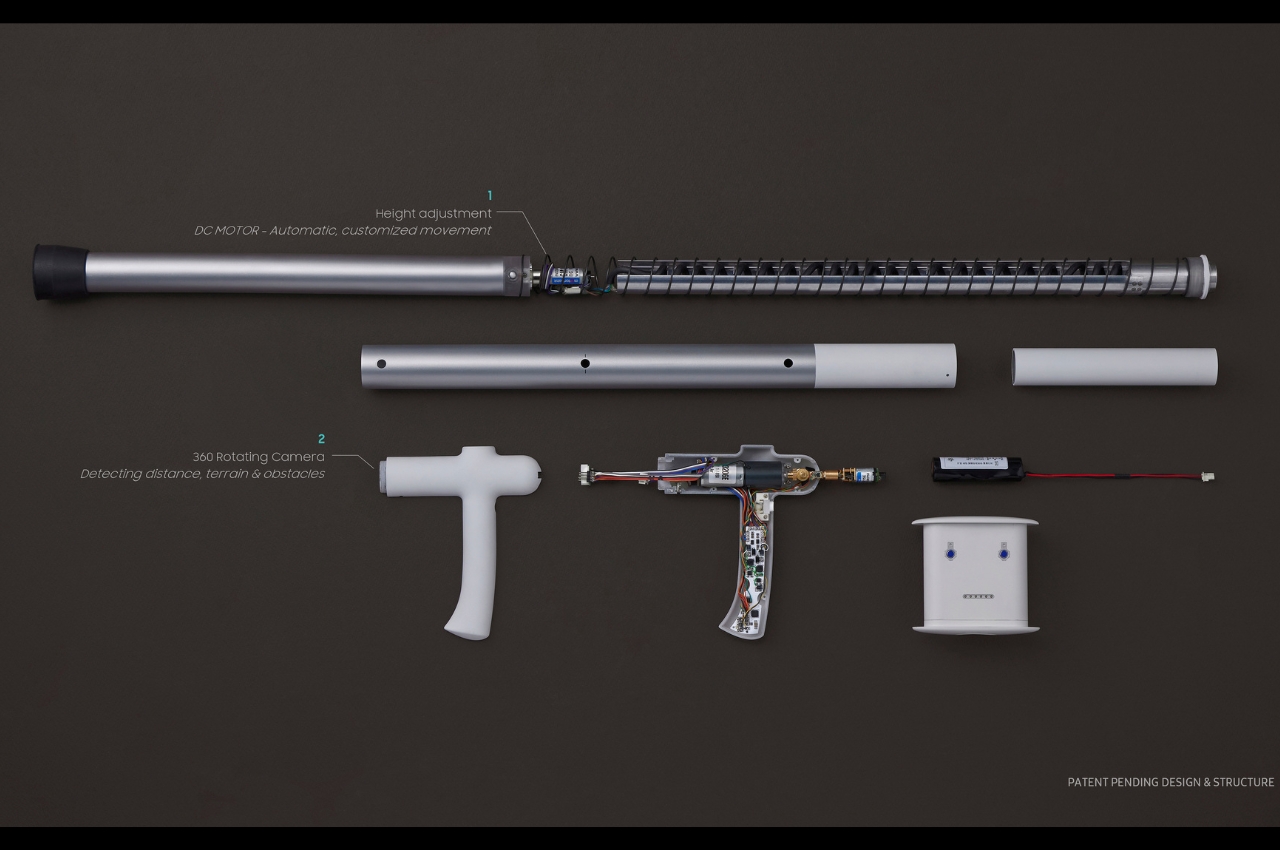
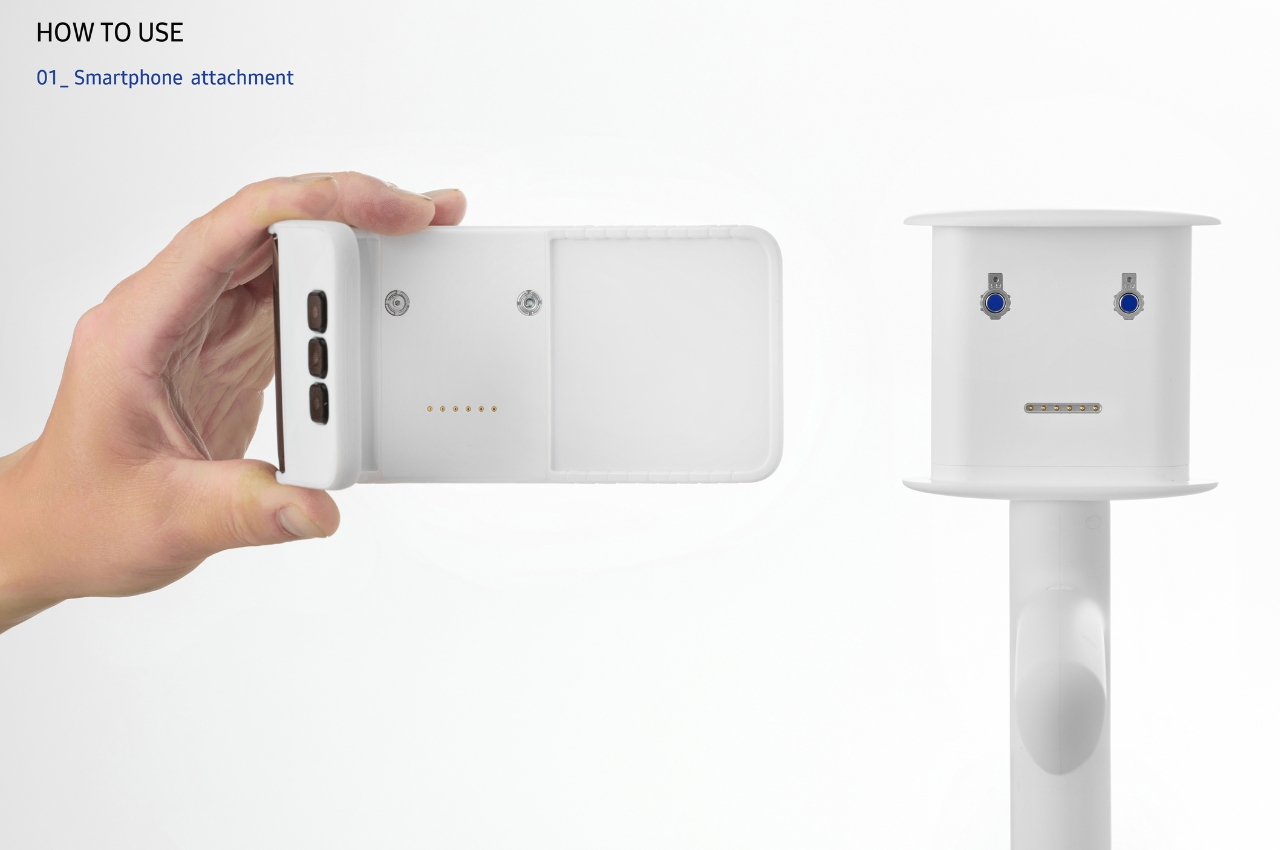
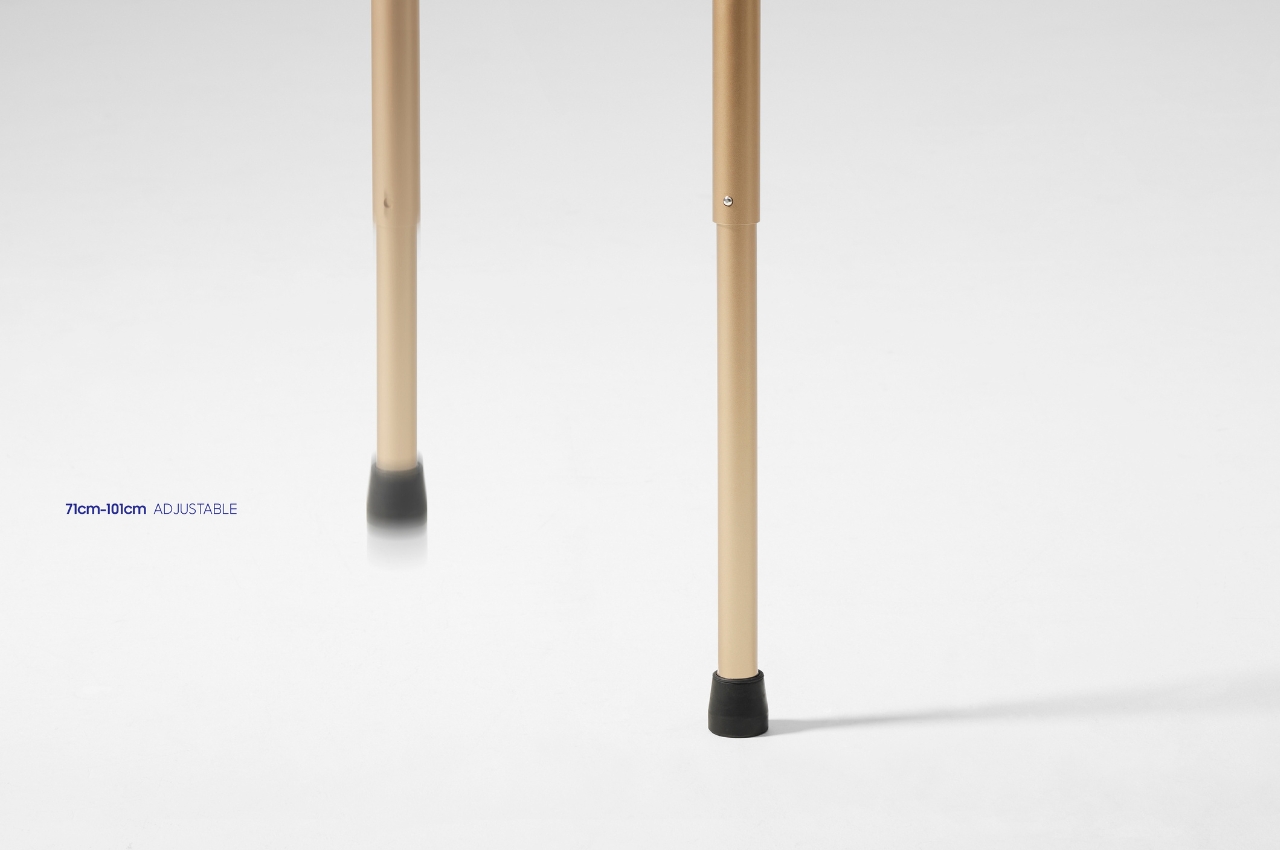
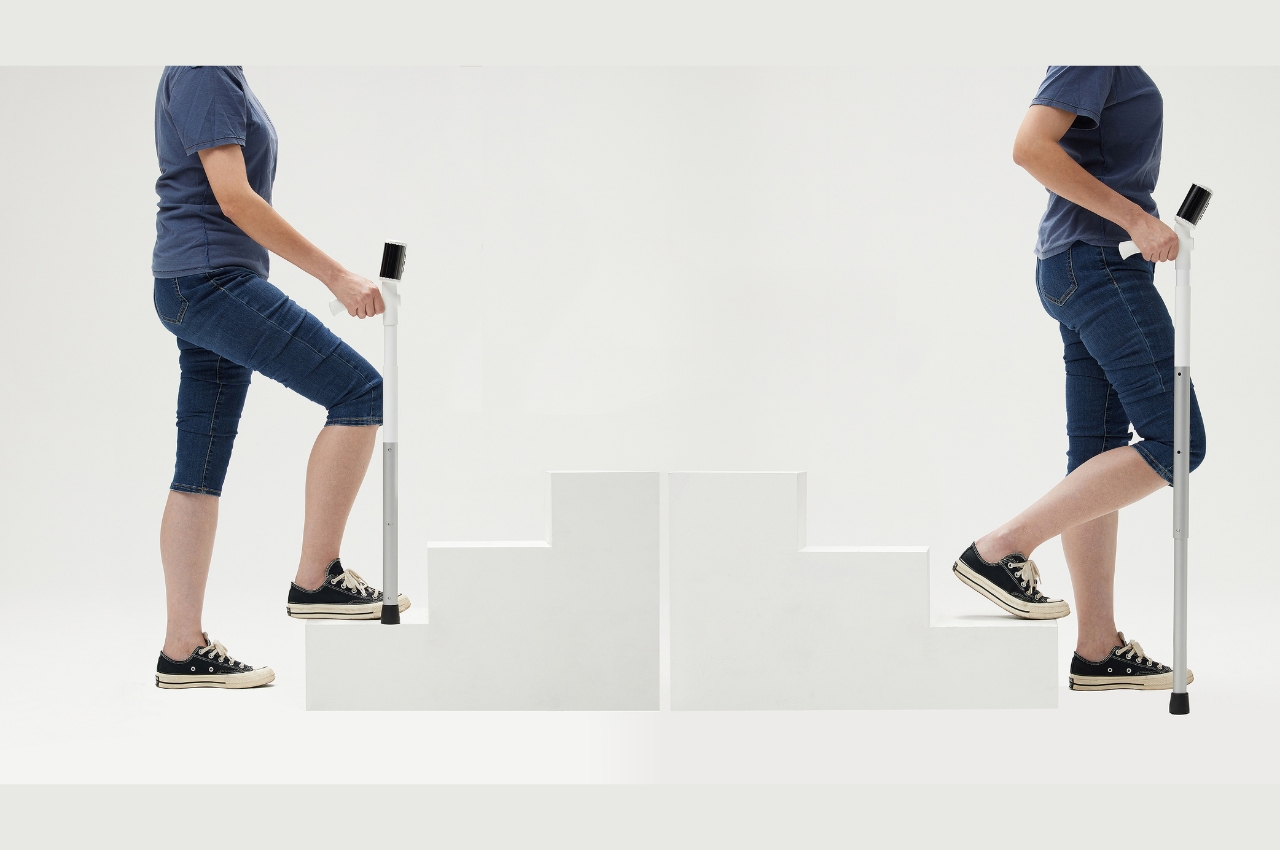
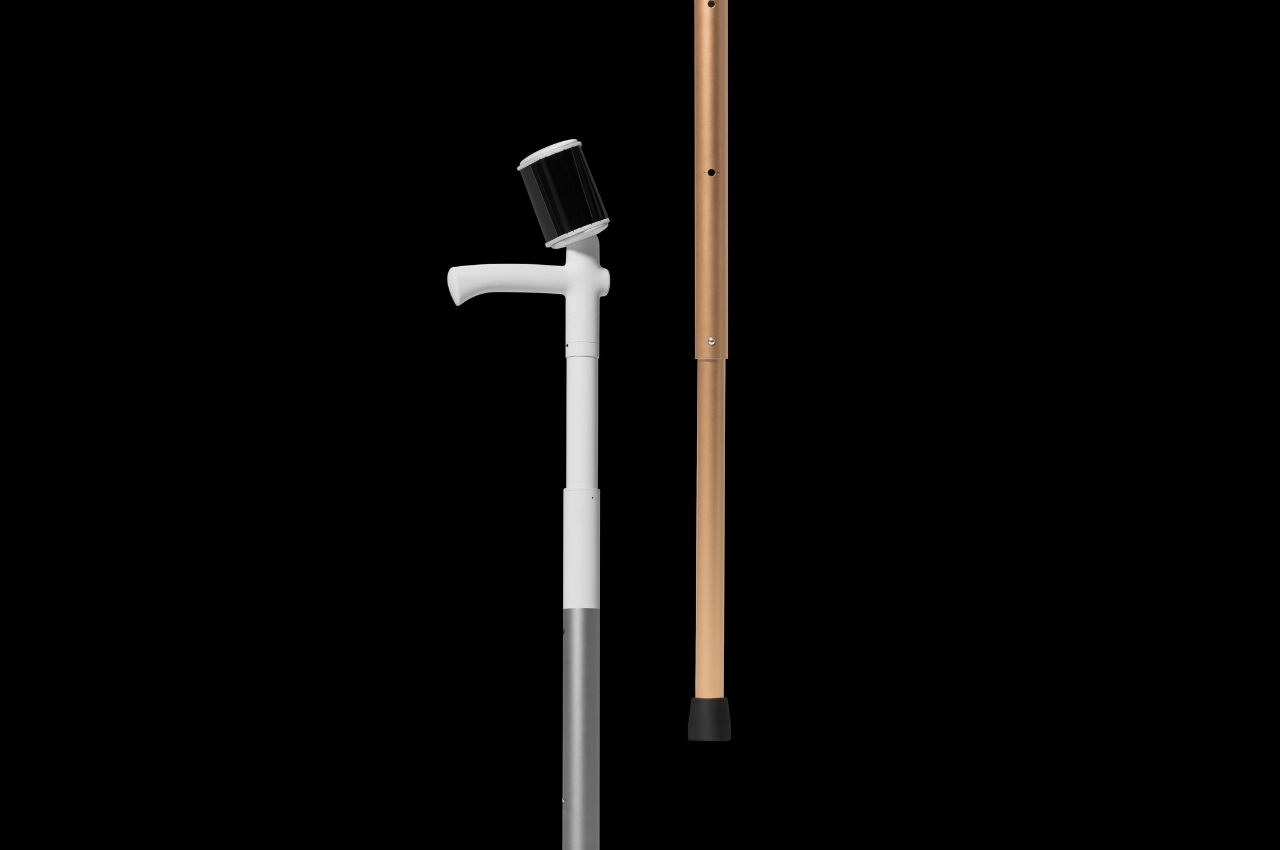
Halo is one such tool that may appeal to those who are still hesitant to use canes because of their limitations. This one is a smart cane where you can adjust your smartphone so it can adjust its height automatically. It can adjust the height of the cane depending on the terrain that you’re walking on. This includes walking up and down the stairs, which is one of the most difficult daily tasks that senior citizens and other people with walking difficulties experience.
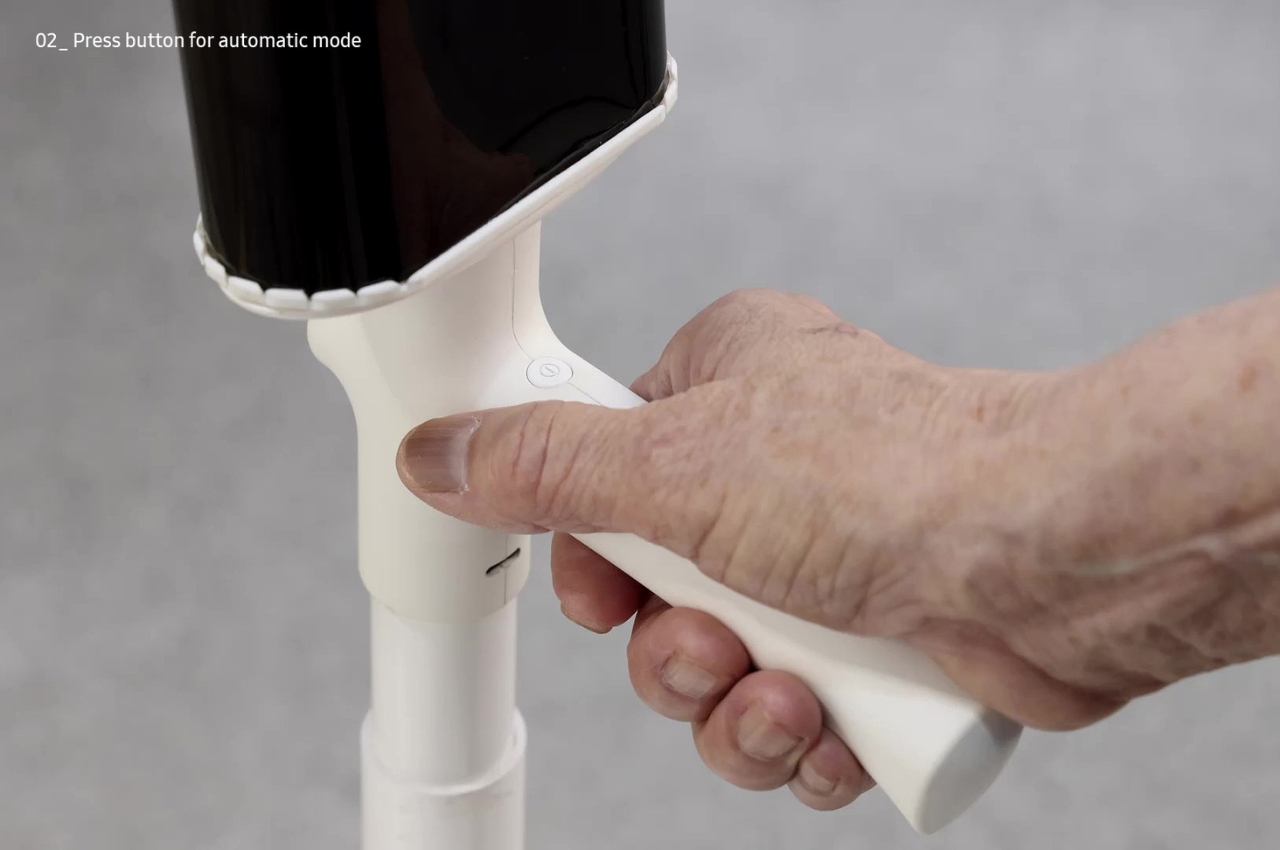
The Halo Smart Cane provides control to those using it as you are not limited to just the standard height of most canes. It also provides stability to the user as it will not let you slop or stumble even when it changes its height based on what the smartphone and the app detects. Once you attach your phone, there is a button on the cane that switches to automatic mode.
The height-adjustment mechanism included in the cane is still patent-pending but on paper, it is a pretty useful tool for those who need better assistance while walking. There isn’t a lot of detailed information yet on the materials used and the mechanism involved probably because of the ongoing patent application.
The automotive world is eagerly anticipating the launch of the Bentley Continental GT Speed on June 25th, a vehicle that promises to redefine the standards of luxury and performance. As the fourth-generation model in the Continental GT lineup, the GT Speed represents the culmination of Bentley’s engineering prowess and unwavering commitment to crafting the ultimate […]
The United States has taken a significant step towards becoming a nuclear reactor hub. On Tuesday, June 18, the Senate passed the Accelerating Deployment of Versatile, Advanced Nuclear for Clean Energy (ADVANCE) Act in an 88 to 2 vote. A version also garnered bipartisan support in the House of Representatives, passing 365 to 33 earlier this year, leaving the path clear for the bill to reach President Biden's desk.
The past decade has seen over a dozen reactor closures and only two new ones open — a pair that launched last month in Georgia to the tune of over $30 billion in expenses. The ADVANCE Act aims to expand the nation's nuclear energy industry by creating incentives and reducing the time and cost of building nuclear reactors. These attempts include financial awards for the first companies to reach certain goals, such as implementing upcycling of recycled nuclear waste.
Much of the ADVANCE Act centers on the Nuclear Regulatory Commission (NRC), an independent government agency that monitors nuclear use, including commercial nuclear power plants. The bill shifts the NRC's role, requiring it to create a new mission statement that states "licensing and regulation of the civilian use of radioactive materials and nuclear energy be conducted in a manner that is efficient and does not unnecessarily limit the benefits of civilian use of radioactive materials and nuclear energy technology to society." It further instructs the NRC to accelerate its licensing review process and hiring of staff, along with improving "its process for approving the export of American technology to international markets."
In a statement following the bill's passage, US Senate Committee on Environment and Public Works chairman Tom Carper stated, "The ADVANCE Act will provide the Nuclear Regulatory Commission with the tools and workforce it needs to review new nuclear technologies efficiently, while maintaining the NRC's critical safety mission and creating thousands of jobs."
However, not everyone is in favor of the bill, with critics warning it comprises safety. Senators Bernie Sanders and Ed Markey were the two opposing votes, with the latter arguing that the ADVANCE Act turns the NRC into a facilitator rather than a regulator. "This bill puts promotion over protection, and corporate profits over community clean-up," Markey stated. "The ADVANCE Act, as attached to the Fire Grants and Safety Act, includes language that would require the Nuclear Regulatory Commission to rewrite its mission to state that its regulation and oversight should 'not unnecessarily limit' civilian nuclear activity, regardless of whether it is beneficial or detrimental to public safety and national security. The NRC shouldn't be the Nuclear Retail Commission."
This article originally appeared on Engadget at https://www.engadget.com/congress-passes-sweeping-pro-nuclear-energy-bill-140035295.html?src=rss
ESR has recently unveiled its latest rugged AirPod case for extra protection, in the form of the Cyber FlickLock Case. This new AirPod Case features ESR’s exclusive FlickLock safety lock design enhancing both security and usability. The case lid is designed with a total of 7 strong magnets on the upper and lower sides, providing […]
When Apple finally launched its mixed reality device, the name it chose naturally raised a few eyebrows. The Vision Pro definitely had all the bells and whistles needed to support the company’s spatial computing vision, pardon the pun, but the “Pro” suggested there might also be some other version in the works or at least planned. It didn’t help that Apple’s headset, like many Apple products, has a rather steep price tag, so it’s only expected that there would be requests for a more affordable non-Pro model. If insider rumors are to be believed, that wish might finally come true next year, though at the expense of a proper successor to the Apple Vision Pro.
The Apple Vision Pro is definitely on the more premium end of the spectrum, both in terms of its stylish design as well as its more luxurious materials. While that made for a good first impression, it also made the headset rather hefty, both in actual weight as well as its price. There’s definitely room for improvement, including iterating over the design of the Vision Pro to address flaws and complaints. Unfortunately, that’s not going to happen next year.
According to industry sources, Apple has suspended what would become the Vision Pro 2 by reducing the number of people working on that device and issuing a notice to its suppliers. But rather than being a cause for alarm that the company is scrapping its spatial computing device completely, the reason offers a bit of comfort, figuratively and literally. Apparently, Apple has decided to divert its resources and efforts to develop a more accessible Apple Vision headset that might launch in late 2025.
What would a cheaper Apple Vision device entail, however? It still needs to keep the high-quality optics found in the Vision Pro if Apple wants to deliver an even basic visionOS experience, not to mention all the sensors needed to make the system work. It will have to find other ways to cut down on build costs, like using less premium materials, a simpler design, and less featured hardware. That said, Apple is a stickler for detail and doesn’t do things half-heartedly, so it’s no surprise to hear that it’s actually finding that a bit difficult to pull off.
Apple’s target price is allegedly around the $1,500 mark, more than half that of the Vision Pro. It will definitely need some serious cutting around corners, though carefully at that. As for the Vision Pro 2, that’s still on the table, and might still happen next year as well, provided Apple has resources to spare after prioritizing the Apple Vision.
Take Control of Your Spending and Prevent Unauthorized Charges with These Simple Steps In today’s digital age, our smartphones have become the hub of our daily activities, from communication to entertainment, and even shopping. For iPhone users, the convenience of purchasing apps and making in-app purchases can sometimes lead to unintended expenses. Whether it’s a […]
Sennheiser could have just trotted out a set of wireless earbuds that were rated IP55 and called it the Momentum Sport ($330), but it went further, adding heart-rate and body-temperature sensors to the made-for-exercise earbuds. These additions give you more insight into workouts, but also feed data to your existing third-party activity apps. Of course, the Momentum Sport also has to excel at the normal earbud stuff, and offer an ergonomic design, active noise cancellation (ANC), touch controls and other common features. Sennheiser has a solid track record with sound quality, but now it has to balance that with the expanded capabilities of the Momentum Sport.
What’s good about the Sennheiser Momentum Sport
The Momentum Sport’s overall shape is what I wish Sennheiser used for the Momentum True Wireless 4. The former’s rounder profile fits my ears better and feels more comfortable even though they’re slightly larger. Without the fit wing, the Sport version still rests nicely in my ears, though that extra part definitely helps keep them in place during workouts. Simply put, this design feels more refined and I’d love to see the company take a similar direction on its flagship model.
Sennheiser says it aimed for “vivid sound and impressive bass” that would help amp up a workout and it delivered. The stock tuning has noticeably more low-end thump on Justice’s Hyperdrama, bracing the electronic tunes with a thicker layer of tone. That’s definitely something that assists with your energy levels during physical activity. But, as I’ll discuss later, the extra bass isn’t always a good thing.
The Momentum Sport’s marquee features, which are heart-rate and body-temperature tracking, work well. Thanks to the earbuds’ secure fit, you can get constant, dependable readings in Sennheiser’s Smart Control app. Heart rate figures matched those on my Apple Watch, and I confirmed my temperatures with a forehead scan. The Momentum Sport’s readings were consistent with the other devices every time, which means the earbuds are as reliable as other at-home alternatives.
Billy Steele for Engadget
What’s more, there’s tight integration with apps like Polar, Peloton, Strava and Zwift, so you can use the Momentum Sport with their devices and not just Sennheier’s app, which is mostly designed to tweak settings. However, only Polar’s Flow supports the Momentum Sport’s body-temperature tracking. Sennheiser says this is because Polar is the only company with an ecosystem that keeps tabs on that metric and supports the appropriate sensors. No matter which third-party app you prefer, you’ll probably want to sync the Momentum Sport to one of them, since the Smart Control software only displays real-time readings and won’t keep tabs on trends or monitor stats during workouts.
Although it has to power more sensors, the Momentum Sport still delivers solid battery life. Sennheiser says a single charge offers five and a half hours of playback, and that claim holds up. I didn’t have any issues hitting that figure during my testing of looping audio at about 65-70 percent volume. That’s with ANC on normal mode and heart-rate and body temperature sensors active. The company says you can extend the battery on the Momentum Sport by 30 minutes if you enable Eco Mode in its app. This feature disables aptX audio and both of the body-tracking sensors.
What’s not so good on the Momentum Sport
The Momentum Sport lets you tap your cheek for playback and call controls. This is convenient when running, for example, since you don’t have to find the exact location of the touch panel while on the move or if you’re wearing gloves. The downside is that it can be activated by chewing. It is intensely annoying. During my tests, chewing gum or food frequently triggered the controls.
Sennheiser says this is because I have strong jaw muscles (yay?) in close proximity to the sensor, but that doesn’t make it any less maddening. I chew gum during both runs and lifting sessions, so this is a dealbreaker. Just clenching my jaw didn't trigger it, so at least there's that. The only way to remedy the issue is to turn off the onboard controls entirely, which disables both the cheek tapping and more common earbud tapping gestures.
The Momentum True Wireless 4’s ANC performance is solid but not amazing and that holds true on the Momentum Sport. Both sets of earbuds perform similarly with constant noise sources, lowering the volume of the external roar rather than blocking it completely. Like a lot of the competition (and the True Wireless 4), the Momentum Sport struggles with human voices. Overall, neither of them offer the kind of robust, world-silencing power that Bose and Sony muster.
Billy Steele for Engadget
Transparency mode on the Momentum Sport is serviceable, but it’s far from great. The earbuds let in your surroundings well, but don’t pipe in enough of your voice and I found myself getting shouty during a few calls. There’s also an anti-wind mode that comes in handy during outdoor workouts, but it’s a tool nearly all new earbuds are equipped with these days.
Unfortunately, good audio performance isn’t universal on the Momentum Sport. While some albums are detailed and crisp despite the added bass, others are missing punchy highs and a strong mid range. The sound profile compresses things like grungy, distorted guitars and bass lines. Vocals consistently cut through, but the more prominent kick drum in songs like Knocked Loose’s chaotic “Suffocate” relegates guitars to the backseat. In fact, guitars across a range of styles – including alternative, rock and country – lack the depth and detail the Momentum 4 provide. By dialing up the low-end tone, Sennheiser has sacrificed some of the dynamics that usually give its earbuds such great audio. And in a set of earbuds that cost over $300, that’s a shame.
Lastly, let’s discuss the case, which is less sophisticated than Sennheiser’s previous designs. These earbuds cost $330 and the charging case shouldn’t feel this flimsy. The lid closes securely most of the time, but the hinge is just a piece of rubber so the case doesn’t stay open unless you lay it all the way flat. The soft-touch coating feels nice, but compared to the accessories that come with the Momentum line, this case is what I’d expect with a set of earbuds that cost half as much. The good news is, there is wireless charging support and the case is rated IPX4, so it’s not all a loss.
Wrap-up
The Momentum Sport presents a dichotomy. On one hand, they’re excellent workout earbuds that reliably track biometric stats for an inside look at your training regime. On the other, they lack the overall sound quality I’ve come to expect from Sennheiser’s Momentum lineup and the overly sensitive controls are an extreme nuisance. The earbuds could improve with some software fine-tuning, but for now, they’re too expensive to buy just for workouts and don’t even perform consistently enough to be your go-to set.
This article originally appeared on Engadget at https://www.engadget.com/sennheiser-momentum-sport-review-fitness-earbuds-that-lack-finesse-130036233.html?src=rss
The march of big-budget Tolkien fantasy has hit gaming yet again. While ignoring Gollum’s misadventures, another game, Tales of the Shire, offers a gentler, low-stakes way to play in the universe of Bagginses, lembas bread, and Gandalf.
Set somewhere between the end of The Hobbit, but before it all kicked off in Lord of the Rings, Tales of the Shire sees you settling into Bywater, helping fellow villagers achieve their tasks and dreams. That involves fishing, farming vegetables and cooking up a storm to improve your relationships and unlock new recipes and possibly other activities.
The game’s simple but effective home decoration system allows you to move a single book or an entire table (and everything on it). In fact, the whole of Tales of the Shire seems designed as a gentle introduction to cozy gardening game mechanics, with its cooking and general good-neighborly activities. A cute system of bluebirds helps you navigate the snug but packed hamlet. (If it’s not a village, it’s a hamlet, right?). And when you run – you don't run, you skip.
If anything, it’s a bit too familiar. You can fish, farm and cook some dishes, and these activities offer rewards that can all be tracked elsewhere in the village, just like countless other farming and village life sims. The overarching aim is to help turn Bywater into a bonafide village by helping your neighbors with their various projects and challenges. During a brief demo, I was tasked with developing a new menu for the local inn. I had to pick my ingredients and seasonings carefully to hit the right flavor profile of dishes representing the story of Bilbo Baggins’ adventures to steal treasure from a dragon. But Tales of the Shire isn’t reinventing the genre.
The Tolkien references are present but not overwhelming — this is another cute countryside village that needs a bit of help — just that everyone has hairy big feet. The development team told me their writing team included a “Tolkien expert” to make sure that sidequests, stories and characters still fit cohesively into the author’s vision. I think that generally means maximum whimsy. Expect lots of food-based chilling by the riverbanks and cozy errands.
Weta
Even the relationship mechanism between your customizable character and the rest of the village is based on making dinner to forge bonds and deepen connections. Hosting a mean dinner party opens up more quests, and – just as crucial – more potent recipes for schmoozing and feeding other villagers. Meal crafting itself is a relatively short minigame in which you can riff off base ingredients to incorporate your guests’ favorite flavors. Some fish, for example, may have a salty or hot flavor profile, improving your odds of making a new friend. A little graph guides your cooking prep as you aim for the best consistency and texture for your culinary creations.
According to the team behind it, Tales of the Shire is intentionally slow-paced. It aims to be forgiving and doesn’t punish the player if they mess up a task or fail to complete it. Time passes slowly, giving the player enough time to walk (or skip) to other parts of the village. My demo was a relaxing, if predictable, jaunt around the Shire, but could be a tempting new game for Animal Crossing or Stardew Valley fans, all with the cultural pull of Tolkien.
Tales of the Shire will be released later this year for PC, Nintendo Switch, PS5, and Xbox Series X/S.
Catch up on all of the news from Summer Game Fest 2024 right here!
This article originally appeared on Engadget at https://www.engadget.com/tales-of-the-shire-is-a-cozy-village-sim-where-you-cant-run-but-you-can-skip-130027018.html?src=rss
The M6 N200 is a compact and affordable mini PC that offers a perfect balance of performance, flexibility, and user-friendliness. This small but mighty device comes pre-installed with Windows but also seamlessly runs various Linux distributions, making it an ideal choice for users who prefer open-source operating systems or enjoy the flexibility of dual-booting. At […]