Google Project Astra hands-on: Full of potential, but it’s going to be a while

At I/O 2024, Google’s teaser for Project Astra gave us a glimpse at where AI assistants are going in the future. It’s a multi-modal feature that combines the smarts of Gemini with the kind of image recognition abilities you get in Google Lens, as well as powerful natural language responses. However, while the promo video was slick, after getting to try it out in person, it's clear there’s a long way to go before something like Astra lands on your phone. So here are three takeaways from our first experience with Google’s next-gen AI.

Sam’s take:

Currently, most people interact with digital assistants using their voice, so right away Astra’s multi-modality (i.e. using sight and sound in addition to text/speech) to communicate with an AI is relatively novel. In theory, it allows computer-based entities to work and behave more like a real assistant or agent – which was one of Google’s big buzzwords for the show – instead of something more robotic that simply responds to spoken commands.

The first project Astra demo we tried used a large touchscreen connected to a downward-facing camera.
Photo by Sam Rutherford/Engadget

In our demo, we had the option of asking Astra to tell a story based on some objects we placed in front of camera, after which it told us a lovely tale about a dinosaur and its trusty baguette trying to escape an ominous red light. It was fun and the tale was cute, and the AI worked about as well as you would expect. But at the same time, it was far from the seemingly all-knowing assistant we saw in Google's teaser. And aside from maybe entertaining a child with an original bedtime story, it didn’t feel like Astra was doing as much with the info as you might want.

Then my colleague Karissa drew a bucolic scene on a touchscreen, at which point Astra correctly identified the flower and sun she painted. But the most engaging demo was when we circled back for a second go with Astra running on a Pixel 8 Pro. This allowed us to point its cameras at a collection of objects while it tracked and remembered each one’s location. It was even smart enough to recognize my clothing and where I had stashed my sunglasses even though these objects were not originally part of the demo.

In some ways, our experience highlighted the potential highs and lows of AI. Just the ability for a digital assistant to tell you where you might have left your keys or how many apples were in your fruit bowl before you left for the grocery store could help you save some real time. But after talking to some of the researchers behind Astra, there are still a lot of hurdles to overcome.

An AI-generated story about a dinosaur and a baguette created by Google's Project Astra
Photo by Sam Rutherford/Engadget

Unlike a lot of Google’s recent AI features, Astra (which is described by Google as a “research preview”) still needs help from the cloud instead of being able to run on-device. And while it does support some level of object permanence, those “memories” only last for a single session, which currently only spans a few minutes. And even if Astra could remember things for longer, there are things like storage and latency to consider, because for every object Astra recalls, you risk slowing down the AI, resulting in a more stilted experience. So while it’s clear Astra has a lot of potential, my excitement was weighed down with the knowledge that it will be some time before we can get more full-feature functionality.

Karissa’s take:

Of all the generative AI advancements, multimodal AI has been the one I’m most intrigued by. As powerful as the latest models are, I have a hard time getting excited for iterative updates to text-based chatbots. But the idea of AI that can recognize and respond to queries about your surroundings in real-time feels like something out of a sci-fi movie. It also gives a much clearer sense of how the latest wave of AI advancements will find their way into new devices like smart glasses.

Google offered a hint of that with Project Astra, which may one day have a glasses component, but for now is mostly experimental (the glasses shown in the demo video during the I/O keynote were apparently a “research prototype.”) In person, though, Project Astra didn’t exactly feel like something out of sci-fi flick.

During a demo at Google I/O, Project Astra was able to remember the position of objects seen by a phone's camera.
Photo by Sam Rutherford/Engadget

It was able to accurately recognize objects that had been placed around the room and respond to nuanced questions about them, like “which of these toys should a 2-year-old play with.” It could recognize what was in my doodle and make up stories about different toys we showed it.

But most of Astra’s capabilities seemed on-par with what Meta has already made available with its smart glasses. Meta’s multimodal AI can also recognize your surroundings and do a bit of creative writing on your behalf. And while Meta also bills the features as experimental, they are at least broadly available.

The Astra feature that may set Google’s approach apart is the fact that it has a built-in “memory.” After scanning a bunch of objects, it could still “remember” where specific items were placed. For now, it seems Astra’s memory is limited to a relatively short window of time, but members of the research team told us that it could theoretically be expanded. That would obviously open up even more possibilities for the tech, making Astra seem more like an actual assistant. I don’t need to know where I left my glasses 30 seconds ago, but if you could remember where I left them last night, that would actually feel like sci-fi come to life.

But, like so much of generative AI, the most exciting possibilities are the ones that haven’t quite happened yet. Astra might get there eventually, but right now it feels like Google still has a lot of work to do to get there.

Catch up on all the news from Google I/O 2024 right here!

This article originally appeared on Engadget at https://www.engadget.com/google-project-astra-hands-on-full-of-potential-but-its-going-to-be-a-while-235607743.html?src=rss



Google Project Astra hands-on: Full of potential, but it’s going to be a while

At I/O 2024, Google’s teaser for Project Astra gave us a glimpse at where AI assistants are going in the future. It’s a multi-modal feature that combines the smarts of Gemini with the kind of image recognition abilities you get in Google Lens, as well as powerful natural language responses. However, while the promo video was slick, after getting to try it out in person, it's clear there’s a long way to go before something like Astra lands on your phone. So here are three takeaways from our first experience with Google’s next-gen AI.

Sam’s take:

Currently, most people interact with digital assistants using their voice, so right away Astra’s multi-modality (i.e. using sight and sound in addition to text/speech) to communicate with an AI is relatively novel. In theory, it allows computer-based entities to work and behave more like a real assistant or agent – which was one of Google’s big buzzwords for the show – instead of something more robotic that simply responds to spoken commands.

The first project Astra demo we tried used a large touchscreen connected to a downward-facing camera.
Photo by Sam Rutherford/Engadget

In our demo, we had the option of asking Astra to tell a story based on some objects we placed in front of camera, after which it told us a lovely tale about a dinosaur and its trusty baguette trying to escape an ominous red light. It was fun and the tale was cute, and the AI worked about as well as you would expect. But at the same time, it was far from the seemingly all-knowing assistant we saw in Google's teaser. And aside from maybe entertaining a child with an original bedtime story, it didn’t feel like Astra was doing as much with the info as you might want.

Then my colleague Karissa drew a bucolic scene on a touchscreen, at which point Astra correctly identified the flower and sun she painted. But the most engaging demo was when we circled back for a second go with Astra running on a Pixel 8 Pro. This allowed us to point its cameras at a collection of objects while it tracked and remembered each one’s location. It was even smart enough to recognize my clothing and where I had stashed my sunglasses even though these objects were not originally part of the demo.

In some ways, our experience highlighted the potential highs and lows of AI. Just the ability for a digital assistant to tell you where you might have left your keys or how many apples were in your fruit bowl before you left for the grocery store could help you save some real time. But after talking to some of the researchers behind Astra, there are still a lot of hurdles to overcome.

An AI-generated story about a dinosaur and a baguette created by Google's Project Astra
Photo by Sam Rutherford/Engadget

Unlike a lot of Google’s recent AI features, Astra (which is described by Google as a “research preview”) still needs help from the cloud instead of being able to run on-device. And while it does support some level of object permanence, those “memories” only last for a single session, which currently only spans a few minutes. And even if Astra could remember things for longer, there are things like storage and latency to consider, because for every object Astra recalls, you risk slowing down the AI, resulting in a more stilted experience. So while it’s clear Astra has a lot of potential, my excitement was weighed down with the knowledge that it will be some time before we can get more full-feature functionality.

Karissa’s take:

Of all the generative AI advancements, multimodal AI has been the one I’m most intrigued by. As powerful as the latest models are, I have a hard time getting excited for iterative updates to text-based chatbots. But the idea of AI that can recognize and respond to queries about your surroundings in real-time feels like something out of a sci-fi movie. It also gives a much clearer sense of how the latest wave of AI advancements will find their way into new devices like smart glasses.

Google offered a hint of that with Project Astra, which may one day have a glasses component, but for now is mostly experimental (the glasses shown in the demo video during the I/O keynote were apparently a “research prototype.”) In person, though, Project Astra didn’t exactly feel like something out of sci-fi flick.

During a demo at Google I/O, Project Astra was able to remember the position of objects seen by a phone's camera.
Photo by Sam Rutherford/Engadget

It was able to accurately recognize objects that had been placed around the room and respond to nuanced questions about them, like “which of these toys should a 2-year-old play with.” It could recognize what was in my doodle and make up stories about different toys we showed it.

But most of Astra’s capabilities seemed on-par with what Meta has already made available with its smart glasses. Meta’s multimodal AI can also recognize your surroundings and do a bit of creative writing on your behalf. And while Meta also bills the features as experimental, they are at least broadly available.

The Astra feature that may set Google’s approach apart is the fact that it has a built-in “memory.” After scanning a bunch of objects, it could still “remember” where specific items were placed. For now, it seems Astra’s memory is limited to a relatively short window of time, but members of the research team told us that it could theoretically be expanded. That would obviously open up even more possibilities for the tech, making Astra seem more like an actual assistant. I don’t need to know where I left my glasses 30 seconds ago, but if you could remember where I left them last night, that would actually feel like sci-fi come to life.

But, like so much of generative AI, the most exciting possibilities are the ones that haven’t quite happened yet. Astra might get there eventually, but right now it feels like Google still has a lot of work to do to get there.

Catch up on all the news from Google I/O 2024 right here!

This article originally appeared on Engadget at https://www.engadget.com/google-project-astra-hands-on-full-of-potential-but-its-going-to-be-a-while-235607743.html?src=rss

This ‘Super Tiny’ Tiny Home Is All Set To Provide You With The Ultimate Off-Grid Lifestyle

Portugal’s Madeiguinco designed its latest tiny home offering – the Pego. In a world where tiny homes reign supreme, it is tough to create one that truly stands out, but by fostering woodworking expertise and building timber dwellings, Madeguincho managed to offer us something new and refreshing. The Pego is a compact tiny home that is designed to accompany you on your adventures into the wild with the help of a solar panel setup. The tiny home is pretty small and compact, but you shouldn’t judge the dwelling by its size, because it does pack a punch with its functionality and utility.

Designer: Madeiguinco

The Pego tiny home features a length of 16 feet, which is quite small for a European tiny home. Based on a double-axle trailer and finished in wood, the home perfectly presents the firm’s wonderful craftsmanship. The home is finished in wood both inside and outside, and the craftsmanship is reflected in the shutters on the windows, and in the doors that close up the house. The home is topped with solar panels, which keep it powered up, irrespective of where it is placed. The tiny home also has a standard RV-style hookup.

You can enter the home via double glass doors. The floor space is mostly taken up by a combined living room/kitchen area. This includes a massive L-shaped sofa with integrated storage, a sink, cabinetry, an electric cooktop, and storage space. The space also includes a mini wood-burning stove, much like the ones you use while camping in a tent.

The ground floor of the Pego tiny home includes a bathroom that is equipped with a shower, sink, and toilet. The bathroom features a secondary door that offers access to the outdoors, which is quite an unusual feature. The tiny home is amped with only one bedroom which can be accessed using a fixed wooden ladder. The bedroom room has a typical tiny home loft-style setup, partnered up with a low ceiling. There is sufficient space for a double bed.

The post This ‘Super Tiny’ Tiny Home Is All Set To Provide You With The Ultimate Off-Grid Lifestyle first appeared on Yanko Design.

An Interactive Lamp Series That Brings The Cosmic Moments Into Interiors

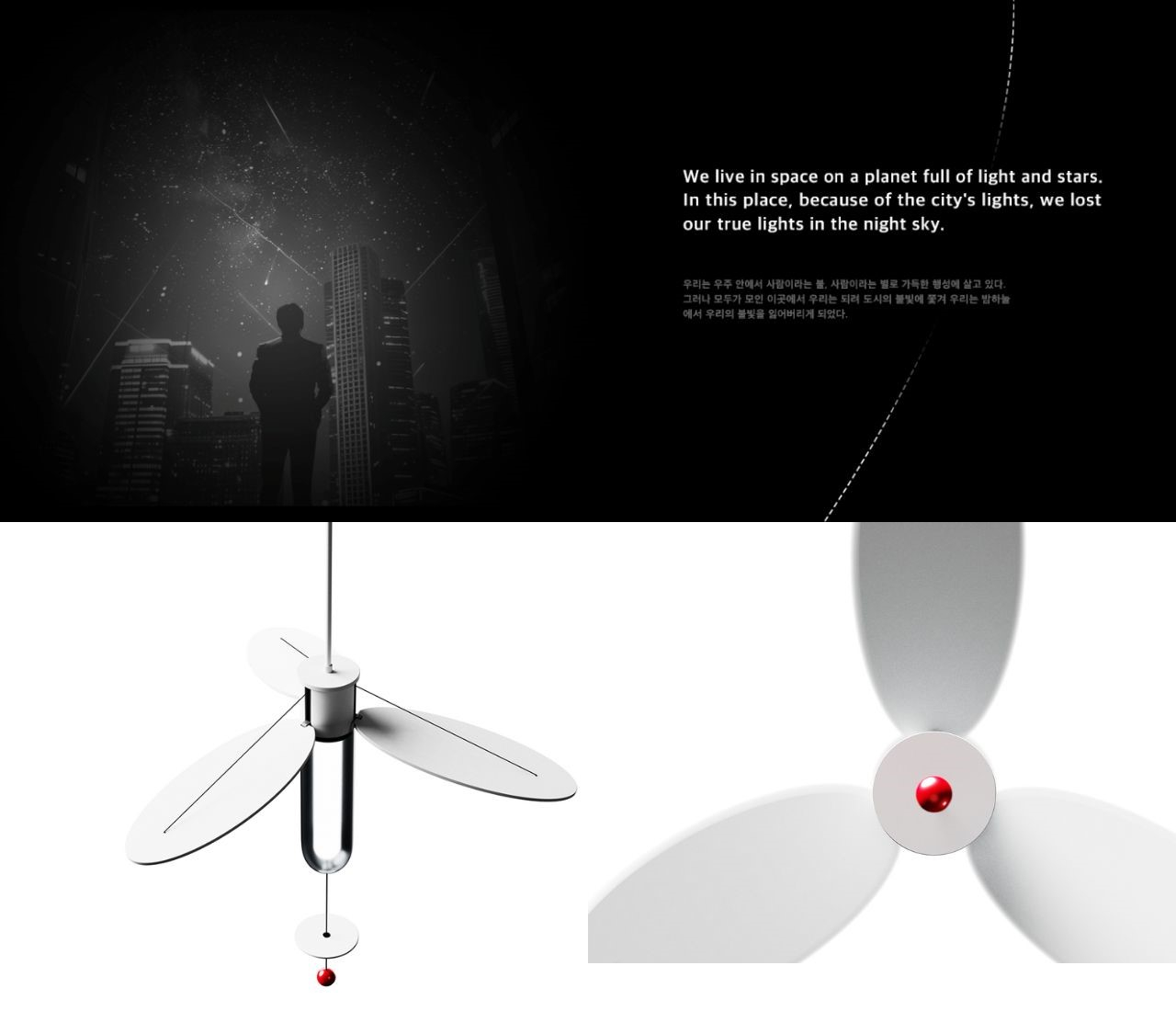
Space, with its vastness and complexity, has always captivated the human imagination. Our solar system, a celestial ballet of planets and stars, has inspired various aspects of human life and design, from ancient sundials to modern-day innovations. The COSMOOVAL lamp series is a testament to this inspiration, drawing on the phenomenal interconnectivity of our solar system to create a collection of lamps that not only illuminate spaces but also tell a cosmic story.

Designer: LFD Official – Seohyun Nam, Nam Woo Kim, Doyoon Kim

The designers of Cosmooval drew inspiration from the celestial bodies in our solar system, considering the way they influence our planet and the intricate dance of light and shadow they create. The lamp series incorporates key elements such as expandability, limitation, transparency, and immateriality to bring the essence of space into our living environments.

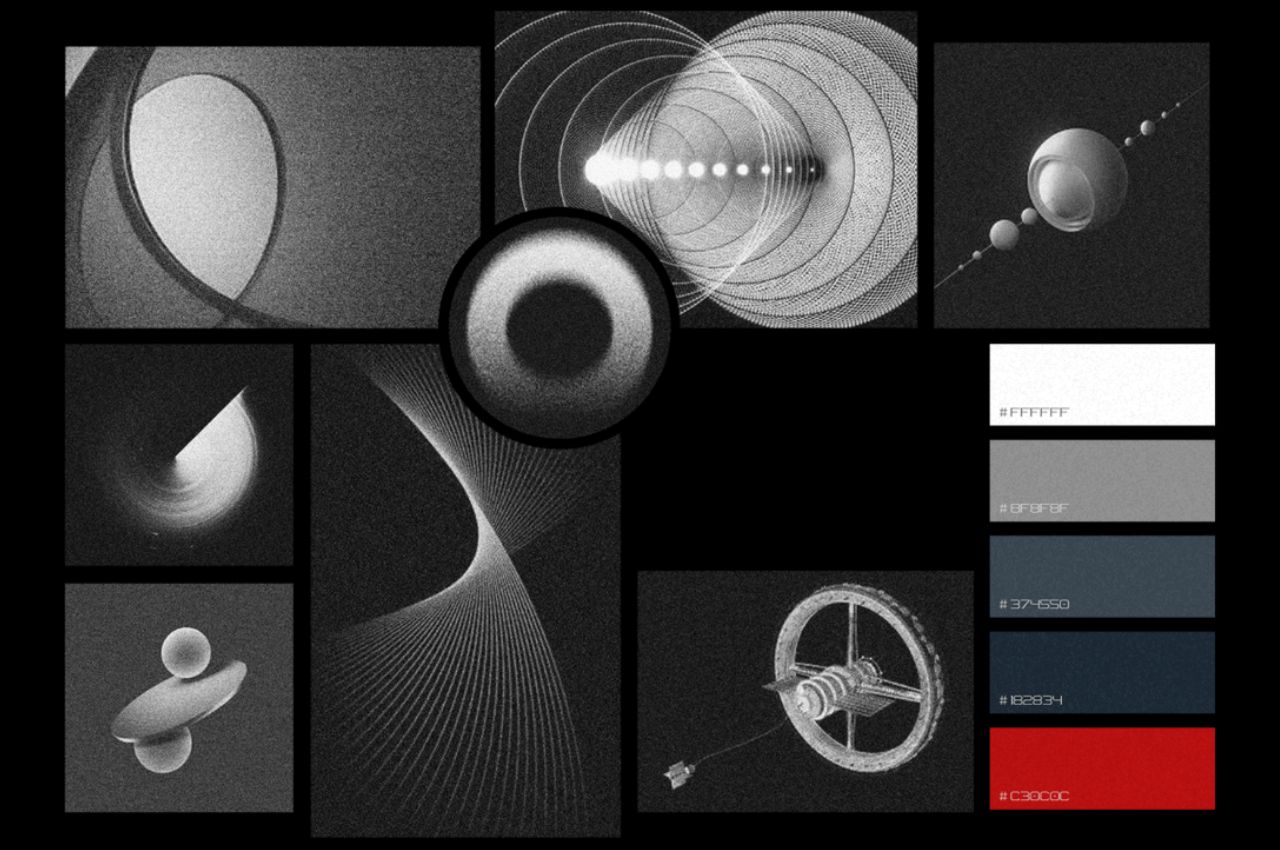
The design process began with the creation of a mood board, reflecting the tension and spatial dynamics of the universe. Simple basic figures, inspired by solar and lunar eclipses, shooting stars, and planetary movements, were arranged to evoke the mood of the cosmos. A clay mockup emphasized stability through the use of circles and triangles, laying the foundation for the lamp series’ structural elements.

Several idea sketches were explored, with the initial focus on a triangular structure within three circles. As the design evolved, proportions, details, and interactions were refined in subsequent sketches. The final design selected a form that considered materials, structure, and user interaction, resulting in three distinct types of lamps within the Cosmooval series.

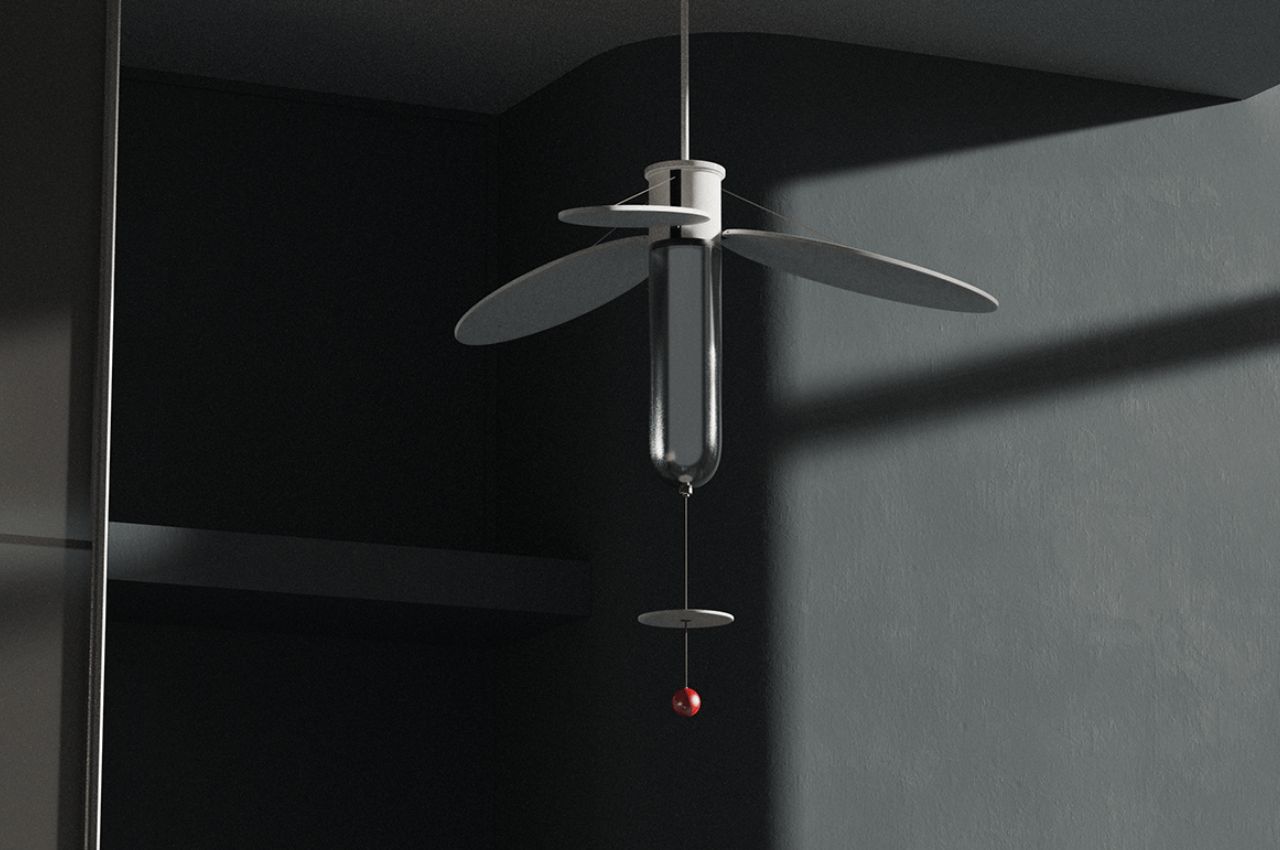
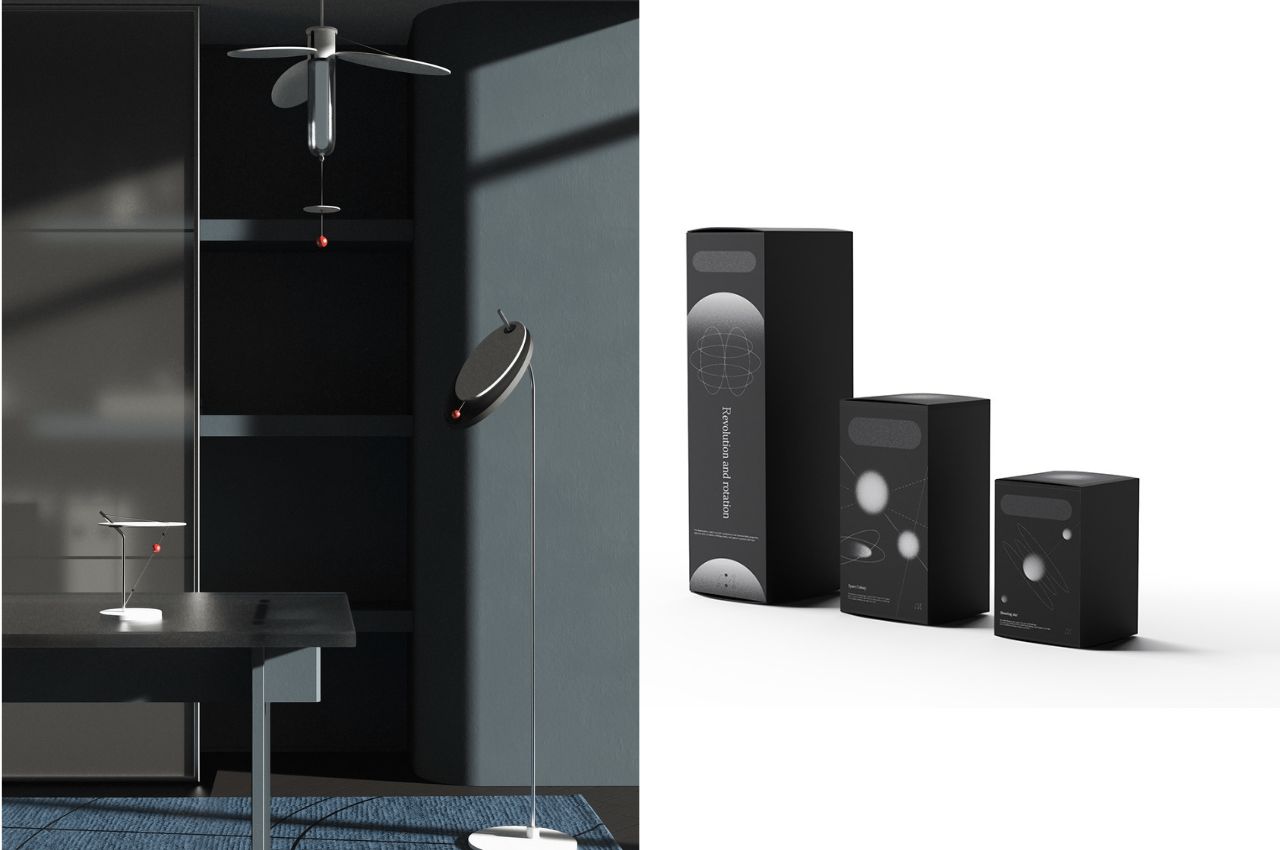
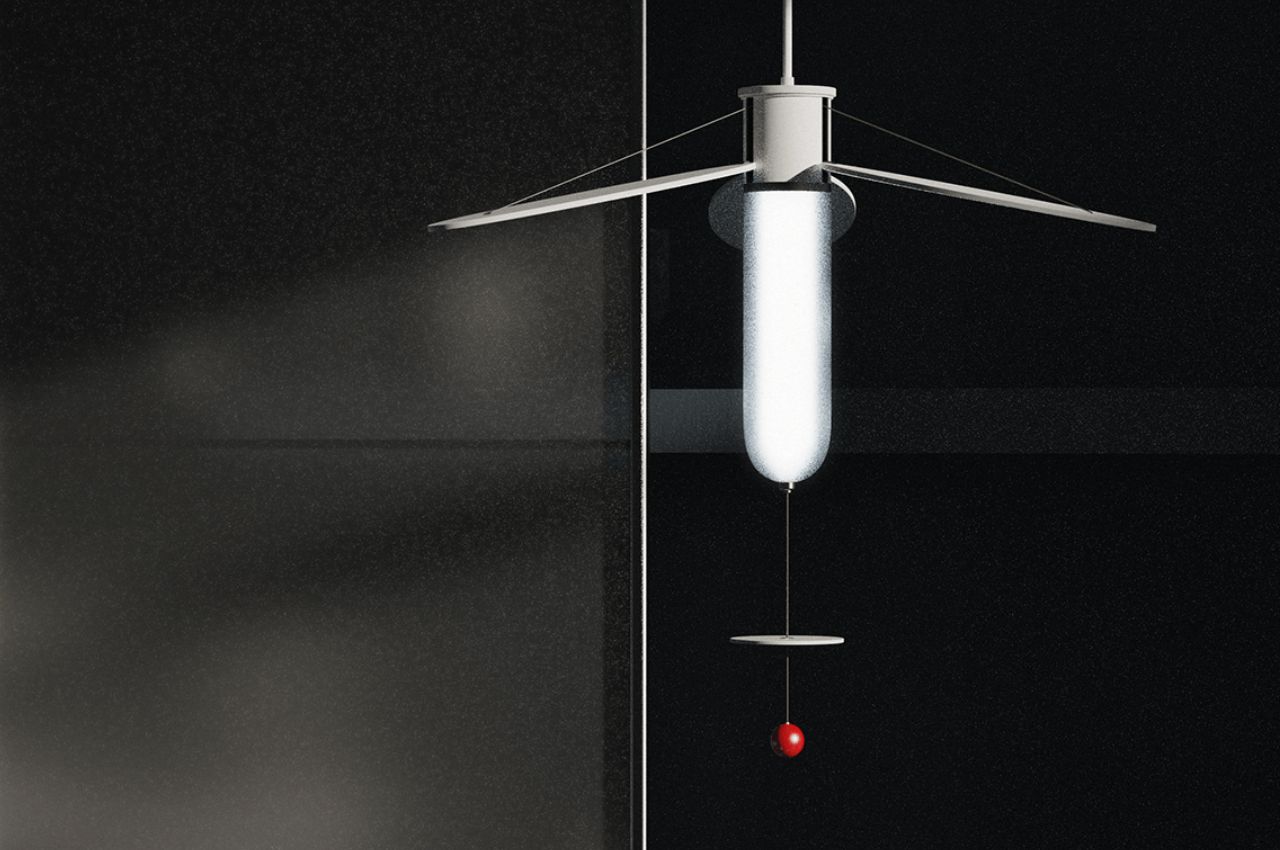
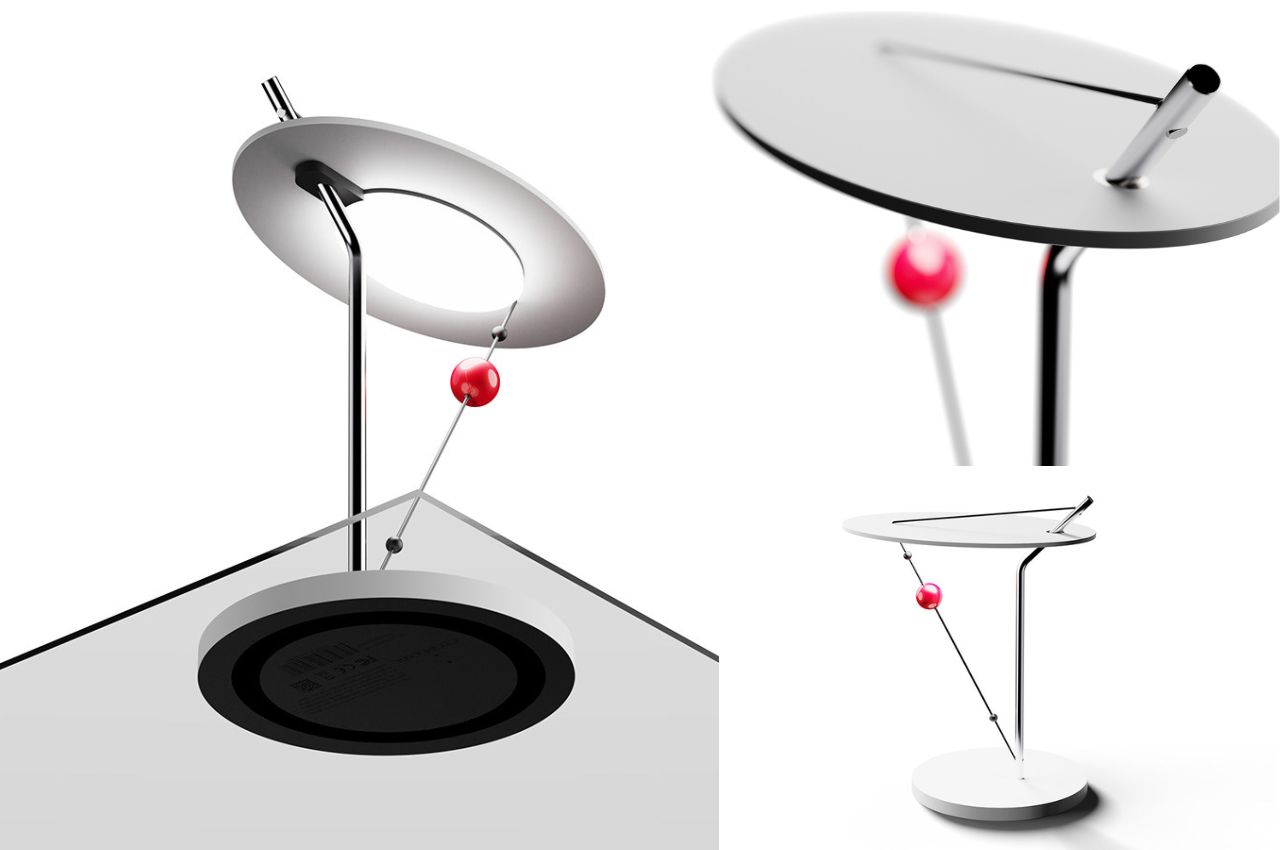
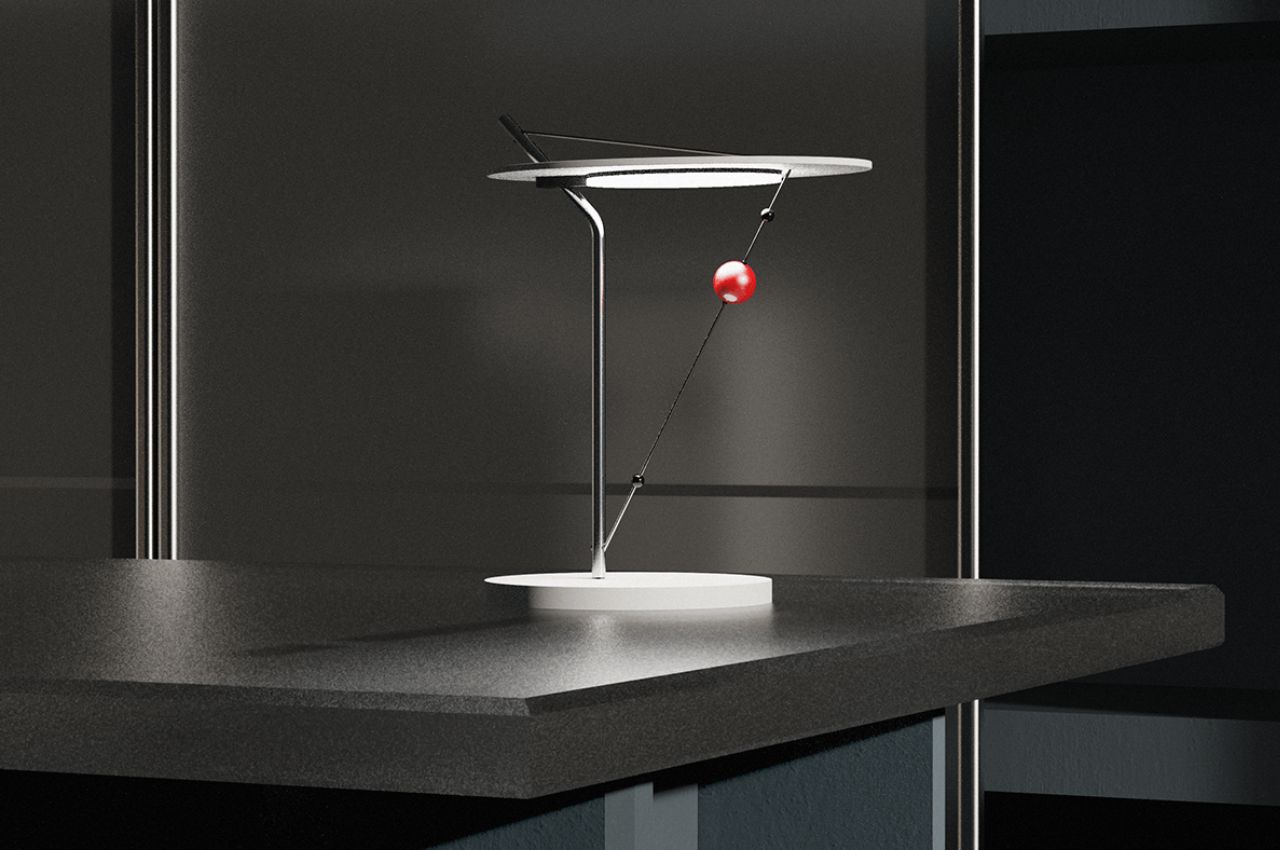
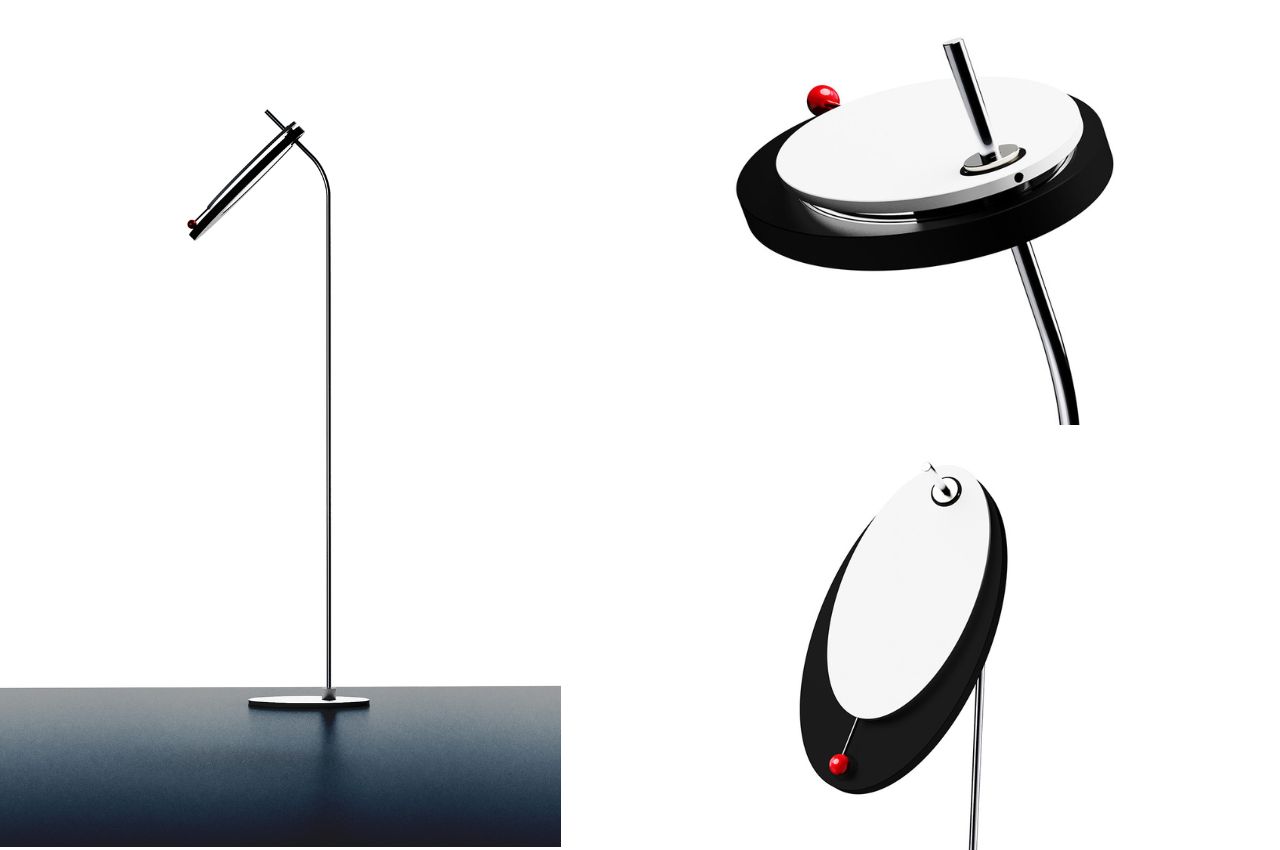
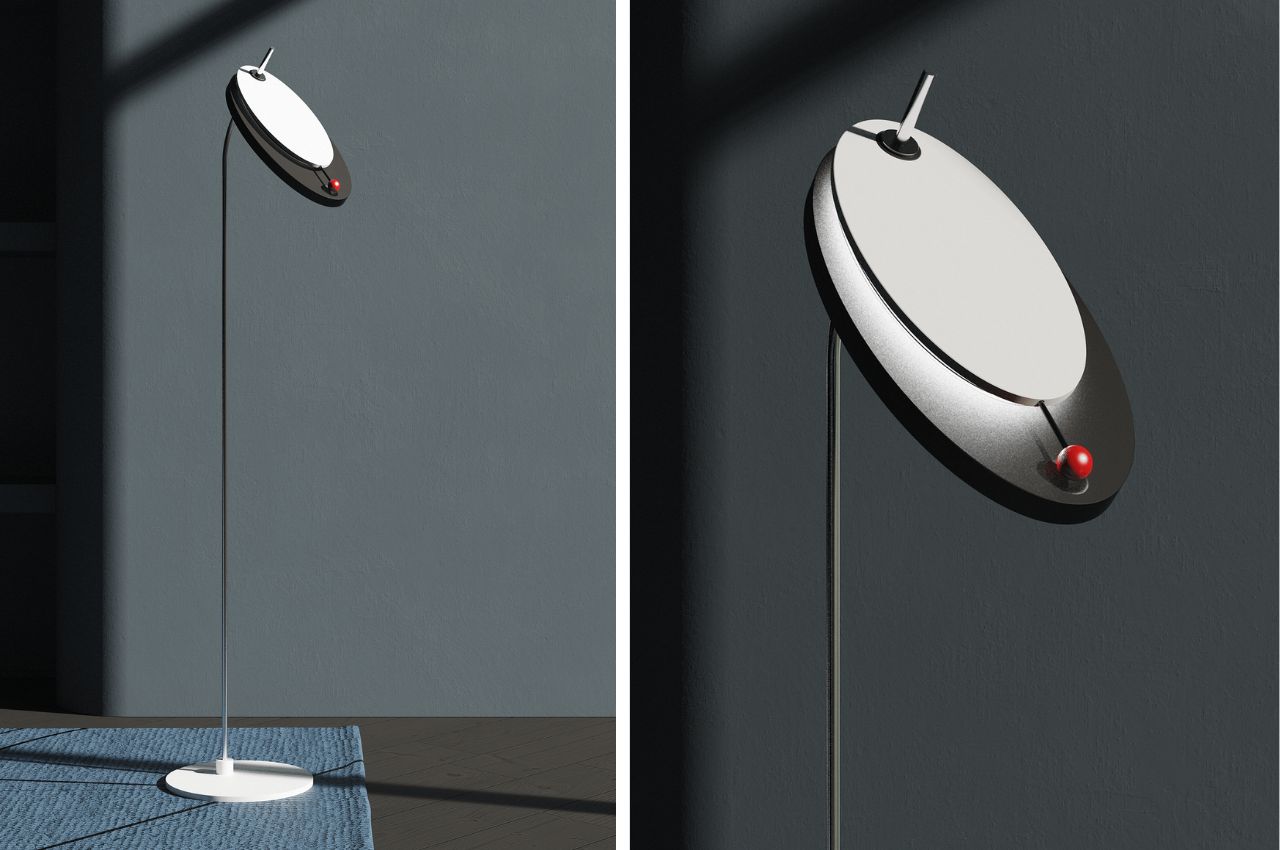
Each lamp in the series offers a unique interaction with light, adding to the overall cosmic experience. The ceiling lamp, representing expandability, spreads light by adjusting the angle of an oval disk. The table lamp, embodying limitation, controls light brightness through the movement of a red sphere, mimicking the motion of a shooting star. The floor lamp, combining transparency and immateriality, simulates orbiting planets and solar eclipses, changing light intensity as the red sphere is manipulated.

Cosmooval, derived from the fusion of “Cosmo” (space) and “Oval” (ellipse), is more than just a lighting solution; it is an artistic representation of the cosmos. The series serves as a visual metaphor for planets, satellites, and shooting stars, moving in harmony with their orbits.

The ceiling lamp symbolizes the expansiveness of space, spreading light with three ovals arranged in a stable manner. By pulling the red sphere attached to a string, users can open and close the ovals, controlling the brightness and essential light in their space.

1

In the table lamp, a triangular structure controls the concentrated light source. Moving the red sphere along a diagonal line mimics the motion of a shooting star, allowing users to experience the fleeting brightness associated with celestial phenomena.

1

The floor lamp embodies transparency and immateriality, recreating the orbits of planets and solar eclipses. Pushing the red sphere sideways changes the shape and intensity of light, providing a dynamic representation of the passage of time and celestial revolutions.

1

The Cosmooval lamp series transcends conventional lighting, offering users an immersive experience that connects them to the wonders of our solar system. Through innovative design and thoughtful interaction, these lamps bring the cosmos into our living spaces, reminding us of the beauty and complexity of the universe that surrounds us.

The post An Interactive Lamp Series That Brings The Cosmic Moments Into Interiors first appeared on Yanko Design.

Engadget Podcast: The good, the bad and the AI of Google I/O 2024

We just wrapped up coverage on Google's I/O 2024 keynote, and we're just so tired of hearing about AI. In this bonus episode, Cherlynn and Devindra dive into the biggest I/O news: Google's intriguing Project Astra AI assistant; new models for creating video and images; and some improvements to Gemini AI. While some of the announcements seem potentially useful, it's still tough to tell if the move towards AI will actually help consumers, or if Google is just fighting to stay ahead of OpenAI.


Listen below or subscribe on your podcast app of choice. If you've got suggestions or topics you'd like covered on the show, be sure to email us or drop a note in the comments! And be sure to check out our other podcast, Engadget News!

Hosts: Cherlynn Low and Devindra Hardawar
Music: Dale North

This article originally appeared on Engadget at https://www.engadget.com/engadget-podcast-the-good-the-bad-and-the-ai-of-google-io-2024-221741082.html?src=rss

Watch the Google I/O 2024 Developer keynote live

Editor’s note (5/14/24): The main Google I/O keynote has ended, but the Google I/O Developer Keynote is now underway. Watch it below. 

It’s that time of year again. Google’s annual I/O keynote is upon us. This event is likely to be packed with updates and announcements. We’ll be covering all of the news as it happens and you can stream the full event below. The keynote starts at 1PM ET on May 14 and streams are available via YouTube and the company’s hub page.

In terms of what to expect, the rumor mill has been working overtime. There are multiple reports that the event will largely focus on the Android 15 mobile operating system, which seems like a given since I/O is primarily an event for developers and the beta version is already out in the wild.

So let’s talk about the Android 15 beta and what to expect from the full release. The beta includes an updated Privacy Sandbox feature, partial screen sharing to record a certain app or window instead of the whole screen and system-level app archiving to free up space. There’s also improved satellite connectivity, additional in-app camera controls and a new power efficiency mode.

Despite the beta already existing, it’s highly probable that Google will drop some surprise Android 15 announcements. The company has confirmed that satellite messaging is coming to Android, so maybe that’ll be part of this event. Rumors also suggest that Android 15 will boast a redesigned status bar and an easier way to monitor battery health.

An Android phone.
Sam Rutherford/Engadget

Android 15 won’t be the only thing Google discusses during the event. There’s a little acronym called AI you may have heard about and the company has gone all in. It’s a good bet that Google will spend a fair amount of time announcing updates for its Gemini AI, which could eventually replace Assistant entirely.

Back in December, it was reported that Google was working on an AI assistant called Pixie as an exclusive feature for Pixel devices. The branding is certainly on point. We could hear more about that, as it may debut in the Pixel 9 later this year. 

Google’s most popular products could also get AI-focused redesigns, including Search, Chrome, G Suite and Maps. We might get an update as to what the company plans on doing about third-party cookies and maybe it’ll throw some AI at that problem too.

What not to expect? Don’t get your hopes up for a Pixel 9 or refreshed Pixel Fold for this event, as I/O is more for software than hardware. We’ll likely get details on those releases in the fall. However, rules were made to be broken. Last year, we got a Pixel Fold announcement at I/O, so maybe the line between hardware and software is blurring. We’ll find out soon.

This article originally appeared on Engadget at https://www.engadget.com/how-to-watch-googles-io-2024-keynote-160010787.html?src=rss

X now treats the term cisgender as a slur

The increasingly discriminatory X (Twitter) now considers the term “cisgender” a slur. Owner Elon Musk posted last June, to the delight of his bigoted brigade of blue-check sycophants, that “‘cis’ or ‘cisgender’ are considered slurs on this platform.” On Tuesday, X made good on the regressive provocateur’s stance and reportedly began posting an official warning that the LGBTQ-inclusive terms could result in a ban from the platform. Not that you’d miss much.

TechCrunch reported on Tuesday that trying to publish a post using the terms “cisgender” or “cis” in the X mobile app will pop up a full-screen warning reading, “This post contains language that may be considered a slur by X and could be used in a harmful manner in violation of our rules.” It then gives you the choice of continuing to publish the post or conforming to the backward views of the worst of us and deleting it.

Of course, neither form of the term cisgender is a slur.

As the historically marginalized transgender community finally began finding at least a sliver of widespread and long overdue social acceptance in the 21st century, the term became more commonly used in the mainstream lexicon to describe people whose gender identity matches their sex at birth. Organizations including the American Psychological Association, World Health Organization, American Medical Association, American Psychiatric Association recognize the term.

But some people have a hard time accepting and respecting that some humans are different from others. Those fantasizing (against all evidence and scientific consensus) that the heteronormative ideals they grew up with are absolute gospel sometimes take great offense at being asked to adjust their vocabulary to communicate respect for a community that has spent centuries forced to live in the shadows or risk their safety due to the widespread pathologization of their identities. 

Musk seems to consider those the good ol’ days.

This isn’t the billionaire’s first ride on the Transphobe Train. After his backward tweet last June (on the first day of Pride Month, no less), the edgelord’s platform ran a timeline takeover ad from a right-wing nonprofit, plugging a transphobic propaganda film. In case you’re wondering if the group may have anything of value to say, TechCrunch notes that the same organization also doubts climate change and downplays the dehumanizing atrocities of slavery.

X also reversed course on a policy, implemented long before Musk’s takeover, that banned the deadnaming or misgendering of transgender people.

This article originally appeared on Engadget at https://www.engadget.com/x-now-treats-the-term-cisgender-as-a-slur-211117779.html?src=rss

Google I/O 2024: Everything revealed including Gemini AI, Android 15 and more

At the end of I/O, Google’s annual developer conference at the Shoreline Amphitheater in Mountain View, Google CEO Sundar Pichai revealed that the company had said “AI” 121 times. That, essentially, was the crux of Google’s two-hour keynote — stuffing AI into every Google app and service used by more than two billion people around the world. Here are all the major updates from Google's big event, along with some additional announcements that came after the keynote.

Gemini Pro
Google

Google announced a brand new AI model called Gemini 1.5 Flash, which it says is optimised for speed and efficiency. Flash sits between Gemini 1.5 Pro and Gemini 1.5 Nano, which its the company’s smallest model that runs locally on device. Google said that it created Flash because developers wanted a lighter and less expensive model than Gemini Pro to build AI-powered apps and services while keeping some of the things like a long context window of one million tokens that differentiates Gemini Pro from competing models. Later this year, Google will double Gemini’s context window to two million tokens, which means that it will be able to process two hours of video, 22 hours of audio, more than 60,000 lines of code or more than 1.4 million words at the same time.

Project Astra
Google

Google showed off Project Astra, an early version of a universal assistant powered by AI that Google’s DeepMind CEO Demis Hassabis said was Google’s version of an AI agent “that can be helpful in everyday life.”

In a video that Google says was shot in a single take, an Astra user moves around Google’s London office holding up their phone and pointing the camera at various things — a speaker, some code on a whiteboard, and out a window — and has a natural conversation with the app about what it seems. In one of the video’s most impressive moments, the correctly tells the user where she left her glasses before without the user ever having brought up the glasses.

The video ends with a twist — when the user finds and wears the missing glasses, we learn that they have an onboard camera system and are capable of using Project Astra to seamlessly carry on a conversation with the user, perhaps indicating that Google might be working on a competitor to Meta’s Ray Ban smart glasses.

Ask Photos
Google

Google Photos was already intelligent when it came to searching for specific images or videos, but with AI, Google is taking things to the next level. If you’re a Google One subscriber in the US, you will be able to ask Google Photos a complex question like “show me the best photo from each national park I’ve visited" when the feature rolls out over the next few months. Google Photos will use GPS information as well as its own judgement of what is “best” to present you with options. You can also ask Google Photos to generate captions to post the photos to social media.

Veo
Google

Google’s new AI-powered media creation engines are called Veo and Imagen 3. Veo is Google’s answer to OpenAI’s Sora. It can produce “high-quality” 1080p videos that can last “beyond a minute”, Google said, and can understand cinematic concepts like a timelapse.

Imagen 3, meanwhile, is a text-to-image generator that Google claims handles text better than its previous version, Imagen 2. The result is the company’s highest quality” text-to-image model with “incredible level of detail” for “photorealistic, lifelike images” and fewer artifacts — essentially pitting it against OpenAI’s DALLE-3.

Google Search
Google

Google is making big changes to how Search fundamentally works. Most of the updates announced today like the ability to ask really complex questions (“Find the best yoga or pilates studios in Boston and show details on their intro offers and walking time from Beacon Hill.”) and using Search to plan meals and vacations won’t be available unless you opt in to Search Labs, the company’s platform that lets people try out experimental features.

But a big new feature that Google is calling AI Overviews and which the company has been testing for a year now, is finally rolling out to millions of people in the US. Google Search will now present AI-generated answers on top of the results by default, and the company says that it will bring the feature to more than a billion users around the world by the end of the year.

Gemini on Android
Google

Google is integrating Gemini directly into Android. When Android 15 releases later this year, Gemini will be aware of the app, image or video that you’re running, and you’ll be able to pull it up as an overlay and ask it context-specific questions. Where does that leave Google Assistant that already does this? Who knows! Google didn’t bring it up at all during today’s keynote.

Google isn't quite ready to roll out the latest version of it smartwatch OS, but it is promising some major battery life improvements when it comes. The company said that Wear OS 5 will consume 20 percent less power than Wear OS 4 if a user runs a marathon. Wear OS 4 already brought battery life improvements to smartwatches that support it, but it could still be a lot better at managing a device's power. Google also provided developers with a new guide on how to conserve power and battery, so that they can create more efficient apps.

Android 15's developer preview may have been rolling for months, but there are still features to come. Theft Detection Lock is a new Android 15 feature that will use AI (there it is again) to predict phone thefts and lock things up accordingly. Google says its algorithms can detect motions associated with theft, like those associated with grabbing the phone and bolting, biking or driving away. If an Android 15 handset pinpoints one of these situations, the phone’s screen will quickly lock, making it much harder for the phone snatcher to access your data.

There were a bunch of other updates too. Google said it would add digital watermarks to AI-generated video and text, make Gemini accessible in the side panel in Gmail and Docs, power a virtual AI teammate in Workspace, listen in on phone calls and detect if you’re being scammed in real time, and a lot more.


Catch up on all the news from Google I/O 2024 right here!

Update May 15, 2:45PM ET: This story was updated after being published to include details on new Android 15 and WearOS 5 announcements made following the I/O 2024 keynote.

This article originally appeared on Engadget at https://www.engadget.com/google-io-2024-everything-revealed-including-gemini-ai-android-15-and-more-210414423.html?src=rss