
The Pixelated Interiors of this Bucharest eyewear store feels like Minecraft in real life!

In the bustling streets of Bucharest, Lunet Eyewear has unveiled its latest spectacle, a whimsical wonderland that blurs the lines between reality and imagination. Romanian practice Bogdan Ciocodeica Studio has once again pushed the boundaries of interior design, this time crafting an optical oasis that celebrates the essence of blurry vision.

Designer: Bogdan Ciocodeica Studio

Drawing inspiration from the very purpose that brings customers through its doors; the quest for clarity in a world of blurriness. Lunet’s newest store is a testament to the power of narrative-driven design. The concept is bold yet intuitive, as pixelated furnishings dance against translucent latex curtains, inviting customers into a realm where perception is questioned and celebrated.

Situated in the heart of Bucharest, this marks the third collaboration between Bogdan Ciocodeica Studio and Lunet, with previous ventures in the capital and Cluj-Napoca setting the stage for innovation. Unlike its predecessors, this store avoids the classic trappings of color and metallics from their previous designs, opting instead for a playful and pixelated ambiance that invites visitors to explore its depths.


At the forefront of this visual symphony are the shelves, strategically punctuated with pixel-style cutouts that mimic the blocky form of their digital counterparts. These tall wooden structures serve as both showcases and canvases, housing Lunet’s eclectic range of eyewear while simultaneously blurring the lines between art and function.


But the pixelated magic doesn’t stop there, gridded tile flooring lays the foundation for this playful palette, while cutouts in chairs, rugs, and service desks continue the theme with finesse. Each element, meticulously crafted and thoughtfully placed, converges to create an environment that is at once nostalgic and futuristic, those columns and arches created by the shadows seem like a modern interpretation of Romania’s architectural heritage.


In between the wooden pillars, the walls are painted in a burnt sienna color with translucent latex curtains draping gracefully between shelves, these ethereal veils add depth and texture to the space, enveloping patrons in a cocoon of visual intrigue as they navigate the store’s diverse offerings. They also have a touch of industrial aesthetic, a mix of brushed metal and mirror cladding, keeping in line with the original concept of the first Lunet store.


At the heart of Lunet’s pixelated playground lies a seating area, where wooden chairs with pixelated edging offer leisure amidst the chaos. Beneath them, a burnt-orange rug adorned with pixel-shaped openings provides a whimsical peek into the store’s underlying grid, inviting guests to linger and explore.

In the eye test room, brick-red walls set the stage for surrealist graphics that challenge perception and defy convention. Here, Lunet invites patrons to see beyond the ordinary, to embrace the blurred lines between art and reality as they embark on their optical journey.


The post The Pixelated Interiors of this Bucharest eyewear store feels like Minecraft in real life! first appeared on Yanko Design.

OpenAI claims that its free GPT-4o model can talk, laugh, sing and see like a human

OpenAI on Monday announced GPT-4o, a brand new AI model that that the company says is one step closer to “much more natural human-computer interaction.” The new model accepts any combination of text, audio and images as input and can generate an output in all three formats. It’s also capable of recognizing emotion, lets you interrupt it mid-speech, and responds nearly as fast as a human being during conversations.

“The special thing about GPT-4o is it beings GPT-4 level intelligence to everyone, including our free users,” said OpenAI CTO Mira Murati during a live-streamed presentation. “This is the first time we’re making a huge step forward when it comes to ease of use.”

During the presentation, OpenAI showed off GPT-4o translating live between English and Italian, helping a researcher solve a linear equation in real time on paper, and providing guidance on deep breathing to another OpenAI executive simply by listening to his breaths.

The “o” in GPT-4o stands for “omni”, a reference to the model’s multimodal capabilities. OpenAI said that GPT-4o was trained across text, vision and audio, which means that all inputs and outputs are processed by the same neural network. This is different from the company’s previous models, GPT-3.5 and GPT-4, which did let users ask questions simply by speaking, but then transcribing the speech into text. This stripped out tone and emotion and made interactions slower.

OpenAI is making the new model available to everyone, including free ChatGPT users, over the next few weeks and also releasing a desktop version of ChatGPT, initially for the Mac, which paid users will have access to starting today.

OpenAI’s announcement comes a day before Google I/O, the company’s annual developer conference. Shortly after OpenAI revealed GPT-4o, Google teased a version of Gemini, its own AI chatbot, with similar capabilties.

This article originally appeared on Engadget at https://www.engadget.com/openai-claims-that-its-free-gpt-4o-model-can-talk-laugh-sing-and-see-like-a-human-184249780.html?src=rss

Amazon workers become the first to unionize at one of the company’s Canadian warehouses

A group of Amazon workers in Quebec have formed the first union at one of the company's Canadian warehouses. On Friday, the province's labor tribunal granted union accreditation to workers at the DXT4 warehouse in Laval, a Montreal suburb. It determined that a majority had opted to unionize after signing union cards.

A group of some 200 workers are organizing as the Laval Amazon Workers Union under the Confédération des syndicats nationaux (CSN), which represents around 330,000 people across a variety of industries in Canada. A general assembly to decide on a constitution, bylaws and representatives will take place in the coming days. A consultation with union members will then take place to agree on a list of demands.

The union says Amazon is legally required to come to the negotiation table to hash out a contract. However, it expects Amazon to appeal the labor tribunal’s decision after allegedly attempting to stop the unionization efforts.

“First and foremost, this is a great victory for the men and women from Latin America, Chad, the Maghreb and Asia who were not afraid to stand up for their rights,” CSN president Caroline Senneville said in a statement. “Over the past few months, Amazon has pulled out all the stops to block our unionization campaign, flooding the workplace with scaremongering messages. DXT4 workers have given us all a lesson in courage. Of course, we hope it spreads.”

Amazon claimed in a letter to the labor tribunal on May 6 that the accreditation would not "respect the interests of its employees." The company argued that some workers signed union cards after being misled and that some aspects of the Quebec labor code run contrary to the Canadian Charter of Rights and Freedoms.

"We believe that all people should have the right to inform themselves and to vote according to their situation and convictions at the time," Amazon spokesperson Barbara M. Agrait told the CBC. "If a simple majority of people at an employer have joined a union at any point, then there's no vote and representation is automatic for all employees — including maybe dozens or hundreds of employees who didn't even know it was being considered."

Amazon has long been accused of attempting to upend unionization efforts at warehouses in the US and Europe. In 2022, workers at a warehouse in Staten Island, New York, became the first in the company to form a union. But the Amazon Labor Union does not yet have a contract with Amazon, and reports suggest it's running low on funds ahead of a leadership election.

This article originally appeared on Engadget at https://www.engadget.com/amazon-workers-become-the-first-to-unionize-at-one-of-the-companys-canadian-warehouses-180447875.html?src=rss

Google teases new camera-powered AI feature one day ahead of I/O

Google is teasing an intriguing new AI feature one day ahead of its I/O developer conference. The company shared a brief video on X that appears to show a new camera-powered AI feature that’s able to recognize what’s in the frame in real time.

The video, which is labeled as a “prototype,” shows what appears to be a Pixel device with the camera open viewing the keynote stage at I/O. The person holding the camera asks, “hey, what do you think is happening here?”

A voice replies that “it looks like people are setting up for a large event, perhaps a conference or presentation.” It’s also able to identify the “IO” letters as being tied to Google’s developer conference and mentions “new advancements in artificial intelligence.” As the two voices go back and forth, a text transcript appears on the screen.

It’s not exactly clear what the feature is, though it bears some similarities to Google Lens, the company’s camera-powered search feature. What’s shown in the teaser video, however, appears to be working in real-time, and responding to voice commands much like the multimodal AI in Meta’s smart glasses. The fact that the demo is shown on a Pixel device is also intriguing as Google often releases new AI-powered features on its Pixel lineup first.

While it’s somewhat unusual for Google to preview one of its announcements so soon before its big keynote, it’s likely not a coincidence that the company dropped the video right as OpenAI showed off similar capabilities with its new GPT-4o model during a live event. Whatever Google has in store, though, we don’t have much longer to wait to get the full details. Google I/O kicks off tomorrow, May 14, and Engadget will be covering the keynote live from Mountain View.

This article originally appeared on Engadget at https://www.engadget.com/google-teases-new-camera-powered-ai-feature-one-day-ahead-of-io-175452903.html?src=rss

Apple and Google roll out a cross-platform feature to tackle unwanted Bluetooth trackers

Apple and Google's long-in-the-works effort to alert people to unwanted Bluetooth trackers that may have been planted on them has come to fruition. The companies have developed an industry standard called Detecting Unwanted Location Trackers. This makes it possible to alert someone via iOS or Android if they're being tracked with one of those devices.

When an unknown Bluetooth device is seen moving with someone over a period of time, they'll get an alert that reads “[Item] Found Moving With You," no matter which platform the tracker is paired with. Apple and Google are rolling out the capability in iOS 17.5 and across Android 6.0 and later devices starting today.

The companies announced a partnership to tackle this issue last May with backing from industry partners such as Samsung and Tile. Apple says that Chipolo, Eufy, Jio, Motorola and Pebblebee are among the companies who say that their future Bluetooth tags will work with the new standard.

Not long after Apple started selling AirTags three years ago, stories of bad actors using the devices to track people and steal cars started to emerge. Apple quickly started working on ways to make it harder for stalkers to use AirTags illicitly and it refined its approach to that over time. The company also released an Android app in late 2021 to help folks find out if an AirTag had been planted on them, but the new approach will take an OS-level approach to warning people about unwanted trackers across both platforms. 

Apple has been hit with legal challenges over AirTag stalking. In March, a San Francisco judge rejected the company's effort to dismiss a class-action lawsuit over the issue.

The timing of the Detecting Unwanted Location Trackers alert rollout is intriguing. There have long been rumors that Google was working on its own Bluetooth tracker. With its I/O developer conference taking place on Tuesday, perhaps such a device is about to come to light. 

This article originally appeared on Engadget at https://www.engadget.com/apple-and-google-roll-out-a-cross-platform-feature-to-tackle-unwanted-bluetooth-trackers-172411423.html?src=rss

Google’s Project Starline video conferencing tech is coming to offices

Google is teaming up with HP to bring its futuristic video conferencing technology Project Starline to enterprise consumers. The company first began demoing this service in 2021 and the first iteration involved a 3D video chat booth with a projection of the person you’re talking to. We came away extremely impressed by the holographic technology, remarking on how realistic everything seemed and that the other person seemed to be in the room with you.

However, this technology isn’t quite the same as what we tried a couple of years back. Since then, Google has streamlined and simplified the system a fair amount. There’s no more video chat booth, as the whole thing has been moved to a system that features a large TV and cameras. This scales back some of the wow factor, but makes it much easier to implement.

To that end, Google and HP will be integrating Project Starline with common video conferencing apps like Google Meet and Zoom. There’s no information as to how much it’ll cost for companies to sign on to use this technology, or any details regarding the initial setup. Google says more information will be revealed later this year with actual commercialization beginning in 2025.

HP calls it an “immersive collaboration experience” and it certainly looks to be a better telepresence solution than a tiny smartphone screen. At the end of the day, though, it’s just a big display. The updated Project Starline tech doesn’t include anything resembling holographic projection.

This article originally appeared on Engadget at https://www.engadget.com/googles-project-starline-video-conferencing-tech-is-coming-to-offices-171622980.html?src=rss

A free PS1 emulator for iPhone is burning up the App Store charts

It’s only been a month since Apple started allowing retro game emulators on the App Store and we already have our second bona-fide hit. The newly-released Gamma is a free PS1 emulator with plenty of bells and whistles for those looking to dive back into the world of blocky polygons. It joins the massively popular Nintendo emulator Delta. We have no idea why these apps keep getting named after the Greek alphabet, as both are made by completely separate devs.

Gamma comes courtesy of developer ZodTTD, which has been in the space nearly since the dawn of the iPhone. The app is primarily for Apple’s smartphone, but there is a dedicated iPad version, which is always nice. Gamma integrates with Bluetooth controllers and keyboards, offering a myriad of input options. It also features customizable on-screen controller skins, but we all know how frustrating it can be to play old-school games with a touchscreen. It’s nice to have the option though.

The app uses Google Drive and Dropbox syncing for backing up game files and save states, and the software will even automatically grab game cover artwork. The whole thing’s actually based on the codebase for Delta, according to reporting by The Verge. As always with emulators, you’ll have to supply the games. To stay on the right side of the law, convert titles that you already own into ROM files.

There’s obviously a mammoth appetite for emulators on the App Store. Delta, the Nintendo emulator, has been a mainstay on the charts since launch and Gamma currently sits at number six, above streamers like Disney+ and Hulu but below TikTok. The reviews, however, are mixed, with many users complaining that the UI needs a refresh and that some third-party controllers, like Backbone devices, cause it to crash. Fixes are likely coming in the near future. In the meantime, Oddworld: Abe’s Oddysee and Crash Team Racing are both begging for a revisit.

This article originally appeared on Engadget at https://www.engadget.com/a-free-ps1-emulator-for-iphone-is-burning-up-the-app-store-charts-161443236.html?src=rss

The M2 iPad Air is $30 off if you preorder at Amazon

Apple last week refreshed its iPad lineup by upgrading the iPad Pro and iPad Air. The latter got its first hardware update in over two years. The latest iPad Air is powered by an M2 chipset and it ships on May 15. If you’re interested in picking one up and haven’t yet done so, you’re in luck. You’ll get a $30 discount on the M2 iPad Air if you preorder one at Amazon. The discount is available on select models such as several colorways of the base 11-inch iPad Air with 128GB of storage, which drops to $570. The purple 256GB variant of the 13-inch iPad Air is also $30 off at $870.

The M2 is one of the two major changes to the iPad Air this time around. The chipset is about 50 percent faster than the M1, according to Apple, so the latest model should be noticeably zipper than the previous generation. However, the iPad Pro is now significantly more powerful than the Air, as the high-end models arriving this week run on the new M4 chipsets, making them the first Apple devices to do so.

The screen is the other major change to the iPad Air. Not only is the base model’s display 0.1 inches larger, making it a tidier 11 inches, there’s a 13-inch variant of an iPad Air for the first time. That means the iPad Air has the same screen sizes as the iPad Pro (which is now somehow thinner and lighter than its mid-range sibling).

There’s one other immediately noticeable change to the iPad Air. The front-facing camera is now positioned along the landscape edge. That should make video calls a bit more palatable for those who tend to have their iPad in that orientation, including those who use keyboard attachments.

We gave the iPad Air a score of 91 in our review, dubbing it Apple's best tablet overall. The base storage increase (it has double the base storage of the previous generation), faster chip and reorientation of the front-facing camera are all major plus points. The 13-inch option is great too, particularly for those who want an iPad with a larger display without having to splash the cash on an iPad Pro.

Follow @EngadgetDeals on Twitter and subscribe to the Engadget Deals newsletter for the latest tech deals and buying advice.

This article originally appeared on Engadget at https://www.engadget.com/the-m2-ipad-air-is-30-off-if-you-preorder-at-amazon-153809896.html?src=rss

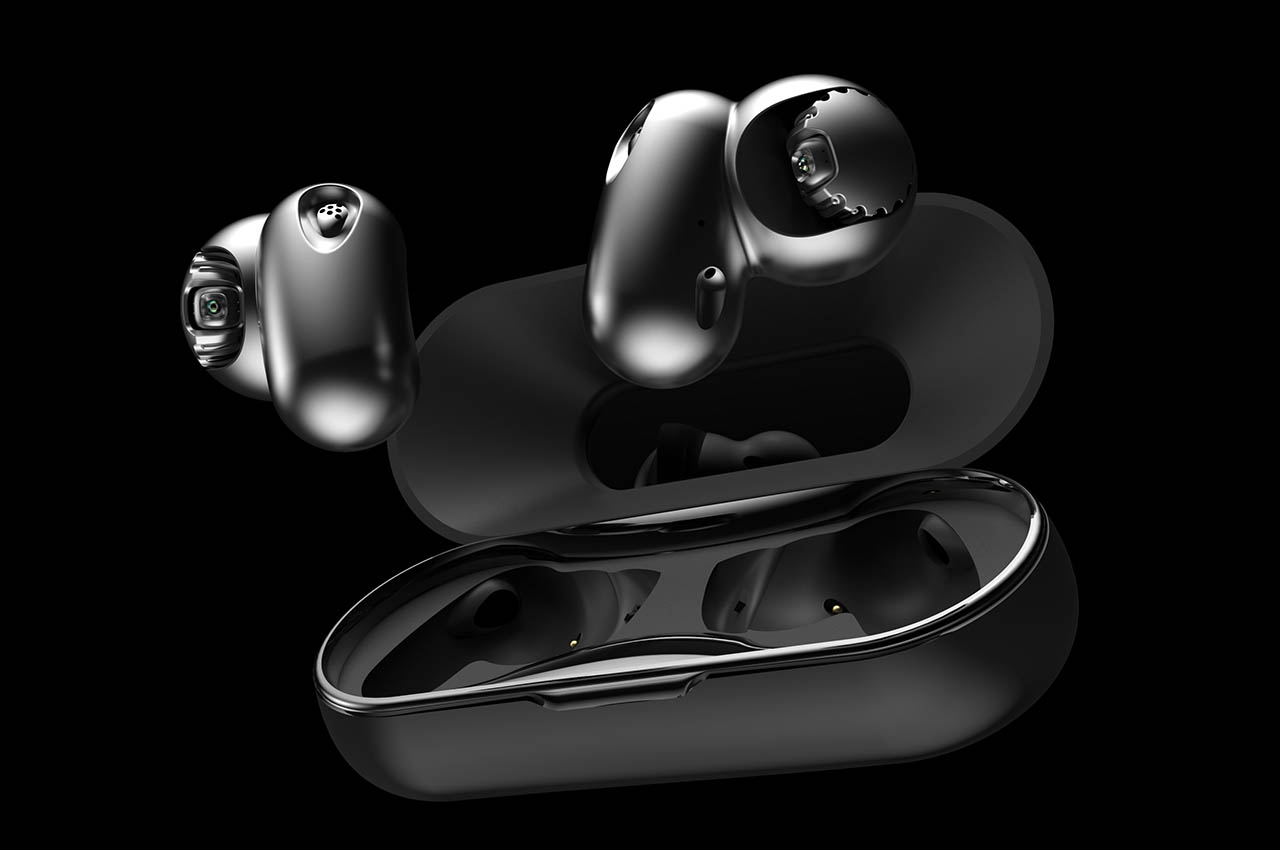
Earbuds with nano camera and smart AI are more than just music for your ears

Earbuds are a kind of accessory you’ll find most common in anybody’s arsenal. They isolate you from the distracting outside world and help you focus while working, exercising, commuting, or anything in between. Extending the usability of earbuds for people with vision problems or in general even the common users who like to turn on their ANC at full blast. Apart from the audio information, the eyes are the best sensors to gauge the environment.

The Cell Buds are an evolution of the good old earbuds into a wearable that assists the blind in navigating crowded spaces or even being aware of what’s around them with sound cues coming from the buds equipped with nano camera units that keep track of any information that may be vital. This eliminates the need for transparency mode to be aware of the space, or even situations where you want strong ANC while being totally aware of what’s happening around in a crowded urban area, essentially making them your eyes and mind for daily life assistance.

Designer: Minwoo Kim

https://vimeo.com/user217694550

These earbuds are loaded with an ultra-compact vision cam and AI to bring all the smart features of your smartphone to this cool gadget plugged into the ears. As a part of the Samsung Design Membership course, Minwoo conceptualized this design to dramatically improve the user’s experience. The on-device AI brings personalized interaction with information available in the cloud and the compact vision cameras keep sensing the surrounding environment around you for any signs of danger or information that might be important to you. For example, an approaching motorist from the left when you are busy crossing the street.

With smart AI, the wearables can be useful for frequent travelers or people with vision impairments. The hands-free personal assistance provided by Cell Buds keeps you from checking your phone, thereby curbing your digital life for good. Design and comfort are prime when it comes to the concept, as Kim has managed to fit a rotating camera unit inside the housing that houses the driver units, microphones, and the battery. According to him, the camera drive unit slightly protrudes from the ear to increase the camera’s field of view.

The post Earbuds with nano camera and smart AI are more than just music for your ears first appeared on Yanko Design.

Pick up this Anker 10,000mAh magnetic power bank for only $32

One of Anker’s MagGo power banks is on sale for just $32 via Amazon. This is a discount of 21 percent, as the device is typically $40. For the price, you get a full-featured magnetic power bank that boasts a 10,000mAh capacity, which allows for around 22 extra hours of use with a modern smartphone.

The power bank features magnetic charging technology, like Apple’s MagSafe, and the device automatically attaches to the back of a smartphone via those same magnets. It’s also light and portable, so most pockets and handbags should be able to accommodate both the power bank and the attached smartphone.

On the downside, it’s not for every smartphone. It’s only for the iPhone 12 and up, as that’s when Apple introduced its MagSafe technology to the lineup. However, it can be used with other gadgets that allow for magnetic charging, like AirPod cases and the like. It’s also worth noting that, while cool, wireless magnetic charging is much slower than traditional wired charging.

We gave another Anker MagGo charger the top spot in our list of the best power banks. Anker makes good stuff. The primary difference between the one that topped our list and this one is that the former boasts Qi2 wireless charging technology, which is faster, and a nice LED display for data metrics. It’s also more than twice the price.

Follow @EngadgetDeals on Twitter and subscribe to the Engadget Deals newsletter for the latest tech deals and buying advice.

This article originally appeared on Engadget at https://www.engadget.com/pick-up-this-anker-10000mah-magnetic-power-bank-for-only-32-150230046.html?src=rss