This Natural Air Purifier uses Algae to remove harmful chemicals from the air we breathe

They say that algae, not trees, help produce a majority of the breathable air around us. Covering large parts of land and sea, this wonder-organism does a remarkable job of purifying the air and enriching it with oxygen… so imagine being able to harness nature’s purifier and have it in your home. Unveiled at Milan Design Week, the AIReactor by EcoLogicStudio is a sleek, three-foot-tall structure with a recycled birch plywood frame. At its heart lies a glass photobioreactor containing a vibrant green liquid teeming with microalgae cultures.

Designer: EcoLogicStudio

Through photosynthesis, algae naturally convert carbon dioxide and pollutants into clean oxygen. The AIReactor continuously pumps air into the bioreactor, mimicking natural water currents for optimal algae growth. As the algae perform their photosynthetic magic, they filter out harmful pollutants, leaving behind cleaner air.

“In addition to capturing pollutants, the microalgae cultivated in AIReactor can be harvested and utilized to produce biopolymers for 3D printing products,” said the studio. “After harvesting, the algae biomass can be dried and then undergo further processing to produce biopolymers, which are natural polymers derived from renewable plant-based sources.”

The biomass generated by the algae after it has filtered the air becomes a valuable resource. EcoLogicStudio harvests this biomass and uses it to create biopolymers, natural polymers derived from renewable sources. The studio recently unveiled the PhotoSynthetica collection, comprising the AIReactor, along with a stool and a ring made from the biopolymers generated during the air filtration process. Building on their 2018 research project, the PhotoSynthetica collection incorporates biomass, a waste material harvested from microalgae, into a series of everyday objects. This innovative approach expands upon the project’s initial exploration, which saw the creation of a large-scale tree sculpture.

The PhotoSynthetica collection is on display from 15 to 21 April as part of Isola Design Festival 2024 during Milan Design Week.

The post This Natural Air Purifier uses Algae to remove harmful chemicals from the air we breathe first appeared on Yanko Design.


Samsung is doubling its semiconductor investment in Texas to $44 billion

It looks like President Biden’s CHIPS Act is starting to pay off. Samsung is planning on doubling its investment in Texas, according to a report by The Wall Street Journal. This will bring the total investment in the state’s chip-manufacturing sector to $44 billion, as Samsung already spent nearly $20 billion to build a factory back in 2021.

The ambitious expansion will reportedly take the form of a new chip manufacturing facility, a packaging site and a research and development space. It’ll all be located in or near Taylor, Texas, as that’s where the pre-existing semiconductor facility was built. The current manufacturing hub isn’t operational yet, but will begin building “crucial logic chips” later this year. For the geographically challenged, Taylor is around a 40 minute drive from Austin.

If this actually happens, it’ll be a huge win for the Biden administration. One of the main goals of the CHIPS Act, after all, is to lure global chipmakers to build on US soil. To that end, Washington plans on awarding more than $6 billion to Samsung as further incentive to keep things running in the good ole USA.

The CHIPS Act has allowed the federal government to award funding and offer loans to many tech companies to encourage domestic spending. Back in February, the multinational semiconductor company GlobalFoundries received a grant of $1.5 billion to help pay for a major US expansion, in addition to a $1.6 billion loan. It plans on building a new fabrication facility in Malta, New York, which will handle the manufacture of chips for the automotive, aerospace, defense and AI industries.

More recently, Intel received the largest CHIPS grant to date, snagging up to $8.5 billion to continue various US-based operations. The current plan is for Intel to use that money to manufacture plants that make leading-edge semiconductor chips meant for use in AI and other advanced applications. The company’s building two new fabrication facilities in Arizona and two in Ohio. Additionally, it’s going to use the money to modernize two pre-existing fabs in New Mexico and expand one location in Oregon. All told, Intel is going to invest $100 billion in US-based chip manufacturing. The various projects are expected to create 20,000 construction and 10,000 manufacturing jobs.

The Biden administration signed the CHIPS and Science Act into law back in 2022 to foster domestic semiconductor research and manufacturing and to lessen America’s reliance on Chinese suppliers. It sets aside $52 billion in tax credits and funding for firms to expand stateside production.

This article originally appeared on Engadget at https://www.engadget.com/samsung-is-doubling-its-semiconductor-investment-in-texas-to-44-billion-154322399.html?src=rss

Meta plans to more broadly label AI-generated content

Meta says that its current approach to labeling AI-generated content is too narrow and that it will soon apply a "Made with AI" badge to a broader range of videos, audio and images. Starting in May, it will append the label to media when it detects industry-standard AI image indicators or when users acknowledge that they’re uploading AI-generated content. The company may also apply the label to posts that fact-checkers flag, though it's likely to downrank content that's been identified as false or altered.

The company announced the measure in the wake of an Oversight Board decision regarding a video that was maliciously edited to depict President Joe Biden touching his granddaughter inappropriately. The Oversight Board agreed with Meta's decision not to take down the video from Facebook as it didn't violate the company's rules regarding manipulated media. However, the board suggested that Meta should “reconsider this policy quickly, given the number of elections in 2024.”

Meta says it agrees with the board's "recommendation that providing transparency and additional context is now the better way to address manipulated media and avoid the risk of unnecessarily restricting freedom of speech, so we’ll keep this content on our platforms so we can add labels and context." The company added that, in July, it will stop taking down content purely based on violations of its manipulated video policy. "This timeline gives people time to understand the self-disclosure process before we stop removing the smaller subset of manipulated media," Meta's vice president of content policy Monika Bickert wrote in a blog post.

Meta had been applying an “Imagined with AI” label to photorealistic images that users whip up using the Meta AI tool. The updated policy goes beyond the Oversight Board's labeling recommendations, Meta says. "If we determine that digitally-created or altered images, video or audio create a particularly high risk of materially deceiving the public on a matter of importance, we may add a more prominent label so people have more information and context," Bickert wrote.

While the company generally believes that transparency and allowing appropriately labeled AI-generated photos, images and audio to remain on its platforms is the best way forward, it will still delete material that breaks the rules. "We will remove content, regardless of whether it is created by AI or a person, if it violates our policies against voter interference, bullying and harassment, violence and incitement, or any other policy in our Community Standards," Bickert noted.

The Oversight Board told Engadget in a statement that it was pleased Meta took its recommendations on board. It added that it would review the company's implementation of them in a transparency report down the line.

"While it is always important to find ways to preserve freedom of expression while protecting against demonstrable offline harm, it is especially critical to do so in the context of such an important year for elections," the board said. "As such, we are pleased that Meta will begin labeling a wider range of video, audio and image content as 'Made with AI' when they detect AI image indicators or when people indicate they have uploaded AI content. This will provide people with greater context and transparency for more types of manipulated media, while also removing posts which violate Meta’s rules in other ways."

Update 4/5 12:55PM ET: Added comment from The Oversight Board.

This article originally appeared on Engadget at https://www.engadget.com/meta-plans-to-more-broadly-label-ai-generated-content-152945787.html?src=rss

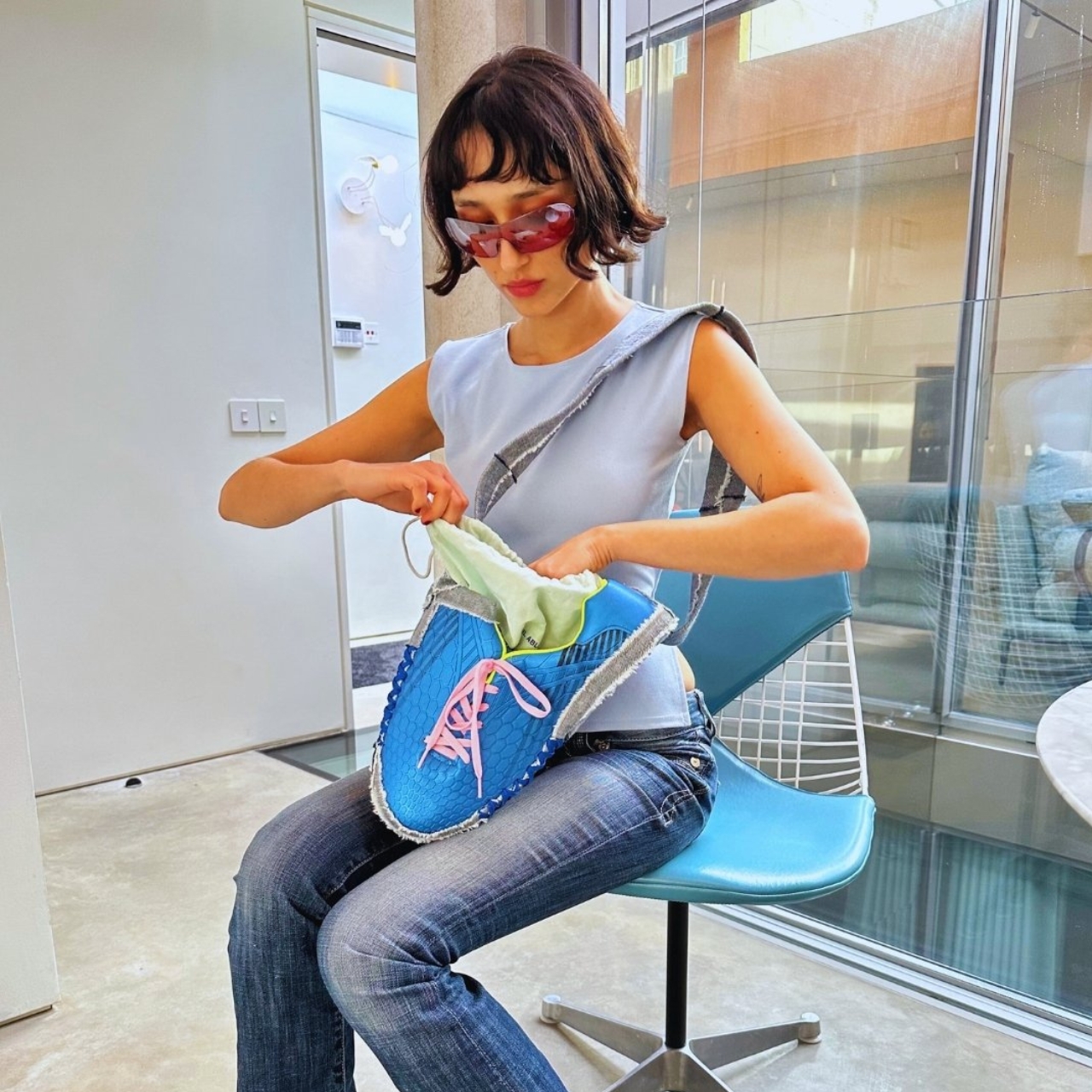
Bibi Bazz collection uses upcycled trainers for eco-friendly, fashionable bags

I personally know some people who go through sneakers and trainers like they go through toilet paper. Okay that maybe an exaggeration but there are a lot of collectors and wearers out there who do spend a lot on this kind of footwear and dispose of their old ones in a not so sustainable manner. So when we see designers and brands that recycle or upcycle these things as part of sustainable fashion, we pay attention and if we can afford it, we support them. If you also like owning limited edition pieces, then this new collection may be something you’d like to add to your closet.

Designer: Bibi Bazz

Bibi Bazz is a brand that focuses on upcycling and their Genesis Collection brings handcrafted bags made from damaged or deadstock trainers. This is just the first drop in their collection and is made up of limited edition shoulder bags and crossbody styles that can make you look like an eco-friendly rockstar. Aside from the different colors and textures, these bags also come with denim shoulder straps for a chic look. They also have interior pouches if you need to secure some small items.

The Fresh Start Trainer cross body bag uses deadstock Puma trainers in white and black colors. The Emerge Trainer Bag is a shoulder bag using a blue base with pink details and a denim strap as well. If you want something with bolder colors, the Rebirth Trainer is a crossbody bag with blue and neon orange hues with white accents. Meanwhile, the Revive Trainer is a crossbody bag with a red base and black patterns. If you’re more adventurous in your color palette, you can get the Renewal Trainer bag with its mix of neon lime, black, and green colors or the Pioneer Trainer Bag with its neon orange, pink, and yellow hues.

The bags from the Genesis Collection has a price range of £70-100. They’re in fact the first items available for the launch of Bibi Bazz’ online store. Even though the model on their website is a woman, the bags “transcend gender” and are meant to not only be eco-friendly but also inclusive. Since there are only limited items available, you might want to buy your upcycled trainer bags now.

The post Bibi Bazz collection uses upcycled trainers for eco-friendly, fashionable bags first appeared on Yanko Design.

Our favorite cheap Android tablet is on sale for $170

We highlight Samsung's Galaxy Tab A9+ in our Android tablet buying guide for those who just want a competent slate for as little money as possible. If that describes you, take note: The 11-inch device is now on sale for $170 at several retailers, including Amazon, Walmart and Best Buy. This deal has technically been available for a couple of weeks, but it still represents the lowest price we've tracked. For reference, Samsung typically sells the tablet for $220. Both the Graphite and Silver finishes are discounted.

Do note, though, that this price applies the base model, which includes 4GB of RAM and 64GB of storage. The latter is expandable with a microSD card, but the limited memory can cause some stutters if you want to push the the tablet for anything beyond casual streaming and web browsing. Samsung sells a higher-spec model with 8GB of RAM and 128GB of storage: That one will be a better buy for gaming and more involved use, and it's also $50 off at $220, another all-time low.

As my colleague Sam Rutherford notes in our buying guide, the Galaxy Tab A9+ isn't likely to wow you in any one area, but it covers the basics well. Its 11-inch LCD display is well-sized and has a faster-than-usual 90Hz refresh rate, which helps the UI feel smooth to scroll through. The screen has a wide 16:10 aspect ratio, so it's better suited to landscape mode than the 4:3 display on an iPad. The metal and plastic frame is slick for the price, while the 7,040mAh battery should hold up for a day or two of casual use. And though no Android tablet really nails the software experience, most people should find Samsung's One UI to be cleaner than something like Amazon's Fire OS. The company says it'll provide OS updates through the eventual Android 16 and security updates through October 2027.

That said, this is still a cheap tablet. The Galaxy Tab A9+'s Snapdragon 695 chip is speedy enough but no powerhouse, and its charging speed tops out at a relatively meager 15W. There's no fingerprint reader, included stylus or formal water-resistance rating, either. If you're not beholden to Android, one of Apple's iPads will still be more well-rounded (though we expect to see new models arrive in the coming weeks). Still, at these prices, the Galaxy Tab A9+ is a solid buy if you're on a tighter budget.

Follow @EngadgetDeals on Twitter and subscribe to the Engadget Deals newsletter for the latest tech deals and buying advice.

This article originally appeared on Engadget at https://www.engadget.com/our-favorite-cheap-android-tablet-is-on-sale-for-170-151624727.html?src=rss

Apple Vision Pro owners now have more decent controller options

The Apple Vision Pro is an impressive piece of hardware, and the eye-tracking/hand gesture input combo is fantastic for navigating menus and the like. It’s not so great for gaming. There haven't been many easy ways to connect a third-party controller for playing iPad or cloud games. This is changing, however, as accessory manufacturer 8BitDo just announced Vision Pro compatibility for a number of its controllers.

These accessories are officially supported by Apple, so they should work as soon as you make a Bluetooth connection. No muss and no fuss. All told, eight devices got the Apple seal of approval here. One such gadget is the company’s Ultimate Bluetooth Controller, which we basically called the perfect gamepad for PC.

A person wearing a headset and playing Pac-Man.
8BitDo

Other compatible devices include various iterations of the SN30 Pro controller, the Lite 2 and the NES-inspired N30 Pro 2. The integration isn’t just for game controllers, as 8BitDo also announced AVP compatibility for its Retro Mechanical Keyboard. Of course, the Vision Pro works out of the box with most Bluetooth keyboards.

This is pretty big news, however, as media consumption is one of the best parts of the Vision Pro experience. Video games fall squarely in that category. Just about every iPad title works on the device. If playing Cut the Rope on a giant virtual screen doesn’t do it for you, the headset also integrates with Xbox Cloud Gaming and Nvidia GeForce Now for access to AAA titles. 

8BitDo announced official controller support for Apple devices last year, though this was primarily for smartphones, tablets and Mac computers. The integration was thanks to new controller firmware and Apple's recent iOS 16.3, iPadOS 16.3, tvOS 16.3 and macOS 13.2 updates. It looks like all of the accessories that work with iPhones and iPads also work with the Vision Pro. 

This article originally appeared on Engadget at https://www.engadget.com/apple-vision-pro-owners-now-have-more-decent-controller-options-150055872.html?src=rss