
AI is changing cybersecurity in quick and terrifying ways
Hackers employing AI in their tactics are finding ways to exploit vulnerabilities that didn't even exist before.
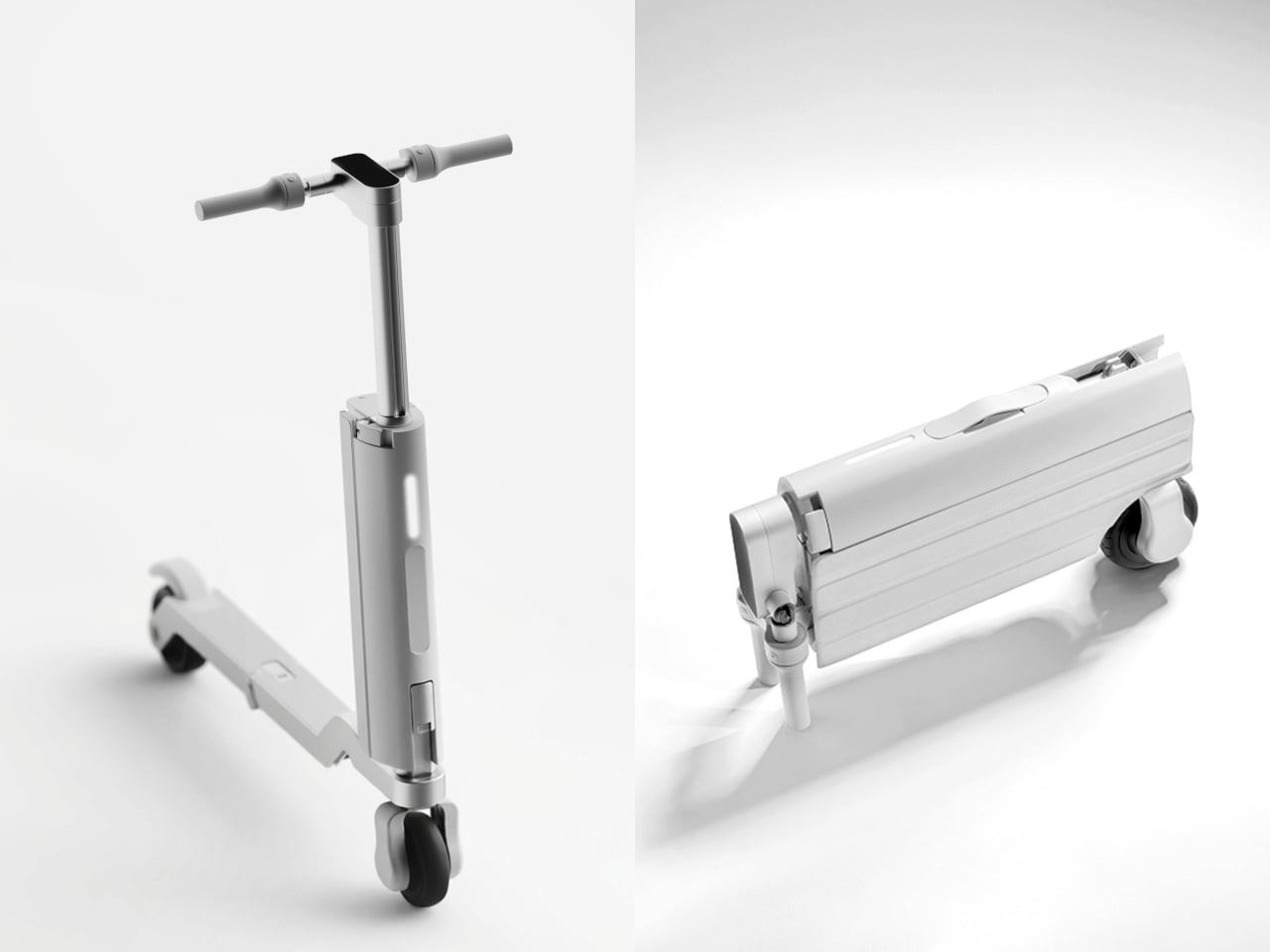
Electric vehicles have reshaped how people cover long distances, but the stretch between a parking spot and a front door hasn’t changed much. That last hundred meters or so still comes down to walking, and for city commuters or suburban drivers who park several blocks from their destination, those gaps add up in ways that no amount of EV range improvement can address.
The VtoV 1000 takes aim at that problem with a three-fold electric scooter designed specifically to travel with a driver after the car is parked. The “V to V” in the name refers to vehicle to vehicle, positioning the scooter as the connector between one form of transport and wherever the final stop actually is, not where the nearest parking happens to be.
Designers: Ikhyeon Kim, Soonman Kwon (second white)
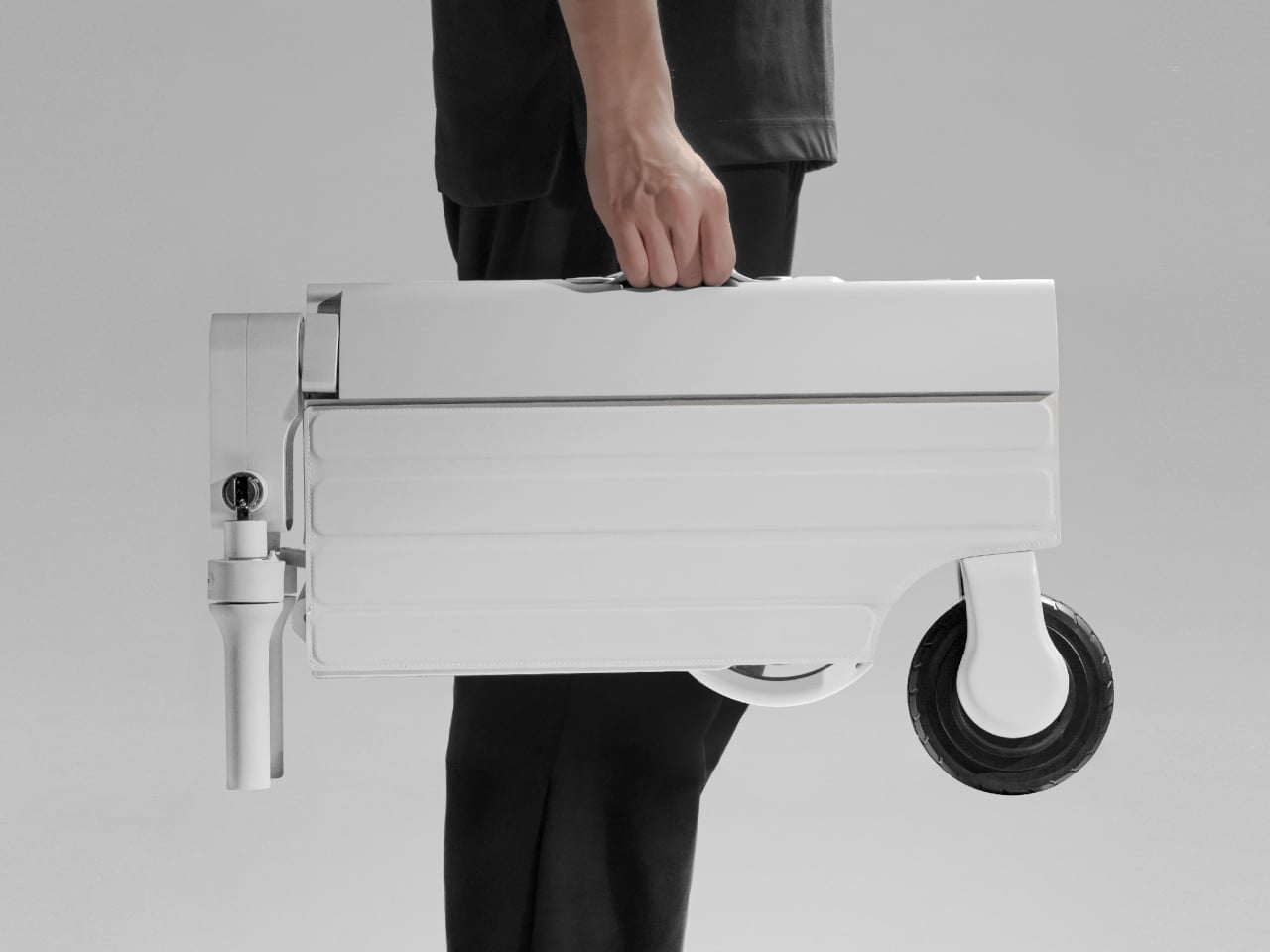
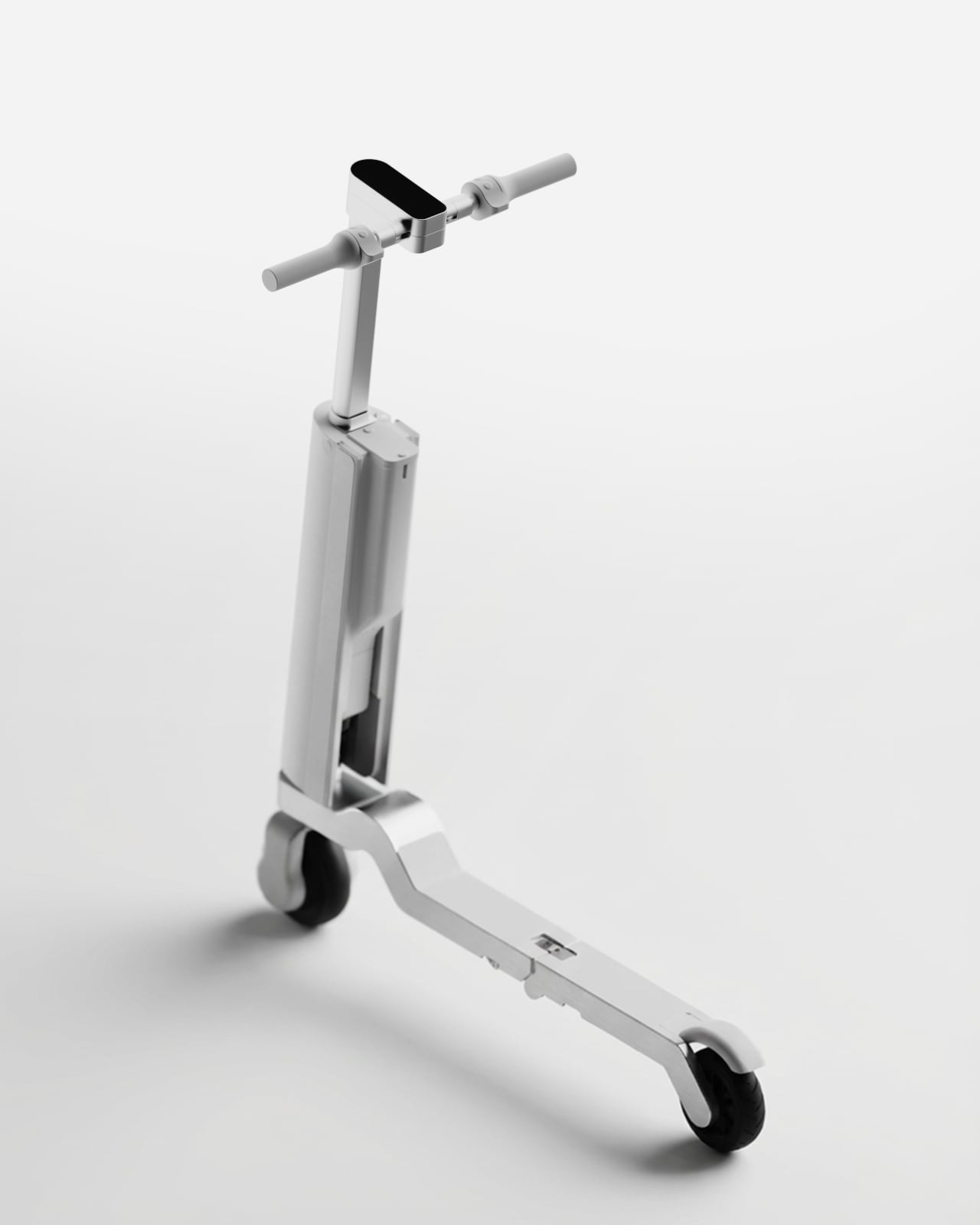
Getting a scooter from a car boot to a building entrance and back daily only works if the scooter itself doesn’t become another thing to manage. The three-stage fold brings the VtoV 1000 down to a size that fits in one hand, making it suitable for stairs, elevators, office corridors, and shop floors without needing to leave it chained to a post outside or locked to a rack.
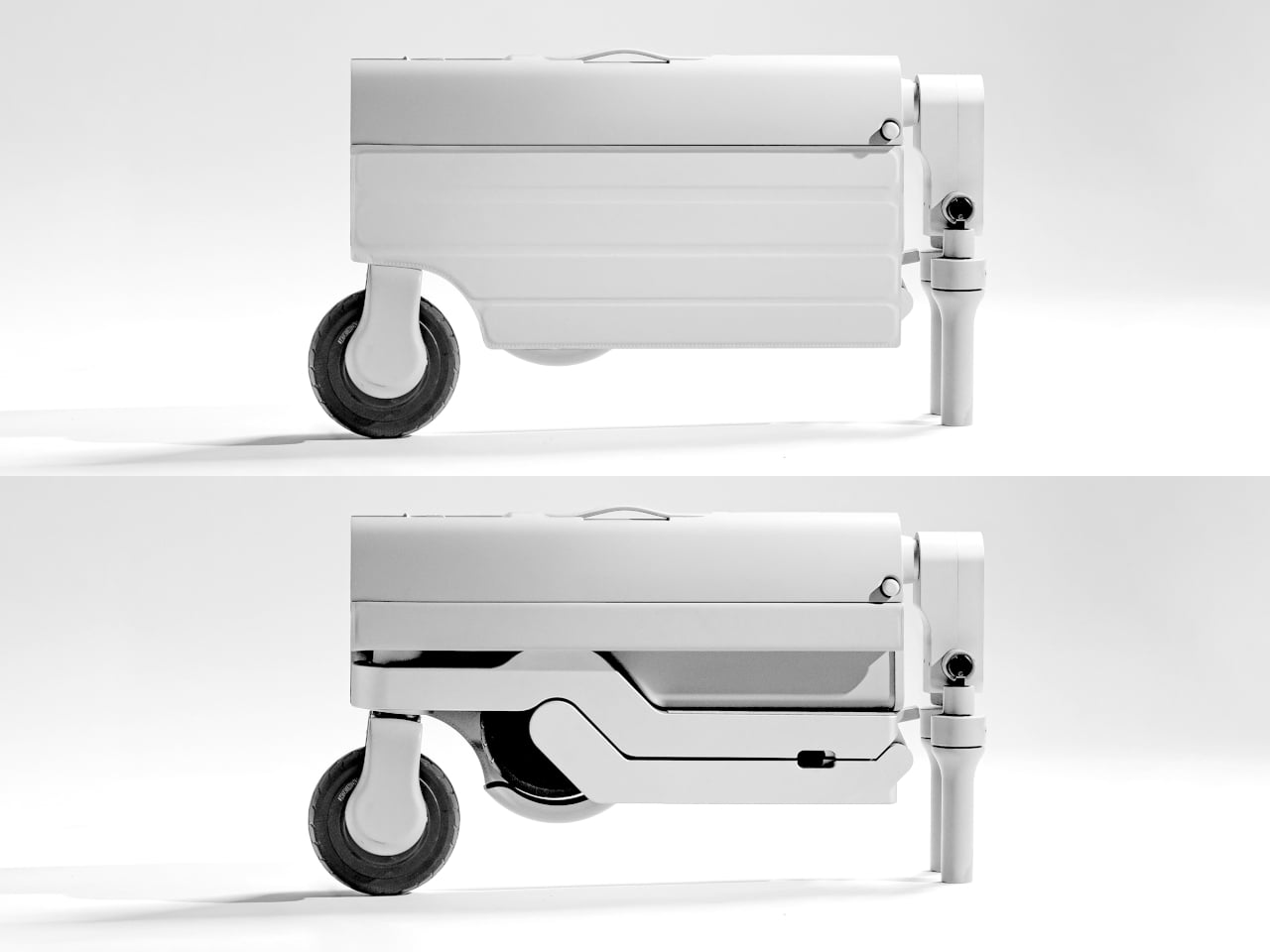
The folded form is where the concept gets more interesting. A folio-style side cover closes over the chassis when packed down, concealing the hinge mechanism and keeping the rider’s hands away from any grease or grime. Folded, the VtoV 1000 takes on the proportions of a flat rectangular briefcase, nudging people to carry it inside with them rather than leave it on the pavement.
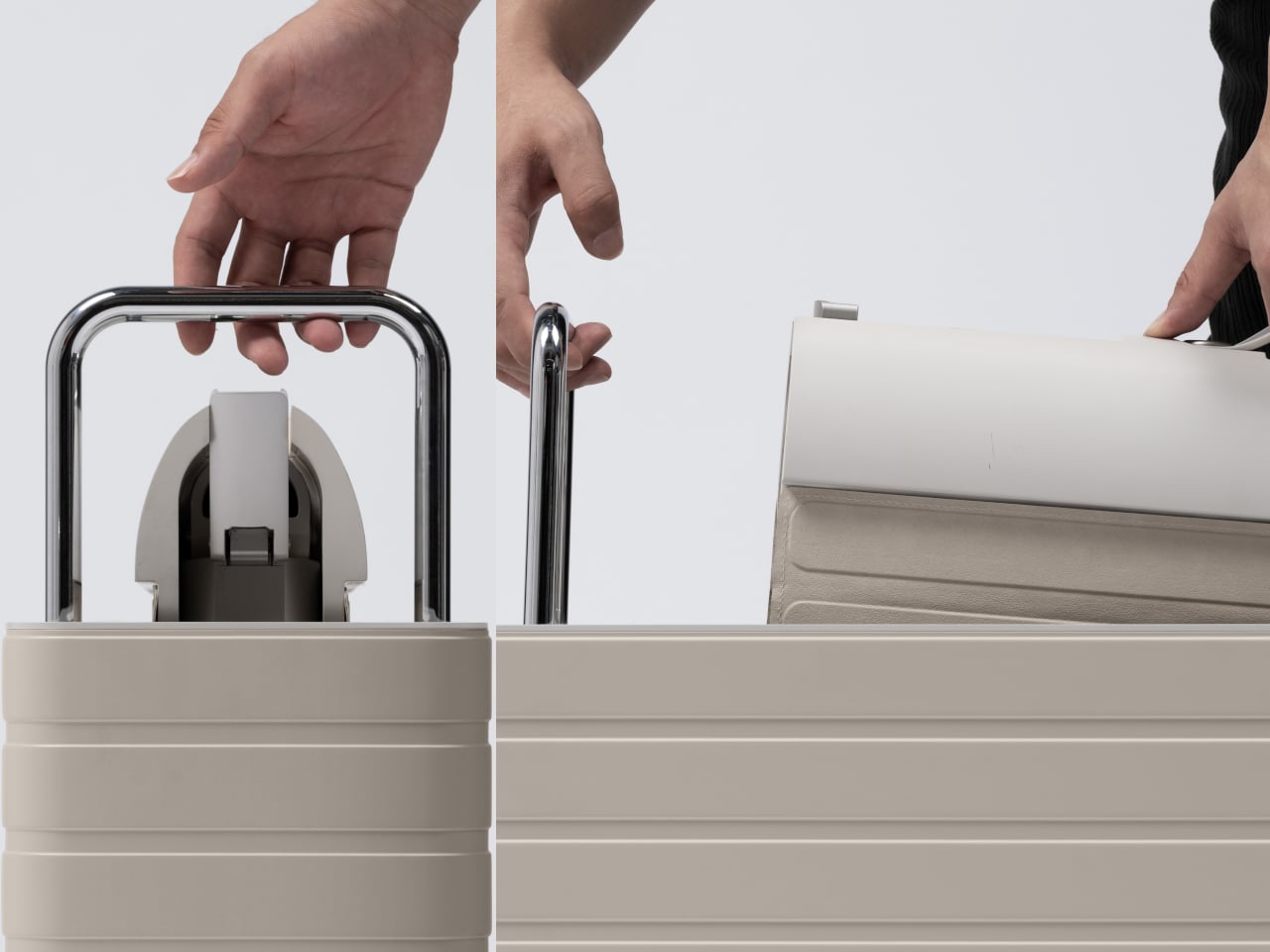

That behavioral shift matters more than it might seem. Urban micro-mobility tools spend a lot of time sitting unattended outside buildings, collecting dents and theft attempts until the owner comes back. Designing something that users naturally want to carry in solves the security and durability problem without requiring a lock, a garage, or any extra infrastructure at the destination end.
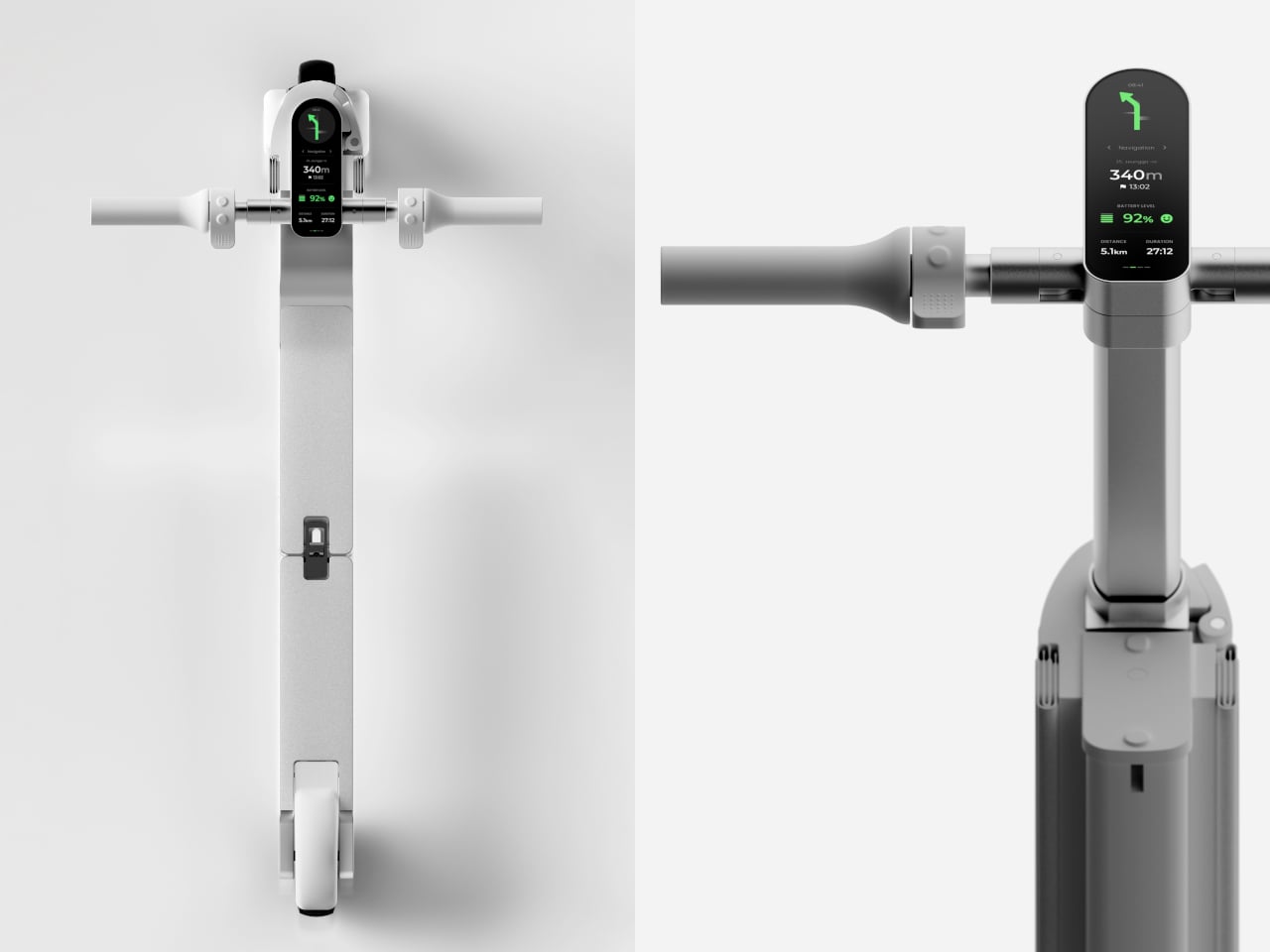
A vertically oriented smart display sits at the center of the handlebar, showing battery level, remaining range, current speed, and turn-by-turn navigation prompts without requiring the rider to glance at a phone. The display connects to a companion app, but the riding interface itself is kept simple enough to read at a glance, keeping attention on the road rather than the screen.
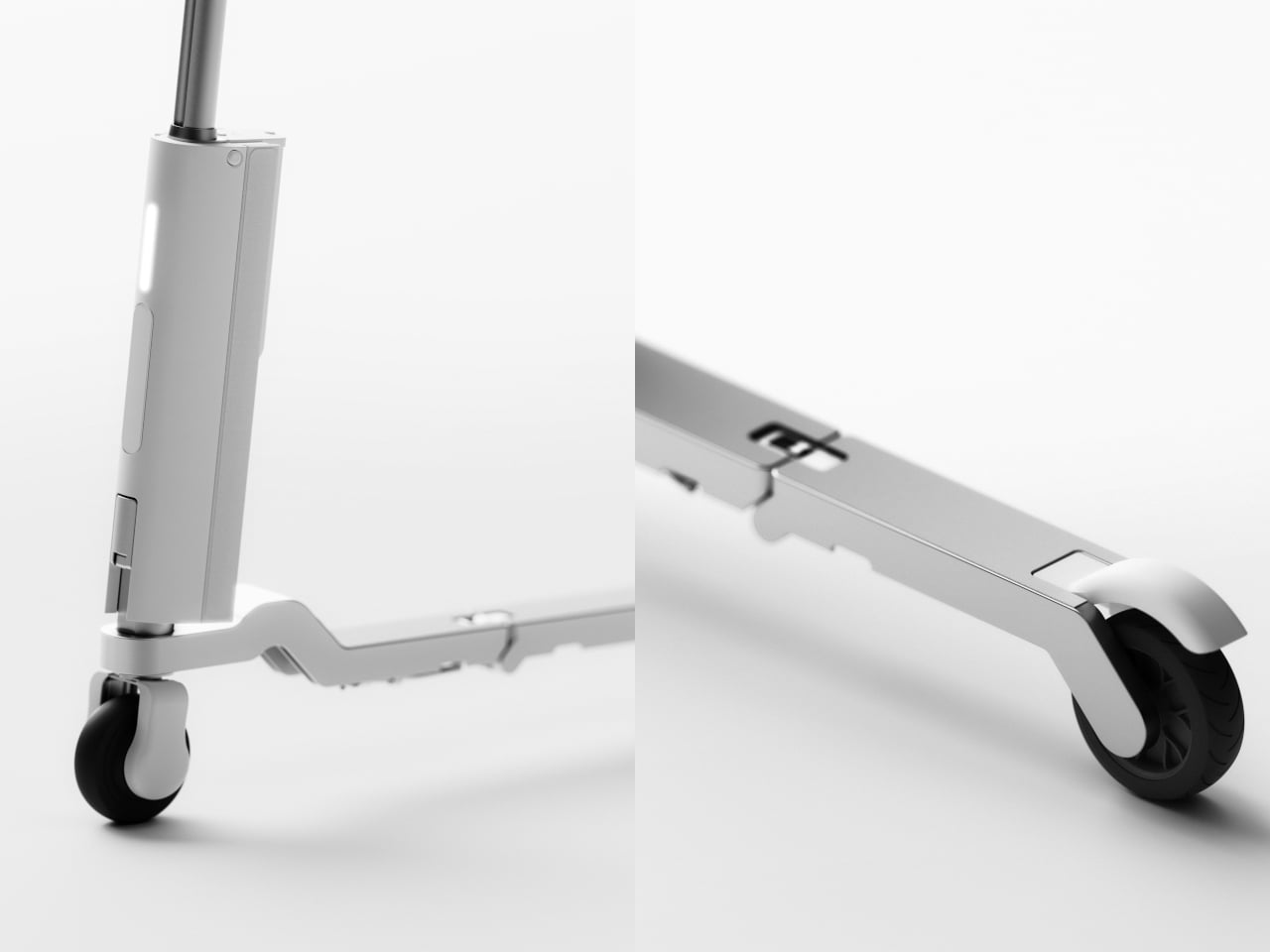

The physical design follows a deliberately restrained logic. The chassis is machined aluminum throughout, kept to a minimal part count with no decorative additions. The scooter deploys and folds back through the same three-point sequence each time, which builds the kind of familiarity that makes a product feel genuinely woven into a daily routine rather than something you have to consciously negotiate with every morning.
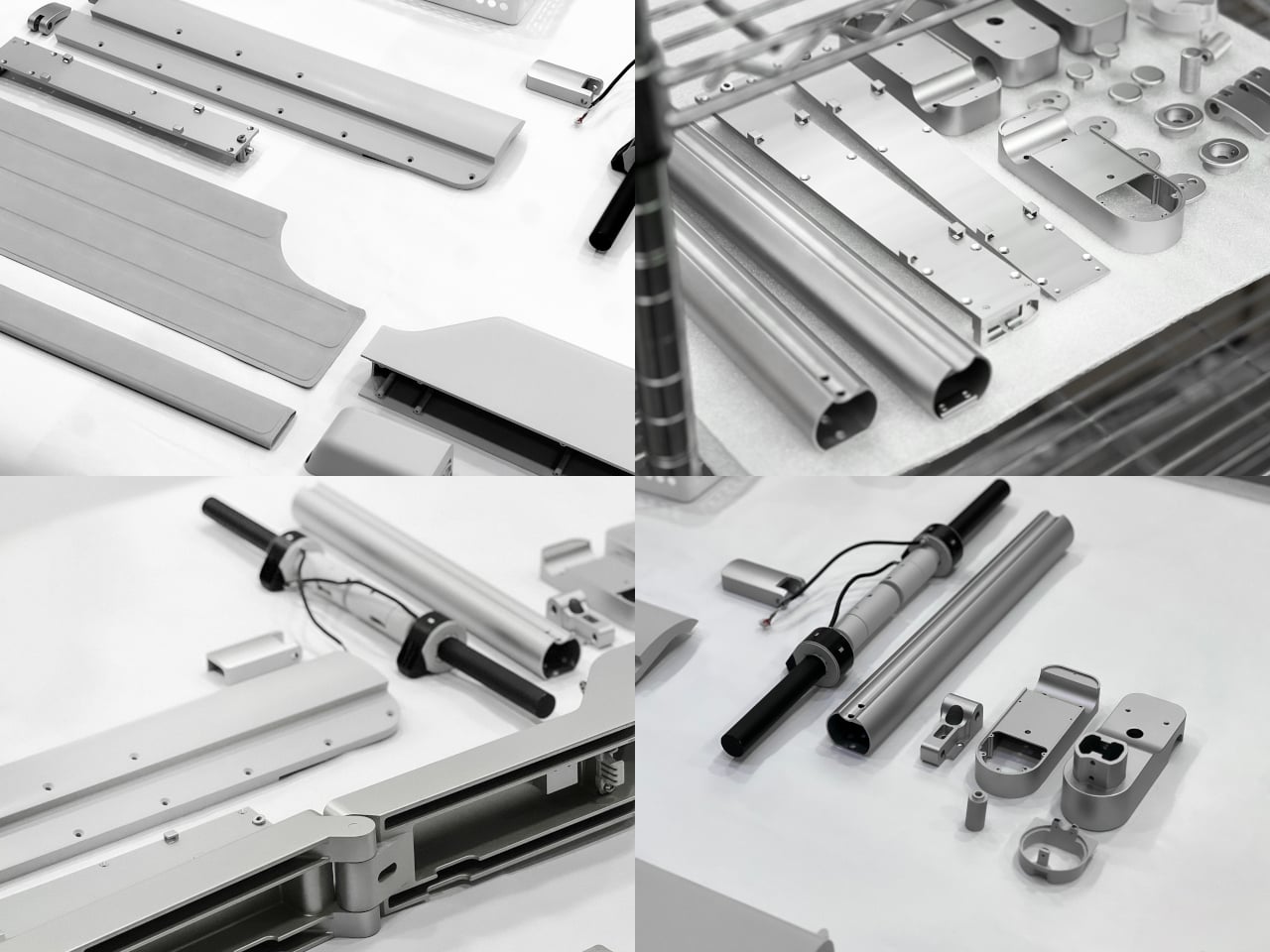

The VtoV 1000 sits at the intersection of two product categories that rarely overlap, personal transport and everyday carry. It isn’t trying to replace a bike lane or a bus stop. It’s a fairly narrow answer to a specific problem, and that specificity is exactly what gives it its appeal. Plenty of scooters fold down, but very few look like they belong in a meeting room when they do.
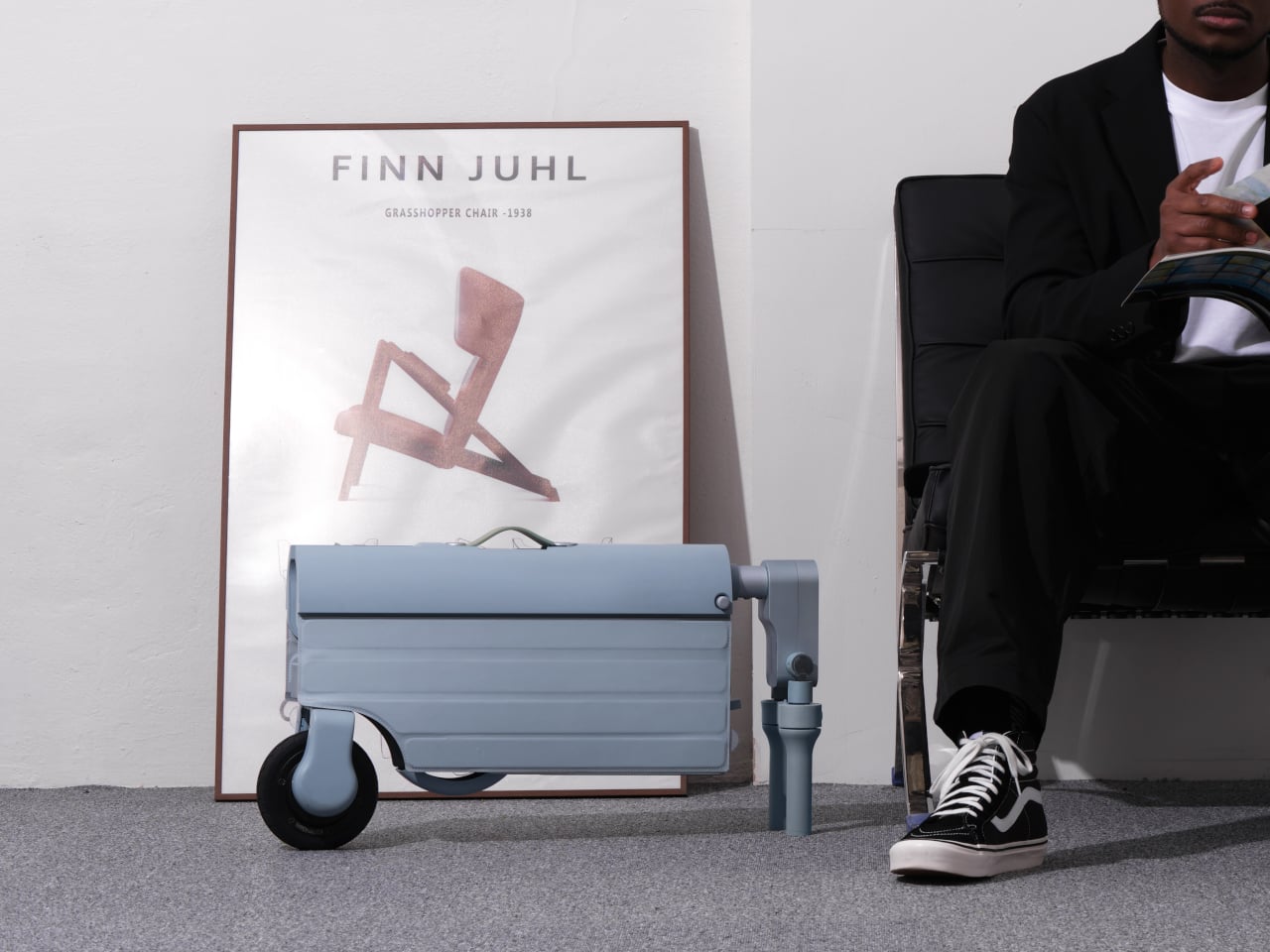
The post This Folding Scooter Looks Like a Briefcase So You Never Need a Lock first appeared on Yanko Design.

Bugatti had set a high benchmark with the track-only Bolide, released in 2020, and was later followed by the Brouillard and F.K.P. Hommage. Now, as a part of the French marque’s bespoke Solitaire programme, a new coachbuilding performance car has emerged inspired by the Type 57G and Type 57C Tank. Adapting the same carbon-fiber monocoque as the Bolide, the machine, christened Destrier (after a medieval warhorse), has a flatter front end to shed the performance hypercar image.
The grille on this new beauty has gone wider, and the LED headlights get a more 2026 aesthetic. In fact, from the side profile, the car gives off a longtail vibe, extenuated by the massive flared wheel arches on the C-line. That wing and splitter on the Bolide have been stripped away to make it road legal, a more toned-down version of the original. That said, the 8.0-litre quad-turbocharged W16 engine (producing 1,600 PS), the mechanical heart, has been retained to have the same performance.
Designer: Bugatti


Destrier was unveiled online just before its slated global public appearance on August 16, 2026, at the Pebble Beach Concours d’Elegance. At first glance, the hypercar’s shaved-off bodywork is evident, giving it a streamlined waistline curving inwards behind the forward-hinged doors, and then again widening out at the rear with a muscular tone. Just 1 meter tall, the hypercar’s cabin is sandwiched between the front wings and the bigger wheels measuring 20 inches up front and 21 inches on the back. Clearly this one is meant for purists who are not going to complain about the difficulty of getting in. According to Bugatti’s Director of Design, Frank Heyl: “Destrier is not a car you understand with your head; it is a car you feel with your heart.”


A chrome trim goes across the bonnet and onto the roof at the back, followed by a wing-shaped spoiler positioned above the skinny taillights. Complementing the muscular rear is the large diffuser with four exhausts. Highlight among all this mesmerizing aura is the Sapphire Celeste paintwork, which is produced in multiple layers to achieve a diamond sparkle that changes color depending on the ambient light falling on it. Aluminum parts on the car stand out against the bodywork, and the engine compartment is completely hand-hammered to give the medieval plate armor finish. This supports the brand’s claim that “Destrier’s story is one of proportion and craftsmanship, not outright performance.”


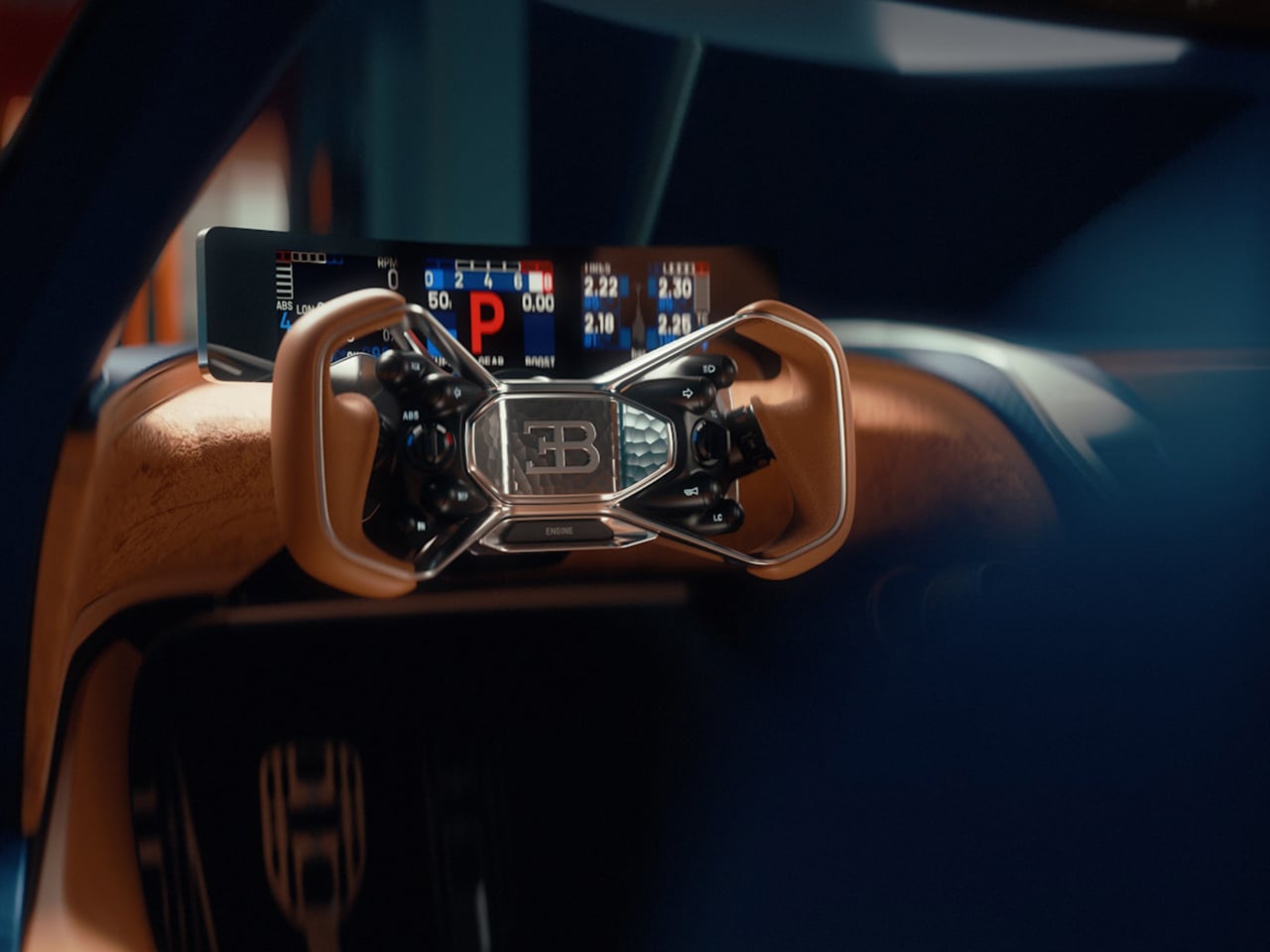
Move to the inside, and the motorsport cockpit is quite fashion-forward, contrasting the crystalline exterior. The attention to detail is apparent from the advanced 3D-knitted technical fabric resembling snake skin, paired with the smooth leather and velvety nubuck, both finished in warm brown Ambre Voyageur shade. The flying yoke-style steering wheel is paired with the infotainment system that is a part of the single large screen offering relevant information, both for driving and entertainment when parked. There’s no word on the price yet, but considering the Bolide costs $4.8 million each for the 40 limited edition models, this one could cost a couple of million more!

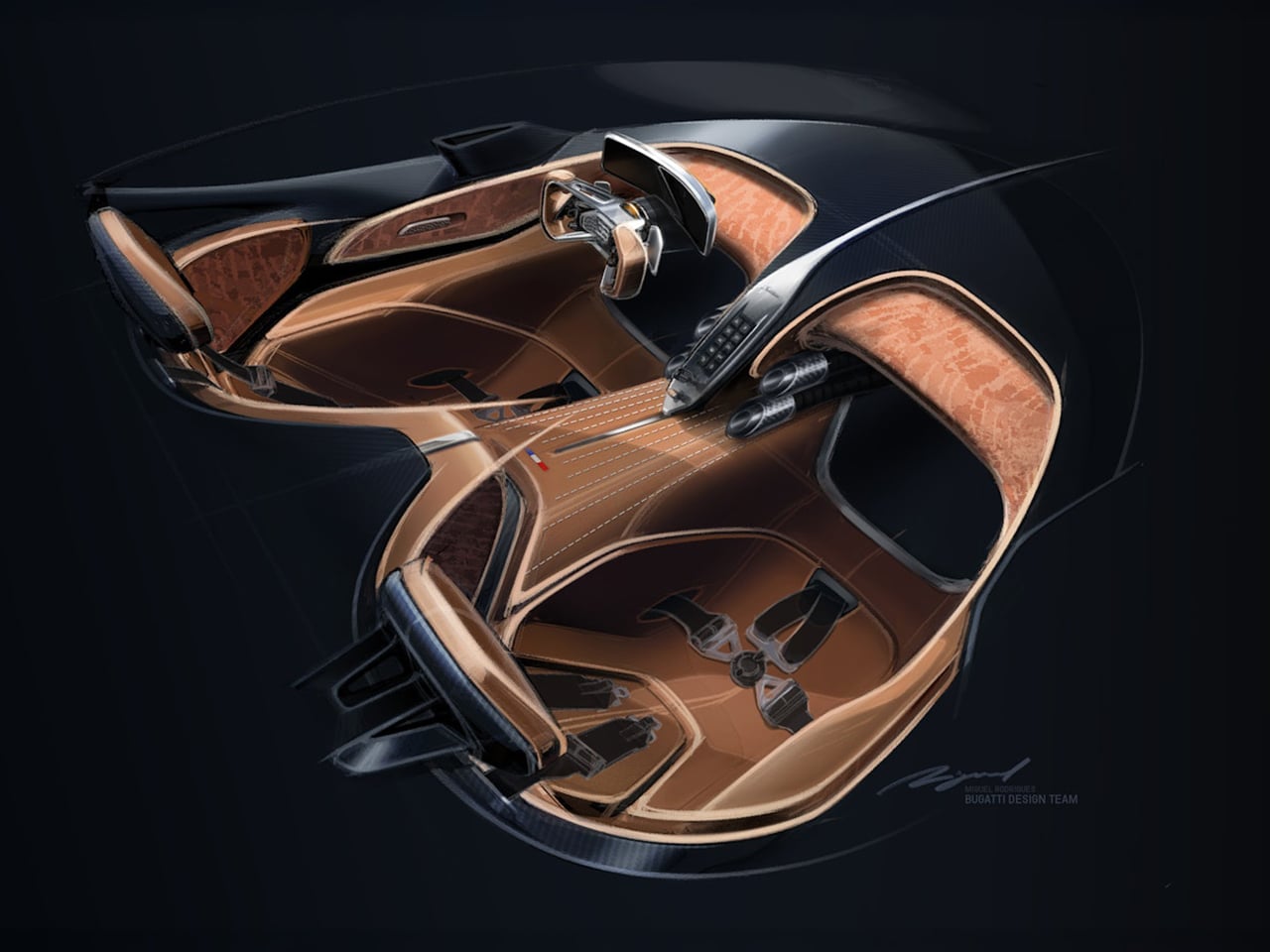

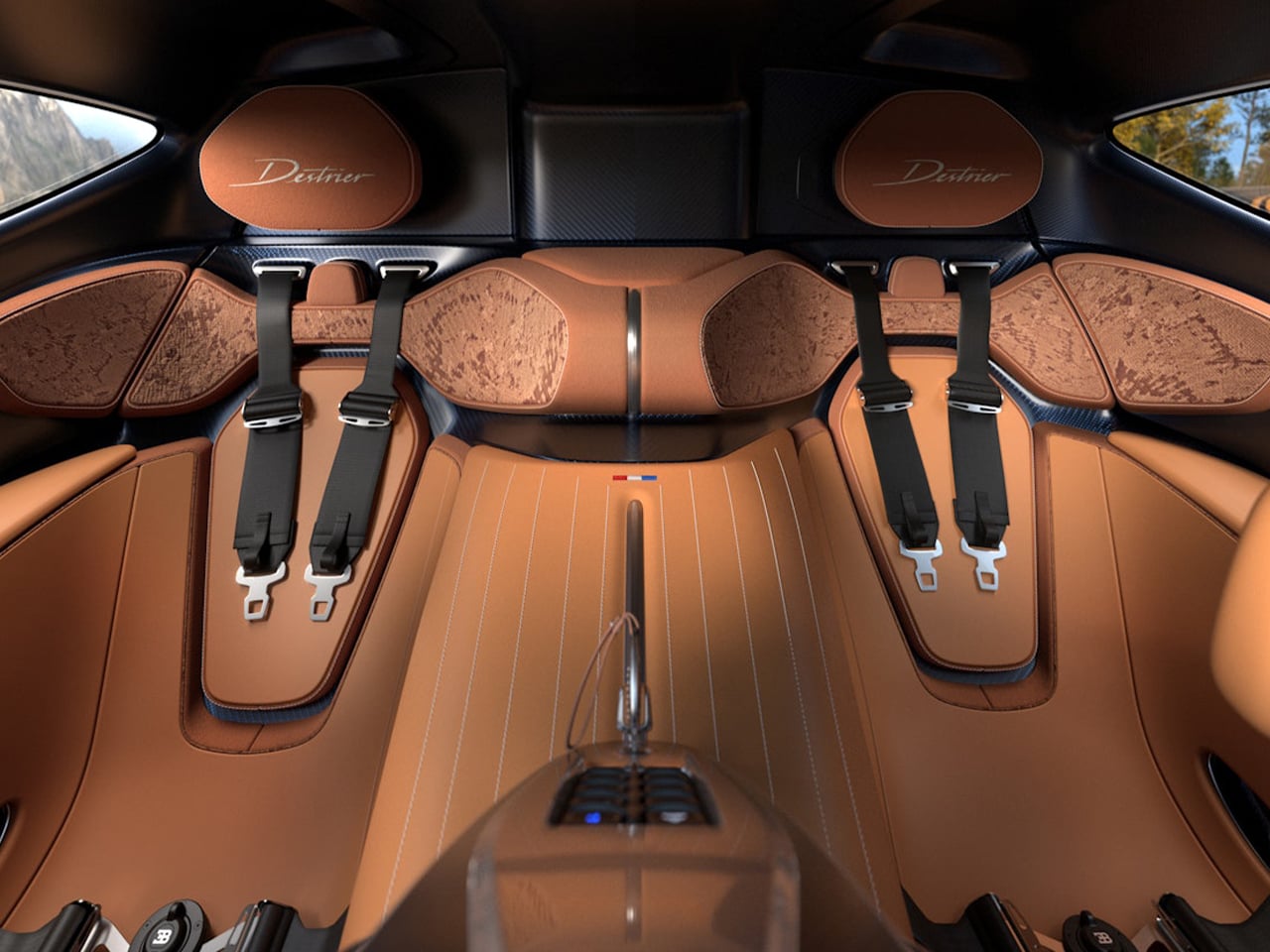
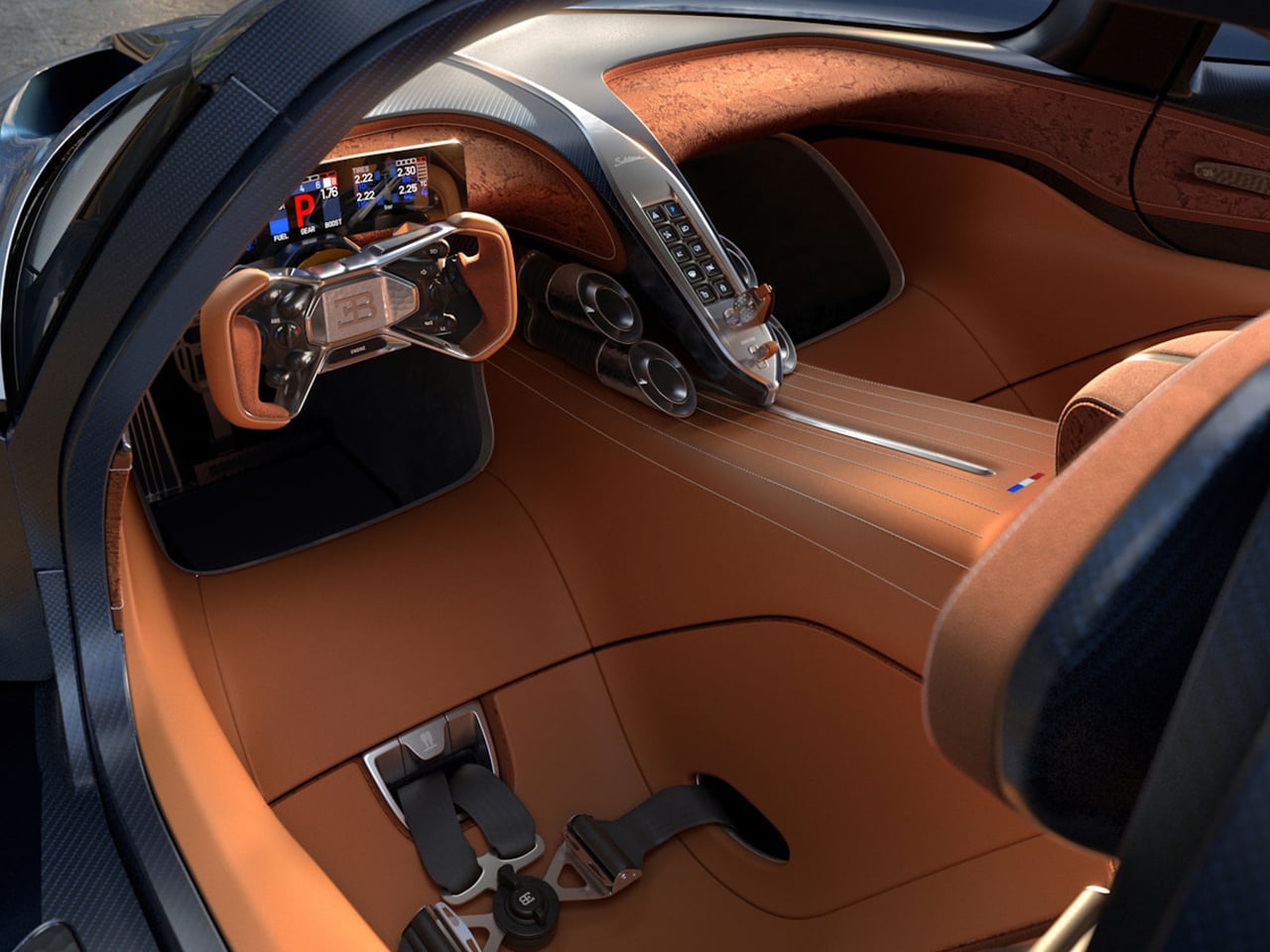
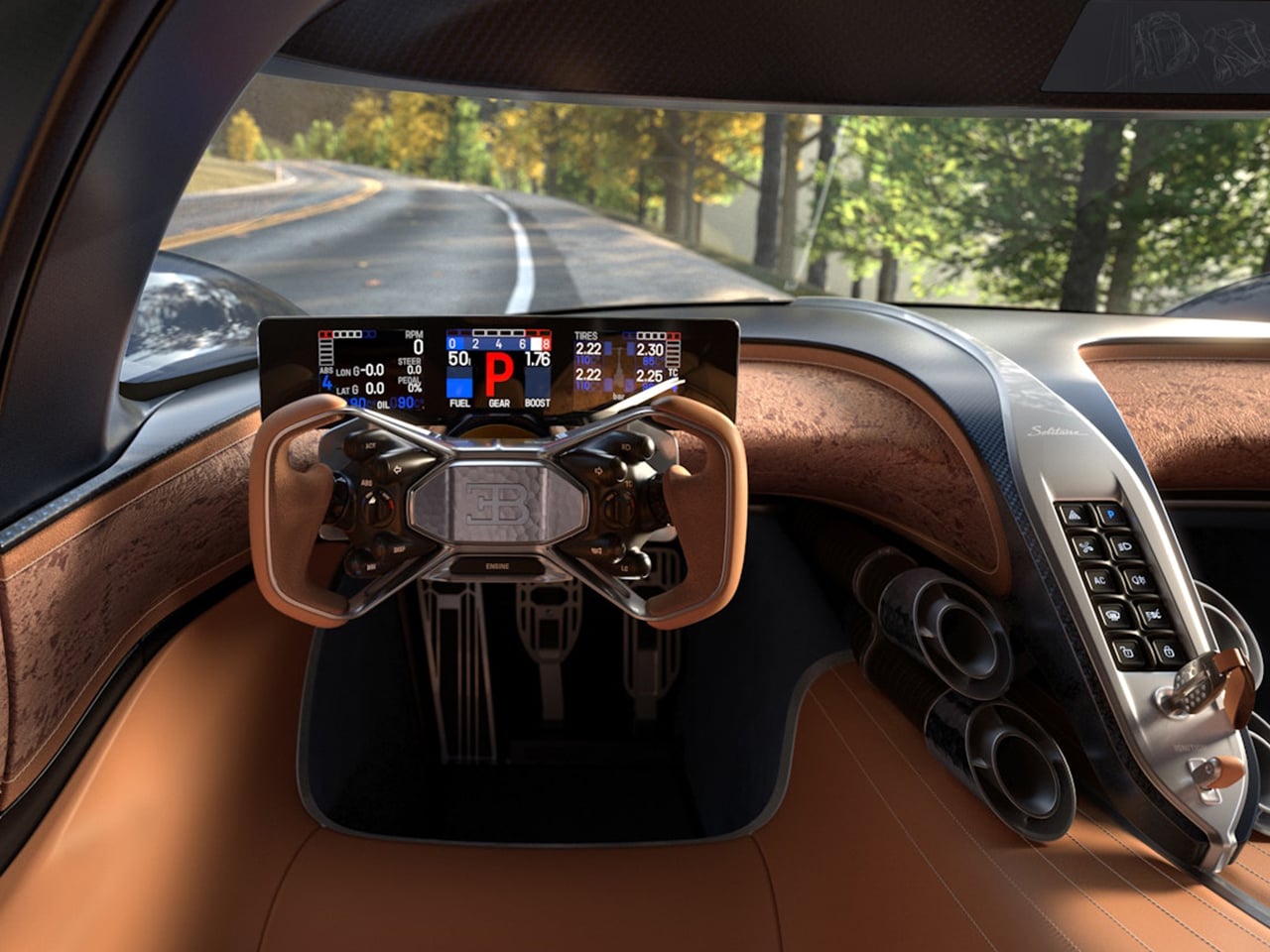



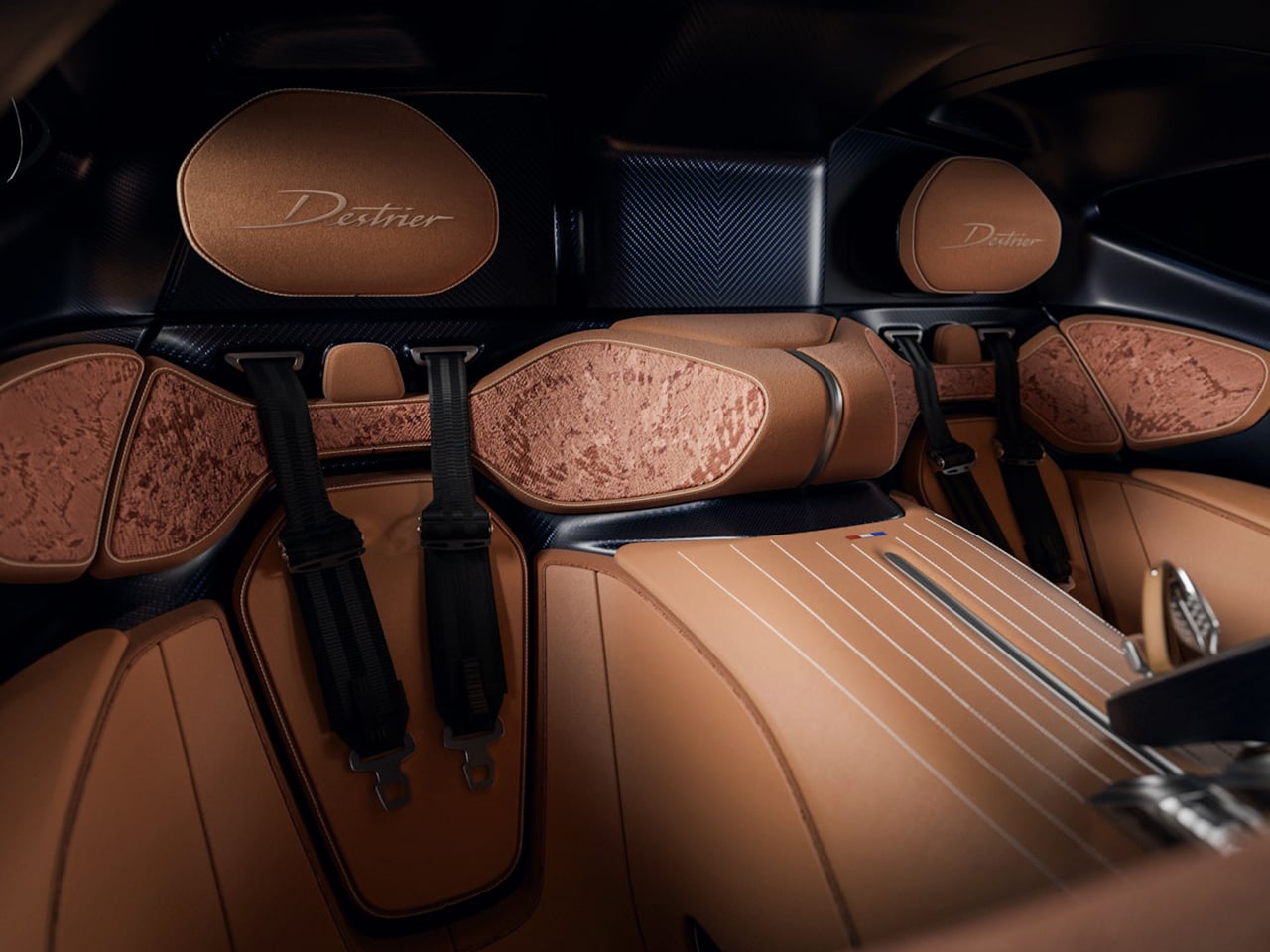
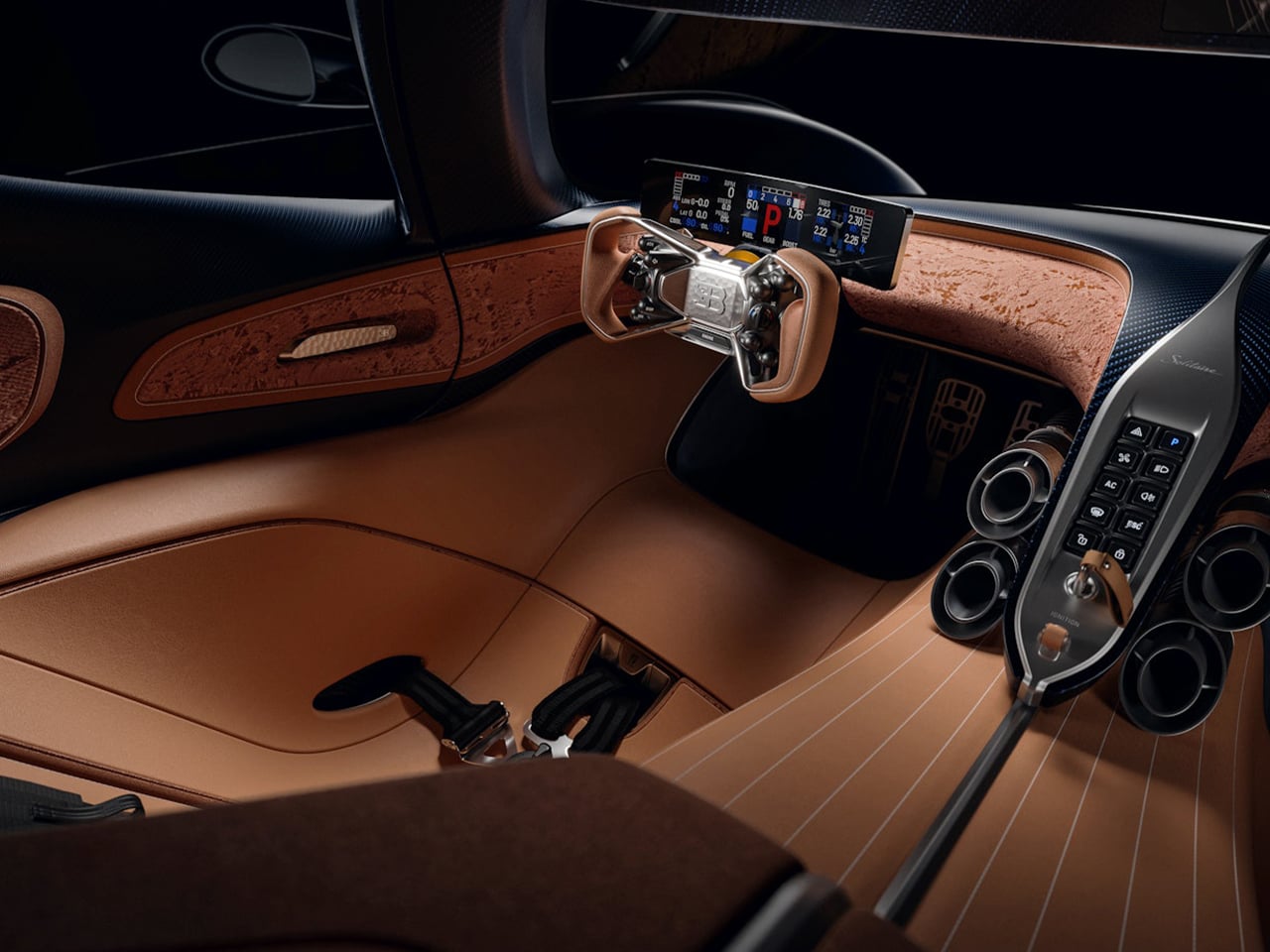
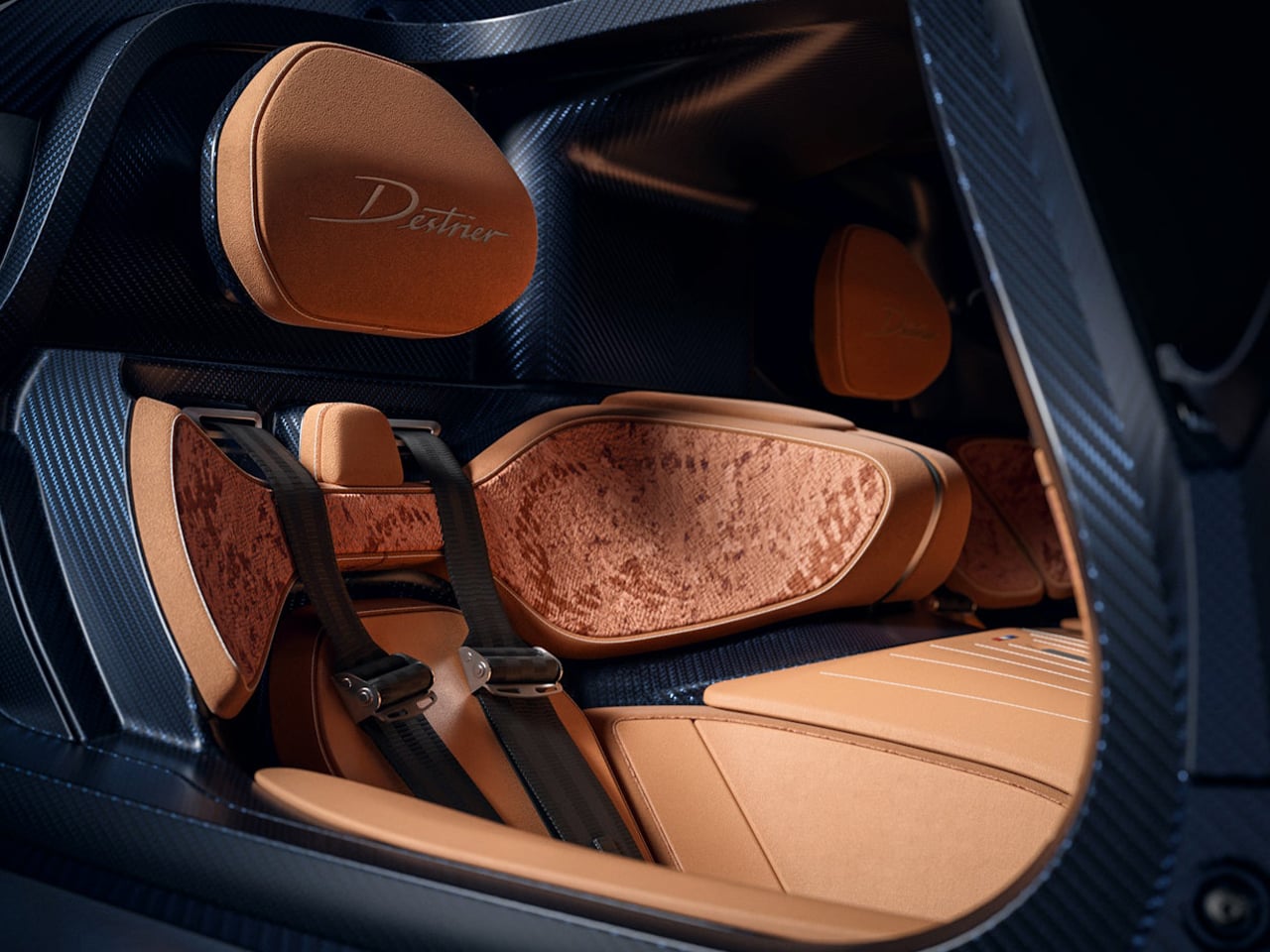

The post Bugatti Destrier shaves off Bolide’s bodywork for a one-off hypercar meant to be felt with the heart first appeared on Yanko Design.
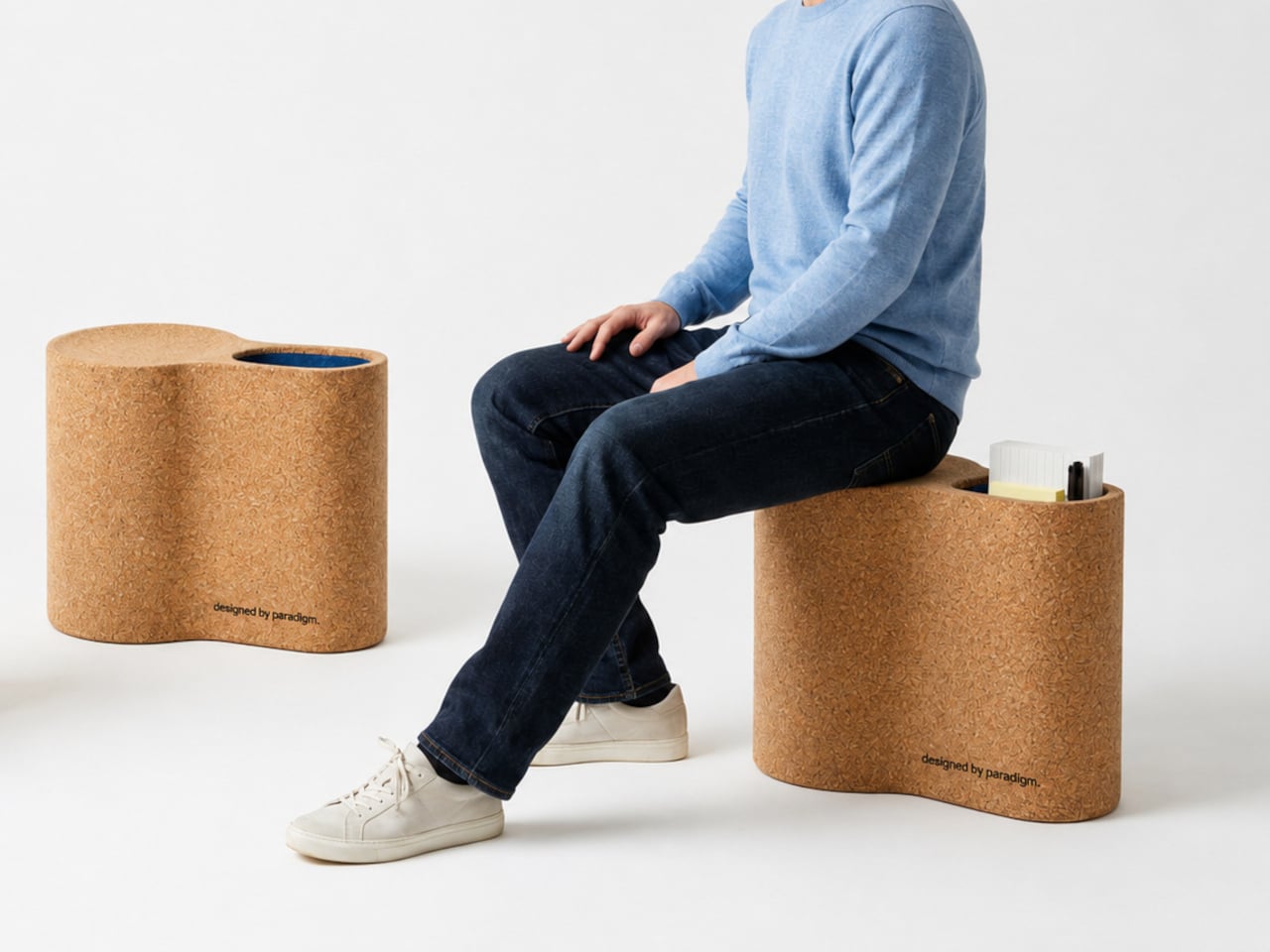
Productive brainstorming rarely stays in one room. Teams move between floors, commandeer empty meeting rooms, or pull chairs into an open corner when a whiteboard becomes available. The problem is that the tools that make those sessions work, the markers, sticky notes, and papers, rarely travel with the people. So you set up, leave to gather supplies, and whatever momentum was building quietly evaporates.
The Bulb is a portable cork stool designed for exactly that problem. It combines a seat with a built-in storage compartment that holds everything a brainstorming session needs, from markers and sticky notes to papers and notebooks. Bring the stool to the session, and the supplies arrive with it. The workspace assembles wherever the work actually needs to happen, without a second trip back to a supply drawer.
Designer: Germain Verbrackel

The name earns its meaning when you look down at the stool from above. The silhouette is that of a lightbulb: the wide, rounded seat forms the bulb itself, while the elongated storage compartment extends below to complete the base. It’s the kind of concept that rewards a moment of recognition, where the symbolism arrives quietly after the form does, without the design needing to announce it.
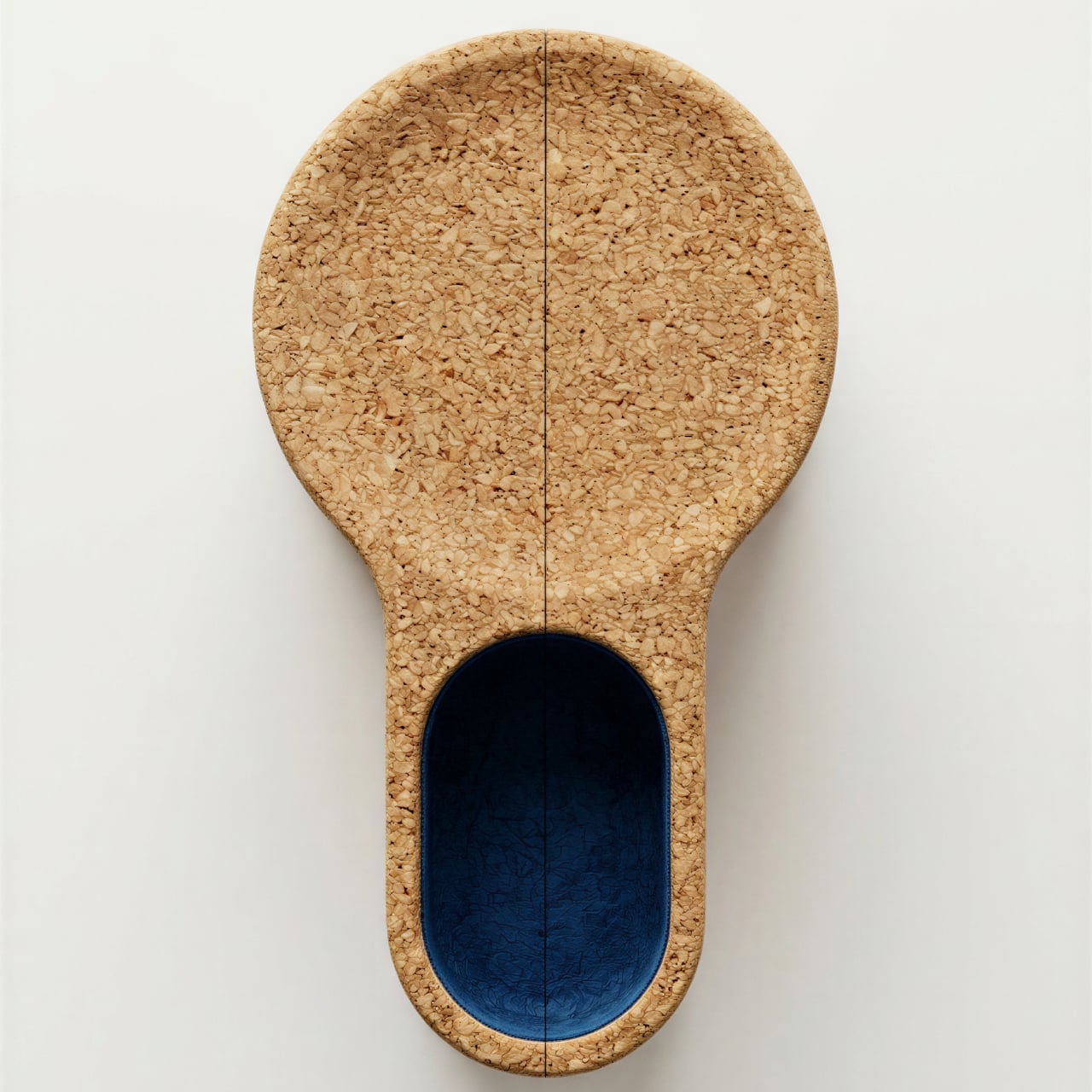
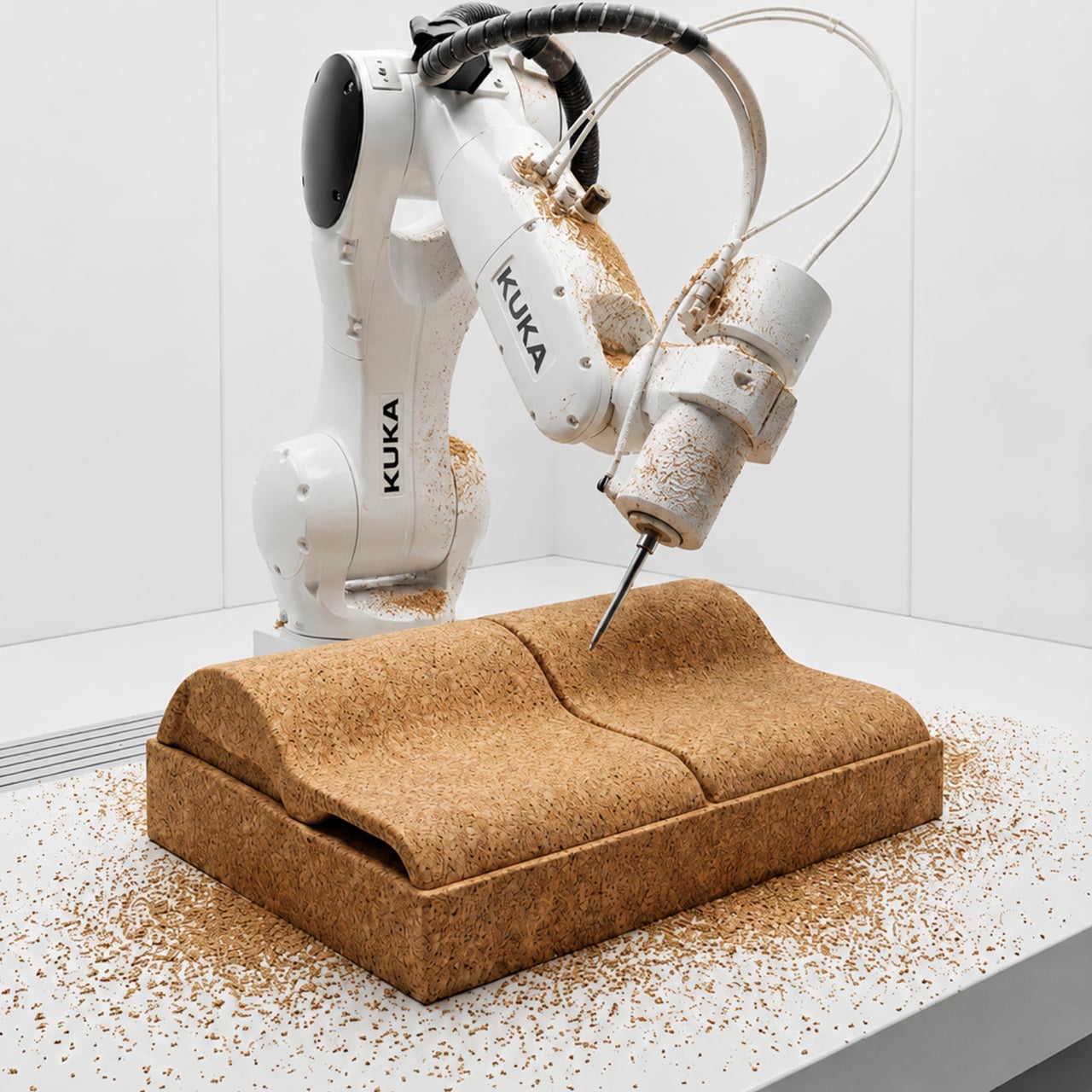
Cork makes a very specific kind of sense as the material here. It’s naturally lightweight, which matters when people are carrying stools between rooms or across an open office floor. The texture and warm sandy color also keep it from reading as institutional furniture. The body is meant to be CNC-milled from compressed cork blocks using a robotic arm, which gives the organic, curved form its precision without traditional joinery or assembly hardware.
The interior of the storage compartment is lined in deep blue cork, making the cavity immediately identifiable against the natural exterior. The opening holds markers, sticky notes, papers, and notebooks securely enough to carry while walking. It also functions as the carry handle: the curved indentation along the stool’s side fits a hand comfortably, so the stool and its contents travel together in a single grip.
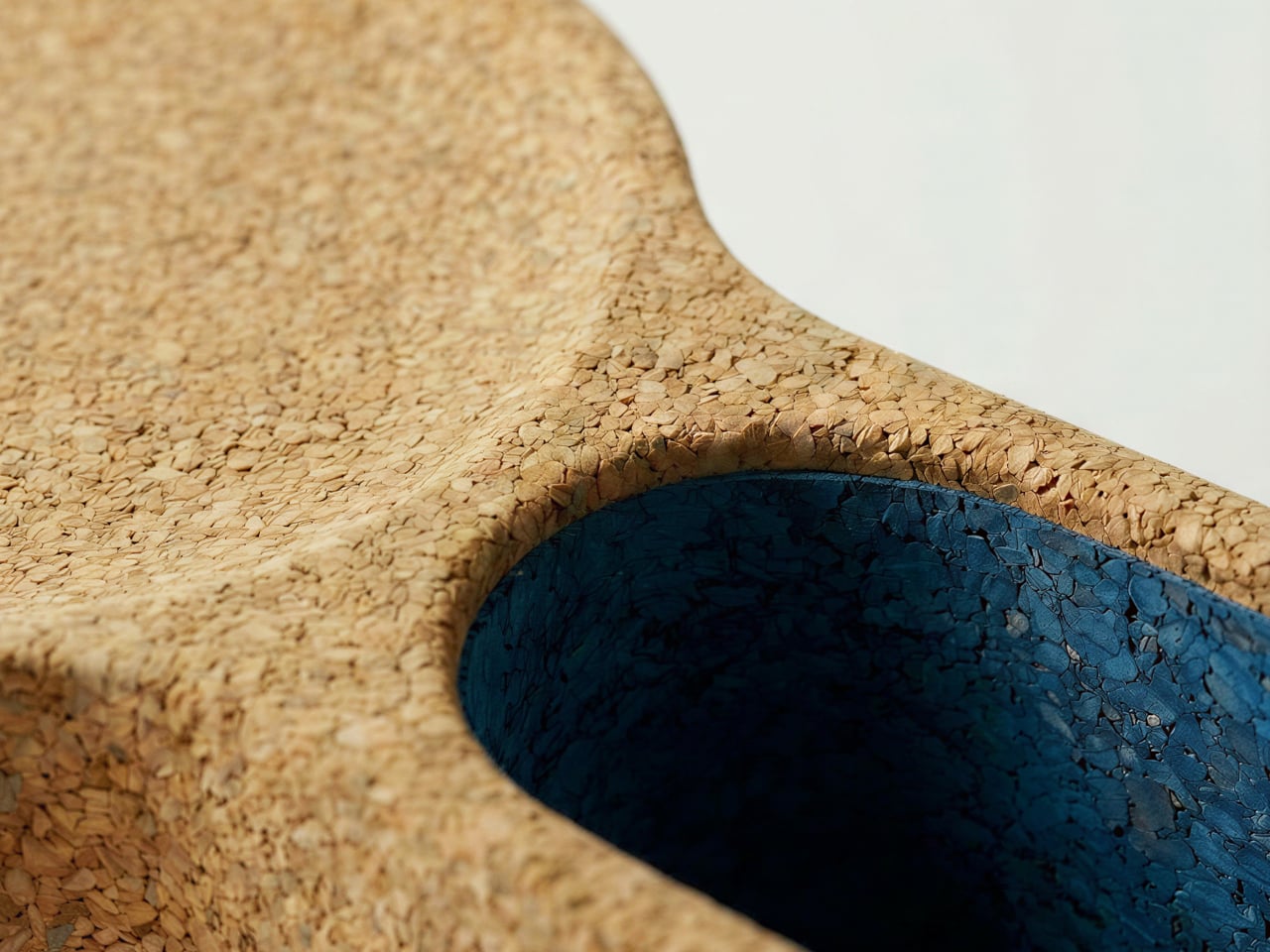

That practicality extends to how quickly a session can actually get started. One person can carry a stool at arm’s length without effort, and someone with a reasonable reach can manage two at once. A small team can have seating and supplies in place within moments of deciding where to gather, removing one of the more underappreciated obstacles from any impromptu collaborative session.
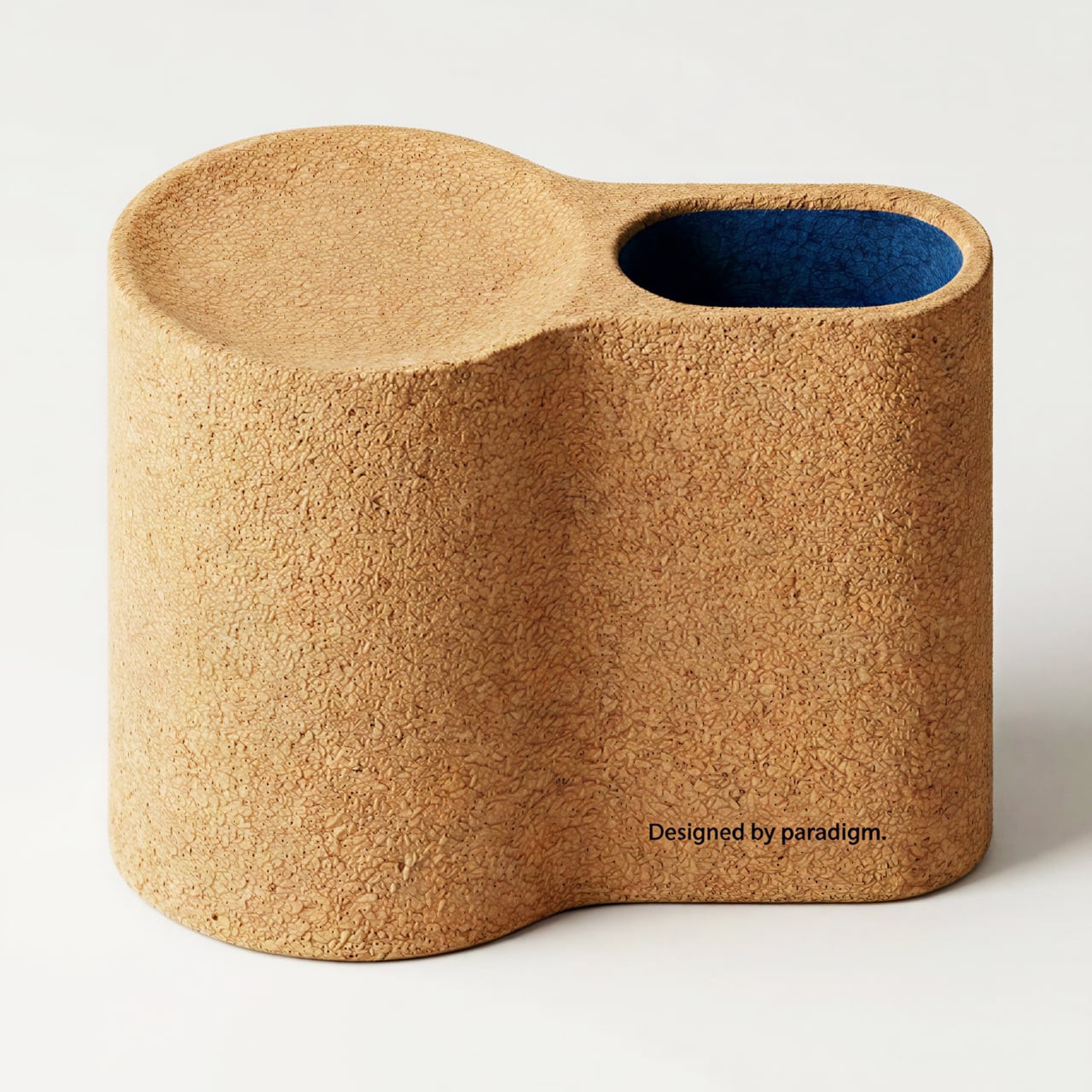
Cork also makes a credible case beyond its weight advantage. The material is harvested by stripping bark from the tree rather than cutting it down, allowing the tree to regenerate and be harvested again roughly every nine years. The Bulb isn’t trying to replace permanent office furniture or redefine how meeting rooms work. It’s a more modest proposal: a seat that assumes the people sitting on it want to get something done, and brings along the things they’ll need to do it.

The post A Portable Cork Brainstorming Stool For Literal Lightbulb Moments first appeared on Yanko Design.

A recent leak about the Google Pixel 11 Pro XL has sparked widespread discussion, centered around the claim that the device can charge to 55% in just 5 minutes. If true, this would mark a significant advancement in charging technology for Google’s Pixel lineup. However, skepticism has arisen due to inconsistencies with the phone’s rumored […]
The post 55% Charge in 5 Minutes: New Google Pixel 11 Pro XL Leak appeared first on Geeky Gadgets.
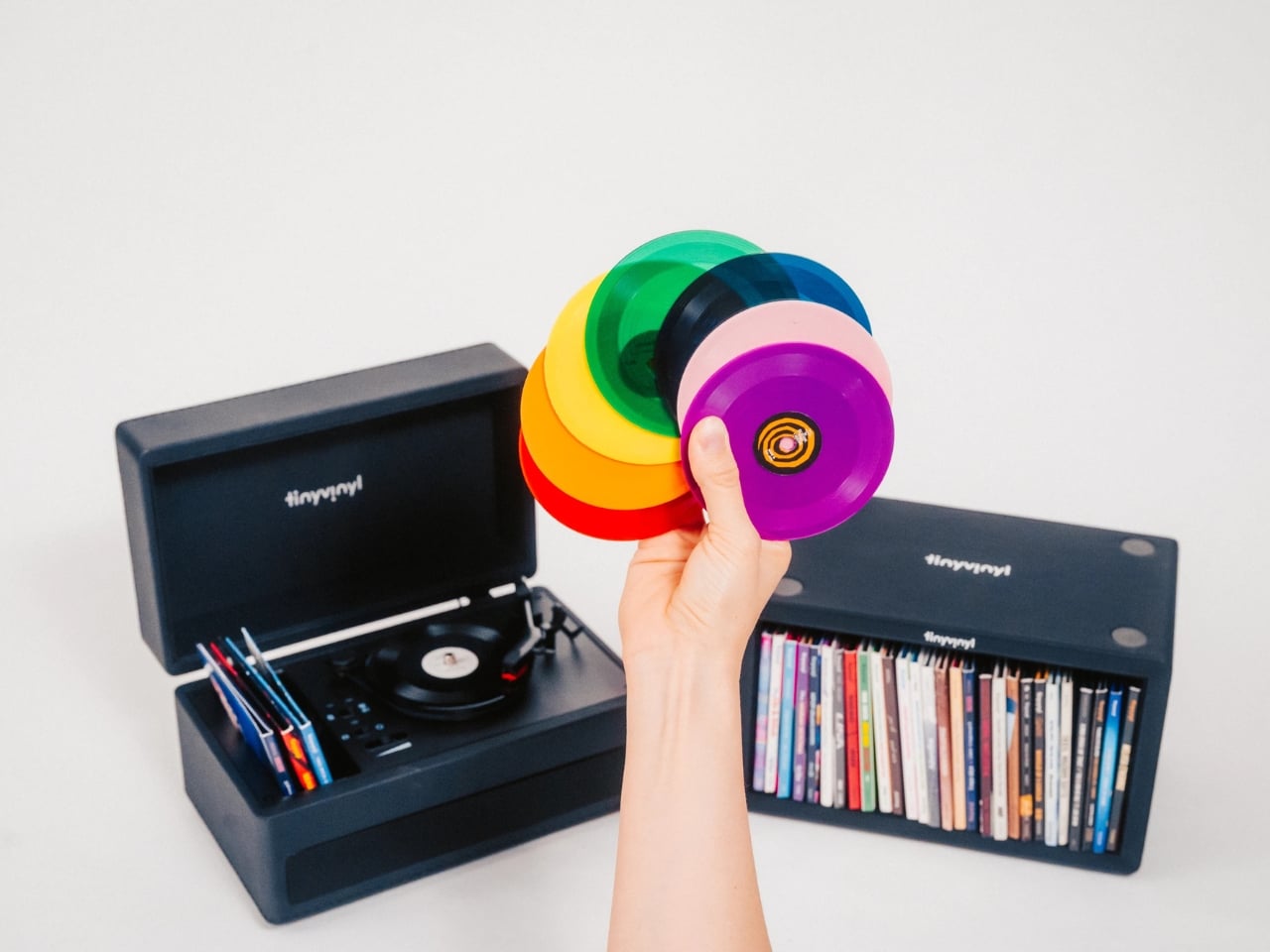
Tiny Vinyl has been building something quietly clever since 2023. What started as a Nashville-based company pressing 4-inch records (yes, actual playable vinyl, just smaller) has grown into its own little music ecosystem, and the latest addition might be the piece that pulls it all together: the Tiny Vinyl Player, a miniature turntable that finally gives those tiny records their own dedicated home.
I’ll admit, when I first heard about 4-inch vinyl records, I wasn’t entirely sure what to make of them. They play a single song per side on most standard turntables, they’re fully pressed the traditional way, and they’ve quietly accumulated a catalog that includes BTS, Rihanna, Ariana Grande, The Rolling Stones, and Black Sabbath. Over a million records have been pressed and sold through Target since the company partnered with the retailer last fall. That’s not a novelty. That’s a format. And now the format has its own player.
Designer: Tiny Vinyl
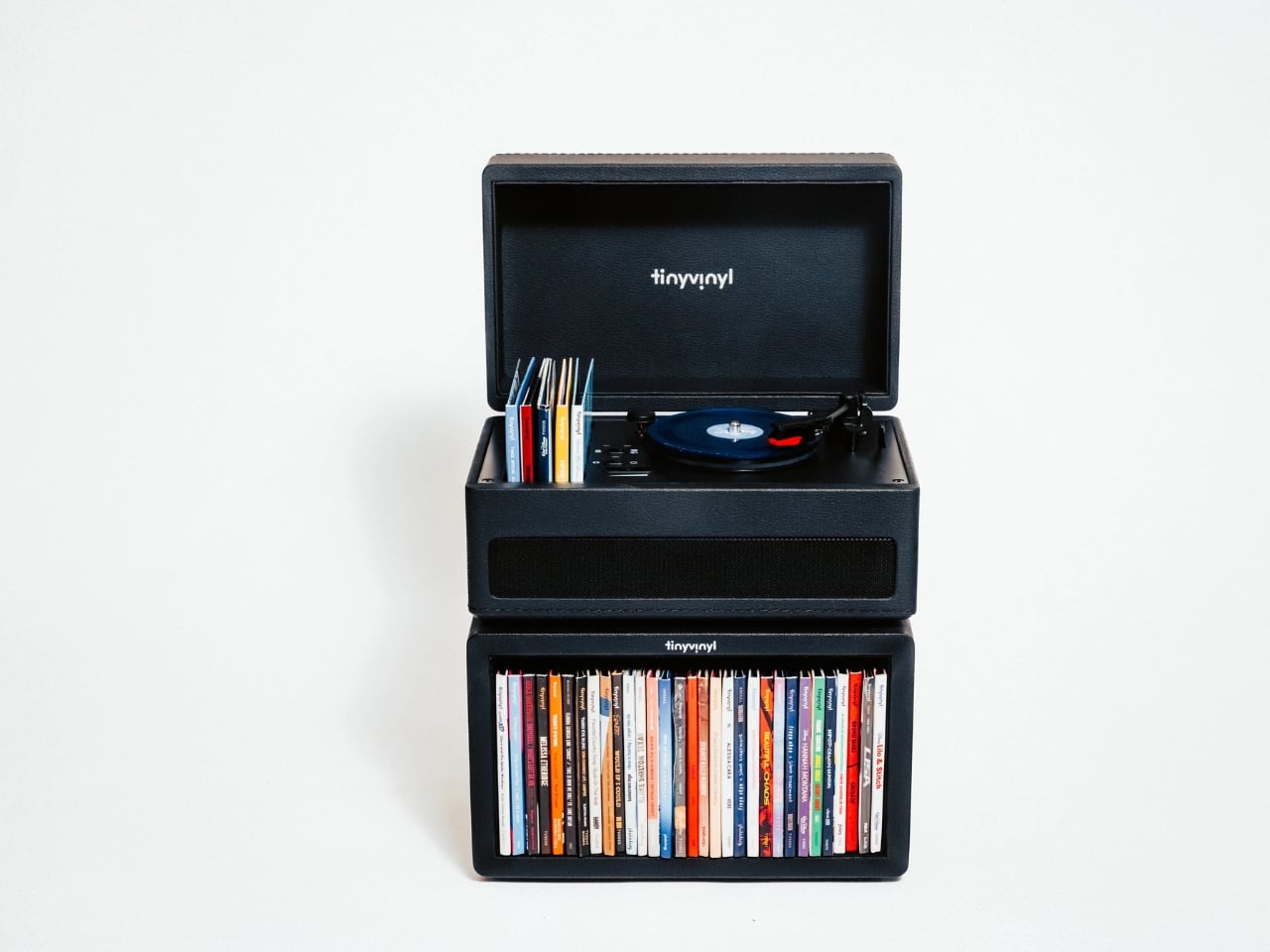
The Tiny Vinyl Player is wrapped in a black leatherette finish and designed like a miniature suitcase. Open it up and you get a belt-drive platter spinning at 33.3 RPM, a tonearm, built-in dual stereo speakers, and enough charm to make you understand why the toy industry and the music world would be natural co-conspirators. Co-founder Neil Kohler comes from the toy business, and co-founder Jesse Mann produced music festivals, and somehow that combination produced a product that straddles both worlds with a lot of grace.
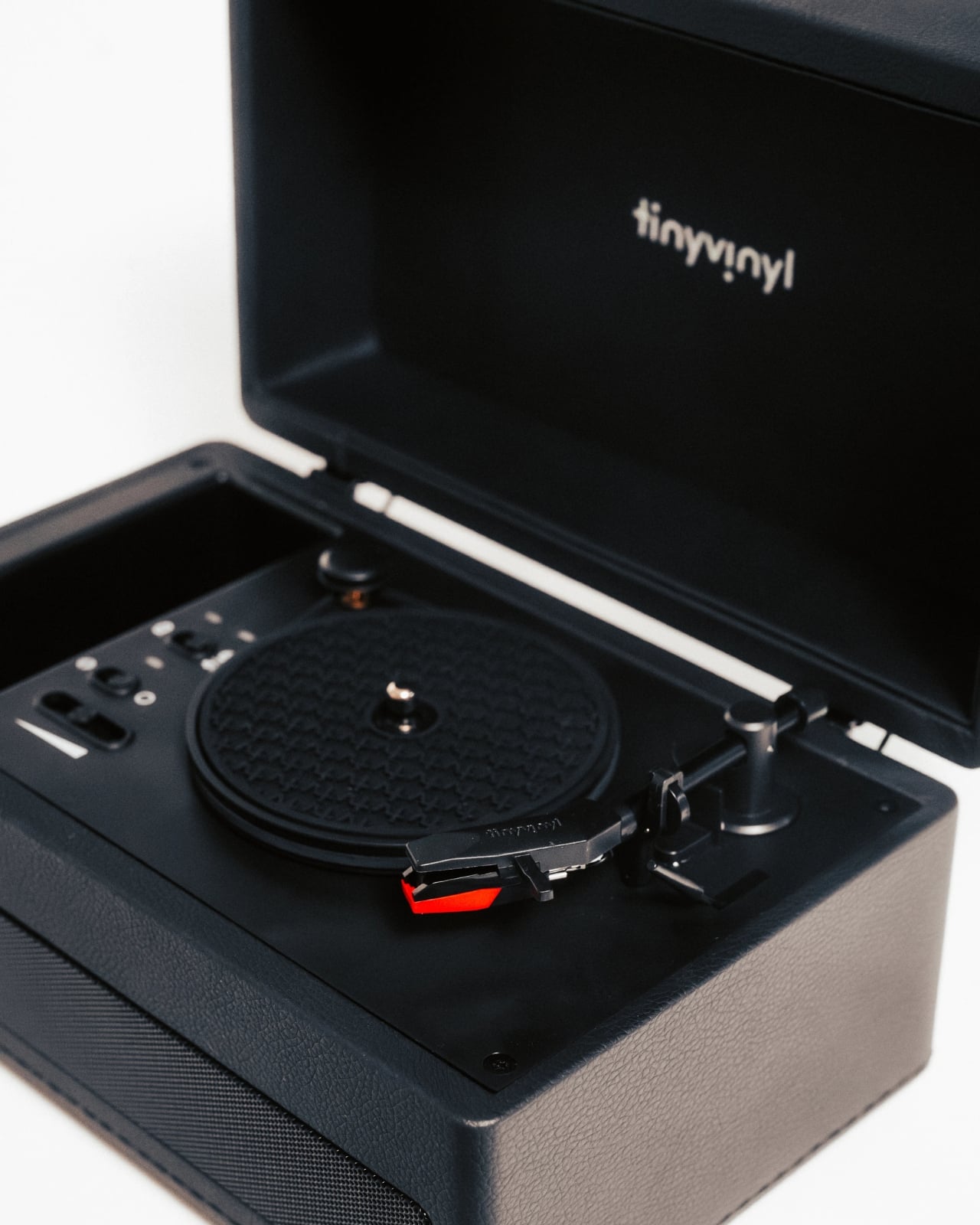
The physics alone were apparently a challenge worth noting. Kohler once said that making vinyl playable at that scale was “not trivial to overcome,” and I believe it. Getting a needle to track a groove on a 4-inch record at the right speed and pressure is genuinely tricky engineering territory, regardless of how cute the end result looks. The fact that it works at all is the actual story here.
At $49.99, the Tiny Vinyl Player sits in an interesting price territory. Available exclusively at Target, it measures roughly 10 by 5.5 by 6.5 inches and weighs about 3.88 lbs. For connectivity, it supports Bluetooth output to external speakers or headphones, and there’s a standard headphone jack for wired listening. One thing worth knowing upfront: it runs on AC power with no battery option, so this is not a take-it-to-the-park situation. It’s a display object first and a listening device second, and that’s probably fine. The leatherette suitcase clamshell design was clearly made to sit on a shelf and look good doing it.
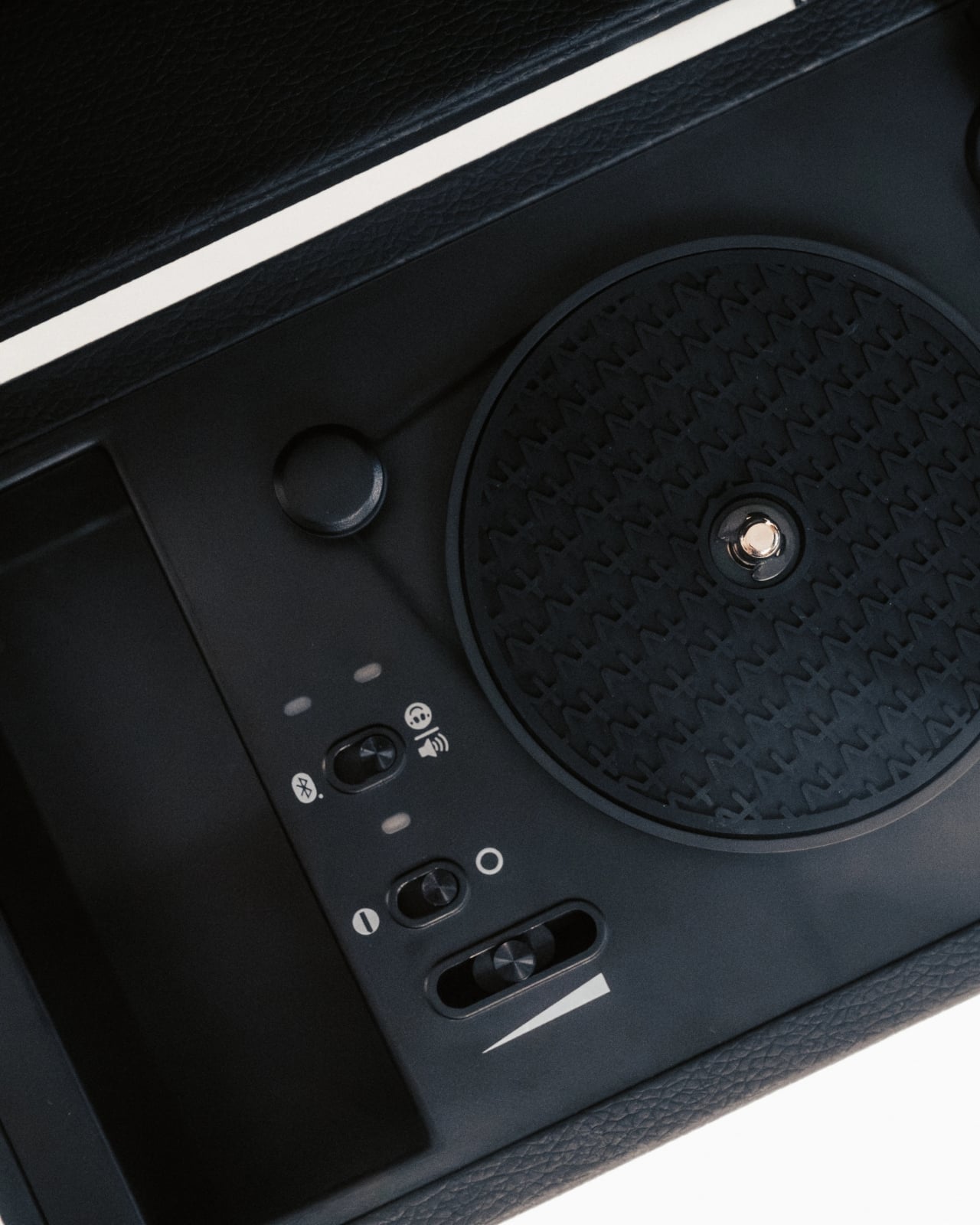
The built-in speakers are predictably modest, running a little tinny and distorted at this price, which is fair for a $50 device with speakers this compact. The Bluetooth option, though, changes the equation considerably. Pair it with a decent external speaker and you’ve got something that’s genuinely fun to use and a lot more presentable than the built-in audio might suggest.
What makes the Tiny Vinyl Player more interesting than a gadget, though, is what it’s building toward. The company has also released a small Crate for storing records and a 2×2 Frame for displaying favorites, which means this is starting to feel less like a product launch and more like the architecture of a collecting hobby. You don’t just buy a record. You build a collection, you frame the ones you love, and you store the rest. The player is the centerpiece of that whole experience.
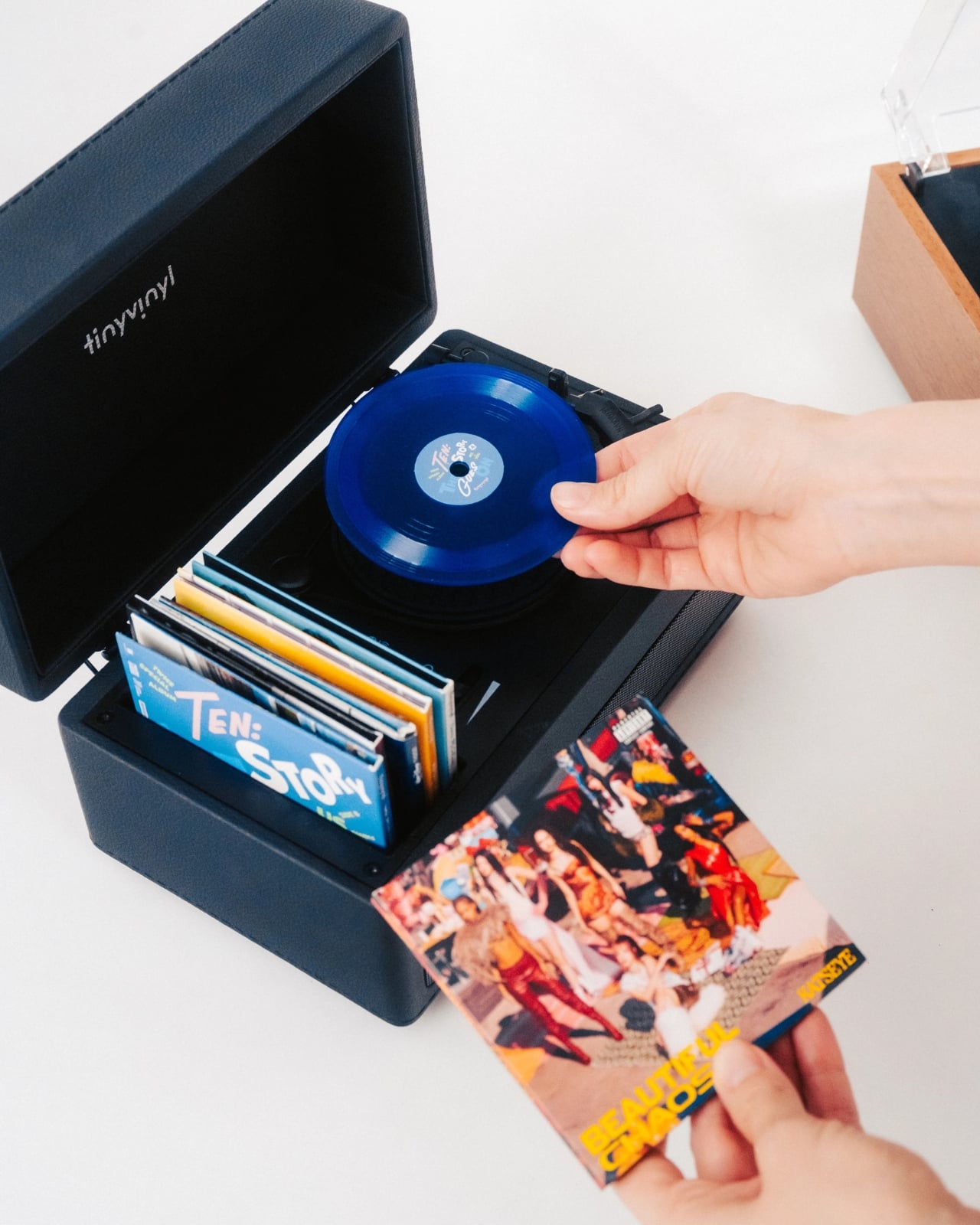
Collecting culture has always operated on the idea that the object matters as much as the content, which is exactly why vinyl survived streaming and why physical media keeps finding new audiences. Tiny Vinyl is tapping into that instinct, but it’s doing it at a scale that lowers the barrier considerably. No expensive turntable setup. No dedicated shelf space. Just a $49.99 player, a growing catalog, and the tactile satisfaction of dropping a needle on something real. Whether the audio quality is the point is almost beside the point. The ritual is.
The post The $50 Tiny Turntable That Makes Vinyl Collecting Fun Again first appeared on Yanko Design.

Power Query’s auto-generated M code often introduces unnecessary rigidity, which can hinder the flexibility of your data workflows. Excel Off The Grid highlights practical ways to address this issue, such as removing the “columns” argument when working with CSV files that have varying column counts. This adjustment allows Power Query to dynamically adapt to changes […]
The post Remove the Columns Argument to Fix CSV Errors in Power Query appeared first on Geeky Gadgets.

Apple’s HomePod Mini, first introduced in 2020, has become a popular choice for users seeking a compact and capable smart speaker. Now, rumors suggest that Apple is preparing to release the HomePod Mini 2, marking its first major upgrade. This anticipated device is expected to launch this fall, potentially alongside Apple’s new iPhone lineup. While […]
The post Apple’s HomePod Mini 2 Release Timeline: When Is the Smart Speaker Coming? appeared first on Geeky Gadgets.