This Folding Scooter Looks Like a Briefcase So You Never Need a Lock

Electric vehicles have reshaped how people cover long distances, but the stretch between a parking spot and a front door hasn’t changed much. That last hundred meters or so still comes down to walking, and for city commuters or suburban drivers who park several blocks from their destination, those gaps add up in ways that no amount of EV range improvement can address.

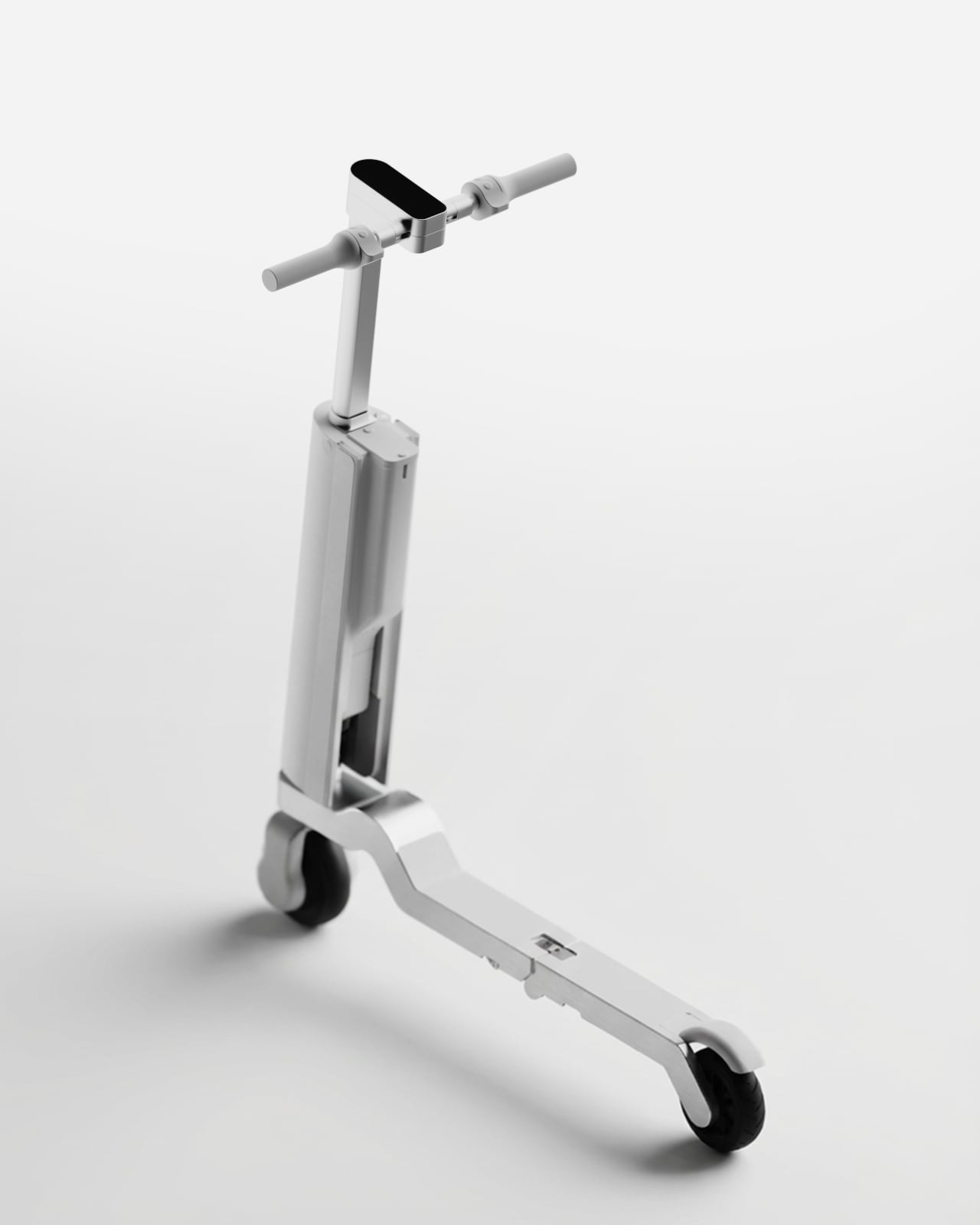
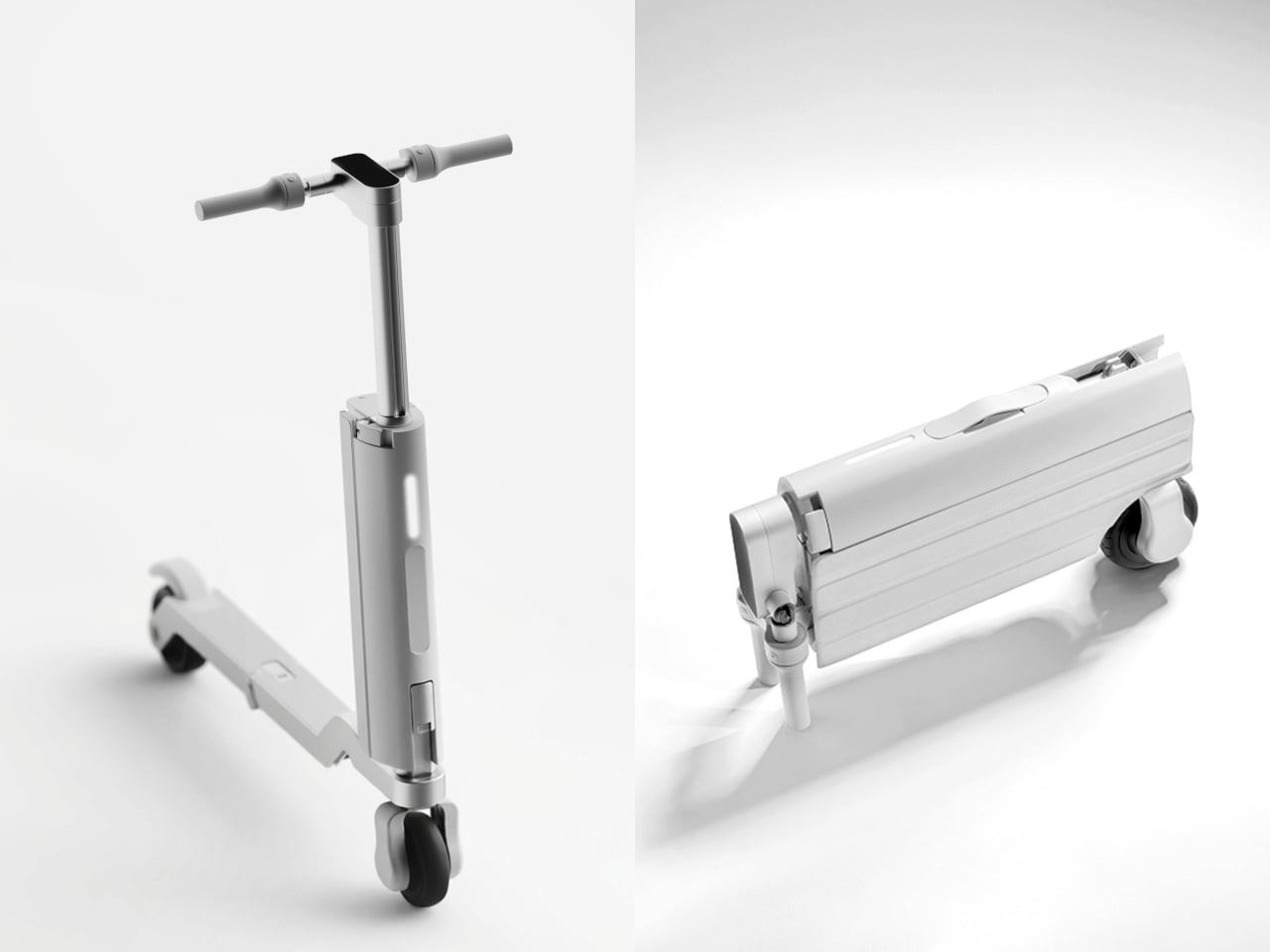
The VtoV 1000 takes aim at that problem with a three-fold electric scooter designed specifically to travel with a driver after the car is parked. The “V to V” in the name refers to vehicle to vehicle, positioning the scooter as the connector between one form of transport and wherever the final stop actually is, not where the nearest parking happens to be.

Designers: Ikhyeon Kim, Soonman Kwon (second white)
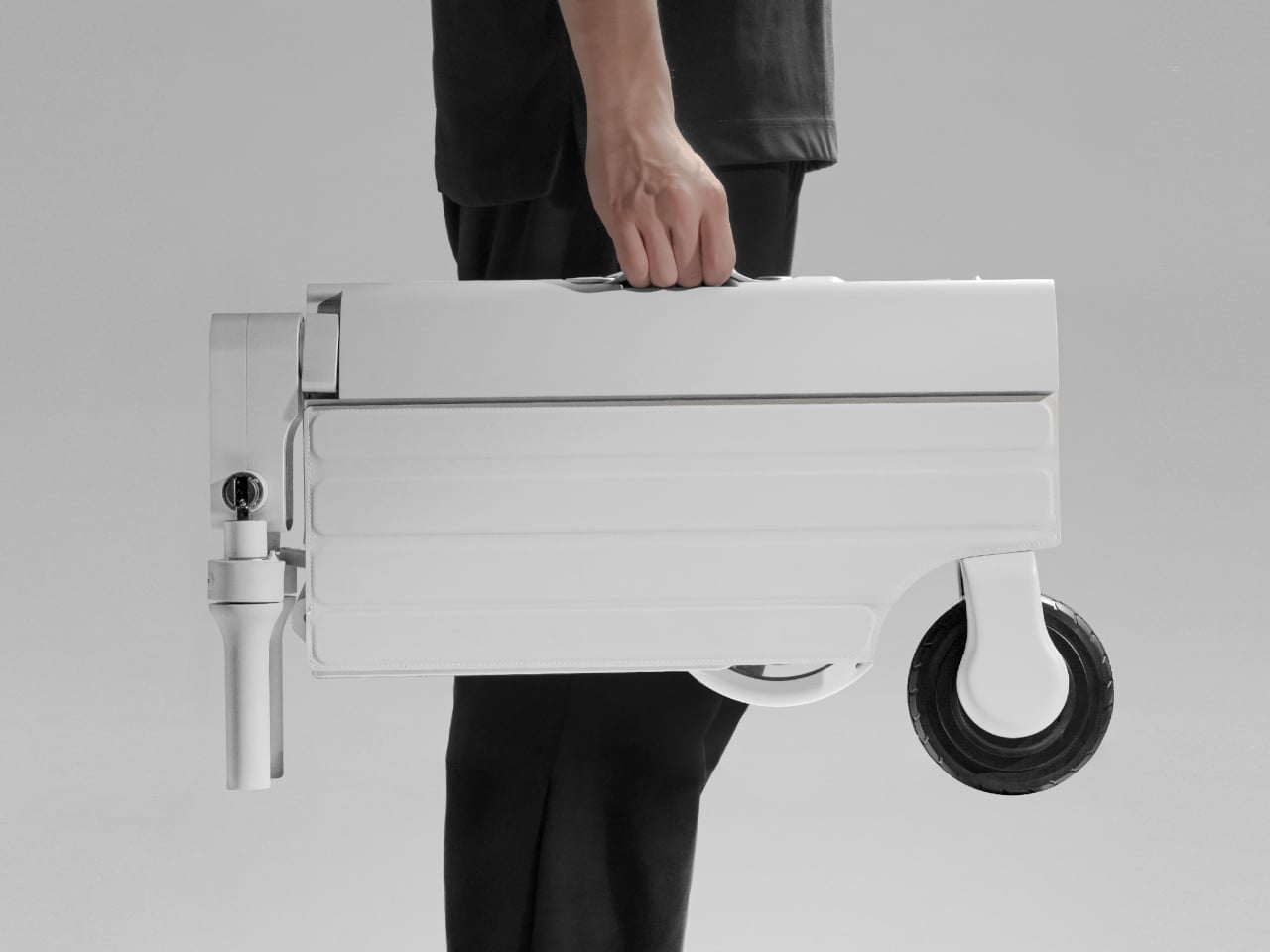
Getting a scooter from a car boot to a building entrance and back daily only works if the scooter itself doesn’t become another thing to manage. The three-stage fold brings the VtoV 1000 down to a size that fits in one hand, making it suitable for stairs, elevators, office corridors, and shop floors without needing to leave it chained to a post outside or locked to a rack.
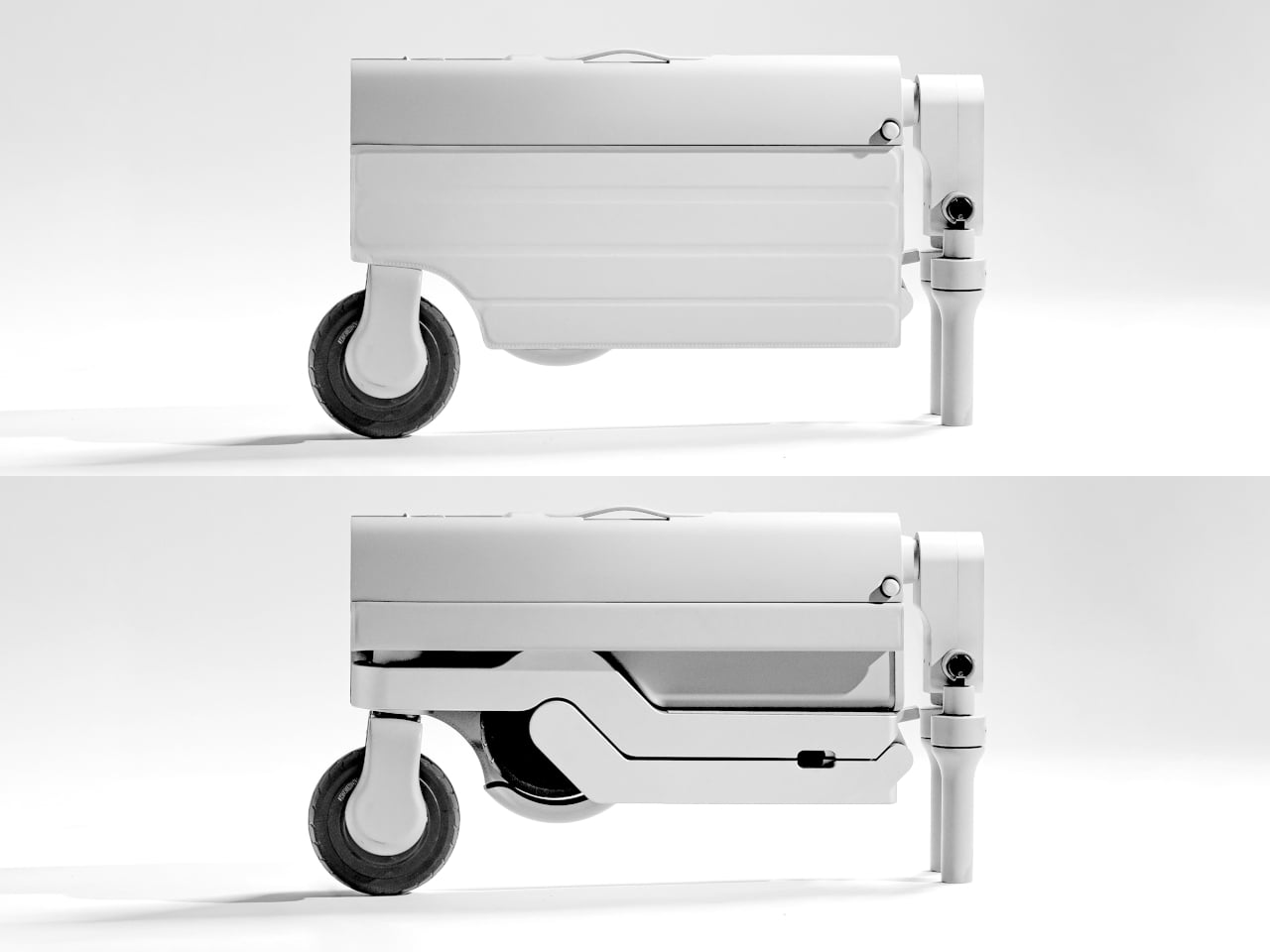
The folded form is where the concept gets more interesting. A folio-style side cover closes over the chassis when packed down, concealing the hinge mechanism and keeping the rider’s hands away from any grease or grime. Folded, the VtoV 1000 takes on the proportions of a flat rectangular briefcase, nudging people to carry it inside with them rather than leave it on the pavement.
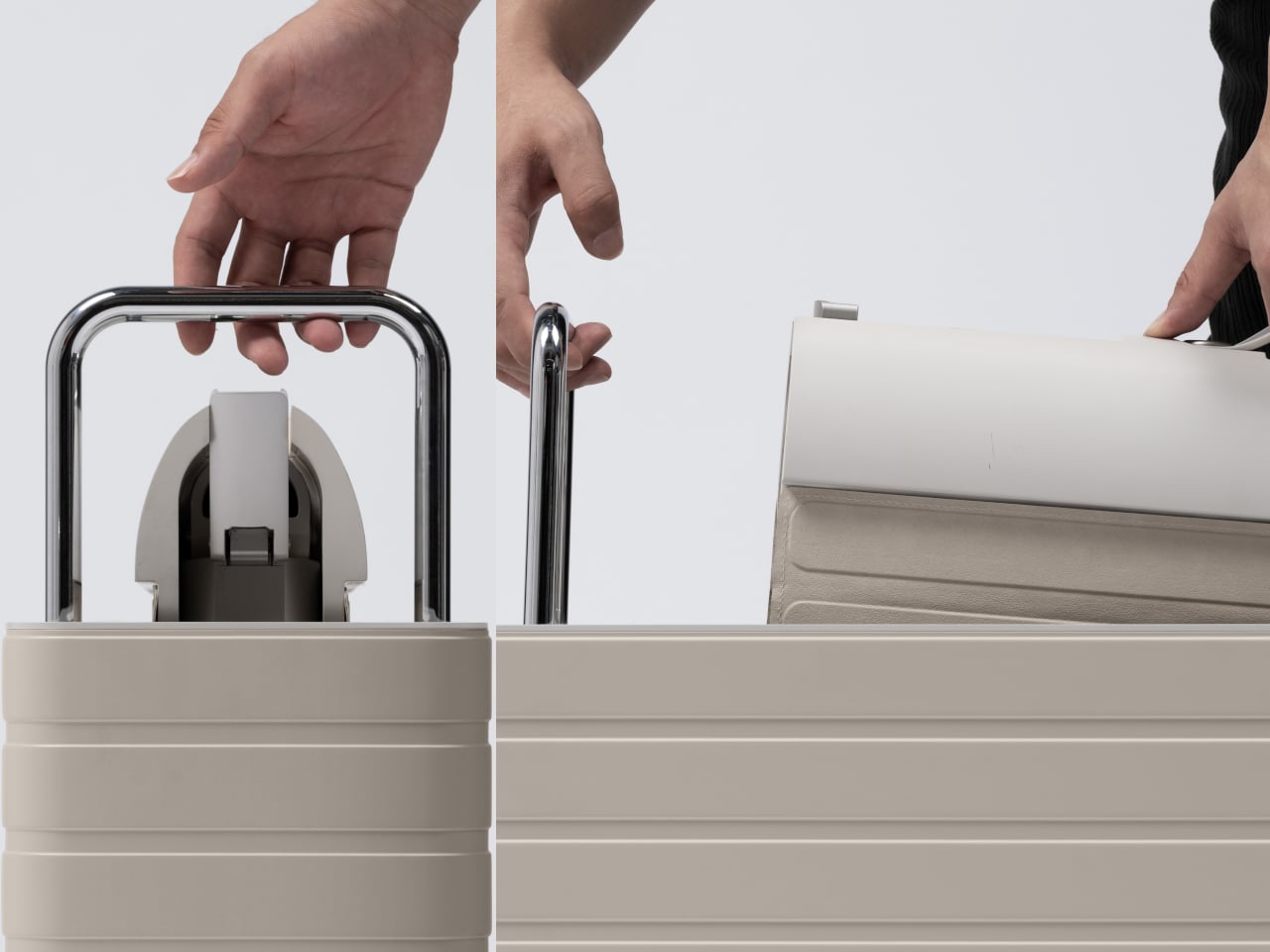

That behavioral shift matters more than it might seem. Urban micro-mobility tools spend a lot of time sitting unattended outside buildings, collecting dents and theft attempts until the owner comes back. Designing something that users naturally want to carry in solves the security and durability problem without requiring a lock, a garage, or any extra infrastructure at the destination end.
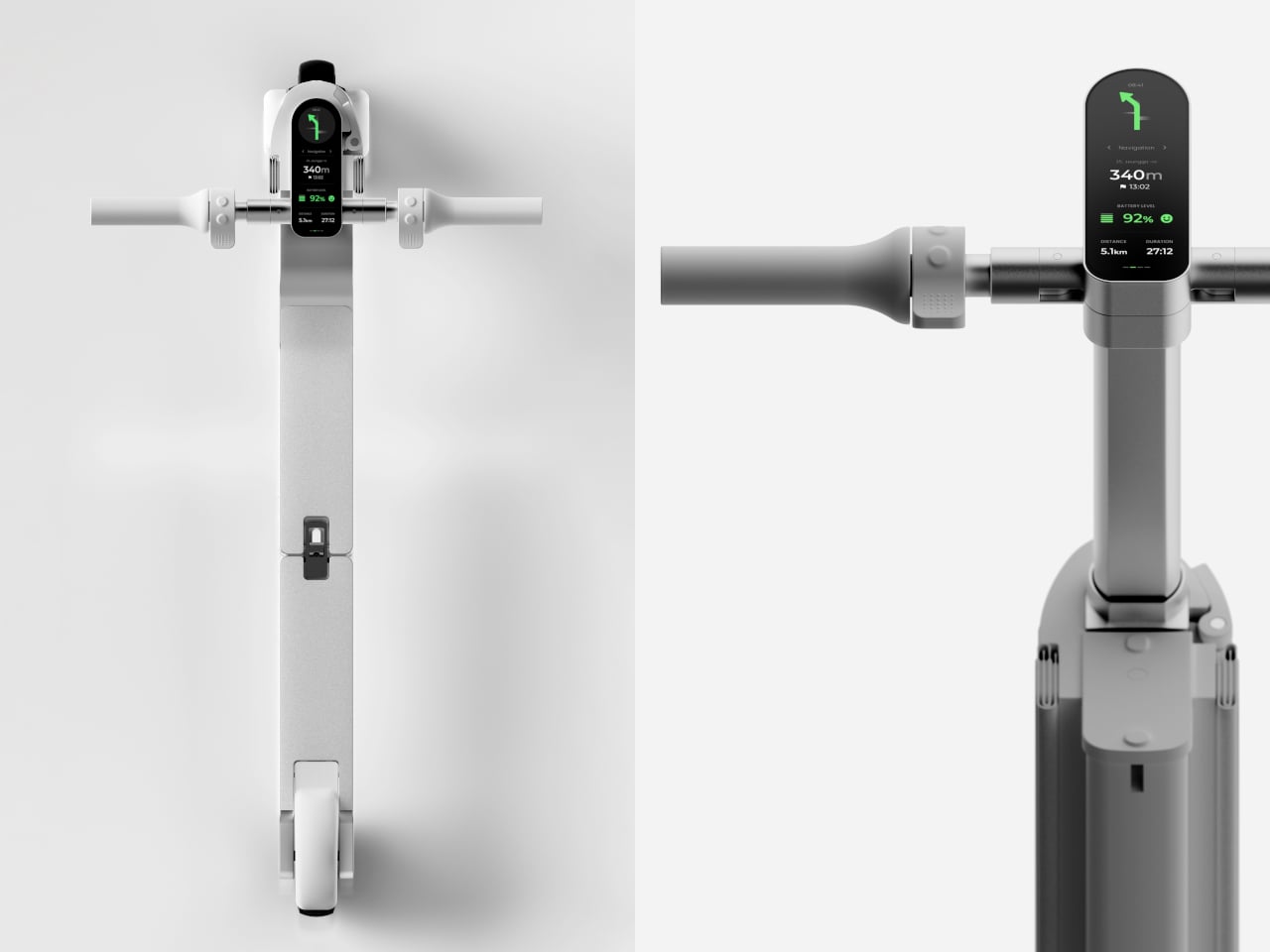
A vertically oriented smart display sits at the center of the handlebar, showing battery level, remaining range, current speed, and turn-by-turn navigation prompts without requiring the rider to glance at a phone. The display connects to a companion app, but the riding interface itself is kept simple enough to read at a glance, keeping attention on the road rather than the screen.
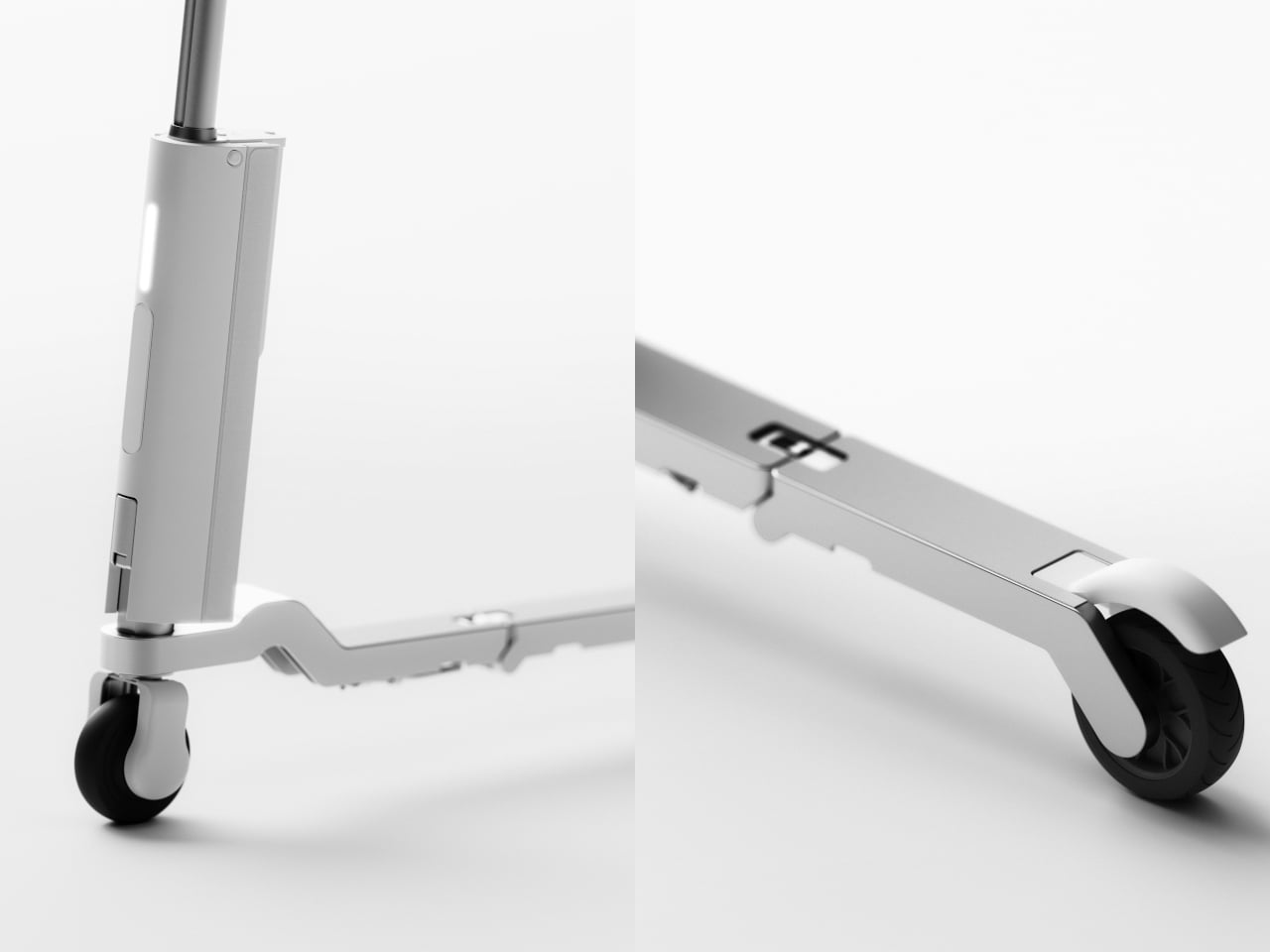

The physical design follows a deliberately restrained logic. The chassis is machined aluminum throughout, kept to a minimal part count with no decorative additions. The scooter deploys and folds back through the same three-point sequence each time, which builds the kind of familiarity that makes a product feel genuinely woven into a daily routine rather than something you have to consciously negotiate with every morning.
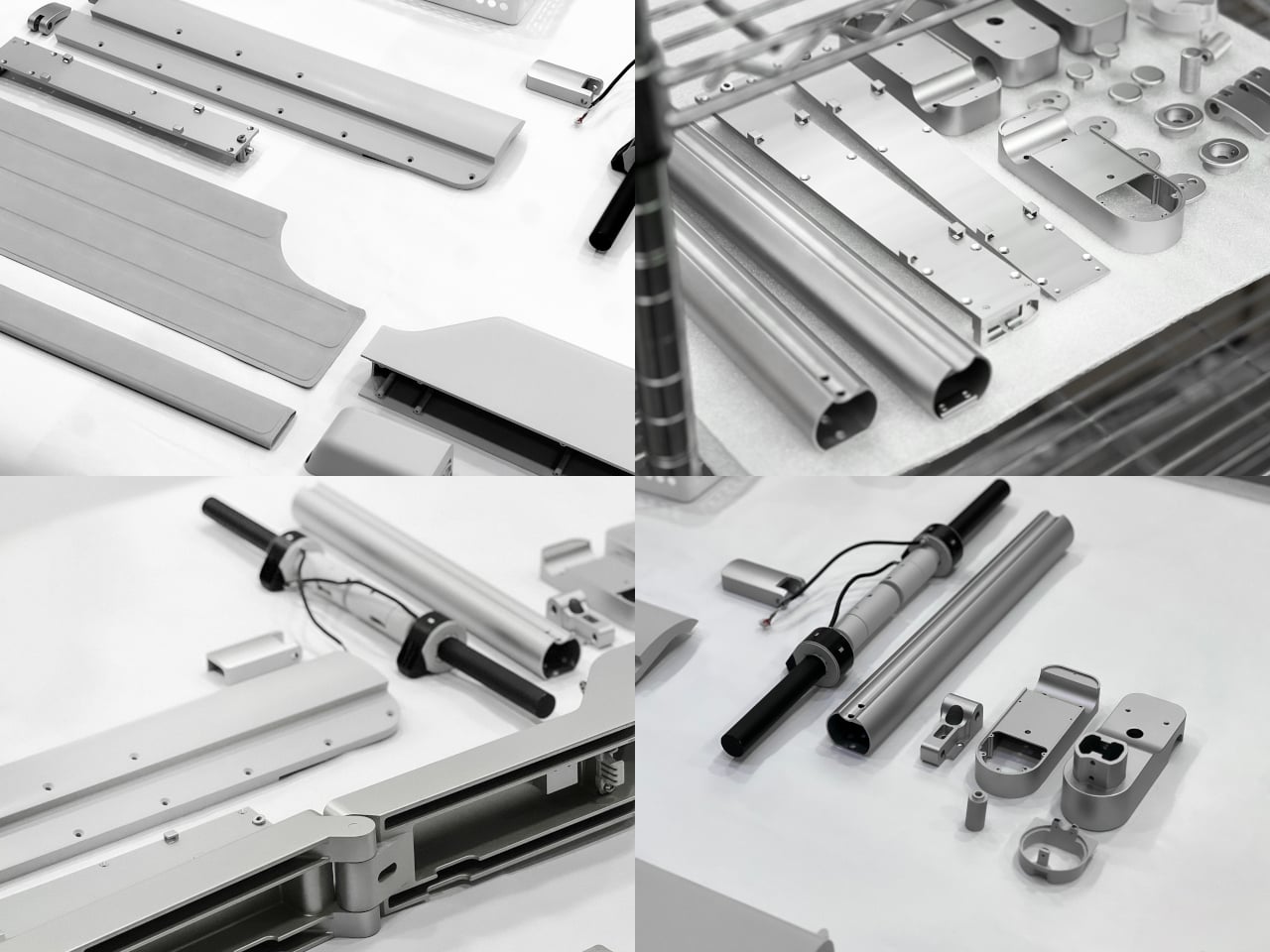

The VtoV 1000 sits at the intersection of two product categories that rarely overlap, personal transport and everyday carry. It isn’t trying to replace a bike lane or a bus stop. It’s a fairly narrow answer to a specific problem, and that specificity is exactly what gives it its appeal. Plenty of scooters fold down, but very few look like they belong in a meeting room when they do.

The post This Folding Scooter Looks Like a Briefcase So You Never Need a Lock first appeared on Yanko Design.
This E-Scooter Concept That Belongs at a Motor Show, Not a Bike Lane

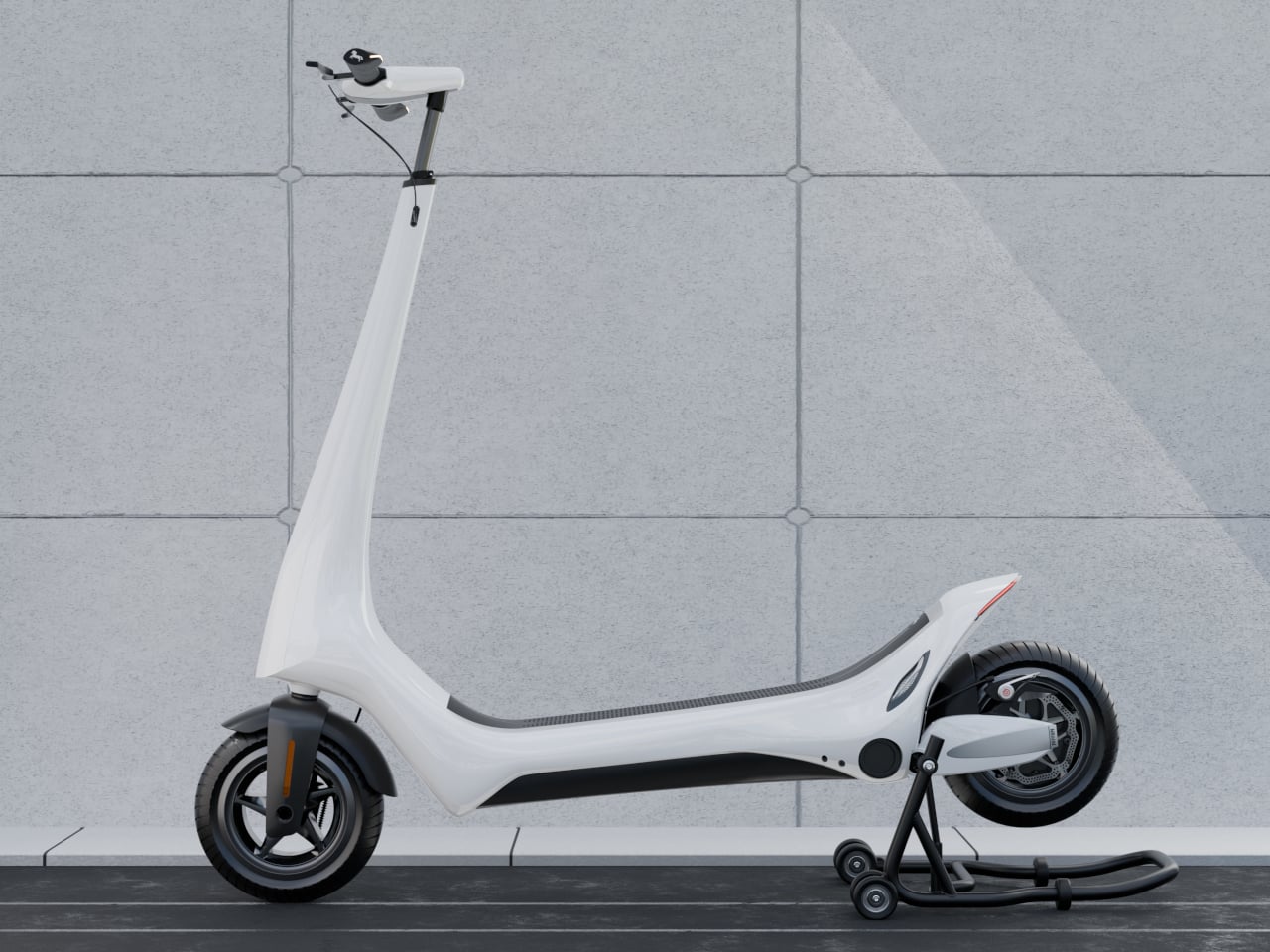
Electric scooters have largely avoided any serious design ambition. The category is dominated by folding aluminum stems, plastic covers, and an aesthetic that prioritizes manufacture over emotional response. They’re practical, they’re cheap enough to flood city streets, and they look almost uniformly forgettable. The functional argument for the e-scooter has been made convincingly; the case for it as an object worth caring about has barely been attempted.

This conceptual design sets out to change that premise by applying Ferrari’s design principles to the everyday electric scooter, and the key distinction here is “principles” rather than “branding.” It’s not about putting an emblem on a commuter vehicle. It’s about understanding what makes Ferrari’s cars genuinely compelling: the sculptural tension of every surface, the sense that the body is always in motion even while standing still.

Designer: Sayem Ameer

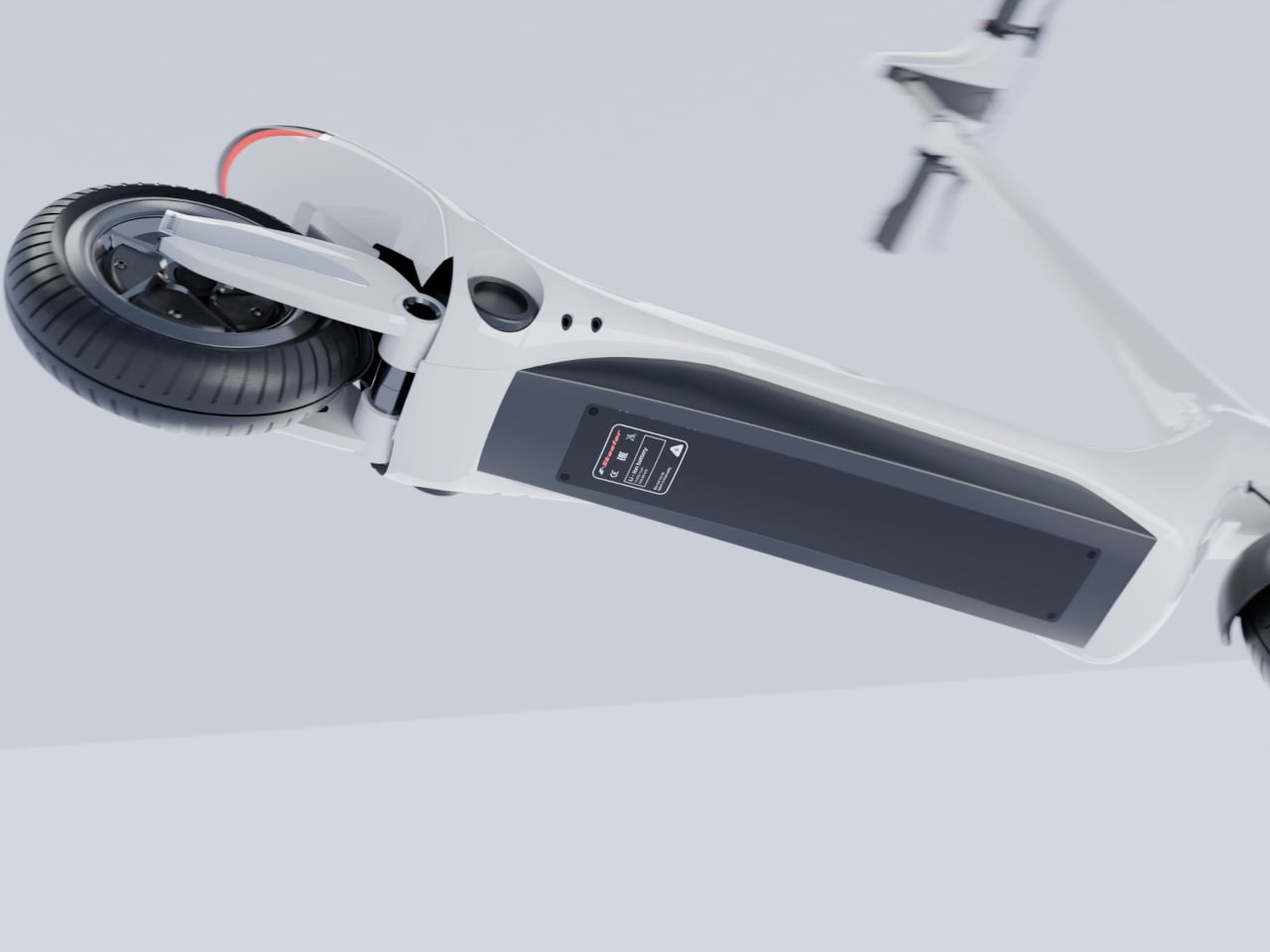
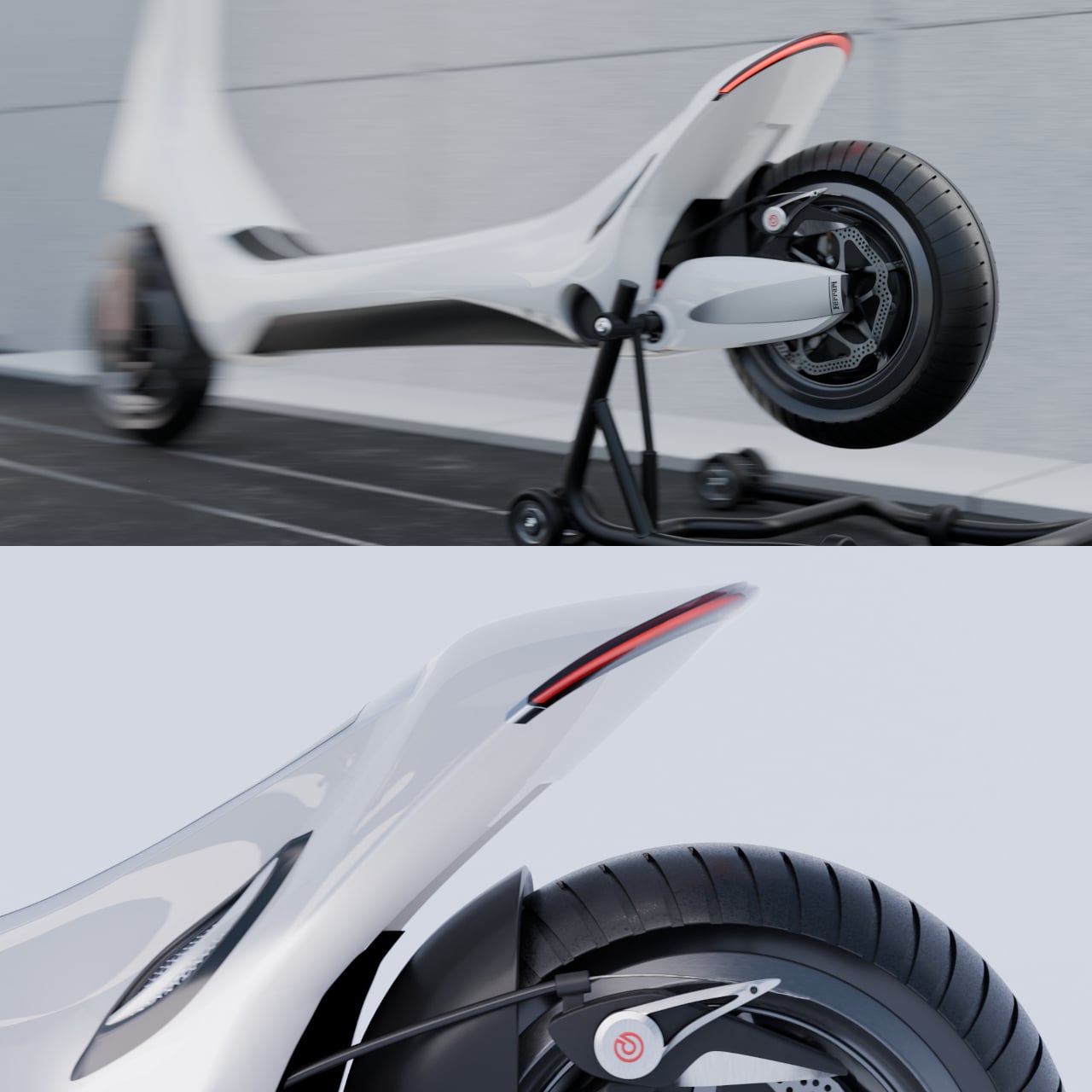
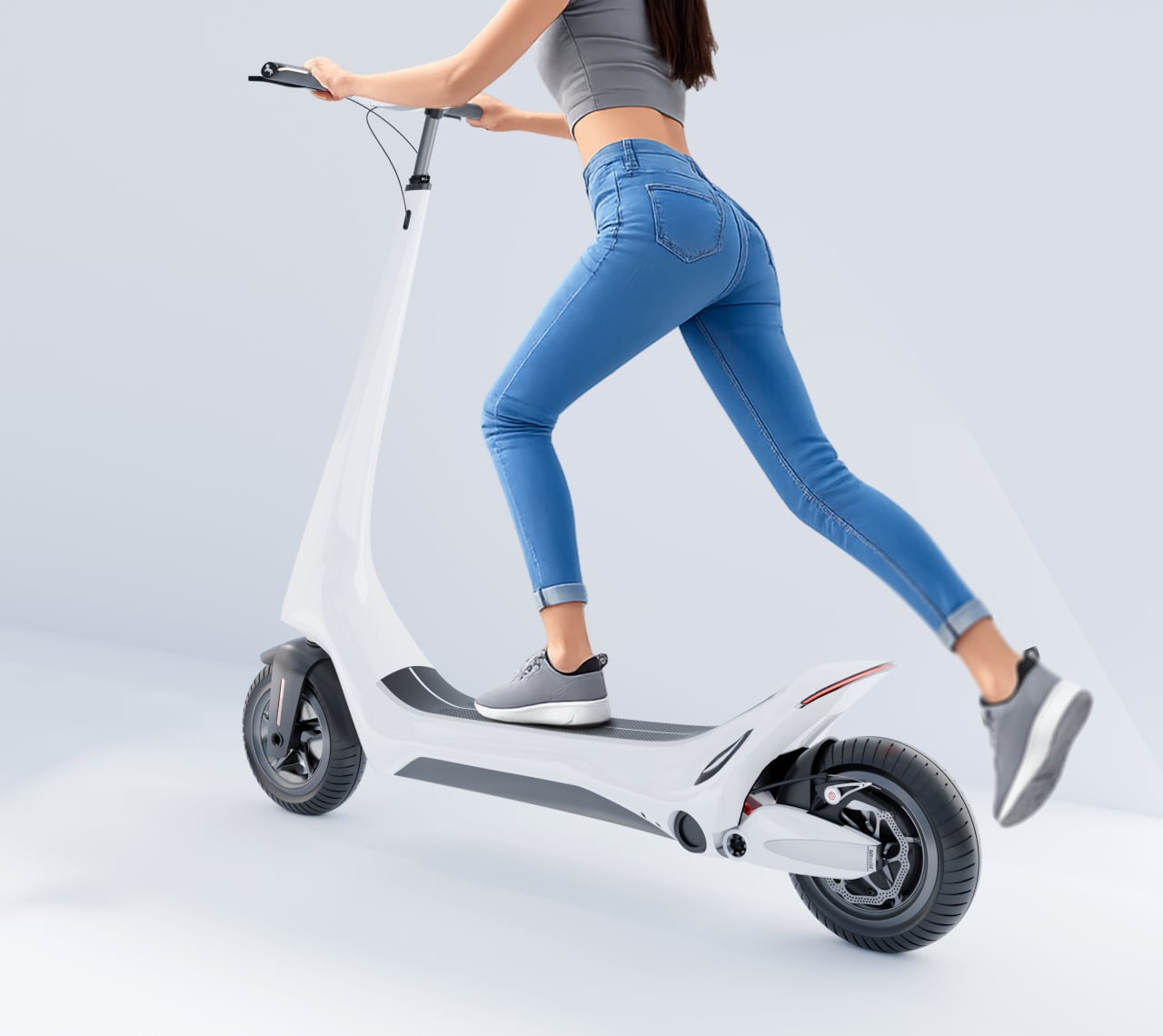
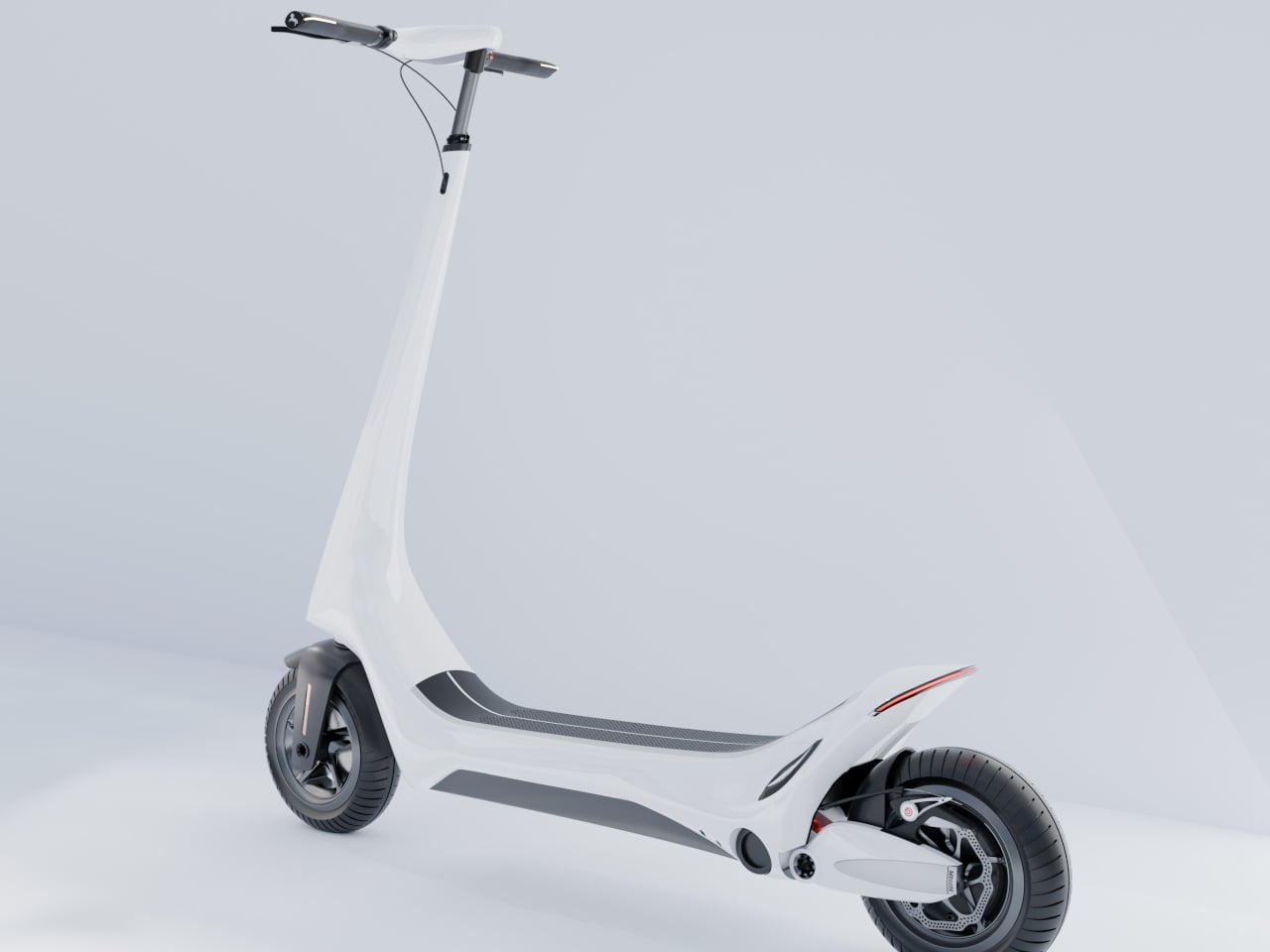
The result is a seamless, monolithic body with aerodynamic surfaces that flow cleanly from deck to stem without visible joints or interruptions. Where most scooters expose their mechanical reality through folding hardware and clamped connections, this concept wraps everything inside a sculptural shell. The proportions run deliberately long and low, creating a silhouette that reads closer to a sports motorcycle than anything you’d typically find parked outside a train station.

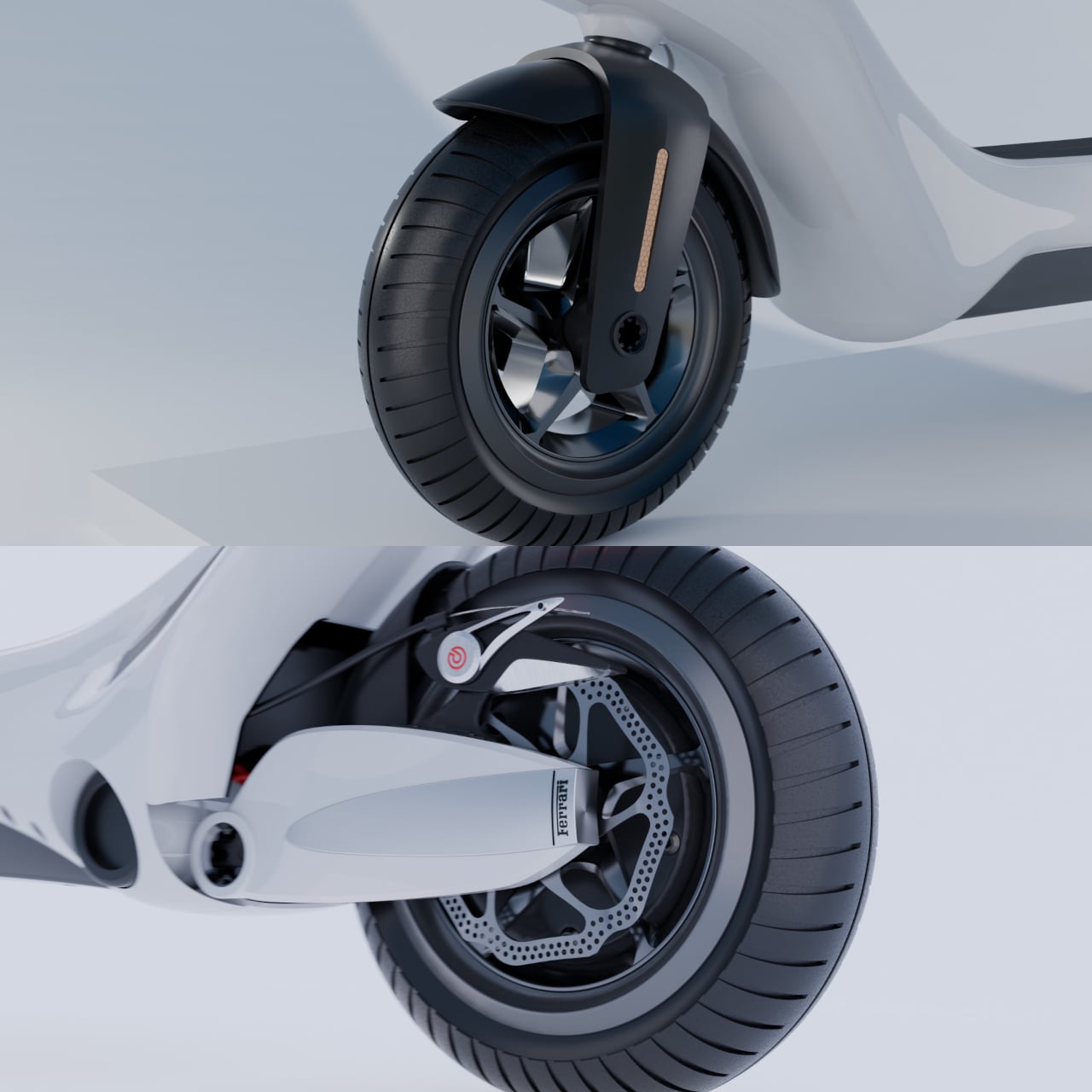
The rear end is where the design stakes its biggest claim. A sharp, swept-back tail section with a thin red LED strip carries the kind of visual tension Ferrari builds into a rear diffuser, resolved here as a knife-edged fin rising above the rear wheel. Disc brakes with red-accented calipers carry the performance suggestion further, lending mechanical credibility to surfaces that might otherwise read as purely decorative.

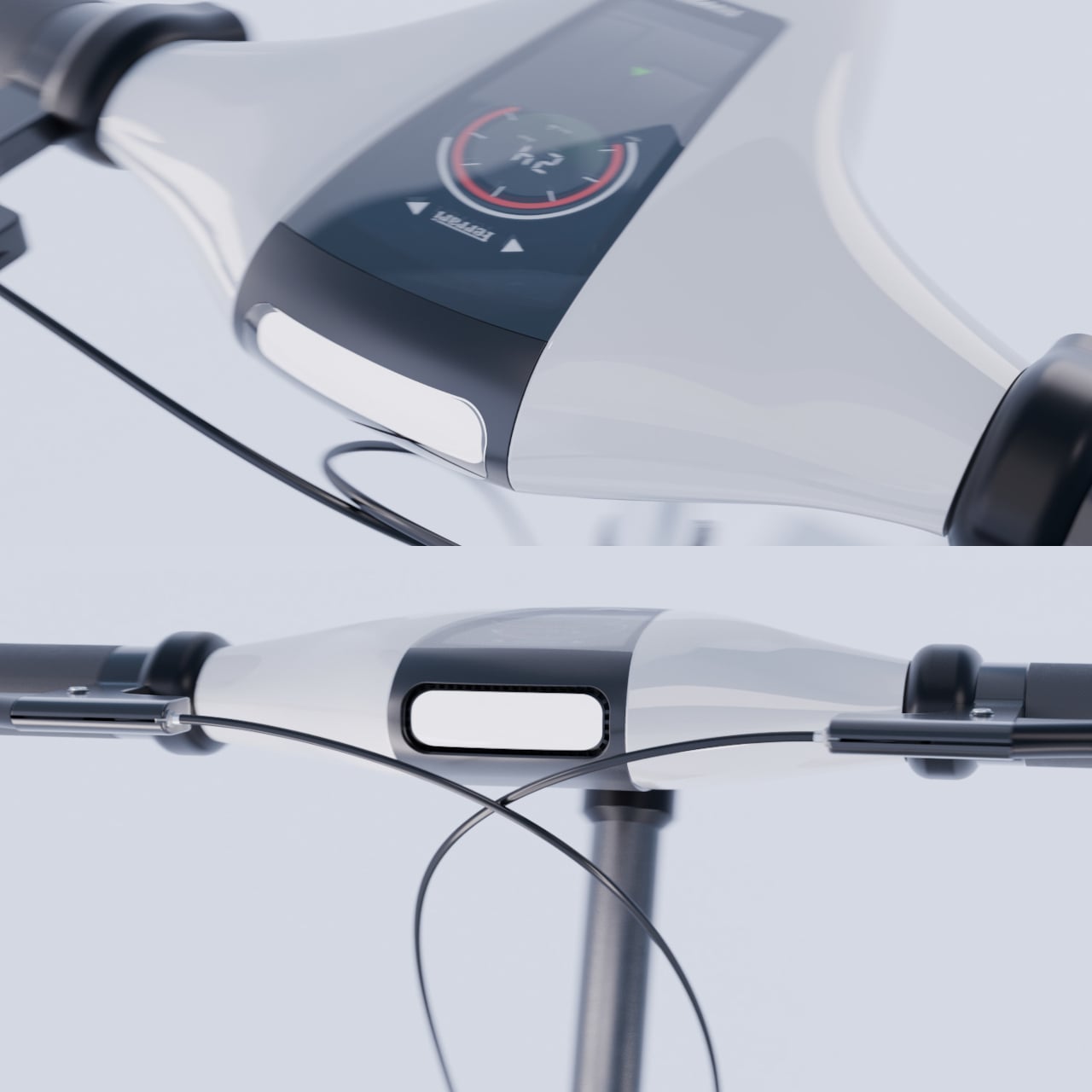
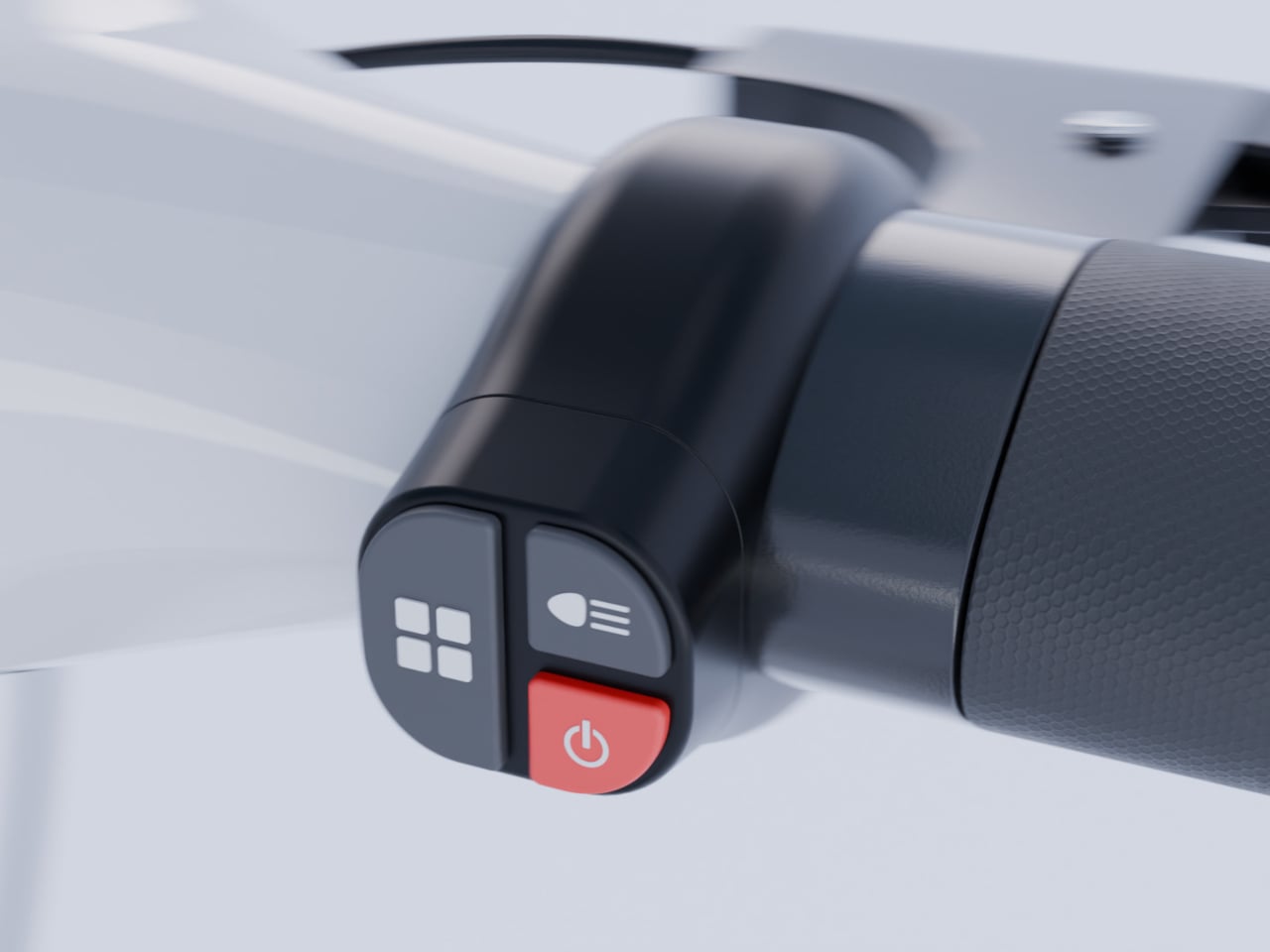
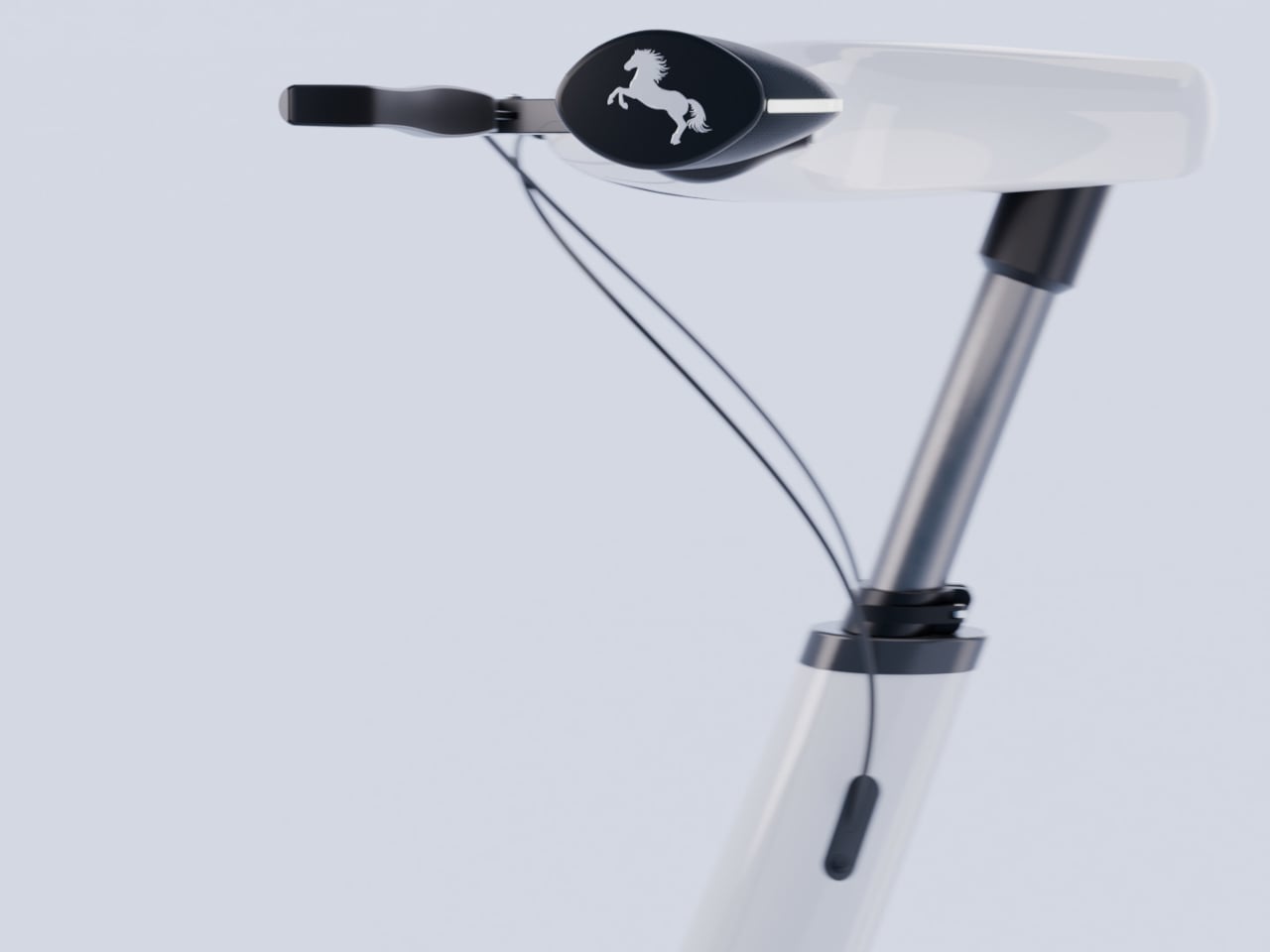
The handlebar assembly takes a similar approach to the cockpit of a performance car, centered on an instrument pod flanked by brake cables that cross in a deliberate V pattern. It’s a small detail, but it’s the sort of detail that separates a design study from a styling exercise. Everything here has been considered for how it communicates intent rather than how it minimizes production cost.

The body is rendered in white with dark carbon-fiber accents on the deck, a combination that keeps the visual weight low while the red LED taillight acts as the single chromatic accent. There’s a restraint to the palette that reflects Ferrari’s own approach to color, which tends to let the form do the talking and reserve color for punctuation rather than decoration.

Getting around a city on this concept would feel different from anything currently on the market, which is arguably the entire point of the exercise. Most urban e-scooters communicate nothing beyond the utilitarian function they serve. This one communicates something about the person who chose it, which is something Ferrari’s cars have always done and something electric mobility design has almost entirely failed to deliver.

The post This E-Scooter Concept That Belongs at a Motor Show, Not a Bike Lane first appeared on Yanko Design.