realme GT 6 Review: Is This the True Flagship Killer of 2024?

PROS:


  • Distinctive and appealing two-tone design

  • Great daytime and nighttime photos

  • Bright and vibrant screen

  • Massive 5,500mAh battery

CONS:


  • No wireless charging support

  • Metal mirror finish is a fingerprint and dust magnet

RATINGS:

AESTHETICS
ERGONOMICS
PERFORMANCE
SUSTAINABILITY / REPAIRABILITY
VALUE FOR MONEY

EDITOR'S QUOTE:

The realme GT 6 challenges the status quo with a solid set of features, an elegant design, and a highly attractive price tag.

realme unveiled its latest GT series smartphone, the realme GT 6, at a global product launch event in Milan today. After a two-year hiatus from the global market, the company is poised to make a significant impact with its latest flagship. The recent appearance of realme’s founder and CEO, Sky Li, on the cover of Forbes magazine underscores the company’s intention to assert its presence more forcefully than ever. Earlier this year, realme announced a rebranding initiative, reaffirming its commitment to delivering value-packed devices for the youth. With the realme GT 6, the brand makes a bold claim, positioning it as the only “flagship killer” of 2024. It’s definitely packed with features, but is it truly deserving of the flagship killer title? We put it to the test to find out.

Designer: realme

Aesthetics

The realme GT 6 is a device that commands attention. Instantly captivating, your eyes are drawn to the gleaming shiny mirror texture which fills out the upper third of the back panel, where the camera modules reside. According to realme, this texture is achieved using the industry’s first nano-level mirror coating technology which requires over 30 fine processes. Contrasting with this reflective texture, the lower two-thirds of the back panel features a matte metal texture.

The realme GT 6 is available in Fluid Silver or Razor Green, with our review unit coming in the former finish. The mirror texture first appeared to be a brilliant idea for taking selfies. However, the off-center positioning of the camera module and the limited size of the mirrored area compromise practicality. Another drawback of the material is that it attracts fingerprints and dust, detracting somewhat from its otherwise sleek appearance. Putting the complimentary case that comes in a box does not help as it does not cover the portion with the mirror finish. It’s still useful to quickly check oneself before snapping photos, though. Overall, the realme GT 6 is a phone that offers a unique and clean design, distinctive but not loud.

Ergonomics

The dimensions of the phone measure 162mm x 75mm x 8.6mm, with a weight of under 200g, just 199g, to be precise. The phone feels pleasantly lightweight and is easy to handle with one hand. The display features subtle curves on the side edges, complemented by a slightly tapered back panel. A curved side frame usually enhances grip without causing the edges to dig into the palm, but despite its absence here, holding the phone feels secure and comfortable.

On the right side of the phone are the volume locker and the power button, leaving nothing on the left side of the device. The IR blaster and stereo speaker are located on the top while the dual-nano SIM card slot, second stereo speaker, and USB port are located on the bottom.

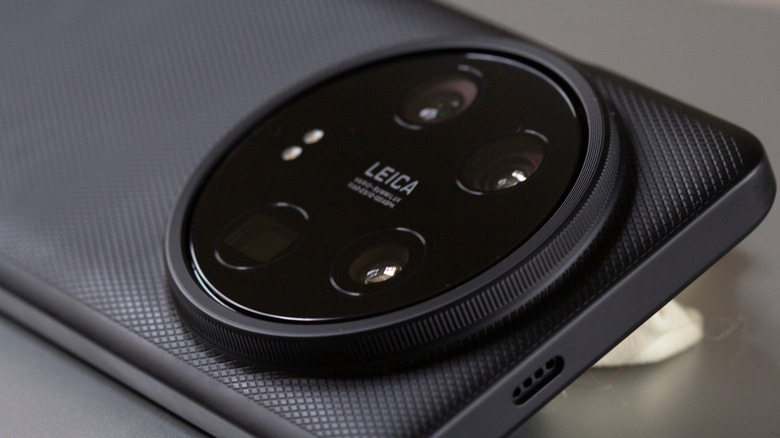
The camera modules are not horizontally symmetrical, causing the phone to wobble slightly when placed on its back, though this issue is easily resolved by using a case. On the front, there is a centrally positioned cutout on the display for the front-facing camera, while the in-display fingerprint scanner is located near the bottom. The three camera lenses are positioned on the top left side of the device, arranged in a triangular pattern. The realme brand name embellishes the lower left corner of the back panel, which will often be covered by your hand and, therefore, almsot always out of sight. In summary, the realme GT 6 exudes a premium and sturdy feel that inspires confidence whenever you use it.

Performance

The realme GT 6 sports a triple camera setup. The 50MP main camera uses Sony LYT808, a 1/1.4” sensor with OIS, topped with a f/1.68 aperture lens. Accompanying it is a 50 MP telephoto camera with a 1/2.8” sensor and an f/2.0 aperture, together with an 8MP ultra-wide-angle camera that utilizes a 1/4” Sony IMX355 sensor.

What all these specs mean in practice is that the realme GT 6 captures great photos in daylight. Images exhibit a good dynamic range, natural colors, and rich details. It also performs admirably in low-light conditions, producing well-balanced exposures, with plenty of details preserved and minimal noise.

Photos taken with the telephoto lens, while slightly less impressive, still offer very good quality. The ultrawide-angle camera delivers solid images as well, surprisingly despite its very modest sensor. realme has done an excellent job in harmonizing the rendering and post-processing across all three cameras, ensuring a consistent look and feel in the outputs. Activating night mode across all three cameras does not significantly alter the quality of the photos. In addition, the 32MP front-facing camera captures pleasant selfies with natural colors.

The realme GT 6 is equipped with AI Smart Removal, which relies on AndesGPT, a generative AI model developed by OPPO. There are two AI Smart Removal tools: Smart Lasso and Paint Over. With Smart Lasso, you circle around the unwanted objects in the photo to be removed. On the other hand, the Paint Over feature replaces the selected object in the photo with another object. With Pain Over, you can adjust the brush size. Both features require an internet connection. Removing unwanted objects with Smart Lasso is fast and results are impressive in most cases, whether in bright daytime photos or poorly lit nighttime photos.

oplus_262144

Oplus_262144

Moving on to the video, the main and telephoto cameras can capture videos up to 4K at 60fps while the ultra-wide-angle camera is limited up to 1080p at 30fps. The front-facing camera let you record video up to 4K at 30fps. Only the 8MP ultra-wide shooter isn’t able to support 4K video recording, which is pretty disappointing for a phone that bills itself as a “flagship killer.” The videos captured with main and telephoto cameras are great offering a good level of sharpness and dynamic range, even in low-light footage. Although the ultrawide camera’s footage may display some noise, it still offers good color saturation. The Ultra Steady mode is exclusive to the main camera, providing excellent stabilization for both daytime and nighttime video recording.

When recording video in a dark environment under 6 lux, the night mode icon appears. Tapping it activates AI Night Vision, significantly enhancing video quality in poorly lit conditions. This footage captured is basically cranked up ISO and applies heavy smoothing, allowing you to capture somewhat usable footage even in near-total darkness. The difference is quite noticeable, making previously unwatchable videos much clearer.

Running Android 14 out of the box with a layer of realme UI 5.0, the realme GT 6’s AI features extend beyond image capturing and editing. For instance, AI Smart Loop provides an efficient and quick way to share content with third-party apps. You can select text, photos, or screenshots, then long-press and drag them to the right side of the screen. This action activates the space wheel, which displays a selection of pre-selected third-party apps or AI-suggested apps in a wheel format. You simply drop the selected content onto the desired app to share it.

Underneath the hood, the phone is powered by a Snapdragon 8s Gen3. It’s a less powerful version of Snapdragon 8 Gen3, yet it’s still one of the Snapdragons’s flagship SoC. The device sports 512GB of storage and 16GB of LDPDDR5X RAM which can be expanded by an additional 4GB. With this much power, it’s no surprise that the realme GT 6 offers great performance and smooth operation.

GT 6 features a 6.78-inch AMOLED display with 2,780 x 1,264 resolution and 10-bit color depth. The display can reach a whooping peak brightness of 6,000 nits. realme also provides a more practical number; the display can reach 1,600 nits with High Brightness Mode. The display is amply bright even outdoors under the sunlight and colors are vibrant.

The display supports a 120Hz refresh rate with 8T LTPO which helps save power by dynamically adjusting the refresh rate ranging from 1Hz to 120Hz according to the content displayed. The phone also incorporates numerous eye protection features. For example, AI Eye Comfort detects eye fatigue, such as blinking and yawning frequency, and adjusts the screen color temperature to alleviate strain.

The device is equipped with a massive 5,500 mAh battery, ensuring you can easily go a day without needing to recharge. When you do need to charge, the 120W SUPERVOOC technology allows for rapid charging. Unfortunately, it does not support wireless charging, a feature that is becoming more common even on mid-range smartphones, much less flagship models.

Sustainability

realme is a company with strong sustainability initiatives. For instance, the company has committed to reducing the carbon emissions of its GT series by 30% and achieving “Double Zero” emissions by 2025. Unfortunately, when it comes to the GT 6 specifically, there is no apparent mention of sustainability efforts.

The phone feels solid in build quality, and the display is protected by Corning Gorilla Glass Victus 2, ensuring durability. It has an IP56 rating, which ensures that it’s protected against most common accidents, though you should naturally still exercise caution. Additionally, there was no information available regarding support for security updates at the time of this review. realme promises 4 years of Android updates and 4 years of security patches, which should last you quite a bit during the lifetime of this phone.

Value

The realme GT 6 definitely has a laundry list of buzzword-worthy features, from dual 50MP cameras to, of course, AI. Its specs on paper are no joke, and its actual performance delivers much of its promises as well. Nothing surprising for what is supposed to be a flagship killer, a title that has been thrown around a lot to challenge the giants of the market. Of course, it will take more than killer features to stand up to smartphone Goliaths, and realme has one more trick up its sleeve.

Starting at only 599.99 EUR (roughly $645) for the base 8GB RAM/256GB storage model, all the way up to 799.99 EUR ($860) for the top-of-the-line 16GB/512GB configuration, the realme GT 6 definitely beats other flagships in terms of accessibility. Sure, it’s not perfect and might be missing a few flagship features like wireless charging, but you’re still getting the juicy meat of what makes a flagship a flagship without burning a hole through your wallet. It’s definitely an option worth considering, presuming it’s even available within your vicinity.

Verdict

It’s getting harder to stand out in the smartphone market these days, at least not without some groundbreaking feature or head-turning design. At the same time, however, many brands try too hard to set themselves apart, producing designs that are, to some extent, too distracting and too noisy. Fortunately, the realme GT 6 is not one of those, making it a flagship killer in more ways than one.

Yes, it has quite the repertoire of high-end features, and rarely does it disappoint except in a few small details. It also has a price tag that belies all that power, making the product accessible to more people. Last but not the least, it also goes against the flow and delivers a design that is elegant without being overbearing. The realme GT 6 bucks the trend and appeals to a new generation of the youth that’s getting wiser and more discerning, valuing essential experiences over superficial embellishments.

The post realme GT 6 Review: Is This the True Flagship Killer of 2024? first appeared on Yanko Design.
Motorola Razr+ 2024 foldable phone upgrades might be invisible to the naked eye

After a short lull, we are entering the second half of this year’s batch of smartphones, most of which will be focused on foldable designs. While Samsung naturally grabs the spotlight, it’s hardly the only game in town. Motorola will try to beat Samsung to the punch next week when it reveals the latest iteration of the spiritual successor to its iconic RAZR clamshell, a foldable phone that some might even consider to have a better design. It seems, however, that expectations need to be tempered a little, as the 2024 Razr+, or the Razr 50 Ultra in other markets, might not carry any visible mark of being a new model, as the improvements will mostly be internal and invisible, at least based on this latest leak.

Designer: Motorola (va @MysteryLupin)

To give credit where credit is due, Motorola has always taken the bolder stance when it came to the design of its clamshell foldable. It was the first to use a large second screen on its back, and it’s now the only one that has a Cover Display that, well, covers the entire surface of the phone’s upper back. There will always be debates on whether having two holes on that screen for the cameras is better or worse than the tab-like cutout on the Galaxy Z Flip, but there’s little argument that it opens the door to more functionality, including displaying the same app on the outside that runs inside.

This signature feature of the Motorola Razr+ line isn’t going to change this year apparently, not even to slightly increase the screen size (the base Motorola Razr/Motorola 50, however, is getting the full-screen treatment this year). In fact, you might not be able to distinguish the 2023 and 2024 models just by looking at them. Of course, there will be upgrades, but most of them are the invisible features of the phone, and we’re not talking just about specs.

For example, this year’s Motorola foldable will bump up the water protection, though worryingly at the cost of dust protection. According to a leaked promotional video, the Motorola Razr+ (2024) will have an IPX8 rating that’s more in line with what Samsung offers. That means it will survive an accidental dip in a pool or sink, but there’s no guarantee it will be protected from dust or smaller particles. Unfortunately, some might argue that the latter is actually more fatal to foldable phones and their hinges than water damage.

There’s also an indication that one of the cameras will finally have a telephoto lens, but the number of cameras won’t be increasing by one either. That suggests that Motorola will either ditch the regular “wide” camera or the ultra-wide shooter, though the latter is probably more likely. Again, it trades one feature for another, and hopefully, the benefits will far outweigh the sacrifices for Motorola’s customers. The Motorola Razr+ or Razr 50 is expected to debut next week.

The post Motorola Razr+ 2024 foldable phone upgrades might be invisible to the naked eye first appeared on Yanko Design.

OPPO generative AI features coming to all phone lines to make AI accessible to everyone

Like it or not, and some definitely don’t, AI is the current buzz in the tech industry, and it will still be for quite a while. But as impressive and sometimes frightening as the advanced features of AI may be, the truth is that these features are only available to a very select few people who either have the high-end hardware to support them or the resources to maintain monthly subscriptions to services. For AI to truly become life-changing, it has to become available to everyone, even those with less expensive phones and computers. That’s the new commitment that OPPO is making, to bring generative AI features to as many as 50 million phones in an effort to make AI accessible to everyone.

Designer: OPPO

Up until recently, most of the talk about AI revolved around powerful computers and cloud-based solutions. After all, AI needs very capable hardware and loads of data to perform its magic. That said, making AI relevant to ordinary people requires actually putting the technology into their hands, and there is no better device for that purpose than one that they literally hold in their hands: their smartphones. It’s no surprise, then, that Google’s recent developer event focused on making AI features available not only through its Search engine but on smartphones as well.

That has generated quite a lot of buzz on AI-powered features on the latest and greatest handsets, but that leaves the majority of the world’s population out in the cold. With dozens of millions of smartphones out in the market across all tiers, OPPO is in a unique position to change that situation, and it’s doing exactly that. It’s making a promise to push its generative AI features to all its smartphone product lines, from the flagship Find series to the camera-centric Reno to the mass market OPPO F and A lines.

In fact, it has already started that change by bringing features like AI Eraser, object recognition, and advanced image processing to many of its smartphones already out in the wild today. Granted, most of these focus on the photography side of the AI, but that’s just the beginning. Collaborating with key industry players like Google, MediaTek, and Microsoft, OPPO will be bringing smarter features across the board. The OPPO Reno 12, for example, will be able to harness the power of Google Gemini’s Large Language Models or LLMs for features like AI Writer and AI Recording Summary. Its collaboration with Microsoft, on the other hand, will bring more natural voice and text conversions to next-gen OPPO phones, as well as more seamless connectivity between phone AI and desktop AI, a.k.a. Microsoft Co-pilot.

Smartphones are already very powerful computers in our pockets, devices that are used not just for entertainment but also for work, education, and health. These are the very same areas where AI can shine best, making sense of large quantities of data to bring us the answers and information we need. Harnessing the growing power of on-device hardware as well as secure cloud services, OPPO envisions a future where everyone will be able to enjoy the benefits of AI, preferably on an OPPO phone, of course.

The post OPPO generative AI features coming to all phone lines to make AI accessible to everyone first appeared on Yanko Design.

Bigme HiBreak E Ink smartphone takes another stab at eye-friendly mobility

As powerful and as helpful as smartphones have become, they have also become sources not only of distraction but also of poor health. Staring at screens all day is bad enough, but they can also affect our sleep if used late into the night. Unfortunately, it’s almost impossible for many people to detach from their phones or even reduce their use, so a few designers and manufacturers have tried to come up with alternatives like minimalist phones. eReader maker Bigme is proposing a different kind of answer, one that smashes an eBook reader and a smartphone in one pocketable design, creating a phone-sized E Ink device that is actually a functional phone.

Designer: Bigme

This isn’t the first time we’ve seen a phone-sized eReader. We reviewed the Onyx BOOX Palma a while back and found it to be quite capable as a pocket reader. But despite its phone-like looks, it’s technically a tiny Wi-Fi-only device. In contrast, the Bigme HiBreak can plug in a SIM card and connect to 4G LTE networks. Yes, 4G LTE speeds only, which is probably fine because the device’s screen won’t be able to catch up with the network speed anyway.

1

The HiBreak comes in two flavors with different 5.84-inch E Ink screens. One is a pure black and white screen like a traditional eReader, while the other supports a few colors at a lower resolution than black and white. Despite the advancements in E Ink technology, the ultra-slow refresh rates of these panels will take the fun out of scrolling and swiping through social media, which is probably for the best. What it offers, instead, is a gentler reading experience, especially if you’re the type who likes to read text-only documents on the go.

Of course, the Bigme HiBreak is a true smartphone, one that runs Android 11 on practically mid-range hardware. It does have Google Play support, so you can install any app available that supports that old OS version but don’t expect the experience to be as smooth as on a regular phone. On the flip side, that 3,300 mAh battery is going to last you for days rather than just hours. It has a 13MP main camera, more for “scanning” documents than taking pretty pictures, and a 5MP front camera for emergency video calls.

In terms of aesthetics, the Bigme HiBreak is truly a shrunken-down eReader, complete with wide bezels and a rather plain design. It’s almost like it’s intentionally uninspiring in order to cut down on your smartphone use unless that use is for lots of reading. But while it does solve the problem of eyecare, a device that runs a full Android stack with cellular connectivity won’t do any wonders for those distracting notifications unless you decide to ignore them since they won’t look that nice on the E Ink screen anyway.

The post Bigme HiBreak E Ink smartphone takes another stab at eye-friendly mobility first appeared on Yanko Design.

How Repairable Phones Benefit the Environment, Consumers, and Business Alike

Once upon a time, mobile phones weren’t the fragile and replaceable devices they are today. Sure, they were still expensive during their period, but accidentally dropping one didn’t always mean the end. Replacement parts, officially or unofficially, were easy to come by and the actual process of repairing these phones didn’t require a degree. But as mobile phones turned into powerful yet complicated smartphones, much of the repairability of the past also got thrown out the window. Granted, very few consumers will dare to open up their iPhones or Pixels on their own, so why is there a lot of noise these days about having the ability to repair yours? As it turns out, the ability to repair smartphones more easily benefits not just the planet or buyers but even the phone brands themselves.

Designer: Fairphone

Right to Repair

Part of the rhetoric around the smartphone repair situation involves the general Right to Repair movement. As the name implies, it is pushing for legislation, policies, and awareness that would allow owners, as well as third-party businesses, to repair the products that they have bought. It might come as a surprise given how it seems to go against common sense, but the situation with electronics, which includes smartphones, basically disallows anyone but the company and its authorized service centers from opening up and repairing these products. Although it’s not an accurate comparison, it would be like being forbidden from repairing the dress or furniture, requiring you to go to the boutique or shop you bought them from to have them fixed.

Designer: Apple (via iFixit)

To be fair, smartphones are complex beasts, and opening them up risks further damaging the device. Companies also have the obligation to protect their intellectual property from snooping eyes, but that isn’t a blanket reason to design phones to be nearly impossible to repair. iFixit, one of the biggest proponents of this Right to Repair movement for consumer electronics, has reached a middle ground with companies, providing official repair guides and a store for buying replacement parts so that anyone with the skill and courage can do it, whether they’re the owner or a small repair business.

Repairable Phones Are Sustainable Phones

Legal arguments aside, proponents of making smartphones more repairable often appeal to the harmful effects the current state of business has on the planet. The number of smartphones made and shipped every year has probably already exceeded the population of the world, which raises the question of what has happened to these devices over the years. While manufacturers do have programs for sending them your old or broken phones for proper disposal, just how many people actually make the effort to do that? More often than not, they simply stow old phones until they’re forgotten or, worse, mindlessly throw them in the trash so that these non-biodegradable objects ultimately end up in landfills.

Designer: Fairphone

Smartphones aren’t immortal or invincible, of course, but the longer we can keep using them, the longer they’ll stay out of the trash. Truth be told, the biggest reason why people change phones isn’t because of the latest trends but because their old ones have become nearly unusable. A cracked screen, bloated or failing batteries, or a broken charging port are the most common causes, so being able to change these easily helps keep electronic waste down to a minimum and for longer periods of time.

Repairable Phones Save You From Stress

There are definitely people who switch to the latest and greatest models after just two years or sooner, but the majority of users would like to keep their phones for years as long as they’re still usable. It isn’t as much about fondness for the device as the stress of switching to a new one. Even with all the advancements in cloud storage, backups, and phone transfers, people still experience loss and stress when their phones no longer work and have to switch to a new one, often from scratch.

Designer: HMD Global

You still should back up your phone and its data regularly, of course, but improving these devices’ repairability lessens or shortens the anxiety and stress that owners experience. Your phone goes empty in less than a day? Simply change the battery and it’s as good as new. USB charging port feel loose and unreliable? Swap it out for a new one and be on your way. It also saves people from the stress of an unplanned major expense, especially when they can get a better model when the time really comes for them to upgrade.

Repairable Phones Are Good Business

Being able to repair smartphones easily might save consumers money and give small repair shops some business, but manufacturers and their shareholders will probably see it more as a revenue loss. After all, the longer people hold on to their old phones, the less they will buy new ones. Unfortunately, there is definitely some truth to that, which is why even big phone companies hesitate to encourage self-repairs or third-party services. It is, however, an outdated mentality that no longer reflects the reality of our present. Even Apple is realizing that profits are no longer coming just from outright hardware sales but also from software, services, and other sources. It’s definitely high time for these brands to be creative in how they can make more money without busting people’s wallets or killing the planet.

Designer: Samsung

Manufacturers can, for example, profit from selling those replacement parts, but that also needs to be done in moderation. Recent news on this front demonstrates not what to do, which is to make those parts too expensive to the point that it becomes less economical to repair the phone in the first place. iFixit announced it is cutting ties with Samsung for that very reason, with parts beyond the reach of most people anyway.

Companies also need to see repairable phones from a different angle, particularly in how they actually reduce their operational costs and waste. They can cut down on the production of surplus units, keeping their stocks tight. This, in turn, reduces their reliance on costly materials that are either hard to acquire, harmful to the environment, or might even be controversial for being conflict materials. It forces companies to rethink their business, which is currently unsustainable both in the environmental sense as well as the economic sense, driving innovation that could hopefully create a greener tomorrow for its customers.

The post How Repairable Phones Benefit the Environment, Consumers, and Business Alike first appeared on Yanko Design.

Top 5 Quirky Phone Designs That Actually Make Sense

Smartphones today seem to look very similar, varying only in the shape of the camera bump and the color of their backs. Sometimes, the materials might be different, too, but the same large-sized “candy bar” form factor has become the standard for all the smartphones currently in the market. There was a time, however, when companies were a bit more daring, experimenting with phone designs and features in an attempt to stand out from the crowd. That did lead to some rather eccentric and sometimes even ridiculous designs that make us question the sanity of the minds behind them. But there are times when those odd designs of the past actually have important relevance today. Here are five such phone design oddities that we wished existed or still exist, and some alternatives in case you may have been smitten by their quirky appearance.

Designer: Google, Motorola

Undying Handset: Project Ara

Google’s Project Ara inspired the idea of a modular smartphone whose components you can easily swap to upgrade or repair parts. In theory, this would make the phone last forever, or at least as long as the base is intact and parts continue to be manufactured for it. In practice, it was a very ambitious endeavor that could neither meet expectations nor present a viable business model that wouldn’t bankrupt manufacturers. In the end, that sustainable and immortal smartphone remained just a dream, at least in that idealistic and perfect form.

Alternative: Fairphone 5

Designer: Fairphone

Fortunately, a part of that dream is actually possible and even sustainable in more ways than one. Although you can’t hot swap components on the fly, the Fairphone 5 at least offers a way for owners to change important parts of the phone, like batteries or even cameras, to keep them running almost forever. There are some limitations, of course, but if all you want is a phone that will last you for almost a decade instead of just two years, this self-repairable design pretty much has that in the bag.

Mobile Shutterbug: Nokia N90

One of the biggest uses for smartphones today next to social media is taking photos and videos. In the days even before the term “smartphone” was coined, even the most advanced handsets from the likes of Nokia could barely hold a candle to point-and-click cameras. That’s why the quirky Nokia N90 was prophetic and way ahead of its time, envisioning a day when smartphones would be used like camcorders, though with a bit more awkwardness due to their inflexible designs.

Alternative: Nokia x Nothing Concept

Designer: Viet Doan Duc

While clamshell phones are back in season thanks to foldable screens, the folding and twisting design of the original Nokia N90 remains a distant memory. This concept tries to answer the question of “what if?” and mixes two famed brands’ design languages to craft what could be the perfect camera phone. It makes you feel like a pro photographer or cinematographer, holding up your phone not with shame but with pride, capturing not only the moment but also people’s attention in a good way.

Pocket Book: YotaPhone Dual-Screen Phone

Designer: YotaDevices

E Ink devices are becoming more popular these days, especially after the addition of features like stylus support and color. These displays are easy on the eyes and the battery, allowing the screen to show the same thing for days without requiring a recharge. A few years back, a small company tried to bring those benefits to the smartphone in the oddest way, by putting an E Ink screen on its back. Although it can be used for reading e-books on the go, its main purpose was to have a battery-saving always-on display that is a bit more dynamic and useful than typical AOD implementations.

Alternative: Onyx BOOX Palma

Designer: BOOX

That said, a phone-sized Android device with an E Ink display might be an even more efficient design, which is what the Onyx BOOX Palma is offering. Technically, it’s an e-book reader that’s the size of a regular phone and actually runs Android, which is the standard for BOOX’s devices. This means it has access to the same apps you have on your regular phone, but without color. You also don’t have cellular connectivity via a SIM card, which might be a deal-breaker for a phone but a great deal for distraction-free reading and mobility.

Productive Minimalism: Minimal Phone

Designer: The Minimal Company

BlackBerry might have joined the likes of Nokia and LG as just parts of the annals of mobile history, but its squarish shape and QWERTY keyboard are forever etched in the consciousness of even the least tech-savvy person on the planet. Many have tried to recreate that magic, but this rather elegant yet odd phone puts a twist to it. It combines the iconic BlackBerry design with an E Ink screen and a minimalist aesthetic, promising distraction-free productivity by actually limiting what you can do on the device. It can even make it easier to actually reply to or post on social media, though the drab grayscale screen is probably going to make that a little less enjoyable anyway.

Alternative: Clicks QWERTY Case

Designer: Clicks

The idea of a BlackBerry-like experience might tickle the fancy of smartphone users, but none of them will be willing to ditch their powerful, colorful, and highly functional smartphones. Clicks is a case that tries to bring the best of both worlds, and it’s practically just a case that slides onto an iPhone to provide that tactile typing experience. You won’t have to give up your favorite apps, especially the ones you need to actually be productive, but the burden of being disciplined and ignoring distractions is now on you instead.

Shapeshifting Multitasker: Astro Slide 5G

Designer: Planet Computers

A phone that opens like a mini typewriter has actually been around since the days of the Nokia Communicator and its kin, but that design proved to be more complicated than they’re worth. After playing with that same design, PlanetComputing shifted to a slider that still provides that typing experience while retaining the exact same functions as a phone. Unfortunately, such a mechanism proved to be just as clunky and unreliable, and the software platform didn’t exactly lend itself well to a landscape screen.

Alternative: Any Foldable Phone

Designer: OPPO

These days, you don’t have to rely on a physical qwerty keyboard to have that same mini laptop experience. With foldable phones now more common, you can tap away on a more flexible on-screen keyboard when the device is only half-folded. At the same time, however, you have both phone and tablet functionality in your hands. Admittedly, the design is far from perfect, and we’re still waiting for more affordable foldables coming in the very near future.

The post Top 5 Quirky Phone Designs That Actually Make Sense first appeared on Yanko Design.

Moto G Stylus 5G 2024 lets you play with a pen without breaking the bank

The announcement of the new Apple Pencil Pro has put the stylus in the spotlight again. This input tool isn’t just limited to tablets and large screens, though that’s where they have the most use because of the bigger digital canvas. Thanks to the Samsung Galaxy Note, now the Galaxy S Ultra series, it has been demonstrated that there is also some benefit to having a stylus on smartphones. Unfortunately, Samsung does seem to have a monopoly on that design or is at least the best-known example, but it isn’t the only game in town, and Motorola just revealed its latest contender that makes an admittedly attractive offer, at least if you’re not too intent on making pro-level artwork on it.

Designer: Motorola

The stick inside the Moto G Stylus 5G (2024) is exactly that: a stick that works in place of your stubby finger. Unlike the Wacom-powered S Pen of the Galaxy S Ultra phones, it doesn’t have pressure sensitivity, rotation and tilt detection, or Bluetooth-enabled button functions. That’s actually not a big deal-breaker if all you really want to do is scribble notes, annotate pictures and documents, or even start a rough sketch that you’ll continue on a computer or laptop. For these purposes, the Moto G Stylus is more than sufficient, especially with upgraded sensitivity and new software arriving in this model.

The rest of the smartphone is a bit of a mixed bag, though thankfully leaning more on the positive side. It runs on a Snapdragon 6 Gen 1, which is the same processor it used for last year’s model. It does have more memory this time around, with 8GB offering a bit more wiggle room for apps. Another thing that is the same is that it still has a headphone jack, though no one will probably complain about that.

The fourth-gen Moto G Stylus 5G does bring some considerable upgrades to the table, starting with a larger 6.7-inch 120Hz screen, though it’s still stuck with a 1080p resolution. The 5,000 mAh battery might still be the same, but it now supports 15W wireless charging on top of fast 30W wired charging. The main camera still has 50 megapixels but has upgraded specs. It is joined by a new 13MP ultra-wide camera, while a new 32MP selfie shooter is on the front.

The Moto G Stylus 5G 2024 isn’t going to win awards when it comes to specs, but its $399 price tag is easily a fourth of the launch price of the Galaxy S23 Ultra. Motorola’s stylus-toting smartphone, however, does score points when it comes to looks, with a vegan leather material, a clean, minimalist rear design, and two colorful options that aim to inspire your creativity just by looking at it and touching it. The Moto G Stylus 5G (2024) goes on sale on the 30th of May.

The post Moto G Stylus 5G 2024 lets you play with a pen without breaking the bank first appeared on Yanko Design.