5 Best Retro Gadget Gifts for Men Who Think New Tech Peaked Too Early

There is a kind of man who takes longer at the electronics counter, not because he cannot decide, but because he is looking for something worth deciding on. He wants an object with a reason for existing, one designed around a single purpose and built to last beyond a firmware update. These five picks exist for exactly that person. Each one runs on modern technology dressed in a form that knows precisely what it is.

The range here covers the wrist, the desk, the bag, and the wall socket. A Nixie tube watch that glows orange through Soviet-era glass. A camera that passes for a roll of 35mm film. A CD player that makes you want to buy discs again. A seven-function radio that still works when nothing else does. A Mac-shaped charger that smiles back at you from the outlet. This is what considered gifting looks like.

1. Nixoid Next
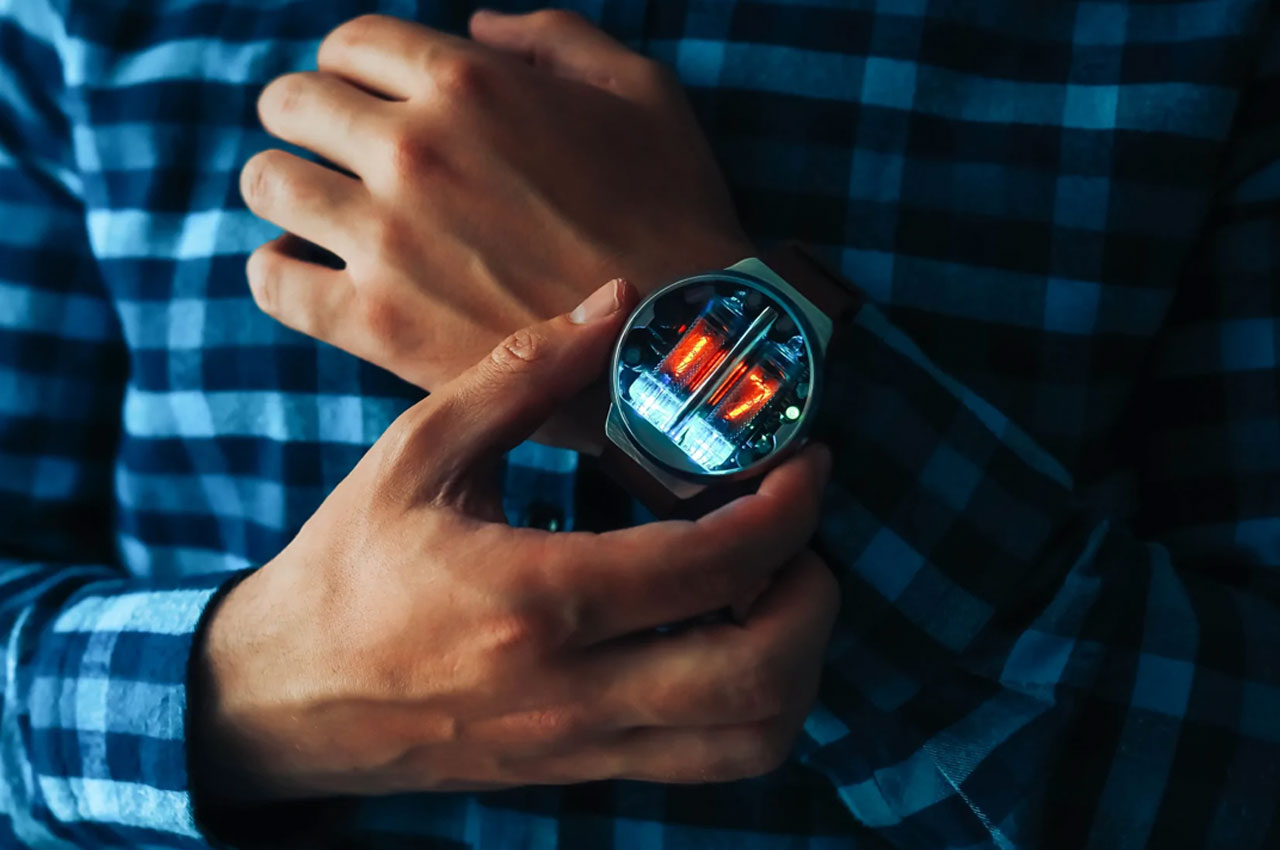
Nixie tubes are glass cylinders filled with neon gas, each one housing a stack of metal numerals that glow orange when current passes through them. They appeared in Soviet laboratory instruments long before the digital display made them obsolete. The Nixoid Next installs two original IN-16 tubes into an aluminium 2026 T4 case with sapphire scratch-resistant glass and puts that history on your wrist. A built-in motion sensor reads the gesture of raising your arm and triggers the display without touching a button.

The watch shows the hour first, holds for a 1.5-second pause, then switches to minutes. A date display is also available at the press of the single knurled button. Battery life runs ten to fifteen days of regular use or up to two months in standby, with a full charge taking around 60 minutes via the included USB cable. The Nixie lamps carry a lifetime warranty. Every time you check the time, someone nearby will stop and ask what you are wearing.

What we like:

  • Lifetime warranty on the Nixie lamps
  • Gesture-activated display that turns reading the time into something worth doing
  • Sapphire scratch-resistant glass on a watch at this price point

What we dislike:

  • Shipping runs 16 to 25 business days, so plan for any gifting occasion
  • Splash-resistant but not a swimming watch — water exposure limits apply

2. Analog Capsule Camera
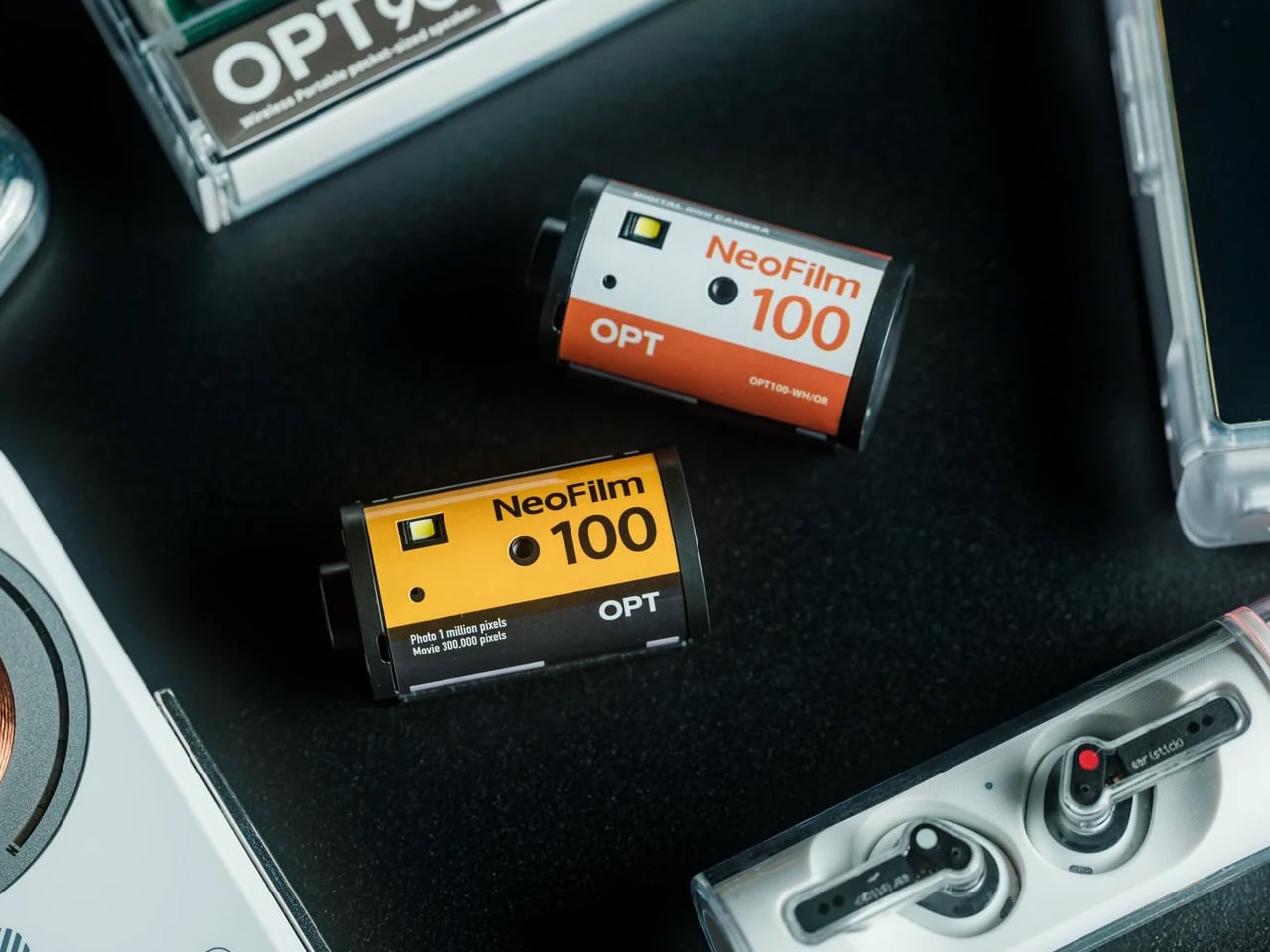
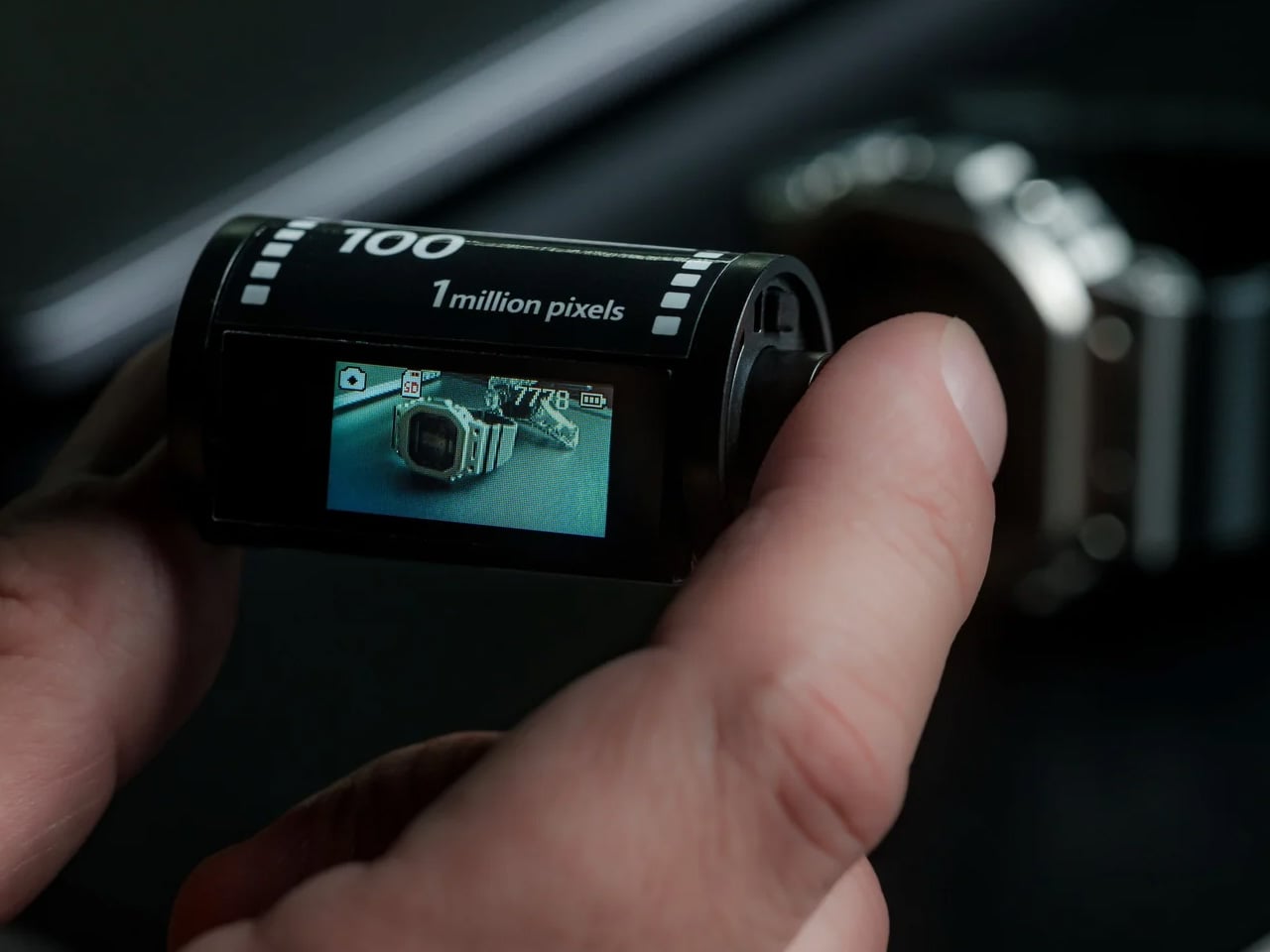
Pick it up, and it reads as a roll of 35mm film. The cylindrical body matches the proportions of a standard film canister exactly, right down to the way it sits in your palm. Inside, a 1-megapixel CMOS sensor has been deliberately tuned to produce grain, blown highlights, and softness. This is not a limitation. It is the design intent. No rolls to buy, no development to arrange. Everything stores to a microSD card the moment you press the shutter.

At 25 grams, the Analog Capsule weighs less than a set of keys. An included strap lets it hang from a bag or belt loop, always within reach when something catches your eye. Digital playback means every shot is reviewable immediately, and USB-C handles both transfers and charging. The packaging arrives looking like a roll of Kodak film, which means the surprise begins before the box is even open. As a gift, it delivers twice over.

Click Here to Buy Now: $55.00

What we like:

  • The intentional 1MP sensor that treats imperfection as a feature rather than an apology
  • 25g weight means it genuinely disappears into a bag or pocket
  • The packaging reveal that earns its moment before a single photo is taken

What we dislike:

  • One megapixel is genuinely low resolution — this is a mood camera, not a documentation tool
  • The recipient needs to understand the aesthetic intent going in, or it will disappoint

3. SYITREN R300 Portable CD Player
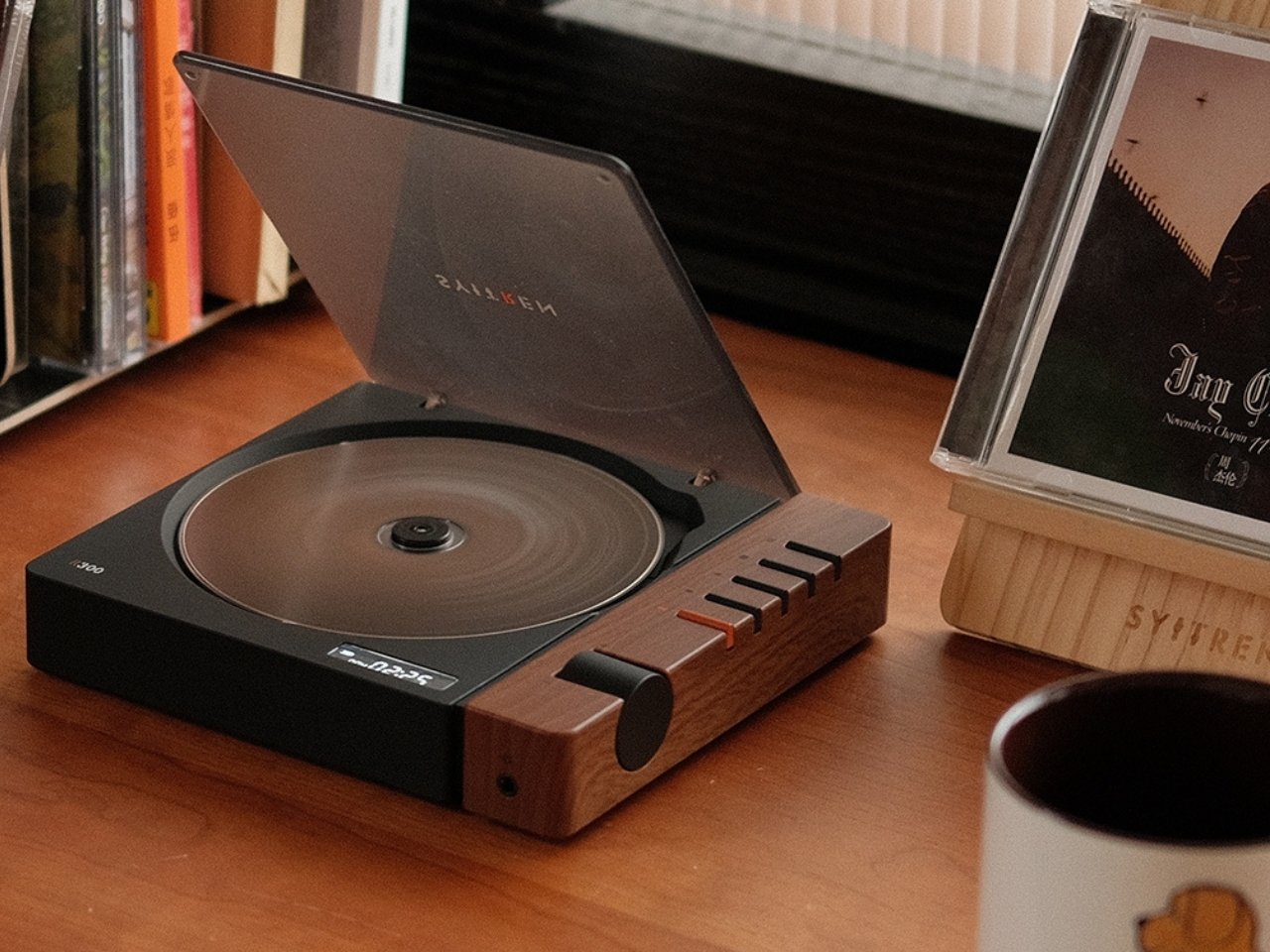
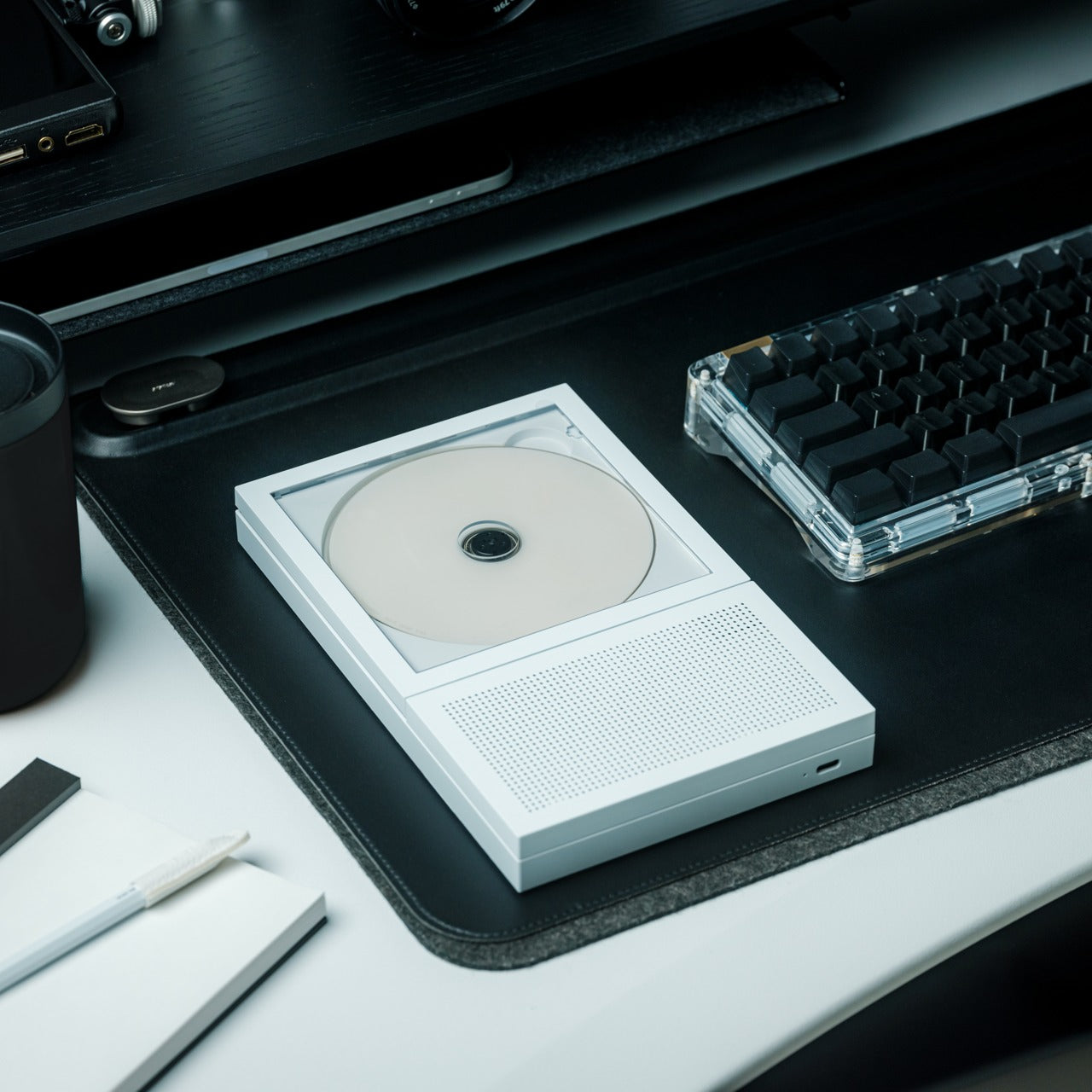
The SYITREN R300 makes the strongest case for the CD player’s return. Available in warm wood, clean white, and fruit green, it carries the proportions of a mid-century audio instrument: low-profile, ordered, designed to sit in view rather than be tucked into a drawer. The flat silhouette reads more like considered furniture than consumer electronics. It supports CD, CD-R, and CD-RW formats, covering virtually every disc in most existing collections without asking anything of the listener in return.

Bluetooth 5.3 removes the last practical objection to using a CD player in 2026. Pair wirelessly to any speaker while the disc spins, or run the SPDIF optical output for audiophile-grade listening. The 2,000mAh battery handles extended sessions without interruption. The R300 has developed a following on social media and Reddit that reads less like tech enthusiasm and more like relief — that someone finally built a CD player as considered as the music it plays back deserves.

What we like:

  • The wood finish option that makes the player feel like furniture rather than electronics
  • Bluetooth 5.3 and SPDIF optical output covering both wireless and audiophile use cases
  • A 2,000mAh battery that handles long listening sessions without interruption

What we dislike:

  • The price has drifted upward from its original retail point
  • A working disc collection is required to get full value from it as a gift

4. RetroWave 7-in-1 Radio
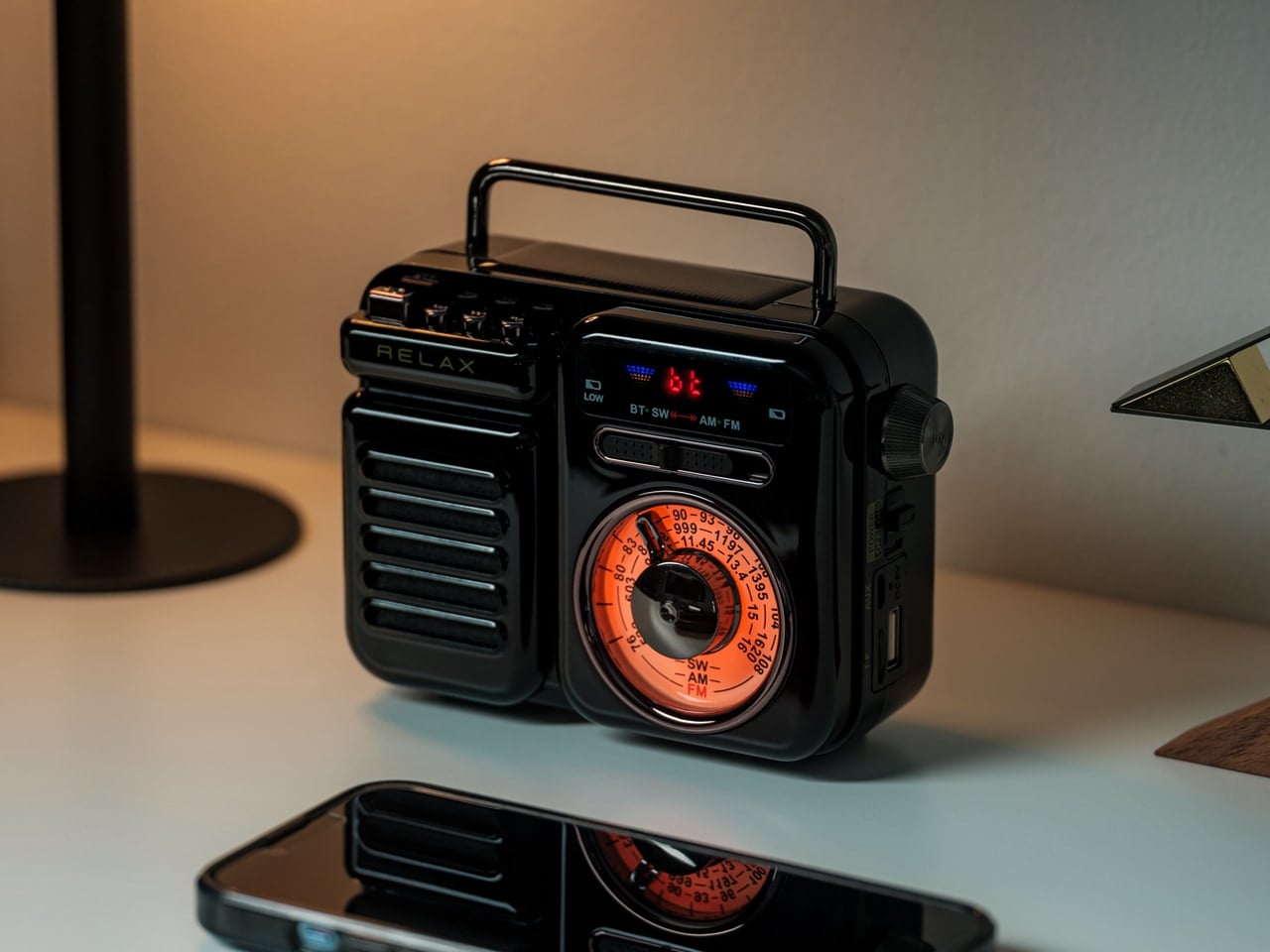
Seven functions inside one compact device: Bluetooth speaker, MP3 player, AM and FM radio, shortwave tuner, LED flashlight, clock, power bank, and SOS siren. The form borrows from mid-century transistor radios, the kind that sat on kitchen counters in the 1960s pulling in baseball games from two states over. The RetroWave is not a direct replica of any single model, which works in its favor. It speaks the visual language of that era without tipping into a museum piece.

The shortwave radio tuner is what separates this from most Bluetooth speakers on the market. When a grid goes down, shortwave is still broadcasting, giving the RetroWave a practical edge that wireless-only devices will never match. Hand-crank power means the battery situation is never fully critical. On a desk it reads as a design object from another decade. Off-grid it functions as serious emergency equipment. Very few products manage both of those things convincingly, and fewer still do it at this price.

Click Here to Buy Now: $89.00

What we like:

  • Shortwave tuning and hand-crank power as genuine tools, not marketing copy
  • Earns its shelf placement aesthetically and its field placement practically
  • SOS siren and power bank functions that justify keeping it out permanently

What we dislike:

  • Seven functions across one device means no single function is best in class
  • The form prioritizes aesthetics over raw audio fidelity

5. Shargeek Retro 35W GaN Charger
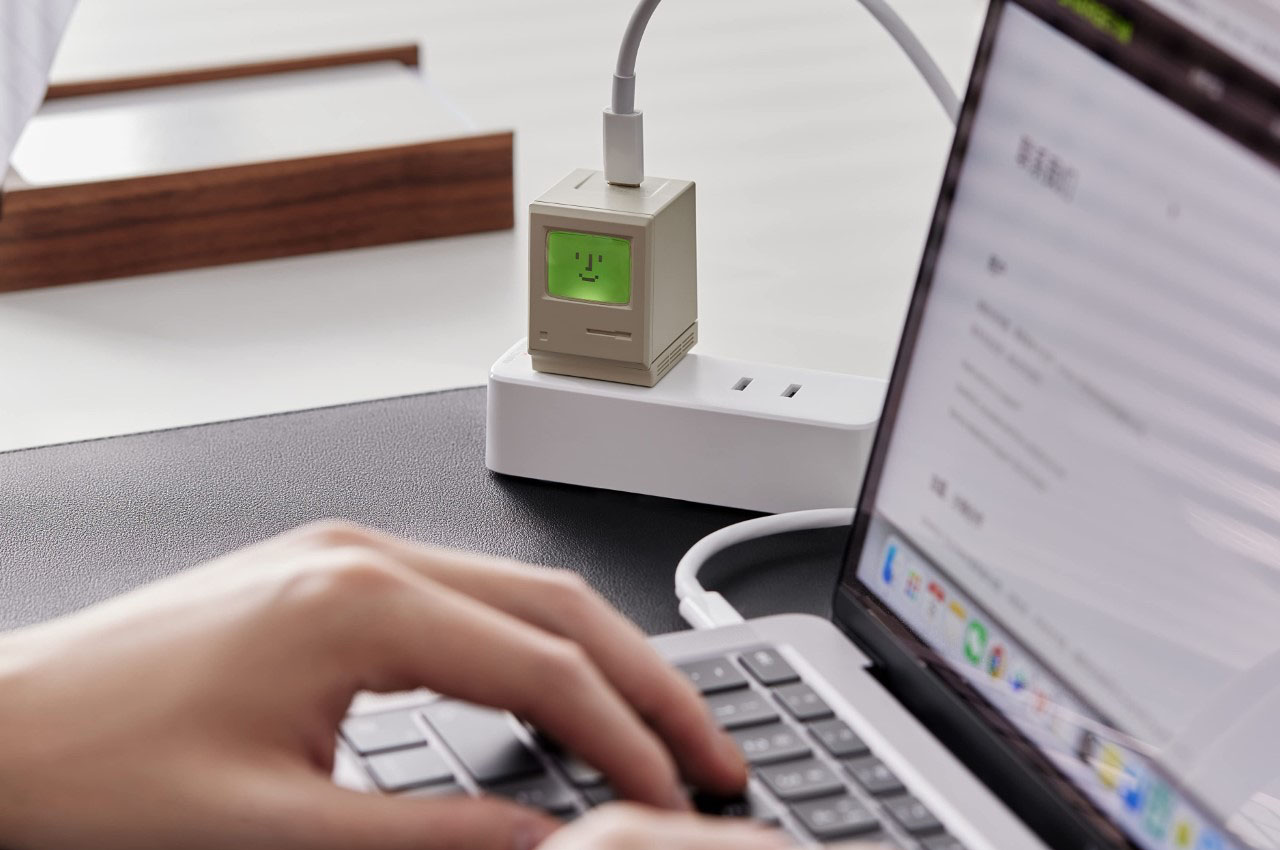
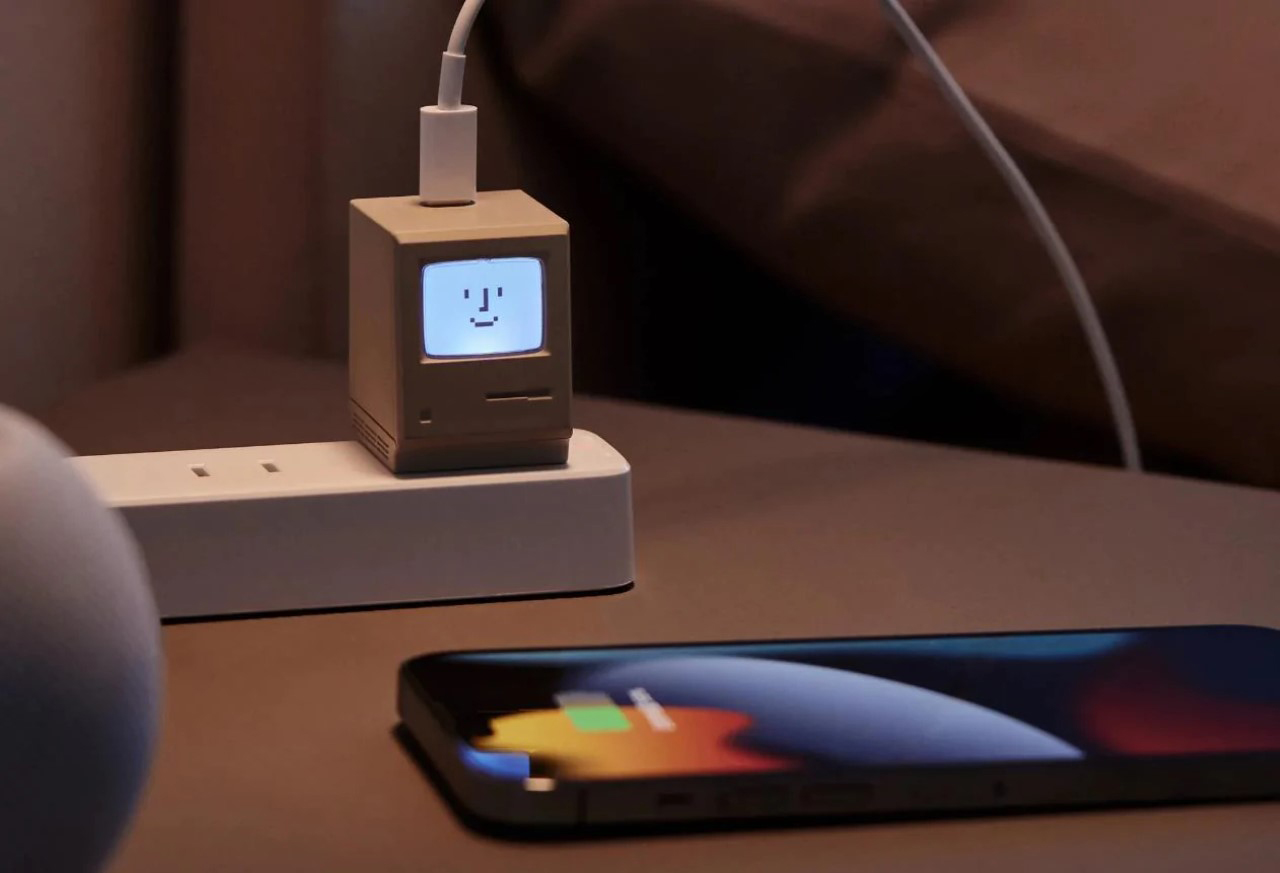
The Shargeek Retro 35W is shaped like a first-generation Macintosh computer, screen and all, and the screen actually works. It lights up to communicate charging status, moving from white when idle through yellow, blue, and green as the rate increases. Inside, GaN III technology delivers up to 35W, enough to take an iPhone from empty to 50 percent in around 30 minutes. The whole unit weighs 55 grams. The original Mac weighed around 7.5 kilograms. Progress clearly has a sense of humor about itself.

A set of DIY stickers ships with every unit, designed to sit over the tiny display and act as changeable wallpaper for the miniature screen. Compatibility runs wide: phones, tablets, earbuds, drones, handheld gaming consoles, and laptops within the wattage range all charge without complaint. This is a charger that belongs on a desk in plain sight, not tucked behind furniture. It has earned its visible placement in a way that almost no other charging brick ever will.

What we like:

  • The glowing screen that communicates charging status without requiring a connected app
  • DIY sticker set that adds a layer of personalization to an already distinctive object
  • 55 grams and pocket-sized, so it travels without adding weight

What we dislike:

  • 35W tops out before reaching laptops that need 60W or more
  • The standout design draws attention on a shared power strip, which is not always welcome in an office setting

The Best Tech Is the Stuff You Never Want to Put Away

Retro done well is not about looking backward. It is about recognizing that some forms were correct the first time and deserve better internals, not a redesign. The Nixoid Next, the Analog Capsule, the SYITREN R300, the RetroWave, and the Shargeek charger each make that argument through the object itself. Nothing here relies on a spec sheet to justify its place in a room.

They earn their spot on a wrist, a desk, a shelf, or a wall socket, and none of them need a software update to stay relevant. The man who receives any one of these will understand immediately why it was chosen. That kind of clarity is what separates a gift from a good one.

The post 5 Best Retro Gadget Gifts for Men Who Think New Tech Peaked Too Early first appeared on Yanko Design.

5 Best Home Gadgets & Tools Every Homeowner Needs In 2026

The best home products earn their place through specificity, not by doing everything, but by doing one thing with enough precision that every cheaper alternative starts to look like a guess. This month’s list spans five categories and five very different problems, and what ties them together isn’t a theme. It’s a standard: each product here has a specific reason to exist that a more general one cannot replicate.

Cleaning, listening, making coffee. Three of those sound like categories where the object barely matters. They’re not. The right tool changes a daily routine in a way that accumulates quietly over time. The five picks below make that case across the full breadth of a home, from the floor to the entryway, from the kitchen counter to the shelf where the music lives.

1. Dyson V16 Piston Animal

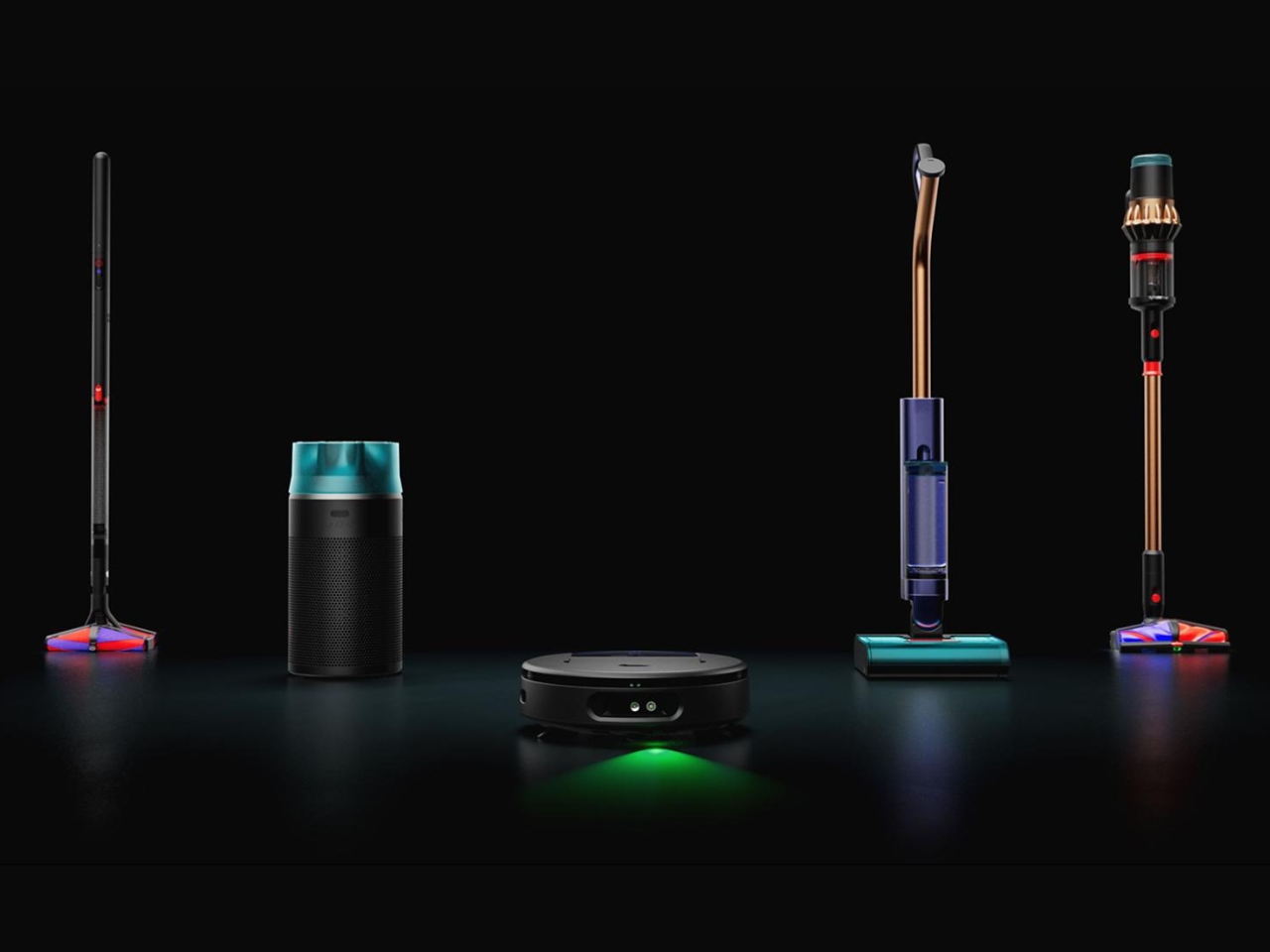
The Dyson V16 Piston Animal is what happens when a vacuum brand stops chasing raw suction numbers and starts solving the problems that live just beneath them. Smart suction adapts automatically to different floor types without any manual input from you. A green dust-revealing light makes the invisible visible, showing exactly where debris has been missed rather than asking you to trust the pass. The result is a machine that changes how you verify the work is actually done.

The dual conical brush bar addresses the problem that has quietly frustrated cordless vacuum users for years: hair. Rather than letting it wind around the bar until it needs manual removal, the system directs long hair outward to the ends for easy disposal. A compression mechanism lets you compact collected debris and empty the bin with considerably less mess than the standard push-and-hope approach. Compatibility with the Submarine 2.0 wet roller extends the V16 into wet floor cleaning without the need for a second machine.

What We Like

  • Smart suction adapts across floor types without switching modes or interrupting the clean
  • Green dust-revealing light gives you actual evidence of a clean floor, not just faith in the pass

What We Dislike

  • As a premium cordless machine, it represents a significant investment before attachments are even considered
  • The compression emptying system, while genuinely clever, still places your hand near the bin in a way some users will want to work around

2. Narwal Flow 2 White

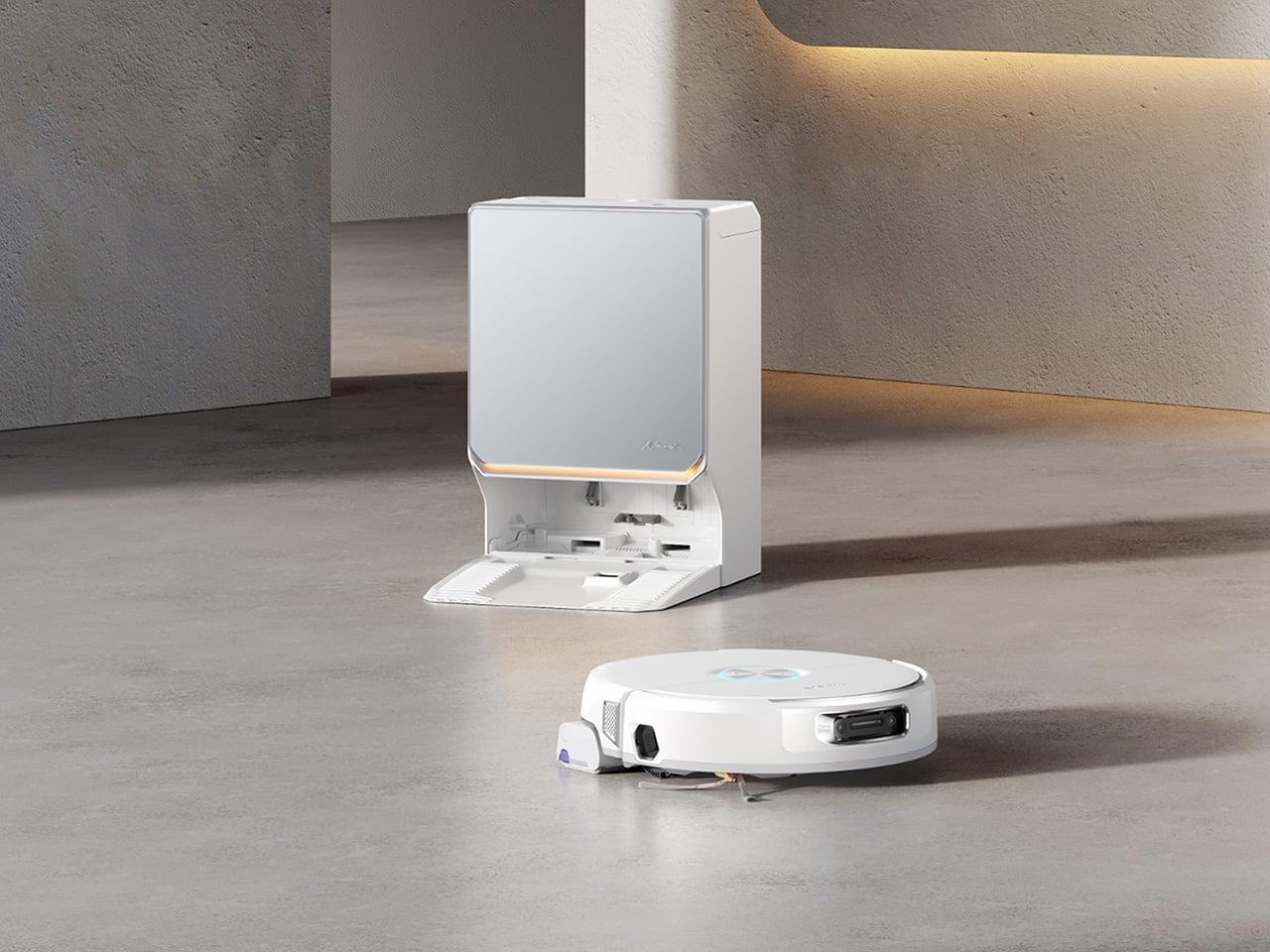
Most robot vacuums know how to read a floor. The Narwal Flow 2 White is one of the first that has started to read the room. Baby Care Mode runs quieter near nursery zones and uses the machine’s mapping intelligence to log displaced toys after each clean. Pet Mode directs deeper attention to high-traffic pet areas and includes a Find My Pet function through the app. These aren’t novelties. They’re evidence of a product designed around how a home actually operates, not just how it’s laid out on a map.

The white colorway carries a frosted glass-textured dock panel and a slim ambient status light bar that communicates the robot’s state without demanding attention. Together they give the system a composed, architectural presence in pale-toned interiors where most cleaning robots still look like they arrived from a utility room. The FlowWash system heats water to 140 degrees Fahrenheit to keep the mop clean throughout each cycle. 31,000 Pa suction and a 120-day self-emptying station sit underneath the considered exterior, fully intact.

What We Like

  • Baby Care Mode and Pet Mode reflect genuine design thinking about how domestic life actually works, not just how floors are laid out
  • The frosted glass dock and ambient light bar make this the first robot vacuum that earns a visible place in the room

What We Dislike

  • At over a thousand dollars, the value argument is strongest for households actively managing pets, young children, or both
  • The full feature set rewards regular app engagement to get the most from the AI-driven mapping intelligence

3. Portable CD Cover Player

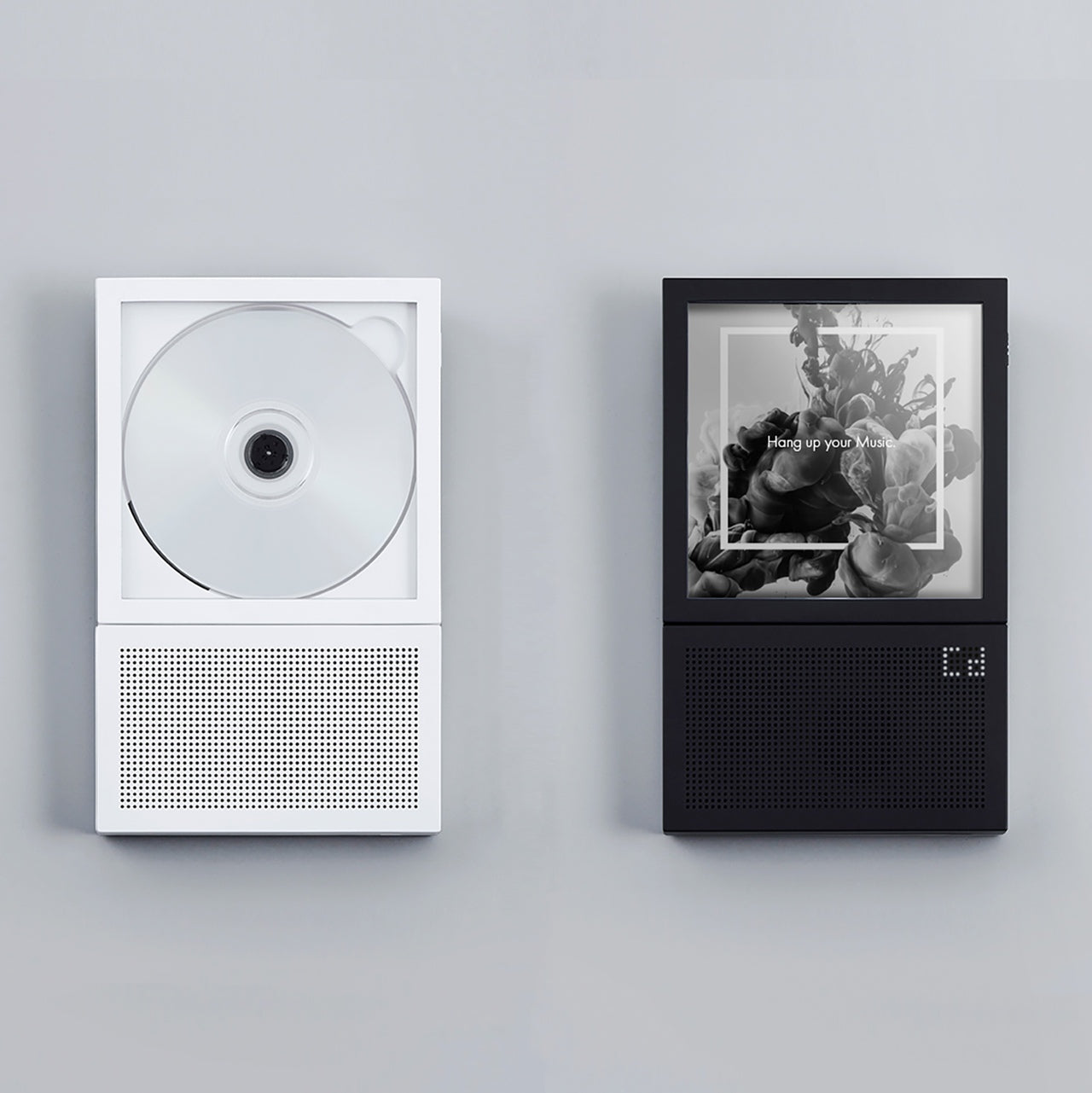
The album cover was never just packaging. For a generation of listeners, it was the first thing you saw before the music started, and it became inseparable from the sound in a way a two-inch streaming thumbnail never replicates. The Portable CD Cover Player treats that relationship as a design brief. Whichever disc you load, the jacket displays as part of the listening experience, giving the art around the music a reason to exist in the room again rather than a reason to be forgotten behind a queue.

Built-in speakers and a rechargeable battery make it a standalone object, not a peripheral waiting for something else to do the heavy lifting. A wall-mount bracket option takes it from desk accessory to room feature, turning the player into a rotating display of covers you’ve owned and music you still reach for. Starting at $199, it operates at the intersection of audio hardware and interior design in a space that streaming has spent fifteen years quietly dismantling, and this single object quietly rebuilds.

Click Here to Buy Now: $199.00

What We Like

  • Album art displayed at real scale returns an emotional context to listening that streaming platforms removed by default
  • Wall-mount capability turns a CD player into a considered room object without any modification required

What We Dislike

  • At $199, the price asks you to weigh genuine affection for the format against the convenience of software that costs nothing
  • Audiophiles wanting precise control over output quality may find the built-in speaker setup limiting

4. Fellow Stagg EKG Pro

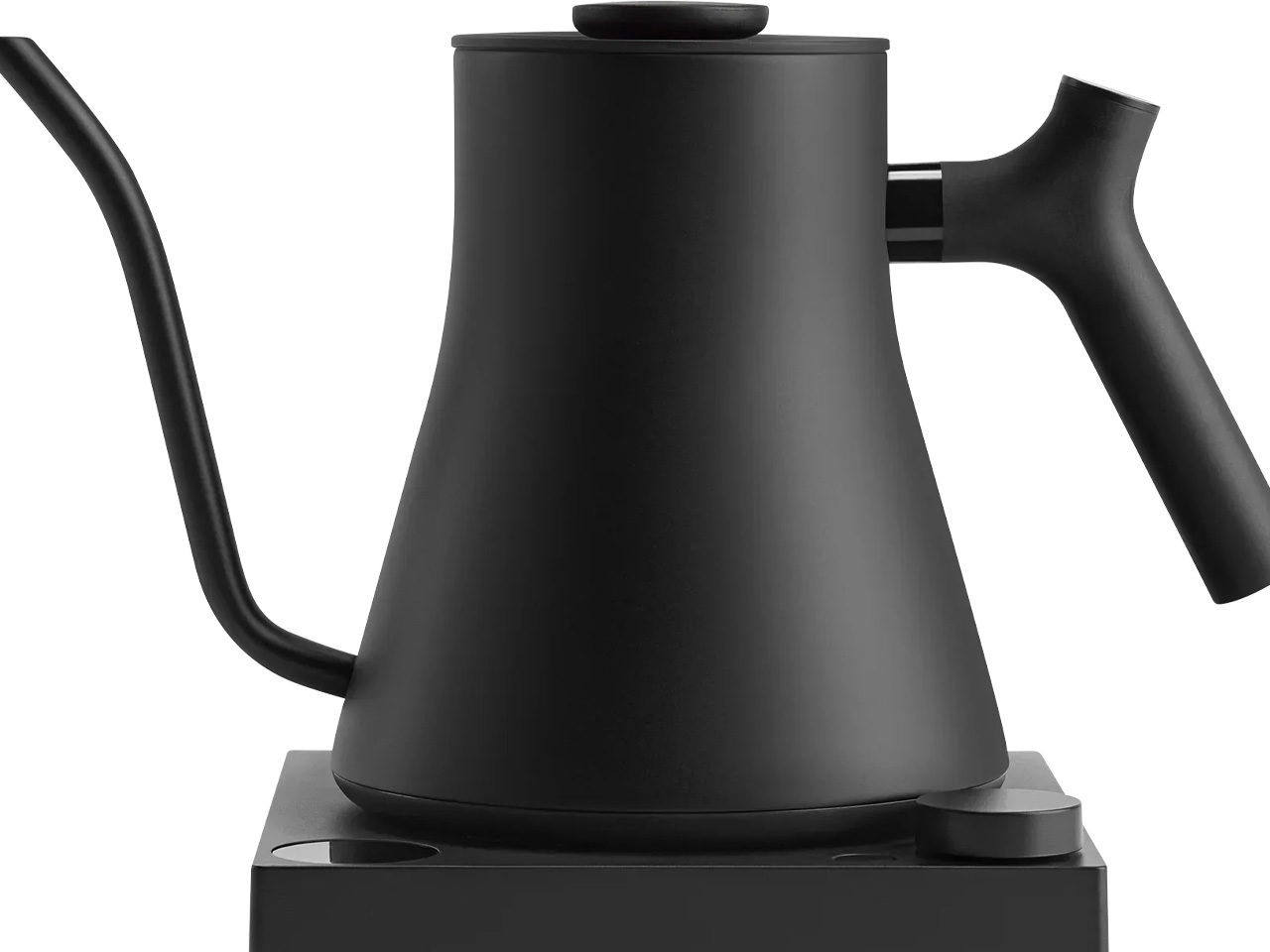
Most kettles are designed to boil water and stay out of the way. The Fellow Stagg EKG Pro starts from the position that the kettle is the wrong object to make invisible. It lives on the counter every morning. It is involved in the first deliberate thing most people do each day. A counterbalanced gooseneck handle, a precision spout, and variable temperature accurate to a single degree reflect the argument that if something earns daily use, it should earn daily consideration too.

A hold function keeps the target temperature stable for up to 60 minutes between pours, which matters for pour-over coffee and temperature-sensitive teas where a few degrees of cooling changes the result noticeably. Bluetooth connectivity links to the Fellow app for programmable presets, and a memory feature recalls the last-used temperature at startup. The 0.9L matte-finish body belongs on the counter rather than in a cabinet, which is a quieter but more durable argument than anything a spec sheet can make for a product in a category that rarely makes it.

What We Like

  • Variable temperature to one degree produces a measurably different result for specialty coffee and delicate teas
  • The counterbalanced handle makes a controlled slow pour feel entirely natural rather than effortful

What We Dislike

  • The 0.9L capacity limits households that regularly need to boil larger quantities in a single fill
  • Bluetooth and app connectivity are secondary to the hardware quality, and most users will likely never configure them

5. 3-in-1 Luminous Mirror Diffuser

Most bedside setups are a quiet negotiation. The lamp is tolerable but too directional. The mirror is functional but positioned wrong. The diffuser is somewhere on a shelf, half-forgotten after the first week. The Luminous Mirror Diffuser collapses all three into a single oval object crafted from anodized aluminum, and the result looks better than any of the items it replaces. Shadow-free reflected light technology eliminates the harsh contrast a single source creates, while the 360-degree rotatable mirror adjusts to any angle for grooming, makeup, or simply getting the reflection where it needs to be.

Three color temperatures do the work a fixed lamp never can. The 2400K warm setting creates the kind of amber glow most bulbs can’t reach without a separate swap. A neutral mid-range handles focused tasks without visual fatigue. The 6000K daylight mode delivers precision clarity where color accuracy matters. Four brightness levels sit beneath each temperature, and the patented aroma plate uses an aluminum matrix to diffuse fragrance from a few drops of essential oil. Wireless charging keeps the surface clean. At $800, it is one object doing the work of three, and doing it more elegantly than any of them managed alone.

Click Here to Buy Now: $800.00

What We Like

  • Three color temperatures with four brightness levels each means the same object serves a 6 am routine and an evening wind-down without compromise
  • Anodized aluminum with a matte scratch-resistant finish feels premium at every point of contact

What We Dislike

  • At $800, it rewards people who use all three functions regularly and will underserve those who only need one
  • A dedicated studio mirror or a standalone high-end diffuser will outperform it in those individual categories

The Difference Is Always Specific

What this month’s list resists is the idea that a home product earns its place through specification alone. The Dyson V16 finds dust you missed. The Narwal adapts to the people living in the room. The CD player returns something streaming quietly removed. Each object here is defined by what it decided to care about most, and the best ones communicate that decision before you’ve read a single line of copy.

A well-chosen tool doesn’t announce itself. It changes a routine in a way that takes a few weeks to fully notice, and then becomes the thing you miss immediately when it’s gone. These five earn that standard across five very different moments in a home, from the floor on the way out the door to the kettle on the counter at six in the morning. The difference is specific, and specific is always worth it.

The post 5 Best Home Gadgets & Tools Every Homeowner Needs In 2026 first appeared on Yanko Design.

5 Best Bedroom Gadgets for Men in 2026 That Actually Earn Their Space on Your Nightstand

The average nightstand is a collection of individual decisions made at different points of frustration. An alarm clock here, a white noise machine there, a lamp chosen because it was on sale. None of it was designed to work together. Most of it arrived one problem at a time, and collectively it creates a surface that looks more like a staging area than something assembled with any actual intention.

The five products below approach that surface differently. Each earns its place because it occupies a lane the others don’t: sound and wake, passive amplification, sleep tracking, scent, and air quality. None are trying to do everything. They’re each doing one thing well enough that you’d miss it if it weren’t there, which is the only real standard worth applying to anything that gets permanent real estate beside your bed.

1. Divoom FlowToo

The FlowToo makes the clearest case of any product here for what a modern nightstand gadget should do: replace three things you already own without compromising on any of them. It’s a Bluetooth speaker, a white noise machine, and an alarm clock occupying the footprint of one compact device. At $99.99, it costs less than most dedicated alarm clocks at the category’s upper end, and brings a 10W amplifier and 45mm full-range driver to the audio side of that equation.

The more than 90 built-in sounds cover what people actually reach for at night, from rain and ocean ambience to forest tones and beyond. The 2.26-inch display cycles through clock faces, music visualizers, and sleep scene animations that shift the room’s atmosphere without demanding much attention. The Divoom app handles alarm setting and sound selection from your phone, keeping the device simple to operate without buttons nobody remembers how to press. Waking up gets the same consideration: natural sounds grow gradually louder alongside a gentle light, which makes a real difference to how the morning starts.

What we like:

  • The 3-in-1 consolidation is genuine and not a compromise; the speaker, white noise, and alarm functions each stand on their own merits
  • The gradual light-and-sound wake replaces a jarring alarm without requiring any meaningful setup

What we dislike:

  • The 2.26-inch display may feel small for anyone who wants a clock face readable from across the room
  • Full functionality depends on the Divoom app, which adds a layer of dependency a simple alarm clock never carries

2. Battery-Free Amplifying iSpeakers

There’s a particular appeal to a speaker that requires no power at all. The iSpeakers amplify passively, using the acoustic properties of their form to direct and increase sound from your device without drawing from a battery or a wall socket. On a nightstand already populated with cables and devices competing for outlets, removing one power dependency entirely is its own design achievement. No setup, no Bluetooth pairing ritual, and no depleted battery to discover at the worst possible moment.

The design sits in a category that gets dismissed as novelty, which undersells what a well-executed passive speaker actually does. Amplification through acoustic shaping rather than electronics produces a warmer, more direct sound character than most powered options at a comparable price, and the absence of digital circuitry keeps the listening experience honest. For bedside use, where the goal is quiet background audio rather than filling a room with volume, the passive approach turns out to be exactly appropriate to the context.

Click Here to Buy Now: $179.00

What we like:

  • No battery and no power source means one fewer cable on the nightstand, which is precisely the kind of problem a bedroom gadget should be solving
  • Passive amplification produces a naturally warm sound that suits quiet, close-range listening well

What we dislike:

  • The volume ceiling is set by acoustic design rather than adjustable electronics, so louder listening simply isn’t on the table
  • Sound quality is device-dependent; the iSpeakers work with whatever your phone’s driver gives them

3. Sleepal

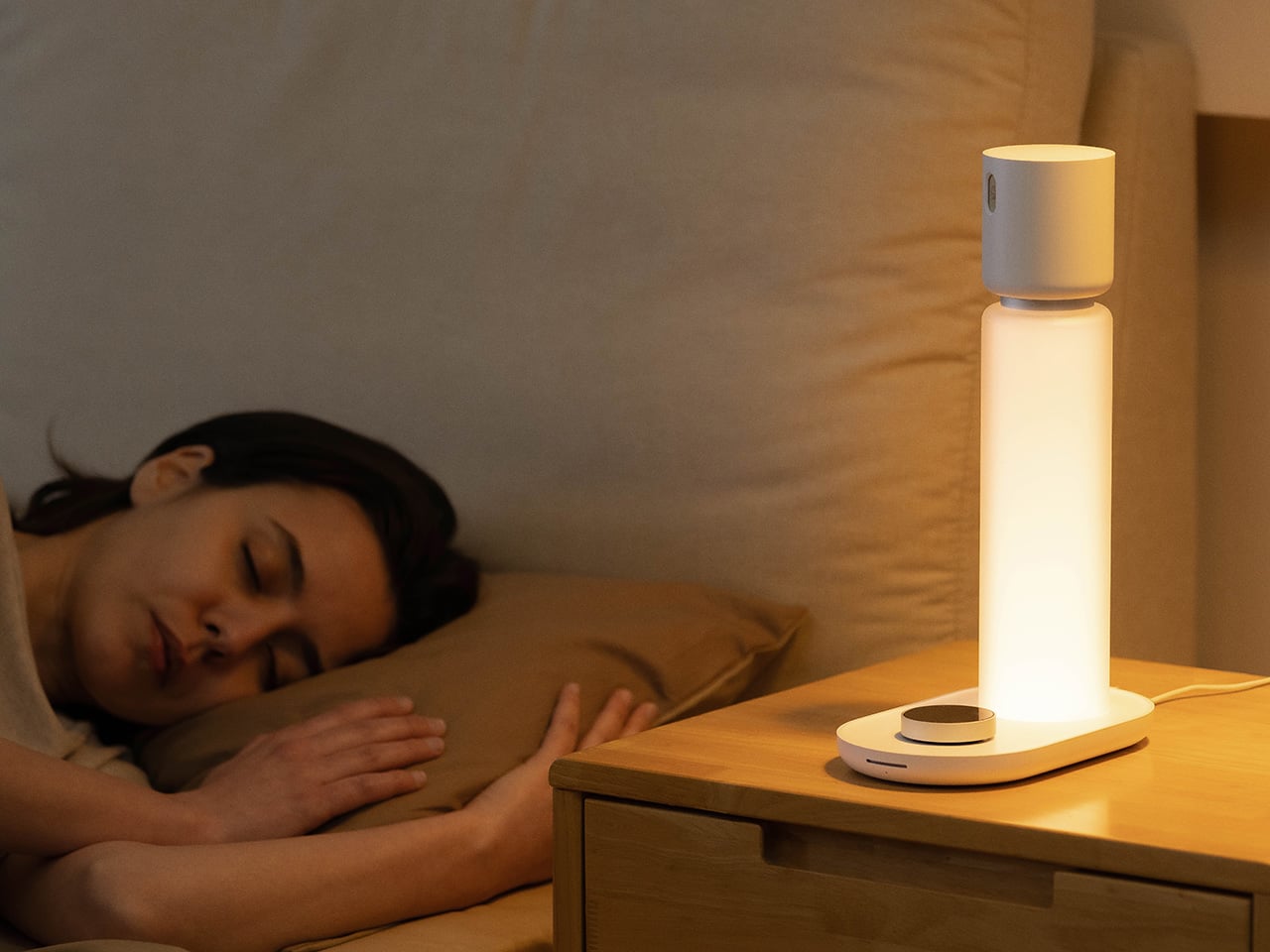
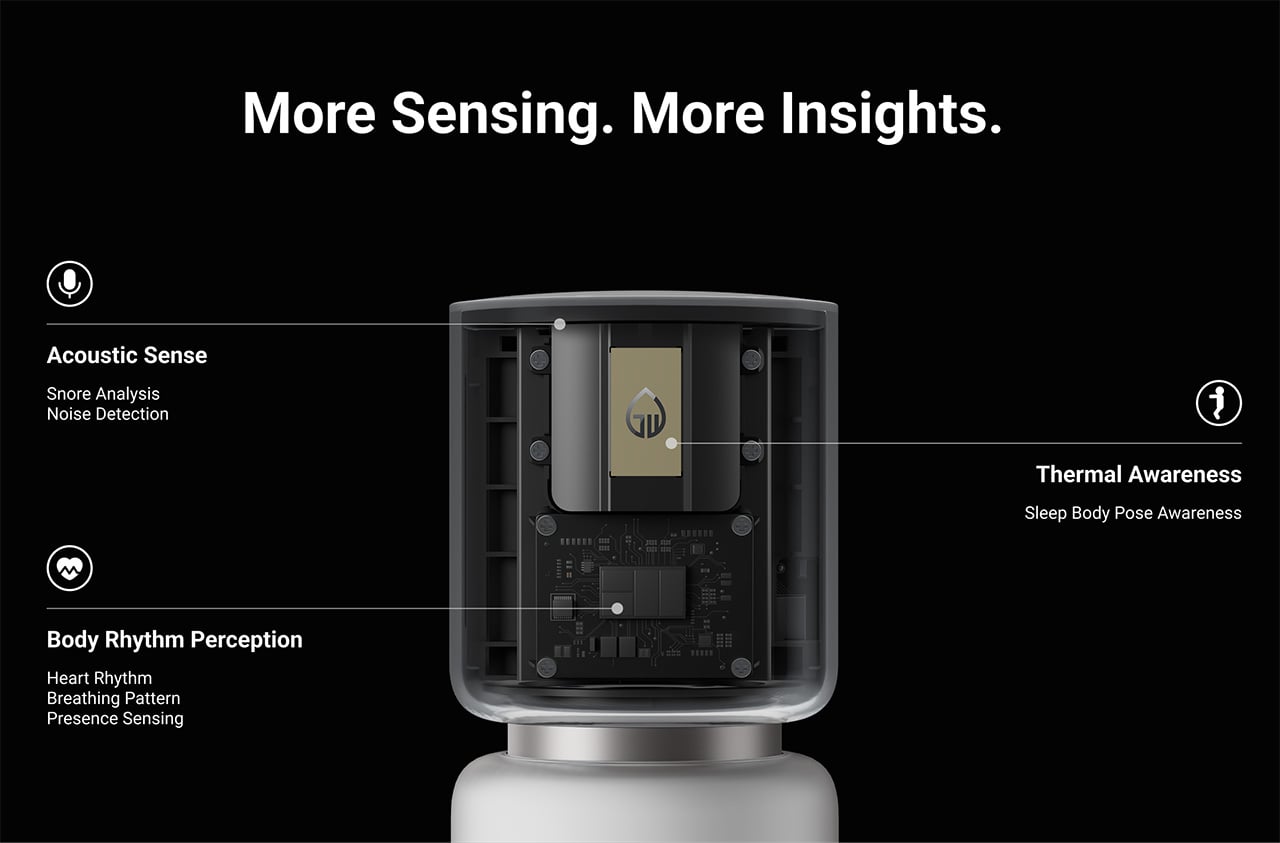
The most honest criticism of sleep tracking wearables is that they make you physically aware of your body at the one moment you most need to forget it. Sleepal sidesteps that problem entirely by building 60 GHz millimeter-wave radar into a bedside lamp, detecting chest micro-movements at 0.1mm precision without any contact. You set it up once, and after that it just works. No ring to charge, no watch to put on, nothing to adjust before getting into bed.

Behind the lamp form sits a sleep AI model trained on nearly 100 million parameters and a clinical database built alongside polysomnography testing at multiple hospitals. That foundation makes the sleep-stage reporting more accurate than most mainstream wearables, according to Sleepal’s own clinical comparisons. The smart alarm avoids deep sleep and REM to find a more natural exit point each morning, and built-in breathing guidance and relaxation audio give you practical tools to wind down before the tracking even begins.

What we like:

  • Contactless tracking removes the physical awareness that most wearables introduce into the very activity they’re trying to measure
  • The clinical foundation behind the accuracy claims is grounded in actual polysomnography data, not just product marketing

What we dislike:

  • The lamp design is primarily functional; it won’t anchor a nightstand aesthetically the way a more considered light object would

4. Zenflow Personal Aroma Diffuser

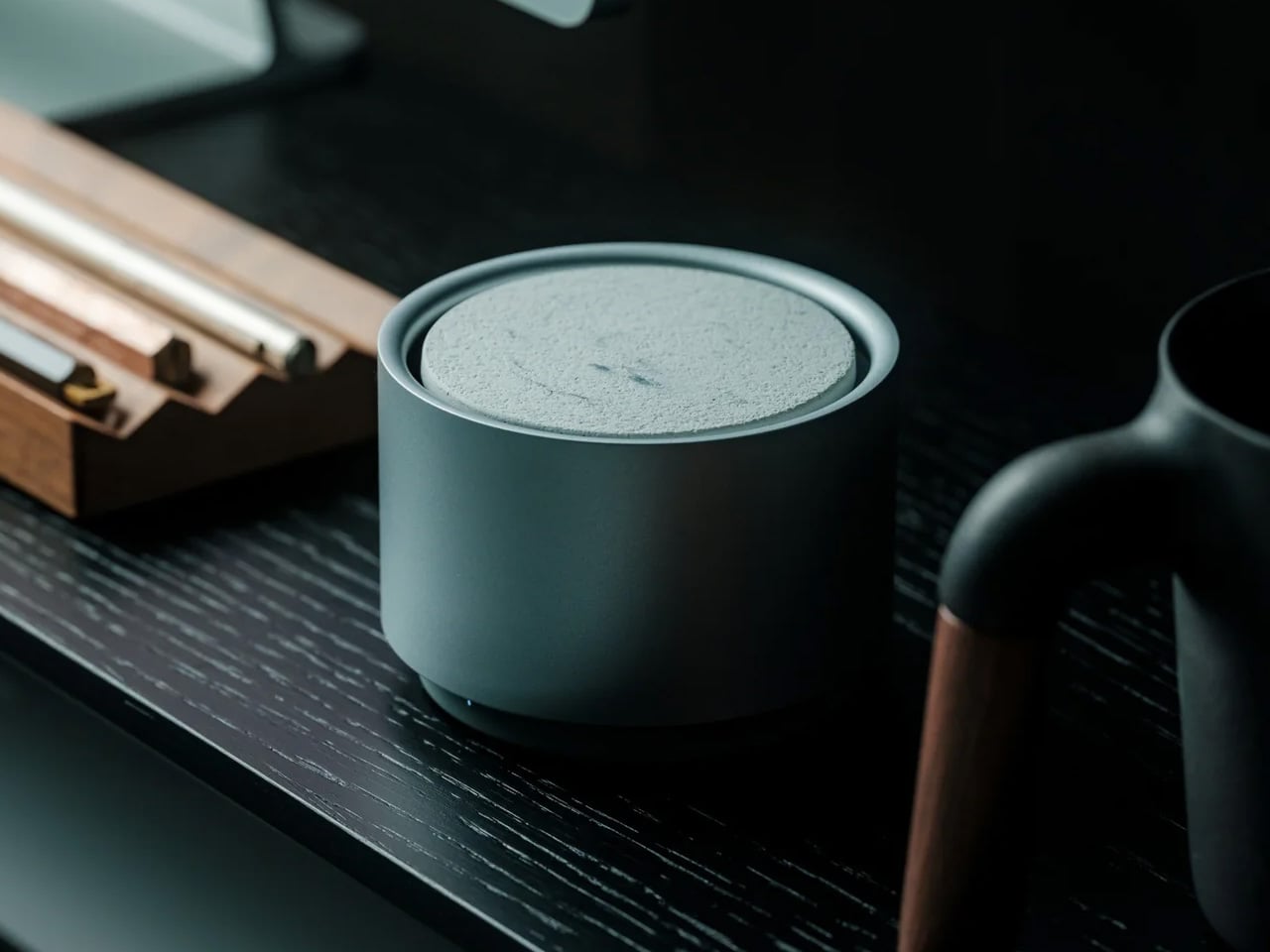
Scent is the most underrepresented variable in the average bedroom setup, which is interesting given how consistently it appears in the research around sleep and relaxation. Lavender, eucalyptus, and cedarwood all have documented effects on cortisol and the body’s wind-down response. The Zenflow is a personal aroma diffuser, sized and designed for immediate proximity rather than filling a room from across it. That distinction matters on a nightstand: you want the effect close and controlled, not ambient and accidental.

The personal scale is worth dwelling on. A full-room diffuser runs until you remember to turn it off and commits the whole space to one fragrance whether you’re in it or not. A personal diffuser concentrates the experience where you actually are, giving you the benefit without that trade-off. The Zenflow is built for that specific use case, sized to sit cleanly among other nightstand objects rather than requiring its own dedicated space or any special accommodation around it.

Click Here to Buy Now: $170.00

What we like:

  • Placing the diffuser at nightstand level makes consistent nightly use far more likely than a diffuser sitting on a shelf across the room
  • The personal scale keeps the scent effect targeted and easy to control

What we dislike:

  • The benefit is highly individual and depends entirely on which oils or scents you choose to use with it
  • Personal diffusers require regular refilling, which is a simple maintenance rhythm but still an ongoing one

5. Airthings Renew

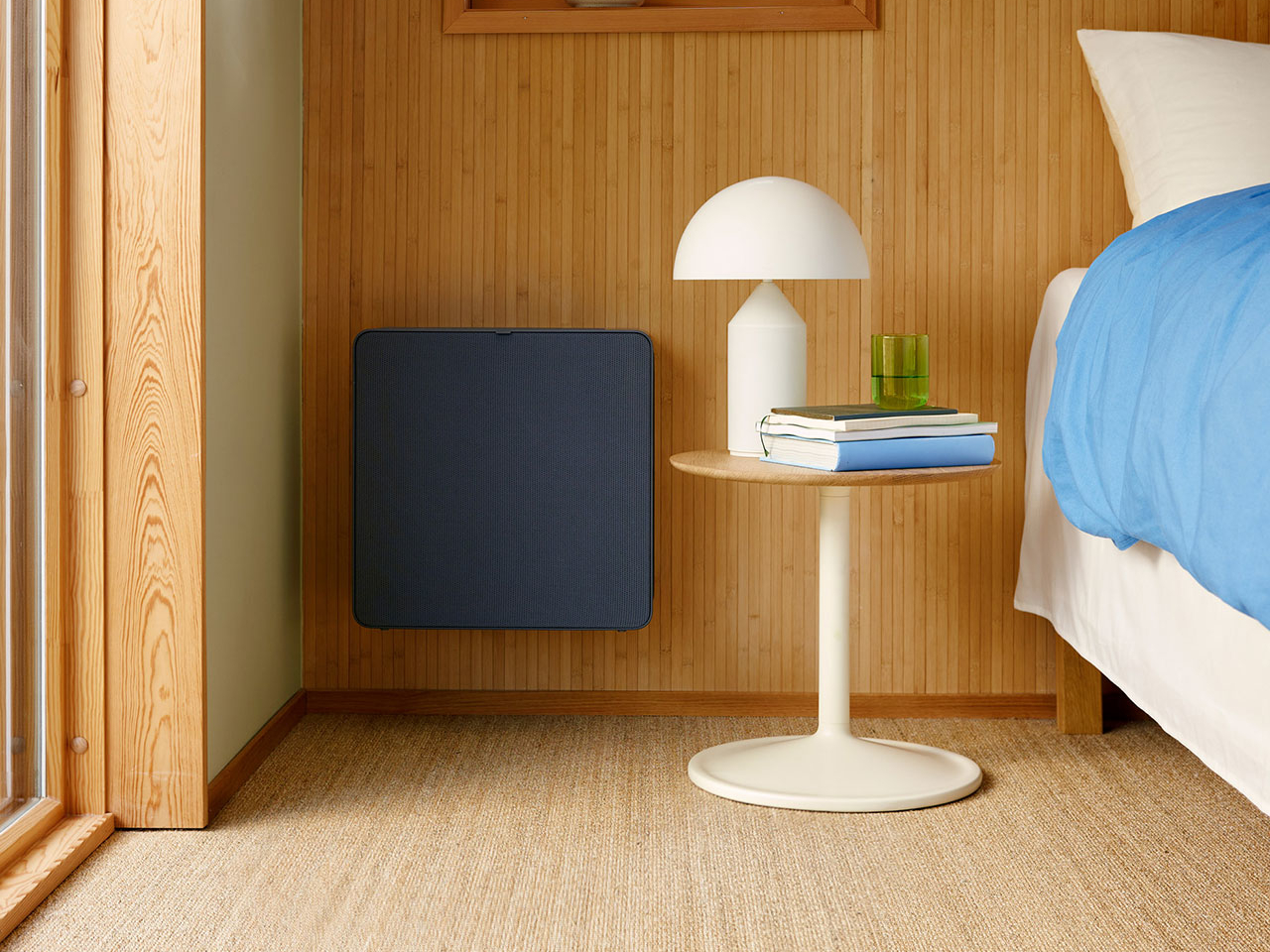
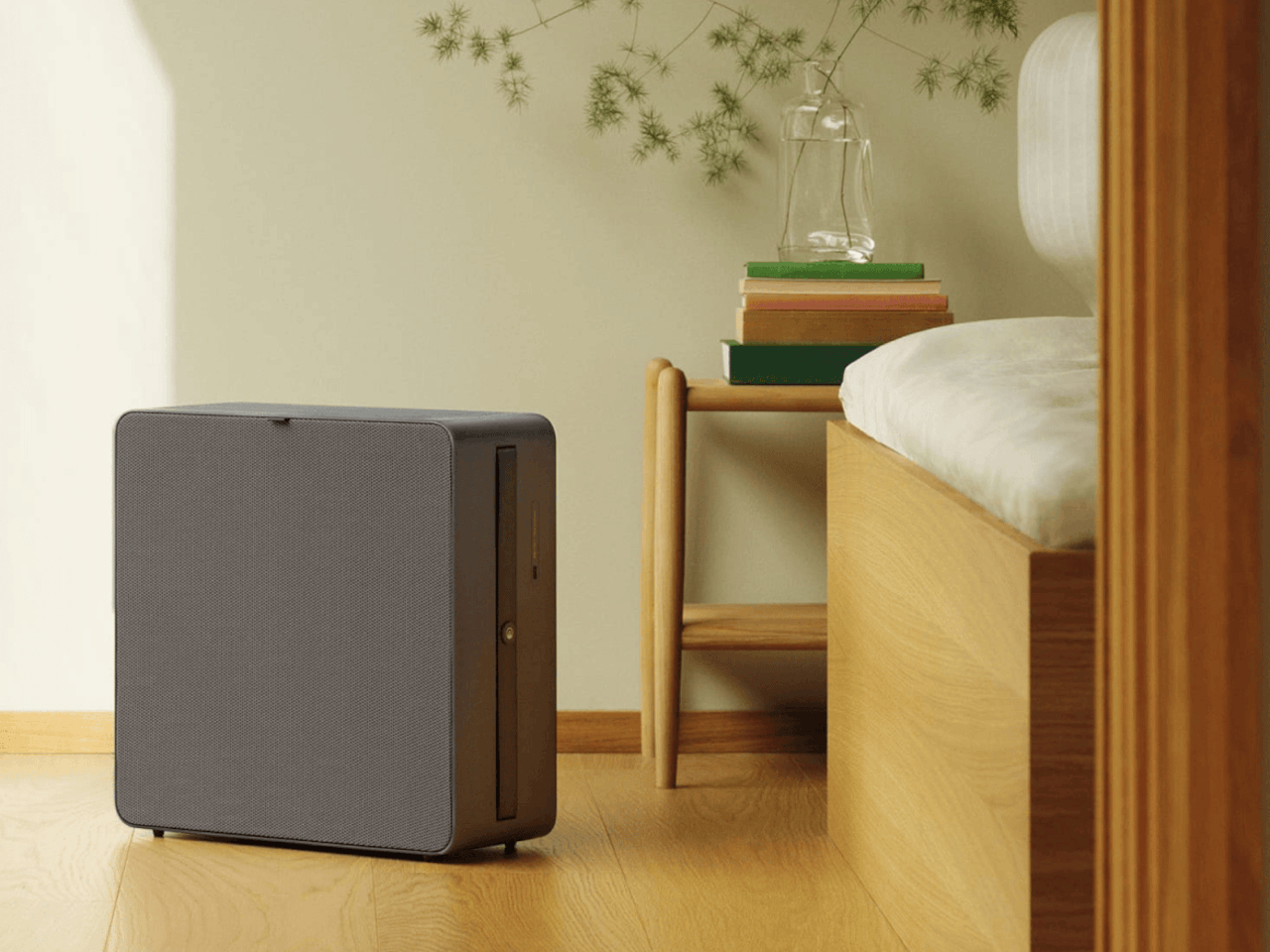
Air quality is the nightstand variable almost nobody thinks about until it becomes a problem. Most bedrooms have minimal airflow overnight with doors closed, and the particulate matter and volatile organic compounds that accumulate in enclosed spaces have a measurable impact on sleep depth. The Airthings Renew handles four-stage filtration, ending with a HEPA-13 filter that removes 99.97 percent of particles down to 0.3 microns, while a real-time laser particulate sensor adjusts filtration intensity automatically through the night.

What separates the Renew from a standard bedroom air purifier is the design language. Inspired by Nordic interiors, it arrives in muted charcoal with soft corners, a matte finish, and a fabric exterior that reads more like furniture upholstery than plastic housing. A Silent mode keeps it inaudible through the night, and the form works vertically or horizontally depending on available space. For anyone already in the Airthings ecosystem, the app ties home-wide air quality data into a single picture alongside everything else the system monitors.

What we like:

  • HEPA-13 filtration with a real-time particulate sensor makes the air quality benefit substantive rather than decorative
  • The Nordic design language means it can live beside a bed or on a low shelf without reading as a utility appliance that wandered in from another room

What we dislike:

  • The Renew is a floor or low-shelf unit rather than a true nightstand object; the air quality benefit reaches the bed, but the device itself won’t sit on one
  • The washable pre-filters require periodic cleaning that most people will keep up with initially and quietly stop doing

The Only Standard That Matters Beside Your Bed

These five products together cover the full environmental picture of a bedroom designed for rest: the sound you go to sleep to, the passive audio you keep nearby, the sleep being tracked without your involvement, the scent that marks the shift into rest, and the air moving through the space while everything else does its job. Each earns its place. None are asking you to reorganize your life to accommodate them.

The nightstand test is simple: remove something and notice whether the absence registers the next morning. These five all pass. The FlowToo at $99.99 anchors the list because it does the most and occupies the least. The rest fill in the picture around it, and together they make the case that a well-edited nightstand isn’t about owning fewer things. It’s about being more deliberate with what earns a permanent spot beside the bed.

The post 5 Best Bedroom Gadgets for Men in 2026 That Actually Earn Their Space on Your Nightstand first appeared on Yanko Design.

5 Best Off-Grid Essentials Every Nomad Needs in July 2026

Going off-grid used to mean a specific kind of bargain. You traded reliability for freedom, comfort for silence, and convenience for open space. That trade felt reasonable for a long weekend and increasingly difficult to justify for anything longer. The gear didn’t match the ambition. People who wanted to live this way, genuinely and for extended periods, were left assembling systems that weren’t built to work together and hoping the result held.

In 2026, that bargain no longer applies. A small number of products have quietly redefined what off-grid living can actually look like, and none of them ask you to accept a trade you’d regret by the third day. The five here represent a complete kit. From the base you sleep in to the water you drink to the wrist you wear when your phone goes silent, this is how you leave the grid and mean it.

1. Aboard T4 Electric Travel Trailer

The Aboard T4 is the most capable piece of mobile living infrastructure available at a consumer level. Developed by California-based Aboard RV, it is a 24-foot self-propelled travel trailer built around a hybrid electric drivetrain with more than 200kWh of onboard power. A 41kWh LFP battery handles the daily load. At the same time, a 60kW range-extending generator recharges in under 30 minutes, stretching off-grid capability well beyond a long weekend without requiring any active energy management on your part.

What separates the T4 from anything else in its category is how completely it covers the stack of problems extended off-grid living creates. A 52-gallon fresh water tank, a 35-gallon grey water tank, and a 30-gallon black water tank manage water independently. An induction cooktop, refrigerator, and microwave give the kitchen real function. Two convertible lounges sleep four, a bathroom doubles as a mudroom with two separate entries, and 270-degree panoramic glazing brings the landscape into the interior without asking you to step outside to see it.

What we like

  • 200kWh+ onboard power with a range-extending generator that recharges in under 30 minutes
  • Fully integrated three-tank water system handles fresh supply and waste without any external hookup

What we dislike

  • $80,000 starting price places this well outside casual off-grid use
  • No confirmed release date, with reservations open now via a $100 fully refundable deposit

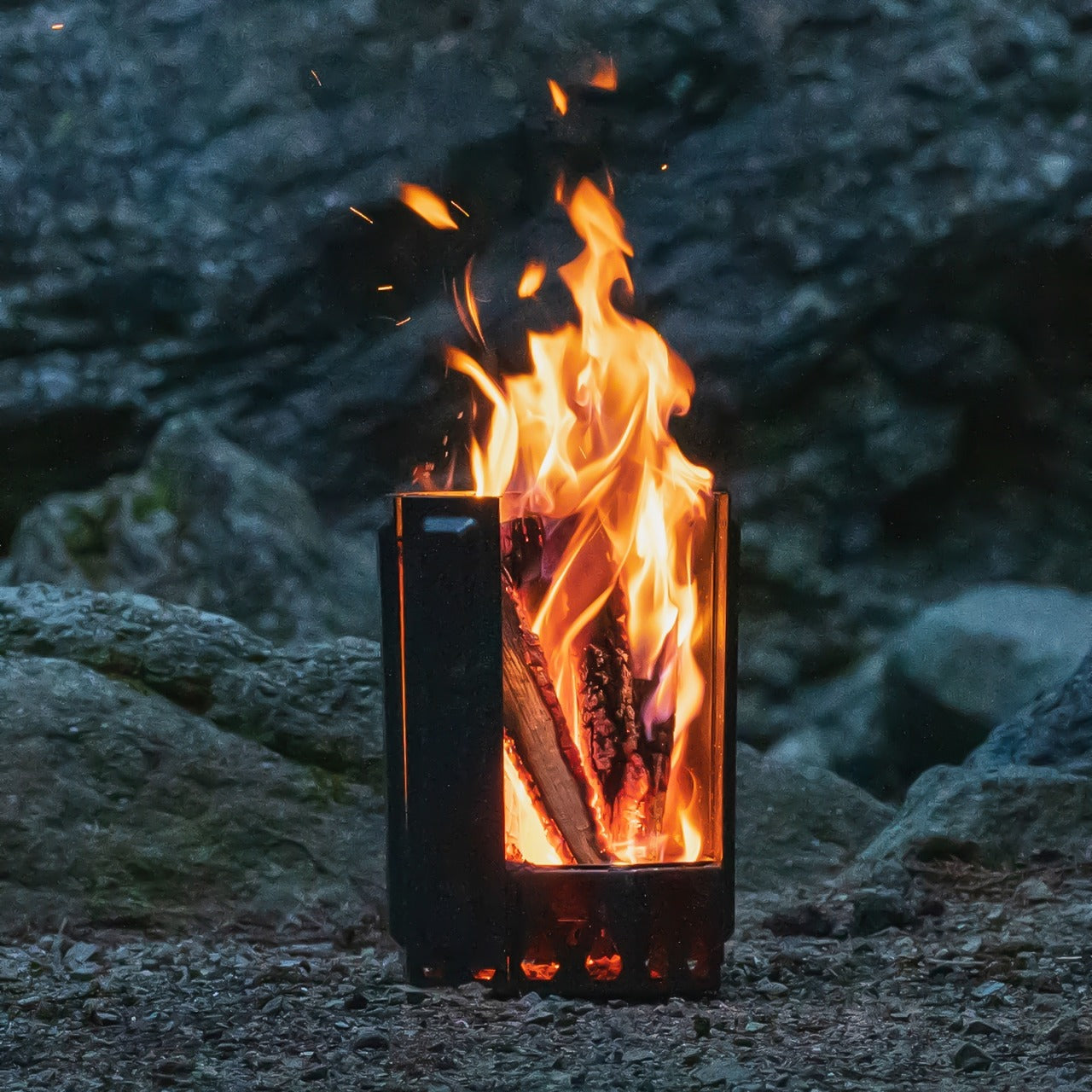
2. Airflow 8-Panel Fire Pit

A fire at the end of a day off-grid is not optional. It is the thing the day builds toward. The Airflow 8-Panel Fire Pit from Sanyo Works takes that seriously. Holes at the base of each panel channel primary airflow upward through double-walled cavities, triggering a secondary burn that produces a cleaner and more efficient fire than a conventional ring. The result is minimal smoke and a flame that sustains itself with less wood, which means you sit closer and stay out longer.

The eight removable panels give you control that fixed fire pits never offer. Opening or closing sections adjusts how the combustion chamber breathes, letting you dial intensity up or down without constant attention. Sanyo Works brings deep metal processing expertise to this design, and the precision of the airflow mechanics reflects that background in every use rather than in any surface flourish. For a product in a category full of objects that warp and degrade after a season, the Airflow is built to earn its place as permanent kit rather than a single-summer purchase.

Click Here to Buy Now: $325.00

What we like

  • Secondary combustion system produces minimal smoke for a noticeably cleaner and more efficient burn
  • Adjustable 8-panel design gives real control over fire intensity without constant management

What we dislike

  • Eight individual panels mean more components to account for when packing down at the end of a trip
  • Wood-only combustion with no gas compatibility

3. GoSun Flow Solar Water Purifier

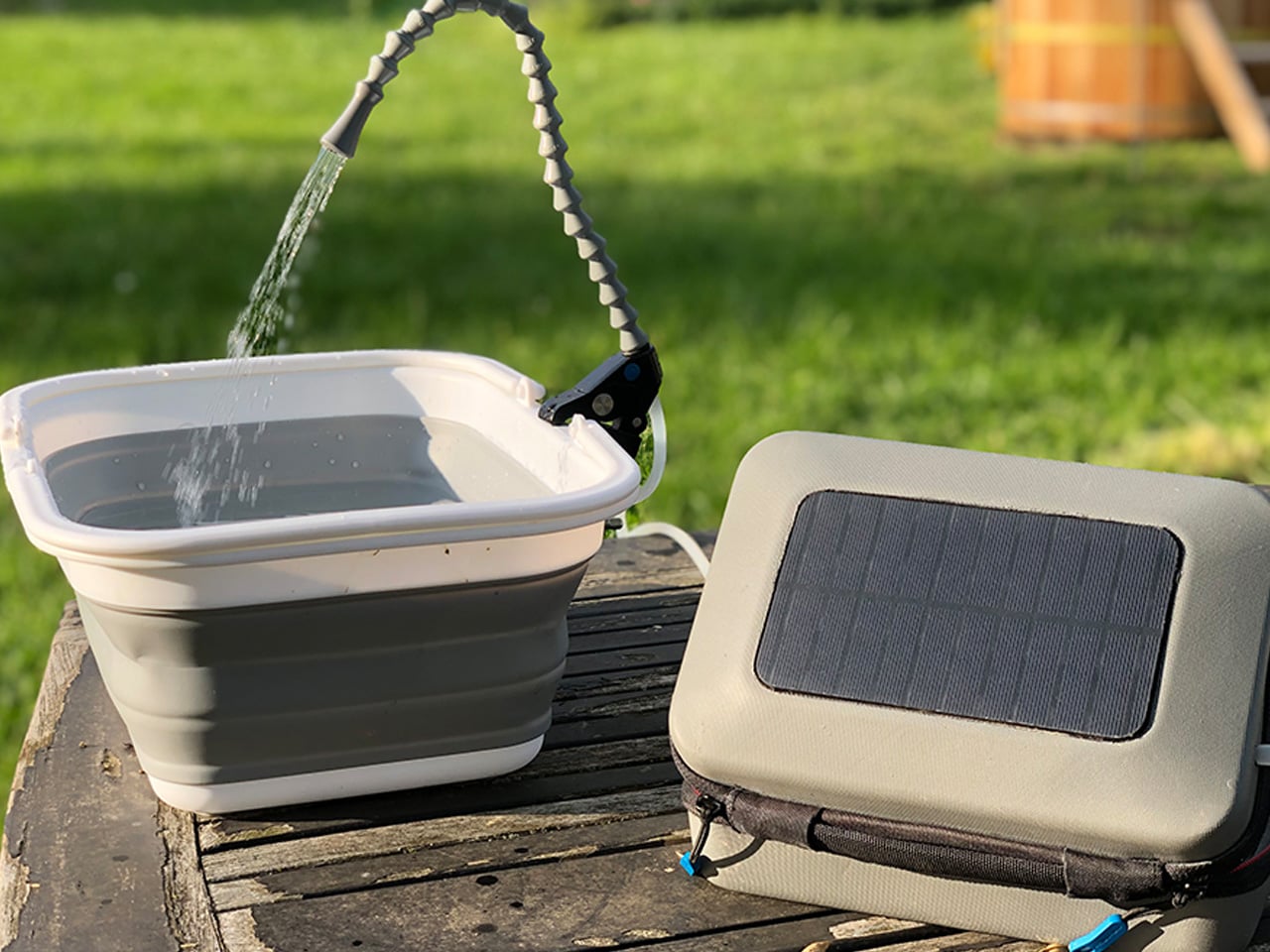
The T4 carries 52 gallons of fresh water, which handles the first stretch of serious off-grid living without a second thought. Extended stays ask for more. The GoSun Flow is a solar-powered water purifier and pump that compresses into a backpack and turns any freshwater source into potable water at one liter per minute, eliminating 99.99 percent of pathogens through a three-stage filtration system. A flexible faucet clamps to branches, tables, or tailgates, turning a stream bank or a riverside clearing into a fully functioning water station.

The detail that changes the conversation entirely is the solar-heated shower. After the integrated solar panel charges the pump’s power bank, the GoSun Flow delivers warm water from whatever source you fed it. On a multi-day off-grid stay, that is not a comfort feature. It is the difference between feeling like you chose this life and merely tolerating it. The filter manages up to 1,000 liters before replacement, USB power covers days when solar input is limited, and the entire system packs back into the bag you arrived with.

What we like

  • Three-stage filtration eliminates 99.99% of pathogens at one litre per minute from virtually any freshwater source
  • Solar-heated shower capability from a system compact enough to carry in a standard backpack

What we dislike

  • Cannot process saltwater, which limits utility at coastal campsites
  • Multiple components mean more parts to track and potentially leave behind in the field

4. Blackout Beam Tactical Flashlight

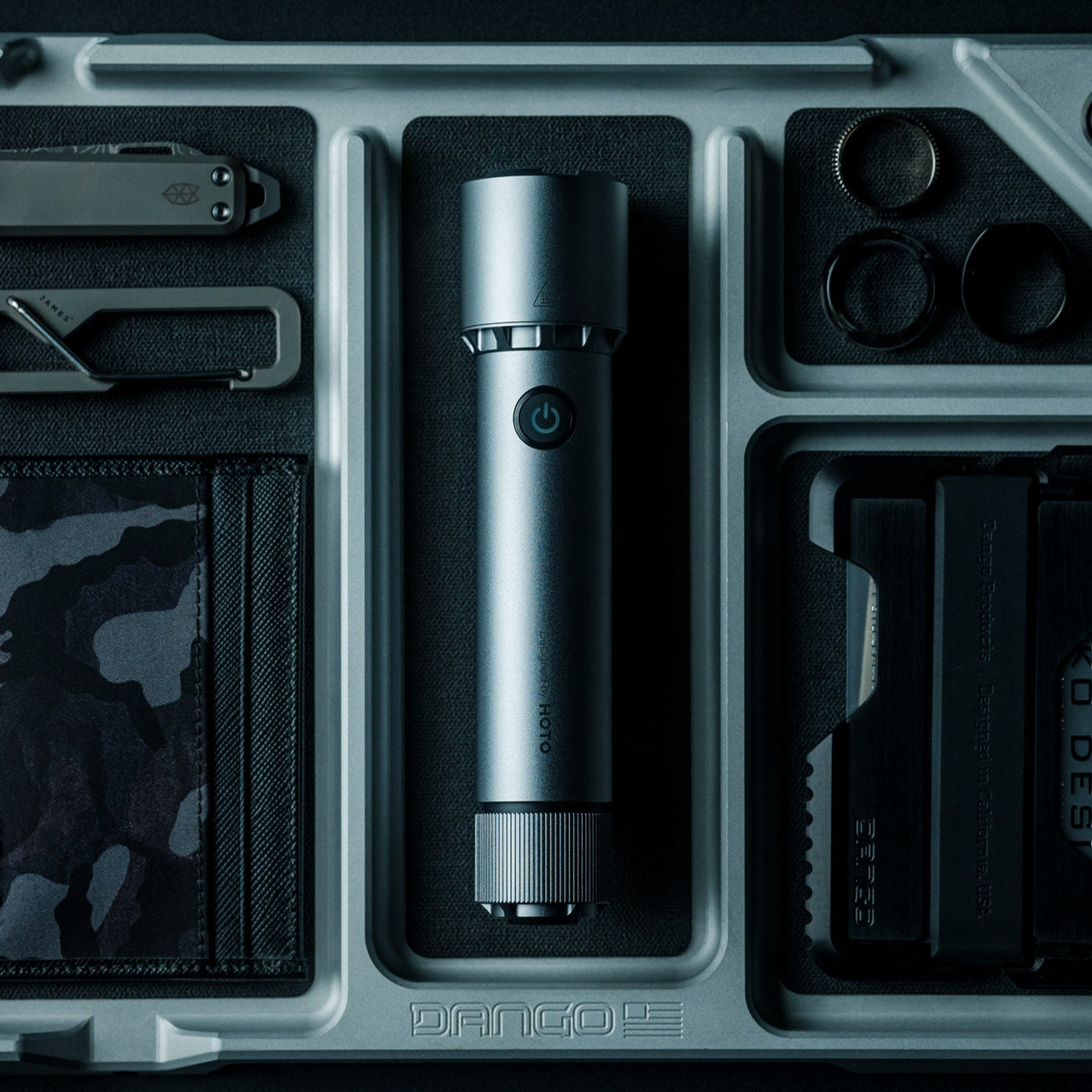
Darkness at a remote campsite is a different quality of dark than anything urban life prepares you for. The Blackout Beam handles that gap with 2,300 lumens of output, a 300-meter beam throw, and a 0.2-second response time that puts light in your hand before your eyes have finished adjusting to reaching for it. The aluminum body carries an IP68 rating for complete water and dust resistance. In a wildlife encounter, a navigation situation after sundown, or a power failure inside the T4, the speed of that response matters more than the lumen count.

What separates the Blackout Beam from a high-output flashlight you’d pick up at a hardware store is the combination of instant response and a design language that earns daily carry well before any emergency arrives. It fits cleanly in a jacket pocket, sits without drama on a surface inside the T4’s interior, and reads as a considered object rather than declared emergency equipment. Off-grid gear that actually gets packed is gear that doesn’t announce its purpose before it’s needed. The Blackout Beam earns that carry without making any demands.

Click Here to Buy Now: $90.00

What we like

  • 2,300-lumen output with a 300-meter beam reach and 0.2-second response built for real outdoor conditions
  • IP68-rated aluminum body handles water, dust, and impact without any concession to portability

What we dislike

  • Maximum lumen output draws battery faster during extended use
  • Tactical aesthetic doesn’t integrate seamlessly into every EDC or interior setup

5. O-Boy Satellite Smartwatch

Everything else on this list extends how long you can stay off-grid and how well you live while you’re there. The O-Boy addresses the one scenario none of the others touch. Developed by Brussels-based studio Futurewave, it is a satellite-connected smartwatch built for environments where mobile networks simply do not reach. In those places- mountains, open water, remote work sites- it transmits an emergency alert directly via satellite regardless of what infrastructure exists beneath your feet. No carrier plan covers this. O-Boy does.

What Futurewave got right beyond the technology is the design brief. O-Boy does not read as tactical or survival-coded. It does not look like something that belongs exclusively to alpinists or emergency response professionals. It looks like something a person who spends real time in remote environments would wear on an ordinary day, which is the only design decision that makes its safety layer genuinely accessible. The people who most need satellite-backed coverage are not always those who identify with extreme sport. O-Boy is built for anyone who travels further than their phone can follow them.

What we like

  • Satellite connectivity transmits emergency alerts from locations with zero mobile network coverage
  • Utilitarian design reads as wearable well beyond strictly tactical or adventure-specific contexts

What we dislike

  • Satellite communication functionality typically requires an ongoing subscription service
  • Smartwatch form factor means battery management becomes a daily consideration in the field

The Grid Was Always Optional

These five cover the full range of what off-grid living actually asks of you. The T4 provides the foundation. The GoSun Flow extends it to wherever fresh water runs. The Airflow firepit anchors the evening. The Blackout Beam handles the dark. The O-Boy covers the distance your phone cannot. Each product solves a specific problem this life has always created, with enough design intelligence that the solution feels like an upgrade rather than a workaround.

That is the shift that defines where off-grid living stands in 2026. The gear has finally caught up to the ambition. Staying further out, for longer, without giving anything meaningful up is no longer a matter of tolerance or planning around known deficiencies. It is a matter of choosing the right five things. The grid was always optional. These are the five that make leaving it feel like the obvious call.

The post 5 Best Off-Grid Essentials Every Nomad Needs in July 2026 first appeared on Yanko Design.

The 5 Best Camping Gear of July 2026

Summer is the most unforgiving season to find out your gear isn’t up to the job. The heat is relentless, the trails are at peak capacity, and every extra ounce you’re carrying becomes personal by mile three. The best camping products aren’t the ones with the longest feature lists – they’re the ones that solve a real problem, disappear into your pack, and earn their spot back every single trip. These five picks do exactly that.

July 2026 has been a quietly strong month for outdoor gear worth paying attention to. None of these products are flashy for the sake of it. They’re well-reasoned objects designed by people who clearly spend time outside – a five-function flashlight that costs less than dinner, a grill plate that packs flat as a paperback, a fire pit stand that respects the ground beneath it. Together they cover a surprising spread of camp needs without turning your bag into dead weight.

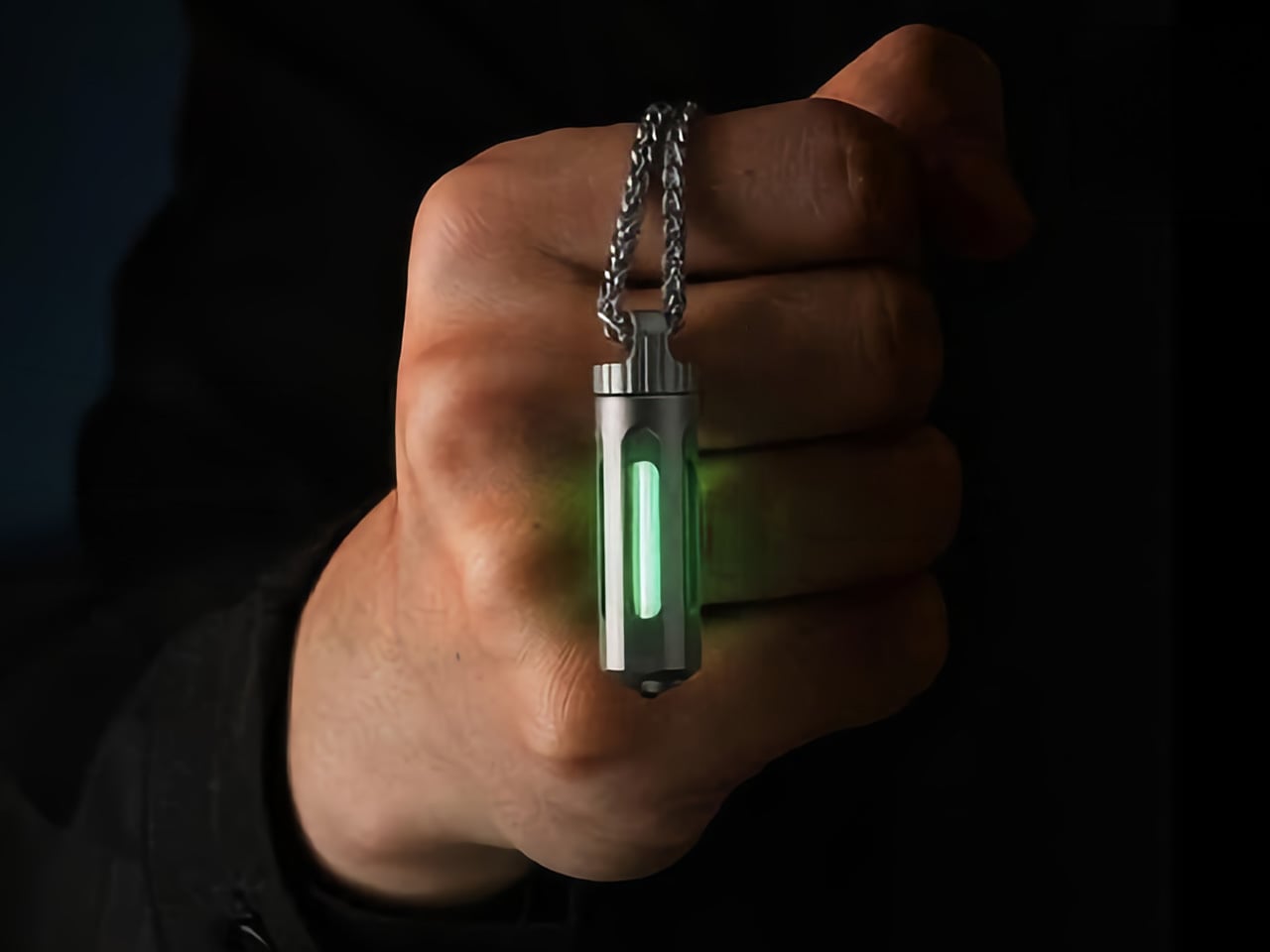
1. 5-in-1 EDC Flashlight

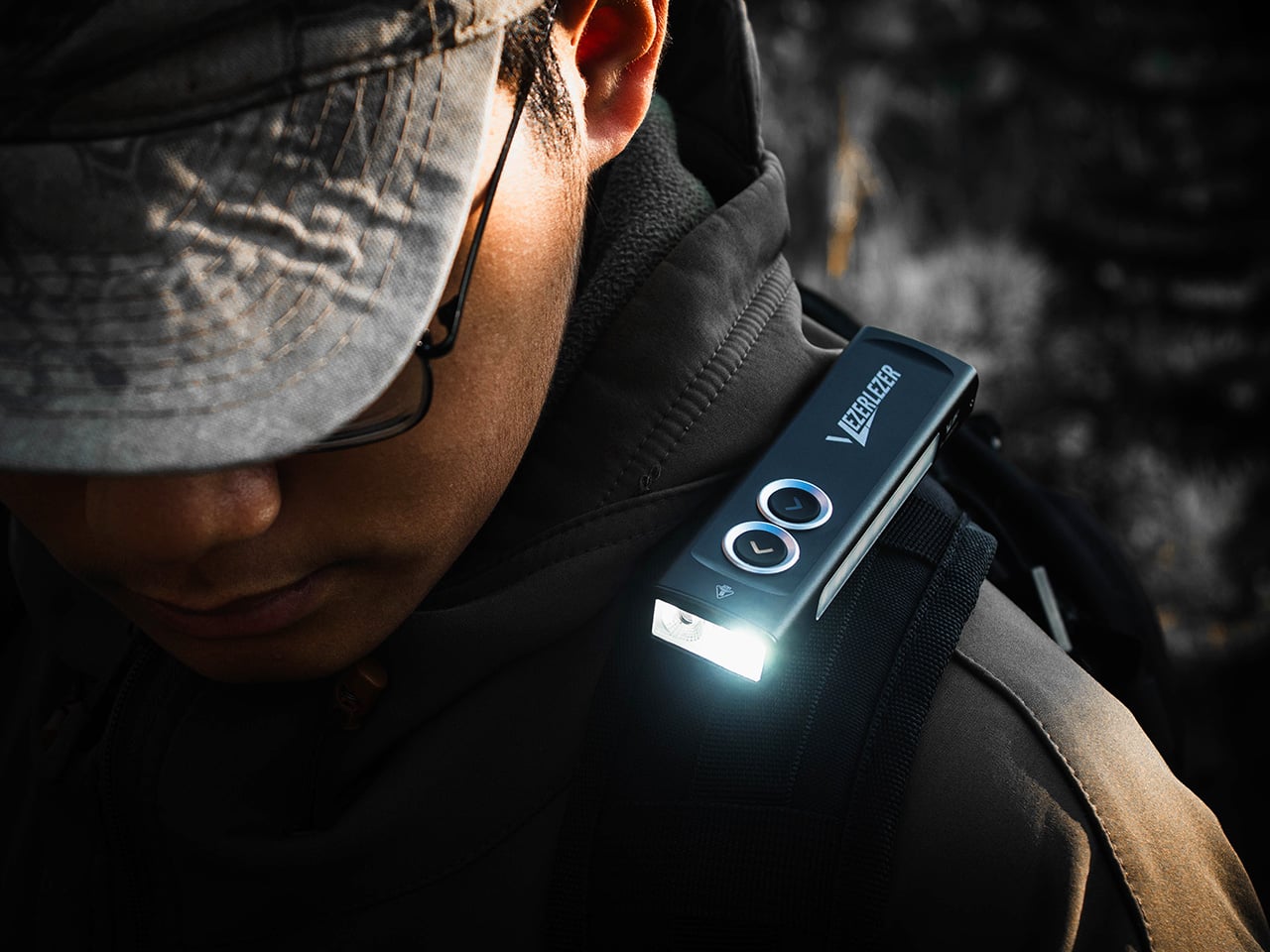
Person in a cap and dark jacket with a small rectangular device clipped to their shoulder strap, emitting a bright light at the bottom.

Archer wearing a cap with a mounted headlamp, drawing a bowstring in a dim forest light.

For under $20, this flashlight does something most multi-tools twice its price fail to manage -it stays genuinely useful across completely different situations. The 1,300-lumen main beam is bright enough to light a campsite perimeter, navigate a midnight trail, or serve as a serious deterrent in an unexpected encounter. The UV mode is quietly one of the most underrated additions in any outdoor tool: scorpion detection in arid terrain, stain checks in a tent, and quick gear inspections that a standard beam simply can’t offer. Five functions, one body, one price point that removes every excuse not to carry it.

What really sets this apart from the sea of budget flashlights is the green laser. Whether you’re pointing out trail features in low light, doing a clear-sky star trace with a group, or signaling across a campsite, the laser gives the tool a second personality that standard lights don’t have. It lives comfortably on a keychain or clipped to a carabiner, which means it’s the kind of EDC piece that becomes automatic – you stop thinking about it and just always have it. At this price, losing it stings far less than losing a $90 flashlight, which matters more than people admit.

What we like:

  • 1,300-lumen output is genuinely strong for the price category
  • UV mode adds practical utility well beyond standard lighting

What we dislike:

  • Five modes cycled through a single interface takes a learning curve in the dark
  • Long-term durability at this price point is worth watching over a full season

2. Portable Fire Pit Stand

A fire pit stand sounds like a camping luxury until you’re on a site that specifically prohibits ground fires – a dry meadow, a wooden deck platform, a national park with strict leave-no-trace rules. This portable stand elevates your fire off the surface below it, protecting the ground from direct heat damage and keeping ash contained in a way that a loose ring of rocks never quite achieves. It also makes the whole camp setup look considered rather than improvised, which counts for more than it sounds when you’re spending three nights in the same spot.

The portability design is what makes this more than a base-camp accessory. It folds or collapses into a compact carry form that works for car camping and overlanding without demanding dedicated storage. Setting it up is fast, and the elevated position actually improves the fire’s performance – air circulation underneath the fuel means a cleaner, more consistent burn through the night rather than the smothered, smoky result of a fire sitting directly on compacted ground. For anyone who builds a fire as part of the ritual of camping rather than just a heat source, this stand makes that ritual a lot more intentional.

Click Here to Buy Now: $119.00

What we like:

  • Elevates fire off the ground, meeting leave-no-trace standards on most sites
  • Improved airflow beneath the fire produces a cleaner, more consistent burn

What we dislike:

  • Adds weight that dedicated ultralight backpackers will feel over a long carry
  • Works best with manageable fuel sizes; very large logs can be awkward to balance

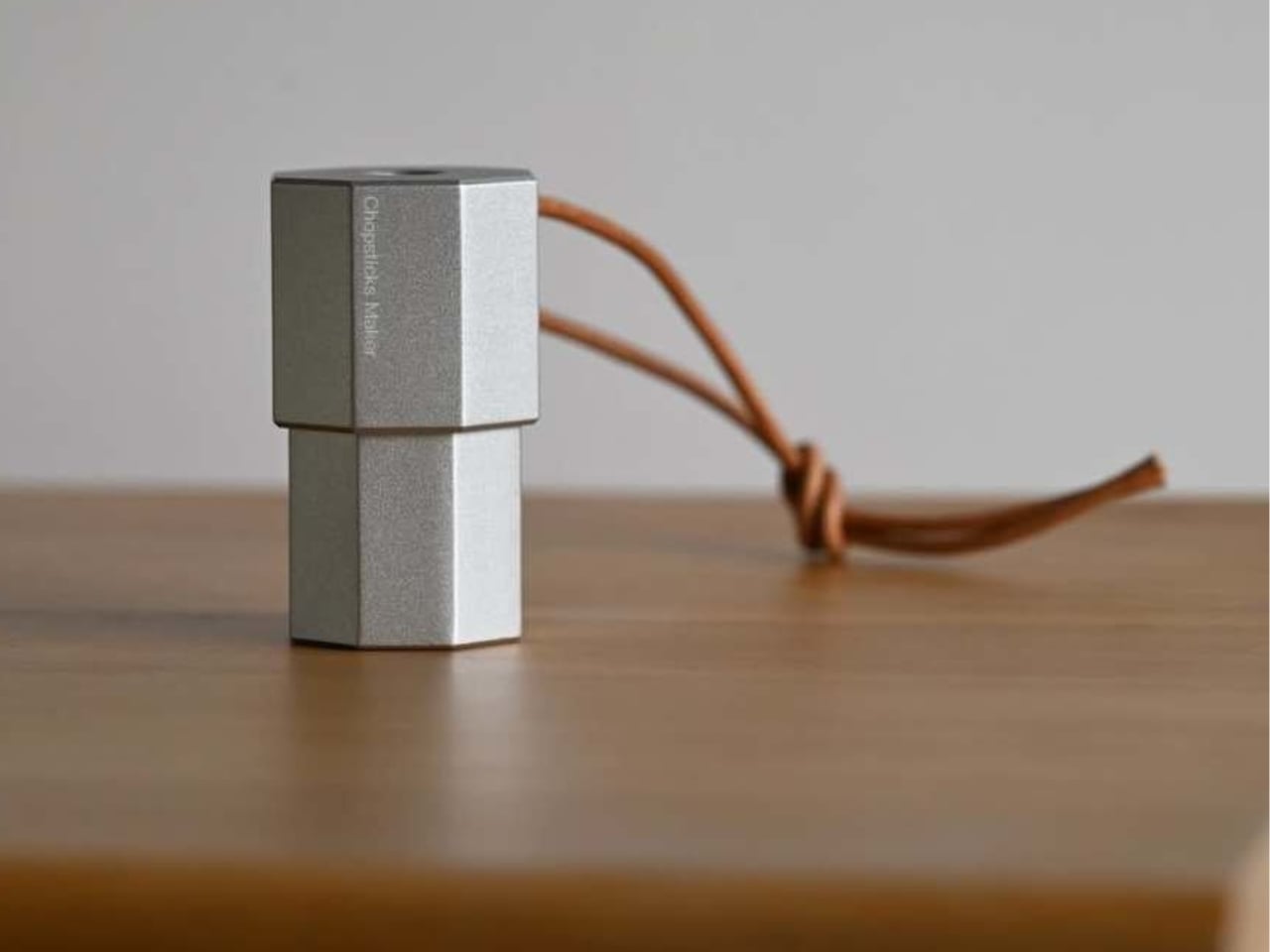
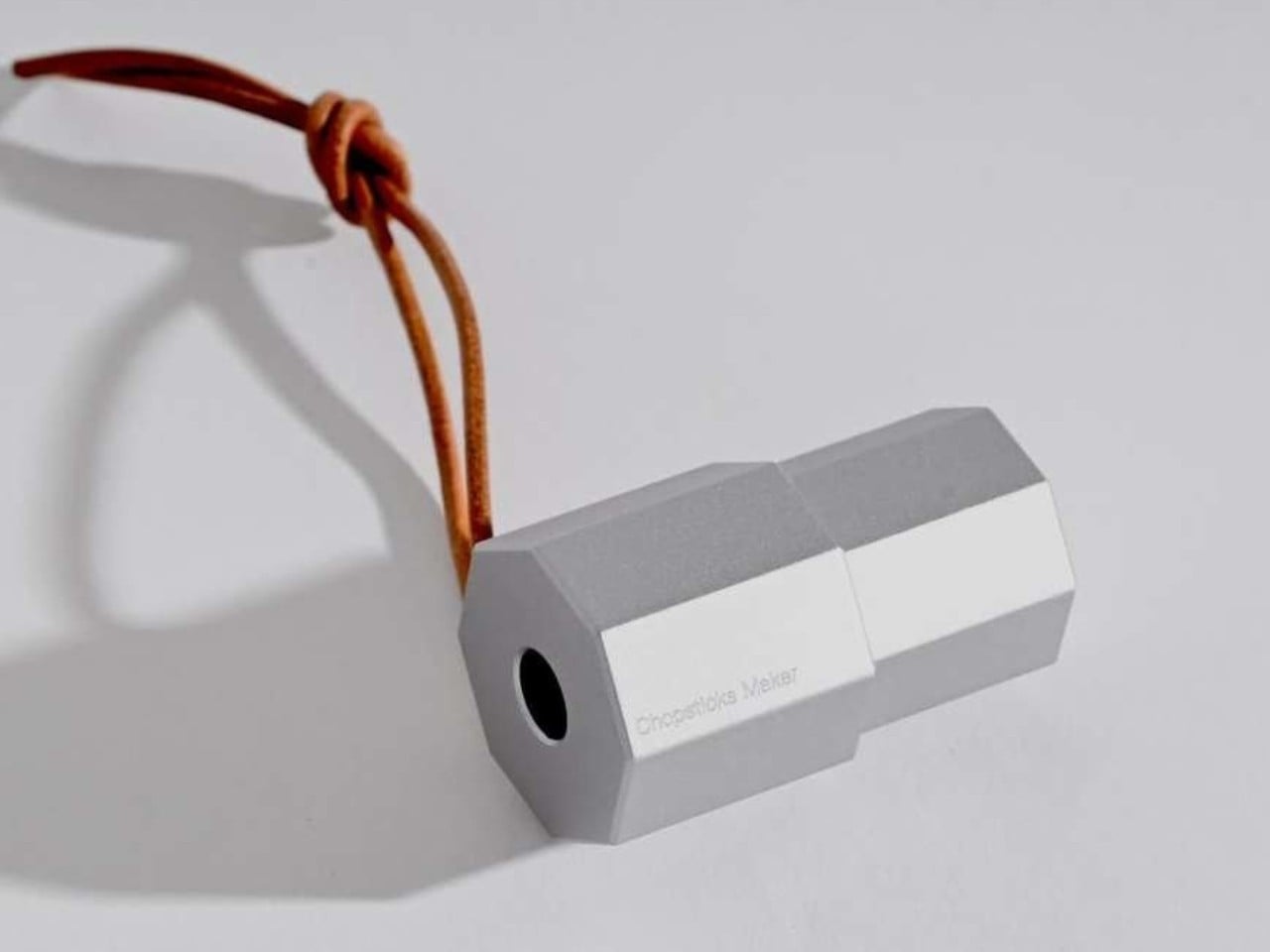
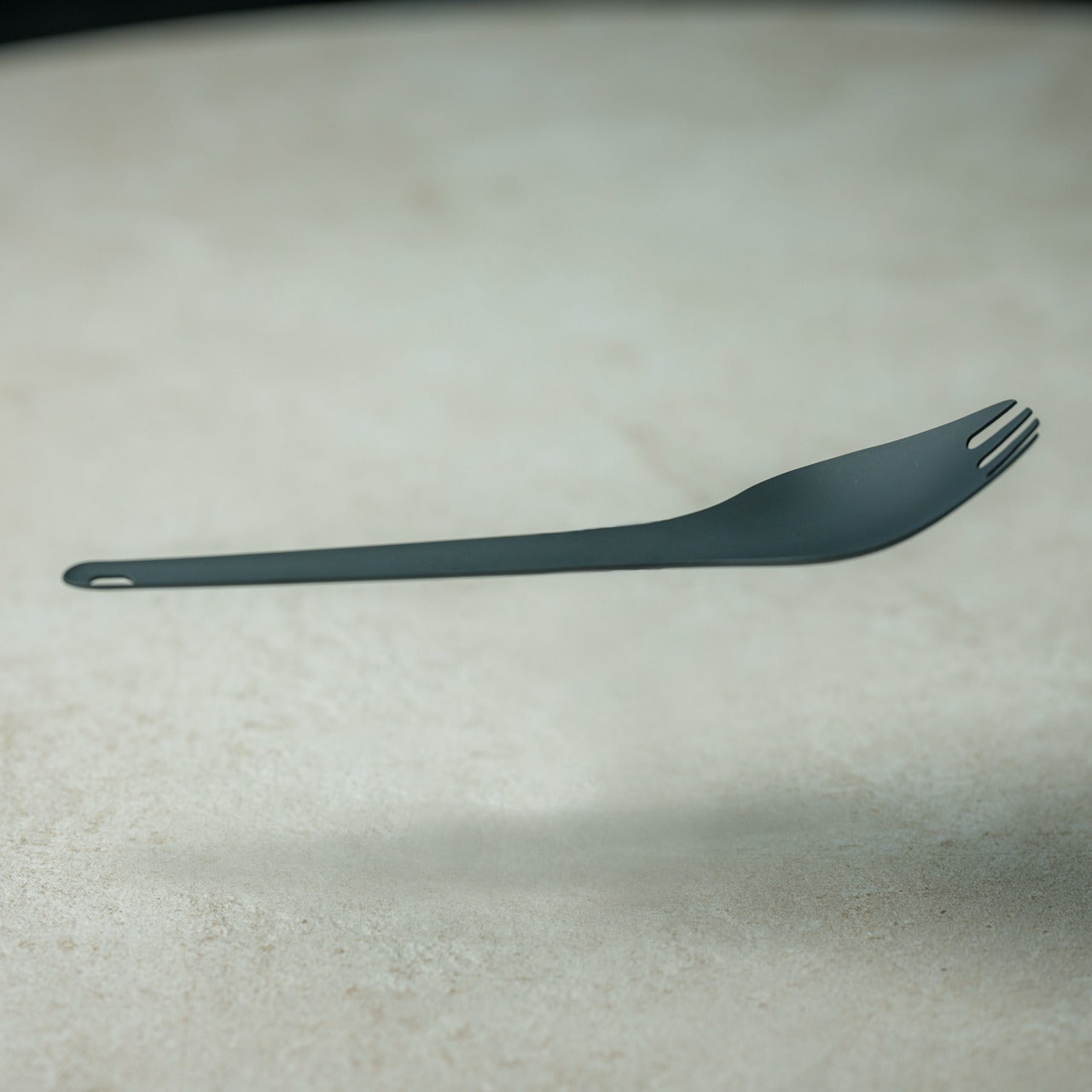
3. The Chopsticks Maker

The best camp tools are the ones where the form has been interrogated as hard as the function, and this cutlery set is a clear example of that principle at work. Drawn from the geometry of a pencil sharpener, the design nests every component inward in a compact, cylindrical body that takes up less space than a granola bar and doesn’t produce the loose-rattling frustration of a roll-up pouch at the bottom of a bag. It’s the kind of solution that makes you wonder why camp cutlery looked like it did for so long – the problem wasn’t hard, it just needed someone to think about it differently.

Beyond the cleverness of the form, this is a practical piece of kit that pays off most at the end of a long trail day when patience for fiddly gear is essentially zero. The nesting mechanism keeps everything secured during transport, so there’s no digging for a stray fork or knife at dinnertime. For solo campers and minimalist packers in particular, this delivers the full utensil experience without the footprint or the assembly drama. It’s also the kind of object that earns quiet admiration at a campsite – a small, well-made thing that communicates that you’ve thought about your gear rather than just grabbed it.

What we like:

  • Pencil-sharpener nesting form is genuinely space-efficient and well-reasoned
  • Secure internal assembly means no loose components rattling around in a pack

What we dislike:

  • Reassembling cleanly takes some practice in the first few uses
  • Best suited for solo use; group trips would require multiples

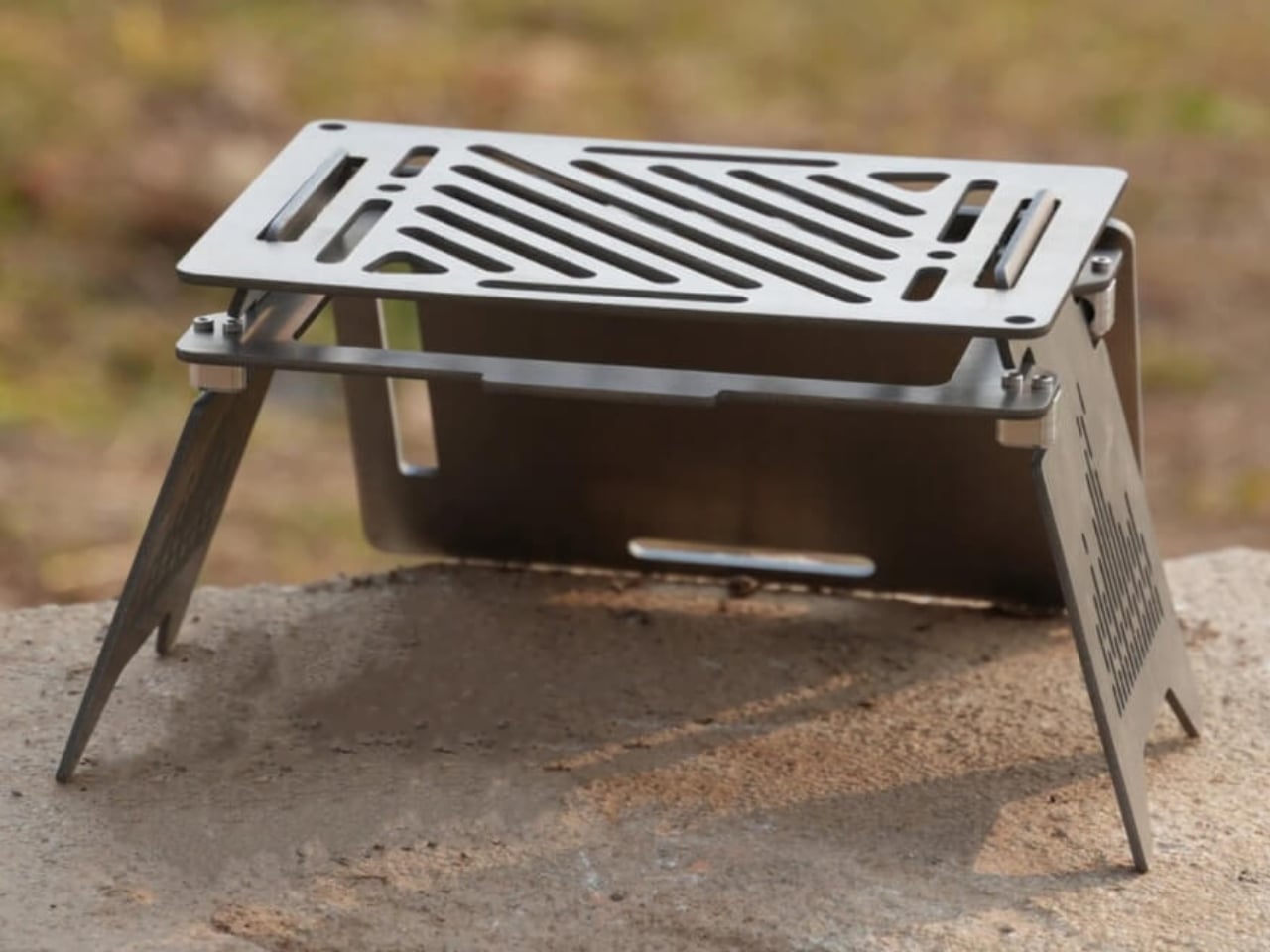
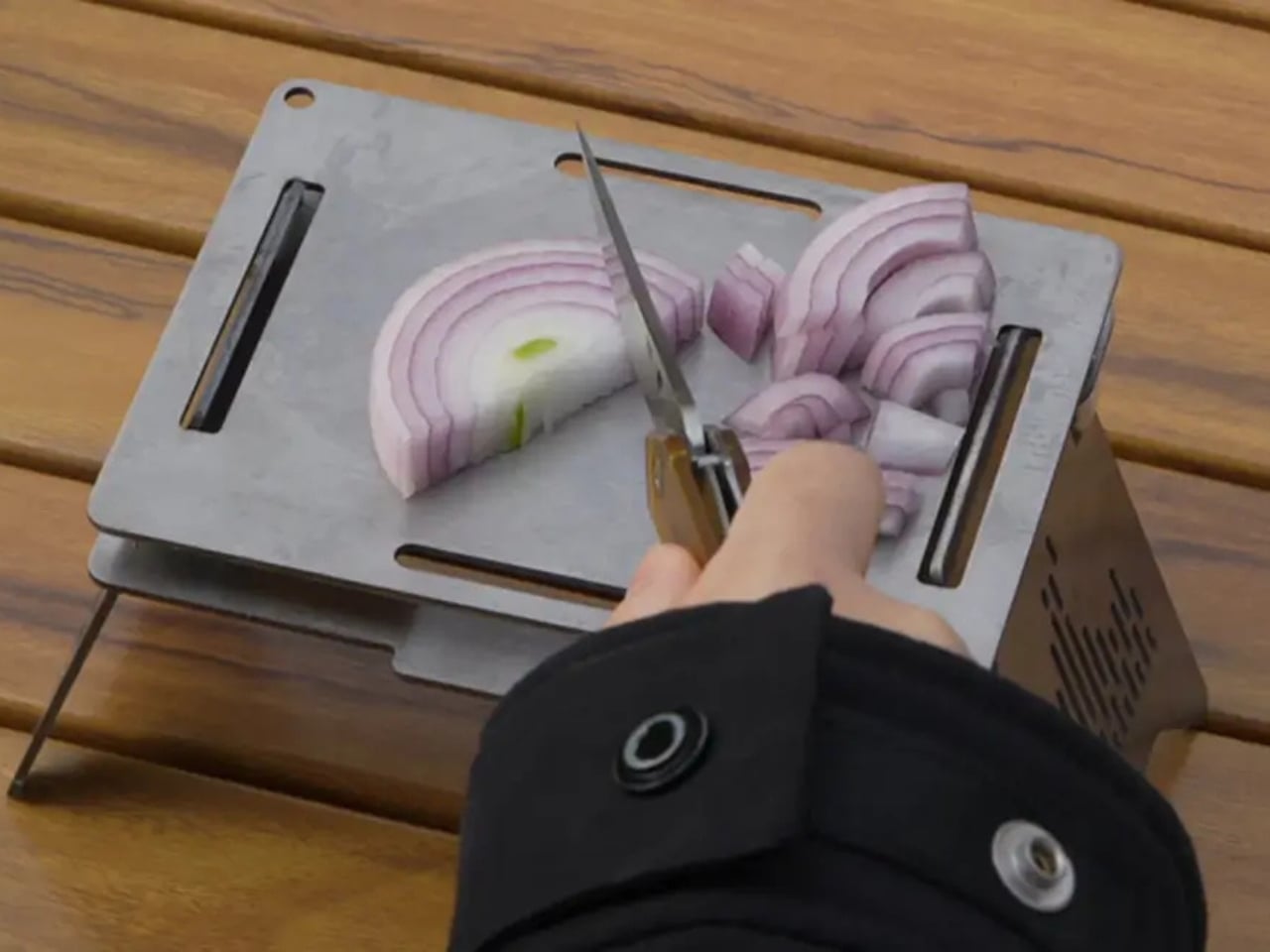
4. Compact Modular Grill Plate

Most camp grill solutions force you into a choice between portability and an actual usable cooking surface. This modular plate refuses that trade-off. It packs flat, assembles fast, and gives you a legitimate grilling surface over an open fire or camp stove without demanding a dedicated stuff sack or adding meaningful weight to the load. Anyone who has tried to cook a piece of fish or a proper piece of chicken on a wobbly, undersized grate understands immediately what a well-designed flat grill plate changes about the whole experience.

The modular configuration is what makes this more versatile than a single-use accessory. It adapts across different heat sources and cooking setups, which matters on trips where the terrain and conditions aren’t always cooperative. Cleanup is also more straightforward than a traditional grate – the flat surface doesn’t trap debris in the same way, and a flat piece of steel is simply easier to wipe down or rinse in the field. For anyone who treats camp cooking as something more than fuel intake, this plate raises the standard of what’s achievable without a kitchen, and it does it without adding the kind of bulk that makes you leave things behind.

Click Here to Buy Now: $100.00

What we like:

  • Flat pack profile adds minimal bulk and fits naturally into a camp kitchen kit
  • Modular design adapts to open fire and stove setups with equal ease

What we dislike:

  • Cooking surface area may feel limited when cooking for more than two people
  • Requires a stable heat source; uneven ground setups need more care

5. Flextail Tiny Pump 2X

Anyone who camps on an inflatable sleeping pad knows the specific indignity of inflating it by mouth – it takes longer than it should, leaves you lightheaded, and is a particularly poor way to start an evening outdoors. The Flextail Tiny Pump 2X is about the size of a thick marker, rechargeable via USB-C, and moves enough air to inflate a full sleeping pad efficiently without any of that effort. It is genuinely one of those products that feels disproportionately capable given how small it is, and once it’s in your kit, it’s the kind of thing you stop leaving behind.

Where the 2X specifically earns its designation is in the reversal to vacuum mode. Packing down an air mattress or inflatable camp pillow by hand is slow, incomplete, and eats into your morning breakdown time – which is real time when you’re trying to make miles before it gets hot. In deflation mode, the pump draws air out and compresses your inflatables faster and tighter than manual effort allows, which translates directly into better overall pack compression. For anyone who values a fast, tidy morning strike as much as a comfortable setup the night before, this small pump genuinely changes how the rhythm of a trip feels from first light.

What we like:

  • Dual inflate and deflate functionality in a USB-C rechargeable, pocket-sized form
  • Vacuum mode compresses inflatables significantly tighter than manual packing

What we dislike:

  • Battery capacity is best matched to smaller inflatables; large mattresses may need a recharge mid-session
  • The compact size makes it easy to misplace inside a busy gear bag

Gear That Earns Its Place Every Trip

None of these five products are trying to do everything at once – and that’s exactly what makes them worth adding to a July kit. The best camp gear in 2026 is defined by restraint: a tool that does its specific job better than anything else its size, then gets out of the way. That’s a harder design brief than it sounds, and each of these picks meets it cleanly. They don’t ask for more space or attention than they deserve, which is the quietest compliment you can pay a piece of outdoor gear.

The through-line across all five is an understanding that the field is not the place to figure out your gear. The flashlight needs to be second nature at 2 a.m. The grill plate needs to be set up before your fire burns down. The pump needs to be in your hand before your patience runs out. These products were designed with that understanding built in, which is why they belong in a real pack rather than a product photography setup.

The post The 5 Best Camping Gear of July 2026 first appeared on Yanko Design.

The 7 Best Japanese Stationery Picks Of July

Japanese stationery has a reputation that precedes it, and it is earned. The paper is smoother, the mechanisms are more considered, and the objects themselves carry a material honesty that most Western equivalents don’t bother with. Japan has spent long enough treating stationery as a design discipline to have produced things that function noticeably better than what fills most pencil cases. The difference doesn’t announce itself loudly. You notice it the first time you sit down to write.

These seven picks are unique, intentional, and design-forward. Some cost less than a lunch. One requires a short search to track down. All of them share the quality that makes Japanese stationery worth paying attention to: a specific problem solved with enough elegance that the solution becomes the whole point of the object.

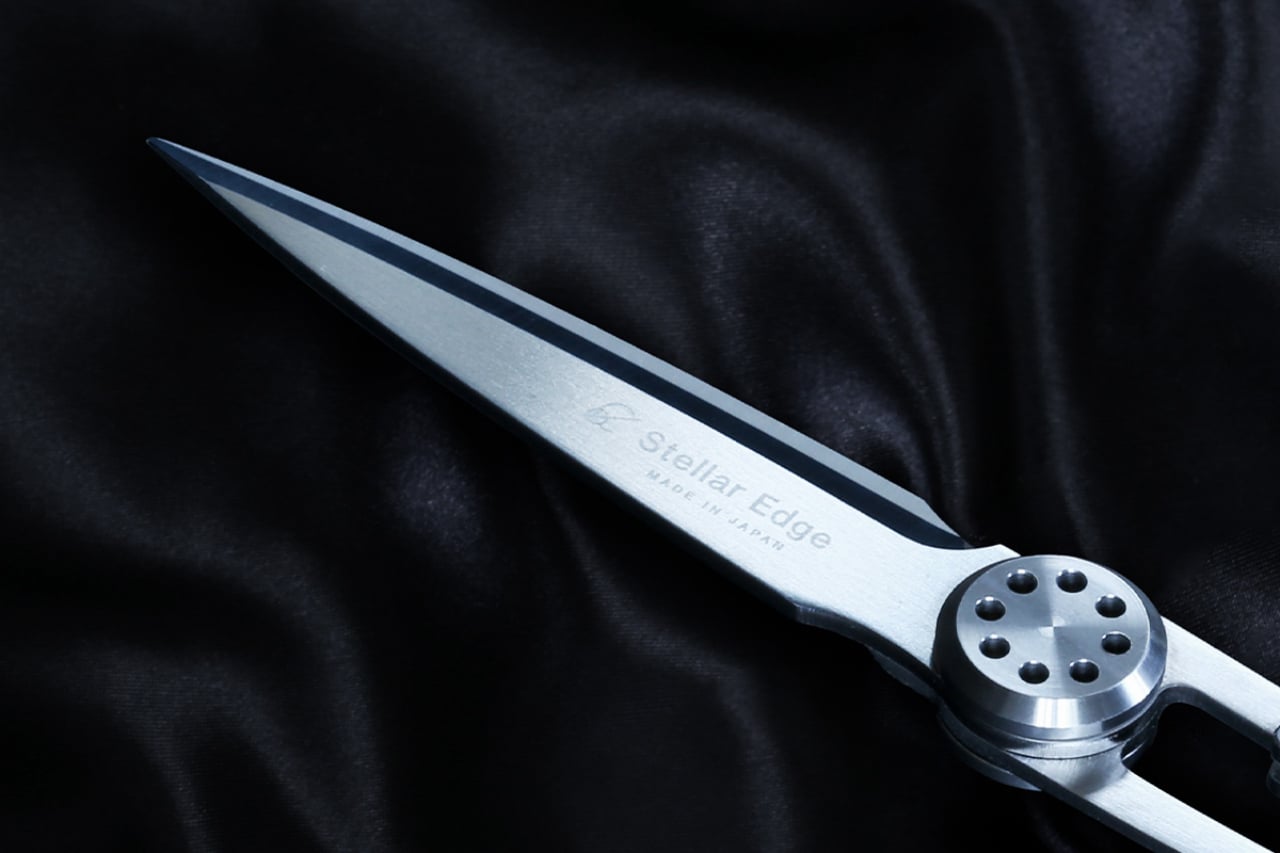
1. Stellar Edge Scissors

Scissors belong in a category of tools that most people replace when they break rather than choose with intention. The Stellar Edge Scissors suggest a different approach. Crafted from Japanese stainless steel, they arrive with gleaming, seamless handles and a weight distribution that makes the blade feel like an extension of the hand rather than something being held onto. Every curve and angle is deliberately considered. The result is a pair of scissors that earns a place on the desk rather than disappearing into a drawer.

Each snip registers cleanly, with the kind of resistance that confirms the blade is doing exactly what it was made to do. The polished finish across the handle elevates the tactile experience without making the scissors feel precious or fragile. Ergonomics were clearly a priority in the development: the grip sits naturally regardless of hand size, and extended cutting sessions don’t accumulate the fatigue that cheaper alternatives build across an afternoon. These are scissors for people who appreciate what happens when form and function are treated as the same brief.

What we like

  • Japanese stainless steel construction holds its sharpness across sustained use rather than dulling after a few weeks
  • The seamless handle design and polished finish make these genuinely display-worthy on a desk

What we dislike

  • The premium material and manufacturing precision place these at a higher price point than standard scissors
  • The minimalist form prioritizes aesthetics, so there are no rubber grip inserts for those who prefer a softer handle feel

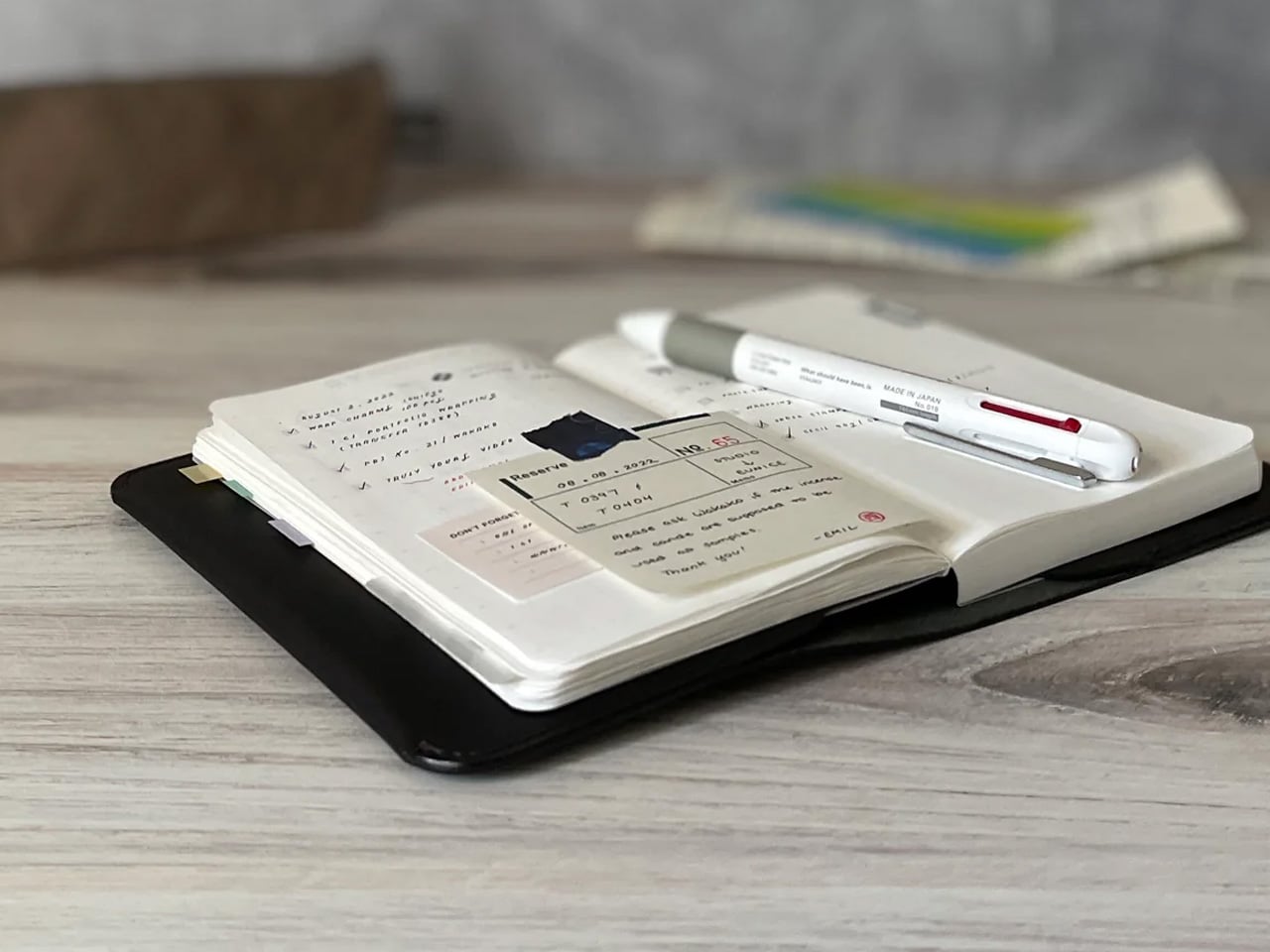
2. Stalogy Editor’s Series 365-day Notebook (A6)

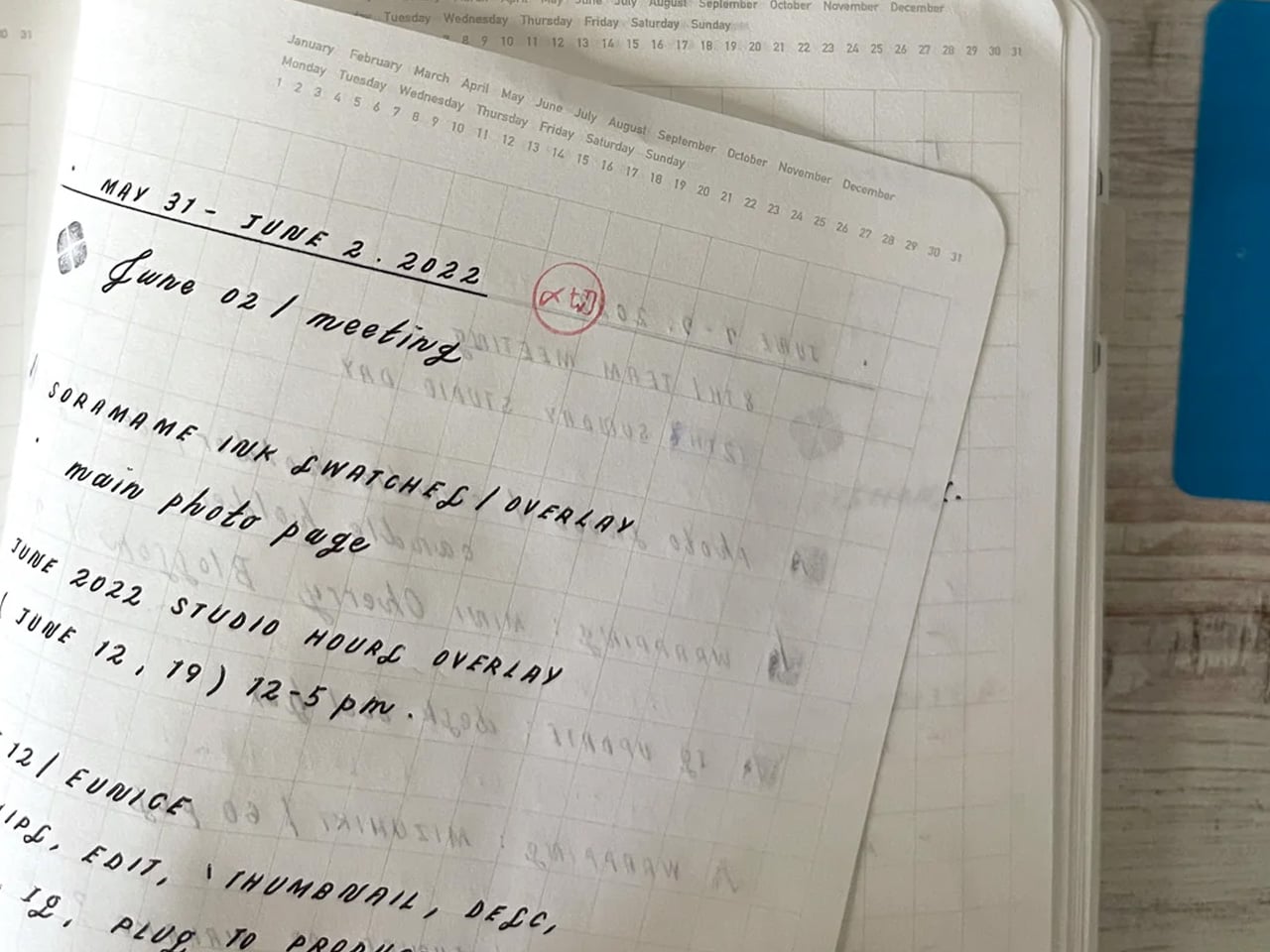
Stalogy’s 365 Days Notebook manages something most pocket notebooks don’t: 368 pages of ultra-thin paper in an A6 form factor that still fits in a coat pocket without bulging. Each page carries minimal printed detail, with dates, days, a faint grid, and time indicators that function as suggestions rather than structure. The paper itself is a genuine pleasure to write on, recalling Hobonichi’s Tomoe River stock in the way ink glides across the page without feathering or bleed-through.

What separates the 365 Days from most planners is what it refuses to do. It doesn’t impose a structure on your day or assume how your hours should be divided. Bullet journaling, daily planning, freeform sketching, and straight note-taking all work comfortably within its pages, and none of them feel like compromises. Most stationery at this level quietly pushes a method. Stalogy provides the space and steps aside, which turns out to be the more useful approach.

What we like

  • Thin paper keeps 368 pages genuinely pocketable without adding bulk to a coat or bag
  • Minimal page markings give it equal footing for structured planning and open-ended creative work

What we dislike

  • Date and time markings are printed very small, making them difficult to read in low light
  • Heavy fountain pen inks will ghost through the thin paper, limiting compatibility for serious pen users

3. Classiky Chestnut Postcard Case

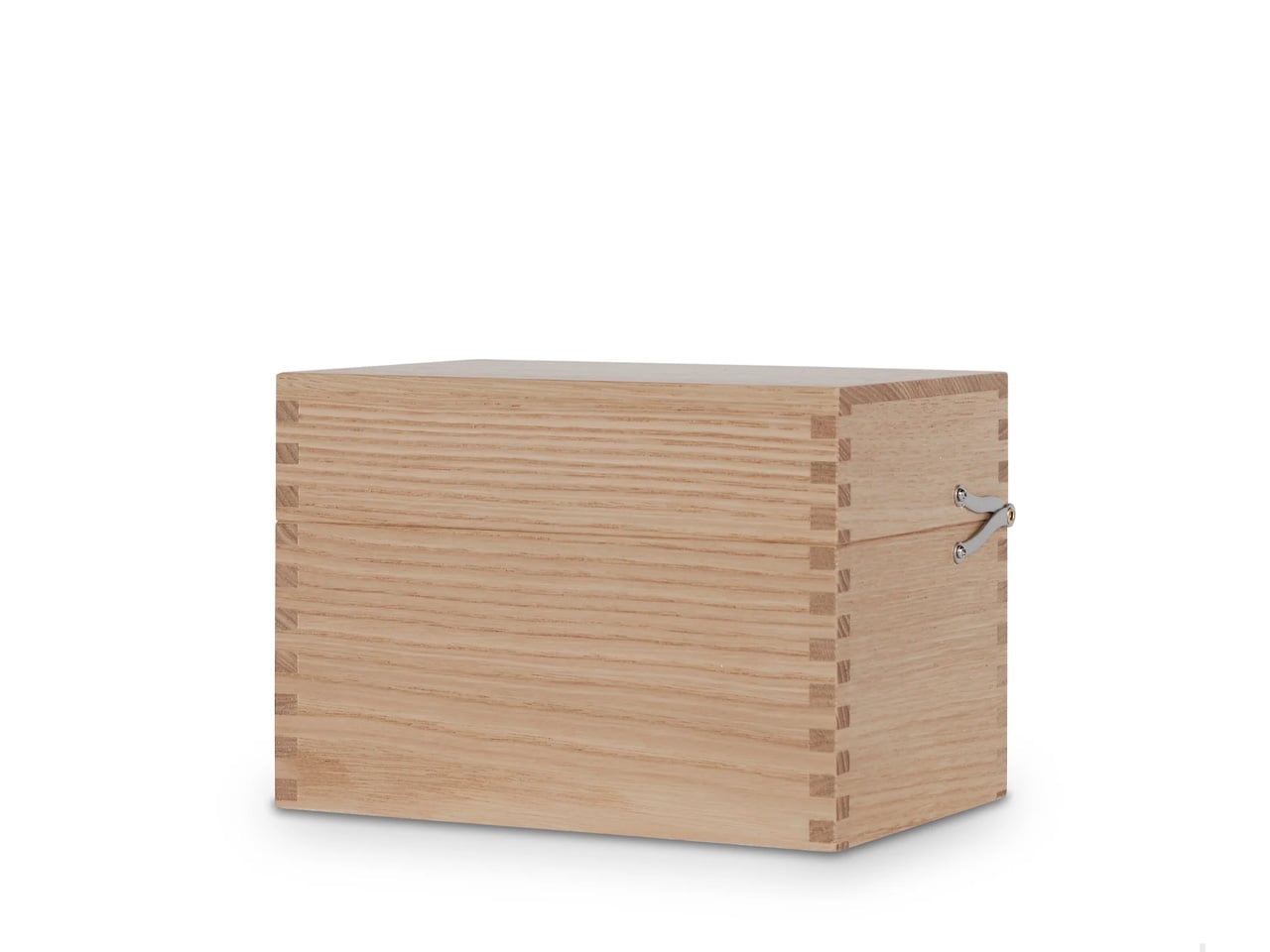
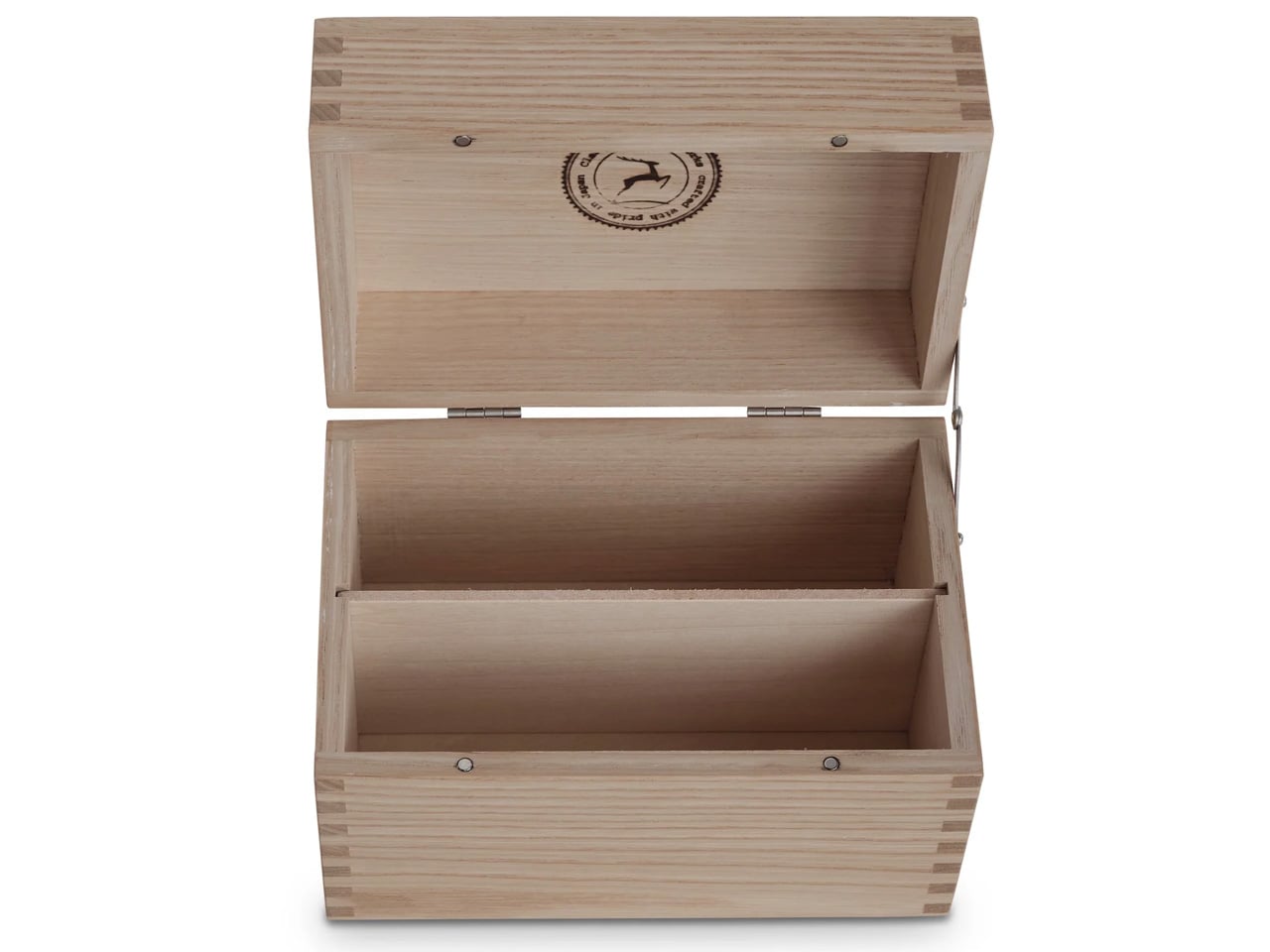
Classiky’s Chestnut Postcard Case takes its design cues from the wooden boxes Japanese craftsmen have long used to house precious ceramics. Varnished Japanese chestnut wood gives it a warmth and grain depth that plastic or metal storage simply cannot reach, and the proportions at 17.6 x 11.6 x 12.4 cm are calibrated precisely for standard postcards. Two removable separators sit inside, and a magnetic closure shuts with the kind of clean, weighted precision that makes opening and closing the thing quietly satisfying.

What makes it worth the attention is its relationship with time. Chestnut doesn’t fade with handling — it deepens, growing richer in tone the more it’s used, which means the case becomes more beautiful the longer it stays in rotation. The removable separators allow the internal configuration to shift as a collection grows or changes. For collectors, letter writers, or anyone who treats a postcard as a physical artifact worth keeping, this turns an act of storage into something closer to curation.

What we like

  • Varnished Japanese chestnut deepens in tone over years of handling rather than wearing down
  • Removable separators allow flexible internal configuration as collections grow or change

What we dislike

  • Dimensions are postcard-specific, so larger formats like A5 prints won’t fit
  • The material quality and craftsmanship place it at a premium that makes it a harder sell for casual buyers

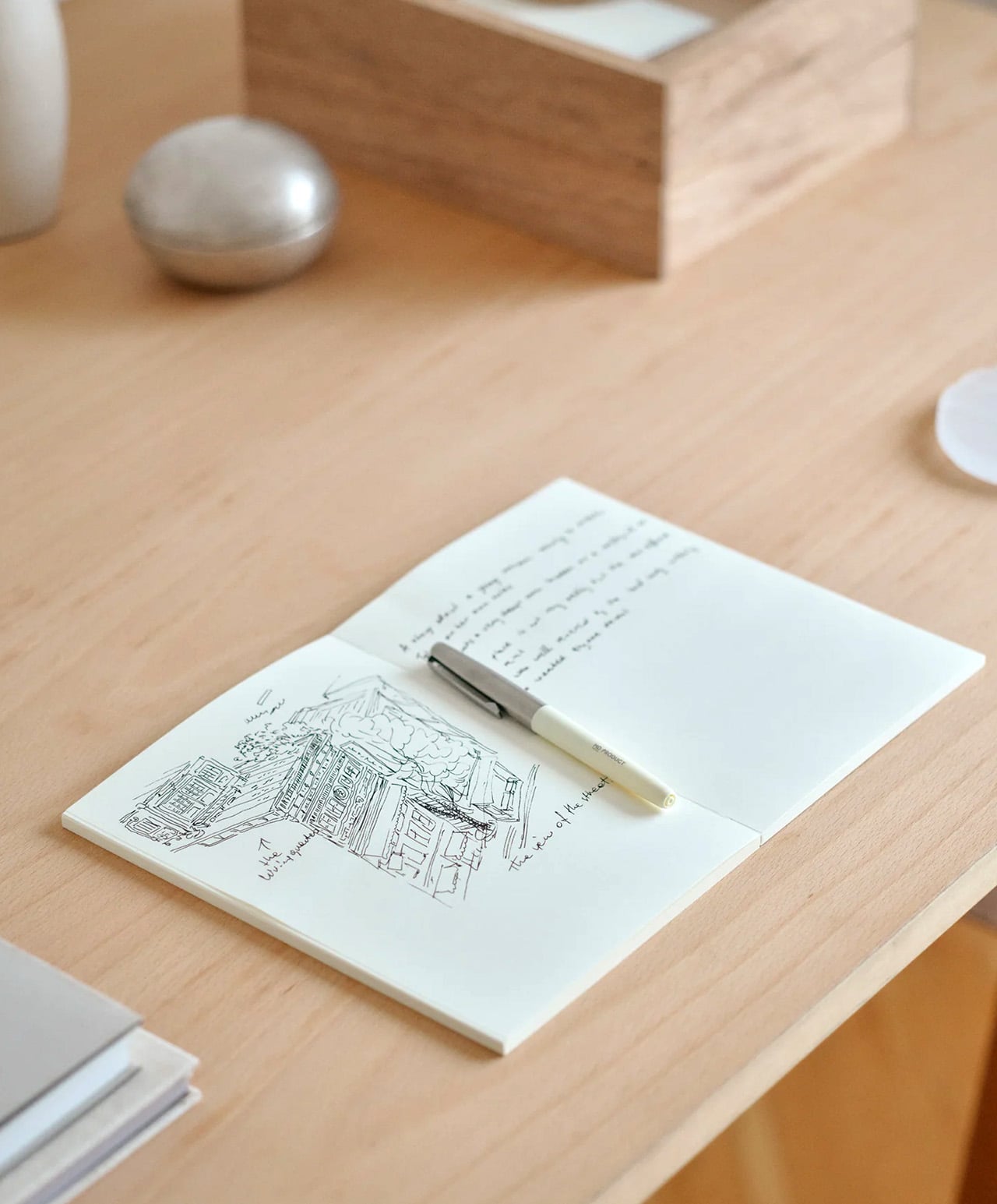
4. Midori MD Notebook A5

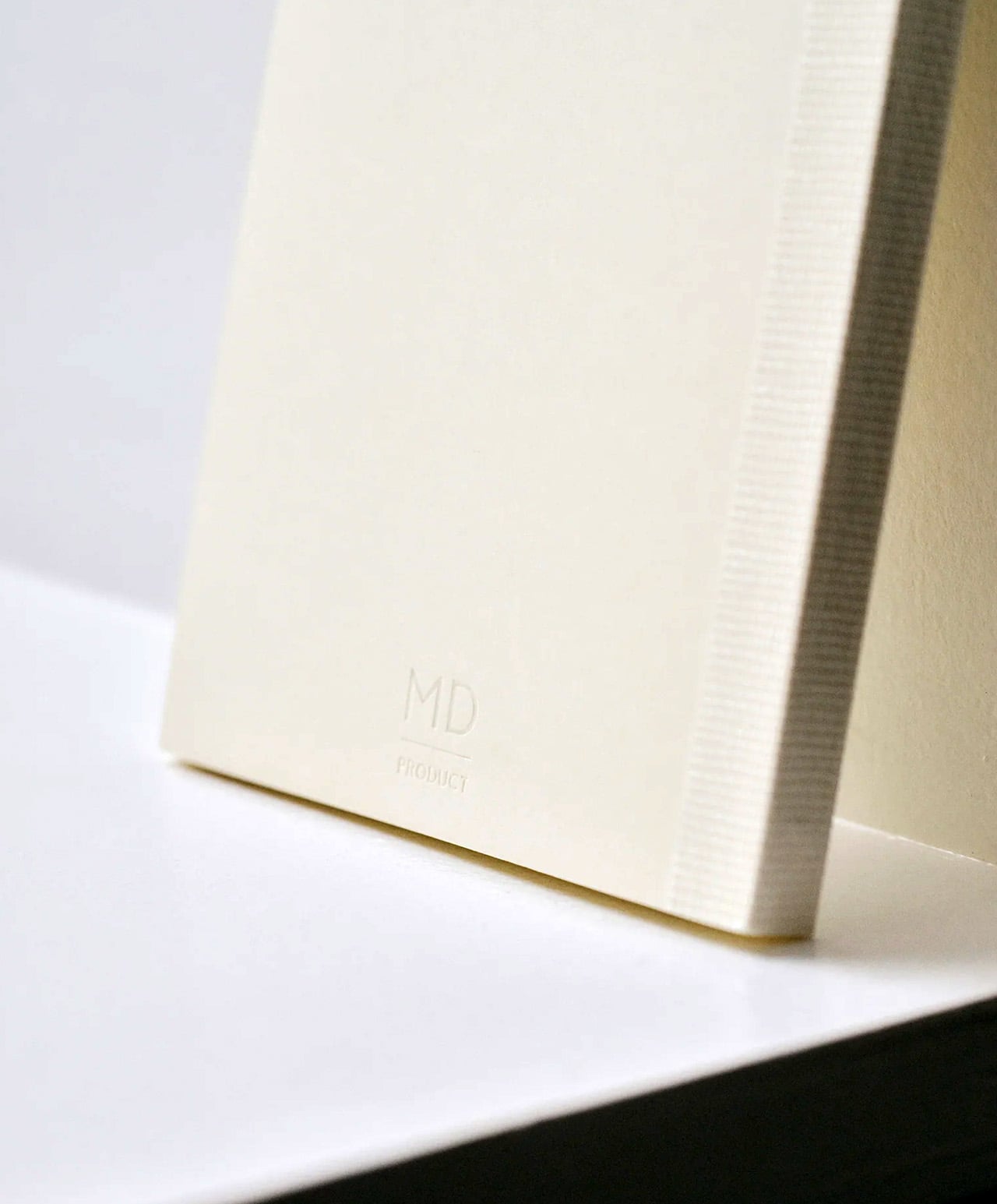
Midori developed MD Paper specifically for this notebook, and the difference is apparent within a few lines. Fountain pen ink sits on the surface without feathering into the fibers. Gel pens don’t bleed through to the reverse. Fine-liners retain their edge rather than spreading at the tip. The same paper runs across the cover, endpapers, and text pages, creating a material consistency that most notebooks don’t consider worth pursuing. Thread binding holds the quires together and allows the book to open completely flat from the first page to the last, with no resistance pulling the spread closed.

The exterior wraps in glassine paper, a translucent sheet that protects the cover and references the packaging of older books without being precious about it. Index stickers come included for navigation, and a silk ribbon bookmark sits at the spine with a color that varies by notebook type. Available in blank, lined, grid, and dot grid in A5, it is made in Japan and sold directly through md-product.com. Once you write in one, returning to a generic notebook starts to feel like a visible compromise rather than a neutral choice.

What we like

  • MD Paper handles fountain pen ink and gel pens without feathering or bleed-through, which changes the writing experience measurably
  • Thread binding allows the notebook to open 180 degrees flat, removing the resistance that glue-bound notebooks create mid-spread

What we dislike

  • The cream-toned paper suits most writing but won’t work for illustrators who need a bright white surface for accurate color work
  • The glassine cover wrapper is more delicate than synthetic covers and shows handling wear with heavy daily use

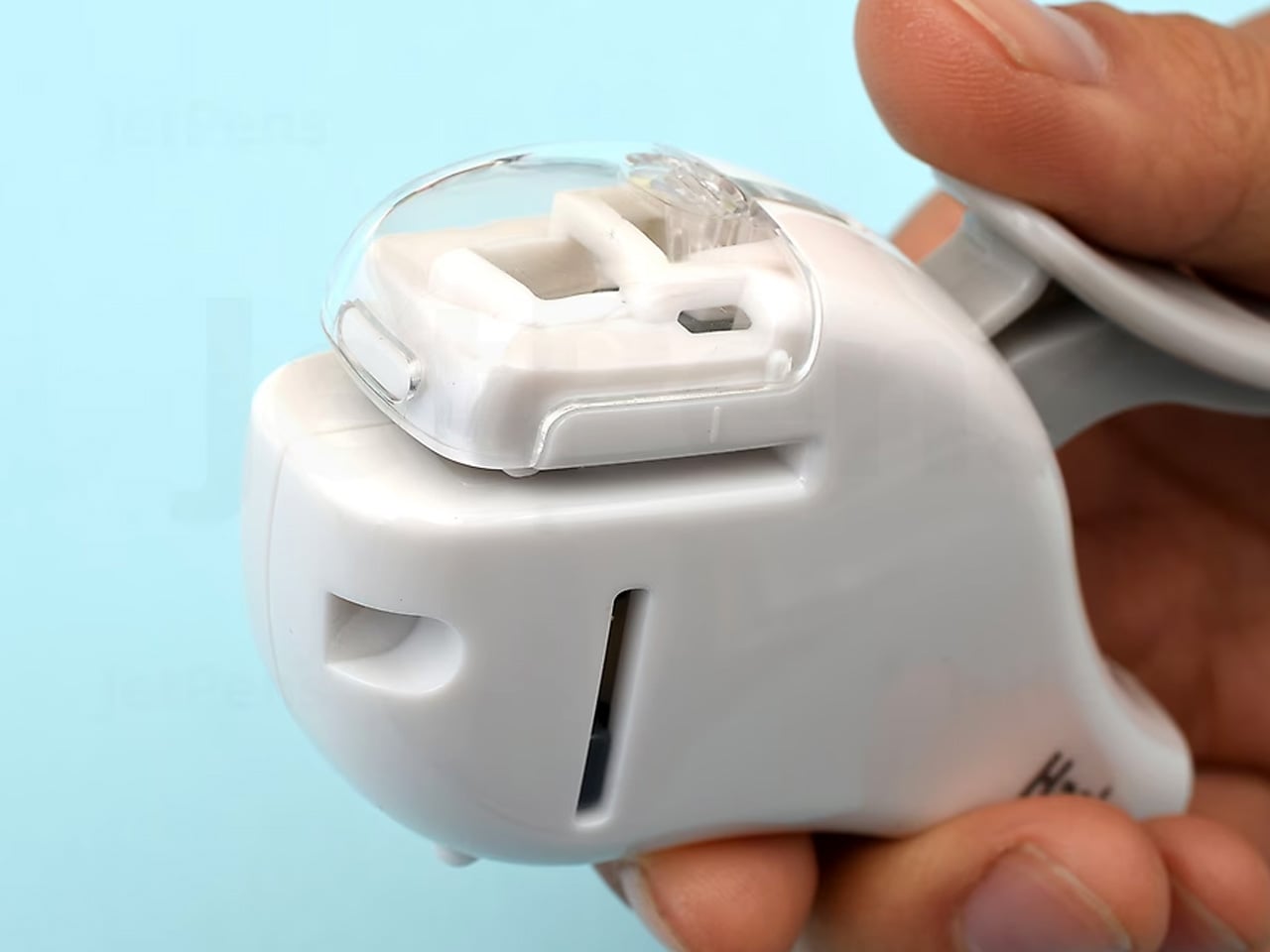
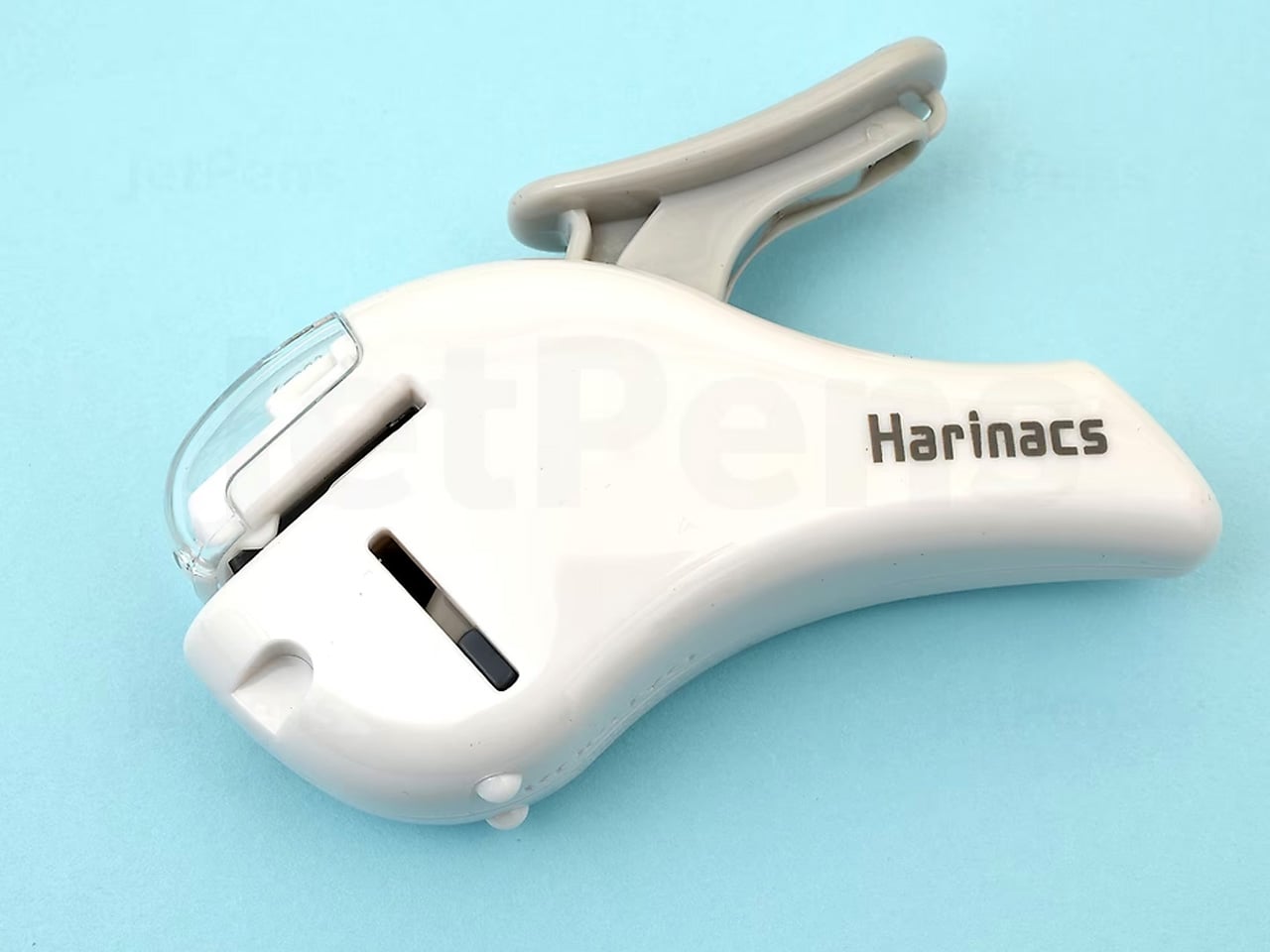
5. Kokuyo Harinacs Press

Staplers exist because paper needs to stay together, not because metal staples are the best way to achieve it. The Kokuyo Harinacs Press removes the staple entirely. A press-lock mechanism cuts a small tab directly from the sheets being bound, folds it through a matching slit, and locks the pages together without puncturing them with metal. Up to five sheets bind cleanly. The binding area stays flat so pages stack without a raised lump, and no staple removal is needed when the paper reaches a recycling bin at the end of its life.

Kokuyo has been making office products in Japan since 1905, and the Harinacs reflects the company’s long habit of questioning what the category accepts as fixed. The staple has existed long enough that challenging it feels strange, which is exactly why this product lands as well as it does. The body is compact at 34 by 95 by 85 millimeters, sits upright on a desk, and works without refills of any kind. Bindings are reversible by rubbing the lock area with a firm object.

What we like

  • The press-lock mechanism requires no consumables, so the stapler functions indefinitely without replacement staples
  • Binding is reversible using any firm object, allowing pages to separate cleanly without tearing

What we dislike

  • The five-sheet maximum limits its use for thicker documents, making it a companion tool rather than a primary binding solution
  • Very thin or coated paper may not lock as securely as standard copy-weight sheets

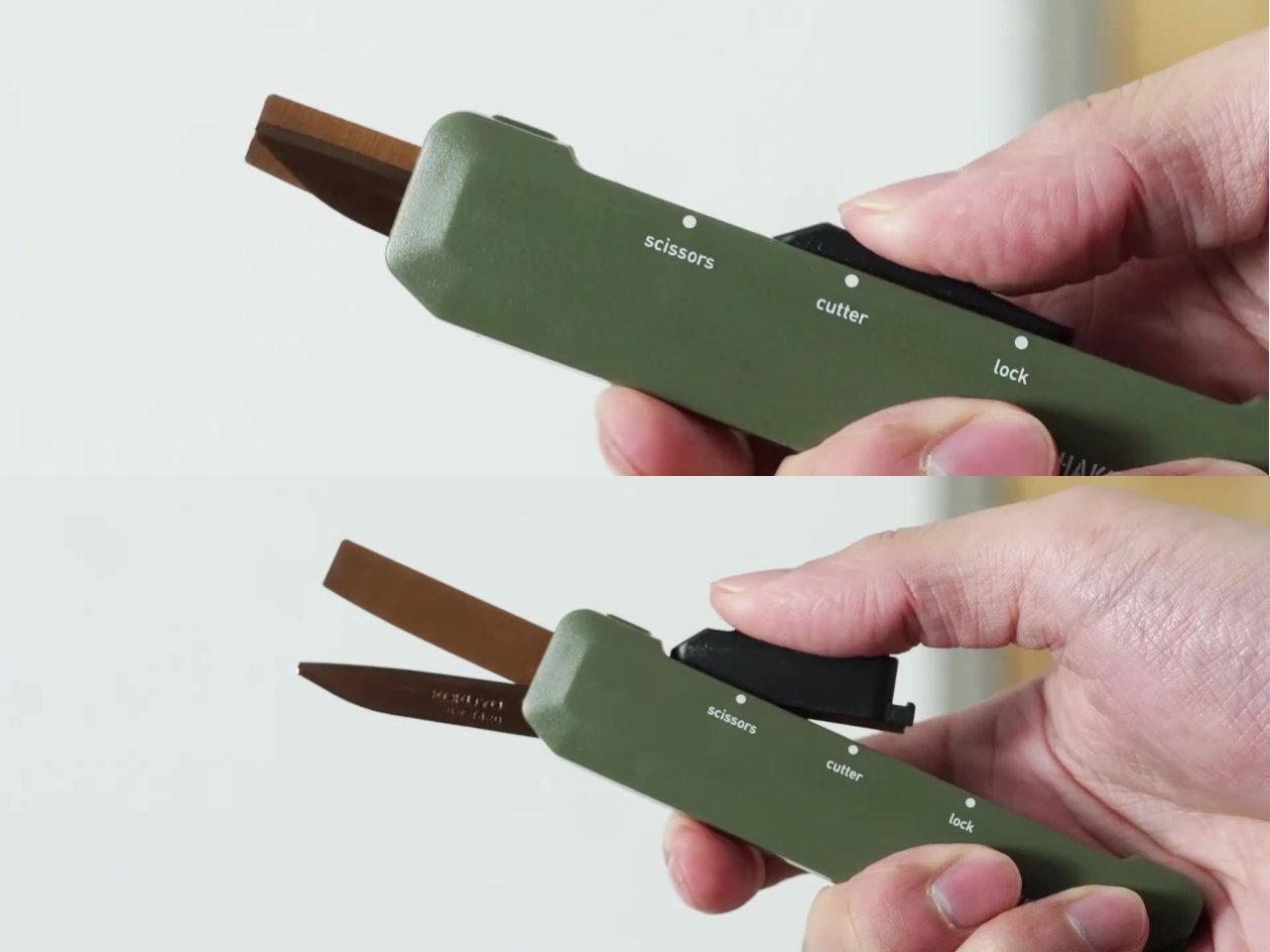
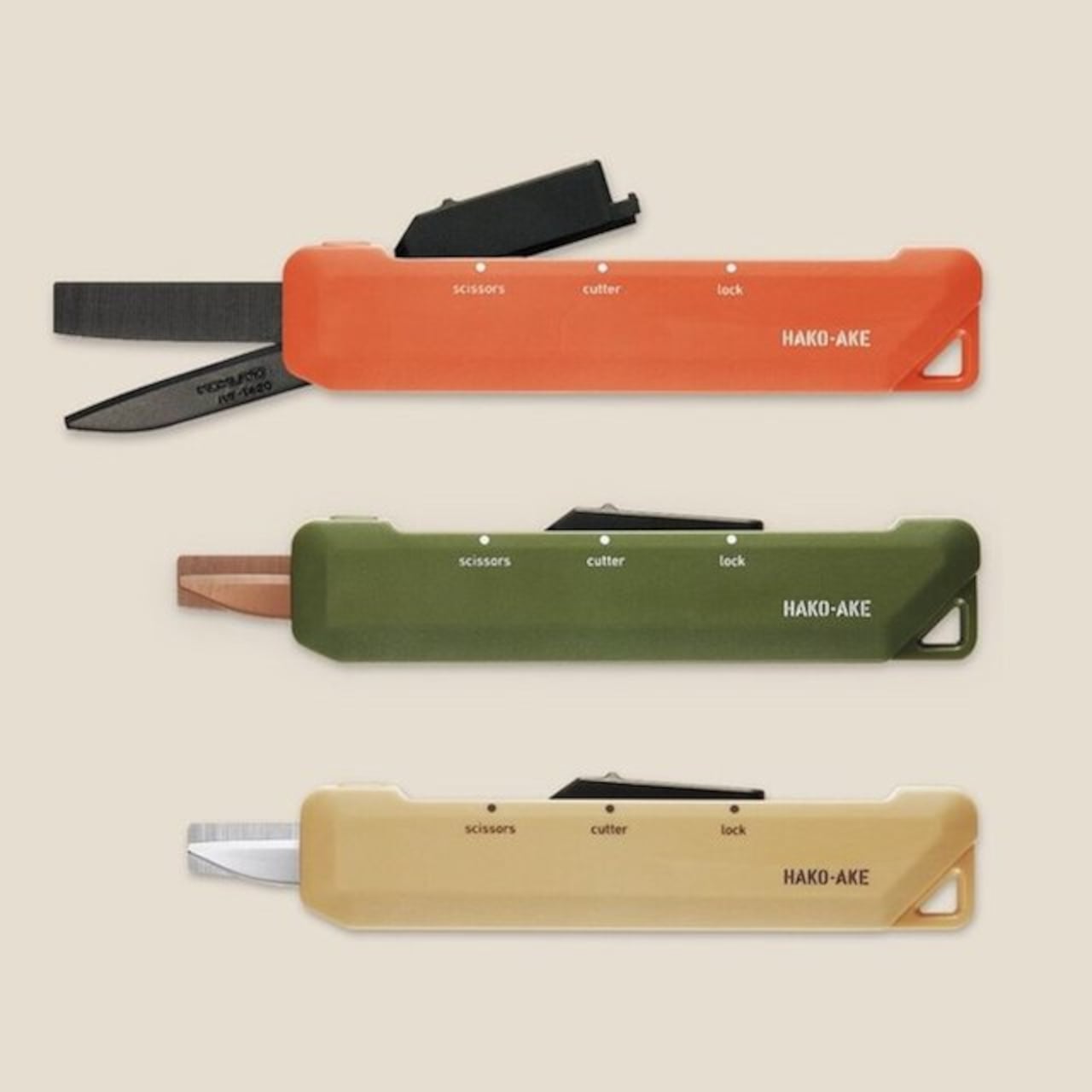
6. Kokuyo Hakoake Two-Way Cutter and Mini Scissors

Kokuyo made one decision with the Hakoake that makes the whole product work: the switch between cutter and scissors happens with a single squeeze and slide, one hand, no covers or attachments to manage. The 3mm cutter blade is short enough to open packing tape cleanly without threatening the contents inside. Scissors mode engages by sliding the mechanism forward, and a built-in guide aligns the cut so the action is accurate without requiring careful positioning. It fits in a pencil pouch, clips to a lanyard via a strap hole, and disappears into a bag the way a good tool should.

Compact tools that try to do too many things usually fail at each of them. The Hakoake works because it only commits to two, and the two it chose are the ones that come up in the same moment. Opening a package almost always means also needing to cut a tag or trim a plastic band nearby. Having both in one slim object, without compromise to either mode, is the kind of product outcome that requires genuine engineering attention.

What we like

  • The one-handed sliding switch between cutter and scissors is fast enough to use in the same motion as reaching for the tool
  • The compact form and strap hole make this genuinely portable in a way that full-size scissors are not

What we dislike

  • The 3mm blade is purposely short, so it is not suited to cutting through thicker materials or multiple layers at once
  • The slim form factor means grip depth is minimal, which may feel less secure during heavier cutting tasks

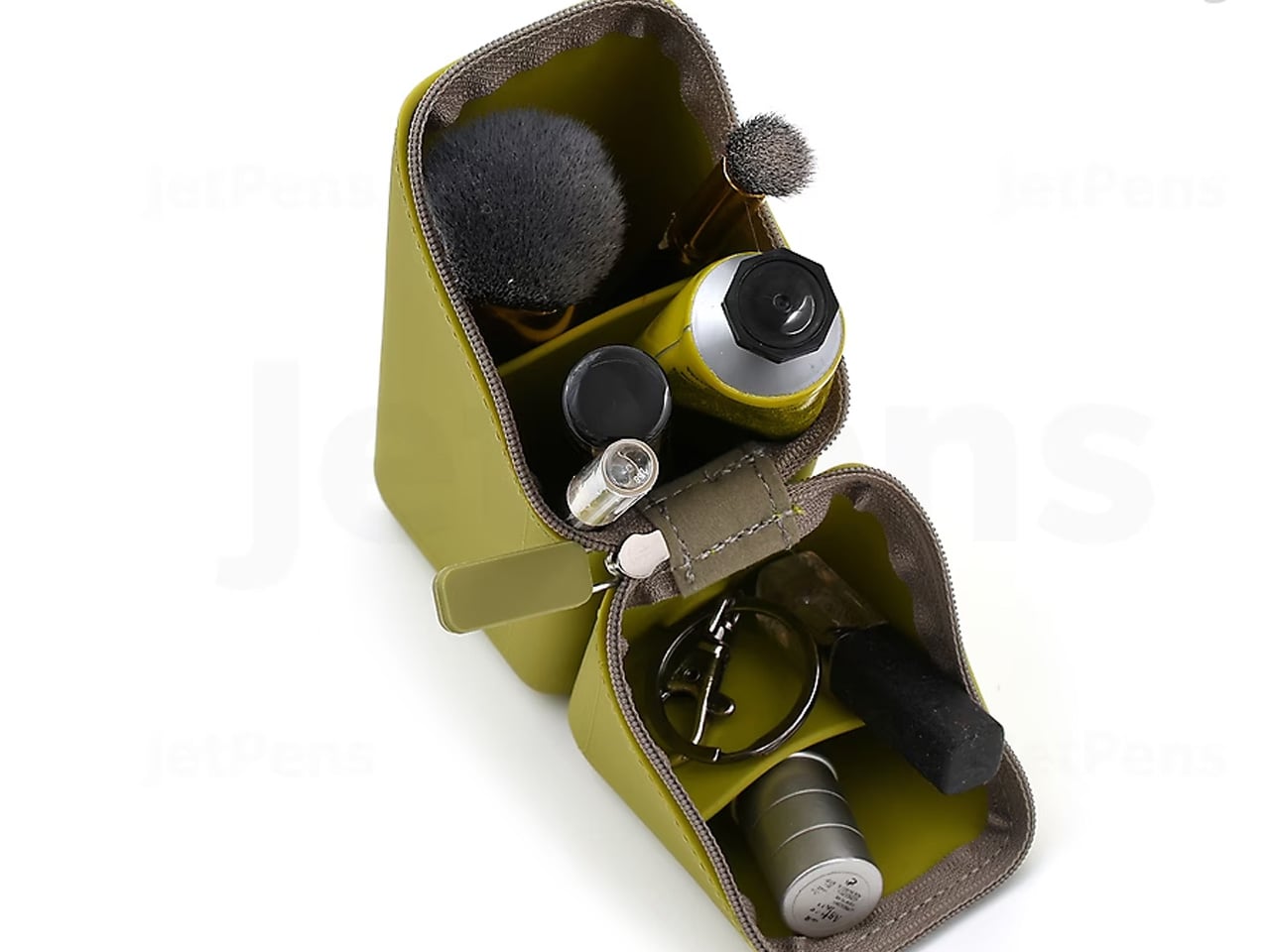
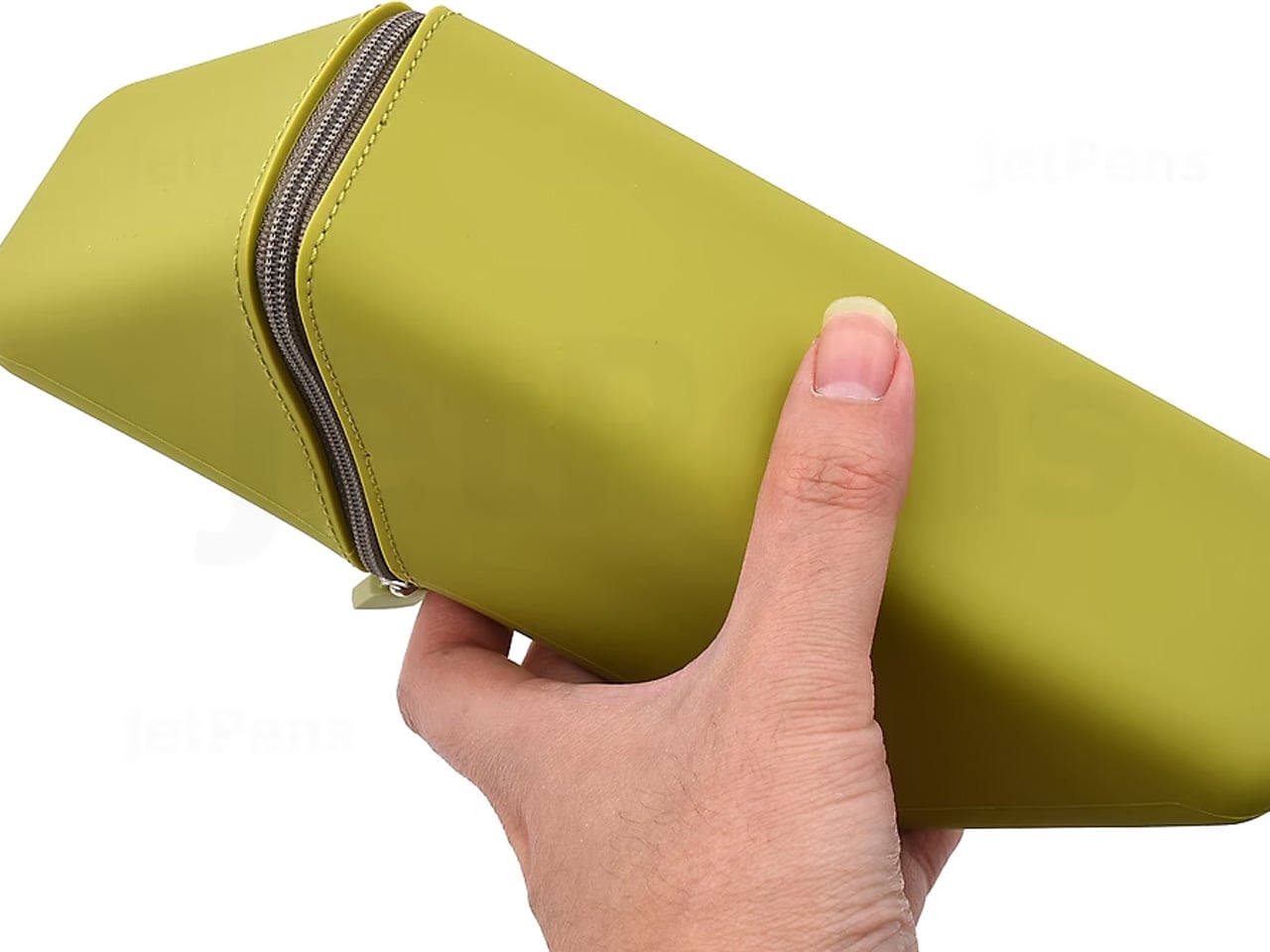
7. Sonic Kakusta

The Sonic Kakusta spends most of its life looking like a soft pen case. Unfold it and it becomes a triangular desk stand that props pens at a 60-degree angle, steep enough to display pen tops for quick identification, shallow enough that pulling one out doesn’t send the rest toppling. A built-in divider splits the interior into two sections, a second divider in the lid creates a small shelf for erasers and sticky notes, and strong magnets hold the folded shape in place so the stand doesn’t quietly collapse between uses.

The angle is the detail that earns it a second look, but the real argument is the one object doing two jobs cleanly. For anyone moving between a home desk, an office, and a library table, the Kakusta removes the logic of carrying both a pen case and a desk cup. Most products that try to collapse two functions into one end up feeling like a halfhearted version of each. This one doesn’t, and the soft exterior keeps the whole thing light enough that the trade-off barely registers until you’re already at your desk with your pens on display.

What we like

  • Strong magnets hold the stand shape reliably, even on surfaces that aren’t perfectly level
  • The lid divider doubles as a small shelf for erasers and sticky notes, a detail most pen cases overlook

What we dislike

  • Soft material offers limited protection against crushing inside an overpacked bag
  • The triangular footprint takes up more space than a flat pouch, which matters in tighter carries

This Is What a Well-Made Desk Looks Like

The objects that last on a desk tend to be the ones that earn their place through daily use rather than first impression. Each of these seven earns it the same way: by attending to the part of the tool that most manufacturers treat as already resolved. The paper that accepts ink without spreading. The clip that silences itself. The stapler that eliminates its own raw material. Every one of those decisions took longer than the obvious alternative would have.

A desk set up with tools this considered starts to function differently. Not because the objects are precious, but because they remove the small frictions that accumulate across a working day. Reaching for a pen that is always where it should be, writing on paper that responds the way paper should, cutting with scissors that feel like they were made for a specific hand. July is a reasonable time to replace what is merely functional with what is actually well made.

The post The 7 Best Japanese Stationery Picks Of July first appeared on Yanko Design.
This $70 Japanese Candle Burns From the Inside Out & Lights a Room Better Than Anything Else on Your Shelf

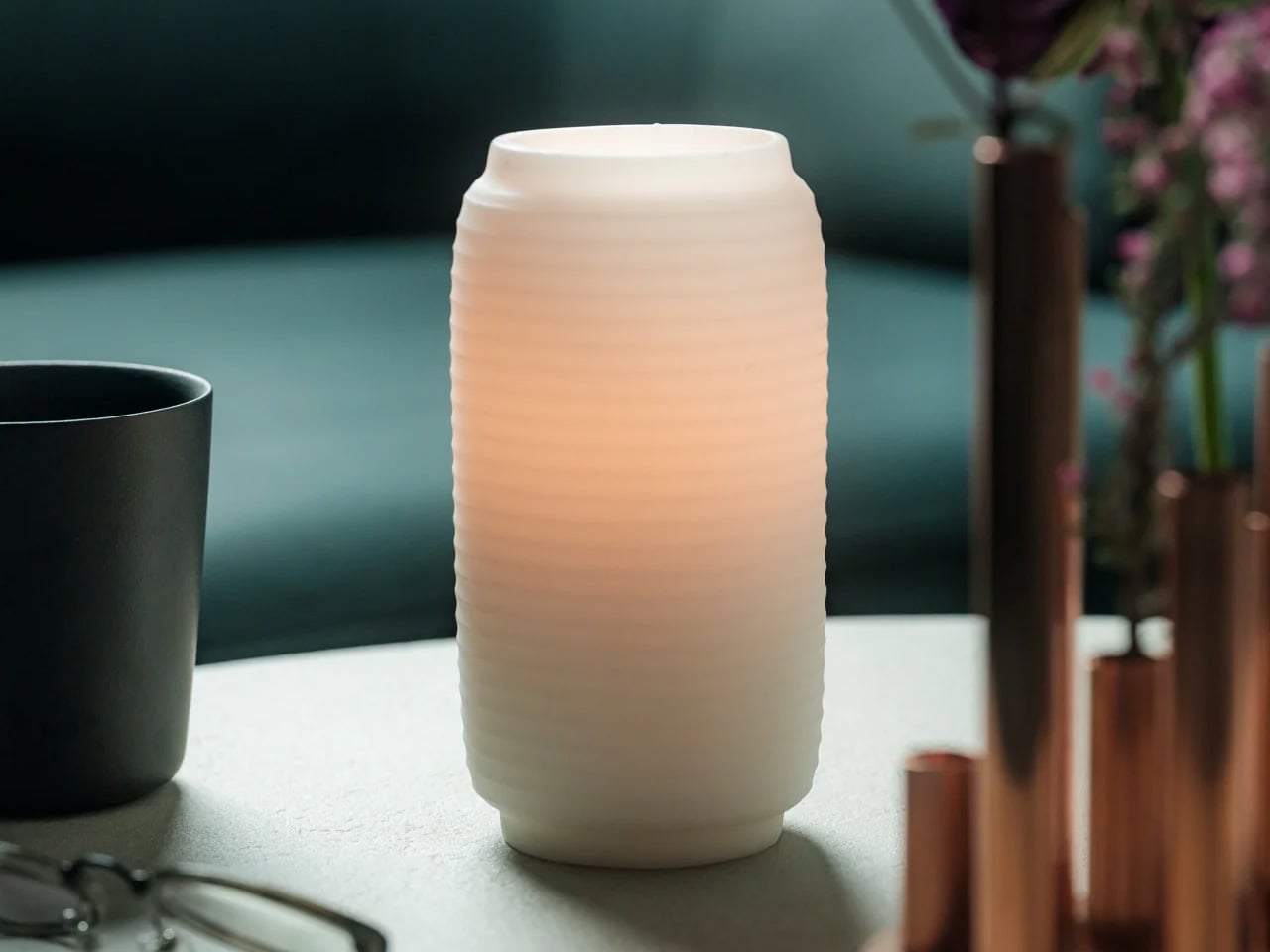
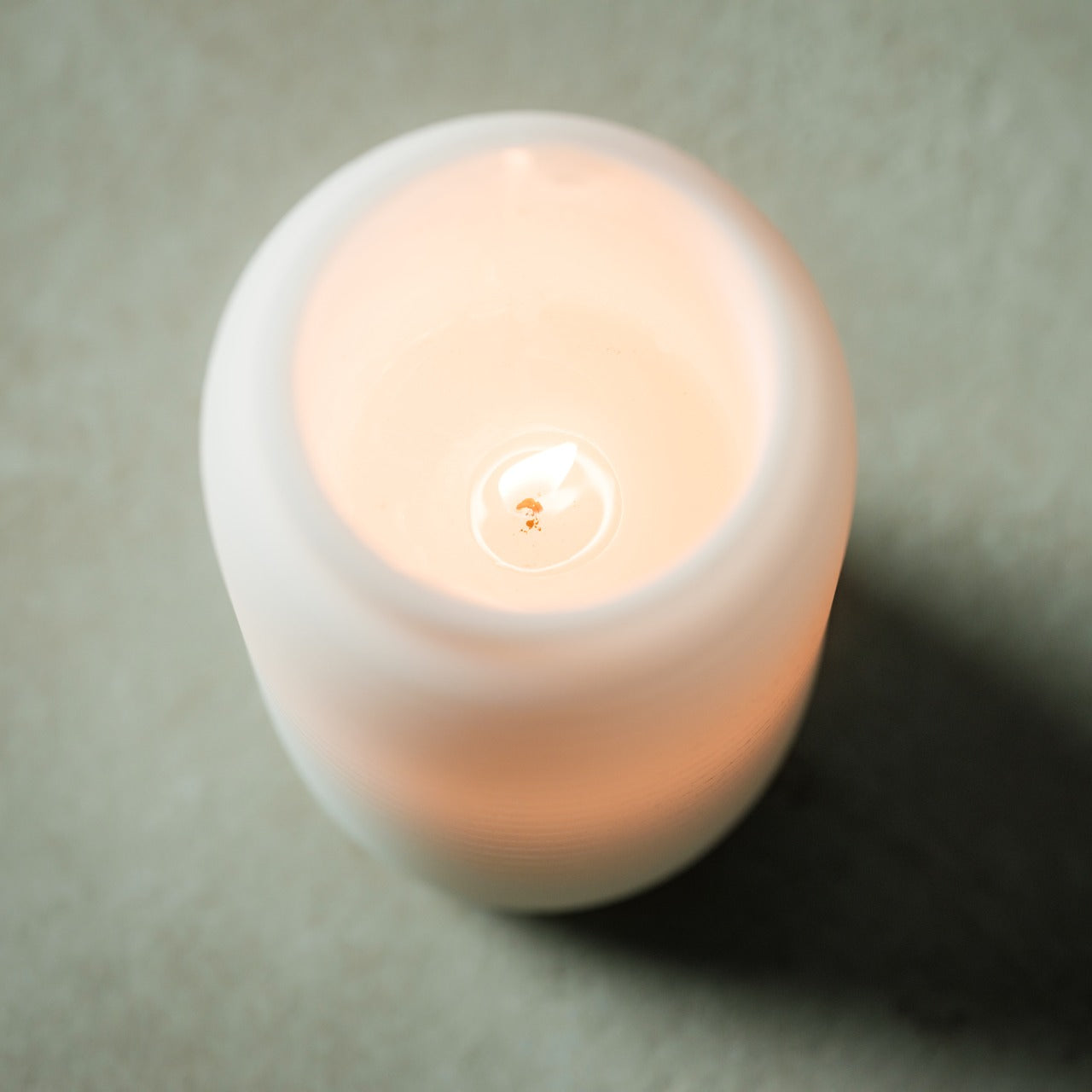
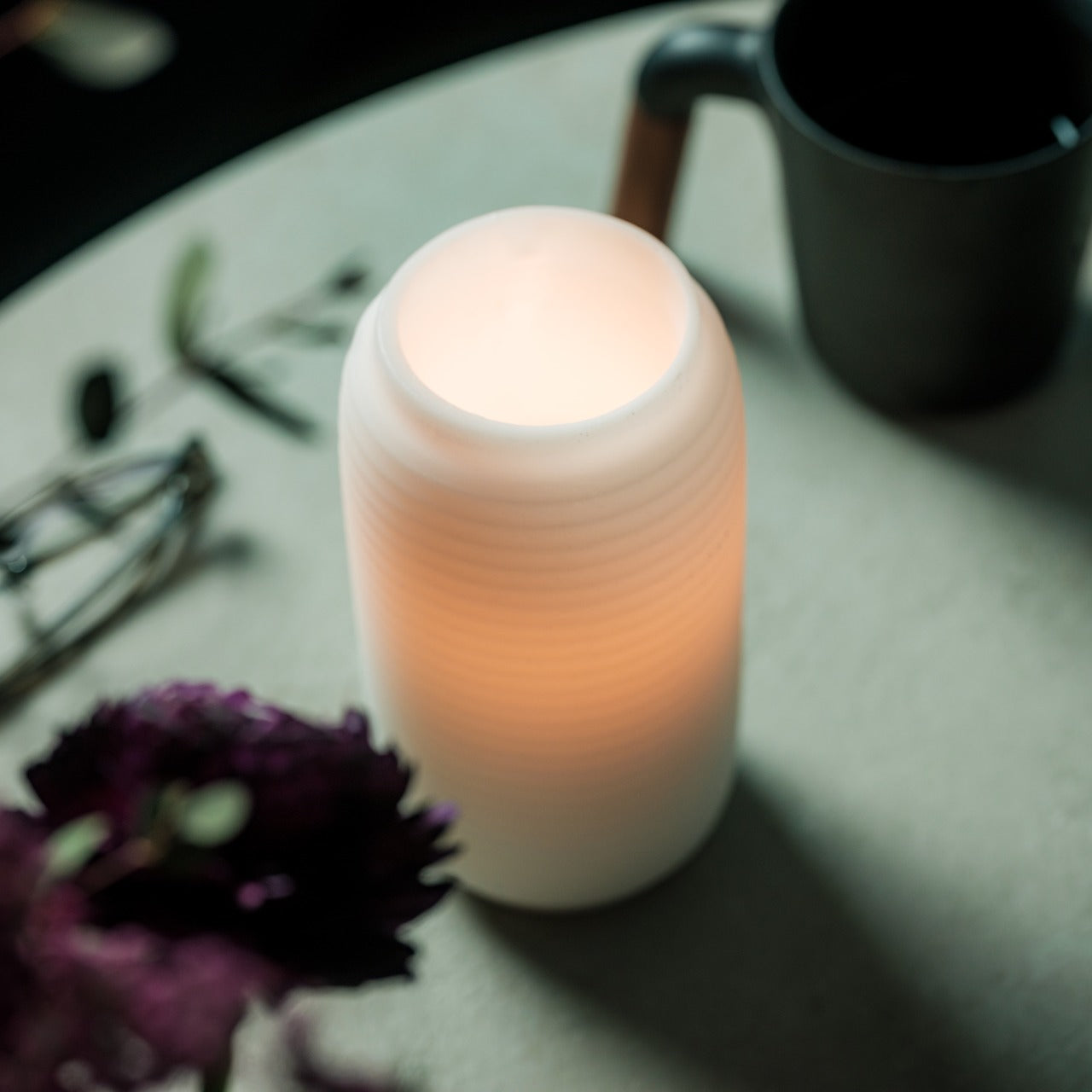
Most candles do one thing: burn down and disappear. The wax melts, the light fades, and what you are left with is an empty vessel and a faint smell of something vaguely floral. The Japanese Lantern Candle does not follow that logic. Rooted in the design of the chouchin, the traditional paper lanterns that once lit up festival streets and the doorways of old izakayas, this candle holder holds its shape while the flame quietly does its work inside. The outer wax never melts. The light does.

What changes as the candle burns is the experience. The inner candle gradually hollows out, and as it does, the light begins filtering through the undulating surface of the outer shell in a slow, shifting pattern that is difficult to look away from. Handmade by craftsmen in Kurashiki, Japan, it carries the kind of quiet specificity that separates an object made with intention from one made for convenience. That distinction is easy to feel the moment it is lit.

Click Here to Buy Now: $70.00

The Light That Stays

The patented technology behind the outer shell is what makes this candle worth understanding. Conventional candles collapse inward as the wax disappears, which means the design and the light disappear with them. Here, the outer layer holds its form throughout the life of the candle. The undulating surface was not designed purely for aesthetics, though it earns its place on that front as well. As the inner flame burns lower, the light catches and bends through the curves of the shell in a way that shifts with the burn, giving the candle a different quality of light at the end of its life than at the beginning. It is a slow reveal rather than a slow fade.

Crafted in Kurashiki, Designed for Stillness

Kurashiki is a city in Okayama Prefecture with a long history of textile craft and traditional artisanship. The candles made there carry that lineage in the way they are finished. Each one is handmade, which means no two are entirely identical, and the minimalist exterior reflects a restrained design philosophy that integrates into most interior spaces without demanding attention. It works on a bedside table, a bathroom shelf, or the center of a dining surface. The intention behind it, a calming ritual to mark the end of the day, is built into the form itself. You do not need to think about how to use it. You simply light it.

What We Like

  • Patented outer shell technology: the wax casing holds its structure as the inner candle burns, preserving the lantern form and the quality of the glow through the entire life of the candle
  • Handcrafted in Kurashiki, Japan: made by artisans in a city with a genuine tradition of craft, which shows in the finish and the material consistency
  • Undulating surface design: as the inner flame burns through, the light catches and moves across the curved surface in a way that no flat-sided candle can replicate
  • Minimalist aesthetic: the design integrates into contemporary and traditional interiors equally, without the visual noise of decorative candles that prioritize appearance over atmosphere

What We Dislike

  • No replacement candle system specified: the product does not make clear whether inner candles can be sourced and replaced once the original burns out, which affects the long-term value of the outer shell
  • Limited availability: with only a small number left in stock and no confirmed restock date, it is the kind of object that disappears before most people know it exists

A Ritual Worth Keeping

There is a particular kind of object that earns a permanent place in a room not because it demands to be noticed but because the room feels different without it. The Japanese Lantern Candle belongs to that category. It does not perform. It simply holds the light in a way that slows the room down, which is the point of the chouchin tradition it draws from, and the point of any ritual worth building around the end of a day.

If the candles currently on your shelf burn flat and leave nothing behind, this is the straightforward upgrade. At $70.00, it is the cost of something made by hand, in one place, for one purpose. Pick it up before the remaining stock is gone.

The post This $70 Japanese Candle Burns From the Inside Out & Lights a Room Better Than Anything Else on Your Shelf first appeared on Yanko Design.
5 Japanese Design Gifts for Him That Feel Like They Were Hand-Carried From Kyoto

The best gifts don’t announce themselves. They sit quietly on a desk or a shelf and earn their place over months, long after the novelty of anything else has faded. Japanese design understands this better than almost any other creative tradition. The deliberate object, stripped of everything unnecessary, built to be used every single day without ever wearing out its welcome. These five picks operate on exactly that frequency.

None of these are mainstream. You won’t find them at a department store or wrapped in packaging that tries too hard. What they share is a quiet commitment to material honesty: titanium that carries no taste, porcelain with no visible branding, brass that darkens with use, incense that smells like a forest. Together they cover a full day, from morning coffee through the last drink of the night.

1. Unfiltered Titanium Whisky Glass

Titanium is one of the few materials that genuinely changes how a drink feels without changing how it tastes. It is completely non-reactive, which means spirits come through clean, with nothing added by the vessel and nothing taken away. The Unfiltered Titanium Whisky Glass takes that material property and builds around it a form that is spare and considered, lighter than glass but with a presence in the hand that reads immediately as deliberate. It is the kind of object that prompts questions before a single word is said about it.

For the person who cares about the quality of a drink as much as the ritual around it, this glass closes a gap that most barware never bothers addressing. Titanium used at this level belongs to aerospace and surgical contexts. Bringing it to a whisky glass is not a novelty decision; it is a statement about what the object is actually for. It performs differently from glass and crystal, and that difference is the point. Some gifts upgrade a shelf. This one upgrades a habit.

Click Here to Buy Now: $90.00

What we like

  • The non-reactive titanium construction delivers spirits with complete neutrality, letting the whisky speak entirely for itself
  • The weight and balance feel engineered rather than decorative, which makes the ritual of pouring a drink feel more considered

What we dislike

  • The matte titanium finish shows fingerprints with regular handling and benefits from occasional wiping to stay sharp
  • Those accustomed to the visual clarity of crystal may find the opaque surface takes some adjustment

2. Hasami Porcelain Mug in Gloss Gray

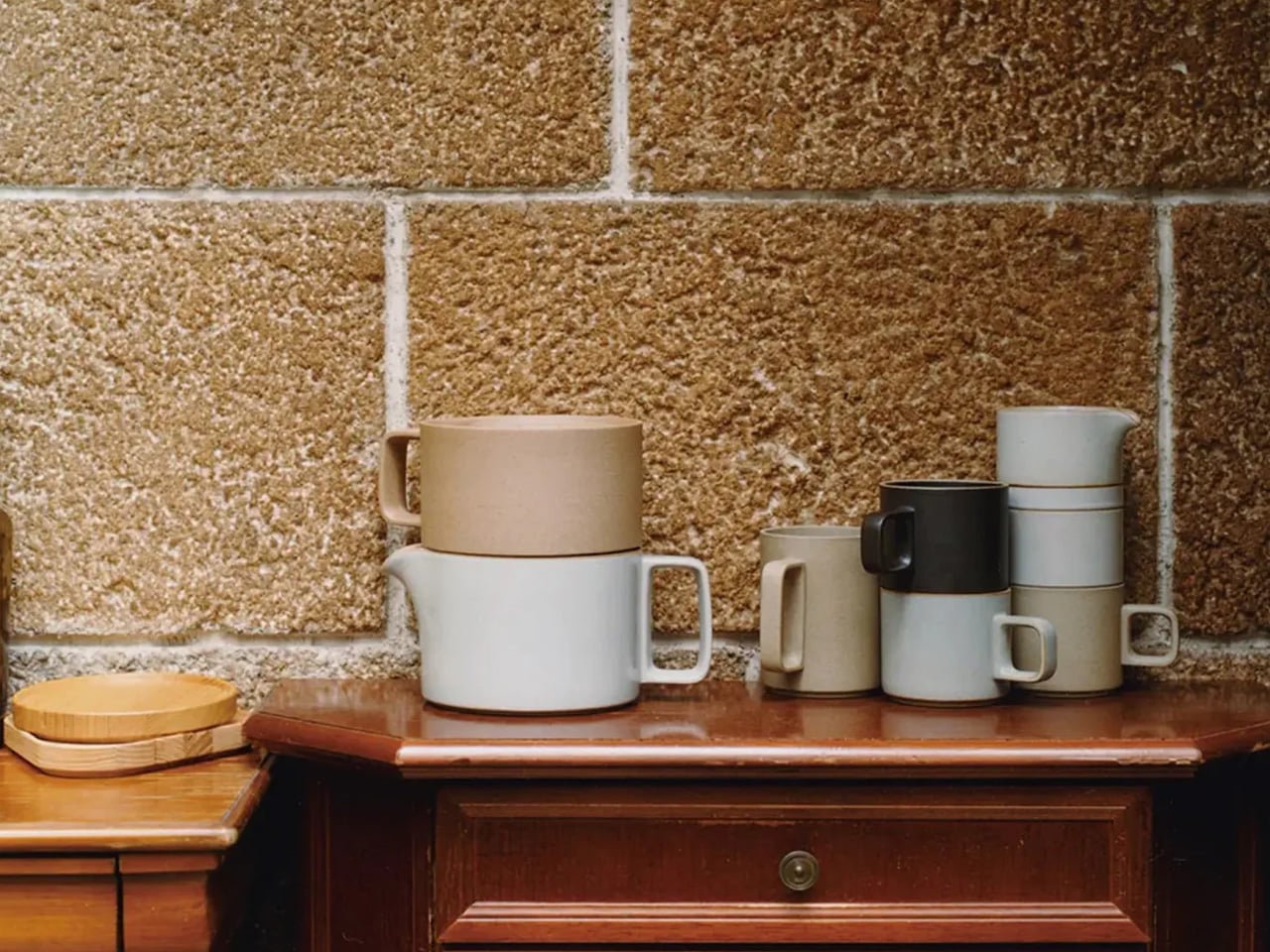
Hasami is a small town in Nagasaki Prefecture that has been producing ceramics for over 400 years. This mug is what happens when that accumulated knowledge meets a genuinely modern brief: a cylindrical body, a handle pulled so close to the barrel it nearly disappears, a high-gloss gray glaze that reads like wet stone. Designed by Takuhiro Shinomoto, it carries no visible logo anywhere on its surface. The message is the object itself, not the brand attached to it.

For the person who takes their morning coffee seriously, this changes the whole ritual. The custom porcelain-and-clay blend gives it an unusual density. It feels more substantial than its size suggests, which matters when you are reaching for the same cup every morning for the next decade. It stacks cleanly with other Hasami pieces, reflecting a deeply Japanese idea that objects should consider their relationship to one another even in storage. Microwave and dishwasher safe, despite looking like it shouldn’t be.

What we like

  • The 400 years of ceramic tradition from Hasami produces a density and finish no standard mug can replicate
  • The modular stacking system reflects a level of design thinking most tableware never bothers with

What we dislike

  • The high-gloss glaze shows water spots between washes and requires more frequent drying to stay looking its best
  • The handle sits very close to the body, which may feel narrow for larger hands

3. Traveler’s Company Brass Ballpoint Pen

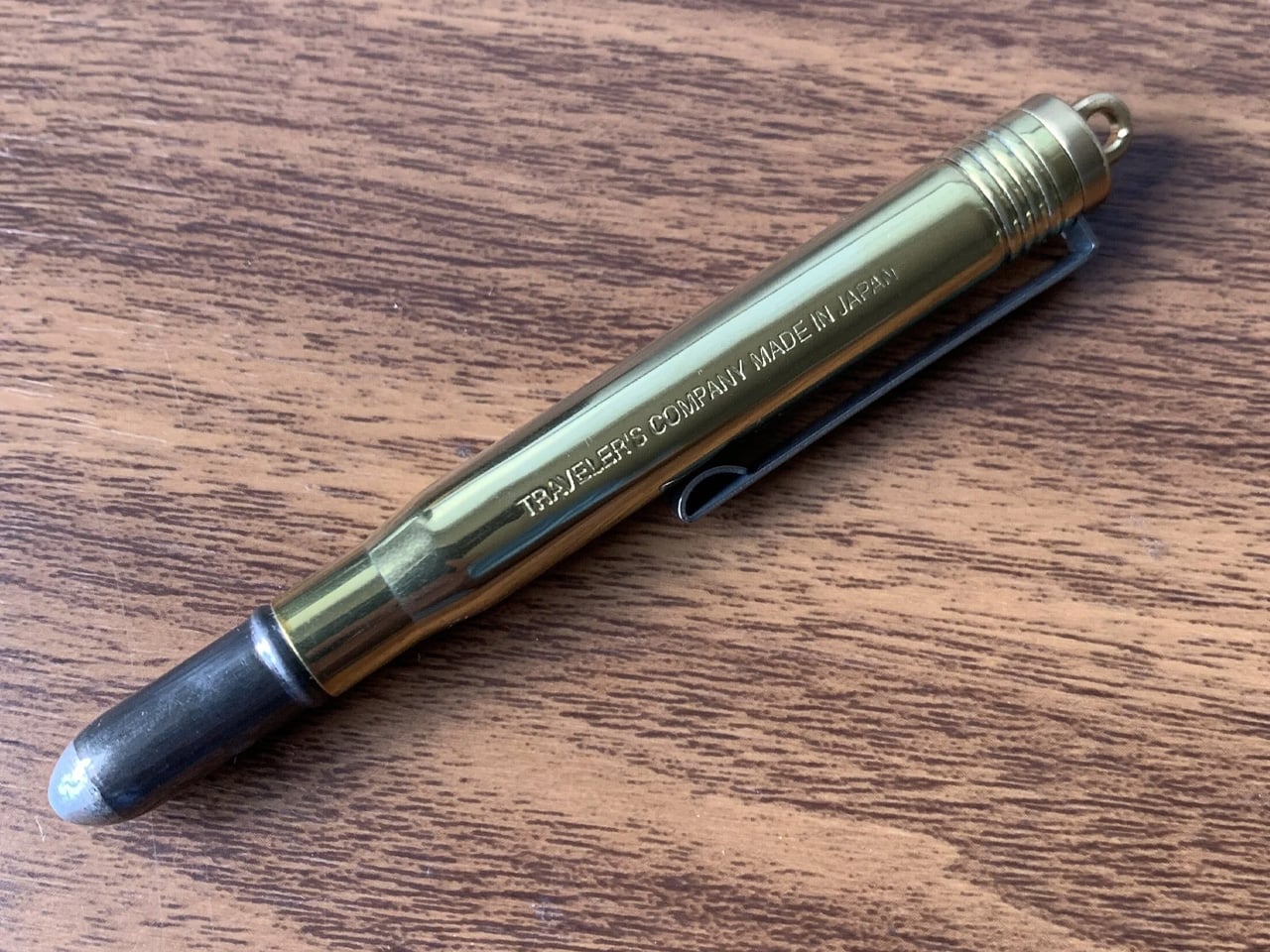
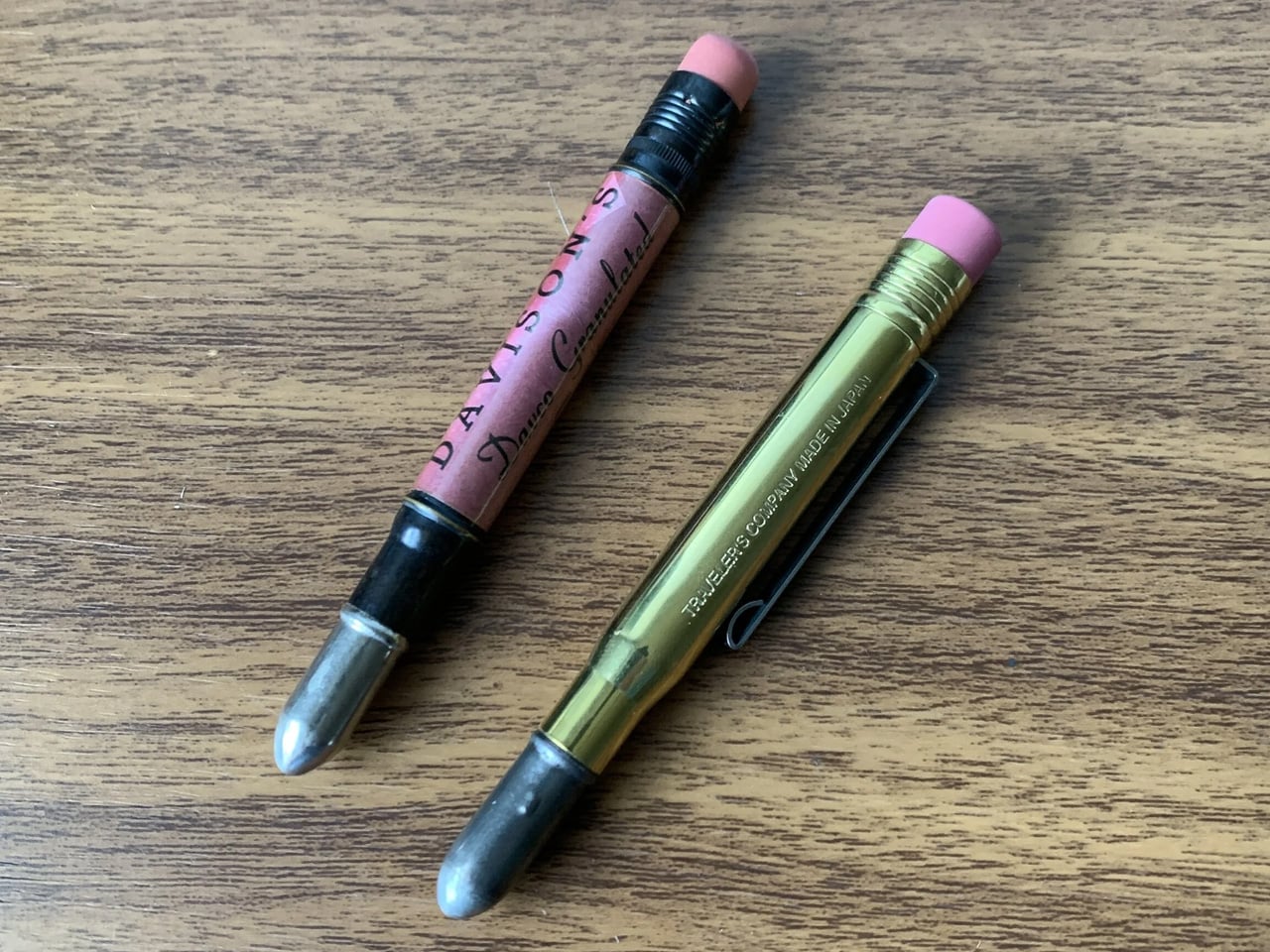
Midori has been making objects for travelers and writers from Tokyo since 1950, and the Traveler’s Company Brass Ballpoint Pen is the purest version of what they do. It is machined from a single piece of solid brass with no coating, no lacquer, and no finish. The moment you pick it up, it feels wrong in the best way: heavier than expected, cooler to the touch, more deliberate than anything that belongs in a cup of pens beside the printer.

What makes this pen genuinely special is what happens over time. Raw brass oxidizes. It darkens in the places you grip it most, lightens where it rests against a pocket, and takes on the character of its owner’s daily routine. Two people who carry this pen for a year will end up with two completely different-looking objects. For someone who writes by hand, or simply wants one pen worth keeping on a desk for the next decade, this is it.

What we like

  • The raw brass develops a unique patina over time, making each pen entirely distinct to whoever carries it
  • The weight and balance feel more considered than almost anything available at this price point

What we dislike

  • The oxidation process requires occasional polishing if a brighter, cleaner finish is preferred
  • Replacement ink uses a standard Parker-style refill, which needs to be sourced separately

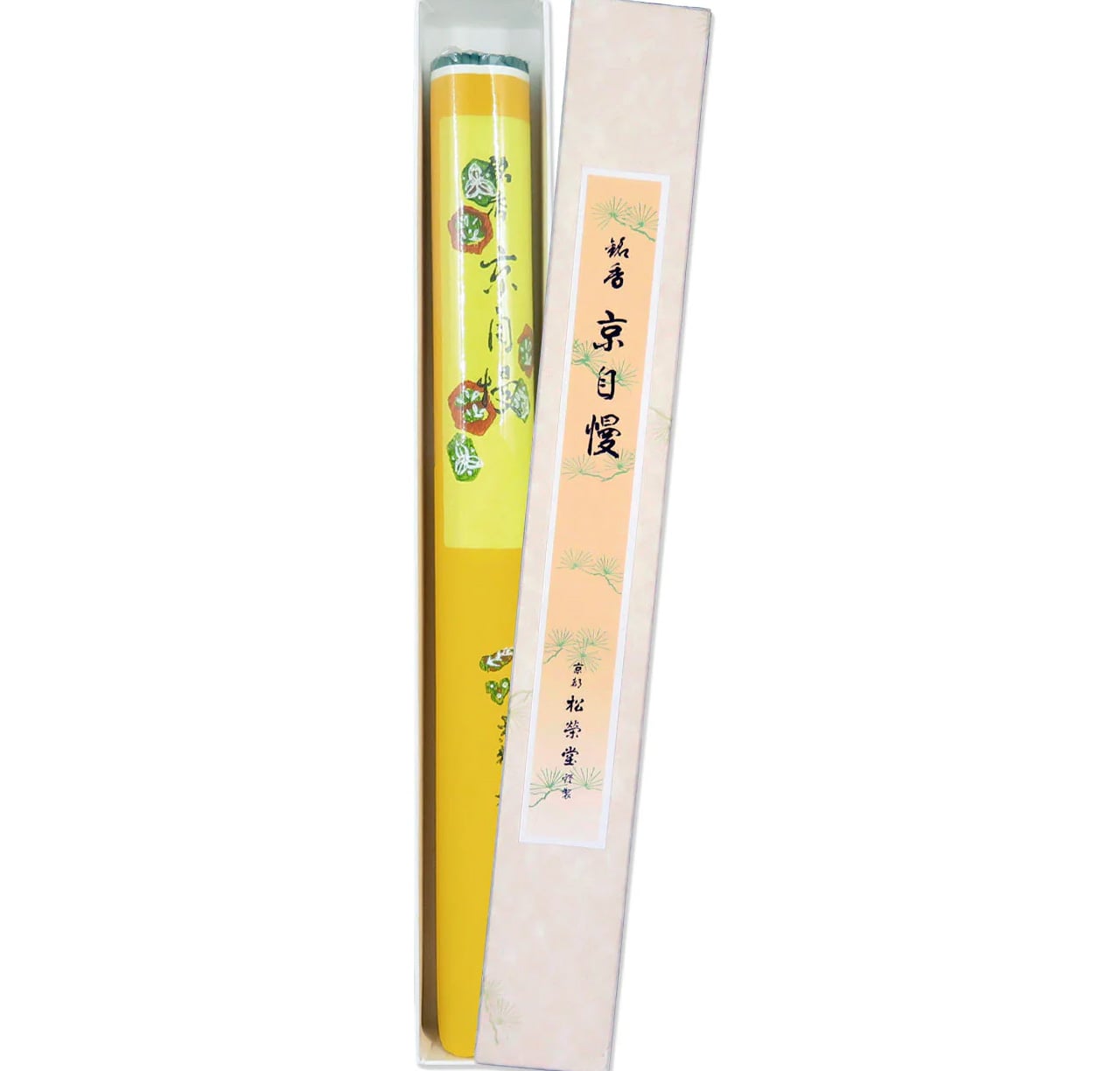
4. Shoyeido Kyojiman Incense

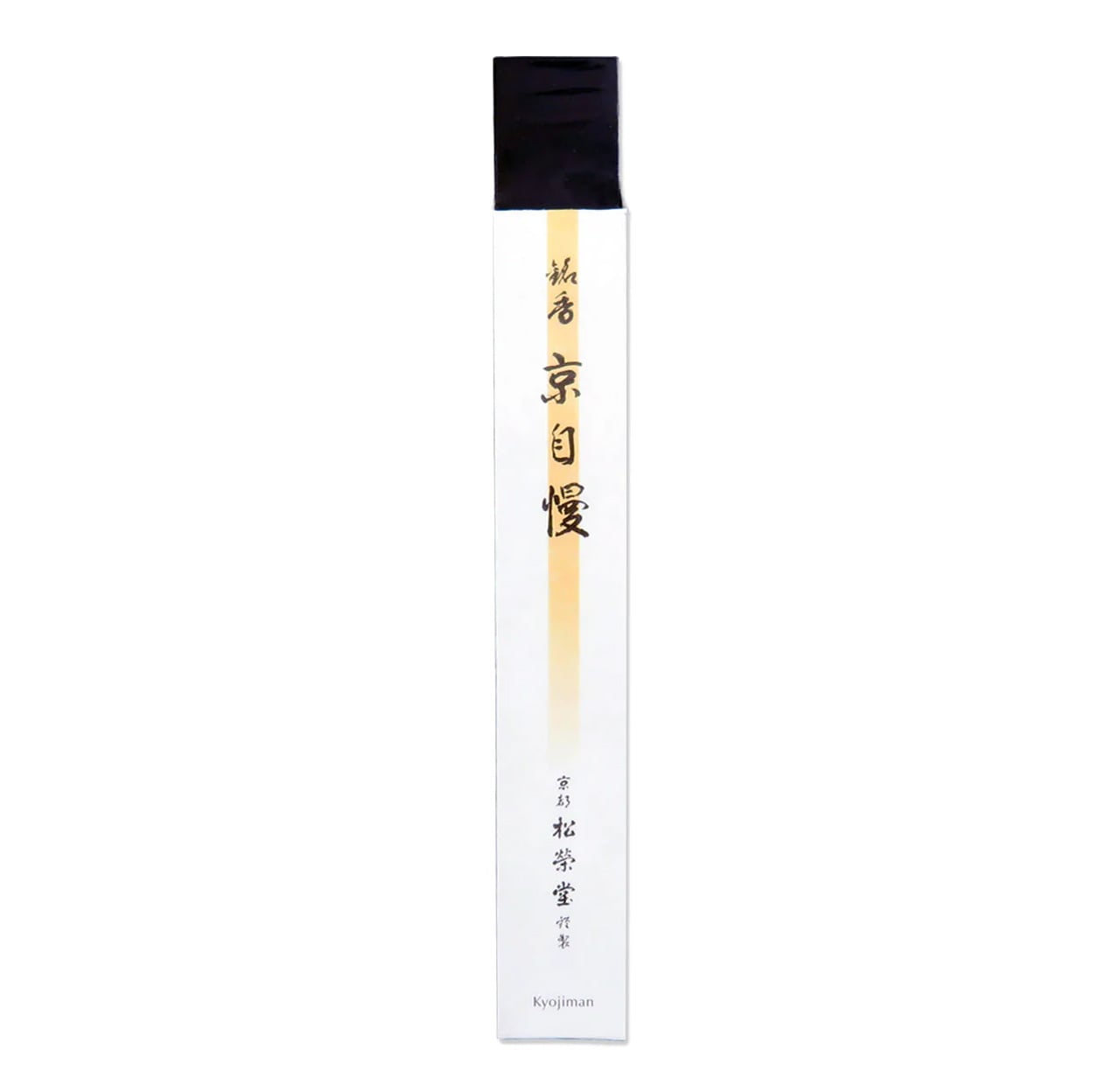
Shoyeido has been making incense in Kyoto since 1705, which means they were perfecting this craft while the city was still the imperial capital. The Kyojiman line, whose name translates roughly as Pride of Kyoto, is their signature daily collection. Each stick combines aloeswood, sandalwood, and medicinal plants, with no synthetic fragrance anywhere in the formula. The packaging is a flat paper box so stripped of decoration it looks like it was designed by an architect rather than a gift company.

Each stick burns for around 25 minutes, which is long enough to mark the transition from work to evening without filling an entire room with scent. The smoke is thin and clean, nothing like the heavy commercial incense found elsewhere. For someone who already has everything and finds most gifts forgettable, this is the one that changes how a room smells on a Tuesday, which is ultimately a more lasting impression than any object sitting on a shelf.

What we like

  • Three centuries of craft behind every stick, using only natural aromatic woods and medicinal plants with no synthetic fragrance
  • The 25-minute burn time suits an evening ritual precisely, marking a transition without overwhelming the room

What we dislike

  • The minimal paper packaging, while visually considered, offers limited protection during shipping
  • Aloeswood-forward scents can divide people, with some finding them earthy and others finding them medicinal

5. First Pour Bottle Opener

Tsubame-Sanjo is a city in Niigata Prefecture that has produced precision metalwork since the 17th century. Suwada has been operating there since 1926, a hundred years of blade craft that shows in every object they make. The First Pour Bottle Opener is what happens when that lineage is applied to the most overlooked object at any gathering. The silhouette flows rather than angles, with a weight that feels closer to a precision instrument than anything you would find sitting in a kitchen drawer.

In use, it earns its price on the first bottle. The cap comes off cleanly in a single motion, no bending, no tearing, no second attempt. A small embedded magnet catches it the instant it pops free, so it never skitters across the table. For a host who pays attention to the details of an evening, this opener sets the tone before a drink is even poured. It works best when the person receiving it already cares about that kind of thing.

Click Here to Buy Now: $65.00

What we like

  • The magnetic cap catch is the kind of detail that only reveals itself fully the first time you use it in front of someone
  • Suwada’s century of precision metalwork gives the opener a heft and finish that justifies its cost entirely

What we dislike

  • At this price point for a bottle opener, it asks the recipient to appreciate the craft sitting behind the cost
  • The flowing sculptural form means it does not rest flat on a surface without a dedicated place to live

The Best Gifts Work Inside Daily Life, Not Around It

What connects these five objects isn’t price or category. It’s the logic behind them. Each one was made by someone who thought carefully about a specific action: the glass you drink from when it matters, the cup you reach for first every morning, the pen that earns its weight over years. Japanese design doesn’t decorate the surface of daily life. It works inside it, in the moments most designers stop thinking about.

The best version of this list is also the most personal one. The opener for the host, the pen for the writer, the incense for the one who already has everything and needs something that changes the quality of a room rather than simply adding to it. Any single object here is a considered gift. All five together make an unusually honest statement about what good design actually feels like to live with.

The post 5 Japanese Design Gifts for Him That Feel Like They Were Hand-Carried From Kyoto first appeared on Yanko Design.

5 Best Gadgets Every Digital Nomad Should Pack Before Their Next Remote Summer

Summer has a way of convincing you that working from a terrace in Lisbon or a cabin in the Dolomites will feel seamless. It rarely does. The gap between the idealized workation and the experience comes down to a few specific friction points: a dead device mid-call, no sense of what time it is back home, a trackpad making everything slower, and a hotel room that actively fights your sleep.

These five objects aren’t here because they photograph well in a flat lay. Each one solves a recurring problem that surfaces the moment you leave your home office. Some are brand-new hardware. One is a concept that shows exactly where phone design needs to go. All of them are built with the same underlying logic: less bulk, more intention, nothing wasted.

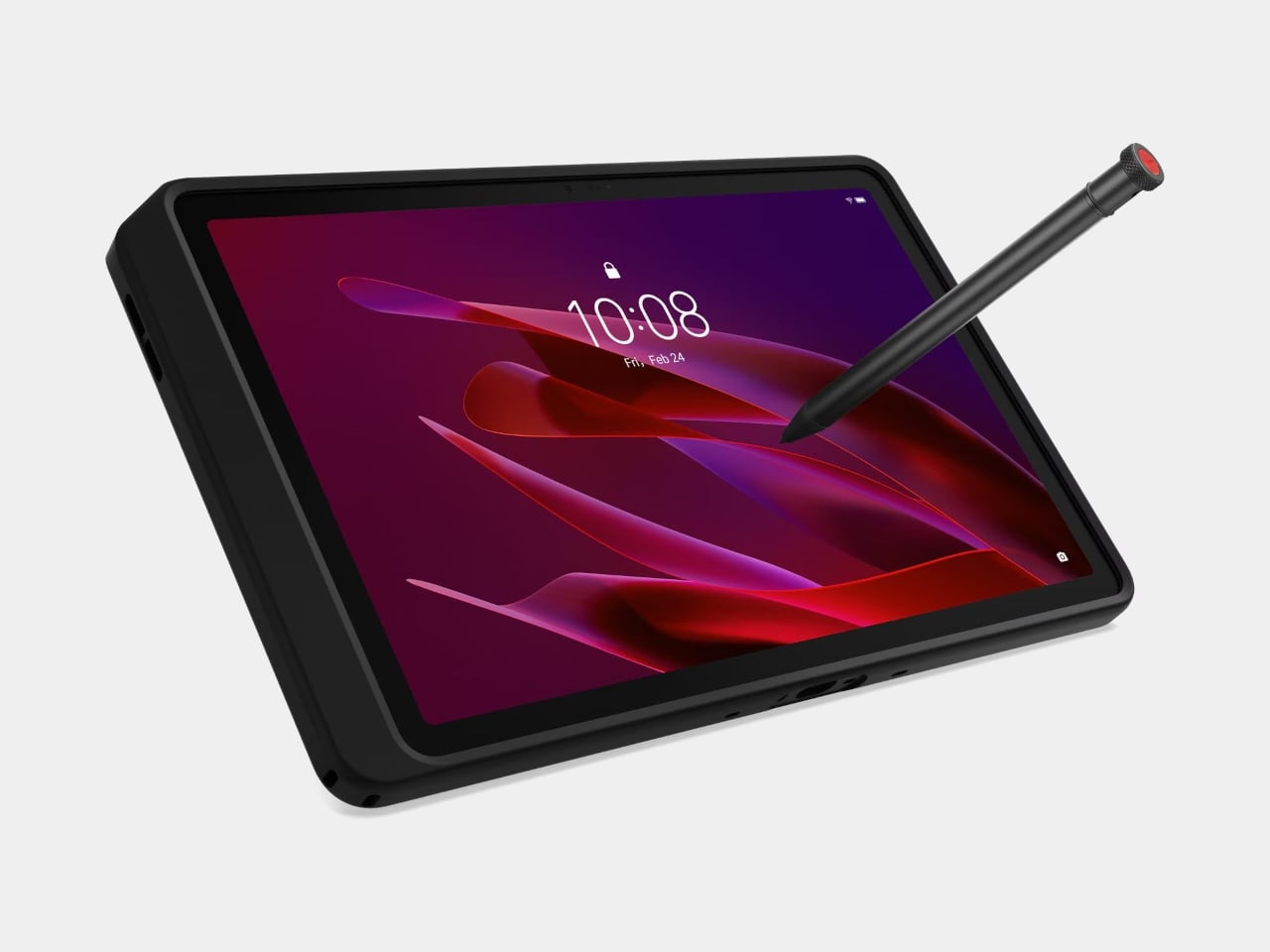
1. Lenovo ThinkTab X11

The story most tablets tell goes: thin is better, sleek is the goal, and if you drop it, that’s your problem. The Lenovo ThinkTab X11 tells a different one. It’s the first device in Lenovo’s Think portfolio to run Android, built for people who work outside of offices, starting at $499. That lands well below what enterprise rugged hardware typically costs, and it brings credentials those environments actually need rather than borrowing them from a device designed for a glass desk.

The most unusual feature isn’t the IP68 rating or the MIL-STD-810H drop certification. It’s the battery. The 10,200 mAh cell removes without tools using a screwless mechanism, so a depleted pack swaps for a fresh one without stopping work. For fixed deployments, it runs with no battery installed at all, reducing heat buildup and eliminating long-term cell degradation. The 10.95-inch 90 Hz display works with gloved hands and wet fingers, and the Snapdragon 7s Gen 3 handles processing with up to 12 GB of RAM.

What we like

  • The screwless swappable battery is a design decision most tablet makers abandoned years ago and shouldn’t have
  • MIL-STD-810H certification and IP68 rating that hold up to actual field conditions, not just the marketing copy

What we dislike

  • Running Android 16 rather than a desktop OS limits compatibility for power users who depend on specific Windows software
  • The rugged case, while swappable for a plain back panel, adds bulk that minimal travel setups may not want to carry

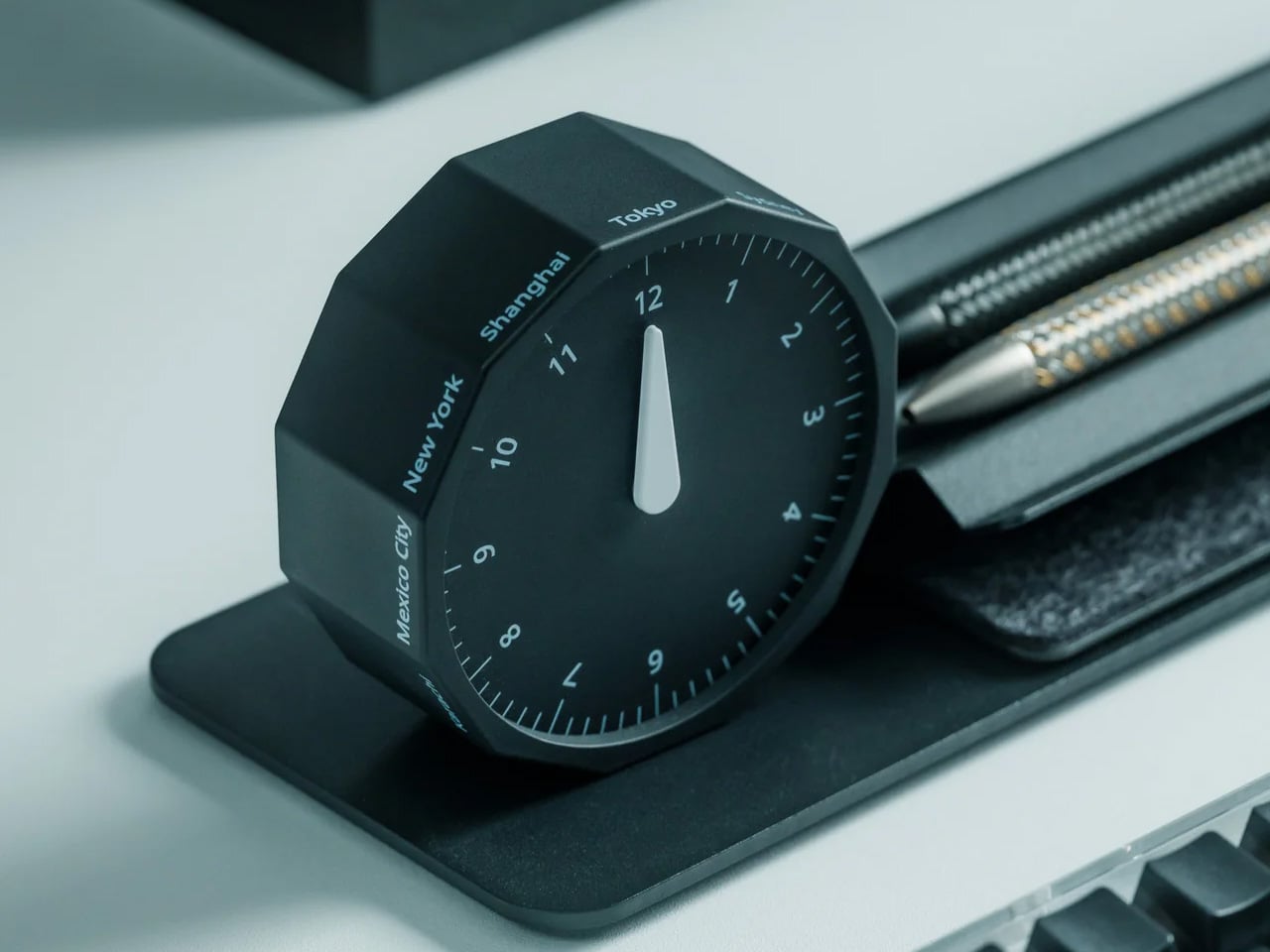
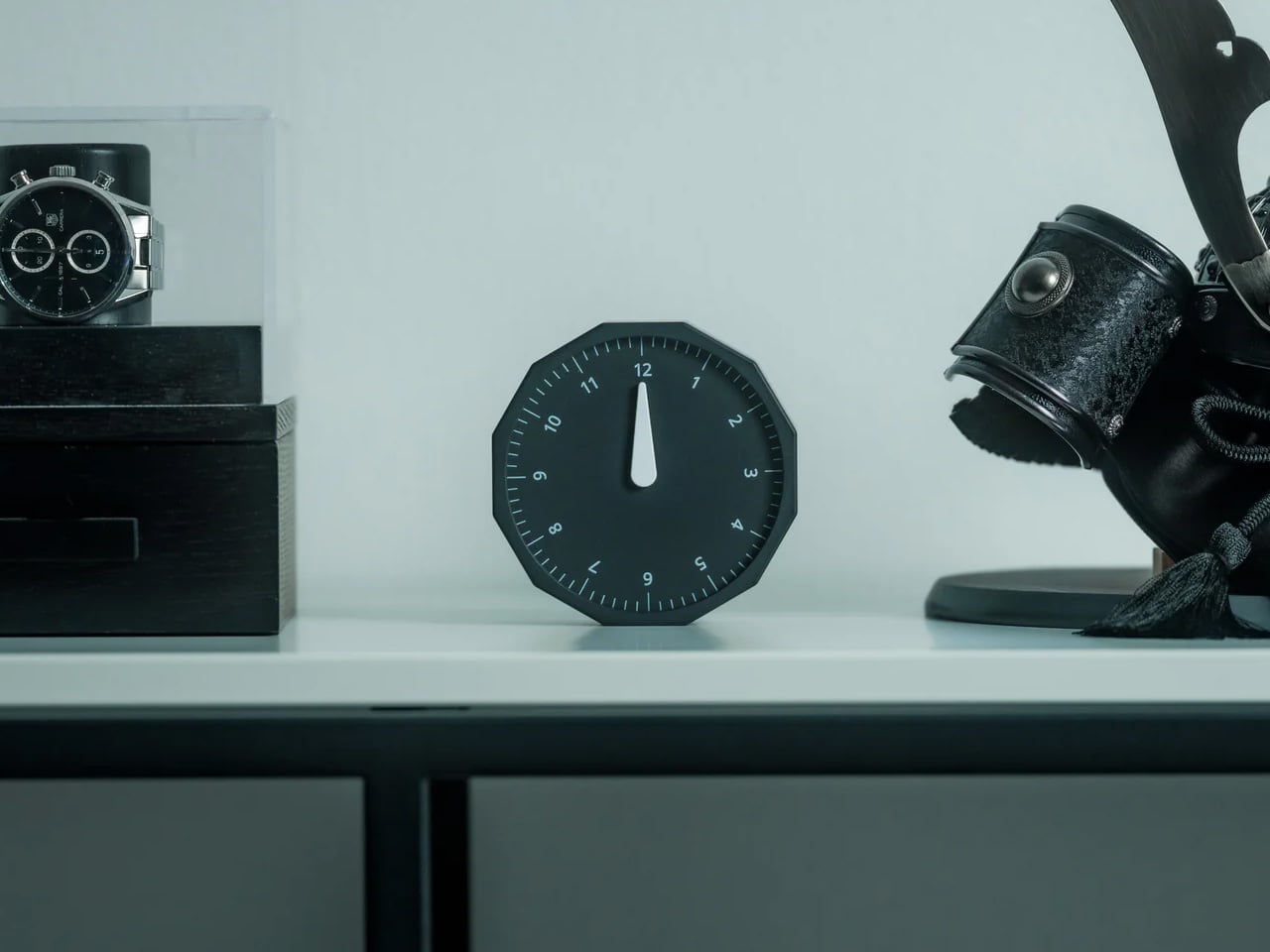
2. Rolling World Clock

Remote work across time zones produces a specific kind of low-grade anxiety: the constant mental arithmetic of what time it is for your client in Tokyo, your team in Berlin, your editor in New York. Most solutions are digital, meaning another app and another screen. The Rolling World Clock handles it differently. It’s a physical object designed to give time zone awareness a permanent, glanceable presence on whatever surface you happen to be working from, at $49.

At that price, it occupies an increasingly rare space: the deliberate analog object that earns its place in a bag through presence rather than features. A world clock you can hold and orient matters in a way a phone widget doesn’t. It also removes the need to unlock a screen every time you run through time zone arithmetic, which at four in the afternoon after a long session is more useful than it immediately sounds.

Click Here to Buy Now: $49.00

What we like

  • At $49, it brings a physical dimension to time zone tracking that no app or notification panel actually replicates
  • A design-forward desk object that works regardless of whether your laptop is open or your phone is charged

What we dislike

  • As a physical clock, it requires manual adjustment when crossing into a new time zone rather than updating automatically
  • Limited product detail currently available on the YD Shop listing; worth confirming the display mechanism before ordering

3. Nothing 4a Pro E-ink Display Concept

Not everything on this list ships tomorrow, and this one is upfront about that. The Nothing 4a Pro e-ink concept, imagined by Reddit user Taweros, replaces the Glyph Matrix on the back of Nothing’s phone with a small always-on e-ink display. Instead of spinning light patterns, the back shows something useful: a notification, a QR code at a networking event, the face of whoever is calling you. All without meaningfully touching battery life, since e-ink only draws power when the image changes.

The reason it belongs here is specific. When your bag is on the table at a co-working space, and you need to see whether that notification is worth picking up, a phone that surfaces information on its back without requiring you to unlock it removes a real interruption from your workflow. The Nothing 4a Pro hardware this concept builds on already runs a Snapdragon 7 Gen 4. The e-ink back is the single edit that would make it the travel phone worth actually wanting.

What we like

  • E-ink only draws power when the image changes, making a permanently visible ambient display a viable idea without a battery penalty
  • The concept makes a compelling case that the existing Nothing 4a Pro hardware is already there; the display and back panel are the only missing pieces

What we dislike

  • This is a concept render, not a product you can buy, and Nothing has given no public indication it’s moving in this direction
  • The e-ink area is small, which limits how much information it can usefully surface at a glance

4. OrigamiSwift Folding Mouse

At 40 grams and 0.18 inches thick when folded flat, the OrigamiSwift is the mouse that removes the excuse to keep using a trackpad. Designed by Horace Lam and rooted in origami’s structural logic, it unfolds in under half a second into a full-sized ergonomic form. The triangular folded geometry isn’t decorative. It provides the rigidity needed to hold its shape through long work sessions, on surfaces ranging from a co-working desk to the tray table of a long-haul flight.

Bluetooth 5.2 handles connectivity, the HD infrared sensor tracks at up to 4,000 CPI, and the USB-C battery lasts up to three months per charge. Soft-click buttons keep it quiet in shared spaces, which matters at a communal table three feet from a stranger on a call. For a travel mouse with this build quality and a three-month battery life, that’s not a difficult case to make.

Click Here to Buy Now: $85.00

What we like

  • At 40 grams and 0.18 inches flat, it genuinely disappears into any bag without requiring a dedicated compartment or a case
  • Three months of battery life on a single USB-C charge means one less thing to track, top up, or pack a cable for

What we dislike

  • The right-handed ergonomic form means left-handed users will need to look elsewhere entirely
  • At $85, it sits at the higher end of the travel mouse category, and some nomads will find comparable tracking performance at lower price points from established peripheral brands

5. Divoom FlowToo

Serial hotel rooms accumulate a specific roster of problems. The alarm clock is always wrong. There’s no white noise option. Music has to come through a laptop speaker. The Divoom FlowToo addresses all three by collapsing a Bluetooth speaker, white noise machine, and alarm clock into one compact device with a 2.26-inch smart display. At $99.99, it doesn’t add to the nightstand pile. It replaces three items already on it, then does each job better than what it replaced.

The 10W amplifier and 45mm full-range driver make it a real speaker rather than an afterthought. The 90-plus built-in sounds cover rain, ocean, forest, and a wide enough library that finding something useful won’t take long. The wake function brings you up gradually with natural sounds and soft display light rather than a jarring tone, which matters when you’re functioning across time zones. The Divoom app handles alarm setting and sound selection from your phone, keeping the device itself simple to operate from any nightstand you find yourself at.

What we like

  • Collapsing three bedside devices into one compact object is the right instinct for anyone who travels with a carry-on and nothing else
  • The gradual natural-sound wake function is a genuine quality-of-life improvement over every hotel alarm clock in existence

What we dislike

  • The 2.26-inch display is small enough that the visualizer and animations read more as ambient mood than functional information
  • It runs on AC power with no built-in battery, which limits use to spaces with a wall outlet nearby

Pack Less. Work Better.

The best travel gear does two things well: it earns its weight, and it removes friction rather than adding it. Every object on this list was chosen because it solves a specific problem that shows up in the first week of working remotely, not a hypothetical one. A tablet that outlasts your work session. A mouse that doesn’t require you to compromise. A hotel room that finally lets you sleep properly.

One of them is a concept you can’t buy yet, and it’s worth watching. The rest are available now, four at price points that fall under $100. None of them are here because they looked good in a render. They’re here because the gap between a workation that works and one that slowly grinds you down usually comes down to a few objects you either packed or didn’t.

The post 5 Best Gadgets Every Digital Nomad Should Pack Before Their Next Remote Summer first appeared on Yanko Design.
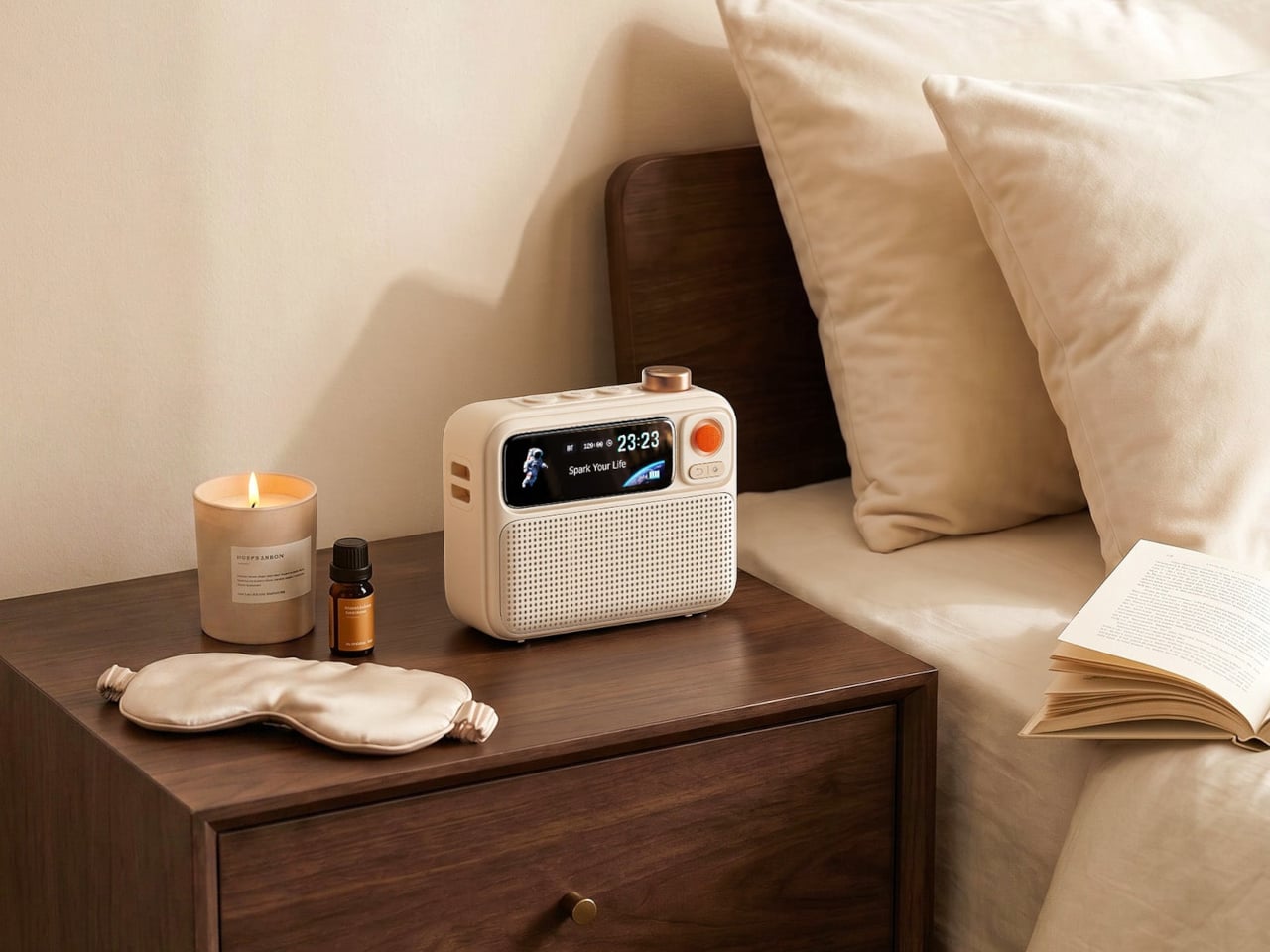
5 Best Packable Outdoor Tools So Light You’ll Forget They’re in Your Bag – Until You Need Them

There is a specific kind of frustration that only comes from a pack that fights you. Zippers that won’t close. Straps digging in because the load is too heavy for a day hike. Gear that solves one problem while creating two others. The five products on this list were chosen with a single constraint: they need to justify their existence in a bag that has no spare room and no patience for dead weight.

Each one earns its place by solving a specific outdoor problem without giving anything back in bulk or effort. The Nimbus Inflatable Umbrella leads the group as its most radical thinker, but the logic runs through every pick here. Weight matters. Packability matters. The kind of reliability that doesn’t require checking before you leave the house matters most. This is the kit you build once and stop thinking about.

1. Nimbus Inflatable Umbrella

The standard umbrella has one guaranteed flaw: every rib is a failure point waiting for wind. The Nimbus, designed by four SCAD graduate students as part of their Master’s in Design for Sustainability, removes the premise entirely. Made from a single material, recyclable thermoplastic polyurethane, it inflates into structure rather than relying on a metal skeleton to hold its shape. No ribs. No joints. No layered materials that make the whole thing unrecyclable when it finally gives up.

A life cycle assessment puts the Nimbus at 99% lower environmental impact than a conventional umbrella, which is a number worth sitting with. The single-material construction also makes it repairable in ways that standard umbrellas never were, and the design team built in a buy-back program before the product even reached production scale. It has earned recognition from the Green Product Award. While it remains a concept rather than a retail product, the argument it makes is already complete.

What we like

  • Single TPU construction removes every mechanical failure point that standard umbrellas share
  • 99% lower environmental impact verified through a full life cycle assessment

What we dislike

  • Currently a concept product and not yet available for retail purchase
  • Inflation before use adds a step that a conventional umbrella does not require

2. Blackout Beam Tactical Flashlight

A flashlight earns its place in a packable kit by being the one you actually have on you when the light fails. The Blackout Beam Tactical Flashlight makes that case on size before it gets to output. It delivers enough brightness to handle trail navigation and campsite tasks in a body compact enough to sit alongside the rest of this kit without occupying space the rest of the bag has already negotiated for.

Tactical flashlights tend to be engineered for demands most outdoor users will never encounter, which means the camper or day hiker ends up with hardware overspecified for the task. That margin matters more than it sounds. When navigating an unfamiliar trail after dark or searching a tent interior in total darkness, a light that performs beyond what the moment requires is a light that has never let you down. The Blackout Beam earns its slot by being ready before you are.
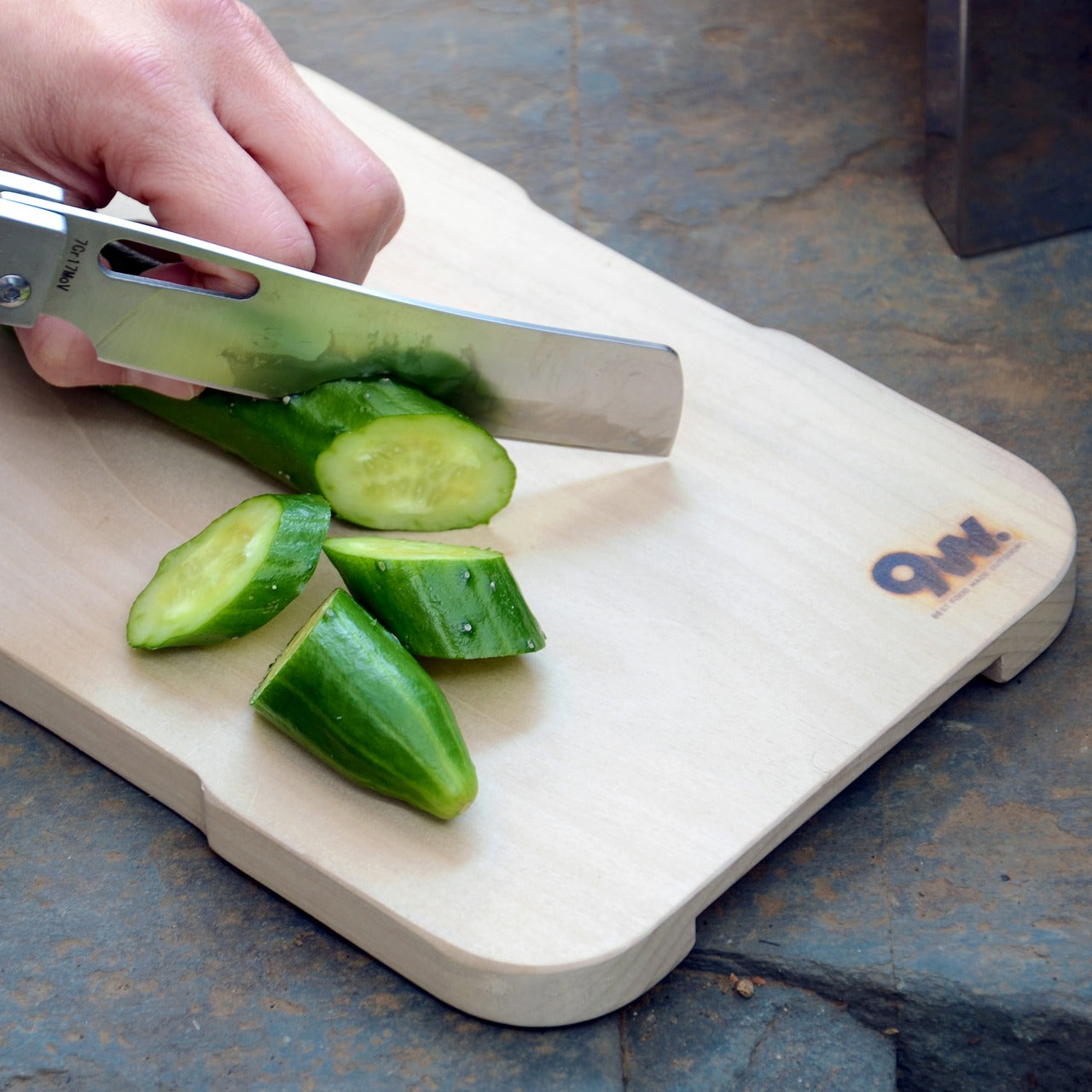
Click Here to Buy Now: $90.00

What we like

  • Compact form factor carries without claiming dedicated pack real estate
  • Built to a performance standard that comfortably exceeds typical outdoor demands

What we dislike

  • Tactical construction favors utility over refined aesthetics
  • Requires battery management like any powered carry item in an active kit

3. NoxTi Tritium Keychain

The NoxTi does not run on anything you pack. A 45mm Grade 5 titanium cylinder weighing 10.7 grams, it houses a tritium vial inside a precision quartz tube with 92% light transmission. Tritium is a hydrogen isotope whose beta particle decay strikes a phosphor coating and produces continuous light as a straightforward byproduct of existing. The glow runs for 25 years without a switch, battery, or charge cycle. You add it to the kit and stop tracking it entirely.

In outdoor use, the NoxTi handles a job the Blackout Beam cannot: passive location without activation. It marks your keys at the bottom of a bag, identifies your tent entrance without a search, and stays visible through a full night without being switched on. Six glow colors address different use cases, with red available for night-vision preservation borrowed from military and aviation practice. The ceramic-tipped tail adds a glass breaker for genuine emergency utility without changing the carry footprint.

What we like

  • 25-year continuous glow powered by physics with no battery, switch, or charging required
  • Fully user-serviceable body becomes a permanent platform with swappable tritium cores

What we dislike

  • Intentionally faint glow marks and locates rather than providing meaningful illumination
  • Tritium classification may restrict import or carry in certain countries

4. Camprit TiStove

Five flat titanium pieces. That is the entire TiStove. Two foldable legs and three interchangeable cooking panels that pack completely flat, come in under 1.5 pounds, and assemble without fasteners, threading, or a manual. Camprit’s logic was that most camp stoves lock you into a single cooking method and add bulk to compensate. The TiStove removes that assumption. Three panels reconfigure for boiling, grilling, or open-fire cooking, and the spare panels function as a windshield when conditions require one.

There is no ignition system to fail at altitude, no gas canister threading to seize in cold weather, no proprietary fuel that limits what the trip can include. The TiStove accepts wood, gas, and alcohol, adapting to what the trail provides rather than what you remembered to bring. Titanium picks up color from heat over time, marking each stove with its own record of use. For a camp kitchen with no single point of failure, this is where it starts.

What we like

  • Packs completely flat at under 1.5 lbs with three interchangeable cooking configurations
  • Compatible with any fuel source including wood, gas, and alcohol without modification

What we dislike

  • Requires a separate burner or fuel source since nothing in the system is self-contained
  • Titanium panels need careful packing to avoid surface contact and scratching

5. Aero Spork (0.25 oz)

Quarter of an ounce. That figure sounds like marketing until you hold the Aero Spork and realize the engineers took it seriously. Titanium construction at that weight means the tradeoff between durability and gram savings, the negotiation that haunts most ultralight gear, simply does not apply here. The curved ergonomic form handles soup, pasta, and everything in between without requiring the compromises that most sporks impose on at least one function. It does both jobs properly without apologizing for either.

The Aero Spork stacks cleanly, which matters more on group trips than solo ones. When each person brings their own, and the pack reaches capacity, they consolidate without adding bulk. The tapered end handles noodle twirling with enough precision to feel intentional rather than approximate. It is the kind of object whose design becomes invisible because every decision was made correctly. You stop noticing it and start using it, which is the goal of any good tool.

Click Here to Buy Now: $25.00

What we like

  • 0.25 oz titanium construction removes any weight penalty from the carry decision
  • Stackable design scales cleanly for group trips without multiplying bulk

What we dislike

  • Small form factor requires some adjustment from standard cutlery sizing
  • Single utensil format means committing to the spork over carrying separate pieces

The Lightest Kit Is the One That Never Comes Back Out of the Bag

Five products, five outdoor problems, and a combined carry weight that barely registers. What connects them is a refusal to make you choose between function and footprint. The Nimbus reframes what a weather shelter can weigh. The NoxTi removes an entire category of gear from your charge list. The TiStove reduces the camp kitchen to a flat stack of metal. Each one solves its problem at the root rather than working around it.

The best outdoor kits are not the ones with the most options. They are the ones where every item has earned its place, and nothing remains by default. Pull any of these five out of the bag, and you know exactly why it made the cut. Pack all five, and you will start wondering what else you have been carrying that cannot answer the same question. Light is a habit. Once you build it, everything else starts to feel like excess.

The post 5 Best Packable Outdoor Tools So Light You’ll Forget They’re in Your Bag – Until You Need Them first appeared on Yanko Design.