This Not-So-Tiny & Spacious Tiny Home Is Blessed With A Motorized Deck, Rooftop Terrace & Spiral Staircase

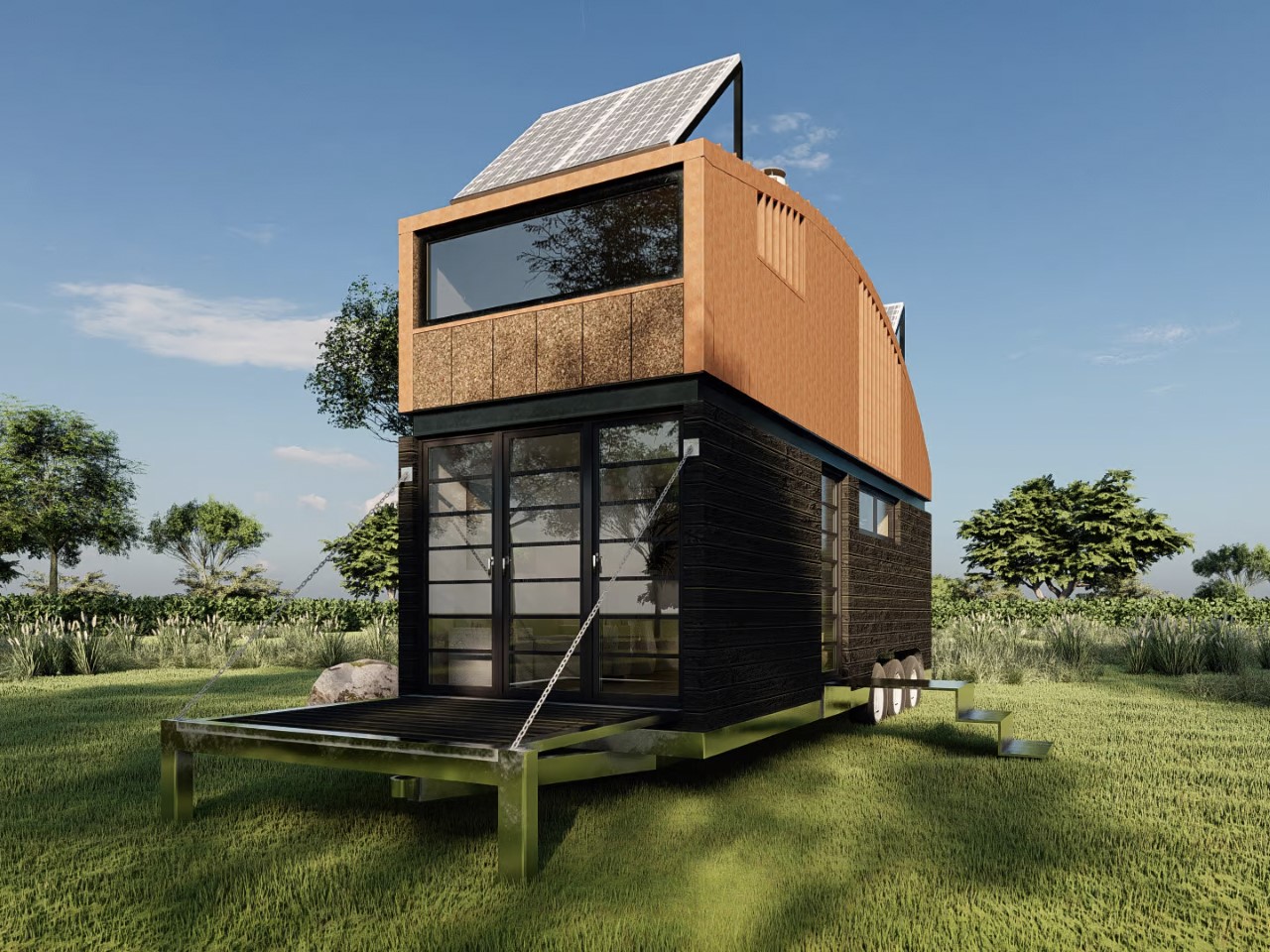
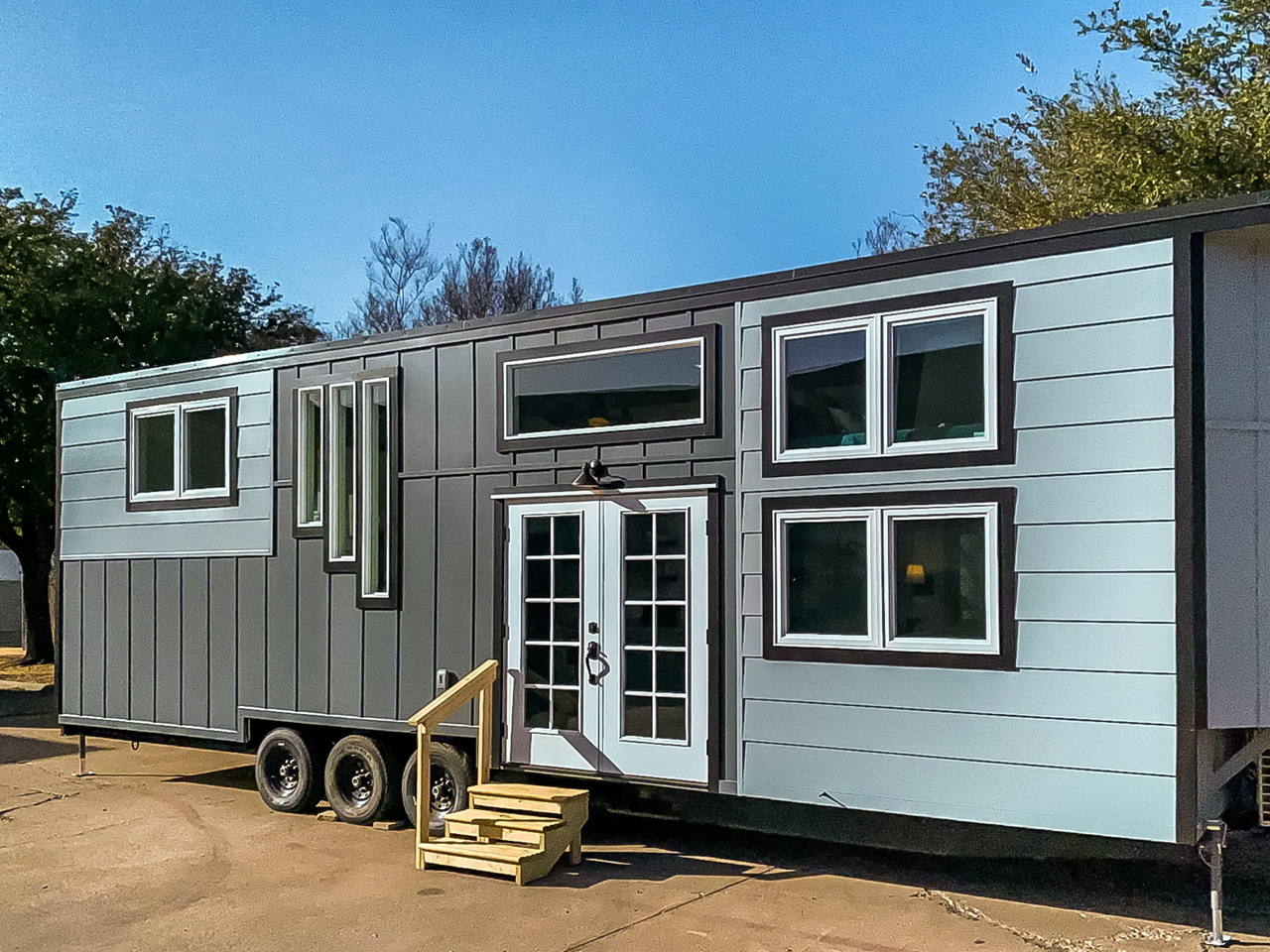
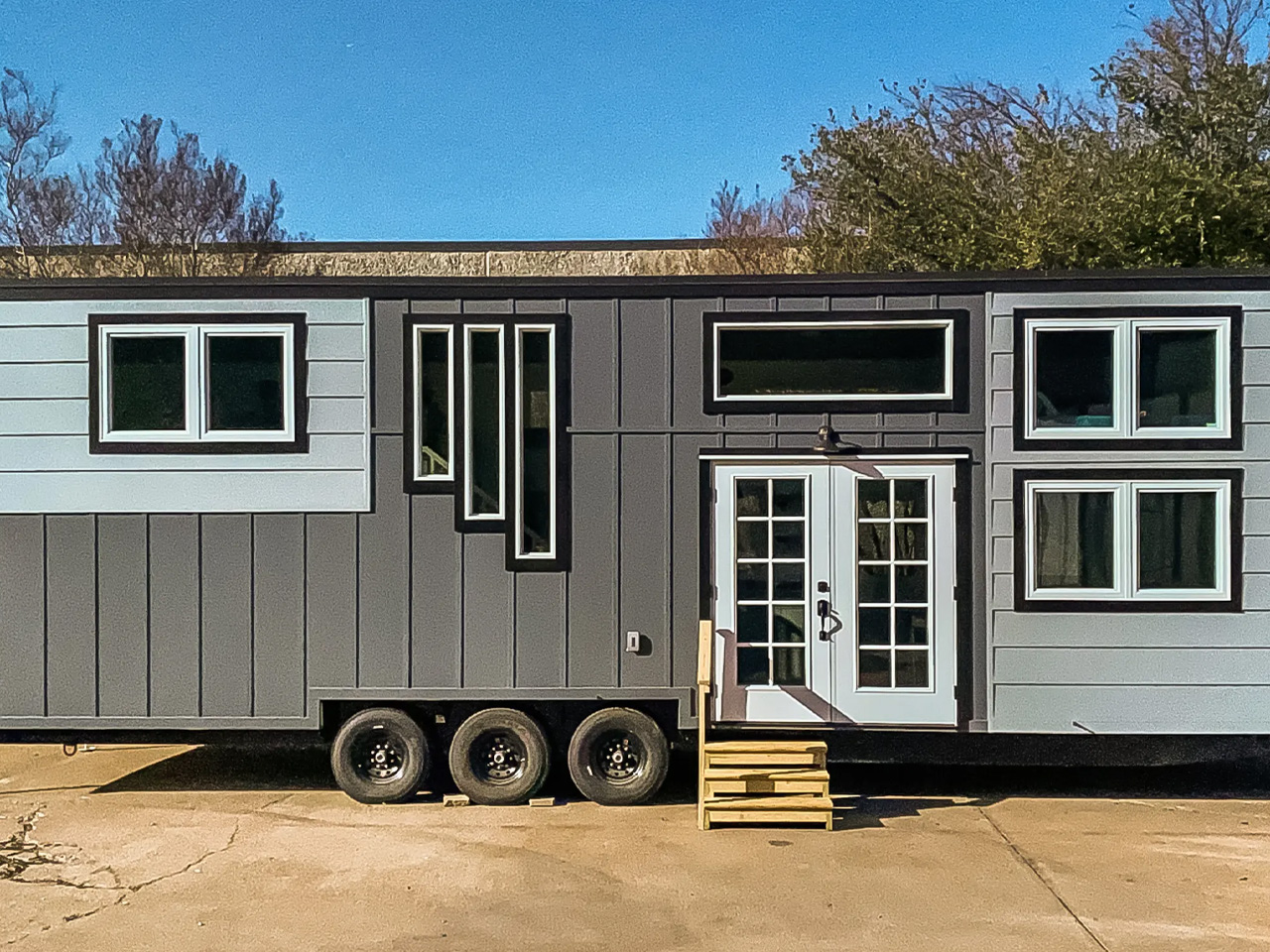
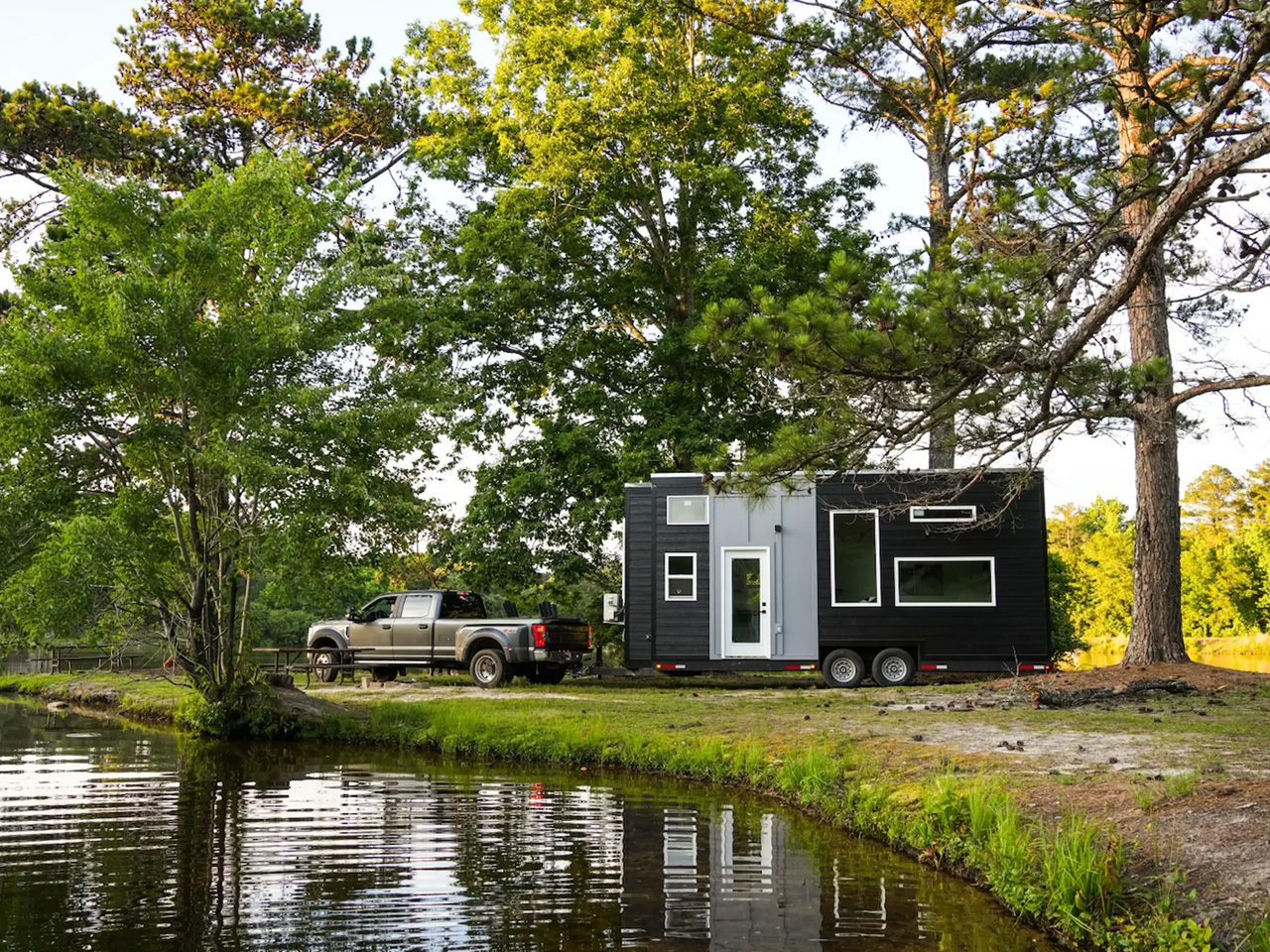
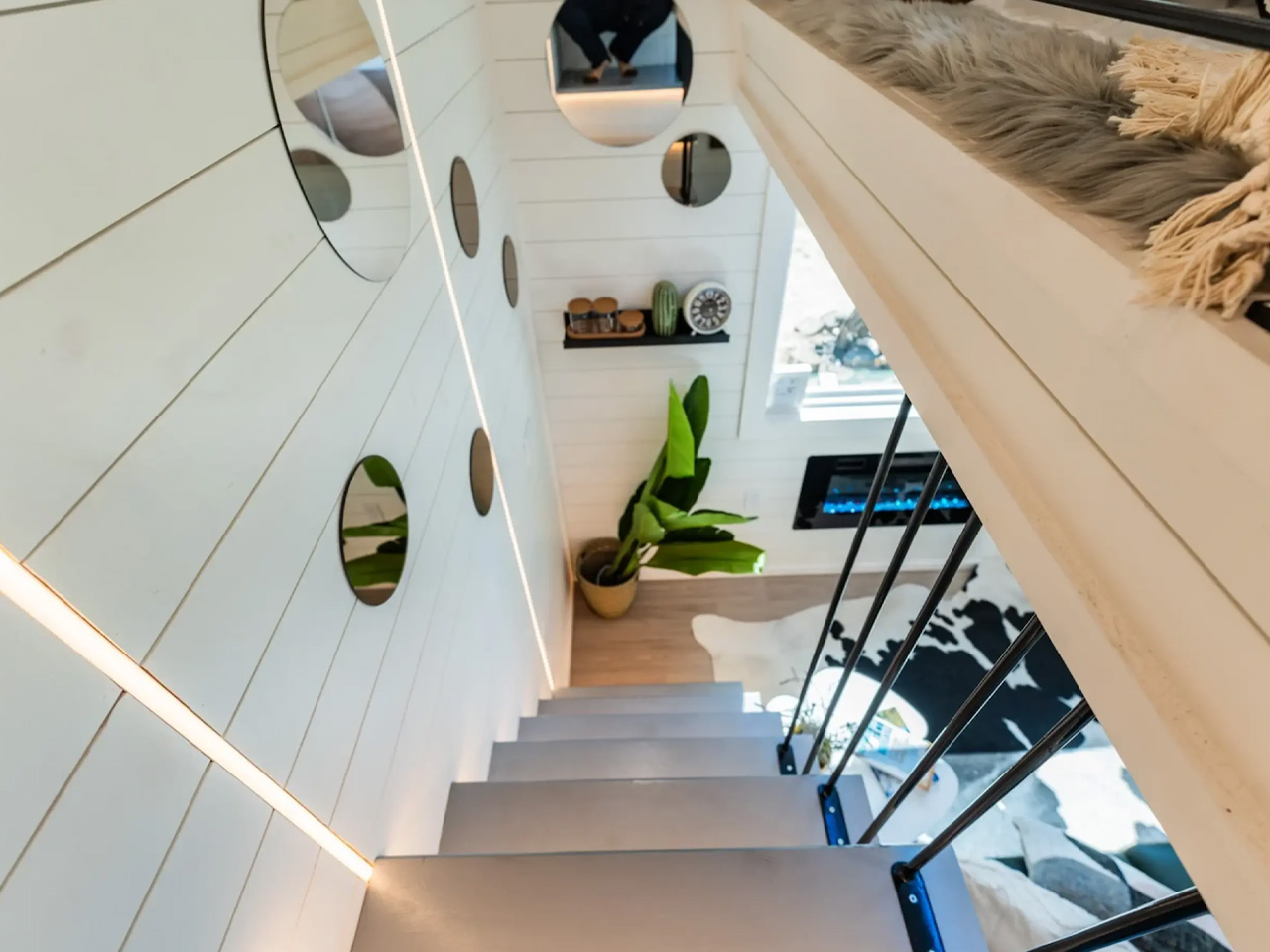
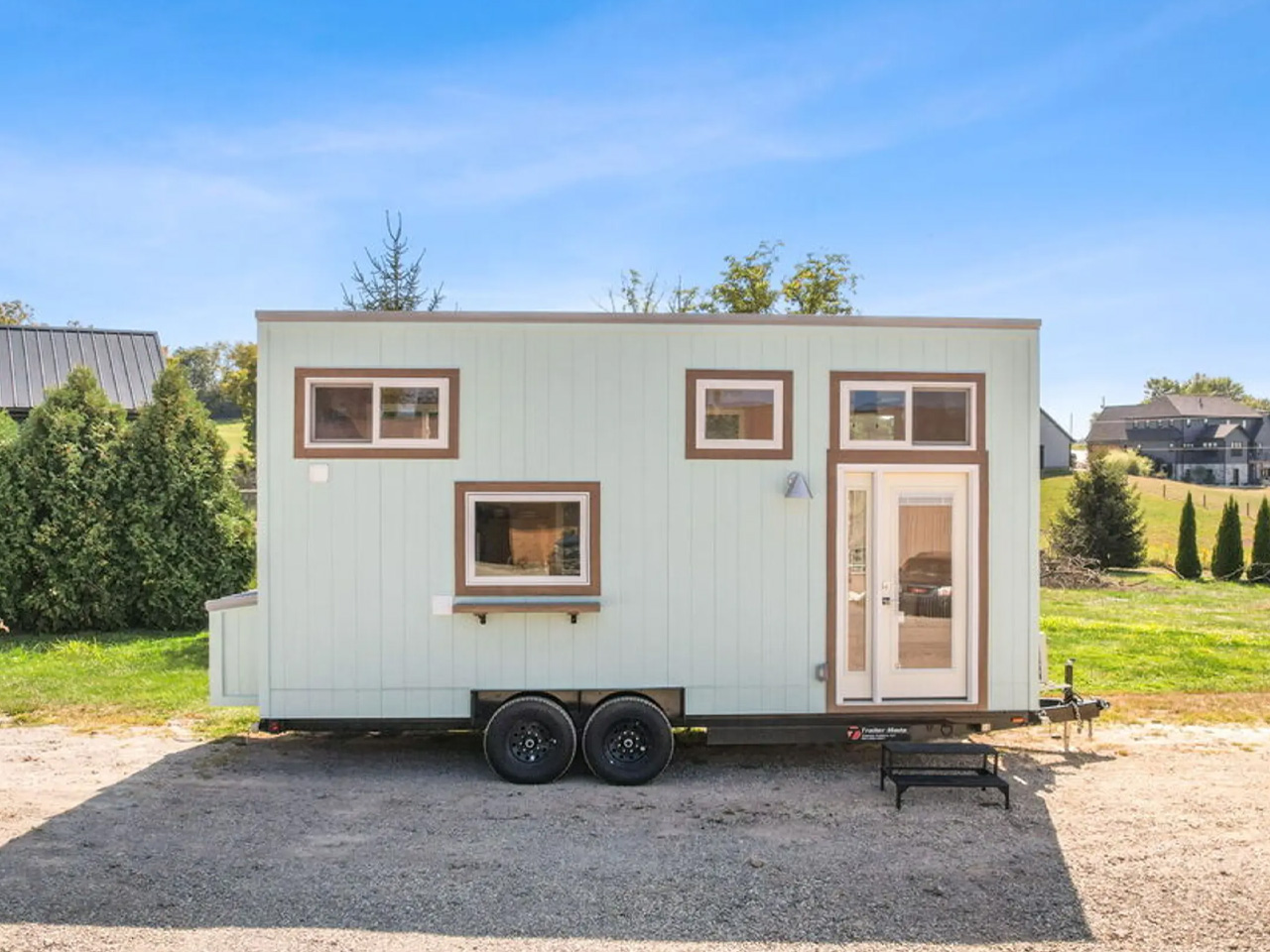
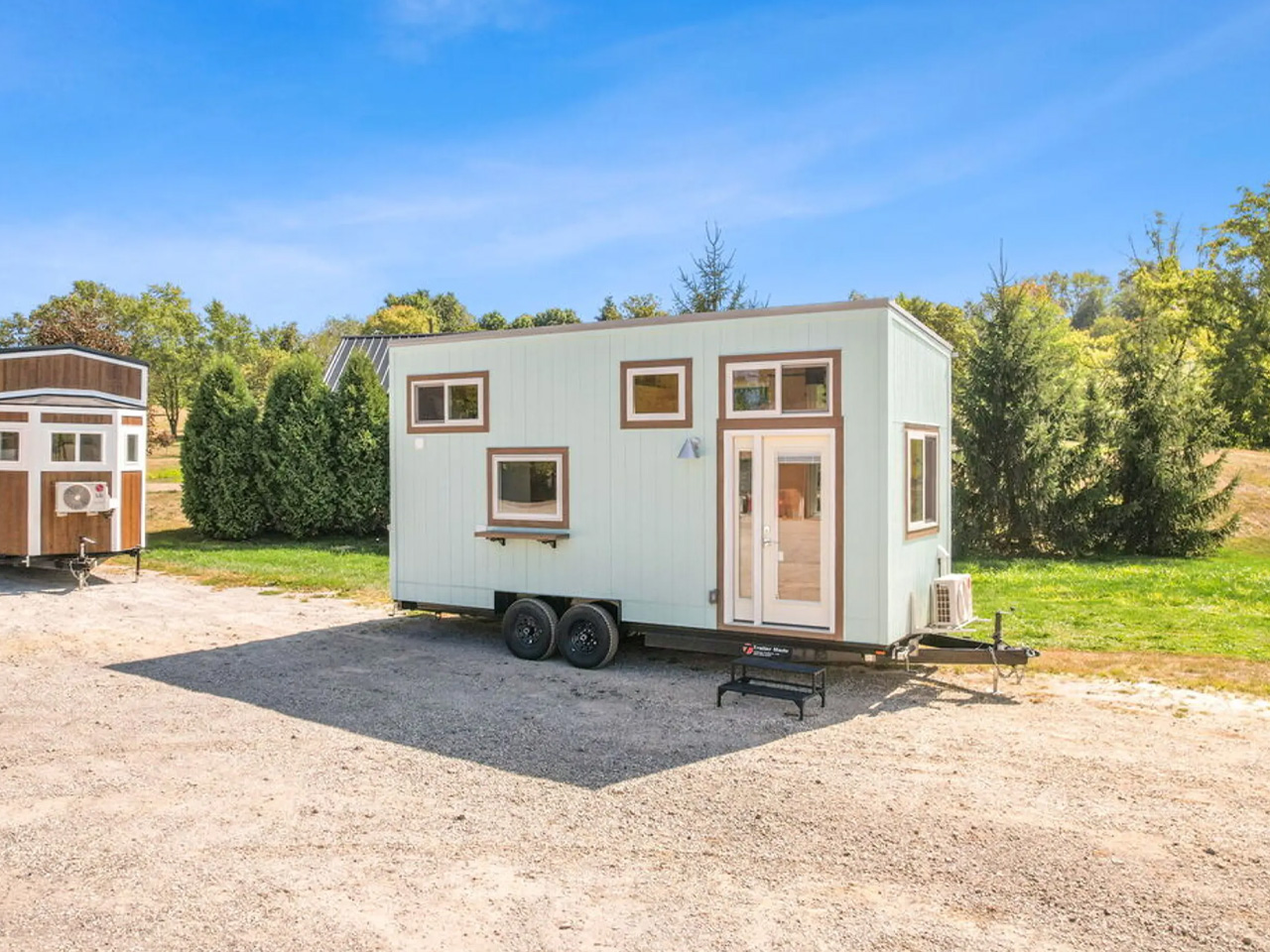
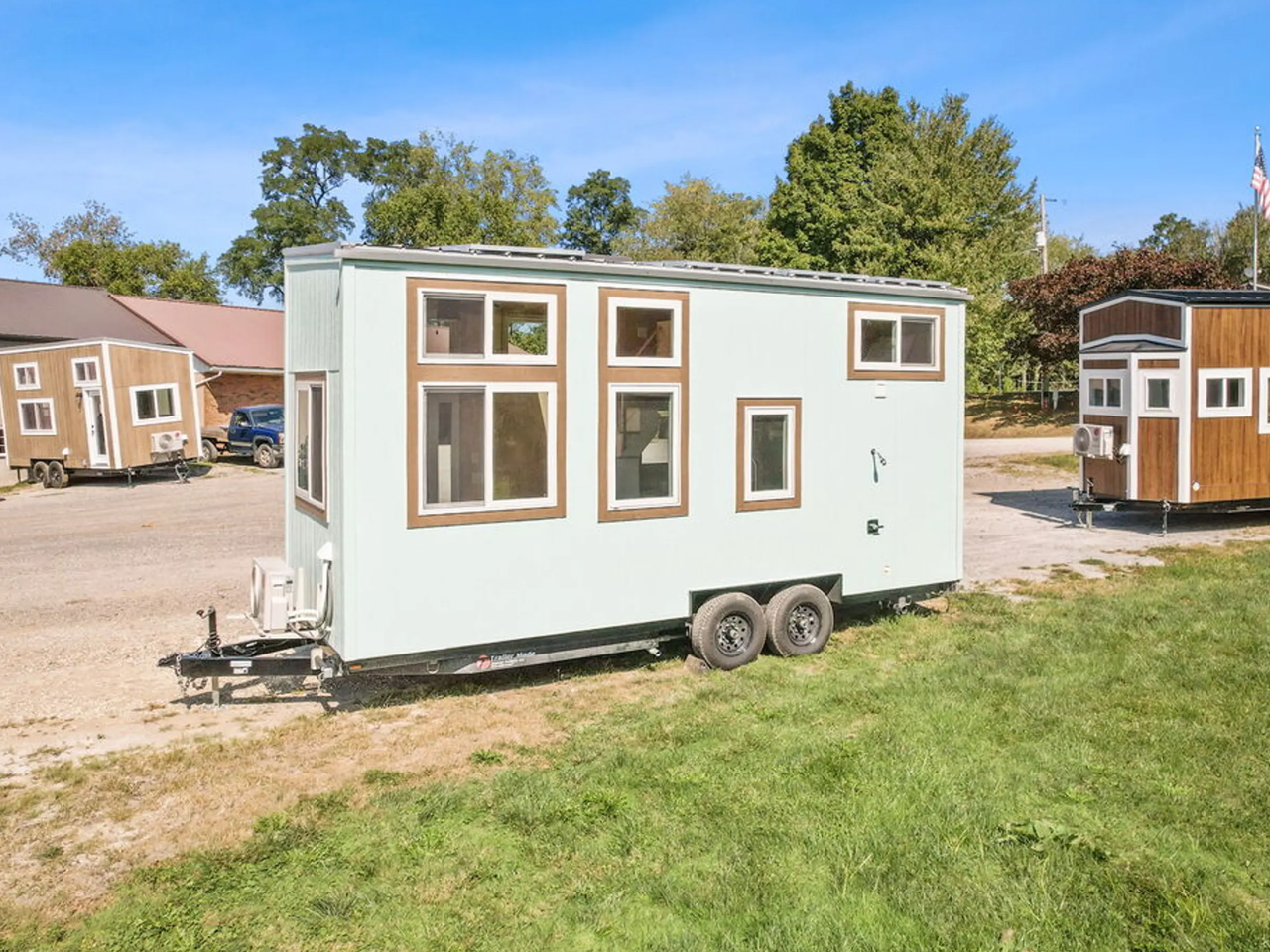
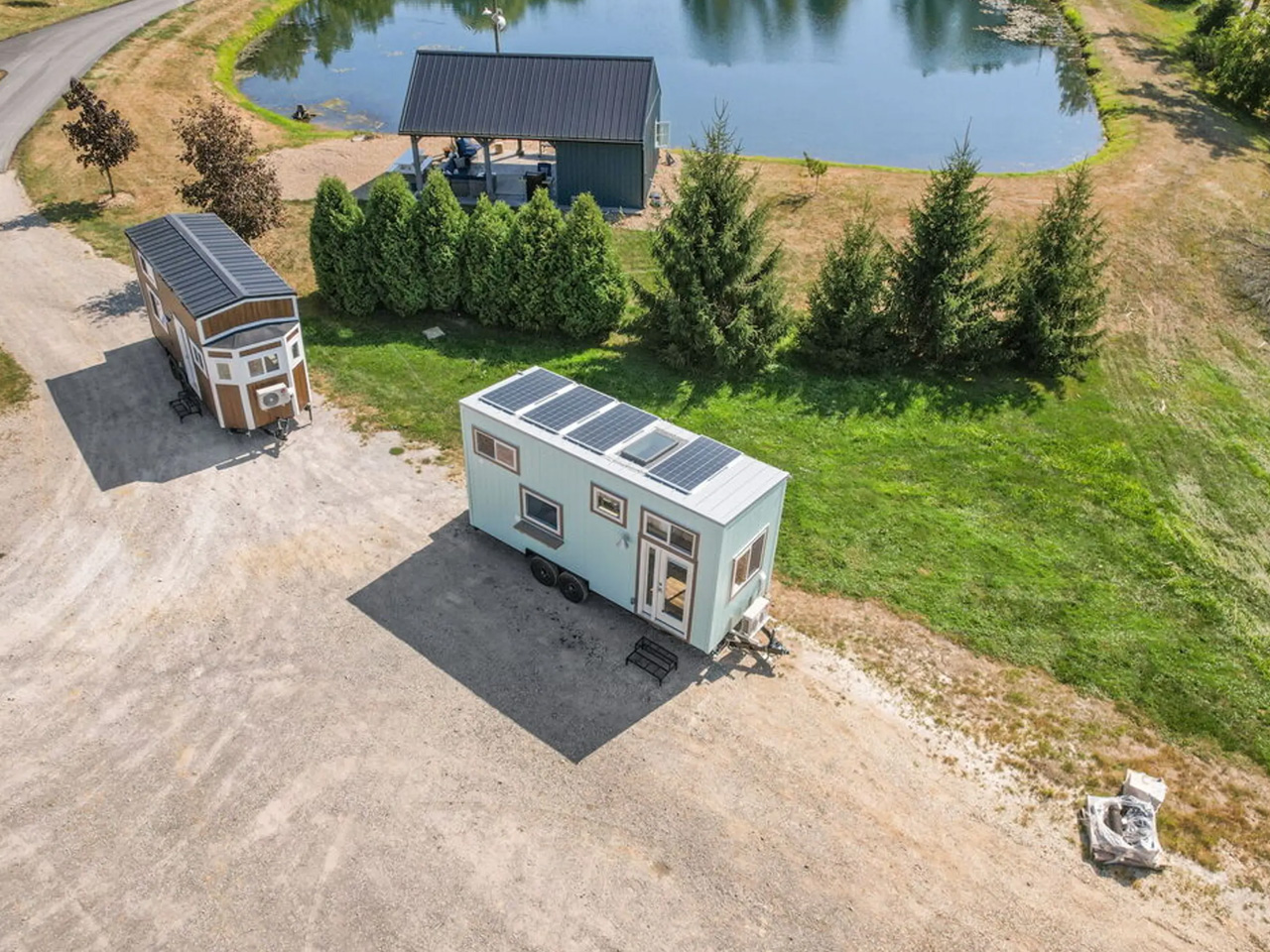
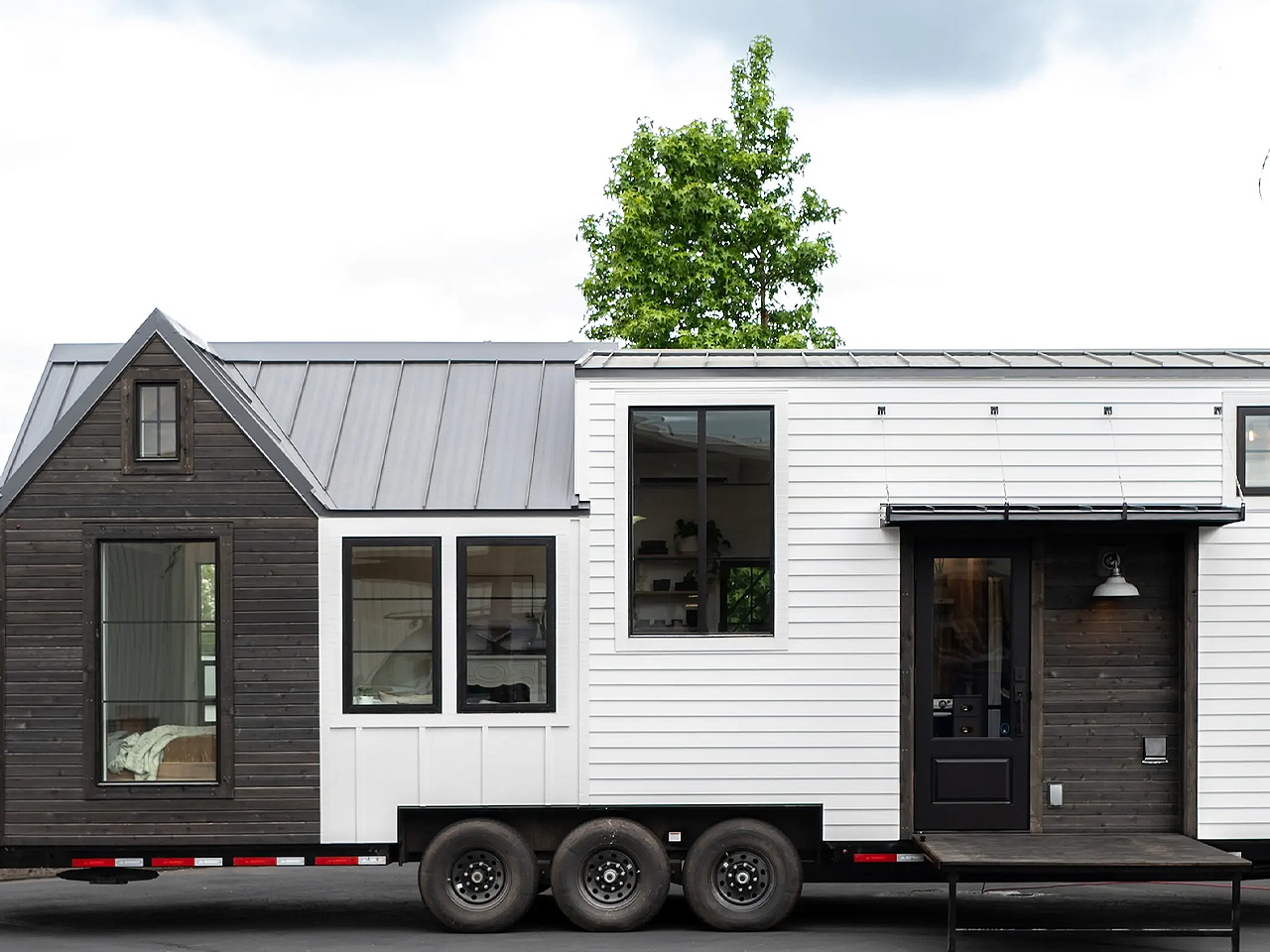
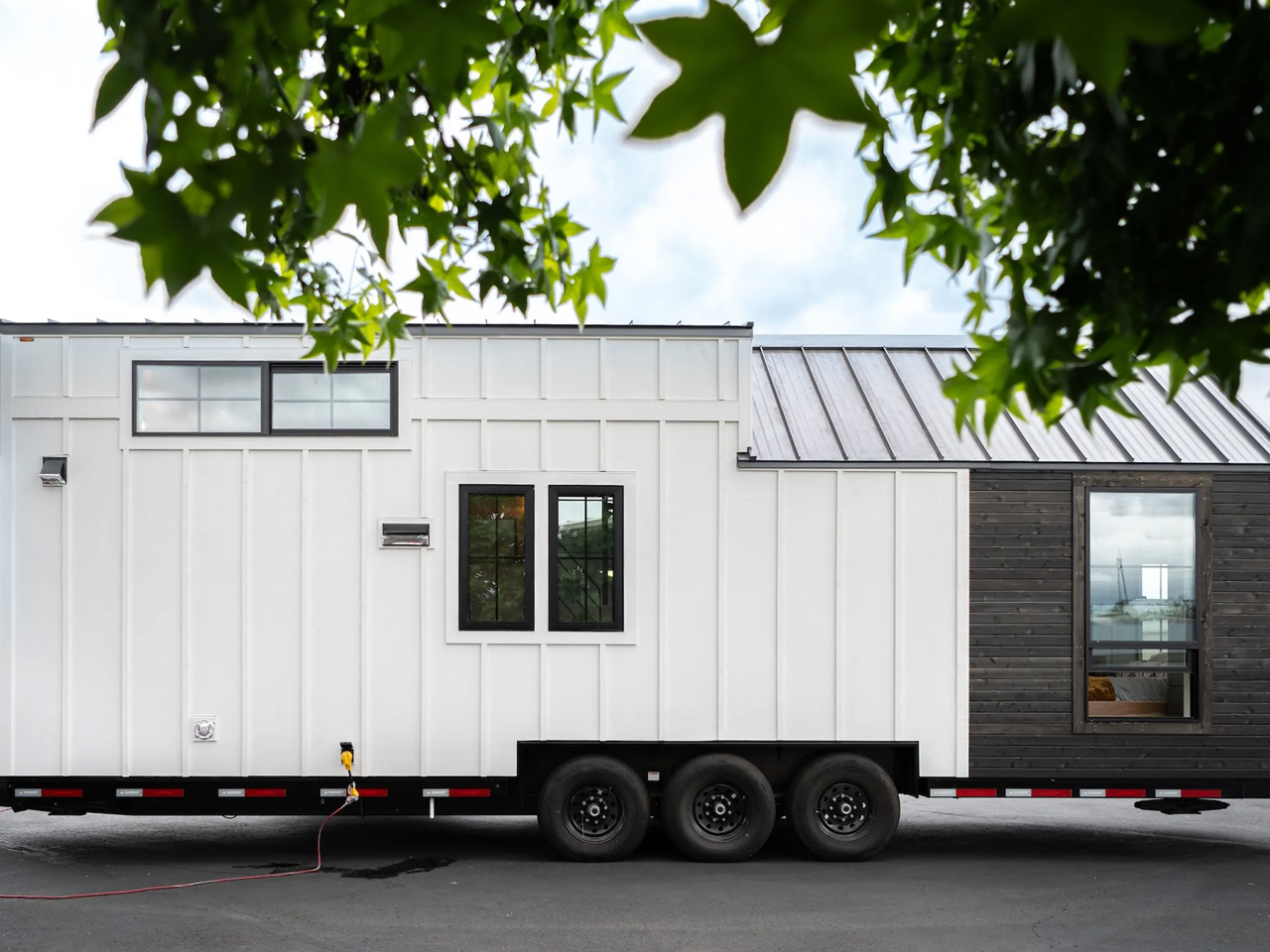
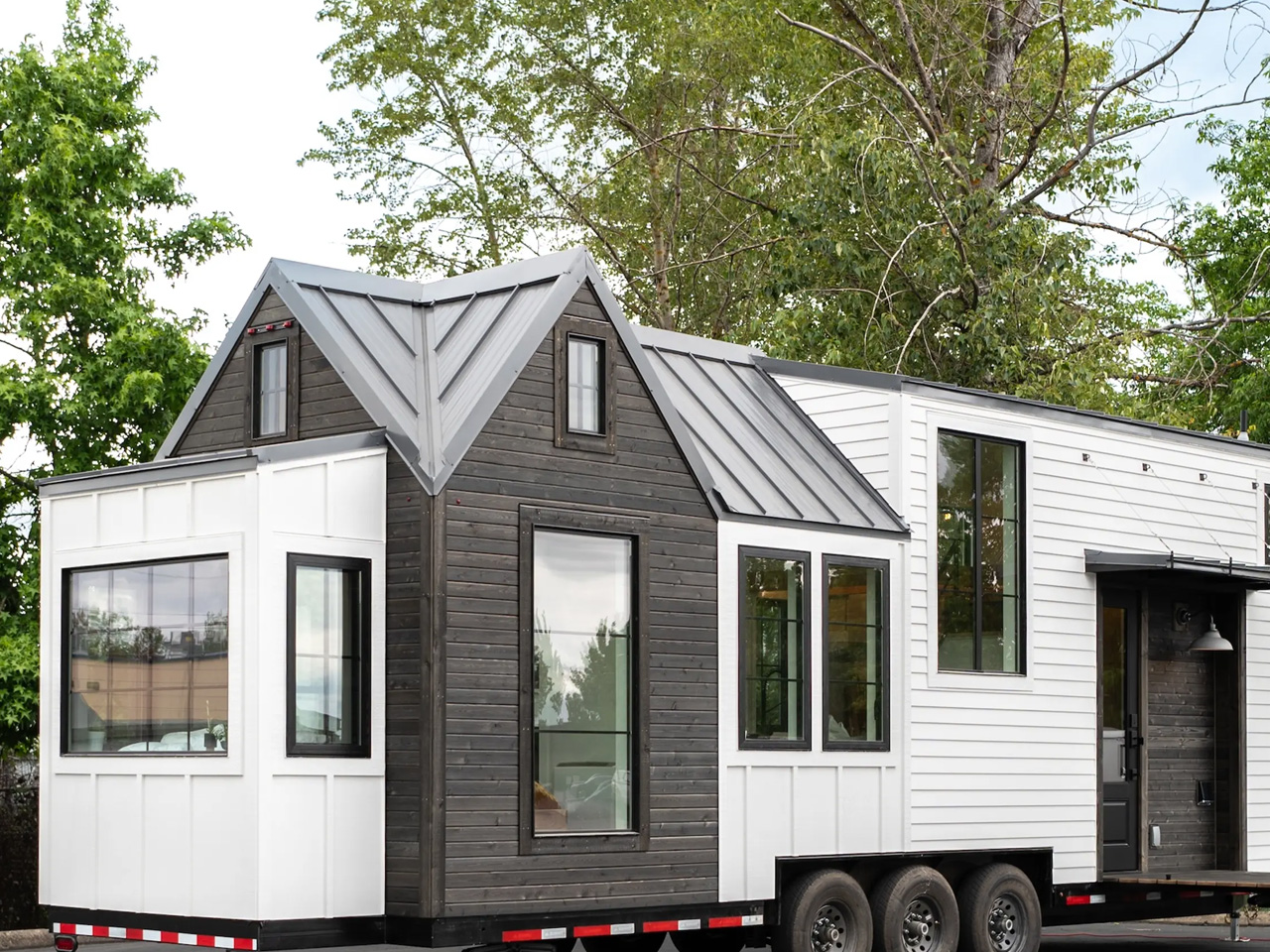
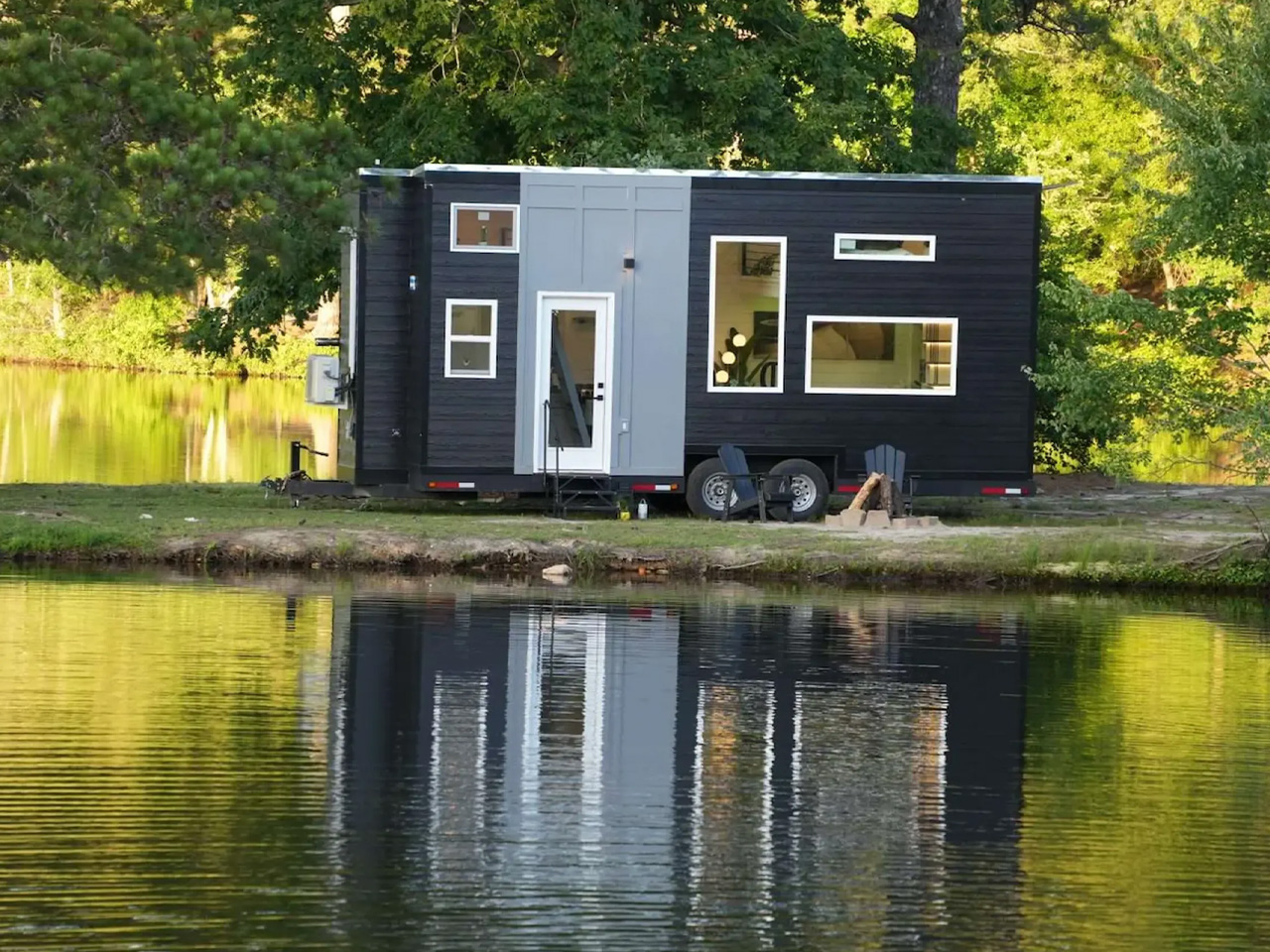
What I love about tiny homes these days is that they’re managing to get more and more spacious from within, without occupying too much space on the outside. This lovely little home called the Cascade Mini by TruForm Living is an example of such an ingenious tiny home. The Cascade Mini manages to squeeze in an impressive and generous amount of living space into a compact length of 38 meters. Besides being spacious, the tiny home also features a spiral staircase, that offers entry to a rooftop terrace. The ground floor of the home contains an enclosed porch area and deck as well!

Designer: TruForm Tiny

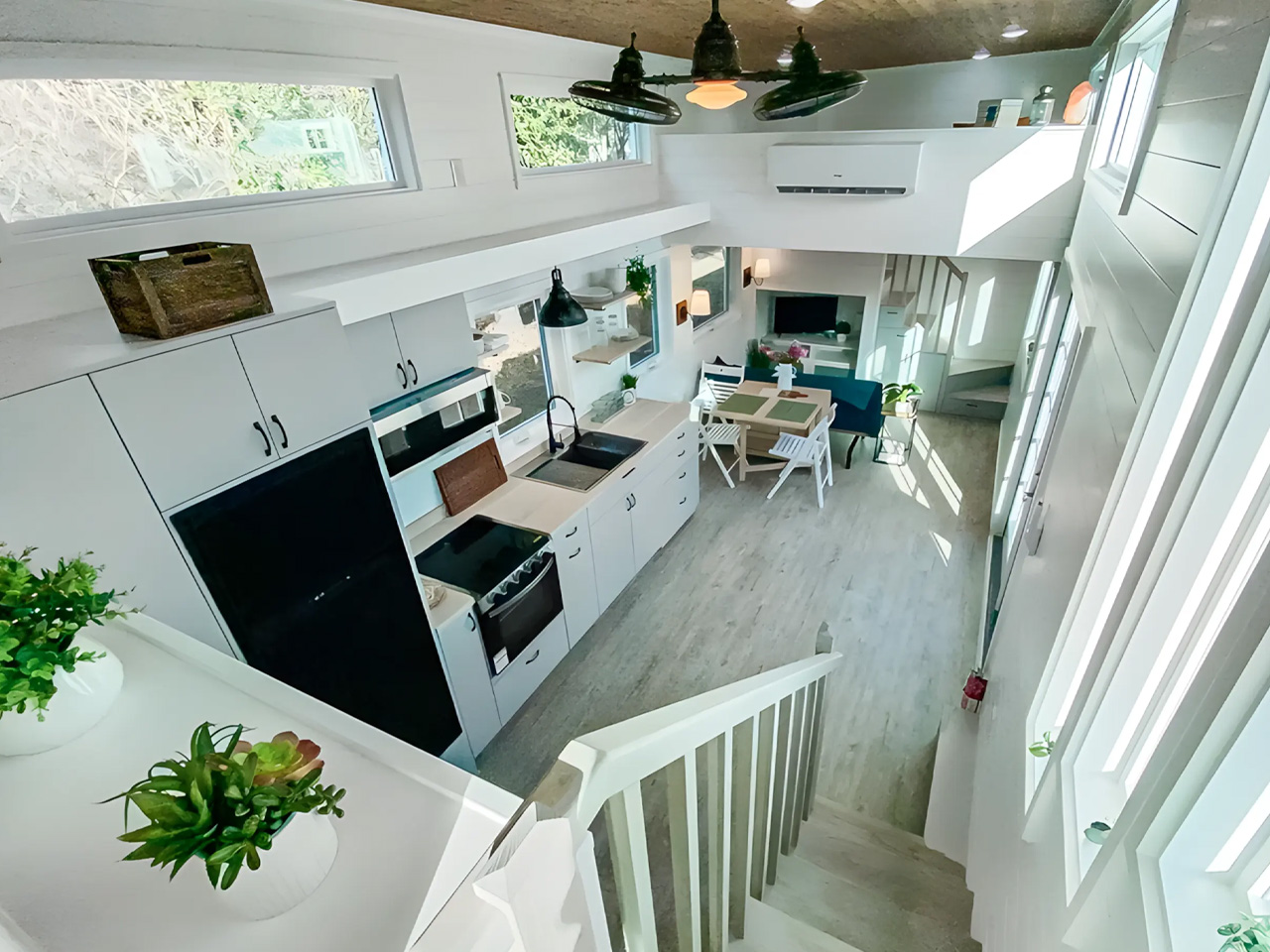
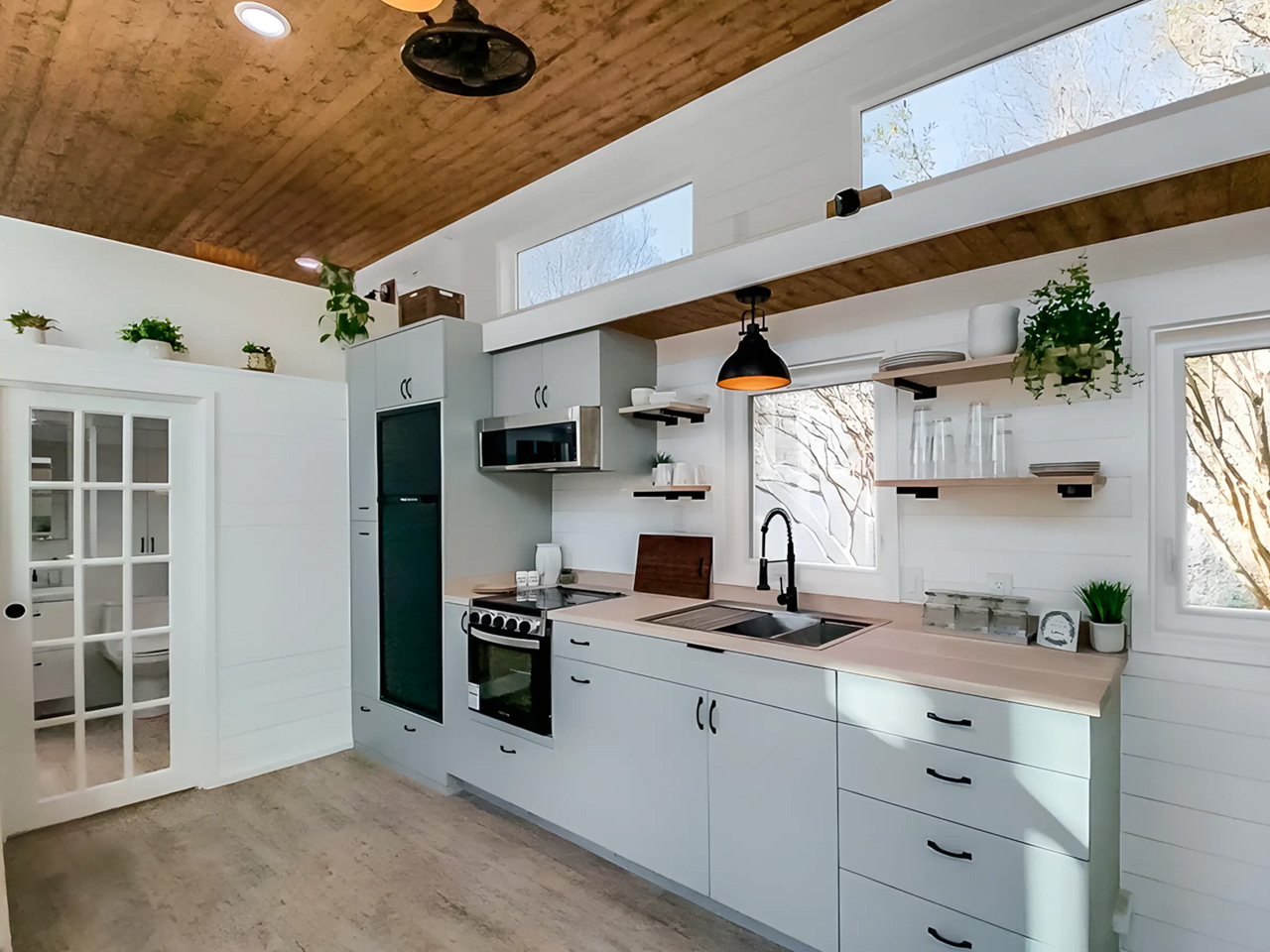
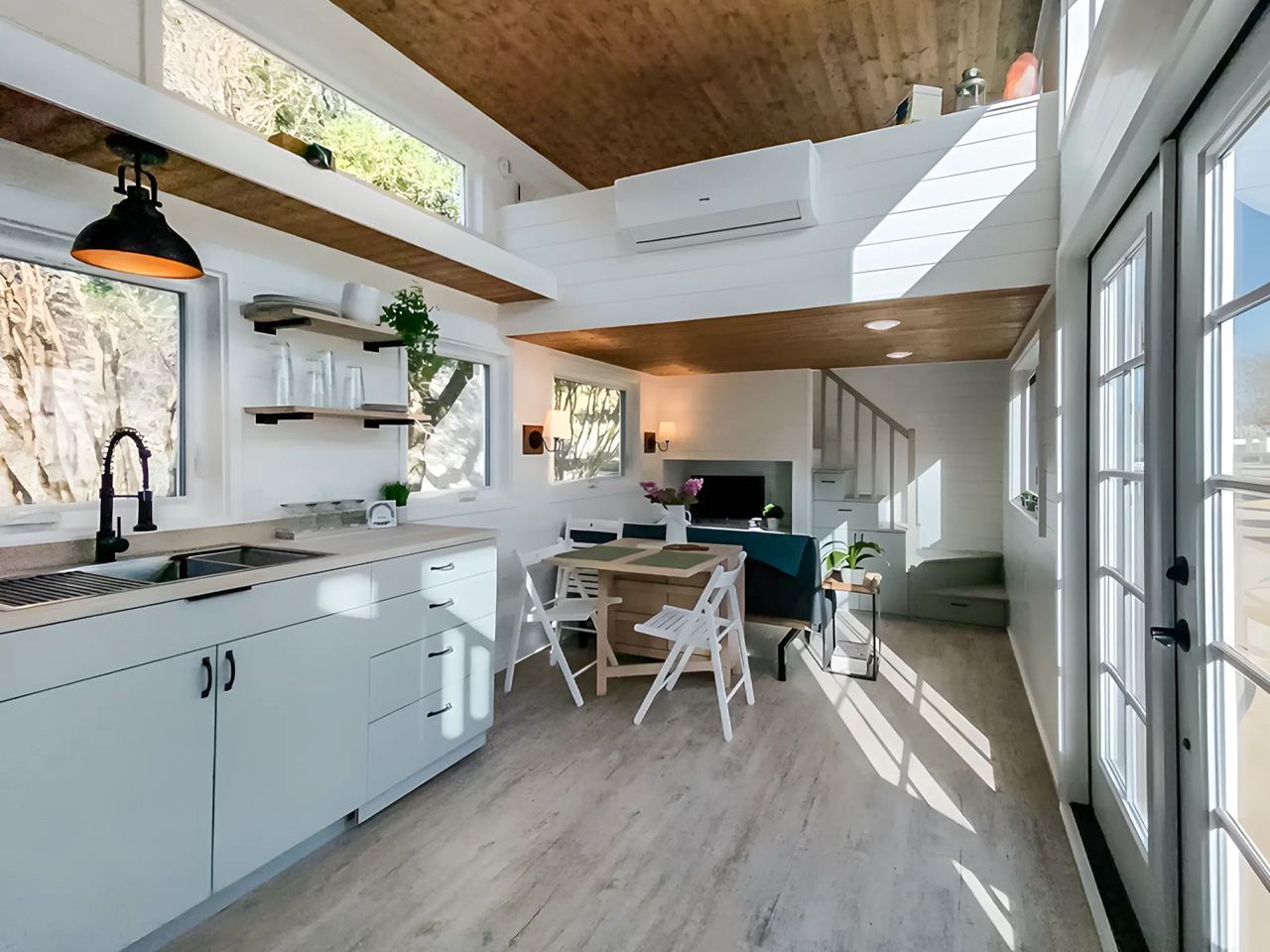
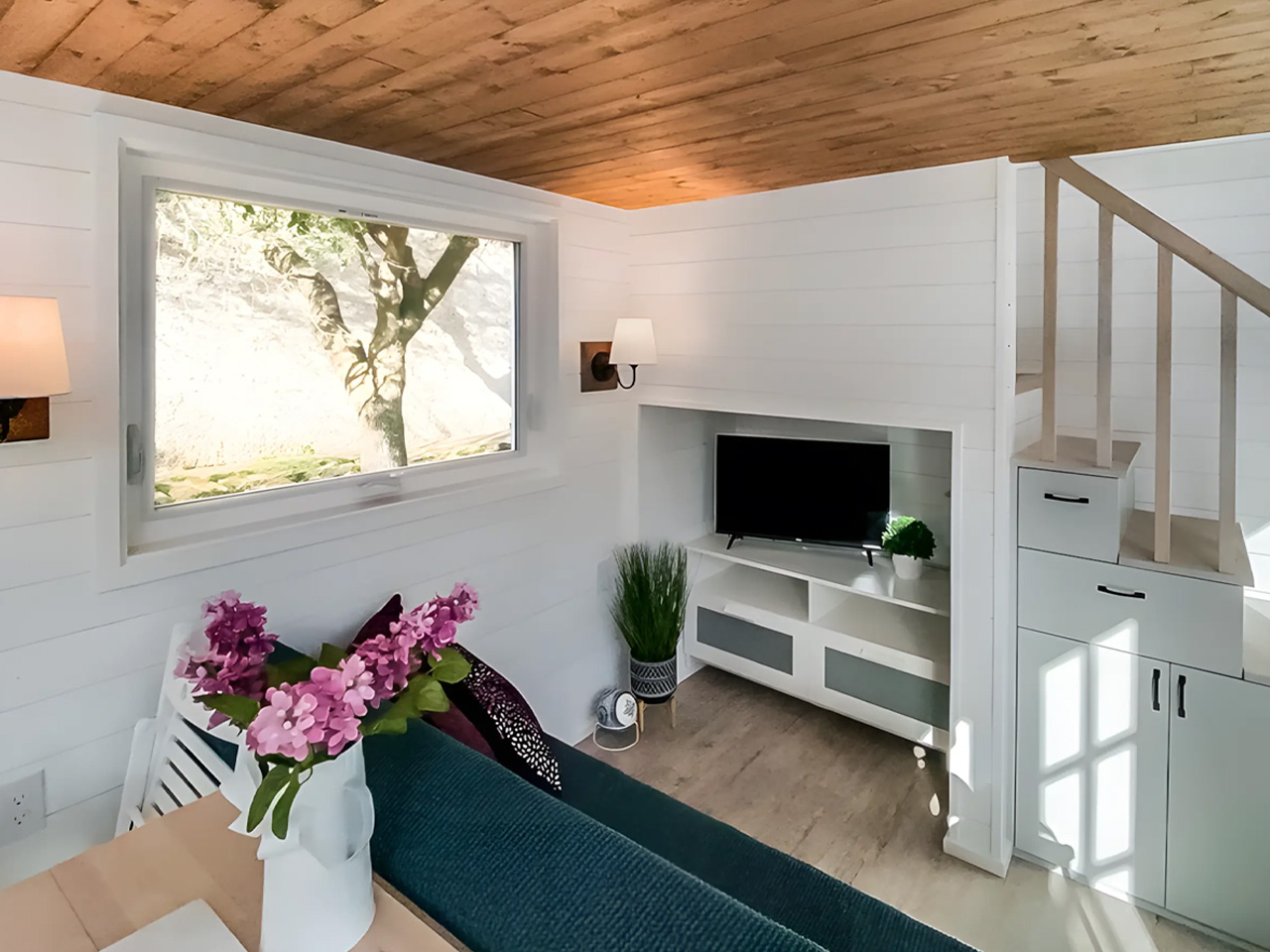
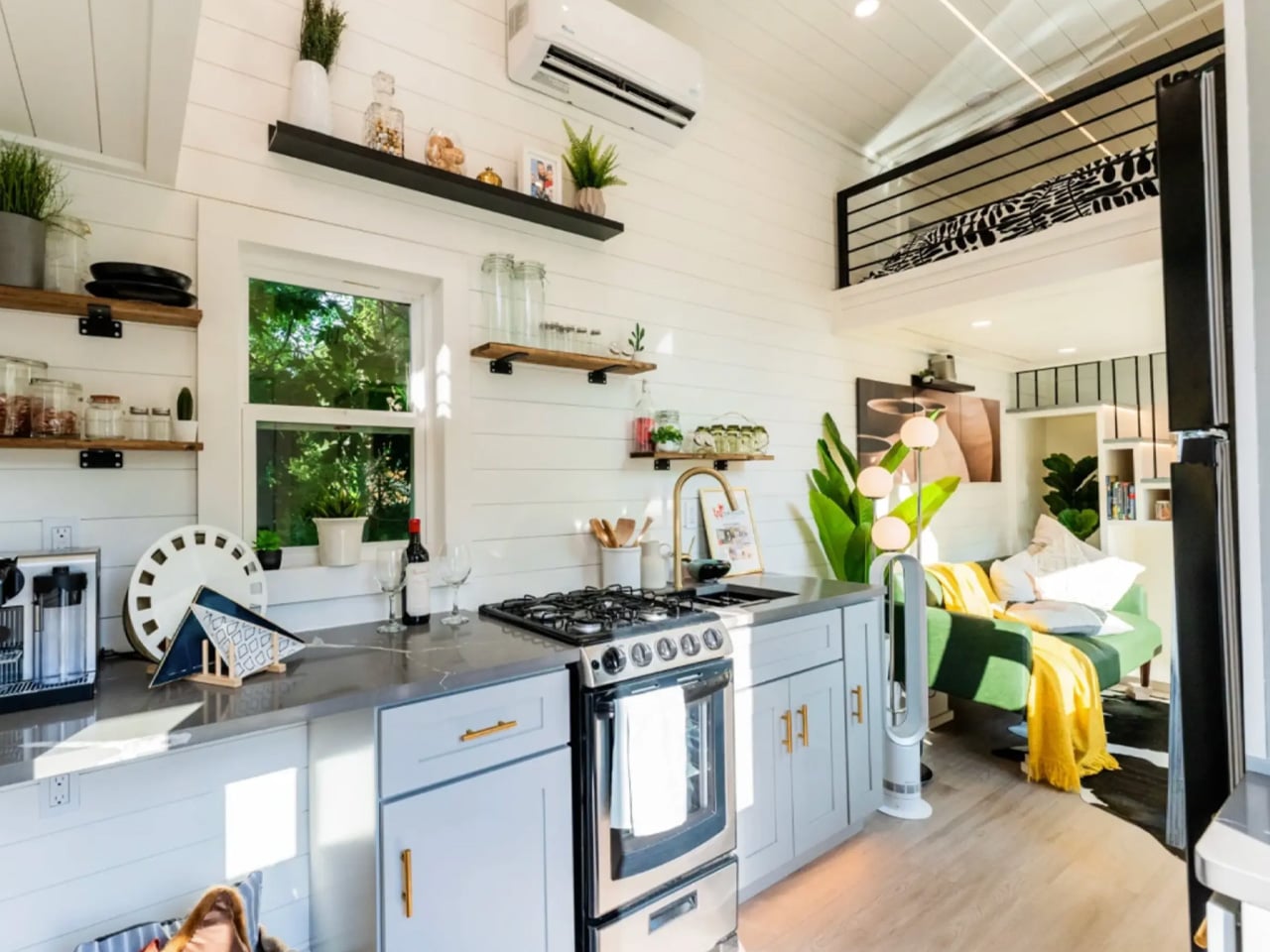
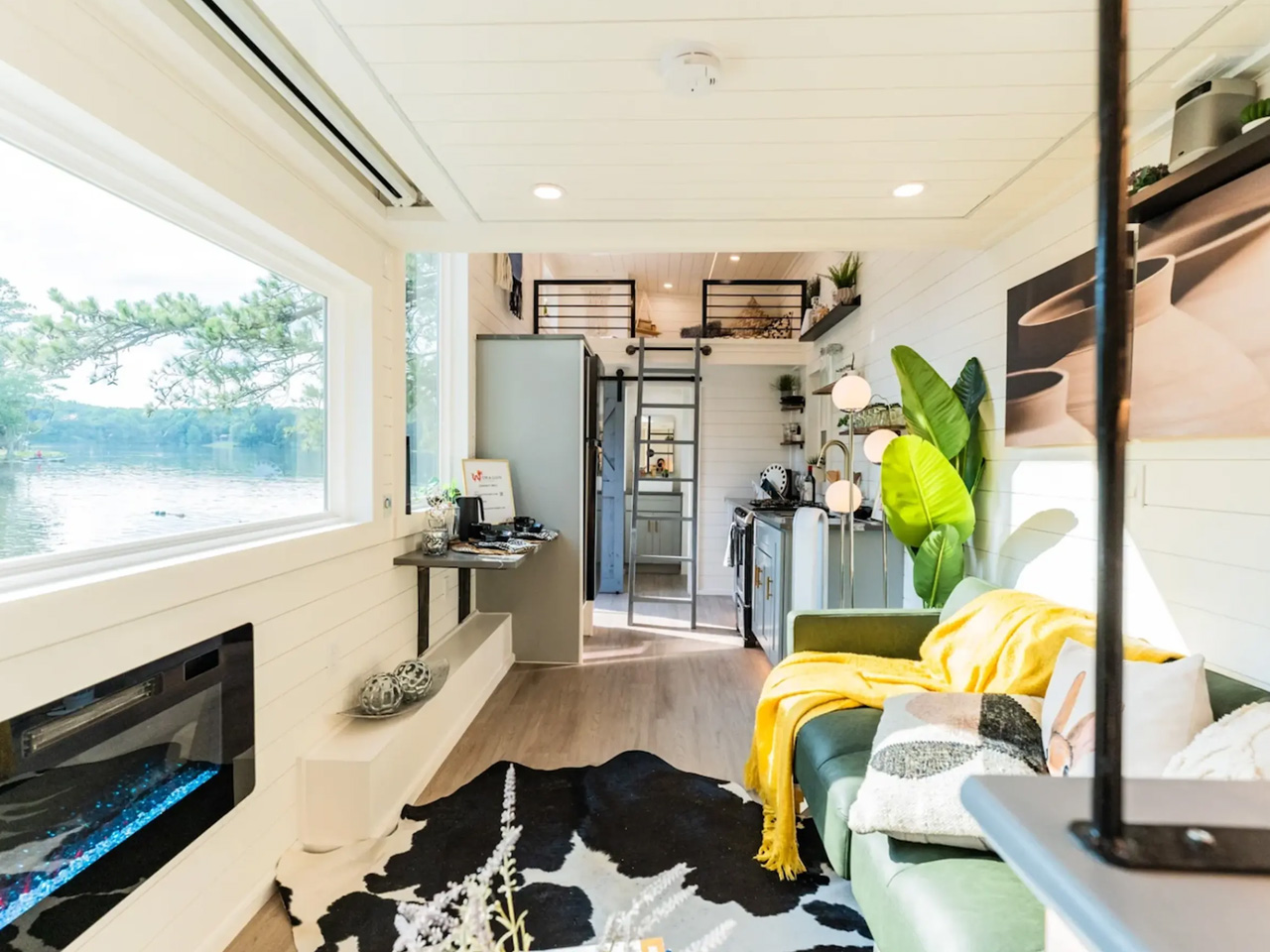
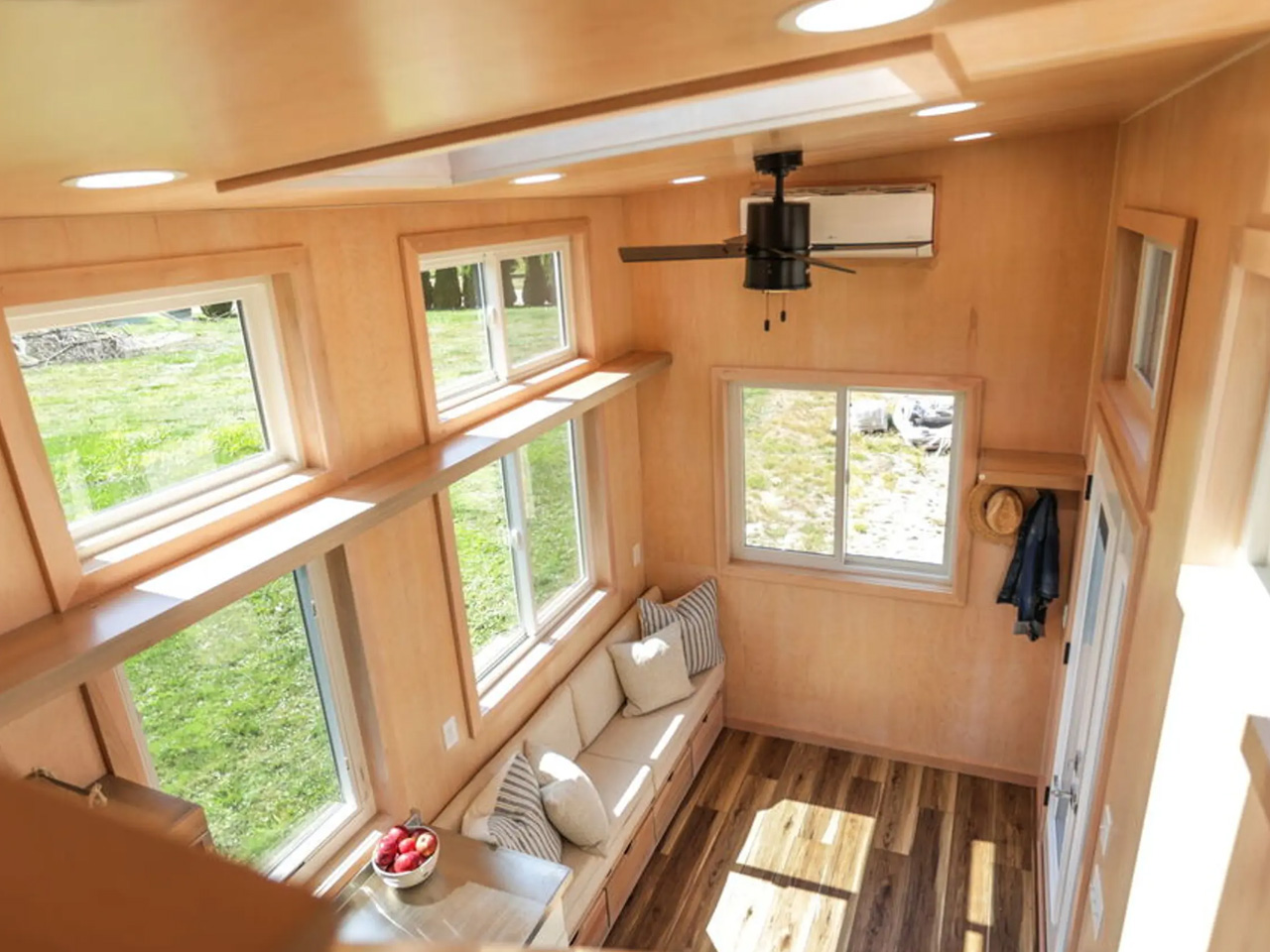
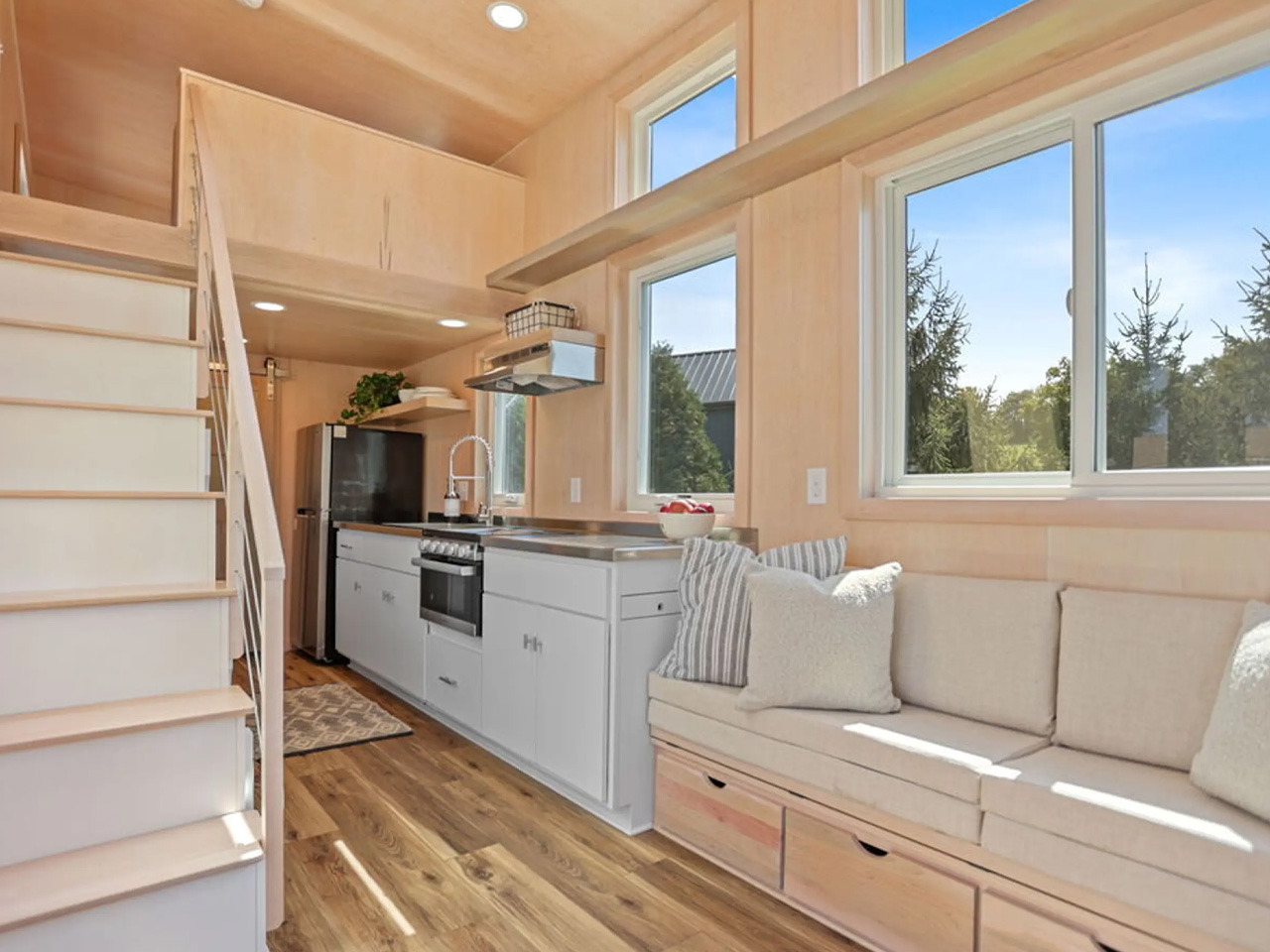
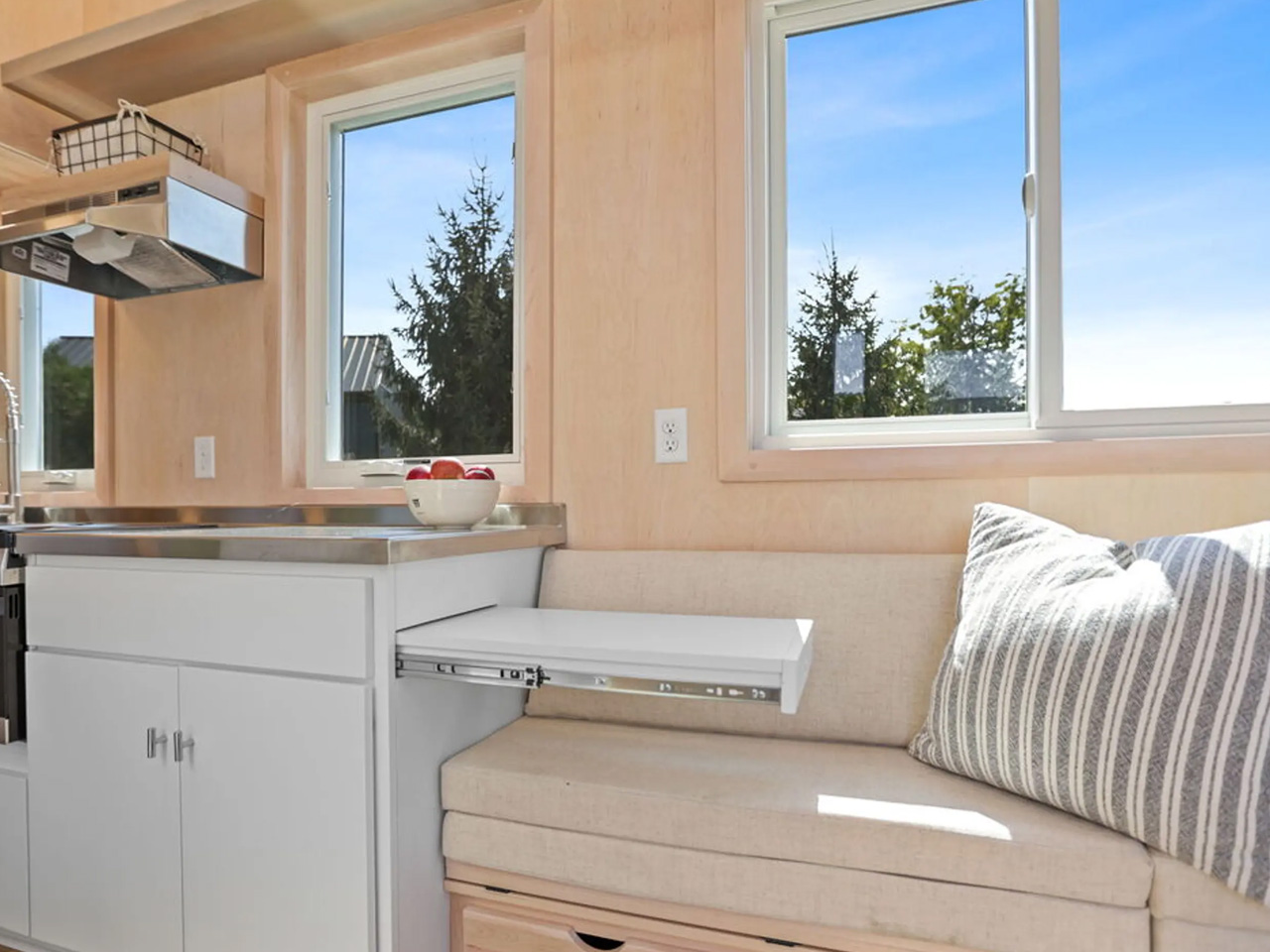
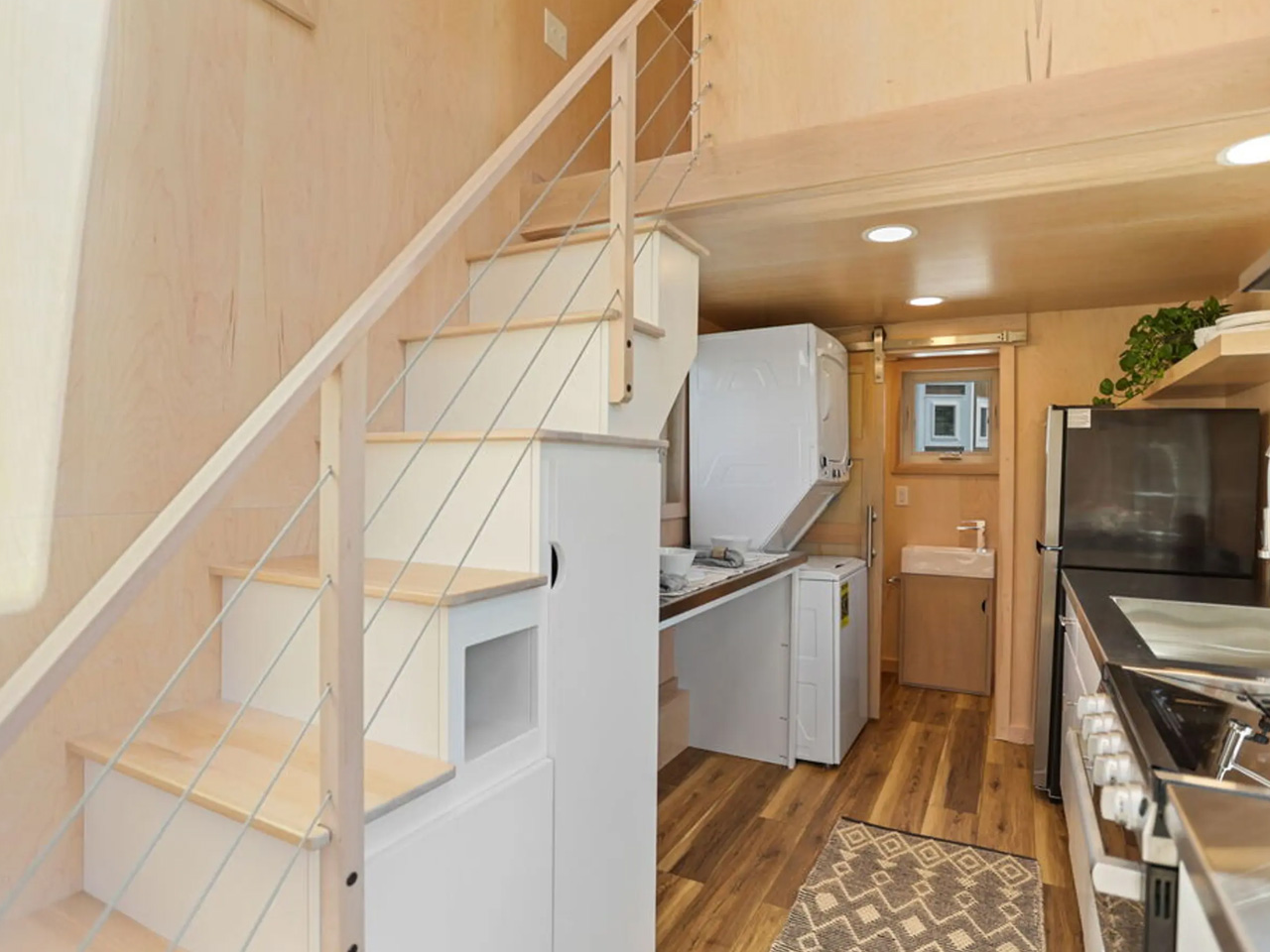
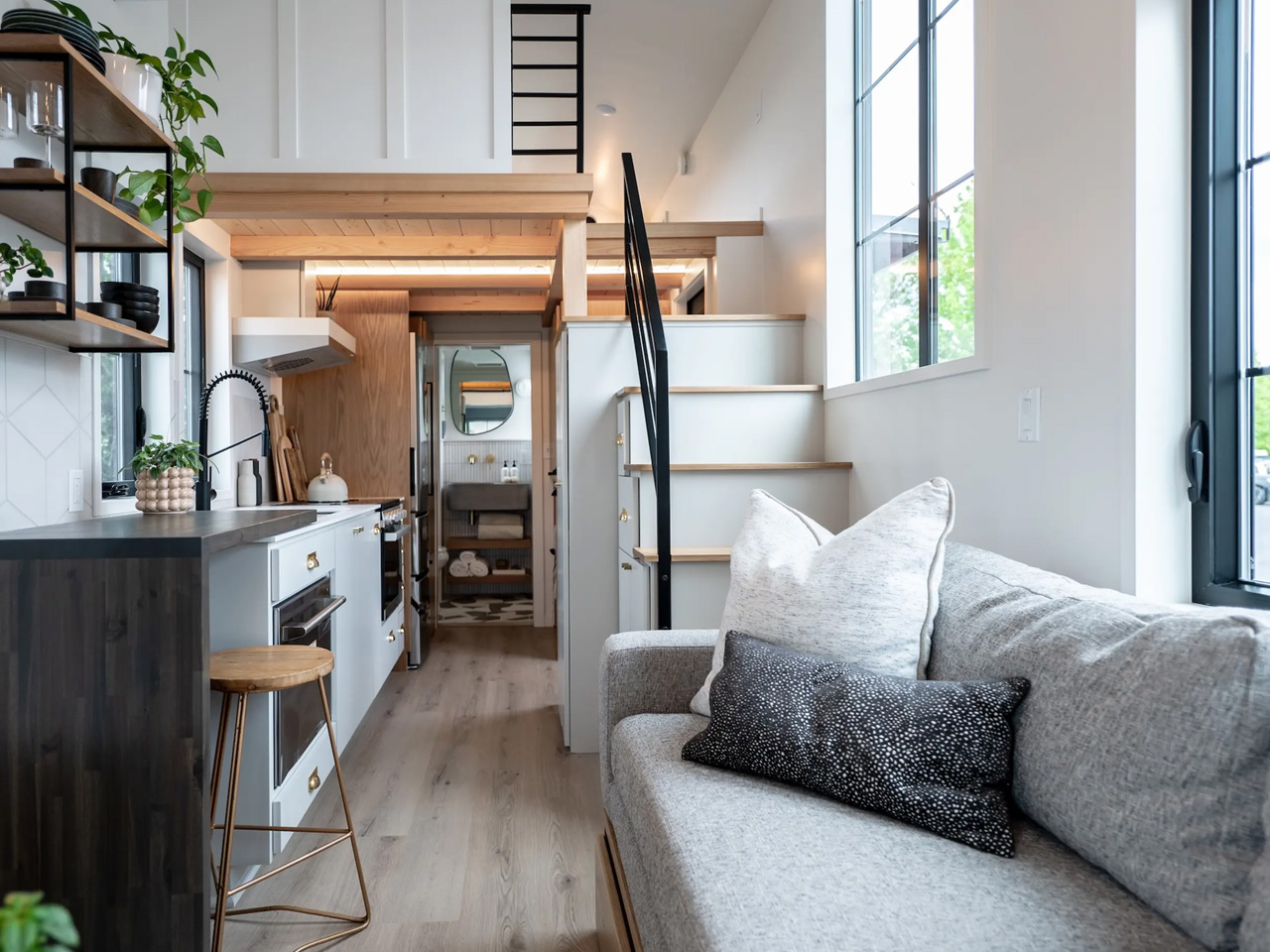
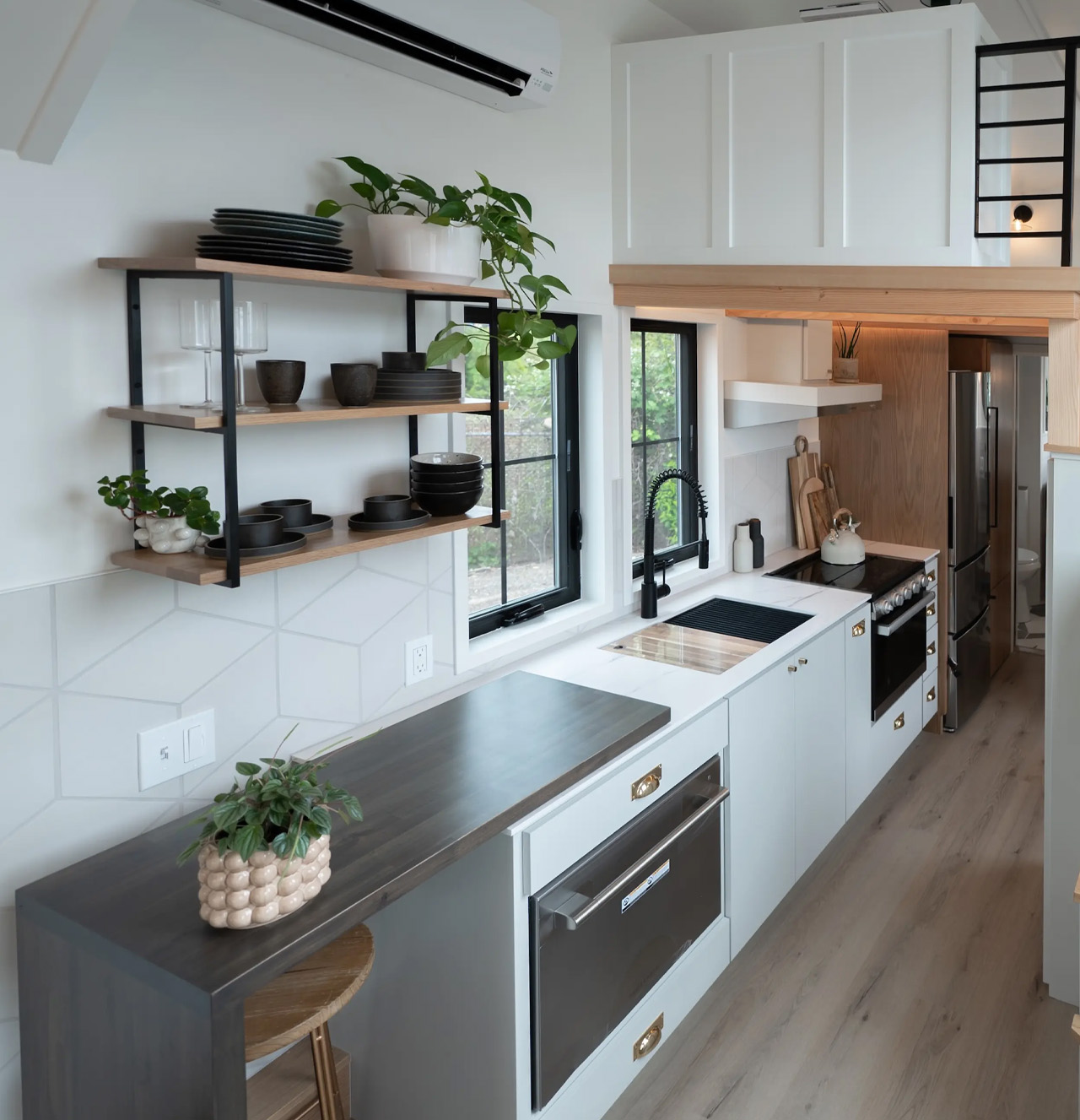
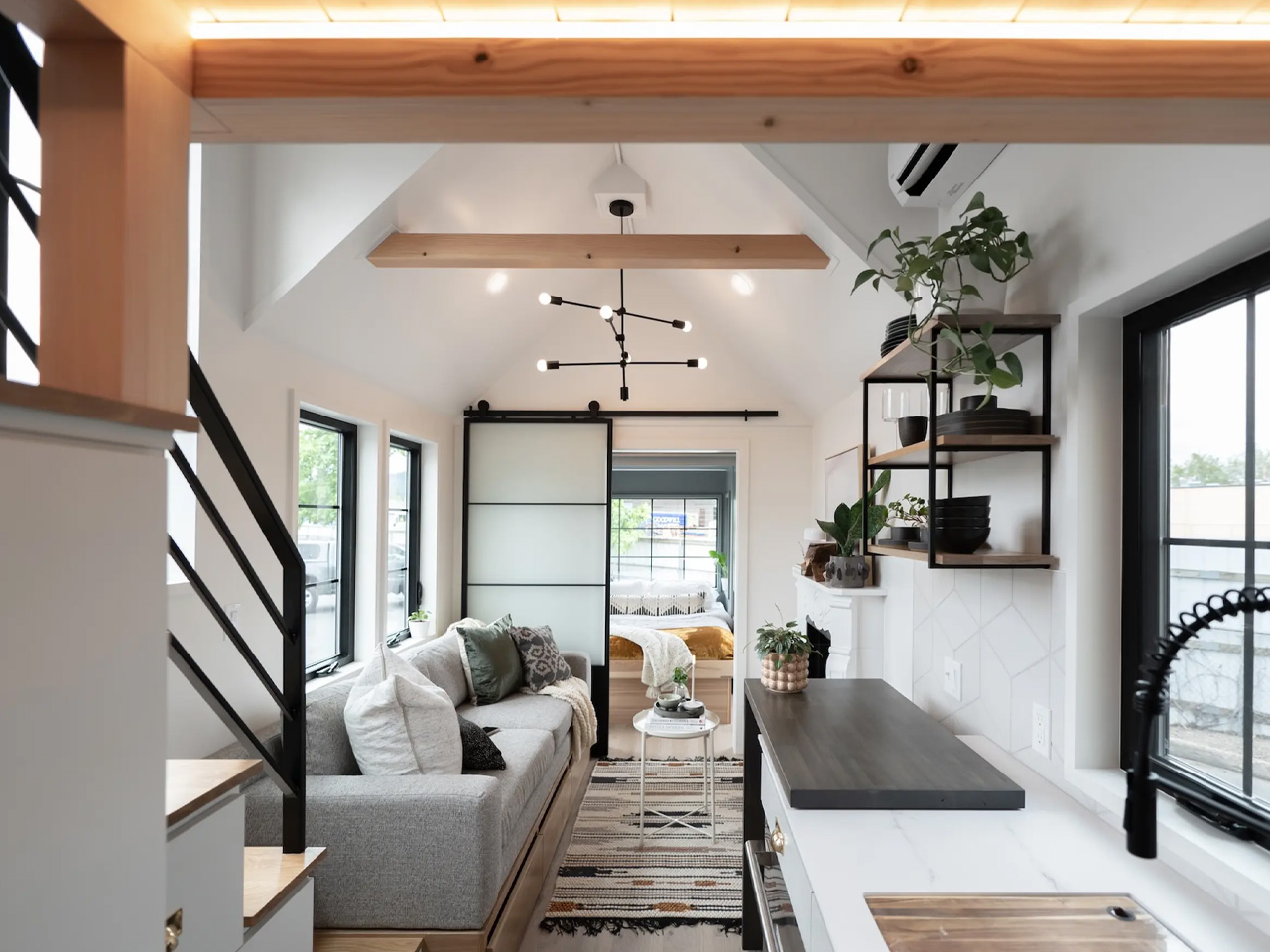
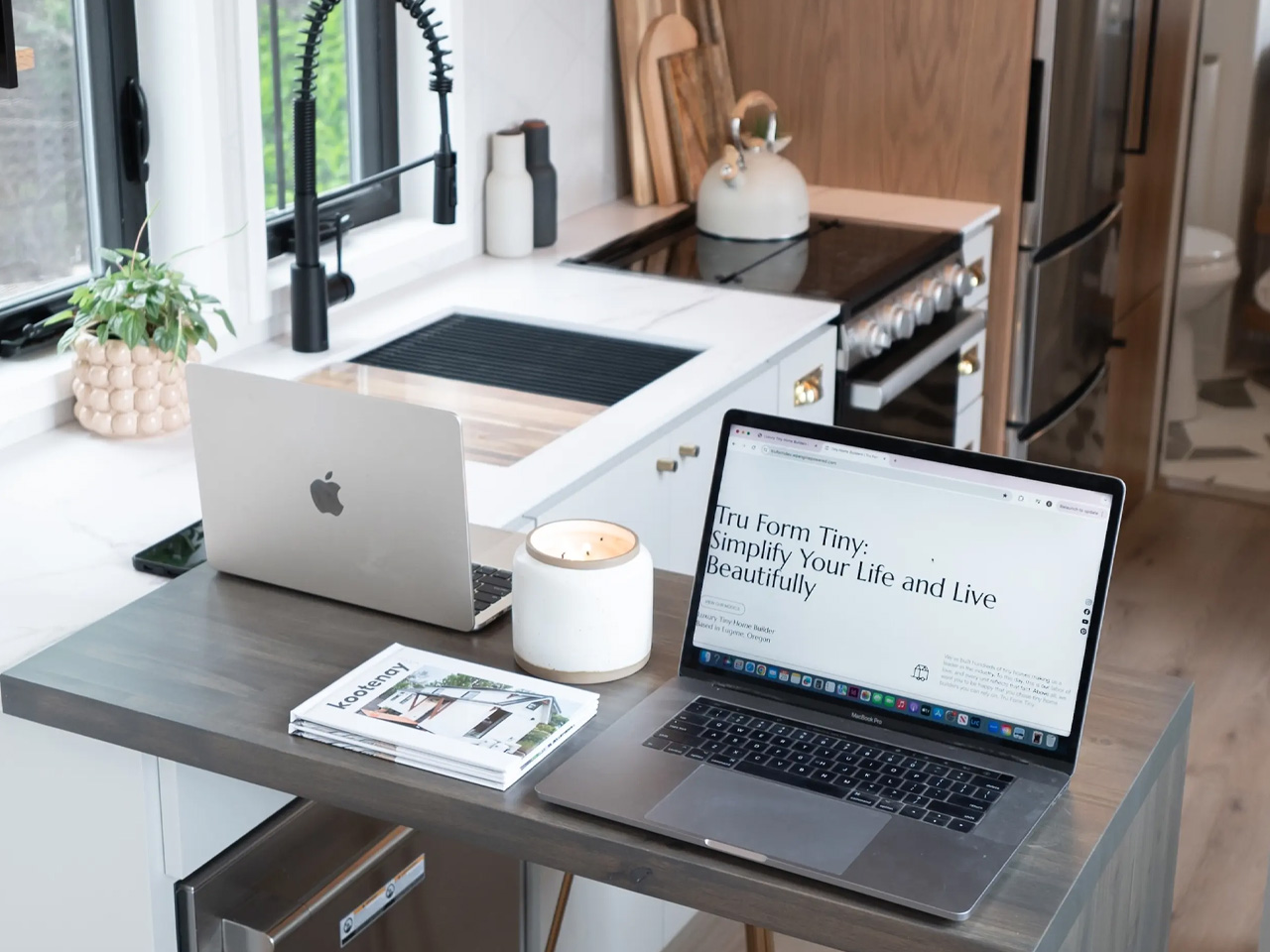
The Cascade Mini occupies 32.5 square meters, and visitors can enter the home via the main entrance, which leads them into the kitchen. The kitchen is the center of the home, and it includes a fridge, a small drawer-style dishwasher, a three-burner propane-powered stove, an oven, a sink and cabinetry, and a central movable kitchen island.

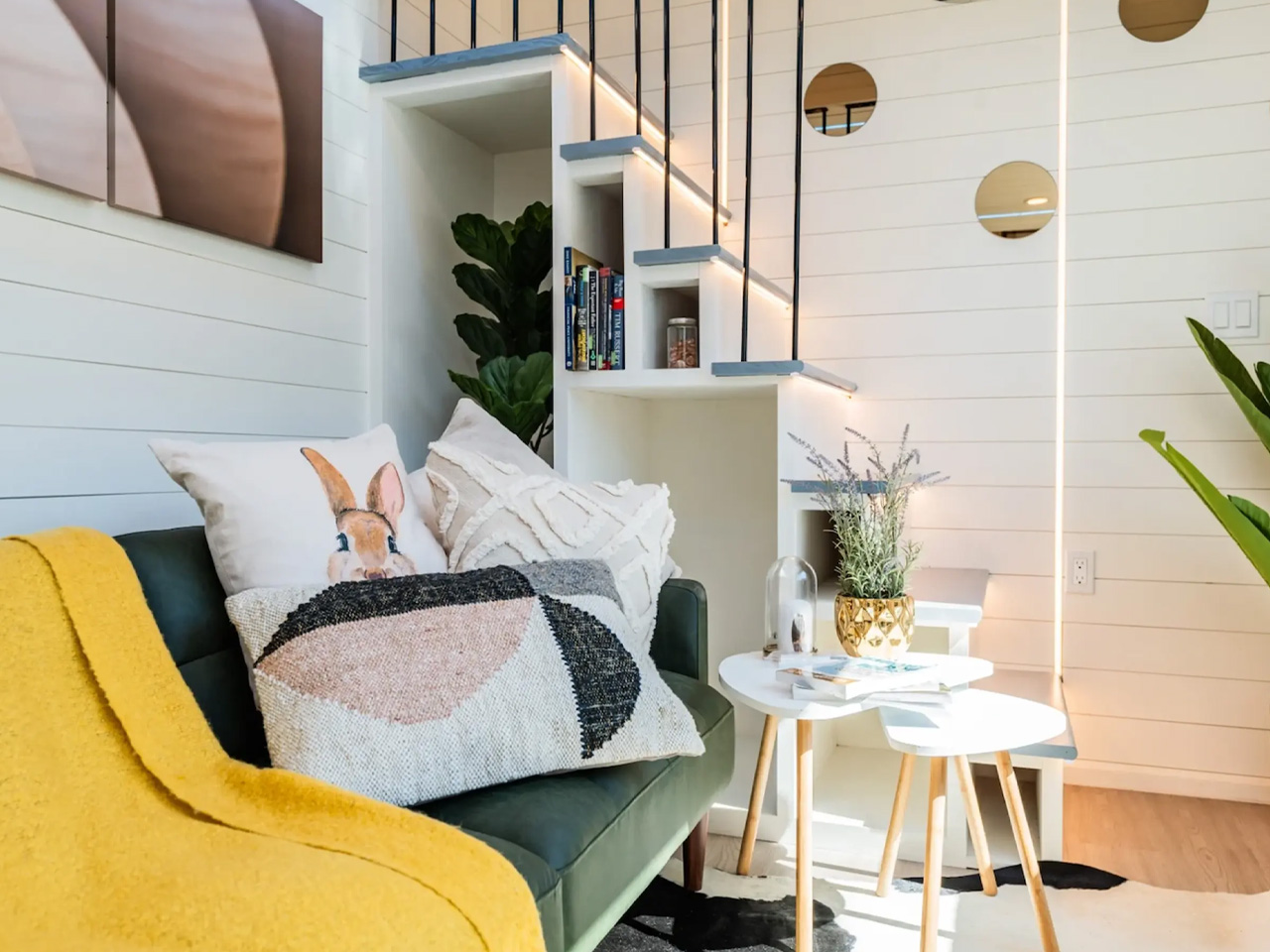
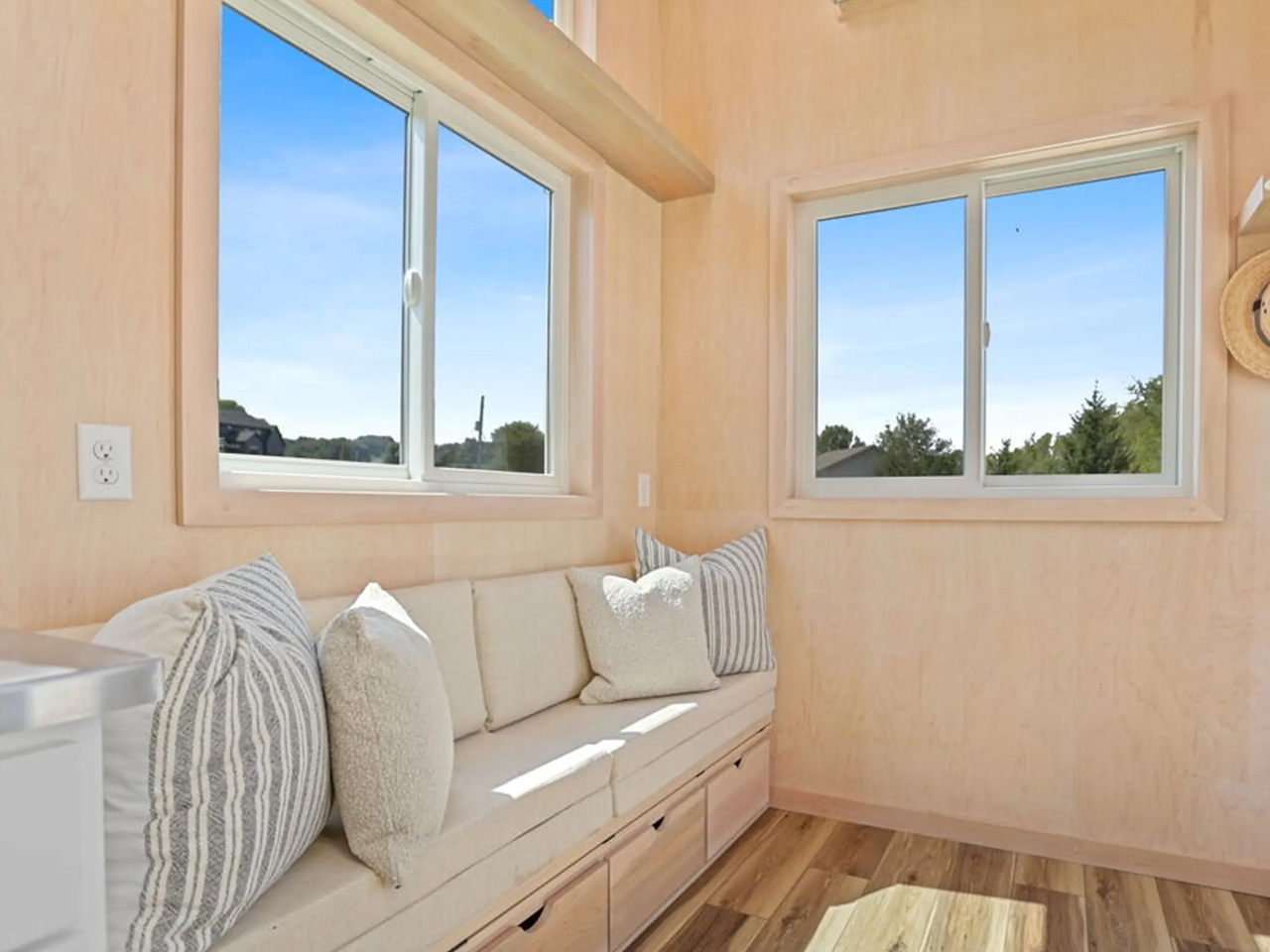
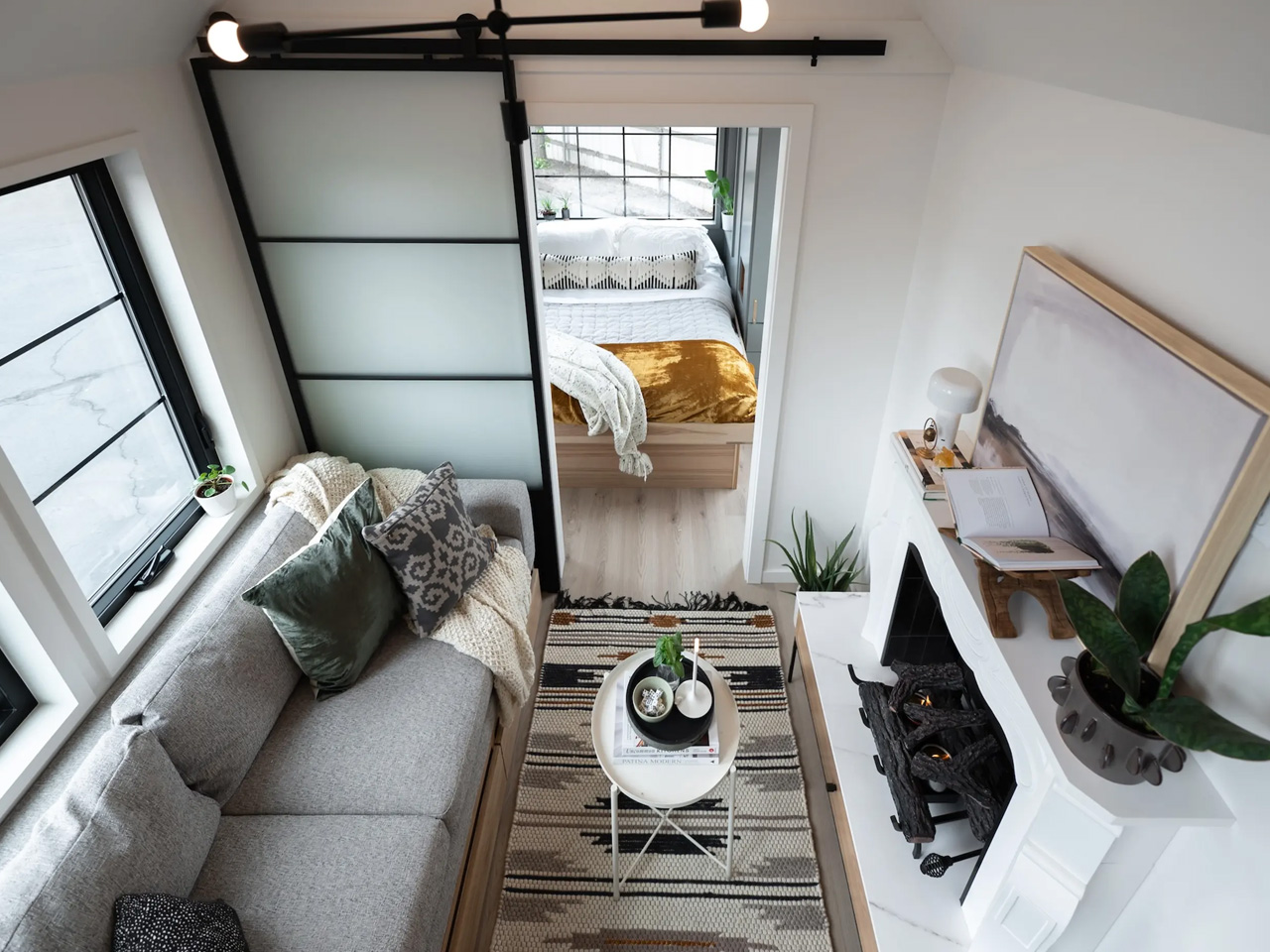
Next to the kitchen is the cozy living room which accommodates a sofa, small coffee table, and a fireplace. The living room leads to an enclosed porch which brings in a generous amount of light into the home, while also creating a pleasant and comfy place to sit in. The porch is also connected to the outdoor deck which is motorized and can be lowered into the desired position via a switch, or even raised if you need to tow the house somewhere else. The deck also includes a fire pit and some additional seating. Another key feature is the rooftop terrace which can be accessed through a spiral staircase on the outside. The terrace also includes a small fireplace and some seating.

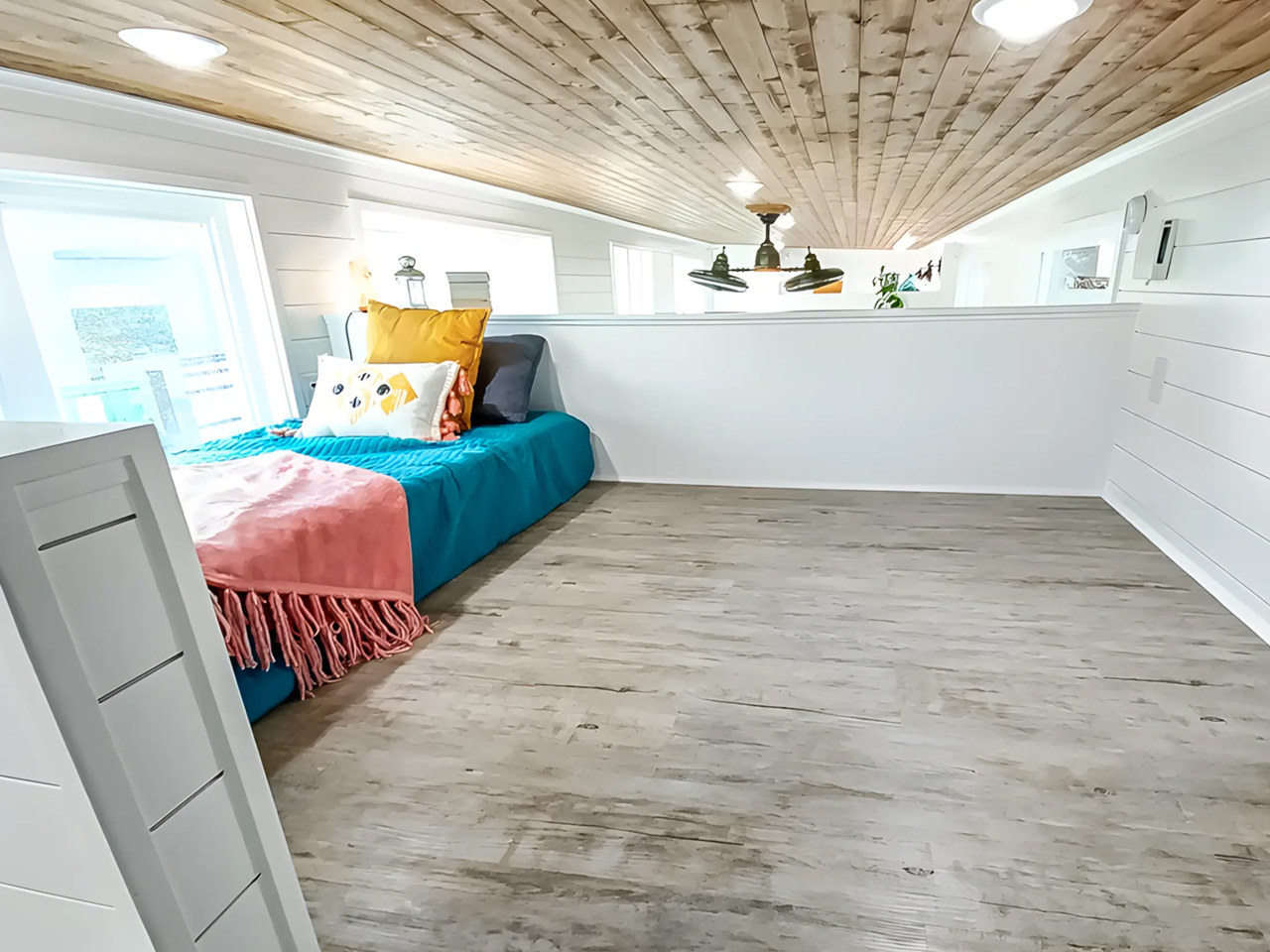
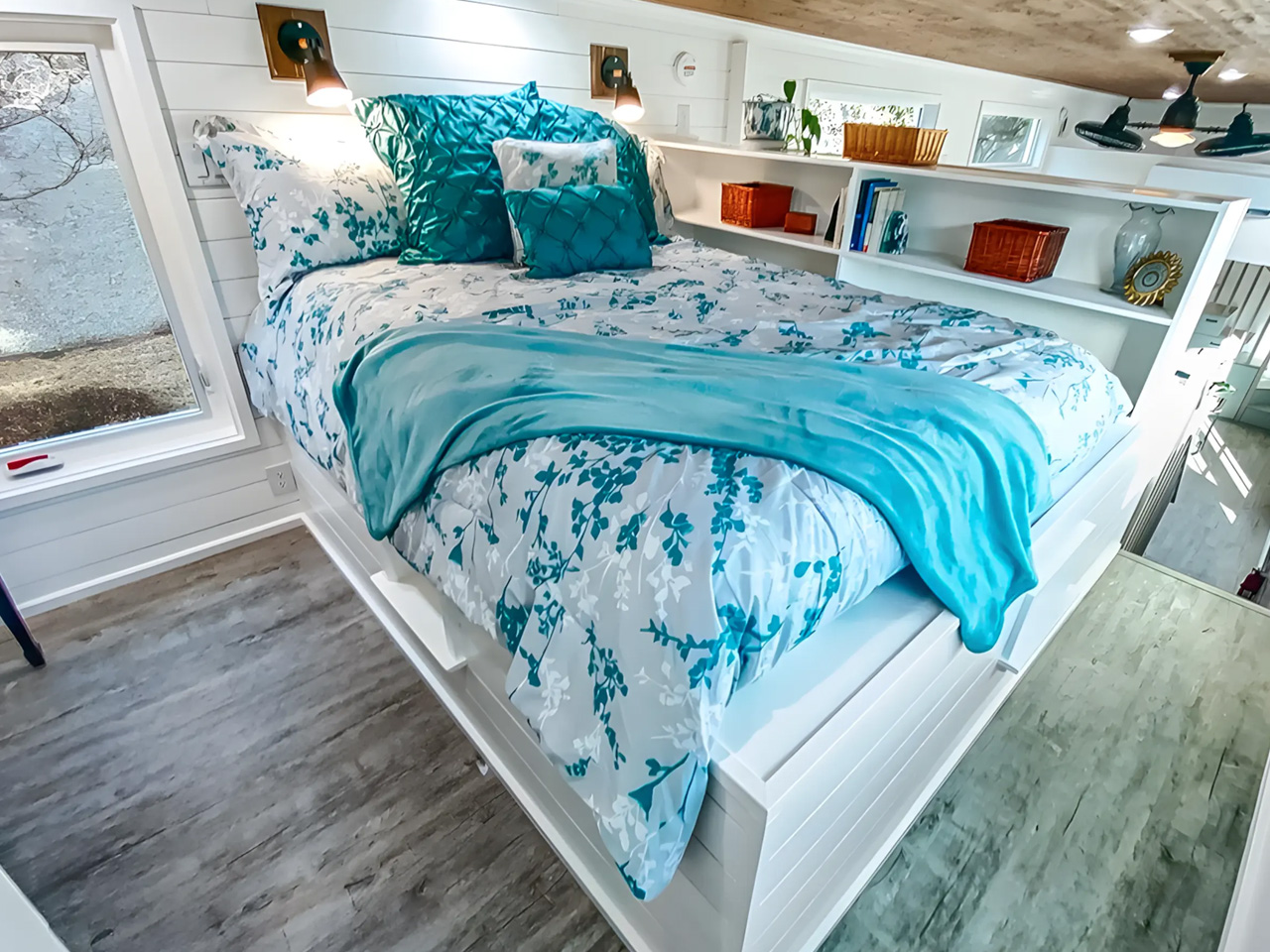
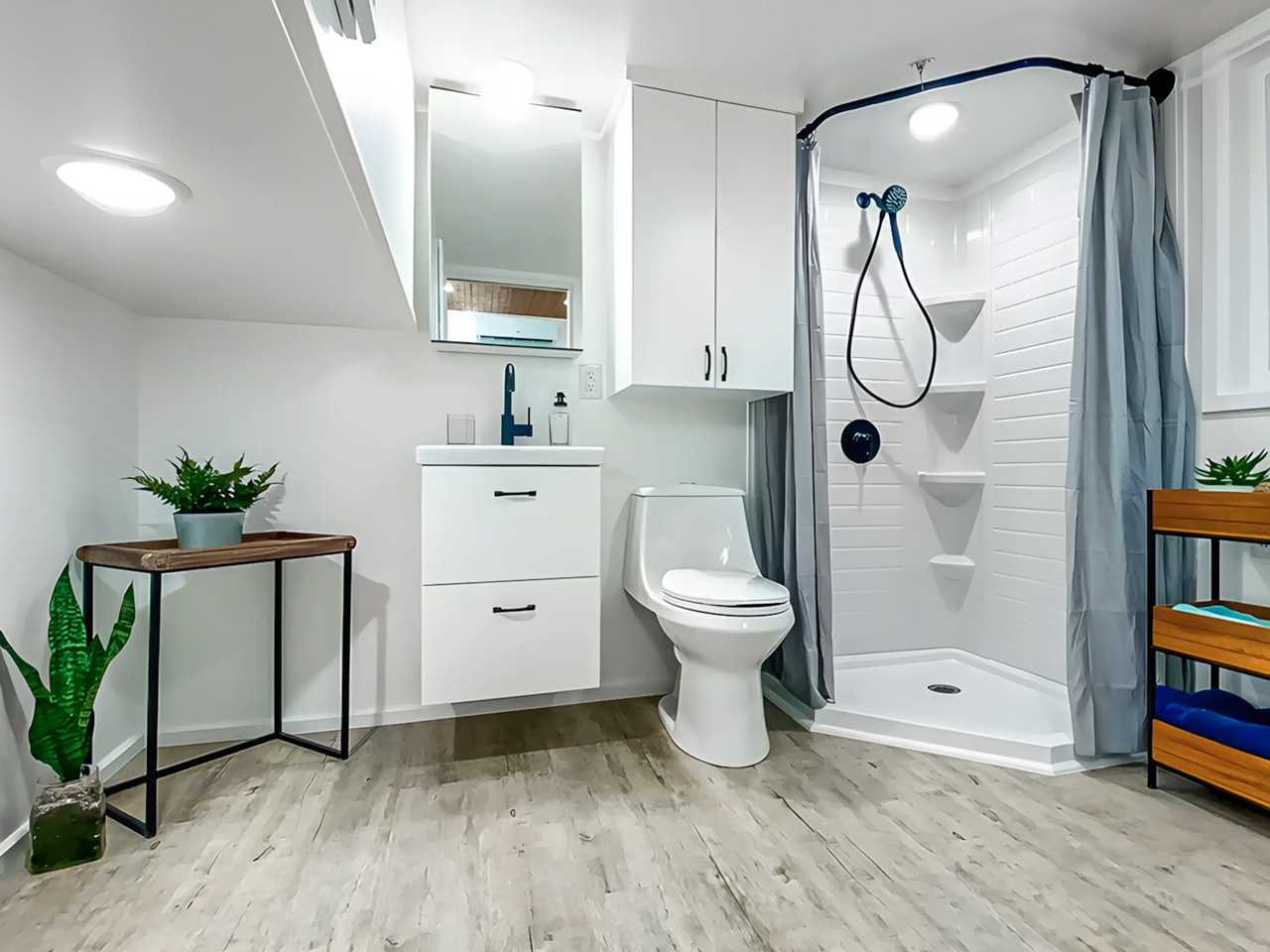
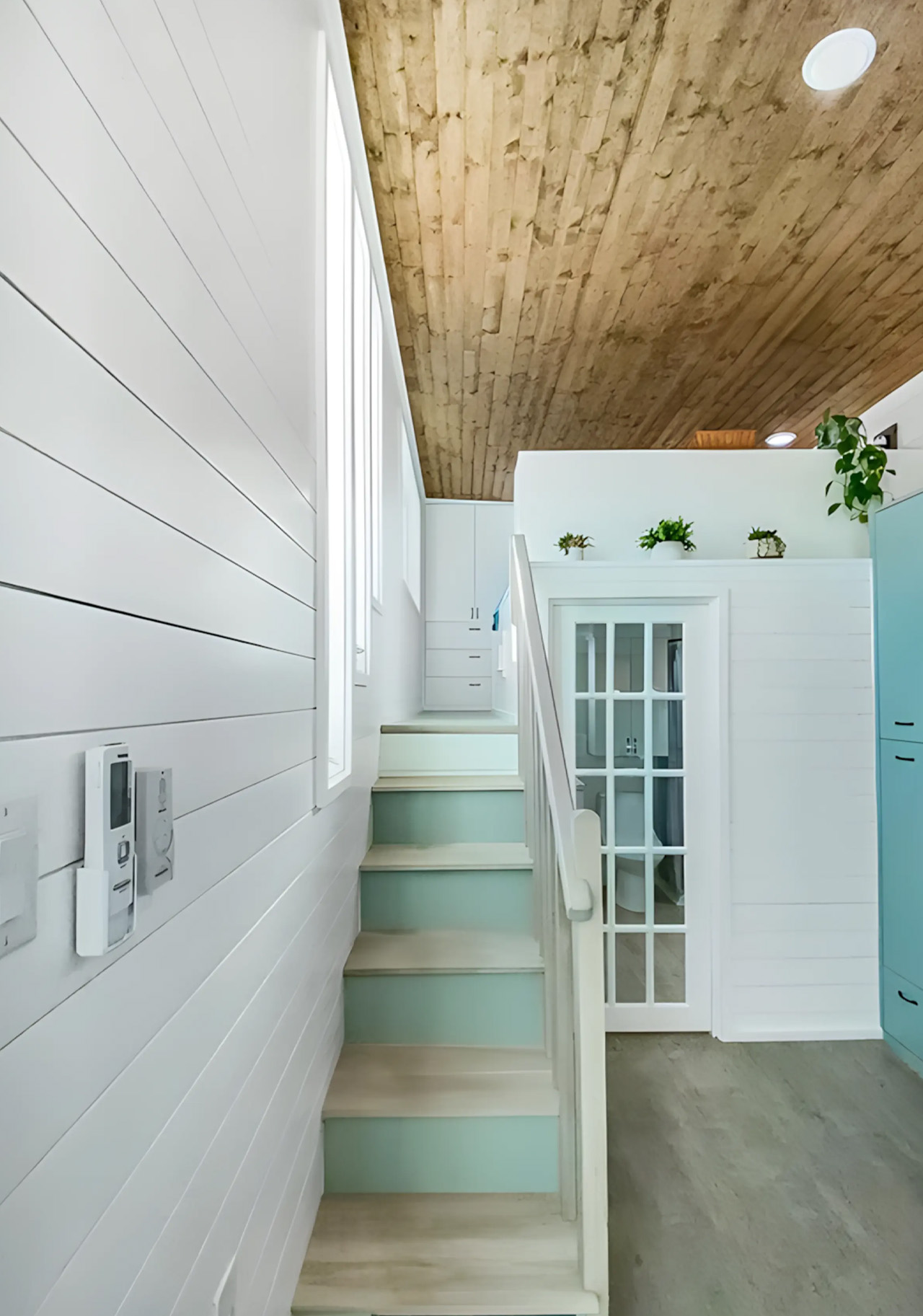
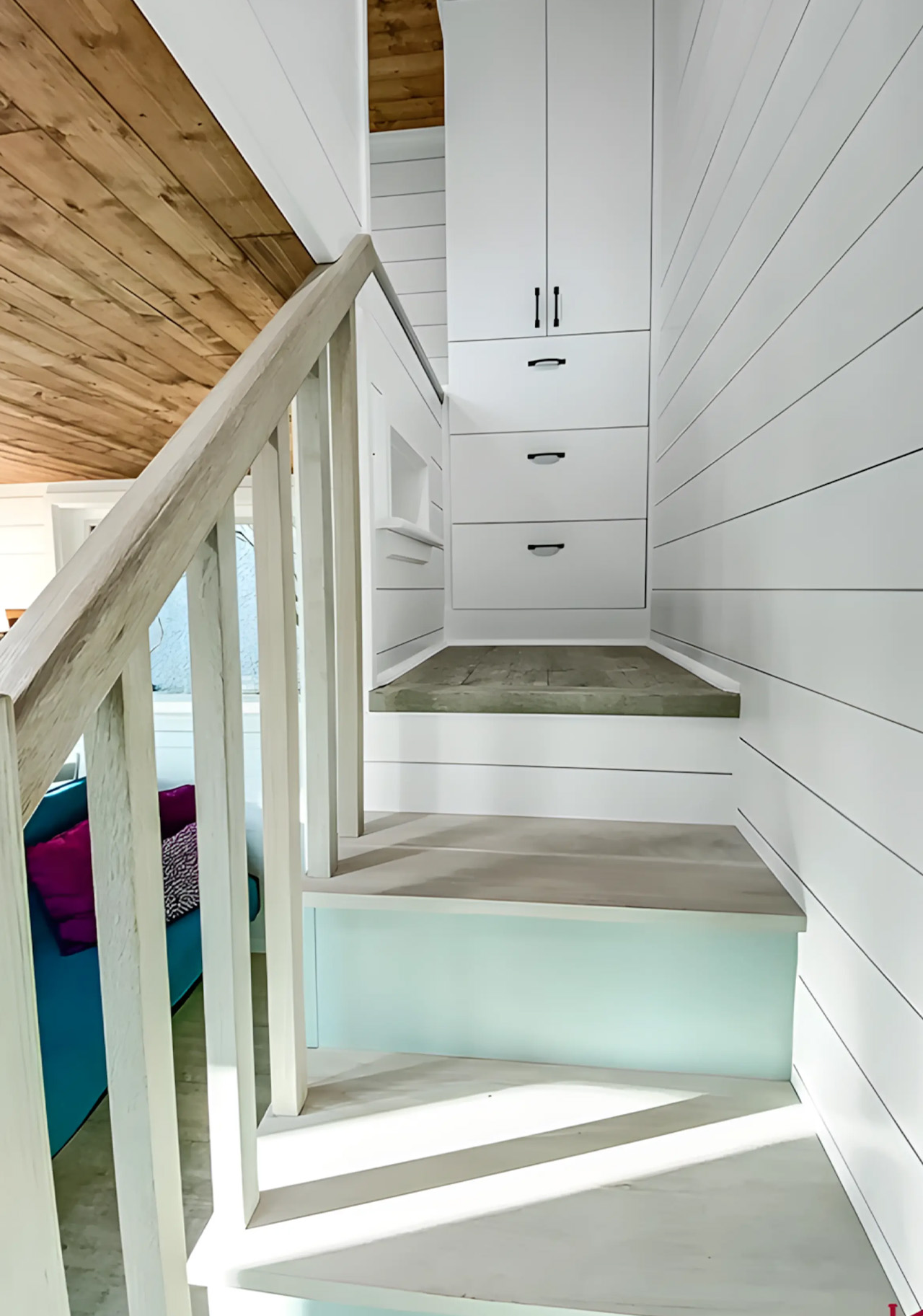
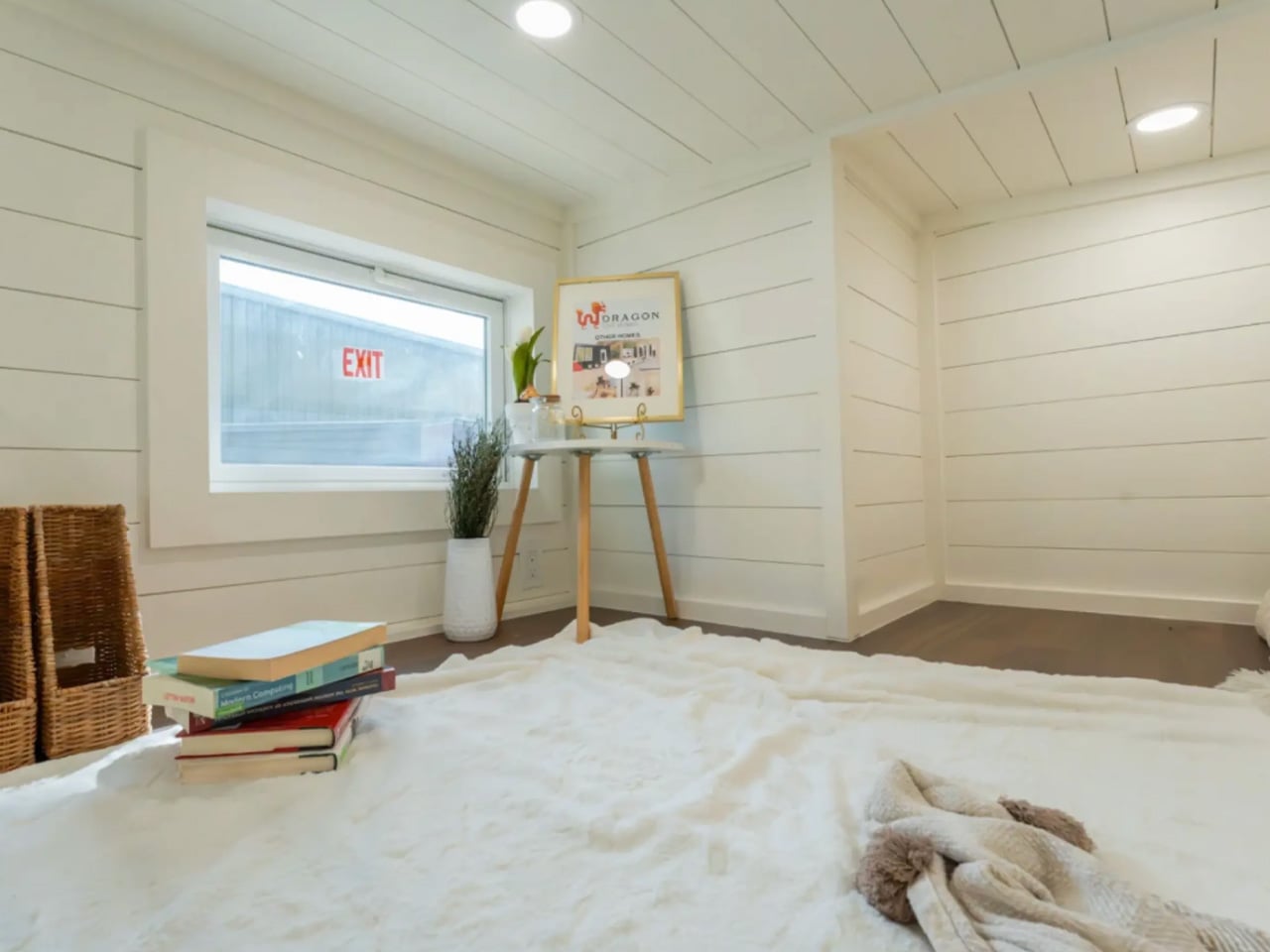
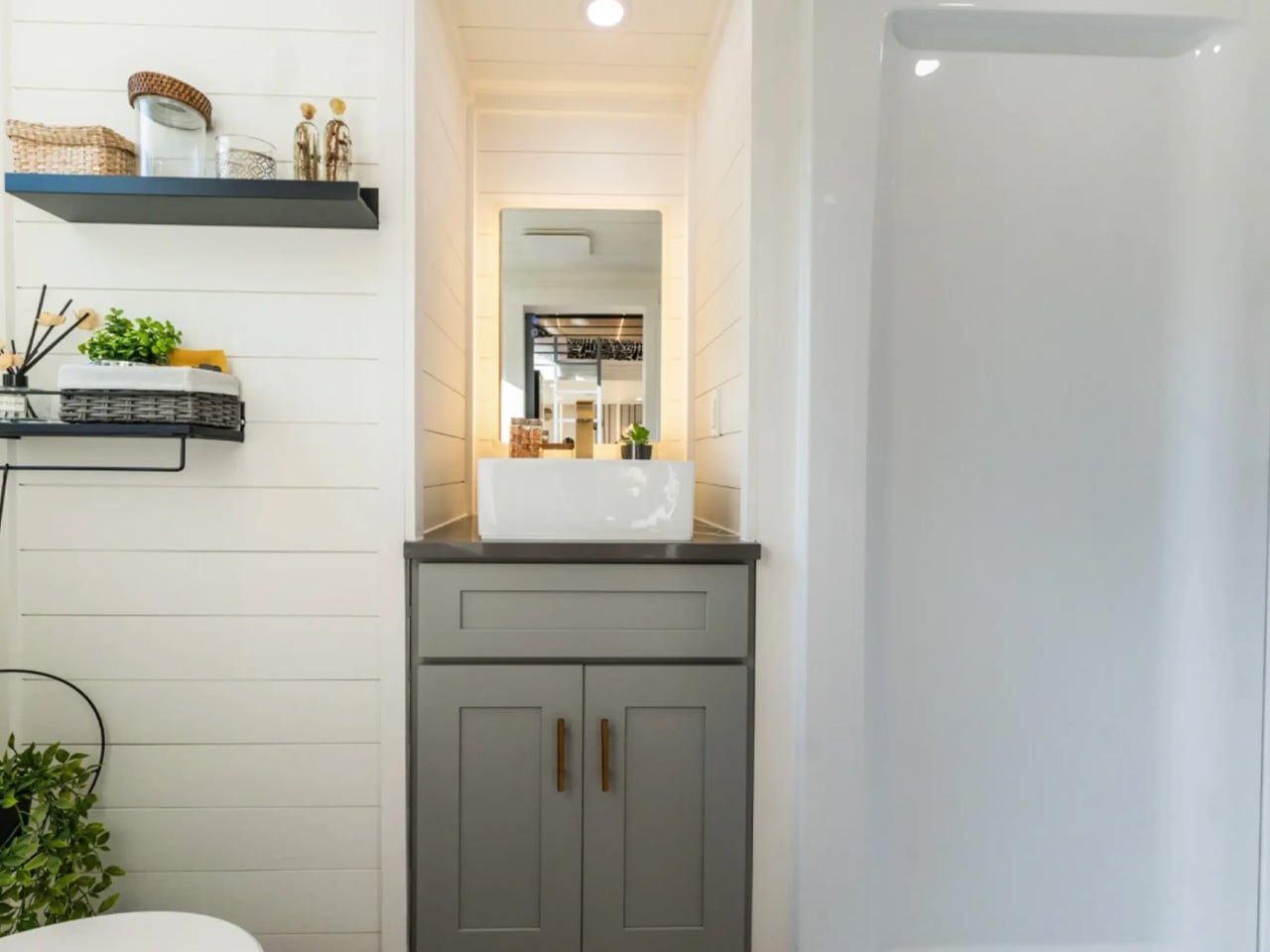
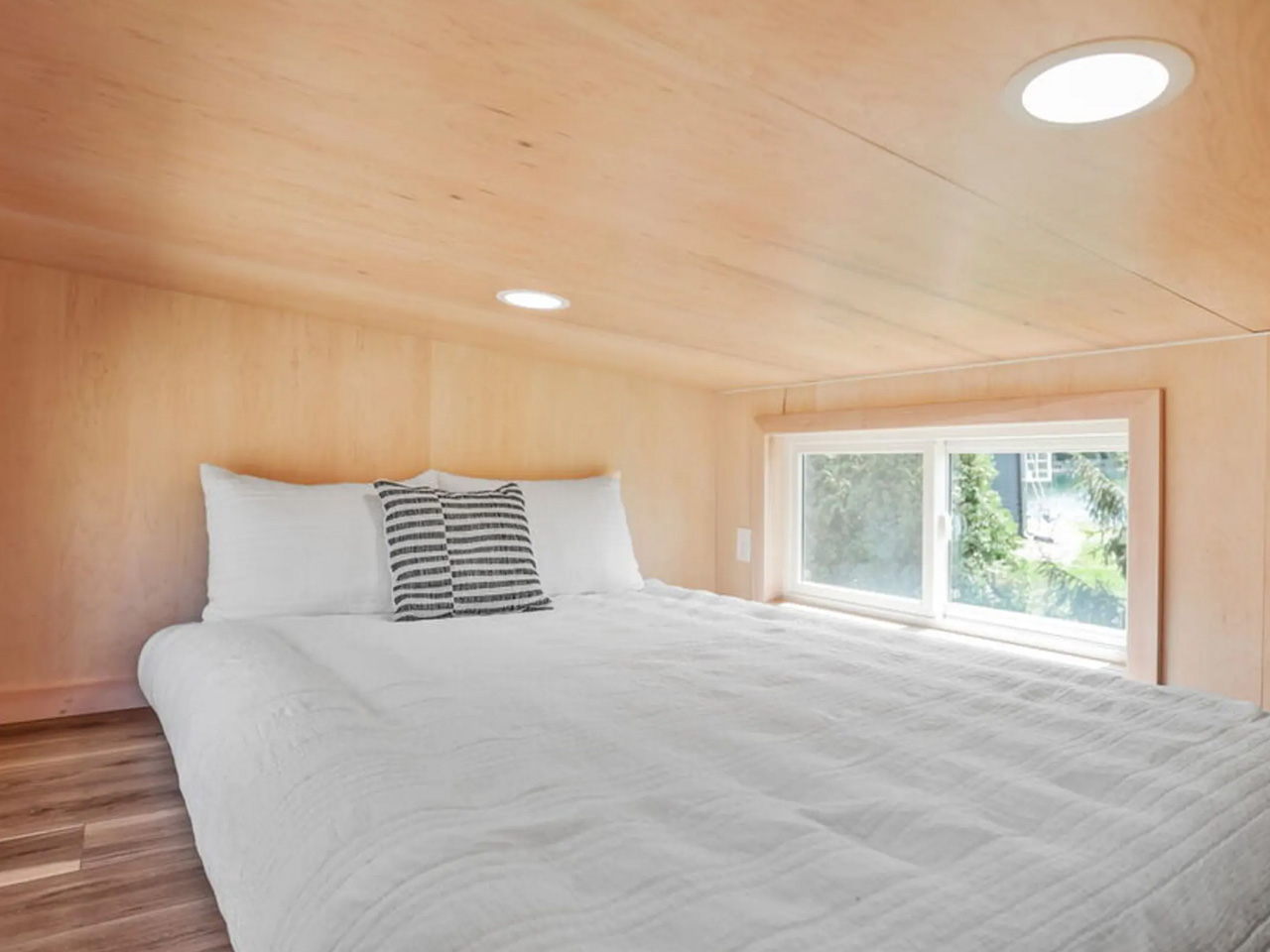
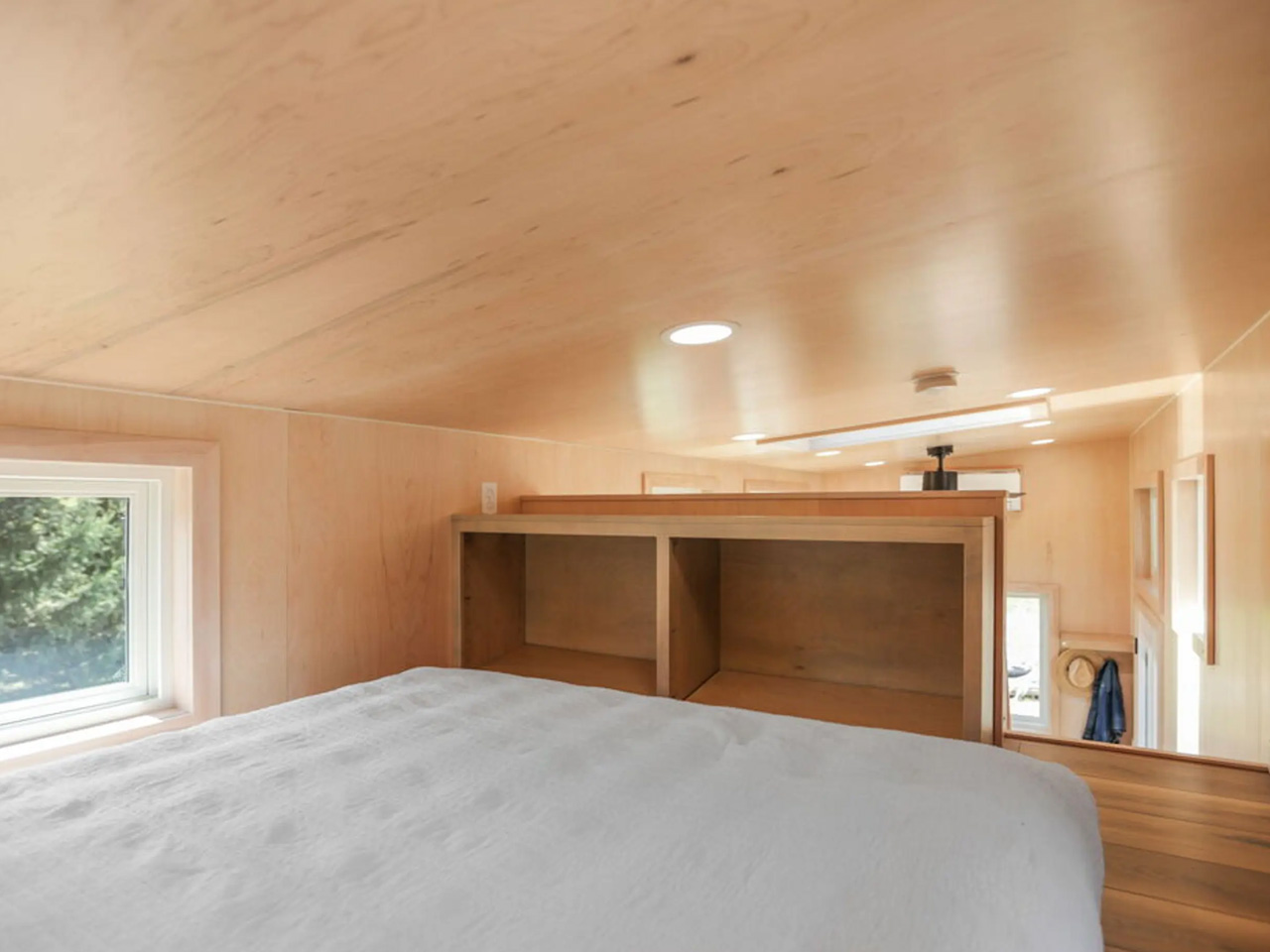
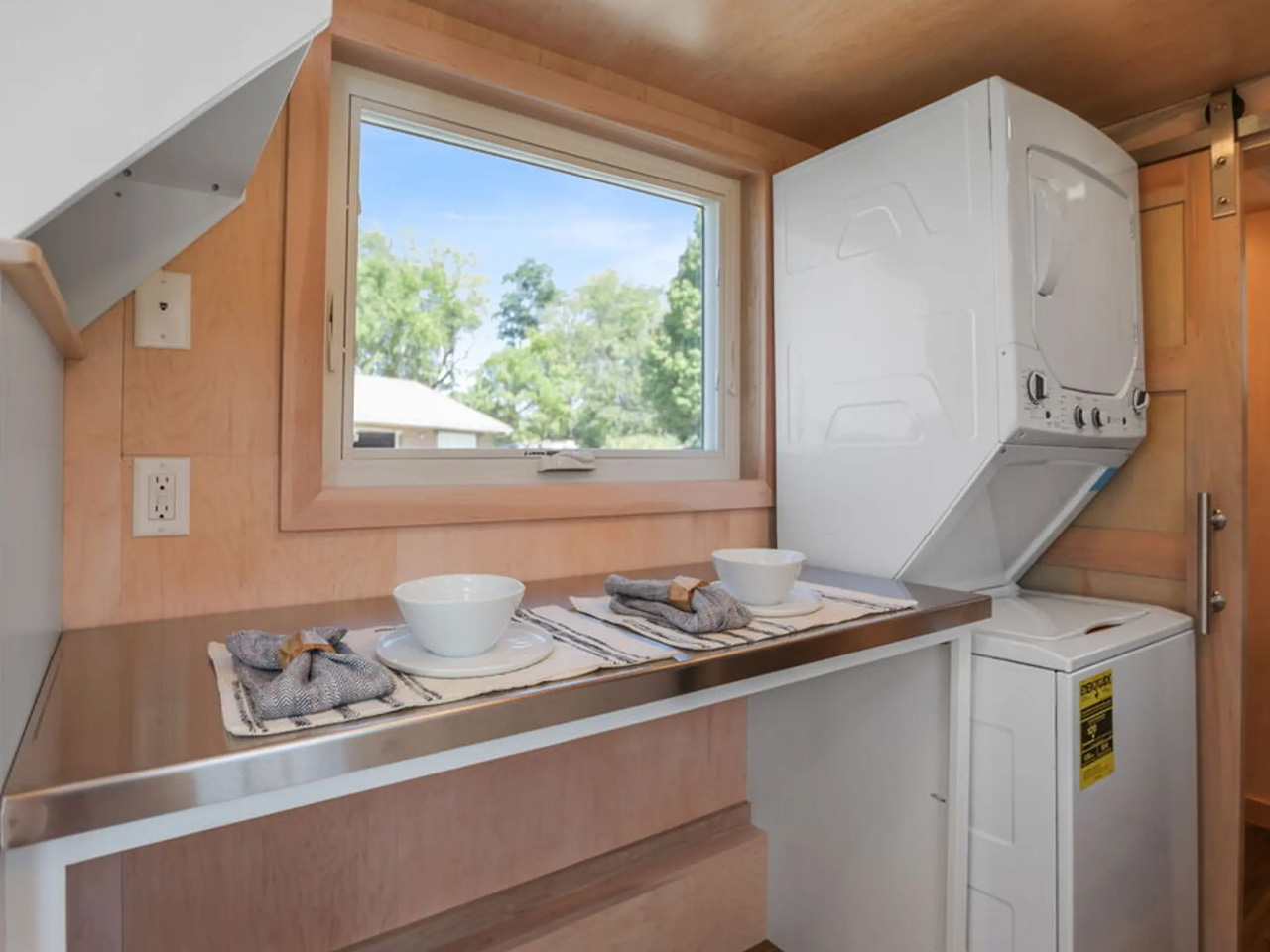
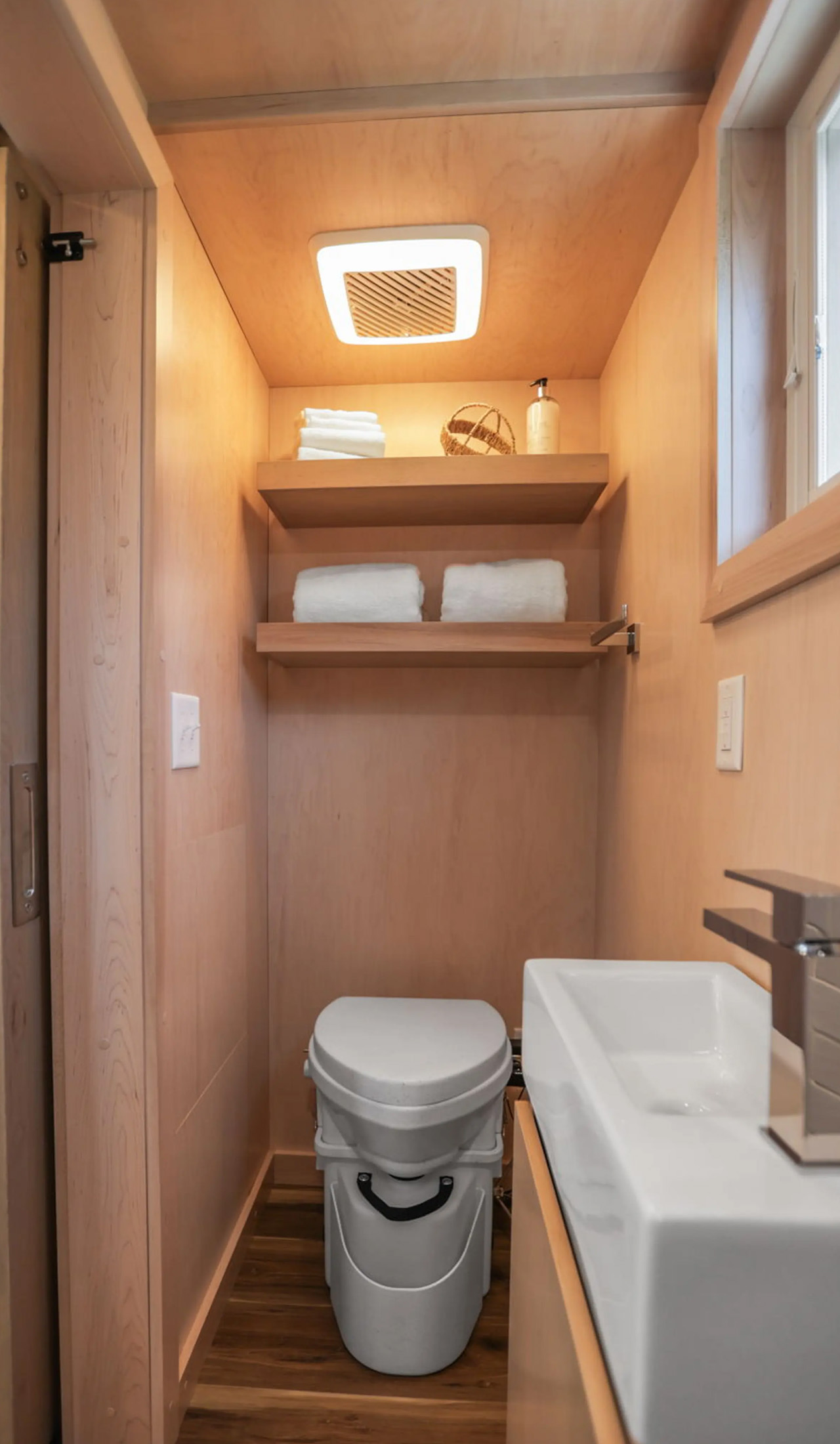
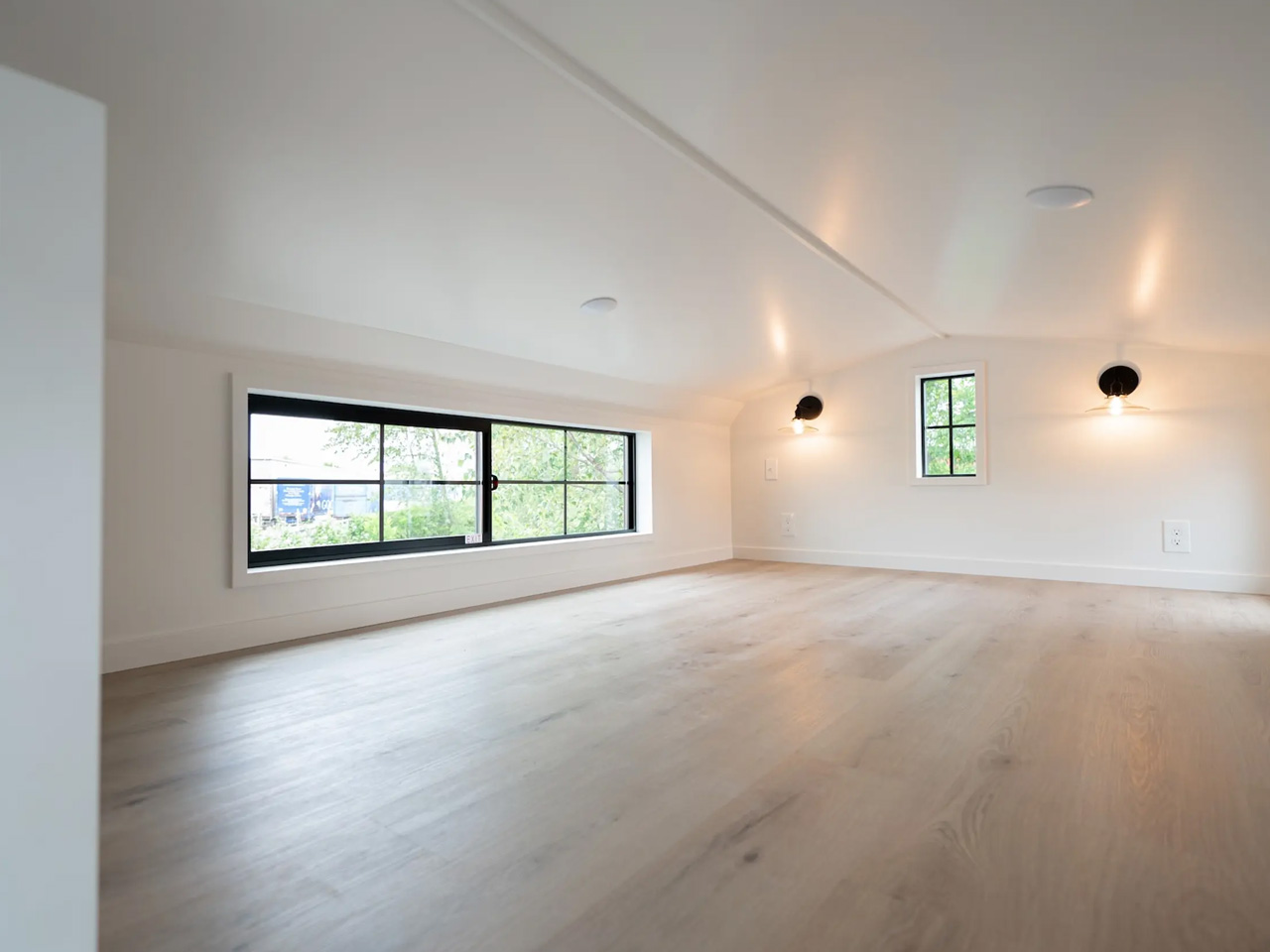
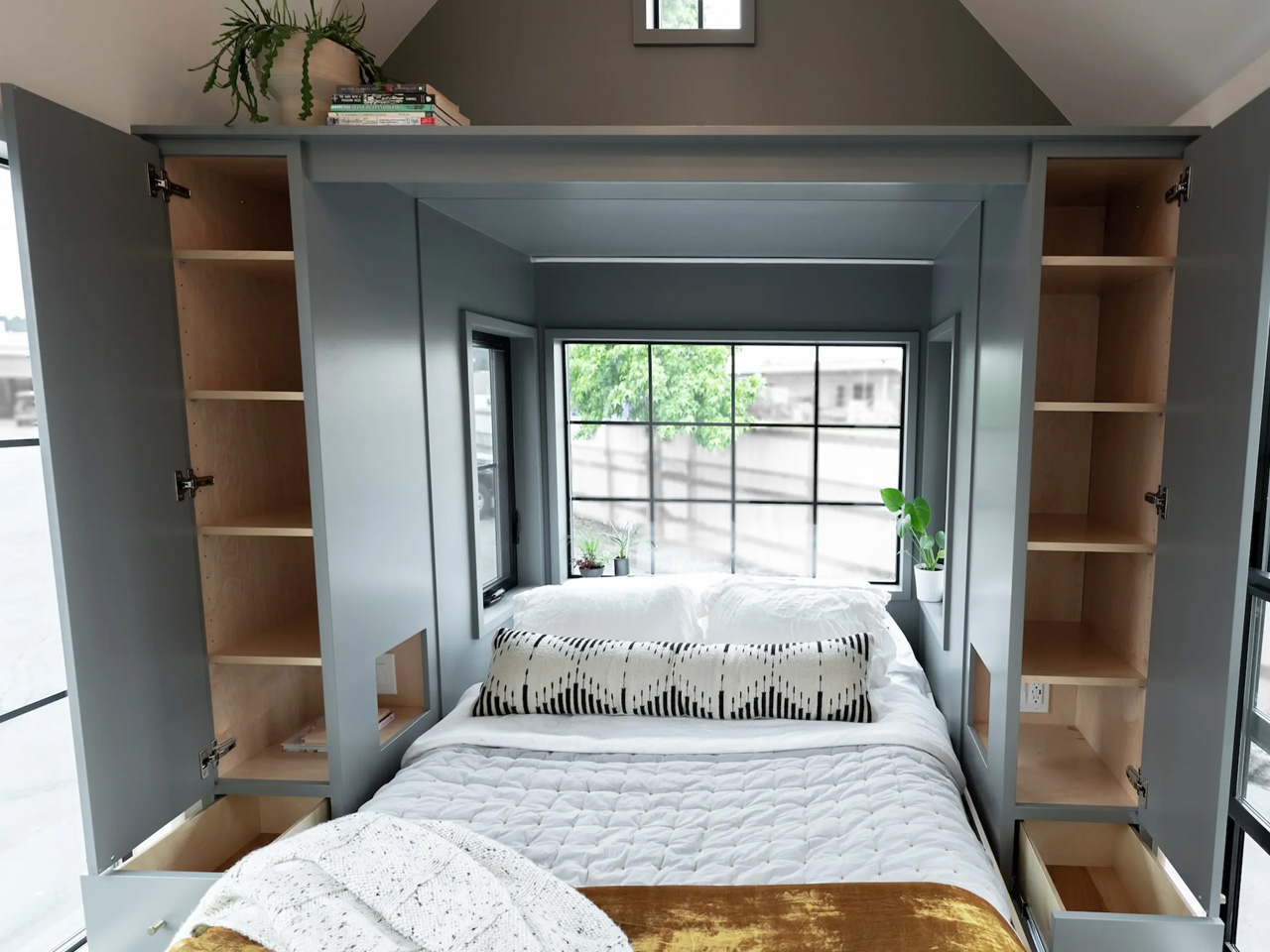
The bedroom and bathroom are located next to each other. The bathroom includes a bathtub and a separate shower, which is rarely seen in tiny homes. It also includes a sink and a composting toilet. The bedroom has quite an unusual configuration for a tiny home, as it is located on the ground floor, and has quite a low ceiling, leaving sufficient space for a double bed and some shelving. The low ceiling also leaves space for a loft-based laundry room on top with a washing machine, a dryer, and some storage area as well.

The post This Not-So-Tiny & Spacious Tiny Home Is Blessed With A Motorized Deck, Rooftop Terrace & Spiral Staircase first appeared on Yanko Design.

Paddock Paradise Is A Spacious & Cozy Tiny Home For Both Cats & Humans Alike

The beauty, magic, and sheer genuis of tiny homes took us by storm a couple of years ago, and it was a discovery that took the architecture world by storm. Since then, tiny homes have gained immense popularity, and been experimented with to create even better, more beautiful, and functional designs. Tiny homes are space-saving and eco-friendly, and they reduce the load on Mother Earth, while managing to look super cute. And, an excellent tiny home that I recently came across is the Paddock Paradise.

Designer: Acorn Tiny Homes

Designed by Acorn Tiny Homes, the Paddock paradise is a towable dwelling that features a spacious interior layout that’s equipped with storage space, and loads of amazing home comforts, including a couple for the owner’s cat. It is founded on a triple-axle gooseneck trailer, and finished in metal siding and faux stone. The trailer has a length of 38 feet, and it is quite big for a tiny home. It features a width of 10 ft, and it does require a permit to be towed on a public road in North America, but this also makes it a spacious dwelling, with a very house-esque style and layout.

There are two entrances into the Paddock Paradise. Accessing the home through the main entrance, visitors find a well-proportioned living room. This is taken up by an L-shaped sofa, plus a fireplace, TV, and shelving. In a neat touch, the fireplace mantelpiece is actually an operable drawer.

Two entrances lead you to Paddock Paradise. You can enter the home via the main entrance, wherein you are welcomed by a well-sized and designed living room. It holds a L-shaped sofa, TV, shelving, and fireplace. The fireplace mantelpiece is also an operable drawer, making it an innovative multifunctional design. The kitchen also holds the second entrance, which connects to a patio area. It features an oven with a three-burner propane-powered stove, as well as a pull-out pantry and a cat flap that offers easy access to a litter tray neatly concealed in the kitchen unit. The home also includes a series of walkways and tunnels through the upper section of the home, forming a cozy and playful living space for cats.

The post Paddock Paradise Is A Spacious & Cozy Tiny Home For Both Cats & Humans Alike first appeared on Yanko Design.

This Resto-Bar Nestled On A Cliff’s Edge In Goa, India Has Two Massive Nests Perched On Top Of It

I’ve spent much time in the beautiful beach town of Goa, India, which truly has a special place in my heart. Coconut trees, salty air, restless waves, and red sandy paths adorn the region. The architecture is a mix of old and new, with traces of the Portuguese influence interwoven with modern Indian-influenced structures. Nestled in the vibrant and lush tropical area of North Goa is a beautiful new restaurant dubbed Como Agua. It provides patrons with stunning views across the Vagator cliffs, allowing them to admire the mesmerizing sea from an impressive elevated location.

Designer: Otherworlds

Designed by the architects at Otherworlds, Como Agua is tucked away on an elevated perch, offering the restaurant a bird’s-eye view of the surrounding landscape and sea. The bar is adorned with two large nests at the top, making it a truly unique and innovative structure. The oversized nests give the restaurant an Amazonian vibe, offering the impression that you’ve walked into the tropics.

It occupies 3750 square meters, and is a vivacious open-air design built from bamboo and Lantana camera – an invasive flowering shrub that torments the local flora and fauna. The founder of Otherworlds, Arko Saha said that the plant “has invaded over 40 percent of the Western Ghats, a total of 13 million hectares of Indian landscape. Arriving in India as an ornamental plant in the early 1800s, lantana has escaped from gardens and taken over entire ecosystems.”

It’s quite interesting to see how they’ve utilized a shrub species that was wreaking havoc on the floral fauna and transformed it into a harmonious and integral element of the building. The architectural team wrapped the Lantana camera around the metal railings, bar, partitions, and canopies to build unique interlaced structures that look as if they’ve been built by weaverbirds!

The team says that –  “The weavers are social birds, usually nesting and feeding in colonies. They collect all sorts of natural materials like twigs, fibers, and leaves to weave a membrane that acts as their nest, usually hanging from the branch of a tree. Materials used for building nests include fine leaf fibers, grass, and twigs. Many species weave very fine nests using thin strands of leaf fiber, though some, like the buffalo-weavers, form massive untidy stick nests in their colonies, which may have spherical woven nests within.”

The post This Resto-Bar Nestled On A Cliff’s Edge In Goa, India Has Two Massive Nests Perched On Top Of It first appeared on Yanko Design.

This Beach House In Denmark Is A Symbol Of Their Local Culture

Nestled at the northernmost point of Denmark in the picturesque town of Skagen, the Skagen Klitgaard Beach House stands as a testament to architectural homage, familial togetherness, and seamless integration with the natural surroundings. Designed by PAX Architects, this stunning summer retreat draws inspiration from Skagen’s Black Period, incorporating the historical use of burned shipwreck wood into its distinctive exterior and thatched roof.

Designer: PAX Architects

The exterior of the Skagen Klitgaard Beach House pays homage to the historical legacy of Skagen. The black-painted timber exterior and thatched roof evoke the charm of houses built during the Black Period, where charred wood from shipwrecks was a common building material. This architectural choice creates a connection to the town’s history while establishing the house as a visual delight against the coastal landscape.

The architectural concept revolves around the central theme of fostering togetherness, especially among three generations of occupants. The house is designed to accommodate various needs, from communal gatherings in the centrally located kitchen to more secluded areas for moments of solitude. Despite the diverse purposes of each space, a continuous pitched roof unifies the entire house, emphasizing the idea of ‘being under one roof.’

Special attention is given to inclusivity within the Beach House. The architects incorporated an acoustic ceiling to mitigate noise levels, creating an environment conducive to both family life and individual retreats. Fluid zones within the layout allow for visual connectivity between different areas while maintaining a strong sense of connection to the surrounding landscape.

Recognizing the importance of family mealtime, the kitchen is positioned centrally, acting as the heart of the house. Thick oak mullions frame large glass panels, creating a seamless transition between indoor and outdoor spaces. This design choice not only blurs the boundaries but also brings the beauty of the landscape indoors, enhancing the overall living experience.

To cater to the diverse needs of its occupants, the ceiling heights vary in different spaces. Lower ceilings in intimate zones, such as the multi-purpose room behind the kitchen, create a contrast with the open and social areas, offering a variety of atmospheres within the house.

The interior design, characterized by muted colors and extensive use of sustainable Douglas fir, seamlessly blends with the natural surroundings. The tactile qualities, scent, and soothing sounds of wood contribute to a warm and inviting atmosphere, aligning perfectly with the vision of the house being an integral part of the natural environment.

The collaboration with Danish company Dinesen reflects a commitment to quality and precision. Responsibly sourcing timber from forests in France and Germany, the architects ensured not only a visually stunning but also a sustainable and enduring home.

The post This Beach House In Denmark Is A Symbol Of Their Local Culture first appeared on Yanko Design.

Portable tiny home can expand into a 364 square feet living space

One of the most tedious things that I experienced more than once is moving houses. Well for one thing, I have so much stuff so packing them all up and then unpacking them at my new place can be such a pain. So sometimes I wonder if I could just have all of my things and furniture in just one box that I can move from one place to another if I need to not stay in one place. Well, there are now tiny houses that can do just that, provided you can fit everything you own in that space.

Designer: PODX Go

There are a lot of tiny houses already available out there but this one is truly portable and high-tech. The Grande S1 is a pre-fabricated tiny home that can be packed up in a huge box and can be transported to where you need to go. And once you’re ready to settle down in that place, it can unpack itself and expand to a 20-foot-wide living space, complete with furniture and all the stuff that you can fit in that place. Once completely expanded, it has a full width of 20 feet and 364 square feet and it’s “street legal” which is an important requirement for those that need to actually live in that house.

To open up the house, you need to fold out the awning and the stairs and lower the stabilizing posts first. After that, you just press the button and it will unfold in all its mechanical glory. Inside, you have a dining space, living room, kitchen, bathroom, home office, and bedroom. All of the furniture can be folded in and out or stowed away into compartments because, of course, you need to put them somewhere when the house will fold into itself. For example, the queen-sized Murphy bed and the office desk can be stowed into the wall while the dining table can be folded on both sides and the chairs inserted into it.

If you’re getting ready to move again, you just need to stow away the desk, bed, and dining table and then put the sofa in the front entry area while the office chair and coffee table can fit into the bathroom. Then you remove the stabilizing posts and then with another press of a button, the house will then fold itself up and you’ll be ready to move in just 10 minutes. Oh and this tiny house can go off grid as it powered by a1,400-watt array solar panels connected to a 5-kilowatt Lycan power box.

The post Portable tiny home can expand into a 364 square feet living space first appeared on Yanko Design.

Tallest spokeless ferris wheel to be constructed in Seoul

Whenever I visit a new international city for the first time, I try to look if they have a giant ferris wheel and if I can, I take a ride on it to get the best view of the city. So far, the best ones I’ve been on are the Singapore Flyer and the Budapest Eye. Of course I have a lot more to go as I haven’t been to places like the London Eye, High Roller, Dubai Eye, etc. It looks like I’ll be adding something new to my list in one of my favorite cities in the world: a landmark giant ferris wheel is coming to Seoul soon.

Designer: UNStudio

The Seoul Twin Eye will start construction sometime in 2025 and when finished, it will be the world’s tallest spokeless one with its planned 180 meters high structure. Aside from its height, it has a pretty unique design as it will have two intersecting rings that will carry pods going around both tracks. It can hold as many as 1,400 tourists at the same time, with 20-25 people fitting in each of the 64 capsules. This is actually double of what the London Eye is able to accommodate and currently it is one of the largest in the world.

The planned ferris wheel will be located on the edge of the Han River as part pf a 40-meter high cultural complex which Seoul is hoping to develop as part of public spaces for residents and tourists. Not only will you be able to ride such a huge ferris wheel but you’ll also get the best panoramic views of the city. The design is actually inspired by the Honcheonsigye, an astronomical clock that represents celestial objects moving through time.

Aside from the Seoul Twin Eye, there’s a proposal to also construct a monorail to have a direct connection from the subway station to the ferris wheel site. There is also a proposed zip line within the complex for those who prefer a much more adventurous experience, although it’s unclear if it will be connected to the ferris wheel directly. One thing’s for sure, once it is launched, it will add to the beauty and charm of Seoul and will become a must-see destination for locals and tourists alike.

The post Tallest spokeless ferris wheel to be constructed in Seoul first appeared on Yanko Design.
Wall cladding made from corn cob waste brings sustainable construction materials

Construction is something that we probably cannot do without as we continue to build houses, buildings, and other structures. The quest for coming up with sustainable construction is ongoing as we look for materials that are eco-friendly and the process in creating them to be as sustainable as possible. There are a lot of waste in our world that can actually be used for other purposes instead of just becoming biomass as they are mostly used now. A breakthrough in terms of interior wall cladding is now available and it comes from the most unlikeliest of sources: corn cobs.

Designer: StoneCycling and Studio Nina van Bart

CornWall is an alternative to interior wall cladding that uses organic corn cobs, subjecting them to up to 150 degrees Celsius so as to activate and create “strong bonds”. Aside from using sustainable materials, the heating process is also eco-friendly as it uses sustainable energy. The electric heating process uses the solar panels on their factory’s roof. So from the materials to the process itself, we are seeing something that will lessen or leave no carbon footprints at all.

Mostly corn cobs are left on the fields or fermented or burned as biomass. But with this process, they are able to turn them into wall cladding. It is better than the usual ceramic wall cladding that is used or even composite materials like high pressure laminate (HPL). Another advantage to this is that it is able to store more carbon dioxide because of the absorbed CO2 already in it. It is also 100% reusable as it can be removed from interiors through the demountable anchoring system.

Based on the product photos, it doesn’t look much different from the usual wall cladding. It actually looks like those cork coasters that we’re seeing now. It comes in different colors loke DarkBlue, MustardYellow, TerracottaPink, etc. Hopefully we see even more construction materials that use sustainable materials and processes so we can have an industry that is more eco-friendly.

The post Wall cladding made from corn cob waste brings sustainable construction materials first appeared on Yanko Design.

DJI Just Launched Its Own 3D Model Editing Software… And It Makes Complete Sense.

If you think of DJI’s drones as aerial 3D capturing devices, the entire endeavor makes a LOT of sense.

While their drones have become synonymous with stylized cinematography and even high-octane races, DJI’s drones also find themselves being used for photogrammetry, 3D mapping, surveillance, delivery, and even civic planning/surveying. In fact, DJI has a dedicated website just for enterprise use, with specialized drones, attachments, and even software. In 2019, DJI launched Terra, a 3D mapping software to turn video/image data into 3D models for efficient planning, route mapping, analysis, etc… but with their latest software Modify, the tool becomes perfect for cinematographers and creatives too. Modify helps edit, clean, and fine-tune the 3D-mapped data captured by DJI’s drones. The free-to-use tool has a variety of editing features to help repair models, remove artifacts, and even edit out objects like humans, cars, and obstacles to create seamless 3D scans that are detailed enough for even movie industries to use.

Designer: DJI

Designed to seamlessly integrate with the Terra software, Modify has some rather incredible tools up its sleeve to help rectify any problems caused during the scanning process. Whether it’s broken models caused by reflective surfaces or random floating parts in the sky that the 3D software captured by accident, Modify lets you easily identify them, select them, and remove/repair them with a few clicks, saving hours of work.

The biggest bane with photogrammetry or 3D capture is the creation of unwanted artifacts. Most people familiar with the field will tell you that sometimes the software can interpret objects that aren’t even there. Reflections, clouds, and flying creatures can sometimes result in floating planes and fragments that can often clutter 3D scans by the thousand. Manually selecting these floating parts takes hours of work, but Modify uses clever tools to help select them with a simple click. Once done, you can easily delete them. Reflective surfaces like glass, metal, and water result in broken surfaces too, which Modify lets you easily fix by adding a planar surface.

One of the standout features of DJI Modify is its intelligent host of auto-repair editing tools. These tools support operations such as flattening, editing textures, repairing water surfaces, removing floating parts, and filling holes. Modify uses AI to help regenerate signs, fix existing damaged patterns/textures, and even replace old models/textures with new ones. For instance, you can flatten roads with cars captured on them, remove the car graphics from the 2D textures, and replace the road markings to make them empty, effectively removing the cars that were originally on them. This functionality can be accessed through one-click repairs or manually by selecting custom polygons, areas, or meshes. Additionally, the software’s model display technology allows both high- and low-quality models to be viewed and edited within a single interface, with changes being synchronized and previewed across both models immediately.

The software supports various file formats like ply, obj, and b3dm, ensuring compatibility with DJI Terra and other third-party software. The software is expected to offer cloud-sharing capabilities in the future, allowing users to share processed models online for viewing and sharing via links, without the need for software installation.

DJI Modify is targeted towards professionals in sectors such as transportation, surveying & mapping, public safety, emergency response, urban modeling & management, energy & utilities, and infrastructure. Its efficient model editing capabilities cater to a wide range of drone surveying use cases, including AEC (Architecture, Engineering, and Construction), inspection, and public safety. The software is currently for free as a Public Beta, and can be downloaded on DJI’s Enterprise website.

The post DJI Just Launched Its Own 3D Model Editing Software… And It Makes Complete Sense. first appeared on Yanko Design.
Top 10 A-Frame Cabins To Remind Us Why This Architectural Style Will Always Remain Iconic

There’s something about an A-frame cabin that instantly puts you at ease and makes you feel at home. I personally love cabin getaways and spending the weekend, nestled away in the woods, in a quintessential and humble A-frame cabin, is my idea of the perfect stress buster! Away from the hustle-bustle of the city, and surrounded by the warm sun, lush trees, and gentle wind. What could be better than that? So, we’ve curated a collection of super cozy and welcoming A-frame cabins that promise to help you relax, rejuvenate, and connect with nature. Add these cabins to your must-visit bucket list and get planning!

1. A-Frame Club

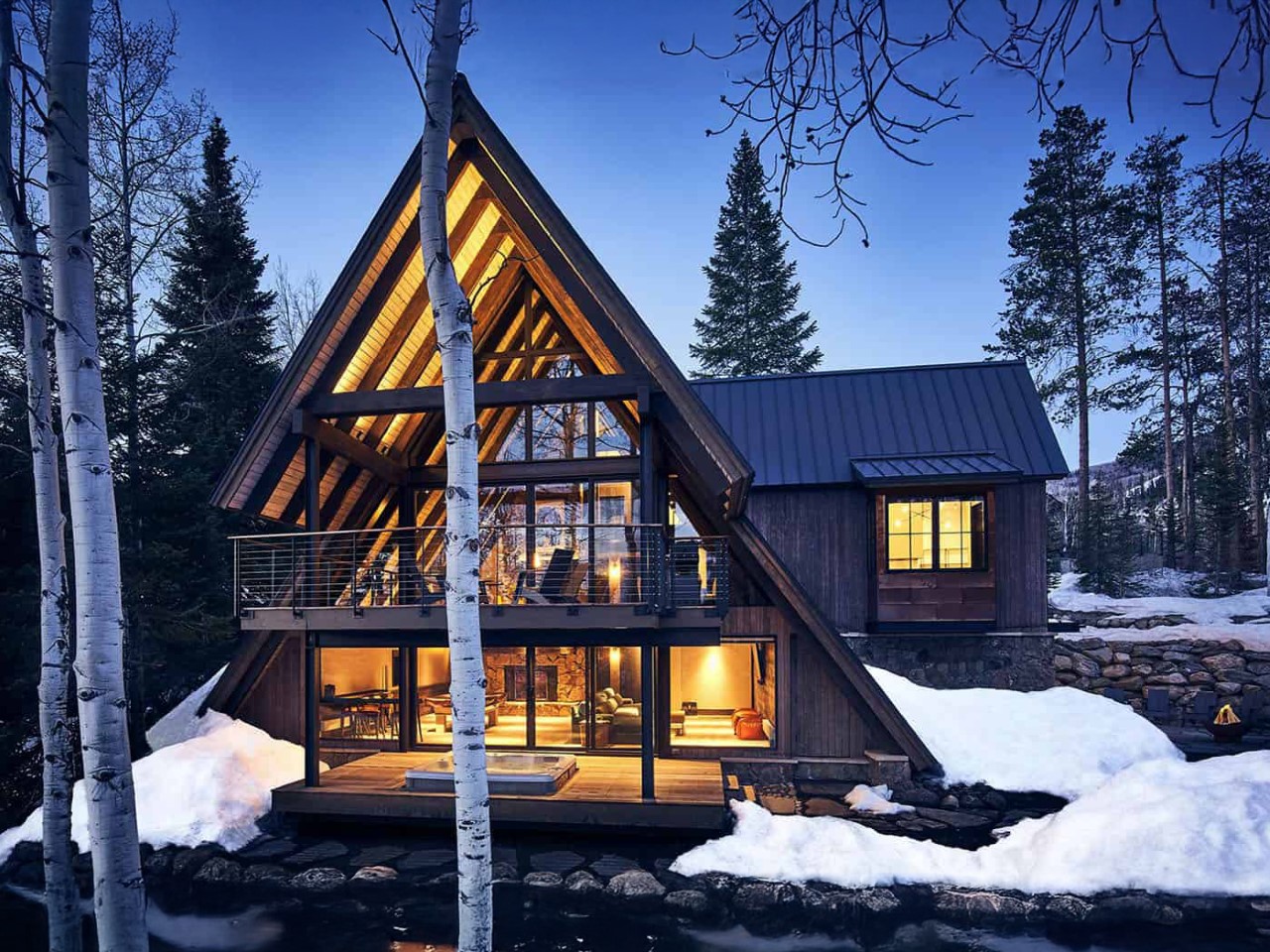
Designed by Skylab Architecture, and dubbed the A-frame Club, these 31 A-frame cabins are arranged in a hexagonal arrangement and are an upgraded and better version of traditional ski chalets. They are prefabricated cabins and are located in Winter Park, Colorado.

Why is it noteworthy?

With a contemporary twist, the compact and adorable cabins form a snowflake pattern across the three-acre lot. Occupying 23,450 feet, the project “takes design cues from 1970s American ski culture and the iconic A-frame cabins of that era,” said the studio.

What we like

  • Retain the essence of traditional ski chalets, while upgrading them

What we dislike

  • The loft bed is accessible via a ship’s ladder, which can be inconvenient to use and isn’t very inclusive

2. Cabins in Farouche Tremblant

A series of A-frame buildings populate the Devil River’s Valley with the Mont-Tremblant National Park in the background. The Farouche Tremblant agrotourism site includes four rental micro-cabins, a cafe, and a farm.

Why is it noteworthy?

Designed by the Canadian architecture studio Atelier l’Abri, the buildings are meant to “recede in the landscape”. The studio designed that function as a basecamp for visitors who want to visit Devil’s River and Valley.

What we like

  • Features outdoor decking and a glazed gable end which enables visitors to truly make the most of the vistas of the surrounding natural landscape

What we dislike

  • The aesthetics of the cabins are a bit old-school

3. Dune Dormer

Dubbed the Dune Dormer, this rustic A-frame cabin was built by RTA Studio on the stunning Great Barrier Island in New Zealand. The cabin is inspired by the traditional Pacific huts, which is quite evident in its gable roof hut.

Why is it noteworthy?

Mimicking the traditional Maori huts, the Dune Dormer’s silhouette reminds you of a harbor standing upright on a dune, helping seafaring owners reach home. It creates a minimal impact on its surrounding landscape.

What we like

  • Inspired by traditional Maori huts
  • Has a spacious feel to it unlike traditional A-frame cabins

What we dislike

  • The aesthetics of the cabin may be too old school for some

5. Slope House

Called the Slope House, this untraditional A-frame cabin is truly one-of-a-kind, and it uses a biophilic design inside and out. It is an angular timber cabin that is tucked away on top of an idyllic hillside somewhere in the lush rainforests of Brazil.

Why is it noteworthy?

It features a signature triangular frame that is an interesting and thoughtful twist on the conventional A-frame cabin. It is made up of two modules, and one internal volume that hosts the cabin’s bedroom, while the other accommodates the home’s main living spaces.

What we like

  • A biophilic design style has been integrated into the cabin’s interior spaces
  • Natural plants have been added inside the house as a small garden

What we dislike

  • The theme and form of the home may be a bit too eccentric for some

6. Kiani’s Lakehouse

Soheil Kiani designed this lakehouse that is formed by two symmetrical A-frame cabins connected by a glass sky bridge. This stunning home is envisioned in the foothills of Gisoom forest near the city of Talesh, Iran.

Why is it noteworthy?

The lakehouse is nestled near the forest’s beginnings, and it is designed to provide guests and residents with an immersive experience in nature, where they get to enjoy all the beauty the natural forest has to offer.

What we like

  • Made up of north and south-facing facades that are built entirely from glass

What we dislike

  • It’s a concept, so we don’t know how well it will translate into a real tangible product

7. UHU

Called UHU, this tiny A-frame-esque cabin is raised on stilts and located in the heart of Charlevoix, Canada. The name translates to ‘owl’ in the Innu language, and it nested 12 meters in the air, with access to lovely views of the Saint-Laurence River.

Why is it noteworthy?

The triangular cabin features a glazed facade which allows for generous views of the surrounding forest and green landscape. You can enter the cabin via an enclosed spiral staircase, and a 6-meter bridge. Although compact in size, the UHU cabin is equipped with all the amenities you need for a comfortable and cozy stay.

What we like

  • Offers an immersive experience amidst the treetops
  • It is elevated 12 meters above the ground

What we dislike

  • It can only accommodate two people

8. Nolla

Called Nolla, meaning ‘zero’ in Finnish, this cabin functions entirely on renewable energy and is located on the Vallisaari island, near Helsinki. It is built using sustainable materials such as local plywood and pine and is designed to support a ‘zero waste lifestyle’.

Why is it noteworthy?

Every element has been designed with the hope of not leaving behind any carbon footprint. Covered by mirrors and supported by wooden stilts, it excludes modern commodities.

What we like

  •  Powered by emission-free solar panels and a Wallas stove that runs on Nestle’s MY renewable diesel

What we dislike

  • Can not accommodate too many people, so it’s not the best option for families

9. Bivvi

The Bivvi is a modular and transportable A-frame cabin that is designed to bring people closer to the outdoors. It can be attached to your car for road trips, or to a foundation for permanent placement.

Why is it noteworthy?

Mobility was their main source of inspiration, and each Bivvi Cabin can be swiftly attached to a trailer hitch and tow, allowing it to be transported almost anywhere. The Bivvi Cabin is even outfitted with off-grid capabilities like three 600W AC outlets, and a 100W solar panel.

What we like

  • Can be transported anywhere, supporting spontaneous trips to nature

What we dislike

  • The cabin can only really accommodate a desk and bed in terms of furniture

10. Iwi Cabin

Dubbed the Iwi Cabin, this innovative and unique design isn’t like ordinary A-frame cabins. It features a space-maximizing design that can be compressed and expanded as and when needed. It is like an accordion-shaped shed, that lets city dwellers expand space in their apartments.

Why is it noteworthy?

The Iwi Cabin is super easy to operate since owners can push and pull the shed, owing to the wheel system that allows it to be swiftly and efficiently handled and stored away.

What we like

  • The cabin is resistant to rain, wind, and sunshine
  • The interiors are outfitted using cork and sheep’s wool which provides insulation to the cold

What we dislike

  • The cabin features only one door/window, hence it is the only source of ventilation in the cabin

The post Top 10 A-Frame Cabins To Remind Us Why This Architectural Style Will Always Remain Iconic first appeared on Yanko Design.
A Latticed Timber Roof & A Lebanese Cedar Tree In The Center Make This Unique Structure Truly Stand Out

Dubbed A Room Around a Tree, this unique residence in South London features an outbuilding designed by the British studio Tikari Works. The studio framed the outbuilding with a latticed timber roof structure and is designed to skillfully weave around a Lebanese cedar tree. The aesthetically pleasing home was created to have a minimal impact on the surrounding natural environment, while also possessing a versatile inner space with a lovely adjoining terrace for the family.
Designer: Tikari Works

“The core concept of the design is to celebrate the mature cedar tree that is the focal point of the garden whilst creating a flexible space for our client’s growing family,” said Tikari Works director Ty Tikari. “The timber beams are extra deep and stained black to create a meditative internal atmosphere and bring the verdant greens of the garden to the foreground.”

The entire plan and intent behind the design was to build a serene dialogue with the landscape, with the edge of the building subtly wrapping around the tree branches. The edge was also partially bounded by transparent structural glazing which gives an ethereal and other-worldly appeal to the building “The curved form of the project allows the building to engage with the language of the garden as the building edge weaves between the natural features on the site. Internally, this creates a sense of compression and expansion that is used to organize the building functions without the need for physical boundaries,” said Tikari.

Quite interestingly, A Room Around A Tree was constructed using light-handed construction techniques that ensure the vegetation in the area is protected. These techniques included a low-impact “floating” ring beam, and a mini-pile foundation system. One of the motives was that a distance of two meters was to be maintained from the trees on the site,  allowing the trees to be protected and undisturbed.

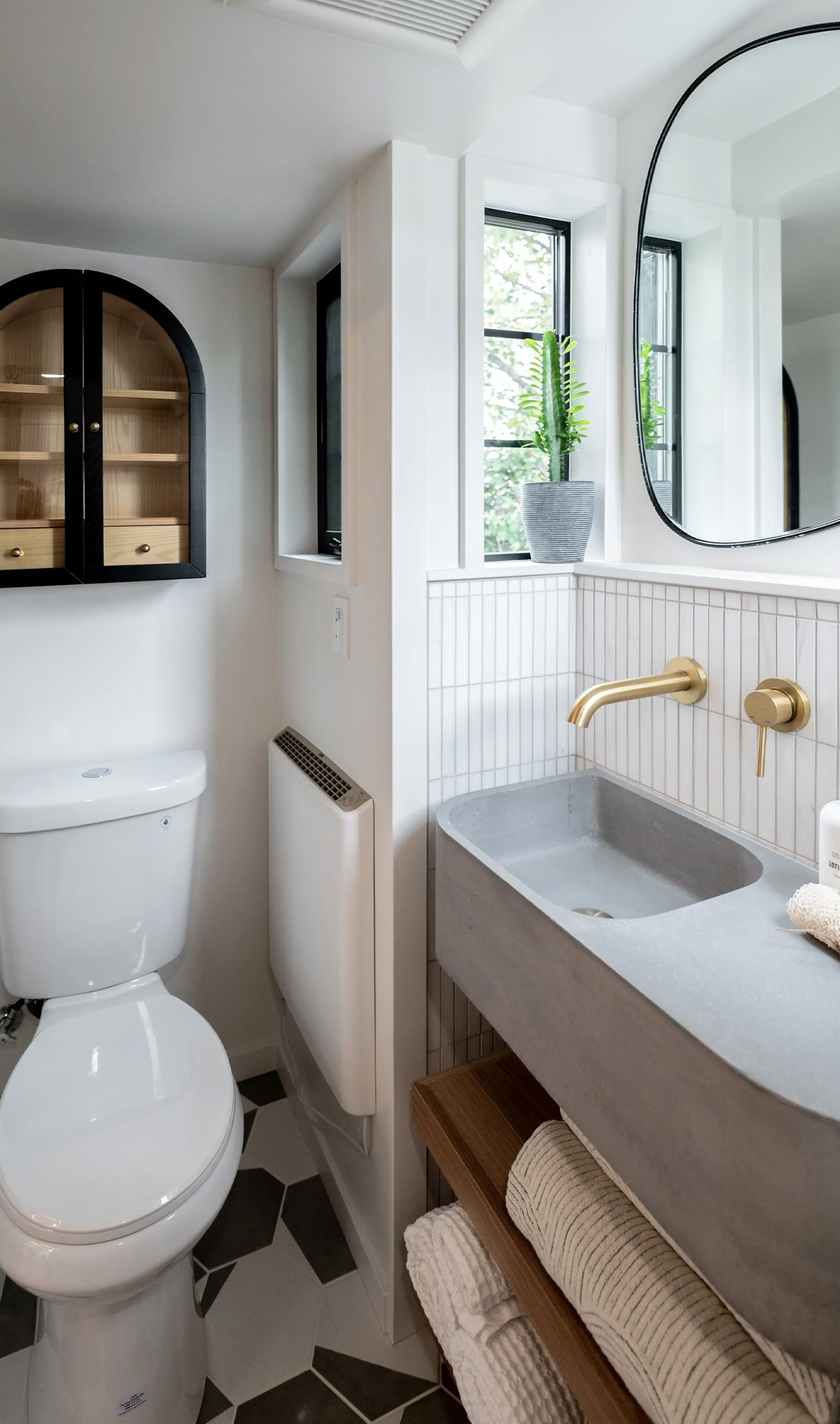
To support and encourage future flexibility, the studio incorporated elements such as integrated custom joinery, an oak kitchenette, a cast-concrete sink, and a mobile storage unit. Off-the-shelf materials such as corrugated cladding, clockwork, and stained timber were utilized to keep the project within budget.

The post A Latticed Timber Roof & A Lebanese Cedar Tree In The Center Make This Unique Structure Truly Stand Out first appeared on Yanko Design.