Amazon acquires autonomous robotics startup Rivr

Amazon has acquired Rivr, a startup focused on autonomous robotics. Rivr is based in Zurich and was valued at $110 million in a funding round from August 2024, which both Amazon and its CEO's Bezos Expeditions participated in. Financial details of the acquisition were not disclosed. 

Rivr's robots have four legs and wheels that allow it to maneuver on stairs and other potentially uneven surfaces. The company just released its second generation of the robot. The purchase will likely further Amazon's capabilities for ever-faster and more efficient package deliveries. 

"This acquisition reflects our commitment to a continued investment in research, which we believe has the potential to further improve safety outcomes and the overall delivery experience for delivery service partners and their delivery associates," a representative from Amazon told The Information.

Amazon has been working toward introducing automations and robotics at various stages of its shopping business. It deployed its 1 millionth robot last summer and has future goals for automating 75 percent of all its operations.

This article originally appeared on Engadget at https://www.engadget.com/big-tech/amazon-acquires-autonomous-robotics-startup-rivr-212839750.html?src=rss

DoorDash will start paying gig workers for creating content to train AI models

DoorDash has launched a new option for its gig economy workers to earn some extra cash. The delivery service introduced Tasks, which it describes as "short activities Dashers can complete between deliveries or in their own time." It gives taking pictures of restaurant dishes or recording video of unscripted conversations in languages other than English as examples. These materials will be used to train artificial intelligence and robotics models. 

A representative from DoorDash told Bloomberg News that it will use Tasks content for evaluating its in-house AI models as well as those made by its partner companies in retail, insurance, hospitality and tech. DoorDash is piloting a standalone app for Tasks where Dashers will submit their content. The blog post notes that pay will be displayed upfront, and compensation will vary based on the complexity of the activity.

This idea isn't new. We've seen other startups in AI and robotics offering payment for content filmed by regular people. Considering how many lawsuits are underway against AI companies that have already benefited from unauthorized use of copyrighted materials, at least this approach lets people be directly compensated for training content.

This article originally appeared on Engadget at https://www.engadget.com/ai/doordash-will-start-paying-gig-workers-for-creating-content-to-train-ai-models-204048743.html?src=rss

Google is reportedly testing a Gemini app for Mac

Google is testing a version of its Gemini app for macOS, Bloomberg reports. The app would bring the AI assistant to uncharted territory, and in more direct competition with OpenAI's ChatGPT and Anthropic's Claude, both of which offer standalone Mac apps.

Gemini remains accessible through the web, and it sounds like the macOS app offers the same set of features, with the ability to respond to prompts, search the web and generate text, images and code. The major differentiator of the Mac app could be a feature called "Desktop Intelligence," which gives Gemini a new source of information and context for its responses. According to a message in the app's code viewed by Bloomberg, "when you enable apps for Desktop Intelligence you are enabling Gemini to see what you see (such as screen context) and pull content directly from these apps to improve and personalize your experience only when Gemini is in use."

The ability to refer to information in apps and what's currently on your screen is offered by both the Claude and ChatGPT macOS apps, and something Gemini is capable of on mobile devices. It's not clear if Gemini for macOS will be able to actually take action in the apps it can view — like, for example, Anthropic's popular Claude Cowork feature — but Google has already started offering that experience in a limited form on smartphones, so who's to say that couldn't come to desktop operating systems, too.

Bloomberg reports that the Gemini app is being tested with non-Google employees, which could be a sign it's making its way to a public release. Thanks to Apple and Google's AI partnership, whether the app sees the light of day or not, some of the technology that makes Gemini possible will run on macOS in the future. Google and Apple announced in January that Google's Gemini models would power future versions of Apple Intelligence. Apple is also reportedly overhauling Siri into more of a chatbot, an experience likely made possible by Gemini.

This article originally appeared on Engadget at https://www.engadget.com/ai/google-is-reportedly-testing-a-gemini-app-for-mac-203703372.html?src=rss

Govee’s Retro-inspired Smart-Bulb is Matter-compatible and Still Looks Like It Belongs in a 1920s Speakeasy

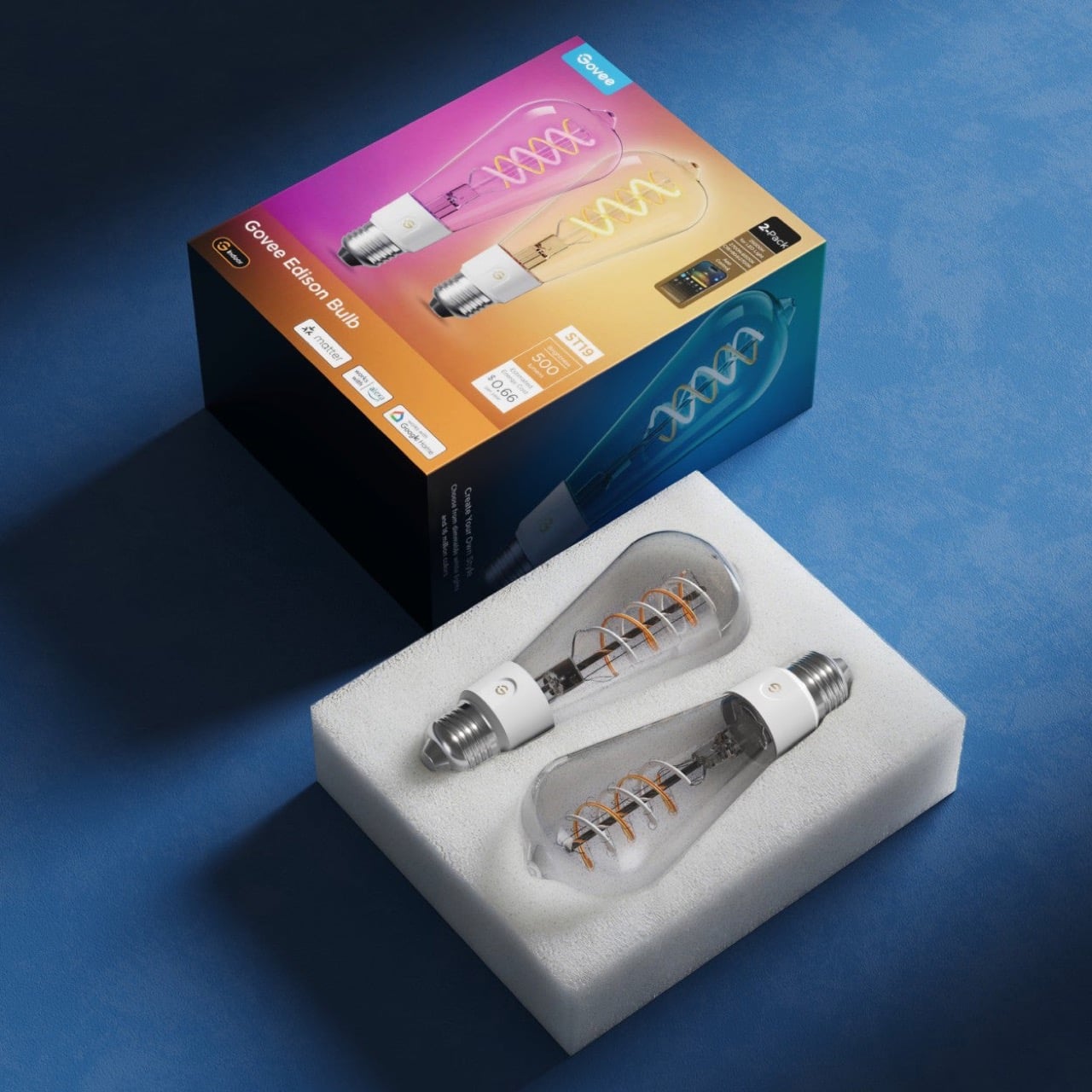
The Edison bulb revival was always a little dishonest. Those glowing spirals in coffee shop pendants and boutique hotel corridors were never actually Edison bulbs, just modern LEDs engineered to impersonate them, optimized for ambiance over accuracy. Nobody really minded, because the aesthetic did exactly what it was supposed to do: made a space feel warm, considered, and vaguely artisanal. Govee has now taken that impersonation one step further.

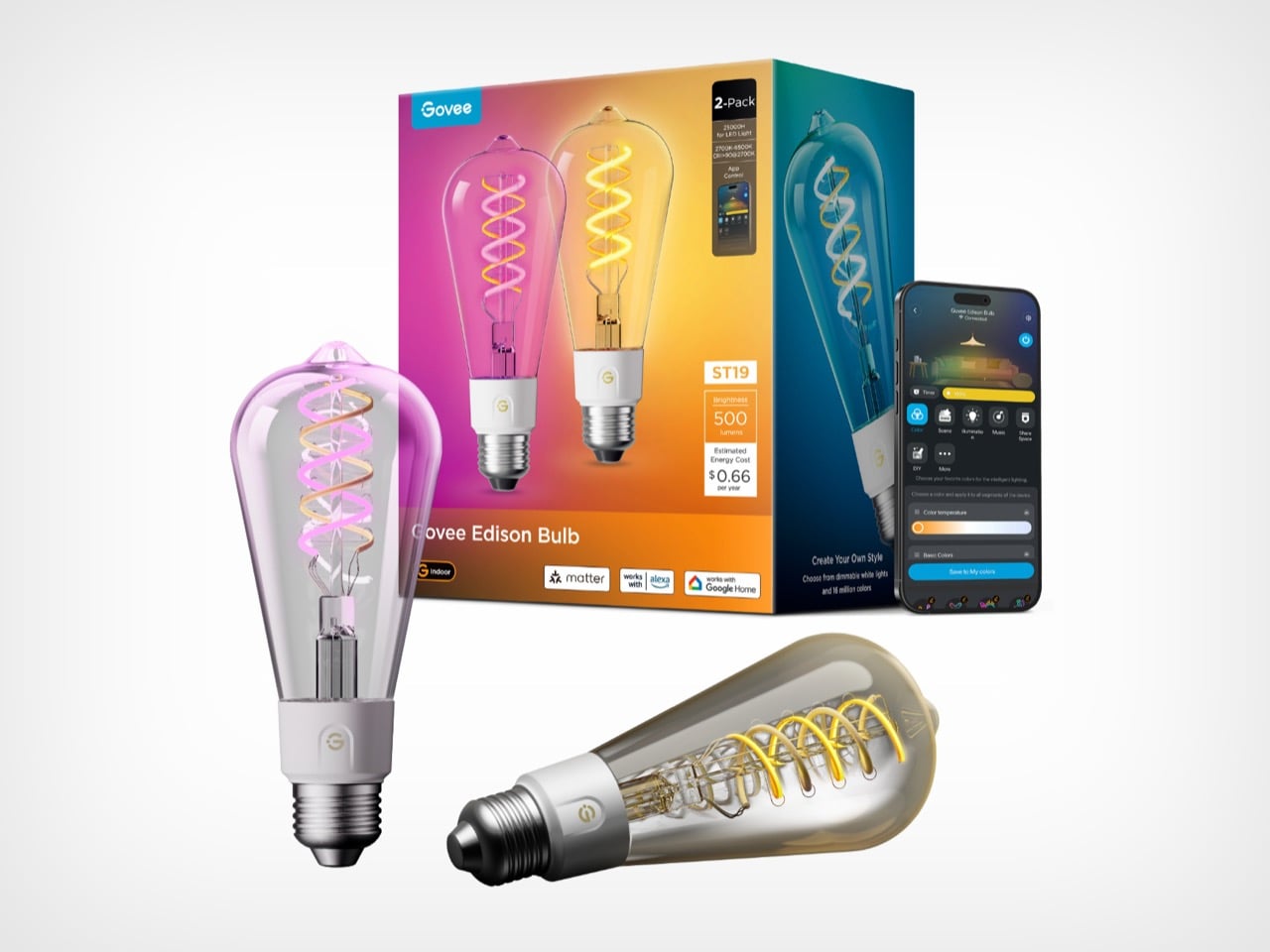
Their new E26 Smart Edison Light Bulb looks the part completely: clear glass shell, retro spiral COB strips, the kind of warm glow that makes exposed-socket pendant fixtures look intentional rather than unfinished. It also ships with Matter connectivity, 64-plus scene modes, full RGB color, music sync, and a tunable white range that runs from candlelit warmth at 2,700K to crisp daylight at 6,500K. A bulb that looks like 1925 and behaves like 2026. The speakeasy aesthetic was already a performance. Govee just upgraded the show.

Designer: Govee

Click Here to Buy Now

Each spiral strip packs over 25 LEDs per inch using COB construction, which is how Govee gets the filament illusion to hold up under scrutiny without actually using filament. The tradeoff against something like Philips Hue’s ST19 is obvious but instructive: Hue’s filament uses amber-tinted glass and a genuinely curly element, and it looks more authentically antique in a way Govee’s doesn’t quite replicate. The cost of that authenticity is that the Hue locks you into 2,100K with no tunable white and zero color modes. Govee covers 2,700K to 6,500K, CRI above 90, and full RGB on top of it, so you trade a bit of period accuracy for a bulb that can actually do things.

Matter support means the E26 drops into Apple Home, Google Assistant, Alexa, and SmartThings without a hub. One nuance worth flagging though: Matter handles the basics, on/off, brightness, color temperature, and the more involved stuff like scene modes, music sync, and the 64-plus presets all still live in the Govee Home app. That’s not a Govee-specific limitation, it’s where the Matter lighting specification currently sits across the industry. You get universal integration for the skeleton, and the app handles everything that makes the bulb worth buying.

So much of the Edison’s value is in how it looks, which is why Govee’s reproduction tries to stay as authentic to the original as much as possible. Clear outer shell, distinct filament-style LED twirls, a warm color output that feels incandescent, not diode-ish, and absolutely no whiff of smart-ness. Leave them on 2,700K on a Tuesday night and nobody in your kitchen suspects the bulbs have a music sync mode and 64 scene presets. That particular flavor of discretion, smart technology that discreetly hides behind a timeless design, is genuinely hard to pull off at $17.50 a bulb, and Govee mostly pulls it off.

Pricing lands at $69.99 for a 4-pack on Amazon, working out to about $17.50 per bulb, with a 2-pack available on Govee’s own store. If you’re already running Govee ceiling lights, a pendant, or any of their strips, the case for adding these is straightforward: everything lives in the same app, groups together cleanly, and can be pulled into shared scenes across your whole setup. That kind of ecosystem coherence is genuinely useful when you’re trying to make a room feel intentional rather than assembled. And if you’re not deep into Govee yet, $17.50 a bulb is a low-stakes entry point into a pretty capable smart lighting ecosystem, especially for a format as universally compatible with existing fixtures as a standard E26 screw-in.

Click Here to Buy Now

The post Govee’s Retro-inspired Smart-Bulb is Matter-compatible and Still Looks Like It Belongs in a 1920s Speakeasy first appeared on Yanko Design.

Nike x Powerbeats Pro 2 earbuds promise great design, super secure fit, and impressive audio

Earbuds are a holy grail accessory for fitness freaks who want to get in the groove to focus on their goals without outside distractions or losing out on ambient awareness when needed. Shokz OpenFit Pro and Beats Powerbeats Pro 2 have already proven their mettle in this space, with Nothing Ear (Open) and Anker Soundcore V20i also proving to be good value for money.

Apple has growing confidence in their fitness earbuds, and that’s the reason they’ve teamed up with Nike to release the Nike x Powerbeats Pro 2 Special Edition. Looping in LeBron James, the Los Angeles Lakers Forward, the American sports apparel brand has a valid reason to go with Beats for a set of fitness-focused wireless earbuds. These special edition buds come with tailored health tracking capabilities targeted towards athletes and heart rate monitoring integrated with the Nike Run Club app.

Designer: Beats by Dre and Nike

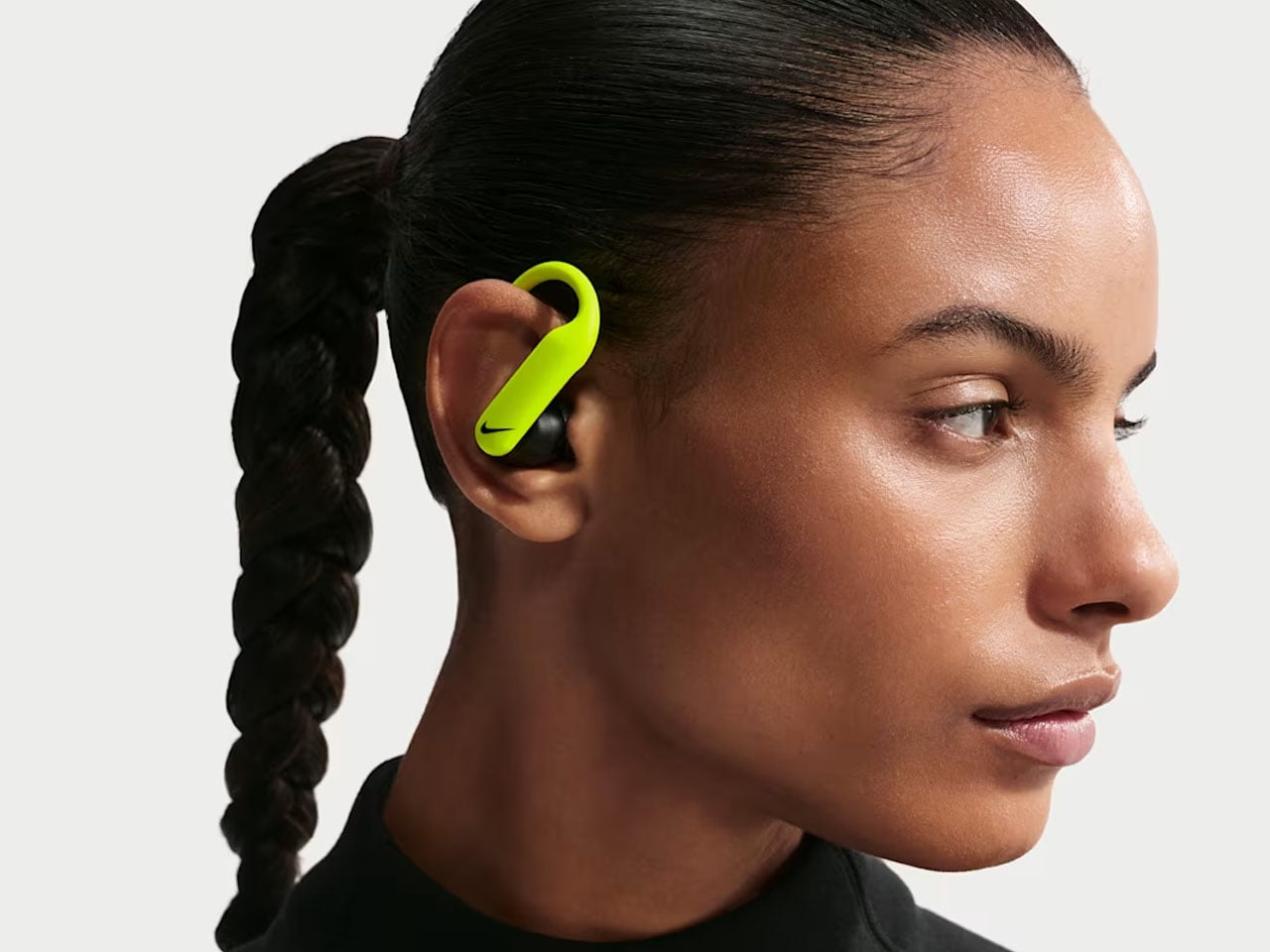
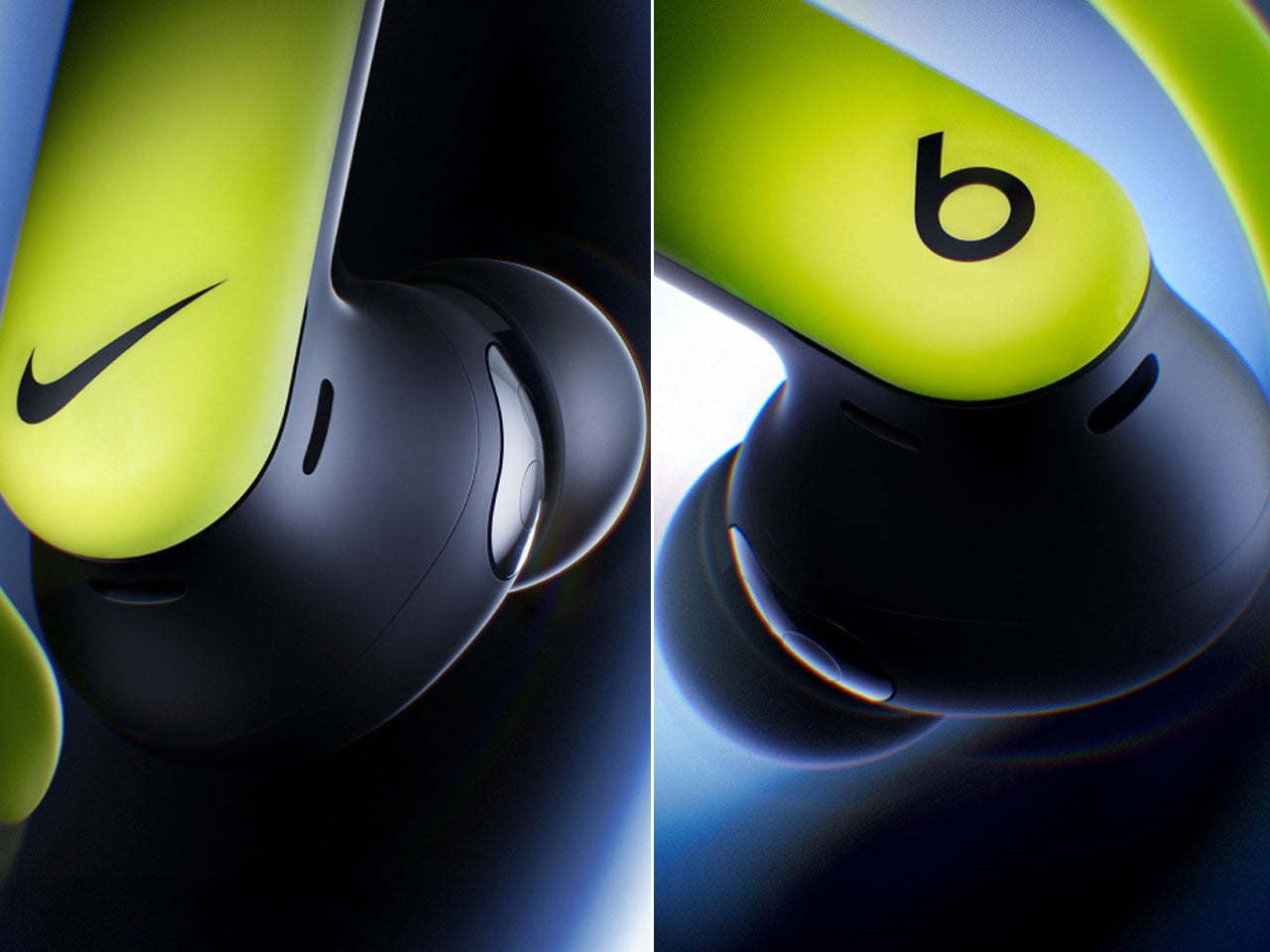
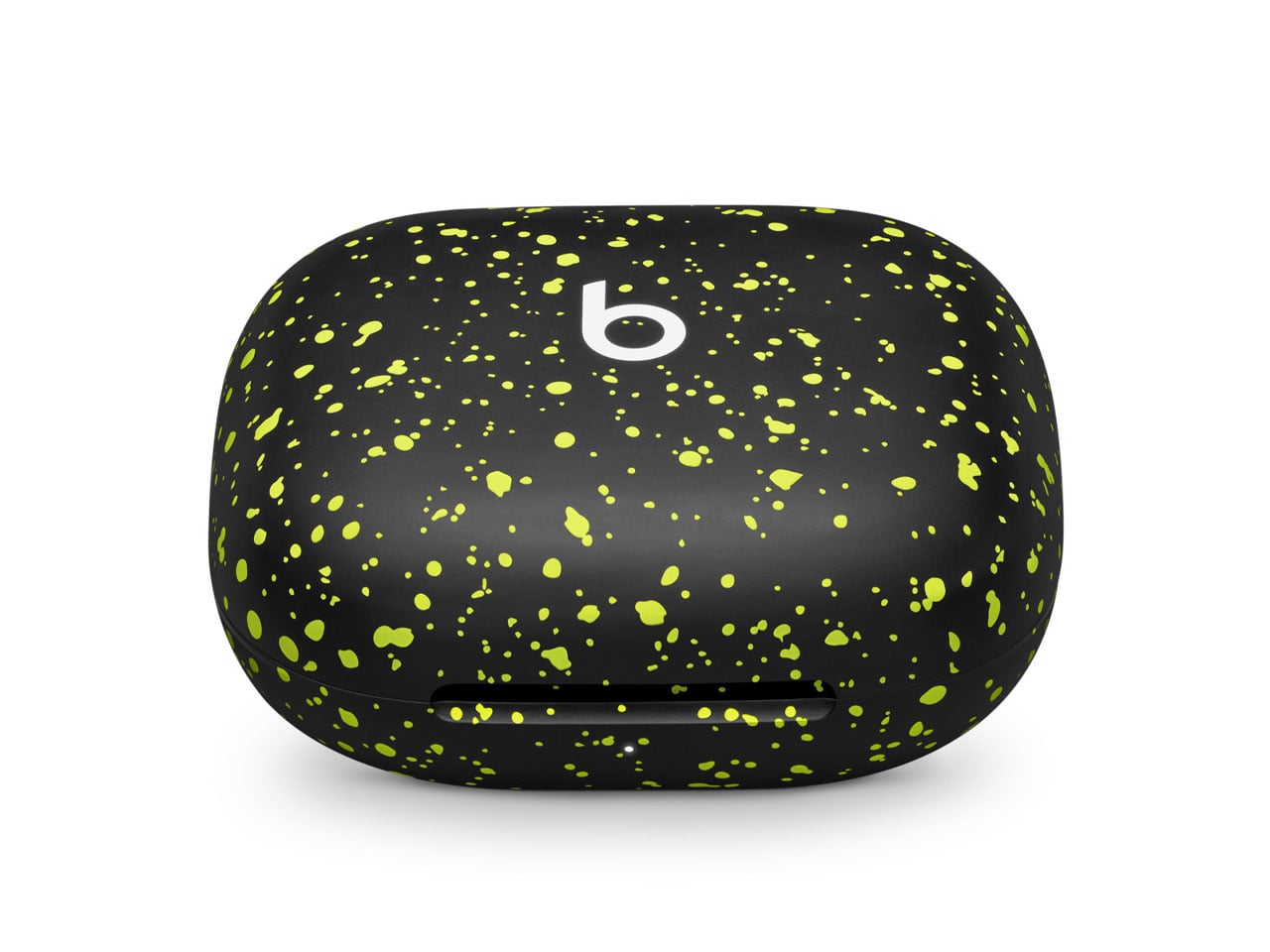
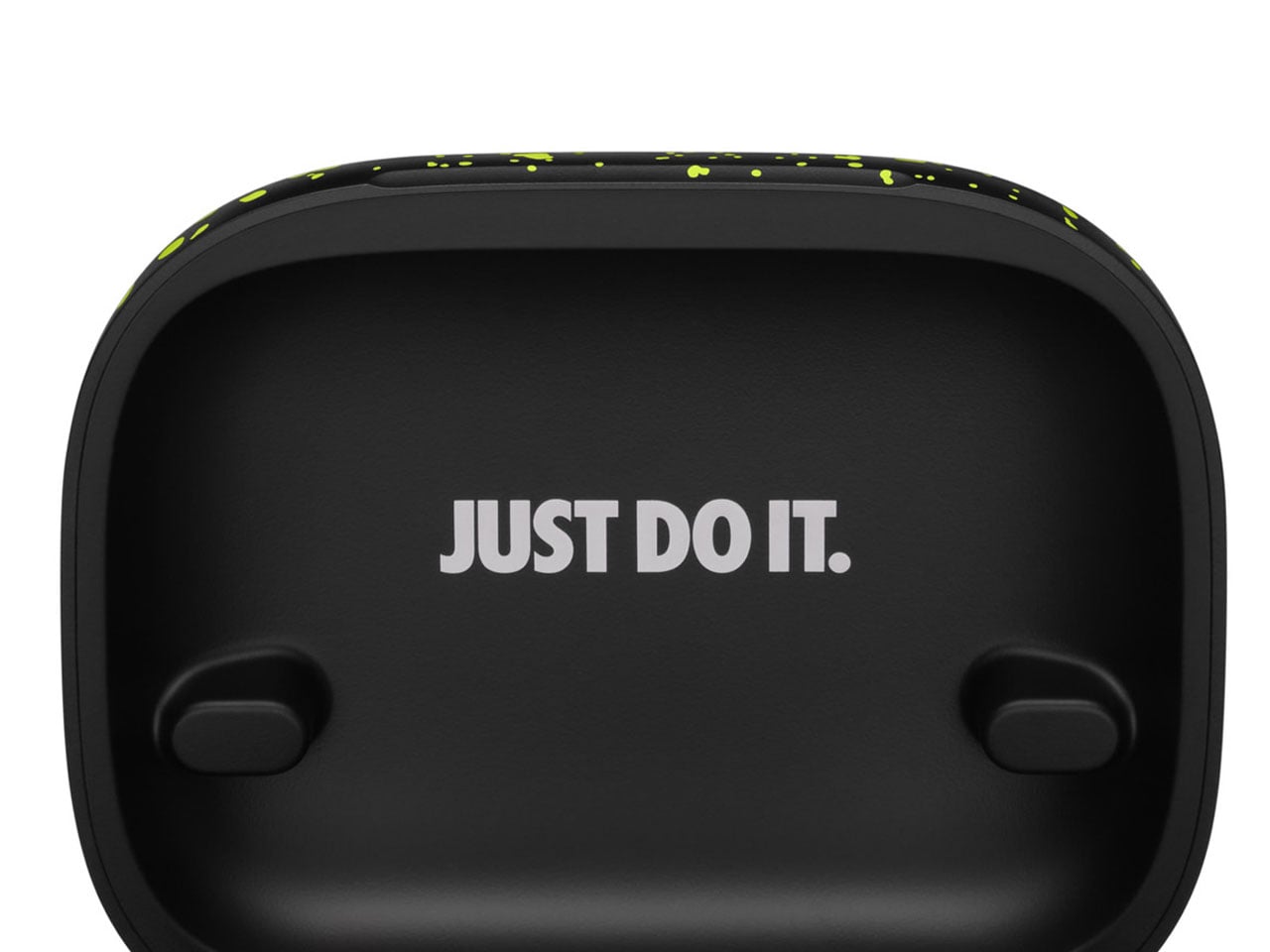
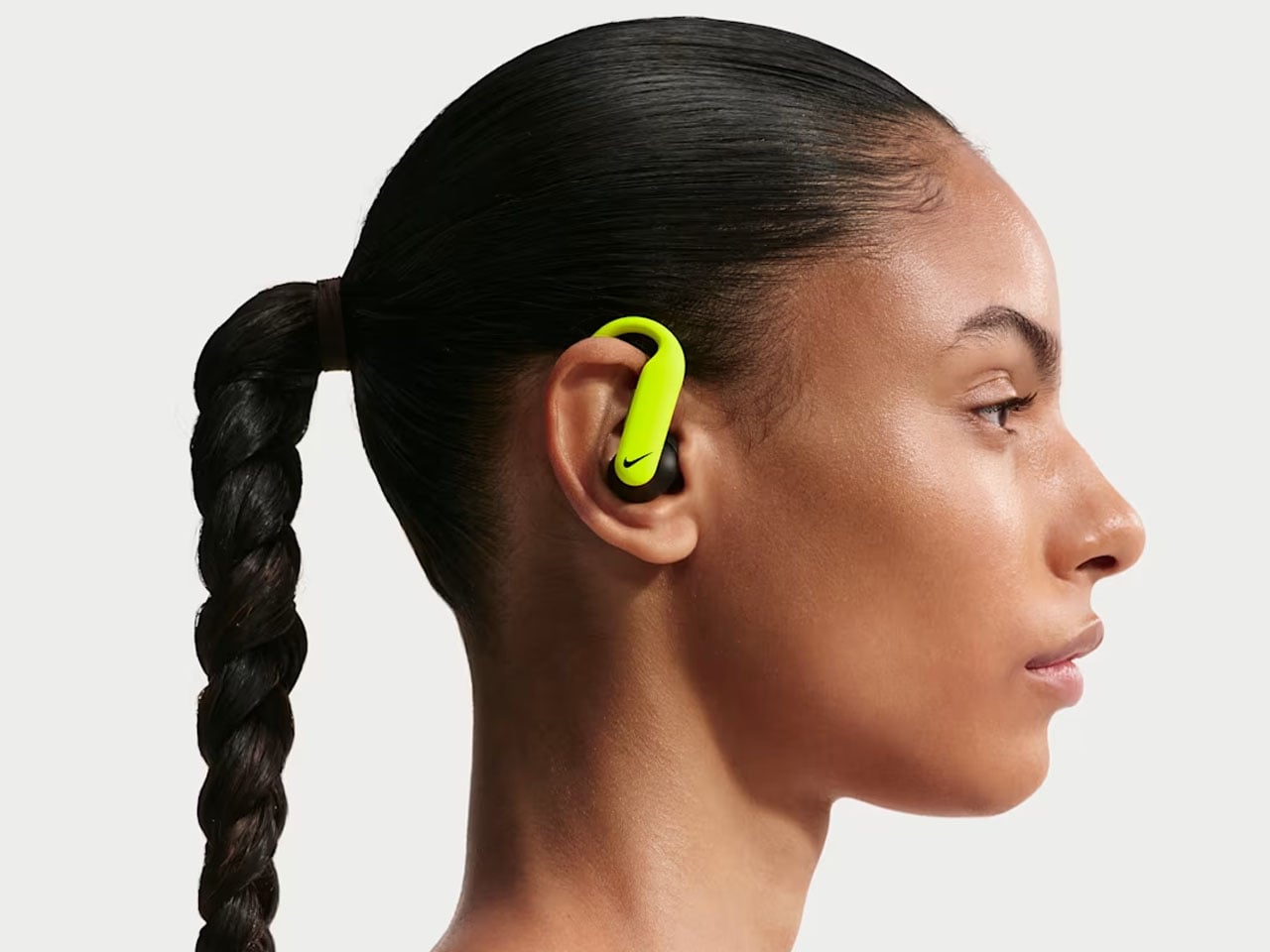
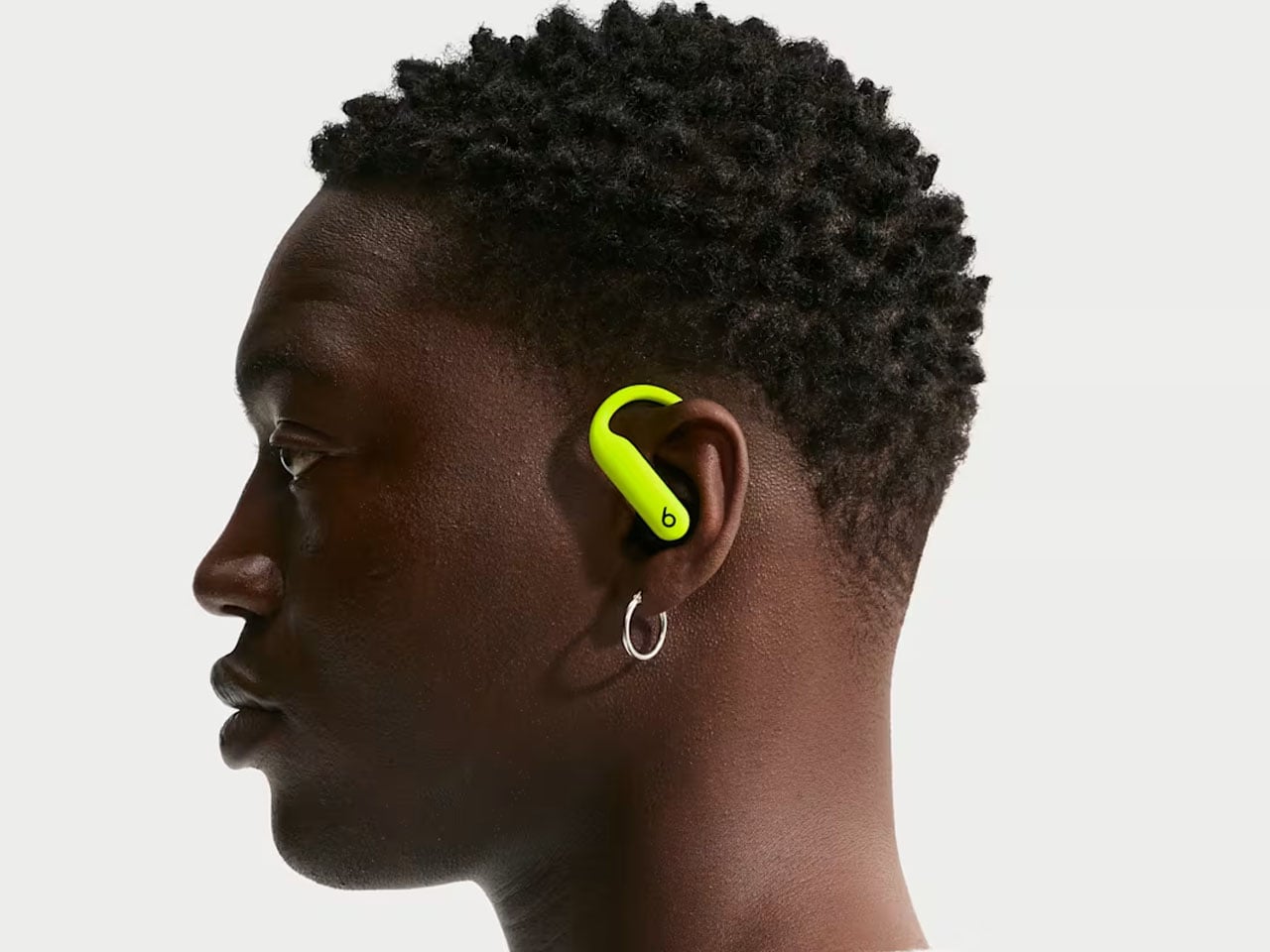
As one can see, the design is the major focus with these earbuds. They have a dual-tone finish in matte black and Volt splatter design. One earbud has the Beats branding while the other sports the Nike logo in black, lending the pair a distinct style appeal. The charging case carries the same theme and Nike’s “Just Do It” tagline on the inside. According to Beats CMI Chris Thorne, the earbuds are a result of the two brands’ “performance, culture and sports — the attributes of today’s athlete.”

The IPX4-rated earbuds come with a redesigned nickel-titanium ear hook, making them lighter while retaining the promise of a secure fit, even with the most rigorous activity. Battery life on these is rated at up to 45 hours with the charging case, and 10 hours on the standalone earbuds. You can expect the same level of ANC, transparency, and passive isolation as the original Powerbeats Pro 2. Of course, voice-calling performance, audio listening quality, and the heart rate sensing features are all what make these a bang for the buck.

Apart from all these features, they can also be wirelessly charged for convenience. Without doubt, they are the prime candidates for your everyday needs. Powerbeats Pro 2 Nike Special Edition was initially available through an early access lottery via SNKRS. For eager buyers, the global launch will be on March 20 via Nike and Apple’s official websites for $250. In-store availability is limited to locations including the United Kingdom, China, the United States, and Singapore.

The post Nike x Powerbeats Pro 2 earbuds promise great design, super secure fit, and impressive audio first appeared on Yanko Design.

Android will hide some app sideloading behind a new one-time security process

Google has detailed how users will be able to sideload apps from unverified developers once it implements its more restrictive policy towards downloading software on Android. The company originally planned to require all developers to be "verified" to distribute on Android, but softened its stance in November 2025 to allow carveouts for Android power-users and hobbyist developers.

For the average Android users, the ability to sideload apps will now be locked behind a multi-step one-time process. Users will first have to enable developer mode in settings, confirm they're not being coached into disabling security, restart their phone (to cut off any phone calls), then wait a day and confirm their identity with biometric authentication or a pin before installing any apps. Google says you can enable the ability to install apps from unverified developers for seven days or indefinitely, but regardless of what you'll choose, you'll still have to dismiss a warning telling you the app you're installing is from an unverified developer.

For hobbyist developers or students who want people to try their app but don't want to create a verified developer account, Google also plans to offer free "limited distributions accounts" that let you share apps without being verified. These accounts will let you share apps with up to 20 devices without having "to provide a government-issued ID or pay a registration fee."

Google is implementing its new verification process in the name of security, and has likened the requirements being asked of developers to "an ID check at the airport, which confirms a traveler's identity but is separate from the security screening of their bags." Neither the verification nor this new approach to sideloading entirely closes off getting apps from unverified developers onto your Android device, they just make it harder to download something dangerous directly from the internet onto your phone. 

Google appears to be trying to split the difference on Android, tightening up what apps can be distributed via verification, while cutting its own Play Store fees and changing its stance towards third-party app stores. Requiring verification to distribute software extends Google's influence outside of its own apps and app store, which is why some developers and digital rights organizations have publicly pushed back on the company's plan. 

Developers can sign-up for early access to the developer verification process now. Google says its new workflow for enabling sideloading and small distributions of apps will go live in August.

Correction, March 19, 2026, 3:44PM ET: The headline has been change to clarify that the new procedure does not apply to all app sideloading.

This article originally appeared on Engadget at https://www.engadget.com/apps/android-will-hide-app-sideloading-behind-a-new-one-time-security-process-184651171.html?src=rss

The Steam Spring Sale is here with discounts on Arc Raiders, Hades 2 and much more

The Steam Spring Sale is underway and as usual, there's plenty of good stuff to add to your library. The seasonal discounts will run through Thursday, March 26 at 1PM ET. If there's anything you've been waiting to buy, it's worth checking to see if it's on sale now, because huge chunks of the Steam catalog are at least a little bit off. 

Recent releases don't usually receive big price cuts during Steam sales, but you can save at least a couple bucks on several 2025 hits this time. The excellent Arc Raiders is $32, Doom: The Dark Ages is about $23 and Battlefield 6 is $42. Silent Hill f is half off at $35 for the horror fans, and indie appreciators can snag Hades 2 for less than $23.

No Man's Sky is $24 for endless space adventures. Check out Ghost of Tsushima on PC for $36 or be the meanest cowboy in the west in Red Dead Redemption 2 for $15. 

We usually spy some indie excellence on the sale list and this year is no different. Is This Seat Taken? is a few bucks off, as is Megabonk. Explore the islands of Tchia for 75 percent off. No Rest for the Wicked, a newer title from the team behind Ori and the Blind Forest, is $28. Perennial Steam Sale fave Stardew Valley is half off for the five of you who don't already own it.

This spring, the steep discount section has a few especially notable titles. Teenage Mutant Ninja Turtles: Splintered Fate, Fallout New Vegas and Totally Accurate Battle Simulator are among the games that are 90 percent off.  

Now you'll just need to play everything you buy before the Summer Sale.

This article originally appeared on Engadget at https://www.engadget.com/gaming/the-steam-spring-sale-is-here-with-discounts-on-arc-raiders-hades-2-and-much-more-184000691.html?src=rss

Meta will move away from human content moderators in favor of more AI

A little more than a year after ditching third-party fact checkers and rolling back much of its proactive content moderation, the company says it will further "transform" its approach by drastically reducing the number of human moderators in favor of AI-based systems. The company says the change will happen "over the next few years," and will allow the company to catch more issues faster than its current approach. 

Meta didn't say how much of its contract workforce might be cut as it makes this transition. The company employs thousands of contractors around the world to review content flagged by its AI systems and user reports among other tasks. The company said that as it shifts its approach humans will "play a key role" in "critical decisions" and aid in training and other tasks.

"Experts will design, train, oversee, and evaluate our AI systems, measuring performance and making the most complex, high‑impact decisions," Meta said in an update. "For example, people will continue to play a key role in how we make the highest risk and most critical decisions, such as appeals of account disablement or reports to law enforcement."

The company has been testing LLM-based systems for content moderation for a while and says that early tests have had "promising" results. Another advantage is that its AI can handle languages used by "98% of people online," compared with the 80 languages currently supported by its moderation capabilities. 

While Meta says its underlying rules aren't changing, the new approach could dramatically change users' perception of how Meta enforces its policies. The company already relies heavily on AI for certain rules, and many users believe that these systems make too many mistakes and make it difficult for their appeals to reach a set of human eyes. On the other hand, Meta, which stands to save a lot of money if it significantly downsizes its contract workforce, says its new systems make "fewer over-enforcement mistakes" and catch more of the most "severe" violations. 

In the nearer term, Meta is introducing an AI powered "support assistant" that will help users with certain types of account issues. The chatbot, which is rolling out now in the Facebook and Instagram app, will be able to help users report content and manage appeals, reset passwords and manage other account settings. It will also be able to help people who get locked out of their accounts "starting with select cases in the US and Canada."


This article originally appeared on Engadget at https://www.engadget.com/social-media/meta-will-move-away-from-human-content-moderators-in-favor-of-more-ai-183000435.html?src=rss

Don’t be surprised that the FBI is buying your location data

The FBI has confirmed to the Senate it is once again buying data which can be used to track the locations of US citizens. That may have surprised the people who thought the precedent in Carpenter v. United States prohibited it. But while that case examined if it was legal for law enforcement to obtain location data from mobile networks without a warrant, here the FBI and other agencies have found a way to skirt the Fourth Amendment entirely. Over the last few years, they have taken to just buying location data from the same companies which power the enormous online advertising ecosystem.

When your phone is connected to the internet, it broadcasts about itself, and so do the apps and platforms you use. That information includes your IP address and device type, as well as your longitude and latitude if your device has GPS. This data, known as Bidstream, alongside any third party cookies tied to your device, enables the process of Real Time Bidding (RTB). RTB is the process where your attention is auctioned off to the highest bidder in the milliseconds after you’ve loaded a page. In order to make the auctions work, these platforms need to know as much about you as they can.

As I explained in depth back in 2021, data such as your location and IP address is broadcast over the ad networks. This information can also be aggregated, licensed or sold to data brokers who can pair this with any “deterministic data” available. For instance, if you sign up to a platform and tell them your name, email address and annual income, that data could be licensed to a data broker. Even banks looking for new revenue streams are planning to license anonymized customer data to these companies. Data brokers can easily combine the two streams of information to build out a fairly extensive picture of you as a person, and what advertisers will be the most interested in you. Unfortunately, it’s extremely difficult to opt out of this and, even if it were, it would be even more difficult to destroy the data already in circulation.

In 2018 French company Vectaury, which acted as an ad sales intermediary for mobile apps, was inspected by the French data protection regulator. Officials found the company had built a database containing the personal data of 67.6 million people without proper consent.

Data brokers don’t just harvest and hoard this data to make online ad sales, however, they will also license and sell its databases to others. Lawmakers believe that these brokers have sold this data to rival nations looking for ways to spy on US citizens.

In January, 404Media revealed the US Immigration and Customs Enforcement Agency (ICE) bought access to tools supplied by cybersecurity company Penlink. Specifically, it purchased access to tools named Tangles and Webloc, which can be used to surveil large numbers of people at once. The latter tool reportedly has the power to identify smartphones in a given area and time, and can then follow them on their journey through the day and back to their home at night.

Given the secretive nature of its business, Penlink does not reveal much about how its tools operate. A since-removed marketing page says Webloc automatically analyzes “location based information” available in “endless digital channels from the web ecosystem.” And 404Media’s report says these tools access “commercially available smartphone location data,” supplied by third-party data brokers. Forbes reports the system can also pull together data from a variety of sources, including social media, to offer a real-time view of an event. The Texas Observer says Webloc can use this information to enable “warrantless device tracking.”

A number of other US law enforcement agencies have also purchased location data from data brokers, including the Department of Homeland Security, Customs and Border Protection, the Secret Service and the Internal Revenue Service. This isn’t just limited to government agencies, however, as anti-abortion groups did similar while targeting people visiting Planned Parenthood clinics.

The Fourth Amendment guarantees the right of the people to be protected from “unreasonable searches and seizures,” made without probable case. But, as Dori H. Rahbar wrote in the Columbia Law Review, “the Fourth Amendment does not regulate open market transactions.” Aaron X Sobel, writing in the Yale Law and Policy Review, described the practice as “end-running warrants,” and urged legislators to close this loophole. The Electronic Frontier Foundation (EFF), is also pushing for legislation under the Fourth Amendment is Not For Sale Act.

It’s not likely that such legislation will be passed for a long time, and a cynic would suggest it’s not possible under the current administration. But, even if it is, it won’t address the bigger issue of the ad tech industry and its partners vacuuming up as much information about us as it can. When these companies — many of which aren’t even known to the public — are able to store up enough information on us that, if they were so motivated, they could follow our path through the day, it’s a sign something is very rotten indeed. If we’re concerned about governments having this sort of access, then we should be equally nervous about anyone else having it as well.

This article originally appeared on Engadget at https://www.engadget.com/cybersecurity/dont-be-surprised-that-the-fbi-is-buying-your-location-data-182047627.html?src=rss


The complete Stranger Things DVD set includes 25 discs and costs around $200

Stranger Things fans will soon have permanent access to the Upside Down, as a full DVD set is now available to preorder. Stranger Things: The Complete Series comes in Blu-Ray and 4K UHD editions.

This collection includes all five seasons of the hit show, which totals 25 discs. It'll be available at brick-and-mortar and online retailers beginning on July 28. Prices range from $200 to $260, depending on the media type and edition.

To that end, there's a deluxe edition available for true diehards. This includes the complete series, of course, but also bonus content like bloopers, interviews with the cast and crew and various behind-the-scenes featurettes. It also comes with a bunch of doodads, like a self-adhesive Hellfire Club patch, five posters, 25 smaller art cards, a fold-out map of Hawkins and a branded twenty-sided die.

There's a collector's box and each season comes in reversible sleeves with new artwork. Finally, this edition ships with a large artbook that includes original design sketches, concept art, storyboards and more. This is a pretty cool and comprehensive package.

The price might seem high, but Stranger Things consists of 42 episodes and they get pretty lengthy in seasons four and five. In any event, owning physical media of stuff you like is never a bad idea, given that everything on streaming is subject to the whims of executives looking to avoid paying residuals or whatever.

This article originally appeared on Engadget at https://www.engadget.com/entertainment/the-complete-stranger-things-dvd-set-includes-25-discs-and-costs-around-200-172222577.html?src=rss