This Wood Greenhouse Solves the Biggest Problem Backyard Gardeners Face

Every gardener knows the frustration. A late frost wipes out seedlings. An unpredictable cold snap cuts the season short. A small yard leaves little room to work with. For most backyard growers, these aren’t occasional setbacks. They’re the norm. The Miracle-Gro® Wood Greenhouse, now available through ShelterLogic, is designed specifically to change that reality.

ShelterLogic isn’t new to outdoor structures. With more than 70 years of experience, the company has built a portfolio of trusted brands including ShelterLogic, SOJAG, Arrow Storage Products, and Quik Shade, along with a reputation for outdoor products that are built to last. Their licensed collaboration with Scotts Miracle-Gro brings that same commitment to the gardening space, pairing a name synonymous with plant care with structures built around durability and smart design.

Designer: ShelterLogic

 

The greenhouse is constructed from Chinese Fir sourced from FSC-certified lumber, giving it a warm, natural aesthetic that sits comfortably in almost any backyard setting. It doesn’t look like an afterthought. It looks like it belongs. The wood frame is sturdy, responsibly sourced, and ready for outdoor conditions, making it exactly what you’d want from a structure designed to live outside year-round.

Where this greenhouse really earns its place is in how it handles climate. Rather than standard single-wall panels, it uses double-wall polycarbonate windows that offer stronger insulation and improved UV protection. Plants stay warmer in cooler months and are better shielded during intense sun. Ventilation is equally well thought out, with two manual roof vents, an EZ-open gable vent, and a powder-coated metal wall vent working together to regulate temperature and keep air circulating consistently.

Inside, the layout prioritizes productivity. Lower interior shelving runs throughout the structure, while two metal truss plant hangers open up vertical growing options. A wide 48-inch entry door makes moving tools, pots, and plants in and out easy without the usual awkward maneuvering. At 6 ft x 7 ft x 8.5 ft, the footprint is compact enough for suburban yards without sacrificing usable space.

Setup, often the most dreaded part of any greenhouse purchase, is designed with the same practicality. Preassembled panels, pre-stained wood components, and included ground stakes mean less time wrestling with instructions and more time planting. For beginner greenhouse owners, backyard vegetable growers, and DIY enthusiasts alike, the Miracle-Gro® Wood Greenhouse offers a protected, productive growing environment that extends what’s possible in a backyard garden, regardless of what the weather decides to do.


The post This Wood Greenhouse Solves the Biggest Problem Backyard Gardeners Face first appeared on Yanko Design.


Fläkt Just Redesigned the Air Purifier as Furniture

If you’ve ever owned an air purifier, you know the drill. You unbox it, it works great, and then you spend the next three years sliding it from corner to corner because no matter where it lands, it looks completely out of place. It hums quietly beside your bookshelf looking vaguely medical. It sits in your bedroom like it belongs in a waiting room. The technology is fine. The design? Almost always an afterthought.

That’s what makes Fläkt, designed by Laura Chaves at the Savannah College of Art and Design and a winner at the 2025 European Product Design Award, feel like such a breath of fresh air (pun very much intended). It approaches air purification not as an appliance problem to solve, but as a living space problem, and that distinction completely changes the result.

Designer: Laura Chaves

The first thing you notice is that it doesn’t look like an air purifier at all. It looks like a considered piece of furniture. The structure sits on a handmade walnut elevated stand, the kind of thing you’d see cradling a ceramic vessel in a curated Scandinavian living room. The body is encased in geopolymer concrete, a lightweight, sustainable alternative to traditional concrete, which gives it that raw, tactile quality that’s very much at home in contemporary interiors. And perched at the top is a smooth, translucent sandblasted glass vase holding a live air-purifying plant. It’s an elegant full-circle idea: the machine that cleans your air is literally growing something that cleans your air.

That layering of concept and material is the kind of design thinking that deserves real attention. Chaves didn’t just dress up a functional product and call it a day. The form, the materials, and the purpose are all pulling in the same direction, and you can feel that intentionality in every part of the object. Geopolymer concrete instead of plastic. Walnut instead of injection-molded legs. A glass vase that holds a living element rather than a decorative panel that hides the mechanics.

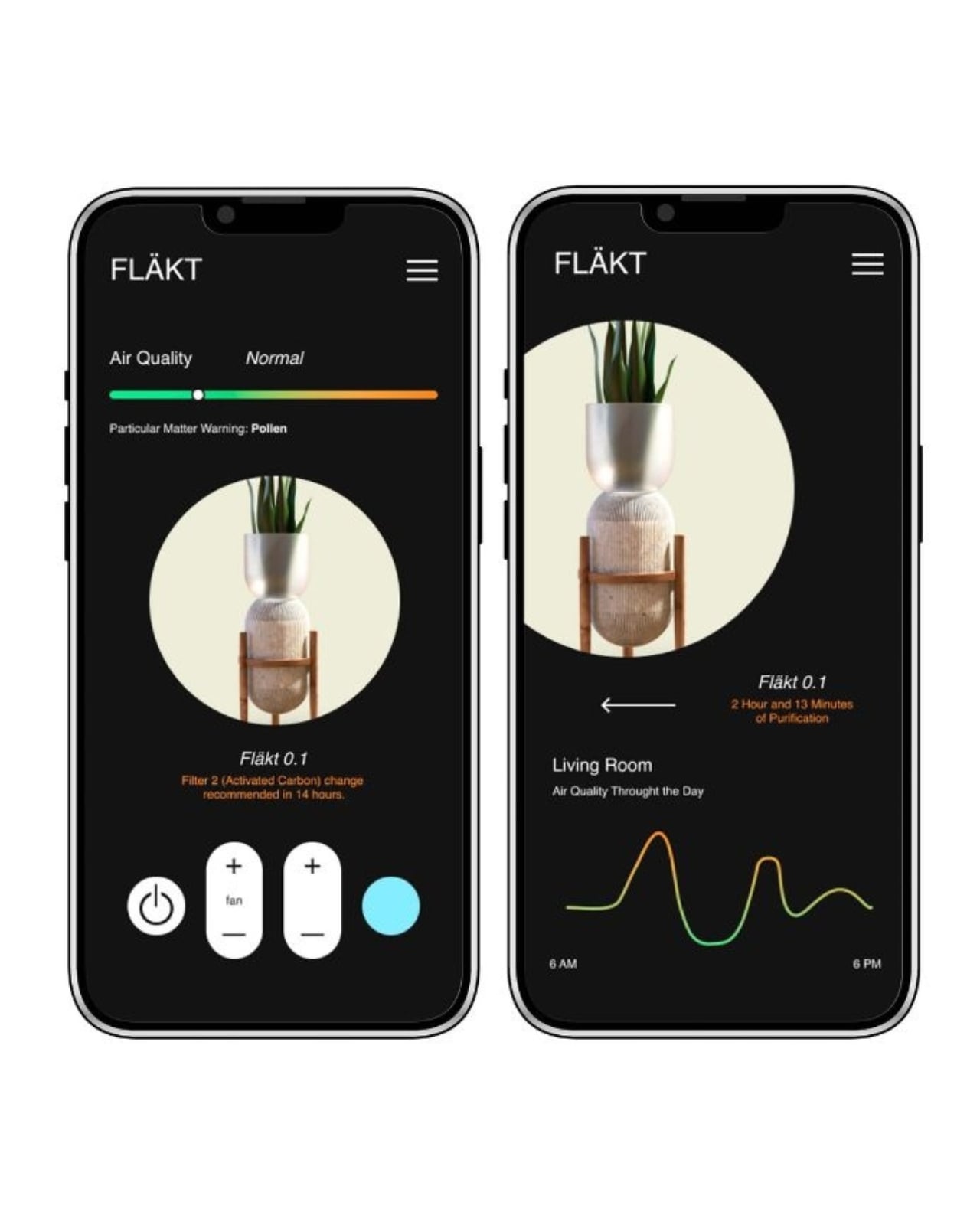
The companion app extends that same level of thoughtfulness into how you actually use it. Fläkt monitors air quality around the clock and activates autonomously when it detects pollutants or particulate matter, whether that’s pollen, dust, or anything else drifting through your space. The app surfaces this data clearly, tracking air quality throughout the day in clean, readable graphs, with timely notifications for filter changes. It’s the kind of transparency that most smart home products promise and rarely deliver with this much clarity. You’re not just handed a number and left to guess what it means. You’re given context, and that matters.

My honest take is that the air purifier category has been coasting on function alone for too long. We accept ugly hardware in our homes because we’ve been told utility and beauty are separate concerns, that you pick one or the other. Fläkt pushes back against that logic, and it does so without feeling precious or trying too hard. The design is grounded and warm, not performative. It belongs in a real room with real furniture and real life happening around it.

The decision to incorporate a live plant isn’t just a styling choice, either. It’s a statement about how design can reconnect us to something organic in spaces increasingly filled with screens and synthetic materials. A quiet confidence runs through that idea, and it makes Fläkt feel less like a tech product and more like a living object.

Whether or not Fläkt makes it to full production, it already does something useful: it raises the bar for what air purifiers are allowed to be. For a design that came out of a student project, that’s not a small thing. It’s the kind of work that tends to show up in mood boards before it shows up in stores, and that’s usually a pretty good sign.

The post Fläkt Just Redesigned the Air Purifier as Furniture first appeared on Yanko Design.

Alphabet no longer has a controlling stake in its life sciences business Verily

Alphabet's life sciences business Verily is restructuring and raising money as a new corporate entity. Verily announced that with its $300 million investment round, it will change from an LLC to a corporation and rename itself Verily Health Inc. As a result, Alphabet now has a minority stake rather than a controlling one in the business. 

Similar to every other tech business, this chapter for Verily will be focused on AI. “From research to care, our customers need solutions that bring the best of clinical and scientific rigor together with AI to deliver the next generation of healthcare - one that is as precise as it is personal," Chairman and CEO Stephen Gillett said.

Google Life Sciences was renamed Verily in 2015, around the same time as Google also rebranded to Alphabet. It has worked on a wide range of projects over the years, such as using eye scans to predict heart disease and an opioid addiction center. In 2025, it closed its medical device division, a move that may have signaled its shift toward AI.

This article originally appeared on Engadget at https://www.engadget.com/big-tech/alphabet-no-longer-has-a-controlling-stake-in-its-life-sciences-business-verily-221718631.html?src=rss

States are suing the EPA for relinquishing its role as a greenhouse gas emissions regulator

California, Massachusetts, Connecticut and New York are leading a group of 20 other states in suing the US Environmental Protection Agency for renouncing its ability to regulate greenhouse gas emissions, The New York Times reports. The lawsuit specifically argues that the EPA's decision to rescind a 2009 study that determined greenhouse gases are dangerous to public health was illegal. The study, which is the source of what's called the "Endangerment Finding," was one of several justifications — along with things like the Clean Air Act — for the agency's ability to regulate emissions.

Rescinding the finding nullified the EPA's evidence for things like emissions standards and a variety of other regulations that attempted to reduce the amount of greenhouse gases produced by the automotive, coal and oil industries. The Trump administration framed the rollback as a cost-saving measure, but it was also a major blow to the government's ability to fight climate change. Greenhouse gases, which include things like carbon dioxide, methane and nitrous oxide, collect in the atmosphere and warm the planet, upsetting weather patterns and negatively impacting the environment. Determining the changes caused by greenhouse gases posed a risk to public health gave the EPA the authority to regulate them under its existing mandate to address air pollution. An authority it could have again, depending on the result of this litigation.

Of course, winning a lawsuit isn't necessary to restore the EPA's role in fighting climate change. Congress could do that now by passing a new law. The legal route is just faster, and potentially riskier. The New York Times writes that this new lawsuit was filed in the US Court of Appeals for the District of Columbia, and could ultimately be combined with an existing lawsuit from environmental groups. Depending on how the case fairs in the lower court, it may eventually be appealed to the US Supreme Court, who could decide on an even more restrictive interpretation of the EPA's role. 

Under President Donald Trump, the EPA has already rolled back clean water rules and attempted to stifle research. The Trump administration has separately tried to undermine the authority of independent agencies like the EPA and FTC, something the Supreme Court has yet to determine to be illegal.

This article originally appeared on Engadget at https://www.engadget.com/science/states-are-suing-the-epa-for-relinquishing-its-role-as-a-greenhouse-gas-emissions-regulator-221425064.html?src=rss

Legendary 3,424-Brick Michael Jordan LEGO Poster Actually Bursts Out of Its Own Frame

There’s a photograph that has lived rent-free in the collective memory of sports culture for nearly four decades. Michael Jordan, ball palmed in his right hand, left arm trailing, legs split mid-air, frozen somewhere between the free-throw line and the rim during the 1988 Slam Dunk Contest. Nike turned it into a logo. Sneakerheads turned it into a religion. And somewhere along the way, the Jumpman silhouette stopped being a basketball image and became something closer to a universal symbol of human ambition, the visual shorthand for defying what should be physically possible. We’ve seen it screenprinted, embroidered, laser-cut, and tattooed. But rendered in 3,424 LEGO bricks, jutting out of a framed mosaic canvas at nearly 107 centimeters tall? This one has the visual authority of a gallery piece.

LEGO Ideas is the fan-driven platform where builders submit their own creations (MOCs, or My Own Creations, in the community’s vernacular) and the public votes on which ones deserve to become real retail sets. Hit 10,000 votes, and LEGO’s internal team formally reviews the submission for potential production. The community has produced some genuinely remarkable work over the years, but every so often something surfaces that feels less like a toy pitch and more like a legitimate design object. LAFS85’s Michael Jordan tribute is exactly that. It’s a relief sculpture, a mosaic, a framed poster, and a courtside diorama all collapsed into a single build, and it’s currently gathering momentum on the platform with a Staff Pick designation already in hand.

Designer: LAFS85

The central concept here is a relief sculpture mounted on a brick-built canvas, and the execution is what separates this from a standard LEGO Art mosaic. Rather than keeping everything flush and flat, LAFS85 has pushed Jordan’s figure forward off the background plane using layered brickwork, so the figure genuinely protrudes from the frame. The effect, especially in the front-facing renders, is arresting. Jordan looks like he’s mid-flight toward you, ball raised, and the bold pixelated “23” dominating the dark background behind him only amplifies the drama. The builder used SNOT (Studs Not On Top) techniques throughout the figure to capture the flow of the jersey fabric and the muscular geometry of the legs, which is exactly the kind of decision that an industrial designer notices and appreciates. Flat tile surfaces read as smooth fabric. Angled plates suggest tension in the limbs. The red and white of the Chicago Bulls uniform pops hard against the dark grey background bricks, and the brick-built recreation of Jordan’s signature in the lower corner is a genuinely lovely finishing touch.

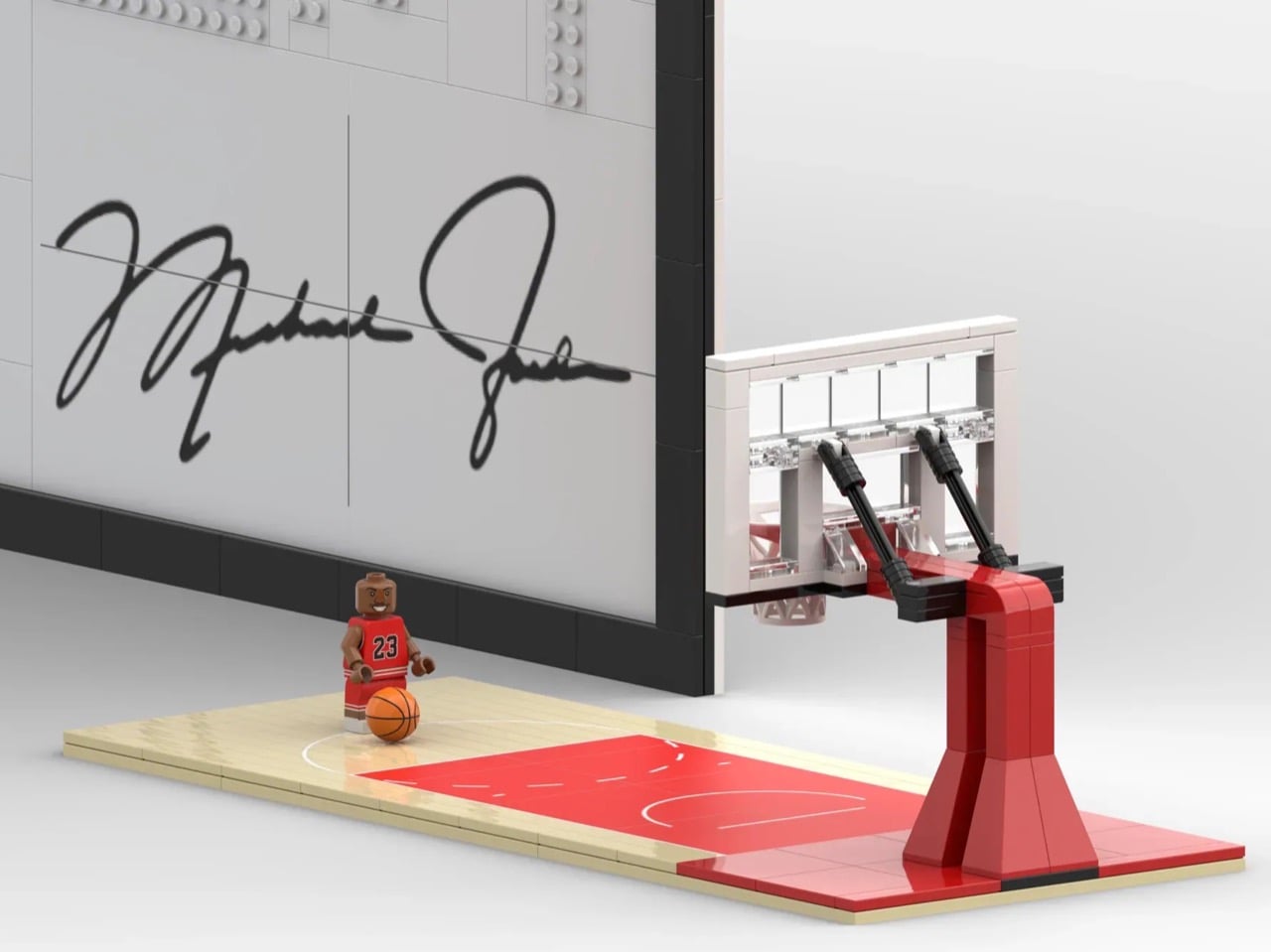
My favorite detail, though, is the tiny courtside diorama that sits at the base of the frame. It’s a micro-scale hardwood court complete with the painted free-throw area in Bulls red, a custom Jordan minifigure dribbling on the baseline, and a beautifully proportioned basketball hoop with a transparent backboard and a weighted red stanchion. The scale contrast between the enormous relief portrait looming above and this tiny matchbook-sized court below is genuinely witty, and it gives the whole piece a kind of narrative arc. The legend on the wall, the player on the court, the moment suspended between the two. At approximately 89.6 centimeters wide, the full assembly is a serious statement piece, the kind of thing you’d actually want above your desk rather than tucked in a display cabinet.

LAFS85 describes the project as a fusion of 2D art and 3D sculpture, a tribute to the Jumpman spirit that honors the greatness of the player without leaning on external logos or licensed branding. That restraint is smart, both practically for LEGO Ideas approval purposes, and aesthetically because it keeps the focus on the craftsmanship rather than the IP. The build has already earned a Staff Pick designation from the LEGO Ideas team, which is a meaningful signal of quality, and it’s sitting at just over 2,059 supporters with 564 days remaining to reach the 5K milestone on the way to the full 10,000 votes needed for an official LEGO review. The only thing I’d wish for in a retail version is an alternate colorway, a black and pinstripe away-jersey variant would make this an absolute must-buy twice over. Until then, head to the LEGO Ideas page and cast your vote here.

The post Legendary 3,424-Brick Michael Jordan LEGO Poster Actually Bursts Out of Its Own Frame first appeared on Yanko Design.

Amazon acquires autonomous robotics startup Rivr

Amazon has acquired Rivr, a startup focused on autonomous robotics. Rivr is based in Zurich and was valued at $110 million in a funding round from August 2024, which both Amazon and its CEO's Bezos Expeditions participated in. Financial details of the acquisition were not disclosed. 

Rivr's robots have four legs and wheels that allow it to maneuver on stairs and other potentially uneven surfaces. The company just released its second generation of the robot. The purchase will likely further Amazon's capabilities for ever-faster and more efficient package deliveries. 

"This acquisition reflects our commitment to a continued investment in research, which we believe has the potential to further improve safety outcomes and the overall delivery experience for delivery service partners and their delivery associates," a representative from Amazon told The Information.

Amazon has been working toward introducing automations and robotics at various stages of its shopping business. It deployed its 1 millionth robot last summer and has future goals for automating 75 percent of all its operations.

This article originally appeared on Engadget at https://www.engadget.com/big-tech/amazon-acquires-autonomous-robotics-startup-rivr-212839750.html?src=rss

DoorDash will start paying gig workers for creating content to train AI models

DoorDash has launched a new option for its gig economy workers to earn some extra cash. The delivery service introduced Tasks, which it describes as "short activities Dashers can complete between deliveries or in their own time." It gives taking pictures of restaurant dishes or recording video of unscripted conversations in languages other than English as examples. These materials will be used to train artificial intelligence and robotics models. 

A representative from DoorDash told Bloomberg News that it will use Tasks content for evaluating its in-house AI models as well as those made by its partner companies in retail, insurance, hospitality and tech. DoorDash is piloting a standalone app for Tasks where Dashers will submit their content. The blog post notes that pay will be displayed upfront, and compensation will vary based on the complexity of the activity.

This idea isn't new. We've seen other startups in AI and robotics offering payment for content filmed by regular people. Considering how many lawsuits are underway against AI companies that have already benefited from unauthorized use of copyrighted materials, at least this approach lets people be directly compensated for training content.

This article originally appeared on Engadget at https://www.engadget.com/ai/doordash-will-start-paying-gig-workers-for-creating-content-to-train-ai-models-204048743.html?src=rss

Google is reportedly testing a Gemini app for Mac

Google is testing a version of its Gemini app for macOS, Bloomberg reports. The app would bring the AI assistant to uncharted territory, and in more direct competition with OpenAI's ChatGPT and Anthropic's Claude, both of which offer standalone Mac apps.

Gemini remains accessible through the web, and it sounds like the macOS app offers the same set of features, with the ability to respond to prompts, search the web and generate text, images and code. The major differentiator of the Mac app could be a feature called "Desktop Intelligence," which gives Gemini a new source of information and context for its responses. According to a message in the app's code viewed by Bloomberg, "when you enable apps for Desktop Intelligence you are enabling Gemini to see what you see (such as screen context) and pull content directly from these apps to improve and personalize your experience only when Gemini is in use."

The ability to refer to information in apps and what's currently on your screen is offered by both the Claude and ChatGPT macOS apps, and something Gemini is capable of on mobile devices. It's not clear if Gemini for macOS will be able to actually take action in the apps it can view — like, for example, Anthropic's popular Claude Cowork feature — but Google has already started offering that experience in a limited form on smartphones, so who's to say that couldn't come to desktop operating systems, too.

Bloomberg reports that the Gemini app is being tested with non-Google employees, which could be a sign it's making its way to a public release. Thanks to Apple and Google's AI partnership, whether the app sees the light of day or not, some of the technology that makes Gemini possible will run on macOS in the future. Google and Apple announced in January that Google's Gemini models would power future versions of Apple Intelligence. Apple is also reportedly overhauling Siri into more of a chatbot, an experience likely made possible by Gemini.

This article originally appeared on Engadget at https://www.engadget.com/ai/google-is-reportedly-testing-a-gemini-app-for-mac-203703372.html?src=rss

Govee’s Retro-inspired Smart-Bulb is Matter-compatible and Still Looks Like It Belongs in a 1920s Speakeasy

The Edison bulb revival was always a little dishonest. Those glowing spirals in coffee shop pendants and boutique hotel corridors were never actually Edison bulbs, just modern LEDs engineered to impersonate them, optimized for ambiance over accuracy. Nobody really minded, because the aesthetic did exactly what it was supposed to do: made a space feel warm, considered, and vaguely artisanal. Govee has now taken that impersonation one step further.

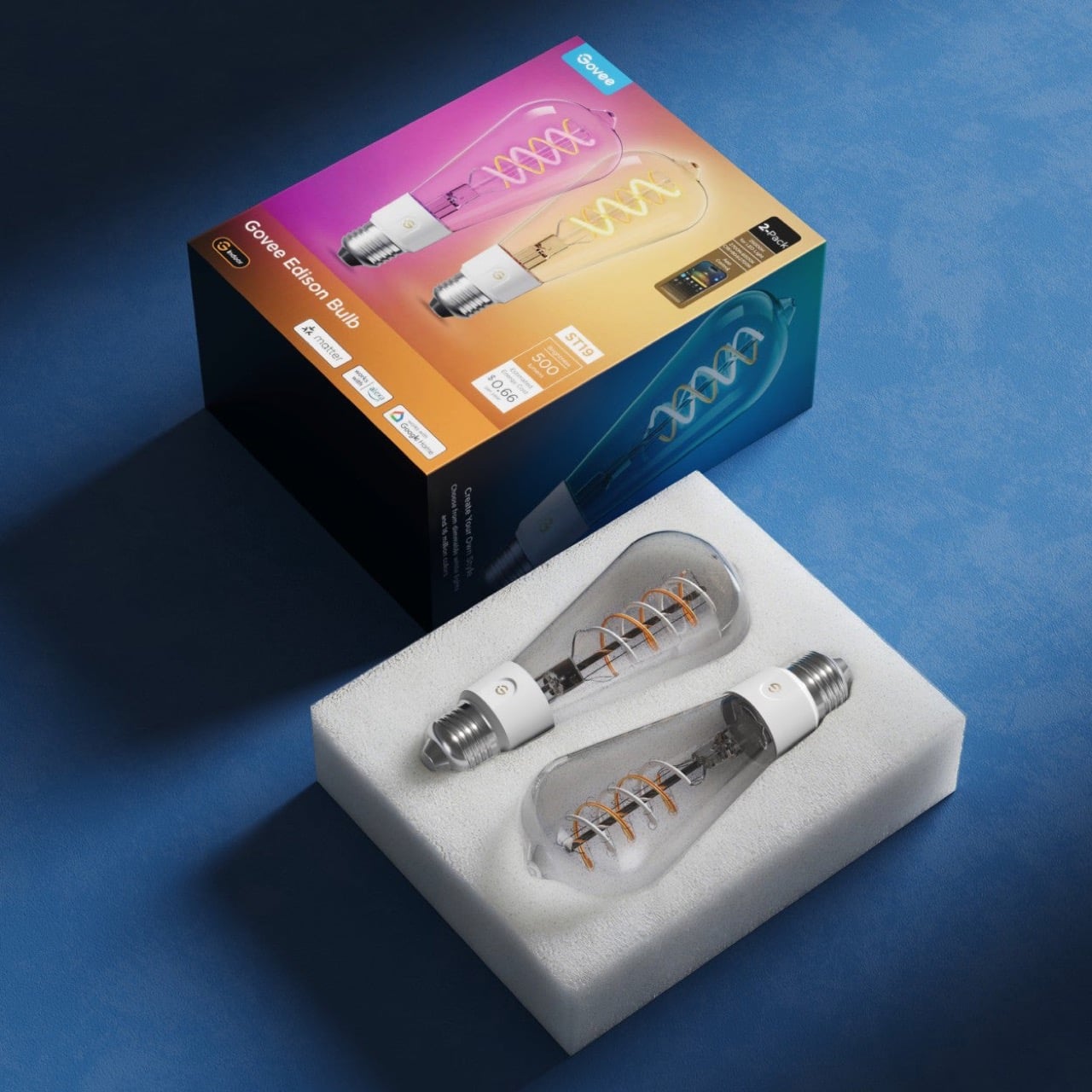
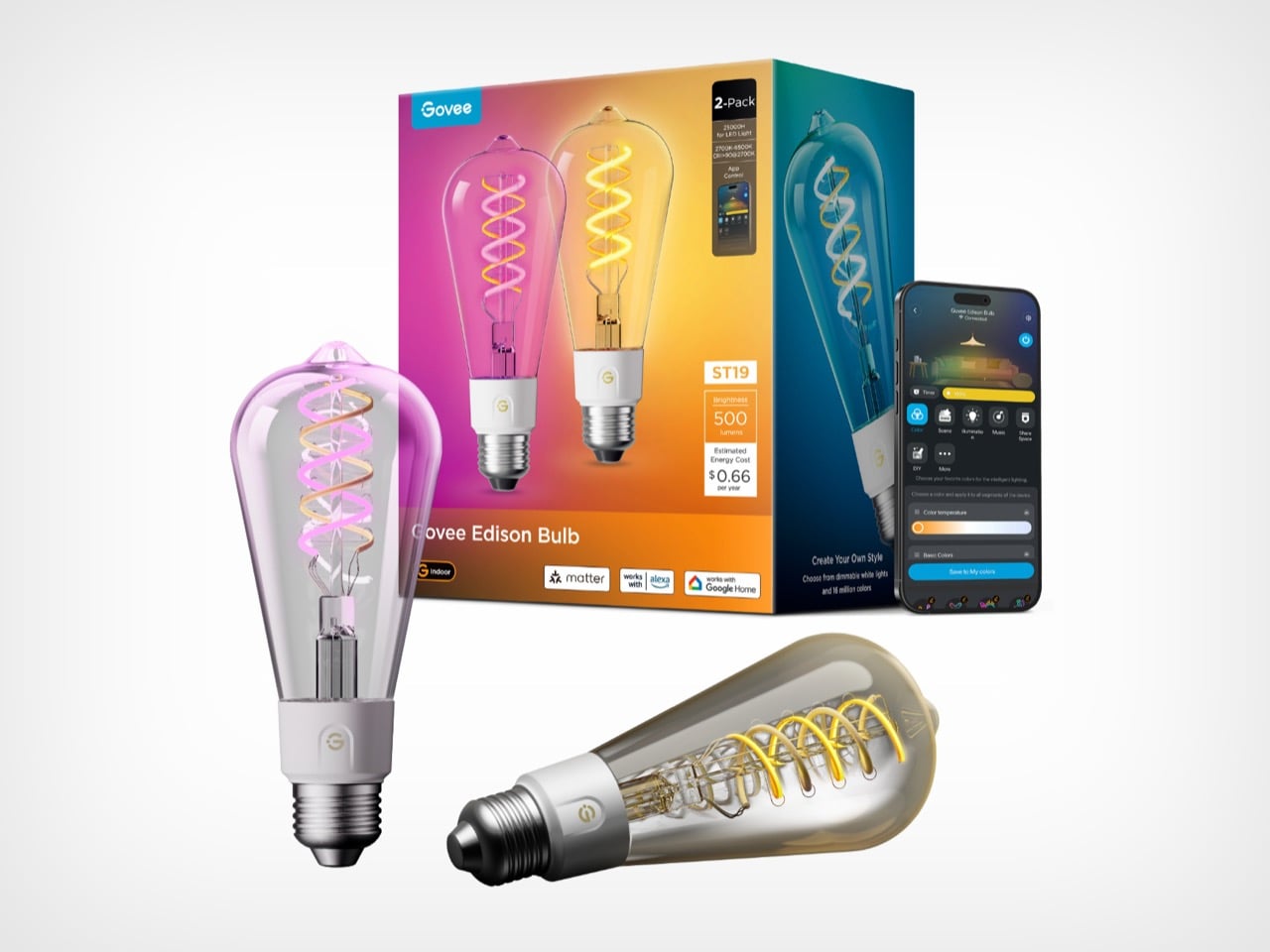
Their new E26 Smart Edison Light Bulb looks the part completely: clear glass shell, retro spiral COB strips, the kind of warm glow that makes exposed-socket pendant fixtures look intentional rather than unfinished. It also ships with Matter connectivity, 64-plus scene modes, full RGB color, music sync, and a tunable white range that runs from candlelit warmth at 2,700K to crisp daylight at 6,500K. A bulb that looks like 1925 and behaves like 2026. The speakeasy aesthetic was already a performance. Govee just upgraded the show.

Designer: Govee

Click Here to Buy Now

Each spiral strip packs over 25 LEDs per inch using COB construction, which is how Govee gets the filament illusion to hold up under scrutiny without actually using filament. The tradeoff against something like Philips Hue’s ST19 is obvious but instructive: Hue’s filament uses amber-tinted glass and a genuinely curly element, and it looks more authentically antique in a way Govee’s doesn’t quite replicate. The cost of that authenticity is that the Hue locks you into 2,100K with no tunable white and zero color modes. Govee covers 2,700K to 6,500K, CRI above 90, and full RGB on top of it, so you trade a bit of period accuracy for a bulb that can actually do things.

Matter support means the E26 drops into Apple Home, Google Assistant, Alexa, and SmartThings without a hub. One nuance worth flagging though: Matter handles the basics, on/off, brightness, color temperature, and the more involved stuff like scene modes, music sync, and the 64-plus presets all still live in the Govee Home app. That’s not a Govee-specific limitation, it’s where the Matter lighting specification currently sits across the industry. You get universal integration for the skeleton, and the app handles everything that makes the bulb worth buying.

So much of the Edison’s value is in how it looks, which is why Govee’s reproduction tries to stay as authentic to the original as much as possible. Clear outer shell, distinct filament-style LED twirls, a warm color output that feels incandescent, not diode-ish, and absolutely no whiff of smart-ness. Leave them on 2,700K on a Tuesday night and nobody in your kitchen suspects the bulbs have a music sync mode and 64 scene presets. That particular flavor of discretion, smart technology that discreetly hides behind a timeless design, is genuinely hard to pull off at $17.50 a bulb, and Govee mostly pulls it off.

Pricing lands at $69.99 for a 4-pack on Amazon, working out to about $17.50 per bulb, with a 2-pack available on Govee’s own store. If you’re already running Govee ceiling lights, a pendant, or any of their strips, the case for adding these is straightforward: everything lives in the same app, groups together cleanly, and can be pulled into shared scenes across your whole setup. That kind of ecosystem coherence is genuinely useful when you’re trying to make a room feel intentional rather than assembled. And if you’re not deep into Govee yet, $17.50 a bulb is a low-stakes entry point into a pretty capable smart lighting ecosystem, especially for a format as universally compatible with existing fixtures as a standard E26 screw-in.

Click Here to Buy Now

The post Govee’s Retro-inspired Smart-Bulb is Matter-compatible and Still Looks Like It Belongs in a 1920s Speakeasy first appeared on Yanko Design.

Nike x Powerbeats Pro 2 earbuds promise great design, super secure fit, and impressive audio

Earbuds are a holy grail accessory for fitness freaks who want to get in the groove to focus on their goals without outside distractions or losing out on ambient awareness when needed. Shokz OpenFit Pro and Beats Powerbeats Pro 2 have already proven their mettle in this space, with Nothing Ear (Open) and Anker Soundcore V20i also proving to be good value for money.

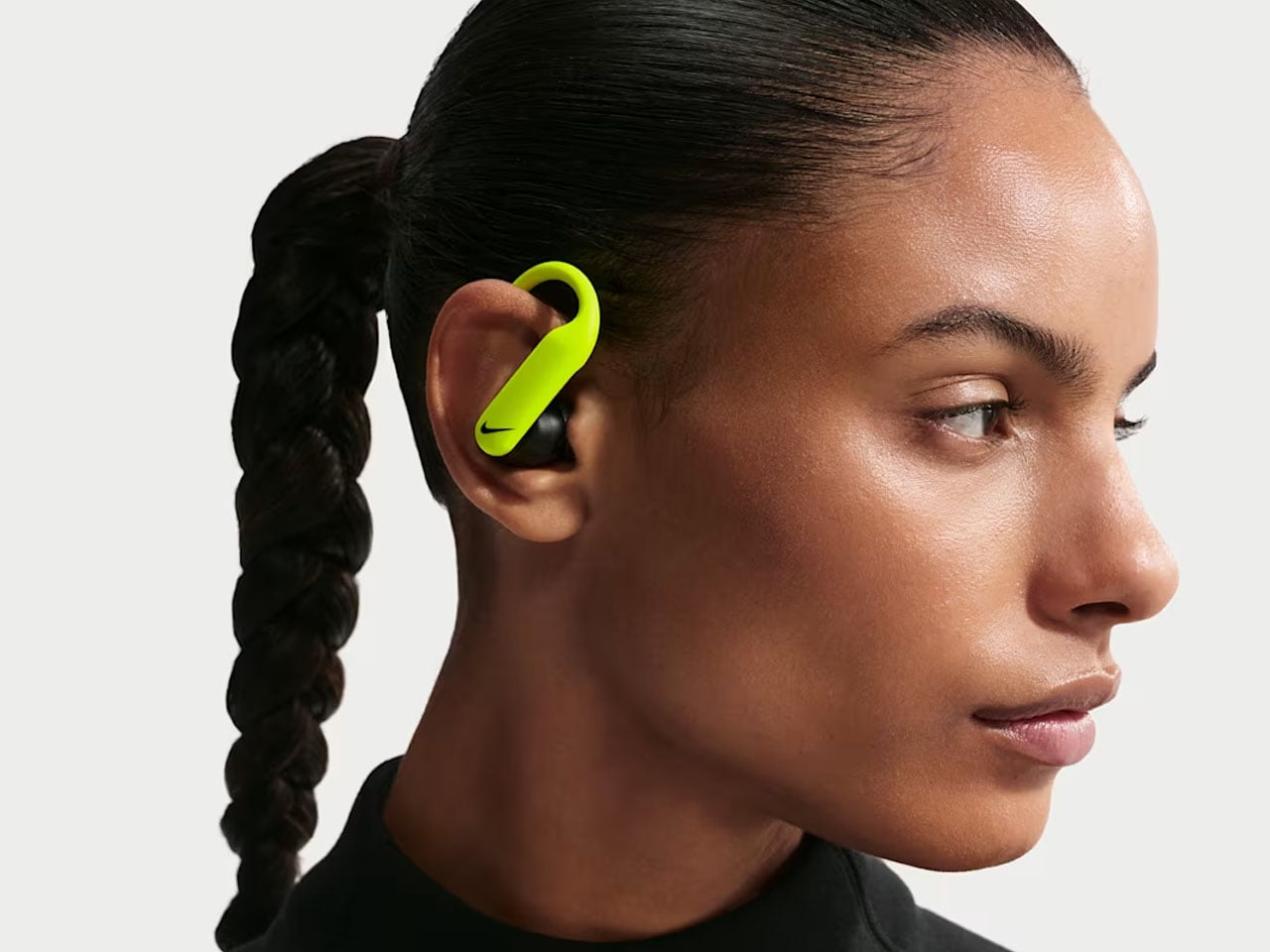
Apple has growing confidence in their fitness earbuds, and that’s the reason they’ve teamed up with Nike to release the Nike x Powerbeats Pro 2 Special Edition. Looping in LeBron James, the Los Angeles Lakers Forward, the American sports apparel brand has a valid reason to go with Beats for a set of fitness-focused wireless earbuds. These special edition buds come with tailored health tracking capabilities targeted towards athletes and heart rate monitoring integrated with the Nike Run Club app.

Designer: Beats by Dre and Nike

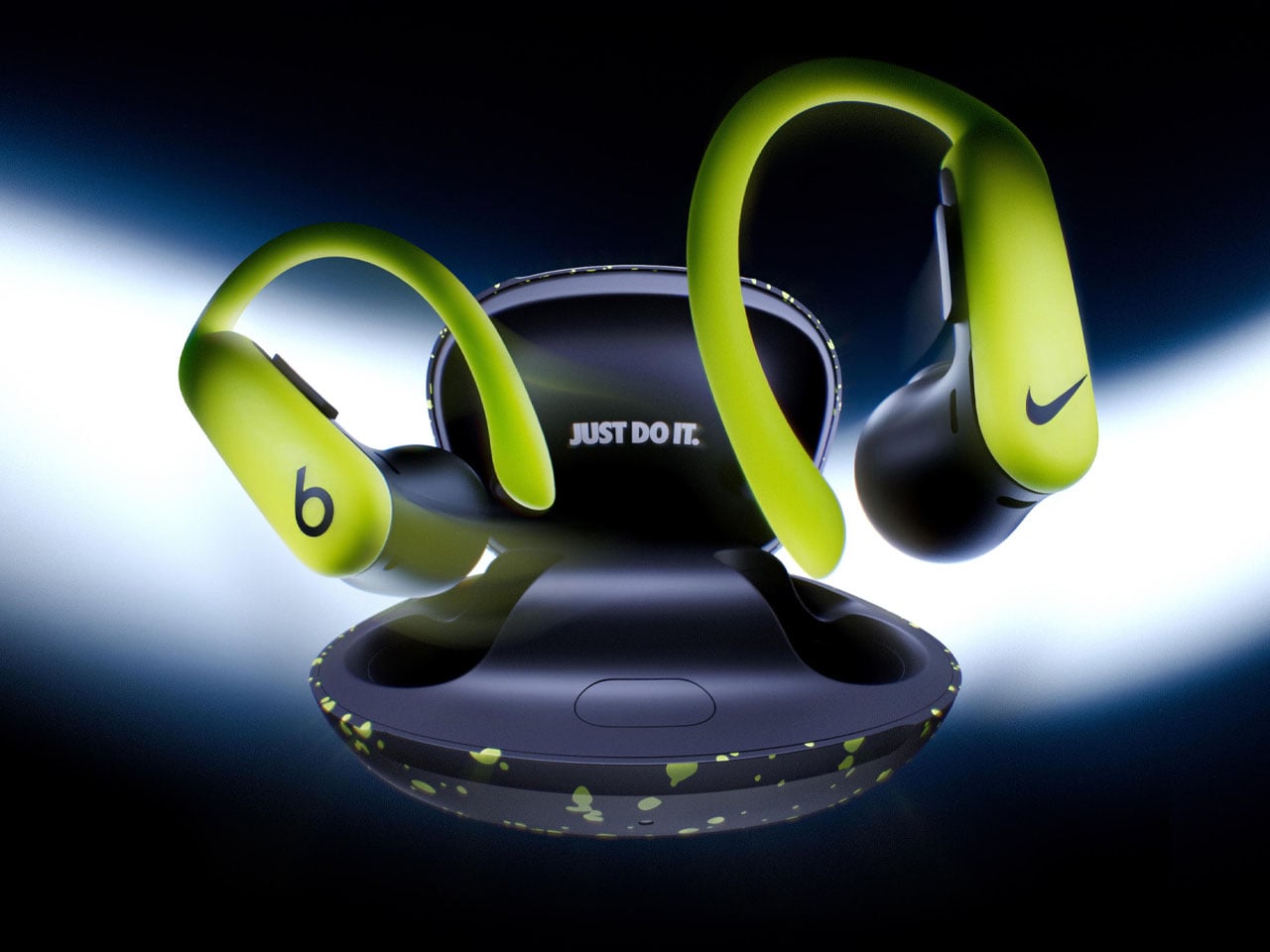
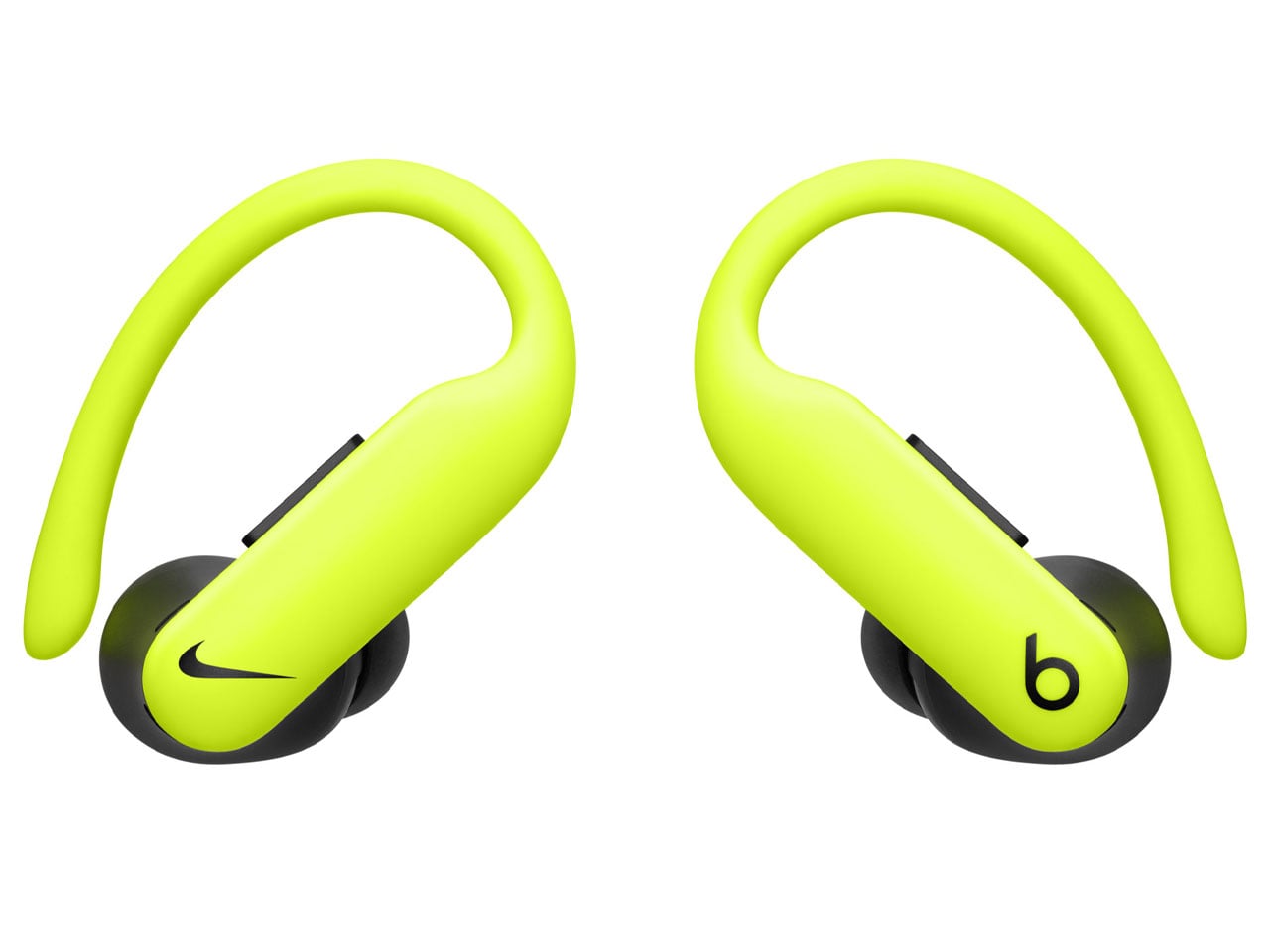
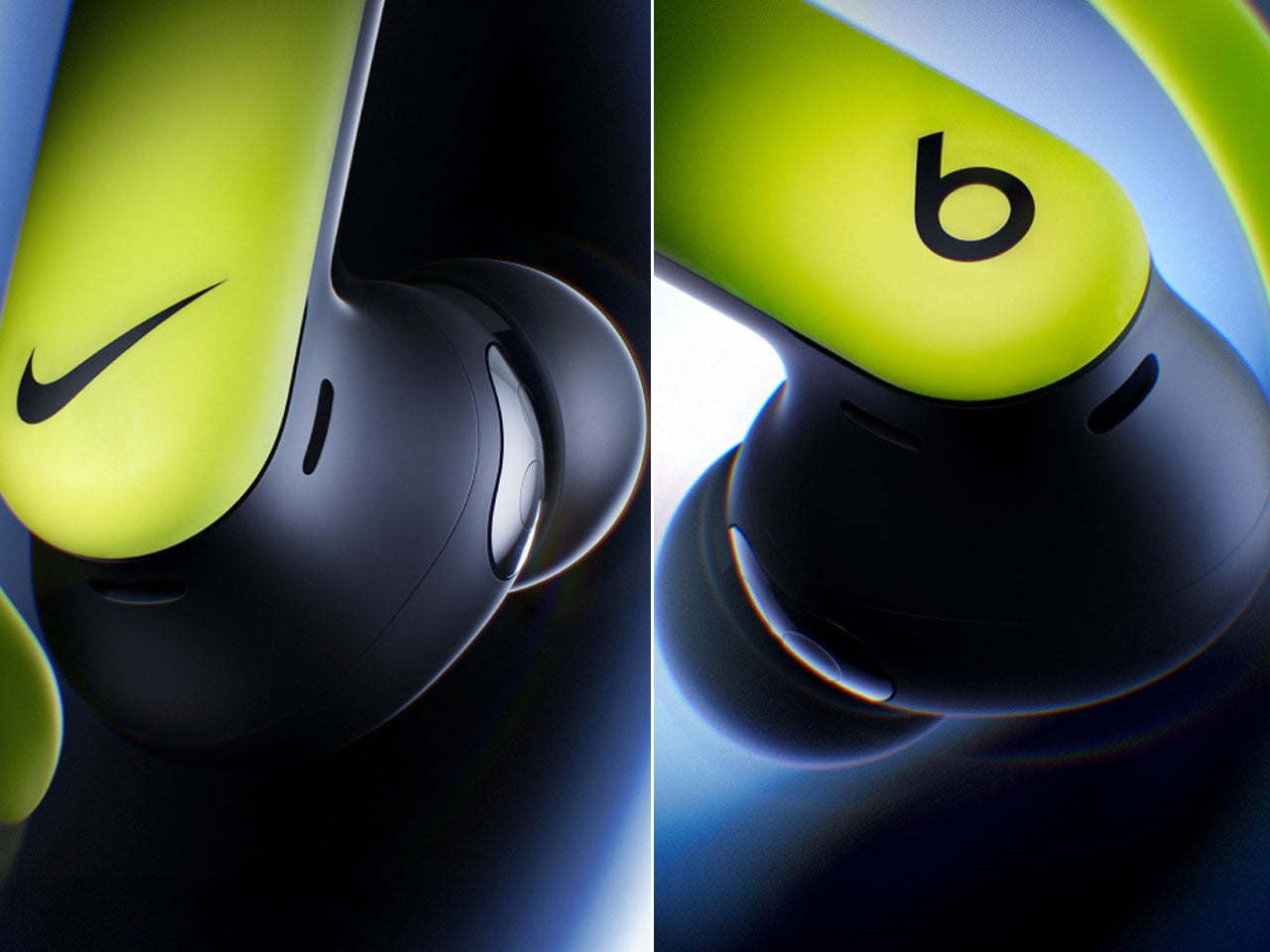
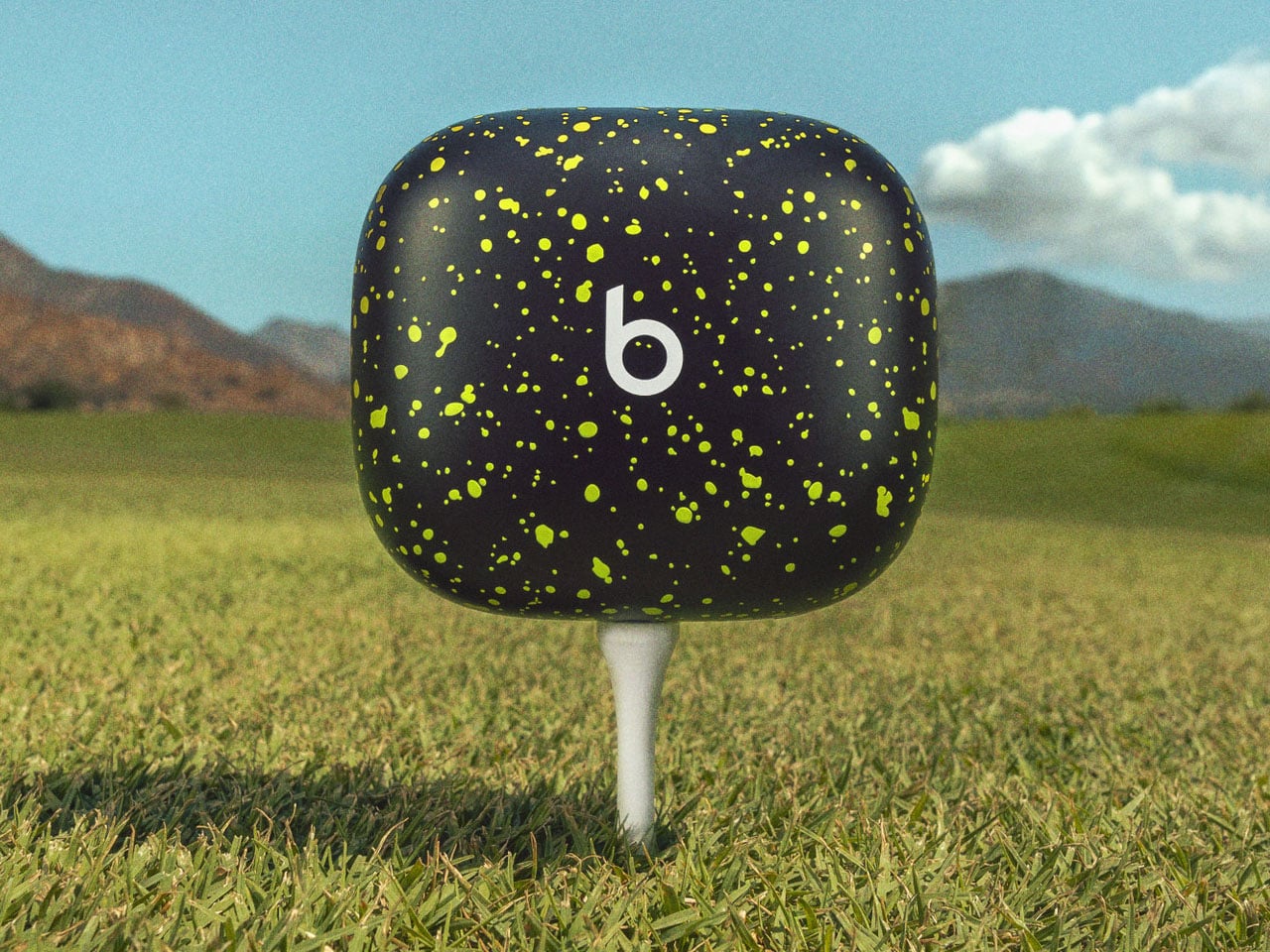
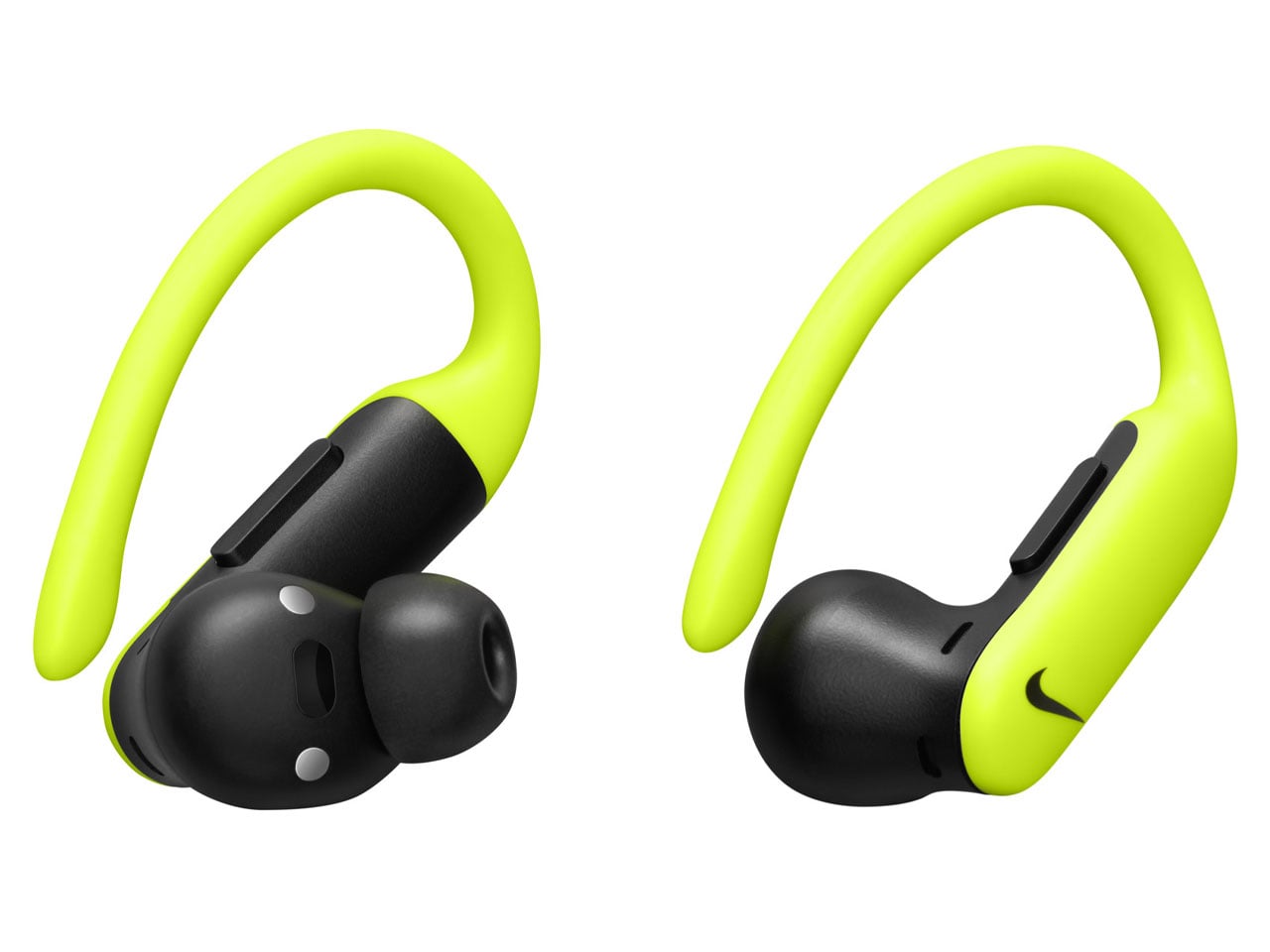
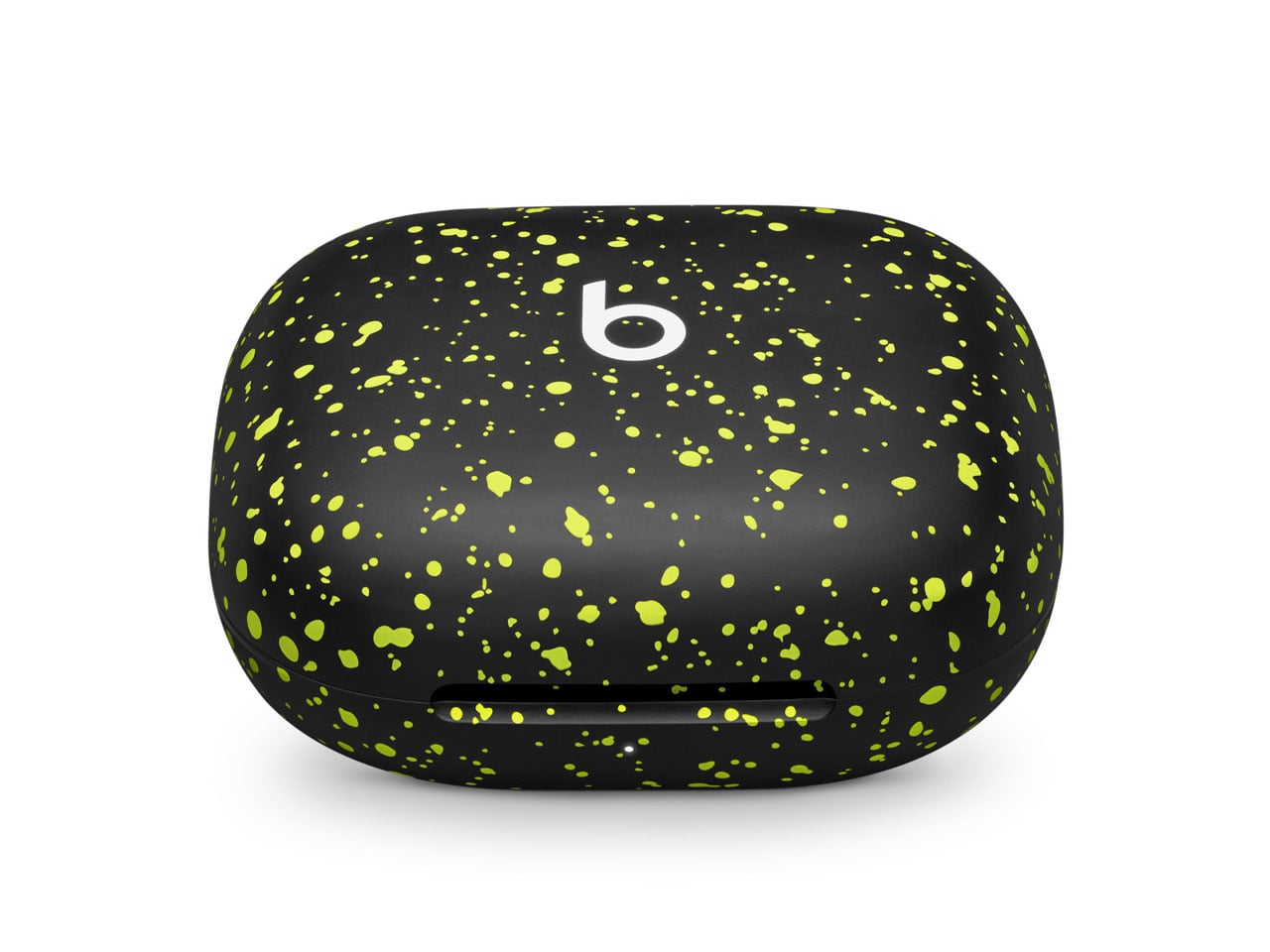
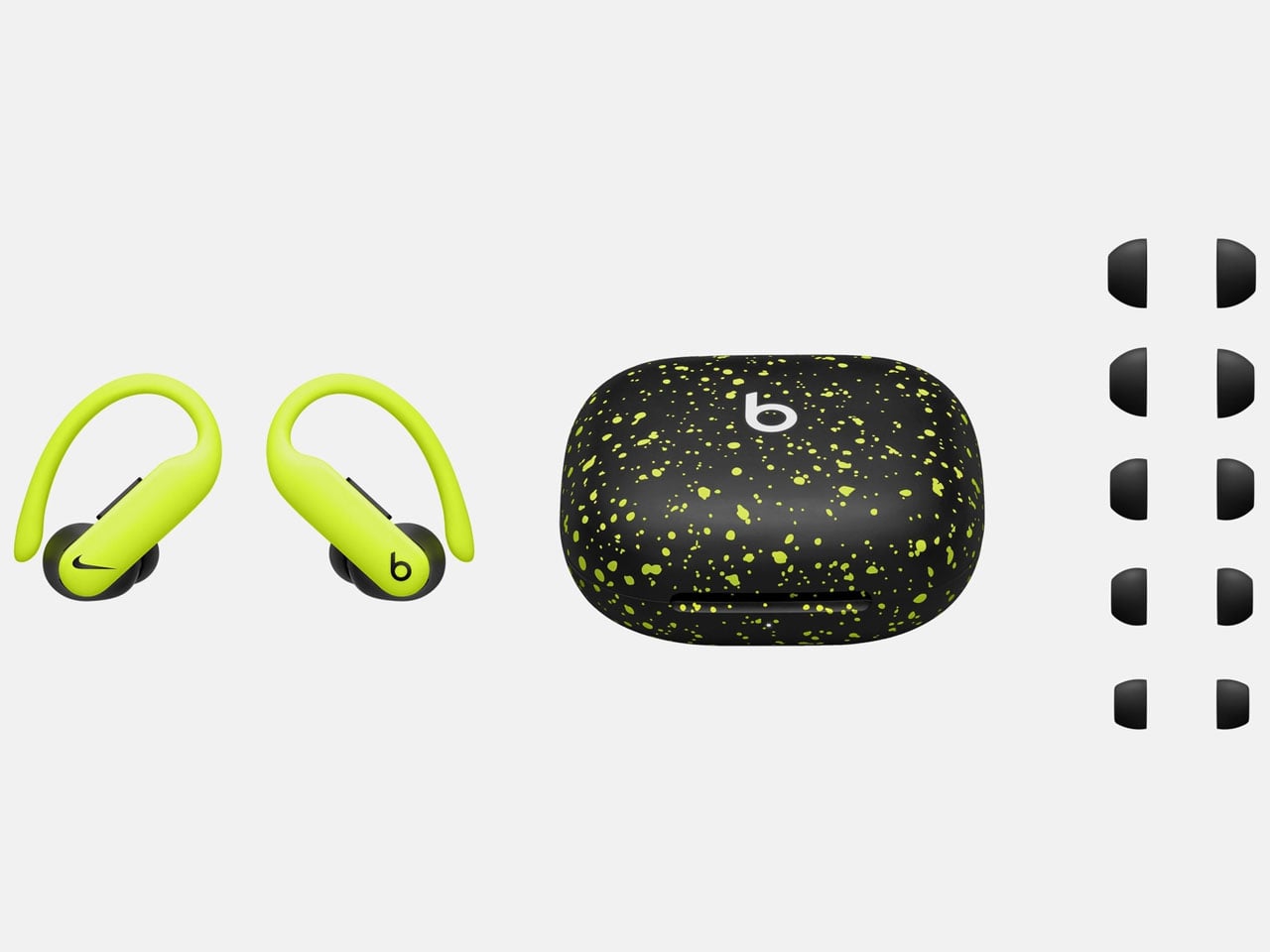
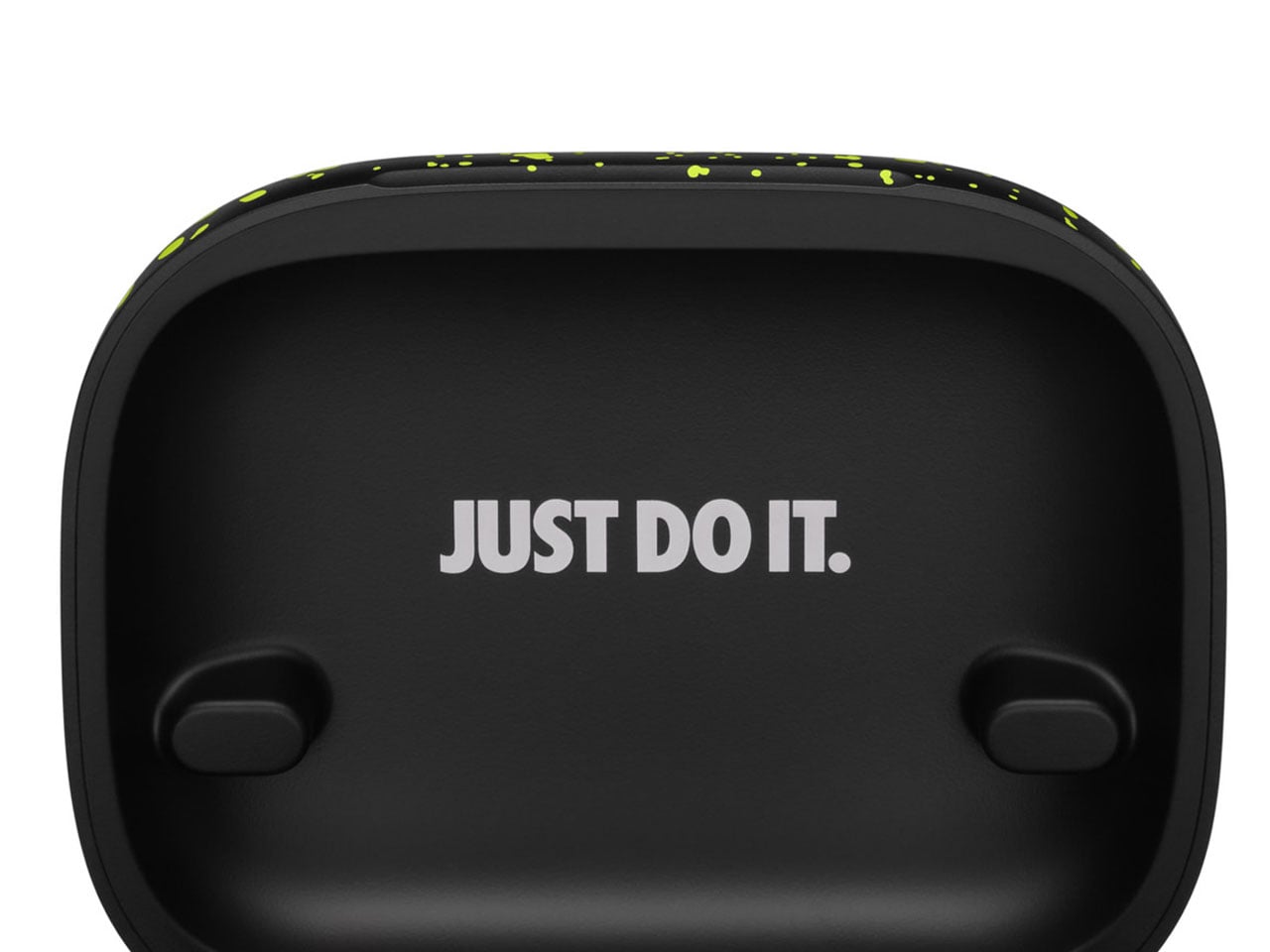
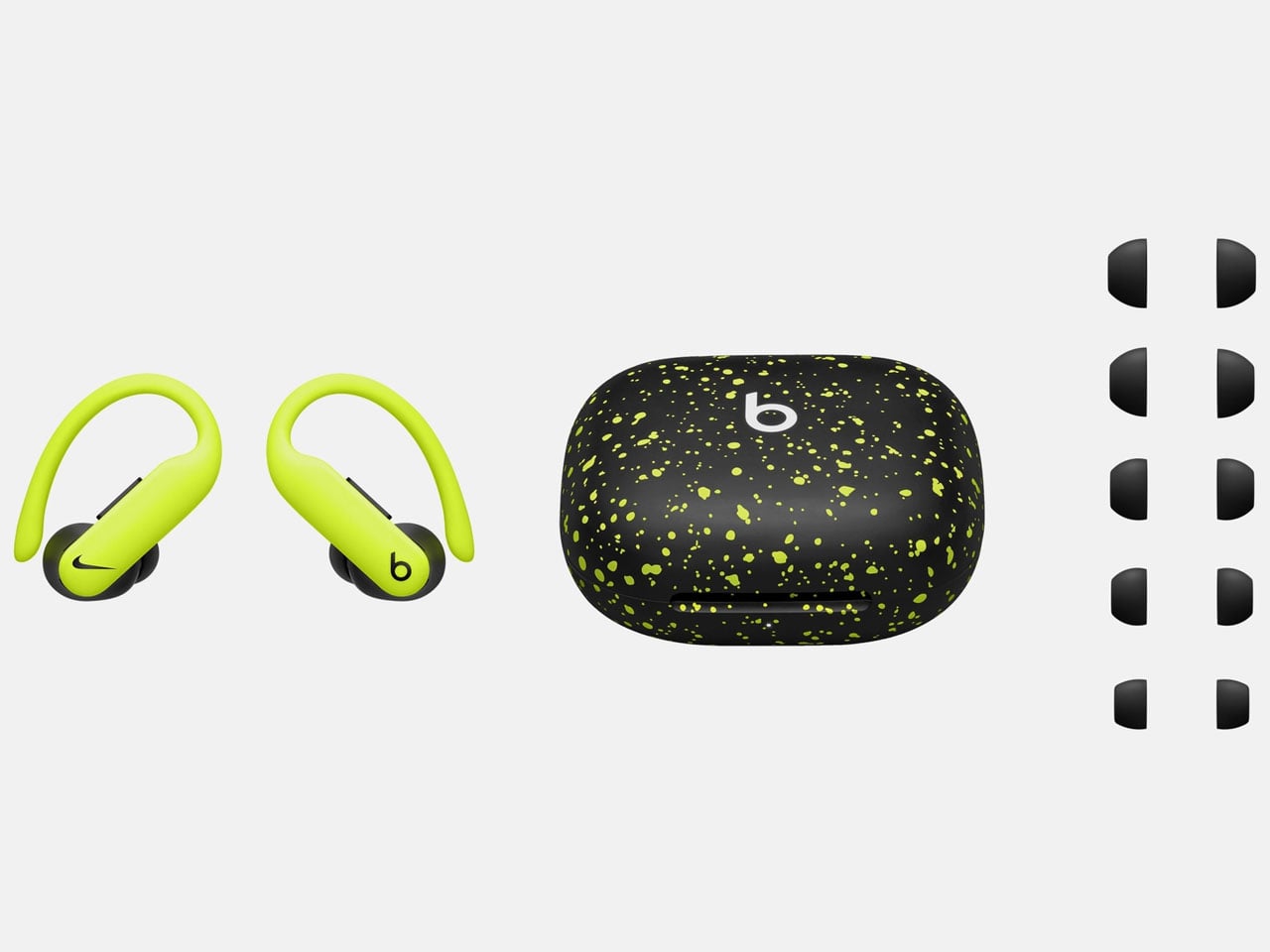
As one can see, the design is the major focus with these earbuds. They have a dual-tone finish in matte black and Volt splatter design. One earbud has the Beats branding while the other sports the Nike logo in black, lending the pair a distinct style appeal. The charging case carries the same theme and Nike’s “Just Do It” tagline on the inside. According to Beats CMI Chris Thorne, the earbuds are a result of the two brands’ “performance, culture and sports — the attributes of today’s athlete.”
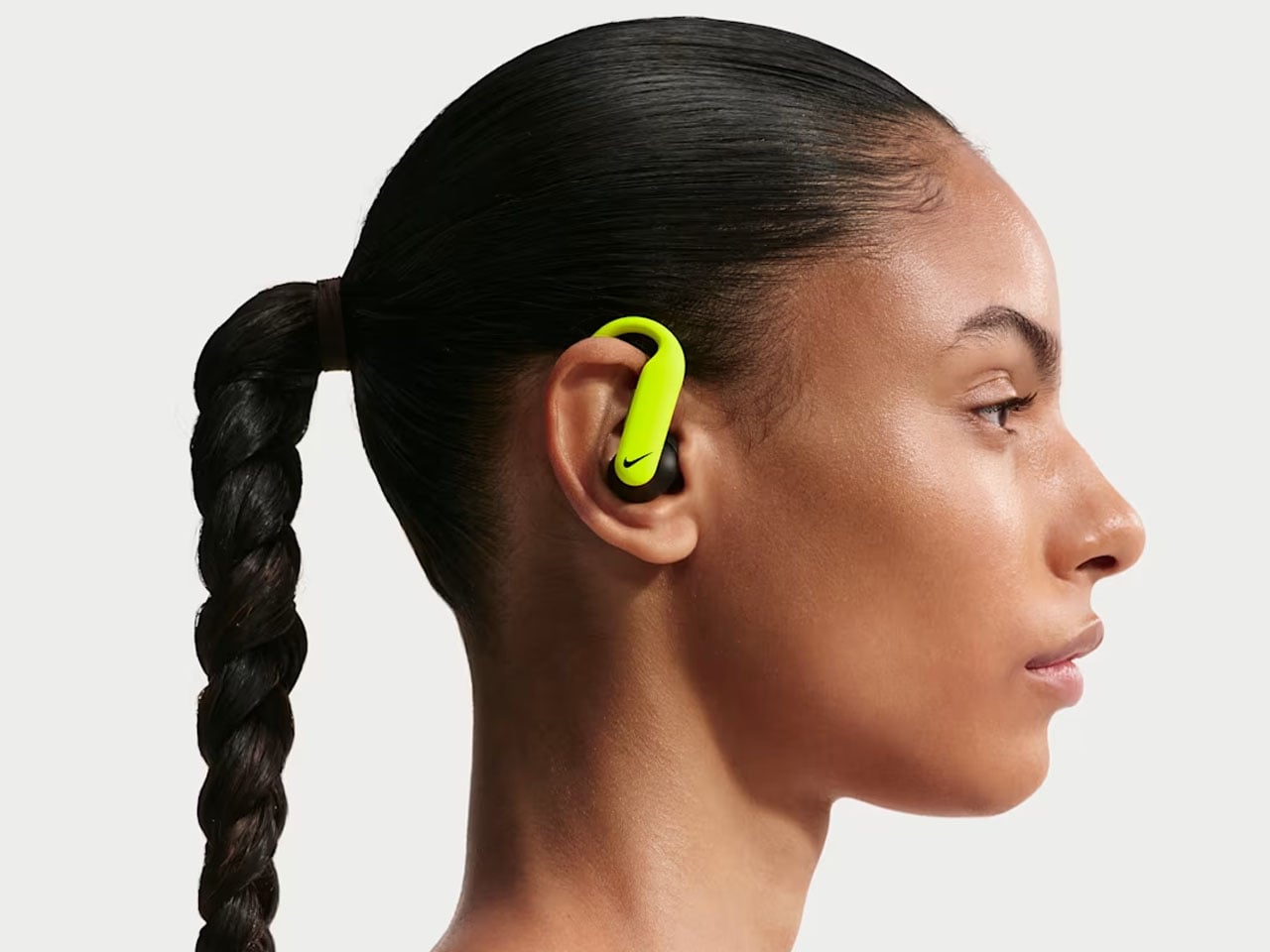
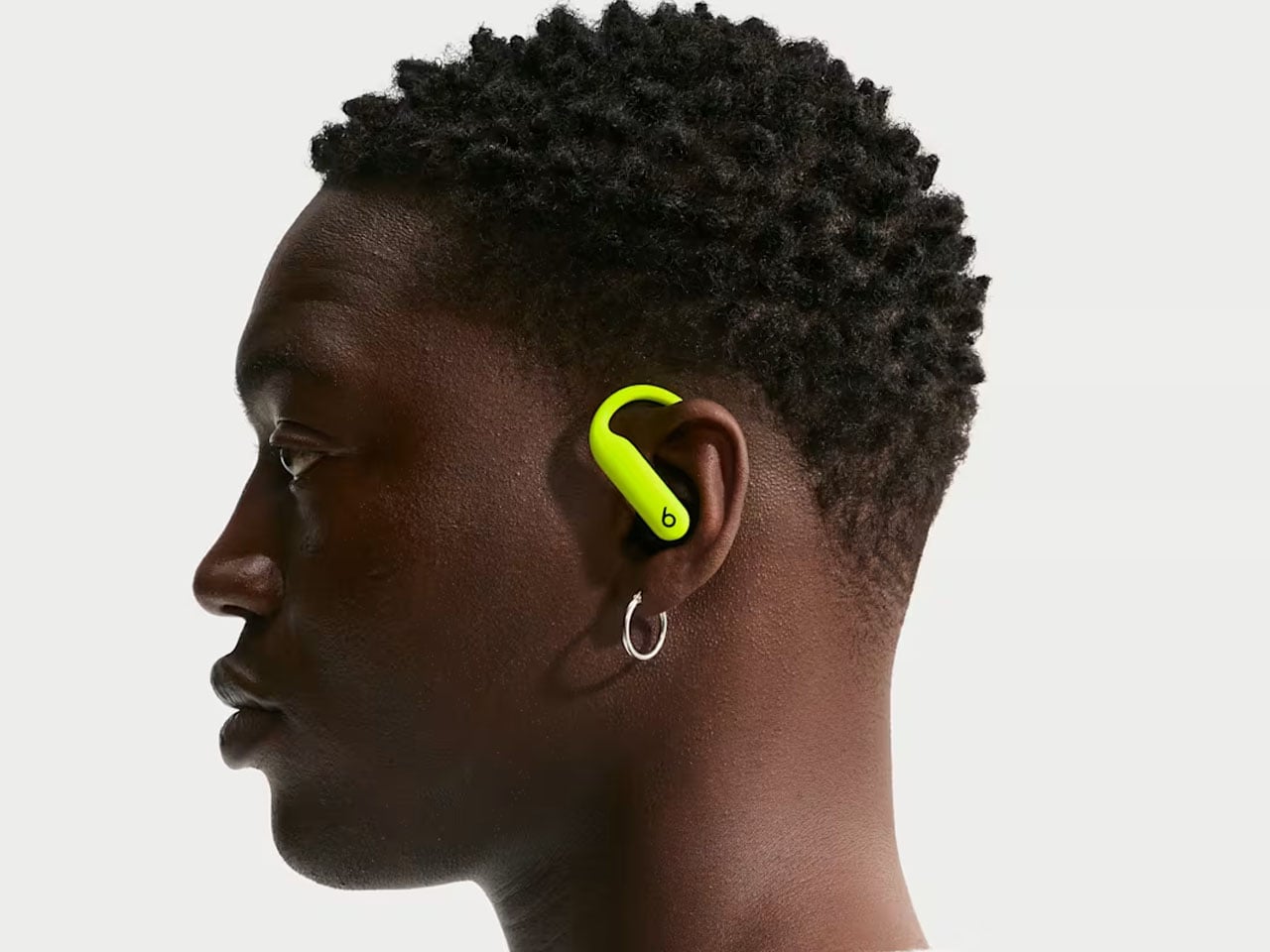
The IPX4-rated earbuds come with a redesigned nickel-titanium ear hook, making them lighter while retaining the promise of a secure fit, even with the most rigorous activity. Battery life on these is rated at up to 45 hours with the charging case, and 10 hours on the standalone earbuds. You can expect the same level of ANC, transparency, and passive isolation as the original Powerbeats Pro 2. Of course, voice-calling performance, audio listening quality, and the heart rate sensing features are all what make these a bang for the buck.

Apart from all these features, they can also be wirelessly charged for convenience. Without doubt, they are the prime candidates for your everyday needs. Powerbeats Pro 2 Nike Special Edition was initially available through an early access lottery via SNKRS. For eager buyers, the global launch will be on March 20 via Nike and Apple’s official websites for $250. In-store availability is limited to locations including the United Kingdom, China, the United States, and Singapore.

The post Nike x Powerbeats Pro 2 earbuds promise great design, super secure fit, and impressive audio first appeared on Yanko Design.